Validating Autism Candidate Genes: A Comprehensive Guide to the SFARI Gene Database for Researchers
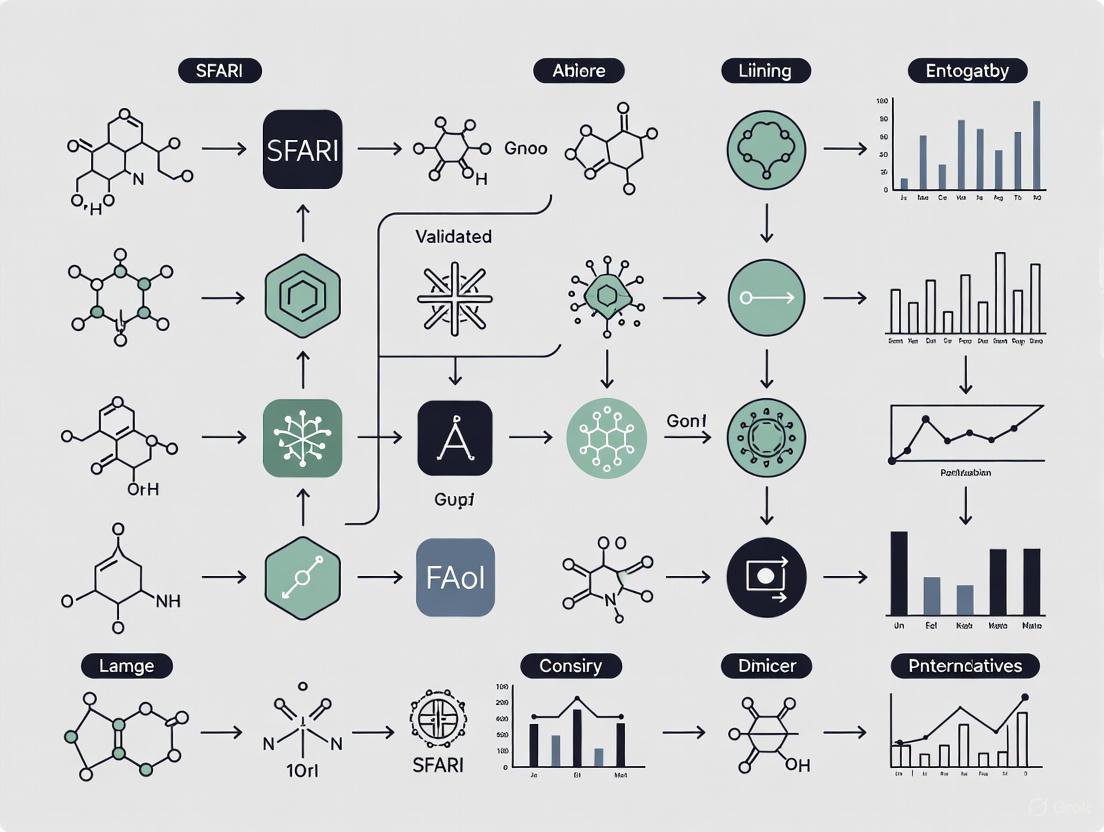
This article provides a complete framework for validating autism spectrum disorder (ASD) candidate genes using the SFARI Gene database.
Validating Autism Candidate Genes: A Comprehensive Guide to the SFARI Gene Database for Researchers
Abstract
This article provides a complete framework for validating autism spectrum disorder (ASD) candidate genes using the SFARI Gene database. Tailored for researchers and drug development professionals, it covers the database's foundational architecture, practical application of its scoring modules and bioinformatics tools, strategies to overcome common challenges like data inconsistencies, and methods for cross-database validation. By synthesizing the latest features and 2025 research findings, this guide empowers scientists to confidently prioritize genes and accelerate ASD research and therapeutic development.
Navigating the SFARI Gene Ecosystem: Understanding the Core Modules and Gene Scoring System
SFARI Gene is a dedicated, evolving database that serves as a comprehensive resource for the autism research community, centered on genes implicated in autism spectrum disorder (ASD) susceptibility [1] [2]. This curated web-based resource integrates various types of genetic data to facilitate hypothesis generation and accelerate autism research. The database is maintained through manual curation of peer-reviewed scientific literature by expert researchers, ensuring high-quality, evidence-based information [3] [2].
The database is organized into several interconnected modules that provide different perspectives on autism genetics:
- Human Gene Module: Serves as a comprehensive, up-to-date reference for all known human genes associated with ASD, featuring detailed annotations, relevant references from scholarly articles, and evidence linking genes to autism [4] [2].
- Gene Scoring System: Employs an innovative assessment system that assigns every gene a score reflecting the strength of evidence linking it to ASD development. The current simplified scoring categories include: S (syndromic), 1 (high confidence), 2 (strong candidate), and 3 (suggestive evidence) [1] [5].
- Copy Number Variant (CNV) Module: Catalogs recurrent single-gene and multi-gene deletions and duplications in the genome and describes their potential links to autism [1] [2].
- Animal Models Module: Contains information about genetically modified animals (primarily mice) that represent potential models of autism, including targeting constructs, background strains, and phenotypic features relevant to ASD [1] [2].
- Protein Interaction (PIN) Module: An interactive visual reference showcasing known protein interactions between gene products associated with ASD, though the scope of this module has been recently scaled back [3] [5].
Experimental Validation of SFARI Gene as a Research Resource
Performance Assessment in Variant Detection Studies
SFARI Gene's utility as a reference database has been empirically validated in independent research. A 2023 study published in Scientific Reports evaluated the effectiveness of three bioinformatics tools for detecting ASD candidate variants from whole-exome sequencing (WES) data and used SFARI Gene as the benchmark for assessing performance [6].
Table 1: Tool Performance Metrics Using SFARI Gene as Gold Standard
| Tool Combination | Positive Predictive Value (PPV) | Odds Ratio (OR) | 95% Confidence Interval | Diagnostic Yield |
|---|---|---|---|---|
| InterVar ∩ Psi-Variant | 0.274 | 7.09 | 3.92–12.22 | Not specified |
| InterVar ∪ Psi-Variant | Not specified | Not specified | Not specified | 20.5% |
| InterVar & TAPES Overlap | 64.1% concordance | Not specified | Not specified | Not specified |
| TAPES & Psi-Variant Overlap | 23.1% concordance | Not specified | Not specified | Not specified |
The study analyzed WES data from 220 ASD family trios and demonstrated that SFARI Gene provides a robust framework for evaluating variant detection methodologies [6]. Researchers found that the intersection of InterVar (an ACMG/AMP criteria-based tool) and Psi-Variant (a likely gene-disrupting variant detection tool) was particularly effective at identifying variants in known ASD genes, achieving a positive predictive value of 0.274 and an odds ratio of 7.09 [6]. Furthermore, the union of these tools identified candidate ASD variants in 20.5% of probands, highlighting the substantial diagnostic yield possible when using SFARI Gene as a reference standard [6].
Technical Infrastructure for Data Access and Analysis
The Genotypes and Phenotypes in Families (GPF) platform serves as the computational infrastructure for disseminating SFARI genetic data [7]. This open-source platform manages genotypes and phenotypes derived from family collections and supports interactive exploration of genetic variants, enrichment analysis for de novo mutations, and genotype-phenotype association tools [7].
Table 2: GPF-SFARI Platform Capabilities and Supported Data Types
| Feature | Capability | Supported Data Types |
|---|---|---|
| Family Structures | Nuclear families, multigenerational families, single individuals | Trios, extended pedigrees, case-control formats |
| Variant Types | Single-nucleotide variants (SNVs), indels, copy-number variants (CNVs) | Data from WES, WGS, array hybridization |
| Inheritance Patterns | Mendelian, de novo, omission | Parent-child transmission patterns |
| Analysis Tools | Gene browser, family variants view, phenotype/genotype association | Variant frequency, impact prediction, segregation analysis |
GPF-SFARI, the Simons Foundation instance of this platform, provides both protected access to comprehensive genotypic and phenotypic data for SSC (Simons Simplex Collection) and SPARK collections, as well as public access to summary statistics and analysis tools [7]. The platform's versatility in handling diverse data types and family structures makes it particularly valuable for autism genetics research.
Experimental Protocols for SFARI Gene Validation
Whole-Exome Sequencing Analysis Protocol
The methodology from the comparative bioinformatics study provides a detailed protocol for validating SFARI Gene entries against experimental data [6]:
Sample Preparation
- Collect genomic DNA from ASD probands and parents (trios) using standardized saliva collection kits
- Ensure informed consent and ethical approval from institutional review boards
Sequencing and Quality Control
- Perform whole-exome sequencing with Illumina HiSeq sequencers using Illumina Nextera exome capture kit
- Align sequencing reads to current human genome build (GRCh38)
- Apply quality filters: remove variants with low read coverage (≤20 reads) or low genotype quality (GQ ≤50)
- Exclude common variants (population frequency >1% in gnomAD)
Variant Detection and Annotation
- Implement multiple complementary approaches:
- ACMG/AMP-based tools (InterVar, TAPES) for identifying pathogenic/likely pathogenic variants
- Likely gene-disrupting (LGD) detection (Psi-Variant) for protein-truncating and deleterious missense variants
- Apply Ensembl's Variant Effect Predictor (VEP) for functional annotation
- Use multiple in-silico prediction tools (SIFT, PolyPhen-2, CADD, REVEL, M-CAP, MPC) with standardized cutoffs
Validation Against SFARI Gene
- Compare detected variants with SFARI Gene database (n=1031 genes in 2022 version)
- Calculate performance metrics (PPV, OR, diagnostic yield) using SFARI Gene as reference standard
- Statistically analyze overlap between different detection methods
Data Integration and Visualization Workflow
SFARI Gene provides sophisticated data visualization tools that enable researchers to identify patterns and relationships within autism genetic data [4] [3]:
Human Genome Scrubber Implementation
- Visualize ASD candidate genes by chromosomal location across all 24 human chromosomes
- Filter results by gene score category or specific chromosomes
- Interpret vertical bar height as number of reports linking gene to ASD
- Use color coding to signify gene score categories
- Access detailed gene information by selecting specific genomic regions
Ring Browser Utilization
- Display overview of human genetic information using circular interface
- Visualize location and frequency of ASD candidate genes, CNVs, and protein interactions
- Identify potential functional relationships and genomic hotspots
Interactive Interactome Analysis
- Filter protein interaction types (protein binding, RNA binding, promoter binding, etc.)
- Explore connections between autism candidate genes
- Generate hypotheses about molecular pathways and networks
Research Reagent Solutions for SFARI Gene Analysis
Table 3: Essential Research Reagents and Computational Tools for SFARI Gene Validation
| Reagent/Tool | Type | Function in SFARI Gene Research |
|---|---|---|
| Illumina HiSeq Sequencers | Sequencing Platform | Generate whole-exome sequencing data for variant discovery |
| Nextera Exome Capture Kit | Library Preparation | Enrich exonic regions for comprehensive variant detection |
| Oragene DNA Collection Kits | Sample Collection | Standardized DNA isolation from saliva samples |
| Genome Analysis Toolkit (GATK) | Bioinformatics Pipeline | Variant calling, quality control, and filtering |
| InterVar | ACMG/AMP Implementation Tool | Classify variants as pathogenic, likely pathogenic, or VUS |
| TAPES | ACMG/AMP Implementation Tool | Alternative tool for variant classification |
| Psi-Variant | LGD Detection Pipeline | Integrates seven in-silico prediction tools for variant impact |
| Ensembl VEP | Variant Annotation | Functional consequence prediction for identified variants |
| gnomAD Database | Population Frequency | Filter common variants (>1% frequency) |
| SFARI Gene Database | Curated Knowledge Base | Gold standard for ASD gene validation (n=1031 genes) |
SFARI Gene represents a comprehensively validated resource that provides critical infrastructure for autism genetics research. Empirical evidence demonstrates its utility as a reference standard for evaluating variant detection methodologies, with studies showing significant statistical power for identifying true ASD-associated genes [6]. The integration of multifaceted data types—from human genetic studies to animal models and protein interactions—within a continuously updated, manually curated framework makes SFARI Gene an indispensable tool for researchers, scientists, and drug development professionals working to unravel the genetic architecture of autism spectrum disorder.
The platform's ongoing development, including quarterly updates and refinement of scoring criteria [8] [5], ensures that it remains at the forefront of autism research resources. By providing both comprehensive data access through the GPF platform [7] and sophisticated visualization tools [4] [3], SFARI Gene enables the autism research community to generate novel hypotheses and accelerate the translation of genetic discoveries into improved understanding and treatments for ASD.
Autism Spectrum Disorder (ASD) is a complex neurodevelopmental condition characterized by deficits in social interaction, impaired communication skills, and a range of stereotyped and repetitive behaviors. With an estimated heritability as high as 52% and hundreds of genes believed to be disrupted, understanding its genetic architecture is fundamental to advancing research and therapeutic development [9]. The Simons Foundation Autism Research Initiative (SFARI) has addressed this complexity by creating SFARI Gene, an expertly curated database that integrates genetic information from multiple research studies to provide a comprehensive resource on genes implicated in autism susceptibility [1] [9]. At the core of this database lies the Human Gene Module, which serves as a dynamic, actively updated repository of ASD candidate genes, offering researchers instant access to the most current information on human genes associated with ASD [4] [1].
The critical importance of such a curated resource becomes evident when considering the extreme genetic heterogeneity of autism. Recent large-scale genomic studies have revealed that the genetic diathesis towards ASD may be different for almost every individual, making this a prime candidate for the coming age of precision medicine [10]. The Human Gene Module provides a structured framework that helps researchers navigate this complexity by collecting, scoring, and organizing genes based on the strength of evidence linking them to ASD. This repository continues to evolve, with the most recent data indicating it contains 1,255 total genes as of October 2025, each meticulously categorized and scored to reflect current scientific understanding [11]. For researchers, clinicians, and drug development professionals, this module represents an indispensable tool for validating candidate genes, designing experiments, and developing targeted therapeutic strategies.
Comparative Analysis: Human Gene Module vs. Alternative Genomic Approaches
The landscape of genomic resources for autism research is diverse, ranging from general-purpose databases to specialized tools with distinct methodologies and applications. The SFARI Human Gene Module occupies a unique position within this ecosystem, differing significantly from both untargeted genomic discovery approaches and other gene databases in its specific focus on curated evidence for ASD association.
Table 1: Comparison of Genomic Approaches for ASD Candidate Gene Identification
| Feature | SFARI Human Gene Module | Untargeted Genomic Discovery (e.g., MSSNG) | General Gene Databases (e.g., GeneCards) |
|---|---|---|---|
| Primary Focus | Expert-curated ASD-specific genes | Genome-wide variant discovery without pre-selection | General gene information without ASD-specific prioritization |
| Gene Scoring | Specific scoring system (1-3) reflecting ASD evidence strength | Statistical association from cohort studies | No ASD-specific scoring |
| Update Mechanism | Active curation of new ASD research | Periodic data releases from sequencing initiatives | General updates across all genes |
| Evidence Integration | Synthesizes genetic association, syndromic links, rare variants | Primarily variant-focused without evidence synthesis | Diverse evidence types but not ASD-integrated |
| ASD-Specific Features | Dedicated ASD relevance assessments, associated syndromes | Identification of novel variants in ASD cohorts | Limited ASD-specific contextualization |
| Therapeutic Application | Direct pathway to candidate genes for drug targeting | Potential novel targets but requires validation | Therapeutic targets across all diseases |
The distinct value proposition of the Human Gene Module becomes particularly evident when examining its structured approach to evidence evaluation. Unlike untargeted approaches such as the MSSNG initiative, which performs whole-genome sequencing of families with ASD to build resources for sub-categorization of phenotypes and genetic factors, the Human Gene Module provides synthesized, interpreted knowledge rather than raw data [10]. Whereas MSSNG reported an average of 73.8 de novo single nucleotide variants and 12.6 de novo insertion/deletions or copy number variations per ASD subject—emphasizing the challenge of identifying meaningful signals amidst noise—the Human Gene Module pre-filters this complexity to highlight genes with substantiated evidence [10]. This curated approach enables researchers to rapidly prioritize candidates for functional validation or therapeutic development.
Core Features and Data Structure of the Human Gene Module
Gene Scoring System and Categorization Framework
The Human Gene Module employs a sophisticated scoring system that categorizes genes based on the strength and quality of evidence linking them to ASD susceptibility. This scoring framework is critical for helping researchers prioritize genes for further investigation and resource allocation. The module assigns scores from 1 to 3, with Score 1 representing genes with the strongest evidence and high confidence of being implicated in ASD, Score 2 designating strong candidates, and Score 3 including genes with suggestive but not yet conclusive evidence [9]. Each gene's score is dynamically updated as new evidence emerges, with the database tracking scoring history to provide transparency into how evidence has evolved over time [4].
Beyond the numerical score, genes are categorized according to the nature of their association with autism. The module classifies genes into several Genetic Categories, including "Rare Single Gene Mutation," "Syndromic," "Genetic Association," and "Functional" evidence [11]. This multi-dimensional classification enables researchers to filter genes based on the type of evidence available. For example, the current database includes 1255 genes, with numerous genes falling into multiple categories simultaneously, reflecting the complex nature of ASD genetics [11]. The module also specifically tags Syndromic genes (denoted with "S" in the database)—those associated with genetic syndromes that include autism as a feature, such as ADNP, ADSL, and ANKRD11 [11]. This distinction is clinically valuable, as it helps differentiate between genes associated with broader syndromic presentations versus those more specifically linked to idiopathic autism.
Data Visualization and Navigation Tools
The Human Gene Module incorporates sophisticated data visualization tools to facilitate exploration and discovery. Central to this is the Human Genome Scrubber, an interactive visualization that displays the relative location of all known ASD-candidate genes throughout the human genome [4]. This scrubber represents genes as vertical bars along a horizontal axis displaying the 24 human chromosomes, with bar height indicating the number of individual reports linking a gene to ASD, and color signifying the assigned Gene Score [4]. Researchers can expand or contract the viewable region to examine large portions of the genome or focus on specific chromosomal locations, enabling both macro-level pattern recognition and micro-level investigation of gene clusters.
The module supports multiple search methodologies to accommodate different research needs. A Quick Search function allows for rapid filtering of the gene table based on any query, while an Advanced Search tool enables targeted queries using specific parameters such as gene scores, chromosomal location, genetic categories, associated disorders, and more [4]. Each gene in the module has a dedicated entry summary page that consolidates comprehensive information, including the assigned gene score, number of autism-specific reports compared to total relevant reports, rare and common variants, aliases, associated syndromes, genetic category, chromosome band, molecular function, and relevance to autism [4]. This structured presentation ensures that researchers can quickly access both high-level summaries and granular details as needed for their investigations.
Experimental Applications and Validation Protocols
Integrating Transcriptomic Data with SFARI Genes
One powerful application of the Human Gene Module is in the design and interpretation of transcriptomic studies aimed at validating ASD candidate genes. Research has demonstrated that SFARI genes exhibit statistically significant higher expression levels compared to other neuronal and non-neuronal genes, with a clear gradient relationship where higher SFARI scores (stronger evidence) correlate with higher expression levels [9]. This pattern has been consistently observed across multiple independent ASD gene expression datasets, suggesting that these genes may have crucial roles in maintaining normal brain function, and their dysregulation contributes to ASD pathogenesis [9].
The following experimental workflow illustrates a typical protocol for validating SFARI genes using transcriptomic approaches:
A critical methodological consideration when working with SFARI genes in transcriptomic studies is the need to account for expression level bias. Research has shown that classification models incorporating topological information from whole co-expression networks can successfully predict novel SFARI candidate genes that share features of existing SFARI genes, while individual gene or module analyses often fail to reveal these signatures [9]. This systems-level approach has proven more effective because it captures intricate shared patterns between genes that remain hidden when studying genes at a more local level.
Subtype-Specific Genetic Validation Protocols
Recent advances in autism subtyping have created new opportunities for validating SFARI genes within biologically distinct subgroups. A landmark 2025 study analyzing data from over 5,000 children in the SPARK cohort identified four clinically and biologically distinct subtypes of autism using a person-centered approach that considered over 230 traits [12]. These subtypes—Social and Behavioral Challenges (37% of participants), Mixed ASD with Developmental Delay (19%), Moderate Challenges (34%), and Broadly Affected (10%)—exhibit distinct genetic profiles, enabling more targeted validation of SFARI genes [12].
Table 2: Subtype-Specific Genetic Patterns Informing SFARI Gene Validation
| Autism Subtype | Prevalence | Distinct Genetic Features | SFARI Gene Validation Implications |
|---|---|---|---|
| Social and Behavioral Challenges | 37% | Mutations in genes active later in childhood; highest rates of co-occurring psychiatric conditions | Focus on post-natal gene expression patterns; validate genes affecting synaptic function and neural circuits |
| Mixed ASD with Developmental Delay | 19% | Higher burden of rare inherited genetic variants | Prioritize genes with inherited mutation patterns; assess impact on early neurodevelopment |
| Moderate Challenges | 34% | Milder genetic liability with fewer damaging mutations | Validate genes with moderate effect sizes; consider polygenic risk contributions |
| Broadly Affected | 10% | Highest proportion of damaging de novo mutations | Focus on high-penetrance risk genes; assess impact on multiple developmental domains |
This subtyping framework enables more precise experimental designs for SFARI gene validation. For example, researchers can now test specific hypotheses about how various biological pathways link to different ASD presentations, rather than searching for a unified biological explanation encompassing all individuals with autism [12]. The Broadly Affected subgroup shows the highest proportion of damaging de novo mutations, suggesting that SFARI genes with de novo mutation evidence should be prioritized when studying this severe subtype [12]. Conversely, the finding that the Social and Behavioral Challenges subtype involves mutations in genes that become active later in childhood suggests a different validation timeline and functional focus for SFARI genes associated with this subgroup [12].
The validation of SFARI genes from the Human Gene Module relies on access to specialized research resources and biospecimens. Several key resources have been developed specifically to support this research, providing standardized materials that enable reproducible experimental outcomes.
Table 3: Essential Research Resources for SFARI Gene Validation
| Resource Name | Provider | Key Features | Application in SFARI Gene Validation |
|---|---|---|---|
| Simons Searchlight | Simons Foundation | Phenotypic and genomic data for 123 single-gene variants and 19 CNV conditions; >5,600 individuals | Validation of genotype-phenotype correlations for SFARI genes [13] |
| SPARK Cohort | Simons Foundation | Large-scale autism cohort with genetic and phenotypic data; >5,000 children | Subtype-specific validation of SFARI genes [12] |
| MSSNG Database | Autism Speaks & Collaborators | Whole-genome sequencing data from 5,205 ASD families; cloud-based access | Identification of novel variants in SFARI genes [10] |
| SFARI Biospecimen Repository | Simons Foundation | Cell lines (fibroblasts, lymphoblastoids, iPSCs) and DNA from participants | Functional characterization of SFARI gene variants [13] |
These resources collectively provide the foundational materials necessary for comprehensive SFARI gene validation. The Simons Searchlight resource, which released new data in July 2025 covering over 5,600 individuals with a genetic diagnosis, offers particularly valuable phenotypic and biospecimen data for validating genes against human clinical presentations [13]. The availability of induced pluripotent stem cells (iPSCs) from participants enables the development of cellular models for functional characterization of SFARI gene variants, creating pathways from genetic discovery to mechanistic understanding [13].
Emerging Frontiers and Research Applications
From Gene Discovery to Therapeutic Development
The ultimate translational application of the Human Gene Module lies in its potential to accelerate the development of targeted therapies for ASD. Large-scale genomic studies have progressively identified ASD-associated genes, with whole-genome sequencing now facilitating the detection of risk noncoding variants in regulatory elements such as enhancers, promoters, and untranslated regions [14]. This expanding genetic understanding has revealed the complex interplay between rare and common variants in ASD liability, with genetic factors varying by sex and phenotypic profile [14] [12].
The pathway from SFARI gene identification to therapeutic development involves multiple validation stages, each with distinct methodological requirements:
While clinical application of these genomic insights remains in early stages, progress has been made in gene-based therapeutic development, interpretation of noncoding risk variants, and the use of polygenic scores for risk stratification [14]. The identification of biologically distinct autism subtypes further enhances these therapeutic opportunities by enabling more targeted approaches that account for the underlying genetic and biological heterogeneity of ASD [12].
Future Directions and Resource Enhancement
The evolving nature of the Human Gene Module ensures its continuing relevance to the ASD research community. Future developments will likely focus on enhanced integration of multi-omics data, improved functional annotations, and more sophisticated tools for visualizing and analyzing gene networks. The recent identification of autism subtypes provides a framework for gene validation within specific biological contexts, potentially increasing the predictive power of therapeutic development efforts [12].
The Simons Foundation's ongoing commitment to enhancing research resources is evidenced by initiatives such as the 2025 Data Analysis Request for Applications, which specifically encourages use of SFARI-supported resources to ask new questions and extract new knowledge from existing datasets [15]. This approach maximizes the research return on already-collected data while generating insights that can inform future research directions. As these resources continue to expand and integrate with other large-scale biomedical initiatives, the Human Gene Module is poised to remain an indispensable tool for validating ASD candidate genes and translating genetic discoveries into improved understanding and treatment of autism spectrum disorder.
The SFARI Gene database serves as a cornerstone resource for autism spectrum disorder (ASD) research, providing a systematically curated collection of genes implicated in autism susceptibility. As the number of genes associated with ASD continues to grow, researchers face the significant challenge of distinguishing definitive risk genes from those with weaker or less validated evidence. To address this critical need, the SFARI Gene Scoring Module implements a structured classification framework that categorizes genes based on the strength of evidence linking them to ASD risk [16]. This scoring system enables researchers to prioritize genes for further investigation and provides valuable context for interpreting new genetic findings.
The gene scoring process represents a collaborative effort between expert curators at MindSpec and a team of experienced autism geneticists who have established specific criteria for evaluating and ranking genes [16]. This systematic approach acknowledges that the scoring methodology is only one of many possible frameworks for evaluating gene-disease associations, with the explicit goal of encouraging rather than limiting future research. By providing transparent assessment criteria, the module helps researchers design targeted experiments to strengthen the evidence for each gene's association with ASD [17]. As of October 2025, the database contains 1,161 scored genes, with 94 remaining uncategorized, reflecting the dynamic nature of autism genetics research [17].
SFARI Gene Scoring Categories and Criteria
Comprehensive Scoring Framework
The SFARI Gene scoring system organizes genes into distinct categories that reflect the quality and quantity of evidence supporting their association with ASD. This hierarchical structure enables researchers to quickly identify genes with the strongest validation while maintaining awareness of emerging candidates with less conclusive evidence. The system employs four primary categories, with an additional specialized category for syndromic forms of autism [16].
Syndromic Category (S): This category includes genes in which mutations are associated with a substantial degree of increased ASD risk and are consistently linked to additional characteristics not required for an ASD diagnosis. These genes often originate from well-characterized genetic syndromes where autism represents one component of a broader clinical presentation. When a syndromic gene also has independent evidence implicating it in idiopathic ASD, it receives a combined designation (e.g., 1S, 2S, 3S). If no such independent evidence exists, the gene is designated simply as "S" [16]. The database currently contains 218 genes in the S category [17].
Category 1 (High Confidence): Genes in this category have been clearly implicated in ASD, typically through the presence of at least three de novo likely-gene-disrupting mutations reported in the literature. These genes meet rigorous statistical thresholds, with some achieving genome-wide significance and all meeting a false discovery rate threshold of < 0.1. Due to their strong validation, mutations in these genes identified in the SPARK cohort are typically returned to research participants [16].
Category 2 (Strong Candidate): This category includes genes with two reported de novo likely-gene-disrupting mutations. It also encompasses genes uniquely implicated by genome-wide association studies that either reach genome-wide significance or, if not, have been consistently replicated and are accompanied by evidence that the risk variant has a functional effect [16].
Category 3 (Suggestive Evidence): Genes in this tier represent more preliminary associations with ASD and include those with only a single reported de novo likely-gene-disrupting mutation. This category also includes evidence from significant but unreplicated association studies, or a series of rare inherited mutations without rigorous statistical comparison with controls [16].
Table 1: SFARI Gene Scoring Categories and Criteria
| Category | Evidence Requirements | Typical Applications |
|---|---|---|
| Syndromic (S) | Mutations associated with ASD plus additional characteristics beyond core diagnostic features | Understanding comorbidity patterns, syndrome-specific interventions |
| Category 1 | ≥3 de novo likely-gene-disrupting mutations; FDR < 0.1 | Highest priority for therapeutic development, recurrence risk counseling |
| Category 2 | 2 de novo likely-gene-disrupting mutations OR significant GWAS findings with functional validation | Target validation studies, pathway analysis |
| Category 3 | Single de novo mutation OR unreplicated association studies OR rare inherited mutations without rigorous controls | Preliminary investigations, gene discovery initiatives |
Comparison with Alternative Gene-Disease Validation Frameworks
While the SFARI Gene scoring system provides a specialized framework for ASD research, other systems exist for evaluating gene-disease relationships across different disorders. The Clinical Genome Resource (ClinGen) has developed an evidence-based framework for assessing gene-disease validity that is implemented by Gene Curation Expert Panels (GCEPs) with specific domain expertise [18]. Unlike SFARI Gene, which focuses specifically on ASD, ClinGen's framework encompasses a broader range of disorders and employs a different classification system that includes Definitive, Strong, Moderate, and Limited categories for supported gene-disease relationships, plus Disputed and Refuted categories for contradictory evidence [18].
A key distinction between these frameworks lies in their scope and application. The SFARI system is optimized specifically for the complex genetic architecture of ASD, where multiple genes of varying effect sizes contribute to risk. In contrast, ClinGen's framework is designed for broader application across genetic disorders, with specific expert panels focusing on particular disease domains. The ClinGen Syndromic Disorders GCEP (SD-GCEP), for example, specifically addresses genes associated with rare syndromic disorders involving multiple organ systems [18]. Between April 2020 and March 2024, this panel curated 111 gene-disease relationships across 100 genes, classifying 78 as Definitive, 9 as Strong, 15 as Moderate, and 9 as Limited [18].
Experimental Approaches for Gene Validation
Methodologies for Gene-Disease Association Studies
Research validating genes within the SFARI database employs multiple methodological approaches, each with specific protocols and applications. Gene co-expression network analysis has emerged as a powerful systems biology approach for studying the relationship between ASD-specific transcriptomic data and SFARI genes. This method constructs networks where genes are connected based on similarity in their expression patterns across samples, allowing researchers to identify modules of co-expressed genes that may represent functional pathways relevant to ASD [19].
The standard protocol for this approach involves several key steps. First, RNA sequencing data is collected from postmortem brain tissue of ASD patients and neurotypical controls. The data is then processed through quality control, normalization, and batch effect correction procedures. Next, a gene co-expression network is constructed using algorithms such as Weighted Gene Co-expression Network Analysis (WGCNA), which identifies modules of highly interconnected genes. These modules are then tested for association with ASD diagnosis and enrichment of SFARI genes. Finally, network topology measures are used to identify genes that share characteristics with known SFARI genes within the co-expression network [19].
A 2022 study applying this methodology revealed important insights about SFARI genes. Surprisingly, SFARI genes showed no significant enrichment in gene co-expression network modules that strongly correlated with ASD diagnosis, nor were they significantly associated with differential gene expression patterns when comparing ASD samples to controls [19]. However, classification models that incorporated topological information from the entire ASD-specific gene co-expression network successfully predicted novel SFARI candidate genes that shared features with existing SFARI genes and had literature support for roles in ASD [19].
Transcriptomic Analysis of SFARI Genes
Transcriptomic analyses have revealed distinctive characteristics of SFARI genes that may inform their biological roles in ASD. Research has demonstrated that SFARI genes have statistically significant higher expression levels than other neuronal and non-neuronal genes [19]. This pattern persists when SFARI genes are separated by their score categories, with Category 1 genes showing the highest expression levels, followed by Category 2 and then Category 3 genes. All differences between groups were statistically significant, except between Category 3 genes and other neuronal genes [19].
Table 2: SFARI Gene Expression Characteristics Based on Scoring Categories
| Gene Category | Expression Level | Differential Expression in ASD | Co-expression Network Properties |
|---|---|---|---|
| Category 1 | Highest expression | Lowest log fold-change | Central positioning in high-expression modules |
| Category 2 | Intermediate expression | Intermediate log fold-change | Variable network topology |
| Category 3 | Lower expression (comparable to neuronal genes) | Higher log fold-change | Peripheral network positioning |
| Non-SFARI Neuronal | Lower than SFARI genes | Highest log fold-change | Distributed across modules |
Interestingly, despite their elevated expression levels, SFARI genes show smaller differences in expression between ASD and control patients compared to other neuronal genes. When examining the magnitude of log fold-change, SFARI genes had statistically significant lower values than genes with neuronal functions, with Category 1 genes showing the lowest values, followed by Category 2 and Category 3 genes [19]. This suggests that the role of high-confidence SFARI genes in ASD may not primarily involve gross changes in their expression levels in postmortem brain tissue, but rather more subtle regulatory disruptions or the effects of rare mutations.
Signaling Pathways and Analytical Workflows
Gene Co-expression Network Analysis Pipeline
The analytical workflow for integrating SFARI gene scores with transcriptomic data involves multiple stages that progress from data acquisition through network construction to validation. The following diagram illustrates this comprehensive pipeline:
Gene Co-expression Network Analysis Workflow
This workflow begins with RNA-seq data acquisition from ASD and control brain tissues, followed by rigorous quality control and normalization to address technical variability. The construction of the co-expression network typically employs the WGCNA algorithm, which identifies modules of highly interconnected genes. These modules are then analyzed for SFARI gene enrichment and correlated with ASD diagnosis. Simultaneously, network topology analysis examines the position and connectivity patterns of SFARI genes within the global network structure. The final stages involve predicting novel candidate genes based on their network properties and validating these predictions through literature review and functional analyses [19].
SFARI Gene Integration in Research Pathways
The application of SFARI gene scores in ASD research extends beyond transcriptomic analyses to inform multiple experimental pathways. The following diagram illustrates how SFARI gene categories integrate with various research approaches:
SFARI Gene Integration in Research Pathways
This framework demonstrates how different SFARI gene categories guide distinct research trajectories. Category 1 genes, with their strong validation, are frequently prioritized for therapeutic target validation and serve as anchors for pathway and network analyses. Category 2 genes often become subjects for animal model generation to further validate their functional roles in ASD-related phenotypes. Category 3 genes typically feed into gene discovery and prioritization efforts, where additional evidence is collected to potentially reclassify them into higher categories. Syndromic genes provide critical insights for clinical genetics and diagnostics, helping to establish genotype-phenotype correlations in complex ASD cases [17] [16] [19].
Essential Research Tools and Reagents
The Scientist's Toolkit for SFARI Gene Research
Research investigating genes within the SFARI framework relies on specialized tools and resources that enable comprehensive analysis of gene-disease relationships. The following table details key resources available to researchers in this field:
Table 3: Essential Research Resources for SFARI Gene Investigation
| Resource Name | Type | Primary Function | Application Context |
|---|---|---|---|
| SFARI Gene Database | Curated database | Centralized repository of ASD-associated genes with evidence scores | Gene prioritization, literature review, dataset integration |
| Human Gene Module | Database component | Detailed information on human genes associated with ASD | Candidate gene evaluation, mutation interpretation |
| Animal Models Module | Database component | Data from animal models of ASD risk genes | Functional validation, mechanistic studies |
| Copy Number Variant Module | Database component | Collection of CNVs associated with ASD | Genomic disorder analysis, structural variant interpretation |
| Gene Curation Interface | Curation tool | Standardized framework for evaluating gene-disease evidence | Gene-disease validity assessment, evidence synthesis |
| WGCNA Algorithm | Bioinformatics tool | Weighted gene co-expression network construction | Transcriptomic network analysis, module detection |
| ClinGen Framework | Evaluation framework | Evidence-based criteria for gene-disease validity | Methodological comparison, clinical interpretation |
The SFARI Gene database itself represents the most fundamental resource, providing not only the scoring matrix but also integrated access to additional modules including the Human Gene Module, which offers comprehensive data on human genes associated with ASD; the Animal Models Module, containing information from animal studies of ASD risk genes; and the Copy Number Variant Module, which catalogs structural variants associated with autism [20] [1]. These interconnected resources provide multiple avenues for investigating ASD genetics.
For experimental validation, the Gene Curation Interface used by ClinGen provides a structured framework for evaluating gene-disease relationships based on genetic and experimental evidence [18]. This tool implements standardized criteria for assessing genetic evidence (such as de novo mutations and inheritance patterns) and experimental evidence (including functional studies and animal models), enabling consistent evaluation across different genes and disorders. Bioinformatics tools like the WGCNA algorithm facilitate transcriptomic analyses that reveal how SFARI genes operate within broader gene regulatory networks [19].
The SFARI Gene Scoring Module provides an indispensable framework for navigating the complex genetic landscape of autism spectrum disorder. By categorizing genes based on the strength of evidence supporting their association with ASD—from syndromic forms to high-confidence candidates and suggestive associations—this system enables researchers to prioritize targets for mechanistic studies, therapeutic development, and clinical translation. The integration of these scores with transcriptomic data through network-based approaches has revealed that SFARI genes possess distinctive characteristics, including elevated expression levels and specific network properties, that may reflect their crucial roles in neurodevelopment.
While the SFARI framework offers ASD-specific evaluation criteria, complementary systems like ClinGen provide additional validation contexts, particularly for syndromic disorders involving multiple organ systems [18]. The ongoing refinement of these scoring systems, coupled with emerging methodologies in network analysis and functional genomics, continues to enhance our understanding of autism's genetic architecture. As these resources evolve, they will undoubtedly continue to shape research strategies and accelerate the translation of genetic discoveries into improved outcomes for individuals with ASD.
Leveraging the Animal Models Module for Functional Validation Insights
The identification of candidate genes associated with Autism Spectrum Disorder (ASD) represents a significant breakthrough, yet it is merely the first step. Databases like SFARI Gene aggregate genetic evidence from human studies, cataloging genes with varying degrees of association confidence [21] [3]. However, the translation of these genetic lists into biological understanding and therapeutic targets necessitates rigorous functional validation. This is where the SFARI Gene Animal Models Module transitions from a repository of information to an indispensable tool for hypothesis-driven research. This guide compares the integrated use of this module against alternative validation strategies, providing a framework for researchers to design robust experimental workflows for confirming the pathogenic role of ASD candidate genes.
Comparative Landscape: SFARI Animal Models vs. Alternative Validation Platforms
The functional validation of a candidate gene can be approached through multiple, often complementary, methodologies. The table below objectively compares the core attributes of leveraging SFARI's curated animal model data against other common strategies.
Table 1: Comparison of Functional Validation Approaches for ASD Candidate Genes
| Validation Approach | Core Description | Key Strengths | Primary Limitations | Best Use Case |
|---|---|---|---|---|
| SFARI Gene Animal Models Module | A manually curated database summarizing published phenotypic data from genetically modified animal lines (primarily mice) for ASD-linked genes [3] [20]. | Provides pre-synthesized, peer-reviewed evidence; highlights relevant behavioral & cellular phenotypes; guides model selection [3]. | Dependent on existing literature; may not include models for novel genes; species limitations. | Prioritization & Hypothesis Generation: Quickly assessing existing in vivo evidence for a gene of interest. |
| De Novo Animal Model Generation | Creating novel transgenic, knockout, or knock-in animal lines (e.g., via CRISPR/Cas9) targeting the candidate gene [22] [23]. | Enables bespoke model design; allows study of specific mutations; gold standard for causal validation [23]. | High cost, long timelines (6+ months); ethical and regulatory complexities [24] [23]. | Definitive Causal Testing: Establishing the necessity and sufficiency of a gene variant in causing ASD-relevant phenotypes. |
| In Silico & AI-Powered Analysis | Using computational tools to predict gene function, pathway involvement, or interactions (e.g., GeneAgent) [25]. | Rapid, low-cost; scalable for analyzing gene sets; can integrate multi-omics data [25]. | Prone to hallucinations without verification; predictive, not demonstrative [25]. | Preliminary Screening & Network Analysis: Identifying potential biological processes and candidate pathways prior to wet-lab experiments. |
| In Vitro Models (Organoids, Cell Lines) | Using human-derived stem cells to create 2D or 3D neuronal culture systems modeling early brain development [24] [23]. | Human genetic background; can study early neurodevelopment; amenable to high-throughput screening [24]. | Lack complex circuit-level behaviors; immature cell states; no integrated systemic physiology. | Mechanistic Dissection: Studying cell-autonomous molecular and cellular phenotypes in a human context. |
A critical insight from recent studies is the substantial inconsistency between major ASD gene databases. An analysis of four specialized databases (AutDB, SFARI Gene, GeisingerDBD, SysNDD) found only 1.5% consistency in their classification of high-confidence ASD genes, driven by differing scoring criteria and evidence interpretation [21]. This starkly underscores why functional validation is non-negotiable—a gene's presence on a list is not a guarantee of its biological role.
Quantitative Benchmarks and Experimental Data Synthesis
The value of a resource is measured by its reliability and coverage. A systematic assessment of ASD genetic databases provides the following quantitative benchmarks for SFARI Gene [21]:
Table 2: Database Quality Metrics for ASD Candidate Gene Sources
| Database | Schema-Level Completeness | Data-Level Completeness | Consistency (High-Confidence Genes) |
|---|---|---|---|
| SFARI Gene | 89% | Not Specified | 1.5% (across 4 databases) |
| AutDB | Not Specified | 90% | 1.5% (across 4 databases) |
| GeisingerDBD | Not Specified | Not Specified | 1.5% (across 4 databases) |
| SysNDD | Not Specified | Not Specified | 1.5% (across 4 databases) |
Schema-level completeness refers to the presence of all expected data fields (e.g., gene score, model phenotypes, interactions), while data-level completeness measures the proportion of those fields that are populated with actual data [21]. SFARI Gene's high schema-level completeness (89%) indicates a well-structured resource capable of integrating diverse data types, a prerequisite for effective research planning.
The broader context of preclinical research further validates the centrality of animal models. The global animal model market, valued at USD 2.0 billion in 2025, is projected to grow at a 6.0% CAGR, driven by pharmaceutical R&D and the demand for genetically engineered models [22]. Mice dominate this market with a 65% share, attributable to their genetic tractability and established relevance to human disease [22]. In drug discovery applications, which account for 55% of the market, the use of genetically engineered models has been shown to improve disease modeling accuracy by up to 40% compared to traditional laboratory animals [22]. This industry-wide reliance provides a pragmatic backdrop for utilizing the SFARI Animal Models Module to select the most translationally relevant model systems.
Experimental Protocol: A Roadmap from Database to Validation
The following generalized protocol outlines a systematic approach to leveraging the SFARI Gene Animal Models Module for designing a functional validation study.
Protocol: Functional Validation of an ASD Candidate Gene Using Pre-Clinical Models
Step 1: Candidate Identification & Prioritization via SFARI Gene
- Query the SFARI Gene
Human Genemodule for your gene of interest (e.g.,SHANK3). - Record the Gene Score and Classification (Rare, Syndromic, Association, Functional) to understand the evidence strength [3].
- Navigate to the Animal Models Module tab on the gene's summary page.
- Analyze the curated data: extract details on existing animal models (species, strain, genetic construct), summarized phenotypic findings (behavioral, electrophysiological, morphological), and key supporting references [20].
Step 2: Hypothesis & Experimental Design Formulation
- Based on the module's summary, formulate a specific hypothesis. Example: "Heterozygous deletion of Gene X in mice will replicate social interaction deficits and altered synaptic density in the prefrontal cortex, as suggested by prior models."
- Determine the validation strategy:
- If a suitable model exists: Acquire the existing mouse line from a repository (e.g., The Jackson Laboratory).
- If no model exists / requires a novel allele: Design a CRISPR/Cas9-mediated strategy to create a knockout or knock-in model, contracting a specialist service provider if needed [23].
- Define primary (e.g., social approach in three-chamber test) and secondary (e.g., western blot for protein expression, spine density analysis) outcome measures.
Step 3: Model Generation & Phenotyping (Example: Novel Mouse Model)
- gRNA Design & Microinjection: Design two sgRNAs flanking a critical exon or to introduce a specific point mutation. Perform microinjection into C57BL/6J fertilized zygotes.
- Genotyping & Colony Expansion: Screen founders by PCR and Sanger sequencing. Establish a stable heterozygous breeding line.
- Comprehensive Phenotyping Battery:
- Behavioral: Conduct tests for core ASD-relevant domains: social interaction (three-chamber test), repetitive behavior (marble burying, self-grooming), communication (ultrasonic vocalizations), and anxiety (elevated plus maze) [26].
- Molecular/Biochemical: Validate target gene/protein disruption via qRT-PCR and western blot from brain tissue homogenates.
- Neurohistological: Perform immunohistochemistry on brain sections (e.g., prefrontal cortex, hippocampus) for synaptic markers (PSD-95, VGLUT1) and quantify spine density using Golgi-Cox staining.
Step 4: Data Integration & Cross-Referencing
- Compare your experimental results against the phenotypes documented in the SFARI Animal Models Module for related genes or models.
- Use the Protein Interaction (PIN) Module to explore molecular networks and identify potential downstream effectors or parallel pathways for mechanistic follow-up [3] [20].
- Contribute novel, peer-reviewed findings back to the research community, completing the validation cycle.
Title: Functional Validation Workflow for ASD Candidate Genes
Successful execution of the validation protocol depends on access to specific reagents and platforms. The following table details key solutions.
Table 3: Research Reagent Solutions for ASD Gene Validation
| Item | Function in Validation Pipeline | Example/Source |
|---|---|---|
| SFARI Gene Database | Primary source for curated genetic evidence and existing animal model data to guide experimental design [3] [20]. | Publicly available at gene.sfari.org. |
| CRISPR/Cas9 Gene Editing System | Enables precise generation of knockout or knock-in animal models to test gene causality [22] [23]. | Commercial kits from suppliers like Cyagen or GenOway, or designed in-house. |
| Validated Animal Model Lines | Ready-to-use murine models for genes with established links, saving time on model generation. | Repositories like The Jackson Laboratory (JAX) or Charles River Laboratories. |
| Behavioral Testing Equipment | Standardized apparatus to quantify core ASD-relevant phenotypes (social, repetitive, cognitive). | Three-chamber social test box, open field, elevated plus maze, rotarod. |
| Synaptic Protein Antibodies | Key reagents for molecular validation of gene disruption and downstream pathway analysis in brain tissue. | Antibodies against PSD-95, SHANK3, Synapsin, GAD67 (from suppliers like Cell Signaling, Synaptic Systems). |
| AI-Powered Gene Set Analysis Tool | Computational tool to contextualize findings within broader biological pathways and check for reasoning errors [25]. | NIH's GeneAgent or similar platforms for cross-verification against curated databases. |
Visualizing the Validation Pathway: From Gene to Phenotype
A candidate gene's role in ASD is often mediated through disruption of specific neurodevelopmental pathways. The diagram below illustrates a generalized signaling pathway that might be investigated following a clue from the SFARI Animal Models Module, such as noted alterations in synaptic protein levels.
Title: Example Pathway from Synaptic Gene Disruption to ASD-like Phenotypes
The SFARI Gene Animal Models Module is not a standalone answer but a powerful launchpad for functional validation. Its true value is realized when its curated data is actively used to design rigorous, hypothesis-driven experiments in vivo. By cross-referencing database insights with de novo model generation and complementary in vitro or in silico approaches, researchers can navigate the complex and often inconsistent landscape of ASD genetics [21]. This integrated strategy moves beyond cataloging associations to definitively establishing biological causality, thereby de-risking the arduous path from gene discovery to therapeutic intervention. In an era where genetically engineered animal models remain crucial—demonstrated by their growing market and continuous technological refinement [22] [23]—leveraging curated knowledge to guide their application is the hallmark of efficient and impactful translational neuroscience.
Utilizing the Copy Number Variant (CNV) Module for Structural Variation Analysis
Copy Number Variants (CNVs) are structural variations in DNA sequence, typically greater than 1 kilobase in length, that include gains and losses of gene copies and are recognized as major genetic factors underlying human diseases [27] [28]. In the context of autism spectrum disorder (ASD) research, the SFARI Gene database serves as a crucial resource, providing a comprehensively annotated list of genes and CNVs associated with autism susceptibility [1] [3]. The CNV module within SFARI Gene specifically catalogs single-gene and multi-gene deletions and duplications and describes their potential link to autism, forming an essential component for validating candidate genes in ASD research [3] [20].
For researchers, scientists, and drug development professionals working with SFARI Gene, accurate CNV detection is paramount for understanding human genetic diversity, elucidating disease mechanisms, and advancing personalized medicine approaches [27]. The CNV module operates alongside experimental data generated by various computational tools, and understanding the performance characteristics of these tools is essential for proper interpretation of CNV data within the SFARI framework. This guide provides an objective comparison of CNV detection tools and their application within the SFARI Gene research context, enabling researchers to make informed decisions about their analytical approaches.
CNV Detection Tools: Methodologies and Comparative Performance
Core Detection Methodologies
CNV detection tools employ distinct computational methodologies to identify structural variations from sequencing data. These approaches can be broadly categorized into five strategic classes [27]:
- Read Depth (RD): Analyzes variations in sequencing coverage to identify regions with copy number changes. Tools like CNVkit and CNVnator utilize this approach [27].
- Pair-End Mapping (PEM): Examines the orientation and insert size between paired-end reads to detect structural rearrangements. BreakDancer employs this methodology [27].
- Split Reads (SR): Identifies reads that split across breakpoints, providing precise boundary information. Tools like Delly incorporate this strategy [27].
- Assembly (AS): Reconstructs sequences from reads to compare against the reference genome [27].
- Combined Approaches: Integrate multiple signals (RD, PEM, SR) for improved detection. LUMPY and TARDIS exemplify this comprehensive approach [27].
Most specialized CNV tools primarily use read-depth strategies, while general structural variant tools employ a wider range of approaches, making them capable of detecting CNVs alongside other variant types [27].
Comprehensive Tool Performance Comparison
Recent benchmarking studies have evaluated CNV detection tools across multiple parameters including variant length, sequencing depth, and tumor purity. The following table summarizes the performance characteristics of widely used tools based on a comprehensive 2025 evaluation of 12 representative detection tools on both simulated and real data [27]:
Table 1: Performance Comparison of CNV Detection Tools
| Tool | Signals Used | Best Performance For | Key Strengths | Limitations |
|---|---|---|---|---|
| CNVkit | RD | General-purpose CNV detection | Active maintenance (updated 2024), widely adopted | Read-depth only approach |
| Delly | PEM, SR | Comprehensive SV detection | Integrates multiple signals, regularly updated | |
| LUMPY | SR, PEM | Complex variant detection | Combined approach improves accuracy | Last update 2022 |
| Control-FREEC | RD | CNV detection with controls | Active development | Read-depth only approach |
| Manta | PEM | Rapid variant calling | Optimized for speed | Last update 2019 |
| TIDDIT | PEM | Population studies | Active maintenance | Pair-end mapping only |
| BreakDancer | PEM | Traditional PEM detection | Established method | Last update 2015 |
| GROM-RD | RD | Basic RD analysis | Simple implementation | No recent updates |
For targeted NGS panel data used in diagnostic settings, specialized tools have demonstrated particular effectiveness. A 2020 benchmark evaluating five tools on 495 samples with 231 validated CNVs found that DECoN and panelcn.MOPS showed the highest performance for CNV screening before orthogonal confirmation, with DECoN detecting all CNVs except one mosaic variant while maintaining specificity greater than 0.90 with optimized parameters [29].
Impact of Experimental Conditions on Tool Performance
Tool performance varies significantly based on experimental conditions and variant characteristics. A comprehensive 2025 analysis revealed that factors including variant length, sequencing depth, and tumor purity substantially impact detection accuracy [27]:
- Variant Length: Shorter variants (1Kb-10Kb) are frequently overlooked or filtered out, while longer variants (100Kb-1Mb) are more readily detected by most tools [27]
- Sequencing Depth: Performance generally improves with higher sequencing depths (5x to 30x), though different tools show varying efficiency gains across depth ranges [27]
- Tumor Purity: In cancer samples, lower tumor purity (0.4 vs 0.8) significantly reduces detection accuracy due to signal confounding, particularly in the absence of normal controls [27]
- CNV Type: Detection capability varies across different CNV types, with tools showing differential performance for tandem duplications, interspersed duplications, inverted tandem duplications, inverted interspersed duplications, heterozygous deletions, and homozygous deletions [27]
Experimental Protocols for CNV Validation in SFARI Gene Research
Benchmarking Framework and Evaluation Metrics
Comprehensive evaluation of CNV detection tools employs standardized benchmarking frameworks that assess performance across multiple metrics. The CNVbenchmarkeR framework provides a structured approach for tool comparison using both simulated and real datasets [29]. The experimental workflow encompasses several critical stages, as visualized below:
Figure 1: CNV Tool Benchmarking Workflow
The evaluation metrics employed in comprehensive benchmarks include [27] [29]:
- Precision: Proportion of correctly identified CNVs among all predicted CNVs
- Recall (Sensitivity): Proportion of true CNVs correctly identified by the tool
- F1 Score: Harmonic mean of precision and recall
- Boundary Bias: Accuracy in determining CNV boundaries
- Overlapping Density Score (ODS): Used for real data evaluation
- False Positive Rate: Proportion of negative regions incorrectly flagged as CNVs
For real data evaluation where ground truth may be incomplete, the Overlapping Density Score (ODS) provides a robust metric for comparing tool performance by measuring the consensus between different callers [27].
Data Processing and Analysis Workflow
The standard workflow for CNV detection from NGS data involves multiple processing stages, each with specific quality control checkpoints. The following protocol outlines the key experimental steps:
Sample Preparation and Sequencing
- Extract high-quality genomic DNA from target samples (blood, tissue, or cell lines)
- Prepare sequencing libraries using validated protocols (PCR-free preferred for CNV detection)
- Sequence using Illumina platforms (or other NGS technologies) with recommended minimum coverage of 30x for whole genome studies [27]
Data Preprocessing and Alignment
- Quality control of raw reads using FastQC or similar tools
- Adapter trimming and quality filtering
- Alignment to reference genome (GRCh38 recommended) using BWA-MEM or similar aligners [29]
- Post-alignment processing including sorting, indexing, and duplicate marking
CNV Calling and Analysis
- Execute selected CNV detection tools with optimized parameters
- For SFARI Gene integration, focus on genes and regions previously implicated in ASD
- Compare calls across multiple tools to establish high-confidence CNV set
- Annotate CNVs with gene information, functional impact, and population frequency
Validation and Interpretation
- Orthogonal validation using MLPA, aCGH, or digital PCR for selected CNVs [29]
- Compare identified CNVs with SFARI Gene CNV module entries
- Interpret findings in context of ASD relevance using SFARI Gene scoring system
Integration with SFARI Gene for Candidate Gene Validation
SFARI Gene CNV Module Features and Capabilities
The SFARI Gene CNV module provides specialized resources for autism researchers investigating copy number variations. Key features include [3]:
- CNV Scrubber: A visualization tool that provides quantitative analysis of CNVs across chromosomal loci, showing the number of CNVs found at particular locations, the number of reports curated, and whether a CNV is primarily caused by deletion or duplication [3]
- Ring Browser: An interactive circular visualization that displays CNV data in genomic context alongside other SFARI Gene information [20]
- Expert Curation: All CNV entries are manually curated from peer-reviewed literature with detailed annotations about their association with ASD [3]
- Integration with Gene Scoring: CNV data is interconnected with SFARI's gene-level evidence scores for ASD association [1]
The module specifically catalogs recurrent CNVs and provides access to CNV calls for the Simons Simplex Collection, offering researchers a valuable reference for interpreting their own findings [1].
Gene Classification System in SFARI Gene
SFARI Gene employs a structured classification system for autism-related genes, which directly informs the interpretation of CNV findings [3]:
Table 2: SFARI Gene Classification Categories
| Category | Description | Examples |
|---|---|---|
| Rare | Genes implicated in rare monogenic forms of ASD | SHANK3, rare polymorphisms, single gene disruptions |
| Syndromic | Genes implicated in syndromic forms of autism | Angelman syndrome, fragile X syndrome |
| Association | Small risk-conferring candidate genes from association studies | Common polymorphisms in idiopathic ASD |
| Functional | Functional candidates relevant for ASD biology | CADPS2 (based on animal model evidence) |
This classification framework enables researchers to prioritize CNV findings based on the strength of evidence linking affected genes to autism pathogenesis. A gene can belong to multiple categories depending on the specific mutation type and evidence [3].
Essential Research Reagents and Computational Tools
Successful CNV analysis in SFARI Gene research requires both laboratory reagents and computational resources. The following toolkit represents essential components for comprehensive CNV studies:
Table 3: Essential Research Reagents and Computational Tools for CNV Analysis
| Category | Item | Function | Examples/Alternatives |
|---|---|---|---|
| Wet Lab Reagents | High-quality DNA extraction kits | Obtain pure, high-molecular-weight DNA for sequencing | Qiagen Blood & Cell Culture DNA Kit |
| Library preparation kits | Prepare sequencing libraries | Illumina DNA PCR-Free Prep | |
| Target enrichment panels | Focus sequencing on specific gene sets (for panel-based approaches) | TruSight Cancer Panel, I2HCP | |
| MLPA reagents | Orthogonal validation of CNV calls | MRC Holland MLPA kits | |
| Computational Tools | Alignment software | Map sequencing reads to reference genome | BWA-MEM, HISAT2 |
| CNV detection tools | Identify copy number variations from aligned data | See Table 1 for options | |
| Visualization tools | Interpret and validate complex CNVs | SVTopo, IGV, CNV Scrubber | |
| Annotation databases | Interpret functional impact of CNVs | SFARI Gene, DGV, ClinVar | |
| Reference Data | Reference genomes | Standardized genomic coordinate system | GRCh38 (recommended) |
| Control samples | Normalize read depth calculations | Public datasets (ICR96) | |
| Population databases | Filter common polymorphisms | gnomAD, DGV |
For specialized visualization of complex structural variants, particularly those involving inverted sequences or multiple breakend pairs, SVTopo provides enhanced capabilities for interpreting supporting evidence from high-accuracy long reads [30]. This is particularly valuable for complex CNVs that may be difficult to interpret with standard visualization tools.
CNV analysis plays a crucial role in validating candidate genes within autism research, and the integration of robust detection tools with the SFARI Gene CNV module enables comprehensive assessment of structural variations in ASD. The comparative data presented in this guide demonstrates that tool selection must be guided by specific research contexts, including sequencing approach (whole genome vs. targeted), variant characteristics, and available computational resources.
For researchers utilizing the SFARI Gene database, a combined approach leveraging multiple complementary tools with orthogonal validation provides the most reliable framework for CNV detection and interpretation. The experimental protocols outlined here offer a standardized methodology for generating CNV data that can be meaningfully integrated with SFARI Gene's curated knowledge base, ultimately advancing our understanding of the genetic architecture of autism spectrum disorders.
Investigating Protein-Protein Interactions with the PIN Module
In the field of autism spectrum disorder (ASD) research, resources like the SFARI Gene database provide curated evidence on candidate genes associated with the condition [1] [21]. However, establishing biological validity for these genetic findings requires moving beyond simple gene lists to understanding their functional context within cellular systems. Protein-Protein Interaction Networks (PINs) provide this essential biological context, revealing how genes orchestrate cellular functions through complex relationships. The PIN module approach refines these networks to more accurately identify functionally relevant protein communities, offering a powerful framework for validating SFARI candidate genes by examining their positions and relationships within the broader interactome.
This guide compares the PIN module method against alternative network analysis approaches, providing experimental data and protocols to help researchers select the optimal strategy for their gene validation workflows.
Comparative Analysis of PPI Network Refinement Methods
Key Methods for PPI Network Analysis
Table 1: Comparison of Protein-Protein Interaction Network Analysis Methods
| Method | Core Principle | Key Advantages | Limitations | Best Suited For |
|---|---|---|---|---|
| PIN Module Refinement | Discovers critical functional modules by integrating orthology, localization, and topology [31]. | Optimally improves essential protein identification; superior precision-recall metrics [31]. | Requires multiple data types; computationally intensive for very large networks. | Validating SFARI genes within functional contexts; identifying key functional modules. |
| Static PPI (S-PIN) | Uses unchanging, cataloged interactions from databases [31]. | Simple to implement; widely available; high coverage. | High false positive/negative rates; lacks biological context [31]. | Preliminary screening; studies where dynamic data is unavailable. |
| Dynamic PPI (D-PIN) | Filters interactions using gene expression timing to create context-specific networks [32]. | More biologically relevant than S-PIN; reveals condition-active interactions. | Dependent on quality/completeness of expression data. | Studying condition-specific mechanisms (e.g., cell cycle, stress response). |
| Functional Role Decomposition | Groups proteins by interaction patterns rather than dense connectivity [33]. | Identifies functionally related proteins that do not form dense clusters (e.g., transmembrane receptors) [33]. | Results can be less intuitive than module-based approaches. | Discovering non-modular functional associations; understanding network roles. |
| Exact Optimization (MWCS) | Uses integer-linear programming to find maximally scoring connected subnetworks [34]. | Provides provably optimal solutions; integrates multiple data types via node scoring [34]. | Computationally demanding for massive networks; requires specialized expertise. | High-confidence identification of dysregulated pathways in disease. |
Performance Comparison in Essential Protein Identification
Experimental validation demonstrates how these methods improve upon basic network analysis. A 2024 study evaluated 12 node-ranking methods on different network types, measuring the number of essential proteins correctly identified at different top-ranking cutoffs [31].
Table 2: Experimental Performance in Identifying Essential Proteins (Sample Data for Top 100-600 Rankings)
| Network Type | Average Number of Essential Proteins Identified (Top 100-600) | Improvement Over S-PIN | Statistical Significance (p-value) |
|---|---|---|---|
| CM-PIN (Module-Based) | 285 | Baseline (Best) | N/A |
| RD-PIN (Localization-Filtered) | 248 | ~15% less than CM-PIN | < 0.05 |
| D-PIN (Expression-Filtered) | 230 | ~19% less than CM-PIN | < 0.05 |
| S-PIN (Static) | 195 | ~32% less than CM-PIN | < 0.01 |
The CM-PIN, constructed using the module-based refinement method, consistently and significantly outperformed all other network types across multiple metrics, including the number of essential proteins identified, Jackknifing analysis, and precision-recall curves [31]. This demonstrates that module-aware refinement creates a higher-quality network for identifying biologically critical elements.
Experimental Protocols for PIN Module Analysis
Protocol 1: Constructing a Critical Module PIN (CM-PIN)
This protocol outlines the specific steps for building a refined network using the module-based approach, which has shown superior performance in identifying essential proteins [31].
Workflow Overview:
Step-by-Step Methodology:
Network Preparation: Begin with a Static PPI Network (S-PIN) from a reliable database such as HPRD or STRING. Extract the maximal connected subgraph to ensure network continuity for downstream analysis [31].
Module Discovery: Apply the Fast-unfolding algorithm to partition the maximal connected subgraph into distinct modules or communities. This algorithm maximizes modularity, grouping densely connected nodes together [31].
Critical Module Identification: Score and rank the discovered modules based on their biological and topological relevance. The scoring should integrate:
- Orthologous Information: Conservation across species.
- Subcellular Localization: Co-localization of proteins within the same cellular compartment.
- Topological Features: Internal connectivity and other network properties [31]. Select the top-ranked, or "critical," modules based on this aggregated score.
CM-PIN Construction: Construct the final refined network (CM-PIN) comprising only the proteins and interactions contained within the selected critical modules. This network serves as the high-quality input for subsequent candidate gene validation [31].
Protocol 2: Integrating SFARI Gene Data with PIN Modules
This protocol describes how to overlay SFARI candidate genes onto a refined PIN module to assess their functional context.
Workflow Overview:
Step-by-Step Methodology:
Data Extraction: Obtain your list of candidate genes from the SFARI Gene database, noting their confidence scores (e.g., SFARI Gene Score) [1].
Network Mapping: Map these candidate genes onto the nodes of your previously constructed CM-PIN.
Topological Analysis: Calculate key network metrics for the candidate genes:
- Degree Centrality: Number of immediate interaction partners.
- Betweenness Centrality: Frequency of appearing on the shortest path between other nodes, indicating a broker or bridge role.
- Closeness Centrality: Average shortest path distance to all other nodes, indicating potential for rapid functional influence [31] [34].
Module Context Analysis: Determine if candidate genes are enriched within specific critical modules. Perform a statistical enrichment test (e.g., hypergeometric test) to check if SFARI genes are over-represented in any particular module compared to random expectation.
Functional Validation: Interpret the results. A candidate gene's role as a highly connected hub within a critical module, or as a connector (high betweenness) between modules, strongly supports its biological relevance to the network's function and, by extension, to ASD pathophysiology.
Table 3: Key Research Reagents and Computational Tools for PIN Module Analysis
| Resource Type | Specific Examples | Primary Function in Analysis |
|---|---|---|
| PPI Databases | HPRD, STRING, DIP [34] [32] | Source of raw, static protein-protein interaction data to build the initial network. |
| Gene Expression Data | GEO, ArrayExpress | Provides condition-specific temporal data to construct dynamic PINs (D-PIN) or validate active modules [32]. |
| Annotation Databases | Gene Ontology (GO), Subcellular Localization databases | Provides functional and spatial context for proteins, used for scoring module criticality and interpreting results [31] [32]. |
| Specialized Gene Databases | SFARI Gene [1] [21] | Curated source of autism candidate genes for mapping and validation within the network context. |
| Module Detection Tools | ModuleDiscoverer [35], Fast-unfolding algorithm [31] | Software and algorithms for identifying functional modules or communities within the larger PPI network. |
| Network Analysis Platforms | Cytoscape [34], NetworkX | Platforms for visualizing interaction networks, calculating topological properties, and integrating diverse data types. |
| Optimization Software | Heinz package / LiSA library [34] | Solves exact optimization problems like the Maximum-Weight Connected Subgraph (MWCS) for identifying high-scoring disease modules. |
The choice of a PPI analysis method should be guided by the specific research question and available data. For the validation of SFARI candidate genes, the PIN module refinement method (CM-PIN) offers a superior balance of biological insight and proven performance, as it contextualizes genes within robust functional units. For studies focusing on specific biological processes or conditions, dynamic PINs (D-PIN) are more appropriate. When the objective is the highest-confidence identification of a dysregulated pathway, exact optimization approaches (MWCS), despite their computational cost, provide unmatched rigor.
Ultimately, integrating a refined PIN module analysis with the rich genetic data from SFARI Gene creates a powerful synergy, transforming candidate gene lists into functionally annotated elements within the complex circuitry of the cell. This integrated approach significantly accelerates the biological validation of ASD-associated genes.
SFARI Gene serves as a critical, expertly curated database for autism spectrum disorder (ASD) research, integrating genetic evidence from peer-reviewed scientific literature [1] [3]. For researchers validating candidate genes, selecting optimal data access methods is paramount for efficient experimental design. This guide objectively compares SFARI Gene's three primary data access modalities—Advanced Search, interactive browsing, and bulk download—to inform research workflows in candidate gene validation.
Methodological Comparison of Data Access Approaches
Advanced Search: Targeted Gene Discovery
The Advanced Search functionality provides precision for hypothesis-driven research, allowing multi-parameter queries across all database modules [36]. This method is optimal for targeted validation of specific genetic hypotheses.
Key Applications:
- Filter genes by evidence scores, chromosomal location, or associated disorders
- Query specific variant types (CNVs, protein interactions)
- Extract datasets based on manual curation status
Experimental Protocol for Candidate Validation:
- Parameter Selection: Identify search criteria (gene score, variant type, molecular function)
- Query Execution: Use Advanced Search interface with selected filters [36]
- Result Refinement: Apply secondary filters to initial results
- Data Export: Download customized results for analysis
Interactive Browsing: Exploratory Data Analysis
SFARI Gene's browsing capabilities facilitate hypothesis generation through visual data exploration, particularly valuable for identifying novel patterns and relationships [3] [37].
Visualization Tools:
- Human Genome Scrubber: Maps ASD candidate genes by chromosomal location with score and report frequency filters [3]
- Ring Browser: Circular interface displaying gene locations, CNVs, and protein-protein interactions across the genome [37]
- Interactive Interactome: Visualizes protein interaction networks for specific genes [38]
Experimental Protocol for Exploratory Analysis:
- Tool Selection: Choose visualization tool based on research question
- Initial Filtering: Apply chromosome or score filters to focus view
- Pattern Identification: Identify genomic clusters or interaction hotspots
- Data Drill-Down: Click specific elements to access detailed gene entries
- Hypothesis Generation: Formulate candidate gene hypotheses based on visual patterns
Bulk Download: Comprehensive Dataset Acquisition
The Data Download function provides complete dataset access for computational analyses and multi-gene investigations, enabling researchers to conduct analyses outside the web interface [36].
Key Applications:
- Genome-wide association meta-analyses
- Machine learning classifier development
- Cross-database integration projects
Experimental Protocol for Bulk Analysis:
- Dataset Selection: Choose appropriate module datasets (Human Gene, CNV, PIN)
- Download Execution: Access data through Tools > Data Download [36]
- Data Integration: Combine multiple SFARI Gene datasets as needed
- Computational Analysis: Implement custom analytical pipelines on local systems
Table 1: Quantitative Comparison of SFARI Gene Data Access Methods
| Feature | Advanced Search | Interactive Browsing | Bulk Download |
|---|---|---|---|
| Primary Use Case | Targeted gene queries | Exploratory data analysis | Genome-wide studies |
| Data Scope | Selective subsets | Visual overview | Complete modules |
| Customization Level | High (multiple filters) | Medium (visual filters) | None (complete datasets) |
| Technical Requirement | Low | Low | High (bioinformatics skills) |
| Output Format | Web interface, customized downloads | Visualizations, individual gene pages | Structured data files |
| Integration Potential | Medium | Low | High |
Table 2: Data Types Accessible Through Different SFARI Gene Modules
| Module | Primary Data Content | Access Methods | Research Applications |
|---|---|---|---|
| Human Gene | ASD candidate genes with annotations [1] | All three methods | Candidate gene prioritization |
| Gene Scoring | Evidence-based gene scores [1] | Search, Browse | Validation target selection |
| CNV | Copy number variants [1] | All three methods | Structural variant analysis |
| Protein Interaction (PIN) | Protein-protein and protein-nucleic acid interactions [38] | Search, Browse | Pathway analysis |
| Animal Models | Genetically modified animal model data [1] | Search, Browse | Preclinical study design |
Visualization of SFARI Gene Data Access Workflows
Experimental Protocols for Candidate Gene Validation
Protocol 1: Multi-evidence Candidate Gene Prioritization
Objective: Systematically identify high-confidence ASD candidate genes by integrating multiple evidence types [19].
Methodology:
- Data Extraction: Use Advanced Search to identify genes meeting minimum evidence thresholds
- Score Filtering: Apply Gene Score filters (Score 1 = high confidence, Score 2 = strong candidate, Score 3 = suggestive evidence) [1]
- CNV Integration: Cross-reference with CNV module for structural variant support [1]
- Network Analysis: Utilize PIN module to identify protein interaction partners [38]
- Triangulation: Prioritize genes with multiple evidence types (genetic, CNV, protein interaction)
Validation Approach: Experimental follow-up using model systems for top-ranked candidates.
Protocol 2: Gene Co-expression Network Analysis
Objective: Identify novel ASD candidate genes through network-based analysis of existing SFARI genes [19].
Methodology:
- Data Acquisition: Download complete human gene dataset via Bulk Download [36]
- Network Construction: Build gene co-expression network using tools like WGCNA
- Seed Integration: Use established SFARI genes as seeds in network analysis
- Topological Analysis: Identify genes with strong network connections to multiple SFARI genes
- Functional Validation: Test prioritized candidates in relevant model systems
Considerations: Account for expression level biases in SFARI genes during analysis [19].
Table 3: Key Research Reagent Solutions for SFARI Gene Data Analysis
| Resource | Function | Application Context |
|---|---|---|
| GPF-SFARI Platform | Manages genotypes/phenotypes from family collections [7] | Analysis of SSC and SPARK datasets |
| Ring Browser | Visualizes genomic relationships and interactions [37] | Exploratory analysis of gene networks |
| SFARI Gene 3.0 API | Programmatic access to database content | Automated data retrieval pipelines |
| Bulk Download Archives | Complete module datasets in standardized formats [36] | Genome-wide computational analyses |
| Simons Foundation Data | Access to SPARK, SSC, and other cohort data [15] | Validation in large-scale datasets |
Performance Comparison with Alternative Approaches
When evaluating SFARI Gene's data access against other genomic resources, several distinctive features emerge:
Advanced Search vs. General Genomic Browsers: Unlike general-purpose genomic browsers, SFARI Gene's Advanced Search is specifically optimized for ASD research, with pre-configured filters for autism-specific evidence categories and integrated scoring systems [3].
Interactive Browsing vs. Static Databases: SFARI Gene's visualization tools provide dynamic exploration capabilities that exceed static gene lists, particularly through the Ring Browser's integrated view of genes, CNVs, and protein interactions [37].
Bulk Download vs. Custom Curation: The comprehensive bulk download option provides significant time savings compared to manual curation from dispersed sources, though researchers should note that SFARI Gene's content is exclusively derived from peer-reviewed literature rather than including conference abstracts or preprints [3].
SFARI Gene provides multiple complementary data access modalities that serve distinct research needs in candidate gene validation. Advanced Search offers precision for hypothesis testing, interactive browsing facilitates exploratory analysis and hypothesis generation, while bulk download enables comprehensive computational approaches. The optimal selection depends on research objectives, with many successful validation pipelines incorporating multiple access methods sequentially. As SFARI Gene continues to evolve with quarterly updates [1], researchers should periodically reassess their data access strategies to leverage new functionalities.
From Data to Discovery: A Practical Workflow for Gene Validation in SFARI Gene
Step-by-Step Guide to Interpreting SFARI Gene Confidence Categories
The Simons Foundation Autism Research Initiative (SFARI) Gene database is an integrated, curated resource central to autism spectrum disorder (ASD) research. It provides a systematically ranked collection of human genes implicated in ASD susceptibility, serving as a foundational tool for validating candidate genes [1] [20]. The database's core validation mechanism is its Gene Scoring module, which categorizes genes based on the strength of evidence linking them to ASD [16]. This guide will deconstruct these confidence categories, compare their evidentiary benchmarks, and outline experimental protocols for independent validation, all within the critical framework of candidate gene affirmation for research and therapeutic development.
Decoding the SFARI Gene Confidence Categories
The Gene Scoring system assigns every gene in the database to one of four hierarchical categories, reflecting a spectrum of genetic evidence from syndromic to suggestive. The criteria are designed to help researchers gauge the reliability of a gene's association with ASD risk [16].
Syndromic (S): This category encompasses genes where mutations are associated with a high risk of ASD but are also consistently linked to additional, distinct physiological or developmental characteristics (syndromes). A gene is labeled 'S' if the evidence is solely syndromic. If independent evidence also implicates the gene in non-syndromic (idiopathic) ASD, it receives a combined score like '2S' [16].
Category 1 (High Confidence): Genes in this top tier have been clearly implicated in ASD. The primary criterion is the presence of at least three reported de novo likely-gene-disrupting (LGD) mutations in the literature. These genes typically meet a false discovery rate (FDR) threshold of < 0.1, with some reaching genome-wide significance. Mutations in these genes identified in large cohorts like SPARK are usually returned to participants due to their high confidence [16].
Category 2 (Strong Candidate): This category requires strong, but less extensive, evidence than Category 1. It includes:
- Genes with two reported de novo LGD mutations.
- Genes uniquely implicated by a genome-wide association study (GWAS) that either reaches genome-wide significance or is consistently replicated and supported by functional evidence of the risk variant's effect [16].
Category 3 (Suggestive Evidence): This category captures genes with preliminary or limited evidence. Criteria include:
- Genes with a single reported de novo LGD mutation.
- Evidence from a significant but unreplicated association study.
- A series of rare inherited mutations lacking rigorous statistical comparison with controls [16].
Table 1: Comparison of SFARI Gene Confidence Categories
| Category | Key Evidentiary Criteria | Typical Genetic Evidence | Implication for Validation & Research |
|---|---|---|---|
| Syndromic (S) | ASD linked to a broader congenital syndrome. | High-penetrance mutations (e.g., FMR1 in Fragile X). | Focus on pleiotropic mechanisms; crucial for understanding comorbid phenotypes. |
| Category 1 | ≥3 de novo LGD mutations; FDR < 0.1. | Multiple independent loss-of-function variants. | Highest priority for mechanistic studies and as biomarkers for patient stratification. |
| Category 2 | 2 de novo LGD mutations or significant+replicated GWAS hit. | Recurrent damaging variants or common risk alleles. | Strong targets for functional follow-up and network/pathway analysis. |
| Category 3 | 1 de novo LGD mutation or unreplicated association. | Single rare variant or preliminary statistical signal. | Candidates for further genetic discovery and replication in larger cohorts. |
Interpreting Categories in Research Practice
A gene's SFARI score is not static; it is a starting point for investigation. The Human Gene Module serves as the central hub, where a gene's summary page integrates its score, the number of supporting ASD-specific reports, variant details, and links to associated animal models and protein interactions [4]. For validation, a key step is to examine the Scoring History tab to understand how evidence has evolved, and the Reports tab to scrutinize the primary literature behind the score [4].
When designing experiments, the category informs rationale and rigor. Proposing a functional study on a Category 3 gene requires stronger justification and acknowledgment of higher risk than for a Category 1 gene. Furthermore, categories can guide multi-optic validation strategies. For instance, a 2022 study integrated RNA-seq data from ASD patients and found that while SFARI genes (especially higher-scoring ones) had higher baseline expression, they showed less differential expression between ASD and controls, indicating that dysregulation may be subtle or network-based rather than driven by bulk expression changes in individual genes [39].
Experimental Protocols for Validating SFARI Candidate Genes
Independent validation of a SFARI-listed gene often requires converging evidence from genetics and functional biology. Below is a detailed protocol based on methodologies cited in SFARI resources and related research.
Protocol 1: In Silico Co-expression Network Analysis for Novel Candidate Prediction This protocol is derived from studies that successfully used transcriptomic data to predict novel ASD-associated genes sharing features with SFARI genes [39].
- Data Acquisition: Obtain RNA-seq or microarray datasets from ASD brain tissue (e.g., from the Autism Inpatient Collection (AIC) [40]) and matched neurotypical controls. Ensure adequate sample size (N > 50 per group is ideal) to achieve statistical power.
- Preprocessing & Normalization: Process raw reads through a standard pipeline (alignment, quantification). Normalize expression data using a method like TMM or VST to correct for library size and composition biases.
- Network Construction: Use the Weighted Gene Co-expression Network Analysis (WGCNA) package in R. Construct a signed network using a soft-thresholding power that approximates a scale-free topology. Define gene modules via hierarchical clustering and dynamic tree cutting.
- Module Trait Association: Correlate module eigengenes (first principal component of a module) with the ASD diagnosis trait. Identify modules significantly associated (p < 0.05, corrected) with ASD status.
- SFARI Gene Enrichment & Seed-Based Analysis: Perform over-representation analysis (ORA) of known SFARI genes in each module. Note: The 2022 study found no significant enrichment of SFARI genes in diagnosis-correlated modules, suggesting this step alone is insufficient [39].
- Whole-Network Feature Extraction: Calculate topological features (e.g., degree, betweenness centrality) for all genes in the full co-expression network.
- Machine Learning Classification: Train a classifier (e.g., Random Forest) using topological features from genes labeled as "SFARI" (positive class) versus "non-SFARI neuronal" genes (negative class). Use cross-validation to assess performance.
- Novel Gene Prediction: Apply the trained model to genes not in the SFARI database. Genes predicted with high probability are novel candidates. Prioritize those also present in ASD-associated modules or with literature support for neurodevelopmental roles.
Diagram 1: Co-expression Network Validation Workflow
Protocol 2: Functional Validation Using SFARI Animal Models SFARI Gene's Animal Models module provides curated data on genetic and induced models, essential for in vivo validation [20] [41].
- Model Selection: In the SFARI Gene entry for your target gene, navigate to the "Animal Models" tab. Identify an existing mouse model (e.g., Shank3_2_KO_HM indicates a second reported homozygous knock-out model for SHANK3) [41].
- Experimental Design: Carefully consider SFARI's methodological guidelines: justify sample size with power analysis, include both sexes, assess heterozygous states where relevant, and specify background strain [42]. Plan for randomization and blinded analysis.
- Phenotypic Battery: Conduct behavioral assays relevant to ASD core symptoms (e.g., social interaction, repetitive behaviors). Include tests for associated phenotypes like anxiety or learning.
- Molecular/Physiological Assays: Perform assays based on the gene's function (e.g., electrophysiology for synaptic genes, immunohistochemistry for structural proteins). Use validated antibodies [42].
- Cross-Species Correlation: Compare findings from the animal model with human phenotypic data available for the gene in the Human Gene Module or from resources like the AIC [40].
Quantitative Comparison of Category Performance in Validation Studies
Analysis of integrated datasets reveals performance differences across SFARI categories, which should guide validation strategies.
Table 2: Empirical Data on SFARI Gene Categories from Transcriptomic Analysis
| Metric | Category 1 (High Confidence) | Category 2 (Strong Candidate) | Category 3 (Suggestive) | Key Insight & Validation Implication |
|---|---|---|---|---|
| Mean Expression Level | Highest [39] | Intermediate [39] | Similar to non-neuronal genes [39] | Higher-scoring genes are more highly expressed. Control for expression level bias in analyses. |
| Log Fold-Change (ASD vs. Control) | Lowest magnitude [39] | Intermediate magnitude [39] | Higher magnitude [39] | High-confidence genes show less differential expression; dysregulation may be subtle or circuit-based. |
| Enrichment in Diagnosis-Correlated Co-expression Modules | No significant enrichment found for any category [39] | Validation should move beyond simple module enrichment to systems-level network analysis. | ||
| Predictive Power in Whole-Network Classifiers | Likely high-weight features | Likely high-weight features | Likely lower-weight features | Topological features from all genes are needed to predict novel candidates [39]. |
The Scientist's Toolkit: Key Research Reagent Solutions
Table 3: Essential Reagents and Resources for SFARI Gene Validation
| Item | Function in Validation | Key Consideration / Source |
|---|---|---|
| SFARI Gene Human Gene Module | Central database for gene scores, variant data, and linked literature. | Use Advanced Search and Genome Scrubber for discovery [4]. Always check scoring history. |
| Validated Antibodies | For protein-level analysis (Western blot, IHC) in animal or cell models. | Must be validated for specific species and application to ensure reproducibility [42]. |
| Authenticated Cell Lines | For in vitro functional studies (e.g., iPSC-derived neurons). | Authenticate lines and test for mycoplasma. Use SFARI's iPSC design considerations [42]. |
| Autism Inpatient Collection (AIC) Data | Phenotypic and genetic data from a profound autism cohort for correlation. | Enables linking gene function to severe clinical presentations [40]. |
| WGCNA R Package | To construct gene co-expression networks from transcriptomic data. | Essential for implementing Protocol 1 and moving beyond single-gene analysis [39]. |
| Rodent Behavioral Equipment | To assess ASD-relevant phenotypes in animal models. | Standardize protocols and consider housing, light cycle, and test order effects [42]. |
Diagram 2: Logic Pathway from SFARI Category to Validation Strategy
The Simons Foundation Autism Research Initiative (SFARI) Gene database provides specialized visualization tools that enable researchers to explore genetic factors associated with Autism Spectrum Disorder (ASD). Among these, the Human Gene Scrubber and Ring Browser offer distinct approaches to visualizing and analyzing autism susceptibility genes and genomic variants [1]. These tools are integral to the workflow of autism researchers, providing interactive platforms to identify candidate genes, examine their genomic context, and investigate protein interaction networks. Both tools are continuously updated with new genetic findings from scientific literature, ensuring researchers have access to the most current genetic information linked to ASD [43] [4].
The primary purpose of these visualization tools is to facilitate the validation of candidate genes by providing intuitive interfaces that integrate multiple data types, including gene scores, copy number variations (CNVs), and protein-protein interactions. This integration allows researchers to move beyond simple gene lists and explore the genomic architecture of ASD through multiple lenses, potentially revealing patterns and relationships that might be overlooked in traditional tabular data [44] [37].
Table 1: Core Functional Specifications of SFARI Gene Visualization Tools
| Feature | Human Gene Scrubber | Ring Browser |
|---|---|---|
| Primary Function | Linear genome visualization of ASD candidate genes | Circular genome overview with integrated data layers |
| Genomic Layout | Horizontal axis displaying 24 human chromosomes [43] | Circular chromosome arrangement on the outside ring [44] |
| Gene Representation | Vertical bars indicating chromosomal position [4] | Vertical bars mapped to chromosomal locations [37] |
| Visual Encoding | Bar height = number of reports; Color = gene score [43] | Bar height = number of reports; Color = gene score [37] |
| Data Integration | Gene score, number of reports, chromosomal location [4] | Genes, CNVs, and protein interaction networks [44] |
| Navigation | Zoom in/out to focus on chromosomal regions [43] | Focus on specific chromosomes or entire genome [44] |
| CNV Visualization | Not available | Horizontal bars showing chromosomal range with color denoting deletion/duplication [37] |
| Protein Interactions | Not available | Colored lines connecting interacting genes [44] |
Table 2: Filtering and Analytical Capabilities
| Analytical Feature | Human Gene Scrubber | Ring Browser |
|---|---|---|
| Gene Filtering | By gene score or chromosome [43] | By gene score, chromosome, or chromosome range [44] [37] |
| CNV Filtering | Not applicable | By number of CNVs, cause (deletion/duplication), or number of reports [37] |
| Protein Interaction Filtering | Not applicable | By interaction type (DNA binding, protein binding, etc.) [44] [37] |
| Data Export | Not specified | Screenshot of filtered data [37] |
| Interactivity | Hover for report count and gene score; Click for detailed genetic information [43] | Hover to highlight protein interactions; Interactive filtering [44] [37] |
Experimental Applications in Candidate Gene Validation
Integration with Transcriptomic Data Validation
Research demonstrates how SFARI Gene tools interface with experimental validation methodologies. A 2022 study published in Scientific Reports utilized SFARI gene lists alongside transcriptomic data from ASD patients and controls to build gene co-expression networks [19]. This approach revealed that classification models incorporating topological information from whole co-expression networks could predict novel SFARI candidate genes that share features of existing SFARI genes, whereas individual gene or module analyses failed to detect these patterns [19].
The experimental protocol for this research involved:
- Data Collection: Acquisition of RNA-seq data from ASD patients and unaffected controls
- Network Construction: Building gene co-expression networks using Weighted Gene Co-expression Network Analysis (WGCNA)
- SFARI Integration: Mapping SFARI genes and their scores onto the co-expression network
- Topological Analysis: Examining network properties to identify genes with similar connectivity patterns to known SFARI genes
- Validation: Assessing predicted candidate genes against existing literature support for roles in ASD [19]
This methodology yielded the significant finding that SFARI genes have statistically significant higher expression levels than other neuronal and non-neuronal genes, with higher-confidence SFARI genes (Score 1) showing the highest expression levels [19]. This pattern suggests crucial functional roles for these genes in brain development and function.
CNV Analysis for Gene Validation
The Ring Browser provides specialized visualization capabilities for Copy Number Variants (CNVs), which are considered one of the leading genetic causes of ASD [1]. The CNV analysis protocol enables:
- Identification of CNV Hotspots: Visual recognition of genomic regions with high concentrations of CNVs through the dual-axis CNV Scrubber [45]
- Deletion/Duplication Differentiation: Color-coded representation (gradient from deletion to duplication) to distinguish the molecular nature of CNVs [37] [45]
- Frequency Assessment: Filtering by number of studies reporting each CNV to prioritize variants with stronger evidence [45]
- Gene Overlap Analysis: Integration of CNV data with gene positions to identify candidate genes affected by structural variants
This approach allows researchers to quickly identify recurrent CNVs and their potential impact on ASD candidate genes, supporting the validation of genes within CNV regions through the visualization of overlapping evidence types.
Visual Design Principles for Genetic Data
The effectiveness of SFARI visualization tools stems from their adherence to established principles of biological data visualization. Both tools employ strategic color encoding to represent categorical and ordinal data types, aligning with Rule 7 of biological data colorization, which emphasizes awareness of color conventions in specific disciplines [46].
In both tools:
- Gene score categories (1, 2, 3) use distinct colors to represent ordinal data reflecting evidence strength [43] [37]
- CNV causation uses a color gradient to represent the ratio of deletion to duplication at each locus [45]
- Protein interaction types are color-coded to distinguish interaction mechanisms (DNA binding, protein binding, etc.) [37]
The tools also address perceptual uniformity in their color selections, ensuring that color differences correspond to perceived differences in the underlying data, which is particularly important for representing gene score categories that have an inherent order [46].
Essential Research Reagent Solutions
Table 3: Key Research Resources for SFARI Gene Validation Studies
| Resource/Solution | Function in Research | SFARI Integration |
|---|---|---|
| SFARI Gene Database | Centralized repository of ASD-associated genes with expert curation | Primary data source for genes, scores, and evidence [4] [1] |
| Gene Score System | Ordinal ranking (1-3) of evidence strength linking genes to ASD | Filtering mechanism in both visualization tools [4] |
| CNV Module | Collection of recurrent copy number variants linked to ASD | Displayed as horizontal bars in Ring Browser [37] [45] |
| Protein Interaction Module | Database of molecular interactions between ASD-associated gene products | Illustrated as connecting lines in Ring Browser interior [44] |
| Animal Model Data | Experimental validation from model organisms | Linked from human gene entries for functional evidence [1] |
| WGCNA Software | Weighted Gene Co-expression Network Analysis for transcriptomic data | External tool for network-based candidate gene prediction [19] |
The Human Gene Scrubber and Ring Browser offer complementary approaches to ASD candidate gene validation. The Scrubber provides a conventional linear genome view ideal for focused analysis of specific chromosomal regions or individual genes, while the Ring Browser offers a holistic, multi-layered visualization that integrates genes, CNVs, and protein interactions in a single circular layout [43] [44].
For research applications, the tools support distinct phases of the validation pipeline. The Human Gene Scrubber excels in initial candidate gene identification and exploration of local genomic context, while the Ring Browser facilitates systems-level analysis of how multiple genetic elements interact across the genome [43] [44] [37]. Experimental data demonstrates that integrating these tools with transcriptomic analyses enables prediction of novel candidate genes that share network properties with established ASD genes [19].
The continuing evolution of these visualization platforms, along with regular updates to incorporate new genetic findings, ensures they remain essential components of the autism researcher's toolkit for validating candidate genes and elucidating the complex genetic architecture of Autism Spectrum Disorder.
Integrating Evidence Across Modules for Comprehensive Gene Analysis
Autism Spectrum Disorder (ASD) research faces a fundamental challenge: extraordinary genetic heterogeneity with hundreds of candidate genes implicated through diverse evidence types. The Simons Foundation Autism Research Initiative (SFARI) Gene database has emerged as a central resource in this landscape, curating 1,416 autism-associated genes with detailed evidence scoring [47]. However, individual research approaches—whether clinical genomics, transcriptomic profiling, or network analysis—each provide limited, incomplete insights when used in isolation. Comprehensive gene validation requires integrating evidence across multiple analytical modules to distinguish true ASD-associated genes from background noise and establish their biological and clinical significance.
This comparison guide objectively evaluates the performance of predominant analytical frameworks used in SFARI gene research, quantifying their diagnostic yields, methodological strengths, and limitations when applied to ASD candidate gene validation. By synthesizing experimental data from recent studies, we provide researchers with evidence-based guidance for selecting and combining analytical approaches to maximize validation rigor in autism genetics.
Comparative Performance of SFARI Gene Analytical Modules
Table 1: Diagnostic yield and performance metrics across SFARI gene validation approaches
| Analytical Method | Sample Size | Diagnostic Yield | Key Strengths | Principal Limitations | Evidence Level |
|---|---|---|---|---|---|
| Targeted Gene Panels (SFARI-based) | 53 patients [48] | 17.0% (9/53 patients with pathogenic/likely pathogenic variants) | Clinical applicability, cost-effective for known genes | Limited to pre-defined gene sets, misses novel associations | Clinical validation |
| Whole Exome Sequencing | 30,000+ individuals [47] | ~30% in ASD cases [48] | Unbiased gene discovery, genome-wide coverage | Higher cost, interpretation challenges | Population evidence |
| Gene Co-expression Network Analysis | 80 samples [19] | N/A (systems-level insights) | Identifies functional modules, predicts novel candidates | Indirect evidence, requires experimental validation | Functional association |
| Multi-Omics Integration | Not specified | N/A (complementary evidence) | Reveals mechanistic insights, connects genotype to phenotype | Computational complexity, data integration challenges | Systems biology |
Table 2: SFARI gene categories and evidence strength across analytical methods
| SFARI Gene Category | Gene Count | Targeted Panel Detection | WES Detection | Network Analysis Performance | Clinical Actionability |
|---|---|---|---|---|---|
| Score 1 (High Confidence) | Not specified | High detection rate | High | Strong co-expression patterns | High |
| Score 2 (Strong Candidate) | Not specified | Moderate detection rate | Moderate | Variable network properties | Moderate |
| Score 3 (Suggestive Evidence) | Not specified | Low detection rate | Low | Weak network associations | Low |
| Score S (Syndromic) | Not specified | High detection rate | High | Tissue-specific expression | High |
Experimental Protocols for SFARI Gene Validation
Targeted Gene Panel Analysis
Protocol Overview: This methodology utilizes customized next-generation sequencing panels focused on SFARI database genes to identify pathogenic variants in ASD cohorts [48].
Detailed Methodology:
- Panel Design: Select 74 genes from SFARI Gene database with Scores 1, 1S, and 2, prioritizing those with highest variant reports in Human Gene Mutation Database (HGMD) [48].
- Patient Recruitment: Recruit ASD cohort confirmed through DSM-5 criteria and Autism Diagnostic Observation Schedule (ADOS-2) [48].
- Sequencing: Conduct NGS using Ion Torrent PGM platform with Ion Chef System for template preparation and Ion S5 Sequencing Kit [48].
- Variant Filtering:
- Apply inheritance pattern filters (recessive, de novo, or X-linked)
- Implement frequency filter (MAF < 1% in 1000 Genomes, ESP6500, ExAC, GnomAD)
- Use VarAft software for variant prioritization [48]
- Validation: Confirm candidate variants through Sanger sequencing [48].
- Classification: Interpret variants according to ACMG guidelines using Varsome platform [48].
Key Experimental Outcomes:
- Identification of 102 rare variants across 45 of 74 genes in 53 patients [48]
- Discovery of six de novo variants across five genes (POGZ, NCOR1, CHD2, ADNP, GRIN2B) [48]
- 17.0% diagnostic yield (9/53 patients with pathogenic/likely pathogenic variants) [48]
Gene Co-expression Network Analysis
Protocol Overview: This systems biology approach constructs gene interaction networks from transcriptomic data to identify SFARI gene properties and predict novel candidates [19].
Detailed Methodology:
- Data Collection: Obtain RNA-seq data from ASD patients and unaffected controls (80 total samples) [19].
- Network Construction: Apply Weighted Gene Co-expression Network Analysis (WGCNA) to identify modules of co-expressed genes [19].
- Differential Expression Analysis: Compare gene expression between ASD and control groups using appropriate statistical methods (limma/DEseq2) [19].
- SFARI Gene Integration:
- Evaluate enrichment of SFARI genes in ASD-associated modules
- Assess correlation between module expression and ASD diagnosis
- Compare expression levels of SFARI genes versus other neuronal genes [19]
- Predictive Modeling: Train machine learning classifiers using network topological features to identify novel SFARI candidate genes [19].
Key Experimental Outcomes:
- SFARI genes show significantly higher expression levels compared to other neuronal genes (p < 10⁻⁴) [19]
- SFARI genes demonstrate smaller differential expression between ASD and controls than other neuronal genes [19]
- No significant enrichment of SFARI genes in diagnosis-associated modules [19]
- Network-based classifiers successfully predict novel SFARI candidates with literature support [19]
Figure 1: Gene co-expression network analysis workflow for SFARI gene validation
Multi-Omics Data Integration
Protocol Overview: This approach combines genomic, transcriptomic, and epigenomic data to build comprehensive models of ASD gene function [49].
Detailed Methodology:
- Data Acquisition:
- Collect whole genome sequencing data from ASD cohorts
- Obtain RNA-seq data for transcriptomic profiling
- Acquire DNA methylation data for epigenomic analysis [49]
- AI-Driven Integration:
- Apply machine learning algorithms for variant calling (e.g., DeepVariant)
- Implement multi-omics integration platforms
- Utilize cloud computing infrastructure for scalable analysis [49]
- Functional Validation:
- Conduct CRISPR screens for gene functionality assessment
- Perform single-cell genomics for cellular heterogeneity
- Apply spatial transcriptomics for tissue context [49]
Key Experimental Outcomes:
- Enhanced variant discovery through AI-based tools like DeepVariant [49]
- Identification of non-coding regulatory elements through epigenomic integration [49]
- Revealing cellular heterogeneity in ASD brain tissues through single-cell approaches [49]
Research Reagent Solutions for SFARI Gene Analysis
Table 3: Essential research reagents and computational tools for SFARI gene validation
| Reagent/Tool | Specific Function | Application in SFARI Research | Experimental Context |
|---|---|---|---|
| Ion Torrent PGM Platform | Targeted sequencing | SFARI gene panel sequencing [48] | Clinical variant detection |
| VarAft Software | Variant filtering and prioritization | Identification of pathogenic variants in SFARI genes [48] | Clinical genetics |
| WGCNA R Package | Co-expression network construction | Identifying SFARI gene modules in transcriptomic data [19] | Systems biology |
| DOMINO Tool | Inheritance pattern prediction | Predicting autosomal dominant/recessive patterns [48] | Functional annotation |
| BrainRNAseq Database | Brain gene expression reference | Expression profiling of SFARI genes in neural tissue [48] | Tissue-specific analysis |
| SynGO Database | Synaptic gene annotation | Functional characterization of synaptic SFARI genes [47] | Pathway analysis |
| DeepVariant AI Tool | Variant calling | Accurate identification of genetic variants [49] | Genomic analysis |
| SFARI Genome Browser | Variant visualization | Exploring variants across SFARI cohorts [47] | Data exploration |
Integrated Analytical Workflow for Comprehensive Validation
Figure 2: Multi-modal evidence integration framework for comprehensive SFARI gene validation
The validation of SFARI genes demands a integrated approach that leverages complementary strengths of diverse analytical methods. Targeted gene panels offer clinical applicability with 17% diagnostic yield but remain limited to known genes [48]. Whole exome sequencing expands discovery potential with approximately 30% diagnostic yield in ASD cases but presents interpretation challenges [48]. Gene co-expression networks provide systems-level insights and predictive capability for novel gene discovery, though they require experimental validation [19]. Multi-omics integration represents the most comprehensive approach, revealing mechanistic insights through AI-driven analysis of genomic, transcriptomic, and epigenomic data [49].
For researchers and drug development professionals, strategic selection and combination of these approaches should align with specific research objectives: targeted panels for clinical applications, network analysis for novel gene discovery, and multi-omics integration for mechanistic understanding. As SFARI Gene continues to evolve with 44 new genes added in 2023 alone [47], the most impactful research will emerge from thoughtful integration across these analytical modules, ultimately advancing both fundamental understanding of ASD genetics and clinical applications for affected individuals.
Autism spectrum disorder (ASD) represents a complex neurodevelopmental condition characterized by significant genetic and phenotypic heterogeneity. Understanding this heterogeneity requires access to large-scale, deeply characterized cohorts that combine comprehensive genomic data with detailed phenotypic information. The Simons Foundation Autism Research Initiative (SFARI) has developed two pivotal resources to address this need: the Simons Simplex Collection (SSC) and SPARK (Simons Foundation Powering Autism Research for Knowledge). These complementary datasets provide researchers with the necessary tools to validate candidate genes, elucidate biological mechanisms, and advance precision medicine approaches for autism. The SSC established a foundational repository of genetic samples from 2,700 families, each with one child affected by autism and unaffected parents and siblings [50]. Building on this model, SPARK has scaled up dramatically, engaging over 157,771 individuals with autism and 222,906 family members to create the largest autism research study to date [51]. This guide provides an objective comparison of these critical resources, detailing their respective strengths, data structures, and applications for validating candidate genes in autism research.
Resource Comparison: SPARK vs. Simons Simplex Collection (SSC)
The following comparison tables detail the key characteristics and data availability across these two primary SFARI resources:
Table 1: Cohort Characteristics and Data Types
| Feature | SPARK | Simons Simplex Collection (SSC) |
|---|---|---|
| Cohort Size | >157,771 individuals with ASD; 222,906 family members [51] | 2,700 families [50] |
| Recruitment | Nationwide (U.S.); remote participation; 31 research clinics [51] | Not specified in detail; established foundational cohort |
| Family Structure | Mix of simplex and multiplex families; includes 17,909 multiplex families [52] | Simplex families (one affected child, unaffected parents/siblings) [50] |
| Data Collection Approach | Scalable remote data collection; online surveys; saliva kits [53] | Deep clinical phenotyping by trained clinicians [54] |
| Primary Genomic Data | Whole exome sequencing (WES): >44,000 with ASD [55]; Whole genome sequencing (WGS): >3,000 with ASD [55] | Whole exome sequencing available [50] |
| Key Phenotypic Assessments | SCQ, RBS-R, CBCL, Vineland-3, developmental history [54] [52] | Similar core ASD assessments as SPARK; clinician-administered [54] |
| Special Features | Research Match for participant recruitment; return of genetic results [51] [53] | Focused on simplex families; deeply phenotyped [54] |
Table 2: Data Accessibility and Analytical Tools
| Aspect | SPARK | Simons Simplex Collection (SSC) |
|---|---|---|
| Access Portal | SFARI Base [51] [52] | SFARI Base [50] |
| Access Requirements | Approved researchers; application via SFARI Base [52] | Approved researchers; application via SFARI Base [50] |
| Embargo Period | 6 months for genomic data; none for phenotypic data [52] | Not explicitly stated |
| Analytical Tools | Genotypes and Phenotypes in Families tool; SFARI Genomes Browser [56] | Genotypes and Phenotypes in Families tool; SFARI Beacon [56] |
| Participant Recruitment | Available via SPARK Research Match [51] [52] | Not explicitly stated |
| Data Return to Participants | Yes, for pathogenic variants in definitive ASD genes [53] | Not explicitly stated |
Experimental Approaches for Candidate Gene Validation
Person-Centered Phenotypic Decomposition
Recent research demonstrates the power of applying person-centered analytical approaches to SFARI resources. A 2025 study utilized a generative finite mixture model (GFMM) to decompose phenotypic heterogeneity in 5,392 individuals from the SPARK cohort [54]. This methodology identified four robust phenotypic classes of autism with distinct clinical profiles and genetic correlates:
- Social/behavioral (n=1,976): Characterized by high scores in social communication challenges and restricted/repetitive behaviors, plus disruptive behavior, attention deficit, and anxiety, without developmental delays [54].
- Mixed ASD with DD (n=1,002): Showed nuanced presentation with strong enrichment of developmental delays and specific patterns in other domains [54].
- Moderate challenges (n=1,860): Consistently lower scores across all seven phenotypic categories compared to other autistic children [54].
- Broadly affected (n=554): Consistently higher scores across all measured categories including social communication, repetitive behaviors, and co-occurring conditions [54].
The experimental workflow involved analyzing 239 item-level and composite phenotypic features from standardized instruments including the Social Communication Questionnaire (SCQ), Repetitive Behavior Scale-Revised (RBS-R), and Child Behavior Checklist (CBCL) [54]. Model selection was guided by multiple statistical criteria including Bayesian Information Criterion (BIC) and clinical interpretability. The resulting classes were validated through analysis of medical history data not included in the original model and replicated in the independent SSC cohort [54].
Figure 1: Experimental workflow for phenotypic decomposition and genetic validation using SFARI resources
Genomic Validation Strategies
The validation of candidate genes leverages both common and rare variation approaches:
Polygenic Score Analysis: Researchers can examine how patterns in common genetic variation, measured by polygenic scores, align with phenotypic classes identified through decomposition analysis [54].
Rare Variant Association: The extensive sequencing data in SPARK enables identification of rare de novo and inherited variations disproportionately represented in specific phenotypic classes. Current estimates suggest that 10% of ASD cases have an identifiable genetic etiology of large effect, with projections that this could increase to 20-30% as more genes are discovered [53].
Cross-Cohort Validation: Candidate genes identified in one cohort (e.g., SPARK) can be validated in the independent SSC cohort, leveraging the deep phenotyping available in SSC to confirm genotype-phenotype relationships [54].
The Scientist's Toolkit: Essential Research Reagents & Materials
Table 3: Essential Research Resources for Analyzing SFARI Datasets
| Resource | Type | Function | Access |
|---|---|---|---|
| SFARI Base | Data Repository | Primary portal for requesting and accessing SPARK and SSC data [51] [52] [50] | Approved researchers via application |
| Genotypes & Phenotypes in Families Tool | Analysis Interface | Web-based interface to analyze genetic and phenotypic data from SSC, SPARK, and Simons Searchlight [56] | Available through SFARI |
| SFARI Genomes Browser | Visualization Tool | gnomAD-like interface for visualizing exome and genome sequence data from SSC and SPARK [56] | Available through SFARI |
| SPARK Research Match | Participant Recruitment | Service to contact SPARK participants for new research studies [51] | Approved researchers via application |
| SPARK Integrated WGS (iWGS) | Genomic Dataset | Unified whole genome sequencing dataset representing 12,509 samples from 3,388 families [52] | Via SFARI Base |
Analytical Frameworks for Genetic Discovery
Advanced Computational Approaches
The complexity of ASD genetics demands sophisticated analytical frameworks. The popEVE model represents a recent advancement in variant interpretation that combines evolutionary and population data to estimate variant deleteriousness on a proteome-wide scale [57]. This approach is particularly valuable for interpreting missense variants of uncertain significance in candidate genes. The model integrates:
- Deep evolutionary sequence analysis from diverse species
- Human population data from resources like UK Biobank and gnomAD
- Calibrated scoring that enables comparison of variant effects across different proteins [57]
This framework demonstrates particular utility for identifying likely causal de novo missense mutations even without parental sequencing data, potentially increasing diagnostic yield in ASD genetics [57].
Functional Validation Pathways
Beyond statistical genetic evidence, SFARI resources enable functional validation through several approaches:
Gene Expression Timing Analysis: Research using SPARK data has revealed that class-specific differences in the developmental timing of affected genes align with clinical outcome differences, providing biological validation of phenotypic classes [54].
Pathway Convergence Analysis: Despite genetic heterogeneity, ASD risk genes converge on limited biological pathways including FMRP targets, synaptic proteins, and chromatin modifiers [53]. Candidate genes can be validated through demonstration of enrichment in these established biological networks.
Figure 2: Computational workflow for candidate gene validation from genomic data
Research Applications and Future Directions
Leveraging Resource Complementarity
The complementary strengths of SPARK and SSC enable researchers to address distinct but related research questions:
SPARK's scale (nearly 50,000 families) provides statistical power to identify genetic variants with small to moderate effect sizes and conduct well-powered genotype-phenotype associations [53]. The inclusion of both simplex and multiplex families enables studies of inherited variation, while the diverse recruitment approach enhances generalizability.
SSC's depth offers meticulous phenotyping by trained clinicians, providing high-quality data for detailed characterization of specific genetic subtypes. The simplex design facilitates identification of de novo mutations with large effect sizes [54] [50].
Funding and Data Access Opportunities
Researchers can leverage SFARI's Data Analysis Request for Applications which specifically supports analysis of existing SFARI datasets including SPARK, SSC, and related resources [15]. This funding mechanism provides up to $300,000 over two years to support investigators allocating time and personnel to working with these previously collected datasets [15].
The SPARK and SSC resources represent complementary pillars of modern autism genetics research, each offering distinct advantages for candidate gene validation. SPARK provides unprecedented scale and diversity, enabling detection of subtle genetic effects and population-level generalizations. SSC offers deep phenotyping and careful clinical characterization, enabling detailed mechanistic studies. Together, these resources empower researchers to decompose autism's heterogeneity, validate genetic findings through convergent approaches, and accelerate the translation of genetic discoveries into biological insights and ultimately improved outcomes for individuals with autism.
Research into the genetic architecture of autism spectrum disorder (ASD) relies heavily on expertly curated databases and specialized analytical tools. The Simons Foundation Autism Research Initiative (SFARI) Gene database serves as a central resource for candidate genes associated with autism susceptibility, continually evolving to integrate genetic evidence from multiple research studies [1]. The validation of these candidate genes requires sophisticated computational approaches that can handle the complex, multi-dimensional nature of genomic and phenotypic data. This comparison guide examines two prominent external analysis tools—the SFARI Genomes Browser and the Beacon Project—that provide complementary functionalities for researchers seeking to validate and explore ASD candidate genes. These tools represent different paradigms in genomic data exploration: the SFARI Genomes Browser offers deep-dive capabilities into specific genomic variants and their functional annotations, while the Beacon Project enables federated discovery across multiple institutions through a standardized query protocol. Understanding their respective strengths, technical requirements, and applications is essential for constructing robust workflows in autism genetics research.
SFARI Genomes Browser
The SFARI Genomes Browser is an specialized interface developed by SFARI Investigator Monkol Lek and collaborators at Yale University [56]. Designed in a searchable format similar to the gnomAD browser, it provides researchers with direct access to annotated variant data from major SFARI cohorts, including the Simons Simplex Collection (SSC) and SPARK [56]. The browser's primary function is to enable visualization and exploration of exome and genome sequence data through a comprehensive annotation framework.
Key features include:
- Variant-Centric Exploration: Access to annotated lists of SSC and SPARK variants across all genes with filtering capabilities for specific variant categories [56]
- Integrated Gene Context: Gene-level constraint metrics, allele frequencies, and links to external resources including SFARI Gene, UCSC Browser, GeneCards, and OMIM [56]
- Cohort-Specific Data: Direct access to variant information from deeply phenotyped ASD families, enabling correlation between genetic findings and clinical presentations
Beacon Project
The Beacon Project is a Global Alliance for Genomics and Health (GA4GH) initiative that implements a federated discovery model for genomic data [58]. Unlike centralized databases, Beacon operates through a distributed network of independent data providers who "light" Beacons to make their datasets discoverable. The protocol's core functionality is deceptively simple: it answers basic queries about whether a specific allele has been observed in a dataset [58].
The project has evolved significantly since its inception, with Beacon v2 expanding capabilities to serve clinical and research needs better [59]. Key aspects include:
- Federated Architecture: A distributed network where each participating institution maintains control over its data while making it discoverable through a standardized API [58]
- Minimalist Query Protocol: Simple "yes/no" responses to allele presence queries, with optional metadata disclosure based on user permissions [58]
- Tiered Access Model: Support for multiple access levels (open, registered, controlled) to enable progressive disclosure of sensitive information [58]
Table 1: Core Functional Comparison Between SFARI Genomes Browser and Beacon Project
| Feature | SFARI Genomes Browser | Beacon Project |
|---|---|---|
| Primary Function | Variant visualization and exploration | Federated allele discovery |
| Data Model | Centralized SFARI cohort data | Distributed across participating institutions |
| Query Type | Complex gene/variant searches | Simple allele existence checks |
| Response Format | Detailed variant annotations | Boolean (yes/no) with optional metadata |
| Access Model | Controlled access to sensitive SFARI data | Tiered access (open, registered, controlled) |
| Underlying Data | SFARI cohorts (SSC, SPARK, Simons Searchlight) | Multiple heterogeneous datasets |
Performance and Capabilities Comparison
Data Content and Coverage
The SFARI Genomes Browser provides deep, curated access to specific ASD research cohorts, particularly the Simons Simplex Collection (about 2,800 families) and the larger SPARK collection (about 200,000 individuals with autism and their families) [7]. This focused approach ensures high-quality data specifically relevant to autism research, with comprehensive variant annotation including gene-level constraint metrics and allele frequencies [56]. The browser is optimized for exploring variants within known ASD candidate genes and identifying potential novel candidates through constraint metrics and functional predictions.
In contrast, the Beacon Project offers breadth rather than depth, with over 100 Beacons lit by 40 organizations serving more than 200 datasets at the time of its 2019 publication [58]. This includes diverse data types ranging from large-scale population sequencing efforts (e.g., 1000 Genomes) to clinical diagnostic settings, in silico predictions, and expertly curated databases [58]. The Beacon Network aggregates these resources, creating a federated search environment that can span genomic observations across diseases and populations. For ASD researchers, this means the ability to check if a variant of interest appears in other neurodevelopmental disorder cohorts or general population databases.
Analytical Capabilities
The analytical approaches supported by each tool reflect their different design philosophies. The SFARI Genomes Browser enables detailed variant investigation through its gnomAD-like interface, allowing researchers to select specific categories of genetic variants, examine gene-level constraint metrics, and access allele frequencies within ASD cohorts [56]. This supports direct hypothesis testing about specific variants and their potential functional consequences in the context of autism.
The Beacon Project's analytical value lies in its ability to perform federated queries across multiple datasets simultaneously. A single query can determine if a variant exists in any of the connected Beacons, providing a rapid assessment of a variant's prevalence across diverse populations [58]. Beacon v2 expanded these capabilities significantly, supporting richer phenotype and clinical queries, case-level requests, and "fuzzy" searches that accommodate uncertainty in genomic coordinates [59]. This makes it particularly valuable for rare disease genetics where matching patients with similar genotype-phenotype profiles is essential.
Table 2: Analytical Capabilities and Supported Data Types
| Analytical Function | SFARI Genomes Browser | Beacon Project |
|---|---|---|
| Variant Types Supported | SNVs, indels, CNVs | SNVs, indels, structural variants (v2) |
| Variant Filtering | By category, frequency, impact | Limited in v1, expanded in v2 |
| Phenotype Integration | Through linked SFARI phenotypic data | Through filters and handovers to external standards |
| Gene-Level Analysis | Constraint metrics, expression data | Limited to variant presence |
| Cross-Dataset Comparison | Within SFARI cohorts only | Across all connected Beacons |
| Matchmaking Capabilities | Indirect through variant sharing | Direct support for patient matching (v2) |
Experimental Protocols for Tool Utilization
SFARI Genomes Browser Workflow for Candidate Gene Validation
Protocol Title: Systematic Validation of SFARI Candidate Genes Using the SFARI Genomes Browser
Objective: To validate and characterize potential ASD-associated genes from SFARI Gene through examination of variant patterns, constraint metrics, and frequency distributions in ASD cohorts.
Materials:
- List of candidate genes from SFARI Gene database
- Access credentials to SFARI Genomes Browser (requires application and approval)
- Local storage for annotated variants and metadata
Procedure:
- Gene Entry and Overview: Input the candidate gene symbol into the SFARI Genomes Browser search interface. Examine the gene summary view, noting the genomic coordinates, transcript information, and any SFARI-specific annotations.
- Variant Catalog Review: Access the annotated list of variants for the gene. Filter variants by category (e.g., protein-truncating, missense, splice-site) and population frequency thresholds (e.g., <0.1% in control populations).
- Constraint Metric Analysis: Record the gene-level constraint metrics (pLI, LOEUF) to assess the gene's tolerance to functional variation. Compare these metrics to known ASD-associated genes.
- Cohort Frequency Assessment: Examine the frequency of qualifying variants in ASD cases versus control populations where available. Note particularly any variants present in multiple affected individuals.
- Variant Functional Annotation: For prioritized variants, review functional predictions using integrated scores (CADD, MPC, REVEL) and conservation metrics (phyloP, phastCons).
- External Resource Integration: Follow links to complementary resources including SFARI Gene for detailed evidence summaries, UCSC Browser for genomic context, and GeneCards for general gene information.
Expected Output: A comprehensive variant profile for the candidate gene, including assessment of variant burden in ASD cohorts, functional predictions for rare variants, and integration with existing biological knowledge.
Beacon Project Protocol for Variant Prevalence Assessment
Protocol Title: Federated Variant Discovery Using the Beacon Network
Objective: To determine the prevalence and distribution of a candidate variant across multiple genomic databases using the Beacon federated query system.
Materials:
- Precisely defined genomic variant (chromosome, position, reference allele, alternate allele)
- Access to Beacon Network (public access or authenticated for controlled datasets)
- System for recording and aggregating responses from multiple Beacons
Procedure:
- Variant Specification: Precisely define the variant of interest using standardized genomic coordinates (GRCh37 or GRCh38), reference allele, and alternate allele. For Beacon v1, this is limited to SNVs and small indels; Beacon v2 supports structural variants.
- Beacon Network Query: Submit the variant query to the Beacon Network aggregator, which distributes the query to all connected Beacons. Alternatively, query individual Beacons of particular interest (e.g., disease-specific repositories).
- Response Collection: Record "yes" or "no" responses from each Beacon, along with any optional metadata such as allele counts or dataset descriptions when available.
- Access Tier Management: For Beacons with tiered access, authenticate through the appropriate mechanism (open, registered, or controlled) to access increasingly detailed information.
- Handover Protocol Activation: For Beacons that support handovers, follow the provided mechanisms to access more detailed information in external systems using standards like Phenopackets, OMOP, or FHIR.
- Data Aggregation: Compile results across all queried Beacons, noting patterns of variant presence in specific populations or disease contexts.
Expected Output: A comprehensive map of variant presence across diverse genomic datasets, providing evidence regarding variant rarity, population-specific distribution, and association with other clinical conditions.
Workflow Visualization
Research Reagent Solutions for SFARI Gene Validation
Table 3: Essential Research Resources for ASD Candidate Gene Analysis
| Resource Name | Type | Primary Function | Relevance to SFARI Gene Validation |
|---|---|---|---|
| SFARI Gene Database | Curated knowledgebase | Gene scoring system for ASD association | Provides candidate genes with evidence-based classification; serves as starting point for validation pipelines [1] |
| Genotypes & Phenotypes in Families (GPF) | Data exploration platform | Management and analysis of family-based genotype-phenotype data | Enables variant selection, genotype-phenotype association, and gene-set enrichment analysis for SSC and SPARK collections [7] |
| gnomAD Browser | Population variant catalog | Reference for population allele frequencies | Provides essential context for variant rarity and constraint metrics comparison [56] |
| InterVar | Variant interpretation tool | Automated implementation of ACMG/AMP guidelines | Standardized pathogenicity assessment of coding variants; used in combination with other tools for optimal ASD variant detection [6] |
| Psi-Variant | Specialized prediction pipeline | Detection of likely gene-disrupting variants | Identifies protein-truncating and deleterious missense variants using integrated in-silico predictions; complements ACMG-based approaches [6] |
| Variant Effect Predictor (VEP) | Functional annotation tool | Genomic variant consequence prediction | Critical component in variant annotation workflows; determines functional impact of coding variants [6] |
| Phenopackets | Data standard | Exchange of phenotypic information | Enables rich phenotype representation in Beacon v2; supports matchmaking for rare variants [59] |
The SFARI Genomes Browser and Beacon Project offer complementary rather than competing capabilities for researchers validating ASD candidate genes. The SFARI Genomes Browser excels in deep variant characterization within specifically relevant autism cohorts, providing the detailed functional annotations and constraint metrics needed to assess biological plausibility. Meanwhile, the Beacon Project offers unparalleled breadth in variant discovery across diverse populations and conditions, enabling assessment of variant specificity to ASD and potential pleiotropic effects.
Strategic implementation suggests using these tools sequentially in validation pipelines: beginning with the SFARI Genomes Browser for comprehensive variant profiling of candidate genes, then leveraging the Beacon Project to contextualize findings across the broader genomic landscape. This combined approach addresses both the intensive data needs of autism genetics and the requirement for external validation across multiple populations. As both tools continue to evolve—with the SFARI Genomes Browser incorporating additional cohorts and analytical features, and Beacon v2 expanding its clinical applicability—their integration into standardized validation workflows will become increasingly essential for robust ASD gene discovery.
Autism spectrum disorder (ASD) represents a complex neurodevelopmental condition with significant genetic heterogeneity, where an estimated 80% of risk is attributable to genetic factors [21]. In this challenging research landscape, specialized genetic databases have become indispensable tools for organizing, scoring, and connecting genetic findings to biological meaning. The Simons Foundation Autism Research Initiative (SFARI) Gene database has emerged as a central resource specifically designed to catalog genes implicated in autism susceptibility and help researchers translate genetic scores into biological understanding [1]. This case study examines how SFARI Gene facilitates the journey from genetic association to biological pathway elucidation, comparing its capabilities against other available resources to provide researchers with a comprehensive toolkit for autism gene validation.
The fragmentation of autism genetic evidence across the scientific literature creates substantial challenges for both researchers and clinicians. A recent systematic assessment of ASD genetic databases revealed that specialized databases vary widely in their gene sets, biological information, and confidence-level classification methods, leading to concerning inconsistencies [21]. Surprisingly, when comparing four major databases (AutDB, SFARI Gene, GeisingerDBD, and SysNDD), only 1.5% consistency was observed in their classification of high-confidence ASD candidate genes [21]. This discrepancy highlights the critical importance of understanding how different databases curate and score genetic evidence, particularly when tracing high-confidence genes to their biological pathways.
Quantitative Comparison of Major ASD Databases
Table 1: Comprehensive Comparison of ASD Genetic Databases
| Database | Primary Focus | Gene Scoring System | Pathway Integration | Completeness (Schema Level) | Key Strengths |
|---|---|---|---|---|---|
| SFARI Gene | ASD-specific candidate genes | Category-based evidence scoring | Reactome, Protein Interactions | 89% [21] | Integrated gene-animal model-CNV data |
| AutDB | ASD-specific candidate genes | Not specified | Not specified | 90% (data level) [21] | High data completeness |
| GeisingerDBD | Neurodevelopmental disorders | Clinical validity framework | Limited | Not specified | Clinical applicability |
| SysNDD | Neurodevelopmental disorders | Phenotype-driven classification | Limited | Not specified | Phenotype-genotype integration |
SFARI Gene Module Architecture
SFARI Gene employs an integrated modular architecture that connects different types of genetic evidence through several interconnected components [20]:
- Human Gene Module: Serves as the central repository for ASD candidate genes identified through genetic association studies, syndromic autism links, and rare mutations [4]
- Gene Scoring System: Provides categorical assessment of evidence strength linking genes to ASD
- Animal Models Module: Contains data from laboratory models elucidating mechanisms of ASD risk genes
- Copy Number Variant (CNV) Module: Comprehensive collection of ASD-associated CNVs
- Protein Interaction (PIN) Module: Showcases protein-protein and protein-nucleic acid interactions
This integrated structure allows researchers to trace a high-confidence gene across multiple evidence types and biological systems, facilitating pathway discovery through cross-modal data integration.
Methodology: Experimental Framework for Gene Validation
SFARI Gene Scoring and Curation Protocol
The process of establishing gene-disease relationships in SFARI Gene involves rigorous manual curation with systematic evidence evaluation [21]. The scoring protocol assesses multiple evidence types:
- Genetic Association Evidence: Evaluation of association studies with careful consideration of statistical power and replication
- Rare Variant Evidence: Assessment of mutation burden and inheritance patterns
- Functional Evidence: Consideration of experimental data from model systems
- Syndromic Association: Documentation of genes associated with syndromes that include autism
Each gene receives a score category reflecting the strength of evidence linking it to ASD, with detailed documentation of the rationale behind the assignment [4]. When a gene's score changes due to new evidence, the scoring history is maintained for transparency, allowing researchers to track the evolution of genetic evidence over time.
Pathway Mapping and Integration Methods
SFARI Gene employs multiple approaches for connecting high-confidence genes to biological pathways:
- Protein Interaction Networks: Manually curated protein-protein and protein-nucleic acid interactions compiled from primary reference articles and cross-referenced with public databases (BioGRID, HPRD, PubMed) and commercial resources (Pathway Studio) [20]
- External Pathway Database Links: Direct connections to established pathway databases including Reactome [60] and KEGG [61]
- Visualization Tools: Interactive interfaces like the Ring Browser that provide genomic context and the Human Genome Scrubber that shows chromosomal locations and gene density [4]
Table 2: Pathway Analysis Resources Available Through SFARI Gene
| Resource Type | Specific Databases/Tools | Application in Gene Validation |
|---|---|---|
| Pathway Databases | Reactome, KEGG PATHWAY | Placing genes in biological context |
| Protein Networks | PIN Module, BioGRID | Identifying functional interactions |
| Genomic Visualizers | Ring Browser, Human Genome Scrubber | Genomic context and gene clustering |
| Animal Model Data | Mouse Models Module | Cross-species validation of mechanisms |
Case Study: From SFARI Gene Entry to Biological Pathway
Workflow for Tracing High-Confidence Genes
The process of tracing a high-confidence gene from its SFARI Gene entry to biological pathway involves a systematic multi-step approach that integrates diverse data types and analytical tools.
SFARI Gene Entry Examination Protocol
Each gene entry in SFARI Gene provides multiple data dimensions that collectively build the case for biological pathway involvement [4]:
- Gene Score Analysis: The assigned score category is reviewed alongside the specific criteria met, with particular attention to "Scoring History" for evidence evolution [4]
- Variant Tab Examination: Detailed tables of rare and common variants are analyzed for patterns, including status, allele change, residue change, variant type, and inheritance patterns [4]
- Report Evaluation: Primary literature citations connecting the gene to ASD are examined, with classification by report type (Primary, Positive Association, Negative Association, Support) [4]
- External Database Links: Connections to major external resources (Entrez Gene, UniProt, GeneCards) provide additional biological context [4]
Pathway Discovery and Integration
The transition from gene to pathway leverages SFARI Gene's interconnected modules and external database integrations:
- Protein Interaction Networks: The PIN module reveals direct physical interactions and regulatory relationships, highlighting potential pathway connections [20]
- Cross-Module Data Integration: CNV data can implicate genomic regions containing multiple genes functionally related in pathways [1]
- External Pathway Mapping: Links to Reactome [60] and KEGG [61] place the gene in established biological pathways, with Reactome providing detailed molecular interactions and KEGG offering broader pathway maps
The Scientist's Toolkit: Essential Research Reagent Solutions
Table 3: Essential Research Reagents for ASD Gene Pathway Validation
| Reagent Category | Specific Examples | Research Application | Database Source |
|---|---|---|---|
| Animal Models | Mouse models, Zebrafish models | Functional validation of candidate genes | SFARI Animal Models Module [1] |
| Protein Interaction Tools | Antibodies, Yeast two-hybrid systems | Experimental confirmation of predicted interactions | PIN Module [20] |
| Pathway Analysis Software | Reactome Analysis Tools, KEGG Mapper | Placing genes in biological context | Reactome [60], KEGG [61] |
| Genomic Visualizers | Ring Browser, Genome Scrubber | Viewing genomic context and gene clustering | SFARI Gene [4] |
Discussion: Database Selection Impact on Research Outcomes
Interdatabase Variability and Research Implications
The substantial inconsistencies across ASD genetic databases have real consequences for research outcomes and clinical interpretations. The finding that only 1.5% of high-confidence genes show consistency across four major databases [21] underscores the critical importance of database selection in research design. This variability stems from several factors:
- Differing Scoring Criteria: Each database employs unique evidence evaluation frameworks, prioritizing different types of genetic or functional evidence
- Curation Methods: Variation in manual curation protocols and literature inclusion criteria affects gene classification
- Update Frequency: The currency of database information varies, with some resources incorporating recent findings more rapidly than others
These differences can significantly impact research directions and resource allocation. A gene classified as high-confidence in one database but absent in another may receive disproportionate research attention based on database visibility rather than biological significance.
SFARI Gene's Integrated Approach to Pathway Discovery
SFARI Gene addresses these challenges through its interconnected module system, which allows researchers to triangulate evidence types and build stronger cases for pathway involvement. The integration of human genetic data with animal model evidence and protein interactions creates a multi-dimensional validation framework that enhances confidence in biological pathway assignments [1] [20]. This approach is particularly valuable for:
- Prioritizing Experimental Targets: Researchers can focus resources on genes with multiple evidence types supporting their involvement in specific biological processes
- Identifying Pathway Modules: Protein interaction data can reveal clusters of ASD-associated genes functioning in coordinated pathways
- Cross-Species Validation: Animal model data provides functional support for pathway hypotheses generated from human genetic evidence
Tracing high-confidence genes from scoring to biological pathway represents a fundamental process in translating genetic associations into mechanistic understanding of autism spectrum disorder. SFARI Gene provides researchers with an integrated platform that connects genetic evidence scores to biological pathway context through its curated modules and external database integrations. However, the significant inconsistencies across ASD genetic databases highlight the importance of consulting multiple resources and understanding their respective curation methodologies.
For researchers pursuing autism gene discovery and validation, a strategic approach combining SFARI Gene's integrated modules with complementary databases and experimental validation tools offers the most robust pathway to biological insight. The ongoing development of these resources, including SFARI's 2025 Data Analysis funding initiative encouraging use of public datasets [15], promises to further enhance our ability to connect genetic findings to biological mechanisms and ultimately to therapeutic opportunities.
Overcoming Challenges: Addressing Data Inconsistencies and Maximizing Research Impact
Autism Spectrum Disorder (ASD) research relies heavily on genetic databases to identify candidate genes associated with the disorder. However, substantial inconsistencies across these specialized databases present significant challenges for researchers and clinicians attempting to pinpoint genuine ASD risk genes. These inconsistencies stem from differences in curation criteria, evidence interpretation, and classification systems across databases, leading to divergent gene lists that can complicate both research and clinical decision-making. A recent systematic analysis revealed startlingly low consistency—only 1.5% agreement across four major databases in their classification of high-confidence ASD candidate genes [21]. This fragmentation has direct clinical repercussions, as diagnoses may be missed or delayed simply because specific gene-disease associations are not reported in a particular consulted database. This article provides a comprehensive comparison of ASD genetic databases, analyzes the sources and impacts of these inconsistencies, and offers practical strategies for researchers navigating this complex landscape.
Comparative Analysis of Major ASD Genetic Databases
Database Selection Criteria and Methodology
The selection of databases for comparative analysis followed a rigorous data quality framework assessing five critical dimensions: Accessibility (ease of data retrieval), Currency (update frequency), Relevance (utility for ASD gene identification), Completeness (breadth and depth of data), and Consistency (agreement between databases) [21]. From an initial identification of 13 specialized databases through a Systematic Mapping Study of four scientific literature sources (PubMed, ScienceDirect, Scopus, and Web of Science), four databases were selected for in-depth analysis based on these criteria [21].
Table 1: Key ASD Genetic Databases and Their Characteristics
| Database | Primary Focus | Gene Scoring System | Completeness (Schema Level) | Update Mechanism |
|---|---|---|---|---|
| SFARI Gene | Autism susceptibility genes | 3-tier (1-high to 3-suggestive evidence) | 89% | Continuous curation team |
| AutDB | Autism spectrum disorder | Not specified | 90% (data level) | Manual annotation |
| GeisingerDBD | Neurodevelopmental disorders | Clinical validity assessment | Not specified | Periodic updates |
| SysNDD | Neurodevelopmental disorders | Not specified | Not specified | Not specified |
Quantitative Comparison of Database Completeness and Consistency
The comparative analysis examined both structural completeness (schema level) and data-level coverage across the selected databases. SFARI Gene demonstrated the highest completeness at the schema level (89%), while AutDB showed the highest completeness at the data level (90%) [21]. However, the most striking finding emerged from consistency analysis—across the four databases, only 1.5% consistency was observed in their classification of high-confidence ASD candidate genes [21]. This remarkably low consistency rate highlights the critical challenge facing researchers who rely on these resources.
Table 2: Quantitative Comparison of Database Performance
| Database | Schema Completeness | Data Completeness | High-Consistency Genes | Primary Strengths |
|---|---|---|---|---|
| SFARI Gene | 89% | Not specified | 1.5% (across all 4 databases) | Expert curation, detailed scoring |
| AutDB | Not specified | 90% | 1.5% (across all 4 databases) | Comprehensive data coverage |
| GeisingerDBD | Not specified | Not specified | 1.5% (across all 4 databases) | Clinical validity assessment |
| SysNDD | Not specified | Not specified | 1.5% (across all 4 databases) | NDD specialization |
Root Causes of Database Inconsistencies
Divergent Scoring Criteria and Evidence Interpretation
The substantial inconsistencies between databases stem primarily from differences in their scoring methodologies and evidence thresholds for associating genes with ASD. Each database employs distinct criteria for evaluating scientific evidence, leading to divergent gene classifications. For instance, SFARI Gene utilizes a scoring system that categorizes genes into four distinct classifications: "Rare" for monogenic forms, "Syndromic" for genes implicated in syndromic autism, "Association" for small risk-conferring candidates, and "Functional" for genes relevant to ASD biology but without direct genetic ties [3]. This nuanced approach differs significantly from other databases' classification systems, contributing to the observed inconsistencies.
Variability in Source Materials and Curation Processes
Database inconsistencies further arise from differences in source selection and curation methodologies. SFARI Gene's content is entirely based on peer-reviewed scientific literature manually annotated by expert researchers and biologists, explicitly excluding data presented only in abstracts or at conferences [3]. This conservative approach contrasts with other databases that may incorporate different source types or employ automated curation methods, leading to fundamentally different gene sets despite drawing from the same scientific literature base.
Impact of Inconsistencies on Research and Clinical Practice
Implications for Genetic Testing and Clinical Diagnosis
The low consistency across ASD genetic databases has direct clinical consequences. In one documented case, a child with high risk for autism underwent testing for the MTHFR gene, revealing a risk variant that led to tailored treatment with a favorable outcome [21]. While the MTHFR gene and variant are listed in the SFARI Gene database, they are missing from GeisingerDBD. Consequently, a clinician relying solely on the latter database would overlook this diagnosis, failing to recommend the necessary treatment for the patient [21]. This case illustrates how database selection can directly impact patient care.
Challenges in Research Reproducibility and Candidate Gene Validation
For researchers, database inconsistencies complicate study design and interpretation, particularly when selecting candidate genes for further investigation. Research combining SFARI genes with transcriptomic data has revealed that SFARI genes have higher baseline expression levels than other neuronal genes, with a statistically significant relationship between expression level and SFARI score assignment [19]. This inherent bias can confound analyses if uncorrected, potentially leading to misinterpretation of results. Furthermore, conclusions about ASD genetics may vary substantially depending on which database informs the research, challenging reproducibility across studies.
Experimental Approaches to Validate Candidate Genes
Molecular Inversion Probe Sequencing for Targeted Validation
To address the challenge of distinguishing true ASD risk genes from false-positive associations, researchers have employed Molecular Inversion Probe (MIP) sequencing as an efficient validation approach. One large-scale study proposed using MIP sequencing to investigate mutations in approximately 250 putative ASD risk genes across 15,250 individuals (including 6,250 with ASD) [62]. This method offers advantages of low cost, high-throughput capacity, and parallelization potential. The research team anticipated identifying enough mutations to reclassify 20 probable genes as having high confidence for ASD association, demonstrating how experimental validation can help resolve database inconsistencies [62].
Integrated Transcriptomic and Network Analysis Approaches
Advanced computational approaches that integrate multiple data types show promise for validating candidate genes and identifying novel associations. One methodology builds gene co-expression networks to study relationships between ASD-specific transcriptomic data and SFARI genes, analyzing data at three levels of granularity: gene-level (individual genes), module-level (groups with similar expression profiles), and systems-level (whole network analysis) [19]. This research found that classification models incorporating topological information from entire ASD-specific co-expression networks can predict novel SFARI candidate genes that share features of existing SFARI genes and have literature support for roles in ASD [19].
ASD Gene Validation Workflow
The Scientist's Toolkit: Essential Research Reagents and Materials
Table 3: Essential Research Reagents and Materials for ASD Gene Validation
| Reagent/Material | Function/Application | Example Use Case |
|---|---|---|
| Molecular Inversion Probes (MIPs) | Targeted sequencing of candidate genes | Efficient mutation screening in 250+ putative ASD risk genes [62] |
| RNA-seq Libraries | Transcriptome profiling | Gene co-expression network construction from ASD and control samples [19] |
| WGCNA Algorithm | Weighted gene co-expression network analysis | Module identification and association with ASD diagnosis [19] |
| SFARI Gene Database | Curated ASD candidate gene resource | Reference gene set for validation and comparison studies [19] |
| Cochrane Database | Systematic reviews and meta-analyses | Evidence base for clinical validity assessment [63] |
Best Practices for Navigating Database Inconsistencies
Multi-Database Consultation and Cross-Referencing
Given the substantial inconsistencies between databases, researchers should consult multiple ASD genetic databases rather than relying on a single resource. The finding that only 1.5% of high-confidence genes are consistent across all four major databases underscores the importance of this approach [21]. Cross-referencing candidate genes across SFARI Gene, AutDB, GeisingerDBD, and SysNDD provides a more comprehensive picture and helps identify the most robust candidates for further investigation. This practice is particularly crucial in clinical settings where diagnostic decisions may hinge on database content.
Implementation of Robust Statistical Correction Methods
Research has identified specific biases that require statistical correction when working with ASD genetic data. Studies have found a statistically significant association between absolute gene expression level and SFARI gene scores, which can confound analysis if uncorrected [19]. Researchers should implement normalization procedures specifically designed to address these biases, such as the novel approach proposed to correct for continuous sources of bias in SFARI gene analysis [19]. Additionally, employing systems-level analyses that integrate information from whole co-expression networks, rather than focusing on individual genes, can reveal signatures linked to ASD diagnosis that individual gene or module analyses might miss [19].
Multi-Database Validation Strategy
The substantial inconsistencies across ASD genetic databases present both challenges and opportunities for researchers. While the current landscape requires careful navigation and multi-faceted validation approaches, emerging methodologies offer promising paths forward. The integration of targeted sequencing approaches like MIP sequencing, advanced computational methods such as systems-level co-expression network analysis, and rigorous statistical correction for identified biases provides a framework for generating more reliable candidate gene lists. Furthermore, the research community would benefit from efforts to standardize curation criteria and evidence thresholds across databases, potentially through collaborative initiatives. As these resources continue to evolve, researchers must remain aware of their limitations and implement strategies that maximize the utility of these essential tools while mitigating the risks posed by their inconsistencies.
Understanding the Impact of Curation Criteria on Gene Classification
Abstract This comparison guide evaluates how differing curation criteria impact the classification of autism spectrum disorder (ASD) candidate genes, with a focused analysis on the SFARI Gene database in the context of alternative resources. The guide synthesizes quantitative data on database completeness and consistency, details experimental protocols for validating gene-disease associations and calibrating functional evidence, and provides essential visualization and toolkit resources for researchers and drug development professionals engaged in gene validation research [21] [47] [19].
The genetic architecture of Autism Spectrum Disorder (ASD) is highly heterogeneous, driving the need for expertly curated databases to catalog candidate genes and assess the strength of their association with the disorder [21]. Specialized databases such as SFARI Gene, AutDB, GeisingerDBD, and SysNDD have emerged as critical resources [21] [47]. However, these databases employ distinct scoring criteria and curation methodologies, leading to substantial inconsistencies in gene classification that directly impact research reproducibility and clinical decision-making [21]. For instance, an analysis of high-confidence ASD genes revealed only a 1.5% consistency across four major databases [21]. This guide objectively compares the performance and outputs of these resources, framing the discussion within the broader thesis of validating candidate genes for ASD research.
Comparative Analysis of ASD Gene Database Performance
The following tables summarize key quantitative metrics related to the completeness, consistency, and scoring systems of prominent ASD gene databases, derived from a systematic assessment [21] [47].
Table 1: Database Completeness and Consistency Metrics
| Database | Schema-Level Completeness | Data-Level Completeness | High-Consistency Overlap* |
|---|---|---|---|
| SFARI Gene | 89% | Not Specified | 1.5% |
| AutDB | Not Specified | 90% | 1.5% |
| GeisingerDBD | Not Specified | Not Specified | 1.5% |
| SysNDD | Not Specified | Not Specified | 1.5% |
*Percentage of genes classified as high-confidence across all four databases [21].
Table 2: Gene Scoring and Classification Systems
| Database / Framework | Scoring Tiers | Basis of Classification | Key Differentiator |
|---|---|---|---|
| SFARI Gene | Scores 1 (High Confidence) to 3 (Suggestive Evidence) [47] [19] | Integration of genetic evidence from peer-reviewed literature [47]. | Includes an EAGLE score to evaluate association specifically with ASD vs. broader neurodevelopmental disorders [47]. |
| ClinGen GDR Framework | Definitive, Strong, Moderate, Limited, No Known Disease Relationship [64] | Semi-quantitative assessment of genetic and experimental evidence [64]. | Formal framework for gene-disease clinical validity; used for "reactive" curation in diagnostic labs [64]. |
| Developmental Brain Disorder Gene DB | Three-tier classification system [47] | Cross-disorder approach using evidence from 7 neurodevelopmental conditions [47]. | Casts a wider net for gene-disease associations beyond ASD-specific links. |
Detailed Experimental Protocols for Gene Validation and Calibration
The following methodologies are central to generating and evaluating the evidence used in gene databases and variant classification.
Protocol 1: Co-expression Network Analysis for Novel SFARI Candidate Gene Prediction
This protocol, based on the study by [19], details the integration of transcriptomic data with SFARI gene lists to identify novel candidate genes.
- Data Acquisition: Obtain RNA-sequencing data from post-mortem brain tissue (or relevant tissue) of ASD patients and neurotypical controls. The referenced study used data from 80 samples [19].
- Data Preprocessing & Normalization: Perform standard RNA-seq QC, alignment, and gene count quantification. Correct for the observed bias where SFARI genes have significantly higher mean expression levels than other neuronal genes [19].
- Network Construction: Build a weighted gene co-expression network using the WGCNA package in R. Calculate pairwise correlations between all genes across samples to create an adjacency matrix, which is then transformed into a topological overlap matrix to define network connectivity [19].
- Module Detection: Use hierarchical clustering and dynamic tree cutting to identify modules of highly co-expressed genes. In the referenced analysis, this resulted in 55 modules [19].
- Module Trait Association: Correlate module eigengenes (the first principal component of a module's expression matrix) with the ASD diagnosis status to identify modules associated with the condition.
- Candidate Gene Prediction: Use a machine learning classifier (e.g., Random Forest) trained on topological features (e.g., connectivity, centrality measures) from the whole co-expression network. The model is trained to distinguish known SFARI genes from non-SFARI genes. Apply the trained model to all genes in the network to predict novel SFARI candidate genes [19].
- Validation: Perform literature mining and functional enrichment analysis on the top predicted candidates to assess biological plausibility for a role in ASD.
Protocol 2: Calibration of Functional Scores to ACMG/AMP Evidence Strengths
This protocol, based on the acmgscaler method [65], details how to convert functional assay scores into clinically actionable evidence levels.
- Truthset Preparation: Compile a gene-specific set of variants with known pathogenicity classifications (e.g., from ClinVar). A minimum of 10 pathogenic/likely pathogenic (P/LP) and 10 benign/likely benign (B/LB) variants is required [65].
- Score Input & Clamping: Input functional scores (e.g., from AlphaMissense, CPT-1, or a MAVE) for these variants. Clamp any new variant's score to the range observed in the truthset, then rescale all scores to the [0,1] interval [65].
- Likelihood Ratio (LR) Estimation: Use bootstrapped kernel density estimation (1,000 resamples) to model the probability density of scores for the pathogenic and benign groups separately. Compute the log-LR as the difference between the log-densities at 1024 equidistant points [65].
- Regularization & Monotonic Enforcement: Apply adaptive regularization to the log-LR matrix to stabilize estimates in sparse regions. Then, apply isotonic regression to enforce monotonicity, ensuring that higher pathogenicity scores yield higher LRs [65].
- Threshold Mapping: Compute the final LR point estimate (median across resamples) and its 95% confidence interval. Map these LRs to ACMG/AMP evidence strengths (Supporting, Moderate, Strong, Very Strong) by comparing them to predefined LR thresholds derived from the ACMG/AMP probabilistic framework [65].
- Implementation: The process is available as a lightweight R package (
acmgscaler) or a Google Colab notebook for high-throughput or custom analyses [65].
Visualization of Key Workflows and Relationships
Diagram 1: Reactive Gene-Disease Relationship Curation Workflow
Diagram 2: Systems-Level Prediction of Novel ASD Candidate Genes
| Item / Resource | Function & Relevance | Source / Reference |
|---|---|---|
| SFARI Gene Database | Core curated resource for ASD candidate genes and associated variants, with evidence scores. Used as a benchmark for validation studies [47] [1] [19]. | gene.sfari.org |
| ClinGen Gene-Disease Validity Framework | Semi-quantitative framework for assessing gene-disease relationships. Essential for "reactive" curation in diagnostic settings and validating database classifications [64]. | clinicalgenome.org |
ACMG/AMP Guidelines & acmgscaler |
Standard framework for variant interpretation. The acmgscaler R package calibrates functional scores (VEPs/MAVEs) to ACMG evidence strengths, bridging functional genomics and clinical classification [65]. |
GitHub |
| WGCNA (Weighted Gene Co-expression Network Analysis) R Package | Primary tool for constructing gene co-expression networks from transcriptomic data, used to identify modules and network features associated with ASD [19]. | CRAN / Bioconductor |
| ADMIXTURE Software | Tool for unsupervised ancestry estimation, used in studies of population structure which is a critical confounder in genetic association studies [66]. | software available |
| VariCarta & Denovo-db | Specialized databases cataloging autism-associated variants and de novo mutations, respectively. Provide essential variant-level data for truthsets and validation [47]. | Public databases |
| GeneMatcher / Matchmaker Exchange | Tools for identifying additional cases with variants in a candidate gene, facilitating gene discovery and evidence accumulation for GDR classification [64]. | genematcher.org |
For researchers validating candidate genes for autism spectrum disorder (ASD), the Simons Foundation Autism Research Initiative (SFARI) Gene database is a cornerstone resource. Its utility, however, is profoundly affected by its dynamic nature, with regular updates to its gene list and scoring system. This guide provides a structured overview of these updates and objectively compares SFARI Gene's performance against other specialized databases, equipping scientists and drug developers with the knowledge to navigate this evolving landscape effectively.
SFARI Gene: A Dynamic Resource for ASD Research
SFARI Gene is a manually curated, web-based database that integrates genetic, neurobiological, and clinical information on ASD candidate genes from peer-reviewed literature [3]. Its core function is to provide a curated list of genes implicated in autism susceptibility, each annotated with a score that reflects the strength of the supporting evidence [1].
A pivotal change occurred in 2020 when SFARI introduced a simplified gene-scoring system to enhance clarity and clinical relevance [5]. The system was consolidated from seven categories into four primary tiers:
- Score S (Syndromic): Genes associated with well-defined genetic syndromes in which ASD is a characteristic feature (e.g., Fragile X syndrome) [5] [3].
- Score 1 (High Confidence): Genes with the strongest evidence supporting their role in ASD, often deemed clinically actionable [5].
- Score 2 (Strong Candidate): Genes with strong, but not yet definitive, supporting evidence [5].
- Score 3 (Suggestive Evidence): Genes with preliminary or weaker evidence requiring further validation [5].
Staying informed is critical. Researchers can monitor the "LATEST NEWS" section on the SFARI Gene homepage, which announces release notes (e.g., Q3 2025) [1]. The database was updated as recently as October 23, 2025, and contains 1,255 genes [11]. Furthermore, SFARI supports the research community through initiatives like the Data Analysis Request for Applications, which funds investigations using its publicly available datasets [15].
Comparative Analysis of ASD Genetic Databases
While SFARI Gene is a leading resource, several other specialized databases catalog ASD candidate genes. A systematic analysis reveals significant differences in their composition and focus [21].
Table 1: Overview of Specialized ASD Genetic Databases
| Database Name | Primary Focus | Key Features | Notable Characteristics |
|---|---|---|---|
| SFARI Gene | ASD-specific candidate genes | Gene scoring system (S, 1, 2, 3); manual curation from literature; linked data modules (CNVs, animal models). | Highest schema-level completeness (89%); integrated visualization tools [21] [3]. |
| AutDB | ASD-specific candidate genes | Multifunctional resource integrating genetic, phenotypic, and pathway data. | Highest data-level completeness (90%) [21]. |
| GeisingerDBD | Neurodevelopmental disorders (NDD) | Focus on clinical genetics and diagnostic applicability. | Provides a clinical perspective on gene-disease associations [21]. |
| SysNDD | Neurodevelopmental disorders (NDD) | Aims to standardize the clinical interpretation of NDD genes. | Supports gene-disease validity assessments [21]. |
A critical challenge for researchers is the lack of consistency across these resources. A 2025 study found that only 1.5% of high-confidence ASD genes were consistently classified across SFARI Gene, AutDB, GeisingerDBD, and SysNDD [21]. This discrepancy arises from differences in each database's underlying scoring criteria, curation policies, and the specific scientific evidence they incorporate. Consequently, a gene's perceived importance can vary dramatically depending on the primary database consulted, potentially impacting experimental prioritization and clinical interpretation [21].
Experimental Validation of SFARI-Based Gene Panels
The practical utility of the SFARI Gene database is demonstrated in studies that use it to design targeted genetic sequencing panels for diagnosing ASD.
◎ Experimental Protocol: Targeted Gene Panel for ASD
A 2025 study by a research group in Italy provides a validated protocol for using a SFARI-based panel [48].
- 1. Panel Design: The researchers designed a customized target genetic panel comprising 74 genes selected from the SFARI Gene database. Selection prioritized genes with SFARI scores of 1, 1S, and 2, which represent the highest confidence tiers [48].
- 2. Patient Cohort: The study enrolled 53 unrelated individuals with a confirmed ASD diagnosis based on DSM-5 criteria. The cohort had a mean age of 12.5 years and a male-to-female ratio of 5.66:1 [48].
- 3. Genetic Sequencing: Next-generation sequencing (NGS) was performed using the Ion Torrent PGM platform on DNA from patients and their parents (trios). Variant calling was performed against the hg19 reference genome [48].
- 4. Variant Filtering and Prioritization: Identified variants were filtered for rarity (minor allele frequency < 1%) and analyzed for inheritance patterns consistent with ASD (de novo, recessive, or X-linked). Subsequent classification used American College of Medical Genetics and Genomics (ACMG) guidelines via the Varsome platform [48].
Performance and Outcomes
The application of this SFARI-based panel yielded a clear diagnostic result.
- Diagnostic Yield: The study identified likely pathogenic (LP) or pathogenic (P) variants in 9 of the 53 individuals, giving a genetic diagnostic yield of 17% (9/53) [48]. This falls within the typical range for ASD genetic testing.
- Identified Variants: The findings included six de novo variants across five high-confidence SFARI genes (
POGZ,NCOR1,CHD2,ADNP, andGRIN2B). Notably, three were classified as pathogenic:POGZ(p.Leu775Valfs32),CHD2(p.Thr1108Metfs8), andADNP(p.Pro5Argfs*2) [48]. - Research Contribution: A key outcome was the submission of novel de novo variants to ClinVar, which expands the mutational spectrum of ASD-associated genes and aids future diagnostic interpretations [48].
Leveraging SFARI Gene and related resources effectively requires a suite of bioinformatics tools and datasets.
Table 2: Key Research Reagents and Resources for ASD Gene Validation
| Resource Name | Type | Primary Function in Validation |
|---|---|---|
| SFARI Gene Database | Knowledgebase | Primary source for candidate gene prioritization using curated scores and evidence [1]. |
| SFARI Base | Data Repository | Portal to request access to large-scale phenotypic and genetic data from SFARI cohorts (e.g., SPARK, Simons Searchlight) [67]. |
| AutScore Algorithm | Bioinformatics Tool | Integrates multiple data points (pathogenicity, SFARI score, inheritance) into a single metric to prioritize variants from NGS data [68]. |
| Simons Searchlight Data | Research Cohort | Provides deeply phenotyped and genetic data from individuals with specific rare genetic variants linked to NDDs, enabling genotype-phenotype correlation [67]. |
| ACMG/AMP Guidelines | Classification Framework | Standardized protocol for interpreting sequence variants and defining clinical pathogenicity (e.g., Likely Pathogenic, Variant of Uncertain Significance) [48]. |
Discussion and Best Practices
The evidence demonstrates that SFARI Gene is an essential, though not standalone, resource. Its continuously updated and manually curated gene list provides an excellent starting point for gene discovery and panel design, as shown by the 17% diagnostic yield in the cited study [48]. However, the low consistency (1.5%) across high-confidence genes in different databases is a major caveat [21]. Relying solely on SFARI Gene can lead to overlooked candidates.
For robust candidate gene validation, a multi-database strategy is imperative. Researchers should:
- Corroborate Evidence: Cross-reference SFARI Gene candidates with other specialized databases like AutDB and clinically-oriented resources like GeisingerDBD [21].
- Leverage Large Datasets: Utilize SFARI Base to access large, well-characterized cohorts for independent validation and phenotypic analysis [67].
- Employ Integrated Tools: Use scoring algorithms like AutScore, which incorporates SFARI data alongside other lines of evidence, to systematically prioritize variants from NGS studies [68].
Staying current with SFARI Gene's updates and understanding its position within the broader ecosystem of genomic resources are fundamental to advancing the precision medicine landscape for autism spectrum disorder.
Strategic Use of SFARI Gene in Grant Applications and Experimental Design
The Simons Foundation Autism Research Initiative (SFARI) Gene database represents an essential, evolving resource for autism research, serving as a centrally curated knowledge base for genes implicated in autism spectrum disorder (ASD) susceptibility. Since its debut in 2008 as AutismDB, this database has grown into a comprehensive platform integrating multiple data types to support the autism research community [1] [47]. For researchers and drug development professionals, SFARI Gene provides a critical foundation for validating candidate genes, with its value extending significantly to strengthening grant applications and guiding experimental design.
The strategic importance of SFARI Gene lies in its expert manual curation of peer-reviewed scientific literature, followed by rigorous standardization and data cleaning before export to the database. This process ensures data quality that surpasses many automatically aggregated resources [47]. The database's organization around human gene modules includes primary references, support studies, ASD-associated variants, and links to specialized modules covering copy number variants (CNVs), animal models, and evidence-based gene scoring [1] [47]. As of 2025, the database contains 1,416 autism-associated genes, with 44 new genes and over 3,000 variants added in 2023 alone [47].
SFARI Gene Scoring Systems and Comparative Analysis
Core Scoring Framework
SFARI Gene employs a multi-tiered scoring system that reflects the strength of evidence linking specific genes to ASD pathogenesis. This scoring framework provides researchers with a systematic approach for prioritizing genes based on cumulative evidence, which is particularly valuable for establishing experimental rationale in grant applications. The core scoring categories include:
- Score 1: Genes with high-confidence evidence of ASD involvement
- Score 2: Strong candidate genes with substantial supporting evidence
- Score 3: Genes with suggestive but insufficient evidence for stronger association
- Score S: Genes with well-established links to syndromic forms of ASD [19] [48]
EAGLE: Enhanced Specificity for ASD Association
A significant advancement in SFARI Gene's scoring is the introduction of the Evaluation of Autism Gene Link Evidence (EAGLE) framework. This system provides a more nuanced evaluation specifically designed to distinguish genetic associations with ASD from those linked to neurodevelopmental disorders more broadly. EAGLE employs the same evidence evaluation framework as ClinGen but adds an additional layer for assessing phenotype quality, supporting fine-grained evaluation of genes with definitive associations to ASD [47].
Table 1: Comparison of SFARI Gene Scoring Systems
| Scoring System | Purpose | Key Differentiators | Application in Research |
|---|---|---|---|
| Traditional SFARI Score (1-3, S) | Assesses strength of gene-ASD association | Three-tier evidence hierarchy plus syndromic category | Initial gene prioritization for experimental studies |
| EAGLE Score | Evaluates specificity for ASD vs. broader NDDs | Additional phenotype quality assessment; uses ClinGen framework | Refining patient stratification; clarifying genotype-phenotype relationships |
| Integrated Approach | Combines breadth and specificity | Uses both scoring systems complementarily | Most powerful approach for candidate gene validation |
SFARI Gene in Experimental Design and Validation
Applications in Targeted Genetic Sequencing
SFARI Gene has demonstrated significant utility in designing targeted sequencing approaches for ASD genetic analysis. A 2025 clinical study utilized a customized 74-gene panel derived directly from SFARI Gene to analyze 53 ASD individuals. This approach identified 102 rare variants, with nine individuals carrying likely pathogenic or pathogenic variants, yielding a genetically "positive" result in approximately 17% of the cohort. The study specifically selected genes with SFARI scores of 1, 1S, and 2, prioritizing those with the highest number of reported variants for ASD or neurodevelopmental disorders in the HGMD database [48].
The experimental protocol from this study demonstrates a validated approach for leveraging SFARI Gene in genetic research:
- Gene Selection: Choose genes based on SFARI scores (typically prioritizing scores 1-2)
- Panel Design: Design targeted sequencing panel covering selected genes
- Variant Identification: Use NGS platforms (Ion Torrent PGM, Illumina)
- Variant Filtering: Apply inheritance patterns (de novo, recessive, X-linked) and population frequency filters (MAF < 1%)
- Variant Prioritization: Use specialized software (VarAft) and visualization tools (IGV)
- Validation: Confirm candidate variants through Sanger sequencing [48]
This methodology successfully identified six de novo variants across five genes (POGZ, NCOR1, CHD2, ADNP, and GRIN2B), including novel variants subsequently submitted to ClinVar, thereby expanding the documented mutational spectrum of ASD-associated genes [48].
Integration with Transcriptomic Analyses
Beyond genetic studies, SFARI Gene enables sophisticated integration of genetic and transcriptomic data. A 2022 study published in Scientific Reports built gene co-expression networks to study the relationship between ASD-specific transcriptomic data and SFARI genes. This research revealed that while SFARI genes showed no significant enrichment in differentially expressed genes between ASD and control samples, they exhibited statistically significant higher absolute expression levels compared to other neuronal and non-neuronal genes [19].
The key findings from this integrative analysis provide crucial insights for experimental design:
- SFARI genes have higher baseline expression levels than other neuronal genes, with a statistically significant relationship (Benjamini-Hochberg corrected p < 10⁻⁴)
- Higher SFARI scores correlate with higher expression levels (Score 1 > Score 2 > Score 3)
- Classification models incorporating whole co-expression network topology can predict novel SFARI candidate genes that share features of existing SFARI genes
- Gene-level or module-level analyses alone may miss important network relationships [19]
These findings suggest that successful integration of SFARI genes with transcriptomic data requires systems-level approaches rather than focusing on individual genes or small modules.
SFARI Ecosystem and External Databases
SFARI Gene functions within a broader ecosystem of complementary resources that enhance its utility for comprehensive research programs. The table below outlines key resources and their applications in experimental design:
Table 2: Essential Research Resources for ASD Candidate Gene Validation
| Resource Name | Type | Primary Function | Integration with SFARI Gene |
|---|---|---|---|
| Simons Searchlight | Cohort Data | Phenotypic and genomic data from >5,600 individuals with genetic diagnoses | Provides validation cohorts for SFARI genes; includes 123 single gene conditions [13] |
| SFARI Base | Data Repository | Central access point for SFARI human datasets | Handles approvals for protected data access [47] |
| SFARI Genome Browser | Visualization Tool | Variant visualization across SFARI cohorts | Direct links to specific genes in SFARI Gene [47] |
| GPF Platform | Analysis Tool | Genetic and phenotypic data visualization | Integrated with SFARI Base; analyzes SSC, Searchlight, SPARK [47] |
| VariCarta | Variant Database | >300,000 autism-related variant events from literature | Complementary curation from 120 published papers [47] |
| Denovo-db | Variant Catalog | Catalog of de novo variants across disorders | Contains >1 million unique de novo variant sites [47] |
| SynGO | Functional Database | Synaptic gene and protein ontology | Helps uncover autism-relevant synaptic networks [47] |
Strategic Resource Integration in Grant Applications
For grant applications, demonstrating sophisticated resource integration significantly strengthens proposals. The 2025 SFARI Data Analysis Request for Applications specifically prioritizes projects that leverage existing publicly accessible datasets, particularly SFARI-supported resources, to ask new questions and extract new knowledge [15]. Successful applications typically incorporate:
- Multi-resource validation: Using SFARI Gene for candidate identification, then validating findings in Simons Searchlight (>5,600 individuals) or SPARK cohorts
- Cross-species integration: Combining SFARI Gene data with animal model information from the SFARI Animal Models module
- Functional enrichment: Linking genetic findings to synaptic function through SynGO or pathway analyses
- Variant interpretation: Contextualizing novel variants using Denovo-db and VariCarta
The availability of biospecimens through Simons Searchlight, including cell lines (fibroblasts, lymphoblastoids, iPSCs) and DNA samples, further enhances the translational potential of proposals building on SFARI Gene findings [13].
Experimental Protocols for Candidate Gene Validation
Comprehensive Functional Validation Pipeline
Building on SFARI Gene data requires rigorous experimental validation. The following integrated protocol outlines a comprehensive approach for candidate gene validation:
Stage 1: In Silico Prioritization
- Gene Selection: Identify candidates from SFARI Gene using score filters (typically 1-2)
- Variant Analysis: Cross-reference with VariCarta and Denovo-db for existing variant data
- Expression Profiling: Assess expression patterns using BrainRNAseq or similar databases
- Network Analysis: Perform co-expression network placement using tools like WGCNA
Stage 2: Experimental Validation
- Model System Development:
- Utilize SFARI Animal Models module to identify existing models
- Generate novel models using CRISPR/Cas9 approaches when necessary
- Consider cross-species approaches (mouse, rat, zebrafish) based on available models [69]
Phenotypic Characterization:
- Implement behavioral assays relevant to ASD core symptoms
- Conduct electrophysiological assessments of circuit function
- Perform morphological analyses of neuronal development
Rescue Experiments:
- Design genetic rescue constructs based on human variant data
- Test pharmacological interventions targeting pathway dysfunction
- Assess normalization of phenotypic profiles [69]
Stage 3: Translational Integration
- Patient-Derived Models: Generate iPSCs from Simons Searchlight participants with relevant variants
- Biomarker Development: Identify measurable biomarkers aligned with clinical endpoints
- Therapeutic Screening: Implement high-content screening approaches for candidate therapeutics
Grant Application Strategies Using SFARI Gene
Leveraging SFARI Gene in Specific Funding Mechanisms
The SFARI 2025 Data Analysis Request for Applications specifically encourages use of SFARI-supported resources, with a budget cap of $300,000 over two years [15]. Successful applications should demonstrate:
- Feasible Scope: Projects completable within the award period using existing data
- Novel Dataset Exploration: Analysis of datasets the investigator hasn't previously published
- Collaborative Approach: Inclusion of co-investigators or consultants with data expertise
- Resource Integration: Strategic use of multiple SFARI resources beyond just SFARI Gene
Addressing Common Technical Challenges
Research incorporating SFARI Gene should anticipate and address several technical considerations:
- Expression Level Confounds: Account for the higher baseline expression of SFARI genes when designing transcriptomic analyses [19]
- Variant Interpretation Challenges: Utilize the ACMG guidelines framework for consistent variant classification [48]
- Cross-Species Translation: Carefully consider species-specific differences when extrapolating from animal models in the SFARI database
- Network-Level Effects: Design experiments that capture system-level consequences beyond individual gene effects
The integration of EAGLE scores helps address the critical challenge of distinguishing ASD-specific gene associations from those shared across neurodevelopmental disorders, strengthening the specificity of experimental hypotheses [47].
SFARI Gene represents a dynamic, robust resource that significantly enhances both grant applications and experimental design in autism research. Its evolving curation, multi-dimensional scoring systems, and integration with complementary resources provide a powerful foundation for candidate gene validation. Researchers who strategically leverage SFARI Gene within broader experimental frameworks—incorporating its scoring systems, animal model data, and cohort resources—position their work at the forefront of autism genetics and translational science. As the database continues to expand and integrate new data sources, its utility for illuminating ASD mechanisms and identifying therapeutic targets will only increase, making it an indispensable component of modern autism research programs.
Within the critical endeavor of validating candidate genes for autism spectrum disorder (ASD), the Simons Foundation Autism Research Initiative (SFARI) Gene database stands as a pivotal, community-driven resource [1]. It provides a continuously curated collection of genes implicated in ASD susceptibility, each assigned an evidence-based score [70]. However, the landscape of ASD genomics is dynamic and complex, marked by rapid discovery and inherent heterogeneity. This comparative guide examines the processes and importance of contributing to the SFARI Gene resource—specifically through error reporting and novel gene submissions—within the broader thesis of rigorous candidate gene validation. We objectively compare this centralized curation model against reliance on alternative or disparate databases, supported by experimental data on database consistency and diagnostic utility, to provide researchers and drug development professionals with a clear framework for enhancing collective knowledge.
The Imperative for Community Curation: A Landscape of Inconsistency
The validation of ASD candidate genes is complicated by a fragmented genomic data landscape. A systematic 2025 study assessing specialized ASD genetic databases revealed significant challenges in consistency and completeness [21]. The research identified 13 databases, with four (AutDB, SFARI Gene, GeisingerDBD, and SysNDD) selected for in-depth quality analysis. The findings underscore the necessity of active curation:
Table 1: Comparative Analysis of ASD Gene Database Quality (Adapted from [21])
| Database | Schema Completeness | Data Completeness | Consistency in High-Confidence Gene Classification |
|---|---|---|---|
| SFARI Gene | 89% | Not Specified | Part of 1.5% consensus set |
| AutDB | Not Specified | 90% | Part of 1.5% consensus set |
| GeisingerDBD | Not Specified | Not Specified | Part of 1.5% consensus set |
| SysNDD | Not Specified | Not Specified | Part of 1.5% consensus set |
A critical finding was that only 1.5% consistency was observed across all four databases in their classification of high-confidence ASD genes [21]. This inconsistency, driven by differing scoring criteria and evidence inclusion, has direct clinical repercussions. For instance, a case was highlighted where a diagnosable and treatable variant in the MTHFR gene was listed in SFARI Gene but absent from GeisingerDBD, illustrating how database choice can impact patient outcomes [21]. This evidence validates the core thesis: that community contributions to a central, transparent resource like SFARI Gene are essential to mitigate dispersion and improve the reliability of gene-disease associations for the entire field.
Experimental Protocols for Validating and Contributing Evidence
Contributions to SFARI Gene, whether correcting errors or submitting new candidates, must be grounded in robust experimental data. Below are detailed methodologies from key studies that exemplify the generation of validation evidence.
Protocol 1: Targeted NGS Panel Design and Diagnostic Validation
A 2025 clinical study demonstrated the application of SFARI Gene in designing a diagnostic tool and the subsequent identification of novel variants suitable for submission [48].
Methodology:
- Panel Design: A custom target genetic panel was created using the top 74 genes associated with ASD from the SFARI Gene database (accessed October 2019), prioritizing genes with SFARI scores of 1, 1S, and 2 [48].
- Cohort & Sequencing: A cohort of 53 unrelated individuals diagnosed with ASD (DSM-5 criteria) was recruited. Genomic DNA was extracted from blood leukocytes. Sequencing was performed on the Ion Torrent PGM platform using the Ion Chef and Ion S5 systems [48].
- Variant Analysis: Data processing used Ion Torrent Suite 5.10 and Variant Caller. Variants were filtered for de novo, recessive, or X-linked inheritance patterns and a minor allele frequency (MAF) <1% in population databases (e.g., GnomAD). Prioritization was performed with VarAft software [48].
- Validation & Classification: Candidate variants were validated via Sanger sequencing. Pathogenicity was classified according to ACMG/AMP guidelines using the Varsome platform. Novel de novo variants were submitted to ClinVar [48].
Outcome & Contribution Pathway: This protocol identified nine individuals with likely pathogenic/pathogenic variants, including novel de novo variants in genes like POGZ, NCOR1, and GRIN2B [48]. The publication and ClinVar submission of these findings provide the validated evidence required to support the strength of association for these genes within SFARI Gene, either reinforcing existing scores or prompting the submission of new candidates.
Protocol 2: Transcriptomic Integration and Computational Prediction
Beyond clinical genetics, functional genomic studies provide evidence for gene-disease mechanisms. A 2022 study integrated RNA-seq data with SFARI genes to model ASD-specific dysregulation [19].
Methodology:
- Data Acquisition: RNA-seq data from post-mortem brain tissues of ASD and control donors were obtained.
- Network Analysis: A gene co-expression network was constructed using Weighted Gene Co-expression Network Analysis (WGCNA). Modules of co-expressed genes were identified and correlated with ASD diagnosis [19].
- Bias Correction: A novel statistical method was developed to correct for a significant confounding bias: SFARI genes were found to have universally higher average expression levels than other neuronal genes, a trend correlated with higher confidence scores (Score 1 > Score 2 > Score 3) [19].
- Predictive Modeling: Machine learning classification models (e.g., Random Forest) were trained using network topological features (e.g., centrality measures) of known SFARI genes to predict novel candidate genes from the co-expression network [19].
Outcome & Contribution Pathway: This systems-level analysis successfully predicted novel ASD candidate genes that shared network features with established SFARI genes. Researchers employing such protocols can generate functional genomic evidence to support the submission of new genes or suggest biological mechanisms that strengthen the case for existing genes in the database.
Comparative Workflow: Contributing to SFARI vs. Alternative Pathways
The following diagram maps the decision and contribution workflow for a researcher validating an ASD candidate gene, comparing the centralized SFARI curation pathway against disparate or alternative database reliance.
Successfully generating evidence for SFARI Gene contributions requires a suite of reliable reagents and resources.
Table 2: Research Reagent & Resource Solutions for ASD Gene Validation
| Item | Function & Relevance | Example/Note |
|---|---|---|
| SFARI Gene Database | Core curated resource for ASD candidate genes and scoring. Serves as the benchmark and submission target. | Access at gene.sfari.org; includes gene scores, CNV data, and animal model information [1] [70]. |
| SFARI-Supported Cohorts | Source of deeply phenotyped, genomic data for validation and discovery. | SPARK, Simons Searchlight, Simons Simplex Collection. New phenotypic data for >5,600 individuals was released in July 2025 [15] [13]. |
| NGS Platforms & Panels | Enables targeted or genome-wide variant discovery. | Illumina NovaSeq X, Ion Torrent PGM. Custom panels can be designed from SFARI Gene lists [49] [48]. |
| Variant Annotation & Classification Tools | Critical for interpreting the pathogenicity of identified variants. | Varsome, InterVar, or custom pipelines implementing ACMG/AMP guidelines [48]. |
| AI/ML Prediction Tools | Provides computational evidence for variant impact and gene function. | Google's DeepVariant for variant calling; AlphaGenome for predicting molecular effects of DNA changes [49] [71]. |
| Bioinformatics Suites | For transcriptomic, network, and multi-omics analysis to generate functional evidence. | Bioconductor (R-based), Galaxy (workflow platform) [49] [72]. |
| Public Data Repositories | For cross-validation, population frequency checks, and submission of novel findings. | ClinVar, dbSNP, gnomAD, BrainRNAseq [48]. |
Integrated Analysis Workflow for Candidate Gene Validation
This diagram outlines a comprehensive, multi-evidence validation workflow that culminates in the potential contribution to SFARI Gene.
The validation of ASD candidate genes is a collective scientific responsibility. As comparative data shows, reliance on unconnected databases results in a fragmented, inconsistent knowledge base with tangible risks for clinical translation [21]. The SFARI Gene resource, supported by a structured curation initiative involving expert panels [70], represents a superior pathway for consolidating evidence. Contributing through formal error reports and new gene submissions—backed by robust experimental evidence from clinical genomics, functional studies, and computational analyses—directly advances the field towards consensus. For researchers and drug developers, active participation in this curated ecosystem is not merely an academic exercise; it is an essential practice for building the reliable, high-confidence gene maps necessary to drive meaningful diagnostics and therapeutics for autism spectrum disorders.
Optimizing Workflows for Drug Target Identification and Validation
Drug target identification and validation represents the critical, foundational stage in the therapeutic development pipeline. In the context of autism spectrum disorder (ASD) research, this process often begins with curated genetic databases like the Simons Foundation Autism Research Initiative (SFARI) Gene database, which catalogs genes with evidence implicating them in autism susceptibility [1] [9]. The challenge for researchers, however, extends beyond accessing gene lists to functionally validating these candidates and understanding their roles in complex biological systems. Modern workflows now integrate artificial intelligence (AI), machine learning (ML), and sophisticated experimental models to prioritize targets with higher translational potential, thereby optimizing resource allocation and increasing the probability of clinical success [73] [74]. This guide provides a comparative analysis of current technologies and methodologies, with a specific focus on applications within SFARI gene research, to equip scientists with the data needed to construct more efficient and predictive validation workflows.
Comparative Analysis of Leading AI Platforms for Target Discovery
The adoption of AI and ML platforms has dramatically accelerated early-stage discovery by extracting meaningful patterns from large-scale biological, chemical, and clinical datasets. These platforms can be broadly categorized into those specializing in target identification and prioritization and those focused on molecular interaction modeling, such as predicting drug-target binding affinity (DTBA) [75] [76].
Performance Benchmarking of AI-Driven Platforms
The following table compares leading AI platforms based on their specialized capabilities, primary technologies, and documented performance metrics, which are crucial for selecting a tool that aligns with specific project goals.
Table 1: Comparison of Leading AI Platforms for Target Identification and Validation
| Platform/Company | Primary Specialty | Core Technology | Reported Performance/Advantages |
|---|---|---|---|
| Deep Intelligent Pharma [77] | AI-native target discovery & validation | Multi-agent intelligence, autonomous workflows, unified database | Up to 1000% efficiency gains, >99% accuracy in R&D tasks, 18% higher workflow accuracy vs. benchmarks |
| Insilico Medicine [73] [77] | End-to-end AI-driven discovery | Generative AI, deep learning on genomics & big data | Progressed idiopathic pulmonary fibrosis drug from target to Phase I in 18 months |
| Owkin [77] | Target & biomarker discovery from patient data | Multimodal AI integrating clinical, omics, and imaging data | Identifies novel targets and biomarkers from real-world evidence; strong for patient stratification |
| Isomorphic Labs [73] [77] | Structure-informed target selection | Advanced AI for protein structure & interaction prediction | Informs target selection and mechanistic understanding via high-fidelity structural models |
| Atomwise [73] [77] | Target-focused hit discovery | Structure-based deep learning, virtual screening | High-throughput virtual screening at scale for rapid hit identification against prioritized targets |
| Schrödinger [73] | Physics-based molecular design | Physics-enabled molecular simulations & ML | TYK2 inhibitor (zasocitinib) advanced to Phase III trials, demonstrating late-stage clinical validation |
| Exscientia [73] | Generative chemistry & automated design | Generative AI, automated precision chemistry, patient-derived biology | In silico design cycles ~70% faster, requiring 10x fewer synthesized compounds than industry norms |
The Critical Role of Predicting Drug-Target Binding Affinity (DTBA)
While identifying a biological target is the first step, predicting the strength of its interaction with a potential drug molecule—the binding affinity—is a more informative and valuable task. DTBA prediction methods overcome the limitations of simple binary classification (interaction vs. no interaction) by providing a quantitative estimate of interaction strength, which is a better indicator of potential drug efficacy [75] [76].
These methods have evolved from classical, structure-based docking and scoring functions to more accurate, data-driven machine learning and deep learning models. A large-scale comparison study found that deep learning methods significantly outperform other competing methods in drug target prediction tasks, with predictive performance in many cases comparable to that of real-world in vitro assays [78]. The integration of AI/ML-based scoring functions can capture non-linear relationships in data, leading to more general and accurate predictions without the need for extensive feature engineering [75] [76].
Experimental Protocols for Target Validation
After a candidate gene (e.g., from SFARI) is identified and prioritized computationally, rigorous experimental validation is essential. The following protocols are cornerstone methodologies in modern validation workflows.
Protocol: Cellular Thermal Shift Assay (CETSA)
Objective: To confirm direct binding of a drug molecule to its intended protein target in a physiologically relevant cellular environment [74].
Methodology:
- Cell Treatment: Incubate living cells (e.g., patient-derived cell lines) with the drug compound of interest or a vehicle control.
- Heat Challenge: Subject the aliquots of treated cells to a range of elevated temperatures. This denatures and precipitates proteins within the cells.
- Protein Solubilization & Separation: Lyse the cells and separate the soluble (properly folded) protein from the insoluble (denatured and aggregated) protein fraction by centrifugation.
- Quantification: Analyze the soluble protein fraction using Western blot or high-resolution mass spectrometry to quantify the amount of the target protein that remains stable.
- Data Analysis: A positive binding event is indicated by a thermal shift—a stabilization of the target protein, resulting in a higher quantity of soluble protein at a given temperature in the drug-treated samples compared to the untreated controls.
Application in SFARI Research: CETSA can be used to validate interactions between small-molecule probes and proteins encoded by SFARI candidate genes in neuronal cell models, providing crucial evidence of direct target engagement in a cellular context [74].
Protocol: Gene Co-expression Network Analysis
Objective: To move beyond single-gene analysis and place SFARI candidate genes within the context of functional biological networks, thereby identifying robust systems-level signatures of ASD and novel candidate genes [9].
Methodology:
- Data Collection: Obtain transcriptomic datasets derived from ASD patients and unaffected controls.
- Network Construction: Use tools like Weighted Gene Co-expression Network Analysis (WGCNA) to build a network where genes are grouped into modules based on similarities in their expression profiles across all samples.
- Module-Trait Association: Correlate the summary expression profile of each module with the ASD diagnosis trait. Modules with high correlation are implicated in the disease.
- Topological Analysis: Analyze the entire network to calculate centrality measures (e.g., degree, betweenness) for each gene. SFARI genes often have specific topological properties.
- Predictive Modeling: Train machine learning classifiers (e.g., Random Forest, Support Vector Machines) using these network-based topological features of known SFARI genes. The trained model can then predict novel high-confidence SFARI candidate genes that share these network features.
Key Finding: Studies show that SFARI genes are not necessarily enriched in network modules strongly correlated with ASD diagnosis. However, classification models that incorporate topological information from the whole co-expression network are successful in predicting novel SFARI candidate genes with literature support, a feat that individual gene or module analyses fail to achieve [9].
Integrated Workflow Diagram for SFARI Gene Validation
The following diagram synthesizes the computational and experimental stages into a cohesive, optimized workflow for target identification and validation starting from the SFARI Gene database.
Diagram 1: Integrated SFARI Gene Validation Workflow - This workflow integrates computational AI tools with empirical validation methods, creating a iterative cycle for robust target prioritization.
The Scientist's Toolkit: Essential Research Reagents & Materials
Building a reliable validation workflow requires a suite of specialized reagents and tools. The following table details key solutions for the experimental protocols featured in this guide.
Table 2: Key Research Reagent Solutions for Target Validation
| Reagent / Material | Primary Function | Application in Protocols |
|---|---|---|
| Patient-Derived Cell Lines (e.g., iPSCs, neuronal progenitors) | Provides a physiologically relevant human cellular model for assessing target engagement and function in the appropriate cellular background. | CETSA, General functional validation |
| CETSA Kits & Reagents | Standardized kits containing lysis buffers, protease inhibitors, and precast gels for streamlined thermal shift assay execution and quantification. | CETSA |
| High-Resolution Mass Spectrometry | Enables highly sensitive and quantitative detection of protein levels and modifications from complex mixtures like cell lysates. | CETSA (quantitative variant) |
| CRISPR/Cas9 Gene Editing Tools | Allows for knockout, knock-in, or mutation of candidate genes in cell models to directly study gene function and its link to disease phenotypes. | Functional validation following CETSA or network analysis |
| RNA-Seq & Microarray Kits | Provides reagents for library preparation and profiling of transcriptomes from case-control tissues or cells, generating data for co-expression analysis. | Gene Co-expression Network Analysis |
| Validated Antibodies | Highly specific antibodies for immunodetection (Western Blot) of target proteins encoded by SFARI candidate genes. | CETSA (standard variant) |
| WGCNA Software Package | A comprehensive R software tool for constructing and analyzing weighted gene co-expression networks from transcriptomic data. | Gene Co-expression Network Analysis |
The process of drug target identification and validation is being fundamentally transformed by integrated workflows that leverage computational power and robust experimental biology. For researchers working with complex genetic resources like the SFARI Gene database, success hinges on a strategy that synergistically combines AI-driven prioritization [73] [77], quantitative cellular target engagement assays like CETSA [74], and systems-level network analyses [9]. The comparative data and protocols outlined in this guide provide a framework for building such an optimized workflow, ultimately accelerating the translation of genetic discoveries into promising therapeutic candidates for ASD and other neurodevelopmental disorders.
Beyond SFARI Gene: Cross-Database Validation and Confidence Assessment
Autism Spectrum Disorder (ASD) represents a group of complex neurodevelopmental conditions characterized by challenges in social communication and restricted, repetitive behaviors. Research conducted over the past decade has firmly established that ASD has a strong genetic component, with heritability estimated as high as 52% [19]. However, the extreme genetic heterogeneity of ASD, involving hundreds of potential risk genes with variable penetrance, presents a significant challenge for researchers and clinicians attempting to unravel its molecular underpinnings [48]. This genetic complexity has spurred the development of specialized databases that systematically catalog and annotate genes associated with ASD susceptibility.
These curated databases serve as vital resources for the research community, enabling the organization and interpretation of a rapidly expanding body of genetic evidence. Among the most prominent resources are SFARI Gene, AutDB, and the Geisinger Developmental Brain Disorder Gene Database (GeisingerDBD). Each employs distinct curation methodologies, classification systems, and scope, leading to important differences in content and application. A recent systematic assessment revealed substantial inconsistencies across these resources, with only 1.5% consistency observed across four major databases in their classification of high-confidence ASD candidate genes [79]. These discrepancies have profound implications for both basic research and clinical practice, as conclusions may vary significantly depending on the database utilized.
This comparative analysis examines the architecture, content, and practical applications of these three foundational ASD databases within the broader context of candidate gene validation for ASD research. By understanding their respective strengths, limitations, and specialized functions, researchers can more effectively leverage these resources to advance our understanding of autism genetics and accelerate the translation of genetic findings into clinical insights.
Database Profiles and Architectural Frameworks
SFARI Gene (Simons Foundation Autism Research Initiative)
SFARI Gene is an evolving database specifically centered on genes implicated in autism susceptibility. Launched in 2008 and curated by MindSpec with support from the Simons Foundation, this resource has become a trusted source for the autism research community [1] [47]. The database employs a systems biology approach that links information on autism candidate genes within its core "Human Gene" module to corresponding data from supplementary modules including Copy Number Variants (CNV), Animal Models, and Protein Interactions [2]. SFARI Gene's content originates entirely from published, peer-reviewed scientific literature, with data manually curated by expert researchers who systematically identify and extract information from genetic studies of ASD [2]. As of 2023, the database contained 1,416 autism-associated genes and more than 3,000 variants, with 44 new genes added in that year alone [47].
AutDB (Autism Database)
AutDB is a deeply annotated, multi-modular resource first released in 2007 that encompasses diverse types of genetic and functional evidence related to ASD [80]. This publicly available resource is manually curated by expert scientists from primary scientific publications and follows a rigorous quarterly data release schedule. As of June 2017, AutDB contained detailed annotations for 910 genes, 2,197 CNV loci, 1,060 rodent models, and 38,296 protein interactions [80]. A key feature of AutDB is its multilevel data-integration strategy that connects ASD genes to components across its various modules, which include Human Gene, Animal Model, Protein Interaction (PIN), and Copy Number Variant (CNV) [80]. The database utilizes a comprehensive approach to cataloging genetic variations associated with ASD, with all information referenced to source articles.
Geisinger Developmental Brain Disorder Gene Database (GeisingerDBD)
The Geisinger Developmental Brain Disorder Gene Database employs a distinctive cross-disorder approach to curate genes associated with not only autism but also six other neurodevelopmental conditions: intellectual disability, attention deficit hyperactivity disorder, schizophrenia, bipolar disorder, epilepsy, and cerebral palsy [81] [47]. This database is based on research presented in "A Cross-Disorder Method to Identify Novel Candidate Genes for Developmental Brain Disorders" published in JAMA Psychiatry in March 2016 [81]. The curation strategy combines automated PubMed searches with manual expert curation, and the level of evidence for each gene's association is noted with a three-tier classification system [47]. As of November 2024, the database contained 4,852 total cases across 933 genes [81]. This resource is particularly valuable for researchers investigating shared genetic mechanisms across neurodevelopmental disorders.
Table 1: Core Database Characteristics and Metrics
| Feature | SFARI Gene | AutDB | GeisingerDBD |
|---|---|---|---|
| Year Launched | 2008 [47] | 2007 [80] | 2016 [81] |
| Primary Focus | Genes implicated in autism susceptibility [1] | Genetic variations associated with ASD [80] | Developmental brain disorders across seven conditions [81] |
| Number of Genes | 1,416 (as of 2023) [47] | 910 (as of 2017) [80] | 933 (as of 2024) [81] |
| Source of Data | Peer-reviewed literature, manually curated [2] | Peer-reviewed literature, manually curated [80] | Published literature with supplemental data, manually curated [47] |
| Update Frequency | Regularly updated, 44 new genes in 2023 [47] | Quarterly releases [80] | Periodically updated [81] |
| Accessibility | Free access [3] | Free access [80] | Free access for research [81] |
Comparative Analysis of Database Content and Classification Systems
Gene Scoring and Classification Methodologies
Each database employs distinct gene classification systems that reflect differing philosophical approaches to evaluating evidence for gene-disease relationships:
SFARI Gene Scoring System: SFARI Gene utilizes a widely recognized assessment system that assigns every gene a score reflecting the strength of evidence linking it to ASD. The scoring categories include: Score 1 (high confidence genes), Score 2 (strong candidates), Score 3 (suggestive evidence), and Score S (syndromic genes) [48] [19]. According to the Q1 2025 Release Notes, the SFARI Gene database includes 1,136 scored genes and 94 uncategorized ones [48]. These scores are regularly updated based on new scientific data and feedback from the research community [2]. Additionally, SFARI Gene classifies autism-related genes into categories including "Rare" (genes implicated in rare monogenic forms of ASD), "Syndromic" (genes implicated in syndromic forms of autism), "Association" (small risk-conferring candidate genes), and "Functional" (functional candidates relevant for ASD biology) [3].
AutDB Annotation Approach: AutDB does not employ a numerical scoring system but rather provides detailed annotations for all ASD-linked genes and their variants across its integrated modules [80]. The database utilizes a comprehensive framework that captures diverse types of genetic evidence without collapsing this information into a single score. This approach allows researchers to make their own assessments based on the rich annotation provided. AutDB's emphasis on deep annotation of genetic variations and their functional consequences provides a multidimensional perspective on gene-disease relationships [80].
GeisingerDBD Classification System: The Geisinger database uses a three-tier classification system to denote the level of evidence for each gene's association with developmental brain disorders [47]. This system categorizes genes based on the strength of evidence supporting their role across any of the seven neurodevelopmental conditions it covers. This cross-disorder approach enables researchers to identify genes with pleiotropic effects across multiple neurodevelopmental conditions, potentially revealing shared biological pathways [81].
Data Quality and Completeness Assessment
A 2025 systematic evaluation of ASD genetic databases employed a Data Quality Approach to assess these resources across multiple dimensions including Accessibility, Currency, Relevance, Completeness, and Consistency [79]. The study revealed important differences in database quality:
- Completeness at Schema Level: SFARI Gene demonstrated the highest completeness at the schema level (89%), indicating robust coverage of expected data categories and attributes [79].
- Completeness at Data Level: AutDB showed the highest completeness at the data level (90%), reflecting more comprehensive filling of data fields within its schema [79].
- Consistency Across Databases: Alarmingly, the analysis found only 1.5% consistency across the four databases examined (AutDB, SFARI Gene, GeisingerDBD, and SysNDD) in their classification of high-confidence ASD candidate genes [79]. This striking inconsistency highlights how conclusions may vary considerably depending on the database used.
These inconsistencies stem from fundamental differences in scoring criteria, evidence thresholds, and the types of scientific evidence considered by each database. The variation has important implications for both research and clinical applications, as gene prioritization efforts may yield substantially different results depending on the database consulted.
Experimental Applications and Validation Protocols
Database-Driven Gene Panel Design
Researchers have increasingly utilized these databases to design targeted genetic panels for ASD analysis. A 2025 study employed SFARI Gene to design a customized target genetic panel consisting of 74 genes selected from the database [48]. The experimental protocol followed these steps:
- Gene Selection: Genes were selected based on SFARI scores of 1, 1S, and 2, prioritizing those with the highest number of reported variants for ASD or neurodevelopmental disorders in the HGMD database [48].
- Patient Cohort: The study enrolled 53 unrelated individuals with a mean age of 12.5 (±4.5) years, all diagnosed with ASD according to DSM-5 criteria [48].
- Sequencing and Analysis: Next-generation sequencing was conducted using the Ion Torrent PGM platform. Variant filtering prioritized de novo, recessive, or X-linked inheritance patterns with minor allele frequency (MAF) < 1% [48].
- Variant Classification: Identified variants were classified according to ACMG guidelines using the Varsome platform [48].
Results and Validation: The study identified 102 rare variants across 45 of the 74 genes in the panel. Nine individuals carried likely pathogenic or pathogenic variants, resulting in a diagnostic yield of approximately 17% [48]. Notably, six de novo variants were identified across five genes (POGZ, NCOR1, CHD2, ADNP, and GRIN2B) [48]. The study successfully submitted novel de novo variants to ClinVar, expanding the documented mutational spectrum of ASD-associated genes [48]. This application demonstrates how SFARI Gene can be directly leveraged to create clinically relevant genetic testing panels.
Transcriptomic Integration and Candidate Gene Prediction
Another innovative application of SFARI Gene involves integrating its gene classifications with transcriptomic data to identify novel candidate genes. A 2022 study built a gene co-expression network to study the relationship between ASD-specific transcriptomic data and SFARI genes [19]. The methodology included:
- Data Integration: Combining SFARI gene annotations with RNA-seq data from ASD and control samples.
- Network Analysis: Constructing gene co-expression networks and analyzing them at three levels: individual genes, network modules, and systems level.
- Candidate Prediction: Using classification models that incorporated topological information from the whole co-expression network to predict novel SFARI candidate genes.
Key Findings: The study revealed that SFARI genes have statistically significant higher expression levels compared to other neuronal genes, with this effect most pronounced for SFARI Score 1 genes [19]. However, SFARI genes showed smaller differences in expression between ASD and control patients than other neuronal genes [19]. Most importantly, only systems-level analyses that integrated information from the entire co-expression network successfully identified novel candidate genes with literature support for roles in ASD [19]. This demonstrates the value of moving beyond simple enrichment analyses to more sophisticated network-based approaches.
Figure 1: Workflow for Integrating ASD Database Information with Transcriptomic Data to Identify Novel Candidate Genes
Comparative Performance in Research Applications
Practical Implementation in Research Settings
The utility of each database varies significantly depending on the specific research application:
SFARI Gene excels in clinical genetics applications and targeted gene panel design, as demonstrated by its use in creating diagnostic panels [48]. The numerical scoring system enables straightforward prioritization of genes for clinical testing. The database's specialized focus on ASD provides depth in this specific domain, but may lack breadth for researchers studying cross-disorder mechanisms.
AutDB offers advantages for mechanistic studies due to its rich annotations of protein interactions, animal models, and CNV loci [80]. The deep integration across modules facilitates systems biology approaches and pathway analyses. The absence of a simplified scoring system requires researchers to engage more deeply with the evidence, potentially leading to more nuanced interpretations.
GeisingerDBD provides unique value for studies investigating shared genetic architecture across neurodevelopmental disorders [81] [47]. The cross-disorder approach enables identification of pleiotropic genes and shared biological pathways. This makes it particularly valuable for understanding comorbidities and developmental trajectories across conditions.
Table 2: Database Performance Across Research Applications
| Research Application | SFARI Gene | AutDB | GeisingerDBD |
|---|---|---|---|
| Clinical Genetic Testing | High (Scoring enables prioritization) [48] | Medium (Rich annotation but no scoring) | Medium (Cross-disorder focus) |
| Pathway Analysis | Medium (Limited to ASD-associated genes) | High (Integrated protein interactions) [80] | High (Cross-disorder pathways) [47] |
| Animal Model Studies | Medium (Curated animal models) [1] | High (1,060 rodent models cataloged) [80] | Limited (Primary focus on human genetics) |
| Cross-Disorder Research | Limited (ASD-specific focus) | Limited (ASD-focused with some broader context) | High (Seven neurodevelopmental conditions) [81] |
| Candidate Gene Prioritization | High (Clear scoring system) [3] | Medium (Requires manual evaluation of evidence) | Medium (Three-tier system across disorders) |
Technological Features and Accessibility
Each database offers distinct technological capabilities that enhance their utility:
SFARI Gene features advanced data visualization tools including a Human Genome Scrubber that maps ASD candidate genes by chromosomal location, a CNV Scrubber for visualizing copy number variants, and a Ring Browser that illustrates protein interactions between ASD-associated gene products [3]. These tools help researchers identify patterns and relationships that might not be apparent in tabular data.
AutDB provides a streamlined interface for accessing deeply annotated genetic information across its integrated modules [80]. The quarterly update schedule ensures relatively current information, though the 2017 data snapshot in available documentation suggests possible limitations in maintaining comprehensive current coverage [80].
GeisingerDBD offers straightforward data download capabilities, making summary data freely available for research purposes [81]. The database encourages investigator submissions of cases for inclusion, potentially enhancing its comprehensiveness through community engagement.
Table 3: Essential Research Resources for ASD Gene Validation Studies
| Resource | Function | Application in ASD Research |
|---|---|---|
| SFARI Gene | Catalog of ASD-associated genes with evidence scores [1] | Gene prioritization for clinical panels; candidate gene selection [48] |
| AutDB | Deeply annotated resource for genetic variations in ASD [80] | Pathway analysis; protein interaction networks; animal model data [80] |
| GeisingerDBD | Cross-disorder gene database for neurodevelopmental conditions [81] | Identifying pleiotropic genes; understanding comorbidities [47] |
| VarAft Software | Variant filtering and prioritization [48] | Analysis of NGS data; identification of potentially pathogenic variants [48] |
| DOMINO Tool | Prediction of inheritance patterns [48] | Determining likely inheritance mode for identified variants [48] |
| Varsome Platform | Variant classification per ACMG guidelines [48] | Standardized pathogenicity assessment of genetic variants [48] |
| BrainRNAseq Database | Gene expression data in brain tissues [48] | Expression validation of candidate genes in relevant tissues [48] |
| ClinGen | Gene-disease validity assessments [82] | Evaluation of evidence for gene-disease relationships [82] |
| Denovo-db | Catalog of de novo variants [47] | Assessment of de novo mutation burden in candidate genes [47] |
The comparative analysis of SFARI Gene, AutDB, and GeisingerDBD reveals complementary strengths that researchers can leverage for different aspects of ASD gene validation. SFARI Gene provides a specialized, scored resource ideal for clinical application and candidate gene prioritization. AutDB offers deep multidimensional annotations that support mechanistic studies and pathway analyses. GeisingerDBD delivers unique value for cross-disorder comparisons and understanding shared genetic architecture across neurodevelopmental conditions.
The striking inconsistency in high-confidence gene classification across databases (only 1.5% agreement) underscores the need for greater standardization in evaluating gene-disease relationships in ASD [79]. This lack of consensus has real implications for both research conclusions and clinical applications. Future developments in ASD databases should focus on integrating emerging data types including single-cell sequencing, epigenomic profiles, and clinical phenotype data to connect genetic findings with heterogeneous clinical presentations.
Recent workshops have highlighted the evolving nature of these resources, with discussions focusing on how ASD genetics databases might incorporate new data sources and curation technologies [47]. The integration of genotype-phenotype data represents a particularly promising direction for closing the gap between genetic diagnoses and clinical management [47]. As these resources continue to evolve, researchers should maintain awareness of their distinct characteristics and methodological differences to appropriately interpret results and select the most fit-for-purpose resource for their specific investigations.
Figure 2: Database Specialization and Primary Research Applications. Solid lines indicate primary strengths; dashed lines indicate secondary applications.
The identification of reliable candidate genes is a fundamental step in advancing our understanding of complex genetic disorders. For autism spectrum disorder (ASD), a condition with substantial genetic heterogeneity, this process relies heavily on specialized genomic databases that aggregate and score evidence from scientific literature. These resources aim to guide research and clinical decision-making by distinguishing between genes with strong supporting evidence and those with weaker associations. However, significant inconsistencies exist across these databases due to differing curation criteria and evidence interpretation, potentially impacting both research conclusions and clinical applications [21]. This guide provides a systematic comparison of leading ASD genomic resources, with particular focus on the SFARI Gene database, to objectively assess their completeness and consistency within the broader context of candidate gene validation.
Comparative Analysis of ASD Genomic Databases
Researchers investigating the genetic architecture of autism spectrum disorder have developed several specialized databases to catalog and score genes based on their suspected involvement in ASD pathogenesis. A 2025 systematic review identified 13 specialized databases specifically focused on ASD candidate genes [21] [79]. After applying rigorous quality filters for accessibility, currency, and relevance, four databases emerged as the most suitable for research and clinical applications:
- SFARI Gene: A manually curated database centered on genes implicated in autism susceptibility, featuring a detailed scoring system that reflects the strength of evidence linking each gene to ASD [1] [3].
- AutDB: A comprehensive resource with strong data completeness, achieving 90% completeness at the data level according to recent assessments [21].
- GeisingerDBD: A specialized database collecting genes associated with neurodevelopmental disorders including ASD.
- SysNDD: A resource focusing on genes linked to neurodevelopmental disorders.
These databases vary in their scope, curation methods, and classification systems, leading to important differences that researchers must consider when selecting resources for their investigations.
Quantitative Completeness Metrics
Completeness assessment examines whether databases contain sufficient breadth, depth, and scope for identifying ASD candidate genes. Recent research has evaluated this dimension at both schema and data levels [21]:
Table 1: Schema and Data Completeness of ASD Databases
| Database | Schema Completeness | Data Completeness |
|---|---|---|
| SFARI Gene | 89% | Not specified |
| AutDB | Not specified | 90% |
| GeisingerDBD | Not specified | Not specified |
| SysNDD | Not specified | Not specified |
Schema completeness refers to the presence of all necessary data categories and attributes in the database structure. SFARI Gene demonstrates the highest schema completeness (89%) among the evaluated resources, indicating its comprehensive data organization framework [21]. This robust structure supports the integration of diverse data types including human genes, animal models, protein interactions, and copy number variants [1] [3].
Data completeness measures how thoroughly each data category is populated with actual information. AutDB leads in this dimension with 90% data completeness, suggesting more extensive annotation of individual gene records within its schema [21]. SFARI Gene's data ecosystem includes multiple interconnected modules: Human Gene, Animal Model, Protein Interaction, Copy Number Variant, and Gene Scoring modules, each contributing different data types to the overall resource [3] [20].
Critical Consistency Assessment
Consistency evaluation reveals how reliably different databases classify high-confidence ASD genes, which is crucial for both research and clinical applications. Astonishingly, a mere 1.5% consistency was observed across the four major databases in their classification of high-confidence ASD candidate genes [21]. This striking inconsistency means that conclusions about gene-disease associations may vary substantially depending on which database researchers consult.
These discrepancies stem from several fundamental factors:
- Divergent scoring criteria: Each database employs different evidence thresholds and classification systems for categorizing gene-disease associations [21].
- Variable evidence inclusion: Databases frequently incorporate different sets of scientific literature and may weight evidence types differently in their assessments.
- Distinct update cycles: The currency of database content varies, with some resources updated more frequently than others.
The clinical implications of these inconsistencies are significant. The systematic review highlights a case where a child with high autism risk underwent testing for the MTHFR gene, revealing a risk variant that led to tailored treatment with positive outcomes. While this gene and variant appear in SFARI Gene, they are absent from GeisingerDBD. Consequently, clinicians relying solely on the latter database would miss this diagnosis and fail to recommend appropriate treatment [21].
SFARI Gene Database: Structure and Applications
Gene Classification Framework
SFARI Gene employs a sophisticated classification system that categorizes genes based on both the type of evidence and strength of association with ASD [3]:
- Category 1 (High Confidence): Genes with the strongest evidence supporting their association with ASD.
- Category 2 (Strong Candidate): Genes with substantial but less definitive evidence than Category 1.
- Category 3 (Suggestive Evidence): Genes with preliminary or limited evidence supporting their involvement in ASD.
Additionally, SFARI Gene classifies genes into descriptive categories that reflect their genetic characteristics: "Rare" for genes implicated in monogenic forms of ASD; "Syndromic" for genes associated with syndromic forms of autism; "Association" for small risk-conferring candidate genes identified from genetic association studies; and "Functional" for candidates relevant to ASD biology without direct genetic evidence [3].
Transcriptomic Validation Approaches
Beyond its utility as a reference database, SFARI Gene enables transcriptomic validation approaches that integrate gene expression data with curated gene sets. Research has revealed that SFARI genes exhibit higher expression levels than other neuronal and non-neuronal genes, with a statistically significant correlation between SFARI score and expression level [19]. This pattern suggests that genes with stronger ASD associations (Score 1) generally show higher expression than those with weaker evidence (Score 3).
However, studies combining SFARI genes with ASD-specific transcriptomic data have found that SFARI genes show smaller differences in expression between ASD and control patients compared to other neuronal genes [19]. This counterintuitive finding highlights the complexity of ASD genetics and suggests that expression patterns alone may not reliably identify ASD-associated genes without additional contextual information.
Network-based approaches that incorporate topological information from entire gene co-expression networks have proven more successful than individual gene analyses for predicting novel SFARI candidate genes [19]. These systems-level analyses can reveal network properties associated with known ASD genes that would remain hidden when studying genes in isolation.
Figure 1: Workflow for Systematic Assessment of Genomic Databases. This diagram illustrates the methodology for evaluating the completeness and consistency of ASD genomic resources, based on a 2025 systematic review [21].
Methodologies for Database Assessment
Data Quality Assessment Framework
The systematic assessment of genomic databases employs a structured data quality framework focusing on five key dimensions [21]:
Table 2: Data Quality Dimensions for Database Assessment
| Dimension | Definition | Assessment Method |
|---|---|---|
| Accessibility | Availability and ease of data retrieval | Verify active links and downloadable content |
| Currency | How up-to-date the database remains | Check latest update timestamps and version history |
| Relevance | Helpfulness for identifying ASD candidate genes | Evaluate specialization and scope for ASD genetics |
| Completeness | Sufficient breadth, depth, and scope for the task | Assess schema structure and data population levels |
| Consistency | Agreement between different databases | Compare high-confidence gene classifications across resources |
This multidimensional approach ensures comprehensive evaluation of database utility beyond simple content inventories. The framework was applied in a two-stage process: first filtering databases based on accessibility, currency, and relevance; then analyzing the selected databases for completeness and consistency [21].
Experimental Protocol for Consistency Benchmarking
Researchers can implement the following methodology to assess consistency across genomic resources:
Database Selection: Identify specialized databases focusing on ASD candidate genes through systematic literature search using databases like PubMed, Scopus, and Web of Science [21].
Gene Set Extraction: Compile lists of high-confidence ASD genes from each database, noting the specific criteria and scoring systems used for classification.
Consistency Calculation: Determine the overlap between high-confidence gene sets using Venn diagrams or similar visualization methods, calculating the percentage of genes consistently classified across all resources.
Evidence Comparison: For inconsistently classified genes, examine the underlying evidence cited by each database to identify curation differences driving classification discrepancies.
Impact Assessment: Evaluate how database inconsistencies might affect research conclusions or clinical interpretations for specific genes or patient cases.
This protocol can help researchers quantify and contextualize the consistency limitations present in current genomic resources for ASD.
Research Reagent Solutions
Table 3: Essential Research Resources for Genomic Database Assessment
| Resource/Solution | Function in Research | Example Applications |
|---|---|---|
| SFARI Gene Database | Provides curated ASD gene candidates with evidence scores | Candidate gene prioritization; dataset validation [1] [3] |
| AutDB | Offers complementary ASD gene annotations with high data completeness | Cross-referencing gene associations; completeness benchmarks [21] |
| GeisingerDBD | Specialized resource for neurodevelopmental disorder genes | Comparing ASD-specific vs. broader NDD gene sets [21] |
| SysNDD | Focuses on genes associated with neurodevelopmental disorders | Assessing specificity of ASD associations [21] |
| RNA-seq Data | Enables transcriptomic validation of candidate genes | Testing expression patterns of SFARI genes [19] |
| Co-expression Network Analysis | Identifies systems-level relationships between genes | Predicting novel candidate genes using network topology [19] |
The assessment of completeness and consistency across genomic resources reveals both the strengths and limitations of current databases for ASD research. While resources like SFARI Gene demonstrate excellent schema organization and AutDB shows outstanding data completeness, the alarmingly low consistency across platforms presents significant challenges for the research community.
These findings have important implications for research practice:
Database Selection: Researchers should consult multiple databases when evaluating candidate genes rather than relying on a single resource, given the minimal overlap in high-confidence gene classifications.
Evidence Tracing: When database classifications conflict, researchers should examine primary evidence cited by each resource rather than accepting categorical assignments at face value.
Methodological Development: The field requires improved methods for integrating evidence across resources and resolving classification discrepancies through standardized frameworks.
Clinical Caution: The low consistency between databases highlights the need for cautious interpretation of genetic testing results, particularly when making clinical recommendations based on database information alone.
As genomic research progresses, developing strategies to improve consistency while maintaining comprehensive coverage remains essential for advancing our understanding of autism genetics and translating these findings to clinical applications.
Figure 2: Consistency Challenges Across ASD Genomic Databases. This visualization illustrates the minimal agreement between major ASD databases in classifying high-confidence genes and the factors contributing to these discrepancies [21].
The validation of candidate genes identified in large-scale databases represents a critical step in translational research. For autism spectrum disorder (ASD) research, the Simons Foundation Autism Research Initiative (SFARI) Gene database has emerged as an essential resource, compiling evidence for genes implicated in ASD susceptibility. However, researchers must understand the potential variability between this curated resource and other genomic databases when designing validation studies. This guide objectively compares database performance through the lens of practical experimental validation, providing researchers with a framework for benchmarking high-confidence genes across resources.
The SFARI Gene database employs a systematic scoring framework that categorizes genes based on the strength of evidence linking them to ASD. With 1,161 total scored genes and 94 uncategorized genes in its Q3 2025 release, this resource requires careful benchmarking against other genomic resources to assess its strengths and limitations for research and clinical applications [1] [17]. Understanding how SFARI Gene classifications align with findings from other databases is essential for interpreting validation results and prioritizing genes for functional studies.
SFARI Gene Scoring Framework and Database Architecture
Scoring Categories and Evidence Criteria
SFARI Gene employs a tiered scoring system that reflects the strength of evidence associating each gene with ASD risk. The database organizes genes into four primary categories, with the specific evidence thresholds detailed in [16]:
- Category S (Syndromic): Includes mutations associated with a substantial degree of increased risk that are consistently linked to additional characteristics not required for an ASD diagnosis. These genes may have independent evidence implicating them in idiopathic ASD (shown as #S, e.g., 2S, 3S) or may lack such evidence (shown as S).
- Category 1 (High Confidence): Genes clearly implicated in ASD, typically through at least three de novo likely-gene-disrupting mutations reported in literature. These genes meet rigorous statistical thresholds, with some reaching genome-wide significance and all achieving a false discovery rate of < 0.1.
- Category 2 (Strong Candidate): Includes genes with two reported de novo likely-gene-disrupting mutations, or genes uniquely implicated by a genome-wide association study that either reaches genome-wide significance or is consistently replicated with evidence of functional effect.
- Category 3 (Suggestive Evidence): Contains genes with a single reported de novo likely-gene-disrupting mutation, or evidence from a significant but unreplicated association study, or a series of rare inherited mutations without rigorous statistical comparison with controls.
Current SFARI Gene Landscape
As of October 2025, the distribution of scored genes across these categories provides insight into the evolving understanding of ASD genetics [17]:
Table 1: SFARI Gene Score Distribution (Q3 2025)
| Score Category | Number of Genes | Description |
|---|---|---|
| S (Syndromic) | 218 | Syndromic forms of ASD |
| 1 (High Confidence) | 136 | Strongest evidence for idiopathic ASD |
| 2 (Strong Candidate) | 348 | Strong supporting evidence |
| 3 (Suggestive Evidence) | 459 | Preliminary evidence |
This distribution demonstrates that the majority of ASD-associated genes currently fall into categories with moderate to suggestive evidence, highlighting the need for continued validation studies to refine our understanding of true ASD risk genes.
Experimental Benchmarking Methodologies
Targeted Gene Panel Validation Approach
Recent research provides a framework for experimentally validating SFARI Gene classifications through targeted sequencing approaches. A 2025 study by [48] exemplifies a robust methodology for benchmarking SFARI genes in a clinical cohort. Their experimental protocol included:
- Panel Design: A customized target genetic panel consisting of 74 genes selected from the SFARI Gene database, prioritizing genes with scores of 1, 1S, and 2 that had the highest number of reported variants for ASD or neurodevelopmental disorders in the HGMD database.
- Patient Cohort: 53 unrelated individuals with a mean age of 12.5 (±4.5) years, all diagnosed with ASD according to DSM-5 criteria, encompassing all three severity levels.
- Sequencing Methodology: Next-generation sequencing using the Ion Torrent PGM platform for patients and both parents, with template preparation and clonal amplification performed using the Ion Chef System.
- Variant Filtering: Implementation of stringent filters including (i) recessive, de novo, or X-linked inheritance patterns; and (ii) minor allele frequency (MAF) < 1%, based on the 1000 Genomes, ESP6500, ExAC, and GnomAD databases.
- Variant Classification: Application of American College of Medical Genetics and Genomics (ACMG) guidelines using the Varsome platform, with variant validation through Sanger sequencing.
This methodological framework provides a template for researchers seeking to benchmark SFARI Gene classifications against experimental data from their own cohorts.
Orthogonal Confirmation with Machine Learning
Advanced computational approaches can supplement experimental validation for benchmarking gene-disease associations. [83] describes a machine learning framework for reducing the burden of orthogonal confirmation in next-generation sequencing data:
- Model Training: Utilizing five different machine learning models (logistic regression, random forest, AdaBoost, Gradient Boosting, and Easy Ensemble) trained on whole exome sequencing variant calls from Genome in a Bottle (GIAB) cell lines.
- Feature Selection: Incorporating quality metrics including allele frequency, read count metrics, coverage, quality, read position probability, read direction probability, homopolymer presence, and overlap with low-complexity sequence.
- Validation Framework: Implementation of a two-tiered confirmation bypass pipeline with additional guardrail metrics achieving 99.9% precision and 98% specificity in identifying true positive heterozygous single nucleotide variants.
- Performance Assessment: Leave-one-sample-out cross validation (LOOCV) approach, where each GIAB sample was left out once as the testing set while the other six samples served as training data.
This machine learning approach demonstrates how computational methods can enhance the efficiency of experimental validation pipelines for benchmarking gene-disease associations.
Comparative Performance Analysis
Diagnostic Yield of SFARI-Based Gene Panels
The clinical utility of SFARI Gene classifications can be assessed through diagnostic yield in patient cohorts. The study by [48] provides quantitative data on the performance of a SFARI-based gene panel in a clinical setting:
Table 2: Diagnostic Yield of SFARI Gene Panel in ASD Cohort
| Metric | Result | Implications |
|---|---|---|
| Patients analyzed | 53 | Moderate cohort size for initial validation |
| Rare variants identified | 102 | Average of ~2 rare variants per patient |
| Genes with variants | 45 out of 74 | 60.8% of SFARI genes had rare variants in cohort |
| Positive findings | 9 patients | 17% diagnostic yield |
| De novo variants | 6 across 5 genes | POGZ (2), NCOR1, CHD2, ADNP, GRIN2B |
| Variant classifications | 2 VUS, 1 likely pathogenic, 3 pathogenic | ACMG guidelines application |
This analysis demonstrates that SFARI Gene panels can provide substantial diagnostic value, with nearly 1 in 5 patients receiving a molecular diagnosis in this cohort. The identification of de novo variants in high-confidence SFARI genes (CHD2, ADNP, GRIN2B) and strong candidate genes (POGZ, NCOR1) provides validation for the SFARI scoring system while highlighting genes that may warrant category reassessment based on new evidence.
Comparison with Genome-Wide Association Studies (GWAS)
The GWAS Catalog provides a complementary resource for understanding gene-disease associations through common genetic variation [84]. Unlike SFARI Gene, which incorporates multiple evidence types including rare variants, the GWAS Catalog specifically captures associations from genome-wide association studies. Key distinctions in benchmarking these resources include:
- Variant Spectrum: SFARI Gene emphasizes rare, penetrant variants while GWAS focuses on common, lower-penetrance variants.
- Evidence Integration: SFARI Gene curates evidence across study types whereas GWAS Catalog maintains strict genome-wide significance thresholds.
- Clinical Applications: SFARI Gene directly informs genetic testing panels while GWAS findings typically illuminate biological pathways.
Researchers should note that some SFARI genes with score 1 or 2 may have supporting evidence from GWAS (e.g., CACNA1C, CNTNAP2), providing convergent validity across different evidence types [17].
Experimental Workflows for Database Benchmarking
The integration of SFARI Gene data with experimental validation requires carefully designed workflows. The following diagram illustrates a robust benchmarking pipeline that combines database curation with experimental and computational validation:
Diagram 1: SFARI Gene Validation Workflow
This workflow demonstrates how database classifications can be systematically evaluated through clinical implementation, with feedback loops that inform subsequent database curation.
Cross-Database Integration Challenges
Structural Variation Considerations
Recent advances in long-read sequencing have revealed the substantial contribution of structural variants (SVs) to human genetic diversity and disease [85]. The 2025 Nature study by Ebert et al. conducted long-read sequencing of 1,019 diverse humans, uncovering over 100,000 sequence-resolved biallelic SVs and genotyping 300,000 multiallelic variable number of tandem repeats. This resource highlights several considerations for SFARI Gene benchmarking:
- SV Underrepresentation: Many SFARI Gene classifications are based primarily on single nucleotide variants and small indels, potentially missing SV contributions to gene disruption.
- Population Stratification: SVs exhibit strong population stratification, which may affect the generalizability of SFARI Gene classifications across diverse populations.
- Technical Detection Limitations: Short-read sequencing, which underpins much of the evidence in SFARI Gene, has limited sensitivity for complex SVs, particularly in repetitive regions.
Integrating long-read SV data from resources like the Human Pangenome Reference Consortium with SFARI Gene classifications represents an important future direction for comprehensive gene-disease association benchmarking.
Copy Number Variant Detection Performance
Copy number variants represent another important class of genetic variation that contributes to ASD risk. [86] provides benchmarking data for CNV detection tools using short-read whole genome sequencing, revealing substantial variability in performance:
Table 3: CNV Detection Tool Performance Comparison
| Tool | Sensitivity Range | Deletion Detection | Duplication Detection | Clinical Utility |
|---|---|---|---|---|
| DRAGEN HS | 83% | Up to 88% sensitivity | Up to 47% sensitivity | 100% sensitivity, 77% precision on gene panel |
| Delly | 45-65% | Moderate | Limited | Moderate clinical utility |
| CNVnator | 30-55% | Variable | Poor | Limited for clinical use |
| Lumpy | 35-60% | Moderate | Limited | Research applications |
| Parliament2 | 50-70% | Good | Moderate | Good for research |
| Cue | 55-75% | Good | Moderate | Emerging tool |
This benchmarking demonstrates that CNV detection performance varies substantially between tools, with implications for SFARI Gene annotations that incorporate CNV evidence. Researchers validating SFARI genes should select CNV detection methods aligned with their sensitivity requirements.
Research Reagent Solutions Toolkit
Implementing robust benchmarking studies requires specific research reagents and computational tools. The following table details essential solutions derived from the examined studies:
Table 4: Essential Research Reagents and Tools for Gene Validation
| Category | Specific Solution | Application | Example Use |
|---|---|---|---|
| Sequencing Platforms | Ion Torrent PGM | Targeted gene panel sequencing | SFARI gene validation [48] |
| Oxford Nanopore Technologies | Long-read sequencing for SV detection | SV characterization in diverse populations [85] | |
| Illumina NovaSeq 6000 | Whole genome sequencing | CNV benchmarking [86] | |
| Analysis Tools | VarAft software | Variant filtering and prioritization | ASD variant prioritization [48] |
| Varsome | ACMG variant classification | Clinical variant interpretation [48] | |
| DRAGEN CNV caller | High-sensitivity CNV detection | Clinical CNV identification [86] | |
| Sniffles/DELLY | SV discovery | Population SV characterization [85] | |
| Reference Materials | Genome in a Bottle (GIAB) | Benchmarking reference | Machine learning model training [83] |
| Coriell Institute cell lines | CNV validation | CNV caller benchmarking [86] | |
| Experimental Reagents | Kapa HyperPlus reagents | Library preparation | Whole exome sequencing [83] |
| Twist Biosciences probes | Target capture | Exome and interest region capture [83] |
This toolkit provides researchers with essential resources for designing and implementing SFARI Gene benchmarking studies, from initial sequencing through variant interpretation and validation.
Benchmarking high-confidence genes across databases requires a multifaceted approach that integrates curated knowledge bases with experimental validation. The SFARI Gene database provides a robust framework for prioritizing ASD-associated genes, with clinical validation studies supporting its utility while revealing opportunities for refinement. As genomic technologies evolve—particularly long-read sequencing and advanced computational methods—our ability to comprehensively benchmark gene-disease associations will continue to improve. Researchers should implement the workflows and methodologies described herein to systematically evaluate database performance within their specific research contexts, ultimately advancing our understanding of ASD genetics and improving clinical diagnostics.
Autism spectrum disorder (ASD) research has been transformed by large-scale genomic initiatives that have identified hundreds of candidate genes. The SFARI Gene database serves as a crucial curated resource, centralizing information on human genes implicated in autism susceptibility [1]. However, the validation of these candidate genes and their translation into biological insights requires integration across multiple data types and resources. This guide provides a systematic framework for combining SFARI Gene evidence with complementary public data resources to strengthen gene validation efforts, offering objective comparisons of available tools and databases to assist researchers in selecting optimal approaches for their investigative workflows.
The complexity of ASD genetics, characterized by extensive locus heterogeneity and diverse phenotypic manifestations, necessitates multi-modal evidence integration. By leveraging existing publicly accessible datasets—including genomic, transcriptomic, phenotypic, and functional genomic resources—researchers can accelerate the prioritization of candidate genes for further experimental investigation [15]. This approach aligns with SFARI's mission to advance the basic science of autism and related neurodevelopmental disorders through open science and resource sharing [15] [87].
SFARI Gene Database: Core Features and Capabilities
SFARI Gene represents an evolving knowledge base specifically designed for the autism research community. The database employs a systematic gene scoring system that reflects the strength of evidence linking each gene to ASD, providing researchers with a curated assessment of genetic associations [1]. As of October 2025, the database contains 1,255 genes categorized through rigorous curation processes [11]. The platform organizes information into several specialized modules: Human Gene for detailed gene information, Gene Scoring for evidence assessment, Mouse Models for animal model data, and Copy Number Variants for CNV information [1]. The database is updated quarterly, ensuring researchers have access to the most recent genetic associations and annotations [8].
While SFARI Gene provides specialized curation for ASD genes, comprehensive validation requires integration with broader genomic and functional databases. The table below compares SFARI Gene with other public data resources relevant to autism gene validation:
Table 1: Comparative Analysis of Data Resources for Autism Research
| Resource Name | Primary Focus | Key Features | Data Types | ASD-Specific Curation |
|---|---|---|---|---|
| SFARI Gene [1] [11] | ASD candidate genes | Gene scoring system, CNV module, animal models | Genetic associations, model organism data | Yes |
| SFARI Base [87] | Access to SFARI data and biospecimens | Portal for research requests, iPSCs, biospecimens | Cohort data, biological samples | Yes |
| SPARK [87] | Autism research cohort | 31 university affiliates, family recruitment | Genetic, phenotypic data | Yes |
| Simons Searchlight [87] | Genetic neurodevelopmental disorders | "Genes first" approach, international cohort | Genetic, longitudinal data | Yes (broad neurodevelopment) |
| CROST [88] | Spatial transcriptomics | 182 datasets, 8 species, cancer focus | Spatial gene expression | No |
| SPASCER [88] | Spatial transcriptomics annotation | Single-cell resolution, cell-cell interactions | Spatial gene expression, pathways | No |
| SODB [88] | Comprehensive spatial omics | 2000+ datasets, interactive visualization | Multiple spatial omics types | No |
| CancerSRT [88] | Cancer spatial transcriptomics | 14 cancer types, online analysis tools | Spatial transcriptomics, visualization | No |
| STOmicsDB [88] | Spatial transcriptomics data | 17 species, analysis workflows, 3D visualization | Spatial gene expression, datasets | No |
Beyond the gene database, SFARI supports several cohort resources that provide invaluable data for gene validation:
- Simons Simplex Collection (SSC): A permanent repository of genetic samples from 2,600 simplex families, each with one child affected by ASD and unaffected parents and siblings [87].
- SPARK: An ongoing initiative that recruits and engages individuals with autism and their families across the United States, collaborating with 31 university-affiliated autism centers to build a research community [87].
- Autism Inpatient Collection (AIC): A resource focused on individuals with autism requiring inpatient care, addressing a specialized phenotypic segment [87].
- Simons Searchlight: An international research program for genetic conditions associated with rare neurodevelopmental disorders, employing a "genes first" approach where approximately only one in three registrants have a formal autism diagnosis [87].
These cohort resources are accessible to researchers through SFARI Base, an online portal for submitting research requests for data and biospecimens, typically available at low or no cost to qualified researchers [87].
Methodological Framework for Data Integration
Workflow for Multi-Dimensional Gene Validation
The integration of SFARI Gene data with complementary resources follows a systematic workflow that progresses from genetic evidence to functional validation. The diagram below illustrates this multi-stage process:
Experimental Protocols for Cross-Resource Validation
Protocol 1: Expression Validation Across Developmental Brain Atlas
Objective: Validate SFARI gene expression patterns in developing human brain using complementary spatial transcriptomics resources.
Methodology:
- Gene Selection: Identify high-priority candidates from SFARI Gene database with Score 1 or 2 evidence [11].
- Data Extraction: Query spatial transcriptomics databases (SPASCER, CROST, or SODB) for expression data of target genes across developmental timepoints [88].
- Spatial Mapping: Map expression patterns to neuroanatomical structures using database-specific visualization tools.
- Convergence Analysis: Assess overlap between SFARI gene associations and spatially restricted expression in brain regions implicated in ASD (prefrontal cortex, cerebellum, striatum).
- Statistical Validation: Apply appropriate multiple testing corrections (FDR < 0.1) using built-in statistical frameworks within each database [89].
Expected Output: Spatial expression profiles for SFARI genes with quantification of regional specificity and developmental expression patterns.
Protocol 2: Phenotypic Correlation Using SFARI Cohort Data
Objective: Correlate genetic status with detailed phenotypic measures across SFARI cohorts.
Methodology:
- Data Access: Submit research request through SFARI Base for access to Simons Searchlight, SPARK, or SSC data [87].
- Variable Selection: Extract cognitive, behavioral, and medical history data relevant to hypothesized gene function.
- Cross-Cohort Analysis: Implement fixed-effects meta-analysis to combine evidence across multiple cohorts.
- Gene-Set Enrichment: Test for enrichment of specific phenotypic profiles among genes of similar functional categories.
- Validation: Compare effect sizes across independent cohorts to assess consistency.
Expected Output: Quantitative phenotypic profiles associated with specific SFARI genes and gene sets.
Research Reagent Solutions for Experimental Validation
The transition from computational validation to experimental investigation requires specialized research reagents. The following table details key resources available to researchers:
Table 2: Essential Research Reagents for Experimental Validation of SFARI Genes
| Reagent Type | Source | Function in Validation | Key Features | Access Considerations |
|---|---|---|---|---|
| iPSCs [87] | SFARI Base | Disease modeling, functional assays | Derived from SFARI participants | Available to approved researchers |
| Model Organisms [87] | SFARI Model Organism Repository | In vivo functional validation | Mice, rats, zebrafish | Through SFARI funding |
| Postmortem Brain Tissue [87] | Autism BrainNet | Expression validation, histology | Collaborative network sites | Requires approval process |
| Biospecimens [87] | SFARI Base | Biomarker validation, omics profiling | Tissue, blood, plasma | Low or no cost for researchers |
Case Study: Integrated Analysis Workflow
Practical Implementation of Multi-Resource Validation
To illustrate the practical application of integrated data validation, consider this representative workflow for a novel SFARI Gene candidate:
Step 1: Evidence Triangulation Begin by extracting the gene score and associated evidence from SFARI Gene [11]. Cross-reference this information with genetic evidence from SPARK and Simons Searchlight cohorts to assess recurrence across independent datasets [87]. This triangulation strengthens the genetic association evidence beyond any single resource.
Step 2: Expression Validation Query spatial transcriptomics databases (SPASCER, CROST) to determine expression patterns in developing human brain [88]. SPASCER provides single-cell resolution annotation, enabling identification of specific cell types expressing the candidate gene, while CROST offers comprehensive coverage across 35 tissue types.
Step 3: Functional Annotation Utilize GeneMANIA and Metascape for protein-protein interaction network analysis and functional pathway enrichment [89]. These tools help situate the candidate gene within broader biological contexts and suggest mechanistic hypotheses.
Step 4: Experimental Access Request relevant biospecimens or model organisms through SFARI Base to enable functional testing [87]. The availability of iPSCs from Simons Searchlight participants provides particularly valuable resources for in vitro modeling of gene function.
Data Integration Diagram
The following diagram illustrates the information flow and relationships between resources in a comprehensive validation pipeline:
The validation of ASD candidate genes from SFARI Gene requires thoughtful integration of evidence across multiple data types and resources. By systematically combining the curated genetic evidence from SFARI Gene with spatial transcriptomics data, functional annotations, and cohort information from complementary resources, researchers can significantly strengthen their validation pipelines. The comparative analysis presented in this guide provides a framework for selecting appropriate resources based on research objectives, while the methodological protocols offer practical guidance for implementation.
As SFARI continues to expand its resources—including recently announced funding opportunities specifically for analysis of existing datasets [15]—the potential for integrated approaches will further accelerate. Researchers should remain attentive to newly available datasets and emerging analytical methods that can enhance validation workflows. The strategic combination of SFARI resources with public data represents a powerful approach to advancing our understanding of autism genetics and translating these insights into biological mechanisms and therapeutic opportunities.
The Simons Foundation Autism Research Initiative (SFARI) Gene database has evolved from a research catalog into a cornerstone for clinical genetics. As an expertly curated database centered on genes implicated in autism susceptibility, it provides a critical bridge between basic research and patient application [1]. The database's scoring system, which ranks genes from high-confidence (Score 1) to suggestive candidates (Score 3), offers a prioritized list for clinical validation [1] [48]. This guide compares the performance of different methodological pathways for translating these database annotations into clinically actionable insights, providing researchers and drug developers with a framework for evaluating gene-disease links.
Comparative Analysis of Validation Methodologies
The clinical relevance of a gene candidate is not confirmed by its database entry alone. Validation requires converging evidence from multiple independent lines of inquiry. The table below summarizes the diagnostic yield and key findings from prominent approaches that utilize SFARI Gene as a starting point.
Table 1: Performance Comparison of SFARI Gene Validation Approaches
| Validation Approach | Study/Resource Description | Diagnostic Yield/Key Finding | Key Limitation |
|---|---|---|---|
| Targeted Gene Panel (NGS) | Custom 74-gene panel from SFARI Scores 1/1S/2 tested in 53 ASD individuals [48]. | 17% (9/53 individuals had P/LP variants). Identified novel de novo variants in genes like POGZ, GRIN2B, ADNP. | Limited to known genes; misses non-coding variants and novel genes outside panel. |
| Machine Learning (Enhancer Focus) | FENRIR framework prioritized 4,344 ASD-associated enhancers; experimental validation of 8 showed allele-specific effects [90]. | 100% experimental validation rate (8/8 enhancers showed functional effect). Highlights non-coding genome. | Computationally intensive; requires functional assay follow-up for clinical interpretation. |
| Systems Biology (Co-expression) | Network analysis of ASD transcriptomic data to predict novel SFARI candidates [19]. | Identified novel candidate genes sharing network features with known SFARI genes. | Indirect evidence; predictive models require functional confirmation. |
| Large Cohort Phenotyping | Simons Searchlight: phenotypic data from >5,600 individuals with 123 single-gene conditions [13]. | Enables genotype-phenotype correlation for rare variants; no embargo on phenotypic data. | Access is controlled; requires approval for data use. |
Detailed Experimental Protocols for Key Validation Strategies
Protocol for Targeted Panel Design and Clinical Validation
This protocol is derived from a study that designed a custom gene panel based on the SFARI database [48].
- Step 1 – Gene Selection: Access the SFARI Gene database (https://gene.sfari.org/) and filter for genes with the highest evidence scores (e.g., Score 1, 1S, 2). Cross-reference with variant frequency in mutation databases (e.g., HGMD) to prioritize genes.
- Step 2 – Cohort Recruitment: Recruit patients with a confirmed DSM-5 ASD diagnosis across all severity levels. Obtain informed consent and ethical approval.
- Step 3 – Sequencing & Variant Calling: Perform next-generation sequencing (e.g., Ion Torrent PGM) using the custom panel. Use standard pipeline (e.g., Ion Torrent Suite) for alignment (hg19/GRCh37) and variant calling.
- Step 4 – Variant Filtering & Prioritization:
- Filter for rare variants (Minor Allele Frequency <1% in population databases like gnomAD).
- Prioritize variants with inheritance patterns consistent with ASD (de novo, recessive, X-linked).
- Validate candidate variants via Sanger sequencing.
- Step 5 – Clinical Interpretation: Classify variants according to ACMG/AMP guidelines using platforms like Varsome. A patient is considered "positive" only with a variant classified as Pathogenic (P) or Likely Pathogenic (LP).
Protocol for Computational Enhancer Validation (FENRIR Workflow)
This protocol outlines the machine-learning approach used to prioritize non-coding regulatory elements [90].
- Step 1 – Data Integration: The FENRIR framework integrates thousands of epigenetic and functional genomics datasets (e.g., ChIP-seq, ATAC-seq, Hi-C) from relevant tissues.
- Step 2 – Network Construction: Build tissue-specific functional networks linking enhancer regions to potential target genes using Bayesian inference and machine learning.
- Step 3 – Disease Association Prioritization: Apply the model to prioritize enhancer-disease associations. For ASD, the framework analyzed whole-genome sequencing data from 1,790 Simons Simplex Collection families to find enrichment of proband-specific de novo mutations in predicted enhancers.
- Step 4 – Experimental Validation (Luciferase Assay):
- Clone the reference and mutant enhancer alleles into a reporter vector (e.g., pGL4.23).
- Transfect constructs into relevant human cell lines (e.g., neuronal progenitor cells).
- Measure transcriptional activity by quantifying luciferase signal relative to a control.
- Statistically compare activity between proband and sibling alleles to confirm allele-specific regulatory effects.
Visualization of Validation Pathways
Title: Pathways from SFARI Database to Clinical Application
Title: Targeted Panel Validation Workflow
The Scientist's Toolkit: Essential Research Reagent Solutions
Table 2: Key Resources for Validating SFARI Gene Candidates
| Resource Name | Type | Primary Function in Validation | Source/Access |
|---|---|---|---|
| SFARI Gene Database | Curated Knowledgebase | Provides the foundational list of candidate genes with evidence scores for prioritization. | Public: https://gene.sfari.org/ [1] |
| Simons Searchlight | Phenotypic Data Repository | Enables genotype-phenotype correlations for rare variants through deep phenotypic data on thousands of individuals. | Controlled access via SFARI Base [13] |
| SFARI Genome Browser | Genomic Data Visualization | Allows visualization of variant frequency within SFARI cohorts to assess population rarity. | Public [47] |
| Genotypes and Phenotypes in Families (GPF) | Data Analysis Platform | A tool for integrated analysis and visualization of genetic and phenotypic data from SSC, Searchlight, and SPARK. | Open-source; integrated with SFARI Base [47] |
| FENRIR Server | Machine Learning Tool | Web portal for prioritizing tissue-specific enhancer-disease associations, including ASD. | Public: Web portal [90] |
| VarAft / Varsome | Bioinformatics Software | Platforms for variant filtering, prioritization, and clinical classification according to ACMG guidelines. | Public/Commercial [48] |
| DOMINO Tool | Prediction Algorithm | Predicts inheritance patterns (autosomal dominant/recessive) of genes harboring variants. | Public: https://domino.iob.ch/ [48] |
| Arbaclofen (STX209) | Investigational Therapeutic | An experimental medication available for research to probe therapeutic pathways in ASD models. | Available via request to CRA ([email protected]) [91] |
The study of autism spectrum disorder (ASD) has revealed a complex genetic architecture, with heritability estimated as high as 80% [21]. Specialized genetic databases have become indispensable tools for researchers seeking to navigate the hundreds of genes implicated in ASD susceptibility. These resources aggregate and standardize dispersed scientific evidence, providing curated gene sets with confidence scores that reflect the strength of association with ASD [21] [47]. However, a recent comprehensive analysis reveals substantial inconsistencies across these resources, driven by differences in curation criteria, underlying evidence, and classification methods [21]. With the growing emphasis on precision medicine in autism care, understanding the comparative strengths and limitations of these databases is critical for advancing research and therapeutic development.
Comparative Analysis of Major ASD Genetic Databases
A 2025 systematic mapping study identified 13 specialized databases for ASD candidate genes, with four emerging as the most relevant after assessing accessibility, currency, and relevance dimensions [21]. The table below summarizes the key characteristics and performance metrics of these primary databases.
Table 1: Comparison of Major ASD Genetic Databases
| Database | Completeness (Schema Level) | Completeness (Data Level) | Gene Count | Key Features | Update Frequency |
|---|---|---|---|---|---|
| SFARI Gene | 89% | Not specified | 1,416 autism-associated genes (as of 2023) | Gene scoring system (1-3), animal models, CNV data, EAGLE scores | Quarterly (Q3 2025 release noted) |
| AutDB | Not specified | 90% | Not specified | Manual curation from literature, variant information | Regularly maintained |
| GeisingerDBD | Not specified | Not specified | Not specified | Cross-disorder approach (ID, ASD, ADHD, etc.), 3-tier classification | Active maintenance |
| SysNDD | Not specified | Not specified | ~1,800 definitive entries | Gene-disease relationships for NDDs, confidence status, API access | Active maintenance |
The consistency analysis across these four databases revealed a critical challenge: only 1.5% consistency was observed in their classification of high-confidence ASD candidate genes [21]. This substantial inconsistency has direct implications for both research and clinical applications, as conclusions may vary significantly depending on the database consulted.
Table 2: Database Applications and Limitations in Research Contexts
| Research Application | Most Suitable Database(s) | Considerations |
|---|---|---|
| Gene Discovery & Validation | SFARI Gene, AutDB | Leverage SFARI's comprehensive scoring and AutDB's high data completeness |
| Cross-Disorder Analysis | GeisingerDBD, SysNDD | Essential for understanding ASD in context of co-occurring NDDs |
| Clinical Correlation Studies | SFARI Gene (with EAGLE scores) | EAGLE framework helps distinguish ASD-specific associations |
| Pathway & Network Analysis | SFARI Gene, SysNDD | SFARI genes show elevated expression patterns relevant to network biology |
| Variant Interpretation | Multiple databases required | No single database provides complete variant coverage |
Experimental Approaches for Database Utilization and Validation
Data Quality Assessment Framework
The methodological framework for evaluating ASD genetic databases involves a systematic data quality approach assessing five key dimensions [21]:
- Accessibility: Measured through website link operability and data download capability
- Currency: Assessment of update frequency and data freshness
- Relevance: Evaluation of usefulness for identifying ASD candidate genes
- Completeness: Analysis at both schema and data levels for sufficient breadth and depth
- Consistency: Measurement of agreement in high-confidence gene classification across databases
This framework enables quantitative comparison of database reliability and identifies specific areas where each database excels or requires improvement.
Transcriptomic Validation of Candidate Genes
Research integrating SFARI gene data with transcriptomic analysis from ASD patients reveals important methodological considerations [92]:
Figure 1: Workflow for integrating SFARI genes with transcriptomic data.
Key findings from this approach include [92]:
- Expression Level Bias: SFARI genes demonstrate statistically significant higher expression levels compared to other neuronal genes, with SFARI Score 1 genes (highest confidence) showing the highest expression
- Differential Expression Limitations: SFARI genes show consistently lower percentages of differential expression compared to other neuronal genes, suggesting local gene expression analysis has limited utility for validation
- Network-Level Insights: Only co-expression network analyses that incorporate topological information from the entire network successfully reveal signatures linked to ASD diagnosis and predict novel candidate genes
Subclassification and Precision Medicine Approaches
A 2025 study leveraging SPARK cohort data demonstrated a novel person-centered approach to autism subclassification, identifying four distinct groups with unique genetic correlates [93]:
- Social and Behavioral Challenges (37%): Impacted genes mostly active postnatally, minimal developmental delays
- Mixed ASD with Developmental Delay (19%): Impacted genes mostly active prenatally, significant developmental delays
- Moderate Challenges (34%): Intermediate challenges across domains
- Broadly Affected (10%): Widespread challenges including repetitive behaviors, developmental delays, and co-occurring conditions
This approach revealed minimal overlap in impacted biological pathways between classes, with each subclass exhibiting distinct biological signatures despite being previously implicated in ASD broadly [93].
Essential Research Reagent Solutions
Table 3: Key Research Tools and Databases for ASD Genetic Investigation
| Resource | Type | Primary Function | Relevance to ASD Genetics |
|---|---|---|---|
| SFARI Gene | Genetic Database | Catalog of ASD-implicated genes with evidence scores | Central resource for candidate gene identification and prioritization |
| SFARI Genome Browser | Genomic Visualization | Variant visualization across SFARI cohorts | Assessment of variant frequency in ASD versus control populations |
| VariCarta | Variant Database | Autism-related variant catalog from published literature | Comprehensive variant compilation from 30,000+ individuals with ASD |
| Denovo-db | Variant Database | Catalog of de novo variants | Resource for studying spontaneous mutations in neurodevelopmental disorders |
| SysNDD | Disease-Gene Database | Gene-disease relationships for NDDs | Cross-disorder analysis with confidence status for clinical interpretation |
| GPF Platform | Data Analysis | Genetic and phenotypic data visualization for family cohorts | Analysis of variant inheritance patterns in simplex and multiplex families |
| SynGO | Functional Database | Synaptic gene and protein ontology | Understanding synaptic function of ASD-associated genes |
| aWARE | Environmental Database | Systematic evidence mapping for environmental factors | Investigating gene-environment interactions in ASD etiology |
Future Directions and Integration Strategies
The evolving landscape of ASD genetic databases points toward several critical future directions [21] [47] [93]:
Figure 2: Future directions for ASD database development and integration.
Methodological Recommendations for Researchers
Based on the current evidence, researchers should adopt the following practices:
Multi-Database Interrogation: Given the minimal consistency across resources, critical findings should be verified across multiple databases (SFARI Gene, AutDB, GeisingerDBD, and SysNDD) to minimize evidence gaps [21]
Expression-Aware Analysis: Account for the elevated expression levels of high-confidence ASD genes when conducting transcriptomic studies to avoid biased interpretations [92]
Network-Based Approaches: Prioritize systems-level analyses over individual gene examinations, as network topology better captures ASD-relevant biological signatures [92]
Subclassification Alignment: Consider the four recently identified autism subtypes when designing studies, as each demonstrates distinct genetic profiles and biological pathways [93]
The integration of these approaches with emerging resources like the aWARE tool for environmental factors will enable more comprehensive understanding of ASD's multifactorial etiology [94]. As database technologies evolve, increased standardization, API-based integration, and real-time updating will be essential for supporting the next generation of autism research and therapeutic development.
Conclusion
The SFARI Gene database provides an indispensable, though not infallible, foundation for validating autism candidate genes. Effective utilization requires a multifaceted approach: mastering its integrated modules and scoring system, applying its data visualization tools, acknowledging and accounting for inconsistencies through cross-database validation, and strategically leveraging its vast genomic datasets. For researchers and drug developers, this comprehensive understanding enables more reliable gene prioritization, enhanced experimental design, and accelerated translation of genetic findings into biological insights and therapeutic strategies. Future directions will involve increased integration of multi-omics data, refined scoring algorithms incorporating functional evidence, and greater emphasis on clinical applicability, all supported by initiatives like the 2025 Data Analysis RFA that encourage deeper mining of existing SFARI resources.
References
- 1. SFARI Gene - Welcome [https://gene.sfari.org/]
- 2. About SFARI Gene [https://gene.sfari.org/about-sfari-gene/]
- 3. Getting Started - User guide - SFARI Gene [https://gene.sfari.org/user-guide/getting-started/]
- 4. Human Gene Module - User guide [https://gene.sfari.org/user-guide/human-gene-module/]
- 5. New changes implemented to SFARI Gene [https://www.sfari.org/2020/02/24/new-changes-implemented-to-sfari-gene/]
- 6. Comparison of three bioinformatics tools in the detection ... [https://www.nature.com/articles/s41598-023-46258-x]
- 7. Analyzing the large and complex SFARI autism cohort data ... [https://pmc.ncbi.nlm.nih.gov/articles/PMC12487831/]
- 8. News - SFARI Gene [https://gene.sfari.org/news/]
- 9. SFARI genes and where to find them; modelling Autism ... [https://pmc.ncbi.nlm.nih.gov/articles/PMC9203566/]
- 10. Whole genome sequencing resource identifies 18 new ... [https://pmc.ncbi.nlm.nih.gov/articles/PMC5501701/]
- 11. Human Gene Module [https://gene.sfari.org/database/human-gene/]
- 12. Major autism study uncovers biologically distinct subtypes, ... [https://www.princeton.edu/news/2025/07/09/major-autism-study-uncovers-biologically-distinct-subtypes-paving-way-precision]
- 13. Simons Searchlight July 2025 Update: New Phenotypic ... [https://www.sfari.org/2025/07/30/simons-searchlight-july-2025-update-new-phenotypic-data-available/]
- 14. Advancing precision diagnosis in autism: Insights from ... [https://www.sciencedirect.com/science/article/pii/S101684782500072X]
- 15. 2025 Data Analysis — Request for Applications [https://www.sfari.org/grant/2025-data-analysis-request-for-applications/]
- 16. About the Gene Scoring Module [https://gene.sfari.org/about-gene-scoring/]
- 17. Gene Scoring Module [https://gene.sfari.org/database/gene-scoring/]
- 18. The ClinGen Syndromic Disorders Gene Curation Expert Panel [https://pmc.ncbi.nlm.nih.gov/articles/PMC11601709/]
- 19. SFARI genes and where to find them; modelling Autism ... [https://www.nature.com/articles/s41598-022-14077-1]
- 20. SFARI Gene 3.0 User Guide [https://gene.sfari.org/user-guide/]
- 21. Review of autism spectrum disorder databases for the ... [https://pmc.ncbi.nlm.nih.gov/articles/PMC12527254/]
- 22. Animal Model Market Size, Share & Growth 2025-2035 [https://www.futuremarketinsights.com/reports/animal-model-market]
- 23. Animal Model Market Size, Growth, Trends & Share Report ... [https://www.mordorintelligence.com/industry-reports/animal-model-market]
- 24. Evolving value and validity of animal models in veterinary ... [https://www.sciencedirect.com/science/article/pii/S0928098725001101]
- 25. NIH researchers develop AI agent that improves accuracy ... [https://www.nih.gov/news-events/news-releases/nih-researchers-develop-ai-agent-improves-accuracy-gene-set-analysis-leveraging-expert-curated-databases]
- 26. Leveraging the integration of bioinformatics and machine ... [https://www.frontiersin.org/journals/immunology/articles/10.3389/fimmu.2025.1574157/full]
- 27. Comparative study of tools for copy number variation ... [https://www.nature.com/articles/s41598-025-06527-3]
- 28. Comparative study of tools for copy number variation ... [https://pmc.ncbi.nlm.nih.gov/articles/PMC12218993/]
- 29. Evaluation of CNV detection tools for NGS panel data in ... [https://www.nature.com/articles/s41431-020-0675-z]
- 30. Complex structural variant visualization with SVTopo [https://bmcgenomics.biomedcentral.com/articles/10.1186/s12864-025-12088-6]
- 31. A protein network refinement method based on module discovery and biological information - PMC [https://pmc.ncbi.nlm.nih.gov/articles/PMC11031909/]
- 32. A comparison of the functional modules identified from time ... [https://pmc.ncbi.nlm.nih.gov/articles/PMC3174950/]
- 33. Protein Interaction Networks—More Than Mere Modules [https://journals.plos.org/ploscompbiol/article?id=10.1371/journal.pcbi.1000659]
- 34. Identifying functional modules in protein–protein interaction networks: an integrated exact approach - PMC [https://pmc.ncbi.nlm.nih.gov/articles/PMC2718639/]
- 35. ModuleDiscoverer: Identification of regulatory modules in protein-protein interaction networks | Scientific Reports [https://www.nature.com/articles/s41598-017-18370-2]
- 36. Tools - SFARI Gene [https://gene.sfari.org/tools/]
- 37. Ring Browser - User guide [https://gene.sfari.org/user-guide/ring-browser/]
- 38. PIN - User guide - SFARI Gene [https://gene.sfari.org/user-guide/pin/]
- 39. and where to find them; modelling Autism Spectrum... SFARI genes [https://www.nature.com/articles/s41598-022-14077-1?error=cookies_not_supported&code=04e3f27c-5e80-4c0b-8b9e-dbee4e77f364]
- 40. Autism Inpatient Collection Releases Genetic, Phenotypic ... [https://www.sfari.org/2025/06/18/autism-inpatient-collection-releases-genetic-phenotypic-data-for-more-than-1500-hospitalized-children-with-autism/]
- 41. Classification - SFARI Gene [https://gene.sfari.org/about-animal-models/classification/]
- 42. Methodological and statistical considerations for SFARI ... [https://www.sfari.org/methodological-and-statistical-considerations-for-sfari-grant-proposals/]
- 43. HG Scrubber [https://gene.sfari.org/about-data-visualization/hg-scrubber/]
- 44. Ring Browser [https://gene.sfari.org/about-data-visualization/ring-browser/]
- 45. CNV Scrubber [https://gene.sfari.org/about-data-visualization/cnv-scrubber/]
- 46. Ten simple rules to colorize biological data visualization - PMC [https://pmc.ncbi.nlm.nih.gov/articles/PMC7561171/]
- 47. SFARI Gene Workshop Touches on the Future of Autism ... [https://www.sfari.org/2024/09/13/sfari-gene-workshop-touches-on-the-future-of-autism-gene-databases/]
- 48. Clinical Application of a Customized Gene Panel for ... [https://pmc.ncbi.nlm.nih.gov/articles/PMC12298560/]
- 49. 2025 and Beyond: The Future of Genomic Data Analysis ... [https://blog.crownbio.com/2025-and-beyond-the-future-of-genomic-data-analysis-and-innovations-in-genomics-services]
- 50. Simons Foundation Data Resources [https://www.simonsfoundation.org/simons-foundation-data-resources-page/]
- 51. SPARK [https://www.sfari.org/resource/spark/]
- 52. SPARK August 2022 update: New phenotypic and ... [https://www.sfari.org/2022/08/23/spark-august-2022-update-new-phenotypic-and-genomic-data-available/]
- 53. SPARK: A US Cohort of 50,000 Families to Accelerate Autism ... [https://pmc.ncbi.nlm.nih.gov/articles/PMC7444276/]
- 54. Decomposition of phenotypic heterogeneity in autism ... [https://pmc.ncbi.nlm.nih.gov/articles/PMC12283356/]
- 55. Genomic Data [https://www.sfari.org/resource/spark/spark-genomic-data/]
- 56. Data analysis tools [https://www.sfari.org/resource/data-analysis-tools/]
- 57. Proteome-wide model for human disease genetics [https://www.nature.com/articles/s41588-025-02400-1]
- 58. Federated discovery and sharing of genomic data using ... [https://www.nature.com/articles/s41587-019-0046-x]
- 59. Beacon v2 and Beacon networks: A “lingua franca” for ... [https://pmc.ncbi.nlm.nih.gov/articles/PMC9322265/]
- 60. Home - Reactome Pathway Database [https://reactome.org/]
- 61. KEGG PATHWAY Database [https://www.genome.jp/kegg/pathway.html]
- 62. Validation of candidate autism genes by targeted ... [https://www.sfari.org/funded-project/validation-of-candidate-autism-genes-by-targeted-sequencing-with-molecular-inversion-probes/]
- 63. Empirical evidence about inconsistency among studies in a ... [https://pmc.ncbi.nlm.nih.gov/articles/PMC5217093/]
- 64. Reactive gene curation to support interpretation and reporting ... [https://pmc.ncbi.nlm.nih.gov/articles/PMC9932986/]
- 65. an R package and Colab for standardized gene-level variant ... [https://pmc.ncbi.nlm.nih.gov/articles/PMC12496131/]
- 66. AncestryGeni: a novel genetic ancestry classification pipeline ... [https://pmc.ncbi.nlm.nih.gov/articles/PMC12289551/]
- 67. For Researchers and Healthcare Providers [https://www.simonssearchlight.org/for-researchers-and-healthcare-providers/]
- 68. An integrative scoring approach for prioritization of rare ... [https://www.nature.com/articles/s41598-025-96063-x]
- 69. Animal Models Module - User guide [https://gene.sfari.org/user-guide/animal-model-module/]
- 70. Curation - SFARI Gene [https://gene.sfari.org/about-gene-scoring/curation/]
- 71. Google's new AI will help researchers understand how our ... [https://www.technologyreview.com/2025/06/25/1119345/google-deepmind-alphagenome-ai/]
- 72. Top 10 Bioinformatics Tools in 2025: Features, Pros, Cons ... [https://www.cotocus.com/blog/top-10-bioinformatics-tools-in-2025-features-pros-cons-comparison/]
- 73. Leading AI-Driven Drug Discovery Platforms [https://www.sciencedirect.com/science/article/abs/pii/S0031699725075118]
- 74. Top 5 Drug Trends Discovery Driving Breakthroughs 2025 [https://www.pelagobio.com/cetsa-drug-discovery-resources/blog/drug-discovery-trends-2025/]
- 75. Comparison Study of Computational Prediction Tools for ... [https://www.frontiersin.org/journals/chemistry/articles/10.3389/fchem.2019.00782/full]
- 76. Comparison Study of Computational Prediction Tools for ... [https://pmc.ncbi.nlm.nih.gov/articles/PMC6879652/]
- 77. The best AI drug target prediction tools of 2025 [https://www.dip-ai.com/use-cases/en/the-best-AI-drug-target-prediction]
- 78. Large-scale comparison of machine learning methods for drug ... [https://pubs.rsc.org/en/content/articlelanding/2018/sc/c8sc00148k]
- 79. Review of autism spectrum disorder databases for the ... [https://pubmed.ncbi.nlm.nih.gov/41092272/?utm_source=FeedFetcher&utm_medium=rss&utm_campaign=journals&utm_content=101517697&fc=None&ff=20251115165608&v=2.18.0.post22+67771e2]
- 80. AutDB - Database Commons [https://ngdc.cncb.ac.cn/databasecommons/database/id/3574]
- 81. Developmental Brain Disorder Gene Database [https://dbd.geisingeradmi.org/missense]
- 82. Genetic Testing in Neurodevelopmental Disorders [https://www.frontiersin.org/journals/pediatrics/articles/10.3389/fped.2021.526779/full]
- 83. Determination of high-confidence germline genetic variants in ... [https://bmcgenomics.biomedcentral.com/articles/10.1186/s12864-025-11889-z]
- 84. GWAS Catalog [https://www.ebi.ac.uk/gwas/]
- 85. Structural variation in 1019 diverse humans based on long- ... [https://www.nature.com/articles/s41586-025-09290-7]
- 86. Benchmarking of germline copy number variant callers ... [https://pmc.ncbi.nlm.nih.gov/articles/PMC12005901/]
- 87. Simons Searchlight | SFARI Programs [https://www.simonssearchlight.org/about/sfari-programs/]
- 88. 一文掌握六个空转数据库_空间转录组数据库 [https://blog.csdn.net/weixin_47195452/article/details/147955359]
- 89. Public Database-based Study to Explore the Expression ... [https://pmc.ncbi.nlm.nih.gov/articles/PMC12096096/]
- 90. A machine-learning framework for prioritizing disease- ... [https://www.sfari.org/2022/01/25/a-machine-learning-framework-for-prioritizing-disease-associated-enhancers/]
- 91. SFARI | Therapeutics [https://www.sfari.org/resource/therapeutics/]
- 92. and where to find them; modelling Autism Spectrum... SFARI genes [https://www.nature.com/articles/s41598-022-14077-1?error=cookies_not_supported&code=a085fe6d-ea90-4484-94f9-f1228229b3bc]
- 93. New Study Reveals Subclasses of Autism by Linking Traits ... [https://www.simonsfoundation.org/2025/07/09/new-study-reveals-subclasses-of-autism-by-linking-traits-to-genetics/]
- 94. The Development of a Web-Based Tool for Autism ... [https://pmc.ncbi.nlm.nih.gov/articles/PMC10532575/]