Technical Variance Correction in Multi-Source Data Integration: Strategies for Robust Biomedical Discovery
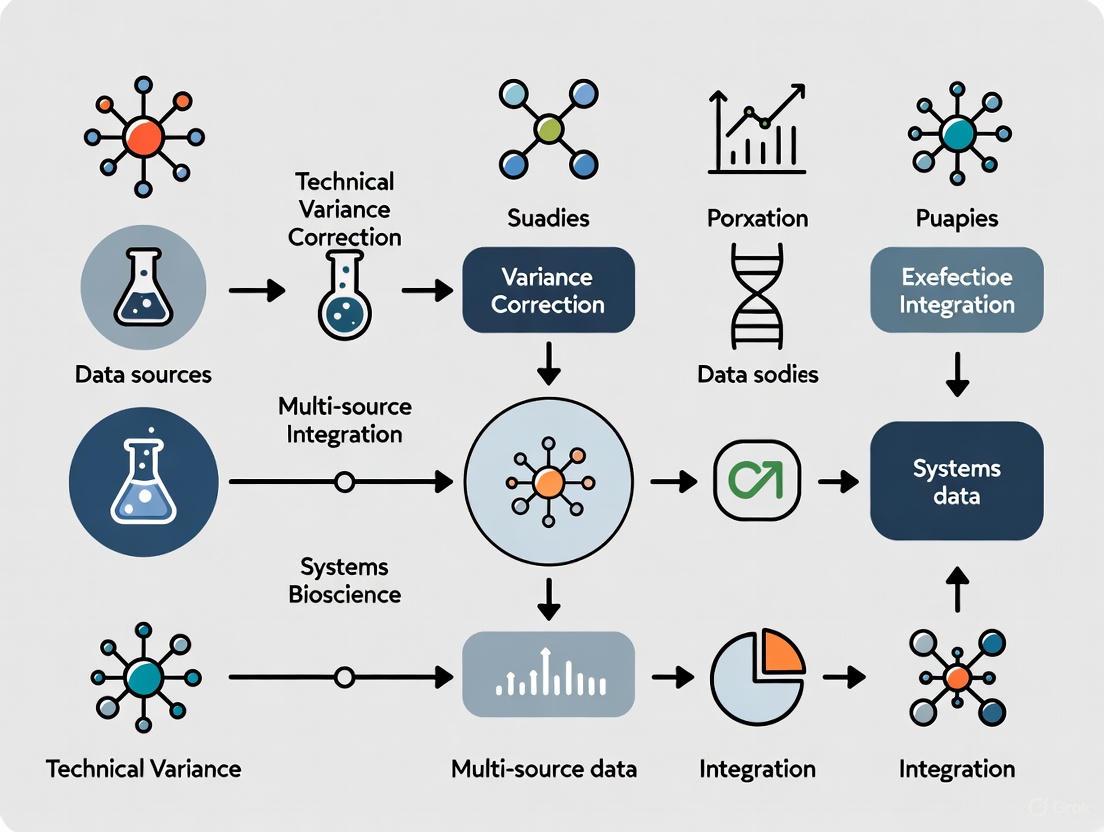
Integrating multi-source data is essential for powerful biomedical analyses, but it introduces technical variances and batch effects that can compromise data integrity and lead to misleading conclusions.
Technical Variance Correction in Multi-Source Data Integration: Strategies for Robust Biomedical Discovery
Abstract
Integrating multi-source data is essential for powerful biomedical analyses, but it introduces technical variances and batch effects that can compromise data integrity and lead to misleading conclusions. This article provides a comprehensive framework for researchers and drug development professionals to navigate the challenges of technical variance correction. We explore the foundational concepts and profound impact of batch effects, detail current methodologies and algorithms for their mitigation, and present advanced troubleshooting strategies for complex, real-world scenarios. The guide concludes with a comparative analysis of validation frameworks and performance metrics, offering practical insights for achieving reliable, reproducible data integration in omics studies and clinical research.
Understanding Batch Effects: The Hidden Challenge in Multi-Source Data
Defining Technical Variance and Batch Effects in Omics Data
Frequently Asked Questions (FAQs)
FAQ 1: What is the fundamental difference between technical variance and batch effects?
- Technical Variance: Refers to the noise or uncertainty inherent in the measurement process of individual biological samples. This is often assessed by measuring the same sample multiple times (technical replicates). High technical variance can obscure true biological signals [1].
- Batch Effects: Are larger-scale technical variations that are systematically introduced when samples are processed in different groups (batches). These batches can be defined by different times, laboratory personnel, reagent lots, sequencing machines, or analysis pipelines. Batch effects can confound biological factors of interest and lead to misleading conclusions if not properly addressed [2] [3] [4].
FAQ 2: What are the real-world consequences of uncorrected batch effects?
The impact of batch effects is profound and can extend beyond the laboratory:
- Incorrect Conclusions: Batch effects have been known to cause shifts in patient risk calculations, leading to incorrect treatment decisions. In one case, this resulted in 162 patients being misclassified, with 28 receiving incorrect or unnecessary chemotherapy [2] [3].
- Irreproducibility: Batch effects are a paramount factor contributing to the "reproducibility crisis" in science. They have led to the retraction of high-profile articles when key results could not be reproduced after a change in reagent batches [2] [3].
- Spurious Findings: In differential expression analysis, batch-correlated features can be erroneously identified as significant, especially when batch and biological outcomes are correlated [2] [3].
FAQ 3: Can I correct for batch effects if my study design is unbalanced or confounded?
This is one of the most challenging scenarios. In a balanced design, where biological groups are evenly represented across batches, many correction algorithms (e.g., ComBat, Harmony) can be effective [5] [6]. However, in a confounded design, where a biological group is completely processed in a single batch, it becomes nearly impossible for most algorithms to distinguish technical variation from true biological signal. In such cases, correction may remove the biological effect of interest [6] [4].
- Recommended Solution: The most effective strategy for confounded designs is a ratio-based approach. This involves concurrently profiling one or more common reference materials (e.g., standardized control samples) in every batch. Study sample values are then scaled relative to the reference, effectively canceling out batch-specific technical noise [6].
FAQ 4: How can I visualize complex omics data with multiple values per node on a network?
Traditional network visualization tools like Cytoscape typically allow only one data row per node. The Omics Visualizer app for Cytoscape was designed to overcome this limitation. It allows you to import data tables with multiple rows for the same gene or protein (e.g., different post-translational modification sites or conditions) and visualize them on networks using pie or donut charts directly on the nodes [7].
Troubleshooting Guides
Guide 1: Diagnosing and Mitigating Technical Variance
Problem: High technical variance across replicate measurements is obscuring biological signals in differential expression analysis.
Investigation & Solution:
- Step 1: Quantify Replicate Variance. Instead of simply averaging technical replicates, use methods that incorporate their variance into downstream statistics. The information on measurement uncertainty is often lost in averaging but can be highly informative [1].
- Step 2: Apply Variance-Exploiting Statistics. Use tools like RepExplore, which employs the Probability of Positive Log Ratio (PPLR) statistic. PPLR uses a variational Expectation-Maximization algorithm to model both point estimates and variation across replicates, providing a more robust ranking of differentially expressed biomolecules compared to standard methods like the empirical Bayes moderated t-statistic (eBayes) [1].
- Step 3: Visualize to Validate. Generate whisker plots for top-ranked biomolecules. A reliable differential expression signal should show minimal overlap in the value ranges of technical replicates across sample groups [1].
Guide 2: A Step-by-Step Protocol for Batch Effect Correction Using a Ratio-Based Approach
Objective: To effectively remove batch effects in a large-scale multi-omics study, even in confounded scenarios.
Experimental Workflow:
Diagram: Ratio-Based Batch Correction Workflow
Methodology:
- Select Reference Material: Choose well-characterized, stable reference materials. In the Quartet Project, suites of multiomics reference materials (DNA, RNA, protein, metabolite) are derived from the same B-lymphoblastoid cell lines, providing a gold standard for cross-batch comparability [6].
- Concurrent Profiling: In every batch of your experiment (whether defined by time, lab, or platform), profile your study samples alongside aliquots of the same reference material.
- Data Generation: Generate your omics data (transcriptomics, proteomics, metabolomics) for all samples and references as usual.
- Ratio Calculation: For each feature (e.g., gene, protein) in each study sample, transform the absolute intensity value (
I_study) into a ratio relative to the value of the reference material (I_reference). This can be simply:Ratio = I_study / I_reference. This scaling step effectively normalizes out batch-specific fluctuations [6]. - Downstream Analysis: Use the ratio-scaled data for all integrated analyses, such as identifying differentially expressed features, building predictive models, or sample clustering. This dataset is now corrected for batch effects.
Guide 3: Preparing Data for Batch Effect Analysis in Bioinformatics Platforms
Problem: Errors occur when uploading omics data into analysis platforms (e.g., Omics Playground) for batch correction.
Solution: Adhere to strict formatting rules:
- File Format: Provide data as comma-separated values (CSV) files [8].
- Expression Matrix (
counts.csv): - Sample Information Matrix (
samples.csv):- The first column contains sample names that exactly match the expression matrix.
- Subsequent columns define phenotypes and batch groups. Do not use purely numerical values for phenotypes (e.g., use "Age_Group" instead of "50"); the platform requires discrete ranges with at least one alphabetical character [8].
Research Reagent Solutions
Table: Essential Reagents and Resources for Managing Technical Variance and Batch Effects
| Item Name | Function/Description | Application Context |
|---|---|---|
| Quartet Reference Materials | Matched DNA, RNA, protein, and metabolite materials derived from four related cell lines. Serves as a multi-omics benchmark for cross-batch and cross-platform normalization [6]. | Large-scale multi-omics studies, quality control, and batch effect correction using the ratio-based method. |
| Common Reference Sample | A standardized control sample (can be commercial or lab-generated) included in every processing batch. Enables ratio-based scaling to correct for inter-batch variation [6]. | Any omics study design where samples are processed in multiple batches. Critical for confounded study designs. |
| RepExplore Web Service | A tool that uses technical replicate variance to compute more reliable differential expression statistics (PPLR), rather than discarding this information through averaging [1]. | Analyzing proteomics and metabolomics datasets with technical replicates to improve statistical robustness. |
| Omics Visualizer App | A Cytoscape app that allows visualization of complex omics data (e.g., multiple PTM sites per protein) on biological networks using pie or donut charts [7]. | Network biology and pathway analysis when data has multiple measurements per biological entity. |
Performance Metrics for Batch Effect Correction
Table: Quantitative Metrics for Evaluating Batch Effect Correction Algorithms (BECAs)
| Performance Metric | What It Measures | Interpretation |
|---|---|---|
| Signal-to-Noise Ratio (SNR) | The ability of the method to separate biological groups after correction [6]. | A higher SNR indicates better preservation of biological signal while removing technical noise. |
| Differentially Expressed Feature (DEF) Accuracy | The accuracy in identifying true positive and true negative DEFs between biological conditions [6]. | Assesses whether correction improves the reliability of downstream differential analysis. |
| Predictive Model Robustness | The performance and stability of predictive models (e.g., classifiers) built on the corrected data [6]. | Indicates the practical utility of the corrected data for building reproducible biomarkers. |
| Clustering Accuracy | The ability to accurately cluster cross-batch samples by their true biological origin (e.g., donor) rather than by batch [6]. | A direct measure of successful data integration and batch effect removal. |
Integrating data from different laboratories, experiments, or omics platforms is fundamental to modern biological research and drug development. However, this process is plagued by technical variance—unwanted systematic variations introduced by differing experimental conditions—which can lead to irreproducible findings and misleading scientific conclusions. This technical support article outlines the sources of this variance and provides tested methodologies for its correction, enabling more reliable data integration and meta-analysis.
FAQs on Technical Variance and Data Integration
1. What is the greatest source of technical variance in experimental data? Evidence from a multisite assessment study using identical protocols and reagents revealed that the most significant source of technical variability occurs between different laboratories. In high-content cell phenotyping experiments, lab-to-lab variability was a greater source of error than variability between persons, experiments, or technical replicates within the same lab [9].
2. Can't we just combine datasets from different labs directly? No, direct meta-analysis of primary data from different laboratories often provides low value due to strong batch effects [9]. However, this variability can be markedly improved through batch effect removal strategies, which make the data suitable for combined analysis [9].
3. What is a more reliable alternative to "absolute" feature quantification? Research from the Quartet Project for multi-omics integration has identified absolute feature quantification as a root cause of irreproducibility. They advocate for a paradigm shift to a ratio-based profiling approach, where the feature values of a study sample are scaled relative to those of a concurrently measured common reference sample. This method produces data that is more reproducible and comparable across batches, labs, and platforms [10].
4. What are the main strategies for integrating diverse data sources? The two primary architectural strategies are ETL (Extract, Transform, Load) and ELT (Extract, Load, Transform). ETL involves transforming data into a clean, structured format before loading it into a destination and is ideal for structured data and compliance-heavy workflows. ELT loads raw data directly into a powerful destination (like a cloud data warehouse) where transformation occurs later; this is better for large, messy datasets and offers more flexibility [11] [12].
Troubleshooting Guides
Problem 1: Inability to Reproduce Findings from Another Laboratory
Symptoms: Statistical significance is lost when analysis is repeated on data generated in your lab, or clustering of samples is inconsistent.
Solution: Implement a Common Reference & Ratio-Based Scaling
- Acquire Common Reference Materials: Use publicly available and well-characterized multi-omics reference materials, such as those from the Quartet Project, which provide DNA, RNA, protein, and metabolites from the same source with built-in biological truths [10].
- Concurrent Measurement: In every batch of experiments, measure the common reference sample alongside your study samples.
- Calculate Ratios: Derive your final quantitative values by scaling the absolute feature values of your study samples relative to those of the common reference sample on a feature-by-feature basis [10]. This corrects for inter-batch and inter-lab variation.
Problem 2: Poor Data Integration Leading to Incorrect Sample Grouping
Symptoms: Multi-omics data fails to cluster samples correctly according to known biological groups; principal component analysis (PCA) shows strong separation by batch instead of phenotype.
Solution: A Combined Wet-Lab and Computational Batch Correction Workflow
- Standardize Procedures: Before integration, minimize initial variance by using standardized protocols and key reagents across all data generation sites [9].
- Quantify Variance Sources: Use a Linear Mixed Effects (LME) model to quantify the variability at each hierarchical level (e.g., cell, replicate, experiment, person, lab). This helps identify the biggest sources of noise [9].
- Apply Batch Effect Removal: Apply computational batch-effect correction algorithms (e.g., ComBat, limma) to the data, using the batch identifier (e.g., Lab ID) as a covariate. This step is crucial for enabling reliable meta-analyses of image-based or omics datasets from different sources [9].
Key Experimental Protocols
Objective: To systematically quantify biological and technical variability in a nested experimental design.
Methodology:
- Nested Design: A minimum of three independent laboratories participate. At each lab, three different operators perform three independent experiments. Each experiment includes control and perturbation conditions (e.g., ROCK inhibitor), with three technical replicates per condition.
- Standardization: All labs receive an identical, detailed protocol, the same cell line (e.g., HT1080 fibrosarcoma), and all key reagents.
- Data Generation: Acquire time-lapse images (e.g., 5-min intervals for 6 hours) for all conditions.
- Centralized Processing: Transfer all raw images to a single location for uniform segmentation and feature extraction (e.g., using CellProfiler and custom Matlab scripts) to extract variables describing cell morphology and dynamics.
- Statistical Analysis: Apply a Linear Mixed Effects (LME) model with a hierarchical structure of nested random intercepts to partition the total variance for each measured variable into components from the different levels (temporal, cell, technical replicate, experiment, person, laboratory).
Objective: To generate reproducible and comparable multi-omics data suitable for integration across batches and platforms.
Methodology:
- Material Selection: Obtain suites of multi-omics reference materials (DNA, RNA, protein, metabolites) derived from the same source, such as the immortalized cell lines from the Quartet Project.
- Experimental Design: In each measurement batch (e.g., for LC-MS/MS proteomics or RNA-seq), include the designated common reference sample (e.g., sample D6 from the Quartet) alongside the study samples.
- Absolute Quantification: Perform standard absolute quantification of all features (e.g., protein or gene expression levels) for all samples, including the common reference.
- Ratio Calculation: For each feature in every study sample, calculate a ratio by dividing its absolute value by the corresponding absolute value in the common reference sample. This creates a new, normalized dataset.
- Quality Control: Use built-in truths (e.g., Mendelian relationships in the Quartet family) and metrics like Signal-to-Noise Ratio (SNR) to evaluate the proficiency of data generation and integration.
Table 1: Sources of Technical Variability in High-Content Imaging [9]
| Source of Variability | Relative Contribution | Impact on Meta-Analysis |
|---|---|---|
| Between Laboratories | Major Source | Prevents direct meta-analysis without correction |
| Between Persons | Lower than lab-to-lab | Contributes to overall technical noise |
| Between Experiments | Lower than person-to-person | Contributes to overall technical noise |
| Between Technical Replicates | Lowest | Contributes to overall technical noise |
Table 2: Quartet Project QC Metrics for Multi-Omics Integration [10]
| QC Metric | Application | Purpose |
|---|---|---|
| Mendelian Concordance Rate | Genomic Variant Calling | Proficiency testing for DNA sequencing |
| Signal-to-Noise Ratio (SNR) | Quantitative Omics Profiling | Evaluate measurement precision for RNA, protein, metabolites |
| Sample Classification Accuracy | Vertical Integration | Assess ability to correctly cluster samples based on all omics data |
| Central Dogma Validation | Vertical Integration | Assess ability to identify correct DNA->RNA->Protein relationships |
The Scientist's Toolkit: Key Research Reagent Solutions
Table 3: Essential Materials for Technical Variance Correction
| Item | Function | Example |
|---|---|---|
| Common Reference Materials | Provides a stable benchmark across experiments and labs to enable ratio-based profiling and cross-lab standardization. | Quartet Project multi-omics reference materials (DNA, RNA, protein, metabolites) [10]. |
| Standardized Cell Line | Minimizes biological variance at the source in cell-based assays, allowing technical variance to be isolated and measured. | HT1080 fibrosarcoma cells stably expressing fluorescent markers [9]. |
| Detailed Common Protocol | Reduces operator-induced variability by ensuring all participants follow the same precise steps for sample preparation and data acquisition. | A shared, detailed protocol distributed to all participating laboratories [9]. |
| Batch Effect Correction Algorithms | Computational tools that remove unwanted systematic variation associated with different batches or labs, making datasets combinable. | Tools like ComBat, limma, or other normalization methods. |
| Centralized Data Processing Pipeline | Eliminates variance introduced by different analysis methods; ensures all data is processed identically. | Uniform CellProfiler pipeline and Matlab scripts run by a single lab [9]. |
Batch effects are systematic technical variations introduced during the collection and processing of high-throughput data, which are unrelated to the biological objectives of a study. These unwanted variations can arise at virtually every stage of an experiment, from initial study design to sample preparation and data analysis [3] [2]. In the context of multi-source data integration research, identifying and mitigating batch effects is not merely a preprocessing step but a fundamental requirement for ensuring data reliability and reproducibility. The profound negative impact of batch effects includes diluted biological signals, reduced statistical power, and—in the worst cases—misleading or irreproducible findings that can invalidate research conclusions and even affect clinical decisions [3]. This guide details the common sources of batch effects and provides practical troubleshooting advice to help researchers manage these challenges effectively.
What Are Batch Effects and Why Do They Matter?
Batch effects are technical biases that confound data analysis, introduced by differences in machines, experimenters, reagents, processing times, or environmental conditions [13]. In multi-omics studies, these effects are particularly complex because they involve data types measured on different platforms with different distributions and scales [3].
The consequences of uncorrected batch effects are severe. They can:
- Lead to incorrect conclusions, such as falsely identifying genes, proteins, or metabolites as differentially expressed [3].
- Cause irreproducibility, a paramount concern in scientific research, resulting in retracted articles and economic losses [3] [2].
- Skew predictive models, leading to inaccurate drug target identification or incorrect patient diagnoses [13].
The table below summarizes the common sources of batch effects encountered during different phases of a high-throughput study.
Table 1: Common Sources of Batch Effects in Omics Studies
| Stage | Source | Description | Affected Omics Types |
|---|---|---|---|
| Study Design | Flawed or Confounded Design [3] [2] | Samples not randomized; batch variable correlated with biological variable of interest (e.g., all controls processed in one batch). | Common to all |
| Minor Treatment Effect Size [3] [2] | Small biological effect sizes are harder to distinguish from technical variations. | Common to all | |
| Sample Preparation & Storage | Protocol Procedure [3] [2] | Variations in centrifugal force, time, and temperature prior to centrifugation during plasma separation. | Common to all |
| Sample Storage Conditions [3] | Variations in storage temperature, duration, and number of freeze-thaw cycles. | Common to all | |
| Reagent Lot Variability [14] | Using different lots of chemicals, enzymes, or kits with varying purity and efficiency. | Common to all | |
| Data Generation | Sequencing Platform Differences [14] | Using different machines (e.g., Illumina HiSeq vs. NovaSeq) or different calibrations. | Transcriptomics |
| Library Preparation Artifacts [14] | Variations in reverse transcription efficiency, amplification cycles, or personnel. | Bulk & single-cell RNA-seq | |
| Instrument Drift [15] | Changes in instrument performance (e.g., mass spectrometer sensitivity) over time. | Proteomics, Metabolomics |
How to Detect and Diagnose Batch Effects
Before applying any correction, it is crucial to assess whether your data suffers from batch effects.
Visualization Techniques
- Principal Component Analysis (PCA): Plot your data using the top principal components. If samples cluster strongly by batch (e.g., processing date) rather than by biological source, batch effects are likely present [16] [13].
- t-SNE or UMAP: Overlay batch labels on these nonlinear dimensionality reduction plots. Clustering by batch instead of biological condition (e.g., cell type) indicates a batch effect [16].
Table 2: Quantitative Metrics for Batch Effect Assessment
| Metric | What It Measures | Interpretation |
|---|---|---|
| k-nearest neighbor Batch Effect Test (kBET) [17] | Local mixing of batches in the data. | A higher acceptance rate indicates better batch mixing. |
| Average Silhouette Width (ASW) [14] | How similar a sample is to its own batch vs. other batches. | Values closer to 0 indicate good integration; values closer to 1 or -1 indicate strong batch or biological separation. |
| Adjusted Rand Index (ARI) [14] | Similarity between two clusterings (e.g., before and after correction). | Higher values indicate that cell type/biological clusters are preserved post-correction. |
| Local Inverse Simpson's Index (LISI) [14] | Diversity of batches in a local neighborhood. | Higher LISI scores indicate better batch mixing. |
Methodologies for Batch Effect Correction
Choosing the right Batch Effect Correction Algorithm (BECA) is highly context-dependent. The following workflows are commonly used:
Batch Effect Correction Workflow
Selecting a Batch Effect Correction Algorithm
Table 3: Common Batch Effect Correction Algorithms (BECAs) and Their Applications
| Algorithm | Typical Use Case | Key Principle | Strengths | Limitations |
|---|---|---|---|---|
| ComBat [13] [14] | Bulk transcriptomics/proteomics with known batches. | Empirical Bayes framework to adjust for known batch variables. | Simple, widely used, effective for known, additive effects. | Requires known batch info; may not handle complex non-linear effects. |
| limma removeBatchEffect [13] [14] | Bulk transcriptomics with known batches. | Linear modeling to remove batch effects. | Efficient, integrates well with differential expression workflows. | Assumes known, additive batch effects; less flexible. |
| SVA [14] | Bulk transcriptomics with unknown batches. | Estimates hidden sources of variation (surrogate variables). | Useful when batch variables are unknown or partially observed. | Risk of removing biological signal if not carefully modeled. |
| Harmony [16] [18] | Single-cell RNA-seq, multi-omics data integration. | Iterative clustering and correction in a reduced-dimensional space. | Effective for complex datasets, preserves biological variation. | Less scalable for extremely large datasets. |
| scANVI [16] | Single-cell RNA-seq (complex batch effects). | Deep generative model using variational inference. | High performance on complex integrations. | Computationally intensive. |
| RUV [13] | Various omics data with unwanted variation. | Uses control genes/samples or replicate samples to remove unwanted variation. | Flexible, several variants available (e.g., RUV-III-C). | Requires negative controls or replicates. |
Critical Considerations to Avoid Over-Correction
A major risk in batch effect correction is the removal of true biological signal. Watch for these signs of over-correction [16]:
- Distinct cell types are clustered together on a UMAP or t-SNE plot after correction.
- A complete overlap of samples from very different biological conditions, suggesting that meaningful differences have been erased.
- Cluster-specific markers are comprised of genes with widespread high expression (e.g., ribosomal genes) rather than biologically meaningful markers.
Frequently Asked Questions (FAQs)
Q1: I'm integrating multiple single-cell RNA-seq datasets. Which batch correction method should I use first? A: Benchmarking studies suggest starting with Harmony due to its good balance of performance and runtime, or scANVI for top-tier performance if computational resources allow [16]. Always try multiple methods and validate them rigorously, as the best method can be dataset-specific.
Q2: How can I tell if I have over-corrected my data and removed biological signals? A: Check your corrected data for key indicators: distinct cell types that should be separate are now clustered together; samples from drastically different conditions (e.g., healthy vs. diseased) show complete overlap; and your differential expression analysis yields nonspecific marker genes [16]. Always compare pre- and post-correction visualizations and metrics.
Q3: At which level should I correct batch effects in my proteomics data: precursor, peptide, or protein? A: A recent 2025 benchmarking study indicates that protein-level correction is the most robust strategy for mass spectrometry-based proteomics. The process of aggregating precursor/peptide intensities into protein quantities can interact with early-stage correction, making later correction more reliable [15].
Q4: My study design is imbalanced (e.g., different numbers of cells per cell type across batches). How does this affect integration? A: Sample imbalance can substantially impact integration results and their biological interpretation [16]. Standard integration methods may perform poorly. Consult specialized guidelines for imbalanced settings, which may recommend specific tools or parameter adjustments to handle such data structures more effectively.
Q5: Is batch correction always necessary? A: No. First, assess your data using PCA, UMAP, and quantitative metrics. If data from identical biological conditions cluster perfectly together regardless of batch, correction might not be needed. However, if clear batch-driven clustering is observed, correction is essential [16] [14].
The Scientist's Toolkit: Essential Research Reagents and Materials
Table 4: Key Research Reagent Solutions for Batch Effect Mitigation
| Item | Function in Batch Effect Management |
|---|---|
| Universal Reference Materials (e.g., Quartet) [15] | Profiled across all batches and labs to serve as a stable baseline for ratio-based batch correction (e.g., in proteomics). |
| Pooled Quality Control (QC) Samples [15] [14] | A pooled sample run repeatedly across batches to monitor technical variation and instrument drift. |
| Standardized Reagent Lots | Using the same lot number for all critical reagents (enzymes, kits, buffers) throughout a study to minimize a major source of batch variation [14]. |
| Internal Standards (for Metabolomics/Proteomics) | chemically identical, stable isotope-labeled compounds spiked into every sample for signal normalization across runs [14]. |
The Critical Need for Correction in Multi-Omics and Longitudinal Studies
Core Concepts: Understanding Variance and Integration
What are the primary sources of technical variance in multi-omics data? Technical variance in multi-omics data arises from multiple sources, including batch effects from different processing labs or dates, platform-specific noise from different measurement technologies (e.g., different sequencing platforms or mass spectrometers), and the inherent biological and statistical heterogeneity between different omics layers (e.g., genomics, transcriptomics, proteomics) [19] [20]. Each data type has unique noise structures, detection limits, and missing value patterns, which complicate integration [20].
Why is technical variance particularly problematic for longitudinal multi-omics studies? Longitudinal studies involve repeated measurements from the same subjects over time [21]. Technical variance can confound true biological changes over time, making it difficult to distinguish between actual molecular shifts and artifacts introduced by batch effects or platform variability [22] [23] [21]. This is compounded by challenges like participant attrition and non-random missing data, which can bias results if not handled properly [21].
What is the fundamental difference between horizontal and vertical data integration?
- Horizontal Integration (Within-omics): The integration of multiple datasets from a single omics type (e.g., combining RNA-seq data from different labs or batches). Its main goal is to correct for batch effects to enable a unified analysis [19].
- Vertical Integration (Cross-omics): The integration of diverse datasets from multiple omics types (e.g., genomics, proteomics, metabolomics) derived from the same set of samples. This aims to identify interconnected biological networks and multi-layered molecular signatures [19] [24].
Troubleshooting Guides & FAQs
FAQ: Data Generation & QC
Q: How can we assess data quality and integration performance in the absence of a known ground truth? A: The Quartet Project provides a powerful solution by offering multi-omics reference materials derived from a family quartet (parents and monozygotic twins) [19]. This design provides a "built-in truth" through known genetic relationships and the central dogma of biology. Using these materials, labs can employ QC metrics such as the Mendelian concordance rate for genomic variants and the Signal-to-Noise Ratio (SNR) for quantitative profiling to objectively evaluate their proficiency and the reliability of their integration methods [19].
Q: Our lab is new to multi-omics. What is a robust starting approach to minimize technical irreproducibility? A: Evidence suggests a paradigm shift from absolute quantification to ratio-based profiling [19]. This involves scaling the absolute feature values of your study samples relative to a concurrently measured common reference sample (like the Quartet reference materials) on a feature-by-feature basis. This approach has been shown to produce more reproducible and comparable data across batches, labs, and platforms [19].
FAQ: Data Analysis & Integration
Q: A wide array of integration tools exists (e.g., MOFA, DIABLO, SNF). How do I choose the right one? A: The choice depends heavily on your biological question and data structure. The table below summarizes key methods:
Table 1: Comparison of Multi-Omics Data Integration Methods
| Method | Integration Type | Key Characteristic | Best Use Case |
|---|---|---|---|
| MOFA [20] | Unsupervised | Probabilistic Bayesian framework; infers latent factors | Exploratory analysis to discover hidden sources of variation |
| DIABLO [20] | Supervised | Uses phenotype labels for integration and feature selection | Building predictive models for disease subtyping or biomarker discovery |
| SNF [20] | Network-based | Fuses sample-similarity networks from each omics layer | Identifying disease subtypes based on multiple data layers |
| MCIA [20] | Multivariate | Captures co-inertia (shared patterns) across multiple datasets | Simultaneous analysis of more than two datasets to find global patterns |
Q: In our longitudinal study, we have missing data points due to missed visits. How should we handle this? A: Missing data is common in longitudinal research [21]. First, investigate the pattern of missingness (e.g., is it random or related to the study outcome?). For random missingness, statistical techniques like multiple imputation (e.g., using k-nearest neighbors or matrix factorization) can be used to estimate missing values [25] [21]. It is critical to perform sensitivity analyses to understand how your results might change under different assumptions about the missing data [21].
Troubleshooting Guide: Common Integration Pitfalls
Problem: Poor integration results with weak biological signals.
- Potential Cause 1: Strong batch effects are obscuring true biological variation.
- Solution: Apply batch effect correction methods (e.g., ComBat) as a preprocessing step before integration. The use of ratio-based profiling with a common reference can also inherently mitigate this [19] [25].
- Potential Cause 2: The chosen integration method is mismatched to the study goal.
- Solution: Refer to Table 1. If you have a specific outcome to predict (e.g., disease state), use a supervised method like DIABLO. For unbiased exploration, an unsupervised method like MOFA is more appropriate [20].
Problem: Inability to reconcile findings from different omics layers.
- Potential Cause: The analysis is not accounting for the natural, time-lagged flow of biological information (DNA → RNA → Protein).
- Solution: When integrating data, consider the temporal hierarchy of biological regulation. Use the central dogma as a framework for interpreting correlations—for example, a genetic variant should ideally be correlated with RNA and then protein levels, not necessarily directly. The Quartet Project's QC metrics are designed to validate this flow [19].
Experimental Protocols for Variance Correction
Protocol 1: Implementing Ratio-Based Profiling for Multi-Omics QC
This protocol uses a common reference material to correct for technical variance across experiments [19].
I. Research Reagent Solutions Table 2: Essential Materials for Ratio-Based Profiling
| Item | Function |
|---|---|
| Certified Reference Materials (e.g., Quartet Project DNA, RNA, Protein) | Provides a stable, well-characterized ground truth for cross-batch and cross-platform normalization [19]. |
| Study Samples | The experimental samples of interest (e.g., patient cohorts, cell lines). |
| Omics Profiling Platforms | Platforms for sequencing (DNA, RNA), mass spectrometry (proteomics, metabolomics), etc. |
II. Methodology
- Experimental Design: For every batch of study samples processed, include a fixed amount of the common reference material (e.g., Quartet D6) as an internal control.
- Data Generation: Process all samples (study and reference) concurrently using the same reagents, equipment, and protocols.
- Absolute Quantification: Generate absolute feature measurements (e.g., gene counts, protein intensities) for all samples.
- Ratio Calculation: For each feature in every study sample, calculate a ratio relative to the same feature in the concurrently measured reference sample:
Ratio_Study = Absolute_Value_Study / Absolute_Value_Reference. - Data Integration: Use the derived ratios, rather than the absolute values, for all downstream horizontal and vertical integration analyses. This scales the data to a common standard, reducing non-biological variation [19].
The workflow for this protocol is illustrated below.
Protocol 2: A Longitudinal Multi-Omics Analysis Pipeline
This protocol outlines a workflow for a time-series study, such as investigating long-term patient sequelae, correcting for both multi-omics and longitudinal variances [23].
I. Research Reagent Solutions Table 3: Key Materials for Longitudinal Multi-Omics
| Item | Function |
|---|---|
| Longitudinal Patient Cohort | Provides biological samples (e.g., blood, tissue) at multiple pre-defined time points [23]. |
| Matched Control Samples | Healthy controls for baseline comparison and to help distinguish case-specific changes from general variability [23]. |
| Multi-omics Profiling Suites | Platforms for proteomics, metabolomics, etc., applied to all collected samples [23]. |
| Clinical Data Management System (e.g., RedCap) | For structured storage of clinical metadata, sample IDs, and timepoints [21]. |
II. Methodology
- Sample Collection & Storage: Collect samples from patients and controls at all scheduled time points (e.g., 6 months, 1 year, 2 years). Process and aliquot samples using standardized protocols and store them at -80°C to preserve integrity [23] [21].
- Batch-Aligned Profiling: Profile all samples for all omics types. Crucially, distribute samples from all time points and groups (e.g., patient/control) randomly across processing batches to avoid confounding time and batch.
- Preprocessing and Horizontal Integration: For each omics dataset individually, perform quality control, normalization, and batch effect correction. This is the horizontal integration step that creates clean, within-omics datasets [19] [20].
- Vertical Integration & Temporal Modeling: Integrate the cleaned multi-omics datasets using a method appropriate for the question (see Table 1). To model changes over time, employ statistical methods designed for repeated measures (e.g., Generalized Estimating Equations) or machine learning models like Recurrent Neural Networks (RNNs) that can capture temporal dependencies [22] [25].
- Validation: Use the built-in truth from known biological relationships or validate key findings with orthogonal experiments in a separate test cohort [23].
The following diagram maps the logical flow and decision points in this pipeline.
The Scientist's Toolkit
Table 4: Essential Research Reagents and Computational Tools
| Tool / Reagent | Category | Function / Application |
|---|---|---|
| Quartet Project Reference Materials [19] | Reference Material | Provides DNA, RNA, protein, and metabolite standards from immortalized cell lines for objective QC and proficiency testing. |
| MOFA+ [20] | Software Tool | An unsupervised Bayesian method for discovering the principal sources of variation across multiple omics data sets. |
| DIABLO [20] | Software Tool | A supervised integration method to identify multi-omics biomarker panels and predict categorical outcomes. |
| Similarity Network Fusion (SNF) [20] | Software Tool | A network-based method to fuse multiple omics data types into a single sample-similarity network for clustering. |
| ComBat [25] | Statistical Method | Empirically Bayesian framework for adjusting for batch effects in high-dimensional genomic data. |
| R/Bioconductor, Python | Programming Environment | Primary platforms for implementing most statistical and machine learning-based integration and correction methods. |
| RedCap, OpenClinica [21] | Data Management | Secure web-based applications for managing longitudinal clinical and omics metadata. |
A Practical Guide to Batch Effect Correction Algorithms and Their Implementation
In the field of high-throughput genomics and multi-source data integration, technical variance poses a significant challenge to biological discovery. Batch effects—systematic non-biological variations introduced during experimental processes—can obscure genuine biological signals, leading to false positives, reduced statistical power, and compromised reproducibility in downstream analyses. This technical support guide provides a comprehensive overview of four major algorithm families for batch effect correction: ComBat, limma, Harmony, and RUVseq. Designed for researchers, scientists, and drug development professionals, this resource offers practical troubleshooting guidance, experimental protocols, and comparative analyses to facilitate robust data harmonization within multi-study frameworks.
Algorithm Comparison Tables
Table 1: Key Characteristics of Major Batch Effect Correction Algorithms
| Algorithm | Statistical Approach | Primary Data Types | Key Features | Known Limitations |
|---|---|---|---|---|
| ComBat | Empirical Bayes framework [26] | Microarray gene expression, RNA-seq count data (ComBat-seq) [26], MRI-derived measurements [27] | Adjusts for additive and multiplicative batch effects; effective with small sample sizes; borrows information across features [26] | Assumes consistent covariate effects across sites; requires balanced population distributions; can over-correct with unbalanced designs [27] [28] |
| limma | Linear models with empirical Bayes moderation [29] | Microarray, RNA-seq data [29] | Incorporates batch as covariate in linear models; robust differential expression analysis; does not create "corrected" data matrix [28] | Limited to known batch effects; requires careful model specification [29] |
| Harmony | Iterative clustering with dataset correction factors [30] | Single-cell RNA-seq data [30] | Computes corrected dimensionality reduction without modifying expression values; integrates datasets while preserving biological variation [30] | Does not output corrected expression values; insufficient for differential expression in highly divergent samples [30] |
| RUVseq | Factor analysis using controls/replicates [31] [32] | Bulk RNA-seq, single-cell RNA-seq (RUV-III-NB) [32] | Uses negative control genes or pseudo-replicates to estimate unwanted variation; negative binomial GLM for count data [32] | Requires appropriate control genes; can inflate counts with poor parameter choices [31] |
Table 2: Input Requirements and Output Specifications
| Algorithm | Required Inputs | Batch Information | Control Genes/Cells | Output Type |
|---|---|---|---|---|
| ComBat | Normalized expression data [26] | Known batches required [26] | Not required | Batch-adjusted expression matrix [26] |
| limma | Expression data, design matrix [29] | Known batches as covariates [28] | Not required | Model coefficients for downstream analysis [28] |
| Harmony | Dimensionality reduction (PCA) [30] | Metadata columns for integration [30] | Not required | Corrected embeddings, not expression values [30] |
| RUVseq | Count matrix [32] | Can handle unknown batches [32] | Negative control genes or pseudo-replicate sets required [32] | Adjusted counts for downstream analysis [32] |
Frequently Asked Questions
ComBat produces seemingly perfect clustering results. Is this trustworthy?
Perfect clustering after ComBat adjustment may indicate overfitting, especially with unbalanced experimental designs. ComBat uses the biological variable of interest as a covariate in its model, which can potentially bias the data toward the expected outcome. One researcher reported that even with randomly permuted batches, ComBat still produced perfect biological grouping [28].
Troubleshooting Steps:
- Validate with balanced designs: Ensure your experimental design has similar proportions of biological groups across batches [28].
- Perform a permutation test: Randomly shuffle batch labels and re-run ComBat. If you still observe strong clustering by biological group, the correction may be overfitting [28].
- Consider alternative approaches: For unbalanced designs, include batch as a covariate in your final analysis model (e.g., using
limma) rather than pre-correcting the data [28].
How do I choose between negative control genes and pseudo-replicates for RUVseq?
The choice depends on your data type and experimental design. RUVseq uses these elements to estimate unwanted variation without requiring known batch information [32].
Selection Guidelines:
- Negative Control Genes: These are genes whose expression is unaffected by biological conditions of interest but affected by technical variation. Housekeeping genes are commonly used [32]. They are suitable when you have prior knowledge of invariant genes.
- Pseudo-Replicates: These are sets of cells with similar biological states, identified through clustering or known biological labels [32]. Use this approach when reliable control genes are unavailable, particularly in single-cell analyses.
Implementation for Single-Cell Data with RUV-III-NB:
- Single Batch: Cluster cells using graph-based methods (e.g., Louvain algorithm) on normalized counts. Cells in the same cluster form a pseudo-replicate set [32].
- Multiple Batches: Use tools like
scReplicatefrom thescMergepackage to identify mutual nearest clusters (MNCs) across batches [32].
Should I create a batch-corrected dataset or include batch in my analysis model?
This is a fundamental decision with significant implications. Creating a "batch-free" dataset using tools like ComBat replaces original batch effects with estimation errors, which can still confound results [28]. The safer approach, when possible, is to retain the original data and account for batch effects directly in your statistical model.
Recommendations:
- Use limma's covariate approach for differential expression analysis by including batch in the design matrix [28].
- Reserve ComBat-style correction for situations where you must use analysis tools that cannot handle batch effects themselves [28].
- Always document that batch-adjusted data sets are not truly "batch-free" and interpret results with appropriate caution [28].
Why does Harmony not output corrected expression values?
Harmony operates on dimensionality reductions (e.g., PCA) rather than raw expression data. It computes a new, integrated embedding where cells are aligned by biological state rather than technical batch [30]. This is sufficient for clustering and visualization but means you cannot use Harmony-corrected data for differential expression analysis that requires gene-level counts.
Workflow Solutions:
- For clustering and visualization: Use Harmony's embeddings (
harmony_umap) with your preferred methods [30]. - For differential expression: Perform DE testing within biologically matched clusters using the original (unintegrated) counts, while including batch information in your statistical model [30].
Experimental Protocols
ComBat Batch Adjustment Protocol
Materials Needed:
- Normalized gene expression matrix (features × samples)
- Batch covariate vector (categorical)
- Biological covariate matrix (optional, for preserving signals)
Methodology:
- Data Preparation: Ensure data is properly normalized using appropriate methods (e.g., quantile normalization for microarrays) [26].
- Model Specification: ComBat models batch effects using a location-scale framework:
Y_gij = X_i * β_g + γ_gj + δ_gj * ε_gijwhereγ_gjrepresents additive batch effect andδ_gjrepresents multiplicative batch effect for gene g in batch j [26]. - Parameter Estimation: The algorithm uses empirical Bayes to estimate batch effect parameters, borrowing information across genes to stabilize estimates, particularly beneficial with small sample sizes [26].
- Adjustment: Apply the estimated parameters to remove additive and multiplicative batch effects while preserving biological signals of interest [26].
- Validation: Generate PCA plots before and after correction, coloring points by batch and biological group to assess correction effectiveness and signal preservation [28].
RUVseq Normalization Protocol for Single-Cell Data (RUV-III-NB)
Research Reagent Solutions:
- Raw UMI Count Matrix: Input data representing molecular counts per cell.
- Negative Control Genes: Housekeeping genes or other invariant genes unaffected by biological variables.
- Pseudo-Replicate Sets: Groups of cells with similar biological states.
Methodology:
- Data Modeling: RUV-III-NB models counts
y_gcfor gene g and cell c as Negative Binomial (for UMI data):y_gc ~ NB(μ_gc, ψ_g)[32] - GLM Framework: Uses a generalized linear model with log link function:
log(μ_g) = X * α_g + W * β_g + ζ_gwhere W represents unobserved unwanted factors and X is the pseudo-replicate design matrix [32]. - Parameter Estimation: Implements a double-loop iteratively re-weighted least squares (IRLS) algorithm to estimate parameters, including unobserved unwanted factors [32].
- Adjustment: Returns Percentile-Adjusted Counts (PAC) suitable for downstream differential expression analysis [32].
- Validation: Assess integration quality using clustering metrics and differential expression concordance with independent datasets [32].
The Scientist's Toolkit
Table 3: Essential Research Reagents and Materials
| Item | Function | Example Applications |
|---|---|---|
| Negative Control Genes | Genes used to estimate technical variation unaffected by biology [32] | RUVseq normalization; identifying housekeeping genes for scRNA-seq [32] |
| Pseudo-Replicate Sets | Groups of cells with homogeneous biology across batches [32] | RUV-III-NB normalization; scRNA-seq data integration [32] |
| Batch Covariate Vector | Categorical variable indicating processing batch for each sample [26] | ComBat adjustment; limma model specification [26] [28] |
| Biological Covariate Matrix | Design matrix specifying biological variables of interest [26] | Preserving biological signals during ComBat correction [26] |
| Dimensionality Reduction | PCA or other embeddings representing high-dimensional data [30] | Harmony integration; clustering-based pseudo-replicate definition [30] |
Workflow Visualization
Algorithm Selection Workflow for Batch Effect Correction
ComBat Empirical Bayes Methodology Workflow
The Rising Promise of Ratio-Based Scaling and Reference Materials
In multi-source data integration research, technical variances introduced by different platforms, laboratories, or batches are a major obstacle to obtaining reliable, reproducible results. Ratio-based scaling, supported by well-characterized reference materials, has emerged as a powerful methodology to correct these batch effects and enable robust data integration. This approach involves scaling the absolute feature values of study samples relative to those of a concurrently measured common reference sample, transforming data into a comparable ratio scale that minimizes unwanted technical variation [10]. This technical support center provides practical guidance for implementing these methods in your research.
Troubleshooting FAQs
1. Why does my multi-omics data show strong batch effects despite using standard normalization?
Standard normalization methods often fail when batch effects are completely confounded with biological factors of interest. A primary cause is reliance on absolute feature quantification, which is highly susceptible to technical variation across labs and platforms [10]. Ratio-based profiling, which scales study sample values relative to a common reference material measured in every batch, has proven significantly more effective for removing these confounding technical variations [33].
2. What are the essential characteristics of effective reference materials?
Effective reference materials should have several key characteristics [10]:
- Built-in Ground Truth: Derived from sources with known biological relationships (e.g., family quartets, monozygotic twins) that provide a factual basis for validation.
- Multi-omics Compatibility: Matched sets of DNA, RNA, protein, and metabolites from the same source enable cross-omics integration.
- Scalable Production: Large quantities (1,000+ vials) allow for consistent use across large-scale, multi-site studies.
- Technology Breadth: Suitable for a wide range of platforms including sequencing, methylation arrays, and mass spectrometry.
3. How do I validate the success of ratio-based batch effect correction?
You can employ multiple validation strategies based on your reference materials [10]:
- Sample Classification Accuracy: Assess the ability to correctly cluster samples into their known biological groups (e.g., different individuals or genetically related clusters).
- Central Dogma Validation: Evaluate whether identified cross-omics feature relationships follow the expected information flow from DNA to RNA to protein.
- Predictive Model Robustness: Test the performance of predictive models built on the corrected data across different batches.
Key Experimental Protocols
Protocol 1: Implementing Ratio-Based Profiling with Reference Materials
This protocol outlines the core methodology for ratio-based scaling, which has been shown to be highly effective for batch effect correction in large-scale multi-omics studies [33].
Materials Needed
- Common reference materials (e.g., Quartet Project reference materials)
- Study samples
- Appropriate multi-omics profiling platforms
Procedure
- Experimental Design: Include the common reference material in every batch of experiments.
- Data Generation: Process both reference materials and study samples concurrently using identical protocols.
- Ratio Calculation: For each feature, calculate the ratio of the study sample value to the reference material value.
- Data Integration: Use the ratio-scaled data for all downstream integrative analyses.
Table 1: Comparison of Data Quantification Approaches
| Aspect | Absolute Quantification | Ratio-Based Scaling |
|---|---|---|
| Batch Effect Sensitivity | High | Low |
| Cross-Platform Reproducibility | Limited | High |
| Data Integration Capability | Challenging | Facilitated |
| Required Components | None | Common Reference Materials |
| Ground Truth Validation | Difficult | Built-in via reference design |
Protocol 2: Evaluating Multi-omics Data Integration Performance
This validation protocol utilizes the built-in truths provided by properly designed reference materials to assess integration quality [10].
Procedure
Horizontal Integration Assessment:
- Calculate Mendelian concordance rates for genomic data
- Compute signal-to-noise ratios for quantitative omics data
- Compare results across batches and platforms
Vertical Integration Assessment:
- Perform multi-omics clustering to verify sample classification accuracy
- Analyze cross-omics feature relationships against central dogma expectations
- Evaluate biological network reconstruction accuracy
Research Reagent Solutions
Table 2: Essential Reference Materials for Multi-omics Research
| Material Type | Key Function | Example Products |
|---|---|---|
| DNA Reference Materials | Genomic variant calling validation and standardization | Quartet DNA References (GBW 099000-099007) [10] |
| RNA Reference Materials | Transcriptomics data normalization and integration | Quartet RNA References [10] |
| Protein Reference Materials | Proteomics data standardization across platforms | Quartet Protein References from immortalized LCLs [10] |
| Metabolite Reference Materials | Metabolomics data batch effect correction | Quartet Metabolite References [10] |
| Multi-omics Reference Suites | Cross-omics integration validation | Quartet matched DNA, RNA, protein, metabolites [10] |
Data Visualization and Workflows
Ratio-Based Profiling Workflow
Multi-omics Integration Quality Control
Batch-Effect Reduction Trees (BERT) is a high-performance data integration method designed for large-scale analyses of incomplete omic profiles. It effectively combines data from multiple sources, which is often afflicted by technical biases (batch effects) and missing values, hindering quantitative comparison. BERT addresses the computational efficiency challenges and data incompleteness prevalent in contemporary large-scale data integration tasks [34].
Key Problem it Solves: Traditional batch-effect correction methods like ComBat and limma require that each batch has at least two numerical values per feature, a condition often violated in real-world, incomplete omic data. BERT relaxes this requirement, allowing for the robust integration of datasets with arbitrary missing value patterns [34].
Frequently Asked Questions (FAQs)
Q1: What types of data is BERT designed for? BERT is designed for high-dimensional omic data (e.g., from proteomics, transcriptomics, metabolomics) and other data types like clinical data. It is particularly effective for data integration tasks involving many datasets (up to 5000 in the research) that suffer from batch effects and a high ratio of missing values [34].
Q2: How does BERT handle missing data compared to other methods? Unlike many methods that require data imputation, BERT is an imputation-free framework. It uses a tree-based approach to propagate features with missing values, retaining significantly more numeric values than other methods like HarmonizR. In simulations with 50% missing values, BERT retained all numeric values, while HarmonizR exhibited up to 88% data loss depending on its blocking strategy [34].
Q3: Can BERT account for different experimental conditions or covariates? Yes, BERT allows users to specify categorical covariates (e.g., biological conditions like sex or tumor type). The algorithm passes these covariates to the underlying batch-effect correction methods (ComBat/limma) at each step, ensuring that batch effects are removed while biologically relevant covariate effects are preserved [34].
Q4: My data has unique samples not found in other batches. Can BERT handle this? Yes, BERT includes a feature for user-defined references. You can designate specific samples (e.g., a control group present in multiple batches) as references. BERT uses these to estimate the batch effect, which is then applied to correct all samples, including non-reference samples with unknown or unique covariate levels [34].
Q5: What are the computational performance advantages of BERT? BERT is engineered for high performance. It decomposes the integration task into independent sub-trees that can be processed in parallel, leveraging multi-core and distributed-memory systems. This architecture has demonstrated up to an 11x runtime improvement compared to HarmonizR [34].
Troubleshooting Common Experimental Issues
Problem: Poor Integration Quality After Running BERT
- Symptoms: Biological groups do not cluster correctly in downstream analysis; batch effects appear to remain.
- Possible Causes & Solutions:
- Cause 1: Incorrect covariate specification.
- Solution: Verify that the covariate levels (e.g., 'tumor', 'control') are accurately defined for every sample in your input data matrix.
- Cause 2: Severely imbalanced design, where certain biological conditions are unique to a single batch.
- Solution: If available, leverage the reference sample feature. Designate a subset of samples with known conditions that are shared across as many batches as possible to anchor the batch-effect correction [34].
- Cause 3: The data has a very high proportion of missing values, even for BERT's robust pre-processing.
- Solution: Consult the BERT quality control output, which reports metrics like the Average Silhouette Width (ASW) for both batch and biological labels. A low ASW label score after correction may indicate fundamental issues with the data structure for integration.
- Cause 1: Incorrect covariate specification.
Problem: BERT Execution is Slower Than Expected
- Symptoms: The data integration process takes a very long time on a multi-core machine.
- Possible Causes & Solutions:
- Cause 1: Suboptimal parallelization parameters.
- Solution: The BERT algorithm uses parameters (P, R, S) to control parallelization. These do not affect the output quality but can impact speed. Adjust the number of initial BERT processes (
P) and the reduction factor (R) based on your system's available cores [34].
- Solution: The BERT algorithm uses parameters (P, R, S) to control parallelization. These do not affect the output quality but can impact speed. Adjust the number of initial BERT processes (
- Cause 2: Using the ComBat backend when limma is sufficient.
- Solution: The limma backend is generally faster. In simulation studies, limma showed an average 13% runtime improvement over ComBat. Use ComBat only if your specific analysis requires it [34].
- Cause 1: Suboptimal parallelization parameters.
Problem: Error During Runtime or Job Failure
- Symptoms: BERT fails to run and returns an error message.
- Possible Causes & Solutions:
- Cause 1: Input data is not in an accepted format.
- Solution: BERT accepts
data.frameandSummarizedExperimentobjects. Ensure your data is loaded as one of these supported types [34].
- Solution: BERT accepts
- Cause 2: A feature has only a single numeric value in one batch after pre-processing.
- Solution: BERT's pre-processing removes singular numerical values from individual batches to meet the requirements of ComBat/limma. This typically affects a very small fraction (<1%) of values. Check the BERT log for details on removed values [34].
- Cause 1: Input data is not in an accepted format.
Performance and Data Retention Metrics
The following table summarizes quantitative benchmarks comparing BERT to HarmonizR, the only other method for incomplete omic data integration, from simulation studies involving 10 repetitions with 6000 features and 20 batches [34].
| Performance Metric | BERT | HarmonizR (Full Dissection) | HarmonizR (Blocking of 4 Batches) |
|---|---|---|---|
| Data Retention | Retained 100% of numeric values across all missing value ratios. | Up to 27% data loss with increasing missing values. | Up to 88% data loss with increasing missing values. |
| Runtime | Faster than HarmonizR for all tests. Execution time decreases with more missing values. | Slower than BERT. | Slower than BERT, even with blocking. |
| Backend Choice | limma: ~13% faster on average.ComBat: More computationally intensive. | N/A | N/A |
Experimental Protocols for Key Tasks
Protocol 1: Simulating a Data Integration Benchmark This protocol is based on the simulation studies used to characterize BERT [34].
- Data Generation: Generate a complete data matrix. The published study used datasets with 6000 features and 20 batches, with 10 samples per batch.
- Introduce Biological Conditions: Simulate two distinct biological conditions (e.g., Label A and Label B) across the samples.
- Introduce Missing Values: Randomly select a subset of features to be completely missing in each batch, following a Missing Completely at Random (MCAR) scheme. Vary the ratio of missing values (e.g., from 0% to 50%).
- Apply BERT: Run the BERT integration on the simulated, incomplete dataset.
- Validation: Calculate the Average Silhouette Width (ASW) using the formula below to assess the quality of integration, where a higher ASW label score and a lower ASW batch score indicate successful correction.
$$ASW={\sum }{i=1}^{N}\frac{{b}{i}-{a}{i}}{\max ({a}{i},{b}_{i})},\quad ASW\in [-1,1]$$
N denotes the total number of samples, and a_i, b_i indicate the mean intra-cluster and mean nearest-cluster distances of sample i with respect to its biological condition (ASW label) or batch of origin (ASW batch) [34].
Protocol 2: Integrating Experimental Data with Covariates and References This protocol outlines the steps for a real-world integration task using BERT's advanced features [34].
- Data Inventory: Compile all datasets (batches) to be integrated. Document the known covariate levels (e.g., tumor type, treatment) for each sample.
- Define References: Identify samples that will serve as references. These should be samples with known covariate levels that are present across multiple batches (e.g., two WNT-medulloblastoma samples in each batch).
- Input Preparation: Format the data into a
SummarizedExperimentobject or adata.frame, ensuring covariate and reference designations are included. - Parameter Setting: Choose the backend (limma for speed, ComBat if specifically needed) and set parallelization parameters (P, R, S) based on your computing resources.
- Execution and QC: Run BERT and review the output quality control metrics, including the ASW scores for the raw and integrated data.
BERT Algorithm Workflow and Data Flow
The diagrams below illustrate the core logic and execution flow of the BERT algorithm.
Diagram 1: BERT Core Algorithm Workflow. This diagram outlines the logical flow of the BERT algorithm, showing how it processes batches and features through a binary tree.
Diagram 2: BERT High-Performance Data Flow. This diagram shows the execution flow of BERT, highlighting the parallel processing stages controlled by user parameters P, R, and S.
The Scientist's Toolkit: Research Reagent Solutions
The following table lists key components and resources essential for working with the BERT framework.
| Item / Resource | Function / Description |
|---|---|
| R Statistical Environment | The programming language in which BERT is implemented. Required to run the algorithm [34]. |
| Bioconductor | The primary repository where the BERT library has been published and peer-reviewed [34]. |
| ComBat Algorithm | An established empirical Bayes method used by BERT at each tree node to remove batch effects for complete features [34]. |
| limma Algorithm | A linear models framework used by BERT as an alternative backend for batch-effect correction, offering faster runtime [34]. |
| SummarizedExperiment Object | A standard Bioconductor S4 class used for storing and organizing omic data, which BERT accepts as input [34]. |
| Average Silhouette Width (ASW) | A key metric reported by BERT for quality control, quantifying how well samples cluster by biology and separate from batch post-integration [34]. |
| User-Defined References | A set of samples with known covariates used by BERT to guide the correction in datasets with imbalanced or sparse conditions [34]. |
In modern drug development, Population Pharmacokinetic (popPK) modeling is a critical analytical tool that quantifies drug behavior by identifying and explaining variability in drug concentrations among individuals receiving therapeutic doses [35]. Traditional popPK analyses often rely on data from a single clinical study. However, integrated popPK models represent a significant methodological advancement by combining data from multiple, disparate sources—such as several clinical trials across different patient populations, geographic locations, or even phases of drug development [36].
This case study explores a successful implementation of an integrated popPK model, demonstrating how multi-source data integration enhances model robustness, improves covariate relationship understanding, and supports regulatory decision-making. The methodology and troubleshooting guidance presented herein are framed within the broader research context of technical variance correction in multi-source data, providing researchers with practical frameworks for addressing common computational and methodological challenges.
Featured Case Study: Integrated Rivaroxaban PopPK Analysis
A seminal example of successful integration is the development of a comprehensive popPK model for rivaroxaban, an oral anticoagulant. This model pooled data from 4,918 patients across 7 clinical trials spanning all approved indications for the drug, including venous thromboembolism prevention, atrial fibrillation, and acute coronary syndrome [36].
Primary Objectives:
- Develop a unified popPK model across all approved indications
- Harmonize covariate relationships consistently across populations
- Enable reliable exposure predictions for special patient subgroups
Data Integration Methodology
The analysis employed a one-compartment disposition model with first-order absorption, applied to pooled concentration-time data from the seven trials. The integration methodology included:
Data Harmonization: Standardized covariate definitions and units across all studies Modeling Approach: Nonlinear mixed-effects modeling (NONMEM) to handle sparse sampling designs Covariate Analysis: Systematic evaluation of demographic and clinical factors on PK parameters
Table 1: Integrated Rivaroxaban Dataset Composition
| Indication | Number of Studies | Number of Patients | Total PK Observations | Median Observations per Patient |
|---|---|---|---|---|
| VTE Prevention | 3 | 1,636 | 8,033 | 4-6 |
| VTE Treatment | 2 | 870 | 4,634 | 3-8 |
| Atrial Fibrillation | 1 | 161 | 800 | 5 |
| Acute Coronary Syndrome | 1 | 2,251 | 9,376 | 4 |
| Total | 7 | 4,918 | 22,843 | - |
Key Findings and Model Outputs
The integrated analysis identified consistent covariate effects across populations:
- Creatinine clearance and comedications significantly influenced apparent clearance (CL/F)
- Age, weight, and gender affected apparent volume of distribution (V/F)
- Dose-dependent bioavailability was confirmed
Table 2: Covariate Effects on Rivaroxaban Pharmacokinetics
| PK Parameter | Significant Covariates | Clinical Impact |
|---|---|---|
| Apparent Clearance (CL/F) | Creatinine Clearance | Modest influence on exposure |
| Apparent Clearance (CL/F) | Comedications | Modest influence on exposure |
| Apparent Clearance (CL/F) | Study Population | Accounted for inter-trial variability |
| Apparent Volume of Distribution (V/F) | Age, Weight, Gender | Minor influence on exposure |
| Relative Bioavailability (F) | Dose | Explained non-linear absorption |
The model successfully predicted exposure across diverse patient subgroups, demonstrating that renal function had greater impact on rivaroxaban exposure than age, body weight, or comedication use [36].
Technical Support Center: FAQs & Troubleshooting
Foundational Concepts
Q1: What distinguishes integrated popPK from standard popPK analysis? Integrated popPK simultaneously analyzes data pooled from multiple studies or data sources, whereas standard popPK typically uses data from a single clinical trial. This integrated approach increases statistical power, enhances covariate detection capability, and improves model generalizability across diverse populations [36]. The key advantage lies in quantifying covariate relationships consistently across different patient populations and clinical contexts.
Q2: When should researchers consider an integrated popPK approach? Consider integration when:
- You have multiple studies with sparse PK sampling
- You need to characterize covariate effects across diverse populations
- You aim to simulate drug exposure in under-represented subgroups
- You're preparing for regulatory submissions requiring comprehensive PK characterization [35] [36]
Data Management & Preprocessing
Q3: How should we handle batch effects and technical variance in multi-source data? Batch effects—technical biases from different experimental conditions—are common in integrated analyses. Recommended approaches include:
- Proactive Design: Implement standardized protocols across studies
- Statistical Correction: Apply established methods like ComBat or limma when standardization isn't feasible
- Algorithmic Solutions: For complex omics data integrated with PK, consider specialized tools like Batch-Effect Reduction Trees (BERT) [34]
- Reference Samples: Include common reference measurements across batches when possible
Q4: What strategies effectively manage incomplete data across sources? Multi-source data often exhibits missingness from technical and biological causes. Effective strategies include:
- Imputation-Free Methods: Use algorithms like BERT that employ matrix dissection to identify complete-data subsets [34]
- Clear Documentation: Systematically record missing data patterns and potential mechanisms
- Appropriate Handling: Select methods (MCAR, MAR, MNAR) based on missingness mechanism understanding
Modeling & Computational Challenges
Q5: How can we optimize model selection in complex integrated analyses? Traditional manual model selection is time-consuming and subjective. Automated approaches using machine learning can:
- Systematically explore model spaces containing thousands of potential structures
- Reduce development timelines from weeks to days [37]
- Improve reproducibility by encoding model selection criteria explicitly
- Utilize platforms like pyDarwin with predefined model spaces and penalty functions [37]
Q6: What are best practices for handling concentration data below quantification limits?
- Document the percentage of BQL values in each data source
- Consider mechanistic handling methods like the M3 method for likelihood-based estimation
- Assess potential bias introduced by BQL data, particularly when percentages differ across studies
Detailed Experimental Protocols
Protocol: Development of an Integrated PopPK Model
This protocol outlines the methodology successfully employed in the rivaroxaban case study [36].
Step 1: Data Collection and Curation
- Identify all potential data sources (clinical trials, observational studies)
- Extract raw concentration-time data with associated sampling times
- Compile comprehensive covariate datasets (demographics, laboratory values, comorbidities)
- Standardize variable definitions and units across all sources
Step 2: Data Quality Assessment
- Evaluate completeness of each data source
- Identify potential outliers or erroneous measurements
- Assess consistency of bioanalytical methods across studies
- Document missing data patterns
Step 3: Structural Model Development
- Begin with simple one-compartment model
- Progress to more complex structures if needed
- Evaluate appropriate absorption models
- Test between-subject variability on key parameters
Step 4: Covariate Model Building
- Implement stepwise covariate model building
- Test physiological plausibility of relationships
- Use likelihood ratio tests for nested models
- Apply information criteria (AIC, BIC) for non-nested comparisons
Step 5: Model Validation
- Conduct internal validation (bootstrap, visual predictive checks)
- Perform external validation if hold-out data available
- Evaluate precision of parameter estimates
- Assess predictive performance in key subgroups
Step 6: Model Application
- Simulate exposures across populations of interest
- Evaluate probability of target attainment
- Inform dosing recommendations
Protocol: Batch Effect Correction for Multi-Source Integration
This protocol adapts the BERT framework for popPK applications [34].
Step 1: Data Organization
- Arrange data in a features × samples matrix
- Annotate batch origin for each sample
- Identify categorical and continuous covariates
Step 2: Quality Control Metrics
- Calculate average silhouette width (ASW) for biological conditions
- Compute ASW for batch of origin
- Assess design imbalance across batches
Step 3: Batch Effect Correction
- Decompose integration task using binary tree structure
- Apply ComBat or limma to feature subsets with sufficient data
- Propagate features with insufficient data without modification
- Merge corrected data subsets
Step 4: Result Validation
- Compare pre- and post-integration ASW values
- Verify preservation of biological signal
- Confirm reduction of batch-associated variance
- Assess integration quality using positive and negative controls
Workflow Visualization
Integrated PopPK Model Development Workflow
Multi-Source Data Integration Troubleshooting
The Scientist's Toolkit: Essential Research Reagents
Table 3: Key Computational Tools for Integrated PopPK Analysis
| Tool/Platform | Primary Function | Application Context | Key Features |
|---|---|---|---|
| NONMEM | Nonlinear Mixed-Effects Modeling | Primary popPK model development | Gold standard for popPK, handles complex models, extensive validation history |
| BERT | Batch Effect Reduction | Multi-source data integration | Handles incomplete data, tree-based integration, preserves biological signal [34] |
| pyDarwin | Automated Model Selection | Efficient popPK structural model identification | Machine learning optimization, reduces manual effort, improves reproducibility [37] |
| R/pharmacometrics | Data Preparation & Visualization | Preprocessing and diagnostic plotting | Comprehensive statistical tools, rich visualization capabilities, interoperability with NONMEM |
| Perl Speaks NONMEM (PsN) | Model Validation | Automated testing and qualification | Bootstrap, VPC, scm utilities, enhances model robustness assessment |
| Xpose | Diagnostic Graphics | Model evaluation and diagnostics | Specialized PK/PD diagnostics, interactive model exploration |
Table 4: Analytical Frameworks and Methodologies
| Methodology | Purpose | Implementation Considerations |
|---|---|---|
| Two-Analyte Integrated PK | Simultaneously model multiple drug analytes | Enables sampling reduction for one analyte based on relationship with another [38] |
| Allometric Scaling | Predict PK across species or populations | Incorporated directly into popPK models; useful for pediatric extrapolation [39] [35] |
| Machine Learning Automation | Accelerate model development process | Reduces timelines from weeks to days; evaluates thousands of potential structures [37] |
| Model-Informed Precision Dosing | Optimize individual dosing regimens | Uses Bayesian forecasting; requires validated popPK model [40] [41] |
Solving Real-World Problems: Data Incompleteness, Confounded Designs, and Model Calibration
Strategies for Handling Incomplete Data and Missing Values
FAQs on Missing Data Handling
What are the different types of missing data and why does it matter?
Understanding the nature of your missing data is the first critical step in choosing the right handling strategy. The type influences which methods will produce unbiased and reliable results [42].
- Missing Completely at Random (MCAR): The probability of data being missing is unrelated to any observed or unobserved data. The missing values are a random subset of the data [42] [43].
- Missing at Random (MAR): The probability of data being missing is related to other observed variables in your dataset, but not the missing value itself [42] [43].
- Missing Not at Random (MNAR): The probability of data being missing is directly related to the value that would have been observed. This is the most problematic type as the reason for missingness is tied to the unobserved data itself [42] [43].
What are the most common methods for handling missing values?
There are two primary families of methods for dealing with missing data: deletion and imputation. The choice depends on the amount and mechanism of your missing data, as well as your analytical goals [43] [44].
- Deletion: This involves removing records or variables with missing values.
- Listwise Deletion: Entire rows are deleted if they contain any missing values. This is simple but can lead to a significant loss of data and biased results if the data is not MCAR [43].
- Column Deletion: If a specific column has a very high proportion of missing values (e.g., >60%), it may be prudent to drop the entire feature [43] [45].
- Imputation: This involves filling in missing values with estimated ones. Simple Imputation: Replace missing values with a central value like the mean, median, or mode. This is straightforward but can distort the data distribution and relationships [42] [43] [44]. Predictive Imputation: Use advanced models like k-nearest neighbors (KNN) or regression to predict missing values based on other observed variables. This can preserve data structure better than simple imputation [42] [43]. Multiple Imputation: A robust technique that creates several different plausible datasets, analyzes them separately, and then pools the results. This accounts for the uncertainty associated with estimating missing data [42] [44].
How can I quickly check for missing values in my dataset?
Before treating missing data, you must first identify it. Most data analysis environments and programming languages have built-in functions for this [43].
- Python (Pandas): Using libraries like
pandas, you can useisnull().sum()to get the count of missing values for each column in a DataFrame [43]. - R: Functions like
is.na()andcomplete.cases()can be used to detect missing values. - Excel: The
COUNTBLANKfunction can identify empty cells in a specified range. TheFILTERandXLOOKUPfunctions can also help compare lists and find missing entries [46].
How does multi-source data integration affect missing value handling?
Integrating data from multiple sources, such as CRMs, databases, and SaaS applications, introduces unique challenges for managing missing values. Data silos often have different levels of completeness and quality [12] [47].
- Schema Mismatches: A field may be critical in one data source but non-existent in another, leading to systematic missingness across entire segments of your integrated dataset [12] [47].
- Inconsistent Data Entry: Different formats and conventions across sources (e.g., "USA" vs. "United States" vs. a blank field) can be misinterpreted as missing data during integration [12].
- Strategic Handling: In multi-source contexts, it's vital to distinguish between data that is truly missing and data that is structurally absent (e.g., a field that doesn't apply to a certain customer segment). Using a placeholder or a new category for missing values may be necessary [42] [12].
Troubleshooting Guides
Guide: Diagnosing the Pattern of Missing Data
Problem: I don't know why my data is missing, and I'm unsure which handling method to apply.
Solution: Systematically diagnose the pattern and mechanism of missingness using visualization and statistical tests.
Experimental Protocol:
- Quantify Missingness: Calculate the percentage of missing values for each variable in your dataset [43] [45].
- Visualize with a Bar Chart: Create a bar chart showing the number or percentage of missing values per column. This helps triage which variables are most affected [45].
- Visualize with a Heatmap: Use a missingness heatmap to see if missing values in different columns co-occur. Clusters of missingness (e.g., several columns missing for the same observations) can indicate a systematic pattern like MAR or MNAR [45].
- Conduct Statistical Tests: For a more formal assessment, use statistical tests like Little's MCAR test to check if the data can be assumed to be missing completely at random [45].
Guide: Applying Multiple Imputation with MICE
Problem: Simple imputation methods like mean/mode are causing underestimation of variance and biased standard errors in my analysis.
Solution: Implement Multiple Imputation by Chained Equations (MICE), a state-of-the-art technique that accounts for the uncertainty of imputation.
Experimental Protocol:
- Create m Datasets: Generate multiple (typically m=5-20) complete versions of your dataset by replacing missing values with random draws from their predictive distributions [42].
- Analyze Each Dataset: Perform your intended statistical analysis (e.g., regression model) separately on each of the m completed datasets.
- Pool Results: Combine the results (e.g., parameter estimates and standard errors) from the m analyses using Rubin's rules. This yields final estimates that incorporate both the within-dataset variance and the between-dataset variance due to imputation uncertainty [42].
Guide: Handling Missing Data in Multi-Source Integration
Problem: After integrating data from multiple sources (e.g., clinical databases, lab systems), I have inconsistent and complex missing data patterns.
Solution: Implement a robust data integration pipeline that proactively addresses missingness stemming from schema mismatches and source-specific rules.
Experimental Protocol:
- Profile Data Sources: Before integration, thoroughly profile each source to document data completeness and identify structural missingness (e.g., a field that only exists for a subset of patients) [12] [47].
- Define Harmonization Rules: Establish clear business rules for handling inconsistencies. For example, define how to map different representations of "missing" (e.g., "N/A", "Unknown", blank) to a standardized value [12] [44].
- Use ETL/ELT Platforms: Leverage automated data integration platforms (e.g., Skyvia, Hevo) that support data transformation and cleansing during the ingestion process. These can automatically handle missing values based on predefined rules [12] [47].
- Create Missingness Indicators: For variables where the fact that data is missing might be informative (e.g., a patient skipped a specific questionnaire), create a new binary flag (e.g.,
is_missing_Lab_Value) to capture this signal for downstream models [45].
Table 1: Comparison of Missing Data Mechanisms
| Mechanism | Acronym | Definition | Example |
|---|---|---|---|
| Missing Completely at Random | MCAR | Missingness is unrelated to any data, observed or missing [42] [43]. | A laboratory sample tube is broken due to accidental dropping [43]. |
| Missing at Random | MAR | Missingness is related to other observed variables, but not the missing value itself [42] [43]. | The likelihood of a Blood Pressure value being missing is higher for older patients, and Age is fully recorded [43]. |
| Missing Not at Random | MNAR | Missingness is related to the unobserved missing value itself [42] [43]. | Patients with higher levels of pain are less likely to report their Pain Score on a form [43]. |
Table 2: Common Imputation Methods and Their Use Cases
| Method | Description | Typical Use Case |
|---|---|---|
| Mean/Median/Mode | Replaces missing values with the average, middle, or most frequent value [42] [43] [44]. | Quick, simple baseline method for MCAR data with low missingness. |
| K-Nearest Neighbors (KNN) | Replaces a missing value with the average from the 'k' most similar records (neighbors) based on other variables [42] [43]. | Data with complex patterns where similar records can provide a good estimate (MAR). |
| Multiple Imputation (MICE) | Generates multiple plausible datasets, analyzes them, and pools results [42] [44]. | Gold-standard for complex analyses requiring valid standard errors and confidence intervals (MAR). |
| Domain-Specific Imputation | Replaces missing values based on expert knowledge or business rules [42] [44]. | When domain logic dictates a specific value (e.g., missing Number of Children imputed as 0 for a specific patient subgroup). |
The Scientist's Toolkit: Research Reagent Solutions
Table 3: Essential Tools for Handling Missing Data
| Tool / Reagent | Function | Example Use in Research |
|---|---|---|
| Python (Pandas, Scikit-learn) | Programming environment with libraries for data manipulation (pandas) and imputation (scikit-learns SimpleImputer, KNNImputer) [43]. |
Used to programmatically identify, analyze, and implement various imputation strategies on a clinical trial dataset. |
| R (mice, VIM) | Statistical programming environment with specialized packages for multiple imputation (mice) and visualization of missing data (VIM) [42]. |
Employed to perform and diagnose multiple imputation models for missing patient-reported outcomes in a longitudinal study. |
| No-Code Data Integration Platforms (e.g., Skyvia, Hevo) | Cloud-based platforms that automate the extraction, transformation, and loading (ETL) of data from multiple sources, often including data cleansing features [12] [47]. | Used to create a unified data warehouse from disparate lab systems, applying standardization rules to handle missing codes automatically. |
| Statistical Tests (Little's MCAR Test) | A hypothesis test used to determine if the missing data pattern in a dataset is consistent with the MCAR mechanism [45]. | Applied during the data quality assurance phase to validate the assumption that dropouts in a study are random. |
Correcting for Severely Confounded Batch and Biological Factors
Frequently Asked Questions
What does "severely confounded" mean in the context of data integration? It describes a situation where technical batch effects and true biological variation are deeply intertwined, making it difficult to separate one from the other. This often occurs when biological groups are not equally represented across different batches or sequencing runs [34] [48].
Why is correcting for these factors so challenging? Standard correction methods risk two major failures:
- Over-correction: Removing true biological signal along with the technical noise [49].
- Under-correction: Leaving behind residual technical bias that can lead to false discoveries [49]. Methods that increase regularization strength can indiscriminately remove both biological and technical information, while adversarial learning approaches may incorrectly mix unrelated cell types from different batches [48].
My data has many missing values. Can it still be integrated effectively? Yes. Traditional imputation methods can introduce bias, but newer algorithms are designed for this challenge. The BERT (Batch-Effect Reduction Trees) framework, for instance, uses a tree-based approach to integrate datasets with incomplete profiles, retaining significantly more numeric values than previous methods [34].
How can I validate that my batch correction was successful? Successful correction should maximize biological preservation while minimizing batch-specific clustering. Common metrics include:
- iLISI (graph integration local inverse Simpson’s Index): Evaluates the mixing of batches in local cell neighborhoods [48].
- ASW (Average Silhouette Width): Measures how similar cells are to their own batch/biological group compared to other groups [34].
- Biological Validation: Confirming that known biological signals or group differences persist after correction [49].
Troubleshooting Guides
Problem 1: Loss of Biological Signal After Correction
Symptoms: Known biological groups (e.g., cell types, disease states) are no distinct in the integrated data; downstream analysis fails to identify expected markers.
| Potential Cause | Diagnostic Checks | Recommended Solution |
|---|---|---|
| Overly aggressive correction | Inspect the latent space embeddings; check if dimensions have been collapsed [48]. | Use methods that allow for covariate adjustment. Specify biological conditions in the design matrix to protect this variation during correction [34]. |
| Incorrect use of KL regularization | Check if increasing KL regularization strength leads to a uniform decrease in all embedding dimensions [48]. | Avoid using high KL regularization as a primary correction method. Consider approaches like sysVI, which uses a VampPrior and cycle-consistency to better preserve biology [48]. |
Problem 2: Incomplete Integration and Residual Batch Effects
Symptoms: Samples or cells still cluster strongly by batch in visualizations (e.g., UMAP, PCA); statistical tests remain biased by batch.
| Potential Cause | Diagnostic Checks | Recommended Solution |
|---|---|---|
| Severely imbalanced design | Check the distribution of biological conditions across batches. Are some conditions unique to a single batch? [34] | Use a tool like BERT that allows you to designate specific samples as "references" to guide the correction of covariate-unknown samples [34]. |
| Simple method for complex data | Assess batch effect strength by comparing distances between samples from different systems (e.g., species, technologies) [48]. | For substantial batch effects (e.g., cross-species, organoid-tissue), employ a more powerful method like sysVI, which is designed for such challenging scenarios [48]. |
| High data incompleteness | Check the percentage of missing values per feature and batch. | Use an imputation-free algorithm like HarmonizR or BERT, which are specifically designed for arbitrarily incomplete omic data [34]. |
Experimental Protocols & Data
Protocol: Batch-Effect Reduction Trees (BERT) for Incomplete Data
This protocol outlines the use of the BERT framework for integrating datasets with missing values and confounded factors [34].
1. Input Preparation: Format your data (e.g., as a SummarizedExperiment object in R) and define all known categorical covariates (e.g., sex, treatment) for every sample. Identify any reference samples if available [34].
2. Algorithm Execution: BERT decomposes the integration task into a binary tree. At each node:
- It selects two batches (or intermediate results) for pairwise correction.
- For features with sufficient data, it applies established algorithms like ComBat or limma, modeling user-defined covariates to preserve biological variation.
- Features with data from only one batch are propagated without change [34].
3. Parallelization: The tree is processed in parallel for computational efficiency, controlled by user parameters for the number of processes (
P), reduction factor (R), and final sequential steps (S) [34]. 4. Output & QC: The integrated dataset is returned with the same order and type as the input. Quality is assessed using metrics like ASW for both batch and biological labels [34].
Protocol: sysVI for Substantial Batch Effects
This protocol describes sysVI, a method for integrating datasets with strong technical and biological confounders, such as across different species or technologies [48].
1. Model Setup: sysVI is a conditional Variational Autoencoder (cVAE) model. It is enhanced with two key components:
- VampPrior (Vamp): A multimodal prior for the latent space that helps capture complex biological data distributions.
- Cycle-Consistency (CYC): A constraint that ensures a cell's latent representation can be correctly translated back to its original batch [48]. 2. Training: The model is trained to reconstruct the input data while simultaneously learning a batch-invariant latent representation. The VampPrior and cycle-consistency loss work together to prevent the loss of biological information that occurs with high KL regularization or adversarial learning [48]. 3. Evaluation: Integration performance is evaluated using metrics like iLISI (for batch mixing) and NMI (for biological preservation). sysVI demonstrates improved batch correction while retaining cell-type and condition-specific signals [48].
Performance Comparison of Integration Methods
The table below summarizes quantitative comparisons of different methods from simulation studies and real-data benchmarks.
| Method | Core Approach | Data Retention (Simulated, 50% MV) | Runtime (vs. HarmonizR) | Key Strength / Weakness |
|---|---|---|---|---|
| BERT [34] | Tree-based + ComBat/limma | ~100% of numeric values | 11x faster (up to) | Handles severely imbalanced conditions; retains data. |
| HarmonizR [34] | Matrix dissection + ComBat/limma | Up to 88% data loss (with blocking) | Baseline | Only method prior to BERT for arbitrary missingness. |
| sysVI (VAMP+CYC) [48] | cVAE + VampPrior + Cycle-Consistency | Not explicitly quantified | Not explicitly quantified | Best for substantial batch effects; balances correction and biology. |
| cVAE (High KL) [48] | Variational Autoencoder | Not Applicable | Not Applicable | Removes biological signal; not recommended. |
| Adversarial Learning [48] | cVAE + Adversarial Discriminator | Not Applicable | Not Applicable | Mixes unrelated cell types; risks false biology. |
The Scientist's Toolkit
Research Reagent Solutions
| Item | Function in Integration |
|---|---|
| Batch-Effect Reduction Trees (BERT) | An R/Bioconductor tool for high-performance integration of incomplete omic profiles. It is particularly useful for complex designs and can leverage multi-core computing [34]. |
| sysVI | A Python-based model (part of sciv-tools) for integrating datasets with substantial batch effects, such as cross-species or different technologies. It combines a VampPrior and cycle-consistency [48]. |
| ComBat / limma | Established, well-understood algorithms for batch-effect correction. Often used as the core correction engine within larger frameworks like BERT [34]. |
| Reference Samples | A set of samples measured across multiple batches (e.g., control samples, shared cell lines). They are not a software tool but a critical experimental design element that can be used by algorithms like BERT to guide correction [34]. |
| VampPrior | A multimodal prior distribution used in variational autoencoders. It helps the model (e.g., sysVI) capture complex biological data distributions and preserve information better than a standard Gaussian prior [48]. |
| Cycle-Consistency Loss | A constraint used in machine learning models (e.g., sysVI) that ensures data translated from one domain to another can be mapped back to the original, helping to preserve biological identity during integration [48]. |
Method Workflow Diagrams
BERT Data Integration Flow
sysVI Model Architecture
Data-Driven Model Adjustment and Calibration Techniques
Core Concepts and Definitions
What is model calibration in the context of machine learning? Model calibration is the process of adjusting the predicted probabilities of a machine learning model so that they reflect the true likelihood of an event. For a well-calibrated model, when it predicts a 70% probability for an event, that event should occur approximately 70% of the time over a large number of similar instances. This is distinct from model accuracy; a model can be accurate in its class predictions yet poorly calibrated in its probability estimates [50].
How does model calibration relate to multi-source data integration in research? In multi-source data integration, data from different experiments, batches, or platforms are combined. This process often introduces technical variations or "batch effects" that can confound biological signals. Model calibration and adjustment techniques are critical for removing these non-biological technical variances, ensuring that the integrated data and subsequent models reliably reflect underlying biology rather than experimental artifacts. Methodologies for adjusting variation propagation models using data and engineering-driven knowledge are essential in this context [51] [18].
When is model calibration critical, and when is it unnecessary? Calibration is critical when the predicted probabilities are used for decision-making, risk assessment, or cost-benefit analysis. Examples include healthcare diagnostics, fraud detection, and customer churn prediction, where understanding the true probability informs subsequent actions. Conversely, calibration is less important for tasks that only require ranking instances, such as selecting the highest-scoring news article headline [52].
Troubleshooting Guides and FAQs
FAQ 1: My integrated dataset shows strong batch effects after merging multiple experiments. How can I correct for this?
- Problem: Clusters in your data are defined by batch source (e.g., different sequencing runs) rather than biological cell types.
- Solution: Apply a batch correction algorithm like Harmony as part of your data integration workflow. This method integrates data from multiple samples, removing batch-specific effects while preserving biological differences [18].
- Protocol:
- Normalization: First, normalize and stabilize variance within each sample individually using a tool like SCTransform. This accounts for technical variation within a single dataset [18].
- Integration: Use the normalized data as input for Harmony. The algorithm will align the datasets in a shared low-dimensional space.
- Validation: Inspect post-correction visualizations (e.g., UMAP/t-SNE plots) to confirm that cells now cluster by biological label, not by batch.
FAQ 2: How can I assess if my classification model's probability outputs are reliable?
- Problem: You cannot trust the predicted probabilities from your model for making informed decisions.
- Solution: Use reliability diagrams (calibration plots) and quantitative metrics like the Brier score to assess calibration [52] [50].
- Protocol:
- Visual Assessment (Reliability Diagram):
- Bin your test data predictions into intervals (e.g., 0-0.1, 0.1-0.2, ..., 0.9-1.0).
- For each bin, calculate the mean predicted probability (x-axis) and the actual fraction of positive outcomes (y-axis).
- Plot these points and compare them to the perfectly calibrated line (y=x). Points above the line indicate under-confidence, while points below indicate over-confidence [52] [50].
- Quantitative Assessment (Brier Score):
- Calculate the Brier score, which is the mean squared difference between the predicted probability and the actual outcome. A lower Brier score indicates better calibration [50].
Brier Score = 1/N * Σ(pi - yi)²wherepiis the predicted probability andyiis the actual outcome (0 or 1).
- Visual Assessment (Reliability Diagram):
FAQ 3: My physical-based variation propagation model is inaccurate when applied to a complex multi-stage process. How can I improve it?
- Problem: Linear physical-based models (e.g., Stream of Variation models) accumulate errors across many stages in a multistage manufacturing process, reducing their accuracy [51].
- Solution: Implement a data-driven model adjustment methodology that calibrates the model using inspection data and engineering knowledge [51].
- Protocol:
- Data Collection: Gather data from inspection stations throughout the process.
- Algorithmic Adjustment: Employ a recursive algorithm that minimizes the difference between the sample covariance of measured deviations and its estimation. The estimation is a function of the variation propagation matrix and the covariance of the variation sources.
- Convex Optimization: The adjustment problem can be solved using standard convex optimization tools, applying techniques like Schur complements and Taylor series linearizations to reach a reliable solution [51].
FAQ 4: What methods can I use to calibrate an already-trained but poorly calibrated model?
- Problem: Your model has good discriminative performance (accuracy/AUC) but its probability outputs are not aligned with true frequencies.
- Solution: Apply post-processing calibration techniques such as Platt Scaling or Isotonic Regression on a held-out validation set [52] [50].
- Protocol:
- Data Splitting: Ensure you have a separate validation set (not used for training) for calibration.
- Platt Scaling: This method fits a logistic regression model to the classifier's outputs. It is efficient and works well with small data but assumes a sigmoidal relationship between scores and probabilities [50].
- Isotonic Regression: This non-parametric method fits a non-decreasing function to the data. It is more flexible and can model non-sigmoidal relationships but requires more data to avoid overfitting [52].
- Spline Calibration: An advanced method that uses a smooth cubic polynomial to fit the data, often performing well on various datasets [52].
Key Experimental Protocols
Protocol 1: The SCTransform and Harmony Workflow for Single-Cell Data Integration
This protocol is used for normalizing and integrating single-cell gene expression data from multiple samples or batches [18].
- Input: Multiple
.cloupefiles from Cell Rangercountormultipipelines. - Software: R (v4.4.1), SCTransform (v0.4.1), Harmony (v1.2.1), Seurat (v5.1.0).
- Procedure:
- Normalization & Variance Stabilization: Run SCTransform on each sample independently. This step normalizes the raw UMI counts, models the mean-variance relationship, and returns Pearson residuals.
- Feature Selection: Select the top
n(e.g., 3000) variable features from the SCTransform-normalized data for downstream analysis. - Batch Correction: Run Harmony on the integrated data (e.g., from PCA space). Provide a covariate that defines the batch (e.g., sample ID). Harmony will correct for technical variations, aligning the datasets.
- Downstream Analysis: Use the Harmony-corrected embeddings for clustering and visualization (UMAP/t-SNE).
Protocol 2: Quantitative Model Calibration Assessment
This protocol outlines how to evaluate the calibration quality of a probabilistic classifier [52] [50].
- Input: A set of true labels (
y_true) and predicted probabilities (y_pred) for the positive class from a test set. - Software: Python with scikit-learn.
- Procedure:
- Compute Calibration Curve:
- Calculate Brier Score:
- Plot Reliability Diagram:
- Plot
prob_predvsprob_true. - Add a diagonal line for perfect calibration.
- Interpret: Points above diagonal -> model is under-confident; points below -> over-confident.
- Plot
Protocol 3: Data-Driven Adjustment of a Stream of Variation Model
This protocol calibrates a physical model for a multistage manufacturing process (MMP) using real-world inspection data [51].
- Input: Measurement data from inspection stations, prior engineering knowledge.
- Procedure:
- Problem Formulation: Define the objective to minimize the difference between the sample covariance of measured Key Product Characteristic (KPC) deviations and its estimation.
- Algorithm Execution: Run a recursive algorithm that estimates the variation sources and adjusts the variation propagation matrix.
- Constraint Application: Apply engineering- and data-driven constraints to guide the algorithm toward a reliable and physically plausible solution.
- Convexification: Use Schur complements and Taylor series linearizations to transform the problem into a form solvable with standard convex optimization tools.
- Output: The output is an adjusted model, consisting of a calibrated variation propagation matrix and an estimated covariance matrix for the variation sources.
Visualizations and Workflows
Data Integration and Calibration Workflow
Model Calibration Assessment Logic
The Scientist's Toolkit: Essential Reagents and Solutions
The following table details key computational tools and metrics used for data-driven model adjustment and calibration.
Table 1: Key Research Reagent Solutions for Model Calibration and Integration
| Item Name | Function/Brief Explanation |
|---|---|
| SCTransform | An R tool for normalizing single-cell gene expression data within a sample. It uses regularized negative binomial regression to model technical variation and stabilize variance, preparing data for integration [18]. |
| Harmony | An R tool for integrating data from multiple samples. It removes batch-specific technical effects while preserving biologically meaningful variation, crucial for multi-source data studies [18]. |
| Platt Scaling | A post-processing calibration method that fits a logistic regression model to a classifier's outputs to transform them into well-calibrated probabilities. Best for data with a sigmoidal relationship [50]. |
| Isotonic Regression | A non-parametric post-processing calibration method that fits a non-decreasing step function. It is more flexible than Platt Scaling and can model arbitrary calibration curves but requires more data [52]. |
| Brier Score | A metric to quantitatively evaluate calibration. It is the mean squared difference between predicted probabilities and actual outcomes. Lower scores indicate better calibration [50]. |
| Stream of Variation (SoV) Model | A linear physical-based model used to express the propagation of manufacturing deviations along multistage processes. It is a baseline that can be adjusted with data [51]. |
Table 2: Comparison of Model Calibration Methods
| Method | Principle | Best For | Advantages | Disadvantages |
|---|---|---|---|---|
| Platt Scaling [50] | Logistic Regression | Smaller datasets; sigmoidal miscalibration | Simple, efficient, produces smooth estimates | Assumes sigmoidal shape; primarily for binary classification |
| Isotonic Regression [52] | Non-parametric non-decreasing function | Larger datasets; non-sigmoidal miscalibration | More flexible, can model complex shapes | Can overfit with limited data |
| Spline Calibration [52] | Smooth cubic polynomial | Various datasets | Often high performance; smooth fit | Computationally more complex than Platt Scaling |
Table 3: Key Metrics for Calibration Assessment
| Metric | Formula/Description | Interpretation |
|---|---|---|
| Brier Score [50] | BS = 1/N * Σ(pi - yi)² |
A score of 0 indicates perfect calibration, 1 indicates worst possible. It measures both calibration and refinement. |
| Expected Calibration Error (ECE) [52] | Weighted average of absolute differences between bin accuracy and bin confidence. | A lower ECE is better. However, it can vary significantly with the number of bins chosen, making it less reliable. |
Optimizing Computational Efficiency for Large-Scale Data Integration
Frequently Asked Questions (FAQs)
What are the most common bottlenecks in large-scale data integration pipelines? The most common bottlenecks are often related to data volume and variety. Handling large data volumes requires infrastructure that scales efficiently without performance degradation. Furthermore, different data formats and ongoing schema evolution across source systems create complex, ongoing integration challenges that can cripple poorly designed systems [53].
How does the choice between ETL and ELT impact computational efficiency? In ETL (Extract-Transform-Load), transformation happens before loading, typically on a separate server. In contrast, ELT (Extract-Load-Transform) loads raw data first and transforms it inside the destination warehouse using its native compute. ELT is generally more efficient for modern analytics as it is cheaper to run, easier to scale, and leverages the power of cloud data platforms, making it the standard for most modern data stacks [54].
My data integration job is running slowly. What are the first things I should check? First, investigate data volume handling and incremental processing. Check if your pipeline is attempting full data reloads instead of syncing only changed records. Implementing Change Data Capture (CDC) techniques can dramatically reduce load by detecting and synchronizing only source system changes [54]. Secondly, review your transformation logic for complex joins or resource-intensive operations that could be optimized.
What is evolutionary computation in multi-source data integration, and how does it improve efficiency? Frameworks like EHSF-X (Extended Evolutionary Hybrid Sampling Framework) treat each dataset as an evolutionary entity. This approach learns intra-source and inter-source weights simultaneously through a dual-level optimization process, minimizing global bias and variance. This provides a scalable, reproducible solution for complex multi-source environments by adaptively optimizing the integration process itself [55].
How can AI and machine learning automate data integration workflows? AI and ML can significantly boost efficiency by automating schema mapping, anomaly detection, and data quality remediation. Machine learning algorithms can detect schema changes automatically and suggest appropriate mapping strategies, reducing manual intervention. Furthermore, AI can provide predictive workload scaling, optimizing resource usage based on demand patterns [53].
Troubleshooting Guides
Issue: High Latency in Real-Time Data Pipelines
Problem Description: Data flows are not meeting freshness requirements for time-sensitive applications like real-time fraud detection or personalization engines [53].
Diagnosis Steps:
- Identify Bottleneck Source: Determine if delay occurs during extraction, transformation, or loading.
- Check Extraction Method: Verify if the pipeline uses inefficient full-data extracts instead of log-based Change Data Capture, which offers low-latency, low-overhead change synchronization [54].
- Monitor Resource Utilization: Check for network bandwidth limitations or compute resource saturation at the transformation stage [53].
Resolution Actions:
- Implement Incremental Processing: Configure pipelines to process only new or updated records [54].
- Adopt Stream Processing: For high-velocity data, use frameworks like Google Cloud Dataflow that support unified streaming and batch processing [53].
- Scale Compute Resources: If using cloud-native services, ensure auto-scaling is properly configured to handle workload spikes [53].
Issue: Schema Evolution Breaks Data Pipeline
Problem Description: Source system schema changes cause pipeline failures or data quality issues.
Diagnosis Steps:
- Analyze Failure Logs: Check for errors related to missing columns, data type mismatches, or parsing failures.
- Profile Source Data: Compare current source data structure with what the pipeline expects.
- Review Schema Enforcement: Determine if data contracts or schema validation rules are overly rigid [54].
Resolution Actions:
- Implement Automated Schema Management: Use tools with ML-driven schema detection that can suggest appropriate mapping strategies when changes occur [53].
- Establish Data Contracts: Create explicit agreements between data producers and consumers about schema, freshness, and reliability [54].
- Add Resilient Transformation Logic: Design transformations to handle unexpected schema changes gracefully with proper error handling and alerting.
Issue: Spiking Computational Costs in Cloud Data Platform
Problem Description: Unexpectedly high compute costs in data integration workflows, particularly with large-scale data transformation.
Diagnosis Steps:
- Analyze Query Patterns: Identify inefficient transformation logic, such as full-table scans or complex cross-joins.
- Review Refresh Frequencies: Check if incremental models are processing full datasets unnecessarily [54].
- Monitor Resource Allocation: Determine if compute resources are over-provisioned for actual workload requirements.
Resolution Actions:
- Optimize Incremental Models: Ensure models only process new or updated records to cut down runtime and compute costs [54].
- Right-Size Computing Resources: Implement automated scaling policies that match actual processing needs.
- Leverate Native Platform Features: Use cloud warehouse-specific performance features like clustering, partitioning, and materialized views.
Data Integration Tool Performance Comparison
Table 1: Comparison of Big Data Integration Tools and Their Efficiency Characteristics
| Tool Name | Architecture Type | Key Efficiency Features | Scalability Considerations |
|---|---|---|---|
| Airbyte [53] | Open-source ELT | 600+ connectors, incremental sync, CDC support | Open-source foundation, capacity-based pricing |
| Fivetran [53] | Managed ELT | Minimal setup, automated schema handling | Costs can rise quickly at scale |
| Talend [53] | Enterprise ETL | Powerful transformation, strong governance | Steep learning curve, resource-intensive |
| AWS Glue [53] | Serverless ETL | Automatic scaling, built-in data catalog | Debugging challenges, job startup latency |
| Google Cloud Dataflow [53] | Unified Stream/Batch | Automatic scaling, Apache Beam-based | Requires Beam expertise, complex authoring |
Table 2: Performance Characteristics of Data Integration Techniques
| Technique | Optimal Use Case | Computational Efficiency | Implementation Complexity |
|---|---|---|---|
| ELT [54] | Modern analytics, iterative modeling | High (leveraging cloud warehouse compute) | Low to Medium |
| ETL [54] | Regulated industries, legacy systems | Medium (standalone transformation server) | Medium to High |
| Change Data Capture [54] | Real-time scenarios, incremental updates | High (only changed data processed) | High |
| Data Virtualization [54] | Quick proofs of concept, unmovable data | Low (live queries across systems) | Low |
| Batch Hub-and-Spoke [54] | Scheduled processing, on-premise systems | Low (full data reloads, lengthy refresh windows) | Medium |
Experimental Protocols for Efficiency Optimization
Protocol 1: Evaluating Incremental vs. Full Refresh Strategies
Objective: Quantify computational savings of incremental data processing versus full refresh approaches.
Materials:
- Source database with timestamped records
- Data integration platform supporting incremental extraction
- Monitoring tool for measuring CPU and memory utilization
Methodology:
- Baseline Measurement: Execute a full data refresh of 1 million records, recording processing time and compute resource consumption.
- Incremental Processing: Configure pipeline to extract only records modified within the last 24 hours (approximately 1% of total dataset).
- Comparative Analysis: Run both workflows daily for one week, measuring:
- Total processing time
- CPU seconds consumed
- Network bandwidth utilization
- Source system impact
Expected Outcome: Incremental processing should demonstrate significantly reduced resource consumption while maintaining data freshness, with typical reductions of 80-95% in compute time for appropriate workloads [54].
Protocol 2: Benchmarking Multi-Source Integration Frameworks
Objective: Evaluate the performance of evolutionary frameworks like EHSF-X against traditional data fusion methods.
Materials:
- Multiple heterogeneous datasets with known ground truth relationships
- EHSF-X implementation or similar evolutionary framework [55]
- Traditional statistical fusion software
- Computing cluster with resource monitoring capabilities
Methodology:
- Dataset Preparation: Prepare 3-5 datasets with varying degrees of overlap and known bias characteristics.
- Framework Configuration: Implement EHSF-X with dual-level optimization for learning intra-source and inter-source weights simultaneously [55].
- Execution & Monitoring: Process datasets through both frameworks while tracking:
- Memory utilization patterns
- Processing time to convergence
- Bias and variance minimization efficiency [55]
- Scalability with increasing data volume
Expected Outcome: Evolutionary frameworks should demonstrate superior computational efficiency in complex multi-source environments, particularly in minimizing global bias and variance while preserving calibration to external benchmarks [55].
Workflow Visualization with DOT
Diagram 1: Data Integration Efficiency Workflow
Diagram 2: Evolutionary Multi-Source Integration Framework
Research Reagent Solutions
Table 3: Essential Computational Research Reagents for Data Integration
| Reagent / Tool Category | Specific Examples | Primary Function in Research |
|---|---|---|
| Evolutionary Integration Frameworks | EHSF-X (Extended Evolutionary Hybrid Sampling Framework) [55] | Adaptive multi-source integration through dual-level optimization |
| Data Quality & Validation Tools | Automated testing frameworks, Data contracts [54] | Ensure data reliability and catch issues before analysis |
| Computational Efficiency Metrics | Processing time, CPU utilization, Cost per GB processed | Quantify and optimize resource consumption |
| Schema Management Systems | ML-powered schema mapping, Automated conflict resolution [53] | Handle source system evolution and structural changes |
| Orchestration Platforms | Apache Airflow, Kestra [54] | Manage complex workflow dependencies and scheduling |
Benchmarking Success: How to Validate and Compare Correction Performance
In multi-source data integration research, particularly for biomedical applications, selecting the correct evaluation metrics is critical for ensuring that technical improvements translate into genuine clinical value. Technical metrics like the Average Silhouette Width (ASW) and the Signal-to-Noise Ratio (SNR) provide quantitative measures of data quality and integration performance. However, their ultimate significance is determined by Clinical Relevance, which assesses whether these technical improvements lead to meaningful, real-world impacts on patient care or drug development processes.
A common pitfall in research is over-relying on statistical significance while overlooking practical importance. A model might demonstrate a statistically significant improvement in a technical metric, yet the magnitude of that improvement could be too small to influence clinical decision-making [56]. This guide provides troubleshooting advice and frameworks to help researchers align their technical evaluations with clinical goals, ensuring their work on variance correction and data integration is both robust and applicable.
Troubleshooting Guides and FAQs
FAQ 1: What is the fundamental difference between a statistically significant result and a clinically relevant one?
Answer: A statistically significant result indicates that an observed effect or difference is unlikely to be due to random chance alone. This is typically determined by a P value < 0.05 [56]. In the context of data integration, this might mean an algorithm produces a technically superior clustering result with a high degree of confidence.
Clinical relevance, however, focuses on the practical impact of that result. It answers whether the observed effect is large enough to matter in a real-world clinical setting, influence treatment decisions, or improve patient outcomes [56].
- Scenario: Your data integration pipeline shows a statistically significant improvement (p=0.03) in ASW, indicating better cell population separation in single-cell RNA sequencing data.
- Statistical Significance: The improvement is real and not a random artifact.
- Clinical Relevance Question: Does this improved separation identify a previously unknown cell subtype with prognostic value for disease progression? Does it lead to a more reliable biomarker? If not, the finding may lack immediate clinical relevance, despite being statistically sound [57] [56].
FAQ 2: My model shows excellent ASW and SNR scores, but performs poorly on a downstream clinical task. Why?
Answer: This is a classic sign that your chosen technical metrics are not properly aligned with the clinical problem you are trying to solve. Upstream metric scores do not always correlate with performance on meaningful downstream tasks [57].
Troubleshooting Steps:
- Audit Your Metrics: ASW evaluates cluster cohesion and separation, and SNR measures data purity. They are excellent for technical validation but may be insensitive to specific, clinically critical features. For instance, a metric might be high while the model fails to detect a small but pathologically crucial region of interest [57].
- Evaluate on a Downstream Task: Instead of relying solely on ASW/SNR, directly measure performance on a task that mirrors clinical utility. For example:
- Train a classifier on your integrated data to predict a known clinical outcome (e.g., disease subtype, treatment response).
- Use the integrated data for a segmentation task and measure accuracy against expert-annotated ground truth.
- A model's performance on these tasks is a more direct measure of clinical relevance than generic quality metrics [57].
- Check for Metric Insensitivity: Some widely used metrics can yield misleadingly optimistic scores under certain failure modes, such as data memorization (overfitting) or mode collapse, and may be profoundly insensitive to localized anatomical or biological inaccuracies that are critical for clinical validity [57].
FAQ 3: How can I proactively select metrics that ensure clinical relevance in my multi-source data integration study?
Answer: Proactive metric selection involves defining clinical relevance before the experiment begins and building a multi-faceted validation framework.
Methodology:
- Define Clinical Goals First: Before modeling, explicitly state the clinical question. For example: "The goal is to integrate MRI and genomic data to reliably identify patients who will respond to Drug X."
- Map Goals to Metrics: Select metrics that directly measure progress toward that goal.
- Technical Metric: ASW for cluster quality of integrated data.
- Clinical Validation Metric: Area Under the Curve (AUC) for predicting treatment response in a held-out test set.
- Incorporate Effect Size and Confidence Intervals: Move beyond mere P values. Always report the effect size and its confidence intervals. A large P value with a tiny effect size is likely not clinically relevant. A large effect size with a wide confidence interval indicates uncertainty and requires more data [56].
- Validate with Domain Experts: Whenever possible, incorporate qualitative feedback from clinicians or biologists. They can assess whether the patterns discovered or generated by your model are anatomically, physiologically, or biologically plausible [57].
Metric Specifications and Comparison Tables
Table 1: Key Evaluation Metrics for Multi-Source Data Integration
| Metric | Full Name & Primary Function | Interpretation | Common Pitfalls & Troubleshooting |
|---|---|---|---|
| ASW | Average Silhouette Width [57]. Measures the quality of clustering or data separation in a unified space. | Ranges from -1 to 1. Values near 1 indicate well-separated, compact clusters. | Pitfall: High ASW can occur with over-clustering, creating technically "good" but biologically meaningless groups.Troubleshooting: Correlate clusters with known biological labels (e.g., cell-type markers). |
| SNR | Signal-to-Noise Ratio. Quantifies the level of desired signal relative to background noise in a dataset. | Higher SNR is better, indicating a clearer, more reliable signal. Critical for robust feature detection. | Pitfall: A high global SNR might mask localized, high-amplitude noise that corrupts key features.Troubleshooting: Calculate SNR on specific regions of interest (ROIs) rather than the entire dataset. |
| Clinical Relevance | Assessment of the practical importance of a finding for patient care or clinical decision-making. | Not a single number. Assessed through effect size, cost-benefit analysis, and impact on clinical pathways [56]. | Pitfall: Mistaking statistical significance for clinical importance.Troubleshooting: Ask, "Would these results change a clinical guideline or treatment decision for a patient?" |
Table 2: Interpreting Metric Outcomes and Clinical Implications
| Technical Result | Potential Clinical Interpretation | Recommended Action |
|---|---|---|
| High ASW/SNR, High Clinical Task Performance | The technical improvement has successfully translated into a clinically useful application. The model is likely fit-for-purpose. | Proceed with further validation and prospective studies. |
| High ASW/SNR, Low Clinical Task Performance | The technical metrics are not aligned with the clinical goal. The model may be optimizing for the wrong pattern or is insensitive to critical features [57]. | Re-evaluate feature selection, use more direct task-specific metrics (e.g., AUC, accuracy), and involve domain experts. |
| Low ASW/SNR, High Clinical Task Performance | The clinical outcome may be driven by a strong, simple signal that doesn't require complex data separation. Technical metrics may be overly sensitive. | The method may be clinically useful despite mediocre technical scores. Focus on validating and explaining the simple, robust signal. |
| Statistically Significant p-value, Small Effect Size | The finding is likely real but too small to have any practical impact on clinical practice [56]. | Do not overstate conclusions. Consider whether the study was underpowered or if the effect is genuinely negligible. |
Experimental Workflow for Metric Validation
The following workflow outlines a robust methodology for validating that technical improvements in data integration (like improved ASW) translate to clinical relevance.
Research Reagent Solutions
The following table details key computational tools and materials essential for conducting rigorous evaluation in multi-source data integration research.
Table 3: Essential Research Reagents & Tools for Evaluation
| Item Name | Function / Role in Research |
|---|---|
| Data Integration Platform (e.g., iPaaS) | A cloud-based platform (like Skyvia [12] or Hevo [47]) that provides connectors and pipelines to extract, transform, and load (ETL/ELT) data from multiple sources (e.g., CRMs, databases, SaaS apps) into a unified repository. Foundational for creating the integrated dataset. |
| Computational Environment (e.g., Data Warehouse) | A scalable analytical database (like Snowflake, Google BigQuery [12], or Amazon Redshift [47]) that serves as the destination for integrated data. It supports heavy query loads and is essential for performing the complex analyses required for metric calculation. |
| Orchestration Tool (e.g., Apache Airflow) | A tool (like Apache Airflow, Prefect [47]) used to manage multi-step data workflows. It ensures that data integration, preprocessing, model training, and evaluation steps run in the correct sequence and are automatically retried upon failure, ensuring reproducibility. |
| Metric Validation Framework | A custom or packaged software framework (as conceptualized in [57]) designed to systematically test the sensitivity of metrics like ASW and SNR to controlled perturbations and correlate them with downstream task performance. Critical for the troubleshooting steps outlined in FAQ 2. |
| Domain Expert Protocol | A standardized set of questions or tasks for clinicians or biologists to assess the anatomical/biological plausibility of results generated by a model [57]. This "reagent" is crucial for bridging the gap between statistical output and clinical relevance. |
Comparative Analysis of Algorithm Performance Across Omics Types
Frequently Asked Questions
What are the main approaches for multi-omics data integration? There are two primary approaches: knowledge-driven and data/model-driven integration. Knowledge-driven integration uses prior knowledge from molecular networks and pathways to link features across omics layers. Data/model-driven integration applies statistical models or machine learning algorithms to detect co-varying patterns across omics layers without being confined to existing knowledge. [58]
How do I choose a normalization method for different omics data types? The choice depends on the specific characteristics of each dataset. For metabolomics data, log transformation or total ion current normalization is often suitable. For transcriptomics data, quantile normalization ensures consistent distribution across samples. It's essential to evaluate data distribution before and after normalization to confirm the method effectively removes technical biases without distorting biological signals. [59]
What are common challenges when integrating different omics types? Key challenges include data heterogeneity (different measurement techniques, data types, scales, and noise levels), high dimensionality, biological variability, and technical artifacts like batch effects. Aligning these diverse datasets requires careful consideration of their distinct characteristics and appropriate normalization strategies. [59]
Which multi-omics integration methods perform best for cancer subtyping? Recent benchmarking studies show that iClusterBayes, Subtype-GAN, and SNF achieve strong clustering performance for cancer subtyping. NEMO and PINS demonstrate high clinical significance, effectively identifying meaningful cancer subtypes. The optimal method often depends on the specific cancer type and data combinations used. [60]
How does vertical integration performance vary across modality combinations? Performance varies significantly across different modality combinations. For RNA+ADT data, Seurat WNN, sciPENN and Multigrate generally perform well. For RNA+ATAC data, Seurat WNN, Multigrate, Matilda and UnitedNet show strong performance. Method effectiveness is both dataset-dependent and modality-dependent. [61]
Troubleshooting Guides
Issue: Poor Integration Results Across Omics Types
Problem: Integrated data shows weak biological signals or poor sample separation after applying integration algorithms.
Solutions:
- Preprocess data appropriately: Ensure proper normalization for each omics type. For count-based data like RNA-seq or ATAC-seq, apply size factor normalization with variance stabilization. Incorrect normalization can cause the model to capture technical artifacts rather than biological variation. [62]
- Filter uninformative features: Select highly variable features per assay to prevent larger data modalities from dominating the integration. For multi-group studies, regress out group effects before selecting highly variable features. [62]
- Address batch effects: Remove technical variability using methods like ComBat or Harman before integration. If not removed, integration methods may focus on capturing technical noise rather than biological signals. [63]
- Evaluate dataset complexity: Simulated datasets with simpler latent structures may yield overoptimistic performance. Validate methods on real biological datasets with appropriate complexity. [61]
Verification: Check if known biological groups (e.g., cell types, disease subtypes) separate well in the integrated space using clustering metrics like silhouette scores or visualization techniques like UMAP. [61]
Issue: Discrepancies Between Different Omics Layers
Problem: Transcriptomics, proteomics, and metabolomics data show conflicting patterns or poor correlation.
Solutions:
- Verify data quality: Check for consistency in sample processing and apply appropriate statistical analyses to each data type. [59]
- Consider biological mechanisms: Recognize that high transcript levels don't always yield equivalent protein abundance due to post-transcriptional regulation, translation efficiency, or protein stability. [59]
- Apply integrative pathway analysis: Use pathway databases like KEGG or Reactome to map features from different omics layers to biological pathways, which can reveal regulatory mechanisms explaining apparent discrepancies. [59] [64]
- Examine temporal relationships: Remember that different molecular layers operate on different timescales; transcript changes often precede protein and metabolite changes. [59]
Verification: Perform correlation analysis between different molecular layers and conduct pathway enrichment to identify coherent biological processes that might explain observed relationships. [59]
Issue: Algorithm Selection Confusion
Problem: Difficulty choosing the most appropriate integration method for specific data types and research goals.
Solutions:
- Match methods to integration categories: Understand that methods are designed for specific integration scenarios: vertical (multi-modal data on same cells), diagonal (multi-modal data on related cells), mosaic (partially overlapping features), or cross integration (transfer learning across datasets). [61]
- Consider method capabilities: Evaluate whether you need dimension reduction, batch correction, cell type classification, clustering, imputation, feature selection, or spatial registration. Different methods excel at different tasks. [61]
- Leverage benchmarking studies: Consult recent comprehensive benchmarks that evaluate methods across multiple tasks and data modalities. For example, Seurat WNN performs well for RNA+ADT integration, while MOFA+ offers strong feature selection capabilities. [61] [63]
- Start with established workflows: Begin with well-documented tools like MOFA+ for factor analysis or mixOmics for multivariate analysis, then explore more specialized methods as needed. [65] [62]
Verification: Test multiple methods on a subset of data using evaluation metrics relevant to your biological question before committing to a full analysis. [61]
Performance Comparison Tables
Table 1: Algorithm Performance Across Omics Combinations
| Method | Omics Combinations | Key Performance Metrics | Best Use Cases |
|---|---|---|---|
| Seurat WNN | RNA+ADT, RNA+ATAC | High biological variation preservation, top rank in 13/14 bimodal datasets [61] | Cell type identification, multimodal single-cell data |
| Multigrate | RNA+ADT, RNA+ATAC, RNA+ADT+ATAC | Strong performance across diverse datasets, effective dimension reduction [61] | Complex multimodal integration, trimodal data |
| iClusterBayes | Genomics, Transcriptomics, Proteomics, Epigenomics | Silhouette score: 0.89 at optimal k [60] | Cancer subtyping, latent factor discovery |
| NEMO | Multiple combinations | Highest composite score (0.89), high clinical significance (log-rank p=0.78) [60] | Clinically relevant subtyping, robust integration |
| MOFA+ | Multiple data types | Effective feature selection (F1 score: 0.75 for BC subtyping), 121 relevant pathways identified [63] | Feature selection, pathway analysis, unsupervised integration |
| Subtype-GAN | Multiple combinations | Computational efficiency (60 seconds execution), silhouette score: 0.87 [60] | Large-scale data, rapid analysis |
| SNF | Multiple combinations | Silhouette score: 0.86, efficient execution (100 seconds) [60] | Patient similarity networks, sample clustering |
Table 2: Method Performance by Task and Data Modality
| Method | Task | RNA+ADT Performance | RNA+ATAC Performance | Trimodal Performance |
|---|---|---|---|---|
| Seurat WNN | Dimension reduction, Clustering | Top performer [61] | Top performer [61] | Not specified |
| Matilda | Feature selection | Identifies cell-type-specific markers [61] | Effective for RNA+ATAC [61] | Not specified |
| scMoMaT | Feature selection | Identifies cell-type-specific markers [61] | Effective for RNA+ATAC [61] | Not specified |
| MOFA+ | Feature selection | Cell-type-invariant markers, high reproducibility [61] | Cell-type-invariant markers, high reproducibility [61] | Cell-type-invariant markers, high reproducibility [61] |
| UnitedNet | Dimension reduction | Not specified | Strong performance [61] | Not specified |
| LRAcluster | Clustering | Not specified | Not specified | Most robust to noise (NMI: 0.89) [60] |
Experimental Protocols
Protocol 1: Benchmarking Multi-Omics Integration Methods
Purpose: Systematically evaluate and compare the performance of different integration algorithms across various omics combinations.
Materials:
- Multi-omics datasets (e.g., from TCGA, single-cell multimodal data)
- Computational environment with necessary software packages
- Evaluation metrics framework
Methodology:
- Data Collection and Preprocessing
- Collect datasets with multiple omics types (e.g., genomics, transcriptomics, proteomics, epigenomics)
- Apply appropriate normalization for each data type (e.g., size factor normalization with variance stabilization for count-based data) [62]
- Remove batch effects using methods like ComBat or Harman [63]
- Filter low-quality data points and select highly variable features [62]
Method Application
- Apply multiple integration methods to the same processed datasets
- For vertical integration: Use methods like Seurat WNN, Multigrate, Matilda
- For feature selection: Apply MOFA+, scMoMaT, Matilda
- Ensure consistent parameter settings across methods
Performance Evaluation
- Assess dimension reduction using visualization and metrics like ASW_cellType and iASW [61]
- Evaluate clustering performance using silhouette scores, NMI, and other clustering metrics [61] [60]
- Analyze feature selection quality through downstream classification performance and biological relevance [63]
- Test robustness by introducing controlled noise and measuring performance degradation [60]
- Evaluate clinical relevance using survival analysis and association with clinical variables [60] [63]
Statistical Analysis
- Compare method performance using rank-based approaches
- Calculate overall grand rank scores across multiple datasets and evaluation metrics [61]
- Perform significance testing for observed performance differences
Expected Outcomes: Comprehensive performance ranking of methods across different omics combinations and biological tasks, guiding selection of optimal methods for specific research scenarios. [61] [60]
Protocol 2: Comparative Analysis of Statistical vs. Deep Learning Approaches
Purpose: Compare the performance of statistical-based and deep learning-based multi-omics integration methods for specific biological applications.
Materials:
- Multi-omics data (e.g., transcriptomics, epigenomics, microbiomics for breast cancer subtyping) [63]
- Statistical-based tools (e.g., MOFA+)
- Deep learning-based tools (e.g., MoGCN)
Methodology:
- Data Processing
- Collect multi-omics data from relevant sources (e.g., TCGA for cancer data)
- Apply batch effect correction appropriate for each data type
- Filter features with zero expression in >50% of samples
- Normalize each omics dataset using type-specific methods
Method Application
- Apply statistical-based method (MOFA+):
- Train model with sufficient iterations (e.g., 400,000)
- Select latent factors explaining minimum variance (e.g., 5%) in at least one data type
- Extract feature loadings for selection [63]
- Apply deep learning-based method (MoGCN):
- Use autoencoders for dimensionality reduction
- Calculate feature importance scores
- Extract top features based on importance [63]
- Apply statistical-based method (MOFA+):
Feature Selection Standardization
- Select top features per omics layer (e.g., 100 per layer)
- For MOFA+: Use absolute loadings from latent factor explaining highest shared variance
- For MoGCN: Use built-in feature importance scoring
Evaluation Framework
- Unsupervised evaluation:
- Apply t-SNE for visualization
- Calculate Calinski-Harabasz index (higher = better)
- Calculate Davies-Bouldin index (lower = better) [63]
- Supervised evaluation:
- Train linear models (Support Vector Classifier with linear kernel)
- Train nonlinear models (Logistic Regression)
- Use F1-score as evaluation metric (accounts for class imbalance)
- Perform fivefold cross-validation with grid search for hyperparameter optimization [63]
- Biological relevance:
- Perform pathway enrichment analysis
- Construct interaction networks using tools like OmicsNet
- Conduct clinical association analysis with survival data [63]
- Unsupervised evaluation:
Expected Outcomes: Understanding of relative strengths and weaknesses of different methodological approaches for specific biological questions, enabling informed method selection. [63]
Workflow Diagrams
Multi-Omics Benchmarking Workflow
Data Integration Categories
Research Reagent Solutions
Table 3: Essential Tools for Multi-Omics Integration
| Tool/Resource | Function | Application Context |
|---|---|---|
| MOFA+ | Unsupervised factor analysis for multi-omics data | Dimensionality reduction, feature selection, identifying shared variation [62] [63] |
| Seurat WNN | Weighted nearest neighbor multimodal integration | Single-cell multimodal data integration (RNA+ADT, RNA+ATAC) [61] |
| mixOmics | Multivariate analysis for omics data | Correlation analysis, dimension reduction, data integration [65] |
| INTEGRATE | Python-based multi-omics integration | General multi-omics data integration [65] |
| OmicsAnalyst | Web-based multi-omics analysis platform | Correlation analysis, clustering, visualization [58] |
| DIABLO | Supervised multi-omics integration | Biomarker identification, classification tasks [66] |
| Multi-Omics Toolbox (MOTBX) | Comprehensive toolkit and protocols | Standardized workflows, quality control [67] |
| Pathway Databases (KEGG, Reactome) | Biological pathway mapping | Functional interpretation of integrated results [59] [64] |
The Role of Consortium Projects and Reference Materials for Objective Assessment
Frequently Asked Questions (FAQs)
FAQ 1: What is the primary value of using consortium-developed tools in data integration? Consortium-developed tools provide pre-validated, regulatorily-endorsed methods that ensure consistency and comparability of results across different studies and organizations. For example, tools qualified by the FDA's Patient-Centered Evidence Consortium, such as the Asthma Daytime Symptom Diary (ADSD) or the Symptoms of Major Depressive Disorder Scale (SMDDS), are specifically designed to capture clinical benefit from the patient's perspective and are accepted for use in regulatory submissions [68]. This eliminates the need for individual organizations to invest resources in developing and validating their own measures from scratch.
FAQ 2: How can we manage batch effects when integrating incomplete 'omic' datasets (e.g., proteomics, transcriptomics)? Incomplete data profiles are a common challenge. The Batch-Effect Reduction Trees (BERT) method is a high-performance framework designed for this exact scenario. Unlike methods that require complete data matrices, BERT uses a tree-based approach to perform batch-effect correction on pairs of datasets, propagating features with missing values without introducing additional data loss. This allows for the integration of large-scale datasets with significant missing values while retaining numerical data and computational efficiency [34].
FAQ 3: What is the role of interlaboratory exercises in ensuring data quality? Interlaboratory exercises, such as those run by the Dietary Supplement Laboratory Quality Assurance Program (DSQAP) Consortium, are critical for assessing and improving measurement comparability across different testing labs. These exercises use common materials to help participants identify biases in their methods, evaluate the suitability of existing reference materials, and gather reproducibility data to support the development of new standards [69]. This process is fundamental for establishing confidence in analytical results across the community.
FAQ 4: How do consortia help in transitioning academic research to drug development? Consortia provide a structured framework and best practices to bridge the gap between academic discovery and industrial drug development. Initiatives like the GOT-IT working group offer recommendations to help academic scientists focus on critical translational aspects early on, such as target-related safety, druggability, and assayability. This facilitates more robust research and smoother future partnerships with industry or licensing agreements [70].
Troubleshooting Guides
Issue 1: High Data Loss During Multi-Source Data Integration
Problem: A significant amount of data is lost when attempting to merge several omic datasets, reducing the statistical power of the analysis.
Solution: Implement an integration algorithm designed for incomplete data.
- Step 1: Evaluate the data loss. Determine if values are missing completely at random (MCAR) or not at random (MNAR) [34].
- Step 2: Choose an appropriate integration tool. For large-scale omic data, consider using the BERT algorithm, which is specifically designed to retain up to five orders of magnitude more numeric values compared to other methods like HarmonizR when handling data with up to 50% missingness [34].
- Step 3: Configure the tool. Use BERT's ability to process data in independent sub-trees to leverage multi-core systems, which can provide an up to 11x runtime improvement [34].
Issue 2: Poor Reproducibility of Results Across Different Laboratories
Problem: Experimental results for the same sample material vary significantly between different research labs, leading to a lack of confidence in the data.
Solution: Implement a robust quality assurance program based on reference materials and consensus standards.
- Step 1: Source appropriate reference materials. Use Certified Reference Materials (CRMs) from organizations like the National Institute of Standards and Technology (NIST) whenever possible [69].
- Step 2: Participate in interlaboratory studies. Engage in programs like the DSQAP Consortium exercises, which allow labs to compare their performance against peers using identical samples [69].
- Step 3: Standardize the method. Based on the interlaboratory results, work with consortia and standards organizations (e.g., AOAC International) to propose and validate standardized testing methods for your specific field [69].
Issue 3: Inability to Account for Biological Covariates During Batch-Effect Correction
Problem: After correcting for technical batch effects, important biological signals (e.g., disease state, sex) are also removed or diminished.
Solution: Utilize batch-effect correction methods that can model and preserve covariates.
- Step 1: Prepare metadata. Ensure all samples have well-annotated, categorical covariate information (e.g., sex, tumor type) [34].
- Step 2: Select a capable framework. Employ a tool like BERT, which allows users to specify covariates. The tool then passes these to the underlying correction algorithms (ComBat or limma), which use modified design matrices to distinguish covariate effects from batch effects, thereby preserving the biological signal [34].
- Step 3: Validate results. Use the Average Silhouette Width (ASW) metric to quantitatively assess whether integration has successfully preserved clustering by biological condition (ASW label) while removing clustering by batch of origin (ASW batch) [34].
Experimental Protocols
Protocol 1: Conducting an Interlaboratory Study for Method Validation
This protocol is based on the model used by the NIST DSQAP Consortium [69].
Objective: To evaluate the reproducibility and accuracy of a specific analytical method across multiple laboratories.
Materials:
- Homogeneous and stable test sample (e.g., a specific botanical ingredient like St. John's Wort).
- Validated reference method (if available).
- Participating laboratories.
Method:
- Sample Preparation and Distribution: A central coordinating lab prepares identical samples of the test material and distributes them to all participating labs alongside a detailed testing protocol.
- Blinded Analysis: Labs analyze the samples for specified measurands (e.g., toxic elements like As, Cd, Pb, Hg; and phytochemicals like hypericin) without knowing the expected values.
- Data Submission: Labs report their quantitative results back to the coordinating lab.
- Data Analysis: The coordinating lab performs statistical analysis on the aggregated data to determine:
- Repeatability (within-lab precision)
- Reproducibility (between-lab precision)
- Accuracy (by comparing to a known reference value, if available)
- Report Generation: A final report is circulated to all participants, highlighting the method's performance and any systematic biases observed.
Protocol 2: Integrating Multi-Source Omic Data with the BERT Workflow
This protocol outlines the process for integrating multiple batches of incomplete omic data using the BERT framework [34].
Objective: To combine multiple omic datasets (e.g., from proteomics, transcriptomics) into a single, batch-effect-corrected dataset while maximizing data retention.
Materials:
- Multiple omic data matrices (features x samples).
- Corresponding metadata for each sample, including
BatchIDand any biologicalCovariates. - R statistical environment with BERT installed.
Method:
- Data Input and QC: Load all data matrices and metadata into R. Use BERT's built-in quality control functions to calculate initial ASW Batch and ASW label scores for the raw data.
- Parameter Configuration: Set BERT parameters:
model: Choose between "limma" (faster) or "ComBat".covariates: Provide the column name(s) of biological covariates to preserve.P, R, S: Set parallelization parameters for computational efficiency.
- Execution: Run the BERT integration algorithm. The method will:
- Decompose the integration task into a binary tree.
- Perform pairwise batch-effect correction at each tree node, correcting features with sufficient data and propagating features with missing values.
- Iteratively combine results until a single integrated matrix is produced.
- Output and Validation: The output is a fully integrated data matrix. Validate the integration by reviewing BERT's final QC report, ensuring ASW Batch is minimized and ASW label is maximized.
Data Presentation
Table 1: Examples of Qualified Consortium Tools for Clinical Assessment
| Tool Name | Consortium | Therapeutic Area | Context of Use | Regulatory Status |
|---|---|---|---|---|
| Asthma Daytime Symptom Diary (ADSD) & Asthma Nighttime Symptom Diary (ANSD) [68] | Patient-Centered Evidence Consortium | Asthma | Capture core asthma symptoms in adolescents and adults in treatment trials | Qualified by FDA (2019) |
| Symptoms of Major Depressive Disorder Scale (SMDDS) [68] | Patient-Centered Evidence Consortium | Depression | Measure symptoms of major depressive disorder in drug development | Qualified by FDA (2017) |
| Diary for Irritable Bowel Syndrome Symptoms – Constipation (DIBSS-C) [68] | Patient-Centered Evidence Consortium | Irritable Bowel Syndrome | Assess abdominal symptoms in patients with IBS-C | Qualified by FDA; used in expanded drug label for LINZESS (2020) |
| Virtual Reality Functional Capacity Assessment Tool-Short List (VRFCAT-SL MCI) [68] | Patient-Centered Evidence Consortium | Alzheimer's Disease | Assess ability to perform instrumental activities of daily living in people with MCI due to Alzheimer's | Under development for regulatory qualification |
Table 2: Comparison of Data Integration Methods for Incomplete Omic Data
| Feature / Metric | BERT (Batch-Effect Reduction Trees) [34] | HarmonizR (Full Dissection) [34] | HarmonizR (Blocking of 4 Batches) [34] |
|---|---|---|---|
| Handling of Missing Data | Retains all numeric values; propagates missing data through a tree structure | Introduces data loss via unique removal (UR) to create complete sub-matrices | Higher data loss due to blocking strategy |
| Data Retention (at 50% missingness) | ~100% retained | ~73% retained (27% loss) | ~12% retained (88% loss) |
| Runtime Performance | Up to 11x improvement vs. HarmonizR; leverages parallel processing | Baseline (slower) | Faster than full dissection but slower than BERT |
| Covariate Support | Yes, can model and preserve user-defined biological covariates | Not explicitly mentioned in results | Not explicitly mentioned in results |
Workflow and Pathway Visualizations
Data Integration with BERT Workflow
Consortium Project Lifecycle
The Scientist's Toolkit: Research Reagent Solutions
Table 3: Key Reagents and Resources for Objective Assessment
| Item / Resource | Function / Purpose | Example / Source |
|---|---|---|
| Certified Reference Materials (CRMs) | Provides a material with certified values for specific measurands, used to calibrate instruments and validate method accuracy. | NIST DSQAP provides CRMs for dietary supplements; other CRMs available for clinical biomarkers [69]. |
| Interlaboratory Study Samples | Homogeneous samples distributed to multiple labs to assess measurement reproducibility and identify methodological biases. | The DSQAP Consortium runs annual exercises using samples like St. John's Wort and Ginseng [69]. |
| Consortium-Qualified Clinical Outcome Assessments (COAs) | Pre-validated questionnaires or diaries used to reliably capture patient-reported symptoms and functional status in clinical trials. | Patient-Centered Evidence Consortium tools like the ADSD, ANSD, and SMDDS [68]. |
| Data Integration Algorithms (e.g., BERT) | Software tools designed to merge multiple datasets while removing technical batch effects and preserving biological signals, even with missing data. | The BERT algorithm, available through Bioconductor, for integrating incomplete omic profiles [34]. |
| Virtual Population Models | Computational representations of patient populations used in Quantitative Systems Pharmacology (QSP) to simulate trial outcomes and optimize design. | Used in QSP for preclinical and clinical decision-making; an area for standardization [71]. |
Guidelines for Selecting the Right Correction Method for Your Data
What is variance, and why does it need to be corrected in data analysis?
In data analysis, variance refers to the natural fluctuations or "noise" in your data that can obscure the true "signal" or effect you are trying to measure [72]. High variance in experimental results can make it difficult to see the true impact of your changes, leading to inconclusive or misleading outcomes [72]. Correcting for variance is crucial because it helps you achieve more precise, reliable, and sensitive results, allowing for confident decision-making [72].
What are the primary techniques for reducing variance in experimental data?
The primary techniques focus on using pre-existing data to account for and reduce noise.
- CUPED (Controlled-experiment Using Pre-Experiment Data): This method uses historical data (from a period before the experiment started) to adjust your outcome metrics [72]. It effectively "explains away" some of the variance based on past user behavior, leading to a clearer view of the experiment's true effect [72]. It is most effective when there is a strong correlation between the pre-experiment and post-experiment data [72].
- Machine Learning (ML) Methods: Advanced techniques like CUPAC extend the concept of CUPED by using multiple covariates and machine learning models for even greater variance reduction [72]. By incorporating more predictors, you can fine-tune your adjustments for increased precision [72].
- Winsorization: This technique manages the influence of outliers by capping extreme values at a certain percentile (e.g., the 99th percentile) [72]. This prevents a small number of atypical data points from disproportionately increasing the overall variance in your dataset [72].
How does multi-source data integration influence variance and its correction?
Multi-source data integration combines data from different systems into a unified view, which is foundational for reliable analysis [11] [54]. The quality and structure of this integrated data directly impact variance.
- Impact on Variance: Integrating data from multiple sources can introduce new sources of variance if not done carefully. Inconsistencies in data collection, schema drift (where data structures change over time), and misaligned logic across sources can all increase noise [11] [54].
- Prerequisite for Correction: A well-integrated data platform, such as a central cloud data warehouse, is often a prerequisite for implementing advanced variance correction techniques [11] [54]. It provides the consistent, query-ready data needed to reliably calculate covariates for methods like CUPED or to build ML models for variance reduction [72].
What are the key considerations when selecting a variance correction method?
Choosing the right method depends on your data's characteristics and your experimental goals.
- Data Availability: Methods like CUPED require relevant and high-quality pre-experiment data [72]. They are less effective for new users or for metrics that are not predictable from historical data [72].
- Correlation Strength: The effectiveness of covariate-based methods (CUPED, ML) is tied to the strength of the correlation between the covariate and the outcome metric; stronger correlation leads to greater variance reduction [72].
- Experimental Context: You must select covariates that are not themselves affected by the experimental treatment, to avoid introducing bias into the results [72].
- Data Quality: Underlying data quality is paramount. Before applying any advanced technique, you must address data collection errors, exclude invalid data like bot traffic, and handle outliers [72].
What is a typical workflow for implementing a variance correction method like CUPED?
The following diagram illustrates the key stages in implementing the CUPED methodology, from data preparation to analysis.
Implementation Protocol:
- Create a Data Pipeline: Build a pipeline that can reliably extract pre-experiment data (e.g., user behavior for 30 days before the experiment) and post-experiment data for the same subjects [72].
- Calculate Covariances: Using the collected data, calculate the covariance between the pre-experiment covariate and the post-experiment outcome metric, as well as the variance of the pre-experiment covariate [72].
- Apply Adjustment Formula: For each subject in the experiment, adjust the post-experiment outcome metric using the formula derived from the covariance calculations, which shrinks the metric toward the mean based on pre-experiment behavior [72].
- Analyze Results: Perform your standard statistical test (e.g., a t-test) on the adjusted outcome metrics. The variance of these adjusted metrics will be lower, leading to a more sensitive experiment [72].
How do I choose the right variance correction technique for my specific scenario?
The table below summarizes the key characteristics of different methods to guide your selection.
| Technique | Key Mechanism | Best-Suited Scenario | Key Considerations |
|---|---|---|---|
| CUPED [72] | Uses a single pre-experiment covariate to adjust the post-experiment metric. | Experiments with established user bases and metrics that are predictable from history. | Requires a strong pre-post correlation; less effective for new users. |
| ML Methods (e.g., CUPAC) [72] | Leverages multiple covariates and machine learning for finer adjustment. | Complex experiments with many available user attributes; requires greater variance reduction. | Higher implementation complexity; needs careful covariate selection to avoid bias. |
| Winsorization [72] | Caps extreme values in the data distribution to reduce the impact of outliers. | Datasets with heavy-tailed distributions or when outliers are not of primary interest. | Can discard meaningful information if not applied judiciously. |
What are the essential tools and reagents for a researcher's toolkit?
A modern toolkit for variance correction and data integration includes both conceptual "reagents" and technological tools.
Research Reagent Solutions:
| Item | Function |
|---|---|
| Pre-Experiment Data | Serves as the foundational covariate for techniques like CUPED, used to adjust and reduce the noise in the primary outcome metric [72]. |
| Data Integration Platform | A centralized data warehouse or lakehouse that provides clean, unified, and accessible data from multiple sources, which is a prerequisite for reliable analysis and correction [11] [54]. |
| Experimentation Platform | Software (e.g., Statsig, others) that often has built-in support for variance reduction techniques, automating the calculation and application of methods like CUPED [72]. |
| Data Pipeline Tool | Orchestration and scheduling software (e.g., Airflow, Kestra) that automates the data movement and transformation necessary for creating the datasets used in variance correction [11] [54]. |
Effective data integration is a proactive strategy for minimizing variance.
- Establish Data Contracts: Create explicit agreements between data producers and consumers about schema, freshness, and reliability to prevent silent breakages and inconsistencies that create noise [54].
- Implement Robust Data Quality Checks: Automate tests for null values, value ranges, and referential integrity as part of your integration pipelines to catch issues early [11] [54].
- Handle Schema Drift Proactively: Design your pipelines to detect and adapt to changes in data structure (like new columns) without failing unexpectedly [11].
- Use a Modular Data Transformation Tool: Adopt tools like dbt that allow you to build modular, tested, and documented transformation models, ensuring consistency and reliability in the curated data used for analysis [54].
The following workflow summarizes the key steps for building a clean, reliable data pipeline that minimizes variance.
Conclusion
Technical variance correction is not a one-size-fits-all endeavor but a critical, multi-faceted process essential for reliable biomedical research. A successful strategy hinges on a deep understanding of batch effect sources, the careful selection and application of correction methodologies like ratio-based scaling or BERT, and rigorous validation using consortium-driven frameworks and reference materials. Future progress depends on developing more robust algorithms capable of handling severely confounded designs and incomplete data natively. Furthermore, the integration of machine learning with data integration principles presents a promising frontier for automating correction processes and enhancing privacy. By adopting these rigorous practices, researchers can ensure their integrated data is a solid foundation for discovery, ultimately accelerating the translation of omics data into clinical applications and therapeutic breakthroughs.
References
- 1. RepExplore: addressing technical replicate variance in ... [https://pmc.ncbi.nlm.nih.gov/articles/PMC4481852/]
- 2. Assessing and mitigating batch effects in large-scale omics ... [https://genomebiology.biomedcentral.com/articles/10.1186/s13059-024-03401-9]
- 3. Assessing and mitigating batch effects in large-scale omics ... [https://pmc.ncbi.nlm.nih.gov/articles/PMC11447944/]
- 4. Why Batch Effects Matter in Omics Data, and How to Avoid ... [https://www.sciencedirect.com/science/article/pii/S0167779917300367]
- 5. What are Batch Effects in Omics Data and How to Correct ... [https://bigomics.ch/blog/the-tricky-problem-of-batch-effects-in-biological-data/]
- 6. Correcting batch effects in large-scale multiomics studies ... [https://pmc.ncbi.nlm.nih.gov/articles/PMC10483871/]
- 7. Visualize omics data on networks with ... [https://pmc.ncbi.nlm.nih.gov/articles/PMC7194485/]
- 8. How to Format your Omics Data | Omics Playground [https://bigomics.ch/blog/prepare-rna-seq-proteomics-data-omics-playground/]
- 9. Multisite assessment of reproducibility in high‐content cell ... [https://pmc.ncbi.nlm.nih.gov/articles/PMC10258559/]
- 10. Multi-omics data integration using ratio-based quantitative ... [https://www.nature.com/articles/s41587-023-01934-1]
- 11. How to Integrate Data from Multiple Sources (2025 Guide) [https://www.domo.com/learn/article/integrate-data-from-multiple-sources]
- 12. Data Integration from Multiple Sources: A Practical Guide [https://blog.skyvia.com/data-integration-from-multiple-sources/]
- 13. Thinking points for effective batch correction on biomedical ... [https://pmc.ncbi.nlm.nih.gov/articles/PMC11471903/]
- 14. Why You Must Correct Batch Effects in Transcriptomics Data? [https://www.metwarebio.com/transcriptomics-batch-effect-correction/]
- 15. Protein-level batch-effect correction enhances robustness ... [https://www.nature.com/articles/s41467-025-64718-y]
- 16. 4 Handy Tips For Correcting Batch Effects | ScRNA-seq ... [https://www.pythiabio.com/post/4-handy-tips-for-correcting-batch-effects-scrna-seq-analysis-101]
- 17. Are batch effects still relevant in the age of big data? [https://www.sciencedirect.com/science/article/pii/S0167779922000361]
- 18. Normalization and Batch Correction for Data Integration [https://www.10xgenomics.com/support/software/cloud-analysis/latest/tutorials/CA-normalization-batch-correction]
- 19. - Multi data integration using ratio-based... | Nature Biotechnology omics [https://www.nature.com/articles/s41587-023-01934-1?error=cookies_not_supported&code=d398cb43-82ff-45b4-bd7a-dea6e5799b0d]
- 20. Multi-Omics: Challenges and Solutions [https://bigomics.ch/blog/key-challenges-in-multi-omics-data-integration/]
- 21. Handling for Data and Observational Longitudinal Studies [https://www.linkedin.com/pulse/data-handling-longitudinal-observational-studies-medipharmsolutions-ylu6c]
- 22. Exposure Measurement Error Correction in Longitudinal ... Studies [https://pmc.ncbi.nlm.nih.gov/articles/PMC12274082/]
- 23. - Longitudinal analysis of convalescent individuals with... multi omics [https://biomedcentral.eu/articles/10.1186/s12916-025-03971-w]
- 24. Multi-omics Data Integration, Interpretation, and Its Application [https://pmc.ncbi.nlm.nih.gov/articles/PMC7003173/]
- 25. Integrating Multi-Omics for Precision Medicine: 2025 Guide [https://lifebit.ai/blog/integrating-multi-modal-genomic-and-multi-omics-data-for-precision-medicine/]
- 26. ComBat [https://grokipedia.com/page/ComBat]
- 27. Challenges and best practices when using ComBAT to ... [https://pmc.ncbi.nlm.nih.gov/articles/PMC12644733/]
- 28. Are we tricking ourselves with batch effect correction? [https://www.biostars.org/p/145083/]
- 29. Issues with limma for analysis of microarray gene ... [https://stackoverflow.com/questions/46972084/issues-with-limma-for-analysis-of-microarray-gene-expression-data-possibly-rel]
- 30. Single cell dataset alignment and batch correction [https://rnabioco.github.io/cellar/previous/2019/docs/6_alignment.html]
- 31. explanation of RUV · Issue #18 · drisso/archive-RUVSeq [https://github.com/drisso/archive-RUVSeq/issues/18]
- 32. RUV-III-NB: normalization of single cell RNA-seq data - PMC [https://pmc.ncbi.nlm.nih.gov/articles/PMC9458465/]
- 33. Correcting batch effects in large-scale multiomics studies ... [https://pubmed.ncbi.nlm.nih.gov/37674217/]
- 34. High performance data integration for large-scale analyses ... [https://www.nature.com/articles/s41467-025-62237-4]
- 35. What Is Population Pharmacokinetic (popPK) Analysis? [https://www.allucent.com/resources/blog/what-population-pharmacokinetic-poppk-analysis]
- 36. Integrated Population Pharmacokinetic Analysis of ... [https://pmc.ncbi.nlm.nih.gov/articles/PMC5980303/]
- 37. A machine learning approach to population ... [https://www.nature.com/articles/s43856-025-01054-8]
- 38. Integrated Two‐Analyte Population Pharmacokinetic Model for ... [https://pmc.ncbi.nlm.nih.gov/articles/PMC5192970/]
- 39. Novel modeling approach integrating population ... [https://www.sciencedirect.com/science/article/pii/S0753332223012398]
- 40. Global research on the utilization of population ... [https://www.frontiersin.org/journals/pharmacology/articles/10.3389/fphar.2025.1548023/full]
- 41. Development of a Population Pharmacokinetic Model ... [https://www.mdpi.com/1424-8247/18/5/621]
- 42. Strategies for Handling Missing Values in Data Analysis [https://www.dasca.org/world-of-data-science/article/strategies-for-handling-missing-values-in-data-analysis]
- 43. 5 Effective Strategies to Handle Missing Values in Data ... [https://www.analyticsvidhya.com/blog/2021/10/handling-missing-value/]
- 44. Handling Missing Data: Strategies for Reliable Analysis [https://www.linkedin.com/pulse/handling-missing-data-strategies-reliable-analysis-walter-shields-srkke]
- 45. Handling Missing Values: A Comprehensive Guide [https://medium.com/@maxwienandts/handling-missing-values-a-comprehensive-guide-da59a4353955]
- 46. How to Find Missing Values in Excel: 4 Quick Methods (2025 ... [https://coefficient.io/excel-tutorials/find-missing-values-in-excel]
- 47. Multi-Source Data Integration: A Step-By-Step Guide [https://hevodata.com/learn/multi-source-data-integration/]
- 48. Integrating single-cell RNA-seq datasets with substantial ... [https://pmc.ncbi.nlm.nih.gov/articles/PMC12577435/]
- 49. Stop Wasting Time: Correcting Batch Effects in Multi-Omics ... [https://pluto.bio/resources/Learning%20Series/batch-effects-multi-omics-data-analysis]
- 50. Understanding Model Calibration in Machine Learning [https://medium.com/@sahilbansal480/understanding-model-calibration-in-machine-learning-6701814dbb3a]
- 51. A methodology for data-driven adjustment of variation ... [https://www.sciencedirect.com/science/article/pii/S0278612523000298]
- 52. A Comprehensive Guide on Model Calibration [https://towardsdatascience.com/a-comprehensive-guide-on-model-calibration-part-1-of-4-73466eb5e09a/]
- 53. Top 10 Big Data Integration Tools in 2025 [https://airbyte.com/data-engineering-resources/big-data-integration]
- 54. Data integration: The 2025 guide for modern analytics teams [https://www.getdbt.com/blog/data-integration]
- 55. EHSF-X: Evolutionary Multi-Source Integration Framework ... [https://papers.ssrn.com/sol3/papers.cfm?abstract_id=5718587]
- 56. Statistical Significance versus Clinical Relevance [https://pmc.ncbi.nlm.nih.gov/articles/PMC11633268/]
- 57. Evaluating Image Quality Metrics for Medical ... [https://arxiv.org/html/2505.07175v1]
- 58. Frequently Asked Questions (FAQs) [https://www.omicsanalyst.ca/docs/FaqView.xhtml]
- 59. Multi-omics Data Analysis FAQ [https://www.metwarebio.com/multi-omics-data-analysis-faq/]
- 60. Benchmarking Machine Learning Methods for Multi-Omics ... [https://www.sciencedirect.com/science/article/pii/S1877050925016199]
- 61. Multitask benchmarking of single-cell multimodal omics ... [https://www.nature.com/articles/s41592-025-02856-3]
- 62. FAQ | Multi-Omics Factor Analysis [https://biofam.github.io/MOFA2/faq.html]
- 63. Comparative analysis of statistical and deep learning-based ... [https://translational-medicine.biomedcentral.com/articles/10.1186/s12967-025-06662-5]
- 64. A guide to multi-omics [https://frontlinegenomics.com/a-guide-to-multi-omics/]
- 65. Ten quick tips for avoiding pitfalls in multi-omics data ... [https://pmc.ncbi.nlm.nih.gov/articles/PMC10325053/]
- 66. A technical review of multi-omics data integration methods [https://pmc.ncbi.nlm.nih.gov/articles/PMC12315550/]
- 67. Frequently Asked Questions - Multi-omics Toolbox (MOTBX) [https://motbx.eatris.eu/frequently-asked-questions/]
- 68. Patient-Centered Evidence Consortium [https://c-path.org/program/patient-centered-evidence-consortium/]
- 69. Dietary Supplement Laboratory Quality Assurance ... [https://www.nist.gov/programs-projects/dietary-supplement-laboratory-quality-assurance-program-dsqap-consortium]
- 70. Improving target assessment in biomedical research [https://www.nature.com/articles/s41573-020-0087-3]
- 71. Current practices for QSP model assessment - PubMed Central [https://pmc.ncbi.nlm.nih.gov/articles/PMC9371373/]
- 72. Variance reduction techniques for accurate experiment ... [https://www.statsig.com/perspectives/variance-reduction-techniques]