Reconstructing Gene Regulatory Networks: From Single-Cell Data to Clinical Applications
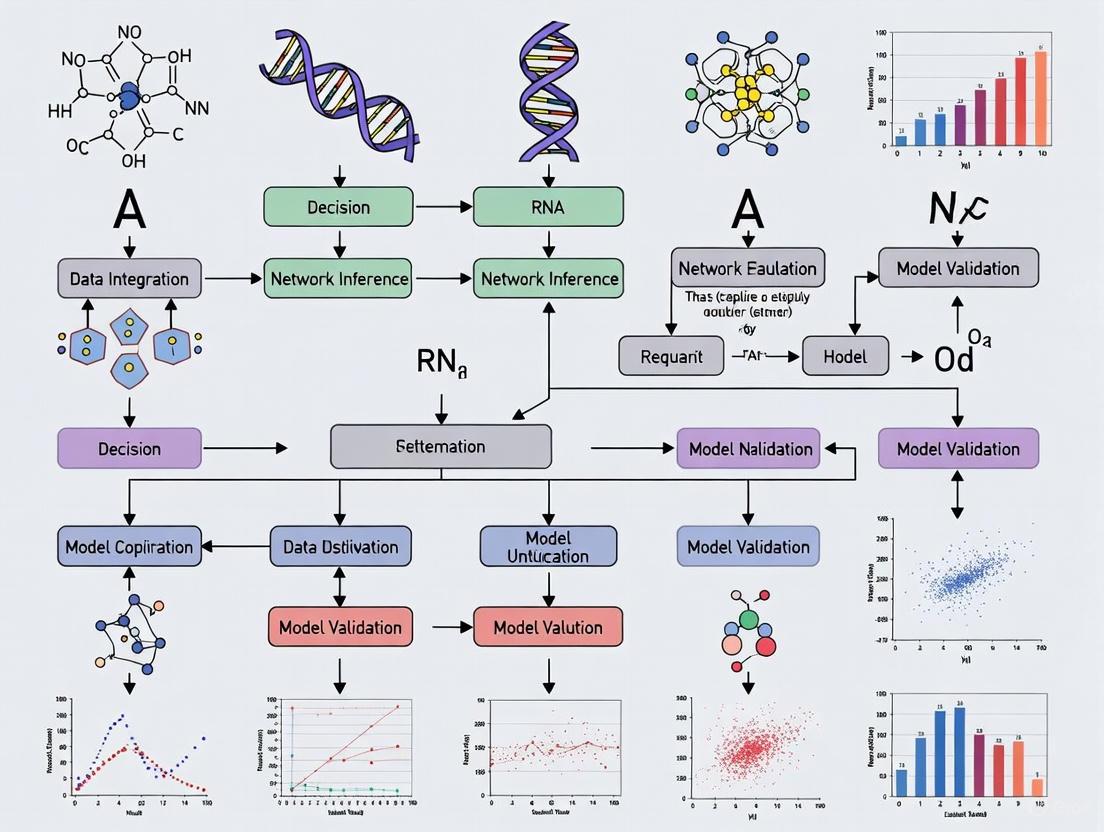
This article provides a comprehensive overview of modern methods for reconstructing Gene Regulatory Networks (GRNs), which are crucial for understanding cellular mechanisms, disease progression, and drug discovery.
Reconstructing Gene Regulatory Networks: From Single-Cell Data to Clinical Applications
Abstract
This article provides a comprehensive overview of modern methods for reconstructing Gene Regulatory Networks (GRNs), which are crucial for understanding cellular mechanisms, disease progression, and drug discovery. It explores the foundational principles of GRNs, categorizes the latest computational and machine learning inference techniques, and addresses key challenges like data sparsity and network dynamics. Aimed at researchers and drug development professionals, the content highlights the integration of single-cell multi-omic data, offers strategies for model optimization and validation, and discusses the transformative potential of these methods in personalized medicine and therapeutic development.
The Blueprint of Life: Understanding Gene Regulatory Networks and Their Biological Significance
A Gene Regulatory Network (GRN) is a complex system of molecular interactions where transcription factors (TFs), regulatory elements, and target genes interact to control cellular processes [1]. These networks determine development, differentiation, and cellular response to environmental stimuli by orchestrating precise gene expression patterns [1]. In its simplest representation, a GRN consists of genes as nodes with directed edges representing regulatory interactions between them [1]. The reconstruction of these networks—identifying the causal relationships and regulatory hierarchies between genes—has become fundamental to understanding how cellular phenotypes emerge from genetic information.
GRN inference has evolved significantly from early molecular biology techniques to modern computational approaches. While early methods relied on techniques like DNA foot printing and electrophoretic mobility shift assays (EMSAs) to identify TF binding sites [1], the advent of high-throughput sequencing technologies has transformed the field. Contemporary GRN inference leverages multi-omics data—including transcriptomics (RNA-seq), epigenomics (ChIP-seq, ATAC-seq), and chromatin conformation (Hi-C)—to reconstruct comprehensive regulatory networks [2] [1]. The emergence of single-cell technologies has further revolutionized GRN analysis by enabling the resolution of cellular heterogeneity and the identification of cell-type specific regulatory programs [3] [2].
Computational Methodologies for GRN Inference
Methodological Foundations
Computational GRN inference methods employ diverse mathematical and statistical approaches to identify regulatory relationships from omics data. These methodologies can be broadly categorized into several foundational frameworks:
Correlation-based approaches operate on the "guilt by association" principle, where co-expressed genes are assumed to be functionally related or co-regulated [2]. These methods use measures like Pearson's correlation, Spearman's correlation, or mutual information to detect associations between TFs and potential target genes. While computationally efficient, correlation alone cannot distinguish direct from indirect relationships or establish regulatory directionality [2].
Regression models frame GRN inference as a problem of predicting gene expression based on potential regulators. The expression of each target gene is regressed against the expression or accessibility of multiple TFs and cis-regulatory elements [2]. Penalized regression methods like LASSO introduce regularization to handle high-dimensional data and prevent overfitting by shrinking coefficients of irrelevant predictors toward zero [2] [1].
Probabilistic models represent GRNs as graphical models that capture dependence structures between variables [2]. These approaches estimate the probability of regulatory relationships existing between TFs and their putative target genes, allowing for filtering and prioritization of interactions before downstream analyses [2].
Dynamical systems approaches model gene expression as systems that evolve over time, using differential equations to capture factors like regulatory effects, basal transcription, and stochasticity [2]. These models are particularly valuable for time-course data and can provide interpretable parameters corresponding to specific biological properties [2].
Deep learning models have emerged as powerful frameworks for capturing complex, nonlinear regulatory relationships [2] [1]. Architectures including convolutional neural networks (CNNs), variational autoencoders (VAEs), graph neural networks (GNNs), and transformers can learn hierarchical representations from large-scale omics data [1]. While often requiring substantial computational resources and training data, these approaches can model intricate regulatory patterns that simpler methods may miss [2].
Machine Learning Paradigms for GRN Inference
Machine learning approaches for GRN inference can be categorized based on their learning paradigms, each with distinct advantages and applications:
Table 1: Machine Learning Paradigms for GRN Inference
| Learning Paradigm | Key Characteristics | Representative Algorithms | Typical Data Requirements |
|---|---|---|---|
| Supervised Learning | Uses labeled training data of known regulatory interactions to predict novel TF-target relationships | GENIE3, DeepSEM, GRNFormer, SIRENE | Experimentally validated regulatory pairs, curated databases |
| Unsupervised Learning | Identifies regulatory patterns without prior knowledge of interactions | ARACNE, CLR, LASSO, GRN-VAE | Large-scale gene expression data without labeled examples |
| Semi-Supervised Learning | Combines limited labeled data with larger unlabeled datasets | GRGNN | Mixed labeled and unlabeled datasets |
| Contrastive Learning | Learns representations by contrasting positive and negative examples | GCLink, DeepMCL | Paired similar and dissimilar regulatory examples |
Supervised learning methods leverage known regulatory interactions to train models that can then predict novel TF-target relationships [1]. For example, GENIE3 (Random Forest-based) and DeepSEM (deep learning-based) have demonstrated strong performance in supervised GRN inference [1]. These approaches require high-quality labeled datasets, which can be limited for non-model organisms or specific cellular contexts.
Unsupervised methods like ARACNE (using mutual information) and LASSO (regression-based) identify regulatory relationships without labeled training examples, making them applicable to exploratory analyses where comprehensive ground truth data is unavailable [1].
Hybrid approaches that combine deep learning with traditional machine learning have shown particularly promising results. Recent research demonstrates that hybrid models integrating convolutional neural networks with machine learning classifiers can achieve over 95% accuracy in predicting regulatory relationships in plant systems [4]. These frameworks leverage the feature learning capabilities of deep learning with the classification strength and interpretability of traditional machine learning.
Advanced Deep Learning Architectures
Recent advances in deep learning have introduced sophisticated architectures specifically designed for GRN inference:
GRAPH NEURAL NETWORKS (GNNS) model regulatory networks as graph structures, allowing them to capture topological properties and propagation of regulatory signals [1]. Methods like GRGNN use semi-supervised learning on graph-structured data to predict regulatory relationships [1].
VARIATIONAL AUTOENCODERS (VAES) learn compressed representations of gene expression data that can capture latent regulatory factors [1]. GRN-VAE uses this approach to infer GRNs from single-cell RNA-seq data by modeling the joint distribution of gene expression [1].
TRANSFORMER ARCHITECTURES with attention mechanisms can model long-range dependencies and context-aware regulatory relationships [1]. GRNFormer employs graph transformers to capture complex regulatory patterns in single-cell data [1].
MULTI-MODAL INTEGRATION FRAMEWORKS like scMODAL leverage known feature links to align single-cell omics data, enabling more accurate integration and regulatory inference [5]. These approaches are particularly valuable for integrating matched scRNA-seq and scATAC-seq data to reconstruct comprehensive regulatory networks.
Experimental Protocols and Workflows
Protocol 1: Basic GRN Inference from Single-Cell RNA-seq Data
This protocol outlines a standard workflow for inferring gene regulatory networks from single-cell RNA sequencing data using the SCENIC pipeline, which integrates network inference with TF regulatory activity assessment [3].
Materials and Reagents
- Single-cell RNA sequencing data (count matrix)
- Reference genome and gene annotation files
- TF binding motif databases (e.g., JASPAR, CIS-BP)
- Computing resources with minimum 16GB RAM for typical datasets
Procedure
- DATA PREPROCESSING
- Quality control: Filter cells based on mitochondrial gene percentage, unique gene counts, and total counts
- Normalize expression values using standard scRNA-seq methods (e.g., SCTransform, log-normalization)
- Identify highly variable genes to focus computational resources on biologically meaningful signals
GENE REGULATORY NETWORK INFERENCE
- Apply correlation-based method (e.g., GENIE3 or GRNBoost2) to identify potential TF-target relationships
- Calculate regulatory potential between all TFs and potential target genes
- Retain only relationships with significant association scores (p-value < 0.001 after multiple testing correction)
REGULON PRUNING WITH CIS-REGULATORY INFORMATION
- Scan promoter regions of target genes (typically -500bp to +100bp from TSS) for TF binding motifs
- Retain only TF-target pairs where significant expression correlation is supported by presence of corresponding TF binding motif
- Define final regulons—sets of genes regulated by each TF—based on supported relationships
CELLULAR REGULON ACTIVITY QUANTIFICATION
- Calculate regulon activity scores for each cell using AUCell algorithm
- Cluster cells based on regulon activity rather than gene expression
- Identify cell-type specific regulatory programs from activity patterns
VALIDATION AND INTERPRETATION
- Compare inferred regulons with previously validated regulatory interactions from literature
- Perform functional enrichment analysis on target genes within regulons
- Integrate with additional omics data where available for confirmation
Troubleshooting Tips
- Low correlation values may indicate need for batch effect correction
- Poor motif enrichment suggests potential issues with reference genome or motif database compatibility
- Sparse regulons may result from overly stringent pruning thresholds
Protocol 2: Multi-omic GRN Inference Using Paired scRNA-seq and scATAC-seq
This advanced protocol leverages paired single-cell multi-omics data to reconstruct more accurate and context-specific gene regulatory networks by integrating transcriptomic and epigenomic information.
Materials and Reagents
- Paired scRNA-seq and scATAC-seq data from the same cells
- Reference genome with chromosome sizes file
- Pre-computed TF binding motif position weight matrices
- Peak calling software (e.g., MACS2)
Procedure
- DATA PREPROCESSING AND INTEGRATION
- Process scRNA-seq data following standard normalization and QC pipelines
- Process scATAC-seq data: peak calling, quality metrics, and elimination of low-quality cells
- Harmonize cell identities between modalities using shared unique molecular identifiers or cell hashing information
- Create a weighted nearest neighbors graph to integrate the two modalities
REGULATORY POTENTIAL CALCULATION
- Identify accessible TF binding sites from scATAC-seq peaks
- Link distal regulatory elements to potential target genes using correlation between accessibility and expression
- Calculate correlation between TF expression and target gene expression across the single-cell population
- Integrate TF expression, chromatin accessibility, and binding motif information to score potential regulatory interactions
NETWORK INFERENCE USING DEEP LEARNING
- Implement a multi-modal neural network architecture (e.g., scTFBridge) that disentangles shared and specific components across omics layers
- Train the model to predict gene expression from both TF expression and chromatin accessibility patterns
- Extract significant regulatory interactions from the trained model weights and attention mechanisms
NETWORK VALIDATION AND REFINEMENT
- Validate network edges using orthogonal data (e.g., ChIP-seq, Perturb-seq) where available
- Compare network topology with known hierarchical regulatory structures
- Perform stability analysis through bootstrap resampling or cross-validation
CONTEXT-SPECIFIC SUBNETWORK IDENTIFICATION
- Identify regulatory programs specific to cell states or conditions
- Perform differential network analysis between experimental conditions
- Extract master regulator TFs driving cellular phenotypes
The Scientist's Toolkit: Essential Research Reagents and Computational Tools
Table 2: Essential Research Reagent Solutions for GRN Analysis
| Tool/Resource | Type | Primary Function | Application Context |
|---|---|---|---|
| JASPAR Database | Database | Curated collection of TF binding profiles | Motif scanning for regulon pruning [3] |
| SCENIC | Computational Pipeline | Integrated GRN inference from scRNA-seq | Identification of regulons and cellular activity [3] |
| GENIE3 | Algorithm | Random Forest-based GRN inference | Initial network inference from expression data [1] |
| GRN-VAE | Deep Learning Model | Variational autoencoder for GRN inference | Network modeling from single-cell data [1] |
| CellRank | Computational Tool | Cell fate mapping and trajectory inference | Dynamic GRN analysis along differentiation trajectories |
| 10x Multiome | Experimental Platform | Simultaneous scRNA-seq and scATAC-seq | Multi-omic GRN inference [2] |
| SHARE-Seq | Experimental Protocol | High-throughput multi-omics profiling | Multi-modal GRN reconstruction [2] |
| Perturb-Seq | Screening Method | CRISPR screening with single-cell readout | Causal validation of regulatory interactions [5] |
| Fly Cell Atlas | Reference Data | Single-nucleus transcriptomic atlas | Reference data for cross-species comparisons [3] |
| DeepIMAGER | Deep Learning Tool | CNN-based GRN inference | Supervised network prediction [1] |
Visualization of GRN Inference Workflows
Conceptual Framework of Gene Regulatory Networks
Multi-omic GRN Inference Workflow
Applications in Disease Research and Drug Development
GRN analysis has proven particularly valuable in understanding disease mechanisms and identifying therapeutic targets. In cancer research, differential GRN analysis between drug-sensitive and resistant cells has revealed key regulatory programs driving treatment resistance. In acute myeloid leukemia (AML), azacitidine resistance-specific networks have been identified, highlighting metallothionein gene family interactions and regulatory relationships between RBM47, ELF3, and GRB7 as crucial factors [6]. These resistance-specific networks display distinct topology compared to sensitive cells, with denser interconnections in resistant cell lines [6].
The application of GRN inference in pharmaceutical development includes:
- IDENTIFICATION OF MASTER REGULATORS driving disease states, which represent potential therapeutic targets
- NETWORK-BASED DRUG REPOSITIONING by mapping drug effects onto regulatory networks
- STRATIFICATION OF PATIENT POPULATIONS based on regulatory subtypes rather than just genetic mutations
- PREDICTION OF RESISTANCE MECHANISMS before they emerge in clinical settings
For example, network-based analysis of mepolizumab (anti-IL-5 therapy) treatment in asthma patients revealed how the drug alters type-2 and epithelial inflammation networks in nasal airways, providing insights into its mechanism of action and potential biomarkers for treatment response [5].
Future Perspectives and Challenges
Despite significant advances, GRN inference still faces several challenges that represent opportunities for future methodological development:
- DATA INTEGRATION across multiple omics layers, time points, and experimental conditions remains computationally complex
- CELLULAR HETEROGENEITY even within supposedly homogeneous cell populations complicates network inference
- CONTEXT SPECIFICITY of regulatory interactions requires condition-specific network modeling
- CAUSAL INFERENCE from observational data remains challenging without perturbation experiments
Emerging approaches are addressing these challenges through multi-modal deep learning frameworks, transfer learning across species [4], and integration of perturbation data to establish causal relationships. Methods like HALO (Hierarchical causal modeling) examine epigenetic plasticity and gene regulation dynamics in single-cell multi-omic data, enabling more accurate causal inference [5]. Transfer learning approaches are particularly promising for extending GRN analysis to non-model organisms or rare cell types with limited data [4].
As single-cell multi-omics technologies continue to advance and computational methods become more sophisticated, the reconstruction of comprehensive, dynamic, and context-specific gene regulatory networks will increasingly illuminate the fundamental principles governing cellular phenotype and provide novel insights for therapeutic development.
The Critical Role of GRNs in Development, Disease, and Drug Response
Gene Regulatory Networks (GRNs) are complex, directed networks of molecular interactions where transcription factors (TFs) regulate their target genes by controlling their activation and silencing in specific cellular contexts [7]. These networks form the fundamental control system that dictates cellular identity, function, and response to external signals. The directed edges in GRNs represent causal regulatory relationships from TFs to genes, establishing a hierarchical organization that governs core developmental and biological processes underlying complex traits [8]. Understanding GRN architecture is crucial for explaining how cells perform diverse functions, alter gene expression in different environments, and how noncoding genetic variants cause disease [7].
GRNs exhibit several key structural properties that are highly relevant for their functional analysis. Biological GRNs are notably sparse, meaning the typical gene is directly affected by a much smaller number of regulators than the total number available in the network [8]. They also demonstrate modular organization and feature a degree distribution that follows an approximate power-law, leading to emergent properties including group-like structure and enrichment for specific structural motifs [8]. The directed nature of edges with potential feedback loops adds another layer of complexity, enabling sophisticated control mechanisms that fine-tune cellular processes [8].
Table 1: Key Properties of Biological Gene Regulatory Networks
| Property | Description | Biological Significance |
|---|---|---|
| Sparsity | Most genes are regulated by a small subset of potential regulators | Enables specific control and reduces crosstalk between unrelated processes |
| Directed Edges | Regulatory relationships have direction (TF → gene) | Establishes causal hierarchy and information flow |
| Feedback Loops | Presence of reciprocal regulation | Enables fine-tuning and homeostatic control |
| Modular Organization | Grouping of genes into functional units | Supports coordinated expression of functionally related genes |
| Hierarchical Structure | Layered organization of regulators | Establishes developmental trajectories and cellular decision-making |
Computational Reconstruction of GRNs: Methodological Advances
The reconstruction of high-resolution GRNs from experimental data represents a significant challenge in systems biology. Traditional experiment-based approaches tend to focus on specific functional pathways rather than reconstructing entire networks, making them time-consuming and labor-intensive for comprehensive GRN mapping [9]. Computational methods have emerged as powerful alternatives, particularly with the advent of single-cell RNA sequencing (scRNA-seq) technology, which reveals biological signals in gene expression profiles of individual cells without requiring purification of each cell type [9].
Machine Learning Frameworks for GRN Inference
Current computational methods for GRN inference can be broadly categorized into unsupervised and supervised approaches. Unsupervised methods discover latent patterns from scRNA-seq data and infer regulatory relationships using statistical or computational techniques, while supervised methods construct training sets with known GRNs as labels and scRNA-seq data as features, then use deep learning to learn regulatory knowledge from the training set [9]. Supervised models generally achieve higher accuracy because they can learn prior knowledge from labels and identify subtle differences between training samples through deep learning technologies [9].
Recent advances in graph neural networks (GNNs) have particularly transformed GRN reconstruction. Several innovative frameworks have demonstrated exceptional performance:
GAEDGRN: This framework employs a gravity-inspired graph autoencoder (GIGAE) to capture complex directed network topology in GRNs, which traditional methods often ignore. It incorporates an improved PageRank* algorithm to calculate gene importance scores based on out-degree (genes regulating many others are considered important) and uses random walk regularization to standardize the learning of gene latent vectors. Experimental results across seven cell types of three GRN types show that GAEDGRN achieves high accuracy and strong robustness while reducing training time [9].
LINGER: This method represents a breakthrough through lifelong learning that incorporates atlas-scale external bulk data across diverse cellular contexts. LINGER uses a neural network model pre-trained on external bulk data from sources like the ENCODE project, then refines on single-cell data using elastic weight consolidation (EWC) loss. This approach achieves a fourfold to sevenfold relative increase in accuracy over existing methods and enables estimation of transcription factor activity solely from gene expression data [7].
HyperG-VAE: This Bayesian deep generative model leverages hypergraph representation to model scRNA-seq data, addressing both cellular heterogeneity and gene modules simultaneously. The model features a cell encoder with a structural equation model to account for cellular heterogeneity and a gene encoder using hypergraph self-attention to identify gene modules. This approach enhances the imputation of contact maps and effectively uncovers gene regulation patterns [10].
GRANet: This framework utilizes residual attention mechanisms to adaptively learn complex gene regulatory relationships while integrating multi-dimensional biological features. Evaluation across multiple datasets demonstrates that GRANet consistently outperforms existing methods in GRN inference tasks [11].
Table 2: Advanced Computational Methods for GRN Reconstruction
| Method | Core Approach | Key Innovation | Reported Advantage |
|---|---|---|---|
| GAEDGRN | Gravity-inspired graph autoencoder | Directed network topology capture | High accuracy & reduced training time |
| LINGER | Lifelong learning with external data | Bulk data integration via EWC regularization | 4-7x accuracy improvement |
| HyperG-VAE | Hypergraph variational autoencoder | Simultaneous modeling of cells and genes | Enhanced imputation and pattern discovery |
| GRANet | Graph residual attention network | Multi-dimensional feature integration | Consistent outperformance vs. benchmarks |
| PRISM-GRN | Bayesian multiomics integration | Biologically interpretable architecture | Higher precision in sparse regulatory scenarios |
Addressing Key Challenges in GRN Inference
Despite these advancements, GRN inference faces several persistent challenges. Limited independent data points remain a significant hurdle, as single-cell data, while containing many cells, offers limited true independence between measurements [7]. The incorporation of prior knowledge such as motif matching into non-linear models also presents technical difficulties [7]. Furthermore, the inherent imbalance in GRN inference, where true regulatory interactions are sparse compared to all possible interactions, demands specialized approaches to maintain precision [12].
The PRISM-GRN framework addresses some of these challenges by seamlessly incorporating known GRNs along with scRNA-seq and scATAC-seq data into a probabilistic framework. Its biologically interpretable architecture is firmly rooted in the established gene regulatory mechanism that asserts gene expression is influenced by TF expression levels and gene chromatin accessibility through GRNs [12]. This approach demonstrates higher precision under inherently imbalanced scenarios and captures causality in gene regulation derived from its interpretable architecture [12].
Diagram 1: GRN Reconstruction Framework Integrating Multi-modal Data
Application Note 1: GRNs in Development and Cellular Differentiation
GRNs play a fundamental role in guiding developmental processes and cellular differentiation. During development, hierarchical GRN structures enable the progressive restriction of cell fates, establishing distinct cellular identities from pluripotent precursors. The directed nature of regulatory interactions allows for precise temporal control of gene expression, while feedback loops provide stability to differentiated states once established [8].
Single-cell RNA sequencing technologies have been particularly instrumental in enabling functional studies of GRNs during development. Observational studies of single cells have revealed substantial diversity and heterogeneity in the cell types that comprise healthy tissues, and molecular models of transcriptional systems have been used to understand the developmental processes involved in maintaining cell state and cell cycle [8]. The emergence of CRISPR-based molecular perturbation approaches like Perturb-seq has further enhanced our ability to learn the local structure of GRNs around focal genes or pathways during developmental transitions [8].
Protocol: Inferring Developmental GRNs from Single-Cell Multiome Data
Objective: Reconstruct cell type-specific GRNs during cellular differentiation using single-cell multiome data (paired scRNA-seq and scATAC-seq).
Materials and Reagents:
- Single-cell multiome data from developing tissue
- Reference GRN database (e.g., RegNetwork 2025)
- High-performance computing environment
- LINGER software package
Procedure:
- Data Preprocessing:
- Perform quality control on single-cell multiome data
- Filter cells based on RNA count, gene detection, and mitochondrial percentage
- Normalize gene expression counts using SCTransform
- Process scATAC-seq data using Signac or similar package
- Cell Type Annotation:
- Integrate scRNA-seq and scATAC-seq data using Harmony
- Cluster cells based on combined modalities
- Annotate cell types using reference datasets and marker genes
- LINGER Model Configuration:
- Download and preprocess external bulk data from ENCODE
- Initialize BulkNN model with architecture matching target cell types
- Set parameters for elastic weight consolidation regularization
- Model Training and Refinement:
- Pre-train neural network on external bulk data (BulkNN)
- Refine model on single-cell data using EWC loss
- Iterate until validation loss stabilizes (typically 50-100 epochs)
- GRN Extraction and Validation:
- Calculate Shapley values to estimate regulatory strengths
- Extract TF-TG, RE-TG, and TF-RE interactions
- Validate against ChIP-seq ground truth data where available
- Perform functional enrichment on identified regulons
Troubleshooting Tips:
- If model fails to converge, reduce learning rate or increase EWC regularization strength
- For poor integration between modalities, adjust Harmony integration parameters
- If computational resources are limited, subset to top variable genes and TFs
Application Note 2: GRNs in Disease Pathogenesis
Dysregulated GRNs underlie the pathogenesis of numerous complex diseases, particularly cancers. In gliomas, the most common and aggressive primary tumors of the central nervous system, dysregulated transcription factors and genes have been implicated in tumor progression, with the overall structure of GRNs playing a defining role in disease severity and treatment response [13]. Analysis of transcriptional data from 989 primary gliomas in TCGA and CGGA databases has revealed that regulon activity patterns distinctly cluster according to WHO grade 04 samples and other samples associated with poor overall survival [13].
Case Study: Prognostic GRN Signatures in Gliomas
Comprehensive GRN analysis in gliomas has identified specific regulons—sets of genes regulated by a common transcription factor—with significant prognostic value. Through elastic net regularization and Cox regression applied to GRNs reconstructed using the RTN package, researchers identified 31 and 32 prognostic genes in TCGA and CGGA datasets, respectively, with 11 genes overlapping [13]. Among these, GAS2L3, HOXD13, and OTP demonstrated the strongest correlations with survival outcomes [13].
Single-cell RNA-seq analysis of 201,986 cells revealed distinct expression patterns for these prognostic genes in glioma subpopulations, particularly in oligoprogenitor cells, suggesting their potential role in glioma stem cell biology [13]. The enrichment analysis revealed that these prognostic genes were significantly associated with pathways related to synaptic signaling, embryonic development, and cell division, strengthening the hypothesis that synaptic integration plays a pivotal role in glioma development [13].
Diagram 2: GRN Dysregulation Leading to Disease Pathogenesis
Protocol: Identifying Disease-Associated Regulons Using RTN
Objective: Identify dysregulated regulons associated with disease progression and patient survival.
Materials and Reagents:
- Bulk RNA-seq data from patient cohorts (e.g., TCGA)
- Clinical annotation data (survival, grade, stage)
- R statistical environment with RTN package
- High-performance computing cluster
Procedure:
- Data Preparation:
- Download and preprocess RNA-seq count data
- Annotate samples with clinical metadata
- Filter genes based on expression variance
- GRN Reconstruction with RTN:
- Run ARACNe algorithm to infer TF-target interactions
- Perform bootstrapping (recommended: 1000 iterations) for robustness
- Reconstruct regulons using mutual information threshold
- Regulon Activity Analysis:
- Calculate regulon activity scores using two-tailed GSEA
- Assign sample-specific regulon activity profiles
- Cluster samples based on regulon activity
- Survival Analysis:
- Perform univariate Cox regression for each regulon
- Apply LASSO regularization for multivariate analysis
- Identify regulons with significant survival association
- Validation and Functional Annotation:
- Validate findings in independent cohort
- Perform pathway enrichment on target genes
- Integrate with single-cell data for cellular resolution
Analysis Notes:
- Regularize for covariates such as age and tumor grade
- Use Benjamini-Hochberg procedure for multiple testing correction
- Consider network clusterization similarities in interpretation
Application Note 3: GRNs in Drug Response and Therapeutic Targeting
GRN analysis provides a powerful framework for understanding drug response mechanisms and identifying novel therapeutic targets. By mapping regulator activity rather than just gene expression, GRN models can reveal the master transcription factors driving pathological processes that may not be apparent from differential expression analysis alone. The directed nature of GRNs enables prediction of downstream effects from targeted interventions, supporting rational drug design and combination therapy strategies.
Protocol: Using GRNs to Predict Drug Response and Identify Targets
Objective: Leverage GRN analysis to predict drug response and identify master regulator TFs as potential therapeutic targets.
Materials and Reagents:
- Drug perturbation transcriptomic data (e.g., LINCS L1000)
- GRN model specific to disease context
- Compound annotation databases
- High-performance computing resources
Procedure:
- Baseline GRN Establishment:
- Reconstruct GRN from disease-relevant cell line or tissue
- Calculate baseline regulon activity using VIPER or similar algorithm
- Identify hyperactive and hypoactive regulons in disease state
- Drug Perturbation Analysis:
- Obtain transcriptomic profiles following drug treatment
- Map differential expression onto GRN structure
- Calculate drug-induced regulon activity changes
- Master Regulator Identification:
- Rank TFs by their regulatory influence on dysregulated pathways
- Prioritize TFs with high betweenness centrality in disease modules
- Validate essentiality using CRISPR screening data where available
- Drug Response Prediction:
- Correlate baseline regulon activity with drug sensitivity
- Build classifier using regulon profiles as features
- Validate predictions in independent datasets
- Combination Therapy Design:
- Identify complementary regulon targets
- Predict synergistic effects using network proximity
- Design sequential targeting strategies based on hierarchy
Validation Approaches:
- Compare predictions with high-throughput drug screening data
- Validate targets using CRISPR knockout in relevant models
- Correlate target expression with clinical response in trial data
Table 3: Research Reagent Solutions for GRN Analysis
| Reagent/Resource | Function | Example Sources |
|---|---|---|
| scRNA-seq Data | Profile gene expression at single-cell resolution | 10X Genomics, Smart-seq2 |
| scATAC-seq Data | Map chromatin accessibility at single-cell level | 10X Multiome, SNARE-seq |
| TF Motif Databases | Annotate potential TF-binding sites | JASPAR, CIS-BP |
| GRN Databases | Provide prior knowledge of regulatory interactions | RegNetwork 2025 [14] |
| Perturbation Data | Establish causal regulatory relationships | Perturb-seq, CRISP-seq |
| ChIP-seq Data | Validate TF-binding events ground truth | ENCODE, Cistrome |
| Bulk Reference Data | Provide external regulatory context | ENCODE, GTEx [7] |
| Software Packages | Implement GRN reconstruction algorithms | LINGER [7], GAEDGRN [9], RTN [13] |
Emerging Frontiers and Future Directions
The field of GRN research is rapidly evolving, with several emerging frontiers promising to enhance our understanding of gene regulation in development, disease, and drug response. The integration of multiomics data at single-cell resolution represents a particularly promising direction, with methods like PRISM-GRN demonstrating that incorporating scATAC-seq alongside scRNA-seq improves inference accuracy, especially for identifying causal relationships [12].
The application of lifelong learning approaches, as exemplified by LINGER, addresses the critical challenge of limited data by leveraging atlas-scale external resources [7]. This paradigm shift from learning each GRN de novo to building upon accumulated knowledge mirrors biological systems themselves and may dramatically accelerate our mapping of regulatory networks across diverse cellular contexts and disease states.
Another emerging frontier is the move toward dynamic GRN models that can capture regulatory changes over time during processes like differentiation, disease progression, or drug treatment response. While most current methods infer static networks, incorporating temporal information through methods like hypergraph representation learning (as in HyperG-VAE) may reveal how regulatory relationships rewire in response to internal and external cues [10].
Diagram 3: Emerging Frontiers in GRN Research and Clinical Translation
As GRN inference methods continue to improve in accuracy and scalability, their clinical translation holds particular promise for personalized medicine approaches. The ability to reconstruct patient-specific GRNs from biopsy material could inform targeted intervention strategies based on the specific regulatory architecture driving an individual's disease. Furthermore, GRN-based drug repurposing approaches may identify novel indications for existing compounds based on their regulon activity signatures rather than single target affinity.
The ongoing development of comprehensive regulatory databases like RegNetwork 2025, which now comprises 125,319 nodes and 11,107,799 regulatory interactions with enhanced reliability scoring, provides an essential foundation for these advances [14]. As these resources continue to expand and incorporate new regulatory elements including long noncoding RNAs and circular RNAs, they will further enhance our ability to reconstruct comprehensive GRNs relevant to development, disease, and therapeutic intervention.
The reconstruction of Gene Regulatory Networks (GRNs) is a fundamental challenge in systems biology, aiming to decipher the complex causal interactions between transcription factors (TFs) and their target genes [9]. GRNs underpin critical cellular processes, including development, cell differentiation, and disease pathogenesis [9] [2]. The advent of single-cell RNA sequencing (scRNA-seq) has revolutionized this field by providing high-resolution data, but it also introduces specific computational challenges and opportunities centered on three key biological concepts: sparsity, dynamics, and cell-type specificity.
Sparsity in scRNA-seq data manifests as an excess of zero counts, known as "dropout," where transcripts present in a cell are not detected by the sequencing technology [15]. This zero-inflation, affecting 57% to 92% of observed counts in some datasets, obscures true biological signals and complicates the inference of regulatory relationships [15]. Dynamics refer to the temporal changes in GRN architecture. Regulatory relationships are not static; they evolve with cell state, particularly during processes like differentiation and immune response [16]. Finally, cell-type specificity recognizes that GRNs are unique to cell identities and states. Bulk sequencing methods average signals across heterogeneous cell populations, thereby obscuring these specific networks, whereas scRNA-seq allows for their delineation [16] [2].
Understanding and addressing these three concepts is paramount for developing accurate GRN inference methods. This document provides application notes and detailed protocols for computational methodologies that effectively tackle sparsity, dynamics, and cell-type specificity to reconstruct biologically meaningful GRNs.
Application Notes: Methodological Foundations and Comparative Analysis
Methodological Approaches to Key Challenges
Computational methods for GRN inference employ diverse mathematical frameworks, each with distinct strengths in addressing the core challenges. The following table summarizes the primary methodological foundations and their applications.
Table 1: Methodological Foundations for GRN Inference
| Methodological Approach | Core Principle | Utility for Sparsity | Utility for Dynamics | Utility for Cell-Type Specificity |
|---|---|---|---|---|
| Correlation & Information Theory [2] | Measures association (e.g., Pearson correlation, mutual information) between gene expression levels. | Low; highly sensitive to false zeros. | Low; typically assumes steady-state. | Moderate; can be applied to clustered cell subsets. |
| Regression Models [2] | Models a target gene's expression as a function of potential regulator expressions. | Moderate; can be combined with regularizations to handle noise. | Low without modification. | High; can build separate models for each cell type or state. |
| Dynamical Systems [2] [16] | Uses differential equations or pseudo-temporal ordering to model gene expression changes over time. | Varies by implementation. | High; explicitly models temporal processes. | High; infers networks for specific trajectories or states. |
| Probabilistic Models [2] | Represents the GRN as a graphical model, estimating the probability of regulatory relationships. | Moderate; can model dropout as a probabilistic process. | Moderate; some frameworks incorporate time. | High; can incorporate cell-type labels. |
| Deep Learning [9] [2] [15] | Uses neural networks (e.g., GNNs, Autoencoders) to learn complex, non-linear relationships from data. | High; can be explicitly regularized against dropout (e.g., DAZZLE). | High; can integrate pseudo-time or use sequential models. | High; can learn cell-type-specific network embeddings. |
Comparative Analysis of State-of-the-Art Methods
Several recent methods have been developed with explicit considerations for sparsity, dynamics, and cell-type specificity. The table below benchmarks these tools based on their core innovations and performance.
Table 2: Comparison of Advanced GRN Inference Methods
| Method | Core Innovation | Handling of Sparsity | Handling of Dynamics | Handling of Cell-Type Specificity | Reported Performance |
|---|---|---|---|---|---|
| GAEDGRN [9] | Gravity-inspired Graph Autoencoder (GIGAE) to capture directed network topology. | Random walk regularization to standardize latent vectors. | Not explicitly addressed; focuses on static network structure. | Uses a modified PageRank algorithm to prioritize important genes in specific contexts. | High accuracy and strong robustness on seven cell types across three GRN types. |
| inferCSN [16] | Sparse regression applied to cells ordered by pseudo-time and grouped into state-specific windows. | L0 and L2 regularization within the regression model. | High; uses pseudo-temporal ordering and sliding windows to model state-specific dynamics. | High; constructs networks for each cell state window defined by pseudo-time. | Outperforms other methods (GENIE3, SINCERITIES) on multiple performance metrics for both simulated and real data. |
| DAZZLE [15] | Dropout Augmentation (DA) to regularize models against zero-inflation. | High; augments data with synthetic dropout events to improve model robustness. | Not its primary focus; based on a static Structural Equation Model (SEM). | Can be applied to pre-clustered cell populations. | Improved performance and increased stability over baseline models like DeepSEM. |
| FigR [17] | Integrates scRNA-seq and scATAC-seq data to link TFs to target genes via chromatin accessibility. | Leverages multi-omic data to add a prior that is less susceptible to expression noise. | Models are built for a defined cellular context. | High; infers context-specific networks by using paired data from the same cell. | Provides a framework for generating preliminary GRNs using multi-omic priors. |
Diagram 1: Conceptual workflow linking key biological concepts in scRNA-seq data to computational solutions and biological insights.
Experimental Protocols
Protocol 1: Reconstructing Dynamic GRNs using inferCSN
Principle: The inferCSN method infers cell state-specific GRNs by integrating pseudo-temporal ordering of cells with regularized sparse regression [16]. It addresses dynamics by dividing continuous pseudo-time into windows, thereby constructing a network for each cellular state and mitigating biases from uneven cell distribution.
Workflow Steps:
Input Data Preprocessing
- Input: A filtered scRNA-seq count matrix (cells x genes) with precomputed cell-type annotations.
- Gene Filtering: Filter genes to include those with variable expression across cells. It is recommended to include all known Transcription Factors (TFs) from a curated database (e.g., AnimalTFDB).
- Normalization: Normalize the count matrix using a standard method like library size normalization and log-transformation (e.g.,
log1p).
Pseudo-temporal Ordering and Windowing
- Trajectory Inference: Use a trajectory inference algorithm (e.g., Monocle 3, PAGA, or Slingshot) on the preprocessed data to compute a pseudo-time value for each cell. This orders cells along a hypothesized developmental or differentiation trajectory.
- Cell Windowing: Divide the ordered cells into multiple overlapping or non-overlapping windows based on their pseudo-time values. The number of cells per window should be sufficient for stable regression. This step ensures that the inferred network is specific to the cell state captured within that window.
GRN Inference via Sparse Regression
- Model Framework: For each window
w, letE_wbe the gene expression matrix. For each target geneg_i, solve the following sparse regression problem:E_w(:, g_i) = Σ_{j≠i} β_{ij} * E_w(:, g_j) + εwhereβ_{ij}represents the potential regulatory influence of geneg_jong_i, andεis the error term. - Regularization: Apply L0 and/or L2 regularization to the coefficients
β_{ij}to promote sparsity and prevent overfitting. The L0 penalty controls the number of non-zero regulators, while the L2 penalty handles multicollinearity. - Reference Network Calibration (Optional): Use a prior reference network (e.g., from a public database) to calibrate the inferred coefficients and remove likely false positives.
- Model Framework: For each window
Output and Integration
- Output: inferCSN produces a set of GRNs, one for each window, representing the dynamic changes in gene regulation along the pseudo-temporal trajectory.
- Analysis: Compare networks across windows to identify regulatory relationships that are gained or lost, highlighting key transitions in cell state.
Diagram 2: Flowchart of the inferCSN protocol for reconstructing dynamic GRNs.
Protocol 2: Handling Data Sparsity with DAZZLE
Principle: DAZZLE tackles the challenge of data sparsity (dropout) not by imputing missing values, but by augmenting the training data with additional synthetic dropout events. This regularization technique, called Dropout Augmentation (DA), forces the model to become robust to zeros, preventing overfitting and improving the stability of the inferred GRN [15].
Workflow Steps:
Input Data Preparation
- Input: A normalized scRNA-seq expression matrix
Xof dimensions (m cells × n genes). - Transformation: Transform the input counts using
log1pto reduce variance and avoid taking the log of zero.
- Input: A normalized scRNA-seq expression matrix
Dropout Augmentation (DA)
- Synthetic Zero Injection: For each training epoch, create an augmented copy of the input matrix
X_aug. Randomly select a small percentage (e.g., 5-10%) of the non-zero entries inX_augand set them to zero. This simulates additional, realistic dropout events.
- Synthetic Zero Injection: For each training epoch, create an augmented copy of the input matrix
Model Training with Structural Equation Model (SEM)
- Model Architecture: DAZZLE uses a variational autoencoder (VAE) framework where the gene-gene interaction network is represented by a learnable adjacency matrix
A. - Encoder: The encoder
gtakes the augmented dataX_augand produces a latent representationZ.Z = g(X_aug) - Decoder: The decoder
fuses the latent representationZand the adjacency matrixAto reconstruct the original inputX.X_recon = f(A, Z) - Loss Function: The model is trained to minimize the reconstruction error between
X_reconand the originalX, while simultaneously applying sparsity constraints on the adjacency matrixAto prevent a fully connected network.
- Model Architecture: DAZZLE uses a variational autoencoder (VAE) framework where the gene-gene interaction network is represented by a learnable adjacency matrix
GRN Extraction
- After training, the non-zero entries in the learned adjacency matrix
Aconstitute the inferred GRN. The sign and magnitude of the values indicate the direction and strength of the regulatory relationships.
- After training, the non-zero entries in the learned adjacency matrix
Protocol 3: Integrating Multi-omic Data for Specificity with FigR
Principle: FigR enhances cell-type-specific GRN inference by leveraging paired scRNA-seq and scATAC-seq data from the same cells [17]. It uses chromatin accessibility to constrain and inform potential regulatory interactions, thereby adding a biologically meaningful prior that improves specificity.
Workflow Steps:
Input Data Preprocessing
- Inputs:
- scRNA-seq Data: A normalized gene expression matrix.
- scATAC-seq Data: A peak accessibility matrix.
- Feature Selection: For RNA, select all TFs and a subset of highly variable non-TF genes. For ATAC, select peaks based on variability (e.g., coefficient of variation).
- Inputs:
Topic Modeling with cisTopic
- Run cisTopic: Apply Latent Dirichlet Allocation (LDA) via
cisTopicto the scATAC-seq data to reduce dimensionality and define "topics" representing recurrent patterns of chromatin accessibility. - Extract Matrix: Obtain the cell-by-topic probability matrix from the selected
cisTopicmodel.
- Run cisTopic: Apply Latent Dirichlet Allocation (LDA) via
Peak-Gene Correlation and TF Motif Mapping
- k-NN Graph: Calculate a k-nearest neighbor (k-NN) graph among cells using the
cisTopictopic matrix to define cellular neighborhoods. - Correlation Calculation: Correlate the accessibility of each peak with the expression of every gene within its genomic neighborhood (e.g., within 200 kb) across the defined cellular neighborhoods.
- TF Mapping: Use
ChromVARor a similar tool to annotate peaks with known Transcription Factor binding motifs.
- k-NN Graph: Calculate a k-nearest neighbor (k-NN) graph among cells using the
GRN Inference in FigR
- Input to FigR: The correlated peak-gene links and the TF-motif annotations are used to define candidate TF-to-Gene interactions.
- Regression Model: FigR fits a regularized regression model to score these candidate interactions based on the correlation strength and the expression levels of the TF and its target gene, ultimately outputting a cell-type-specific GRN.
The Scientist's Toolkit: Research Reagent Solutions
Table 3: Essential Reagents and Resources for GRN Reconstruction
| Category | Item/Resource | Function/Description | Example/Source |
|---|---|---|---|
| Data | scRNA-seq Dataset | Primary input data providing gene expression measurements at single-cell resolution. | 10X Genomics Chromium; SHARE-seq [2]. |
| TF Database | A curated list of transcription factors for a given organism, used to define potential regulators. | AnimalTFDB; allTFs_hg38.txt [17]. | |
| Prior Network Database | Known molecular interactions from literature and databases for network calibration. | STRING; DoRothEA; prior information used in inferCSN [16]. | |
| Software & Algorithms | Trajectory Inference Tool | Computes pseudo-temporal ordering of cells for dynamic GRN analysis. | Monocle 3, Slingshot (used by inferCSN) [16]. |
| Motif Analysis Tool | Annotates accessible chromatin regions with potential TF binders. | ChromVAR (used by FigR) [17]. | |
| Topic Modeling Package | Identifies patterns in scATAC-seq data to reduce dimensionality. | cisTopic (used by FigR) [17]. | |
| Computational Environment | High-Performance Computing (HPC) | Server with multiple CPU cores and large RAM for computationally intensive model training. | Server with 16+ CPU cores, 128GB RAM (used for benchmarking) [16]. |
Diagram 3: Tool and data integration process for multi-omic GRN reconstruction.
The reconstruction of Gene Regulatory Networks (GRNs) is a fundamental challenge in biology, aiming to unravel the complex causal relationships between genes and their regulators, such as transcription factors (TFs). GRNs govern critical cellular processes including development, cell identity, and disease progression [2] [1]. The accuracy and resolution of GRN inference are intrinsically linked to the evolution of sequencing technologies. This journey has progressed from bulk transcriptomics to the current era of single-cell multi-omics, each step providing a more nuanced and comprehensive view of regulatory mechanisms [2] [18].
Early computational GRN inference methods relied on data from microarrays and bulk RNA-sequencing (RNA-seq), which measured average RNA expression from populations of cells. These methods identified co-expressed genes using correlation or mutual information but were unable to incorporate crucial epigenetic information about regulatory binding sites [2]. The expansion to bulk multi-omics—such as ATAC-seq for chromatin accessibility, ChIP-seq for TF binding, and Hi-C for chromatin conformation—provided mechanistic insights into regulatory relationships but still lacked the resolution to capture cell-to-cell heterogeneity [2].
The advent of single-cell omics technologies has revolutionized the field by enabling the profiling of molecular features at the single-cell level. Techniques like single-cell RNA-seq (scRNA-seq) and single-cell ATAC-seq (scATAC-seq) revealed cellular heterogeneity and led to a new generation of computational methods [2]. The latest frontier is single-cell multi-omics, where technologies such as SHARE-seq and 10x Multiome simultaneously profile multiple modalities—like RNA and chromatin accessibility—from the same single cell [2] [19]. This progression, from bulk to single-cell to multi-modal single-cell data, provides the foundational layers upon which modern, powerful GRN inference methods are built.
Methodological Foundations for GRN Inference
GRN inference relies on diverse statistical and algorithmic principles to uncover regulatory connections. The following table summarizes the core methodological approaches employed by modern computational tools.
Table 1: Core Methodological Foundations for GRN Inference
| Methodological Approach | Core Principle | Key Advantages | Common Limitations |
|---|---|---|---|
| Correlation-Based [2] | Measures association (e.g., Pearson's correlation, mutual information) between regulator and target gene expression. | Simple, intuitive; effective for identifying co-expressed genes. | Cannot distinguish directionality; confounded by indirect relationships. |
| Regression Models [2] | Models gene expression as a function of multiple potential regulators (TFs/CREs). | Infers direction and strength of effect; provides interpretable coefficients. | Can be unstable with correlated predictors; prone to overfitting. |
| Probabilistic Models [2] | Uses graphical models to capture dependence between variables, estimating the probability of regulatory relationships. | Allows for filtering and prioritization of interactions. | Often assumes specific data distributions (e.g., Gaussian) which may not hold. |
| Dynamical Systems [2] | Models gene expression as a system evolving over time using differential equations. | Captures diverse factors affecting expression; highly interpretable parameters. | Less scalable to large networks; dependent on prior knowledge and time-series data. |
| Deep Learning [2] [1] | Employs versatile neural network architectures (e.g., autoencoders, graph neural networks) to learn complex regulatory patterns. | Can model complex, non-linear relationships; highly flexible. | Requires large datasets; computationally intensive; can be less interpretable. |
The shift to single-cell multi-omics data has been accompanied by a transition from classical machine learning to more advanced deep learning techniques. Modern methods can be broadly categorized by their learning paradigm, as shown in the table below, which lists representative algorithms.
Table 2: Representative Machine Learning Methods for GRN Inference from Single-Cell Data
| Algorithm Name | Learning Type | Deep Learning | Key Technology | Year |
|---|---|---|---|---|
| GENIE3 [1] | Supervised | No | Random Forest | 2010 |
| DeepSEM [1] | Supervised | Yes | Deep Structural Equation Modeling | 2023 |
| STGRNs [1] | Supervised | Yes | Transformer | 2023 |
| GRNFormer [1] | Supervised | Yes | Graph Transformer | 2025 |
| ARACNE [1] | Unsupervised | No | Information Theory (Mutual Information) | 2006 |
| GRN-VAE [1] | Unsupervised | Yes | Variational Autoencoder (VAE) | 2020 |
| GCLink [1] | Contrastive | Yes | Graph Contrastive Link Prediction | 2025 |
| scGPT [19] | Foundation Model | Yes | Generative Pretrained Transformer | 2024 |
A significant recent trend is the emergence of foundation models for single-cell omics [19]. These large, pretrained neural networks, such as scGPT and scPlantFormer, are trained on millions of cells and demonstrate exceptional capabilities in zero-shot cell type annotation, in silico perturbation modeling, and GRN inference. Unlike single-task models, these frameworks use self-supervised pretraining to capture universal hierarchical biological patterns, representing a paradigm shift towards scalable and generalizable GRN analysis [19].
Advanced Protocols for GRN Reconstruction
Protocol 1: Inference of Combinatorial Regulatory Modules with cRegulon
The cRegulon method moves beyond single-TF analysis to infer reusable regulatory modules where multiple TFs act in combination, providing fundamental units that underpin cell type identity [20].
Experimental Workflow:
- Input Data Preparation: Collect single-cell multi-omics data, specifically paired scRNA-seq and scATAC-seq data, from the cell populations of interest. The data can be paired at the cell level or the context level (e.g., same cell type or condition).
- Preprocessing and Clustering: Perform standard quality control, normalization, and dimensionality reduction on the scRNA-seq and scATAC-seq data. Cluster cells to identify putative cell types or states.
- Initial GRN Construction: For each cell cluster, reconstruct a cluster-specific GRN using a suitable inference method. This network will connect TFs, regulatory elements (REs), and target genes (TGs).
- Compute Combinatorial Effect Matrix: For each cluster-specific GRN, calculate a pairwise combinatorial effect for all TF pairs. This effect combines the co-regulation strength and activity specificity of the TF pair.
- Identify TF Modules via Optimization: Model the combinatorial effect matrix as a mixture of rank-1 matrices, each corresponding to a module of co-regulating TFs. Solve the optimization model (Eq. 2 in [20]) to identify these TF modules across all cell clusters.
- Construct cRegulons: For each identified TF module, assemble the corresponding set of binding REs and co-regulated TGs to form a complete cRegulon.
- Cell Type Annotation: Annotate each cell type (biologically well-annotated cluster) based on the activity and composition of the cRegulons it utilizes.
Diagram 1: cRegulon analysis workflow.
Protocol 2: Multi-Omic Data Integration with scMODAL
The scMODAL framework provides a robust deep-learning solution for integrating diverse single-cell omics modalities, a critical step before downstream GRN analysis, especially when known feature links are limited [21].
Experimental Workflow:
- Input Data and Linked Features: Prepare two unpaired cell-by-feature matrices, ( \mathbf{X}1 ) and ( \mathbf{X}2 ), from different modalities (e.g., scRNA-seq and single-cell proteomics). Compile a limited set of ( s ) known positively correlated feature pairs (e.g., a protein and its coding gene) into matrices ( \widetilde{\mathbf{X}}1 ) and ( \widetilde{\mathbf{X}}2 ).
- Neural Network Training: Train two modality-specific encoder networks (( E1 ), ( E2 )) to map the full feature matrices ( \mathbf{X}1 ) and ( \mathbf{X}2 ) into a shared latent space ( Z ). Simultaneously, train decoder networks (( G1 ), ( G2 )) for autoencoding consistency.
- Adversarial Alignment: Employ a Generative Adversarial Network (GAN) with a discriminator to minimize the distribution divergence between the two datasets in the latent space ( Z ), effectively removing unwanted technical variation.
- MNN Anchor Guidance: During training, use the linked features (( \widetilde{\mathbf{X}}1 ), ( \widetilde{\mathbf{X}}2 )) to identify Mutual Nearest Neighbor (MNN) pairs between minibatches of cells. Apply an L2 penalty to keep the embeddings of these anchor pairs close, guiding correct biological alignment.
- Geometric Structure Preservation: For each cell in a minibatch, calculate its Gaussian kernel similarity to other cells. Encourage the encoders to preserve these geometric representations to prevent over-correction and loss of population structure.
- Downstream Analysis: Use the aligned latent representations ( Z ) for unified clustering and visualization. Utilize the cross-modality mapping networks ( E1(G2( \cdot )) ) and ( E2(G1( \cdot )) ) for feature imputation and inference of cross-modal regulatory relationships.
Diagram 2: scMODAL integration architecture.
Successful execution of modern GRN inference studies requires a combination of wet-lab reagents and dry-lab computational resources.
Table 3: Research Reagent Solutions for Single-Cell Multi-omics
| Item Name | Function / Description | Example Technologies / Platforms |
|---|---|---|
| Single-Cell Multi-ome Kit | Enables simultaneous profiling of gene expression and chromatin accessibility from the same single cell. | 10x Genomics Multiome (ATAC + Gene Expression), SHARE-seq [2] |
| CITE-seq Antibodies | Allows for integrated quantification of surface protein abundance alongside transcriptome in single cells. | BioLegend TotalSeq Antibodies [21] |
| Nuclei Isolation Kit | Prepares high-quality, intact nuclei from fresh or frozen tissue for scATAC-seq and other epigenomic assays. | Chromium Nuclei Isolation Kit (10x Genomics) [20] |
| Library Preparation Kit | Prepares sequencing libraries from the amplified cDNA or DNA from single-cell assays. | Illumina DNA/RNA Prep Kits [18] |
| Cell Hash Tagging | Enables sample multiplexing by labeling cells from different samples with distinct barcoded antibodies, reducing batch effects and cost. | BioLegend CellPlex [21] |
Table 4: Essential Computational Tools and Datasets for GRN Inference
| Resource Name | Type | Function / Utility |
|---|---|---|
| scGPT [19] | Foundation Model | A generative pretrained transformer for tasks like cell type annotation, multi-omic integration, and GRN inference. |
| DISCO / CZ CELLxGENE [19] | Data Repository | Federated platforms aggregating over 100 million single cells for query and analysis. |
| BioLLM [19] | Benchmarking Framework | A universal interface for integrating and benchmarking over 15 single-cell foundation models. |
| GRN-VAE [1] | Inference Algorithm | A variational autoencoder-based method for inferring GRNs from single-cell data. |
| cRegulon [20] | Inference Algorithm | A method to infer combinatorial TF regulatory modules from single-cell multi-omics data. |
| scMODAL [21] | Integration Tool | A deep learning framework for aligning single-cell multi-omics data with limited feature links. |
A Toolkit for Discovery: Categorizing Modern GRN Inference Methods and Their Applications
Gene Regulatory Networks (GRNs) are complex systems that represent the intricate interactions between genes, transcription factors (TFs), and other regulatory molecules, controlling gene expression in response to environmental and developmental cues [1] [22]. The reconstruction of accurate GRNs is fundamental to systems biology, with applications in developmental biology, cancer research, and personalized medicine [1]. Among the computational methods developed for GRN inference, regression-based models have emerged as powerful tools for identifying direct regulatory relationships from gene expression data. These techniques formulate GRN inference as a series of regression problems where the expression level of each target gene is predicted based on the expression levels of potential regulator genes [1] [23].
Regression-based approaches are particularly valuable because they can identify causal relationships and handle the high-dimensional nature of genomic data where the number of genes (p) often far exceeds the number of samples (n). Regularization methods such as LASSO (Least Absolute Shrinkage and Selection Operator), Ridge regression, and compressive sensing have proven effective in addressing this "curse of dimensionality" by imposing constraints on the model parameters [23] [24] [25]. These techniques leverage the biological insight that GRNs are inherently sparse, meaning each gene is regulated by only a small subset of all possible regulators [25].
This application note provides a comprehensive overview of these regression-based models, their implementation protocols, and applications in GRN reconstruction, serving as a practical guide for researchers and scientists engaged in computational biology and drug development.
Theoretical Foundations
LASSO Regression
LASSO regression incorporates an L1-norm penalty term that shrinks some regression coefficients to exactly zero, effectively performing variable selection [24]. For GRN inference, this is formulated as minimizing the following objective function:
∑(yi−y^i)2+λΣ|βj|
where yi are actual values, ŷi are predicted values, λ is the regularization parameter controlling the strength of the penalty, and β_j are the regression coefficients [24]. The sparsity-inducing property of LASSO makes it biologically interpretable for GRN inference, as it identifies a small set of candidate regulators for each target gene.
Ridge Regression
Ridge regression employs an L2-norm penalty that shrinks coefficients toward zero without setting them to exactly zero, effectively handling multicollinearity in gene expression data [24]. The objective function for Ridge regression is:
∑(yi−y^i)2+λΣβj2
This approach is particularly useful for datasets with high correlation between transcription factors, as it provides more stable coefficient estimates than standard linear regression [24].
Compressive Sensing
Compressive sensing is a signal processing technique that enables exact reconstruction of sparse signals from relatively few measurements [25]. In the context of GRN inference, the problem is formulated as:
Y = Ωq
where Y represents the measurement (gene expression data), Ω is the sensing matrix, and q is the sparse signal (GRN structure) to be reconstructed [25]. The method relies on the incoherence condition of the sensing matrix and can guarantee exact recovery of the network structure under suitable conditions.
Advanced Hybrid Formulations
Recent advancements have led to hybrid formulations that integrate multiple regularization techniques. The fused LASSO approach incorporates both sparsity and similarity constraints, making it particularly suitable for analyzing multiple datasets from different perturbation experiments [23]. Similarly, the Weighted Overlapping Group Lasso (wOGL) combines network-based regularization with group lasso to utilize prior network knowledge while performing selection of gene sets containing differentially expressed genes [26].
Comparative Analysis of Methods
Table 1: Comparative characteristics of regression-based GRN inference methods
| Method | Key Features | Advantages | Limitations | Typical Applications |
|---|---|---|---|---|
| LASSO | L1-norm penalty; sparsity induction | Variable selection; biologically interpretable | May select only one from correlated features | Bulk RNA-seq analysis; TF-target identification [24] |
| Ridge | L2-norm penalty; coefficient shrinkage | Handles multicollinearity; stable estimates | No variable selection; all features retained | Preprocessing for dimension reduction; multicollinearity-rich datasets [24] |
| Fused LASSO | Combines L1-norm and fusion penalty | Integrates multiple datasets; captures similar networks | Computationally intensive | Time-series data from multiple perturbations [23] |
| Compressive Sensing | Exploits signal sparsity; requires incoherence condition | Theoretical recovery guarantees; minimal measurements | Sensitive to measurement noise and hidden nodes | Network reconstruction from limited time-series data [25] |
| Weighted Overlapping Group Lasso | Integrates network-based regularization with group lasso | Utilizes prior knowledge; captures sparse signals | Requires prior network information | Pathway analysis; integration with existing biological knowledge [26] |
Table 2: Performance characteristics of regression-based methods on different data types
| Method | Bulk RNA-seq | Single-cell RNA-seq | Time-series Data | Multi-omics Integration |
|---|---|---|---|---|
| LASSO | High accuracy [24] | Moderate (due to noise) | Limited | Possible with extension |
| Ridge | Good for correlated features [24] | Moderate | Limited | Possible with extension |
| Fused LASSO | Good for multiple datasets [23] | Not specifically designed | Excellent [23] | Limited |
| Compressive Sensing | Good with limited samples [25] | Challenging | Excellent [25] | Limited |
| Elastic Net | Combines LASSO and Ridge advantages | Adaptable with modifications | Good | Promising |
Experimental Protocols
Protocol 1: GRN Inference Using LASSO Regression
Application Notes: This protocol details the implementation of LASSO regression for GRN inference from bulk RNA-seq data, suitable for identifying regulator-target relationships in steady-state conditions.
Materials and Reagents:
- Normalized gene expression matrix (genes × samples)
- List of transcription factors
- Computational environment (R/Python with necessary packages)
Procedure:
- Data Preprocessing:
- Normalize raw read counts using TMM (Trimmed Mean of M-values) or similar method [4]
- Log-transform expression values if necessary
- Optional: Filter lowly expressed genes
Problem Formulation:
- For each target gene, define a regression problem where the target gene's expression is the response variable
- Potential regulators (TFs) serve as predictors
- Standardize all variables to mean zero and unit variance
Model Implementation:
- Apply LASSO regression for each target gene:
- Use k-fold cross-validation (typically 5- or 10-fold) to select the optimal λ value
- Repeat for all genes in the dataset
Network Construction:
- Extract non-zero coefficients from all regression models
- Construct adjacency matrix where edges represent regulator-target relationships
- Apply false discovery rate (FDR) correction for multiple testing
Validation:
- Compare with known regulatory interactions from databases
- Use functional enrichment analysis to assess biological relevance
Troubleshooting:
- If too many edges are detected, increase λ value or apply stricter FDR correction
- If no edges are detected, check for low expression variance and consider reducing λ
Protocol 2: GRN Inference Using Compressive Sensing
Application Notes: This protocol implements compressive sensing for GRN reconstruction from limited time-series data, leveraging network sparsity for exact recovery.
Materials and Reagents:
- Time-series gene expression data (genes × time points)
- Potential basis functions for representing dynamics
- Computational environment with convex optimization tools
Procedure:
- Data Preparation:
- Collect time-series measurements of gene expression
- Ensure temporal resolution captures dynamics of interest
- Handle missing values through appropriate imputation
Sensing Matrix Construction:
- Design sensing matrix Ω that captures temporal relationships
- Include candidate basis functions that represent possible regulatory dynamics
- Validate incoherence condition for exact recovery guarantees [25]
Sparse Recovery:
- Solve the optimization problem using L1-minimization:
- Use linear programming or specialized compressive sensing algorithms
- For noisy data, use basis pursuit denoising formulation
Network Reconstruction:
- Extract non-zero elements from solution vector q
- Map these elements to specific regulator-target interactions
- Apply thresholding based on coefficient magnitudes
Experimental Design Guidance:
- Use coherence distribution to identify insufficiently constrained interactions
- Design additional experiments targeting high-coherence regions [25]
Troubleshooting:
- If recovery is poor, check coherence of sensing matrix and consider additional time points
- For noisy data, increase regularization parameter or use robust formulations
Protocol 3: Integrated Multi-Study Analysis Using Fused LASSO
Application Notes: This protocol enables the integration of multiple perturbation experiments using fused LASSO, particularly useful for identifying consistent regulatory interactions across conditions.
Materials and Reagents:
- Multiple gene expression datasets from different perturbations
- Corresponding control datasets
- Computational environment with optimization tools supporting fused LASSO
Procedure:
- Data Integration:
- Collect k gene expression datasets (X¹, X², ..., Xᵏ) from different conditions
- Include corresponding reference control datasets (Xᶜ¹, Xᶜ², ..., Xᶜᵏ)
- Normalize all datasets to comparable scales [23]
Weight Matrix Calculation:
- Compute differential behavior between perturbation and control datasets
- Construct weight matrices representing similarity in differential expression profiles
Fused LASSO Implementation:
- Implement the fused LASSO objective function [23]:
- Tune parameters λ₁ and λ₂ using cross-validation
- Solve the optimization problem using coordinate descent
Network Integration:
- Extract consistent interactions across multiple datasets
- Identify condition-specific regulatory relationships
- Construct consensus network representing core regulatory structure
Biological Validation:
- Compare with known condition-specific responses
- Validate novel predictions using experimental data from literature
Troubleshooting:
- If networks are too similar, reduce λ₂ to allow more condition-specificity
- If networks are too divergent, increase λ₂ to enforce similarity
Workflow Visualization
Figure 1: Workflow for regression-based GRN inference. This diagram illustrates the comprehensive process for reconstructing gene regulatory networks using regression-based methods, from data preprocessing to biological interpretation, including decision points for method selection based on data characteristics.
The Scientist's Toolkit
Table 3: Essential research reagents and computational tools for regression-based GRN inference
| Category | Item | Specifications | Application/Function |
|---|---|---|---|
| Data Resources | RNA-seq Data | Bulk or single-cell; minimum 3 replicates per condition | Primary input for inferring regulatory relationships [24] |
| Transcription Factor Database | PlantTFDB, AnimalTFDB; comprehensive TF lists | Identification of potential regulator genes [4] | |
| Prior Knowledge Networks | REGULATOR, STRING; known interactions | Integration for improved prediction [26] | |
| Computational Tools | LASSO Implementation | GLMNET, Scikit-learn; efficient regularization | Sparse regression for variable selection [24] |
| Compressive Sensing Tools | SPGL1, CVX; convex optimization | Sparse signal recovery [25] | |
| Network Visualization | Cytoscape, Gephi; graph layout algorithms | Visualization and analysis of inferred networks | |
| Validation Resources | Gold Standard Networks | RegulonDB, DREAM challenges; validated interactions | Benchmarking method performance [1] |
| Functional Annotation | GO, KEGG; pathway information | Biological validation of inferred networks |
Advanced Applications and Future Directions
Regression-based methods for GRN inference continue to evolve, with several advanced applications emerging in recent research. The integration of these methods with single-cell RNA-seq data presents both challenges and opportunities. While single-cell data offers unprecedented resolution of cellular heterogeneity, its characteristic high noise and sparsity require adaptations of traditional regression approaches [16]. Methods like inferCSN have been developed to address these challenges by incorporating pseudo-temporal ordering of cells and specialized regularization to construct cell-type and state-specific GRNs [16].
Another significant advancement is the integration of regression-based methods with deep learning architectures. Supervised approaches like GAEDGRN combine graph neural networks with regression concepts to infer directed network topologies, leveraging both gene expression features and network structural characteristics [9]. Similarly, hybrid models that combine convolutional neural networks with traditional machine learning have demonstrated superior performance in plant GRN inference, achieving over 95% accuracy in holdout tests [4].
Transfer learning represents a promising direction for regression-based GRN inference, particularly for non-model organisms with limited data. By leveraging models trained on data-rich species like Arabidopsis thaliana, researchers can successfully predict regulatory relationships in less-characterized species such as poplar and maize [4]. This approach effectively addresses the fundamental challenge of limited training data in computational biology.
Future developments in regression-based GRN inference will likely focus on improved scalability to handle increasingly large datasets, enhanced integration of multi-omics data, and more sophisticated approaches for modeling dynamic network changes across biological conditions and time. As these methods mature, they will continue to provide valuable insights into the complex regulatory mechanisms underlying development, disease, and evolutionary processes.
Gene Regulatory Networks (GRNs) are intricate maps of regulatory interactions between transcription factors (TFs) and their target genes, crucial for understanding cellular functions, development, and complex disease mechanisms [22]. The inference of these networks from high-throughput gene expression data remains a central challenge in computational biology. Machine learning (ML) has emerged as a powerful toolkit for this task, capable of leveraging large-scale omics data to predict TF-target relationships with increasing accuracy [4]. Among the diverse ML approaches, tree-based methods like Random Forests and GENIE3 have set performance benchmarks due to their scalability and explainability [27] [28]. Concurrently, deep learning (DL) models offer the potential to capture nonlinear and hierarchical regulatory relationships that are difficult for traditional methods to model [4] [29]. This Application Note provides a structured overview of these key ML methodologies, detailing their protocols, performance, and practical application in GRN reconstruction.
Key Methodologies and Experimental Protocols
Tree-Based Powerhouses: Random Forests and GENIE3
Principle: Tree-based methods treat GRN inference as a series of supervised regression problems. For each gene in the network, considered as a potential target, its expression is modeled as a function of the expression levels of all other genes, which are considered as potential regulators [27]. The importance score assigned to each potential regulator is then interpreted as the strength of the putative regulatory interaction.
- Protocol: GENIE3 Workflow
- Input Data Preparation: Provide a normalized gene expression matrix (e.g., from RNA-seq or scRNA-seq) with dimensions (p x n), where p is the number of genes and n is the number of samples/cells [27].
- Target Gene Selection: For each gene i (i = 1 to p) in the matrix: a. Set gene i as the target variable. b. Set the expression matrix of all other genes, X\i, as the set of predictor variables [27].
- Model Training: Train a tree-based ensemble model (e.g., Random Forest or Gradient Boosting) to predict the expression of target gene i using the predictor matrix X\i.
- Importance Calculation: Compute a regulatory importance score for each predictor gene j. This is typically the mean decrease in impurity (e.g., Gini importance) or the mean increase in model accuracy when gene j is used for a split in the tree ensemble [27] [28].
- Network Assembly: Aggregate the importance scores for all potential regulator-target pairs (j, i) across all genes to form a comprehensive, weighted adjacency matrix representing the inferred GRN.
The following workflow diagram illustrates the core steps of the GENIE3 algorithm.
Table 1: Research Reagent Solutions for GRN Inference
| Item Name | Function/Brief Explanation |
|---|---|
| Normalized Expression Matrix | Primary input data; a (p x n) matrix of normalized gene expression values across p genes and n samples/cells [4]. |
| Tree-Based Ensemble Algorithm | Core computational engine (e.g., Random Forest, Gradient Boosting) for learning regulatory relationships from expression data [27]. |
| Importance Score Metric | A measure (e.g., mean decrease in impurity) derived from the tree model to quantify the strength of putative regulatory links [27]. |
| High-Performance Computing (HPC) Cluster | Essential for parallelization, as each gene model in GENIE3 can be trained independently, drastically reducing computation time [27]. |
Advanced Deep Learning and Hybrid Approaches
Principle: Deep learning models use multi-layered neural networks to learn complex, nonlinear representations of gene expression data. They can be designed to integrate diverse data types and, through architectures like autoencoders, can infer GRNs in an unsupervised or self-supervised manner by learning to reconstruct their inputs [15] [30] [27].
Protocol: DAZZLE for Single-Cell Data
- Input Transformation: Transform the raw scRNA-seq count matrix X using the operation log(X+1) to stabilize variance and handle zeros [30].
- Dropout Augmentation (DA): During each training iteration, randomly select a small proportion of non-zero expression values and set them to zero. This artificially simulates additional dropout events, regularizing the model and improving its robustness to this specific noise [15] [30].
- Model Architecture (Autoencoder): Employ a variational autoencoder (VAE) structure where the learnable adjacency matrix A of the GRN is incorporated into the model's computation graph. The encoder network maps the input data to a latent representation, and the decoder uses this representation and the adjacency matrix A to reconstruct the input [30].
- Loss Function and Training: The model is trained to minimize the reconstruction error between the input and output. A sparsity constraint on the adjacency matrix A is often added to the loss function to reflect the biological prior that GRNs are inherently sparse. Training can be stabilized by delaying the application of this sparsity loss [30].
- Network Extraction: After training, the weights of the optimized adjacency matrix A are extracted as the final inferred GRN [30].
Protocol: Hybrid CNN-ML Models with Transfer Learning
- Feature Extraction with CNN: A Convolutional Neural Network (CNN) is first trained on large-scale transcriptomic data from a data-rich source species (e.g., Arabidopsis thaliana) to learn deep features that represent complex regulatory patterns [4].
- Classifier Training with ML: The deep features extracted by the CNN are then used as input for a traditional machine learning classifier (e.g., SVM, Random Forest) to predict regulatory interactions [4].
- Cross-Species Inference via Transfer Learning: To apply the model to a target species with limited data (e.g., poplar or maize), the pre-trained model from the source species is fine-tuned using the available data from the target species. This transfer learning strategy leverages evolutionary conservation in regulatory mechanisms [4].
The workflow below outlines the DAZZLE model's process for handling single-cell data.
Table 2: Research Reagent Solutions for Advanced DL Models
| Item Name | Function/Brief Explanation |
|---|---|
| log(X+1) Transformed Matrix | Standardized input for scRNA-seq data that mitigates the effects of extreme count variance and allows for log-space computation [30]. |
| Variational Autoencoder (VAE) Framework | Neural network architecture that learns to compress and reconstruct data, allowing for the simultaneous learning of a latent representation and the GRN structure [30]. |
| Learnable Adjacency Matrix (A) | A core parameter matrix within the DL model; its final values after training represent the inferred directed edges and their strengths in the GRN [30]. |
| Source Species Model | A model pre-trained on a well-annotated, data-rich organism (e.g., Arabidopsis), serving as the foundation for transfer learning to data-poor target species [4]. |
Performance Comparison and Benchmarking
Quantitative evaluation is critical for selecting the appropriate GRN inference method. The table below summarizes the reported performance of various ML powerhouses on benchmark tasks.
Table 3: Quantitative Performance Comparison of GRN Inference Methods
| Method | Underlying Algorithm | Reported Performance | Key Advantages |
|---|---|---|---|
| GENIE3 / GRNBOOST2 | Tree Ensembles (RF/GB) | Top performer in BEELINE benchmark [27]. | High scalability, explainability, robust performance on both bulk and single-cell data [27] [31]. |
| Hybrid CNN-ML | Convolutional NN + ML | >95% accuracy on holdout test sets for plant lignin pathway [4]. | Identifies more known TFs; high precision in ranking master regulators; enables cross-species inference [4]. |
| scKAN | Kolmogorov-Arnold Networks | Surpassed second-best signed GRN models by 5.40%-28.37% in AUROC on BEELINE [27]. | Models continuous cellular dynamics; distinguishes activation vs. inhibition; high precision [27]. |
| DAZZLE | VAE + Dropout Augmentation | Improved stability and robustness over DeepSEM; reduced run time by ~50% [30]. | Specifically designed for zero-inflated scRNA-seq data; counteracts overfitting to dropout noise [15] [30]. |
| NetID | Metacells + GENIE3 | Superior EPR and AUROC compared to imputation-based methods on synthetic and real data [31]. | Reduces spurious correlations from data sparsity; enables inference of lineage-specific GRNs [31]. |
The field of GRN inference is being powerfully advanced by machine learning. Tree-based models like GENIE3 remain a robust, scalable, and interpretable standard, while deep learning and hybrid models are pushing the boundaries of accuracy and biological insight, especially in challenging scenarios like single-cell analysis and cross-species prediction. The integration of explainable AI (XAI) techniques, as seen in scKAN, is crucial for building trust and extracting biologically meaningful signatures from complex deep learning models [27]. Future progress will likely hinge on the development of more sophisticated strategies for data integration, transfer learning, and the creation of gold-standard benchmarks, much like the community effort seen in the Random Promoter DREAM Challenge [29]. As these tools become more accessible and refined, they will profoundly accelerate the discovery of regulatory mechanisms in health, disease, and agriculture.
Gene regulatory networks (GRNs) represent the complex web of causal interactions between transcription factors (TFs), cis-regulatory elements (CREs), and their target genes (TGs) that collectively control cellular identity and function [2]. The reconstruction of accurate GRNs is fundamental to understanding cellular differentiation, development, and disease pathogenesis [9]. Single-cell multi-omics technologies have revolutionized this endeavor by enabling the simultaneous measurement of multiple molecular layers—such as gene expression via single-cell RNA sequencing (scRNA-seq) and chromatin accessibility via single-cell ATAC sequencing (scATAC-seq)—from the same individual cells [7] [2]. This technological leap has facilitated the development of sophisticated computational methods like sc-compReg, LINGER, and scSAGRN, which move beyond mere correlation to infer causal regulatory relationships, thereby providing unprecedented insights into the mechanistic underpinnings of cellular processes [32] [7] [33].
The following table summarizes key computational methods for inferring gene regulatory networks from single-cell multi-omics data, highlighting their core methodologies, strengths, and applications.
Table 1: Key Computational Methods for GRN Inference from Single-Cell Multi-omics Data
| Method | Core Methodology | Key Strengths | Reported Performance |
|---|---|---|---|
| sc-compReg [32] | Comparative analysis using a likelihood ratio test on a Transcription Factor Regulatory Potential (TFRP) index. | Designed for differential GRN analysis between two conditions (e.g., diseased vs. healthy). Identifies condition-specific regulators. | AUC up to 0.9972 when differential regulation is driven by RE accessibility [32]. |
| LINGER [7] | Lifelong learning neural network pre-trained on external bulk data and refined on single-cell data with manifold regularization. | Leverages atlas-scale external data; infers cell-type-specific and cell-level GRNs; high accuracy. | 4 to 7-fold relative increase in accuracy over existing methods; superior AUC and AUPR on validation data [7]. |
| scSAGRN [33] | Infers spatial correlations between peaks and genes using weighted nearest neighbor (WNN) graphs. | Identifies key activating and repressive TFs; accounts for spatial associations in data. | Superior performance in TF recovery, peak-gene, and TF-gene linkage prediction versus benchmarks like FigR and GLUE [33]. |
| PRISM-GRN [12] | Bayesian model integrating known GRNs, scRNA-seq, and scATAC-seq into a probabilistic framework. | Biologically interpretable architecture; high precision in inferring sparse, causal regulatory interactions. | Superior performance, especially in precision, over seven baseline methods on four benchmarking datasets [12]. |
| GAEDGRN [9] | Supervised graph neural network using a gravity-inspired graph autoencoder (GIGAE). | Effectively models the directed topology of GRNs; incorporates gene importance scores. | High accuracy and strong robustness across seven cell types; reduces training time [9]. |
Detailed Methodological Protocols
sc-compReg for Differential Regulatory Analysis
sc-compReg is designed to identify differential gene regulatory relationships between two biological conditions (e.g., diseased versus healthy) using paired scRNA-seq and scATAC-seq data [32]. Its protocol involves a multi-step process:
- Initial Analysis and Coupled Clustering: The raw count matrices from scRNA-seq and scATAC-seq are used as input. Cells from both modalities are jointly clustered and embedded to identify linked subpopulations across the two conditions (e.g., B cells in a healthy donor linked to B cells in a CLL patient) [32].
- Calculation of Transcription Factor Regulatory Potential (TFRP): For a given TF-TG pair in a cell, the TFRP is computed. This is a cell-specific index defined as the product of the TF's expression level and its regulatory potential on the TG. The regulatory potential is calculated by integrating accessibility information from all REs that may mediate the TF's activity on the TG, often involving TF-motif matching scores on accessible REs [32].
- Detection of Differential Regulatory Relations: For a target gene of interest, its expression is modeled as a function of the TFRP using linear regression. A likelihood ratio statistic is computed to test the null hypothesis that the regression model is identical across the two conditions. The significance of this statistic is assessed using a empirically derived Gamma distribution rather than the theoretical Chi-square distribution to ensure accurate p-value computation and false discovery rate (FDR) control [32].
The following diagram illustrates the workflow and core analytical concept of sc-compReg:
LINGER for Enhanced GRN Inference with External Data
LINGER (Lifelong neural network for gene regulation) leverages large-scale external bulk data to overcome the challenge of limited independent data points in single-cell experiments [7]. The protocol is as follows:
- Data Input and Preprocessing: Input data includes the count matrices of gene expression and chromatin accessibility from single-cell multiome data, along with cell type annotations.
- Pre-training on External Bulk Data: A three-layer neural network (BulkNN) is pre-trained on a large compendium of external bulk data (e.g., from the ENCODE project) covering diverse cellular contexts. The model is designed to predict TG expression using TF expression and RE accessibility as inputs. Its second layer consists of regulatory modules where TFs and REs are weighted, guided by TF–RE motif matching via manifold regularization [7].
- Refinement on Single-Cell Data with EWC: The pre-trained BulkNN model is refined on the target single-cell multiome data. Elastic Weight Consolidation (EWC) loss is applied during this step, which uses the Fisher information matrix to penalize deviations of important parameters from their bulk-trained values. This ensures that valuable knowledge from the bulk data is retained while adapting to the new single-cell data [7].
- GRN Extraction using Interpretable AI: After training, Shapley values—a concept from cooperative game theory—are computed for each feature (TF, RE) for each gene. The Shapley value estimates the contribution of each feature to the prediction of the TG's expression, providing the inferred regulatory strength for TF–TG and RE–TG interactions. The TF–RE binding strength is derived from the correlation of their learned parameters in the second layer of the network [7].
scSAGRN for Spatial Association-Based Inference
scSAGRN incorporates spatial neighborhood information to infer regulatory relationships from paired multi-omics data [33]. Its workflow consists of:
- Neighborhood Analysis: A weighted nearest neighbor (WNN) graph is constructed from the integrated scRNA-seq and scATAC-seq data. This graph defines the local cellular neighborhood for each cell.
- Spatial Association Calculation: For each candidate RE–gene pair, the correlation between RE accessibility and gene expression is computed not just on a cell-by-cell basis, but also across the cellular neighborhoods defined by the WNN graph. This spatial association helps in more accurately linking distal CREs to their target genes.
- Network Inference: TFs are linked to REs through motif analysis. By integrating the TF-RE links with the spatially-informed RE-gene links, scSAGRN constructs a comprehensive GRN linking TFs to their target genes. The method can also distinguish between activating and repressive TFs based on the nature of the correlations [33].
Successful execution of single-cell multi-omics studies and subsequent GRN inference relies on a suite of wet-lab and computational reagents. The following table details these essential components.
Table 2: Key Research Reagent Solutions for Single-Cell Multi-omics GRN Studies
| Category | Item | Function/Purpose |
|---|---|---|
| Wet-Lab Reagents & Kits | 10x Genomics Multiome ATAC + Gene Expression Kit | Simultaneously profiles chromatin accessibility and gene expression in the same single cell [7] [33]. |
| SHARE-Seq / SNARE-Seq Reagents | Alternative protocols for co-assaying gene expression and chromatin accessibility in single cells [33] [2]. | |
| Unique Molecular Identifiers (UMIs) | Barcodes added to each mRNA molecule during reverse transcription to correct for PCR amplification biases, enabling accurate transcript quantification [34]. | |
| Reference Data & Prior Knowledge | ENCODE Project Data (e.g., ChIP-seq, bulk ATAC-seq) | Provides atlas-scale external data for training models like LINGER and establishing prior knowledge on TF binding [7]. |
| Motif Databases (e.g., JASPAR, CIS-BP) | Contain TF binding specificity models used to link accessible chromatin regions to potential regulators via motif scanning [32] [7]. | |
| Curated GRN Databases (e.g., TRRUST, hTFtarget) | Serve as sources of known regulatory interactions for training supervised models (e.g., GAEDGRN) or validating predictions [33]. | |
| Validation Resources | ChIP-seq Data | Provides genome-wide TF binding sites, used as a ground truth for validating inferred TF-TG regulatory edges [7]. |
| eQTL Data (e.g., from GTEx, eQTLGen) | Provides variant-gene links that serve as ground truth for validating inferred cis-regulatory (RE-TG) interactions [7]. |
Integrated Workflow for Multi-omics GRN Analysis
A typical integrated analysis pipeline for inferring and comparing GRNs from single-cell multi-omics data combines multiple tools and data sources. The following diagram outlines this complex workflow, from data generation to biological insight.
The advent of single-cell multi-omics technologies has ushered in a new era for the reconstruction of gene regulatory networks, moving beyond correlation to infer causality and context-specificity. Computational methods like sc-compReg, LINGER, and scSAGRN represent the vanguard of this effort, each offering unique strengths—be it comparative analysis, integration of prior knowledge, or spatial association. As these tools continue to evolve, standardized benchmarking and robust validation will be paramount to translating their predictions into actionable biological discoveries and novel therapeutic targets. The integrated workflow presented here provides a roadmap for researchers to leverage these powerful tools in unraveling the complex regulatory logic that governs cellular life in health and disease.
Gene Regulatory Networks (GRNs) are complex systems that describe the intricate interactions among genes, transcription factors (TFs), and other molecules to control gene expression, determining cellular development, differentiation, and function [1]. The inference of these networks is fundamental for uncovering the mechanisms governing biological processes and disease progression [35]. Traditional GRN inference methods often assume a static network structure, failing to capture the dynamic rewiring of regulatory interactions that occurs in biological systems over time or in response to various stimuli [35] [36]. This limitation is particularly significant given that biology is inherently dynamic, and a static network representation cannot fully explain observed phenotypic changes [36].
Recent advancements in single-cell RNA sequencing (scRNA-seq) have revolutionized genomics by enabling gene expression profiling at single-cell resolution. Time-series scRNA-seq data provide richer temporal information compared to static data, making them highly valuable for inferring dynamic regulatory networks [35]. However, several challenges complicate this analysis, including cellular heterogeneity, high dimensionality, and substantial technical noise known as "dropout" events, where some transcripts are not captured, resulting in zero-inflated data [35] [30].
To address these challenges, novel computational methods are being developed. This application note focuses on two powerful approaches: ordinary differential equation (ODE)-based models and f-divergence-based methods. We detail their protocols, applications, and integration for reconstructing more accurate and dynamic GRNs.
Key Computational Methods for Dynamic GRN Inference
The table below summarizes three advanced methods designed for dynamic GRN inference from single-cell data.
Table 1: Key Methods for Dynamic Gene Regulatory Network Inference
| Method Name | Core Principle | Temporal Modeling Strategy | Key Application(s) | Reference(s) |
|---|---|---|---|---|
| f-DyGRN (f-Divergence-based Dynamic GRN) | Integrates f-divergence with Granger causality and regularization. | Moving window over time-series data. | THP-1 human myeloid monocytic leukemia cell data. | [35] [37] |
| locaTE (local Transfer Entropy) | Information-theoretic, model-free measure of causality. | Models dynamics on the cell-state manifold; infers cell-specific networks. | Mouse primitive endoderm formation, pancreatic development. | [36] |
| DAZZLE (Dropout Augmentation for Zero-inflated Learning Enhancement) | Variational autoencoder with dropout augmentation for robustness. | Infers a static network resilient to dropout noise, a critical pre-processing step for dynamic analysis. | Longitudinal mouse microglia data. | [30] |
Experimental Protocols
Protocol 1: Inferring Dynamic GRNs with f-DyGRN
f-DyGRN is a novel method that applies f-divergence to quantify temporal variations in gene expression and integrates a first-order Granger causality model with regularization techniques [35] [37].
Input: Time-series scRNA-seq data for ( m ) genes across ( n ) time points, formatted as a collection of expression matrices ( X \in R^{s{tl} \times m} ), where ( s{tl} ) is the number of cells at time point ( t_l ) [35].
Procedure:
- Temporal Variation Estimation: Apply a chosen f-divergence measure (e.g., KL-divergence) to quantify expression changes between consecutive time points for individual cells [35] [37].
- Moving Window Application: Slide a window over the time-series to localize the analysis and capture network changes at different developmental or disease stages [35].
- Granger Causality Modeling: For each window, use a first-order Granger causality model to test if the past expression of a potential regulator gene improves the prediction of a target gene's future expression.
- Sparsity Enforcement: Incorporate regularization techniques like LASSO, MCP, or SCAD on the Granger model coefficients to promote sparsity, reflecting the biological fact that each gene is regulated by a limited number of other genes [35] [8].
- Partial Correlation Analysis: Integrate partial correlation to distinguish direct regulatory relationships from indirect associations [35].
- Network Reconstruction: Combine the results from the previous steps to reconstruct the directed, time-varying adjacency matrix representing the dynamic GRN.
Output: A series of directed GRNs, each corresponding to a specific time window, illustrating the evolution of gene interactions [35].
Protocol 2: Learning Cell-Specific Networks with locaTE
locaTE infers directed, cell-specific causal networks by leveraging estimated single-cell dynamics and the geometry of the cell-state manifold, without imposing a strict pseudotemporal ordering [36].
Input: A snapshot scRNA-seq dataset of a developing system, represented as a matrix of gene expression profiles for individual cells.
Procedure:
- Manifold and Dynamics Learning: Model the biological dynamics as a Markov process on a cell-state manifold ( M ), a subset of the gene expression space. Use manifold learning approaches to estimate the transition probabilities between cellular states [36].
- Local Causal Inference: For a given cell ( c ), compute the local Transfer Entropy (TE) between all pairs of genes. TE from gene ( X ) to gene ( Y ) measures the reduction in uncertainty in the future state of ( Y ) given the past state of ( X ), conditional on the past state of ( Y ). In the Gaussian case, this is equivalent to Granger causality [36].
- Contextualization on Manifold: The TE calculation is adapted to use the dynamics and local neighborhoods on the learned cell-state manifold, allowing the inference of networks specific to the context of cell ( c ) [36].
- Network Assembly: Repeat the local causal inference for all cells or for selected cells of interest to assemble a collection of cell-specific directed networks.
Output: A set of directed gene interaction networks, each specific to an individual cell or a local cellular context, revealing regulatory heterogeneity [36].
Protocol 3: Enhancing GRN Inference Robustness with DAZZLE
DAZZLE addresses the critical challenge of dropout events in scRNA-seq data by using a regularization technique called Dropout Augmentation (DA), which improves model robustness without imputing data [30].
Input: A single-cell gene expression matrix (post-quality control), where rows are cells and columns are genes. Values are typically transformed as ( log(x+1) ).
Procedure:
- Dropout Augmentation (DA): During each training iteration, randomly select a small proportion of non-zero expression values and set them to zero. This simulates additional dropout noise, training the model to be resilient to such events [30].
- Model Architecture: Employ a Structural Equation Model (SEM) framework within a variational autoencoder (VAE). The gene expression data is processed through an encoder to a latent representation ( Z ), which is then decoded to reconstruct the input.
- Parameterized Adjacency Matrix: A key model parameter is the adjacency matrix ( A ), which is used within the network and is regularized to represent the GRN. Sparsity constraints are applied to ( A ) to reflect biological realism [30].
- Noise Classifier: Simultaneously train a classifier to predict which zero values in the input are likely due to technical dropout. This helps the model down-weight the influence of these noisy points during reconstruction [30].
- Model Training: Train the entire model to minimize the reconstruction error while adhering to the sparsity constraints on the adjacency matrix ( A ).
- Network Extraction: After training, the optimized and sparsified adjacency matrix ( A ) is extracted as the inferred GRN.
Output: A robust, static GRN that is more accurate due to its reduced sensitivity to dropout noise. This robust inference is a critical prerequisite for reliable dynamic network analysis [30].
Visualization of Workflows and Relationships
The following diagrams illustrate the logical workflows of the featured methods and the conceptual relationships in a GRN.
Diagram 1: f-DyGRN combines f-divergence, Granger causality, and regularization in a moving window to reconstruct dynamic GRNs.
Diagram 2: A simple GRN showing transcription factors (TFs) activating or repressing target genes and each other.
The Scientist's Toolkit: Research Reagent Solutions
This section details key computational tools and data resources essential for conducting dynamic GRN inference research.
Table 2: Key Research Reagents and Resources for Dynamic GRN Inference
| Resource Name | Type | Function in Research | Relevant Context |
|---|---|---|---|
| THP-1 Human Myeloid Monocytic Leukemia Cell Data | Biological Dataset | A real scRNA-seq dataset used for validating dynamic GRN inference methods like f-DyGRN in a disease-relevant context. | [35] [37] |
| Mouse Microglia Lifespan Data | Biological Dataset | A longitudinal single-cell dataset containing over 15,000 genes, used to demonstrate the performance of methods like DAZZLE on complex, real-world data with minimal gene filtration. | [30] |
| RTN Package | Software/Bioinformatics Tool | An R package for the reconstruction of context-specific regulatory networks using the ARACNe algorithm, which is based on mutual information. Used for identifying master regulators. | [13] |
| BEELINE Benchmark | Software/Evaluation Framework | A computational benchmark used to rigorously evaluate and compare the performance of various GRN inference algorithms on gold-standard datasets. | [30] |
| Dropout Augmentation (DA) | Computational Technique | A model regularization strategy that improves robustness to zero-inflation in scRNA-seq data by augmenting training data with synthetic dropout events. | [30] |
Gene Regulatory Networks (GRNs) are complex systems that map the intricate interactions between genes, transcription factors (TFs), microRNAs, and other regulatory molecules that collectively control gene expression [1]. The structure of a GRN consists of genes as nodes and their regulatory interactions as directed edges, forming a blueprint of the causal relationships governing cellular processes [8] [1]. In recent years, advances in computational biology and high-throughput sequencing technologies have significantly improved the accuracy of GRN inference and modeling, enabling researchers to move from descriptive network maps to therapeutic discoveries [1]. The reconstruction and analysis of GRNs provide a powerful framework for understanding the molecular drivers of disease, identifying novel therapeutic targets, and repurposing existing drugs for new indications by systematically contextualizing gene dysregulation within regulatory architectures.
The translational application of GRNs capitalizes on key network properties that characterize biological systems. GRNs are typically sparse, with most genes being directly regulated by only a small number of transcription factors, and they exhibit hierarchical organization with modular structure and enrichment for specific structural motifs [8]. Furthermore, they often contain feedback loops and possess a scale-free topology where a few highly connected "hub" genes regulate many targets [8]. These structural properties are not merely topological features but have profound implications for understanding disease resilience and identifying optimal therapeutic intervention points. By mapping these networks in healthy and diseased states, researchers can pinpoint critical regulatory nodes whose dysregulation drives pathology, thereby uncovering promising candidates for targeted therapeutic development.
Therapeutic Applications of GRN Analysis
Target Discovery in Neurodegenerative and Neuropsychiatric Disorders
GRN analysis has proven particularly valuable for identifying therapeutic targets in complex neurological disorders where the molecular pathology is multifactorial. In Alzheimer's disease, a comprehensive analysis of the entorhinal cortex identified CD44, ELF1, HSP90AB1, NOC4L, BYSL, RRP7A, SLC17A6, and RUVBL2 as critical genes dysregulated in the disease [38]. The study constructed protein-protein interaction networks and gene regulatory networks from differentially expressed genes, with functional enrichment analysis revealing involvement in key pathways including the synaptic vesicle cycle, glutamatergic synapse, PI3K-Akt signaling pathway, and retrograde endocannabinoid signaling [38]. Among these, CD44 emerged as a particularly important hub gene in the development of Alzheimer's disease, leading to the identification of several drug repurposing candidates including gentamicin, isoproterenol, and tumor necrosis factor that target this key regulator [38].
Similarly, in neuropsychiatric disorders, researchers have integrated population-scale single-cell genomics data to analyze 23 cell-type-level gene regulatory networks across schizophrenia, bipolar disorder, and autism [39]. This approach revealed druggable transcription factors that co-regulate known risk genes converging into cell-type-specific co-regulated modules. By applying graph neural networks to these modules, researchers prioritized novel risk genes and leveraged them in a network-based drug repurposing framework, identifying 220 drug molecules with potential for targeting specific cell types [39]. Importantly, evidence was found for 37 of these drugs in reversing disorder-associated transcriptional phenotypes, demonstrating the power of GRN analysis for generating therapeutically actionable hypotheses.
Oncology Applications: Prognostic Gene Discovery
GRN reconstruction has significantly advanced oncology research by enabling the identification of prognostic genes and regulatory drivers across cancer types. In gliomas, the most common and aggressive primary central nervous system tumors, researchers analyzed transcriptional data from 989 primary gliomas to reconstruct disease-specific GRNs [13]. Using the RTN package, which identifies regulons—sets of genes regulated by a common transcription factor based on co-expression and mutual information—the study uncovered key regulatory units centered around TFs [13]. Elastic net regularization and Cox regression analysis identified 31 and 32 prognostic genes in two independent datasets, with 11 genes overlapping between cohorts [13]. Among these, GAS2L3, HOXD13, and OTP demonstrated the strongest correlations with survival outcomes, with single-cell RNA-seq analysis of 201,986 cells revealing distinct expression patterns for these genes in glioma subpopulations, particularly oligoprogenitor cells [13].
Table 1: Prognostic Genes Identified via GRN Analysis in Gliomas
| Gene Symbol | Full Name | Functional Association | Prognostic Significance |
|---|---|---|---|
| GAS2L3 | Growth Arrest Specific 2 Like 3 | Cytoskeletal organization, apoptosis | Strong correlation with survival |
| HOXD13 | Homeobox D13 | Embryonic development, differentiation | Poor survival association |
| OTP | Orthopedia Homeobox | Neural development, tumor suppression | Favorable prognosis marker |
| SOX10 | SRY-Box Transcription Factor 10 | Neural crest development, glial fate | Common to multiple regulons |
The functional enrichment of the prognostic genes revealed their involvement in pathways related to synaptic signaling, embryonic development, and cell division, strengthening the hypothesis that synaptic integration plays a pivotal role in glioma development and underscoring the potential involvement of glioma stem cells in these regulatory networks [13]. This GRN-based approach provided not only prognostic biomarkers but also insights into the fundamental biology of glioma progression, highlighting potential therapeutic targets for this devastating disease.
Experimental Protocols for GRN Reconstruction
Protocol 1: Basic GRN Inference from Transcriptomic Data
The reconstruction of gene regulatory networks from transcriptomic data follows a systematic workflow that transforms raw gene expression measurements into validated regulatory interactions. The following protocol outlines the key steps for basic GRN inference suitable for bulk RNA-seq data:
Step 1: Data Preprocessing and Quality Control Begin with raw count data from RNA sequencing (either bulk or single-cell). Perform standard quality control measures including normalization for sequencing depth, removal of low-quality samples or cells, and batch effect correction if multiple datasets are being integrated. For single-cell data, additional steps such as cell filtering, normalization, and clustering are necessary to account for cellular heterogeneity [2].
Step 2: Identification of Differentially Expressed Genes Using standardized statistical frameworks (e.g., DESeq2, edgeR, or Seurat), identify genes that are differentially expressed between conditions of interest. Establish appropriate significance thresholds (typically adjusted p-value < 0.05 and log2 fold change > 1) to define the gene set for network construction [38].
Step 3: Network Inference Using Computational Algorithms Select an appropriate GRN inference method based on your data type and research question. For bulk transcriptomic data, established methods include:
- GENIE3: A supervised learning approach based on Random Forest that predicts regulatory relationships [1]
- ARACNE: An information-theoretic method using mutual information to infer interactions [13] [1]
- LASSO: A regression-based approach that introduces sparsity constraints to identify key regulators [13] [1]
Execute the chosen algorithm using established implementations in R or Python, generating a preliminary network of putative regulatory interactions.
Step 4: Network Validation and Refinement Validate the inferred network using bootstrap resampling or permutation tests to assess edge confidence. Integrate prior knowledge from existing regulatory databases (e.g., RegNetwork) to enhance biological plausibility [14]. For critical interactions, consider experimental validation through perturbation experiments or literature mining.
Step 5: Functional Enrichment and Module Detection Perform functional enrichment analysis (e.g., Gene Ontology, KEGG pathways) on network modules to identify biological processes and pathways significantly represented in the GRN. Identify hub genes and bottlenecks that may represent key regulatory points in the network [38].
Protocol 2: Advanced Multi-optic GRN Integration
For more comprehensive GRN reconstruction that captures the multi-layered nature of gene regulation, integration of multiple data types is essential. This protocol extends the basic approach by incorporating epigenetic and chromatin accessibility data:
Step 1: Multi-optic Data Collection and Processing Generate or acquire matched transcriptomic (RNA-seq) and epigenomic data (ATAC-seq, ChIP-seq, or DNA methylation). Process each data type through established pipelines: for ATAC-seq data, process fastq files through alignment, peak calling, and quality control; for RNA-seq data, follow standard alignment and quantification procedures [2].
Step 2: Candidate Regulatory Region Identification From ATAC-seq or ChIP-seq data, identify accessible chromatin regions or transcription factor binding sites. Annotate these regions to their likely target genes based on proximity to transcription start sites (typically [-1000, +500] around TSS) or using chromatin conformation data if available [40].
Step 3: Multi-optic Network Inference Utilize specialized algorithms designed for integrated data analysis:
- DeepMAPS: A heterogeneous graph transformer approach for single-cell multi-omic data [1]
- BiRGRN: A bidirectional recurrent neural network that models regulatory relationships [1]
- GRN-VAE: A variational autoencoder framework for GRN inference [1]
These methods leverage both expression patterns and epigenetic evidence to infer more accurate regulatory relationships.
Step 4: Cell-Type-Specific Network Construction For single-cell data, perform cell type annotation followed by cell-type-specific GRN inference. This step is crucial for capturing context-specific regulation and identifying regulatory programs active in specific cell populations [39] [13].
Step 5: Regulatory Circuit Validation Apply additional validation steps including motif analysis in candidate regulatory regions, comparison with established regulatory databases, and if possible, experimental validation of key predictions using CRISPR-based perturbations [39].
Successful GRN reconstruction and application requires a curated set of computational tools, data resources, and experimental reagents. The table below summarizes key components of the GRN research toolkit:
Table 2: Essential Research Reagents and Resources for GRN Studies
| Category | Resource | Description | Application |
|---|---|---|---|
| Computational Tools | RTN | R package for regulatory network analysis using mutual information | Reconstructing regulons from transcriptomic data [13] |
| GENIE3 | Random Forest-based supervised learning method | GRN inference from expression data [1] | |
| ARACNE | Information-theoretic approach using mutual information | Network inference with false-positive reduction [13] | |
| Data Resources | RegNetwork | Integrative database of regulatory relationships | Curated TF, miRNA, and gene interactions [14] |
| FANTOM5 | Tissue-specific regulatory networks | Cell-type and tissue-specific regulatory information [40] | |
| DREAM Challenges | Standardized benchmarks for GRN inference | Method evaluation and comparison [1] | |
| Experimental Reagents | CRISPR-based Perturb-seq | High-throughput perturbation screening | Experimental validation of regulatory interactions [39] |
| Single-cell Multi-ome | Simultaneous measurement of RNA and chromatin accessibility | Multi-optic GRN inference at single-cell resolution [2] |
The computational tools encompass diverse methodological approaches including supervised learning (GENIE3), unsupervised information-theoretic methods (ARACNE), and specialized packages for regulatory analysis (RTN) [13] [1]. Data resources like RegNetwork provide comprehensively curated regulatory relationships, with the 2025 version containing 125,319 nodes and over 11 million regulatory interactions for human and mouse, now expanded to include long noncoding RNAs and circular RNAs [14]. Experimental reagents such as CRISPR-based screening technologies enable validation of computational predictions and establishment of causal regulatory relationships [39].
Analytical Framework for Therapeutic Prioritization
Once a GRN is reconstructed, systematic analysis is required to prioritize therapeutic targets and repurposing candidates. The following analytical framework provides a structured approach:
Step 1: Identification of Critical Network Nodes Apply network analysis metrics to identify topologically and functionally important nodes. Calculate betweenness centrality to find bottleneck genes, degree centrality to identify hubs, and eigenvector centrality to locate influential regulators. Combine these topological features with functional information to generate a comprehensive priority score for each gene [38].
Step 2: Functional Enrichment of Network Modules Perform Gene Set Enrichment Analysis (GSEA) on regulons or network modules to identify pathways and biological processes significantly associated with the GRN. This step contextualizes network structure within biological function and can reveal unexpected connections to disease mechanisms [13].
Step 3: Cross-Dataset Validation Validate prioritized targets across multiple independent datasets and, if available, different biological contexts (e.g., cell-type-specific expression, developmental stages). This step enhances confidence in target selection and reduces false positives arising from dataset-specific artifacts [13].
Step 4: Druggability Assessment and Compound Mapping Evaluate the druggability of prioritized targets using databases such as DrugBank and ChEMBL. For repurposing approaches, map existing compounds to targets using interaction databases and perform in silico screening to assess binding affinity [38] [39].
Step 5: Experimental Confirmation Design experimental validation of top candidates using appropriate model systems. For transcriptional regulators, CRISPR-based perturbation followed by transcriptomic assessment can confirm regulatory relationships. For drug repurposing candidates, in vitro and in vivo studies are needed to demonstrate efficacy in reversing disease-associated phenotypes [38] [39].
This structured analytical approach ensures that therapeutic candidates emerging from GRN analysis have strong biological support and increased likelihood of translational success.
Navigating Computational Challenges: Strategies for Robust and Accurate GRN Reconstruction
Overcoming Data Sparsity and Dropout Events in Single-Cell RNA-seq
Gene Regulatory Network (GRN) reconstruction aims to map the complex interactions between transcription factors (TFs) and their target genes, providing critical insights into cellular identity, differentiation, and disease mechanisms [41] [2]. The advent of single-cell RNA sequencing (scRNA-seq) has promised unprecedented resolution for uncovering cell-type-specific GRNs by analyzing gene expression at the individual cell level [2] [42]. However, a significant technical challenge impedes this potential: the pervasive sparsity and high dimensionality of scRNA-seq data, largely driven by dropout events [43] [44].
Dropout events refer to the phenomenon where a transcript is expressed in a cell but fails to be detected during sequencing, resulting in a false zero count in the expression matrix [44]. This sparsity arises from biological factors (e.g., stochastic gene expression bursts) and technical limitations (e.g., low mRNA capture efficiency, amplification biases, and sequencing depth) [43] [44] [45]. For GRN inference, which fundamentally relies on analyzing co-variation and statistical dependencies in gene expression patterns, these dropouts create substantial noise and obscure true regulatory relationships [41] [2]. Consequently, accurately distinguishing direct transcriptional regulation from indirect correlations becomes profoundly challenging, potentially leading to spurious network edges, missing key interactions, and reduced predictive power of the reconstructed GRN models [2] [42]. This Application Note details standardized protocols and analytical frameworks designed to overcome these obstacles, thereby enhancing the fidelity of GRN reconstruction from scRNA-seq data.
Understanding scRNA-seq Data Sparsity
In scRNA-seq data, each cell is represented as a point in a high-dimensional space where each dimension corresponds to a gene. Data sparsity manifests as an excess of zero values in the gene expression matrix. Technical dropouts are non-biological zeros caused by the failure to detect low-abundance mRNAs due to limited sequencing depth or capture efficiency. In contrast, biological zeros represent the genuine absence of expression in a particular cell [44]. A key challenge is that technical dropouts do not occur randomly; they disproportionately affect lowly expressed genes, which often include critical transcription factors and signaling molecules that drive regulatory programs [43].
The following diagram illustrates the sources of sparsity and the analytical challenges it creates for GRN inference.
Figure 1: Relationship between sparsity sources and GRN inference challenges. Technical and biological factors create a sparse data matrix, which directly impedes the accurate reconstruction of gene regulatory networks.
Computational Strategies and Tools for Managing Sparsity
Advanced Statistical and Deep Learning Models
The Zero-Inflated Graph Attention Collaborative Learning (ZIGACL) method represents a state-of-the-art approach that integrates a Zero-Inflated Negative Binomial (ZINB) model with a Graph Attention Network (GAT) [43]. The ZINB component explicitly models the count-based nature of scRNA-seq data, effectively distinguishing technical dropouts from true biological zeros by parameterizing the mean (μ), dispersion (θ), and dropout probability (π) of gene expression [43]. The GAT then leverages information from transcriptionally similar neighboring cells to impute missing values and refine gene representations in a context-aware manner. This collaborative architecture is further enhanced by a co-supervised deep graph clustering model that iteratively refines cell groupings, ensuring that cells with similar regulatory programs are positioned proximally in the latent space [43]. Benchmarking across nine diverse scRNA-seq datasets demonstrated that ZIGACL significantly outperformed existing methods like scDeepCluster and scGNN, achieving improvements in Adjusted Rand Index (ARI) of up to 447.93% on the Romanov dataset, thus providing a more robust foundation for subsequent GRN analysis [43].
CytoTRACE 2 is an interpretable deep learning framework that addresses sparsity through a novel gene set binary network (GSBN) [46]. Designed to predict developmental potential, it assigns binary weights (0 or 1) to genes, identifying highly discriminative gene sets for different potency categories. This approach is inherently robust to sparse data because it focuses on conserved, informative gene modules rather than individual, often missing, gene counts. By learning multivariate gene expression programs and suppressing technical variation, CytoTRACE 2 reliably orders cells by developmental stage, a prerequisite for understanding dynamic GRNs in differentiation processes [46].
Foundational Preprocessing and Dimensionality Reduction
Dimensionality reduction is a critical first step to mitigate the "curse of dimensionality" inherent in scRNA-seq data, where each of the thousands of genes represents a dimension [44]. Principal Component Analysis (PCA) performs a linear transformation of the original gene expression space to create a smaller set of "principal components" (PCs) or latent genes that capture the maximum variance in the data [44]. This compression naturally handles data redundancy and noise, reducing the impact of sparsity on downstream analyses. For visualization and further analysis, non-linear methods such as Uniform Manifold Approximation and Projection (UMAP) and t-Distributed Stochastic Neighbor Embedding (t-SNE) are widely employed to project cells into a low-dimensional (2D or 3D) space where clusters can be identified [47] [44]. The selection of highly variable genes prior to dimensionality reduction is a standard practice that focuses the analysis on genes most likely to inform cell identity and regulatory logic [48].
Preprocessing workflows play a fundamental role in initial data handling. Tools like Cell Ranger (for 10x Genomics data) process raw FASTQ files, performing read alignment, barcode/qc filtering, UMI counting, and initial feature-barcode matrix generation [48] [45]. A comprehensive benchmark of ten preprocessing workflows (e.g., Cell Ranger, Optimus, salmon alevin, kallisto bustools) found that while quantification characteristics varied, most performed reliably when followed by robust downstream normalization and clustering methods [45]. This underscores that a well-structured preprocessing pipeline is a vital first defense against data sparsity.
Table 1: Comparison of Computational Methods for Addressing scRNA-seq Sparsity
| Method | Underlying Principle | Key Advantages for GRN Studies | Representative Tools |
|---|---|---|---|
| ZINB & Graph Neural Networks | Models count distribution & uses cell neighborhood graph for imputation. | Explicitly models dropouts; leverages cellular manifold for context-aware correction. | ZIGACL [43] |
| Interpretable Deep Learning | Uses binarized neural networks to identify discriminative gene sets. | Robust to noise; provides interpretable gene programs relevant to regulation. | CytoTRACE 2 [46] |
| Dimensionality Reduction | Projects high-dimensional data into a lower-dimensional latent space. | Reduces noise and computational burden; preserves major biological variation. | PCA, UMAP, t-SNE [44] |
| Preprocessing & Quantification | Handles raw sequencing data, demultiplexing, alignment, and UMI deduplication. | Provides the foundational count matrix; accurate UMI handling reduces technical noise. | Cell Ranger, kallisto bustools [48] [45] |
Experimental Protocol: A Combined Computational Workflow for GRN Inference
This integrated protocol outlines the steps from raw data processing to GRN reconstruction, highlighting procedures to manage sparsity at each stage.
Preprocessing and Quality Control (QC)
Step 1: Raw Data Preprocessing
- Input: FASTQ files from scRNA-seq experiment (e.g., 10x Genomics platform).
- Processing: Use a dedicated preprocessing workflow such as Cell Ranger (
cellranger multi), kallisto bustools, or salmon alevin [48] [45].- The workflow will perform demultiplexing, alignment to a reference genome (e.g., GRCh38), and UMI deduplication to generate a cell-by-gene count matrix.
- Output: A filtered feature-barcode matrix (HDF5 or MTX format), a web summary HTML file (
web_summary.html), and a Loupe Browser file (.cloupe).
Step 2: Initial QC and Filtering of Low-Quality Cells
- Tools: Loupe Browser (for interactive QC) or R/Python environments (e.g., Seurat, Scanpy) [48].
- Procedure:
- Filter by UMI Counts: Remove barcodes with abnormally high UMI counts (potential multiplets) and very low UMI counts (ambient RNA or empty droplets). Example threshold for a 5k PBMC dataset: Remove extreme outliers from the UMI distribution [48].
- Filter by Gene Counts: Similarly, remove cells with an unusually high or low number of detected genes.
- Filter by Mitochondrial Read Percentage: Calculate the percentage of reads mapping to mitochondrial genes. Example threshold: Remove cells with >10% mitochondrial reads in PBMC data [48]. Note: This threshold is cell-type-dependent and should be adjusted accordingly (e.g., relaxed for cardiomyocytes).
- Documentation: Record the final cell count and all filtering thresholds used for reproducibility.
Sparsity-Aware Analysis and GRN Inference
Step 3: Dimensionality Reduction and Batch Correction
- Input: Filtered count matrix from Step 2.
- Normalization: Normalize the data for sequencing depth (e.g., log(CP10K+1) in Seurat).
- Variable Feature Selection: Identify the top ~2,000 highly variable genes to focus the analysis.
- Dimensionality Reduction:
- Perform PCA on the scaled data of variable genes.
- Select the top principal components that capture the majority of biological variance (e.g., using an elbow plot).
- Visualization: Generate a 2D embedding of the data using UMAP or t-SNE based on the top PCs [44].
Step 4: Imputation and Denoising (Optional but Recommended)
- Application: Apply a sparsity-handling method like ZIGACL to the normalized count matrix.
- Procedure:
- Construct a cell-cell graph (e.g., using a Gaussian kernel).
- Train the ZIGACL model, which uses the ZINB autoencoder to model gene expression and the GAT to share information across the graph for imputation [43].
- Use the denoised and imputed output for downstream clustering and GRN inference.
Step 5: Cell Clustering and Annotation
- Clustering: Apply a graph-based clustering algorithm (e.g., Leiden algorithm) on the PCA-reduced space or the graph from Step 4 to identify cell populations [48].
- Annotation: Manually annotate clusters as cell types using known marker genes. Alternatively, use a reference-based automated annotation tool.
Step 6: GRN Inference on Processed Data
- Input: The denoised expression matrix from Step 4 and cell type annotations from Step 5.
- Strategy: For each cell type of interest, perform GRN inference. Use multi-omic information if available (e.g., paired scATAC-seq to inform TF-binding potential) [2] [42].
- Method Selection: Choose a GRN inference tool suited to your data and question. Options include:
The following workflow diagram provides a visual summary of this comprehensive protocol.
Figure 2: Integrated computational workflow for GRN inference from scRNA-seq data. The protocol emphasizes critical steps for mitigating sparsity (in orange) to ensure robust network reconstruction.
Table 2: Essential Research Reagents and Computational Tools
| Item | Function/Application | Example/Note |
|---|---|---|
| 10x Genomics Chromium | Single-cell partitioning and barcoding platform. | GEM-X Single Cell 3' Reagent Kits [48]. |
| Reference Genome | Sequence alignment for read mapping. | GRCh38 (human) or GRCm39 (mouse). |
| Preprocessing Workflow | Processes FASTQs into a count matrix. | Cell Ranger (platform-specific), kallisto bustools (alignment-free) [45]. |
| QC & Visualization Software | Interactive data exploration and filtering. | Loupe Browser (for 10x data) [48]. |
| Analysis Environment | Programming environment for downstream analysis. | R (Seurat, Bioconductor) or Python (Scanpy) [48]. |
| Sparsity-Handling Algorithm | Corrects for dropout events and data noise. | ZIGACL (ZINB+GAT) [43]. |
| GRN Inference Tool | Reconstructs regulatory networks from expression data. | SCENIC, GENIE3; use cell-type-specific resolutions [2] [42]. |
The accurate reconstruction of Gene Regulatory Networks from scRNA-seq data is fundamentally linked to the effective management of data sparsity and dropout events. By employing the integrated protocol outlined here—which combines rigorous preprocessing, advanced imputation methods like ZIGACL, and sparsity-aware GRN inference tools—researchers can significantly enhance the biological fidelity of their network models. As the field progresses, the integration of multi-omic data at the single-cell level will provide further constraints and opportunities to disentangle technical artifacts from true biological signal, ultimately leading to more predictive and actionable models of gene regulation in development and disease.
Gene regulatory network (GRN) reconstruction is a fundamental challenge in systems biology that aims to elucidate the complex causal relationships between transcription factors (TFs) and their target genes [2] [49]. The inherent complexity of biological systems, combined with limitations in experimental data quality and quantity, makes accurate GRN inference exceptionally difficult. Incorporating prior knowledge of transcription factor information and established network structures has emerged as a critical strategy to enhance the accuracy, robustness, and biological relevance of reconstructed networks [50] [9] [51]. This approach moves beyond methods that rely solely on statistical correlations from gene expression data, instead leveraging accumulated biological knowledge from curated databases and experimental literature to constrain and guide network inference algorithms.
The integration of prior knowledge addresses several key limitations in GRN reconstruction. First, it helps distinguish direct regulatory interactions from indirect correlations. Second, it provides directional information that is often ambiguous in expression data alone. Third, it enables the discovery of context-specific regulatory mechanisms by highlighting deviations from established knowledge [50]. This application note examines computational frameworks that effectively incorporate prior knowledge, presents practical protocols for implementation, and provides resources for researchers seeking to apply these methods in their own work.
Computational Frameworks and Methods
Various computational methods have been developed to incorporate prior knowledge into GRN reconstruction, each with distinct approaches and advantages. The table below summarizes key methods and their characteristics:
Table 1: Computational Methods for Incorporating Prior Knowledge in GRN Inference
| Method | Prior Knowledge Sources | Integration Approach | Key Features | Applications |
|---|---|---|---|---|
| TIGER [50] | DoRothEA, other TF-target databases | Bayesian framework with sparse priors and sign constraints | Jointly estimates TF activities and context-specific networks; adapts edge signs from data | TF knockout studies, tissue-specific regulation |
| GAEDGRN [9] | Prior GRN structures | Graph autoencoder with directional awareness | Uses gravity-inspired graph autoencoder (GIGAE); incorporates gene importance scores | Single-cell RNA-seq data, causal relationship prediction |
| NetAct [51] | Literature-based TF-target databases (TRRUST, RegNetwork, etc.) | Gene set enrichment analysis (GSEA) with optimized databases | Infers TF activities from target expression; constructs networks based on activities rather than expression | Core TF network identification, epithelial-mesenchymal transition |
| Inferelator [49] | TF binding priors, regulatory databases | Regularized regression with two-step process | First infers TF activity from expression data and priors, then updates network weights | Multi-condition and pan-organismal network inference |
The effectiveness of knowledge-driven GRN inference depends heavily on the quality and relevance of the prior information incorporated. The major categories of prior knowledge include:
- TF-Target Interaction Databases: Curated resources such as DoRothEA [50], TRRUST, and RegNetwork [51] provide documented regulatory relationships between TFs and their target genes, often compiled from literature curation or experimental data.
- Network Topology Properties: Structural characteristics of biological networks, including sparsity, hierarchical organization, modularity, and approximate scale-free topology with power-law degree distributions [52].
- Directionality and Sign Constraints: Information about activation/repression roles of TFs and feedback loop structures, which can be derived from perturbation studies or literature knowledge [50].
- Gene Importance Metrics: Computational assessments of gene regulatory significance, such as the PageRank*-based scores used in GAEDGRN that prioritize hub genes based on out-degree [9].
Table 2: Ranking of Prior Knowledge Sources by Context-Specificity and Coverage
| Knowledge Source | Context-Specificity | Coverage | Best Use Cases |
|---|---|---|---|
| Cell-type-specific ChIP-seq | High | Low | Network inference in well-characterized cell types |
| Perturbation Data | High | Medium | Causal network inference with intervention data |
| Literature-curated Databases | Medium | Medium-High | General network inference with biological validation |
| TF Binding Motifs | Low | High | Initial network scaffolding when experimental data is limited |
| Conserved Co-expression | Variable | High | Evolutionary-informed network inference |
Experimental Protocols and Workflows
Protocol: Implementing TIGER for Context-Specific GRN Inference
The TIGER (Transcriptional Inference using Gene Expression and Regulatory data) algorithm provides a robust framework for jointly estimating transcription factor activities and context-specific regulatory networks by integrating prior knowledge with gene expression data [50].
Materials and Reagents
- Gene expression matrix (bulk or single-cell RNA-seq)
- Prior regulatory network (e.g., from DoRothEA database)
- Computational environment: R or Python with necessary packages
Procedure
Data Preprocessing
- Normalize and log-transform gene expression data
- Filter genes and samples based on quality control metrics
- Match genes between expression data and prior network
Prior Network Preparation
- Download TF-target interactions from DoRothEA or similar database
- Assign confidence scores to interactions based on source evidence
- Identify edges with consistent directional information across multiple sources
Model Initialization
- Decompose expression matrix into initial W (network) and Z (TF activity) matrices
- Apply sparsity constraints to W based on biological plausibility
- Set non-negativity constraints on Z matrix based on TF activity interpretation
Variational Bayesian Estimation
- Iteratively update W and Z matrices using coordinate descent
- Apply edge sign constraints where prior knowledge is consistent
- Allow data-driven estimation of edge signs for unconstrained interactions
- Monitor convergence using evidence lower bound (ELBO)
Network Validation and Interpretation
- Evaluate model performance using held-out data or cross-validation
- Compare inferred TF activities with known perturbations or experimental data
- Extract context-specific network edges with significant posterior probabilities
Troubleshooting Tips
- If model fails to converge, adjust sparsity parameters or increase iteration count
- For unstable solutions, consider increasing the strength of prior constraints
- If computational time is excessive, subset to highly variable genes or TFs of interest
Protocol: Knowledge-Informed GRN Reconstruction with GAEDGRN
GAEDGRN implements a supervised deep learning framework that incorporates prior network structure and gene importance information for GRN inference from single-cell RNA-seq data [9].
Materials and Reagents
- Single-cell RNA-seq count matrix
- Prior GRN (can be incomplete or noisy)
- Computational environment: Python with PyTorch and DGL libraries
Procedure
Gene Importance Scoring
- Calculate gene importance scores using PageRank* algorithm
- Modify traditional PageRank to prioritize out-degree (genes regulating many targets)
- Identify hub genes with degree ≥ 7 as high-importance regulators
Weighted Feature Fusion
- Fuse gene expression data with importance scores
- Create weighted features that emphasize high-importance genes
- Normalize features to ensure numerical stability during training
Gravity-Inspired Graph Autoencoder (GIGAE)
- Implement encoder with directional graph convolutional layers
- Capture complex directed network topology in latent representation
- Apply random walk regularization to ensure even distribution of latent vectors
- Decode to reconstruct directed GRN with attention to important genes
Model Training and Validation
- Split data using temporal or conditional cross-validation
- Train using link prediction objective function
- Validate using known TF-target interactions from gold-standard datasets
- Apply early stopping based on validation performance
Network Analysis and Interpretation
- Extract final GRN with confidence scores for edges
- Identify novel regulatory relationships not present in prior knowledge
- Perform functional enrichment analysis on regulatory modules
- Compare with experimental validation data when available
Visualization and Data Integration
Workflow Diagram: TIGER Algorithm Framework
The following diagram illustrates the core workflow of the TIGER algorithm for integrating prior knowledge with gene expression data:
Workflow Diagram: GAEDGRN Architecture
GAEDGRN employs a sophisticated graph deep learning approach to incorporate directional prior knowledge, as visualized below:
The Scientist's Toolkit
Research Reagent Solutions
Table 3: Essential Resources for Knowledge-Driven GRN Reconstruction
| Resource | Type | Function | Example Sources |
|---|---|---|---|
| TF-Target Interaction Databases | Data Resource | Provides prior knowledge of documented regulatory relationships | DoRothEA [50], TRRUST [51], RegNetwork [51] |
| Gene Expression Data | Experimental Data | Primary data for inferring context-specific regulation | scRNA-seq, bulk RNA-seq, perturbation datasets [49] |
| GRN Inference Software | Computational Tool | Implements algorithms for network reconstruction | TIGER [50], GAEDGRN [9], NetAct [51], Inferelator [49] |
| Benchmark Datasets | Validation Resource | Gold-standard networks for method validation | Yeast knockout data [50] [49], DREAM challenges [52] |
| Network Visualization Tools | Analysis Tool | Enables interpretation and exploration of inferred networks | Cytoscape, Gephi, custom visualization scripts |
Applications and Case Studies
Case Study: TGF-β-Induced Epithelial-Mesenchymal Transition
NetAct was applied to model the core transcription factor regulatory network driving TGF-β-induced epithelial-mesenchymal transition (EMT) [51]. By integrating literature-based TF-target databases with time-series transcriptomics data, the method identified a core set of TFs including SNAI1, ZEB1, and TWIST1 as key regulators. The inferred network successfully captured the dynamic progression through intermediate hybrid E/M states, demonstrating how prior knowledge constrains the solution space to biologically plausible networks.
Case Study: Tissue-Specific Regulation in Normal Breast Tissue
TIGER was used to analyze GTEx data of normal breast tissue from female and male donors, identifying estrogen receptor (ESR1) as a key differential regulator [50]. By incorporating prior knowledge from DoRothEA while allowing edge signs to be adjusted based on the data, TIGER discovered context-specific regulatory differences that were consistent with known biology but not fully captured by the prior network alone.
The integration of prior knowledge about transcription factors and network structure has substantially advanced the field of GRN reconstruction. Methods such as TIGER, GAEDGRN, and NetAct demonstrate how strategic incorporation of existing biological knowledge can enhance the accuracy, interpretability, and biological relevance of inferred networks. As prior knowledge resources continue to expand and improve, and as computational methods become more sophisticated in their ability to integrate diverse data types, knowledge-driven GRN reconstruction will play an increasingly important role in understanding transcriptional regulation in health and disease.
Experimental Design and Coherence-Guided Data Collection
Gene regulatory network (GRN) reconstruction represents a fundamental challenge in systems biology, aiming to unravel the complex causal relationships between transcription factors (TFs) and their target genes that control cellular identity, function, and disease progression [9] [2]. The advent of single-cell RNA sequencing (scRNA-seq) technologies has revolutionized this field by enabling researchers to capture biological signals at unprecedented resolution, revealing cellular heterogeneity that was previously obscured in bulk sequencing approaches [9] [2]. However, this technological advancement has introduced new computational challenges, including cellular heterogeneity, measurement noise, data dropout, and the inherent complexity of directed network structures [9] [53].
Experimental design and coherence-guided data collection have emerged as critical frameworks for addressing these challenges. The coherence principle emphasizes the integration of multiple data modalities and prior knowledge to constrain possible network configurations, significantly improving inference accuracy. This approach recognizes that GRN reconstruction benefits from incorporating diverse evidence types—including gene expression data, epigenetic information, prior network topologies, and known biological constraints—to guide the inference process toward biologically plausible solutions [2] [53] [54]. By strategically designing experiments and data collection protocols around this coherence principle, researchers can overcome the limitations of individual data types and computational methods.
Application Notes: Coherence-Driven GRN Inference Methods
Advanced Graph Neural Network Approaches
Table 1: Performance Comparison of GRN Inference Methods
| Method | Algorithm Type | Key Features | AUROC Improvement | AUPRC Improvement |
|---|---|---|---|---|
| GAEDGRN | Gravity-inspired graph autoencoder | Directed topology, random walk regularization, gene importance scoring | Not specified | Not specified |
| GRLGRN | Graph transformer network | Implicit link extraction, contrastive learning, attention mechanisms | 7.3% average | 30.7% average |
| GENIE3 | Tree-based ensemble | Random forests, node-wise regression | Baseline | Baseline |
| ARACNE | Information-theoretic | Mutual information, removes indirect interactions | Not specified | Not specified |
| CLR | Relevance networks | Mutual information with background correction | Not specified | Not specified |
Recent advances in GRN inference have leveraged graph neural networks (GNNs) with coherence-guided learning frameworks. GAEDGRN introduces a gravity-inspired graph autoencoder (GIGAE) that effectively captures directed network topology characteristics often ignored by previous methods [9]. This approach incorporates three key coherence principles: (1) directional network topology through GIGAE, (2) random walk regularization to standardize gene latent vectors, and (3) gene importance scoring via an improved PageRank* algorithm that focuses on out-degree rather than in-degree [9]. The PageRank* modification is biologically motivated by the assumption that genes regulating many other genes are of high importance, with nodes having a degree ≥7 considered hub genes [9].
GRLGRN employs a graph transformer network to extract implicit links from prior GRNs, addressing the limitation of methods that only utilize explicit connection information [53]. This approach uses a convolutional block attention module (CBAM) to enhance feature extraction and incorporates graph contrastive learning to prevent over-smoothing of gene features [53]. The method demonstrates substantial performance improvements, achieving 7.3% higher AUROC and 30.7% higher AUPRC on average compared to other benchmark models [53].
Multi-Omic Integration Strategies
The emergence of single-cell multi-omic technologies has enabled more coherent GRN inference through simultaneous profiling of multiple molecular modalities. Methods designed for paired scRNA-seq and scATAC-seq data leverage epigenetic information to provide additional evidence for regulatory relationships [2] [54]. EpiVerse represents a comprehensive framework that generates a "virtual epigenome" by imputing epigenetic signals and employs a multi-task learning approach that simultaneously predicts ChromHMM states and Hi-C contact maps [54]. This approach enables researchers to perform in silico perturbation experiments at the epigenome level, uncovering chromatin dynamics under specific conditions [54].
PB-DiffHiC addresses the challenge of detecting differential chromatin interactions from high-resolution pseudo-bulk Hi-C data [55]. By incorporating Gaussian convolution, stability of short-range interactions, and Poisson modeling, this method jointly performs normalization and statistical testing, achieving higher precision in identifying cell-type-specific chromatin loops compared to alternative approaches [55].
Experimental Protocols
Protocol 1: GRN Inference from scRNA-seq Data Using Graph Neural Networks
Purpose: To reconstruct directed gene regulatory networks from single-cell RNA sequencing data using coherence-guided graph neural networks.
Materials:
- scRNA-seq dataset (count matrix)
- Prior GRN knowledge (optional but recommended)
- Computational environment with Python and deep learning frameworks (PyTorch/TensorFlow)
- High-performance computing resources with GPU acceleration
Procedure:
- Data Preprocessing:
- Filter cells based on quality control metrics (mitochondrial content, number of detected genes)
- Normalize expression values using standard methods (e.g., log(CPM+1))
- Identify highly variable genes for network reconstruction
- Select transcription factors from databases (e.g., PlantTFDB for plants, TRRUST for humans)
- Prior Network Integration:
- Compile prior knowledge from databases (STRING, ChIP-seq, ATAC-seq)
- Construct adjacency matrix representing known regulatory relationships
- For GRLGRN: Generate five graph representations (directed TF-to-target, reverse direction, TF-TF regulations, reverse TF-TF, self-connected) [53]
- Model Configuration:
- For GAEDGRN: Implement gravity-inspired graph autoencoder with random walk regularization [9]
- For GRLGRN: Configure graph transformer network with convolutional block attention module [53]
- Set hyperparameters based on dataset size and complexity
- Model Training:
- Split data into training/validation/test sets (typically 70/15/15%)
- Train model with early stopping based on validation performance
- For GRLGRN: Apply graph contrastive learning regularization to prevent over-smoothing [53]
- Network Reconstruction:
- Generate predictions for all possible TF-gene pairs
- Apply thresholding to obtain final binary regulatory relationships
- Validate using known interactions from gold-standard networks
Troubleshooting:
- If model fails to converge, reduce learning rate or increase batch size
- If results show poor biological coherence, incorporate additional prior knowledge
- For overfitting, increase regularization strength or augment training data
Protocol 2: Multi-Omic GRN Inference Using Paired scRNA-seq and scATAC-seq Data
Purpose: To reconstruct context-specific GRNs by integrating matched single-cell transcriptomic and epigenomic data.
Materials:
- Paired scRNA-seq and scATAC-seq data from the same cells
- Reference genome annotation
- Epigenomic databases (e.g., ENCODE, ROADMAP Epigenomics)
- Computational tools for multi-omic integration (e.g., EpiVerse)
Procedure:
- Data Preprocessing:
- Process scRNA-seq data as in Protocol 1
- Preprocess scATAC-seq data: quality control, peak calling, peak-count matrix generation
- Harmonize cell identities between modalities
- Regulatory Potential Scoring:
- Associate accessible chromatin regions with potential target genes based on genomic proximity
- Calculate correlation between chromatin accessibility and gene expression
- Filter likely regulatory connections based on statistical significance
- Multi-Omic Model Integration:
- Implement neural network architecture capable of processing both data types
- For EpiVerse: Generate virtual epigenome using Avocado model [54]
- Train HiConformer with multi-task learning for simultaneous Hi-C and ChromHMM prediction [54]
- Network Inference:
- Integrate TF binding information from motif analysis
- Combine evidence from expression correlation and chromatin accessibility
- Apply statistical frameworks to distinguish direct from indirect regulations
- Validation:
- Compare with known TF-gene interactions from literature
- Perform functional enrichment analysis of target genes
- Validate predictions using orthogonal methods (e.g., CRISPR perturbations)
Diagram Title: Coherence-Guided GRN Reconstruction Workflow
The Scientist's Toolkit: Research Reagent Solutions
Table 2: Essential Research Reagents and Computational Tools for GRN Reconstruction
| Category | Item | Function/Application | Examples/References |
|---|---|---|---|
| Sequencing Technologies | scRNA-seq | Captures transcriptome heterogeneity | 10x Genomics, SHARE-seq [2] |
| scATAC-seq | Maps chromatin accessibility | 10x Multiome [2] | |
| scHi-C | Profiles 3D chromatin architecture | Not specified [55] | |
| Computational Tools | GENIE3 | Tree-based GRN inference | [56] |
| ARACNE | Information-theoretic GRN inference | [56] | |
| GAEDGRN | Gravity-inspired graph autoencoder | [9] | |
| GRLGRN | Graph representation learning | [53] | |
| EpiVerse | Virtual epigenome and chromatin prediction | [54] | |
| HiLoop | High-feedback loop identification | [57] | |
| Data Resources | TRRUST | Curated TF-target interactions | [57] |
| BEELINE | Benchmarking platform for GRN methods | [53] | |
| ENCODE | Epigenomic reference data | [54] | |
| Analysis Frameworks | BioNERO | R package for GRN inference | [56] |
Visualization and Analysis of Reconstructed Networks
Feedback Loop Identification and Analysis
The identification and analysis of feedback loops represents a crucial step in understanding the dynamical properties of reconstructed GRNs. HiLoop provides a specialized toolkit for extracting, visualizing, and analyzing high-feedback loops in large biological networks [57]. These interconnected feedback loops have been implicated in controlling cell differentiation rates and multistep cell lineage progression [57].
Protocol for Feedback Loop Analysis:
- Network Input: Provide reconstructed GRN as input file (edge list or adjacency matrix)
- Cycle Detection: Identify all cycles in the network up to a specified length (typically 5 nodes)
- Motif Identification: Detect high-feedback motifs (Type-I: three positive feedback loops connected through common node; Type-II: positive feedback loop between two genes each with independent positive feedback)
- Enrichment Analysis: Compare motif frequency against random networks to identify statistically overrepresented structures
- Dynamic Modeling: Generate parameterized mathematical models to simulate network behavior
Diagram Title: High-Feedback Loop Network Topologies
Cross-Species GRN Inference Through Transfer Learning
Recent advances have demonstrated the feasibility of cross-species GRN inference using transfer learning approaches [58]. This methodology is particularly valuable for non-model species where training data is limited.
Protocol for Cross-Species Transfer Learning:
- Base Model Training: Train GRN inference model on data-rich species (e.g., Arabidopsis thaliana)
- Feature Space Alignment: Map gene orthologs between source and target species
- Model Adaptation: Fine-tune pre-trained model on limited target species data
- Performance Validation: Assess prediction accuracy using known regulatory relationships in target species
Hybrid models combining convolutional neural networks with machine learning have demonstrated exceptional performance in cross-species contexts, achieving over 95% accuracy on holdout test datasets and successfully identifying key master regulators such as MYB46 and MYB83 in plant systems [58].
Experimental design and coherence-guided data collection provide a powerful framework for advancing GRN reconstruction. By strategically integrating multiple data modalities, prior knowledge, and biological constraints, researchers can overcome the limitations of individual inference methods and data types. The protocols and methodologies presented here emphasize the importance of directional network topologies, feedback loop analysis, multi-omic integration, and cross-species transfer learning. As single-cell multi-omic technologies continue to evolve and computational methods become increasingly sophisticated, coherence-guided approaches will play an essential role in unraveling the complex regulatory logic underlying cellular identity and function.
Addressing Cellular Heterogeneity and Indirect Effects
Reconstructing Gene Regulatory Networks (GRNs) is fundamental for understanding the molecular basis of cell identity, fate decisions, and disease pathogenesis [9] [59]. A central challenge in this field involves accurately inferring regulatory relationships within complex tissues composed of diverse cell types, where signals are confounded by cellular heterogeneity and the pervasive nature of indirect effects within the network topology [59]. Traditional bulk RNA-sequencing techniques obscure cell-to-cell variation, making it impossible to distinguish true regulatory interactions from correlations driven by mixed cell populations [59] [2]. The advent of single-cell and multi-omic technologies provides the resolution needed to dissect this complexity, enabling the reconstruction of cell-type-specific GRNs (ctGRNs) [60] [2]. This Application Note details experimental and computational protocols designed to leverage these advanced technologies, alongside sophisticated computational methods, to effectively address these challenges and reveal authentic, directed regulatory connections.
Methodological Foundations for GRN Inference
A variety of computational approaches form the backbone of modern GRN inference, each with distinct strengths in handling cellular heterogeneity and indirect effects. The table below summarizes the core methodological foundations.
Table 1: Core Methodologies for GRN Inference
| Methodology | Core Principle | Advantages | Limitations in Addressing Heterogeneity/Indirect Effects |
|---|---|---|---|
| Correlation-Based [2] | Measures association (e.g., Pearson, Spearman) or mutual information between gene expressions. | Simple, intuitive; good for initial hypothesis generation. | Struggles with directionality and confounders; cannot distinguish direct from indirect regulation. |
| Regression Models [2] | Models a target gene's expression as a function of potential regulator expressions. | Can handle multiple predictors; coefficients indicate interaction strength and direction. | Correlated predictors (common in GRNs) can destabilize models; prone to overfitting without regularization. |
| Boolean Models [59] | Represents gene activity as binary states (ON/OFF) using logical rules. | Intuitive for small, well-defined circuits; minimal parameter requirements. | Lacks granularity; difficult to scale to genome-wide networks. |
| Dynamical Systems [2] | Uses differential equations to model the temporal evolution of gene expression. | Captures system dynamics and stochasticity; highly interpretable parameters. | Requires time-series data; computationally intensive and difficult to scale. |
| Deep Learning [9] [60] [2] | Employs neural networks (e.g., GNNs, Autoencoders) to learn complex, non-linear relationships from data. | High accuracy; can integrate multi-omic data; excels at learning network topology. | Requires large datasets; computationally intensive; models can be "black boxes" with poor interpretability. |
Among these, Graph Neural Networks (GNNs) have shown particular promise in addressing network topology and directionality. Methods like GAEDGRN use a gravity-inspired graph autoencoder (GIGAE) to capture complex directed network structures, while GeneLink+ employs residual-GATv2 blocks with dynamic attention to prevent over-smoothing and preserve cell-type-specific gene features, thereby mitigating the loss of information critical for discerning direct causality [9] [60].
Experimental Protocol for ctGRN Reconstruction
This integrated protocol outlines the steps for generating and analyzing single-cell multi-omic data to reconstruct high-fidelity ctGRNs.
Single-Cell Multi-Omic Data Generation
Objective: To simultaneously profile gene expression and chromatin accessibility from the same single cell, providing matched data for GRN inference. Reagents & Equipment:
- SHARE-Seq or 10x Multiome (e.g., 10x Genomics Chromium Next GEM Single Cell Multiome ATAC + Gene Expression) reagent kits [2].
- Fresh tissue sample or cell suspension.
- Cell viability stain (e.g., DAPI).
- Magnetic bead-based cell separator.
- Formaldehyde and Disuccinimidyl Glutarate (DSG) for crosslinking [61].
- Restriction enzyme (e.g., HindIII) or MNase for chromatin fragmentation [61].
- Biotinylated nucleotides.
- T4 DNA Ligase.
- Streptavidin-coated magnetic beads.
- High-throughput sequencer (e.g., Illumina NovaSeq).
Procedure:
- Cell Isolation & Viability Check: Dissociate tissue into a single-cell suspension. Determine cell concentration and viability, aiming for >90% viability.
- Crosslinking: Crosslink cells using formaldehyde (and optionally DSG for enhanced resolution) to capture protein-DNA and DNA-DNA interactions [61].
- Cell Lysis: Lyse cells on ice using a cold hypotonic buffer containing IGEPAL CA-630 and protease inhibitors to preserve nuclear integrity [61].
- Chromatin Solubilization & Fragmentation: Solubilize chromatin with dilute SDS, then quench with Triton X-100. Digest chromatin with a restriction enzyme (e.g., HindIII) or MNase to generate fragments with 5' overhangs [61].
- Biotinylation & Proximity Ligation: Fill the 5' overhangs with biotinylated nucleotides. Perform a dilution ligation to favor intramolecular ligation events between spatially proximal DNA fragments [61].
- Post-Ligation Processing & Library Prep:
- Purify ligated DNA and remove biotin from unligated ends using T4 DNA Polymerase.
- Shear DNA to an appropriate size for sequencing.
- Capture biotin-labeled ligation products using streptavidin-coated magnetic beads.
- Construct dual-indexed sequencing libraries for both RNA and ATAC modalities as per the multi-ome kit protocol [2].
- Sequencing: Pool libraries and sequence on a high-throughput platform to achieve sufficient depth (e.g., 50,000 reads per cell for ATAC, 20,000 for RNA).
Computational Analysis and ctGRN Inference
Objective: To process raw sequencing data and infer a directed, cell-type-specific GRN. Software & Tools:
- Cell Ranger ARC (10x Genomics) or SHARE-Seq Pipeline for demultiplexing and alignment.
- Seurat or Scanpy for single-cell analysis.
- MAGIC for data imputation [60].
- GAEDGRN [9] or GeneLink+ [60] for GRN inference.
Procedure:
- Preprocessing & Quality Control:
- Demultiplex raw sequencing data and align reads to the reference genome.
- Call cells using barcode information.
- Filter out low-quality cells based on metrics like unique molecular identifier (UMI) counts, number of genes detected, and fraction of mitochondrial reads.
- Cell-Type Identification:
- Perform dimensionality reduction (PCA, UMAP) on the gene expression matrix.
- Cluster cells using a graph-based clustering algorithm (e.g., Leiden algorithm).
- Identify marker genes for each cluster and annotate cell types.
- Data Imputation: Apply an imputation tool like MAGIC to denoise the gene expression matrix, mitigating the effects of data sparsity. A typical configuration is using
magic.MAGIC()withk=5nearest neighbors andt=3diffusion steps [60]. - Prior Network Construction: Compile known regulatory relationships from databases like KEGG, STRING, hTFtarget, and RegNetwork to build a directed prior network where nodes are genes and edges represent potential regulatory interactions [60].
- ctGRN Inference with GeneLink+:
- Input: Feed the cell-type-specific, imputed gene expression matrix and the prior network's adjacency matrix into the model.
- Feature Learning: The model uses a 3-layer residual-GATv2 block to learn gene embeddings. The dynamic attention mechanism adaptively weights the influence of neighboring genes, helping to isolate direct regulatory effects from indirect ones [60].
- Link Prediction: A modified dot product with a learnable weight matrix scores the likelihood of a directed regulatory relationship between a transcription factor (TF) and a target gene.
- Output: A ranked list of directed TF-target interactions specific to the cell type of interest.
Diagram: Workflow for Cell-Type-Specific GRN Reconstruction
The Scientist's Toolkit: Research Reagent Solutions
Table 2: Essential Reagents and Tools for ctGRN Research
| Item Name | Function/Application | Key Features/Benefits |
|---|---|---|
| 10x Genomics Chromium | Platform for simultaneous profiling of gene expression and chromatin accessibility in single cells. | High-throughput, commercially standardized protocol, high cell throughput. |
| SHARE-Seq | Single-cell multi-omic protocol for co-profiling gene expression and chromatin accessibility. | High resolution, flexibility for custom implementations [2]. |
| Formaldehyde/DSG | Crosslinking agents to fix protein-DNA and DNA-DNA interactions. | DSG provides stronger crosslinking for higher-resolution 3D genome structure capture [61]. |
| HindIII / MNase | Enzymes for chromatin fragmentation. HindIII is a restriction enzyme, MNase digests nucleosomal DNA. | Enables defined or nucleosome-resolution fragmentation for Hi-C and related methods [61]. |
| Streptavidin Beads | Magnetic beads used to purify biotin-labeled ligation products. | Critical for enriching for true chromatin interactions in Hi-C libraries [61]. |
| MAGIC | Computational tool for imputing and denoising single-cell data. | Reduces technical noise and data sparsity, improving downstream network inference [60]. |
| GeneLink+ Software | Deep learning framework for ctGRN inference. | Uses residual-GATv2 to prevent over-smoothing and better capture causal edges [60]. |
| GAEDGRN Software | Deep learning framework for directed GRN inference. | Employs gravity-inspired graph autoencoder to model network directionality [9]. |
Quantitative Benchmarking of Advanced Methods
The performance of modern methods like GAEDGRN and GeneLink+ has been rigorously evaluated against established techniques. The following table summarizes key benchmarking results, demonstrating their superiority in managing complex data challenges.
Table 3: Performance Benchmarking of GRN Inference Methods
| Method | Underlying Technology | Key Metric (Example) | Performance Highlights | Strength in Addressing Challenges |
|---|---|---|---|---|
| GAEDGRN [9] | Gravity-inspired Graph Autoencoder (GIGAE), Random Walk Regularization | Area Under the Precision-Recall Curve (AUPRC) | Achieved high accuracy and strong robustness across seven cell types and three GRN types. | Effectively captures directed network topology; mitigates uneven embedding distribution. |
| GeneLink+ [60] | Residual-GATv2 Graph Neural Network, Dynamic Attention | AUPRC, Biological Relevance | Outperformed or matched state-of-the-art methods in predictive accuracy on seven benchmark datasets. | Mitigates over-smoothing; preserves cell-type-specific features for better causal edge attribution. |
| Boolean Models [59] | Logical Rules, Binary States | Prediction Accuracy for Curated Models | Successfully predicted curated models of hematopoiesis (for small circuits <100 genes). | Intuitive for small networks; struggles with scalability and genome-wide inference. |
| Correlation (PCC) [2] | Pearson Correlation Coefficient | Proportion of True Positives | Simple and fast, but prone to false positives from indirect effects. | Fails to distinguish direct vs. indirect effects and lacks directionality. |
Diagram: Resolving Indirect Effects with Graph Attention
A key innovation in methods like GeneLink+ is the use of dynamic graph attention to weight the influence between genes, which is crucial for distinguishing direct regulators from indirect neighbors.
Diagram: Dynamic Attention for Direct Edge Identification
Benchmarking and Selecting the Right Model for Your Data
Inference of Gene Regulatory Networks (GRNs) is a difficult and long-standing question in Systems Biology, with numerous computational methods proposed to reverse-engineer these complex networks from high-throughput data [62]. The rate at which new network inference methods are being proposed far outpaces our ability to objectively evaluate and compare them, creating a critical need for standardized benchmarking approaches [63]. For researchers and drug development professionals, selecting the most appropriate GRN reconstruction method is not merely a theoretical exercise but a practical necessity with significant implications for understanding cellular processes, disease mechanisms, and therapeutic development.
Benchmarking provides the foundational framework for rigorous model selection by enabling objective comparison of different algorithms on standardized datasets with known ground truth. This process is particularly challenging in GRN research due to a lack of fully understood biological networks to use as gold standards [63]. The development of realistic benchmarking systems has therefore become a critical component of methodological advancement in the field, allowing researchers to move beyond theoretical performance claims to empirical validation of model accuracy and robustness.
Established Benchmarking Systems
Several benchmarking platforms have been developed to address the critical need for standardized evaluation of GRN inference methods. These systems generate synthetic regulatory networks with varying levels of biological realism to objectively assess reconstruction accuracy.
Table 1: Established GRN Benchmarking Platforms
| Platform Name | Key Features | Biological Realism | Accessibility |
|---|---|---|---|
| GRENDEL (Gene REgulatory Network Decoding Evaluations tooL) | Generates random networks with user-defined topological and kinetic constraints; exports in SBML format; includes mRNA, proteins, and environmental stimuli [63] | High - uses parameters from genome-wide measurements in S. cerevisiae; models mRNA-protein decorrelation [63] | Publicly available at http://mblab.wustl.edu/software/grendel/ [63] |
| A-BIOCHEM | Generates networks according to topological distributions (Erdos-Renyi, power-law) [63] | Moderate - uses arbitrary kinetic parameters; mRNA acts as proxy for active protein [63] | Limited collection available; generating software not public [63] |
| SynTReN | Generates realistic topologies by sampling subgraphs of known transcriptional networks [63] | Moderate - captures features like clustering coefficients and network motifs [63] | Publicly available but networks may lack independence [63] |
Experimental Benchmarking Approaches
Beyond in silico benchmarks, experimental approaches provide valuable validation frameworks for GRN reconstruction:
- Synthetic Biological Networks: Genetically engineered cells with known network structures offer biological realism but are limited to small networks due to practical constraints [63].
- Chick Model System: An ideal vertebrate model for GRN construction with a fully sequenced genome, accessibility for manipulation, and well-described embryology similar to human development [64].
- Single-Cell Multi-omic Benchmarking: Emerging approaches leverage matched single-cell RNA-seq and ATAC-seq data to reconstruct networks at cellular resolution [2].
A Framework for Model Selection
Methodological Foundations of GRN Inference
Understanding the methodological foundations of different GRN inference approaches is essential for appropriate model selection. Each methodology carries distinct assumptions, strengths, and limitations that must be considered in the context of specific research questions and data characteristics.
Table 2: GRN Inference Methodologies and Their Characteristics
| Methodology | Key Principle | Strengths | Limitations |
|---|---|---|---|
| Correlation-based (e.g., Pearson's, Spearman's, Mutual Information) | "Guilt by association" - co-expressed genes are assumed to be functionally related [2] | Simple implementation; captures linear and non-linear relationships | Cannot distinguish directionality; confounded by indirect relationships [2] |
| Regression Models (e.g., LASSO, tree-based) | Models gene expression as a function of multiple regulators [2] | Interpretable coefficients indicate relationship strength and direction | Unstable with correlated predictors; can overfit with many regulators [2] |
| Probabilistic Models (Graphical models) | Models dependence between variables as probability distributions [2] | Provides confidence measures for relationships | Often assumes specific distributions that may not fit all genes [2] |
| Dynamical Systems (Differential equations) | Models system behavior evolving over time [2] | Captures diverse factors affecting expression; highly interpretable | Complex for large networks; depends on prior knowledge [2] |
| Deep Learning (Neural networks) | Uses versatile architectures to learn complex patterns [2] | Flexible modeling of complex relationships | Requires large datasets; computationally intensive; less interpretable [2] |
Selection Criteria for Different Research Contexts
Choosing the appropriate GRN inference method requires careful consideration of multiple factors:
- Data Type and Quality: Methods performing well on bulk data may not translate to single-cell data due to sparsity and noise characteristics [2] [62]. Single-cell specific methods that account for stochasticity are essential for such data.
- Network Scale and Complexity: For large networks (>100 genes), correlation-based or regression methods offer better scalability, while dynamical systems provide more biological insight for smaller, well-characterized networks [2].
- Computational Resources: Deep learning approaches require substantial computational resources and large training datasets, which may not be feasible for all research settings [2].
- Biological Questions: Hypothesis-driven research may benefit from dynamical systems modeling, while exploratory analyses may employ correlation-based or probabilistic approaches.
Model Selection Workflow
Experimental Protocols for Benchmarking and Validation
Protocol: In Silico Benchmarking Using GRENDEL
Purpose: To objectively compare the performance of different GRN inference methods using biologically realistic synthetic networks.
Materials:
- GRENDEL software (available from http://mblab.wustl.edu/software/grendel/)
- GRN inference methods to be evaluated (e.g., ARACNE, CLR, Symmetric-N, DBmcmc)
- Computing infrastructure with SOSlib or compatible ODE solver
Procedure:
- Network Generation:
- Configure GRENDEL to generate networks with appropriate topological constraints (power-law out-degree, compact in-degree)
- Set kinetic parameters based on experimental measurements from S. cerevisiae when possible
- Generate multiple network instances (minimum of 10 recommended for statistical power)
Expression Data Simulation:
- Define experimental conditions (time courses, perturbations, or steady-state)
- Simulate noiseless expression data using SOSlib ODE solver
- Add experimental noise according to log-normal distribution with user-defined variance
Network Inference:
- Apply each GRN inference method to the simulated expression data
- Export results in standardized format for comparison
Performance Evaluation:
- Calculate precision, recall, and F-score for edge detection
- Compare runtime and computational requirements
- Perform statistical testing to determine significant differences in accuracy
Expected Outcomes: Quantitative comparison of method performance identifying approaches most suitable for specific data types and network properties [63].
Protocol: TopoDoE for Candidate Network Refinement
Purpose: To select the most informative experiments for discriminating between multiple candidate GRNs generated by inference algorithms.
Materials:
- Ensemble of candidate GRNs (e.g., from WASABI or other inference methods)
- Computational resources for network simulation
- Experimental capabilities for genetic perturbations (KO, KD, overexpression)
Procedure:
- Topological Analysis:
- Calculate Descendants Variance Index (DVI) for each gene across candidate networks
- Identify genes with highest DVI values indicating regulatory variability
- Select candidate genes for experimental perturbation
In Silico Perturbation and Simulation:
- Simulate knockout perturbations for selected genes across all candidate networks
- Compare predicted expression patterns across networks
- Rank perturbations by their potential to discriminate between network topologies
Experimental Validation:
- Execute top-ranked perturbation in biological system
- Profile transcriptomic response using appropriate technology (e.g., scRNA-seq)
- Compare experimental results with in silico predictions
Network Selection:
- Eliminate candidate networks with incorrect predictions
- Retain networks consistent with experimental data
- Iterate process with additional perturbations if necessary
Expected Outcomes: Significant reduction in candidate network space (e.g., from 364 to 133 networks), improved accuracy of retained models, and identification of key regulatory interactions [62].
TopoDoE Experimental Design Workflow
Successful GRN benchmarking and model selection requires access to diverse computational and experimental resources. The following table outlines key solutions essential for rigorous GRN research.
Table 3: Essential Research Reagents and Resources for GRN Benchmarking
| Resource Category | Specific Examples | Function/Application |
|---|---|---|
| Benchmarking Platforms | GRENDEL, A-BIOCHEM, SynTReN | Generate synthetic networks with known topology for objective method evaluation [63] |
| GRN Inference Algorithms | ARACNE, CLR, Symmetric-N, DBmcmc, WASABI | Implement different mathematical approaches to network reconstruction from expression data [63] [62] |
| Single-cell Multi-omic Technologies | 10x Multiome, SHARE-seq | Simultaneously profile RNA expression and chromatin accessibility in individual cells [2] |
| Perturbation Technologies | CRISPR KO/KD, overexpression systems | Experimentally manipulate gene expression to validate predicted regulatory relationships [62] |
| Model Organisms for Validation | Chick embryo, sea urchin, Drosophila | Provide well-characterized developmental systems for experimental GRN validation [64] |
| Data Visualization Tools | ChartExpo, R Programming, Python libraries | Create effective visualizations for quantitative data analysis and result interpretation [65] |
Benchmarking and model selection represent critical steps in the GRN reconstruction pipeline that directly impact the biological insights derived from computational analyses. By employing systematic benchmarking approaches like GRENDEL for initial method evaluation and strategies like TopoDoE for candidate network refinement, researchers can navigate the complex landscape of GRN inference methods with greater confidence. The integration of computational benchmarking with experimental validation creates a virtuous cycle of method improvement and biological discovery, ultimately advancing our understanding of gene regulatory programs in development, homeostasis, and disease. As single-cell multi-omic technologies continue to evolve, benchmarking frameworks must similarly advance to ensure that GRN inference methods keep pace with the increasing complexity and resolution of biological data.
Ensuring Biological Relevance: Validation, Comparison, and Differential Network Analysis
Gold Standards and Ground Truths for GRN Validation
The reconstruction of Gene Regulatory Networks (GRNs) from high-throughput molecular data represents a cornerstone of modern systems biology, enabling researchers to decipher the complex regulatory interactions that control cellular processes [2]. However, the accuracy and biological relevance of inferred networks hinge upon rigorous validation strategies that employ gold standards and ground truth data. The fundamental challenge in GRN validation stems from the inherent difficulty in establishing complete and unambiguous regulatory relationships in biological systems, where context-specificity, dynamic behavior, and technical variability introduce significant complexities [66]. Without proper validation frameworks, researchers cannot assess whether an inferred network provides good predictions relative to experimental data or whether an inference algorithm yields networks that are accurate relative to established criteria of goodness [66].
Two distinct but complementary perspectives inform GRN validation: scientific validity, which concerns a network model's ability to yield predictions concordant with experimental observations, and inferential validity, which focuses on an algorithm's capability to reconstruct networks close to known references according to specific distance functions [66]. This protocol focuses primarily on establishing benchmarks for inferential validity while acknowledging that ultimate biological relevance requires scientific validation through experimental testing of novel predictions. Recent advances in single-cell multi-omic technologies have further complicated the validation landscape by generating matched measurements of transcriptome and epigenome at unprecedented resolution, necessitating updated validation frameworks that account for cellular heterogeneity and multi-modal regulatory evidence [2].
A critical first step in GRN validation involves selecting appropriate reference networks that serve as benchmarks for evaluating inference accuracy. These resources span from carefully curated experimental datasets to computationally simulated networks with known topology.
Table 1: Gold Standard Databases for GRN Validation
| Resource Name | Type | Organism | Key Features | Use Cases |
|---|---|---|---|---|
| GRNbenchmark | Web server with simulated data | Generic/E. coli | Provides 15 datasets of 100 genes each with three noise levels; incorporates GeneNetWeaver and GeneSPIDER simulations [67] | Benchmarking new inference methods against established algorithms |
| DREAM Challenges | Community benchmarking | Multiple | Standardized benchmarks based on large amounts of benchmarking data; historically preferred approach for comparative method evaluation [67] | Objective assessment of method performance across diverse conditions |
| Experimental PBNs | Curated biological networks | Human/Mouse | Networks with extensive experimental support (e.g., melanoma metastatic network); often derived from literature curation [66] | Validation against biologically verified regulatory interactions |
| Organism-Specific Databases | Curated biological networks | Model organisms (e.g., Yeast) | Decades of work providing functional and biochemical information; well-suited for benchmarking in organisms like S. cerevisiae [49] | Method validation in organisms with rich regulatory data |
Beyond these resources, organism-specific databases offer valuable ground truth networks, particularly for model organisms where extensive genetic and molecular biology research has established regulatory relationships with high confidence. For example, budding yeast (Saccharomyces cerevisiae) possesses a particularly rich collection of experimentally validated regulatory interactions accumulated over decades of research, making it ideal for benchmarking GRN inference methods [49]. Similarly, for plant systems, databases containing validated transcription factor-target relationships for Arabidopsis thaliana provide reference networks for evaluating inference algorithms in eukaryotic contexts [4].
Quantitative Metrics for GRN Validation
Once appropriate gold standard networks are selected, quantitative metrics provide objective measures of inference accuracy. These metrics can be broadly categorized into topology-based and statistics-based approaches, each with distinct strengths and applications [68].
Topology-Based Validation Metrics
Topology-based approaches assess how well the inferred network recovers the underlying structure of the gold standard. These methods evaluate various network features, from simple edge detection to more complex architectural properties.
Table 2: Topology-Based Metrics for GRN Validation
| Metric Category | Specific Measures | Interpretation | Considerations |
|---|---|---|---|
| Edge Detection | True Positives (TP), False Positives (FP), True Negatives (TN), False Negatives (FN) | Counts of correctly/incorrectly inferred edges compared to gold standard | Requires careful definition of "positive" interactions in reference network |
| Overall Accuracy | Area Under ROC Curve (AUROC), Area Under PR Curve (AUPR) | Comprehensive assessment across all possible prediction thresholds | AUPR often more informative for imbalanced networks (sparse connectivity) |
| Composite Topological | Zsummary, medianRank | Integrated indices combining multiple preservation statistics (density, connectivity, etc.) | Zsummary >2 indicates preserved modules; lower medianRank indicates stronger preservation [68] |
| Network Dynamics | Steady-state distribution difference | Compares long-term behavior of original and inferred networks | Particularly relevant for dynamical models; assesses functional equivalence |
The Zsummary statistic deserves particular attention as it integrates multiple preservation statistics into a single measure, incorporating both internal network features (e.g., density and connectivity) and external aspects (how separated the module is from other modules) [68]. Similarly, the medianRank provides a relative preservation index, with lower values indicating stronger module preservation across different conditions or datasets [68].
Statistics-Based and Objective-Based Validation
Statistical approaches evaluate whether the modular architecture of an inferred network is unlikely to occur by chance, while objective-based validation assesses performance relative to specific applications like therapeutic intervention.
Figure 1: Relationship between different validation approaches for GRNs, showing statistics-based (SBA), topology-based (TBA), and objective-based (OBA) methods.
Statistics-based approaches (SBA) include resampling methods like permutation tests and bootstrap approaches that empirically estimate the null distribution of network features [68]. The approximately unbiased (AU) p-value represents one such measure, calculating the distributional probability of modular architecture to identify statistically significant modules [68]. In comparative analyses, the AU p-value typically identifies a larger number of significant modules (e.g., 66 modules with AU p-value >0.95) compared to topology-based methods like Zsummary (e.g., 5 preserved modules from 9 total) when applied to the same dataset [68].
Objective-based validation represents a paradigm shift from traditional network comparison by evaluating inference methods based on their performance for specific downstream applications. When the operational goal is therapeutic intervention, the focus shifts from network fidelity to the ability to design effective control strategies based on the inferred network [66]. This approach assesses controllability by measuring how well intervention procedures designed on an inferred network perform on the true biological system, quantified by metrics such as the reduction in undesirable steady-state probability mass (e.g., disease phenotypes) [66]. Remarkably, an inference method may perform poorly at recovering the full network structure but excel at preserving controllability properties relevant to specific applications [66].
Experimental Protocol for GRN Validation
This section provides a detailed protocol for benchmarking GRN inference methods using established gold standards and quantitative metrics.
Resource Requirements and Preparation
Figure 2: Essential components required for comprehensive GRN validation, including gold standards, expression data, and software tools.
Table 3: Research Reagent Solutions for GRN Validation
| Reagent/Resource | Function in Validation | Examples/Specifications |
|---|---|---|
| Reference Networks | Provide ground truth for benchmarking | E. coli networks from GeneNetWeaver; yeast regulatory networks; curated human networks (e.g., melanoma) [67] [66] [49] |
| Expression Datasets | Serve as input for inference methods | Noise-free fold-change matrices (100 genes × 300 experiments); single-cell RNA-seq data (≥10,000 cells); multi-omic paired measurements [67] [2] |
| Benchmarking Platforms | Automated evaluation pipelines | GRNbenchmark web server; DREAM challenge frameworks; custom benchmarking scripts [67] |
| Statistical Software | Calculate validation metrics | R packages (ggplot2, plotly); geNorm; NormFinder; custom modules for Zsummary and AU p-value [68] [69] |
Step-by-Step Validation Procedure
Gold Standard Selection: Choose appropriate reference networks matching your experimental context. For general method benchmarking, simulated networks from GRNbenchmark provide controlled conditions with known ground truth [67]. For biologically-focused validation, select organism-specific curated networks with extensive experimental support [49].
Input Data Preparation: Obtain or generate corresponding expression data for selected gold standards. For simulated networks, use the provided noise-free gene expression datasets (typically 100 genes × 300 experiments) [67]. Apply realistic noise models matching your experimental context (low, medium, or high noise corresponding to SNRs of 1, 0.1, and 0.01) [67].
Network Inference: Apply your inference method to the prepared expression data to generate predicted regulatory networks. Ensure you output both the predicted topology and, if available, interaction strengths or confidence scores for each potential edge.
Performance Calculation: Compute validation metrics by comparing inferred networks to gold standards:
- Calculate AUROC and AUPR values by comparing edge rankings against the known network structure [67].
- For methods producing discrete networks, apply extrapolation strategies to obtain complete curves comparable to methods producing ranked edge lists [67].
- Compute Zsummary statistics for modular preservation when evaluating subnetwork identification [68].
- For objective-based validation, derive control policies from the inferred network and test their performance on the gold standard network, measuring the reduction in undesirable state probability [66].
Comparative Analysis: Benchmark your method's performance against established algorithms (e.g., LASSO, Ridge regression, GENIE3, TIGRESS) using the same gold standards and metrics [67]. The GRNbenchmark web server provides pre-computed results for several established methods, facilitating direct comparison [67].
Robustness Assessment: Evaluate performance stability across different conditions:
- Test inference accuracy at multiple noise levels to assess robustness to experimental variability [67].
- Validate across different network sizes and topological structures to identify potential biases [68].
- For single-cell methods, assess performance across varying cell numbers and sequencing depths [2] [49].
Biological Validation: Where possible, complement computational validation with experimental testing of novel predictions using techniques such as:
Interpretation Guidelines and Reporting Standards
Proper interpretation of validation results requires understanding the strengths and limitations of different metrics and gold standards. AUROC values provide a general measure of overall accuracy but may be misleading for sparse networks where most possible edges are absent [67]. In such cases, AUPR values often give a more realistic assessment of performance [67]. When using Zsummary statistics, values greater than 2 indicate significantly preserved modules, while values below 2 suggest weak preservation [68]. The medianRank provides a relative measure, with lower values indicating stronger preservation compared to other modules in the analysis [68].
For objective-based validation using controllability metrics, the critical threshold depends on the specific application. In therapeutic contexts, even modest improvements in undesirable state reduction (e.g., 10-20%) may represent biologically significant advances [66]. When reporting validation results, clearly specify the gold standard used, the scope of validation (global topology vs. specific pathways), and the biological relevance of the assessment metrics. Transparent reporting enables meaningful comparison across methods and facilitates biological interpretation of the inferred networks' potential utility.
Inference of Gene Regulatory Networks (GRNs) is a cornerstone of computational biology, aimed at deciphering the complex causal relationships between genes. A significant challenge in this domain is distinguishing true regulatory interactions from spurious correlations, a problem that permutation tests and empirical p-values are uniquely positioned to address. These statistical frameworks provide robust methods for assessing the confidence of predicted edges (putative regulatory interactions) in inferred networks. Permutation testing operates by systematically breaking the association between variables to create an empirical null distribution, against which the significance of observed statistics can be calibrated. This approach is particularly valuable in GRN inference because it makes minimal assumptions about the underlying data distribution and effectively controls for false positives arising from random chance. The integration of these statistical frameworks has become increasingly critical with the advent of high-throughput single-cell RNA sequencing (scRNA-seq) data, where extreme sparsity and class imbalance pose substantial challenges for traditional statistical methods. By providing exact statistical tests for edge evaluation, these frameworks enable researchers to determine whether predicted regulatory connections are significantly enriched above background rates, offering practical guidance for prioritizing edges for experimental validation.
Theoretical Foundations and Key Concepts
The Permutation Principle
The core principle of permutation testing involves recalculating a test statistic multiple times on datasets where the null hypothesis is known to be true, achieved by randomly permuting observed data. In the context of GRN inference, this typically involves permuting sample labels or gene expression profiles to destroy true biological dependencies while preserving the data's underlying structure. The fundamental steps include: (1) calculation of the observed test statistic (e.g., correlation coefficient, mutual information) for each potential edge; (2) generation of numerous permuted datasets by randomly shuffling data; (3) recalculation of the test statistic for each permuted dataset; and (4) computation of empirical p-values by determining the proportion of permuted datasets where the test statistic equals or exceeds the observed value. This procedure creates an empirical null distribution that accounts for the specific data characteristics, providing a non-parametric approach to significance testing that doesn't rely on often-violated parametric assumptions.
Empirical p-values and Multiple Testing
Empirical p-values represent the probability of observing a test statistic as extreme as the one measured, under the null hypothesis of no association, as determined from the permutation distribution. Formally, for a test statistic T and B permutation replicates, the empirical p-value is calculated as (count(Tpermuted ≥ Tobserved) + 1) / (B + 1). The addition of 1 in numerator and denominator prevents p-values of zero, which are theoretically impossible. In GRN inference, where thousands of potential edges are tested simultaneously, multiple testing correction is essential. Permutation-based approaches can be integrated with false discovery rate (FDR) control methods, either by applying standard Benjamini-Hochberg procedures to the empirical p-values or through more sophisticated permutation-based FDR estimation that provides stronger control over error rates in high-dimensional settings.
Implementation Frameworks and Tools
DIANE: Permutation Testing for Random Forest Importance
The DIANE platform implements a sophisticated permutation approach for assessing the statistical significance of regulator-target influence measures based on Random Forests. Its methodology employs a competitive null hypothesis where gene labels are permuted to test whether the observed importance score for a regulatory connection is significantly higher than expected by chance. The workflow begins with the construction of a Random Forest model for each target gene, using all potential regulators as predictors. The platform then computes importance scores for each regulator-target pair, typically using permutation importance metrics that measure the decrease in prediction accuracy when a regulator's expression values are randomly shuffled. To establish statistical significance, DIANE generates an empirical null distribution for each regulator-target pair by repeatedly permuting the regulator's expression profile and recalculating importance scores. The empirical p-value is derived as the proportion of permuted importance scores that exceed the observed score. This approach effectively controls for false positives while accommodating the complex non-linear relationships that Random Forests can capture.
Table 1: Key Features of DIANE's Permutation Framework
| Feature | Description | Biological Application |
|---|---|---|
| Random Forest Base Learner | Captures non-linear regulatory relationships | Identifies complex, context-specific regulation |
| Competitive Null Hypothesis | Tests against random gene associations | Controls for network sparsity |
| Regulator-Target Specific Testing | Pairwise empirical p-values | Pinpoints direct regulatory relationships |
| Integration with GO Annotations | Functional validation of predictions | Links network structure to biological meaning |
NetRep: Module Preservation Analysis
NetRep provides a permutation-based framework specifically designed for assessing network module preservation across datasets, addressing the systematic biases present in earlier preservation statistics. The tool employs a three-step procedure: (1) calculation of module preservation statistics in the original data; (2) generation of permutation null distributions by randomly reassigning sample labels; and (3) computation of empirical p-values from the proportion of permuted statistics that exceed the observed values. Unlike earlier approaches that assumed normally distributed statistics, NetRep makes no distributional assumptions, producing unbiased p-values even for statistics with skewed null distributions. This is particularly valuable for GRN inference where module-based approaches help identify functionally coherent gene sets with conserved regulatory programs across tissues, conditions, or species. The method's scalability to large datasets makes it suitable for contemporary genomic studies where sample sizes and feature numbers continue to increase.
Exact Statistical Tests for Single-Cell Data
Recent advances have introduced exact statistical tests specifically designed for GRN discovery from single-cell RNA sequencing data. These approaches address the extreme sparsity and class imbalance challenges inherent to scRNA-seq data by focusing evaluation on top-ranked predictions where experimental validation would logically focus. One framework employs Fisher's exact test to evaluate whether curated positive regulatory edges are significantly enriched in top predictions compared to random negatives. This method has demonstrated remarkable performance, with held-out regulatory interactions ranking first among large numbers of candidate edges, and curated positive edges receiving mean posterior probability of 0.908 versus 0.0054 for random negatives. Across 42 benchmark datasets, this approach achieved mean ROC-AUC of 0.926 and mean precision of 33.5% in the top 100 predictions, representing a 47-fold improvement over random selection. The enrichment tests confirmed statistical significance on all datasets, providing actionable evidence for network discovery while maintaining statistical rigor for structure learning from noisy single-cell data.
Experimental Protocols and Workflows
Protocol: Permutation Testing for Edge Confidence Assessment
Objective: To establish statistical confidence for edges in an inferred gene regulatory network using permutation testing.
Materials and Reagents:
- Gene expression matrix (samples × genes)
- Computational environment (R, Python, or specialized tools like DIANE)
- High-performance computing resources for permutation replicates
Procedure:
- Network Inference: Apply your chosen GRN inference method (e.g., GENIE3, Pearson correlation, partial correlation) to the observed gene expression data to obtain a test statistic for each potential edge.
- Permutation Dataset Generation: Generate B permutation datasets (typically B ≥ 1000) by randomly shuffling sample labels or gene expression profiles while preserving marginal distributions.
- Null Distribution Construction: For each permuted dataset, recalculate the test statistic for all potential edges, creating an empirical null distribution for each edge.
- Empirical p-value Calculation: For each edge, compute the empirical p-value as: p = (number of permutations where |Tpermuted| ≥ |Tobserved| + 1) / (B + 1).
- Multiple Testing Correction: Apply false discovery rate (FDR) correction to the empirical p-values to account for the thousands of edges tested simultaneously.
- Significance Thresholding: Retain edges passing a predetermined significance threshold (e.g., FDR < 0.05) for further biological validation.
Table 2: Research Reagent Solutions for Permutation Testing
| Reagent/Resource | Function | Implementation Example |
|---|---|---|
| Expression Matrix | Primary input data | scRNA-seq count data |
| GRN Inference Method | Edge score generation | Random Forests (GENIE3) |
| Permutation Framework | Null distribution creation | DIANE, NetRep, custom scripts |
| High-Performance Computing | Computational resource for permutations | Computer cluster with parallel processing |
| Multiple Testing Correction | False positive control | Benjamini-Hochberg FDR |
Protocol: Functional Assortativity Validation
Objective: To validate inferred networks using functional assortativity, which quantifies whether edges connect genes with similar biological functions.
Materials and Reagents:
- Inferred network with significance measures
- Gene ontology (GO) annotations or pathway databases
- Network analysis tools (e.g., igraph, NetRep)
Procedure:
- Annotation Mapping: Assign functional annotations to each gene in the network using established resources like Gene Ontology, KEGG, or Reactome.
- Assortativity Calculation: Compute the assortativity coefficient for the inferred network, which measures the tendency for edges to connect genes with similar functional annotations.
- Permutation Test: Generate an empirical null distribution of assortativity coefficients by repeatedly randomizing the functional annotations across genes while preserving the network structure.
- Significance Assessment: Compare the observed assortativity coefficient to the null distribution to calculate an empirical p-value representing the probability of observing such functional organization by chance.
- Network Evaluation: Use the functional assortativity p-value as a heuristic for network quality, with significantly positive values increasing confidence in the biological relevance of the inferred edges.
Quantitative Results and Benchmarking
Performance Metrics in Benchmark Studies
The CausalBench benchmark suite, which utilizes large-scale single-cell perturbation data, has revolutionized the evaluation of network inference methods by providing biologically-motivated metrics and distribution-based interventional measures. This benchmark incorporates two key statistical evaluation metrics: the Mean Wasserstein Distance, which measures the extent to which predicted interactions correspond to strong causal effects, and the False Omission Rate (FOR), which quantifies the rate at which existing causal interactions are omitted by a model. These complementary metrics reflect the inherent trade-off between precision and recall in network inference. Evaluations using CausalBench have revealed that methods leveraging interventional perturbation data do not always outperform those using only observational data, contrary to theoretical expectations. This highlights the critical importance of rigorous statistical validation, including permutation testing, to ensure that inferred edges represent true biological relationships rather than methodological artifacts.
Table 3: Performance of Network Inference Methods on CausalBench
| Method Category | Representative Methods | Key Findings |
|---|---|---|
| Observational Methods | PC, GES, NOTEARS, GRNBoost | Performance varies widely; GRNBoost has high recall but low precision |
| Interventional Methods | GIES, DCDI variants | Do not consistently outperform observational methods |
| Challenge Methods | Mean Difference, Guanlab | Perform best across biological and statistical evaluations |
| Tensor Network Methods | Quantum-inspired TN | Captures higher-order dependencies; shows promise for complex regulation |
Case Study: Crohn's Disease Network Inference
A recent application of exact statistical tests to human Crohn's disease lamina propria data demonstrated the power of permutation-based approaches for practical network discovery. The held-out regulatory interaction ranked first among a large number of candidate edges, with Fisher's exact test yielding significant p-values for enrichment in top predictions. Curated positive edges received a mean posterior probability of 0.908 versus 0.0054 for random negatives, demonstrating the method's ability to distinguish true regulatory relationships from false positives. Across 42 BEELINE benchmark datasets, this approach achieved a mean ROC-AUC of 0.926 and mean precision of 33.5% in the top 100 predictions, representing a 47-fold improvement over random selection. Enrichment tests confirmed statistical significance on all 42 datasets, validating the robustness of the approach across diverse biological contexts and data characteristics.
Pathway Integration and Advanced Applications
Integrating Pathway Knowledge with Permutation Testing
The integration of established pathway knowledge with permutation testing creates a powerful framework for enhancing the biological relevance of inferred networks. This approach involves incorporating prior knowledge from databases like KEGG and Reactome to constrain the network inference process or to validate inferred edges. The differential network analysis framework enables the comparison of gene-gene association networks between two populations or conditions while incorporating known pathway information. The methodology involves: (1) estimating association networks within each group for a given pathway; (2) evaluating differential connectivity scores for connections of interest; and (3) assessing statistical significance through permutation testing that preserves the pathway structure. This integrated approach maintains statistical rigor while leveraging existing biological knowledge, resulting in more interpretable and biologically plausible networks. Simulation studies have demonstrated that this integration improves performance in identifying differentially connected genes even when pathway knowledge is partially inaccurate, making it robust to the incomplete knowledge that characterizes most biological domains.
Tensor Networks and Higher-Order Dependencies
Emerging approaches based on tensor networks (TNs) leverage quantum-inspired mathematics to model complex higher-order dependencies in gene regulatory relationships. Unlike traditional pairwise interaction models, TN formulations naturally encode multi-way regulatory relationships through multilinear structures, preserving biological context while enabling efficient computation. These methods employ Quantum Mutual Information (QMI) as a nonparametric measure natural for tensor networks to quantify gene dependencies and establish statistical significance via permutation testing. This constructs robust interaction networks where edges reflect biologically meaningful relationships resilient to random chance. The approach effectively distinguishes true regulatory patterns from experimental noise and biological stochasticity, demonstrating particular utility for identifying triadic regulatory mechanisms and other complex regulatory motifs that conventional pairwise methods often miss.
Visualization and Data Interpretation
Workflow Visualization
The following diagram illustrates the complete permutation testing workflow for edge confidence assessment:
Permutation Testing Workflow for GRN Edge Confidence
Multi-Framework Assessment Visualization
This diagram illustrates how different validation frameworks integrate to provide comprehensive edge confidence assessment:
Multi-Framework Edge Confidence Assessment
Permutation tests and empirical p-values provide indispensable statistical frameworks for assessing edge confidence in gene regulatory network inference. These approaches address fundamental challenges in computational biology by offering robust, assumption-lean methods for distinguishing true regulatory relationships from spurious correlations. The integration of these statistical frameworks with biological knowledge—through functional assortativity, pathway information, and perturbation data—creates a powerful paradigm for network validation that respects both statistical rigor and biological plausibility. As GRN inference continues to evolve with new technologies like single-cell sequencing and CRISPR-based perturbations, and new computational approaches like tensor networks, the need for rigorous statistical assessment of inferred edges becomes increasingly critical. The frameworks described in this work provide researchers with practical, actionable methods for prioritizing edges for experimental validation, ultimately accelerating the discovery of biologically meaningful regulatory mechanisms with potential relevance to disease understanding and therapeutic development.
Gene Regulatory Networks (GRNs) represent the complex web of interactions between genes, transcription factors (TFs), and other regulatory molecules that collectively control cellular processes and functions [22] [2]. The accurate reconstruction of GRNs is a fundamental challenge in systems biology, with critical implications for understanding disease mechanisms, identifying therapeutic targets, and advancing drug discovery [9] [71]. With the advent of high-throughput sequencing technologies, particularly single-cell RNA sequencing (scRNA-seq) and multi-omic approaches, the field has witnessed an explosion of computational methods for GRN inference.
This application note provides a systematic comparative analysis of contemporary GRN inference methods, focusing on three critical performance dimensions: accuracy, scalability, and robustness. We synthesize findings from recent benchmarking studies and evaluate emerging methodologies that address key challenges such as data sparsity, cellular heterogeneity, and computational efficiency. The protocols and analyses presented herein are designed to assist researchers in selecting appropriate methods for their specific biological contexts and experimental designs.
Performance Benchmarking Framework
Evaluation Metrics and Benchmarking Platforms
Rigorous evaluation of GRN inference methods requires specialized benchmarking frameworks that provide standardized datasets and performance metrics. CausalBench represents a significant advancement in this area, offering a comprehensive suite for evaluating network inference methods on real-world large-scale single-cell perturbation data [71]. Unlike synthetic benchmarks, CausalBench utilizes biologically-motivated metrics and distribution-based interventional measures for more realistic performance assessment.
Key performance metrics used in comparative analyses include:
- Area Under the Receiver Operating Characteristic Curve (AUC): Measures the overall ability of a method to distinguish true regulatory interactions from non-regulatory ones.
- Area Under the Precision-Recall Curve (AUPR): Particularly valuable for imbalanced datasets where true positives are rare.
- Mean Wasserstein Distance: Quantifies the extent to which predicted interactions correspond to strong causal effects.
- False Omission Rate (FOR): Measures the rate at which existing causal interactions are omitted by a model.
- Precision and Recall: Assess the trade-off between prediction accuracy and completeness.
The BEELINE benchmark provides another widely adopted framework specifically designed for evaluating GRN inference from single-cell data [15] [72]. These platforms enable direct comparison of methods across standardized datasets and evaluation criteria, facilitating objective performance assessment.
Comparative Performance Results
Table 1: Comparative Performance of GRN Inference Methods on Benchmark Datasets
| Method | Approach Category | AUC Score | AUPR Ratio | Scalability | Robustness to Noise |
|---|---|---|---|---|---|
| LINGER | Lifelong learning + multi-omic | 0.75-0.85 | 4-7x improvement | Moderate | High |
| DAZZLE | Autoencoder + dropout augmentation | 0.72-0.78 | ~3x improvement | High | Very High |
| GAEDGRN | Graph neural network | 0.70-0.76 | ~2.5x improvement | Moderate | High |
| GTAT-GRN | Graph topology attention | 0.68-0.74 | ~2x improvement | Moderate | High |
| GENIE3/GRNBoost2 | Tree-based | 0.60-0.65 | Baseline | High | Moderate |
| SCENIC | Co-expression + motif | 0.58-0.63 | Below baseline | Moderate | Low-Moderate |
Recent benchmarking studies reveal substantial performance variations among methods. The CausalBench evaluation demonstrated that while traditional methods like GRNBoost achieve high recall, they often suffer from low precision [71]. In contrast, newer methods developed through the CausalBench challenge, particularly Mean Difference and Guanlab, showed superior performance across both statistical and biologically-motivated evaluations.
A critical finding from these benchmarks is the persistent challenge of leveraging interventional information. Contrary to theoretical expectations, methods specifically designed to utilize interventional data (e.g., GIES) often fail to outperform their observational counterparts (e.g., GES) on real-world datasets [71]. This highlights the need for continued method development to effectively harness perturbation data.
Detailed Experimental Protocols
Protocol 1: GRN Inference Using DAZZLE with Dropout Augmentation
Purpose: To infer gene regulatory networks from single-cell RNA sequencing data while addressing the zero-inflation (dropout) problem common in scRNA-seq datasets.
Principle: DAZZLE employs a novel Dropout Augmentation (DA) approach that regularizes models by intentionally adding synthetic dropout noise during training, rather than attempting to eliminate zeros through imputation [15] [30]. This counter-intuitive strategy enhances model robustness against dropout noise.
Table 2: Research Reagent Solutions for DAZZLE Protocol
| Reagent/Resource | Function | Specifications |
|---|---|---|
| scRNA-seq Count Matrix | Primary input data | Raw UMI counts, cells × genes |
| DAZZLE Software | GRN inference | Python implementation from https://github.com/TuftsBCB/dazzle |
| GPU Acceleration | Model training | NVIDIA H100 or equivalent |
| BEELINE Benchmark Data | Validation | Gold-standard networks for performance assessment |
Procedure:
- Data Preprocessing:
- Transform raw count data using ( \log(x+1) ) transformation to reduce variance and avoid undefined values.
- Perform quality control to remove low-quality cells and genes.
- Normalize data using Z-score normalization if required.
Dropout Augmentation Implementation:
- At each training iteration, randomly select a proportion of expression values (typically 5-15%) and set them to zero.
- Implement a noise classifier to predict the probability that each zero represents augmented dropout.
- Train the classifier alongside the autoencoder to identify dropout patterns.
Model Architecture Configuration:
- Implement the structural equation model (SEM) framework with parameterized adjacency matrix.
- Utilize a simplified autoencoder architecture compared to DeepSEM.
- Apply closed-form Normal distribution for prior estimation.
Training Protocol:
- Delay introduction of sparse loss term by customizable number of epochs to improve stability.
- Use single optimizer for all parameters (contrary to alternating optimization in DeepSEM).
- Train for predetermined epochs with early stopping based on reconstruction loss.
Network Extraction:
- Extract weights from the trained adjacency matrix as the inferred GRN.
- Apply thresholding to obtain binary interactions if needed.
- Validate against known gold-standard networks.
Troubleshooting:
- If model instability occurs, increase the delay before introducing sparse loss.
- For overfitting, adjust the dropout augmentation rate or increase regularization.
- Computational bottlenecks can be addressed by reducing gene set or implementing batch training.
Protocol 2: Multi-omic GRN Inference with LINGER
Purpose: To infer comprehensive GRNs by integrating single-cell multiome data with atlas-scale external bulk data across diverse cellular contexts.
Principle: LINGER employs lifelong learning to transfer knowledge from large-scale external bulk datasets to the single-cell domain, addressing the challenge of limited independent data points in single-cell experiments [7].
Procedure:
- Data Integration:
- Collect single-cell multiome data (paired scRNA-seq + scATAC-seq).
- Obtain external bulk data from repositories (ENCODE project recommended).
- Process chromatin accessibility data to identify regulatory elements.
Model Pre-training:
- Pre-train neural network model on external bulk data (BulkNN).
- Configure three-layer architecture to predict target gene expression from TF expression and RE accessibility.
- Apply manifold regularization using TF-RE motif matching information.
Model Refinement:
- Apply Elastic Weight Consolidation (EWC) loss to retain bulk data knowledge.
- Determine parameter deviation magnitude using Fisher information.
- Refine model on single-cell data with EWC regularization.
Regulatory Strength Inference:
- Calculate Shapley values to estimate contribution of each TF and RE to target gene expression.
- Derive TF-RE binding strength from correlation of parameters in the second layer.
- Construct cell type-specific GRNs based on general GRN and cell type profiles.
Validation and Interpretation:
- Validate trans-regulatory predictions against ChIP-seq ground truth data.
- Assess cis-regulatory consistency with eQTL studies.
- Perform downstream analyses including GWAS integration and driver regulator identification.
Applications:
- Identification of disease-associated regulatory mechanisms
- Estimation of transcription factor activity from expression data alone
- Discovery of driver regulators in case-control studies
Workflow and Method Integration
The following diagram illustrates the integrated workflow for comparative GRN method analysis:
Comparative GRN Method Analysis Workflow
Technical Considerations and Optimization
Data Quality and Preprocessing
The performance of GRN inference methods is highly dependent on data quality and appropriate preprocessing. Single-cell data presents specific challenges including:
- Zero-inflation: Between 57-92% of observed counts in scRNA-seq data are zeros, many representing technical dropouts rather than biological absence [15].
- Cellular heterogeneity: Diverse cell states and types within samples can obscure regulatory relationships.
- Sequencing depth variation: Technical variation between cells affects expression measurements.
Effective preprocessing pipelines must address these issues through quality control, normalization, and appropriate transformation. For methods like DAZZLE, the log(x+1) transformation is recommended to reduce variance while handling zeros [30].
Computational Resource Requirements
Table 3: Computational Requirements for GRN Inference Methods
| Method | Memory Usage | Processing Time | Hardware Recommendations |
|---|---|---|---|
| DAZZLE | Moderate | ~24 seconds (15k genes, H100 GPU) | GPU acceleration recommended |
| LINGER | High | Hours (depending on external data) | High-memory GPU workstation |
| GAEDGRN | Moderate-High | Moderate | Multi-core CPU, moderate RAM |
| GTAT-GRN | Moderate | Moderate | GPU beneficial but not required |
| Traditional Methods | Low-Moderate | Fast to Moderate | Standard computational resources |
Method selection must consider available computational resources. While traditional methods like GENIE3 and GRNBoost2 offer excellent scalability and reasonable performance, advanced methods incorporating deep learning or multi-omic integration typically require greater computational investment [71] [73].
Discussion and Future Directions
The comparative analysis presented herein demonstrates significant advances in GRN inference methodology, with modern approaches achieving up to 4-7x improvement in accuracy metrics compared to traditional methods [7]. Key innovations driving this progress include:
Enhanced Noise Handling: Methods like DAZZLE address the fundamental challenge of zero-inflation in single-cell data through novel regularization approaches rather than conventional imputation [15] [30].
Knowledge Transfer: LINGER's lifelong learning framework effectively leverages atlas-scale external data to overcome limitations of small single-cell datasets [7].
Architectural Innovation: Graph neural networks and attention mechanisms in methods like GAEDGRN and GTAT-GRN better capture the directional nature of regulatory relationships [9] [73].
Despite these advances, challenges remain in scalability for genome-wide applications, effective utilization of interventional data, and balancing precision with recall. The development of benchmarks like CausalBench that focus on real-world biological relevance rather than synthetic performance represents a critical step forward [71].
Future method development should prioritize:
- Integration of multi-omic data at scale
- Improved handling of temporal dynamics
- Incorporation of additional prior knowledge sources
- Enhanced interpretability for biological insight
- Computational efficiency for large-scale applications
As GRN inference methods continue to mature, their application to drug discovery and disease mechanism elucidation will provide increasingly valuable insights for researchers and therapeutic developers.
Detecting Differential Regulation Across Conditions and Disease States
Differential gene regulation, the process by which cells with the same genetic material control gene activity levels, is a fundamental mechanism underlying cellular differentiation, adaptation, and disease pathogenesis [74]. Understanding these regulatory differences provides crucial insights into the molecular drivers of phenotypic variation across biological conditions. For researchers and drug development professionals, accurately detecting differential regulation moves beyond simple expression profiling to reconstruct the underlying gene regulatory networks (GRNs) that control cellular behavior. Current methodologies leverage advanced computational approaches and high-throughput sequencing technologies to infer these networks, with significant implications for identifying therapeutic targets and understanding disease mechanisms [74] [15].
Core Concepts and Significance
Gene expression is primarily regulated at the transcriptional level through complex interactions between transcription factors, chromatin structure, and epigenetic modifications [74]. Transcription factors bind to promoter and enhancer regions, activating or repressing gene expression in response to developmental cues, physiological conditions, and external stimuli [74]. The chromatin accessibility landscape further determines which genomic regions are available for transcription, with histone modifications and DNA methylation establishing cell-type-specific epigenetic patterns that guide transcriptional programs [74].
In disease research, differential regulation analysis reveals molecular changes distinguishing healthy biological processes from pathological states [74]. In oncology, malignant cells frequently exhibit overexpression of oncogenes like MYC or EGFR alongside downregulation of tumor suppressor genes such as TP53 [74]. Similar regulatory shifts occur in chronic disorders; type 2 diabetes involves altered expression of genes controlling insulin production (PDX1, MAFA), while cardiovascular disease associates with dysregulation of endothelial integrity genes like KLF2 [74]. Neurodegenerative conditions including Alzheimer's disease show widespread alterations in synaptic and immune-related genes in postmortem brain tissue [74].
Analytical Techniques for Differential Regulation
Multiple high-throughput technologies enable genome-scale detection of expression variation, each with distinct strengths and applications for differential regulation analysis.
Table 1: Comparison of Major Gene Expression Analysis Technologies
| Technique | Principle | Throughput | Key Applications | Advantages | Limitations |
|---|---|---|---|---|---|
| Microarray Analysis [74] | Hybridization of fluorescently labeled cDNA to oligonucleotide probes on solid surface | High | Targeted expression profiling, Clinical diagnostics (e.g., MammaPrint test) | Cost-effective for targeted studies, Well-established analysis pipelines | Limited dynamic range, Cross-hybridization artifacts, Pre-designed probes restrict novel transcript discovery |
| RNA Sequencing (RNA-Seq) [74] [75] | cDNA synthesis from RNA followed by next-generation sequencing | High | Transcriptome-wide discovery, Novel transcript identification, Alternative splicing analysis | Unbiased detection, Wide dynamic range, Single-cell resolution with scRNA-seq | Higher cost, Computational intensity, Sensitivity to technical artifacts |
| Quantitative PCR (qPCR/RT-qPCR) [74] | Fluorescence-based real-time amplification of specific RNA sequences | Low | Target validation, Clinical diagnostics (e.g., SARS-CoV-2 detection) | High sensitivity and specificity, Rapid turnaround, Cost-effective for limited targets | Low throughput, Requires prior knowledge of targets, Limited to known transcripts |
Single-Cell RNA Sequencing and the Dropout Challenge
Single-cell RNA sequencing (scRNA-seq) has revolutionized differential regulation studies by enabling transcriptomic profiling at individual cell resolution, revealing cellular heterogeneity and rare populations [74]. However, scRNA-seq data is characterized by significant "zero-inflation," where 57-92% of observed counts are zeros [15] [30]. These "dropout" events occur when transcripts present in a cell are not captured by the sequencing technology, particularly affecting low to moderately expressed genes [15] [30].
The DAZZLE (Dropout Augmentation for Zero-inflated Learning Enhancement) methodology addresses this challenge through an innovative "dropout augmentation" (DA) approach that improves gene regulatory network inference from single-cell data [15] [30]. Unlike imputation methods that attempt to replace missing values, DA regularizes models by augmenting training data with synthetically introduced zeros, enhancing robustness against dropout noise [15] [30]. This method applies a structure equation model (SEM) framework within an autoencoder architecture, where the model learns to reconstruct input data while simultaneously inferring the regulatory network represented by a parameterized adjacency matrix [15] [30].
Experimental Protocols
Standard RNA-Seq Workflow for Differential Expression
Protocol Title: Comprehensive RNA Sequencing for Differential Gene Expression Analysis
Principle: This protocol outlines the complete process from sample preparation to identification of differentially expressed genes using bulk RNA-Seq methodology, suitable for comparing gene expression across conditions or disease states [75].
Materials:
- High-quality RNA samples (RIN > 8.0 recommended)
- RNA purification kit (spin-column or magnetic bead-based)
- DNase I treatment reagents
- cDNA synthesis and library preparation kit
- Next-generation sequencing platform (Illumina, Ion Torrent, or equivalent)
- Bioinformatics computational resources
Procedure:
RNA Extraction and Quality Control
- Extract total RNA using appropriate purification method
- Quantify RNA concentration using fluorometric methods
- Assess RNA integrity using bioanalyzer or equivalent system
- Proceed only with samples meeting quality thresholds (RIN > 8.0)
Library Preparation
- Fragment RNA to appropriate size (200-500 bp)
- Synthesize cDNA using reverse transcriptase with random primers
- Ligate platform-specific adapters to cDNA fragments
- Amplify library using limited-cycle PCR (typically 10-15 cycles)
- Validate library quality and quantity using bioanalyzer and qPCR
Sequencing
- Pool libraries at equimolar concentrations
- Load onto sequencing platform according to manufacturer specifications
- Sequence to appropriate depth (typically 20-40 million reads per sample for mammalian transcriptomes)
- Generate raw sequencing data in FASTQ format
Bioinformatic Analysis
- Quality control of raw reads using FastQC or equivalent
- Adapter trimming and quality filtering
- Alignment to reference genome using STAR, HISAT2, or similar aligner
- Generate count matrix using featureCounts or HTSeq
- Normalize data using TMM (edgeR) or median ratio method (DESeq2)
- Perform differential expression analysis using appropriate statistical methods
Validation
- Select significant differentially expressed genes for confirmation
- Validate using RT-qPCR with gene-specific primers
- Correlate RNA-Seq fold changes with qPCR results
Troubleshooting Notes:
- Low RNA quality: Repeat extraction with fresh reagents
- Library concentration low: Optimize PCR cycle number
- High duplicate rates: Increase input RNA or use unique molecular identifiers (UMIs)
- Batch effects: Include biological replicates and randomize processing order
DAZZLE Protocol for GRN Inference from scRNA-seq Data
Protocol Title: Gene Regulatory Network Inference from Single-Cell Data Using DAZZLE
Principle: This protocol details the application of the DAZZLE framework for inferring gene regulatory networks from single-cell RNA sequencing data, specifically addressing the zero-inflation challenge through dropout augmentation [15] [30].
Materials:
- Processed scRNA-seq count matrix (cells × genes)
- High-performance computing environment with GPU acceleration
- Python installation with DAZZLE implementation (https://github.com/TuftsBCB/dazzle)
- BEELINE benchmark datasets (optional, for method validation)
Procedure:
Data Preprocessing
- Load single-cell gene expression matrix (rows = cells, columns = genes)
- Transform raw counts using log(x+1) variance stabilization
- Filter low-quality cells and genes based on established criteria
- Optional: Normalize for sequencing depth variations
DAZZLE Model Configuration
- Initialize model parameters including:
- Hidden layer dimensions
- Dropout augmentation rate (typically 5-15%)
- Sparsity constraint weight
- Training iterations/epochs
- Implement noise classifier for dropout identification
- Set up delayed introduction of sparse loss term
- Initialize model parameters including:
Model Training with Dropout Augmentation
- For each training iteration:
- Sample a proportion of expression values
- Set sampled values to zero to simulate dropout
- Forward pass through encoder-decoder architecture
- Compute reconstruction loss
- Update model parameters using backpropagation
- Monitor training convergence via reconstruction error
- Retrieve learned adjacency matrix as GRN representation
- For each training iteration:
Network Validation and Interpretation
- Apply sparsity threshold to adjacency matrix
- Compare with known regulatory interactions (if available)
- Perform functional enrichment analysis on regulatory modules
- Validate key predictions using external datasets or experimental approaches
Technical Notes:
- DAZZLE reduces parameter count by ~22% and computation time by ~51% compared to DeepSEM [30]
- The closed-form Normal distribution prior simplifies model architecture
- Single optimizer approach (vs. alternating optimizers in DeepSEM) improves stability
Visualization of Analytical Workflows
Differential Gene Expression Analysis Workflow
DAZZLE GRN Inference Architecture
Statistical Frameworks for Differential Expression
Multiple statistical methods have been developed specifically for identifying significant expression changes between conditions, each employing distinct mathematical frameworks to address the characteristics of transcriptomic data.
Table 2: Statistical Methods for Differential Expression Analysis
| Method | Statistical Foundation | Data Type | Key Features | Best Use Cases |
|---|---|---|---|---|
| DESeq2 [75] | Negative binomial distribution with shrinkage estimators | RNA-Seq count data | Handles low counts effectively, Robust to outliers, Integrates well with downstream analysis | Experiments with larger numbers of replicates, Standard RNA-Seq studies |
| edgeR [75] | Negative binomial distribution with generalized linear models | RNA-Seq count data | Powerful for small sample sizes, Flexible experimental designs, Good for both common and rare genes | Studies with limited replicates, Pilot studies with few samples |
| limma-voom [75] | Linear modeling with empirical Bayes and precision weights | RNA-Seq or microarray | Combines linear models with precision weights, Effective with limited replicates, Consistent performance | Studies with small sample sizes, Integrated analysis of microarray and RNA-Seq data |
| baySeq [75] | Bayesian framework with negative binomial model | RNA-Seq count data | Provides posterior probabilities, Handles biological variability well, Informative decision metrics | Data with high biological variability, Studies requiring probabilistic interpretation |
| EBSeq [75] | Empirical Bayesian approach | RNA-Seq count data | Models differential expression with posterior probabilities, Performs well with small samples, Identifies isoform-level changes | Small sample sizes, Studies investigating alternative splicing |
Research Reagent Solutions
Table 3: Essential Research Reagents and Platforms for Differential Regulation Studies
| Category | Specific Product/Platform | Primary Function | Application Notes |
|---|---|---|---|
| RNA Sequencing Platforms | Illumina NovaSeq Series | High-throughput sequencing | Provides scalable throughput (20M-10B reads), Ideal for large cohort studies |
| 10X Genomics Chromium | Single-cell partitioning | Enables scRNA-seq library preparation, Captures cellular heterogeneity | |
| Library Preparation Kits | Illumina TruSeq Stranded mRNA | Poly-A selection-based library prep | Maintains strand specificity, Suitable for mRNA sequencing |
| SMART-Seq v4 Ultra Low Input RNA | Full-length transcript amplification | Optimal for low-input samples, Preserves transcript integrity | |
| Analysis Software | DAZZLE Framework | GRN inference from scRNA-seq | Implements dropout augmentation, Improves network inference stability |
| BEELINE Benchmarking Suite | GRN method evaluation | Provides standardized evaluation, Enables method comparison | |
| Validation Reagents | TaqMan Gene Expression Assays | qPCR-based validation | Provides high specificity, Enables multiplexing for efficiency |
| SYBR Green Master Mix | Intercalating dye-based qPCR | Cost-effective for high-throughput validation, Requires primer optimization |
Gene regulatory networks (GRNs) are graph-level representations that describe the regulatory relationships between transcription factors (TFs) and their target genes, fundamentally governing cellular identity, fate decisions, and responses to disease [2]. The reconstruction of these networks provides critical insights into cellular dynamics and disease mechanisms, offering valuable perspectives for drug design and metabolic system optimization [76]. Within the broader context of GRN reconstruction methodologies, this case study examines how advanced computational approaches are unveiling disease-specific regulatory mechanisms in two critical areas: cancer and infection. By leveraging state-of-the-art inference methods and single-cell multi-omic data, researchers can now decipher the complex regulatory alterations that enable immune evasion in cancer and sustain persistent infections, ultimately informing the development of targeted therapeutic strategies.
Methodological Foundations for GRN Reconstruction
The inference of GRNs relies on diverse statistical and algorithmic principles to unravel regulatory connections between genes and their regulators. Current methods exploit advanced sequencing technologies that profile molecular features at single-cell resolution, capturing cellular heterogeneity previously obscured in bulk analyses [2]. The methodological landscape encompasses several core approaches:
- Correlation and Regression Models: Correlation-based approaches (e.g., Pearson's or Spearman's correlation) identify co-expressed genes under the "guilt-by-association" principle, while regression models (including penalized methods like LASSO) estimate the effect of multiple predictors (TFs, CREs) on gene expression, helping to distinguish direct from indirect relationships [2].
- Probabilistic Models: These approaches use graphical models to capture dependencies between variables, modeling the probability of regulatory relationships between TFs and target genes based on training data [2].
- Dynamical Systems: Differential equation-based models capture system behavior over time, incorporating factors like regulatory effects of TFs, basal transcription, and stochasticity, offering interpretable parameters but requiring substantial domain knowledge [2].
- Deep Learning Models: Neural network architectures (e.g., autoencoders, graph neural networks) learn complex patterns from data, with recent methods like GRLGRN using graph transformer networks to extract implicit links from prior GRN structures and gene expression profiles [76].
Table 1: Comparison of GRN Inference Methodologies
| Method Category | Key Principles | Advantages | Limitations |
|---|---|---|---|
| Correlation-Based | Guilt-by-association, co-expression | Simple implementation, detects linear/non-linear associations | Cannot establish directionality; confounded by indirect relationships |
| Regression Models | Linear/Non-linear regression with regularization | Interpretable coefficients, handles multiple predictors | Unstable with correlated predictors; can overfit |
| Probabilistic Models | Graphical models, probability distributions | Enables filtering/prioritization of interactions | Often assumes specific gene expression distributions |
| Dynamical Systems | Differential equations, time-series modeling | Captures temporal dynamics; interpretable parameters | Less scalable; dependent on prior knowledge |
| Deep Learning | Graph neural networks, transformer architectures | Learns complex patterns; integrates multi-omic data | Requires large datasets; computationally intensive; less interpretable |
GRN Inference in Cancer Biology
Immune Evasion Mechanisms
In cancer, GRN alterations enable tumor cells to evade immune surveillance through multiple mechanisms. Tumors create an immunosuppressive microenvironment by secreting cytokines like TGF-β, IL-10, and VEGF, which collectively inhibit T cell activation, NK cell function, and dendritic cell maturation [77]. They also actively recruit regulatory immune cells including Tregs and myeloid-derived suppressor cells (MDSCs) that further suppress anti-tumor immunity [77]. Metabolic reprogramming in tumors leads to lactate accumulation, creating an acidic environment that directly inhibits immune cell function, while ammonia induces a unique form of T cell death through mitochondrial damage and lysosomal dysfunction [77]. Additionally, tumors exploit immune checkpoint pathways through overexpression of molecules like PD-L1 and CTLA-4, which inhibit T cell activation and proliferation [77].
Computational Approaches for Cancer GRNs
Advanced computational methods are essential for reconstructing cancer-specific GRNs. The GGANO framework integrates Gaussian Graphical Models (GGM) for conditional independence learning with Neural Ordinary Differential Equations (Neural ODEs) for dynamic modeling and inference [78]. This hybrid approach demonstrates superior accuracy and stability under high-noise conditions, enabling inference of stochastic dynamics from single-cell data [78]. When applied to epithelial-mesenchymal transition (EMT) datasets, GGANO uncovers intermediate cellular states and key regulatory genes driving EMT progression, revealing a partial-EMT state with pronounced plasticity that facilitates cancer metastasis [78].
The SupGCL (Supervised Graph Contrastive Learning) method represents another significant advancement, incorporating biological perturbations from gene knockdown experiments as supervision signals rather than relying on artificial graph augmentations [79]. This approach leverages actual experimental data to perform biologically faithful representation learning, enhancing performance on downstream tasks including hazard prediction, disease subtype classification, and gene function prediction across multiple cancer types [79].
Table 2: Key Research Reagent Solutions for GRN Studies in Cancer and Infection
| Research Reagent | Function/Application | Experimental Context |
|---|---|---|
| scRNA-seq Data | Profiles transcriptomes of individual cells | Identifies cell-type specific regulatory patterns in tumor microenvironments [2] |
| scATAC-seq Data | Maps accessible chromatin regions at single-cell level | Identifies accessible CREs and potential TF binding sites [2] |
| SHARE-seq/10x Multiome | Simultaneously profiles RNA and chromatin accessibility | Enables paired multi-omic GRN reconstruction [2] |
| Gene Knockdown Perturbations | Suppresses expression of specific genes | Provides biological supervision for GRN methods like SupGCL [79] |
| AMPK Inhibitors/Modulators | Alters AMPK enzyme activity | Investigates Treg cell metabolic adaptation in tumor microenvironments [80] |
GRN Inference in Infectious Disease
Infectious Causes of Cancer
Infectious agents contribute significantly to carcinogenesis through diverse mechanisms, with recent estimates indicating that approximately 17.8% of malignancies worldwide are attributable to infections [81]. Pathogens can promote cancer through three primary mechanisms: induction of chronic inflammation (e.g., Hepatitis C virus, Helicobacter pylori), virus-induced transformation (e.g., Epstein-Barr virus, Human Papillomavirus), and chronic immunosuppression (e.g., HIV) [81]. Pathogens like H. pylori exemplify chronic inflammation-mediated carcinogenesis, where persistent infection creates a state of continual immune activation and cellular proliferation that can lead to malignant transformation over time [81].
GRN Alterations in Infection
Investigations into viral pneumonia models have revealed that AMPK sustains metabolic function and mitochondrial activity in Treg cells, enabling them to adapt to microenvironmental stress during infection [80]. This metabolic rewiring represents a GRN-level adjustment that influences immune responses to pathogens. Northwestern Medicine investigators discovered that AMPK regulates DNA methyltransferase 1 to promote transcriptional programs associated with mitochondrial function in stressed environments, demonstrating how metabolic enzymes can orchestrate broad transcriptional changes during infection [80].
Advanced detection methods like digital karyotyping microbe identification (DK-MICROBE) and digital transcript subtraction (DTS) enable identification of pathogen DNA and RNA in tumor samples [81]. These techniques have facilitated discoveries such as the Merkel cell polyomavirus in Merkel cell carcinoma, where viral DNA was integrated in a clonal pattern in 75% of virus-related tumors, suggesting a potential mechanism for transformation [81].
Experimental Protocols and Workflows
GGANO Framework Protocol for EMT Analysis
Objective: Infer gene regulatory networks from high-dimensional single-cell data of epithelial-mesenchymal transition (EMT) to identify key regulatory genes and intermediate cellular states.
Materials: scRNA-seq data from EMT time-course experiments (e.g., A549, DU145, MCF7, OVCA420 cell lines treated with TGFβ1, EGF, TNF); Computational environment with GGANO implementation (https://github.com/ChenFeng87/GGANO) [78].
Procedure:
- Data Preprocessing: Normalize scRNA-seq counts using standard pipelines (e.g., Seurat). Filter genes based on expression variability. Divide data into temporal slices corresponding to EMT progression stages.
- Undirected Network Inference: Apply temporal Gaussian graphical model (GGM) with fused Lasso regularization to estimate precision matrices for each time point. This identifies conditionally independent gene relationships while ensuring temporal homogeneity.
- Directed Network Inference: Use the undirected graph structure from GGM as prior constraints for Neural ODE model. Train the Neural ODE to infer directionality and type of regulatory interactions.
- Model Validation: Evaluate inferred networks using AUROC, AUPRC, and F1-score metrics against known regulatory interactions. Compare performance against baseline methods (PCM, GENIE3, GRNBoost2).
- Landscape Analysis: Apply dimension reduction approach (DRL) to quantify energy landscape of the inferred GRN. Identify stable states (epithelial, mesenchymal, partial-EMT) and transition probabilities.
- Perturbation Analysis: Perform in silico single-gene knockout experiments on the trained Neural ODE model to identify key regulators of EMT progression.
SupGCL Protocol for Cancer GRN Inference
Objective: Learn biologically meaningful GRN representations using gene knockdown perturbations as supervision signals.
Materials: GRN datasets from cancer patients; Gene knockdown experimental data; Computational resources for graph representation learning [79].
Procedure:
- Data Preparation: Construct baseline GRNs using statistical techniques from patient population gene expression data. Incorporate gene knockdown perturbation data as supervision signals.
- Graph Augmentation: Apply biologically faithful augmentations based on actual knockdown experiments rather than random perturbations.
- Contrastive Learning: Train model using supervised contrastive loss function that maximizes similarity between embeddings of the same graph under biologically meaningful augmentations.
- Embedding Generation: Obtain low-dimensional node embeddings that capture biological functionality and regulatory relationships.
- Downstream Task Evaluation: Apply learned representations to hazard prediction, disease subtype classification, and gene function prediction tasks. Compare performance against conventional GCL methods.
Integrated Analysis and Therapeutic Implications
The reconstruction of disease-specific GRNs provides unprecedented insights into pathological mechanisms and reveals potential therapeutic targets. In cancer, GRN analysis has identified key regulators of EMT and immune evasion mechanisms that represent promising intervention points [78] [77]. Similarly, in infectious disease, understanding how pathogens alter host regulatory networks enables development of targeted antimicrobial strategies [81].
Metabolic reprogramming emerges as a common theme across both cancer and infection contexts, with AMPK-mediated adaptations in Treg cells illustrating how metabolic enzymes can orchestrate broad transcriptional changes in response to microenvironmental stress [80]. The discovery that lactate and ammonia function as immunosuppressive metabolites in the TME highlights the interconnectedness of metabolic and regulatory networks in disease progression [77].
Advanced GRN inference methods like GGANO and SupGCL demonstrate how integrating multiple data modalities and leveraging biological perturbations can enhance network reconstruction accuracy and biological relevance [78] [79]. These approaches facilitate the identification of critical regulatory hubs and intermediate cellular states that may represent optimal targets for therapeutic intervention.
The continuing evolution of GRN reconstruction methodologies, particularly through integration of single-cell multi-omic data and advanced machine learning approaches, promises to further illuminate disease-specific regulatory mechanisms in both cancer and infection. These insights will increasingly inform targeted therapeutic development and personalized treatment strategies, ultimately improving patient outcomes across diverse pathological conditions.
Conclusion
The reconstruction of Gene Regulatory Networks has been profoundly transformed by advances in single-cell technologies and sophisticated computational methods. The integration of multi-omic data, application of machine learning, and development of dynamic models now provide unprecedented resolution into the regulatory logic of cells. Future progress hinges on improving the scalability of methods for large networks, enhancing the integration of diverse data types, and standardizing validation approaches. For biomedical research, these advancements are paving the way for the identification of novel therapeutic targets, the elucidation of disease mechanisms at a systems level, and the ultimate realization of personalized medicine by enabling patient-specific network analysis.
References
- 1. Machine learning methods for gene regulatory network inference - PMC [https://pmc.ncbi.nlm.nih.gov/articles/PMC12449054/]
- 2. harnessing the power of single-cell multi-omic data [https://www.nature.com/articles/s41540-023-00312-6]
- 3. Gene regulatory networks and essential transcription factors for de novo-originated genes | Nature Ecology & Evolution [https://www.nature.com/articles/s41559-025-02747-y]
- 4. Gene regulatory network prediction using machine learning ... [https://pmc.ncbi.nlm.nih.gov/articles/PMC12441907/]
- 5. Gene regulatory networks | Nature Communications [https://www.nature.com/subjects/gene-regulatory-networks/ncomms]
- 6. Differential Gene Regulatory Network Analysis between ... [https://pmc.ncbi.nlm.nih.gov/articles/PMC10970437/]
- 7. Inferring gene regulatory networks from single-cell ... [https://www.nature.com/articles/s41587-024-02182-7]
- 8. Gene regulatory network structure informs the distribution of ... [https://journals.plos.org/ploscompbiol/article?id=10.1371/journal.pcbi.1013387]
- 9. GAEDGRN: reconstruction of gene regulatory networks ... [https://pmc.ncbi.nlm.nih.gov/articles/PMC12104625/]
- 10. Inferring gene regulatory networks by hypergraph ... [https://www.sciencedirect.com/science/article/pii/S2667237525000621]
- 11. GRANet: a graph residual attention network for gene ... [https://pubmed.ncbi.nlm.nih.gov/40708222/]
- 12. Recovering gene regulatory networks in single-cell multiomics ... [https://genome.cshlp.org/content/early/2025/10/09/gr.280757.125]
- 13. Gene regulatory networks analysis for the discovery of ... [https://www.nature.com/articles/s41598-025-98542-7]
- 14. RegNetwork 2025: an integrative data repository for gene ... [https://pubmed.ncbi.nlm.nih.gov/40804431/]
- 15. Improved gene regulatory network inference from single cell ... [https://journals.plos.org/ploscompbiol/article?id=10.1371/journal.pcbi.1013603]
- 16. A cell type and state specific gene regulation network ... [https://www.nature.com/articles/s41540-025-00564-4]
- 17. 25. Gene regulatory networks using chromatin accessibility [https://www.sc-best-practices.org/chromatin_accessibility/gene_regulatory_networks_atac.html]
- 18. 2025 Trends: Multiomics [https://www.genengnews.com/topics/omics/2025-trends-multiomics/]
- 19. Transformative advances in single-cell omics - PubMed Central [https://pmc.ncbi.nlm.nih.gov/articles/PMC12560279/]
- 20. Modeling combinatorial regulation from single-cell multi-omics ... [https://genomebiology.biomedcentral.com/articles/10.1186/s13059-025-03680-w]
- 21. scMODAL: a general deep learning framework for ... [https://www.nature.com/articles/s41467-025-60333-z]
- 22. A review of methods for gene regulatory networks ... [https://link.springer.com/article/10.1007/s10462-025-11257-z]
- 23. Gene regulatory network inference using fused LASSO on ... [https://www.nature.com/articles/srep20533]
- 24. Machine learning approach to identify significant genes ... [https://pmc.ncbi.nlm.nih.gov/articles/PMC12547461/]
- 25. Exact reconstruction of gene regulatory networks using ... [https://bmcbioinformatics.biomedcentral.com/articles/10.1186/s12859-014-0400-4]
- 26. Weighted overlapping group lasso for integrating prior ... [https://bmcbioinformatics.biomedcentral.com/articles/10.1186/s12859-025-06170-9]
- 27. Kolmogorov-Arnold Network for Gene Regulatory ... [https://arxiv.org/html/2506.13740v1]
- 28. Evaluating the Performance of Random Forest and Iterative ... [https://impact.ornl.gov/en/datasets/evaluating-the-performance-of-random-forest-and-iterative-random-]
- 29. A community effort to optimize sequence-based deep ... [https://www.nature.com/articles/s41587-024-02414-w]
- 30. Improved gene regulatory network inference from single cell ... [https://pmc.ncbi.nlm.nih.gov/articles/PMC12574904/]
- 31. Scalable identification of lineage-specific gene regulatory ... [https://genomebiology.biomedcentral.com/articles/10.1186/s13059-024-03418-0]
- 32. Sc-compReg enables the comparison of gene regulatory ... [https://www.nature.com/articles/s41467-021-25089-2]
- 33. Inferring gene regulatory networks from single-cell multi- ... [https://www.sciencedirect.com/science/article/abs/pii/S0303264725001418]
- 34. Navigating single-cell RNA-sequencing: protocols, tools ... [https://genomicsinform.biomedcentral.com/articles/10.1186/s44342-025-00044-5]
- 35. Reconstructing Dynamic Gene Regulatory Networks Using ... [https://www.mdpi.com/1467-3045/47/6/408]
- 36. Methods Learning cell-specific networks from dynamics ... [https://www.sciencedirect.com/science/article/abs/pii/S2405471225002327]
- 37. Reconstructing Dynamic Gene Regulatory Networks Using f ... [https://pubmed.ncbi.nlm.nih.gov/40699807/]
- 38. Identification of critical genes and drug repurposing targets ... [https://pubmed.ncbi.nlm.nih.gov/39928227/]
- 39. Network-based drug repurposing for psychiatric disorders ... [https://www.sciencedirect.com/science/article/pii/S2666979X25002599]
- 40. Reconstruction of gene regulatory network [https://bio-protocol.org/exchange/minidetail?id=7173296&type=30]
- 41. Computational methods for Gene Regulatory Networks ... [https://www.sciencedirect.com/science/article/abs/pii/S0933365718303865]
- 42. Computational approaches to understand transcription ... [https://pmc.ncbi.nlm.nih.gov/articles/PMC9988001/]
- 43. Addressing scalability and managing sparsity and dropout in... events [https://pmc.ncbi.nlm.nih.gov/articles/PMC11705091/]
- 44. ‑ Single sequencing cell dimensionality reduction (Review) RNA data [https://www.spandidos-publications.com/10.3892/wasj.2025.315]
- 45. Benchmarking UMI-based single-cell RNA-seq preprocessing ... [https://genomebiology.biomedcentral.com/articles/10.1186/s13059-021-02552-3]
- 46. Improved reconstruction of single-cell developmental ... [https://www.nature.com/articles/s41592-025-02857-2]
- 47. spatially aware color palette optimization for single-cell and ... [https://pmc.ncbi.nlm.nih.gov/articles/PMC9272793/]
- 48. Best Practices for Analysis of 10x Genomics Single Cell ... [https://www.10xgenomics.com/analysis-guides/best-practices-analysis-10x-single-cell-rnaseq-data]
- 49. Gene regulatory network reconstruction using single-cell ... [https://elifesciences.org/articles/51254]
- 50. Flexible modeling of regulatory networks improves ... [https://www.nature.com/articles/s41540-024-00386-w]
- 51. NetAct: a computational platform to construct core transcription ... [https://genomebiology.biomedcentral.com/articles/10.1186/s13059-022-02835-3]
- 52. Gene regulatory network structure informs the distribution of ... [https://pmc.ncbi.nlm.nih.gov/articles/PMC12419648/]
- 53. GRLGRN: graph representation-based learning to infer ... [https://pmc.ncbi.nlm.nih.gov/articles/PMC12008888/]
- 54. Unveiling chromatin dynamics with virtual epigenome [https://www.nature.com/articles/s41467-025-58481-3]
- 55. PB-DiffHiC: a statistical framework for detecting differential ... [https://pubmed.ncbi.nlm.nih.gov/41068581/]
- 56. 3 Inference and analysis of gene regulatory networks (GRNs) [https://almeidasilvaf.github.io/NASB/chapters/03_inference_and_analysis_of_GRNs.html]
- 57. Identification, visualization, statistical analysis and ... [https://bmcbioinformatics.biomedcentral.com/articles/10.1186/s12859-021-04405-z]
- 58. Gene regulatory network prediction using machine ... [https://www.maxapress.com/article/id/68896e3dfa6c58586441d7e6]
- 59. Single-cell network biology for resolving cellular ... [https://www.nature.com/articles/s12276-020-00528-0]
- 60. Inferring cell-type-specific gene regulatory network from ... [https://pmc.ncbi.nlm.nih.gov/articles/PMC12286779/]
- 61. Hi-C (genomic analysis technique) [https://en.wikipedia.org/wiki/Hi-C_(genomic_analysis_technique)]
- 62. TopoDoE: a design of experiment strategy for selection and ... [https://bmcbioinformatics.biomedcentral.com/articles/10.1186/s12859-024-05855-x]
- 63. Benchmarking regulatory network reconstruction with ... [https://pmc.ncbi.nlm.nih.gov/articles/PMC2732301/]
- 64. Experimental approaches for gene regulatory network ... [https://pmc.ncbi.nlm.nih.gov/articles/PMC3626748/]
- 65. Top 6 Visualizations for Quantitative Data Analysis Methods [https://chartexpo.com/blog/quantitative-data-analysis-methods]
- 66. Validation of gene regulatory network inference based ... - PMC [https://pmc.ncbi.nlm.nih.gov/articles/PMC3860259/]
- 67. GRNbenchmark - a web server for benchmarking directed ... [https://pmc.ncbi.nlm.nih.gov/articles/PMC9252735/]
- 68. Quantitative assessment of gene expression network ... [https://www.nature.com/articles/srep15258]
- 69. Validation of Reference Genes for Relative Quantitative ... [https://www.frontiersin.org/journals/plant-science/articles/10.3389/fpls.2016.00680/full]
- 70. Reconstructing transcriptional regulatory networks through ... [https://pmc.ncbi.nlm.nih.gov/articles/PMC3666560/]
- 71. A large-scale benchmark for network inference from single- ... [https://www.nature.com/articles/s42003-025-07764-y]
- 72. Benchmarking Frameworks for Gene Regulatory Network ... [https://journals.nipes.org/index.php/jstrissue/article/view/2398]
- 73. GTAT-GRN: a graph topology-aware attention method with ... [https://www.frontiersin.org/journals/genetics/articles/10.3389/fgene.2025.1668773/full]
- 74. Differential Gene Expression: Current Insights and Applications - Biology Insights [https://biologyinsights.com/differential-gene-expression-current-insights-and-applications/]
- 75. What is Differential Gene Expression Analysis? - CD Genomics [https://www.cd-genomics.com/resource-differential-gene-expression-analysis.html]
- 76. GRLGRN: graph representation-based learning to infer gene ... [https://bmcbioinformatics.biomedcentral.com/articles/10.1186/s12859-025-06116-1]
- 77. Immune evasion in cancer: mechanisms and cutting-edge ... [https://www.nature.com/articles/s41392-025-02280-1]
- 78. Reconstructing gene network structure and dynamics from ... [https://pmc.ncbi.nlm.nih.gov/articles/PMC12603361/]
- 79. Supervised Graph Contrastive Learning for Gene ... [https://arxiv.org/html/2505.17786v1]
- 80. Novel Mechanisms Regulate Immune Response to Cancer ... [https://news.feinberg.northwestern.edu/2025/05/08/novel-mechanisms-regulate-immune-response-to-cancer-and-infection/]
- 81. Infectious causes of cancer and their detection - PMC [https://pmc.ncbi.nlm.nih.gov/articles/PMC2736673/]