Optimizing Tandem Affinity Purification Mass Spectrometry: A Strategic Guide for Enhanced Protein Complex Analysis
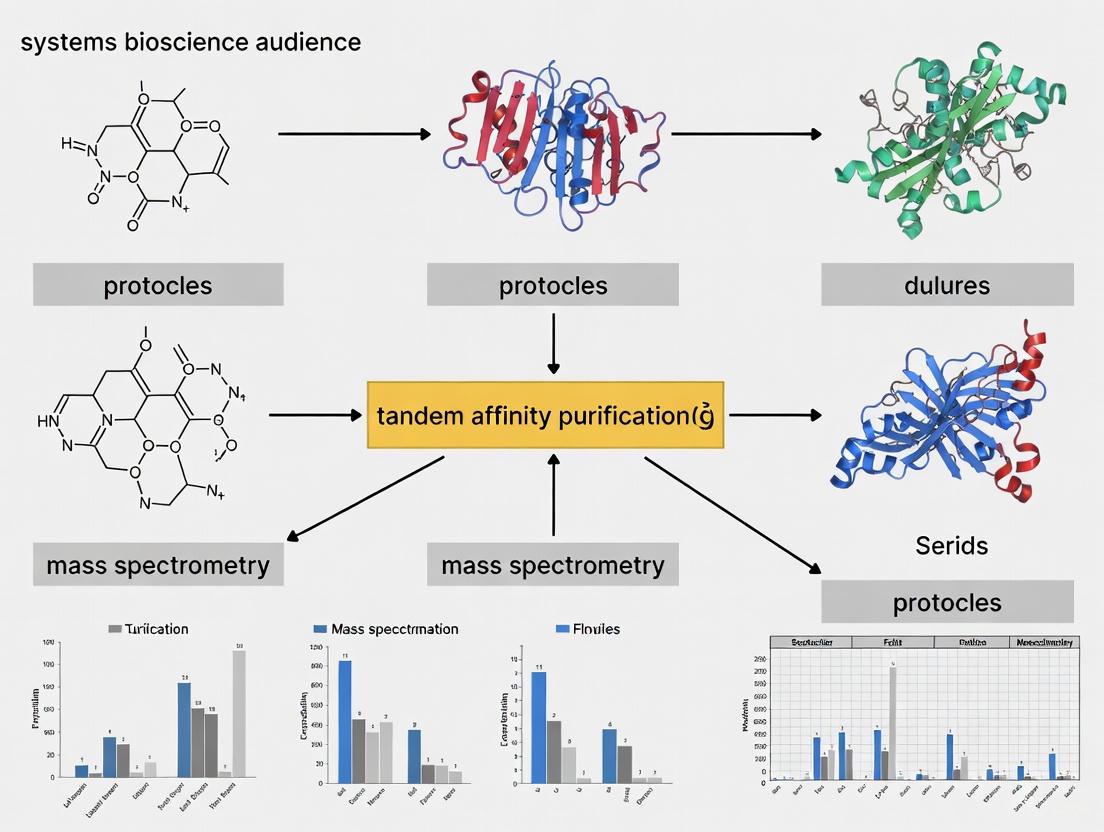
Tandem affinity purification combined with mass spectrometry (TAP-MS) is a powerful technique for isolating and characterizing native protein complexes under physiological conditions, providing critical insights into cellular mechanisms and drug...
Optimizing Tandem Affinity Purification Mass Spectrometry: A Strategic Guide for Enhanced Protein Complex Analysis
Abstract
Tandem affinity purification combined with mass spectrometry (TAP-MS) is a powerful technique for isolating and characterizing native protein complexes under physiological conditions, providing critical insights into cellular mechanisms and drug targets. This article offers a comprehensive guide for researchers and drug development professionals, covering the foundational principles of TAP-MS, advanced methodological protocols, and strategic optimizations to overcome challenges like low complex abundance and stability. It further explores rigorous validation frameworks and comparative analyses of modern affinity enrichment strategies, synthesizing key takeaways to enhance reliability and throughput in interactome studies for biomedical and clinical research.
Understanding TAP-MS: Core Principles and Historical Evolution for Modern Applications
Tandem Affinity Purification (TAP) is an advanced immunoprecipitation-based technique designed for the systematic isolation of native protein complexes from cellular environments with high specificity and yield. Originally developed in the late 1990s by researchers at the European Molecular Biology Laboratory, this method has revolutionized the study of protein-protein interactions by enabling the purification of complexes under physiological conditions without prior knowledge of their composition, function, or individual characteristics [1] [2]. The core innovation of TAP lies in its sequential two-step purification approach, which significantly reduces non-specific binding compared to single-step affinity methods, thereby providing material of sufficient purity for downstream applications such as mass spectrometric analysis [3] [4]. The adaptability of the TAP method has led to its successful application across diverse biological systems, including yeast, mammalian cells, plants, and other model organisms, making it an indispensable tool in functional proteomics and systems biology [1] [5] [6].
The fundamental principle governing TAP methodology involves the genetic fusion of a specialized TAP tag to a protein of interest (the "bait"), followed by its expression in a host cell system where it incorporates into native complexes. The TAP tag typically consists of two distinct affinity epitopes separated by a specific protease cleavage site. Through two sequential orthogonal affinity purification steps, the bait protein and its associated "prey" partners are isolated from cell lysates under native conditions [1] [7]. This gentle purification approach helps preserve the structural integrity and functionality of the isolated complexes, allowing researchers to capture biologically relevant interactions that occur in vivo. The TAP method has been particularly valuable for generating comprehensive protein interaction networks and for characterizing the composition of multiprotein complexes involved in fundamental cellular processes [1] [7].
Core Principles and Tag Architecture
The Sequential Orthogonal Purification Strategy
The operational principle of TAP purification relies on the sequential application of two distinct chromatographic separation steps that exploit different binding affinities. This orthogonal approach ensures that contaminants binding non-specifically in the first step are unlikely to also bind non-specifically in the second step under different biochemical conditions, thereby dramatically enhancing the specificity of the final purification outcome [4] [7]. After cell lysis, the first affinity capture is performed using a resin that specifically binds the outermost tag moiety. Following extensive washing to remove unbound material and weakly associated contaminants, the bound complexes are released not by denaturing conditions but through a highly specific enzymatic cleavage at the engineered protease site within the TAP tag [1] [8]. The eluate from the first step is then subjected to a second affinity purification using a different resin that recognizes the remaining tag portion. After additional washing, the final purified protein complexes are typically eluted by competitive displacement using the tag ligand or by altering buffer conditions such as chelating agents that disrupt specific interactions [1] [3]. This two-step process typically yields protein complexes of sufficient purity for direct identification of components by highly sensitive analytical techniques such as mass spectrometry [3] [7].
Evolution of TAP Tag Systems
Since the development of the original TAP tag, numerous alternative tagging systems have been engineered to address specific experimental needs and to improve performance in different biological contexts. The table below summarizes the key characteristics of several commonly used TAP tag systems:
Table: Comparison of Common Tandem Affinity Purification Tag Systems
| TAP System | Approximate Size | Enzyme Recognition Site | Preferred Host | Key Features |
|---|---|---|---|---|
| ProtA-CBP [1] | ~20 kDa | TEV protease | Prokaryote, Eukaryote | Original TAP tag; well-established protocol |
| FLAG-HA [4] | ~3 kDa | Not required | Eukaryote | Small tag minimizes steric interference |
| FLAG-Strep [4] | ~2 kDa | Not required | Prokaryote | Very small tag; peptide elution |
| His-Bio (HB) [3] | Variable | Not required | Eukaryote | Compatible with denaturing conditions |
| SFB [9] | ~9 kDa | Not required | Eukaryote | Triple tag; high capacity matrices |
The original TAP tag, often referred to as the ProtA-CBP tag, consists of three components: two immunoglobulin G (IgG)-binding domains from Staphylococcus aureus Protein A, a cleavage site for the tobacco etch virus (TEV) protease, and a calmodulin-binding peptide (CBP) [1] [8]. In this system, the first purification step utilizes IgG-coated beads, while the second step employs calmodulin-coated beads in the presence of calcium, with elution achieved using the calcium chelator EGTA [1] [3]. More recently developed tags, such as the SFB (S-protein-FLAG-SBP) tag, combine an S-tag, a double FLAG epitope, and a streptavidin-binding peptide, eliminating the need for protease cleavage and enabling milder elution conditions using biotin [9]. The choice of tag system depends on multiple factors including the host organism, the protein of interest, and the planned downstream applications.
Figure 1: Generalized workflow of Tandem Affinity Purification (TAP) showing the sequential two-step purification process that enables isolation of protein complexes under native conditions.
Technical Support Center: Troubleshooting Guides and FAQs
Frequently Asked Questions
Q: What is the key advantage of TAP over single-step affinity purification methods?
A: The primary advantage of TAP is its dramatically enhanced specificity resulting from two sequential purification steps with different binding principles. This orthogonal approach ensures that contaminants binding non-specifically in the first step are unlikely to also bind non-specifically in the second step under different biochemical conditions. As a result, TAP significantly reduces background contamination compared to single-step methods, which is particularly crucial when identifying novel interaction partners by mass spectrometry [4] [7]. Additionally, the gentle elution conditions (specific protease cleavage or mild competitive elution) in both steps help preserve the native structure and function of the purified complexes.
Q: How do I decide whether to tag the N-terminus or C-terminus of my protein of interest?
A: The choice of tag placement depends on the structural and functional characteristics of your protein. Terminal regions of proteins are often more accessible for tag fusion without disrupting functional domains. However, it is recommended to test both N- and C-terminal fusions whenever possible, as the optimal position varies by protein [4]. Critical considerations include: the location of known functional domains, post-translational modification sites, and subcellular localization signals. If a protein has an N-terminal signal peptide, a C-terminal tag is generally preferable. Conversely, if the C-terminus contains important sorting signals, an N-terminal tag may be more appropriate [9]. Functionality tests, such as complementation assays where the tagged protein rescues a null phenotype, provide the most definitive evidence for proper tag placement [5].
Q: Can TAP capture transient or weak protein interactions?
A: Standard TAP protocols under native conditions are best suited for stable protein interactions. Transient or weak interactors are often lost during the purification process due to the multiple washing steps [1] [3]. However, several modifications have been developed to address this limitation. The inclusion of in vivo crosslinking using cell-permeable agents like formaldehyde before cell lysis can covalently stabilize transient interactions [3]. The HBH-tag system, which tolerates completely denaturing conditions, is particularly compatible with this approach as crosslinked complexes remain intact even under harsh washing conditions that would normally disrupt weak interactions [3].
Q: What are the most critical factors affecting TAP purification yield and specificity?
A: Several factors significantly impact the success of TAP purifications. These include: (1) Expression level of the tagged protein - both underexpression and overexpression can be problematic; (2) Lysis conditions - these must be stringent enough to release complexes but gentle enough to preserve interactions; (3) Wash stringency - optimal salt and detergent concentrations remove contaminants without disrupting specific interactions; (4) Protease activity - incomplete TEV cleavage reduces yield; (5) Bead capacity - overloading reduces efficiency; and (6) Proteolysis - inclusion of appropriate protease inhibitors is essential [3] [4] [5]. Systematic optimization of these parameters is often necessary for challenging bait proteins.
Troubleshooting Common Experimental Issues
Table: Troubleshooting Guide for TAP Experiments
| Problem | Potential Causes | Recommended Solutions |
|---|---|---|
| Low yield after purification | Low expression of TAP-tagged protein; Incomplete TEV cleavage; Protein degradation | Verify expression by Western blot; Optimize TEV protease concentration and incubation time; Add fresh protease inhibitors; Test different tag positions [4] [5] |
| High background contamination | Insufficient washing; Non-specific binding to beads; Overloading of affinity resin | Increase wash stringency (salt, detergent); Include wash steps with different buffers; Pre-clear lysate; Reduce amount of lysate loaded [4] [9] |
| Loss of known interactors | Tag interferes with binding; Interactions too weak or transient; Over-washing | Test different tag positions (N- vs C-terminal); Include in vivo crosslinking; Reduce wash stringency; Use shorter purification protocol [1] [3] [5] |
| Incomplete TEV cleavage | Insufficient TEV protease; Incorrect cleavage conditions; Reduced enzyme activity | Increase TEV protease amount; Extend incubation time; Ensure presence of required 1 mM DTT in cleavage buffer; Prepare fresh DTT solution [3] [4] |
| Protein degradation | Insufficient protease inhibition; Sample processing too slow | Use broader spectrum protease inhibitor cocktails; Process samples at 4°C; Shorten purification time [3] [5] |
Essential Research Reagent Solutions
Successful implementation of TAP methodology requires careful selection and quality control of key reagents. The following table outlines essential materials and their functions in typical TAP procedures:
Table: Essential Research Reagents for TAP Experiments
| Reagent Category | Specific Examples | Function in TAP Protocol |
|---|---|---|
| Affinity Beads/Resins | IgG Sepharose, Calmodulin Affinity Resin, Streptavidin Beads, Anti-FLAG M2 Agarose | Solid-phase supports for capturing tagged protein complexes in sequential purification steps [3] [4] [9] |
| Enzymes | AcTEV Protease, HRV 3C Protease | Site-specific proteases that cleave between tag elements to release complexes after first purification step [3] [4] |
| Buffers and Solutions | Lysis Buffer, TEV Cleavage Buffer, Calmodulin Binding Buffer, EGTA Elution Buffer | Create appropriate biochemical environments for binding, washing, and elution steps while maintaining complex integrity [3] [5] |
| Protease Inhibitors | PMSF, Aprotinin, Leupeptin, Pepstatin | Prevent proteolytic degradation of protein complexes during purification process [3] [5] |
| Tag-Specific Elution Reagents | EGTA, Biotin, FLAG Peptide, Imidazole | Compete with binding interactions to gently elute purified complexes from second affinity resin [3] [4] [9] |
Figure 2: Generalized structure of a TAP tag showing the protein of interest fused to two distinct affinity tags separated by a specific protease cleavage site. Short spacer sequences are often included to ensure proper folding and accessibility of tag components.
Detailed Experimental Protocols
Native Purification Using the ProtA/CBP TAP Tag
The following protocol outlines the standard procedure for TAP using the original ProtA/CBP tag system in yeast or mammalian cells [1] [3]:
Cell Culture and Lysis: Grow cells expressing the TAP-tagged protein to mid-log phase. Harvest cells by centrifugation and resuspend in lysis buffer (150 mM NaCl, 50 mM Tris-HCl pH 8.0, 5 mM EDTA, 10% glycerol, 0.2% NP-40) supplemented with fresh protease inhibitors (1 mM PMSF, 1 μg/mL each of aprotinin, leupeptin, and pepstatin) [3]. Lyse cells using mechanical disruption (e.g., glass bead beating for yeast or sonication/dounce homogenization for mammalian cells). Clarify the lysate by centrifugation at 15,000 × g for 30 minutes at 4°C.
First Affinity Purification (IgG Sepharose): Incubate the cleared lysate with IgG Sepharose beads for 2 hours at 4°C with gentle agitation. Pack the beads into a chromatography column and wash extensively with 10-15 column volumes of lysis buffer followed by 10 column volumes of TEV cleavage buffer (150 mM NaCl, 10 mM Tris-HCl pH 8.0, 0.5 mM EDTA, 0.1% NP-40, 1 mM DTT) [3].
TEV Protease Cleavage: Resuspend the washed beads in TEV cleavage buffer containing AcTEV protease (10-20 units per 100 μL bed volume) and incubate for 2 hours at 16°C or overnight at 4°C with gentle agitation. Collect the eluate containing the cleaved protein complexes.
Second Affinity Purification (Calmodulin Affinity Resin): Adjust the TEV eluate to 2 mM CaCl₂ and 10 mM β-mercaptoethanol in calmodulin binding buffer (150 mM NaCl, 10 mM Tris-HCl pH 8.0, 1 mM MgCl₂, 1 mM imidazole, 0.1% NP-40) [3]. Incubate with calmodulin affinity resin for 1 hour at 4°C. Pack into a column and wash with 10-15 column volumes of calmodulin binding buffer.
Final Elution: Elute the purified protein complexes with calmodulin elution buffer (150 mM NaCl, 10 mM Tris-HCl pH 8.0, 10 mM EGTA, 10 mM β-mercaptoethanol) [3]. Concentrate the eluate if necessary using appropriate centrifugal devices and either process immediately for mass spectrometry analysis or flash-freeze in liquid nitrogen for storage at -80°C.
Denaturing Purification Using the HBH Tag with In Vivo Crosslinking
For capturing transient interactions or working with problematic bait proteins, the HBH tag system combined with in vivo crosslinking provides a robust alternative [3]:
In Vivo Crosslinking: Grow cells expressing the HBH-tagged protein to appropriate density. Add formaldehyde to a final concentration of 1% and incubate for 15-30 minutes at room temperature with gentle agitation. Quench the crosslinking reaction by adding glycine to a final concentration of 125 mM and incubating for 5 minutes [3].
Cell Lysis Under Denaturing Conditions: Harvest cells by centrifugation and lyse in denaturing buffer A-8 (8 M urea, 300 mM NaCl, 50 mM sodium phosphate buffer pH 8.0, 0.5% NP-40) using mechanical disruption. Clear the lysate by centrifugation at 15,000 × g for 30 minutes at 15°C.
First Affinity Purification (Ni²⁺ Sepharose): Incubate the cleared lysate with Ni²⁺ Sepharose beads for 1-2 hours at 15°C with gentle agitation. Pack into a column and wash sequentially with 10 column volumes each of buffer A-8, buffer A-6.3 (8 M urea, 300 mM NaCl, 50 mM sodium phosphate buffer pH 6.3, 0.5% NP-40), and buffer A-6.3 containing 10 mM imidazole [3].
Second Affinity Purification (Streptavidin Sepharose): Elute the bound complexes from the Ni²⁺ Sepharose with buffer B (8 M urea, 200 mM NaCl, 50 mM sodium phosphate buffer pH 4.3, 2% SDS, 10 mM EDTA, 100 mM Tris) and immediately neutralize with Tris-HCl pH 8.0. Dilute the eluate with buffer C (8 M urea, 0.2 M NaCl, 0.2% SDS, 100 mM Tris-HCl pH 8.0) and incubate with streptavidin Sepharose for 1 hour at 15°C [3].
On-Bead Digestion for Mass Spectrometry: Wash the streptavidin beads extensively with buffer D (8 M urea, 0.2 M NaCl, 100 mM Tris-HCl pH 8.0) followed by 50 mM ammonium bicarbonate. Perform tryptic digestion directly on the beads overnight at 37°C. Collect the resulting peptides for LC-MS/MS analysis [3].
Applications in Drug Discovery and Development
The TAP methodology has proven particularly valuable in pharmaceutical research and development, where understanding protein complexes provides critical insights for target identification and validation. In cancer research, TAP-MS approaches have been successfully employed to map the interaction networks of tumor suppressor proteins and oncoproteins, revealing novel components of signaling pathways that may represent therapeutic targets [7] [6]. For instance, Hussain et al. utilized a triple SFB tagging system coupled with MS to comprehensively characterize the WWOX tumor suppressor interactome, identifying previously unknown partners that modulate its function in cancer progression [6].
In the context of drug mechanism of action studies, TAP enables the systematic identification of protein complexes associated with drug targets, helping to elucidate both primary mechanisms and potential off-target effects [7]. This application is particularly powerful when comparing complex composition in the presence and absence of pharmacological inhibitors, revealing how drug binding remodels protein interaction networks. Additionally, TAP facilitates the characterization of macromolecular complexes involved in disease pathogenesis, such as those mediating viral replication or pathogenic protein aggregation in neurodegenerative diseases, providing new avenues for therapeutic intervention [7] [5].
The high specificity of TAP purification makes it uniquely suited for identifying co-factor requirements and regulatory subunits that modulate the activity of drug targets, information that is crucial for developing targeted therapies with minimal side effects. Furthermore, the ability to purify native complexes from patient-derived cells or tissue samples enables comparative interactome analyses between disease and normal states, potentially revealing disease-specific complex formations that could serve as diagnostic biomarkers or novel therapeutic targets [7] [6]. As drug discovery increasingly focuses on targeting specific protein complexes and perturbing pathological interactions rather than single proteins, TAP-MS continues to provide critical experimental evidence for complex composition and dynamics that informs rational drug design.
FAQs and Troubleshooting Guides
Frequently Asked Questions
Q1: What are the primary advantages of using a tandem affinity purification (TAP) strategy over a single-step purification?
Tandem Affinity Purification (TAP) utilizes two sequential affinity purification steps to isolate protein complexes under native conditions. The primary advantage is a dramatic increase in specificity and a significant reduction in non-specific binding contaminants compared to single-step methods [4] [10]. This is crucial for downstream applications like mass spectrometry analysis, where high purity is essential for accurate identification of true protein interactors [11] [12].
Q2: I am not getting any yield after the second purification step. What could be wrong?
Low yield after the second step can be due to several factors:
- Protease Inefficiency: The TEV protease used to cleave the tag after the first purification step may be inactive. Always check protease activity and use an appropriate enzyme-to-substrate ratio [10].
- Harsh Lysis or Wash Conditions: Overly stringent buffers, high salt concentrations, or detergents can disrupt weak protein-protein interactions, causing the complex to fall apart [13]. Optimize lysis and wash buffers to be as mild as possible while still removing contaminants.
- Tag Interference: The affinity tag's location (N- or C-terminal) might be interfering with the folding, function, or interactions of your target protein. Testing both termini is recommended [4] [14].
Q3: My purified sample shows high background contamination. How can I reduce this?
High background often stems from incomplete washing or non-specific binding.
- Optimize Wash Stringency: Incorporate a series of increasingly stringent washes after the affinity capture. This can include high-salt washes (e.g., 500 mM NaCl) and detergent washes (e.g., 0.5% sodium deoxycholate) to dislodge weakly bound proteins [10].
- Use Specific Elution: Competitive elution (e.g., with imidazole for His-tags, biotin for Strep-tags, or FLAG peptide for FLAG-tags) is generally more specific than non-specific elution like low pH, which can release many non-specifically bound proteins [15] [16].
Q4: How do I choose between N-terminal and C-terminal tagging?
The choice is protein-dependent and can affect complex stability and function.
- C-terminal tags are more traditional and easier to construct, but may disrupt native C-terminal sequences or localization signals [14].
- N-terminal tags are gaining popularity but can sometimes interfere with translation initiation or protein folding [14].
- Empirical Testing: For critical experiments, the best practice is to generate and test both N- and C-terminally tagged constructs and determine which one preserves the protein's native function and interaction profile [4].
Troubleshooting Common Experimental Issues
| Problem | Possible Cause | Suggested Solution |
|---|---|---|
| Low or No Protein Yield | Inefficient cell lysis; low expression of tagged protein; tag not accessible. | Optimize lysis method (e.g., high-pressure homogenization [13]); verify expression via Western blot; test different tag positions [4]. |
| High Background Contamination | Nonspecific binding to resin; insufficient washing. | Include pre-clearing step; optimize wash buffers with higher salt or mild detergents [10]; use competitive elution [15]. |
| Complex Disintegration | Harsh purification conditions; over-expression of tagged protein. | Use gentler buffers (e.g., avoid low pH); reduce incubation times; use genomic integration for native expression levels [11] [13]. |
| Incomplete TEV Cleavage | Low protease activity; inaccessible cleavage site. | Use fresh, high-quality TEV protease; optimize incubation time/temperature; ensure cleavage site is not sterically hindered [10]. |
Research Reagent Solutions: A Guide to Essential Materials
The following table details key reagents and their functions in a typical TAP-MS workflow.
| Item | Function in the Experiment | Key Considerations |
|---|---|---|
| IgG Sepharose | Affinity resin for the first purification step, binding the Protein A tag [13] [10]. | Compatible with stringent wash conditions; reusable for cost-effectiveness. |
| Calmodulin Resin | Affinity resin for the second purification step, binding the CBP tag in a calcium-dependent manner [13] [10]. | Requires calcium in binding buffer; gentle elution with EGTA preserves complex integrity. |
| TEV Protease | Highly specific protease that cleaves between the two affinity tags, releasing the complex from the first resin [10] [14]. | High specificity minimizes non-target cleavage; activity should be verified for each batch. |
| Strep-Tactin Resin | An engineered streptavidin resin for purifying Strep-tag II or Twin-Strep-tag fusion proteins [16] [17]. | Allows for very gentle elution with biotin; suitable for both single-step and tandem purifications. |
| FLAG M2 Agarose | Affinity resin for immunoaffinity purification of FLAG-tagged proteins [4] [15]. | High specificity; elution can be achieved under native conditions using FLAG peptide. |
| Amylose Resin | Resin for purifying MBP (maltose-binding protein) tagged fusions [18] [17]. | Enhances solubility of fusion partners; elution with maltose is mild and non-denaturing. |
Quantitative Data and Experimental Protocols
The table below provides a structured comparison of popular affinity tags to guide selection.
| Tag | Typical Size | Common Elution Method | Key Strengths | Key Limitations |
|---|---|---|---|---|
| Polyhistidine (His-tag) | 0.2–1.6 kDa (e.g., 6xHis is 0.8 kDa) [16] | Imidazole or low pH [17] | Very small size; robust binding; works under denaturing conditions [16]. | High background in mammalian systems due to endogenous His-rich proteins [16]. |
| FLAG-tag | 8 amino acids [15] | Low pH, EDTA, or FLAG peptide [15] | Small size; high specificity; peptide elution allows for native conditions [4] [15]. | Antibody-based resin can be expensive; low pH elution may damage some proteins [15]. |
| Strep-tag II | 8 amino acids [16] [17] | Biotin [16] [17] | Small and inert; gentle elution; works on N- or C-terminus; very low background [16]. | Lower affinity compared to other systems (can be overcome with Twin-Strep-tag) [17]. |
| Protein A | ~14 kDa [10] | Low pH or TEV protease cleavage [11] [10] | High affinity for IgG; well-established in TAP protocols [11] [13]. | Large size may sterically hinder protein function or interactions [10]. |
| GST | ~26 kDa [16] | Reduced glutathione [16] | Can enhance solubility of fusion partners [16]. | Large size; may form dimers; potential co-elution of heat-shock proteins [16]. |
| CBP | 26 amino acids (4 kDa) [17] | EGTA (chelates calcium) [13] [10] | Mild elution conditions; relatively small [17]. | Not ideal for eukaryotic cells due to endogenous calmodulin-binding proteins [15]. |
Detailed Methodology: A Standard TAP Protocol
This protocol outlines the key steps for the isolation of a protein complex using a classical Protein A-CBP TAP tag [13] [10].
1. Plasmid Construction and Cell Line Generation
- Clone the cDNA of your protein of interest (POI) into a TAP vector (e.g., pOZ for FLAG-HA or pST for FLAG-Strep-tag II) such that it is in-frame with the two affinity tags [4].
- For yeast, integrate the TAP-tag construct into the genome at the native locus via homologous recombination to ensure endogenous expression levels [13]. For mammalian cells, generate stable cell lines.
- Critical Note: Always include a negative control (e.g., untagged strain or tag-only construct) to identify non-specific binders during MS analysis [10].
2. Cell Culture and Lysis
- Culture cells to mid-log phase to ensure optimal growth and protein expression. For low-abundance complexes, consider culture optimization strategies like glucose supplementation to enhance biomass and protein yield [13].
- Harvest cells and lyse using a gentle method such as high-pressure homogenization or cryomilling in liquid nitrogen, which helps preserve native protein complexes [11] [13].
- Perform lysis in a cold, isotonic buffer containing a mild non-ionic detergent (e.g., 0.01% Tween-20) and protease inhibitors [11] [10].
- Clear the lysate by high-speed centrifugation (e.g., 16,000 × g for 20 minutes at 4°C) to remove cellular debris [10].
3. First Affinity Purification (e.g., IgG Sepharose)
- Incubate the cleared lysate with IgG Sepharose beads for 2 hours to overnight at 4°C with gentle agitation [10].
- Wash the beads extensively with lysis buffer. Follow with more stringent washes to reduce background:
- Elute the bound complexes by proteolytic cleavage. Incubate the beads with TEV protease (e.g., 1:50 ratio) in a compatible buffer with 1 mM DTT for 1-2 hours at 4°C [11] [10].
4. Second Affinity Purification (e.g., Calmodulin Resin)
- Capture the eluate (now containing the CBP-tagged complex) by incubating it with calmodulin resin in the presence of 1 mM CaCl₂ for 1 hour at 4°C [10].
- Wash the resin with calmodulin binding buffer, optionally including a high-salt (500 mM NaCl) wash [10].
- Elute the purified protein complex by chelating calcium. Incubate the resin with a buffer containing 2 mM EGTA for 10-15 minutes at 4°C [13] [10].
5. Buffer Exchange and MS Sample Preparation
- The final EGTA eluate can be concentrated and buffer-exchanged into a volatile MS-compatible buffer (e.g., 50 mM ammonium acetate) using centrifugal filters with an appropriate molecular weight cutoff [11].
- Analyze the sample by native mass spectrometry for intact mass and stoichiometry, or denature, reduce, alkylate, and digest with trypsin for bottom-up proteomic analysis to identify interacting partners [11] [10].
Workflow and Decision Diagrams
Tandem Affinity Purification Workflow
Affinity Tag Selection Logic
Tandem Affinity Purification (TAP) coupled with mass spectrometry (MS) is a cornerstone technique for the isolation and identification of protein complexes under near-physiological conditions. The evolution of the affinity tags at the heart of this method has been critical for enhancing specificity, yield, and applicability across different biological systems. This guide traces the development from the original Protein A-Calmodulin Binding Peptide (CBP) tag to modern epitope combinations, providing a technical resource for researchers optimizing their TAP-MS protocols.
The Original TAP Tag: Protein A-CBP
The first TAP method was introduced to address the challenges of low yield and non-specific binding in single-step affinity purifications. It utilized a tandem tag composed of Protein A and a Calmodulin-Binding Peptide (CBP), separated by a Tobacco Etch Virus (TEV) protease cleavage site [4].
Detailed Protocol: Original Protein A-CBP TAP
Affinity Steps: The purification involves two sequential affinity steps.
- IgG Binding: The protein complex is first bound to an IgG matrix via the Protein A tag.
- TEV Cleavage: The complex is released from the first resin by site-specific proteolysis using TEV protease.
- Calmodulin Binding: The eluate is then incubated with a Calmodulin affinity resin in the presence of calcium ions.
- Elution: The final, purified complex is eluted by chelating calcium ions with a buffer containing EGTA [4].
Key Reagents:
- IgG Sepharose: Beads for the first affinity step.
- TEV Protease: Highly specific protease for gentle elution after the first step.
- Calmodulin Affinity Resin: Beads for the second affinity step.
- Binding Buffer: Contains CaCl₂ (e.g., 10 mM) to facilitate CBP-calmodulin binding.
- Elution Buffer: Contains a chelator like EGTA (e.g., 2 mM) to disrupt the CBP-calmodulin interaction [19] [4].
The following diagram illustrates this two-step purification workflow:
Inherent Limitations and Drive for Innovation
Despite its groundbreaking success, particularly in yeast, the Protein A-CBP system had several drawbacks for broader use [4]:
- Poor Yield in Mammalian Cells: The system exhibited relatively low efficiency when applied to mammalian systems.
- Large Tag Size: The substantial size of the Protein A tag increased the risk of steric interference, potentially affecting the folding, activity, or interactions of the protein of interest.
- Limited Specificity: Non-specific binding remained a concern for the analysis of low-abundance or transient protein complexes.
Evolution to Modern Epitope Combinations
To overcome these limitations, the field shifted towards tags based on short, high-affinity peptide epitopes. This transition was pioneered by Nakatani and Ogryzko, who introduced the use of the FLAG and HA peptide tags for sequential immuno-affinity purification [4].
The Rise of Peptide Epitope Tags
Short peptide tags offered significant advantages:
- Small Size: Less likely to interfere with the structure and function of the fused protein.
- High Specificity: Monoclonal antibodies provide highly specific binding, reducing background.
- Competitive Elution: Gentle elution using competing peptides (e.g., FLAG peptide) preserves complex integrity and function.
The FLAG-HA and FLAG-Strep-tag II (SII) Systems
These systems follow a similar two-step principle but use different affinity matrices:
- Anti-FLAG Affinity Resin: Captures the FLAG-tagged complex.
- FLAG Peptide Elution: Gently elutes the complex using an excess of FLAG peptide.
- Anti-HA Affinity Resin (or Strep-Tactin for SII): Binds the complex via the second tag.
- HA Peptide Elution (or Desthiobiotin for SII): The final complex is eluted competitively [4].
The SFB Tag System: A Modern Derivative
A further refined system uses an S-, 2×FLAG-, and Streptavidin-Binding Peptide (SBP) tandem tag (SFB-tag). A key advantage of the streptavidin-biotin interaction in the final step is its tolerance for denaturing washing conditions, which can be used to eliminate stubborn non-specific interactions [20].
The table below summarizes the key characteristics of these major TAP tag systems.
| Tag System | Affinity Steps | Elution Methods | Key Advantages | Primary Limitations |
|---|---|---|---|---|
| Original Protein A-CBP [4] | 1. IgG Sepharose2. Calmodulin Resin | 1. TEV Protease2. EGTA (Chelation) | Established, robust protocol; gentle elution. | Low yield in mammalian cells; large tag size; calcium-dependent. |
| FLAG-HA [4] | 1. Anti-FLAG Resin2. Anti-HA Resin | 1. FLAG Peptide2. HA Peptide | Small tag size; high specificity; gentle competitive elution. | Requires specific antibodies; can be costly. |
| FLAG-Strep-tag II (SII) [4] | 1. Anti-FLAG Resin2. Strep-Tactin Resin | 1. FLAG Peptide2. Desthiobiotin | Small tag size; very high specificity and affinity. | Requires specialized Strep-Tactin resin. |
| SFB (S-FLAG-SBP) [20] | 1. S-Protein Agarose2. Streptavidin Resin | 1. ?2. Biotin | Tolerates denaturing washes for high stringency. | Multi-step cloning; more complex tag structure. |
The following diagram visualizes the shared logic and improved specificity of these modern epitope-based workflows:
Troubleshooting Guides & FAQs
Common Problems in TAP-MS Experiments
| Problem | Potential Causes | Solutions & Optimizations |
|---|---|---|
| Low Yield After Purification | - Protein degradation.- Inefficient cleavage by TEV protease.- Tag not accessible (steric hindrance).- Overly stringent wash conditions. | - Use fresh protease inhibitor cocktails.- Optimize TEV protease amount and incubation time/time.- Test N-terminal vs. C-terminal tag position.- Reduce wash stringency or volume [4]. |
| High Background (Non-specific Binding) | - Inadequate washing.- Antibody cross-reactivity.- Overloading of affinity resin. | - Increase wash stringency (e.g., increase salt concentration).- Use denaturing washes in compatible systems (e.g., SFB-tag) [20].- Pre-clear lysate with empty resin.- Reduce the amount of lysate input. |
| CBP Tag Inefficiency in Eukaryotic Systems | - Endogenous calmodulin and calmodulin-binding proteins in the lysate interfering with purification. | - Avoid the CBP tag in eukaryotic systems. Switch to a tag pair like FLAG-HA or FLAG-SII [19] [4]. |
| Poor Elution from Second Resin | - Insufficient competing peptide.- Insufficient incubation time during elution.- Leaching of the affinity reagent. | - Increase the concentration of the competing peptide (e.g., FLAG, HA).- Extend the incubation time with gentle agitation.- Use high-quality, cross-linked resins. |
Frequently Asked Questions (FAQs)
Q1: How do I decide whether to tag my protein at the N-terminus or C-terminus? A: The optimal position is protein-dependent and cannot be reliably predicted. It is strongly recommended to generate and test both N- and C-terminal tagged versions of your protein. The choice to continue with one construct can be determined after an initial round of TAP and functional validation [4].
Q2: Why are two different tags necessary? Why not just use two identical tags? A: The use of two orthogonal tags is fundamental to the TAP strategy. It provides two stages of specificity—capture and elution from the first resin does not affect the binding to the second, completely different resin. This sequential orthogonality dramatically reduces non-specific binders compared to a single-step or two identical-step purification [4].
Q3: Can I use the original CBP tag in mammalian cell cultures? A: It is not recommended. The CBP tag is derived from a human protein, and endogenous calmodulin and other calmodulin-binding proteins in the eukaryotic lysate can compete for binding to the resin, reducing yield and increasing background [19].
Q4: What are the key advantages of the FLAG-Strep-tag II (SII) system? A: The FLAG-SII combination is highly effective because both tags are small and both allow for gentle, competitive elution under native conditions. The Strep-tag II / Strep-Tactin interaction is one of the strongest non-covalent interactions known in nature, offering exceptional specificity and purity [4].
The Scientist's Toolkit: Research Reagent Solutions
The following table details key reagents essential for setting up a modern TAP-MS experiment.
| Reagent / Material | Function in TAP-MS | Key Considerations |
|---|---|---|
| pOZ (FLAG-HA) or pST (FLAG-SII) Vectors [4] | Retroviral expression vectors for stable cell line generation. | Includes an IL2Rα surface marker for efficient selection of transfected cells. |
| Anti-FLAG M2 Affinity Gel | First affinity purification resin for FLAG-tagged proteins. | Ensure it is compatible with competitive elution using FLAG peptide. |
| FLAG Peptide | Competitive elution agent for Anti-FLAG resin. | Use high-purity, HPLC-grade peptide for efficient and clean elution. |
| Anti-HA Agarose / Magnetic Beads | Second affinity purification resin for HA-tagged proteins. | Magnetic beads facilitate automation on bead processors like KingFisher [4]. |
| Strep-Tactin Sepharose | High-affinity resin for Strep-tag II (SII). | Superior binding affinity and specificity compared to earlier streptavidin resins. |
| Desthiobiotin | Competitive elution agent for Strep-Tactin resin. | Reversibly competes with the Strep-tag II for binding, allowing gentle elution. |
| High-Fidelity DNA Polymerase | PCR amplification of the target cDNA for cloning. | Essential for error-free amplification before insertion into TAP vectors. |
| Phosphatase & Protease Inhibitors | Added to lysis buffers to preserve post-translational modifications and prevent degradation. | Crucial for maintaining the native state and composition of protein complexes. |
Tandem Affinity Purification combined with Mass Spectrometry (TAP-MS) is a powerful technique for identifying protein-protein interactions and characterizing native protein complexes with high specificity. By employing two sequential, orthogonal purification steps, it drastically reduces non-specific background, enabling the discovery of true interactors, including weak and transient partners, within a physiologic cellular context [4] [21].
Frequently Asked Questions (FAQs)
How do I choose the right tag architecture for my bait protein? Select tag orientation (N- or C-terminal) based on the protein's known domain structure and functional sites to minimize steric interference. It is recommended to test both locations for uncharacterized proteins. Include flexible linkers between the tags and your protein to increase accessibility. Common effective combinations include FLAG-HA and Protein A with a Calmodulin-Binding Peptide (CBP) [4] [10].
What are the critical steps to minimize non-specific binding? The key is the orthogonality of the two affinity steps. After the first capture and stringent washes (e.g., with high salt or detergents), the complex is released via a specific cleavage (e.g., TEV protease) or competitive elution, not denaturation. This eluate is then applied to a second, completely different affinity resin, which removes contaminants that stick non-specifically to the first resin or the tags themselves [4] [21].
My bait protein is membrane-associated. Is TAP-MS still suitable? Yes, but it requires optimization. Use mild, MS-compatible detergents like digitonin or DDM in the lysis and wash buffers to solubilize membrane proteins while preserving native interactions. Adjust the stringency of wash buffers carefully to reduce background without disrupting the complex of interest [21].
What controls are necessary for a definitive TAP-MS experiment? A proper experimental design requires control samples to distinguish specific interactors from background binders. Essential controls include:
- Empty-tag control: Cells expressing the affinity tags alone, processed identically to the bait sample.
- Unrelated bait control: A different, unrelated protein with the same tag architecture. These controls must undergo both purification steps. Proteins enriched in the bait sample compared to these controls are high-confidence interactors [21].
When should I consider using crosslinking in my TAP-MS workflow? Crosslinking should be used selectively when targeting weak or transient complexes that might dissociate during the purification process. Choose MS-cleavable or reversible crosslinkers (e.g., formaldehyde) and validate that crosslinking does not negatively impact elution efficiency or downstream LC-MS/MS analysis. Avoid over-crosslinking [21].
Troubleshooting Guides
Problem: Low Yield of the Bait Protein After Purification
- Potential Cause 1: Poor Expression of the Tagged Bait.
- Potential Cause 2: Protease Degradation During Lysis or Purification.
- Solution: Always perform lysis on ice and include a broad-spectrum protease inhibitor cocktail in all buffers. Keep samples cold at all times during the purification process [10].
- Potential Cause 3: Inefficient Cleavage by TEV Protease.
- Solution: Ensure the TEV protease is active and use an optimized enzyme-to-substrate ratio (e.g., 1:50). Extend the incubation time (e.g., overnight at 4°C) and include reducing agents like DTT (1 mM) in the cleavage buffer, which is required for TEV activity [10].
Problem: High Background of Non-Specific Proteins in MS Results
- Potential Cause 1: Inadequate Stringency During Washes.
- Solution: Incorporate more stringent wash steps after the first affinity capture. This can include washes with high salt (e.g., 500 mM NaCl) and mild detergents (e.g., 0.5% sodium deoxycholate) to disrupt non-specific ionic and hydrophobic interactions [10].
- Potential Cause 2: Failure to Effectively Use Controls for Data Filtering.
- Solution: Process your control samples (empty-tag, unrelated bait) in parallel with your bait sample. Use statistical models like SAINT or MiST to score interactions based on the enrichment over controls. Compare your results to contaminant repositories like the CRAPome to filter out common contaminants [21].
Problem: Identification of Chaperones and Abundant "Sticky" Proteins
- Potential Cause: Overexpression of the Bait Protein.
- Solution: Overexpression can lead to non-physiological interactions and the recruitment of chaperones. Use weaker promoters, inducible systems, or stable cell lines with genomic integration to achieve expression levels close to endogenous. Titrate the inducing agent (e.g., doxycycline) to find the minimum level for detectable expression [10].
Experimental Protocol: A Standard TAP-MS Workflow
The following workflow is adapted for a Protein A and CBP dual-tag system in mammalian cells [10].
1. Plasmid Construction and Cell Line Generation
- Clone the cDNA of your protein of interest (POI) into a TAP vector (e.g., pOZ, pST) such that it is in-frame with the two affinity tags (e.g., Protein A and CBP).
- Critical: Validate the plasmid by sequencing and transfect it into your mammalian cell line of choice (e.g., HEK293T). Generate stable pools via antibiotic selection (e.g., puromycin) or create clonal lines.
2. Cell Lysis and Clarification
- Lyse cells (1-5 x 10⁷ cells) in a non-denaturing lysis buffer (e.g., containing 0.1-0.5% NP-40, 150 mM NaCl, and protease inhibitors) for 30 minutes on ice.
- Clarify the lysate by centrifugation at 16,000 × g for 20 minutes at 4°C to remove insoluble debris.
3. First Affinity Purification (IgG Sepharose)
- Incubate the clarified lysate with IgG Sepharose resin for 2 hours at 4°C.
- Wash the resin sequentially to remove non-specific binders:
- 3 column volumes (CV) of lysis buffer.
- 3 CV of high-salt wash buffer (lysis buffer + 500 mM NaCl).
- 3 CV of detergent wash buffer (lysis buffer + 0.5% sodium deoxycholate).
4. On-Bead Cleavage and Elution
- After the final wash, add TEV protease (in a buffer with 1 mM DTT) to the resin and incubate for 2 hours at 4°C or overnight. This cleaves the site between Protein A and CBP, releasing the protein complex from the first resin.
5. Second Affinity Purification (Calmodulin Resin)
- Capture the eluate from step 4 on calmodulin resin in the presence of 1 mM CaCl₂ (which enables CBP binding). Incubate for 1 hour at 4°C.
- Wash the resin with 3 CV of calcium-containing buffer, followed by 3 CV of the same buffer with 500 mM NaCl.
- Elute the purified complex using a buffer containing 2-10 mM EGTA, which chelates calcium and disrupts the CBP-calmodulin interaction.
6. Sample Preparation for Mass Spectrometry
- Reduce, alkylate, and digest the purified protein complex on-bead or in-solution with trypsin.
- Desalt the resulting peptides and analyze by high-resolution LC-MS/MS.
The diagram below visualizes the core logical workflow of a typical TAP-MS experiment.
TAP-MS Performance Metrics and Sample Requirements
The tables below summarize key quantitative data for planning and evaluating a TAP-MS experiment.
Table 1: Recommended Sample Input for TAP-MS [21]
| Matrix / Source | Recommended Tags | Minimum Input (per replicate) |
|---|---|---|
| Mammalian cells | TAP, Twin-Strep, 3xFLAG | ≥2–5 mg total protein (≈ 1–5 × 10⁷ cells) |
| Yeast | TAP, 3xFLAG, Twin-Strep | ≥2–5 mg total protein |
| Bacteria | Twin-Strep, Strep-FLAG | ≥2–5 mg total protein |
| Tissues/Organoids | Strep/FLAG; pre-validated TAP | ≥50–200 mg wet tissue |
Table 2: Key Performance Metrics for a High-Quality TAP-MS Service [21]
| Parameter | Typical Performance Metric | Significance |
|---|---|---|
| Background Reduction | ≥10x vs single-step IP | Drastically improves specificity and confidence in interaction calls. |
| Mass Accuracy | ≤3 ppm | Enables confident peptide and protein identification. |
| Replicate Reproducibility (CV) | ≤10% (TMT) / ≤15% (Label-free) | Ensures quantitative results are robust and reliable. |
The Scientist's Toolkit: Essential Research Reagent Solutions
Table 3: Key Reagents and Materials for TAP-MS Experiments
| Item | Function / Description | Examples / Notes |
|---|---|---|
| Dual-Tag Vectors | Plasmid for expressing the bait protein fused to two affinity tags. | pOZ (FLAG-HA), pST (FLAG-Strep), or Protein A-TEV-CBP vectors [4] [10]. |
| Affinity Resins | Matrices for capturing the tagged complex. | IgG Sepharose (Protein A), Anti-FLAG M2 Agarose, Strep-Tactin Resin, Calmodulin Resin [4] [10]. |
| TEV Protease | Highly specific protease that cleaves between the first tag and the rest of the fusion protein. | Allows gentle, specific elution after the first purification step [10]. |
| MS-Compatible Detergents | Solubilize membrane proteins while maintaining complex integrity and MS compatibility. | Digitonin, n-Dodecyl-β-D-maltoside (DDM) [21]. |
| Protease Inhibitors | Prevent proteolytic degradation of the bait and its interactors during purification. | Broad-spectrum cocktails, often in tablet or liquid form. Essential in all buffers [10]. |
| Crosslinkers | Stabilize transient or weak interactions prior to lysis. | Formaldehyde (reversible); MS-cleavable crosslinkers (e.g., DSSO) for advanced workflows [21]. |
FAQs and Troubleshooting Guide
What is the core principle that gives TAP its advantage in specificity?
Tandem Affinity Purification (TAP) uses a two-step, sequential purification process with two orthogonal affinity tags (tags that bind to different ligands and can be eluted under different conditions) separated by a specific protease cleavage site [4] [22]. The first affinity step captures the tagged "bait" protein and its associated complexes from a crude cell lysate. After washing, a highly specific protease, such as Tobacco Etch Virus (TEV) protease, cleaves the tag to release the complex. This eluate is then subjected to a second, orthogonal affinity step, which captures the complexes again [22]. This process dramatically reduces non-specific background binders that might stick to a single resin, yielding near-homogeneous preparations suitable for highly sensitive downstream analyses like mass spectrometry [4] [21] [22].
My protein complexes are disassembling during purification. What can I optimize?
Preserving native complexes is critical. Key parameters to review are:
- Lysis and Wash Buffers: Use gentle, non-denaturing buffers (e.g., 0.1–0.5% NP-40/Triton) with moderate salt concentrations to maintain protein-protein interactions. Avoid harsh detergents like SDS [21] [10].
- Elution Method: Prefer gentle, competitive elution (e.g., with FLAG peptide or desthiobiotin) or specific protease cleavage (e.g., TEV) over harsh, low-pH or high-denaturant elutions that can disrupt complexes [4] [21].
- Expression Level: Overexpression can lead to non-physiological interactions and complex saturation. Use weak promoters or inducible expression systems to achieve near-endogenous expression levels of your bait protein [10].
- Additives: Ensure your buffers contain protease and phosphatase inhibitors to prevent degradation. For chromatin-associated complexes, consider adding benzonase to reduce viscosity and non-specific binding to nucleic acids [21].
I am getting high background noise. How can I reduce non-specific binding?
High background is often addressed by increasing the stringency of your washes and ensuring proper controls.
- Stringent Washes: After the first capture, implement a series of washes with increasing stringency. This can include a high-salt wash (e.g., 500 mM NaCl) to disrupt ionic interactions, followed by a detergent wash (e.g., 0.5% sodium deoxycholate) to reduce hydrophobic non-specific binding [10].
- Tag Interference: The large size of some tags (e.g., Protein A at ~14 kDa) can sterically hinder protein function or increase non-specific binding. Consider testing smaller tags like Strep-tag II (8 amino acids) or FLAG-tag at the opposite terminus of your protein [10].
- Critical Controls: Always run parallel control purifications using cells expressing the affinity tags alone (e.g., BirA-only) or an unrelated bait protein. The proteins identified in these control samples should be subtracted from your experimental sample to distinguish genuine interactors from non-specific binders [23] [21].
How do I choose the right tag combination and placement?
The choice of tags and their placement is crucial for success. The table below compares common TAP tags.
| Tag Combination | Principle of Elution | Key Advantages | Potential Limitations |
|---|---|---|---|
| ProtA - CBP [22] | TEV Protease / EGTA Chelation | The original, widely used TAP tag; high specificity. | Low affinity of CBP in mammalian systems; can be time-consuming [4]. |
| FLAG - HA [4] | FLAG Peptide / HA Peptide | Short, peptide tags minimizing steric interference; high-affinity antibodies available. | Requires high-quality immunoaffinity resins. |
| StrepII - FLAG [4] [10] | Desthiobiotin / FLAG Peptide | Very gentle elution; small tags; high purity and yield in mammalian cells. | Cost of Strep-Tactin resin and desthiobiotin. |
| Protein G - StrepII [22] | TEV Protease / Desthiobiotin | Improved yield over ProtA-CBP in human cells. |
For tag placement (N- vs. C-terminal), there is no universal rule. The optimal position depends on the protein's functional domains and structure. It is highly recommended to test both configurations and select the one that maintains the bait protein's native function and localization [4] [10].
What are the essential performance parameters to quantify TAP success?
When evaluating your TAP protocol, you should measure the following key parameters, which often must be balanced against each other [24]:
- Resolution: The ability to separate the target complex from contaminants. This is reflected in the purity of the final sample, assessed by SDS-PAGE and mass spectrometry.
- Recovery: The final yield of your active target protein and its complexes. Calculate the amount of bait protein recovered after the two purification steps.
- Capacity: The amount of cell lysate that can be processed by the affinity resin before losing resolution. Overloading is a common source of contamination.
- Speed: The total time required for the purification process. Faster protocols help preserve labile and transient interactions.
The table below provides a comparative overview of TAP against other common interaction discovery methods.
| Technique | Key Principle | Strengths | Major Limitations / Best For |
|---|---|---|---|
| Tandem Affinity Purification (TAP) | Two-step affinity purification under native conditions. | High specificity; preserves native complex structure; identifies direct and indirect partners. | Time-consuming; potential for tag interference. Ideal for: Isolating stable, endogenous complexes. |
| Co-Immunoprecipitation (Co-IP) | Single-step antibody-based purification. | No genetic engineering needed; rapid. | High background; antibody-dependent quality and specificity. Ideal for: Validating known interactions. |
| Yeast Two-Hybrid (Y2H) | Reconstitution of transcription factor in yeast nucleus. | High-throughput; detects direct, binary interactions. | High false-positive rate; non-physiological context. Ideal for: Initial screening for binary interaction candidates. |
| BioID/APEX | Proximity-dependent biotinylation in live cells. | Captures transient/weak interactions; provides spatial context. | Labels proximal proteins, not necessarily direct interactors; requires enzyme overexpression. Ideal for: Mapping spatial proteomes. |
Experimental Protocol: TAP in Mammalian Cells
Plasmid Construction and Stable Cell Line Generation
- Vector Design: Clone the cDNA of your protein of interest (POI) into a TAP vector (e.g., pOZ for FLAG-HA or pST for FLAG-StrepII). Ensure the vector includes a surface marker (e.g., IL-2Rα) for efficient selection [4].
- Tag Orientation: Generate constructs with tags at both the N- and C-terminus to determine the optimal configuration that does not disrupt protein function [4].
- Stable Expression: Transfect your mammalian cells (e.g., HEK293T) and select stable pools using the appropriate antibiotic (e.g., puromycin at 2–5 μg/mL for 1–2 weeks). Using inducible promoters (e.g., Tet-On) is advantageous to control expression levels and avoid artifacts from overexpression [10].
Cell Lysis and Clarification
- Lysis: Harvest cells and lyse them on ice for 30 minutes in a non-denaturing lysis buffer (e.g., containing 0.1–0.5% NP-40, 150 mM NaCl, and protease inhibitors) [21] [10].
- Clarification: Sonicate the lysate briefly (e.g., 3 x 10-second pulses) to shear DNA and reduce viscosity. Centrifuge at 16,000 x g for 20 minutes at 4°C to remove insoluble debris [10].
Tandem Affinity Purification
The following workflow details a generic two-step purification. Buffers and resins should be adjusted for your specific tag combination.
First Affinity Purification
- Binding: Incubate the clarified lysate with the first affinity resin (e.g., IgG Sepharose for Protein A tags) for 2 hours at 4°C [10].
- Stringent Washes: Wash the resin sequentially with:
- 3 column volumes (CV) of lysis buffer.
- 3 CV of high-salt buffer (lysis buffer + 500 mM NaCl).
- 3 CV of detergent wash buffer (lysis buffer + 0.5% sodium deoxycholate) [10].
- Elution: Cleave the first tag by incubating the resin with TEV protease (e.g., 1:50 enzyme-to-substrate ratio) in a compatible buffer for 1-2 hours at 16°C [22] [10].
Second Affinity Purification
- Binding: Incubate the TEV eluate with the second resin (e.g., Calmodulin resin for CBP tags in the presence of 1 mM CaCl₂) for 1 hour at 4°C [10].
- Wash: Wash the resin with 3 CV of calcium-containing buffer [10].
- Elution: Release the purified complex by chelating calcium with 3 CV of elution buffer containing EGTA (e.g., 2 mM EGTA) [23] [10].
Sample Preparation for Mass Spectrometry Analysis
- Concentration and Desalting: Concentrate the eluate using a 10 kDa molecular weight cut-off centrifugal filter and exchange the buffer into 50 mM ammonium bicarbonate [10].
- Reduction and Alkylation: Reduce disulfide bonds with 5 mM DTT (30 min, 56°C) and alkylate with 15 mM iodoacetamide (30 min, room temperature in the dark) [10].
- Digestion: Digest the proteins with sequencing-grade trypsin (1:50 w/w) at 37°C for 16 hours [10].
- LC-MS/MS Analysis: Analyze the resulting peptides using a nano-flow LC system coupled to a high-resolution mass spectrometer (e.g., Thermo Orbitrap Fusion Lumos or Q Exactive HF-X) operated in data-dependent acquisition mode [21] [10].
The Scientist's Toolkit: Essential Research Reagents
| Reagent / Material | Function in TAP-MS | Key Considerations |
|---|---|---|
| TAP Vectors (e.g., pOZ, pST) | Retroviral vectors for stable expression of doubly-tagged bait protein. | Ensure proper tag orientation (N/C-terminal) and include a surface marker for selection [4]. |
| Affinity Resins (e.g., IgG Sepharose, Anti-FLAG M2, Strep-Tactin) | Solid-phase matrices for capturing the tagged protein and its complexes. | Orthogonality is key; ensure the two resins do not cross-bind. Use high-binding capacity resins [4] [10]. |
| TEV Protease | Highly specific protease that cleaves between the two affinity tags. | High specificity and activity under mild conditions (4-16°C) are crucial to preserve complex integrity [22]. |
| Protease Inhibitors | Prevent degradation of the protein complex during purification. | Use broad-spectrum cocktails in lysis and all purification buffers [21]. |
| Mass Spectrometer (e.g., Orbitrap Fusion Lumos) | High-sensitivity instrument for identifying co-purifying proteins. | High mass accuracy and dynamic range are needed to detect low-abundance interactors [21]. |
Troubleshooting Logic Map
Follow this decision tree to diagnose common issues in your TAP-MS experiment.
Executing TAP-MS: From Vector Design to Functional Proteomics
FAQs and Troubleshooting Guides
What is Tandem Affinity Purification and why is tag selection critical?
Tandem Affinity Purification is a powerful technique used to isolate native protein complexes from cellular lysates with high specificity through two sequential purification steps. Tag selection is critical because the chosen affinity tags directly impact the yield, purity, and functional integrity of the isolated complexes. An optimal tag combination minimizes non-specific binding, reduces co-purification of contaminants, and helps preserve the native structure and activity of the protein complex for downstream analysis [10] [7].
What are the key trade-offs between different tandem tag systems?
The choice of a tandem tag system involves balancing several factors, including purity, yield, cost, and the potential for tag interference. The table below summarizes the performance of various tags across different expression systems, as determined by comparative studies [25].
Table 1: Performance Comparison of Common Affinity Tags Across Different Expression Systems
| Affinity Tag | Performance in E. coli | Performance in Yeast | Performance in HeLa/Mammalian Cells | Key Characteristics |
|---|---|---|---|---|
| HIS | Good yield, moderate purity [25] | Relatively poor purification [25] | Relatively poor purification [25] | Inexpensive, high-capacity resin [25]. |
| CBP | Moderate purity [25] | Moderate purity [25] | Better purity [25] | Calcium-dependent elution with EGTA [26]. |
| Strep II (SII) | Excellent purification, good yield [25] | Excellent purification, good yield [25] | Excellent purification, good yield [25] | Good compromise of purity and yield at moderate cost [25]. |
| FLAG / HPC | Highest purity [25] | Highest purity [25] | Highest purity [25] | Excellent purity but requires expensive, low-capacity resin [25]. |
How do the FLAG-HA and FLAG-Strep systems compare in practice?
Both FLAG-HA and FLAG-Strep are modern, highly effective tandems that use short peptide tags to minimize disruption to the protein of interest.
Table 2: Direct Comparison of FLAG-HA and FLAG-Strep Tandem Systems
| Feature | FLAG-HA System | FLAG-Strep II (SII) System |
|---|---|---|
| First Purification Step | Anti-FLAG antibody resin [4] | Anti-FLAG antibody resin [4] |
| Elution from First Step | Competitive elution with FLAG peptide [4] | Competitive elution with FLAG peptide [4] |
| Second Purification Step | Anti-HA antibody resin [4] | Strep-Tactin resin [4] |
| Elution from Second Step | Competitive elution with HA peptide [4] | Competitive elution with desthiobiotin [4] |
| Key Advantage | Well-established protocol; high specificity of immunoaffinity [4] | Gentle elution conditions; excellent for preserving labile interactions [4] [10] |
The following workflow illustrates the sequential steps for a generic TAP procedure using these tags:
What are common issues during TAP and how can I troubleshoot them?
Problem: Low Yield of Purified Complex
- Potential Cause 1: The affinity tags are inaccessible due to protein folding or steric hindrance within the complex.
- Solution: Test tags on both the N- and C-terminus of your protein of interest (POI). Introduce a flexible linker sequence between the tag and the POI to improve accessibility [4] [10].
- Potential Cause 2: Over-expression of the tagged protein leads to aggregation or inclusion body formation.
- Solution: Use weaker or inducible promoters (e.g., EF1α, TetOn) for expression in mammalian cells to avoid artifacts. Optimize culture conditions, such as temperature and induction time [10] [13].
Problem: High Background of Non-Specific Contaminants
- Potential Cause: Inadequate stringency during wash steps.
- Solution: Incorporate more stringent wash conditions after the first affinity capture. This can include washes with high salt (e.g., 500 mM NaCl), mild detergents (e.g., 0.5% sodium deoxycholate), or by including a TEV protease cleavage step to release the complex rather than harsh elution [10].
Problem: Loss of Key Subunits or Functional Integrity
- Potential Cause 1: The purification conditions are too harsh, disrupting weak but biologically relevant interactions.
- Solution: For the second purification step, use a tag with very mild elution conditions, such as the FLAG-Strep system which uses gentle biotin competition [4] [10].
- Potential Cause 2: The tags themselves interfere with complex assembly or stability.
- Solution: Compare results from N-terminal and C-terminal tagged constructs. Consider using smaller tags like Strep-II to minimize interference [26] [10].
The Scientist's Toolkit: Essential Research Reagent Solutions
Table 3: Key Reagents for Tandem Affinity Purification Workflows
| Reagent / Material | Function / Application | Example Product / Note |
|---|---|---|
| Anti-FLAG M2 Resin | First or second purification step for FLAG-tagged proteins. | Immunoaffinity resin for high-purity capture [4]. |
| Strep-Tactin Resin | Purification of Strep II-tagged proteins; offers gentle elution. | Engineered streptavidin for high-affinity binding [26] [10]. |
| TEV Protease | Site-specific cleavage to elute complexes between purification steps. | Preferable for its high specificity, reducing tag remnants [26] [10]. |
| FLAG / HA Peptides | Competitive elution of proteins from respective antibody resins. | Ensure high purity for efficient elution. |
| Desthiobiotin | Competitive elution for Strep-Tactin resin; allows gentler release than biotin. | Milder elution helps preserve complex integrity [26]. |
| HeLa Protein Digest Standard | Quality control for mass spectrometry sample preparation and instrument performance. | Pierce HeLa Protein Digest Standard (Cat. No. 88328) [27]. |
| Piero Peptide Retention Time Calibration Mix | Calibrating and troubleshooting Liquid Chromatography (LC) systems. | Pierce Peptide Retention Time Calibration Mixture (Cat. No. 88321) [27]. |
How can I optimize a TAP protocol for a low-abundance complex?
Isolating low-abundance complexes, like the yeast COMPASS complex, requires specialized optimization. Key strategies include:
- Culture Optimization: Enhance complex expression and stability by optimizing growth conditions. For yeast, delaying the diauxic shift through glucose supplementation can increase biomass and target protein yield [13].
- Tag Position: Systematically compare tags on different complex subunits. For COMPASS, tagging the Bre2 subunit yielded higher-purity complexes compared to other components [13].
- Lysis and Stabilization: Use gentle lysis methods (e.g., high-pressure homogenization) and include protease inhibitors and stabilizing agents (e.g., glycerol) in all buffers to protect the complex from degradation [13].
The following diagram outlines a high-level strategy for purifying challenging, low-abundance complexes:
Technical Support Center: Troubleshooting Guides and FAQs
This support center addresses common challenges in generating recombinant fusion proteins and stable cell lines for Tandem Affinity Purification-Mass Spectrometry (TAP-MS) studies, a key methodology for mapping protein-protein interactions [3] [4].
Section 1: Stable Cell Line Generation
Q1: How do I determine the correct concentration of selection agent (e.g., Puromycin, G418) for my host cell line? A: You must perform a kill curve (dose-response) analysis on the parental, non-transfected cell line. Seed cells at a consistent density and treat with a range of antibiotic concentrations. The optimal concentration is the minimum dose that kills 100% of the untreated cells within 7-10 days [28]. Using an empirically determined dose prevents both false positives (under-dosing) and toxicity to stably transfected cells (over-dosing).
Q2: Why is my stable pool heterogeneous, showing variable expression levels of the tagged protein of interest (POI)? A: Heterogeneity is common after initial bulk selection. The solution is clonal isolation. The initial transfected pool is a mix of cells with different genomic integration sites and copy numbers of your expression vector. You must isolate and expand single cells to generate monoclonal populations, which are then screened to identify clones with consistent, high-level expression of your fusion protein [28].
Q3: What are the critical pre-transfection steps to ensure high integration efficiency? A:
- Cell Health: Use cells in the logarithmic growth phase with viability >95%.
- Contamination Screening: Routinely test for mycoplasma, which can alter cellular physiology and transfection efficiency.
- Vector Design: Ensure your expression vector has a strong promoter (e.g., CMV), a Kozak sequence, a poly-A signal, and a validated selection marker gene [28].
- Method Optimization: Choose and optimize your transfection method (e.g., lipofection, electroporation) for your specific host cell line [28].
Section 2: Genetic Fusion Construct Design and Validation
Q4: When creating a fusion gene via cloning (e.g., In-Fusion), how do I ensure high accuracy at the junctions? A: The In-Fusion Cloning method itself has a very low error rate (<2% at junctions). Most junction errors originate from primer synthesis mistakes. To mitigate this:
- Use high-fidelity DNA polymerases for PCR.
- Design primers with 15-20 bp homologous overlaps for proper annealing [29].
- Sequence validate multiple clones to identify and discard those with synthesis-derived errors [29].
Q5: How do I control the reading frame when creating a translational fusion (e.g., tag-POI)? A: The reading frame is defined during primer design. When adding a tag, ensure the homology sequence on your PCR primer corresponds to the last complete codons of the upstream sequence. To adjust the frame, add one or two nucleotides between the homology sequence and the start of your gene-specific sequence in the primer [29].
Q6: My fusion protein shows degradation or multiple bands on a Western blot. What could be the cause? A: This is a common issue [30]. Potential causes and solutions include:
- Proteolytic Degradation: Optimize lysis conditions by using fresh protease inhibitor cocktails and working on ice. Consider using a more stable tag or adding a protease inhibitor specific to your host cell type.
- Premature Translation Termination: Verify the DNA sequence of your construct for accidental stop codons.
- Alternative Start Sites: Ensure your Kozak sequence is optimal and that no internal methionine residues are being used.
- Incomplete Denaturation: For membrane or highly structured proteins, optimize SDS-PAGE sample preparation (e.g., boil longer, use fresh reducing agent).
Section 3: Tandem Affinity Purification (TAP)
Q7: How do I choose between native TAP and cross-linking TAP protocols? A: The choice depends on the nature of the protein complex you are studying [3].
- Native TAP (e.g., ProtA/CBP tag): Ideal for stable, high-affinity protein complexes. Purification is performed under mild, non-denaturing conditions to preserve native interactions [3] [4].
- Cross-linking TAP (e.g., HBH tag): Essential for capturing transient, weak, or dynamic interactions. In-vivo cross-linking (e.g., with formaldehyde) covalently stabilizes complexes before lysis. Subsequent purification can be done under fully denaturing conditions (e.g., 8 M urea) to eliminate non-specific background without disrupting the cross-linked complex [3].
Q8: My TAP purification has high background. How can I improve specificity? A:
- Increase Stringency: Optimize wash buffer conditions (e.g., increase salt concentration to 300-500 mM NaCl, add mild detergents like 0.1% NP-40) [3] [4].
- Use Orthogonal Tags: The core principle of TAP is two sequential, orthogonal purifications (e.g., FLAG then HA, or IgG then Calmodulin). Ensure the elution from the first step is complete to prevent carryover of non-specifically bound proteins [4].
- Consider Denaturing Conditions: For cross-linking workflows, using tags like HBH that tolerate 6-8 M urea in both purification steps dramatically reduces background [3].
- Include Controls: Always perform parallel purifications from control cell lines (e.g., expressing the tag alone) to identify and subtract background proteins.
Q9: What is the advantage of "on-bead" digestion in some TAP-MS workflows? A: For tags with extremely high affinity (e.g., biotin-Streptavidin used in the HBH tag protocol), efficient elution of intact protein is difficult. "On-bead" digestion involves adding trypsin directly to the washed beads to release peptides for mass spectrometry analysis, ensuring high recovery of the bound material [3].
Section 4: Mass Spectrometry and Data Analysis
Q10: Should I use "in-gel" or "in-solution" (MudPIT) processing for my purified complexes before MS? A:
- In-Gel Digestion: Separate the complex by SDS-PAGE, stain, excise bands, and digest. This replicates sample complexity, simplifying MS analysis but loses sensitivity for low-abundance proteins due to poor recovery from the gel [3].
- In-Solution Digestion / MudPIT: Digest the entire purified complex in solution and analyze using multidimensional chromatography. This is the method of choice for comprehensive identification as it offers higher sensitivity and better recovery of low-abundance components, though data analysis is more complex [3].
Q11: Why is a specialized LIMS important for TAP-MS proteomics? A: Proteomics generates massive, complex data. A specialized Laboratory Information Management System (LIMS) is crucial for [31]:
- Tracking sample genealogy from original cell line to MS-ready peptides.
- Integrating with MS instruments and analysis software (e.g., MaxQuant, Proteome Discoverer) to automate data transfer and ensure chain-of-custody.
- Managing metadata (lysis conditions, buffer recipes, instrument parameters) essential for reproducing and validating results.
- Providing built-in analysis tools like pathway analysis and AI-assisted peak annotation, which can reduce data processing time by up to 60% [31].
Table 1: Key Efficiency Metrics in Cloning and Detection
| Metric | Value / Description | Context / Implication | Source |
|---|---|---|---|
| In-Fusion Cloning Accuracy | >95% for single inserts | High reliability for constructing fusion genes without unwanted scars. | [29] |
| In-Fusion Junction Error Rate | <2% (mostly from primer synthesis) | Highlights the need for high-quality oligos and sequence validation. | [29] |
| AI-Peak Annotation Time Savings | Up to 60% reduction | Demonstrates the impact of advanced software tools on proteomics workflow speed. | [31] |
| CHO Cell Dominance in Bioproduction | >70% of recombinant protein therapeutics | Underlines the importance of CHO cells as a host system. | [28] |
Table 2: Key Buffers and Conditions for TAP-MS Protocols
| Protocol Step | Critical Condition / Reagent | Purpose / Effect | Source |
|---|---|---|---|
| Cross-linking TAP Lysis/Wash | 8 M urea, 6 M guanidinium HCl | Fully denaturing conditions that eliminate non-specific interactions while preserving cross-linked complexes. | [3] |
| Native TAP Elution (CBP tag) | 10 mM EGTA | Chelates calcium, disrupting the calmodulin-CBP interaction for gentle elution. | [3] |
| Stringency Washes | 300-500 mM NaCl, 0.1-0.5% NP-40 | Removes weakly and non-specifically bound proteins by increasing ionic strength and disrupting hydrophobic interactions. | [3] [4] |
| Protease Elution (TEV) | 1 mM DTT | Activates TEV protease to cleave the tag and release the complex after the first affinity step. | [3] |
Detailed Experimental Protocols
Protocol A: Stable Cell Line Generation for TAP-MS
Based on established methods for creating cell lines expressing tagged proteins [28].
- Host Cell Preparation: Culture your chosen mammalian cell line (e.g., HEK293, CHO) to >95% viability in the log phase. Test for mycoplasma contamination.
- Kill Curve Analysis: Seed parental cells in a 24-well plate. Treat with a dilution series of your selection agent (e.g., 0.5 - 10 µg/mL puromycin). Refresh medium+drug every 2-3 days. Over 7-14 days, identify the lowest concentration that causes 100% cell death.
- Vector Transfection: Transfect your TAP-tag expression vector (e.g., pOZ-FH or pST-FS [4]) using an optimized method (lipofection recommended for HEK293/CHO).
- Bulk Selection: 48 hours post-transfection, begin selection using the predetermined antibiotic concentration. Maintain selection for 7-10 days until distinct resistant colonies appear.
- Clonal Isolation: Using limiting dilution or FACS, seed cells at ≤1 cell per well in a 96-well plate. Expand colonies originating from a single cell.
- Clone Screening: Screen clones for expression of your TAP-tagged POI via Western blot (anti-FLAG/HA) and for surface marker (IL2Rα) if using pOZ/pST vectors [4].
- Validation: Select 3-5 high-expressing monoclonal lines and validate over 10+ passages to ensure stable expression. Use the best clone for large-scale culture and protein complex purification.
Protocol B: In-Fusion Cloning for Tag Fusion Constructs
Based on the highly efficient, ligation-independent In-Fusion method [29].
- Primer Design: Design primers to amplify your gene of interest (GOI).
- The 3' end contains 18-25 bp of gene-specific sequence.
- The 5' end must add a 15 bp sequence homologous to the terminus of your linearized vector. For C-terminal fusions, this homology should correspond to the last 5 codons of the tag sequence without a stop codon.
- To adjust the reading frame, add 1 or 2 nucleotides between the homology and gene-specific sequences.
- PCR Amplification: Amplify the GOI using a high-fidelity polymerase.
- Vector Preparation: Linearize your destination vector by restriction digest or inverse PCR. Purify the PCR product and linearized vector.
- In-Fusion Reaction: Mix the insert(s) and vector at a recommended molar ratio (e.g., 2:1 insert:vector) with the In-Fusion enzyme mix. Incubate at 50°C for 15 minutes.
- Transformation: Transform the reaction directly into competent E. coli (competency >10⁸ cfu/µg). Plate on selective media.
- Screening: Pick colonies for plasmid miniprep and verify constructs by restriction digest and Sanger sequencing across the fusion junctions.
Protocol C: Core Tandem Affinity Purification (FLAG-HA Tag)
Adapted from optimized manual TAP protocols [4].
- Cell Lysis: Harvest ~1-5 x 10⁸ stable cells expressing the FLAG-HA-tagged POI. Lyse in 1-5 mL of appropriate lysis buffer (e.g., 150 mM NaCl, 50 mM Tris pH 8.0, 0.2% NP-40, protease inhibitors). Clear lysate by centrifugation.
- First Affinity Purification (Anti-FLAG): Incubate cleared lysate with anti-FLAG M2 affinity resin for 2-4 hours at 4°C. Wash beads extensively with high-salt wash buffer (e.g., 300 mM NaCl, 0.1% NP-40).
- Elution (FLAG Peptide): Elute the bound complex by incubating beads with 3x FLAG peptide (150 µg/mL) in TBS for 30 min at 4°C. Collect the eluate.
- Second Affinity Purification (Anti-HA): Adjust the eluate's buffer composition (e.g., add CaCl₂ for compatibility). Incubate with anti-HA affinity resin for 2 hours at 4°C. Wash stringently.
- Final Elution (HA Peptide or Acidic Buffer): Elute the purified complex using HA peptide or a low-pH buffer (e.g., 0.1 M glycine, pH 2.5-3.0). Immediately neutralize the eluate with Tris buffer.
- Quality Control: Analyze a fraction of the input, flow-through, washes, and final eluate by SDS-PAGE and silver stain or Western blot to assess purity and yield.
- MS Preparation: Concentrate the eluate, quantify protein, and proceed with in-solution tryptic digestion or SDS-PAGE/in-gel digestion for mass spectrometry analysis.
Experimental Workflow Visualizations
Title: TAP-MS Experimental Decision and Workflow
Title: Stable Cell Line Generation Protocol
The Scientist's Toolkit: Key Research Reagent Solutions
Table 3: Essential Reagents for TAP-MS Cell Line Development and Purification
| Reagent / Material | Primary Function in Context | Key Consideration / Example |
|---|---|---|
| TAP-Tag Vectors (e.g., pOZ, pST) | Expresses the protein of interest (POI) fused to two affinity tags (e.g., FLAG-HA, ProtA-CBP) and a surface marker for selection [4]. | Choice depends on tag compatibility (native vs. denaturing purification) and host cell system. |
| High-Fidelity DNA Polymerase | Accurately amplifies the gene of interest for error-free fusion construct cloning [4]. | Essential for minimizing mutations during PCR step of vector construction. |
| In-Fusion or Gibson Assembly Master Mix | Enables seamless, directional, ligation-independent cloning of tags and POI [29]. | Preferable to traditional restriction cloning for creating scarless fusions. |
| Selection Agents (Puromycin, G418) | Eliminates non-transfected cells during stable cell line generation, ensuring population expresses the TAP-tag construct [28]. | Concentration must be pre-determined via kill curve analysis on parental cells. |
| Anti-FLAG M2 Affinity Gel | First affinity resin for FLAG-based TAP, offering high specificity and mild elution conditions with FLAG peptide [4]. | Ensure resin is pre-washed to remove preservatives. |
| Anti-HA Affinity Matrix | Second orthogonal affinity resin in FLAG-HA TAP protocols [4]. | Can be used as magnetic beads for compatibility with automated platforms. |
| TEV Protease | Site-specific protease used to elute complexes after the first purification step in ProtA/CBP TAP tags [3]. | Requires addition of DTT to activation buffer; efficiency depends on accessibility of cleavage site. |
| Cross-linker (Formaldehyde) | Stabilizes transient protein-protein interactions in vivo prior to lysis for cross-linking TAP protocols [3]. | Concentration and time must be optimized to balance cross-linking efficiency and epitope masking. |
| Urea / Guanidinium HCl | Chaotropic agents used to create fully denaturing lysis and wash buffers for cross-linking TAP, eliminating non-specific binding [3]. | Solutions must be prepared fresh and not heated to prevent protein carbamylation. |
| Protease Inhibitor Cocktail | Prevents proteolytic degradation of the protein complex and its subunits during cell lysis and purification [3] [4]. | Must be added to all buffers immediately before use from concentrated stocks. |
| Specialized Proteomics LIMS (e.g., Scispot) | Manages sample metadata, instrument data integration, and analysis pipelines for complex TAP-MS projects [31]. | Critical for reproducibility, data traceability, and efficient analysis in large-scale studies. |
Core Principles and Workflow
Tandem Affinity Purification (TAP) is a two-step biochemical technique designed to isolate native protein complexes from cell lysates with high specificity, minimizing background contamination for downstream analysis by mass spectrometry (MS) [22] [3]. The core mechanism relies on a bifunctional TAP tag—genetically fused to the protein of interest—which enables sequential purification under physiological conditions that preserve the protein complex's integrity and interactions [7] [22].
The following diagram illustrates the standard TAP-MS workflow, from tag fusion to final analysis.
Research Reagent Solutions: Essential Materials for TAP-MS
Successful execution of a TAP-MS protocol requires carefully selected reagents and materials. The table below details key components, their functions, and technical considerations.
| Item | Function / Purpose | Key Considerations & Examples |
|---|---|---|
| TAP Tag | Dual-affinity module for sequential purification [22] [3]. | Standard TAP (Protein A-TEV-CBP): For native complexes [3].GS-TAP (Protein G-Strep): Higher yield in mammalian cells [22].HBH-Tag (His-Biotin): For denaturing conditions post cross-linking [3]. |
| Cell Lysis Buffer | Extracts proteins while preserving native interactions [3] [32]. | Detergents: 0.1-0.5% NP-40 to solubilize complexes [3].Stabilizers: Glycerol (e.g., 10%), protease/phosphatase inhibitors [3] [32].Salt: 150 mM NaCl to reduce non-specific binding [3]. |
| Affinity Resins | Solid supports for capturing tagged complexes [22] [3]. | First Step: IgG Sepharose for Protein A [3].Second Step: Calmodulin Affinity Resin for CBP [3].Alternatives: Strep-Tactin for Strep-tag II, Anti-FLAG M2 resin [10]. |
| Elution Reagents | Release purified complexes gently [22] [3]. | TEV Protease: Site-specific cleavage after first step [22].EGTA: Calcium chelator elutes CBP from calmodulin beads [3].Biotin: Competes with Strep-tag for gentle elution [10]. |
| Mass Spectrometry | Identifies co-purified proteins in the complex [33] [3]. | Digestion: Trypsin to create peptides [32].Analysis: LC-MS/MS (e.g., MudPIT) for complex mixtures [3]. |
Detailed Methodologies and Protocols
Phase 1: Plasmid Construction and Cell Culture
- TAP Tag Selection and Fusion: Choose a TAP tag system appropriate for your experimental system (e.g., standard ProtA-TEV-CBP for yeast, GS-TAP or SF-TAP for mammalian cells) [22]. Genetically fuse the tag to the N- or C-terminus of the bait protein via molecular cloning, ensuring the tag does not interfere with protein function or localization [7] [10]. Always verify the final construct by DNA sequencing.
- Host System and Expression:
- Yeast (S. cerevisiae): Integrate the TAP-tagged construct into the genome via homologous recombination to ensure expression at endogenous levels [33] [10]. Culture cells in standard media (e.g., YEPD) to the desired density [3].
- Mammalian Cells: Use transient transfection or generate stable cell lines. Inducible expression systems (e.g., Tet-On) are recommended to avoid overexpression artifacts [10]. Harvest cells 48-72 hours post-transfection/induction [10].
Phase 2: Cell Lysis and Complex Extraction
- Cell Harvesting: Pellet cells by centrifugation. Wash the cell pellet with a cold, neutral buffer like phosphate-buffered saline (PBS) [3].
- Lysis Buffer Preparation: Prepare fresh lysis buffer. A typical formulation includes 50 mM Tris-HCl (pH 8.0), 150 mM NaCl, 5 mM EDTA, 10% glycerol, 0.1-0.5% NP-40 detergent [3]. Immediately before use, add protease inhibitors (e.g., 1 mM PMSF, 1 μg/mL each of aprotinin, leupeptin, and pepstatin) to prevent protein degradation [3] [32].
- Lysis Execution: Resuspend the cell pellet in cold lysis buffer. For effective lysis while minimizing degradation, consider cryo-milling (for yeast) which ensures non-degraded starting material [33], or a combination of physical disruption (e.g., douncing, sonication with 3 x 10-second pulses) and incubation on ice for 30 minutes [10].
- Clarification: Centrifuge the lysate at high speed (e.g., 16,000 × g for 20 minutes at 4°C) to remove insoluble debris, lipids, and unbroken cells [10]. Retain the supernatant (clarified lysate) for purification.
Phase 3: Sequential Affinity Purification
The two-step purification process is critical for achieving high purity. The following diagram details the specific actions and outcomes at each stage.
Phase 4: Sample Preparation for Mass Spectrometry
- Concentration and Desalting: Use 10 kDa centrifugal filters to concentrate the eluted protein complex and exchange the buffer into 50 mM ammonium bicarbonate, a MS-compatible buffer [10].
- Reduction and Alkylation: Add DTT to 5 mM and incubate at 56°C for 30 minutes to reduce disulfide bonds. Then, add iodoacetamide to 15 mM and incubate in the dark at room temperature for 30 minutes to alkylate cysteine residues [10] [32].
- Digestion: Add sequencing-grade trypsin at a 1:50 (w/w) enzyme-to-protein ratio and incubate at 37°C for 16 hours to digest proteins into peptides [10] [32].
- LC-MS/MS Analysis: Desalt the resulting peptides and analyze by Liquid Chromatography coupled to Tandem Mass Spectrometry (LC-MS/MS). Data-dependent acquisition on a high-resolution instrument (e.g., Q Exactive series) is standard [10].
Troubleshooting Guides and FAQs
Common Issues and Solutions
| Problem | Possible Cause | Solution / Action |
|---|---|---|
| Low Yield After Purification | Inefficient cell lysis; protein/complex degradation; tag cleavage issues. | Optimize lysis (e.g., cryo-milling) [33]; use fresh protease inhibitors [32]; verify TEV protease activity and ratio [10]. |
| High Background (Non-specific binding) | Insufficient washing; lysate too concentrated; non-optimal detergent. | Increase wash stringency (salt, detergent) [10]; dilute lysate; include control (untagged cells) [10]; use different detergent (e.g., CHAPS). |
| Loss of Transient Interactors | Stringent wash conditions; complex dissociation during purification. | Use cross-linking (e.g., formaldehyde) with HB-tag under denaturing conditions [3]; try a rapid, single-step method (ssAP) [33]. |
| Tag Interference with Protein Function | Large tag size disrupts folding, localization, or interactions. | Use smaller tags (e.g., Strep/FLAG in SF-TAP) [22] [10]; tag the opposite terminus; test functionality before large-scale experiment. |
| Poor MS Identification | Low protein amount; inefficient digestion; MS signal suppression. | Concentrate sample; optimize digestion; use MudPIT for complex samples [3]; ensure buffers are MS-compatible (low salt/detergent) [32]. |
Frequently Asked Questions (FAQs)
Q1: My bait protein is expressed, but no interactors are identified by MS. What could be wrong? This can result from several factors. The tag may be interfering with key interaction interfaces—try tagging the opposite terminus. The protein may have no stable interactors under your experimental conditions; consider alternative biological states. Also, ensure your MS sensitivity is sufficient for low-abundance proteins by including appropriate controls and using multidimensional separation (MudPIT) [3].
Q2: How can I capture weak or transient interactions that are lost during standard TAP? To stabilize transient interactions, consider these advanced strategies:
- In-vivo cross-linking: Use cell-permeable cross-linkers like formaldehyde prior to lysis, followed by purification with tags like HBH that work under denaturing conditions [3].
- Proximity Labeling (PL): Employ methods like APPLE-MS, which combine affinity purification with enzymatic proximity labeling (e.g., using PafA) to covalently tag and capture neighboring proteins, thus preserving transient interactions [34].
Q3: What are the critical controls for a TAP-MS experiment to distinguish true interactors from contaminants? Always include a negative control purification using:
- Untagged cells from the same strain.
- Cells expressing the tag alone.
- An unrelated bait protein. The proteins identified in these control purifications are likely contaminants. Use public contaminant databases (like the CRAPome) and statistical tools (SAINT) to filter your data and assign confidence scores to identified interactors [35].
Q4: The original TAP tag is large. Are there smaller, more optimized tags available? Yes, several smaller and more efficient TAP tags have been developed. The GS-TAP tag (Protein G and Strep-tag II) and the SF-TAP tag (StrepII and FLAG) offer higher yields and faster purification times in mammalian systems, with reduced potential for steric interference compared to the original Protein A/CBP tag [22] [10].
Experimental Workflow Comparison
The following diagram illustrates the core decision-making workflow for selecting and executing the appropriate sample preparation method for MudPIT analysis.
Quantitative Method Comparison Table
The table below summarizes the key performance characteristics of In-Solution and In-Gel digestion methods, based on comparative studies.
| Parameter | In-Solution Digestion | In-Gel Processing |
|---|---|---|
| Typical Protein Identifications | ~1,428 proteins (from membrane-enriched sample) [36] | ~1,000 proteins (highly variable based on fractions) [37] |
| Membrane Protein Recovery | Superior; identifies hydrophobic proteins with multiple transmembrane domains [38] | Limited; poorly represents integral membrane proteins [38] |
| Hands-on Time & Throughput | Higher potential for automation and multiplexing [39] | Lower throughput due to manual gel handling and destaining steps |
| Compatibility with Detergents | Compatible with specific agents (e.g., RapiGest, SDS) for membrane protein solubilization [38] [40] | Challenging; requires removal of SDS before MS analysis |
| Sequence Coverage | Higher; potential for overlapping peptides from multi-enzyme digestion [41] | Can be lower due to incomplete extraction of peptides from gel matrix |
| Key Advantage | Comprehensive, unbiased profiling; ideal for complex mixtures and membrane proteomes [38] | Effective removal of contaminants; physical separation of proteins reduces sample complexity [37] |
| Main Limitation | Requires careful cleanup to remove salts, detergents, and other interferents [42] | Low recovery of specific protein classes (membrane, high MW, extreme pI) [38] |
Detailed Experimental Protocols
In-Solution Digestion Protocol (S-Trap Method)
The S-Trap digestion method is a modern in-solution approach designed for robust protein digestion, especially in the presence of detergents like SDS.
Key Advantages: The S-Trap method significantly increases the number of identified proteins, including mitochondrial and membrane-related proteins, compared to traditional in-solution digestion [40]. Pellet S-Trap digestion is particularly advantageous for identifying proteins located inside multilayer membranes [40].
Traditional In-Solution Digestion (RapiGest/Trypsin Method)
This protocol is adapted from the method used for human heart tissue analysis in MudPIT studies [38].
- Solubilization: Dissolve the protein pellet in 50 mM Ammonium Bicarbonate buffer (pH 7.8) containing 0.2% RapiGest SF [38].
- Reduction and Alkylation:
- Digestion:
- Cleavage and Cleanup:
- Cleave the acid-labile RapiGest by adding 500 mM HCl to a final concentration of 250 mM and incubating at 37°C for 30 minutes [38].
- Centrifuge at 14,000g for 10 minutes to pellet the cleaved reagent. Transfer the supernatant containing the peptides to a new tube [38].
- Desalt the peptides using a C18 solid-phase extraction tip or column prior to MudPIT analysis [41].
In-Gel Digestion Protocol
This standard protocol is applicable to proteins separated by 1D or 2D gel electrophoresis.
- Gel Processing:
- Excise the protein band of interest and dice into 1 mm³ pieces.
- Destain the gel pieces by washing with 50-100 µL of a solution such as 50 mM ammonium bicarbonate in 50% acetonitrile. Vortex and incubate until the dye is removed.
- Dehydration and Washing: Dehydrate the gel pieces by adding 100% acetonitrile and incubating until they shrink and turn white. Remove the acetonitrile and allow the gel pieces to air dry.
- Digestion:
- Rehydrate the gel pieces with a minimal volume (e.g., 20-50 µL) of sequencing-grade trypsin solution (10-20 ng/µL in 50 mM ammonium bicarbonate).
- Incubate on ice for 30-60 minutes to allow for enzyme absorption. Add more digestion buffer if needed to cover the gel pieces.
- Incubate at 37°C for 4-16 hours.
- Peptide Extraction:
- Transfer the digestion supernatant to a new tube.
- Extract peptides from the gel by adding a volume of 50% acetonitrile/5% formic acid, followed by sonication for 15-30 minutes.
- Pool the extracts with the original supernatant and dry completely in a speed-vac.
Troubleshooting FAQs
Q1: My in-solution digestion yields low peptide counts in subsequent MudPIT analysis. What could be the issue?
- Cause: Incomplete digestion or the presence of MS-interfering contaminants (e.g., salts, detergents, lipids) is the most likely cause.
- Solution:
- Verify the enzyme-to-protein ratio. For complex mixtures, a 1:50 (w/w) ratio of trypsin-to-protein is recommended [38].
- Ensure proper detergent selection and cleanup. For traditional in-solution digestion, use MS-compatible, acid-labile detergents like RapiGest and follow the recommended cleavage protocol [38]. For difficult samples (e.g., membrane proteins), consider the S-Trap method, which is compatible with SDS [40].
- Always include a desalting step (e.g., C18 solid-phase extraction) before loading samples onto the MudPIT column [41].
Q2: How can I improve the recovery of hydrophobic membrane proteins in my sample preparation?
- Cause: Standard buffers do not effectively solubilize integral membrane proteins.
- Solution: Adopt a specialized in-solution digestion protocol. One effective method involves solubilizing membranes with 90% formic acid and hydrolysis with CNBr, followed by digestion with endoproteinase-LysC and trypsin [38]. Alternatively, the S-Trap digestion method with 5% SDS buffer has been shown to clearly increase the identification of membrane-related proteins [40].
Q3: I am observing high background and low protein identifications from my in-gel digest. How can I optimize this?
- Cause: Incomplete destaining of Coomassie dye or inefficient peptide extraction from the gel matrix.
- Solution:
- Ensure thorough destaining. Perform multiple washes with 50 mM ammonium bicarbonate in 50% acetonitrile until the gel pieces are completely clear.
- Optimize the peptide extraction step. After digestion, perform multiple extractions with 50% acetonitrile/5% formic acid, using sonication to aid diffusion.
- For complex samples, consider using 1D gel electrophoresis as a first-dimension separation (fractionating the entire sample into 20-40 gel fractions) before in-gel digestion and LC-MS/MS analysis. This 2D approach can yield 800-1000 protein identifications [37].
Q4: When should I consider using a multi-enzyme digestion strategy?
- Cause: Single-enzyme digestion (e.g., with trypsin alone) may generate peptides that are too long or too short for optimal MS analysis, leading to gaps in sequence coverage.
- Solution: Employ a dual-enzyme approach, such as digestion with Lys-C followed by trypsin [43]. This strategy increases the number of observed peptides and improves sequence coverage, which is particularly valuable for identifying post-translational modifications [41]. This approach is compatible with both in-solution and in-gel methods.
The Scientist's Toolkit: Essential Research Reagents
The table below lists key reagents and materials used in MudPIT sample preparation protocols.
| Reagent/Material | Function/Application |
|---|---|
| RapiGest SF | Acid-labile, MS-compatible detergent used in in-solution digestion to solubilize proteins, including membrane proteins, without interfering with MS analysis [38]. |
| Sequencing-Grade Trypsin | High-purity serine protease that cleaves peptide bonds at the C-terminal side of lysine and arginine residues; the workhorse enzyme for bottom-up proteomics [38]. |
| Endoproteinase Lys-C | Protease that cleaves at the C-terminal side of lysine; often used in combination with trypsin to improve digestion efficiency and protein coverage [38] [43]. |
| TCEP (Tris(2-carboxyethyl)phosphine) | Reducing agent used to break disulfide bonds; more stable than DTT and does not need to be freshly prepared as often [41]. |
| Iodoacetamide | Alkylating agent used to cap cysteine residues by forming stable carbamidomethyl adducts, preventing reformation of disulfide bonds [38]. |
| S-Trap Micro Columns | A proprietary device designed for efficient protein digestion and cleanup in the presence of SDS and other contaminants, ideal for difficult samples [40]. |
| C18 Solid-Phase Extraction (SPE) Tips | Used for sample clean-up and desalting of peptide mixtures prior to MudPIT analysis to remove salts, detergents, and other interfering substances [41]. |
| Formic Acid | Used to acidify peptide samples, which improves binding to reverse-phase C18 material and serves as an ion-pairing agent in LC-MS mobile phases [38]. |
Solving TAP-MS Challenges: Strategic Optimizations for Yield, Purity, and Stability
How can I optimize my cell culture conditions to increase the yield of my protein complex?
Optimizing cell culture conditions is a critical first step to ensure abundant expression of your protein of interest (POI) and its associated complexes. The goal is to harvest cells when the POI is most stable and abundant.
Key Strategies and Methodologies:
- Harvest During Log Phase: Grow cells to mid-log phase and avoid stationary phase, as degradation of your POI can occur in stationary phase, drastically reducing yield [44].
- Verify Expression and Tag Integrity: Before purification, confirm that your TAP-tagged protein is expressed and that the tag is intact. Use antibodies against the target protein to ensure the tagged protein is the correct size and identity, especially when using commercial constructs [44].
- Ensure Functional Tagging: A crucial test is to confirm that the TAP-tagged protein is functional, as the tag can sometimes disrupt protein activity. One robust method is to use Bacterial Artificial Chromosome (BAC) transgenesis to express the TAP-tagged protein at physiological levels and test its ability to rescue the phenotype after RNAi-mediated knockdown of the endogenous protein [5].
- Clarify Lysate Thoroughly: Contaminants in the lysate can reduce purity and yield. Improve clarification by centrifuging the lysate at 35,000 x g for one hour. Pre-clearing the lysate by incubating with plain sepharose (e.g., 4B sepharose) can also remove nonspecific binders [44].
Table 1: Cell Culture Optimization Checklist
| Parameter | Recommendation | Purpose |
|---|---|---|
| Growth Phase | Harvest at mid-log phase [44] | Maximizes POI stability and abundance. |
| Expression Check | Use Western blotting with anti-POI antibodies [44] | Confirms expression and tag integrity. |
| Functionality Test | Perform a rescue assay with BAC transgenesis [5] | Verifies the tagged protein is functional. |
| Lysate Clarification | Centrifuge at 35,000 x g for 1 hour; pre-clear with sepharose [44] | Reduces contaminants and nonspecific binding. |
What is the best position for the affinity tag (N-terminal vs. C-terminal) on my protein?
The position of the affinity tag (N- or C-terminal) can significantly impact the stability, functionality, and interaction capacity of your protein. The optimal position must be determined empirically for each POI.
Principles and Experimental Protocol:
- Test Both Orientations: It is recommended to establish two stable cell lines, one with the tag at the N-terminus and another at the C-terminus of the POI [4].
- Use a Flexible Spacer: Incorporate a short, flexible amino acid spacer between the POI and the affinity tags. This increases accessibility for the affinity resins and helps minimize steric interference with the binding of interacting partners [4].
- Selection Criteria: The choice of which construct to use for large-scale studies can be determined by running an initial TAP purification with both and comparing the yield and specificity. The ideal construct will yield more of the target complex and show known interactors in mass spectrometry analysis [4].
- Functional Rescue as Gold Standard: Whenever possible, the decision should be guided by a functional assay, as described in the culture optimization section. The construct that best rescues the endogenous protein's function is the most biologically relevant [5].
Table 2: Comparison of Tag Positioning Strategies
| Consideration | N-Terminal Tag | C-Terminal Tag |
|---|---|---|
| Protocol | Use pOZ-N or pST-N vectors. Forward primer excludes initiator Methionine [4]. | Use pOZ-C or pST-C vectors. Reverse primer excludes STOP codon [4]. |
| Advantages | May be preferable for proteins with inaccessible C-termini. | May be preferable for proteins with inaccessible N-termini. |
| Disadvantages | Can disrupt protein folding or localization signals at the N-terminus. | Can mask essential functional domains at the C-terminus. |
| Final Selection | Base the decision on the yield, specificity, and functional rescue data from initial TAP runs [4] [5]. |
What are the most common causes of low yield in TAP, and how can I troubleshoot them?
Low yield in TAP can occur at multiple steps. A systematic approach to troubleshooting is essential. The following table outlines common issues and their solutions.
Table 3: TAP Troubleshooting Guide for Low Yield
| Problem | Potential Causes | Solutions & Optimization Strategies |
|---|---|---|
| Low Abundance | Protein degraded or poorly expressed. | Harvest cells in log phase [44]. Verify expression and tag integrity by Western blot [44]. |
| Inefficient Lysis | Incomplete release of protein complexes. | Optimize lysis buffer composition; ensure adequate protease inhibition [45] [46]. |
| High Contamination | Nonspecific binding to beads or resin. | Pre-clear lysate with plain sepharose [44]. Increase wash stringency with higher salt concentrations (e.g., up to 500 mM) [44]. |
| TEV Cleavage | Inefficient protease cleavage, leading to protein loss. | Extend digestion time to overnight at 4°C [44]. Use high-efficiency TEV protease (e.g., from R&D Systems or Sigma) [44]. |
| Protein Loss | Loss across multiple purification steps. | For analysis not requiring ultra-purity (e.g., Western blot), consider stopping after the first affinity step and eluting by boiling in sample buffer [44]. |
What specific reagents and protocols are critical for a successful TAP-MS workflow?
A successful TAP-MS experiment relies on a well-designed fusion construct, careful sample preparation, and the right reagents at each step.
Research Reagent Solutions:
Table 4: Essential Reagents for TAP-MS Workflow
| Reagent / Material | Function / Application | Examples & Notes |
|---|---|---|
| TAP Vectors | Genetic fusion of tags to POI. | pOZ (FLAG-HA) or pST (FLAG-Strep-tag II) vectors [4]. |
| Affinity Resins | Sequential capture of the tagged complex. | IgG beads for Protein A; Calmodulin resin for CBP; Anti-FLAG beads; StrepTactin for Strep-tag II [4] [7] [44]. |
| TEV Protease | Specific cleavage between the two tags. | Recombinant TEV; ensure high efficiency to prevent yield loss [44]. |
| Protease Inhibitors | Prevent degradation of the protein complex during purification. | Add cocktail to all lysis and purification buffers [45] [46]. |
| Phosphatase Inhibitors | Preserve post-translational modifications like phosphorylation. | Essential if studying phosphorylated proteins or complexes [45]. |
| Mass Spectrometry | Identification of co-purified proteins. | Includes trypsin/Lys-C for digestion, LC-MS/MS instrumentation, and database search software [4] [7] [46]. |
Detailed Protocol for Key Steps:
Cloning and Stable Cell Line Generation:
- Amplify your POI cDNA using high-fidelity polymerase with primers containing appropriate restriction sites (e.g., XhoI and NotI) [4].
- Clone into TAP vectors (e.g., pOZ or pST). These vectors often include a surface marker like IL2Rα for efficient selection of stable integrants [4].
- Generate stable cell lines via retroviral transduction and select for cells expressing the surface marker, which will co-express the TAP-tagged POI due to an IRES sequence [4].
Tandem Affinity Purification:
- Lysate Preparation: Lyse cells in an appropriate buffer containing protease inhibitors. Clarify by high-speed centrifugation (e.g., 1 hour at 35,000 x g) [44].
- First Affinity Step: Incubate lysate with the first affinity resin (e.g., IgG sepharose for Protein A tag). Wash with buffer containing increasing salt concentrations to remove nonspecific binders [44].
- TEV Cleavage: Elute the complex from the first resin by incubating with TEV protease. Overnight incubation at 4°C can vastly improve cleavage efficiency and yield [44].
- Second Affinity Step: Incubate the TEV eluate with the second resin (e.g., calmodulin beads). After washing, elute with a buffer containing EGTA to chelate calcium [7] [44].
Sample Preparation for Mass Spectrometry:
- Denature, reduce, and alkylate the purified protein complex.
- Digest into peptides using trypsin or a trypsin/Lys-C mix [46].
- Desalt the peptides and analyze by liquid chromatography coupled with tandem mass spectrometry (LC-MS/MS) [4] [7].
- Search the resulting spectra against a protein database using software like Proteome Discoverer to identify the components of the purified complex [46].
Troubleshooting Guides
Troubleshooting Table: Preserving Labile Complexes during TAP-MS
| Problem | Possible Cause | Solution | Underlying Principle |
|---|---|---|---|
| Loss of transient or weak interactors during native purification [3] | Complexes not stable over purification timescale; Weak binding energies | Use in-vivo cross-linking (e.g., with formaldehyde) prior to lysis [3] | Covalently locks interactions as they exist in vivo before purification [3] |
| High non-specific background when using cross-linkers [3] | Cross-linking amplifies non-specific, adventitious interactions | Combine cross-linking with tandem purification under denaturing conditions (e.g., using HBH-tag) [3] | Denaturing conditions (e.g., 8M urea) disrupt non-covalent, non-specific bonds while cross-links are preserved [3] |
| Incomplete representation of complex composition | Specific tag or its placement disrupts native protein function | Test functionality of tagged protein (e.g., via RNAi rescue assay) [5]; Try tagging N- or C-terminus [4] | Ensures the bait protein is functional in vivo and interaction interfaces are not occluded by the tag [5] [4] |
| Low yield of purified complex | Lability increased due to kinetic instability; Complex falls apart during slow purification | Use shorter purification protocols (e.g., complete in 1 day) [5]; Optimize buffer conditions (e.g., pH, salt) to stabilize complexes | Reduces the time for dissociation to occur; Mimics the native cellular environment to maximize stability |
Frequently Asked Questions (FAQs)
FAQ Table: Strategies and Principles for Complex Preservation
| Question | Answer | Key Technical Insight |
|---|---|---|
| What is the fundamental difference between a labile and an inert complex? | A labile complex undergoes ligand substitution rapidly (t1/2 < 1 min), while an inert complex does so slowly (t1/2 > 1 min). This is a kinetic property, not a thermodynamic one [47]. | A complex can be thermodynamically unstable but kinetically inert, meaning it decomposes slowly [47]. |
| Why would I choose a denaturing purification protocol if I want to study native complexes? | Denaturing conditions are used after in-vivo cross-linking. The cross-links covalently preserve the native architecture, allowing you to use harsh denaturants to eliminate non-specific background without dissociating the genuine complex [3]. | This strategy decouples preservation (achieved by cross-linking) from purification (achieved under denaturing conditions). |
| My bait protein is expressed, but no interactors are found. What should I check? | 1. Verify tag functionality: Ensure your tag can bind efficiently to both affinity resins [4].2. Confirm bait protein function: Use a functional assay (e.g., RNAi rescue) to ensure the tag does not disrupt activity [5].3. Check for lability: Your complex may be too labile for standard TAP; implement cross-linking [3]. | The problem can stem from either the technical setup (tag/resin) or the biological nature of the complex (lability). |
| How does the HBH-tag work with denaturing conditions? | The HBH-tag contains a hexahistidine motif and a biotinylation signal. It binds to Ni2+ resin and then streptavidin resin. Both interactions withstand denaturants like 8M urea, enabling its use in cross-linking/MS protocols [3]. | The interactions (His-Ni2+, biotin-streptavidin) are extremely strong and not dependent on protein folding. |
| What mass spectrometry approach is best for analyzing purified complexes? | MudPIT (Multidimensional Protein Identification Technology) is recommended for comprehensive analysis as it reduces sample complexity and increases sensitivity for low-abundant proteins. Alternatively, SDS-PAGE followed by in-gel digestion is simpler but less sensitive [3]. | MudPIT combines strong cation-exchange and reverse-phase chromatography directly coupled to a mass spectrometer [3]. |
Workflow Diagram: Strategies for Preserving Labile Complexes
Research Reagent Solutions
Essential Materials for TAP-MS of Labile Complexes
| Reagent | Function/Application in Protocol |
|---|---|
| Tandem Affinity Tags | |
| ProtA/CBP Tag [3] | Original TAP tag for native purifications; combines Protein A and Calmodulin-Binding Peptide. |
| FLAG-HA Tag [4] | Peptide epitope-based tag for sequential immuno-affinity purification. |
| HBH Tag [3] | Features a biotinylation site flanked by His tags; used for denaturing purifications post-cross-linking. |
| Cross-linking Reagents | |
| Formaldehyde [3] | Cell-permeable cross-linker to covalently stabilize transient interactions in vivo. |
| Affinity Resins | |
| IgG Sepharose [3] | Binds the Protein A moiety of the ProtA/CBP tag. First step in native TAP. |
| Calmodulin Affinity Resin [3] | Binds the CBP moiety of the ProtA/CBP tag. Second step in native TAP. |
| Ni2+ Sepharose [3] | Binds the hexahistidine motif of the HBH tag. First step in denaturing TAP. |
| Streptavidin Sepharose [3] | Binds the biotinylated HBH tag. Second step in denaturing TAP. |
| Critical Buffers & Reagents | |
| TEV Protease [3] | Site-specific protease used to elute the complex after the first affinity step in native TAP. |
| EGTA [3] | Chelates calcium, eluting complexes from Calmodulin resin in the native TAP protocol. |
| Urea or Guanidinium [3] | Denaturants used in buffers for HBH-tag purifications to eliminate non-specific interactions. |
| Mass Spectrometry | |
| MudPIT (Multidimensional Protein Identification Technology) [3] | LC/LC-MS/MS method for analyzing complex peptide mixtures from purified complexes. |
FAQs: Resolving Common Non-Specific Binding Issues
1. Despite a standard TAP protocol, my final sample shows high background contamination. What are the primary strategies to improve purity?
High background contamination often results from insufficient wash stringency or inefficient cleavage during the first purification step. We recommend a multi-pronged approach:
- Increase Wash Stringency: Systematically increase the salt concentration in your wash buffers for the IgG beads. You can perform washes with step-wise increments, testing concentrations up to 500 mM salt to disrupt weak, non-specific interactions without dissociating the native complex. [44]
- Optimize Lysate Clarification: Non-specific contaminants can often be reduced by more thorough clarification of your cell lysate. Try centrifuging the lysate at 35,000 x g for one hour before applying it to the IgG beads. [44]
- Pre-clear Lysate: Pre-incubate your clarified lysate with plain sepharose resin (e.g., Sepharose 4B) before the TAP procedure. This can adsorb proteins that non-specifically bind to the resin matrix itself. [44]
2. I am experiencing significant loss of my target protein after the TEV protease cleavage step. How can I improve recovery?
Protein loss at the TEV cleavage stage is a common bottleneck and is often due to suboptimal protease activity. [44]
- Prolong Incubation Time: Instead of a 2-hour digestion at room temperature, try incubating the column with the TEV protease at 4°C overnight. This milder, longer incubation can greatly enhance cleavage efficiency. [44]
- Use High-Quality Protease: The source and quality of TEV protease matter. While TEV from Invitrogen is common, alternatives from Sigma or R&D Systems have been reported to offer higher efficiency or cleaner results. [44]
- Monitor Cleavage Efficiency: Always perform a small-scale trial run, saving samples from each stage for Western blot analysis. Use an antibody against a part of the tag that remains on your protein after cleavage (e.g., an anti-calmodulin antibody) to track your target accurately. [44]
3. For my membrane protein complex, I struggle with low yields and specificity. Are there advanced adaptations of TAP for such targets?
Yes, traditional TAP can be limited for membrane proteins, but emerging methods integrate proximity labeling to overcome this. A recently developed method called APPLE-MS (Affinity Purification Coupled Proximity Labeling-Mass Spectrometry) is particularly suited for this challenge. [48]
- Principle: APPLE-MS combines the high specificity of a Twin-Strep tag affinity enrichment with PafA-mediated proximity labeling. Enzymes attached to the bait protein biotinylate nearby interacting proteins in situ before cell lysis. [48]
- Benefit: This allows the capture of weak, transient, and membrane-associated interactions that might be lost during standard purification. It has been successfully used for in situ mapping of complexes like the GLP-1 receptor. [48]
- Performance: This combined approach has been shown to achieve a 4.07-fold improvement in specificity over standard AP-MS. [48]
Troubleshooting Guide: Non-Specific Binding
Table 1: Troubleshooting Guide for Non-Specific Binding in TAP
| Observation | Possible Cause | Recommended Solution |
|---|---|---|
| High background contamination across many protein bands | Insufficient wash stringency | Increase salt concentration (e.g., up to 500 mM) in IgG bead wash buffers. [44] |
| Inefficient lysate clarification | Centrifuge lysate at 35,000 x g for 1 hour; pre-clear with Sepharose 4B. [44] | |
| Non-specific binding to resin | ||
| Target protein remains bound to IgG beads after TEV cleavage | Inefficient TEV protease cleavage | Extend cleavage time to overnight at 4°C; switch to a more efficient TEV protease source. [44] |
| Contaminants in final eluate similar to IgG heavy chain | Co-elution of TEV protease (His-tagged, ~53kDa) and/or IgG heavy chain (~53kDa) | For MS analysis, the size difference may allow filtration. For other uses, the second calmodulin affinity step should remove these. [44] |
| Poor results with low-abundance or membrane protein complexes | Limitations of standard TAP for weak/transient interactions or membrane proteins | Adopt an advanced method like APPLE-MS, which couples affinity purification with proximity labeling. [48] |
The Scientist's Toolkit: Key Research Reagents
Table 2: Essential Reagents for TAP Stringency Optimization
| Reagent / Material | Function in Protocol | Key Consideration |
|---|---|---|
| IgG-coated Beads | First affinity step; binds the Protein A moiety of the TAP tag. | Magnetic beads may shed more IgG than sepharose, potentially increasing background. [44] |
| TEV Protease | Site-specific cleavage to release the complex from IgG beads. | Efficiency varies by supplier; test different sources (e.g., Sigma, R&D Systems) for optimal performance. [44] |
| Calmodulin-coated Beads | Second affinity step; binds the CBP tag in a calcium-dependent manner. | Elution is achieved with a calcium chelator like EGTA. [22] |
| High-Salt Wash Buffers | Increases stringency to disrupt non-specific ionic interactions. | Test concentrations step-wise from 150 mM up to 500 mM NaCl to find the optimal balance. [44] |
| Triton X-100 / PS80 / 2-Propanol | Wash buffer additives to improve removal of host cell proteins (HCPs) and aggregates. | Based on IMAC optimization studies, these additives can significantly enhance HCP clearance. [49] |
Experimental Workflow & Optimization Logic
The following diagram illustrates the standard TAP workflow with integrated checkpoints for stringency optimization to combat non-specific binding.
TAP Workflow with Optimization Checkpoints
The logical decision process for troubleshooting non-specific binding is outlined below.
Troubleshooting Non-Specific Binding
Frequently Asked Questions (FAQs)
Q1: Why is in-vivo cross-linking necessary before TAP-MS for studying transient interactions?
In-vivo cross-linking is crucial because it "freezes" transient, weak protein-protein interactions at the moment of cross-linking within the living cell, preserving complexes that would otherwise dissociate during cell lysis and purification [50]. Many intracellular interactions, especially in signaling pathways, adopt a "hit-and-run" strategy [51]. Crosslinking stabilizes these fleeting complexes, allowing them to be isolated and analyzed without reorganization during biochemical manipulation [50] [52].
Q2: What are the advantages of using denaturing conditions after cross-linking?
Denaturing purification conditions following cross-linking provide a dramatic reduction in non-specific background interactions while preserving biologically relevant interactions through covalent bonds formed during cross-linking [50] [52]. This approach allows affinity purification under stringent conditions that would normally disrupt native complexes, significantly enhancing specificity by eliminating co-purifying contaminants that aren't directly cross-linked to your target [53].
Q3: How do I select the appropriate cross-linker for in-vivo applications?
Selection depends on multiple factors. For in-vivo applications, membrane permeability is essential—hydrophobic cross-linkers like DSS can penetrate cell membranes, while hydrophilic variants like BS3 are restricted to cell surface proteins [54]. Shorter spacer arms (~10-12 Å) are preferred in crowded cellular environments to increase specificity for directly interacting proteins [54]. Also consider cleavable cross-linkers like DSBSO, which facilitate MS analysis through simplified fragmentation [50].
Q4: My cross-linking efficiency is low. What factors should I optimize?
Key parameters to optimize include cross-linker concentration (typically 1-5 mM for in-vivo), reaction time (10-60 minutes), cell density (subconfluent, exponential growth phase), and reaction pH [54]. For formaldehyde, 1% for 10 minutes works for many applications, while NHS-esters like DSS often require 1-2 mM [54]. Always include a time course and concentration gradient in optimization experiments, and quench reactions efficiently with Tris or glycine [54].
Troubleshooting Guides
Table 1: Common Experimental Issues and Solutions
| Problem | Potential Causes | Recommended Solutions |
|---|---|---|
| Low yield after cross-linking & purification | Over-crosslinking creating aggregates; inefficient cell lysis; protein degradation | Titrate cross-linker concentration; use protease inhibitors; verify lysis efficiency [54] |
| High background contaminants | Incomplete washing; non-specific binding; insufficient cross-linking | Increase salt in wash buffers (up to 500 mM); use denaturing washes; optimize cross-linker spacer length [44] [54] |
| Poor MS identification | Inefficient cleavage of cross-links; peptide complexity; antibody contamination | Use MS-cleavable cross-linkers (e.g., DSBSO); implement enrichment strategies; remove IgG heavy chain [50] [44] |
| Loss of transient complexes | Slow cross-linking kinetics; wrong cross-linker type; suboptimal quenching | Use fast-acting cross-linkers (e.g., formaldehyde); pre-optimize quenching with glycine/Tris [54] |
| Incomplete elution | Strong non-covalent interactions persisting; antibody leaching | Competitive elution with peptides (FLAG/HA); include mild denaturants; use cleavable tags [4] |
Table 2: Cross-Linker Comparison for In-Vivo Applications
| Cross-Linker | Reactive Groups | Spacer Arm | Membrane Permeable | Cleavable | Ideal Applications |
|---|---|---|---|---|---|
| Formaldehyde | Amines, sulfhydryls, hydroxyls | ~2-3 Å | Yes | No | Protein-DNA, rapid kinetics, proteome-wide studies [52] |
| DSS/BS³ | Amine-reactive (NHS esters) | ~11.4 Å | DSS: YesBS³: No | No | General protein-protein, intracellular targets [54] |
| DSG | Amine-reactive (NHS esters) | ~7.7 Å | Yes | No | Closer proximity interactions, increased specificity [54] |
| DSP | Amine-reactive (NHS esters) | ~12 Å | Yes | Yes (Reducible) | Verification through disulfide reduction [54] |
| Azide-A-DSBSO | Amine-reactive (NHS esters) | Variable | Yes | Yes (Acid-cleavable) | MS-based interactome mapping, enrichment compatible [50] |
Experimental Workflow: From Cross-Linking to Identification
Detailed Protocol: In-Vivo Cross-Linking
Reagent Preparation:
- Prepare fresh cross-linker stock solution immediately before use. For hydrophobic cross-linkers (DSS, DSG), dissolve in anhydrous DMSO or DMF. For water-soluble cross-linkers (BS³), prepare in PBS.
- Pre-warm/cool PBS to reaction temperature (typically 37°C).
Cross-Linking Procedure:
- Grow HEK293 or U2OS cells to 70-80% confluence in appropriate media [50] [52].
- Wash cells twice with pre-warmed PBS to remove culture media components that might react with cross-linker.
- Add cross-linker solution in PBS at optimized concentration (1-2 mM for DSS/DSG, 1% for formaldehyde) [54].
- Incubate at 37°C for optimized time (10-30 minutes) with gentle agitation.
- Quench reaction by adding 1M glycine (pH 3.0) or 1M Tris (pH 8.0) to final concentration of 100-125 mM [50] [54].
- Incubate 15 minutes at room temperature with agitation.
- Wash cells twice with cold PBS, then harvest by scraping.
- Pellet cells by centrifugation (500 × g, 5 minutes) and freeze at -80°C or proceed immediately to lysis.
Detailed Protocol: Tandem Affinity Purification Under Denaturing Conditions
Cell Lysis and Extraction:
- Resuspend cell pellet in urea lysis buffer (8M urea, 50mM Tris-HCl pH 8.0, 150mM NaCl, protease inhibitors) [50] [53].
- Incubate on ice for 30 minutes with occasional vortexing.
- Clarify lysate by centrifugation at 16,000 × g for 15 minutes at 15°C.
- Determine protein concentration before proceeding.
First Affinity Purification (Anti-FLAG):
- Incubate clarified lysate with anti-FLAG M2 affinity resin for 2 hours at 4°C with end-over-end mixing.
- Wash resin sequentially with:
- 10 column volumes urea wash buffer (8M urea, 50mM Tris-HCl pH 8.0, 300mM NaCl)
- 10 column volumes high-salt wash buffer (50mM Tris-HCl pH 8.0, 500mM NaCl, 0.1% NP-40)
- 5 column volumes no-salt wash buffer (10mM Tris-HCl pH 8.0)
- Elute with 3 column volumes of FLAG peptide (100-200μg/mL) in TBS [4].
Second Affinity Purification (Anti-HA or Strep-Tactin):
- Transfer FLAG eluate to anti-HA magnetic agarose or Strep-Tactin resin [4].
- Incubate 1 hour at 4°C with mixing.
- Wash with 10-15 column volumes of urea wash buffer.
- Elute with HA peptide (100-200μg/mL) or desthiobiotin (2.5mM) in appropriate buffer [4].
The Scientist's Toolkit: Essential Research Reagents
Table 3: Key Research Reagent Solutions
| Reagent | Function | Application Notes |
|---|---|---|
| Azide-A-DSBSO | MS-cleavable, enrichable cross-linker | Membrane-permeable; enables biotin conjugation for streptavidin enrichment; acid-cleavable for MS simplification [50] |
| DSS/BS³ | Amine-reactive homobifunctional cross-linkers | DSS is membrane-permeable; BS³ is water-soluble for surface proteins; spacer arm 11.4 Å [54] |
| FLAG/HA Epitope Tags | Tandem affinity purification tags | Short peptides enabling sequential immunoaffinity purification with competitive elution under mild conditions [4] |
| Strep-Tag II | Alternative affinity tag | Binds engineered streptavidin (Strep-Tactin); elution with desthiobiotin; useful for FLAG/Strep-Tag II TAP [4] |
| BARAC Reagent | Biotin conjugation reagent | Reacts with azide-functionalized cross-linkers for streptavidin-based enrichment of cross-linked complexes [50] |
| TEV Protease | Tag cleavage | Specific protease site between purification tags; can be used instead of competitive elution [44] |
Advanced Optimization Strategies
Troubleshooting Low Efficiency in TAP:
- Pre-clearing: Pre-incubate lysate with bare sepharose beads to reduce non-specific binding [44].
- Tag Orientation: Test both N-terminal and C-terminal tagged constructs; one may preserve interactions better [4].
- TEV Protease Optimization: Extend cleavage time to overnight at 4°C for improved efficiency [44].
- Fractionation: Prepare subcellular fractions prior to extraction to reduce complexity [4].
Validation and Controls: Always include critical control experiments:
- Untagged host cells to identify non-specific binders
- Cross-linking without purification to assess overall efficiency
- Purification without cross-linking to identify stable interactions
- Mutated bait proteins to distinguish specific from non-specific interactions
This integrated approach of in-vivo cross-linking with denaturing TAP-MS provides a powerful platform for capturing the elusive transient interactome, enabling researchers to move beyond stable complexes and explore the dynamic protein interactions that underlie cellular signaling and regulation.
FAQs: Addressing Common MS Analysis Challenges
1. Why is my peptide signal weak or showing unexpected peaks in the mass spectrum?
Weak signal or unexpected peaks are frequently caused by metal adduct formation (e.g., sodium or potassium adducts) and contamination [55] [56]. Metal cations electrostatically bind to the peptide backbone, distributing the signal intensity away from the parent ion and reducing sensitivity [57]. Common contamination sources include:
- Leaching from Glassware: Trace metal salts from glass vials can leach into your sample [57] [56]. Use plastic vials for sample storage, though be aware of potential plasticizers.
- Solvents and Additives: HPLC-grade solvents and buffer components can contain trace metals [57].
- Sample Handling: Salts from soaps, detergents, or biological matrices introduce metal ions [56].
- System Surfaces: Metal salts can accumulate on surfaces throughout the LC fluidic path, including mixers and column frits [57].
2. How can I improve low peptide identification rates in my proteomics experiments?
Low identification rates can stem from several issues, including poor chromatography, inefficient ionization, and suboptimal data processing.
- Chromatography: Ensure peptides are retained and separated. Very small or hydrophilic peptides may not be retained on standard C18 columns [58].
- Sample Clean-up: Remove contaminants like salts, polymers, and keratins that cause ion suppression [55] [59].
- Data Processing: Utilize advanced software tools that incorporate deep learning-based predictions of peptide properties (like retention time and ion mobility) to rescore and validate peptide-spectrum matches (PSMs), significantly improving identification sensitivity [60].
3. My peptides are adsorbing to vials and tubes, leading to sample loss. What can I do?
Peptide adsorption is a common issue, especially for low-abundance or hydrophobic peptides [58] [59]. To mitigate this:
- Use Low-Adsorption Vials: Select vials specifically engineered for "high recovery."
- Prime Vessels: Rinse vials with a solution of a sacrificial protein like Bovine Serum Albumin (BSA) to saturate adsorption sites [59].
- Avoid Complete Drying: Do not dry samples completely during preparation, as this promotes strong adsorption to surfaces. Leave a small amount of liquid [59].
- Minimize Transfers: Use "one-pot" sample preparation methods to reduce contact with container surfaces [59].
Troubleshooting Guides
Guide 1: Mitigating Metal Adduction
Metal adduction reduces spectral clarity and quantitative accuracy. The following table summarizes common sources and solutions.
Table 1: Strategies to Mitigate Metal Adduct Formation
| Source of Metal Ions | Mitigation Strategy | Experimental Protocol |
|---|---|---|
| Mobile Phase & Reagents | Use high-purity solvents and additives. Consider adding acidic ion-pairing agents. | Use LC-MS grade solvents. For oligonucleotide analysis, an ion-pairing mobile phase of 15 mM triethylamine and 400 mM hexafluoro-2-propanol in water and acetonitrile can be effective [57]. |
| Glass Vials & Containers | Switch to high-quality plastic vials and containers. | Use polypropylene vials instead of glass. If glass is necessary, use LC-MS certified, low-adduct vials. |
| LC System Fluidic Path | Implement a system passivation or reconditioning step. | A short, low-pH reconditioning step can displace trace metal salts adsorbed to the fluidic path. One study maintained ≥94% spectral abundance using this method [57]. |
| Biological Samples | Rigorous sample clean-up and desalting. | Use solid-phase extraction (SPE), spin columns, or dialysis to remove salts from biological samples before LC-MS analysis [56]. |
The overall workflow for an experiment designed to minimize metal adducts can be visualized as follows:
Guide 2: Improving Peptide Identification Sensitivity
Enhancing sensitivity requires a multi-faceted approach, from sample preparation to data analysis. Key parameters to optimize are listed below.
Table 2: Key Parameters for Improving Peptide Identification Sensitivity
| Parameter | Objective | Optimization Method |
|---|---|---|
| Electrospray Ionization (ESI) Source | Maximize ionization efficiency and ion transmission. | Optimize capillary voltage, nebulizing gas, and desolvation gas/temperature by infusing a standard and adjusting parameters stepwise [55]. |
| Liquid Chromatography | Achieve sharp, well-resolved peaks. | Use columns with appropriate retention (e.g., different C18 phases). Optimize gradient to ensure hydrophobic peptides elute [58]. For very hydrophobic peptides, adding a stronger solvent like isopropanol can help [58]. |
| Sample Cleanliness | Reduce ion suppression from matrix effects. | Use reversed-phase clean-up (e.g., desalting spin columns) to remove salts, urea, and detergents [61] [59]. Acidify samples to pH <3 before desalting for optimal binding [61]. |
| Data Processing | Improve discrimination between true and false PSMs. | Use tools like MSBooster within the FragPipe platform. It uses deep learning to predict peptide properties (RT, IM, MS/MS) and adds these features to rescore PSMs with Percolator, boosting identification rates [60]. |
The integrated workflow for maximizing peptide identifications, incorporating modern computational tools, is shown below:
The Scientist's Toolkit: Research Reagent Solutions
Table 3: Essential Reagents and Materials for Optimized MS Analysis
| Item | Function | Example & Notes |
|---|---|---|
| Ion-Pairing Reagents | Facilitates separation of oligonucleotides and can help suppress adducts. | Triethylamine (TEA) buffered with Hexafluoro-2-propanol (HFIP) is a common IP-RPLC mobile phase for oligonucleotides [57]. |
| Peptide Desalting Spin Columns | Rapidly remove salts and detergents from peptide samples. | Pierce Peptide Desalting Spin Columns; ensure samples are acidified and free of organic solvent for optimal binding [61]. |
| High-Recovery Vials | Minimize adsorptive loss of peptides prior to injection. | Vials with polymer coatings or made from specific plastics designed to minimize surface binding. |
| LC-MS Grade Solvents/Water | Minimize background contamination and ion suppression. | Use specially purified solvents and high-quality water dedicated to LC-MS use. Avoid water stored for long periods [59]. |
| MS Calibration Solution | Ensures mass accuracy of the instrument. | Pierce Calibration Solutions; avoid drawing calibrants through metal needles to prevent adsorption [59]. |
| HeLa Protein Digest Standard | A complex standard to test overall system performance and troubleshoot issues. | Used to verify LC-MS system sensitivity, chromatography, and digestion efficiency [61]. |
Validating and Advancing TAP-MS: From Data Confidence to Next-Generation Approaches
Frequently Asked Questions (FAQs)
Q1: What are the fundamental advantages of using Label-Free Quantification (LFQ) in TAP-MS studies?
A: LFQ offers several key advantages for analyzing protein complexes purified via TAP-MS. Its primary benefits include a simplified workflow that does not require expensive isotopic labels, making it more accessible and cost-effective. It provides high throughput and flexibility, as it is not limited by the number of label channels, allowing for the parallel analysis of many samples, which is ideal for large-scale studies involving numerous experimental conditions. Furthermore, the acquired data can be re-analyzed for deeper insights, offering long-term value [62] [63].
Q2: My TAP-MS experiment yielded many potential interactors. How can LFQ help me distinguish true biological binders from non-specific background?
A: LFQ is instrumental in distinguishing true interactors from non-specific background by enabling quantitative comparisons across different purification conditions. True complex components will typically show a strong, consistent correlation with the abundance of the bait protein across replicates. In contrast, non-specific binders will display random, uncorrelated abundance patterns. By performing replicate purifications (at least three biological replicates are recommended) and using statistical analysis of LFQ data, you can identify proteins whose abundance co-varies with your bait, significantly increasing the confidence in your interaction list [62] [64].
Q3: What specific LFQ metrics should I examine to validate a true protein-protein interaction?
A: When validating interactions, you should focus on several key metrics derived from LFQ data:
- LFQ Intensity or Peak Area: This reflects the relative abundance of a peptide. True interactors should have reproducible intensity values across replicates [63] [65].
- Spectral Count: The number of MS/MS spectra assigned to a protein can also estimate abundance. True interactors often have a higher, more consistent spectral count [62] [66].
- Missing Values: Genuine interactors are typically identified and quantified in most, if not all, replicate experiments of the bait purification, but are absent in negative controls. A high rate of missing values for a protein in bait samples suggests it may not be a true interactor [62].
Q4: My bait protein is of low abundance. What TAP and MS strategies can I use to successfully identify its interactors?
A: For low-abundance baits, consider the following integrated strategies:
- TAP Tag Choice: Use a tandem tag system like the FLAG-HA or FLAG-Strep-tag II, which provides high specificity and low background [4].
- Cross-linking: Employ in-vivo cross-linking (e.g., with formaldehyde) before purification to covalently capture transient or weak interactions that might otherwise be lost during purification [3].
- Sample Enrichment: Scale up the culture volume and use subcellular fractionation to enrich for your bait protein prior to purification [65].
- Sensitive MS Acquisition: Utilize advanced Mass Spectrometry methods like Data-Independent Acquisition (DIA), which provides stronger reproducibility and a lower missing value rate for low-abundance peptides compared to traditional Data-Dependent Acquisition (DDA) [62].
A: Inconsistent LFQ results often stem from technical variability, as the method lacks internal labeling for normalization. Key sources of variability include:
- Sample Preparation: Inconsistent protein extraction, digestion efficiency, or peptide loss during clean-up [64].
- LC-MS Instability: Fluctuations in chromatography (retention time drift) or MS instrument performance (ionization efficiency) over the course of the runs [66] [64].
- Data Processing Errors: Improper chromatographic alignment or normalization during data analysis [66]. Mitigating these issues requires rigorous standardization of sample preparation, daily instrument calibration, and the use of quality control samples [64].
Troubleshooting Guides
Issue 1: High Background of Non-Specific Bindings
| Symptoms | Possible Causes | Recommended Solutions |
|---|---|---|
| Many known non-specific proteins (e.g., ribosomal, heat shock) are identified. | Inadequate washing during affinity purification steps. | Increase number and/or stringency of washes; optimize wash buffer composition (e.g., salt concentration, detergent) [4]. |
| Contaminants persist in both bait and negative control samples. | Non-specific binding to the affinity resin itself. | Pre-clear the lysate with bare resin; use a different or more specific affinity tag (e.g., switch to Strep-tag II) [3] [4]. |
| Lysis conditions are too harsh, releasing sticky proteins. | Optimize lysis buffer (e.g., reduce detergent concentration); perform lysis under gentler conditions [65]. |
Issue 2: Poor Reproducibility of Protein Quantification
| Symptoms | Possible Causes | Recommended Solutions |
|---|---|---|
| Large variation in LFQ intensity for the same protein across technical replicates. | Instability in the LC system (retention time drift). | Incorporate indexed Retention Time (iRT) peptides into your runs to correct for retention time variability [64]. |
| High coefficient of variation (CV) among biological replicates. | Inconsistent sample preparation or digestion. | Automate sample preparation steps where possible; use standardized protein quantification assays (e.g., BCA assay) and strict digestion protocols [64]. |
| High rate of missing values for low-abundance proteins. | MS instrument sensitivity or stochastic data-dependent acquisition. | Switch to Data-Independent Acquisition (DIA) mode to improve consistency; increase sample loading if possible [62]. |
Issue 3: Loss of Weak or Transient Interactors
| Symptoms | Possible Causes | Recommended Solutions |
|---|---|---|
| Known weak interactors are not detected. | Interactions are disrupted during the purification process. | Implement in-vivo cross-linking with formaldehyde or other cell-permeable cross-linkers prior to cell lysis to covalently trap interactions [3]. |
| Complex sub-stoichiometry. | The purification protocol is too long or harsh. | Shorten the purification timeline; perform all steps at 4°C with protease inhibitors to maintain complex integrity [65]. |
Experimental Protocols
Protocol: Tandem Affinity Purification with FLAG-HA Tag for MS Analysis
This protocol is adapted from established methods for identifying protein complexes from mammalian cells using a FLAG-HA tandem tag system [4].
I. Materials
- Cell Line: Stable cell line expressing your Protein of Interest (POI) fused C- or N-terminally to the FLAG-HA tag.
- Lysis Buffer: 150 mM NaCl, 50 mM Tris-HCl pH 8.0, 5 mM EDTA, 10% Glycerol, 0.2% NP-40. Add fresh: 1 mM PMSF, and 1 µg/mL each of aprotinin, leupeptin, and pepstatin [3].
- Wash Buffers: TBS (50 mM Tris-HCl pH 7.4, 150 mM NaCl) or similar, with optional mild detergents.
- Elution Buffers: 3X FLAG Peptide (150-200 µg/mL) in TBS, and HA Peptide (1 mg/mL) in TBS.
- Antibody-Conjugated Beads: Anti-FLAG M2 Affinity Gel and Anti-HA Agarose.
- Equipment: Table-top centrifuge, end-over-end rotator, microcentrifuge tubes, magnetic rack if using magnetic beads.
II. Step-by-Step Procedure
- Cell Lysis: Harvest ~1x10^8 stable cells expressing the tagged POI. Lyse cells in 1-5 mL of ice-cold Lysis Buffer for 30 minutes with gentle agitation. Clarify the lysate by centrifugation at 16,000 x g for 15 minutes at 4°C. Retain the supernatant.
- First Affinity Purification (FLAG): Incubate the clarified lysate with pre-washed Anti-FLAG M2 Affinity Gel for 2 hours at 4°C with gentle rotation.
- First Wash: Pellet the beads and wash 3-4 times with 10 bead volumes of Lysis Buffer.
- First Elution (FLAG): Elute the FLAG-purified complex by incubating the beads with 3-5 bead volumes of 3X FLAG Peptide solution for 30 minutes at 4°C. Collect the eluate.
- Second Affinity Purification (HA): Take the FLAG eluate and incubate it with Anti-HA Agarose beads for 1-2 hours at 4°C.
- Second Wash: Pellet the HA beads and wash thoroughly 3-4 times with 10 bead volumes of TBS.
- Second Elution (HA): Elute the final purified complex using HA Peptide solution. Collect the eluate for MS analysis.
- Control: In parallel, perform an identical purification using cell lines expressing the tag alone (no POI) to identify background binders.
III. Workflow Visualization The following diagram illustrates the sequential purification steps:
Protocol: Data Analysis Workflow for Label-Free Quantification
I. Materials
- Software: Tools like MaxQuant, Spectronaut, or Progenesis QI.
- Data: Raw LC-MS/MS files from all TAP samples and negative controls.
- Protein Database: A canonical protein sequence database (e.g., UniProt).
II. Step-by-Step Procedure
- Chromatographic Alignment: Use software algorithms to align the retention times of peptides across all your different LC-MS runs to ensure accurate comparison [66].
- Peptide Identification & Quantification: Search MS/MS spectra against the protein database to identify peptides. Extract the peak areas (XIC) for each identified peptide across all runs [63].
- Normalization: Apply normalization to the data to correct for technical variations in total protein load or MS signal between runs. Common methods include total ion current or median intensity normalization [64].
- Protein-Level Summarization: Combine the quantitative data from all unique peptides belonging to a protein to generate a single abundance value for that protein in each sample.
- Statistical Analysis: Use statistical tests (e.g., t-tests, ANOVA) to compare protein abundance in your bait samples versus the negative control samples. Control for false discoveries using methods like False Discovery Rate (FDR) correction. Proteins that are significantly enriched in the bait samples are high-confidence interactors [62] [66].
III. Workflow Visualization The following diagram outlines the key stages of LFQ data analysis:
Research Reagent Solutions
The following table details key reagents essential for successful TAP-MS and LFQ experiments.
| Item | Function | Application Notes |
|---|---|---|
| FLAG-HA Tandem Tag | A fusion tag (e.g., on pOZ vectors) for sequential immunoaffinity purification. | Provides high specificity and low background. Allows for gentle, competitive elution under native conditions [4]. |
| Anti-FLAG M2 Affinity Gel | Resin for the first step of affinity purification. | Ensure high affinity and specificity. Elution is performed with FLAG peptide. |
| Anti-HA Agarose | Resin for the second, orthogonal affinity purification step. | Used after FLAG elution. Elution is performed with HA peptide. |
| Protease Inhibitor Cocktail (EDTA-free) | Prevents proteolytic degradation of the protein complex during purification. | Critical for maintaining complex integrity. EDTA-free is recommended if calcium-dependent purification steps are used [65]. |
| Cross-linkers (Formaldehyde) | Covalently stabilizes protein-protein interactions in living cells before lysis. | Essential for capturing transient or weak interactors that would be lost in native purifications [3]. |
| iRT Peptides | A set of synthetic peptides added to each sample before MS analysis. | Serves as an internal standard for retention time alignment, correcting for LC shifts and improving quantification accuracy across runs [64]. |
Frequently Asked Questions
Q1: Why should I consider using background proteins for normalization instead of total protein amount?
- A: Normalization based on the total ion count (TIC) or total protein amount assumes the overall protein content is constant across all samples. However, in tissues or samples with highly abundant proteins in confined areas (e.g., insulin in the pancreas), TIC normalization can produce misleading results. Using a set of stable, consistently identified background proteins (the "background proteome") provides a more robust scaling factor that is less susceptible to such skewing [67].
Q2: How do I select suitable background proteins for normalization?
- A: Ideal background proteins are those identified with high confidence across all samples and replicates in your experiment. They should exhibit low variance in abundance across your experimental conditions. You can select them based on the following criteria, which can be assessed from your initial mass spectrometry data:
- Present in 100% of samples in your experimental set.
- High peptide counts and Mascot identification scores.
- Low coefficient of variation (e.g., <20%) in abundance across control replicates [45].
- A: Ideal background proteins are those identified with high confidence across all samples and replicates in your experiment. They should exhibit low variance in abundance across your experimental conditions. You can select them based on the following criteria, which can be assessed from your initial mass spectrometry data:
Q3: What are the best statistical methods for applying this normalization?
- A: The core method involves calculating a scaling factor for each sample based on the summed intensity of your selected background proteins. This is similar to the "Total Intensity Normalization" method but uses a curated subset of proteins instead of the entire proteome. You then divide all protein abundances in a sample by this factor to normalize the data. For large-scale datasets, methods like median centering or RUV (Removal of Unwanted Variation) normalization, which can use these background proteins as a stable reference, have been shown to perform very well [68].
Q4: Can I use this approach with TMT (Tandem Mass Tag) multiplexed experiments?
- A: Yes. A common and effective strategy is to use a "pool channel" or "reference channel." This involves creating an equimolar mixture of all samples, labeling it with one of the TMT tags, and including it in every multiplex set. The abundances of your background proteins in this reference channel can then be used to normalize protein measurements across all the individual TMT sets [46].
Q5: My bait protein is very abundant. Will this affect the background proteome?
- A: Yes, high abundance of your bait and its direct interactors can suppress the identification and quantification of co-purified background proteins. To mitigate this, you can use more sensitive MudPIT (Multidimensional Protein Identification Technology) analysis instead of in-gel digestion, as it offers better comprehensive identification of complex peptide mixtures, including low-abundant proteins [3].
Troubleshooting Guides
Problem: High Background Contamination After TAP
- Potential Cause 1: Nonspecific binding to affinity resins or tags.
Solution:
- Optimize Wash Stringency: Incorporate increasingly stringent wash steps after the first affinity purification.
- High-salt wash: 3 column volumes of lysis buffer + 500 mM NaCl.
- Detergent wash: 3 column volumes of lysis buffer + 0.5% sodium deoxycholate [10].
- Use Denaturing Conditions: For HBH-tagged baits, perform purification under denaturing conditions (e.g., 8 M urea) to disrupt weak, nonspecific interactions. This is highly effective when combined with in-vivo cross-linking to preserve genuine interactions [3].
- Optimize Wash Stringency: Incorporate increasingly stringent wash steps after the first affinity purification.
Potential Cause 2: Inefficient cleavage during the first purification step.
- Solution:
- Verify TEV Protease Activity: Ensure the AcTEV protease is active and used at a recommended ratio (e.g., 1:50 enzyme-to-substrate). Always include 1 mM DTT in the TEV cleavage buffer, as it is crucial for protease activity [3].
- Control Incubation Time: Standard incubation is 2 hours at 4°C. Extending incubation time may help but can increase the window for nonspecific proteolysis.
Problem: Low Recovery of Protein Complexes
- Potential Cause 1: Loss of material during the two purification steps.
Solution:
- Pre-chill Equipment: Perform all purification steps at 4°C to stabilize complexes.
- Add Protease Inhibitors: Immediately before lysis, add a cocktail of protease inhibitors (e.g., 1 mM PMSF and 1 µg/mL each of aprotinin, leupeptin, and pepstatin) to prevent degradation [3].
- Use Protease-Inhibiting Buffers: For the lysis buffer, use 50 mM Tris-HCl pH 8.0 and 150 mM NaCl, which provide a stable chemical environment.
Potential Cause 2: Expression level of the TAP-tagged bait is too low.
- Solution:
- Codon Optimization: Redesign the nucleotide sequence of the TAP tag to match the codon usage preferences of your host organism for more efficient translation [14].
- Verify Expression: Use Western blot with an antibody against part of the tag (e.g., anti-Protein A) to confirm the fusion protein is expressed at the expected molecular weight [10].
Problem: Normalization Using Background Proteins is Ineffective
- Potential Cause 1: The selected background proteins are not stable across experimental conditions.
Solution:
- Re-evaluate Protein Selection: Perform a deeper bioinformatic analysis of your raw data. Plot the abundance of your candidate background proteins across different conditions using a boxplot to visually identify proteins with stable expression. Choose proteins with the lowest variance.
- Increase Protein Set: Expand the number of proteins in your background set. A larger set (e.g., 50-100 proteins) can average out individual fluctuations and provide a more robust normalization factor.
Potential Cause 2: High degree of missing values in the background protein data.
- Solution:
- Improve MS Sensitivity: For comprehensive identification, use MudPIT instead of in-gel processing, as it provides better recovery of low-abundant proteins [3].
- Data Imputation: During data processing in software like Proteome Discoverer, apply appropriate imputation methods to handle missing values, but be cautious of introducing bias.
Experimental Protocol: Implementing Background Protein Normalization
Goal: To establish a detailed workflow for identifying a set of background proteins from a TAP-MS control experiment and applying it for data normalization.
Methodology:
Run Control TAP Experiment:
- Transfert your host cells with an empty TAP-tag vector. This is the critical control that identifies proteins that bind nonspecifically to your purification system [10].
- Subject these control cells to the identical TAP purification workflow used for your actual bait protein.
- Process the eluted sample for mass spectrometry using a MudPIT (in-solution) approach for the most comprehensive protein identification [3].
MS Data Acquisition and Processing:
- Analyze the samples using an LC-MS/MS system (e.g., Q Exactive HF-X).
- Search the data against your species-specific database using software (e.g., MaxQuant).
- Apply a false discovery rate (FDR) cutoff of ≤1% and filter for proteins with ≥2 unique peptides for high-confidence identifications [10].
Curate the Background Protein List:
- From the control experiment, compile a list of all identified proteins. These represent your potential background proteins.
- Refine the list by selecting proteins that meet these criteria, which can be summarized in a table from your data:
- Present in 100% of technical and biological control replicates.
- Protein and peptide identification scores above a set threshold.
- Low abundance variance across replicates.
Apply Normalization to Bait Experiments:
- For each sample in your actual bait TAP-MS experiment, calculate the summed intensity of all peptides corresponding to your curated background protein list.
- Compute a scaling factor for each sample:
Scaling Factor = (Max Summed Intensity across all samples) / (Sample's Summed Intensity). - Divide the intensity of every protein in that sample by its respective scaling factor.
The following diagram illustrates the logical workflow for creating and applying the background protein list.
Quantitative Data on Normalization Methods
The table below summarizes a comparison of normalization methods assessed in a large-scale clinical proteomic study, highlighting the performance of median-based methods relevant to the background protein approach [68].
Table 1: Assessment of Normalization Methods in a Clinical Proteomics Dataset
| Normalization Method | Key Principle | Performance in Evaluation |
|---|---|---|
| Unnormalized Data | No adjustment for technical variance. | Associations between proteins and clinical variables were obscured. |
| Total Intensity (MaxSum) | Scales data so total intensity is equal across samples. | Improved associations but can be skewed by highly abundant proteins. |
| Median (MaxMedian) | Scales data based on the median protein abundance. | One of the best performers; minimized batch effects and increased significance of known associations. |
| Quantile Sample | Forces the distribution of intensities to be identical across samples. | One of the best performers; robust against technical variability. |
| RUV | Uses control features (e.g., background proteins) to remove unwanted variation. | One of the best performers; highly effective when stable controls are defined. |
| Quantile Protein | Forces the distribution of each protein across samples to be identical. | Provided worse results than unnormalized data; not recommended for this dataset. |
The Scientist's Toolkit: Research Reagent Solutions
Table 2: Essential Reagents for TAP-MS and Background Normalization Workflows
| Item | Function / Explanation | Example Use Case |
|---|---|---|
| IgG Sepharose | Affinity resin for the first purification step, binding the Protein A part of a common TAP tag. | Capturing the TAP-tagged protein complex from cell lysate under native conditions [3]. |
| Calmodulin Affinity Resin | Affinity resin for the second purification step, binding the CBP (Calmodulin-Binding Peptide) part of the tag. | Further purification of the complex after TEV protease elution from the IgG resin [3] [10]. |
| AcTEV Protease | Highly specific protease that cleaves between the two affinity tags. | Gentle elution after the first affinity step, preserving the integrity of the protein complex [3]. |
| Tandem Mass Tag (TMT) Reagents | Isobaric chemical labels that allow multiplexing of up to 18 samples in a single MS run. | Comparing protein complexes from multiple conditions (e.g., different time points, drug treatments) simultaneously, reducing instrument time and variability [46]. |
| Protease Inhibitor Cocktail | A mixture of inhibitors (e.g., PMSF, Aprotinin) that blocks the activity of proteolytic enzymes. | Added to lysis and purification buffers to prevent degradation of the protein complex and background proteins during purification [3] [46]. |
| Trypsin/Lys-C Mix | Protease used to digest purified protein complexes into peptides for MS analysis. | Provides specific and reproducible cleavage of proteins, which is crucial for consistent protein identification and quantification across samples [46]. |
In the study of protein-protein interactions (PPIs), which are fundamental to understanding biological processes, Affinity Purification coupled with Mass Spectrometry (AP-MS) has emerged as a cornerstone technique. Two predominant methodologies within this field are Tandem Affinity Purification (TAP) and single-step Affinity Enrichment-MS (AE-MS). TAP was developed to isolate protein complexes under native conditions with high specificity. It employs a bifunctional tag (e.g., Protein A and a Calmodulin-Binding Peptide separated by a TEV protease site) for two sequential purification steps, substantially reducing non-specific background binders [22]. This method was designed for the purification of complexes to near-homogeneity, which was particularly important in the era of less sensitive mass spectrometers.
In contrast, single-step Affinity Enrichment-MS (AE-MS) represents a modern paradigm shift. Leveraging the high sensitivity of contemporary mass spectrometers and sophisticated quantitative proteomics, AE-MS performs a single affinity enrichment without attempting to purify complexes to homogeneity. Instead, it relies on specific enrichment patterns and quantitative comparisons to a large set of other pull-downs to distinguish true interactors from a large pool of unspecific background binders, which are reinterpreted as crucial elements for normalization and validation [69]. This article provides a comparative analysis of these two strategies, offering troubleshooting guidance and experimental protocols to support researchers in optimizing their interactomics studies.
Core Methodology Comparison
Principles and Workflows
Tandem Affinity Purification (TAP) TAP is a two-step biochemical technique designed to isolate native protein complexes from cell lysates. The core mechanism relies on a bait protein fused to a TAP tag, typically consisting of two distinct affinity modules (e.g., Protein A and a Calmodulin-Binding Peptide, CBP) separated by a specific protease cleavage site [22]. The process begins with the first affinity step, where the Protein A moiety binds to immobilized immunoglobulin G (IgG) beads. After washing, the bound complex is released through site-specific proteolysis by Tobacco Etch Virus (TEV) protease. The eluate is then subjected to a second affinity purification using calmodulin-coated beads, which bind the CBP tag in the presence of calcium. A final elution with a calcium chelator like EGTA releases the highly purified protein complex for downstream analysis [22] [10].
Single-Step Affinity Enrichment-MS (AE-MS) AE-MS simplifies the purification process to a single step. The bait protein (e.g., endogenously expressed GFP-tagged protein in yeast) is enriched along with its interactors and a large number of background proteins using one affinity matrix (e.g., anti-GFP beads) [69]. No attempt is made to purify the complex to homogeneity. The key differentiator lies in the data analysis strategy. True interactors are distinguished from the ~2000 co-enriched background binders through intensity-based label-free quantitative (LFQ) MS and a novel analysis pipeline. This pipeline uses the large set of background proteins for accurate normalization, compares enrichment not to a single control but to a group of other tagged strains, and validates potential interactors by their intensity profiles across all samples [69].
Table 1: Fundamental Comparison of TAP and AE-MS Principles
| Feature | Tandem Affinity Purification (TAP) | Single-Step Affinity Enrichment-MS (AE-MS) |
|---|---|---|
| Core Principle | Two-step purification for high physical purity | Single-step enrichment with computational deconvolution |
| Handling of Background | Minimized through stringent, sequential purification | Reinterpreted as an internal control for normalization |
| Tag System | Dual-affinity tag (e.g., Protein A-CBP) | Single tag (e.g., GFP, FLAG) |
| Quantitative Approach | Traditionally non-quantitative; modern versions use qMS | Inherently quantitative, leveraging label-free quantification (MaxLFQ) |
| Typical MS Analysis | Identification of purified proteins | Quantification and comparative analysis of enriched proteins |
Key Technical Specifications
The technical execution of these methods differs significantly, impacting time, cost, and outcome.
TAP Workflow Specifics The TAP protocol is inherently more complex and time-consuming. The first purification on IgG beads is followed by TEV protease cleavage, which is typically performed for 1-2 hours at 4-16°C [22]. The second step involves binding to calmodulin resin in the presence of calcium and elution with EGTA. Washing steps are often stringent, including high-salt (e.g., 500 mM NaCl) and detergent (e.g., 0.5% sodium deoxycholate) washes to remove loosely bound contaminants [10]. The entire process can take a full day or more. The yield is highly pure complexes, but this comes at the risk of losing weak, transient, or substoichiometric interactors during the stringent washes and two-step process [70].
AE-MS Workflow Specifics AE-MS is designed for efficiency and robustness. The single-step anti-GFP immunoprecipitation is performed quickly, followed by single-run LC-MS/MS analysis without fractionation [69]. The method is cost-effective and can be performed in any laboratory with access to a high-resolution mass spectrometer. Its key strength is the preservation of weak and transient interactions due to the mild, single-step purification. The reliance on a control group of other pull-downs instead of a single untagged control provides a more robust statistical framework for identifying true interactors, effectively turning the problem of background into an advantage [69].
Table 2: Technical and Performance Comparison
| Parameter | Tandem Affinity Purification (TAP) | Single-Step Affinity Enrichment-MS (AE-MS) |
|---|---|---|
| Purification Steps | Two sequential steps | One single step |
| Handling Time | Longer (e.g., >6 hours) | Shorter (e.g., ~2 hours) |
| Theoretical Basis | Physical separation from contaminants | Quantitative comparison and pattern recognition |
| Sensitivity for Weak Interactors | Lower (potential loss during purification) | Higher (milder conditions) |
| Specificity | High, due to two orthogonal steps | High, achieved through quantitative bioinformatics |
| Cost per Sample | Higher (more reagents, resins, protease) | Lower (fewer reagents, faster) |
| Throughput | Lower | Higher |
| Optimal MS Instrument | Standard sensitivity | High-sensitivity, high-resolution |
Diagram 1: TAP vs AE-MS workflows. TAP involves two purification steps with stringent washes, while AE-MS uses a single step followed by computational analysis.
Troubleshooting Guides and FAQs
TAP-Specific Troubleshooting
FAQ: Low yield after the second purification step. What could be the cause? Low yield is a common issue in TAP. First, optimize the TEV protease cleavage efficiency; ensure the enzyme is active and the incubation time (typically 1-2 hours) and temperature (4-16°C) are correct [22]. Second, check the integrity of the second tag (e.g., CBP). The calmodulin-binding step is calcium-dependent, so ensure CaCl₂ is present in the binding buffer and that elution is performed with a sufficient concentration of the chelator EGTA. Third, protein degradation could be a factor. Always perform lysis and all purification steps on ice or at 4°C using pre-chilled buffers supplemented with fresh protease inhibitors [10].
FAQ: High background contamination in the final eluate. High background suggests insufficient washing or non-specific binding. Incorporate more stringent wash conditions after the first affinity capture. This can include washes with lysis buffer containing 500 mM NaCl and 0.5% sodium deoxycholate to disrupt non-specific ionic and hydrophobic interactions [10]. Furthermore, ensure that the TEV protease is of high purity, as contaminants in the protease preparation can be a source of background. Finally, verify that the two affinity tags are orthogonal and that no carry-over occurs from the first resin to the second.
AE-MS-Specific Troubleshooting
FAQ: How are true interactors distinguished from non-specific background binders without a second purification? This is the core innovation of AE-MS. True interactors are identified not by physical purity but by their quantitative behavior. The method uses intensity-based label-free quantification (MaxLFQ) to compare protein abundances [69]. Instead of using a single untagged control, each pull-down is compared to a large control group consisting of many other unrelated pull-downs. True interactors show a specific enrichment profile: they are highly abundant in the specific bait pull-down and have a consistent profile across replicates, while non-specific binders are distributed randomly across all samples. This cross-comparison provides a powerful statistical framework for confident identification [69].
FAQ: The mass spectrometry data is noisy, with inconsistent identification of interactors across replicates. This issue can often be traced to the normalization process. AE-MS explicitly uses the large set of unspecific background binders for accurate normalization between runs [69]. Ensure that your LFQ algorithm (e.g., within the MaxQuant framework) is properly configured and that you have a sufficient number of biological replicates (e.g., triplicates or quadruplicates as in the original study). Inconsistent lysis or immunoprecipitation efficiency can also cause this. Standardize cell culture harvesting, lysis protocols (e.g., using a FastPrep-24 instrument for yeast), and robot-assisted IP to minimize technical variation [69].
General AP-MS Troubleshooting
FAQ: No bait protein or interactors are detected by MS. First, verify bait expression and enrichment. Use Western blotting with an antibody against the tag or the bait itself to confirm the protein is present in the lysate and is successfully enriched. Second, check the MS sample preparation. Ensure the protein digest (e.g., with trypsin) is efficient. Third, consider MS sensitivity. If the bait is low-abundance, you may require a high-sensitivity instrument. For TAP, overexpression systems can help, while for AE-MS, using endogenous tagging with high-sensitivity MS is the preferred approach [69] [70].
FAQ: How can I validate identified protein-protein interactions? It is crucial to validate interactions found by either TAP or AE-MS using an orthogonal method. Common techniques include:
- Co-Immunoprecipitation (Co-IP): Using antibodies specific to the bait and prey proteins, followed by Western blotting [10].
- Fluorescence Colocalization: Co-expressing the bait and candidate interactor fused to different fluorescent proteins (e.g., mCherry and GFP) and confirming their co-localization in cells via confocal microscopy [10].
- Surface Plasmon Resonance (SPR): This technique can quantitatively measure the binding affinity (KD) and kinetics of the interaction in real-time [10].
Experimental Protocols
Detailed TAP Protocol for Mammalian Cells
This protocol is based on the SFB-tag (S-, 2×FLAG-, and Streptavidin-Binding Peptide) system, an adaptation for mammalian cells [20].
Research Reagent Solutions Table 3: Key Reagents for TAP Protocol
| Reagent | Function |
|---|---|
| SFB-Tag Vector | Provides S-, FLAG-, and SBP tags for tandem purification. |
| Anti-FLAG M2 Agarose | Resin for the first affinity purification step. |
| 3xFLAG Peptide | Competes with binding to M2 agarose for gentle elution after first step. |
| Streptavidin-Conjugated Beads | Resin for the second affinity purification step. |
| Biotin | Competes with SBP-bait binding to streptavidin beads for elution. |
| TEV Protease | Specific protease for cleaving after the S-tag (in some TAP variants). |
| Lysis Buffer (w/ Protease Inhibitors) | Extracts proteins while preserving interactions and preventing degradation. |
Step-by-Step Procedure:
- Plasmid Construction and Transfection: Clone your gene of interest into an SFB-tag vector. Transfect the plasmid into mammalian cells (e.g., HEK293T) using a standard method like PEI or lipofectamine. Generate a stable cell line using puromycin selection (2–5 μg/mL for 1–2 weeks) [10].
- Cell Lysis: Grow cells to ~80% confluency. Harvest and lyse cells in an appropriate non-denaturing lysis buffer (e.g., containing 150 mM NaCl, 50 mM Tris HCl pH 7.5, 1% IGEPAL CA-630, and protease inhibitors) on ice for 30 minutes. Clarify the lysate by centrifugation at 16,000 × g for 20 minutes at 4°C [10].
- First Affinity Purification (Anti-FLAG): Incubate the cleared lysate with pre-washed Anti-FLAG M2 Agarose beads for 2 hours at 4°C. Wash the beads extensively with lysis buffer, followed by a high-salt wash (lysis buffer + 500 mM NaCl) to reduce non-specific binding. Elute the bound complexes by incubating with lysis buffer containing 150 ng/μL of 3xFLAG peptide [20] [10].
- Second Affinity Purification (Streptavidin): Incubate the FLAG-eluted fraction with Streptavidin-conjugated beads for 1-2 hours at 4°C. Wash the beads with lysis buffer and then with a buffer containing 50 mM Tris HCl pH 7.5 and 150 mM NaCl. Elute the purified complexes with lysis buffer containing 2 mg/mL biotin [20] [10].
- MS Sample Preparation: Concentrate and desalt the final eluate using a 10 kDa centrifugal filter. Denature, reduce (with DTT), and alkylate (with iodoacetamide) the proteins. Digest the proteins with trypsin (1:50 w/w) overnight at 37°C. The resulting peptides are analyzed by LC-MS/MS [10].
Detailed AE-MS Protocol for Yeast
This protocol is adapted from the high-performance AE-MS method described for budding yeast [69].
Research Reagent Solutions Table 4: Key Reagents for AE-MS Protocol
| Reagent | Function |
|---|---|
| GFP-Tagged Yeast Strain | Strain from the Yeast-GFP Clone Collection, expressing bait at endogenous levels. |
| Anti-GFP Antibody/Agarose | Affinity matrix for the single-step enrichment of the GFP-tagged bait and complexes. |
| Lysis Buffer (w/ Benzonase) | Extracts proteins; Benzonase degrades nucleic acids to reduce sample viscosity. |
| FastPrep-24 Instrument | Provides rapid and efficient mechanical lysis of yeast cells. |
| High-Resolution Mass Spectrometer | Essential for sensitive, label-free quantitative analysis. |
Step-by-Step Procedure:
- Cell Culture: Inoculate the GFP-tagged yeast strain and the control strains (e.g., parental strain, pHis3-GFP) in YPD liquid medium. Grow at 30°C until the OD600 reaches ~1. Harvest culture volumes equivalent to 50 OD units for each biological replicate [69].
- Cell Lysis: Resuspend the cell pellet in lysis buffer (150 mM NaCl, 50 mM Tris HCl pH 7.5, 1 mM MgCl₂, 5% glycerol, 1% IGEPAL CA-630, protease inhibitors, and 1% benzonase). Transfer to FastPrep tubes containing silica spheres and lyse the cells using a FastPrep-24 instrument (e.g., 6 × 1 min cycles at maximum speed). Clear the lysate by centrifugation at 4,000 × g for 10 min at 4°C [69].
- Single-Step Affinity Enrichment: Transfer 800 μL of the clear lysate to a deep-well plate for automated immunoprecipitation. Incubate with anti-GFP antibody conjugated to magnetic beads (e.g., on a Freedom EVO robot). Wash the beads to remove unbound proteins. Elute the enriched complexes [69].
- Mass Spectrometry Analysis: Analyze the entire eluate in a single-run LC-MS/MS on a high-resolution mass spectrometer (e.g., Q Exactive series). Use data-dependent acquisition for MS/MS sequencing [69].
- Data Analysis: Process the raw data with a computational pipeline such as MaxQuant for feature detection and intensity-based label-free quantification (MaxLFQ). Identify specific interactors by comparing the LFQ intensities of proteins in the bait pull-down to the distribution of intensities across a large set of control pull-downs (e.g., other GFP-tagged strains), not just a single control [69].
The Scientist's Toolkit
Table 5: Essential Research Reagent Solutions for Protein Interaction Studies
| Reagent / Tool | Function in Experiment | Common Examples / Notes |
|---|---|---|
| Affinity Tags | Fused to bait protein for purification and enrichment. | GFP, FLAG, HA (single-step); TAP-tag (Protein A-TEV-CBP), SFB-tag (tandem) [69] [22] [10]. |
| Affinity Resins/Matrices | Solid support to capture the tagged bait complex. | IgG Sepharose (Protein A), Calmodulin resin (CBP), Anti-FLAG M2 Agarose, Streptavidin beads [22] [10]. |
| Proteases | Specific cleavage for gentle elution in multi-step purifications. | Tobacco Etch Virus (TEV) protease [22]. |
| Lysis Buffer Components | Extract proteins while maintaining native interactions. | Buffered salt solution (e.g., Tris, NaCl), non-ionic detergents (e.g., IGEPAL CA-630), glycerol, protease/phosphatase inhibitors [69] [10]. |
| Elution Agents | Release bound complexes from affinity resins. | Competing peptides (3xFLAG, biotin), calcium chelators (EGTA for CBP), low-pH buffer, SDS loading buffer [22] [10]. |
| Mass Spectrometer | Identify and quantify proteins in the purified sample. | High-sensitivity, high-resolution instruments like Q Exactive HF-X; essential for label-free quantitation in AE-MS [69] [71]. |
| Quantitative Proteomics Software | Process raw MS data for identification and quantification. | MaxQuant (with MaxLFQ algorithm) is widely used for intensity-based label-free quantification [69]. |
Diagram 2: Core toolkit components. The workflow shows the relationship between key reagents, from tagging the bait to MS analysis.
FAQs on Orthogonal Validation Strategies
Q1: Why is orthogonal validation critical in protein interaction studies, particularly in TAP-MS research?
Orthogonal validation uses multiple, independent methods to confirm a result, which is crucial for distinguishing specific protein interactions from non-specific background binding. In Tandem Affinity Purification Mass Spectrometry (TAP-MS), the multi-step purification is designed for high specificity, but false positives can still occur from persistent contaminants or proteins that stick non-specifically to the beads or tags [4] [10]. Relying on a single technique can lead to irreproducible findings. Using a combination of Co-IP, Western blotting, and functional assays provides complementary evidence that strengthens the biological validity of your identified interactors [72] [12].
Q2: What is the most definitive control for validating antibody specificity in Western blotting?
The most rigorous control for antibody specificity is the use of genetic knock-out (KO) controls. This involves analyzing a cell line or tissue where the gene encoding the target protein has been deleted. A specific antibody will show no band in the KO sample, while a non-specific antibody may still show bands, revealing its cross-reactivity [72]. If a KO is not available, an alternative independent-epitope strategy can be used, which involves using a second antibody targeting a different epitope on the same protein to confirm the result [72].
Q3: How can I validate transient or weak protein interactions that are difficult to capture with standard Co-IP?
Standard Co-IP lysis and wash conditions can disrupt weak or transient interactions. To stabilize these complexes, consider using chemical cross-linkers. Reagents like formaldehyde or dithiobis(succinimidyl propionate) (DSP) can covalently link interacting proteins in situ before cell lysis, "freezing" the interaction and allowing it to survive the purification process [73] [74]. Optimization of cross-linker concentration and reaction time is essential to avoid over-cross-linking, which can create artifacts [74].
Q4: What are the key quality controls for a Co-IP experiment before MS analysis?
To ensure reliable Co-IP/MS data, incorporate these controls:
- Negative Control IP: Use an antibody against a non-related protein (isotype control) or, for tagged proteins, a cell line expressing the tag alone. This identifies proteins that bind non-specifically to the beads or antibody [75] [74].
- Input Sample: Reserve 1-10% of your original lysate before the IP. This confirms the presence of both the bait and prey proteins in your starting material [75].
- Western Blot Quality Check: Before proceeding to MS, analyze a small fraction of your eluate by Western blot to confirm successful immunoprecipitation of the bait protein and, if possible, a known high-confidence interaction partner [74].
Troubleshooting Guides
High Background in Western Blots Post-Co-IP
| Symptom | Possible Cause | Solution |
|---|---|---|
| Multiple non-specific bands | Incomplete blocking or antibody cross-reactivity. | Optimize blocking conditions; use different blocking reagents [72]. Validate antibody specificity using KO controls [72]. |
| High signal across entire lane | Non-specific antibody binding or insufficient washing. | Increase the number and stringency of washes; titrate antibody to optimal concentration [73] [74]. |
| Smearing | Protein degradation or over-cross-linking. | Use fresh protease inhibitors during lysis [74]. Optimize cross-linking time and concentration [74]. |
Inconsistent TAP-MS Results
| Symptom | Possible Cause | Solution |
|---|---|---|
| Low yield of bait protein after 1st purification | Lysis was inefficient, or tag was inaccessible. | Optimize lysis buffer composition and sonication parameters [10]. Verify fusion protein expression and integrity by Western blot [4]. |
| High contamination in final eluate | Washes were not stringent enough, or tags interact non-specifically. | Incorporate more stringent washes in the protocol [10]. Include a negative control with tag-only construct [10]. |
| Few or no interacting partners identified | Interactions are weak/transient, or elution conditions are too harsh. | Use cross-linking to stabilize interactions [74]. Use gentler, competitive elution where possible [73]. |
Comparison of Protein Interaction Techniques
The table below compares key techniques used for studying protein interactions, highlighting their role in an orthogonal validation strategy.
| Technique | Key Principle | Key Metric(s) | Optimal Use Case in Validation | Key Limitation(s) |
|---|---|---|---|---|
| Tandem Affinity Purification (TAP) | Two sequential, orthogonal purification steps under native conditions. | Specificity (dramatically reduced background) [10]. | Isulating native complexes with high purity for MS; ideal "bait" generator [4] [10]. | Time-consuming; potential for tag to interfere with function [10]. |
| Co-immunoprecipitation (Co-IP) | Single-step purification of a protein complex using a specific antibody. | Presence/Absence of hypothesized "prey" via Western blot. | Rapid, antibody-based validation of a specific interaction hypothesized from TAP-MS [75] [73]. | High background; antibody cross-reactivity; may miss weak interactions [10] [75]. |
| Functional Co-IP | Co-IP combined with an on-bead enzymatic activity assay. | Enzymatic activity (e.g., phosphatase activity). | Determining if an interaction directly modulates the enzymatic activity of a binding partner [76]. | Specific to interactions involving enzymes; requires optimization of on-bead assay [76]. |
| Proximity Labeling (e.g., BioID) | An enzyme (e.g., BioID) fused to bait labels proximal proteins in live cells. | Spatial proximity (not direct binding). | Mapping protein neighborhoods and capturing transient interactions in a live-cell context [10] [12]. | Labels all proximal proteins, not just direct binders; broad labeling radius [10]. |
Mass Spectrometry Performance Standards
For reliable MS results, system performance should be regularly calibrated using standards. The following table lists common standards for troubleshooting.
| Standard / Calibrant | Function | Application in TAP-MS/Co-IP-MS Troubleshooting |
|---|---|---|
| Pierce HeLa Protein Digest Standard | Checks overall LC-MS system performance and sample preparation efficacy. | Run to determine if poor protein ID is from sample prep issues or the MS instrument itself [27]. |
| Pierce Peptide Retention Time Calibration Mixture | Diagnoses and troubleshoots the Liquid Chromatography (LC) system and gradient. | Use if observing inconsistent peptide elution times or shifts in retention time [27]. |
| Pierce Calibration Solutions | Recalibrates the mass accuracy of the mass spectrometer. | Essential if mass accuracy drifts, leading to poor protein identification scores [27]. |
Experimental Protocols for Key Validation Assays
Protocol: Functional Co-IP with On-Bead Phosphatase Assay
This protocol is designed to not only confirm a physical interaction but also to test if the interaction regulates the enzymatic activity of the bound partner, using the PD-1/SHP2 interaction as an example [76].
1. Transfection and Cell Preparation:
- Seed HEK 293T cells in 10 cm plates and transfert with plasmids encoding your bait protein (e.g., WT or mutant PD-1-GFP) and prey (e.g., SHP2) [76].
- Include controls: non-transfected cells, bait-only, and prey-only.
- Incubate for 48 hours.
2. Induction of Phosphorylation (if applicable):
- To study phosphorylation-dependent interactions, treat bait-transfected cells with a phosphatase inhibitor like pervanadate (e.g., 100 µM sodium orthovanadate + 0.03% H₂O₂ in plain DMEM) for 15 min at room temperature to robustly induce tyrosine phosphorylation [76].
- Wash cells with ice-cold PBS.
3. Cell Lysis and Immunoprecipitation:
- Lyse cells on ice with a non-denaturing lysis buffer (e.g., 50 mM Tris-HCl pH 7.2, 250 mM NaCl, 0.1% NP-40, 10% glycerol) supplemented with protease inhibitors. Add sodium orthovanadate to lysis buffers for phosphorylated baits [76].
- Clarify lysates by centrifugation to collect the post-nuclear supernatant (PNS).
- Incubate the PNS with anti-GFP antibody-coated beads for 30-60 minutes at 4°C to immunoprecipitate the bait protein complex [76].
- Wash beads 3 times with lysis buffer (without orthovanadate).
4. On-Bead Phosphatase Activity Assay:
- Resuspend the beads in a phosphatase reaction buffer.
- Add a phosphatase substrate (e.g., pNPP). Incubate at 30-37°C for 30-60 minutes.
- Stop the reaction and measure the absorbance of the product (e.g., at 405-410 nm for pNPP) [76]. Higher signal indicates higher phosphatase activity associated with your bait.
5. Downstream Analysis:
- Elute proteins from a portion of the beads for Western blot analysis to confirm the co-precipitation of the bait and prey.
- Compare the enzymatic activity across different bait mutants to dissect domains required for binding versus activation [76].
Protocol: Orthogonal Co-IP Validation for TAP-MS Hits
This protocol provides a method to quickly validate putative interactions from a TAP-MS screen using an independent antibody-based approach.
1. Sample Preparation:
- Prepare cell lysates from the same system used for TAP-MS, ensuring use of a non-denaturing lysis buffer to preserve protein complexes [73] [74].
- Determine protein concentration. Use 300 µg to 2 mg of total protein per IP reaction [75].
2. Co-Immunoprecipitation:
- Pre-clear Lysate (Optional): Incubate lysate with bare beads for 30 min at 4°C to reduce non-specific binding.
- Form Complexes: Use the indirect method: incubate the lysate with a validated antibody against your bait protein (or a known prey for reverse Co-IP) for 1-2 hours at 4°C [75].
- Capture Complexes: Add Protein A/G beads (selected based on antibody species/isotype) and incubate for another 1-2 hours [73].
- Wash Beads: Pellet beads and wash 3-5 times with ice-cold lysis buffer. Optionally, include one wash with a higher salt buffer (e.g., 500 mM NaCl) to reduce non-specific binding [74].
3. Elution and Analysis:
- Elute proteins using a gentle, low-pH glycine buffer (pH 2.5-3.0) or by competitive elution with the antigenic peptide [73]. Alternatively, for direct Western blot analysis, boil beads in 1X SDS-PAGE loading buffer.
- Analyze the eluate by Western blotting. Probe for the bait protein to confirm a successful IP, and for the putative prey protein(s) identified by TAP-MS to confirm the interaction [75].
Visualization of Workflows and Relationships
Orthogonal Validation Strategy
Functional Co-IP Workflow
The Scientist's Toolkit: Research Reagent Solutions
| Reagent / Resource | Function | Key Consideration |
|---|---|---|
| High-Specificity Antibodies | Target protein immunoprecipitation and detection. | Validate using KO controls; select based on application (monoclonal for specificity, polyclonal for sensitivity) [72] [74]. |
| Protein A/G Beads | Capture antibody-antigen complexes during IP. | Choose based on antibody species/isotype for optimal binding efficiency [73]. |
| Cross-linking Reagents (e.g., DSP, Formaldehyde) | Stabilize weak/transient protein complexes. | Optimize concentration and time to avoid over-cross-linking and artifacts [74]. |
| Protease & Phosphatase Inhibitors | Preserve protein integrity and phosphorylation states during lysis. | Essential additives in all lysis and wash buffers to prevent degradation [76] [74]. |
| Epitope Tags (FLAG, HA, Strep-tag II) | Enable standardized purification for proteins lacking good antibodies. | Short tags minimize interference; place at N- or C-terminus to test for optimal complex preservation [4] [10]. |
| Mass Spectrometry Standards (HeLa Digest, Calibration Solutions) | Ensure LC-MS instrument performance and data quality. | Use for routine system checks and troubleshooting poor identification rates [27]. |
| Bioinformatics Databases (STRING, GeneCards, Human Protein Atlas) | Provide prior knowledge on expected expression and interactions. | Compare TAP-MS hits to known interaction networks for hypothesis generation and validation [72]. |
Tandem Affinity Purification (TAP) has become a cornerstone technique for isolating native protein complexes under near-physiological conditions for downstream analysis, including mass spectrometry. The core principle involves fusing a target protein with a composite tag comprising two distinct affinity epitopes separated by a specific protease cleavage site. This design enables two consecutive purification steps, significantly enhancing specificity and reducing non-specific background compared to single-step methods [4].
The evolution of TAP tags has seen several generations, from the original Protein A-CBP tag to modern iterations like GS-TAP and SF-TAP. Each system offers distinct advantages in yield, purity, and compatibility with different biological systems. This technical resource center provides detailed methodologies, troubleshooting guides, and comparative analyses to support researchers in selecting and optimizing these advanced tag systems for their specific experimental needs in interactome studies.
TAP Tag Systems: Composition and Comparative Analysis
Detailed Breakdown of Tag Systems
GS-TAP Tag: This system utilizes two Protein G modules and a Streptavidin Binding Peptide (SBP), separated by one or two TEV protease cleavage sites. Protein G modules bind to IgG, while the SBP provides a second, high-affinity binding step to streptavidin resins. A key advantage is the option for native elution with biotin in the final step, preserving complex integrity [77].
SF-TAP Tag: The SF-TAP tag is a compact combination of a Strep-tag II and a FLAG epitope. This system allows for a rapid two-step purification without requiring proteolytic cleavage, as both tags can be eluted under native conditions using competing ligands like desthiobiotin or FLAG peptide [78].
Conventional TAP Tag: The original TAP tag consists of Protein A (from S. aureus) and a Calmodulin-Binding Peptide (CBP), separated by a TEV protease site. While highly effective, it can suffer from lower yield and higher contamination in some systems [4] [77].
FLAG-HA TAP Tag: An alternative immunoaffinity-based TAP tag that leverages the FLAG and HA peptide epitopes for sequential purification. The strong binding to their respective antibodies is reversed by competitive elution with peptides, enabling efficient enrichment under non-denaturing conditions [4].
Performance Comparison of Tag Systems
Table 1: Quantitative and Qualitative Comparison of Major TAP Tag Systems
| Tag System | Tag Components | Elution Method | Reported Yield | Key Advantages | Reported Limitations |
|---|---|---|---|---|---|
| GS-TAP | Protein G - SBP | TEV protease, Biotin | Higher than conventional TAP [77] | Superior signal-to-noise ratio; Preserves protein function [77] | Requires optimization of TEV cleavage [44] |
| SF-TAP | Strep-tag II - FLAG | Native (e.g., desthiobiotin, FLAG peptide) | High [78] | Fast; No protease needed; Streamlined protocol [78] | Potential for tag interference due to compact size |
| Conventional TAP | Protein A - CBP | TEV protease, EGTA | Lower than GS-TAP [77] | Well-established; Proven track record [4] | Lower yield; Higher contaminants; Harsh elution for CBP [77] |
| FLAG-HA TAP | FLAG epitope - HA epitope | Peptide competition (EDTA for FLAG M1 antibody) | High [4] | Strong, specific antibodies; Mild elution conditions [4] [15] | Antibody cost; Limited reusability of resin [15] |
Experimental Protocols for Novel TAP Tags
GS-TAP Purification Protocol
1. Vector Design and Cell Line Generation:
- Clone the cDNA of your protein of interest (POI) into a GS-TAP vector (e.g., pMK33-based for stable cell lines or pUAST-based for inducible expression in flies). The tag should be fused to either the N- or C-terminus of the POI [77].
- Generate stable cell lines expressing the GS-TAP-tagged protein. For Drosophila, transgenic flies can be generated.
2. Cell Culture and Lysis:
- Culture a large volume of cells (e.g., 6 L) to mid-log phase. Optimize culture conditions to enhance complex stability and yield. For yeast, a glucose supplementation strategy can be used to delay the diauxic shift and increase biomass [13].
- Harvest cells and lyse using a high-pressure homogenizer or equivalent method in a suitable lysis buffer (e.g., containing Tris-HCl pH 7.5, NaCl, glycerol, NP-40, DTT, and protease inhibitors). Clarify the lysate by high-speed centrifugation (e.g., 1 hour at 35,000 g) [13] [44].
3. First Affinity Purification (IgG Sepharose):
- Incubate the clarified lysate with IgG Sepharose beads to bind the Protein G modules.
- Wash the beads extensively with lysis buffer, followed by a wash buffer with increased salt concentration (e.g., up to 500 mM NaCl) to reduce non-specific binding [44].
- Perform an on-bead cleavage by incubating with TEV protease (e.g., overnight at 4°C) to release the bound complex from the beads [44].
4. Second Affinity Purification (Streptavidin):
- Transfer the TEV eluate to Streptavidin-coated beads to capture the complex via the SBP.
- Wash the beads with a suitable buffer to remove contaminants.
- Elute the purified complex under native conditions using a buffer containing biotin (e.g., 2-5 mM) [77].
5. Analysis and Validation:
- Analyze the eluate by SDS-PAGE and silver staining or western blotting using a TAP tag antibody [79].
- Proceed to mass spectrometry for identification of interacting partners or other functional assays.
SF-TAP Purification Protocol
1. Mammalian Cell Expression and Lysis:
- Transfect mammalian cells with an SF-TAP vector (e.g., pST vectors) containing your POI. The vector may include a surface marker like IL2Rα for easy selection of positive cells [4] [78].
- Establish stable cell lines expressing the SF-TAP-tagged protein.
- Lyse cells in a mild, non-denaturing lysis buffer.
2. Tandem Affinity Purification:
- First Step: Pass the lysate over a Strep-Tactin column (or incubate with Strep-Tactin beads). Wash thoroughly and elute the complex using a buffer containing desthiobiotin [78].
- Second Step: Immediately take the desthiobiotin eluate and incubate with anti-FLAG M2 affinity gel. After washing, elute the purified protein complex with a buffer containing FLAG peptide [4] [78].
This method is notably faster than protease-based TAP procedures and yields highly pure, native complexes suitable for functional studies.
Troubleshooting Common TAP Issues: FAQs
FAQ 1: My final protein yield is low after the two purification steps. What can I optimize?
- Verify Expression and Tag Integrity: Confirm that your tagged protein is expressed at the expected molecular weight using western blot with an antibody against the TAP tag or your POI [44].
- Optimize TEV Cleavage: If using a protease-based system, TEV cleavage can be a major point of protein loss. Test different TEV proteases (e.g., from R&D Systems or Sigma) and optimize incubation conditions (e.g., extend incubation to overnight at 4°C) [44].
- Minimize Processing Steps: For some applications, the first purification step may be sufficient. If possible, skip the second step and elute by boiling in SDS-PAGE sample buffer for analysis [44].
- Optimize Cell Culture: Ensure cells are harvested during the log phase of growth and use high-density culture techniques to increase biomass and protein expression [13] [44].
FAQ 2: My purified sample shows high background contamination. How can I improve purity?
- Increase Wash Stringency: Incorporate washes with higher salt concentrations (e.g., up to 500 mM NaCl) and non-ionic detergents in your buffer before elution [44].
- Improve Lysate Clarification: Centrifuge your lysate at high speed (e.g., 35,000 g for 1 hour) to remove insoluble debris and aggregates that cause non-specific binding [44].
- Pre-clear Lysate: Pre-incubate your cell lysate with untreated Sepharose 4B beads or control beads to remove proteins that bind non-specifically to the matrix [44].
- Consider Tag System: If contamination persists, the GS-TAP system has been reported to yield significantly lower contaminant levels compared to the conventional TAP tag [77].
FAQ 3: I suspect my protein complex is dissociating or degrading during purification. What steps can I take?
- Maintain Native Conditions: Use lysis and purification buffers that preserve protein interactions (e.g., physiological pH and salt, addition of glycerol, avoid harsh detergents).
- Use Protease Inhibitors: Always include a comprehensive protease inhibitor cocktail in all buffers during cell lysis and initial purification steps.
- Work Quickly and Keep Cold: Perform all steps at 4°C to minimize protease activity and complex dissociation.
- Validate Functionality: Where possible, conduct a functional assay to confirm that the purified complex remains active, as demonstrated by rescue experiments in flies with GS-TAP tagged proteins [77].
Essential Research Reagent Solutions
Table 2: Key Reagents and Materials for TAP Experiments
| Reagent / Material | Function / Application | Examples & Notes |
|---|---|---|
| TAP Vectors | Cloning and expression of tagged POI | pOZ (FLAG-HA), pST (FLAG-Strep), pMK33 (GS-TAP), pUAST (GS-TAP) [4] [77] |
| Affinity Resins | Capturing and purifying the tagged complex | IgG Sepharose (Protein A/G), Strep-Tactin (Strep-tag II), Anti-FLAG M2/ML Agarose (FLAG), Calmodulin Resin (CBP) [4] [78] |
| Elution Reagents | Releasing the purified complex from resin | TEV Protease, Biotin/Desthiobiotin, FLAG Peptide, EGTA [4] [77] [78] |
| Detection Antibodies | Verifying expression and purification | Anti-TAP Tag Monoclonal Antibody (e.g., MA1-108), Anti-FLAG, Anti-HA [79] |
Workflow and Signaling Pathway Diagrams
Conclusion
Optimizing TAP-MS is a multifaceted endeavor that balances the stringent specificity of tandem purification with the sensitive, quantitative power of modern mass spectrometry. The evolution from classical TAP toward streamlined, quantitative affinity-enrichment strategies, empowered by robust data analysis, now enables the confident identification of even low-abundance and transient interactions. Future directions will likely focus on further miniaturization and automation of protocols, the development of even more efficient tag systems, and the deeper integration of TAP-MS with structural biology techniques like cryo-EM. For biomedical research, these continued advancements promise to unravel more complex disease mechanisms and provide a richer pipeline of validated therapeutic targets, solidifying TAP-MS as an indispensable tool in functional proteomics and systems biology.
References
- 1. Tandem affinity purification [https://en.wikipedia.org/wiki/Tandem_affinity_purification]
- 2. The tandem affinity purification (TAP) method: a general ... [https://pubmed.ncbi.nlm.nih.gov/11403571/]
- 3. Tandem Affinity Purification Combined with Mass ... [https://pmc.ncbi.nlm.nih.gov/articles/PMC3228642/]
- 4. Tandem Affinity Purification and Mass Spectrometry (TAP ... [https://pmc.ncbi.nlm.nih.gov/articles/PMC6579647/]
- 5. Tandem affinity purification of functional TAP-tagged ... [https://pmc.ncbi.nlm.nih.gov/articles/PMC2957861/]
- 6. Tandem Affinity Purification - an overview [https://www.sciencedirect.com/topics/biochemistry-genetics-and-molecular-biology/tandem-affinity-purification]
- 7. Tandem Affinity Purification: Principles, Techniques, and ... [https://www.creative-proteomics.com/resource/tandem-affinity-purification-principles-techniques-applications.htm]
- 8. An Introduction to Tandem Affinity Purification [https://bitesizebio.com/8208/an-introduction-to-tandem-affinity-purification/]
- 9. Protocol for establishing a protein-protein interaction ... [https://pmc.ncbi.nlm.nih.gov/articles/PMC9304681/]
- 10. Advanced Strategies in Tandem Affinity Purification (TAP) [https://www.metwarebio.com/tandem-affinity-purification-strategies-proteomics/]
- 11. A robust workflow for native mass spectrometric analysis of ... [https://pmc.ncbi.nlm.nih.gov/articles/PMC4790104/]
- 12. Recent Advances in Mass Spectrometry-Based Protein ... [https://www.sciencedirect.com/science/article/pii/S1535947624001774]
- 13. Optimized Tandem Affinity Purification Strategy Enables ... [https://www.mdpi.com/2073-4344/15/6/521]
- 14. Classification and Optimization of Tandem Affinity ... [https://www.creative-proteomics.com/resource/classification-and-optimization-of-tandem-affinity-purification-labels.htm]
- 15. Overview of Affinity Tags for Protein Purification - PMC [https://pmc.ncbi.nlm.nih.gov/articles/PMC4527311/]
- 16. Affinity tags [https://www.abcam.com/en-us/technical-resources/guides/fusion-tags-guide/affinity-tags]
- 17. Affinity Tag Purification [https://www.sinobiological.com/resource/protein-review/affinity-tag]
- 18. An efficient method for FITC labelling of proteins using ... [https://pmc.ncbi.nlm.nih.gov/articles/PMC6294648/]
- 19. CBP Tag Overview [https://www.creative-diagnostics.com/cbp-tag-overview.htm]
- 20. Protocol for establishing a protein-protein interaction ... [https://www.sciencedirect.com/science/article/pii/S266616672200449X]
- 21. Tandem Affinity Purification (TAP)-MS Service [https://www.creative-proteomics.com/services/tandem-affinity-purification-tap-ms-service.htm]
- 22. Tandem affinity purification [https://grokipedia.com/page/Tandem_affinity_purification]
- 23. Tandem Affinity Purification of Protein Complexes in Mouse ... [https://pmc.ncbi.nlm.nih.gov/articles/PMC2782545/]
- 24. Performance Parameters in Protein Purification [https://www.purolite.com/index/Company/News-and-Events/blog/purolite-how-to-series-performance-parameters-in-protein-purification]
- 25. Comparison of affinity tags for protein purification [https://www.sciencedirect.com/science/article/abs/pii/S1046592805000276]
- 26. Several Affinity Tags Commonly Used in Chromatographic ... [https://pmc.ncbi.nlm.nih.gov/articles/PMC3893739/]
- 27. Mass Spectrometry Standards and Calibrants Support ... [https://www.thermofisher.com/us/en/home/technical-resources/technical-reference-library/mass-spectrometry-support-center/mass-spectrometry-reagents-support/ms-standards-calibrants-support/ms-standards-calibrants-support-troubleshooting.html]
- 28. Master Stable Cell Line Generation Protocol - Solveithere.blog [https://www.solveithere.blog/master-stable-cell-line-generation-protocol-avoid-common-errors]
- 29. In‑Fusion Cloning tips and FAQs [https://www.takarabio.com/learning-centers/cloning/in-fusion-cloning-faqs?srsltid=AfmBOooc4bjCvsBBMYqHsY7Z0eE4QfZWZDvUeuRjs9Mbuclf5gmX7-pX]
- 30. FAQ: When we analyze our fusion protein expression ... [https://www.neb.com/en/faqs/0001/01/01/when-we-analyze-our-fusion-protein-expression-by-western-blot-using-the-anti-mbp-monoclonal-antibody-only-a-sma?srsltid=AfmBOopw033kiJ-AsO_CXT3ZZEwqm3JsXxCZvTeDTucsbWvRMqTRrlw-]
- 31. Best Proteomics LIMS in 2026: The Ultimate Guide | Trends [https://www.scispot.com/blog/best-proteomics-lims-in-2025-the-ultimate-guide]
- 32. Sample Preparation for Mass Spectrometry [https://www.thermofisher.com/us/en/home/life-science/protein-biology/protein-biology-learning-center/protein-biology-resource-library/pierce-protein-methods/sample-preparation-mass-spectrometry.html]
- 33. Single-Step Affinity (ssAP) and Purification of... Mass Spectrometry [https://pubmed.ncbi.nlm.nih.gov/35524119/]
- 34. Sensitive and specific affinity purification-mass spectrometry ... [https://pmc.ncbi.nlm.nih.gov/articles/PMC12539243/]
- 35. - Affinity (AP-MS) | Fiveable purification mass spectrometry [https://fiveable.me/proteomics/unit-8/affinity-purification-mass-spectrometry-ap-ms/study-guide/fDbimyAXCFv9aBGb]
- 36. Peptide separations by on-line MudPIT compared ... [https://pmc.ncbi.nlm.nih.gov/articles/PMC3712977/]
- 37. Multidimensional Techniques in Protein Separations for ... [https://www.ncbi.nlm.nih.gov/books/NBK56015/]
- 38. MudPIT Analysis: Application to Human Heart Tissue - PMC [https://pmc.ncbi.nlm.nih.gov/articles/PMC2765120/]
- 39. Advances in high‐throughput mass spectrometry in drug ... [https://pmc.ncbi.nlm.nih.gov/articles/PMC9832828/]
- 40. Comparison of protein characterization using In solution ... [https://www.sciencedirect.com/science/article/pii/S0006291X21016612]
- 41. Identification of Protein Modifications - QB3 Berkeley [https://qb3.berkeley.edu/facility/pmsl/identification-of-protein-modifications/]
- 42. Sample preparation strategies for mass spectrometry ... [https://www.sciencedirect.com/science/article/pii/S0165993623002388]
- 43. Multi-Dimensional Protein Identification Technology (MudPIT) [https://medicine.yale.edu/keck/proteomics/technologies/proteinidentification/mudpit/]
- 44. Top Ten Tips for TAP [https://bitesizebio.com/9844/top-ten-tips-for-tap/]
- 45. IP-MS Sample Preparation Q&A [https://www.creative-proteomics.com/resource/ip-ms-sample-preparation-qa.htm]
- 46. FAQs [https://www.poochonscientific.com/resources/faqs/]
- 47. 12.2.2: Inert and Labile Complexes [https://chem.libretexts.org/Bookshelves/Inorganic_Chemistry/Inorganic_Chemistry_(LibreTexts)/12%3A_Coordination_Chemistry_IV_-_Reactions_and_Mechanisms/12.02%3A_Substitutions_Reactions/12.2.02%3A_Inert_and_Labile_Complexes]
- 48. Sensitive and specific affinity purification-mass ... [https://www.sciencedirect.com/science/article/pii/S2667237525002024]
- 49. Optimization of immobilized metal affinity chromatography ... [https://www.sciencedirect.com/science/article/pii/S2772391725000283]
- 50. A New in Vivo Cross-linking Mass Spectrometry Platform to ... [https://pmc.ncbi.nlm.nih.gov/articles/PMC4256503/]
- 51. A method to trap transient and weak interacting protein ... [https://pmc.ncbi.nlm.nih.gov/articles/PMC5424782/]
- 52. Global Membrane Protein Interactome Analysis using In ... [https://www.sciencedirect.com/science/article/pii/S1535947620335301]
- 53. Denaturing cross-linking immunoprecipitation to identify ... [https://pmc.ncbi.nlm.nih.gov/articles/PMC8452891/]
- 54. Crosslinking Protein Interaction Analysis [https://www.thermofisher.com/us/en/home/life-science/protein-biology/protein-biology-learning-center/protein-biology-resource-library/pierce-protein-methods/crosslinking-protein-interaction-analysis.html]
- 55. LC–MS Sensitivity: Practical Strategies to Boost Your ... [https://www.chromatographyonline.com/view/lc-ms-sensitivity-practical-strategies-boost-your-signal-and-lower-your-noise]
- 56. The LCGC Blog: 10 Great Tips for Electrospray Ionization ... [https://www.chromatographyonline.com/view/the-lcgc-blog-10-great-tips-for-electrospray-ionization-lc-ms]
- 57. Reduction of metal adducts in oligonucleotide mass ... [https://pmc.ncbi.nlm.nih.gov/articles/PMC5094505/]
- 58. Troubleshooting Sequence Coverage – Peptide Mapping ... [https://community.agilent.com/technical/consumables/w/wiki/2696/troubleshooting-sequence-coverage-peptide-mapping-part-iii]
- 59. Pitfalls in Proteomics: Avoiding Problems That Can Occur ... [https://www.chromatographyonline.com/view/pitfalls-in-proteomics-avoiding-problems-that-can-occur-before-data-acquisition-begins]
- 60. MSBooster: improving peptide identification rates using ... [https://www.nature.com/articles/s41467-023-40129-9]
- 61. Mass Spectrometry Sample Clean-Up Support ... [https://www.thermofisher.com/us/en/home/technical-resources/technical-reference-library/mass-spectrometry-support-center/mass-spectrometry-reagents-support/ms-sample-clean-up-support/ms-sample-clean-up-support-troubleshooting.html]
- 62. Q&A of Label-Free Quantification Proteomics [https://www.mtoz-biolabs.com/qa-of-label-free-quantification-proteomics.html]
- 63. Label-Free Quantification Mass Spectrometry [https://www.creative-proteomics.com/resource/label-free-quantification-mass-spectrometry-guide.htm]
- 64. How to Overcoming Reproducibility Issues in Label-Free ... [https://www.mtoz-biolabs.com/how-to-overcoming-reproducibility-issues-in-label-free-proteomics.html]
- 65. Tips and tricks for successful Mass spec experiments [https://www.ptglab.com/news/blog/tips-and-tricks-for-successful-mass-spec-experiments/?srsltid=AfmBOopxvUdFw0izee27EN-B1ksEIjvYGyyq3vIS_6bPyz0quzqhP-2U]
- 66. Issues and Applications in Label-Free Quantitative Mass ... [https://pmc.ncbi.nlm.nih.gov/articles/PMC3562690/]
- 67. Normalization in MALDI-TOF imaging datasets of proteins [https://pmc.ncbi.nlm.nih.gov/articles/PMC3124646/]
- 68. Assessing normalization methods in mass spectrometry ... [https://www.sciencedirect.com/science/article/pii/S0303264722000533]
- 69. Accurate Protein Complex Retrieval by Affinity Enrichment ... [https://pmc.ncbi.nlm.nih.gov/articles/PMC4288248/]
- 70. Analyzing protein–protein interactions by quantitative mass ... [https://www.sciencedirect.com/science/article/abs/pii/S1046202311000612]
- 71. in Mass Discovery and Spectrometry Drug Development [https://lifesciences.danaher.com/us/en/products/mass-spectrometers/topics/mass-spectrometry-in-drug-discovery-development.html]
- 72. Antibody validation for Western blot: By the user, for the user [https://pmc.ncbi.nlm.nih.gov/articles/PMC6983856/]
- 73. Co-immunoprecipitation: Principles and applications [https://www.abcam.com/en-us/knowledge-center/proteins-and-protein-analysis/co-immunoprecipitation]
- 74. Co-immunoprecipitation Mass Spectrometry [https://www.creative-proteomics.com/co-immunoprecipitation-mass-spectrometry-protein-interactions.htm]
- 75. Co-immunoprecipitation (Co-IP): The Complete Guide [https://www.antibodies.com/applications/co-immunoprecipitation]
- 76. Co-immunoprecipitation Assay for Studying Functional ... [https://pmc.ncbi.nlm.nih.gov/articles/PMC6235382/]
- 77. Tandem affinity purification in Drosophila [https://pubmed.ncbi.nlm.nih.gov/18719405/]
- 78. Tandem affinity purification of protein complexes from ... [https://pubmed.ncbi.nlm.nih.gov/19544034/]
- 79. TAP Tag Antibodies [https://www.thermofisher.com/us/en/home/life-science/antibodies/primary-antibodies/epitope-tag-antibodies/tap-tag-antibodies.html]