Optimizing Signaling Pathway Analysis with Genetic Algorithms: From Foundational Concepts to Clinical Applications
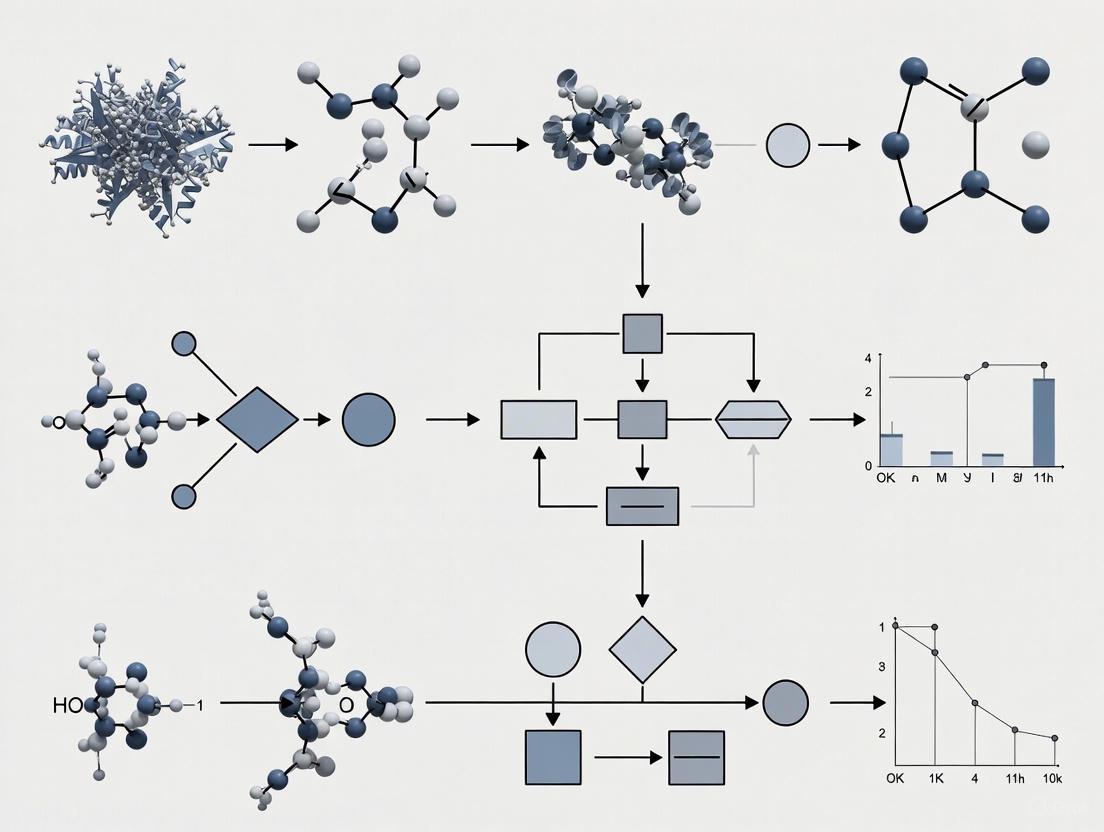
This article provides a comprehensive exploration of genetic algorithms (GAs) applied to signaling pathway analysis in biomedical research.
Optimizing Signaling Pathway Analysis with Genetic Algorithms: From Foundational Concepts to Clinical Applications
Abstract
This article provides a comprehensive exploration of genetic algorithms (GAs) applied to signaling pathway analysis in biomedical research. It establishes the foundational principles of GAs and their relevance to complex biological systems, details methodological implementations for pathway optimization and drug discovery, addresses critical troubleshooting and optimization strategies for real-world applications, and presents rigorous validation frameworks for comparing algorithmic performance. Tailored for researchers, scientists, and drug development professionals, this resource bridges computational methods with therapeutic development, offering practical insights for leveraging GAs to unravel signaling pathway complexity and accelerate precision medicine initiatives.
Genetic Algorithms and Signaling Pathways: Building Blocks for Complex Biological Optimization
Genetic Algorithms (GAs) are heuristic optimization techniques inspired by natural selection and genetics, providing powerful solutions for complex problems resistant to traditional methods [1] [2]. In computational biology, GAs iteratively evolve populations of candidate solutions through selection, crossover, and mutation operations to approximate optimal solutions [3]. For signaling pathways research—which aims to decipher how cells communicate external signals to regulate internal gene expression—GAs offer a unique capability to simultaneously predict active signaling pathways and their structural topology by integrating protein-protein interaction (PPI) networks and gene expression data [4]. This approach is particularly valuable for identifying key pathways in developmental processes, disease mechanisms like cancer, and tissue regeneration strategies where traditional pathway analysis methods fall short.
The implementation of GAs requires careful consideration of their core components. As Rick Wicklin notes, implementing a genetic algorithm is as much an art as it is a science, requiring numerous heuristic choices about hyperparameters and operators that can significantly impact performance [1]. Within signaling pathways research, these choices become even more critical as researchers must balance biological plausibility with computational efficiency when reconstructing complex biological networks from high-throughput data.
Core Operational Principles
Selection Operations
Selection represents the survival-of-the-fittest mechanism in GAs, determining which candidate solutions proceed to reproduce based on their fitness. In signaling pathways research, the fitness function typically quantifies how well a candidate pathway configuration matches observed gene expression data within the constraints of known PPI networks [4]. Common selection techniques include:
- Tournament Selection: Randomly selects small subsets of individuals from the population and advances the fittest from each subset to the next generation.
- Roulette Wheel (Stochastic Universal) Selection: Assigns selection probability proportional to fitness scores, ensuring fitter individuals have higher chances of selection while maintaining diversity [3].
- Elitism: Preserves a predetermined number of best-performing individuals (eliteCount) unchanged into the next generation, guaranteeing that solution quality does not degrade across generations [3].
For signaling pathway identification, the selection pressure must be carefully balanced. Too strong selection may cause premature convergence to suboptimal pathways, while too weak selection slows useful discovery. The MATLAB documentation highlights that setting EliteCount too high causes the fittest individuals to dominate the population, potentially making the search less effective [3].
Crossover Operations
Crossover (recombination) combines genetic material from parent solutions to create offspring, mimicking biological sexual reproduction [5]. This operation enables the algorithm to exploit promising solution regions by merging beneficial traits from different parents. The following table summarizes common crossover techniques applicable to signaling pathway reconstruction:
Table 1: Crossover Operations in Genetic Algorithms
| Crossover Type | Mechanism | Applications in Signaling Pathways | Key Parameters |
|---|---|---|---|
| Single-Point | Selects one random crossover point; swaps all data beyond this point between parents [5] | Useful for combining pathway segments with functional modules | Crossover point location |
| Two-Point | Selects two random points; swaps genetic material between these points [5] | Preserves blocks of interacting proteins in pathway structures | Start and end points of segment |
| Uniform | Each gene is selected randomly from corresponding genes of either parent [1] [5] | Effective for exploring diverse pathway topologies when combined with repair algorithms for illegal solutions | Individual gene selection probability (ProbCross) |
In practice, the optimal crossover strategy depends on the problem encoding. For signaling pathway identification with potential pathway cross-talk, uniform crossover often provides the necessary flexibility. As demonstrated in SAS/IML implementations, uniform crossover with a probability parameter (e.g., ProbCross = 0.3) exchanges approximately N×ProbCross genes between parent pathways [1]. This approach helps explore novel pathway configurations while maintaining biologically plausible structures through specialized repair operations that handle illegal solutions, such as missing pathway components or duplicated elements.
Mutation Operations
Mutation introduces random variations into individuals, maintaining population diversity and enabling exploration of new solution regions [1]. In signaling pathways research, mutation helps escape local optima by introducing novel protein connections or alternative pathway branches not present in the initial population. The mutation operation is typically controlled by a hyperparameter (pmut or mutation rate) that determines the probability of any single gene being altered [1].
For binary-encoded pathway representations, mutation consists of changing the parity of randomly selected elements. The number of mutation sites (k) can follow a binomial distribution, Binom(pmut, N), where N represents chromosome length [1]. Practical implementations often set a minimum k=1 to ensure mutation occurs even when probabilities are low. In pathway optimization, this might correspond to adding or removing a specific protein interaction from the candidate pathway.
More sophisticated mutation strategies adapt mutation rates based on population diversity metrics or employ targeted mutation operators that prioritize biologically plausible modifications. For example, in the HISP method for signaling pathway identification, mutation respects known biological constraints by only introducing experimentally supported protein interactions from PPI databases [4].
Application Notes: Genetic Algorithms for Signaling Pathway Identification
SPAGI Methodology and Workflow
The Signaling Pathway Analysis for putative Gene regulatory network Identification (SPAGI) method exemplifies the application of GAs to signaling pathway research [4]. SPAGI integrates PPI networks with gene expression data to identify active signaling pathways and their structures. The methodology follows these key stages:
Background Pathway Data Construction: Collects known receptors (R), kinases (K), and transcription factors (TF) from curated databases like Fantom5 and Uniprot, then extracts high-confidence PPIs from STRING database (confidence_score ≥ 700) [4].
Pathway Template Generation: Constructs all possible R-K-TF paths from the PPI data, representing potential signaling pathways.
Genetic Algorithm Optimization: Evolves populations of candidate pathways using fitness functions that measure concordance with gene expression data.
The following Graphviz diagram illustrates the complete SPAGI workflow:
SPAGI Workflow for Signaling Pathway Identification
HISP: Genetic Algorithm with Specialized Operators
The HISP method represents another GA approach specifically designed for signaling pathway reconstruction that incorporates gene knockout data to determine pathway directionality [4]. HISP employs specialized genetic operators tailored to pathway structures:
- Pathway-Aware Crossover: Combines segments of signaling pathways from two parents while maintaining connectivity between receptors, kinases, and transcription factors.
- Constraint-Respecting Mutation: Introduces variations that respect biological constraints, such as only including experimentally supported protein interactions.
- Directionality Incorporation: Utilizes gene knockout data to infer signaling direction during fitness evaluation.
HISP demonstrates how domain-specific knowledge can be incorporated into genetic operators to improve both the efficiency and biological relevance of the optimization process.
Experimental Protocols
Protocol: Implementing GA for Signaling Pathway Optimization
This protocol provides a step-by-step methodology for applying GAs to identify active signaling pathways from gene expression and PPI data, based on the SPAGI and HISP approaches [4].
Preparation of Input Data
PPI Network Collection:
- Download PPI data from STRING database (version 10 or higher) for the relevant organism.
- Filter interactions using a confidence threshold (combined_score ≥ 700) to ensure high-quality interactions.
- Extract interactions involving known receptors, kinases, and transcription factors.
Gene Expression Data Processing:
- Obtain gene expression profiles for the biological condition of interest.
- Normalize expression data using appropriate methods (e.g., TPM for RNA-seq, RMA for microarrays).
- Transform expression values to z-scores if comparing across multiple conditions.
Background Pathway Template Generation:
- Enumerate all possible R-K-TF paths from the filtered PPI network.
- Exclude paths containing housekeeping genes if specific pathway activity is desired.
- Store resulting pathway templates with their associated PPI confidence scores.
Genetic Algorithm Configuration
Solution Encoding:
- Represent each candidate solution as a binary vector indicating inclusion/exclusion of specific pathway templates.
- Alternatively, use integer encoding to represent specific protein components and their connections.
Fitness Function Definition:
- Develop a fitness function that measures the agreement between candidate pathways and gene expression data.
- Incorporate PPI confidence scores as weighting factors in the fitness calculation.
- Include penalty terms for biologically implausible pathway structures.
Parameter Settings:
- Set population size based on problem complexity (typically 100-500 individuals).
- Configure selection pressure using tournament size (typically 2-5) or elitism count (1-5% of population).
- Set crossover probability to 0.6-0.8 and mutation probability to 0.01-0.05 per gene.
Execution and Validation
Algorithm Execution:
- Initialize population with random pathways or using domain knowledge.
- Run evolution for a fixed number of generations (typically 100-10,000) or until convergence.
- Maintain diversity using niching or fitness sharing techniques if premature convergence occurs.
Result Validation:
- Compare identified pathways against known signaling pathways from curated databases.
- Perform functional enrichment analysis on pathway components to assess biological relevance.
- Validate predictions using orthogonal data sources (e.g., phosphorylation data for kinase activity).
Protocol: Practical Identifiability Analysis for Experimental Design
Recent advances combine GAs with profile-likelihood methods for optimal experimental design in pharmacological modeling [6]. This protocol describes how to optimize sampling protocols for parameter identification in dose-response experiments:
Define Pharmacokinetic-Pharmacodynamic (PK-PD) Model:
- Implement mathematical model describing drug concentration and effect (e.g., Eq. 1 in [6]).
- Identify parameters to be estimated (
k,UN,V,βdepending on model complexity).
Configure Genetic Algorithm:
- Encode sampling schedules as chromosomes representing sample timing.
- Use profile-likelihood-based metric as fitness function to minimize parameter uncertainty.
- Set population size to 50-100, crossover rate to 0.7-0.9, mutation rate to 0.01-0.1.
Execute Optimization:
- Run GA for 100-500 generations or until Q-criterion improvement plateaus.
- Validate optimal sampling schedules using Monte Carlo simulations.
- Compare with traditional D-optimality designs to confirm improved performance.
Quantitative Parameters and Performance Metrics
Table 2: Genetic Algorithm Parameters for Signaling Pathway Identification
| Parameter Category | Specific Parameter | Typical Values | Effect on Performance |
|---|---|---|---|
| Population Parameters | Population Size | 100-500 individuals | Larger sizes increase diversity but computational cost |
| Number of Generations | 100-10,000 | More generations improve solution quality with diminishing returns | |
| Selection Parameters | Elite Count | 1-5% of population | Preserves best solutions; high values may cause premature convergence |
| Selection Method | Tournament (size 2-5) or Stochastic Universal | Tournament size controls selection pressure | |
| Crossover Parameters | Crossover Probability | 0.6-0.8 | Lower values slow recombination of good traits |
| Crossover Type | Uniform, Single-point, Two-point | Dependent on problem structure and encoding | |
| Mutation Parameters | Mutation Probability | 0.01-0.05 per gene | Higher values increase exploration but may disrupt good solutions |
| Mutation Type | Bit-flip, Gaussian, Custom | Domain-specific mutations can improve performance |
Table 3: Performance Metrics for GA in Signaling Pathway Applications
| Metric Category | Specific Metric | Interpretation | Reported Values |
|---|---|---|---|
| Computational Efficiency | Generations to Convergence | Speed of algorithm progress | 100-10,000 depending on problem complexity |
| Fitness Evaluation Time | Computational cost per generation | Varies with fitness function complexity | |
| Solution Quality | Best Fitness Value | Quality of optimal solution found | Problem-dependent; should improve across generations |
| Average Fitness | Overall population quality | Should trend upward over generations | |
| Biological Relevance | Known Pathway Recovery | Percentage of biologically validated pathways identified | SPAGI: recovered known pathways in lens development [4] |
| Experimental Validation | Concordance with orthogonal experimental data | Case-dependent; crucial for method credibility |
Table 4: Key Research Resources for GA Applications in Signaling Pathways
| Resource Category | Specific Resource | Purpose | Application Notes |
|---|---|---|---|
| PPI Databases | STRING Database | Source of protein-protein interaction data | Use high-confidence interactions (score ≥ 700) [4] |
| BioGRID | Curated biological interactions | Provides experimentally validated interactions | |
| Gene Expression Data | GEO (Gene Expression Omnibus) | Source of transcriptomic data | Normalize appropriately for cell type/condition |
| TCGA (The Cancer Genome Atlas) | Cancer-specific expression data | Useful for disease-focused pathway analysis | |
| Signaling Pathway Databases | Fantom5 | Curated receptor database | Source of known signaling molecules [4] |
| Uniprot | Protein information resource | Source of kinase annotations [4] | |
| Software Tools | SPAGI R Package | Implementation of signaling pathway GA | Available via GitHub [4] |
| SAS/IML | General GA implementation | Includes built-in mutation and crossover operations [1] | |
| MATLAB Global Optimization Toolbox | GA framework with customizable operators | Supports linear and nonlinear constraints [3] | |
| Computational Resources | High-Performance Computing Cluster | Parallel fitness evaluation | Essential for large-scale pathway analyses |
| Graphviz | Visualization of pathways and workflows | Create publication-quality diagrams |
Workflow Visualization: Genetic Algorithm Structure
The following Graphviz diagram illustrates the complete standard genetic algorithm process and how it specializes for signaling pathway identification:
Standard GA Process with Signaling Pathway Specialization
Genetic algorithms provide a powerful framework for addressing the complex challenge of signaling pathway identification from high-throughput biological data. Through the careful implementation of selection, crossover, and mutation operations—tailored to the specific constraints of biological networks—researchers can reconstruct active signaling pathways and their structures with increasing accuracy. The integration of PPI data with gene expression profiles creates a rich foundation for these optimization techniques, while specialized approaches like SPAGI and HISP demonstrate how domain knowledge can be incorporated to enhance biological relevance.
As computational biology continues to grapple with increasingly complex datasets, the flexibility and robustness of genetic algorithms position them as valuable tools for deciphering cellular communication networks. The experimental protocols and parameters outlined in this article provide researchers with practical guidance for implementing these methods in their own signaling pathways research, potentially accelerating discoveries in disease mechanisms and therapeutic development.
Cancer remains a major global health challenge, with its pathogenesis intricately linked to the dysregulation of intracellular signaling networks that control core cellular processes. These pathways, which normally regulate cell growth, differentiation, survival, and death, become subverted in cancer, leading to uncontrolled proliferation and metastatic dissemination [7]. The therapeutic targeting of these aberrant signaling cascades represents a cornerstone of modern precision oncology, offering more specific treatment options compared to traditional chemotherapy [8].
Understanding these signaling pathways is not only crucial for developing targeted therapies but also provides an ideal foundation for applying computational approaches such as genetic algorithms (GAs). GAs can help optimize drug combinations, identify novel drug targets, and decipher complex pathway interactions, thereby accelerating oncology drug discovery [9] [10]. This article explores major cancer signaling pathways, their therapeutic targeting, and the integration of genetic algorithms in signaling pathway research.
Major Cancer-Associated Signaling Pathways
Wnt Signaling Pathway
The evolutionarily conserved Wnt signaling pathway plays fundamental roles in embryonic development, tissue homeostasis, and stem cell maintenance. Its dysregulation is strongly implicated in tumorigenesis, cancer progression, and therapeutic resistance [11] [12]. The pathway branches into canonical (β-catenin-dependent) and non-canonical (β-catenin-independent) signaling.
Canonical Pathway: In the absence of Wnt ligands ("OFF" state), a destruction complex comprising Adenomatous Polyposis Coli (APC), Axin, Casein Kinase 1 (CK1), and Glycogen Synthase Kinase 3β (GSK3β) facilitates the phosphorylation and proteasomal degradation of β-catenin. Pathway activation ("ON" state) occurs when Wnt ligands bind to Frizzled (FZD) receptors and Low-density Lipoprotein Receptor-Related Proteins 5/6 (LRP5/6) co-receptors. This interaction activates Dishevelled (DVL), which inhibits the destruction complex, allowing β-catenin to accumulate and translocate to the nucleus. Nuclear β-catenin then partners with T-cell Factor/Lymphoid Enhancer Factor (TCF/LEF) transcription factors to activate target genes such as c-MYC and Cyclin D1, which promote cell cycle progression and survival [11] [12].
Non-Canonical Pathways: The non-canonical branches, including the planar cell polarity (PCP) and Wnt/Ca²⁺ pathways, regulate cell polarity, migration, and adhesion. The Wnt/Ca²⁺ pathway, activated by ligands like WNT5A, triggers calcium release from the endoplasmic reticulum, activating Calmodulin Kinase II (CAMKII) and Protein Kinase C (PKC), which can inhibit canonical signaling [7] [12].
Dysregulation of Wnt signaling frequently occurs through mutations in key components such as APC and CTNNB1 (encoding β-catenin), or through aberrant expression of Wnt ligands, FZD receptors, or endogenous inhibitors like Dickkopf (DKK) and secreted Frizzled-Related Proteins (sFRPs) [12]. This pathway exhibits extensive crosstalk with other signaling cascades, including PI3K/AKT and MAPK, and influences the tumor microenvironment and immune cell function, contributing to immunotherapy resistance in cancers like non-small cell lung cancer (NSCLC) [7].
PI3K/AKT/mTOR Signaling Pathway
The PI3K/AKT/mTOR pathway is a critical regulator of cell growth, proliferation, metabolism, and survival, and is one of the most frequently dysregulated pathways in human cancers [7]. Activation typically begins when growth factors bind to receptor tyrosine kinases (RTKs), recruiting Phosphoinositide 3-Kinase (PI3K) to the cell membrane. PI3K phosphorylates the lipid phosphatidylinositol-4,5-bisphosphate (PIP₂) to generate phosphatidylinositol-3,4,5-trisphosphate (PIP₃). This leads to the recruitment and activation of AKT (Protein Kinase B). The tumor suppressor PTEN acts as a key negative regulator by dephosphorylating PIP₃ back to PIP₂. Activated AKT phosphorylates numerous downstream effectors, including mTOR (mammalian Target of Rapamycin), which coordinates protein synthesis, cell growth, and metabolism. Hyperactivation of this pathway, through mutations in PIK3CA (encoding the catalytic subunit of PI3K), AKT, or loss of PTEN, drives uncontrolled cell proliferation and survival [7].
Other Key Pathways
Several additional signaling pathways contribute significantly to cancer pathogenesis:
- MAPK/ERK Pathway: This pathway, often activated by growth factors and Ras mutations, transmits signals from cell surface receptors to the nucleus via a kinase cascade (Ras → Raf → MEK → ERK), regulating gene expression involved in cell proliferation and survival [7].
- Notch Signaling: A highly conserved pathway where cell-to-cell contact triggers proteolytic cleavage of Notch receptors, releasing the Notch Intracellular Domain (NICD) which translocates to the nucleus to activate transcription factors. Its role is context-dependent, acting as an oncogene in some cancers (e.g., T-cell acute lymphoblastic leukemia) and a tumor suppressor in others [7].
- Hedgehog (Hh) Signaling: Crucial for embryonic patterning, its dysregulation in cancers like basal cell carcinoma and medulloblastoma occurs through mutations in Patched (PTCH) or Smoothened (SMO), leading to constitutive activation of GLI transcription factors [7].
- PD-1/PD-L1 Immune Checkpoint Pathway: While not a driver pathway in cancer cells, this immune regulatory axis is often hijacked by tumors. The interaction between Programmed Death-1 (PD-1) on T cells and its ligand (PD-L1) on tumor cells inactivates T cells, allowing the tumor to evade immune destruction. Inhibiting this interaction with checkpoint blockers has revolutionized cancer immunotherapy [7].
Table 1: Core Components of Major Cancer Signaling Pathways
| Pathway | Key Receptors/Components | Main Downstream Effectors | Common Genetic Alterations in Cancer |
|---|---|---|---|
| Wnt/β-catenin | FZD, LRP5/6, DVL | β-catenin, TCF/LEF, GSK3β | APC, CTNNB1 (β-catenin), AXIN mutations [11] [12] |
| PI3K/AKT/mTOR | PI3K, AKT, PTEN, mTOR | PDK1, TSC1/2, S6K | PIK3CA, AKT amplifications; PTEN loss [7] |
| MAPK/ERK | Ras, Raf, MEK, ERK | c-Fos, c-Jun, ELK1 | KRAS, NRAS, BRAF mutations [7] |
| Notch | Notch Receptors, DLL/Jagged | NICD, CSL/RBP-Jκ | Notch translocations/fusions; FBXW7 mutations [7] |
| Hedgehog | PTCH, SMO | GLI1/2/3 | PTCH1 loss; SMO mutations [7] |
Therapeutic Targeting of Signaling Pathways
Targeting dysregulated signaling pathways has become a mainstay of precision oncology. Therapeutic strategies include small molecule inhibitors, monoclonal antibodies, and, more recently, drug repurposing.
Established Targeted Therapies
The development of agents that selectively inhibit key nodes in oncogenic signaling cascades has improved patient outcomes across many cancer types. These include:
- WNT Pathway Inhibitors: Several agent classes are in development, including Porcupine (PORCN) inhibitors (block Wnt ligand secretion), Tankyrase (TNKS) inhibitors (target Axin stability), FZD-targeted monoclonal antibodies, and inhibitors of the β-catenin/TCF transcriptional complex [11].
- PI3K/AKT/mTOR Inhibitors: Alpelisib, a PI3Kα inhibitor, is approved for PIK3CA-mutated breast cancer. Everolimus (mTOR inhibitor) is used in renal cell carcinoma and other malignancies [9] [7].
- MAPK Pathway Inhibitors: BRAF inhibitors (vemurafenib, dabrafenib) and MEK inhibitors (trametinib, cobimetinib) are standard for BRAF-mutant melanoma [7].
- Immune Checkpoint Inhibitors: Antibodies targeting PD-1 (pembrolizumab, nivolumab), PD-L1 (atezolizumab, durvalumab), and CTLA-4 (ipilimumab) reactivate the immune system against cancer cells [7] [13].
Drug Repurposing in Oncology
Drug repurposing—finding new uses for existing, approved drugs—is a promising strategy to accelerate the availability of cancer therapies while reducing development costs and risks [14]. Examples highlighted in recent research include:
- Sulconazole: An antifungal agent found to inhibit PD-1 expression in cancer and immune cells by blocking NF-κB and calcium signaling, suggesting potential for immunomodulatory therapy [14].
- Olaparib: A PARP inhibitor used in BRCA-mutant breast and ovarian cancers, which has shown efficacy as monotherapy in improving progression-free survival in lung cancer [14].
- BCG (Bacillus Calmette-Guérin): A live attenuated vaccine for tuberculosis, now a standard treatment for carcinoma in situ of the bladder, representing a successful application of immunotherapy in cancer prevention and treatment [13].
Table 2: Selected Targeted Therapies and Repurposed Drugs in Cancer
| Therapeutic Agent | Original Indication (if repurposed) | Molecular Target | Primary Cancer Indication(s) |
|---|---|---|---|
| Alpelisib | - | PI3Kα | PIK3CA-mutant Breast Cancer [9] |
| Vantictumab | - | FZD Receptors | Investigational for WNT-driven cancers [12] |
| Pembrolizumab | - | PD-1 | Various (e.g., Melanoma, NSCLC) [13] |
| Sulconazole | Antifungal | NF-κB / Calcium Signaling | Investigational for immunologically evasive tumors [14] |
| Olaparib | BRCA-mutant cancers | PARP | Lung Cancer (under investigation) [14] |
| BCG Vaccine | Tuberculosis | Immune System | Bladder Carcinoma in situ [13] |
Application of Genetic Algorithms in Signaling Pathway Research
Genetic Algorithms (GAs), inspired by natural selection, provide powerful computational methods for solving complex optimization problems in cancer research. They are particularly suited for analyzing the high-dimensional, interconnected data generated from signaling pathway studies.
GA Fundamentals and Workflow
A GA operates by maintaining a population of candidate solutions (chromosomes) that evolve over generations. The process involves key steps: Initialization (creating a random population), Selection (choosing fit individuals for reproduction based on a fitness function), Crossover (recombining genetic material between parents), and Mutation (introducing random changes to maintain diversity). This cycle repeats until a termination criterion is met, yielding an optimized solution [15] [10]. This workflow is highly adaptable to various bioinformatics challenges.
Key Applications in Cancer Signaling
GAs are being applied to critical problems in oncology drug discovery and signaling network analysis:
- Identifying Optimal Drug Target Combinations: Cancer cells often develop resistance by using parallel signaling pathways. Yavuz et al. used protein-protein interaction networks and shortest-path algorithms to discover key communication nodes as optimal co-targets. This approach successfully identified effective combinations like Alpelisib + LJM716 in breast cancer and Alpelisib + Cetuximab + Encorafenib in colorectal cancer, which were validated in patient-derived models [9].
- Discovering Disease Modules: DM-MOGA is a multi-objective GA designed to identify disease modules—subnetworks of closely interacting genes relevant to a specific disease—from gene co-expression networks in NSCLC. It optimizes fitness functions based on network topology and functional similarity, leading to the identification of core modules with confirmed relevance to lung cancer pathogenesis [10].
- Automated Prompt Optimization for Literature Mining: GAAPO (Genetic Algorithmic Applied to Prompt Optimization) uses a hybrid GA framework to evolve prompts for Large Language Models (LLMs). This method can efficiently mine vast scientific literature to extract information on signaling pathways and potential therapeutic associations, demonstrating the utility of GAs in knowledge discovery [15].
Experimental Protocols
Protocol: Network-Based Identification of Drug Target Combinations
This protocol outlines the computational method for discovering synergistic drug target combinations, as described by Yavuz et al. [9].
I. Research Reagent Solutions
| Item | Function/Description |
|---|---|
| TCGA & AACR GENIE Databases | Sources for somatic mutation profiles from cancer patients [9]. |
| HIPPIE PPI Database | A repository of high-confidence Protein-Protein Interactions to construct the cellular network [9]. |
| PathLinker Algorithm | A graph-theoretic algorithm for reconstructing signaling pathways and calculating k-shortest paths in a network [9]. |
| Enrichr Tool | A web-based tool for pathway enrichment analysis to validate the biological relevance of identified nodes/paths [9]. |
II. Methodology
Data Collection and Preprocessing:
- Obtain somatic mutation data from large-scale cancer genomics resources like The Cancer Genome Atlas (TCGA) and AACR Project GENIE.
- Apply preprocessing: remove low-confidence variants, prioritize primary tumor samples, and filter potential germline events.
- Identify statistically significant pairs of co-existing mutations (doublets) across different proteins using Fisher's Exact Test with multiple testing correction [9].
Network Construction and Analysis:
- Construct a protein-protein interaction (PPI) network using a high-confidence database like HIPPIE.
- For each significant mutation pair (Protein A, Protein B), use the PathLinker algorithm with parameter k=200 to compute the 200 shortest simple paths connecting them within the PPI network. This identifies potential bypass routes cancer cells might use for resistance [9].
Target Identification and Validation:
- The resulting subnetwork comprises the source nodes (Protein A), target nodes (Protein B), and the proteins lying on the shortest paths between them (bridge nodes).
- Proteins that frequently appear as key connectors (bridge nodes) in these subnetworks are prioritized as potential co-targets.
- Validate the therapeutic relevance of the proposed co-targets in preclinical models, such as patient-derived xenografts (PDXs) [9].
Protocol: Multi-Objective Genetic Algorithm for Disease Module Identification (DM-MOGA)
This protocol details the use of DM-MOGA for identifying disease-relevant modules from gene expression data in NSCLC [10].
I. Research Reagent Solutions
| Item | Function/Description |
|---|---|
| NCBI GEO Database | Source for NSCLC gene expression microarray datasets [10]. |
| HPRD (Human Protein Reference Database) | Provides the curated Protein-Protein Interaction Network (PPIN) used as a scaffold [10]. |
| Limma R/Bioconductor Package | Statistical analysis tool for identifying Differentially Expressed Genes (DEGs) from microarray data [10]. |
| GOSemSim R Package | Calculates semantic similarity between Gene Ontology (GO) terms, used to compute a fitness function [10]. |
II. Methodology
Network Construction:
- Differential Expression Analysis: Process raw gene expression data from GEO using the
limmapackage in R to identify DEGs (adjusted p-value < 0.05). - Interaction Estimation: Calculate the interaction intensity (correlation) between DEGs using Gaussian Copula Mutual Information (GCMI).
- Network Integration: Filter the correlation matrix using the HPRD PPIN. Set any correlation to zero if the corresponding protein interaction does not exist in HPRD, resulting in a final gene co-expression network (GCN) [10].
- Differential Expression Analysis: Process raw gene expression data from GEO using the
Pre-Simplification with Boundary Correction:
- To handle large networks, perform a pre-simplification step. This involves randomly selecting a seed node and building a local module (LM) by iteratively adding its high-degree neighbors and their strongly connected joint neighbors.
- Apply a boundary correction strategy to reassign genes on the margin of LMs to the most appropriate module, improving module coherence [10].
DM-MOGA Execution:
- Chromosome Encoding: Represent a solution (a set of modules) as a chromosome where each gene indicates the module assignment of a network node.
- Fitness Evaluation: Optimize two fitness functions simultaneously:
- Davies-Bouldin Index (DBI): Measures module separation and compactness based on topology.
- Clustering Coefficient: Evaluates the connection strength and functional similarity within a module using the
sim_{Rel}score from GOSemSim.
- Evolutionary Operations: Evolve the population over generations using selection, crossover, and mutation operators. The algorithm decomposes the multi-objective problem into several single-objective subproblems for efficiency.
- Solution Selection: After evolution, select the solution with the highest composite score from the Pareto front. The largest module within this solution is typically taken as the core disease module for further biological validation [10].
The intricate network of dysregulated signaling pathways forms the backbone of cancer pathogenesis. A deep understanding of pathways like Wnt, PI3K/AKT/mTOR, and MAPK is indispensable for developing targeted therapies that form the core of precision oncology. As this field advances, the integration of sophisticated computational approaches, particularly Genetic Algorithms, is proving to be a powerful strategy. GAs are accelerating discovery by optimizing drug combinations, identifying critical disease modules within molecular interaction networks, and mining complex biological data. The continued synergy between experimental biology and computational optimization holds great promise for unraveling the complexity of cancer signaling and delivering more effective, personalized cancer therapies.
Why GAs Are Ideal for High-Dimensional Biological Search Spaces
In the field of computational biology, researchers are consistently faced with the challenge of navigating high-dimensional search spaces, such as those found in genomics, proteomics, and signaling pathway analysis. These spaces, characterized by thousands of interacting variables, present significant obstacles for conventional optimization techniques due to the curse of dimensionality and the presence of numerous local optima. Genetic Algorithms (GAs) and other evolutionary optimization strategies have emerged as powerful tools for these environments because of their ability to balance broad exploration of the search space with targeted exploitation of promising regions. This application note details how GAs, particularly enhanced variants, are being successfully applied to high-dimensional biological problems, using gibberellin (GA) signaling pathway research as a primary case study. We provide specific protocols and reagent solutions to facilitate the adoption of these methods in signaling pathway research.
Key Advantages of Genetic Algorithms in Biological Contexts
Evolutionary algorithms, including GAs, possess several inherent characteristics that make them particularly suitable for high-dimensional biological optimization problems:
- Population-Based Search: Unlike point-based methods, GAs maintain a diverse population of candidate solutions, enabling parallel exploration of multiple regions in the fitness landscape and reducing the probability of becoming trapped in suboptimal local solutions [16].
- Minimal Assumption Requirement: GAs do not require gradient information or assumptions about the smoothness of the search space, making them ideal for the discontinuous, noisy, and multimodal landscapes common in biological data [17].
- Effective Dimensionality Reduction: Through feature selection and representation learning, GAs can identify compact, biologically relevant subsets from thousands of potential variables. For instance, in gene selection tasks, enhanced GAs have successfully identified ultra-compact biomarker subsets (≤5% of original features) while maintaining high classification performance (F1-score: 0.953±0.012) [16].
- Hybridization Potential: GAs can be effectively combined with local search techniques and gradient-based methods to refine solutions, as demonstrated in neural architecture search applications for medical image segmentation [17].
Case Study: Optimizing Analysis of Gibberellin Signaling Pathways
The gibberellin (GA) signaling pathway represents an ideal proving ground for GA-based optimization in high-dimensional biological spaces. Research into this complex plant hormone pathway involves analyzing multidimensional data from genetic, protein interaction, and phenotypic analyses.
The following diagram illustrates the core components and interactions of the GA signaling pathway, highlighting potential optimization targets:
Diagram 1: Gibberellin Signaling Pathway and Regulatory Mechanisms
Experimental Quantification of GA Pathway Components
Table 1: Phenotypic Effects of GA Signaling Mutants in Arabidopsis
| Genotype/Treatment | Mucilage Accumulation | Stem Elongation | Flowering Time | Key Molecular Changes |
|---|---|---|---|---|
| Wild Type (Control) | Baseline (100%) | Baseline | Baseline | Normal DELLA degradation |
| GA3 Treatment | Increased (~150%) | Enhanced | Accelerated | Downregulated DELLA, upregulated biosynthetic genes |
| paclobutrazol Treatment | Decreased (~50%) | Reduced | Delayed | DELLA stabilization |
| ga1-3 (GA-deficient) | Severely reduced | Dwarfed | Delayed | DELLA accumulation |
| dellaQ (DELLA-deficient) | Significantly increased | Enhanced | Accelerated | constitutive GA response |
| pux1 mutant | Increased | Enhanced | Accelerated | Increased GID1 expression, decreased RGA [18] |
Data derived from experimental analyses of Arabidopsis mutants and pharmacological treatments [19] [18].
Protocol: Applying Genetic Algorithms to GA Signaling Pathway Optimization
Workflow for GA-Driven Pathway Analysis
The following diagram outlines the integrated computational and experimental workflow:
Diagram 2: Integrated Workflow for GA-Optimized Signaling Pathway Analysis
Step-by-Step Protocol
Phase 1: Experimental Data Generation
Biological Material Preparation
- Select appropriate plant materials (e.g., Arabidopsis wild-type and mutant lines such as ga1-3, dellaQ, pux1)
- Apply hormone treatments: 10-100 μM GA3 for GA application; 1-10 μM paclobutrazol for GA biosynthesis inhibition
- Implement cold stratification (4°C for 2-4 days) and after-ripening (dry storage for 2-4 weeks) for dormancy-breaking treatments [18]
High-Dimensional Data Collection
- Transcriptomic profiling: Quantify expression of pathway genes (GID1a/b/c, DELLAs, PUX1, MUM4, GATL5, RRT1) via RT-qPCR or RNA-seq
- Protein interaction analysis: Conduct yeast two-hybrid screens and co-immunoprecipitation for GID1-DELLA-PUX1-CDC48 interactions
- Phenotypic quantification: Measure seed mucilage accumulation, root elongation, flowering time, and stem growth parameters
Phase 2: Genetic Algorithm Implementation
Problem Formulation
- Define search space parameters based on experimental data (e.g., gene expression levels, protein concentrations, kinetic parameters)
- Establish fitness function to maximize agreement between pathway model predictions and experimental observations
- Set constraints based on biological plausibility (e.g., non-negative reaction rates)
Algorithm Configuration
- Initialize population with diverse candidate solutions
- Implement enhanced GA strategies:
- Chaotic Lévy flight modulation for dynamic step-size adjustment to prevent premature convergence [16]
- Phase-aware memory banks to preserve elite solutions across generations
- Entropy-informed adaptive restart to maintain population diversity when stagnation is detected
- Set termination criteria (convergence threshold or maximum generations)
Validation and Iteration
- Validate optimized pathway models with independent experimental data
- Perform sensitivity analysis to identify most influential parameters
- Refine search space based on validation results and repeat optimization
The Scientist's Toolkit: Research Reagent Solutions
Table 2: Essential Research Reagents for GA Signaling Pathway Analysis
| Reagent/Category | Specific Examples | Function/Application | Key References |
|---|---|---|---|
| Chemical Inhibitors/Agonists | GA3, paclobutrazol | Modulate GA signaling pathways; establish dose-response relationships | [19] [18] |
| Arabidopsis Mutants | ga1-3, dellaQ, pux1 | Dissect specific component functions in GA signaling cascade | [19] [18] |
| Molecular Biology Tools | Yeast two-hybrid system, Co-IP reagents | Validate protein-protein interactions (GID1-DELLA-PUX1-CDC48) | [19] [18] |
| Gene Expression Assays | RT-qPCR primers for GL2, MUM4, GATL5 | Quantify transcript levels of pectin biosynthesis genes | [19] |
| Computational Resources | CLA-MRFO algorithm, Mixed-GGNAS framework | High-dimensional optimization and feature selection | [16] [17] |
| Visualization Tools | Parallel coordinates, t-SNE, PCA | Explore high-dimensional data relationships and clusters | [20] |
Performance Metrics and Benchmarking
Table 3: Performance Comparison of Optimization Algorithms on High-Dimensional Problems
| Algorithm | Application Context | Key Performance Metrics | Advantages | Limitations |
|---|---|---|---|---|
| CLA-MRFO (Enhanced GA) | Gene feature selection | 31.7% performance gain; identified ultra-compact features (≤5%) with F1-score: 0.953±0.012 [16] | Excellent exploration-exploitation balance; consistent behavior (<5% variance) | Requires parameter tuning |
| Mixed-GGNAS (GA + Gradient Descent) | Medical image segmentation | Outperformed state-of-the-art NAS methods and manually designed networks [17] | Combines global search (GA) with local refinement (gradient descent) | Computational intensity |
| Standard GAs | General optimization | Variable performance on CEC'17 benchmark functions [16] | Flexibility; minimal assumptions | Prone to premature convergence |
| Gradient-Based Methods | Differentiable search spaces | Efficient local search in continuous spaces | Fast convergence in smooth landscapes | Poor performance on multimodal problems |
Genetic Algorithms represent a powerful and flexible approach for navigating the high-dimensional search spaces inherent in biological research, particularly in complex signaling pathways such as the gibberellin system. Their population-based nature, ability to handle non-linear relationships, and capacity for identifying meaningful patterns in vast parameter spaces make them ideally suited for modern computational biology challenges. The integration of enhanced strategies such as chaotic Lévy flight modulation and adaptive restart mechanisms further improves their performance in these demanding environments. As biological datasets continue to grow in size and complexity, GAs and other evolutionary approaches will play an increasingly vital role in extracting meaningful biological insights and accelerating discovery in signaling pathway research and drug development.
Key Challenges in Pathway Analysis That GAs Can Address
Pathway analysis is a cornerstone of modern bioinformatics, providing essential tools for extracting meaningful biological insights from high-throughput experimental data such as genomics, transcriptomics, and proteomics. The primary goal of these methods is to identify relevant groups of related genes or proteins that are altered in case samples compared to controls, thereby reducing complexity and increasing explanatory power over analyses of individual molecules [21] [22]. Despite their widespread adoption and utility, conventional pathway analysis methods face significant challenges, particularly when dealing with the inherent complexity of biological systems and the limitations of typical experimental datasets.
Genetic Algorithms (GAs) represent a class of computational optimization techniques inspired by the principles of natural selection and genetics. They solve complex problems by iteratively improving a population of potential solutions through selection, crossover, and mutation operations [2]. In the context of pathway analysis, GAs offer promising approaches to overcome methodological limitations, particularly for feature selection, parameter optimization, and identifying optimal pathway modules in large-scale biological networks. This application note outlines key challenges in pathway analysis where GAs provide distinct advantages and presents detailed protocols for their implementation.
Key Challenges in Conventional Pathway Analysis
Multi-Pathway Complexity and Signal Dilution
Experimental gene sets often represent multiple biological pathways simultaneously, which significantly complicates analysis. When a gene set contains genes from different functional modules, association signals to any single pathway become weakened by the presence of genes associated with other pathways [23]. This signal dilution effect reduces the sensitivity of pathway analysis methods, as genes belonging to each specific module may constitute only a small fraction of all genes in the gene set. Additionally, studied gene sets frequently contain noise in the form of genes not related to the main phenotypes, further contributing to false negatives and reduced analytical sensitivity [23].
Dimensionality and Feature Selection Problems
Microarray and other high-throughput technologies face the "large-p-small-n" paradigm, where datasets contain a massive number of features (genes) with only a limited number of samples typically available [24]. This dimensionality problem creates significant challenges for robust statistical analysis, often leading to model overfitting and reduced generalizability. Including too many features can reduce model accuracy, while excluding relevant features may omit crucial biological information [24]. Traditional feature selection methods like Stepwise Forward Selection (SFS) use heuristic approaches that may miss optimal gene combinations, particularly when complex interactions exist between molecular features.
Limitations in Current Methodological Approaches
Pathway analysis methods have evolved through several generations, each with distinct limitations. First-generation Over-Representation Analysis (ORA) approaches treat pathways as simple gene lists, ignoring the underlying network topology and interactions between gene products [22]. They typically rely on arbitrary significance thresholds, discarding moderately significant genes and resulting in substantial information loss. Second-generation Functional Class Scoring (FCS) methods use the entire dataset but still generally assume gene independence, neglecting biological correlations [22]. Modern network-based methods improve sensitivity but can suffer from high false positive rates when testing random gene sets [23]. The table below summarizes these key methodological challenges:
Table 1: Key Challenges in Pathway Analysis Methods
| Challenge Category | Specific Limitations | Impact on Analysis |
|---|---|---|
| Multi-Pathway Complexity | Signal dilution from mixed pathways [23] | Reduced sensitivity, increased false negatives |
| Dimensionality Problems | Large number of features with small samples [24] | Overfitting, reduced generalizability |
| ORA Methods | Arbitrary thresholds, gene independence assumption [22] | Information loss, biased significance estimates |
| Network-Based Methods | High false positive rates with random gene sets [23] | Reduced specificity, misleading results |
| Topology Ignorance | Treatment of pathways as unstructured gene sets [25] | Loss of positional and regulatory information |
How Genetic Algorithms Address Pathway Analysis Challenges
Enhanced Feature Selection for High-Dimensional Data
Genetic algorithms provide a powerful approach for feature selection in high-dimensional biological data. Unlike traditional methods like Stepwise Forward Selection (SFS), GAs can efficiently explore a much larger solution space of possible gene combinations [24]. In comparative studies, GA-based feature selection frameworks have demonstrated superior performance over SFS approaches, leading to better cancer outcome prediction and the identification of more biologically relevant gene sets [24]. The evolutionary approach of GAs allows them to evaluate feature subsets more comprehensively, considering complex interactions between genes that simpler methods might miss.
Optimization of Pathway Clustering and Module Detection
Pre-clustering of gene sets into more homogeneous modules before pathway analysis can significantly improve sensitivity by separating mixed pathway signals [23]. Genetic algorithms excel at identifying optimal clustering solutions in biological networks. By representing potential cluster configurations as individuals in a population, GAs can evolve toward partitionings that maximize intra-module connectivity while minimizing inter-module connections. This approach is particularly valuable for pathway analysis methods that struggle with complex gene sets representing multiple biological mechanisms, as clustering can increase sensitivity and provide deeper insights into the biological phenomena under investigation [23].
Overcoming Methodological Limitations
GAs address several specific limitations of conventional pathway analysis methods. For ORA approaches, GAs can eliminate the need for arbitrary thresholds through fitness functions that incorporate continuous statistical measures. For network-based methods, GAs can optimize parameter settings to reduce false positive rates [23]. Additionally, GAs can incorporate pathway topology information into the analysis framework, enabling more biologically realistic models that account for interactions and dependencies between pathway components [25]. The versatility of GAs allows them to be integrated with various pathway analysis methodologies, enhancing their performance and robustness.
Table 2: GA Solutions to Pathway Analysis Challenges
| Pathway Analysis Challenge | GA Solution Approach | Advantage Gained |
|---|---|---|
| High-dimensional feature selection | Evolutionary search for optimal gene subsets [24] | Identifies more predictive and biologically relevant gene sets |
| Multi-pathway complexity | Pre-clustering into homogeneous modules [23] | Increased sensitivity and deeper biological insights |
| Arbitrary threshold dependency | Fitness functions using continuous measures | Reduced information loss, more robust results |
| Topology ignorance | Incorporation of network structure in fitness evaluation [25] | More biologically realistic pathway models |
| Parameter optimization | Evolutionary tuning of method parameters [23] | Reduced false positive rates, improved specificity |
Quantitative Performance Comparisons
Evaluations of pathway activity inference methods reveal important performance patterns relevant to GA implementations. Studies comparing topology-based and non-topology-based methods show that methods incorporating pathway structure generally demonstrate greater robustness and reproducibility [25]. In assessments across multiple cancer datasets, topology-based methods consistently outperformed non-topology approaches in reproducibility power, with the entropy-based Directed Random Walk (e-DRW) method exhibiting the highest reproducibility across most datasets [25].
The reproducibility power of pathway activity inference methods generally decreases as the number of pathway selections increases, a trend observed across methodological approaches [25]. This relationship highlights the importance of optimized feature and pathway selection, where GAs can provide significant value. The performance advantage of methods that incorporate biological knowledge into their analytical framework suggests similar benefits could be realized through GA approaches that evolve solutions based on fitness functions incorporating topological information.
Experimental Protocols
Protocol 1: GA-Based Feature Selection for Pathway Analysis
This protocol details the application of genetic algorithms for selecting optimal gene subsets in pathway analysis of microarray data.
Materials:
- Gene expression dataset (e.g., microarray data)
- Pathway database (KEGG, Reactome, or NCI-PID)
- Computational environment with GA capabilities (R, Python)
Procedure:
Data Pre-processing:
- Perform quality control on gene expression data
- Normalize data using appropriate methods (e.g., quantile normalization)
- Conduct pre-selection to reduce feature space using statistical tests (e.g., Welch t-test) [24]
- Retain top 5% of statistically significant genes for further analysis
GA Configuration:
- Encoding: Represent solutions as binary strings where each bit corresponds to a gene's inclusion (1) or exclusion (0) [24]
- Initialization: Generate initial population of 100 individuals randomly
- Fitness Function: Design a function that considers:
- Classification performance (e.g., misclassification error)
- Number of selected features (penalize excessive features)
- Biological relevance (e.g., mutual information between features) [24]
- Selection: Apply roulette wheel selection with elite count of 10
- Crossover: Use scattered crossover with rate of 0.8
- Mutation: Implement bit-flip mutation with rate of 0.2, limiting mutations to 1 to number of active features
Execution and Validation:
- Run GA for fixed generations or until convergence
- Evaluate final gene set using cross-validation
- Perform pathway enrichment analysis on selected genes
- Compare results with traditional methods (e.g., SFS) for performance validation
Protocol 2: Pathway-Aware Clustering with Genetic Algorithms
This protocol describes how to implement GA-based clustering of gene sets into functionally coherent modules before pathway enrichment analysis.
Materials:
- Query gene set from experimental data
- Functional association network (FunCoup or STRING)
- Pathway annotation database (KEGG)
Procedure:
Network Projection:
- Map query gene set onto functional association network
- Extract network neighborhood including direct interactions
GA Clustering Setup:
- Encoding: Represent cluster assignments as integer strings
- Initialization: Create random partitionings of genes into k clusters
- Fitness Function: Optimize for:
- High intra-cluster connectivity density
- Low inter-cluster connections
- Functional coherence based on pathway annotations
- Genetic Operators:
- Specialized crossover that preserves cluster structure
- Mutation operators that reassign genes between clusters
Cluster Optimization:
- Evolve population for specified generations
- Select optimal clustering solution based on fitness
- Validate clusters for functional homogeneity
Pathway Enrichment:
- Perform pathway analysis on each cluster separately using network-based methods (ANUBIX, BinoX, or NEAT) [23]
- Compare results with non-clustered approach
- Evaluate specificity using negative controls
Visualization of GA Applications in Pathway Analysis
Genetic Algorithm Workflow for Pathway Analysis
GA Pathway Analysis Workflow
Signaling Pathway with Sensitivity Amplification
Signaling Cascade with Amplification
The Scientist's Toolkit: Essential Research Reagents
Table 3: Key Research Reagents for GA-Enhanced Pathway Analysis
| Reagent/Resource | Type | Function in Analysis |
|---|---|---|
| FunCoup Network | Functional association network | Provides evidence-weighted gene interactions for network-based analysis [23] |
| STRING Database | Protein-protein interaction database | Source of confidence scores for association metrics in multivariate tests [26] |
| KEGG Pathway Database | Pathway knowledge base | Reference pathways for enrichment testing and functional interpretation [23] [22] |
| HitPredict Database | Protein interaction database | Alternative source of probabilistic confidence scores for covariance estimation [26] |
| ANUBIX Tool | Network-based pathway analysis | Statistical testing of pathway enrichment using beta-binomial distribution [23] |
| Microarray Data | Gene expression measurements | Primary input data for pathway analysis typically with limited samples [24] |
| Mass Spectrometry Data | Proteomic measurements | Quantitative protein data with limited replicates requiring specialized methods [26] |
Genetic algorithms offer powerful solutions to persistent challenges in pathway analysis, particularly in addressing multi-pathway complexity, high-dimensional feature selection, and methodological limitations of conventional approaches. By leveraging evolutionary principles to explore large solution spaces efficiently, GAs can identify biologically relevant gene sets, optimize pathway clustering, and enhance the sensitivity and specificity of enrichment detection. The protocols and visualizations provided in this application note offer practical guidance for implementing GA-enhanced pathway analysis, enabling researchers to extract more meaningful biological insights from complex high-throughput data. As pathway analysis continues to evolve, genetic algorithms will play an increasingly important role in addressing the computational and statistical challenges of interpreting biological systems.
Multi-context Pathway Modeling Across Cancer Types and Populations
Cancer progression is driven by genetic mutations that disrupt key cellular signaling pathways. However, these disruptions do not present uniformly across all patients or cancer types. The heterogeneity of driver pathways across populations with distinct clinical characteristics—including geographic origin, age, and exposure to lifestyle risk factors—remains inadequately characterized, presenting a significant challenge for personalized oncology [27] [28]. Understanding this heterogeneity is essential for developing context-aware therapeutic strategies.
Computational models, particularly optimization algorithms, are crucial for deciphering this complexity. Genetic algorithms (GAs), a class of evolutionary computation, have emerged as powerful tools for solving complex optimization problems in network medicine [29]. Their application to signaling pathway research enables the identification of minimal intervention sets for network control and the discovery of cancer driver pathways through efficient exploration of vast biological solution spaces. This protocol details the application of multi-context pathway modeling to uncover common and specific mechanisms across diverse cancer populations, with a specific focus on integrating genetic algorithm frameworks.
Key Research Reagent Solutions
Table 1: Essential research reagents and computational resources for multi-context pathway modeling.
| Item Name | Type | Function/Application | Specific Examples/Notes |
|---|---|---|---|
| TCGA/ICGC Data Portals | Data Repository | Source of pan-cancer genomic profiles and clinical data | Provides somatic mutation, CNV, and clinical data for 23+ cancer types [27] [30] |
| IntOGen Driver Gene Compendium | Gene Set | Curated list of 568 cancer driver genes | Provides a biologically significant gene background for pathway search [27] [28] |
| EntCDP & ModSDP Models | Algorithm | Identifies common and specific driver pathways | Uses information entropy and modified mutual exclusivity [27] [28] |
| Artificial Bee Colony (ABC) Algorithm | Optimization Algorithm | Multi-objective identification of cancer driver pathways | Optimizes for patient coverage and gene network correlation [31] |
| ActivePathways | Software Tool | Integrative pathway enrichment across multi-omics data | Uses statistical data fusion (Brown's method) [30] |
| GDSC/PCAWG Cohorts | Data Repository | Drug sensitivity and whole-genome data | Useful for validation and linking pathways to therapeutic response [30] |
Application Notes: Key Findings and Data
Multi-context analysis of cancer genomic datasets reveals distinct pathway activation patterns stratified by patient geography, clinical cancer subtypes, age, and lifestyle factors.
Table 2: Select context-specific pathway dysregulation findings from pan-cancer analysis.
| Context Stratification | Cancer Type(s) | Common/Enriched Pathway Findings | Specific/Divergent Pathway Findings |
|---|---|---|---|
| Geographic Region | Bladder Cancer | - | PI3K-Akt pathway (Chinese patients); GPCR pathway (American patients) [27] |
| Cancer Subtype | Lung Cancer | - | mTOR signaling (Lung Adenocarcinoma); FoxO signaling (Lung Squamous Cell Carcinoma) [27] |
| Age Group | Glioblastoma (GBM) & AML | - | PAK signaling (Pediatric GBM); Ras signaling (Pediatric AML) [27] [28] |
| Lifestyle Risk Factor | Multiple Cancers | - | Notch-mediated pathways (Alcohol consumption); CDKN-regulated pathways (Obesity-related cancers) [27] |
| Molecular Alteration | 47 PCAWG Cohorts | Apoptotic signaling, Mitotic cell cycle (Coding mutations) [30] | Embryo development, Repression of WNT targets (Integrated coding & non-coding mutations) [30] |
Experimental Protocols
Protocol A: Multi-Context Driver Pathway Identification with EntCDP and ModSDP
This protocol uses the EntCDP and ModSDP models to identify driver pathways from mutation data across defined patient contexts [27] [28].
Input Requirements:
- Data: Somatic mutation matrices (e.g., MAF files) from cohorts like TCGA or ICGC. Clinical metadata for patient stratification (region, age, subtype, risk factors).
- Genes: A pre-defined set of candidate driver genes (e.g., the 568 IntOGen genes).
- Software: MATLAB package for EntCDP and ModSDP, available from the provided GitHub repository.
Step-by-Step Procedure:
- Data Preprocessing: Download and harmonize mutation data from chosen platforms (TCGA, ICGC, cBioPortal). Filter out silent mutations and retain samples with at least one non-silent alteration event (e.g., somatic mutation, INDEL, CNV) [27] [28].
- Patient Stratification: Annotate samples using clinical data to create context-specific cohorts for comparison. Examples include:
- Regional: Group patients from China (CN), Australia (AU), and the United States (US) with the same cancer type.
- Subtype: Compare Lung Adenocarcinoma (LUAD) vs. Lung Squamous Cell Carcinoma (LUSC).
- Age-based: Separate pediatric from adult samples for GBM and AML.
- Risk-based: Create groups based on smoking, alcohol, or obesity status [27] [28].
- Model Application:
- For common pathways shared across compared cohorts (e.g., US and CN bladder cancer), apply the EntCDP model. This entropy-based model maximizes coverage and mutual exclusivity to find shared driver gene sets [27] [28].
- For specific pathways enriched in one cohort relative to others (e.g., pediatric vs. adult AML), apply the ModSDP model. This model identifies gene sets with high coverage and exclusivity in the focal cohort(s) [27] [28].
- Validation and Interpretation:
Protocol B: Genetic Algorithm for Network Control in Drug Repurposing
This protocol uses a genetic algorithm to identify a minimal set of FDA-approved drug targets that can gain control over a disease-specific protein-protein interaction network, a strategy for computational drug repurposing [29].
Input Requirements:
- Network: A directed protein-protein interaction (PPI) network relevant to the cancer of interest (e.g., from SIGNOR or UniProtKB).
- Targets: A set of disease-essential genes (e.g., from CRISPR screens) as the control targets.
- Preferred Inputs: A set of genes that are targets of FDA-approved drugs (e.g., from DrugBank).
Step-by-Step Procedure:
- Problem Formulation: Define the network controllability problem. The goal is to find a set of input nodes (from the preferred drug targets) that can achieve structural target control over the disease-essential genes [29].
- Initialization: Generate an initial population of candidate solutions. Each solution is a set of potential input nodes, initially created by selecting one node from the predecessors of each target node within a set distance [29].
- Fitness Evaluation: Check if each candidate solution (set of input nodes) satisfies the Kalman rank condition for structural controllability over the target set. Discard any solution that fails this condition [29].
- Evolutionary Search:
- Selection: Retain solutions with the smallest number of input nodes and those that maximize the use of preferred FDA-approved drug targets.
- Crossover: Create new candidate solutions by combining parts (input nodes) of two parent solutions from the current population.
- Mutation: Generate new candidates by randomly adding or removing input nodes from existing solutions, ensuring the new sets are also checked for controllability [29].
- Termination and Output: Repeat the evolutionary steps for a predefined number of generations or until convergence. The output is a set of minimal input node sets that control the disease network and are enriched for druggable targets [29].
Protocol C: Integrative Multi-Omics Pathway Enrichment with ActivePathways
This protocol uses the ActivePathways tool to integrate evidence from multiple omics datasets to discover enriched pathways that may be missed by single-dataset analysis [30].
Input Requirements:
- Omics Data: A table of P-values with genes in rows and different omics datasets in columns (e.g., p-values from mutation burden, CNV, differential expression).
- Pathways: A collection of gene sets (e.g., GO Biological Processes, Reactome pathways).
Step-by-Step Procedure:
- Data Fusion: For each gene, combine significance scores (P-values) from multiple omics datasets using Brown's extension of Fisher's combined probability test. This method accounts for dependencies between datasets [30].
- Gene List Creation: Rank genes by their integrated significance and apply a lenient cutoff (e.g., unadjusted combined P-value < 0.1) to create a candidate gene list for enrichment analysis [30].
- Integrative Enrichment Analysis: Perform pathway enrichment analysis on the ranked, integrated gene list using a ranked hypergeometric test. Identify significantly enriched pathways after multiple testing correction (e.g., Q-value < 0.05) [30].
- Evidence Attribution: Re-analyze the gene lists from each individual omics dataset to determine which specific dataset(s) provided evidence for the pathways discovered in the integrated analysis. This highlights pathways that are only apparent through data fusion [30].
The protocols outlined herein provide a framework for applying advanced computational models, including genetic algorithms, to the critical task of mapping cancer pathway heterogeneity. The consistent finding of context-specific pathway dysregulation underscores the limitations of a one-size-fits-all model of cancer biology and therapy. By stratifying patients based on clinical and molecular contexts, researchers can prioritize therapeutic targets that are more likely to be effective in defined patient groups, thereby accelerating the development of personalized cancer treatments. The integration of these computational approaches with experimental validation will be essential for translating these insights into clinical practice.
Implementation Strategies: Deploying Genetic Algorithms for Pathway Discovery and Drug Optimization
Multi-Objective Genetic Algorithms (MOGAs) for Balancing Efficacy, Safety, and Specificity
Application Notes
The optimization of cancer immunotherapies requires balancing multiple, often competing objectives: maximizing therapeutic efficacy while minimizing off-target toxicity and ensuring high specificity for tumor cells. The cGAS-STING pathway has emerged as a promising innate immune signaling axis that detects cytoplasmic DNA and drives potent anti-tumor immune responses through type I interferon production [32] [33]. However, clinical application faces challenges including poor bioavailability of STING agonists, widespread inflammation at high doses, and insufficient tumor-specific targeting [34] [32]. Multi-Objective Genetic Algorithms (MOGAs) provide a computational framework to navigate this complex optimization landscape by simultaneously evolving solutions across multiple fitness objectives, enabling the identification of Pareto-optimal therapeutic parameters that balance these critical constraints.
MOGA-Optimized cGAS-STING Immunotherapy
Recent advances in cGAS-STING activation strategies demonstrate the critical need for multi-objective optimization. Messenger RNA delivery of cGAS to tumor cells represents a promising approach that harnesses the tumor's own machinery to produce the STING activator cGAMP, resulting in enhanced local immune activation with reduced systemic toxicity [33]. In murine melanoma models, this approach combined with immune checkpoint inhibitors achieved complete tumor eradication in 30% of mice, demonstrating superior efficacy over either treatment alone [33]. Metal-organic frameworks (MOFs) offer another tunable platform for cGAS-STING agonist delivery, leveraging their large surface area and adjustable porosity to enhance bioavailability and tumor accumulation [34]. MOGA optimization can identify ideal MOF physicochemical properties—including particle size, surface charge, and release kinetics—that simultaneously maximize tumor delivery efficiency while minimizing off-target accumulation.
Table 1: Key Parameters for MOGA Optimization of cGAS-STING Immunotherapies
| Optimization Parameter | Efficacy Objective | Safety Objective | Specificity Objective |
|---|---|---|---|
| Nanocarrier Size | Enhanced tumor penetration (<100nm) | Reduced liver sequestration (>10nm) | Tumor ECM matching (20-200nm) |
| Surface Charge | Enhanced cellular uptake (slightly positive) | Reduced protein opsonization (neutral) | Tumor cell targeting (ligand-functionalized) |
| Drug Release Kinetics | Sustained IFN-I production (>24h) | Avoid burst release inflammation (controlled) | pH/enzyme-triggered (tumor microenvironment) |
| Dosing Frequency | Maximum T-cell priming (multi-dose) | Minimize cytokine storm (spaced) | Adaptive scheduling (biomarker-guided) |
| Immune Checkpoint Combination | Synergistic tumor regression (anti-PD-1) | Reduced immune-related adverse events (timing) | Spatial co-targeting (tumor microenvironment) |
Quantitative Analysis of Optimization Trade-offs
Statistical analysis of high-dimensional therapeutic data presents particular challenges for evaluating multi-objective outcomes. Sparse multivariate methods such as sparse partial least squares (SPLS) have demonstrated superior performance in analyzing correlated outcome measures common in immunotherapy studies, maintaining high positive predictive value while minimizing false positives compared to univariate approaches [35]. This statistical framework is particularly suitable for MOGA implementation, where algorithm fitness functions must accurately capture complex relationships between therapeutic parameters and multiple outcome measures without overemphasizing correlated but non-causal variables.
Table 2: Statistical Performance Comparison for Multi-Objective Therapeutic Analysis
| Statistical Method | Sample Size (N=200) | Sample Size (N=1000) | High-Dimensional Data (M=2000) | PPV (Binary Outcome) | False Positive Control |
|---|---|---|---|---|---|
| Univariate (FDR) | Moderate power | High false positive rate | Poor performance | 0.72 | Low |
| LASSO | Good performance | Excellent performance | Good variable selection | 0.85 | Moderate |
| SPLS | Reduced PPV | Best performance | Best performance | 0.89 | High |
| Random Forest | Moderate power | Good performance | Limited variable selection | 0.78 | Moderate |
| Principal Component Regression | Good performance | Good performance | Limited interpretation | 0.81 | Moderate |
Experimental Protocols
Protocol: MOGA-Optimized mRNA-cGAS Lipid Nanoparticle Formulation
Reagents and Equipment
- mRNA encoding cGAS: In vitro transcribed, nucleoside-modified mRNA with 5' cap and 3' polyA tail
- Ionizable lipid library: Structurally diverse lipids (C12-16 tail lengths, various headgroups)
- Helper lipids: DSPC, cholesterol, DMG-PEG2000
- Microfluidic mixer: Precision NanoSystems NanoAssemblr or equivalent
- Dynamic light scattering instrument: For size and PDI measurement
- Cell lines: B16-F10 melanoma, CT26 colon carcinoma, primary immune cells
- Animal model: C57BL/6 mice, syngeneic tumor models
Lipid Nanoparticle Formulation Optimization
Design of Experiments: Create initial population of 100 LNP formulations using Latin hypercube sampling across 5-dimensional parameter space:
- Ionizable lipid:mRNA ratio (10:1 to 50:1, w/w)
- Lipid composition (ionizable:helper:PEG ratio)
- Flow rate ratio (aqueous:organic 1:1 to 5:1)
- Total flow rate (5-20 mL/min)
- Buffer pH (4.0-6.5)
High-throughput formulation: Prepare LNP library using microfluidic mixing with specified parameters for each formulation.
Characterization: Measure size (target 50-100nm), PDI (<0.2), encapsulation efficiency (>90%), and mRNA integrity for each formulation.
MOGA Implementation:
- Population size: 100 formulations per generation
- Fitness objectives:
- Efficacy: IFN-β production in tumor cells (pg/mL, maximize)
- Safety: IFN-β production in healthy cells (pg/mL, minimize)
- Specificity: Tumor cell uptake vs. healthy cell uptake (ratio, maximize)
- Genetic operators: Simulated binary crossover (probability=0.9), polynomial mutation (probability=0.1)
- Termination criterion: <5% improvement in hypervolume over 10 generations
Validation: Test Pareto-optimal formulations in vitro and in vivo, measuring tumor growth inhibition, immune cell infiltration, and systemic cytokine levels.
Protocol: In Vivo Evaluation of MOGA-Optimized cGAS-STING Therapy
Tumor Implantation and Treatment
- Implant 5×10^5 B16-F10 melanoma cells subcutaneously in C57BL/6 mice (Day 0).
- Randomize mice into treatment groups (n=8-10) when tumors reach 50-100mm³ (Day 7-10).
- Administer MOGA-optimized LNP formulations intratumorally every 3 days for 3 treatments:
- Group 1: PBS control
- Group 2: Empty LNPs
- Group 3: Non-optimized mRNA-cGAS LNPs
- Group 4: MOGA-optimized mRNA-cGAS LNPs
- Group 5: MOGA-optimized mRNA-cGAS LNPs + anti-PD-1 (200μg, IP, days 1,4,7)
Efficacy and Safety Assessment
- Tumor monitoring: Measure tumor dimensions every 2 days using digital calipers. Calculate volume as (length × width²)/2.
- Survival tracking: Monitor mice for humane endpoints (tumor volume >1500mm³ or ulceration).
- Immunological analysis (Day 21):
- Collect tumors, digest to single-cell suspension, and analyze by flow cytometry for CD8+ T cells, CD4+ T cells, Tregs, dendritic cells, and macrophages.
- Measure cytokine levels in tumor homogenates (IFN-β, CXCL10, IL-6) and serum (for systemic toxicity assessment).
- Perform immunohistochemistry for CD3+ T cell infiltration and tumor cell apoptosis (TUNEL staining).
- Toxicity evaluation:
- Monitor body weight daily.
- Assess liver and kidney function (serum ALT, BUN).
- Score systemic inflammation signs (posture, activity, piloerection).
Signaling Pathway and Experimental Visualization
Diagram 1: MOGA-Optimized cGAS-STING Immunotherapy Pathway
Research Reagent Solutions
Table 3: Essential Research Reagents for cGAS-STING Immunotherapy Development
| Reagent/Category | Specific Examples | Function/Application | Optimization Parameters |
|---|---|---|---|
| cGAS-STING Activators | mRNA-cGAS, CDNs (c-di-GMP, cGAMP), non-nucleotide small molecules | Direct pathway activation, endogenous cGAMP production | Delivery efficiency, stability, intracellular release, potency |
| Nanocarrier Platforms | Lipid nanoparticles, Metal-organic frameworks (MOFs), Polymeric nanoparticles | Enhanced bioavailability, tumor targeting, controlled release | Size, surface charge, encapsulation efficiency, release kinetics |
| Immune Checkpoint Inhibitors | Anti-PD-1, Anti-PD-L1, Anti-CTLA-4 antibodies | Reverse T-cell exhaustion, enhance adaptive immunity | Dosing schedule, sequence with STING agonists, toxicity profile |
| Analytical Tools | IFN-β ELISA, Phospho-STING WB, Multiplex cytokine panels, Flow cytometry panels | Efficacy assessment, mechanism validation, safety monitoring | Sensitivity, dynamic range, multiplexing capability, throughput |
| Animal Models | Syngeneic mouse models (B16-F10, CT26, 4T1), Genetically engineered models | Preclinical efficacy and safety evaluation | Tumor immunogenicity, response to immunotherapy, translatability |
| Formulation Components | Ionizable lipids, PEG-lipids, Cholesterol, Helper lipids | Nanoparticle self-assembly, stability, in vivo performance | pKa, biodegradability, fusogenicity, immunogenicity |
The complexity of biological signaling pathways necessitates computational approaches that can efficiently navigate the high-dimensional space of multi-omics data. Genetic Algorithms (GAs), which emulate natural selection to solve optimization problems, are increasingly applied to identify critical disease modules and signaling pathways from integrated genomic, transcriptomic, and proteomic data [36] [10]. The integration of these omics layers is crucial because biomolecules do not function in isolation but through complex interaction networks [36]. While single-omics analyses provide valuable insights, they often fail to capture the complete regulatory landscape, as evidenced by the frequent lack of correlation between mRNA transcription and protein abundance [37] [38]. The DM-MOGA framework exemplifies this approach, successfully identifying disease-relevant modules in non-small cell lung cancer by optimizing topological and functional objectives within a multi-omics context [10]. This protocol details the application of GA workflows to integrated multi-omics data for signaling pathway research, providing a structured approach for researchers in drug discovery and systems biology.
Key Principles of Multi-Omics Data Integration
Effective multi-omics integration for GA workflows requires addressing several foundational principles. First, data heterogeneity must be reconciled, as omics datasets differ in scale, resolution, and noise characteristics [38]. Second, directional biological relationships between omics layers should be incorporated to reflect causal biological mechanisms, such as the positive correlation expected between transcriptomic and proteomic data [39]. Third, biological network context is essential, as disease-associated genes typically function within compact, interacting modules rather than in isolation [36] [10].
Table 1: Multi-Omics Integration Approaches Relevant to GA Workflows
| Integration Approach | Core Methodology | Applicability to GA Workflows |
|---|---|---|
| Similarity Network Fusion | Constructs similarity networks for each omics type separately, then merges them [37] | Provides integrated network for GA-based module detection |
| Constraint-Based Modeling | Integrates proteomic and metabolomic data using genome-scale metabolic models [37] | Defines constraints for GA fitness evaluation |
| Directional P-value Merging (DPM) | Integrates P-values and directional changes across omics datasets [39] | Enhances gene prioritization for GA initialization |
| Correlation-Based Integration | Identifies co-expressed gene modules correlated with metabolite patterns [37] | Generates candidate solutions for GA populations |
Experimental Protocol
Data Acquisition and Preprocessing
Data Collection
- Obtain genomic, transcriptomic, and proteomic datasets from complementary sources. For human studies, leverage resources such as The Cancer Genome Atlas (TCGA), Gene Expression Omnibus (GEO), or Clinical Proteomic Tumor Analysis Consortium (CPTAC) [39].
- For genomic data, include information on single-nucleotide polymorphisms (SNPs) and copy number variations from genome-wide association studies (GWAS), whole-exome sequencing (WES), or whole-genome sequencing (WGS) [40].
- For transcriptomic data, acquire RNA sequencing or microarray results, noting whether data derive from bulk or single-cell technologies [37].
- For proteomic data, obtain mass spectrometry-based protein quantification, acknowledging that proteomic coverage is typically more limited than transcriptomic [38].
Data Harmonization and Quality Control
- Perform platform-specific normalization and batch effect correction. For gene expression data, use the
limmapackage in R/Bioconductor to identify differentially expressed genes, adjusting p-values with the Benjamini-Hochberg method [10]. - Map all omics features to a common identifier space (e.g., official gene symbols) to enable cross-omics integration.
- Conduct quality assessment, excluding samples with poor quality metrics or missing data exceeding predetermined thresholds.
Network Construction
- Construct a gene co-expression network (GCN) incorporating protein-protein interaction (PPI) information from databases such as the Human Protein Reference Database (HPRD) [10].
- Calculate interaction intensities between differentially expressed genes using Gaussian Copula Mutual Information (GCMI) to estimate non-linear dependencies [10].
- Validate network edges against known PPIs, setting non-existent interactions in the PPI network to zero in the co-expression network.
- Retain only the largest connected component to ensure network connectivity for subsequent GA operations.
Genetic Algorithm Workflow Implementation
Chromosome Encoding and Population Initialization
- Implement a binary encoding scheme where each gene represents a node in the biological network, with values of 1 (included in module) or 0 (excluded) [10].
- For large-scale networks, employ a pre-simplification strategy: randomly select a node, identify its highest-degree neighbor, then their mutual neighbors with the strongest connections to form local modules [10].
- Initialize the population with a combination of randomly generated solutions and seeds derived from prior biological knowledge, such as known disease-associated genes.
Fitness Function Definition
The fitness function should simultaneously optimize multiple objectives reflecting network topology and biological coherence:
- Topological Fitness: Calculate the clustering coefficient of the module to assess connection density, adapted for weighted networks [10].
- Functional Coherence: Compute the average functional similarity using the (sim_{Rel}) score from the GOSemSim R package, which measures the semantic similarity of Gene Ontology terms [10] [39].
- Directional Consistency: Incorporate directional agreement across omics layers using the Directional P-value Merging (DPM) approach, which prioritizes genes with consistent regulation patterns [39].
Table 2: Genetic Algorithm Parameters for Multi-Omics Module Identification
| Parameter | Recommended Setting | Rationale |
|---|---|---|
| Population Size | 100-500 individuals | Balances diversity and computational efficiency |
| Selection Method | Tournament selection | Maintains population diversity while favoring fit solutions |
| Crossover Rate | 0.7-0.9 | Facilitates exchange of promising module components |
| Mutation Rate | 0.01-0.05 | Introduces novel genes while preserving fit solutions |
| Termination Criterion | 100-500 generations or fitness convergence | Ensures adequate optimization without overfitting |
Genetic Operators
- Selection: Implement tournament selection to choose parent solutions, favoring those with higher fitness scores while maintaining diversity.
- Crossover: Apply uniform crossover to combine module definitions from two parent solutions, enabling exploration of new gene combinations.
- Mutation: Use bit-flip mutation with a higher probability for genes connecting different modules (boundary genes) to facilitate exploration of module boundaries.
Boundary Correction and Module Refinement
- Implement a boundary correction strategy following genetic operations: for each gene at the module periphery, evaluate its connections to the module and reassign it if more strongly connected to another module [10].
- Apply a final simplification step that identifies complete subgraphs (cliques) of order 3 within modules and condenses them to reduce complexity while preserving topological features [10].
Validation and Interpretation
Functional Enrichment Analysis
- Subject the identified modules to pathway enrichment analysis using databases such as Gene Ontology (GO), Reactome, or KEGG [39].
- Utilize tools like ActivePathways to determine which input omics datasets contribute most significantly to individual pathway detections [39].
- Visualize resulting pathways as enrichment maps to reveal characteristic functional themes and their directional evidence from omics datasets [39].
Directional Consistency Assessment
- Apply Directional P-value Merging (DPM) with constraint vectors (CV) that reflect expected biological relationships: [+1, +1] for transcriptomic-proteomic pairs expecting positive correlation, or [+1, -1] for DNA methylation-transcriptome pairs expecting negative correlation [39].
- Compute merged p-values ((P'_{DPM})) that reflect joint significance across datasets while accounting for directional consistency using the empirical Brown's method [39].
Experimental Validation
- Select top-ranking genes from identified modules for experimental validation using techniques such as siRNA knockdown or CRISPR-Cas9 gene editing.
- Assess functional impact on signaling pathways through Western blotting for key pathway components and functional assays relevant to the disease context.
The Scientist's Toolkit
Table 3: Essential Research Reagent Solutions for Multi-Omics GA Workflows
| Reagent/Resource | Function | Example Sources |
|---|---|---|
| limma R Package | Differential expression analysis for transcriptomic data [10] | Bioconductor |
| GOSemSim R Package | Calculation of gene ontology semantic similarities for functional coherence evaluation [10] | Bioconductor |
| ActivePathways Software | Directional integration of multi-omics datasets and pathway enrichment analysis [39] | CRAN |
| Cytoscape | Visualization of gene-metabolite networks and identified disease modules [37] | cytoscape.org |
| Human Protein Reference Database (HPRD) | Protein-protein interaction data for biological network construction [10] | HPRD |
| Reactome Database | Pathway information for functional enrichment analysis [39] | reactome.org |
Workflow Visualization
Multi-Omics Genetic Algorithm Workflow
Multi-Omics Data Integration for Signaling Pathways
The integration of genomic, transcriptomic, and proteomic data within genetic algorithm workflows provides a powerful framework for identifying biologically relevant signaling pathways and disease modules. By simultaneously considering network topology, functional coherence, and directional consistency across omics layers, this approach extracts meaningful insights from high-dimensional biological data. The DM-MOGA method demonstrates how multi-objective optimization can effectively balance these competing demands to identify modules with validated association to disease mechanisms [10]. As multi-omics technologies continue to advance, particularly in single-cell and spatial resolution, GA-based approaches will become increasingly essential for unraveling the complexity of cellular signaling in health and disease.
The optimization of anti-cancer drug regimens represents a significant challenge in oncology, requiring a delicate balance between maximal tumor cell eradication and minimal toxic side effects. Multi-Objective Genetic Algorithms (MOGAs) have emerged as powerful computational tools to address this complex optimization problem by simultaneously evaluating multiple competing objectives [41] [42]. This case study examines the application of MOGA frameworks to anti-cancer drug therapy optimization, situated within the broader context of genetic algorithm applications in signaling pathways research.
The inherent biological complexity of cancer, particularly the deregulation of key signaling pathways such as the Hedgehog (Hh) pathway, necessitates sophisticated computational approaches for treatment personalization [43] [44]. The Hh pathway, typically quiescent in adult tissues, becomes aberrantly activated in various malignancies including basal cell carcinoma, medulloblastoma, pancreatic cancer, and others [43]. This pathway's critical role in tumorigenesis, progression, metastasis, and drug resistance makes it an attractive target for therapeutic intervention, yet optimizing drug combinations to effectively inhibit such pathways remains challenging.
MOGA-based approaches address these challenges by exploring vast solution spaces to identify drug administration schedules that optimize therapeutic efficacy while minimizing toxicity, ultimately contributing to more personalized and effective cancer treatment strategies [41] [45].
Background
Multi-Objective Genetic Algorithms in Oncology
Genetic Algorithms (GAs) belong to a class of evolutionary computation methods inspired by natural selection processes. In oncology, MOGAs extend these principles to handle multiple, often conflicting objectives inherent to cancer treatment:
- Simultaneous optimization of competing goals such as tumor reduction, toxicity minimization, and avoidance of drug resistance [41]
- Population-based search that evaluates multiple candidate solutions in parallel
- Stochastic operators (selection, crossover, mutation) that maintain diversity while exploring the solution space
- Pareto-optimal solutions that represent trade-offs between objectives rather than a single optimal solution [45]
Research by Algoul et al. demonstrates that MOGA-based approaches can identify drug schedules that nearly eliminate tumors (approximately 100% reduction) while maintaining lower toxic side effects compared to conventional protocols [41] [42]. These findings highlight the significant potential of MOGA frameworks in advancing precision oncology.
Hedgehog Signaling Pathway in Carcinogenesis
The Hedgehog signaling pathway constitutes a critical regulatory system in embryonic development and tissue homeostasis that becomes dysregulated in numerous cancers [43] [44]. Key components of this pathway include:
- Ligands: Sonic Hedgehog (SHh), Indian Hedgehog (IHh), and Desert Hedgehog (DHh)
- Receptors: Patched (Ptch1, Ptch2) and Smoothened (Smo)
- Transcription factors: GLI family proteins (GLI1, Gli2, GLI3)
In the canonical activation mechanism, Hh ligand binding to Ptch relieves suppression of Smo, leading to activation of GLI transcription factors and expression of target genes including PTCH1, PTCH2, and GLI1 itself [44]. Aberrant activation occurs through multiple mechanisms:
- Ligand-independent signaling via mutations in pathway components
- Ligand-dependent autocrine signaling within tumor cells
- Paracrine signaling between tumor and stromal cells [43]
The pathway's involvement across diverse malignancies and its role in cancer stem cell maintenance and drug resistance establish it as a prime target for therapeutic optimization using computational approaches like MOGAs [43].
MOGA Framework for Anti-Cancer Drug Optimization
Algorithm Design and Workflow
The MOGA framework for anti-cancer drug optimization employs a structured approach to identify optimal treatment regimens. The algorithm begins with population initialization, where potential solution candidates (treatment schedules) are generated, often incorporating domain knowledge to seed the population with plausible solutions [41] [46].
The core optimization cycle iterates through fitness evaluation, where each candidate solution is assessed against multiple objectives:
- Tumor cell kill rate
- Toxic side effects on healthy tissues
- Drug concentration in plasma and target tissues
- Development of resistance mechanisms [41]
Following evaluation, selection operators identify promising solutions based on their fitness scores, giving preference to individuals that perform well across multiple objectives. Genetic operators including crossover and mutation then create new candidate solutions by combining elements of selected parents and introducing random variations [46]. The algorithm terminates when predefined stopping criteria are met, such as convergence stability or maximum generations, outputting a set of Pareto-optimal solutions representing the best possible trade-offs between competing objectives [45].
Mathematical Formulation
The multi-objective optimization problem for cancer drug therapy can be formally defined as follows:
Let ( \vec{x} = (x1, x2, ..., xn) ) represent a drug administration schedule, where each ( xi ) denotes a decision variable such as drug type, dosage, or timing. The optimization aims to:
[ \text{Minimize } \vec{F}(\vec{x}) = [f1(\vec{x}), f2(\vec{x}), ..., f_k(\vec{x})] ]
Subject to: [ gj(\vec{x}) \leq 0, \quad j = 1, 2, ..., m ] [ hl(\vec{x}) = 0, \quad l = 1, 2, ..., p ]
Where ( f_i ) represent the objective functions, typically including [41] [45]:
- ( f_1(\vec{x}) ): Tumor cell population at treatment completion
- ( f_2(\vec{x}) ): Cumulative toxic side effects
- ( f_3(\vec{x}) ): Total drug administration
- ( f_4(\vec{x}) ): Risk of resistance development
The constraints ( gj(\vec{x}) ) and ( hl(\vec{x}) ) ensure physiological feasibility, such as:
- Maximum tolerable dosage limits
- Minimum time between administrations
- Pharmacokinetic considerations
Integration with Signaling Pathway Models
Advanced MOGA frameworks incorporate mathematical models of signaling pathways to enhance predictive accuracy. For Hedgehog pathway-targeted therapies, this involves modeling the dynamics of pathway components:
- Ligand-receptor binding kinetics between Hh ligands and Ptch receptors
- Smo activation and translocation to primary cilia
- GLI transcription factor processing and nuclear translocation
- Feedback mechanisms such as PTCH1 upregulation [43] [44]
These pathway models enable MOGAs to predict how drug interventions alter signaling dynamics and ultimately influence tumor behavior, creating a more sophisticated optimization framework that connects molecular targeting to phenotypic outcomes.
Application Protocols
Protocol 1: MOGA for Multi-Drug Chemotherapy Scheduling
This protocol outlines the methodology for optimizing multi-drug chemotherapy schedules using MOGA, based on the work of Algoul et al. [41] [42].
Experimental Setup and Parameter Configuration
Table 1: MOGA Parameter Configuration for Chemotherapy Optimization
| Parameter Category | Specific Settings | Optimization Objective |
|---|---|---|
| Algorithm Parameters | Population size: 100-200, Generations: 50-200, Crossover rate: 0.7-0.9, Mutation rate: 0.01-0.1 | Balance exploration vs. exploitation |
| Decision Variables | Drug types, individual doses, timing of administration, infusion duration | Define solution structure |
| Objective Functions | Tumor size reduction, toxicity minimization (various metrics), treatment duration | Quantify solution quality |
| Constraints | Maximum tolerable doses, minimum time between doses, maximum treatment duration | Ensure clinical feasibility |
Step-by-Step Implementation
Problem Formulation
- Define the chemotherapy drugs to be optimized
- Establish decision variables (dosages, timing)
- Formulate objective functions and constraints based on clinical goals
Model Initialization
- Initialize cell compartment model including cancer cells, healthy cells, and drug pharmacokinetics
- Set initial tumor size and patient-specific parameters
- Configure MOGA parameters (population size, genetic operators)
MOGA Execution
- Generate initial population of candidate treatment schedules
- Evaluate each candidate using the cell compartment model
- Apply selection, crossover, and mutation operators
- Iterate for specified generations or until convergence
Solution Analysis
- Identify Pareto-optimal solutions
- Analyze trade-offs between objectives
- Select clinically implementable solutions
This protocol has demonstrated the ability to reduce tumor size by nearly 100% with relatively lower toxic side effects compared to standard regimens [41].
Protocol 2: Hedgehog Pathway-Targeted Therapy Optimization
This protocol specifically addresses optimization of Hh pathway-targeted therapies, incorporating signaling pathway dynamics into the MOGA framework.
Hedgehog Pathway Modeling
Table 2: Key Components of Hedgehog Signaling Pathway for Therapeutic Targeting
| Pathway Component | Biological Function | Therapeutic Intervention |
|---|---|---|
| Hh Ligands (SHh, IHh, DHh) | Secreted signaling proteins that initiate pathway activation | Neutralizing antibodies, ligand traps |
| Ptch Receptor | Transmembrane receptor that inhibits Smo in absence of ligand | Not directly targeted |
| Smo Protein | Seven-pass transmembrane protein that transduces Hh signal | Smo inhibitors (vismodegib, sonidegib) |
| GLI Transcription Factors | Final effectors that regulate target gene expression | GLI inhibitors, indirect suppression |
| Sufu Protein | Negative regulator of GLI transcription factors | Not currently targeted |
Implementation Steps
Pathway Model Development
- Construct mathematical model of Hh signaling cascade
- Parameterize model using experimental data
- Incorporate tumor growth dynamics driven by Hh signaling
Therapy Optimization
- Define decision variables (drug combinations, schedules)
- Formulate objectives targeting pathway inhibition and tumor response
- Execute MOGA to identify optimal intervention strategies
Validation and Refinement
- Validate predictions using in vitro or in vivo data
- Refine model parameters based on validation results
- Iterate optimization with refined model
This approach enables identification of combination therapies that effectively suppress Hh pathway activity while minimizing compensatory mechanisms and resistance development [43] [44].
Data Presentation and Analysis
Quantitative Results from MOGA Applications
Table 3: Performance Metrics of MOGA-Optimized Cancer Therapies
| Study Reference | Cancer Type | Optimization Approach | Tumor Reduction | Toxicity Reduction | Key Findings |
|---|---|---|---|---|---|
| Algoul et al. [41] | Solid tumors (general model) | Multi-drug scheduling using MOGA with I-PD controller | ~100% | Significant reduction compared to conventional protocols | Nearly complete tumor elimination with lower side effects |
| Algoul et al. [42] | Not specified | MOGA with cell compartment model | Up to 99% | Relatively lower toxic side effects | Effective trading-off between cell killing and toxicity |
| Hyperthermia-Mediated Delivery [47] | Hepatocellular carcinoma | Genetic algorithm for hyperthermia-mediated drug delivery | 33% cancer cell kill rate | Protected healthy tissue | Significant improvement over non-optimized methods (10% kill rate) |
Analysis of Optimization Outcomes
The quantitative results demonstrate that MOGA-based approaches consistently outperform non-optimized treatment strategies across multiple cancer types and therapeutic modalities. Key findings include:
- Substantial improvement in tumor cell kill rates, with some models achieving near-complete eradication [41]
- Significant reduction in toxic side effects through careful balancing of competing objectives
- Enhanced therapeutic efficacy even in challenging scenarios such as hepatocellular carcinoma [47]
The ability of MOGAs to simultaneously optimize multiple aspects of treatment regimens enables identification of solutions that might be counterintuitive or difficult to discover through conventional experimental approaches.
Research Reagent Solutions
Table 4: Essential Research Reagents and Computational Tools for MOGA-Based Therapy Optimization
| Reagent/Tool Category | Specific Examples | Function in MOGA-Based Optimization |
|---|---|---|
| Computational Platforms | MATLAB, Python with DEAP or Platypus, R | Implementation of MOGA algorithms and analysis of results |
| Cell Compartment Models | Pharmacokinetic-pharmacodynamic (PK-PD) models, Cell cycle-specific models | Simulation of drug effects on cancer and healthy cells |
| Signaling Pathway Databases | KEGG, Reactome, PANTHER | Source of pathway information for model building |
| Hedgehog Pathway-Specific Reagents | Smo inhibitors (vismodegib, sonidegib), GLI inhibitors, Hh-neutralizing antibodies | Experimental validation of optimized therapies |
| Optimization Algorithms | NSGA-II, SPEA2, MOEA/D | Multi-objective evolutionary algorithm frameworks |
| Bioinformatics Tools | Protein-protein interaction networks, Genomic mutation data | Identification of driver pathways and therapeutic targets [46] |
Signaling Pathway Diagrams
The Hedgehog signaling pathway diagram illustrates the key transition from inactive to active states, highlighting critical intervention points for targeted therapies. In the basal state, Ptch receptor inhibits Smo activity, leading to proteolytic processing of GLI transcription factors into repressor forms that suppress target gene expression [43] [44]. Upon Hh ligand binding, Ptch internalization and degradation relieve Smo inhibition, enabling Smo activation and ciliary localization. This triggers formation of GLI activators that translocate to the nucleus and induce expression of target genes including PTCH1, GLI1, and cyclins that promote cell cycle progression [44].
This pathway visualization identifies critical intervention points for MOGA-optimized therapies:
- Ligand-receptor interaction can be blocked by neutralizing antibodies
- Smo activity can be directly inhibited by small molecules (vismodegib, sonidegib)
- GLI activation can be suppressed by indirect mechanisms
- Downstream target genes can be modulated to counteract pathway activity
The diagram provides a conceptual framework for understanding how MOGA-optimized combination therapies might simultaneously target multiple nodes in the pathway to enhance efficacy while reducing resistance development.
This case study demonstrates the significant potential of Multi-Objective Genetic Algorithms in optimizing anti-cancer drug therapies, particularly in the context of targeting complex signaling pathways like the Hedgehog pathway. MOGA frameworks enable systematic exploration of the complex trade-offs inherent in cancer treatment, identifying therapeutic strategies that balance efficacy, toxicity, and resistance prevention [41] [42].
The integration of signaling pathway dynamics with MOGA optimization creates a powerful framework for developing personalized treatment approaches that account for the molecular specificities of individual tumors [43] [46]. As our understanding of cancer biology expands and computational capabilities grow, MOGA-based approaches are poised to play an increasingly important role in translating basic research findings into clinically effective therapeutic strategies.
Future directions in this field include the incorporation of multi-omics data, the development of adaptive optimization frameworks that evolve with changing tumor dynamics, and the integration of machine learning approaches to enhance predictive accuracy. These advances will further strengthen the position of MOGA methodologies as essential tools in the pursuit of personalized, effective, and tolerable cancer therapies.
Adaptive Genetic Algorithms for Feature Selection in Cancer Detection
Feature selection is a critical preprocessing step in the analysis of high-dimensional biomedical data, as it helps to mitigate the "curse of dimensionality" problem commonly encountered in cancer genomics and medical imaging [24]. By identifying the most relevant features, models can achieve better performance with reduced computational complexity. Genetic Algorithms (GAs) represent a powerful evolutionary approach to this optimization challenge, with Adaptive Genetic Algorithms (AGAs) further enhancing this capability by dynamically adjusting algorithm parameters during the search process [48].
The integration of these computational techniques with signaling pathway analysis creates a powerful framework for cancer research. Signaling pathways—such as RTK-RAS, PI3K/Akt, and cell cycle regulation—control fundamental cellular processes including proliferation, apoptosis, and differentiation [49]. When dysregulated, these pathways drive oncogenesis and tumor progression. By applying AGAs to select features most informative of pathway alterations, researchers can improve predictive models for cancer detection, classification, and treatment response prediction, ultimately advancing precision oncology.
Technical Background
Genetic Algorithms and Adaptive Variants
Genetic Algorithms are population-based metaheuristic optimization techniques inspired by Darwinian evolution [48]. In the context of feature selection, a "chromosome" typically represents a candidate feature subset encoded as a binary string where each bit indicates the presence (1) or absence (0) of a particular feature. The algorithm evolves a population of these chromosomes across generations through selection, crossover, and mutation operations, with the goal of maximizing a fitness function that balances classification performance and feature parsimony.
Adaptive Genetic Algorithms enhance this approach by dynamically modifying parameters such as mutation and crossover rates based on population diversity and fitness trends [48]. This adaptability helps maintain a balance between exploration and exploitation, preventing premature convergence while accelerating the search toward optimal solutions. Comparative studies have demonstrated that AGAs offer "the highest accuracy and the best performance on most unimodal and multimodal test functions" compared to other optimization approaches [48].
Signaling Pathways in Cancer
The Cancer Genome Atlas (TCGA) pan-cancer analysis of 9,125 tumors revealed that 89% of tumors harbor at least one driver alteration in ten canonical signaling pathways [49]. Table 1 summarizes these pathways and their alteration frequencies across cancer types.
Table 1: Key Signaling Pathways Frequently Altered in Cancer
| Pathway Name | Core Functions | Common Alterations | Therapeutic Implications |
|---|---|---|---|
| RTK-RAS | Cell growth, differentiation, survival | Mutations, amplifications | TKIs, RAS inhibitors |
| PI3K/Akt | Metabolism, proliferation, survival | PIK3CA mutations, PTEN loss | PI3K inhibitors, AKT inhibitors |
| Cell Cycle | Cell division control | CDKN2A deletion, CCND1 amplification | CDK4/6 inhibitors |
| p53 | DNA repair, apoptosis | TP53 mutations | MDM2 antagonists, future p53-targeted therapies |
| Wnt/β-catenin | Development, stemness | APC mutations, CTNNB1 mutations | β-catenin inhibitors, tankyrase inhibitors |
| Myc | Metabolism, proliferation | MYC amplification | BET bromodomain inhibitors |
| Notch | Cell fate determination | NOTCH1 mutations | Notch inhibitors, GSIs |
| Hippo | Organ size control, proliferation | YAP/TAZ amplification, NF2 mutations | YAP/TAZ inhibitors |
| TGF-β | Cell cycle arrest, differentiation | SMAD4 mutations, TGFBR2 mutations | TGF-β inhibitors |
| NRF2 | Oxidative stress response | NFE2L2 mutations, KEAP1 mutations | NRF2 inhibitors |
Application Notes: AGA for Feature Selection in Cancer Research
Performance Comparison of Feature Selection Algorithms
Recent studies have demonstrated the efficacy of AGA-based feature selection across various cancer types and data modalities. Table 2 summarizes quantitative results from recent implementations.
Table 2: Performance of AGA and Other Feature Selection Methods in Cancer Detection
| Study | Cancer Type | Data Modality | Method | Key Performance Metrics |
|---|---|---|---|---|
| Roy et al. (2025) [50] [51] | Lung | Histopathological images | AGA + Channel Attention DenseNet121 | Accuracy: 99.75% |
| Moslemi et al. (2025) [52] | Breast | Clinical + CT radiomics | Hybrid Matrix Rank + GA | Accuracy: 0.88, Balanced Accuracy: 0.88 |
| PMC Study (2014) [24] | Multiple | Microarray data | GA + SVM/MLP/LDA | Superior to Stepwise Forward Selection |
| bABER Algorithm (2025) [53] | Multiple | Medical datasets | bABER vs. bGA | bABER significantly outperformed bGA |
Integration with Signaling Pathway Analysis
The power of AGA-based feature selection is particularly evident when applied to signaling pathway data. In the TCGA pan-cancer analysis, researchers evaluated alterations in 10 canonical pathways using multiple data types including somatic mutations, copy-number alterations, gene expression, and DNA methylation [49]. AGA can optimize the selection of the most informative genomic features from these complex datasets to build more accurate predictive models of pathway activity, drug response, and clinical outcomes.
For example, when analyzing the RTK-RAS pathway—frequently altered across cancer types—AGA can identify which specific mutations, copy-number changes, or expression patterns most strongly correlate with pathway activation and sensitivity to targeted therapies. This approach helps address the challenge of inter-tumor heterogeneity by focusing on driver alterations rather than passenger events [49].
Experimental Protocols
Protocol 1: AGA for Histopathological Image Analysis
This protocol adapts the methodology described by Roy et al. for lung cancer detection from histopathological images [50] [51].
Workflow
Step-by-Step Procedure
Data Preparation
- Collect histopathological images (e.g., from LC25000 dataset containing 15,000 lung tissue images)
- Perform standard preprocessing: normalization, resizing, and data augmentation
- Split data into training, validation, and test sets (typical ratio: 70:15:15)
Feature Extraction
- Utilize a channel attention-enabled DenseNet121 model as feature extractor
- Extract feature maps from the penultimate layer before classification
- Obtain feature vectors of high dimensionality (typically 1024-2048 features)
Adaptive GA Configuration
- Encoding: Use binary chromosome representation where each gene corresponds to a feature
- Population: Initialize 100-200 individuals with random feature subsets
- Fitness Function: Apply filter-based method (e.g., mutual information) instead of wrapper-based classifier for faster computation
- Selection: Implement roulette wheel selection with elitism (preserve top 10% solutions)
- Crossover: Use scattered crossover with adaptive rate (initial rate: 0.8)
- Mutation: Apply bit-flip mutation with adaptive rate (initial rate: 0.2)
Feature Selection Execution
- Evolve population for 50-100 generations or until convergence
- Monitor population diversity and adapt mutation/crossover rates accordingly
- Select the chromosome with highest fitness score as optimal feature subset
Classification
- Train K-Nearest Neighbors (KNN) classifier using the optimized feature vector
- Evaluate performance on held-out test set using accuracy, precision, recall, and F1-score
Protocol 2: Hybrid Feature Selection for Predicting Chemotherapy Response
This protocol is based on the hybrid feature selection approach described by Moslemi et al. for predicting neoadjuvant chemotherapy response in locally advanced breast cancer [52].
Workflow
Step-by-Step Procedure
Data Collection and Feature Extraction
- Collect clinical data (age, tumor stage, receptor status, etc.)
- Extract radiomics features from CT images (shape, texture, intensity features)
- Combine clinical and radiomics features into a comprehensive feature set
Phase 1: Filter-based Feature Selection
- Apply matrix rank theorem to identify and remove linearly dependent features
- Calculate correlation matrix and remove highly correlated features (threshold: |r| > 0.8)
- Use mutual information to rank features based on relevance to target variable
Phase 2: GA-based Feature Selection
- Chromosome Encoding: Represent feature subset as binary string
- Fitness Function: Combine SVM classifier accuracy with feature subset size penalty
- GA Parameters:
- Population size: 100-150 individuals
- Adaptive crossover rate: 0.7-0.9
- Adaptive mutation rate: 0.1-0.3
- Termination criterion: 100 generations or no improvement for 20 generations
Model Training and Validation
- Optimize SVM hyperparameters (C, gamma) simultaneously with feature selection
- Use 5-fold cross-validation to evaluate feature subsets
- Validate final model on independent test set using balanced accuracy, AUC, and F1-score
The Scientist's Toolkit
Table 3: Essential Research Reagents and Computational Tools
| Category | Item | Specification/Version | Application in Protocol |
|---|---|---|---|
| Datasets | LC25000 Dataset | Publicly available | Lung histopathological image analysis [50] |
| TCGA Pan-Cancer Data | PanCanAtlas | Signaling pathway alteration analysis [49] | |
| Wisconsin Breast Cancer | Merged dataset | Breast cancer prediction with feature selection [54] | |
| Software & Libraries | Python Scikit-learn | 1.3+ | Machine learning algorithms and preprocessing |
| DEAP | 1.4+ | Evolutionary algorithms implementation | |
| PyRadiomics | 3.0+ | Radiomics feature extraction from medical images | |
| PathwayMapper | Online tool | Visualization of pathway alterations [49] | |
| Computational Methods | Channel Attention DenseNet | Custom implementation | Feature extraction from histopathological images [50] |
| Matrix Rank Theorem | Linear algebra approach | Removing redundant features in hybrid approach [52] | |
| K-Nearest Neighbors | Scikit-learn | Final classification in AGA protocol [50] | |
| Support Vector Machine | Scikit-learn | Classifier in hybrid GA approach [52] |
Adaptive Genetic Algorithms represent a powerful approach for feature selection in cancer detection, particularly when integrated with signaling pathway analysis. The protocols outlined here provide researchers with practical methodologies for implementing AGA in different cancer research contexts, from histopathological image analysis to predictive modeling of treatment response. By focusing on biologically relevant features within cancer signaling pathways, these approaches enhance model interpretability while maintaining high predictive accuracy, ultimately supporting advancements in precision oncology. As cancer data continues to grow in volume and complexity, adaptive evolutionary approaches will play an increasingly important role in extracting meaningful biological insights from high-dimensional datasets.
The complexity of cancer and other complex diseases necessitates a shift from a gene-centric to a pathway-centric perspective. This approach recognizes that cellular functions arise from intricate networks of interacting biomolecules, and disease mechanisms often stem from dysregulated pathways rather than isolated genes [55]. The advent of high-throughput omic technologies has accelerated the accumulation of massive datasets, presenting both the opportunity to unravel disease mechanisms and the challenge of extracting biologically meaningful knowledge from this data deluge [55]. Pathway and network-based analyses have emerged as powerful computational frameworks to meet this challenge, enabling researchers to interpret omic data within the functional context of biological systems [55] [56]. This article details protocols for applying pathway-centric approaches, with a special emphasis on the integration of genetic algorithms (GAs) for optimization tasks in signaling pathways research.
Application Notes & Experimental Protocols
Protocol 1: Network-Based Cancer Gene Discovery Using MUFFINN
Purpose: To prioritize cancer driver genes by integrating somatic mutation data with functional network information, enhancing sensitivity for genes with low mutation frequency [57].
Principle: Conventional gene-centric methods (e.g., MutSig2.0, MutSigCV) struggle to identify driver genes that are infrequently mutated across patient cohorts. MUFFINN (MUtations For Functional Impact on Network Neighbors) operates on the hypothesis that a gene is more likely to be a true cancer driver if it is functionally associated with other mutated genes. It thus prioritizes genes based not only on their own mutation frequency but also on the mutation status of their neighbors within a functional network [57].
- Input Data: Somatic mutation data (e.g., in MAF format) from patient tumor samples. This protocol was validated using data from The Cancer Genome Atlas (TCGA).
- Functional Network: A genome-scale functional gene network, such as HumanNet or STRING, where edges represent functional associations between genes [57].
- Software: The MUFFINN algorithm, available as a web server (http://www.inetbio.org/muffinn) or for local implementation.
Procedure:
- Data Preprocessing: Compile a list of mutated genes per sample from the somatic mutation data.
- Network Integration: For each gene in the network, calculate a prioritization score using one of the following methods:
- Direct Neighbor Max (DNmax): The score for a gene is the highest mutation frequency found among its direct neighbors in the network [57].
- Direct Neighbor Sum (DNsum): The score for a gene is the sum of the mutation frequencies of all its direct neighbors, normalized by their connectivity [57].
- Network Diffusion: Use a diffusion algorithm (e.g., random walk with restart) to propagate mutation information beyond immediate neighbors, then use the steady-state diffusion score for prioritization [57].
- Gene Ranking: Rank all genes based on their computed MUFFINN scores in descending order.
- Validation: Evaluate the predictive performance using Receiver Operating Characteristic (ROC) analysis against known gold-standard cancer gene sets (e.g., from the Cancer Gene Census or the 20/20 rule) [57].
Expected Outcomes: MUFFINN demonstrates higher sensitivity than gene-centric methods in retrieving known cancer genes, particularly for those with low mutation occurrence. Analysis of TCGA data has identified approximately 200 novel candidate cancer genes missed by conventional methods [57].
Protocol 2: Predictive Model Building with Integrated Genetic Algorithms (iMLGAM)
Purpose: To construct a robust scoring system for predicting patient response to Immune Checkpoint Blockade (ICB) therapy by integrating multi-omics data through an ensemble machine learning framework optimized with a Genetic Algorithm (GA) [58].
Principle: The substantial variability in ICB therapy effectiveness requires advanced predictive models. The iMLGAM (integrated Machine Learning and Genetic Algorithm-driven Multiomics analysis) package addresses this by combining a gene-pairing strategy to reduce batch effects, feature selection, and a GA to automate the selection and optimization of an ensemble of machine learning models [58].
- Input Data: Bulk RNA-seq data from tumor samples of patients treated with ICB therapy. Clinical annotation of response (e.g., response vs. non-response) is required for training.
- Software: The iMLGAM R package (https://github.com/Yelab1994/iMLGAM).
Procedure:
- Feature Preprocessing (Gene-Pairing): Convert gene expression values into immune-related gene pairs (IRGPs) to minimize batch effects. For example, from a training set, this might yield over 180,000 initial IRGPs [58].
- Feature Selection: Identify key IRGPs significantly associated with response using multivariable logistic regression and ROC curve analysis. Further refine the feature set using the Adaptive Best Subset Selection (ABESS) algorithm. The final model may use a small number of critical IRGPs (e.g., 5 pairs) [58].
- Generate Basic Learners: Train multiple machine learning models (e.g., Elastic Net, Random Forest, Support Vector Machine, K-Nearest Neighbors) on the selected features. Use 10-fold cross-validation and grid search for parameter optimization, generating dozens of basic learners [58].
- Genetic Algorithm for Ensemble Optimization:
- Encoding: Represent each potential ensemble of basic learners as a chromosome.
- Fitness Function: Evaluate ensembles based on predictive accuracy on validation data.
- Selection, Crossover, Mutation: Apply GA operations to evolve the population of ensembles over generations towards higher fitness.
- Output: The GA identifies an optimized ensemble of diverse models (e.g., 10 selected learners) [58].
- Model Stacking: Use stepwise logistic regression to combine the predictions from the GA-optimized ensemble of learners into a final iMLGAM score [58].
- Validation: Stratify patients into high- and low-score groups. Validate the score's predictive power by assessing its correlation with clinical response and overall survival across independent validation cohorts [58].
Expected Outcomes: The iMLGAM score effectively distinguishes between response and non-response groups, with lower scores correlating significantly with enhanced therapeutic response and superior overall survival. It outperforms existing clinical biomarkers across multiple cancer types [58].
Protocol 3: Community Detection in Biological Networks using Genetic Algorithms
Purpose: To identify functional modules or communities (e.g., sets of genes/proteins collaborating in the same cellular function) within biological networks such as gene interaction networks [59].
Principle: Communities in a network are groups of nodes that are more densely connected to each other than to the rest of the network. A GA can be effectively applied to search the vast solution space of possible network partitions to find a high-quality community structure [59].
- Input Data: A biological network (e.g., a protein-protein interaction network from STRING or KEGG). Node annotations from sources like Gene Ontology (GO) can be used for validation [59].
- Software: Custom implementation of a GA for community detection.
Procedure:
- Solution Encoding (Chromosome Representation): Represent a potential solution (network partition) as a chromosome where each gene in the chromosome corresponds to a network node, and the allele value indicates the community to which that node is assigned [59].
- Fitness Function Calculation: Define a fitness function that evaluates the quality of a partition. This function is typically based on a combination of:
- Topological Quality: A metric like modularity, which measures the density of links within communities compared to links between communities.
- Biological Coherence: A measure of the functional similarity of nodes within a community, derived from semantic similarity of GO terms [59].
- Genetic Operations:
- Selection: Select parent chromosomes for reproduction, favoring those with higher fitness scores.
- Crossover: Recombine genetic material from two parents to produce offspring.
- Mutation: Introduce random changes to offspring chromosomes. A domain-specific mutation operator is often introduced to make small adjustments to community assignments, facilitating local search [59].
- Iteration: Repeat the selection, crossover, and mutation steps over many generations until a termination criterion is met (e.g., a maximum number of generations or convergence of the fitness score).
- Solution Extraction: The chromosome with the highest fitness score at the end of the run represents the detected community structure.
Expected Outcomes: The GA-based approach can successfully detect known functional modules within biological networks and may also propose novel communities worthy of experimental investigation [59].
Visualization of Pathways and Workflows
Workflow for Pathway-Centric Biomarker Discovery
Diagram Title: General pathway-centric biomarker discovery workflow.
Functional Network Analysis with MUFFINN
Diagram Title: MUFFINN prioritizes genes with mutated network neighbors.
iMLGAM's Genetic Algorithm Optimization Process
Diagram Title: GA workflow for optimizing the iMLGAM ensemble model.
The Scientist's Toolkit: Research Reagent Solutions
Table 1: Essential computational tools and databases for pathway-centric analysis.
| Item Name | Function/Application | Key Features |
|---|---|---|
| Cytoscape [55] | Network visualization and analysis platform. | Open-source; extensive plugin ecosystem (e.g., 3DScapeCS for MS data); supports network importing, integration, and functional enrichment. |
| STRING [55] [57] | Protein-protein interaction network database. | Provides both known and predicted interactions; quantifies interaction types (e.g., physical, co-expression); integrates functional linkages. |
| HumanNet [57] | Functional gene network. | A network of genes linked by likelihood of functional association; used for network-based gene prioritization. |
| KEGG [55] [59] | Pathway database. | Curated collection of pathway maps for metabolism, genetic information processing, and human diseases. |
| iMLGAM R Package [58] | Immunotherapy response prediction. | Integrates gene-pairing, ABESS feature selection, and GA-optimized ensemble learning; includes a Shiny web application. |
| GSDensity [60] | Pathway-centric analysis of single-cell and spatial transcriptomics data. | Cluster-free analysis; uses Multiple Correspondence Analysis (MCA) and network propagation to evaluate pathway activity and spatial relevance. |
| COSMIC CGC [61] | Catalog of known cancer genes. | Curated list of genes with documented roles in cancer; used as a gold-standard for validating cancer gene discovery methods. |
| MUFFINN Web Server [57] | Network-based cancer gene discovery. | Prioritizes candidate cancer genes by incorporating mutation data of network neighbors; accepts user-submitted mutation data. |
Pathway-centric approaches represent a paradigm shift in biomedical research, moving beyond the limitations of analyzing individual biomolecules to embrace the inherent complexity of biological systems. The integration of advanced computational techniques, particularly genetic algorithms, enhances the power of these approaches by optimizing model building, feature selection, and the detection of functional modules within complex networks. The protocols and tools outlined here provide a foundation for researchers to leverage these methods, ultimately accelerating the discovery of robust biomarkers and therapeutic targets in cancer and beyond.
Overcoming Implementation Challenges: Practical Solutions for GA-Pathway Integration
Addressing Data Heterogeneity and Standardization in Multi-Source Genomic Data
Application Notes & Protocols
This document provides detailed application notes and experimental protocols for addressing data heterogeneity and standardization in multi-source genomic data, framed within the context of a broader thesis on applying genetic algorithms (GAs) to signaling pathways research. The target audience encompasses researchers, scientists, and drug development professionals engaged in multi-omics integration and computational systems biology.
Standardization Framework for Multi-Source Genomic Data
Application Note: The inherent flexibility in genomic data file specifications, initially designed for research, poses significant challenges for clinical comparability and data reuse [62]. Successful integration of data from diverse sources (e.g., different sequencing platforms, laboratories, or omics layers) requires the adoption of a standardized framework at both the metadata and primary data levels.
Core Principles & Protocols:
Protocol 1.1: Standardized Variant Calling and Reporting
- Objective: To ensure unambiguous representation of sequence variants for cross-laboratory comparison and database queries.
- Methodology:
- Reference Sequence Alignment: Align all sequencing reads to the current human genome reference assembly (e.g., GRCh38). The accession and version number of the reference assembly must be explicitly documented in the output files [62].
- Variant File Specification: Utilize the Variant Call Format (VCF). The variant file must include a description of both the file specification and the version used (e.g., VCFv4.3) [62].
- Variant Nomenclature: Describe sequence variants using full Human Genome Variation Society (HGVS) nomenclature rules. Gene specifications must follow Human Genome Nomenclature Committee (HGNC) guidelines [62].
- Metadata Reporting: Adhere to FAIR (Findable, Accessible, Interoperable, and Reusable) principles [63]. For genomic and metagenomic data, report all critical contextual metadata using established standards such as the MIxS (Minimal Information about any (x) Sequence) checklist [63]. This includes detailed sample processing, library preparation kit, and sequencing platform information.
Protocol 1.2: Mitigating Technical Variability in Single-Cell and Multi-Omics Studies
- Objective: To minimize batch effects and technical artifacts that can mask true biological signals.
- Methodology:
- Standard Operating Procedures (SOPs): Establish and follow detailed SOPs for sample collection, cell dissociation, library preparation, and sequencing, as advocated by consortia like the Human Cell Atlas [64].
- Reference Datasets and QC: Utilize community-established reference datasets for benchmarking. Implement stringent, standardized quality control (QC) metrics for cell viability, RNA integrity, and sequencing depth [64].
- Benchmarking for Multi-Omics Integration: When selecting tools for multi-omics data integration, prioritize those with modular, well-documented, and reproducible code. A survey of bulk multi-omics integration methods found that many published approaches lack reusable code or are provided as disorganized scripts, hindering reproducibility [65]. Frameworks like Flexynesis offer standardized interfaces for data processing, feature selection, and hyperparameter tuning [65].
Table 1: Summary of Key Experimental Protocols for Standardization
| Protocol ID | Objective | Core Action | Standard/Specification |
|---|---|---|---|
| 1.1 | Unambiguous variant reporting | Align to a named genome build; use HGVS nomenclature | GRCh38; VCF format; HGVS/HGNC |
| 1.2 | Reduce technical variability | Adopt SOPs; use reference datasets for QC | MIxS checklist; HCA protocols |
| 1.3 | Enable data reuse & reproducibility | Report complete metadata with data submission | FAIR principles; INSDC requirements |
Genetic Algorithm Workflow for Heterogeneous Data Integration in Pathway Analysis
Application Note: Genetic heterogeneity and feature interactions pose a significant challenge in identifying disease-associated genetic variables from genome-wide association studies (GWAS) [66]. Furthermore, the parameter spaces of mechanistic computational models (e.g., Agent-Based Models) can be calibrated to reflect the genetic/epigenetic variability present in heterogeneous clinical populations [67]. Genetic algorithms provide a powerful machine learning approach to navigate these high-dimensional, complex spaces.
Core Protocols:
Protocol 2.1: GA for Calibrating Mechanistic Models to Heterogeneous Clinical Data
- Objective: To calibrate the parameters and rule structures of a multi-scale mechanistic model (e.g., an Agent-Based Model of a signaling pathway) such that it recapitulates the full range of heterogeneity observed in clinical time-series data.
- Methodology (Based on [67]):
- Genome Encoding: Represent the model's interaction rules and their associated parameters as a vector (the "genome"). This can be structured as a Model Rule Matrix (MRM), where elements define both the existence and strength of interactions.
- Fitness Function Design: Define a fitness function that penalizes deviation from the clinical data. Critically, the function must incorporate the sample value range (e.g., error bars, variance) of the clinical data, not just the mean. This ensures the GA selects parameterizations that capture population heterogeneity, avoiding overfitting to a single trajectory.
- Evolution and Selection: Execute the GA (selection, crossover, mutation) over multiple generations. The output is an ensemble of parameterizations (MRMs) that collectively explain the range of clinical observations. This ensemble represents the "bioplausible" space of the model given the data.
Protocol 2.2: GA for Feature Selection in Genetic Heterogeneity Analysis (FCS-Net)
- Objective: To identify heterogeneous subsets of genetic variables associated with a disease, accounting for feature interactions.
- Methodology (Based on [66]):
- Multiple GA Runs: Execute multiple independent GA-based feature selection runs on a case-control GWAS dataset. Each run uses a non-linear classifier to evaluate subsets, allowing the detection of feature interactions.
- Network Construction: Construct a co-selection network where nodes are genetic variables (SNPs). An edge is drawn between two nodes if they are frequently selected together across the multiple GA runs.
- Community Detection: Apply network science methods to detect communities (densely connected subsets) within the co-selection network. Each community represents a distinct set of genetically interacting variables associated with the disease.
- Synthetic Feature Creation: For each community, create a Community Risk Score (CRS), a synthetic feature that quantifies the collective disease association of that variable subset. These CRS features can be used to explain genetic heterogeneity in independent datasets.
Table 2: Research Reagent Solutions for GA-Driven Pathway Analysis
| Item / Solution | Function & Explanation |
|---|---|
| Model Rule Matrix (MRM) | A matrix representation encoding both the existence and parameter values of interaction rules in a mechanistic computational model (e.g., ABM). Serves as the genome for GA calibration [67]. |
| Heterogeneity-Aware Fitness Function | A GA fitness function designed to minimize the difference between model output and the range (mean ± variance) of clinical data, not just the mean. Essential for capturing population-level variability [67]. |
| Non-linear Classifier (e.g., Random Forest) | Used within the GA evaluation step to assess the predictive power of selected genetic variable subsets. Crucial for detecting non-linear feature interactions that linear models would miss [66]. |
| Co-selection Network | A network built from multiple GA runs, where nodes are features and edges represent frequent co-selection. Serves as the substrate for identifying heterogeneous variable communities [66]. |
| Community Risk Score (CRS) | A synthetic variable derived from a community in the co-selection network. Aggregates the signal from a subset of interacting genetic variants, acting as a biomarker for a specific heterogeneous disease subtype [66]. |
Table 3: Key Configuration for Genetic Algorithm Protocols
| Protocol Component | Parameter / Setting | Recommendation / Note |
|---|---|---|
| Genome Encoding | Representation | Binary or real-valued vector. For ABM calibration, use a flattened Model Rule Matrix [67]. |
| Fitness Evaluation | Metric | For model calibration: loss against data range. For feature selection: classifier accuracy/AUC. |
| Selection | Method | Tournament selection or rank-based selection. |
| Termination | Criterion | Fixed number of generations or convergence threshold. |
Diagram 1: Workflow for GA-Driven Integration of Standardized Genomic Data
Visualization Strategies for Heterogeneous Pathways and Results
Application Note: Effective visualization is key to communicating the complexity of integrated multi-omics data and the results of heterogeneity analysis [68] [69]. The choice of visualization must match the data type and the story, ensuring clarity without distorting information.
Protocol 3.1: Visualizing Heterogeneous Signaling Pathways and Networks
- Objective: To depict signaling pathways enriched with genetic variants or miRNA targets, highlighting key (hub) genes and their interactions.
- Methodology (Informed by [70] [69]):
- Pathway Enrichment & PPI Network: Perform functional enrichment analysis (e.g., using ClueGO, DAVID) on gene sets derived from GA communities or differential analysis. Construct a Protein-Protein Interaction (PPI) network using databases like STRING.
- Identify Key Nodes: Calculate network centrality metrics (Degree, Betweenness) to identify hub genes (e.g., FoxP3 in MG analysis [70]).
- Visualization with Cytoscape: Use Cytoscape for network visualization. To avoid the "hairball effect" for dense networks, consider:
- Hive Plots: Use a linear layout (axes) to map different node categories (e.g., transcription factors, miRNAs, target genes) to reveal interaction patterns [69].
- Color and Size Encoding: Map node color to data type (e.g., genetic variant gene, miRNA target) and node size to centrality score or significance.
Protocol 3.2: Visualizing Multi-Omics Data Integration Results
- Objective: To display relationships between multiple omics layers and clinical outcomes (e.g., survival, drug response).
- Methodology:
- For Genomic Data Overview: Use Circos plots to display whole-genome information (chromosomes as outer ring) with inner tracks for mutations, copy number changes, and arcs for structural variants [69].
- For Multi-Omics Biomarker Discovery: After training a multi-task model (e.g., using Flexynesis [65]), visualize the low-dimensional sample embeddings (latent space) colored by clinical outcome or risk score. Use Kaplan-Meier plots to show survival stratification based on predicted risk groups [65].
- For Pathway-Expression Integration: Use chord diagrams to depict relationships between enriched pathways and the genes belonging to them, potentially colored by expression fold-change.
Diagram 2: Framework for Signal Pathway Integration & Heterogeneity Analysis
The application of Genetic Algorithms (GAs) to problems in computational biology, particularly the inference and modeling of signaling pathways, represents a powerful synergy between computational optimization and biological discovery [71] [48]. My broader thesis investigates this synergy, focusing on how GAs can unravel the complex, non-linear dynamics of cellular signaling networks—systems crucial for understanding disease mechanisms and identifying novel therapeutic targets [72] [73]. Signaling pathways involve intricate cascades of protein-protein interactions, where the goal is often to estimate unknown kinetic parameters or infer the pathway's structure from noisy, high-dimensional biological data [72] [74]. This is a classic "inverse problem," where the effects (e.g., gene expression changes) are observed, but the underlying causes (e.g., reaction rates, network topology) must be deduced [72].
GAs are exceptionally suited for this domain due to their ability to perform a global search across vast, rugged solution spaces without requiring gradient information [48] [75]. They work by evolving a population of candidate solutions (e.g., sets of kinetic parameters or network edges) over generations, using biologically inspired operators: selection, crossover, and mutation [71] [76]. However, the efficacy and efficiency of a GA are profoundly influenced by the configuration of its hyperparameters, primarily population size, mutation rate, and termination criteria [2] [75]. Poorly chosen parameters can lead to premature convergence on suboptimal solutions, excessive computational cost, or a failure to converge at all [76]. Therefore, systematic optimization of these parameters is not merely a technical step but a foundational requirement for producing reliable, biologically meaningful results in signaling pathway research.
These Application Notes provide a detailed, practical guide for researchers aiming to deploy GAs for signaling pathway analysis. We synthesize findings from recent applications in bioinformatics and related fields [72] [73] [75] to present structured protocols, quantitative benchmarks, and visualization tools tailored for the life science researcher.
Core GA Parameters: Functions and Biological Analogies
Understanding the role of each parameter is essential for effective tuning. The table below summarizes their function and draws parallels to evolutionary concepts relevant to modeling biological systems.
Table 1: Core Genetic Algorithm Parameters and Their Functions
| Parameter | Definition & Computational Function | Biological Analogy in Pathway Modeling |
|---|---|---|
| Population Size (N) | The number of candidate solutions (individuals) evaluated in each generation [2] [76]. | Represents genetic diversity within a species. A larger population samples a broader region of the "fitness landscape" of possible pathway models, helping to avoid traps in local optima that correspond to incorrect biological models [48]. |
| Mutation Rate (μ) | The probability that a gene (a parameter value or network element) in an offspring will be altered randomly [71] [76]. | Mimics random genetic mutations. In pathway inference, a carefully tuned mutation rate introduces novel parameter combinations or topological changes, enabling the exploration of alternative mechanistic hypotheses not present in the parent generation [72]. |
| Crossover Rate (χ) | The probability that two parent solutions will recombine to produce offspring [2] [75]. | Analogous to sexual recombination. It allows successful building blocks—such as a well-fitting subset of kinetic parameters for a specific reaction module—from different parent solutions to be combined into potentially superior offspring [76]. |
| Selection Pressure | The bias towards choosing fitter individuals as parents for the next generation. Implemented via methods like tournament or roulette wheel selection [71] [48]. | Reflects natural selection. It ensures that solutions (pathway models) that better explain the experimental data (e.g., protein phosphorylation time courses) have a higher chance of propagating their "genetic" information [73]. |
| Termination Criteria | The conditions that halt the evolutionary run. Common criteria include a maximum number of generations, a fitness threshold, or a plateau in improvement [77] [2]. | Models the endpoint of an evolutionary process under stable conditions. In research, it balances the desire for an optimal solution with practical constraints on computational time and resources. |
Quantitative Guidelines and Parameter Interplay
Optimal parameter values are problem-dependent. However, empirical studies across optimization fields, including recent work in cosmology that shares the high-dimensional parameter estimation challenges of systems biology, provide strong heuristic guidelines [75]. The following table consolidates recommended ranges and their impacts.
Table 2: Empirical Guidelines for GA Parameter Ranges and Effects
| Parameter | Typical Recommended Range | Effect of Setting Too LOW | Effect of Setting Too HIGH | Signaling Pathway Research Consideration |
|---|---|---|---|---|
| Population Size | 50 to 500 [75] [76] | Loss of diversity, premature convergence. The algorithm may get stuck in a local optimum corresponding to an incomplete or incorrect pathway model. | Exponentially increased computational cost per generation. Fitness evaluation for a single pathway model can be costly (solving ODEs), making very large populations impractical [72] [76]. | Start with a population size commensurate with the dimensionality of the parameter space (e.g., 10x the number of kinetic parameters to estimate). Use parallelism to mitigate cost [72]. |
| Mutation Rate | 0.001 to 0.1 per gene [75] [76] | Genetic drift, stagnation. The search becomes overly exploitative, losing the ability to explore new regions of the parameter space. May fail to find key parameter interactions. | Disruption of good solutions, random walk. Evolution devolves into a blind search, destroying useful schemata and slowing convergence. The algorithm behaves inefficiently [76]. | For real-valued parameters (e.g., rate constants), use Gaussian mutation with a small standard deviation relative to parameter bounds [71]. For topological inference, a lower rate may be suitable for edge perturbation [73]. |
| Crossover Rate | 0.6 to 0.9 [75] | Limited mixing of good traits. The population fails to effectively combine successful partial solutions, slowing progress. | Overwriting of good schemata. High recombination can disrupt co-adapted sets of parameters that work well together in a specific pathway context. | The choice between one-point, two-point, or uniform crossover depends on solution encoding. For permutation-based encodings (e.g., pathway node order), order-based crossover operators are essential [77]. |
| Elitism | 1 to 5 best individuals preserved [71] [48] | Potential loss of the best-found solution between generations, causing performance fluctuations. | Reduced population diversity, potentially leading to premature convergence as elites dominate. | Strongly recommended. Guarantees monotonic non-decrease of best fitness, which is critical when each generation is computationally expensive [48]. |
A critical insight from parameter tuning experiments is the interplay between mutation rate and population size. A small population may require a slightly higher mutation rate to maintain diversity, while a large population can afford a lower mutation rate as diversity is inherently higher [75]. Furthermore, adaptive parameter schemes (AGA) have shown promise, where the mutation rate adjusts based on population diversity metrics, helping to maintain exploration/exploitation balance throughout the run [48].
Application Protocols: Optimizing GA for Signaling Pathway Inference
This section outlines two detailed experimental protocols from the literature, adapted to emphasize parameter optimization strategies.
Protocol 4.1: Estimating Kinetic Parameters for a Signaling Pathway Model
Objective: To estimate unknown kinetic parameters (e.g., binding rates, catalytic constants) in a system of Ordinary Differential Equations (ODEs) modeling a signaling pathway, using time-course proteomic data [72].
Experimental Workflow:
- Mathematical Model Formulation: Define the ODE system based on the hypothesized signaling network topology (e.g., MAPK cascade). Each parameter to be estimated (e.g., k1, k2) becomes a gene in the GA chromosome.
- GA Chromosome Encoding: Encode parameters as a vector of real numbers
[k1, k2, ..., kn]. Set realistic min/max bounds for each parameter based on literature or biophysical constraints [72]. - Fitness Function Definition: The fitness of a chromosome is the inverse of the sum of squared errors (SSE) between the ODE model simulation (using its encoded parameters) and the experimental time-course data for all measured species (e.g., phosphorylated protein levels).
- Parameter Optimization Phase: a. Initial Screening Run: Execute the GA with a moderate population size (e.g., 100), a standard mutation rate (0.01), and crossover rate (0.8). Use a generous generation limit (e.g., 500). Plot the best fitness vs. generation. b. Analyze Convergence: If fitness plateaus early (before gen ~150), increase the mutation rate (e.g., to 0.05) or population size (e.g., to 200) to enhance exploration. If progress is erratic and slow, consider reducing the mutation rate. c. Refined Run: Using insights from (b), execute a new run with tuned parameters. Employ elitism (preserve top 2 solutions). d. Termination: Use a composite criterion: stop if (i) a maximum of 300 generations is reached, OR (ii) the relative improvement in best fitness over 50 consecutive generations is < 0.1%.
- Validation: Perform multiple independent GA runs with different random seeds. Cluster the resulting parameter sets; a tight cluster indicates a well-identified solution. Validate the best model against a withheld portion of experimental data [72].
Diagram Title: Workflow for GA-Based Kinetic Parameter Estimation
Protocol 4.2:De NovoInference of Cancer Driver Pathways
Objective: To identify a set of mutually exclusive and highly altered genes (a driver pathway) from somatic mutation data, using a GA to optimize a nonlinear objective function combining coverage, exclusivity, and protein interaction network connectivity [74].
Experimental Workflow:
- Data Preparation: Input a binary mutation matrix (Patients x Genes). Integrate a Protein-Protein Interaction (PPI) network.
- Solution Representation: A chromosome is a binary string of length equal to the number of genes. A value of '1' indicates the gene is included in the candidate driver pathway.
- Fitness Function: Implement the nonlinear maximum weight submatrix (NMWS) score from CCA-NMWS [74], which rewards: high fraction of patients with at least one mutation in the set (coverage), low coincidence of mutations in the same patient (exclusivity), and high connectivity among the genes in the PPI network.
- Competitive Co-evolution Algorithm (CCA) Setup: This advanced GA uses multiple populations [74]. a. Population Sizes: Initialize 3-5 sub-populations, each with 50-100 individuals. b. Specialized Operators: Within each population, use standard GA (crossover rate=0.8, mutation rate=0.02). The competitive aspect uses a shared fitness measure that pits individuals from different populations against each other.
- Parameter Tuning for CCA: The key is balancing intra-population evolution with inter-population competition. a. If one population dominates too quickly, increase the mutation rate within other populations to foster greater innovation. b. Termination Criteria: Run for a fixed number of cycles (e.g., 100), where each cycle involves a round of evolution in all populations followed by competition. Final solution is the best individual across all populations.
- Biological Validation: Perform enrichment analysis of the identified gene set against known signaling pathways (e.g., KEGG, Reactome) and assess the statistical significance of its connectivity in the PPI network [74].
Diagram Title: Competitive Co-evolution Algorithm (CCA) Framework
Successfully applying GAs in signaling pathway research requires both computational and biological "reagents." The following table lists key resources.
Table 3: Research Reagent Solutions for GA-Driven Pathway Analysis
| Item Name | Type | Function & Relevance | Example/Source |
|---|---|---|---|
| Kinetic Parameter Databases | Data Repository | Provide prior knowledge and bounds for rate constants in ODE models, informing GA chromosome initialization and validation [72]. | BRENDA [72], KDBI [72] |
| Pathway Interaction Databases | Knowledge Base | Source of known signaling pathways for topology validation, gene set enrichment analysis, and integrating prior knowledge into fitness functions [72] [73]. | KEGG [72] [73], Reactome [72], WikiPathways |
| Protein-Protein Interaction (PPI) Networks | Network Data | Integrated into fitness functions to reward biologically plausible gene sets with high connectivity, improving driver pathway identification [74]. | STRING, BioGRID, IMEx Consortium databases [72] |
| Somatic Mutation Catalogs | Genomic Data | Primary input for identifying cancer driver pathways via GA optimization of coverage/exclusivity metrics [74]. | The Cancer Genome Atlas (TCGA), ICGC |
| ODE/Network Simulation Software | Computational Tool | The "assay" for fitness evaluation. Simulates the behavior of a candidate pathway model (parameters or topology) to generate predictions compared to data. | COPASI, BioNetGen, custom scripts in R/Python/Julia |
| High-Performance Computing (HPC) Cluster | Infrastructure | Enables parallel fitness evaluation of large GA populations, making the optimization of complex models computationally feasible [72]. | Local clusters, cloud computing (AWS, GCP) |
| GA/Evolutionary Algorithm Libraries | Software Library | Provides robust, optimized implementations of selection, crossover, and mutation operators, allowing researchers to focus on problem-specific encoding and fitness. | DEAP (Python), GA (R), MATLAB Global Optimization Toolbox |
| SBML (Systems Biology Markup Language) | Modeling Standard | Allows for portable representation and sharing of the pathway models being optimized, ensuring reproducibility [72]. | libSBML, SBML.org |
Optimizing GA parameters is a critical step that translates a conceptual evolutionary framework into a robust, reliable tool for signaling pathway research. As demonstrated in the protocols, there is no universal optimal setting; rather, a principled, iterative tuning process informed by the problem's specific characteristics—dimensionality, computational cost of fitness evaluation, and landscape ruggedness—is required [75] [76].
Within the context of my thesis, these guidelines form the methodological backbone. They ensure that when GAs are applied to infer the parameters of a neurodegenerative disease-related kinase pathway or to identify a novel cooperative driver module in breast cancer, the conclusions drawn are resilient and not artifacts of poor algorithmic configuration. The future direction involves implementing and testing adaptive parameter schemes [48] specifically within the signaling pathway domain and exploring hybrid approaches where GA is used for global search and is then coupled with local gradient-based methods for fine-tuning—a strategy that mirrors the multi-scale nature of biological systems themselves. By rigorously addressing the "meta-optimization" problem of GA parameters, we strengthen the foundation upon which biological discovery is built.
Managing Computational Complexity in Large-Scale Biological Networks
The drive towards precision medicine and systems-level understanding of disease necessitates the integration of multi-scale biological data, from molecular pathways to whole-organ dynamics. However, this integration introduces formidable computational complexity. Large-scale biological networks, such as those derived from genome-wide association studies (GWAS), multi-omics datasets, or whole-brain digital twins, involve high-dimensional parameter spaces, non-linear interactions, and hierarchical structure across spatial and temporal scales [78] [79]. Traditional analytical and simulation methods often become computationally intractable, limiting real-time application, personalized modeling, and the exploration of large intervention spaces.
This Application Note addresses these challenges within the context of a broader thesis applying genetic algorithms (GAs) to signaling pathways research. GAs, inspired by natural selection, are particularly suited for navigating complex, rugged fitness landscapes to find near-optimal solutions for model parameterization, network inference, and intervention planning where exact methods fail [80]. We present a framework and detailed protocols for managing complexity in two exemplar domains: (1) multi-scale brain modeling for drug impact assessment, and (2) integrative transcriptomic analysis for signaling pathway discovery in disease.
Core Framework: A Multi-Scale, Algorithm-Guided Approach
Our proposed framework hinges on a multi-scale reduction strategy coupled with metaheuristic optimization. The core principle is to employ biophysically grounded mean-field models or co-expression network analysis to reduce the dimensionality of the system while preserving key emergent properties [79] [81]. Genetic algorithms are then deployed to optimize critical processes: calibrating model parameters to empirical data, identifying robust biomarker signatures from high-dimensional omics data, or optimizing the design of phenotyping algorithms for cohort identification [78] [80].
Key Insight: High-complexity, multi-domain phenotyping algorithms in biobank research have been shown to increase GWAS power and functional hit discovery, but they require careful construction and validation [78]. Similarly, bridging molecular mechanisms to whole-brain activity requires a structured, scalable computational pipeline [79]. GAs provide a versatile tool for automating and optimizing within these pipelines.
Application Note 1: From Synaptic Pharmacology to Whole-Brain Dynamics
Objective: To simulate the impact of molecular-scale pharmacological interventions (e.g., anesthetics) on macroscopic whole-brain activity patterns.
Protocol: Constructing a Multi-Scale Brain Simulation
Step 1: Single-Neuron Model Specification.
- Action: Select a biophysically plausible, computationally efficient spiking neuron model (e.g., Adaptive Exponential Integrate-and-Fire - AdEx).
- Reagents/Tools: Neuron simulation software (e.g., NEURON, Brian2). Parameter sets for pyramidal (excitatory) and fast-spiking inhibitory neurons from experimental fits [79].
- Detail: Define the differential equations for membrane potential and adaptation current. Incorporate conductance-based synaptic models for AMPA/NMDA (excitatory) and GABAA (inhibitory) receptors. Molecular drug actions are modeled as modifications to synaptic parameters (e.g., time constants τe and τi) [79].
Step 2: Mesoscale Network and Mean-Field Derivation.
- Action: Construct a local microcircuit (e.g., 10,000 neurons, 80%/20% excitatory/inhibitory ratio, random connectivity).
- Reagents/Tools: Custom network scripts; mean-field derivation tools.
- Detail: Simulate the spiking network to generate input-output data. Fit a transfer function that maps presynaptic input to firing rate for each neuron type. Use a Master Equation formalism to derive a low-dimensional mean-field model that describes population-level firing rates, membrane potentials, and conductances [79]. This step is critical for complexity reduction.
Step 3: Whole-Brain Integration.
- Action: Implement the mean-field model in a whole-brain simulation platform.
- Reagents/Tools: The Virtual Brain (TVB) platform. Anatomical connectome data (e.g., Desikan-Killiany atlas with 68 regions).
- Detail: Instantiate one mean-field model per brain region. Connect them according to the empirical structural connectivity matrix, incorporating connection strengths and delays. The global dynamics emerge from the interaction of these coupled nodes.
Step 4: Genetic Algorithm for Parameter Optimization and Exploration.
- Action: Calibrate the model or explore the parameter space of drug effects.
- Reagents/Tools: GA library (e.g., DEAP, PyGAD); objective function quantifying match to empirical data (e.g., spectral power, functional connectivity).
- Detail:
- Encoding: A chromosome represents a vector of key parameters (e.g., global coupling strength, synaptic time constants, drug modulation levels).
- Fitness Function: Measures similarity between simulation output (e.g., fMRI BOLD signal or power spectral density) and target experimental data from anesthetized states.
- Operators: Use standard selection, crossover, and mutation. Domain-specific mutation can focus on biologically plausible parameter ranges.
- Outcome: The GA identifies parameter sets that reliably produce anesthesia-like whole-brain dynamics (slow waves, reduced responsiveness) from molecular-level parameter changes.
Workflow Visualization
Diagram 1: Multi-Scale Brain Modeling & GA Optimization Workflow (98 chars)
Application Note 2: Integrative Biomarker Discovery in Signaling Pathways
Objective: To identify robust, core signaling pathway-related gene signatures from heterogeneous transcriptomic datasets for complex diseases like ischemic stroke.
Protocol: ERK Pathway Analysis in Ischemic Stroke
Step 1: Data Acquisition and Integrative Preprocessing.
- Action: Retrieve multiple disease transcriptomic datasets from public repositories (e.g., GEO).
- Reagents/Tools: R packages
GEOquery,sva(for ComBat batch correction). - Detail: Merge datasets into discovery and validation cohorts. Apply rigorous batch effect correction. Visualize integration success with UMAP plots pre- and post-correction [81].
Step 2: Differential Expression and Weighted Co-Expression Network Analysis (WGCNA).
- Action: Identify differentially expressed genes (DEGs) and construct a scale-free co-expression network.
- Reagents/Tools: R packages
limma,WGCNA. - Detail: Perform differential expression analysis (adj. p < 0.05, |log2FC| > 0.3). Use WGCNA on DEGs to find modules of highly correlated genes. Correlate module eigengenes with disease status. Intersect genes from the most relevant module with a curated list of ERK pathway genes (from KEGG) to define a key gene set (GSERK) [81].
Step 3: Hub Gene Identification Using Machine Learning and GA.
- Action: Prioritize the most critical hub genes within the GSERK network.
- Reagents/Tools: R package
cytoHubba(for network algorithms like MCC); ML algorithms (Boruta, SVM, LASSO, Random Forest). - Detail: Construct a Protein-Protein Interaction (PPI) network for GSERK genes. Use multiple algorithms in
cytoHubbato rank genes. Employ a Genetic Algorithm as an aggregator/optimizer: Encode a subset of GSERK genes as a chromosome. The fitness function evaluates the diagnostic accuracy (e.g., AUC from an SVM model) of the encoded subset on the discovery cohort. The GA evolves to find a minimal, maximally predictive gene subset.
Step 4: Validation and Nomogram Construction.
- Action: Validate hub genes and build a clinical prediction model.
- Reagents/Tools: ROC analysis; R packages
rmsfor nomogram. - Detail: Validate diagnostic performance (AUC) of hub genes on the independent validation cohort. Integrate key clinical variables and hub gene expression into a Cox regression model to build a predictive nomogram for stroke risk [81].
Data Presentation: Performance of Identified ERK Hub Genes
Table 1: Diagnostic Performance of Key ERK Pathway (GSERK) Hub Genes in Ischemic Stroke
| Gene Symbol | Discovery Cohort AUC (95% CI) | Validation Cohort AUC (95% CI) | Key Function in ERK Pathway |
|---|---|---|---|
| DUSP1 | 0.91 (0.85-0.97) | 0.89 (0.82-0.96) | Dual-specificity phosphatase; negative feedback regulator. |
| GADD45A | 0.85 (0.78-0.92) | 0.82 (0.73-0.91) | Stress sensor; modulates MAPKKK activity. |
| GADD45B | 0.78 (0.69-0.87) | 0.75 (0.65-0.85) | Similar to GADD45A; involved in cellular stress response. |
| JUN | 0.72 (0.62-0.82) | 0.70 (0.59-0.81) | Transcription factor (AP-1 component); downstream target. |
| IL1B | 0.69 (0.58-0.80) | 0.68 (0.56-0.80) | Pro-inflammatory cytokine; upstream activator of MAPK pathways. |
Data synthesized from validation results in the integrative transcriptomic study [81].
Signaling Pathway Visualization
Diagram 2: Core ERK Signaling Pathway & Identified Hub Genes (99 chars)
The Scientist's Toolkit: Essential Research Reagents & Solutions
Table 2: Key Reagents and Computational Tools for Managing Network Complexity
| Item Name | Category | Primary Function in Protocol |
|---|---|---|
| The Virtual Brain (TVB) | Software Platform | Enables whole-brain network simulations by coupling biologically realistic neural mass models with anatomical connectomes, essential for macroscale modeling [79]. |
| Gene Expression Omnibus (GEO) | Database | Primary public repository for high-throughput functional genomics data, used for acquiring raw transcriptomic datasets for integrative analysis [81]. |
| ComBat Algorithm (sva package) | Bioinformatics Tool | Empirically adjusts for batch effects in high-throughput data, crucial for merging datasets from different platforms/studies without introducing artifacts [81]. |
| Weighted Gene Co-expression Network Analysis (WGCNA) | Bioinformatics Tool | Constructs scale-free networks from expression data to identify modules of highly correlated genes, reducing dimensionality and revealing functional programs [81]. |
| Cytoscape & cytoHubba | Network Analysis Tool | Visualizes biological networks and provides multiple algorithms (e.g., MCC, MNC) for identifying topologically critical hub genes within a PPI network [81]. |
| AdEx Neuron Model | Computational Model | Provides a balance between biophysical realism and computational efficiency for simulating large networks of neurons, forming the microscale foundation [79]. |
| DEAP (Distributed Evolutionary Algorithms in Python) | Programming Library | Facilitates the rapid prototyping and execution of genetic algorithms and other evolutionary computation strategies for parameter optimization [80]. |
| OMOP Common Data Model | Data Standard | Used to harmonize electronic health record (EHR) data from diverse sources, enabling the application of portable phenotyping algorithms for cohort definition [78]. |
| PheValuator | Validation Tool | Estimates the positive predictive value (PPV) of EHR phenotyping algorithms, allowing correction for phenotype misclassification in downstream genetic studies [78]. |
| KEGG Pathway Database | Knowledgebase | Provides curated information on biological pathways, including gene lists for pathways like ERK/MAPK, used for gene set intersection and functional analysis [81]. |
This document serves as an Application Note and Protocol suite for a broader thesis investigating the application of genetic algorithms (GAs) to signaling pathways research. The core thesis posits that GAs offer a powerful, flexible framework for optimizing complex biological models but require careful, domain-specific adaptation to ensure solutions are not just mathematically optimal but also biologically relevant and actionable [80] [48]. The challenge lies in bridging the gap between the abstract solution space explored by the algorithm and the constrained, mechanistic reality of cellular signaling networks [82] [83]. This note provides the methodological foundation for achieving this balance, detailing protocols for model formulation, algorithm customization, and experimental validation tailored for researchers and drug development professionals.
The Core Challenge: Optimization vs. Mechanism
Signaling pathways, such as the Mitogen-Activated Protein Kinase (MAPK) cascade, are not linear circuits but dynamic networks featuring feedback loops, crosstalk, and stochastic noise [82]. Traditional mathematical optimization can produce parameter sets that perfectly fit a dataset yet represent biologically impossible interaction kinetics or concentrations. The goal is to embed biological rules—such as known protein-protein interaction specificities, stoichiometric constraints, and thermodynamic limits—directly into the optimization problem's formulation [83]. This transforms the search from an unconstrained numerical problem into a guided exploration of plausible biological states.
Genetic Algorithm Fundamentals Adapted for Pathway Biology
Genetic algorithms are metaheuristic optimization methods inspired by natural selection, well-suited for navigating high-dimensional, non-linear search spaces common in systems biology [76] [48] [84]. Their application to signaling pathways requires specialized customization:
- Solution Representation (Chromosome Encoding): A solution (individual) must encode the model's adjustable parameters. For a kinetic model, this could be a vector of reaction rate constants. For a logical model, it could be a set of weights for pathway interactions [80] [83]. Encoding must prevent the generation of biologically nonsensical values (e.g., negative rate constants).
- Fitness Function – The Bridge to Biology: This function quantitatively evaluates how well a candidate solution (a pathway model) explains experimental data. It is the critical component that aligns mathematical optimization with biological inquiry. A typical fitness function (
F) might combine multiple metrics:F = w₁*[Goodness-of-fit to phospho-proteomic time-series] + w₂*[Penalty for violating known biological constraints] - w₃*[Model complexity]Here,wᵢare weights prioritizing different biological objectives [80]. - Domain-Specific Genetic Operators:
- Crossover: Exchanges subsections of parameter sets between two "parent" models. For pathway models, crossover points should respect functional modules (e.g., a receptor activation module, a MAPK cascade module) to preserve biologically meaningful building blocks [80] [84].
- Mutation: Introduces small, random changes to parameters. Mutation rates can be adaptive, decreasing as the population converges to refine solutions, or biased to explore ranges deemed more biologically plausible based on prior knowledge [48].
- Termination Criteria: Optimization halts upon reaching a pre-set number of generations, a target fitness score, or when population convergence indicates a robust solution has been found [76].
Table 1: Comparison of Optimization Approaches for Signaling Pathway Modeling
| Method | Description | Strengths | Weaknesses for Biology | Best Use Case |
|---|---|---|---|---|
| Standard GA [76] [84] | Basic evolutionary operators with generic encoding. | Highly flexible, global search capability. | May produce biologically invalid solutions; slow convergence. | Initial exploration of very large, poorly constrained parameter spaces. |
| Enhanced GA (EGA) [80] | Two-phase with domain-specific encoding and operators. | Enforces biological constraints (e.g., compatibility), improves convergence and solution robustness. | Requires deeper domain knowledge to design operators. | Optimizing task allocation in complex, constrained systems (analogous to multi-protein pathway optimization). |
| Exact (MILP) [80] | Mixed Integer Linear Programming; seeks proven optimal solution. | Provides optimality guarantees. | Computationally intractable for large, non-linear biological networks. | Small-scale, linear sub-problems within a larger pathway. |
| Boolean Network w/ Weights [83] | Models activity as binary (ON/OFF) or weighted interactions. | Intuitive for signaling logic; computationally efficient. | Loses quantitative granularity of continuous dynamics. | Modeling dominant logic of pathway crosstalk and drug perturbation effects. |
Protocol: Building a Constrained Pathway Model for GA Optimization
Aim: To construct a mathematically optimizable model of the MAPK/ERK pathway that incorporates established biological constraints.
Materials & Software:
- Pathway databases (KEGG, Reactome).
- Prior quantitative data (e.g., dose-response curves, time-course immunoblotting).
- Modeling software (COPASI, PySB, custom Python/R scripts).
- GA library (DEAP, PyGAD, or custom implementation).
Procedure:
- Network Definition: From literature and databases, define the core MAPK pathway topology: Receptor (e.g., EGFR) → RAS → RAF (MAPKKK) → MEK (MAPKK) → ERK (MAPK) [82] [83].
- Mathematical Formalism Selection:
- For quantitative prediction, use Ordinary Differential Equations (ODEs).
- For logical/signaling outcome prediction, use an Extended Boolean Network model with stochastic processes, which allows for weighted interactions and noise [83].
- Parameterization & Constraint Setting:
- Identify unknown parameters (e.g., catalytic rate
k_cat, dissociation constantsK_d). - Define biologically plausible bounds for each parameter from literature (e.g.,
k_catfor kinases typically 1-100 s⁻¹). - Incorporate immutable constraints: e.g., "Scaffold protein (e.g., KSR) must bind MEK and ERK simultaneously for efficient signal propagation" [83].
- Identify unknown parameters (e.g., catalytic rate
- Chromosome Encoding: Create a mapping where the GA's chromosome is an array
[P₁, P₂, ..., Pₙ], where eachPᵢrepresents one unknown parameter within its predefined bound.
Protocol: Executing the Enhanced Genetic Algorithm
Aim: To optimize the parameters of the constrained pathway model against experimental data.
Procedure:
- Initialization: Generate an initial population of
Nindividuals (e.g.,N=100). Each individual's chromosome is randomly initialized within the biologically defined parameter bounds. - Fitness Evaluation: For each individual, simulate the pathway model (e.g., solve ODEs) and calculate fitness. Example fitness function:
Fitness = 1 / (1 + SSE + Penalty)whereSSEis the sum of squared errors between model output and experimental data (e.g., phosphorylated ERK levels), andPentyis a large value added if the solution violates a hard biological constraint. - Selection: Select parents for reproduction using a tournament selection method, favoring individuals with higher fitness.
- Genetic Operations:
- Crossover: Perform a simulated binary crossover on selected parent chromosomes to produce offspring.
- Mutation: Apply polynomial mutation to offspring, ensuring mutated values remain within predefined biological bounds.
- Survival (Environmental Selection): Combine the parent and offspring populations. Select the
Nfittest individuals to form the next generation. - Iteration: Repeat steps 2-5 for a predetermined number of generations (e.g., 1000) or until fitness plateau is observed.
- Validation: Take the highest-fitness solution(s) and test its predictive power on a separate validation dataset not used during optimization.
Data Analysis & Phenotyping Validation
Optimized models must be validated through their ability to accurately "phenotype" cellular states. This mirrors the use of multi-domain rule-based phenotyping algorithms in biobank genomics, where combining multiple data sources improves accuracy [78].
- Protocol for In Silico Phenotyping: Use the optimized model to simulate cellular responses to a panel of putative drug inhibitors (e.g., RAF inhibitor, MEK inhibitor). Classify simulated outcomes (e.g., "Apoptosis," "Proliferation," "Drug-Resistant") based on threshold levels of key markers (e.g., caspase activity, ERK output). Compare these predicted phenotypes to high-content screening data from cell lines.
- Quantitative Metrics: Assess model performance using:
- Positive Predictive Value (PPV): Of all simulations predicted to show "Apoptosis," what proportion matches the experimental phenotype?
- Statistical Power: The model's ability to correctly identify a true phenotypic association, analogous to its use in GWAS [78].
Table 2: Example Quantitative Validation Metrics for an Optimized MAPK Pathway Model
| Validation Scenario | Metric | Target Value | Result from GA-Optimized Model | Result from Unconstrained Fit |
|---|---|---|---|---|
| Predict MEKi response | PPV for "Growth Arrest" | >85% | 92% | 78% |
| Predict synthetic lethality | Statistical Power (α=0.05) | >0.8 | 0.87 | 0.65 |
| Recapitulate dose-response | Normalized RMSE | <0.2 | 0.15 | 0.10* |
*May have lower error but violate kinetic constraints.
Visualization: Workflows and Pathways
The Scientist's Toolkit: Key Research Reagent Solutions
Table 3: Essential Materials for Validating GA-Optimized Pathway Models
| Reagent/Material | Function in Validation | Example/Notes |
|---|---|---|
| Pathway-Specific Inhibitors | Pharmacologically perturb the optimized pathway to test model predictions of node importance and outcome. | Selumetinib (MEK inhibitor), Vemurafenib (RAF inhibitor). |
| Phospho-Specific Antibodies | Quantify dynamic protein activity states (e.g., pERK, pMEK) for fitness function calculation and validation. | Anti-phospho-ERK1/2 (Thr202/Tyr204). Essential for generating time-course data. |
| Engineered Cell Lines | Provide a controlled genetic background to test model predictions on pathway logic and mutations. | Isogenic pairs (WT vs. oncogenic RAS mutant); lines with fluorescent pathway reporters. |
| High-Content Screening (HCS) Systems | Generate high-throughput, multiparametric phenotypic data (morphology, viability) for model phenotyping validation. | Instruments like the ImageXpress Micro Confocal. Outputs used for PPV/power calculations [78]. |
| OMOP Common Data Model (CDM) Formatted EHR/Biobank Data | For clinical translation, provides real-world, multi-domain patient data to test model-derived phenotypic algorithms. | Used to assess the clinical predictive value of in silico phenotypes [78]. |
| SBML-Compatible Modeling Software | Allows export/import of the optimized model in a standardized format for sharing, reuse, and independent validation. | COPASI, PySB. Facilitates model coupling and database deposition [82]. |
Strategies for Improving Model Interpretability and Clinical Translation
The translation of machine learning (ML) models, particularly those applied to complex biological problems like signaling pathway analysis, from research settings to clinical practice faces two significant hurdles: model interpretability and clinical translation. Despite the impressive predictive power of ML algorithms, their "black box" nature characterized by minimal interpretability has limited clinical adoption [85] [86]. Simultaneously, issues with reproducibility, data heterogeneity, and generalizability further impede successful implementation in healthcare environments [86] [87].
Within signaling pathways research, these challenges are particularly pronounced due to the complex, interconnected nature of biological systems. Genetic algorithms (GAs) offer a powerful approach for feature selection and model optimization in this domain, but the resulting models still require careful interpretation and validation for clinical relevance. This protocol outlines comprehensive strategies to enhance both interpretability and clinical translation of ML models, with specific application to signaling pathways research using genetic algorithms.
Background and Significance
The Interpretability-Translation Gap in Healthcare AI
The fundamental challenge in clinical AI implementation lies in the gap between model performance and clinical utility. While ML models may achieve high predictive accuracy, healthcare providers require understanding of how predictions are generated to trust and effectively use them in patient care [85] [88]. This is especially critical in signaling pathways research, where understanding biological mechanisms is as important as prediction itself.
The complexity of ML models has fueled a reproducibility and interpretability crisis in medical AI [86]. Technical reproducibility depends on data and code release, which is particularly challenging with health data due to strict protection regulations. Furthermore, health datasets tend to be relatively small, noisy, high-dimensional, and often suffer from irregular sampling, limiting statistical reproducibility [86].
Genetic Algorithms in Signaling Pathways Research
Genetic algorithms provide an effective method for identifying relevant features and optimizing model parameters in high-dimensional biological data. In signaling pathways research, GAs can help identify critical pathway components and interactions associated with disease states or treatment responses. For instance, comutation patterns in signaling pathways have shown promise as biomarkers for predicting immunotherapy outcomes [89].
Table 1: Key Challenges in Clinical Translation of ML Models for Signaling Pathways Research
| Challenge Category | Specific Challenges | Impact on Clinical Translation |
|---|---|---|
| Interpretability | Black-box predictions [85] | Limited clinician trust and adoption |
| Complex feature interactions [86] | Difficulties in biological validation | |
| Data Issues | Heterogeneous datasets [90] | Reduced model generalizability |
| Class imbalance [87] | Biased predictions against rare outcomes | |
| High dimensionality [86] | Overfitting and reduced robustness | |
| Clinical Integration | Workflow incompatibility [88] | Disruption of clinical processes |
| Lack of uncertainty quantification [88] | Limited decision support value |
Core Interpretability Strategies
Transparent Design Principles
Transparent Design encompasses interpretability and understandability artifacts that enable case-level reasoning and system traceability [88]. For signaling pathway models, this involves:
Interpretability Artifacts provide case-specific explanations of model predictions:
- Feature Attribution: For any given prediction, methods like SHAP or LIME identify which input features (e.g., specific pathway components) most influenced the outcome [88].
- Temporal Explanations: For time-series signaling data, explanations should capture how pathway activity changes over time influence predictions.
- Modality Attribution: When models integrate heterogeneous data sources (e.g., genomic, proteomic, imaging), this quantifies which data modality dominated a specific decision [88].
Understandability Artifacts expose how the system operates globally:
- Transparent Fusion Mechanisms: For ensemble models using GA-selected features, the method of combining component predictions should be inspectable [88].
- Global Explainability: Techniques like rule extraction or surrogate models provide system-level understanding of how genetic algorithms weight different pathway components.
Post-processing Visualization Frameworks
Simplified models and visual displays can be generated through post-processing of complex model predictions. For instance, random forest predictions can be postprocessed using classification and regression trees into clinically relevant and interpretable visualizations [85]. This method quantifies the relative importance of individual or combination of predictors, allowing clear visualization of key decision points.
For signaling pathway analysis, this approach can visualize how specific pathway mutations or alterations branch into different risk categories or treatment response groups. The resulting decision trees provide intuitive representations that align with clinical reasoning processes.
Table 2: Quantitative Performance Metrics for Interpretable ML in Healthcare
| Model Type | Clinical Setting | Performance Metrics | Interpretability Strength |
|---|---|---|---|
| Proposed GBM-DNN Framework [90] | Critical care prediction | AUROC: 0.96, Precision: 0.91, Recall: 0.89 | Medium - Requires post-hoc explanation |
| Random Forest with CART Visualization [85] | Sudden cardiac death risk prediction | Not specified | High - Directly interpretable decision trees |
| SpHe-comut+ Pathway Model [89] | Immunotherapy response prediction | Hazard Ratio: 0.53 (CI: 0.35-0.81) | High - Biologically meaningful pathway features |
| Traditional Logistic Regression [90] | General clinical prediction | AUROC: 0.84, Precision: 0.79, Recall: 0.75 | High - Directly interpretable coefficients |
Clinical Translation Framework
Operable Design Principles
Operable Design encompasses calibration, uncertainty, and robustness to ensure reliable, predictable system behavior under real-world clinical conditions [88]. Key components include:
Calibration and Uncertainty: Models should provide confidence estimates alongside predictions, enabling clinicians to gauge reliability, particularly for borderline cases. For signaling pathway models, this might involve confidence estimates for pathway activity levels or treatment response predictions.
Robustness Measures: Models must maintain performance across population shifts, missing data, and variations in measurement techniques. This is particularly important for signaling pathway analysis where measurement platforms may vary across institutions.
Fallback Mechanisms: Clear protocols for when models should be overridden or deferred to human judgment, especially when input data deviates significantly from training distributions.
Validation and Reproducibility Protocols
Multi-institutional Validation: Using datasets from multiple institutions to assess generalizability across different patient populations and measurement techniques [86]. For signaling pathway models, this includes validation across different genomic platforms and laboratory protocols.
External Validation: Testing models on completely independent datasets not involved in model development [87]. The SpHe-comut+ pathway model was validated across seven independent immunotherapy cohorts, demonstrating robust clinical predictive value [89].
Pre-registration and Reporting Guidelines: Pre-registering studies with specified hypotheses and statistical plans, similar to clinical trials [86]. Adherence to reporting guidelines such as TRIPOD, CONSORT-AI, and SPIRIT-AI ensures comprehensive reporting of model development and validation.
Genetic Algorithms for Signaling Pathway Analysis: Application Protocol
Experimental Workflow
The following diagram illustrates the integrated workflow for developing interpretable, clinically translatable models using genetic algorithms for signaling pathway analysis:
Detailed Methodology
Step 1: Data Preparation and Pathway Mapping
- Collect multi-omics data (genomic, transcriptomic, proteomic) from relevant patient cohorts
- Map molecular features to established signaling pathways using databases like KEGG [89]
- Annotate pathway mutation status: a pathway is considered mutated if it contains at least one mutated gene [89]
- Calculate pathway-level mutation burden and comutation patterns
Step 2: Genetic Algorithm Feature Selection
- Initialize population of feature subsets focused on pathway components
- Define fitness function incorporating both predictive performance and interpretability metrics
- Implement selection, crossover, and mutation operations to evolve feature subsets
- Terminate based on convergence criteria or maximum generations
- Extract final feature set representing most relevant pathway components
Step 3: Model Training with Interpretability Constraints
- Train predictive models using GA-selected features
- Incorporate interpretability constraints directly into model architecture
- For high-stakes clinical applications, prefer inherently interpretable models when performance is comparable
- For complex relationships requiring deep learning, build in interpretability modules
Step 4: Validation and Clinical Integration
- Perform internal validation using appropriate cross-validation strategies
- Conduct external validation across multiple institutions and patient populations
- Develop clinical decision support interfaces that display both predictions and explanations
- Establish protocols for model recalibration and performance monitoring in clinical use
Research Reagent Solutions
Table 3: Essential Research Reagents and Computational Tools for Signaling Pathway ML Research
| Reagent/Tool | Function | Application in Protocol |
|---|---|---|
| KEGG Pathway Database [89] | Repository of biological pathways | Mapping molecular features to signaling pathways |
| TCGA Data Portal [89] | Source of multi-omics cancer data | Training and validation dataset for model development |
| SHAP/LIME Libraries [88] | Model explanation frameworks | Post-hoc interpretation of model predictions |
| Single-cell RNA Sequencing [91] | High-resolution cell typing | Analyzing cell-cell communication in signaling pathways |
| MSigDB [89] | Molecular signatures database | Defining canonical signaling pathways for analysis |
| TensorFlow/PyTorch with Interpretability Modules | Deep learning frameworks with explainable AI | Building models with inherent interpretability |
| CART Visualization Tools [85] | Decision tree generation | Creating clinically interpretable visualizations from complex models |
Case Study: Comutated Signaling Pathways for Immunotherapy Prediction
Experimental Protocol
A practical application of these principles involves identifying comutated signaling pathways to predict immunotherapy outcomes [89]. The specific methodology includes:
Data Collection and Preprocessing
- Obtain somatic mutation data from 9763 cancer patients across 33 cancer types from TCGA
- Download corresponding neoantigen data from TCIA and MSI data from supplemental sources
- Collect seven independent immunotherapy cohorts for validation
- Download KEGG pathways from MsigDB and extract 68 canonical signaling pathways
Pathway Comutation Analysis
- Construct non-silent gene binary mutation matrix
- Map mutated genes to signaling pathways
- Retain pathways with mutation frequency ≥1%
- Use multivariate Cox model to identify pathways associated with overall survival
- Apply false discovery rate correction (FDR <0.05)
Identification of Predictive Comutations
- Divide patients into high TMB/NAL and low TMB/NAL groups
- Use ROC analysis and multiple linear regression to identify comutated pathways associated with high TMB/NAL
- Validate predictive value in independent immunotherapy cohorts
Implementation Diagram
The following diagram illustrates the logical relationships in the comutated pathway analysis workflow:
This approach successfully identified comutation of the Spliceosome (Sp) pathway and Hedgehog (He) signaling pathway (SpHe-comut+) as a predictor of increased TMB and NAL, associated with improved immunotherapy outcomes across multiple validation cohorts [89].
Implementing comprehensive strategies for model interpretability and clinical translation is essential for bridging the gap between ML research and clinical practice in signaling pathways analysis. By integrating transparent design principles, operable design specifications, robust validation protocols, and genetic algorithm optimization, researchers can develop models that are both predictive and clinically actionable.
The framework presented here provides a structured approach for creating interpretable, clinically translatable models that can advance precision medicine while maintaining the rigor and trust required for healthcare applications. As AI continues to transform biomedical research, these strategies will be increasingly critical for ensuring that computational advances translate to improved patient care.
Benchmarking Performance: Validating GA Approaches Against Traditional Methods
In the evolving landscape of signaling pathways research, the integration of computational and experimental methods has become paramount. The application of genetic algorithms (GAs) represents a powerful approach to navigating the complexity of biological systems, optimizing the identification of significant pathways, and validating their biological relevance. Genetic algorithms are metaheuristic optimization techniques inspired by natural selection, capable of generating high-quality solutions for complex problems through biologically inspired operators like selection, crossover, and mutation [76]. Within signaling pathways research, GAs facilitate the optimization of experimental designs and analytical processes, enhancing the detection of biologically meaningful results amidst high-dimensional data. This protocol details the implementation of a structured validation framework, combining statistical rigor with biological significance testing, specifically tailored for research applying genetic algorithms to signaling pathways.
Validation Framework: Core Components and Principles
A robust validation framework for signaling pathways research must encompass both technical performance and biological relevance. The V3 Framework (Verification, Analytical Validation, and Clinical Validation) provides a comprehensive structure for building confidence in novel measures and methods [92]. Originally developed for clinical digital measures, this framework can be adapted for preclinical and basic research contexts, including pathway analysis.
- Verification ensures that the digital technologies and algorithms accurately capture and store raw data. In the context of GA-driven pathway analysis, this involves confirming that the algorithm's genetic representation and fitness function correctly encode the biological problem and optimization objectives [92] [76].
- Analytical Validation assesses the precision and accuracy of algorithms that transform raw data into meaningful biological metrics. This stage evaluates the GA's performance in correctly identifying known pathway associations and its sensitivity to key parameters like mutation probability and population size [92] [76].
- Biological Validation confirms that the computationally derived measures or findings accurately reflect the intended biological or functional states within their specific context of use [92]. For signaling pathways, this involves experimental confirmation of pathway activity and its role in the biological process under investigation.
For molecular tests and methods, a parallel framework emphasizes analytical validation and verification to ensure laboratory processes deliver reliable results consistent with their intended diagnostic use. Key components of this process include assessing selectivity (the method's ability to distinguish the target signal from other components) and identifying potential interference from substances that could affect target detection [93].
Statistical Measures for Validation
Statistical validation provides the quantitative foundation for assessing the performance of genetic algorithms and the significance of their outputs in pathway analysis.
Practical Identifiability and Profile-Likelihood
In model-based experimental design, practical identifiability analysis determines how reliably model parameters can be estimated from finite, noisy data. The profile-likelihood (PL) approach is a powerful method for quantifying parameter uncertainty beyond linear approximations, offering ease of implementation and interpretability [6]. This method is particularly useful for optimizing sampling protocols in pharmacological or kinetic studies of signaling pathways, ensuring that parameter estimates derived from GA-optimized models are reliable and non-ambiguous.
Validation via Random Sampling
In high-throughput -omics studies, manually confirming every statistically significant result is prohibitively expensive. A sound statistical approach involves experimentally testing a random sample of significant results with an independent technology [94]. This method avoids the bias of confirming only the top hits and provides a statistically valid way to estimate the true proportion of false positives (Π₀) among all significant results. The posterior probability that the true false discovery rate (FDR) is less than the claimed level (( \Pr(\Pi0 \leq \hat{\alpha} | n{FP}, n) )) can be calculated using a Beta posterior distribution, offering a direct measure of concordance and validation strength [94].
Target Pathway Analysis
A highly objective method for validating pathway analysis results involves using target pathways [95]. This approach uses datasets from well-studied conditions (e.g., colorectal cancer) that have a known, associated pathway describing the disease phenomena. The analysis is then evaluated based on the p-value and rank of this pre-specified target pathway. A better method should report the target pathway as significant and rank it highly. This provides a completely objective and reproducible benchmark for large-scale testing of analytical methods [95].
Table 1: Key Statistical Measures for Pathway Validation
| Measure | Description | Application Context |
|---|---|---|
| Profile-Likelihood [6] | Quantifies parameter uncertainty and practical identifiability in non-linear models. | Optimizing experimental design for pathway kinetic studies; validating GA-optimized model parameters. |
| Validation Probability [94] | Posterior probability that the true FDR is less than the claimed level, based on a random validation sample. | Statistically validating entire lists of significant genes/pathways from a GA-driven analysis without full manual confirmation. |
| Target Pathway Rank [95] | The rank and significance of a pre-specified, known relevant pathway in the analysis results. | Providing an objective, large-scale benchmark for evaluating and comparing different pathway analysis methods. |
Experimental Protocols for Biological Significance Testing
Protocol 1: Gene Expression Analysis for Pathway Validation
This protocol outlines the steps to validate the involvement of a signaling pathway identified by a genetic algorithm using gene expression analysis in cell lines.
1. Hypothesis Generation via Genetic Algorithm:
- Utilize a GA to analyze high-throughput transcriptomic data. The GA should be configured to optimize the identification of gene sets whose expression patterns are associated with a specific phenotype or perturbation.
- The fitness function must be designed to prioritize gene sets that are coherent in their expression and map to known signaling pathways from databases like KEGG or Reactome [96] [76].
- Execute the GA, applying operators like selection, crossover, and mutation across multiple generations until a termination condition (e.g., plateau of fitness) is met [76].
2. In Silico Validation with Pathway Databases:
- Input the gene sets identified by the GA into pathway analysis tools (e.g., WebGestalt, GSEA) using databases such as KEGG, PANTHER, or Reactome [96].
- Statistically evaluate the enrichment of the GA-derived gene sets within these pathways. Use the target pathway approach by checking the rank and significance of pathways known a priori to be related to the condition [95].
3. In Vitro Experimental Validation:
- Cell Culture: Maintain relevant cell line models under conditions appropriate for the disease or perturbation being studied.
- Treatment: Apply the natural molecule or therapeutic intervention of interest to the cells.
- RNA Extraction: Isolate total RNA from treated and control cells using a standardized extraction kit.
- cDNA Synthesis: Synthesize cDNA from the extracted RNA.
- qPCR: Design and validate efficacious PCR primers for key genes within the signaling pathway identified by the GA. Perform quantitative PCR to measure the expression levels of these target genes. Normalize data using appropriate housekeeping genes [96].
- Data Analysis: Statistically compare gene expression between treated and control groups to confirm the modulation of the pathway as predicted by the GA.
Protocol 2: Statistical Validation of Significant Findings
This protocol describes how to use random sampling to validate a list of significant pathways or genes resulting from a GA analysis, as proposed in [94].
1. Define the Significant Result List:
- From the GA output, define the set of
msignificant pathways or genes at a specified FDR level (e.g., FDR ≤ 5%).
2. Select Random Validation Sample:
- Randomly select a subset of
nresults from the totalmfor experimental validation. The sample sizenshould be chosen based on practical constraints and desired confidence, but it must be a true random sample [94].
3. Independent Experimental Confirmation:
- For each of the
nselected pathways/genes, design an independent experimental test (e.g., a functional assay, a different measurement technology like digital PCR) to confirm their involvement or altered state. - Record the number of false positives,
n_FP, where the independent technology failed to confirm the original finding.
4. Calculate Validation Probability:
- Assuming a Beta(a=1, b=1) conjugate prior for the true proportion of false positives, Π₀, calculate the posterior distribution: Beta(a + nFP, b + n - nFP).
- Compute the validation probability: ( \Pr(\Pi0 \leq \hat{\alpha} | n{FP}, n) ), where ( \hat{\alpha} ) is the original claimed FDR.
- A probability greater than 0.5 supports the original FDR claim, with higher values indicating stronger validation [94].
The Scientist's Toolkit: Research Reagent Solutions
Table 2: Essential Materials and Reagents for Pathway Validation Experiments
| Item | Function/Description | Example/Catalog Consideration |
|---|---|---|
| Pathway Analysis Databases | Provide curated information on genetic, metabolic, and signaling pathways for in silico analysis and hypothesis generation. | KEGG [96], Reactome [96], PANTHER [96] |
| qPCR Primers | Sequence-specific primers for amplifying and quantifying mRNA levels of genes in a pathway of interest. | Validated, efficacious primers for hub genes or differentially expressed genes [96]. |
| Cell Line Models | In vitro systems representing the disease or biological context to experimentally test pathway activity. | Commercially available cell lines relevant to the research (e.g., cancer, neuronal, immune cells). |
| RNA Extraction Kit | For isolating high-quality, intact total RNA from cell lines or tissues for downstream gene expression analysis. | Kits based on spin-column or magnetic bead technology. |
| cDNA Synthesis Kit | Reverts isolated RNA into stable complementary DNA (cDNA) for use in qPCR assays. | Kits containing reverse transcriptase, primers, and buffers. |
| qPCR Master Mix | A optimized pre-mixed solution containing DNA polymerase, dNTPs, salts, and buffer for efficient and specific amplification in qPCR. | SYBR Green or probe-based master mixes. |
| Independent Validation Technology | A technology distinct from the discovery platform used to confirm findings (e.g., different sequencing platform, digital PCR, immunoassay). | Selected based on the analyte (DNA, RNA, protein) and required accuracy. |
Workflow Visualization
Genetic Algorithm Optimization & Validation Workflow
The diagram below illustrates the integrated process of applying a genetic algorithm to signaling pathway research, followed by rigorous statistical and biological validation.
GA Optimization & Validation Workflow
The V3 Framework for Method Validation
This diagram outlines the core stages of the V3 validation framework as adapted for computational method and pathway validation.
V3 Framework for Validation
The identification of biological pathways significantly associated with diseases is a cornerstone of modern bioinformatics and systems biology. This process is critical for understanding molecular mechanisms and advancing drug development. Two predominant computational approaches for this task are traditional statistical methods and Genetic Algorithms (GAs), an evolutionary computation technique. Traditional methods often rely on strict assumptions and predefined models, whereas GAs utilize a population-based search inspired by natural selection to iteratively evolve optimal solutions [97] [2]. Within the context of signaling pathways research, selecting the appropriate method impacts the accuracy, biological relevance, and interpretability of the findings. This analysis provides a structured comparison and detailed protocols to guide researchers in applying these methods effectively.
Theoretical Background and Comparative Framework
Fundamental Differences in Approach
Genetic Algorithms and traditional statistical methods diverge fundamentally in their problem-solving philosophy and mechanics.
GAs are metaheuristic optimization algorithms inspired by Darwinian evolution. They maintain a population of potential solutions (e.g., sets of genes or pathways) that undergo selection, crossover, and mutation across generations to maximize a fitness function, such as predictive accuracy for a disease outcome [48] [2]. This allows them to efficiently explore vast and complex solution spaces without requiring prior assumptions about the data distribution [97] [98].
In contrast, traditional statistical methods for pathway identification, such as over-representation analysis (ORA) or gene set enrichment analysis (GSEA), typically rely on static rule-based procedures. They test predefined sets of genes against a null hypothesis, often assuming specific distributions (e.g., hypergeometric in ORA) and relying on measured p-values or enrichment scores [99] [98]. Their operation is typically deterministic, producing the same output for a given input every time [97].
Visualizing the Workflow of a Genetic Algorithm for Pathway Identification
The following diagram illustrates the iterative, evolutionary process of a GA as applied to pathway or gene signature identification, highlighting its key components and cyclical nature.
Quantitative Performance Comparison
Empirical studies across various biological domains consistently demonstrate the strengths of GAs in handling high-dimensional data and achieving high predictive performance.
Table 1: Comparative Performance of GA vs. Traditional Methods in Genomic Studies
| Study Focus | Genetic Algorithm (GA) Performance | Traditional Method Performance | Key Findings |
|---|---|---|---|
| Cancer Outcome Prediction [24] | Accuracy: Up to 91.2% (with MLP/LDA/SVM).F-measure: Up to 0.787. | Accuracy: Lower than GA framework.F-measure: Lower than GA framework. | The GA framework led to larger, more biologically relevant gene sets and superior prediction results compared to Stepwise Forward Selection (SFS). |
| Bipolar Disorder Diagnosis [100] | GA-KPLS Model: High sensitivity, specificity, accuracy, and AUC. | Traditional Models (RF, LASSO, SVM, etc.): Lower performance metrics. | The GA-optimized model outperformed all six traditional models tested for diagnostic prediction. |
| General Medical Applications [98] | High flexibility and scalability; suited for complex, high-dimensional data (e.g., omics). | Produces clinician-friendly measures (e.g., Odds Ratios); better for inference on pre-selected variables. | ML/GA is superior for prediction accuracy in complex fields, while statistics is better for inferring relationships between a small number of variables. |
A critical advantage of GAs is their robustness in identifying biologically meaningful results. For instance, in microarray data analysis, a GA framework not only improved predictive accuracy but also identified gene sets considered to be more biologically relevant than those found by stepwise selection methods [24]. Furthermore, advanced GA variants incorporate mechanisms like speciation (to encourage diverse solutions and prevent premature convergence) and elitism (to preserve the best solutions between generations), enhancing their performance and stability [48].
Detailed Experimental Protocols
Protocol 1: Pathway Identification Using a Genetic Algorithm
This protocol outlines the steps for using a GA to identify a predictive gene signature from transcriptomic data (e.g., microarray or RNA-Seq), which can then be mapped to biological pathways.
1. Problem Definition and Gene Pre-selection
- Objective: Define the goal, e.g., "Identify a minimal gene subset that maximizes predictive accuracy for cancer outcome."
- Input Data: Use a normalized gene expression matrix (samples × genes) with associated phenotypic labels (e.g., disease vs. healthy).
- Pre-selection (Filtering): To reduce computational load, pre-select the top 5-10% of genes using a univariate filter like the Welch t-test (for two-class problems) to retain features with the strongest individual signal [24].
2. GA Configuration and Encoding
- Encoding Scheme: Represent each potential solution (chromosome) as a binary string of length equal to the number of pre-selected genes. A '1' indicates the gene is included in the subset; a '0' indicates exclusion [24] [48].
- Fitness Function: Define a function to evaluate each chromosome. A common example is:
Fitness = (Average Cross-Validation Accuracy) - λ * (Number of Selected Genes) + MI_termwhereλis a penalty for model size, andMI_termis a mutual information component that penalizes high redundancy among selected genes [24]. - Algorithm Parameters:
- Population Size: 100-200 individuals.
- Selection: Tournament or roulette wheel selection.
- Crossover: Single-point or scattered crossover, with a rate of 0.6-0.8.
- Mutation: Bit-flip mutation with a low probability (e.g., 0.01-0.05).
- Elitism: Retain the top 5-10% of individuals directly in the next generation.
3. Evolution and Iteration
- Run the GA for a fixed number of generations (e.g., 100-500) or until convergence (fitness plateaus).
- In each generation: a. Evaluate all chromosomes using the fitness function. b. Select parent chromosomes based on their fitness. c. Create offspring via crossover and mutation. d. Form the new population by combining elite survivors and new offspring.
4. Validation and Pathway Mapping
- Solution Extraction: After termination, select the highest-fitness chromosome from the final population as the optimal gene signature.
- Validation: Assess the signature's performance on a completely held-out test dataset.
- Pathway Enrichment Analysis: Input the final gene list into enrichment tools like Ingenuity Pathway Analysis (IPA), GeneOntology (GO), or KEGG to identify over-represented signaling pathways [24] [99].
Protocol 2: Traditional Statistical Pathway Enrichment Analysis
This protocol describes a standard method for identifying enriched pathways from a pre-defined list of significant genes, such as differentially expressed genes (DEGs).
1. Gene List Generation
- Input Data: Start with the full normalized gene expression matrix.
- Identify Significant Genes: Using a traditional statistical test appropriate for the experimental design:
- For two-group comparisons: Welch t-test (if variances are unequal).
- For multi-group or multi-factorial designs: ANOVA or Linear Models.
- Adjust p-values for multiple testing using the Benjamini-Hochberg procedure to control the False Discovery Rate (FDR). Define a list of significant DEGs (e.g., FDR < 0.05).
2. Enrichment Analysis Execution
- Background List: Define the set of all genes tested as the background.
- Pathway Database: Select a reference database (e.g., KEGG, Reactome, GO).
- Statistical Test: Perform an Over-Representation Analysis (ORA) using the hypergeometric test or a Fisher's exact test.
- The fundamental question is: "Is the proportion of genes in my significant list that belong to a specific pathway significantly greater than the proportion of that pathway's genes in the background list?"
3. Interpretation of Results
- Calculate an odds ratio and p-value for each pathway.
- Apply FDR correction to the pathway p-values.
- Pathways with an FDR below a threshold (e.g., 0.05 or 0.1) are considered significantly enriched.
Successful execution of the protocols above requires a combination of computational tools, software, and data resources.
Table 2: Key Research Reagents and Resources for Pathway Identification
| Item Name | Type/Function | Specific Examples & Use Cases |
|---|---|---|
| Reference Pathway Database | Curated knowledgebase of biological pathways for enrichment testing. | KEGG, Gene Ontology (GO), Reactome, MetaCyc, Ingenuity Pathway Analysis (IPA) [24] [99] [101]. |
| Gene Expression Data | High-dimensional input data (samples × genes). | Microarray data, RNA-Sequencing data from public repositories (GEO, TCGA) or in-house studies [24] [99]. |
| Fitness Function Component | Quantifies redundancy among selected genes to promote diversity in the solution. | Mutual Information measure between gene pairs [24]. |
| Enrichment Analysis Software | Tool to perform statistical over-representation or enrichment tests. | clusterProfiler (R), GSEA software, IPA, Enrichr [99]. |
| Programming Environment | Flexible environment for implementing custom GA workflows and analyses. | Python (with DEAP, scikit-learn) or R [24] [2]. |
Integrated Analysis Workflow
To contextualize the interaction between the different components and protocols, the following diagram outlines a complete analytical workflow from data input to biological insight, showing where GA and traditional methods are applied.
This analysis demonstrates a clear trade-off between methodological approaches. Genetic Algorithms excel in predictive power and are ideal for exploring high-dimensional data to discover novel, robust gene signatures and pathways without strong prior assumptions [24] [100]. Traditional statistical methods remain invaluable for inferential tasks, providing easily interpretable results that link specific variables to outcomes, which is often crucial for generating biological hypotheses [98].
For signaling pathways research, particularly in nascent or complex fields like novel drug target discovery, GAs offer a powerful tool for generating high-quality leads from large-scale omics data. In contrast, traditional methods are well-suited for validating hypotheses in contexts with established knowledge. The integration of both approaches—using GAs for feature selection and discovery, followed by traditional statistics for inference and validation on the resulting gene sets—represents a synergistic strategy that leverages the strengths of both paradigms [98].
Cross-Platform and Cross-Population Validation Strategies
In the era of high-throughput biology and precision medicine, the robustness and generalizability of computational models are paramount. Research applying genetic algorithms to signaling pathway analysis aims to identify stable, biologically relevant features predictive of disease states or therapeutic responses. A critical step in translating these findings is rigorous validation across diverse technological platforms (e.g., microarray vs. RNA-seq) and heterogeneous patient populations [102] [103]. Standard random cross-validation (RCV) often yields optimistic performance estimates, as it may not account for the distinct regulatory contexts or technical biases inherent in different datasets [103]. This Application Note details integrated validation strategies and experimental protocols designed to assess the true generalizability of models derived from genetic algorithm optimization in signaling pathway research, ensuring findings are robust and applicable to independent clinical cohorts and assay platforms.
Core Validation Strategies: Frameworks and Comparisons
Effective validation moves beyond simple data splitting. The table below summarizes and compares key advanced strategies relevant for cross-platform and cross-population assessment.
Table 1: Comparison of Advanced Validation Strategies for Genomic Models
| Validation Strategy | Core Principle | Key Advantage | Primary Limitation | Best Suited For |
|---|---|---|---|---|
| Monte Carlo Cross-Validation (MCCV) [104] | Repeated random subsampling (e.g., 50-100 bootstraps) to generate multiple training/test splits. | Reduces variance in performance estimation; provides a distribution of model accuracy. | Computationally intensive; random splits may not enforce true population/platform distinction. | Internal validation when population heterogeneity within a single dataset is moderate. |
| Clustering-Based CV (CCV) [103] | Partitions data based on sample similarity (e.g., experimental conditions, patient subtypes) before splitting. | Enforces distinctness between training and test sets, simulating prediction on novel conditions/populations. | Performance depends on clustering algorithm and parameters; can be subjective. | Testing model generalizability to truly novel regulatory contexts or patient subgroups. |
| Simulated Annealing CV (SACV) [103] | Systematically constructs partitions with a controlled spectrum of "distinctness" between training and test sets. | Allows evaluation of model performance as a function of train-test dissimilarity; enables fair algorithm comparison. | Complex to implement; requires defining a distinctness metric. | Benchmarking different algorithms (e.g., Genetic Algorithm vs. SFS) under varying generalization challenges. |
| Dual-Platform Hold-Out [102] | Trains model on data from one technology platform (e.g., RNA-seq) and tests on a completely independent dataset from another platform (e.g., microarray). | Directly tests cross-platform robustness and normalization efficacy. | Requires carefully matched samples across platforms; may reduce available training data. | Validating biomarkers or signatures intended for use across different clinical assay technologies. |
| Genetic Algorithm with Wrapper Validation [24] | Uses GA for feature selection, with model fitness evaluated via an inner CV loop on the training set. | Identifies parsimonious, predictive, and biologically relevant gene sets; reduces overfitting. | High computational cost; requires careful design of fitness function (accuracy + biological relevance). | Deriving stable, interpretable feature sets (e.g., pathway-based signatures) from high-dimensional data. |
Detailed Experimental Protocols
Protocol 3.1: Genetic Algorithm-Optimized Feature Selection with Integrated MCCV
This protocol outlines the process for identifying a robust gene signature using a GA, with performance assessed via MCCV, as conceptualized in prior studies [104] [24].
1. Data Preparation & Pre-processing:
- Input: Gene expression matrix (e.g., mRNA or miRNA) with associated phenotype labels (e.g., Normal vs. Tumor) [104].
- Pre-selection: Apply a filter (e.g., Welch t-test) to reduce dimensionality, retaining the top 5% of differentially expressed genes for GA input [24].
- Normalization: For cross-platform studies, normalize using stable genes (e.g., Non-Differentially Expressed Genes - NDEGs) identified via ANOVA (p > 0.85) to minimize technical variance [102].
2. Genetic Algorithm Configuration:
- Encoding: Represent a candidate gene subset as a binary chromosome (length = number of pre-selected genes), where '1' indicates selection [24] [48].
- Fitness Function: A composite score balancing:
Fitness = (1 - Classification Error) - α * (Number of Selected Genes / Total Genes) - β * (Average Mutual Information among Selected Genes)[24]. Classification Error is evaluated using a classifier (e.g., SVM, Random Forest) on an inner k-fold CV within the training set. - GA Parameters: Population size=100, crossover rate=0.8, mutation rate=0.2, elitism count=10. Use tournament selection and a termination criterion (e.g., 100 generations or fitness plateau) [24] [48].
3. Monte Carlo Cross-Validation Outer Loop:
- Repeat for B = 50 iterations [104]:
- Randomly split the full dataset into training (e.g., 70%) and hold-out test (30%) sets, respecting class balance.
- On the training set, run the GA as configured in Step 2 to find an optimal gene subset.
- Train a final classifier (e.g., Random Forest) using only the selected genes on the entire training set.
- Apply the trained model to the held-out test set. Record performance metrics (AUC, Accuracy).
- Output: A list of B gene subsets and B performance estimates. The final signature can be defined as genes selected in >80% of iterations.
Protocol 3.2: Cross-Platform Validation Using Independent Datasets
This protocol tests a model's performance when trained and tested on data generated from different technologies [102].
1. Dataset Curation:
- Source two independent datasets profiling the same disease (e.g., TCGA BRCA).
- Gene Matching: Retain only the intersection of genes common to both platforms (e.g., 15,672 genes) [102].
2. Model Development on Platform A:
- Perform feature selection and model training exclusively on Platform A data. This can follow Protocol 3.1, but the final model is fixed after this step.
3. Cross-Platform Normalization & Testing:
- Normalization of Platform B data: Use the NDEGs identified from Platform A to normalize the Platform B dataset. Methods like LOGQN or LOGQNZ have shown efficacy [102].
- Projection: Apply the model (developed on Platform A genes/coefficients) to the normalized Platform B data.
- Evaluation: Calculate classification metrics by comparing predictions to the true labels in Platform B.
4. Reverse Validation: Repeat the process, training on Platform B (microarray) and testing on Platform A (RNA-seq), to assess symmetry and identify potential platform-specific biases [102].
Visualization of Key Workflows and Concepts
Diagram 1: GA-Optimized Pathway Signature Discovery with MCCV
Diagram 2: Cross-Platform Validation Strategy
Diagram 3: Signaling Pathway Cross-Talk Analysis Context
The Scientist's Toolkit: Key Research Reagent Solutions
Table 2: Essential Resources for Cross-Platform Validation in Pathway Research
| Category | Item / Resource | Function / Description | Example / Source |
|---|---|---|---|
| Data Repositories | The Cancer Genome Atlas (TCGA) | Provides matched multi-platform (RNA-seq, microarray) and multi-omics data with clinical annotations, essential for cross-platform validation. | [104] [102] |
| Gene Expression Omnibus (GEO) | Public repository for functional genomics data, useful for sourcing independent validation cohorts. | [104] | |
| Bioinformatics Tools | Ingenuity Pathway Analysis (IPA) / KEGG | For biological interpretation, pathway enrichment analysis, and identification of cross-talk between signaling pathways. | [24] |
| TCGAbiolinks (R/Bioconductor) | Facilitates programmatic access, integration, and analysis of TCGA data. | [104] | |
| Normalization & Feature Selection | Non-Differentially Expressed Genes (NDEGs) | A set of stable genes (ANOVA p>0.85) used as reference for cross-platform normalization to reduce technical bias. | [102] |
| Genetic Algorithm Framework | An evolutionary optimization method for selecting parsimonious, predictive, and biologically relevant gene or pathway feature sets. | [24] [48] | |
| Validation & Analysis Software | Scikit-learn (Python) / Caret (R) | Libraries providing implementations of classifiers (SVM, RF), regression models, and comprehensive cross-validation modules. | - |
| Graphviz (DOT language) | A tool for creating structured diagrams of workflows, pathways, and logical relationships as specified in this document. | - | |
| Performance Metrics | Area Under the ROC Curve (AUC) | A robust metric for evaluating binary classification performance, especially with imbalanced datasets. | [104] |
| Distinctness Score | A metric to quantify the dissimilarity between training and test sets, predictive of model generalization performance in CCV/SACV. | [103] |
Assessing Generalizability Across Cancer Types and Patient Subgroups
The translation of findings from randomized controlled trials (RCTs) to the broader, more heterogeneous real-world patient population is a significant challenge in oncology. Restrictive eligibility criteria and unaddressed prognostic heterogeneity often lead to a "generalizability gap," where real-world survival outcomes are consistently lower than those reported in pivotal trials [105]. For instance, real-world survival associated with anti-cancer therapies can be a median of six months lower than in RCTs [105]. This application note details a framework that combines machine learning (ML) based trial emulation with genetic algorithm (GA)-inspired optimization to systematically evaluate and enhance the generalizability of research findings across diverse cancer types and patient subgroups, directly within the context of analyzing complex signaling pathway data.
The following tables summarize key quantitative findings from the application of the TrialTranslator framework to 11 landmark oncology trials, highlighting the disparities in survival outcomes between RCTs and real-world patients stratified by risk [105].
Table 1: Performance of Machine Learning Prognostic Models by Cancer Type
| Cancer Type | Top Model | Prediction Timepoint | AUC | Benchmark Cox Model AUC |
|---|---|---|---|---|
| Advanced Non-Small Cell Lung Cancer (aNSCLC) | Gradient Boosting Machine (GBM) | 1-Year Overall Survival | 0.783 | 0.689 |
| Metastatic Breast Cancer (mBC) | Gradient Boosting Machine (GBM) | 2-Year Overall Survival | 0.814 | Information Not Provided |
| Metastatic Prostate Cancer (mPC) | Gradient Boosting Machine (GBM) | 2-Year Overall Survival | 0.754 | Information Not Provided |
| Metastatic Colorectal Cancer (mCRC) | Gradient Boosting Machine (GBM) | 2-Year Overall Survival | 0.768 | Information Not Provided |
Table 2: Treatment Effect Generalizability Across Risk Phenotypes
| Prognostic Phenotype | Survival Times | Treatment-Associated Survival Benefit |
|---|---|---|
| Low-Risk | Similar to RCTs | Similar to RCTs |
| Medium-Risk | Similar to RCTs | Similar to RCTs |
| High-Risk | Significantly lower than RCTs | Significantly lower than RCTs |
Experimental Protocol for Generalizability Assessment
This protocol provides a step-by-step methodology for implementing the TrialTranslator framework to assess the generalizability of oncology trial results [105].
Phase I: Prognostic Model Development
- Data Sourcing and Curation: Extract a nationwide, EHR-derived database. The cohort should comprise patients diagnosed with advanced or metastatic disease. For example, a study cohort may include 68,483 aNSCLC, 31,677 mBC, 18,927 mPC, and 34,315 mCRC patients [105].
- Feature Engineering: Define predictor variables including patient demographics (age), clinical characteristics (ECOG performance status, weight loss), cancer-specific biomarkers, and serum markers of frailty (albumin, hemoglobin).
- Model Training and Selection:
- Train multiple cancer-specific, supervised survival-based ML models. These should include a Gradient Boosting survival model (GBM), Random Survival Forest, Survival Linear SVM, and variations of a penalized Cox model.
- Define the modeling objective as predicting mortality risk from the time of metastatic diagnosis.
- Select the top-performing model based on the time-dependent Area Under the Curve (AUC) for overall survival at a pre-specified timepoint (e.g., 1 year for aNSCLC, 2 years for others). The GBM has been shown to consistently deliver superior discriminatory performance [105].
Phase II: Trial Emulation and GA-Informed Optimization
- Eligibility Matching:
- Select landmark Phase 3 RCTs that demonstrate a survival benefit and are considered standard of care.
- Identify real-world patients from the EHR database who meet the key eligibility criteria of the selected RCTs: correct cancer type, receipt of the treatment of interest at the appropriate line of therapy, and possession of the relevant biomarker status.
- Prognostic Phenotyping:
- Use the pre-trained GBM from Phase I to calculate a mortality risk score for each eligible patient.
- Stratify patients into three distinct phenotypes by ranking their risk scores: Low-Risk (bottom tertile), Medium-Risk (middle tertile), and High-Risk (top tertile).
- Survival Analysis with Inverse Probability of Treatment Weighting (IPTW):
- Apply IPTW to each phenotypic group to balance baseline characteristics (demographics, ECOG status, biomarkers, mortality risk score) between the treatment and control arms in the real-world cohort.
- Perform survival analysis on the IPTW-adjusted cohorts. Calculate and compare Restricted Mean Survival Time (RMST) and median Overall Survival (mOS) against the original RCT results.
- Genetic Algorithm for Feature Space Optimization: The core feature selection process in the ML model can be treated as a combinatorial optimization problem, mirroring the selection pressure in a Genetic Algorithm.
- Encoding: A potential solution (chromosome) is encoded as a fixed-length string of 0s and 1s, where each position represents the inclusion (1) or exclusion (0) of a specific clinical or biomarker feature.
- Fitness Function: The objective is to maximize the model's discriminative performance, quantified by the time-dependent AUC for survival prediction.
- Selection, Crossover, and Mutation: The algorithm evolves a population of feature sets over generations. Feature sets with higher AUC (fitness) are selected. Pairs of these high-performing sets undergo crossover to create new offspring feature sets, while random mutations (bit-flips) are applied to maintain diversity and prevent local optima convergence. This iterative process efficiently navigates the vast space of possible feature combinations to identify a highly predictive subset.
The Scientist's Toolkit
Table 3: Essential Research Reagent Solutions
| Item | Function / Application |
|---|---|
| Electronic Health Record (EHR) Database | A longitudinal, de-identified, nationwide database (e.g., the Flatiron Health EHR-derived database) serving as the real-world data source for model development and trial emulation [105]. |
| Gradient Boosting Machine (GBM) Model | The top-performing machine learning model used for mortality risk prediction and subsequent patient stratification into prognostic phenotypes [105]. |
| Inverse Probability of Treatment Weighting (IPTW) | A statistical method applied during trial emulation to create a pseudo-randomized cohort by balancing covariates between treatment and control arms, reducing confounding bias [105]. |
| Genetic Algorithm (GA) Optimization Library | A software library (e.g., in Python) that provides the framework for implementing the feature selection algorithm, handling chromosome encoding, fitness evaluation, and genetic operations. |
Experimental Workflow and Signaling Pathway Diagram
The following diagram visualizes the integrated workflow of the generalizability assessment framework, from data processing to the analysis of signaling pathway-derived features.
This application note details a comprehensive case study employing the Entropy-based Common Driver Pathway (EntCDP) and Modified Specific Driver Pathway (ModSDP) models for the stratified discovery of oncogenic signaling pathways across 23 cancer types. Framed within a broader thesis on the application of genetic algorithms to signaling pathway research, this protocol demonstrates how computational optimization models can dissect the heterogeneity of driver pathways across diverse clinical contexts—including region, age, tumor subtype, and risk factors. We provide step-by-step experimental protocols, summarized quantitative findings, and essential visualization tools to empower researchers and drug development professionals in identifying context-aware therapeutic targets [27].
The discovery of cancer driver pathways—sets of genes whose mutations cooperatively disrupt key cellular processes—is fundamental for targeted therapy. Tumor heterogeneity means these pathways are not universal but exhibit context-specific patterns [27]. The EntCDP and ModSDP models were developed to address this complexity. EntCDP improves upon prior common driver pathway models by using information entropy to balance the trade-off between coverage (the fraction of samples with a mutation in the pathway) and mutual exclusivity (the tendency for mutations in pathway genes not to co-occur in the same sample) [27]. ModSDP refines the identification of pathways specific to one or more cancer types by better accounting for exclusivity. These models are applied to curated genomic mutation data from large-scale consortia like TCGA, ICGC, and PCAWG [27] [106]. This analysis aligns with the broader use of optimization algorithms, such as genetic algorithms, in biomedical research for feature selection and model refinement in pathway analysis [107] [108].
Application Notes & Experimental Protocols
Protocol 2.1: Data Curation and Preprocessing
Objective: To assemble a high-quality, clinically annotated pan-cancer somatic mutation dataset for stratified analysis. Materials & Input Data:
- Somatic Mutation Data: Downloaded from TCGA (https://portal.gdc.cancer.gov/), ICGC , PCAWG , and cBioPortal [27].
- Clinical Metadata: Extracted from the same sources, focusing on attributes for stratification: geographic region, age group (pediatric/adult), tumor subtype, and risk factors (smoking, alcohol consumption, obesity status) [27].
- Driver Gene List: A compendium of 568 cancer driver genes from the Integrative OncoGenomics (IntOGen) framework is used to filter mutations, enhancing biological relevance [27].
- Software: Custom Matlab scripts for EntCDP/ModSDP (available at https://github.com/zjh136/Project–EntCDP-ModSDP) [27]. R or Python for data cleaning.
Procedure:
- Cohort Assembly: Collect mutation profiles and clinical data for 55 cohorts across 23 cancer types (e.g., lung adenocarcinoma, breast cancer, glioblastoma) [27].
- Mutation Filtering: Remove silent mutations. Retain only samples with at least one non-silent alteration event (e.g., missense mutation, copy number variation) [27].
- Gene Filtering: Restrict analysis to mutations occurring in the pre-defined IntOGen driver gene list [27].
- Data Matrix Construction: Create a binary matrix where rows are samples, columns are driver genes, and entries indicate the presence (1) or absence (0) of a non-silent alteration in that sample.
- Stratification: Annotate each sample with its clinical context labels (e.g., Region: "US", Age: "Adult", Risk: "Smoker") based on available metadata. Incomplete records are noted [27].
Protocol 2.2: Stratified Analysis with EntCDP and ModSDP
Objective: To identify common (shared) and specific (unique) driver pathways within and across defined patient subgroups. Materials: Preprocessed binary mutation matrix; stratified sample labels; EntCDP/ModSDP Matlab package.
Procedure:
- Subgroup Definition: Partition the dataset based on a single stratification axis (e.g., Region).
- Common Pathway Discovery (EntCDP):
- For a set of cohorts (e.g., all cohorts from a specific region), run the EntCDP model.
- The model identifies gene sets (pathways) that maximize a weighted function of high coverage and high mutual exclusivity across the defined set of samples [27].
- Output: A ranked list of common driver pathways (e.g., gene sets K) with their coverage/exclusivity scores.
- Specific Pathway Discovery (ModSDP):
- To find pathways specific to a target subgroup (e.g., Chinese patients with bladder cancer) versus a background set (e.g., all other bladder cancer patients), run the ModSDP model.
- ModSDP optimizes for high coverage/exclusivity in the target group while minimizing it in the background group [27].
- Output: A ranked list of driver pathways specific to the target subgroup.
- Iteration: Repeat steps 1-3 for all stratification perspectives: Region, Tumor Type/Subtype, Age Group, and Risk Factor exposure [27].
- Pathway Annotation: Map the resulting gene sets to known signaling pathways (e.g., KEGG, Reactome) for biological interpretation.
Protocol 2.3: Biological Validation and Interpretation
Objective: To contextualize computational findings and hypothesize therapeutic implications. Materials: Pathway enrichment tools (e.g., clusterProfiler in R) [109]; literature databases; survival data (e.g., TCGA overall survival) [106]. Procedure:
- Enrichment Analysis: Perform over-representation analysis on genes within discovered pathways to confirm association with established oncogenic processes (e.g., PI3K-Akt, mTOR, Ras signaling) [27] [109].
- Clinical Correlation: If available, correlate the activity of a discovered pathway (e.g., via mutation burden) with patient clinical outcomes such as overall survival within the relevant subgroup [106].
- Therapeutic Hypothesis Generation: Identify known drugs or preclinical compounds targeting core genes in the specific pathways. For example, a pathway specific to pediatric glioblastoma might reveal a novel therapeutic entry point [27].
The application of this protocol yielded insights into the context-dependency of driver pathways. Quantitative results are summarized below.
Table 1: Cohort Characteristics for Stratified Analysis
| Stratification Axis | Example Subgroups | Number of Cohorts | Approx. Sample Count | Key Comparative Insight |
|---|---|---|---|---|
| Geographic Region [27] | CN (China), US, AU | 50 cohorts with region data | ~14,564 adults | Regional biases in perturbed pathways (e.g., PI3K-Akt in Chinese bladder cancer). |
| Tumor Subtype [27] | LUAD vs. LUSC | Paired cohorts per type | Varies by cancer | mTOR signaling highlighted in LUAD; FoxO signaling in LUSC. |
| Age Group [27] | Pediatric vs. Adult | Separate pediatric cohorts | 1,539 pediatric | Ras signaling enriched in pediatric AML; PAK signaling in pediatric GBM. |
| Risk Factors [27] | Smoker vs. Non-Smoker | Exposure vs. control groups | Varies by cohort | Notch pathways linked to alcohol; CDKN pathways to obesity. |
Table 2: Exemplar Driver Pathways Identified by EntCDP/ModSDP Models
| Identified Pathway | Context of Discovery (Model Used) | Associated Genes/Core Components | Potential Therapeutic Implication |
|---|---|---|---|
| PI3K-Akt Signaling [27] | Common in Chinese Bladder Cancer (EntCDP) | PIK3CA, AKT1, ... | Prioritize PI3K/Akt inhibitors for this patient subgroup. |
| mTOR Signaling [27] | Specific to Lung Adenocarcinoma (ModSDP) | MTOR, RPTOR, ... | Investigate mTOR inhibitors (e.g., everolimus) for LUAD. |
| Ras Signaling [27] | Specific to Pediatric AML (ModSDP) | KRAS, NRAS, HRAS | Explore MEK inhibitors downstream of Ras. |
| Notch-Mediated Pathways [27] | Linked to Alcohol Consumption (ModSDP) | NOTCH1, JAG1, ... | Consider Notch pathway modulators for alcohol-associated cancers. |
Visualization of Workflow and Pathways
Figure 1: Pan-Cancer Driver Pathway Analysis Workflow (76 chars)
Figure 2: Key Signaling Pathways with Context-Specific Drivers (82 chars)
The Scientist's Toolkit: Research Reagent Solutions
Table 3: Essential Materials for Replication & Analysis
| Item / Resource | Function / Purpose in Protocol | Source / Example |
|---|---|---|
| TCGA/ICGC/PCAWG Somatic Mutation Data | Primary input for identifying non-silent genetic alterations across cancers. | GDC Portal, ICGC Data Portal, PCAWG Hub [27] [106]. |
| IntOGen Driver Gene Compendium | Pre-filter to focus analysis on 568 known cancer driver genes, increasing biological relevance. | IntOGen platform [27]. |
| EntCDP & ModSDP Matlab Package | Core computational models for de novo discovery of common and specific driver pathways. | GitHub: zjh136/Project–EntCDP-ModSDP [27]. |
| Clinical Metadata Files | Enables stratification of samples by region, age, subtype, and risk factors. | Retrieved alongside mutation data from source portals [27]. |
| Pathway Enrichment Tool (clusterProfiler) | For functional annotation of discovered gene sets using GO, KEGG, Reactome databases. | R/Bioconductor package [109]. |
| Single-Cell Metastasis Database (Panmim) | Optional resource for validating pathway activity in metastatic cell populations across cancers. | http://www.gdwk-bioinfo.com/pan_metastasis/home [110]. |
| Pan-Cancer Survival Correlates Data | For correlating discovered pathways with patient outcomes (e.g., overall survival). | Derived from TCGA pan-cancer analysis [106]. |
This case study demonstrates a robust, reproducible protocol for applying the EntCDP and ModSDP optimization models to uncover the complex landscape of context-specific driver pathways in pan-cancer analyses. By integrating multi-platform genomic data with rich clinical annotations and employing models grounded in the principles of coverage and mutual exclusivity, researchers can move beyond tissue-of-origin classifications to identify therapeutic targets tailored to specific patient subgroups defined by geography, age, or lifestyle [27]. The findings, such as the association of the mTOR pathway with lung adenocarcinoma or Ras signaling with pediatric AML, provide a computational foundation for guiding preclinical investigations and designing stratified clinical trials [27]. This approach exemplifies the power of algorithmic models, akin to genetic algorithms used in related biomedical research [108], to decode oncogenic heterogeneity and advance personalized oncology.
Conclusion
The integration of genetic algorithms with signaling pathway analysis represents a powerful paradigm shift in computational biology and drug discovery. By leveraging GAs' robust optimization capabilities, researchers can effectively navigate the complexity of biological systems to identify critical pathway dependencies, optimize therapeutic strategies, and advance personalized medicine. Key takeaways include the superior performance of multi-objective approaches for balancing clinical priorities, the critical importance of adaptive feature selection in high-dimensional data, and the demonstrated success of GA-driven methods in uncovering context-specific pathway alterations across diverse cancer types. Future directions should focus on enhancing algorithmic interpretability for clinical adoption, integrating real-time patient data through edge computing solutions, expanding applications to rare diseases, and strengthening multi-omics integration frameworks. As regulatory pathways evolve to accommodate advanced computational approaches, GA-optimized pathway analysis will play an increasingly vital role in accelerating the development of targeted therapies and improving patient outcomes across diverse populations.
References
- 1. Crossover and mutation: An introduction to two operations ... [https://blogs.sas.com/content/iml/2021/10/18/crossover-mutation.html]
- 2. Genetic Algorithms - Meaning, Working, and Applications [https://www.spiceworks.com/tech/artificial-intelligence/articles/what-are-genetic-algorithms/]
- 3. How the Genetic Algorithm Works - MATLAB & Simulink [https://www.mathworks.com/help/gads/how-the-genetic-algorithm-works.html]
- 4. Identification of active signaling pathways by integrating ... [https://pmc.ncbi.nlm.nih.gov/articles/PMC6311899/]
- 5. Crossover in Genetic Algorithm [https://www.geeksforgeeks.org/machine-learning/crossover-in-genetic-algorithm/]
- 6. Evolving Improved Sampling Protocols for Dose ... [https://pmc.ncbi.nlm.nih.gov/articles/PMC11078857/]
- 7. Multiple signaling pathways in the frontiers of lung cancer ... [https://www.frontiersin.org/journals/immunology/articles/10.3389/fimmu.2025.1593793/full]
- 8. Comprehensive review of signaling pathways and ... [https://www.sciencedirect.com/science/article/pii/S1040842824003299]
- 9. Discovering anticancer drug target combinations via network ... [https://pmc.ncbi.nlm.nih.gov/articles/PMC12534536/]
- 10. DM-MOGA: a multi-objective optimization genetic algorithm for ... [https://bmcbioinformatics.biomedcentral.com/articles/10.1186/s12859-023-05136-z]
- 11. WNT signaling in cancer: molecular mechanisms and ... [https://pmc.ncbi.nlm.nih.gov/articles/PMC12540965/]
- 12. Wnt signaling in cancer: from biomarkers to targeted therapies ... [https://molecular-cancer.biomedcentral.com/articles/10.1186/s12943-025-02306-w]
- 13. Cancer chemoprevention: signaling pathways and ... [https://www.nature.com/articles/s41392-025-02167-1]
- 14. Editorial: Repurposed drugs targeting cancer signaling ... [https://www.frontiersin.org/journals/oncology/articles/10.3389/fonc.2025.1628842/full]
- 15. GAAPO: genetic algorithmic applied to prompt optimization [https://www.frontiersin.org/journals/artificial-intelligence/articles/10.3389/frai.2025.1613007/full]
- 16. Chaotic Lévy and adaptive restart enhance the Manta Ray ... [https://www.nature.com/articles/s41598-025-25766-y]
- 17. Mixed Search-space NAS based on genetic algorithm ... [https://www.sciencedirect.com/science/article/abs/pii/S0957417425019578]
- 18. GA signaling expands: The plant UBX domain-containing ... [https://pmc.ncbi.nlm.nih.gov/articles/PMC9706445/]
- 19. Gibberellin signaling regulates pectin biosynthesis in ... [https://www.nature.com/articles/s41467-025-59268-2]
- 20. Techniques for Visualizing High Dimensional Data [https://serendipidata.com/posts/visualizing-high-dimensional-data.html]
- 21. Pathway Analysis: State of the Art - PMC - PubMed Central [https://pmc.ncbi.nlm.nih.gov/articles/PMC4681784/]
- 22. Ten Years of Pathway Analysis: Current Approaches and ... [https://journals.plos.org/ploscompbiol/article?id=10.1371/journal.pcbi.1002375]
- 23. Benefits and Challenges of Pre-clustered Network-Based ... [https://pmc.ncbi.nlm.nih.gov/articles/PMC9127507/]
- 24. Application of genetic algorithms and constructive neural ... [https://pmc.ncbi.nlm.nih.gov/articles/PMC4108856/]
- 25. Robustness evaluations of pathway activity inference methods ... [https://bmcbioinformatics.biomedcentral.com/articles/10.1186/s12859-024-05632-w]
- 26. statistic to perform pathway analysis for quantitative proteomic ... [https://journals.plos.org/ploscompbiol/article?id=10.1371/journal.pcbi.1005601]
- 27. Multi-context modeling of driver pathways reveals common ... [https://journals.plos.org/ploscompbiol/article?id=10.1371/journal.pcbi.1013349]
- 28. Multi-context modeling of driver pathways reveals common ... [https://pmc.ncbi.nlm.nih.gov/articles/PMC12349879/]
- 29. Network controllability solutions for computational drug ... [https://www.nature.com/articles/s41598-022-05335-3]
- 30. Integrative pathway enrichment analysis of multivariate ... [https://www.nature.com/articles/s41467-019-13983-9]
- 31. A multi-objective artificial bee colony approach for ... [https://www.sciencedirect.com/science/article/pii/S0957417425006931]
- 32. Bridging innate and adaptive tumor immunity: cGAS–STING ... [https://jeccr.biomedcentral.com/articles/10.1186/s13046-025-03555-9]
- 33. Turning on an immune pathway in tumors could lead to ... [https://news.mit.edu/2025/turning-immune-pathway-tumors-could-lead-their-destruction-1103]
- 34. Metal-organic frameworks activate the cGAS-STING ... [https://pubmed.ncbi.nlm.nih.gov/40841898/]
- 35. Quantitative Comparison of Statistical Methods for ... [https://pmc.ncbi.nlm.nih.gov/articles/PMC9227835/]
- 36. Network-based multi-omics integrative analysis methods in ... [https://pmc.ncbi.nlm.nih.gov/articles/PMC11954193/]
- 37. Strategies for Comprehensive Multi-Omics Integrative Data ... [https://pmc.ncbi.nlm.nih.gov/articles/PMC11592251/]
- 38. A Guide to Multi-omics Integration Strategies [https://frontlinegenomics.com/a-guide-to-multi-omics-integration-strategies/]
- 39. Directional integration and pathway enrichment analysis ... [https://www.nature.com/articles/s41467-024-49986-4]
- 40. Drug development advances in human genetics‐based targets [https://pmc.ncbi.nlm.nih.gov/articles/PMC10857782/]
- 41. (PDF) MOGA -Based Multi- drug for Optimisation Chemotherapy Cancer [https://www.academia.edu/97513366/MOGA_Based_Multi_drug_Optimisation_for_Cancer_Chemotherapy]
- 42. -Based Multi- MOGA for drug ... | SpringerLink Optimisation Cancer [https://link.springer.com/chapter/10.1007/978-3-642-19914-1_19]
- 43. Mechanisms and therapeutic potential of the hedgehog ... [https://pmc.ncbi.nlm.nih.gov/articles/PMC11791101/]
- 44. The role of the Hedgehog signaling pathway in cancer [https://pmc.ncbi.nlm.nih.gov/articles/PMC5826678/]
- 45. [PDF] MOGA -Based Multi- drug for Optimisation Chemotherapy Cancer [https://www.semanticscholar.org/paper/MOGA-Based-Multi-drug-Optimisation-for-Cancer-Algoul-Alam/3fca74884178a71502bb7a7aa1c9bca65d061a7e]
- 46. Identifying driver pathways based on a parameter-free model ... [https://bmcbioinformatics.biomedcentral.com/articles/10.1186/s12859-023-05319-8]
- 47. A multi-objective optimization framework through genetic ... [https://www.sciencedirect.com/science/article/pii/S001048252500246X]
- 48. Genetic algorithms: An overview of how biological systems ... [https://aggietranscript.faculty.ucdavis.edu/genetic-algorithms-an-overview-of-how-biological-systems-can-be-represented-with-optimization-functions/]
- 49. Oncogenic Signaling Pathways in The Cancer Genome Atlas [https://pmc.ncbi.nlm.nih.gov/articles/PMC6070353/]
- 50. Adaptive genetic algorithm based deep feature selector for ... [https://www.nature.com/articles/s41598-025-86362-8]
- 51. Adaptive genetic algorithm based deep feature selector for ... [https://pubmed.ncbi.nlm.nih.gov/39922836/]
- 52. Integration of Matrix Rank and Genetic Algorithm [https://pubmed.ncbi.nlm.nih.gov/40940835/]
- 53. Improved cancer detection through feature selection using ... [https://www.nature.com/articles/s41598-025-92187-2]
- 54. A comparative study of machine learning models with ... [https://www.sciencedirect.com/science/article/pii/S2772442524000558]
- 55. Pathway and Network Approaches for Identification of ... [https://pmc.ncbi.nlm.nih.gov/articles/PMC4278915/]
- 56. Challenges and Limitations of Biological Network Analysis [https://pmc.ncbi.nlm.nih.gov/articles/PMC9326688/]
- 57. MUFFINN: cancer gene discovery via network analysis of ... [https://genomebiology.biomedcentral.com/articles/10.1186/s13059-016-0989-x]
- 58. iMLGAM: Integrated Machine Learning and Genetic Algorithm ... [https://pmc.ncbi.nlm.nih.gov/articles/PMC11995183/]
- 59. Genetic Algorithm for Community Detection in Biological ... [https://www.sciencedirect.com/science/article/pii/S1877050918312092]
- 60. Pathway centric analysis for single-cell RNA-seq and ... [https://www.nature.com/articles/s41467-023-44206-x]
- 61. Network analysis of driver genes in human cancers [https://www.frontiersin.org/journals/bioinformatics/articles/10.3389/fbinf.2024.1365200/full]
- 62. Principles and Recommendations for Standardizing the ... [https://pmc.ncbi.nlm.nih.gov/articles/PMC5417043/]
- 63. A standards perspective on genomic data reusability and ... [https://www.frontiersin.org/journals/bioinformatics/articles/10.3389/fbinf.2025.1572937/full]
- 64. Standardisation in single-cell: What do the experts say? [https://frontlinegenomics.com/standardisation-in-single-cell-what-do-the-experts-say/]
- 65. Flexynesis: A deep learning toolkit for bulk multi-omics data ... [https://www.nature.com/articles/s41467-025-63688-5]
- 66. Genetic heterogeneity analysis using genetic algorithm ... [https://arxiv.org/abs/2308.06429]
- 67. Utilizing the Heterogeneity of Clinical Data for Model ... [https://pmc.ncbi.nlm.nih.gov/articles/PMC8172123/]
- 68. Ten simple rules for developing visualization tools in genomics [https://pmc.ncbi.nlm.nih.gov/articles/PMC9648702/]
- 69. Genomic & Transcriptomic Data Visualization [https://www.mll.com/en/genomic-transcriptomic-data-visualization]
- 70. Signaling pathways of genetic variants and miRNAs in the ... [https://pmc.ncbi.nlm.nih.gov/articles/PMC7804555/]
- 71. Naturally selecting solutions: The use of genetic algorithms in ... [https://pmc.ncbi.nlm.nih.gov/articles/PMC3813526/]
- 72. Parameter estimate of signal transduction pathways - PMC [https://pmc.ncbi.nlm.nih.gov/articles/PMC1775046/]
- 73. Optimal structural inference of signaling pathways from ... [https://pmc.ncbi.nlm.nih.gov/articles/PMC3278757/]
- 74. A nonlinear model and an algorithm for identifying cancer ... [https://www.sciencedirect.com/science/article/abs/pii/S1568494622006342]
- 75. Genetic algorithm demystified for cosmological parameter ... [https://arxiv.org/html/2505.10450v2]
- 76. Genetic algorithm [https://en.wikipedia.org/wiki/Genetic_algorithm]
- 77. Delivery Route Optimization using Genetic Algorithms [https://medium.com/@vishwajeethogale307/delivery-route-optimization-using-genetic-algorithms-bb1bed3a49c6]
- 78. Multi-domain rule-based phenotyping algorithms enable ... [https://pmc.ncbi.nlm.nih.gov/articles/PMC12318046/]
- 79. A computational approach to evaluate how molecular ... [https://www.nature.com/articles/s43588-025-00796-8]
- 80. An enhanced genetic algorithm for optimized task ... [https://link.springer.com/article/10.1007/s40747-025-02062-w]
- 81. Critical gene network and signaling pathway analysis of ... [https://www.frontiersin.org/journals/molecular-neuroscience/articles/10.3389/fnmol.2025.1604670/full]
- 82. Mathematical modeling of intracellular signaling pathways [https://pmc.ncbi.nlm.nih.gov/articles/PMC1775040/]
- 83. Mathematical model of the cell signaling pathway based on ... [https://bmcbioinformatics.biomedcentral.com/articles/10.1186/s12859-022-05077-z]
- 84. An Introduction to Genetic Algorithms: The Concept of ... [https://www.julianblank.com/blog/01-genetic/article.html]
- 85. Improving Clinical Translation of Machine Learning ... [https://pmc.ncbi.nlm.nih.gov/articles/PMC7312245/]
- 86. A critical moment in machine learning in medicine [https://pmc.ncbi.nlm.nih.gov/articles/PMC10791964/]
- 87. Artificial intelligence in clinical decision support and the ... [https://www.frontiersin.org/journals/digital-health/articles/10.3389/fdgth.2025.1403047/full]
- 88. Before the Clinic: Transparent and Operable Design ... [https://arxiv.org/html/2511.01902v1]
- 89. Identification of comutation in signaling pathways to predict ... [https://translational-medicine.biomedcentral.com/articles/10.1186/s12967-022-03836-3]
- 90. a machine learning framework for predicting disease ... [https://translational-medicine.biomedcentral.com/articles/10.1186/s12967-025-06308-6]
- 91. Cell–cell communication: new insights and clinical ... [https://www.nature.com/articles/s41392-024-01888-z]
- 92. Validation framework for in vivo digital measures - PMC [https://pmc.ncbi.nlm.nih.gov/articles/PMC11751004/]
- 93. A standardized framework for the validation and verification ... [https://www.nature.com/articles/ejhg2010101]
- 94. A statistical approach to selecting and confirming validation ... [https://bmcbioinformatics.biomedcentral.com/articles/10.1186/1471-2105-13-150]
- 95. Pathway Analysis Method Validation [https://advaitabio.com/science/how-do-you-validate-a-pathway-analysis-method-how-do-you-compare-such-methods/]
- 96. Validating methods for testing natural molecules on molecular ... [https://pmc.ncbi.nlm.nih.gov/articles/PMC9710400/]
- 97. Difference Between Genetic Algorithm and Traditional ... [https://learninglabb.com/difference-between-genetic-algorithm-and-traditional-algorithm/]
- 98. Comparison of Conventional Statistical Methods with ... [https://www.mdpi.com/1648-9144/56/9/455]
- 99. A Statistical Framework for Pathway and Gene Identification ... [https://pmc.ncbi.nlm.nih.gov/articles/PMC5606168/]
- 100. Construction of diagnostic model and identification of key ... [https://pubmed.ncbi.nlm.nih.gov/40921214/]
- 101. Machine learning methods for metabolic pathway prediction [https://bmcbioinformatics.biomedcentral.com/articles/10.1186/1471-2105-11-15]
- 102. Normalization and selecting non-differentially expressed genes ... [https://pmc.ncbi.nlm.nih.gov/articles/PMC11838701/]
- 103. A closer look at cross - validation for assessing the accuracy of gene ... [https://www.nature.com/articles/s41598-018-24937-4?error=cookies_not_supported&code=c0d94905-cf67-4cd4-b429-56612d539bc3]
- 104. Integrative Analysis with Monte Carlo Cross-Validation ... [https://pmc.ncbi.nlm.nih.gov/articles/PMC4512830/]
- 105. Evaluating generalizability of oncology trial results to real- ... [https://www.nature.com/articles/s41591-024-03352-5]
- 106. Pan-cancer, multi-omic correlates of survival transcending ... [https://www.nature.com/articles/s41698-025-01029-x]
- 107. Computational models for pan-cancer classification based on ... [https://pmc.ncbi.nlm.nih.gov/articles/PMC12599994/]
- 108. Applications of Large Language Models and Prompt ... [https://pubmed.ncbi.nlm.nih.gov/41231698/]
- 109. Multidimensional pan cancer analysis of the sodium ... [https://www.nature.com/articles/s41598-025-15082-w]
- 110. Panmim: a resource of pan-cancer metastasis immune ... [https://pmc.ncbi.nlm.nih.gov/articles/PMC12570596/]