Optimizing Clustering Algorithms for PPI Networks: A Guide for Biomedical Researchers
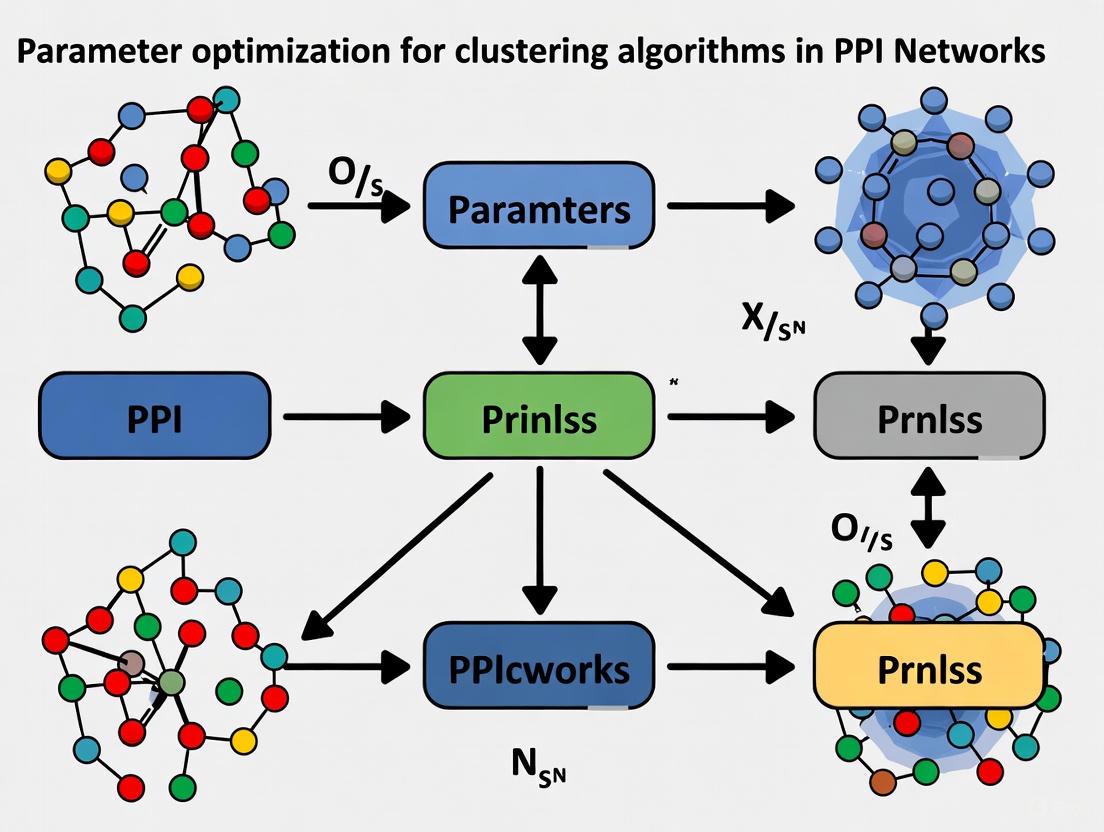
This article provides a comprehensive guide for researchers and drug development professionals on optimizing clustering algorithms for Protein-Protein Interaction (PPI) networks.
Optimizing Clustering Algorithms for PPI Networks: A Guide for Biomedical Researchers
Abstract
This article provides a comprehensive guide for researchers and drug development professionals on optimizing clustering algorithms for Protein-Protein Interaction (PPI) networks. It covers the foundational principles of PPI network biology and the critical role of clustering in identifying functional modules. The content explores specific clustering methodologies, details advanced hyperparameter optimization techniques, and establishes a robust framework for evaluating and validating clustering results. By integrating theoretical concepts with practical applications, this guide aims to enhance the accuracy and biological relevance of PPI network analysis, ultimately supporting more effective drug discovery and therapeutic development.
Understanding PPI Networks and the Critical Role of Clustering
Frequently Asked Questions (FAQs)
Q1: What are the most common challenges in visualizing PPI networks, and how can they be addressed? Visualizing PPI networks presents several challenges, primarily due to their inherent complexity. Key issues include network scale (a high number of nodes and edges leading to visual clutter), the difficulty of representing overlapping protein complexes, and the need to integrate heterogeneous biological annotations, which can complicate the visual representation [1]. These can be addressed by:
- Using alternative layouts: For dense networks, adjacency matrices can prevent clutter and make it easier to encode edge attributes and display node labels compared to traditional node-link diagrams [2].
- Applying layering and separation: Visually grouping related nodes and using separation can help emphasize the network's main components [2].
- Selecting specialized tools: Using tools like Cytoscape or NAViGaTOR, which offer multiple layout algorithms and functions for managing large-scale network data [1].
Q2: How can I extract and build an up-to-date PPI network from the scientific literature? Manual curation of PPI data from literature is slow and can delay new discoveries [3]. Automated systems using text mining and deep learning techniques have been developed to address this. A robust automated system might involve a multi-step process [3]:
- A deep learning sentence classification model (e.g., using a Bidirectional LSTM network) is used to identify sentences in biomedical abstracts that contain actual protein-protein interactions, rather than just co-mentioning proteins.
- A Named Entity Recognition (NER) model (e.g., using Conditional Random Fields) then labels the protein names within those sentences.
- Finally, a shortest-dependency path (SDP) model analyzes the sentence structure to extract the specific words that describe the relationship between the proteins.
Q3: My clustering results are highly dependent on the parameters of the algorithm. How can I make my findings more robust? Parameter dependence is a common limitation in many clustering algorithms, which can lead to small recall rates and make it difficult to gauge performance across different PPI networks [4]. A key strategy is to consider parameter-free algorithms. For instance, the GCC-v algorithm family is designed to be parameter-free. It identifies protein complexes based on the (weighted) clustering coefficient of proteins and can predict both dense and sparse clusters without predefined parameters, making its findings more consistent and robust to network perturbations [4].
Q4: What does "biclique spanned subgraphs" mean in the context of the GCC-v algorithm? In the GCC-v algorithm, a predicted cluster (subgraph) is "biclique spanned" if there exists at least one node within it whose immediate neighbors (first neighborhood) contain the entire cluster [4]. This means the cluster is guaranteed to be connected by a star-shaped structure, which is a specific type of biclique. This property allows GCC-v to efficiently identify both sparse and dense protein complexes [4].
Troubleshooting Common Experimental Issues
Issue 1: Uninterpretable or Cluttered Network Visualizations
Problem: The network figure is too dense, making it impossible to see relationships or read labels [2] [1].
Solution: Apply fundamental visualization rules.
- Determine the figure's purpose first: Before creating the visualization, write down the specific message or caption the figure should convey. This determines the focus, data to include, and visual encoding (e.g., using arrows for data flow or undirected edges for structural analysis) [2].
- Choose an appropriate layout: Do not default to a force-directed node-link diagram for every network.
- Ensure labels are legible: Labels must be at least the same font size as the figure caption. If the layout does not allow for legible labels, consider modifying the layout or providing a high-resolution, zoomable version online [2].
Issue 2: Low Recall in Protein Complex Identification
Problem: Your clustering algorithm fails to identify a significant number of known protein complexes, particularly small or sparse ones [4].
Solution: Evaluate and switch to algorithms designed for diverse complex structures.
- Diagnosis: Many traditional algorithms are biased towards predicting dense and large complexes, whereas many real complexes are small and sparse [4].
- Methodology: Implement a clustering algorithm that specifically handles varying cluster densities and can detect overlapping clusters. The GCC-v algorithm, for example, is designed to predict both dense and sparse complexes by partitioning the network into biclique spanned subgraphs and can natively handle weighted edges and overlapping clusters [4].
- Validation: Use established gold standard databases (e.g., EcoCyc for E. coli, CYC2008 for S. cerevisiae, CORUM for H. sapiens) to calculate performance measures like recall and precision for a comprehensive comparative analysis [4].
Issue 3: Inefficient Clustering of Large-Scale PPI Networks
Problem: The clustering algorithm does not scale well with the network size, resulting in prohibitively long computation times.
Solution: Utilize efficient, parameter-free algorithms.
- Protocol: The PMABC-ACE (Propagating Mechanism of Artificial Bee Colony - Aggregation Coefficient of Edge) clustering model is an example of an algorithm designed to automatically determine the number of clusters during the clustering procedure, which greatly reduces time complexity [5]. The model uses a bio-inspired approach where:
- A "queen" bee represents a cluster center.
- "Drones" are nodes sorted by their connection strength to the queen.
- The queen "mates" with drones to form clusters.
- Well-developed "broods" become new queens, repeating the process until all nodes are clustered [5].
- Performance: This model has been shown to perform well in terms of precision, recall, and running time on benchmark datasets like MIPS [5].
Experimental Protocols & Workflows
Protocol 1: Workflow for Building a PPI Network from Textual Data
This protocol outlines the steps for extracting a PPI network from biomedical literature abstracts using a deep learning and NLP-based automated system [3].
Diagram: PPI Extraction from Text
Methodology:
- Data Collection: Gather a corpus of biomedical abstracts from databases like PubMed in a standard format.
- Sentence Classification:
- Objective: Filter sentences that contain actual PPI relations.
- Procedure: Use a trained deep learning model, such as a multi-layer Bidirectional LSTM (BiLSTM) Recurrent Neural Network (RNN). The model can be trained on benchmark corpora like AIMed and BioInfer, and use pre-trained word embeddings (e.g., BioWordVec) on large biomedical text corpora for improved semantic understanding [3].
- Named Entity Recognition (NER):
- Objective: Identify and tag all protein names within the PPI sentences.
- Procedure: Apply a Conditional Random Field (CRF) model trained to recognize protein entities in text [3].
- Relationship Extraction:
- Objective: Extract the specific interaction words (e.g., "binds," "inhibits") that link two proteins.
- Procedure: Use a shortest-dependency path (SDP) model from a library like SpaCy. This model parses the grammatical structure of the sentence and finds the shortest path between the two protein names in the dependency tree. The words on this path typically describe the relationship [3].
- Network Construction: Compile the extracted triplets (Protein1, Interaction, Protein2) into a network file (e.g., an edge list) for visualization in tools like Cytoscape.
Protocol 2: Comparing Multiple PPI Networks with CompNet
This protocol is for visually comparing multiple networks (e.g., from different conditions or time points) to identify similarities and differences [6].
Diagram: Multi-Network Comparison Workflow
Methodology:
- Data Input: Prepare your networks as edge lists (node pairs) or as lists of nodes to be overlaid on a common background network. Load them into the CompNet tool [6].
- Set Operations: Use the tool's functions to find the union (all nodes/edges in any network), intersection (nodes/edges common to all selected networks), and exclusive components (nodes/edges specific to one network) [6].
- Visual Comparison:
- Pie-nodes: Each node is displayed as a pie chart, where each slice's color represents its presence in a different network. This allows for immediate identification of proteins shared across conditions [6].
- Edge-pie matrix: Similarly, shows the presence of interactions across the compared networks.
- Topological Analysis:
- Compare global graph properties like density, clustering coefficient, and average path length across the loaded networks.
- Compare node-specific properties like degree and betweenness centrality, which can be mapped to node size for visual emphasis.
- Analyze and compare community compositions and shortest paths between key nodes across the different networks to understand functional changes [6].
The Scientist's Toolkit: Research Reagent Solutions
The following table details key resources used in PPI network analysis.
| Resource Name | Type | Function in PPI Research |
|---|---|---|
| Cytoscape [2] [1] | Software Platform | An open-source, extensible platform for visualizing complex networks. Its core strength is integration with numerous plugins for network analysis, data integration, and visualization. |
| NAViGaTOR [1] | Software Tool | A visualization tool specifically designed for large PPI networks, known for its efficient and parallel implementation that provides high interactivity. |
| STRING DB [3] | PPI Database & Tool | A database of known and predicted PPIs. It integrates data from multiple sources, including genomic context, high-throughput experiments, and text mining, to predict functional partnerships. |
| AIMed / BioInfer [3] | Benchmark Corpus | Standardized, manually curated corpora of biomedical abstracts with annotated PPIs. They are used as gold-standard datasets for training and evaluating text-mining and deep learning models. |
| GCC-v Algorithm [4] | Computational Algorithm | A parameter-free family of greedy algorithms for identifying protein complexes in PPI networks based on node clustering coefficients, capable of finding both dense and sparse clusters. |
| CompNet [6] | Software Tool | A graphical tool dedicated to the visual comparison of multiple biological networks, allowing for analysis of union, intersection, and exclusive components. |
| cPath [1] | Middleware / Database | An open-source database and middleware platform used for storing, integrating, and querying pathway data from multiple sources. |
Key Clustering Algorithms for Biological Network Analysis
Cluster analysis aims to partition a set of objects into groups (clusters) such that objects within the same group exhibit greater similarity to one another than to those in other groups [7]. In the context of Protein-Protein Interaction (PPI) networks, clustering enables researchers to identify functional modules—groups of proteins that work together to perform specific biological processes [8]. This technique is particularly valuable for analyzing differentially expressed genes (DEGs) mapped to PPI networks, as it helps uncover molecular mechanisms underlying biological processes and disease states [8].
Key Clustering Algorithms: A Comparative Analysis
Different clustering algorithms employ distinct models to identify groups within data. The table below summarizes the primary algorithm categories and their applicability to biological network analysis.
Table 1: Key Clustering Algorithm Categories
| Algorithm Category | Core Principle | Representative Algorithms | Typical Use Cases in Network Biology |
|---|---|---|---|
| Connectivity-based | Objects are more related to nearby objects than to farther ones [7] | Hierarchical Clustering, UPGMA, WPGMA [7] | Building phylogenetic trees, hierarchical module detection |
| Centroid-based | Each cluster is represented by a central vector [7] | K-Means, K-Medoids, K-Means++ [7] [9] | Grouping proteins with similar expression patterns |
| Density-based | Clusters are defined as connected dense regions in data space [7] | DBSCAN, HDBSCAN, OPTICS [7] [9] | Identifying dense protein complexes in PPI networks |
| Distribution-based | Clusters are modeled using statistical distributions [7] | GMM, Expectation-Maximization [7] | Identifying groups under specific statistical distributions |
| Graph-based | Clusters are identified as highly connected subgraphs [7] | Clique Finding, Community Detection [7] | Direct analysis of PPI network topology |
Frequently Asked Questions (FAQs) and Troubleshooting
FAQ 1: How do I choose the appropriate clustering algorithm for my PPI network data?
Answer: The choice depends on your data characteristics and research objectives. Consider these factors:
- For discovering hierarchical relationships in your network, hierarchical clustering allows you to explore clusters at different similarity levels without pre-specifying the number of clusters [7].
- For well-separated spherical clusters, K-means provides efficient computation but requires pre-specifying the number of clusters (K) and is sensitive to outliers [7] [9].
- For irregularly shaped clusters with noise, DBSCAN can discover arbitrarily shaped clusters and identify outliers, making it suitable for noisy biological data [7] [9].
- For direct network topology analysis, graph-based methods like clique finding naturally capture the connectivity structure of PPI networks [7].
FAQ 2: What are the essential preprocessing steps before clustering PPI networks?
Answer: Proper preprocessing is critical for meaningful results:
- Network Validation: Ensure your PPI data comes from reliable databases like STRING and filter interactions by confidence score (e.g., >0.7) [8].
- Handle Missing Data: Use appropriate imputation methods or remove proteins with excessive missing interactions.
- Normalize Edge Weights: Standardize interaction scores to ensure comparability across the network.
- Quality Control: Calculate basic network properties (nodes, edges, density) to understand your network's structure before clustering [8].
FAQ 3: Why does my clustered network show disconnected components, and how should I interpret them?
Answer: Disconnected components (multiple clusters) in PPI networks are biologically meaningful:
- Biological Significance: Different clusters may represent distinct functional modules or cellular processes [8].
- Technical Causes: Not all proteins in your dataset may have known interactions in current databases, leading to natural fragmentation [8].
- Interpretation Strategy: Focus on the largest connected component while analyzing smaller clusters for specialized functions. In a study of Alzheimer's disease models, researchers found 13 distinct clusters, with the largest likely representing core disease-related pathways [8].
FAQ 4: How can I validate and interpret the biological relevance of my clustering results?
Answer: Employ multiple validation strategies:
- Topological Validation: Calculate cluster quality metrics like modularity to assess the goodness of the partition based on network structure.
- Biological Validation: Perform enrichment analysis using tools like DAVID or Enrichr to identify overrepresented biological pathways, Gene Ontology terms, or disease associations within each cluster.
- Comparison with Known Complexes: Check if your clusters align with known protein complexes in databases like CORUM or ComplexPortal.
- Stability Assessment: Use resampling techniques to test cluster stability and robustness.
Experimental Protocols
Protocol 1: Mapping DEGs to PPI Networks and Basic Cluster Analysis
This protocol adapts methodology from PPI network analysis research [8].
Materials and Reagents:
- DEG list in CSV format (containing gene identifiers)
- Python environment with required libraries (pandas, requests, networkx, matplotlib)
Procedure:
- Load DEG Data: Import your differentially expressed genes CSV file.
Fetch PPI Data: Retrieve protein interaction data from the STRING database.
Filter Interactions: Retain only high-confidence interactions.
Create and Analyze Network:
Identify Connected Components:
Protocol 2: Parameter Optimization for K-Means Clustering on Network Features
This protocol addresses parameter optimization within the thesis context [9].
Materials and Reagents:
- Feature matrix derived from network properties (degree centrality, betweenness, etc.)
- Python environment with scikit-learn
Procedure:
- Feature Extraction: Compute node-level network metrics to use as features for clustering.
Determine Optimal K Value:
Perform Clustering with Optimal Parameters:
Essential Research Reagent Solutions
Table 2: Key Computational Tools for PPI Network Clustering
| Tool/Resource | Type | Primary Function | Application Context |
|---|---|---|---|
| STRING Database | Web Resource / API | PPI data retrieval | Mapping DEGs to known protein interactions [8] |
| NetworkX | Python Library | Network construction and analysis | Creating PPI networks, calculating topology metrics [8] |
| scikit-learn | Python Library | Clustering algorithms | Implementing K-means, DBSCAN, and other algorithms [9] |
| Cytoscape | Desktop Application | Network visualization and analysis | Interactive exploration of clustered networks |
| DBSCAN Algorithm | Clustering Method | Density-based clustering | Identifying arbitrarily shaped clusters in feature space [7] [9] |
Visualization of Clustering Workflows
Workflow for PPI Network Cluster Analysis
Algorithm Selection Decision Framework
Performance Comparison of Clustering Algorithms
Table 3: Algorithm Performance Characteristics in Biological Networks
| Algorithm | Time Complexity | Key Parameters | Strengths | Limitations |
|---|---|---|---|---|
| K-means | O(nki) [7] | Number of clusters (k) [9] | Efficient for large datasets, simple implementation | Sensitive to initial centroids, assumes spherical clusters [7] |
| Hierarchical | O(n³) for exact methods [7] | Linkage criterion, distance threshold | No need to specify k, provides cluster hierarchy | Computationally intensive for large networks [7] |
| DBSCAN | O(n log n) with spatial indexing | ε (eps), min_samples [9] | Finds arbitrary shapes, handles noise | Struggles with varying densities [7] |
| Spectral | O(n³) for eigen decomposition | Number of clusters, affinity matrix | Effective for network community detection | Memory intensive for large networks |
Frequently Asked Questions (FAQs)
Q1: Why does my React Flow diagram not render any nodes or edges? A: This occurs when the React Flow component is missing a defined height and width. The parent container must have explicit dimensions for the graph to render properly [10].
- Solution: Apply a fixed height or ensure the parent container inherits a height.
Q2: I've created a custom node, but React Flow shows a warning: "Node type not found. Using fallback type 'default'." What does this mean?
A: This warning means you have specified a type for your node in the node definition, but have not passed the corresponding nodeTypes prop to the React Flow component, or the type string does not exactly match the key in the nodeTypes object [10].
- Solution: Ensure the
nodeTypesprop is provided and the keys match the nodetypevalues exactly.
Q3: Why do my custom nodes re-render constantly, causing performance issues?
A: This happens when the nodeTypes or edgeTypes objects are defined inside your component's render function. A new object is created on every render, triggering unnecessary re-renders [10].
- Solution: Define the
nodeTypesobject outside the component or memoize it inside the component usinguseMemo.
Q4: How can I change the color of a specific custom node when it is clicked?
A: You should manage the node's appearance via its data or style properties. On click, update the node's data in your state, and use that data to control the node's color in your custom node component. Avoid using a single state variable to control all nodes' colors [11].
- Solution:
- In your flow component, use an
onNodeClickhandler to update the clicked node's data. - In your custom node component, use the
dataprop to determine the background color.
- In your flow component, use an
Q5: I get a warning: "Seems like you have not used zustand provider as an ancestor." How do I fix it? A: This error has two common causes [10]:
- Multiple versions of React Flow: Ensure all
@xyflow/reactpackages are on the same version. Deletenode_modulesandpackage-lock.json, then reinstall. - Missing ReactFlowProvider: You are using a hook like
useReactFlowin a component that is not a child of aReactFlowProvider.- Solution: Wrap your flow component with
ReactFlowProviderat a higher level.
- Solution: Wrap your flow component with
Troubleshooting Common Experimental Setups
The methodologies below outline how to implement key visualization workflows for PPI clustering data using React Flow. Proper implementation is critical for accurately representing complex network relationships and parameter interactions.
Experiment 1: Implementing a Custom Parameter Node for Clustering Thresholds
Objective: Create an interactive node that allows researchers to adjust and visualize the impact of a clustering threshold parameter in real-time.
Detailed Protocol:
- Create the Custom Node Component: Develop a React component that will serve as your parameter control node. This node should use the
updateNodeDatafunction from theuseReactFlowhook to write its value back to the node'sdataobject, making it available to connected nodes [12]. - Register the Node Type: Add your new
ParameterNodeto thenodeTypesobject passed to the React Flow component [13]. - Define the Node in Your Graph: Include an instance of your custom node in the initial nodes array.
Experiment 2: Creating a Data Flow for Cluster Property Calculation
Objective: Build a flow that calculates a cluster property (e.g., density) based on input parameters from multiple nodes, demonstrating how parameters propagate and transform.
Detailed Protocol:
- Create a Computing Node: Build a custom node (e.g.,
DensityCalculator) designed to receive data from its input handles, perform a calculation, and output the result. - Use Hooks to Get Connected Data: Inside your computing node, use the
useNodeConnectionshook to find all nodes connected to its target handles. Then, use theuseNodesDatahook to access the data of those connected source nodes [12]. - Perform Calculation and Output: Use the data fetched from the hooks to compute the cluster density. The result can be stored in the node's own
dataand passed on to subsequent nodes in the workflow via a source handle [12].
Experiment 3: Styling Nodes Based on Calculated Cluster Properties
Objective: Dynamically style nodes (e.g., color by cluster affiliation, size by node degree) to create an informative visual representation of the PPI network.
Detailed Protocol:
- Leverage Node Data for Styling: Pass the calculated properties (e.g.,
clusterId,degree) as part of thedataobject for each node. - Use Data to Control Styles in Custom Nodes: Within your custom node component, use these data properties to dynamically set the node's appearance.
- Apply Theming with CSS Variables: For consistent global styling, you can override React Flow's built-in CSS variables [14].
Quantitative Data & Styling Reference
Table 1: React Flow CSS Variables for PPI Network Styling This table summarizes key CSS variables for theming your React Flow diagram to match PPI clustering visualization needs [14].
| Variable Name | Default Value | Recommended Use in PPI Context |
|---|---|---|
--xy-node-background-color-default |
#fff |
Set node color based on cluster affiliation. |
--xy-node-border-default |
1px solid #1a192b |
Define border for unselected nodes. |
--xy-node-boxshadow-selected-default |
0 0 0 0.5px #1a192b |
Highlight selected nodes for analysis. |
--xy-edge-stroke-default |
#b1b1b7 |
Color for edges (protein interactions). |
--xy-edge-stroke-selected-default |
#555 |
Color for selected interactions. |
--xy-selection-background-color-default |
rgba(0, 89, 220, 0.08) |
Background color for multi-selection. |
--xy-minimap-background-color-default |
#fff |
Background of the minimap component. |
Table 2: Key Research Reagent Solutions for PPI Visualization Essential software tools and components for building an interactive PPI clustering research application.
| Item | Function & Purpose |
|---|---|
| React Flow Core Library | Provides the foundational components (ReactFlow, Node, Edge) and interactions (drag, zoom, pan) for building the node-based diagram [15]. |
| Custom Node Components | React components that allow you to render any content inside a node, such as protein information, parameter sliders, or calculation results [13]. |
| Handle Component | Interactive connection points on nodes; essential for defining allowed data flows (edges) between parameter, cluster, and result nodes [13]. |
| useReactFlow Hook | Provides access to the React Flow instance for programmatic actions like updating node data (updateNodeData), which is crucial for dynamic computations [12]. |
| useNodesData & useNodeConnections Hooks | Specialized hooks that allow a node to read data from its upstream connected nodes, enabling data flow and computation across the graph [12]. |
| Background, Controls, MiniMap | Plugin components that improve the user experience by providing context, navigation, and an overview of the complex PPI network [14]. |
Workflow and Signaling Pathway Visualizations
Diagram 1: PPI clustering analysis workflow.
Diagram 2: Data flow for parameter-driven clustering.
Troubleshooting Guide: Common Issues in Cluster Analysis
FAQ 1: My protein clusters are disconnected or lack biological coherence. How can I resolve this?
Issue: Clusters identified in your Protein-Protein Interaction (PPI) network do not form connected components or do not correspond to meaningful biological units.
Explanation: PPI networks from experimental data are often incomplete. A known protein complex should ideally form a connected subgraph within the network. If it doesn't, this indicates potential missing interactions that are crucial for its structural and functional integrity [16].
Solution:
- Validate Complex Connectivity: Check if your clusters (or known complexes from standards like CYC2008 or MIPS) are fully connected within your PPI network (e.g., from BioGRID or STRING) [16].
- Network Enhancement: Use algorithms, such as a Variable Neighbourhood Search (VNS) metaheuristic, designed to identify the minimal set of interactions that need to be added to make all complexes in a standard connected. This pinpoints probable missing PPIs [16].
- Functional Enrichment: Confirm biological relevance using tools like Enrichr for Gene Ontology (GO) and KEGG pathway analysis. Meaningful clusters should be significantly enriched for specific biological processes or pathways [17].
FAQ 2: How do I choose the right module identification method for my network?
Issue: With over 75 module identification methods available, selecting one that produces biologically relevant results for your specific network is challenging [18].
Explanation: Different algorithms (e.g., kernel clustering, modularity optimization, random-walk-based) have inherent strengths and weaknesses. Performance is highly dependent on the network's type and structure, and no single method is universally superior [18].
Solution:
- Method Selection: Consider top-performing methods from benchmarks like the DREAM Challenge. These include kernel-based approaches (K1), modularity optimization with resistance parameters (M1), and random-walk methods like Markov clustering (R1) [18].
- Multi-Method Approach: Use multiple algorithms, as they often recover complementary trait-associated and disease-relevant modules. A module confirmed by several methods gains credibility [18].
- Leverage Newer Models: For overlapping functional modules, consider Graph Neural Network-based methods like GNN4DM, which integrate network topology with genomic data (e.g., GTEx gene expression, GWAS summary statistics) to identify modules that align with known pathways [19].
FAQ 3: My clustering results are sensitive to parameters and contain outliers. How can I stabilize them?
Issue: The number and composition of clusters change drastically with different parameter settings (e.g., the number of clusters k, density thresholds), and results are skewed by outliers or high-dimensional noise.
Explanation: Traditional clustering methods like k-means require pre-defining the number of clusters and are sensitive to outliers and noise, which are common in biomedical datasets like gene expression profiles [20].
Solution:
- Automated Parameter Optimization: Implement the Automated Trimmed and Sparse Clustering (ATSC) method. ATSC automatically determines the optimal number of clusters while simultaneously calibrating trimming and sparsity parameters [20].
- Sparse Clustering: This technique emphasizes significant features (e.g., key genes) and suppresses noisy ones, leading to more biologically interpretable clusters [20].
- Trimmed Clustering: This enhances robustness by excluding a proportion of outlier data points during the clustering process [20]. The
evaluomeRBioconductor package provides an implementation for the biomedical research community [20].
Experimental Protocols for Robust Cluster Analysis
Protocol 1: Identifying Disease-Relevant Modules from PPI Networks
This protocol is adapted from studies investigating complex diseases like Type 2 Diabetes Mellitus (T2DM) and Systemic Sclerosis (SSc) [21] [17].
1. Data Acquisition:
- Gene Expression Data: Download relevant datasets from the Gene Expression Omnibus (GEO). For example, GSE25724 was used for T2DM islets [21].
- PPI Network: Obtain a high-confidence PPI network from databases like STRING (score > 0.7) or BioGRID [21] [19].
2. Preprocessing and Differential Expression:
- Normalize and batch-correct microarray data using tools like the
ComBatfunction from thesvaR package [17]. - Identify Differentially Expressed Genes (DEGs) with an adjusted p-value (e.g., FDR < 0.05) and a minimum fold-change threshold (e.g., logFC > ±0.5) using the
Limmapackage [21] [17].
3. Network Construction and Clustering:
- Map DEGs to the PPI network using Cytoscape [21] [17].
- Identify functional clusters using the ClusterONE plugin with parameters such as
minimum size = 5,minimum density = 0.05, andnode score cutoff = 0.2[21] [17].
4. Biological Interpretation:
- Perform functional enrichment analysis on the resulting clusters using DAVID or Enrichr to identify overrepresented GO terms and KEGG pathways (e.g., Proteasome pathway, TNF signaling) [21] [17].
Protocol 2: Benchmarking Module Identification Methods
This protocol is based on the Disease Module Identification DREAM Challenge, which provides a robust framework for evaluating clustering algorithms [18].
1. Network Preparation:
- Assemble a panel of diverse molecular networks (PPI, co-expression, signaling).
- Anonymize the networks by removing gene identifiers to enable blinded assessment.
2. Module Prediction:
- Run module identification methods on each network individually (Sub-challenge 1) or on the integrated multi-network data (Sub-challenge 2).
- Define modules as non-overlapping groups of genes, typically between 3 and 100 genes [18].
3. Biological Validation with GWAS:
- Compile a large collection of independent Genome-Wide Association Studies (GWAS) for various complex traits and diseases.
- Use a tool like Pascal to test the association between each predicted module and each GWAS trait by aggregating trait-association p-values of genes within the module [18].
- Calculate a final score for a method submission as the total number of its trait-associated modules at a specific False Discovery Rate (e.g., 5% FDR) [18].
The Scientist's Toolkit: Research Reagent Solutions
Table 1: Essential databases and software for cluster analysis in PPI networks.
| Resource Name | Type | Function | Key Feature |
|---|---|---|---|
| STRING Database | PPI Database | Provides functional protein association networks from multiple sources [19] [16]. | High-confidence interaction scores; integrates physical and functional interactions. |
| BioGRID | PPI Database | A repository for protein and genetic interactions from model organisms [21]. | Curated physical and genetic interactions from high-throughput studies. |
| Cytoscape | Network Analysis | An open-source platform for visualizing and analyzing molecular interaction networks [21] [17]. | Plugin architecture (e.g., ClusterONE for module detection). |
| ClusterONE | Algorithm | Detects densely connected, overlapping regions in a PPI network [21] [17]. | Identifies potential protein complexes; works within Cytoscape. |
| DAVID / Enrichr | Functional Analysis | Tools for gene functional enrichment analysis (GO, KEGG) [21] [17]. | Identifies biological processes, pathways, and functions enriched in a gene set. |
| DisGeNET | Gene-Disease Database | Integrates gene-disease associations from multiple sources, including mendelian and complex diseases [22]. | Facilitates the study of disease modules and shared genetic origins. |
| GNN4DM | Algorithm | A Graph Neural Network model for identifying overlapping, functional disease modules [19]. | Integrates network topology with genomic data (GTEx, GWAS). |
Table 2: Summary of key quantitative findings from cluster analysis studies.
| Study Context | Number of DEGs Identified | Clusters Identified | Key Enriched Pathways/Functions |
|---|---|---|---|
| Type 2 Diabetes (T2DM) Islets [21] | 781 DEGs (741 down-regulated) | Information not specified | Proteasome pathway, Citrate cycle, Ubiquitin-mediated proteolysis |
| Systemic Sclerosis (SSc) - Lung [17] | 619 DEGs | 12 Functional Clusters | Immunity/Inflammation (e.g., TNF, JAK-STAT signaling), Cell proliferation/death (e.g., p53 signaling) |
| Systemic Sclerosis (SSc) - Skin [17] | 119 DEGs | 4 Functional Clusters | Inflammation/Immunity, Fibrosis-related processes |
| Systemic Sclerosis (SSc) - PBMC [17] | 52 DEGs | 2 Functional Clusters | Inflammation and Immunity pathways |
Selecting Algorithms and Implementing Optimization Techniques
Community detection is a fundamental task in network science, aiming to identify groups of nodes within a network that are more densely connected to each other than to the rest of the network. In biological research, particularly in the analysis of Protein-Protein Interaction (PPI) networks, these "communities" often correspond to functional modules or protein complexes, which are crucial for understanding cellular processes and facilitating drug discovery [23] [24].
This guide provides a technical overview of four prominent clustering algorithms—Walktrap, Louvain, Leiden, and SpeakEasy2—framed within the context of optimizing parameters for PPI network research. It is structured as a support center to help researchers troubleshoot common issues and implement these methods effectively.
The table below summarizes the core principles, key parameters, and known limitations of the four algorithms to help you select an appropriate method.
| Algorithm | Core Principle | Key Parameters | Primary Advantages | Known Limitations / Issues |
|---|---|---|---|---|
| Walktrap [25] [26] | Uses short random walks to measure node similarity; assumes walks tend to stay within dense communities. Hierarchical clustering (often Ward's method) is then applied. | steps: Length of random walks. weights: (Optional) Edge weights. |
Robust performance in psychological network studies; effective when the number of communities is unknown [25]. | Relies on hierarchical clustering, which may not find the optimal sum-of-squares solution [25]. |
| Louvain [27] | A greedy, multi-phase algorithm that optimizes modularity through local node movement and network aggregation. | resolution_parameter (γ): Controls community size and number. |
Simple, fast, and elegant; found to be one of the fastest and best-performing in comparative analyses [27]. | May yield badly connected or even disconnected communities; this issue can worsen with iterative runs [27] [28]. |
| Leiden [27] [28] | An improvement on Louvain, it includes a refinement phase after local moving to guarantee well-connected communities. | resolution_parameter (γ): Similar to Louvain. theta: Controls randomness during refinement. |
Guarantees connected communities; faster than Louvain and finds better partitions with provable guarantees [27] [28]. | A non-deterministic algorithm; can produce different results in subsequent runs [29]. |
| SpeakEasy2 [25] | Not fully detailed in search results, but mentioned as a community-detection method based on Cohen's Kappa that performed well in comparative studies. | Information not fully available in search results. | Identified as a top performer in one study, sometimes outperforming Walktrap [25]. | Specific limitations not detailed in search results. |
Frequently Asked Questions and Troubleshooting
This section addresses specific, common problems researchers encounter when applying these algorithms to PPI networks.
FAQ 1: Why does the Louvain algorithm sometimes identify disconnected communities in my PPI network, and how can I fix this?
- Problem Explanation: The Louvain algorithm's greedy nature is the root cause. A node that acts as a bridge between different parts of a community might be moved to a different cluster. This can disconnect its original community, and the algorithm may not rectify this, as the other nodes can remain locally optimal [27].
- Recommended Solution: Switch to the Leiden algorithm. It was specifically designed to address this flaw in Louvain by introducing an additional refinement step that ensures all resulting communities are well-connected [27] [28]. This is critical in biological networks where a disconnected "community" may not represent a functionally coherent module.
- Supporting Experiment: A study by Traag et al. demonstrated that in benchmark and real-world networks, up to 25% of communities found by Louvain were badly connected, and up to 16% were completely disconnected. The Leiden algorithm eliminated this problem while also running faster and finding better partitions [27].
FAQ 2: The Walktrap algorithm seems suboptimal for my network. How can I improve its performance without switching algorithms?
- Problem Explanation: The Walktrap algorithm relies on hierarchical clustering (like Ward's method) to form communities from random walk distances. This method is a heuristic that may not find the partition which minimizes the sum-of-squares error (SSE), leading to suboptimal community assignments [25].
- Recommended Solution: Replace the hierarchical clustering component with a K-means clustering method. Research has shown that K-means, including exact or approximate methods, often finds better solutions to the SSE problem that Walktrap heuristically tackles. This can lead to more accurate community detection, especially in smaller networks typical in psychological and biological research [25].
- Supporting Experiment: Brusco et al. conducted simulation studies showing that using K-means clustering on the distances derived from the random walk transition matrix often yielded better solutions to the underlying optimization problem than the standard Ward's method, improving the recovery of the true community structure [25].
FAQ 3: My Leiden algorithm results are not reproducible. What parameter should I check?
- Problem Explanation: The Leiden algorithm is non-deterministic, meaning it can produce different communities in separate runs on the same data due to its inherent randomness [29].
- Recommended Solution: Adjust the
thetaparameter, which controls the randomness when a community is split into smaller, well-connected groups during the refinement phase. A lower value ofthetareduces randomness, potentially increasing reproducibility at the cost of potentially missing some optimal splits [29].
FAQ 4: How do I control the granularity (size and number) of communities found by Leiden and Louvain?
- Problem Explanation: The default parameters may not uncover the community structure at the desired biological scale, for instance, missing smaller protein complexes.
- Recommended Solution: Tune the resolution parameter (
gamma). This parameter is part of the quality function being optimized (like modularity or CPM).- Higher
gammavalues lead to more, smaller communities. - Lower
gammavalues lead to fewer, larger communities [28] [29]. - Experimental Protocol: Perform a parameter sweep. Run the algorithm with a range of
gammavalues (e.g., from 0.5 to 2.0) and evaluate the resulting communities using biological validation metrics, such as functional enrichment from Gene Ontology (GO) terms [24].
- Higher
Experimental Protocols for PPI Networks
Here is a detailed methodology for a key experiment that integrates multi-objective optimization with biological knowledge, a state-of-the-art approach in the field.
Protocol: Integrating Gene Ontology with a Multi-Objective Evolutionary Algorithm for Protein Complex Detection [24]
1. Problem Formulation as Multi-Objective Optimization (MOO): Recast the problem of protein complex identification as an MOO problem. The objectives are often conflicting, such as:
- Objective 1: Maximize the topological density (e.g., using Internal Density) of the proposed clusters.
- Objective 2: Maximize the biological coherence of the clusters, measured by the functional similarity of proteins within a cluster using Gene Ontology (GO) annotations [24].
2. Algorithm and Perturbation Operator:
- Algorithm Selection: Employ a Multi-Objective Evolutionary Algorithm (MOEA) framework.
- Specialized Operator: Implement a Functional Similarity-Based Protein Translocation Operator (FS-PTO). This mutation operator uses GO-based functional similarity to guide the search, moving proteins between clusters in a way that is informed by biological function, not just network topology [24].
3. Workflow Diagram: The diagram below illustrates the integrated experimental workflow.
4. Validation and Evaluation:
- Benchmark Datasets: Use standard PPI networks (e.g., from Saccharomyces cerevisiae) and known complex databases (e.g., MIPS) [5] [24].
- Metrics: Compare the identified complexes against known complexes using metrics like Precision, Recall, and F-measure [5] [24].
- Robustness Testing: Introduce different levels of random noise (adding and removing edges) into the PPI network to test the algorithm's robustness [24].
The Scientist's Toolkit: Essential Research Reagents and Materials
The following table lists key computational "reagents" and tools essential for conducting clustering experiments on PPI networks.
| Tool / Resource | Function / Description | Relevance to Clustering Experiments |
|---|---|---|
| igraph Library [26] | A core collection of network analysis tools available in R, Python, and C++. | Provides direct, efficient implementations of the Walktrap, Louvain, and Leiden algorithms, making it an ideal starting point for experimentation. |
| Gene Ontology (GO) Annotations [24] | A structured, controlled vocabulary for describing gene and gene product attributes. | Serves as a critical source of biological prior knowledge for validating results and enhancing algorithms (e.g., via the FS-PTO operator). |
| Munich Information Center for Protein Sequences (MIPS) [5] [24] | A database containing curated protein complexes and interaction data. | Provides a gold-standard benchmark for validating the accuracy of detected protein complexes against known biological truth. |
| Constant Potts Model (CPM) [27] [28] | A quality function for community detection, an alternative to modularity. | Used in Leiden/Louvain; overcomes the "resolution limit" of modularity, allowing the detection of smaller communities at appropriate gamma values. |
| K-means / Exact SSE Clustering Methods [25] | Clustering algorithms that minimize the sum-of-squares error. | Can be used to replace the hierarchical clustering step in the Walktrap algorithm to potentially improve partition quality. |
Frequently Asked Questions (FAQs)
Q1: My clustering analysis on a PPI network is taking too long. Which hyperparameter optimization method should I use to save time?
A: For large-scale problems like PPI network clustering, Bayesian Optimization is generally recommended to reduce computational time. Unlike Grid Search, which must evaluate every possible combination in the search space, Bayesian Optimization uses a probabilistic model to intelligently select the most promising hyperparameters to test next. This strategic approach finds good parameters faster by learning from past evaluations [30] [31]. One study applying it to density-based clustering for biological data demonstrated its efficiency in navigating parameter spaces with minimal user input [31].
Q2: I am getting poor clustering results on my PPI network despite trying different hyperparameters. What could be wrong?
A: Poor performance can often be traced to two main issues:
- Inappropriate Parameter Bounds: The defined search space for parameters (e.g.,
epsandmin_samplesfor DBSCAN) may not encompass the optimal values for your specific network [31]. If the best score found by an optimization algorithm is at the edge of your defined parameter space, you should widen the bounds [31]. - Validation Metric: The metric used to evaluate clustering quality might be unsuitable for the complex, non-globular shapes often found in PPI networks. For density-based algorithms, internal validation metrics like the Density-Based Cluster Validation (DBCV) score are more appropriate than metrics like the silhouette score, as DBCV is specifically designed for arbitrary cluster shapes [31].
Q3: How do I balance the trade-off between finding the best model (accuracy) and the computational cost of the search?
A: A hybrid approach often yields the best balance [30]:
- Exploration with Bayesian Optimization: Start with Bayesian Optimization over a large search space to efficiently identify promising regions. This saves significant time compared to an exhaustive search [30].
- Exploitation with Local Refinement: Once a promising region is identified, perform a fine-grained Grid Search in that localized area to pinpoint the optimal hyperparameter values, ensuring you do not miss a better solution nearby [30].
Q4: What is a key advantage of Bayesian Optimization over Random Search?
A: The key advantage is intelligence. Random Search selects hyperparameters randomly, essentially taking a "shot in the dark" [30]. In contrast, Bayesian Optimization builds a probabilistic model (a surrogate, often a Gaussian Process) of the objective function as it tests different hyperparameters. It uses an acquisition function to balance exploring uncertain regions and exploiting known promising areas, thereby making informed decisions about which hyperparameters to test next. This allows it to find better parameters with fewer evaluations [30] [31].
Troubleshooting Guides
Troubleshooting Poor Convergence in Hyperparameter Optimization
Symptoms:
- The optimization process fails to find a high-performing model after many iterations.
- Performance plateaus with no improvement over successive trials.
Diagnosis and Resolution:
| Step | Diagnosis | Resolution |
|---|---|---|
| 1 | The search space is poorly defined, and the optimal parameters lie outside the current bounds. | Review the parameter bounds. If the best scores are consistently at the boundary of your search space, expand the upper and lower limits for those parameters and rerun the optimization [31]. |
| 2 | The objective function is noisy, or the model's performance is highly sensitive to small hyperparameter changes. | Increase the number of cross-validation folds for each evaluation to get a more robust performance estimate. Alternatively, configure the Bayesian Optimizer to favor exploitation over exploration slightly. |
| 3 | The core model or clustering algorithm is fundamentally unsuitable for the PPI network data. | Reconsider the choice of clustering algorithm. For PPI networks, which often have complex structures, density-based algorithms (e.g., DBSCAN, HDBSCAN) are generally more suitable than algorithms that assume convex clusters [31]. |
Troubleshooting Excessive Computation Time
Symptoms:
- A single hyperparameter evaluation takes an extremely long time.
- The total optimization runtime is infeasible for the project timeline.
Diagnosis and Resolution:
| Step | Diagnosis | Resolution |
|---|---|---|
| 1 | Using a computationally expensive validation metric on a large dataset. | Use a more efficient validation metric. For example, an optimized implementation of DBCV (k-DBCV) was developed specifically to handle SMLM-sized biological data, offering orders-of-magnitude speed improvement [31]. |
| 2 | Using an inefficient search strategy for a high-dimensional hyperparameter space. | Switch from Grid Search to Bayesian Optimization. Grid Search suffers from the "curse of dimensionality," where the number of required evaluations grows exponentially with each new parameter. Bayesian Optimization is designed to handle such spaces efficiently [30] [32]. |
| 3 | The model itself is slow to train for each hyperparameter set. | If possible, start the optimization on a representative subset of the PPI network to narrow the parameter space before running on the full dataset. |
Experimental Protocols & Data Presentation
Detailed Methodology: Optimizing Clustering for PPI Networks with DBOpt
The following workflow, known as DBOpt, outlines a method for selecting optimal parameters for density-based clustering algorithms applied to biological data like PPI networks, using Bayesian Optimization and the DBCV metric [31].
Title: DBOpt Workflow for Clustering Parameter Selection
Protocol Steps:
- Input and Hyperparameter Bounds: Begin with the coordinate-based data from the PPI network. Define the lower and upper bounds for the clustering algorithm's parameters (e.g.,
epsandmin_samplesfor DBSCAN) [31]. - Bayesian Optimization Initialization: Initialize the Bayesian Optimization process. This involves setting up a surrogate model (typically a Gaussian Process) to approximate the unknown function mapping hyperparameters to the DBCV score, and an acquisition function to decide the next parameters to evaluate [31].
- Clustering and Validation: For each set of parameters proposed by the optimizer, run the clustering algorithm on the PPI network. Then, calculate the DBCV score to quantitatively evaluate the quality of the resulting clusters [31].
- Model Update and Iteration: Update the Bayesian Optimization model with the new (parameters, DBCV score) pair. The algorithm uses this information to make a more informed suggestion in the next iteration. This loop continues until a stopping criterion is met (e.g., a set number of iterations or no improvement for a certain number of trials) [31].
- Output: The optimization process returns the hyperparameter set that yielded the highest DBCV score, which are the optimized parameters for clustering the input PPI network [31].
Comparative Analysis of Hyperparameter Optimization Methods
The table below summarizes the core characteristics of the three primary hyperparameter optimization methods, providing a guide for selection.
Table 1: Comparison of Core Hyperparameter Optimization Methods
| Feature | Grid Search | Random Search | Bayesian Optimization |
|---|---|---|---|
| Core Mechanism | Exhaustively searches over a predefined discrete grid of parameters [30]. | Randomly samples a fixed number of parameter combinations from the search space [30]. | Uses a probabilistic surrogate model to guide the search to promising regions [30] [31]. |
| Key Advantage | Guaranteed to find the best combination within the defined grid. Simple to implement and parallelize. | More efficient than Grid Search for spaces with low effective dimensionality; avoids the "curse of dimensionality" [30]. | Highly sample-efficient; finds good parameters with fewer evaluations, ideal for expensive models [30] [31]. |
| Key Disadvantage | Computationally prohibitive for high-dimensional spaces; number of trials grows exponentially [30] [32]. | Can miss the optimal region; efficiency relies on luck and may still waste resources on poor parameters [30]. | Higher computational overhead per iteration; can get stuck in a local optimum if the surrogate model is inaccurate. |
| Best Use Case | Small, low-dimensional hyperparameter spaces where an exhaustive search is feasible. | Low-to-medium dimensional spaces where a quick, better-than-grid search is needed. | Optimizing complex models with long training times or high-dimensional parameter spaces, such as clustering PPI networks [31]. |
| Luck Factor | "0% Luck, but RIP the compute budget" [30]. | "I'm not lucky, but 10% chance beats 0%" [30]. | "I make my own luck , using math" [30]. |
The Scientist's Toolkit: Essential Research Reagents & Computational Solutions
Table 2: Key Computational Tools for PPI Network Clustering and Optimization
| Item Name | Type/Function | Brief Explanation of Role |
|---|---|---|
| DBCV Score | Internal Validation Metric | A density-based internal validation metric used to evaluate clustering performance without ground truth. It is crucial for guiding Bayesian Optimization in the DBOpt method [31]. |
| Gaussian Process (GP) | Probabilistic Model | Serves as the surrogate model in Bayesian Optimization. It models the objective function and provides a prediction and uncertainty estimate for any set of hyperparameters, enabling intelligent search [30] [31]. |
| DBSCAN/HDBSCAN | Clustering Algorithm | Density-based clustering algorithms that can find arbitrarily shaped clusters, making them well-suited for the complex topology of PPI networks. They are the primary targets for parameter optimization in this context [31]. |
| Acquisition Function | Decision-Making Function | A core component of Bayesian Optimization (e.g., Upper Confidence Bound). It uses the GP's output to balance exploration and exploitation, deciding the next hyperparameters to evaluate [30] [31]. |
Frequently Asked Questions (FAQs)
Q1: What is the fundamental difference between Population-Based Training (PBT) and traditional hyperparameter optimization methods like random or grid search?
A1: Unlike traditional methods which train models independently with static hyperparameters, PBT is a hybrid approach that combines parallel training with sequential optimization. It maintains a population of models trained in parallel. Periodically, it identifies underperforming models and replaces them with copies of better-performing models, whose hyperparameters are then perturbed to explore new configurations. This allows PBT to both exploit known good configurations and explore new ones dynamically during a single training run, leading to faster convergence and the discovery of adaptive hyperparameter schedules [33] [34].
Q2: My PBT experiment seems to be converging to a suboptimal model. How can I encourage more exploration?
A2: You can adjust the following parameters in your PBT scheduler to increase exploration:
- Increase
resample_probability: A higher probability (e.g., from 0.25 to 0.4) means hyperparameters are more likely to be resampled anew from the original distribution rather than just perturbed [33]. - Widen the
hyperparam_mutationsspace: Define broader ranges or sets of categorical values for your hyperparameters to allow for larger jumps during exploration [33]. - Adjust the
perturbation_interval: A shorter interval leads to more frequent exploration and exploitation steps, which can help escape local optima faster [33].
Q3: When applying optimization algorithms to cluster Protein-Protein Interaction (PPI) networks, what are the key challenges that these strategies address?
A3: Advanced optimization strategies help overcome several specific challenges in PPI network analysis:
- NP-Hard Complexity: The problem of detecting protein complexes is formally classified as NP-hard, making exhaustive search computationally infeasible. Evolutionary algorithms provide near-optimal solutions efficiently [24].
- Parameter Sensitivity: Many traditional clustering algorithms (e.g., MCODE, MCL) require careful hand-tuning of parameters, which drastically affects the results. Strategies like PBT and other evolutionary algorithms can automate this optimization [35] [36] [4].
- Network Noise: PPI networks are inherently noisy, containing false positives and false negatives. Robust optimization methods, including some that integrate biological knowledge like Gene Ontology (GO), can improve the reliability of detected complexes in the face of this noise [24] [4].
Q4: How can I integrate biological knowledge, like Gene Ontology (GO) data, into an optimization algorithm for PPI clustering?
A4: One effective method is to design a custom mutation operator within an evolutionary algorithm. For instance, a Functional Similarity-Based Protein Translocation Operator (FS-PTO) can be implemented. This operator calculates the functional similarity between proteins based on their GO annotations. During the mutation phase, it preferentially translocates proteins between clusters if they share high functional similarity, thereby guiding the search towards biologically meaningful complexes and improving the quality of the results [24].
Q5: Why is checkpointing critical for a successful PBT implementation, and how is it configured?
A5: Checkpointing is essential in PBT because the algorithm relies on periodically copying and perturbing the state of trained models. Without checkpointing, a model cannot be resumed from a promising state. In practice, you should:
- Implement logic in your training function to save checkpoints at regular intervals (e.g., using
tune.report(...)) [33]. - Implement logic to load from a checkpoint if one is provided (e.g., using
tune.get_checkpoint()) [33]. - Match the
checkpoint_intervalwith theperturbation_intervalfrom the PBT scheduler to ensure the algorithm always exploits the most recent model state [33].
Troubleshooting Guides
Issue: PBT Runs Are Unstable or Diverging
This issue often manifests as large fluctuations in the population's performance metrics or a general failure to improve.
| Potential Cause | Diagnostic Steps | Solution |
|---|---|---|
| Overly aggressive exploitation | Check the log files (pbt_policy_*.txt). Observe if most models quickly converge to copy the top performer. |
Reduce the exploitation_prob or increase the perturbation_interval to allow models to train longer between interventions [33] [37]. |
| Excessive exploration | Check if hyperparameters are being perturbed too drastically or too often. | Lower the resample_probability and narrow the ranges defined in hyperparam_mutations [33]. |
| Improper checkpointing | Verify that checkpoints are being saved and loaded correctly by inspecting trial logs. | Ensure your training function correctly handles checkpoint saving and loading, and that checkpoint_interval is aligned with perturbation_interval [33]. |
Issue: Poor Performance of Evolutionary Algorithms on PPI Networks
When your optimization algorithm fails to identify high-quality protein complexes, consider the following.
| Potential Cause | Diagnostic Steps | Solution |
|---|---|---|
| Poor fitness function | Evaluate if your fitness function (e.g., Modularity, Conductance) adequately captures the biological reality of protein complexes. | Design a multi-objective optimization model that balances conflicting goals, such as high internal cluster density and high functional similarity based on GO terms [24]. |
| Lack of biological insight | Check if the predicted clusters are densely connected but functionally incoherent. | Incorporate biological knowledge directly into the algorithm. Use a gene ontology-based mutation operator (FS-PTO) to guide the search towards functionally consistent complexes [24]. |
| Sensitivity to network noise | Test the algorithm's robustness on a network with known added noise (random edge additions/removals). | Preprocess the network to weight edges by reliability. Use algorithms known to be robust, such as Markov Clustering (MCL) or parameter-free methods like GCC-v, or make your fitness function account for edge confidence [36] [4]. |
Experimental Protocols & Workflows
Protocol: Implementing Population-Based Training for a ML Model
This protocol outlines the steps to set up a PBT experiment using the Ray Tune framework [33].
Define the Training Function: Create a trainable function that accepts a
configdictionary of hyperparameters. This function must:- Build your model based on
config. - Contain logic to load a checkpoint (if exists) using
tune.get_checkpoint()and resume training. - Periodically save checkpoints and report metrics using
tune.report(...)[33].
- Build your model based on
Configure the PBT Scheduler: Instantiate a
PopulationBasedTrainingscheduler. Key parameters to set are:metric&mode: The optimization goal (e.g.,metric="mean_accuracy",mode="max").perturbation_interval: The frequency (in training iterations) for exploitation/exploitation steps.hyperparam_mutations: The search space for each hyperparameter (e.g.,"lr": tune.uniform(0.0001, 1)) [33].
Run the Tuner: Pass your training function and the PBT scheduler to
Tuner().fit(). Ensure theparam_spaceincludes the initial hyperparameter ranges and that thecheckpoint_intervalmatches theperturbation_interval[33].Analyze Results: Use the results grid to get the best-performing trial and analyze the hyperparameter schedules of top models to understand the adaptive strategies learned by PBT [33].
Diagram 1: The core iterative workflow of Population-Based Training (PBT), combining parallel training with periodic exploitation and exploration [33] [34].
Protocol: Designing a Multi-Objective Evolutionary Algorithm for PPI Complex Detection
This protocol is based on a novel approach that integrates Gene Ontology (GO) data [24].
Problem Formulation: Define the complex detection task as a multi-objective optimization (MOO) problem. A common formulation is to maximize both the topological density (e.g., using a metric like Internal Density) and the biological coherence (e.g., average GO semantic similarity within a cluster) of predicted complexes [24].
Algorithm Initialization:
- Representation: Encode a solution (cluster assignment) as a chromosome.
- Population: Initialize a population of random cluster assignments.
- Fitness Evaluation: Calculate the fitness for each solution based on the two (or more) objectives defined in step 1 [24].
Evolutionary Cycle:
- Selection: Select parent solutions for reproduction, favoring those with higher fitness (e.g., using tournament selection).
- Crossover: Create offspring by combining parts of the parent solutions.
- Mutation: Apply the
FS-PTO(Functional Similarity-Based Protein Translocation Operator). This operator calculates the functional similarity between a protein and potential new clusters based on GO and probabilistically moves it to a cluster with higher functional coherence [24].
Iteration and Output: Repeat the evolutionary cycle for a fixed number of generations or until convergence. The output is a set of non-dominated solutions (Pareto front), representing different trade-offs between topological density and biological function [24].
Diagram 2: Workflow for a Multi-Objective Evolutionary Algorithm (MOEA) incorporating Gene Ontology (GO) data via a specialized mutation operator for detecting protein complexes [24].
The Scientist's Toolkit: Research Reagents & Materials
Table 1: Essential Computational Tools and Datasets for PPI Network Optimization
| Item Name | Function / Purpose | Example Use in Context |
|---|---|---|
| Ray Tune | A scalable Python library for distributed hyperparameter tuning. | Provides the framework for implementing and running Population-Based Training (PBT) schedules [33]. |
| MIPS / CYC2008 | Manually curated catalog of protein complexes, often used as a gold standard benchmark. | Used for validating and scoring the performance of clustering algorithms on yeast PPI networks [36] [4]. |
| Gene Ontology (GO) Database | A structured, controlled vocabulary for describing gene and gene product attributes. | Provides biological knowledge to compute functional similarity scores, which can be integrated into fitness functions or mutation operators [24]. |
| Markov Clustering (MCL) Algorithm | A fast and robust graph clustering algorithm based on simulation of stochastic flow. | Often used as a high-performing baseline algorithm for comparison against new optimization methods for PPI networks [36] [4]. |
Functional Similarity-Based Protein Translocation Operator (FS-PTO) |
A custom mutation operator in an EA that uses GO semantic similarity. | Guides the evolutionary search towards forming clusters that are not just dense but also functionally coherent, increasing biological relevance [24]. |
Troubleshooting Guides and FAQs
Data Acquisition and Network Construction
FAQ: What are the primary data sources for constructing a context-specific Protein-Protein Interaction (PPI) network, and how do I choose between them?
The choice of data sources is critical for building a biologically relevant network. Your selection should be guided by your specific research context, such as the organism under study and the need for context-specificity.
Table: Key Data Resources for PPI Network Construction
| Resource Name | Type of Data | Primary Use Case | URL |
|---|---|---|---|
| STRING | Known & predicted PPIs across species | General PPI network backbone for multiple organisms | https://string-db.org/ |
| BioGRID | Protein & genetic interactions | Literature-curated physical and genetic interactions | https://thebiogrid.org/ |
| IntAct | Protein interaction database | Molecular interaction data curated by EBI | https://www.ebi.ac.uk/intact/ |
| CORUM | Mammalian protein complexes | Gold-standard complexes for validation in human/mammalian studies | http://mips.helmholtz-muenchen.de/corum/ |
| DIP | Experimentally verified PPIs | Source of high-confidence, experimentally validated interactions | https://dip.doe-mbi.ucla.edu/ |
| Gene Expression Omnibus (GEO) | Gene expression data | Source of cell-type or condition-specific gene expression data | https://www.ncbi.nlm.nih.gov/geo/ |
Troubleshooting Guide: My initial network is too large and non-specific. How can I refine it to represent my cellular context of interest?
A common issue is that basal PPI networks are aggregates from various cell types and conditions, lacking specificity. To resolve this, you must integrate auxiliary data to filter the network.
- Problem: Low specificity in initial network construction.
- Solution: Integrate gene expression data (e.g., from RNA-seq or microarrays) to create a dynamic PPI network. This involves determining active proteins at specific time points or under specific conditions.
- Experimental Protocol:
- Obtain gene expression data for your cell type/condition of interest.
- Calculate an active threshold for each gene/protein. A common method uses the three-sigma principle [38]:
- Compute the mean expression value
UE(Pver)and standard deviationσ(Pver)for each protein over the time series. - The active threshold is defined as
AT(Pver) = UE(Pver) + 3σ(Pver).
- Compute the mean expression value
- A protein is considered "active" and retained in the context-specific subnetwork at a given timestamp if its expression value
Ev_i(Pver)exceeds its active thresholdAT(Pver)[38]. - Tools like konnect2prot 2.0 can automate the generation of context-specific networks from a list of proteins and also perform differential gene expression analysis, bridging gene-level regulation and protein-level activity [39].
Diagram: Workflow for constructing a cell-specific PPI network using gene expression data.
Clustering Algorithms and Execution
FAQ: Which clustering algorithms are most effective for detecting protein complexes from a PPI network?
The optimal algorithm depends on your network's properties and the types of complexes you wish to detect. The following table summarizes widely used algorithms.
Table: Comparison of Clustering Algorithms for PPI Networks
| Algorithm | Underlying Principle | Key Strength | Consideration for Parameter Optimization |
|---|---|---|---|
| Markov Clustering (MCL) [38] [24] | Simulates random walks and uses inflation/expansion to separate dense flows. | Highly effective at capturing dense regions; widely used as a benchmark. | The inflation parameter is critical: higher values yield more, smaller clusters. |
| Molecular Complex Detection (MCODE) [24] | Graph-growing from seed nodes with high weight, based on local neighborhood density. | Effective at finding highly dense "core" complexes. | Sensitive to seed node selection and weight thresholds; may overlook sparse complexes. |
| Evolutionary Algorithms (EAs) [24] | Uses genetic operators (mutation, crossover) to evolve clusters towards optimality. | Flexible; can optimize multiple objectives (e.g., density, functional similarity) simultaneously. | Computationally intensive; requires tuning of population size, mutation/crossover rates. |
| Graph Convolutional Networks (GCNs) [40] [24] | Deep learning that learns node embeddings incorporating network topology. | Can capture complex, non-linear topological features for clustering. | Requires sufficient training data; performance depends on model architecture and feature selection. |
Troubleshooting Guide: The clustering results contain too many overlapping or fragmented complexes. How can I optimize the parameters to resolve this?
Overlap and fragmentation are often symptoms of suboptimal parameter tuning, particularly in algorithms like MCL.
- Problem: Over-fragmentation of known protein complexes.
- Solution: Systematically decrease the inflation parameter in the MCL algorithm. A lower inflation value allows the flow to spread more broadly, resulting in fewer, larger clusters.
- Experimental Protocol for MCL Parameter Optimization:
- Start with a default inflation parameter (often 2.0).
- Run the MCL algorithm on your PPI network.
- Validate the resulting clusters against a gold-standard complex database (e.g., CORUM for human).
- Calculate performance metrics (Precision, Recall, F-measure).
- Iterate steps 2-4, adjusting the inflation parameter in small increments (e.g., 1.5, 2.0, 2.5, 3.0, etc.).
- Plot the F-measure against the inflation parameter to identify the value that yields the best performance for your specific network [38].
Diagram: Iterative parameter optimization workflow for clustering algorithms.
Advanced Optimization and Validation
FAQ: How can I incorporate biological knowledge to improve the quality of the detected complexes?
Relying solely on network topology can lead to biologically irrelevant clusters. Integrating functional annotations significantly enhances results.
- Solution: Integrate Gene Ontology (GO) annotations. This ensures that proteins within a predicted complex not only interact but also share related biological functions.
- Experimental Protocol (Multi-objective Evolutionary Algorithm with GO) [24]:
- Problem Formulation: Define the complex detection task as a multi-objective optimization problem. One objective can be topological (e.g., subgraph density), and the other can be biological (e.g., average GO semantic similarity of proteins in the cluster).
- Algorithm Implementation: Use an evolutionary algorithm where each "individual" represents a potential clustering of the network.
- GO-based Mutation: Implement a mutation operator like the Functional Similarity-Based Protein Translocation Operator (FS-PTO). This operator probabilistically moves a protein from one cluster to another if the target cluster has a higher average functional similarity to the protein, guiding the search towards biologically coherent complexes [24].
- Evaluation: The algorithm evolves a population of clusterings over generations, progressively improving both topological and biological objectives.
Troubleshooting Guide: My validation scores are low. How can I reliably assess the biological significance of my predicted complexes?
Low validation scores indicate a potential mismatch between your predictions and known biology. A robust validation protocol is essential.
- Problem: Predicted complexes are not enriched for known biological functions.
- Solution: Perform systematic enrichment analysis.
- Experimental Protocol for Complex Validation:
- Functional Enrichment Analysis: For each predicted complex, use tools like DAVID or clusterProfiler to test for over-representation of GO terms or KEGG pathways. A biologically significant complex should be strongly enriched for a specific set of related functions or pathways [39] [24].
- Comparison with Gold Standards: Calculate the overlap between your predicted complexes and complexes in reference databases (e.g., CORUM). Standard metrics include:
- Precision: Measures how many of the predicted complexes are correct.
- Recall: Measures how many of the known complexes are successfully detected.
- F-measure: The harmonic mean of Precision and Recall, providing a single score for overall performance [40].
- Sensitivity Analysis: Test the robustness of your clustering pipeline by introducing controlled noise into your PPI network (e.g., randomly adding or removing a small percentage of edges) and re-running the analysis. A robust algorithm will show only minor performance degradation [24].
The Scientist's Toolkit: Research Reagent Solutions
Table: Essential Computational Tools and Resources for PPI Network Analysis
| Tool/Resource | Function in the Workflow | Explanation |
|---|---|---|
| konnect2prot 2.0 [39] | Context-Specific Network Generation | A web server that generates directional PPI networks from a protein list, identifies influential spreaders, and integrates differential gene expression analysis. |
| Cytoscape | Network Visualization and Analysis | An open-source platform for visualizing molecular interaction networks and integrating with other data. Essential for manual inspection and exploration. |
| FREEPII [41] | Deep Learning-based PPI Inference | A deep learning framework that integrates CF-MS data with protein sequences to learn enhanced representations for more accurate interaction and complex prediction. |
| GO Term Finder | Functional Enrichment Analysis | A standard tool (available via many portals like Gene Ontology Consortium) to find statistically overrepresented GO terms in a set of genes/proteins. |
| Deep Graph Networks (DGNs) [42] | Predicting Dynamic Properties | A class of deep learning models that can infer dynamic properties (e.g., sensitivity) directly from the static PPI network structure, bypassing the need for kinetic parameters. |
| PMABC-ACE [5] | Bio-Inspired Clustering | An algorithm inspired by the propagating behavior of artificial bee colonies, which can automatically determine the number of clusters during the clustering procedure. |
Solving Common Challenges in PPI Network Clustering
Addressing the Curse of Dimensionality and Overfitting
Frequently Asked Questions
1. What is the "Curse of Dimensionality" and how does it specifically affect the clustering of PPI networks?
The "Curse of Dimensionality" refers to the set of problems that arise when working with data that has a large number of features or dimensions [43] [44]. In the context of PPI networks, which exhibit small-world and scale-free properties, high dimensionality can cause several issues [5]:
- Data Sparsity: In high-dimensional space, data points become so sparse that it becomes difficult to discern meaningful patterns or relationships, as the amount of data required to adequately sample the space grows exponentially [44].
- Compromised Distance Measures: Clustering algorithms often rely on distance measures like Euclidean distance. In high dimensions, observations can appear equidistant from one another, making it challenging to form meaningful clusters [45].
- Increased Risk of Overfitting: Models trained on high-dimensional data may become overly complex, modeling the noise in the data rather than the underlying biological signal. This leads to poor performance when applied to new, unseen data [44].
2. Beyond overall accuracy, what metrics should I use to evaluate my clustering results in PPI networks?
While accuracy is useful, other metrics provide a more nuanced view of clustering performance, especially for biological data. Common criteria include [5]:
- Precision: The fraction of retrieved proteins that are relevant to the functional module.
- Recall: The fraction of relevant proteins that are successfully retrieved by the clustering algorithm.
- F-measure: The harmonic mean of precision and recall, providing a single score to balance both concerns.
3. My network visualizations are cluttered and unreadable. What are the best practices for creating clear biological network figures?
Creating effective biological network figures is crucial for communication. Key rules include [2]:
- Determine the Figure's Purpose First: Before creating the figure, decide what story you are telling—is it about network functionality, structure, or specific node attributes? This determines the best layout and encoding [2].
- Consider Alternative Layouts: While node-link diagrams are common, for dense networks, an adjacency matrix can prevent clutter and make it easier to display edge attributes and node labels [2].
- Provide Readable Labels and Captions: Labels must be legible. If space is limited, provide a high-resolution version online. Use captions to clarify icons, colors, and visual representations [2].
Experimental Protocols & Methodologies
A Detailed Workflow for Mitigating Dimensionality in PPI Data Analysis
The following protocol outlines a hybrid approach combining feature selection and dimensionality reduction to optimize clustering performance on high-dimensional PPI data, inspired by common practices in machine learning [44] and tailored for bioinformatics.
1. Data Preprocessing and Feature Import
- Objective: Load and clean the raw PPI data to create a structured dataset for analysis.
- Methods:
- Import the PPI dataset (e.g., from MIPS or STRING databases) and associated node attributes. Common node attributes include node degree, weighted degree, and clustering coefficient [5]. Edge attributes can include the aggregation coefficient of edge (ACE) [5].
- Remove constant features that provide no discriminatory information using
VarianceThreshold[44]. - Impute missing values using a strategy like the mean with
SimpleImputerto ensure robustness [44].
2. Data Splitting and Standardization
- Objective: Prepare data for model training and evaluation.
- Methods:
3. Dimensionality Reduction and Model Training
- Objective: Reduce the feature space to combat the curse of dimensionality and train a clustering or classification model.
- Methods:
- Feature Selection: Use a method like
SelectKBestwith anf_classifscoring function to select the top k features most related to your target variable (e.g., functional class) [44]. - Feature Extraction: Apply Principal Component Analysis (PCA) to transform the selected features into a lower-dimensional space while retaining as much variance as possible [44].
- Train your chosen clustering algorithm (e.g., a custom Artificial Bee Colony algorithm or a Random Forest classifier for evaluation) on the reduced-dimension training set [5] [44].
- Feature Selection: Use a method like
4. Evaluation and Visualization
- Objective: Assess the performance of the model and visualize the results.
- Methods:
- Use the trained model to make predictions on the held-out test set.
- Calculate evaluation metrics such as precision, recall, and F-measure to quantify performance [5].
- Visualize the final clustered network using a tool like Cytoscape, applying clear layouts and color codes to convey the results effectively [2] [46].
Table 1: Summary of a Dimensionality Reduction Experiment on a Semiconductor Manufacturing Dataset (UCI-SECOM)*
| Processing Stage | Technique Used | Key Parameter(s) | Output Dimension | Resulting Accuracy |
|---|---|---|---|---|
| Feature Selection | SelectKBest with f_classif |
k=20 |
20 features | - |
| Feature Extraction | Principal Component Analysis (PCA) | n_components=10 |
10 components | - |
| Model Training (Before DR) | Random Forest Classifier | n_estimators=100 |
Original Features | 87.45% |
| Model Training (After DR) | Random Forest Classifier | n_estimators=100 |
10 Principal Components | 92.36% |
Visualizing the Workflow
The following diagram illustrates the logical flow of the experimental protocol for mitigating dimensionality in PPI network analysis.
The Scientist's Toolkit
Table 2: Essential Research Reagents and Computational Tools
| Item Name | Function in Experiment | Specific Example / Package |
|---|---|---|
| Cytoscape | A software platform for visualizing complex networks and integrating attribute data [46]. | Cytoscape v3.7.0+ |
| PCA | A linear dimensionality reduction technique that projects data onto a lower-dimensional space of principal components [43] [44]. | sklearn.decomposition.PCA |
| Artificial Bee Colony (ABC) Algorithm | A swarm intelligence optimization algorithm that can be adapted for clustering PPI networks without requiring pre-defined cluster numbers [5]. | Propagating Mechanism of ABC (PMABC) |
| Graphviz | A tool for graphing and diagramming, specified using the DOT language, useful for creating workflow diagrams and network layouts [47]. | sfdp, dot |
| SelectKBest | A feature selection method that scores features based on univariate statistical tests (e.g., ANOVA F-value) and retains the top k [44]. | sklearn.feature_selection.SelectKBest |
| MIPS Dataset | A curated database of protein-protein interactions, often used as a benchmark for evaluating clustering algorithms [5]. | MIPS Comprehensive Yeast Genome Database (CYGD) |
Frequently Asked Questions (FAQs)
FAQ 1: My PPI network clustering results are dominated by highly abundant proteins, missing crucial but rare interactions. How can I balance the clusters to better represent biological reality?
This is a classic problem of class imbalance in your data. Standard clustering algorithms are often biased toward the majority class (highly abundant proteins), treating the rare but biologically significant interactions as noise [48] [49]. The table below summarizes core techniques to address this.
Table 1: Techniques for Handling Imbalanced Data in PPI Clustering
| Technique | Brief Description | Key Advantage | Potential Drawback |
|---|---|---|---|
| Random Undersampling | Randomly removes instances from the majority class. | Fast and simple; reduces computational cost. | Can discard potentially useful data. |
| Random Oversampling | Randomly duplicates instances from the minority class. | Prevents loss of majority class information. | Can lead to overfitting. |
| Synthetic Minority Oversampling Technique (SMOTE) | Generates synthetic samples for the minority class [48] [49]. | Increases diversity of the minority class; reduces overfitting. | May create implausible data points in some feature spaces. |
| Algorithmic Approach (BalancedBaggingClassifier) | Uses ensemble methods that internally adjust for class imbalance [49]. | Directly modifies the learning process; no manual resampling needed. | Increased computational complexity. |
Experimental Protocol: Applying SMOTE to PPI Data
- Feature Representation: Represent your PPI network using node features (e.g., protein sequence embeddings from ESM-2 [50]) and the graph structure.
- Define Classes: Formulate the clustering problem as a classification task where the goal is to predict whether an interaction (or a protein complex) belongs to a "rare" or "abundant" class.
- Apply SMOTE: Use the
imblearnPython library to apply SMOTE exclusively to the training set's minority class features to balance the class distribution. - Model Training & Validation: Train your clustering or classification model (e.g., a Graph Neural Network) on the resampled data. Use metrics like F1-score and Recall, not just accuracy, for validation [48] [49].
FAQ 2: My PPI data is inherently noisy, leading to unstable and unreliable clusters. Which clustering algorithms and parameters are most robust?
PPI data from high-throughput experiments often contains false positives and negatives, which manifest as noise in the network [50] [51]. The key is to use algorithms that explicitly model or are resilient to noise.
Table 2: Clustering Algorithms for Noisy PPI Data
| Algorithm | Mechanism for Handling Noise | Key Parameters to Optimize | Suitability for PPI Networks |
|---|---|---|---|
| DBSCAN | Identifies dense regions of the graph; treats points in sparse regions as noise. | eps (neighborhood distance), min_samples (core point threshold). |
Good for discovering non-globular clusters; requires manual parameter tuning [51]. |
| OPTICS | Improves on DBSCAN by creating a reachability plot for different parameter settings. | max_eps, min_samples. |
Reduces sensitivity to eps; better for clusters of varying density [51]. |
| TQC (Tree-Queue Clustering) | A hybrid approach that partitions data and uses a migration process to form clusters while handling outliers [52]. | (Algorithm-specific, e.g., migration parameters). | Designed for large-scale, noisy, and imbalanced data; shows superior speed and accuracy [52]. |
Experimental Protocol: A DBSCAN Workflow for Noisy PPI Networks
- Graph Embedding: Convert your PPI network into a low-dimensional vector space using methods like Node2Vec or a Graph Autoencoder (GAE) [50]. This transforms the graph clustering problem into a vector clustering problem.
- Parameter Tuning with Silhouette Analysis:
- Systematically vary
epsandmin_samples. - For each parameter set, run DBSCAN and calculate the Silhouette Score (only on core points for fairness).
- Identify the parameter set that yields the highest score and a biologically plausible number of clusters.
- Systematically vary
- Cluster Assignment: Run DBSCAN with the optimized parameters. Proteins not assigned to any dense cluster are labeled as "noise" by the algorithm.
FAQ 3: Protein interactions are dynamic, but my clustering treats the network as static. How can I account for these temporal changes?
This issue concerns the dynamic interactions and temporal evolution of PPI networks. Ignoring this can lead to an oversimplified model that misses critical biological transitions [50] [53].
Methodology: Dynamic Clustering and Mesoscale Modeling A powerful approach is to integrate dynamic clustering with models that simulate temporal evolution, such as Cluster Dynamics (CD) [53]. The workflow below outlines this process.
Experimental Protocol: Dynamic Clustering for Evolving Complexes
- Data Integration: Collect PPI data across multiple time points or conditions (e.g., different stages of the cell cycle).
- Detect Overlapping Communities: Use algorithms like the LINE-based label propagation method [54] to identify clusters ("communities") in the network at each time point. This method is effective at detecting nodes (proteins) that belong to multiple complexes simultaneously.
- Model Temporal Evolution: Feed the initial cluster configurations and sizes into a Cluster Dynamics (CD) model [53]. This model uses rate equations to simulate how clusters grow or dissolve over time based on factors like binding energies and residual vacancy concentrations (informed by atomic-scale simulations).
- Validation: Validate the predicted cluster evolution against experimental time-course data, such as mass spectrometry measurements of complex abundance.
The Scientist's Toolkit: Research Reagent Solutions
Table 3: Essential Computational Tools for PPI Network Analysis
| Tool / Resource | Type | Function in Analysis |
|---|---|---|
| STRING Database [50] | Biological Database | Provides a comprehensive repository of known and predicted PPIs for various species; used as ground truth for training and validation. |
| Graph Neural Network (GNN) [50] | Algorithm / Architecture | Learns from both the node features (protein sequences) and the graph structure of the PPI network for powerful prediction and clustering. |
| Imbalanced-learn (imblearn) [48] [49] | Software Library | A Python library providing implementations of SMOTE, RandomUnderSampler, and other techniques to handle class imbalance. |
| Absorbing Markov Chain Model [53] | Computational Framework | Used to quantify low-energy basins and escape times (e.g., for vacancy escape from solute clusters), informing parameters for mesoscale models. |
| Cluster Dynamics (CD) [53] | Mesoscale Simulation | Models the long-term temporal evolution of clusters (solute or protein) using population-based rate equations, capturing dynamic interactions. |
Protein-Protein Interaction (PPI) network clustering is a fundamental technique in bioinformatics, essential for elucidating cellular organization and identifying functional modules like protein complexes. The accuracy of these clusters is highly dependent on both the chosen algorithm and its parameters. Without proper validation, results may not be biologically meaningful. This guide addresses common challenges researchers face when evaluating clustering outcomes in PPI network research.
Frequently Asked Questions (FAQs)
Q1: What is the difference between external and internal cluster validation metrics, and when should I use each?
External validation metrics require ground truth information, comparing algorithm outputs to known cluster assignments. They are ideal for benchmarking algorithms using gold standard datasets like CYC2008 or MIPS. Internal validation metrics, in contrast, assess cluster quality based solely on the intrinsic properties of the data, making them suitable for real-world scenarios where ground truth is unavailable. Examples include the Silhouette index, Calinski-Harabasz index, and the Density-Based Cluster Validation (DBCV) score. [55] [31]
Q2: My clustering algorithm identifies non-globular, arbitrarily shaped clusters. Which validation metrics are most appropriate?
Traditional metrics like the Silhouette score can perform poorly on non-globular clusters. For density-based algorithms, you should use metrics specifically designed for such structures. The Density-Based Cluster Validation (DBCV) score is highly recommended, as it evaluates clusters by comparing intra-cluster sparseness to inter-cluster separation locally, making it sensitive to density-based structures. [31]
Q3: How can I objectively select parameters for density-based clustering algorithms like DBSCAN or HDBSCAN?
A method known as DBOpt efficiently selects parameters by combining an improved implementation of DBCV with Bayesian optimization. This approach iteratively assesses different parameter combinations and selects the one that maximizes the DBCV score, all without requiring prior ground truth knowledge. [31]
Q4: I have clustered my PPI network. How can I determine if the resulting clusters are functionally significant?
After clustering, functional enrichment analysis (e.g., using Gene Ontology or KEGG pathways) is a standard method. From a network topology perspective, you can also evaluate whether your clusters align with known macro-topological characteristics. For instance, the distribution of community sizes in a PPI network often follows a power-law distribution. Validating that your detected clusters adhere to this expected global structure can support their biological plausibility. [56]
Troubleshooting Common Experimental Issues
Problem: Inconsistent clustering results when using the same algorithm on similar datasets.
Solution:
- Check Parameter Sensitivity: Many clustering algorithms are highly sensitive to input parameters. Systematically evaluate the impact of key parameters.
- Implement a Robust Validation Framework: Do not rely on a single metric. Use a combination of internal validation metrics and biological knowledge to assess stability.
- Benchmark with Gold Standards: If available, use benchmark datasets to verify that your parameter pipeline produces expected results on known data. The GCAPL algorithm, for instance, was validated using the CYC2008 and MIPS gold standard complex sets. [56]
Problem: The clustering validation process is computationally too slow for my large PPI network.
Solution:
- Utilize Optimized Implementations: For large datasets like those in single-molecule localization microscopy (SMLM), standard DBCV implementations can be too slow. Leverage performance-optimized versions, such as "k-DBCV," which uses k-dimensional trees to significantly speed up the calculation of cluster separation. [31]
- Optimize Parameter Searches: Instead of a naive grid search, use efficient optimization techniques like Bayesian optimization (as in DBOpt) to find optimal parameters with fewer evaluations. [31]
Comparative Data on Metrics and Algorithms
Table 1: Comparison of Common Internal Cluster Validation Metrics
| Metric Name | Underlying Principle | Best for Cluster Shape | Key Advantage | Key Limitation |
|---|---|---|---|---|
| Silhouette Score | Measures how similar an object is to its own cluster compared to other clusters. | Globular, convex shapes. | Intuitive, results are easy to interpret. | Poor performance on non-convex clusters. [31] |
| Davies-Bouldin Index | Ratio of within-cluster distances to between-cluster separation. | Globular shapes. | Calculation is simple and computationally efficient. | Biased towards convex clusters. [31] |
| Density-Based Cluster Validation (DBCV) | Compares intra-cluster sparseness to inter-cluster separation locally. | Arbitrary, density-based shapes. | Specifically designed for density-based algorithms; no input parameters required. | Can be computationally intensive without optimized implementations. [31] |
| Banfield-Raftery Index | Based on within-cluster dispersion. | Varies with implementation. | Can be used as a proxy for clustering accuracy. | Less commonly discussed in literature. [55] |
Table 2: Performance Comparison of Clustering Algorithms on a PPI Network (MCF7 Cell Line)
| Clustering Algorithm | Underlying Methodology | Key Strengths | Performance Note |
|---|---|---|---|
| Walktrap (CW) | Based on short random walks; nodes are grouped if they are visited by short walks from the same starting node. | Effective at capturing community structure. | Achieved the best overall performance in a comparative study for target gene prediction. [57] |
| DPClus | Seed expansion method using node and edge weights based on common neighbors. | Introduces the concept of "cluster periphery"; can find overlapping clusters. | Effective but can be enhanced by integrating global features. [56] |
| SR-MCL | A soft regularized version of the Markov Cluster algorithm. | Can identify overlapping clusters. | Performance is competitive but may be surpassed by methods using global network characteristics. [56] |
| ELF-DPC | Ensemble learning framework combined with density peak clustering in an embedded vector space. | Integrates structural modularity and trained voting regression models. | A modern approach leveraging graph embedding. [56] |
| GCAPL (Proposed) | Seed expansion fused with power-law distribution characteristics of community sizes. | Considers macro-topological features (power-law distribution) to constrain final clusters. | Superior to DPClus, IPCA, SEGC, Core, SR-MCL, and ELF-DPC in terms of F-measure and Accuracy. [56] |
Experimental Protocols
Protocol 1: Bayesian Optimization for Density-Based Clustering Parameters (DBOpt)
This protocol outlines how to objectively select parameters for algorithms like DBSCAN and HDBSCAN using the DBOpt method. [31]
- Data Preparation: Begin with your point coordinate data (e.g., SMLM data or a PPI network node list).
- Hyperparameter Definition: Define the lower and upper bounds for the clustering algorithm's parameters (e.g.,
epsandmin_samplesfor DBSCAN). - Bayesian Optimization Loop:
- The Bayesian optimization process, using a Gaussian prior and an upper confidence bound acquisition function, selects a parameter combination for evaluation.
- Run the chosen clustering algorithm (e.g., DBSCAN) with the selected parameters.
- Compute the k-DBCV score for the resulting clusters.
- The score is fed back to the optimizer, which uses this information to select the next, potentially better, parameter combination.
- Iterate: Repeat step 3 for a predefined number of iterations (e.g., 20-100).
- Parameter Selection: After the iterations, select the parameter set that yielded the highest DBCV score. If multiple sets have identical scores, choose the one with the highest median individual cluster score (from Eq. 1 in the DBCV method).
DBOpt Workflow for Parameter Selection
Protocol 2: Validating Cluster Quality Using Power-Law Distribution
This protocol is based on the GCAPL algorithm and uses the global topological characteristic of power-law distribution to validate the biological plausibility of detected clusters. [56]
- Cluster Generation: Run your chosen clustering algorithm on the PPI network to obtain a set of candidate clusters.
- Size Distribution Analysis: Calculate the size (number of nodes) of each candidate cluster and plot the distribution of cluster sizes.
- Power-Law Function Construction: Construct a power-law distribution function that models the expected number of clusters of varying sizes in a typical PPI network. This function acts as a constraint.
- Cluster Determination: For each candidate cluster, evaluate whether its existence fits the constraints defined by the power-law distribution function.
- If a candidate cluster aligns with the expected distribution, it is accepted as a final cluster.
- If a candidate cluster does not align (e.g., its size is statistically unlikely under the power-law model), it is discarded.
- Functional Verification: Perform functional enrichment analysis on the final, validated clusters to confirm their biological relevance.
Cluster Validation Using Power-Law Distribution
The Scientist's Toolkit: Research Reagent Solutions
Table 3: Essential Resources for PPI Network Clustering Research
| Resource Name / Type | Function / Purpose | Example / Source |
|---|---|---|
| Gold Standard Complex Sets | Benchmark datasets used to validate and compare the prediction performance of clustering algorithms. | CYC2008, MIPS [56] |
| Protein Interaction Database | Provides the raw interaction data to build the PPI network for analysis. | STRING database [57] |
| k-DBCV Software | An optimized implementation of the DBCV metric, making it feasible for large datasets. | Described in communications biology; custom implementation may be required. [31] |
| Bayesian Optimization Library | A software library to implement the Bayesian optimization loop for parameter selection. | Available in Python (e.g., scikit-optimize, BayesianOptimization). [31] |
| Functional Enrichment Tool | Determines if a cluster of proteins is enriched with specific biological functions or pathways. | DAVID, g:Profiler, Enrichr |
Best Practices for Scalable and Reproducible Analysis
Frequently Asked Questions (FAQs)
FAQ 1: My clustering results are inconsistent between different runs of the same algorithm. What could be causing this? Several factors can cause inconsistent results. Some clustering algorithms, like RNSC (Restricted Neighborhood Search Clustering), have stochastic elements and may produce different results on each run if they start from different random initial solutions [58]. To ensure consistency, you should set a fixed random seed before executing the analysis. Furthermore, always verify that your input data and all parameters are identical between runs. For algorithms requiring initial cluster centers, using the same initialization method is crucial for reproducibility.
FAQ 2: How can I determine the optimal parameters for my clustering algorithm, such as the inflation parameter for MCL? Parameter optimization is a critical step. A systematic approach involves running the algorithm with a range of parameter values and evaluating the quality of the resulting clusters against a benchmark dataset with known protein complexes [58]. For the MCL (Markov Clustering) algorithm, the inflation parameter strongly influences the number and granularity of clusters [58]. You should sample the parameter space and select the values that maximize evaluation metrics like sensitivity (coverage of known complexes) and overall cluster quality.
FAQ 3: My workflow runs too slowly on a single computer. How can I scale it up? Many steps in bioinformatics, such as running PAML or performing multiple alignments, are computationally intensive and can be "embarrassingly parallel" [59]. This means the same task can be run independently on multiple data subsets. To scale up, you can use workflow systems like Snakemake or Nextflow, which are designed to automatically parallelize tasks across multiple CPU cores on a single machine, a compute cluster, or even in the cloud [59]. This scatter-and-gather approach can drastically reduce computation time.
FAQ 4: My analysis works in my environment but fails for my colleague. How can I ensure it is reproducible? Reproducibility across different computing environments is a common challenge. The solution is to bundle all the software and tools your pipeline depends on into a lightweight container using systems like Docker or Singularity [59]. By using public software distributions like Bioconda and Debian to manage the tools, and then packaging them into a container, you create a consistent, isolated environment that can be deployed on a desktop, in the cloud, or on compute clusters, ensuring the analysis runs the same way everywhere [59].
FAQ 5: How do I handle missing interactions (false negatives) and spurious interactions (false positives) in my PPI network? PPI data from high-throughput methods are known to be noisy [58] [60]. It is important to evaluate the robustness of your chosen clustering algorithm to such errors. Some algorithms, like MCL, have been shown to be remarkably robust to graph alterations that simulate false positives and false negatives [58]. You can also consider methods that integrate multiple data sources, such as combining PPI networks with Domain-Domain Interaction (DDI) networks, to achieve more reliable predictions by leveraging complementary information [60].
Troubleshooting Guides
Issue 1: Poor Cluster Quality or Uninterpretable Results
Problem: The clusters identified from your PPI network do not match known biological complexes, are too fragmented, or are too large and non-specific.
Solution:
- Check Data Quality: Preprocess your PPI network. Calculate network topological features like the clustering coefficient of nodes to better reflect the network's structure [5].
- Optimize Parameters: Clustering algorithms are sensitive to parameters. Systematically test a range of values.
- Validate with Benchmarks: Compare your results against gold-standard complexes from databases like MIPS [58]. Use metrics such as Precision, Recall, and F-measure to quantitatively assess performance [5]. The table below shows a sample evaluation of algorithms under noisy conditions.
Table 1: Example Algorithm Robustness to Network Noise (Based on [58])
| Algorithm | Performance with 40% Edge Removal | Performance with 100% Edge Addition | Parameter Sensitivity |
|---|---|---|---|
| MCL | Remarkably robust | Remarkably robust | Sensitive to inflation value |
| RNSC | More sensitive to edge deletion | Less sensitive to edge addition | Less sensitive to suboptimal parameters |
| MCODE | Weaker under most conditions | Weaker under most conditions | Sensitive to seed node and weight thresholds |
- Consider Advanced Methods: If a single PPI network yields poor results, consider multi-network clustering (MNC) methods that jointly analyze PPI and Domain-Domain Interaction (DDI) networks to improve accuracy [60].
Issue 2: Workflow Does Not Parallelize or Scale
Problem: The analysis pipeline does not utilize multiple available cores and takes an unacceptably long time to complete.
Solution:
- Identify Parallelizable Tasks: Determine which steps are "embarrassingly parallel." For example, if you need to run the same tool (e.g., PAML) on hundreds of different gene alignments, these are independent jobs that can run simultaneously [59].
- Choose a Scalable Workflow System: Implement your pipeline using a workflow engine designed for parallelization, such as:
- Snakemake
- Nextflow
- Common Workflow Language (CWL) [59]
- Configure for Your Environment: Ensure the workflow system is configured to use your available resources, whether it's a multi-core workstation, an HPC cluster, or a cloud computing platform. These systems can automatically manage the distribution of jobs.
Issue 3: "Software Not Found" or Dependency Errors
Problem: The workflow fails because a required tool or software library is missing or has a version conflict.
Solution:
- Use Software Distributions: Obtain bioinformatics software from managed distributions like Bioconda, GNU Guix, or Debian [59]. These help manage and resolve dependencies.
- Containerize the Workflow: Package the entire workflow, including all dependencies, into a container using Docker or Singularity [59]. This guarantees a consistent and portable execution environment. The workflow below illustrates a reproducible and scalable analysis setup.
Issue 4: Inability to Reproduce Published Results
Problem: You cannot replicate the clustering results from a published paper.
Solution:
- Verify Input Data: Ensure you are using the exact same version of the input PPI dataset used in the original study.
- Replicate Parameters: Obtain the precise parameter settings used for the clustering algorithm. These should be documented in the paper's methods section.
- Recreate Environment: If possible, use the same software versions. Container technology is the most reliable way to achieve this [59]. If a container image was published, use it.
- Check for Stochasticity: For algorithms like RNSC that use random initializations, ensure you are using the same random seed as the original analysis to get identical results [58].
The Scientist's Toolkit: Research Reagent Solutions
Table 2: Essential Tools for Scalable PPI Network Analysis
| Item / Resource | Function / Purpose |
|---|---|
| Workflow Engines (Snakemake, Nextflow, CWL) | Describe, execute, and parallelize computational analysis pipelines in a reproducible manner [59]. |
| Container Systems (Docker, Singularity) | Create isolated, reproducible software environments that can be run on any compatible system, eliminating "works on my machine" problems [59]. |
| Software Distributions (Bioconda, GNU Guix) | Provide access to thousands of pre-packaged bioinformatics tools and manage their dependencies, simplifying software installation [59]. |
| Clustering Algorithms (MCL, RNSC, MCODE) | Detect potential protein complexes or functional modules from PPI network graphs by identifying densely connected regions [58]. |
| Benchmark Complex Sets (MIPS) | Provide a set of known, curated protein complexes used as a gold standard to validate and optimize clustering results [58]. |
| High-Performance Compute (HPC) Cluster/Cloud | Provide the necessary computational power to run large-scale analyses and parallelize tasks across many CPUs [59]. |
Evaluating and Benchmarking Clustering Performance
In the context of parameter optimization for clustering algorithms in Protein-Protein Interaction (PPI) networks research, evaluating the quality of the resulting clusters is a critical step. Cluster evaluation metrics provide a quantitative means to assess and compare the performance of different clustering algorithms or parameter settings. These metrics are broadly classified into two categories based on the type of information they require for validation [61]:
- Extrinsic Metrics (External Criteria): These metrics evaluate the goodness of a clustering result by comparing it to a known, ground truth reference partitioning, often called the "gold standard." They are used when true class labels are available.
- Intrinsic Metrics (Internal Criteria): These metrics evaluate the goodness of a clustering result using only the inherent features and structure of the data itself, without reference to an external ground truth. They are essential when true class labels are unknown.
The following table summarizes the core characteristics of these two approaches.
| Feature | Extrinsic Metrics | Intrinsic Metrics |
|---|---|---|
| Requirement | Require ground truth labels [61] | Do not require ground truth labels [61] [55] |
| Primary Use | Comparing clustering output to a known benchmark [61] | Evaluating cluster quality based on data's inherent structure [55] |
| Ideal Scenario | Validation against a trusted, curated reference [55] | Exploratory analysis where no reference exists [61] |
| Common Context | Method validation; supervised assessment | Real-world applications like PPI networks without a gold standard [61] |
Frequently Asked Questions & Troubleshooting Guides
1. Q: In my PPI network research, I lack a ground truth for the clusters. Which type of metric should I use, and why?
- A: You should rely on intrinsic metrics. Since a known, correct partitioning of the proteins into complexes is often unavailable, extrinsic metrics cannot be applied. Intrinsic metrics allow you to evaluate the quality of your clusters based solely on the network's topology, such as the density of connections within clusters versus between them, providing a data-driven assessment of your clustering algorithm's output [61] [55].
2. Q: My clustering algorithm produced a result, but an extrinsic metric returned a low score. What are the potential causes?
- A: A low extrinsic score indicates a discrepancy between your clustering result and the ground truth. Consider these potential causes and solutions:
- Cause: The clustering algorithm's parameters (e.g., resolution, number of nearest neighbors) may be poorly chosen for your specific network.
- Solution: Perform a parameter sensitivity analysis. Systematically vary key parameters and observe their impact on the evaluation metric to find an optimal configuration [55].
- Cause: The chosen clustering algorithm might be fundamentally unsuitable for capturing the mesoscale structure of your PPI network.
- Solution: Benchmark alternative clustering algorithms (e.g., Leiden, Louvain, spectral clustering) using the same ground truth to identify the best-performing method for your data type [55].
- Cause: The ground truth itself may be incomplete or inaccurate.
- Solution: Critically assess the provenance and quality of your ground truth data. If possible, use a manually curated reference set to ensure reliability [55].
- Cause: The clustering algorithm's parameters (e.g., resolution, number of nearest neighbors) may be poorly chosen for your specific network.
3. Q: How can I use intrinsic metrics to optimize the parameters of my clustering algorithm for a PPI network?
- A: You can use intrinsic metrics as objective functions in an optimization workflow. The general protocol is [55]:
- Define Parameter Space: Identify key parameters to optimize (e.g., the
resolutionparameter in the Leiden algorithm, which controls the granularity of clusters). - Generate Clusterings: Run your clustering algorithm multiple times, each time with a different value for the target parameter.
- Calculate Intrinsic Metrics: For each resulting clustering, compute one or more intrinsic metrics, such as the within-cluster dispersion or the Banfield-Raftery index.
- Select Optimal Parameter: Identify the parameter value that results in the best (e.g., highest or lowest, depending on the metric) intrinsic score. Research has shown that within-cluster dispersion and the Banfield-Raftery index can be effective proxies for clustering accuracy in the absence of ground truth [55].
- Define Parameter Space: Identify key parameters to optimize (e.g., the
4. Q: What are the main families of extrinsic metrics, and how do they differ?
- A: Extrinsic metrics can be grouped into several families based on their underlying calculation method [61]. Understanding these families helps in selecting the most appropriate metric for your validation needs.
| Family | Description | Example Metrics |
|---|---|---|
| Pair Counting | Based on counting pairs of points and checking whether the clustering and ground truth assign them to the same or different clusters. | Rand Index, Adjusted Rand Index |
| Set Matching | Focuses on best matching clusters between the clustering result and the ground truth. | Purity [61] |
| Information Theoretic | Uses concepts from information theory, such as entropy and mutual information, to measure the shared information between two clusterings. | Normalized Mutual Information (NMI) |
| Edit Distance | Measures the number of changes needed to transform one clustering into the other. | --- |
Experimental Protocols for Metric Evaluation
Protocol 1: Comparative Analysis of Clustering Algorithms using Extrinsic Metrics
This protocol is designed to benchmark multiple clustering algorithms against a trusted ground truth, which is common in the early stages of method development.
- Input: A PPI network and a curated ground truth partitioning of the network nodes.
- Algorithms: Select clustering algorithms for testing (e.g., Leiden, Louvain, DESC, or spectral methods).
- Parameter Tuning: For each algorithm, use a separate validation set or cross-validation to find a robust set of parameters.
- Execution: Run each (optimized) algorithm on the PPI network to obtain cluster assignments.
- Evaluation: Compare the output of each algorithm to the ground truth using multiple extrinsic metrics, such as Purity and Normalized Mutual Information (NMI) [61].
- Analysis: Perform a statistical analysis (e.g., permutation tests) to determine if the differences in performance between algorithms are significant [61].
Protocol 2: Parameter Optimization for a Single Algorithm using Intrinsic Metrics
This protocol is used in a real-world scenario where no ground truth is available, guiding the selection of the best parameters for a single algorithm.
- Input: A PPI network without a known ground truth.
- Algorithm Selection: Choose a single clustering algorithm (e.g., Leiden).
- Parameter Selection: Identify a target parameter for optimization (e.g.,
resolution). - Clustering Loop: Iterate over a range of values for the target parameter. For each value, run the clustering algorithm.
- Intrinsic Evaluation: For each resulting clustering, calculate one or more intrinsic metrics. Studies suggest that the within-cluster dispersion and the Banfield-Raftery index are particularly useful for this task [55].
- Optimal Selection: The parameter value that optimizes the intrinsic metric (e.g., minimizes within-cluster dispersion) is selected for the final model.
The workflow for this intrinsic evaluation protocol is illustrated below.
The Scientist's Toolkit: Research Reagent Solutions
The following table details key computational tools and metrics essential for conducting research on clustering evaluation in PPI networks.
| Tool / Metric | Type | Function in Research |
|---|---|---|
| Leiden Algorithm | Clustering Algorithm | A widely used graph clustering method that partitions networks into densely connected modules by optimizing a quality function like modularity [55]. |
| DESC (Deep Embedding for Single-cell Clustering) | Clustering Algorithm | A deep learning-based algorithm that demonstrates high performance in capturing cell-type heterogeneity, highlighting the potential of such methods for complex biological networks [55]. |
| Purity | Extrinsic Metric | An extrinsic metric that quantifies the extent to which a cluster contains elements from only one ground truth partition [61]. |
| Normalized Mutual Information (NMI) | Extrinsic Metric | An information-theoretic extrinsic metric that measures the mutual dependence between the clustering result and the ground truth, normalized by chance [61]. |
| Within-Cluster Dispersion | Intrinsic Metric | An intrinsic metric that measures the compactness of clusters; lower values generally indicate better, more coherent clusters [55]. |
| Banfield-Raftery Index | Intrinsic Metric | An intrinsic metric that can be used as a proxy for clustering accuracy when ground truth is unavailable [55]. |
| R Package: CommKern | Software Tool | A dedicated R package that provides a framework for kernel-based association testing on network community structures, facilitating advanced inference [61]. |
The logical relationships between the core components of the clustering evaluation framework are summarized in the following diagram.
Frequently Asked Questions (FAQs)
1. What are the core metrics for evaluating Protein-Protein Interaction (PPI) clusters, and why is biological validation crucial?
Traditional cluster quality metrics like Silhouette Score evaluate the compactness and separation of clusters based on topological data alone [62]. However, for PPI networks, these must be supplemented with biology-aware metrics. The Biological Homogeneity Index (BHI) and Biological Stability Index (BSI) are specifically designed to quantify the functional coherence and robustness of identified clusters or complexes using Gene Ontology (GO) annotations [62]. Relying solely on topological density can be misleading due to network noise and the complex nature of biological systems [63]. Biological enrichment provides the necessary context to confirm that computationally derived clusters have functional relevance.
2. How can I resolve the conflict between high topological quality and low biological significance in my clusters?
This is a common challenge indicating that the clustering algorithm's objectives may not be fully aligned with biological reality. Advanced approaches address this by integrating biological knowledge directly into the clustering process. Strategies include:
- Multi-objective optimization: Formulating the clustering task as a problem that simultaneously optimizes conflicting objectives, such as a topological fitness function (e.g., modularity) and a biological fitness function (e.g., functional similarity based on GO) [24].
- Generative models with weak supervision: Using biological knowledge bases like the Gene Ontology Consortium as weak supervision sources to guide a generative model in inferring more biologically accurate probabilistic cluster labels [62].
- Biology-informed operators: Incorporating specialized operators within evolutionary algorithms, such as a Gene Ontology-based mutation operator that translocates proteins between clusters based on their functional similarity, to improve the biological consistency of the results [24].
3. My clustering algorithm performs well on benchmark datasets but poorly on my specific PPI network. What could be wrong?
This often stems from a mismatch between the algorithm's inherent assumptions and the unique characteristics of your data. Troubleshoot using the following checklist:
- Network Scale and Density: Is your network significantly larger, smaller, or denser than the benchmarks the algorithm was designed for? Some algorithms face scalability issues [63].
- Data Integration: Does the algorithm only use the PPI network topology? Methods that integrate additional data, such as gene expression or protein sequence information, often achieve higher accuracy and robustness [64].
- Parameter Sensitivity: Have you re-optimized the algorithm's parameters for your specific network? Parameters like resolution or density thresholds can greatly impact performance.
- Noise Level: PPI networks contain false positives and negatives. Algorithms that explicitly model or are robust to this noise, such as some reinforcement learning or ensemble methods, may be more suitable [24] [63].
Troubleshooting Guides
Issue: Clusters Have Good Silhouette Score but Poor Biological Enrichment
This indicates that the algorithm finds structurally cohesive groups that lack functional coherence.
| Step | Action | Expected Outcome |
|---|---|---|
| 1 | Verify Metric Calculation | Confirm that the Silhouette Score is calculated on a network embedding that captures relevant biological relationships, not just topological proximity. |
| 2 | Incorporate Biological Objectives | Shift from a single-objective to a multi-objective framework. Optimize for both a topological metric (e.g., modularity) and a biological metric (e.g., average functional similarity within clusters) [24]. |
| 3 | Utilize Weak Supervision | Employ a generative model that uses GO-based solutions as weak supervision sources to guide the clustering towards biologically plausible outcomes [62]. |
| 4 | Validate with Gold Standards | Compare your clusters against known protein complexes in databases like CORUM or MIPS. A low match suggests the clusters are structurally sound but biologically irrelevant [24]. |
Issue: Algorithm Fails to Identify Known Protein Complexes
The method misses well-established complexes, potentially due to oversimplified assumptions.
| Step | Action | Expected Outcome |
|---|---|---|
| 1 | Check Underlying Assumptions | Many unsupervised methods assume complexes are merely "dense subgraphs." Review if the missed complexes have a different topology (e.g., they might be sparse or star-shaped) [63]. |
| 2 | Employ Supervised or RL Methods | Use methods that learn from known complexes. Reinforcement Learning (RL) can learn traversal paths on the network that recover complexes of various topologies, not just dense ones [63]. |
| 3 | Integrate Temporal Data | If possible, use time-series gene expression data to create a dynamic PPI network. Complexes form transiently, and static networks might miss these interactions [65]. |
| 4 | Adjust for Overlap | Ensure the algorithm allows for overlapping clusters, as proteins can belong to multiple complexes. Strict partitioning methods will force an assignment that breaks known complexes [66]. |
Experimental Protocols & Methodologies
Protocol 1: Evaluating Clusters with Biological Homogeneity Index (BHI) and Biological Stability Index (BSI)
This protocol provides a standardized method for quantifying the biological quality of PPI clusters [62].
Research Reagent Solutions
| Item | Function in Analysis |
|---|---|
| Protein-Protein Interaction Network | The foundational graph data (e.g., from STRING, BioGRID) to be clustered [50]. |
| Gene Ontology (GO) Annotations | A structured knowledge base used to define the functional classes for calculating homogeneity and stability [62] [66]. |
| Gold-Standard Protein Complexes | A set of validated complexes (e.g., from MIPS, CORUM) for external validation of cluster accuracy [24]. |
| Clustering Algorithm | The computational method (e.g., MCODE, ClusterONE, RL-based) used to partition the network [63]. |
Step-by-Step Methodology:
- Cluster Generation: Run your chosen clustering algorithm on the PPI network to obtain a set of candidate protein clusters/complexes.
- Functional Class Labeling: For each protein in the network, obtain its known functional classes from the Gene Ontology database.
- BHI Calculation:
- For each cluster, calculate the proportion of protein pairs that share the same functional class.
- BHI is the average of this proportion across all clusters. A higher BHI indicates that clusters are more functionally homogeneous.
- BSI Calculation:
- Apply the clustering algorithm to slightly perturbed versions of the original PPI network (e.g., by randomly adding/removing a small percentage of edges).
- Measure the consistency of the functional annotations within clusters across these different network versions.
- A higher BSI indicates that the identified biological functions are stable and not overly sensitive to minor noise in the network data.
Protocol 2: Multi-Objective Optimization for PPI Clustering
This protocol uses evolutionary algorithms to balance topological and biological objectives [24].
Workflow Diagram
Step-by-Step Methodology:
- Problem Formulation: Define the clustering task as a multi-objective problem. Common objectives include maximizing topological density (e.g., internal density of clusters) and maximizing biological similarity (e.g., average GO semantic similarity of proteins within a cluster) [24].
- Algorithm Selection: Choose a Multi-Objective Evolutionary Algorithm (MOEA) framework, such as NSGA-II or MOEA/D.
- Solution Representation & Initialization: Represent a candidate solution (a clustering of the network) in a format the algorithm can process (e.g., a label list). Initialize a population of random solutions.
- Evaluation & Selection: Evaluate each solution in the population against all defined objectives. Identify non-dominated solutions that form the Pareto front, representing the best trade-offs between objectives.
- Biology-Informed Variation: Apply crossover and mutation operators to create new candidate solutions. Crucially, implement a biological mutation operator (e.g., FS-PTO) that probabilistically moves a protein to a new cluster if its functional similarity to that cluster is high [24].
- Termination & Selection: Repeat steps 4-5 until convergence. From the final Pareto front, a single solution can be selected based on priority (e.g., the solution with the highest biological similarity).
Key Metrics Reference Tables
Table 1: Core PPI Cluster Validation Metrics
| Metric | Category | Purpose | Interpretation |
|---|---|---|---|
| Silhouette Score [62] | Topological | Measures how similar a protein is to its own cluster compared to other clusters. | Ranges from -1 to +1. Values near +1 indicate well-separated, compact clusters. |
| Modularity (Q) [24] | Topological | Assesses the strength of division of a network into modules (clusters). | Higher values indicate a network structure with strong community divisions. |
| Biological Homogeneity Index (BHI) [62] | Biological | Quantifies the functional consistency of a cluster based on shared GO terms. | Higher values indicate that proteins within a cluster share more biological functions. |
| Biological Stability Index (BSI) [62] | Biological | Measures the robustness of a cluster's biological functions to noise in the PPI network. | Higher values indicate that the identified biological functions are reliable and not artifacts of noise. |
| Maximum Matching Ratio (MMR) [65] | Accuracy | Evaluates how well predicted clusters match known gold-standard complexes. | Closer to 1 indicates a better recovery of known biological complexes. |
Table 2: Advanced Methods for Metric Integration
| Method | Key Technique | How It Addresses Metric Conflict |
|---|---|---|
| Generative Model with PPI [62] | Uses PPI info as a latent variable in a generative model (e.g., Snorkel) with GO-based weak supervision. | Infers final cluster labels that are probabilistically consistent with both network data and biological knowledge. |
| MOEA with FS-PTO [24] | Multi-Objective Evolutionary Algorithm with a Functional Similarity-based Protein Translocation Operator. | Explicitly optimizes for multiple objectives and uses GO-based mutation to push clusters toward biological coherence. |
| Reinforcement Learning (RL) [63] | Learns optimal paths on the network to form complexes, trained on known communities. | Does not assume clusters are only dense; can find biologically valid complexes with varied topologies. |
| HI-PPI Framework [64] | Uses hyperbolic geometry in GCNs to capture hierarchical organization of PPI networks. | Better represents the natural multi-level hierarchy of biological systems, improving prediction accuracy. |
Comparative Analysis of Algorithm Performance on Benchmark Datasets
Frequently Asked Questions (FAQs)
Q1: My clustering algorithm produces too many small, seemingly irrelevant clusters in my PPI network. What is the cause and how can I address it? This is a common issue, often related to suboptimal parameter settings or the algorithm's sensitivity to network noise. The inflation parameter in the Markov Clustering (MCL) algorithm is a typical example; a higher value increases the granularity, leading to more clusters [36]. To address this:
- Calibrate with known complexes: Use a reference set of known protein complexes, like those in MIPS, to systematically test parameter settings. Find the parameter values that maximize a combined accuracy metric (the geometric mean of sensitivity and positive predictive value) [36].
- Consider algorithm choice: Algorithms like MCL have demonstrated robustness to false positives and false negatives (network noise) compared to others like RNSC, SPC, or MCODE [36].
- Integrate biological knowledge: Newer methods, such as multi-objective evolutionary algorithms that incorporate Gene Ontology (GO) functional similarity, can help filter out biologically implausible clusters. Using a GO-based mutation operator can improve the functional coherence of detected complexes [24].
Q2: How can I reliably evaluate my protein complex detection results without a complete ground truth? A robust evaluation strategy uses a combination of quantitative metrics and biological validation.
- Use reference benchmarks: Employ standardized, publicly available benchmark datasets that aggregate and polish various dataset collections for a consistent evaluation methodology [67].
- Apply multiple metrics: Do not rely on a single score. The combination of complex-wise sensitivity (Sn) and cluster-wise positive predictive value (PPV) is widely used. Sn measures how well a known complex is recovered by a cluster, while PPV measures how well a cluster predicts a complex [36]. The geometric accuracy (Acc) integrates both.
- Leverage biological databases: Validate your predicted complexes by checking their functional consistency using GO semantic similarity or enrichment analysis in databases like GO, KEGG, or CORUM [24] [68].
Q3: What are the most efficient clustering algorithms for large-scale PPI networks? Efficiency is critical for large networks. The choice often involves a trade-off with accuracy.
- MCL (Markov Clustering): Noted for its robustness and effectiveness on high-throughput data, making it a strong candidate for large networks [36].
- GCC-v: A parameter-free algorithm based on clustering coefficients, designed for efficiency and accuracy. It has been shown to outperform several state-of-the-art approaches [68].
- Nature-inspired algorithms: Methods based on Artificial Bee Colony (ABC) or Evolutionary Algorithms (EAs) can automatically determine the number of clusters, reducing the need for manual parameter tuning. The PMABC-ACE model, for instance, was reported to have a greatly reduced time complexity [5] [24].
Q4: I am getting different results every time I run my evolutionary clustering algorithm. How can I ensure consistency? Stochastic algorithms, like evolutionary or swarm-based methods, can produce variable results due to random initializations.
- Incorporate domain knowledge: Guide the stochastic search by integrating biological knowledge. For example, using a Gene Ontology-based mutation operator ((FS-PTO)) can steer the algorithm towards more stable and biologically meaningful solutions [24].
- Multiple runs and consensus: Execute the algorithm multiple times and use consensus methods to identify clusters that are consistently predicted across runs.
- Validate with internal indices: Use internal validity indices like the Calinski-Harabasz (CH) Index or Silhouette Index, which have been shown to consistently select high-quality cluster configurations in evolutionary K-means frameworks [69].
Troubleshooting Guides
Issue: Poor Cluster Quality and Low Functional Coherence
Problem: The identified protein complexes do not align well with known biological modules or show low functional similarity.
| Solution | Description | Key Tools/Indicators |
|---|---|---|
| Parameter Optimization [36] | Systematically vary key parameters (e.g., MCL inflation, MCODE threshold) and evaluate against a gold standard dataset. | MIPS database, Accuracy (Acc = √(Sn × PPV)) |
| Integrate Biological Data [24] | Use Gene Ontology (GO) annotations to guide the clustering process or filter results. | Functional Similarity-Based Mutation Operator ((FS-PTO)), GO semantic similarity |
| Algorithm Selection [36] [68] | Switch to algorithms known for robustness and quality, such as MCL or GCC-v. | Benchmarking results, Precision, Recall, F-measure |
Issue: Algorithm Sensitivity to Network Noise
Problem: The clustering results change drastically when a small number of interactions are added or removed, indicating low robustness.
Diagnosis:
- Assess the algorithm's performance on altered graphs. A robust algorithm should maintain reasonable accuracy even with simulated false positives and false negatives [36].
Solutions:
- Benchmark Robustness: Follow the protocol of creating altered test graphs. For example, derive graphs by randomly adding and removing edges (e.g., 100% addition, 40% removal) from a ground-truth network [36].
- Select a Robust Algorithm: Prefer algorithms like MCL, which has been shown to be "remarkably robust to graph alterations" [36], or GCC-v, whose findings are indicated to be robust to network perturbations [68].
- Pre-process the Network: Use link prediction techniques or topological measures to filter out low-reliability interactions before clustering [24].
Experimental Protocols for Benchmarking
Protocol 1: Evaluating Robustness to False Positives/Negatives
This methodology tests an algorithm's resilience to noisy PPI data [36].
- Construct a Test Graph: Build a ground-truth graph from a database of known complexes (e.g., MIPS), where nodes are proteins and edges connect proteins in the same complex.
- Generate Altered Graphs: Create a series of perturbed graphs by randomly adding (to simulate false positives) and removing (to simulate false negatives) edges. Common proportions are 0-100% addition and 10-40% deletion relative to the original graph.
- Run Clustering: Apply the clustering algorithm to each altered graph.
- Calculate Performance Metrics: Compare the resulting clusters to the known complexes using:
- Sensitivity (Sn): The coverage of a complex by its best-matching cluster.
- Positive Predictive Value (PPV): How well a cluster predicts a complex.
- Geometric Accuracy (Acc): The geometric mean: ( Acc = \sqrt{Sn \times PPV} ).
- Determine Optimal Parameters: Repeat the process with different algorithm parameters to find the values that maximize accuracy on the altered graphs.
Protocol 2: Performance Comparison on High-Throughput Data
This protocol assesses how algorithms perform on real-world, large-scale PPI networks [36].
- Data Collection: Obtain several PPI networks derived from high-throughput experiments (e.g., yeast two-hybrid, TAP-TAG).
- Algorithm Application: Run multiple clustering algorithms (e.g., MCL, RNSC, MCODE, GCC-v) on these networks using their pre-determined optimal parameters.
- Validation: Compare the clusters produced by each algorithm against a curated set of annotated protein complexes (the gold standard).
- Statistical Analysis: Rank the algorithms based on the performance metrics (Sn, PPV, Acc) to determine which performs best under realistic conditions.
Quantitative Performance Data
Table 1: Classic Clustering Algorithm Performance on PPI Networks
Summary of key findings from a foundational 2006 benchmarking study evaluating four classical algorithms on yeast PPI data [36].
| Algorithm | Full Name | Key Parameter | Robustness to Noise | Key Finding |
|---|---|---|---|---|
| MCL | Markov Clustering | Inflation | Remarkably robust | Superior for extracting complexes from high-throughput interaction networks. |
| RNSC | Restricted Neighborhood Search Clustering | Cost function | Sensitive to edge deletion | Less sensitive to suboptimal parameters than others. |
| MCODE | Molecular Complex Detection | Node weight percentage | Weaker under most conditions | Operates on a graph-growing principle from seed vertices. |
| SPC | Super Paramagnetic Clustering | Temperature | Weaker under most conditions | A hierarchical method inspired by a ferromagnetic model. |
Table 2: Advanced and Modern Clustering Approaches
Performance highlights of more recent algorithms developed for PPI network clustering.
| Algorithm | Core Methodology | Key Advantage | Reported Outcome |
|---|---|---|---|
| PMABC-ACE [5] | Artificial Bee Colony propagating mechanism | Automatically determines cluster number; reduced time complexity. | High performance in Precision, Recall, and running time on MIPS dataset. |
| GCC-v [68] | Clustering coefficient | Parameter-free; efficient and accurate. | Outperformed 12 state-of-the-art methods in 85.71% of scenarios; exact recovery of ~35% of complexes in a pan-plant network. |
| MOEA with FS-PTO [24] | Multi-Objective Evolutionary Algorithm with Gene Ontology | Integrates topological and biological data to handle conflicting objectives. | Outperformed several state-of-the-art methods, especially in identifying smaller/sparse modules. |
Research Reagent Solutions
Table 3: Essential Databases for PPI Research
A list of key publicly available databases crucial for sourcing PPI data and validating results [50].
| Database Name | Primary Function | URL |
|---|---|---|
| STRING | Database of known and predicted protein-protein interactions. | https://string-db.org/ |
| BioGRID | Database of protein-protein and gene-gene interactions. | https://thebiogrid.org/ |
| MIPS | Provides comprehensive datasets of protein complexes (often used as a gold standard). | http://mips.helmholtz-muenchen.de/ |
| CORUM | Focused database of experimentally validated mammalian protein complexes. | http://mips.helmholtz-muenchen.de/corum/ |
| Gene Ontology (GO) | Provides functional annotations for gene products; essential for semantic similarity validation. | http://geneontology.org/ |
| DIP | Database of experimentally verified protein-protein interactions. | https://dip.doe-mbi.ucla.edu/ |
Experimental Workflow Diagrams
Diagram Title: Workflow for Benchmarking Clustering Algorithms
Diagram Title: Validation Pathways for Detected Complexes
Troubleshooting Guide & FAQs
Q1: My clustering algorithm identifies an excessively high number of small, seemingly insignificant clusters. How can I address this?
- A: This is frequently caused by suboptimal parameter settings that make the algorithm overly sensitive to noise. First, ensure you have performed comprehensive data preprocessing, including calculating the aggregation coefficient of edge (ACE), to reduce network noise [5]. Then, focus on optimizing key parameters:
- Similarity/Distance Threshold: Increase the threshold for merging nodes or clusters. A low threshold prevents the algorithm from grouping related nodes.
- Cluster Minimal Size: Enforce a minimum cluster size in post-processing to filter out trivial modules.
- Algorithm Selection: Consider using methods like the Propagating Mechanism of Artificial Bee Colony (PMABC-ACE) model, which can automatically determine the number of clusters during its procedure, thereby reducing subjectivity [5].
Q2: How can I validate that my identified clusters are biologically meaningful and not just topological artifacts?
- A: Biological validation is crucial. Employ a multi-faceted approach:
- Functional Enrichment Analysis: Use tools like DAVID Bioinformatics Resources to test if genes within a cluster are significantly enriched for known biological processes, molecular functions, or pathways from databases like KEGG [70]. A biologically valid cluster will show strong enrichment for coherent functions.
- Literature Validation: Check if the genes in a cluster are known to interact biologically or are co-cited in scientific literature. Cross-reference your clusters with established pathway databases and known protein complexes [71].
- Comparison with Ground Truth: If available, compare your clusters to benchmark datasets of known functional modules, such as those in the MIPS database [5].
Q3: My clustering results are inconsistent when using different algorithms. Which result should I trust?
- A: Inconsistency is common due to the different underlying principles of each algorithm. Instead of choosing one, adopt a consensus strategy:
- Generate Multiple Results: Run several clustering algorithms (e.g., hierarchical, density-based, PMABC) on your PPI network.
- Apply a Consensus Metric: Use a metric that integrates the normalized scores from each method and the number of methods that predict a given gene-disease association. The final
ConsenScorehelps identify robust clusters and genes consistently prioritized across methods [70]. - Prioritize Consensus Clusters: Clusters and genes that appear consistently across multiple algorithms are generally more reliable and less sensitive to the specific biases of a single method.
Q4: How can I integrate transcriptomic data (e.g., from RNA-seq) to improve cluster validation for drug prioritization?
- A: Integrating transcriptomic data adds a layer of functional context. Follow this workflow:
- Identify Differentially Expressed Genes (DEGs): Compare disease samples (e.g., breast cancer) with healthy controls using a pipeline like the
limmaR package. Genes with an FDR < 0.05 and |log2FC| > 1.2 are typically considered differentially expressed [71]. - Construct a Context-Specific PPI Network: Use the DEGs as a seed to extract a relevant, perturbed subnetwork from a comprehensive PPI database (e.g., STRING). This focuses the network on proteins active in the disease state [71].
- Apply Network Proximity: Calculate the network distance between the protein targets of a candidate drug and the disease-specific modules or clusters you identified. Drugs with targets significantly close to the disease modules are strong candidates for repurposing or prioritization [71].
- Identify Differentially Expressed Genes (DEGs): Compare disease samples (e.g., breast cancer) with healthy controls using a pipeline like the
Experimental Protocols & Methodologies
Protocol for a Network Pharmacology Pipeline
This protocol is designed to prioritize plant polyphenols and drug combinations for breast cancer by targeting a specific signaling pathway (e.g., MEK5/ERK5) [71].
Data Acquisition:
- Disease Transcriptome: Download breast cancer transcriptome data from a repository like GEO (e.g., GSE42568). Include both case and control samples.
- Drug/Compound Perturbation Signatures: Obtain transcriptomic profiles of biological systems (e.g., MCF-7 cell lines) treated with the compounds of interest (e.g., Genistein, Resveratrol) from GEO (e.g., GSE5200, GSE25412). Also, access large-scale drug perturbation databases like the LINCS1000 Connectivity Map (GSE70138).
- PPI Network: Download a comprehensive PPI network from a database like STRING.
Differential Gene Expression Analysis:
- Process each transcriptomic dataset using the
limmaR package to identify DEGs. Use thresholds of FDR < 0.05 and |log2FC| > 1.2.
- Process each transcriptomic dataset using the
Network Construction & Clustering:
- Construct a context-specific PPI network by mapping the disease DEGs onto the global PPI network.
- Apply a clustering algorithm (e.g., PMABC-ACE) to the network to identify functional modules [5].
Drug Prioritization & Combination Analysis:
- For each compound, calculate its signature (the set of genes it up- or down-regulates).
- Use network proximity and biological function similarity metrics to evaluate the systemic effect of each compound on the disease modules.
- Prioritize compounds that significantly reverse the disease gene expression signature and are topologically close to the disease modules.
- Simulate drug combinations by analyzing the synergistic or enhancer effects of a polyphenol and an FDA-approved drug on the disease target network.
Key Experiment: Consensus Gene Prioritization Strategy
This methodology aims to generate a robust list of pathogenic genes for a disease like breast cancer by integrating multiple bioinformatics tools [70].
Selection of Pathogenic Genes for Validation:
- Compile a "ground truth" list of known pathogenic genes (G1) from literature, where gene silencing/overexpression induces a BC-like phenotype.
- Compile a second list (G2) of genes with polymorphisms associated with BC in meta-analysis studies.
Execution of Prioritization Algorithms:
- Run multiple independent prioritization tools (e.g., Glad4U, DisgeNet, Génie, SNPs3D, Guildify, Cipher, Phenolyzer, Polysearch) using only the disease name as input.
Consensus Scoring and Ranking:
- For each gene i from each method j, normalize the score to obtain
GeneN_i,j. Calculate a consensus score for each gene using the following formula, which balances the average score and the number of methods agreeing:
Gene_i = √( [(n_i - 1)/(12 - 1)] * (1/j) * ∑_j GeneN_i,j )Rank genes based on
Gene_iand normalize to a finalConsenScore_i.
- For each gene i from each method j, normalize the score to obtain
Final Gene List Filtering:
Use the predefined pathogenic gene lists (G1, G2) to optimize the true positive (TP) to false positive (FP) ratio. Calculate an information index
I_i:I_i = [ TP_i / (FP_i + 1) ] * ConsenScore_iThe maximum value of
I_irepresents the optimal compromise between the TP and FP rates, providing a filtered, high-confidence gene list for subsequent network analysis.
Data Presentation
Table 1: Evaluation Metrics for Clustering Algorithms on MIPS Dataset
This table compares the performance of different clustering models, including the proposed PMABC-ACE model [5].
| Algorithm | Precision | Recall | F-Measure | Running Time (s) |
|---|---|---|---|---|
| Flow | 0.35 | 0.42 | 0.38 | 7.2 |
| PMABC | 0.41 | 0.51 | 0.45 | 5.5 |
| PMABC-ACE | 0.46 | 0.55 | 0.50 | 4.8 |
Table 2: Essential Research Reagent Solutions
This table lists key reagents, datasets, and software used in network-based drug prioritization experiments.
| Item Name | Function / Application | Specific Example / Source |
|---|---|---|
| MCF-7 Cell Line | In vitro model for Luminal A breast cancer studies; used for generating drug perturbation transcriptome data [71]. | ATCC HTB-22 |
| LINCS1000 Database | Provides transcriptomic profiles of cell lines exposed to thousands of pharmacological and genetic perturbations for drug signature analysis [71]. | GEO Accession: GSE70138 |
| STRING Database | A comprehensive resource of known and predicted Protein-Protein Interactions (PPIs) for network construction [70]. | string-db.org |
| DGIdb (Drug-Gene Interaction Database) | Provides information on drug-gene interactions and druggable genes to validate drug targets [71]. | www.dgidb.org |
limma R Package |
A statistical tool for differential expression analysis of microarray and RNA-seq data [71]. | Bioconductor Package |
| Cytoscape Software | An open-source platform for visualizing, analyzing, and modeling molecular interaction networks [70]. | cytoscape.org |
Pathway & Workflow Visualizations
PPI Cluster Validation
Consensus Gene Prioritization
MEK5/ERK5 Pathway
Conclusion
The effective optimization of clustering algorithms is paramount for extracting biologically meaningful insights from PPI networks. This synthesis of methodologies demonstrates that a careful, multi-faceted approach—combining algorithm selection, systematic hyperparameter tuning, and rigorous validation with biologically relevant metrics—is essential for success. Future advancements will likely be driven by the deeper integration of deep learning models, such as Graph Neural Networks, for feature extraction and the development of more sophisticated multi-scale clustering approaches. For biomedical research, these optimized computational pipelines hold the promise of accelerating the identification of novel therapeutic targets, understanding complex disease mechanisms, and advancing the field of personalized medicine through more accurate and interpretable network biology.
References
- 1. Visualization of protein interaction networks: problems and ... [https://bmcbioinformatics.biomedcentral.com/articles/10.1186/1471-2105-14-S1-S1]
- 2. Ten simple rules to create biological network figures for ... - PMC [https://pmc.ncbi.nlm.nih.gov/articles/PMC6762067/]
- 3. Protein–Protein Interaction Network Extraction Using Text ... [https://pmc.ncbi.nlm.nih.gov/articles/PMC10604135/]
- 4. Efficient and accurate identification of protein complexes ... [https://pmc.ncbi.nlm.nih.gov/articles/PMC8479235/]
- 5. The clustering model and algorithm of PPI network based ... [https://www.sciencedirect.com/science/article/abs/pii/S0020025513004027#!]
- 6. CompNet: a GUI based tool for comparison of multiple ... [https://bmcbioinformatics.biomedcentral.com/articles/10.1186/s12859-016-1013-x]
- 7. Cluster analysis [https://en.wikipedia.org/wiki/Cluster_analysis]
- 8. evanpeikon/PPI_Network_Analysis: Mapping DEGs to PPI ... [https://github.com/evanpeikon/PPI_Network_Analysis]
- 9. 聚类分析的参数优化: 如何提高算法性能原创 [https://blog.csdn.net/universsky2015/article/details/135797965]
- 10. Common Errors [https://reactflow.dev/learn/troubleshooting/common-errors]
- 11. reactjs - Is it possible to update the color of a custom node ... [https://stackoverflow.com/questions/71133171/is-it-possible-to-update-the-color-of-a-custom-node-by-id-in-react-flow]
- 12. Computing Flows [https://reactflow.dev/learn/advanced-use/computing-flows]
- 13. Custom Nodes [https://reactflow.dev/learn/customization/custom-nodes]
- 14. Theming [https://reactflow.dev/learn/customization/theming]
- 15. React Flow: Node-Based UIs in React [https://reactflow.dev/]
- 16. (PDF) Supportness of the protein complex standards in PPI networks [https://www.academia.edu/101039200/Supportness_of_the_protein_complex_standards_in_PPI_networks]
- 17. Analysis of gene expression profiles and protein-protein ... [https://bmcmedgenomics.biomedcentral.com/articles/10.1186/s12920-019-0632-2]
- 18. Assessment of network module identification across ... [https://www.nature.com/articles/s41592-019-0509-5]
- 19. GNN4DM: a graph neural network-based method to identify ... [https://pmc.ncbi.nlm.nih.gov/articles/PMC11639141/]
- 20. Optimizing clustering-based analytical methods with ... [https://www.sciencedirect.com/science/article/pii/S0010482525007875]
- 21. Network Cluster Analysis of Protein–Protein Interaction ... [https://pmc.ncbi.nlm.nih.gov/articles/PMC4504429/]
- 22. Gene-Disease Network Analysis Reveals Functional Modules ... [https://journals.plos.org/plosone/article?id=10.1371/journal.pone.0020284]
- 23. Leiden Clustering for Community Detection: A Step-by- ... [https://medium.com/@swapnil.agashe456/leiden-clustering-for-community-detection-a-step-by-step-guide-with-python-implementation-c883933a1430]
- 24. A multi-objective evolutionary algorithm for detecting ... [https://www.nature.com/articles/s41598-025-01667-y]
- 25. Improving the walktrap algorithm using K-means clustering [https://pmc.ncbi.nlm.nih.gov/articles/PMC11014777/]
- 26. R igraph manual pages [https://igraph.org/r/html/1.3.5/cluster_walktrap.html]
- 27. From Louvain to Leiden: guaranteeing well-connected ... [https://www.nature.com/articles/s41598-019-41695-z]
- 28. Leiden algorithm [https://en.wikipedia.org/wiki/Leiden_algorithm]
- 29. leiden_community_detection [https://memgraph.com/docs/advanced-algorithms/available-algorithms/leiden_community_detection]
- 30. A Practical guide to Hyperparameter tuning: Grid Search, ... [https://medium.com/@mdshah930/a-practical-guide-to-hyperparameter-tuning-grid-search-random-search-bayesian-optimization-f0946fbcbbc6]
- 31. Bayesian optimized parameter selection for density-based ... [https://www.nature.com/articles/s42003-025-08332-0]
- 32. Hyperparameter Search for Machine Learning Algorithms ... [https://www.mdpi.com/2227-9717/11/2/349]
- 33. A Guide to Population Based Training with Tune - Ray Docs [https://docs.ray.io/en/latest/tune/examples/pbt_guide.html]
- 34. Population based training of neural networks [https://deepmind.google/blog/population-based-training-of-neural-networks/]
- 35. An optimized deep-forest algorithm using a modified ... [https://www.sciencedirect.com/science/article/pii/S2001037025000212]
- 36. Evaluation of clustering algorithms for protein-protein ... [https://bmcbioinformatics.biomedcentral.com/articles/10.1186/1471-2105-7-488]
- 37. Population-Based Training (PBT) Hyperparameter Tuning [https://dzone.com/articles/population-based-training-pbt-hyperparameter-tunin]
- 38. Detection of dynamic protein complexes through Markov ... [https://www.nature.com/articles/s41598-019-47468-y]
- 39. konnect2prot 2.0: Integrating advanced analytical tools for ... [https://www.sciencedirect.com/science/article/pii/S2001037025002697]
- 40. 基于时空图卷积神经网络的蛋白质复合物识别方法- PMC [https://pmc.ncbi.nlm.nih.gov/articles/PMC9308878/]
- 41. Complete end-to-end learning from protein feature ... [https://pmc.ncbi.nlm.nih.gov/articles/PMC12598752/]
- 42. Sensitivity analysis on protein-protein interaction networks ... [https://bmcbioinformatics.biomedcentral.com/articles/10.1186/s12859-025-06140-1]
- 43. The Curse of Dimensionality in Machine Learning [https://www.datacamp.com/blog/curse-of-dimensionality-machine-learning]
- 44. Curse of Dimensionality in Machine Learning [https://www.geeksforgeeks.org/machine-learning/curse-of-dimensionality-in-machine-learning/]
- 45. The Curse of Dimensionality [https://towardsdatascience.com/the-curse-of-dimensionality-50dc6e49aa1e/]
- 46. Visualizating and Analysing PPI Networks in Cytoscape [https://cytoscape.org/cytoscape-tutorials/presentations/embo-ppi-2018-rome]
- 47. Node Shapes [https://graphviz.org/doc/info/shapes.html]
- 48. 10 Techniques to Solve Imbalanced Classes in Machine ... [https://www.analyticsvidhya.com/blog/2020/07/10-techniques-to-deal-with-class-imbalance-in-machine-learning/]
- 49. Handling Imbalanced Data for Classification [https://www.geeksforgeeks.org/machine-learning/handling-imbalanced-data-for-classification/]
- 50. Recent advances in deep learning for protein-protein interaction [https://pmc.ncbi.nlm.nih.gov/articles/PMC12168265/]
- 51. Looking for a clustering algorithm for highly noisy data [https://stackoverflow.com/questions/73538425/looking-for-a-clustering-algorithm-for-highly-noisy-data]
- 52. TQC: An Intelligent Clustering Approach for Large-Scale ... [https://www.sciencedirect.com/science/article/pii/S2666827025001835]
- 53. Multiscale modeling of vacancy-cluster interactions and ... [https://www.nature.com/articles/s41524-025-01840-x]
- 54. Dynamic clustering-based consensus model for large- ... [https://www.sciencedirect.com/science/article/pii/S1566253524005219]
- 55. Optimization of clustering parameters for single-cell RNA ... [https://www.frontiersin.org/journals/bioinformatics/articles/10.3389/fbinf.2025.1562410/full]
- 56. A Network Clustering Algorithm for Protein Complex ... [https://www.mdpi.com/2079-9292/12/14/3007]
- 57. A Comparative Study of Cluster Detection Algorithms in ... [https://pmc.ncbi.nlm.nih.gov/articles/PMC6389713/]
- 58. Evaluation of clustering algorithms for protein-protein ... [https://pmc.ncbi.nlm.nih.gov/articles/PMC1637120/]
- 59. Scalable Workflows and Reproducible Data Analysis ... - PMC [https://pmc.ncbi.nlm.nih.gov/articles/PMC7613310/]
- 60. A multi-network clustering method for detecting protein ... [https://bmcbioinformatics.biomedcentral.com/articles/10.1186/s12859-017-1877-4]
- 61. Kernel machine tests of association using extrinsic and intrinsic ... [https://pmc.ncbi.nlm.nih.gov/articles/PMC11581413/]
- 62. A Protein Interaction Information-based Generative Model ... [https://www.nature.com/articles/s41598-020-57437-5]
- 63. Molecular complex detection in protein interaction networks ... [https://bmcbioinformatics.biomedcentral.com/articles/10.1186/s12859-023-05425-7]
- 64. Prediction of protein–protein interaction based ... - BMC Biology [https://bmcbiol.biomedcentral.com/articles/10.1186/s12915-025-02359-9]
- 65. Predicting protein complexes in protein interaction ... [https://www.sciencedirect.com/science/article/pii/S2001037024003295]
- 66. A functional gene module identification algorithm in gene ... [https://bmcgenomics.biomedcentral.com/articles/10.1186/s12864-023-09157-z]
- 67. A framework for benchmarking clustering algorithms [https://www.sciencedirect.com/science/article/pii/S2352711022001881]
- 68. Efficient and accurate identification of protein complexes ... [https://www.sciencedirect.com/science/article/pii/S2001037021003998]
- 69. Benchmarking validity indices for evolutionary K-means ... [https://www.nature.com/articles/s41598-025-08473-6]
- 70. Gene prioritization, communality analysis, networking and ... [https://www.nature.com/articles/s41598-018-35149-1]
- 71. A network-based drug prioritization and combination analysis ... [https://pmc.ncbi.nlm.nih.gov/articles/PMC10880212/]