Optimization Algorithms for Computational Systems Biology: From Model Tuning to Clinical Translation
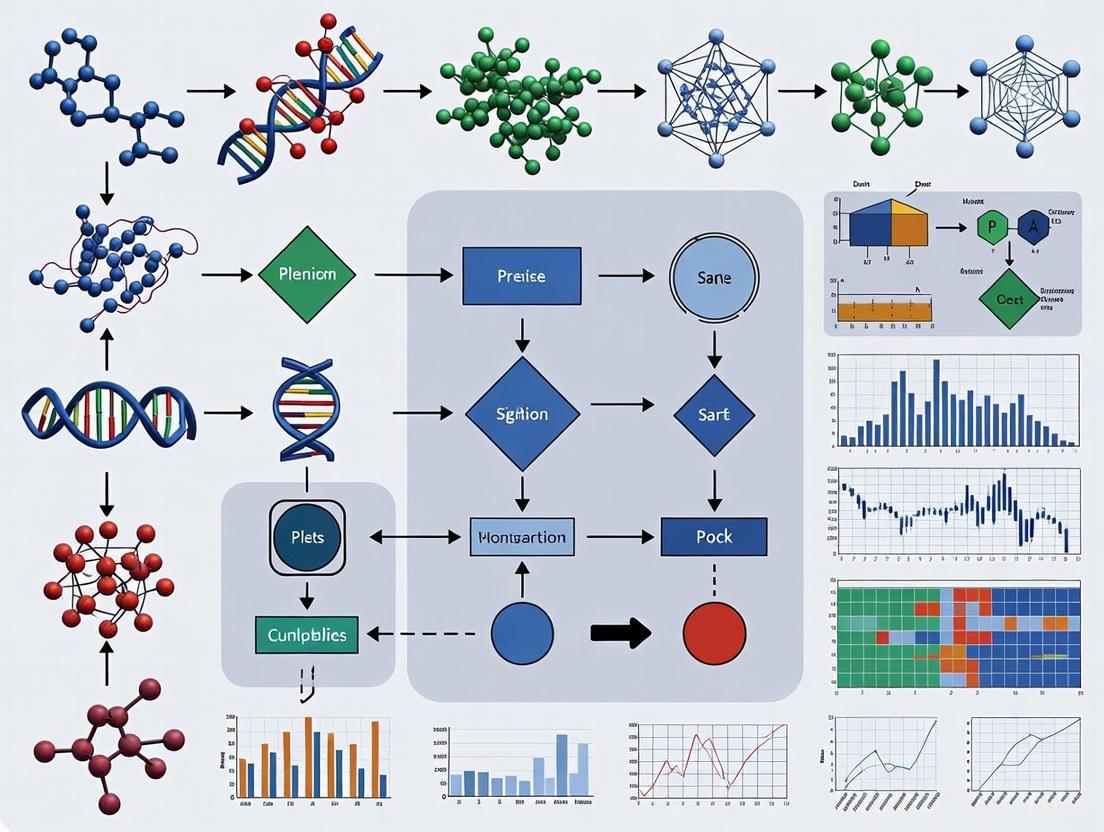
This article provides a comprehensive review of optimization algorithms powering modern computational systems biology.
Optimization Algorithms for Computational Systems Biology: From Model Tuning to Clinical Translation
Abstract
This article provides a comprehensive review of optimization algorithms powering modern computational systems biology. Tailored for researchers, scientists, and drug development professionals, it explores the foundational principles of global optimization—from deterministic and stochastic to nature-inspired heuristic methods. It details their critical applications in calibrating complex biological models, identifying biomarkers, and accelerating drug discovery through GPU-enhanced simulations. The scope extends to methodological advances in AI and quantum computing, practical strategies for overcoming convergence and scalability challenges, and rigorous frameworks for algorithm validation. By synthesizing current methodologies with emerging trends, this review serves as a strategic guide for selecting and implementing optimization techniques to solve pressing problems in biomedicine and therapeutic development.
The Core Principles: Why Optimization is Fundamental to Computational Systems Biology
Frequently Asked Questions
What is the difference between a model parameter and a variable?
In computational models, particularly those based on ordinary differential equations (ODEs), parameters are constants whose values define the model's behavior, such as kinetic rate constants, binding affinities, or scaling factors. Once estimated, these values are fixed. In contrast, variables are the model's internal states that change over time, such as the concentrations of molecules like proteins or metabolites. For example, in a signaling pathway model, the rate of phosphorylation would be a parameter, while the concentration of the phosphorylated protein over time would be a variable [1] [2].
My model fits the training data well but fails to predict new data. What is wrong?
This is a classic sign of overfitting or model non-identifiability. Non-identifiability means that multiple, different sets of parameter values can produce an equally good fit to your initial data, but these parameters may not represent the true underlying biology. To overcome this, you can:
- Reduce Model Complexity: Consider simplifying your model by reducing the number of unknown parameters.
- Collect Additional Data: Generate new experimental data under different conditions or measure additional variables to constrain the model further [1].
- Introduce Constraints: Use mathematical techniques, such as differential elimination, to derive algebraic constraints between parameters, which are then added to the objective function to guide the optimization toward biologically realistic solutions [3].
How do I choose an objective function for my parameter estimation problem?
The choice of objective function is critical and depends on your data and its normalization. Two common approaches are:
- Least-Squares (LS): Minimizes the sum of squared differences between measured and simulated data.
- Log-Likelihood (LL): Used when you have knowledge of the statistical distribution of your measurement noise [1]. A key decision is how to align your simulated data (e.g., in nanomolar concentrations) with your experimental data (often in arbitrary units). The table below compares two standard methods.
| Method | Description | Key Advantage | Key Disadvantage |
|---|---|---|---|
| Scaling Factor (SF) | Introduces unknown scaling factors that multiply simulations to match the data scale [1]. | Straightforward to implement. | Increases the number of unknown parameters, which can aggravate non-identifiability [1]. |
| Data-Driven Normalization of Simulations (DNS) | Normalizes simulated data in the exact same way as the experimental data (e.g., dividing by a control or maximum value) [1]. | Does not introduce new parameters, thus avoiding aggravated non-identifiability. Can significantly improve optimization speed [1]. | Requires custom implementation in the objective function, as it depends on the dynamic output of each simulation [1]. |
Which optimization algorithm should I use?
No single algorithm is best for all problems, but some perform well in biological applications. The following table summarizes the properties of several commonly used and effective algorithms.
| Algorithm | Type | Key Features | Best Suited For |
|---|---|---|---|
| LevMar SE | Deterministic (Gradient-based) | Uses sensitivity equations for efficient gradient calculation; often performs best in speed and accuracy comparisons [1]. | Problems with continuous parameters and objective functions [1] [2]. |
| GLSDC | Hybrid (Heuristic) | Combines a global genetic algorithm with a local Powell's method; effective for complex problems with local minima [1]. | Larger, more complex models where gradient-based methods get stuck [1]. |
| Genetic Algorithm (GA) | Heuristic | A population-based search inspired by natural selection; good for exploring large parameter spaces [2] [3]. | Problems with non-convex objective functions or when little is known about good initial parameter values [2]. |
| Particle Swarm Optimization (PSO) | Heuristic | Another population-based method that simulates social behavior [3]. | Similar applications to Genetic Algorithms. |
Troubleshooting Guides
Problem: Parameter estimation fails to converge or finds poor fits.
A failure to converge to a good solution can be caused by poorly scaled parameters, ill-defined boundaries, or a difficult error landscape.
- Symptoms:
- The optimization algorithm terminates without meeting convergence criteria.
- The final objective function value is unacceptably high.
- Small changes in initial parameter guesses lead to vastly different results.
- Solutions:
- Parameter Scaling: Ensure all parameters are scaled to have similar orders of magnitude (e.g., between 0.1 and 10). This helps the algorithm navigate the parameter space more efficiently.
- Check Bounds: Define realistic lower and upper bounds for all parameters based on biological knowledge. This drastically reduces the search space.
- Use Multi-Start: Run the optimization from many different, randomly chosen initial parameter sets (e.g., via Latin Hypercube sampling) to find the global minimum rather than a local one [1] [2].
- Switch Algorithms: If a gradient-based method like Levenberg-Marquardt fails, try a heuristic method like a Genetic Algorithm or GLSDC, which are better at escaping local minima [1] [2].
Problem: Model parameters are non-identifiable.
Non-identifiability means that different parameter combinations yield identical model outputs, making it impossible to find a unique solution.
- Symptoms:
- The algorithm finds many different parameter sets with nearly identical goodness-of-fit.
- Parameters have very large confidence intervals.
- Parameters show strong correlations with each other.
- Solutions:
- Apply DNS: Use Data-driven Normalization of Simulations instead of Scaling Factors to avoid introducing unnecessary unknown parameters [1].
- Add Constraints: Incorporate algebraic constraints derived via differential elimination. This technique rewrites your system of ODEs into an equivalent form, providing relationships between parameters and observables that must hold true. Adding these as penalty terms in your objective function can guide the optimization toward accurate, unique solutions [3].
- Reduce Model Complexity: Fix some parameters to literature values or simplify the model structure to reduce the number of free parameters [1].
- Design New Experiments: The most effective solution is often to collect additional data, such as time courses for currently unmeasured variables or data from new perturbation experiments [1].
Experimental Protocol: Parameter Estimation with DNS
This protocol outlines the steps for estimating parameters using the Data-driven Normalization of Simulations (DNS) approach, which has been shown to improve identifiability and convergence speed [1].
1. Problem Formulation
- Model Definition: Define your ODE model ( \frac{d}{dt}x = f(x,\theta) ), where ( x ) is the state vector and ( \theta ) is the parameter vector to be estimated.
- Observable Definition: Define the model outputs ( y = g(x) ) that correspond to your experimental measurements.
2. Data Preprocessing
- Normalize Experimental Data: Apply the same normalization used for your biological replicates to your experimental data ( \hat{y} ). For example, divide all data points by the value of the control condition or the maximum value in the time course to get ( \tilde{y} = \hat{y} / \hat{y}_{ref} ) [1].
3. Implement the Objective Function with DNS
- Simulate: For a given parameter set ( \theta ), run the ODE solver to get the simulated trajectories ( y(t, \theta) ).
- Apply DNS: Normalize the simulated output ( y(t, \theta) ) using the same reference as the data. For instance, ( y{normalized}(t, \theta) = y(t, \theta) / y{ref}(t, \theta) ). Note that ( y_{ref} ) is calculated from the simulation and depends on ( \theta ) [1].
- Calculate Error: Compute the sum of squared errors between the normalized experimental data ( \tilde{y} ) and the normalized simulation ( y_{normalized} ).
4. Optimization and Validation
- Execute Optimization: Use a selected optimization algorithm (see Table 2) to find the parameter set ( \theta^* ) that minimizes the error from the DNS objective function.
- Validate: Assess the fit on a validation dataset not used during estimation and perform identifiability analysis on the estimated parameters.
The Scientist's Toolkit: Research Reagent Solutions
| Item / Reagent | Function in the Context of Model Optimization |
|---|---|
| ODE Solver | Software component (e.g., in COPASI, MATLAB, or Python's SciPy) that numerically integrates the differential equations to simulate model trajectories for a given parameter set [1]. |
| Sensitivity Equations Solver | Computes how model outputs change with respect to parameters. This gradient information is used by algorithms like LevMar SE to efficiently navigate the parameter space [1]. |
| Differential Elimination Software | Algebraic tool (e.g., in Maple or Mathematica) used to rewrite a system of ODEs, revealing hidden parameter constraints that can be added to the objective function to improve estimation accuracy [3]. |
| Global Optimization Toolbox | A software library containing implementations of algorithms like Genetic Algorithms, Particle Swarm Optimization, and multi-start methods for robust parameter estimation [2] [3]. |
Troubleshooting Guide: Optimization Algorithms in Computational Systems Biology
Frequently Asked Questions
Q1: My optimization algorithm gets stuck in a suboptimal solution when modeling metabolic networks. How can I improve its exploration of the solution space?
A1: This is a classic symptom of an algorithm trapped by a local optimum in a multimodal landscape. In nonlinear problems, the solution space often contains multiple good solutions (modes), and standard algorithms can prematurely converge on one. To address this:
- Implement Niching or Speciation: Use algorithms like Niching Particle Swarm Optimization or a Knowledge-Driven Brain Storm Optimization (KBSOOS) that actively maintain multiple, diverse solution subpopulations. This prevents a single good solution from dominating the entire search process too early [4].
- Hybrid Global-Local Search: Adopt a coevolutionary mechanism that combines a global explorer (e.g., Monte Carlo Tree Search) with a local refiner (e.g., an Evolutionary Algorithm). This allows for broad exploration while still thoroughly investigating promising regions [5].
- Check Problem Formulation: The non-convex nature of your objective function or constraints may be creating a highly fragmented feasible region. Simplifying the model or using constraint relaxation strategies can sometimes make the landscape more navigable [5].
Q2: According to the 'No Free Lunch' Theorem, no single algorithm is best for all problems. How should I systematically select an algorithm for my specific biological model?
A2: The 'No Free Lunch' (NFL) theorem indeed states that when averaged over all possible problems, no algorithm outperforms any other [6] [7]. This makes algorithm selection a critical, knowledge-driven step.
- Exploit Prior Information: NFL tells us that improvement hinges on using prior information to match procedures to problems [6]. Analyze the known properties of your biological system. Does it have smooth, differentiable dynamics? Use gradient-based methods. Is it discrete and combinatorial? Consider evolutionary or swarm intelligence algorithms [8].
- Benchmark with Purpose: Don't just test algorithms at random. Select a small set of algorithms that are well-suited to the structure of your problem (e.g., nonlinear, constrained, high-dimension) and benchmark them on a simplified version of your model. The goal is to find the best tool for your specific class of problem, not for all problems [7].
- Consider a Meta-Learning Approach: To circumvent NFL, you can lift the problem to a meta-level. Develop a portfolio of algorithms and use a selector to choose the most appropriate one based on the features of the specific problem instance at hand [7].
Q3: How can I handle the high computational cost of optimizing non-convex, multi-modal models, which is common in systems biology?
A3: The computational complexity of Nonlinear Combinatorial Optimization Problems (NCOPs) is a fundamental hurdle [5]. Several strategies can help manage this:
- Knowledge-Driven Optimization: Move from "black-box" to "gray-box" optimization. Incorporate known biological constraints and domain knowledge directly into the algorithm to prune the search space and guide the search more efficiently, reducing wasteful function evaluations [4].
- Constraint Relaxation: For problems with complex constraints, temporarily relax them to create a simpler, surrogate problem. Find good solutions in this relaxed space and then refine them to satisfy the original constraints. This can be automated using structured reasoning with Large Language Models (LLMs) to generate relaxation strategies [5].
- Algorithm Tuning and Zero-Order Methods: If your model is a black box where gradients are unavailable or unreliable, focus on efficient zero-order routines (e.g., some evolutionary algorithms) that use only objective function values. Properly tuning their parameters (population size, mutation rates) can significantly enhance performance [8].
Experimental Protocol: Benchmarking Optimization Algorithms for a Multimodal Problem
This protocol provides a methodology for comparing the performance of different optimization algorithms on a benchmark multimodal function, simulating the challenge of finding multiple optimal solutions in a biological network.
1. Objective: To evaluate and compare the ability of different algorithms to locate multiple global and local optima in a single run.
2. Materials and Reagents (Computational):
- Software: Python 3.8+ with scientific libraries (NumPy, SciPy).
- Algorithms: Implementations of Niching Particle Swarm Optimization (PSO), Differential Evolution (DE), and a Knowledge-Driven Brain Storm Optimization (BSO) variant [4].
- Benchmark Function: The Two-Peak Trap Function [4]. This is a standard function used to test multimodal optimization capabilities.
3. Procedure: 1. Initialization: * For each algorithm, initialize a population of 50 candidate solutions uniformly distributed across the predefined search space. * Set a maximum function evaluation budget of 50,000 for all algorithms to ensure a fair comparison. 2. Execution: * Run each algorithm on the Two-Peak Trap Function. Ensure that the niching parameters (e.g., niche radius for PSO) are set according to literature standards for the chosen benchmark. * Each algorithm should be run for 50 independent trials with different random seeds to gather statistically significant results. 3. Data Collection: * At the end of each run, record all found solutions and their fitness values. * Calculate the following performance metrics for each run [4]: * Optima Ratio (OR): The proportion of all known optima that were successfully located. * Success Rate (SR): The percentage of independent runs in which all global optima were found. * Proposed Diversity Indicator: A measure of how well the found solutions are distributed across the different optima basins, providing a fuller picture than OR or SR alone [4].
4. Analysis: * Compile the results from all trials into a summary table. * Perform a statistical test (e.g., Wilcoxon rank-sum test) to determine if there are significant differences in the performance of the algorithms. * The algorithm with the highest average OR and Diversity Indicator, and a consistently high SR, can be considered the most effective for this type of multimodal problem.
Performance Metrics Table for Multimodal Optimization
The table below summarizes key metrics for evaluating algorithms on multimodal problems [4].
| Metric Name | Description | Interpretation |
|---|---|---|
| Optima Ratio (OR) | The proportion of all known optima that were successfully located. | Closer to 1.0 indicates a more successful search. |
| Success Rate (SR) | The percentage of independent runs in which all global optima were found. | Higher is better; indicates consistency. |
| Convergence Speed (CS) | The average number of function evaluations required to find all global optima. | Lower is better; indicates higher efficiency. |
| Diversity Indicator | A measure of the distribution of found solutions across different optima basins. | Higher values indicate better diversity maintenance. |
Essential Research Reagent Solutions
The following table lists key computational "reagents" and their roles in designing optimization experiments for computational systems biology.
| Reagent / Tool | Function / Purpose |
|---|---|
| Evolutionary Algorithm (EA) | A population-based metaheuristic inspired by natural selection, effective for global exploration of complex, non-convex solution spaces [5]. |
| Monte Carlo Tree Search (MCTS) | A method for systematic decision-making and strategy exploration, useful for guiding searches in combinatorial spaces [5]. |
| Brain Storm Optimization (BSO) | A swarm intelligence algorithm that uses clustering and idea-generation concepts to organize search and maintain diversity [4]. |
| Constraint Relaxation Strategy | A technique to temporarily simplify non-convex constraints, making the problem more tractable for initial optimization phases [5]. |
| Niching/Speciation Mechanism | A subroutine within an algorithm that forms and maintains subpopulations around different optima, crucial for solving multimodal problems [4]. |
Workflow Diagram: A Knowledge-Driven Optimization Framework
The diagram below illustrates a modern, knowledge-driven framework for tackling complex optimization problems in computational systems biology, which leverages insights to navigate the challenges posed by non-linearity and multi-modality [4] [5].
Frequently Asked Questions
1. What is the fundamental difference between deterministic and stochastic global optimization methods?
Deterministic methods provide theoretical guarantees of finding the global optimum by exploiting problem structure, and they will always produce the same result when run repeatedly on the same problem [9] [10]. In contrast, stochastic methods incorporate random processes, which means they can return different results on different runs; they do not guarantee a global optimum but often find a "good enough" solution in a feasible time [2] [9] [11].
2. My stochastic optimization algorithm returns a different "best" solution each time it runs. Is it broken?
No, this is expected behavior. Stochastic algorithms, like Genetic Algorithms or Particle Swarm Optimization, use random sampling to explore the solution space. This variability helps escape local optima [2] [11]. The solution is to run the algorithm multiple times and select the best solution from all runs, or to use a fixed random seed to make the results reproducible [11].
3. When should I choose a heuristic method over a deterministic one for my biological model?
Heuristic methods are particularly suitable when your problem has a large, complex search space, when the objective function is "black-box" (you cannot exploit its mathematical structure), or when you have limited computation time and a "good enough" solution is acceptable [12] [9]. Deterministic methods are best when the global optimum is strictly required and the problem structure (e.g., convexity) can be exploited, though they may become infeasible for very large or complex problems [12] [9].
4. What does it mean if my optimization algorithm finds many local optima with high variability?
Finding multiple local optima is common in non-convex problems, which are frequent in systems biology [12]. High variability in the solutions can indicate a "flat" objective function region or that the algorithm is effectively exploring the search space rather than converging prematurely [11]. If this variability is problematic, you might need to reformulate your objective function or consider a different optimization algorithm.
5. How can I decide which optimization algorithm is best for parameter estimation in my dynamic model?
The choice often depends on the model's characteristics and your goals. For deterministic models, multi-start least squares methods can be effective [2]. For models involving stochastic equations or simulations, Markov Chain Monte Carlo (MCMC) methods are a natural choice [2]. If some parameters are discrete or the problem is very complex, a heuristic method like a Genetic Algorithm may be most suitable [2] [12].
Troubleshooting Common Optimization Problems
| Problem Description | Possible Causes | Recommended Solutions |
|---|---|---|
| Algorithm converges to a poor local optimum | • Poor initial guess.• Inadequate exploration of search space.• Step size too small. | • Use a multi-start approach [2].• Employ a global optimization algorithm (e.g., GA, MCMC) [2] [12].• Adjust algorithm parameters (e.g., increase mutation rate in GA). |
| Optimization takes too long | • High-dimensional parameter space.• Costly objective function evaluation (e.g., simulating a large model).• Inefficient algorithm. | • Use a surrogate model (e.g., DNN) to approximate the objective function [13].• If possible, use a stochastic method for controllable time [9].• Reduce problem dimensionality if possible. |
| High variability in results (Stochastic Methods) | • Inherent randomness of the algorithm.• Insufficient number of algorithm runs. | • Use a fixed random seed for reproducibility [11].• Aggregate results from multiple independent runs. |
| Solution violates constraints | • Constraints not properly implemented.• Algorithm does not handle constraints well. | • Use penalty functions to incorporate constraints into the objective function.• Choose an algorithm designed for constrained optimization. |
Comparison of Global Optimization Methods
The table below summarizes the core characteristics of the three main global optimization strategies [2] [12] [9].
| Feature | Deterministic | Stochastic | Heuristic |
|---|---|---|---|
| Global Optimum Guarantee | Yes (theoretical) | Stochastic (guaranteed only with infinite time) | No guarantee |
| Problem Models | LP, IP, NLP, MINLP | Any model | Any model, especially complex black-box |
| Typical Execution Time | Can be very long | Controllable | Controllable |
| Handling of Discrete/Continuous Vars | Mixed (e.g., MINLP) | Continuous & Discrete [2] | Continuous & Discrete [2] |
| Example Algorithms | Branch-and-Bound, αBB [10] | Markov Chain Monte Carlo (MCMC) [2] | Genetic Algorithms (GA), Particle Swarm [2] [14] |
| Best for | Problems where global optimum is mandatory and problem structure is exploitable. | Finding a good solution in limited time for complex problems; models with stochasticity [2]. | Very complex, high-dimensional problems where a good-enough solution is acceptable [12] [13]. |
The Scientist's Toolkit: Key Reagent Solutions
| Item | Function in Computational Optimization |
|---|---|
| Multi-start Algorithm | A deterministic strategy to run a local optimizer from multiple initial points to find different local optima and increase the chance of finding the global one [2]. |
| Markov Chain Monte Carlo (MCMC) | A stochastic method particularly useful for fitting models that involve stochastic equations or for performing Bayesian inference [2]. |
| Genetic Algorithm (GA) | A nature-inspired heuristic that uses operations like selection, crossover, and mutation on a population of solutions to evolve toward an optimum [2] [12]. |
| Deep Neural Network (DNN) Surrogate | A deep learning model used to approximate a complex, expensive-to-evaluate objective function, drastically speeding up the optimization process [13]. |
| Convex Relaxation | A deterministic technique used to find a lower bound for the global optimum in non-convex problems by solving a related convex problem [10]. |
Methodological Workflows
The following diagrams illustrate the general workflows for the primary optimization strategies.
Deterministic Global Optimization Workflow
Stochastic/Heuristic Optimization Workflow
Technical Support & Troubleshooting Hub
This section provides targeted solutions for common challenges researchers face when implementing nature-inspired metaheuristic algorithms in computational systems biology.
Frequently Asked Questions (FAQs)
Q1: My Particle Swarm Optimization (PSO) algorithm converges to a local optimum prematurely when tuning parameters for my differential equation model of cell signaling. How can I improve its exploration?
- Problem: Premature convergence is often caused by a loss of population diversity.
- Solutions:
- Adjust Algorithm Parameters: Experiment with increasing the inertia weight or social/cognitive parameters to encourage broader exploration of the parameter space [15].
- Use a Variant: Switch to a more advanced algorithm like the Competitive Swarm Optimizer with Mutated Agents (CSO-MA). Its mutation step allows particles to explore more distant regions, helping the swarm escape local optima [15].
- Hybrid Approach: Combine PSO with a local search method. Let PSO identify a promising region, then use a deterministic method to fine-tune the solution [2].
Q2: For biomarker identification, I need an optimizer that handles both continuous (significance thresholds) and discrete (number of features) parameters. Which algorithm is suitable?
- Problem: Many standard optimization algorithms are designed for either continuous or discrete spaces, but not both.
- Solution: Genetic Algorithms (GAs) are well-suited for this. Their representation using chromosomes can be easily adapted to include both real-valued and integer-valued genes, making them ideal for mixed-parameter problems like feature selection [2].
Q3: The objective function for my model tuning is computationally expensive to evaluate (each call involves a stochastic simulation). How can I optimize efficiently?
- Problem: Running a full metaheuristic requires thousands of function evaluations, which is infeasible with slow, simulation-based objectives.
- Solutions:
- Surrogate Modeling: Replace the expensive simulation with a cheaper surrogate model (e.g., a Gaussian Process or neural network) that approximates the input-output relationship. The optimizer runs on the surrogate [2].
- Algorithm Selection: Consider using a method like Markov Chain Monte Carlo (MCMC), which, in implementations like random walk MCMC (rw-MCMC), can be effective for problems involving stochastic simulations and typically requires fewer evaluations per iteration than population-based methods [2].
Troubleshooting Guide: Common Algorithm Pitfalls
| Symptom | Potential Cause | Diagnostic Steps | Solution |
|---|---|---|---|
| Poor convergence or erratic performance | Incorrect algorithm hyperparameters (e.g., swarm size, mutation rate). | Run the algorithm on a simple benchmark function with known optimum. | Systematically tune hyperparameters. Refer to literature for recommended values [15]. |
| Results are not reproducible | Random number generator not seeded. | Run the same optimization twice and check for identical results. | Set a fixed seed at the start of your code to ensure reproducibility. |
| Algorithm is too slow | High-dimensional problem or expensive objective function. | Profile your code to identify bottlenecks. | Consider dimension reduction techniques for your data or use a surrogate model [2]. |
| Constraint violations in final solution | Ineffective constraint-handling method. | Check if the algorithm has a built-in mechanism for constraints (e.g., penalty functions). | Implement a robust constraint-handling technique, such as a dynamic penalty function or a feasibility-preserving mechanism. |
Experimental Protocols & Workflows
This section provides detailed methodologies for key experiments cited in the field.
Protocol 1: Model Parameter Tuning using Competitive Swarm Optimizer with Mutated Agents (CSO-MA)
Application: Estimating unknown parameters (e.g., rate constants) in a systems biology model (e.g., a predator-prey model or a cell cycle model) to fit experimental time-series data [15] [2].
Detailed Methodology:
Problem Formulation:
- Objective Function: Define a cost function, typically a sum of squared errors (SSE), that quantifies the difference between your model's output and the experimental data.
- Parameter Space: Define the lower and upper bounds (
lbandub) for each parameter to be estimated.
Algorithm Initialization:
- Swarm Size: Generate an initial swarm of
nparticles (e.g.,n = 100). Each particle's position is a random vector within the defined parameter bounds. - Velocities: Initialize particle velocities to zero or small random values.
- Swarm Size: Generate an initial swarm of
CSO-MA Iteration:
- Pairing and Competition: Randomly partition the swarm into pairs. In each pair, compare the objective function values. The particle with the better (lower) value is the winner, the other is the loser.
- Loser Update: The loser updates its velocity and position by learning from the winner and the swarm center [15].
v_j^{t+1} = R1 * v_j^t + R2 * (x_i^t - x_j^t) + φ * R3 * (x̄^t - x_j^t)x_j^{t+1} = x_j^t + v_j^{t+1}- where
R1, R2, R3are random vectors,φis the social factor, andx̄^tis the swarm center.
- Mutation: Randomly select a loser particle and a variable (parameter) within it. Mutate that parameter by setting it to either its minimum or maximum bound. This step enhances diversity [15].
Termination: Repeat Step 3 until a stopping criterion is met (e.g., a maximum number of iterations or convergence tolerance is achieved).
Protocol 2: Biomarker Identification using Genetic Algorithms (GAs)
Application: Selecting an optimal, small subset of features (genes, proteins) from high-dimensional omics data to classify samples (e.g., healthy vs. diseased) [2].
Detailed Methodology:
Problem Formulation:
- Objective Function: Typically a combination of classification accuracy (e.g., from a SVM or random forest classifier) and a penalty for the number of features selected (to promote parsimony).
- Representation: Encode a potential solution (a subset of features) as a binary chromosome. Each gene in the chromosome is a
1(feature included) or0(feature excluded).
Algorithm Initialization: Create an initial population of
Nrandom binary chromosomes.GA Iteration:
- Evaluation: Compute the fitness (objective function value) for each chromosome in the population.
- Selection: Select parent chromosomes for reproduction, with a probability proportional to their fitness (e.g., using roulette wheel or tournament selection).
- Crossover: Recombine pairs of parents to produce offspring. For binary chromosomes, single-point or uniform crossover is common.
- Mutation: Randomly flip bits (
0to1or vice versa) in the offspring with a small probability.
Termination: Repeat the iteration until convergence or a maximum number of generations is reached. The best chromosome in the final population represents the selected biomarker.
The Scientist's Toolkit: Research Reagent Solutions
This table details essential computational tools and their functions for implementing nature-inspired metaheuristics in computational systems biology.
| Tool / Resource | Function / Application | Key Characteristics |
|---|---|---|
| CSO-MA (Matlab/Python) | Swarm-based algorithm for continuous parameter optimization (e.g., model tuning). | Superior performance on high-dimensional problems; mutation step prevents premature convergence [15]. |
| Genetic Algorithm (GA) | Evolutionary algorithm for mixed-integer optimization (e.g., biomarker identification). | Handles continuous and discrete parameters; uses selection, crossover, and mutation [2]. |
| PySwarms (Python) | A comprehensive toolkit for Particle Swarm Optimization (PSO). | User-friendly; includes various PSO variants and visualization tools [15]. |
| Random Walk MCMC | Stochastic technique for optimization, especially with stochastic models. | Suitable when objective function involves stochastic simulations; supports non-continuous functions [2]. |
| Multi-start nlLSQ | Deterministic approach for non-linear least squares problems (e.g., data fitting). | Efficient for continuous, convex problems; can be trapped in local optima for complex landscapes [2]. |
Performance Data & Benchmarking
Table 1: Comparative Performance of Metaheuristics on Benchmark Functions [15]
| Algorithm | Average Error (Function f₉) | Average Error (Function f₁₀) | Average Error (Function f₁₁) | Key Strength |
|---|---|---|---|---|
| CSO-MA | 3.2e-12 | 5.8e-08 | 2.1e-09 | Excellent global exploration and convergence accuracy. |
| Standard PSO | 7.5e-09 | 2.3e-05 | 4.7e-07 | Good balance of speed and accuracy. |
| Basic CSO | 5.1e-11 | 1.1e-06 | 8.9e-08 | Robust performance on separable functions. |
Table 2: Algorithm Suitability for Systems Biology Tasks [2]
| Task | Recommended Algorithm(s) | Reason |
|---|---|---|
| Model Tuning (Deterministic ODEs) | CSO-MA, Multi-start nlLSQ | Handles continuous parameters; efficient for non-linear cost functions. |
| Model Tuning (Stochastic Sims) | rw-MCMC, GA | Effective for noisy, simulation-based objective functions. |
| Biomarker Identification | Genetic Algorithm (GA) | Naturally handles discrete (feature count) and continuous (thresholds) parameters. |
| High-Dimensional Problems | CSO-MA, PSO | Swarm-based algorithms scale well with problem dimension [15]. |
Frequently Asked Questions
What are the most suitable global optimization methods for parameter estimation in dynamic biological models? For estimating parameters in dynamic biological models like systems of differential equations, Multi-Start Non-Linear Least Squares (ms-nlLSQ) is widely used when dealing with deterministic models and continuous parameters [2]. For models involving stochasticity, Random Walk Markov Chain Monte Carlo (rw-MCMC) methods are more appropriate as they can handle non-continuous objective functions and complex probability landscapes [2]. When facing problems with mixed parameter types (continuous and discrete) or highly complex, non-convex search spaces, Genetic Algorithms (GAs) provide robust heuristic approaches inspired by natural evolution [2] [12].
How do I choose between deterministic, stochastic, and heuristic optimization approaches for my systems biology problem? Your choice depends on the problem characteristics and parameter types. Deterministic methods like ms-nlLSQ are suitable only for continuous parameters and objective functions, offering faster convergence but requiring differentiable functions [2]. Stochastic methods like rw-MCMC support both continuous and non-continuous objective functions, making them ideal for stochastic models and when you need global optimization guarantees [2]. Heuristic methods like GAs are most flexible, supporting both continuous and discrete parameters, and excel in complex, multimodal landscapes though they don't always guarantee global optimality [2] [12].
Why do many optimization methods in computational systems biology perform poorly on my large-scale models? Many biological optimization problems belong to the class of NP-hard problems where obtaining guaranteed global optima becomes computationally infeasible as model size increases [12]. This is particularly true for problems like identifying gene knockout strategies in genome-scale metabolic models, which have combinatorial complexity [12]. Solutions include using approximate stochastic global optimization methods that find near-optimal solutions efficiently, or developing hybrid methods that combine global and local techniques [12].
What principles from biological systems have inspired computational optimization algorithms? Evolutionary principles of selection, recombination, and mutation have inspired Genetic Algorithms that evolve solution populations toward optimality [2]. The stochastic behavior of molecular systems has informed Markov Chain Monte Carlo methods that explore solution spaces probabilistically [2]. Additionally, the robustness and redundancy observed in biological networks have inspired optimization approaches that maintain diversity and avoid premature convergence to suboptimal solutions [16].
Troubleshooting Guides
Problem: Optimization Algorithm Converging to Poor Local Solutions
Symptoms: Your parameter estimation consistently returns biologically implausible values, or small changes to initial conditions yield dramatically different results.
Diagnosis: You are likely dealing with a multimodal, non-convex objective function with multiple local minima, which is common in biological systems due to their inherent complexity and redundancy [2] [16].
Solutions:
- Implement multi-start strategies: Run local optimizers from multiple randomly chosen starting points to better explore the parameter space [2].
- Switch to global optimization methods: Use stochastic methods like rw-MCMC or heuristic methods like Genetic Algorithms that are designed to escape local minima [2].
- Reformulate your objective function: Sometimes, the problem can be reformulated as a convex optimization problem, which guarantees finding the global solution [12].
Verification: A well-tuned optimizer should produce consistent results across multiple runs with different random seeds, and the resulting parameters should generate model behaviors that qualitatively match experimental observations.
Problem: Unacceptable Computational Time for Large-Scale Models
Symptoms: Optimization runs take days or weeks to complete, making research progress impractical.
Diagnosis: You may be facing the curse of dimensionality with too many parameters, or your objective function evaluations (e.g., model simulations) may be computationally expensive.
Solutions:
- Employ efficient global optimization (EGO) methods: These methods build surrogate models of the objective function to reduce the number of expensive function evaluations [12].
- Utilize parallel computing: Many optimization algorithms, particularly population-based methods like Genetic Algorithms, can be parallelized to distribute function evaluations across multiple processors [17].
- Simplify your model: Identify and remove negligible reactions or parameters through sensitivity analysis before optimization.
- Use hybrid methods: Combine fast global explorers with efficient local refiners to balance exploration and exploitation [12].
Verification: Monitor optimization progress over time; effective optimizers should show significant improvement in initial iterations with diminishing returns later.
Problem: Handling Stochastic Models and Noisy Data
Symptoms: Optimization results vary dramatically between runs despite identical settings, making conclusions unreliable.
Diagnosis: Your model may have inherent stochasticity (e.g., biochemical reactions with low copy numbers) or your experimental data may have significant measurement noise [12].
Solutions:
- Use specialized stochastic optimization methods: Methods like rw-MCMC are specifically designed for problems where the objective function involves stochastic simulations or noisy evaluations [2].
- Implement appropriate averaging: For stochastic models, run multiple simulations at each parameter point and optimize based on average behavior.
- Apply robust optimization techniques: These methods explicitly account for uncertainty in parameters and measurements [17].
- Utilize optimal experimental design: Plan experiments to maximize information gain while minimizing noise impact [12].
Verification: For stochastic problems, focus on statistical properties of solutions rather than single runs, and use techniques like cross-validation to assess generalizability.
Optimization Methods Comparison
Table 1: Comparison of Global Optimization Methods in Computational Systems Biology
| Method | Parameter Types | Objective Function | Convergence | Best For |
|---|---|---|---|---|
| Multi-Start Non-Linear Least Squares (ms-nlLSQ) | Continuous only | Continuous | Local minimum | Deterministic models, continuous parameters [2] |
| Random Walk Markov Chain Monte Carlo (rw-MCMC) | Continuous | Continuous & non-continuous | Global minimum (under specific hypotheses) | Stochastic models, probabilistic inference [2] |
| Genetic Algorithms (GAs) | Continuous & discrete | Continuous & non-continuous | Global minimum for discrete problems | Complex multimodal landscapes, mixed parameter types [2] |
Table 2: Algorithm Selection Guide Based on Problem Characteristics
| Problem Feature | Recommended Methods | Key Considerations |
|---|---|---|
| Model Type | Deterministic: ms-nlLSQ; Stochastic: rw-MCMC, GAs | Stochastic models require methods robust to noise [2] [12] |
| Parameter Types | Continuous: ms-nlLSQ, rw-MCMC; Mixed: GAs | Discrete parameters exclude pure continuous methods [2] |
| Scale | Small: ms-nlLSQ; Large: GAs with hybridization | NP-hard problems require approximate methods for large scales [12] |
| Computational Budget | Limited: ms-nlLSQ; Extensive: GAs, rw-MCMC | Stochastic and heuristic methods typically need more function evaluations [2] |
Experimental Protocols
Protocol 1: Parameter Estimation Using Multi-Start Least Squares
Purpose: Estimate unknown parameters in deterministic biological models to reproduce experimental time series data.
Materials:
- Experimental time course data
- Mathematical model (system of ODEs or PDEs)
- Computational implementation of model equations
- Optimization software (MATLAB, Python SciPy, R optim)
Procedure:
- Formulate objective function: Define sum of squared differences between model simulations and experimental data.
- Set parameter bounds: Define biologically plausible lower and upper bounds for all parameters.
- Generate starting points: Create multiple (typically 100-1000) randomly sampled parameter vectors within bounds.
- Run local optimizations: From each starting point, perform local least-squares optimization.
- Cluster solutions: Group similar solutions to identify distinct local minima.
- Select best solution: Choose parameter set with lowest objective function value.
- Validate results: Test optimized parameters with withheld experimental data.
Troubleshooting Notes: If solutions cluster into many distinct groups, your model may be unidentifiable - consider simplifying the model or collecting additional data [2].
Protocol 2: Biomarker Identification Using Genetic Algorithms
Purpose: Identify minimal sets of features (genes, proteins) that optimally classify biological samples.
Materials:
- Omics dataset (genomic, proteomic, metabolomic) with sample classes
- Computing environment with GA implementation (Python DEAP, R GA, MATLAB Global Optimization Toolbox)
Procedure:
- Encode solutions: Represent biomarker sets as binary strings (1=feature included, 0=excluded).
- Define fitness function: Combine classification accuracy (e.g., SVM or random forest) with penalty for large feature sets.
- Initialize population: Create random population of candidate biomarker sets.
- Evaluate fitness: Assess classification performance of each candidate set using cross-validation.
- Apply genetic operators:
- Selection: Preferentially retain high-fitness solutions
- Crossover: Combine parts of parent solutions to create offspring
- Mutation: Randomly flip bits to maintain diversity
- Iterate: Repeat evaluation and genetic operations for generations until convergence.
- Validate final set: Test best biomarker set on independent validation dataset.
Troubleshooting Notes: If algorithm converges too quickly, increase mutation rate or population size to maintain diversity [2].
The Scientist's Toolkit
Table 3: Essential Research Reagents for Optimization in Computational Systems Biology
| Research Reagent | Function | Examples/Alternatives |
|---|---|---|
| Global Optimization Algorithms | Navigate complex, multimodal parameter spaces to find optimal solutions | Multi-start methods, Genetic Algorithms, MCMC [2] |
| Model Tuning Software | Estimate unknown parameters to fit models to experimental data | Nonlinear least-squares, maximum likelihood estimation [2] |
| Biomarker Identification Tools | Select optimal feature subsets for sample classification | Wrapper methods with evolutionary computation [2] |
| Metabolic Flux Analysis | Determine optimal flux distributions in metabolic networks | Flux Balance Analysis (FBA), constraint-based modeling [12] |
| Optimal Experimental Design | Plan experiments to maximize information gain | Fisher information maximization, parameter uncertainty reduction [12] |
Workflow Visualization
Optimization Workflow in Systems Biology
Biological Inspiration for Computational Algorithms
From Theory to Practice: Algorithmic Strategies and Their Biomedical Applications
Multi-start Non-Linear Least Squares (ms-nlLSQ) for Deterministic Model Tuning
Computational systems biology aims to gain mechanistic insights into biological phenomena through dynamical representations of biological systems. A fundamental task in this field is model tuning, which involves estimating unknown parameters in models, such as rate constants in systems of differential equations, to accurately reproduce experimental time-series data [2]. This problem is frequently formulated as a nonlinear least-squares (NLS) optimization problem, where the goal is to minimize the sum of squared differences between experimental observations and model predictions [2] [18].
Standard NLS solvers, such as the Gauss-Newton or Levenberg-Marquardt algorithms, are local optimization methods that iteratively improve an initial parameter guess. However, these methods possess a significant limitation: they can converge to local minima rather than the global optimum, and their success is highly dependent on the quality of the initial parameter values [2] [19]. This is particularly problematic in systems biology, where model parameters are often correlated and objective functions can be non-convex with multiple local solutions [2] [19].
The Multi-start Non-Linear Least Squares (ms-nlLSQ) approach directly addresses this challenge. It works by launching a local NLS solver, such as a Gauss-Newton method, from multiple different starting points within the parameter space [2]. The solutions from all these starts are collected and ranked by their goodness-of-fit (e.g., the lowest residual sum of squares), and the best solution is selected. This strategy significantly increases the probability of locating the global minimum rather than being trapped in a suboptimal local minimum [20].
Key Concepts and Mathematical Formulation
The Nonlinear Least-Squares Problem
In the context of model tuning, the NLS problem is typically formulated as follows [18]:
Let ( Yi ) represent the (i)-th observed data point, and ( f(\mathbf{x}i, \boldsymbol{\theta}) ) be the model prediction for the inputs ( \mathbf{x}i ) and parameter vector ( \boldsymbol{\theta} = (\theta1, \ldots, \thetap) ). The objective is to find the parameter values ( \hat{\boldsymbol{\theta}} ) that minimize the sum of squared residuals: [ \min{\boldsymbol{\theta}} S(\boldsymbol{\theta}) = \sum{i=1}^{n} \big[Yi - f(\mathbf{x}i, \boldsymbol{\theta})\big]^2 ] The vector form of the objective function for the solver is: [ \min{\boldsymbol{\theta}} \|\mathbf{f}(\boldsymbol{\theta})\|2^2 ] where ( \mathbf{f}(\boldsymbol{\theta}) ) is a vector-valued function whose components are the residuals ( fi(\boldsymbol{\theta}) = Yi - f(\mathbf{x}i, \boldsymbol{\theta}) ) [21]. It is crucial to provide the solver with this vector of residuals, not the scalar sum of their squares [21].
The Multi-Start Strategy
A "start" or "initial point" refers to a single initial guess for the parameter vector ( \boldsymbol{\theta}^{(0)} ) from which a local NLS solver begins its iterative process [20]. The fundamental idea behind ms-nlLSQ is that by initiating searches from a diverse set of points spread throughout the parameter space, the algorithm can explore different "basins of attraction" [22]. The best solution from all the local searches is chosen as the final estimate for the global minimum.
Implementation and Software Tools
The following diagram illustrates the complete ms-nlLSQ workflow, from problem definition to solution validation.
Software Implementations in R and MATLAB
Various software packages provide implementations of the ms-nlLSQ approach. The table below summarizes key tools available in R and MATLAB environments.
Table 1: Software Implementations of ms-nlLSQ
| Software Environment | Package/Function | Key Features | Local Solver Used |
|---|---|---|---|
| R | nls_multstart (from nls.multstart package) |
Uses AIC scores with Levenberg-Marquardt algorithm; multiple starting values [23] [24]. | Levenberg-Marquardt (via minpack.lm) [24] |
| R | nls2 |
Performs brute-force, grid-search, or random-search for multiple trials [23]. | Base R nls() [23] |
| R | gsl_nls (from gslnls package) |
Modified multistart procedure; can dynamically update parameter ranges; interfaces with GSL library [22]. | GSL Levenberg-Marquardt [22] [25] |
| MATLAB | MultiStart with lsqnonlin |
Creates multiple start points automatically; can plot best function value during iteration [20]. | lsqnonlin [20] |
The Scientist's Toolkit: Essential Research Reagents
Table 2: Key Software Tools for ms-nlLSQ Implementation
| Tool Name | Environment | Primary Function | Typical Use Case in Systems Biology |
|---|---|---|---|
| nls.multstart | R | Automated multiple starting value selection for NLS | Fitting pharmacokinetic models (e.g., Hill function) to metabolite data [24] |
| gslnls | R | Robust NLS solving with advanced trust-region methods | Handling difficult problems like Hobbs' weed infestation model [22] [25] |
| MultiStart | MATLAB | Global optimization wrapper for local solvers | Fitting multi-parameter models to biological data with multiple local minima [20] |
| lsqnonlin | MATLAB | Local NLS solver with bound constraints | Core solver for parameter estimation in differential equation models [21] |
| minpack.lm | R | Levenberg-Marquardt implementation | Provides the underlying solver for nls.multstart [24] |
Frequently Asked Questions (FAQs)
Q1: Why does my standard NLS fitting sometimes fail to converge or produce unrealistic parameters?
This is a common issue when the objective function has multiple local minima or when parameters are highly correlated [19]. Standard NLS solvers are local optimizers that converge to the nearest minimum from the starting point. If your initial guess is in the basin of attraction of a local minimum, the solver cannot escape. Furthermore, in models with correlated parameters, the error surface can contain long, narrow "valleys" where the solver may experience parameter evaporation (parameters diverging to infinity) [22] [25]. The ms-nlLSQ approach mitigates this by systematically exploring the parameter space from multiple starting locations.
Q2: How many starting points should I use in my ms-nlLSQ analysis?
There is no universal answer, as the required number depends on the complexity of your model and the ruggedness of the objective function [19]. As a general guideline, start with at least 50-100 well-spread starting points for models with 3-5 parameters [20]. For more complex models, you may need hundreds or thousands of starts. The goal is to sufficiently cover the parameter space so that the same best solution is found repeatedly from different initial points. Some implementations, like gsl_nls, can dynamically update parameter ranges during the multistart process, which can improve efficiency [22].
Q3: What is the difference between ms-nlLSQ and stochastic methods like Genetic Algorithms?
Ms-nlLSQ is a deterministic approach that uses traditional local NLS solvers from multiple starting points [2]. In contrast, Genetic Algorithms (GAs) and other metaheuristics are stochastic and mimic principles of biological evolution like mutation and selection [19]. While GAs are less likely to be trapped in local minima, they can have difficulty precisely resolving the absolute minimum due to their stochastic nature and typically require many more function evaluations [19]. Ms-nlLSQ often provides a good balance between global exploration and precise local convergence, especially when paired with robust local solvers like Levenberg-Marquardt.
Q4: My ms-nlLSQ runs are yielding different "best" solutions. What does this indicate?
If different runs with the same settings produce different "best" solutions, this suggests that your objective function may have multiple distinct local minima with similar goodness-of-fit values [19]. This can occur when:
- Your data is insufficient to uniquely identify all parameters (identifiability issues).
- Parameters are highly correlated.
- The model is overly complex for the available data.
You should investigate the different solutions to see if they produce similar model predictions despite different parameter values. If so, you may need to simplify the model, collect more informative data, or use regularization techniques. Profiling the likelihood surface can help assess parameter identifiability [23].
Q5: How can I generate effective starting points for the multistart process?
Several strategies exist for generating starting points:
- Uniform random sampling within plausible parameter bounds.
- Latin Hypercube sampling for better space-filling properties.
- Grid search over a defined range (feasible only for low-dimensional problems).
- Using solutions from simplified models as starting points for more complex models.
- Leveraging
selfStartmodels in R, which contain initialization functions to automatically compute reasonable starting values from the data [22].
Many modern ms-nlLSQ implementations, such as nls_multstart and gsl_nls, can automatically generate and manage starting points for you [24] [22].
Troubleshooting Common Experimental Issues
Problem: Solver Failures Due to Parameter Evaporation
Symptoms: The optimization fails with errors like "singular gradient" or parameters running away to extremely large values [22] [25].
Solutions:
- Implement parameter bounds: Constrain parameters to physiologically or mathematically plausible ranges using
lbandubarguments inlsqnonlinor thelowerandupperarguments in R functions [21] [24]. - Use a more robust algorithm: Switch from Gauss-Newton to Levenberg-Marquardt, which combines gradient descent and Gauss-Newton directions for better stability [22] [25].
- Reparameterize the model: Transform parameters to a different scale (e.g., use log-scale for parameters that span several orders of magnitude) to improve conditioning [24].
- Try a different solver: The GSL solvers in the
gslnlspackage offer advanced trust-region methods with geodesic acceleration that can handle difficult problems [25].
Problem: Excessive Computation Time
Symptoms: The ms-nlLSQ analysis takes impractically long to complete.
Solutions:
- Reduce the number of starts: Begin with a smaller set of starts (e.g., 50) to get an initial solution, then increase if necessary.
- Use parallel processing: Many ms-nlLSQ implementations support parallel computation. For example, MATLAB's
MultiStartcan useparforloops, and R packages likenls.multstartcan leverage parallel backends [20]. - Simplify the model: Consider whether all parameters are necessary, or if some can be fixed based on prior knowledge.
- Improve initial guesses: Use exploratory data analysis or simplified models to inform better starting points, reducing the number of iterations needed.
Problem: Poor Fit Despite Multiple Starts
Symptoms: Even the best solution from ms-nlLSQ shows significant systematic deviations from the data.
Solutions:
- Re-evaluate the model structure: The model itself might be inadequate to describe the biological system. Consider alternative mechanistic formulations.
- Check for data quality issues: Identify and potentially remove outliers that might be distorting the fit.
- Increase parameter bounds: Your global minimum might lie outside the currently searched parameter space.
- Consider weighted least squares: If measurement errors are heteroscedastic, implement weights to prevent high-variance data points from disproportionately influencing the fit [23].
Advanced Applications in Computational Systems Biology
Relationship to Other Optimization Methodologies
Ms-nlLSQ represents one of three main optimization strategies successfully applied in computational systems biology, alongside stochastic methods like Markov Chain Monte Carlo (MCMC) and heuristic nature-inspired methods like Genetic Algorithms (GAs) [2]. The following diagram illustrates how these methodologies relate within the optimization landscape for biological applications.
Case Study: Pharmacokinetic Modeling in Drug Development
In pharmacokinetic modeling, such as estimating parameters for the Hill function or extended Tofts model, ms-nlLSQ has proven particularly valuable [24] [26]. These models often contain parameters that are difficult to identify from data alone and may have correlated parameters that create multiple local minima in the objective function. For example, when fitting parent fraction data from PET pharmacokinetic studies, using nls.multstart with the Hill function provides more reliable parameter estimates than single-start methods, leading to more accurate predictions of drug metabolism and distribution [24].
The ms-nlLSQ approach is especially crucial when moving from individual curve fitting to population modeling, where consistency in finding global minima across multiple subjects is essential for valid statistical inference and biological interpretation.
Markov Chain Monte Carlo (rw-MCMC) for Stochastic Model Calibration
Frequently Asked Questions (FAQs)
General MCMC Concepts
What is MCMC and why is it used for calibrating stochastic models in systems biology?
Markov Chain Monte Carlo (MCMC) is a class of algorithms used to draw samples from probability distributions that are difficult to characterize analytically. In the context of stochastic model calibration in computational systems biology, MCMC is particularly valuable because it allows researchers to estimate posterior distributions of model parameters without knowing all the distribution's mathematical properties. MCMC works by creating a Markov chain of parameter samples, where each new sample depends only on the previous one, and whose equilibrium distribution matches the target posterior distribution. This is especially useful for Bayesian inference with complex biological models, where posterior distributions are often intractable via direct analytical methods. The "Monte Carlo" aspect refers to the use of random sampling to estimate properties of the distribution, while "Markov Chain" indicates the sequential sampling process where each sample serves as a stepping stone to the next [27] [28].
When should I use Random Walk MCMC (rw-MCMC) versus other optimization methods?
rw-MCMC is particularly suited for problems where the objective function is non-convex, involves stochastic equations or simulations, or when you need to characterize the full posterior distribution rather than just find a point estimate. It supports both continuous and non-continuous objective functions. In contrast, multi-start non-linear least squares methods (ms-nlLSQ) are more appropriate when both model parameters and the objective function are continuous, while Genetic Algorithms are better suited for problems involving discrete parameters or when dealing with complex, multi-modal parameter spaces. The choice depends on your specific problem characteristics, including parameter types, model structure, and whether you need full distributional information or just optimal parameter values [2].
Implementation Questions
How do I set the target acceptance rate for my RW sampler?
The target acceptance rate is a crucial parameter for controlling the efficiency of Random Walk MCMC. While the optimal acceptance rate can vary depending on the specific problem and dimension of the parameter space, a common default target is 0.44 for certain implementations. However, you may want to experiment with different values, such as 0.234, to examine the effect on estimation results. In some software frameworks, this may require creating a custom sampler if the target rate is hard-coded in the standard implementation [29].
When should I use log-scale sampling versus reflective sampling in RW-MCMC?
Use log=TRUE when your parameter domain is strictly positive (such as variance or standard deviation parameters) and has non-trivial posterior density near zero. This transformation expands the unit interval [0,1] to the entire space of negative reals, effectively removing the lower boundary and often improving sampling efficiency. Use reflective=TRUE when your parameter domain is bounded on an interval (such as probabilities bounded in [0,1]) with non-trivial posterior density near the boundaries. This makes proposals "reflect" off boundaries rather than proposing invalid values outside the parameter space [29].
Troubleshooting Guides
Diagnosing MCMC Convergence Issues
Problem: Poor mixing or convergence as indicated by low Effective Sample Size (ESS)
Diagnosis:
- ESS values below 200 (shown in red in tools like Tracer) indicate insufficient independent samples [30]
- Trace plots show high autocorrelation with a "blocky" or "skyline" appearance [30]
- Parameter values change slowly and inefficiently explore the posterior distribution
Solutions:
- Increase number of generations: Run MCMC for more iterations [30]
- Adjust proposal distribution: Tune the scale of random perturbations in the RW algorithm
- Modify adaptFactorExponent: Values closer to 0.5 make adaptation attenuate slowly, while values closer to 1 (like 0.8) make it stabilize quickly [29]
- Reparameterize model: Transform parameters to improve geometry of posterior distribution
- Use block sampling: Sample correlated parameters jointly rather than individually [31]
Problem: MCMC chain fails to reach stationarity
Diagnosis:
- Trace shows clear directional trend rather than random fluctuation around a mean [30]
- Starting values appear unreasonable relative to the stabilized distribution
- Different chains started from different points fail to converge to same distribution
Solutions:
- Adjust starting values: Choose initial values more plausible under the posterior
- Extend burn-in period: Discard more initial samples before assessing convergence
- Check prior specifications: Ensure priors are not unduly influencing or constraining posterior
- Verify model identifiability: Check that parameters are structurally identifiable from the data [32]
Addressing Performance and Efficiency Problems
Problem: Slow computation or excessive memory usage
Diagnosis:
- MCMC runs take impractically long time for reasonable number of iterations
- Memory constraints limit chain length or number of parameters
- Proposals are frequently rejected, wasting computational effort
Solutions:
- Optimize likelihood calculations: Profile code to identify computational bottlenecks
- Use adaptive MCMC: Implement algorithms that tune proposal distributions during sampling
- Reduce model complexity: Simplify model structure where scientifically justified
- Parallelize chains: Run multiple chains simultaneously rather than one long chain
- Implement thinning: Save only every k-th sample to reduce storage requirements
Problem: Biased sampling or inaccurate posterior approximation
Diagnosis:
- Posterior summaries change substantially with different random seeds
- Important regions of parameter space are poorly explored
- Multi-modal distributions are inadequately sampled
Solutions:
- Multiple chains: Run several independent chains from dispersed starting values
- Specialized samplers: Use algorithms designed for multi-modal distributions
- Parameter transformations: Improve geometry of parameter space for more efficient exploration
- Diagnostic checks: Compare posterior predictions with empirical data [32]
Research Reagent Solutions
Table: Essential Computational Tools for rw-MCMC Implementation
| Tool/Category | Function | Example Applications/Options |
|---|---|---|
| Sampling Algorithms | Generate parameter samples from posterior distribution | Random Walk Metropolis, Metropolis-Hastings, Hamiltonian Monte Carlo [28] |
| Diagnostic Software | Assess convergence and sampling quality | Tracer (for ESS, trace plots), R/coda package [30] |
| Proposal Distributions | Generate new parameter proposals in RW chain | Normal distribution, Multivariate Normal for block sampling [27] |
| Transformation Methods | Improve sampling efficiency through reparameterization | Log-transform for positive parameters, Logit for bounded parameters [29] |
| Adaptive Mechanisms | Automatically tune sampler parameters during runtime | Adaptive RW with scaling based on acceptance rate [29] |
MCMC Diagnostic Workflow
Table: Interpretation of Key MCMC Diagnostics
| Diagnostic | Target Value | Interpretation | Remedial Actions |
|---|---|---|---|
| Effective Sample Size (ESS) | >200 per parameter [30] | Measures independent samples; low ESS indicates high autocorrelation | Increase iterations, improve parameterization, use block sampling |
| Acceptance Rate | 0.234-0.44 for RW [29] | Balance between exploration and exploitation; too high/low reduces efficiency | Scale proposal distribution, adjust adaptation parameters |
| Gelman-Rubin Diagnostic (R-hat) | <1.05 | Compares between-chain vs within-chain variance; high values indicate non-convergence | Run longer chains, improve starting values, check model identifiability |
| Trace Plot Inspection | Stationary, well-mixed [30] | Visual assessment of convergence and exploration | Various based on specific pattern observed |
| Autocorrelation Plot | Rapid decay to zero | Measures dependence between successive samples; slow decay indicates poor mixing | Increase thinning interval, improve proposal mechanism |
Advanced Configuration Guide
How to customize RW samplers for specific parameter types:
For strictly positive parameters (e.g., rate constants):
- Use
log=TRUEto sample on log scale - Prevents invalid proposals and improves efficiency near boundary [29]
- Use
For bounded parameters (e.g., probabilities between 0 and 1):
- Use
reflective=TRUEto handle boundaries - Proposals "reflect" off boundaries rather than being rejected [29]
- Use
For correlated parameters:
- Use block sampling instead of univariate sampling [31]
- Implement multivariate proposal distributions
- Significantly improves mixing for correlated parameters
Example implementation code structure for customized RW sampler:
While specific code depends on your software environment (e.g., NIMBLE, Stan, PyMC), the general approach for creating a custom RW sampler with modified target acceptance rate involves:
- Copying the existing RW sampler code
- Modifying the target acceptance rate parameter (e.g., from 0.44 to 0.234)
- Registering the custom sampler with your MCMC framework
- Assigning the custom sampler to relevant parameters [29]
Integrating rw-MCMC with profile likelihood methods:
For models with many parameters, consider combining rw-MCMC with profile likelihood approaches:
- Use MCMC for full posterior exploration
- Employ profile likelihood for practical identifiability analysis [32]
- This hybrid approach provides both Bayesian and frequentist perspectives on parameter uncertainty
Genetic Algorithms (GA) and Evolutionary Strategies for Biomarker Identification
Frequently Asked Questions (FAQs)
FAQ 1: What are the main advantages of using Genetic Algorithms for biomarker selection compared to traditional statistical methods?
Genetic Algorithms (GAs) offer several key advantages for identifying biomarkers from high-dimensional biological data. They are particularly effective for problems where the number of features (e.g., genes, proteins) vastly exceeds the number of samples (the "p >> n" problem), a common scenario in omics studies [33]. Unlike univariate statistical methods that assess features individually, GAs can identify multivariate biomarker panels—combinations of features that together have superior predictive power [34]. As heuristic global optimization methods, GAs are less likely to become trapped in local optima compared to some local search algorithms, enabling a more effective exploration of the vast solution space of possible biomarker combinations [2].
FAQ 2: My GA for biomarker selection is converging too quickly and yielding suboptimal panels. How can I improve its performance?
Premature convergence is often a sign of insufficient population diversity or high selection pressure. You can address this by:
- Adjusting Genetic Operator Rates: Increase the probability of mutation to introduce more diversity and prevent the dominance of a single solution early in the process [2].
- Using Hybrid Approaches: A highly effective strategy is to use a filter method first to reduce the feature space. For instance, combine the minimal Redundancy Maximum Relevance (mRMR) ensemble to select a top subset of genes, and then use a GA to refine the selection. This mRMRe-GA hybrid has been shown to enhance classification accuracy while using fewer genes [35].
- Reviewing Fitness Function: Ensure your fitness function (or objective function) accurately reflects the clinical or biological goal, such as maximizing classification accuracy while penalizing overly complex models [2].
FAQ 3: How can I handle the computational complexity of GAs when working with large-scale genomic datasets?
The computational cost of GAs is a recognized challenge, especially with large datasets [12]. Mitigation strategies include:
- Dimensionality Reduction: As in the mRMRe-GA approach, first use a fast filter method to select a manageable subset of a few hundred top candidate features before applying the GA [35].
- Parallelization: GAs are inherently parallelizable. You can distribute the evaluation of individual chromosomes or entire populations across multiple processors or high-performance computing (HPC) nodes to significantly reduce computation time [36].
- Efficient Fitness Evaluation: Optimize the code for your fitness function, as this is the most computationally intensive part of the algorithm. Using efficient classifiers like Support Vector Machines (SVM) within the fitness evaluation can also help [35].
FAQ 4: What are the best practices for validating a biomarker panel discovered using a GA?
Validation is essential to ensure that a biomarker is robust and fit-for-purpose [34]. The process must be rigorous and independent.
- Phased Validation: Follow a phased approach. After discovery in your initial training set, validate the panel's performance on a separate, held-out test set from the same study [37].
- External Validation: The most critical step is external validation, which tests the biomarker panel on a completely independent patient cohort and potentially different laboratories to assess generalizability [37].
- Analytical Validation: Ensure the biomarker can be reliably detected using the intended clinical platform (e.g., PCR-based assays) [37].
- Benchmarking: Compare the performance of your GA-derived panel against biomarkers identified by traditional methods and established clinical variables to demonstrate added value [33].
Troubleshooting Guides
Problem 1: Poor Classification Performance of the Selected Biomarker Panel
Possible Causes and Solutions:
- Cause: Data Quality and Preprocessing Issues. Raw biomedical data is often noisy and affected by technical biases. If these are not corrected, the GA may optimize for technical artifacts rather than biological signal [33].
- Solution: Implement a rigorous data preprocessing pipeline. This should include data type-specific quality control (e.g., using
arrayQualityMetricsfor microarray data), normalization, transformation, and filtering of uninformative features (e.g., those with near-zero variance) [33].
- Solution: Implement a rigorous data preprocessing pipeline. This should include data type-specific quality control (e.g., using
- Cause: Inadequate Fitness Function. The objective function used to drive the GA may be misaligned with the end goal.
- Cause: Overfitting to the Training Data. The algorithm may have memorized noise in the training data rather than learning generalizable patterns.
- Solution: Use internal validation techniques like cross-validation (e.g., Leave-One-Out Cross-Validation - LOOCV) within the GA workflow to evaluate the generalizability of candidate solutions [35]. Additionally, employ regularized machine learning models (e.g.,
glmnet) as the classifier within the GA to reduce overfitting [34].
- Solution: Use internal validation techniques like cross-validation (e.g., Leave-One-Out Cross-Validation - LOOCV) within the GA workflow to evaluate the generalizability of candidate solutions [35]. Additionally, employ regularized machine learning models (e.g.,
Problem 2: Inconsistent Results Between Algorithm Runs
Possible Causes and Solutions:
- Cause: Stochastic Nature of GAs. Different random number seeds can lead to different final biomarker panels.
- Solution: Run the GA multiple times with different random seeds and analyze the stability of the results. Features that consistently appear in the top-performing panels across multiple runs are more likely to be robust biomarkers [2].
- Cause: Poorly Tuned Algorithm Parameters. The performance of a GA is sensitive to parameters like population size, crossover rate, and mutation rate.
- Solution: Perform a parameter sweep or use automated hyperparameter tuning to find a robust configuration for your specific dataset. The table below summarizes key parameters and their effects.
Table 1: Key Genetic Algorithm Parameters for Biomarker Identification
| Parameter | Description | Typical Role/Effect | Tuning Advice |
|---|---|---|---|
| Population Size | Number of candidate solutions in each generation. | Larger populations increase diversity but also computational cost. | Start with a size of 100-500 and adjust based on problem complexity [2]. |
| Crossover Rate | Probability of performing crossover (recombination) between two parent solutions. | Drives exploration by combining building blocks from good solutions. | Typically set high (e.g., 0.7-0.9) [2]. |
| Mutation Rate | Probability of randomly altering a gene in a solution. | Introduces new genetic material, maintains diversity, and prevents premature convergence. | Use a low rate (e.g., 0.01-0.1); increase if convergence is too quick [2]. |
| Selection Method | How individuals are chosen to be parents (e.g., tournament selection). | Determines selection pressure; higher pressure can lead to faster convergence. | Tournament selection is a common and effective choice [2]. |
| Fitness Function | The objective function evaluating the quality of a solution. | Directs the entire search process. | Must be carefully designed to reflect the goal of finding a small, accurate biomarker panel [2]. |
Problem 3: Integrating Heterogeneous Data Types (e.g., Clinical and Omics Data)
Possible Causes and Solutions:
- Cause: Lack of a Defined Integration Strategy. Simply concatenating different data types may not be effective.
- Solution: Choose a deliberate data integration strategy. The three main paradigms are:
- Early Integration: Combining data at the feature level before learning.
- Intermediate Integration: Building a model that joins data sources during learning (e.g., multimodal neural networks).
- Late Integration: Training separate models on each data type and then combining their predictions [33].
- Furthermore, to assess the added value of omics data, use traditional clinical data as a baseline and perform comparative evaluations to see if the omics-based predictor offers significant improvement [33].
- Solution: Choose a deliberate data integration strategy. The three main paradigms are:
Experimental Protocols & Workflows
Detailed Methodology: The mRMRe-GA Hybrid Approach
This protocol outlines the hybrid two-stage gene selection method that has been successfully applied for cancer classification [35].
1. Stage One: Feature Space Reduction using mRMRe
- Objective: To select a subset of top-m informative genes from the entire genome-wide dataset.
- Procedure: a. Apply the minimal Redundancy Maximum Relevance (mRMRe) ensemble method. b. The algorithm ranks genes based on their mutual information with the class label (relevance) while penalizing genes that are highly correlated with each other (redundancy). c. From the ranked list, select the top m genes (e.g., a few hundred) for the second stage. This step drastically reduces the dimensionality of the problem for the GA.
2. Stage Two: Heuristic Optimization using Genetic Algorithm
- Objective: To find the optimal set of genes from the mRMRe-selected subset.
- Procedure: a. Representation: Encode a potential biomarker panel as a binary chromosome. Each gene is represented by a bit (1 for selected, 0 for not selected). b. Initialization: Create an initial population of random chromosomes. c. Fitness Evaluation: Evaluate each chromosome using a fitness function. A common approach is: * Use the selected genes to train a classifier (e.g., Support Vector Machine - SVM). * Evaluate the classifier's performance using Leave-One-Out Cross-Validation (LOOCV). * The fitness score can be a combination of classification accuracy and a penalty for model size (number of selected genes). d. Genetic Operations: * Selection: Select parent chromosomes for mating based on their fitness (e.g., using tournament selection). * Crossover: Recombine pairs of parents to produce offspring, exchanging subsets of genes. * Mutation: Randomly flip bits in the offspring's chromosome with a low probability to maintain diversity. e. Termination: Repeat steps c-d for multiple generations until a stopping criterion is met (e.g., a fixed number of generations or convergence of the fitness score).
The following diagram illustrates the logical workflow of this hybrid mRMRe-GA method:
General Workflow for GA-based Biomarker Discovery
This diagram provides a higher-level overview of the core GA cycle for biomarker identification, showing the iterative process of generating and evaluating solutions.
The Scientist's Toolkit: Research Reagent Solutions
Table 2: Essential Computational Tools and Datasets for GA-driven Biomarker Discovery
| Tool/Resource Type | Specific Examples | Function in Biomarker Discovery |
|---|---|---|
| Optimization & GA Libraries | libRCGA (C library), MATLAB Global Optimization Toolbox, DEAP (Python) | Provide implemented GA frameworks with configurable operators (selection, crossover, mutation) to accelerate development [36]. |
| Machine Learning Classifiers | Support Vector Machine (SVM), Random Forest, XGBoost, glmnet | Used within the GA's fitness function to evaluate the predictive power of a candidate biomarker panel [35] [34]. |
| Feature Selection Filters | minimum Redundancy Maximum Relevance (mRMR/mRMRe), correlation-based filters | Pre-process data to reduce dimensionality before applying the GA, improving efficiency and performance [35]. |
| Data Preprocessing Packages | fastQC/FQC (NGS), arrayQualityMetrics (microarrays), Normalyzer (proteomics/metabolomics) |
Perform crucial quality control, normalization, and transformation of raw omics data to ensure data quality [33]. |
| Benchmark Datasets | Public microarray/genomics repositories (e.g., NCBI GEO, TCGA) | Provide standardized, well-annotated datasets for developing and benchmarking new algorithms [35] [37]. |
GPU-Accelerated Optimization for High-Throughput Virtual Screening and Molecular Docking
Core Concepts and Workflow Optimization
Frequently Asked Questions
What are the primary performance bottlenecks in GPU-accelerated virtual screening? The primary bottlenecks include data transfer between host and device memory, inefficient utilization of GPU parallel computing resources, and memory bandwidth limitations. In molecular docking, the conformational sampling and energy evaluation steps typically consume the most computational resources. Performance analysis of tools like MedusaDock shows that the coarse docking phase alone constitutes nearly 70% of total running time in typical use-cases, making it a critical optimization target [38].
How does GPU acceleration specifically improve virtual screening throughput? GPU acceleration provides massive parallelism that can process millions of compounds per day on a single GPU. Modern platforms like UniDock-Pro achieve this by capitalizing on inter-ligand (batch) parallelism, where multiple docking calculations are performed simultaneously across thousands of GPU cores. This approach represents a 2.45-fold improvement in early enrichment (EF₁%) over legacy CPU-based tools like AutoDock-SS on standard benchmarks [39].
Can existing CPU-based docking software be easily ported to GPUs? Porting CPU-based docking software to GPUs requires significant algorithmic redesign, not just code translation. Effective GPU implementations need to address fine-grained parallelism, optimize memory access patterns, and minimize data transfer between CPU and GPU. Successful cases like the GPU-accelerated MedusaDock demonstrate that this often involves developing GPU-friendly search algorithms that simultaneously address high memory use and sequential dependence hurdles [38].
What are the trade-offs between accuracy and speed in GPU-accelerated docking? There is typically a trade-off between computational speed and prediction accuracy. However, modern implementations like RosettaVS address this by offering multiple operational modes: Virtual Screening Express (VSX) for rapid initial screening and Virtual Screening High-precision (VSH) for final ranking of top hits. The VSH mode includes full receptor flexibility but requires more computation time [40].
Performance Metrics and Comparison
Table 1: Performance Metrics of GPU-Accelerated Docking Platforms
| Platform/Software | Throughput (Compounds/Day) | Speedup vs CPU | Key Optimization | Supported Screening Types |
|---|---|---|---|---|
| UniDock-Pro [39] | Millions (single GPU) | ~2.45x (enrichment) | Batch parallelism, hybrid scoring | Structure-based, ligand-based, hybrid |
| GPU-MedusaDock [38] | High (3875 complex benchmark) | Significant (end-to-end) | Multi-level parallelism, memory optimization | Flexible docking, side chain & backbone flexibility |
| OpenVS (RosettaVS) [40] | Billion-scale libraries | Days vs months | Active learning, express/high-precision modes | Structure-based with receptor flexibility |
| Schrödinger AL-Glide [41] | Billion-scale libraries | ML-guided docking | Active learning, FEP+ rescoring | Ultra-large library screening |
Table 2: Troubleshooting GPU Performance Issues
| Problem | Possible Causes | Diagnostic Methods | Solutions |
|---|---|---|---|
| Low frame rate in remote visualization [42] | Insufficient server, network, or client resources | Monitor RemoteFX Graphics counters: Output Frames/Second vs Input Frames/Second | Reduce sessions per host, increase resources, lower resolution |
| Random stalls during calculation | Memory bandwidth saturation, synchronization issues | Profile memory access patterns, check kernel execution times | Optimize memory access, reduce global memory calls, use shared memory |
| High input latency | Data transfer bottlenecks, inefficient kernel launches | Measure host-device transfer times, analyze kernel occupancy | Batch data transfers, use pinned memory, optimize block/grid sizes |
| Poor frame quality [42] | Compression artifacts, resource limitations | Check Frame Quality counter in RemoteFX Graphics | Increase bandwidth, adjust compression settings, allocate more GPU memory |
Experimental Protocols and Methodologies
GPU-Accelerated Docking Workflow Implementation
Figure 1: GPU-accelerated molecular docking workflow, highlighting the distribution of computational tasks between CPU and GPU components.
Implementation Protocol: GPU-Accelerated Flexible Docking
Objective: Implement high-throughput flexible molecular docking using GPU acceleration for virtual screening applications.
Materials and Equipment:
- GPU computing node (NVIDIA Tesla series or equivalent with ≥16GB memory)
- CPU host system with adequate RAM for data pre/post-processing
- GPU-accelerated docking software (UniDock-Pro, GPU-MedusaDock, or OpenVS)
- Protein and ligand structure files in PDB format
Procedure:
System Preparation
- Prepare protein structure file: Remove water molecules, add hydrogen atoms, and assign partial charges
- Prepare ligand library: Generate 3D conformations, optimize geometry, and format for batch processing
- Define search space: Establish docking grid dimensions centered on binding site
GPU Memory Optimization
- Pre-allocate device memory for protein structure, force field parameters, and scoring grids
- Batch transfer ligand structures to GPU memory to minimize host-device transfers
- Implement memory pooling for frequently accessed data structures
Parallel Conformational Sampling
- Execute parallel sampling algorithm (e.g., Monte Carlo, genetic algorithm) on GPU
- Utilize thread-level parallelism for independent ligand conformations
- Implement warp-level parallelism for simultaneous energy evaluations
Scoring Function Evaluation
- Calculate interaction energies using parallel thread blocks
- Utilize shared memory for frequently accessed force field parameters
- Implement reduction operations for total energy summation across atom pairs
Result Processing
- Transfer top-scoring poses back to host memory
- Cluster similar conformations using RMSD-based algorithms
- Generate output files with binding poses and affinity predictions
Troubleshooting Notes:
- If experiencing low GPU utilization, check batch size and increase the number of simultaneous docking calculations
- For memory allocation errors, reduce grid dimensions or implement memory streaming for large ligand libraries
- If convergence issues occur in sampling, adjust algorithm parameters or implement hybrid CPU-GPU sampling strategies
Technical Troubleshooting Guide
Performance Optimization FAQs
Why is my GPU utilization low during docking calculations? Low GPU utilization often results from insufficient parallelization, memory bandwidth limitations, or host-device synchronization points. To address this: (1) Increase batch sizes to ensure adequate parallel workloads; (2) Utilize shared memory to reduce global memory access; (3) Minimize synchronous operations that force GPU to wait for CPU. The GPU-accelerated MedusaDock implementation demonstrates that exploiting parallelism at multiple granularities is essential for high utilization [38].
How can I diagnose and resolve memory-related errors in GPU docking? Memory errors typically manifest as allocation failures or out-of-bounds access. Diagnostic approaches include: (1) Using GPU memory profilers to track allocation patterns; (2) Implementing memory usage monitoring within application code; (3) Checking for memory leaks in iterative docking procedures. Resolution strategies include reducing grid sizes, implementing data streaming for large libraries, and using memory pooling for frequently allocated structures [38].
What optimization techniques improve energy calculation performance? Energy calculation performance can be enhanced through: (1) Pre-computation of interaction grids for static receptor atoms; (2) Using lookup tables for complex mathematical functions; (3) Implementing efficient reduction algorithms for force summation; (4) Utilizing GPU tensor cores for matrix operations where applicable. The UniDock-Pro platform shows that optimizing the scoring function implementation can yield significant performance gains [39].
How do I handle multi-GPU scaling for ultra-large library screening? Effective multi-GPU scaling requires: (1) Efficient workload distribution algorithms that minimize inter-GPU communication; (2) Asynchronous execution across devices; (3) Careful memory management to avoid PCIe bus saturation. The OpenVS platform demonstrates successful multi-GPU implementation through task-level parallelism where different ligand batches are processed on different GPUs with minimal synchronization [40].
Advanced Configuration Guide
Table 3: GPU Kernel Optimization Parameters
| Parameter | Typical Value Range | Performance Impact | Quality Trade-off |
|---|---|---|---|
| Threads per block | 128-512 | Higher values improve utilization but reduce occupancy | None |
| Ligand batch size | 100-1000 compounds | Larger batches improve throughput but increase memory use | Minimal |
| Conformations per ligand | 100-1000 | More conformations improve pose accuracy | Direct quality impact |
| Grid resolution | 0.5-1.0 Å | Finer resolution improves accuracy | Significant computation cost |
| Memory shared per block | 16-48KB | More shared memory reduces global access | Limited by hardware |
Research Reagent Solutions
Table 4: Essential Software Tools for GPU-Accelerated Virtual Screening
| Tool/Platform | Primary Function | GPU Acceleration | Application Context |
|---|---|---|---|
| UniDock-Pro [39] | Unified SBVS, LBVS, and hybrid screening | Full GPU acceleration | High-throughput screening of million-compound libraries |
| RosettaVS (OpenVS) [40] | Structure-based virtual screening | CPU-GPU hybrid with active learning | Ultra-large library screening with receptor flexibility |
| Schrödinger GLIDE [41] | Molecular docking and virtual screening | GPU-accelerated with ML guidance | Industrial-scale drug discovery campaigns |
| MedusaDock GPU [38] | Flexible protein-ligand docking | Multi-GPU acceleration | Detailed binding mode prediction with side chain flexibility |
| CUDA-Q [43] | Quantum-classical hybrid algorithms | GPU-accelerated quantum simulation | Research on quantum-enhanced docking algorithms |
| RNAmigos2 [44] | RNA-targeted virtual screening | Deep graph learning on GPUs | RNA-targeted drug discovery |
Figure 2: Systematic troubleshooting approach for identifying and resolving performance bottlenecks in GPU-accelerated docking workflows.
Advanced Computational Methodologies
Machine Learning-Enhanced Workflows
How does active learning improve screening of ultra-large libraries? Active learning creates an iterative feedback loop where machine learning models predict which compounds are most promising for full docking calculations. Schrödinger's AL-Glide demonstrates this approach: initially, a subset of compounds is docked, then ML models trained on these results prioritize subsequent compounds for docking, dramatically reducing computational costs while maintaining screening quality [41]. This strategy enables screening of billion-compound libraries that would be prohibitive with brute-force docking.
What role do hybrid quantum-classical algorithms play in docking? Emerging approaches like DC-QAOA (Digitized-Counterdiabatic Quantum Approximate Optimization Algorithm) formulate molecular docking as combinatorial optimization problems that can be partially accelerated on quantum processors. These methods map docking to maximum weighted clique problems in binding interaction graphs, with quantum circuits optimizing the solution [43]. While still experimental, they represent cutting-edge approaches that may complement GPU acceleration for specific docking challenges.
Multi-Target Screening Optimization
How can I optimize screening campaigns for multiple protein targets? Multi-target screening benefits from: (1) Batch processing of related targets with similar binding sites; (2) Shared precomputation of common force field terms; (3) Dynamic workload balancing based on target complexity. The UniDock-Pro platform demonstrates that unified scoring functions and batch processing across targets can significantly improve throughput for multi-target campaigns [39].
What strategies help maintain accuracy when maximizing throughput? The most effective strategy implements a hierarchical screening approach: (1) Ultra-fast initial filtering using machine learning or simplified scoring; (2) Intermediate precision docking for top candidates; (3) High-accuracy refinement with flexible binding sites for final selections. RosettaVS implements this through VSX (express) and VSH (high-precision) modes, optimizing the trade-off between speed and accuracy [40].
Frequently Asked Questions (FAQs)
FAQ 1: What are the most common non-human readable data formats in systems biology, and which AI tools can interpret them?
Systems biology frequently uses specialized data formats designed for data storage and analysis rather than human readability [45]. The table below summarizes key formats and the public AI tools that can help interpret them.
| Data Format | Full Name & Primary Use | AI Tools with Demonstrated Capability |
|---|---|---|
| SBML | Systems Biology Markup Language; exchanging biochemical network models [45]. | ChatGPT, Perplexity, Phind [45] |
| BioPAX | Biological Pathway Exchange; pathway data sharing and network analysis [45]. | ChatGPT, Perplexity [45] |
| SBGN | Systems Biology Graphical Notation; visual representation of biological pathways [45]. | Perplexity, Phind [45] |
| BNGL | BioNetGen Language; specifying rule-based models [45]. | ChatGPT, Perplexity, MetaAI, HyperWrite [45] |
| NeuroML | A model description language for defining neuronal cell and network models [45]. | Phind, ChatGPT [45] |
| CellML | For storing and exchanging mathematical models, often used with Physiome software [45]. | Information missing from search results |
FAQ 2: I have a model file in SBGN format. Can a public AI tool explain the biological process it describes?
Yes. When provided with an SBGN file snippet, AI tools like Perplexity and Phind can identify key elements like compartments, complexes, and reactions, offering a concise synopsis of the biological process. For instance, when given an SBGN model, these tools successfully described the significance of EGFR dimer formation [45]. This allows non-specialists to gain a general understanding of the model without prior knowledge of the SBGN format [45].
FAQ 3: Why did my AI tool provide an incorrect explanation for a BNGL file?
The BioNetGen Language (BNGL) is often highly concise and may lack detailed annotations, with biological information contained in abbreviated species names [45]. This limited context can cause some AI tools to make incorrect assumptions or stray off-topic [45]. For example, when analyzing a BNGL file, one AI tool incorrectly referenced a "feedback loop and SOS protein interactions" that were not present in the model [45]. For BNGL, ChatGPT, Perplexity, MetaAI, and HyperWrite have shown more reliable performance in correctly identifying species and their interactions [45].
FAQ 4: Are there limitations when using free versions of public AI tools for systems biology?
Free versions of public AI tools often have usage limitations. These can include truncating long content, limiting the number of file attachments, or restricting the number of queries per day via a token system [45]. To maximize free tiers, break larger files into smaller chunks for analysis [45]. Tools like ChatGPT and MetaAI allow a higher number of queries in anonymous mode, while others prompt for registration after a few questions [45].
FAQ 5: How reliable are the references provided by AI tools when explaining a systems biology model?
The accuracy and consistency of references provided by AI tools can be unreliable [45]. It is common for generated citations to have little or no relevance to the specific inquiry [45]. Therefore, you should always independently verify any references or factual claims provided by an AI when using it for research purposes [45].
Troubleshooting Guides
Problem 1: AI Tool Fails to Recognize or Misinterprets a Data Format
Issue: The AI tool does not understand the provided systems biology data format (e.g., SBML, NeuroML) or produces a generic or completely incorrect interpretation.
Solution:
- Step 1: Verify Format Integrity: Ensure the snippet or file you are providing is well-formed and contains characteristic elements of the format (e.g., specific XML namespaces for SBML/NeuroML).
- Step 2: Provide Contextual Prompts: Instead of just pasting the code, frame your prompt with context. Example: "I am providing a code snippet in the NeuroML format, which describes a neuron's morphology. Please interpret the biological components described in this code: [Paste your code here]".
- Step 3: Chunk Large Files: If the file is large, break it into smaller, logical segments and ask the AI to analyze each part separately.
- Step 4: Cross-Check with Another Tool: If one AI tool (e.g., Phind) gives a questionable answer, try the same prompt with another (e.g., ChatGPT or Perplexity) to compare responses and identify a consensus [45].
Problem 2: AI Tool Hallucinates Biological Information
Issue: The AI tool invents details, pathways, or components not present in the provided model, a common problem with sparsely annotated formats like BNGL [45].
Solution:
- Step 1: Instruct the AI to Be Speculative: Use prompts that force the AI to qualify its statements. Example: "Based only on the species and reaction rules defined in the following BNGL model, what biological process might this represent? Please note any assumptions you are making."
- Step 2: Request Direct Mapping: Ask the AI to explicitly map its explanation back to the code. Example: "For each biological entity you mention, please quote the exact variable or line in the code that supports your claim."
- Step 3: Consult Authoritative Databases: Use the AI's interpretation as a starting point for a search in specialized databases like Reactome or KEGG to verify the proposed biological mechanism [45].
Problem 3: Handling Conflicting or Varying AI Responses
Issue: Different AI tools, or even the same tool on different attempts, generate varying explanations for the same model file.
Solution:
- Step 1: Embrace Critical Thinking: Treat the variations not as a failure, but as a source of multiple hypotheses that require further investigation [45].
- Step 2: Perform a Comparative Analysis: Structure your inquiry as a comparative study. Prompt: "I received two different interpretations for this SBGN model. Compare the following two explanations and identify points of agreement and disagreement: [Explanation A] [Explanation B]".
- Step 3: Seek Ground Truth: Where possible, use a dedicated software tool (e.g., VCell, COPASI) to simulate or visualize the model to validate the AI's claims [45].
Experimental Protocols
Protocol 1: Benchmarking AI Tools for Systems Biology Format Interpretation
Objective: To systematically evaluate and compare the performance of various public AI tools in interpreting and explaining different systems biology data formats.
Methodology:
- Selection of Test Models: Curate a set of standard model files from public repositories like BioModels or Reactome [45]. The set should include examples of key formats: SBML, BioPAX, SBGN, BNGL, and NeuroML.
- Tool Selection: Select a panel of freely accessible AI tools (e.g., ChatGPT, Perplexity, Phind, MetaAI, HuggingChat, HyperWrite) [45].
- Standardized Prompting: For each model file and AI tool, use a standardized prompt template: "You are a systems biology expert. Analyze the following [Format Name] code and describe the biological system, its key components, and their interactions in simple terms: [Paste Model Snippet]".
- Response Evaluation: Analyze the AI responses for:
- Accuracy: Correct identification of biological entities and processes.
- Completeness: Coverage of key model elements.
- Presence of Hallucinations: Inclusion of incorrect or unsupported information.
- Clarity: Readability for a non-expert audience.
Protocol 2: AI-Assisted Workflow for Model Comprehension
Objective: To establish a reliable workflow for using AI to gain a preliminary understanding of an unfamiliar systems biology model.
Methodology:
- Format Identification: First, ask an AI tool to identify the data format of an unknown model file. Prompt: "Identify the data format of the following code and state its primary use in systems biology: [Paste Code Snippet]".
- Initial Summary: Request a high-level summary of the model's biological content. Prompt: "Provide a concise, one-paragraph summary of the biological process described in this [Identified Format] model."
- Component Listing: Ask the AI to list all major components (e.g., species, proteins, reactions, compartments). Prompt: "List all the key biological components (e.g., molecules, genes, proteins) mentioned in this model."
- Interaction Mapping: Request a description of how the key components interact. Prompt: "Describe the key interactions or reactions between the components you listed."
- Visualization Suggestion: Ask the AI to suggest the type of diagram that would best represent this model (e.g., process diagram, entity relationship diagram). This output can be used to help create a formal visualization.
Research Reagent Solutions
The following table details key digital "reagents" – software tools, databases, and formats – essential for research in this field.
| Item Name | Type | Function in Research |
|---|---|---|
| COMBINE Standards | Data Formats | A set of coordinated community standards (SBML, SBGN, BioPAX, etc.) for representing computational models in biology, ensuring interoperability between tools [45]. |
| VCell, COPASI | Modeling & Simulation Software | Software tools that use COMBINE standards to create, simulate, and analyze mathematical models of biological systems [45]. |
| BioModels Database | Model Repository | A curated database of published, peer-reviewed computational models stored in SBML and other standard formats, used for testing and benchmarking [45]. |
| Reactome, KEGG | Pathway Database | Databases of biological pathways that allow downloads in standard formats (SBML, BioPAX), providing real-world models for AI interpretation tests [45]. |
| Public AI Tools (ChatGPT, Perplexity, etc.) | AI Interpreter | Tools to parse, interpret, and summarize complex, non-human readable systems biology formats into plain language, accelerating understanding for non-experts [45]. |
Diagrams
AI-Assisted Systems Biology Workflow
AI Format Interpretation Benchmarking
Quantum Computing Technical Support
Frequently Asked Questions (FAQ)
Q1: Our quantum simulations of molecular structures are yielding inconsistent results. What could be the cause? Inconsistent results in quantum molecular simulations often stem from qubit decoherence and environmental noise. Qubits are highly susceptible to interference from factors like radiation and temperature fluctuations, causing them to lose their quantum state [46]. Furthermore, if the quantum algorithm is not properly calibrated for the specific biological molecule's complexity, the outputs can vary significantly between runs.
Q2: Which quantum algorithms are best suited for problems in genetics and drug design? For applications in genetics and drug design, quantum machine learning (QML) and quantum-enhanced optimization algorithms show strong potential. QML can improve the accuracy and efficiency of models used for tasks like molecular simulation and drug screening. Quantum algorithms, in general, can handle the immense complexity of molecular interactions and genetic data far more efficiently than classical computers for specific problem classes [46].
Q3: What are the primary hardware limitations when applying quantum computing to biological simulations? The main hardware limitations include the need for extreme environmental control, such as cryogenic cooling to maintain qubit stability, and the challenge of precise qubit control. Current hardware also faces limitations in the number of reliable qubits, which restricts the scale of biological systems that can be simulated. A key focus for 2025 is the development of better Quantum Error Correction (QEC) stacks to mitigate these issues [47] [46].
Q4: How can we validate results from a quantum computer against classical methods for biological problems? A robust validation strategy involves running smaller, tractable problem instances on both quantum and classical systems and comparing the outcomes. Furthermore, employing hybrid quantum-classical algorithms allows for cross-verification at intermediate steps. For problems in drug discovery, results from quantum simulations should be validated against known in vitro or in vivo data where possible [48] [46].
Quantum Experimental Protocol: Setting Up a Quantum Machine Learning (QML) Simulation for Drug Target Identification
Objective: To utilize a QML model for identifying potential drug targets from genomic data.
Table: Key Steps for QML Drug Target Identification
| Step | Action | Purpose | Key Parameters |
|---|---|---|---|
| 1. Data Preprocessing | Encode classical genomic data into a quantum-readable format (e.g., angle encoding into qubits). | Prepares classical biological data for quantum processing. | Feature dimension, rotation angles. |
| 2. Quantum Feature Map | Apply a parameterized quantum circuit (ansatz) to the input state. | Maps data into a high-dimensional quantum feature space for complex pattern recognition. | Circuit depth, entanglement gates (CNOT). |
| 3. Model Evaluation & Measurement | Measure the output qubits to obtain a classical result (e.g., a classification score). | Extracts a readable result from the quantum state for analysis. | Number of measurement shots (e.g., 1024). |
| 4. Hybrid Optimization | Use a classical optimizer (e.g., Adam) to update the parameters of the quantum circuit based on the measured result. | Iteratively improves the model's accuracy in a hybrid quantum-classical loop. | Learning rate (e.g., 0.01), number of iterations. |
Model-Based Optimization Technical Support
Frequently Asked Questions (FAQ)
Q1: Our parameter estimation for a systems biology ODE model is converging to different local solutions. How can we find the global optimum? This is a common challenge in non-convex optimization problems. To find the global optimum, you should employ global optimization algorithms. We recommend a multi-start approach for non-linear least squares (ms-nlLSQ), where the local optimization is run from multiple, randomly selected starting points in the parameter space. Alternatively, Genetic Algorithms (GA) or Markov Chain Monte Carlo (MCMC) methods are powerful stochastic and heuristic techniques designed to escape local minima [2].
Q2: What is the best optimization algorithm for calibrating a stochastic biochemical model? For models involving stochastic equations or simulations, the random-walk Markov Chain Monte Carlo (rw-MCMC) method is particularly well-suited. It is a stochastic technique that can effectively explore the parameter space of models where the objective function may be non-continuous, which is often the case in stochastic simulations [2].
Q3: The optimization solver fails to find a feasible solution for our metabolic network model. What should I check?
First, verify that your problem is well-formulated. Check for constraint violations in the initial simulation. Ensure that all decision variables have appropriate bounds and that the objective function is well-defined. For gradient-based solvers, a critical step is to check model smoothness, as these solvers require the optimization problem to be twice continuously differentiable (C2-smooth). Avoid using non-smooth functions like abs(), min(), or max() directly; use smooth approximations instead [49].
Q4: How do we choose an objective function for optimizing a metabolic network? The choice of objective function is crucial and should reflect a biological hypothesis. Common objectives in metabolic flux balance analysis include maximizing biomass production or maximizing the synthesis rate of a target metabolite. The optimal objective function is often determined by comparing model predictions with experimental data under different physiological conditions [12].
Optimization Experimental Protocol: Global Parameter Estimation using a Multi-Start Algorithm
Objective: To reliably estimate the parameters of a biological ODE model by finding a global optimum and avoiding local minima.
Table: Multi-Start Non-Linear Least Squares (ms-nlLSQ) Protocol
| Step | Action | Purpose | Key Parameters |
|---|---|---|---|
| 1. Problem Formulation | Define the ODE model, parameter bounds, and objective function (e.g., sum of squared errors). | Creates a well-defined optimization problem. | Parameter lower/upper bounds. |
| 2. Multi-Start Initialization | Generate a set of initial parameter guesses, randomly distributed within the predefined bounds. | Ensures the search explores diverse regions of the parameter space. | Number of starts (e.g., 100). |
| 3. Local Optimization | From each initial guess, run a local non-linear least-squares solver (e.g., Gauss-Newton). | Finds the local minimum closest to each starting point. | Solver tolerance, maximum iterations. |
| 4. Solution Selection | Compare all local solutions and select the one with the lowest value of the objective function. | Identifies the best solution found, which is likely the global minimum. | Final objective function value. |
The Scientist's Toolkit: Research Reagent Solutions
Table: Essential Computational Tools for Quantum and Optimization Research in Biology
| Tool / Reagent | Function / Purpose | Application Context |
|---|---|---|
| Qiskit / PennyLane | Open-source software development frameworks for designing and running quantum algorithms. | Implementing quantum machine learning and quantum-enhanced optimization for biological data [48] [46]. |
| SBML (Systems Biology Markup Language) | A standard format for representing computational models of biological processes, especially ODE-based models. | Ensuring model reproducibility, sharing, and reuse in systems biology [50]. |
| ODD Protocol | A text-based standard (Overview, Design concepts, and Details) for describing Agent-Based Models (ABMs). | Documenting complex, rule-based multi-scale models that are not easily encoded in SBML [50]. |
| Genetic Algorithm (GA) Library | A software implementation of evolutionary algorithms for heuristic global optimization. | Solving non-convex parameter estimation and biomarker identification problems [2]. |
| Ipopt Solver | A robust software library for large-scale non-linear continuous optimization. | Solving local optimization sub-problems within a larger global optimization workflow [49]. |
Navigating Practical Challenges: Strategies for Robust and Efficient Optimization
Balancing Exploration and Exploitation in Population-Based Algorithms
In computational systems biology, optimizing complex models—from simulating intracellular pathways to predicting drug interactions—is a fundamental challenge. Population-based algorithms (PBAs), such as Evolutionary Strategies and Particle Swarm Optimization, are powerful tools for tackling these high-dimensional, non-linear problems. Their efficacy hinges on a critical balance: exploration (searching new regions of the solution space) and exploitation (refining known good solutions) [51]. This technical support center provides practical guidance for researchers applying these algorithms to systems biology problems, helping to diagnose and resolve common optimization issues.
Core Concepts: FAQs
1. What do exploration and exploitation mean in the context of a genetic algorithm for my gene regulatory network model?
- Exploration is the process of broadly searching the solution space to discover promising new regions. In your genetic algorithm, this is primarily driven by mutation operators that introduce novel genetic material or by crossover that combines disparate solutions. This is analogous to testing a wide range of network topologies.
- Exploitation is the process of intensively searching within the vicinity of known good solutions to find the local optimum. This is driven by selection pressure, where high-fitness individuals (e.g., network models that best fit experimental data) are chosen for reproduction more often [52] [53].
- An imbalance, such as over-exploitation, causes premature convergence where your population gets stuck in a sub-optimal network configuration. Over-exploration prevents convergence, wasting computational resources on poor solutions [51].
2. My PSO for optimizing kinetic parameters is converging too quickly to a sub-optimal solution. How can I encourage more exploration?
Premature convergence in Particle Swarm Optimization (PSO) often indicates excessive exploitation. Implement the following troubleshooting steps:
- Adjust the PSO coefficients: The inertia weight ((w)), and acceleration coefficients ((cp) and (cg)) control the swarm's movement. Decrease the social component ((cg)) and increase the cognitive component ((cp)) and inertia weight ((w)) to make particles rely more on their own memory and less on the global best, promoting exploration [52].
- Introduce a mutation operator: Many PSO implementations allow for the inclusion of a mutation operator, similar to those in evolutionary algorithms. Applying occasional random perturbations to particle positions can help the swarm escape local optima [52].
- Switch to a global search strategy: Some software frameworks, like optiSLang, offer predefined global search strategies that start with high exploration intensity (e.g., higher inertia) and gradually dampen it over generations [52].
3. The evolutionary algorithm for my cell cycle model is computationally expensive. What strategies can make the search more efficient?
Efficiency is critical in complex biological simulations. Consider these approaches:
- Use a guided mutation strategy: Instead of random mutations, use methods like Population-Based Guiding (PBG). PBG analyzes the current population's genetic makeup and biases mutations towards unexplored regions of the search space (PBG-0 variant), significantly accelerating the discovery of high-performance architectures [54].
- Implement a hybrid or surrogate approach: Use a PBA for global exploration to identify promising regions, then hand off the best solutions to a faster, local gradient-based optimizer for final exploitation and refinement [52]. Alternatively, use surrogate models to approximate the fitness function for less promising candidates.
- Adopt a dual-population framework: Decompose your problem and use separate populations to co-optimize different subproblems (e.g., one population for model topology, another for parameter tuning). A learning-based mechanism can then adaptively allocate computational resources between them [55].
4. How do I know if my algorithm is effectively balancing exploration and exploitation?
Monitoring the population's behavior during a run provides key insights:
- Track population diversity: Measure the genetic or spatial diversity of your population over generations. A steady, gradual decline suggests a good balance. A rapid drop indicates over-exploitation, while constant high diversity suggests over-exploration [54] [51].
- Visualize the search space: If possible, project your population onto a 2D or 3D plot of the objective function. You should see the population gradually cluster around the best peaks, with some particles or individuals still scanning other areas.
- Use a performance benchmark: Test your algorithm on standardized benchmark functions with known optima to calibrate its performance before applying it to your biological model [54].
Troubleshooting Guide: Common Experimental Issues
| Observed Problem | Potential Causes | Recommended Solutions |
|---|---|---|
| Premature Convergence (Population gets stuck in a sub-optimal solution) | 1. Excessive selection pressure [52]2. Mutation rate too low [52]3. Loss of population diversity | 1. Use less greedy selection (e.g., tournament instead of pure elite selection) [54] [52]2. Increase mutation rate or use guided mutation (e.g., PBG-0) [54]3. Implement an archive to preserve diversity [52] |
| Slow or No Convergence (Algorithm fails to refine good solutions) | 1. Insufficient exploitation [51]2. Excessive randomness (e.g., mutation rate too high)3. Poorly tuned algorithm parameters | 1. Introduce greedy selection for parent pairing [54]2. Reduce mutation rate or use exploitative guided mutation (PBG-1) [54]3. Use adaptive parameter tuning or a local search hybrid [52] |
| High Computational Cost per Evaluation (Fitness evaluation is slow) | 1. Complex biological simulation model2. Large population size | 1. Use surrogate models or fitness approximation [56]2. Optimize the start population using sensitivity analysis [52]3. Implement algorithm variants with smaller effective population sizes |
| Algorithm Performance is Highly Variable | 1. High sensitivity to parameter settings2. Random initialization has large impact | 1. Use parameter-free constraint handling and adaptive operators where possible [52]2. Initialize with a high-quality, diverse population from a prior sensitivity analysis [52] |
Experimental Protocols & Methodologies
Protocol 1: Implementing Population-Based Guiding (PBG) for Enhanced Exploration
This protocol details the implementation of the PBG guided mutation strategy, which can be integrated into an evolutionary algorithm to improve its exploration capabilities [54].
1. Algorithm Inputs:
population: A list of the current generation's individuals, each encoded as a one-hot vector.fitness: The evaluated performance (e.g., accuracy) for each individual.
2. Step-by-Step Workflow:
- Step 1: Greedy Parent Selection. Generate all possible non-repeating pairs from the population. For each pair, calculate a combined fitness score (e.g., sum of both fitnesses). Select the top
npairs with the highest combined scores for reproduction [54]. - Step 2: Crossover. For each selected parent pair, perform a single-point crossover by randomly selecting a crossover point and swapping genetic material to create two offspring [54].
- Step 3: Guided Mutation (PBG). This is the core step for steering exploration.
- Sub-step 3.1: Flatten the one-hot encoded population into a 2D binary matrix.
- Sub-step 3.2: Sum the matrix along the population axis and average to create a probability vector,
probs1, where each element represents the frequency of a '1' in that gene position across the population. - Sub-step 3.3: Calculate the inverse vector,
probs0 = 1 - probs1. This vector gives higher probabilities to gene values that are underrepresented in the population. - Sub-step 3.4: For each offspring, sample a mutation index based on the
probs0distribution (for exploration) or theprobs1distribution (for exploitation). - Sub-step 3.5: At the chosen index in the offspring's genotype, flip the value (e.g., from 0 to 1 or vice-versa in a binary encoding), ensuring the result is a valid configuration [54].
- Step 4: Evaluation and Replacement. Evaluate the fitness of the new offspring and form the next generation according to your replacement strategy (e.g.,
(μ + λ)-selection).
Protocol 2: Tuning a Particle Swarm Optimizer for a Systems Biology Model
This protocol provides a methodology for configuring a PSO to optimize parameters in a biological model (e.g., a systems of ODEs for a signaling pathway).
1. Algorithm Initialization:
- Parameter Setting:
- Inertia Weight (
w): Start with a value of 0.9 to promote global exploration. - Cognitive Coefficient (
c_p): Set to 0.5 to control attraction to the particle's best position. - Social Coefficient (
c_g): Set to 0.5 to control attraction to the swarm's best position. - Swarm Size (
µ): Typically 20-50 particles.
- Inertia Weight (
- Initialization: Initialize particle positions uniformly across the defined parameter space. Set initial velocities to zero or small random values [52].
2. Iterative Optimization Loop:
- Step 1: Evaluate Fitness. Simulate your biological model using each particle's position (parameter set) and calculate the fitness (e.g., negative mean squared error compared to experimental data).
- Step 2: Update Personal and Global Bests. For each particle, if the current fitness is better than its personal best (
P_i), updateP_i. Identify the swarm's global best position (P_g) [52]. - Step 3: Update Velocities and Positions. For each particle
iand dimensiond:v_i[t+1] = w * v_i[t] + c_p * R1 * (P_i - x_i[t]) + c_g * R2 * (P_g - x_i[t])x_i[t+1] = x_i[t] + v_i[t+1]- Where
R1andR2are random vectors uniformly chosen from [0, 1] [52].
- Step 4: Apply Adaptive Strategy. Gradually decrease the inertia weight
w(e.g., from 0.9 to 0.4) over the course of the run to shift the focus from exploration to exploitation [52]. - Step 5: Check Termination. Repeat until a maximum number of iterations is reached or the solution quality plateaus.
Performance Data from Literature
The following table summarizes quantitative results from recent studies on advanced PBAs, which can serve as benchmarks for your own implementations.
Table 1: Performance Comparison of Population-Based Algorithm Variants
| Algorithm Name | Key Mechanism | Reported Performance | Best Suited For |
|---|---|---|---|
| Population-Based Guiding (PBG) [54] | Guided mutation using population statistics to target unexplored regions. | Up to 3x faster convergence on NAS-Bench-101 compared to regularized evolution. | Problems where exploration is critical and fitness evaluation is expensive. |
| Learning-based Dual-Population OA (LDPOA) [55] | Decomposes problem; uses two populations to co-optimize subproblems with knowledge transfer. | Outperformed state-of-the-art algorithms on a complex Hybrid Seru System scheduling problem. | Complex, multi-stage problems that can be naturally decomposed. |
| Holistic Swarm Optimization [57] | A metaphor-less algorithm using whole population information to guide search. | Proposed as a novel method to address the exploration-exploitation dilemma. | General-purpose application; reported to be effective in continuous optimization. |
| Particle Swarm Optimization (PSO) [52] | Swarm intelligence influenced by personal and global best positions. | Converges very close to the global optimum for problems with continuous variables. | Continuous optimization problems with a relatively smooth landscape. |
The Scientist's Toolkit: Research Reagent Solutions
Table 2: Essential Computational "Reagents" for Population-Based Optimization
| Item / Concept | Function / Purpose | Example in Systems Biology |
|---|---|---|
| Probability Vector (Genotype) [58] | A representation of the population's genetic distribution in algorithms like PBIL; used to generate new solutions. | Encoding the probabilities of certain reactions or interactions existing in a metabolic network model. |
| Fitness Function | The objective function that evaluates the quality of a candidate solution; guides the search direction. | A metric comparing the output of a simulated signaling pathway model to time-course proteomics data. |
| Mutation & Crossover Operators [52] | Genetic variation operators that introduce new genetic material (exploration) and recombine successful traits (exploitation). | Mutating the rate constants in a gene regulatory network or crossing over two promising network structures. |
| Learning Rate (in PBIL/PBG) [54] [58] | Controls how much the probability vector is updated based on the best individuals in each generation. | Determines how rapidly the algorithm incorporates new knowledge about promising parameter ranges from the last experiment. |
| Archive / Elite Set [52] | A mechanism to preserve the best solutions found so far, preventing their loss due to random operations. | Storing the top-performing computational models of a drug response for later analysis and refinement. |
Frequently Asked Questions (FAQs)
FAQ: What are surrogate models and why are they used in computational biology? A surrogate model, also called a metamodel or response surface, is a simplified, computationally efficient approximation of a complex, high-fidelity model. They are used to replace costly computational simulations, enabling rapid parameter sweeps, optimization, sensitivity analysis, and uncertainty quantification at a fraction of the original runtime [59]. In biological applications like agent-based modeling (ABM) or quantitative systems pharmacology (QSP), this allows researchers to explore high-dimensional parameter spaces that would otherwise be computationally prohibitive [60] [61].
FAQ: What is the "curse of dimensionality" and how does it affect my models? The curse of dimensionality refers to the exponential increase in computational demand and model complexity as the number of parameters or features grows. In high-dimensional spaces, data becomes sparse, making it difficult for models to identify meaningful patterns. This often leads to increased computation time, poor model generalizability, and a higher risk of overfitting [62] [63]. Dimensionality reduction is a key strategy to combat this [64].
FAQ: How do I choose between linear and non-linear dimensionality reduction methods? The choice depends on the structure of your data. Linear methods, like Principal Component Analysis (PCA), are better at preserving the global, large-scale structure of your data. Non-linear methods, like t-SNE, are better at preserving local, small-scale structures and interactions, which is often the case with complex biological data [65]. If your data has known class labels and the goal is separation, supervised methods like Linear Discriminant Analysis (LDA) are appropriate [66] [65].
FAQ: My high-dimensional data is causing my surrogate model training to be slow and inefficient. What should I do? Integrating Dimensionality Reduction with Surrogate Modeling (DRSM) is a state-of-the-art approach for this. Applying DR as a preprocessing step simplifies the surrogate model by reducing the number of input features. This leads to less computation being required to generate the surrogate model while retaining sufficient accuracy of the full process [62] [67]. A common workflow is to use PCA for feature extraction before training a machine learning-based surrogate [67].
FAQ: What are some common pitfalls when applying dimensionality reduction? Two major pitfalls are incorrect data preprocessing and misinterpreting results. For example, before applying PCA to continuous data, centering (subtracting the mean) is required, and scaling (setting variance to one) is crucial for features with different units [65]. When using methods like t-SNE, it's important to remember that the arrangement of non-neighboring groups in the plot is not informative; only local distances and clusters should be interpreted [65].
Troubleshooting Guides
Problem: Agent-Based Model (ABM) is too slow for parameter estimation and calibration.
Solution: Construct a surrogate model to approximate the ABM's behavior.
- Detailed Protocol:
- Generate Training Data: Run your ABM with a wide range of input parameter sets and record the resulting outputs. The number of samples should be sufficient to capture the model's behavior [59] [61].
- Select Surrogate Type: Choose a computationally efficient model to act as your surrogate. Common choices include:
- System of ODEs: Derive a lower-dimensional ODE system that captures the key mechanistic features of your ABM. This is particularly useful for subsequent optimal control problems [60].
- Machine Learning Model: Train a model like a Random Forest or Neural Network on your input-output data to learn the complex, non-linear mappings [59] [61].
- Train and Validate: Fit your chosen surrogate model to the training data. Validate it by comparing its predictions against a held-out test set of ABM simulations to ensure accuracy [61].
- Deploy: Use the fast, validated surrogate model for intensive tasks like parameter estimation, sensitivity analysis, and calibration against experimental data [59].
Problem: Model has too many parameters, leading to sparse data and poor predictions.
Solution: Apply dimensionality reduction to identify the most informative features.
- Detailed Protocol:
- Preprocess Data: Center and scale your data appropriately. For genomic count data, perform sample normalization and variance stabilization [65].
- Apply Dimensionality Reduction: Choose and apply a suitable DR method. The table below summarizes common techniques.
- Determine Component Number: For methods like PCA, use a scree plot to decide how many components to retain. A common rule is to keep enough components to explain e.g., 95% of the total variance in your data [67].
- Interpret Results: Analyze the loadings of the new components (e.g., in PCA) to understand which original features are driving the observed patterns. Use the reduced-dimension data for downstream modeling or visualization [64].
Problem: Low yield in generating valid Virtual Patients (VPs) for a QSP model.
Solution: Use surrogate models to pre-screen parameter sets before running the full model.
- Detailed Protocol:
- Sample and Simulate: Sample parameters from their defined distributions and run the full QSP model for these parameter sets. Record the resulting model responses or outputs [61].
- Train Surrogates: Train a suite of machine learning surrogate models (e.g., using Regression Learner Apps in MATLAB or scikit-learn in Python). Each surrogate predicts a specific QSP model output based on the input parameters [61].
- Pre-screen with Surrogates: Use the trained surrogates to rapidly predict outcomes for a vast number of new parameter sets. Only the parameter sets where the surrogate predictions meet your VP criteria are accepted.
- Validate with Full Model: Run the accepted parameter sets through the original, high-fidelity QSP model for final validation. This workflow dramatically increases efficiency, as the overwhelming majority of invalid VPs are filtered out by the fast surrogates [61].
Method Selection and Research Reagents
The table below compares common dimensionality reduction methods to guide your selection.
| Method | Type | Key Characteristics | Ideal Use Case |
|---|---|---|---|
| PCA (Principal Component Analysis) [64] [63] [65] | Linear, Unsupervised | Maximizes variance captured, preserves global structure. | Visualizing data clusters, identifying batch effects, continuous data. |
| t-SNE (t-Distributed Stochastic Neighbor Embedding) [64] [63] [65] | Non-linear, Unsupervised | Preserves local structure and neighborhoods, excels at clustering. | Visualizing complex cell populations in single-cell RNA-seq data. |
| LDA (Linear Discriminant Analysis) [66] [63] [65] | Linear, Supervised | Maximizes separation between known classes/categories. | Classifying samples into predefined groups (e.g., disease subtypes). |
| Factor Analysis [67] | Linear, Unsupervised | Explains correlations using latent (unobserved) variables. | Identifying underlying latent factors that drive observed data patterns. |
This table lists essential computational "reagents" for building and analyzing surrogate models.
| Research Reagent | Function & Explanation |
|---|---|
| Principal Component Analysis (PCA) | A foundational dimensionality reduction technique used for feature extraction, creating new, uncorrelated components that capture maximum variance from the original high-dimensional data [67] [63]. |
| Kriging (Gaussian Process Regression) | A powerful statistical surrogate modeling method that provides predictions and uncertainty estimates for unsampled points based on the spatial correlation of known data [59]. |
| Agent-Based Model (ABM) | A computational framework for simulating the actions and interactions of autonomous agents, used to study emergent behavior in complex biological systems [59] [60]. |
| Virtual Patients (VPs) | Distinct parameter sets for a QSP model that capture a range of biological variability and hypotheses, used to explore likely responses to novel interventions [61]. |
| Sensitivity Analysis | A systematic process for determining how different values of input parameters affect a model's output, crucial for identifying which parameters to vary during VP generation [59] [61]. |
Workflow Visualization
The following diagram illustrates the integrated workflow of combining dimensionality reduction with surrogate modeling to address computational bottlenecks, as discussed in the troubleshooting guides.
Integrated DR and Surrogate Modeling Workflow
Troubleshooting Guides
Frequently Asked Questions (FAQs)
Q1: My parameter estimation fails to converge with limited data. What are my options? A1: Convergence failure often stems from the optimization algorithm getting trapped in local minima or the problem being underdetermined. Consider these strategies:
- Switch to a Global Optimizer: Use algorithms like multi-start non-linear least squares (ms-nlLSQ) or Genetic Algorithms (sGA) that are better at exploring the parameter space and avoiding local solutions [2].
- Improve Problem Regularization: Incorporate hybrid modeling. Embed your incomplete mechanistic model into a Hybrid Neural ODE (HNODE), using a neural network to represent unknown dynamics, which provides a form of regularization [68].
- Leverage Synthetic Data: Use Generative Adversarial Networks (GANs) to generate synthetic data that shares patterns with your observed data, effectively expanding your training dataset [69].
Q2: How can I assess the reliability of parameters estimated from a small dataset? A2: Predictive performance alone is insufficient for reliability assessment [70]. Implement a multi-faceted evaluation framework:
- Generalizability: Check the gap between training and test loss to detect overfitting [70].
- Robustness: Measure the sensitivity of your estimates to small perturbations in the data [70].
- Identifiability Analysis: Perform a practical identifiability analysis after estimation to determine if the available data sufficiently constrains each parameter. For non-identifiable parameters, confidence intervals will be extremely wide [68].
Q3: What should I do when some system states or variables are unmeasured? A3: Unmeasured states decrease model identifiability [71]. You can:
- Use Specialized Sparse Optimization: Apply methods like variational annealing with sparse regularization, which are designed to recover model structure even when only a subset of variables is measured [71].
- Employ Likelihood-Free Inference with EM: For statistical models, a likelihood-free Monte Carlo Expectation-Maximization (EM) algorithm can handle incomplete data more efficiently than simple data-imputation methods [72].
Q4: My model is a mix of known mechanisms and unknown dynamics. How can I perform parameter estimation? A4: A Hybrid Neural ODE (HNODE) framework is ideal for this scenario [68].
- Workflow: Formulate your model so that the derivative of the system state is the sum of a mechanistic component (
f_M) and a neural network (NN):dy/dt = f_M(y, t, θ_M) + NN(y, t, θ_NN)[68]. - Parameter Estimation: Treat the mechanistic parameters (
θ_M) as hyperparameters and use a global search method like Bayesian Optimization to explore their space while training the neural network parameters (θ_NN) with a gradient-based method [68].
Common Error Reference Table
| Error Message / Symptom | Likely Cause | Recommended Solution |
|---|---|---|
| Poor generalizability (high train-test performance gap) | Overfitting to noise in the small training dataset [70]. | Use robust loss functions (e.g., Huber loss [73]), integrate early stopping, or employ hybrid HNODE regularization [68]. |
| Parameter estimates vary widely between optimization runs | Parameter ambiguity or non-identifiability; multiple parameter sets explain the data equally well [70]. | Conduct a practical identifiability analysis [68]. Use a global optimization method with multiple starts to map the solution space [2] [70]. |
| Algorithm converges to different, suboptimal local minima | Objective function is non-convex and multimodal [2] [74]. | Switch from local to global optimization algorithms (e.g., Genetic Algorithms, multi-start methods) [2] [12]. |
| Model fails to capture system dynamics even after convergence | Model misspecification or incomplete mechanistic knowledge [68]. | Adopt a gray-box modeling approach using HNODEs to complement known mechanics with a data-driven neural network component [68]. |
Experimental Protocols & Methodologies
Workflow for Hybrid Neural ODE (HNODE) Parameter Estimation
This protocol is for estimating mechanistic parameters when the model is only partially known [68].
1. Problem Formulation:
- Embed your incomplete mechanistic model into an HNODE structure as shown in the diagram below.
- Define the mechanistic parameters (
θ_M) to be estimated and the architecture of the Neural Network (NN) that will capture the unknown dynamics.
2. Data Preparation:
- Split the available time-series data into training and validation sets.
- Normalize the data (e.g., using min-max scaling) to ensure consistent network training [69].
3. Hyperparameter Tuning and Global Search:
- Use a global search method like Bayesian Optimization to simultaneously tune the model's hyperparameters (e.g., learning rate, network size) and explore the space of the mechanistic parameters (
θ_M).
4. Model Training:
- Train the full HNODE model (both
θ_Mandθ_NN) using a gradient-based optimizer (e.g., Adam). - Use an appropriate loss function (e.g., Mean Squared Error) that compares the HNODE solution to the experimental training data.
5. Validation and Identifiability Analysis:
- Validate the trained model on the held-out validation set.
- Perform a practical identifiability analysis at the estimated parameter values to check which parameters are uniquely determined by the data [68].
HNODE Estimation Workflow
Protocol for Robust Parameter Estimation using Neural Networks
This protocol uses a neural network with a robust loss function for parameter estimation in fully unknown or complex nonlinear systems [73].
1. Data Generation and Preprocessing:
- Generate synthetic training data by simulating your model with a known parameter set. Alternatively, use available experimental data.
- Add realistic noise to the synthetic data to test robustness.
- Normalize the dataset.
2. Neural Network Architecture Design:
- Design a network that takes time-series data as input and outputs the model parameters.
- Use activation functions like the SiLU (Sigmoid Linear Unit) that have been shown to improve convergence for this task [73].
3. Loss Function Selection:
- Employ the Huber loss function, which is less sensitive to outliers and noise in the data compared to Mean Squared Error (MSE) [73]. The Huber loss combines the advantages of MSE and Mean Absolute Error (MAE).
4. Model Training and Validation:
- Train the network using the generated data.
- Validate the estimated parameters by simulating the model with them and comparing the simulation to a held-out test dataset.
The Scientist's Toolkit: Research Reagent Solutions
Key Optimization Algorithms for Data-Scarce Environments
| Algorithm / Method | Type | Key Feature | Ideal Use Case in Systems Biology |
|---|---|---|---|
| Multi-start Non-linear Least Squares (ms-nlLSQ) [2] | Deterministic / Global | Runs local searches from multiple starting points to find the global optimum. | Fitting ODE models to experimental time-series data when a good initial parameter guess is unavailable. |
| Genetic Algorithms (sGA) [2] | Heuristic / Global | Nature-inspired global search; works with discrete/continuous parameters. | Biomarker identification and model tuning for complex, non-convex problems. |
| Markov Chain Monte Carlo (rw-MCMC) [2] | Stochastic / Global | Explores parameter space stochastically; provides a distribution of estimates. | Fitting models involving stochastic equations or simulations; Bayesian inference. |
| Hybrid Neural ODEs (HNODE) [68] | Hybrid / Gray-Box | Combines mechanistic ODEs with neural networks for unknown dynamics. | Parameter estimation for systems with partially known biology. |
| Neural Network with Huber Loss [73] | Data-Driven / Robust | Uses robust loss functions to handle noisy, limited data effectively. | Parameter estimation for nonlinear dynamical systems (e.g., Lotka-Volterra, Lorenz) under high noise. |
| Sparse Optimization with Regularization [71] | Deterministic / Global | Enforces model sparsity; selects only the most critical interactions. | Discovering model structure (reverse engineering) from data, especially with hidden variables. |
Diagram: Hybrid Neural ODE (HNODE) Model Architecture
The following diagram illustrates the architecture of a Hybrid Neural ODE, which integrates a known mechanistic model with a neural network to capture unknown dynamics, facilitating parameter estimation when knowledge is incomplete [68].
HNODE Model Architecture
Ensuring Reproducibility and Managing Stochasticity in Algorithm Outputs
Frequently Asked Questions (FAQs)
Q1: What does it mean if my stochastic simulation produces different results each time I run it? This is expected behavior for stochastic algorithms. The key is to ensure that the distribution of results is reproducible, not the exact numerical output from a single run. Use methods like the EFECT framework to quantify the reproducibility of your result distributions [75].
Q2: A colleague cannot reproduce the parameter values from my model tuning. What is the most likely cause? The most common causes are missing or incorrect parameter values and initial conditions in the model description [76]. Ensure your manuscript or documentation includes a complete, machine-readable list of all parameters and initial values.
Q3: My optimization algorithm gets stuck in local minima. What can I do? Switch from a local to a global optimization method. For continuous parameters, a multi-start approach can be effective. For problems with discrete parameters or complex search spaces, consider heuristic methods like Genetic Algorithms [2].
Q4: How can I make my computational workflow truly reproducible? Adopt the "Five Pillars" framework [77]:
- Literate Programming: Combine code, results, and narrative in documents (e.g., Jupyter Notebooks, R Markdown).
- Code Version Control & Sharing: Use Git and share code in public repositories.
- Compute Environment Control: Use containerization (e.g., Docker, Singularity) to capture the software environment.
- Persistent Data Sharing: Archive data on public repositories with permanent identifiers.
- Documentation: Provide a clear "README" with setup and execution instructions.
Troubleshooting Guides
Issue 1: Non-Reproducible Stochastic Simulation Results
Problem: When you re-run a stochastic simulation, the results are not numerically identical, and you cannot confirm if the underlying distribution is stable.
Solution: Implement a reproducibility assessment protocol.
- Step 1: Run your simulation N times to generate a distribution of results [75].
- Step 2: Use the EFECT method to compute the EFECT error, which quantifies the distributional inequality between two sets of results [75].
- Step 3: Determine the EFECT convergence point—the number of simulation runs N required to achieve a statistically significant EFECT error [75]. This ensures your results are powered sufficiently to be reproducible.
Experimental Protocol for EFECT:
- Independently generate two sets of simulation results, each with N runs.
- Use the
libSSRsoftware library to calculate the Empirical Characteristic Functions for both result sets [75]. - The library will compute the EFECT error and help identify the convergence point [75].
Issue 2: Failure to Reproduce a Published Model
Problem: You are unable to recreate the figures or results from a published systems biology model using the equations and parameters provided in the manuscript.
Solution: Follow a systematic curation process.
- Step 1: Encode and Verify. Encode the model in a standard format like SBML. Cross-verify all equations, parameters, and initial conditions against the manuscript [76].
- Step 2: Simulate with Different Tools. Run the simulation using software different from the one used in the original article (e.g., COPASI, SimBiology, libSBMLsim) [76].
- Step 3: Identify Common Errors. If the simulation fails, check for these frequent issues [76]:
- Incorrect signs in equations (e.g., a production term is negative).
- Typos in parameter values (e.g., misplaced decimal points).
- Missing terms in model equations.
- Incorrect or missing units for concentrations or parameters.
- Step 4: Contact Authors. If the error persists, contact the corresponding author for clarification [76].
Issue 3: Optimization for Model Tuning Fails to Converge or Finds Poor Solutions
Problem: Your parameter estimation algorithm does not find a good fit to the experimental data.
Solution: Select and configure your optimization algorithm based on the problem type.
- For deterministic models: Use a Multi-start Non-Linear Least Squares (ms-nlLSQ) approach. This involves running a local optimizer from many different starting points to find the global best fit [2].
- For stochastic models: Use a Markov Chain Monte Carlo (rw-MCMC) method. This stochastic technique is well-suited for models that involve randomness [2].
- For complex or high-dimensional problems: Use a Genetic Algorithm (sGA). This heuristic method is effective for a broad range of problems, including those with discrete parameters [2].
Optimization Algorithm Selection Guide
The table below summarizes key properties of different optimization methodologies to help you select the right one [2].
| Algorithm | Problem Type | Parameter Support | Convergence | Key Application |
|---|---|---|---|---|
| Multi-start Non-Linear Least Squares (ms-nlLSQ) | Deterministic | Continuous | To local minimum (proven) | Fitting experimental data to deterministic models [2]. |
| Random Walk Markov Chain Monte Carlo (rw-MCMC) | Stochastic | Continuous | To global minimum (proven under specific hypotheses) | Fitting data when the model involves stochastic equations or simulations [2]. |
| Simple Genetic Algorithm (sGA) | General purpose | Continuous & Discrete | To global solution for discrete problems (proven for certain implementations) | Broad range of applications, including model tuning and biomarker identification [2]. |
Experimental Protocols for Key Tasks
Protocol 1: Model Tuning via Global Optimization
Objective: Find the set of model parameters that minimizes the difference between model simulation and experimental data.
Methodology:
- Formulate the Cost Function: Define an objective function, c(θ), that quantifies the difference (e.g., sum of squared errors) between experimental data and model output [2].
- Define Constraints: Specify bounds for parameters (lb, ub) and any algebraic relationships among them (g(θ), h(θ)) [2].
- Select Algorithm: Choose a global optimizer from the table above based on your model type.
- Execute Optimization: Run the algorithm to find the parameter vector θ that minimizes c(θ).
Protocol 2: Biomarker Identification via Feature Selection
Objective: Identify a minimal set of features (e.g., genes, proteins) that accurately classify samples (e.g., healthy vs. diseased).
Methodology:
- Preprocess Data: Normalize omics data (genomics, proteomics, etc.) to account for technical variation [2].
- Formulate Optimization Problem: Define the solution as a vector of features. The cost function could be the classification error rate.
- Apply Genetic Algorithm: Use a sGA to efficiently search the vast space of possible feature combinations for the most predictive subset [2].
Workflow Visualization
Diagram 1: Stochastic Simulation Reproducibility Workflow
Diagram 2: Model Optimization & Curation Pipeline
Research Reagent Solutions
This table details key software tools and resources essential for conducting reproducible computational systems biology research.
| Item Name | Function/Purpose | Usage in Research |
|---|---|---|
| COPASI | Software for simulating and analyzing biochemical networks [76]. | Used to simulate models encoded in SBML and reproduce time-course plots from published studies [76]. |
| BioModels Database | A public repository of curated, annotated, and reproducible mathematical models [76]. | Provides access to peer-reviewed, reusable models; used as a benchmark for testing reproducibility [76]. |
| EFECT / libSSR | A method and software library to quantify the reproducibility of stochastic simulations [75]. | Applied to determine if a set of stochastic simulation runs produces a reproducible result distribution and to calculate the required number of runs [75]. |
| SBML (Systems Biology Markup Language) | A standard, computer-readable format for representing models [76]. | Ensures models are portable and can be simulated by different software tools, which is a cornerstone of reproducibility [76]. |
| Container Technology (e.g., Docker) | A tool to create isolated and consistent software environments [77]. | Packages the entire computational workflow (code, data, OS, software) to guarantee the same results can be produced anywhere [77]. |
Benchmarking and Validation: Assessing Algorithmic Performance for Biological Fidelity
Technical Support Center
Frequently Asked Questions
This section addresses common issues researchers encounter when using optimization algorithms and benchmark functions in computational systems biology.
Algorithm Selection and Performance
Q1: My parameter estimation for a biochemical pathway model is converging to a poor local solution. How can I improve this?
- Problem: Standard gradient descent methods are often trapped by local minima in non-convex problems common in biological models [12].
- Solution: Implement a Multi-Start strategy with a robust local optimizer. This involves running a local optimizer (e.g., non-linear least squares) from many different initial parameter guesses to explore the parameter space more thoroughly and locate a near-global solution [2]. For problems involving stochasticity, consider switching to a Random Walk Markov Chain Monte Carlo (rw-MCMC) method, which is designed to escape local minima [2].
Q2: How do I choose an optimizer for a high-dimensional model tuning problem with a mix of continuous and discrete parameters?
- Problem: Many deterministic optimization algorithms struggle with discrete parameters and high-dimensional spaces [2].
- Solution: Use a Genetic Algorithm (sGA) or other Evolutionary Algorithms. These nature-inspired, heuristic methods are well-suited for problems with mixed parameter types and complex, non-convex landscapes. They maintain a population of solutions, using selection, crossover, and mutation operations to explore the search space effectively [2] [12].
Q3: Why is my optimization algorithm slow to converge on a genome-scale metabolic network model?
- Problem: The objective function landscape may be ill-conditioned or exhibit steep, narrow valleys.
- Solution: Use adaptive optimization algorithms like RMSprop or Adam. These algorithms adjust the learning rate for each parameter individually based on recent gradient histories, which can significantly accelerate convergence on complex problems [78].
Benchmarking and Validation
Q4: How can I validate that my optimization algorithm is working correctly on my custom objective function?
- Problem: Uncertainty about whether poor results are due to the algorithm or the objective function implementation [79].
- Solution: Always test your algorithm on classic test functions with known properties and global minima. Start with unimodal functions like the Sphere function to verify correct convergence. Then, progress to multimodal, non-convex functions like the Rastrigin or Ackley functions to evaluate the algorithm's ability to escape local minima [79]. The table below provides key functions for this purpose.
Q5: What are the essential characteristics to document when benchmarking a new optimization method?
- Problem: Inconsistent reporting makes it difficult to compare algorithms across studies.
- Solution: Your benchmarking report should include the following for each test function and real-world problem:
- Convergence Rate: The number of function evaluations or iterations to reach a solution within a specified tolerance.
- Precision: The error from the known global minimum (for test functions) or the final value of the objective function.
- Robustness: The consistency of performance across multiple runs with different random seeds, often reported as mean ± standard deviation of the solution quality.
- Computational Efficiency: The actual CPU or wall-clock time required.
Classic Test Functions for Optimization Benchmarking
The table below summarizes essential test functions used to evaluate optimization algorithm performance. These functions help diagnose issues like convergence to local minima, sensitivity to initial conditions, and performance on different landscape topologies [79].
| Function Name | Formula (2D for simplicity) | Search Domain | Global Minimum | Key Characteristics |
|---|---|---|---|---|
| Sphere | ( f(x) = \sum{i=1}^{n} xi^2 ) | ( -\infty \leq x_i \leq \infty ) | ( f(0, ..., 0) = 0 ) | Unimodal, convex, simple bowl shape. |
| Rastrigin | ( f(x) = 10n + \sum{i=1}^{n} [xi^2 - 10\cos(2\pi x_i)] ) | ( -5.12 \leq x_i \leq 5.12 ) | ( f(0, ..., 0) = 0 ) | Highly multimodal, "egg carton" layout, many local minima. |
| Ackley | ( f(x) = -20\exp\left[-0.2\sqrt{\frac{1}{n}\sum{i=1}^n xi^2}\right] - \exp\left[\frac{1}{n}\sum{i=1}^n \cos(2\pi xi)\right] + e + 20 ) | ( -5 \leq x_i \leq 5 ) | ( f(0, ..., 0) = 0 ) | Multimodal with a nearly flat outer region and a sharp peak at the center. |
| Rosenbrock | ( f(x) = \sum{i=1}^{n-1} [100(x{i+1} - xi^2)^2 + (1 - xi)^2] ) | ( -\infty \leq x_i \leq \infty ) | ( f(1, ..., 1) = 0 ) | "Banana-shaped" valley, non-convex, unimodal but difficult to converge. |
| Himmelblau | ( f(x, y) = (x^2 + y - 11)^2 + (x + y^2 - 7)^2 ) | ( -5 \leq x, y \leq 5 ) | ( f(3.0, 2.0) = 0 )( f(-2.805, 3.131) = 0 )( f(-3.779, -3.283) = 0 )( f(3.584, -1.848) = 0 ) | Multimodal with four identical-valued local minima. |
| Griewank | ( f(x) = 1 + \frac{1}{4000} \sum{i=1}^n xi^2 - \prod{i=1}^n \cos\left(\frac{xi}{\sqrt{i}}\right) ) | ( -\infty \leq x_i \leq \infty ) | ( f(0, ..., 0) = 0 ) | Multimodal, but with regularly distributed product term. |
Experimental Protocols for Benchmarking
Standardized Workflow for Algorithm Evaluation
A consistent methodology is crucial for fair and reproducible comparison of optimization algorithms [2].
Problem Formulation:
- Define Objective Function: Clearly specify the function to be minimized or maximized. In systems biology, this is often a cost function measuring the difference between model simulations and experimental data [2].
- Set Parameter Constraints: Define the lower (
lb) and upper (ub) bounds for all parameters (θ). These represent biological or physical limits (e.g., reaction rates must be non-negative) [2].
Algorithm Configuration:
- Select Algorithms: Choose a set of optimizers (e.g., Gradient Descent, SGD, Adam, Genetic Algorithms).
- Set Hyperparameters: Define settings like learning rate, population size, and number of iterations. Use consistent criteria or automated tuning for these settings.
- Define Termination Criteria: Specify conditions for stopping (e.g., max iterations, function tolerance, no improvement for N iterations).
Execution & Analysis:
- Multiple Runs: Execute each algorithm on each test problem multiple times (e.g., 30 runs) from different random starting points to account for stochasticity.
- Data Logging: Record the best-found objective value, convergence curve, and computational time for each run.
- Performance Comparison: Use performance profiles or statistical tests (e.g., Wilcoxon signed-rank test) to compare algorithms based on robustness, convergence speed, and solution quality.
Protocol 1: Parameter Estimation for a Biochemical Pathway
This protocol outlines the steps for tuning a dynamic model, such as the Lotka-Volterra (prey-predator) model, to fit observed time-series data [2].
Workflow for Parameter Estimation
Protocol 2: Biomarker Identification via Feature Selection
This protocol describes using optimization to find a minimal set of features (e.g., genes, proteins) that accurately classify biological samples [2].
Workflow for Biomarker Identification
The Scientist's Toolkit: Essential Reagents & Computational Tools
This table lists key "research reagents" and resources essential for conducting optimization experiments in computational systems biology.
| Category | Item / Solution | Function / Purpose |
|---|---|---|
| Benchmarking Functions | Rastrigin, Ackley, Rosenbrock | Evaluate an algorithm's ability to handle multimodality, narrow valleys, and avoid local minima [79]. |
| Benchmarking Functions | Sphere, Matyas | Verify an algorithm's basic performance on simple, unimodal landscapes [79]. |
| Optimization Algorithms | Multi-start Non-linear Least Squares (ms-nlLSQ) | A deterministic approach for fitting experimental data, good for continuous problems [2]. |
| Optimization Algorithms | Genetic Algorithms (GA) | A heuristic, population-based method effective for mixed-integer and complex non-convex problems [2] [12]. |
| Optimization Algorithms | Markov Chain Monte Carlo (MCMC) | A stochastic technique suitable for parameter estimation in models involving stochastic equations or for Bayesian inference [2]. |
| Software & Environments | ENERGY STAR Portfolio Manager | A tool specifically mentioned for reporting in building energy benchmarking programs, illustrating a real-world application of systematic data tracking [80]. |
| Modeling Paradigms | Constraint-Based Modeling (e.g., FBA) | Uses linear programming to predict metabolic fluxes in genome-scale networks, a key application of optimization in systems biology [12]. |
A Technical Support Center for Computational Systems Biology
This technical support center provides troubleshooting guides and FAQs to assist researchers in effectively evaluating the performance of computational tools, a critical step in optimizing algorithms for systems biology and drug development.
Foundations of Performance Metrics
In computational systems biology research, rigorous benchmarking is essential for selecting and optimizing analytical tools. Performance metrics provide the objective data needed to understand a method's strengths and limitations, directly impacting the reliability of your biological findings [81] [82].
The core metrics discussed here are:
- Speedup: The performance gain of a new method compared to a baseline, often measured through execution time or throughput.
- Accuracy: The closeness of a computational result to a known truth or accepted standard, with Root Mean Square Deviation (RMSD) being a common measure for structural predictions.
- Success Rate: The proportion of trials in which a method produces a result meeting predefined quality thresholds (e.g., an accurate and physically valid model).
- Scalability: How the computational cost (e.g., time, memory) of a method increases as the problem size (e.g., data volume, model complexity) grows.
The following table summarizes the roles of these key metrics in the evaluation pipeline.
| Metric | Primary Role in Evaluation | Common Measures | Interpretation in Systems Biology Context |
|---|---|---|---|
| Speedup [83] | Quantifies computational efficiency gains from new algorithms or hardware. | Execution time; Fold-increase over a baseline method. | Enables analysis of larger datasets (e.g., genome-scale models) or more complex simulations in feasible time. |
| Accuracy [84] [85] | Measures correctness of computational outputs against a ground truth. | RMSD (for structures); statistical measures (e.g., sensitivity, precision). | High accuracy in parameter estimation or model prediction is fundamental to generating reliable biological insights. |
| Success Rate [84] | Evaluates practical reliability by measuring how often a method meets all quality criteria. | Percentage of trials yielding physically valid and accurate results (e.g., RMSD < 2Å and no steric clashes). | Crucial for automated pipelines and real-world application, where methods must consistently produce usable outputs. |
| Scalability [12] | Assesses the ability to handle problems of increasing size and complexity. | Computational time & memory usage as a function of input size (e.g., number of model parameters, residues). | Determines the feasibility of applying a method to realistic, large-scale biological problems. |
Troubleshooting Guides and FAQs
Q1: My computational model's parameters will not converge to a biologically plausible solution during optimization. What should I check?
This is a common problem in model tuning, which can be formulated as a global optimization task [2] [12]. We recommend investigating the following areas:
- Diagnosis 1: Problem Formulation
- Objective Function: Verify that your cost function accurately reflects the biological behavior you are trying to capture. A poorly formulated objective can lead to convergence on non-biological solutions.
- Constraints: Ensure that all known biological constraints (e.g., non-negative reaction rates, known stoichiometry) are properly implemented in the optimization problem [12].
- Diagnosis 2: Algorithm Selection
- Local vs. Global Optima: Parameter estimation problems in systems biology are often non-convex and multimodal, meaning they contain multiple local solutions [12]. A local optimizer may be trapped in one of these, yielding a poor fit.
- Recommended Action: Switch to or incorporate a global optimization method. The table below compares three powerful methodologies suitable for computational systems biology applications [2].
| Method | Optimization Strategy | Key Features | Best-Suited Problems |
|---|---|---|---|
| Multi-start Non-linear Least Squares (ms-nlLSQ) [2] | Deterministic | Applies local search from multiple starting points; efficient for continuous, differentiable problems. | Fitting experimental data to ODE models where parameters are continuous. |
| Random Walk Markov Chain Monte Carlo (rw-MCMC) [2] | Stochastic | Explores parameter space probabilistically; handles stochastic models and uncertainty. | Parameter estimation in stochastic biochemical models; Bayesian inference. |
| Simple Genetic Algorithm (sGA) [2] | Heuristic | Population-based search inspired by evolution; supports discrete and continuous parameters. | Model tuning and biomarker identification with mixed variable types. |
- Diagnosis 3: Data and Implementation
- Data Quality: Noisy or insufficient experimental data can prevent identification of correct parameters. Consider optimal experimental design techniques to maximize information gain from experiments [12].
- Code Verification: Double-check the implementation of your model dynamics and objective function for programming errors.
Q2: My benchmarking study shows high accuracy but a low success rate for a protein-ligand cofolding tool. Why is there a discrepancy?
This situation highlights a critical distinction between these two metrics, often encountered when evaluating AI-based structural prediction tools like AlphaFold 3 or Pearl [84].
- Explanation: A model can produce highly accurate results when it succeeds, but frequently fail to produce a result at all, or produce a result that violates physical constraints.
- Accuracy might be reported as the average RMSD of successful predictions.
- Success Rate measures the percentage of predictions that are both accurate (e.g., RMSD < 2Å) and physically valid (e.g., no atomic clashes, proper bond geometries) [84].
- Root Cause: Low success rates can stem from:
- Data Scarcity and Bias: Models trained on limited and biased experimental data (e.g., the PDB) may "hallucinate" plausible-looking but physically impossible structures for novel targets or chemotypes [84].
- Architectural Limitations: Models that do not inherently respect physical symmetries and constraints (e.g., through SO(3)-equivariant modules) are more prone to generating invalid structures [84].
- Solution Path:
- For Users: When selecting a tool, prioritize those that report both high accuracy and a high success rate with physical validity checks (e.g., PoseBusters benchmark) [84].
- For Developers: Incorporate physical constraints into the model architecture and training process, and use large-scale, diverse synthetic data to improve generalization and reduce hallucinations [84].
Q3: How can I effectively measure and achieve speedup in large-scale protein structure comparisons?
Traditional structure alignment tools are computationally expensive, making large-scale (all-against-all) comparisons infeasible [83].
- Measuring Speedup: Speedup is calculated as the execution time of a baseline method (e.g., a CPU-based tool like TM-align) divided by the execution time of the new, optimized method. A 36x speedup means the new method completed the task 36 times faster [83].
- Achieving Speedup via Parallelization: The primary strategy is to leverage parallel computing architectures.
- Solution: GPU Acceleration. As demonstrated by the ppsAlign framework, algorithms can be redesigned to run on Graphics Processing Units (GPUs), which possess massive parallel computing power. ppsAlign parallelizes the most time-consuming steps: fragment-level alignment, residue-level alignment, and maximal alignment search [83].
- Expected Results: The following table summarizes the significant speedup achieved by ppsAlign on an NVIDIA Tesla C2050 GPU compared to standard CPU-based tools.
| Baseline Tool (on CPU) | Reported Speedup with ppsAlign (on GPU) | Implication |
|---|---|---|
| TM-align [83] | 36-fold | Makes large-scale comparisons practical, enabling broader evolutionary and functional analyses. |
| Fr-TM-align [83] | 65-fold | Allows for more rapid, residue-level structural comparisons on a large scale. |
| MAMMOTH [83] | 40-fold | Accelerates structural motif searches and database scanning. |
Experimental Protocols for Rigorous Benchmarking
A well-designed benchmarking study is fundamental for generating reliable performance evaluations. Adhere to the following protocol to ensure your results are robust, reproducible, and informative [81] [82].
Protocol 1: Designing a Neutral Benchmarking Study
Objective: To conduct an unbiased comparison of multiple computational methods for a specific analytical task in systems biology.
Workflow Overview:
Methodology:
Define Purpose and Scope:
Select Methods Comprehensively:
- Compile a comprehensive list of all available tools for the task. Document reasons for excluding any tools (e.g., software that fails to install) to ensure transparency [81] [82].
- For a neutral benchmark, involve method authors if possible to ensure each tool is evaluated under optimal conditions [82].
Choose/Generate Benchmarking Datasets:
- Utilize a combination of dataset types to provide a complete performance picture [81] [82]:
- Simulated Data: Essential for having a known ground truth. Validate that simulations accurately reflect key properties of real data [82].
- Experimental Data with Ground Truth: Use datasets where a "gold standard" has been established via highly accurate experiments (e.g., Sanger sequencing, FACS-sorted cells, spiked-in controls) [81] [82].
- Utilize a combination of dataset types to provide a complete performance picture [81] [82]:
Select Evaluation Metrics:
- Choose metrics that directly address the biological and technical goals of the analysis. The table below lists common metrics for different task types.
- Critical Step: Package the scripts for calculating these metrics and share them to allow the community to evaluate new methods consistently [81].
| Computational Task | Example Performance Metrics | Description |
|---|---|---|
| Parameter Estimation [2] [12] | Objective function value; Convergence time | Measures the fit of a model to data and the computational cost of achieving it. |
| Structural Prediction [84] [83] | RMSD; Success Rate; Z-score | Quantifies atomic-level accuracy, practical reliability, and statistical significance. |
| Classification (e.g., Biomarker ID) [2] | Sensitivity; Precision; AUC-ROC | Evaluates the ability to correctly categorize samples (e.g., healthy vs. diseased). |
| General Assay Quality [86] | Z'-factor | A key metric for assessing the robustness and quality of a screening assay, considering both the assay window and data variability [86]. |
Run Tools and Record Results:
Analyze and Report Findings:
- Present results using a combination of rankings, visualizations, and statistical comparisons.
- Go beyond identifying a single "winner." Highlight the strengths and trade-offs of different methods (e.g., "Tool A is fastest, Tool B is most accurate for large datasets, Tool C offers the best balance of speed and accuracy") [82].
- Share all raw outputs, evaluation scripts, and benchmarking data to maximize transparency and reusability [81].
Protocol 2: Evaluating a New Optimization Algorithm
Objective: To demonstrate the performance improvements of a newly developed optimization algorithm against state-of-the-art methods.
Workflow Overview:
Methodology:
Define Test Problems:
- Select a diverse set of benchmark problems, including standard mathematical functions and real-world biological models of varying complexity (e.g., metabolic network models) [12].
- Problems should test different challenges: multimodality, high dimensionality, and noise.
Select Peer Algorithms:
- Compare your new algorithm against a representative set of competitors, including the current state-of-the-art, widely used methods, and a simple baseline [82].
Establish Performance Metrics:
- Solution Quality: The best objective function value found.
- Computational Effort: Number of function evaluations or CPU time to reach a solution of a given quality.
- Success Rate: The proportion of independent runs that find a solution within a specified tolerance of the global optimum [12].
- Scalability: How solution quality and computational effort scale with problem dimensionality.
Configure Experimental Setup:
- Perform a sufficient number of independent runs for each algorithm on each problem to account for stochastic variability.
- Use statistical tests to determine if observed performance differences are significant.
Compare Results:
- Present results in comparative tables and graphs (e.g., performance profiles, convergence curves).
- Discuss the results in the context of the No Free Lunch Theorem, which states that no algorithm is best for all problems. Clearly define the class of problems for which your new algorithm is superior [2].
The Scientist's Toolkit
The following reagents and computational resources are essential for conducting performance evaluations in computational systems biology.
| Tool/Reagent | Function in Evaluation | Example/Note |
|---|---|---|
| Gold Standard Experimental Data [81] [82] | Serves as ground truth for assessing accuracy. | Sanger sequencing data; FACS-sorted cell populations; spiked-in synthetic RNA controls. |
| High-Performance Computing (HPC) [83] | Provides the computational power for large-scale benchmarks and complex optimizations. | CPU clusters; NVIDIA Tesla GPUs for massive parallelization of tasks like structure alignment. |
| Containerization Software [81] | Ensures computational reproducibility by packaging tools and dependencies into isolated environments. | Docker; Singularity. |
| Synthetic Data Generation Pipeline [84] | Overcomes data scarcity and bias in training and benchmarking AI models. | Used in foundation models like Pearl to augment limited experimental data from the PDB. |
| Benchmarking Datasets [82] [84] | Standardized datasets for fair tool comparison. | Public benchmarks like Runs N' Poses, PoseBusters for docking; MAQC/SEQC for genomics. |
| Physical Validity Checker [84] | Evaluates whether a predicted molecular structure obeys physical laws. | Tools like PoseBusters that check for atomic clashes, bond lengths, and angles. |
In computational systems biology, the development of accurate, predictive models of biological systems relies heavily on the ability to solve complex optimization problems. These tasks, which include parameter estimation for ordinary differential equation (ODE) models and the identification of biochemical network structures, are often multimodal, non-linear, and computationally expensive [12]. Researchers are thus frequently faced with a critical choice: to employ metaheuristic optimization algorithms, known for their global search capabilities, or to utilize model-based optimizers, which construct and leverage surrogate models during the optimization process [87].
This technical support article provides a structured, comparative analysis of these two algorithmic families through the lens of practical case studies. It is designed to function as a troubleshooting guide, addressing specific challenges that scientists, researchers, and drug development professionals may encounter when applying these methods to problems in systems biology, such as model tuning and biomarker identification [2]. By summarizing quantitative performance data in accessible tables, detailing experimental protocols, and providing clear visual workflows, this resource aims to equip you with the knowledge to select and effectively implement the most appropriate optimization strategy for your research.
FAQ: Core Concepts and Troubleshooting
Q1: What is the fundamental difference between a metaheuristic and a model-based optimizer? A metaheuristic is a high-level, problem-independent algorithmic framework designed to explore a search space efficiently. Examples include Genetic Algorithms (GA) and Particle Swarm Optimization (PSO), which use strategies inspired by natural phenomena like evolution or swarm behavior to avoid local optima [2] [88]. In contrast, a model-based optimizer (e.g., RBFMOpt, Bayesian Optimization) constructs an internal surrogate model—a fast, approximate version of the expensive objective function—and uses it to guide the search toward promising regions, often requiring fewer function evaluations [87].
Q2: My parameter estimation for an ODE model is stuck in a local minimum. Which approach should I consider? This is a common challenge in systems biology due to the non-convex nature of the objective function [12]. Metaheuristics like Differential Evolution (DE) are specifically designed for global optimization and have been shown to significantly outperform local-search methods on such problems [89]. If the computational cost of each simulation is very high, a model-based optimizer like RBFMOpt may be preferable, as it has demonstrated an ability to find good solutions within a limited budget of less than 100 function evaluations [87].
Q3: How do I handle high computational cost when each model simulation takes hours or days? Model-based optimizers are particularly well-suited for "expensive" optimization problems. Algorithms like RBFMOpt and TPE (Tree-structured Parzen Estimator) build a surrogate of the simulation during optimization. They perform many quick optimization steps on this surrogate model, thus reducing the total number of expensive simulations required to find a good solution [87].
Q4: I need to balance multiple, conflicting objectives (e.g., model fit and model complexity). What are my options? Both algorithmic families can be applied to multi-objective problems. However, recent benchmarks on real-world simulation problems indicate that model-based multi-objective optimizers can outperform metaheuristics in terms of the achieved hypervolume and the quality of the found Pareto front [87]. It is advisable to test algorithms like RBFMOpt specifically designed for this context.
Performance Comparison Tables
The following tables synthesize quantitative findings from comparative studies to guide algorithm selection.
Table 1: Convergence Performance and Robustness
| Algorithm | Type | Key Strength | Notable Performance | Case Study Context |
|---|---|---|---|---|
| RBFMOpt | Model-based | Data efficiency | Good solutions in <100 evaluations; outperforms metaheuristics on hypervolume [87] | Building Performance Simulation (BPS) [87] |
| TPE | Model-based | Model-based search | Outperforms metaheuristics in robustness and hypervolume [87] | Building Performance Simulation (BPS) [87] |
| Differential Evolution (DE) | Metaheuristic | Global search | Best performance in objective function and convergence [89] | Parameter estimation in ODE models of endocytosis [89] |
| Particle Swarm (PSO) | Metaheuristic | Convergence speed | Achieved under 2% power load tracking error [90] | Weight optimization for Model Predictive Control (MPC) [90] |
| Genetic Algorithm (GA) | Metaheuristic | Versatility | Reduced load tracking error from 16% to 8% [90] | Weight optimization for Model Predictive Control (MPC) [90] |
Table 2: Computational Requirements and Handling of Noise
| Algorithm | Computational Cost | Handling of Noisy Data | Best-Suited Problem Type |
|---|---|---|---|
| RBFMOpt / TPE | Low number of expensive function evaluations [87] | Depends on surrogate model accuracy [87] | Expensive, multi-objective simulation problems [87] |
| Differential Evolution (DE) | Higher number of evaluations; performs well with noisy data [89] | Robust performance across all levels of tested noise [89] | Parameter estimation in non-linear ODE models [89] |
| Particle Swarm (PSO) | Moderate; fast convergence can reduce cost [90] [88] | Effective in practical applications with noise [90] | Real-time control and tuning problems [90] [91] |
| Genetic Algorithm (GA) | Can be high due to large population sizes [88] | Performance can degrade with major model misspecification [92] | General-purpose, complex multi-modal problems [2] |
Troubleshooting Common Experimental Issues
Problem 1: Poor Convergence in Parameter Estimation
Symptoms: The optimization run fails to improve the objective function significantly, or the resulting model simulation does not fit the experimental data.
Solutions:
- Switch to a Robust Global Optimizer: If using a local search method, switch to a metaheuristic known for global exploration. In a study on ODE model parameter estimation, global metaheuristics (Differential Ant-Stigmergy Algorithm - DASA, PSO, DE) "clearly and significantly" outperformed a local derivative-based method [89].
- Hybrid Approach: Combine a metaheuristic for global exploration with a local search for refinement. Hybrid methods have shown "great potential" for difficult parameter estimation problems [12].
- Algorithm Tuning: Adjust the algorithm's parameters. For instance, in a GA, modifying the mutation and crossover probabilities can help escape local optima [92].
Problem 2: Prohibitively Long Simulation Times
Symptoms: A single evaluation of the model is so computationally expensive that it makes comprehensive optimization infeasible.
Solutions:
- Implement a Surrogate Model: Replace the expensive simulation with a fast, data-driven surrogate (e.g., an Artificial Neural Network) for the optimization process. Using machine learning surrogates can speed up metaheuristic optimization [87].
- Use a Model-Based Optimizer: Adopt an algorithm like RBFMOpt or TPE, which is specifically designed for expensive functions by internally building and optimizing a surrogate [87].
- Leverage AI-Guided Initialization: A novel hybrid method uses an ANN to guide a metaheuristic to a starting point very close to the optimum, drastically reducing the iterations and time needed to converge [88].
Problem 3: Handling Multi-Objective and Constrained Problems
Symptoms: The need to balance multiple objectives (e.g., model accuracy vs. simplicity) or to adhere to strict parameter constraints makes the optimization process complex.
Solutions:
- Pareto-Based Methods: For multi-objective problems, use algorithms that explicitly build a Pareto front, such as Pareto search, to visualize trade-offs [90].
- Model-Based Multi-Objective Optimization: Consider model-based algorithms which have been shown to outperform metaheuristics in achieving higher hypervolume on the Pareto front [87].
- Constraint-Handling Mechanisms: Ensure your chosen algorithm has effective methods for handling constraints, which is a noted advantage of some MOAs [91].
Experimental Protocols for Systems Biology
Protocol 1: Parameter Estimation for ODE Models using Differential Evolution
This protocol is adapted from studies estimating parameters in non-linear ODE models of biological systems [89] [12].
- Problem Formulation: Define the objective function as a Nonlinear Least-Squares Estimation, minimizing the sum of squared errors (SSE) between experimental data and model predictions [89].
- Algorithm Selection: Choose Differential Evolution (DE), which has demonstrated superior performance in convergence and objective function value for this task compared to other metaheuristics [89].
- Initialization: Set the population size (a typical starting point is 10 times the number of parameters). Initialize individuals randomly within plausible parameter bounds defined by biological knowledge.
- Evaluation: For each individual in the population, run the ODE solver and compute the SSE.
- Iteration: Run the DE algorithm (mutation, crossover, selection) for a predetermined number of generations or until convergence criteria are met.
- Validation: Validate the final parameter set on a withheld portion of experimental data to ensure the model has not been overfitted.
Protocol 2: Data-Efficient Optimization using a Model-Based Approach
This protocol is suitable when function evaluations are extremely costly, such as in large-scale stochastic simulations [87] [12].
- Problem Formulation: Define the objective function and any constraints. A multi-objective formulation is also applicable here.
- Algorithm Selection: Choose a model-based optimizer such as RBFMOpt or TPE, which are benchmarked to perform well with limited evaluation budgets [87].
- Initial Sampling: Generate an initial set of points (e.g., via Latin Hypercube Sampling) to build the first surrogate model.
- Surrogate Model Construction: Fit a surrogate model (e.g., a Radial Basis Function network) to the existing data points.
- Acquisition Function Optimization: Use an acquisition function (e.g., Expected Improvement) to determine the most promising point to evaluate next. This balances exploration and exploitation.
- Iteration and Update: Evaluate the selected point with the expensive function, then update the surrogate model with the new result. Repeat steps 5 and 6 until the evaluation budget is exhausted.
Experimental Workflow Visualization
The Scientist's Toolkit: Key Research Reagents
Table 3: Essential Computational Tools for Optimization in Systems Biology
| Tool / Algorithm | Function | Typical Application in Systems Biology |
|---|---|---|
| Differential Evolution (DE) | Global optimization for continuous parameters [89] | Parameter estimation in ODE models [89] |
| Particle Swarm Optimization (PSO) | Fast, derivative-free global optimization [90] [91] | Tuning model predictive controllers for bioprocesses [90] [91] |
| RBFMOpt | Model-based optimizer for expensive functions [87] | Multi-objective optimization of complex, long-running simulations [87] |
| Genetic Algorithm (GA) | Versatile optimizer for continuous and discrete problems [2] [92] | Model tuning and biomarker identification [2] |
| Markov Chain Monte Carlo (MCMC) | Stochastic technique for parameter estimation [2] | Fitting models involving stochastic equations or simulations [2] |
| Nonlinear Least-Squares (nlLSQ) | Deterministic local optimization [2] | Fitting experimental data when started near a good solution [2] |
Frequently Asked Questions (FAQs)
Q1: What is the core purpose of Verification, Validation, and Uncertainty Quantification (VVUQ) in computational models, and why is it critical for clinical applications?
VVUQ is a framework essential for building trust and ensuring the reliability of computational models, especially for high-stakes clinical decision-making.
- Verification answers the question "Are we solving the equations correctly?" It ensures that the computational software accurately implements the intended mathematical model without numerical errors [93].
- Validation answers the question "Are we solving the correct equations?" It tests how well the model's predictions represent real-world biological and clinical outcomes [93].
- Uncertainty Quantification (UQ) is the process of characterizing and tracking uncertainties—from model parameters, input data, or the model structure itself—to prescribe confidence bounds on predictions. This is crucial for a physician to gauge the reliability of a model's output when considering treatment options [93].
Q2: Our mechanistic model of COVID-19 disease progression failed to predict clinical trial outcomes. What are the key validation steps we might have missed?
A robust validation strategy for a mechanistic disease model should involve multiple, sequential steps before attempting to predict trial outcomes.
- Step 1: Internal Calibration. Ensure the model can first reproduce the longitudinal data from the patient cohort used to build it, including viral titer, key immunological cytokines, and lymphocyte counts [94].
- Step 2: Independent Clinical Validation. The model must be independently and quantitatively tested against a separate clinical dataset that was not used for calibration. For example, a model calibrated on a placebo arm should be able to predict the primary endpoint (e.g., time to recovery) in the treated arm of a clinical trial without further adjustment [94].
- Step 3: Incorporate Virtual Populations. Account for patient variability by simulating a virtual population that reflects the biological and clinical diversity of the real-world population, rather than relying on a single "average" patient simulation [94].
Q3: When building a cancer digital twin, what strategies can we use to manage the high computational cost of complex models like Agent-Based Models (ABMs)?
The computational expense of high-fidelity models is a major bottleneck. Two primary strategies are:
- Develop Machine Learning Surrogates. Train machine learning models, such as neural networks, to emulate the input-output behavior of the complex ABM. These surrogates execute in a fraction of the time, enabling rapid parameter exploration, sensitivity analysis, and uncertainty quantification [95].
- Leverage Hybrid Modeling. Use a modular approach where different biological scales are modeled with the most efficient technique. For instance, intracellular signaling can be modeled with ordinary differential equations, while tissue-level interactions and cell-to-cell variability are handled by the ABM. This prevents over-reliance on a single, monolithic, and expensive model [95].
Q4: How can we validate a target identified by an AI-driven screening platform for a new oncology drug?
AI-driven target identification requires a multi-faceted validation approach combining computational and experimental biology.
- In Silico Validation: Perform data mining across available biomedical databases (e.g., publications, proteomics, gene expression) to confirm the target's association with the disease and its potential as a druggable entity [96].
- In Vitro Validation: Conduct cell-based studies to show that modulating the target (e.g., with a siRNA or a lead compound like Z29077885) produces the desired biological effect, such as inducing apoptosis or causing cell cycle arrest [96].
- In Vivo Validation: Use animal models to confirm that the pharmacological effect observed in vitro translates to a therapeutic outcome, such as a decrease in tumor size [96].
Q5: What are the advantages of a BSL-2 cell culture system for SARS-CoV-2 antiviral research, and how is its biosafety ensured?
A BSL-2 system for SARS-CoV-2 allows for broader antiviral research and drug screening in laboratories that lack BSL-3 containment. Biosafety is achieved through genetic engineering.
- Advantage: Enables high-throughput screening of antivirals in a more accessible and cost-effective laboratory setting [97].
- Biosafety Mechanism: The system uses a transcription and replication-competent virus-like particle (trVLP) where the essential Nucleocapsid (N) gene is deleted from the viral genome and replaced with a reporter gene (e.g., GFP). The missing N protein is supplied in trans by a specially engineered producer cell line. The trVLP can only complete its full life cycle within these producer cells, ensuring the virus cannot replicate in standard cell lines or humans, thus securing biosafety [97].
Troubleshooting Guides
Poor Predictive Performance in a Whole-Cell Model
Problem: Your whole-cell model, calibrated on in vitro data, fails to accurately predict in vivo or clinical outcomes.
| Step | Action | Rationale & Reference |
|---|---|---|
| 1 | Verify the systems biology model encodes the correct cell behavior by checking key pathways (e.g., ErbB signaling, p53-mediated DNA damage response) and their cross-talk. | Underlying mechanistic accuracy is paramount. A model built on incomplete pathways will fail [95]. |
| 2 | Re-calibrate the model using global optimization algorithms like Multi-Start Non-Linear Least Squares (ms-nlLSQ) or Markov Chain Monte Carlo (rw-MCMC). | These methods help avoid local minima and find a more globally optimal parameter set for non-linear, non-convex problems [2]. |
| 3 | Incorporate critical immune response modules (e.g., innate/adaptive immunity, cytokine responses) if modeling a disease. | The host immune response is a major driver of disease outcomes like COVID-19 severity and must be included [94]. |
| 4 | Validate the model against an independent clinical dataset not used in calibration before attempting prediction. | Tests the model's generalizability and true predictive power [94]. |
High Uncertainty in Digital Twin Predictions
Problem: Predictions from your cancer digital twin have unacceptably wide confidence intervals, limiting their clinical utility.
| Step | Action | Rationale & Reference |
|---|---|---|
| 1 | Conduct a global sensitivity analysis (e.g., using ML surrogates) to identify which model parameters contribute most to output variance. | Focuses UQ efforts on the most influential parameters, making the process more efficient [95]. |
| 2 | Formally quantify epistemic (model) and aleatoric (data) uncertainties using Bayesian methods or ensemble modeling. | Provides a mathematical foundation for the confidence bounds, moving beyond qualitative guesses [93]. |
| 3 | Integrate more patient-specific data to constrain the model, such as multi-omics data (genomics, proteomics) or real-time biosensor data. | More data reduces the parameter space and constrains the model, leading to less uncertain predictions [93]. |
| 4 | Ensure the digital twin is dynamically updated with new patient data as it becomes available. | A static model becomes increasingly disconnected from the evolving patient state, increasing uncertainty over time [93]. |
Failed Translation from In Vitro to Clinical Efficacy
Problem: A compound shows potent activity in your in vitro antiviral or anticancer assays but demonstrates no efficacy in a subsequent clinical trial.
| Step | Action | Rationale & Reference |
|---|---|---|
| 1 | Use a mechanism-based quantitative framework to bridge in vitro and clinical settings. Integrate a PK/PD model with a mechanistic disease model. | This tests whether the in vitro potency can realistically achieve the required drug exposure and effect at the target site in humans [94]. |
| 2 | Select targets with clinically validated mechanisms of action (e.g., viral main protease, RdRp) or strong "target-class confidence". | Targets with known druggability and clinical precedent have a lower risk of translational failure [98]. |
| 3 | Confirm that the in vitro assay system is biologically relevant. For SARS-CoV-2, this could involve using a BSL-2 trVLP system that recapitulates the full viral life cycle. | Simple assays may not capture the complexity of viral infection in human cells, leading to false positives [97]. |
| 4 | Simulate virtual patient populations to anticipate the range of clinical responses and identify sub-populations most likely to respond. | Helps determine if clinical trial failure was due to general lack of efficacy or a responsive sub-population being diluted [94]. |
Experimental Protocols & Methodologies
Protocol: Calibration and Validation of a Mechanistic COVID-19 Model
This protocol outlines the key steps for developing and validating a mechanism-based model for COVID-19, as demonstrated in [94].
1. Model Construction:
- Build a Modular Disease Model: Develop a model comprising a virus infection/replication module and an immune response module (innate and adaptive). Key components should include target epithelial cells, viral titer, interferon (IFNα), key cytokines (e.g., IL-6), and lymphocyte populations [94].
- Incorporate a Pharmacological Component: For therapeutic assessment, develop a PK model (e.g., for Remdesivir) that describes the conversion of the prodrug to its active metabolite and connects it to the disease model to simulate antiviral effect [94].
2. Model Calibration:
- Objective: Estimate unknown model parameters to fit clinical data.
- Data: Use longitudinal data from the placebo arm of a clinical trial, including viral load, lymphocyte counts, and cytokine levels [94].
- Algorithm: Employ a global optimization algorithm like the Covariance Matrix Adapted Evolution Strategy (CMA-ES) to fit model parameters, avoiding local minima [94].
3. Model Validation:
- Objective: Test the model's predictive power independently.
- Action: Using the parameters calibrated in Step 2, simulate the treated arm of the clinical trial without any further adjustment.
- Endpoint: Quantitatively predict the primary clinical endpoint (e.g., time to recovery) and compare it to the actual trial results [94].
Protocol: High-Throughput Antiviral Screening Using a BSL-2 SARS-CoV-2 Model
This protocol describes the use of a safe, genetically contained system for antiviral discovery [97].
1. System Preparation:
- Cell Line: Establish a packaging cell line (e.g., Caco-2-N) that stably expresses the SARS-CoV-2 Nucleocapsid (N) protein.
- Virus-like Particles (trVLP): Generate transcription and replication-competent virus-like particles (SARS-CoV-2 GFP/ΔN trVLP) where the N gene is replaced by a GFP reporter gene.
2. Antiviral Screening:
- Infectivity Assay: Seed the packaging cells in a 96-well plate. Pre-treat with compounds from a library, then infect with the SARS-CoV-2 GFP/ΔN trVLP.
- Readout: After a suitable incubation period, measure GFP fluorescence as a indicator of viral replication. A reduction in fluorescence signal indicates antiviral activity [97].
- Hit Confirmation: Confirm hits using secondary assays, including cell viability assays to rule out cytotoxicity.
3. Target Validation:
- Follow-up: For confirmed hits, conduct further experiments to elucidate the mechanism of action, which may involve viral entry, replication, or assembly.
The Scientist's Toolkit: Key Research Reagent Solutions
The following table details essential materials and tools used in the experiments and models cited in this guide.
| Item | Function / Application | Field of Use |
|---|---|---|
| Mechanistic COVID-19 Model [94] | A computational framework integrating viral dynamics and human immune responses to simulate disease progression and predict drug efficacy. | Computational Biology / Infectious Disease |
| Imaging Flow Cytometry (IFC) [99] | Provides high-throughput, high-resolution morphological imaging and multiparameter analysis of single cells, crucial for validating cell classification and phenotypic changes. | Cell Biology / Immunology / Oncology |
| SARS-CoV-2 GFP/ΔN trVLP System [97] | A BSL-2 compliant cell culture system that models the full SARS-CoV-2 life cycle for safe high-throughput screening of antivirals. | Virology / Drug Discovery |
| Nomogram Predictive Model [100] | A visual statistical tool that uses patient parameters (e.g., age, NEU, LDH, LYM, ALB) to predict the risk of severe or fatal COVID-19 outcomes. | Clinical Medicine / Prognostics |
| Agent-Based Model (ABM) [95] | A computational model that simulates the actions and interactions of individual "agents" (e.g., cells) to predict the emergent behavior of a tissue-level system. | Oncology / Digital Twins |
| Optimization Algorithms (e.g., CMA-ES, MCMC) [94] [2] | Computational methods used to find the optimal parameter sets that best fit a model to experimental data, a process critical for model calibration. | Computational Systems Biology |
Workflow and Pathway Visualizations
Model Validation and Optimization Workflow
Key Signaling Pathways in Cancer Cell Models
Frequently Asked Questions (FAQs)
FAQ 1: What is Explainable AI (XAI) and why is it needed for optimization in computational biology? Artificial Intelligence (AI) and machine learning (ML) models are powerful tools for analyzing complex biological data, but they often function as "black boxes," making it difficult to understand how they arrive at a particular prediction [101] [102]. Explainable AI (XAI) is a set of techniques and methods that aims to make these models more transparent and interpretable [101]. In computational biology, XAI is crucial for validating optimization outcomes because it helps researchers identify the critical features driving a model's predictions, uncover potential errors or biases, and, most importantly, build trust in the model so it can be reliably used for generating testable biological hypotheses and informing drug development decisions [102] [103].
FAQ 2: My optimization algorithm converges to an infeasible point. How can XAI help diagnose the issue? If your optimizer converges to an infeasible point (where constraints are violated), the problem may lie with the model's reasoning about the input features [104]. An XAI method like SHAP (SHapley Additive exPlanations) can be applied to understand which features the model is heavily relying on for its predictions [102]. By analyzing the SHAP values for the problematic predictions, you might discover that the model is placing unjustified importance on biologically irrelevant features or noisy data. This insight allows you to refine your feature set, adjust constraints, or clean your data, guiding the optimizer back toward a biologically feasible solution [104] [103].
FAQ 3: The feature importance from LIME seems unstable for similar inputs. Is this a problem with my model? Not necessarily. Instability in explanations for similar inputs is a known challenge for some post-hoc explanation methods, including LIME [103]. This instability can arise from the method's inherent algorithm rather than your model [103]. It is recommended that you do not rely on a single IML method [103]. To get a more robust understanding, you should:
- Use multiple IML techniques: Corroborate LIME's results with another method, such as SHAP or a model-specific method like Grad-CAM if you are using a CNN [102] [103].
- Evaluate for stability: Assess the consistency of explanations for small perturbations in the input. A stable explanation method will produce similar results for similar inputs [103].
- Test with known ground truth: Whenever possible, validate the IML outputs on a biological mechanism that is already well-understood [103].
FAQ 4: Can I use attention scores from a transformer model as a direct explanation? While attention weights in transformer models indicate which parts of an input sequence (e.g., a DNA or protein sequence) the model is "focusing on," their validity as a complete and faithful explanation of the model's reasoning is debatable [103]. Relying solely on attention scores can be misleading [103]. Best practices include:
- Treating attention as a hypothesis: View attention scores as a starting point for generating biological hypotheses, not as a definitive explanation.
- Employing supplementary methods: Use additional post-hoc explanation methods, such as perturbation-based approaches (e.g., in silico mutagenesis), to verify the importance of the features highlighted by the attention mechanism [103].
- Engaging in mechanistic interpretability: Explore newer IML approaches designed for transformers that aim to reverse-engineer the internal computations of the model [103].
Troubleshooting Guides
Problem 1: Optimization Failure and Poor Convergence
| Symptom | Potential Cause | Corrective Action |
|---|---|---|
| Cost function, slope, or constraint violation not decreasing [104]. | Iteration limit too low [104]. | Increase the maxit parameter to allow more iterations [104]. |
| No progress toward a solution [104]. | Solution tolerance is too tight [104]. | Relax the accuracy tolerance to a larger value (e.g., from 1e-3 to 1e-2) [104]. |
| Optimizer wanders into an infeasible region [104]. | Poorly scaled design variables or an unfavorable starting point [104]. | Redefine design variables to have a similar impact. Tighten variable bounds or change the initial design [104]. |
| Incorrect cost or constraint function [104]. | Use debugging tools to evaluate the cost function at several points and verify the signs of inequality constraints [104]. |
Problem 2: Unreliable or Biased Model Explanations
| Symptom | Potential Cause | Corrective Action |
|---|---|---|
| Different IML methods give conflicting feature rankings [103]. | Varying assumptions and algorithms of different IML methods [103]. | Apply multiple IML methods (e.g., LIME, SHAP, LRP) and look for a consensus on the most important features [103]. |
| Explanations are unstable for minor input changes [103]. | Instability is a known limitation of some perturbation-based methods [103]. | Evaluate the stability of your chosen IML method. Consider switching to a more stable method or using a by-design interpretable model [103]. |
| Explanation does not align with known biology [103]. | Model has learned spurious correlations or the IML method is not faithful [103]. | Test the IML method on a dataset where the ground truth biological mechanism is known. Use this to validate the method's effectiveness before applying it to novel data [103]. |
Experimental Protocol: Validating an Optimization Outcome with LIME
This protocol provides a step-by-step methodology for using LIME to verify that a trained model's predictions are based on biologically plausible features.
1. Model Training and Optimization:
- Train your ML model (e.g., a CNN or RNN) on your biological dataset (e.g., gene expression data, bioimages) [102].
- Run your optimization algorithm to minimize the objective function (e.g., prediction error) and find the optimal model parameters [105].
2. Instance Selection for Explanation:
- Select a specific data instance (e.g., a particular sample's gene expression profile) for which you want to explain the model's prediction.
3. Application of LIME:
- Perturbation: Generate a set of perturbed instances around the selected instance [102] [103].
- Prediction: Obtain the predictions of the complex, black-box model for these perturbed instances [102].
- Interpretable Model Fitting: Train a simple, interpretable model (e.g., a linear model) on the generated dataset, weighting the instances by their proximity to the original instance [102]. The objective is to minimize:
argmin [Σ wi L(f(xi), g(xi)) + Ω(g)], wherefis the complex model,gis the simple model,Lis a loss function,wiis the proximity weight, andΩ(g)penalizes the complexity ofg[102].
4. Interpretation and Biological Validation:
- Analyze the coefficients of the simple, interpretable model to identify the top features that were most influential for the specific prediction.
- Validate these features against existing biological knowledge (e.g., literature, known pathways). If the top features align with biologically relevant markers, this increases confidence that the optimization process has produced a valid and trustworthy model.
The following diagram illustrates the LIME workflow:
The Scientist's Toolkit: Key Research Reagents & Software
This table details essential computational tools and their functions for conducting XAI-assisted optimization in computational biology.
| Item Name | Function / Purpose | Example Use Case |
|---|---|---|
| LIME (Local Interpretable Model-agnostic Explanations) [102] [103] | Creates local, post-hoc explanations by approximating a complex model with a simple, interpretable one around a specific prediction. | Explaining the classification of a single cell image as "cancerous" by highlighting the contributing pixels. |
| SHAP (SHapley Additive exPlanations) [102] [103] | A game theory-based method to provide consistent and theoretically robust feature importance values for any prediction. | Identifying the top genes that contributed to a model's prediction of patient survival time. |
| Grad-CAM (Gradient-weighted Class Activation Mapping) [102] [103] | A model-specific method for CNNs that produces a heatmap highlighting the important regions in an image for a prediction. | Visualizing which regions in a histopathology image were most important for a tumor grade classification. |
| Attention Mechanisms [102] [103] | A by-design method in transformer models that assigns weights to input elements (e.g., sequence tokens) to signify their relative importance. | Identifying key nucleotides in a DNA sequence that the model attends to when predicting transcription factor binding. |
| Biologically-Informed Neural Networks (e.g., DCell, P-NET) [103] | By-design interpretable models that incorporate prior biological knowledge (e.g., pathways, networks) directly into the model architecture. | Predicting gene essentiality where hidden nodes in the network correspond to known biological pathways. |
Workflow: Integrating XAI into the Optimization Pipeline
The following diagram outlines a robust experimental workflow that integrates XAI validation at key stages to ensure trustworthy outcomes in computational biology research.
Conclusion
Optimization algorithms are the indispensable engine of computational systems biology, enabling the transition from vast, heterogeneous datasets to predictive, mechanistic models. The convergence of traditional metaheuristics with cutting-edge AI, GPU acceleration, and quantum computing is creating unprecedented opportunities for tackling biological complexity. Future progress hinges on developing more scalable, interpretable, and robust optimization frameworks that can keep pace with the data generation capabilities of modern biomedicine. Successfully bridging this gap will accelerate the development of personalized digital twins, in silico clinical trials, and novel therapeutic strategies, ultimately translating computational predictions into tangible clinical impacts and revolutionizing precision medicine.
References
- 1. Performance of objective functions and optimisation ... [https://www.nature.com/articles/s41540-017-0023-2]
- 2. Optimization Algorithms for Computational Systems Biology [https://www.frontiersin.org/journals/applied-mathematics-and-statistics/articles/10.3389/fams.2017.00006/full]
- 3. Parameter optimization by using differential elimination [https://pmc.ncbi.nlm.nih.gov/articles/PMC2982696/]
- 4. Solving multimodal optimization problems by a knowledge ... [https://www.sciencedirect.com/science/article/abs/pii/S1568494623011237]
- 5. Solving Nonlinear Combinatorial Optimization Problems ... [https://arxiv.org/html/2509.12643v1]
- 6. No free lunch in search and optimization [https://en.wikipedia.org/wiki/No_free_lunch_in_search_and_optimization]
- 7. No Free Lunch Theorem - an overview [https://www.sciencedirect.com/topics/mathematics/no-free-lunch-theorem]
- 8. Nonlinear programming [https://en.wikipedia.org/wiki/Nonlinear_programming]
- 9. Deterministic and Stochastic Optimization Methods [https://www.baeldung.com/cs/deterministic-stochastic-optimization]
- 10. Global optimization of dynamic systems [https://www.sciencedirect.com/science/article/abs/pii/S0098135403001959]
- 11. Local Search Optimization Algorithms in Applied Settings [https://cs.stackexchange.com/questions/133493/local-search-optimization-algorithms-in-applied-settings-how-best-to-explain]
- 12. Optimization in computational systems biology [https://bmcsystbiol.biomedcentral.com/articles/10.1186/1752-0509-2-47]
- 13. Deep active optimization for complex systems [https://www.nature.com/articles/s43588-025-00858-x]
- 14. A new unconstrained global optimization method based on ... [https://www.sciencedirect.com/science/article/abs/pii/S0957417416300677]
- 15. Applications of nature - inspired for tackling... metaheuristic algorithms [https://www.nature.com/articles/s41598-024-56670-6?error=cookies_not_supported&code=7569a0b6-6c82-4995-b6bc-b33d7837b04f]
- 16. Ten questions about systems biology - PMC - PubMed Central [https://pmc.ncbi.nlm.nih.gov/articles/PMC3060582/]
- 17. Computational Optimization (CO) - FedCSIS 2025 [https://2025.fedcsis.org/thematic/co]
- 18. Chapter 6 Non-Linear Regression | A Guide on Data Analysis [https://bookdown.org/mike/data_analysis/non-linear-regression.html]
- 19. Multi-start Evolutionary Nonlinear OpTimizeR (MENOTR) [https://pmc.ncbi.nlm.nih.gov/articles/PMC8711798/]
- 20. MultiStart with lsqnonlin, Problem-Based - MATLAB & ... [https://www.mathworks.com/help/gads/fit-function-using-multistart.html]
- 21. lsqnonlin - Solve nonlinear least-squares ... [https://www.mathworks.com/help/optim/ug/lsqnonlin.html]
- 22. Multistart nonlinear least squares fitting with {gslnls} [https://jchau.org/2024/07/31/multistart-nonlinear-least-squares-with-gslnls/]
- 23. A Comparison of R Tools for Nonlinear Least Squares Modeling [https://journal.r-project.org/articles/RJ-2023-091/]
- 24. Nonlinear Modelling using nls, nlme and brms [https://www.r-bloggers.com/2020/03/nonlinear-modelling-using-nls-nlme-and-brms/]
- 25. New nonlinear least squares solvers in R with {gslnls} [https://www.openanalytics.eu/blog/2022/05/17/new-nonlinear-ls-solvers-in-r/]
- 26. Estimation of Pharmacokinetic Parameters from DCE-MRI ... [https://pmc.ncbi.nlm.nih.gov/articles/PMC7429301/]
- 27. A simple introduction to Markov Chain Monte–Carlo sampling [https://pmc.ncbi.nlm.nih.gov/articles/PMC5862921/]
- 28. Monte Carlo Markov Chain (MCMC) explained [https://towardsdatascience.com/monte-carlo-markov-chain-mcmc-explained-94e3a6c8de11/]
- 29. Control of RW sampler [https://groups.google.com/g/nimble-users/c/wAEGNfyvn70]
- 30. Debugging your Markov chain Monte Carlo (MCMC) - RevBayes [https://revbayes.github.io/tutorials/mcmc_troubleshooting/]
- 31. Changing the samplers used in an MCMC [https://r-nimble.org/examples/nimble_customizing_mcmc.html]
- 32. Implementing measurement error models with mechanistic ... [https://pmc.ncbi.nlm.nih.gov/articles/PMC10827430/]
- 33. Ten quick tips for biomarker discovery and validation ... [https://pmc.ncbi.nlm.nih.gov/articles/PMC9371329/]
- 34. Biomarker Identification: Characteristics, Methods and Tools [https://bigomics.ch/blog/how-to-find-biomarkers-biomarker-analysis-methods-and-practical-examples/]
- 35. Cancer Categorization Using Genetic Algorithm to Identify ... [https://pmc.ncbi.nlm.nih.gov/articles/PMC8888099/]
- 36. Optimization Algorithms for Computational Systems Biology [https://www.semanticscholar.org/paper/Optimization-Algorithms-for-Computational-Systems-Reali-Priami/e9d0cff4dfdea06b5679f72dfa74c7c4f8634247]
- 37. Challenges and Solutions in the Development of Genomic ... [https://pmc.ncbi.nlm.nih.gov/articles/PMC3394121/]
- 38. GPU-Accelerated Flexible Molecular Docking - PMC [https://pmc.ncbi.nlm.nih.gov/articles/PMC10661840/]
- 39. UniDock-Pro: A Unified GPU-Accelerated Platform for High ... [https://chemrxiv.org/engage/chemrxiv/article-details/689e7544728bf9025e86ce58]
- 40. An artificial intelligence accelerated virtual screening ... [https://www.nature.com/articles/s41467-024-52061-7]
- 41. Dramatically improving hit rates with a modern virtual ... [https://www.schrodinger.com/life-science/learn/white-papers/dramatically-improving-hit-rates-modern-virtual-screening-workflow/]
- 42. Diagnose graphics performance issues Remote Desktop [https://learn.microsoft.com/en-us/azure/virtual-desktop/remotefx-graphics-performance-counters]
- 43. Molecular docking via DC-QAOA — NVIDIA CUDA-Q ... [https://nvidia.github.io/cuda-quantum/latest/applications/python/digitized_counterdiabatic_qaoa.html]
- 44. RNAmigos2: accelerated structure-based RNA virtual ... [https://www.nature.com/articles/s41467-025-57852-0]
- 45. Leveraging public AI to explore tools resources in... systems biology [https://www.nature.com/articles/s41540-025-00496-z?error=cookies_not_supported&code=8ea04272-3701-4b84-993c-0cdedd1f74a4]
- 46. Quantum computing applications in biology [https://link.springer.com/article/10.1007/s10791-025-09803-y]
- 47. 2025 Expert Quantum Predictions — Quantum Computing [https://thequantuminsider.com/2024/12/31/2025-expert-quantum-predictions-quantum-computing/]
- 48. A New Industrial Revolution: AI and Quantum Computing [https://its.uri.edu/2025/08/07/a-new-industrial-revolution-ai-and-quantum-computing/]
- 49. Energy Systems Optimization [https://help.modelon.com/latest/landing_pages/energy/dynamic_optimization/troubleshoot/]
- 50. Computational Models in Systems Biology - PMC - NIH [https://pmc.ncbi.nlm.nih.gov/articles/PMC9177621/]
- 51. Evolution and Trends of the Exploration–Exploitation Balance ... [https://pmc.ncbi.nlm.nih.gov/articles/PMC12383399/]
- 52. 3.1.3. Population Based Methods [https://ansyshelp.ansys.com/public//Views/Secured/corp/v242/en/opti_multi_disc/opti_multi_disc_pop_based_methods.html]
- 53. Balancing exploration and exploitation with information ... [https://www.sciencedirect.com/science/article/abs/pii/S2352154620301467]
- 54. Population-based guiding for evolutionary neural ... [https://www.nature.com/articles/s41598-025-25840-5]
- 55. A learning-based dual-population optimization algorithm ... [https://www.sciencedirect.com/science/article/abs/pii/S2210650225000598]
- 56. Survey on data science with population-based algorithms [https://bdataanalytics.biomedcentral.com/articles/10.1186/s41044-016-0003-3]
- 57. Holistic swarm optimization: A novel metaphor-less ... [https://www.sciencedirect.com/science/article/pii/S0045782525004803]
- 58. Population-based incremental learning [https://en.wikipedia.org/wiki/Population-based_incremental_learning]
- 59. Advances in Surrogate Modeling for Biological Agent ... [https://arxiv.org/html/2504.11617v1]
- 60. Optimal control of agent-based models via surrogate modeling [https://journals.plos.org/ploscompbiol/article?id=10.1371/journal.pcbi.1012138]
- 61. Using machine learning surrogate modeling for faster QSP ... [https://pmc.ncbi.nlm.nih.gov/articles/PMC10431055/]
- 62. in Dimensionality : A Review of... Reduction Surrogate Modeling [https://pubmed.ncbi.nlm.nih.gov/36345394/]
- 63. What is Dimensionality Reduction? [https://www.ibm.com/think/topics/dimensionality-reduction]
- 64. Dimensionality Reduction Techniques in Computa... [https://pluto.bio/resources/Learning%20Series/dimensionality-reduction-techniques-in-computational-biology]
- 65. Ten quick tips for effective dimensionality reduction [https://journals.plos.org/ploscompbiol/article?id=10.1371/journal.pcbi.1006907]
- 66. Chapter 7 Dimension Reduction - Shirley Liu Lab [https://liulab-dfci.github.io/bioinfo-combio/dr.html]
- 67. in Dimensionality : A Review of... Reduction Surrogate Modeling [https://link.springer.com/article/10.1007/s41019-022-00193-5]
- 68. Robust parameter estimation and identifiability analysis ... [https://www.nature.com/articles/s41540-024-00460-3]
- 69. Strategies for overcoming data scarcity, imbalance, and ... [https://www.nature.com/articles/s41598-024-59958-9]
- 70. Deep Learning Improves Parameter Estimation in ... [https://pmc.ncbi.nlm.nih.gov/articles/PMC12262606/]
- 71. Discovery of dynamical system models from data: Sparse- ... [https://www.nitmb.org/discovery-of-dynamical-system-models-from-data]
- 72. Neural Parameter Estimation with Incomplete Data [https://arxiv.org/abs/2501.04330]
- 73. Machine learning in parameter estimation of nonlinear ... [https://link.springer.com/article/10.1140/epjb/s10051-025-00904-7]
- 74. Optimization in computational systems biology - PMC [https://pmc.ncbi.nlm.nih.gov/articles/PMC2435524/]
- 75. A Method to Quantify the Reproducibility of Stochastic ... [https://arxiv.org/abs/2406.16820]
- 76. Reproducibility in systems biology modelling - PMC [https://pmc.ncbi.nlm.nih.gov/articles/PMC7901289/]
- 77. The five pillars of computational reproducibility: bioinformatics ... [https://pmc.ncbi.nlm.nih.gov/articles/PMC10591307/]
- 78. Optimization Algorithms in Machine Learning [https://medium.com/@koushikkushal95/optimization-algorithms-in-machine-learning-a-comprehensive-guide-to-understand-the-concept-and-3db1df7a2f59]
- 79. Test functions for optimization [https://en.wikipedia.org/wiki/Test_functions_for_optimization]
- 80. Building Energy Benchmarking Program [https://www.energy.ca.gov/programs-and-topics/programs/building-energy-benchmarking-program]
- 81. Systematic benchmarking of omics computational tools - PMC [https://pmc.ncbi.nlm.nih.gov/articles/PMC6437167/]
- 82. Essential guidelines for computational method benchmarking [https://genomebiology.biomedcentral.com/articles/10.1186/s13059-019-1738-8]
- 83. Accelerating large-scale protein structure alignments with ... [https://pmc.ncbi.nlm.nih.gov/articles/PMC3309952/]
- 84. Pearl: A Foundation Model for Placing Every Atom in the ... [https://arxiv.org/html/2510.24670v1]
- 85. New Concepts for Evaluating the Performance of ... [https://www.sciencedirect.com/science/article/pii/S2405896316327677]
- 86. Drug Discovery Assays Support—Troubleshooting [https://www.thermofisher.com/hk/en/home/technical-resources/technical-reference-library/drug-discovery-development-support-center/drug-discovery-assays-support/drug-discovery-assays-support-troubleshooting.html]
- 87. Optimizing an expensive multi-objective building ... [https://www.sciencedirect.com/science/article/pii/S0378778825002920]
- 88. A novel metaheuristic optimizer GPSed via artificial ... [https://www.nature.com/articles/s41598-025-06648-9]
- 89. Parameter estimation with bio-inspired meta-heuristic ... [https://pmc.ncbi.nlm.nih.gov/articles/PMC3271279/]
- 90. Comparison of metaheuristic algorithms set-point tracking ... [https://www.nature.com/articles/s41598-025-25319-3]
- 91. Applications of metaheuristic optimization algorithms in ... [https://www.sciencedirect.com/science/article/abs/pii/S1367578824000415]
- 92. A Comparison of Metaheuristic Optimization Algorithms for ... [https://pmc.ncbi.nlm.nih.gov/articles/PMC7425332/]
- 93. Survey and perspective on verification, validation, and ... [https://www.nature.com/articles/s41746-025-01447-y]
- 94. Calibration and Validation of a Mechanistic COVID‐19 Model ... [https://pmc.ncbi.nlm.nih.gov/articles/PMC9349538/]
- 95. Towards verifiable cancer digital twins: tissue level ... [https://pmc.ncbi.nlm.nih.gov/articles/PMC11537925/]
- 96. Artificial Intelligence-Driven Innovations in Oncology Drug ... [https://pmc.ncbi.nlm.nih.gov/articles/PMC12232943/]
- 97. A novel cell culture system modeling the SARS-CoV-2 life cycle [https://journals.plos.org/plospathogens/article?id=10.1371/journal.ppat.1009439]
- 98. Accelerating antiviral drug discovery: lessons from COVID- ... [https://www.nature.com/articles/s41573-023-00692-8]
- 99. Imaging flow cytometry: from high - resolution morphological ... [https://pmc.ncbi.nlm.nih.gov/articles/PMC12098090/]
- 100. Development and validation of nomogram models for ... [https://www.nature.com/articles/s41598-024-80310-8]
- 101. Demystifying the black box: A survey on explainable ... [https://www.sciencedirect.com/science/article/pii/S2001037024004495]
- 102. A Comprehensive Review of Explainable AI in ... [https://arxiv.org/html/2312.06082v1]
- 103. Applying interpretable machine learning in computational ... [https://pmc.ncbi.nlm.nih.gov/articles/PMC11348280/]
- 104. Troubleshoot Optimization Failures [https://help.altair.com/hwsolvers/ms/topics/solvers/ms/optimization_advanced_topics_troubleshooting_optimization_failures_r.htm]
- 105. The Do's and Don'ts of choosing an Optimization Problem ... [https://sites.gatech.edu/omscs7641/2024/02/19/navigating-the-optimization-landscape-the-dos-and-donts-of-choosing-an-optimization-problem/]