Network Biology and Machine Learning for Prioritizing Brain-Expressed ASD Risk Genes
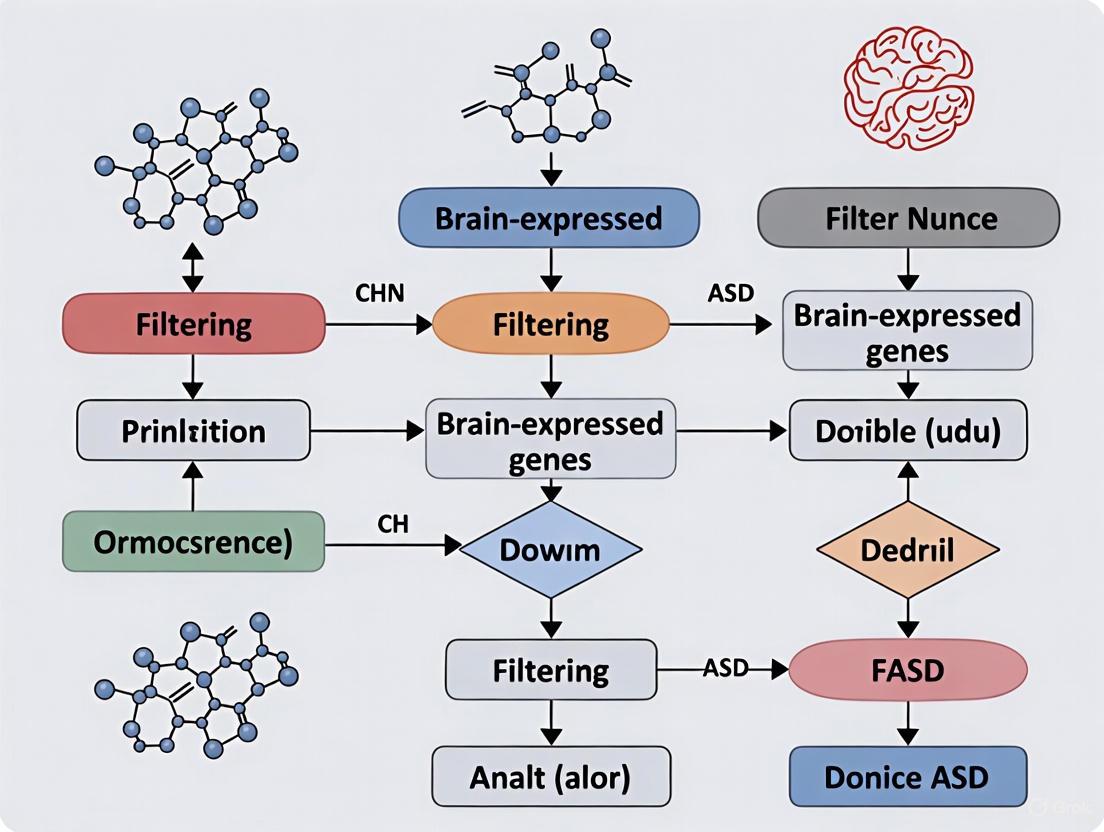
This article synthesizes current computational strategies for identifying and prioritizing autism spectrum disorder (ASD) risk genes specifically expressed in the brain.
Network Biology and Machine Learning for Prioritizing Brain-Expressed ASD Risk Genes
Abstract
This article synthesizes current computational strategies for identifying and prioritizing autism spectrum disorder (ASD) risk genes specifically expressed in the brain. It explores the foundational genetic and transcriptomic landscape of ASD, details advanced methodologies combining network propagation, co-expression analysis, and machine learning, and addresses key challenges in model optimization and validation. Aimed at researchers and drug development professionals, the content highlights how integrated, network-based approaches are elucidating shared biological pathways and creating robust frameworks for novel therapeutic target discovery.
The Genetic and Molecular Landscape of Autism Spectrum Disorder
The Polygenic Architecture and High Heritability of ASD
Quantitative Data on ASD Heritability and Genetic Risk
Table 1: Heritability and Genetic Contributions to ASD
| Genetic Component | Quantitative Measure | Context / Cohort | Source |
|---|---|---|---|
| Narrow-sense heritability (common variants) | ~60% of liability | Multiplex families | [1] |
| Narrow-sense heritability (common variants) | ~40% of liability | Simplex families | [1] |
| Variance in age at diagnosis explained by common SNPs | ~11% | Independent cohorts | [2] |
| Variance in age at diagnosis explained by sociodemographic factors | <15% | Meta-analyses | [2] |
| Proportion of ASD risk from common variation | ≥50% | Population-based | [3] |
| Proportion of ASD risk from de novo and Mendelian variation | 15-20% | Population-based | [3] |
Table 2: Characteristics of Genetically Correlated ASD Subtypes
| Feature | Factor 1: Earlier-Diagnosed ASD | Factor 2: Later-Diagnosed ASD | Source |
|---|---|---|---|
| Genetic Correlation (rg) | Reference | rg = 0.38 (s.e. = 0.07) with Factor 1 | [2] |
| Core Challenges | Lower social and communication abilities in early childhood | Increased socioemotional/behavioural difficulties in adolescence | [2] |
| Genetic Correlation with ADHD/Mental Health | Moderate | Moderate to high positive correlations | [2] |
| Developmental Trajectory | Difficulties emerge in early childhood, remain stable or modestly attenuate | Fewer difficulties in early childhood, increase in late childhood/adolescence | [2] |
Experimental Protocols for Key Genomic Analyses
Protocol: Identification of ASD Subtypes via Phenotypic and Genotypic Integration
Objective: To classify clinically relevant and biologically distinct subgroups of ASD by integrating multi-modal phenotypic and genotypic data. [4]
Workflow Summary:
Data Collection:
- Cohort: Utilize a large cohort with matched phenotypic and genetic data (e.g., SPARK cohort).
- Phenotypic Data: Collect extensive data including yes/no traits, categorical responses (e.g., language levels), and continuous measures (e.g., age at developmental milestones).
- Genotypic Data: Obtain whole-genome or exome sequencing data.
Data Modeling and Class Assignment:
- Model Selection: Employ a general finite mixture model. This model can handle different data types individually and integrate them into a single probability for each individual.
- Approach: Use a "person-centered" approach, modeling the full spectrum of an individual's traits together to define groups with shared phenotypic profiles.
- Output: Assign individuals to distinct classes based on the highest probability of class membership.
Biological Validation:
- Pathway Analysis: For each phenotypic class, trace the biological processes and molecular pathways affected by the genetic variants (e.g., neuronal action potentials, chromatin organization).
- Developmental Timing Analysis: Investigate the prenatal vs. postnatal activity of impacted genes within each class to link phenotypic presentation to developmental windows.
Protocol: Cortex-Wide Transcriptomic Analysis in Post-Mortem Brain
Objective: To identify consistent patterns of transcriptomic dysregulation across the cerebral cortex in ASD and assess the attenuation of regional gene expression identity. [5]
Workflow Summary:
Sample Preparation:
- Tissue Source: Acquire post-mortem brain samples from individuals with ASD and neurotypical controls.
- Regions: Sample multiple cortical regions spanning frontal, parietal, temporal, and occipital lobes, including association and primary sensory areas (e.g., 11 distinct regions).
- RNA Extraction: Isolate high-quality RNA (e.g., with high RNA Integrity Numbers - RIN).
RNA Sequencing and Quantification:
- Perform RNA-sequencing (RNA-seq) on all samples.
- Quantify gene and transcript (isoform) expression levels.
Differential Expression (DE) Analysis:
- Identify differentially expressed genes (DEGs) and transcripts between ASD and control groups, both cortex-wide and within each specific cortical region.
- Use a false discovery rate (FDR) threshold (e.g., < 0.05) to account for multiple testing.
Co-expression Network Analysis:
- Construct weighted gene co-expression networks (WGCNA) across all samples.
- Partition genes into modules (clusters) of highly co-expressed genes.
- Summarize each module's expression profile using its module eigengene.
- Correlate module eigengenes with ASD status and other experimental variables.
Assessment of Attenuated Regional Identity (ARI):
- Systematically contrast gene expression between all unique pairs of cortical regions in controls and ASD.
- Identify genes that typically differentiate cortical regions in controls but show reduced differential expression in ASD.
- Use permutation- or bootstrap-based statistical approaches to test for significant ARI.
The Scientist's Toolkit: Research Reagent Solutions
Table 3: Essential Materials and Analytical Tools for ASD Genomics Research
| Research Reagent / Tool | Function / Application | Context of Use |
|---|---|---|
| Illumina Microarrays / RNA-sequencing | Profiling gene expression and identifying differentially expressed genes (DEGs) in post-mortem brain tissue. | Transcriptomic analysis of cortical regions. [5] [6] |
| Whole-genome sequencing (WGS) | Comprehensive identification of rare inherited and de novo single nucleotide variants (SNVs), copy number variants (CNVs), and structural variations. | Interrogating the full genetic architecture in multiplex and simplex families. [7] [3] |
| Whole exome sequencing (WES) | Targeted sequencing of protein-coding exons to identify rare, functional variants in known and novel ASD risk genes. | Gene discovery efforts in large cohorts. [7] |
| General Finite Mixture Models | Statistical modeling to integrate diverse data types (binary, categorical, continuous) and identify latent subgroups without a priori hypotheses. | Data-driven subtyping of ASD based on phenotypic and genotypic data. [4] |
| Weighted Gene Co-expression Network Analysis (WGCNA) | Systems biology method to organize genes into modules (networks) based on co-expression, revealing underlying biological pathways and key hub genes. | Analyzing transcriptomic data from post-mortem brain to find disease-associated modules. [5] [6] |
| Growth Mixture Models | A statistical technique to identify unobserved latent classes (subgroups) following distinct developmental trajectories based on longitudinal data. | Modeling socioemotional and behavioural trajectories associated with age at ASD diagnosis. [2] |
| Polygenic Risk Scores (PGS) | An aggregate score quantifying an individual's genetic liability for a trait, based on the cumulative effect of many common variants. | Assessing common variant burden and its correlation with traits like language delay. [3] [8] |
| GCTA Software | Tool for estimating the proportion of phenotypic variance explained by all common SNPs (SNP-based heritability). | Estimating narrow-sense heritability of ASD from case-control genotype data. [1] |
Frequently Asked Questions (FAQs)
Q1: What is the relative contribution of common polygenic risk versus rare inherited variants in ASD? A1: Evidence suggests a complex, additive model. Common genetic variation is estimated to explain at least 50% of ASD liability, while rare inherited variants also contribute significantly, particularly in multiplex families. Notably, ASD polygenic score (PGS) is overtransmitted from nonautistic parents to autistic children who also harbor rare inherited variants, indicating combinatorial effects. [3] [1]
Q2: How does the genetic architecture differ between simplex and multiplex ASD families? A2: The genetic architecture differs substantially. Simplex families (one affected individual) show a stronger contribution from de novo mutations and a lower narrow-sense heritability from common variants (~40%). Multiplex families (≥2 affected individuals) show a depletion of de novo mutations, a stronger signal from rare inherited variants, and a higher common variant heritability (~60%). [1]
Q3: Are there distinct genetic factors associated with the age at which an individual receives an ASD diagnosis? A3: Yes. Recent research has decomposed the polygenic architecture of autism into two genetically correlated factors. One factor is associated with earlier diagnosis and lower childhood social-communication abilities. The other is linked to later diagnosis, increased adolescent difficulties, and higher genetic correlations with ADHD and mental-health conditions. Common genetic variants account for ~11% of the variance in diagnosis age. [2]
Q4: What are the core transcriptomic signatures of ASD in the brain, and how widespread are they? A4: Transcriptomic analyses of post-mortem brain tissue reveal widespread dysregulation across the cerebral cortex, not limited to association areas. Core signatures include: 1) Downregulation of synaptic and neuronal genes, 2) Upregulation of immune and glial genes, and 3) Attenuation of Regional Identity (ARI), where the normal molecular differences between cortical regions are diminished. This ARI is most pronounced in posterior (sensory) regions. [5] [6]
Q5: How can I filter for brain-expressed genes most relevant to ASD pathology in my network analysis? A5: Prioritize genes that are:
- Members of co-expression modules (from WGCNA) that are significantly correlated with ASD status in brain tissue. These modules are often enriched for synaptic function or immune response. [5] [6]
- Hub genes within these disease-associated modules, as they are likely functionally important. [6]
- Genes whose expression patterns are spatially correlated with structural neuroimaging alterations (e.g., cortical volume changes) in ASD. [9]
- Genes that show differential expression, particularly in primary sensory cortices like the primary visual cortex (BA17), where some of the strongest transcriptomic signals have been detected. [5]
Frequently Asked Questions
1. What is the primary function of the SFARI Gene database? SFARI Gene is a core database for autism research, providing curated information on human genes associated with autism spectrum disorder (ASD). It helps researchers assess the strength of evidence linking specific genes to ASD through its gene scoring system [10].
2. How can I filter for high-confidence ASD risk genes? Use the SFARI Gene Scoring module, which categorizes genes based on the strength of evidence linking them to ASD. A score of '1' represents high confidence, often involving genes linked to syndromic forms of autism. The database is updated regularly (e.g., as of October 2025) and allows you to view and download gene lists by their score category [11] [12].
3. Why is it crucial to filter for brain-expressed genes in ASD research? ASD involves widespread transcriptomic dysregulation across the cerebral cortex. Focusing on brain-expressed genes ensures biological relevance, as many ASD risk genes function in neural development, synaptic transmission, and cortical patterning. Omitting this step can introduce noise from genes not active in the relevant tissue context [5] [13].
4. My network analysis of ASD genes yields unclear results. What could be wrong? This is a common troubleshooting point. Inconsistent results can stem from:
- Inadequate tissue filtering: Your gene list may include candidates not expressed in the brain regions critical for ASD.
- Heterogeneity of data: ASD involves many genetic variants; consider if your analysis accounts for this. Network-based approaches that account for structural differences between healthy and ASD gene networks can be more informative [14].
- Technical variability: Differences in sample processing, sequencing platforms, or data normalization can affect downstream analysis [5] [14].
5. Where can I find transcriptomic data from specific brain regions? Large-scale studies, such as the one published in Nature (2022), provide RNA-sequencing data from up to 11 different cortical areas. These datasets are invaluable for understanding region-specific gene expression and dysregulation in ASD [5].
Troubleshooting Guides
Issue 1: Overly Broad Gene List from SFARI
| Symptom | Cause | Solution |
|---|---|---|
| Network analysis contains many genes with no known neural function; high background noise. | Gene list includes genes scored based on genetic evidence from blood or other tissues, which may not be expressed in the brain. | Filter for brain-expressed genes. Cross-reference your SFARI gene list with brain-specific transcriptomic atlases (e.g., from [5]) or use the EAGLE Score provided in the SFARI Human Gene Module, which can help prioritize genes with predicted brain expression [12]. |
Issue 2: Integrating Genetic and Transcriptomic Data
| Symptom | Cause | Solution |
|---|---|---|
| Difficulty connecting high-confidence risk genes from SFARI to dysregulated pathways in brain tissue. | A direct link between a genetic mutation and a functional outcome in the brain is complex and not always obvious. | Perform a co-expression network analysis. This method, as used in recent studies [5] [15], groups genes with similar expression patterns into modules. You can then test if SFARI high-confidence genes are significantly enriched within specific, dysregulated modules (e.g., synaptic or immune modules) to uncover functional pathways. |
The table below summarizes key data sources for acquiring and filtering gene lists for ASD network research.
| Resource Name | Data Type | Key Utility in Filtering | Key Metrics / Output |
|---|---|---|---|
| SFARI Gene Database [11] [10] | Curated Gene List | Provides a manually curated starting list of ASD-associated genes with evidence scores. | Gene Score (1-S, 1, 2, 3), Genetic Category (Syndromic, Rare Single Gene, etc.), EAGLE Score (for brain expression prediction). |
| Brain Transcriptomic Atlas (e.g., [5]) | RNA-seq Data | Identifies genes actively expressed in the brain and reveals region-specific (e.g., BA17) and cell-type-specific dysregulation in ASD. | Differentially Expressed Genes (DEGs), log2 Fold Change, Co-expression Modules. |
| Spatiotemporal Gene Expression Resource (e.g., STAGE) [13] | Spatial Transcriptomics | Validates the precise spatial and temporal expression of ASD risk genes in intact human brain tissue, crucial for understanding developmental mechanisms. | In situ hybridization data across cortical areas and developmental time points. |
Experimental Protocol: Co-expression Network Analysis for Pathway Identification
This protocol outlines a method to identify dysregulated pathways from a filtered list of brain-expressed ASD genes, based on methodologies from recent literature [5] [15].
1. Input Data Preparation
- Gene Expression Matrix: Obtain a RNA-sequencing dataset from relevant brain tissue (e.g., post-mortem cortex) of ASD cases and neurotypical controls. The 2022 Nature study used 725 samples from 11 cortical areas [5].
- Gene Filtering: Filter the expression matrix to include genes from your high-confidence SFARI list that are robustly expressed in the brain tissue of interest.
2. Network Construction using WGCNA
- Software: Use the Weighted Gene Co-expression Network Analysis (WGCNA) R package [15].
- Soft-Thresholding: Choose a soft-thresholding power (β) that achieves a scale-free topology fit index close to 0.90. This emphasizes strong correlations over weak ones.
- Module Detection: Identify modules of highly co-expressed genes using a block-wise approach. Set a minimum module size (e.g., 30 genes) [15].
3. Module Trait Association
- Calculate Module Eigengenes (ME): The first principal component of each module, representing the module's overall expression pattern.
- Correlate MEs with ASD: Statistically correlate module eigengenes with the trait of interest (e.g., ASD vs. Control status) to identify significantly dysregulated modules.
4. Hub Gene Identification & Functional Enrichment
- Identify Hub Genes: Within significant modules, calculate Module Membership (correlation of a gene's expression with the module eigengene). Genes with high membership (e.g., >0.9) are central "hub" genes [15].
- Pathway Analysis: Perform functional enrichment analysis (e.g., using Gene Ontology or KEGG pathways) on genes within dysregulated modules to uncover underlying biology.
Workflow for identifying dysregulated pathways from SFARI genes using brain transcriptomics.
The Scientist's Toolkit: Key Research Reagents & Materials
| Item | Function / Application |
|---|---|
| SFARI Gene Database | Foundational resource for obtaining a curated, evidence-ranked list of ASD candidate genes [11] [10]. |
| Brain Transcriptomic Datasets (e.g., from [5]) | Provide the quantitative expression data needed to filter for brain-active genes and perform co-expression network analysis. |
| WGCNA R Package | Primary software tool for constructing weighted gene co-expression networks and identifying functional modules [15]. |
| STRING Database | Used to build protein-protein interaction (PPI) networks from a list of genes, helping to visualize and analyze physical and functional interactions [15]. |
| Cytoscape with MCODE Plugin | Software environment for visualizing molecular interaction networks and identifying highly interconnected regions (clusters) within large networks [15]. |
| Spatial Transcriptomics Platforms (e.g., NanoString WTA) | Technologies used to validate the spatial localization of gene expression within intact brain tissue, crucial for understanding regional pathology [13]. |
Major Biological Pathways Implicated in ASD Pathogenesis
Technical Support Center: Troubleshooting Guides & FAQs for ASD Network Research
This technical support center is designed within the context of a broader thesis focused on filtering brain-expressed genes for Autism Spectrum Disorder (ASD) network research. It provides targeted troubleshooting guides, frequently asked questions (FAQs), and essential resources for researchers investigating the complex biological pathways underlying ASD pathogenesis.
Troubleshooting Guide: Common Issues in ASD Pathway Analysis
Issue 1: Low Overlap Between Gene Lists from Different Studies
- Problem: Candidate gene lists from genome-wide association studies (GWAS), differential expression, and copy number variation (CNV) analyses show minimal overlap, complicating convergence analysis [16].
- Solution: Employ network-based integration methods. Use a network propagation approach on a protein-protein interaction (PPI) network to diffuse signals from seed gene lists. This identifies genes with high network proximity to multiple evidence sources, revealing functional convergence not apparent from simple list overlaps [16].
Issue 2: Heterogeneous Data Obscures Clear Biological Signals
- Problem: ASD's extreme phenotypic and genetic heterogeneity makes it difficult to pinpoint coherent pathway dysregulation when analyzing cohorts as a single group [17] [18].
- Solution: Implement a person-centered, subtyping approach before pathway analysis. Use generative mixture models on broad phenotypic data (e.g., >230 traits) to identify biologically distinct subtypes [18] [19]. Subsequent pathway analysis should be performed within each subtype (e.g., Social/Behavioral, Broadly Affected) to identify subtype-specific genetic programs and dysregulated pathways [18] [19].
Issue 3: Difficulty in Interpreting Results from Network Analysis
- Problem: Large gene networks or interactomes are generated, but key drivers and functional modules are not easily identifiable.
- Solution: Apply module detection algorithms and hub gene analysis.
- Use tools like Molecular Complex Detection (MCODE) to identify highly interconnected subnetworks (potential molecular complexes) within your PPI network [15].
- Perform Weighted Gene Co-expression Network Analysis (WGCNA) to find modules of co-expressed genes. Identify hub genes within modules based on high module membership (MM > 0.9) [15].
- Functionally characterize these modules and hub genes using enrichment analysis for Gene Ontology (GO) terms and pathways like KEGG [15] [20].
Issue 4: Integrating Multi-Omics Data for Pathway Discovery
- Problem: Combining genomic, transcriptomic, and proteomic data types is methodologically challenging.
- Solution: Build a machine learning classifier that uses network-propagated scores from multiple omics datasets as features. For example, use network propagation scores from ten different ASD-associated gene lists (from DGE, DTE, CNV, methylation studies) as a feature set for each gene. Train a random forest model on known high-confidence ASD genes to prioritize new candidate genes and pathways [16].
Frequently Asked Questions (FAQs)
Q1: What are the most statistically enriched signaling pathways in ASD according to current gene sets? A: Systematic enrichment analyses of ASD risk genes (e.g., from SFARI database) consistently highlight several key pathways. The most significantly enriched pathways often include Calcium signaling pathway and Neuroactive ligand-receptor interaction [20]. Furthermore, network analyses reveal that the MAPK signaling pathway and Calcium signaling pathway act as interactive hubs, connecting multiple other dysregulated processes [20]. The PI3K-Akt pathway is also prominently implicated in immune-inflammatory responses in the CNS [21].
Q2: How does ASD heterogeneity impact the search for convergent pathways? A: Heterogeneity is a major challenge but does not preclude finding convergence. While over 1200 genes are associated with ASD, their functions often converge on specific biological processes and cell types [17]. Pathway analysis of risk genes shows enrichment in common networks such as synaptic transmission, synapse organization, chromatin (histone) modification, and regulation of nervous system development [17]. The key is to seek "homogeneity from heterogeneity" by stratifying individuals into biologically meaningful subgroups before pathway analysis [17] [18].
Q3: Are there specific pathways linked to distinct clinical subtypes of ASD? A: Yes, emerging research links subtypes to distinct genetic programs. For example, in the Broadly Affected subtype (characterized by severe delays and co-occurring conditions), there is a high burden of damaging de novo mutations. The Mixed ASD with Developmental Delay subtype shows a stronger association with rare inherited variants [18] [19]. Furthermore, the timing of gene expression differs: mutations in genes active later in childhood are more linked to the Social and Behavioral Challenges subtype, which often has a later diagnosis [18].
Q4: What is the role of non-neuronal pathways (e.g., immune, metabolic) in ASD pathogenesis? A: Multisystem involvement is a key feature. Pathway analyses reveal strong enrichment for immune-inflammatory pathways (e.g., cytokine signaling, interferon response) and mitochondrial dysfunction (electron transport chain) [21]. These peripheral disruptions are hypothesized to induce neuroinflammation, which then interacts with core synaptic pathways (e.g., glutamatergic/GABAergic signaling), affecting neurodevelopment and trans-synaptic signaling [22] [21].
Q5: How can I validate if a dysregulated pathway from in silico analysis is relevant to brain function in ASD? A: Couple computational findings with brain imaging genetics. Identify genes whose cortical expression patterns correlate with functional MRI (fMRI) metrics (e.g., fALFF, ReHo) in neurotypical brains. Then, test if this gene-activity correlation is disrupted in post-mortem ASD brain tissue. This can validate pathways involved in excitatory/inhibitory balance (e.g., genes like PVALB) and highlight affected cortical regions like the visual cortex [23].
Table 1: Epidemiological and Genetic Heterogeneity Metrics in ASD
| Metric | Value | Source / Context |
|---|---|---|
| Current Estimated Prevalence | 1% - 2% of children | General population estimates [17] |
| Male-to-Female Ratio | Approximately 4:1 | Highly replicated finding [17] [22] |
| Heritability Estimate | 64% - 91% | Based on twin studies [17] |
| Recurrence Risk in Siblings | 15%-25% (males), 5%-15% (females) | In families with an existing ASD child [17] |
| Cases with Identified Genetic Variants | ~10-20% | Through current genetic testing [17] |
| Genes in SFARI Database | >1200 genes | Catalog of ASD-associated genes [17] |
Table 2: Phenotypic Subtypes Identified in a Large Cohort (SPARK, n=5,392)
| Subtype Name | Approximate Prevalence | Key Phenotypic & Genetic Characteristics | |
|---|---|---|---|
| Social and Behavioral Challenges | 37% | Core ASD traits, typical developmental milestones, high co-occurring ADHD/anxiety. Genetic disruptions in genes active later in childhood [18] [19]. | |
| Mixed ASD with Developmental Delay | 19% | Developmental delays, variable core symptoms, lower psychiatric co-morbidity. Enriched for rare inherited genetic variants [18] [19]. | |
| Moderate Challenges | 34% | Milder core symptoms, typical milestones, low co-occurring conditions. | [18] [19] |
| Broadly Affected | 10% | Severe delays, extreme core symptoms, multiple co-occurring conditions. Highest burden of damaging de novo mutations [18] [19]. |
Detailed Experimental Protocols
Protocol 1: Network Propagation & Machine Learning for Gene Prioritization [16]
- Seed Gene Collection: Compile multiple ASD-associated gene lists from orthogonal studies (e.g., differential expression, GWAS, CNV, methylation). Aim for 5-10 lists.
- Network Propagation: Use a high-confidence human PPI network (e.g., from STRING). For each seed list, set initial node values (seeds=1/list_size, others=0). Run a network propagation algorithm (e.g., Random Walk with Restart) with a damping parameter (α=0.8). Normalize the resulting scores using eigenvector centrality.
- Feature Construction: Each gene now has N propagation scores (one from each seed list). This N-dimensional vector is its feature set.
- Model Training: Label high-confidence ASD genes (e.g., SFARI Category 1) as positives. Select an equal number of random non-ASD genes as negatives. Train a Random Forest classifier using the propagation score features.
- Validation: Perform cross-validation. Apply the model to independent gene sets (e.g., SFARI Category 2/3) to assess prioritization performance.
Protocol 2: Co-expression Network Analysis (WGCNA) for Module Discovery [15]
- Data Input: Prepare a gene expression matrix (genes x samples) from your transcriptomic data (e.g., RNA-Seq from neural progenitor cells or neurons).
- Preprocessing & Thresholding: Filter lowly expressed genes. Choose a soft-thresholding power (β) that achieves an approximate scale-free topology (R² > 0.8).
- Network Construction & Module Detection: Construct an adjacency matrix, transform it to a Topological Overlap Matrix (TOM), and perform hierarchical clustering. Use dynamic tree cutting to identify modules of co-expressed genes. Set a minimum module size (e.g., 30).
- Module Eigengene & Merging: Calculate the module eigengene (ME, first principal component) for each module. Merge modules with highly correlated MEs (e.g., correlation > 0.9).
- Hub Gene Identification: For each module, calculate Module Membership (MM, correlation of gene expression with the ME). Genes with high MM (e.g., >0.9) are intra-modular hub genes.
- Functional Enrichment: Perform GO and KEGG pathway enrichment analysis on genes within each significant module.
Visualization of Pathways and Workflows
Diagram 1: Convergent Biological Pathways in ASD Pathogenesis
Diagram 2: Integrated Computational Workflow for ASD Pathway Discovery
The Scientist's Toolkit: Key Research Reagent Solutions
Table 3: Essential Resources for ASD Network & Pathway Research
| Item | Function / Description | Key Utility |
|---|---|---|
| SFARI Gene Database | A curated database of ASD-associated genes and variants, categorized by evidence strength. | Primary source for seed genes, positive training sets, and background knowledge [17] [16] [20]. |
| STRING Database | A comprehensive resource of known and predicted Protein-Protein Interactions (PPIs). | Used to construct biological networks for propagation and interaction analyses [16] [15]. |
| BrainSpan Atlas | A developmental transcriptome atlas of the human brain. | Provides spatiotemporal gene expression data for feature generation and validating developmental expression patterns [16] [18]. |
| KEGG Pathway Database | A collection of manually drawn pathway maps for metabolism, genetic processes, and signaling. | Standard reference for performing pathway enrichment analysis on gene sets [15] [20]. |
| Gene Ontology (GO) Consortium | A structured, controlled vocabulary (ontologies) for describing gene functions. | Used for functional enrichment analysis of gene modules or prioritized lists (Biological Process, Molecular Function, Cellular Component) [17] [15]. |
| Cytoscape / WGCNA R Package | Software for complex network visualization and analysis / R package for weighted co-expression network analysis. | Essential tools for constructing, visualizing, and analyzing gene networks and identifying modules [15]. |
| Post-mortem Brain Repositories (e.g., Autism BrainNet) | Sources of well-characterized brain tissue from donors with ASD and controls. | Critical for validating gene expression and pathway findings in the human ASD brain [23]. |
| Imaging Genetics Datasets (e.g., ABIDE) | Publicly available repositories combining neuroimaging data and phenotypic information from individuals with ASD. | Enables validation of pathway relevance through brain imaging genetics approaches [23]. |
The Critical Role of Brain-Expressed Genes and Non-Coding Regions
The following tables summarize the core quantitative findings and implicated genomic elements from recent studies on Autism Spectrum Disorder (ASD).
Table 1: Summary of Key Findings on Brain-Expressed Genes in ASD
| Finding | Experimental System | Key Metric/Result | Biological Implication |
|---|---|---|---|
| Enriched Expression in Inhibitory Neurons [24] | Human single-cell RNA-seq (fetal & adult brain; cerebral organoids) | ASD candidates show enriched expression in inhibitory neurons; hubs in inhibitory neuron co-expression modules [24]. | Supports the E/I imbalance hypothesis; inhibitory neurons are a major affected subtype [24]. |
| Convergence of Transcriptional Regulators (TRs) [25] | ChIP-seq in developing human & mouse cortex; in vitro CRISPRi. | Five ASD-associated TRs (ARID1B, BCL11A, etc.) share substantial overlap in genomic binding sites [25]. | Suggests a common transcriptional regulatory landscape disruption leading to convergent neurodevelopmental outcomes [25]. |
| Predictive Gene Expression Model [26] | Microarray data from Allen Brain Atlas (190 human brain structures). | Model achieved 84% accuracy in predicting autism-implicated genes [26]. | Provides a baseline transcriptome for prioritizing and validating novel ASD candidate genes [26]. |
Table 2: Implicated Non-Coding Genomic Elements in ASD Risk
| Genomic Element | Definition | Key Findings in ASD | Example Genes/Regions |
|---|---|---|---|
| Human Accelerated Regions (HARs) [27] | Genomic regions conserved in evolution but significantly diverged in humans. | Rare, inherited variants in HARs substantially contribute to ASD risk, especially in consanguineous families [27]. | HARs near IL1RAPL1 [27]. |
| VISTA Enhancers (VEs) [27] | Experimentally validated neural enhancers. | Patient variants in VEs alter enhancer activity, contributing to ASD etiology [27]. | VEs near OTX1 and SIM1 [27]. |
| Conserved Neural Enhancers (CNEs) [27] | Evolutionarily conserved regions predicted to be neural enhancers. | Rare variation in CNEs adds to ASD risk, implicating disruption of ancient regulatory codes [27]. | - |
Troubleshooting Guide & FAQs
Frequently Asked Questions in ASD Gene Network Research
Q: My analysis of a novel ASD gene list shows no significant enrichment for any specific brain cell type. What could be wrong? A: This is a common issue. We recommend troubleshooting the following:
- Data Quality: Ensure your gene list is curated from reliable sources (e.g., SFARI, AutismKB) and is of sufficient size for robust statistical power [24].
- Resolution of Reference Data: The cell-type specificity of ASD genes is often revealed only with high-resolution single-cell transcriptomics data. Using bulk tissue data or data with poorly defined cell types can obscure these signals [24]. Verify that your reference dataset (e.g., from human fetal or adult cortex) includes well-annotated inhibitory and excitatory neuron subtypes [24].
- Methodology: Re-check the parameters of your enrichment analysis tool (e.g., EWCE). Using inappropriate background gene lists or an insufficient number of bootstrap permutations can lead to false negatives [24].
Q: How can I functionally validate the impact of a non-coding variant identified in a patient with ASD? A: The established pipeline involves:
- Enhancer Assays: Clone the wild-type and mutant enhancer sequence (e.g., from a HAR or VISTA enhancer) into a reporter vector (e.g., luciferase assay) and test in a relevant neural cell line or primary culture. A significant change in activity suggests a functional impact [27].
- Genome Editing: Use CRISPR/Cas9 to introduce the patient-specific variant into a human iPSC line. Differentiate these iPSCs into neurons (e.g., cortical cultures) and look for downstream transcriptomic or cellular phenotypes, such as those described in the convergence study (e.g., changes in NeuN+ or GFAP+ cells) [27] [25].
Q: The "E/I imbalance" is frequently cited, but what is the direct molecular and cellular evidence from human genetics? A: Key evidence from human transcriptomic studies includes:
- Expression Enrichment: High-confidence ASD risk genes are not just expressed in neurons, but show significantly enriched expression in inhibitory neurons compared to other cell types [24].
- Co-expression Networks: These same genes are more likely to be hubs in gene co-expression modules that are highly active in inhibitory neurons [24].
- Postmortem Signatures: Upregulated genes in ASD cortex samples are enriched for genes with high basal expression in inhibitory neurons, hinting at a potential change in cellular composition or state [24].
Experimental Protocols
Protocol 1: Cell-Type Enrichment Analysis for ASD Gene Sets
Objective: To determine if a given set of ASD-associated genes shows enriched expression in specific human brain cell types (e.g., inhibitory neurons).
Materials & Reagents:
- Input Gene List: Curated list of ASD candidate genes (e.g., from SFARI database) [24].
- Reference Transcriptome Data: Single-cell RNA-sequencing (scRNA-seq) data from healthy human brain tissue. Key datasets used in foundational studies include those from fetal brain, adult brain, and cerebral organoids [24].
- Software Tool: Expression Weighted Cell-type Enrichment (EWCE) package for R/Bioconductor [24].
Methodology:
- Data Preparation: Obtain the reference scRNA-seq dataset where cell types have been previously classified by the original authors. Format the data into a matrix of log2(FPKM or TPM) values per gene per cell type [24].
- Run EWCE Analysis:
- Import your ASD gene list and the expression matrix into EWCE.
- Use the
bootstrap.enrichment.testfunction with a high number of permutations (e.g., 10,000) to determine if the ASD genes show statistically significant enriched expression in any cell type compared to random gene sets [24].
- Generate Bootstrap Plots: Use the
generate.bootstrap.plotsfunction to identify the specific genes that drive the enrichment signal in a significant cell type. Genes with a relative expression >1.2-fold greater than the mean bootstrap expression are typically considered "enriched" [24]. - Validation: Perform secondary analysis, such as Weighted Gene Co-expression Network Analysis (WGCNA), on the reference data to identify modules of co-expressed genes and see if the ASD genes are hubs in modules specific to certain cell types [24].
Protocol 2: Investigating Non-Coding Variation in ASD
Objective: To assess the contribution of rare inherited variants in non-coding regions (HARs, VEs, CNEs) to ASD risk.
Materials & Reagents:
- Sample Cohorts: Genomic data from ASD probands and families, with particular attention to simplex (single occurrence) and multiplex/consanguineous families [27].
- Genomic Region Sets: Curated lists of HARs, experimentally validated VISTA enhancers (VEs), and conserved neural enhancers (CNEs) [27].
- Functional Assay Reagents: Luciferase reporter vectors, cell culture materials for neural lineages, and CRISPR/Cas9 components for genome editing [27].
Methodology:
- Variant Identification: Perform whole-genome or targeted sequencing on patient cohorts. Filter for rare, inherited variants that fall within the defined HAR, VE, and CNE regions [27].
- Association Analysis: Test for enrichment of these variants in ASD probands compared to controls. This analysis has shown that the contribution is most substantial in probands from consanguineous families, which enriches for recessive inheritance patterns [27].
- Functional Characterization:
- Enhancer Activity Assay: Clone the wild-type and variant-containing genomic sequence upstream of a minimal promoter driving a luciferase reporter. Transfert into a relevant neural cell model and measure reporter activity. Altered activity indicates a functional impact on the enhancer [27].
- CRISPR-based Validation: Introduce the variant into a human iPSC line using CRISPR/Cas9 homology-directed repair. Differentiate the iPSCs into cortical neurons and analyze for phenotypic changes, such as alterations in the transcriptome (e.g., RNA-seq) or in the ratio of neuronal and glial cell types [25].
Signaling Pathways & Workflows
Diagram 1: Transcriptional Convergence in ASD Pathogenesis
Diagram 2: Functional Analysis of Non-Coding Variants
The Scientist's Toolkit: Research Reagent Solutions
Table 3: Essential Research Tools for ASD Gene Network Studies
| Research Tool / Reagent | Function / Application | Key Examples / Notes |
|---|---|---|
| Single-Cell RNA-seq Datasets [24] | Profiling gene expression across diverse cell types in the human brain to establish a baseline and identify cell-type-specific enrichment. | Datasets from fetal brain, adult brain, and cerebral organoids are critical. Public repositories like the Allen Brain Atlas are key sources [26]. |
| Expression Weighted Cell-type Enrichment (EWCE) [24] | A statistical R package to test if a gene set shows significant enriched expression in a specific cell type. | The core tool for quantifying cell-type enrichment from scRNA-seq data. Uses bootstrap sampling for significance testing [24]. |
| ChIP-seq for Transcriptional Regulators (TRs) [25] | Mapping the genomic binding sites of ASD-associated TRs to identify shared regulatory targets. | Applied to TRs like ARID1B, BCL11A, FOXP1, TBR1, and TCF7L2 in developing cortex, revealing substantial binding site overlap [25]. |
| CRISPR Interference (CRISPRi) [25] | For targeted knockdown of specific genes (e.g., ARID1B, TBR1) in model systems to study downstream effects. | Used in mouse cortical cultures to validate convergent biology and model haploinsufficiency [25]. |
| Reporter Assay Vectors [27] | Testing the functional impact of non-coding variants on enhancer activity. | Typically luciferase-based systems; used to confirm that patient variants in HARs/VEs alter enhancer function [27]. |
| Induced Pluripotent Stem Cells (iPSCs) [27] [25] | Generating human neuronal models for functional validation of genetic findings. | Can be genetically edited (via CRISPR/Cas9) to introduce patient variants and then differentiated into relevant neuronal subtypes for phenotyping [27]. |
Computational Methods for Gene Prioritization: From Networks to Machine Learning
Network Propagation on Protein-Protein Interaction (PPI) Networks
Experimental Protocols & Methodologies
Core Network Propagation Protocol for ASD Gene Discovery
Objective: To prioritize novel Autism Spectrum Disorder (ASD) risk genes by propagating known associations through a Protein-Protein Interaction (PPI) network [28].
Step-by-Step Methodology:
- Seed Gene Selection: Compile a list of known high-confidence ASD-associated genes from trusted sources (e.g., SFARI Gene database). These serve as the initial seeds for the propagation algorithm [28].
- Network Preparation: Obtain a comprehensive human PPI network. The network used by Zadok et al. contained 20,933 proteins and 251,078 interactions [28].
- Initialization: Assign an initial probability score to each protein in the network. Seed proteins from the known ASD list are typically assigned a non-zero score (e.g., 1/s, where
sis the number of seeds), while all other proteins are set to zero [28]. - Propagation Execution: Apply a network propagation algorithm, such as random walk with restart. The propagation process is governed by the formula and a damping parameter (often set to α=0.8), which controls the influence of a node's neighbors versus its initial state [28].
- Score Normalization: Normalize the resulting propagation scores using a method like eigenvector centrality to account for biases introduced by highly connected proteins (hubs) in the network [28].
- Gene Prioritization: Rank all genes in the network based on their final propagation score. Genes with high scores are considered strong novel candidates for ASD association [28].
Protocol for Constructing Cell-Type-Specific PPI Networks
Objective: To generate neuronal-specific PPI networks for ASD risk genes, overcoming the limitation of non-neural cellular models [29].
Step-by-Step Methodology:
- Cell Generation: Differentiate human induced pluripotent stem cells (iPSCs) into excitatory neurons using neurogenin-2 (NGN2) induction [29].
- Protein Extraction and Immunoprecipitation (IP): For each ASD index protein (bait), perform IP using a specific antibody in the induced neuronal cell lysates [29].
- Mass Spectrometry (MS): Identify proteins that co-precipitate with the bait protein using Liquid Chromatography with Tandem Mass Spectrometry (LC-MS/MS) [29].
- Interaction Validation: Validate a subset of identified interactions using orthogonal methods like Western blotting. Assess technical replication (e.g., >80% replication rate) [29].
- Network Mapping and Analysis: Construct the PPI network with index proteins and their identified interactors. Analyze the network to identify highly interconnected nodes and functionally convergent pathways [29].
The Scientist's Toolkit: Research Reagent Solutions
Table 1: Essential Research Reagents and Resources for PPI Network Propagation Studies in ASD.
| Item | Function/Description | Example/Source |
|---|---|---|
| PPI Network Datasets | A comprehensive graph of known protein interactions used as the scaffold for propagation. | Human PPI network from Signorini et al. (2021) (20,933 proteins) [28]. |
| ASD Gene Seeds | Curated list of high-confidence genes associated with ASD to initialize the propagation algorithm. | SFARI Gene database (Categories S & 1 as positives) [28]. |
| Software for Propagation | Tools to execute and visualize the network propagation algorithm and resulting networks. | NAViGaTOR (for efficient, large-network visualization); Cytoscape (extensible platform with plugins for analysis) [30]. |
| Validation Databases | Resources of experimentally derived, cell-type-specific interactions to validate computational predictions. | Neuronal PPI networks from induced human neurons (e.g., Pintacuda et al. 2023) [29]. |
Troubleshooting Guides & FAQs
FAQ 1: My network propagation results include many well-known, highly connected genes. How can I distinguish truly novel ASD candidates from generic network hubs?
Issue: The algorithm is biased towards high-degree nodes, making it difficult to identify novel, non-hub genes.
Solution:
- Apply Normalization: Always use normalization techniques, such as eigenvector centrality, to mitigate the bias introduced by nodes with a high number of connections [28].
- Leverage Cell-Type-Specific Data: Filter your results or use as a seed list proteins found in neuronal-specific PPI studies. A significant finding from recent research is that ~90% of interactions in human neurons are novel and not found in standard databases, which can help break away from generic hub bias [29].
- Functional Enrichment Analysis: Use tools like g:Profiler to perform enrichment analysis on your top-ranked genes. Prioritize gene lists that show significant enrichment for pathways strongly linked to ASD etiology, such as chromatin organization, histone modification, and neuron cell-cell adhesion [28].
FAQ 2: I am getting a low replication rate when I validate predicted interactions in my lab's cellular models. What could be the cause?
Issue: Discrepancy between computational predictions and experimental validation.
Solution:
- Check Cell-Type Relevance: The PPI network used for propagation may not reflect the biology of your validation model. A study comparing PPIs in stem-cell-derived neurons versus postmortem cerebral cortex found only ~40% replication, highlighting the impact of cell type and developmental stage [29].
- Consider Isoform Specificity: Ensure your validation model expresses the correct protein isoform. Research on ANK2 in ASD showed that many disease-relevant interactions depend on a single neuron-specific giant exon, which would be missed if the wrong isoform is studied [29].
- Verify Experimental Conditions: Confirm that your IP-MS protocol is optimized for detecting true interactions and that controls are in place to rule out non-specific binders [29] [31].
FAQ 3: How do I choose the right PPI assay to validate interactions I discover through network propagation?
Issue: Selecting an appropriate experimental method for validation.
Solution: The choice depends on your protein of interest and research goal. Below is a comparison of common methods.
Table 2: Guide to Selecting a PPI Validation Assay [31].
| Assay | Principle | Best For | Key Limitations |
|---|---|---|---|
| Yeast Two-Hybrid (Y2H) | Reconstitution of a transcription factor via protein interaction. | Detecting binary, intracellular interactions; scalable screening. | Interactions may not occur in yeast; proteins must localize to nucleus. |
| Membrane Yeast Two-Hybrid (MYTH) | Split-ubiquitin system reconstitution. | Studying full-length membrane proteins and their interactions. | Limited to membrane proteins; can have false positives. |
| Affinity Purification Mass Spectrometry (AP-MS) | Purification of a protein complex and identification of components by MS. | Uncovering protein complexes in a near-native context. | Cannot distinguish direct from indirect interactions. |
FAQ 4: My network is very large, and the visualization is cluttered, making interpretation difficult. What can I do?
Issue: Poor visualization of large, complex PPI networks.
Solution:
- Use Advanced Visualization Tools: Employ software like Cytoscape or NAViGaTOR. Cytoscape is open-source and highly extensible via plugins for analysis and visualization, while NAViGaTOR offers high-performance rendering for huge networks [30].
- Apply Layout Algorithms: Use force-directed or organic layout algorithms that position connected nodes closer together, which can help reveal underlying network structures like clusters or complexes [30].
- Filter and Cluster: Before visualization, filter the network based on propagation scores or confidence metrics. Apply integrated clustering algorithms to identify and then visualize distinct functional modules instead of the entire network [30].
Quantitative Data & Performance Metrics
Table 3: Performance Metrics of a Network Propagation Model for ASD Gene Prediction [28].
| Metric | Value | Description / Implication |
|---|---|---|
| AUROC (Area Under the ROC Curve) | 0.87 | Measures the overall ability to distinguish between ASD-associated and non-associated genes. A value of 0.87 indicates high accuracy. |
| AUPRC (Area Under the Precision-Recall Curve) | 0.89 | A more informative metric than AUROC for imbalanced datasets (where true positives are rare). A value of 0.89 is considered excellent. |
| Optimal Classification Cutoff | 0.86 | The score threshold that maximizes the product of specificity and sensitivity, used for making binary predictions. |
| Performance vs. ForecASD (AUROC) | 0.91 vs. 0.87 | The described propagation-based method outperformed a previous state-of-the-art predictor (forecASD) in a comparative analysis [28]. |
Workflow & Pathway Visualizations
Network Propagation Workflow
Neuronal PPI Mapping Pipeline
Gene Co-expression Network Analysis with WGCNA and Leiden Algorithms
Frequently Asked Questions (FAQs) and Troubleshooting Guides
Data Preprocessing and Network Construction
Q1: My WGCNA analysis on human brain transcriptome data is running very slowly or crashing. How can I improve computational efficiency?
A: Performance issues are common with large-scale transcriptomic data. Implement these solutions:
- Filter genes first: Prior to WGCNA, filter out lowly expressed genes. Retain only genes with counts per million (CPM) > 1 in a sufficient number of samples to reduce dataset size and noise [32].
- Subset to relevant genes: For focused studies, such as on Autism Spectrum Disorder (ASD), filter your gene list to brain-expressed genes or candidate genes from databases like SFARI before network construction. This dramatically reduces computational load [33] [34].
- Leverage high-performance computing: For very large datasets, use a computing cluster. WGCNA can be parallelized to utilize multiple processors [32].
- Consider alternative algorithms: For extremely large datasets, emerging methods like Weighted Gene Co-expression Hypernetwork Analysis (WGCHNA) are designed for better computational efficiency and can capture higher-order gene interactions [35].
Q2: How do I choose the right soft-power threshold for building a scale-free network in brain-expressed gene data?
A: Selecting the soft-power threshold (β) is critical for constructing a biologically meaningful, scale-free network.
- Standard Procedure: Use the
pickSoftThresholdfunction in the WGCNA R package. The goal is to choose the lowest power for which the scale-free topology fit index (R²) reaches a plateau, typically above 0.80 or 0.90 [32]. - Troubleshooting a Low Fit: If the scale-free topology fit is low, it does not necessarily mean the analysis is invalid. Focus on the resulting gene modules and their biological coherence. The network can still yield valuable insights [36].
- Refer to Established Protocols: Follow detailed, step-by-step protocols for soft-threshold selection, which include code and diagnostic plot interpretation [32].
Q3: What are the key differences between a co-expression network and a protein-protein interaction (PPI) network?
A: These networks capture different biological relationships, as summarized in the table below.
Table 1: Comparison of Co-expression and PPI Networks
| Feature | Co-expression Network | PPI Network |
|---|---|---|
| Relationship Type | Transcriptional coordination & regulation [36] | Physical & functional interactions between proteins [36] |
| Biological Level | Upstream (mRNA expression) [36] | Downstream (protein function) [36] |
| Input Data | Gene expression matrix (e.g., RNA-seq) [36] | List of genes/proteins (e.g., from differential expression) [36] |
| Primary Insight | Shared regulatory control & functional groups [36] | Mechanistic pathways & protein complexes [36] |
Module Detection and Analysis
Q4: The Louvain algorithm is producing disconnected clusters in my gene modules. How can I ensure well-connected communities?
A: This is a known flaw of the Louvain algorithm. The recommended solution is to use the Leiden algorithm.
- The Problem: The Louvain algorithm can assign nodes to a cluster even if they are not connected, leading to poorly defined modules [37].
- The Solution: The Leiden algorithm guarantees well-connected clusters and often runs faster than Louvain. It also produces higher-quality partitions that are "subset optimal" [37].
- Implementation:
Q5: How can I identify key hub genes within a co-expression module relevant to ASD pathology?
A: Hub genes are highly connected genes within a module and are often critical for the module's function.
- Identification Metrics: Hub genes are typically identified by high intramodular connectivity (kWithin) or high module membership (MM), which measures how well a gene's expression correlates with the module's eigengene [40] [32].
- Validation: Combine network statistics with functional evidence. True hub genes should also be:
- Downstream Analysis: Export the top hub genes and visualize the subnetwork using tools like Cytoscape for further inspection [32].
Functional Interpretation and Validation
Q6: My gene modules are not showing significant enrichment in standard functional databases. What alternative strategies can I use?
A: A lack of standard functional enrichment can occur, especially for novel or brain-specific processes.
- Refine Your Background Gene Set: Instead of using the whole genome as background, use a list of brain-expressed genes. This reduces dilution from irrelevant genes and increases detection power for neurological functions.
- Leverage Brain-Specific Resources:
- Use the BrainSpan Atlas to analyze the spatiotemporal expression patterns of your module genes. Co-expressed genes often show similar developmental trajectories [33].
- Check for enrichment in cell-type-specific markers (e.g., neurons, glia) from brain single-cell RNA-seq studies.
- Investigate Other Ontologies: Look beyond GO Biological Process and KEGG. Try enrichment in:
- Mouse Phenotype (e.g., MGI) for behavioral or neurological traits.
- Disease Ontology or DisGeNET for associations with neurodevelopmental disorders.
- Protein-protein interaction networks to see if module genes form a tight physical complex, even if the pathway is not yet annotated [33].
Q7: How do I integrate and visualize my co-expression network results effectively?
A: Effective visualization is key to interpretation and communication.
- Cytoscape for Module Visualization: Cytoscape is the standard tool for visualizing gene networks. You can export module genes and their connection strengths from WGCNA and import them into Cytoscape to visualize hub genes and network topology [32].
- Gephi for Large Network Overview: For a high-level view of all modules, use Gephi.
- Export your network in
graphmlformat. - Import it into Gephi.
- Use the Leiden algorithm (via a plugin) to detect communities.
- Color nodes by cluster and resize them by degree centrality.
- Apply a force-directed layout like ForceAtlas2 for an intuitive visualization [38].
- Export your network in
Experimental Protocols
Protocol 1: Constructing a Co-expression Network from Brain Transcriptome Data
This protocol outlines the steps to build a gene co-expression network using WGCNA, specifically tailored for analyzing brain-expressed genes in ASD research [32].
1. Software and Data Preparation
- Software: Install R (>4.2.0) and required packages:
WGCNA: Core package for network analysis.clusterProfiler: For functional enrichment analysis.org.Hs.eg.db: For gene identifier mapping [32].
- Data Input: Start with a normalized gene expression matrix (e.g., TPM or FPKM from RNA-seq) where rows are genes and columns are samples. Filter to include only brain-expressed genes.
2. Data Preprocessing and Filtering
- Remove Lowly Expressed Genes: This reduces noise and computational load.
- Check for Outliers: Use hierarchical clustering to identify and remove any outlier samples that may distort the network.
3. Network Construction and Module Detection
- Choose Soft Power: Use the
pickSoftThresholdfunction to select a power (β) that approximates a scale-free topology. - Build the Network: Construct an adjacency matrix and transform it into a Topological Overlap Matrix (TOM) to minimize spurious connections.
- Detect Modules: Perform hierarchical clustering on the TOM-based dissimilarity matrix and use the Leiden algorithm (or dynamic tree cut) to identify gene modules [32] [37].
4. Downstream Analysis
- Relate Modules to Traits: Correlate module eigengenes with external traits (e.g., disease status, brain region).
- Identify Hub Genes: Calculate intramodular connectivity for genes within modules of interest.
- Functional Enrichment: Use
clusterProfilerto run GO and KEGG enrichment analysis on key modules [32].
Protocol 2: Integrating Leiden Algorithm for Improved Module Detection
This protocol supplements the WGCNA workflow by applying the Leiden algorithm to ensure well-connected gene modules [37].
1. Export Network from WGCNA
- After constructing the TOM, export the network for a specific module or the entire network in a format compatible with network visualization tools (e.g.,
graphml).
2. Community Detection with Leiden in Gephi
- Import: Open the
graph.graphmlfile in Gephi. - Run Statistics: In the
Statisticstab, run Average Degree and the Leiden Algorithm.- Settings: Quality function = Modularity; Resolution = 1.0 [38].
- Visualize:
- In the
Appearancepane, selectNodes > Partition, and chooseClusterto color the graph by the Leiden communities. - Select
Nodes > Ranking, chooseDegree, and set min/max sizes to resize nodes by connectivity [38].
- In the
- Layout: Use the
ForceAtlas2layout withPrevent Overlapchecked to achieve a clear visualization [38].
The Scientist's Toolkit: Research Reagent Solutions
Table 2: Essential Resources for ASD Co-expression Network Analysis
| Resource Name | Type | Primary Function in Analysis |
|---|---|---|
| BrainSpan Atlas | Transcriptome Database | Provides developmental stage-specific and brain region-specific gene expression data for filtering and validation [33]. |
| WGCNA R Package | Software Package | Core tool for constructing weighted co-expression networks, detecting modules, and calculating hub genes [32]. |
| Leiden Algorithm | Clustering Algorithm | A superior community detection method that guarantees well-connected modules in a network [37]. |
| Cytoscape | Network Visualization Tool | Visualizes gene co-expression networks and subnetworks, allowing for interactive exploration of hub genes [32]. |
| clusterProfiler | R Package | Performs functional enrichment analysis (GO, KEGG) on gene modules to interpret biological meaning [32]. |
| SFARI Gene Database | Gene Database | A curated database of ASD candidate genes used for pre-filtering or validating network findings [34]. |
| Gephi | Network Visualization Tool | Provides powerful layouts and clustering algorithms (like Leiden) for visualizing large, entire networks [38]. |
Integrating Multi-Omics Data with Random Forest and SVM Classifiers
Frequently Asked Questions (FAQs)
Q1: What are the primary data preprocessing steps before integrating multi-omics data for classifier analysis? Before analysis, raw data must undergo rigorous preprocessing. This includes normalization to address technical variations (e.g., using DESeq2's median-of-ratios for RNA-seq or quantile normalization for proteomics), batch effect correction with tools like ComBat or Limma, and handling of missing values through imputation or filtering. Standardizing data into a compatible format (e.g., sample-by-feature matrices) is crucial for successful integration [41] [42].
Q2: How do I choose between early, intermediate, and late integration strategies for my multi-omics dataset? The choice depends on your research goal and data structure. Early Integration concatenates all omics features into a single matrix for analysis, which is simple but can be affected by data heterogeneity. Intermediate Integration uses methods like MOFA+ to project different omics into a shared latent space, preserving data structure. Late Integration involves building separate models for each omics type and combining the results, which handles data heterogeneity well but may miss inter-omics interactions [43] [44].
Q3: What are the common pitfalls when training Random Forest on high-dimensional multi-omics data, and how can I avoid them?
Common pitfalls include overfitting due to the "large p, small n" problem, class imbalance, and ignoring feature correlations. To mitigate these: perform strict feature selection before training; use stratified sampling or balanced class weights; tune hyperparameters (like max_features and n_estimators) via cross-validation; and validate findings on an independent test set [41] [45].
Q4: Why might my SVM model perform poorly on integrated multi-omics data, and how can I improve it?
Poor performance often stems from inappropriate kernel choice, improper parameter tuning, or high dimensionality. To improve your model: scale features before training; use grid search to optimize the regularization parameter C and kernel parameters; consider linear kernels for very high-dimensional data; and employ feature selection or extraction (like PCA) to reduce dimensionality and highlight relevant features [45].
Q5: In the context of ASD research, how can I ensure my biological findings are robust? To ensure robustness: account for major confounders like sex, age, and post-mortem interval in your model; perform rigorous cross-validation and external validation if possible; apply multiple testing corrections to control false discovery rates; and integrate findings with known biological knowledge of ASD, such as synaptic or immune pathways, to assess coherence [41] [46].
Troubleshooting Guides
Issue 1: Low Classifier Performance (Accuracy/Precision) on Integrated Data
Problem: Your Random Forest or SVM model shows low predictive accuracy after integrating transcriptomic and proteomic data from ASD brain samples.
Solution:
- Diagnose Data Quality: Check for and correct batch effects that may introduce technical noise. Use PCA plots colored by batch to visualize unwanted variation [41].
- Re-evaluate Feature Selection: High-dimensional omics data contains many irrelevant features. Apply univariate (e.g., ANOVA) or model-based (e.g., Random Forest feature importance) selection to filter for the most informative features, such as brain-expressed genes relevant to ASD [41].
- Optimize Hyperparameters: For Random Forest, increase
n_estimatorsand tunemax_depth. For SVM, use a cross-validated grid search to find the optimalCandgammavalues [45]. - Validate Integration Strategy: If using early integration, the scale difference between omics can confuse the model. Try intermediate integration (e.g., using MOFA+) to extract coordinated signals first [43].
Issue 2: Inconsistent Results Between Random Forest and SVM
Problem: Random Forest and SVM classifiers yield divergent feature importance and prediction outcomes on the same dataset.
Solution:
- Understand Algorithmic Differences: Random Forest is robust to non-informative features and can model complex interactions, while SVM is sensitive to feature scaling and aims to find a global decision boundary. divergent results can reveal different aspects of the data [45].
- Inspect Feature Space: Apply dimensionality reduction (t-SNE, UMAP) to visualize how the two algorithms separate the classes. This can reveal if one model is capturing nonlinear patterns the other misses.
- Benchmark on a Single Omic: Run both classifiers on a single, well-understood omic layer (e.g., transcriptomics) to isolate whether the inconsistency stems from data integration or the algorithms themselves.
Issue 3: Technical Errors During Data Integration and Model Training
Problem: You encounter specific computational errors, such as memory issues, shape mismatches, or failure to converge.
Solution:
- Memory Errors with Large Datasets:
- Solution: For Random Forest, reduce the feature dimension first or use the
max_samplesparameter. For SVM, consider using a linear SVM (LinearSVCin scikit-learn) which is more memory-efficient for high-dimensional data [45].
- Solution: For Random Forest, reduce the feature dimension first or use the
- Data Shape Mismatch in Early Integration:
- Problem: Matrices from different omics (e.g., genomics and metabolomics) cannot be concatenated due to different sample sizes.
- Solution: Ensure you are using matched samples. The integration must be performed on the same set of biological samples across all omics layers. Re-check your sample IDs and alignment [42] [44].
- SVM Failing to Converge:
- Problem: The optimization algorithm hits the iteration limit.
- Solution: Increase the
max_iterparameter, scale your features (usingStandardScaler), or try a simpler linear kernel [45].
Experimental Protocols & Data Presentation
Key Preprocessing and Normalization Methods
The table below summarizes standard methods for different data types, crucial for preparing data for classifiers.
Table 1: Standard Preprocessing Methods for Different Omics Types
| Omics Data Type | Common Normalization Methods | Key Tools/Packages | Purpose |
|---|---|---|---|
| Transcriptomics (RNA-seq) | Median-of-ratios, TMM (Trimmed Mean of M-values) | DESeq2, edgeR [41] | Corrects for library size and composition biases |
| Proteomics (Mass Spec) | Quantile Normalization, Variance-Stabilizing Normalization | Limma, specific vendor software [41] | Mitigates technical variation from sample handling and instrumentation |
| Metabolomics | Pareto Scaling, Log Transformation | MetaboAnalyst [46] | Reduces the influence of high-intensity metabolites and makes data more normally distributed |
| Epigenomics (Methylation) | Background correction, Subset Quantile Normalization | Minfi, SWAN [41] | Adjusts for technical differences between arrays/probes |
Workflow for Multi-Omics Integration in ASD Research
The following diagram outlines a generalized workflow for integrating multi-omics data to filter brain-expressed genes in ASD research using Random Forest and SVM.
The Scientist's Toolkit: Research Reagent Solutions
Table 2: Essential Materials and Tools for Multi-Omics Analysis in ASD Research
| Item / Reagent | Function / Application | Example / Note |
|---|---|---|
| DESeq2 / edgeR | R packages for normalization and differential expression analysis of RNA-seq data. | Used to identify dysregulated brain-expressed genes in ASD vs. control cohorts [41]. |
| MOFA+ | Tool for unsupervised intermediate integration of multiple omics layers. | Discovers latent factors that capture shared variation across omics, revealing coordinated molecular pathways [41] [44]. |
| ComBat / Limma | Statistical methods for adjusting for batch effects in high-dimensional data. | Critical for combining datasets from different sequencing runs or labs to avoid technical confounders [41]. |
| Random Forest | Ensemble machine learning classifier for feature selection and prediction. | Robust for high-dimensional data; provides intrinsic measure of feature importance for gene ranking [45]. |
| Support Vector Machine (SVM) | Classifier that finds an optimal hyperplane to separate classes. | Effective for binary classification tasks (e.g., ASD vs. Control) when carefully tuned [45]. |
| 16S rRNA Sequencing | Profiling microbial community composition in gut microbiome studies. | Used in ASD research to link gut microbiota alterations (e.g., diversity loss) with the disorder [46]. |
| Metaproteomics Pipeline | Identification and quantification of proteins from complex microbial communities. | Helps identify bacterial proteins (e.g., from Bifidobacterium) that may interact with host physiology in ASD [46]. |
| scikit-learn | Python library providing implementations of RF, SVM, and many other ML tools. | The standard library for building and evaluating machine learning models [45]. |
Technical Support & FAQs
Q1: Our team has identified a module of co-expressed genes from brain tissue. What is the most critical first step to assess its potential for drug repositioning? A1: The most critical first step is to perform enrichment analysis for genetically associated variants [47]. This determines if the gene community is enriched for genes previously linked to ASD, which validates its biological relevance and increases the likelihood that targeting it will have a therapeutic effect. A community lacking this enrichment may not be causally linked to the disorder.
Q2: When using transcriptomic data from public repositories like GEO, what preprocessing steps are essential to ensure reliable community detection?
A2: Essential preprocessing includes log2 transformation and quantile normalization of the data to make samples comparable [47]. Furthermore, it is crucial to correct for batch effects using methods like the ComBat function from the sva package in R, which uses adjustment coefficients calculated from control samples to remove technical variation not due to biological signal [47].
Q3: We have a promising gene community but a limited number of patient samples. How can we build a robust machine learning model for classification without overfitting? A3: You can implement a robust machine learning framework with feature selection [47]. This involves using a 5-fold cross-validation procedure, coupled with a feature selection algorithm like Boruta, to identify the most predictive genes within your community before training the final classifier, such as a Random Forest [47]. This process helps prevent overfitting by focusing on the most robust features.
Q4: A drug we are investigating for repurposing showed efficacy in our model but has a known risk of cardiac arrhythmias. Should we terminate the project? A4: Not necessarily. A drug's history should inform, not necessarily halt, repurposing efforts. For example, Thioridazine was withdrawn from the market for cardiac arrhythmias but is still actively researched in drug repurposing for other indications [48]. The decision should be based on a risk-benefit analysis for the new disease, considering factors like dosage, formulation, and the severity of the condition being treated.
Q5: How can we interpret a complex machine learning model to understand which genes in our community are driving the ASD classification? A5: Employ eXplainable Artificial Intelligence (XAI) techniques. The SHapley Additive exPlanations (SHAP) method can be applied to measure and quantify the contribution of each gene to the classification model's output [47]. This helps allocate credit among genes and identifies the most pivotal players within your causal community.
Experimental Protocols & Data
Protocol 1: Building a Gene Co-Expression Network from Brain Transcriptomic Data
Objective: To identify stable communities of co-expressed genes from post-mortem brain tissue of ASD and control subjects.
Materials:
- Data Source: Publicly available brain microarray dataset (e.g., GSE28475 from GEO) [47].
- Software: R with packages Bioconductor,
igraph, andsva[47].
Methodology:
- Data Preprocessing: Download the dataset and apply batch effect correction using the
ComBatfunction, estimating adjustments on control samples only. Then, log2 transform and quantile normalize the data [47]. - Network Construction: Construct a complex network where genes are nodes. Create a link between two genes if the Pearson’s correlation between their expression profiles is significant (e.g., at a 99% confidence interval). Weight the links based on the correlation value [47].
- Community Detection: Apply the Leiden algorithm to partition the network into communities. Run the algorithm multiple times under different random initializations to evaluate the stability of the partitions. A hierarchical strategy can be employed, repeatedly running the algorithm to break large communities into smaller, more biologically interpretable subgroups [47].
Protocol 2: Validating Gene Communities with a Machine Learning Pipeline
Objective: To determine if the identified gene communities can robustly classify ASD versus control samples.
Materials:
- Data: Preprocessed expression data and the gene lists for each community from Protocol 1.
- Software: R with packages
BorutaandRandomForest[47].
Methodology:
- Data Preparation: For each gene community, extract the expression matrix for the genes in that community across all samples (ASD and control).
- Feature Selection: Apply the Boruta algorithm to the training set (using 5-fold cross-validation) to identify genes that are statistically significant predictors of ASD status [47].
- Model Training and Validation: Train a Random Forest classifier using the genes confirmed by Boruta. Evaluate model performance (e.g., accuracy, sensitivity) on the cross-validation folds and on an independent test dataset (e.g., GSE28521) to ensure generalizability [47].
- Model Interpretation: Use the SHAP method on the trained model to explain the output and quantify the importance of each gene in the community to the classification decision [47].
Table 1: Performance Metrics of a Machine Learning Pipeline on ASD Transcriptomic Data [47]
| Dataset | Number of Genes Used | Model Description | Classification Accuracy |
|---|---|---|---|
| GSE28475 (Full Feature Set) | All significant genes from communities | Random Forest with Boruta feature selection | 98% ± 1% |
| Independent Test Set (GSE28521) | All significant genes from communities | Random Forest with Boruta feature selection | 88% ± 3% |
| Independent Test Set (GSE28521) | Causal Community 1 (43 genes) | Random Forest with Boruta feature selection | 78% ± 5% |
| Independent Test Set (GSE28521) | Causal Community 2 (44 genes) | Random Forest with Boruta feature selection | 75% ± 4% |
Table 2: Key Characteristics of Transcriptomic Datasets Used in ASD Drug Repurposing Research [47]
| Dataset (GEO ID) | Sample Type | Total Samples | ASD Samples | Control Samples | Primary Use |
|---|---|---|---|---|---|
| GSE28475 | Post-mortem prefrontal cortex | 104 | 33 | 71 | Training & Discovery |
| GSE28521 | Post-mortem prefrontal cortex | 58 | 29 | 29 | Independent Validation |
Signaling Pathways & Workflows
The Scientist's Toolkit: Research Reagent Solutions
Table 3: Essential Research Materials for ASD Gene Network & Drug Repurposing Studies
| Item / Reagent | Function / Application | Example / Specification |
|---|---|---|
| Post-mortem Brain Tissue | Source for transcriptomic analysis to identify dysregulated gene expression in ASD vs. control. | Prefrontal cortex tissue; datasets like GSE28475 and GSE28521 from GEO [47]. |
| Microarray Datasets | Provide genome-wide gene expression data for building co-expression networks and machine learning. | Publicly available from GEO; require preprocessing (normalization, batch correction) [47]. |
| R Statistical Software | Primary platform for data preprocessing, network analysis, community detection, and machine learning. | Requires packages: sva (batch correction), igraph (networks), Boruta (feature selection), RandomForest (classification) [47]. |
| Leiden Algorithm | A community detection algorithm used to partition the gene co-expression network into stable, relevant subgroups [47]. | Implemented in R; superior for finding stable partitions in large networks. |
| Boruta Algorithm | A feature selection algorithm based on Random Forests, used to identify genes within a community that are statistically significant predictors of ASD [47]. | Helps reduce dimensionality and prevent overfitting by confirming or rejecting feature importance. |
| Random Forest Classifier | A robust machine learning algorithm used to classify samples as ASD or control based on gene expression patterns from a specific community [47]. | Provides high accuracy and handles high-dimensional data well. |
| SHAP (SHapley Additive exPlanations) | An Explainable AI (XAI) method used to interpret the output of the machine learning model and quantify the contribution of each gene to the prediction [47]. | Critical for understanding model decisions and prioritizing key causal genes for drug targeting. |
| DrugBank Database | A bioinformatics and cheminformatics resource containing detailed drug and drug target information, used for on-target drug repurposing strategies [49]. | Used to match existing compounds to molecular targets of interest identified from gene communities. |
Overcoming Analytical Challenges in ASD Gene Network Analysis
Addressing Clinical and Genetic Heterogeneity in Model Training
Frequently Asked Questions (FAQs)
FAQ 1: Why is accounting for heterogeneity critical in Autism Spectrum Disorder (ASD) research models? ASD is not a single disorder but a spectrum with significant clinical and genetic heterogeneity. Failing to account for this variability can lead to underpowered studies, failure to replicate findings, and models that do not reflect biological reality. Clinically, individuals present with a wide range of symptom severities and co-occurring conditions [19]. Genetically, hundreds of genes are implicated, with no single gene accounting for more than 1-2% of cases [24] [50]. Training a single model on a heterogeneous population can obscure meaningful subtype-specific signals, much like trying to solve multiple different jigsaw puzzles mixed together [51].
FAQ 2: What are some data-driven methods to define ASD subgroups for model training? Instead of grouping individuals based on single traits, use person-centered computational approaches that consider the holistic combination of an individual's characteristics. Two powerful methods are:
- Generative Mixture Modeling: This approach analyzes broad phenotypic data (e.g., from diagnostic questionnaires on social communication, repetitive behaviors, and developmental milestones) to identify latent, data-driven classes of individuals. A 2025 study using this method on over 5,000 individuals robustly identified four distinct subtypes of ASD [19] [51].
- Individual Differential Structural Covariance Network (IDSCN) Analysis: This neuroimaging technique constructs individual-level brain structural networks and uses clustering algorithms (e.g., K-means) to identify neuroanatomical subtypes. A 2025 study using IDSCN revealed two ASD subtypes with distinct clinical profiles and brain connection patterns [52].
FAQ 3: How can I filter genes to ensure my network analysis is relevant to brain function in ASD? Leverage existing single-cell transcriptomic data to prioritize genes with enriched expression in the brain, particularly in neuronal cell types implicated in ASD.
- Acquire Data: Use publicly available human single-cell RNA-sequencing (scRNA-seq) datasets from fetal and adult brains [24].
- Perform Enrichment Analysis: Apply tools like Expression Weighted Celltype Enrichment (EWCE) to test if your gene set of interest (e.g., ASD candidate genes from SFARI database) shows significantly higher expression in specific brain cell types (e.g., inhibitory neurons) than expected by chance [24].
- Filter and Prioritize: For downstream network analysis, prioritize genes that show enriched expression in relevant neuronal populations. This provides functional evidence that the gene's disruption is likely to affect brain circuits.
FAQ 4: Our model performed well in training but failed on an independent dataset. Could heterogeneity be the cause? Yes, this is a common consequence of heterogeneity. The training set might have contained a specific mix of subtypes that is not representative of the broader population in the validation set. To mitigate this:
- Stratified Sampling: Ensure your training and validation sets are balanced across known subtypes or key clinical covariates (e.g., the presence of intellectual disability, sex).
- Independent Validation: Always test your model on a completely independent, well-characterized cohort. The four phenotypic subtypes identified by Troyanskaya et al. were successfully replicated in the independent Simons Simplex Collection (SSC) cohort, demonstrating their robustness [19].
- Subtype-Specific Modeling: Consider building separate models for each data-driven subtype, as they may have distinct underlying genetic architectures [51].
Troubleshooting Guides
Problem: Weak or inconsistent genetic signals in a large ASD cohort. Solution: Move from a trait-centric to a person-centered analysis framework.
- Background: Searching for genetic associations with single traits (e.g., only looking at genes linked to repetitive behaviors) marginalizes co-occurring phenotypes and can miss the holistic picture of an individual's biology [19].
- Protocol: Person-Centered Subtyping and Genetic Analysis
- Data Collection: Gather deep phenotypic data for a large cohort (n > 1000 recommended). Include measures of core ASD symptoms (e.g., ADOS, ADI-R), co-occurring conditions (e.g., ADHD, anxiety), developmental milestones, and cognitive ability [19].
- Subgroup Identification: Apply a generative finite mixture model (GFMM) to the phenotypic data. Use statistical measures like the Bayesian Information Criterion (BIC) and clinical interpretability to select the optimal number of classes (e.g., 4 classes) [19].
- Genetic Analysis: Conduct genetic analyses (e.g., polygenic scoring, analysis of de novo and rare inherited variants) within each identified subtype separately.
- Validation: Replicate the subgroup structure and its associated genetic signals in an independent cohort [19].
- Expected Outcome: This method has been shown to reveal distinct genetic programs and patterns of common, de novo, and inherited variation that are obscured in the heterogeneous population [19] [51]. For example, the "Broadly Affected" subtype showed the highest burden of damaging de novo mutations, while the "Mixed ASD with Developmental Delay" subtype was enriched for rare inherited variants [51].
The following workflow diagram illustrates the key steps for addressing heterogeneity:
Problem: Integrating multi-omics data (e.g., proteomics, metabolomics) in the face of genetic heterogeneity. Solution: Focus on common dysregulated pathways across genetically distinct groups.
- Background: Individuals with ASD, regardless of specific genetic etiology, may share common downstream biological pathways [50].
- Protocol: Identifying Shared Omics Pathways
- Group Definition: Create groups based on genetic status (e.g., ASD with de novo mutation
ASD_M, ASD without known risk geneASD_nM, and healthy controlsCTR) [50]. - Multivariate Omics Profiling: Perform high-throughput profiling (e.g., plasma proteomics using SWATH-MS, metabolomics using HPLC-MS) on all groups [50].
- Multivariate Statistical Analysis: Use Principal Component Analysis (PCA) and Partial Least Squares-Discriminant Analysis (PLS-DA) to visualize group clustering. Observe if
ASD_MandASD_nMgroups cluster together and separate fromCTR[50]. - Identify Differential Features: Identify differentially expressed proteins (DEPs) and metabolites between the combined ASD group and controls.
- Pathway Enrichment Analysis: Perform functional enrichment analysis on the DEPs and differential metabolites to identify shared pathways (e.g., complement and immune activation, amino acid metabolism, synaptic pathways) [50].
- Group Definition: Create groups based on genetic status (e.g., ASD with de novo mutation
- Expected Outcome: This approach can reveal common biological mechanisms, such as perturbations in amino acid metabolism and immune pathways, that are present across genetically heterogeneous ASD subgroups. These shared pathways represent potential targets for biomarker development and therapeutic intervention [50].
Table 1: Clinically and Biologically Distinct Subtypes of Autism Identified by Person-Centered Analysis [19] [51]
| Subtype Name | Approx. Prevalence | Core Clinical Presentation | Distinct Genetic Features |
|---|---|---|---|
| Social/Behavioral Challenges | 37% | Core ASD traits, typical developmental milestones, high co-occurrence of ADHD/anxiety/depression. | Mutations in genes active later in childhood; highest number of interventions. |
| Mixed ASD with Developmental Delay | 19% | Late developmental milestones, intellectual disability, low rates of anxiety/depression. | Enriched for rare inherited genetic variants. |
| Moderate Challenges | 34% | Milder core ASD traits, typical developmental milestones, few co-occurring conditions. | Not specified in the provided results. |
| Broadly Affected | 10% | Severe, wide-ranging challenges including developmental delay, core deficits, and psychiatric conditions. | Highest burden of damaging de novo mutations. |
Table 2: Key Analytical Techniques for Addressing Heterogeneity
| Technique | Primary Application | Key Strength | Example Tool / Reference |
|---|---|---|---|
| Generative Finite Mixture Model (GFMM) | Identifying phenotypic subtypes from heterogeneous clinical data. | Person-centered; accommodates mixed data types (continuous, binary, categorical). | [19] |
| Individual Differential Structural Covariance Network (IDSCN) | Identifying neuroanatomical subtypes from brain MRI. | Reveals systemic-level brain structural heterogeneity linked to clinical profiles. | [52] |
| Expression Weighted Celltype Enrichment (EWCE) | Determining if a gene set shows enriched expression in specific cell types. | Uses single-cell RNA-seq data to link genetic findings to specific brain cell types (e.g., inhibitory neurons). | [24] |
| Weighted Gene Co-expression Network Analysis (WGCNA) | Identifying modules of highly co-expressed genes from transcriptomic data. | Uncover functional gene networks and key hub genes dysregulated in disease. | [24] [15] |
The Scientist's Toolkit: Research Reagent Solutions
Table 3: Essential Resources for ASD Heterogeneity Research
| Resource | Type | Function in Research | Example / Source |
|---|---|---|---|
| SPARK Cohort | Human Cohort | Large-scale resource with genetic and deep phenotypic data for discovering and validating subtypes. | Simons Foundation [19] [51] |
| Simons Simplex Collection (SSC) | Human Cohort | Independent, deeply phenotyped cohort used for replicating findings and validating models. | Simons Foundation [19] |
| SFARI Gene Database | Gene Database | Curated list of ASD-associated candidate genes for seed lists in enrichment and network analyses. | https://gene.sfari.org/ [24] |
| DisGeNET | Disease Database | Provides gene-disease associations and Jaccard indices for calculating genetic similarity between disorders. | https://www.disgenet.org/ [53] |
| STRING Database | Protein Interaction Database | Used to build protein-protein interaction networks from lists of differentially expressed genes. | https://string-db.org/ [15] |
| Human Single-Cell RNA-Seq Datasets | Genomic Data | Essential for filtering gene sets based on enriched expression in specific brain cell types (e.g., inhibitory neurons). | Public repositories (e.g., GEO) [24] |
The following diagram outlines the logic for selecting the right analysis strategy based on your data and research goals:
Mitigating Batch Effects and Data Quality in Transcriptomic Studies
Frequently Asked Questions (FAQs)
FAQ 1: What are the primary sources of batch effects in transcriptomic studies, particularly in ASD research? Batch effects are technical, non-biological variations that arise from differences in experimental conditions. In transcriptomic studies of Autism Spectrum Disorder (ASD), common sources include tissue storage conditions, dissociation processes, and sequencing library preparation protocols [54]. These effects can cause clusters of cells or samples to appear as different types based on technical artifacts rather than true biological differences, which is a significant concern when integrating multiple ASD datasets [54].
FAQ 2: How can I identify and remove low-quality cells in single-cell RNA-seq data from brain tissue? Low-quality cells in single-cell RNA-seq data, such as those from post-mortem brain tissue used in ASD research, can be identified using several key metrics and filtered out. The most common metrics are:
- UMI Counts: Cells with unusually high UMI counts may be multiplets (droplets containing more than one cell), while those with very low counts might contain only ambient RNA [55].
- Feature Counts: Similarly, the number of detected genes per cell can indicate multiplets (high counts) or low-quality cells (low counts) [55].
- Mitochondrial Read Percentage: An elevated percentage of mitochondrial RNA is associated with broken or dying cells, as cytoplasmic RNA can leak out while mitochondrial RNA is retained [55]. For human brain tissue, cells with a mitochondrial percentage exceeding 5% to 15% are often excluded, though this threshold can vary by species and sample type [54].
FAQ 3: What methods are recommended for correcting batch effects in RNA-seq count data? The choice of batch correction method depends on the complexity and scale of your data.
- For simple integration tasks with distinct batch and biological structures, Harmony is a valuable option [54].
- For large-scale, complex integrations such as tissue or organ atlases, tools like single-cell Variational Inference (scVI) are more suitable [54].
- BBKNN (Batch Balanced k Nearest Neighbours) demonstrates excellent performance in handling scalable data concerning runtime and memory efficiency [54].
- ComBat-ref, a refined method for RNA-seq count data, employs a negative binomial model and adjusts batches towards a reference batch with the smallest dispersion, improving sensitivity and specificity [56]. It is crucial to apply these methods with caution, as improper correction can remove biologically meaningful heterogeneity, especially in samples like diseased brain tissue [54].
FAQ 4: Why is ambient RNA a problem in droplet-based scRNA-seq, and how can it be addressed in brain tissue studies? Ambient RNAs are transcripts from damaged or apoptotic cells that leak out during tissue dissociation and are subsequently encapsulated in droplets along with intact cells. This contamination can distort true gene expression profiles, making cell-type annotation less reliable [54]. In brain tissue studies for ASD, this can lead to the misidentification of cell types. Several tools are available to remove this background noise:
- SoupX is effective and does not require precise pre-annotation, though it needs user input regarding marker genes. It performs particularly well with single-nucleus data [54].
- CellBender is suited for cleaning up noisy datasets and provides accurate estimation of background noise [54] [55].
FAQ 5: What are the best practices for determining filtering thresholds for mitochondrial reads? There is no single threshold that applies to all datasets. The appropriate cutoff is highly dependent on the sample and cell type [55]. For instance, highly metabolically active tissues like kidneys, and specific cell types like cardiomyocytes, may naturally exhibit robust expression of mitochondrial genes [54] [55]. Therefore, it is recommended to:
- Visualize the distribution of mitochondrial percentages across cells using violin or density plots [55].
- Consult literature on single-cell experiments with similar samples or cell types to gauge expected ranges [55].
- Consider performing cluster-specific QC, as different cell types within the same dataset may have varying mitochondrial content [55].
Troubleshooting Guides
Problem 1: Suspected Batch Effect in Integrated ASD Datasets
Symptoms: Clusters in your UMAP/t-SNE plot separate strongly by dataset or sequencing batch rather than by known biological labels.
Solution: Step 1: Confirm the Batch Effect. Visually inspect your dimensional reduction plots, colored by batch of origin. Step 2: Select and Apply a Batch Correction Method. Choose a method based on your data's scale and complexity (see FAQ 3). Step 3: Validate the Correction. Re-inspect your plots post-correction. Biological groups should mix across batches, while distinct cell types should remain separate. Validate with known cell-type markers.
Table 1: Common Batch Effect Correction Tools for Transcriptomic Data
| Tool Name | Best Use Case | Key Principle | Considerations |
|---|---|---|---|
| Harmony [54] | Simple integration tasks with distinct batches. | Iterative clustering and correction. | Fast and user-friendly. |
| scVI [54] | Complex, large-scale atlas-level integration. | Deep generative model. | Handles complex batch structures well. |
| BBKNN [54] | Large datasets where runtime/memory is a concern. | Corrects the k-nearest neighbour graph. | Very fast and memory efficient. |
| ComBat-ref [56] | RNA-seq count data, improving differential expression. | Negative binomial model using a low-dispersion reference batch. | Preserves biological signal in the reference. |
Problem 2: High Doublet/Multiplet Rates in scRNA-seq
Symptoms: Cells co-expressing well-known markers of distinct cell types (e.g., neuronal and glial markers), or unusually high UMI/gene counts in some cells.
Solution: Step 1: Estimate Doublet Rate. The expected multiplet rate is influenced by the scRNA-seq platform and the number of loaded cells. For example, loading 10,000 cells on the 10x Genomics platform can result in a ~7.6% multiplet rate [54]. Step 2: Use Computational Doublet Detection. Employ tools that generate artificial doublets and compare them to your data.
- DoubletFinder: Often outperforms other methods in accuracy and impact on downstream analyses [54].
- Scrublet: Known for its scalability with large datasets [55]. Step 3: Manually Inspect and Remove. Filter out cells flagged as doublets and carefully scrutinize any remaining cells that co-express markers of distinct lineages [54].
Table 2: Tools for Detecting and Removing Multiplets
| Tool | Key Feature | Reported Performance |
|---|---|---|
| DoubletFinder | Outperforms other methods in accuracy for downstream analyses like differential expression and clustering [54]. | High accuracy in impacting downstream analyses [54]. |
| Scrublet | Scalable for analysis of large datasets [54]. | Scalability for large datasets [54]. |
| Solo | Uses a deep neural network to distinguish singlets from doublets based on gene expression profiles [55]. | (Information not specified in search results) |
Problem 3: Ambient RNA Contamination in Brain Tissue Samples
Symptoms: Detection of cell-type-specific markers in unlikely cell types, especially markers for abundant cell types appearing in rare cell populations.
Solution: Step 1: Identify Potential Contamination. Look for expression of highly specific marker genes (e.g., oligodendrocyte markers) in neuronal clusters. Step 2: Apply Ambient RNA Removal Tool.
- For a method that requires some prior knowledge of marker genes but works well with single-nucleus data, use SoupX [54].
- For a more automated approach that learns the background noise model directly from the data, use CellBender [54] [55]. Step 3: Re-annotate Cell Types. After decontamination, re-run your cell-type annotation analysis to check for improved clarity and specificity.
The Scientist's Toolkit
Table 3: Essential Research Reagents and Computational Tools for Transcriptomic QC
| Item / Tool Name | Function / Purpose | Application Context |
|---|---|---|
| CellBender [54] [55] | Removes ambient RNA and learns the true biological signal from noisy data. | Pre-processing of droplet-based scRNA-seq data. |
| DoubletFinder [54] | Identifies and filters out computational doublets from scRNA-seq data. | Quality control before clustering. |
| Harmony [54] | Integrates multiple datasets by correcting for batch effects. | Downstream analysis when combining datasets. |
| Seurat / Scanpy | Comprehensive toolkits for single-cell genomics data analysis, including QC metric calculation and filtering. | Entire scRNA-seq analysis workflow. |
| Mitochondrial Gene List | A curated list of mitochondrial genes to calculate the percentage of mitochondrial reads per cell. | Quality control to filter out low-viability cells. |
| SFARI Gene Database [28] | A curated database of genes associated with ASD, used for validating findings and training predictors. | Prioritizing candidate genes and validating results in ASD network research. |
Experimental Protocols & Workflows
Protocol 1: A Standardized Workflow for scRNA-seq Quality Control
This protocol outlines a robust workflow for quality control of single-cell RNA sequencing data, tailored for heterogeneous samples like brain tissue.
- Calculate QC Metrics: Using a toolkit like Seurat or Scanpy, compute for each cell barcode:
- Total UMI count
- Number of detected genes (features)
- Percentage of reads mapping to mitochondrial genes
- Visualize Metrics: Plot the distributions of the above metrics using violin plots, box plots, or density plots to identify outliers and set thresholds [55].
- Filter Cell Barcodes: Remove barcodes that are outliers. Common strategies include:
- Remove Ambient RNA: Run an ambient RNA removal tool like SoupX or CellBender using default or recommended parameters [54].
- Remove Doublets: Execute a doublet detection tool (e.g., DoubletFinder). The multiplet rate can be estimated based on the platform and cell load [54].
- Iterate if Necessary: QC can be an iterative process. Re-visit filtering parameters if downstream results are unclear [55].
QC Workflow for scRNA-seq Data
Protocol 2: Network-Based Gene Association Analysis for ASD
This protocol describes a computational method for identifying high-confidence ASD-associated genes by integrating multiple genomic data types, as presented in Zadok et al. [28].
- Data Collection: Gather lists of putative ASD-associated genes from various sources (e.g., GWAS, differential expression, copy number variation studies) [28].
- Feature Generation via Network Propagation:
- Construct or obtain a Protein-Protein Interaction (PPI) network.
- For each ASD gene list, use it as a "seed" in a network propagation algorithm. This process assigns a score to every gene in the network based on its connectivity to the seed set.
- Normalize the resulting propagation scores using a method like eigenvector centrality to avoid degree bias. This yields a set of network-based features for each gene [28].
- Model Training and Prediction:
- Assemble a positive training set (e.g., high-confidence ASD genes from SFARI Category 1) and a negative set (genes not in SFARI).
- Train a Random Forest classifier using the network-propagation features.
- Use the trained model to predict association scores for other genes [28].
- Validation and Functional Analysis:
- Validate predictions on independent gene sets (e.g., SFARI Category 2 and 3 genes).
- Perform functional enrichment analysis on top-predicted genes to identify overrepresented biological pathways (e.g., chromatin organization, neuron adhesion) [28].
Network-Based ASD Gene Prioritization
Optimizing Feature Selection and Hyperparameters for Machine Learning Models
Frequently Asked Questions
Q1: My model for classifying ASD transcriptomic data is overfitting. What feature selection strategies can help? Overfitting in complex biological data, like gene expression, is common. A powerful approach is to use community detection algorithms on a gene co-expression network. Build a network where genes are linked if the Pearson’s correlation between their expression profiles is significant. You can then apply the Leiden algorithm to partition this network into stable communities of co-expressed genes. These communities, often enriched for biologically relevant pathways, can then be used as feature groups for your classifier. This method moves beyond individual genes and leverages the network structure of the genome to reduce dimensionality and improve generalizability [47].
Q2: What is the most efficient way to tune hyperparameters for a random forest model on high-dimensional genomic data? For high-dimensional data, avoid exhaustive searches. Bayesian Optimization is a superior strategy as it builds a probabilistic model to predict hyperparameter performance, focusing computational resources on the most promising regions of the parameter space. A key advantage is its compatibility with pruning, which allows you to stop poorly performing trials early, saving significant time and resources. Tools like Optuna facilitate this efficient search, which is crucial when dealing with the computational cost of genomic data [57].
Q3: How can I validate that my feature selection method is identifying biologically meaningful genes for ASD? Beyond standard cross-validation, perform genetic enrichment analysis on your selected gene set. Check if these genes have a greater rate of variance or are enriched for known genetic associations in ASD and related disorders. Furthermore, you can use explainable AI (XAI) methods, such as SHAP (Shapley Additive Explanations), to quantify the contribution of each gene to your model's predictions. This helps confirm that the model's decisions are driven by genes with known biological relevance to ASD, such as those involved in synaptic function or neuronal signaling [47] [58].
Q4: My dataset is small, as is common with brain tissue samples. How can I reliably tune hyperparameters?
With limited data, it is critical to use cross-validation within your tuning process. Techniques like GridSearchCV or RandomizedSearchCV inherently include this. RandomizedSearchCV is often preferable for initial exploration on small datasets as it evaluates a wide range of hyperparameter values with a fixed budget of iterations, providing a good baseline without the computational cost of a full grid search [59].
Q5: What are the key hyperparameters to focus on when using an XGBoost model for ASD prediction? Based on research that successfully used XGBoost for ASD prediction, key hyperparameters include those controlling the model's complexity and learning process. Important ones are the learning rate, the maximum depth of trees, the number of estimators, and regularization parameters like gamma and lambda. Tuning these can significantly impact performance, as demonstrated by models achieving high accuracy, sensitivity, and specificity in identifying ASD likelihood [58].
Experimental Protocols & Workflows
Protocol 1: Community-Driven Feature Selection for Gene Expression Data
This protocol details the identification of stable gene communities from transcriptomic data for use as feature sets in classifier models [47].
- Data Preprocessing: Download microarray or RNA-seq data from a public repository like GEO (e.g., Dataset GSE28475). Perform standard normalization (e.g., quantile normalization) and log2 transformation. Correct for batch effects using a method like ComBat.
- Network Construction: Construct a gene co-expression network. For each pair of genes, calculate the Pearson’s correlation coefficient. Create a link between two genes if the correlation is statistically significant (e.g., at a 99% confidence interval). The weight of the link is the correlation value.
- Community Detection: Apply the Leiden algorithm to the constructed network to partition genes into communities. Due to the algorithm's stochasticity, run it multiple times (e.g., 100-1000 iterations) under different random initializations to assess the stability of the partitions.
- Hierarchical Partitioning: To enhance biological interpretability, apply the Leiden algorithm recursively to the resulting communities to break them down into smaller, stable sub-communities.
- Feature Set Creation: The final stable communities (or sub-communities) of genes are your feature sets. The mean expression profile of all genes in a community can be used to represent that community as a single feature for downstream machine learning.
Protocol 2: Transdiagnostic Dimensional Analysis for Brain-Behavior Mapping
This protocol outlines a method to link brain connectivity to symptom severity across diagnostic categories, such as autism and ADHD, and to explore underlying genetic correlates [60].
- Participant Recruitment: Recruit a cohort of children with rigorously established primary diagnoses (e.g., ASD, ADHD without ASD). Include participants with a range of symptom severities and ensure all undergo identical phenotypic protocols.
- Phenotypic Characterization: Administer standardized, clinician-based assessments for core symptoms. For autism, this includes the Autism Diagnostic Observation Schedule (ADOS-2). For ADHD, use structured parent interviews and rating scales.
- Neuroimaging Data Acquisition & Processing: Acquire high-quality, low-motion resting-state functional MRI (R-fMRI) scans. Process the data through a standardized pipeline, including motion correction, normalization, and parcellation of the brain into regions of interest. Calculate a whole-brain intrinsic functional connectivity (iFC) matrix.
- Connectome-Based Symptom Mapping: Use a multivariate distance-based matrix regression (MDMR) to perform a whole-brain, unbiased search for iFC patterns associated with dimensional symptom scores (e.g., autism severity), while controlling for other variables (e.g., ADHD ratings).
- In Silico Gene Expression Analysis: Take the iFC map significantly associated with the symptom dimension and use spatial transcriptomic analysis. Map the connectivity pattern against public databases of regional gene expression in the human brain (e.g., Allen Human Brain Atlas). Perform genetic enrichment analysis to test if the iFC map is enriched for genes with known involvement in the neurodevelopmental condition.
Method Comparison Tables
The tables below summarize key techniques to help you select the right tool for your experiment.
Table 1: Comparison of Hyperparameter Tuning Techniques
| Technique | Core Principle | Pros | Cons | Best Used For |
|---|---|---|---|---|
| Grid Search [59] [57] | Exhaustive search over a predefined set of values | Guaranteed to find the best combination within the grid; highly interpretable | Computationally expensive and slow; suffers from the "curse of dimensionality" | Small, low-dimensional hyperparameter spaces |
| Random Search [59] [57] | Randomly samples hyperparameters from defined distributions | Finds good combinations faster than Grid Search; more efficient in high-dimensional spaces | No guarantee of finding the absolute optimum; can still miss important regions | Initial exploration of larger hyperparameter spaces |
| Bayesian Optimization [57] | Builds a probabilistic model to direct the search to promising hyperparameters | Highly sample-efficient; finds best settings with far fewer iterations; can prune bad trials early | More complex to set up; higher computational cost per iteration | Tuning complex models (e.g., XGBoost, NN) where each evaluation is costly |
Table 2: Comparison of Feature Selection & Analysis Methods in ASD Research
| Method | Data Input | Core Objective | Key Output | Application in ASD Research |
|---|---|---|---|---|
| Community Detection (Leiden) [47] | Gene co-expression network | Identify stable communities of co-expressed genes | Modules of genes that are predictive of ASD | Unraveling the complex genetic architecture by finding dysregulated gene communities |
| GWOCS Hybrid Algorithm [61] | High-dimensional dataset (e.g., gene expression) | Select an optimal subset of features by combining two metaheuristics | A small set of discriminative features/genes | Feature selection for classification models on high-dimensional biological data |
| Connectome-Based Symptom Mapping [60] | Brain iFC data & clinical symptom scores | Link transdiagnostic symptom severity to specific brain connectivity patterns | iFC maps associated with a symptom dimension (e.g., autism severity) | Identifying shared biology across diagnoses (e.g., ASD & ADHD) based on symptom severity |
| Explainable AI (XAI/SHAP) [47] [58] | Trained ML model and input features | Explain a model's output by quantifying each feature's contribution | Feature importance scores for individual predictions | Validating and interpreting ASD classification models by highlighting causal genes |
Workflow and Pathway Diagrams
Brain-Expressed Gene Analysis Workflow
CLRIA Method for Network Communication
The Scientist's Toolkit: Research Reagent Solutions
Table 3: Essential Materials and Resources for ASD Network Research
| Item | Function & Application |
|---|---|
| Post-mortem Brain Tissue (Prefrontal Cortex) | Sourced from brain banks; provides the biological material for transcriptomic studies like microarray and RNA-seq analysis to identify dysregulated genes in ASD [47]. |
| Microarray Datasets (e.g., GSE28475, GSE28521) | Publicly available from GEO; contain gene expression profiles from ASD and control cases, serving as the primary data source for building co-expression networks and training ML models [47]. |
| Leiden Algorithm | A community detection algorithm used to find stable, well-connected partitions in complex networks; applied to gene co-expression networks to identify functionally relevant gene modules in ASD [47]. |
| Allen Human Brain Atlas | A public database mapping gene expression across the human brain; used for in silico spatial transcriptomic analysis to link neuroimaging findings (e.g., iFC maps) to underlying gene expression patterns [60]. |
| Optuna Hyperparameter Tuning Framework | An open-source library for automated hyperparameter optimization; uses Bayesian optimization and pruning to efficiently find the best model parameters for classifiers in ASD research [57]. |
| SHAP (SHapley Additive exPlanations) | An explainable AI (XAI) library; used to interpret the output of complex ML models (e.g., Random Forest) by quantifying the contribution of each input feature (gene) to a final prediction [47]. |
Strategies for Validating Predictive Models on Independent Datasets
Troubleshooting Guides & FAQs for ASD Brain-Expressed Gene Network Research
FAQ 1: Our predictive model for ASD risk genes performs well on training data but fails on an independent cohort. What are the primary culprits and solutions?
Answer: This is a classic case of overfitting or dataset shift. Key strategies include:
- Data Preparation & Feature Consistency: Ensure the independent dataset is preprocessed identically (e.g., normalization, batch correction). Features like spatiotemporal gene expression must be calculated from the same atlas (e.g., BrainSpan) using the same pipeline [62].
- Use of Robust Evaluation Metrics: Rely on metrics less sensitive to class imbalance. For classification, prioritize AUC-ROC, Precision-Recall curves, or F1-Score over simple accuracy [63] [64]. For regression, report RMSE alongside R² [63].
- Biological Replication: Validate top predicted genes using orthogonal methods. For expression-based predictions, confirm with qPCR in independent post-mortem brain samples, especially for low-expressed genes where RNA-seq may be less concordant [65].
- Functional Validation: Integrate predicted genes into a brain-specific co-expression or PPI network. Test if they show significant connectivity with known ASD genes, supporting "guilt-by-association" [62] [66].
FAQ 2: How should we handle the integration and validation of disparate data types (e.g., expression, constraint metrics, variants) in a single model?
Answer: A systematic, layered validation approach is critical.
- Per-Feature Validation: Before integration, validate the discriminatory power of each feature type independently on the hold-out set. For instance, confirm that gene-level constraint metrics (pLI, LOEUF) are significantly different between known ASD and non-ASD genes in the independent data [62].
- Model Agnosticism: Compare your integrated model's performance against models built on single data types (e.g., expression-only, constraint-only). The integrated model should show statistically superior performance on the independent set [62].
- Benchmarking: Compare your model's ranking of genes against state-of-the-art scoring systems (e.g., SFARI scores) on the independent set. Superior enrichment of high-confidence ASD genes in your top predictions indicates robust integration [62].
FAQ 3: When using RNA-seq data from public repositories like BrainSpan to build networks, how do we ensure the derived co-expression relationships are reliable for validation?
Answer: Network inference from expression data requires careful parameter selection and robustness testing.
- Similarity Measure Selection: Choose a correlation measure (Pearson, Spearman) or mutual information appropriate for your data distribution and expected interaction linearity [66]. Validate that the top correlations are stable across bootstrapped samples of the independent dataset.
- Threshold Sensitivity Analysis: Do not rely on a single hard threshold to define network edges. Perform validation across a range of correlation thresholds and report how key network metrics (e.g., connectivity of predicted genes) change [66].
- Context Specificity: Remember that co-expression is brain-region and developmental-stage specific [62]. Validate that the spatiotemporal windows where your predicted genes are co-expressed align with known ASD pathophysiology (e.g., mid-fetal prefrontal cortex) in the independent data.
FAQ 4: What are the best practices for validating a predicted list of ASD risk genes using independent genomic evidence?
Answer: Quantitative enrichment analysis against curated resources is essential.
- Enrichment Tests: Formally test the enrichment of your predicted genes in independent sets of high-confidence ASD genes from databases like SFARI or from recent large-scale sequencing studies [62]. Report odds ratios and p-values (e.g., Fisher's exact test).
- Constraint Metric Validation: Validate that your predicted genes show higher intolerance to loss-of-function mutations (higher pLI, lower LOEUF scores) in large population databases (gnomAD) compared to control genes, replicating the known property of true ASD genes [62].
- Differential Expression Evidence: Check if your predicted genes show consistent differential expression patterns in independent ASD case-control brain transcriptomic studies [62].
FAQ 5: Our latent class model identified trajectory subgroups, but the predictors perform poorly in a machine learning model on a new sample. How can we improve predictive validation?
Answer: This indicates instability in class definitions or feature generalization.
- Class Probability Validation: Instead of hard class labels, use the posterior probabilities of class membership from the latent class growth mixture modeling (LCGMM) as a continuous target for validation in the independent set [67]. This captures uncertainty.
- Predictor Harmonization: Ensure all predictive features (e.g., socioeconomic status, baseline symptom severity) are measured identically in the new sample. Consider using standardized instruments [67].
- Model Simplicity: Start with simpler, more interpretable models (e.g., Elastic Net GLM) for validation to avoid overfitting complex interactions that may not replicate. Random forests, while powerful, can overfit to sample-specific patterns [67].
Table 1: Key Performance Metrics for Classifier Validation (Adapted from [63] [64])
| Metric | Formula | Optimal Value | Use Case for ASD Validation |
|---|---|---|---|
| Accuracy | (TP+TN)/(TP+TN+FP+FN) | Closer to 1 | Quick assessment, but misleading for imbalanced gene sets. |
| Precision | TP/(TP+FP) | Closer to 1 | Critical when experimental validation cost is high (e.g., functional assays). |
| Recall (Sensitivity) | TP/(TP+FN) | Closer to 1 | Critical when missing a true risk gene (false negative) is costly. |
| F1-Score | 2(PrecisionRecall)/(Precision+Recall) | Closer to 1 | Balances precision and recall; good for overall assessment. |
| AUC-ROC | Area under ROC curve | Closer to 1 | Evaluates model ranking ability independent of threshold; robust for class imbalance. |
Table 2: Example Validation Outcomes from ASD Studies
| Study Type | Training Performance | Independent Validation Method | Validation Outcome |
|---|---|---|---|
| ML for Risk Gene Prediction [62] | High cross-validation accuracy | Enrichment in SFARI genes & differential expression in independent brain samples | Predicted genes significantly enriched for independent ASD evidence. |
| Predictive Modeling of Behavioral Trajectories [67] | Model identified key predictors (e.g., SES, regression history) | Random forest model on hold-out/internal cohort | Achieved ~77% accuracy in predicting trajectory class membership. |
| DNN for ASD Detection [68] | High accuracy on training datasets | Testing on distinct, independent datasets from different sources | Maintained high accuracy (~97%), precision, and recall, demonstrating generalizability. |
Experimental Protocols for Cited Validation Strategies
Protocol 1: Orthogonal Validation of Gene Expression via qPCR
- Sample Selection: Select independent post-mortem brain tissue samples (e.g., from brain banks) for ASD and matched controls. Target brain regions highlighted by your model (e.g., frontal cortex) [62].
- RNA Extraction & QC: Extract total RNA, assess integrity (RIN > 7).
- Reverse Transcription: Convert RNA to cDNA using a high-capacity reverse transcription kit.
- qPCR Assay Design: Design TaqMan assays or SYBR Green primers for top predicted genes and stable reference genes (e.g., GAPDH, ACTB).
- Run & Analysis: Perform qPCR in triplicate. Calculate relative expression (ΔΔCt method). Statistically compare ASD vs. control groups (t-test). A study suggests >80% concordance between RNA-seq and qPCR for fold changes >1.5-2, providing a benchmark [65].
Protocol 2: Enrichment Analysis Against Curated Gene Sets
- Gene List Preparation: Prepare your ranked list of predicted ASD risk genes.
- Background Set Definition: Define a background gene list (e.g., all genes expressed in the brain with features available).
- Reference Set Curation: Obtain an independent reference list of high-confidence ASD genes (e.g., SFARI Gene "Syndromic" + "Category 1" genes).
- Statistical Test: Perform a hypergeometric test or Fisher's exact test to determine if your top N predictions (e.g., top 100) are significantly enriched in the reference set.
- Visualization: Generate an enrichment plot showing the cumulative overlap as you move down your ranked list.
Protocol 3: Network-Based Validation Using "Guilt-by-Association"
- Network Construction: Reconstruct a brain-specific co-expression network from an independent RNA-seq dataset (e.g., PsychENCODE) using a correlation measure.
- Seed Genes: Use a set of core, validated ASD genes as seeds.
- Connectivity Test: For each of your predicted genes, calculate its network connectivity (e.g., average correlation, shortest path length) to the seed genes.
- Significance Assessment: Use a permutation test (randomly selecting genes of similar degree/expression) to determine if your predicted genes have significantly higher connectivity to the ASD seed module than expected by chance [62] [66].
Visualization of Validation Workflows
Title: Comprehensive Workflow for Validating ASD Predictive Models
Title: Network-Based Guilt-by-Association Validation Pipeline
The Scientist's Toolkit: Research Reagent Solutions
Table 3: Essential Materials for ASD Gene Network Validation Research
| Item / Reagent | Function / Purpose in Validation | Example/Notes |
|---|---|---|
| BrainSpan Atlas RNA-Seq Data | Provides the foundational human brain spatiotemporal gene expression features for model training and feature calculation. Essential for replicability. | Source: BrainSpan (http://www.brainspan.org/). Used to calculate 524 expression features per gene [62]. |
| Independent Brain Tissue RNA Samples | Provides biological material for orthogonal validation (e.g., qPCR) of model predictions in relevant brain regions. | Sourced from brain banks (e.g., Autism BrainNet). Critical for confirming differential expression [62] [65]. |
| High-Capacity cDNA Reverse Transcription Kit | Converts RNA from validation samples into stable cDNA for downstream qPCR assays. | Kits from vendors like Thermo Fisher or Bio-Rad. Ensures sufficient material for testing multiple candidate genes. |
| TaqMan Gene Expression Assays | Provides highly specific, pre-optimized primers/probes for qPCR validation of predicted genes. Minimizes optimization time. | Assays from Thermo Fisher. Ideal for high-throughput validation of candidate gene lists. |
| gnomAD Browser / Database | Provides independent gene-level constraint metrics (pLI, LOEUF) to validate if predicted genes are mutation-intolerant. | Used to confirm predicted genes show signatures of purifying selection, like known ASD genes [62]. |
| SFARI Gene Database | Provides a curated, independent set of ASD risk genes for enrichment analysis and benchmarking model predictions. | Serves as the "gold standard" for calculating enrichment p-values and odds ratios [62]. |
| igraph / WGCNA R Packages | Software tools for constructing, analyzing, and visualizing co-expression networks from independent expression data for network-based validation. | Used to calculate connectivity metrics and perform module analysis [62] [66]. |
| Fuzzy Logic or Bayesian Network Inference Software | For validating and modeling causal regulatory interactions among predicted genes, moving beyond correlation. | Tools like BoolNet or custom scripts in R/Python. Used to infer directed relationships from expression data [69]. |
Benchmarking Performance and Validating Predictive Models
Frequently Asked Questions (FAQs)
1. For my imbalanced ASD gene dataset, which metric is more reliable: AUROC or AUPRC? In the context of imbalanced datasets common in ASD gene research (where true risk genes are a small minority), the Precision-Recall (PR) curve and its Area Under the Curve (AUPRC) are often more informative than the Receiver Operating Characteristic (ROC) curve and its Area Under the Curve (AUROC) [70] [71]. This is because AUPRC directly focuses on the classifier's performance on the positive class (e.g., high-confidence ASD genes), which is the class of primary interest. AUROC can present an overly optimistic view of performance on imbalanced data because its calculation includes the True Negative Rate, which can be deceptively high simply because there are so many negative examples [70].
2. My AUPRC is 0.49 with 9% positive outcomes. Is this a good score? A score of 0.49 should be evaluated relative to the baseline performance of a random classifier. For a dataset with a 9% positive outcome rate, the baseline AUPRC is approximately 0.09 [72]. Therefore, an AUPRC of 0.49 represents a substantial improvement over random guessing. However, whether this is considered "good" is application-dependent and should be assessed by comparing it to other algorithms or established benchmarks in your specific area of ASD network research [72].
3. What is a major pitfall in cross-validation for genomic studies, and how can I avoid it? A major pitfall is using record-wise splitting instead of subject-wise (or gene-wise) splitting when your data contains multiple records or measurements per gene or individual [73]. Record-wise splitting can allow data from the same gene to appear in both the training and testing sets, leading to data leakage and spuriously high-performance estimates. To avoid this, use subject-wise cross-validation, which ensures all data related to a single entity (e.g., a specific gene or patient) is contained entirely within a single training or test fold [73].
4. When should I use stratified cross-validation? Stratified cross-validation is recommended for classification problems, especially those with imbalanced class distributions, such as ASD case-control studies [73]. It ensures that each cross-validation fold has approximately the same proportion of class labels (e.g., ASD cases vs. controls) as the complete dataset. This prevents the creation of folds with unrepresentative class ratios, which could skew the performance evaluation.
Performance Metrics Reference Tables
Table 1: Key Metric Definitions and Interpretations
| Metric | Definition | Interpretation | Best Value |
|---|---|---|---|
| AUROC | Probability that a random positive (ASD-risk gene) is ranked higher than a random negative (non-risk) gene [70]. | Measures overall ranking capability. Less sensitive to class imbalance [71]. | 1.0 |
| AUPRC | Area under the Precision-Recall curve; no simple probabilistic interpretation [71]. | Focuses on performance on the positive class. More informative for imbalanced data [70]. | 1.0 |
| Precision | TP / (TP + FP); Fraction of correct positive predictions among all positive predictions [70] [71]. | Measures prediction reliability/correctness. | 1.0 |
| Recall (Sensitivity) | TP / (TP + FN); Fraction of actual positives correctly identified [70] [71]. | Measures ability to find all positive instances. | 1.0 |
Table 2: Guide to Metric Selection for ASD Gene Filtering
| Research Scenario | Recommended Metric | Rationale |
|---|---|---|
| Initial model screening on balanced data | AUROC | Provides a robust, general-purpose performance overview [71]. |
| Final evaluation on imbalanced genomic data | AUPRC | Better reflects performance on the rare, high-value ASD risk genes [70]. |
| Need to control false positive predictions | Precision | Directly measures how often a predicted ASD-risk gene is correct [71]. |
| Need to minimize missed risk genes | Recall | Directly measures the fraction of true ASD-risk genes your model can capture [70]. |
Experimental Protocols
Protocol 1: Nested Cross-Validation for Robust Performance Estimation
This protocol provides a less biased estimate of model performance by embedding the model selection process within the cross-validation used for performance estimation [73].
- Define Outer Loop: Split your entire dataset of brain-expressed genes into k folds (e.g., 5 or 10). Use stratified splitting to maintain the ASD risk-gene ratio in each fold [73].
- Iterate Outer Loop: For each iteration i: a. Hold out fold i as the test set. b. The remaining k-1 folds form the development set.
- Define Inner Loop: Perform a second, independent k-fold cross-validation on the development set.
- Hyperparameter Tuning: In the inner loop, train your model (e.g., Random Forest) with different hyperparameters on the inner-loop training folds and evaluate them on the inner-loop validation folds. Select the best-performing hyperparameter set.
- Train and Test Final Model: Using the selected hyperparameters, train a new model on the entire development set. Evaluate this model on the outer-loop test set (fold i) to obtain unbiased performance metrics (e.g., AUROC, AUPRC).
- Aggregate Results: After iterating through all outer folds, average the performance metrics from each test set to get the final, robust performance estimate [73].
Protocol 2: Subject-Wise Splitting for Genomic Data
This protocol prevents data leakage when multiple data points (e.g., variants, expression levels from different brain regions) belong to the same gene [73].
- Identify Grouping Factor: Determine the unique identifier for each subject in your data (e.g.,
gene_symbolorensembl_gene_id). - Create Gene List: Compile a list of all unique gene identifiers.
- Split Genes, Not Records: Randomly split this list of unique genes into training and testing sets (or into k folds for cross-validation).
- Assign Records: Assign all data records associated with a gene to the same set (training/test) or fold as the gene itself. This guarantees no data from a single gene is present in both training and testing phases [73].
Workflow and Metric Relationship Visualizations
Diagram 1: Cross-Validation and Metric Evaluation Workflow
Diagram 2: Relationship between ROC and Precision-Recall Metrics
The Scientist's Toolkit: Research Reagent Solutions
Table 3: Essential Resources for ASD Gene Network Analysis
| Resource / Reagent | Function / Application | Example / Specification |
|---|---|---|
| Functional Relationship Network (FRN) | A brain-specific Bayesian network integrating diverse data (e.g., expression, PPI) to infer gene functional links for candidate gene prioritization [74]. | Integrated from brain-specific gene expression (GEO), protein-protein interactions (BioGRID), and cross-species data [74]. |
| High-Confidence ASD Gene Set | A curated "truth set" of positive examples for training and validating machine learning models [74]. | Combines SFARI Gene (Categories 1 & 2, Syndromic) and literature-curated genes (e.g., from Sanders et al.) [74]. |
| Biopython GenomeDiagram | Python module for creating publication-quality linear or circular diagrams of genomic features, useful for visualizing gene loci or model features [75]. | Bio.Graphics.GenomeDiagram; can output PDF, EPS, SVG formats [75]. |
| Precision-Recall Curve Analyzer | Scripts to calculate and plot Precision-Recall curves, crucial for evaluating model performance on imbalanced data. | Use sklearn.metrics.precision_recall_curve and auc functions in Python. |
| Stratified K-Fold Cross-Validator | A resampling method that preserves the percentage of samples for each class (ASD/non-ASD) in each fold, ensuring representative splits [73]. | Use sklearn.model_selection.StratifiedKFold in Python. |
Comparative Analysis Against Established Tools like forecASD
Troubleshooting Common Analysis Issues
Q: My gene co-expression network analysis for Autism Spectrum Disorder (ASD) is yielding unstable communities with each run. How can I improve reproducibility?
A: Network instability often stems from the inherent randomness in community detection algorithms. Implement these strategies:
- Adopt a hierarchical community detection approach: Run your community detection algorithm (like Leiden) multiple times under different random initializations to identify stable partitions that persist across runs [47].
- Utilize ensemble methods: Apply a robust machine learning framework with feature selection (like Boruta) to identify genes that consistently contribute to classification across multiple model runs [47].
- Apply significance thresholds: Construct your co-expression network using only correlation values that meet a strict statistical confidence interval (e.g., 99%) to create a more reliable network backbone [47].
Q: When analyzing functional connectivity data from children with ASD, how do I distinguish findings specific to autism from those related to co-occurring ADHD?
A: This requires a transdiagnostic dimensional approach:
- Collect comprehensive phenotyping: Use clinician-based observational measures (like ADOS-2 for autism symptoms) and parent interviews (like KSADS for ADHD symptoms) for all participants, regardless of primary diagnosis [60].
- Employ multivariate statistical models: Use techniques like multivariate distance matrix regression that can isolate the unique contribution of autism severity to brain connectivity while controlling for ADHD ratings [60].
- Focus on specific neural circuits: Research indicates that intrinsic functional connectivity (iFC) between the middle frontal gyrus of the frontoparietal network and the posterior cingulate cortex of the default mode network shows specific association with autism symptom severity, even after accounting for ADHD symptoms [60].
Q: What validation approaches are most effective for transcriptomic findings in ASD research?
A: Implement a multi-layered validation strategy:
- Use independent test sets: Always validate machine learning classifiers on completely independent microarray datasets not used during model training [47].
- Apply explainable AI techniques: Utilize methods like SHAP (Shapley Additive Explanations) to quantify each gene's contribution to your model's predictions, adding interpretability to black-box models [47].
- Conduct genetic enrichment analyses: Test whether genes identified in your analysis are enriched for known ASD genetic risk factors and biological pathways (e.g., neuron projection) [60].
Essential Research Reagents and Materials
Table: Key Research Reagents for ASD Network Studies
| Reagent/Material | Primary Function | Example Use Case |
|---|---|---|
| Post-mortem Brain Tissue | Source for transcriptomic analysis | Gene expression studies from prefrontal cortex [47] [60] |
| Microarray Datasets | Genome-wide expression profiling | Identifying dysregulated gene communities in ASD vs. controls [47] |
| Resting-state fMRI Data | Measuring intrinsic functional connectivity | Linking brain network connectivity with symptom severity [60] |
| Autism Diagnostic Observation Schedule (ADOS-2) | Standardized assessment of autism symptoms | Providing clinician-based measures of autism severity [60] |
| Kiddie-Schedule for Affective Disorders (KSADS) | Comprehensive diagnostic interview | Assessing comorbid conditions like ADHD in ASD populations [60] |
| Social Responsiveness Scale (SRS-2) | Quantifying social impairments | Measuring autism symptom severity through parent report [60] |
Experimental Protocols for ASD Network Research
Gene Co-expression Network Analysis with Community Detection
This protocol details the identification of stable gene communities from transcriptomic data using a hierarchical Leiden algorithm approach [47].
Data Acquisition and Preprocessing
- Download microarray data from public repositories (e.g., GEO accession GSE28475).
- Apply batch effect correction using ComBat function, estimating adjustment coefficients on control samples only.
- Perform log2 transformation and quantile normalization to standardize expression values.
Network Construction
- Calculate Pearson's correlation between all gene expression profiles.
- Establish significant connections using a 99% confidence interval threshold.
- Construct a weighted network where links represent significant correlation values.
Hierarchical Community Detection
- Apply the Leiden algorithm multiple times with different random initializations.
- Identify stable community partitions that persist across iterations.
- Extract gene communities for further machine learning analysis.
Transdiagnostic Functional Connectivity Analysis
This protocol enables investigation of neural connectivity patterns across ASD and ADHD dimensions [60].
Participant Recruitment and Phenotyping
- Recruit children aged 6-12 years with rigorous DSM-5 diagnoses of ASD or ADHD without ASD.
- Administer DAS-II for IQ assessment (>65 required for inclusion).
- Conduct research-reliable ADOS-2 assessments by blinded evaluators.
- Perform clinician-based parent interviews (KSADS, Autism Symptom Interview).
MRI Data Acquisition
- Acquire T1-weighted structural images using magnetization prepared gradient echo sequence.
- Collect resting-state fMRI scans (minimum 6.33 minutes) with participants instructed to keep eyes open and remain still.
- Discontinue stimulant medications at least 24 hours prior to scanning.
Connectome-Based Analysis
- Conduct whole-brain multivariate distance matrix regression to identify iFC-behavior relationships.
- Test robustness of findings to different MRI processing pipelines.
- Perform genetic enrichment analysis on iFC maps associated with autism symptoms.
Quantitative Data Synthesis
Table: Performance Metrics of Analytical Approaches in ASD Research
| Methodology | Performance Metric | Reported Value | Context |
|---|---|---|---|
| Gene Co-expression + Machine Learning | Classification Accuracy | (98±1)% | Discrimination between ASD and control subjects [47] |
| Causal Gene Communities | Classification Accuracy | (88±3)% | 43-gene community on independent validation set [47] |
| Causal Gene Communities | Classification Accuracy | (75±4)% | 44-gene community on independent validation set [47] |
| Functional Connectivity | Significant Brain Regions | 2 nodes | Middle frontal gyrus and posterior cingulate cortex associated with autism symptoms [60] |
Advanced Methodological Considerations
Q: How can I determine if my brain-expressed gene filtering approach is capturing biologically meaningful signals?
A: Implement these validation steps:
- Test enrichment of known ASD genes: Check if your filtered gene set is significantly enriched for genes previously associated with ASD through genetic studies [60].
- Evaluate biological coherence: Use gene ontology analysis to determine if your gene communities are enriched for biologically relevant pathways (e.g., neuron projection, synaptic function) [60].
- Assess clinical relevance: Examine whether expression patterns in your filtered gene set correlate with dimensional measures of autism symptom severity across diagnostic groups [60].
Q: What statistical approaches best address the high heterogeneity in ASD when analyzing network data?
A: Several strategies can address ASD heterogeneity:
- Dimensional rather than categorical analyses: Focus on continuous measures of autism symptom severity across traditional diagnostic boundaries [60].
- Community detection in networks: Identify naturally occurring subgroups in your data through network-based clustering approaches [47].
- Multivariate pattern analysis: Use methods that can detect distributed patterns of alteration across multiple brain regions or genes rather than focusing on individual features [60].
Functional Validation via Enrichment Analysis and Hub Gene Identification
Troubleshooting Guides and FAQs
Common Experimental Issues and Solutions
| Problem Category | Specific Issue | Possible Cause | Solution |
|---|---|---|---|
| Data Quality & Preprocessing | Low-quality RNA-Seq reads impacting DEG identification. | Contaminants or sequencing errors in raw data. | Use FastQC for quality control and Trimmomatic to remove contaminants [76]. |
| Inconsistent differential expression results. | Incorrect parameters or tool versions. | Use DESeq2 or edgeR with standard thresholds (e.g., |log2FC| ≥ 1, FDR < 0.05) and document all parameters [77]. | |
| Network Construction & Analysis | PPI network lacks meaningful connections. | STRING database interaction confidence score is too low. | Set a minimum interaction score threshold (e.g., 0.9) in STRING to build a highly reliable network [15]. |
| Difficulty identifying biologically relevant hub genes. | Over-reliance on a single topological algorithm. | Use CytoHubba with multiple algorithms (e.g., Degree, MCODE) and cross-reference findings with existing literature [77] [78]. | |
| Functional Validation | Enrichment analysis yields non-significant or inflated results. | Use of inappropriate statistical methods that do not control for false positives. | For gene set enrichment, use established methods like GSEA with sample permutation. For brain network data, consider specialized methods like NEST [79]. |
| Difficulty reproducing published bioinformatics results. | Use of incorrect data versions, parameters, or benchmarking regions. | Reproduce results with a trusted public dataset first. Meticulously verify all input files, software versions, and parameters against the original publication [80]. |
Frequently Asked Questions (FAQs)
Q1: What are the most critical steps for ensuring the validity of a Protein-Protein Interaction (PPI) network in the context of ASD? A1: First, start with a robust list of Differentially Expressed Genes (DEGs), identified with appropriate statistical thresholds. Second, when constructing the network using databases like STRING, apply a high-confidence interaction score (e.g., >0.9) to avoid spurious connections. Finally, use tools like MCODE in Cytoscape to identify densely connected regions, which often have greater biological relevance [15] [78].
Q2: Our enrichment analysis for a set of brain-expressed ASD genes is not significant. Are we doing something wrong? A2: Not necessarily. A non-significant result can be biologically accurate. However, first verify that your gene set is appropriately defined and that you are using the correct background set (e.g., all brain-expressed genes). Ensure you are using a statistically rigorous enrichment method that permutes samples, not gene labels, to generate the null distribution and control for false positives [79].
Q3: How can we functionally validate hub genes identified through bioinformatics analysis? A3: Bioinformatics predictions are hypotheses that require experimental validation. Key techniques include:
- Gene Expression Analysis: Confirm the differential expression of hub genes (e.g., ADIPOR1, LGALS3) in your own patient samples using quantitative PCR or RNA-Seq [77].
- miRNA-mRNA Network Validation: If your analysis suggests regulatory miRNAs (e.g., hsa-miR-17-5p), validate these interactions using techniques like luciferase reporter assays [77].
- Experimental Manipulation: Use CRISPR gene editing or siRNA knockdown in relevant cell models (e.g., neural progenitor cells) to probe the functional role of hub genes in neurodevelopmental processes [81] [15].
Q4: What are some key hub genes identified in recent ASD network studies? A4: Recent studies have highlighted several key hub genes. In peripheral blood studies, ADIPOR1, LGALS3, and GZMB were identified as central and associated with immune dysfunction in ASD [77]. In broader bioinformatic analyses of known ASD risk genes, EP300, DLG4, and HRAS have been flagged as top hub genes involved in synaptic function and gene regulation [78]. In models of Pitt-Hopkins syndrome (a monogenic form of ASD), hub genes related to histone modification and synaptic vesicle trafficking were identified [15].
Q5: How can we transition from a list of ASD-associated genes to understanding disrupted pathways? A5: This is the primary goal of pathway enrichment analysis. After identifying DEGs or hub genes, use tools like the clusterProfiler R package to perform Gene Ontology (GO) and Kyoto Encyclopedia of Genes and Genomes (KEGG) pathway analysis. This will statistically determine which biological processes (e.g., synaptic transmission, immune response) or pathways are overrepresented in your gene set, moving from a gene-centric to a systems-level understanding [77] [78].
The Scientist's Toolkit: Research Reagent Solutions
Key Materials for Hub Gene and Pathway Analysis in ASD
| Item Name | Function / Application | Example from ASD Research |
|---|---|---|
| STR ING Database | A tool for constructing PPI networks from a list of genes of interest. | Used to build interactomes from DEGs in Pitt-Hopkins syndrome neural cells, revealing dysregulated pathways in brain development [15]. |
| Cytoscape with CytoHubba & MCODE | Software platform for visualizing and analyzing molecular interaction networks; used to identify hub genes and network modules. | Used to filter hub genes with high-degree algorithms and to extract significant modules from PPI networks of ASD risk genes [77] [78]. |
| clusterProfiler R Package | A tool for performing functional enrichment analysis (GO and KEGG) on gene lists. | Used to identify that ASD risk genes are significantly enriched in biological processes like synaptic functioning and ion channel activity [77] [78]. |
| Weighted Gene Co-expression Network Analysis (WGCNA) | An R package for constructing co-expression networks and identifying modules of highly correlated genes. | Applied to transcriptomic data from neural cells to find modules of co-expressed genes linked to neuronal differentiation and function in Pitt-Hopkins syndrome [15]. |
| CIBERSORT Software | A tool used to estimate the abundance of specific immune cell types from bulk tissue gene expression data. | Used on peripheral blood from children with ASD to identify significant differences in immune cell types, like mononuclear macrophages [77]. |
Experimental Protocols & Workflows
Detailed Methodology: From RNA-Seq to Hub Gene Identification
This protocol is adapted from recent studies investigating hub genes in ASD [77] [15].
1. Data Acquisition and Differential Expression Analysis
- Sample Collection: Obtain peripheral blood samples or generate neural progenitor cells (NPCs) and neurons from patients and controls. For blood, use systems like PAXgene Blood RNA Tubes with standardized collection protocols.
- RNA Sequencing: Extract total RNA and perform quality control (e.g., using Agilent 2100 Bioanalyzer). Prepare libraries and sequence on an Illumina platform.
- DEG Identification: Use R/Bioconductor packages
DESeq2oredgeRto identify DEGs. Standard thresholds are \|log2(Fold Change)\| ≥ 1 and False Discovery Rate (FDR) < 0.05.
2. Protein-Protein Interaction (PPI) Network Construction
- Input: Submit the list of DEGs to the STRING database (https://string-db.org/).
- Parameters: Set the minimum required interaction score to a high confidence level (e.g., 0.900). Export the network data.
- Visualization and Analysis: Import the network into Cytoscape. Use the Molecular Complex Detection (MCODE) plugin to identify highly interconnected regions (subnetworks) using parameters: Degree Cutoff=2, Node Score Cutoff=0.2, K-Core=2, and Max Depth=100 [15].
3. Hub Gene Identification
- Topological Analysis: Use the CytoHubba plugin in Cytoscape. Apply the "Degree" algorithm or other centrality measures to rank nodes. Genes with the highest connectivity scores are considered hub genes.
4. Functional Enrichment Analysis
- Execution: Use the
clusterProfilerpackage in R on the list of DEGs or hub genes. - Interpretation: Perform Gene Ontology (GO) and KEGG pathway enrichment. Terms with a Benjamini-Hochberg adjusted p-value (FDR) ≤ 0.05 are considered statistically significant. This reveals the biological processes and pathways (e.g., synaptic transmission, immune response) most associated with your gene set.
Detailed Methodology: Validating Hub Genes and miRNA Interactions
1. Experimental Validation of Hub Gene Expression
- Technique: Use Quantitative Real-Time PCR (qPCR).
- Procedure: Design primers for your identified hub genes (e.g., ADIPOR1, LGALS3, GZMB) and reference genes. Reverse transcribe RNA from independent patient and control samples into cDNA. Run qPCR reactions and analyze the data using the ΔΔCt method to confirm the differential expression observed in your RNA-Seq data [77].
2. Constructing and Validating a miRNA-mRNA Regulatory Network
- Bioinformatics Prediction: Use databases (e.g., TargetScan, miRDB) to predict miRNAs that target your validated hub genes.
- Network Construction: In Cytoscape, build a network linking the predicted miRNAs (e.g., hsa-miR-17-5p, hsa-miR-20b-5p) to their target hub genes.
- Experimental Validation: Employ a Dual-Luciferase Reporter Assay. Clone the 3' untranslated region (3'UTR) of the hub gene, which contains the predicted miRNA binding site, into a reporter vector. Co-transfect this construct with the predicted miRNA mimic into a cell line. A significant reduction in luciferase activity confirms a direct regulatory interaction.
Signaling Pathways and Workflow Diagrams
Workflow for Hub Gene Identification in ASD Research
miRNA-mRNA Regulatory Network Validation
Linking Predicted Genes to Clinical Phenotypes and Comorbidities
Troubleshooting Guides and FAQs
FAQ: Data Integration and Analysis
Q: What is a 'person-centered' approach in genomic studies of autism, and why is it beneficial? A: A 'person-centered' approach involves analyzing the full spectrum of traits exhibited by an individual collectively, rather than examining single traits in isolation across a population. This method helps maintain a holistic representation of an individual's clinical presentation, which is crucial for defining groups of individuals with shared phenotypic profiles. This approach, leveraging models like general finite mixture modeling, has been key to identifying clinically relevant autism classes and deciphering the biology underlying them [4].
Q: My analysis of brain-expressed genes shows a significant overlap with Fmrp-binding targets. How should I interpret this? A: A significant overlap between your gene set and Fmrp-binding targets may not necessarily imply a direct biological relationship with the Fmrp pathway. It is essential to control for basic gene features. Research indicates that both Fmrp targets and autism candidate genes are disproportionately long and highly brain-expressed. A statistically significant overlap with autism candidate genes can also be found with random samples of long, highly brain-expressed genes, regardless of their Fmrp-binding status. Therefore, comparisons should be informed by transcript length and robust expression in the brain [82].
Q: How can I functionally validate the comorbidity patterns I discover computationally? A: After identifying comorbid phenotype clusters and their associated genes, you should perform pathway enrichment analysis on the gene sets. This helps identify underlying biological systems, such as specific signaling pathways or chromosomal regions like 22q11, which is associated with DiGeorge syndrome. Validation can involve checking for overlap with known diseases, measuring semantic similarity using ontologies like the HPO, and assessing co-mention of phenotypes and genes within the existing biomedical literature [83].
Q: Why might my comorbidity predictions have low recall, and how can I improve them? A: Low recall can result from relying solely on known disease-gene associations, which are unavailable for many rare diseases. To improve recall, use computational methods like LeMeDISCO that predict "mode of action" proteins and comorbidities from a wider set of data using machine learning. Benchmarking shows such methods can achieve a recall of 44.5%, significantly higher than the 6.4% recall of the XD-score method, by not being limited to previously documented gene-disease links [84].
FAQ: Experimental Pitfalls
Q: I've found shared genes between two comorbid conditions, but how do I identify the key drivers? A: Simply identifying shared genes is often insufficient. To find key drivers, analyze the shared genes for enrichment in specific biological pathways or processes. In autism subtyping, for example, different classes showed distinct pathway disruptions—such as neuronal action potentials or chromatin organization—with little overlap between classes. Furthermore, analyze when these genes are active; genes active prenatally may be linked to developmental delays, while those active postnatally may correlate with social and behavioral challenges [4].
Q: My network analysis of ASD and anxiety shows separation, but clinical observation suggests connection. What could be wrong? A: Initial network analyses might show a general separation between core ASD symptoms and anxiety symptoms. However, more nuanced studies that address methodological limitations (e.g., using self-reported anxiety measures from autistic individuals, broader age ranges, and specific GAD symptoms) have revealed several connections between the two symptom sets. Ensure your analysis uses appropriate, detailed symptom measures and considers the specific population being studied to uncover these nuanced relationships [85].
Q: How should I account for age when analyzing gene expression in the autistic brain? A: Age is a critical factor. Evidence suggests distinct pathological processes are at play in young versus mature autistic brains. Prefrontal cortex tissue from young autistic individuals often shows dysregulation in pathways for cell number, cortical patterning, and differentiation, which may underlie early brain overgrowth. In contrast, adult samples show dysregulation in signaling and repair pathways. Always stratify your postmortem brain samples by age to avoid confounding results and to identify age-specific dysregulations [86].
Table 1: Autism Subclasses from Phenotypic and Genotypic Analysis
This table summarizes the four distinct classes of autism identified through a person-centered analysis of over 5,000 participants, linking shared traits to biological processes [4].
| Subclass Name | Key Phenotypic Traits | Prevalence | Key Biological Pathway Insights |
|---|---|---|---|
| Social & Behavioral Challenges | Co-occurring ADHD, anxiety, depression, mood dysregulation, restricted/repetitive behaviors, communication challenges. Few developmental delays. | 37% | Impacted genes mostly active postnatally; pathways like neuronal action potentials. |
| Mixed ASD with Developmental Delay | Developmental delays present; typically fewer issues with anxiety, depression, or disruptive behaviors. | 19% | Impacted genes mostly active prenatally. |
| Moderate Challenges | Challenges in social/behavioral areas but fewer and less severe than the first group. No developmental delays. | 34% | Information not specified in the source. |
| Broadly Affected | Widespread challenges including social communication, repetitive behaviors, developmental delays, mood dysregulation, anxiety, and depression. | 10% | Information not specified in the source. |
Table 2: Performance Comparison of Comorbidity Prediction Methods
This table compares the performance of different computational methods for predicting disease comorbidity, benchmarked against clinical data [84]. (c.c. = Pearson's correlation coefficient; AUROC = Area Under the Receiver Operating Characteristic curve)
| Method | Basis of Prediction | Recall Rate | Correlation with Clinical Data (c.c.) |
|---|---|---|---|
| LeMeDISCO | Shared mode-of-action proteins predicted by machine learning. | 44.5% | 0.116 (with log(RR)) |
| XD-score | Known disease-gene associations expanded via protein-protein interaction networks. | 6.4% | Not specified in the source. |
| SAB score | Network distance between disease-associated proteins in the interactome. | 8.0% | Not specified in the source. |
| Symptom Similarity Score | Text-mined disease-symptom associations. | 100%* | Not specified in the source. |
Note: The Symptom Similarity Score achieves high recall but works for far fewer disease pairs than LeMeDISCO [84].
Experimental Protocols
Protocol 1: Person-Centered Subtyping of Autism Using Mixed Data Types
Purpose: To identify clinically distinct subclasses of autism by integrating diverse phenotypic and genotypic data, and to link these subclasses to specific biological processes.
Methodology:
- Data Collection: Utilize a large cohort with matched phenotypic and genetic data, such as the SPARK dataset. Phenotypic data should include various types: binary (yes/no), categorical (e.g., language levels), and continuous (e.g., age at milestone) [4].
- Model Selection: Employ a general finite mixture model. This model is chosen because it can handle different data types individually and then integrate them into a single probability for each person, describing their likelihood of belonging to a particular class [4].
- Class Assignment: Run the model to define groups of individuals with shared phenotypic profiles.
- Genetic Analysis: For each established phenotypic class, analyze the genotypic data of individuals within it. Perform pathway analysis on the genetic variants found within the class to identify enriched biological processes. Compare the timing of gene activity (prenatal vs. postnatal) across classes [4].
Protocol 2: PhenCo Workflow for Phenotypic Comorbidity and Genomic Analysis
Purpose: To identify clusters of comorbid phenotypes from patient data and link them to shared genes and functional systems, aiding in the diagnosis and understanding of rare diseases.
Methodology:
- Data Input: Use a dataset of patients with phenotypic information annotated using the Human Phenotype Ontology (HPO) and genomic data (e.g., copy number variants). The DECIPHER database is a suitable resource [83].
- Identify Comorbid Pairs: Split complex patient phenotype profiles into individual HPO terms. Statistically test for significant co-occurrence (comorbidity) of phenotype pairs across the patient cohort using a metric like the hypergeometric index [83].
- Cluster Phenotypes: Use network analysis to cluster the significantly comorbid phenotype pairs into functionally coherent phenotype clusters [83].
- Map Genes and Pathways: Map genes to the phenotypes within each cluster based on genomic data from the same patients. Perform enrichment analysis on these gene sets to detect shared functional systems (e.g., pathways, chromosomal regions) [83].
- Validation: Validate the clusters by measuring their overlap with known diseases, semantic similarity, and co-mention in biomedical literature [83].
Signaling Pathway and Workflow Diagrams
Autism Subtype Discovery Workflow
PhenCo Comorbidity Analysis
The Scientist's Toolkit: Research Reagent Solutions
| Resource Name | Type | Primary Function in Research |
|---|---|---|
| SPARK Cohort | Human Dataset | Provides a large-scale collection of matched phenotypic and genotypic data from autistic individuals and their families, enabling powerful person-centered analyses [4]. |
| Human Phenotype Ontology (HPO) | Computational Vocabulary/Knowledge Base | Provides a standardized vocabulary for describing human disease phenotypes, allowing for consistent annotation and computational comparison of patient symptoms [83]. |
| DECIPHER Database | Human Dataset/Resource | A key repository containing phenotypic information (using HPO) and genomic data (e.g., CNVs) for thousands of patients with rare disorders, facilitating comorbidity and genotype-phenotype studies [83]. |
| LeMeDISCO | Computational Algorithm/Web Server | Predicts disease comorbidities from shared "mode of action" proteins identified by machine learning, providing a molecular understanding of comorbidity for a vast number of diseases [84]. |
| PhenCo Workflow | Computational Workflow | A tool to identify groups of comorbid phenotypes from patient data and link them to underlying genes and functional systems, aiding in the diagnosis of rare diseases [83]. |
| General Finite Mixture Model | Statistical Model | A type of model capable of integrating different data types (binary, categorical, continuous) to classify individuals into subclasses based on their full profile of traits [4]. |
Conclusion
The integration of network biology and machine learning provides a powerful, systems-level framework for prioritizing brain-expressed ASD genes, moving beyond single-gene analyses to reveal convergent pathological pathways. Methodologies like network propagation and co-expression analysis have proven highly effective, achieving high predictive accuracy (e.g., AUROC >0.87) and identifying functionally coherent gene modules involved in synaptic function, chromatin remodeling, and mitochondrial processes. Future directions should focus on incorporating single-cell resolution data of brain development, refining cell-type-specific network models, and expanding the integration of non-coding genomic regions. These advances are pivotal for translating genetic findings into targeted therapeutic strategies and personalized medicine approaches for ASD.
References
- 1. Common genetic variants, acting additively, are a major ... [https://pmc.ncbi.nlm.nih.gov/articles/PMC3579743/]
- 2. Polygenic and developmental profiles of autism differ by ... [https://www.nature.com/articles/s41586-025-09542-6]
- 3. The contributions of rare inherited and polygenic risk to ... [https://pmc.ncbi.nlm.nih.gov/articles/PMC10400943/]
- 4. New Study Reveals Subclasses of Autism by Linking Traits ... [https://www.simonsfoundation.org/2025/07/09/new-study-reveals-subclasses-of-autism-by-linking-traits-to-genetics/]
- 5. Broad transcriptomic dysregulation occurs across the ... [https://www.nature.com/articles/s41586-022-05377-7]
- 6. Transcriptomic Analysis of Autistic Brain Reveals ... [https://pmc.ncbi.nlm.nih.gov/articles/PMC3607626/]
- 7. Genetic architecture of autism spectrum disorder [https://www.sciencedirect.com/science/article/pii/S0149763421002700]
- 8. Associations of polygenic risk scores differentiating ... [https://pubmed.ncbi.nlm.nih.gov/39110189/]
- 9. Brain mRNA Expression Associated with Cortical Volume ... [https://www.sciencedirect.com/science/article/pii/S2211124720311268]
- 10. SFARI Gene - Welcome [https://gene.sfari.org/]
- 11. Gene Scoring Module [https://gene.sfari.org/database/gene-scoring/]
- 12. Human Gene Module [https://gene.sfari.org/database/human-gene/]
- 13. A spatiotemporal atlas of autism risk gene expression in ... [https://www.sfari.org/funded-project/a-spatiotemporal-atlas-of-autism-risk-gene-expression-in-the-human-cortex/]
- 14. Network Structure Analysis Identifying Key Genes of Autism ... [https://pmc.ncbi.nlm.nih.gov/articles/PMC7125446/]
- 15. Gene network analysis identifies dysregulated pathways in ... [https://www.nature.com/articles/s41598-025-89334-0]
- 16. A network-based method for associating genes with autism ... [https://pmc.ncbi.nlm.nih.gov/articles/PMC10960359/]
- 17. Autism spectrum disorder: pathogenesis, biomarker, and ... [https://pmc.ncbi.nlm.nih.gov/articles/PMC10908366/]
- 18. Major autism study uncovers biologically distinct subtypes, ... [https://www.princeton.edu/news/2025/07/09/major-autism-study-uncovers-biologically-distinct-subtypes-paving-way-precision]
- 19. Decomposition of phenotypic heterogeneity in autism ... [https://www.nature.com/articles/s41588-025-02224-z]
- 20. Pathway Network Analyses for Autism Reveal Multisystem ... [https://journals.plos.org/plosone/article?id=10.1371/journal.pone.0153329]
- 21. Autistic spectrum disorder (ASD) – Gene, molecular and ... [https://www.sciencedirect.com/science/article/pii/S2666354623000601]
- 22. Signalling pathways in autism spectrum disorder - Nature [https://www.nature.com/articles/s41392-022-01081-0]
- 23. Gene expression patterns that underlie functional brain ... [https://www.sfari.org/2022/08/29/gene-expression-patterns-that-underlie-functional-brain-activity-are-disrupted-in-autism/]
- 24. Enriched expression of genes associated with autism ... [https://pmc.ncbi.nlm.nih.gov/articles/PMC5802446/]
- 25. Five autism-associated transcriptional regulators target ... [https://www.sciencedirect.com/science/article/pii/S2211124724006570]
- 26. Global gene expression profiling of healthy human brain ... [https://www.nature.com/articles/s41598-017-00952-9]
- 27. Rare variation in non-coding regions with evolutionary ... [https://pubmed.ncbi.nlm.nih.gov/39019033/]
- 28. A network-based method for associating genes with autism ... [https://www.frontiersin.org/journals/bioinformatics/articles/10.3389/fbinf.2024.1295600/full]
- 29. Neuronal protein interaction networks in autism spectrum ... [https://pmc.ncbi.nlm.nih.gov/articles/PMC10025519/]
- 30. Visualization of protein interaction networks: problems and ... [https://bmcbioinformatics.biomedcentral.com/articles/10.1186/1471-2105-14-S1-S1]
- 31. Fundamentals of protein interaction network mapping - PMC [https://pmc.ncbi.nlm.nih.gov/articles/PMC4704491/]
- 32. A Protocol for Weighted Gene Co-expression Network ... [https://pmc.ncbi.nlm.nih.gov/articles/PMC12457846/]
- 33. Shared Pathways Among Autism Candidate Genes Determined by... [https://link.springer.com/article/10.1007/s12031-015-0641-3]
- 34. Targeted sequencing and functional analysis reveal brain -size-related... [https://pubmed.ncbi.nlm.nih.gov/28831199/]
- 35. Hypergraph-based analysis of weighted gene co- ... [https://www.frontiersin.org/journals/genetics/articles/10.3389/fgene.2025.1560841/full]
- 36. A DIY guide to gene co-expression network analysis [https://github.com/evanpeikon/co_expression_network]
- 37. Using the Leiden algorithm to find well-connected clusters in ... [https://www.cwts.nl/blog?article=n-r2u2a4]
- 38. Visualization Guide - GraphRAG - Microsoft Open Source [https://microsoft.github.io/graphrag/visualization_guide/]
- 39. Leiden Clustering for Community Detection: A Step-by- ... [https://medium.com/@swapnil.agashe456/leiden-clustering-for-community-detection-a-step-by-step-guide-with-python-implementation-c883933a1430]
- 40. Analysis of weighted gene co-expression networks and ... [https://pmc.ncbi.nlm.nih.gov/articles/PMC11026622/]
- 41. Statistical Methods for Multi-Omics Analysis in ... [https://pmc.ncbi.nlm.nih.gov/articles/PMC12562612/]
- 42. Ten quick tips for avoiding pitfalls in multi-omics data ... [https://pmc.ncbi.nlm.nih.gov/articles/PMC10325053/]
- 43. Integration strategies of multi-omics data for machine ... [https://www.sciencedirect.com/science/article/pii/S2001037021002683]
- 44. A Guide to Multi-omics Integration Strategies [https://frontlinegenomics.com/a-guide-to-multi-omics-integration-strategies/]
- 45. Machine learning and multi-omics integration - PubMed Central [https://pmc.ncbi.nlm.nih.gov/articles/PMC11966820/]
- 46. Integrative multi-omics analysis of autism spectrum ... [https://www.sciencedirect.com/science/article/pii/S2090123225000554]
- 47. A joint complex network and machine learning approach ... [https://pmc.ncbi.nlm.nih.gov/articles/PMC12588478/]
- 48. Progress and challenges in drug discovery for various diseases [https://pmc.ncbi.nlm.nih.gov/articles/PMC8883737/]
- 49. Drug Repurposing Strategies, Challenges and Successes [https://www.technologynetworks.com/drug-discovery/articles/drug-repurposing-strategies-challenges-and-successes-384263]
- 50. A study of genetic heterogeneity in autism spectrum disorders ... [https://pmc.ncbi.nlm.nih.gov/articles/PMC10518435/]
- 51. Major autism study uncovers biologically distinct subtypes ... [https://engineering.princeton.edu/news/2025/07/09/major-autism-study-uncovers-biologically-distinct-subtypes-paving-way-precision-diagnosis-and-care]
- 52. Systemic heterogeneity in autism spectrum disorder ... [https://pubmed.ncbi.nlm.nih.gov/39706545/]
- 53. Disease similarity network analysis of Autism Spectrum ... [https://www.frontiersin.org/journals/molecular-neuroscience/articles/10.3389/fnmol.2022.932305/full]
- 54. A practical handbook on single-cell RNA sequencing data ... [https://pmc.ncbi.nlm.nih.gov/articles/PMC11374959/]
- 55. Common Considerations for Quality Control Filters ... [https://www.10xgenomics.com/analysis-guides/common-considerations-for-quality-control-filters-for-single-cell-rna-seq-data]
- 56. Highly effective batch effect correction method for RNA-seq ... [https://www.sciencedirect.com/science/article/pii/S200103702400432X]
- 57. Hyperparameter Tuning: Complete 2025 Guide To ML Optimization [https://www.futureskillguides.com/hyperparameter-tuning-guide-2025/]
- 58. Machine Learning Prediction of Autism Spectrum Disorder ... [https://pmc.ncbi.nlm.nih.gov/articles/PMC11333987/]
- 59. Hyperparameter Tuning [https://www.geeksforgeeks.org/machine-learning/hyperparameter-tuning/]
- 60. Connectome-based symptom mapping and in silico related ... [https://www.nature.com/articles/s41380-025-03205-8]
- 61. A novel hybrid feature selection method combining binary ... [https://www.nature.com/articles/s41598-025-29018-x]
- 62. A Machine Learning Approach to Predicting Autism Risk Genes [https://pmc.ncbi.nlm.nih.gov/articles/PMC7513695/]
- 63. Evaluation Metrics in Machine Learning [https://www.geeksforgeeks.org/machine-learning/metrics-for-machine-learning-model/]
- 64. 12 Important Model Evaluation Metrics for Machine ... [https://www.analyticsvidhya.com/blog/2019/08/11-important-model-evaluation-error-metrics/]
- 65. Do results obtained with RNA-sequencing require ... [https://pmc.ncbi.nlm.nih.gov/articles/PMC7823214/]
- 66. Network Modeling in Biology: Statistical Methods for Gene and ... [https://pmc.ncbi.nlm.nih.gov/articles/PMC8296984/]
- 67. Predictive modeling of adaptive behavior trajectories in ... [https://www.nature.com/articles/s41398-025-03592-0]
- 68. Deep neural networks and deep deterministic policy ... [https://www.nature.com/articles/s41598-025-26854-9]
- 69. Identifying Functional Gene Regulatory Network Phenotypes ... [https://pmc.ncbi.nlm.nih.gov/articles/PMC4366310/]
- 70. ROC Curves and Precision-Recall Curves for Imbalanced ... [https://www.machinelearningmastery.com/roc-curves-and-precision-recall-curves-for-imbalanced-classification/]
- 71. Demystifying ROC and precision-recall curves [https://towardsdatascience.com/demystifying-roc-and-precision-recall-curves-d30f3fad2cbf/]
- 72. What is a good AUC for a precision-recall curve? [https://stats.stackexchange.com/questions/113326/what-is-a-good-auc-for-a-precision-recall-curve]
- 73. Practical Considerations and Applied Examples of Cross ... [https://ai.jmir.org/2023/1/e49023]
- 74. Brain-specific functional relationship networks inform autism ... [https://pmc.ncbi.nlm.nih.gov/articles/PMC5838237/]
- 75. Graphics including GenomeDiagram [https://biopython.org/docs/1.84/Tutorial/chapter_graphics.html]
- 76. Bioinformatics Pipeline Troubleshooting [https://www.meegle.com/en_us/topics/bioinformatics-pipeline/bioinformatics-pipeline-troubleshooting]
- 77. Identification of target hub genes and construction of a novel ... [https://pmc.ncbi.nlm.nih.gov/articles/PMC10662836/]
- 78. Identification of key genes and convergent pathways ... [https://www.sciencedirect.com/science/article/pii/S2352914821000794]
- 79. Network enrichment significance testing in brain–phenotype ... [https://pmc.ncbi.nlm.nih.gov/articles/PMC11179683/]
- 80. Validating bioinformatics methods: How reproducing ... [https://medium.com/truwl/validating-bioinformatics-methods-how-reproducing-results-identified-what-i-did-wrong-bdfe2dd60e35]
- 81. A Comprehensive Guide to Validating Bioinformatics ... [https://arxiv.org/html/2502.03478v1]
- 82. Fmrp targets or not: long, highly brain - expressed tend to be... genes [https://pubmed.ncbi.nlm.nih.gov/25789151/]
- 83. Phenotype-genotype comorbidity analysis of patients with ... [https://pmc.ncbi.nlm.nih.gov/articles/PMC7553355/]
- 84. LeMeDISCO is a computational method for large-scale ... [https://www.nature.com/articles/s42003-022-03816-9]
- 85. Network Analysis of Symptoms of Generalized Anxiety and ... [https://pmc.ncbi.nlm.nih.gov/articles/PMC11815314/]
- 86. Age-Dependent Brain Expression and Copy... | PLOS Genetics Gene [https://journals.plos.org/plosgenetics/article?id=10.1371/journal.pgen.1002592]