Multi-Scale Biological Networks: Bridging Molecular to Organ-Level Physiology for Drug Discovery
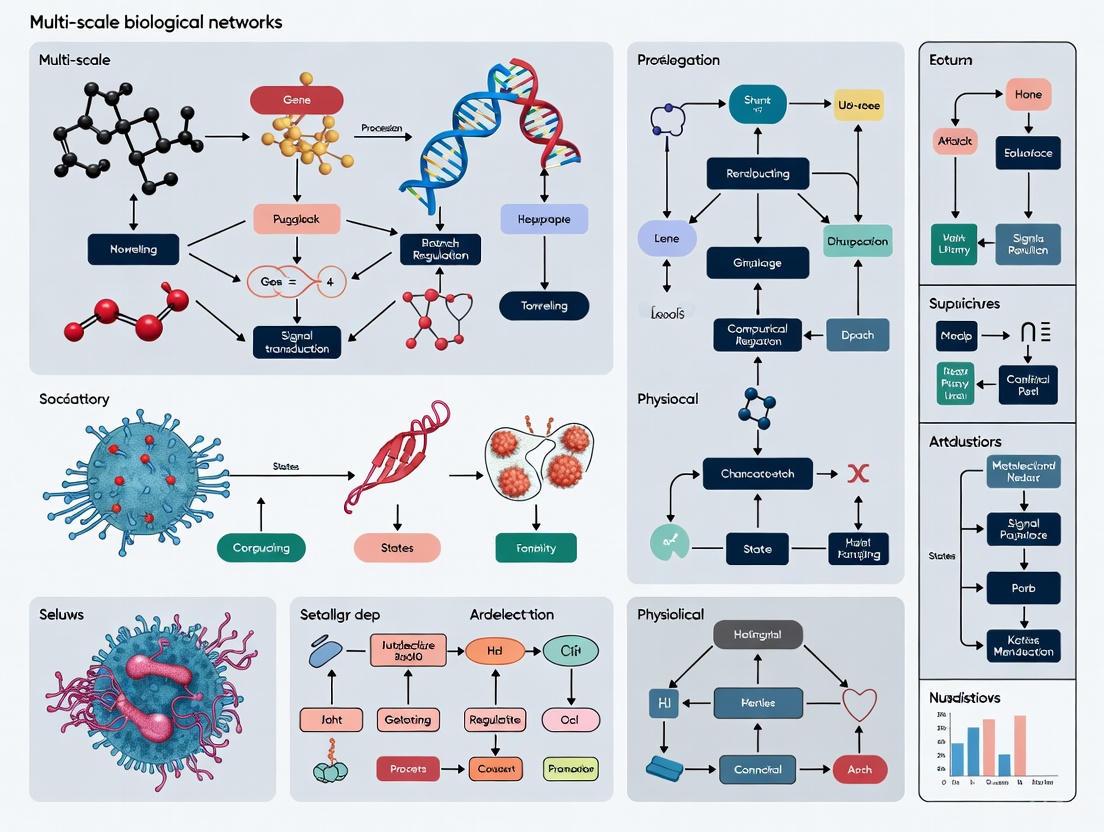
This article explores the transformative role of multi-scale biological network models in understanding human physiology and advancing therapeutic development.
Multi-Scale Biological Networks: Bridging Molecular to Organ-Level Physiology for Drug Discovery
Abstract
This article explores the transformative role of multi-scale biological network models in understanding human physiology and advancing therapeutic development. It provides a comprehensive overview for researchers and drug development professionals, covering the foundational principles of biological hierarchy—from molecular to organ levels. The piece details cutting-edge computational methodologies, including data-driven model identification and multilayer network control, and addresses key challenges in integrating disparate biological scales. Through comparative analysis of model types and validation via case studies in cancer and neuroscience, we demonstrate how these integrative frameworks enable accurate phenotype prediction and identification of robust, clinically relevant drug targets, ultimately bridging the gap between genotype and complex disease phenotypes.
The Hierarchical Architecture of Life: Defining Multi-Scale Biological Networks
Biological systems are fundamentally multiscale, operating across diverse spatial and temporal domains—from the atomic level of biomolecules to the complete organism [1]. This complex hierarchy, where interactions at smaller scales dictate phenomena at larger scales, presents a significant challenge for traditional research methods that focus on a single tier of resolution. A comprehensive understanding of human physiology requires the explicit integration of data and models across these scales [1]. The multiscale nature of biological systems means that their components often behave differently in isolation than when integrated into the living organism, necessitating computational models that can capture the connectivity between these divergent scales of biological function [1]. This integration is crucial for advancing research, diagnosis, and the development of personalized therapies, as it enables the mapping of detailed anatomical data with standardized disease characteristics [2].
Defining the Scales of Biological Organization
Biological organization can be explicitly divided into spatial and temporal scales. The explicit modeling of multiple tiers of resolution provides additional information that cannot be obtained by independently exploring a single scale in isolation [1].
Table 1: Characteristic Spatial Scales in Biological Systems
| Scale Tier | Typical Size Range | Key Components and Processes |
|---|---|---|
| Atomic/Molecular | Ångströms (Å) to nanometers (nm) | Protein folding, molecular binding, gene transcription, metabolic reactions. |
| Organelle/Cellular | Nanometers (nm) to micrometers (µm) | Signal transduction, organelle function, cellular metabolism, cell division. |
| Tissue | Micrometers (µm) to millimeters (mm) | Cellular neighborhoods, extracellular matrix, functional tissue units (e.g., renal corpuscle). |
| Organ | Millimeters (mm) to centimeters (cm) | Organ-specific functions (e.g., gas exchange in lungs, filtration in kidneys). |
| Organism | Centimeters (cm) to meters (m) | Systemic physiology, inter-organ communication, whole-body homeostasis. |
Table 2: Characteristic Temporal Scales in Biological Systems
| Biological Process | Typical Time Scale | Associated Spatial Scale |
|---|---|---|
| Protein Phosphorylation | Milliseconds to seconds | Molecular |
| Gene Expression | Minutes to hours | Cellular |
| Cell Division | Hours to days | Cellular |
| Tissue Remodeling | Days to weeks | Tissue |
| Organ Development | Weeks to years | Organ |
| Organism Lifespan | Years to decades | Organism |
The relationship between spatial and temporal scales is often interdependent, with subcellular processes generally occurring on much faster time scales than those at the tissue or organ level [3]. The cell represents a central focal plane, being the minimal unit of life, from which one can scale up to tissues and organs or down to molecules and atoms [3].
Figure 1: The hierarchical spatial organization of biological systems from atoms to organisms.
Computational Frameworks for Multiscale Modeling
Mathematical and computational models are uniquely positioned to capture the connectivity between divergent biological scales, bridging the gap between isolated in vitro experiments and whole-organism in vivo models [1]. These models can be broadly classified into continuous and discrete strategies, each with distinct strengths for capturing different aspects of system dynamics [1].
Continuous Modeling Approaches
Continuous modeling strategies typically employ Ordinary Differential Equations (ODEs) and Partial Differential Equations (PDEs). Systems of ODEs, frequently using mass action kinetics, are leveraged to represent chemical reactions within the cell, where the assumption of steady state is often valid due to rapid kinetics relative to the overall model timeframe [1]. Models of reaction-diffusion kinetics, often implemented as PDEs, are used to represent intra- and extracellular molecular binding and diffusion [1]. Finite element and finite volume methods are particularly suited for modeling geometrically constrained properties across scales, such as cell surface interfaces and tissue mechanics [1].
Data-Driven System Identification
For cases where deriving governing equations from first principles is impractical, data-driven methods can identify dynamics directly from observational data. The SINDy (Sparse Identification of Nonlinear Dynamics) framework identifies sparse models by selecting a minimal set of nonlinear functions to capture system dynamics [4]. Weak SINDy and iNeural SINDy improve robustness against noisy and sparse data, with the latter integrating neural networks and an integral formulation to handle challenging datasets [4]. Other approaches include symbolic regression methods like PySR and ARGOS, which use evolutionary algorithms to discover closed-form equations, and Physics-Informed Neural Networks (PINNs), which incorporate physical laws into their structure [4].
A Novel Hybrid Framework for Multi-Scale Data
A recent algorithmic framework integrates the weak formulation of SINDy, Computational Singular Perturbation (CSP), and neural networks (NNs) for Jacobian estimation [4]. This approach automatically partitions a dataset into subsets characterized by similar dynamics, allowing valid reduced models to be identified in each region without facing a wide time scale spectrum [4]. When SINDy fails to recover a global model from a full dataset, CSP—leveraging Jacobian estimates from NNs—successfully isolates dynamical regimes where SINDy can be applied locally [4]. This framework has been successfully validated using the Michaelis-Menten biochemical model, consistently identifying appropriate reduced dynamics even when data originated from stochastic simulations [4].
Figure 2: Workflow for data-driven multiscale system identification using SINDy, CSP, and neural networks.
Experimental Protocols and Methodologies
Protocol: Data-Driven Multiscale System Identification
This protocol outlines the methodology for identifying reduced models from multiscale observational data using the SINDy-CSP-NN framework [4].
Data Acquisition and Preprocessing:
- Collect high-dimensional time-series data from the biological system of interest. Data can originate from simulations (e.g., stochastic versions of biochemical models like Michaelis-Menten) or experimental observations.
- Preprocess data to handle noise and missing values. Normalize datasets if necessary to ensure numerical stability in subsequent steps.
Neural Network Training for Jacobian Estimation:
- Design a neural network architecture suitable for approximating the system's dynamics. The network should take the system state as input and output the estimated derivative.
- Train the network using the preprocessed observational data. The loss function typically minimizes the difference between the network's predicted state derivative and the finite-difference approximation of the actual state derivative.
- Use automatic differentiation on the trained network to compute the Jacobian matrix of the vector field for any given state point in the dataset [4].
Time-Scale Decomposition with Computational Singular Perturbation (CSP):
- Employ the CSP algorithm using the Jacobian matrices estimated by the neural network.
- The algorithm will identify the number of exhausted modes and partition the dataset into subsets where the dynamics evolve on similar time scales [4].
- This step effectively isolates regions of the phase space where distinct, reduced models govern the dynamics.
Sparse Model Identification with SINDy:
- For each data subset generated by CSP, create a comprehensive library of candidate basis functions (e.g., polynomials, trigonometric functions) that could potentially describe the dynamics.
- Apply the SINDy algorithm to each subset independently to perform sparse regression. This identifies the minimal set of functions from the library that accurately capture the dynamics within that specific regime [4].
- The output is a set of parsimonious, interpretable ordinary differential equations for each dynamical regime.
Model Validation:
- Validate the identified reduced models by comparing their predictions against held-out experimental or simulated data not used in the training process.
- Assess the models' ability to capture key dynamical features, such as transient behaviors and steady states, within their respective regions of validity.
Protocol: Analyzing Cell Neighborhoods in Tissue
This protocol describes a method for quantifying changes in cellular microenvironments, relevant for studying diseases like bronchopulmonary dysplasia (BPD) in lung tissue [2].
Tissue Sampling and Multiplexed Imaging:
- Obtain tissue samples from both healthy and diseased subjects.
- Perform multiplexed immunofluorescence microscopy on tissue sections. This technique labels multiple specific cell types (e.g., parenchymal cells, endothelial cells, macrophages) with distinct fluorescent markers within the same sample.
Image Analysis and Cell Typing:
- Use computational image analysis tools to identify individual cell nuclei and their spatial coordinates within the tissue.
- Classify each cell based on its marker expression profile into specific cell types (e.g., endothelial, epithelial, immune cells).
Spatial Analysis with Cell Distance Explorer:
- Input the cell type and coordinate data into a spatial analysis tool, such as the publicly available Cell Distance Explorer [2].
- The tool systematically quantifies and visualizes the distances between different cell types, defining the local cellular neighborhood.
Comparative Visualization and Statistical Analysis:
- Generate cell distance distribution graphs (e.g., violin plots) to compare the spatial organization in healthy versus diseased tissue.
- Statistically compare distance distributions for cell types common to both conditions to identify significant changes in tissue architecture resulting from disease or aging [2].
Table 3: Key Computational and Experimental Resources for Multiscale Research
| Resource Category | Specific Tool / Reagent | Function and Application in Multiscale Research |
|---|---|---|
| Computational Modeling Tools | COmplex PAthways SImulator (COMPASI) [1] | Executes systems of ODEs to model molecular pathways within multiscale models (e.g., TGF-β1 in wound healing). |
| SINDy Algorithm [4] | Identifies sparse, interpretable dynamical systems models directly from time-series data. | |
| Cytoscape [5] | Open-source platform for visualizing complex biological networks and integrating with other data. | |
| Spatial Analysis Platforms | Human Reference Atlas (HRA) [2] | Provides a multiscale, 3D common coordinate framework for aggregating and analyzing data across spatial scales. |
| Cell Distance Explorer [2] | Publicly available tool to systematically quantify and visualize distances between cell types in tissue. | |
| Data Visualization Resources | Circos [5] | Tool for creating circular layouts, ideal for visualizing genomic data and linkages. |
| CIE Lab Color Space [6] | A perceptually uniform color space for creating accurate and accessible scientific visualizations. | |
| Experimental Reagents | Multiplexed Immunofluorescence Antibodies [2] | Enable simultaneous labeling of multiple cell types in tissue for spatial analysis of cellular neighborhoods. |
The inherent multiscale structure of biology, from atoms to organisms, demands integrative research strategies that transcend traditional single-scale approaches. Computational frameworks that couple continuous and discrete models, along with novel data-driven methods like the SINDy-CSP-NN framework, are proving essential for characterizing biological components holistically [4] [1]. The ongoing development of resources like the Multiscale Human Reference Atlas provides the foundational infrastructure to map and model this complexity in support of precision medicine [2]. As these tools and methodologies mature, they offer the promise of unlocking deeper insights into complex biological phenomena, from tissue patterning and disease pathogenesis to the development of novel therapeutic interventions.
In the study of multi-scale biological networks in human physiology, the precise definition of scale forms the foundation for generating meaningful, reproducible data. Scale encompasses three interdependent dimensions: resolution (the smallest distinguishable detail), field of view (the total area observed), and level of biological organization (the structural hierarchy from molecules to organisms). These dimensions exist in a fundamental trade-off: increasing resolution typically necessitates decreasing field of view, while the biological question dictates the appropriate level of organization that must be targeted. Understanding and navigating these relationships is paramount for researchers and drug development professionals aiming to connect molecular mechanisms to physiological outcomes.
Modern technological advances are rapidly reshaping these traditional constraints. Cutting-edge approaches now enable the integration of data across scales, from nanoscale protein complexes to macroscale brain networks [7]. This whitepaper provides a technical framework for defining scale in biological research, offering quantitative comparisons, detailed methodologies, and practical tools for designing experiments within multi-scale biological networks.
Quantitative Dimensions of Scale: A Technical Reference
The following tables summarize key quantitative parameters across biological scales, providing a reference for experimental design.
Table 1: Spatial Scale Characteristics Across Biological Levels
| Level of Biological Organization | Typical Spatial Scale | Resolution of Representative Technologies | Field of View of Representative Technologies |
|---|---|---|---|
| Molecular Complexes | 1 - 100 nm | ~1 nm (Cryo-EM) | ~1 μm² (Cryo-EM) |
| Subcellular Organelles | 100 nm - 1 μm | ~200 nm (Light Microscopy) | ~100 μm² (Confocal Microscopy) |
| Single Cells | 1 - 100 μm | ~200 nm (Super-resolution Microscopy) | ~1 mm² (Whole-slide Imaging) |
| Tissues | 100 μm - 1 cm | ~1 μm (Medical CT) | ~0.5 m² (Whole-body CT) |
| Organ Systems | 1 cm - 2 m | 1-10 mm (fMRI) | ~0.5 m² (Whole-body CT) |
Table 2: Temporal Resolution and Data Volume Across Imaging Modalities
| Imaging Modality | Temporal Resolution | Spatial Resolution | Data Volume per Sample | Primary Biological Applications |
|---|---|---|---|---|
| Electron Microscopy | Minutes to hours | < 10 nm | Terabytes to Petabytes | Synaptic connectivity, ultrastructure [8] |
| Confocal Microscopy | Seconds to minutes | ~200 nm | Megabytes to Gigabytes | Live cell imaging, 3D tissue architecture [9] |
| Two-Photon Calcium Imaging | Sub-second | ~1 μm | Gigabytes to Terabytes | Neural population dynamics [8] |
| Functional MRI (fMRI) | 1-2 seconds | 1-2 mm | Megabytes to Gigabytes | Brain-wide functional connectivity [10] |
| Medical CT | Sub-second | 50-500 μm | Gigabytes | Gross anatomy, lesion detection [11] |
Experimental Protocols for Multi-Scale Integration
Multimodal Cell Mapping for Subcellular Architecture
Objective: To systematically map protein subcellular organization across scales by integrating biophysical interaction data and immunofluorescence imaging [7].
Workflow Overview: The multi-stage experimental and computational workflow is summarized below:
Detailed Methodology:
Sample Preparation and Data Acquisition:
- Cell Line: Use U2OS osteosarcoma cells with systematic C-terminal Flag-HA tagging via lentiviral expression from the human ORFeome library.
- Protein Interaction Data (AP-MS): Isolate protein complexes from whole-proteome extracts using affinity purification. Identify interacting partners via tandem mass spectrometry to generate a protein-protein interaction network.
- Imaging Data (Immunofluorescence): Perform confocal imaging of cells stained with antibodies against target proteins. Co-stain each sample with reference markers for nucleus, endoplasmic reticulum, and microtubules to provide consistent subcellular landmarks.
Multimodal Data Integration:
- Process imaging and AP-MS data streams separately to generate protein features for each modality.
- Employ a self-supervised machine learning approach to create a unified multimodal embedding for each protein. This approach minimizes reconstruction loss (preserving original data) while optimizing contrastive loss (capturing protein similarities/differences across modalities).
Assembly Detection and Annotation:
- Compute all pairwise protein-protein distances in the multimodal embedding space.
- Apply multiscale community detection to identify protein assemblies as modular communities at multiple resolutions.
- Annotate assemblies through expert curation assisted by large language models (GPT-4), which generates descriptive names and functional interpretations for protein sets with high confidence.
Validation: Systematically validate assemblies using an orthogonal method: perform proteome-wide size-exclusion chromatography coupled with mass spectrometry (SEC-MS) in the same U2OS cellular context.
Functional Connectomics Across Visual Cortical Areas
Objective: To bridge neuronal function and circuitry at the cubic millimeter scale in mouse visual cortex by co-registering in vivo calcium imaging with electron microscopy reconstruction [8].
Detailed Methodology:
In Vivo Calcium Imaging:
- Subject: Use transgenic mice (Slc17a7-Cre and Ai162) expressing GCaMP6s in excitatory neurons.
- Imaging System: Employ a two-photon random access mesoscope (2P-RAM) with wide field of view.
- Visual Stimulation: Present naturalistic and parametric video stimuli to the mouse's left visual field during imaging, while monitoring behavior (locomotion, eye movements, pupil diameter).
- Spatial Coverage: Perform 14 individual scans across multiple imaging planes (up to 500 μm depth) targeting primary visual cortex (VISp) and higher visual areas (VISrl, VISal, VISlm) to capture retinotopically matched neurons.
- Data Processing: Automatically segment somas using constrained non-negative matrix factorization. Extract and deconvolve fluorescence traces to yield activity traces for approximately 75,000 neurons.
Electron Microscopy Reconstruction:
- Tissue Preparation: Extract the imaged tissue volume, prepare for EM, and section.
- Imaging: Continuously image sections over six months using serial section transmission EM (TEM).
- Reconstruction: Montage and align EM data. Densely segment the volume using scalable convolutional networks. Perform extensive proofreading on a subset of neurons to correct automated segmentation errors.
Data Co-registration:
- Acquire high-resolution structural stacks with fluorescent dye (Texas Red) to label vasculature as fiducial markers.
- Register functional imaging data with the structural stack, then co-register with the EM volume.
- Assign 3D centroids to functionally imaged neurons in the shared coordinate system to match neuronal responses to their structural connectivity.
The Scientist's Toolkit: Essential Research Reagents and Materials
Table 3: Key Research Reagents for Multi-Scale Biological Imaging
| Reagent / Material | Function in Research | Example Application |
|---|---|---|
| ORFeome Library | Provides standardized, sequence-validated open reading frames for systematic protein tagging | Genome-scale protein interaction mapping [7] |
| GCaMP6s Calcium Indicator | Genetically encoded calcium sensor for monitoring neuronal activity | In vivo calcium imaging of excitatory neurons in visual cortex [8] |
| Flag-HA Tandem Tag | Affinity tag for purification and detection of expressed proteins | Isolation of protein complexes for AP-MS [7] |
| Texas Red Fluorescent Dye | Vasculature labeling for creating fiducial markers | Co-registration between calcium imaging and electron microscopy data [8] |
| Specific Antibodies for Immunofluorescence | Target protein detection with subcellular resolution | Mapping protein localization patterns in U2OS cells [7] |
| GPT-4 Large Language Model | Computational tool for generating descriptive names and functional interpretations | Annotating previously undocumented protein assemblies [7] |
Computational Framework for Multi-Scale Data Integration
The integration of data across scales requires sophisticated computational approaches. The following diagram illustrates the information flow in a generalized multi-scale analysis pipeline, from raw data acquisition to biological insight:
Key Computational Considerations:
- Data Volume Management: Modern imaging datasets can reach terabytes for a single experiment (e.g., time-lapse confocal microscopy) or petabytes for connectomics projects [11] [8]. Effective management requires tiered storage architectures balancing accessibility and cost.
- Multimodal Integration: Self-supervised approaches position proteins or neural entities in embedding spaces such that original imaging and interaction features can be reconstructed with minimal information loss while capturing relative similarities [7].
- Community Detection: Multiscale community detection techniques identify modular organization at different hierarchical levels, from protein complexes to brain networks [10] [7].
- Spatial and Quantitative Preservation: Methods like STABLE (Spatial and Quantitative Information Preserving Biomedical Image Translation) enforce information consistency and employ learnable upsampling operators to maintain precise spatial alignment and signal intensities when translating between imaging modalities [12].
Defining scale through the precise interrelationship of resolution, field of view, and biological organization level is fundamental to advancing human physiology research and drug development. The experimental frameworks and technical resources presented here provide researchers with practical methodologies for investigating biological networks across spatial and organizational scales. As multimodal data integration becomes increasingly sophisticated—encompassing molecular precision, cellular resolution, and system-level dynamics—our ability to uncover the organizing principles of human physiology will fundamentally transform. The emerging paradigm leverages computational power to bridge traditional scale boundaries, promising unprecedented insights into health and disease.
Biological systems are inherently multiscale, organized hierarchically from molecular complexes and cells to tissues and entire organs [13]. At every level of this hierarchy, the physical or functional proximity between constituent elements—be they proteins, cells, or brain regions—forms a foundational layer of biological organization. Proximity networks have emerged as a powerful computational framework for quantifying and analyzing these relationships, enabling researchers to move from descriptive observations to predictive, quantitative models. These networks represent biological entities as nodes and their pairwise proximities as edges, creating a unified data structure that transcends traditional scale boundaries. Within physiology and drug development, this approach facilitates mechanistic insights into how local interactions at smaller scales give rise to emergent physiological behaviors at larger scales, ultimately bridging the gap between cellular pathophysiology and organism-level clinical manifestations.
The analytical power of proximity networks stems from their ability to integrate heterogeneous data types through a common mathematical formalism. Whether derived from protein co-localization, neuronal synaptic connectivity, or cellular adjacencies in tissues, proximity relationships can be encoded as network structures amenable to a consistent suite of computational analyses. This review examines how proximity networks serve as a unifying framework across biological scales, detailing the methodological approaches for their construction and analysis, and highlighting their transformative applications in basic research and therapeutic development.
Foundational Principles and Mathematical Formalisms
Defining Proximity Networks
At its core, a proximity network represents a collection of biological entities (nodes) and their pairwise proximity relationships (edges). Formally, for a set of n entities, each entity i (1 ≤ i ≤ n) is described by a data profile Xi representing its measurable characteristics [14]. A distance measure μ quantifies the dissimilarity between entities i and j as μ(Xi, Xj), with higher values indicating greater dissimilarity. Through application of a threshold or probabilistic connection rule, these distances are transformed into a network representation that captures the system's functional architecture.
The mathematical representation begins with the construction of distance matrices that encode all pairwise relationships. Given two data matrices X and Y containing different classes of measurements over the same n entities, distance measures μX and μY generate corresponding distance matrices DX and DY [14]. The relationship between these different proximity measures can then be quantified using statistical approaches such as the Mantel test, which computes a correlation between distance matrices, or the RV coefficient, which characterizes matrix congruence [14]. These foundational operations enable researchers to test hypotheses about how different types of biological proximity relate to one another—for example, whether genetic similarity predicts functional connectivity in neural circuits.
Key Mathematical Models
Several mathematical models provide the theoretical underpinnings for proximity network analysis across biological scales:
The S1 Model: This latent space model positions nodes on a circle with coordinates (κ, θ), where κ represents a node's expected degree and θ its angular similarity coordinate [15]. The connection probability between nodes follows a Fermi-Dirac distribution: p(χij) = 1/(1+χij^1/T), where χij = RΔθij/(μκiκj) is the effective distance and T ∈ (0,1) is the temperature parameter controlling clustering [15]. This model generates networks with tunable degree distributions and strong clustering, mimicking key properties of biological networks.
Dynamic-S1 Model: For temporal proximity data, this extension generates network snapshots as realizations of the S1 model, effectively capturing the time-varying nature of biological interactions while maintaining mathematical tractability [15]. The model reproduces characteristic properties of human proximity networks, including broad distributions of contact durations and repeated group formations.
Hyperbolic Mapping: The S1 model is isometric to random hyperbolic graphs (the H2 model) through the transformation ri = R̂ - 2ln(κi/κ0), which maps degree variables to radial coordinates [15]. This mapping reveals that effective distance χij ≈ e^(½(xij-R̂)), where xij is the approximate hyperbolic distance, providing geometric intuition for why hyperbolic embeddings often successfully capture biological network organization.
Table 1: Core Mathematical Models for Biological Proximity Networks
| Model | Key Parameters | Biological Interpretation | Typical Applications |
|---|---|---|---|
| S1 Model | κ (degree variable), θ (angular coordinate), T (temperature) | κ: Biological popularity or centrality; θ: Functional similarity; T: Clustering tendency | Static network embedding, community detection, link prediction |
| Dynamic-S1 | Time-varying κ(t), θ(t) parameters | Evolving cellular functions or spatial arrangements | Temporal human proximity networks, epidemic spreading analysis |
| Hyperbolic H2 | r (radial coordinate), θ (angular coordinate) | r: Node centrality; θ: Functional role | Brain networks, protein-protein interactions, multi-scale modeling |
Proximity Networks Across Biological Scales
Molecular and Cellular Scales
At molecular scales, proximity networks capture physical interactions between biomolecules, providing insights into cellular machinery and potential therapeutic targets. Protein-protein interaction networks represent the most established application, where nodes correspond to proteins and edges represent confirmed physical binding or co-complex membership. These networks enable systems-level analysis of cellular signaling, with highly connected "hub" proteins often representing essential cellular components and potential drug targets. Recent advances extend beyond binary interactions to include higher-order networks that capture multi-way relationships, such as triadic interactions where one node regulates the interaction between two others [16]. Information-theoretic approaches like the "Triaction" algorithm can mine these complex relationships from gene expression data, revealing previously overlooked regulatory mechanisms in conditions like Acute Myeloid Leukemia [16].
At the cellular level, proximity networks model spatial organization and functional relationships between cells within tissues. Single-cell RNA sequencing data can be transformed into cellular proximity networks by calculating transcriptional similarity between individual cells, enabling identification of rare cell states and transitional populations during differentiation. In neuroscience, brain-wide cellular connectivity atlases are emerging as comprehensive proximity networks, mapping neuronal connections across the entire brain to understand information processing hierarchies [16]. The Human Reference Atlas (HRA) initiative exemplifies this approach, creating multiscale networks that link anatomical structures, cell types, and biomarkers across the entire human body [16].
Tissue and Organ Systems
In tissue and organ systems, proximity networks model both structural connectivity and functional coordination between distinct anatomical regions. In neuroscience, the brain's connectome represents perhaps the most sophisticated application of proximity networking, with white matter tractography defining structural connections between cortical regions [10]. Beyond physical connections, researchers construct multiscale structural connectomes that incorporate cortico-cortical proximity, microstructural similarity, and white matter connectivity to create comprehensive models of brain organization [10]. Gradient mapping of these networks reveals principal axes of spatial organization, such as the sensory-association axis, which shows continuous expansion during childhood development, reflecting functional specialization of the maturing brain [10].
The analytical power of these networks emerges from their ability to integrate multiple data types. As demonstrated in the multiscale brain structural study, the combination of geodesic distance (physical proximity), microstructural similarity (tissue composition), and white matter connectivity (structural wiring) provides a more complete picture of organizational principles than any single measure alone [10]. This integration enables researchers to track developmental and disease-related reorganization across scales, revealing how local cellular changes propagate to alter system-wide function.
Organism-Level Proximity Networks
At the organism level, human proximity networks capture physical interactions between individuals in social and healthcare settings, with profound implications for understanding disease transmission and social behavior [15]. These temporal networks represent close-range proximity among humans, with edges signifying physical proximity during specific time intervals. Studies have captured such networks in diverse environments including hospitals, schools, scientific conferences, and offices using both direct (RFID) and indirect (Bluetooth) sensing technologies [15]. Despite different contexts and measurement methods, these networks consistently exhibit universal properties including broad distributions of contact durations and repeated formation of interaction groups [15].
The dynamic-S1 model provides a mathematical foundation for these empirical observations, generating synthetic temporal networks that reproduce characteristic structural and dynamical properties of human proximity systems [15]. This model compatibility enables meaningful embedding of time-aggregated proximity networks into low-dimensional spaces, facilitating applications including community identification, efficient routing, link prediction, and analysis of epidemic spreading patterns [15].
Methodologies and Experimental Protocols
Data Acquisition and Network Construction
Constructing biological proximity networks requires specialized methodologies tailored to each scale of investigation:
Molecular Proximity Networks: For protein-protein interactions, affinity purification mass spectrometry (AP-MS) and yeast two-hybrid (Y2H) screens provide complementary approaches for mapping physical proximities. Cross-linking mass spectrometry can further capture transient interactions in native cellular environments. For genomic proximities, chromatin conformation capture techniques (Hi-C, ChIA-PET) measure three-dimensional spatial organization of DNA segments within the nucleus.
Cellular Proximity Networks: Single-cell RNA sequencing enables reconstruction of cellular proximity through computational analysis of transcriptional similarity. Spatially resolved transcriptomics technologies now directly capture spatial organization while profiling gene expression. The Human Reference Atlas consortium provides standardized protocols for mapping cells to reference anatomical structures, enabling cross-study integration [16].
Human Proximity Networks: The SocioPatterns platform provides standardized methodologies for capturing face-to-face interactions in closed settings using active RFID tags, with typical parameters including 20-second time resolution and 1.5-meter proximity range [15]. Bluetooth-based approaches offer wider detection ranges (up to 10 meters) but lower spatial precision, suitable for community-scale studies over extended periods [15].
Analytical Approaches and Computational Tools
The analysis of biological proximity networks employs a diverse toolkit of computational methods:
Distance Matrix Comparison: The Mantel test quantifies correlation between distance matrices, with statistical significance estimated via permutation testing [14]. The RV coefficient provides an alternative measure of matrix congruence with analytical significance testing [14]. For spatial analysis, empirical variograms quantify how property differences vary with spatial separation: γ(k) = (1/|N(k)|) · Σ_(i,j)∈N(k) [dYij]², where N(k) contains entity pairs with spatial distance ≈ k [14].
Network Embedding: Hyperbolic mapping approaches embed time-aggregated proximity networks into hyperbolic space using methods based on the S1 model [15]. These embeddings facilitate community detection, greedy routing, and link prediction by leveraging the geometric structure of latent spaces.
Multiscale Integration: Gradient mapping approaches extract principal axes of organization from multiscale structural connectomes, revealing hierarchical organization patterns such as the sensory-association axis in brain networks [10]. These methods can track developmental changes in network organization and their relationship to cognitive maturation.
Higher-Order Analysis: Information-theoretic frameworks like "Triaction" algorithmically identify triadic interactions where one node regulates the relationship between two others [16]. These approaches move beyond pairwise connections to capture more complex dependency structures in biological systems.
Table 2: Key Analytical Techniques for Proximity Networks
| Method Category | Specific Techniques | Outputs | Biological Insights |
|---|---|---|---|
| Matrix Comparison | Mantel test, RV coefficient, Empirical variogram | Matrix correlations, Spatial dependence patterns | Integration of multi-modal data, Spatial covariance structure |
| Network Embedding | Hyperbolic mapping (H2), S1 model fitting, Gradient analysis | Low-dimensional representations, Continuous organizational axes | Latent geometry, Developmental trajectories, Community structure |
| Temporal Analysis | Dynamic-S1 model, Markov modeling, Cross-correlation networks | Transition probabilities, Influence networks, Dynamic communities | Interaction patterns, Information flow, Epidemic spreading dynamics |
| Higher-Order Analysis | Triadic interaction mining, Hypergraph construction | Regulatory triples, Group interactions | Complex dependencies, Higher-order structure beyond pairwise |
Successful construction and analysis of biological proximity networks requires both experimental and computational resources:
Data Acquisition Tools: For molecular proximity networks, crosslinking reagents (e.g., formaldehyde, DSS) stabilize protein complexes for interaction studies. For cellular networks, barcoded oligonucleotides in single-cell RNA sequencing protocols enable transcriptional profiling of individual cells. For human proximity networks, the SocioPatterns platform provides open-hardware solutions for face-to-face interaction tracking [15].
Computational Tools: The BrainSpace toolbox enables gradient analysis of neuroimaging data, critical for mapping principal axes of brain organization [10]. For multiscale structural analysis, the MICA-MNI repository provides specialized code for generating structural manifolds that integrate multiple proximity measures [10]. The Human Reference Atlas offers comprehensive APIs and exploration tools for mapping data across anatomical scales [16].
Specialized Algorithms: The "Triaction" algorithm implements information-theoretic detection of triadic interactions from gene expression data [16]. Variogram matching approaches generate surrogate maps for estimating spatial correlation significance, available through the brainsmash toolbox [10]. Hyperbolic embedding algorithms enable mapping of time-aggregated proximity networks into geometric spaces [15].
Reference Datasets: The Allen Human Brain Atlas provides comprehensive molecular data mapped to brain anatomy, enabling multi-scale integration [10]. The HuBMAP Human Reference Atlas offers a common coordinate framework for the healthy human body, with semantically annotated 3D representations of anatomical structures [16].
Applications in Physiology and Therapeutic Development
Basic Research Applications
Proximity networks enable fundamental advances in understanding physiological systems across scales:
Mapping Developmental Trajectories: Multiscale structural analysis reveals how brain organization matures from childhood to adolescence, with the expansion of the principal gradient space reflecting enhanced differentiation between primary sensory and higher-order transmodal regions [10]. This developmental reorganization correlates with cortical morphology maturation and underlies improvements in cognitive abilities such as working memory and attention [10].
Characterizing Disease Heterogeneity: Network-based stratification of Huntington's disease patients using allele-specific expression data reveals distinct molecular subtypes with potential implications for disease progression and treatment response [16]. Similar approaches have been applied to cancer, identifying molecularly distinct subgroups with prognostic significance.
Modeling Microbiome Ecology: Cross-feeding networks represent microbial communities as bipartite graphs linking consumers and resources, revealing tipping points in diversity that emerge from metabolic interdependencies [16]. Percolation theory applied to these networks explains discontinuous transitions in community diversity in response to structural changes.
Therapeutic Development and Precision Medicine
Proximity networks are transforming therapeutic development through multiple mechanisms:
Drug Target Identification: Protein-protein interaction networks enable systematic identification of therapeutic targets by pinpointing essential hubs or dysregulated modules in disease states. Network proximity measures can predict drug efficacy and repurposing opportunities by quantifying the proximity of drug targets to disease modules in the interactome.
Clinical Trial Optimization: The emergence of in silico clinical trials leverages computational models representative of clinical populations to simulate intervention effects across heterogeneous cohorts [17]. This approach accelerates therapeutic evaluation while reducing costs and ethical concerns associated with traditional trials.
Digital Twin Development: The vision has shifted from generating a universal human model to creating patient-specific models ("digital twins") that enable personalized prediction of treatment responses [17]. These models integrate individual clinical data with multiscale biological networks to simulate personalized physiological and therapeutic outcomes.
Mental Health Applications: The network theory of psychopathology conceptualizes mental disorders as networks of symptoms, with connectivity strength among symptoms potentially predicting treatment response and recovery timelines [16]. Weaker baseline connectivity correlates with greater subsequent improvement, suggesting network-based biomarkers of therapeutic plasticity.
Future Directions and Conceptual Challenges
The evolving field of biological proximity networks faces several important frontiers:
Integration of Mechanistic and Data-Driven Modeling: A key challenge involves bridging first-principles mechanistic models with pattern-recognizing data-driven approaches [17]. Mechanistic models provide generalizability and respect fundamental biological constraints, while data-driven models better capture empirical observations; their systematic integration represents a promising direction for future methodology development.
Handling Biological Variability: Moving from population-level models to individual predictions requires explicit consideration of inter-individual and intra-individual variability [17]. Virtual cohort studies that sample from distributions of model parameters can capture this heterogeneity, enabling more robust translation from basic research to clinical applications.
Standardization and Interoperability: Progress depends on developing open tools, data standards, and metadata frameworks that enable cross-study integration and replication [17]. Initiatives like the Human Reference Atlas exemplify this approach, creating common coordinate frameworks for mapping data across scales [16].
Temporal Network Analysis: Most current analyses focus on static network representations, but biological systems are inherently dynamic. Developing analytical frameworks for temporal proximity networks that capture both instantaneous relationships and their evolution over time represents an important frontier, with preliminary approaches showing promise in modeling epidemic spreading and social behavior [15].
As these challenges are addressed, proximity networks will increasingly serve as the foundational data structure for multiscale biological modeling, ultimately enabling more predictive, personalized, and effective therapeutic interventions across the spectrum of human disease.
Biological networks provide a powerful framework for understanding the complex interactions that govern human physiology. By representing biological entities as nodes and their relationships as edges, these networks enable researchers to move beyond a one-molecule-at-a-time approach to a systems-level perspective essential for comprehensive physiological research [18]. The visual representation and analysis of these networks have become challenging in their own right as underlying graph data grows ever larger and more complex, requiring collaboration between domain experts, bioinformaticians, and network scientists [18]. Within the context of multi-scale human physiology research, biological networks typically fall into three fundamental categories: physical interaction networks, which map direct molecular contacts; genetic interaction networks, which reveal functional relationships through phenotypic analysis; and functional interaction networks, which represent coordinated biological roles and pathways. Together, these network types form interconnected layers that span from molecular to organismal levels, providing the computational foundation for deciphering disease mechanisms and identifying therapeutic targets in drug development.
Physical Interaction Networks
Definition and Biological Significance
Physical interaction networks map direct physical contacts between biomolecules, providing a structural basis for understanding molecular complex formation and signal transduction mechanisms. The most prominent examples include Protein-Protein Interaction (PPI) networks that catalog stable complexes and transient signaling connections, and Protein-DNA interaction networks that document transcription factor binding to genomic regulatory elements. These networks are foundational to mechanistic studies in physiology as they reveal the actual physical architecture of cellular machinery [5]. For drug development professionals, physical interaction networks offer crucial insights into drug target engagement, potential off-target effects, and the structural context of molecular function.
Key Experimental Methodologies
Yeast Two-Hybrid (Y2H) Screening
The Yeast Two-Hybrid system is a powerful high-throughput method for detecting binary protein interactions through reconstitution of transcription factor activity in yeast cells.
Experimental Protocol:
- Construct Creation: Clone "bait" protein gene into DNA-Binding Domain (DBD) vector and "prey" protein gene into Activation Domain (AD) vector
- Yeast Transformation: Co-transform both constructs into appropriate yeast reporter strain (e.g., AH109 or Y187)
- Selection Plating: Plate transformed yeast on minimal media lacking specific nutrients (e.g., -Leu/-Trp) to select for successful transformants
- Interaction Screening: Transfer colonies to higher stringency selection plates (e.g., -Leu/-Trp/-His/-Ade) containing X-α-Gal for colorimetric detection
- Validation: Confirm positive interactions through β-galactosidase liquid assays and sequence analysis of prey plasmids
Affinity Purification-Mass Spectrometry (AP-MS)
AP-MS identifies protein complex components by purifying tagged bait proteins and their associated partners followed by mass spectrometric identification.
Experimental Protocol:
- Cell Lysis: Prepare native cell lysates from tissues or cell lines expressing tagged bait protein
- Affinity Purification: Incubate lysate with tag-specific affinity resin (e.g., anti-FLAG M2 agarose, glutathione sepharose for GST tags, nickel-NTA for His tags)
- Washing: Perform sequential washes with lysis buffer to remove non-specifically bound proteins
- Elution: Competitively elute complexes using tag-specific peptides (FLAG peptide) or altering buffer conditions (reduced pH, high imidazole)
- Proteolytic Digestion: Digest eluted proteins with trypsin/Lys-C mixture
- LC-MS/MS Analysis: Separate peptides by reverse-phase liquid chromatography and analyze by tandem mass spectrometry
- Data Processing: Identify proteins from fragmentation spectra using database search algorithms (MaxQuant, Proteome Discoverer) and apply statistical filters (SAINT, CompPASS) to distinguish specific interactions from background
Table 1: Quantitative Metrics for Physical Interaction Network Characterization
| Network Metric | Biological Interpretation | Typical Range | Calculation Method |
|---|---|---|---|
| Degree Distribution | Network robustness and hub identification | Power-law exponent (γ): 1.5-2.5 | P(k) ~ k^(-γ) |
| Betweenness Centrality | Essential bottleneck proteins in information flow | 0-1 (normalized) | Shortest paths through node |
| Clustering Coefficient | Modularity and functional complex formation | 0.4-0.8 (biological networks) | Triangle density around node |
| Network Diameter | Information propagation efficiency | 4-12 (cellular networks) | Longest shortest path |
Research Reagent Solutions
Table 2: Essential Research Reagents for Physical Interaction Studies
| Reagent/Material | Function | Example Products |
|---|---|---|
| Anti-FLAG M2 Agarose | Immunoaffinity purification of FLAG-tagged bait proteins | Sigma A2220, Thermo Fisher PI8823 |
| Streptavidin Magnetic Beads | Purification of biotinylated proteins and complexes | Pierce 88816, Dynabeads M-270 |
| Cross-linking Reagents | Stabilization of transient interactions (formaldehyde, DSS) | Pierce 22585 (DSS), Thermo 28906 (formaldehyde) |
| Protease Inhibitor Cocktails | Preservation of protein complex integrity during lysis | Roche 4693132001, Thermo 78430 |
| TMT/Isobaric Tags | Multiplexed quantitative proteomics | Thermo 90110 (TMT11-plex), 90406 (TMTpro-16) |
Genetic Interaction Networks
Definition and Biological Significance
Genetic interaction networks map functional relationships between genes by revealing how combinations of genetic perturbations produce unexpected phenotypes that deviate from single mutant predictions. These networks are categorized into several types: synthetic lethality (where two non-lethal mutations combined cause lethality), suppression (where one mutation reverses another's phenotype), and epistasis (where one mutation masks another's effect) [19]. In the context of multi-scale physiology, genetic interactions reveal functional redundancy, backup pathways, and compensatory mechanisms that maintain system robustness. For drug development, synthetic lethal interactions provide powerful opportunities for therapeutic targeting, particularly in oncology where cancer-specific vulnerabilities can be exploited while sparing healthy tissues.
Key Experimental Methodologies
Synthetic Genetic Array (SGA) Analysis
SGA automates yeast genetics to systematically construct double mutants and quantify genetic interactions across thousands of gene pairs.
Experimental Protocol:
- Query Strain Construction: Generate query strain with a deletion mutation marked by a selectable marker (e.g., kanMX)
- Arraying Procedure: Robotically pin query strain onto high-density array of ~5000 deletion mutant strains (the "array")
- Mating Phase: Incubate to allow mating between query and array strains on rich media (YPD)
- Diploid Selection: Transfer to minimal media selecting for diploids (e.g., -His/-Leu)
- Sporulation Induction: Transfer to nitrogen-deficient media to induce meiosis and sporulation
- Haploid Selection: Transfer to media containing canavanine and thialysine to select for haploid double mutants
- Phenotypic Scoring: Measure colony size as fitness proxy after 48-72 hours growth
- Interaction Scoring: Calculate genetic interaction scores (ε) from observed vs. expected double mutant fitness
CRISPR-Based Genetic Interaction Screening
CRISPR-mediated gene knockout or inhibition enables genetic interaction mapping in mammalian cells with single-guide RNA (sgRNA) libraries.
Experimental Protocol:
- Library Design: Design sgRNA pairs targeting gene combinations (typically 3-10 sgRNAs per gene)
- Lentiviral Production: Package sgRNA library in lentiviral particles at low MOI (<0.3) to ensure single infection
- Cell Infection: Transduce target cells (e.g., cancer cell lines) and select with puromycin for 48-72 hours
- Time Points Collection: Harvest cells at initial (T0) and final (Tend) time points (typically 14-21 population doublings)
- Sequencing Library Prep: Amplify integrated sgRNA sequences with barcoded primers
- Next-Generation Sequencing: Sequence sgRNA representation on Illumina platform (minimum 500x coverage)
- Differential Abundance Analysis: Calculate sgRNA fold-changes between T0 and Tend using MAGeCK or BAGEL algorithms
- Interaction Scoring: Compute genetic interaction scores from differential fitness effects
Table 3: Quantitative Analysis of Genetic Interactions
| Interaction Type | Statistical Measure | Threshold Values | Biological Interpretation |
|---|---|---|---|
| Synthetic Lethality | z-score (fitness defect) | ε ≤ -2.0, FDR < 0.05 | Essential backup or parallel pathway |
| Suppression | z-score (fitness increase) | ε ≥ 2.0, FDR < 0.05 | Compensatory mechanism or pathway bypass |
| Positive Interaction | S-score (positive) | ε > 0.08, p < 0.05 | Bufferring relationship or redundancy |
| Negative Interaction | S-score (negative) | ε < -0.08, p < 0.05 | Synergistic fitness defect |
Research Reagent Solutions
Table 4: Essential Research Reagents for Genetic Interaction Studies
| Reagent/Material | Function | Example Products |
|---|---|---|
| Yeast Deletion Collection | Comprehensive array of ~5000 non-essential gene knockouts | Thermo Fisher YSC1053 |
| CRISPR sgRNA Libraries | Pooled guides for combinatorial gene knockout | Addgene 1000000096 (Human), 1000000121 (Mouse) |
| Lentiviral Packaging Plasmids | Production of sgRNA lentiviral particles | Addgene 8453 (psPAX2), 12260 (pMD2.G) |
| Next-Generation Sequencing Kits | sgRNA representation quantification | Illumina 15048964 (NovaSeq), 20020490 (MiSeq) |
| Cell Viability Assays | High-throughput fitness measurement | Promega G7571 (CellTiter-Glo), Abcam ab228563 (MTT) |
Functional Interaction Networks
Definition and Biological Significance
Functional interaction networks represent biochemical relationships and coordinated biological roles between biomolecules, often inferred from multiple data types rather than direct physical measurement. These networks include metabolic pathways that map enzyme-substrate relationships, signaling pathways that document information flow from receptor to cellular response, and gene co-expression networks that reveal transcriptional programs [19]. Unlike physical networks, functional networks capture indirect relationships and membership in common processes, making them particularly valuable for understanding system-level properties in human physiology. For researchers investigating complex diseases, functional networks provide the conceptual framework for understanding how molecular perturbations propagate through biological systems to produce phenotypic outcomes, thereby identifying potential intervention points for therapeutic development.
Network Construction Methodologies
Gene Co-expression Network Analysis
Gene co-expression networks infer functional relationships based on transcriptional coordination across diverse conditions using correlation metrics.
Computational Protocol:
- Expression Matrix Compilation: Collect RNA-seq or microarray data from large compendium of diverse conditions (minimum 50-100 samples)
- Data Preprocessing: Apply normalization (RPKM/TPM for RNA-seq, RMA for microarrays) and batch effect correction (ComBat)
- Correlation Calculation: Compute pairwise correlation between all gene pairs using Pearson, Spearman, or biweight midcorrelation
- Adjacency Matrix Construction: Transform correlation matrix to adjacency matrix using signed or unsigned network with power law transformation (β = 6-12)
- Topological Overlap Matrix: Calculate TOM to assess network interconnectedness while dampening spurious connections
- Module Detection: Identify co-expression modules using hierarchical clustering with dynamic tree cut (minClusterSize = 30)
- Module Functional Annotation: Enrichment analysis (GO, KEGG) using Fisher's exact test with FDR correction
- Hub Gene Identification: Calculate module membership (eigengene-based connectivity) and intramodular connectivity
Signaling Pathway Reconstruction
Signaling networks map information flow from extracellular stimuli to intracellular responses using curated knowledge and phosphoproteomics data.
Computational Protocol:
- Literature Curation: Extract known signaling relationships from pathway databases (KEGG, Reactome, WikiPathways)
- Phosphoproteomics Integration: Map time-resolved phosphosite data to identify regulated signaling events
- Network Enrichment: Apply PHONEMeS or KiNNeX algorithms to infer context-specific signaling topologies
- Boolean Network Modeling: Represent pathway as logical rules where nodes are ON/OFF based on input states
- Model Perturbation: Simulate knockout/knockdown experiments to predict signaling outcomes
- Experimental Validation: Test predictions using targeted phospho-flow cytometry or Western blotting
Table 5: Quantitative Parameters for Functional Network Analysis
| Analysis Type | Key Parameters | Typical Values | Computational Tools |
|---|---|---|---|
| Co-expression Networks | Soft threshold power, TOM similarity, Module min size | β = 6-12, TOM > 0.15, minSize = 30 | WGCNA, CEMiTool |
| Signaling Networks | Edge confidence score, Conservation score, Perturbation effect | 0-1 confidence, >0.6 conserved | PHONEMeS, CytoKinate |
| Metabolic Networks | Reaction flux, Enzyme capacity, Thermodynamic constraints | 0-100 mmol/gDW/h, Keq values | COBRApy, MetaboAnalyst |
| Pathway Enrichment | Odds ratio, FDR correction, Minimum gene set | OR > 2, FDR < 0.05, min=5 | GSEA, clusterProfiler |
Research Reagent Solutions
Table 6: Essential Research Reagents for Functional Network Studies
| Reagent/Material | Function | Example Products |
|---|---|---|
| RNA Sequencing Kits | Transcriptome profiling for co-expression networks | Illumina 20040859 (NovaSeq), Thermo Fisher 18091164 (Ion Torrent) |
| Phospho-Specific Antibodies | Signaling network validation by Western/flow | CST 9018S (p-Akt Ser473), 4370S (p-p44/42 Thr202/Tyr204) |
| Pathway Reporters | Live-cell signaling dynamics monitoring | Promega CS193A1 (NF-κB), N2081 (AP-1) |
| Metabolomics Standards | Quantitative metabolic network analysis | Cambridge Isotopes CLM-1577 (13C-glucose), IROA Technologies 300100 (MS standards) |
Integrated Multi-Scale Network Analysis in Physiology
Network Alignment and Comparison Methods
The integration of physical, genetic, and functional networks requires sophisticated alignment techniques that map corresponding nodes and pathways across different network layers and biological contexts. Probabilistic network alignment approaches address this challenge by formulating alignment as an inference problem where observed networks are considered noisy copies of an underlying blueprint network [20]. This method enables researchers to simultaneously align multiple networks while quantifying uncertainty through posterior distributions over possible alignments, which proves particularly valuable when single optimal alignments may be misleading. For physiology research, these techniques enable cross-species comparisons to identify conserved functional modules, alignment of networks from different physiological states to pinpoint disease-associated rewiring, and integration of multi-omic networks to create unified models of physiological processes.
Visualization Strategies for Multi-Scale Networks
Effective visualization is essential for interpreting complex biological networks, with layout choice heavily dependent on network properties and research questions. While node-link diagrams remain most common for their intuitive representation of relationships, adjacency matrices offer advantages for dense networks by eliminating edge clutter and enabling clear visualization of edge attributes [5]. For multi-scale physiology research, effective visualization requires adhering to key principles: determining figure purpose before creation to ensure visual elements support the intended message; providing readable labels and captions with sufficient font size; using color strategically to represent attributes while ensuring accessibility; and applying layering and separation to reduce visual complexity [5]. These strategies become particularly important when visualizing how perturbations at molecular network levels propagate through physiological systems to impact tissue and organ function.
Applications in Drug Development
Biological network analysis has transformed target identification and validation in pharmaceutical research by contextualizing individual targets within their network environments. Genetic interaction networks identify synthetic lethal partners for precision oncology approaches, while physical interaction networks reveal drug target complexes and potential off-target effects. Functional networks enable prediction of system-wide responses to therapeutic intervention and identification of biomarkers for patient stratification. The integration of these network types creates comprehensive models that predict both efficacy and adverse effects by accounting for network robustness and bypass mechanisms, ultimately increasing clinical success rates through more informed target selection.
Computational Frameworks and Clinical Applications in Multi-Scale Modeling
In the study of complex multi-scale biological networks, researchers primarily employ two contrasting philosophical approaches: bottom-up and top-down modeling. These paradigms form the foundation for investigating human physiology, from molecular interactions to whole-organism functions. The bottom-up approach models a system by directly simulating its individual components and their interactions to elucidate emergent system behaviors [21]. Conversely, the top-down approach considers the system as a whole, using macroscopic behaviors as variables to model system dynamics based primarily on experimental observations [21]. The fundamental distinction lies in their starting points: bottom-up begins with detailed elemental attributes, while top-down initiates from high-level business entities or strategic objectives [22].
These approaches are particularly relevant in the framework of multi-scale biological systems, where regulation occurs across many orders of magnitude in space and time—spanning from molecular scales (10⁻¹⁰ m) to entire organisms (1 m), and temporally from nanoseconds to years [21]. Biological systems inherently exhibit a hierarchical structure where genes encode proteins, proteins form organelles and cells, and cells constitute tissues and organs, with feedback loops operating across these scales [21]. This complex integration presents significant challenges for both experimental interpretation and mathematical modeling, necessitating sophisticated approaches that can bridge these scales effectively.
Conceptual Foundations and Theoretical Frameworks
The Bottom-Up Approach
The bottom-up approach in systems biology aims to construct detailed models that can be simulated under diverse physiological conditions. This methodology combines all organism-specific information into a complete genome-scale metabolic reconstruction [23]. The process typically involves several key phases: draft reconstruction of metabolic networks, manual curation to refine the model, mathematical network reconstruction, and finally validation of these models through rigorous literature analysis (bibliomics) [23].
A prime example of bottom-up modeling is the development of genome-scale metabolic reconstructions, which began with the first comprehensive reconstruction of Haemophilus influenza in 1999 [23]. This approach has since expanded dramatically, with reconstructions now available for numerous organisms ranging from bacteria and archaea to multicellular eukaryotes [23]. These reconstructions are often assembled into structured knowledgebases like BiGG (Biochemically, Genetically, and Genomically structured), which collaborate with computational tools such as the COBRA (Constraint Based Reconstruction and Analysis) toolbox to facilitate comprehensive metabolic network analysis [23].
The Top-Down Approach
In contrast, the top-down approach utilizes metabolic network reconstructions that leverage 'omics' data (e.g., transcriptomics, proteomics) generated through high-throughput genomic techniques like DNA microarrays and RNA-Seq [23]. This methodology applies appropriate statistical and bioinformatics methodologies to process data from omics levels down to pathways and individual genes [23]. Rather than building from first principles, top-down modeling typically begins with observed clinical data to derive system characteristics, often employing empirical models with scope limited to the range of input data [24].
In practice, top-down approaches are frequently used in pharmacokinetic/pharmacodynamic (PK/PD) modeling, where researchers analyze quantitative relationships between drug exposure and physiological responses [24]. For example, in cardiac safety assessment, top-down models establish exposure-response relationships for QT interval prolongation based on clinical observations from thorough QT/QTc studies [24]. These models often utilize statistical approaches like linear mixed-effects models to describe relationships between drug concentrations and observed effects [24].
The Emerging Middle-Out Strategy
A hybrid methodology, the middle-out approach, combines elements of both bottom-up and top-down strategies [24]. This approach leverages bottom-up mechanistic models while utilizing available in vivo information to determine unknown or uncertain parameters [24]. Middle-out modeling is particularly valuable in drug development, where it integrates physiological knowledge with clinical observations to create more robust predictive models [24]. This strategy acknowledges that purely mechanistic models may lack necessary clinical relevance, while entirely empirical models may fail to provide sufficient physiological insight for extrapolation beyond observed conditions.
Table 1: Fundamental Characteristics of Modeling Approaches
| Characteristic | Bottom-Up Approach | Top-Down Approach | Middle-Out Approach |
|---|---|---|---|
| Starting Point | Basic components/elements | System as a whole | Intermediate level of organization |
| Data Foundation | First principles, mechanistic knowledge | Observed empirical data | Combination of mechanistic knowledge and empirical data |
| Model Structure | Built from component interactions | Derived from system behavior | Calibrated mechanistic framework |
| Primary Strength | Predictive for emergent properties | Directly reflects observed system behavior | Balances prediction with empirical validation |
| Key Limitation | Computationally intensive, potentially infeasible for complex systems | Limited extrapolation beyond observed conditions | Requires careful parameterization |
Methodological Implementation and Workflows
Bottom-Up Modeling Methodology
The implementation of bottom-up modeling follows a systematic workflow that emphasizes mechanistic completeness. The draft reconstruction phase involves compiling all known metabolic reactions for an organism based on genomic annotation and biochemical databases [23]. This is followed by manual curation, where domain experts refine the model by verifying reaction stoichiometry, cofactor usage, and mass balance through extensive literature review [23].
The mathematical reconstruction phase translates the biochemical network into a computational format using constraint-based modeling approaches [23]. The COBRA toolbox has become a standard computational resource for this purpose, performing flux-balance analysis (FBA) to define metabolic behavior of substrates and products within a solution space context [23]. This toolbox includes functions for network gap filling, 13C analysis, metabolic engineering, omics-guided analysis, and visualization [23].
Finally, the validation phase tests model predictions against experimental data, with iterative refinement improving model accuracy and predictive capability [23]. For multicellular organisms, this process may extend to tissue-specific reconstructions that account for metabolic specialization across different cell types [23].
Diagram 1: Bottom-up modeling workflow for metabolic networks
Top-Down Modeling Methodology
Top-down modeling employs a contrasting workflow that begins with system-level observations. The process typically initiates with data acquisition from high-throughput experimental techniques such as microarrays, RNA-Seq, proteomics, or metabolomics [23]. For pharmaceutical applications, this often involves clinical data from intervention studies, such as thorough QT/QTc studies in cardiac safety assessment [24].
The data processing phase applies statistical and bioinformatics methods to extract meaningful patterns from complex datasets [23]. This may include normalization procedures, dimensionality reduction techniques, and identification of correlated variables or response patterns [24]. In pharmacokinetic-pharmacodynamic modeling, this phase establishes quantitative relationships between drug exposure metrics and observed physiological responses [24].
The model development phase constructs mathematical representations that describe system behavior, often employing statistical models like linear mixed-effects models, analysis of variance (ANOVA), or analysis of covariance (ANCOVA) [24]. These models aim to capture central tendencies in the data while accounting for covariates and random effects that influence system behavior [24].
Finally, model application uses the derived relationships to predict system behavior under new conditions, inform decision-making, or guide further experimental design [24]. Throughout this process, model scope remains constrained by the range of available observational data.
Diagram 2: Top-down modeling methodology for biological systems
Multi-Scale Integration Strategies
Multi-scale modeling represents a sophisticated approach that bridges different biological hierarchies. The fundamental challenge lies in appropriately representing dynamical behaviors of a high-dimensional model from a lower scale by a low-dimensional model at a higher scale [21]. This process enables information from molecular levels to propagate effectively to cellular, tissue, and organ levels.
A successful multi-scale framework typically employs different mathematical representations at different biological scales [21]. For example, Markovian transitions may simulate stochastic opening and closing of single ion channels, ordinary differential equations (ODEs) model action potentials and whole-cell calcium transients, while partial differential equations (PDEs) describe electrical wave conduction in tissue and heart [21]. The key requirement is that models at different scales exhibit consistent behaviors, with low-dimensional representations accurately capturing essential dynamics of more detailed systems [21].
Table 2: Multi-Scale Modeling in Biological Systems
| Biological Scale | Typical Modeling Approach | Key Applications | Technical Challenges |
|---|---|---|---|
| Molecular (10⁻¹⁰ m) | Molecular dynamics, Markov models | Ion channel gating, protein folding | Computational intensity, parameter estimation |
| Cellular (10⁻⁶ m) | Ordinary differential equations, Stochastic simulations | Metabolic networks, signal transduction | Scalability, managing combinatorial complexity |
| Tissue (10⁻³ m) | Partial differential equations, Agent-based models | Cardiac electrophysiology, neural networks | Spatial discretization, intercellular coupling |
| Organ (10⁻¹ m) | Lumped parameter models, Finite element methods | Whole-heart dynamics, organ metabolism | Heterogeneity, integration of multiple cell types |
| Organism (1 m) | Physiologically-based pharmacokinetic models | Drug disposition, systemic responses | Data integration, computational resources |
Applications in Drug Development and Safety Assessment
Cardiac Safety Assessment
The assessment of cardiac safety represents a critical application of modeling approaches in pharmaceutical development. Drug-induced arrhythmias, particularly torsades de pointes, remain a significant concern causing early termination of drug candidates at various development stages [24]. The current screening paradigm focuses heavily on hERG channel inhibition but generates substantial false positives, unnecessarily constricting development pipelines [24].
Bottom-up approaches in cardiac safety utilize biophysically detailed cardiac myocyte models that incorporate descriptions of multiple ion channels beyond hERG, including fast sodium channels, persistent sodium channels, calcium channels, and additional potassium channels [24]. These models enable comprehensive assessment of how drug effects on specific channels translate to changes in action potential morphology and duration [24]. The Comprehensive In vitro Proarrhythmia Assay (CIPA) initiative exemplifies this approach, seeking to modernize cardiac safety screening by integrating information across multiple ion channels [24].
Top-down approaches in cardiac safety predominantly rely on clinical data from thorough QT/QTc studies [24]. These studies analyze central tendency of QTc intervals, categorical outcomes, and exposure-response relationships using statistical models including analysis of variance, mixed-effects models, and linear concentration-effect relationships [24]. Regulatory decisions often incorporate these models when evaluating whether drugs exceed the threshold of concern (5 ms QTc prolongation with upper confidence bound exceeding 10 ms) [24].
Metabolic Network Analysis
In metabolic research, bottom-up and top-down approaches enable comprehensive investigation of physiological processes. Bottom-up metabolic reconstructions have been developed for various organisms, from unicellular bacteria and yeast to multicellular organisms including mice and humans [23]. These reconstructions facilitate simulation of metabolic capabilities under different nutritional or genetic conditions [23].
Top-down metabolic analysis leverages omics data to infer metabolic activity states. For example, in ruminant nutrition research, top-down approaches analyze transcriptomic and proteomic data to understand metabolic processes in context of nutrition [23]. Tissue-specific reconstructions for liver and adipose tissue in cattle demonstrate how top-down methods can enhance understanding of productive efficiency [23].
Research Reagents and Computational Tools
Table 3: Essential Research Reagents and Computational Tools for Multi-Scale Modeling
| Tool/Reagent Category | Specific Examples | Function/Purpose | Modeling Context |
|---|---|---|---|
| Omics Technologies | DNA microarrays, RNA-Seq, Mass spectrometry | Generate high-throughput molecular data for network reconstruction | Top-down approach, data-driven modeling |
| Cell-Based Assay Systems | Heterologous cell lines expressing ion channels, Stem cell-derived cardiomyocytes | Provide experimental data on specific biological components | Bottom-up parameterization, middle-out validation |
| Computational Toolboxes | COBRA toolbox, BiGG knowledgebase | Constraint-based reconstruction and analysis of metabolic networks | Bottom-up metabolic modeling |
| Ion Channel Screening | Automated patch-clamp systems, Voltage-sensitive dyes | High-throughput assessment of ion channel function | Cardiac safety applications, CIPA initiative |
| Statistical Software | R, Python scikit-learn, NONMEM | Implementation of mixed-effects models, exposure-response analysis | Top-down PK/PD modeling, population analysis |
| Mathematical Frameworks | Ordinary differential equations, Partial differential equations, Markov models | Represent biological processes at different scales | Multi-scale model integration |
Comparative Analysis and Strategic Implementation
Performance Characteristics and Limitations
Both bottom-up and top-down approaches present distinct advantages and limitations. Bottom-up modeling offers adaptability and robustness for studying emergent properties of systems with large numbers of interacting elements [21]. However, this approach becomes computationally intensive, often prohibitively so, and resulting models can become too complicated for practical application or intuitive understanding [21].
Top-down modeling provides relative simplicity and more easily grasped model structures [21]. The disadvantage includes reduced adaptability and robustness, with variables and parameters often representing phenomenological descriptions without direct connection to detailed physiological parameters [21]. This limitation obscures how specific interventions, such as genetic modifications, might alter system behavior [21].
Selection Framework for Modeling Approaches
Choosing between bottom-up and top-down strategies depends on multiple factors. Bottom-up approaches prove most valuable when mechanistic understanding is sufficient, computational resources are adequate, and predictions beyond experimentally observed conditions are required [21]. Top-down approaches excel when comprehensive experimental data is available, rapid model development is prioritized, and predictions within the observed data range suffice [21].
The middle-out strategy offers a balanced solution, particularly for complex multi-scale problems where neither purely mechanistic nor entirely empirical approaches prove satisfactory [24]. This approach maintains physiological relevance while leveraging available data to constrain uncertain parameters [24].
Diagram 3: Decision framework for selecting modeling approaches
Bottom-up and top-down modeling approaches offer complementary strategies for investigating multi-scale biological networks in human physiology research. The bottom-up paradigm provides mechanistic depth and predictive capability for emergent properties, while the top-down approach offers practical efficiency and direct empirical validation. The emerging middle-out methodology represents a promising integration of both philosophies, potentially overcoming their individual limitations. As biological research continues to generate increasingly complex multi-scale data, strategic implementation of these modeling approaches will be essential for advancing our understanding of human physiology and enhancing drug development efficiency.
The functioning of the human organism is an archetype of a multi-scale biological network, where diverse physiological systems and sub-systems—from cellular processes to whole-organ dynamics—continuously interact across multiple spatial and temporal scales to generate coherent physiological states [25]. Understanding these complex, integrated networks is paramount for advancing human physiology research and drug development. However, the systematic development of accurate, interpretable mathematical models from experimental data remains a significant challenge [26]. Traditional model reduction techniques often require explicit equations, limiting their applicability when only observational data are available [4].
In recent years, data-driven system identification has emerged as a powerful paradigm for discovering governing equations directly from data. This technical guide focuses on three pivotal methodologies that have shown exceptional promise for elucidating the mechanisms of multi-scale biological networks: the Sparse Identification of Nonlinear Dynamics (SINDy) framework, Common Spatial Pattern (CSP) algorithms, and Neural Networks (NNs). When integrated, these techniques enable researchers to overcome fundamental challenges in biological system identification, including handling multi-scale dynamics, managing noise and data scarcity, and maintaining model interpretability [27] [4].
Core Methodological Frameworks
Sparse Identification of Nonlinear Dynamics (SINDy)
The SINDy algorithm represents a fundamental advancement in data-driven system identification by leveraging the principle of parsimony—the observation that most physical and biological systems can be described by governing equations with only a few dominant terms [27] [26]. The core assumption is that the function f(·) in a dynamical system equation (dx/dt = f(x(t))) can be expressed as a linear combination of a few selected terms from a potentially large library of candidate nonlinear functions [27].
The essential steps in the SINDy algorithm include:
- Library Construction: Generation of an extensive library Θ(X) = [θ₁(x), θ₂(x), ..., θN(x)] of potential candidate functions that might describe the system dynamics. For a state vector x = [x₁, ..., xd]^T, a typical library might include: Θ(x) := [1, x, x^𝒫₂, ..., x^𝒫_d, ..., sin(x), cos(x), ..., exp(-x), exp(-2x), ...] [27]
- Sparse Regression: Implementation of sparsity-promoting regression techniques to identify the few active terms from the library that collectively describe the dynamics. Methods such as Sequentially Thresholded Least-Squares (STLSQ), LASSO, or elastic net are commonly employed [27] [26].
Recent extensions have substantially enhanced SINDy's applicability to biological systems. SINDy-PI (Parallel Implicit) enables the discovery of models containing rational functions, which are ubiquitous in biochemical kinetics (e.g., Michaelis-Menten kinetics) [26]. Integral formulations and weak forms have been developed to improve robustness to noise, which is particularly valuable when working with experimental biological data [27] [28].
Table 1: SINDy Variants and Their Applications in Biological System Identification
| Method | Key Innovation | Biological Application | Advantages |
|---|---|---|---|
| SINDy [26] | Sparse regression to identify governing equations | Discovery of ODE models from time-series data | Interpretable, parsimonious models |
| SINDy-PI [26] | Implicit formulation enabling rational function discovery | Biochemical systems with Michaelis-Menten kinetics | Identifies realistic kinetic models |
| IRK-SINDy [27] | Integration with Implicit Runge-Kutta methods | Biologically motivated systems (predator-prey, FitzHugh-Nagumo) | Robust to data scarcity and noise |
| Weak SINDy [4] | Integral formulation to reduce noise sensitivity | Multi-scale biological systems | Improved robustness to measurement noise |
Common Spatial Pattern (CSP) Analysis
Common Spatial Pattern is a statistical technique that identifies spatial filters which maximize the variance of signals from one class while minimizing the variance from another class [29]. While traditionally applied to brain-computer interfaces using EEG signals [29] [30], its underlying principle of discriminating between dynamical states based on spatial patterns has broader applicability in physiological network analysis.
The mathematical foundation of CSP involves solving a generalized eigenvalue problem: [ W = \arg\maxW \frac{W^TΣ1W}{W^TΣ_2W} ] where Σ₁ and Σ₂ are the covariance matrices of the signals under two different physiological conditions, and W contains the spatial filters that maximize the ratio of variances between the two classes [29].
Recent advancements have addressed CSP's dependency on appropriately selected frequency bands. The Filter Bank CSP (FBCSP) decomposes signals into multiple frequency bands before applying CSP, while the novel transformed CSP (tCSP) selects subject-specific frequency bands after CSP filtering, demonstrating superior performance in discriminating physiological states [29].
Neural Networks for Jacobian Estimation and Dynamics Approximation
Neural networks serve two crucial roles in advanced system identification frameworks. First, they can approximate the unknown vector field f(·) directly from data, leveraging their universal approximation capabilities [27]. Second, and perhaps more importantly for multi-scale analysis, they can estimate the Jacobian matrix of the system dynamics—a critical component for analyzing time-scale separation and stability [4].
The integration of NNs addresses a fundamental limitation in data-driven multi-scale analysis: traditional methods like Computational Singular Perturbation (CSP) require knowledge of the system's Jacobian, which is typically unavailable when only observational data exists [4]. Neural networks can be trained on the available data to provide accurate estimates of these Jacobians, enabling subsequent time-scale decomposition.
Table 2: Neural Network Architectures for System Identification Tasks
| Network Type | Application | Advantage | Implementation Consideration |
|---|---|---|---|
| Standard Feedforward NN [4] | Jacobian estimation, dynamics approximation | Universal approximation capability | Data-intensive; prone to overfitting with sparse data |
| Graph Neural Networks (GNN) [31] | Modeling networked systems (e.g., reconfigurable battery packs) | Captures topological relationships in networked systems | Requires graph-structured data |
| Physics-Informed Neural Networks (PINNs) [4] | Incorporating physical constraints | Improved generalization with limited data | Constrained optimization challenge |
Integrated Framework for Multi-Scale Biological Systems
Biological systems inherently exhibit multi-scale dynamics, presenting a significant challenge for accurate system identification [4]. A novel hybrid framework integrating SINDy, CSP, and neural networks has emerged to address this fundamental challenge.
The Multi-Scale Identification Pipeline
The integrated framework operates through a systematic pipeline:
Data Acquisition and Preprocessing: Collection of high-dimensional, time-resolved data capturing system dynamics across multiple scales. For EEG-based applications, this includes appropriate filtering and artifact removal [29] [30].
Neural Network-Based Jacobian Estimation: Training of neural networks on the observed data to approximate the system Jacobian, which encodes information about time-scale separation and local dynamics [4].
Time-Scale Decomposition with CSP: Application of Computational Singular Perturbation (CSP) analysis using the NN-estimated Jacobians to algorithmically decompose the system into fast and slow components, identifying low-dimensional manifolds governing the long-term dynamics [4].
Localized System Identification with SINDy: Partitioning of the dataset into subsets characterized by similar dynamics (as identified by CSP), followed by application of SINDy to discover accurate reduced-order models within each dynamical regime [4].
This framework is particularly powerful because it functions algorithmically without requiring pre-existing equations, making it applicable to complex biological systems where first-principles modeling is infeasible [4]. It has been successfully demonstrated on the Michaelis-Menten model, where it identified appropriate reduced models in different regions of the phase space, even when the full dataset prevented traditional SINDy from recovering a valid global model [4].
Figure 1: Integrated framework for multi-scale biological system identification
Experimental Protocols and Implementation
IRK-SINDy for Noisy Biological Data
The Implicit Runge-Kutta-based SINDy (IRK-SINDy) framework has demonstrated remarkable robustness to data scarcity and noise, which are common challenges in experimental biological data [27]. The implementation involves:
Protocol:
- Data Collection: Measure state variables over time, potentially with significant noise and low temporal resolution.
- Library Construction: Assemble a comprehensive library of candidate basis functions (polynomials, trigonometric functions, etc.).
- Implicit Integration: Employ A-stable Implicit Runge-Kutta methods (e.g., Gauss methods) to handle stiff dynamics common in biological systems.
- Stage Value Calculation: Compute stage values of IRK using either:
- Iterative Solvers: Numerical solution of nonlinear algebraic systems
- Neural Networks: Deep learning models trained to predict IRK stage values
- Sparse Regression: Apply sequentially thresholded regression to identify active terms.
Application Notes: This approach has been successfully validated on biologically relevant models including predator-prey dynamics, logistic growth, and the FitzHugh-Nagumo model, demonstrating superior performance under conditions of extreme data scarcity and noise compared to conventional SINDy and RK4-SINDy [27].
CSP-SINDy-NN Framework for Multi-Scale Analysis
For systems exhibiting multiple time scales, the integrated CSP-SINDy-NN framework provides a systematic approach:
Protocol:
- Data Generation: Collect time-series data X(t) = [x₁(t), x₂(t), ..., x_n(t)]^T from the biological system.
- Neural Network Training:
- Train a neural network to approximate the mapping from states to derivatives: NN: x(t) → \dot{x}(t)
- Use automatic differentiation to compute Jacobians: J = ∂\dot{x}/∂x
- CSP Analysis:
- Use the NN-estimated Jacobians to compute basis vectors that separate fast and slow modes
- Identify time-scale separation and project onto slow manifolds
- Data Partitioning: Split the dataset into regions with similar dynamical characteristics based on CSP results.
- Local SINDy Application: Apply SINDy to each partition to discover reduced-order models valid within specific dynamical regimes.
Validation: This framework has been tested on the Michaelis-Menten enzymatic reaction model, successfully identifying proper reduced models in different phase space regions where direct application of SINDy to the full dataset failed [4].
Ensuring Structural Identifiability and Interpretability
A critical consideration in biological model discovery is ensuring that identified models are structurally identifiable and observable—properties essential for meaningful parameter estimation and mechanistic interpretation [26].
Protocol:
- Model Discovery: Apply SINDy-PI to discover parsimonious models potentially containing rational terms.
- Identifiability Analysis: Perform structural identifiability and observability (SIO) analysis using symbolic computation tools.
- Model Transformation: If unidentifiabilities are detected, apply reparameterization to obtain a structurally identifiable and observable model.
- Interpretability Assessment: Generate equivalent model reformulations to facilitate mechanistic interpretation in a biological context.
Application Notes: This methodology has been demonstrated across six case studies of increasing complexity, successfully transforming unidentifiable models discovered by SINDy-PI into identifiable and interpretable formulations [26].
Table 3: Research Reagent Solutions for Data-Driven System Identification
| Reagent/Resource | Function | Example Implementation |
|---|---|---|
| PySINDy [27] | Open-source SINDy implementation | Provides base algorithms for sparse system identification |
| Computational Singular Perturbation (CSP) [4] | Time-scale decomposition algorithm | Identifies fast-slow dynamics in multi-scale systems |
| Neural Network Jacobian Estimation [4] | Approximates system Jacobians from data | Enables CSP analysis without explicit equations |
| Structural Identifiability Analysis Tools [26] | Checks parameter identifiability and observability | Ensures models are practically useful |
| Implicit Runge-Kutta Methods [27] | Numerical integration for stiff systems | Handles challenging biological dynamics |
Applications in Physiological Networks and Drug Development
The integration of SINDy, CSP, and neural networks offers significant potential for advancing human physiology research and drug development through several key applications:
Network Physiology and System-Level Interactions
The emerging field of Network Physiology focuses on understanding how diverse organ systems dynamically interact as an integrated network to produce various physiological states [25]. Data-driven system identification enables:
- Mapping Functional Interactions: Quantifying directional couplings and synchronization between different physiological systems (e.g., cardiorespiratory interactions) [25]
- State Transition Analysis: Identifying how network interactions reorganize during transitions between physiological states (e.g., wake-sleep cycles, rest-exercise transitions) [25]
- Multi-Scale Integration: Bridging dynamics across spatial scales, from cellular interactions to organ-level communications [25]
Figure 2: Multi-scale integration in network physiology
Drug Development Applications
In pharmaceutical research, these methodologies offer powerful approaches for:
- Mechanism Elucidation: Discovering the fundamental mechanisms underlying drug effects by identifying how interventions alter the governing equations of physiological systems
- Personalized Medicine: Developing individual-specific models that capture patient-specific dynamics and predict personalized treatment responses
- Toxicity Prediction: Identifying critical transitions and bifurcations in physiological networks that signal adverse drug reactions
- Biomarker Discovery: Revealing key dynamical features that serve as early indicators of therapeutic efficacy or disease progression
The integration of SINDy, CSP, and neural networks represents a powerful paradigm shift in data-driven system identification for multi-scale biological networks. By leveraging the sparse identification capabilities of SINDy, the time-scale separation power of CSP, and the approximation flexibility of neural networks, researchers can now tackle the profound complexity of human physiological systems with unprecedented precision.
These methodologies are particularly valuable because they address the fundamental challenges of biological data: multi-scale dynamics, significant measurement noise, data scarcity, and the need for mechanistic interpretability in drug development contexts. The continued refinement of these integrated frameworks—particularly through enhanced robustness to noise, improved handling of high-dimensional systems, and stronger theoretical guarantees—will undoubtedly accelerate their adoption in both basic physiology research and applied pharmaceutical development.
As the field of Network Physiology continues to mature [25], data-driven system identification approaches will play an increasingly central role in deciphering how coordinated interactions across biological scales give rise to health and disease, ultimately enabling more effective and targeted therapeutic interventions.
The study of biological systems has evolved from examining isolated pathways to understanding complex, multi-scale networks. Multilayer networks provide a powerful framework for modeling human physiology, where different layers can represent distinct but interconnected biological processes, such as gene regulation, protein interactions, and metabolic reactions [32] [33]. The ultimate aim of research on biological networks is to steer these system structures toward desired states—such as healthy physiological conditions—by manipulating specific signals [34]. Control theory applied to these multilayer structures allows researchers to determine the minimal set of key driver nodes, which are the critical control points that can guide the entire network from a disease state to a healthy state.
In the context of multi-scale biological networks in human physiology, controlling these systems presents unique challenges and opportunities. Unlike single-layer networks, multilayer networks capture the heterogeneous nature of biological systems, where interactions within and between layers follow different rules and dynamics [33]. For example, a multilayer biological network might integrate a gene regulatory layer (directed interactions), a protein-protein interaction layer (undirected interactions), and a metabolic layer (biochemical transformations) [32]. The controllability of such systems is fundamental for applications in drug discovery and personalized medicine, as identifying the minimum set of driver nodes can reveal potential therapeutic targets with maximal effect on the entire system [34].
Theoretical Foundations of Multilayer Network Controllability
Linear Structural Controllability Framework
The foundational model for controlling multilayer networks extends Kalman's controllability concept to multilayer structures. For a duplex network (two layers), the canonical linear dynamics are described by:
dX(t)/dt = GX(t) + Ku(t) [35] [36]
Here, X(t) is a 2N-dimensional state vector representing the states of each replica node across both layers. The matrix G is a 2N×2N block-diagonal matrix with intra-layer connectivity blocks g^A and g^B for each layer, while K encodes how the external control vector u(t) couples into the system [35]. A key structural constraint in this framework is that external "driver nodes" are correlated across replica nodes: if node i receives control in layer A, its replica in layer B must also be controlled [35] [36].
This approach utilizes the concept of structural controllability, which guarantees controllability for almost all weight combinations except for a set of zero measure [35] [34]. The problem of finding the minimal set of driver nodes can be mapped to a constrained maximum matching problem where the constraint requires that all replica nodes for a given physical entity across layers must be matched or unmatched together [35] [36]. The solution minimizes the energy function:
E = Σα Σj [1 - Σ(i∈∂-α(j)) s_(i→j)^α] [35] [36]
where s_(i→j)^α are matching indicators subject to the replica consistency constraints.
Nonlinear Control Frameworks
For many biological applications where nonlinear dynamics are fundamental, alternative frameworks have been developed. The minimum dominating set (MDS) approach can handle nonlinear systems by ensuring each node has at least one independent control input [37]. In this framework, a set of nodes is a dominating set if each node is either a driver node or adjacent to one [37]. When applied to multilayer networks, this becomes the multilayer MDS (MDSM) problem, requiring that for each layer, every node is either a driver node or connected to a driver node within that layer [37].
Another approach for nonlinear systems maps controllability to the minimum feedback vertex set (FVS) problem, where the objective is to identify a minimum set of nodes that, when removed, disrupts all cycles in the network [34]. This approach can drive nonlinear networked systems from an arbitrary initial state to any desired dynamical attractor by overriding the state of these nodes [34].
Table 1: Comparison of Control Frameworks for Multilayer Networks
| Framework | System Type | Core Approach | Biological Applicability |
|---|---|---|---|
| Linear Structural Control [35] | Linear Dynamics | Constrained Maximum Matching | Gene regulatory networks with linear approximations |
| Minimum Dominating Set (MDS) [37] | Nonlinear Systems | Graph Domination | Protein-protein interaction networks, metabolic networks |
| Feedback Vertex Set (FVS) [34] | Nonlinear Dynamical Systems | Cycle Disruption | Signaling pathways, cellular state transition control |
Methodologies for Identifying Driver Nodes
Belief Propagation for Constrained Maximum Matching
For linear structural controllability, the constrained maximum matching problem can be solved using zero-temperature Max-Sum Belief Propagation (BP), which is a statistical physics-inspired algorithm [35] [36]. The BP algorithm operates on the factor graph representation of the problem and iteratively passes messages between variable and factor nodes to minimize the energy function E while respecting the replica consistency constraints [35]. The algorithm proceeds as follows:
- Initialize all messages to zero or small random values.
- Iterate until convergence:
- Update variable-to-factor messages
- Update factor-to-variable messages
- Apply replica consistency constraints at each node
- Calculate beliefs for each variable based on incoming messages.
- Determine the matching configuration that minimizes the energy function.
This approach efficiently handles the combinatorial complexity of the matching problem and can be applied to large-scale networks while respecting the multilayer constraints [35].
Integer Linear Programming for MDSM
For the Minimum Dominating Set approach in multilayer networks, Integer Linear Programming (ILP) provides an exact solution method [37]. The ILP formulation for the MDSM problem is:
Minimize Σ(v∈V) xv
Subject to: ∀i ∈ {1,...,N}, ∀v ∈ Vi: xv + Σ(u∈Ni(v)) xu ≥ 1 xv ∈ {0,1}
where xv indicates whether node v is selected as a driver node, V is the union of all nodes across layers, and Ni(v) denotes the neighbors of v in layer i [37]. Although MDS is NP-hard in general, modern ILP solvers can handle large instances through advanced branch-and-cut algorithms and preprocessing techniques [37].
Minimum Union Optimization for Nonlinear Multilayer Control
For controlling nonlinear multilayer networks toward desired dynamical attractors, the problem can be formulated as a minimum union optimization problem [34]. This approach identifies the minimal set of driver nodes that can steer the multilayered nonlinear dynamical system by solving:
MFVSM = argmin |U| subject to U = ∪(α=1)^L FVS(G_α)
where MFVSM is the minimum union of feedback vertex sets across all L layers, and FVS(Gα) is a feedback vertex set for layer α [34]. The algorithm works by:
- Computing the FVS for each layer individually using established methods.
- Finding the minimum union set that covers all layer-specific FVS requirements.
- Validating that the union set can control the nonlinear dynamics of the integrated system.
This method ensures that the identified driver nodes can control the nonlinear dynamics across all layers of the multilayer network [34].
Figure 1: Workflow for Identifying Driver Nodes in Multilayer Networks
Applications in Multi-Scale Biological Networks
Case Study: Colitis-Associated Colon Cancer Network
In a study controlling a Colitis-Associated Colon Cancer (CACC) network, researchers integrated colon cancer data from multiple sources to build a duplex network [34]. Applying the multilayer control framework identified 17 steering nodes, including AKT, CASP9, P21, BCATENIN, IFNG, IL4, JAK, JUN, NFKB, IKB, PI3K, RAF, SMAD, SPHK1, P53, TREG, and IAP [34]. Among these driver nodes, 13 were known drug targets, interacting with an average of 5.00 drugs each according to the DrugBank database [34]. The remaining nodes, while not previously reported as drug targets, were confirmed to participate in crucial biological processes: SPHK1 is involved in tumorigenesis and therapy resistance, TREG cells are key immunosuppressive components in the cancer-immune system, and CASP9 and IL4 interact with known therapeutic chemicals [34].
Compared to single-layer network analysis, which identified only 10 driver nodes with a drug target proportion of 0.7, the multilayer approach identified nodes with higher target proportions (0.72-0.77), demonstrating that integrating different interaction relations provides more biologically accurate results and identifies more therapeutically relevant targets [34].
Case Study: Plant Metabolic Networks
In another application, the MDSM framework was applied to 70 genome-wide metabolic networks across major plant lineages [37]. The analysis revealed that the size of the MDSM does not increase significantly compared to the MDS for a single network when the layers are similar, opening possibilities for controlling multiple species by identifying a common set of enzymes or proteins for drug targeting [37]. The enrichment analysis of MDS and MDSM nodes in main metabolic pathways unveiled for the first time a relationship between controllability in multilayer networks and metabolic functions at the genome scale [37].
Table 2: Experimentally Validated Driver Nodes in Biological Networks
| Biological Network | Identified Driver Nodes | Validation Method | Therapeutic Significance |
|---|---|---|---|
| Colitis-Associated Colon Cancer [34] | AKT, CASP9, P21, BCATENIN, IFNG, IL4, JAK, JUN, NFKB, IKB, PI3K, RAF, SMAD, SPHK1, P53, TREG, IAP | DrugBank database, literature validation | 13/17 are known drug targets; others participate in critical cancer pathways |
| Human-HIV1 Multiplex Network [34] | Data not specified in sources | STITCH database, biological pathway analysis | Nodes interact with multiple chemicals, some with known antiviral activity |
| Plant Metabolic Networks [37] | Data not specified in sources | Enrichment analysis in metabolic pathways | Revealed relationship between controllability and metabolic functions |
Robustness Analysis in Multilayer Biological Networks
Analysis of multilayer biological networks has revealed their robustness characteristics under genetic perturbations [32]. A framework integrating gene regulatory, protein-protein interaction, and metabolic layers demonstrated that influential genes identified through controllability analysis are enriched in essential genes and cancer genes [32]. The metabolic layer was found to be particularly vulnerable to perturbations applied to genes associated with metabolic diseases [32]. Furthermore, real biological networks appear to be comparably or more robust than random expectations, suggesting evolutionary optimization of their controllability properties [32].
Figure 2: Multilayer Biological Network with Driver Node
Phase Transitions and Stability in Multilayer Control
A significant theoretical discovery in multilayer network control is the existence of a hybrid phase transition in the minimum driver node fraction for interacting directed Poisson networks [35] [36]. As the average degree c crosses a critical threshold c* ≈ 3.2223, the required number of driver nodes exhibits a discontinuous jump, characteristic of a first-order transition [35]. Simultaneously, order parameters display a square-root singularity:
w3 - w3* ∝ (c - c*)^(1/2) [35]
This hybrid transition reflects the complex sensitivity of multilayer controllability to underlying structural parameters and implies that near critical system configurations, small changes in network topology can cause abrupt loss of controllability or significant increases in control cost [35] [36].
Furthermore, multilayer networks can stabilize fully controllable configurations that would be unstable in isolated networks [35] [36]. For symmetric two-layer cases, the stability condition becomes:
Pout^α(2) < ⟨kin^α(kin^α - 1)⟩ / (2⟨kin^α⟩) for α = A, B [36]
The multiplex architecture and imposed interlayer constraints can thus "lock" the system into a controllable regime more robustly than possible in single-layer networks [35].
The Scientist's Toolkit: Research Reagent Solutions
Table 3: Essential Research Reagents and Resources for Multilayer Network Control Studies
| Reagent/Resource | Function in Research | Example Sources/Databases |
|---|---|---|
| Gene Regulatory Network Data | Provides directed interaction data for regulatory layer | FANTOM5 Database [32], GeneGo Database [34] |
| Protein-Protein Interaction Data | Undirected interaction data for PPI layer | DirectedPPI Database [34], Comprehensive Human Interactome [32] |
| Metabolic Network Data | Biochemical interaction data for metabolic layer | STITCH Database [32], KEGG Database [34], Human Metabolome Database [32] |
| Drug-Target Interaction Data | Validation of identified driver nodes as therapeutic targets | DrugBank Database [34], STITCH Database [34] |
| Pathway Enrichment Tools | Biological context interpretation of driver nodes | DAVID Database [34] |
| Integer Linear Programming Solvers | Computational solution of MDSM problem | CPLEX, Gurobi, Open-source alternatives [37] |
| Belief Propagation Algorithms | Solving constrained maximum matching problems | Custom implementations based on statistical physics methods [35] |
Constraint-Based Modeling (CBM) has established itself as a powerful computational framework for predicting metabolic behavior in biological systems. By applying mass-balance, thermodynamic, and capacity constraints, CBM defines the space of possible metabolic states without requiring detailed kinetic parameters. Recent advances have focused on enhancing model predictive accuracy by integrating additional biological layers, particularly enzyme kinetics and thermodynamic principles. This integration is crucial for developing more realistic multi-scale models of human physiology, enabling researchers to bridge cellular-level metabolism with tissue- and organ-level functions for applications in drug development and personalized medicine.
The fundamental challenge in multi-scale modeling lies in reconciling the extensive knowledge of molecular-level interactions with an understanding of systemic physiological behavior. Incorporating enzymatic and thermodynamic constraints into metabolic models provides a critical link between these scales, offering a more principled explanation for observed physiological phenomena, from microbial growth patterns to human disease states.
Core Principles of Constraint-Based Modeling
Foundational Constraints
At its core, CBM imposes fundamental physico-chemical constraints to define the space of possible metabolic flux distributions:
- Mass Balance: The stoichiometric matrix ( S ) enforces mass conservation for internal metabolites, requiring that ( Sv = 0 ), where ( v ) is the flux vector [38]. This represents the steady-state assumption that internal metabolite concentrations remain constant over time.
- Capacity Constraints: Reaction fluxes are bounded by lower and upper limits (( \alphai \leq vi \leq \beta_i )) that encode reaction reversibility/irreversibility and substrate uptake/secretion rates [39].
- Thermodynamic Constraints: Reaction directionality is constrained based on Gibbs free energy calculations, ensuring solutions comply with the second law of thermodynamics [40] [41].
The Global Constraint Principle
A recent breakthrough termed the "global constraint principle" provides a unified framework explaining why biological growth follows the law of diminishing returns as nutrient availability increases [42]. This principle demonstrates that instead of a single limiting factor, growth is influenced by multiple constraints acting simultaneously – as one nutrient becomes plentiful, other factors like enzyme levels, available cell volume, or membrane capacity become limiting [42].
This principle elegantly unifies Monod's equation for microbial growth and Liebig's law of the minimum through a "terraced barrel" model, where different limiting factors take effect sequentially as nutrients increase [42]. The mathematical formulation shows that the shape of growth curves "emerges directly from the physics of resource allocation inside cells, rather than depending on any particular biochemical reaction" [42].
Classification of Modeling Constraints
Constraints in metabolic models can be systematically categorized based on their applicability and specificity, as shown in Table 1.
Table 1: Classification of Constraints in Metabolic Models
| Constraint Category | Applicability Preconditions | Key Examples | Model Compatibility |
|---|---|---|---|
| General Constraints | Universal for any system | Mass balance, Energy balance, Steady-state assumption, Thermodynamic constraints | Kinetic & Stoichiometric |
| Organism-Level Constraints | Biological systems, organism-specific | Total enzyme activity, Homeostatic constraint, Metabolic network topology, Cytotoxic metabolite limits | Kinetic & Stoichiometric |
| Experiment-Level Constraints | Specific organism + experimental conditions | Measured enzyme concentrations, Environmental factors (pH, temperature), Nutrient availability | Primarily Stoichiometric |
This classification system helps researchers select appropriate constraints based on their modeling objectives and available data [40]. For instance, while general constraints apply to all modeling scenarios, organism-level constraints require species-specific knowledge, and experiment-level constraints demand detailed information about both the biological system and cultivation conditions.
Integrating Enzyme Kinetics into Metabolic Models
Enzyme-Constrained Formulations
Several methodological frameworks have been developed to incorporate enzyme kinetics into constraint-based models:
- GECKO (Genome-scale model with Enzyme Constraints using Kinetic and Omics data): Extends stoichiometric models by including enzyme pseudometabolites with stoichiometric coefficients based on turnover numbers (( \frac{1}{k_{cat}} )) [41] [39]. Enzyme concentrations are added as additional variables with upper bounds reflecting measured protein abundances.
- sMOMENT (short MOMENT): A simplified approach that reduces computational complexity by directly incorporating enzyme mass constraints without adding numerous additional variables [39]. The core constraint is formulated as: ( \sum vi \cdot \frac{MWi}{k_{cat,i}} \leq P ), where ( P ) represents the total enzyme mass budget.
- ecFBA (enzyme-constrained FBA): Integrates proteomic constraints into standard Flux Balance Analysis, enabling identification of rate-limiting enzymes and more accurate prediction of metabolic behaviors like overflow metabolism [43] [44].
Table 2: Key Enzyme Kinetic Parameters and Their Roles in Constraint-Based Modeling
| Parameter | Symbol | Role in Modeling | Data Sources |
|---|---|---|---|
| Turnover number | ( k_{cat} ) | Maximum catalytic rate per enzyme molecule; determines flux capacity per enzyme unit | BRENDA, SABIO-RK, in vitro assays |
| Apparent in vivo turnover number | ( k_{app}^{max} ) | Condition-specific estimate derived from proteomics and flux data | NIDLE algorithm, pFBA with proteomics |
| Molecular weight | ( MW ) | Converts between molar and mass-based enzyme concentrations | Genome annotations, UniProt |
| Enzyme concentration | ( [E] ) | Measured protein abundance constrains maximum reaction flux | Quantitative proteomics, LC-MS/MS |
Estimating Kinetic Parameters from Proteomics Data
A significant challenge in implementing enzyme-constrained models is obtaining comprehensive ( k{cat} ) values. Recent work with *Chlamydomonas reinhardtii* demonstrated how quantitative proteomics data spanning 2337-3708 proteins across different growth conditions can be leveraged to estimate in vivo apparent turnover numbers (( k{app}^{max} )) for 568 reactions – a 10-fold increase over available in vitro data [44].
The NIDLE (Minimization of Non-Idle Enzyme) approach was particularly effective, minimizing the number of idle enzymes (those with measured abundance but no flux) while respecting the principle of effective cellular resource allocation [44]. This method uses a mixed-integer linear programming (MILP) formulation that doesn't assume growth maximization as the sole cellular objective, instead incorporating measured specific growth rates as constraints.
Incorporating Thermodynamic Constraints
Thermodynamic Flux Analysis (TFA)
Thermodynamic constraints ensure that predicted flux distributions obey the laws of thermodynamics:
- Reaction Directionality: Based on calculated Gibbs free energy changes (( \Delta G )), reactions are constrained to proceed only in thermodynamically favorable directions [41].
- Metabolite Concentration Bounds: When metabolomics data are available, they can be integrated to compute more accurate ( \Delta G ) values, further constraining the solution space [41].
The integration of thermodynamic constraints with enzyme kinetics creates powerful hybrid models. As demonstrated in geckopy 3.0, this combined approach enables "the usage of thermodynamics and metabolomics constraints on top of enzyme-constrained models" [41], significantly improving prediction accuracy.
Differentiable Constraint-Based Models
Recent advances enable efficient differentiation through optimal solutions of constraint-based models, allowing researchers to calculate sensitivities of predicted reaction fluxes and enzyme concentrations to turnover numbers [43]. This approach:
- Quantitatively identifies rate-limiting enzymes with mathematical precision
- Enables gradient-based parameter estimation for genome-wide improvement of turnover number estimates
- Benchmarks metabolite sensitivities against experimental gene knockdown studies [43]
This differentiability provides a crucial connection to classic Metabolic Control Analysis, creating a bridge between constraint-based and kinetic modeling paradigms.
Experimental Protocols and Methodologies
Protocol: Integrating Enzyme Constraints into Genome-Scale Models
The following protocol outlines the steps for constructing enzyme-constrained metabolic models using the AutoPACMEN toolbox and GECKO framework:
Model Preparation:
- Obtain stoichiometric model in SBML format
- Split reversible enzymatic reactions into forward and backward directions
- Verify mass and charge balance for all reactions
Enzyme Data Curation:
Proteomics Integration (if available):
- Process absolute protein quantification data (e.g., from QConCAT approach [44])
- Convert protein abundances to mmol/gDW using molecular weights
- Set upper bounds for enzyme pseudoexchange reactions
Model Simulation and Validation:
- Implement enzyme constraints using sMOMENT or GECKO formulation
- Validate predictions against experimental growth rates and flux measurements
- Perform sensitivity analysis to identify critical parameters
Protocol: Estimating ( k_{app}^{max} ) Values from Proteomics Data
For organisms lacking comprehensive ( k_{cat} ) data, the following protocol enables estimation of in vivo apparent turnover numbers:
Experimental Design:
- Cultivate cells under multiple steady-state conditions with varying carbon sources or growth rates
- Measure absolute protein abundances using quantitative proteomics (e.g., LC-MS/MS with isotope-labeled standards)
- Determine uptake/secretion rates and growth rates for each condition
Data Processing:
- Apply NIDLE algorithm to minimize non-idle enzymes while matching measured growth rates
- Calculate condition-specific ( k{app} ) values as ( k{app} = v_{flux}/[E] ) for each reaction-enzyme pair
- Determine ( k_{app}^{max} ) as the maximum value across all conditions for each reaction
Model Implementation:
- Incorporate ( k{app}^{max} ) values as ( k{cat} ) constraints in enzyme-constrained model
- Validate by predicting proteome allocation under new conditions not used for parameterization
Visualization of Multi-Constraint Integration
The following diagram illustrates the workflow for integrating multiple constraints into metabolic models and their relationship to multi-scale physiological modeling:
Integration Workflow for Multi-Constraint Metabolic Modeling
Research Reagent Solutions
Table 3: Essential Research Reagents and Tools for Constraint-Based Modeling Studies
| Category | Specific Tool/Reagent | Function/Application | Example Sources/Platforms |
|---|---|---|---|
| Software Tools | geckopy 3.0 | Python package for enzyme-constrained modeling with thermodynamics integration | GitHub: geckopy |
| AutoPACMEN | Automated construction of enzyme-constrained models from stoichiometric models | [39] | |
| pytfa | Thermodynamic Flux Analysis in Python | GitHub: pytfa | |
| Data Resources | BRENDA | Comprehensive enzyme kinetic database | brenda-enzymes.org |
| SABIO-RK | Kinetic reaction rate database | sabio.h-its.org | |
| Human Reference Atlas | Multiscale anatomical reference for contextualizing models | [2] | |
| Experimental Methods | QConCAT | Absolute protein quantification using concatenated peptide standards | [44] |
| LC-MS/MS | Liquid chromatography-mass spectrometry for proteomics | Various platforms | |
| Multiplexed immunofluorescence | Spatial mapping of cell types and neighborhoods | [2] |
Connection to Multi-Scale Human Physiology
The integration of thermodynamic and enzymatic constraints provides a critical foundation for multi-scale physiological models that bridge cellular metabolism with tissue and organ-level functions. Several large-scale initiatives are leveraging these approaches:
The Whole Person Physiome Program aims to create "multi-organ, multi-scale human maps to digitally organize all physiological processes" [45], with constraint-based models providing the metabolic layer of these comprehensive models.
The Human Reference Atlas (HRA) offers a "multiscale, multimodal, three-dimensional atlas of the anatomical structures and cells in the healthy human body" [2], which can be integrated with metabolic models to create spatially-resolved simulations.
These integrated frameworks enable researchers to "study how cell type populations change in different tissues as we age or when disease strikes" and analyze "changes in cell neighborhoods and tissue organization" [2], with direct applications in drug development and personalized therapy.
The integration of thermodynamic and enzymatic constraints represents a significant advancement in constraint-based modeling, moving the field closer to predictive multi-scale models of human physiology. By respecting both kinetic and thermodynamic principles, these enhanced models provide more accurate predictions of metabolic behavior and resource allocation across biological scales.
For researchers and drug development professionals, these methodologies offer powerful tools for identifying therapeutic targets, predicting drug effects across tissues, and developing personalized treatment strategies based on individual metabolic variations. As the field progresses, the continued refinement of constraint parameters – particularly through integration of high-quality proteomics and metabolomics data – will further enhance the predictive power and clinical relevance of these modeling frameworks.
Colitis-associated cancer (CAC) represents a paradigm of inflammation-driven carcinogenesis, emerging as a serious complication in patients with long-standing inflammatory bowel disease (IBD), particularly ulcerative colitis (UC). Unlike sporadic colorectal cancer (CRC) which follows the well-characterized adenoma-carcinoma sequence, CAC progresses through a distinct inflammation-dysplasia-carcinoma pathway characterized by early TP53 alterations, multifocality, and flat lesions that challenge detection [46]. The global burden of IBD continues to rise, particularly in low- and middle-income countries undergoing rapid urbanization and dietary Westernization, amplifying the long-term risk of serious complications including CRC [46]. This case study examines target identification for CAC within the framework of multi-scale biological networks, integrating molecular, cellular, tissue, and microbial dimensions to unravel therapeutic opportunities in this complex disease.
The path from chronic inflammation to cancer in UC exemplifies a multi-scale systems disorder where interactions across biological scales drive pathogenesis. Chronic inflammation promotes release of reactive oxygen and nitrogen species, leading to oxidative stress-mediated DNA damage and accumulation of mutations in carcinogenesis-related genes [47]. Beyond mutagenesis, chronic inflammation triggers epigenetic changes, alters epithelial turnover, disrupts the intestinal barrier, and modifies gut microbiota composition [47]. The host immune response further perpetuates this cycle, driving the characteristic inflammation-dysplasia-carcinoma sequence of CAC [47].
Molecular Pathogenesis: Mapping the Inflammation-Cancer Axis
Genetic and Epigenetic Alterations in CAC
The molecular landscape of CAC reveals distinctive patterns of genetic instability that differ significantly from sporadic CRC. While sporadic CRC typically features early APC mutations initiating carcinogenesis, CAC demonstrates a different mutational sequence with early TP53 alterations occurring in non-dysplastic mucosa, followed by chromosomal instability, aneuploidy, and later KRAS mutations [46]. This divergent pathway underscores how chronic inflammation creates a distinct mutational landscape that drives cancer development through alternative genetic mechanisms.
Epigenetic modifications serve as critical mediators between inflammation and neoplasia in CAC. Promoter hypermethylation silences tumor suppressor genes including p16, p14, and MGMT, while histone modifications and dysregulated microRNA expression further alter gene expression patterns to favor malignant transformation [47]. These epigenetic changes often precede histologically detectable dysplasia and reflect a "field effect" throughout the inflamed mucosa, offering potential for early detection and intervention [48]. The accumulation of genetic and epigenetic alterations in CAC highlights the molecular heterogeneity of this malignancy and presents multiple nodes for therapeutic targeting.
Key Signaling Pathways in CAC Development
Chronic inflammation contributes to carcinogenesis through both direct pathways involving oxidative stress and DNA damage, and indirect pathways mediated by cytokines produced by inflammatory and intestinal epithelial cells [47]. Several key signaling pathways orchestrate the transition from inflammation to cancer:
IL-6/JAK/STAT3 Pathway: In IBD, dysregulated immune responses promote release of proinflammatory cytokines, notably interleukin (IL)-6, which activates the Janus kinase/signal transducer and activator of transcription 3 (STAT3) pathway [47]. This signaling pathway enhances epithelial cell proliferation and impairs apoptosis, thereby fostering a tumor-promoting environment. STAT3 genetic loci have attracted significant attention as they are essential for differentiation of T helper 17 cells which are responsible for pathological immune responses in IBD [49].
NF-κB Signaling: The transcription factor NF-κB serves as a master regulator of inflammation-associated cancer, controlling expression of numerous genes involved in immune response, cell survival, and proliferation [47]. Persistent NF-κB activation in the setting of chronic colitis promotes carcinogenesis by sustaining pro-tumorigenic inflammation and creating a protective niche for emerging cancer cells.
TGF-β Pathway: Transforming growth factor-beta typically exerts protective effects in early disease through its anti-proliferative signaling, but becomes dysregulated in later stages due to mutations in TGF-β receptors and downstream signaling components [47]. This pathway switch from tumor suppressor to promoter represents a critical transition in CAC development.
Table 1: Key Molecular Pathways in Colitis-Associated Cancer
| Pathway | Key Mediators | Biological Role | Therapeutic Implications |
|---|---|---|---|
| IL-6/JAK/STAT3 | IL-6, JAK, STAT3 | Promotes epithelial proliferation and inhibits apoptosis | JAK inhibitors (tofacitinib); STAT3 inhibitors in development |
| NF-κB signaling | NF-κB, TNF-α | Controls immune and inflammatory gene expression | Anti-TNF agents (infliximab, adalimumab) |
| TGF-β pathway | TGF-β, TGFBR2 | Regulates epithelial growth; normally anti-proliferative | TGF-β inhibition strategies under investigation |
| Wnt/β-catenin | β-catenin, APC | Controls epithelial cell renewal | Targeted therapies in preclinical stages |
| S100 family proteins | S100A9, S100A8 | Mediate inflammation and immune cell recruitment | Potential biomarkers and therapeutic targets |
Immune Microenvironment Alterations
The immune microenvironment in CAC exhibits distinct characteristics that differentiate it from sporadic CRC. Regulatory T cells (Tregs) demonstrate a dual role—under some contexts suppressing inflammation but in others becoming tumor-permissive through their immunosuppressive functions [47]. Single-cell RNA sequencing analyses have revealed that Treg cells in the CRC microenvironment exhibit abnormal levels of BATF expression, a key transcription factor identified as a biomarker for UC carcinogenesis [50]. Compared with the UC microenvironment, more Treg cells are distributed in the CRC microenvironment, with significant Treg-T cell communication observed [50].
Tumor-associated macrophages polarize toward an M2 phenotype in CAC, producing immunosuppressive cytokines like IL-13 and CCL17 that foster tumor progression [47]. In contrast, M1 macrophages typically exert antitumor effects through production of TNF-α and other inflammatory mediators. The balance between these macrophage populations significantly influences cancer development and progression in chronic inflammation. Additionally, CD4+ T helper cells producing IL-17, IL-22, and IL-9 stimulate epithelial regeneration and immune activation, paradoxically promoting dysplasia and tumor development in the context of persistent inflammation [47].
Computational and Bioinformatics Approaches for Target Discovery
Multi-Omics Integration and Mendelian Randomization
Advanced computational approaches have revolutionized target identification in complex diseases like CAC. Mendelian randomization (MR) studies employing single nucleotide polymorphisms as instrumental variables have established a causal relationship between genetic susceptibility to UC and increased CRC risk (OR = 5.276, 95% CI = 1.778-15.652, P = 0.003) [50]. This MR framework provides a powerful method to explore causal relationships between diseases and various factors while minimizing confounding biases inherent in observational studies.
Integrated multi-omics analyses combining genomic, transcriptomic, epigenomic, and proteomic data have identified novel biomarkers and therapeutic targets in CAC. One study employing MR analysis combined with bioinformatics approaches identified MMP1 as a significant protective factor (OR = 0.766; 95% CI = 0.593-0.989, P = 0.041) with strong diagnostic potential (AUC = 0.927, 95% CI = 0.895-0.959) [51]. Functionally associated with immune regulation and metabolic pathways, MMP1 demonstrated predominant expression in fibroblasts and immune cells, with immune infiltration analysis showing significant correlations with CD8⁺ T cells and NK cells [51]. Mediation MR analysis indicated that 63.33% of MMP1's protective effect was mediated through naive-mature B cells [51].
Metabolic Modeling of Host-Microbiome Interactions
Systems biology approaches employing constraint-based metabolic modeling have elucidated how disrupted host-microbial interactions contribute to CAC pathogenesis. Studies densely profiling microbiome, transcriptome, and metabolome signatures from longitudinal IBD cohorts have reconstructed metabolic models of the gut microbiome and host intestine to study metabolic cross-talk in inflammation [52]. These analyses identified concomitant changes in metabolic activity across data layers involving NAD, amino acid, one-carbon, and phospholipid metabolism.
On the host level, elevated tryptophan catabolism depletes circulating tryptophan, thereby impairing NAD biosynthesis [52]. Reduced host transamination reactions disrupt nitrogen homeostasis and polyamine/glutathione metabolism, while suppressed one-carbon cycle in patient tissues alters phospholipid profiles due to limited choline availability [52]. Simultaneously, microbiome metabolic shifts in NAD, amino acid, and polyamine metabolism exacerbate these host metabolic imbalances. Leveraging host and microbe metabolic models, researchers have predicted dietary interventions that remodel the microbiome to restore metabolic homeostasis, suggesting novel therapeutic strategies for IBD [52].
Table 2: Computational Approaches for Target Identification in CAC
| Method | Application | Key Findings | References |
|---|---|---|---|
| Mendelian Randomization | Establishing causal relationships | Genetic susceptibility to UC increases CRC risk 5.28-fold | [50] |
| Multi-omics integration | Biomarker discovery | Identified MMP1 as protective factor with AUC 0.927 | [51] |
| Metabolic modeling | Host-microbiome interactions | Revealed disruptions in NAD, amino acid, one-carbon metabolism | [52] |
| Single-cell RNA sequencing | Tumor microenvironment | BATF expression in Treg cells associated with carcinogenesis | [50] |
| Protein-protein interaction networks | Pathway analysis | Identified key hub genes in UC-CRC transition | [51] [50] |
Experimental Models and Validation Strategies
In Silico Target Prioritization Workflow
Figure 1: Computational Workflow for Target Identification in CAC
In Vivo and In Vitro Validation Models
Robust experimental validation remains essential for translating computational predictions into therapeutic targets. Several model systems provide complementary approaches for target validation in CAC:
Mouse Models of Colitis-Associated Cancer: Chemically-induced models using azoxymethane (AOM) followed by dextran sulfate sodium (DSS) recapitulate key aspects of human CAC, including the inflammation-dysplasia-carcinoma sequence [50]. These models allow for investigation of genetic and pharmacological interventions on cancer development in a controlled inflammatory context. For example, studies using mice harboring somatic mutations in the gene encoding EpCAM, a protein found in the basolateral membrane of intestinal epithelial cells, have simulated colitis development via DSS administration to pinpoint gene-based and microbial markers associated with the link between EpCAM mutation and colitis development [53].
Organoid Cultures: Three-dimensional organoid systems derived from patient tissues or genetically engineered stem cells provide physiologically relevant models for studying epithelial transformation and drug responses in a human context [54]. These systems maintain the genetic characteristics of the source tissue and can be co-cultured with immune cells or microbiota to model complex tissue interactions. Kong et al. used 3D organoid data to establish biomarkers that accurately predicted treatment responses in colorectal and bladder tumors, demonstrating the utility of these systems for preclinical validation [54].
Microbiome-Host Interaction Models: Gnotobiotic mouse models colonized with defined microbial communities enable precise investigation of how specific bacteria or microbial consortia influence inflammation and cancer development [52]. These models have revealed how microbial metabolic activities—such as production of short-chain fatty acids, secondary bile acids, and other bioactive metabolites—modulate host inflammatory responses and epithelial integrity.
The Scientist's Toolkit: Essential Research Reagents and Platforms
Table 3: Essential Research Reagents and Platforms for CAC Target Discovery
| Category | Specific Reagents/Platforms | Application in CAC Research |
|---|---|---|
| Genomic Profiling | GWAS datasets (MR Base, UK Biobank), TCGA, GEO databases | Genetic susceptibility studies, causal inference using Mendelian randomization |
| Transcriptomic Analysis | RNA-sequencing, single-cell RNA-seq, microarrays | Differential gene expression, cellular heterogeneity, biomarker identification |
| Proteomic Tools | Mass spectrometry, ELISA, immunohistochemistry | Protein biomarker validation, signaling pathway activation |
| Metabolic Modeling | Constraint-based reconstruction and analysis (COBRA), Genome-scale metabolic models (GEMs) | Host-microbiome metabolic interactions, nutritional interventions |
| Animal Models | AOM/DSS mouse model, genetically engineered mice, gnotobiotic models | Pathogenesis studies, therapeutic efficacy testing, microbiome interactions |
| Computational Platforms | R/Bioconductor, Python, Cytoscape, STRING, GeneMANIA | Data integration, network analysis, visualization |
Emerging Therapeutic Targets and Clinical Translation
Promising Target Candidates
Recent studies have identified several promising therapeutic targets for CAC. BATF and JDP2 have emerged as key biomarkers in the carcinogenesis of UC, with upregulation of BATF (HR = 1.493, 95% CI = 1.048-2.126, P = 0.027) and JDP2 (HR = 1.443, 95% CI = 1.016-2.051, P = 0.041) correlating with poorer overall survival in CRC [50]. These transcription factors regulate immune cell function and inflammation, positioning them at the interface between chronic inflammation and cancer development.
Matrix metalloproteinase 1 (MMP1) has been identified as a significant protective factor in UC-associated CRC, with drug prediction identifying ilomastat as a potential MMP1 inhibitor with strong binding affinity (binding energy = -7.17 kcal/mol) [51]. These findings provide evidence for MMP1's protective role in UC-associated CRC through immune microenvironment modulation, highlighting its potential as a diagnostic biomarker and therapeutic target.
Microbial metabolic pathways represent another promising avenue for therapeutic intervention. Metabolic modeling of microbiome communities in IBD has identified disrupted metabolic activities including reduced microbial production of short-chain fatty acids like butyrate, altered bile acid metabolism, and impaired NAD biosynthesis [52]. These microbial metabolic deficiencies contribute to host pathophysiology and represent potential targets for dietary interventions or probiotic strategies.
Advanced Diagnostic and Therapeutic Platforms
Cutting-edge technologies are revolutionizing CAC management through improved detection and targeted therapies:
Advanced Endoscopic Technologies: Ultra-high magnification endoscopy, confocal laser endomicroscopy, and endocytoscopy enable real-time visualization of cellular and subcellular features during surveillance, improving detection of inconspicuous dysplastic lesions [55]. These platforms, combined with artificial intelligence-assisted image analysis, enhance early detection of neoplasia in high-risk patients.
Liquid Biopsy Platforms: Analysis of circulating tumor DNA, microRNAs, and protein biomarkers in blood samples offers a non-invasive approach for cancer detection and monitoring [55]. Methylation signatures of circulating DNA show particular promise for early detection of CAC, potentially complementing or reducing the need for invasive surveillance colonoscopies.
Spatial Biology Platforms: Multiplexed immunohistochemistry, spatial transcriptomics, and digital pathology enable comprehensive characterization of the tumor immune microenvironment, revealing cellular interactions and spatial relationships that drive carcinogenesis [55]. These technologies provide unprecedented insights into the field effect throughout inflamed mucosa and the evolution of dysplasia.
Figure 2: Multi-Scale Network of CAC Pathogenesis
Target identification in complex diseases like colitis-associated cancer requires integration of multi-scale biological networks spanning molecular, cellular, tissue, and microbial dimensions. The distinct pathogenesis of CAC—diverging from sporadic CRC through its inflammation-dysplasia-carcinoma sequence—demands specialized approaches for target discovery and validation. Computational methods including Mendelian randomization, multi-omics integration, and metabolic modeling have identified promising targets such as BATF, JDP2, and MMP1, while also revealing the critical role of host-microbiome metabolic interactions in disease pathogenesis.
The future of CAC management will incorporate a holistic, multi-integrated approach combining artificial intelligence-driven diagnostics, omics data integration, endoscopic and surgical innovations, and nanotechnology-based therapies [55]. This paradigm shift aims to enhance precision medicine, promoting organ-sparing approaches, improved diagnostics, and personalized cancer treatment with the potential to reduce CRC risk. As our understanding of the multi-scale networks driving CAC deepens, so too will our ability to intercept the inflammation-to-cancer progression and improve outcomes for patients with chronic inflammatory bowel diseases.
Bridging the Gaps: Challenges and Solutions in Multi-Scale Integration
Biological systems operate across an extraordinary range of spatial and temporal scales, presenting a fundamental challenge in physiological research. Spatial organization spans from the molecular scale (10⁻¹⁰ m) to the entire organism (1 m), while temporal processes range from nanoseconds (10⁻⁹ s) for molecular interactions to years (10⁸ s) for physiological adaptations [21] [56]. At the molecular level, dynamics are dominated by random fluctuations and stochastic behavior, whereas at the organ or organism level, physiological functions exhibit remarkably deterministic patterns with longer time-scale variations [21]. This transition from stochastic molecular events to deterministic organ function represents the core "scale bridging problem" in systems biology.
The hierarchical organization of biological systems creates complex interdependencies between scales. Genes encode proteins that serve as building blocks for organelles and cells, which subsequently form tissues and organs [21]. Critically, this hierarchy involves bidirectional feedback loops, with higher organizational levels influencing lower ones—such as proteins modulating gene expression [21]. Understanding how random molecular fluctuations average into predictable organ-level function requires sophisticated multi-scale modeling approaches that can conserve information across these disparate scales. This whitepaper examines the computational frameworks, methodological challenges, and experimental strategies for bridging these scales within the context of multi-scale biological networks in human physiology research.
Methodological Approaches to Multi-Scale Modeling
Bottom-Up vs. Top-Down Modeling Frameworks
Biological systems are typically modeled using two complementary approaches: bottom-up and top-down. The bottom-up approach models system behavior by directly simulating individual elements and their interactions. Examples include using Newton's second law of motion to describe molecular dynamics in protein folding or simulating ion channel behavior to understand cellular electrophysiology [21]. This approach excels at revealing emergent properties of systems with numerous interacting elements and offers inherent adaptability and robustness. However, it suffers from extreme computational demands and can produce models too complex for practical application [21].
In contrast, the top-down approach considers the system as a whole, using macroscopic behaviors as model variables based primarily on experimental observations. The Hodgkin-Huxley model of neuronal action potentials exemplifies this approach, ignoring detailed properties of individual ion channels to focus on whole-cell currents and their voltage dependence [21]. While this methodology generates relatively simple, tractable models, it provides less adaptive robustness and often employs phenomenological parameters without direct connections to underlying physiological mechanisms [21].
The Multi-Scale Modeling Paradigm
Multi-scale modeling represents a compromise approach that integrates both methodologies. The fundamental goal is not merely to model systems at multiple scales, but to conserve information from lower-scale (high-dimensional) models to higher-scale (low-dimensional) models, enabling information from molecular levels to propagate accurately to organ-level functions [21]. This approach typically begins with bottom-up modeling at one scale composed of interacting elements, such as atoms forming a protein or ion channels within a cell. Researchers then study system behaviors through simulation and, combining these results with experimental observations, develop low-dimensional models using top-down approaches that accurately represent the same system properties [21]. These reduced-order models then serve as elements in higher-scale models, creating a chain of validated representations across biological scales.
Different mathematical formalisms and computational technologies are typically required at different biological scales. For example, Markovian transitions simulate stochastic opening and closing of single ion channels, ordinary differential equations (ODEs) model action potentials and whole-cell calcium transients, and partial differential equations (PDEs) describe electrical wave conduction in tissue and whole hearts [21]. The transitions between these modeling frameworks represent critical points where information can be lost or distorted, making validation and consistency checking essential throughout the multi-scale model development process.
Table 1: Modeling Methodologies Across Biological Scales
| Biological Scale | Spatial Range | Temporal Range | Mathematical Framework | Key Applications |
|---|---|---|---|---|
| Molecular | 10⁻¹⁰ m | 10⁻¹² - 10⁻⁶ s | Molecular Dynamics, Markov Models | Protein folding, ion channel gating |
| Subcellular | 10⁻⁸ - 10⁻⁶ m | 10⁻⁶ - 10⁻¹ s | Stochastic Differential Equations | Calcium sparks, signaling cascades |
| Cellular | 10⁻⁶ - 10⁻⁵ m | 10⁻³ - 10¹ s | Ordinary Differential Equations | Action potentials, metabolic pathways |
| Tissue/Organ | 10⁻⁴ - 10⁻¹ m | 10⁻² - 10² s | Partial Differential Equations | Electrical conduction, mechanical contraction |
| Organism | 1 m | 10⁰ - 10⁸ s | Coupled ODE/PDE Systems | Integrated physiological functions |
Computational Frameworks and Techniques
Hierarchical and Concurrent Methods
Multi-scale modeling techniques for biological systems can be classified into three primary categories: sequential, parallel, and synergistic methods [57]. Sequential approaches employ hierarchical strategies where information from finer scales is passed to coarser scales through homogenization or averaging techniques. For instance, molecular dynamics simulations might inform parameters for protein-scale models, which subsequently parameterize cellular models [57]. Parallel methods simultaneously compute processes at multiple scales, exchanging information between scales during runtime. Synergistic approaches represent the most integrated framework, dynamically adapting resolution levels based on the physiological process being simulated and the specific research questions being addressed [57].
A critical concept in multi-scale modeling, particularly for materials with random microstructure, is the Representative Volume Element (RVE). The RVE represents a microstructural subdomain that statistically represents the entire microstructure [57]. For biological systems, this concept translates to identifying the minimal functional unit that captures essential behaviors at each scale—from protein complexes to cellular networks to tissue domains. The RVE must be sufficiently small compared to the macroscopic dimension yet sufficiently large to represent the microstructure's statistical properties, formalized as lᵢ < lₘ ≪ l₍ [57].
Case Study: Multi-Scale Modeling of Protein Kinase A Activation
The activation mechanism of Protein Kinase A (PKA) provides an illustrative case study for multi-scale modeling approaches [58]. PKA, activated by cyclic AMP (cAMP), serves as a critical regulator of cellular processes, including calcium handling in cardiac myocytes. The PKA holoenzyme consists of two regulatory (R) subunits and two catalytic (C) subunits, with each R subunit containing two cAMP-binding domains (CBD) [58].
Table 2: Multi-Scale Techniques in PKA Activation Modeling
| Computational Technique | Physical Scale | Time Resolution | Key Outputs | Limitations |
|---|---|---|---|---|
| Molecular Dynamics (MD) | Atomic | Femtoseconds - Nanoseconds | Protein conformations, atomic forces | Limited to short timescales |
| Markov State Models (MSM) | Molecular | Nanoseconds - Milliseconds | Conformational ensembles, transition rates | Markovian assumption may not hold |
| Brownian Dynamics (BD) | Molecular | Microseconds - Milliseconds | Diffusion-limited association rates (kₒₙ) | Simplified interaction potentials |
| Milestoning | Molecular/Atomic | Nanoseconds - Seconds | Reaction probabilities, rate constants | Dependent on predefined milestones |
| Protein-Scale MSM | Protein | Milliseconds - Seconds | Holoenzyme activation kinetics | Reduced structural detail |
| Whole-Cell Modeling | Cellular | Milliseconds - Minutes | Integrated signaling responses | High computational cost |
The multi-scale framework for PKA activation begins with Molecular Dynamics (MD) simulations using force fields such as CHARMM or AMBER to explore atomic-scale protein conformations [58]. These simulations generate structural ensembles that inform atomic-scale Markov State Models (MSMs), which identify metastable conformational states and transition rates between them [58]. Brownian Dynamics (BD) simulations then calculate diffusion-limited association rate constants (kₒₙ) for cAMP binding, incorporating electrostatic and steric properties from MD-derived structures [58]. The milestoning technique seamlessly integrates MD and BD scales to provide reaction probabilities and forward-rate constants for cAMP association events [58]. These parameters feed into protein-scale MSMs that describe the cooperative activation mechanism of PKA holoenzyme in response to distinct cAMP binding events [58]. Finally, these refined PKA models can be incorporated into whole-cell models of cardiac function to predict how mutations or pharmacological interventions affect cellular phenotypes [58].
Diagram 1: Multi-scale workflow for PKA activation modeling
Key Challenges in Scale Bridging
Methodological Gaps and Inconsistencies
A fundamental challenge in multi-scale modeling involves bridging the gaps between different mathematical formalisms and methodologies employed at different biological scales. The Keizer's paradox exemplifies how stochastic and deterministic models of the same system can yield contradictory conclusions [56]. For the reaction set A + X 2X, X → C with constant A, the deterministic model using mass action kinetics produces an ordinary differential equation with an unstable fixed point at [X] = 0 and a stable fixed point at [X] = α/β [56]. However, the corresponding stochastic model reveals that the system always eventually reaches the absorbing state at X = 0, demonstrating fundamentally different long-term behaviors between modeling approaches [56].
Similar inconsistencies arise when transitioning between molecular dynamics simulations, which capture detailed atomic interactions but limited timescales, and coarser-grained models necessary for cellular and tissue-level simulations [21] [58]. Information loss occurs naturally during model reduction, potentially discarding biologically significant dynamics. Furthermore, differences in nomenclature and conceptual frameworks across disciplines—from structural biology to systems physiology—hinder effective collaboration and model integration [58].
Computational Limitations and Error Propagation
The computational expense of high-resolution modeling presents practical barriers to comprehensive multi-scale integration. While specialized supercomputers can push molecular dynamics simulations into the millisecond range, this remains insufficient for many biological processes [58]. A cardiac myocyte contains thousands of ion channels, and the heart comprises millions of cells, making direct simulation from molecular to organ scale computationally prohibitive with current technology [21].
Error propagation represents another critical concern. approximations and parameter uncertainties at one scale can magnify when propagated to higher scales, potentially producing physiologically meaningless results [58]. Understanding the limitations of models and methods at each scale is essential for managing this error propagation. Techniques such as sensitivity analysis, uncertainty quantification, and experimental validation at multiple scales help mitigate these risks but cannot eliminate them entirely.
Experimental Protocols for Multi-Scale Validation
Integrated Computational-Experimental Workflow
Validating multi-scale models requires coordinated experimental data across biological scales. The following protocol outlines an integrated approach for studying calcium-mediated excitation-contraction coupling in cardiac myocytes, illustrating how experimental data informs model development across scales:
Step 1: Single Channel Recording
- Technique: Patch clamp recording of single ryanodine receptor (RyR) channels
- Key Measurements: Open and closed times, conductance, modulation by calcium and phosphorylation
- Duration: 1-5 minutes per recording at multiple voltages
- Output: Transition rates for stochastic Markov models of single channels [21]
Step 2: Calcium Spark Imaging
- Technique: Confocal line-scan microscopy of fluo-4 loaded cardiomyocytes
- Key Measurements: Amplitude, duration, spatial spread, and frequency of calcium sparks
- Conditions: Control vs. pharmacological inhibition (e.g., tetracaine) and beta-adrenergic stimulation
- Output: Statistical properties of calcium release events for validating subcellular models [21]
Step 3: Whole-Cell Electrophysiology
- Technique: Whole-cell patch clamp with simultaneous calcium imaging
- Key Measurements: Action potential morphology, L-type calcium current, calcium transients
- Conditions: Voltage clamp protocols, pharmacological isolation of currents
- Output: Parameters for ODE-based whole-cell models of excitation-contraction coupling [21]
Step 4: Tissue-Level Optical Mapping
- Technique: High-resolution optical mapping of cardiac tissue preparations
- Key Measurements: Action potential propagation, calcium wave dynamics, conduction velocity
- Conditions: Normal propagation and arrhythmia induction
- Output: Validation data for tissue-scale PDE models of cardiac conduction [21]
Diagram 2: Multi-scale experimental validation workflow
Table 3: Essential Research Reagents and Resources for Multi-Scale Studies
| Category | Specific Tools/Reagents | Function/Application | Scale of Use |
|---|---|---|---|
| Molecular Biology | cDNA constructs, mutagenesis kits | Protein expression and mutation studies | Molecular |
| Fluorescent Probes | Fluo-4, Fura-2, voltage-sensitive dyes | Ion concentration and membrane potential imaging | Cellular/Tissue |
| Pharmacological Agents | Tetracaine, isoproterenol, cAMP analogs | Pathway modulation and validation | Multiple scales |
| Computational Force Fields | CHARMM, AMBER, OPLS, GROMOS | Molecular dynamics simulations | Atomic/Molecular |
| Simulation Software | AMBER, CHARMM, GROMOS, NAMD | Molecular dynamics simulations | Atomic/Molecular |
| Markov Modeling Tools | MSMBuilder, EMMA | Markov state model construction | Molecular/Protein |
| ODE/PDE Solvers | MATLAB, COPASI, Continuity | Cellular and tissue-level modeling | Cellular/Tissue |
| Visualization Tools | VMD, PyMOL, Matchmaker | Data analysis and model visualization | Multiple scales |
Multi-scale modeling represents an essential approach for understanding biological systems in their full complexity. The transition from stochastic molecular fluctuations to deterministic organ function emerges from the collective behavior of countless components operating across spatial and temporal scales [21]. Successfully bridging these scales requires not just developing models at different resolutions, but ensuring they connect consistently so that molecular information propagates accurately to physiological function [21] [56].
Future advances will likely focus on several key areas: improved algorithms for extracting coarse-grained models from detailed simulations, enhanced uncertainty quantification across scales, standardized ontologies for cross-disciplinary collaboration, and more efficient computational methods that leverage machine learning and specialized hardware [58]. Furthermore, as multi-scale modeling becomes increasingly integrated into drug development pipelines, establishing rigorous validation standards and benchmarking datasets will be essential for regulatory acceptance [58].
The case study of PKA activation demonstrates how integrating atomic-scale molecular models with protein-scale Markov models and whole-cell signaling networks can provide unprecedented insights into biological mechanisms [58]. This approach exemplifies a general strategy for multi-scale model development applicable to a wide range of biological problems, from cardiac arrhythmias to neurodegenerative diseases. As these methods mature, they will increasingly enable researchers to predict how molecular interventions—including novel therapeutics—propagate through biological scales to affect organism-level health and disease.
Multi-scale modeling is a computational approach critical for understanding human physiology, which is regulated across many orders of magnitude in space and time. Biological systems operate at scales spanning from molecular (10⁻¹⁰ m) to whole organism (1 m), and temporal scales from nanoseconds to years [21]. A key unsolved issue in this field is how to appropriately represent the dynamical behaviors of a high-dimensional model from a lower scale by a low-dimensional model at a higher scale, enabling the investigation of complex behaviors at even higher levels of integration [21]. In multi-scale biological networks, this challenge is particularly acute when attempting to couple different modeling paradigms—stochastic, deterministic, and discrete—each of which operates most effectively at different spatial and temporal resolutions.
The fundamental characteristic of multi-scale models is their simultaneous description of multiple time or spatial scales while allowing interactions between these scales, typically involving coupling between different modeling formalisms [59]. This stands in contrast to models based on quasi-steady state assumptions that discard interactions between scales. In physiological systems, higher levels affect lower ones and vice versa, forming complex feedback loops that become extremely difficult to interpret experimentally and nontrivial to capture mathematically [21].
Table 1: Characteristic Spatial and Temporal Scales in Biological Systems
| Biological Component | Spatial Scale | Temporal Scale | Dominant Modeling Approach |
|---|---|---|---|
| Single ion channel (e.g., RyR) | Nanometers | Sub-millisecond to millisecond | Markov models, Molecular dynamics |
| Calcium release unit (CRU) | Micrometers | 20-50 milliseconds | Stochastic differential equations |
| Whole cell | Tens of micrometers | Seconds | Ordinary Differential Equations (ODEs) |
| Tissue/Organ | Centimeters | Seconds to minutes | Partial Differential Equations (PDEs) |
| Whole organ system | Meters | Hours to years | PDEs, Network models |
Fundamental Methodological Gaps and Challenges
Conceptual Divergence Between Modeling Paradigms
The coupling of stochastic, deterministic, and discrete models presents fundamental methodological gaps rooted in their conceptual underpinnings. Deterministic systems are typically modeled by differential equations, which have been widely used in biological modeling from molecular dynamics simulations to organ-level dynamics [21]. These approaches assume that system behavior can be fully determined by known relationships and initial conditions. In contrast, stochastic models explicitly account for random fluctuations, making them essential for systems with small molecule counts or where noise drives functionality [60]. Discrete models, including cellular automata and agent-based approaches, capture the individual behaviors of system components and their interactions, often generating emergent patterns not predictable from individual rules alone.
The transition between these paradigms is particularly challenging when moving from stochastic to deterministic representations. As noted in cardiac electrophysiology, a single ion channel opens and closes randomly at sub-millisecond scales, while collective behavior of channel groups gives rise to calcium flux pulses with reduced randomness at the cellular level [21]. This scale-dependent variability presents significant challenges for model coupling, as the mathematical representations must conserve information while reducing dimensionality.
Mathematical and Computational Incompatibilities
The mathematical formalisms underlying different modeling approaches create significant technical barriers to their integration. Deterministic models often employ continuous ordinary or partial differential equations, while stochastic approaches may use continuous-time Markov chains or stochastic differential equations [21] [60]. Discrete models typically operate on rule-based systems with conditional state transitions. Each formalism requires different numerical techniques, time-stepping methods, and stability criteria, making their seamless integration computationally challenging.
A specific manifestation of this gap occurs in temporal discretization. While continuous-time Markov chains are governed by the chemical master equation, these can be converted to stochastically identical discrete-time Markov chains, obtaining a discrete-time version of the chemical master equation [61] [62]. However, this conversion must be handled carefully to preserve the statistical properties of the system while maintaining computational efficiency. The discrete-time simulation approach can eliminate the generation of exponential random variables required in methods like the Gillespie algorithm, preserving exactness while improving performance [62].
Table 2: Mathematical Formalisms and Their Computational Characteristics
| Modeling Approach | Governing Equations | Primary Numerical Methods | Computational Load | Key Limitations |
|---|---|---|---|---|
| Deterministic ODEs/PDEs | Continuous differential equations | Runge-Kutta, Finite element, Finite difference | Moderate to high | Cannot capture intrinsic noise |
| Stochastic continuous-time | Chemical master equation, Markov processes | Gillespie algorithm, Tau-leaping | Very high | Computationally intensive for large systems |
| Stochastic discrete-time | Discrete-time Markov chains | Monte Carlo simulation | High | Requires careful time-step selection |
| Discrete/Agent-based | Rule-based systems, State transition rules | Cellular automata, Multi-agent simulation | Variable (depends on agent count) | Emergent behavior hard to predict |
Methodological Frameworks for Coupling Approaches
Bottom-Up and Top-Down Integration Strategies
Biological systems are typically modeled using two fundamental approaches: bottom-up or top-down strategies [21]. The bottom-up approach models a system by directly simulating individual elements and their interactions to investigate emergent behaviors. This method has the advantage of being adaptive and robust, suitable for studying emergence, but is computationally intensive and can become prohibitively complex. Conversely, the top-down approach considers the system as a whole, using macroscopic behaviors as variables based on experimental observations. While simpler and more easily grasped, top-down models are less adaptive, and their parameters are often phenomenological without direct connection to physiological details [21].
A promising middle-out strategy has emerged in multi-scale modeling for multicellular systems [59]. This approach starts from a certain level of abstraction and works both upward and downward by including crucial processes at different scales. For instance, Morpheus software enables modeling intracellular processes (genetic regulatory networks) as ODEs, cellular processes (motility, division) using cellular Potts models, and intercellular processes (diffusion of cytokines) with reaction-diffusion systems [59]. These sub-models can be first developed separately as single-scale models and later combined into integrated multi-scale models.
Hybrid Model Coupling Techniques
The integration of machine learning with multiscale modeling presents novel opportunities to bridge methodological gaps [63] [64]. Machine learning can integrate physics-based knowledge in the form of governing equations, boundary conditions, or constraints to manage ill-posed problems and robustly handle sparse and noisy data. Meanwhile, multiscale modeling can integrate machine learning to create surrogate models, identify system dynamics and parameters, analyze sensitivities, and quantify uncertainty to bridge scales and understand the emergence of function [64].
This synergistic relationship allows researchers to leverage the strengths of both approaches: where machine learning reveals correlation, multiscale modeling can probe causality; where multiscale modeling identifies mechanisms, machine learning coupled with Bayesian methods can quantify uncertainty [63]. Specific technical implementations include using machine learning to develop efficient surrogate models that approximate the behavior of computationally expensive fine-scale models, enabling more feasible simulation at larger scales.
Hybrid Modeling Framework - Integration of modeling approaches through machine learning and model reduction.
Case Study: Auxin Transport Modeling
Multi-Paradigm Implementation
A compelling case study in coupling modeling approaches comes from auxin transport in plant systems, which provides insights applicable to human physiological networks [60]. This system was implemented using three distinct approaches: a stochastic computational model based on a P-system framework, a deterministic mathematical model using coupled ODEs, and analytical solutions derived using multiscale asymptotic approaches. Each approach provided different information that yielded distinct insights into the biological system.
The stochastic model naturally provided information on system variability, while the deterministic approaches readily delivered straightforward mathematical expressions for concentrations and transport speeds [60]. The study demonstrated that although the three approaches generally predicted the same behavior, each highlighted different aspects of the system dynamics. The stochastic simulations were particularly valuable for capturing the inherent noise present in biological systems, which can produce behavior markedly different from that predicted by continuous deterministic models, especially when small numbers of molecules are involved [60].
Implementation Protocol
The experimental protocol for the auxin transport case study illustrates a generalizable methodology for coupling modeling paradigms:
System Abstraction: The stem segment was modeled as a single two-dimensional line of N cells, with each cell containing cytoplasm and apoplast layers between neighboring cytoplasms [60]. The model assumed uniform auxin concentration within each compartment.
Multi-formalism Implementation:
- The stochastic model used a multi-compartment stochastic P system framework with individual auxin molecules modeled as objects moving between compartments according to rules with associated stochastic reaction constants.
- The deterministic approach employed coupled ordinary differential equations for auxin concentrations in each compartment.
- Analytical solutions were derived using multiscale asymptotic approaches.
Cross-paradigm Validation: Results from each modeling approach were compared to identify discrepancies and validate against known experimental results for auxin transport velocities.
Hybrid Analysis: Insights from each approach were synthesized to form a more comprehensive understanding of the system dynamics than any single approach could provide.
Multi-Paradigm Case Study - Comparative modeling approaches applied to auxin transport.
Computational Tools and Research Reagents
Essential Computational Frameworks
Successful implementation of coupled multi-paradigm models requires specialized computational tools that can handle the diverse mathematical formalisms involved. The Infobiotics workbench provides a freely available software suite for designing, simulating, and analyzing multiscale executable systems and synthetic biology models [60]. This toolkit supports rapid prototyping by facilitating the abstraction of commonly occurring motifs with model templates and modules, coupled with explicit tissue geometry specification.
Morpheus is another specialized platform for multiscale models of multicellular systems that integrates intracellular processes (genetic regulatory networks as ODEs), cellular processes (motility, division using cellular Potts model), and intercellular processes (reaction-diffusion systems) [59]. This platform specifically supports the middle-out modeling strategy where researchers start from a chosen level of abstraction and extend both upward and downward to include crucial processes at different scales.
Table 3: Research Reagent Solutions for Multi-Scale Modeling
| Tool/Platform | Primary Function | Supported Modeling Paradigms | Key Features |
|---|---|---|---|
| Infobiotics Workbench | Stochastic simulation, multi-scale model design | Stochastic P-systems, Rule-based models | Multi-compartment Monte Carlo simulator, Template-based rapid prototyping |
| Morpheus | Multicellular system modeling | ODEs, Cellular Potts, Reaction-diffusion | Middle-out modeling strategy, Flexible sub-model combination |
| Custom MATLAB/Python | General numerical computation | ODEs, PDEs, Stochastic simulations | Flexibility, Extensive libraries for machine learning integration |
| Graph Neural Networks | Network-structured data analysis | Data-driven models, Network propagation | Native handling of complex network topologies, Pattern recognition in network dynamics |
Machine Learning Integration Tools
The integration of machine learning with multiscale modeling requires specialized approaches that can handle both data-driven learning and physics-based constraints. Graph Neural Networks (GNNs) have shown particular promise as they are closely aligned with network problems and have achieved revolutionary progress in modeling and optimizing propagation capabilities in large-scale and complex networks [65]. These networks excel at handling network-structured data, effectively capturing complex relationships and dependencies between nodes.
For uncertainty quantification, Bayesian methods provide a formal framework to account for both measurement errors and model errors [64]. These are particularly important in biological applications where standard variations are usually large and it is critical to understand how small variations in input data affect output predictions. Bayesian approaches allow for the incorporation of prior knowledge through probability distribution functions, offering a principled approach to managing uncertainty in multi-scale models.
Future Perspectives and Emerging Solutions
Digital Twin Concept in Biomedicine
A compelling future direction for coupled multi-scale modeling is the development of Digital Twins in healthcare [63]. This concept involves creating a virtual replica of an individual that integrates machine learning and multiscale modeling to continuously learn and dynamically update itself as the environment changes. A Digital Twin would allow exploration of personal medical history and health condition using data-driven analytical algorithms and theory-driven physical knowledge, integrating population data with personalized data adjusted in real time based on continuously recorded health parameters [63].
Achieving this vision requires overcoming significant challenges in coupling modeling paradigms across scales. The natural synergy between machine learning and multiscale modeling presents exciting opportunities—machine learning can help create surrogate models, identify system dynamics and parameters, analyze sensitivities, and quantify uncertainty, while multiscale modeling integrates underlying physics for identifying relevant features, exploring their interaction, elucidating mechanisms, and bridging scales [64].
Methodological Advances Needed
Bridging the gaps between stochastic, deterministic, and discrete modeling approaches will require advances on multiple fronts. First, there is a pressing need to develop theories that formally integrate machine learning and multiscale modeling [63]. This includes approaches that a priori build physics-based knowledge in the form of partial differential equations, boundary conditions, and constraints into machine learning methods, increasing robustness when available data are limited.
Second, improved numerical methods are needed for seamless scale transitions. Techniques that automatically adapt model fidelity based on system state—using detailed stochastic models only where necessary and efficient deterministic approximations elsewhere—could dramatically improve computational efficiency while preserving accuracy. Such adaptive multi-scale methods represent an active area of research with significant potential for biological applications.
Finally, standardized frameworks for model coupling and data exchange between different modeling paradigms would accelerate progress. Common markup languages, standardized APIs for model integration, and benchmark problems for validation would enable more systematic development and comparison of multi-paradigm modeling approaches across different biological systems.
The study of multi-scale biological networks in human physiology research represents a frontier in computational biology, yet it is fraught with significant methodological challenges. The core tension lies in the conflict between biological fidelity and computational tractability. Biological systems, from intracellular signaling pathways to organ-level physiological networks, inherently exhibit dynamics across multiple time and space scales, making accurate system identification particularly complex [4]. Simultaneously, the advent of high-throughput technologies has led to an explosion in high-dimensional data (HDD), where the number of variables (p) associated with each observation can range from several dozen to millions, vastly exceeding traditional statistical capabilities [66]. This whitepaper examines these computational hurdles in detail, presents structured methodological approaches for overcoming them, and provides technical protocols for researchers navigating this complex landscape.
The fundamental challenge is that traditional modeling approaches, which focus on finely-tuned circuits with few interacting components, struggle to predict emergent behaviors in high-dimensional contexts where parameters are inevitably poorly constrained [67]. This creates a critical gap between our data collection capabilities and our capacity to build predictive models from that data.
Computational Hurdles in High-Dimensional Biological Data
The Curse of Dimensionality and Statistical Challenges
High-dimensional biomedical data, particularly omics data (genomics, transcriptomics, proteomics, metabolomics), present several fundamental statistical challenges that traditional methods cannot adequately address [66]:
- Large
pvs. SmallnProblems: The number of variables (p) far exceeds the number of independent observations (n), making standard statistical tests and sample size calculations inapplicable. - Multiple Testing Burden: When statistical tests are performed one variable at a time (e.g., differential expression of each gene), the enormous number of tests requires stringent multiplicity adjustments that would demand impractically large sample sizes.
- Overfitting Risk: The risk of models overfitting the data increases dramatically with dimensionality, compromising generalizability and reproducibility.
- Parameter Estimation Impossibility: Even with large datasets, it remains impossible to accurately fit interactions among all components, leading to many poorly constrained parameters [67].
Table 1: Key Statistical Challenges in High-Dimensional Biological Data Analysis
| Challenge | Traditional Context | HDD Context | Consequence |
|---|---|---|---|
| Sample Size | Standard calculations apply | Calculations with multiplicity adjustment require enormous n |
Often leads to underpowered studies |
| Model Fitting | n >> p enables stable parameter estimation |
p >> n makes full parameter estimation impossible |
Many parameters remain poorly constrained |
| Multiple Testing | Limited tests with straightforward correction | Thousands to millions of tests requiring extreme significance thresholds | High false negative rates unless using specialized methods |
| Reproducibility | Generally high with adequate n |
Often poor due to overfitting and high dimensionality | Many findings fail to validate in independent datasets |
Multi-Scale Dynamics and Model Tractability
Biological systems exhibit dynamics across wide temporal and spatial scales, creating particular challenges for system identification and reduction [4]. Traditional model reduction techniques capable of addressing multi-scale dynamics rely on explicit equations, limiting their applicability when only observational data are available [4]. The inability to capture the full spectrum of time scales that characterize system evolution represents a key difficulty in biological system identification.
Furthermore, different computational methods have inherent trade-offs in their ability to handle high-dimensional systems with multi-scale dynamics. Neural network-based methods are particularly data-intensive and prone to performance degradation when data is sparse, while methods that decompose data into modes often require a dense set of observations to capture the full range of dynamics [4]. This creates a fundamental tension where critical dynamical features spanning multiple scales become difficult to capture accurately.
Methodological Approaches for Tractability
Data-Driven System Identification Frameworks
A promising approach for addressing multi-scale challenges involves hybrid frameworks that integrate multiple computational strategies. One novel framework employs time scale decomposition for model identification in biological systems by integrating three key methodologies [4]:
- Sparse Identification of Nonlinear Dynamics (SINDy): Identifies sparse models by selecting a minimal set of nonlinear functions to capture system dynamics
- Computational Singular Perturbation (CSP): Algorithmically partitions datasets into subsets characterized by similar dynamics
- Neural Networks (NNs): Estimate the gradient of the vector field required by CSP
This framework automatically partitions a dataset into regions with similar dynamics, allowing valid reduced models to be identified in each region. When SINDy fails to recover a global model from the full dataset, CSP successfully isolates dynamical regimes where SINDy can be applied locally [4]. This approach has been validated on the Michaelis-Menten biochemical model, successfully identifying appropriate reduced dynamics even when data originated from stochastic simulations.
Constrained Random Ensemble Paradigm
For systems where comprehensive parameter estimation is impossible, the "random-with-constraints" paradigm offers an alternative modeling philosophy [67]. This approach treats biophysical constraints as structural inputs to an ensemble of random networks and studies the dynamics such ensembles produce as minimal quantitative models representing typical behavior of high-dimensional biological systems. Rather than fitting every parameter, one specifies broad constraints and draws interactions at random within those constraints.
This methodology balances simplicity and realism while focusing on emergent dynamics rather than microscopic exactitude. The approach draws inspiration from Wigner's surmise in nuclear physics, which replaced detailed nuclear Hamiltonians with random matrices obeying the same symmetry constraints to reveal universal properties [67]. In biological contexts, this has been successfully applied in neuroscience, microbial ecology, and immunology.
Table 2: Comparison of Computational Approaches for High-Dimensional Biological Data
| Method | Primary Strength | Data Requirements | Multi-Scale Capability | Key Limitation |
|---|---|---|---|---|
| SINDy-CSP-NN Framework [4] | Identifies reduced models in dynamical regimes | Moderate to high | Excellent (explicitly designed for multi-scale) | Requires gradient estimation |
| Constrained Random Ensembles [67] | Reveals typical behaviors without full parameterization | Low to moderate | Good (through constraint specification) | May miss system-specific details |
| Symbolic Regression (PySR, ARGOS) | Discovers closed-form equations from data | Moderate | Limited for wide scale separations | Computationally intensive for large p |
| Physics-Informed Neural Networks (PINNs) | Incorporates physical laws into network structure | Low to moderate | Good (through physical constraints) | Training complexity with many constraints |
| Dynamic Mode Decomposition (DMD) | Identifies principal modes for prediction | Moderate | Limited without extensions | Accuracy limited with sparse data |
Multi-Scale Integration in Drug Delivery Systems
In pharmaceutical applications, multi-scale computational modeling of drug delivery systems (DDS) provides a framework for addressing tractability through information-passing approaches [68]. This methodology involves:
- Using molecular dynamics to predict physical parameters (e.g., diffusivity of drug molecules in carrier materials)
- Transferring these parameters to higher-scale continuum transport models
- Employing stochastic approaches to address biological and delivery system variability
The Generalized Mathematical Homogenization (GMH) theory constructs equivalent continuum descriptions directly from discrete equations by assuming the fine scale is locally periodic and solving a sequence of unit cell problems [68]. This enables prediction of macroscale behaviors from nanoscale interactions, which is particularly valuable for designing targeted drug delivery systems.
Experimental Protocols and Methodologies
Protocol: SINDy-CSP-NN Framework for Multi-Scale System Identification
This protocol details the methodology for implementing the integrated SINDy-CSP-NN framework for identifying dynamical systems from multi-scale biological data [4].
Experimental Workflow
Materials and Reagent Solutions
Table 3: Research Reagent Solutions for SINDy-CSP-NN Framework Implementation
| Component | Function | Implementation Notes |
|---|---|---|
| Time Series Data | Input signal containing multi-scale dynamics | Should capture wide temporal spectrum; can originate from stochastic simulations |
| Neural Network Architecture | Estimates gradient/Jacobian of vector field from data | Flexible architecture; automatic differentiation capabilities essential |
| SINDy Algorithm | Identifies sparse nonlinear dynamics from data | Requires predefined library of candidate basis functions |
| CSP Algorithm | Performs multi-scale analysis and time-scale decomposition | Requires Jacobian input; identifies fast/slow dynamical modes |
| Michaelis-Menten Model | Validation benchmark system | Known to admit multiple reduced models in different phase space regions |
Step-by-Step Procedure
Data Collection and Preprocessing
- Collect time series data capturing system dynamics across multiple scales
- Ensure adequate sampling of different dynamical regimes
- Normalize data as appropriate for neural network processing
Neural Network Jacobian Estimation
- Train neural network on time series data to learn system dynamics
- Use automatic differentiation to estimate Jacobian/gradient of vector field
- Validate Jacobian estimates against numerical differentiation where possible
Computational Singular Perturbation Analysis
- Apply CSP algorithm using neural network-estimated Jacobian
- Identify fast and slow time scales present in the data
- Decompose system dynamics based on time-scale separation
Dataset Partitioning
- Partition full dataset into subsets characterized by similar dynamics
- Ensure each subset contains dynamics dominated by similar time scales
- Verify partitions capture distinct dynamical regimes
Sparse Identification of Nonlinear Dynamics
- Apply SINDy algorithm to each dynamical subset independently
- Use appropriate library of candidate basis functions for each regime
- Employ sparsity-promoting techniques to identify minimal models
Model Validation and Integration
- Validate identified reduced models against held-out data
- Test models on stochastic versions of the system
- Integrate regime-specific models into comprehensive multi-scale description
Protocol: Constrained Random Ensemble Modeling
This protocol implements the "random-with-constraints" paradigm for modeling high-dimensional biological systems where comprehensive parameter estimation is impossible [67].
Experimental Workflow
Key Implementation Steps
Constraint Specification
- Identify key biological constraints (connectivity statistics, conservation laws, evolutionary constraints, biophysical limits)
- Formalize constraints mathematically for ensemble generation
- Ensure constraints capture essential biological features without over-specification
Ensemble Generation
- Generate ensemble of random networks obeying specified constraints
- Ensure adequate sampling of possible network instances
- Validate that generated networks satisfy all constraints
Dynamical Analysis
- Analyze emergent dynamics across ensemble (attractors, transients, stability)
- Use appropriate mathematical tools (dynamical mean-field theory, replica theory, cavity methods)
- Identify generic functional behaviors that hold across the ensemble
Comparison with Experimental Data
- Compare ensemble-typical behaviors with experimental observations
- Identify significant deviations from typicality
- Use deviations to pinpoint biologically specific mechanisms
Applications in Physiological Research and Drug Development
Multi-Scale Modeling in Oncology
Computational multi-scale modeling has shown particular promise in oncology, where it enables quantitative investigation of drug delivery into solid tumors with remodeled dynamic microvascular networks affected by anti-angiogenic therapy [69]. These models integrate:
- Molecular Scale: Drug-carrier interactions and binding kinetics
- Cellular Scale: Endothelial cell proliferation and migration in angiogenesis
- Tissue Scale: Intravascular blood flow and interstitial fluid transport
- Organ Scale: Tumor growth and systemic drug distribution
This integrated approach has revealed that anti-angiogenic therapy can improve drug delivery uniformity by up to 39% in certain tumor sizes, primarily through more uniform distribution of the capillary network rather than mere suppression of microvasculature [69].
Network-Based Stratification in Disease Subtyping
In complex diseases like Huntington's disease, network-based stratification approaches applied to allele-specific expression (ASE) data have revealed distinct patient clusters highlighting transcriptional heterogeneity [16]. This methodology has identified significantly dysregulated genes (KRAS, CACNA1B, MBP, COX4I1, CAMK2G, DLL1) with strong connections to HD-related pathways and neurological disorders, demonstrating how network approaches can elucidate disease heterogeneity in high-dimensional molecular data.
Future Directions and Integrative Opportunities
The most promising future directions involve combining different computational methods to jointly solve challenging problems at different scales and dimensions [70]. This includes integrating molecular dynamics with finite element modeling, combining machine learning with physical first principles, and developing novel multi-scale visualization frameworks like the Human Reference Atlas for mapping tissue data from whole body to single cell level [16]. As these methodologies mature, they will increasingly enable researchers to navigate the complex landscape of high-dimensional biological data while maintaining computational tractability.
In modern human physiology research, biological systems are recognized as complex hierarchies regulated across many orders of magnitude in space and time, spanning from molecular interactions (10⁻¹⁰ m) to whole-organism physiology (1 m), and from nanoseconds to years temporally [21]. The multi-scale modeling approach addresses this complexity by conserving information from high-dimensional models at lower scales (e.g., molecular dynamics) to low-dimensional models at higher scales (e.g., tissue or organ level), enabling researchers to bridge the gaps between genes, proteins, cellular networks, and physiological functions [21]. Within this framework, multi-omics integration has emerged as a transformative methodology that combines diverse biological datasets—genomics, transcriptomics, proteomics, metabolomics—to construct comprehensive models of biological systems.
The core challenge in systems biology is the development of truly integrated databases dealing with heterogeneous data, which can be queried for simple properties of genes or other database objects as well as for complex network-level properties for the analysis and modelling of complex biological processes [71]. This approach is revolutionizing precision medicine by enabling comprehensive disease understanding, personalized treatment matching, early disease detection, accelerated drug discovery, and improved clinical trial success through accurate patient stratification [72]. As biological systems exhibit hierarchical structure with interactions occurring both within and between scales, forming complex feedback loops, multi-omics platforms and advanced visualization techniques become essential for interpreting experimental results and constructing predictive models that span these multiple biological dimensions [21].
Core Challenges in Multi-Omics Data Integration
Data Heterogeneity and Scale
Integrating multi-modal genomic and multi-omics data presents substantial technical challenges stemming from the inherent heterogeneity and massive scale of biomedical datasets. Each biological layer provides different information types and formats: genomics (DNA) offers a static blueprint of genetic variations across 3 billion base pairs; transcriptomics (RNA) reveals dynamically changing gene expression patterns; proteomics measures functional protein workhorses and their modifications; while metabolomics captures real-time snapshots of cellular processes through small molecules [72]. Beyond these omics layers, clinical data from electronic health records (EHRs) provides rich but often unstructured patient information, including structured data like ICD codes and unstructured text like physician's notes requiring natural language processing (NLP) for extraction. Medical imaging adds further complexity through spatial and structural tissue views, with radiomics converting images into high-dimensional data by extracting thousands of quantitative features [72].
This data diversity creates the "high-dimensionality problem," where datasets contain far more features than samples, potentially breaking traditional analysis methods and increasing the risk of identifying spurious correlations. Researchers face four primary technical hurdles in multi-omics integration:
- Data normalization and harmonization: Different laboratories and platforms generate data with unique technical characteristics that can mask true biological signals. RNA-seq data requires normalization (e.g., TPM, FPKM) for cross-sample comparison, while proteomics data needs intensity normalization [72].
- Missing data: It is common for patients to have incomplete data profiles (e.g., genomic data but missing proteomic measurements), which can seriously bias analyses if not handled with robust imputation methods like k-nearest neighbors (k-NN) or matrix factorization [72].
- Batch effects and noise: Technical variations from different technicians, reagents, sequencing machines, or processing times create systematic noise that obscures real biological variation, requiring careful experimental design and statistical correction methods like ComBat [72].
- Computational requirements: Analyzing a single whole genome can generate hundreds of gigabytes of raw data, and scaling to thousands of patients across multiple omics layers demands petabyte-scale infrastructure, typically requiring cloud-based solutions and distributed computing frameworks [72].
Analytical and Modeling Gaps
Beyond technical challenges, significant analytical gaps exist between different modeling methodologies and across biological scales. Biological systems are typically modeled using either bottom-up approaches, which simulate individual elements and their interactions to investigate emergent system behaviors, or top-down approaches, which consider the system as a whole using macroscopic variables based on experimental observations [21]. Each approach has distinct advantages and limitations: bottom-up models are adaptive and robust but computationally intensive, while top-down models are simpler and more easily grasped but less adaptive and often phenomenological without direct connection to detailed physiological parameters [21].
Multi-scale modeling aims to bridge these gaps by conserving information from lower scales to higher scales, but this requires different mathematical descriptions and computational technologies at different biological levels. For instance, researchers might use Markovian transitions to simulate stochastic opening and closing of single ion channels, ordinary differential equations (ODEs) to model action potentials and whole-cell calcium transients, and partial differential equations (PDEs) to model electrical wave conduction in tissue and heart [21]. The transitions between these modeling paradigms create inconsistencies that must be carefully addressed to maintain biological fidelity across scales.
Table 1: Multi-Omics Data Types and Their Characteristics
| Data Type | Biological Layer | Key Measurements | Technical Considerations |
|---|---|---|---|
| Genomics | DNA | SNPs, CNVs, structural variants | Static blueprint; 3 billion base pairs per genome |
| Transcriptomics | RNA | mRNA expression levels | Dynamic; requires normalization (TPM, FPKM) |
| Proteomics | Proteins | Protein abundance, post-translational modifications | Functional state; mass spectrometry analysis |
| Metabolomics | Metabolites | Small molecule concentrations | Real-time physiological snapshot |
| Clinical Data | EHRs | ICD codes, lab values, physician notes | Structured and unstructured data; NLP required |
| Medical Imaging | Tissues | MRI, CT, pathology features | Radiomics extracts quantitative features |
Multi-Omics Integration Platforms and Architectures
Platform Capabilities and Technical Specifications
Advanced computational platforms have been developed specifically to address the challenges of multi-omics data integration and analysis. These systems provide dynamic integration across diverse databases and enable complex query capabilities for both simple gene properties and network-level characteristics. The BiologicalNetworks server, built upon the PathSys data integration platform, exemplifies this approach by providing visualization, analysis services, and an information management framework that allows researchers to retrieve, construct, and visualize complex biological networks, including genome-scale integrated networks of protein-protein, protein-DNA, and genetic interactions [71]. This system supports an arbitrary number of interaction types and enables users to upload different interaction categories by specifying evidence codes, creating a controlled vocabulary of object and attribute types through integration of over 20 biological databases [71].
PathSys employs a sophisticated data representation model with three node types: primary nodes for genes, proteins, small molecules, and cellular processes; connector nodes representing events of functional regulation, chemical reactions, or protein-protein interactions; and graph nodes representing complex objects like macromolecular complexes, functional groups, and pathways [71]. This representation enables detailed micro-level information capture; for instance, protein localization can be specified from general "nucleus" to precise "outer surface of the nuclear membrane." Interactions within BiologicalNetworks contain extensive annotation, including relevant literature, experimental systems used, and rich biological properties, with genetic interactions potentially including information on wild type/mutant forms, phenotype, mutant alleles, and gene copy numbers [71].
Table 2: Comparison of Biological Network Analysis Platforms
| Feature | BiologicalNetworks | Cytoscape | VisANT |
|---|---|---|---|
| Data Integration | Integrated data engine with property type hierarchies | GO database | SGD, KEGG, GO integration |
| Query Capability | Analytical search tools; pathway building | Node name search on graph | Keyword and node name search |
| Network Operations | Various layouts; intersection/union/subtraction; Network BLAST | Various layouts with plugins | Relaxing layout and statistical tools |
| Microarray Data Support | Import/export; expression patterns; clustering analysis | Available through plugins | Not available |
| Data Representation | Three node types with modularity | Ternary relations; no modularity | Ternary relations with modularity |
| Pathway Dynamics | Kinetic parameters stored for SBML export | Limited dynamics support | Limited dynamics support |
Data Integration Strategies and AI Applications
The integration of multi-modal data typically employs one of three primary strategies, differentiated by when integration occurs during the analytical process. Each approach offers distinct advantages and faces specific challenges:
- Early Integration: Also called feature-level integration, this approach merges all features into a single massive dataset before analysis. While computationally expensive and susceptible to the "curse of dimensionality," early integration preserves all raw information and can capture complex, unforeseen interactions between different modalities [72].
- Intermediate Integration: This strategy first transforms each omics dataset into a more manageable representation, then combines these representations. Network-based methods exemplify this approach, constructing biological networks from each omics layer and then integrating these networks to reveal functional relationships and disease-driving modules [72].
- Late Integration: Known as model-level integration, this method builds separate predictive models for each omics type and combines their predictions at the end. This ensemble approach is robust, computationally efficient, and handles missing data well, but may miss subtle cross-omics interactions not strong enough to be captured by individual models [72].
Artificial intelligence and machine learning have become indispensable for multi-omics integration, with several specialized techniques demonstrating particular effectiveness:
- Autoencoders and Variational Autoencoders: These unsupervised neural networks compress high-dimensional omics data into dense, lower-dimensional "latent spaces," making integration computationally feasible while preserving key biological patterns [72].
- Graph Convolutional Networks: Designed for network-structured data, GCNs represent genes and proteins as nodes and their interactions as edges, learning from network structure by aggregating information from neighboring nodes to make predictions about clinical outcomes [72].
- Similarity Network Fusion: SNF creates patient-similarity networks from each omics layer and iteratively fuses them into a single comprehensive network, strengthening robust similarities while removing weak ones for improved disease subtyping and prognosis prediction [72].
- Transformers: Adapted from natural language processing, transformer models use self-attention mechanisms to weigh the importance of different features and data types, learning which modalities matter most for specific predictions and identifying critical biomarkers from noisy data [72].
Multi-Omics Data Integration Framework
Visualization Techniques for Multi-Scale Biological Networks
Quantitative Data Visualization Principles
Effective visualization of quantitative biological data requires careful selection of visual encodings matched to specific data types and analytical questions. The fundamental principle involves transforming complex numerical data into visual contexts that highlight patterns, trends, and outliers not immediately apparent in raw data [73]. For multi-omics applications, different visualization types serve distinct purposes: bar charts enable categorical comparisons across different biological conditions or sample types; line charts reveal trends over experimental time courses or physiological processes; scatter plots illuminate relationships and correlations between different molecular entities; while heatmaps depict data density and patterns across multiple dimensions simultaneously [73].
Color selection represents a critical consideration in biological data visualization, particularly for ensuring accessibility and accurate interpretation. The Web Content Accessibility Guidelines specify enhanced contrast requirements of at least 4.5:1 for large-scale text and 7.0:1 for standard text to ensure legibility [74] [75]. For biological visualizations, this principle extends beyond text to include graphical elements, arrows, symbols, and node boundaries, requiring sufficient contrast between foreground elements and their backgrounds. A restricted color palette with defined hexadecimal codes (#4285F4, #EA4335, #FBBC05, #34A853, #FFFFFF, #F1F3F4, #202124, #5F6368) ensures visual consistency while maintaining necessary contrast relationships, with explicit setting of text colors against node background colors to guarantee readability [74].
Multi-Scale Network Visualization and Analysis
Biological network visualization tools must accommodate the inherent multi-scale nature of biological systems, from molecular interactions to pathway-level abstractions. The BiologicalNetworks server addresses this requirement by enabling both micro-scale and macro-scale analysis using heterogeneous data, allowing construction of interaction networks through both curation and computation [71]. This includes algorithms that convert time-series microarray datasets into influence networks, providing dynamic perspectives on regulatory relationships. The system supports network operations including intersection, union, and subtraction operations, statistical analysis, cycle detection, and network comparison through tools like Network BLAST for identifying conserved network motifs across different biological contexts [71].
Advanced visualization platforms incorporate specialized features for biological data analysis:
- Expression Data Mapping: BiologicalNetworks enables mapping of expression profiles onto regulatory, metabolic, and cellular networks, allowing simultaneous visualization of high-throughput expression data within network contexts [71].
- Dynamic Model Generation: Kinetic parameters stored as properties of reactions, reactants, and products enable representation of process graphs in Systems Biology Markup Language format for dynamical simulation using various computational methods [71].
- Clustering Analysis: Integration of multiple clustering algorithms with Gene Ontology term overrepresentation analysis (Fisher's test) allows functional interpretation of expression clusters, networks, or gene groups [71].
- Correlation Network Construction: Capacity to build correlation networks from expression values enables identification of coordinated biological processes and functional relationships [71].
Multi-Scale Biological Network Hierarchy
Experimental Protocols for Multi-Omics Integration
Data Processing and Normalization Workflows
Robust multi-omics integration requires meticulous attention to data preprocessing and normalization to ensure cross-platform comparability and minimize technical artifacts. The initial quality control phase must be tailored to each data modality: for genomic data, this includes sequence quality metrics, adapter contamination checks, and mapping quality assessment; transcriptomic analysis requires evaluation of RNA integrity, library complexity, and 3' bias; proteomic data needs inspection of mass accuracy, peptide identification rates, and intensity distributions; while metabolomic datasets require assessment of peak shapes, retention time stability, and internal standard performance [72]. Following quality assessment, each data type undergoes modality-specific normalization: genomic data may require GC-content correction and coverage normalization; transcriptomic data typically utilizes TPM or FPKM normalization; proteomic data employs intensity normalization and batch correction; and metabolomic data uses probabilistic quotient normalization or similar techniques [72].
Batch effect correction represents a critical step in multi-omics preprocessing, particularly when integrating datasets from multiple sources or experimental batches. The ComBat method, originally developed for genomic data but now widely applied across omics domains, uses empirical Bayes frameworks to adjust for batch effects while preserving biological signals [72]. For datasets with missing values, imputation strategies must be carefully selected based on the missingness mechanism: k-nearest neighbors imputation works well for data missing completely at random, while more sophisticated matrix factorization approaches can handle structured missingness patterns. The normalization workflow culminates in data harmonization, where transformed datasets from different omics platforms are aligned to enable integrated analysis, requiring sophisticated data harmonization techniques and adherence to healthcare data integration standards [72].
Network Construction and Validation Methodologies
Biological network construction from multi-omics data employs both established interaction databases and computationally inferred relationships. Curated databases provide experimentally validated interactions: protein-protein interactions from resources like BIND database; protein-DNA interactions from transcription factor binding studies; genetic interactions from synthetic lethality screens; and metabolic interactions from pathway databases like KEGG [71]. These established interactions are supplemented with computationally inferred relationships derived from the integrated omics data itself, including correlation-based networks, Bayesian causal networks, and regression-based interaction predictions [71]. The resulting integrated networks combine multiple evidence types, with interaction annotations including relevant literature sources, experimental systems used, and detailed biological context.
Network validation employs both computational and experimental approaches. Topological validation assesses whether the constructed networks exhibit expected properties of biological systems, including scale-free degree distributions, modular organization, and specific motif frequencies. Functional validation tests whether networks enriched for genes involved in specific biological processes successfully recapitulate known biology, typically evaluated through Gene Ontology enrichment analysis or pathway overrepresentation tests [71]. For clinical applications, predictive validation assesses how well network-based models forecast patient outcomes, treatment responses, or disease progression, using approaches like cross-validation on independent datasets or prospective validation in clinical cohorts. The BiologicalNetworks platform facilitates such validation through its statistical tools for network analysis and comparison capabilities like Network BLAST for identifying conserved network patterns across species or conditions [71].
Table 3: Research Reagent Solutions for Multi-Omics Integration
| Reagent Category | Specific Tools/Platforms | Primary Function | Application Context |
|---|---|---|---|
| Data Integration Platforms | PathSys, BiologicalNetworks | Data warehousing and dynamic integration of heterogeneous biological data | Systems-level investigation of genomic scale information across multiple organisms |
| Network Visualization Tools | Cytoscape, VisANT | Assimilation, visualization and analysis of molecular interaction network data | Construction and analysis of protein-protein, protein-DNA and genetic interaction networks |
| Normalization Algorithms | ComBat, TPM/FPKM normalization | Batch effect correction and cross-platform data harmonization | Removal of technical variation while preserving biological signals in integrated datasets |
| AI/ML Analysis Frameworks | Autoencoders, Graph Convolutional Networks | Pattern detection across high-dimensional multi-omics data | Identification of subtle connections across millions of data points for biological insight |
| Expression Analysis Modules | Clustering algorithms, GO overrepresentation tests | Functional interpretation of expression patterns within network contexts | Mapping expression profiles onto regulatory, metabolic and cellular networks |
Future Directions and Implementation Considerations
The field of multi-omics integration is rapidly evolving toward more dynamic, temporal analyses that capture biological processes as they unfold over time. Recurrent Neural Networks, including Long Short-Term Memory networks and Gated Recurrent Units, excel at analyzing longitudinal data by capturing temporal dependencies, making them particularly valuable for modeling disease progression and predicting future health events from time-series clinical and omics data [72]. Similarly, the emerging field of single-cell multi-omics enhances resolution to the level of individual cells, revealing cellular heterogeneity and trajectory patterns obscured in bulk tissue analyses [72]. These technological advances are being coupled with improved computational infrastructure, particularly federated learning approaches that enable analysis across distributed datasets without centralizing sensitive clinical information, addressing critical privacy concerns while facilitating larger-scale integration.
Implementation of multi-omics platforms requires careful consideration of both technical and biological factors. Computational infrastructure must handle petabyte-scale datasets through cloud-based solutions and distributed computing frameworks, with particular attention to data security and access controls for protected health information [72]. Biologically, researchers must select integration strategies aligned with their specific research questions: early integration for discovering novel cross-omics interactions, intermediate integration for pathway-centric analyses, or late integration for robust predictive modeling. As these technologies mature, multi-omics integration is poised to transform precision medicine by enabling truly holistic views of health and disease that bridge molecular mechanisms with clinical manifestations, ultimately fulfilling the promise of systems biology to characterize biological systems as greater than the sum of their parts [76].
Validating Predictive Power: From Model Benchmarking to Clinical Translation
The integration of multi-scale biological data is a central challenge in modern human physiology research. Understanding complex diseases and developing effective therapeutics requires computational models that can bridge molecular, cellular, and organ-level processes. Among the myriad of modeling approaches, Boolean networks, Ordinary Differential Equations (ODEs), and Probabilistic Rule-Based Models have emerged as powerful frameworks, each with distinct strengths and limitations [77] [78] [79]. This review provides a comparative analysis of these three model types, focusing on their theoretical foundations, practical applications in drug development, and suitability for representing multi-scale biological networks. We summarize quantitative data in structured tables, detail experimental protocols, and provide visualizations to equip researchers with the knowledge to select and implement the most appropriate modeling strategy for their specific research context.
Theoretical Foundations and Core Principles
Boolean Networks (BNs)
Boolean networks represent biological systems as a set of binary-valued nodes (e.g., genes, proteins) that can be in an active (1) or inactive (0) state. The state of each node at the next time point is determined by a Boolean logic function (e.g., AND, OR, NOT) that integrates the states of its regulatory inputs [78] [79]. A Boolean Network is formally defined as ( G(X, F) ), where ( X = {x1, x2, ..., xn} ) represents the network components and ( F = (f1, f2, ..., fn) ) is the set of Boolean predictor functions that determine the state of each component: ( xi(t+1) = fi(x{i1}(t), x{i2}(t), ..., x_{ik(i)}(t)) ) [79]. The dynamics of these networks evolve toward attractor states (singleton or cyclic), which represent stable biological phenotypes, such as cellular differentiation states or disease outcomes [78] [79]. The primary advantage of Boolean modeling is its ability to qualitatively capture the dynamics of large-scale networks without requiring detailed kinetic parameters [80] [78].
Ordinary Differential Equations (ODEs)
ODE models represent biological processes through a system of differential equations that describe the continuous changes in molecular concentrations over time. Each equation typically defines the rate of change of a species (e.g., ( \frac{d[X]}{dt} )) as a function of the concentrations of other species, incorporating kinetic parameters like reaction rates and binding affinities [77] [79]. This formalism provides a quantitative and continuous representation of system dynamics, enabling precise predictions of signal strength, oscillation patterns, and transient responses [77]. However, constructing accurate ODE models requires extensive quantitative data for parameter estimation, which is often unavailable for large biological networks, limiting their application to well-characterized, smaller systems [80] [79].
Probabilistic Rule-Based Models
Probabilistic rule-based models, such as Probabilistic Boolean Networks (PBNs) and the ProbRules approach, integrate rule-based logic with stochasticity to manage uncertainty and multi-scale dynamics [77] [79]. A PBN extends the Boolean network framework by assigning multiple possible predictor functions to each node, with each function selected according to a probability distribution [79]. This incorporates stochasticity into the network dynamics, enabling the model to capture the heterogeneous behaviors observed in biological systems. The ProbRules method further advances this concept by representing the system as an interaction graph where the state of an interaction is a probability, and a set of logical rules drives the temporal evolution of these probabilities toward target values using defined "attack rates" [77]. This approach is particularly suited for signal transduction networks where reactions occur across different spatial and temporal scales and involve complex feedback mechanisms [77].
Table 1: Core Principles and Formalisms of Model Types
| Feature | Boolean Networks | Ordinary Differential Equations | Probabilistic Rule-Based Models |
|---|---|---|---|
| State Representation | Binary (0/1) | Continuous concentrations | Probabilities or stochastic binary states |
| Time Evolution | Discrete, synchronous/asynchronous updates | Continuous, parameterized by kinetic constants | Discrete or continuous, driven by probabilistic rules |
| Key Formalism | Logical functions ( xi(t+1) = fi(\ldots) ) | Differential equations ( \frac{d[X]}{dt} = \ldots ) | Rule: ( \varphi \Rightarrow p(i,j) \stackrel{a_r}{\longrightarrow} q ) [77] |
| Uncertainty Handling | Deterministic (unless perturbed) | Deterministic or stochastic (SDEs) | Inherent, via function selection probabilities or probabilistic rules |
| Typical Scale | Large-scale (100s-1000s of nodes) [80] | Small to medium-scale | Multi-scale [77] |
Comparative Analysis of Model Capabilities
Data Requirements and Parametrization
The three modeling paradigms differ significantly in their data dependencies. Boolean models are the least demanding, as they can be constructed from qualitative interaction diagrams and literature-derived causal relationships. The CaSQ tool, for instance, can automatically infer Boolean functions from pathway diagrams written in standard formats like SBML [78]. This makes Boolean networks ideal for systems where only topological information is available. In contrast, ODE models require precise quantitative data, such as reaction rates and initial concentrations, for parameter estimation. This often necessitates extensive wet-lab experiments, which can be a bottleneck for large models [79]. Probabilistic models occupy a middle ground. While PBNs can be inferred from time-series data [79], methods like ProbRules use qualitative data to define rules but also incorporate probabilistic parameters (e.g., attack rates) that can be calibrated against experimental data to predict outcomes like wet-lab measurements [77].
Dynamic Behavior and Representational Power
Each model class captures different aspects of system dynamics. Boolean networks excel at identifying qualitative phenotypes, or attractors (e.g., proliferation, apoptosis), and the trajectories between them [80] [78]. However, their discrete nature limits the representation of signal strength or intermediate activity levels. Tools like BooLEVARD have been developed to address this by quantifying the number of activating and repressing paths influencing a node, adding a layer of quantitative analysis to Boolean outcomes [81]. ODE models provide the most detailed and quantitative view of dynamics, including transient behaviors, oscillations, and dose-response relationships. Probabilistic models combine the intuitive, logical representation of BNs with the ability to model stochasticity and uncertainty. For example, PBNs can calculate the probability of a network residing in a particular attractor state, offering a semi-quantitative perspective [79]. The ProbRules approach can represent dynamics across multiple temporal and spatial scales, making it suitable for complex processes like signal transduction [77].
Scalability and Multi-Scale Integration
A key consideration for modeling multi-scale physiological networks is scalability. Boolean networks are highly scalable and have been successfully applied to networks with hundreds of nodes, such as models of hematopoiesis inferred from single-cell RNA-seq data [80]. ODE models face significant challenges in scaling up due to the combinatorial explosion of parameters and the computational cost of solving large systems of differential equations [79]. Probabilistic models like PBNs retain the scalability of logical models while incorporating stochasticity, and ProbRules was specifically designed to integrate vast amounts of data across different scales, from molecular interactions to tissue-level phenotypes [77] [79].
Table 2: Performance and Application Suitability
| Aspect | Boolean Networks | Ordinary Differential Equations | Probabilistic Rule-Based Models |
|---|---|---|---|
| Parametrization Effort | Low (topology & logic) | High (kinetic parameters) | Medium (rules & probabilities) |
| Scalability | High (100s-1000s nodes) [80] | Low to Medium | Medium to High [77] |
| Stochasticity | Limited (requires perturbations) | Possible via SDEs | Inherent (core feature) |
| Attractor Analysis | Yes (core strength) | Possible (steady states) | Yes (steady-state distributions) [79] |
| Best-Suited Applications | Large-scale regulatory networks, phenotype prediction [80] [78] | Metabolic pathways, signal transduction with kinetic data | Multi-scale networks, systems with uncertainty [77] [79] |
Experimental and Computational Protocols
Protocol 1: Constructing and Simulating a Boolean Model from a Disease Map
This protocol outlines the steps for building a Boolean model from a curated disease map, such as the Parkinson's disease (PD) map, to simulate disease dynamics and identify therapeutic targets [78].
- Diagram Acquisition: Export a specific diagram of interest (e.g., a key signaling pathway in PD) from a curation platform like MINERVA [78] in a standard format (e.g., SBML).
- Model Translation: Use the CaSQ (CellDesigner as SBML-qual) tool to automatically translate the process description diagram into an Activity Flow diagram and infer the underlying Boolean functions. CaSQ applies specific rewriting rules to simplify the diagram and deduce the logic [78].
- Format Conversion: Convert the model into SBML-qual, a standard format for qualitative models, to ensure interoperability with various simulation tools [78].
- Topological Analysis: Convert the SBML model into a Simple Interaction Format (SIF) file to represent pairwise interactions. Analyze network properties (in/out degree, feedback loops) and node centrality (e.g., betweenness centrality) to identify key regulatory nodes using established tools and metrics [78].
- Dynamic Simulation and Validation:
- Simulate the model under different initial conditions (e.g., healthy vs. mutated states).
- Identify attractors (stable states) and compare them to known phenotypic outcomes.
- Validate the model by comparing simulation results against experimental data from the literature (e.g., observed effects of gene knockouts). Perform sensitivity analyses to test model robustness against single perturbations [78].
Protocol 2: Inference of Boolean Networks from Transcriptomic Data
This protocol describes a data-driven pipeline for inferring ensembles of Boolean networks from single-cell or bulk RNA-seq data to model processes like cellular differentiation [80].
- Data Preprocessing and Trajectory Reconstruction: For scRNA-seq data, perform hyper-variable gene selection and use a tool like STREAM to reconstruct the trajectory of cell differentiation, identifying key states (e.g., stem cells, progenitors, terminal cells) [80].
- Data Binarization: Classify the activity of each gene in each cell or cluster as active (1) or inactive (0). For single-cell data, tools like PROFILE can be used on individual cells, followed by aggregation (e.g., majority vote) to define the state of cell clusters [80].
- Specification of Dynamical Properties: Translate the reconstructed trajectory into a logical specification. Define expected steady states (corresponding to trajectory endpoints) and required trajectories between these states that the Boolean model must reproduce [80].
- Network Inference: Use a software tool like BoNesis, which employs logic programming and combinatorial optimization. Given an admissible network structure (e.g., from a prior knowledge database like DoRothEA) and the dynamical specification from step 3, BoNesis infers the sparsest Boolean networks compatible with the data [80].
- Ensemble Analysis and Prediction: Sample an ensemble of compatible models. Analyze this ensemble to identify key genes, cluster models into sub-families based on rule variability, and predict robust cellular reprogramming targets [80].
Protocol 3: Path-Based Quantitative Analysis with BooLEVARD
This protocol uses the BooLEVARD tool to add a quantitative layer of signal strength analysis to an existing Boolean model, enhancing the study of cell-fate decisions [81].
- Model and Stable State Identification: Select a Boolean model of a biological process (e.g., a cancer metastasis model). Simulate the model from relevant initial conditions to identify all its stable states [81].
- Perturbation Simulation: Systematically perturb non-input, non-phenotype nodes by fixing them to active (1) or inactive (0) states, simulating the effect of drug treatments or genetic interventions. Collect the resulting stable states for each perturbation [81].
- Path Enumeration with BooLEVARD: For a node of interest (e.g., a phenotype node like "Apoptosis" or "Invasion") in each stable state, use BooLEVARD to enumerate all non-redundant activating and repressing paths that determine its Boolean state. Paths are derived from the model's underlying Boolean equations [81].
- Quantitative Comparison: Compare the number of activating and repressing paths across different stable states or perturbations. A higher number of activating paths indicates stronger signal transduction toward activation, even if the final Boolean state is the same [81].
- Biological Interpretation: Use the path counts to stratify phenotypically similar states, identify critical signaling events, and predict the most robust intervention targets based on signal strength [81].
Visualization of Model Structures and Workflows
Boolean Network Inference and Analysis Workflow
The following diagram illustrates the key steps involved in inferring and analyzing a Boolean network from transcriptomic data, as detailed in Protocol 2.
Probabilistic Rule-Based Model (ProbRules) Dynamics
This diagram visualizes the core operational principle of the ProbRules approach, showing how probabilistic states evolve based on logical rules.
Multi-Scale Integration in Biological Modeling
This diagram conceptualizes how the different model types can be applied to represent biological processes at different scales within a physiological system.
Table 3: Key Computational Tools and Resources
| Tool/Resource Name | Type/Function | Primary Use Case |
|---|---|---|
| CaSQ [78] | Software Tool | Automated inference of Boolean rules from SBML-formatted pathway diagrams. |
| BoNesis [80] | Software Tool | Inference of ensembles of Boolean networks from a specification of structural and dynamical properties. |
| BooLEVARD [81] | Python Package | Quantitative analysis of activating/repressing path counts in Boolean models. |
| MINERVA Platform [78] | Online Platform | Visualization and curation of disease maps; source of computable diagrams. |
| DoRothEA Database [80] | Knowledge Base | Source of prior knowledge on gene regulatory networks for model structure. |
| STREAM [80] | Software Tool | Reconstruction of trajectory and tree-like structure from scRNA-seq data. |
| PROFILE [80] | Software Tool | Binarization of gene expression data from single cells into active/inactive states. |
| GINsim, bioLQM, MaBoSS [81] [79] | Software Suites | Simulation, analysis, and stable state identification for Boolean and PBN models. |
Boolean, ODE, and probabilistic rule-based models each offer a unique set of capabilities for modeling multi-scale biological networks. The choice of model depends critically on the research question, the scale of the system, and the availability of data. Boolean networks provide an accessible and scalable framework for qualitative, large-scale network analysis and phenotype prediction. ODE models deliver high quantitative fidelity for well-characterized, smaller systems. Probabilistic rule-based models, including PBNs and ProbRules, strike a powerful balance, enabling the integration of logical structure with stochasticity and uncertainty, making them particularly well-suited for the complex, multi-scale nature of human physiology and disease. As the field progresses, the development of hybrid approaches and tools that facilitate seamless translation between these modeling paradigms will be crucial for advancing drug development and personalized medicine.
The study of human physiology increasingly relies on computational models that capture interactions across multiple spatial and temporal scales. These multi-scale biological networks integrate everything from molecular reactions to cellular responses, creating in silico representations of complex biological systems [77]. The Wnt signaling pathway serves as a paradigmatic example of such complexity, governing crucial aspects of cell fate determination, cell migration, cell polarity, neural patterning, and organogenesis during embryonic development [82]. This pathway transduces signals from the plasma membrane through a cascade of messengers toward transcriptional responses in the nucleus, employing diverse molecular reactions and mechanisms that operate in different spatial and temporal frames [77].
The computational challenge in modeling signaling networks like Wnt stems from their inherent multi-scale nature. During signal transduction, molecular reactions and mechanisms occur in different spatial and temporal frames and involve feedbacks, which impedes the straightforward use of methods based on Boolean networks, Bayesian approaches, and differential equations [77]. To address this challenge, novel approaches such as ProbRules have been developed, combining probabilities and logical rules to represent system dynamics across multiple scales [77]. However, regardless of the sophistication of these computational approaches, they remain incomplete without experimental validation through wet-lab experiments. This guide examines the integration of computational modeling with wet-lab validation, using the Wnt signaling pathway as a case study to demonstrate how in silico predictions can be confirmed through experimental approaches.
Biological Foundation: The Wnt Signaling Pathway
The Wnt signaling pathway is an ancient and evolutionarily conserved pathway that regulates crucial aspects of cell fate determination, cell migration, cell polarity, neural patterning, and organogenesis during embryonic development [82]. The name "Wnt" results from a fusion of the name of the Drosophila segment polarity gene wingless and the name of the vertebrate homolog, integrated or int-1 [82]. Wnt proteins are secreted glycoproteins that comprise a large family of nineteen proteins in humans, indicating significant signaling complexity and functional diversity [82].
The extracellular Wnt signal stimulates several intracellular signal transduction cascades. The canonical pathway, or Wnt/β-catenin dependent pathway, is characterized by the accumulation and translocation of the adherens junction-associated protein β-catenin into the nucleus [82]. In contrast, the non-canonical pathways (β-catenin-independent) can be divided into the Planar Cell Polarity pathway and the Wnt/Ca2+ pathway [82]. Diseshevelled (Dsh/Dvl), a cytoplasmic phosphoprotein, serves as a pivotal component that channels signaling into each of these pathways, though the precise mechanisms of this regulation remain incompletely understood [82].
Table 1: Major Branches of Wnt Signaling
| Pathway Branch | Key Mediators | Cellular Outputs | Regulatory Mechanisms |
|---|---|---|---|
| Canonical (Wnt/β-catenin) | Frizzled, LRP5/6, β-catenin, GSK3, APC, Axin | Gene transcription via LEF/TCF factors | β-catenin stability regulation via destruction complex |
| Non-canonical (Planar Cell Polarity) | Frizzled, Dishevelled, ROCK, JNK | Cytoskeletal organization, cell polarity | Tissue patterning, convergent extension |
| Non-canonical (Wnt/Ca2+) | Frizzled, G proteins, Ca2+, PKC, CamKII | Cell adhesion, motility | Calcium release, kinase activation |
Molecular Mechanism of Canonical Wnt Signaling
In the absence of Wnt signaling, cytoplasmic β-catenin is continuously degraded by a destruction complex that includes Axin, adenomatosis polyposis coli (APC), protein phosphatase 2A (PP2A), glycogen synthase kinase 3 (GSK3), and casein kinase 1α (CK1α) [82]. Phosphorylation of β-catenin within this complex by Casein Kinase and GSK3 targets it for ubiquitination and subsequent proteolytic destruction by the proteosomal machinery [82].
When Wnt proteins bind to their receptor complex composed of Frizzled (Fz) and LRP5/6, they trigger a series of events that disrupt the APC/Axin/GSK3 complex [82]. This binding induces membrane translocation of Axin, which binds to a conserved sequence in the cytoplasmic tail of LRP5/6 [82]. The phosphorylation of LRP5/6, mediated by either CK1γ or GSK3, catalyzes this binding process [82]. Subsequently, Dishevelled (Dsh) is activated, though the precise mechanism remains partially resolved [82]. Activated Dsh inhibits GSK3 activity, preventing β-catenin degradation and leading to its stabilization and accumulation in the cytoplasm [82].
Stabilized β-catenin then translocates into the nucleus by mechanisms that remain poorly understood, as it lacks a nuclear localization sequence (NLS) and its entry doesn't appear to require importin proteins or Ran-mediated nuclear import [82]. In the nucleus, β-catenin functions as a transcriptional co-activator by binding to members of the LEF/TCF DNA-binding transcription factors, regulating target genes including those required for organizer formation during embryogenesis and genes involved in oncogenesis [82].
Computational Modeling of Wnt Signaling
Multi-Scale Modeling Approaches
Computational models of biological networks face significant challenges when adapted to modeling signal transduction networks like Wnt signaling. The multi-scale nature of these networks, where molecular reactions and mechanisms occur in different spatial and temporal frames with multiple feedback loops, complicates the use of traditional modeling methods [77]. To address these challenges, the ProbRules approach has been developed, combining probabilities and logical rules to represent system dynamics across multiple scales [77].
The ProbRules methodology consists of an interaction graph and a set of rules. Vertices in the graph represent system components, while possible interactions among these correspond to undirected edges [77]. Probabilities attached to the edges represent states of interactions, differing from other approaches where states correspond to the presence/absence or concentration of system components [77]. Rules drive target interactions' probabilities based on logical conjunctions of source interactions toward defined values by attack rates, allowing target interactions' probabilities to take intermediate values during transitions [77].
The mathematical foundation of ProbRules defines the state of an interaction (i, j) ∈ E between two components i ∈ V and j ∈ V at a time point t by the probability pt(i, j). A model state St(E) for time point t consists of corresponding probabilities pt attached to the edges E of the graph GI [77]. Each such St defines a random graph model representing a probability distribution Dt over possible subgraphs G = (V, EG) of GI with EG ⊆ E [77].
Building and Calibrating Wnt Models
The development of computational models for Wnt signaling typically follows a structured process. A recent analysis of 19 different Wnt/β-catenin signaling models revealed that simulation models are rarely developed from scratch but rather revise and extend existing ones [83]. This process involves identifying entities and activities that contributed to the development of a simulation model, captured through provenance data models [83].
The specialization of PROV-DM for simulation studies contains entities including Research Question, Assumption, Requirement, Qualitative Model, Simulation Model, Simulation Experiment, Simulation Data, and Wet-lab Data, along with activities referring to building, calibrating, validating, and analyzing a simulation model [83]. This approach enables researchers to expose the relationships between different models, revealing that most Wnt simulation models are connected to other Wnt models by using parts of these models, though the overlap in wet-lab data used for calibration or validation remains small [83].
Table 2: Computational Modeling Approaches for Biological Networks
| Model Type | Key Features | Advantages | Limitations | Suitability for Wnt Modeling |
|---|---|---|---|---|
| Boolean Networks | Discrete activity levels; logical rules | Simple implementation; handles uncertainty | Limited quantitative predictions | Suitable for large-scale network representations |
| Ordinary Differential Equations (ODEs) | Continuous concentrations; kinetic laws | Quantitative temporal dynamics | Requires extensive parameterization | Suitable for core pathway dynamics |
| Bayesian Networks | Probability distributions; inference | Handles incomplete data | Computational complexity for large systems | Suitable for integrating heterogeneous data |
| ProbRules (Probabilistic Rules) | Combines probabilities and logical rules | Multi-scale representation; intuitive rules | Emerging methodology | Specifically designed for signaling networks |
Wet-Lab Experimental Validation
Experimental Design for Model Validation
Validating computational models of Wnt signaling requires carefully designed wet-lab experiments that can test specific model predictions. The experimental workflow typically begins with establishing biological models, such as pluripotent stem cells, which provide a scalable approach to analyze molecular regulation of cell differentiation across developmental lineages [84]. For example, barcoded induced pluripotent stem cells (iPSCs) can generate an atlas of multilineage differentiation from pluripotency, encompassing time courses with modulation of WNT, BMP, and VEGF signaling pathways [84].
Proper experimental design must account for different types of replicates to ensure reliable and reproducible results. Technical replicates are repetitions of the same sample, performed in multiple wells using the same template preparation and PCR reagents [85]. These replicates help protect the data if one amplification fails, provide an estimate of system precision, improve experimental variation, and allow for potential outlier detection and removal [85]. In basic research, triplicates are a commonly selected replicate number [85]. Biological replicates are different samples that belong to the same group, using similar but not identical samples for the template reagents [85]. These replicates account for variation within a defined group and are essential for verifying that observed effects are reproducible [86].
Quantitative Measurement Techniques
Quantitative PCR (qPCR) serves as a powerful molecular biology technique that enables the quantification of specific DNA sequences in real-time, providing important insights into gene expression levels [85]. The accuracy and precision of qPCR data analysis are paramount, as they ensure the reliability and reproducibility of results, which are critical for making informed scientific decisions [85]. Accurate quantification minimizes errors and biases, while precise quantification ensures consistent and dependable measurements across different experiments and samples [85].
The coefficient of variation (CV) is a key measure of precision, calculated as the standard deviation quantity divided by the mean quantity of a group of replicates, often represented as a percentage [85]. Monitoring CV values helps researchers assess the variability in their measurements, with lower variation producing more consistent results and improving the ability of statistical tests to discriminate fold changes in gene quantities [85].
When working with quantitative data in cell biology, it's essential to distinguish between data types, as they determine how information is organized, analyzed, and visualized [86]. Quantitative data that can be measured numerically includes discrete data (countable, finite values) and continuous data (any value within a range) [86]. Qualitative (categorical) data represent distinct groups or categories rather than numerical values [86].
Practical Considerations for Data Quality
Ensuring data quality in wet-lab experiments requires attention to multiple factors. System variation, inherent to the measuring system, includes contributors such as pipetting variation and instrument-derived variation [85]. Biological variation represents the true variation in target quantity among samples within the same group, while experimental variation is measured for samples belonging to the same group and serves as an estimate of biological variation [85].
Several strategies can improve precision in qPCR experiments [85]:
- Instrument maintenance: Regular performance verification, temperature verification, and calibrations
- Dynamic range testing: Ensuring samples are processed within the assay system's dynamic range
- Proper technique: Good pipetting technique, ensuring proper tip fit and operation according to manufacturer's recommendations
- Plate preparation: Visually ensuring consistent volume deliveries, centrifuging plates after sealing
- Analysis familiarity: Understanding how to analyze real-time PCR data, including dye designation, baseline and threshold setting
For data exploration in quantitative cell biology, researchers should adopt practices that enhance workflow efficiency and reliability [86]. Learning programming languages such as R or Python can dramatically improve file and data handling capabilities, enabling automation of repetitive manual tasks and creation of automated analysis pipelines [86]. Consistent assessment of biological variability and reproducibility is crucial to avoid premature conclusions, with visualization approaches such as SuperPlots providing clear views of variability across replicates [86].
Case Study: Validating Wnt Network Models
Integration of Computational and Experimental Approaches
The ProbRules modeling approach has been applied to create a comprehensive multi-scale model of Wnt/β-catenin and Wnt/JNK (c-Jun N-terminal kinase) signaling based on literature [77]. This model investigated whether β-catenin level is inhibited at the level of β-catenin phosphorylation or ubiquitination, with computational results confirmed by wet-lab experiments [77]. The approach demonstrated remarkable robustness under a range of phenotypical and pathological conditions, allowing clarification of controversially discussed molecular mechanisms of Wnt signaling by predicting wet-lab measurements [77].
Recent advances in stem cell technology have further enhanced our ability to validate Wnt signaling models. Barcoded induced pluripotent stem cells (iPSCs) enable multiplexed single-cell RNA sequencing (scRNA-seq) analysis, enabling characterization of multilineage diversification of cells from pluripotency in vitro [84]. These approaches allow researchers to capture atlas-level data on differentiation time courses under control conditions and with targeted perturbations of key signaling pathways including WNT, BMP, and VEGF [84].
Interpretation and Statistical Analysis
The statistical analysis of wet-lab validation data requires careful consideration of experimental design and biological relevance. When comparing target quantities between biological groups, researchers must determine if observed fold changes could be reasonably accounted for by experimental variation [85]. Statistical tests produce either non-significant results (where experimental variation could reasonably account for the observed fold change) or significant results (where random chance could not reasonably account for the observed fold change) [85].
Increasing the number of biological replicates and reducing variation allows statistical tests to discriminate smaller fold changes [85]. However, researchers must also consider physiological significance alongside statistical significance. With sufficient replicates and low variability, small fold changes might be assessed as statistically significant, but the change might not be large enough to significantly alter cellular metabolism [85]. In eukaryotic gene expression, a two-fold change is often considered the minimum for physiological significance [85].
Table 3: Essential Research Reagent Solutions for Wnt Signaling Studies
| Reagent Category | Specific Examples | Function in Experimentation | Key Considerations |
|---|---|---|---|
| Wnt Pathway Modulators | CHIR99021 (GSK3 inhibitor), IWP-2 (Porcupine inhibitor), XAV939 (Tankyrase inhibitor) | Selective activation or inhibition of specific pathway branches | Concentration optimization; off-target effects |
| Cell Line Models | Barcoded iPSCs [84], HEK293, SW480, RKO | Provide biological context for signaling studies | Relevance to physiological conditions; genetic stability |
| Detection Antibodies | Anti-β-catenin, Anti-phospho-β-catenin, Anti-ABC, Anti-LRP6 | Protein level and modification assessment | Specificity validation; appropriate controls |
| qPCR Reagents | Primers for AXIN2, LGR5, MYC, NANOG | Quantitative gene expression analysis | Amplification efficiency; reference gene selection |
| ScRNA-seq Reagents | Cell hashing antibodies [84], barcoded primers [84] | Single-cell transcriptomic profiling | Cell viability; multiplexing capacity |
The integration of computational modeling with wet-lab experimentation creates a powerful framework for elucidating the complexity of multi-scale biological networks like the Wnt signaling pathway. The case study of Wnt signaling demonstrates how probabilistic modeling approaches can generate testable predictions that are subsequently validated through carefully designed experiments employing technologies such as barcoded iPSCs and single-cell RNA sequencing. This iterative process of model prediction and experimental validation drives scientific discovery by resolving controversial molecular mechanisms and revealing novel regulatory relationships.
Future advances in this field will likely come from enhanced multi-scale modeling techniques that more effectively integrate molecular, cellular, and tissue-level processes, combined with increasingly sophisticated experimental approaches that provide spatial and temporal resolution of signaling events. As these methodologies continue to evolve, they will further our understanding of not only Wnt signaling but of complex biological systems more broadly, with important implications for developmental biology, disease mechanisms, and therapeutic development.
The human brain operates across multiple spatiotemporal scales, from the millisecond dynamics of individual ion channels to the large-scale network oscillations that underlie cognition and behavior. Cross-scale validation represents a fundamental challenge in neuroscience, requiring the integration of disparate datasets and computational models to bridge microscopic cellular mechanisms with macroscopic brain dynamics. This whitepaper examines current methodologies, computational frameworks, and experimental approaches for validating relationships between molecular-level ion channel function and emergent brain-wide phenomena. By synthesizing recent advances in multiscale modeling, high-resolution imaging, and computational neuroscience, we provide a technical roadmap for researchers seeking to establish causal links across neural organizational levels, with particular relevance to neurological disease mechanisms and therapeutic development.
The brain's complex organization spans from molecular-level processes within neurons to large-scale networks governing thought, emotion, and behavior [87]. Understanding this multiscale architecture is essential for uncovering fundamental principles of brain function and identifying mechanisms underlying neurological and psychiatric disorders. Cross-scale validation specifically addresses the challenge of demonstrating how molecular phenomena, such as ion channel dynamics, influence and are influenced by macroscopic brain states observed through neuroimaging techniques [87].
The emergence of advanced computational techniques, big data analytics, and informatics tools provides an unprecedented opportunity to construct validated multiscale models of brain function [87]. These models integrate diverse datasets—ranging from genetic profiles and electrophysiological recordings to large-scale imaging data—into cohesive representations that can simulate interactions between neuronal populations and broader brain networks. Such approaches hold promise for unraveling basic brain mechanisms and addressing critical questions in clinical neuroscience and neuroengineering.
Theoretical Foundations of Cross-Scale Neural Integration
Defining Scales of Neural Organization
The brain's operational hierarchy can be conceptually divided into discrete but interacting scales:
- Microscopic Scale (Molecular/Cellular): Encompasses ion channels, neurotransmitter receptors, and individual neuronal function, operating at spatiotemporal dimensions of nanometers to micrometers and microseconds to milliseconds [87] [88].
- Mesoscopic Scale (Circuit/Local Network): Includes microcircuits and localized networks of interconnected neurons that perform specialized tasks, spanning hundreds of micrometers to millimeters and milliseconds to seconds [87].
- Macroscopic Scale (Systems/Whole Brain): Encompasses large-scale brain networks responsible for coordinating sensory, motor, and cognitive functions, operating at centimeter scales and seconds to minutes [87].
The Cross-Scale Validation Challenge
A fundamental challenge in neuroscience lies in inferring microscopic mechanisms from macroscopic data [87]. For instance, understanding how molecular disruptions, such as ion channel mutations, manifest as circuit-wide abnormalities or how these changes propagate to affect whole-brain dynamics and behavior requires sophisticated methods capable of capturing cross-scale relationships [87] [88]. Cross-scale validation provides the methodological framework for testing hypotheses that span these organizational levels, ensuring that models and mechanisms proposed at one scale remain consistent with observations at adjacent scales.
Table 1: Spatiotemporal Scales of Neural Organization
| Scale | Spatial Dimension | Temporal Dimension | Key Components | Measurement Techniques |
|---|---|---|---|---|
| Microscopic | Nanometers - Micrometers | Microseconds - Milliseconds | Ion channels, synapses, single neurons | Patch clamp, molecular imaging, electron microscopy |
| Mesoscopic | Micrometers - Millimeters | Milliseconds - Seconds | Local circuits, columns, microdomains | Multi-electrode arrays, optogenetics, two-photon microscopy |
| Macroscopic | Millimeters - Centimeters | Seconds - Minutes | Brain regions, systems, networks | fMRI, EEG, MEG, PET, diffusion tensor imaging |
Ion Channel Function in Brain Development and Dynamics
Developmental Channelopathies: Bridging Molecular Defects and Structural Malformations
Ion channels play instructional roles in prenatal brain development that extend beyond their traditional functions in action potential generation [88]. During early cortical development, long before stable synapse formation and abundant action potentials, slow depolarizing Ca²⁺ transients are observed ubiquitously in newborn neurons and progenitors [88]. This developmental excitability depends on precise control of ionic flux (calcium, sodium, and potassium) that contributes to fundamental processes including neural proliferation, migration, and differentiation [88].
Human genetic studies have identified defective ion channels in individuals with cerebral cortex malformations, which reflect abnormalities in early-to-middle stages of embryonic development, prior to ubiquitous action potentials [88]. These "developmental channelopathies" represent a distinct class of disorders where ion channel dysfunction alters brain structure, contrasting with postnatal channelopathies that primarily affect brain function (e.g., epilepsies) [88]. For example:
- Voltage-gated sodium channel SCN3A mutations are associated with cortical malformations, with expression patterns specifically enriched in progenitor cells and newborn neurons during human fetal development [88].
- NMDA receptor subunits GRIN1 and GRIN2B gain-of-function mutations cause polymicrogyria, an overfolded cerebral cortex, through altered calcium influx that disrupts developmental processes [88].
Molecular Mechanisms of Cross-Scale Signaling
Ion channels influence broader brain dynamics through several validated mechanisms:
- Calcium-Mediated Signaling: Voltage-gated calcium channels and NMDA receptors regulate calcium influx that activates intracellular signaling cascades, influencing gene expression, synaptic plasticity, and ultimately circuit reorganization [88] [89].
- Network Synchronization: Subthreshold oscillations and resonant properties imposed by specific ion channel combinations (e.g., H-channels, M-type potassium channels) enable synchronization of neuronal populations, contributing to macroscopic rhythms observed in EEG and MEG [87].
- Homeostatic Plasticity: Ion channel distributions and properties are regulated by activity-dependent mechanisms to maintain stable network function, creating feedback loops between macroscopic activity patterns and molecular configurations [89].
Methodological Framework for Cross-Scale Validation
Experimental Approaches and Technical Platforms
Cross-scale validation requires the integration of multiple experimental modalities, each targeting specific aspects of neural organization:
Table 2: Cross-Scale Measurement and Validation Techniques
| Methodology | Spatial Scale | Temporal Resolution | Measured Parameters | Cross-Scale Validation Applications |
|---|---|---|---|---|
| Patch Clamp Electrophysiology | Single channels/neurons | Microseconds - Milliseconds | Ionic currents, action potentials, synaptic potentials | Relating channel properties to neuronal output |
| Multi-electrode Arrays | Local circuits | Milliseconds | Multi-unit activity, local field potentials | Linking single neurons to population dynamics |
| Two-Photon Microscopy | Cellular - Microcircuit | Milliseconds - Seconds | Calcium dynamics, dendritic integration, microcircuit activity | Validating population models against cellular measurements |
| Optogenetics/CRISPR | Molecular - Circuit | Milliseconds - Seconds | Causal manipulation of specific channels/cells | Testing necessity and sufficiency of molecular mechanisms for circuit phenomena |
| fMRI/MRI | Whole brain | Seconds | BOLD signal, structural connectivity | Relating molecular/circuit changes to systems-level reorganization |
| EEG/MEG | Regional - Whole brain | Milliseconds | Oscillatory power, functional connectivity | Linking fast ion channel dynamics to large-scale brain rhythms |
Computational Modeling Approaches
Computational models provide the theoretical framework for integrating across scales and generating testable predictions:
Biophysical Models: Detailed models based on Hodgkin-Huxley formalism simulate ion channel gating kinetics, offering a robust foundation for understanding action potential propagation and its modulation [87]. Platforms such as NEURON and Blue Brain Project simulators incorporate synapse-level data to build comprehensive, data-driven models of molecular signaling and network connectivity [87].
Multiscale Neural Modeling: Emerging approaches use differentiable neural simulators that extend traditional biophysical models by enabling integration of large-scale transcriptomics and proteomics data to refine predictions about cellular responses in healthy and diseased states [87].
Cross-Species Modeling: The integration of data at molecular, cellular, and system levels from animal models and humans enables meaningful comparisons and generalizations, though significant challenges exist in dataset comparability due to differences in anatomical structures, physiological processes, and experimental protocols [87].
Experimental Protocols for Cross-Scale Validation
Protocol 1: Validating Ion Channel Effects on Network Oscillations
Objective: To establish causal links between specific ion channel properties and macroscopic oscillations observed in EEG/MEG.
Experimental Workflow:
- Molecular Characterization: Precisely measure ion channel kinetics and pharmacology using patch-clamp electrophysiology in recombinant systems or acute brain slices.
- Computational Prediction: Incorporate measured channel properties into biophysically detailed network models to generate predictions about expected oscillation patterns.
- In Vivo Validation: Test model predictions using simultaneous local field potential (LFP) recordings and pharmacological manipulation or optogenetic modulation of channel activity in awake, behaving animals.
- Human Correlation: Examine whether polymorphisms or mutations in the corresponding human ion channel genes correlate with alterations in resting-state EEG spectra.
Key Controls:
- Account for compensatory changes in related channel expression through transcriptomic analysis.
- Verify specificity of pharmacological or optogenetic manipulations.
- Include appropriate sham controls for all interventions.
Protocol 2: Linking Developmental Channelopathies to Circuit Phenotypes
Objective: To determine how disease-associated ion channel mutations alter microcircuit development and function.
Experimental Workflow:
- Channel Physiology: Characterize functional consequences of patient-derived mutations using heterologous expression systems.
- Cellular Phenotyping: Assess effects on neuronal migration, morphology, and synaptic function in vitro using patient-derived iPSC neurons or genetically engineered animal models.
- Circuit Mapping: Employ high-resolution circuit tracing (e.g., transsynaptic tracing, expansion microscopy) to identify specific wiring defects.
- Systems Correlation: Map observed circuit abnormalities to alterations in large-scale functional connectivity using fMRI or EEG in corresponding animal models or human patients.
Key Controls:
- Include isogenic control lines for iPSC studies.
- Control for genetic background effects in animal models.
- Account for developmental stage-specific effects through longitudinal assessment.
Table 3: Research Reagent Solutions for Cross-Scale Neuroscience
| Reagent/Resource | Category | Function in Cross-Scale Research | Example Applications |
|---|---|---|---|
| Patient-Derived iPSCs | Cellular Model | Provides human-specific cellular context with disease-relevant genetics | Modeling developmental channelopathies, drug screening |
| CRISPR/Cas9 Systems | Genetic Tool | Enables precise genome editing for causal testing | Creating isogenic controls, introducing disease mutations |
| Chemogenetic Tools (DREADDs) | Neuromodulation | Allows remote control of specific neuronal populations | Testing necessity of cell types in circuit phenomena |
| Optogenetic Actuators | Neuromodulation | Enables millisecond-timescale control of defined neuronal populations | Establishing causal links between activity patterns and oscillations |
| Genetically-Encoded Calcium Indicators | Imaging | Visualizes calcium dynamics as proxy for neuronal activity | Linking single-cell activity to network patterns |
| Multi-electrode Arrays | Electrophysiology | Simultaneously records from hundreds of neurons | Bridging single-unit and population activity |
| Viral Tracers (e.g., AAV) | Circuit Mapping | Labels and manipulates specific neural pathways | Establishing anatomical connectivity underlying functional networks |
| The Human Reference Atlas | Data Integration | Provides multiscale, 3D atlas of anatomical structures and cells | Placing molecular data in anatomical context across scales |
Data Analysis and Integration Frameworks
Quantitative Analysis Methods for Cross-Scale Data
The complex, multiscale datasets generated in cross-scale validation require sophisticated analytical approaches:
- Descriptive Analysis: Initial characterization of data distributions and basic properties at each scale, including measures of central tendency and variability [90].
- Diagnostic Analysis: Identification of relationships between variables across scales using correlation analysis, cross-correlation, and mutual information measures [90].
- Predictive Modeling: Development of models that can predict phenomena at one scale based on measurements at another scale, employing regression techniques, machine learning, and dynamical systems modeling [90].
- Time Series Analysis: Characterization of temporal relationships across scales using techniques such as Granger causality, phase-based connectivity measures, and wavelet coherence [90].
The Multiscale Human Reference Atlas as an Integration Framework
The Human Reference Atlas (HRA) represents a comprehensive effort to create a multiscale, multimodal, three-dimensional atlas of anatomical structures and cells in the healthy human body [2]. The HRA provides standard terminologies and data structures for describing specimens, biological structures, and spatial positions linked to existing ontologies, with an associated Common Coordinate Framework (CCF) that supports data aggregation across scales and demographics [2].
This framework enables researchers to precisely map molecular data (e.g., ion channel expression patterns) within their anatomical context and relate these to systems-level measurements. For example, the HRA can be used to study how cell type populations change in different tissues during aging or disease, analyzing alterations in local cellular neighborhoods that may reflect underlying molecular dysfunction [2].
Applications in Drug Development and Therapeutics
Cross-scale validation approaches are particularly valuable in pharmaceutical research, where understanding a compound's effects across biological scales is essential for predicting efficacy and avoiding adverse effects:
- Target Validation: Establishing that modulation of a specific ion channel produces therapeutic effects at multiple scales without disrupting essential functions.
- Biomarker Development: Identifying cross-scale signatures that can predict treatment response or monitor target engagement.
- Mechanism of Action Elucidation: Determining how molecular-level drug effects translate to clinical outcomes through specific effects on circuit function and network dynamics.
- Personalized Medicine: Using multiscale profiling to match specific patient subtypes with optimal therapeutic approaches.
For example, the linkage between detailed anatomical reference data in the Human Reference Atlas and phenotypic information in disease ontologies creates new opportunities for researching disease causes, improving diagnostic methods, and developing personalized therapies [2]. This approach enables researchers to combine spatially precise anatomical data with standardized disease characteristics, facilitating a better understanding of complex biological relationships underlying therapeutic responses.
Future Directions and Concluding Remarks
The field of cross-scale neuroscience is rapidly evolving, driven by technological advances in measurement techniques, computational power, and data integration frameworks. Future progress will depend on:
- Standardization of Data Formats: Developing community standards for representing and sharing multiscale neuroscience data.
- Open-Source Modeling Platforms: Creating accessible, validated modeling tools that can be widely adopted across the research community.
- Cross-Species Alignment: Improving methods for translating findings across model organisms and humans.
- Temporal Integration: Developing approaches that better capture dynamics across timescales, from milliseconds to years.
- Closed-Loop Validation: Implementing experimental systems that can iteratively test and refine computational predictions across scales.
Cross-scale validation represents both a fundamental challenge and tremendous opportunity in neuroscience. By rigorously linking molecular mechanisms to systems-level phenomena, researchers can transform our understanding of brain function in health and disease, ultimately enabling more effective therapeutic strategies that target the multiscale organization of the nervous system.
The accurate prediction of drug-target interactions (DTIs) is a critical bottleneck in drug discovery. While computational models have emerged as solutions, their design architecture fundamentally impacts predictive performance. This whitepaper benchmarks predictive accuracy between multilayer and single-layer network models within the context of multi-scale biological networks in human physiology. Evidence synthesized from current literature demonstrates that multilayer networks, which integrate diverse biological data types—such as molecular structures, protein-protein interactions, and gene ontology—consistently outperform single-layer approaches by significant margins. Key advantages include superior handling of non-linearly separable patterns, integration of cross-scale biological features, and more accurate identification of novel drug-disease interactions. These findings advocate for a paradigm shift towards multilayer network architectures to accelerate drug discovery and repurposing.
Human physiology operates across multiple interconnected scales, from molecular and cellular levels to tissue and organ systems. Traditional single-layer network models in drug discovery often fail to capture this inherent complexity, treating biological entities in isolation. The emerging paradigm of multi-scale biological networks provides a more holistic framework, viewing diseases as perturbations within complex, interconnected systems rather than as consequences of single-target malfunctions [91] [92].
Network target theory posits that the disease-associated biological network itself should be the therapeutic target, rather than individual molecules. This theory recognizes that diseases emerge from perturbations in complex biological networks, and effective therapeutic interventions should target the disease network as a whole [91]. This systems-level understanding necessitates computational models that can integrate heterogeneous data across these scales. Multilayer networks meet this need by explicitly modeling different types of relationships—such as spatial proximity, temporal sequences, and functional associations—within a unified analytical framework [93] [94]. By capturing the multi-modal nature of biological systems, these architectures offer a more powerful foundation for predicting drug-target interactions and identifying enrichment opportunities that remain invisible to single-layer approaches.
Methodological Foundations: Network Architectures for DTI Prediction
Single-Layer Network Models
Single-layer models for DTI prediction typically rely on simplified representations. Sequence-based models process one-dimensional molecular representations, such as SMILES strings for drugs and amino acid sequences for proteins, using convolutional neural networks (CNNs) or recurrent neural networks (RNNs) [95] [96]. Graph-based approaches in single-layer contexts represent drug molecules as molecular graphs but process them without integrating additional biological network layers [96]. While computationally efficient and suitable for linearly separable problems, these models face fundamental limitations in expressive power and generalization ability. They cannot adequately capture the non-linear, multi-relational nature of biological systems, often leading to oversimplification and suboptimal performance in complex prediction tasks [97] [98].
Multilayer Network Models
Multilayer networks architecturally advance DTI prediction by integrating diverse data types and relationships. The core innovation lies in their multi-relational message passing schemes, which learn tailored representations for each edge modality based on its distinct relational semantics [94].
Key architectural innovations include:
- MCFMN-LP: Integrates multiple correlation features (interlayer, nodal, and community relational features) through a multi-attribute decision-making framework, enhancing link prediction accuracy in multilayer biological networks [93].
- Hetero-KGraphDTI: Constructs a heterogeneous graph integrating chemical structures, protein sequences, and interaction networks, using a graph convolutional encoder with knowledge-aware regularization to incorporate biological context from ontologies like Gene Ontology and DrugBank [99].
- Multilayer GNN Frameworks: Encode spatial, short-term co-occurrence, and statistically enriched co-failure patterns using weighted graph convolutions, fused by attention into a unified representation [94].
These architectures demonstrate the critical advantage of multilayer networks: their ability to dynamically integrate cross-scale biological features while maintaining model interpretability through attention mechanisms and knowledge-based regularization.
Quantitative Benchmarking: Performance Comparison
Comprehensive benchmarking reveals consistent performance advantages for multilayer network architectures across multiple evaluation metrics and datasets. The following tables summarize key quantitative comparisons between multilayer and single-layer approaches for DTI prediction.
Table 1: Overall Performance Metrics on Benchmark DTI Datasets
| Model Architecture | AUC | AUPR | Accuracy | F1-Score | Dataset |
|---|---|---|---|---|---|
| Hetero-KGraphDTI (Multilayer) | 0.98 | 0.89 | - | - | Multiple benchmarks [99] |
| VGAN-DTI (Multilayer) | - | - | 0.96 | 0.94 | BindingDB [100] |
| Transfer Learning based on Network Target Theory | 0.9298 | - | - | 0.6316 | Proprietary dataset (7,940 drugs, 2,986 diseases) [91] |
| CAMF-DTI (Single-layer with advanced features) | - | - | - | ~0.80-0.85 | BindingDB, BioSNAP [95] |
Table 2: Feature Integration Capabilities and Computational Trade-offs
| Architecture Characteristic | Multilayer Networks | Single-Layer Networks |
|---|---|---|
| Data Types Integrated | Chemical structures, protein sequences, PPIs, gene ontology, disease taxonomies [93] [99] | Typically molecular structures OR protein sequences alone [96] |
| Cross-scale Integration | Excellent (molecular to patient-level data) [92] | Limited |
| Handling Non-linear Relationships | Superior (via multiple hidden layers and activation functions) [97] | Limited to linear separability [97] |
| Interpretability | High (through attention mechanisms and knowledge regularization) [99] | Variable |
| Computational Cost | Higher (requires more parameters, data, and training time) [97] [94] | Lower (fast training and inference) [97] |
| Risk of Overfitting | Moderate (requires regularization strategies) [97] | Lower (due to simpler architecture) |
The performance advantage of multilayer networks is particularly evident in their ability to identify novel interactions. The network target theory-based model identified 88,161 drug-disease interactions involving 7,940 drugs and 2,986 diseases, demonstrating exceptional scalability [91]. In predictive maintenance applications for critical infrastructure, multilayer GNNs achieved a 30-day F1 score of 0.8935, significantly outperforming single-layer baselines by explicitly capturing spatial, temporal, and causal dependencies [94].
Experimental Protocols and Methodologies
Multilayer Network Construction Protocol
The foundational step in multilayer DTI prediction is constructing a biologically relevant heterogeneous network. The standard protocol involves:
Node Definition: Define two primary node types: drugs/prospective compounds (D = {d₁, d₂, ..., dₘ}) and target proteins (T = {t₁, t₂, ..., tₙ}) [99].
Edge Establishment - Multiple Layers:
- Drug-Drug Layer: edges based on chemical structure similarity (e.g., Tanimoto coefficient) or shared therapeutic effects [99].
- Target-Target Layer: edges based on sequence similarity (e.g., BLAST E-value) or protein-protein interactions from databases like STRING [91] [99].
- Drug-Target Layer: known interactions from databases like DrugBank, BindingDB, or Comparative Toxicogenomics Database [91] [100].
- Knowledge Layers: additional edges from ontological relationships (Gene Ontology, MeSH disease taxonomy) [91] [99].
Feature Representation:
This multi-relational graph G = (V, E) serves as the input to multilayer graph neural networks, where V = D ∪ T and E = {E₁, E₂, ..., Eₖ} represents k different edge types [99].
Benchmarking Experimental Design
Rigorous benchmarking between architectural paradigms requires standardized evaluation protocols:
Data Partitioning: Use stratified k-fold cross-validation (typically k=3-5) to ensure representative distribution of positive interactions across training and test sets [94]. Temporal validation is critical for clinical translation potential.
Negative Sampling: Implement enhanced negative sampling strategies to address the extreme class imbalance inherent in DTI prediction. This involves selecting non-interacting drug-target pairs that are biologically plausible yet unconfirmed [99].
Evaluation Metrics: Comprehensive assessment using multiple metrics:
- AUC: Area Under the Receiver Operating Characteristic Curve
- AUPR: Area Under the Precision-Recall Curve (preferred for imbalanced datasets)
- F1-Score: Harmonic mean of precision and recall
- Precision and Recall: Especially important for practical applications where false positive/negative costs differ [94] [100]
Ablation Studies: Systematically remove individual network layers to quantify their contribution to overall predictive performance [100] [99].
Successful implementation of multilayer network approaches for DTI prediction requires leveraging specialized data resources and computational tools. The following table catalogues essential research reagents and their applications in model development and validation.
Table 3: Essential Research Reagents and Data Resources for Multilayer Network DTI Prediction
| Resource Category | Specific Examples | Function and Application | Key Features |
|---|---|---|---|
| Drug/Target Databases | DrugBank [91], BindingDB [95] [100], PubChem [91] | Sources of drug structures, target information, and known interactions | Comprehensive coverage, standardized identifiers, API access |
| Protein Interaction Networks | STRING [91], Human Signaling Network (Version 7) [91] | Provide target-target relationship layers for network construction | Experimentally validated and predicted interactions, confidence scores |
| Disease and Ontology Resources | MeSH [91], Gene Ontology (GO) [99] | Enable knowledge layer integration and biological context | Hierarchical classifications, well-established relationships |
| Validation Datasets | Comparative Toxicogenomics Database [91], Therapeutic Target Database (TTD) [91] | Experimental validation of predicted interactions | Curated literature evidence, standardized assay results |
| Computational Tools | DGL-LifeSci [95], Graph Convolutional Networks (GCNs) [95] [96] | Implementation of graph-based learning algorithms | Specialized for molecular graphs, optimized for biochemical features |
The comprehensive benchmarking evidence presented demonstrates the unequivocal superiority of multilayer network architectures for drug target enrichment and interaction prediction. By explicitly modeling the multi-scale nature of biological systems—integrating molecular, interaction, and knowledge layers—these approaches achieve significant improvements in predictive accuracy, robustness, and biological interpretability compared to single-layer alternatives.
Future development in this field should focus on several key areas: (1) enhancing model scalability to encompass ever-expanding biological knowledge bases; (2) improving temporal dynamics modeling to capture the evolving nature of biological systems; and (3) strengthening integration with experimental validation workflows to create closed-loop discovery systems. As multilayer network methodologies mature and biological datasets expand, these approaches will increasingly become the foundational framework for predictive pharmacology, ultimately accelerating the development of novel therapeutics for complex human diseases.
Conclusion
Multi-scale biological network modeling provides a powerful, unifying framework to decipher the complex, hierarchical nature of human physiology. By integrating data from molecular to organ levels, these models successfully bridge the critical gap between genotype and phenotype, offering unprecedented insights into disease mechanisms. Methodologies from control theory and data-driven system identification are proving essential for identifying key regulatory nodes and predicting system-level behaviors. Despite persistent challenges in computational tractability and model integration, the demonstrated success in identifying novel drug targets and explaining complex clinical observations underscores the immense translational potential of this approach. The future of biomedical research lies in further refining these integrative models, leveraging machine learning, and expanding multi-omic data integration to build predictive, patient-specific digital twins for personalized medicine and accelerated therapeutic discovery.
References
- 1. Multiscale Computational Models of Complex Biological ... [https://pmc.ncbi.nlm.nih.gov/articles/PMC3970111/]
- 2. Prof. Dr. Katy Börner Connects Anatomy and Disease with ... [https://www.bihealth.org/en/notices/prof-dr-katy-boerner-connects-anatomy-and-disease-with-the-multiscale-human-reference-atlas]
- 3. Multiscale Modeling in Biology [https://www.americanscientist.org/article/multiscale-modeling-in-biology]
- 4. Data-driven identification of biological systems using multi ... [https://journals.plos.org/ploscompbiol/article?id=10.1371/journal.pcbi.1013193]
- 5. Ten simple rules to create biological network figures for ... - PMC [https://pmc.ncbi.nlm.nih.gov/articles/PMC6762067/]
- 6. Ten simple rules to colorize biological data visualization [https://journals.plos.org/ploscompbiol/article?id=10.1371/journal.pcbi.1008259]
- 7. Multimodal cell maps as a foundation for structural and ... [https://www.nature.com/articles/s41586-025-08878-3]
- 8. Functional connectomics spanning multiple areas of ... [https://www.nature.com/articles/s41586-025-08790-w]
- 9. To see and to know: the power of live imaging ... [https://www.sciencedirect.com/science/article/pii/S1673852725002826]
- 10. The multiscale brain structural re-organization that occurs from ... [https://journals.plos.org/plosbiology/article?id=10.1371/journal.pbio.3002710]
- 11. What Is Imaging Data? [https://ranchobiosciences.com/2025/06/how-imaging-data-is-revolutionizing-biomedical-discovery/]
- 12. Preserving spatial and quantitative information in unpaired ... [https://pmc.ncbi.nlm.nih.gov/articles/PMC12272260/]
- 13. Mapping the multiscale structure of biological systems [https://www.sciencedirect.com/science/article/pii/S2405471221001988]
- 14. Data Integration through Proximity-Based Networks Provides ... [https://pmc.ncbi.nlm.nih.gov/articles/PMC3723603/]
- 15. Hyperbolic mapping of human proximity networks [https://www.nature.com/articles/s41598-020-77277-7]
- 16. Biological networks (Chair: MARTINA SUMMER-KUTMON) [https://netsci2025.github.io/parallel/biological-networks/]
- 17. Computational modelling of biological systems now and then [https://pmc.ncbi.nlm.nih.gov/articles/PMC12105733/]
- 18. An introduction to and survey of biological network ... [https://www.sciencedirect.com/science/article/pii/S0097849324002504]
- 19. Quantitative Systems Biology to decipher design principles ... [https://www.nature.com/articles/s41540-017-0028-x]
- 20. Probabilistic alignment of multiple networks [https://www.nature.com/articles/s41467-025-59077-7]
- 21. Multi-scale Modeling in Biology: How to Bridge the Gaps ... [https://pmc.ncbi.nlm.nih.gov/articles/PMC3190585/]
- 22. Comparing Top-Down and Bottom-Up Data Model Designs [https://www.linkedin.com/pulse/comparing-top-down-bottom-up-data-model-designs-benefits-use-ektvc]
- 23. Application of Top-Down and Bottom-up Systems Approaches ... [https://pmc.ncbi.nlm.nih.gov/articles/PMC3401895/]
- 24. Top-down, Bottom-up and Middle-out Strategies for Drug ... [https://pmc.ncbi.nlm.nih.gov/articles/PMC4929154/]
- 25. Frontiers | The New Field of Network : Building the Physiology ... Human [https://www.frontiersin.org/journals/network-physiology/articles/10.3389/fnetp.2021.711778/full]
- 26. Distilling identifiable and interpretable dynamic models from ... [https://journals.plos.org/ploscompbiol/article?id=10.1371/journal.pcbi.1011014&rev=1]
- 27. Implicit Runge-Kutta based sparse identification of ... [https://www.nature.com/articles/s41598-025-10526-9]
- 28. From biological data to oscillator models using SINDy [https://www.sciencedirect.com/science/article/pii/S2589004224005376]
- 29. Transformed common spatial pattern for motor imagery-based ... [https://pmc.ncbi.nlm.nih.gov/articles/PMC10028145/]
- 30. A novel feature extraction method PSS-CSP for binary ... [https://www.sciencedirect.com/science/article/abs/pii/S0010482524007042]
- 31. ACC 2025 Program | Wednesday July 9, 2025 - PaperPlaza [https://css.paperplaza.net/conferences/conferences/ACC25/program/ACC25_ContentListWeb_2.html]
- 32. Robustness and lethality in multilayer biological molecular ... [https://www.nature.com/articles/s41467-020-19841-3]
- 33. Application of Multilayer Network Models in Bioinformatics [https://www.frontiersin.org/journals/genetics/articles/10.3389/fgene.2021.664860/full]
- 34. Control of multilayer biological networks and applied to target ... [https://bmcbioinformatics.biomedcentral.com/articles/10.1186/s12859-019-2841-2]
- 35. Control of Multilayer Networks | Scientific Reports [https://www.nature.com/articles/srep20706]
- 36. Layer ControlNet: Multiplex Network Control [https://www.emergentmind.com/topics/layer-controlnet]
- 37. Finding and analysing the minimum set of driver nodes ... [https://pmc.ncbi.nlm.nih.gov/articles/PMC6345816/]
- 38. Constraint Based Modeling Going Multicellular - PMC - NIH [https://pmc.ncbi.nlm.nih.gov/articles/PMC4748834/]
- 39. Automatic construction of metabolic models with enzyme ... [https://bmcbioinformatics.biomedcentral.com/articles/10.1186/s12859-019-3329-9]
- 40. Model-based metabolism design: constraints for kinetic and ... [https://pmc.ncbi.nlm.nih.gov/articles/PMC5906704/]
- 41. Simultaneous application of enzyme and thermodynamic ... [https://pmc.ncbi.nlm.nih.gov/articles/PMC10783817/]
- 42. Scientists Uncover New Biological Law, Cracking an 80- ... [https://scitechdaily.com/?p=502292]
- 43. Interrogating the effect of enzyme kinetics on metabolism ... [https://www.sciencedirect.com/science/article/pii/S1096717622001173]
- 44. Proteomics and constraint-based modelling reveal enzyme ... [https://www.nature.com/articles/s41467-023-40498-1]
- 45. Whole Person Physiome Program | Snyder Lab [https://med.stanford.edu/snyderlab/news/whole-person-physiome-program.html]
- 46. Distinct Pathways and Clinical Implications of IBD ... [https://www.sciencedirect.com/science/article/abs/pii/S034403382500442X]
- 47. Ulcerative colitis and colorectal cancer: Pathogenic ... [https://pmc.ncbi.nlm.nih.gov/articles/PMC12531786/]
- 48. The Role of Biomarkers in Surveillance of Ulcerative Colitis ... [https://pubmed.ncbi.nlm.nih.gov/40943739/]
- 49. Proteomics Approaches for Discovering Novel Protein ... [https://www.mdpi.com/2218-273X/15/9/1328]
- 50. Elucidating biomarkers of carcinogenesis in ulcerative colitis [https://link.springer.com/article/10.1007/s12672-025-02608-x]
- 51. Integrated multidimensional bioinformatics analysis of the ... [https://pubmed.ncbi.nlm.nih.gov/40681672/]
- 52. Metabolic modeling reveals a multi-level deregulation of ... [https://www.nature.com/articles/s41467-025-60233-2]
- 53. Editorial: Multi-scale systems: ecological approaches to ... [https://pmc.ncbi.nlm.nih.gov/articles/PMC12371193/]
- 54. Machine learning-driven multi-targeted drug discovery in ... [https://www.nature.com/articles/s41698-025-01058-6]
- 55. Advancing Inflammatory Bowel Disease-Driven Colorectal ... [https://www.sciencedirect.com/science/article/pii/S1542356525006160]
- 56. Multi-scale modeling in biology: How to bridge the gaps ... [https://www.sciencedirect.com/science/article/abs/pii/S0079610711000514]
- 57. A comparative review of multiscale models for effective ... [https://www.sciencedirect.com/science/article/abs/pii/S0079642522001037]
- 58. Bridging scales through multiscale modeling: a case study ... [https://pmc.ncbi.nlm.nih.gov/articles/PMC4563169/]
- 59. A Multiscale Mini Model [https://morpheus.gitlab.io/courses/multiscale-models/multiscale-mini-model/]
- 60. Stochastic and deterministic multiscale models for systems ... [https://bmcsystbiol.biomedcentral.com/articles/10.1186/1752-0509-4-34]
- 61. Discrete-time stochastic modeling and simulation of ... [https://pubmed.ncbi.nlm.nih.gov/18499525/]
- 62. Discrete-time stochastic modeling and simulation of ... [https://www.sciencedirect.com/science/article/abs/pii/S1476927108000376]
- 63. Integrating machine learning and multiscale modeling ... [https://www.nature.com/articles/s41746-019-0193-y]
- 64. Multiscale modeling meets machine learning: What can we ... [https://pmc.ncbi.nlm.nih.gov/articles/PMC8172124/]
- 65. From Deterministic to Deep Learning Approaches [https://arxiv.org/html/2410.02118v1]
- 66. Statistical analysis of high-dimensional biomedical data [https://pmc.ncbi.nlm.nih.gov/articles/PMC10186672/]
- 67. constructing minimal models for high-dimensional biology [https://arxiv.org/html/2509.03765v1]
- 68. The role of multiscale computational approaches for ... [https://pmc.ncbi.nlm.nih.gov/articles/PMC2676650/]
- 69. Computational Multi-Scale Modeling of Drug Delivery into ... [https://www.mdpi.com/2072-6694/15/22/5464]
- 70. A Review on Applications of Computational Methods in Drug ... [https://pmc.ncbi.nlm.nih.gov/articles/PMC7144386/]
- 71. BiologicalNetworks: visualization and analysis tool for ... [https://pmc.ncbi.nlm.nih.gov/articles/PMC1538788/]
- 72. Integrating Multi-Omics for Precision Medicine: 2025 Guide [https://lifebit.ai/blog/integrating-multi-modal-genomic-and-multi-omics-data-for-precision-medicine/]
- 73. Visualizing Quantitative Data: Best Practices [https://ajelix.com/data/visualizing-quantitative-data-best-practices/]
- 74. Text has enhanced contrast | ACT Rule | WAI [https://www.w3.org/WAI/standards-guidelines/act/rules/09o5cg/]
- 75. Text has enhanced contrast - Rules - Siteimprove [https://alfa.siteimprove.com/rules/sia-r66]
- 76. Multiscale modeling in the framework of biological systems ... [https://www.sciencedirect.com/science/article/pii/S2589004222016935]
- 77. Representing dynamic biological networks with multi-scale ... [https://www.nature.com/articles/s42003-018-0268-3]
- 78. Applications of Boolean modeling to study the dynamics ... [https://www.frontiersin.org/journals/bioinformatics/articles/10.3389/fbinf.2023.1189723/full]
- 79. Recent development and biomedical applications of ... [https://biosignaling.biomedcentral.com/articles/10.1186/1478-811X-11-46]
- 80. Data-driven inference of Boolean networks from ... [https://pmc.ncbi.nlm.nih.gov/articles/PMC12475257/]
- 81. Path-based quantification of activation and repression in ... [https://www.nature.com/articles/s41540-025-00605-y]
- 82. Wnt signal transduction pathways - PMC - PubMed Central - NIH [https://pmc.ncbi.nlm.nih.gov/articles/PMC2634250/]
- 83. Relating simulation studies by provenance—Developing a ... [https://pmc.ncbi.nlm.nih.gov/articles/PMC8407594/]
- 84. Atlas of multilineage stem cell differentiation reveals ... [https://www.nature.com/articles/s41467-025-56533-2]
- 85. Quantitative PCR (qPCR) Data Analysis [https://www.thermofisher.com/us/en/home/life-science/pcr/real-time-pcr/real-time-pcr-learning-center/gene-expression-analysis-real-time-pcr-information/precision-qpcr.html]
- 86. Practical considerations for data exploration in quantitative ... [https://pmc.ncbi.nlm.nih.gov/articles/PMC12045597/]
- 87. Multiscale brain modeling: bridging microscopic and ... [https://www.frontiersin.org/journals/cellular-neuroscience/articles/10.3389/fncel.2025.1537462/full]
- 88. Ion channel functions in early brain development - PMC [https://pmc.ncbi.nlm.nih.gov/articles/PMC7092371/]
- 89. Ion channels in the nervous system [https://www.nature.com/subjects/ion-channels-in-the-nervous-system/nrn]
- 90. A Practical Guide to Quantitative Data Analysis Methods ... [https://www.looppanel.com/blog/quantitative-data-analysis-methods]
- 91. Leveraging Network Target Theory for Efficient Prediction of ... [https://pmc.ncbi.nlm.nih.gov/articles/PMC11923905/]
- 92. AI driven Network Pharmacology: Multi-scale Mechanisms ... [https://www.sciencedirect.com/science/article/pii/S2001037025004854]
- 93. Multilayer network link prediction considering multiple ... [https://www.sciencedirect.com/science/article/abs/pii/S0957417425013223]
- 94. Multilayer GNN for predictive maintenance and clustering ... [https://pmc.ncbi.nlm.nih.gov/articles/PMC12519140/]
- 95. CAMF-DTI: Enhancing Drug–Target Interaction Prediction via ... [https://pmc.ncbi.nlm.nih.gov/articles/PMC12651166/]
- 96. Benchmark on Drug Target Interaction Modeling from a ... [https://arxiv.org/html/2407.04055v2]
- 97. Perceptrons: Single-layer vs Multi-layer Neural Networks [https://www.linkedin.com/advice/0/what-advantages-disadvantages-using-single-layer]
- 98. Empirical Comparison of Neural Network Architectures for ... [https://www.mdpi.com/2504-3110/9/11/702]
- 99. Enhancing drug-target interaction prediction with graph ... [https://www.frontiersin.org/journals/bioinformatics/articles/10.3389/fbinf.2025.1649337/full]
- 100. A generative framework for enhancing drug target ... [https://www.nature.com/articles/s41598-025-01589-9]