Mining the Genome: How Data Mining Unlocks Genetic Interactions in Complex Diseases
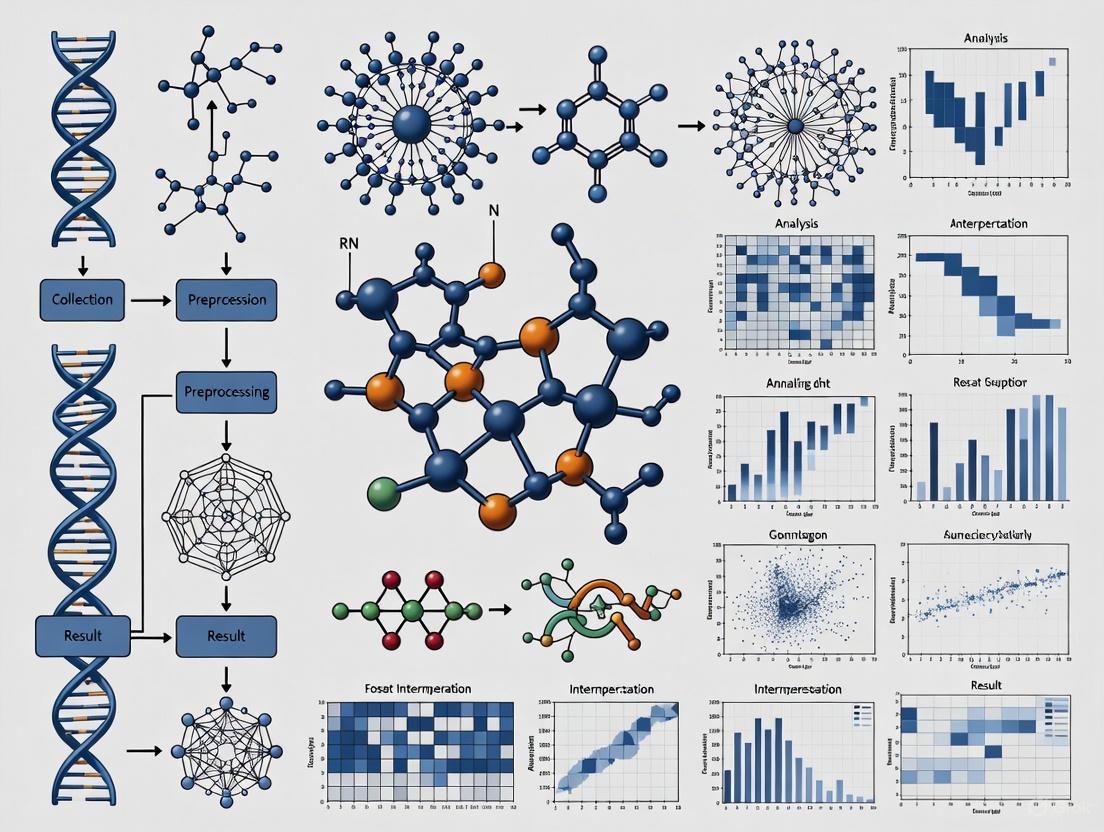
This article explores the critical role of data mining and machine learning in deciphering the complex genetic interactions underlying multifactorial diseases.
Mining the Genome: How Data Mining Unlocks Genetic Interactions in Complex Diseases
Abstract
This article explores the critical role of data mining and machine learning in deciphering the complex genetic interactions underlying multifactorial diseases. Aimed at researchers, scientists, and drug development professionals, it provides a comprehensive overview from foundational concepts to cutting-edge applications. We cover the fundamental principles of genetic interactions like synthetic lethality and their therapeutic potential, detail key machine learning methodologies from neural networks to random forests, address significant challenges in data integration and model validation, and compare the performance of computational predictions against high-throughput biological screens. The synthesis of these areas highlights how computational approaches are accelerating the discovery of novel drug targets and advancing the field of precision medicine.
The Blueprint of Complexity: Understanding Genetic Interactions and Their Role in Disease
In the genomics-driven landscape of complex disease research, understanding genetic interactions has moved from a theoretical concept to a practical imperative. Genetic interactions occur when the combined effect of two or more genetic alterations on a phenotype deviates from the expected additive effect. In oncology, these interactions, particularly the extreme negative form known as synthetic lethality (SL), have created transformative opportunities for targeted therapy. Synthetic lethality describes a relationship where simultaneous disruption of two genes results in cell death, while alteration of either gene alone is viable [1] [2]. This principle is clinically validated, most famously with PARP inhibitors selectively targeting tumors with BRCA1/2 deficiencies, showcasing how synthetic lethality can exploit cancer-specific vulnerabilities while sparing healthy tissues [2] [3]. The discovery of such interactions is now supercharged by advanced data mining of large-scale genomic datasets and high-throughput functional screens, enabling the systematic identification of therapeutic targets previously obscured by biological complexity.
Key Concepts and Definitions
The following table defines the core types of genetic interactions central to this field.
Table 1: Core Types of Genetic Interactions
| Interaction Type | Definition | Therapeutic Implication |
|---|---|---|
| Synthetic Lethality (SL) | An extreme negative genetic interaction where co-inactivation of two non-essential genes causes cell death [1]. | Enables selective targeting of cancer cells with a pre-existing mutation in one gene partner [2] [3]. |
| Epistasis | A broader term for any deviation from independence in the effects of genetic alterations on a phenotype [2] [4]. | Helps map the fitness landscape of tumors, informing on disease aggressiveness and potential resistance mechanisms. |
| Conditional Epistasis | A triple gene interaction where the epistatic relationship between two genes depends on the mutational status of a third gene [2] [4]. | Identifies biomarkers for therapy success or failure, crucial for patient stratification. |
Computational Data Mining Methods
Computational methods are essential for pre-selecting candidate genetic interactions from the vast combinatorial space, thereby focusing experimental validation efforts.
Statistical and Survival-Based Approaches
The SurvLRT (Survival Likelihood Ratio Test) method identifies epistatic gene pairs and triplets from cancer patient genomic and survival data [2] [4]. It operates on the principle that a decrease in tumor cell fitness due to a specific genotype will be reflected in prolonged patient survival. For synthetic lethal pairs like BRCA1 and PARP1, survival of patients with tumors harboring co-inactivation of both genes is significantly longer than expected from the survival of patients with single mutations or wild-type genotypes [2]. SurvLRT formalizes this through a statistical model based on Lehmann alternatives, testing the null hypothesis (no epistasis, gene alterations are independent) against the alternative (presence of an interaction) [4]. A key strength of SurvLRT is its ability to detect triple epistasis, which can identify biomarkers. For instance, it successfully identified TP53BP1 deletion as a biomarker that alleviates the synthetic lethal effect between BRCA1 and PARP1, explaining why some BRCA1-mutated tumors do not respond to PARP inhibitor therapy [2] [4].
Benchmarking Scoring Algorithms for CRISPR Screen Data
With the rise of combinatorial CRISPR screening, various scoring methods have been developed to infer genetic interactions. A 2025 benchmarking study analyzed five such methods using five different combinatorial CRISPR datasets, evaluating them based on benchmarks of paralog synthetic lethality [1]. The study concluded that no single method performed best across all screens, but identified two generally well-performing algorithms. Of these, Gemini-Sensitive was noted as a reasonable first choice for researchers, as it performs well across most datasets and has an available, applicable R package [1].
Table 2: Computational Methods for Mining Genetic Interactions
| Method | Primary Data Input | Key Principle | Key Output |
|---|---|---|---|
| SurvLRT [2] [4] | Patient genomic data (e.g., mutations) and clinical survival data. | Infers tumor fitness from patient survival to test for significant epistatic effects. | Significant epistatic gene pairs and triplets; biomarkers of therapy context. |
| Gemini-Sensitive [1] | Combinatorial CRISPR screen fitness data. | A statistical scoring algorithm to identify negative genetic interactions from perturbation screens. | A ranked list of candidate synthetic lethal gene pairs. |
| Coexpression & SoF [2] | Tumor genomic data (e.g., from TCGA) and gene expression data. | SoF (Survival of the Fittest): Identifies SL pairs via under-representation of co-inactivation. Coexpression: Assumes SL partners participate in related biological processes. | Candidate SL gene pairs based on mutual exclusivity or functional association. |
Experimental Protocols for Validation
Computational predictions require rigorous experimental validation. High-throughput combinatorial CRISPR screening has become the gold standard for this.
Protocol: Combinatorial CRISPR-Cas9 Screening for Synthetic Lethality
This protocol outlines the key steps for conducting a dual-guide CRISPR screen to identify synthetic lethal gene pairs, based on a large-scale 2025 pan-cancer study [3].
I. Library Design and Cloning
- Gene Pair Selection: Select candidate gene pairs from computational predictions (e.g., paralog pairs, regression models, integrated 'omics analyses). The library used in the cited study contained 472 gene pairs [3].
- Guide RNA (gRNA) Design: For each gene, design 6-8 gRNAs with high on-target efficiency and low off-target scores. This is critical when targeting paralogs with high sequence similarity [3].
- Vector Construction: Clone gRNA pairs into a dual-promoter lentiviral vector (e.g., utilizing hU6 and mU6 promoters). To mitigate positional bias, place half of the gRNAs for each gene behind each promoter. Include "safe-targeting" control gRNAs that target genomic regions with no known function to calculate single vs. double knockout effects accurately [3].
- Library QC: Sequence the final library to ensure correct representation and complexity.
II. Cell Line Screening
- Cell Culture: Transduce a panel of Cas9-expressing cancer cell lines (e.g., from melanoma, NSCLC, pancreatic cancer) with the lentiviral library at a low MOI (e.g., 0.3) to ensure most cells receive a single vector. Perform screens in technical triplicate with high library representation (e.g., 1000x) [3].
- Time Course: Maintain the cultures for a sufficient duration (e.g., 28 days) to allow depletion of gRNAs targeting synthetic lethal pairs due to cell death [3].
- Control Samples: Include short-term (e.g., 7-day) samples from Cas9 WT lines to establish the initial gRNA abundance for normalization [3].
III. Sequencing and Data Analysis
- DNA Extraction and Sequencing: Harvest cells at the endpoint, extract genomic DNA, amplify the gRNA regions by PCR, and perform high-throughput sequencing [3].
- Quality Control: Assess screen quality using metrics like Gini Index and replicate correlation. Exclude samples or replicates that fail QC thresholds (e.g., NNMD > -2) [3].
- Interaction Scoring: Process raw sequencing reads into a count matrix. Use specialized algorithms (e.g., Gemini-Sensitive) to score genetic interactions from the gRNA enrichment/depletion patterns [1].
The Scientist's Toolkit: Research Reagent Solutions
Table 3: Essential Reagents and Resources for Genetic Interaction Studies
| Tool / Reagent | Function / Application | Specifications & Notes |
|---|---|---|
| Combinatorial CRISPR Library [3] | High-throughput interrogation of gene pairs for synthetic lethality. | Requires dual-promoter system (hU6/mU6); includes target gRNAs, safe-targeting controls, essential/non-essential gene controls. |
| Dual-Guide Vector [3] | Lentiviral delivery of two gRNAs into a single cell. | Modified spacer and tracr sequences recommended to reduce plasmid recombination. |
| Cas9-Expressing Cell Lines [3] | Provide the nuclease machinery for CRISPR-mediated gene knockout. | Must be from relevant cancer lineages; should be genomically and transcriptomically characterized. |
| Safe-Targeting gRNA Controls [3] | Control for the effect of inducing a double-strand break without disrupting a gene. | Critical for accurately calculating the interaction effect between two gene knockouts. |
| Scoring Algorithm (R package) [1] | Computes genetic interaction scores from combinatorial screen data. | "Gemini-Sensitive" is a recommended, widely applicable method available in R. |
| Patient Genomic & Survival Data [2] [4] | Computational mining of epistasis from real-world clinical data. | Sources include TCGA; used by methods like SurvLRT which requires survival outcomes and mutation status. |
Signaling Pathways and Biological Mechanisms
The clinical success of PARP inhibitors in BRCA-deficient cancers exemplifies the translation of a synthetic lethal interaction into therapy. The underlying biological mechanism involves two complementary DNA repair pathways.
- Normal Cells: In a healthy cell, a single-strand break (SSB) is primarily repaired by the PARP-mediated pathway. If this repair fails and the SSB progresses to a more toxic double-strand break (DSB) during replication, the backup pathway—BRCA-mediated Homologous Recombination (HR)—can effectively repair the damage, ensuring cell survival [2].
- BRCA-Deficient Cancer Cells: In a tumor cell with a mutated BRCA1 or BRCA2 gene, the HR repair pathway is disrupted. The cell becomes reliant on PARP for SSB repair. Administering a PARP inhibitor knocks out this primary repair pathway. With both major repair pathways incapacitated, DNA damage accumulates, leading to genomic instability and selective cancer cell death [2].
- Context Dependence and Biomarkers: The efficacy of this therapy can be influenced by third-party genes, a phenomenon known as conditional epistasis. For example, a mutation in TP53BP1 can restore HR function in BRCA1-deficient cells, creating a resistance mechanism and serving as a negative biomarker for PARP inhibitor response [2] [4].
The integration of sophisticated data mining techniques with high-throughput experimental validation represents the forefront of identifying genetic interactions in complex diseases. Computational methods like SurvLRT for analyzing patient data and Gemini-Sensitive for scoring CRISPR screens provide powerful frameworks for generating candidate SL pairs and contextual biomarkers. These computational predictions are then efficiently tested through robust experimental protocols, such as combinatorial CRISPR screening. As these methodologies continue to mature and are applied to ever-larger datasets, they promise to rapidly expand the catalog of targetable genetic interactions, ultimately accelerating the development of precise, effective, and personalized therapeutic strategies for cancer and other complex diseases.
The intricate pathology of complex diseases like cancer is governed by multilayered biological information, encompassing genetic, epigenetic, transcriptomic, and histologic data [5]. Individually, each data type provides only a fragmentary view of the disease mechanism. The biomedical significance of this field stems from the critical need to integrate these disparate data modalities to obtain a systems-level understanding [5]. This holistic view is paramount for deciphering the dynamic genetic interactions and state-specific pathological mechanisms that drive disease progression and therapeutic resistance. Advances in data mining Methodologies are now making this integration possible, revealing previously hidden interactions. For instance, a recent analysis of 25,000 tumor samples revealed that 27.45% of cancer genes, including well-known drivers like ARID1A, FBXW7, and *SMARCA4, exhibit shifts in their interaction patterns between primary and metastatic cancer states [6]. This underscores the dynamic nature of tumor progression and establishes a compelling rationale for the development and application of sophisticated data integration frameworks in modern biomedical research.
Quantitative Evidence of Genetic Dynamics
Large-scale genomic studies are quantitatively mapping the complex landscape of genetic interactions in cancer, providing concrete evidence of their biomedical significance. The following table synthesizes key findings from recent research.
Table 1: Key Quantitative Findings on Genetic Interactions in Cancer
| Metric | Finding | Biomedical Implication |
|---|---|---|
| Gene Interaction Shifts | 27.45% of cancer genes show altered interaction patterns between primary and metastatic states [6]. | Cancer state is a critical determinant of gene function, necessitating state-specific research and therapeutic strategies. |
| State-Specific Interactions | Identification of 7 state-specific genetic interactions, 38 primary-specific high-order interactions, and 21 metastatic-specific high-order interactions [6]. | Primary and metastatic cancers operate through distinct biological mechanisms, which may represent unique therapeutic vulnerabilities. |
| Shift in Driver Status | Genes including ARID1A, FBXW7, and SMARCA4 shift between one-hit and two-hit driver patterns across states [6]. | The role of a gene in tumorigenesis is context-dependent, impacting risk models and targeted therapy approaches. |
An Integrated Experimental Protocol for Mapping Genetic Interactions
This protocol provides a detailed methodology for using the Deep Latent Variable Path Modelling (DLVPM) framework to map complex dependencies between multi-modal data types, such as multi-omics and histology, in cancer research [5].
Primary Workflow and Protocol
The schematic below outlines the core DLVPM process for integrating diverse data types to uncover latent relationships.
Pre-modeling and Data Preparation
- Step 1: Define the Path Model Hypothesis: The analysis begins by specifying an adjacency matrix, C, where elements c_ij ∈ {0,1} represent the presence or absence of a hypothesized direct influence from data type i to data type j [5]. This matrix is a formalization of the biological assumptions guiding the integration.
- Step 2: Data Collection and Curation: Gather multimodal datasets. A foundational example is the use of the Breast Cancer dataset from The Cancer Genome Atlas (TCGA), which includes single-nucleotide variants (SNVs), methylation profiles, microRNA sequencing, RNA sequencing, and histological whole-slide images [5]. Data must undergo standard pre-processing and quality control specific to each modality.
Model Training and Optimization
- Step 3: Initialize Measurement Models: For each of the K data types, define a specialized neural network (e.g., convolutional networks for images, feed-forward networks for omics data). This network, for data type i, is formulated as Ῡi (Xi, Ui, Wi), where Xi is the input data, Ui represents the parameters of the network's core, and W_i are the weights of the final linear projection layer [5].
- Step 4: Train the DLVPM Algorithm: The model is trained end-to-end to optimize the following objective function [5]:
- Objective: max Σ (c_ij * tr(Ῡi^T Ῡj)) for all i ≠ j. This maximizes the trace (a measure of association) between the DLVs of connected data types.
- Constraint: Ῡi^T Ῡi = I for all i. This ensures the DLVs for each data type are orthogonal, minimizing redundancy within the modality's embedding.
- Step 5: Model Validation: Benchmark the performance of DLVPM against classical path modelling methods, such as Partial Least Squares Path Modelling (PLS-PM), in its ability to identify known and novel associations between data types [5].
Post-modeling and Analysis
- Step 6: Downstream Analysis and Interpretation: Use the trained model for various downstream tasks. This includes:
- Stratification: Applying the model to single-cell or spatial transcriptomic data to identify novel cell states or histologic-transcriptional associations [5].
- Identification of Synthetic Lethal Interactions: Applying the molecular subcomponent of the model to CRISPR-Cas9 screen data from cell lines to identify genes with state-specific essentiality [5].
- Association Mapping: Analyzing the path model coefficients to identify specific genetic loci with significant associations to histological phenotypes.
The Scientist's Toolkit: Research Reagent Solutions
The following reagents and computational tools are essential for implementing the protocols described above.
Table 2: Essential Research Reagents and Tools for Genetic Interaction Data Mining
| Item/Tool Name | Function/Application |
|---|---|
| TCGA Datasets | A comprehensive, publicly available resource that provides correlated multi-omics and histology data from thousands of tumor samples, serving as a benchmark for model development and testing [5]. |
| DLVPM Framework | A computational method that combines deep learning with path modelling to integrate multimodal data and map their complex, non-linear dependencies in an explorative manner [5]. |
| CRISPR-Cas9 Screens | Used for functional validation, these screens identify gene dependencies and synthetic lethal interactions in different cancer states, which can be interpreted through the lens of the DLVPM model [5]. |
| Spatial Transcriptomics | A technology that maps gene expression within the context of tissue architecture, used to validate and provide mechanistic insights into histologic-transcriptional associations discovered by the model [5]. |
| Cloud Computing Platforms (e.g., Google Cloud Genomics, AWS) | Provide the scalable storage and computational power necessary to process and analyze the terabyte-scale data generated by NGS and multimodal integration studies [7]. |
Detailed Visualization of Multimodal Data Integration
The following diagram illustrates the specific flow of information and the modeling of interactions between different data types within the DLVPM framework.
The biomedical significance of researching genetic interactions in cancer and complex diseases lies in moving beyond a static, single-layer view of biology to a dynamic, integrated systems-level understanding. The ability to mine complex datasets has revealed that a significant proportion of cancer genes alter their interaction patterns based on disease state [6]. Methodologies like DLVPM, which leverage deep learning to integrate histology with multi-omics data, are pivotal for creating a unified model of disease pathology [5]. This holistic approach is not merely an academic exercise; it directly enables the identification of state-specific biological mechanisms and therapeutic vulnerabilities, thereby paving the way for precise therapeutic interventions tailored to the evolving landscape of a patient's disease.
The analysis of high-dimensional data represents a fundamental challenge in modern computational biology, particularly in the study of complex diseases. Traditional statistical methods, designed for datasets with many observations and few variables, often fail when confronted with the "large p, small n" paradigm common in genomics, where the number of features (p) such as genetic variants, gene expression levels, or single nucleotide polymorphisms (SNPs) vastly exceeds the number of observations (n) or study participants [7]. This dimensionality curse necessitates specialized analytical frameworks and visualization tools that can handle thousands to millions of variables while extracting biologically meaningful signals from substantial noise.
In complex diseases research, high-dimensionality arises from multiple technological fronts. Next-Generation Sequencing (NGS) technologies like Illumina's NovaSeq X and Oxford Nanopore platforms generate terabytes of whole genome, exome, and transcriptome data, capturing genetic variation across large populations [7]. Multi-omics approaches further compound this dimensionality by integrating genomic, transcriptomic, proteomic, metabolomic, and epigenomic data layers to provide a comprehensive view of biological systems [7]. This data explosion has rendered traditional statistical methods insufficient, requiring innovative approaches that can address collinearity, overfitting, and computational complexity while maintaining statistical power and biological interpretability.
Methodological Framework for High-Dimensional Genetic Data
Advanced Visualization Strategies for High-Dimensional Data
Effective visualization of high-dimensional data requires moving beyond traditional two-dimensional scatterplots. GGobi is an open-source visualization program specifically designed for exploring high-dimensional data through highly dynamic and interactive graphics [8]. Its capabilities include:
- Data Tours: These allow researchers to "tour" through high-dimensional spaces using projection methods like principal components analysis (PCA) and grand tours, effectively enabling them to see separation between clusters in high dimensions [8].
- Multiple Linked Views: GGobi supports scatterplots, barcharts, parallel coordinates plots, and scatterplot matrices that are interactive and linked through brushing and identification techniques [8] [9]. When a researcher selects points in one visualization, corresponding points are highlighted across all other open visualizations.
- Extensible Framework: GGobi can be embedded in R through the
rggobipackage, creating a powerful synergy between GGobi's direct manipulation graphical environment and R's robust statistical analysis capabilities [8] [9]. This integration allows researchers to fluidly examine the results of R analyses in an interactive visual environment.
The system uses parallel coordinates plots, which represent multidimensional data by using multiple parallel axes rather than the perpendicular axes of traditional Cartesian plots [9]. This visualization technique enables researchers to identify patterns, clusters, and outliers across many variables simultaneously, making it particularly valuable for exploring genetic datasets with hundreds of dimensions.
Statistical Protocols for High-Dimensional Genetic Analysis
Protocol 1: Estimating Heritability of Drug Response with GxEMM
Purpose: To quantify the proportion of variability in drug response attributable to genetic factors using Gene-Environment Interaction Mixed Models (GxEMM) [10].
Materials and Reagents:
- Genotypic data (SNP array or whole-genome sequencing data)
- Phenotypic drug response measurements
- Covariate data (age, sex, principal components for ancestry)
- High-performance computing infrastructure
Methodology:
- Data Preparation: Quality control of genetic data including SNP filtering based on call rate, minor allele frequency, and Hardy-Weinberg equilibrium.
- Genetic Relationship Matrix (GRM) Construction: Calculate the genetic similarity between all pairs of individuals based on genome-wide SNPs.
- Model Fitting: Implement GxEMM to partition phenotypic variance into genetic, environmental, and gene-environment interaction components.
- Heritability Estimation: Calculate the proportion of phenotypic variance explained by genetic factors (h² = Vg/Vp).
Interpretation: High heritability estimates suggest strong genetic determinants of drug response, warranting further investigation into specific genetic variants.
Protocol 2: Identifying Gene-Drug Interactions with TxEWAS
Purpose: To identify transcriptome-wide associations between gene expression and drug response phenotypes using Transcriptome-Environment Wide Association Study (TxEWAS) framework [10].
Materials and Reagents:
- RNA-seq or microarray gene expression data
- Drug response metrics (IC50, AUC, therapeutic efficacy)
- Clinical covariate data
- Cloud computing platform (AWS, Google Cloud Genomics)
Methodology:
- Expression Quantification: Process RNA-seq data to obtain normalized gene expression counts (TPM or FPKM).
- Quality Control: Remove batch effects and normalize expression data across samples.
- Association Testing: Perform transcriptome-wide association between each gene's expression and drug response metrics, adjusting for relevant covariates.
- Multiple Testing Correction: Apply false discovery rate (FDR) control to account for thousands of simultaneous tests.
- Validation: Confirm identified associations in independent cohorts or through functional experiments.
Interpretation: Significant associations indicate genes whose expression levels modify drug response, potentially serving as biomarkers for treatment stratification.
Table 1: Key Analytical Tools for High-Dimensional Genetic Data
| Tool/Platform | Primary Function | Data Type | Advantages |
|---|---|---|---|
| GGobi [8] | Interactive visualization | High-dimensional multivariate data | Multiple linked views, dynamic projections, R integration |
| GxEMM [10] | Heritability estimation | Genetic and phenotypic data | Models gene-environment interactions, accounts for population structure |
| TxEWAS [10] | Gene-drug interaction identification | Transcriptomic and drug response data | Genome-wide coverage, adjusts for covariates |
| DeepVariant [7] | Variant calling | NGS data | Deep learning-based, higher accuracy than traditional methods |
| Cloud Genomics Platforms [7] | Data storage and analysis | Multi-omics data | Scalability, collaboration features, cost-effectiveness |
Artificial Intelligence and Machine Learning Approaches
AI and machine learning have become indispensable for high-dimensional genomic analysis [7]. These approaches include:
- Deep Learning for Variant Calling: Tools like Google's DeepVariant utilize convolutional neural networks to identify genetic variants from NGS data with greater accuracy than traditional methods [7].
- Polygenic Risk Scores: Machine learning models integrate effects of thousands of genetic variants to predict individual susceptibility to complex diseases [7].
- Dimensionality Reduction: Autoencoders and other neural network architectures compress high-dimensional genetic data into lower-dimensional representations while preserving biologically relevant patterns.
Application to Complex Diseases and Drug Development
Case Study: Pharmacogenomics in Clinical Trials
Incorporating genetic analysis into clinical drug development presents both opportunities and challenges. Key considerations include:
- Prospective Planning: Designing clinical trials with prospective genetic testing and consent built into the protocol enables genetic analysis of both efficacy and adverse events [11].
- Ethnic Variability: Accounting for ethnic variability in genetic variant prevalence is crucial for appropriate recruitment and enrollment strategies [11].
- Return of Results: Developing frameworks for returning genetic results to participants in a timely and usable format promotes patient engagement and data utility beyond the immediate trial [11].
A compelling example comes from the Tailored Antiplatelet Therapy Following Percutaneous Coronary Intervention (TAILOR-PCI) study, which evaluated how genetic variants affect responses to clopidogrel and clinical outcomes [11]. This study exemplifies the movement toward genetics-enabled drug development that shifts from traditional one-phase, one-drug trials toward "evidence generation engines" using master protocols, standardized consent processes, and linked clinical trial platforms [11].
Case Study: Prader-Willi Syndrome Research
Research on Prader-Willi Syndrome (PWS) illustrates the challenges of conducting clinical trials in rare genetic disorders with limited patient populations [11]. Key issues include:
- Patient Stratification: Understanding how phenotypic variability across genetic subtypes affects treatment response is essential for trial interpretation [11].
- DNA Collection: Incorporating DNA collection into clinical trials enables assessment of genetic factors related to drug safety, as demonstrated by a Phase 3 PWS trial where genetic information could have informed the evaluation of fatal pulmonary embolism [11].
- Multi-Omics Integration: The Foundation for Prader-Willi Research's pilot PWS Genomes Project combines whole-genome sequencing with registry data to inform clinical management, drug selection, and trial stratification [11].
Table 2: Essential Research Reagent Solutions for Genetic Interactions Research
| Research Reagent | Function/Application | Specifications |
|---|---|---|
| Illumina NovaSeq X [7] | High-throughput sequencing | Large-scale whole genome sequencing, population studies |
| Oxford Nanopore [7] | Long-read sequencing | Structural variant detection, real-time sequencing |
| CRISPR Screening Tools [7] | Functional genomics | High-throughput gene perturbation, target identification |
| Multi-Omics Integration Platforms | Data integration | Combines genomic, transcriptomic, proteomic data |
| Cloud Computing Infrastructure [7] | Data storage and analysis | HIPAA/GDPR compliant, scalable processing |
Visualization Protocols and Workflows
High-Dimensional Data Visualization Workflow
High-Dimensional Data Visualization Workflow
Gene-Drug Interaction Analysis Pipeline
Gene-Drug Interaction Analysis Pipeline
The challenge of high-dimensionality in genetics research necessitates a fundamental shift from traditional statistical methods to integrated analytical frameworks. Through specialized visualization tools like GGobi, advanced statistical methods including GxEMM and TxEWAS, and AI-powered analytical platforms, researchers can now navigate the complexity of multi-omics data to uncover genetic interactions in complex diseases. These approaches are transforming drug development by enabling more precise patient stratification, target identification, and safety prediction. As these methodologies continue to evolve, they will increasingly power precision medicine approaches that account for the complex genetic architecture underlying disease susceptibility and treatment response.
Understanding the genetic architecture of complex diseases requires the integration of large-scale, heterogeneous biological data. The convergence of high-throughput genomic technologies, extensive biobanking initiatives, and sophisticated computational tools has created unprecedented opportunities for deciphering gene-gene and gene-environment interactions underlying disease pathogenesis. These data resources provide the foundational elements for applying data mining approaches to uncover complex genetic interactions that escape conventional single-variant analyses. This application note outlines the primary data sources and analytical protocols essential for investigating epistatic networks in complex disease traits, providing researchers with practical frameworks for leveraging these resources in their studies of genetic interactions.
Table 1: Major National Biobank Initiatives with Whole-Genome Sequencing Data
| Biobank Name | Participant Count | Key Population Characteristics | Primary Data Types | Unique Features |
|---|---|---|---|---|
| UK Biobank | ~500,000 participants [12] | 54% female, 46% male; predominantly European ancestry [12] | WGS for 490,640 participants; health records; lifestyle data [12] | One of the most comprehensive population-based health resources [12] |
| All of Us Research Program | 245,388 WGS participants (target >1M) [12] | 77% from groups underrepresented in research [12] | WGS; EHR; physical measurements; wearable data [12] | Focus on diversity and inclusive precision medicine [12] |
| Biobank Japan | ~200,000 participants [12] | Balanced gender distribution (53.1% male, 46.9% female) [12] | WGS for 14,000; SNP arrays; metabolomic & proteomic data [12] | Disease-focused on 51 common diseases in Japanese population [12] |
| PRECISE Singapore | Target 100,000+ participants [12] | Chinese (58.4%), Indian (21.8%), Malay (19.5%) [12] | WGS; multi-omics including transcriptomics, proteomics, metabolomics [12] | Integrated advanced imaging and diverse Asian representation [12] |
Genomic Databases and Repositories
Genomic databases serve as critical infrastructure for storing, curating, and distributing data on genetic variations, gene expression, protein interactions, and functional genomic elements. These repositories vary in scope from comprehensive reference databases to specialized resources focusing on specific data types or disease areas, each offering unique value for genetic interaction studies.
The BioGRID database represents a premier resource for protein-protein and genetic interaction data, with curated information from 87,393 publications encompassing over 2.2 million non-redundant interactions [13]. Particularly relevant for complex disease research is the BioGRID Open Repository of CRISPR Screens (ORCS), which contains curated data from 2,217 genome-wide CRISPR screens from 418 publications, encompassing 94,219 genes across 825 different cell lines and 145 cell types [13]. This resource provides systematic functional genomic data essential for validating genetic interactions suggested by computational mining approaches.
For gene expression data, repositories such as the Gene Expression Omnibus (GEO) and ArrayExpress archive functional genomic datasets, while the Systems Genetics Resource (SGR) offers integrated data from both human and mouse studies specifically designed for complex trait analysis [14]. The SGR web application provides pre-computed tables of genetic loci controlling intermediate and clinical phenotypes, along with phenotype correlations, enabling researchers to investigate relationships between DNA variation, intermediate phenotypes, and clinical traits [14].
Table 2: Specialized Genomic Databases for Interaction Studies
| Database Name | Primary Focus | Data Content | Applications in Complex Disease |
|---|---|---|---|
| BioGRID ORCS [13] | CRISPR screening data | 2,217 curated CRISPR screens; 94,219 genes; 825 cell lines [13] | Functional validation of genetic interactions; identification of gene essentiality networks |
| Systems Genetics Resource [14] | Complex trait genetics | Genotypes, clinical and intermediate phenotypes from human and mouse studies [14] | Mapping relationships between genetic variation, molecular traits, and clinical outcomes |
| PLOS Recommended Repositories [15] | General genomic data | Diverse data types through specialized repositories (GEO, GenBank, dbSNP) [15] | Access to standardized, community-endorsed data for integrative analyses |
National biobanks have emerged as transformative resources for complex disease genetics, combining large-scale participant cohorts with whole-genome sequencing and rich phenotypic data. These initiatives enable researchers to investigate gene-gene and gene-environment interactions across diverse populations with sufficient statistical power to detect modest genetic effects characteristic of complex traits.
The UK Biobank exemplifies this approach with approximately 500,000 participants aged 40-69 years, providing WGS data for 490,640 individuals that encompasses over 1.1 billion single-nucleotide polymorphisms and approximately 1.1 billion insertions and deletions [12]. This resource integrates genomic data with extensive phenotypic information collected through surveys, physical and cognitive assessments, and electronic health record linkage, creating a comprehensive platform for investigating complex disease etiology.
The All of Us Research Program addresses historical biases in genomic research by specifically recruiting participants from groups historically underrepresented in biomedical research, with 77% of its 245,388 WGS participants belonging to these populations [12]. This diversity is crucial for ensuring that genetic risk predictions and therapeutic insights benefit all population groups equitably. Similarly, Singapore's PRECISE initiative captures genetic diversity across major Asian ethnic groups (Chinese, Indian, and Malay), enabling population-specific investigations of genetic interactions in complex diseases [12].
Diagram 1: Biobank data workflow for genetic interaction studies. WGS = Whole Genome Sequencing; QC = Quality Control.
High-Throughput Functional Genomic Screens
High-throughput functional genomic screens provide systematic approaches for interrogating gene function and genetic interactions at scale. CRISPR-based screens, in particular, have revolutionized our ability to identify genetic dependencies, synthetic lethal interactions, and context-specific gene essentiality relevant to complex disease mechanisms.
The BioGRID ORCS database exemplifies the scale and sophistication of modern functional screening resources, encompassing curated data from 418 publications with detailed metadata annotation capturing experimental parameters such as cell line, genetic background, screening conditions, and phenotypic readouts [13]. These datasets enable researchers to identify genetic interactions through synthetic lethality analyses, pathway-based functional modules, and context-specific genetic dependencies.
Protocol 1 outlines a standard workflow for analyzing CRISPR screen data to identify genetic interactions:
Protocol 1: Analysis of CRISPR Screening Data for Genetic Interactions
Objective: Identify synthetic lethal genetic interactions from genome-wide CRISPR screening data.
Input Data: Raw read counts from CRISPR guide RNA sequencing; sample metadata; reference genome annotation.
Step 1 - Data Preprocessing and Quality Control
- Trim adapter sequences from raw sequencing reads using Cutadapt [13]
- Align reads to the reference genome using BWA or Bowtie2
- Quantify guide RNA abundance from aligned reads
- Perform quality control: assess library complexity, read distribution, and sample correlation
- Remove guides with low counts across samples (minimum threshold: 10 reads per guide)
Step 2 - Normalization and Batch Effect Correction
- Normalize read counts using DESeq2's median of ratios method or similar approach
- Correct for batch effects using ComBat or remove unwanted variation (RUV) methods
- Regress out technical covariates (sequencing depth, batch, etc.)
Step 3 - Gene-Level Analysis
- Aggregate guide-level counts to gene-level scores using the MAGeCK or drugZ algorithms
- Calculate gene essentiality scores comparing control vs. experimental conditions
- Identify significantly depleted or enriched genes (FDR < 0.1)
Step 4 - Genetic Interaction Identification
- Compute differential genetic interaction scores using statistical frameworks like hitman
- Identify synthetic lethal pairs showing stronger combined effects than expected
- Validate interactions using orthogonal datasets (e.g., protein-protein interactions)
Step 5 - Functional Interpretation
- Perform pathway enrichment analysis on interacting gene sets
- Map genetic interactions to protein complexes and biological pathways
- Integrate with clinical genomic data to assess disease relevance
Output: Ranked list of genetic interactions; functional annotation of interacting gene sets; pathway context of genetic interactions.
Data Integration Methodologies
Integrating diverse genomic data types is essential for comprehensive understanding of complex genetic interactions. Multi-omics approaches combine genomics with transcriptomics, epigenomics, proteomics, and metabolomics to provide a systems-level view of biological processes underlying disease pathogenesis [7] [16].
A critical development in genomic data integration is the conceptual framework that classifies integration approaches based on the biological question, data types, and stage of integration [17]. This framework distinguishes between integrating similar data types (e.g., multiple gene expression datasets) versus heterogeneous data types (e.g., genomic, clinical, and environmental data), each requiring specialized methodologies [17].
Protocol 2 provides a structured approach for multi-omics data integration focused on identifying master regulatory networks in complex diseases:
Protocol 2: Multi-Omics Data Integration for Complex Disease Traits
Objective: Integrate genomic, transcriptomic, and epigenomic data to identify master regulators of disease phenotypes.
Input Data: Gene expression matrix (e.g., RNA-seq); genetic variant data (e.g., SNP arrays); DNA methylation data; clinical phenotype data.
Step 1 - Data Matrix Design
- Structure data with genes as biological units in rows and omics variables in columns [18]
- Align features across datasets using official gene symbols or genomic coordinates
- Create a multi-block data structure with matched samples across omics layers
Step 2 - Formulate Specific Biological Questions
- Define analysis goal: description (major interplay), selection (biomarkers), or prediction (outcomes) [18]
- Example question: "How do genetic variants and DNA methylation interact to affect gene expression in disease tissue?"
Step 3 - Tool Selection
- Choose integration method appropriate for data types and biological question
- Recommended tools: mixOmics for multi-block integration [18]
- Consider dimensionality reduction methods (PCA, PLS) for high-dimensional data [18]
Step 4 - Data Preprocessing
- Handle missing values using k-nearest neighbors imputation or deletion
- Normalize data within each omics type (e.g., variance stabilizing transformation for RNA-seq)
- Remove batch effects using ComBat or surrogate variable analysis
- Transform data to approximate normal distributions where appropriate
Step 5 - Preliminary Single-Omics Analysis
- Perform quality control and exploratory analysis on each dataset separately
- Identify major sources of variation within each data type
- Assess data structure and identify potential confounders
Step 6 - Multi-Omics Integration Execution
- Apply DIABLO or similar multi-block integration method from mixOmics package [18]
- Identify correlated variables across omics datasets
- Extract multi-omics signatures explaining maximum covariance with phenotype
- Validate stability of selected features using cross-validation
Step 7 - Biological Interpretation
- Annotate selected features with functional information
- Perform pathway enrichment analysis on multi-omics modules
- Construct network models of regulatory relationships
- Generate hypotheses for experimental validation
Output: Integrated multi-omics signatures; network models of genetic interactions; candidate master regulators; functional annotation of disease-relevant pathways.
Diagram 2: Multi-omics data integration approaches. Early = data combined before analysis; Intermediate = features combined before modeling; Late = results combined after separate analyses.
The Scientist's Toolkit: Research Reagent Solutions
Table 3: Essential Research Reagents and Platforms for Genetic Interaction Studies
| Reagent/Platform | Function | Application in Genetic Studies |
|---|---|---|
| CRISPR Screening Libraries (e.g., Brunello, GeCKO) | Genome-wide gene knockout | Systematic identification of genetic dependencies and synthetic lethal interactions [13] |
| Illumina NovaSeq X Series | High-throughput sequencing | Whole-genome sequencing for large biobank cohorts [7] |
| Oxford Nanopore Technologies | Long-read sequencing | Detection of structural variants and haplotype phasing [7] |
| mixOmics R Package | Multi-omics data integration | Statistical framework for identifying correlated features across omics datasets [18] |
| BioGRID ORCS Database | CRISPR screen repository | Access to curated genome-wide screening data from published studies [13] |
| Cloud Computing Platforms (AWS, Google Cloud) | Scalable data analysis | Computational infrastructure for large-scale genomic data mining [7] |
Quality Control and Data Standards
Maintaining data quality throughout the integration pipeline is paramount for generating reliable insights into genetic interactions. Data quality dimensions including currency, representational consistency, specificity, and reliability must be systematically addressed when combining heterogeneous genomic data sources [19]. Quality-aware genomic data integration requires careful attention to metadata standards, controlled vocabularies, and interoperability frameworks to ensure that integrated datasets support valid biological conclusions.
For genomic data deposition, community-endorsed repositories should be selected based on criteria including stable persistent identifiers, open access policies, long-term preservation plans, and community adoption [15]. Recommended repositories for different data types include GEO and ArrayExpress for functional genomics data; GenBank, EMBL, and DDBJ for sequences; and dbSNP for genetic variants [15]. Adherence to these standards ensures that data mining efforts for genetic interactions can build upon reproducible, well-annotated foundational datasets.
The integration of genomic databases, biobanks, and high-throughput functional screens creates powerful synergies for deciphering genetic interactions in complex diseases. By leveraging the protocols and resources outlined in this application note, researchers can design systematic approaches to identify and validate epistatic networks contributing to disease pathogenesis. As these data resources continue to expand in scale and diversity, they will increasingly support the development of more comprehensive models of disease etiology and create new opportunities for therapeutic intervention targeting genetic interaction networks.
The AI Toolbox: Machine Learning Methods for Detecting Gene-Gene Interactions
Understanding the genetic underpinnings of complex diseases represents one of the most significant challenges in modern genomics. Unlike single-gene disorders, conditions like diabetes, cancer, and inflammatory bowel disease are influenced by complex networks of multiple genes working together through non-linear interactions [20]. The sheer number of possible gene combinations creates a computational challenge that conventional statistical approaches struggle to address. Genome-wide association studies (GWAS), which attempt to find individual genes linked to a trait, often lack the statistical power to detect the collective effects of groups of genes [20].
Machine learning algorithms, particularly neural networks, support vector machines (SVM), and random forests, have emerged as powerful tools for analyzing high-dimensional genomic data. These methods can model complex, non-additive relationships between genetic variants and phenotypic outcomes, moving beyond the limitations of traditional linear models [21]. Neural networks can approximate any function and scale effectively with large datasets [22]. Random forests naturally capture interactive effects of high-dimensional risk variants without imposing specific model structures [21]. Though less frequently highlighted for interaction detection, SVMs provide robust performance in high-dimensional settings where the number of features exceeds the number of samples [23].
This article provides application notes and protocols for implementing these core algorithms in genetic interaction research, with a focus on detecting epistasis and modeling polygenic risk in complex diseases.
Algorithm Comparison and Performance Metrics
Table 1: Core Algorithm Characteristics for Genetic Analysis
| Algorithm | Key Strengths | Interaction Detection Capability | Interpretability | Best-Suited Applications |
|---|---|---|---|---|
| Neural Networks | Models complex non-linear relationships; scales with data size; flexible architectures [22] | Explicitly models interactions through hidden layers and non-linear activations [22] | Lower intrinsic interpretability; requires post-hoc methods like NID, PathExplain [22] | Genome-wide risk prediction; large-scale epistasis detection; deep feature interaction maps [22] |
| Random Forests | Model-free approach; handles categorical data naturally; provides feature importance; efficient parallelization [21] | Naturally captures interactive effects through decision tree splits [21] | High interpretability through variable importance measures and individual tree inspection [21] | Genetic risk score construction; variant prioritization; traits with epistatic architectures [21] |
| Support Vector Machines | Effective in high-dimensional spaces; robust to overfitting; versatile kernels [23] | Limited intrinsic capability; dependent on kernel choice | Moderate; support vectors provide some insight but kernel transformations can obscure relationships [23] | Smaller-scale genomic prediction; binary classification tasks; scenarios with clear margins of separation |
Table 2: Reported Performance Metrics Across Genomic Studies
| Algorithm | Application | Reported Performance | Comparison to Traditional Methods |
|---|---|---|---|
| Visible Neural Networks (GenNet) | Inflammatory Bowel Disease (IBD) case-control study [22] | Identified seven significant epistasis pairs with high consistency between interpretation methods [22] | Superior to exhaustive epistasis detection methods; more computationally efficient for genome-wide data |
| Random Forest (ctRF) | Alzheimer's disease, BMI, atopy [21] | Consistently outperformed classical additive models for traits with complex genetic architectures [21] | Enhanced prediction accuracy compared to C+T, lassosum, and LDPred for non-additive traits |
| SVM | Wheat rust resistance prediction [23] | Avoided limitations imposed by statistical structure of features [23] | Performance constrained by complexity and scale of data compared to deep learning approaches |
| ResDeepGS (CNN) | Crop phenotype prediction [23] | 5%-9% accuracy improvement on wheat data compared to existing methods [23] | Outperformed GBLUP, RF, and other deep learning models across multiple crop datasets |
Neural Networks for Genetic Interaction Detection
Protocol: Visible Neural Networks with Biological Prior Knowledge
Application Note: Visible neural networks (VNNs) embed biological knowledge directly into the network architecture, creating sparse, interpretable models that respect biological hierarchy. The GenNet framework structures networks where SNPs are grouped into genes, and genes into pathways, allowing the model to learn importance at multiple biological levels [22].
Experimental Workflow:
Input Preparation
- Encode SNP data using either additive (0,1,2) or one-hot encoding.
- Perform quality control: remove rare variants (MAF <5%), exclude variants violating Hardy-Weinberg equilibrium (p<0.001).
- Adjust for population stratification using principal components.
Network Architecture Definition
- Define layer 1 (SNP to gene): Connect each SNP to its corresponding gene node based on genomic annotations.
- Define layer 2 (Gene to pathway): Connect gene nodes to their biological pathways using databases like KEGG or Reactome.
- Add multiple filters per gene to capture different patterns (Supplementary Fig. 1) [22].
- Use convergence layers to merge multiple filters back to single nodes.
Model Training
- Implement using the GenNet framework (https://github.com/arnovanhil/GenNet) [22].
- Use binary cross-entropy loss for case-control studies.
- Optimize with Adam optimizer with default parameters.
- Employ early stopping based on validation AUC.
Interaction Detection
- Apply post-hoc interpretation methods to trained networks:
Diagram 1: Visible Neural Network Architecture
Case Study: Detecting Epistasis in Inflammatory Bowel Disease
Background: Inflammatory bowel disease (IBD) has a known but incompletely characterized genetic component involving gene-gene interactions [22].
Dataset: International IBD Genetics Consortium (IIBDGC) dataset:
- 130,071 SNPs after quality control
- 66,280 samples (32,622 cases, 33,658 controls)
- Feature:sample ratio ≈ 2:1 [22]
Implementation:
- Trained GenNet VNN with SNP→gene→pathway architecture
- Gene annotations from Ensembl
- Pathway annotations from Reactome
- Applied NID and DFIM to trained network
Results: Identified seven significant epistasis pairs through follow-up association testing on candidates from interpretation methods [22].
Random Forests for Non-Linear Genetic Effects
Protocol: Random Forest-based Genetic Risk Scores
Application Note: Random forests construct GRS by treating SNP genotypes as categorical variables without assuming a specific genetic model, naturally capturing epistatic interactions. The ensemble of decision trees provides robust risk prediction for complex traits with non-additive genetic architectures [21].
Experimental Workflow:
Data Preparation
- Code SNP genotypes as 0,1,2 (additive) or maintain as categorical.
- Include principal components as covariates to adjust for population stratification.
- Split data into training (70%), validation (15%), and test (15%) sets.
Model Training with Enhanced RF Methods
- ctRF (clumping and thresholding RF): Perform LD clumping to remove correlated SNPs (-r² threshold 0.1) within 250kb windows, retaining most significant SNPs. Apply p-value thresholding (5e-8 to 0.1) to select optimal SNP subset [21].
- wRF (weighted RF): Adjust SNP sampling probability in tree nodes based on GWAS association strength from base data.
Parameter Tuning
- Optimize mtry (number of features considered per split): typical range √p to p/3, where p is number of SNPs.
- Set ntree (number of trees) to 500-1000 for stabilization.
- Use validation set to tune hyperparameters.
GRS Calculation and Interpretation
- Compute GRS as predicted disease probability using the method of Malley et al. (2012) implemented in the R package "ranger" [21].
- Calculate variable importance measures (permutation importance or Gini importance).
- Extract interaction patterns through tree inspection.
Diagram 2: Random Forest GRS Workflow
Case Study: Predicting Complex Traits with ctRF
Background: Traditional GRS methods assume additive genetic effects, potentially missing non-linear interactions in traits like Alzheimer's disease and BMI [21].
Dataset:
- Alzheimer's Disease Sequencing Project (ADSP)
- Taiwan Biobank (BMI)
- LIGHTS cohort (atopy)
Implementation:
- Applied ctRF with LD clumping and p-value thresholding
- Incorporated base data from large-scale GWAS summary statistics
- Compared performance against C+T, lassosum, and LDPred
Results: ctRF consistently outperformed classical additive models when traits exhibited complex genetic architectures, demonstrating the importance of capturing non-linear genetic effects [21].
Support Vector Machines in Genomic Selection
Protocol: SVM for Genomic Prediction
Application Note: SVMs handle high-dimensional genomic data by finding optimal hyperplanes that maximize separation between classes in a transformed feature space. While less naturally suited for interaction detection than other methods, their robustness in high-dimensional spaces makes them valuable for genomic prediction tasks [23].
Experimental Workflow:
Data Preprocessing
- Standardize genotype data (mean=0, variance=1).
- Address class imbalance through weighting or sampling.
- Perform feature selection to reduce dimensionality if needed.
Model Training
- Select appropriate kernel:
- Linear kernel for interpretability and high-dimensional data
- RBF kernel for capturing complex non-linear relationships
- Optimize regularization parameter C through cross-validation
- For RBF kernel, optimize gamma parameter
- Select appropriate kernel:
Model Evaluation
- Use nested cross-validation to avoid overfitting
- Evaluate using AUC-ROC for classification, R² for continuous traits
- Compare against baseline models (GBLUP, RR-BLUP)
Implementation Considerations: SVMs struggle with large sample sizes due to computational complexity O(n³) and provide limited insight into genetic interactions compared to random forests and neural networks [23].
The Scientist's Toolkit: Research Reagent Solutions
Table 3: Essential Research Reagents and Computational Tools
| Resource | Type | Function | Access |
|---|---|---|---|
| GenNet | Software Framework | Implements visible neural networks for genetics with biological prior knowledge [22] | https://github.com/arnovanhil/GenNet |
| GAMETES | Simulation Tool | Generates pure and strict epistatic models without marginal effects for benchmarking [22] | Open-source package |
| EpiGEN | Simulation Tool | Simulates complex phenotypes based on realistic genotype data with LD structure [22] | Available from original publication |
| DRscDB | Database | Centralizes scRNA-seq datasets for querying expression patterns [24] | https://www.flyrnai.org/tools/single_cell |
| ranger | R Package | Efficient implementation of random forests for high-dimensional data [21] | CRAN |
| DIOPT | Ortholog Tool | Identifies orthologs and paralogs across species [24] | https://www.flyrnai.org/DIOPT |
| FlyPhoneDB | Analysis Tool | Predicts cell-cell communication from scRNA-seq data [24] | https://www.flyrnai.org/tools/fly_phone |
| TWAVE | AI Model | Identifies gene combinations underlying complex diseases using generative AI [20] | From corresponding author |
The complex nature of genetic interactions in disease requires a multifaceted algorithmic approach. Visible neural networks provide the most sophisticated framework for modeling complex non-linear relationships in genome-wide data, while random forests offer an interpretable, robust method for capturing epistasis in genetic risk prediction. Support vector machines remain valuable for specific applications with clear separation margins. By leveraging the strengths of each algorithm through ensemble methods or sequential analysis, researchers can more effectively unravel the complex genetic architectures underlying human disease.
Future directions should focus on developing more interpretable AI approaches, integrating multi-omics data, and implementing federated learning to address data privacy concerns while advancing precision medicine.
In the context of data mining for genetic interactions in complex diseases, understanding the distinction between supervised and unsupervised machine learning is paramount. These methodologies offer complementary approaches for deciphering the complex genotype-phenotype relationships that underlie conditions like cancer, diabetes, and autoimmune disorders [25] [26]. Supervised learning relies on labeled datasets to train models for predicting outcomes or classifying data based on known genetic interactions [27]. In contrast, unsupervised learning discovers hidden patterns and intrinsic structures from unlabeled genetic data without prior knowledge or training, making it invaluable for exploratory analysis in complex disease research [26] [28]. The choice between these paradigms depends critically on the research objectives, data availability, and the current state of knowledge about the genetic architecture of the disease under investigation [25].
Performance Comparison and Selection Guidelines
The table below summarizes the key characteristics, strengths, and weaknesses of supervised and unsupervised learning approaches in the context of genetic data analysis for complex diseases.
Table 1: Comparison of Supervised and Unsupervised Learning for Genetic Data
| Feature | Supervised Learning | Unsupervised Learning |
|---|---|---|
| Core Objective | Prediction and classification of known outcomes [27] | Discovery of hidden patterns and data structures [28] |
| Data Requirements | Labeled training data (e.g., known disease associations) [27] | Raw, unlabeled data (e.g., genotype data without phenotypes) [26] |
| Common Algorithms | Support Vector Machines (SVM), Random Forests, Linear Regression [29] [27] | K-means, Hierarchical Clustering, Principal Component Analysis [26] [28] |
| Primary Applications in Genetics | Disease risk prediction, classifying disease subtypes, drug response prediction [29] | Patient stratification, genetic subgroup discovery, anomaly detection in sequences [26] [28] |
| Key Advantages | High predictive accuracy, interpretable models, well-suited for clinical translation [27] | No need for labeled data, potential to discover novel biological insights [26] |
| Major Challenges | Dependency on large, high-quality labeled datasets [27] | Results can be harder to interpret and validate biologically [26] |
Evaluation studies on gene regulatory network inference have demonstrated that supervised methods generally achieve higher prediction accuracies when comprehensive training data is available [30]. However, in scenarios where labeled data is scarce or the goal is novel discovery, unsupervised techniques like clustering provide a powerful alternative, capable of identifying genetically distinct patient subgroups without prior class labels [26].
Experimental Protocols and Application Notes
Protocol 1: Supervised Classification for Disease Risk Prediction
This protocol outlines the use of a Random Forest classifier to predict individual disease risk from genome-wide association study (GWAS) data.
Step 1: Data Preparation and Feature Selection
- Obtain genotype data (e.g., SNP arrays) and corresponding phenotype labels (e.g., case/control status) [25].
- Perform quality control: filter SNPs based on call rate, minor allele frequency, and Hardy-Weinberg equilibrium.
- Use filter methods (e.g., Fisher's exact test) or embedded feature selection from Random Forests to identify a panel of genetic variants most predictive of the disease state [25] [29].
Step 2: Model Training and Validation
- Split the dataset into training (e.g., 70%) and testing (e.g., 30%) subsets.
- Train the Random Forest model on the training set. The algorithm will construct multiple decision trees, each using a random subset of the data and features, to minimize overfitting [29].
- Tune hyperparameters (e.g., number of trees, tree depth) via cross-validation.
- Validate the model's performance on the held-out test set using metrics such as Area Under the Curve (AUC), accuracy, and precision [30].
Step 3: Interpretation and Downstream Analysis
- Extract feature importance scores from the trained Random Forest model to identify genetic variants with the greatest predictive power [29].
- Integrate top-ranking variants with functional genomic data (e.g., protein-protein interaction networks) to glean biological insights into disease mechanisms [25].
Protocol 2: Unsupervised Clustering for Patient Stratification
This protocol describes an unsupervised clustering approach to identify distinct genetic subgroups within a patient cohort, which may correspond to different disease etiologies or treatment responses.
Step 1: Data Preprocessing and Linkage Disequilibrium Pruning
Step 2: Clustering and Cluster Number Determination
Step 3: Statistical Validation and Biological Interpretation
- Conduct statistical tests (accounting for family-wise error rate) to identify the specific genetic variants that are significantly different between the derived clusters [26].
- Perform gene pathway enrichment analysis (e.g., Gene Ontology) on the genes containing significant variants to understand the potential biological processes distinguishing the patient subgroups [26].
The Scientist's Toolkit: Research Reagent Solutions
Table 2: Essential Materials and Tools for Machine Learning with Genetic Data
| Item/Tool | Function/Description | Example Use Case |
|---|---|---|
| Genotyping Arrays | High-throughput technology to genotype hundreds of thousands of genetic variants (SNPs) across the genome [26]. | Generating the primary genetic dataset for both supervised and unsupervised analyses. |
| Bioinformatics Suites (PLINK, GCTA) | Software tools for performing quality control, population stratification, and basic association testing on genetic data. | Preprocessing raw genotype data into a clean, analysis-ready format. |
| Machine Learning Libraries (scikit-learn, TensorFlow) | Programming libraries that provide implemented versions of classification (SVM, Random Forest) and clustering (k-means, HAC) algorithms [29]. | Building and training predictive models and clustering algorithms. |
| Interaction Networks (StringDB, KEGG) | Databases of known physical and genetic interactions, or curated biological pathways [25]. | Providing a priori biological knowledge for feature selection or interpreting results from clustering [25]. |
| Cluster Validation Metrics (Silhouette Index) | Internal metrics used to evaluate the quality and determine the optimal number of clusters in an unsupervised analysis [26]. | Objectively identifying the most robust clustering structure in the data. |
Synthetic lethality (SL) describes a genetic interaction where simultaneous disruption of two genes leads to cell death, while individual disruption of either gene does not affect viability [31] [32]. This concept provides a powerful framework for precision oncology by enabling selective targeting of cancer cells bearing specific genetic alterations, such as mutations in tumor suppressor genes that are themselves difficult to target directly [33] [34]. The paradigm is exemplified by PARP inhibitors, which selectively kill cancer cells with homologous recombination deficiencies, particularly BRCA1/2 mutations [33] [32].
Advancements in data mining and high-throughput screening technologies have dramatically accelerated the discovery of synthetic lethal interactions [34] [35]. This case study examines integrated computational and experimental methodologies for identifying these interactions, with particular focus on their application within complex disease research and cancer drug development.
Key Synthetic Lethality Targets and Mechanisms
Established DNA Damage Response Targets
Table 1: Established Synthetic Lethality Targets in Cancer Therapy
| Target | Primary Function | Synthetic Lethal Partner | Therapeutic Inhibitors | Cancer Applications |
|---|---|---|---|---|
| PARP | Base excision repair (BER) of single-strand breaks [33] | BRCA1/2, other HRD genes [33] [32] | Olaparib, Niraparib, Rucaparib [33] [32] | Ovarian, breast, pancreatic, prostate cancers [33] [32] |
| ATR | Replication stress response, cell cycle checkpoint activation [33] | ATM, ARID1A, TP53 [33] [32] | In clinical development [33] | Various cancers with DDR deficiencies [33] |
| WEE1 | Cell cycle regulation, G2/M checkpoint [32] | TP53 mutations [32] | In clinical development [32] | TP53-mutant cancers [32] |
| PRMT | Arginine methylation, multiple cellular processes [32] | MTAP deletions [32] | In clinical development [32] | MTAP-deficient cancers [32] |
The mechanistic basis of PARP inhibitor sensitivity in BRCA-deficient cells involves dual mechanisms. PARP inhibitors not only block base excision repair but also trap PARP enzymes on DNA, leading to replication fork collapse and double-strand breaks that cannot be repaired in homologous recombination-deficient cells [33] [32].
Signaling Pathways for Synthetic Lethality
(Diagram 1: PARP-BRCA Synthetic Lethality Mechanism)
Computational Prediction Framework
Data Mining and Machine Learning Approaches
Table 2: Data Sources for Synthetic Lethality Prediction
| Data Type | Source Examples | Application in SL Prediction |
|---|---|---|
| Genomic Interactions | Yeast SL networks [36] | Evolutionary conservation patterns [31] [36] |
| Cancer Genomics | GDSC, TCGA [34] | Identification of cancer-associated mutations [37] [34] |
| Gene Expression | CCLE, GTEx [37] | Context-specific functional relationships [37] |
| Chemical-Genetic | Drug sensitivity screens [34] | Drug-gene synthetic lethal interactions [31] [34] |
| Protein Interactions | STRING, BioGRID [36] | Network-based SL inference [36] |
Machine learning algorithms applied to these datasets include supervised learning for classifying known SL pairs, unsupervised approaches for identifying novel patterns, and reinforcement learning for de novo molecular design [38]. Specific techniques include random forests, support vector machines, and deep neural networks, which can integrate multi-omics data to predict genetic interactions [38].
The SCHEMATIC resource exemplifies modern approaches, combining CRISPR pairwise gene knockout experiments across tumor cell types with large-scale drug sensitivity assays to identify clinically actionable synthetic lethal interactions [34].
Experimental Validation Workflow
(Diagram 2: Synthetic Lethality Discovery Pipeline)
Experimental Protocols
Combinatorial CRISPR-Cas9 Screening Protocol
Protocol 1: Genome-Wide Synthetic Lethality Screening
- Objective: Identify synthetic lethal gene partners for a known cancer driver mutation (e.g., BRCA1) using combinatorial CRISPR-Cas9 screening.
Duration: 4-6 weeks
Step 1: Library Design and Preparation
Step 2: Cell Line Engineering and Infection
- Engineer your cancer cell line of interest (e.g., a BRCA1-deficient cell line) to stably express Cas9 nuclease.
- Transduce cells with the dgRNA library at a low MOI (Multiplicity of Infection ~0.3) to ensure most cells receive a single dgRNA construct.
- Culture transduced cells for 48 hours, then add puromycin (or appropriate selection antibiotic) for 5-7 days to select for successfully transduced cells.
Step 3: Screening and Sample Collection
- Passage cells continuously for 14-21 days to allow phenotypic manifestation.
- Maintain sufficient cell coverage (at least 500 cells per gRNA) throughout the screening to preserve library complexity.
- Collect a minimum of 50 million cells at both the initial (T0) and final (T14/21) time points for genomic DNA extraction.
Step 4: Sequencing and Data Analysis
- Amplify the integrated gRNA sequences from genomic DNA by PCR and subject them to next-generation sequencing.
- Map sequencing reads to the reference library to count the abundance of each gRNA pair at T0 and T14/21.
- Identify depleted gRNA pairs in the final time point using statistical frameworks like MAGeCK or drugZ, indicating potential synthetic lethal interactions.
Computational Prediction Protocol
Protocol 2: Data Mining for SL Prediction Using Multi-Omics Data
- Objective: Computationally predict synthetic lethal interactions by integrating multi-omics data from public repositories.
Duration: 2-3 weeks
Step 1: Data Collection and Integration
- Download multi-omics data (genomic, transcriptomic, proteomic) from relevant sources such as TCGA, GDSC, or CCLE.
- Preprocess the data: normalize gene expression datasets, annotate genetic variants, and impute missing values where appropriate.
Step 2: Feature Engineering
- Generate feature vectors for gene pairs, incorporating:
- Co-expression patterns across cancer types.
- Evolutionary conservation scores from model organisms.
- Network proximity in protein-protein interaction networks.
- Functional similarity based on Gene Ontology annotations.
- Mutual exclusivity of mutations in cancer cohorts.
- Generate feature vectors for gene pairs, incorporating:
Step 3: Model Training and Prediction
- Employ a supervised machine learning framework if training on known SL pairs.
- Use a positive set of known SL pairs (e.g., from SynLethDB) and a negative set of non-interacting pairs.
- Train a random forest or gradient boosting model to classify gene pairs as synthetic lethal or non-synthetic lethal.
- Apply the trained model to genome-wide gene pairs to generate novel SL predictions.
Step 4: Result Prioritization and Validation
- Prioritize candidate SL pairs based on prediction scores and clinical relevance.
- Filter for pairs where one gene is frequently altered in a cancer type of interest.
- Generate a ranked list of candidate pairs for experimental validation.
Research Reagent Solutions
Table 3: Essential Research Reagents for Synthetic Lethality Studies
| Reagent/Category | Specific Examples | Function/Application |
|---|---|---|
| CRISPR Screening Libraries | Genome-wide dgRNA libraries (e.g., Human Brunello library) [35] [36] | High-throughput identification of SL gene pairs via combinatorial gene knockout. |
| CRISPR System Components | Cas9 nuclease, gRNA expression vectors [35] | Enables precise gene editing for functional validation of SL candidates. |
| Viral Delivery Systems | Lentiviral, retroviral packaging systems [36] | Efficient delivery of genetic constructs into diverse cell types. |
| Viability/Cytotoxicity Assays | CellTiter-Glo, Annexin V staining, colony formation assays | Quantification of cell death and proliferation inhibition following gene perturbation. |
| Validated Chemical Inhibitors | PARPi (Olaparib), ATRi, WEE1i [33] [32] | Pharmacological validation of SL targets and combination therapy studies. |
| Bioinformatic Tools & Databases | SynLethDB, GDSC, DepMap [34] [36] | Computational prediction, analysis, and prioritization of SL interactions. |
The integration of data mining approaches with advanced experimental technologies like combinatorial CRISPR screening creates a powerful pipeline for discovering synthetic lethal interactions [34] [35]. These frameworks enable the identification of context-specific genetic vulnerabilities that can be targeted for precision oncology applications.
As these technologies mature, several challenges remain, including improving the penetrance of synthetic lethal interactions across cancer contexts and addressing acquired resistance mechanisms [32] [34]. Future directions will likely involve more sophisticated multi-omics integration, patient-specific SL prediction using artificial intelligence, and the development of next-generation screening platforms that better model tumor microenvironment complexities [37] [38]. The continued systematic discovery of synthetic lethal interactions promises to expand the repertoire of targeted therapies available for personalized cancer treatment.
The advent of high-throughput technologies has catalyzed a paradigm shift in biomedical research, moving from single-layer analyses to integrative multi-omics approaches. Multi-omics integration combines data from various molecular levels—including genomics, transcriptomics, epigenomics, proteomics, and metabolomics—to construct comprehensive models of biological systems and disease mechanisms [39]. This holistic perspective is particularly transformative for studying complex diseases, where pathogenesis rarely stems from aberrations in a single molecular layer but rather from dynamic interactions across multiple biological levels.
The fundamental premise of multi-omics is that biological entities function as interconnected systems rather than isolated components. As noted in a recent technical review, "the combination of several of these omics will generate a more comprehensive molecular profile either of the disease or of each specific patient" [39]. This systemic view enables researchers to move beyond correlative associations toward mechanistic understandings of disease pathogenesis, identifying novel diagnostic biomarkers, molecular subtypes, and therapeutic targets that remain invisible when examining individual omics layers in isolation.
Within the context of complex disease research, multi-omics integration has proven particularly valuable for addressing several key challenges: elucidating the functional consequences of non-coding genetic variants, understanding heterogeneous treatment responses, and unraveling the complex interplay between genetic predisposition and environmental influences. The integration of genomic, transcriptomic, and epigenetic data specifically allows researchers to connect disease-associated genetic variants with their regulatory consequences and downstream molecular effects, creating a more complete picture of disease etiology [40].
Key Methodologies and Computational Approaches
The integration of multi-omics data presents significant computational challenges due to the high-dimensionality, heterogeneity, and frequent missing values across different data types [41]. Computational methodologies for multi-omics integration have evolved substantially, ranging from classical statistical approaches to advanced machine learning and deep learning frameworks.
Classification of Integration Methods
Multi-omics integration methods can be categorized based on their analytical approach and architecture:
- Early Integration: Combines raw data matrices from different omics layers before model building. While conceptually straightforward, this approach often struggles with dimensionality and heterogeneity.
- Intermediate Integration: Learns joint representations of separate datasets that can be used for subsequent tasks. This includes methods like Multiple Factor Analysis (MFA) and Similarity Network Fusion (SNF) [39].
- Late Integration: Analyzes each omics dataset separately and integrates the results at the final stage. This approach preserves data-specific characteristics but may miss subtle cross-omics interactions.
- Hierarchical Integration: Employs knowledge-based frameworks to structure the integration process according to biological hierarchy.
Advanced Computational Frameworks
Recent methodological advances have been dominated by machine learning approaches:
- Deep Generative Models: Variational Autoencoders (VAEs) have been widely adopted for multi-omics integration due to their capabilities in data imputation, augmentation, and batch effect correction [41]. These models learn latent representations that capture the joint distribution of multiple omics data types.
- Foundation Models: The field is moving toward large-scale foundation models pre-trained on extensive multi-omics datasets that can be fine-tuned for specific applications [41].
- Multi-view Learning: These methods specifically address the challenge of learning from multiple distinct but related data views, making them particularly suitable for multi-omics integration.
For single-cell multimodal omics data, a recent comprehensive benchmark study categorized integration methods into four prototypical categories based on input data structure and modality combination: 'vertical', 'diagonal', 'mosaic' and 'cross' integration [42]. The study evaluated 40 integration methods across seven common tasks: dimension reduction, batch correction, clustering, classification, feature selection, imputation, and spatial registration.
Table 1: Benchmarking of Selected Multi-Omics Integration Methods
| Method | Integration Type | Key Capabilities | Best Suited Applications |
|---|---|---|---|
| Seurat WNN | Vertical | Dimension reduction, clustering | RNA+ADT, RNA+ATAC data |
| Multigrate | Vertical | Dimension reduction, batch correction | Multi-modal single-cell data |
| MOFA+ | Vertical | Feature selection, latent factor analysis | Identifying sources of variation |
| Matilda | Vertical | Cell-type-specific feature selection | Marker identification |
| 3Mint | Intermediate | miRNA-methylation-mRNA integration | Classification of disease subtypes |
| UnitedNet | Diagonal | Dimension reduction, clustering | RNA+ATAC data integration |
The performance of these methods is both dataset-dependent and modality-dependent, underscoring the importance of selecting integration strategies based on specific research objectives and data characteristics [42].
Applications in Complex Disease Research
Multi-omics approaches have yielded significant insights into the molecular pathophysiology of numerous complex diseases, facilitating advances in diagnosis, subtyping, and therapeutic development.
Neurodegenerative Disorders
In Alzheimer's disease (AD), integrated analysis has revealed shared genetic architecture between AD and cognition-related phenotypes. Wang et al. integrated GWAS summary statistics with expression quantitative trait locus (eQTL) data from the CommonMind Consortium and Genotype-Tissue Expression (GTEx) resources [40]. Through transcriptome-wide association studies (TWAS), colocalization, and fine-mapping, they identified 11 pleiotropic risk loci and determined TSPAN14, FAM180B, and GOLGA6L9 as the most credible causal genes linking AD with cognitive performance [40]. This work highlights how multi-omics integration can uncover the genetic basis of clinical heterogeneity in neurodegenerative diseases.
Autoimmune and Inflammatory Diseases
In psoriasis, Deng et al. employed an integrative machine learning approach to identify molecular lysosomal biomarkers [40]. By combining bulk RNA-seq and single-cell RNA-seq datasets, they identified and validated S100A7, SERPINB13, and PLBD1 as potential diagnostic biomarkers. Their multi-omics analysis further revealed that these genes are likely involved in regulating cell communication between keratinocytes and fibroblasts via the PRSS3-F2R receptors, suggesting novel therapeutic targets for psoriasis treatment [40].
Metabolic Diseases
For type 2 diabetes mellitus (T2DM), He et al. utilized microarray and RNA-seq datasets to identify diagnostic genes associated with neutrophil extracellular traps (NETs) [40]. Their analysis identified five NETs-related diagnostic genes (ITIH3, FGF1, NRCAM, AGER, and CACNA1C) with high diagnostic power (AUC >0.7). However, only two genes (FGF1 and AGER) were validated in the blood of T2DM and control groups by qRT-PCR, highlighting both the promise and challenges of translational multi-omics research [40].
Respiratory and Comorbid Conditions
Zou et al. assessed the causal association between chronic obstructive pulmonary disease (COPD), major depressive disorder (MDD), and gastroesophageal reflux disease (GERD) using Mendelian randomization [40]. Their integrated analysis revealed that MDD is likely to play a mediator role in the effect of GERD on COPD. Further functional mapping and annotation (FUMA) analysis identified 15 genes associated with the progression of the GERD-MDD-COPD pathway, emphasizing the importance of mental health assessment in patients with GERD and COPD [40].
Table 2: Multi-Omics Applications in Complex Diseases
| Disease | Omics Layers Integrated | Key Findings | Clinical Translation |
|---|---|---|---|
| Alzheimer's Disease | GWAS, eQTL, TWAS | 11 pleiotropic risk loci shared with cognition-related phenotypes | Early prevention strategies |
| Psoriasis | Bulk RNA-seq, scRNA-seq | S100A7, SERPINB13, PLBD1 as diagnostic biomarkers | Potential therapeutic targets (PRSS3-F2R) |
| Type 2 Diabetes | Microarray, RNA-seq | NETs-related diagnostic genes (FGF1, AGER validated) | Diagnostic biomarker candidates |
| COPD with Comorbidities | GWAS, Mendelian randomization | 15 genes in GERD-MDD-COPD pathway | Mental health assessment importance |
Experimental Protocols and Workflows
Protocol 1: Integrated Analysis of Genetic and Transcriptomic Data for Disease Subtyping
Objective: Identify molecular subtypes of complex diseases through integrated genomic and transcriptomic profiling.
Materials:
- DNA and RNA samples from patient cohorts
- Genotyping or whole-genome sequencing platforms
- RNA-sequencing library preparation kits
- High-performance computing infrastructure
Methodology:
Data Generation:
- Perform whole-genome sequencing or genotyping to identify genetic variants
- Conduct RNA-sequencing to profile transcriptome-wide gene expression
- Quality control using FastQC, MultiQC, and appropriate variant calling pipelines
Data Preprocessing:
- Genetic data: Impute missing genotypes, perform population stratification correction
- Transcriptomic data: Normalize read counts (TPM, FPKM), remove batch effects
- Annotate genetic variants with functional consequences using ANNOVAR or SnpEff
Integrative Analysis:
- Perform co-expression network analysis (WGCNA) to identify gene modules
- Conduct expression quantitative trait locus (eQTL) mapping to identify genetic regulators of gene expression
- Integrate findings using multi-omics clustering (MOFA+ or Similarity Network Fusion)
Validation:
- Validate identified subtypes in independent cohorts
- Perform functional enrichment analysis of subtype-specific molecular features
- Correlate molecular subtypes with clinical phenotypes
Protocol 2: Cross-Trait Integration for Shared Genetic Architecture
Objective: Identify shared genetic mechanisms between comorbid conditions using Mendelian randomization and colocalization approaches.
Materials:
- GWAS summary statistics for target diseases
- eQTL and meQTL reference panels
- Functional genomic annotations
- Mendelian randomization software (TwoSampleMR, MRBase)
Methodology:
Data Collection:
- Obtain GWAS summary statistics from consortia (IGAP, SSGAC, FinnGen, UK Biobank)
- Acquire tissue-specific eQTL data from GTEx, CMC, or eQTLGen
- Gather epigenetic annotations from Roadmap Epigenomics or ENCODE
Genetic Correlation Analysis:
- Perform cross-trait linkage disequilibrium score (LDSC) regression to assess genetic correlations
- Conduct local genetic correlation analysis using HESS
- Evaluate local correlations via Bayesian colocalization (GWAS-PW)
Causal Inference:
- Implement bidirectional Mendelian randomization to test causal relationships
- Perform multivariable Mendelian randomization to account for pleiotropy
- Apply Steiger filtering to ensure correct directionality
Functional Validation:
- Conduct transcriptome-wide association studies (TWAS) to prioritize genes
- Perform fine-mapping to identify credible causal variants
- Annotate identified loci with epigenetic features and chromatin interactions
Visualization Techniques for Multi-Omics Data
Effective visualization is crucial for interpreting complex multi-omics datasets. The Pathway Tools Cellular Overview enables simultaneous visualization of up to four types of omics data on organism-scale metabolic network diagrams [43]. This tool uses distinct visual channels to represent different omics datasets:
- Reaction edge color: Typically used for transcriptomics data
- Reaction edge thickness: Often represents proteomics data
- Metabolite node color: Commonly used for metabolomics data
- Metabolite node thickness: Can represent additional metabolomics measurements
This approach allows researchers to visualize how different molecular layers interact within metabolic pathways, facilitating the identification of discordant regulations and key regulatory nodes [43]. The tool supports semantic zooming, which alters the amount of information displayed as the user zooms in and out, and can animate datasets with multiple time points to visualize dynamic changes across molecular layers.
Successful multi-omics research requires leveraging specialized computational tools, databases, and analytical frameworks. The following table summarizes key resources for multi-omics integration in complex disease research.
Table 3: Research Reagent Solutions for Multi-Omics Integration
| Resource | Type | Function | Application Context |
|---|---|---|---|
| GTEx Portal | Database | Tissue-specific gene expression and eQTLs | Functional interpretation of genetic variants |
| TCGA | Repository | Multi-omics data across cancer types | Pan-cancer molecular subtyping |
| Answer ALS | Repository | Multi-omics data for ALS | Neurodegenerative disease mechanisms |
| Seurat WNN | Software | Weighted nearest neighbor integration | Single-cell multi-omics integration |
| MOFA+ | Software | Multi-Omics Factor Analysis | Dimensionality reduction, feature selection |
| 3Mint | Software | Integrates miRNA, methylation, mRNA | Regulatory network inference |
| Pathway Tools | Software | Metabolic pathway visualization | Multi-omics data visualization on pathways |
| FUMA | Web Tool | Functional mapping of genetic variants | Post-GWAS functional annotation |
| TwoSampleMR | Software | Mendelian randomization analysis | Causal inference between traits |
| LD Score Regression | Software | Genetic correlation analysis | Cross-trait genetic architecture |
Challenges and Future Directions
Despite significant advances, multi-omics integration faces several challenges that must be addressed to realize its full potential in complex disease research. Key limitations include:
Technical and Computational Challenges: The high-dimensionality, heterogeneity, and frequent missing values across omics datasets present substantial analytical hurdles [41]. Data generation protocols often lack standardization, and batch effects can confound integration efforts. Computational methods must continue to evolve to address these issues, with particular emphasis on scalability and robustness.
Biological Interpretation: Converting integrated molecular signatures into mechanistic biological insights remains challenging. Network-based approaches and pathway analyses have shown promise, but further development is needed to accurately infer causal relationships from correlative multi-omics data.
Clinical Translation: Implementing multi-omics approaches in clinical settings requires addressing multiple barriers, including standardized data generation, robust analytical methods, comprehensive validation via functional and clinical studies, training for clinicians to interpret and utilize multi-omics data, and addressing ethical considerations regarding data privacy and safety [40].
Future directions in multi-omics research will likely focus on:
- Temporal and Spatial Resolution: Incorporating single-cell and spatial omics technologies to capture molecular dynamics across time and tissue microenvironments.
- Foundation Models: Developing large-scale pre-trained models that can be fine-tuned for specific disease contexts [41].
- Multimodal Data Integration: Expanding beyond molecular data to incorporate clinical imaging, electronic health records, and environmental exposures.
- Explainable AI: Enhancing interpretability of complex integration models to facilitate biological discovery and clinical application [39].
As these advancements mature, multi-omics approaches will increasingly enable precision medicine paradigms, moving from population-level disease understanding to patient-specific molecular profiling for improved diagnosis, prognosis, and therapeutic selection.
Navigating the Minefield: Overcoming Data and Modeling Challenges
The integration of heterogeneous and unstructured data represents a fundamental challenge in biomedical research, particularly in data mining for genetic interactions in complex diseases. The exponential growth of healthcare data, measured in terabytes, petabytes, and even yottabytes, has created both unprecedented opportunities and significant analytical hurdles [44]. This data deluge originates from diverse sources including electronic health records (EHRs), genomic sequences, medical imaging, wearable devices, and clinical notes, each with distinct formats, structures, and semantic meanings [45].
The core challenge lies in the three defining characteristics of clinical and biomedical data: heterogeneity, stemming from unique patient physiology, specialized medical domains, and varying regional regulations; complexity, arising from multiple formats (numerical, text, images, signals) across disconnected platforms; and availability constraints, due to the sensitive nature of health information governed by strict privacy regulations [44]. These factors collectively impede the secondary use of data for research purposes, despite its potential to revolutionize our understanding of complex disease mechanisms through advanced data mining approaches.
Key Challenges in Biomedical Data Integration
Technical and Structural Hurdles
Biomedical researchers face multidimensional challenges when integrating data for complex disease analysis. The table below summarizes the primary technical and structural hurdles:
Table 1: Technical and Structural Hurdles in Biomedical Data Integration
| Challenge Category | Specific Manifestations | Impact on Research |
|---|---|---|
| Data Heterogeneity | Non-standard formats, varying technical/medical practices, mixed data types [44] | Reduces data interoperability and combinability across studies |
| Semantic Inconsistencies | Differing terminologies, coding systems, and contextual meanings [46] | Creates obstacles in data interpretation and meaningful integration |
| Unstructured Data | Physician notes, adverse event narratives, freeform text [45] | Requires complex NLP and transformation for analysis |
| System Silos | Disconnected platforms for labs, imaging, prescriptions, EHRs [44] | Limits efficient access to comprehensive patient data |
| Legacy System Limitations | Historical EHRs designed primarily for billing, not research [44] | Hinders secondary use of valuable historical patient data |
Regulatory and Operational Constraints
Beyond technical challenges, significant regulatory and operational constraints further complicate data integration:
Table 2: Regulatory and Operational Constraints in Biomedical Data Integration
| Constraint Type | Examples | Research Implications |
|---|---|---|
| Privacy Regulations | HIPAA, HITECH, regional data protection laws [47] [44] | Limits data sharing and access; requires anonymization |
| Data Sensitivity | Risk of patient re-identification from metadata [44] | Necessitates strict access controls and data governance |
| Institutional Barriers | Varied data ownership policies across hospitals and research centers [48] | Hinders collaborative research across organizations |
| Resource Limitations | High implementation costs for integration systems [46] | Prevents smaller institutions from advanced data mining |
| Workflow Integration | Need to align sponsors, CROs, and vendors on SOPs and formats [45] | Creates operational friction in multi-stakeholder research |
Experimental Protocols for Data Integration
Clinical Data Warehouse Implementation Protocol
The implementation of a Clinical Data Warehouse (CDW) enables consolidated analysis of disparate healthcare data sources for complex disease research. The following protocol outlines a standardized approach:
Protocol Steps:
Data Source Identification: Map all available data sources including EHR systems (e.g., Terminal Urgences), laboratory information systems (e.g., Clinicom), imaging data (e.g., VHM), and prescription systems (e.g., ORBIS) [44].
Data Extraction: Extract raw data from source systems while preserving data provenance and metadata. Implement API-enabled architectures for real-time access to fragmented patient data from multiple sources [47].
Data Cleaning and Scrubbing: Process data to address null values, different timestamp formats, and value errors. Replace missing categorical content in medical reports, remove errors, and correct inconsistencies in dates, ages, and abbreviations using medical dictionaries and ontologies [44].
Handling Missing Data: Implement systematic approaches for missing data content, which typically ranges between 1% and 31% depending on the dataset [44]. Use appropriate imputation methods based on data type and missingness pattern.
Standardization: Transform data into standardized formats using established healthcare data standards such as FHIR (Fast Healthcare Interoperability Resources) and CDISC (Clinical Data Interchange Standards Consortium) foundations including CDASH, SDTM, and ADaM [45].
Semantic Integration: Apply ontology-based approaches to address semantic heterogeneity. Map local terminologies to standardized vocabularies such as SNOMED CT or LOINC to enable meaningful data integration [46].
Master Data Management: Implement healthcare master data management services to ensure consistent patient, provider, location, and claims data synchronization across all systems and departments [47].
Analysis-Ready Dataset Creation: Produce standardized secondary data in "flattened table" format where each row represents an instance for training machine learning models, while accounting for multiple measurements per patient admission [44].
Genomic Data Integration Protocol for Complex Disease Mining
This protocol specifically addresses the integration of genomic data with clinical phenotypes for identifying genetic interactions in complex diseases:
Protocol Steps:
Data Collection and Quality Control: Collect genomic data including SNPs, whole genome sequencing, and gene expression data. Perform rigorous quality control including checks for Hardy-Weinberg equilibrium, call rates, and relatedness. Implement imputation for missing genotypes [49] [50].
Variant Annotation and Functional Characterization: Annotate variants with functional information using databases such as Swiss-Prot, Pfam, and DOMINE. Categorize SNPs into synonymous and non-synonymous, with particular focus on non-synonymous SNPs (nsSNPs) that potentially affect protein function and may result in diseases [50].
Population Structure Analysis: Perform principal components analysis (PCA) on genotypes to measure global ancestry. For admixed populations, estimate local ancestry to improve power for association tests with rare variants [49].
Variant Prioritization Using Similarity Scores: Calculate similarity scores between nsSNPs using three key equations:
- Probability of occurrence of original amino acid:
Simorg(a,b) = 1 - |porg(a) - porg(b)| - Probability of occurrence of substituted amino acid:
Simsub(a,b) = 1 - |psub(a) - psub(b)| - Diffusion kernel of domain-domain interaction network:
SimDDI(a,b) = KDDI(a,b)[50]
- Probability of occurrence of original amino acid:
Guilt-by-Association Prioritization: Apply guilt-by-association principle to prioritize candidate nsSNPs using the association score:
A(c) = 1/|S(d)| * Σ Sim(c,s)where c is a candidate nsSNP and S(d) is the set of seed nsSNPs from query disease d [50].Multi-Method Rank Integration: Integrate multiple ranking lists using a modified Stouffer's Z-score method:
Zi(K) = Φ^(-1)(1 - (ri(k) + 0.5)/(max(ri(k)) + 1))with integrated Z-score calculated as:Zi(k) = Σ zi(k)/√m[50].Machine Learning Classification: Apply ensemble learning approaches such as LogitBoost, Random Forest, or AdaBoost to classify disease-associated variants. These methods have demonstrated superior performance in identifying disease-causing nsSNPs compared to traditional statistical approaches [50].
The Scientist's Toolkit: Essential Research Reagents and Solutions
Table 3: Research Reagent Solutions for Biomedical Data Integration
| Tool/Category | Specific Examples | Primary Function |
|---|---|---|
| Data Integration Platforms | Azulity, Mirth Connect, Jitterbit, Health Compiler [47] | Master data management and healthcare data integration |
| Standards & Terminologies | CDISC (CDASH, SDTM, ADaM), HL7 FHIR, SNOMED CT [45] | Data standardization and semantic interoperability |
| Genomic Analysis Tools | PolyPhen, SIFT, PLINK, GATK [50] | Variant annotation, quality control, and association testing |
| Machine Learning Frameworks | Random Forest, AdaBoost, LogitBoost, Support Vector Machines [50] | Classification and prioritization of disease-associated variants |
| Cloud & Compute Infrastructure | Hadoop, Microsoft SQL Server, Cloud-native solutions [44] | Large-scale data processing and distributed computing |
| Data Visualization Tools | Tableau, specialized biomedical visualization platforms [51] | Exploration and communication of integrated data insights |
Successfully managing heterogeneous and unstructured biomedical data requires a systematic approach that addresses technical, semantic, and regulatory challenges. The protocols and solutions presented here provide a framework for researchers to integrate diverse data types effectively for mining genetic interactions in complex diseases. Future advances will likely come from enhanced privacy-preserving data access methods, improved machine learning techniques specifically designed for heterogeneous biomedical data, and greater adoption of standardized data models across the research ecosystem [46] [52]. Initiatives such as the ARPA-H Biomedical Data Fabric Toolbox aim to lower barriers to high-fidelity data collection and multi-source data analysis at scale, representing promising directions for the field [52]. As these technologies mature, researchers will be better equipped to unravel the complex genetic architectures underlying human diseases, ultimately accelerating the development of targeted therapies and personalized treatment approaches.
The analysis of genetic interactions, or epistasis, is fundamental to unraveling the architecture of complex diseases. However, this field is notoriously hampered by the curse of dimensionality, a phenomenon where the number of potential features (e.g., single nucleotide polymorphisms or SNPs) vastly exceeds the number of available samples. In a typical genome-wide association study (GWAS) involving millions of SNPs, the exhaustive evaluation of all possible pairwise or higher-order interactions leads to an exponential explosion in the number of potential combinations to test. This high-dimensional space is sparse, making it computationally intractable to explore with traditional statistical methods and dramatically increasing the risk of identifying false, non-generalizable patterns, a problem known as model overfitting [53] [54].
This challenge directly contributes to the "missing heritability" problem, where genetic variants identified by GWAS explain only a modest fraction of the inherited risk for most complex diseases [53] [54]. Accounting for epistasis is a promising avenue for uncovering this missing heritability, as it can reveal disease mechanisms mediated by biological interplay between genes rather than single loci acting in isolation. Overcoming the curse of dimensionality is therefore not merely a computational exercise but a critical step toward more accurate disease risk prediction, improved understanding of pathogenic mechanisms, and the identification of novel drug targets [55] [53].
Current Methodological Landscape
A diverse set of computational strategies has been developed to tackle the dimensionality problem in genetic interaction studies. These methods can be broadly categorized, each with distinct strengths and limitations.
Table 1: Comparison of Methodological Approaches to Gene-Gene Interaction Analysis
| Method Category | Key Examples | Underlying Principle | Advantages | Limitations |
|---|---|---|---|---|
| Dimensionality Reduction | Multifactor Dimensionality Reduction (MDR), Cox-MDR, AFT-MDR [53] | Reduces multi-locus genotype combinations into a single, binary (high/low risk) variable. | Model-free; does not assume a specific genetic model; good for detecting non-linear interactions. | Exhaustive searching can miss important SNPs; may eliminate useful information during reduction. |
| Traditional Machine Learning (ML) | Random Forests, Support Vector Machines (SVMs) [53] | Uses algorithm-based learning (e.g., decision trees, hyperplanes) to detect patterns and interactions. | Capable of detecting non-linear interactions in high-dimensional data. | Can miss interactions if no SNP has a marginal effect; SVMs can have high Type I error rates. |
| Deep Learning (DL) | Deep Feed-Forward Neural Networks, Ge-SAND [55] [53] | Uses multiple hidden layers in neural networks to learn complex, hierarchical feature representations. | High prediction accuracy and scalability to very large datasets; can capture subtle, complex interactions. | "Black-box" nature poses interpretability challenges; requires substantial data and computational resources. |
| Hybrid & High-Performance Computing | Two-step hybrid models (e.g., Promoter-CNN & ALS-Net), PySpark [53] | Combines different methodologies or uses distributed parallel computing to manage data scale. | Can maximize predictive accuracy by leveraging strengths of multiple methods; dramatically improves processing speed. | Implementation complexity; requires specialized computational expertise and infrastructure. |
Recent advances demonstrate the power of these approaches. The Ge-SAND framework, for example, leverages a deep learning architecture with self-attention mechanisms to uncover complex genetic interactions at a scale exceeding 10^6 in parallel. Applied to UK Biobank cohorts, it achieved up to a 20% improvement in AUC-ROC compared to mainstream methods, while its explainable components provided insights into large-scale genotype relationships [55]. In parallel, alternative phenotyping strategies using machine learning to generate continuous disease representations from electronic health records have shown promise in enhancing genetic discovery beyond binary case-control GWAS, identifying more independent associations and improving polygenic risk score performance [56].
Application Notes & Experimental Protocols
Protocol 1: Gene-Gene Interaction Analysis using a Deep Learning Framework
This protocol outlines the application of an explainable deep learning framework, such as Ge-SAND, for large-scale genetic interaction discovery and disease risk prediction [55].
I. Research Reagent Solutions Table 2: Essential Research Reagents and Computational Tools
| Item Name | Function/Description |
|---|---|
| Genotype Data | Raw or imputed SNP data from cohorts like UK Biobank, formatted as VCF or PLINK files. |
| Phenotype Data | Case-control status or quantitative traits for the disease of interest. |
| Genomic Position File | BED or similar file containing base-pair positions and chromosomal locations of SNPs. |
| Ge-SAND Software | The specific deep learning framework, typically implemented in Python with TensorFlow/PyTorch. |
| High-Performance Computing (HPC) Cluster | Computing infrastructure with multiple GPUs to handle the intensive model training. |
II. Step-by-Step Methodology
- Data Preparation and Quality Control (QC):
- Input: Raw genotype and phenotype data.
- Steps: Perform standard GWAS QC: remove samples with high missingness, exclude SNPs with low minor allele frequency (e.g., MAF < 1%), and perform Hardy-Weinberg equilibrium testing. Split the data into training, validation, and test sets (e.g., 80/10/10).
- Output: Cleaned, high-quality genotype-phenotype dataset ready for analysis.
Model Training and Hyperparameter Tuning:
- Input: Cleaned training dataset.
- Steps: The Ge-SAND model leverages genotype and genomic positional information. Train the self-attention neurodynamic decoder on the training set to identify intra- and interchromosomal interactions. Use the validation set to tune hyperparameters (e.g., learning rate, number of attention heads, hidden layer dimensions) and prevent overfitting through early stopping.
- Output: A trained Ge-SAND model optimized for the target phenotype.
Interaction Discovery and Risk Prediction:
- Input: Held-out test dataset.
- Steps: Apply the trained model to the test set. The self-attention mechanism generates an interaction network, highlighting SNP pairs with strong associations to the phenotype. Generate disease risk predictions for each individual.
- Output: A list of significant genetic interaction pairs and individual risk scores.
Validation and Interpretation:
- Input: Significant interaction pairs.
- Steps: Statistically validate identified interactions using the held-out test set or an independent cohort. Use functional genomic databases to annotate the biological context of interacting SNPs (e.g., proximity to genes, regulatory elements).
- Output: A validated and biologically interpreted set of epistatic interactions contributing to disease risk.
Protocol 2: Gene Burden Analysis for Rare Variant Association
This protocol details a gene-based burden testing framework for identifying novel disease-gene associations in rare diseases, addressing dimensionality by aggregating rare variants at the gene level [57].
I. Research Reagent Solutions Table 3: Essential Research Reagents and Computational Tools
| Item Name | Function/Description |
|---|---|
| Whole-Genome Sequencing (WGS) Data | High-coverage WGS data from cases and controls, e.g., from the 100,000 Genomes Project. |
| Variant Prioritization Tool | Software like Exomiser for filtering and annotating putative disease-causing variants. |
| geneBurdenRD R Framework | Open-source R package for gene burden testing in rare disease cohorts. |
| Phenotypic Annotation | Detailed clinical data for accurate case-control definitions and phenotypic clustering. |
II. Step-by-Step Methodology
- Variant Calling and Filtering:
- Input: Whole-genome sequencing data (BAM/CRAM files).
- Steps: Perform variant calling and initial QC. Use a tool like Exomiser to filter for rare (e.g., MAF < 0.1%), protein-coding variants that are predicted to be deleterious.
- Output: A set of high-confidence, rare, putative pathogenic variants.
Case and Control Definition:
- Input: Clinical data and sample information.
- Steps: Define cases based on specific, well-phenotyped disease categories or through phenotypic clustering algorithms. Controls can be individuals from the same cohort without the disease or with unrelated conditions.
- Output: A sample manifest file with clear case-control labels for the analysis.
Gene Burden Testing:
- Input: Filtered variant file and sample manifest.
- Steps: Using the
geneBurdenRDR framework, perform gene-based burden testing. This involves aggregating the burden of rare variants within each gene for cases versus controls using statistical models tailored for unbalanced studies (e.g., Firth's logistic regression). - Output: A list of genes significantly enriched for rare variants in cases, suggesting disease association.
In Silico and Clinical Triage:
- Input: List of significant genes.
- Steps: Prioritize candidate genes by integrating evidence from functional predictions, gene expression data, and known biological pathways. Subsequently, subject the top candidates to review by clinical domain experts to assess biological plausibility.
- Output: A final, high-confidence list of novel disease-gene associations for functional validation.
The Scientist's Toolkit: Visualization and Dimensionality Reduction
Effective visualization and dimensionality reduction (DR) are critical for interpreting high-dimensional genetic and transcriptomic data. Benchmarking studies have evaluated DR methods for their ability to preserve biological patterns in data like drug-induced transcriptomes. Methods such as t-SNE, UMAP, and PaCMAP consistently outperform others in separating distinct biological groups (e.g., by cell line or drug mechanism of action) by preserving both local and global data structures [58].
When creating visualizations, it is essential to ensure accessibility and clarity. Key principles include:
- Color Selection: Use a color-blind safe palette, typically avoiding red-green combinations. Blue and red are generally safe choices. Ensure sufficient contrast between foreground elements and the background [59] [60].
- Labeling: Prefer direct labels on chart elements instead of legends to save the reader's time and attention [59].
- Alternative Encodings: Use shapes, icons, or line styles (dashed, dotted) as supplements or alternatives to color-coding, making charts decipherable even without color [59].
Table 4: Benchmarking of Top Dimensionality Reduction Methods
| DR Method | Key Strength | Optimal Use Case in Genetic Research | Internal Validation Metric (Typical Score Range) |
|---|---|---|---|
| t-SNE | Excellent at preserving local cluster structures and fine-grained separation [58]. | Visualizing distinct cell types or patient subpopulations from transcriptomic data. | Silhouette Score: 0.6 - 0.8 [58] |
| UMAP | Better preservation of global data structure than t-SNE; faster computation [58]. | Large-scale datasets where both local clusters and overarching topology are important. | Silhouette Score: 0.65 - 0.85 [58] |
| PaCMAP | Strong performance in preserving both local and global biological similarity [58]. | A robust general-purpose choice for exploring various high-dimensional biological data. | Silhouette Score: 0.7 - 0.85 [58] |
| PHATE | Models manifold continuity and is sensitive to gradual transitions and trajectories [58]. | Detecting subtle, dose-dependent transcriptomic changes or developmental processes. | N/A |
The curse of dimensionality remains a formidable challenge in the data mining of genetic interactions for complex diseases. However, as outlined in these application notes, a powerful arsenal of strategies is available to researchers. The judicious application of deep learning frameworks, robust gene burden testing protocols, and insightful dimensionality reduction and visualization techniques collectively provide a pathway to overcoming these hurdles. By systematically implementing these protocols and leveraging high-performance computing resources, researchers can enhance the detection of epistatic effects, illuminate novel disease mechanisms, and contribute meaningfully to the advancement of precision medicine and drug discovery. The future of this field lies in the continued refinement of explainable AI and the scalable integration of multimodal biological data to fully unravel the genetic complexity of human disease.
In the field of data mining for genetic interactions in complex diseases, the reliability of computational models is paramount. Researchers leverage machine learning to identify and analyze genetic interactions (GIs), such as synthetic lethality, which have profound clinical significance for targeted cancer therapies [61]. The performance and generalizability of these models are highly dependent on two critical processes: robust cross-validation (CV) strategies and meticulous hyperparameter optimization (HPO). Without proper CV, models may produce over-optimistic performance estimates, especially when test data is highly similar to training data, failing to predict behavior in genuinely novel biological contexts [62]. Concurrently, HPO is essential because the predictive accuracy of complex algorithms, including Graph Neural Networks (GNNs) and tree-based methods, is extremely sensitive to their architectural and learning parameters [63] [64]. This application note provides detailed protocols and frameworks to integrate these techniques seamlessly into research workflows, ensuring that predictive models for genetic interactions are both robust and translatable to therapeutic development.
Cross-Validation Strategies for Genomic Data
The Challenge of Standard Cross-Validation
Cross-validation (CV) is a cornerstone technique for assessing a model's generalizability to unseen data. The most common method, K-fold Random Cross-Validation (RCV), involves randomly partitioning the dataset into K subsets (folds). The model is trained on K-1 folds and tested on the remaining fold, a process repeated K times [65]. However, in genomics, this standard approach can be deceptive. Studies on gene regulatory networks have shown that RCV can produce over-optimistic estimates of model performance. This inflation occurs when the dataset contains highly similar samples (e.g., biological replicates from the same experimental condition), allowing a model to perform well on a test set simply because it has seen nearly identical data during training, not because it has learned the underlying biological relationships [62].
Advanced Cross-Validation Protocols
To address these limitations, researchers must employ more sophisticated CV strategies that better simulate the challenge of predicting genuine, novel biological scenarios.
Clustering-Based Cross-Validation (CCV)
CCV aims to test a model's ability to predict outcomes in entirely new regulatory contexts by strategically partitioning data.
- Principle: Instead of random partitioning, samples are first clustered based on their predictor variable profiles (e.g., transcription factor expression levels). Entire clusters of similar conditions are then assigned as one CV fold [62].
- Procedure:
- Input: Gene expression dataset (e.g., transcriptomic data from various cellular conditions).
- Clustering: Apply a clustering algorithm (e.g., hierarchical clustering, k-means) to the matrix of predictor variables. The number of clusters (K) should be chosen based on domain knowledge or statistical methods.
- Fold Assignment: Assign all samples within a single cluster to the same fold. This results in K folds, each representing a distinct group of experimental conditions.
- Model Testing: Iteratively train the model on K-1 folds and test its performance on the held-out cluster. This rigorously assesses how well the model generalizes to a completely distinct set of conditions [62].
- Example: In a dataset comprising data from different cell types, CCV would train a model on several cell types and test it on a left-out, unseen cell type, providing a realistic estimate of performance in a true discovery setting.
Simulated Annealing for CV (SACV) and Distinctness Score
To systematically evaluate model performance across a spectrum of training-test set similarities, a simulated annealing-based approach (SACV) can be employed.
- Principle: This method generates a series of data partitions with a controlled, gradually increasing level of "distinctness" between the training and test sets [62].
- Distinctness Score: A quantitative measure that predicts the difficulty of predicting a test sample from a given training set. It is computed based on the predictor variables (e.g., TF expression) and is independent of the target gene's expression or the model used [62].
- Procedure:
- Define Distinctness: Calculate the distinctness score for all possible sample pairs.
- Optimize Partitions: Use a simulated annealing algorithm to generate multiple training-test splits that cover a wide range of distinctness scores, from low (similar) to high (dissimilar).
- Benchmark Models: Evaluate different prediction models (e.g., Elastic Net, Support Vector Regression) across these partitions. This reveals how a model's performance decays as the test set becomes more distinct from the training data, allowing for a more nuanced comparison of algorithmic robustness [62].
Table 1: Comparison of Cross-Validation Strategies in Genomic Studies
| Strategy | Core Principle | Advantages | Limitations | Ideal Use Case |
|---|---|---|---|---|
| Random CV (RCV) | Random partitioning of samples into K folds [65]. | Simple to implement; standard practice. | Prone to over-optimistic performance estimates with correlated samples [62]. | Initial model benchmarking with homogeneous data. |
| Clustering-Based CV (CCV) | Partitioning based on pre-defined sample clusters [62]. | Provides a realistic estimate of generalizability to novel contexts. | Dependent on choice and parameters of clustering algorithm [62]. | Testing model performance across distinct biological states (e.g., cell types, diseases). |
| Stratified CV | Random partitioning that preserves the proportion of subgroups in each fold [65]. | Maintains class balance; crucial for case-control studies. | Does not directly address sample similarity beyond the stratification variable. | Genetic association studies with imbalanced case/control phenotypes. |
| SACV with Distinctness | Generating partitions across a spectrum of training-test similarities [62]. | Enables detailed analysis of performance decay; robust model comparison. | Computationally intensive. | Benchmarking algorithms for deployment on highly heterogeneous data. |
Workflow Diagram: Advanced Cross-Validation for Genetic Interaction Studies
The following diagram illustrates a robust workflow integrating these CV strategies for a genetic interaction prediction pipeline.
Figure 1: Workflow for robust cross-validation in genetic interaction studies. After preprocessing, a CV strategy (RCV, CCV, or Stratified) is selected. The model is iteratively trained and validated, with final performance aggregated across all folds.
Hyperparameter Optimization in Cheminformatics and Genomics
The Role of Hyperparameter Optimization
In machine learning, a hyperparameter is a configuration variable that governs the training process itself (e.g., learning rate, tree depth, regularization strength). Unlike model parameters learned from data, hyperparameters are set prior to training. Hyperparameter Optimization (HPO) is the process of finding the optimal combination of these hyperparameters to maximize predictive performance on a given dataset [64]. This is particularly critical in cheminformatics and genomics, where datasets are complex and models like Graph Neural Networks (GNNs) are highly sensitive to their architectural choices [63].
Protocols for Hyperparameter Optimization
Three primary HPO methods are widely used, each with distinct advantages and computational trade-offs.
Grid Search (GS)
- Principle: An exhaustive search over a manually specified subset of the hyperparameter space. GS trains and evaluates a model for every possible combination of hyperparameters in a pre-defined grid [64].
- Procedure:
- For each hyperparameter, define a set of values to explore (e.g., for a learning rate:
[0.01, 0.1, 1.0]). - The search space becomes the Cartesian product of all these sets.
- Train and evaluate a model (using a robust CV method) for each unique combination.
- Select the combination that yields the best cross-validated performance.
- For each hyperparameter, define a set of values to explore (e.g., for a learning rate:
- Advantages & Limitations: GS is simple to implement and parallelize, but its computational cost grows exponentially with the number of hyperparameters ("curse of dimensionality"), making it inefficient for high-dimensional searches [64].
Random Search (RS)
- Principle: RS randomly samples a fixed number of hyperparameter combinations from the specified search space, either uniformly or from a given distribution [64].
- Procedure:
- Define the search space for each hyperparameter as a statistical distribution (e.g., uniform or log-uniform over a range).
- Set a budget (number of trials) for the total models to train and evaluate.
- For each trial, sample a random set of hyperparameters from their respective distributions.
- Train and evaluate the model, retaining the best-performing set.
- Advantages & Limitations: RS has been proven to find good hyperparameters more efficiently than GS, especially when some hyperparameters have low impact on the result, as it does not waste time on exhaustively searching every dimension [64].
Bayesian Optimization (BO)
- Principle: BO constructs a probabilistic surrogate model (e.g., Gaussian Process) to approximate the relationship between hyperparameters and model performance. It uses an acquisition function to intelligently select the most promising hyperparameters to evaluate next, balancing exploration and exploitation [64].
- Procedure:
- Build Surrogate: Start by evaluating a few random points to build an initial surrogate model.
- Select Next Point: Use an acquisition function (e.g., Expected Improvement) to determine the single most promising hyperparameter set to evaluate next.
- Update Model: Evaluate the model with the selected hyperparameters and update the surrogate model with the new result.
- Iterate: Repeat steps 2 and 3 until a performance plateau or computational budget is reached.
- Advantages & Limitations: Bayesian Search is the most computationally efficient method for complex and expensive-to-train models, often requiring far fewer iterations than GS or RS. However, it is more complex to implement and can be harder to parallelize [64].
Table 2: Comparative Analysis of Hyperparameter Optimization Methods
| Method | Core Principle | Computational Efficiency | Best-Suited Scenarios | Key Considerations |
|---|---|---|---|---|
| Grid Search (GS) | Exhaustive search over a pre-defined grid [64]. | Low; cost grows exponentially with parameters. | Small hyperparameter spaces (2-4 parameters). | Easy to implement and parallelize but becomes infeasible for large searches. |
| Random Search (RS) | Random sampling from specified distributions [64]. | Moderate; more efficient than GS. | Medium to large hyperparameter spaces. | Finds good parameters faster than GS; highly parallelizable. |
| Bayesian Optimization (BO) | Sequential model-based optimization [64]. | High; finds good parameters with fewer evaluations. | Complex models with long training times (e.g., GNNs, large ensembles). | Most efficient but less parallelizable; implementation is more complex. |
Application to Genetic Interaction Prediction with Tree-Based Methods
Tree-based methods like Random Forests (RF) are powerful for detecting genetic associations involving complex interactions [66]. HPO is crucial for tuning their parameters.
- Key Hyperparameters:
n_estimators: Number of trees in the forest.max_depth: Maximum depth of each tree.mtry(ormax_features): Number of features to consider for the best split at each node [66].
- Optimization Workflow:
- Define a search space for these parameters (e.g.,
mtry ∈ [1, 3, 5, 7]). - Use an HPO method like Bayesian Optimization to efficiently navigate the space.
- Evaluate each candidate model using a robust CV method like Stratified K-Fold to ensure performance estimates account for class imbalance and data structure.
- The final model is trained on the entire dataset with the optimized hyperparameters.
- Define a search space for these parameters (e.g.,
Integrated Protocol and Research Toolkit
A Consolidated Workflow for Robust Model Development
This protocol outlines an end-to-end process for building a predictive model for genetic interactions, integrating both robust CV and HPO.
Title: Integrated Protocol for Robust Prediction of Genetic Interactions in Complex Diseases. Objective: To develop a machine learning model with rigorously assessed generalizability for predicting synthetic lethal interactions in cancer. Materials: Genotype data (e.g., SNP arrays, sequencing), phenotype data (e.g., cell viability post-knockdown), clinical metadata.
Steps:
- Data Preprocessing:
- Imputation: Handle missing values using techniques like Multivariable Imputation by Chained Equations (MICE), k-Nearest Neighbor (kNN), or Random Forest imputation [64].
- Normalization: Standardize continuous features using z-score normalization [64].
- Encoding: Apply one-hot encoding to categorical variables [64].
- Define Evaluation Framework:
- Select a CV strategy based on the research question. For testing generalizability to new biological contexts, Clustering-Based CV (CCV) is recommended.
- Determine a performance metric (e.g., AUC-ROC, precision, recall).
- Hyperparameter Optimization:
- For tree-based methods (e.g., Random Forest), define a search space for
n_estimators,max_depth, andmtry. - Employ Bayesian Optimization (BO) to efficiently find the optimal hyperparameter set, using the CV strategy from Step 2 for internal evaluation.
- For tree-based methods (e.g., Random Forest), define a search space for
- Final Model Training and Validation:
- Train the final model on the entire training dataset using the optimized hyperparameters.
- Report final performance on a strictly held-out external test set, if available, to provide the strongest evidence of model robustness.
The Scientist's Toolkit: Essential Research Reagents & Solutions
Table 3: Key Research Reagents and Computational Tools for Genetic Interaction Studies
| Item / Software | Function / Application | Relevance to Genetic Interaction Research |
|---|---|---|
| SNP & Variation Suite (SVS) | Software for genomic prediction and analysis [65]. | Performs genomic prediction (GBLUP, Bayes C) and includes built-in K-fold cross-validation for model assessment. |
R randomForest Package |
Implementation of the Random Forest algorithm [66]. | Used for building prediction models that capture complex gene-gene interactions; provides variable importance measures. |
Python scikit-learn Library |
Comprehensive machine learning library. | Provides implementations of GS, RS, multiple ML algorithms, and CV utilities, forming the backbone of many custom workflows. |
| Bayesian Optimization Libraries (e.g., Scikit-Optimize) | Libraries for sequential model-based optimization. | Enable efficient HPO for computationally expensive models like GNNs and large ensembles. |
| iHAT (Interactive Hierarchical Aggregation Table) | Visualization tool for genotype and phenotype data [67]. | Facilitates visual assessment of associations between sequences (genotype) and metadata (phenotype) in GWAS. |
| Curated Pathway Databases (e.g., Reactome, KEGG) | Databases of known biological pathways and interactions [68]. | Source of prior knowledge for feature engineering and validating predicted genetic interactions. |
| Text-Mining Systems (e.g., Literome) | Natural language processing systems for PubMed [68]. | Extract known genetic interactions from the scientific literature to expand training data or validate predictions. |
Workflow Diagram: Integrated Hyperparameter Optimization
The following diagram illustrates the iterative process of Bayesian Optimization, the most efficient HPO method.
Figure 2: Bayesian hyperparameter optimization workflow. After initial random sampling, a surrogate model guides the selection of future hyperparameters, iteratively refining towards the optimum.
Cloud Computing and Scalable Architectures for Genome-Wide Analysis
The scale of genomic data has surpassed the capabilities of traditional computing infrastructure. Genome-wide association studies (GWAS), which identify disease-associated genetic variants by analyzing data from millions of participants, now routinely produce hundreds of summary statistic files accompanied by detailed metadata [69]. This data deluge has necessitated a shift toward cloud-based solutions that offer scalable, secure, and collaborative environments for large-scale genetic analysis [70].
Cloud computing adresses critical bottlenecks in genomic research by providing on-demand access to powerful computational resources, eliminating the need for expensive local hardware investments and maintenance [71]. This transformation enables researchers to focus on scientific discovery rather than computational challenges, accelerating insights into the genetic architecture of complex diseases.
Current Cloud Platforms for Genome-Wide Analysis
Specialized GWAS Platforms
GWASHub is an automated, secure cloud-based platform specifically designed for the curation, processing, and meta-analysis of GWAS summary statistics. Developed as a joint initiative by the HERMES Consortium and the Cardiovascular Knowledge Portal, it provides a comprehensive solution for consortium-based genetic research [69] [72]. Its architecture features private project spaces, automated file harmonization, customizable quality control (QC), and integrated meta-analysis capabilities. The platform utilizes an intuitive web interface built on Nuxt.js, with data securely managed through Amazon Web Services (AWS) MySQL database and S3 block storage [69].
Commercial Cloud Solutions from major providers like AWS, Google Cloud, and Microsoft Azure offer robust infrastructure for genomic analysis. These platforms provide specialized services such as AWS HealthOmics and Google Cloud Life Sciences, which are optimized for bioinformatics workflows [71]. They support popular workflow languages including WDL, Nextflow, and CWL, enabling researchers to deploy standardized analysis pipelines across scalable cloud resources [73].
Quantitative Platform Comparison
Table 1: Comparative Analysis of Cloud Genomic Platforms
| Platform Name | Primary Function | Key Features | Computational Backend | Access Model |
|---|---|---|---|---|
| GWASHub [69] [72] | GWAS meta-analysis | Automated QC, data harmonization, consortium collaboration | AWS (MySQL, S3, EC2) | Free upon request |
| Galaxy Filament [74] | Multi-organism genomic analysis | Unified data access, pathogen surveillance, vertebrate genomics | Cloud-agnostic (multiple instances) | Open source / Public instances |
| Commercial Cloud Genomics [73] [71] | General genomic workflows | HPC on demand, managed workflows, multi-omics integration | AWS, Google Cloud, Azure | Pay-per-use |
| Cloud-based GWAS Platform [70] | Integrated GWAS analysis | FastGWASR package, multi-omics domains, federated learning | Kubernetes cluster (100 nodes) | Not specified |
Scalable Architectures for GWAS Implementation
Technical Infrastructure Components
Modern cloud platforms for genome-wide analysis employ sophisticated architectures designed to handle petabyte-scale datasets. A typical implementation utilizes Kubernetes for container orchestration across high-performance nodes (e.g., 64-core CPU, 512GB RAM each) with hybrid storage systems combining HDFS for raw data and object storage for intermediate files [70]. This infrastructure enables millisecond-scale data retrieval through advanced indexing strategies like B+ tree and Bloom filter implementations with predictive caching [70].
Data harmonization represents a critical architectural challenge, addressed through automated pipelines that perform format conversion, metadata extraction, and comprehensive quality checks. These pipelines incorporate machine-learning-based anomaly detection and multi-level imputation to address data inconsistencies across heterogeneous sources [70]. Weekly updates with version control ensure reproducibility and data freshness, essential requirements for valid genetic discovery.
Security and Collaboration Frameworks
Secure data handling is paramount in genomic research, particularly when working with sensitive human genetic information. Cloud implementations employ multiple security layers including TLS 1.3 encryption for data transmission, homomorphic encryption for protecting raw data during analysis, and differential privacy for individual-level data [70]. Federated learning approaches enable collaborative analysis without raw data exchange, addressing privacy concerns while facilitating multi-institutional research consortia [70].
Access control typically implements role-based and attribute-based policies with multi-factor authentication and JWT sessions to ensure appropriate data access levels for different user types (e.g., data contributors, project coordinators, analysts) [69]. These security measures enable global collaboration while maintaining stringent data protection standards compliant with regulations like HIPAA and GDPR [7].
Experimental Protocols for Cloud-Based GWAS
Protocol 1: Multi-Cohort GWAS Meta-Analysis
Objective: To identify genetic variants associated with complex diseases by combining summary statistics from multiple studies using cloud infrastructure.
Workflow:
Data Curation and Upload
- Collect GWAS summary statistics from participating cohorts in standardized formats (e.g., VCF, MAF)
- Upload to secure cloud storage (e.g., Amazon S3) with encrypted transmission
- Extract and validate metadata including sample sizes, ancestry information, and phenotype definitions
Automated Quality Control Processing
- Run automated QC pipelines to assess data quality metrics
- Apply variant-level filters for call rate (>95%), Hardy-Weinberg equilibrium (p > 1×10^(-6)), and minor allele frequency (>1%)
- Perform sample-level QC for relatedness and population outliers
- Generate QC reports with interactive visualizations for manual review
Data Harmonization
- Align all datasets to common reference genome (GRCh38)
- Standardize effect alleles, effect sizes, and strand orientations across studies
- Resolve allele frequency discrepancies and remove ambiguous strand variants
Meta-Analysis Execution
- Configure fixed-effects or random-effects models based on heterogeneity estimates
- Execute distributed meta-analysis across cloud compute nodes
- Apply genomic control correction to account for residual population structure
- Generate summary results with association statistics for all variants
Results Interpretation and Download
- Visualize results through Manhattan plots, QQ plots, and conditional analysis displays
- Annotate significant hits with functional genomic data from integrated databases
- Export final results for downstream analysis and publication
Table 2: Key Research Reagent Solutions for GWAS Meta-Analysis
| Reagent/Resource | Function | Implementation Example |
|---|---|---|
| GWAS Summary Statistics | Input data for meta-analysis | Cohort-level association results from participating studies |
| Reference Genome | Genomic coordinate standardization | GRCh38 human reference assembly |
| QC Metrics | Data quality assessment | Call rate, HWE p-value, MAF thresholds |
| Meta-Analysis Models | Statistical combination of results | Fixed-effects, random-effects models |
| Visualization Tools | Results interpretation | Manhattan plots, QQ plots, forest plots |
Protocol 2: Machine Learning-Enhanced Phenotype Analysis
Objective: To improve genetic discovery for complex diseases by integrating continuous predicted phenotypes derived from electronic health records (EHR) with traditional case-control definitions.
Workflow:
Phenotype Model Development
- Extract comprehensive clinical data from EHR systems including laboratory values, medications, and clinical notes
- Train machine learning models (e.g., gradient boosting, neural networks) to predict disease probability
- Validate model performance using AUROC, AUPRC, and calibration metrics
- Generate continuous predicted phenotype scores for all participants
Genetic Association Analysis
- Perform GWAS on continuous predicted phenotypes using linear mixed models
- Conduct parallel GWAS on binary case-control definitions for comparison
- Apply Multi-Trait Analysis of GWAS (MTAG) to integrate signals from both phenotype representations
- Calculate genetic correlations between predicted and case-control phenotypes
Validation and Replication
- Test identified variants in independent replication cohorts (e.g., FinnGen)
- Assess replication rates at genome-wide and nominal significance thresholds
- Compare effect direction consistency between discovery and replication samples
- Annotate replicating variants with functional genomic data
Biological Interpretation
- Conduct gene set enrichment analysis to identify overrepresented biological pathways
- Perform drug target prioritization by identifying genes targeted by approved or investigational drugs
- Develop polygenic risk scores combining signals from both phenotype approaches
- Validate prediction accuracy in diverse ancestry populations
Diagram 1: ML-enhanced phenotype analysis workflow
Implementation Considerations
Computational Resource Requirements
Successful implementation of cloud-based GWAS requires careful planning of computational resources. For medium-scale studies (50,000-100,000 samples), typical requirements include 64-core CPU nodes with 512GB RAM, complemented by scalable object storage systems [70]. Larger studies may require distributed computing across hundreds of nodes, with specialized high-memory instances for memory-intensive operations like linkage disequilibrium score regression.
Cost management strategies include implementing auto-scaling policies that automatically provision resources during computational peaks and scale down during quieter periods [73]. Storage tiering approaches that move older data to cheaper archival storage (e.g., Amazon S3 Glacier) can reduce costs by up to 70% compared to standard storage options [73].
Data Governance and Ethical Considerations
Genomic data presents unique privacy challenges as it represents inherently identifiable information. Robust governance frameworks must address informed consent management, particularly for multi-omics studies where data may be repurposed for secondary analyses [7]. Data access committees should implement tiered access models that balance research utility with individual privacy protection.
Equity considerations are critical, as genomic databases historically overrepresent European ancestry populations [70]. Cloud platforms should actively facilitate the inclusion of diverse populations through partnerships with research institutions in underrepresented regions and development of ancestry-informed analysis methods.
Cloud computing has fundamentally transformed genome-wide analysis by providing scalable, collaborative, and cost-effective infrastructure for large-scale genetic studies. Platforms like GWASHub and cloud-based implementations of standardized workflows have democratized access to advanced computational resources, enabling researchers at institutions of all sizes to participate in cutting-edge genetic research.
The integration of machine learning methods for enhanced phenotype definition, combined with multi-omics data integration capabilities, positions cloud-based GWAS platforms as essential tools for unraveling the genetic architecture of complex diseases. As genomic data continues to grow in volume and diversity, these scalable architectures will play an increasingly critical role in accelerating discoveries that advance precision medicine and therapeutic development.
From Prediction to Practice: Validating and Benchmarking Genetic Models
Within the framework of a thesis on data mining for genetic interactions in complex diseases, the integration of high-throughput computational predictions with robust experimental validation forms a critical feedback loop. Pooled CRISPR screening has emerged as a premier technology for generating genome-scale functional data, uncovering gene dependencies, synthetic lethal interactions, and therapeutic targets [75] [76]. The initial phase of this pipeline relies heavily on computational algorithms to design experiments and analyze screening outcomes, generating lists of putative "hit" genes. The subsequent, crucial phase involves experimentally validating these computational predictions to confirm biological relevance and filter out false positives arising from technical artifacts like off-target effects or copy number biases [77] [78]. This document outlines the gold-standard methodologies for both computational analysis and experimental validation in CRISPR-based screens, providing a structured comparison and detailed protocols for researchers.
Part I: Computational Prediction Tools for CRISPR Screen Analysis
The computational analysis of pooled CRISPR screens transforms raw sequencing read counts of single guide RNAs (sgRNAs) into statistically robust gene-level scores that indicate fitness effects (e.g., essentiality). Multiple algorithms have been developed, each with distinct statistical models to handle noise, normalization, and gene-level aggregation [75].
Table 1: Key Computational Methods for Analyzing Pooled CRISPR Knockout Screens
| Algorithm | Core Statistical Model | Primary Purpose | Typical Output | Reference |
|---|---|---|---|---|
| MAGeCK | Negative Binomial model | Prioritizes sgRNAs, genes, and pathways across conditions. | Gene rank, p-value, score. | [75] |
| CERES | Regression model correcting for copy-number effect | Estimates gene dependency scores unbiased by copy number variation. | Copy-number-corrected dependency score. | [75] |
| BAGEL | Bayesian classifier using reference sets | Identifies essential genes based on core essential/non-essential gene sets. | Bayes factor for essentiality. | [75] |
| Chronos | Model of cell population dynamics | Provides a gene dependency score for DepMap data, modeling growth effects. | Chronos score (common essential ~ -1). | [77] |
| DrugZ | Modified z-score & permutation test | Identifies synergistic and suppressor drug-gene interactions. | Normalized Z-score and p-value. | [75] |
| CRISPhieRmix | Mixture model with broad-tailed null | Calculates FDR for genes using negative control sgRNAs. | Gene-level false discovery rate (FDR). | [75] |
| JACKS | Bayesian model integrating multiple screens | Jointly analyzes screens with the same library for consistent effect sizes. | Probabilistic essentiality score. | [75] |
Data synthesized from review of computational tools [75].
A critical first step in the computational pipeline is the design of high-specificity sgRNA libraries to minimize confounders. Tools like GuideScan2 enable memory-efficient design and specificity analysis, crucial for avoiding false positives from low-specificity guides that can cause genotoxicity or dilute on-target effects [78]. Analysis of published screens reveals that genes targeted by low-specificity sgRNAs are systematically less likely to be called as hits in CRISPR interference (CRISPRi) screens, highlighting a major confounding factor that must be accounted for in computational design [78].
Part II: Experimental Validation of Computational Hits
A computational hit from a screen is merely a hypothesis. Validation confirms that the observed phenotype is directly caused by perturbation of the target gene. Several methods exist, ranging from bulk population assessments to clonal analysis.
Table 2: Experimental Methods for Validating CRISPR Screen Hits
| Method | Principle | Throughput | Quantitative Output | Best For |
|---|---|---|---|---|
| CelFi Assay | Tracks change in out-of-frame (OoF) indel proportion over time in bulk edited cells. | Medium | Fitness ratio (OoF at D21/D3). | Rapid, robust validation of gene essentiality [77]. |
| NGS (CRISPResso, etc.) | Targeted deep sequencing of edited locus. | High (multiplexed) | Precise indel spectrum and frequency. | Gold-standard validation and off-target assessment [79] [80]. |
| TIDE/TIDER | Decomposition of Sanger sequencing traces. | Low | Estimated editing efficiency & indel profiles. | Quick, cost-effective validation of KO or knock-in [79] [81]. |
| ICE (Synthego) | Advanced analysis of Sanger traces. | Low-Medium | ICE score (indel %), knockout score. | User-friendly, NGS-comparable accuracy [80]. |
| T7E1 Assay | Cleavage of heteroduplex DNA at mismatches. | Low | Gel-based estimation of editing. | Fast, low-cost first-pass check (not sequence-specific) [80] [81]. |
| Clonal Isolation & Sequencing | Isolate single-cell clones, expand, and sequence. | Very Low | Genotype of pure clonal populations. | Generating isogenic cell lines for downstream assays. |
Detailed Protocol: CelFi Assay for Validating Gene Essentiality
The Cellular Fitness (CelFi) assay is a powerful method for validating hits from negative selection (dropout) screens by measuring the functional consequence of a gene knockout on cellular growth in a bulk population [77].
Protocol:
- sgRNA Design & RNP Complex Formation: Design a high-activity sgRNA targeting an early exon of the gene of interest (validated resources like CRISPRlnc can be consulted [82]). Complex purified SpCas9 protein with the sgRNA to form a ribonucleoprotein (RNP).
- Cell Transfection: Transiently transfect the target cell line (e.g., Nalm6, HCT116) with the RNP complex using an appropriate method (e.g., electroporation for suspension cells, lipofection for adherent).
- Time-Course Culture: After transfection, passage cells continuously, maintaining them in log-phase growth. Do not apply any drug selection.
- Genomic DNA Harvest: Collect a sample of the cell pool at defined time points post-transfection (e.g., Day 3, 7, 14, 21). Extract genomic DNA from each sample.
- Targeted Amplicon Sequencing: PCR amplify the genomic region surrounding the CRISPR target site from each gDNA sample. Perform next-generation sequencing (NGS) on the amplicons to high depth.
- Data Analysis (Using CRIS.py or similar): Align sequences to the reference locus. Categorize all insertion/deletion (indel) events as "in-frame" (not a multiple of 3), "out-of-frame" (OoF, a multiple of 3), or "wild-type" (0 bp).
- Calculation & Interpretation: Plot the percentage of OoF indels over time. For an essential gene, cells with OoF (loss-of-function) indels will be outcompeted, leading to a decline in the OoF percentage. Calculate a Fitness Ratio as ( % OoF at Day 21 / % OoF at Day 3 ). A ratio < 1 indicates a growth disadvantage, confirming the gene as a dependency [77].
Title: CelFi Assay Workflow for Validating Gene Essentiality
Part III: Visualizing the Integrated Pipeline
The synergy between computational prediction and experimental validation is best understood as an iterative cycle that refines our understanding of genetic interactions.
Title: Computational-Experimental Cycle in Genetic Interaction Discovery
The Scientist's Toolkit: Essential Research Reagents & Solutions
Table 3: Key Reagents and Resources for CRISPR Screening and Validation
| Item | Function & Description | Example/Reference |
|---|---|---|
| Optimized Genome-wide Libraries | Pre-designed pools of sgRNAs for knockout (KO), interference (i), or activation (a) screens. Critical for screen performance. | Brunello (CRISPRko), Dolcetto (CRISPRi), Calabrese (CRISPRa) [76]. |
| Validated sgRNA Databases | Curated collections of experimentally tested sgRNAs to inform design and improve success rates. | CRISPRlnc (for lncRNAs) [82]. |
| Cas9 Variants | Engineered nucleases with improved specificity or altered PAM requirements. | SpCas9-HF1, eSpCas9 for reduced off-target effects [79]. |
| Guide RNA Design Tools | Software for designing high-specificity, efficient sgRNAs and analyzing potential off-targets. | GuideScan2 [78], CRISPOR [79]. |
| Validation Analysis Software | Tools to analyze sequencing data from validation experiments. | ICE (for Sanger) [80], CRISPResso (for NGS) [79], CRIS.py (for CelFi) [77], TIDE/TIDER [79]. |
| Reference Dependency Data | Publicly available datasets of gene essentiality across cell models for benchmarking. | Cancer Dependency Map (DepMap) Portal & Chronos scores [75] [77]. |
| Control sgRNAs | Non-targeting (negative control) and targeting core essential genes (positive control) for assay normalization and quality control. | Included in optimized libraries [76] [78]. |
| Safe-Harbor Locus Target | A genomic site whose disruption is not associated with a fitness defect, used as a neutral control in validation. | AAVS1 locus in PPP1R12C gene [77]. |
Establishing gold standards for comparing computational predictions with experimental results is foundational for robust data mining in complex disease research. The journey from a genome-wide CRISPR screen to a validated genetic interaction requires a deliberate two-stage process: first, employing rigorous statistical algorithms to analyze screen data and account for confounders like copy number and guide specificity; second, applying direct, quantitative functional assays like CelFi or deep sequencing to confirm phenotypic causality. This integrated, iterative pipeline, supported by optimized toolkits and reagents, transforms high-dimensional screening data into reliable biological insights, ultimately powering the construction of accurate genetic interaction maps for therapeutic discovery.
In the field of complex disease research, particularly in studies investigating genetic interactions through data mining, the evaluation of predictive models is a critical step. The ability to accurately distinguish between true biological signals and noise directly impacts the validity of research findings and their potential translation into clinical applications such as drug development. Performance metrics provide standardized measures to quantify how well a classification model—such as one predicting disease status based on genetic markers—performs its intended task [83] [84]. For researchers and scientists working with high-dimensional genetic data, understanding these metrics is essential for selecting appropriate models, tuning their parameters, and interpreting their real-world utility accurately. This document outlines the fundamental performance metrics, their computational methods, and specific application protocols relevant to genetic research on complex diseases.
Core Performance Metrics: Definitions and Calculations
In diagnostic test evaluation and binary classification models, predictions are compared against known outcomes to calculate core performance metrics. These comparisons are typically organized in a 2x2 confusion matrix (Table 1), which cross-tabulates the predicted conditions with the actual conditions [83] [84].
Table 1: Confusion Matrix for Binary Classification
| Actual Positive | Actual Negative | |
|---|---|---|
| Predicted Positive | True Positive (TP) | False Positive (FP) |
| Predicted Negative | False Negative (FN) | True Negative (TN) |
Primary Metrics
The following primary metrics are derived from the confusion matrix [83] [85] [86]:
- Sensitivity (True Positive Rate/Recall): Proportion of actual positives correctly identified.
- Formula: ( \text{Sensitivity} = \frac{TP}{TP + FN} )
- Specificity (True Negative Rate): Proportion of actual negatives correctly identified.
- Formula: ( \text{Specificity} = \frac{TN}{TN + FP} )
- Accuracy: Overall proportion of correct predictions.
- Formula: ( \text{Accuracy} = \frac{TP + TN}{TP + TN + FP + FN} )
- Precision (Positive Predictive Value): Proportion of positive predictions that are correct.
- Formula: ( \text{Precision} = \frac{TP}{TP + FP} )
Composite and Specialized Metrics
Table 2: Composite and Specialized Performance Metrics
| Metric | Formula | Interpretation |
|---|---|---|
| F1 Score | ( \text{F1} = 2 \times \frac{\text{Precision} \times \text{Recall}}{\text{Precision} + \text{Recall}} ) | Harmonic mean of precision and recall [84]. |
| Positive Likelihood Ratio (LR+) | ( \text{LR}+ = \frac{\text{Sensitivity}}{1 - \text{Specificity}} ) | How much the odds of disease increase with a positive test [83]. |
| Negative Likelihood Ratio (LR-) | ( \text{LR}- = \frac{1 - \text{Sensitivity}}{\text{Specificity}} ) | How much the odds of disease decrease with a negative test [83]. |
| Area Under the Curve (AUC) | Area under the ROC curve | Overall measure of diagnostic performance across all thresholds [87]. |
Experimental Protocols for Metric Evaluation
Protocol 1: Calculating Metrics for a Binary Genetic Classifier
This protocol evaluates a model that classifies subjects as having high or low genetic risk for a complex disease.
Materials:
- Ground truth data (confirmed disease status)
- Model predictions (binary classifications)
- Computational tool (e.g., R, Python, statistical software)
Procedure:
- Generate Predictions: Run the genetic risk model on the test dataset to obtain binary classifications (e.g., high/low risk) for each subject.
- Construct Confusion Matrix: Tabulatethe results against the known disease status to populate the four categories: TP, FP, TN, FN (see Table 1) [83] [84].
- Calculate Core Metrics:
- Apply the formula for Sensitivity using the values from the matrix.
- Apply the formula for Specificity.
- Calculate Accuracy using the respective formula.
- Calculate Derived Metrics:
- Compute Positive and Negative Predictive Values.
- Determine Likelihood Ratios (LR+ and LR-) [83].
- Interpretation: A useful genetic test should have concurrently high sensitivity and specificity. The LR+ should be significantly greater than 1, and LR- should be close to 0 [83].
Protocol 2: Generating and Interpreting a ROC Curve
The Receiver Operating Characteristic (ROC) curve visualizes the trade-off between sensitivity and specificity at all possible classification thresholds.
Procedure:
- Obtain Prediction Scores: Use a model that outputs a continuous score (e.g., polygenic risk score) or probability for each subject.
- Vary Threshold Systematically: Use a range of thresholds from 0 to 1 to convert continuous scores into binary predictions.
- Calculate TPR and FPR: For each threshold, calculate the True Positive Rate (Sensitivity) and False Positive Rate (1 - Specificity).
- Plot the ROC Curve: Plot the pairs of (FPR, TPR) and connect the points.
- Calculate AUC: Compute the Area Under the ROC Curve (AUC). An AUC of 1 represents a perfect test, while 0.5 represents a test no better than chance [87].
- Select Operating Point: Choose a threshold on the ROC curve that balances sensitivity and specificity based on the research goal.
Figure 1: ROC Curve Generation Workflow. This diagram outlines the process for creating and interpreting a Receiver Operating Characteristic (ROC) curve, a fundamental tool for evaluating model performance across all classification thresholds. TPR: True Positive Rate (Sensitivity); FPR: False Positive Rate (1-Specificity); AUC: Area Under the Curve.
The Scientist's Toolkit: Research Reagent Solutions
Table 3: Essential Reagents and Materials for Genetic Risk Evaluation Studies
| Item | Function/Application |
|---|---|
| Genotyping Arrays (e.g., UK Biobank Axiom Array) | High-throughput genotyping of single nucleotide polymorphisms (SNPs) for constructing genetic scores [88]. |
| Imputation Panels (e.g., Haplotype Reference Consortium, 1000 Genomes) | To infer non-genotyped genetic variants, increasing the resolution of genetic data [88]. |
| Quality Control (QC) Tools (e.g., PLINK, QUICK) | To perform standard QC on genetic data, including checks for Hardy-Weinberg equilibrium, genotype missingness, and relatedness [88]. |
| Orthogonal Validation Assays (e.g., ddPCR, BEAMing) | Highly sensitive methods used to orthogonally validate somatic mutations discovered via NGS in liquid biopsy studies [89]. |
| Unique Molecular Identifiers (UMIs) / Molecular Amplification Pools (MAPs) | Molecular barcoding techniques to tag original DNA/RNA molecules, enabling accurate sequencing and reduction of PCR amplification errors [89]. |
Advanced Considerations for Genetic Research
Metric Selection for Imbalanced Datasets
In genetic studies, true positive cases (e.g., individuals with a specific disease) are often rare compared to controls, creating imbalanced datasets. In such scenarios, accuracy can be a misleading metric [85] [84]. A model that simply predicts "no disease" for everyone would achieve high accuracy but be clinically useless.
- Recommended Approach: Prioritize Sensitivity when the cost of missing a true positive (a false negative) is high, such as in screening for a serious, treatable condition. Prioritize Specificity and Precision when falsely labeling a healthy person as positive (a false positive) leads to unnecessary anxiety, invasive procedures, or costly treatments [85] [86]. The F1 Score, which balances precision and recall (sensitivity), is often a more informative metric than accuracy for imbalanced data [84].
Application to Polygenic Risk Scores (PRS) and GxE Interactions
Polygenic Risk Scores (PRS), which aggregate the effects of many genetic variants, are a primary tool for predicting complex disease risk in data mining research.
- Baseline PRS Models: The diagnostic accuracy of a PRS is commonly evaluated using the Area Under the ROC Curve (AUC), which provides a single measure of its ability to discriminate between cases and controls [90] [87] [91].
- Incorporating GxE Interactions: The predictive performance of PRS can be improved by incorporating genotype-environment interactions (GxE). Advanced models like GxE PRS integrate environmental factors (e.g., diet, physical activity) as interaction terms with genetic scores, often leading to significant enhancements in prediction accuracy for traits like body mass index (BMI) and waist-to-hip ratio [88].
Figure 2: GxE PRS Model Structure. This diagram illustrates the components of a Genotype-Environment Interaction Polygenic Risk Score (GxE PRS) model, which integrates additive genetic effects, environmental factors, and their interaction to improve complex disease prediction. PRS: Polygenic Risk Score; GxE: Gene-Environment Interaction.
The analysis of genetic interactions is pivotal for unraveling the etiology of complex diseases. Traditional statistical methods have provided a foundation for identifying single-locus effects, but often fall short in detecting the complex, non-linear interactions that characterize polygenic diseases. This has created an pressing need for advanced data mining models capable of navigating the high-dimensionality and complexity of modern genomic datasets [92] [66]. This protocol provides a structured comparison of these methodological approaches, offering application notes for researchers investigating genetic interactions in complex disease research.
Comparative Performance Analysis of Methodologies
Quantitative Performance Metrics
Table 1: Power and accuracy comparisons between selected methods
| Method Category | Specific Method | Performance Metric | Result | Use Case Context |
|---|---|---|---|---|
| Tree-Based Data Mining | Random Forests (RF) | Power (Simulation) | Highest in all models [66] | Gene-gene interaction detection |
| Tree-Based Data Mining | Monte Carlo Logic Regression (MCLR) | Power (Simulation) | Similar to RF in half of models [66] | Gene-gene interaction detection |
| Tree-Based Data Mining | Multifactor Dimensionality Reduction (MDR) | Power (Simulation) | Consistently lowest [66] | Gene-gene interaction detection |
| vQTL Parametric | Double Generalized Linear Model (DGLM) | Power (Normal Traits) | Most powerful [93] | vQTL detection for GxE and GxG |
| vQTL Parametric | Deviation Regression Model (DRM) | False Positive Rate | Most recommended parametric [93] | vQTL detection |
| vQTL Non-Parametric | Kruskal-Wallis (KW) | False Positive Rate | Most recommended non-parametric [93] | vQTL detection for non-normal traits |
| Hybrid Clustering | Improved GA-BA Dual Clustering | Geometric Mean | 0.99 (Superior) [94] | Gene expression data clustering |
| Hybrid Clustering | Improved GA-BA Dual Clustering | Silhouette Coefficient | 1.0 (Superior) [94] | Gene expression data clustering |
Scenario-Based Method Selection Guidelines
- For High-Dimensional Genetic Interaction Screening: Employ Random Forests first, as simulation studies demonstrate it achieves the highest power for detecting associations in the presence of complex interactions. Use permutation-based variable importance measures (VIMs) to generate valid p-values [66].
- When Analyzing Non-Normally Distributed Traits: Prioritize the non-parametric Kruskal-Wallis (KW) test for vQTL detection, which maintains appropriate false positive rates without distributional assumptions, unlike parametric alternatives like DGLM [93].
- For Large-Scale Gene Expression Clustering: Implement hybrid dual clustering methods integrating improved Genetic Algorithms (GA) and Bat Algorithms (BA), which demonstrate superior inter-cluster variability and intra-cluster similarity (geometric mean: 0.99, silhouette coefficient: 1.0) compared to conventional approaches [94].
- When Computational Efficiency is Critical: Select the Deviation Regression Model (DRM) for parametric vQTL analysis or KW for non-parametric analysis, as alternatives like QUAIL require substantially longer computation times despite preserving false positive rates [93].
Experimental Protocols for Key Analyses
Protocol 1: Detecting Gene-Gene Interactions via Random Forests
Purpose: To identify epistatic interactions in case-control genetic association studies using Random Forests.
Materials: Genotype data (SNPs), phenotype data (case/control status), computing infrastructure.
Table 2: Research reagent solutions for genetic interaction analysis
| Research Reagent | Specification/Function | Application Context |
|---|---|---|
| Random Forests Algorithm | R package 'randomForest'; implements classification and regression with VIMs [66] | Gene-gene interaction detection |
| Genotype Data | SNP data coded as 0,1,2 for additive models or as dummy variables for other models [66] | All genetic association analyses |
| Permutation Framework | Resampling method (B=100,000) to generate null distribution for VIMs [66] | Significance testing for RF outputs |
| Variable Importance Measures | Mean decrease in accuracy or Gini index; statistics for association [66] | Ranking SNP importance |
Procedure:
- Data Preparation: Format SNP data as continuous variables (0,1,2) or as dummy variables for categorical analysis. Ensure case/control status is binary-encoded [66].
- Parameter Tuning: Set number of trees (nT) to 500-1000 and mtry (variables per split) to √p, where p is the total number of variables [66].
- Null Distribution Generation: Permute case/control labels B=100,000 times, running RF on each permuted dataset to create a null distribution for variable importance measures [66].
- Model Fitting: Execute RF on the observed (non-permuted) data, recording all four variable importance measures (mean decrease in accuracy for each class, overall, and Gini index) [66].
- Significance Calculation: Compute p-value for each variable using the formula: p-valuep = 1 - (Σ I(VIpO > VIpb)/B), where VIpO is the observed importance and VIpb is the importance from permuted sample b [66].
- Multiple Testing Correction: Apply Bonferroni correction (α = 0.05/p) to account for the number of tests [66].
Figure 1: Random forest workflow for genetic interaction detection.
Protocol 2: vQTL Analysis for GxE and GxG Interaction Discovery
Purpose: To identify variance quantitative trait loci (vQTLs) as precursors to direct gene-environment and gene-gene interaction analyses.
Materials: Genotype data, quantitative trait measurements, covariate data (e.g., age, sex, ancestry PCs).
Procedure:
- Residual Calculation: Regress the continuous trait Yj on genotype indicators G1,j, G2,j, and covariates Xj. Extract residuals to remove confounding effects of main SNP and covariate effects [93].
- Dispersion Metric Calculation: Compute absolute deviations Dij = |eij - ẽi|, where eij is the residual for individual j in genotype group i, and ẽi is the median residual for genotype group i [93].
- Kruskal-Wallis Test Execution:
- Rank all deviations Dij across genotype groups
- Calculate test statistic: KW = (N-1) * Σ[ni(ṛi. - ṝ)²] / ΣΣ(rij - ṝ)², where ni is sample size per group, ṝi. is average rank in group i, ṝ is overall average rank [93]
- Compare to χ² distribution with M-1 degrees of freedom (typically M=3 genotype groups) [93]
- Validation: For significant vQTLs, perform direct GxE or GxG analyses to confirm interaction effects, which are typically enriched among vQTLs [93].
Figure 2: vQTL analysis workflow for interaction discovery.
Application Notes for Complex Disease Research
Integration with Multi-Omics Data Frameworks
Contemporary genetic interaction analysis increasingly leverages multimodal omics data. Data mining approaches show particular promise for integrating genomics, transcriptomics, proteomics, and metabolomics data to illuminate complex disease mechanisms [92]. For instance:
- Mendelian Randomization Extensions: Two-sample Mendelian randomization can be applied across omics layers (e.g., transcriptome-wide association studies, molecular QTL analysis) to infer causal relationships [92] [95].
- Network-Based Integration: Methods like network representation learning (NRL) can capture topological information from protein-protein interaction networks to identify disease-related genes, as demonstrated in cerebral ischemic stroke research [92].
Addressing Digenic Inheritance Patterns
Machine learning methods are increasingly valuable for detecting digenic inheritance patterns where two mutant variants at different loci are required for disease manifestation [96]:
- Association Rule Mining: Adapt market basket analysis techniques to discover frequent co-occurring variants in disease cohorts [96].
- Feature Selection Optimization: Employ genetic algorithm-based feature selection to identify significant SNP combinations with reduced computational complexity [97].
Method Selection Decision Framework
- When Traditional Statistics Are Preferred: For well-powered studies testing specific, pre-defined hypotheses about main effects or simple interactions, traditional methods like linear mixed models or generalized estimating equations remain appropriate and computationally efficient [93].
- When Data Mining Excels: In exploratory analyses of high-dimensional data with unknown interaction structures, data mining approaches like Random Forests or hybrid clustering algorithms provide superior detection power for complex relationships [66] [94].
This comparative analysis demonstrates that while conventional statistical methods provide a robust foundation for genetic analysis, data mining models offer distinct advantages for detecting complex genetic interactions in complex disease research. The choice between approaches should be guided by research objectives, data characteristics, and computational resources. Methodological integration—using data mining for hypothesis generation and traditional statistics for confirmation—represents a powerful strategy for advancing our understanding of genetic architecture in complex diseases.
The process of translating discoveries from basic computational research into effective clinical applications, often termed "bench-to-bedside" research, is fraught with challenges, creating a significant translational gap known as the "Valley of Death" in biomedical science [98]. Despite growing knowledge of molecular dynamics and technological advances, many promising findings from genetic studies fail to become viable therapies. This gap is particularly pronounced in complex diseases, where genetic interactions play a crucial role but are difficult to characterize and target therapeutically.
In the field of complex disease genetics, a critical challenge lies in the fact that genome-wide association studies (GWAS) have identified many disease-associated variants, but these explain only a small proportion of the heritability of most complex diseases [99]. Genetic interactions (gene-gene and gene-environment) substantially contribute to complex traits and diseases and could be one of the main sources of this "missing heritability" [99]. Bridging this gap requires efficient collaboration among researchers, clinicians, and industry partners to rapidly translate computational discoveries into clinical applications [100].
Data Mining and Machine Learning for Genetic Interaction Analysis
Fundamental Concepts of Genetic Interactions
A genetic interaction (GI) occurs when the combined phenotypic effect of mutations in two or more genes is significantly different from that expected if the effects of each individual mutation were independent [61]. These interactions are crucial for delineating functional relationships among genes and their corresponding proteins, as well as elucidating complex biological processes and diseases. The most well-studied type is synthetic lethality, where combinations of mutations confer lethality while individual ones do not [61].
Key Types of Genetic Interactions:
- Synthetic Lethality: Two or more genes where the loss of either gene alone has little impact on cell viability, but the combined loss leads to cell death [61]
- Synthetic Dosage Lethality (SDL): Over-expression of one gene combined with loss of another gene leads to cell death [61]
- Positive Genetic Interactions: Double mutation leads to a greater increase in fitness than expected from individual mutations [61]
- Negative Genetic Interactions: Double mutation leads to a greater decrease in fitness than expected [61]
Computational Approaches and Machine Learning Frameworks
Machine learning and data mining techniques have become essential for analyzing complex genomic data given the rising complexity of genetic projects [49]. These methods can be viewed as searching through data to look for patterns, with data mining as the process of extracting useful information and machine learning as the methodological tools to perform this extraction [49].
Table 1: Machine Learning Approaches for Genetic Interaction Prediction
| Method Category | Key Algorithms | Applications | Advantages |
|---|---|---|---|
| Penalized Likelihood Approaches | Lasso, Ridge Regression, Elastic Net | High-dimensional GWAS data, feature selection | Handles correlated predictors, prevents overfitting |
| Hierarchical Models | Bayesian hierarchical models | Incorporating biological prior knowledge | Natural account of uncertainty, integrative modeling |
| Network Analysis | Graph-based methods, topology analysis | Delineating pathways, protein complexes | Contextualizes interactions in biological systems |
| Feature Engineering | Principal component analysis, clustering | Dimensionality reduction, ancestral analysis | Reveals underlying genetic structure |
Several innovative strategies have emerged for enhancing genetic interaction analysis:
- Local Ancestry Summation Partition Approach (LA-SPA): Incorporates ancestral information to improve downstream association analysis with rare variants [49]
- Homozygosity Intensity Analysis: Estimates homozygosity intensity and associates this information with disease phenotypes [49]
- Clustering Sum Test (CST): Utilizes multiphenotype information to empower subsequent association analyses with rare variants [49]
Experimental Protocols and Methodologies
Protocol 1: Computational Prediction of Genetic Interactions
Objective: To predict context-specific genetic interactions from genomic data using machine learning approaches.
Materials and Reagents:
- Genomic datasets (e.g., UK Biobank, Human Cell Atlas)
- High-performance computing infrastructure
- Software packages (R, Python with scikit-learn, TensorFlow)
Procedure:
Data Preprocessing and Quality Control
- Perform SNP imputation and normalization
- Conduct population stratification correction
- Apply filters for minor allele frequency and call rate
Feature Engineering
- Generate polygenic risk scores for relevant traits
- Calculate principal components to account for ancestry
- Incorporate functional genomic annotations
Model Training
- Implement gradient boosting machines for interaction detection
- Use cross-validation to optimize hyperparameters
- Apply regularization to prevent overfitting
Validation and Interpretation
- Perform statistical significance testing with multiple testing correction
- Conduct pathway enrichment analysis on identified interactions
- Validate predictions in independent cohorts where available
Protocol 2: Experimental Validation of Synthetic Lethal Interactions
Objective: To experimentally validate computationally predicted synthetic lethal interactions in mammalian cell lines.
Materials and Reagents:
- CRISPR/Cas9 gene editing system
- Lentiviral packaging plasmids and cell lines
- Cell culture reagents and equipment
- Next-generation sequencing platform
Procedure:
sgRNA Library Design and Cloning
- Design sgRNAs targeting genes of interest and non-targeting controls
- Clone sgRNA library into lentiviral backbone vector
- Sequence confirm library representation and diversity
Cell Line Engineering and Screening
- Transduce target cell lines with lentiviral sgRNA library at low MOI
- Select transduced cells with appropriate antibiotics
- Passage cells for 2-3 weeks to allow phenotypic manifestation
- Harvest cells at multiple time points for genomic DNA extraction
Next-Generation Sequencing and Analysis
- Amplify sgRNA regions from genomic DNA
- Prepare sequencing libraries and perform deep sequencing
- Quantify sgRNA abundance changes over time using specialized software
- Identify significantly depleted sgRNAs indicating synthetic lethal interactions
Protocol 3: Functional Precision Medicine Using Patient-Derived Organoids
Objective: To implement functional drug testing on patient-derived tumor organoids for rare cancers where standard clinical trial options are limited.
Materials and Reagents:
- Fresh tumor tissue samples
- Organoid culture media and extracellular matrix
- Drug compound libraries
- High-content imaging system
Procedure:
Organoid Establishment
- Process fresh tumor tissue into single-cell suspensions
- Embed cells in extracellular matrix domes
- Culture with appropriate growth factors and signaling inhibitors
- Passage organoids upon reaching appropriate size and density
Drug Screening
- Dissociate organoids into single cells and plate in 384-well format
- Treat with drug libraries using automated liquid handling systems
- Include appropriate controls and quality control measures
- Inculture for 5-7 days to allow treatment response
Viability Assessment and Analysis
- Measure cell viability using ATP-based luminescence assays
- Perform high-content imaging for morphological assessment
- Calculate drug sensitivity scores and identify hits
- Generate dose-response curves for confirmed hits
Visualization of Workflows and Signaling Pathways
Genetic Interaction Prediction and Validation Workflow
Genetic Interaction Analysis Workflow
Synthetic Lethality in Cancer Therapy
Synthetic Lethality Therapeutic Principle
The Scientist's Toolkit: Research Reagent Solutions
Table 2: Essential Research Reagents and Resources for Genetic Interaction Studies
| Reagent/Resource | Function | Example Applications |
|---|---|---|
| CRISPR/Cas9 Libraries | High-throughput gene perturbation | Genome-wide synthetic lethal screens |
| Patient-Derived Organoids | 3D tissue cultures mimicking human physiology | Functional precision medicine, drug screening |
| UK Biobank Data | Large-scale genomic and health data | Population-scale genetic association studies |
| Human Cell Atlas | Single-cell genomic reference map | Cell-type specific interaction networks |
| Lipid Nanoparticles (LNPs) | Nucleic acid delivery vehicle | RNA-based therapeutic delivery [100] |
| Adeno-Associated Viruses (AAVs) | Gene therapy delivery vector | Inherited disorder treatment [100] |
| Bioinformatics Pipelines | Data processing and analysis | Machine learning prediction of interactions |
Bridging the Gap: From Discovery to Clinical Application
Successful Translation Examples
Several notable examples demonstrate the successful translation of computational discoveries to clinical applications:
- Nusinersen for Spinal Muscular Atrophy: An RNA-based drug that restores muscle function when injected into the spine, representing a significant milestone in gene therapy [100]. This therapy resulted from years of research into mechanisms of gene expression and now benefits thousands of children.
- PARP Inhibitors in BRCA-Mutated Tumors: Exemplifies the clinical application of synthetic lethality, where pharmacological PARP inhibition selectively targets BRCA-deficient cancer cells [61].
- Adeno-Associated Virus (AAV) Mediated Therapies: Early-stage clinical trials of liver-directed, AAV-mediated gene therapies for inherited metabolic disorders (Mucopolysaccharidosis type VI and Crigler Najjar) are showing promising results [100].
Strategies to Overcome Translational Challenges
To improve translational success in genetic interaction research, several strategies have emerged:
- Organoid Technology: "Ready-to-go" models that offer a viable alternative to animal testing as they can recapitulate dysfunctions observed in disease and used to study treatment responses [100]. Cardiac organoids are being used for modeling inherited heart conditions and drug screening, essentially enabling "clinical trials in a dish" [100].
- Drug Repurposing: Dramatically reduces the cost and time of bringing new treatments to patients by identifying new uses for existing drugs [100]. Machine learning algorithms can analyze the chemical properties of drugs and compare them to information about diseases and biological pathways to identify repurposing opportunities.
- Clinical Trials in a Dish (CTiD): Allows researchers to test promising therapies for safety and efficacy on cells procured from specific patient populations, enabling drug development for targeted populations [98].
The future of bridging computational discovery to clinical application looks promising thanks to the synergy between basic and applied research, clinics, patients, and private donors [100]. Artificial intelligence is already extensively used in drug discovery, not just to identify targets but also to design new, more effective drugs with fewer side effects based on predictions of how compounds will interact with other proteins [100].
As these technologies advance, the translational gap in genetic interaction research is expected to narrow, leading to more personalized and effective therapies for complex diseases. However, continued investment in basic science, interdisciplinary collaboration, and innovative translational frameworks will be essential to accelerate this process and deliver on the promise of precision medicine for patients with complex genetic diseases.
The integration of large-scale genomic resources, advanced machine learning methods, and innovative experimental models represents a powerful framework for translating computational discoveries of genetic interactions into meaningful clinical applications that can improve patient outcomes in complex diseases.
Conclusion
Data mining and machine learning have become indispensable for mapping the complex genetic networks that drive human disease. By effectively leveraging large-scale genomic and multi-omic datasets, these computational methods can predict critical interactions, such as synthetic lethality, that offer promising avenues for targeted therapies. Future progress hinges on overcoming data integration challenges, improving model interpretability, and fostering closer collaboration between computational biologists and clinical researchers. As these fields converge, aided by trends in AI and cloud computing, we move closer to a future where genetic interaction maps routinely inform personalized diagnostic and therapeutic strategies, ultimately delivering on the promise of precision medicine.
References
- 1. Benchmarking genetic interaction scoring methods for ... [https://pubmed.ncbi.nlm.nih.gov/41018953/]
- 2. Epistasis in genomic and survival data of cancer patients [https://pmc.ncbi.nlm.nih.gov/articles/PMC5517071/]
- 3. A compendium of synthetic lethal gene pairs defined by ... [https://genomebiology.biomedcentral.com/articles/10.1186/s13059-025-03737-w]
- 4. Epistasis in genomic and survival data of cancer patients [https://journals.plos.org/ploscompbiol/article?id=10.1371/journal.pcbi.1005626]
- 5. Integrating multimodal cancer data using deep latent ... [https://www.nature.com/articles/s42256-025-01052-4]
- 6. Mapping cancer gene dynamics through state-specific ... [https://www.sciencedirect.com/science/article/pii/S2211124725006436]
- 7. 2025 and Beyond: The Future of Genomic Data Analysis and Innovations in Genomics Services [https://blog.crownbio.com/2025-and-beyond-the-future-of-genomic-data-analysis-and-innovations-in-genomics-services]
- 8. GGobi data visualization system. [http://ggobi.org/]
- 9. GGobi: evolving from XGobi into an extensible framework ... [https://www.sciencedirect.com/science/article/abs/pii/S0167947302002864]
- 10. Protocol to estimate the heritability of drug response with ... [https://www.sciencedirect.com/science/article/pii/S2666166725001868]
- 11. Integrating Genetics into the Drug Development Pathway for ... [https://www.ncbi.nlm.nih.gov/books/NBK458881/]
- 12. Lessons from national biobank projects utilizing whole ... [https://pmc.ncbi.nlm.nih.gov/articles/PMC11887102/]
- 13. BioGRID | Database of Protein, Chemical, and Genetic ... [http://thebiogrid.org/]
- 14. Frontiers | The Systems Genetics Resource: A Web Application to... [https://www.frontiersin.org/journals/genetics/articles/10.3389/fgene.2013.00084/full]
- 15. Recommended Repositories | PLOS Genetics [https://journals.plos.org/plosgenetics/s/recommended-repositories]
- 16. Big data and transformative bioinformatics in genomic ... [https://www.sciencedirect.com/science/article/pii/S1353802025000525]
- 17. Data Integration in Genetics and Genomics: Methods ... [https://pmc.ncbi.nlm.nih.gov/articles/PMC2950414/]
- 18. Genomic data integration tutorial, a plant case study [https://bmcgenomics.biomedcentral.com/articles/10.1186/s12864-023-09833-0]
- 19. Data quality-aware genomic data integration [https://www.sciencedirect.com/science/article/pii/S2666990021000082]
- 20. AI identifies key gene sets that cause complex disease [https://news.northwestern.edu/stories/2025/06/ai-identifies-key-gene-sets-that-cause-complex-disease]
- 21. Exploring Random Forest in Genetic Risk Score Construction [https://pmc.ncbi.nlm.nih.gov/articles/PMC12553327/]
- 22. Detecting genetic interactions with visible neural networks [https://www.nature.com/articles/s42003-025-08157-x]
- 23. A deep learning-based method for crop phenotype prediction [https://www.sciencedirect.com/science/article/abs/pii/S1046202325001872]
- 24. FlyRNAi.org 2025 update—expanded resources for new ... [https://pmc.ncbi.nlm.nih.gov/articles/PMC11701652/]
- 25. variants and their Genetic in interactions risk prediction... disease [https://biodatamining.biomedcentral.com/articles/10.1186/1756-0381-6-5]
- 26. An unsupervised machine learning method for discovering ... [https://pmc.ncbi.nlm.nih.gov/articles/PMC6621561/]
- 27. Supervised vs Unsupervised Learning: Key Differences ... - AI [https://ai.koombea.com/blog/supervised-vs-unsupervised-learning]
- 28. What is unsupervised learning? [https://cloud.google.com/discover/what-is-unsupervised-learning]
- 29. Machine Learning to Advance Human Genome-Wide ... [https://pmc.ncbi.nlm.nih.gov/articles/PMC10815885/]
- 30. Supervised, semi-supervised and unsupervised inference of ... [https://pmc.ncbi.nlm.nih.gov/articles/PMC3956069/]
- 31. Synthetic lethality: General principles, utility and detection ... [https://pmc.ncbi.nlm.nih.gov/articles/PMC3018572/]
- 32. Perspectives on cancer therapy—synthetic lethal precision ... [https://www.nature.com/articles/s41420-025-02418-8]
- 33. Synthetic Lethality‐Based Targets and Their Exploration in ... [https://pmc.ncbi.nlm.nih.gov/articles/PMC12381573/]
- 34. A blueprint to discovering synthetic lethal gene interactions ... [https://www.nature.com/articles/s41588-024-02024-x]
- 35. Exploring synthetic lethality in cancer therapy: CRISPR ... [https://www.sciencedirect.com/science/article/pii/S0304419X2500112X]
- 36. Synthetic lethal gene pairs: Experimental approaches and ... [https://www.frontiersin.org/journals/genetics/articles/10.3389/fgene.2022.961611/full]
- 37. Artificial Intelligence in Cancer Drug Discovery in 2025 [https://oncodaily.com/oncolibrary/artificial-intelligence-in-cancer-drug-discovery]
- 38. Integrating artificial intelligence into small molecule ... [https://www.nature.com/articles/s44386-025-00029-y]
- 39. A guide to multi-omics data collection and integration for ... [https://pmc.ncbi.nlm.nih.gov/articles/PMC9747357/]
- 40. Integrative genetics and multi-omics of complex human ... [https://pmc.ncbi.nlm.nih.gov/articles/PMC11885495/]
- 41. A technical review of multi-omics data integration methods [https://pubmed.ncbi.nlm.nih.gov/40748323/]
- 42. Multitask benchmarking of single-cell multimodal omics ... [https://www.nature.com/articles/s41592-025-02856-3]
- 43. Visual analysis of multi-omics data [https://www.frontiersin.org/journals/bioinformatics/articles/10.3389/fbinf.2024.1395981/full]
- 44. Clinical data integration and processing challenges in ... [https://pmc.ncbi.nlm.nih.gov/articles/PMC12461051/]
- 45. Clinical Data Integration: Everything You Need to Know [https://www.medidata.com/en/life-science-resources/medidata-blog/clinical-data-integration/]
- 46. Heterogeneous data integration: Challenges and ... [https://www.sciencedirect.com/science/article/pii/S2352340924008175]
- 47. 7 Best Healthcare Data Integration Software For All Your ... [https://azulity.com/industry-insights/healthcare-data-integration/]
- 48. Addressing biomedical data challenges and opportunities ... [https://www.nature.com/articles/s41598-025-90453-x]
- 49. Machine learning and data mining in complex genomic ... [https://pmc.ncbi.nlm.nih.gov/articles/PMC4895282/]
- 50. Data Mining and Pattern Recognition Models for Identifying ... [https://www.frontiersin.org/journals/genetics/articles/10.3389/fgene.2016.00136/full]
- 51. Data Visualization Design Guidelines - The CMU Brand [https://www.cmu.edu/brand/brand-guidelines/data-viz.html]
- 52. ARPA-H BDF Toolbox [https://arpa-h.gov/explore-funding/programs/arpa-h-bdf-toolbox]
- 53. Gene-gene interaction: the curse of dimensionality [https://atm.amegroups.org/article/view/33589/html]
- 54. Gene-gene interaction: the curse of dimensionality [https://pubmed.ncbi.nlm.nih.gov/32042829/]
- 55. Ge-SAND: an explainable deep learning-driven framework ... [https://pubmed.ncbi.nlm.nih.gov/40312319/]
- 56. Genetic analyses of eight complex diseases using ... [https://pmc.ncbi.nlm.nih.gov/articles/PMC12461582/]
- 57. Rare disease gene association discovery in the ... [https://www.nature.com/articles/s41586-025-08623-w]
- 58. Benchmarking of dimensionality reduction methods to ... [https://www.nature.com/articles/s41598-025-12021-7]
- 59. The best charts for color blind viewers | Blog [https://www.datylon.com/blog/data-visualization-for-colorblind-readers]
- 60. What to consider when choosing colors for data visualization [https://academy.datawrapper.de/article/140-what-to-consider-when-choosing-colors-for-data-visualization]
- 61. Prediction of Genetic Interactions Using Machine Learning ... [https://pmc.ncbi.nlm.nih.gov/articles/PMC4620407/]
- 62. A closer look at cross-validation for assessing the accuracy ... [https://www.nature.com/articles/s41598-018-24937-4]
- 63. Hyperparameter optimization and neural architecture ... [https://www.sciencedirect.com/science/article/pii/S0927025625002472]
- 64. A Comparative Analysis of Hyper-Parameter Optimization ... [https://www.mdpi.com/2076-3417/15/6/3393]
- 65. Cross-Validation for Genomic Prediction in SVS [https://www.goldenhelix.com/blog/cross-validation-for-genomic-prediction-in-svs/]
- 66. Power of Data Mining Methods to Detect Genetic ... [https://pmc.ncbi.nlm.nih.gov/articles/PMC3222116/]
- 67. iHAT: interactive Hierarchical Aggregation Table for ... [https://pmc.ncbi.nlm.nih.gov/articles/PMC3355335/]
- 68. Gene and Pathways Interactions Graph User's Guide [https://genome.ucsc.edu/goldenPath/help/hgGeneGraph.html]
- 69. An Automated Cloud-Based Platform for Genome-Wide ... [https://pubmed.ncbi.nlm.nih.gov/41282854/]
- 70. Cloud-based GWAS platform: An innovative solution for ... [https://www.eurekalert.org/news-releases/1105243]
- 71. Cloud Computing for Biology Research: The Essential Guide [https://bitesizebio.com/84263/cloud-computing-for-biology/]
- 72. GWASHub: An Automated Cloud-Based Platform for ... [https://www.medrxiv.org/content/10.1101/2025.10.21.25338463v1]
- 73. How to Run Scalable Genomic Workloads on AWS Cloud [https://hypersense-software.com/blog/2025/05/28/running-genomic-workloads-on-aws-cloud/]
- 74. Galaxy at Genome Informatics 2025 [https://galaxyproject.org/news/2025-11-07-genome-informatics2025/]
- 75. Common computational tools for analyzing CRISPR screens - PMC [https://www.ncbi.nlm.nih.gov/pmc/articles/PMC8786280/]
- 76. Optimized libraries for CRISPR-Cas9 genetic screens with ... [https://www.nature.com/articles/s41467-018-07901-8]
- 77. Rapid and robust validation of pooled CRISPR knockout screens using CelFi | Scientific Reports [https://www.nature.com/articles/s41598-025-96095-3]
- 78. Genome-wide CRISPR guide RNA design and specificity analysis with GuideScan2 | Genome Biology [https://link.springer.com/article/10.1186/s13059-025-03488-8]
- 79. CRISPR 101: Validating Your Genome Edit [https://blog.addgene.org/crispr-101-validating-your-genome-edit]
- 80. How to Pick the Best CRISPR Data Analysis Method for ... [https://www.synthego.com/guide/how-to-use-crispr/analysis-methods/]
- 81. Validating CRISPR/Cas9-mediated Gene Editing [https://www.sigmaaldrich.com/US/en/technical-documents/technical-article/genomics/advanced-gene-editing/validating-crispr-cas9-mediated-gene-editing?srsltid=AfmBOoqhV46_RyUF0QYWlrKPbTCYuxcYdiBuzaNR9MzMwWSgFmklvh68]
- 82. CRISPRlnc: a manually curated database of validated ... [https://pmc.ncbi.nlm.nih.gov/articles/PMC6324000/]
- 83. Diagnostic Testing Accuracy: Sensitivity, Specificity, Predictive ... [https://www.ncbi.nlm.nih.gov/books/NBK557491/]
- 84. Evaluation metrics and statistical tests for machine learning [https://www.nature.com/articles/s41598-024-56706-x]
- 85. Classification: Accuracy, recall, precision, and related metrics [https://developers.google.com/machine-learning/crash-course/classification/accuracy-precision-recall]
- 86. Sensitivity and specificity [https://en.wikipedia.org/wiki/Sensitivity_and_specificity]
- 87. Evaluating diagnostic accuracy of genetic profiles in ... [https://pmc.ncbi.nlm.nih.gov/articles/PMC2939926/]
- 88. Analyzing complex traits and diseases using GxE PRS [https://www.nature.com/articles/s10038-025-01378-2]
- 89. Sensitivity, specificity, and accuracy of a liquid biopsy ... [https://www.nature.com/articles/s41598-021-89592-8]
- 90. Building Genetic Scores to Predict Risk of Complex ... [https://pmc.ncbi.nlm.nih.gov/articles/PMC2963528/]
- 91. Evaluation of genetic risk score models in the presence ... [https://www.frontiersin.org/journals/genetics/articles/10.3389/fgene.2013.00138/full]
- 92. Editorial: Data Mining and Statistical Methods for Knowledge ... [https://pmc.ncbi.nlm.nih.gov/articles/PMC9086538/]
- 93. Mining for gene-environment and gene-gene interactions [https://www.frontiersin.org/journals/genetics/articles/10.3389/fgene.2025.1617504/full]
- 94. Gene expression data mining by hybrid biclustering with ... [https://www.nature.com/articles/s41598-025-18326-x]
- 95. Editorial: Data mining and statistical methods for ... [https://www.frontiersin.org/journals/genetics/articles/10.3389/fgene.2023.1270862/full]
- 96. Machine learning approaches to explore digenic inheritance [https://www.sciencedirect.com/science/article/pii/S0168952522001056]
- 97. Data mining and genetic algorithm based gene/SNP ... [https://www.sciencedirect.com/science/article/abs/pii/S0933365704000521]
- 98. Bridging the gap between preclinical and clinical research [https://pmc.ncbi.nlm.nih.gov/articles/PMC10043823/]
- 99. Statistical Analysis of Genetic Interactions - PubMed Central [https://pmc.ncbi.nlm.nih.gov/articles/PMC3203544/]
- 100. The translational gap: bridging basic research, clinical ... [https://www.nature.com/articles/d42473-023-00253-y]