Manganese's Secret Power
How High-Valent Manganese-Oxo Intermediates Rule Oxidation
The same chemistry that fuels life on Earth could revolutionize how we build a sustainable future.
Article Navigation
Have you ever wondered how plants effortlessly split water into oxygen, a feat that chemists struggle to replicate in multi-million-dollar labs? The secret lies in manganese, a common metal, and its ability to form fleeting, incredibly powerful "high-valent" states. These high-valent manganese-oxo intermediates are nature's master sculptors, capable of reshaping molecules with surgical precision. They drive the reactions that sustain our planet—from the water-splitting at the heart of photosynthesis to DNA building. Today, scientists are peering into nature's playbook to harness this power, designing new catalysts that could transform how we produce energy, purify water, and synthesize life-saving medicines. This is the story of manganese's hidden, high-energy life.
The Basics: Why Manganese, and What Are "High-Valent" Intermediates?
Manganese is a transition metal, a workhorse of the periodic table. Its superpower is its flexibility; it can exist in several oxidation states, commonly ranging from Mn(II) to Mn(V), by losing different numbers of electrons 1 3 . This makes it a perfect redox catalyst—a substance that can facilitate reactions by shuttling electrons.
A high-valent manganese-oxo intermediate is a temporary, highly reactive species where a manganese atom is in a high oxidation state (like Mn(IV) or Mn(V)) and is bound to an oxygen atom with a double or triple bond (written as Mn=O or Mn≡O) 8 . Think of it as a drawn bowstring. The metal is in a high-energy, electron-deficient state, and the Mn-O bond is packed with energy, straining to release it. This makes the oxygen atom exceptionally eager to participate in reactions, whether that means attacking a pollutant, breaking a C-H bond, or forming life-giving oxygen gas.

Manganese metal and compounds exhibit various oxidation states that enable their unique reactivity.
Manganese in Nature's Workshop
Nature has been exploiting these manganese intermediates for billions of years. Two of the most critical examples are:
At the heart of every green plant lies a unique cluster of four manganese atoms and one calcium atom (Mn₄CaO₅) 3 . This cluster is the only known biological system that can efficiently split water into molecular oxygen (O₂), protons, and electrons using sunlight. During this process, the manganese cluster cycles through five progressively higher oxidation states (known as the Kok S-state cycle). The formation of high-valent manganese-oxo species is a crucial step in this cycle, ultimately enabling the challenging formation of the O-O bond we breathe 3 .
In many organisms, including pathogenic bacteria, manganese-containing enzymes called RNRs are essential for DNA replication and repair. They catalyze the conversion of ribonucleotides to deoxyribonucleotides, the building blocks of DNA. Specific classes of RNRs (Ib and Ic) use a dimanganese or manganese-iron cofactor, and high-valent manganese-oxo intermediates are believed to play a key role in their radical-based reaction mechanism 3 .
A Closer Look: The Experiment That Captured a Key Intermediate
For a long time, the high-valent manganese-oxo species were considered too reactive and short-lived to be studied in isolation. A landmark experiment by the research team detailed in the Journal of the American Chemical Society changed this by successfully synthesizing and characterizing a highly reactive Mnᴵⱽ(OH) complex .
This complex is a missing link, a protonated cousin of the Mnᴵⱽ(O) species, and is directly relevant to the water oxidation steps in photosynthesis.
Methodology: A Step-by-Step Journey to Mnᴵⱽ(OH)
Ligand Design
The researchers used a bulky organic ligand called tris(2,4,6-triphenylphenyl) corrole (ttppc). The large, protective "shield" of this ligand prevented the reactive manganese center from decomposing or reacting with itself, allowing it to be stabilized and isolated .
Synthesis of the Precursor
They first synthesized a manganese(III) corrole complex, Mnᴵᴵᴵ(ttppc) (1). This was then oxidized in the presence of hydrochloric acid to form a manganese(IV)-chloride complex, Mnᴵⱽ(Cl)(ttppc) (2) .
The Key Metathesis
The pivotal step involved a ligand exchange reaction. The chloride ion in complex 2 was replaced by a hydroxide ion (OH⁻) through a simple titration with a base, tetrabutylammonium hydroxide. This yielded the target complex, Mnᴵⱽ(OH)(ttppc) (3) .
The entire process, creating a series of complexes differing only by a hydrogen atom or an electron, is summarized below.
| Complex | Oxidation State | Key Ligand | Role/Note |
|---|---|---|---|
| Mnᴵᴵᴵ(ttppc) (1) | Mn(III) | Corrole | The stable precursor complex. |
| Mnᴵⱽ(Cl)(ttppc) (2) | Mn(IV) | Chloride (Cl⁻) | The oxidized intermediate, a stepping stone. |
| Mnᴵⱽ(OH)(ttppc) (3) | Mn(IV) | Hydroxide (OH⁻) | The target high-valent intermediate. |
| Mnⱽ(O)(ttppc) (4) | Mn(V) | Oxo (O²⁻) | The higher, even more oxidized state for comparison. |
Results and Analysis: A Surprising Discovery
The team successfully grew single crystals of the Mnᴵⱽ(OH)(ttppc) (3) complex and confirmed its molecular structure using X-ray diffraction (XRD)—the first time this had been achieved for a mononuclear Mnᴵⱽ(OH) complex .
The most striking finding came from testing its reactivity. The researchers explored its ability to perform Hydrogen Atom Transfer (HAT)—pulling a hydrogen atom from another molecule. This is a fundamental step in many oxidation reactions, including C-H bond activation in organic synthesis.
They found that the Mnᴵⱽ(OH) complex was dramatically more reactive than the higher-valent Mnⱽ(O) complex. When reacting with 2,4-di-tert-butylphenol, the Mnᴵⱽ(OH) complex reacted about 1,000 times faster than the Mnⱽ(O) complex .
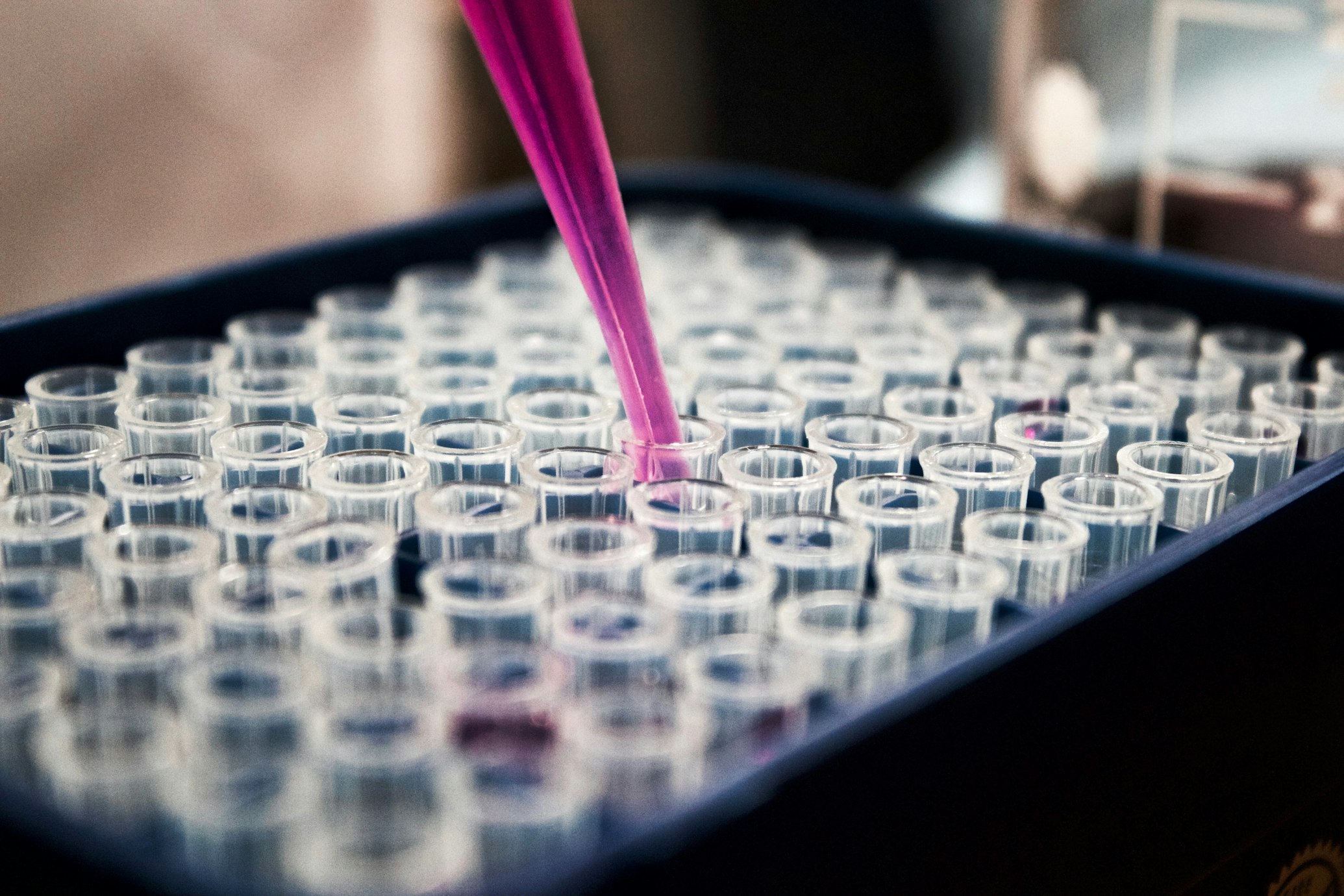
X-ray crystallography reveals the atomic structure of manganese complexes.
| Complex | Oxidation State | Reaction with 2,4-DTBP | Relative Reactivity |
|---|---|---|---|
| Mnᴵⱽ(OH)(ttppc) (3) | Mn(IV) | Rate constant (k₂) = 2.73 x 10⁴ M⁻¹ s⁻¹ | ~ 1,000x more reactive |
| Mnⱽ(O)(ttppc) (4) | Mn(V) | Rate constant (k₂) = 17.4 M⁻¹ s⁻¹ | Baseline |
This counterintuitive result—that a lower oxidation state is more reactive—highlights that chemical reactivity is not just about electron deficiency. The O-H bond in the Mnᴵⱽ(OH) complex is weaker than the Mnⱽ=O bond, making it easier for the hydrogen atom to be transferred in a concerted HAT process. This provides crucial insight into biological mechanisms, suggesting that similar Mnᴵⱽ(OH) intermediates could be potent actors in enzymatic cycles like those in the OEC .
The Scientist's Toolkit: Research Reagent Solutions
Studying and applying these powerful intermediates requires a specialized set of tools. Below is a list of essential materials and methods used in this field.
| Tool/Reagent | Function | Example in Use |
|---|---|---|
| Bulky Ligands | To sterically protect the reactive Mn-center, allowing for isolation and stabilization. | Tris(2,4,6-triphenylphenyl) corrole (ttppc) . |
| Chemical Oxidants | To generate the high-valent state from a Mn(II) or Mn(III) precursor. | m-Chloroperoxybenzoic acid (m-CPBA), PhI(OAc)₂ 5 8 . |
| Spectroscopic Techniques | To detect, characterize, and monitor short-lived species. | UV-Vis: Tracks color changes during reactions 5 . EPR: Probes the electronic structure of paramagnetic Mn(IV) centers . X-ray Diffraction (XRD): Determines precise atomic structure of crystals . |
| Isotope Labeling | To trace the origin of oxygen atoms in reaction products, confirming mechanisms. | Using H₂¹⁸O to verify if the oxo-group in a product comes from water or the oxidant 5 . |
| Manganese Salts & Nano-oxides | As precursors for heterogeneous catalysts used in environmental applications. | MnSO₄, and synthesized nanoplates of Mn₃O₄, Mn₂O₃ for activating oxidants in water purification 2 7 . |
From Lab to Life: Nano and Molecular Applications
Inspired by nature, scientists are now translating this fundamental knowledge into practical applications, particularly in environmental remediation and sustainable chemistry.
Water Decontamination
One of the most promising applications is in water decontamination. Traditional methods that rely on free radicals are easily scavenged by other components in water, reducing their efficiency. Advanced Oxidation Processes (AOPs) based on high-valent manganese-oxo species offer a superior path 2 6 .
Researchers have found that manganese oxide nanoplates (e.g., Mn₃O₄) can activate peroxymonosulfate (PMS), a common oxidant, to generate high-valent Mn-oxo species directly. These species are highly effective at degrading stubborn organic pollutants like bisphenol A (BPA) 2 .
Energy Applications
Manganese-based catalysts are being developed for artificial photosynthesis and fuel cells. By mimicking the natural oxygen-evolving complex, researchers aim to create efficient systems for solar fuel production 3 .
These systems could potentially split water into hydrogen and oxygen using sunlight, providing a clean and renewable energy source.
Medical & Pharmaceutical
Manganese complexes show promise in pharmaceutical applications, including as MRI contrast agents and in catalytic therapeutics. Their ability to perform selective oxidations could enable new synthetic pathways for drug molecules 3 .
Furthermore, the development of iron-manganese modified biochar (FM-BC) combines the benefits of a porous carbon material with the synergistic redox cycling between Fe and Mn 4 .
These species are more selective and less susceptible to interference from the background water matrix, leading to more efficient and potentially cheaper water treatment technologies 2 6 . This creates a "electron shuttle chain" (Fe²⁺ → Mn⁴⁺ → pollutant) that greatly enhances the material's ability to remove heavy metals and organic contaminants from soil and water 4 .
Conclusion
The journey into the world of high-valent manganese-oxo intermediates takes us from the ancient, sun-drenched reactions that oxygenated our planet to the cutting edge of green chemistry and environmental technology. What was once a hidden secret of nature is now being understood and engineered in labs worldwide.
The synthesis and study of these elusive complexes, like the Mnᴵⱽ(OH) species, are not merely academic exercises. They provide the fundamental blueprints for designing the next generation of catalysts. As research continues to unravel the intricacies of their generation and reactivity, we move closer to harnessing the full, elegant power of manganese to build a cleaner and more sustainable future.

Manganese catalysis could play a key role in developing sustainable technologies for our future.