Decoding Neural Divergence: A Comparative Analysis of Brain Network Differences in Autism and Asperger Syndrome
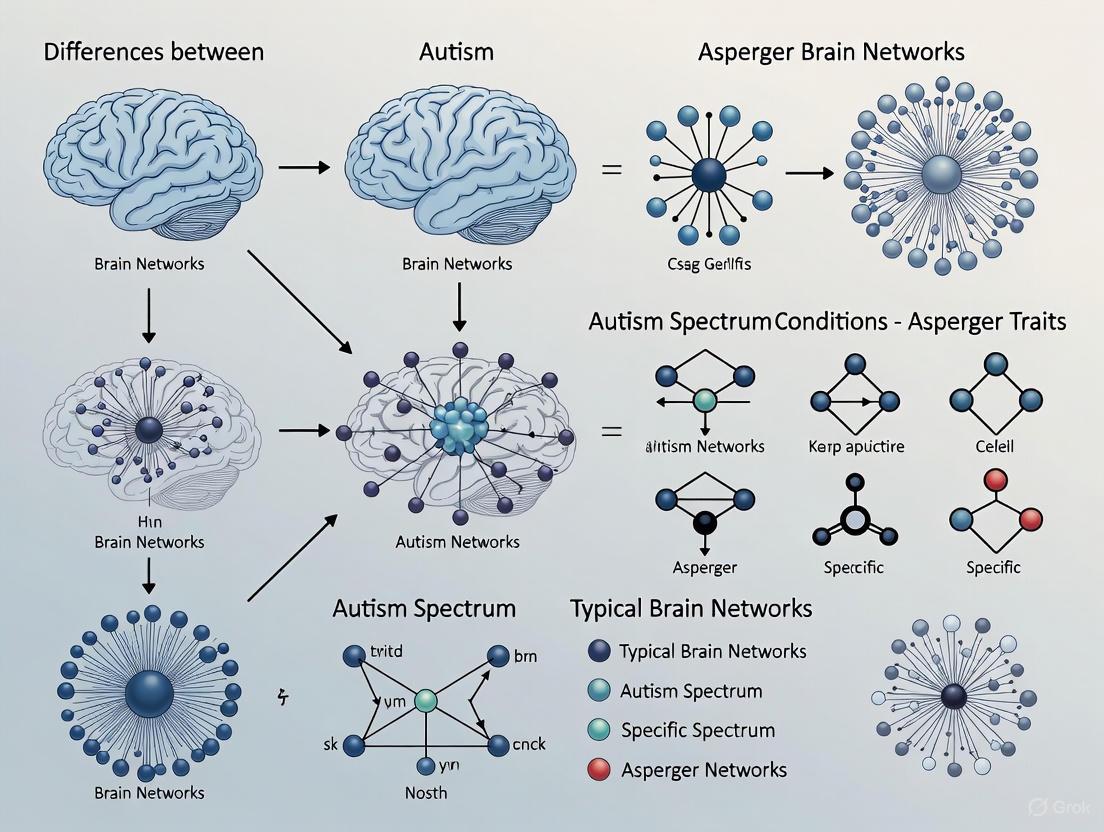
This review synthesizes contemporary neuroimaging and genetic research to elucidate the distinct and overlapping brain network characteristics of Autism Spectrum Disorder (ASD) and Asperger Syndrome (AS).
Decoding Neural Divergence: A Comparative Analysis of Brain Network Differences in Autism and Asperger Syndrome
Abstract
This review synthesizes contemporary neuroimaging and genetic research to elucidate the distinct and overlapping brain network characteristics of Autism Spectrum Disorder (ASD) and Asperger Syndrome (AS). We explore foundational discoveries, including reduced synaptic density and altered grey matter covariance, and detail advanced methodological approaches such as connectome-based predictive modeling and multiscale functional connectivity analysis. The article addresses key challenges in reconciling inconsistent connectivity findings (hypo- vs. hyper-connectivity) and highlights validation studies demonstrating transdiagnostic neural patterns. Aimed at researchers and drug development professionals, this analysis underscores the imperative of biological subtyping for developing precise, targeted therapeutics and biomarkers for neurodevelopmental conditions.
Core Neurobiological Distinctions: Synaptic Density, Grey Matter, and Network Architecture
Autism Spectrum Disorder (ASD) is a complex neurodevelopmental condition characterized by impairments in social communication and the presence of repetitive behaviors and restricted interests [1]. For decades, researchers have sought to identify the neurobiological underpinnings of ASD, a pursuit complicated by the condition's significant heterogeneity [2]. Historically, diagnostic manuals like the DSM-IV attempted to create subgroups such as Asperger's syndrome and pervasive developmental disorder not otherwise specified (PDD-NOS), but these categories were ultimately removed in the DSM-5 due to their lack of biological validity and clinical utility [3]. The quest to understand potential differences between autism and Asperger's brain networks continues to drive research, with the hope that identifying distinct biomarkers can lead to more personalized and effective support strategies.
A major breakthrough has emerged from molecular imaging, particularly positron emission tomography (PET), which now enables the in vivo investigation of synaptic density in the human brain. A landmark 2024 study published in Molecular Psychiatry revealed for the first time a large-scale difference in synaptic density in the brains of living autistic adults [4] [3]. This discovery positions synaptic density as a potential fundamental biomarker that could objectively quantify brain differences, potentially even across historical ASD subtypes, and accelerate the development of targeted therapeutics.
PET Imaging Reveals Widespread Lower Synaptic Density in ASD
Experimental Protocol and Key Quantitative Findings
The pivotal study conducted by Matuskey and colleagues employed a sophisticated PET imaging protocol to quantify synaptic density in the brain [4] [3]. The methodology and participant characteristics are detailed below.
Participant Cohort:
- Autistic Group: 12 adults (mean age 25 ± 4 years; 6 males)
- Control Group: 20 demographically matched non-autistic adults (mean age 26 ± 3 years; 11 males)
Imaging Protocol:
- Radiotracer: Injection of 11C-UCB-J, a novel tracer that binds to the synaptic vesicle glycoprotein 2A (SV2A), serving as a proxy for synaptic density.
- Scanning: Participants underwent PET scanning to measure the distribution of the tracer.
- Image Analysis: The primary outcome was Binding Potential (BPND), computed using the centrum semiovale as a reference region. Researchers applied Partial Volume Correction with the Iterative Yang algorithm to control for potential brain volumetric differences.
The results were striking, demonstrating consistently lower synaptic density across the autistic brain.
Table 1: Regional Synaptic Density Differences in Autistic Adults vs. Controls
| Brain Region | Reduction in BPND (Autism vs. Control) | Statistical Significance (p-value) |
|---|---|---|
| Whole Cortex | 17% lower | p = 0.01 |
| Prefrontal Cortex | 15% lower | p = 0.02 |
| Gray Matter | Significantly lower | p < 0.0001 |
| All Brain Regions | Lower | Evident across all areas |
Furthermore, the study found that lower synaptic density was significantly correlated with clinical measures of autistic features. Across the whole cortex, the correlation was strong (r = 0.67, p = 0.02), with similar significant correlations found in multiple individual brain regions (rs = -0.58 to -0.82) [4]. This key finding indicates that a greater number of autistic features were associated with lower synaptic density, providing a direct link between biology and behavior.
The Significance of DirectIn VivoMeasurement
This study marked a paradigm shift in neurodevelopmental research. Prior understanding of synaptic abnormalities in ASD was based on indirect evidence from animal models or post-mortem human studies [3]. As Dr. James McPartland from the Yale Child Study Center noted, "As simple as our findings sound, this is something that has eluded our field for the past 80 years... It's very unusual to see correlations between brain differences and behavior this strong in a condition as complex and heterogenous as autism" [3].
The ability to measure synaptic density directly in living individuals opens new avenues for research and clinical practice. It moves the field beyond descriptive behavioral diagnoses and toward a mechanistic understanding of autism's neurobiology [3].
Contextualizing the Biomarker: Synaptic Density in the Broader ASD Research Landscape
The Broader Challenge of Heterogeneity and Biomarker Development
The discovery of a synaptic density biomarker occurs against a backdrop of significant challenges in ASD therapeutic development. The "phenotypic heterogeneity of ASD is broad and multi-dimensional," which has long been identified as a major barrier to creating effective, targeted treatments [2]. This heterogeneity has contributed to a high failure rate in clinical trials for drugs targeting core ASD features, as patient groups are biologically diverse and may respond differently to the same therapy [2] [5].
Major initiatives like the Autism Biomarkers Consortium for Clinical Trials (ABC-CT) have been established to address this precise problem. Its goal is to qualify objective biomarkers, such as EEG measures and eye-tracking, that can stratify patients into more homogeneous subgroups or serve as sensitive measures of treatment response [6]. In fact, the ABC-CT's EEG N170 measure was the first psychiatric biomarker ever accepted into the FDA's Biomarker Qualification Program [6]. The synaptic density findings from PET imaging contribute a crucial molecular dimension to this ongoing effort.
Converging Evidence from Genetic and Network Studies
The finding of lower synaptic density is consistent with evidence from other research domains. Genetic studies have long implicated synaptopathology in ASD, with many risk genes affecting the development and function of synapses [4]. Furthermore, a separate transdiagnostic study that examined brain networks in Noonan syndrome (NS)—a genetic condition with high rates of ASD—found that predictive models of social impairment were generalizable between NS and non-syndromic ASD cohorts [7]. This suggests "converging patterns of functional connectivity underlying autism symptoms across diagnoses," which may share common underlying mechanisms with the widespread synaptic differences now observed via PET [7].
The Scientist's Toolkit: Essential Reagents and Methods
To replicate and build upon this research, scientists require specific tools and reagents. The following table details the key components used in the featured study and related biomarker research.
Table 2: Key Research Reagent Solutions for Synaptic Density and Biomarker Studies in ASD
| Reagent / Tool | Primary Function | Specific Example / Note |
|---|---|---|
| SV2A PET Radiotracer | In vivo quantification of synaptic density by targeting synaptic vesicle protein SV2A. | 11C-UCB-J (Used in the landmark study) [4] [3] |
| PET-MRI Imaging Systems | High-resolution anatomical (MRI) and molecular (PET) co-registration for precise brain mapping. | Systems used for partial volume correction and anatomical localization [4] [1]. |
| Behavioral Phenotyping Tools | Standardized clinical assessment of autistic features for correlation with biological data. | Autism Diagnostic Observation Schedule (ADOS) - Gold standard for diagnosis; Social Responsive Scale (SRS) - Measures trait severity [7] [3]. |
| EEG Biomarkers | Measure brain activity and functional connectivity; potential stratification biomarker. | EEG N170 - Accepted into FDA's Biomarker Qualification Program for use in clinical trials [6]. |
| Eye-Tracking Technology | Objective measure of visual attention and social perception. | Also accepted into the FDA's Biomarker Qualification Program, often used alongside EEG [6]. |
Signaling Pathways and Experimental Workflows
The research linking synaptic density to ASD pathophysiology involves several conceptual and experimental pathways. The following diagram illustrates the logical flow from molecular-level synaptic deficits to the larger-scale functional brain networks and clinical symptoms studied in ASD research.
The experimental workflow for quantifying synaptic density in vivo requires a multi-step process that integrates radiotracer chemistry, medical imaging, and clinical assessment. The diagram below outlines this detailed protocol.
Future Directions and Implications for Drug Development
The identification of synaptic density as a biomarker holds profound implications for the future of ASD research and therapy development. A primary goal is to determine whether these synaptic differences are present from early childhood and whether they can be modulated by intervention. This could one day allow clinicians to "give biologic confirmation to patients and their families," potentially enabling earlier support and personalized intervention strategies [3].
For drug development, which has been hampered by a lack of objective biomarkers and high failure rates [2] [5], synaptic density measures offer a much-needed quantitative tool. They can be used to assess whether a candidate therapy successfully engages its intended molecular target (target engagement) and leads to a change in brain biology. This provides a potential intermediate endpoint that is more sensitive and objective than behavioral ratings alone, helping to "de-risk" the difficult process of developing new medications for ASD core features [2].
While the path forward is promising, questions remain. It is still unclear whether autistic people are born with fewer synapses or if this difference develops over time [3]. Future research will need to investigate synaptic density in younger cohorts and track its development over time, linking these measures to long-term outcomes and quality of life for autistic individuals.
Structural covariance networks (SCNs) represent a powerful framework for investigating the large-scale organization of the brain by measuring interregional correlations in morphometric properties (e.g., cortical thickness, grey matter volume) across individuals [8]. This approach reveals how different brain regions co-develop, co-mature, and potentially share common genetic or experience-dependent influences. The analysis of SCNs provides critical insights into the macroscale architectural principles of the brain that cannot be captured through examination of isolated brain regions. Within autism spectrum disorder (ASD), SCN analysis has emerged as a particularly valuable tool for identifying connectomic alterations that underlie the condition's complex behavioral phenotype. It is important to note that since the publication of the DSM-5, Asperger's syndrome (AS) is no longer diagnosed as a separate condition but is included within the broader ASD category [9]. Consequently, most contemporary neuroimaging research, including the studies reviewed herein, examines ASD as a unified spectrum. This review synthesizes findings from these studies to elucidate the topological organization of grey matter in ASD and its relationship to core clinical features.
Experimental Approaches for SCN Analysis
Core Methodological Framework
The construction and analysis of SCNs follow a standardized computational pipeline, which can be adapted to address specific research questions. The fundamental workflow encompasses image acquisition, preprocessing, feature extraction, network construction, and graph-based analysis [10] [11] [12].
Table 1: Key Methodological Steps in SCN Construction
| Step | Description | Common Tools/Techniques |
|---|---|---|
| Image Acquisition | High-resolution T1-weighted MRI scanning | 3T MRI scanners (e.g., GE Signa, Siemens) |
| Preprocessing | Image quality control, noise reduction, spatial normalization | Freesurfer, Statistical Parametric Mapping (SPM) |
| Feature Extraction | Quantifying morphometric features from cortical and subcortical regions | Cortical thickness, grey matter volume, surface area |
| Parcellation | Dividing the brain into discrete regions for analysis | Atlas-based (e.g., Desikan-Killiany), vertex-wise |
| Network Construction | Creating correlation matrices based on interregional morphometric similarity | Pearson's correlation between regional measures |
| Graph Analysis | Calculating topological properties of the resulting networks | Graph theory metrics (e.g., small-worldness, modularity) |
Advanced Analytical Techniques
Beyond basic SCN construction, several sophisticated analytical approaches have been deployed to uncover nuanced network alterations in ASD. Sliding window analysis tracks developmental changes in network topology across age, revealing distinct neurodevelopmental trajectories [10]. Contrast subgraph analysis identifies mesoscopic-scale network components that show maximal connectivity differences between ASD and typically developing (TD) groups, effectively capturing patterns of both hyper- and hypo-connectivity within a unified framework [13]. Asymmetry analysis examines left-right differences in network topology, testing the hypothesis that altered lateralization is a core feature of ASD [12]. Finally, graphlet analysis characterizes higher-order network topology by enumerating small, non-isomorphic subgraphs, providing insights into local connectivity patterns that conventional metrics might miss [8].
Diagram 1: Experimental workflow for structural covariance network analysis, showing key steps from data acquisition to multiple analytical pathways.
Key Findings: Altered SCN Topology in ASD
Developmental Trajectories and Network Resilience
SCN studies reveal that ASD involves a delayed or altered neurodevelopmental trajectory rather than a fixed abnormality. Using cross-sectional analysis across ages 7-45, Cai et al. demonstrated that network characteristics in both TD and ASD groups follow inverted U-shaped trajectories, but the ASD group reached peak values approximately 7 years later than the TD group [10]. This neurodevelopmental delay has functional consequences: network resilience to targeted attacks peaked at ages 18-19 in TD individuals but not until age 25 in those with ASD, with the weakest resilience observed at age 7 in both groups [10]. These findings suggest that brain development in ASD follows a different temporal schedule, potentially affecting the timing of critical periods and environmental adaptation.
Patterns of Altered Connectivity
Research consistently demonstrates that ASD is characterized by a complex pattern of both increased and decreased structural covariance across different brain systems, rather than a simple uniform deficit.
Table 2: Regional and Network-Level SCN Alterations in ASD
| Brain System/Region | SCN Alteration in ASD | Functional Correlates |
|---|---|---|
| Interhemispheric Connections | Decreased left-right hemisphere covariance, particularly in sensory regions [14] | Impaired sensory integration & bilateral coordination |
| Frontal Lobe | Reduced covariance in superior frontal gyrus; altered asymmetry in rostral middle frontal and medial orbitofrontal cortex [12] [13] | Executive dysfunction, altered social cognition |
| Temporal Lobe | Hypo-connectivity in superior temporal gyrus and temporal pole [13] | Language processing, social perception |
| Occipital Lobe | Hyper-connectivity within visual regions and with parietal areas [13] | Enhanced low-level visual processing |
| Limbic System | Increased amygdala covariance with visual processing regions [14] | Sensory hypersensitivity, emotional reactivity |
| Cerebellar Networks | Decreased covariance between sensory cortices and cerebellar networks [14] | Impaired multisensory integration & prediction |
Network Asymmetry and Small-World Architecture
A large-scale study by Sha et al. analyzing 43 datasets from the ENIGMA consortium revealed subtly altered asymmetry of SCNs in ASD [12]. Specifically, they found higher randomization (less ordered topology) in right-hemispheric networks involving the fusiform, rostral middle frontal, and medial orbitofrontal cortex, with decreased right-hemisphere randomization only in superior frontal networks [12]. These asymmetrical alterations affected networks that subserve executive functions, language, and sensorimotor processes. The typical small-world architecture—which balances segregation and integration—appears disrupted in ASD, potentially explaining both enhanced local processing and impaired global integration.
The Scientist's Toolkit: Essential Research Reagents and Materials
Table 3: Key Reagents and Computational Tools for SCN Research
| Tool/Resource | Type | Primary Function | Example Use in ASD SCN Studies |
|---|---|---|---|
| ABIDE Database | Data Repository | Publicly shared neuroimaging data from ASD individuals | Source for T1-weighted structural MRI data [10] [11] |
| ADOS/ADIR | Clinical Instrument | Standardized diagnostic assessment for ASD | Participant characterization and phenotype verification [14] |
| Freesurfer | Software Pipeline | Automated cortical reconstruction & volumetric segmentation | Extraction of cortical thickness and grey matter volume [11] [15] |
| ENIGMA Consortium | Research Consortium | Standardized protocols for large-scale brain analysis | Multi-site data harmonization and analysis [12] |
| Graph Theory Libraries | Computational Tool | Network analysis and topology quantification | Calculating small-worldness, modularity, resilience [10] [8] |
Comparative SCN Patterns: ASD vs. Typical Development
The most consistent finding across SCN studies in ASD is a alteration in the relationship between anatomical distance and structural covariance. Both ASD and ADHD show "a steeper decline in covariance as a function of distance" compared to neurotypical populations [11]. This suggests that in ASD, short-range connections are over-represented while long-range connections are under-represented in structural covariance patterns. This distance-dependent alteration aligns with theories proposing local over-connectivity and global under-connectivity in ASD [11]. Additionally, modular organization—how the brain is organized into specialized communities—differs in ASD, with less overlap in modular structure compared to typically developing controls [11].
Diagram 2: Comparative schematic of key structural covariance network characteristics in typical development versus autism spectrum disorder.
Structural covariance network analysis provides a powerful lens through which to examine the system-level neuroanatomy of autism spectrum disorder. The evidence points to ASD as a condition of altered neurodevelopmental trajectories affecting network maturation, resilience, and topological organization. The consistent findings of reduced long-range covariance, particularly between hemispheres and in frontotemporal systems, coupled with increased local covariance in sensory and occipital regions, suggest a network-level explanation for the cognitive and sensory profiles characteristic of ASD.
Future research should prioritize longitudinal designs to track individual SCN development throughout the lifespan, with careful attention to how network alterations correlate with specific behavioral and cognitive outcomes. The integration of SCN findings with other imaging modalities (e.g., diffusion tensor imaging, functional connectivity) and genetic data will be essential for developing a comprehensive model of ASD neurobiology. Furthermore, as the field moves toward more personalized approaches, identifying SCN subtypes within the heterogeneity of ASD may eventually inform targeted interventions and support strategies.
The study of brain connectivity using graph theory has fundamentally advanced our understanding of autism spectrum disorder (ASD) and Asperger's syndrome (AS). This computational framework models the brain as a complex network of nodes (brain regions) and edges (structural or functional connections), providing powerful metrics to quantify its organizational principles. Within this paradigm, two fundamental properties have emerged as crucial differentiators: global efficiency, which represents the overall effectiveness and speed of information transfer across distributed brain regions, and segregation, which reflects the brain's capacity for specialized local information processing within tightly interconnected neural clusters [16] [17].
Research consistently demonstrates that the balance between these opposing forces—integration through efficient global communication and segregation through specialized local processing—is altered in autistic individuals. Rather than pursuing overly simplistic "underconnectivity" versus "overconnectivity" hypotheses, contemporary neuroscience recognizes that ASD involves a complex reorganization of brain network architecture [18]. This guide provides a systematic comparison of how these network properties manifest across ASD subtypes, with particular attention to the distinct patterns observed in Asperger's syndrome, and details the experimental protocols enabling these discoveries.
Comparative Analysis of Network Metrics in ASD and Asperger's Syndrome
Quantitative Comparison of Global Efficiency and Segregation Metrics
Table 1: Graph Theory Metrics in Autism Spectrum Disorder and Asperger's Syndrome
| Study Group | Global Efficiency | Characteristic Path Length | Transitivity/Clustering | Modularity | Assortativity | Structural Covariance |
|---|---|---|---|---|---|---|
| Asperger's Syndrome (Adults) | Increased [16] | Not reported | Reduced [16] | Not reported | Reduced [16] | Increased intra-hemispheric correlation at temporal, parietal, insula, posterior fossa regions [19] |
| Autism Spectrum Disorder (Mixed Ages) | Conflicting findings (both increased and decreased reported) [17] [20] | Shorter in functional networks [17] | Reduced [17] | Reduced [17] | Not reported | Increased at frontal, decreased at temporal regions [19] |
| High-Functioning ASD (Adults) | Decreased in structural networks [20] | Increased in structural networks [20] | Not reported | Not reported | Not reported | Not reported |
Table 2: Regional Network Alterations in ASD and Asperger's Syndrome
| Brain Region/Network | ASD Findings | Asperger's Findings | Functional Implications |
|---|---|---|---|
| Frontal Lobe | Hypo-connectivity in superior frontal gyrus (children) [13] | Increased grey matter at cingulate and medial frontal [19] | Executive function, social cognition |
| Temporal Lobe | Hypo-connectivity in superior temporal gyrus [13] | Decreased grey matter at limbic and interior-temporal [19] | Language processing, social perception |
| Occipital Cortex | Hyper-connectivity in children and adolescents [13] | Not specifically reported | Visual processing, sensory integration |
| Subcortical-Cerebellar | Included in predictive networks for autism symptoms [7] | Stronger structural covariance [19] | Motor control, cognitive processing |
| Default Mode Network | Reduced segregation [21] | Not specifically reported | Self-referential thought, social reasoning |
Developmental Trajectories of Network Organization
Network alterations in ASD exhibit dynamic patterns across the lifespan. During childhood and adolescence, individuals with ASD typically display hypo-connectivity within frontal lobe regions, particularly affecting the Superior Frontal Gyrus and its connections to temporal regions including the Superior Temporal Gyrus [13]. Simultaneously, hyper-connectivity emerges in visual processing areas, including strengthened connections between the Middle Occipital Gyrus and Inferior Occipital Gyrus [13].
By adolescence, these patterns evolve to include more widespread disconnection involving the Inferior Frontal Gyrus, amygdala, hippocampus, and cerebellar regions [13]. In adulthood, individuals with Asperger's syndrome demonstrate increased global efficiency alongside reduced transitivity and assortativity, suggesting a shift toward more distributed information processing at the expense of network resilience and local specialization [16].
Experimental Protocols for Network Analysis
Resting-State Functional MRI and Graph Analysis Workflow
Table 3: Key Methodological Steps in Functional Connectome Research
| Research Phase | Protocol Component | Standardized Tools | Purpose |
|---|---|---|---|
| Participant Selection | DSM/ICD criteria, IQ matching, age considerations | ADOS, ADI-R, WAIS | Control heterogeneity, match groups |
| Data Acquisition | Resting-state fMRI, DTI, structural T1-weighted | 3T MRI scanners, parameters from [20] | Standardized brain imaging |
| Preprocessing | Slice timing correction, motion realignment, normalization, smoothing | DPABI, SPM, FSL, AFNI | Remove artifacts, standardize space |
| Time Series Extraction | Region of Interest (ROI) parcellation | AAL atlas, Power's functional ROIs [18] | Define network nodes |
| Connectivity Matrix Construction | Pearson's correlation, partial correlation, sparse regularization | SCOLA algorithm [13] | Define network edges |
| Graph Theory Metrics | Global/local efficiency, transitivity, modularity, assortativity | Brain Connectivity Toolbox, GraphVar [22] | Quantify network organization |
The following diagram illustrates the standardized workflow for analyzing brain network properties from neuroimaging data:
Advanced Analytical Approaches
Contrast Subgraph Analysis: Recent methodological advances enable identification of "contrast subgraphs"—mesoscopic-scale network structures that show maximal connectivity differences between ASD and neurotypical groups. This approach involves creating summary graphs for each cohort, computing a difference graph, and solving an optimization problem to identify subgraphs with significant hyper- or hypo-connectivity [13]. This technique has revealed occipital hyper-connectivity and frontal-temporal hypo-connectivity in ASD across development.
Dynamic Functional Connectivity: Rather than assuming static connectivity throughout scanning sessions, dynamic approaches use sliding window techniques to cluster connectivity matrices into different brain states. Research reveals that ASD individuals spend more time in "segregated" states where networks become more isolated and show reduced switching frequency between states [21].
Persistent Homology: This topological data analysis technique characterizes networks across multiple scales without arbitrary threshold selection, detecting persistent structures (components, holes, voids) in brain connectivity. PH metrics have demonstrated superior classification performance for ASD compared to traditional graph metrics in certain brain states [21].
Table 4: Essential Reagents and Tools for Connectome Research
| Resource Category | Specific Tools | Application | Key Features |
|---|---|---|---|
| Data Repositories | ABIDE I & II [23] | Multi-site fMRI data aggregation | Standardized preprocessing pipelines, large samples |
| Network Construction | Brain Connectivity Toolbox [16] | Graph theory metrics calculation | Comprehensive set of network measures |
| Analysis Platforms | GraphVar [22] | User-friendly MATLAB toolbox | Integrated machine learning, no coding required |
| Preprocessing Suites | DPABI, SPM, FSL, AFNI [22] | Image preprocessing and quality control | Motion correction, normalization, filtering |
| Statistical Analysis | Network-Based Statistic | Controlling multiple comparisons | Identifies significant interconnected components |
| Visualization | BrainNet Viewer | Network visualization | 3D brain renderings with highlighted connections |
The application of graph theory to autism spectrum disorders has revealed fundamental alterations in the brain's network architecture, characterized by a shift in the balance between global integration and local specialization. Individuals with Asperger's syndrome demonstrate a distinct profile with increased global efficiency and reduced transitivity and assortativity, suggesting a brain organization that favors distributed information processing at the expense of network resilience [16]. These findings align with cognitive profiles showing remarkable attention to detail alongside challenges in social information processing.
For drug development professionals, these network metrics offer potential biomarkers for measuring intervention efficacy. The demonstrated correlation between network properties and symptom severity [17] suggests that pharmacological agents that modulate the excitatory/inhibitory balance implicated in ASD pathogenesis [21] could be assessed through their impact on global efficiency and segregation metrics. Furthermore, the developmental trajectories of these network properties highlight critical periods for intervention, with childhood characterized by prominent frontal hypo-connectivity and occipital hyper-connectivity that evolves into more distributed alterations by adulthood [13].
Future research should prioritize longitudinal designs to track network evolution across the lifespan, with particular attention to how Asperger-specific network configurations emerge from developmental pathways. Additionally, integrating genetic data with connectome metrics may illuminate how specific molecular pathways shape the brain's network organization, ultimately advancing targeted therapeutic development for ASD and its subtypes.
Autism Spectrum Disorder (ASD) represents a complex group of neurodevelopmental conditions characterized by impairments in social communication and interaction, alongside restricted interests and repetitive behaviors. The genetic architecture of ASD is highly heterogeneous, involving hundreds of risk genes that converge onto a limited number of key biological pathways. Two of the most significant are the RAS-MAPK signaling pathway and pathways governing synaptic function and plasticity. The RAS-MAPK pathway, originally identified for its role in oncogenesis, is now recognized as a critical regulator of neurodevelopment, influencing neuronal proliferation, differentiation, and connectivity [24] [25]. Synaptic function pathways encompass the intricate molecular machinery that regulates the formation, maintenance, and plasticity of synapses, the points of communication between neurons. Disruptions in the delicate balance of synaptic excitation and inhibition (E/I balance) are a hallmark of ASD pathophysiology [26] [27]. This guide provides a comparative analysis of these two pivotal pathways, detailing their mechanisms, experimental investigation methods, and implications for ASD, with a specific focus on their role in informing research on brain network differences.
Pathway Mechanisms and Functional Roles
The RAS-MAPK Signaling Pathway
The Rat Sarcoma Mitogen-Activated Protein Kinase (RAS-MAPK) pathway is a fundamental intracellular signaling cascade that transmits signals from cell surface receptors to the DNA in the nucleus. In the context of neurodevelopment, it regulates critical processes including neuronal differentiation, cell cycle progression, and synaptic plasticity [24] [25]. Germline mutations that upregulate this pathway cause a class of disorders known as RASopathies, among which Noonan Syndrome (NS) is the most common. Notably, 12-30% of children with NS meet diagnostic criteria for ASD, providing a genetically defined model to study this pathway's role in autism-related behaviors [28] [24]. The core mechanism involves growth factor receptors (like TrkB) activating the small GTPase RAS, which then triggers a sequential phosphorylation cascade involving RAF, MEK, and finally MAPK (also known as ERK). Upon activation, MAPK/ERK translocates to the nucleus to phosphorylate transcription factors like ELK1, thereby regulating the expression of genes critical for neuronal development and function [25].
Synaptic Function and Plasticity Pathways
Synaptic function pathways encompass the molecular systems that control the development and dynamic strengthening or weakening of synaptic connections, which are the basis for learning, memory, and neural circuit refinement. Key forms of synaptic plasticity include Long-Term Potentiation (LTP), which strengthens synapses, and Long-Term Depression (LTD), which weakens them [26]. These processes are critically dependent on neurotransmitter receptors, particularly NMDA receptors (NMDARs) and AMPA receptors (AMPARs). When activated, NMDARs allow calcium influx, which initiates downstream signaling cascades that lead to the insertion of more AMPARs into the postsynaptic membrane during LTP [26]. In ASD, these pathways are often disrupted, leading to an excitation-inhibition (E/I) imbalance in key brain circuits. This can manifest as early hyperplasticity and excessive spine formation, resulting in local hyperconnectivity [26]. Key molecules in this pathway include FMRP, SHANK3, and neuroligins, which act as scaffolds or regulators of the synaptic machinery [26] [29].
Table 1: Comparative Overview of Key Genetic Pathways in ASD
| Feature | RAS-MAPK Pathway | Synaptic Function Pathways |
|---|---|---|
| Primary Role | Regulates cell growth, differentiation, and proliferation | Mediates neuronal communication, connectivity, and plasticity |
| Core Components | Receptor Tyrosine Kinases (RTKs), RAS, RAF, MEK, MAPK/ERK | NMDAR, AMPAR, mGluR, SHANK, FMRP, NLGN, NRXN |
| Key Processes | Neuronal fate determination, gene expression regulation | Synaptogenesis, spine morphology, LTP/LTD, E/I balance |
| ASD Association | Strong link via RASopathies (e.g., Noonan Syndrome); upregulation associated with social impairments [24] | Direct disruption by high-confidence ASD genes (e.g., SHANK3, NLGN3/4); leads to hyperplasticity & E/I imbalance [26] [29] |
| Temporal Dynamics | Active during early neurodevelopment and circuit formation | Critical during early postnatal synaptogenesis and lifelong plasticity |
| Therapeutic Targeting | MEK inhibitors (e.g., selumetinib) for RASopathies [28] | Compounds modulating NMDAR function, mGluR antagonists [26] |
Experimental Analysis and Methodologies
Research into these pathways employs a multi-level approach, from genetic and molecular analyses in model systems to functional neuroimaging in humans.
Investigating the RAS-MAPK Pathway
Genotype-Phenotype Correlations in Noonan Syndrome: A key experimental approach involves deep phenotyping of individuals with RASopathies like Noonan Syndrome (NS) who harbor known mutations in genes like PTPN11 or SOS1. A 2025 study by Bruno et al. combined genetic sequencing with detailed behavioral assessment using the Social Responsive Scale (SRS-2) to quantify ASD-related traits [28]. To establish a biochemical genotype-phenotype link, the researchers performed biochemical profiling of the SHP2 phosphatase activity encoded by PTPN11. They calculated a fold activation metric, finding that each one-unit increase in SHP2 fold activation corresponded to a 64% higher likelihood of markedly elevated restricted and repetitive behaviors [28]. This demonstrates a quantitative link between the degree of RAS-MAPK pathway upregulation and specific autistic traits.
Connectome-Based Predictive Modeling (CPM): To bridge genetics and brain network function, researchers use CPM with functional MRI (fMRI) data. This data-driven approach constructs models that predict social impairment (SRS scores) from patterns of functional connectivity across the brain. A 2025 study applied CPM to a cohort of children with NS (n=28) and found a significant correlation (r~s~=0.43, p=0.011) between predicted and observed SRS scores [24] [30]. Crucially, a predictive model developed in a large, non-syndromic (idiopathic) ASD cohort (ABIDE, n=352) successfully generalized to predict social impairment in the NS cohort (r~s~=0.46, p=0.018) [24] [7]. This cross-validation indicates that RAS-MAPK dysregulation and idiopathic ASD share a common functional neuroanatomy underlying social deficits, implicating networks involving the subcortical-cerebellar circuitry and visual processing regions [24].
Investigating Synaptic Function Pathways
Molecular Studies of Synaptic Plasticity: Preclinical research, using animal models or induced pluripotent stem cell (iPSC)-derived neurons, focuses on the molecular mechanisms of LTP and LTD. Key protocols involve electrophysiological techniques like patch-clamp recording to measure changes in synaptic strength in brain slices following high-frequency (for LTP) or low-frequency (for LTD) stimulation [26]. These studies have shown that in models of ASD, there is often a shift towards hyperplasticity, with enhanced LTP and impaired LTD, leading to an excess of synaptic connections. Molecular analyses (e.g., Western blot, immunohistochemistry) are then used to quantify the associated changes in synaptic components, such as the surface expression of AMPARs or the phosphorylation state of key kinases like CaMKII [26].
Structural and Functional Neuroimaging: In humans, the consequences of synaptic dysregulation are investigated using structural and functional MRI. Studies have consistently found that ASD is associated with early brain overgrowth, particularly in the prefrontal and temporal cortices, believed to result from excessive synaptogenesis and impaired pruning [25]. fMRI studies examining resting-state functional connectivity have identified a pattern of local hyperconnectivity alongside long-range underconnectivity in the brains of individuals with ASD, a pattern thought to stem from the E/I imbalance caused by synaptic dysfunction [26]. These network-level findings are directly relevant to investigating differences between autism and Asperger's syndrome, as variations in the severity and distribution of these connectivity patterns may underlie phenotypic differences.
Table 2: Key Experimental Protocols for Pathway Analysis
| Experimental Protocol | Objective | Key Outcome Measures | Pathway Application |
|---|---|---|---|
| Genotype-Phenotype Correlation | Link specific genetic variants to behavioral traits | SRS-2 scores, CBCL scores, biochemical SHP2 fold activation [28] | RAS-MAPK (in RASopathies) |
| Connectome-Based Predictive Modeling (CPM) | Identify brain networks predictive of social impairment | Functional connectivity matrices, correlation (r~s~) between predicted vs. observed SRS scores [24] [30] | RAS-MAPK & Synaptic Function (via network phenotypes) |
| Electrophysiology (LTP/LTD induction) | Measure synaptic strength and plasticity in vitro | Field Excitatory Post-Synaptic Potential (fEPSP) slope/spike, AMPAR/NMDAR ratio [26] | Synaptic Function |
| Resting-State fMRI (rs-fMRI) | Map large-scale functional brain networks | Functional Connectivity (FC) matrices, network graph metrics (e.g., hubness, modularity) [26] [24] | Synaptic Function (downstream network effects) |
Pathway Visualization and Modeling
The following diagrams, generated using Graphviz DOT language, illustrate the core signaling mechanisms and experimental workflows for the RAS-MAPK and Synaptic Function pathways.
RAS-MAPK Signaling Cascade
Synaptic Plasticity & E/I Balance in ASD
Table 3: Key Research Reagent Solutions for Investigating ASD Pathways
| Reagent/Material | Function/Application | Specific Examples/Context |
|---|---|---|
| Social Responsive Scale (SRS-2) | Gold-standard questionnaire to quantify ASD trait severity in human subjects. | Used to correlate PTPN11 mutation severity with social impairment in Noonan Syndrome [28] [24]. |
| Connectome-Based Predictive Modeling (CPM) | A computational workflow using fMRI data to build predictive models of behavior from brain connectivity. | Applied to identify shared brain networks underlying social impairment in idiopathic ASD and Noonan Syndrome [24] [30]. |
| Induced Pluripotent Stem Cells (iPSCs) | Allow derivation of patient-specific neurons in vitro for studying cellular and molecular pathology. | Used to model synaptic defects and test therapeutics in neurons with ASD-associated mutations (e.g., SHANK3) [26] [29]. |
| MEK Inhibitors (e.g., Selumetinib) | Small molecule inhibitors that target the RAS-MAPK pathway; used for mechanistic and therapeutic studies. | Investigated for reversing RASopathy-related phenotypes; exemplify pathway-specific therapeutic targeting [28]. |
| fMRI Preprocessing Pipelines (e.g., fMRIPrep) | Standardized, open-source software for robust preprocessing of functional MRI data, reducing variability. | Critical for ensuring data quality and reproducibility in functional connectivity studies of ASD cohorts [24]. |
| TADA (Transmission and De Novo Association) | A Bayesian statistical framework for identifying risk genes from sequencing data by integrating de novo and inherited variants. | Key tool used in large-scale WES/WGS studies (e.g., Autism Sequencing Consortium) to discover ASD genes [29]. |
The comparative analysis of the RAS-MAPK and Synaptic Function pathways reveals a fundamental principle of ASD: diverse genetic origins can converge onto common physiological and network-level phenotypes. The RAS-MAPK pathway acts as a critical upstream regulator of neurodevelopment, where its dysregulation alters neuronal differentiation and circuit formation. In contrast, synaptic function pathways represent the downstream effector machinery, where disruptions directly impact communication within established neural circuits [26] [25].
The finding that a brain network model trained on idiopathic ASD data could predict social impairment in Noonan Syndrome with high accuracy is profound [24] [7]. It provides direct evidence for transdiagnostic convergence, suggesting that despite different etiologies—dysregulation of the RAS-MAPK pathway versus polygenic disruption of synaptic genes—the ultimate impact on functional brain architecture, particularly in subcortical-cerebellar and visual networks, can be remarkably similar.
This has significant implications for research comparing classic autism and Asperger's syndrome. While historically separated by diagnostic criteria, investigating the activity and integrity of the RAS-MAPK pathway and specific synaptic markers (e.g., mGluR-LTD, NMDAR function) in these groups could reveal biologically distinct subtypes. For instance, differences in the severity of synaptic hyperplasticity or in the specific long-range connections affected could underlie the variation in language acquisition and cognitive presentation. The tools outlined here—from SRS-2 and CPM for phenotyping to TADA and iPSCs for genetic analysis—provide a comprehensive toolkit for deconstructing the heterogeneity of the autism spectrum into mechanistically grounded subgroups. Future research that directly integrates genetic pathway analysis with deep brain phenotyping will be essential for moving beyond behaviorally defined categories and towards a precision medicine framework for ASD.
Advanced Imaging and Analytical Techniques for Network Phenotyping
The quest to understand the intricate organization of brain networks has propelled the development of sophisticated neuroimaging techniques. Functional magnetic resonance imaging (fMRI) and electroencephalography (EEG) represent two pillars of non-invasive brain mapping, each with complementary strengths and limitations. fMRI provides excellent spatial resolution (approximately 2-3 mm) for localizing neural activity throughout the brain but suffers from relatively poor temporal resolution due to the slow hemodynamic response, which delays measured changes by several seconds following neuronal activity [31]. Conversely, EEG records cortical electrical activity with millisecond temporal resolution, enabling the capture of rapidly evolving neural dynamics, but its spatial resolution remains poor, limiting precise anatomical identification of underlying neural sources [32] [31]. This complementary relationship has motivated the integration of these modalities, particularly through simultaneous EEG-fMRI recordings, to map brain connectivity across broader spatial and temporal scales [32] [33].
The study of functional connectivity has evolved from static descriptions—which assume stationarity of connections throughout scanning periods—to dynamic approaches that capture the time-varying nature of brain network interactions [34] [35]. This evolution is particularly relevant for understanding neurodevelopmental conditions such as Autism Spectrum Disorder (ASD), where heterogeneity in neural connectivity patterns may underlie diverse clinical presentations [36] [37]. Historically, ASD was categorized into subtypes including autism, Asperger's syndrome, and pervasive developmental disorder-not otherwise specified (PDD-NOS), though recent diagnostic criteria have consolidated these distinctions [36]. Nevertheless, investigating potential neurobiological differences between these former subtypes remains scientifically valuable for understanding the spectrum's heterogeneity. This review comprehensively compares fMRI and EEG methodologies for analyzing both static and dynamic functional connectivity, with particular emphasis on applications toward elucidating brain network differences in autism spectrum conditions.
Fundamental Principles of Brain Connectivity Analysis
Defining Connectivity Modalities
Brain connectivity encompasses several distinct but interrelated concepts that describe different aspects of neural communication and interaction. Structural connectivity (SC) represents the physical wiring of the brain—the anatomical pathways formed by white matter fiber tracts that link distant brain regions. This constitutes perhaps the most intuitive concept of brain connectivity, providing the physical substrate upon which functional dynamics unfold [38]. Functional connectivity (FC) describes statistical dependencies between spatially remote neurophysiological events, typically operationalized as correlations or coherence between time series from different brain regions [38] [35]. Unlike structural connectivity, functional connectivity does not imply direct physical connections but rather reflects synchronized activity patterns. Effective connectivity (EC) goes further to model causal influences between neural elements, attempting to determine the directionality of information flow within networks [38].
The methodologies for assessing these connectivity types differ substantially between fMRI and EEG. fMRI-derived functional connectivity typically measures correlations between low-frequency fluctuations (<0.1 Hz) in the blood oxygenation level-dependent (BOLD) signal across different brain regions [35] [31]. EEG functional connectivity, in contrast, computes statistical associations between neuroelectrical signals in specific frequency bands (delta: 0.5-4 Hz, theta: 4-8 Hz, alpha: 8-13 Hz, beta: 13-30 Hz, and gamma: >30 Hz) [38] [31]. The relationship between these measurements is complex; while they both reflect aspects of neural synchronization, they operate at fundamentally different temporal scales and capture distinct physiological processes.
Technical Foundations of fMRI and EEG Connectivity
The physiological foundations of fMRI and EEG signals are fundamentally distinct. fMRI measures metabolic correlates of neural activity through the BOLD signal, which reflects changes in blood oxygenation, flow, and volume that follow neuronal activation through neurovascular coupling mechanisms [31]. This hemodynamic response imposes a temporal delay of several seconds, limiting the ability to capture rapid neural dynamics. Conversely, EEG directly measures electrical activity resulting primarily from synchronized postsynaptic potentials in cortical pyramidal cells, providing a more direct window into neural communication with millisecond temporal precision [38] [31].
The mathematical frameworks for quantifying connectivity also differ between modalities. fMRI connectivity analyses often employ Pearson correlation coefficients between BOLD time series from different regions, independent component analysis (ICA) to identify spatially distributed networks with synchronous activity, or sliding-window correlation approaches to capture temporal dynamics [35] [39]. EEG connectivity employs more diverse metrics including coherence (frequency-domain correlation), phase-based measures like phase locking value (PLV) and weighted phase lag index (wPLI), and information-theoretic approaches such as transfer entropy [38] [37]. Each metric possesses distinct advantages and limitations regarding sensitivity to different coupling types, robustness to volume conduction artifacts, and interpretability [38].
Table 1: Core Methodological Differences Between fMRI and EEG Connectivity Approaches
| Feature | fMRI Connectivity | EEG Connectivity |
|---|---|---|
| Physiological Basis | Hemodynamic response (neurovascular coupling) | Electrical potentials (postsynaptic activity) |
| Temporal Resolution | Seconds | Milliseconds |
| Spatial Resolution | High (2-3 mm) | Low (imprecise source localization) |
| Primary Connectivity Metrics | Pearson correlation, ICA, sliding-window correlation | Coherence, PLV, wPLI, transfer entropy |
| Dominant Frequency Range | Low-frequency (<0.1 Hz) oscillations | Delta, theta, alpha, beta, gamma bands |
| Key Artifact Challenges | Head motion, physiological noise (cardiac, respiratory) | Volume conduction, MR-induced artifacts (in simultaneous acquisition) |
Experimental Protocols for Multimodal Connectivity Assessment
Data Acquisition Parameters and Procedures
Simultaneous EEG-fMRI acquisition requires specialized equipment and protocols to address the technical challenges of recording weak EEG signals within a high-field MR environment. The EEG system must be MR-compatible, typically utilizing a 32-256 channel cap with sintered nonmagnetic Ag/AgCl electrodes arranged according to the international 10-20 system [35] [32]. Electrode impedance should be maintained below 5 kΩ using conductive paste, with the reference channel typically placed at FCz [35] [32]. Additional channels for electrocardiogram (ECG) and electrooculogram (EOG) are essential for monitoring physiological artifacts. During simultaneous acquisition, EEG signals are sampled at high rates (typically 5000 Hz) to adequately capture the MR gradient artifacts, which are subsequently removed using specialized algorithms [35] [31].
Functional MRI acquisition for connectivity studies typically employs T2*-weighted echo-planar imaging sequences with parameters optimized for whole-brain coverage and sensitive BOLD detection. Representative parameters include: repetition time (TR) = 2 s, echo time (TE) = 39 ms, voxel size = 3.5×3.5×3 mm, flip angle = 80°, and 27-40 slices [35] [32]. For resting-state studies, participants are instructed to remain awake with eyes open or closed, with sessions typically lasting 8-16 minutes [34] [35] [32]. The order of eyes-open versus eyes-closed conditions should be counterbalanced when possible, though this is not always implemented in practice [35].
The following workflow diagram illustrates the key stages in concurrent EEG-fMRI data acquisition and preprocessing:
Connectivity Processing Pipelines
Preprocessing of EEG data for connectivity analysis involves multiple critical steps. After acquisition, MR-induced gradient artifacts are removed using average template subtraction methods, followed by correction for ballistocardiac (pulse) artifacts through optimal basis set approaches [35] [31]. Data are then down-sampled to 250-1000 Hz, band-pass filtered (typically 1-45 Hz), and re-referenced to a common average reference [35]. Additional artifact removal is performed using independent component analysis (ICA) to identify and eliminate residual pulse, eye movement, and muscle artifacts [35] [31]. For source-space connectivity analysis, the cleaned sensor-level data are subsequently source-localized using distributed inverse solutions such as weighted minimum norm estimate (wMNE) or beamforming approaches [38].
fMRI preprocessing follows established pipelines including removal of initial volumes to allow for T1 equilibration, slice-time correction, realignment to correct for head motion, spatial normalization to a standard template (e.g., MNI space), and spatial smoothing (typically with a 6-8 mm Gaussian kernel) [35]. Additional nuisance regression is often applied to remove signals from white matter, cerebrospinal fluid, and global mean signal, as well as motion parameters [35] [31].
For functional connectivity analysis, preprocessed fMRI data are typically parcellated into regions of interest using anatomical or functional atlases. Time series are extracted from each region, and connectivity is quantified as Pearson correlation coefficients between these time series. For dynamic functional connectivity (dFC), sliding window approaches are commonly employed, where correlation matrices are computed within successive temporal windows (typically 30-60 seconds), followed by clustering (often k-means or similar approaches) to identify recurring connectivity states [35] [39]. More advanced dynamic approaches include time-delay embedded hidden Markov models (TDE-HMM), which can identify transient brain states with millisecond temporal precision in electrophysiological data [34].
Table 2: Representative Connectivity Processing Parameters from Key Studies
| Study | Modality | Preprocessing Steps | Connectivity Metric | Dynamic Analysis Approach |
|---|---|---|---|---|
| Allen et al. (2014) [35] | fMRI | Normalization, smoothing (6mm FWHM), band-pass filtering | Seed-based correlation | Sliding window (30s) with k-means clustering |
| PMC11372824 (2024) [34] | EEG & MEG | Source reconstruction, band-pass filtering in multiple bands | Amplitude envelope correlation | Time-delay embedded HMM |
| Front Hum Neurosci (2016) [32] | EEG-fMRI | ICA denoising, source localization, spectral transformation | Correlation between fMRI time courses and EEG spectral power | Sliding window (20s) on concatenated features |
| NeuroImage (2022) [39] | fMRI | Standard preprocessing, parcellation | Sliding window correlation | Deep clustering autoencoders with k-means |
Comparative Analysis of fMRI and EEG Connectivity
Methodological Complementarity and Cross-Modal Correspondence
The relationship between fMRI and EEG connectivity measures has been systematically investigated through simultaneous acquisition studies. A comprehensive analysis across four imaging centers utilizing scanners from 1.5T to 7T with 64-256 EEG electrodes demonstrated a moderate but significant cross-modal correlation (r ≈ 0.3) between EEG and fMRI functional connectomes [40]. This relationship was most pronounced in the beta frequency band (13-30 Hz) and was dominated by homotopic (inter-hemispheric) connections and within intrinsic connectivity networks (ICNs) [40]. This reproducible correlation across diverse technical setups confirms that despite measuring different physiological processes, EEG and fMRI capture complementary aspects of the brain's underlying functional architecture.
The combination of EEG and fMRI connectivity provides superior prediction of structural connectivity compared to either modality alone. In a study utilizing concurrent EEG-fMRI with diffusion MRI, linear models incorporating both EEG and fMRI functional connectivity better explained structural connectivity (as measured by dMRI) than fMRI-only models, demonstrating a genuine multimodal advantage [33]. This improvement was observed both at the group level and for individual participants, with EEG delta band connectivity contributing at a global whole-brain level, while gamma band connectivity provided more local network-specific information [33]. These findings suggest that the two modalities capture distinct but complementary aspects of the brain's functional-structural relationship, with fMRI reflecting more stable network architecture and EEG capturing dynamic fluctuations across multiple temporal scales.
Static and Dynamic Connectivity Comparisons
Direct comparisons of static functional connectivity between EEG and fMRI have revealed generally consistent spatial patterns, particularly for resting-state networks (RSNs). Studies utilizing amplitude envelope correlations of source-localized EEG data have identified networks closely resembling those obtained from fMRI, including the default mode, salience, and executive control networks [34]. However, quantitative correspondence varies across frequency bands, with different electrophysiological oscillations showing distinct spatial correspondence to BOLD-derived networks [32].
In the dynamic domain, recent research has demonstrated that medium-density EEG systems (61 electrodes) can provide both static and dynamic network descriptions comparable to those obtained from high-density MEG systems (306 sensors), albeit with somewhat reduced sensitivity and reproducibility [34]. Dynamic analyses using advanced approaches like the time-delay embedded hidden Markov model (TDE-HMM) have revealed that electrophysiological resting-state networks activate on substantially faster timescales (~100-200 ms) than those discerned through fMRI (~10 s) [34]. This highlights the complementary temporal resolution of electrophysiological techniques for capturing the rapid dynamics of brain network interactions.
The following diagram illustrates the conceptual relationship between static and dynamic connectivity across modalities:
Applications to Autism Spectrum Disorder Research
Neuroimaging Biomarkers for ASD Subtypes
Neuroimaging investigations of ASD have identified potential functional and structural differences that may distinguish traditional diagnostic subtypes. Studies utilizing fMRI have revealed that impairments in the subcortical network and default mode network in autism contribute to major differentiation from Asperger's and PDD-NOS subtypes [36]. These findings emerge from analyses of multiple neuroimaging features including functional connectivity patterns, amplitude of low-frequency fluctuations (ALFF), fractional ALFF (fALFF), and gray matter volume (GMV) [36]. Such multimodal approaches provide a more comprehensive characterization of neurobiological heterogeneity across the autism spectrum.
Tensor decomposition methods applied to fMRI data have proven particularly valuable for extracting distinctive brain community patterns that differentiate ASD subtypes [36]. This approach enables the identification of spatially distributed, temporally coherent networks that show subtype-specific alterations in functional integration. When combined with machine learning classifiers, these features show promise for objective discrimination between autism, Asperger's, and PDD-NOS based on neurobiological measures rather than solely behavioral observations [36]. Such methodologies address the limitations of traditional diagnosis, which relies heavily on clinical observation and rating scales that may be influenced by subjective factors [36].
Connectivity Alterations in ASD
Resting-state EEG studies in ASD have revealed diverse connectivity alterations, though findings exhibit considerable heterogeneity. Investigations of spectral power have reported both decreased and increased alpha power in different ASD samples, while gamma band abnormalities have been particularly implicated in ASD pathophysiology [37]. Functional connectivity measures derived from EEG, including coherence, phase synchronization, and power envelope correlations, have demonstrated both hyper-connectivity and hypo-connectivity patterns in ASD, varying by brain region and frequency band [37]. This variability likely reflects the substantial heterogeneity within the autism spectrum and differences in analytical approaches across studies.
Notably, a comprehensive study with 186 intellectually able adults with ASD found no significant group-mean or group-variance differences in resting-state EEG features compared to neurotypical controls, including spectral power, functional connectivity, and microstate metrics [37]. Machine learning classification using these features achieved only chance-level accuracy (56%) on completely unseen test data, despite higher validation accuracies during model development [37]. These findings suggest that intellectually able adults with ASD may show remarkably typical resting-state EEG patterns at the group level, highlighting the importance of accounting for cognitive level and the limitations of EEG biomarkers for ASD diagnosis in this population.
The Scientist's Toolkit: Essential Research Reagents and Methodologies
Table 3: Essential Methodological Components for Multimodal Connectivity Research
| Tool Category | Specific Examples | Function/Purpose |
|---|---|---|
| Data Acquisition Systems | MR-compatible EEG amplifiers (BrainAmp MR), High-density EEG caps (64-256 channels), 3T/7T MRI scanners with echo-planar imaging capability | Simultaneous multimodal data collection with optimized signal quality |
| Artifact Correction Tools | Average artifact subtraction (AAS) for gradient artifacts, Optimal basis set (OBS) for pulse artifacts, Independent Component Analysis (ICA) | Removal of modality-specific and cross-modal artifacts in simultaneous recordings |
| Source Reconstruction Algorithms | Weighted minimum norm estimate (wMNE), Dynamic statistical parametric mapping (dSPM), Beamformers (e.g., LCMV) | Estimation of cortical source activity from scalp EEG signals |
| Connectivity Metrics | Pearson correlation (fMRI), Coherence/Imaginary coherence (EEG), Phase-based measures (PLV, wPLI), Amplitude envelope correlation | Quantification of functional connectivity within and between modalities |
| Dynamic Analysis Frameworks | Sliding window correlation, Time-delay embedded HMM (TDE-HMM), Dynamic conditional correlation, Deep clustering autoencoders | Characterization of time-varying connectivity patterns |
| Multimodal Integration Approaches | Joint ICA, Parallel ICA, Linked ICA, Multimodal canonical correlation analysis | Identification of coupled patterns across different imaging modalities |
| Statistical Validation Methods | Permutation testing, Surrogate data analysis, Cross-validation, Network-based statistic (NBS) | Robust statistical inference for multimodal connectivity findings |
The integration of fMRI and EEG for analyzing static and dynamic brain connectivity provides a more complete characterization of brain network organization than either modality alone. While fMRI offers superior spatial precision for localizing network nodes, EEG captures neural dynamics at their natural temporal scale. The moderate but reproducible correlation between their functional connectomes, particularly within intrinsic connectivity networks and homotopic connections, confirms their complementary nature [40]. For ASD research, multimodal approaches have revealed subtype-specific network alterations [36], though recent large-scale studies caution against overinterpreting group-level EEG differences in intellectually able adults [37].
Future methodological developments will likely focus on improving the spatial precision of EEG through advanced source reconstruction algorithms, enhancing the temporal resolution of fMRI via accelerated acquisition schemes, and developing more sophisticated integration frameworks that move beyond asymmetrical correlations toward symmetric data fusion [31] [33]. Dynamic connectivity approaches, particularly those leveraging hidden Markov models and deep learning architectures, show promise for capturing the multi-scale temporal dynamics of brain networks [34] [39]. For ASD research, carefully designed multimodal studies that account for the spectrum's heterogeneity—including developmental stage, cognitive ability, and clinical subtype—will be essential for identifying robust neurobiological signatures with diagnostic and therapeutic relevance.
Connectome-Based Predictive Modeling (CPM) for Symptom Severity
Article Contents
- Introduction to CPM: Overview and relevance to ASD research.
- Experimental Protocols: Detailed methodologies for key studies.
- Performance Data Comparison: Tabulated results across ASD studies.
- Model Workflow Visualization: Diagram of the CPM process.
- The Scientist's Toolkit: Essential research reagents and materials.
Connectome-based predictive modeling (CPM) is a machine-learning technique that uses whole-brain functional connectivity data to predict individual differences in traits and behaviors. As a data-driven approach, it identifies networks of brain connections that are most strongly associated with a phenotypic measure, such as symptom severity, without requiring a priori selection of regions of interest [41]. This method is particularly valuable in the study of autism spectrum disorder (ASD), a condition characterized by significant neurobiological and symptomatic heterogeneity. CPM offers a framework to move beyond traditional case-control comparisons and instead identify brain-based biomarkers that can predict symptom severity across the spectrum, including in subgroups historically defined as Asperger's syndrome [42].
The core strength of CPM lies in its rigorous cross-validation framework, which is designed to prevent overfitting. Models are built on a training dataset and then tested for their ability to predict symptoms in a completely novel set of individuals, ensuring that the findings are generalizable and robust [41]. This predictive power is crucial for the eventual goal of developing clinically useful tools for prognosis and intervention planning in ASD [42]. Furthermore, by treating symptom severity as a continuous dimension, CPM is well-suited for investigating the neurobiological continua that may underlie autistic traits, potentially illuminating similarities and differences across diagnostic subgroups within the spectrum, such as those with classic autism and Asperger's syndrome [43].
Experimental Protocols in Key ASD Studies
The application of CPM to ASD symptom severity follows a consistent multi-stage protocol, though specific parameters can vary between studies. The general workflow involves feature selection, feature summarization, model building, and model testing [41]. Below is a detailed breakdown of the methodologies from two pivotal studies.
Protocol for Predicting ADOS Scores from Resting-State fMRI
A 2023 study by Yang et al. provides a clear example of CPM applied to predict Autism Diagnostic Observation Schedule (ADOS) scores [43].
- Data Acquisition and Participants: The study utilized resting-state functional magnetic resonance imaging (rs-fMRI) data from 151 individuals with ASD obtained from the Autism Brain Imaging Data Exchange (ABIDE I/II) database. Participants were rigorously screened, with exclusions for factors such as head motion exceeding 2 mm or 2°, full-scale IQ below 70, and missing phenotypic data [43].
- Image Preprocessing: Standard preprocessing was applied to the fMRI data, which typically includes steps like motion correction, slice-timing correction, normalization to a standard template, and spatial smoothing. Global signal regression was often employed to reduce motion-related confounds [42].
- Connectome Construction: Each participant's preprocessed fMRI data was used to create a whole-brain functional connectome. This involves parcellating the brain into multiple regions (nodes) and calculating the temporal correlation (e.g., Pearson's correlation) of the blood-oxygen-level-dependent (BOLD) signal between every pair of nodes to create a connectivity matrix [43] [41].
- Feature Selection and Model Building: The model identified connections (edges) whose strength was significantly correlated (p < 0.01) with ADOS scores across participants in the training set. These edges were separated into two networks: a "positive network" containing edges whose strength increased with more severe symptoms, and a "negative network" with edges that weakened. For each new individual, a summary statistic of "network strength" was calculated by summing the strengths of all edges within the positive and negative networks [43].
- Validation: The model's generalizability was tested using leave-one-out cross-validation (LOOCV) on the primary sample. The model was further validated for replicability on an independent sample of 172 ASD patients from ABIDE and for specificity on 36 healthy controls [43].
Protocol for Transdiagnostic Symptom Mapping
A 2025 study by Aoki et al. employed a related connectivity-based approach to map specific autism symptoms transdiagnostically in children with ASD and/or ADHD [44].
- Participants and Phenotyping: The study included 166 verbal children (6-12 years) with primary diagnoses of either ASD or ADHD (without ASD). Diagnosis was established via a rigorous multi-step team-based approach using the Autism Diagnostic Observation Schedule (ADOS-2) and other clinician-based parent interviews [44].
- Imaging and Analysis: Participants underwent low-motion rs-fMRI on a Siemens Prisma 3.0T scanner. Instead of the whole-brain CPM approach, the researchers used multivariate distance matrix regression (MDMR) to identify brain regions where whole-brain connectivity patterns were associated with autism symptom severity, while controlling for ADHD ratings [44].
- Genetic Association Analysis: As a secondary analysis, the study explored the genetic correlates of the identified functional connectivity maps. The researchers conducted in silico gene expression analyses using the Allen Human Brain Atlas to test if genes previously linked to ASD and ADHD were enriched in the brain regions identified by the connectivity analysis [44].
Performance Data Comparison in ASD Severity Prediction
The following tables synthesize quantitative results from key studies applying predictive modeling to ASD symptom severity, allowing for a direct comparison of methodologies and performance.
Table 1: Predictive Model Performance on Core ASD Symptom Measures
| Study (Year) | Predicted Measure | Sample Size (ASD) | Model Type | Key Predictive Networks | Prediction Accuracy |
|---|---|---|---|---|---|
| Yang et al. (2023) [43] | ADOS Total Score | 151 | CPM (rs-fMRI) | Negative network: Occipital (OCC), Sensorimotor (SMN) | r = 0.19, p = 0.008 |
| Yang et al. (2023) [43] | ADOS Communication Score | 151 | CPM (rs-fMRI) | Negative network: OCC, SMN | r = 0.22, p = 0.010 |
| Aoki et al. (2025) [44] | Autism Symptom Severity (transdiagnostic) | 166 (ASD/ADHD) | MDMR (rs-fMRI) | Left Middle Frontal Gyrus (FPN), Posterior Cingulate Cortex (DMN) | Significant association (p<0.05) after controlling for ADHD |
Table 2: Subtype and Cross-Disorder Predictive Performance
| Study (Year) | Model Focus | Sample Details | Key Finding | Clinical Implication |
|---|---|---|---|---|
| Yang et al. (2023) [43] | ASD Subtype (Classic Autism) | 104 participants | Model predicted ADOS scores in classic autism subtype (r=0.20, p=0.040) | Suggests neural predictors can be generalized across ASD subtypes |
| Aoki et al. (2025) [44] | Transdiagnostic (ASD vs. ADHD) | 166 children with ASD/ADHD | Intrinsic functional connectivity (iFC) associated with autism severity, not ADHD symptoms | Supports existence of distinct, symptom-specific brain networks |
CPM Workflow for ASD Symptom Severity
The following diagram illustrates the generalized CPM workflow for predicting autism symptom severity, integrating elements from the cited studies.
CPM Workflow for ASD Symptom Severity: This diagram outlines the key steps in connectome-based predictive modeling, from inputting neuroimaging data to generating and validating a model that predicts autism symptom scores.
The Scientist's Toolkit: Essential Research Reagents & Materials
Successful implementation of CPM for ASD research relies on a suite of key resources, from data to software. The following table details these essential components.
Table 3: Essential Resources for CPM Research in ASD
| Resource Category | Specific Item / Tool | Function & Application in CPM Research |
|---|---|---|
| Data Resources | ABIDE (I/II) [43] [42] | Primary source of pre-collected, shared fMRI and phenotypic data (including ADOS scores) for model development and testing. |
| Software & Algorithms | CPM Code (e.g., in MATLAB, Python) [41] | Implements the core predictive modeling pipeline, including feature selection, summarization, and cross-validation. |
| Phenotypic Measures | Autism Diagnostic Observation Schedule (ADOS) [43] [44] | The "gold standard" clinician-administered assessment used as the behavioral metric for model training and prediction of symptom severity. |
| Neuroimaging Tools | fMRI Preprocessing Pipelines (e.g., fMRIPrep, DPARSF) | Standardizes raw fMRI data through steps like normalization and motion correction to generate reliable functional connectomes. |
| Genetic Analysis Tools | Allen Human Brain Atlas [44] | Public database used for in silico analysis to link predictive brain networks with spatial gene expression patterns. |
| Statistical Validation Tools | Permutation Testing Framework [41] | Non-parametric method to determine the statistical significance of the model's predictive performance against chance. |
Autism Spectrum Disorder (ASD) represents a complex neurodevelopmental condition characterized by heterogeneous deficits in social communication and the presence of restricted, repetitive patterns of behavior. The reclassification in the DSM-5 consolidated previous subcategories, including Asperger's syndrome, under the single umbrella of ASD, prompting ongoing research to elucidate the neurobiological underpinnings that may distinguish these presentations [45]. Investigating brain network organization through functional connectivity has emerged as a pivotal approach for understanding the neural mechanisms associated with ASD. However, findings across studies remain inconsistent, with some reporting hypoconnectivity, others hyperconnectivity, and many describing a complex mixture of both patterns [46] [47]. This inconsistency stems partly from the intrinsic heterogeneity of the disorder and from methodological limitations in capturing its full complexity.
A promising framework to address these challenges involves multiscale analysis that integrates both low-order and high-order functional connectivity. Conventional low-order functional connectivity (LOFC) measures basic pairwise correlations between brain regions, reflecting direct temporal synchrony in neural activity [47] [48]. In contrast, high-order functional connectivity (HOFC) captures more complex relationships by examining correlations between the functional connectivity profiles of different brain regions, effectively measuring the 'correlation of correlations' and revealing higher-level interactions among multiple neural nodes [48] [49]. This integrated approach provides a more comprehensive characterization of brain network alterations in ASD, potentially revealing distinct connectivity signatures that differentiate between autism presentations and informing targeted therapeutic development.
Comparative Analysis of Key Findings in ASD and Asperger's Syndrome
Research integrating LOFC and HOFC analyses has revealed distinctive patterns of network alteration across the autism spectrum. The table below summarizes key comparative findings from recent studies:
Table 1: Comparative Functional Connectivity Findings in ASD and Asperger's Syndrome
| Study Population | LOFC Findings | HOFC Findings | Graph Theory Metrics | Clinical Correlations |
|---|---|---|---|---|
| Preschool ASD (Kang et al., 2026)(n=32 ASD, 32 TD) | ↓ connectivity in theta, alpha, beta bands↑ connectivity in delta band [46] [47] | ↑ connectivity across delta, theta, alpha bands [46] [47] | ↓ clustering coefficient↓ global/local efficiency↑ characteristic path length [46] [47] | Associated with reduced integrative capacity and impaired flexibility in network transitions [46] |
| Adults with Asperger's (Frontiers in Psychiatry, 2023)(n=15 AS, 15 HC) | No significant differences in region-to-region connectivity at whole-brain level [45] | Not specifically assessed | ↓ transitivity↓ assortativity↑ global efficiency [45] | Suggested contribution to distinctive cognitive and behavioral features [45] |
| ASD Across Ages (Communications Biology, 2021)(n=157 ASD, 172 TD) | Increased idiosyncrasy in DMN, somatomotor, and attention networks [50] | Reduced idiosyncrasy in lateral temporal cortices [50] | Idiosyncrasy correlated with symptom severity [50] | Patterns co-localized with expression of ASD risk genes [50] |
The comparative analysis reveals potentially important distinctions between ASD in early childhood and Asperger's syndrome in adulthood. Preschool children with ASD demonstrate clear alterations in both LOFC and HOFC across multiple frequency bands, suggesting widespread network disruption during early neurodevelopment [46]. In contrast, adults with Asperger's syndrome show preserved basic pairwise connectivity (LOFC) but significant alterations in higher-order network organization, as evidenced by graph theory metrics [45]. This pattern may represent a distinct neurophenotype or the outcome of neurodevelopmental compensation over time.
Experimental Protocols and Methodologies
EEG Data Acquisition and Preprocessing (Preschool ASD Study)
The protocol for investigating functional connectivity in preschool children with ASD utilized electroencephalography (EEG) during resting state [46] [47]:
- Participants: 32 children with ASD and 32 typically developing (TD) children matched for age and gender (mean age ~4.5 years)
- EEG Acquisition: Resting-state data collected across multiple electrodes
- Frequency Band Analysis: Data analyzed across four frequency bands (delta, theta, alpha, beta)
- Network Construction: Both static and dynamic LOFC and HOFC networks constructed
- Graph Theoretical Measures: Computed included clustering coefficient, characteristic path length, global efficiency, and local efficiency
- Dynamic Analysis: State entropy calculated to assess transitions between network integration and segregation states
This comprehensive approach allowed for both spatial and temporal characterization of network abnormalities in young children with ASD, addressing limitations of previous unimethod studies.
Hypergraph-Based HOFC Construction (fMRI Studies)
Advanced HOFC construction methods have been developed to address limitations of traditional whole-brain connectivity analysis:
- Traditional HOFC: Based on "correlation of correlations" strategy, which computes second-order correlation networks from LOFC matrices [48] [49]
- Limitations: Traditional approach suffers from computational complexity, information redundancy, and noise from less important brain regions [48]
- Hypergraph Method: Constructs HOFC by selecting "good friends" (brain regions with closer connectivity relationships) for each brain region from a hypergraph perspective [48]
- Sequence Averaging: The fMRI time series corresponding to each brain region and its "good friends" are averaged to obtain a sequence reflecting community intimacy
- Final Network Construction: Hypergraph-based HOFC obtained by computing correlations based on these community sequences
This method reduces computational complexity while providing a more accurate capture of the real interaction relationships among brain regions, ultimately improving diagnostic accuracy for ASD when combined with LOFC features [48].
Table 2: Essential Research Reagents and Computational Tools for Multiscale Connectivity Analysis
| Resource Category | Specific Tools/Techniques | Primary Function | Application in ASD Research |
|---|---|---|---|
| Data Sources | ABIDE I & II datasets [50]Autism Brain Imaging Data Exchange | Provides standardized, multi-site rs-fMRI data | Enables large-scale analyses and reproducibility |
| Neuroimaging Modalities | Resting-state fMRI [48] [49]EEG [46] [47] | Captures spontaneous brain activity | Allows investigation of functional networks without task demands |
| Preprocessing Tools | C-PAC pipeline [49]DPABI [51] | Motion correction, slice timing, normalization, denoising | Standardizes data quality across sites and studies |
| Analytical Frameworks | Graph Theory [46] [45]Hypergraph Theory [48] [49] | Quantifies network topology and organization | Reveals integration/segregation balance and high-order interactions |
| Classification Algorithms | Support Vector Machines [48]Deep-Broad Learning [49] | Multimodal feature integration and pattern classification | Achieves diagnostic accuracy up to 86.2% in some studies [52] |
Integrated Workflow for Multiscale Connectivity Analysis
The following diagram illustrates the comprehensive workflow for integrating LOFC and HOFC analyses in ASD research:
Integrated Workflow for Multiscale Connectivity Analysis in ASD Research
This integrated workflow demonstrates how LOFC and HOFC analyses provide complementary information that, when fused, offers a more comprehensive understanding of brain network alterations in ASD. The multi-method approach captures both direct pairwise connections and complex higher-order interactions, addressing the heterogeneity that has plagued more unitary methodologies.
Implications for Research and Therapeutic Development
The integration of LOFC and HOFC analyses provides a powerful framework for addressing the heterogeneity of ASD through several mechanisms:
Resolving Inconsistencies: The multiscale approach helps reconcile conflicting findings in the literature by demonstrating that both hypo- and hyper-connectivity can coexist in ASD, manifesting differently across hierarchical levels of network organization [46] [50].
Developmental Trajectories: Longitudinal studies incorporating both LOFC and HOFC metrics could elucidate how network organization evolves across the lifespan, potentially identifying critical periods for intervention [9] [45].
Subject-Specific Analysis: Approaches that account for individual variability in functional network organization (idiosyncrasy) have shown promise in identifying robust biomarkers that correlate with symptom severity [50].
For drug development professionals, these advances offer new possibilities for target identification and patient stratification. The distinct connectivity patterns observed in different ASD presentations suggest that pharmacological approaches might be tailored to specific network phenotypes rather than behavioral symptoms alone. Furthermore, the quantitative metrics derived from multiscale connectivity analysis provide potential biomarkers for monitoring treatment response in clinical trials.
Graph theory provides a powerful mathematical framework for modeling the brain as a complex network of interconnected regions. This approach has revolutionized neuroscience by enabling the quantification of brain organization and connectivity. In the context of neurodevelopmental conditions, graph theory metrics offer precise tools to characterize potential differences in brain network architecture. This guide focuses on three fundamental metrics—transitivity, assortativity, and small-worldness—and compares their application in autism Spectrum Disorder (ASD) and Asperger's syndrome (AS) research. Studies have consistently demonstrated that individuals with ASD and AS exhibit alterations in brain network organization, which may underlie their distinctive cognitive and behavioral profiles. By comparing these metrics across conditions, researchers can identify both shared and distinct neurobiological features, potentially informing more targeted interventions and treatments.
Core Graph Theory Metrics: Definitions and Mathematical Formulations
Transitivity
Transitivity, also closely related to the clustering coefficient, quantifies the degree of interconnectedness within a network. It measures the probability that two nodes connected to a common node are also connected to each other, forming a triangle. This metric reflects the brain's capacity for local information processing and functional segregation [53] [54].
Mathematical Definition: The transitivity (T) of a graph is formally defined as three times the number of triangles in the network divided by the number of connected triples of nodes: ( T = \frac{3 \times \text{number of triangles}}{\text{number of connected triples}} ) [54]. This formulation counts each triangle three times, once from the perspective of each node, ensuring the metric ranges between 0 and 1.
Assortativity
Assortativity measures the preference for nodes to connect to other nodes that are similar in some property, most commonly degree centrality (the number of connections a node has). It is effectively a measure of homophily in networks and indicates network resilience to perturbations [55] [56].
Mathematical Definition: The assortativity coefficient (r) is the Pearson correlation coefficient of degree between pairs of linked nodes [55]. It ranges from -1 to 1, where positive values indicate assortative mixing (similar-degree nodes connect), negative values indicate disassortative mixing (different-degree nodes connect), and zero indicates neutral assortativity.
Small-Worldness
Small-worldness describes a network architecture that combines high clustering with short path lengths. This organization supports both specialized local processing and integrated global communication, balancing functional segregation and integration [57] [58].
Mathematical Definition: Small-worldness is often quantified using the small-world coefficient (σ), calculated as the ratio of the normalized clustering coefficient to the normalized characteristic path length: ( \sigma = \frac{C/Cr}{L/Lr} ), where C and L are the clustering and path length of the network, and ( Cr ) and ( Lr ) are the same metrics for an equivalent random graph [57]. A network is typically considered small-world if σ > 1.
Table 1: Key Graph Theory Metrics and Their Neural Interpretations
| Metric | Mathematical Definition | Neural Interpretation | Value Range |
|---|---|---|---|
| Transitivity | ( T = \frac{3 \times \text{triangles}}{\text{connected triples}} ) | Local efficiency, functional specialization, modular processing | 0 to 1 |
| Assortativity | Pearson correlation of degree between connected nodes | Network resilience, robustness to damage, error tolerance | -1 to 1 |
| Small-Worldness | ( \sigma = \frac{C/Cr}{L/Lr} ) | Balance between segregated and integrated information processing | Typically >1 for small-world networks |
Experimental Data Comparison in ASD vs. Asperger's Syndrome
Neuroimaging studies applying graph analysis to brain networks have revealed distinctive patterns in adults with AS compared to both typically developing controls and those with other ASD presentations. These differences suggest a unique neurobiological signature for Asperger's syndrome.
Functional Network Organization: A 2023 study comparing adults with AS to healthy controls found no significant differences in region-by-region connectivity strength at the whole-brain level. However, graph theory analysis revealed fundamental organizational differences: the AS group showed decreased transitivity and reduced assortativity alongside increased global efficiency [45]. This pattern suggests a brain network that favors distributed information transfer over localized processing, with potentially reduced resilience to pathological attacks or damage.
Structural Covariance Networks: Research on grey matter density covariance has demonstrated that both ASD and AS groups show altered patterns compared to healthy controls, with the AS group exhibiting a similar but more severe pattern of alteration. These structural differences may reflect compensatory mechanisms that support relatively preserved cognitive functioning in AS despite more pronounced network alterations [19].
Table 2: Comparative Graph Metric Values in Adult Brain Studies
| Study Population | Transitivity | Assortativity | Small-Worldness | Global Efficiency | Study Reference |
|---|---|---|---|---|---|
| Healthy Controls | Baseline (Higher) | Baseline (Higher) | Baseline (σ > 1) | Baseline | [45] |
| Asperger's Syndrome | Decreased | Decreased | Preserved | Increased | [45] |
| Autism Spectrum Disorder | Variable (trend: decreased) | Variable (trend: decreased) | Preserved | Increased in adulthood | [45] [19] |
Developmental Trajectories and Age Considerations
The expression of graph theory metrics in ASD and AS appears to follow distinct developmental trajectories. Research indicates an initial decrease in global efficiency during childhood and adolescence with ASD, followed by an increase in early adulthood, while segregation of brain networks increases in childhood then decreases afterward [45]. This nonlinear progression suggests that brain network organization in ASD and AS undergoes complex maturation processes that may reflect both core neurobiological differences and compensatory adaptations.
Experimental Protocols and Methodologies
Standardized Neuroimaging Pipeline for Graph Analysis
Consistent methodology is crucial for valid comparison of graph metrics across studies and populations. The following workflow represents a standardized approach for calculating transitivity, assortativity, and small-worldness from neuroimaging data.
Graph Analysis Workflow
Detailed Methodological Specifications
Participant Recruitment and Matching: Studies typically include carefully matched groups of ASD, AS, and healthy control participants. For example, a 2023 study compared 15 male adults with AS (age range 21-55) to 15 healthy controls (age range 22-57), matched for age and IQ [45]. Comprehensive diagnostic assessments using standardized instruments like ADOS (Autism Diagnostic Observation Schedule) and ADI-R (Autism Diagnostic Interview-Revised) are essential for accurate group classification.
Image Acquisition Parameters: High-resolution T1-weighted structural MRI and resting-state functional MRI (rs-fMRI) are typically acquired. Rs-fMRI parameters commonly include: TR/TE = 2000/30ms, flip angle = 90°, voxel size = 3-4mm isotropic, 5-10 minute acquisitions allowing stable correlation estimates [19] [45].
Network Construction and Analysis: Brain parcellation using standardized atlases (e.g., AAL, Desikan-Killiany) defines network nodes. Connectivity matrices are constructed using Pearson correlation of time series (functional connectivity) or grey matter density covariance (structural connectivity). Graph metrics are then calculated using established algorithms, often implemented in tools like the Brain Connectivity Toolbox.
The Scientist's Toolkit: Essential Research Reagents and Materials
Table 3: Essential Resources for Brain Graph Analysis Research
| Category | Specific Tool/Resource | Function/Purpose | Example Implementation |
|---|---|---|---|
| Neuroimaging Software | FSL, FreeSurfer, SPM, CONN | Image preprocessing, segmentation, normalization | FSL for motion correction; FreeSurfer for cortical parcellation |
| Graph Analysis Platforms | Brain Connectivity Toolbox, GRETNA, igraph | Calculation of graph theory metrics | BCT for small-worldness; igraph for assortativity |
| Statistical Analysis Tools | R, SPSS, Python (scipy, statsmodels) | Group comparisons, correlation analysis | Linear mixed models controlling for age and IQ |
| Brain Atlases | Automated Anatomical Labeling (AAL), Desikan-Killiany, Harvard-Oxford | Standardized parcellation for node definition | AAL with 90-116 cortical and subcortical regions |
| Data Quality Control | Framewise displacement, DVARS, visual inspection | Motion artifact identification and mitigation | Exclusion of participants with >0.5mm mean framewise displacement |
Implications for Research and Drug Development
The differential expression of graph theory metrics in ASD and AS has significant implications for therapeutic development. The observed decreased assortativity in AS suggests potentially reduced network resilience, which could represent a target for neuroprotective interventions [45]. Meanwhile, the pattern of altered transitivity with increased global efficiency may indicate a distinctive information processing style that could be leveraged in cognitive interventions.
From a drug development perspective, these network-level differences suggest that ASD and AS may respond differently to pharmacological treatments targeting specific neurotransmitter systems. Clinical trial design could be optimized by incorporating graph metrics as biomarkers to identify patient subgroups most likely to respond to specific mechanisms of action. Furthermore, the developmental trajectories of these metrics highlight the importance of considering age and brain maturation stage when designing interventions for neurodevelopmental conditions.
Future research directions should include longitudinal studies tracking graph metric changes throughout development, multimodal imaging combining structural and functional connectivity approaches, and intervention studies examining how these network properties change in response to treatment. Such approaches will further elucidate the neurobiological distinctions between ASD and AS, potentially leading to more personalized and effective therapeutic strategies.
Resolving Heterogeneity: From Inconsistent Findings to Biological Subtypes
The investigation into brain connectivity in Autism Spectrum Disorder (ASD) has been characterized by a persistent and fundamental debate: are autistic brains predominantly hyper-connected or hypo-connected compared to neurotypical brains? This question has generated seemingly conflicting reports in the literature, with studies providing evidence for both connectivity patterns. The resolution to this debate lies not in determining which pattern is universally correct, but in understanding the methodological and biological factors that produce these divergent findings.
Research now indicates that both hyper- and hypo-connectivity coexist in ASD, with their manifestation dependent on multiple variables including brain region, developmental stage, symptom profile, and analytical approach. This review synthesizes current evidence on the sources of these discrepancies, focusing specifically on how connectivity patterns differ between autism and Asperger syndrome subtypes within the broader ASD spectrum. By examining methodological frameworks and empirical findings, we provide a structured comparison of connectivity patterns across research approaches.
Comparative Analysis of Connectivity Findings
Table 1: Regional Brain Connectivity Patterns in Autism Spectrum Disorder
| Brain Region/Network | Connectivity Pattern | Associated Symptoms/Functions | Developmental Trajectory |
|---|---|---|---|
| Frontal Lobe | Predominantly hypo-connectivity, especially in Superior Frontal Gyrus [13] | Social cognition, executive function | Becomes more pronounced in adolescence [13] |
| Temporal Lobe | Hypo-connectivity, particularly in Superior Temporal Gyrus [13] | Language processing, social cognition | Present in both children and adolescents [13] |
| Occipital Lobe | Consistent hyper-connectivity, especially in Middle Occipital Gyrus [13] | Visual processing, sensory integration | Stronger connectivity in ASD across age groups [13] [59] |
| Default Mode Network (DMN) | Reduced occurrence and altered configuration [60] | Social-emotional reciprocity, self-referential thought | Subtype-specific patterns: reduced in AUT, diffuse in PDD [60] |
| Frontoparietal Network (FPN) | Subtype-dependent: subtle reduction in ASP, decreased in AUT [60] | Cognitive control, flexible thinking | Altered developmental maturation across subtypes [60] |
| Visual-Salience Network | Hyper-connectivity correlated with social affect severity [59] | Integration of sensory with social-emotional information | Associated with symptom variability at school-age [59] |
| Cerebellum | Hyper-connectivity in specific subregions [13] | Sensorimotor processing, cognition | Distinct patterns in adolescents (Cerebellum 3, 8, 9, 10) [13] |
Table 2: Methodological Factors Contributing to Connectivity Discrepancies
| Methodological Factor | Impact on Connectivity Findings | Evidence Source |
|---|---|---|
| Analysis Scale | Macro-scale: mixed findings; Meso-scale: simultaneous hyper/hypo-connectivity [13] | Contrast subgraph analysis [13] |
| ASD Subtype | AUT: reduced DMN/FPN; PDD: increased DMN; ASP: subtle FPN reduction [60] | LEiDA analysis of ABIDE I [60] |
| Developmental Stage | Children: localized patterns; Adolescents: widespread hypo-connectivity [13] | Age-stratified analysis [13] |
| Symptom Severity Approach | Dimensional vs. categorical models yield different connectivity correlates [61] | Connectome-based predictive modeling [61] |
| Imaging Modality | fMRI: network dynamics; DTI: white matter microstructure; EEG: high-frequency oscillations [62] [9] | Multi-modal comparisons [62] [9] |
| Task vs. Rest | Rest: mixed findings; Interactive tasks: reduced network integration [63] | Dynamic FC during social interaction [63] |
Key Experimental Methodologies
Contrast Subgraph Extraction for Mesoscale Connectivity
The contrast subgraph approach represents a methodological advancement for identifying maximally different connectivity structures between ASD and neurotypical groups. The protocol involves several standardized steps [13]:
Data Acquisition and Preprocessing: Resting-state fMRI data acquired from repositories such as ABIDE undergo standard preprocessing including slice timing correction, motion realignment, and normalization to standard atlas space.
Functional Connectivity Matrix Construction: For each participant, Pearson's correlation coefficients are computed between the time series of all brain regions of interest (ROIs) to create individual functional connectivity matrices.
Network Sparsification: Individual connectivity matrices are sparsified using algorithms such as SCOLA to obtain sparse weighted networks with consistent densities (typically ρ < 0.1), reducing noise and facilitating comparison.
Summary Graph Creation: Within each group (ASD and TD), individual functional networks are combined into a single summary graph that captures the group's common connectivity peculiarities.
Difference Graph Computation: A difference graph is created where edge weights equal the difference between the two summary graphs' weights, highlighting inter-group connectivity differences.
Optimization and Bootstrapping: An optimization problem identifies the contrast subgraph - the set of ROIs that maximizes density difference between groups. Bootstrapping on equally-sized samples generates a family of contrast subgraphs rather than a single solution.
Statistical Validation: Statistically significant nodes are selected from candidate contrast subgraphs using techniques from Frequent Item-set Mining, ensuring robustness and discrimination significance.
This methodology has revealed that ASD subjects show significantly larger connectivity among occipital cortex regions and between the left precuneus and superior parietal gyrus, while reduced connectivity characterizes the superior frontal gyrus and temporal lobe regions [13].
Leading Eigenvector Dynamics Analysis (LEiDA)
LEiDA captures transient coupling modes in resting-state fMRI data by analyzing phase-alignment patterns between brain regions [60]. The experimental workflow involves:
Data Acquisition: Resting-state fMRI data collected from participants during fixation on a crosshair, with behavioral training to minimize motion.
Preprocessing: Standard preprocessing including slice timing correction, motion realignment, distortion correction, and registration to standard atlas space.
Phase Synchronization Analysis: At each time point, the instantaneous phase of the BOLD signal is computed for each brain region using the Hilbert transform.
Leading Eigenvector Identification: For each time point, a phase coherence matrix is constructed, and its leading eigenvector is extracted, representing the dominant alignment pattern of brain regions.
Clustering: The leading eigenvectors across all participants and time points are clustered into a set of representative coupling modes using k-means clustering.
State Time Course Calculation: For each participant, the proportion of time spent in each coupling mode (occupancy rate) is computed.
Group Comparison: Occupancy rates are compared between neurotypical controls and ASD subtypes to identify significant differences in network dynamics.
This approach has successfully discriminated ASD subtypes, showing reduced occurrence of both DMN and FPN in Autistic Disorder, increased occurrence of a diffuse DMN configuration in Pervasive Developmental Disorder, and subtle FPN reduction in Asperger syndrome [60].
Dynamic Functional Connectivity During Social Interaction
This paradigm captures brain connectivity during real-time social exchanges using the iterated Ultimatum Game, which emulates reciprocal social interactions [63]:
Dyadic fMRI Setup: Pairs of participants (one autistic, one non-autistic) undergo fMRI scanning simultaneously while interacting in a modified Ultimatum Game.
Task Structure: One player (Proposer) divides money between themselves and their partner (Responder), who accepts or rejects offers. The game iterates multiple times, allowing expressions of reciprocity.
Behavioral Modeling: Players' choices are modeled using a reciprocity framework that captures reactions to perceived fairness in previous exchanges.
Dynamic FC Analysis: Whole-brain functional connectivity is estimated using state-space modeling to identify latent brain states with distinct connectivity patterns.
Temporal Analysis: The proportion of time spent in different brain states is compared between autistic and non-autistic responders.
This approach has revealed that autistic participants show reduced expressions of reciprocity and spend less time in brain states characterized by dynamic inter-network integration between DMN and cognitive control networks [63].
Signaling Pathways and Workflow Diagrams
Contrast Subgraph Analysis Workflow
LEiDA Network Dynamics Analysis
Neuro-Genetic Pathways in ASD Connectivity
The Scientist's Toolkit: Research Reagent Solutions
Table 3: Essential Research Tools for ASD Connectivity Studies
| Research Tool | Function/Application | Specifications/Protocols |
|---|---|---|
| ABIDE Database | Publicly available repository of resting-state fMRI data from ASD and TD individuals | ABIDE I & II: 1000+ participants, standardized preprocessing pipelines [60] |
| SCOLA Algorithm | Network sparsification for functional connectivity matrices | Produces sparse weighted networks with densities typically ρ < 0.1 [13] |
| LEiDA Framework | Identification of transient phase-coupling modes in resting-state data | MATLAB/Python implementations, k-means clustering of leading eigenvectors [60] |
| Connectome-based Predictive Modeling (CPM) | Predictive modeling of symptom severity from connectivity patterns | Leave-one-out cross-validation, correlation with SRS scores [61] |
| Enrichment Analysis (EA) | Network-level functional connectivity association testing | Overcomes mass univariate limitations, tests at network-pair level [59] |
| Dynamic FC State-Space Modeling | Identification of latent brain states during social interaction | Captures high-frequency changes in FC during reciprocal exchanges [63] |
| Spatial Transcriptomic Mapping | Mapping connectivity patterns to gene expression databases | Integrates neuroimaging with gene expression (e.g., immune, serotonergic genes) [61] [59] |
The hypo- versus hyper-connectivity debate in ASD research stems from multiple sources of discrepancy that reflect the disorder's inherent complexity rather than methodological inconsistencies. The emerging consensus indicates that both connectivity patterns coexist in ASD, with their manifestation dependent on brain region, developmental stage, analytical approach, and ASD subtype.
Key factors resolving this apparent contradiction include the mesoscopic scale of analysis that simultaneously reveals hyper- and hypo-connected subsystems, distinct neurodevelopmental trajectories across ASD subtypes, and methodological differences in assessing static versus dynamic connectivity. Particularly relevant to the autism-Asperger distinction are findings that Asperger syndrome shows more subtle alterations in frontoparietal networks compared to other ASD subtypes.
Future research should adopt dimensional approaches that map connectivity patterns to specific symptom profiles rather than broad diagnostic categories, utilize multi-modal imaging to integrate different connectivity measures, and implement longitudinal designs to track connectivity changes across development. Such approaches will advance our understanding of the neurobiological mechanisms underlying ASD heterogeneity and inform targeted interventions.
This guide compares methodologies and experimental data from key studies that utilize machine learning (ML) to identify biologically distinct subtypes of Autism Spectrum Disorder (ASD). This body of work provides a crucial framework for understanding heterogeneity in brain network differences, a context central to research on autism versus Asperger's syndrome.
Experimental Protocols & Comparative Performance
Different research groups have employed varied ML approaches on distinct data modalities to stratify ASD. The table below summarizes the core methodologies and performance metrics of two pivotal studies.
Table 1: Comparison of Key ML-Based ASD Subtyping Studies
| Study Feature | Cornell University Study [64] | 2025 ML of Clinical Phenotypes Study [65] |
|---|---|---|
| Primary Data Used | Brain scans (fMRI) of 299 individuals with ASD and 900+ neurotypical controls [64] | Clinical ADI-R scores from 2,794 individuals [65] |
| ML Approach | Sophisticated computer modeling algorithms [64] | Deep Learning (DL) and other supervised algorithms [65] |
| Identified Subtypes | 4 distinct subgroups [64] | 3 distinct subgroups [65] |
| Subtype Characteristics | 1. High verbal IQ, more repetitive behaviors, less social impairment2. High verbal IQ, fewer repetitive behaviors, more social impairment3. Severe impairments, high verbal abilities4. Severe impairments, low verbal abilities [64] | Identified via clustering analyses; subgroups have distinct clinical and transcriptomic profiles [65] |
| Biological Validation | Unique brain connection patterns and regional differences in expression of autism-related gene sets [64] | Strong associations between clinical subgroups and underlying molecular (transcriptomic) profiles [65] |
| Key Outcome | Subtypes linked to differences in immune function, synapse function, and G-protein-coupled receptor signaling [64] | Suggests starting with detailed clinical observation may be effective for identifying biologically meaningful subtypes [65] |
Detailed Experimental Methodologies
Protocol: Brain-Based Subtyping via fMRI and ML
The Cornell study protocol is as follows [64]:
- Data Acquisition: Collected functional magnetic resonance imaging (fMRI) brain scans from 299 individuals with ASD and more than 900 neurotypical controls.
- Feature Extraction: Analyzed patterns in verbal ability, social affect, and repetitive or stereotypical behaviors from the clinical data.
- Model Training & Clustering: Applied sophisticated computer modeling algorithms to the brain scan data to identify latent patterns that explain symptom variations. This model classified individuals into four subgroups.
- Biological Validation: The researchers then tested for regional differences in the expression of autism-related gene sets and protein-protein interactions in the brain within each identified subgroup.
Protocol: Phenotype-Driven Subtyping via ADI-R and Deep Learning
The 2025 study employed this workflow [65]:
- Data Preparation: Obtained Autism Diagnostic Interview-Revised (ADI-R) data from 2,794 individuals (2,480 ASD, 314 non-ASD) from the AGRE repository.
- Model Training for Screening: Trained and compared seven supervised ML algorithms (including Naïve Bayes, Random Forest, and Deep Learning) to screen for ASD using ADI-R scores. Deep Learning achieved the highest accuracy of 95.23%.
- Feature Reduction: Applied sparse Partial Least Squares Discriminant Analysis (sPLS-DA) to reduce the 93-item ADI-R to a streamlined set of 27 key items, which maintained comparable screening performance.
- Subgroup Identification: Performed clustering analyses on the ASD samples using clinical data, revealing three distinct subgroups.
- Transcriptomic Integration: Integrated matched gene expression data (from dataset GSE15402) and demonstrated that the clinically defined subgroups showed stronger associations with distinct molecular profiles than subgroups defined by molecular data alone.
Signaling Pathways and Workflow Visualization
Analytical Workflow for Phenotype-Driven Subtyping
The following diagram illustrates the integrated computational and biological workflow for identifying ASD subgroups.
Key Signaling Pathways in ASD Subtypes
The identified ASD subtypes are associated with disruptions in specific molecular pathways. The Cornell study linked subtypes to differences in immune function, synapse function, and G-protein-coupled receptor (GPCR) signaling [64]. Other research using transcriptomic profiles has found the cholesterol biosynthesis and metabolism pathway to be a hub connecting other trait-associated pathways influencing social communication deficits in ASD [66].
The Scientist's Toolkit: Essential Research Reagents
The following table details key reagents and computational tools essential for conducting similar ML-based stratification research in ASD.
Table 2: Key Research Reagent Solutions for ML-Based ASD Subtyping
| Reagent / Resource | Function in Research | Example Use Case |
|---|---|---|
| Autism Diagnostic Interview-Revised (ADI-R) [65] | Gold-standard diagnostic assessment tool; provides structured clinical phenotype data for ML models. | Served as the primary source of clinical data for training deep learning models and identifying phenotypic subgroups [65]. |
| AGRE Database [65] | Large-scale repository providing genetic and phenotypic data from families with ASD to qualified researchers. | Source of ADI-R data from 2,794 individuals for model training and validation [65]. |
| Gene Expression Microarrays [66] | Genome-wide profiling of RNA transcripts to measure gene expression levels. | Used to identify differential expression regions (DERs) associated with social communication deficits for cluster analysis [66]. |
| sfPLS-DA (sparse PLS-DA) [65] | A machine learning feature selection technique that identifies the most discriminative variables while reducing redundancy. | Streamlined the 93-item ADI-R down to 27 key items for efficient screening without significant performance loss [65]. |
| Connectome-based Predictive Modeling (CPM) [7] | A ML method that uses functional brain connectivity data to predict individual differences in behavior or symptoms. | Applied to fMRI data to predict the severity of autism symptoms indexed by the Social Responsive Scale (SRS) [7]. |
| Support Vector Machine (SVM) / Random Forest (RF) [66] | Supervised machine learning algorithms used for classification and regression tasks. | Both algorithms achieved classification accuracy >90% when using transcriptomic profiles to define ASD subgroups [66]. |
In the study of brain network differences between autism and Asperger's syndrome, three confounding variables consistently challenge interpretation of results: participant age, in-scanner motion artifacts, and cognitive ability. These factors systematically influence neuroimaging measures and, if not properly accounted for, can produce spurious findings or obscure genuine neurological differences. This guide examines how these confounders impact research findings and compares methodological approaches for controlling their effects, providing a framework for producing more reliable and interpretable results in neurodevelopmental research.
The Critical Role of Key Confounders in ASD Research
Age as a Developmental Confounder
Age represents a particularly problematic confounder in autism spectrum disorder (ASD) research due to the dynamic nature of brain development throughout childhood and adolescence. Studies have demonstrated that functional connectivity patterns undergo significant maturation during youth, with long-range connections typically strengthening and short-range connections weakening with age [67]. In ASD research, these normal developmental trajectories may intersect with disease-specific patterns, creating interpretive challenges. For instance, one study found that motion artifacts disproportionately inflate age-related connectivity changes in developmental studies, potentially mimicking or obscuring true neurodevelopmental patterns [67]. Research on brain network organization in adults with Asperger's syndrome has revealed altered patterns of global efficiency and network segregation compared to controls [45], but these findings cannot be extrapolated to younger populations without considering developmental context.
Motion Artifacts in Functional Connectivity
In-scanner head motion systematically biases resting-state functional connectivity measures, particularly in studies involving clinical populations or developmental cohorts. Motion artifacts have been shown to inflate short-range connectivity while diminishing long-range connections [67] [68]—a pattern that notably parallels certain reported findings in ASD research. This confound is especially problematic in autism studies, where motion correlates with clinical variables such as symptom severity and age [68]. Even small motion amplitudes (mean FD ~0.2mm) can significantly impact connectivity measures [68], necessitating rigorous motion correction protocols in ASD research designs.
Cognitive Ability and Brain Structure
The relationship between cognitive ability and brain measures presents a complex confound, as it may reflect either lifelong trait associations or age-related changes. A landmark study on the Lothian Birth Cohort 1936 demonstrated that childhood IQ accounts for more than two-thirds of the association between IQ in old age and cortical thickness [69]. This suggests that many brain-cognition associations observed in cross-sectional studies may reflect lifelong stable traits rather than aging-specific processes. In ASD research, where cognitive profiles often differ from neurotypical populations, failing to account for these relationships may lead to misinterpretation of structural and functional brain findings.
Quantitative Comparison of Confounding Effects
Table 1: Magnitude of Confounding Effects Across Neuroimaging Modalities
| Confounder Type | Imaging Modality | Effect Size Range | Primary Impact | Statistical Control Methods |
|---|---|---|---|---|
| Head Motion | Resting-state fMRI | FD > 0.2mm introduces significant bias [68] | Increases short-range, decreases long-range connectivity [67] | Frame censoring, GSR, movement regressors [68] |
| Age | Structural MRI, fMRI | Explains 20-60% of variance in connectivity [67] | Distance-dependent connectivity changes | Age-matching, stratification, regression [70] |
| Cognitive Ability | Structural MRI | Childhood IQ explains ~70% of brain-cognition links [69] | Cortical thickness associations | Matching, covariance analysis, prior ability measures [71] |
| Scanner Effects | Multi-site fMRI | Site explains 5-15% of variance [70] | Introduces systematic measurement error | ComBat, mixed models, site regressors [70] |
Table 2: Impact of Uncontrolled Confounders on ASD Research Findings
| Confounder | False Positive Risk | False Negative Risk | Example from ASD Literature |
|---|---|---|---|
| Motion Artifacts | Increased short-range connectivity misattributed to ASD [67] | Obscured network segregation differences [67] | Motion inflates distance-dependent changes, mimicking ASD findings [68] |
| Age Variability | Developmental patterns misidentified as disorder effects [45] | Genuine developmental interactions missed | Network topology differences in AS adults may not apply to children [45] |
| Cognitive Ability | Brain structure differences attributed to ASD rather than IQ [69] | Unique ASD-related cognitive patterns overlooked | Fluid intelligence networks differ in ASD despite matched performance [72] |
Experimental Protocols for Confound Control
Motion Mitigation Methodologies
Effective motion control requires a multi-stage approach throughout image acquisition and processing. Recommended protocols include:
Real-time Motion Tracking: Implementing volumetric navigators (vNavs) for prospective motion correction during acquisition.
Rigorous Quality Control: Calculating frame-wise displacement (FD) using the Jenkinson formulation, which best aligns with voxel-specific displacement measures [68]. Volumes with FD > 0.2mm should be flagged for censoring.
Comprehensive Regression Models: Including 24 motion regressors (6 standard, 6 temporal derivatives, and their squares) to account for nonlinear motion effects [68].
Data Censoring (Scrubbing): Removing motion-contaminated volumes exceeding FD thresholds, along with one preceding and two subsequent volumes [67].
Global Signal Regression: Despite ongoing debate, GSR effectively reduces motion-related artifacts, particularly when motion is correlated with variables of interest [68].
Age and Cognitive Ability Matching Protocols
For case-control studies in ASD research, stringent matching protocols are essential:
Narrow Age Matching: Restricting age ranges to developmental periods (e.g., childhood: 8-12 years; adolescence: 13-17 years; adulthood: 18+ years) to minimize within-group variance [45] [72].
Cognitive Ability Assessment: Implementing standardized measures such as the Wechsler Intelligence Scale for Children (WISC) or Perceptual Reasoning Index (PRI) for fluid intelligence [72].
Propensity Score Matching: Using statistical matching techniques to ensure equivalent distributions of age, IQ, and other demographic variables between ASD and control groups [72].
Longitudinal Designs: Where possible, employing within-subject longitudinal designs to control for stable individual differences in brain structure and function [71].
Visualizing Confound Control Strategies
Table 3: Essential Methodological Tools for Confound Control in ASD Research
| Tool Category | Specific Resources | Function | Implementation Considerations |
|---|---|---|---|
| Motion Quantification | Frame-wise displacement (FD) [68], DVARS [68] | Quantifies volume-to-volume head motion | FD > 0.2mm indicates excessive motion; site-specific thresholds may be needed |
| Cognitive Assessment | WISC-V [72], WASI [72], Perceptual Reasoning Index [72] | Measures fluid intelligence and controls for cognitive ability | Must be administered consistently across sites in multi-center studies |
| Quality Control | Visual QC of cortical surfaces [69], FSL [67] | Identifies data quality issues | Should be performed blinded to participant diagnosis and group |
| Statistical Control | ComBat [70], mixed effects models [70], propensity scoring [72] | Controls for site, demographic, and scanner effects | Choice depends on sample size and number of confounding variables |
| Network Analysis | Graph theory metrics [45], NBS [72] | Quantifies brain network organization | Sensitive to parcellation scheme and connectivity metric used |
Proper accounting for age, motion artifacts, and cognitive ability is not merely a statistical formality but a fundamental requirement for valid inference in autism and Asperger's syndrome brain research. The methodological approaches compared in this guide provide researchers with evidence-based strategies for isolating genuine neurobiological differences from confounding effects. As the field moves toward larger multi-site studies and more complex analytical approaches, rigorous confound control will remain essential for building accurate models of brain network organization in neurodevelopmental conditions.
Leveraging Large-Scale Datasets (ABIDE) to Contextualize Rare Syndromes
The Autism Brain Imaging Data Exchange (ABIDE) is a landmark grassroots initiative that has transformed the scale of neuroimaging research in Autism Spectrum Disorder (ASD). Established to accelerate discovery science, ABIDE aggregates and openly shares functional and structural magnetic resonance imaging (MRI) data from laboratories worldwide, addressing the critical challenge of sample size limitations and heterogeneity in single-site ASD studies [73] [74]. The repository's value is particularly pronounced for investigating nuanced questions, such as distinguishing between ASD subtypes like autistic disorder and Asperger's syndrome (AS). These former diagnostic categories, while now unified under a single spectrum in the DSM-5, are recognized to present with significant phenotypic and potentially neurobiological differences [19] [75]. Leveraging ABIDE's large-scale, multi-site datasets allows researchers to contextualize these less common syndromes within the broader autism spectrum, providing the statistical power necessary to elucidate subtle but meaningful variations in brain structure and function. This guide objectively compares findings and methodologies from key studies utilizing ABIDE to dissect the neural correlates of autism and Asperger's syndrome.
Comparative Analysis of Brain Structure and Function
Structural Gray Matter and Covariance Differences
A primary research focus has been on comparing regional gray matter (GM) density and structural covariance networks (SCNs) across ASD subtypes. SCNs analyze inter-individual correlations in GM morphology between brain regions, reflecting shared neurodevelopmental patterns.
Table 1: Key Findings from Structural MRI and SCN Studies
| Metric | Autism vs. Healthy Controls (HC) | Asperger's (AS) vs. Healthy Controls (HC) | Autism vs. Asperger's |
|---|---|---|---|
| Regional GM Density | Increased GM in precentral gyrus and vermis [19]. | Decreased GM in limbic and interior-temporal regions; increased GM in cingulate and medial frontal cortex [19]. | AS shows a more complex pattern of increased and decreased GM across multiple brain regions compared to autism [19]. |
| Structural Covariance (Inter-hemispheric) | Decreased correlation in temporal regions [19]. | Similar pattern to autism, but alterations are stronger [19]. | AS shows more severe disruption in inter-hemispheric correlations [19]. |
| Structural Covariance (Intra-hemispheric) | Increased correlation in temporal, parietal, insula, and posterior fossa regions [19]. | Similar pattern to autism, but alterations are stronger [19]. | AS shows more severe disruption in intra-hemispheric correlations [19]. |
| Interpretation | Focal GM alterations. | Widespread and more pronounced GM and SCN changes, potentially indicating compensatory mechanisms for better cognitive performance [19]. | AS may represent a more severe form of network alteration, possibly compensated by other mechanisms [19]. |
Functional Network Dynamics
Resting-state functional MRI (fMRI) studies from ABIDE have revealed subtype-specific functional network abnormalities. One study employing the innovation-driven co-activation patterns (iCAPs) model found that functional dynamics could differentiate subtypes within the spectrum [75].
Table 2: Key Findings from Functional Network Studies Using ABIDE
| Functional Metric | Full ASD Group vs. HC | Autism Subtype vs. HC | Asperger's Subtype vs. HC |
|---|---|---|---|
| Network Dynamics (iCAPs) | Significant upregulation in subcortical areas (iCAP12) and a trend in anterior cingulate cortex (iCAP13) [75]. | Significant upregulations in iCAP12 and iCAP13, plus several additional significant upregulations [75]. | No significant effects were found for the Asperger's subjects versus HC [75]. |
| Behavioral Domain Mapping | Abnormalities in emotional and visual behavioral subdomains [75]. | Impairments were more pronounced than in Asperger's syndrome [75]. | Milder functional impairment profile compared to the autism subgroup [75]. |
| Multi-Modal Features | N/A | Major differences driven by impaired function in the subcortical network and default mode network [76]. | Patterns were less distinct from PDD-NOS than the autism subtype was [76]. |
Detailed Experimental Protocols
Protocol for Structural Covariance Network Analysis
This protocol is derived from the study by Khosrowabadi et al. (2022), which directly compared autism and Asperger's syndrome using ABIDE data [19].
- Data Acquisition: The analysis utilized T1-weighted structural MRI scans. Participants included 26 males with autism (age=14-50, IQ=92-132), 16 males with AS (age=7-58, IQ=93-133), and 28 male healthy controls (age=9-39, IQ=95-144), sourced from the University of Utah School of Medicine and Ludwig Maximilian University Munich datasets within ABIDE [19].
- Image Preprocessing: This involves several standardized steps using software like Statistical Parametric Mapping (SPM) or Freesurfer.
- Segmentation: The T1 images are segmented into gray matter, white matter, and cerebrospinal fluid.
- Spatial Normalization: The segmented GM images are non-linearly registered to a standard template space (e.g., MNI).
- Cleaning: Images are checked for artifacts and smoothed with an isotropic Gaussian kernel to improve the signal-to-noise ratio.
- Feature Extraction - GM Density: The preprocessed GM images are parcellated into regions of interest (ROIs) using a standardized atlas (e.g., Automated Anatomical Labeling atlas with 116 regions). The mean GM density or volume is extracted from each ROI for every subject.
- SCN Construction: For each group, a structural covariance matrix is created. This is done by calculating the inter-subject correlation (Pearson's correlation) of the GM density between each pair of ROIs across all individuals in the group. This results in a symmetric correlation matrix representing the network.
- Statistical Analysis: A one-way ANOVA is performed on the GM density of each of the 116 regions to find significant differences among the three groups. The SCN matrices are compared using network-based statistics to identify connections that significantly differ between groups.
Protocol for Functional Network Dynamics with iCAPs
This protocol outlines the method used by Besseling et al. (2018) to identify functional biomarkers differentiating autism and Asperger's [75].
- Data Selection and Preprocessing: Resting-state fMRI data from the ABIDE II repository is selected. Criteria often include only 3T scanner data, specific quality control thresholds (e.g., framewise displacement), and available phenotypic subtype labels (Autism, Asperger's, PDD-NOS). Preprocessing typically includes slice-time correction, motion realignment, co-registration to structural images, normalization to standard space, and nuisance regression (motion parameters, white matter, and CSF signals).
- iCAPs Fitting: The innovation-driven Co-activation Patterns (iCAPs) model is applied to the preprocessed fMRI data. This is a transient, frame-wise analysis method that involves:
- Temporal Deconvolution: The fMRI data is deconvolved to estimate the underlying neural signals, accounting for the hemodynamic response function (HRF) lag.
- Spatio-Temporal Regularization: The iCAPs framework identifies a set of co-activation patterns (networks) that spontaneously activate and deactivate over time. These patterns are derived from a multi-subject analysis.
- Time-Series Extraction and Behavioral Mapping: For each subject, the time-varying contribution (weight) of each iCAP to the overall brain activity is estimated. These iCAP time-series are then mapped to behavioral domain time-series using pre-defined weights derived from the Brainmap database of task-fMRI studies. This allows the interpretation of network dynamics in terms of fluctuating behavioral states (e.g., emotional, visual, social).
- Quantification and Group Comparison: The temporal standard deviation of each iCAP time-series (and behaviorally mapped time-series) is calculated for each subject, representing the extent to which that network contributes to the individual's brain dynamics. These values are then compared between diagnostic groups (Autism, Asperger's, HC) using statistical tests (e.g., t-tests, ANOVA) with appropriate multiple comparisons correction.
The Scientist's Toolkit: Essential Research Reagents & Materials
Table 3: Key Resources for ABIDE-Based Neuroimaging Research
| Resource Name | Type | Primary Function in Research |
|---|---|---|
| ABIDE I & II Repositories | Data Resource | Provides aggregated, anonymized structural and resting-state fMRI data with phenotypic information from individuals with ASD and typical controls [73] [77] [74]. |
| Statistical Parametric Mapping (SPM) | Software Toolbox | A widely used platform for voxel-based statistical analysis of neuroimaging data, including preprocessing, model specification, and inference [78]. |
| C-PAC (Configurable Pipeline for the Analysis of Connectomes) | Software Pipeline | An automated, configurable neuroimaging pipeline for preprocessing and analyzing functional connectivity data, used in official ABIDE releases [74]. |
| ComBat Harmonization Tool | Statistical Method | A data harmonization technique that removes inter-site scanner effects from multi-site datasets like ABIDE, improving the validity of combined analyses [79]. |
| Harvard-Oxford / AAL Atlases | Parcellation Atlas | Standardized anatomical templates used to divide the brain into distinct regions of interest for extracting regional metrics like GM volume or fMRI signal [74]. |
| iCAPs Framework | Analytical Model | A spatio-temporal model for analyzing fMRI dynamics as transient, overlapping networks, allowing for subsequent behavioral interpretation [75]. |
| Brainmap Database | Database | A repository of published neuroimaging experiments used to link brain activation patterns (like iCAPs) to specific behavioral and cognitive domains [75]. |
Transdiagnostic Validation and Comparative Network Pathophysiology
A growing body of neurogenetic research reveals converging biological mechanisms underlying autism spectrum disorder (ASD) across diverse etiologies. This guide examines the transdiagnostic validation of shared functional brain networks in idiopathic ASD and the genetically defined Noonan syndrome (NS). We synthesize experimental data from connectome-based predictive modeling, structural covariance analyses, and genotype-phenotype correlations to compare neural signatures across these conditions. The findings demonstrate that autism symptom severity maps onto similar functional connectivity patterns involving subcortical-cerebellar and visual processing networks, irrespective of diagnostic origin. This convergence provides a framework for understanding ASD's neurobiological underpinnings beyond traditional diagnostic boundaries.
Autism spectrum disorder (ASD) represents a complex neurodevelopmental condition characterized by substantial biological and clinical heterogeneity. Research increasingly focuses on transdiagnostic approaches to identify shared neural mechanisms across conditions with overlapping behavioral manifestations. Noonan syndrome (NS), a monogenic RASopathy disorder caused by mutations in the RAS-MAPK pathway, offers a unique genetic model for disentangling autism's neurobiological underpinnings. Approximately 12-30% of individuals with NS meet diagnostic criteria for ASD, providing a genetically defined population to investigate how specific molecular pathways contribute to autistic traits [24] [80].
This comparison guide examines the convergent and divergent brain network properties between idiopathic ASD and NS, with particular attention to methodological approaches, quantitative findings, and implications for targeted therapeutic development. By synthesizing evidence from functional and structural neuroimaging, genetic analyses, and behavioral phenotyping, we provide researchers and drug development professionals with a comprehensive experimental framework for cross-disorder validation of shared neural substrates.
Quantitative Data Comparison
The following tables summarize key quantitative findings from studies investigating brain networks and behavioral phenotypes across idiopathic ASD, Noonan syndrome, and related conditions.
Table 1: Cross-Disorder Functional Connectivity Findings
| Study Cohort | Sample Size | Mean Age | Key Brain Networks Involved | Prediction Accuracy for SRS Scores | Statistical Significance |
|---|---|---|---|---|---|
| Noonan Syndrome [24] | n=28 | 8.24 years | Subcortical-cerebellar, visual processing | rs=0.43 | p=0.011 |
| ABIDE Cohort (Idiopathic ASD) [24] | n=352 | 11.0 years | Subcortical-cerebellar, visual processing | rs=0.46 | p=0.018 |
| ASD vs. Asperger Syndrome [19] | n=70 total | 14-50 years (ASD), 7-58 years (AS) | Frontal, temporal, limbic systems | N/A | p<0.05 (group differences) |
Table 2: Genotype-Phenotype Correlations in Noonan Syndrome
| Genetic Variant | Sample Size | ASD Symptom Severity | Social Functioning | RRB Severity Correlation |
|---|---|---|---|---|
| PTPN11-associated NS [80] | n=88 | Clinically elevated | Poorer | 64% increased likelihood per SHP2 fold activation |
| SOS1-associated NS [80] | n=18 | Subclinical to elevated | Variable | Not significant |
| NSML (PTPN11) [80] | n=7 | Clinically elevated | Poorer | Significant |
| RAF1-associated NS [80] | n=6 | Less severe | Better preserved | Not significant |
Table 3: Structural Gray Matter Differences in ASD Subtypes
| Brain Region | ASD vs. HC | Asperger vs. HC | ASD vs. Asperger | Functional Implications |
|---|---|---|---|---|
| Precentral Gyrus | Increased GM [19] | No significant difference | Less increase in ASD | Motor coordination |
| Vermis | Increased GM [19] | No significant difference | Less increase in ASD | Sensory integration |
| Medial Prefrontal Cortex | Decreased GM [19] | Decreased GM | Similar alterations | Social cognition |
| Cingulate Gyrus | No significant difference | Decreased GM [19] | More reduction in Asperger | Emotion regulation |
| Limbic Regions | Variable | Decreased GM [19] | More reduction in Asperger | Emotional processing |
Experimental Protocols & Methodologies
Connectome-Based Predictive Modeling (CPM)
Protocol Objective: To identify functional brain networks predictive of social impairment severity measured by the Social Responsiveness Scale (SRS) in children with NS and idiopathic ASD.
Participant Characteristics: The NS cohort included 28 children (mean age=8.24) with genetically confirmed PTPN11 or SOS1 mutations. The comparison cohort included 352 children from the Autism Brain Imaging Data Exchange (ABIDE) dataset, comprising both idiopathic ASD and typically developing controls (mean age=11.0) [24].
Image Acquisition Parameters:
- Scanner: GE Healthcare Discovery 3.0 Tesla whole-body MR system with 8-channel head coil
- Resting-state fMRI: T2-weighted gradient-echo spiral sequence (acquisition time=6 minutes 8 seconds)
- Structural imaging: High-resolution T1-weighted MPRAGE sequence
- Preprocessing: fMRIPrep 1.3.0 with rigorous motion correction (frames displaced >0.5mm eliminated along with adjacent frames) [24]
Analytical Workflow:
- Functional Connectivity Matrix Construction: 268 × 268 connectivity matrices generated using Pearson correlation coefficients of time-courses between node pairs based on a predefined functional atlas [24]
- Fisher's Transformation: Application of r-to-z transformation to improve normality of correlation coefficients
- Feature Selection: Identification of connections significantly correlated with SRS scores (p<0.01)
- Model Building: Development of linear models using the strength of these connections to predict SRS scores
- Cross-Validation: Leave-one-out cross-validation to assess model performance within the NS cohort
- Cross-Dataset Validation: Application of the model developed in the ABIDE cohort to predict SRS scores in the NS cohort [24]
Structural Covariance Network Analysis
Protocol Objective: To differentiate patterns of grey matter (GM) density and structural covariance across ASD, Asperger syndrome, and healthy control groups.
Participant Characteristics: 70 male subjects including 26 with ASD (age=14-50, IQ=92-132), 16 with Asperger syndrome (age=7-58, IQ=93-133), and 28 healthy controls (age=9-39, IQ=95-144) [19].
Image Acquisition and Processing:
- Data Sources: University of Utah School of Medicine and Ludwig Maximilian University Munich
- Analytical Approach: Voxel-based morphometry for regional GM density assessment
- Covariance Calculation: Interregional correlations of GM density across 116 anatomically defined regions
- Statistical Analysis: One-way ANOVA with post-hoc comparisons to identify group differences in GM density and structural covariance patterns [19]
Key Analytical Considerations:
- Control for effects of age, gender, and IQ through matching and statistical adjustment
- Examination of both intra-hemispheric and inter-hemispheric structural covariance
- Focus on networks previously implicated in social cognition and repetitive behaviors
Signaling Pathways and Molecular Mechanisms
The RAS-MAPK pathway emerges as a crucial molecular link between idiopathic ASD and Noonan syndrome. This signaling cascade regulates essential neurodevelopmental processes including neuronal proliferation, differentiation, and synaptic formation. In NS, germline mutations in PTPN11, SOS1, or other pathway components lead to upregulated RAS-MAPK signaling [24] [80]. Notably, genome-wide association studies in idiopathic ASD have identified risk genes that cluster in functional pathways including the RAS-MAPK pathway, suggesting convergent molecular mechanisms [24].
Biochemical Correlates of Behavioral Phenotypes: In PTPN11-associated NS, the degree of SHP2 fold activation shows a direct relationship with the severity of restricted and repetitive behaviors. Each one-unit increase in SHP2 fold activation corresponds to a 64% higher likelihood of markedly elevated RRB, providing a quantitative genotype-phenotype correlation [80]. This relationship highlights the potential for targeting specific biochemical parameters in therapeutic development.
The Scientist's Toolkit: Research Reagent Solutions
Table 4: Essential Research Materials and Analytical Tools
| Reagent/Resource | Specifications | Research Application |
|---|---|---|
| Social Responsiveness Scale (SRS-2) [24] [80] | 65-item questionnaire, raw scores for total and subscales | Quantitative assessment of autism symptom severity across social awareness, cognition, communication, motivation, and restricted/repetitive behaviors |
| ABIDE Dataset [24] | Multisite repository with rs-fMRI, phenotypic data from ASD and TD controls | Large-scale reference dataset for cross-dataset validation and comparative connectomics |
| fMRIPrep [24] | Version 1.3.0.post3, standardized preprocessing pipeline | Reproducible preprocessing of structural and functional MRI data with integrated quality control |
| 268-Node Functional Atlas [24] | Predefined functional parcellation scheme | Standardized extraction of time-series data for consistent connectivity matrix construction |
| Wechsler Intelligence Scales [24] [80] | WISC, differential abilities across verbal and performance domains | Cognitive assessment to control for intellectual functioning in neural phenotype characterization |
| 11C-UCB-J Radiotracer [81] | SV2A-targeted PET ligand | In vivo quantification of synaptic density in autistic individuals |
| Genetic Sequencing Panels [80] | Targeted RASopathy gene panels (PTPN11, SOS1, RAF1, etc.) | Molecular confirmation of NS diagnosis and genotype-phenotype correlations |
Discussion and Research Implications
Cross-Disorder Convergence and Divergence
The consistent involvement of subcortical-cerebellar and visual processing networks in predicting social impairment across idiopathic ASD and NS suggests these networks represent transdiagnostic neural substrates for autism symptoms [24]. This convergence is particularly remarkable given the distinct etiologies—polygenic in idiopathic ASD versus monogenic in NS. The successful cross-prediction of SRS scores using models developed in idiopathic ASD to predict scores in NS (rs=0.46, p=0.018) provides empirical validation of shared functional architecture [24].
Conversely, structural covariance patterns differentiate ASD subtypes, with Asperger syndrome showing more pronounced grey matter alterations in limbic and interior-temporal regions compared to idiopathic ASD [19]. These distinctions may reflect compensatory mechanisms that underlie the relatively preserved cognitive functioning in Asperger syndrome despite more severe regional GM reductions.
Methodological Considerations
The application of connectome-based predictive modeling to rare genetic syndromes represents a significant methodological advancement for addressing small sample sizes. By leveraging large publicly available datasets like ABIDE, researchers can contextualize findings from rare disorders and enhance generalizability [24]. Furthermore, the integration of quantitative biochemical parameters—such as SHP2 fold activation—with behavioral phenotypes provides a precision medicine framework for understanding variability within specific genetic subgroups [80].
Therapeutic Implications and Future Directions
The identification of shared networks and molecular pathways suggests potential targets for mechanistically informed interventions. The RAS-MAPK pathway represents a promising therapeutic target, with pathway-specific inhibitors offering potential for modulating not only physical but also neurobehavioral manifestations in NS [80]. For idiopathic ASD, the convergence on similar functional networks suggests that treatments developed for genetically defined subtypes may have broader applications.
Future research should focus on longitudinal assessments to track the evolution of brain network properties across development, integration of multi-omics data to refine molecular subtyping, and clinical trials targeting identified pathways with behavioral endpoints. The tools and methodologies outlined in this guide provide a framework for advancing these translational efforts.
The reclassification of Asperger's Syndrome (AS) as part of the broader autism spectrum disorder (ASD) in the DSM-5 represented a significant shift in diagnostic practice. However, emerging neurobiological evidence suggests that AS may represent a distinct neurodevelopmental subtype with characteristic brain network alterations. This comparative analysis synthesizes current research on functional brain network organization in AS and ASD, providing a detailed examination of both shared and distinct connectivity patterns. We objectively evaluate quantitative differences in network topology, genetic architecture, and dynamic connectivity profiles to inform targeted therapeutic development and precision medicine approaches for these conditions.
Genetic Distinctions: Network Preservation Analysis
Fundamental genetic differences underlie the neurobiological distinctions between AS and ASD. A recent gene co-expression network preservation analysis provides compelling evidence for AS as a distinct biological subtype within the autism spectrum [82].
Experimental Protocol: Weighted Gene Co-expression Network Analysis (WGCNA)
Methodology Overview: Researchers analyzed GEO microarray data (GSE18123) from 24 individuals with Asperger's syndrome and 72 individuals with autism using a WGCNA pipeline to construct gene co-expression networks [82]. This approach identifies modules of highly correlated genes and tests whether these modules share the same co-expression patterns between conditions through network preservation analysis.
Key Procedural Steps:
- Data Preparation: Normalized gene expression data from post-mortem brain tissue samples
- Network Construction: Built weighted gene co-expression networks for both AS and ASD groups separately using pairwise correlations between genes
- Module Identification: Detected modules of highly interconnected genes using hierarchical clustering and dynamic tree cutting
- Preservation Testing: Calculated preservation statistics (Z-summary) to determine whether AS-specific modules were present in ASD networks and vice versa
- Functional Enrichment: Conducted gene ontology and brain region enrichment analyses for non-preserved modules
Comparative Genetic Findings
Table 1: Genetic Network Preservation Between AS and ASD
| Analysis Dimension | ASD → AS Preservation | AS → ASD Preservation | Biological Implications |
|---|---|---|---|
| Overall Preservation | All modules preserved | 3 of 30 modules not preserved | AS has distinct genetic architecture |
| Non-Preserved Modules | N/A | Chromatin remodeling, immune/neuroinflammatory response, synaptic/neuronal development | Unique molecular pathways in AS |
| Brain Expression | Consistent across regions | Significant downregulation in social recognition regions | Correlates with distinct behavioral phenotype |
The analysis revealed unidirectional non-preservation, where all ASD genetic modules were preserved in AS, but three AS-specific modules did not preserve in ASD [82]. These distinct modules were enriched for genes involved in chromatin remodeling, immune and neuroinflammatory response, and synaptic development, suggesting unique molecular mechanisms underlying the AS phenotype.
Functional Network Organization: Graph Theory Metrics
Resting-state functional MRI studies reveal distinct topological differences in brain network organization between AS and broader ASD, particularly in adults. These differences manifest primarily in measures of network segregation, integration, and resilience [45].
Experimental Protocol: Resting-State fMRI and Graph Analysis
Methodology Overview: A case-control study compared 15 male adults with AS (age 21-55, mean 39.5±11.6) with 15 age-matched healthy controls (age 22-57, mean 33.5±8.5) using resting-state fMRI [45]. Researchers constructed whole-brain functional networks and calculated graph theory metrics to quantify topological organization.
Key Procedural Steps:
- Data Acquisition: Collected resting-state fMRI scans (8 minutes) on a 3T scanner with standard parameters (TR 2.0 sec, TE 40 msec, FOV 22 cm)
- Preprocessing: Applied slice timing correction, head motion correction, and coregistration to structural images
- Network Construction: Parcellated brains into regions of interest and computed Pearson correlations between regional time series to create connectivity matrices
- Graph Metric Calculation: Computed global and local graph theory measures including:
- Transitivity (clustering coefficient)
- Assortativity (network resilience)
- Global efficiency (information transfer capacity)
- Characteristic path length
- Statistical Analysis: Compared graph metrics between groups using appropriate nonparametric tests with multiple comparison correction
Comparative Graph Theory Findings
Table 2: Functional Network Topology in AS vs. ASD
| Graph Theory Metric | AS Profile | Broader ASD Findings | Functional Interpretation |
|---|---|---|---|
| Transitivity | Decreased [45] | Mixed (age-dependent) [46] [45] | Reduced local information processing |
| Assortativity | Decreased [45] | Mixed (age-dependent) [45] | Lower network resilience to damage |
| Global Efficiency | Increased [45] | Increased in adults, decreased in children [46] [45] | Enhanced long-range information transfer |
| Region-to-Region FC | No differences at whole-brain level [45] | Widespread alterations across studies [46] | Alterations manifest at network level |
| Dynamic State Entropy | Not assessed | Altered in preschool ASD [46] | Impaired integration-segregation flexibility |
Adults with AS show a specific pattern of decreased transitivity and assortativity with increased global efficiency compared to controls, suggesting a brain network organization that favors global information transfer over local specialized processing [45]. This contrasts with the more heterogeneous findings in broader ASD populations, where connectivity patterns vary considerably by age and specific subtype.
Dynamic Network Analysis in Preschool ASD
Multiscale static and dynamic functional network analysis in young children with ASD reveals complex, frequency-dependent alterations that may represent early precursors to the more distinct network profiles observed in conditions like AS later in life.
Experimental Protocol: Multiscale EEG Functional Connectivity
Methodology Overview: This comprehensive EEG study compared 32 preschool children with ASD and 32 typically developing (TD) children during resting state, integrating low- and high-order functional connectivity (LOFC/HOFC) with static and dynamic network analysis [46].
Key Procedural Steps:
- Data Collection: Acquired high-density EEG during resting state
- Connectivity Construction: Built static and dynamic LOFC and HOFC networks across four frequency bands (delta, theta, alpha, beta)
- Graph Theory Analysis: Computed clustering coefficient, characteristic path length, global and local efficiency
- Dynamic State Assessment: Calculated entropy-based measures of state transitions to assess flexibility between network integration and segregation
- Statistical Comparison: Used appropriate parametric/nonparametric tests to compare all measures between ASD and TD groups
Multiscale Connectivity Findings in Preschool ASD
Table 3: Multiscale Functional Connectivity in Preschool ASD
| Analysis Level | Frequency Band | Connectivity Pattern | Network Topology |
|---|---|---|---|
| Low-Order FC | Theta, Alpha, Beta | Decreased strength [46] | Reduced clustering and efficiency |
| Low-Order FC | Delta | Increased strength [46] | Higher path length |
| High-Order FC | Delta, Theta, Alpha | Increased strength [46] | Reduced integrative capacity |
| Dynamic Analysis | All bands | Altered state entropy [46] | Impaired integration-segregation transitions |
The study demonstrated both hypo- and hyper-connectivity in ASD depending on the frequency band and connection order, challenging simplified connectivity models of ASD [46]. These complex, multiscale alterations in early childhood may develop into the more specific network profile observed in AS by adulthood.
Methodological Considerations in FC Mapping
The choice of functional connectivity measurement approach significantly impacts network characterization, with different pairwise statistics yielding substantially different topological profiles [83]. This methodological consideration is crucial for comparative studies of AS and ASD.
Benchmarking Pairwise Interaction Statistics
Experimental Overview: A comprehensive benchmarking study evaluated 239 pairwise statistics from 49 interaction measures across 6 families for mapping functional connectivity [83]. The analysis assessed how FC network features varied depending on the choice of pairwise statistic.
Key Assessment Dimensions:
- Topological Organization: Hub distribution and edge weight distribution
- Geometric Relationships: Correlation between physical distance and FC strength
- Structure-Function Coupling: Relationship between diffusion MRI structural connectivity and FC
- Biological Alignment: Correspondence with gene expression, neurotransmitter receptors, and electrophysiology
- Individual Differences: Capacity for fingerprinting and brain-behavior prediction
Methodological Recommendations
The benchmarking revealed that precision-based statistics (e.g., partial correlation) showed strong structure-function coupling and alignment with multiple biological similarity networks [83]. Covariance-based statistics (e.g., Pearson correlation) remain widely used but may be less sensitive to direct neuronal interactions. The optimal choice of pairwise statistic depends on the specific research question and neurophysiological mechanisms of interest.
Table 4: Key Reagents and Methodologies for Brain Network Research
| Resource Category | Specific Tools/Methods | Research Application | Considerations |
|---|---|---|---|
| Neuroimaging Acquisition | Resting-state fMRI (1.5T/3T/7T), High-density EEG, MEG | Measuring neural activity and functional connectivity | Trade-offs between spatial and temporal resolution |
| Connectivity Estimation | Pearson correlation, Partial correlation, Distance correlation, Mutual information, Wavelet coherence | Constructing functional connectivity matrices | Different sensitivities to direct vs. indirect connections [83] |
| Network Construction | Graph theory metrics (clustering, path length, efficiency), Modularity analysis, Hub identification | Quantifying topological organization | Density thresholds affect network properties [84] |
| Genetic Analysis | Weighted Gene Co-expression Network Analysis (WGCNA), RNA sequencing, Microarray | Identifying molecular pathways and genetic networks | Requires appropriate sample sizes and multiple comparison correction [82] |
| Statistical Analysis | Network-based statistics, Permutation testing, Functional data analysis, Functional PCA | Group comparisons and individual differences | FPCA enables individual-level analysis beyond group comparisons [84] |
| Software Platforms | MATLAB, R, Python, Connectome Workbench, FSL, SPM | Data processing and analysis | Pipeline standardization enhances reproducibility |
Integrated Discussion and Future Directions
The evidence synthesized in this comparison supports a model where AS represents a distinct subtype within the autism spectrum, characterized by specific genetic profiles and functional network organization patterns. While broader ASD shows considerable heterogeneity in connectivity patterns, AS demonstrates a more consistent profile of decreased transitivity and assortativity with increased global efficiency in adulthood [45] [82].
The genetic evidence revealing non-preserved co-expression modules in AS provides a molecular basis for these network-level differences [82]. The distinct involvement of chromatin remodeling, immune response, and synaptic development pathways suggests potential targets for subtype-specific therapeutic interventions.
Future research should focus on longitudinal studies tracking the development of network organization from early childhood through adulthood, integrating multimodal imaging with genetic and behavioral measures. Such approaches will help clarify whether the distinct AS profile represents a separate developmental trajectory or an emergent property of the autistic brain under specific conditions.
Standardization of connectivity mapping methods will be crucial for advancing this field, as different pairwise statistics can yield substantially different network features [83]. The development of optimized analysis pipelines tailored to specific research questions will enhance comparability across studies and improve our understanding of brain network alterations in neurodevelopmental conditions.
Autism Spectrum Disorder (ASD) represents a complex group of neurodevelopmental conditions characterized by deficits in social communication and the presence of repetitive behaviors and restricted interests. The diagnostic landscape has evolved significantly, with the DSM-5 consolidating previous diagnostic categories—autistic disorder, Asperger's syndrome (AS), and pervasive developmental disorder-not otherwise specified (PDD-NOS)—under the single umbrella term of ASD. This consolidation reflected growing recognition that these conditions share fundamental neurobiological features despite clinical variability [85]. The heterogeneity in ASD presentation parallels a multiplicity of genetic factors implicated in its etiology, with current research revealing numerous high-confidence risk genes that converge onto common molecular pathways in neurons, pointing to ASD as a disease of gene regulatory networks [86].
This guide provides a comparative analysis of the convergent biological mechanisms underlying ASD, with particular attention to how genetic vulnerabilities translate to alterations in brain networks. We focus on experimental approaches that bridge molecular pathways with systems-level neuroscience, providing researchers with methodological frameworks for investigating the neurobiology of ASD beyond descriptive symptom profiles.
Molecular Pathways: From Genetic Risk to Synaptic Dysfunction
Initial genetic findings in ASD highlighted mutations in genes encoding synaptic components, supporting the view of ASD as a "synaptopathy." More recent large-scale sequencing studies have identified additional risk genes encoding functionally distinct regulators of gene expression, ranging from chromatin modifiers to transcription factors [86]. These molecular pathways converge to affect neuronal function through several key mechanisms.
Table 1: High-Confidence ASD Risk Genes in Chromatin and Transcriptional Regulation
| Gene | Function | Associated Syndrome | Model System Findings |
|---|---|---|---|
| CHD8 | Chromatin remodeling | - | Altered cortical development, increased synaptic gene expression [86] |
| ADNP | Chromatin remodeling | Helsmoortel-van der Aa syndrome | Impaired neuronal gene expression, synaptic deficits [86] |
| ARID1B | Chromatin remodeling | Coffin-Siris syndrome 1 | Abnormal synaptic transmission, social deficits [86] |
| MECP2 | Transcriptional regulation | Rett syndrome | Altered synaptic maturation, dendritic spine morphology [85] |
| SHANK3 | Synaptic scaffolding | Phelan-McDermid syndrome | Impaired synaptic function, social behavior deficits [85] |
| FOXP1 | Transcriptional regulation | FOXP1 syndrome | Altered striatal function, repetitive behaviors [86] |
The RAS-mitogen-activated protein kinase (RAS-MAPK) pathway represents a crucial signaling cascade implicated in ASD pathogenesis. Children with Noonan syndrome (NS), which involves alterations in the RAS-MAPK pathway, offer a unique model to disentangle genetic and neurological underpinnings of ASD. Research has demonstrated that brain networks predicting autism symptoms in NS overlap significantly with those identified in idiopathic ASD, suggesting convergent pathophysiological mechanisms across genetic etiologies [7].
Diagram 1: Molecular Pathways to Behavior (47 characters)
Beyond transcriptional regulation, recent evidence points to impaired synaptic elimination as a key mechanism in ASD. A groundbreaking study using novel PET imaging with 11C-UCB-J radiotracer demonstrated that autistic adults have significantly fewer synapses (approximately 17% reduction) than neurotypical individuals across the whole brain. Importantly, the degree of synaptic deficit correlated with the severity of autistic features, providing the first direct in vivo evidence for the synaptic density hypothesis of ASD [3].
Brain Network Alterations: Structural and Functional Correlates
Convergent molecular pathways manifest as alterations in brain network architecture across multiple levels of analysis. Structural and functional neuroimaging studies reveal consistent patterns of network-level disruption that correlate with both genetic vulnerability and behavioral symptoms.
Structural Covariance Networks
Analysis of grey matter (GM) density and structural covariance (SC) networks demonstrates distinct patterns in ASD and Asperger syndrome (AS) compared to typically developing controls. The SC network represents covariation of GM density between different brain regions across individuals, reflecting shared maturational patterns or common susceptibility to pathological processes [19].
Table 2: Structural Neuroimaging Findings in ASD vs. Asperger Syndrome
| Brain Metric | ASD Findings | Asperger Findings | Methodology |
|---|---|---|---|
| Grey Matter Density | Increased in precentral gyrus and vermis [19] | Decreased in limbic and interior-temporal regions; increased in cingulate and medial frontal [19] | Voxel-based morphometry on T1-weighted MRI |
| Structural Covariance | Increased inter-hemispheric correlation in frontal regions; decreased in temporal regions [19] | Similar pattern to ASD but more pronounced; suggests compensatory mechanisms [19] | Correlation of GM density across subjects for region pairs |
| Network Organization | Less efficient segregation and integration [19] | Stronger connectivity between regions despite more alteration [19] | Graph theory analysis of structural covariance matrices |
| Cognitive Correlation | Associated with social and communication deficits [19] | Potentially better cognitive performance despite more alteration [19] | Correlation with behavioral measures and IQ |
Notably, individuals with Asperger syndrome show a similar pattern of structural covariance to those with ASD but with more pronounced changes, potentially reflecting compensatory mechanisms that support their relatively preserved cognitive functioning [19].
Functional Connectivity Networks
Resting-state functional magnetic resonance imaging (fMRI) reveals distinctive patterns of functional connectivity associated with autism symptoms that transcend traditional diagnostic boundaries. Research demonstrates that autism symptom severity—rather than categorical diagnosis—corresponds to distinct patterns of brain connectivity enriched for genes implicated in both ASD and ADHD [61].
Diagram 2: Transdiagnostic Brain-Gene Links (40 characters)
Connectome-based predictive modeling (CPM) applied to fMRI data has successfully predicted social impairment severity in both ASD and genetic syndromes like Noonan syndrome. The predictive brain networks include subcortical-cerebellar networks and visual processing networks, suggesting these circuits represent convergent pathways for social dysfunction across diverse etiologies [7].
Experimental Protocols and Methodologies
Gene Co-expression Network Analysis
Gene co-expression network (GCN) analysis identifies groups of genes with similar expression patterns across different conditions or samples. This approach has proven valuable for identifying functionally related genes and modules in ASD neurobiology [87] [88].
Protocol Overview:
- Data Collection: Obtain gene expression data (RNA-seq or microarray) from postmortem brain tissue or cellular models.
- Similarity Calculation: Compute co-expression measures (Pearson correlation, biweight midcorrelation, or mutual information) for all gene pairs.
- Network Construction: Apply thresholding (often using scale-free topology criterion) to create adjacency matrix.
- Module Detection: Identify clusters of highly interconnected genes using hierarchical clustering or similar methods.
- Functional Enrichment: Analyze modules for overrepresentation of biological pathways and cell types.
- Integration: Relate gene modules to neuroimaging findings or clinical variables.
The Weighted Gene Co-expression Network Analysis (WGCNA) package in R provides a comprehensive framework for these analyses, enabling identification of gene modules associated with synaptic development, immune function, and other processes relevant to ASD [88].
In Vivo Synaptic Density Measurement
The recent breakthrough in measuring synaptic density in living human brains provides a direct window into ASD neurobiology.
Protocol Overview:
- Participant Characterization: Comprehensive clinical assessment using ADOS and other standardized measures.
- Radiotracer Administration: Intravenous injection of 11C-UCB-J, a novel SV2A PET ligand that binds to synaptic vesicles.
- Image Acquisition: Simultaneous PET-MRI scanning for precise anatomical localization.
- Quantitative Analysis: Calculate synaptic density as distribution volume (V_T) of radiotracer binding across brain regions.
- Clinical Correlation: Relate synaptic density measures to behavioral symptom severity.
This protocol has revealed significantly reduced synaptic density (17% reduction on average) in autistic adults compared to neurotypical controls, with lower synaptic density correlating with greater social-communication differences [3].
Table 3: Key Research Reagents and Resources for Investigating ASD Pathways
| Resource | Function/Application | Key Features |
|---|---|---|
| 11C-UCB-J Radiotracer | In vivo measurement of synaptic density via PET imaging | Binds to synaptic vesicle glycoprotein 2A (SV2A); enables first direct measurement of synapses in living humans [3] |
| WGCNA R Package | Weighted gene co-expression network analysis | Framework for constructing co-expression networks; identifies gene modules using scale-free topology [87] [88] |
| Autism Brain Imaging Data Exchange (ABIDE) | Publicly shared neuroimaging dataset | Aggregated resting-state fMRI and phenotypic data from multiple sites; enables large-scale connectivity analyses [7] |
| lmQCM Algorithm | Local maximal Quasi-Clique Merger for network analysis | Identifies overlapping gene modules in co-expression networks; complementary to WGCNA [88] |
| Connectome-based Predictive Modeling (CPM) | Predicting behavior from brain connectivity | Machine learning approach that identifies networks predicting individual differences in behavior [7] |
| Cinemetrics | Quantitative analysis of behavioral expressions | Objective measurement of emotional characteristics through analysis of film shots and rhythms [89] |
The convergence of molecular pathways onto common network alterations represents a paradigm shift in ASD research. Genetic studies have identified diverse risk factors that funnel into key biological processes—chromatin remodeling, transcriptional regulation, and synaptic function—which in turn produce recognizable patterns of network dysfunction. The development of novel methods for measuring synaptic density directly in living human brains, combined with advanced computational approaches for analyzing gene networks and brain connectivity, provides unprecedented opportunities for linking molecular mechanisms to systems-level phenomena.
These approaches reveal both similarities and distinctions between ASD subtypes at the biological level, offering a framework for understanding the heterogeneity in clinical presentation. The emerging picture suggests that different genetic liabilities and early developmental insults can produce convergent effects on brain network organization, particularly affecting frontotemporal, subcortical-cerebellar, and default mode networks that support social cognition and adaptive behavior.
Future research directions should focus on longitudinal designs that track the development of molecular and network-level changes across the lifespan, with the ultimate goal of identifying critical windows for intervention. The integration of multi-omics data with detailed neurophenotyping will enable more precise subtyping of ASD based on biological mechanisms rather than descriptive symptomatology, paving the way for truly personalized therapeutic approaches.
The human brain undergoes a protracted developmental process, constructing intricate functional networks that support complex cognitive abilities. Understanding the ontogeny of these large-scale brain networks—how they emerge, mature, and reorganize from infancy through adulthood—provides critical insights into typical neurodevelopment and the biological underpinnings of neurodevelopmental disorders such as autism spectrum disorder (ASD) and what was previously diagnosed as Asperger's syndrome (AS) [90]. Advanced neuroimaging techniques have revealed that the brain's functional architecture follows predictable developmental pathways characterized by increasing integration and segregation of distributed neural systems [91]. These processes enhance neural efficiency but may also create vulnerabilities when developmental trajectories deviate from typical patterns.
Research comparing brain network organization across neurodevelopmental conditions has gained significant momentum, particularly in elucidating differences between ASD and AS. While the DSM-5 consolidated these diagnoses under the single category of ASD, evidence suggests meaningful neurobiological distinctions may exist [19] [45]. Studies investigating grey matter density, structural covariance, and functional connectivity patterns have identified characteristic alterations in both conditions, though with potentially different underlying mechanisms and compensatory strategies [19]. This review synthesizes current understanding of typical brain network development and systematically compares how these trajectories differ in ASD versus AS, providing a framework for future research and therapeutic development.
Typical Development of Functional Brain Networks
Fundamental Principles of Network Ontogeny
The development of functional brain networks follows several well-established principles that reflect the complex interplay between genetic programming and experience-dependent refinement. During typical development, the brain transitions from a local to distributed organization, with connectivity gradually shifting from predominantly short-range to more long-range connections [90]. This transition supports the emergence of specialized functional modules that operate with greater independence while maintaining communication capacity through highly connected hub regions [91].
Six key principles govern the development of large-scale functional networks: (1) stable small-world organization emerges early and is maintained throughout development; (2) subcortical-cortical interactions represent a primary locus of developmental change; (3) functional networks reconfigure throughout childhood and adolescence; (4) segregated functional circuits emerge with maturation; (5) heterogeneous developmental trajectories exist across different functional systems; and (6) disruption of typical connectivity patterns characterizes neurodevelopmental disorders [90]. These principles highlight that normal brain maturation involves both progressive and regressive changes, with synaptic pruning, myelination, and activity-dependent reinforcement shaping the eventual adult connectome.
Developmental Trajectories from Childhood Through Adolescence
Brain network development follows non-linear trajectories that correspond with critical periods for specific cognitive functions. During childhood and adolescence, key hub regions within networks such as the cingulo-opercular network show significant age-related increases in eigenvector centrality, reflecting their growing importance in network communication [92]. This enhanced centrality of hub regions parallels improvements in cognitive performance, suggesting a neural basis for developing executive functions.
The frontoparietal network (FPN) and default mode network (DMN) undergo particularly pronounced changes during adolescence. In typical development, connectivity between these networks decreases with maturation, supporting functional specialization [61]. This developmental reduction in FPN-DMN connectivity is thought to reflect improved capacity for attention regulation and suppression of internally-focused thought during externally-directed tasks. Simultaneously, global efficiency—representing the overall effectiveness of information transfer across the entire brain network—increases throughout childhood and adolescence, supporting more integrated neural processing and complex cognitive abilities [45].
Table 1: Key Developmental Changes in Functional Brain Networks from Childhood to Adulthood
| Network/Region | Developmental Trend | Functional Significance |
|---|---|---|
| Frontoparietal Network (FPN) | Increased segregation from DMN | Supports cognitive control and attention |
| Default Mode Network (DMN) | Increased segregation from FPN | Facilitates internal mentation |
| Cingulo-Opercular Network | Increased centrality | Enhances cognitive maintenance and task control |
| Global Efficiency | Progressive increase | Improves overall information transfer |
| Local Segregation | Initial increase then refinement | Supports specialized processing |
| Subcortical-Cortical Connections | Prominent early changes | Influences motivation and emotion regulation |
Brain Network Alterations in Autism Spectrum Disorder
Structural and Functional Connectivity Abnormalities
Autism spectrum disorder is characterized by widespread alterations in both structural and functional brain networks. Structural covariance network analysis—which examines correlations in grey matter volume between different brain regions—reveals that individuals with ASD show increased grey matter density in the precentral gyrus and vermis compared to healthy controls, alongside decreased inter-hemispheric correlation in temporal regions [19]. These structural alterations correspond with functional disturbances, including less efficient segregation and integration of information across the brain [19].
Functional connectivity studies consistently demonstrate both hyperconnectivity and hypoconnectivity in ASD, with the specific pattern depending on the brain regions and networks examined. A prominent finding is decreased inter-hemispheric connectivity coupled with enhanced intra-hemispheric structural covariation [19]. This suggests reduced integration between hemispheres but increased within-hemisphere coordination. The frontotemporal network, which plays a central role in language and communication, shows particularly large-scale disruptions in ASD [19]. These connectivity abnormalities align with cognitive theories proposing that ASD involves an imbalance between local and global information processing.
Network-Level Disruption and Cognitive Implications
At the global network level, individuals with ASD exhibit alterations in fundamental organizational properties. Graph theory analyses reveal reduced transitivity (reflecting impaired local information processing) and decreased assortativity (indicating reduced network resilience) [45]. Paradoxically, global efficiency is often increased in ASD, suggesting that despite local processing deficits, the overall capacity for information transfer across the entire network may be enhanced [45].
These network-level alterations map onto characteristic cognitive profiles in ASD. The reduced segregation between the FPN and DMN networks—which typically become more segregated with age—is associated with more severe autism symptoms [61]. This failure to develop typical network architecture may underlie difficulties in switching between internally-focused and externally-focused states. Similarly, altered subcortical-cortical connectivity, particularly involving thalamic and striatal regions, may contribute to sensory processing differences and motor coordination challenges frequently observed in ASD [90].
Table 2: Brain Network Alterations in Autism Spectrum Disorder and Asperger's Syndrome
| Network Measure | ASD Findings | AS Findings | Functional Implications |
|---|---|---|---|
| Grey Matter Density | Increased in precentral gyrus and vermis [19] | Decreased in limbic and interior-temporal; increased in cingulate and medial frontal [19] | Different compensatory mechanisms |
| Structural Covariance | Increased at frontal, decreased at temporal regions [19] | Similar pattern but stronger connectivity [19] | More efficient network organization in AS |
| Global Efficiency | Increased [45] | Increased [45] | Enhanced overall information transfer |
| Transitivity | Decreased [45] | Decreased [45] | Reduced local information processing |
| Assortativity | Decreased [45] | Decreased [45] | Reduced network resilience |
| FPN-DMN Connectivity | Increased connectivity associated with symptom severity [61] | Not specifically studied | Impaired functional specialization |
Distinctive Network Features in Asperger's Syndrome
Neurobiological Distinctions from ASD
Although Asperger's syndrome (AS) is currently subsumed under the broader ASD diagnosis in the DSM-5, neuroimaging research suggests potential neurobiological distinctions. While individuals with AS show similar patterns of structural covariance to those with ASD, these patterns often manifest with stronger connectivity between brain regions [19]. This enhanced connectivity may reflect more efficient network organization or compensatory mechanisms that support the relatively preserved cognitive and language abilities characteristic of AS.
Structural analyses reveal distinctive grey matter alterations in AS compared to both typically developing individuals and those with ASD. Specifically, individuals with AS show decreased GM density in limbic and interior-temporal regions but increased GM density in the cingulate and medial frontal areas [19]. This pattern differs from the grey matter alterations observed in ASD, suggesting potentially different neurodevelopmental pathways. The increased grey matter in medial frontal regions, which are involved in social cognition and executive function, might represent a compensatory mechanism that supports better cognitive performance in AS compared to ASD [19].
Connectivity Patterns and Compensation Mechanisms
Adults with AS demonstrate altered functional network organization that may underlie their distinctive cognitive profile. Graph theory analyses reveal decreased transitivity and assortativity alongside increased global efficiency—a pattern similar to that observed in ASD but potentially with different functional consequences [45]. These network properties suggest that individuals with AS may have alterations in the balance between local specialization and global integration, possibly favoring more distributed processing strategies.
The increased grey matter and structural covariance observed in AS groups may indicate the existence of compensatory mechanisms that support relatively stronger cognitive performance compared to ASD [19]. These compensatory processes might involve more efficient recruitment of alternative neural resources, particularly in frontal regions associated with higher-order cognition. Additionally, the stronger connectivity patterns in AS could reflect enhanced neural plasticity within specific systems, allowing for more effective adaptation despite fundamental alterations in network architecture.
Methodological Approaches in Developmental Neuroimaging
Neuroimaging Techniques and Analytical Frameworks
Research on brain network development employs diverse neuroimaging modalities, each offering unique insights into structural and functional organization. Resting-state functional magnetic resonance imaging (rs-fMRI) has been particularly influential, enabling investigation of intrinsic functional architecture without task demands [91]. Structural covariance analysis examines correlations in grey matter volume or density across individuals to identify networks of regions that mature together [19]. Positron emission tomography (PET) provides molecular-level information about neurochemical systems, cerebral glucose metabolism, and neuroinflammation [93].
Advanced analytical approaches, particularly graph theory, have revolutionized the study of brain networks by modeling the brain as a complex system of interconnected nodes and edges [91] [92]. This framework allows quantification of key organizational properties including modularity (the degree to which networks form segregated communities), centrality (the relative importance of specific nodes), efficiency (the effectiveness of information transfer), and small-worldness (the balance between local specialization and global integration) [91]. These metrics provide powerful tools for characterizing both typical and atypical neurodevelopment.
Experimental Protocols for Network Neuroscience
The following dot code illustrates a typical experimental workflow for developmental brain network research:
Diagram 1: Experimental workflow for developmental brain network research
Studies comparing ASD and AS typically employ rigorous methodological approaches to ensure valid comparisons. Participant groups are carefully matched on demographic variables such as age, sex, and IQ [19]. Image acquisition follows standardized protocols, often including T1-weighted structural imaging and resting-state functional MRI. Processing pipelines typically involve steps such as motion correction, normalization to standard space, and regressing out nuisance variables. Network construction involves defining nodes (based on anatomical atlases or functional parcellations) and edges (correlations in grey matter density for structural covariance or blood oxygen level-dependent [BOLD] signal for functional connectivity). Statistical analyses then examine between-group differences in network properties while controlling for potential confounds.
Table 3: Essential Methodologies and Analytical Tools in Developmental Network Neuroscience
| Method/Tool | Primary Function | Application in ASD/AS Research |
|---|---|---|
| Structural MRI | Quantifies brain anatomy and grey matter density | Identifies regional structural alterations [19] |
| Resting-state fMRI | Measures spontaneous brain activity | Characterizes functional connectivity patterns [91] [45] |
| Graph Theory Analysis | Models brain network organization | Quantifies global and local network properties [91] [92] [45] |
| Structural Covariance | Examines correlated grey matter | Maps structural networks across development [19] |
| Connectome-Based Predictive Modeling | Predicts symptoms from connectivity | Links network alterations to clinical features [7] |
| Independent Component Analysis | Identifies intrinsic connectivity networks | Extracts large-scale functional networks [92] |
Implications for Diagnostics and Therapeutic Development
Transdiagnostic Approaches and Biomarker Development
Recent research has highlighted the value of transdiagnostic approaches that map brain network features onto symptom dimensions across traditional diagnostic categories. Studies have demonstrated that autism symptom severity—rather than diagnostic label—corresponds to distinct patterns of brain connectivity enriched for genes implicated in both ASD and attention-deficit/hyperactivity disorder (ADHD) [61]. This suggests that shared biological mechanisms may underlie similar clinical presentations across different neurodevelopmental conditions.
Connectome-based predictive modeling has emerged as a promising framework for identifying brain-based biomarkers of neurodevelopmental conditions. This approach uses functional connectivity patterns to predict symptom severity and has shown cross-diagnostic generalizability [7]. For instance, models trained on non-syndromic ASD cohorts can successfully predict social impairment in children with Noonan syndrome, suggesting convergent network alterations underlying autism symptoms across etiologically distinct conditions [7]. These cross-diagnostic network signatures offer potential targets for future biomarker development.
Applications in Drug Development and Clinical Trials
Neuroimaging methodologies are increasingly recognized for their potential to de-risk drug development for neurodevelopmental conditions. The pharmacodynamic use of neuroimaging can provide critical early evidence of target engagement, brain penetration, and functional effects of candidate therapeutics [94]. Different neuroimaging modalities offer complementary insights: PET can quantify molecular target occupancy, fMRI can assess changes in network dynamics, and EEG/ERP can measure electrophysiological effects with high temporal resolution [94].
The following dot code illustrates potential applications of neuroimaging across drug development phases:
Diagram 2: Neuroimaging applications across therapeutic development phases
Neuroimaging also shows promise for patient stratification in clinical trials, potentially enriching study populations with individuals most likely to respond to specific interventions [94]. By identifying distinct neurobiological subtypes within heterogeneous conditions like ASD, neuroimaging biomarkers could help match patients with targeted therapies, increasing the probability of detecting treatment effects. Additionally, neuroimaging measures may serve as sensitive surrogate endpoints that detect physiological changes before behavioral improvements emerge, potentially accelerating therapeutic development [94].
The ontogeny of brain networks from infancy to adulthood follows predictable developmental pathways characterized by increasing integration and segregation of distributed neural systems. Deviations from these typical trajectories are evident in neurodevelopmental conditions such as ASD and AS, with emerging evidence suggesting both shared and distinct network alterations across these conditions. While ASD and AS show similar patterns of altered network organization—including reduced transitivity and assortativity with increased global efficiency—important differences exist in grey matter distribution and structural covariance strength that may reflect compensatory mechanisms in AS.
Future research should prioritize longitudinal designs that track network development from early childhood through adulthood, with careful attention to how neurodevelopmental trajectories differ across ASD subtypes. Integrating multimodal neuroimaging with genetic and molecular data will be essential for elucidating the biological mechanisms underlying observed network alterations. Finally, advancing toward a precision psychiatry framework—where neuroimaging biomarkers guide therapeutic targeting and treatment selection—holds promise for improving outcomes for individuals with neurodevelopmental conditions.
Conclusion
The convergence of neuroimaging and genetic evidence confirms that Autism and Asperger Syndrome involve distinct, quantifiable differences in brain network organization, including synaptic density, functional integration, and segregation. The identification of biologically defined subtypes, coupled with advanced analytical methods like CPM and dynamic connectivity analysis, provides a robust framework for moving beyond behavioral diagnoses. Future research must prioritize large-scale, longitudinal studies to map neurodevelopmental trajectories and link specific genetic mechanisms to network phenotypes. For drug development, these findings highlight the critical need for patient stratification in clinical trials, paving the way for precision medicines that target the specific neural circuitry and molecular pathways dysregulated in each subgroup, ultimately transforming the therapeutic landscape for neurodevelopmental disorders.
References
- 1. Positron Emission Tomography in Autism Spectrum Disorder [https://www.sciencedirect.com/science/article/abs/pii/S0001299825000650]
- 2. Drug development for Autism Spectrum Disorder (ASD) [https://pmc.ncbi.nlm.nih.gov/articles/PMC10062405/]
- 3. A Key Brain Difference Linked to Autism Is Found for the First ... [https://medicine.yale.edu/news-article/a-key-brain-difference-linked-to-autism-is-found-for-the-first-time-in-living-people/]
- 4. 11C-UCB-J PET imaging is consistent with lower synaptic ... [https://pubmed.ncbi.nlm.nih.gov/39367053/]
- 5. Identification and validation of biomarkers for autism ... [https://www.nature.com/articles/nrd.2015.7]
- 6. The Autism Biomarkers Consortium for Clinical Trials (ABC ... [https://fnih.org/our-programs/biomarkers-consortium-the-autism-biomarkers-consortium-for-clinical-trials-abc-ct/]
- 7. Transdiagnostic similarities and distinctions in brain ... [https://pubmed.ncbi.nlm.nih.gov/41257798/]
- 8. Brain Myelin Covariance Networks: Gradients, Cognition ... [https://www.mdpi.com/2076-328X/15/11/1466]
- 9. Exploring the Autistic Brain: A Systematic Review of Diffusion ... [https://pmc.ncbi.nlm.nih.gov/articles/PMC12384897/]
- 10. Differences in Brain Structural Covariance Network ... [https://pubmed.ncbi.nlm.nih.gov/33386783/]
- 11. Structural Covariance Networks in Children with Autism or ... [https://pmc.ncbi.nlm.nih.gov/articles/PMC5903412/]
- 12. Subtly altered topological asymmetry of brain structural ... [https://www.nature.com/articles/s41380-022-01452-7]
- 13. Contrast subgraphs catch patterns of altered functional ... [https://www.nature.com/articles/s41598-025-04932-2]
- 14. Structural Covariance of Sensory Networks, the ... [https://www.frontiersin.org/journals/neurology/articles/10.3389/fneur.2017.00615/full]
- 15. Structural-covariance networks identify topology-based ... [https://pmc.ncbi.nlm.nih.gov/articles/PMC8591373/]
- 16. Altered brain network organization in adults with ... [https://pmc.ncbi.nlm.nih.gov/articles/PMC10494541/]
- 17. Altered functional and structural brain network organization ... [https://www.sciencedirect.com/science/article/pii/S2213158212000356]
- 18. A graph theory study of intrinsic functional connectivity - PMC [https://pmc.ncbi.nlm.nih.gov/articles/PMC5607014/]
- 19. Brain Structural Covariance Network in Asperger Syndrome ... [https://pmc.ncbi.nlm.nih.gov/articles/PMC10262285/]
- 20. Abnormal wiring of the connectome in adults with high ... [https://molecularautism.biomedcentral.com/articles/10.1186/s13229-015-0058-4]
- 21. Topological analysis of brain dynamics in autism based on ... [https://www.sciencedirect.com/science/article/abs/pii/S0010482522009106]
- 22. Autism Spectrum Disorder Diagnosing by Graph Theory ... [https://clinicsearchonline.org/article/autism-spectrum-disorder-diagnosing-by-graph-theory-metrics]
- 23. Detection of autism spectrum disorder using graph ... [https://www.frontiersin.org/journals/systems-neuroscience/articles/10.3389/fnsys.2022.904770/full]
- 24. Transdiagnostic similarities and distinctions in brain ... [https://pmc.ncbi.nlm.nih.gov/articles/PMC12628569/]
- 25. The Ambiguous Role of Growth Factors in Autism [https://www.mdpi.com/1422-0067/26/4/1607]
- 26. Neuroplasticity Across the Autism–Schizophrenia Continuum [https://pmc.ncbi.nlm.nih.gov/articles/PMC12650127/]
- 27. Autism Spectrum Disorder: The Cerebellum, Genes, and ... [https://www.mdpi.com/2035-8377/17/10/173]
- 28. Genotype–phenotype correlations with autism spectrum ... [https://pmc.ncbi.nlm.nih.gov/articles/PMC12514806/]
- 29. Advancing precision diagnosis in autism: Insights from large ... [https://pmc.ncbi.nlm.nih.gov/articles/PMC12275934/]
- 30. Transdiagnostic similarities and distinctions in brain ... [https://www.medrxiv.org/content/10.1101/2025.09.17.25336005v1]
- 31. EEG-Informed fMRI: A Review of Data Analysis Methods [https://www.frontiersin.org/journals/human-neuroscience/articles/10.3389/fnhum.2018.00029/full]
- 32. Building an EEG-fMRI Multi-Modal Brain Graph [https://www.frontiersin.org/journals/human-neuroscience/articles/10.3389/fnhum.2016.00476/full]
- 33. Complementary contributions of concurrent EEG and fMRI ... [https://www.sciencedirect.com/science/article/abs/pii/S1053811917307024]
- 34. Comparison between EEG and MEG of static and dynamic ... [https://pmc.ncbi.nlm.nih.gov/articles/PMC11372824/]
- 35. EEG signatures of dynamic functional network connectivity ... [https://pmc.ncbi.nlm.nih.gov/articles/PMC5568463/]
- 36. Comparison of autism spectrum disorder subtypes based ... [https://pmc.ncbi.nlm.nih.gov/articles/PMC11486766/]
- 37. Intellectually able adults with autism spectrum disorder ... [https://www.nature.com/articles/s41598-022-22597-z]
- 38. Connectivity Analysis in EEG Data: A Tutorial Review of the ... [https://pmc.ncbi.nlm.nih.gov/articles/PMC10044923/]
- 39. Using deep clustering to improve fMRI dynamic functional ... [https://www.sciencedirect.com/science/article/pii/S1053811922004049]
- 40. The relationship between EEG and fMRI connectomes is ... [https://www.sciencedirect.com/science/article/pii/S1053811921001415]
- 41. Using connectome-based predictive modeling to ... [https://pmc.ncbi.nlm.nih.gov/articles/PMC5526681/]
- 42. Functional Connectome–Based Predictive Modeling in Autism [https://pmc.ncbi.nlm.nih.gov/articles/PMC10948028/]
- 43. Connectome-based prediction of the severity of autism ... [https://pmc.ncbi.nlm.nih.gov/articles/PMC10917386/]
- 44. Connectome-based symptom mapping and in silico related ... [https://www.nature.com/articles/s41380-025-03205-8]
- 45. Altered brain network organization in adults with ... [https://www.frontiersin.org/journals/psychiatry/articles/10.3389/fpsyt.2023.1223147/full]
- 46. Multiscale Static and Dynamic Brain Functional Network ... [https://pubmed.ncbi.nlm.nih.gov/41207481/]
- 47. Multiscale Static and Dynamic Brain Functional Network ... [https://www.sciencedirect.com/science/article/abs/pii/S0166432825005182]
- 48. Constructing high-order functional networks based on ... [https://pmc.ncbi.nlm.nih.gov/articles/PMC10501447/]
- 49. Exploring high-order correlations with deep-broad learning ... [https://www.frontiersin.org/journals/neuroscience/articles/10.3389/fnins.2022.1046268/full]
- 50. Connectivity alterations in autism reflect functional ... [https://www.nature.com/articles/s42003-021-02572-6]
- 51. and lower-order brain networks in ADHD [https://www.nature.com/articles/s44220-025-00512-5]
- 52. Constructing Multi-view High-order Functional Connectivity ... [https://www.embs.org/tbme/articles/constructing-multi-view-high-order-functional-connectivity-networks-for-diagnosis-of-autism-spectrum-disorder/]
- 53. Transitivity in a Graph [https://transportgeography.org/contents/methods/graph-theory-measures-indices/transitivity-graph/]
- 54. Definition of the transitivity of a graph [https://mathinsight.org/definition/transitivity_graph]
- 55. Assortativity [https://en.wikipedia.org/wiki/Assortativity]
- 56. 8 Assortativity and Similarity [https://ona-book.org/similarity.html]
- 57. Small-world network [https://en.wikipedia.org/wiki/Small-world_network]
- 58. Small-World Brain Networks Revisited - PMC - PubMed Central [https://pmc.ncbi.nlm.nih.gov/articles/PMC5603984/]
- 59. Functional connectivity between the visual and salience ... [https://jneurodevdisorders.biomedcentral.com/articles/10.1186/s11689-025-09613-9]
- 60. Distinctive Occupancy of Brain Coupling Modes across ... [https://www.medrxiv.org/content/10.1101/2025.01.29.25321316v1.full-text]
- 61. New Study Finds Novel Link Between Shared Brain-Gene ... [https://childmind.org/blog/new-study-finds-novel-link-between-shared-brain-gene-patterns/]
- 62. Differences in High-frequency Connectivity Among Large- ... [https://www.sciencedirect.com/science/article/pii/S2667174325001569]
- 63. Altered Patterns of Dynamic Functional Connectivity Underpin ... [https://pmc.ncbi.nlm.nih.gov/articles/PMC12015814/]
- 64. 4 Distinct Autism Subtypes Identified in Machine Learning ... [https://www.psychiatrist.com/news/4-distinct-autism-subtypes-identified-in-machine-learning-study/]
- 65. Machine learning of clinical phenotypes facilitates autism ... [https://www.nature.com/articles/s41598-025-95291-5]
- 66. Identifying Subgroups of Patients With Autism by Gene ... [https://pmc.ncbi.nlm.nih.gov/articles/PMC8149626/]
- 67. Heterogeneous impact of motion on fundamental patterns ... [https://www.sciencedirect.com/science/article/abs/pii/S1053811913006824]
- 68. Motion artifact in studies of functional connectivity [https://pmc.ncbi.nlm.nih.gov/articles/PMC5930165/]
- 69. Childhood cognitive ability accounts for associations ... [https://www.nature.com/articles/mp201364]
- 70. Confound modelling in UK Biobank brain imaging - PMC [https://pmc.ncbi.nlm.nih.gov/articles/PMC7610719/]
- 71. Discovering correlates of age-related decline in a healthy ... [https://www.aging-us.com/article/103345/text]
- 72. Different brain networks underlying intelligence in autism ... [https://pmc.ncbi.nlm.nih.gov/articles/PMC6866443/]
- 73. ABIDE [https://fcon_1000.projects.nitrc.org/indi/abide/]
- 74. The Autism Brain Imaging Data Exchange - PubMed Central [https://pmc.ncbi.nlm.nih.gov/articles/PMC4162310/]
- 75. Functional network abnormalities consistent with ... [https://www.sciencedirect.com/science/article/abs/pii/S0925492717302627]
- 76. Comparison of autism spectrum disorder subtypes based ... [https://www.frontiersin.org/journals/neuroscience/articles/10.3389/fnins.2024.1440222/full]
- 77. ABIDE - International Neuroimaging Data-sharing Initiative [https://fcon_1000.projects.nitrc.org/indi/abide/abide_I.html]
- 78. Insights from ABIDE I Database using data/model-driven ... [https://arxiv.org/html/2405.12225v1]
- 79. Functional connectivity-based prediction of Autism on site ... [https://pmc.ncbi.nlm.nih.gov/articles/PMC8696194/]
- 80. Genotype–phenotype correlations with autism spectrum ... [https://molecularautism.biomedcentral.com/articles/10.1186/s13229-025-00681-1]
- 81. Autistic Brain vs Normal Brain [https://www.advancedautism.com/post/autistic-brain-vs-normal-brain]
- 82. Genetic networks suggest Asperger's syndrome as a ... [https://www.sciencedirect.com/science/article/pii/S1750946724001594]
- 83. Benchmarking methods for mapping functional connectivity ... [https://www.nature.com/articles/s41592-025-02704-4]
- 84. Quantifying Individual Brain Connectivity with Functional ... [https://pmc.ncbi.nlm.nih.gov/articles/PMC5084364/]
- 85. Signalling pathways in autism spectrum disorder [https://www.nature.com/articles/s41392-022-01081-0]
- 86. Convergence of Spectrums: Neuronal gene network states ... [https://pmc.ncbi.nlm.nih.gov/articles/PMC6888864/]
- 87. Gene Co-expression Network Analysis [https://pubmed.ncbi.nlm.nih.gov/35037216/]
- 88. Gene co-expression network [https://en.wikipedia.org/wiki/Gene_co-expression_network]
- 89. Visualization analysis for emotional characteristics of autism ... [https://pmc.ncbi.nlm.nih.gov/articles/PMC12615167/]
- 90. Developmental pathways to functional brain networks: emerging principles - ScienceDirect [https://www.sciencedirect.com/science/article/abs/pii/S1364661313002192]
- 91. Development of large-scale functional networks from birth to adulthood: a guide to neuroimaging literature - PMC [https://pmc.ncbi.nlm.nih.gov/articles/PMC5538933/]
- 92. Key Brain Network Nodes Show Differential Cognitive Relevance and Developmental Trajectories during Childhood and Adolescence - PMC [https://pmc.ncbi.nlm.nih.gov/articles/PMC6071203/]
- 93. Positron Emission Tomography in the Neuroimaging of ... [https://www.frontiersin.org/journals/neuroscience/articles/10.3389/fnins.2022.806876/full]
- 94. Opportunities for use of neuroimaging in de-risking drug ... [https://www.nature.com/articles/s41386-024-01970-8]