Decoding Cellular Control: A Guide to GRN Topology, Dynamics, and Clinical Translation
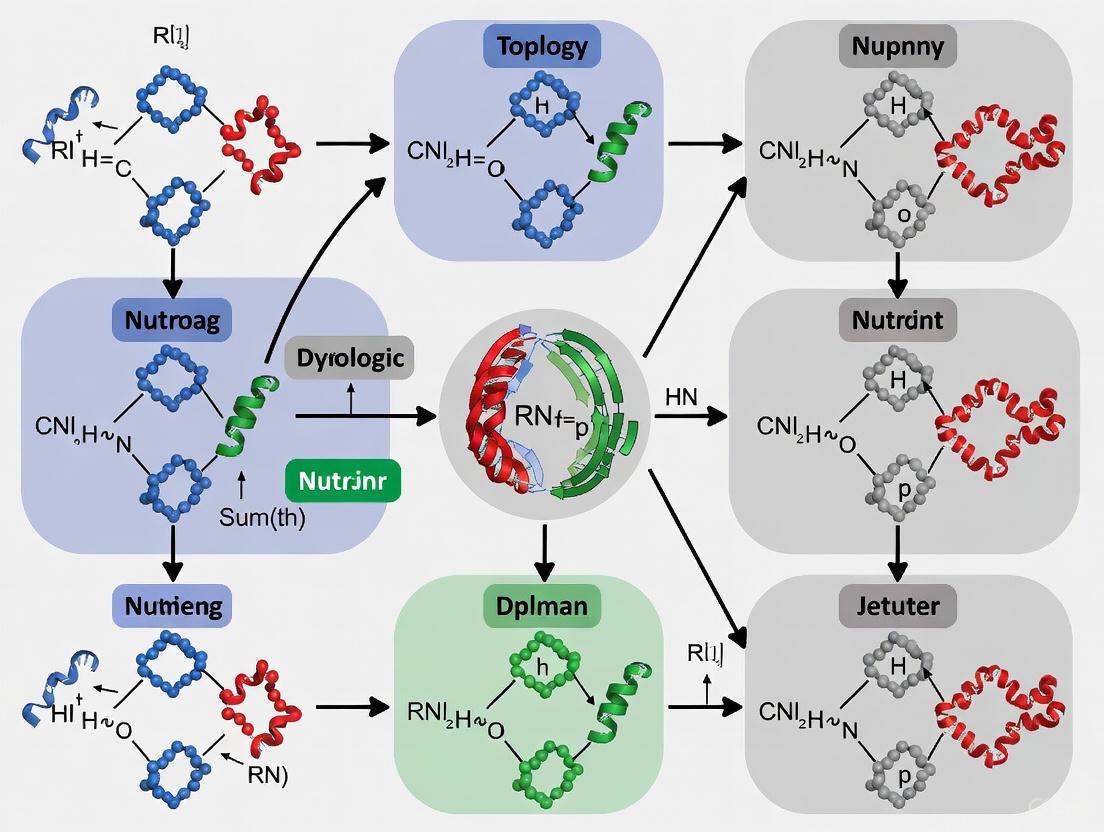
This article provides a comprehensive overview of the methods and challenges in inferring and analyzing Gene Regulatory Network (GRN) topology and dynamics.
Decoding Cellular Control: A Guide to GRN Topology, Dynamics, and Clinical Translation
Abstract
This article provides a comprehensive overview of the methods and challenges in inferring and analyzing Gene Regulatory Network (GRN) topology and dynamics. Aimed at researchers and drug development professionals, it covers foundational concepts of GRNs and their role in disease and development. The content explores cutting-edge computational methods, from machine learning to multi-omics integration, for reconstructing networks. It also addresses common pitfalls in GRN inference and strategies for optimization, and concludes with a review of validation techniques and performance benchmarks for state-of-the-art tools. The goal is to bridge the gap between theoretical network models and their practical application in biomedicine.
The Blueprint of Life: What GRN Topology and Dynamics Reveal About Cellular Function
Gene Regulatory Networks (GRNs) are intricate systems that control gene expression within the cell, serving as the fundamental architects of cellular identity and function. By mapping gene-gene interactions, GRNs expose the dynamic control of gene expression across environmental conditions and developmental stages, clarifying basic principles of life and underpinning studies of disease mechanisms and drug target discovery [1]. In cancer research, for example, GRN analysis reveals transcription factors such as p53 and MYC that drive tumorigenesis, along with their downstream networks, providing insights that inform the design of personalized therapies [1]. A GRN is fundamentally represented as a directed graph where nodes correspond to genes and edges represent causal regulatory relationships, typically from transcription factors (TFs) to their target genes [2]. The precise inference of GRN architecture—characterized by properties such as hierarchical structure, modular organization, and sparsity—remains a central challenge and opportunity in systems biology [3].
Structural and Functional Properties of GRNs
Key Topological Characteristics
The topology of GRNs is not random; it exhibits specific structural properties that are crucial for their stability and function. Biological networks are thought to be well-described by directed graphs with a degree distribution that follows an approximate power-law, often referred to as a scale-free topology [3]. Key topological features include degree centrality (number of direct regulatory links), betweenness centrality (control over information flow), clustering coefficient (cohesiveness of local neighborhood), and k-core index (membership within dense network cores) [1]. These properties emerge from the generating principles of GRNs and confer robustness and specific dynamic behaviors. Notably, most nodes in these graphs are connected by short paths, a hallmark of the "small-world" property of networks, which facilitates efficient information transfer [3].
Quantitative Structural Properties
Table 1: Key Quantitative Properties of Biological GRNs
| Property | Description | Biological Significance | Typical Value/Pattern |
|---|---|---|---|
| Sparsity | The typical gene is directly affected by a small number of regulators. | Limits cascading effects of perturbations; enhances stability. | Only 41% of gene perturbations have significant effects on other genes [3]. |
| Scale-Free Topology | Node in- and out-degrees follow a power-law distribution. | Network resilience; presence of highly influential "hub" genes. | A few genes (hubs) have many connections, while most have few [3]. |
| Feedback Loops | Presence of directed cycles (e.g., A→B→A). | Enables dynamic memory, oscillations, and bistability. | Bidirectional regulation observed in 2.4% of interacting gene pairs [3]. |
| Modularity | Organization into densely connected, functionally related groups. | Supports coordinated expression of functional programs. | Evident from co-expression analysis and functional enrichment [3]. |
Methodologies for GRN Inference and Analysis
Experimental Data Generation and Protocols
Modern GRN research relies on high-throughput multiomic profiling to simultaneously capture transcriptional and epigenetic states from the same cell population.
Protocol 1: Paired Single-Cell RNA-seq and ATAC-seq for Enhancer-Driven Regulon Analysis This protocol is used to map enhancer-driven regulatory networks, as demonstrated in studies of T cell differentiation [4] [5].
- Cell Preparation: Isolate TCR-matched CD8+ T cells from models of infection (e.g., LCMV Armstrong for acute infection, LCMV CL13 for chronic infection) and cancer (e.g., syngeneic tumor cell lines engineered to express the GP33–41 epitope).
- Library Preparation & Sequencing: Perform paired scRNA-seq and scATAC-seq on the isolated cells using a platform like the 10x Genomics Chromium. scATAC-seq libraries reveal chromatin accessibility, pinpointing potential enhancer regions.
- Data Processing:
- scRNA-seq: Align reads to a reference genome (e.g., GRCh38) using a tool like STAR. Generate a count matrix for gene expression and perform clustering to identify cell states (e.g., naive, effector, memory, exhausted).
- scATAC-seq: Align reads and call peaks using software like MACS2. Create a cell-by-peak matrix of accessibility.
- Regulon Assembly: Link transcription factors to putative target genes by correlating TF gene expression (from scRNA-seq) with the accessibility of distal enhancer peaks near target genes (from scATAC-seq). This constructs enhancer-driven regulons.
- Network Analysis: Compare regulons across cell states (e.g., Trm-like TIL vs. exhausted T cells) to identify key differentiating transcription factors like KLF2 and BATF [4] [5].
Computational Inference Methods
Computational methods for GRN inference from single-cell data can be broadly categorized into unsupervised and supervised approaches.
Protocol 2: Supervised Deep Learning for GRN Inference using GAEDGRN GAEDGRN is a framework that infers directed GRNs from scRNA-seq data [2].
- Input Data: A prior GRN (can be incomplete) and a scRNA-seq gene expression matrix ((X \in R^{N \times G})), where (N) is the number of cells and (G) is the number of genes.
- Weighted Feature Fusion:
- Calculate gene importance scores using an improved PageRank* algorithm, which emphasizes a gene's out-degree (number of genes it regulates) rather than in-degree.
- Fuse these importance scores with the gene expression features to make the model focus on key regulators.
- Gravity-Inspired Graph Autoencoder (GIGAE):
- The encoder uses a graph convolutional network to learn latent node embeddings ((Z)) that capture directed network topology.
- A "gravity-inspired" decoder reconstructs the graph by calculating a potential energy score for each possible edge ((i,j)): ( \text{energy} = \frac{{(Zi \cdot Zj) \cdot \text{Importance}j}}{{\|Zi - Z_j\|^2}} ). This physics-inspired formula helps model the asymmetric, directed nature of regulatory relationships.
- Random Walk Regularization:
- Perform random walks on the graph to capture local node neighborhoods.
- Use the Skip-Gram model to ensure that nodes with similar network contexts have similar embeddings, regularizing the latent space learned by the GIGAE.
- Output: A reconstructed, directed GRN with predicted regulatory edges ranked by their inferred strength.
Diagram 1: The GAEDGRN computational workflow for directed GRN inference.
Advanced Computational Models: GTAT-GRN Framework
The GTAT-GRN model represents a state-of-the-art approach that integrates multi-source biological features with a topology-aware attention mechanism to enhance GRN inference [1].
Model Architecture and Protocol
Protocol 3: GRN Inference with GTAT-GRN
- Multi-Source Feature Fusion:
- Temporal Features: Extract mean, standard deviation, skewness, kurtosis, and time-series trend from gene expression time-series data after Z-score normalization: ( \hat{X}t^{i,:} = (Xt^{i,:} - \mui) / \sigmai ) [1].
- Expression-Profile Features: Compute baseline expression level, stability, specificity, and correlation from wild-type (control) expression data.
- Topological Features: Calculate node-level metrics (e.g., degree centrality, betweenness, PageRank) from the network structure.
- These heterogeneous features are fused into a comprehensive node representation for each gene.
- Graph Topology-Aware Attention (GTAT):
- The fused features are passed to a Graph Topology-Aware Attention Network. Unlike standard graph attention, GTAT dynamically captures high-order dependencies and asymmetric topological relationships among genes.
- It combines graph structure information with multi-head attention to weight the influence of neighboring genes, effectively learning potential regulatory dependencies.
- Feedforward Network & Output:
- The output of the GTAT layer is processed through a feedforward network with residual connections to enable deeper model training.
- The final layer produces a probability score for each potential regulatory edge, constituting the inferred GRN.
Table 2: Feature Types and Their Biological Functions in GTAT-GRN
| Feature Type | Source Data | Extracted Metrics | Biological Function Inferred |
|---|---|---|---|
| Temporal | Gene expression time-series | Mean, Std Dev, Skewness, Kurtosis, Trend | Dynamic expression patterns; response to stimuli [1]. |
| Expression-Profile | Baseline/wild-type expression data | Baseline level, Stability, Specificity, Correlation | Expression context; functional pathways; regulatory role [1]. |
| Topological | Structural properties of the GRN graph | Degree, Betweenness, Clustering Coefficient, PageRank | Gene's position, importance, and role in information flow [1]. |
Diagram 2: The GTAT-GRN architecture fusing multi-source features for enhanced inference.
The Scientist's Toolkit: Essential Research Reagents and Materials
Table 3: Key Research Reagent Solutions for GRN Studies
| Reagent / Material | Function / Application | Example Use Case |
|---|---|---|
| scRNA-seq Kits (10x Genomics) | Profiling transcriptional heterogeneity at single-cell resolution. | Characterizing CD8+ T cell states (naive, effector, memory, exhausted) in infection and cancer [4] [5]. |
| scATAC-seq Kits (10x Genomics) | Mapping genome-wide chromatin accessibility at single-cell resolution. | Identifying active enhancers and promoters to build enhancer-driven regulons [4] [5]. |
| CRISPR-based Perturb-seq | Enabling large-scale functional screening by coupling genetic perturbation with single-cell RNA sequencing. | Determining causal gene functions and local GRN structure around a focal gene or pathway [3]. |
| Fluorophore-conjugated Antibodies (e.g., anti-CD45, anti-CD69) | Cell sorting and isolation of specific cell populations via FACS. | Isolation of TCR-matched CD8+ T cell subsets for multiomic profiling [5]. |
| Engineered Cell Lines | Modeling specific genetic alterations or disease contexts. | Syngeneic tumor cell lines engineered to express the LCMV GP33–41 epitope for studying tumor-specific T cell responses [5]. |
The inference of Gene Regulatory Networks has evolved from simplistic correlation-based models to sophisticated frameworks that integrate multi-source features, respect directional topology, and leverage deep learning. Models like GTAT-GRN and GAEDGRN exemplify the next generation of tools that capture the complex, asymmetric, and hierarchical nature of gene regulation [1] [2]. Furthermore, the application of enhancer-driven network analysis in immunology highlights how these approaches can reveal master transcriptional regulators, such as KLF2 and BATF, governing critical cell fate decisions in the tumor microenvironment [4] [5]. As these methodologies mature, they provide an increasingly powerful framework for mapping the causal architecture of complex traits and diseases, ultimately accelerating the discovery of novel therapeutic targets.
The topology of a Gene Regulatory Network (GRN)—the specific pattern of interconnections between its components—is not merely a structural artifact but a fundamental determinant of cellular function, stability, and response. Understanding GRN topology and dynamics is essential for deciphering how genetic programs execute phenotypic outcomes, respond to environmental cues, and malfunction in disease states. The arrangement of network nodes (genes, transcription factors) and edges (regulatory interactions) creates information flow pathways that process signals and govern cellular decisions. Topological analysis moves beyond cataloging individual interactions to reveal the higher-order organizational principles and regulatory motifs that confer specific dynamical properties on the network. These motifs—recurring, significant subgraphs—act as functional circuit elements, performing operations like signal processing, noise filtering, and pulse generation. This architectural perspective provides a powerful framework for interpreting complex biological data, predicting system behavior, and identifying critical control points for therapeutic intervention. For researchers and drug development professionals, mastering these principles is becoming increasingly critical for understanding disease mechanisms and developing targeted strategies that exploit network vulnerabilities.
Fundamental Concepts of Network Topology
Basic Topological Features and Metrics
The structure of a GRN can be quantified using specific metrics that describe the importance of its components and their overall connectivity.
- Nodes and Edges: In any network, nodes represent individual entities (e.g., genes, transcription factors, proteins), while edges represent the relationships or interactions between them (e.g., activation, repression) [6]. In GRNs, these typically represent genes and their regulatory interactions.
- Centrality Metrics: These metrics identify the most influential or important nodes within a network [6] [7].
- Degree Centrality: The number of direct connections a node has. Highly connected "hub" genes are often critical for network stability and function [6].
- Betweenness Centrality: Measures how often a node acts as a bridge along the shortest path between two other nodes. Nodes with high betweenness are potential gatekeepers of information flow [6].
- Closeness Centrality: Reflects how quickly a node can reach all other nodes in the network, indicating potential efficiency in influencing the entire network [6].
- Global Topological Properties: These describe the overall structure of the network.
- Density: The proportion of potential connections that are actually realized. Dense networks are often more robust but less adaptable [6].
- Diameter: The longest shortest path between any two nodes, indicating how "spread out" the network is [6].
- Clustering Coefficient: The degree to which nodes tend to cluster together, revealing the potential for localized, modular function [6].
The Barabási-Albert Model and Scale-Free Networks
Many real-world GRNs exhibit a scale-free topology, as described by the Barabási-Albert model [6]. This model posits that networks grow through preferential attachment, where new nodes are more likely to connect to already well-connected nodes. The result is a network where a few nodes (hubs) have a very high number of connections, while the majority of nodes have few. This structure has profound implications: hub genes often stabilize the entire network, and their dysregulation can be disproportionately disruptive, making them potential high-value therapeutic targets.
Key Regulatory Motifs and Their Functional Consequences
Regulatory motifs are small, recurring circuit patterns that perform defined information-processing functions. Their identification is key to moving from a static map to a dynamic understanding of network behavior.
Table 1: Key Network Motifs and Their Functions
| Motif Type | Topological Description | Dynamic Function | Biological Example |
|---|---|---|---|
| Feed-Forward Loop (FFL) | A regulator (X) controls a second regulator (Y), and both jointly regulate a target (Z). | Filters out transient signals; creates temporal programs (e.g., pulse generation, delay). | Found in nutrient utilization networks; can accelerate or delay target gene expression. |
| Positive Feedback Loop | A node activates itself, often through a chain of intermediaries. | Enables bistability (toggle switch) and cellular differentiation. Lock-in of a cellular state (e.g., fate decision). | In the Arabidopsis root epidermis, a WER/MYB23 positive feedback loop helps stabilize non-hair cell fate [8]. |
| Negative Feedback Loop | A node represses itself, either directly or indirectly. | Promotes homeostasis, ensures robustness, and can generate oscillatory behavior. | Circadian clocks, where repressors periodically inhibit their own expression. |
| Lateral Inhibition | A cell-to-cell communication pattern where a cell adopting a fate inhibits its neighbors from doing the same. | Creates spatial patterns of alternating cell fates from a field of equivalent cells. | Driven by diffusion of inhibitors like CPC in the Arabidopsis root epidermis, forming alternating hair and non-hair cells [8]. |
Analytical Methods and Experimental Protocols for GRN Inference
A Multi-Method Workflow for Network Inference
Accurately reconstructing GRN topology from data is a foundational challenge. A robust approach integrates multiple computational and experimental techniques.
Table 2: Key Research Reagents and Solutions for GRN Analysis
| Research Reagent / Tool | Primary Function | Application Context |
|---|---|---|
| GENIE3 | A machine learning algorithm that infers regulatory relationships from gene expression data. | A top-performing non P-based method for GRN inference from transcriptomic data (e.g., RNA-seq) [9]. |
| Z-score | A statistical method that uses the perturbation design matrix to infer causal regulatory links. | A high-performing P-based method for GRN inference from knockdown/knockout data [9]. |
| shRNA/siRNA Libraries | Enables targeted gene knockdown for functional screening. | Used in perturbation experiments to test the necessity of predicted hub genes (e.g., in FLT3-ITD AML) [10]. |
| CHiC (Promoter Capture HiC) | Maps physical, long-range interactions between promoters and distal regulatory elements. | Integrates topological data with GRN models to assign enhancers to target genes [10]. |
| DNaseI-seq / ATAC-seq | Identifies regions of open, accessible chromatin genome-wide. | Used to locate potential regulatory elements for integration into GRN models [10]. |
Protocol 1: Integrative GRN Construction from Multi-Omic Data This protocol, adapted from studies in FLT3-ITD AML, constructs a high-confidence GRN by combining multiple data types [10].
- Data Acquisition: Collect transcriptomic (RNA-seq) data from both diseased and relevant healthy control cells. Acquire epigenomic data, including DNaseI-seq (for open chromatin) and promoter-capture HiC (for chromatin interactions).
- Identify Regulatory Regions: Using DNaseI-seq data, identify open chromatin regions (DHSs) specific to the condition of interest (e.g., with a >3-fold change compared to normal cells).
- Footprint Analysis: Perform digital footprinting on the condition-specific DHSs to identify transcription factor binding motifs that are actively occupied.
- Assign Targets: Link the regulated enhancers to their target gene promoters using the CHiC interaction data. As a fallback, assign to the nearest gene within a 200 kb window.
- Network Assembly: Integrate the data: a TF is connected to a target gene if its bound motif is located in a regulatory region that interacts with that gene's promoter. The network can be filtered to focus on interactions involving specifically upregulated genes.
Figure 1: A workflow for the integrative construction of a Gene Regulatory Network from multi-omic data.
An Informed Functional Screen for Hub Validation
Once a GRN is inferred, its predictions about key regulators must be functionally validated.
Protocol 2: Informed shRNA Screen for Hub Gene Validation This protocol details a targeted approach to validate the functional importance of highly connected nodes predicted by a GRN, as demonstrated in FLT3-ITD AML [10].
- Target Selection: From the constructed GRN, select ~150-200 genes representing highly connected nodes (hubs) and key members of predicted regulatory modules.
- Screen Design: Clone shRNAs targeting the selected genes into a pooled lentiviral vector library.
- In Vitro Screening: Transduce the shRNA library into relevant cell line models (e.g., MV4-11, MOLM-14 for AML). Culture cells for a set duration and harvest genomic DNA to track shRNA abundance by sequencing. A depletion of a specific shRNA indicates that its target gene is essential for cell growth/survival.
- In Vivo Validation (Optional): Transplant transduced cells into immunodeficient mice (e.g., NSG). After tumor formation or a set time, harvest tumors and analyze shRNA abundance to identify genes essential for in vivo growth.
- Hit Prioritization: Integrate the screening results with the original GRN topology. Genes whose knockdown causes a drop-out effect and that occupy central network positions are high-confidence master regulators.
Figure 2: An experimental workflow for validating the functional importance of hub genes predicted by a GRN using an informed shRNA screen.
Case Studies: Topology-Driven Insights in Biological Systems
Targeting Hub Genes in Acute Myeloid Leukemia (AML)
In FLT3-ITD mutant AML, a subtype with poor prognosis, researchers constructed a patient-specific GRN by integrating transcriptomic, epigenomic, and chromatin interaction data [10]. Topological analysis of this network revealed highly connected nodes corresponding to specific transcription factor families (e.g., RUNX, AP-1). The hypothesis that these hubs are crucial for AML maintenance was tested using an informed shRNA screen targeting the network's central nodes. The study demonstrated that disrupting these key topological elements, such as the RUNX1 module, led to a collapse of the GRN and subsequent cell death, validating hub genes as vulnerable therapeutic targets in this cancer [10].
Spatial Patterning in Arabidopsis Root Epidermis
The root epidermis of Arabidopsis thaliana provides a classic example of how GRN topology, coupled with cell-to-cell communication, generates precise spatial patterns. A meta-GRN model incorporating positive and negative feedback loops was developed to explain the formation of alternating hair and non-hair cell files [8]. The key topological feature is a lateral inhibition motif, implemented by the diffusion of proteins like CPC and GL3/EGL3 between adjacent cells. In this motif, a cell adopting the non-hair fate produces a mobile inhibitor (CPC) that prevents its neighbors from adopting the same fate. The feedback loops within each cell's GRN create bistability, while the diffusive coupling between cells creates the spatial pattern. This model successfully recapitulated the wild-type pattern and 28 mutant phenotypes, highlighting how a specific network motif, when coupled with a transport process, directly dictates macroscopic tissue organization [8].
The Critical Role of Perturbation Design in Accurate GRN Inference
The accuracy of an inferred GRN is profoundly influenced by the experimental design used to generate the input data. A key distinction lies between methods that use only observed gene expression changes and those that also incorporate knowledge of the perturbation design matrix (P-based methods), which specifies which genes were intentionally targeted in knockdown/knockout experiments [9].
Table 3: Benchmarking P-based vs. Non P-based GRN Inference Methods
| Method Category | Uses Perturbation Design? | Typical AUPR on High-Noise Data | Key Characteristics |
|---|---|---|---|
| P-based (e.g., Z-score) | Yes | High (~0.6 on GeneSPIDER data) [9] | Infers causality; near-perfect accuracy with correct design; performance drops to random with incorrect design. |
| Non P-based (e.g., GENIE3) | No | Low to Moderate (<0.3 on GeneSPIDER data) [9] | Infers association; limited accuracy even at low noise levels; does not require perturbation knowledge. |
Benchmarking studies show that P-based methods consistently and significantly outperform non P-based methods across various noise levels [9]. The performance advantage is because P-based methods can distinguish between direct and indirect effects by leveraging the causal information embedded in the perturbation design. Consequently, targeted gene perturbations combined with P-based inference methods are indispensable for achieving high-confidence GRN maps.
Figure 3: The critical role of the perturbation design matrix in inferring causal GRNs versus associative networks.
Gene Regulatory Networks (GRNs) are complex systems of molecular interactions that control core developmental and biological processes, including cell fate decisions such as differentiation, reprogramming, and transdifferentiation [11] [3]. The architecture of a GRN—its topology (structure) and dynamics (behavior)—directly determines the stable cell states (attractors) a system can adopt and how it transitions between them during processes like the Epithelial to Mesenchymal Transition (EMT) [11]. Inferring the precise structure of these networks, including the direction and intensity of regulations between genes, remains one of the most significant challenges in systems biology, despite advances in computational approaches and high-throughput biological technologies [11] [12]. Research in this field is increasingly focused on understanding key structural properties of GRNs—such as sparsity, hierarchical organization, modularity, and the presence of feedback loops—and how these properties govern the distribution and dampening of perturbation effects to ensure robust cell fate control [3].
Foundational Principles of GRN Dynamics
Key Structural Properties of GRNs
The function of a GRN is profoundly shaped by its underlying structure. Analysis of large-scale perturbation data, such as from Perturb-seq studies, has revealed several defining architectural principles [3]:
- Sparsity: GRNs are sparse, meaning each gene is directly regulated by only a small number of other genes. In a major Perturb-seq study in K562 cells, only 41% of perturbations targeting a primary transcript had significant effects on the expression of any other gene, indicating that most genes are not highly connected regulators [3].
- Directed Edges and Feedback Loops: Regulatory relationships are directional (gene A regulating gene B is distinct from gene B regulating gene A), yet feedback loops are pervasive. In perturbation data, 2.4% of gene pairs with a one-directional effect also showed evidence of bidirectional regulation, confirming the presence of feedback [3].
- Hierarchical Organization and Modularity: GRNs often exhibit a hierarchical structure with modular sub-netroups (groups of genes that work together to perform specific functions). This modular organization, combined with a "small-world" property where most nodes are connected by short paths, helps to localize the effects of perturbations and facilitate coordinated control of biological processes [3].
- Scale-Free Topology: The in- and out-degree (number of regulators and targets) of nodes in GRNs often follows a power-law distribution. This means a few "hub" genes have many connections while most genes have few, which has important implications for the network's robustness and susceptibility to perturbations [3].
Mathematical Frameworks for Modeling GRN Dynamics
The dynamic behavior of GRNs is frequently modeled using systems of Ordinary Differential Equations (ODEs) that describe the rate of change in concentration for each molecular species in the network [11]. A general form for such a model is: dx/dt = f(x; p) where x is a vector representing the concentrations of n molecules, and p is a parameter vector encompassing biochemical rate constants [11]. These models can capture complex nonlinear dynamics, including multi-stability (the existence of multiple stable steady states, corresponding to different cell fates) and state transitions in response to signals or perturbations.
A critical quantitative measure for understanding direct regulatory influence within a GRN is the local response coefficient, rij. This coefficient quantifies the relative change in the steady-state level of gene i with respect to a small change in the level of gene j, and is defined as [11]: rij = ∂ln xi / ∂ln xj = (xj / xi) * (∂xi / ∂xj) The sign and magnitude of rij reveal the direction and intensity of the regulatory interaction from node j to node i. A negative value typically indicates repression, while a positive value suggests activation. The derivation of these coefficients from perturbation data forms the basis of powerful network inference methods like Modular Response Analysis (MRA) [11].
Advanced Methodologies for GRN Inference
Computational Inference from Perturbation Data
Systematic perturbation, combined with statistical and differential analysis, provides a robust framework for inferring GRN topology and identifying network differences across cell fates [11]. The following workflow outlines the core steps of this approach, which can be applied to various data types, including single-cell RNA sequencing (scRNA-seq) data and simulated expression data.
The process begins with a biological system at a stable steady state, representative of a specific cell fate. Systematic perturbations are applied to sensitive parameters (e.g., degradation rates, signal strengths) associated with each node, and the new steady-state expression levels of all molecules are measured [11]. From this data, the local response matrix is calculated, whose elements rij represent the direct regulatory influence of node j on node i [11].
To enhance accuracy and account for variability, statistical analysis is performed. Confidence Intervals (CIs) for the local response matrices under multiple perturbations are calculated and used to define a sparse network topology that eliminates spurious connections and reduces the impact of perturbation degrees [11]. This results in a redefined local response matrix that reflects the consensus network structure.
Finally, differential analysis introduces the concept of a relative local response matrix. This enables the identification of critical regulations specific to each cell fate and helps determine the dominant cell state associated with particular regulatory interactions [11]. The output is a set of inferred, cell fate-specific GRN models that quantitatively capture network differences.
Machine Learning and Hybrid Approaches
Machine Learning (ML), Deep Learning (DL), and hybrid approaches have emerged as powerful alternatives for large-scale GRN construction. These methods can capture nonlinear, hierarchical, and context-dependent regulatory relationships that are difficult to model with traditional statistical methods [12].
Table 1: Comparison of GRN Inference Methodologies
| Method Category | Examples | Key Principles | Strengths | Limitations |
|---|---|---|---|---|
| Perturbation-Based & Differential Analysis | Modular Response Analysis (MRA), Statistical & Differential Analysis [11] | Infers direct regulations and intensities from system's response to targeted perturbations. | Quantifies direction and strength of regulation; Model-independent; Identifies state-specific differences. | Requires systematic perturbation data which can be costly to generate. |
| Machine Learning (ML) | GENIE3 [12], Support Vector Machine (SVM) [12] | Uses algorithms to learn regulatory relationships from expression data patterns. | Scalable; Can integrate diverse data types. | May struggle with high-dimensional data; Can fail to capture complex nonlinearities. |
| Deep Learning (DL) | DeepBind [12], CNN-based Models [12] | Uses multiple neural network layers to learn hierarchical features and complex patterns. | Excels at learning high-order dependencies; Powerful for sequence-based features. | Requires very large datasets; Can be prone to overfitting; "Black box" interpretability challenges. |
| Hybrid Models | CNN + ML Ensembles [12] | Combines deep feature extraction with ML classifiers for prediction. | Consistently outperforms traditional ML/DL alone; Improved accuracy and interpretability. | Implementation complexity; Computational resource demands. |
A significant innovation in this domain is the use of transfer learning. This strategy addresses the challenge of limited experimentally validated regulatory pairs in non-model species by leveraging knowledge from a data-rich source species (e.g., Arabidopsis thaliana) to improve GRN inference in a target species with limited data (e.g., poplar or maize) [12]. Hybrid models that combine Convolutional Neural Networks (CNNs) with machine learning have demonstrated superior performance, achieving over 95% accuracy on holdout test datasets and more effectively ranking key master regulators like MYB46 and MYB83 in lignin biosynthesis pathways [12].
Experimental Protocols and Research Tools
Detailed Protocol for Perturbation-Based GRN Inference
The following protocol details the steps for inferring GRN topology using perturbation data, statistical analysis, and differential analysis, as applied in recent studies [11].
System Preparation and Basal State Measurement
- Allow the biological system (e.g., a cell population) to reach a stable steady state under controlled conditions, representative of a specific cell fate (e.g., Epithelial state).
- Measure the basal, unperturbed steady-state expression levels, (\bar{x} = (\bar{x}1, \bar{x}2, ..., \bar{x}n)), for all n molecules (genes/proteins) of interest in the network. The sensitive parameter set is denoted as (pb = (p{b,1}, ..., p{b,n})) [11].
Execution of Systematic Perturbations
- For each node (k) (where (k = 1) to (n)), slightly perturb its associated sensitive parameter (pk) from its basal value (p{b,k}) to a perturbed value (p_{s,k}). The perturbation should be mild enough to allow the system to reach a new, nearby steady state of the same type [11].
- For each perturbation (k), measure the new stable steady-state expression levels of all molecules, denoted as (\bar{x}k = (\bar{x}{k,1}, ..., \bar{x}_{k,n})).
- Repeat this process to generate technical and biological replicates for robust statistical analysis.
Calculation of the Local Response Matrix
- For each ordered pair of distinct genes ((i, j)), compute the local response coefficient (r{ij}) using the formula [11]: (r{ij} = \frac{\bar{x}j}{\bar{x}i} \cdot \frac{\Delta xi}{\Delta xj}) where (\Delta xi = \bar{x}{i,k} - \bar{x}i) and (\Delta xj = \bar{x}{j,k} - \bar{x}j) for a perturbation applied to node (k), and the partial derivative is approximated by the observed change. Self-response coefficients (r_{ii}) are defined as -1 [11].
- Construct the (n \times n) local response matrix (R), where each element (R[i,j] = r_{ij}).
Statistical Analysis and Network Sparsification
- Using the replicate data, calculate Confidence Intervals (CIs) for each element of the local response matrix (R).
- Apply a sparsity constraint by setting to zero any element (r_{ij}) whose confidence interval includes zero or is below a statistically defined threshold. This eliminates non-significant regulations [11].
- Construct the redefined local response matrix, (R'), which contains only the statistically significant regulatory interactions. The accuracy of the inferred topology can be validated by calculating prediction errors against held-out perturbation data.
Differential Analysis Across Cell Fates
- Repeat steps 1-4 for each distinct cell fate of interest (e.g., Epithelial, Hybrid, and Mesenchymal states during EMT).
- To identify regulations that are critical to a specific cell fate, compute the relative local response matrix.
- Compare the matrices (R'A) and (R'B) from two cell fates A and B. Regulations with the largest absolute differences in their (r_{ij}) values are the most state-critical. This quantifies how the network topology is rewired during cell fate decisions [11].
The Scientist's Toolkit: Essential Research Reagents and Materials
Table 2: Key Research Reagent Solutions for GRN Inference Experiments
| Reagent / Material | Function in GRN Research | Example Application |
|---|---|---|
| CRISPR-based Perturbation Libraries | Enables high-throughput, precise knockout or knockdown of target genes to systematically probe network function. | Genome-scale Perturb-seq studies in K562 cells to observe downstream effects of knocking out ~9,866 genes [3]. |
| Single-Cell RNA Sequencing (scRNA-seq) | Profiles the transcriptome of individual cells, capturing heterogeneity and revealing expression changes in response to perturbations. | Identifying distinct cell states (E, H, M) in Epithelial to Mesenchymal Transition (EMT) and their response to perturbations [11]. |
| Chromatin Immunoprecipitation Sequencing (ChIP-seq) | Identifies genome-wide binding sites for transcription factors and histone modifications, providing evidence for direct regulatory interactions. | Experimental validation of transcription factor binding to promoter regions of putative target genes [12]. |
| DNA Affinity Purification Sequencing (DAP-seq) | An in vitro method for identifying protein-DNA interactions, useful for mapping potential regulatory networks for transcription factors. | High-throughput screening of TF-target relationships, especially in plant species [12]. |
| Validated TF-Target Interaction Databases | Serve as a gold-standard training set for supervised machine learning models and for benchmarking inferred networks. | Curated sets of known interactions from Arabidopsis used to train models for transfer learning to poplar and maize [12]. |
| Specialized Software/Packages (e.g., SCODE, GENIE3, TGPred) | Implement various computational algorithms for inferring GRNs from expression data, each with different underlying models and assumptions. | GENIE3 was used to infer the existence of regulations from static transcriptomic data [12]. |
Key Regulatory Motifs and Network-Level Control
The overall behavior and robustness of a GRN emerge from the interplay of smaller, recurring circuit patterns known as network motifs. These motifs perform specific information-processing functions.
The Feed-Forward Loop (FFL) is a three-node pattern where a master regulator (TF A) controls a target gene (Gene C) both directly and through an intermediate regulator (TF B). This motif can act as a sign-sensitive filter, introducing delays in the target gene's response and ensuring it is only activated by persistent input signals [3].
Feedback Loops are crucial for dynamic control. Positive Feedback can lock a system into a stable state, making cell fate decisions irreversible and robust to minor fluctuations. This is fundamental to bistable switches that govern transitions between distinct fates, such as E and M states in EMT. Negative Feedback, in contrast, promotes homeostasis and dampens noise, allowing a system to return to a set point after a disturbance [3].
A classic motif underlying cell fate bifurcations is Mutual Inhibition, where two key transcription factors reciprocally repress each other. This architecture creates a toggle switch, enabling two mutually exclusive, stable states. The system can be flipped from one state to the other by a transient signal that temporarily overwhelms one factor's repression of the other. This motif is often coupled with positive feedback to solidify the chosen fate [11].
The dynamics of cellular decision-making are an emergent property of the complex topology and nonlinear interactions within Gene Regulatory Networks. The integration of systematic perturbation experiments, sophisticated computational inference methods like statistical and differential analysis of local response matrices, and the power of machine learning and hybrid models, is providing an increasingly precise and quantitative picture of these networks [11] [12]. Understanding the core principles of GRN architecture—including sparsity, hierarchy, modularity, and the functional roles of specific motifs—is not merely an academic exercise. It is fundamental to deciphering the logic of development, disease, and cellular reprogramming. As these research tools and protocols continue to advance, they pave the way for rationally intervening in cell fate decisions for therapeutic purposes, such as in regenerative medicine and cancer treatment, by targeting the critical regulatory nodes that control network-level state transitions.
Gene Regulatory Networks (GRNs) are sophisticated computational models that represent the complex web of interactions among genes, proteins, and other molecules that control cellular processes [13]. At the heart of these networks are transcription factors, specialized proteins that bind to specific DNA regions to activate or repress gene expression, thereby governing the production of proteins essential for cellular function [13]. GRNs are not merely collections of individual genes; they exhibit emergent properties through feedback loops and combinatorial control where genes mutually inhibit or activate one another, enabling cells to fine-tune responses to internal signals and external stimuli [13]. This complex interplay allows cells to differentiate into diverse cell types, execute specialized functions, and maintain homeostasis—processes that become dysregulated in disease states [13].
Understanding GRNs requires examining both their topology (structural arrangement of interactions) and dynamics (temporal changes in regulatory activities) [14]. The structure of a GRN is typically represented as a graph where nodes symbolize genes and edges represent regulatory relationships between them [13]. Technological advances in high-throughput data generation have created unprecedented opportunities for reconstructing GRNs, moving the field beyond single-gene studies toward a holistic systems biology approach that captures the complexity of biological systems [15] [13]. This paradigm shift has been particularly transformative for understanding complex diseases, where GRN modeling helps identify crucial genetic elements that contribute to disease susceptibility and progression [13].
Methodologies for GRN Reconstruction and Analysis
Data Types for GRN Inference
GRN reconstruction relies on diverse data types that provide complementary insights into regulatory relationships. The accuracy and reliability of GRN inference heavily depend on the quality and appropriateness of the underlying data, necessitating careful assessment and addressing of potential noise and technical variation sources [13].
Table 1: Data Types for GRN Reconstruction
| Data Type | Key Characteristics | Applications in GRN | Considerations |
|---|---|---|---|
| Microarray | Widely available for various organisms and tissues; measures gene expression levels | Initial GRN mapping; large-scale association studies | Lower dynamic range than sequencing; platform-specific biases |
| RNA-seq | More accurate quantification of gene expression; captures novel transcripts | Comprehensive GRN inference; isoform-specific regulation | Requires substantial computational resources; batch effects |
| Single-cell RNA-seq | Reveals cell-type-specific gene expression patterns; captures cellular heterogeneity | Cell-type-specific GRNs; developmental trajectories | Sparse data; technical noise; high cost per cell |
| Time-series expression | Enables studying changes in gene expression over time | Inference of dynamic GRNs; identification of causal relationships | Requires careful design of time intervals; computational complexity |
| Perturbation experiments (e.g., gene knockouts) | Provides causal information through intervention | Establishing directionality in regulation; validation of predicted interactions | Off-target effects; compensatory mechanisms |
Time-series expression data are particularly valuable for inferring dynamic GRNs and identifying regulatory relationships based on temporal patterns, while perturbation experiments (e.g., gene knockouts, drug treatments) provide crucial causal information about gene-gene interactions [13]. Emerging approaches increasingly leverage multi-omics datasets that integrate genomic, epigenomic, transcriptomic, and proteomic information to establish a more complete picture of gene regulation [13].
Computational Approaches and Model Architectures
The selection of computational approaches for GRN reconstruction depends on the nature of available data, biological questions, and computational constraints [13] [14]. Model architectures can be broadly categorized into several classes:
Topological models represent GRNs as graphs depicting connections between elements and have been applied to various biological datasets, including protein-protein interaction and co-expression networks [13]. These models focus on the network structure but do not capture the dynamic behavior or regulatory logic. Logical models provide a straightforward approach that incorporates control logic, representing regulatory relationships using Boolean logic or more complex rule-based systems [13]. These are particularly useful when knowledge is limited, as they can effectively pinpoint specific regulatory interactions.
Dynamic models represent the conventional approach for modeling GRNs and aim to describe and replicate fluctuations in system states over time [13]. These models can predict network responses to environmental changes and stimuli, making them invaluable for understanding system behavior under different conditions. Dynamic models include ordinary differential equations (ODEs), stochastic models, and neural network approaches that simulate the kinetic behavior of regulatory systems [14].
Machine learning approaches have gained prominence for GRN inference, with algorithms such as random forests, neural networks, and mutual information-based methods being employed to predict regulatory relationships from expression data [13]. The ARACNE algorithm, for instance, uses mutual information to reconstruct GRNs, effectively eliminating indirect interactions by applying the Data Processing Inequality [14].
Experimental Workflow for GRN Reconstruction
The standard workflow for GRN reconstruction involves multiple stages, from experimental design to network validation:
Experimental Design and Data Generation
Effective GRN reconstruction begins with careful experimental design that matches the research question with appropriate assays and conditions. For dynamic GRN inference, time-series experiments should capture critical transition points with sufficient temporal resolution [14]. Perturbation experiments, including gene knockouts, RNAi-mediated knockdown, or drug treatments, provide valuable causal information by disrupting specific network components [13] [14]. Single-cell RNA-seq experiments require consideration of cell number, capture efficiency, and appropriate controls to account for technical variation [13].
Data Preprocessing and Quality Control
Raw sequencing data requires extensive preprocessing before GRN inference. For RNA-seq data, this typically includes quality control (FastQC), adapter trimming (Trimmomatic), read alignment (STAR, HISAT2), and quantification (featureCounts, HTSeq) [14]. Single-cell RNA-seq data necessitates additional steps for batch effect correction, normalization (SCTransform), and imputation to address sparsity [13]. For microarray data, background correction, normalization, and probe summarization are essential preprocessing steps [14].
Network Inference and Model Selection
Network inference involves applying computational algorithms to reconstruct regulatory relationships from processed expression data. The choice of inference method should align with the data characteristics and biological questions [14]. For large-scale networks with limited prior knowledge, correlation-based methods or mutual information approaches provide a starting point. When temporal data are available, dynamic models like ODEs or Boolean networks can capture regulatory dynamics [13]. For systems with extensive prior knowledge, Bayesian networks incorporate existing information while learning new relationships from data [14].
Model Optimization and Validation
GRN models require optimization to improve their biological accuracy and predictive power. Parameter tuning involves adjusting model-specific parameters to maximize agreement with experimental data [14]. Cross-validation techniques assess model generalizability, while resampling methods (bootstrapping, jackknifing) evaluate network stability [14]. Biological validation remains challenging but essential; predicted interactions should be tested through experimental validation such as chromatin immunoprecipitation (ChIP), luciferase reporter assays, or additional perturbation experiments [14].
GRNs in Cancer Biology
Cancer Cell Plasticity and GRN Dynamics
Cancer cell plasticity—the ability of cancer cells to transition between different phenotypic states—represents a major mechanism underlying tumor progression, therapeutic resistance, and relapse [16]. This plasticity is governed by dynamic rearrangements in GRNs that enable cells to evade treatment and adapt to changing microenvironments. The concept of Waddington's epigenetic landscape provides a powerful metaphor for understanding how cancer cells shift between phenotypes [16]. In this analogy, cells occupy different valleys representing stable cell states, but cancer cells exhibit increased ability to transition between these states due to alterations in their underlying GRNs.
Quantifying cancer cell plasticity requires examining the attractor states and basins of attraction within the GRN landscape [16]. Attractor states represent stable phenotypic states toward which cells naturally evolve, while basins of attraction define the region of state space from which cells will converge to a particular attractor [16]. Cancer cells often exhibit shallow basins that facilitate transitions between states, enhancing their plasticity. Two key approaches for quantifying plasticity include: (1) quasi-potential analysis based on GRN dynamics, which measures the stability of cell states; and (2) inference of cell potency from single-cell trajectory analysis or lineage tracing [16].
GRN Dysregulation in Cancer Progression
Dysregulation of GRNs contributes to cancer progression through multiple mechanisms. Oncogenic transcription factors can become rewired to activate pro-survival and proliferation programs, while tumor suppressor networks may be disrupted [16]. In many cancers, GRNs that normally control developmental processes are re-activated, leading to stem-like properties and enhanced plasticity [16]. Single-cell RNA-sequencing studies have revealed remarkable heterogeneity in cancer cell states within tumors, with distinct GRN configurations corresponding to different phenotypic states [16].
The layers of heterogeneity in cancer include genetic heterogeneity (selection of mutants with different treatment responses), epigenetic heterogeneity (variable chromatin accessibility, DNA methylation, and transcription factor binding), and stochastic heterogeneity (probabilistic biochemical reactions within cells) [16]. These layers collectively define phenotypic variability and create drug-tolerant persister cells that contribute to treatment resistance [16].
Analytical Framework for Cancer GRNs
GRNs in Developmental Disorders
Neurodevelopmental Processes and GRNs
Gene regulatory networks play fundamental roles in brain development, where they orchestrate neurogenesis, neuronal survival, axon and dendrite growth, synaptic plasticity, and myelination [17]. The functional genomics of human brain development involves complex spatiotemporal regulation of gene expression across different brain regions and cell types [18]. Disruptions in these carefully coordinated GRNs can lead to various neurodevelopmental disorders, including autism spectrum disorders, intellectual disability, and schizophrenia.
Neurotrophic factors represent crucial components of developmental GRNs, influencing essentially all aspects of nervous system development [17]. These factors include BDNF (Brain-Derived Neurotrophic Factor), NGF (Nerve Growth Factor), and NT-3/4 (Neurotrophin-3/4), which signal through specific receptor tyrosine kinases (Trk receptors) and the p75 neurotrophin receptor [17]. The 2025 Gordon Research Conference on Neurotrophic Mechanisms will highlight how these factors shape neural circuit connectivity, synaptic plasticity, and behavior through their integration into broader GRNs [17].
Analytical Approaches for Developmental GRNs
Studying GRNs in development presents unique challenges and opportunities. Time-series analysis during critical developmental windows can reveal dynamic rewiring of regulatory relationships [13]. Single-cell RNA-sequencing of developing tissues enables reconstruction of cell-type-specific GRNs and lineage relationships [13]. Spatial transcriptomics approaches capture the spatial organization of gene expression patterns, essential for understanding tissue patterning during development.
Integration of epigenomic data (ATAC-seq, ChIP-seq, DNA methylation) with transcriptomic data provides insights into the regulatory logic underlying developmental GRNs [13]. Chromatin accessibility patterns can reveal potential regulatory elements, while transcription factor binding profiles identify direct regulatory targets. Machine learning approaches that integrate multiple data types are particularly powerful for reconstructing accurate developmental GRNs [13].
The Scientist's Toolkit: Research Reagent Solutions
Table 2: Essential Research Reagents for GRN Studies
| Reagent/Category | Specific Examples | Function in GRN Research |
|---|---|---|
| Gene Expression Datasets | Microarray data; RNA-seq data; Single-cell RNA-seq data; Time-series expression data; Perturbation experiment data | Primary data for network inference; enables studying changes in gene expression over time and causal relationships [13] |
| Computational Tools | STRING; ARACNE; GeneMANIA; FunCoup; HumanNet | Network inference, analysis, and visualization; integration of multiple evidence types [19] [14] |
| Experimental Validation Reagents | CRISPR/Cas9 systems; siRNA/shRNA libraries; ChIP-seq kits; Luciferase reporter constructs | Functional validation of predicted regulatory interactions; perturbation studies [13] [14] |
| Database Resources | STRING; BioGRID; IntAct; MINT; KEGG; Reactome | Source of curated protein-protein associations; pathway information; prior knowledge for network inference [19] |
| Specialized Analysis Tools | DREAM Challenges datasets; Pathway enrichment tools; Network clustering algorithms | Benchmarking GRN inference methods; functional interpretation of networks; identifying modular organization [13] [19] |
The STRING database deserves special emphasis as a comprehensive resource that compiles, scores, and integrates protein-protein association information from experimental assays, computational predictions, and prior knowledge [19]. The latest version, STRING 12.5, introduces a regulatory network mode that captures the type and directionality of interactions using curated pathway databases and a fine-tuned language model that parses the scientific literature [19]. STRING provides three distinct network types—functional, physical, and regulatory—each applicable to different research needs, along with tools for network clustering and pathway enrichment analysis [19].
Future Directions and Therapeutic Applications
Emerging Technologies and Approaches
The field of GRN research is rapidly evolving, driven by technological advances and conceptual innovations. Single-cell multi-omics technologies that simultaneously measure transcriptome, epigenome, and proteome in the same cell promise to revolutionize GRN reconstruction by providing matched measurements across molecular layers [13]. Spatial transcriptomics and proteomics enable GRN mapping within tissue context, essential for understanding development and disease pathology [13]. Machine learning and artificial intelligence approaches are becoming increasingly sophisticated for GRN inference, with graph neural networks and transformer models showing particular promise for integrating diverse data types [13] [14].
The integration of network physiology concepts into GRN research represents another emerging direction, focusing on how regulatory networks operate across different scales—from molecular interactions to cellular responses to tissue-level phenotypes [16]. This approach is particularly relevant for cancer systems biology, where the built-in plasticity of heterogeneous cell states creates profound challenges for network inference [16].
Therapeutic Implications
Understanding GRNs in health and disease has profound therapeutic implications. In cancer, targeting plastic GRNs rather than individual genes may provide strategies to prevent or overcome therapy resistance [16]. Approaches include stabilizing specific attractor states corresponding to treatment-sensitive phenotypes or reducing overall network plasticity to prevent adaptation [16]. For developmental disorders, GRN-based approaches may identify key regulatory nodes whose modulation could restore normal developmental trajectories [17] [18].
Neurotrophic factors represent promising therapeutic targets for various neurological and psychiatric disorders, with treatments exploiting neurotrophin biology now in clinical trials for conditions ranging from chronic pain to autism and dementia [17]. The 2025 Gordon Research Conference on Neurotrophic Mechanisms will highlight translating knowledge of neurotrophin biology into therapies, bringing together researchers focusing on the intersection of neurotrophin biology with neuronal cell biology, circuit formation, plasticity, chronic pain, neurodegeneration/regeneration, and cancer [17].
As GRN research continues to advance, it will increasingly enable precision medicine approaches that account for the complex network dynamics underlying disease states, moving beyond single-gene or single-pathway models toward truly systems-level therapeutic strategies.
Gene Regulatory Networks (GRNs) represent the complex orchestration of molecular interactions where transcription factors (TFs) regulate target genes, controlling fundamental cellular processes, development, and responses to environmental cues [12] [1]. The central challenge in systems biology lies in reconstructing accurate network models from experimental data that is inherently noisy, high-dimensional, and sparse [12] [1]. Conventional GRN inference methods face significant hurdles due to the astronomical number of potential gene-gene interactions from limited samples, technical artifacts in omics measurements, and the fundamental biological complexity of regulatory mechanisms [1].
The reconstruction of GRNs is essential for elucidating the molecular mechanisms underlying plant physiology, stress responses [12], and disease mechanisms in biomedical research, including cancer driven by transcription factors such as p53 and MYC [1]. While experimental techniques like ChIP-seq and yeast one-hybrid assays provide accurate validation of regulatory interactions, they remain labor-intensive and low-throughput, limiting their application to small gene sets [12]. This bottleneck has accelerated the development of computational approaches that can leverage large-scale transcriptomic data to infer regulatory relationships at genome scale [12].
Table 1: Key Challenges in GRN Inference from High-Dimensional Data
| Challenge | Impact on GRN Inference | Traditional Approaches |
|---|---|---|
| High Computational Complexity | Poor scaling with large genomic datasets; slow performance on large inputs [1] | Mutual information [1], regression-based methods [1] |
| Data Sparsity | Many gene-gene links remain unconfirmed; incomplete networks [1] | Pearson correlation [1], linear regression [1] |
| Nonlinear Regulatory Relationships | Failure to capture complex biological dependencies [1] | Linear dependency assumptions [1] |
| Limited Training Data | Particularly problematic in non-model species [12] | Species-specific model training [12] |
Advanced Computational Methodologies
Hybrid Machine Learning and Deep Learning Frameworks
Hybrid approaches that combine convolutional neural networks (CNNs) with traditional machine learning have demonstrated remarkable performance, achieving over 95% accuracy on holdout test datasets for GRN inference [12]. These models successfully identified a greater number of known transcription factors regulating the lignin biosynthesis pathway and demonstrated higher precision in ranking key master regulators such as MYB46 and MYB83, along with upstream regulators including members of the VND, NST, and SND families [12].
The GTAT-GRN model exemplifies innovation through its graph topology-aware attention mechanism that fuses multi-source features [1] [20]. This approach integrates temporal expression patterns, baseline expression levels, and structural topological attributes to enrich node representations with multidimensional expressiveness [1]. The model dynamically captures high-order dependencies and asymmetric topological relationships among genes during graph learning, effectively uncovering latent regulatory patterns that conventional methods miss [1].
Multi-Source Feature Fusion Framework
Effective GRN inference requires integrating heterogeneous biological data types to overcome the limitations of individual data modalities [1]. The multi-source feature fusion framework jointly models three critical information streams, each capturing distinct aspects of regulatory relationships [1].
Table 2: Multi-Source Feature Fusion for Enhanced GRN Inference
| Feature Type | Data Source | Key Metrics | Biological Significance |
|---|---|---|---|
| Temporal Features [1] | Gene expression time-series data | Mean, standard deviation, maximum/minimum values, skewness, kurtosis, time-series trend [1] | Reflects dynamic changes in gene expression; reveals expression levels and trends at different time points [1] |
| Expression-Profile Features [1] | Wild-type or multiple condition expression data | Baseline expression level, expression stability, expression specificity, expression pattern, expression correlation [1] | Describes expression characteristics under different conditions; provides background for inferring regulatory roles [1] |
| Topological Features [1] | Structural properties of GRN graph | Degree centrality, in-degree, out-degree, clustering coefficient, betweenness centrality, PageRank score [1] | Reveals structural role of genes in network; captures regulatory relationships and interactions [1] |
Experimental Protocol for Hybrid GRN Inference
Data Collection and Preprocessing
- Data Retrieval: Raw datasets in FASTQ format are retrieved from the Sequence Read Archive (SRA) database at NCBI using SRA-Toolkit [12].
- Quality Control: Adaptor sequences and low-quality bases are removed using Trimmomatic (version 0.38); quality assessment is performed with FastQC [12].
- Alignment and Quantification: Trimmed reads are aligned to the reference genome using STAR (2.7.3a), and gene-level raw read counts are obtained using CoverageBed [12].
- Normalization: Read counts are normalized using the weighted trimmed mean of M-values (TMM) method from edgeR to minimize technical variations [12].
Feature Extraction and Model Training
- Temporal Feature Extraction: For gene expression time-series data ( Xt \in \mathbb{R}^{N \times T} ) (where ( N ) represents genes and ( T ) time points), Z-score normalization is applied: ( \hat{X}{t{i,:}} = \frac{X{t{i,:}} - \mui}{\sigma_i} ) to ensure each gene has zero mean and unit variance across time points [1].
- Multi-Feature Integration: Temporal, expression-profile, and topological features are concatenated into a unified representation [1].
- Cross-Species Transfer Learning: For species with limited training data, models trained on well-characterized species (e.g., Arabidopsis thaliana) are transferred using orthologous gene mappings [12].
Visualization of Methodologies
Hybrid GRN Inference Workflow
Graph Topology-Aware Attention Mechanism
The Scientist's Toolkit: Research Reagent Solutions
Table 3: Essential Computational Tools and Data Resources for GRN Inference
| Resource | Type | Function in GRN Research |
|---|---|---|
| SRA-Toolkit [12] | Data Retrieval | Retrieves raw sequencing data in FASTQ format from the NCBI Sequence Read Archive [12] |
| Trimmomatic [12] | Quality Control | Removes adaptor sequences and low-quality bases from raw reads [12] |
| STAR Aligner [12] | Sequence Alignment | Aligns trimmed reads to reference genomes with high accuracy [12] |
| edgeR [12] | Normalization | Normalizes gene-level read counts using TMM method to minimize technical variations [12] |
| GTAT-GRN [1] [20] | Inference Model | Graph topology-aware attention method with multi-source feature fusion [1] |
| Transfer Learning Framework [12] | Cross-Species Analysis | Enables knowledge transfer from data-rich species (Arabidopsis) to data-scarce species [12] |
| DREAM4/DREAM5 [1] | Benchmark Datasets | Standardized datasets for systematic evaluation of GRN inference methods [1] |
Performance Benchmarks and Validation
Experimental results demonstrate that hybrid models consistently outperform traditional GRN inference methods across multiple benchmarks. On standardized DREAM4 and DREAM5 datasets, topology-aware approaches like GTAT-GRN achieve superior performance in overall metrics including AUC and AUPR, along with high-confidence predictive performance on Top-k metrics (Precision@k, Recall@k, F1@k) [1]. The integration of multi-source features provides a 15-20% improvement in identifying key regulatory relationships compared to single-modality approaches [1].
Cross-species transfer learning has proven particularly valuable for non-model species with limited experimentally validated regulatory pairs. By leveraging training data from well-characterized species like Arabidopsis thaliana, models can successfully predict regulatory relationships in poplar and maize with significantly enhanced performance [12]. This strategy demonstrates the feasibility of knowledge transfer across species and provides a scalable framework for elucidating regulatory mechanisms in data-scarce plant systems [12].
The journey from noisy, high-dimensional biological data to accurate network models represents one of the most significant challenges in contemporary systems biology. The integration of hybrid machine learning approaches, multi-source feature fusion, and cross-species transfer learning has dramatically advanced our capacity to reconstruct reliable GRNs from complex transcriptomic data. These computational innovations not only enhance inference accuracy but also provide scalable frameworks for elucidating regulatory mechanisms across both model and non-model organisms. As these methodologies continue to evolve, they promise to unlock deeper insights into the topological organization and dynamic behavior of gene regulatory networks, ultimately advancing both basic biological understanding and applications in therapeutic development and precision medicine.
From Data to Networks: Methodologies for Inferring GRN Topology and Dynamics
Gene Regulatory Networks (GRNs) are intricate systems that represent the causal interactions between genes, controlling cellular processes and functional states [20]. Understanding their topology (structure) and dynamics (behavior over time) is a fundamental challenge in systems biology, with profound implications for deciphering disease mechanisms and accelerating drug discovery [21] [20]. The inference and analysis of GRNs are complicated by the noisy nature of genomic data, the high dimensionality of the problem, and the complex, often non-linear, nature of regulatory relationships [1] [3].
In recent years, machine learning (ML) has emerged as a transformative force in this domain. ML methods provide the computational framework needed to infer network topology from experimental data and model network dynamics. Supervised learning leverages known regulatory interactions to train predictive models. Unsupervised learning uncovers hidden patterns and structures without prior labeling. Deep learning, particularly Graph Neural Networks (GNNs), offers powerful tools for learning directly from graph-structured data, naturally aligning with the representation of GRNs [1] [22]. This technical guide explores the core ML paradigms revolutionizing the study of GRN topology and dynamics, providing researchers with a framework for selecting and implementing these advanced computational techniques.
Supervised Learning: Leveraging Known Regulatory Knowledge
Supervised learning approaches for GRN inference require a set of known gene regulatory relationships to train a model that can then predict new interactions. This formulation typically treats the problem as a link prediction task on a graph [22].
Core Methodology and Experimental Protocol
A standard protocol for supervised GRN inference involves the following steps [22]:
- Network Representation: Formally represent the GRN as a graph ( G = (V, E) ), where ( V ) is the set of genes (nodes) and ( E ) is the set of known regulatory interactions (edges).
- Feature Engineering: For each gene or gene pair, engineer a feature vector. This can include:
- Model Training: Train a classifier (e.g., a Graph Neural Network) on labeled gene pairs to distinguish between existing (positive) and non-existing (negative) regulatory links.
- Evaluation: Validate the model on held-out test data using standard metrics such as Area Under the Receiver Operating Characteristic Curve (AUROC) and Area Under the Precision-Recall Curve (AUPRC) [22].
Performance Comparison of Supervised Methods
Table 1: Performance metrics of selected supervised GRN inference methods on human cell line benchmarks. Metrics shown are AUROC (Area Under the ROC Curve) and AUPRC (Area Under the Precision-Recall Curve).
| Method | Model Type | A375 (AUROC/AUPRC) | A549 (AUROC/AUPRC) | HEK293T (AUROC/AUPRC) | PC3 (AUROC/AUPRC) |
|---|---|---|---|---|---|
| Meta-TGLink | Graph Meta-Learning | Highest Performance | Highest Performance | Highest Performance | Highest Performance |
| GNNLink | Graph Neural Network | Lower | Lower | Lower | Lower |
| GENELink | Graph Neural Network | Lower | Lower | Lower | Lower |
| CNNC | Convolutional Neural Network | Lower | Lower | Lower | Lower |
| GNE | Multi-Layer Perceptron | Lower | Lower | Lower | Lower |
As illustrated in Table 1, methods like Meta-TGLink, which employ sophisticated graph meta-learning, demonstrate superior performance across multiple cell lines. This highlights the advantage of architectures specifically designed for graph-structured data and few-shot learning scenarios, where known regulatory information is limited [22].
Unsupervised and Semi-Supervised Learning: Inference from Data Patterns
Unsupervised learning methods infer GRNs without relying on pre-existing knowledge of regulatory interactions. They primarily leverage statistical measures and machine learning techniques to identify gene associations directly from data [22].
Key Approaches and Workflows
- Correlation and Information-Theoretic Methods: These include calculating Pearson correlation coefficients or mutual information between gene expression profiles to infer associations. While simple, they often assume linear dependencies and can yield high false-positive rates [22] [3].
- Tree-Based Methods: Algorithms like GENIE3 use ensemble trees (e.g., Random Forests) to infer networks. Each gene is modeled as a function of all other genes, and the importance of a gene as a predictor for another is interpreted as evidence of a regulatory link [22].
- Generative Models: Methods like DeepSEM use a beta-variational autoencoder combined with a structural equation model to infer interactions. Another approach, MetaSEM, extends this with bi-level optimization and meta-learning to generate pseudo-labels for unsupervised inference [22].
The following workflow diagram illustrates a modern unsupervised learning pipeline for GRN inference, integrating feature extraction and model inference.
Deep Learning and Graph Neural Networks: A Paradigm Shift
Deep learning models, particularly GNNs, have shown considerable potential for GRN inference due to their innate capacity to learn from graph structures and model complex, non-linear regulatory relationships [1] [22].
Advanced Architectures for GRN Inference
GTAT-GRN (Graph Topology-aware Attention GRN) is a state-of-the-art deep learning model that integrates multi-source feature fusion with a topology-aware attention mechanism [1] [20]. Its architecture consists of four key modules:
- A. Multi-Source Feature Fusion: Jointly models temporal expression patterns, baseline expression levels, and structural topological attributes to create enriched node (gene) representations.
- B. Graph Topology-Aware Attention Network (GTAT): Dynamically captures high-order dependencies and asymmetric relationships between genes by combining graph structure with multi-head attention.
- C. Feedforward Network & Residual Connections: Processes the refined representations and helps maintain stable gradient flow during training.
- D. GRN Prediction Output Layer: Produces the final predictions for regulatory links [20].
Meta-TGLink is another advanced GNN model designed for few-shot learning, where known regulatory interactions are scarce. It is based on a model-agnostic meta-learning (MAML) framework, which enables it to learn transferable regulatory patterns from related tasks and adapt quickly to new genes or cell types with minimal labeled data [22].
Performance of Deep Learning vs. Other Methods
Table 2: Comparative performance of GTAT-GRN against other state-of-the-art methods on the DREAM4 and DREAM5 benchmark datasets. Performance is measured by Area Under the Curve (AUC) and Area Under the Precision-Recall Curve (AUPR).
| Inference Method | DREAM4 (AUC) | DREAM4 (AUPR) | DREAM5 (AUC) | DREAM5 (AUPR) |
|---|---|---|---|---|
| GTAT-GRN | Highest | Highest | Highest | Highest |
| GENIE3 | Lower | Lower | Lower | Lower |
| GreyNet | Lower | Lower | Lower | Lower |
| Other STOA Methods | Lower | Lower | Lower | Lower |
Experimental results, as summarized in Table 2, demonstrate that GTAT-GRN consistently achieves higher inference accuracy and improved robustness across different benchmark datasets, confirming the effectiveness of integrating topological attention with multi-source features [20].
Building and analyzing GRNs requires a combination of software tools, datasets, and computational resources. The table below catalogs key components of the modern computational biologist's toolkit.
Table 3: Key research reagents, datasets, and tools for ML-based GRN inference.
| Item Name | Type | Function and Application |
|---|---|---|
| DREAM4 & DREAM5 | Benchmark Datasets | Standardized, gold-standard datasets for evaluating and benchmarking the performance of GRN inference algorithms [1] [20]. |
| GRiNS (Gene Regulatory Interaction Network Simulator) | Software Library | A Python library for parameter-agnostic simulation of GRN dynamics, integrating RACIPE and Boolean Ising formalisms with GPU acceleration for scalability [23]. |
| RACIPE | Modeling Framework | A method for generating a system of ODEs from a network topology and simulating it over random parameters to uncover possible steady states and dynamic behaviors [23]. |
| ChIP-Atlas | Validation Database | A data repository of ChIP-seq experiments used for the biological validation of computationally predicted gene regulatory interactions, such as TF-target links [22]. |
| GTAT-GRN / Meta-TGLink Model Code | Software Tool | Reference implementations of advanced GNN models for high-accuracy and few-shot GRN inference, typically available from research publications [1] [22] [20]. |
Integrated Experimental Protocol for ML-Based GRN Analysis
This section provides a consolidated, step-by-step protocol for researchers aiming to infer GRN topology using a modern deep learning approach, based on methodologies from the cited works.
Protocol: GRN Inference using a Graph Neural Network with Feature Fusion
Data Acquisition and Preprocessing:
- Obtain gene expression data (e.g., RNA-seq, single-cell RNA-seq). This can be time-series data or data from multiple baseline conditions.
- Perform standard normalization. For temporal data, apply Z-score normalization per gene across time points: ( \hat{X}{t{i},:} = \frac{X{t{i},:} - \mui}{\sigmai} ), where ( \mui ) and ( \sigmai ) are the mean and standard deviation of gene ( i )'s expression [20].
Feature Extraction:
- Temporal Features: For each gene, calculate statistical measures from its expression trajectory: mean, standard deviation, maximum, minimum, skewness, kurtosis, and time-series trend [20].
- Expression-Profile Features: Calculate baseline expression levels, expression stability, specificity across conditions, and pairwise expression correlations between genes [20].
- Topological Features (if a prior network is available): For each gene, compute network metrics including degree centrality, in-degree, out-degree, clustering coefficient, betweenness centrality, and PageRank score [1] [20].
Model Implementation and Training (e.g., for GTAT-GRN):
- Implement the Multi-Source Feature Fusion Module: Design a neural network module to concatenate or weight the temporal, expression, and topological feature vectors into a unified gene representation.
- Implement the Graph Topology-Aware Attention Layer: This layer should use a multi-head attention mechanism where the attention weights are conditioned on the graph structure (e.g., only calculated for connected nodes or their neighbors). The output is a refined gene embedding [1].
- Train the End-to-End Model: Use known regulatory interactions (edges) as ground truth. The model learns to map the fused features of a pair of genes to a probability of a regulatory link. The training objective is typically a binary classification loss (e.g., cross-entropy loss) [22] [20].
Model Validation and Interpretation:
- Computational Validation: Evaluate the model's predictions on a held-out test set using AUROC and AUPRC. Compare its performance against baseline methods.
- Biological Validation: Select top-ranked novel predictions and validate them using independent experimental data from sources like ChIP-Atlas or through literature curation [22].
The following diagram outlines the core architecture of a topology-aware GNN model, illustrating the flow of information from feature fusion to final prediction.
The application of machine learning has fundamentally reshaped the landscape of GRN research. Supervised learning provides powerful, accurate inference when known interactions are available, while unsupervised methods offer a path forward in their absence. The emergence of deep learning, particularly GNNs with advanced attention and meta-learning mechanisms like GTAT-GRN and Meta-TGLink, represents a significant leap forward. These models excel at capturing the complex, non-linear, and topological nature of gene regulation, enabling more accurate and robust inferences even in data-scarce scenarios. As these methodologies continue to mature and integrate with scalable simulation tools, they promise to unlock deeper insights into the dynamic control of cellular life, thereby accelerating discoveries in basic biology and therapeutic development.
Inferring Gene Regulatory Networks (GRNs) is a fundamental challenge in systems biology, crucial for understanding cellular processes, disease mechanisms, and identifying potential therapeutic targets [1] [24]. A GRN represents the complex web of interactions where transcription factors (TFs) regulate the expression of target genes, controlling cellular behavior and functional states [1]. The dynamic and context-specific nature of these networks means that the regulatory topology can change under different biological conditions, such as during cellular differentiation or in response to signaling pathways [25]. For instance, studies have shown that signaling pathways like Wnt and PI3K can induce topological changes in GRNs that bias cell fate potential during germ layer specification [25].
Traditional computational methods for GRN inference, including those based on mutual information, correlation analysis, or regression, often struggle with the high computational complexity, data sparsity, and nonlinear regulatory relationships inherent in genomic data [1]. With the advent of single-cell RNA sequencing (scRNA-seq) technologies, researchers can now profile gene expression at single-cell resolution, providing unprecedented detail but also introducing new challenges like zero-inflation or "dropout," where many transcripts' expression values are erroneously not captured [26].
Graph Neural Networks (GNNs) have emerged as a powerful framework for addressing these challenges. As deep learning models specifically designed for non-Euclidean data, GNNs naturally operate on graph structures, making them well-suited to model the complex regulatory relationships among genes [1] [27]. Their capacity to learn from graph structures enables them to extract latent regulatory patterns from limited experimental data, conferring greater robustness and scalability for GRN inference [1] [28]. However, early GNN approaches to GRN inference often relied on predefined graph structures or shallow attention mechanisms, failing to capture the full spectrum of latent topological information between genes [1] [29]. This limitation motivated the development of more advanced, architecture-aware models like GTAT-GRN.
The GTAT-GRN Architecture: Core Components and Mechanism
GTAT-GRN (Graph Topology-Aware Attention method for Gene Regulatory Network inference) represents a significant advancement in GRN inference by systematically integrating multi-source biological features and employing a topology-aware attention mechanism to explicitly model topological dependencies among genes [1] [30]. The architecture rests on the central hypothesis that this integration substantially improves the characterization of true GRN structures and enhances inference accuracy [1].
The GTAT-GRN framework consists of four interconnected modules that work in concert to process heterogeneous biological data and infer regulatory relationships, as shown in the workflow below:
Multi-Source Feature Fusion Framework
GTAT-GRN's feature fusion module jointly models three complementary information streams to enrich node representations, addressing the limitation of methods that rely on single data modalities [1]. The types, sources, and biological functions of these features are detailed in the table below:
Table 1: Multi-Source Features Integrated in GTAT-GRN
| Feature Type | Data Sources | Key Metrics | Biological Function |
|---|---|---|---|
| Temporal Features | Gene expression time-series data | Mean, standard deviation, maximum/minimum, skewness, kurtosis, time-series trend | Captures dynamic expression patterns and regulatory relationships [1] |
| Expression-Profile Features | Wild-type and multi-condition expression data | Baseline expression level, expression stability, expression specificity, expression pattern, expression correlation | Characterizes expression stability, context specificity, and potential functional pathways [1] |
| Topological Features | Structural properties of GRN graph | Degree centrality, in-degree, out-degree, clustering coefficient, betweenness centrality, PageRank score, k-core index | Elucidates gene positional importance, signal propagation paths, and identifies hub genes [1] |
The feature extraction process involves specific preprocessing techniques. For temporal features, Z-score normalization is applied to ensure each gene has zero mean and unit variance across time points, facilitating fair comparison during model training [1]. The normalization follows the formula: X̂_t(i) = (X_t(i) - μ_i) / σ_i, where X_t(i) represents the expression of gene i at time t, and μ_i and σ_i denote the mean and standard deviation of gene i's expression across all time points [1]. For topological features, methods like the Graphlet Degree Vector (GDV) are employed, which counts a node's participation in specific orbits of small connected non-isomorphic induced subgraphs (graphlets), effectively capturing the local network topology around each gene [29].
Graph Topology-Aware Attention Network (GTAT)
The core innovation of GTAT-GRN lies in its Graph Topology-Aware Attention Network, which moves beyond conventional attention mechanisms by explicitly modeling topological relationships [1] [29]. Unlike standard Graph Attention Networks (GAT) that compute attention scores based solely on node features, GTAT treats node features and topological features as two separate modalities and processes them through a cross-attention mechanism [29].
The GTAT module operates through the following computational process:
Topology Feature Extraction: For each node, topological features are extracted from the graph's structure and encoded into topology representations using methods like GDV [29].
Cross-Attention Processing: The model computes two types of attention scores and employs cross-attention layers to process both node representations and extracted topology features. This enables topology features to be incorporated into node representations, ensuring effective capture of graph relationships [29].
Dynamic Influence Adjustment: The cross-attention mechanism allows the model to dynamically adjust the influence of node features and topological information during representation updates, enhancing the expressiveness of node embeddings [29].
This approach addresses the limitation of simply concatenating node representations with topology representations, which ignores interactions between these modalities and may hinder the network from effectively learning useful information from each modality [29]. The cross-attention mechanism in GTAT is inspired by similar successful applications in multimodal learning, where it has been shown to enhance mutual understanding between different data types [29].
Experimental Framework and Benchmarking
Datasets and Preprocessing Protocols
To evaluate GTAT-GRN's performance, comprehensive experiments were conducted on multiple benchmark datasets, including the widely used DREAM4 and DREAM5 challenges [1] [30]. These datasets provide standardized frameworks for comparing GRN inference methods on both synthetic and real biological networks. For real-world validation, researchers also applied related methods to longitudinal mouse microglia datasets containing over 15,000 genes, demonstrating capability to handle realistic single-cell data with minimal gene filtration [26].
A critical preprocessing step for single-cell data involves addressing the zero-inflation problem characteristic of scRNA-seq protocols. Techniques like Dropout Augmentation (DA) have been developed to improve model robustness against dropout noise by augmenting training data with synthetic dropout events [26]. This regularization approach exposes models to multiple versions of the same data with slightly different batches of dropout noise, reducing the likelihood of overfitting to any particular batch [26].
Table 2: Benchmark Datasets for GRN Inference Evaluation
| Dataset | Network Type | Data Characteristics | Key Challenges |
|---|---|---|---|
| DREAM4 | Synthetic networks | Multiple network sizes with simulated expression data | Controlled evaluation of inference accuracy on known ground truth [1] |
| DREAM5 | Mixed synthetic and real networks | Combination of in silico, E. coli, and S. aureus networks | Realistic evaluation across diverse biological contexts [1] |
| BEELINE-hESC | Real biological network | Human embryonic stem cell data with 1,410 genes | Benchmarking performance on real single-cell data with computational efficiency [26] |
| Mouse Microglia | Longitudinal single-cell data | Over 15,000 genes across mouse lifespan | Handling real-world single-cell data with minimal gene filtration [26] |
Evaluation Metrics and Comparative Methods
GRN inference methods are typically evaluated using metrics that assess both overall performance and ability to identify key regulatory relationships:
- Area Under the Precision-Recall Curve (AUPR): Particularly important for GRN inference due to the class imbalance where true edges are much fewer than non-edges [1].
- Area Under the Receiver Operating Characteristic Curve (AUC): Measures overall ranking performance of potential edges [1].
- Top-k Metrics (Precision@k, Recall@k, F1@k): Evaluates model performance in identifying the top-k predicted regulatory relationships, confirming validity in capturing key regulatory relationships [1].
GTAT-GRN was compared against multiple state-of-the-art GRN inference methods, including:
- GENIE3: Tree-based method that ranks regulatory relationships using random forest feature importance [1] [26].
- GRNBoost2: Efficient implementation of the GENIE3 concept using gradient boosting [26].
- DeepSEM: Variational autoencoder-based method that parameterizes the adjacency matrix [26].
- GreyNet: Represents another category of GRN inference approaches used for benchmarking [1].
- PIDC: Uses partial information decomposition to incorporate mutual information among sets of genes [26].
Performance Analysis and Key Findings
Experimental results demonstrate that GTAT-GRN consistently achieves higher inference accuracy and improved robustness across diverse datasets compared to existing methods [1] [30]. The model shows particular strength in capturing key regulatory relationships, as evidenced by its strong performance on Top-k metrics (Precision@k, Recall@k, F1@k) [1].
The integration of multi-source features provides significant performance gains. The feature fusion module enables the model to leverage complementary information from temporal dynamics, baseline expression patterns, and network topology, creating more comprehensive gene representations [1]. This addresses the limitation of methods that rely on single data modalities and may miss important regulatory signals visible only through integrated analysis.
The topology-aware attention mechanism effectively captures high-order dependencies and asymmetric topological relationships between genes during graph learning [1] [29]. This capability is particularly valuable for modeling the skewed degree distribution common in GRNs, where some genes (e.g., key transcription factors) regulate multiple targets (high out-degree), while others are regulated by many factors (high in-degree) [24]. By explicitly modeling these topological properties, GTAT-GRN more accurately infers both the existence and directionality of regulatory relationships.
Additional analysis reveals that the GTAT architecture helps mitigate the over-smoothing issue common in deep GNNs and increases robustness against noisy data [29]. This is particularly valuable for single-cell data analysis, where technical noise and dropout events can significantly impact inference quality [26].
Implementation and Research Applications
The Scientist's Toolkit: Essential Research Reagents
Implementing GTAT-GRN and related advanced GNN methods requires both computational resources and biological data components. The table below details key elements of the research toolkit:
Table 3: Essential Research Reagents and Computational Tools for GTAT-GRN Implementation
| Tool/Resource | Type | Function/Purpose | Examples/Specifications |
|---|---|---|---|
| scRNA-seq Data | Biological Data | Primary input for inferring context-specific GRNs | 10X Genomics Chromium, inDrops [26] |
| Prior Network Databases | Knowledge Base | Source of established regulatory relationships for feature enrichment | STRING, TRRUST, RegNetwork [24] |
| Benchmark Datasets | Evaluation Framework | Standardized datasets for method validation and comparison | DREAM4, DREAM5, BEELINE [1] [26] |
| Graph Neural Network Frameworks | Computational Tool | Software libraries for implementing GNN architectures | PyTorch Geometric, Deep Graph Library [29] |
| High-Performance Computing | Infrastructure | Computational resources for model training and inference | GPU acceleration (e.g., H100 GPU) [26] |
Application in Drug Discovery and Disease Research
The enhanced GRN inference capability provided by GTAT-GRN has significant implications for drug discovery and disease mechanism research. In cancer research, GRN analysis can reveal transcription factors such as p53 and MYC that drive tumorigenesis, along with their downstream networks, providing insights for designing personalized therapies [1]. The model's ability to handle large-scale networks (e.g., over 15,000 genes) enables researchers to map regulatory networks across complete genomes, identifying potential therapeutic targets that might be missed with less scalable methods [26].
GTAT-GRN also advances dynamic network analysis by capturing how regulatory topologies change under different biological conditions. For example, researchers using related network inference methods have identified how transcription factors like Peg3 rewire the pluripotency GRN to specify mesoderm fate during embryonic development [25]. Such analyses provide insights into the regulatory circuits of patterning and axis formation that distinguish in vitro and in vivo differentiation processes [25].
The experimental workflow for applying GTAT-GRN in such investigative studies follows a systematic process:
The development of GTAT-GRN represents a significant step forward in GRN inference through its innovative integration of multi-source feature fusion and topology-aware attention mechanisms. By explicitly modeling topological relationships and leveraging complementary biological data types, the framework addresses key limitations of previous methods and demonstrates enhanced performance across benchmark datasets.
Future research directions in this field include further improving model interpretability—a common challenge for complex neural network models [27]. Additionally, as single-cell multi-omics technologies mature, integrating epigenetic data, protein expression, and spatial information with transcriptomic profiles will likely enhance GRN inference accuracy and biological relevance. Methods that can effectively fuse these multimodal data streams while accounting for their distinct statistical properties will be valuable for capturing the full complexity of gene regulation.
Another promising direction is the development of more efficient computational methods to reduce resource consumption, making advanced GNN approaches accessible to researchers without extensive computational infrastructure [27]. Techniques like knowledge distillation, model compression, and federated learning may help address these challenges while maintaining inference performance.
In conclusion, architecture-aware GNN models like GTAT-GRN are advancing our ability to infer accurate, context-specific gene regulatory networks from complex transcriptomic data. By leveraging graph topological attention with multi-source feature fusion, these approaches provide more powerful tools for understanding regulatory biology, with significant implications for developmental biology, disease mechanism studies, and therapeutic development.
The reverse-engineering of Gene Regulatory Networks (GRNs) presents a fundamental challenge in systems biology, crucial for understanding cellular differentiation, homeostasis, and disease mechanisms such as oncogenesis [31] [25] [32]. GRNs are complex systems where transcription factors (TFs), genes, and other regulatory molecules interact to control gene expression, forming networks that exhibit emergent properties like robustness and adaptability [33]. A significant limitation of traditional GRN inference methods has been their static nature or their inability to effectively integrate both temporal dynamics and spatial dependencies within high-dimensional, often limited, experimental data [32] [34].
The integration of Neural Ordinary Differential Equations (Neural ODEs) and Gaussian Graphical Models (GGMs) represents a transformative interdisciplinary approach to dynamic network modeling. Neural ODEs provide a powerful, data-driven framework for learning continuous-time dynamics of gene expression directly from data, bypassing the need for explicit formulation of governing rules [35] [36]. GGMs, in contrast, infer conditional dependency structures between variables (genes) by estimating full-order partial correlations, effectively distinguishing direct from indirect regulatory effects in the network topology [37]. When synthesized, these methodologies enable researchers to construct dynamic models that not only capture the continuous temporal evolution of regulatory states but also reveal the underlying conditional dependency structure of the GRN, providing unprecedented insight into the mechanisms governing cellular phenotypic switches and fate decisions [35] [32].
This technical guide examines the theoretical foundations, methodological integration, and practical applications of combining Neural ODEs and GGMs for advanced GRN analysis, with a specific focus on addressing the challenges of limited data scenarios and producing experimentally verifiable models.
Theoretical Foundations
Neural Ordinary Differential Equations (Neural ODEs)
Neural ODEs are a class of deep learning models that use differential equations to describe the relationships between neural network hidden states [38]. Inspired by residual networks, they represent an enhanced version of deep neural networks that can modify their structure based on input data, making them particularly suitable for time series data modeling [38]. The fundamental formulation of a Neural ODE is given by:
where h(t) represents the hidden state at time t, and f is a neural network parameterized by θ [35] [38]. This formulation allows Neural ODEs to model continuous-time dynamics naturally, representing the same functions with fewer parameters than traditional deep learning models [38].
In the context of GRN inference, Neural ODEs enable the modeling of gene expression dynamics as a continuous process, where the rate of change of mRNA concentrations for each gene depends on the expression levels of other genes in the network [32]. This approach leverages the attractor matching theory, where the model is trained such that its dynamical attractors match experimentally measured attractor states (e.g., distinct transcriptional profiles corresponding to different cell states) [32].
Table 1: Key Properties and Advantages of Neural ODEs for GRN Modeling
| Property | Technical Description | Advantage for GRN Inference |
|---|---|---|
| Continuous-time Dynamics | Uses ODEs to model system evolution | Naturally captures gene expression trajectories |
| Adaptive Computation | Adjusts evaluation strategy based on complexity | Flexible handling of varying regulatory timescales |
| Parameter Efficiency | Represents functions with fewer parameters | Reduces overfitting on limited biological data |
| Memory Efficiency | Does not require storing intermediate states | Enables modeling of larger networks |
| Smooth Interpolation/Extrapolation | Learns underlying differential structure | Predicts expression states at unobserved time points |
Gaussian and Mixed Graphical Models (GGMs/MGMs)
Gaussian Graphical Models are probabilistic graphical models that infer conditional dependencies between variables by estimating the precision matrix (inverse covariance matrix) [37]. In a GGM, an edge between two variables indicates a conditional dependency—meaning the two variables are correlated after accounting for all other variables in the model—while the absence of an edge represents conditional independence [37].
For a random vector ( X = (X1, ..., Xp) ) following a multivariate normal distribution with mean μ and covariance matrix Σ, the partial correlation between ( Xi ) and ( Xj ) given all other variables is proportional to the (i,j)-th entry of the precision matrix Θ = Σ⁻¹ [37]. Thus, the GGM structure is determined by the non-zero patterns of Θ.
A critical extension of GGMs are Mixed Graphical Models (MGMs), which incorporate both continuous (Gaussian) and discrete (categorical) variables, making them particularly suitable for biological applications where both gene expression data and categorical variables (e.g., cell type, treatment condition) must be modeled simultaneously [37].
Table 2: Comparison of Graphical Model Types for GRN Inference
| Model Type | Data Requirements | Key Assumptions | Strengths | Limitations |
|---|---|---|---|---|
| Gaussian Graphical Model (GGM) | Continuous, normally distributed data | Multivariate normality | Distinguishes direct from indirect effects; provides interpretable network structures | Sensitive to distributional assumptions |
| Mixed Graphical Model (MGM) | Mixed data types (continuous & categorical) | Appropriate distributions for each variable type | Handles real-world biological data complexity; more flexible than GGMs | Increased computational complexity |
| Partial Correlations | Continuous data | Linear relationships | Simple implementation; fast computation | Cannot capture non-linear dependencies |
| Bayesian Networks | Various data types | Acyclicity constraint (for standard BNs) | Incorporates prior knowledge; handles uncertainty | Computationally intensive for large networks |
Integrated Methodological Framework
Architecture for Neural ODE-GGM Integration
The integration of Neural ODEs and GGMs creates a powerful synergy for dynamic GRN inference. The Neural ODE component captures the temporal evolution of gene expression, while the GGM component infers the conditional dependency structure that underlies these dynamics. This integration can be implemented through a multi-stage framework:
Data Preprocessing and Feature Selection: Normalize transcriptomic data (from bulk or single-cell RNA-seq) and select relevant features (genes/TFs) for modeling.
GGM-Based Network Pruning: Apply GGM or MGM to obtain an initial conditional dependency network, eliminating spurious correlations and indirect effects.
Neural ODE Model Formulation: Define the ODE system where the rate of change of each gene's expression depends on the expression levels of its conditionally dependent regulators identified in step 2.
Parameter Estimation and Training: Optimize Neural ODE parameters using adjoint method backpropagation or gradient-based optimization, often incorporating specialized techniques for handling stochasticity in biological data.
Model Validation and Refinement: Compare model predictions to experimental data, refine network topology, and perform perturbation analyses to validate causal relationships.
Figure 1: Integrated Neural ODE-GGM Workflow for Dynamic GRN Inference
Addressing Data Limitations with Hybrid Approaches
A significant challenge in GRN inference, particularly for rare cell types or specific disease states, is the limited availability of training data. Neural ODEs typically require substantial data for effective training, but recent advances have addressed this limitation through hybrid modeling approaches.
The NODEGM(1, N) model exemplifies this progress by combining Neural ODEs with grey system models, specifically the GM(1, N) model, which is designed for small-sample modeling [38]. This integration leverages the processing capability of grey models on small samples to enhance the generalizability and robustness of the Neural ODE model on constrained sample data [38]. In energy forecasting case studies, the NODEGM(1, N) model achieved average MAPE values of 0.82% and 1.13% on test sets, significantly outperforming ten benchmark models [38].
Experimental Protocols and Implementation
Protocol 1: Dynamic GRN Inference from Transcriptomic Time-Series
This protocol outlines the procedure for inferring dynamic GRNs from time-series transcriptomic data using the integrated Neural ODE-GGM framework, based on methodologies from recent literature [32] [34].
Input Requirements:
- Time-series transcriptomic measurements (bulk or single-cell RNA-seq) across multiple conditions or perturbations
- Gene and TF annotation data
- Optional: prior knowledge of regulatory interactions from existing databases
Procedure:
Data Preprocessing:
- Normalize read counts using standard methods (e.g., TPM for bulk RNA-seq, appropriate normalization for scRNA-seq)
- Filter lowly expressed genes
- Impute missing data if necessary using appropriate methods
- For single-cell data, optionally order cells along a pseudotime trajectory
Initial Network Inference with GGM/MGM:
- Estimate covariance matrix from expression data
- Apply graphical Lasso or similar regularization method to obtain sparse precision matrix
- Calculate partial correlations from precision matrix to distinguish direct from indirect dependencies
- Set significance thresholds for edge inclusion using bootstrap procedures or information criteria
Neural ODE Model Specification:
- Define state variables h(t) representing expression levels of each gene/TF
- Parameterize the derivative function f(h(t), t, θ) using a neural network architecture
- Incorporate the GGM-derived network structure as a structural prior in the neural network architecture
Model Training:
- Solve the ODE system using numerical solvers (e.g., Runge-Kutta methods, adaptive step-size solvers)
- Compute loss between predicted and observed expression trajectories
- Backpropagate gradients through ODE solutions using adjoint sensitivity method
- Update parameters θ using gradient-based optimization (e.g., Adam, SGD)
Model Validation:
- Perform in silico perturbation experiments (e.g., in silico gene knockouts)
- Compare predicted expression dynamics to held-out experimental data
- Assess network topology using known regulatory interactions from literature
Protocol 2: Attractor Matching for State Transition Analysis
For systems exhibiting distinct cellular states (e.g., phenotypic switches, differentiation pathways), the attractor matching approach can be particularly effective [32].
Procedure:
Attractor Identification: Identify stable transcriptional states from experimental data using clustering methods
Network Inference: Apply evolutionary algorithms to search for GRN architectures whose dynamical attractors match the experimentally identified states
ODE Model Construction: Convert the inferred network architecture into a system of ODEs, typically using a sigmoidal regulation function
Parameter Optimization: Fine-tune kinetic parameters to ensure the identified attractors are stable steady states of the ODE system
Bifurcation Analysis: Analyze how changes in network parameters or external signals cause transitions between attractors, representing cellular state changes
Figure 2: Attractor Matching Workflow for State Transition Analysis
The Scientist's Toolkit: Research Reagent Solutions
Table 3: Essential Research Reagents and Computational Tools for Neural ODE-GRM GRN Inference
| Category | Item/Resource | Specifications | Application/Function |
|---|---|---|---|
| Data Generation | Single-cell RNA-seq Kit | 10x Genomics Chromium, Smart-seq2 | High-resolution transcriptional profiling at cellular level |
| Chromatin Accessibility Kit | ATAC-seq | Mapping open chromatin regions for TF binding site identification | |
| TF Binding Assay | ChIP-seq Kit | Experimental validation of TF-DNA interactions | |
| Computational Tools | GRN Inference Software | FIGR, Epoch, D3GRN | Dynamic GRN modeling from transcriptomic data [31] [25] [34] |
| Neural ODE Libraries | TorchDiffEq, DifferentialEquations.jl | Solving and training Neural ODE models | |
| GGM Estimation | R packages: huge, mgm | Estimating Gaussian and Mixed Graphical Models [37] | |
| Reference Datasets | Benchmark Networks | DREAM Challenges, E. coli, S. cerevisiae networks | Method validation and performance comparison [33] [34] |
| Experimental Validation Data | Knockout/perturbation transcriptomes | Testing predictive accuracy of inferred networks |
Applications and Performance Analysis
Case Study: Candida albicans Phenotypic Switch
A recent application of dynamic GRN inference successfully modeled the transcriptional network governing a two-state cellular phenotypic switch in Candida albicans [32]. The researchers developed an evolutionary algorithm-based ODE modeling approach that integrated kinetic transcription data with attractor matching theory. This method outperformed six leading GRN inference methods that did not incorporate kinetic transcriptional data, demonstrating superior accuracy in predicting regulatory connections among transcription factors [32].
Notably, the study established an iterative refinement strategy where model predictions guided candidate selection for experimentation, and experimental results subsequently validated or improved the model. This iterative approach facilitated the development of a sophisticated mathematical model that accurately described the structure and dynamics of the in vivo GRN [32].
Performance Benchmarking
Table 4: Performance Comparison of GRN Inference Methods on Benchmark Datasets
| Method | Approach Category | AUPR (DREAM4) | AUPR (DREAM5) | Key Strengths | Limitations |
|---|---|---|---|---|---|
| D3GRN | Data-driven dynamic network | 0.32 | 0.21 | Competitive performance; combines ARNI with bootstrapping [34] | Limited use of experimental condition information |
| GENIE3 | Ensemble regression | 0.31 | 0.19 | State-of-the-art on some benchmarks; random forest-based [34] | Does not explicitly model dynamics |
| TIGRESS | Regression with stability selection | 0.28 | 0.17 | Stability selection reduces false positives | Computationally intensive for large networks |
| EA (Evolutionary Algorithm) | ODE-based with attractor matching | N/A | N/A | Incorporates kinetic data; predicts state transitions [32] | Requires significant computational resources |
| ARACNE | Information theory | 0.22 | 0.14 | Eliminates indirect interactions using DPI | Limited to discrete interactions |
| GGMs | Partial correlation-based | Varies | Varies | Distinguishes direct from indirect effects | Assumes multivariate normality |
Future Directions and Challenges
The integration of Neural ODEs and GGMs for dynamic GRN inference remains an evolving field with several promising research directions. Future work should focus on developing more computationally efficient training algorithms for large-scale networks, improving methods for incorporating multi-omics data (e.g., epigenomic, proteomic), and enhancing model interpretability for biological insight [35] [33].
A critical challenge is the development of standardized validation frameworks specifically designed for dynamic network models, moving beyond static topology assessment to evaluate predictive accuracy for temporal behaviors and state transitions [32] [33]. Additionally, methods that can effectively leverage both steady-state and time-series data within a unified framework will be particularly valuable for maximizing insights from diverse experimental designs.
As the field progresses, the integration of these dynamic modeling approaches with emerging experimental techniques in single-cell biology and spatial transcriptomics will undoubtedly provide unprecedented insights into the regulatory logic underlying cellular decision-making and fate specification [25] [32].
Gene Regulatory Networks (GRNs) are complex systems in which transcription factors (TFs) interact with cis-regulatory elements (CREs), such as enhancers, to control target gene expression and ultimately define cell identity [39]. A deep understanding of GRN architecture—its topology—and its dynamics is fundamental to mechanistic insights into development, cellular differentiation, and disease [39] [40].
The advent of single-cell multiomics technologies now enables the joint profiling of the epigenome, via assays like ATAC-seq, and the transcriptome from the same individual cells. This provides an unprecedented opportunity to map the regulatory landscape and infer the causal drivers of cellular states. This guide explores how the integration of transcriptomic and epigenomic data, specifically through tools like SCENIC+, is revolutionizing our ability to decipher enhancer-driven GRNs and their dynamics.
Section 1: Foundational Technologies and Data
ATAC-Seq: Mapping Chromatin Accessibility
The Assay for Transposase-Accessible Chromatin with sequencing (ATAC-seq) is a key method for profiling genome-wide chromatin accessibility. It leverages a hyperactive Tn5 transposase, which simultaneously fragments DNA and inserts sequencing adapters into open chromatin regions, a process known as tagmentation [41].
Key applications of ATAC-seq in regulatory genomics include:
- Identification of novel enhancers and promoters.
- Analysis of transcription factor binding sites.
- Nucleosome positioning mapping.
- Exploration of disease-relevant regulatory mechanisms [41].
For single-cell experiments, recommended sequencing depth is typically 25,000–50,000 paired-end reads per nucleus [41]. When studying bulk cell populations for more detailed analyses like transcription factor foot printing, a much higher depth of over 200 million paired-end reads is recommended [41].
The Imperative for Multiomics Integration
While ATAC-seq can predict potential regulatory regions, it cannot directly link these elements to the genes they control. Similarly, single-cell RNA-seq (scRNA-seq) reveals gene expression patterns but not their underlying regulatory causes. Integrated single-cell multiomics solves this by measuring both chromatin accessibility and gene expression from the same cell, enabling the direct linkage of regulatory elements to their target genes and the TFs that bind them [39] [41].
Section 2: SCENIC+: A Computational Framework for Enhancer-Driven GRNs
SCENIC+ is a computational method designed to infer enhancer-driven GRNs (eGRNs) from single-cell multiomics data, predicting genomic enhancers, their upstream TFs, and their target genes [39].
The SCENIC+ Workflow
The SCENIC+ workflow consists of three major steps, integrating both data modalities and a comprehensive motif collection.
Diagram 1: The core three-step workflow of SCENIC+ for inferring enhancer-driven gene regulatory networks from single-cell multiomics data.
- Identification of Candidate Enhancers: Single-cell ATAC-seq (scATAC-seq) data is preprocessed using pycisTopic to identify regions of accessible chromatin. These are refined into "topics"—sets of co-accessible regions across cell types or states—which serve as high-confidence candidate enhancers [39].
- TFBS Discovery via Motif Enrichment: Candidate enhancers are analyzed using pycisTarget, which performs motif enrichment analysis against a vast, curated collection of over 32,765 unique motifs spanning 1,553 human TFs [39]. This step identifies TFs with binding sites significantly enriched in the candidate enhancers.
- Inference of eRegulons: The method uses GRNBoost2 to quantify the importance of TFs and enhancer candidates for target gene expression. It then combines the motif enrichment results with the GRNBoost2 inferences to form eRegulons—a set of target regions and target genes for each TF [39].
Key Innovations and Features
- Comprehensive Motif Collection: SCENIC+ uses the largest motif collection to date, improving both the recall and precision of TF identification [39].
- Multi-Species Support: The framework and its resources are available for human, mouse, and fly, facilitating cross-species comparative studies [39] [42].
- Analysis of Network Dynamics: SCENIC+ can be used to study the dynamics of gene regulation along differentiation trajectories and the effect of TF perturbations on cell state [39].
Section 3: Experimental Design and Benchmarking
Methodologies for Key Experiments
Application to Peripheral Blood Mononuclear Cells (PBMCs): SCENIC+ was applied to a dataset of 9,409 human PBMCs. The methodology involved running the standard SCENIC+ workflow to identify eRegulons. The resulting eRegulon enrichment scores were used for dimensionality reduction (e.g., UMAP), which successfully separated major biological cell states (B cells, T cells, NK cells, etc.) [39]. The study validated predictions by comparing target enhancers of key TFs (e.g., EBF1, PAX5) with independent ChIP-seq data, showing strong overlap [39].
Validation on ENCODE Cell Lines: To benchmark performance, researchers used simulated single-cell multiome data from eight deeply profiled ENCODE cell lines (e.g., GM12878, K562, HepG2) [39]. The quality of SCENIC+ predictions was assessed against several ground-truth metrics:
- TF Relevance: Recovery of highly differentially expressed TFs and TFs with many direct ChIP-seq peaks.
- Target Region Accuracy: Precision and recall of predicted TF target regions against ChIP-seq peaks.
- Cell State Separation: Ability of eRegulon activity scores to separate all cell lines in a PCA plot [39].
Benchmarking Performance
SCENIC+ was benchmarked against other GRN inference tools, demonstrating high performance across several metrics.
Table 1: Benchmarking SCENIC+ against other GRN inference tools on ENCODE cell line data.
| Metric | SCENIC+ | GRaNIE | Pando | CellOracle | SCENIC |
|---|---|---|---|---|---|
| Number of TFs Identified | 178 | 39 | 157 | 235 | 108 |
| Avg. Target Genes per eRegulon | 471 | N/A | N/A | N/A | N/A |
| Avg. Target Regions per eRegulon | 1,152 | N/A | N/A | N/A | N/A |
| Recovery of Diff. Expressed TFs | Best | Lower | Lower | Low | High |
| Precision/Recall vs ChIP-seq | Highest | High | Medium | Medium | N/A |
| Cell State Separation (PCA) | Full Separation | Mixed | Mixed | Mixed | Mixed |
Section 4: The Scientist's Toolkit
Table 2: Essential research reagents and computational tools for multiomics and GRN inference.
| Tool / Reagent | Type | Primary Function | Key Feature |
|---|---|---|---|
| 10x Genomics Chromium Single Cell Multiome ATAC + Gene Expression | Wet-lab Kit | Simultaneous profiling of transcriptome and epigenome in single cells | Generates paired RNA-seq and ATAC-seq data from the same cell |
| Illumina Tagment DNA TDE1 Enzyme and Buffer Kits | Wet-lab Reagent | Fragments DNA and adds adapters for sequencing (Tagmentation) | Essential for ATAC-seq library preparation |
| SCENIC+ | Computational Tool | Inference of enhancer-driven gene regulatory networks | Integrates scRNA-seq and scATAC-seq; outputs eRegulons |
| pycisTopic | Computational Tool | Processing and analysis of scATAC-seq data | Identifies co-accessible chromatin regions (topics) |
| pycisTarget | Computational Tool | Motif enrichment analysis | Uses a curated database of >30,000 motifs |
| GRNBoost2 / Arboreto | Computational Tool | Inference of regulatory relationships | Scalable GRN inference from gene expression data |
| BioTapestry | Computational Tool | Visualization and modeling of GRNs | Genome-oriented representation; handles dynamic networks |
Section 5: Interpreting GRN Topology and Dynamics
The topological features of GRNs are not random; they are intimately linked to biological function. Research has shown that Knn (average nearest neighbor degree), page rank, and degree are the most relevant topological features for distinguishing regulators from targets and are conserved across evolution [40].
- Life-Essential vs. Specialized Subsystems: TFs with high page rank or degree tend to control life-essential subsystems, ensuring robustness against random perturbation. In contrast, TFs with low Knn (whose target genes have few connections) often regulate specialized subsystems, such as cell differentiation [40].
- Impact of Duplication: Gene and genome duplication is a key evolutionary process that shapes GRN topology. Simulations show that duplicating a regulator's targets decreases its Knn, while duplicating regulators increases their Knn [40].
Tools like Epoch leverage single-cell transcriptomics to infer dynamic GRNs, revealing how signaling pathways induce topological changes that bias cell fate potential during processes like germ layer specification [25]. Furthermore, specialized visualization software like BioTapestry is crucial for representing the complex, hierarchical, and dynamic nature of GRNs, allowing researchers to document interactions from the whole network down to the cis-regulatory DNA sequence [43] [44].
Section 6: Advanced Applications and Protocol Adaptation
Comparative and Perturbation Analyses
SCENIC+ enables the comparison of GRNs across conditions, such as disease versus control. The recommended approach is to run a single GRN inference on all samples simultaneously to maximize contrast and statistical power. After inference, eRegulon activities can be compared between the pre-annotated cell states (e.g., diseased vs. control) to identify differentially active regulatory networks [45].
Working with Non-Standard Data Types
While designed for single-cell data, SCENIC+ can be adapted for use with bulk RNA-seq and ATAC-seq data from multiple samples. For a large number of samples (>70), one can treat each sample as an individual "cell" and group/treatment as a "cell type" for analysis. Alternatively, for smaller sample sizes, "fake" single cells can be generated by sampling reads from each BAM file before running the standard SCENIC+ pipeline [46].
The integration of transcriptomic and epigenomic data through frameworks like SCENIC+ represents a paradigm shift in our ability to decode the complex wiring of gene regulatory networks. By moving beyond static gene lists to dynamic, enhancer-driven network models, researchers can now uncover the fundamental regulatory logic controlling cell identity, fate decisions, and disease mechanisms. As these tools continue to evolve and become more accessible, they will undoubtedly play a central role in advancing systems biology and the development of novel therapeutic strategies.
Gene Regulatory Networks (GRNs) are fundamental representations of the causal interactions between genes that govern cellular processes, including development, phenotype plasticity, and responses to environmental stimuli [47] [40]. The primary challenge in computational modeling of GRNs lies in accurately parameterizing the mathematical models that represent these interactions. Precise kinetic parameters for gene regulations are often unavailable due to biological noise, technical limitations in data collection, and the inherent complexity of large networks [47] [23]. Parameter-agnostic simulation approaches have emerged as a powerful solution to this challenge, enabling researchers to explore GRN dynamics based primarily on network topology rather than specific parameter sets.
These methods operate on the principle that the structure of a GRN significantly constrains its possible dynamic behaviors, even in the absence of precise kinetic parameters. By systematically sampling parameters across biologically plausible ranges and simulating the resulting models, parameter-agnostic approaches can map the landscape of possible network behaviors, including multistability, oscillations, and state transitions [47]. This methodology aligns with the broader goal of systems biology to understand how emergent dynamics arise from complex network interactions, providing insights into critical biological phenomena such as cell fate decisions, phenotypic heterogeneity, and disease mechanisms [47] [20].
The value of parameter-agnostic modeling is particularly evident when studying large-scale networks inferred from high-throughput genomic data, where accurate parameterization is practically impossible [12]. These approaches allow researchers to explore the dynamic capabilities of proposed network architectures and identify key regulatory features that control system behavior, ultimately bridging the gap between network topology and functional dynamics in biological systems.
Theoretical Foundations of Parameter-Agnostic Approaches
The RACIPE Framework
Random Circuit Perturbation (RACIPE) is a well-established parameter-agnostic methodology for analyzing GRN dynamics. Rather than relying on a single parameter set, RACIPE generates an ensemble of ordinary differential equation (ODE) models from a given network topology by randomly sampling parameters within biologically relevant ranges [47] [23]. For a network with N nodes and E edges, RACIPE samples 2N + 3E parameters, including production rates, degradation rates, threshold parameters, Hill coefficients, and fold-change parameters [47]. Each parameterized ODE system is then simulated across multiple initial conditions to identify robust steady states and dynamic behaviors.
The RACIPE framework employs a specific mathematical formulation to model regulatory interactions. For a gene T in a GRN, the ODE describing its expression dynamics is:
$$\frac{dT}{dt} = GT \times \prodi H^{S}(Pi, {Pi}^{0}{T}, n{PiT}, \lambda{PiT}) \times \prodj H^{S}(Nj, {Ni}^{0}{T}, n{NjT}, \lambda{NjT}) - kT \times T$$
where $GT$ represents the maximal expression rate, $kT$ is the degradation rate, and $H^S$ is a shifted Hill function that captures the regulatory effect of upstream activators ($Pi$) and inhibitors ($Nj$) [47]. This formulation enables RACIPE to model both activating and inhibitory interactions in a biologically realistic manner while maintaining computational tractability for medium-sized networks.
Boolean Ising Formalism
For large networks where ODE-based approaches become computationally prohibitive, Boolean Ising formalism provides a coarse-grained alternative that preserves essential dynamic features [47]. This method represents each gene as a binary variable (active or inactive) whose state is determined by the cumulative influence of its regulators through a logical update rule based on matrix multiplication operations. Although this simplification loses the quantitative precision of ODE models, it retains the capability to capture key dynamic behaviors such as multistability, state transitions, and attractor states while offering significantly improved computational efficiency for large networks [47].
The relationship between network topology and dynamic behavior is a central focus of parameter-agnostic approaches. Research has identified three particularly relevant topological features: Knn (average nearest neighbor degree), page rank, and degree [40]. These features play distinct roles in network dynamics, with life-essential subsystems primarily governed by transcription factors with intermediate Knn and high page rank or degree, while specialized subsystems are typically regulated by transcription factors with low Knn [40]. This topological perspective enhances the interpretability of simulation results and provides insights into the organizational principles of biological networks.
GRiNS: An Integrated Software Implementation
Architecture and Features
GRiNS (Gene Regulatory Interaction Network Simulator) is a Python library that integrates both RACIPE and Boolean Ising frameworks into a unified, GPU-accelerated toolkit for parameter-agnostic GRN simulation [47] [23] [48]. This implementation addresses key limitations of previous tools by leveraging modern computational architectures to achieve significant performance improvements, particularly for large networks.
The library is built on the Jax ecosystem for efficient array-oriented numerical computation and utilizes the Diffrax library for solving differential equations [47] [23]. This technical foundation enables GRiNS to exploit GPU acceleration for matrix-based operations inherent in both RACIPE and Boolean Ising methodologies, resulting in dramatic speed improvements compared to CPU-based implementations [47]. The modular design of GRiNS provides users with greater flexibility in choosing parameters, initial conditions, and time-series outputs, enhancing both customizability and accuracy in simulations [23].
Table 1: Key Features of the GRiNS Simulation Library
| Feature | Description | Application Context |
|---|---|---|
| Dual Modeling Approaches | Implements both ODE-based (RACIPE) and Boolean Ising frameworks | Flexible modeling based on network size and research question |
| GPU Acceleration | Leverages Jax and Diffrax libraries for efficient computation | Enables scalable simulation of large networks |
| Modular Design | Allows customization of parameters, initial conditions, and output formats | Adaptable to diverse research needs and integration with existing workflows |
| Parameter-Agnostic Sampling | Automatically samples parameters from biologically plausible ranges | Eliminates need for precise parameterization while exploring possible behaviors |
Installation and Implementation
GRiNS offers both GPU and CPU installation options to accommodate different computational environments. For optimal performance, the GPU-accelerated version can be installed using the command pip install grins[cuda12], while the CPU version is available via pip install grins [48]. This flexibility ensures that researchers without access to high-performance computing resources can still utilize the library, albeit with reduced computational speed.
The workflow for using GRiNS begins with parsing a signed and directed GRN into a system of ODEs following the RACIPE formalism [47]. The library then automatically samples parameters according to predefined biological ranges, with default values summarized in Table 2. This sampling strategy incorporates the "half-functional rule" for threshold parameters, ensuring that edges are neither perpetually active nor inactive, which could bias simulation results [47].
Table 2: Default Parameter Ranges in GRiNS RACIPE Implementation
| Parameter Type | Minimum Value | Maximum Value | Sampling Notes |
|---|---|---|---|
| Production Rate (G) | 1 | 100 | Uniform sampling across linear scale |
| Degradation Rate (k) | 0.1 | 1 | Uniform sampling across linear scale |
| Fold Change (Activation) | 1 | 100 | Uniform sampling across linear scale |
| Fold Change (Inhibition) | 0.01 | 1 | Sampled in inverse range to ensure distribution shift |
| Hill Coefficient (n) | 1 | 6 | Uniform sampling across linear scale |
| Threshold | Variable | Variable | Dependent on in-degree using half-functional rule |
Experimental Design and Methodological Protocols
Workflow for GRN Dynamics Exploration
A standardized workflow for parameter-agnostic exploration of GRN dynamics ensures comprehensive characterization of network behavior while maintaining computational efficiency. The following protocol outlines key steps for implementing such an analysis using tools like GRiNS:
Network Preparation: Provide a signed, directed GRN as input, where edges are classified as either activating or inhibiting. The network should be represented in a standard format such as SIF (Simple Interaction Format) or similar.
Model Construction: The software automatically converts the network topology into a system of ODEs using the RACIPE formalism [47]. For large networks (>100 nodes), consider switching to Boolean Ising formalism to reduce computational burden.
Parameter Sampling: The algorithm samples parameters from predefined biological ranges (Table 2) using Latin hypercube sampling or similar techniques to ensure uniform coverage of parameter space [47]. The number of parameter sets should be determined based on network size and computational resources, with typical values ranging from 1,000 to 10,000.
Simulation Execution: For each parameter set, simulate the model from multiple initial conditions (typically 100-500) to thoroughly explore the state space and identify all possible steady states [47]. Use appropriate numerical integration methods with error control.
Steady-State Identification: Apply clustering algorithms to group similar steady states and filter out transient states. The resulting clusters represent the robust phenotypic states accessible to the network.
Bifurcation Analysis: Systematically vary specific parameters of interest to identify critical transition points and bistable regions in parameter space.
Topological Analysis: Correlate dynamic behaviors with topological features of the network, focusing on metrics such as Knn, page rank, and degree, which have been shown to distinguish regulatory roles [40].
Validation and Interpretation of Results
Validating results from parameter-agnostic simulations requires complementary approaches to ensure biological relevance. Gene expression analysis following simulated perturbations can provide direct validation of predicted network behaviors. For example, in silico knockout experiments can be performed by modifying the network topology and comparing the resulting dynamics to the wild-type network [49]. Topological validation examines whether identified critical regulators align with known biological hubs, focusing on metrics like page rank and betweenness centrality [40] [20]. Cross-method validation compares results between RACIPE and Boolean Ising approaches to identify robust findings independent of modeling assumptions [47].
Interpretation of parameter-agnostic simulations should focus on statistically robust behaviors that persist across multiple parameter sets rather than specific outcomes from individual simulations. The fraction of parameter sets leading to a particular steady state provides a measure of its robustness, while state transitions revealed by bifurcation analysis indicate critical control points in the network [47]. These analyses collectively reveal how network topology constrains possible dynamic behaviors, providing fundamental insights into the design principles of biological regulatory systems.
Complementary Methods and Advanced Approaches
Machine Learning for GRN Inference
While parameter-agnostic simulation analyzes dynamics of known networks, complementary machine learning approaches address the prior challenge of GRN inference from experimental data. Recent advances include GTAT-GRN, a graph topology-aware attention method that integrates multi-source features including temporal expression patterns, baseline expression levels, and network topological attributes [20]. This approach uses a graph neural network architecture to capture complex regulatory relationships that traditional inference methods might miss.
Hybrid models combining convolutional neural networks with traditional machine learning have demonstrated remarkable performance, achieving over 95% accuracy in identifying regulatory relationships in plant systems [12]. These approaches effectively integrate heterogeneous data types—including gene expression profiles, sequence motifs, and epigenetic information—to improve predictive power [12]. For species with limited training data, transfer learning strategies enable knowledge transfer from well-characterized model organisms, significantly enhancing prediction performance in data-scarce contexts [12].
Causal Generative Models for Simulation
GRouNdGAN represents an innovative approach that combines GRN guidance with generative adversarial networks (GANs) to simulate single-cell RNA-seq data [49]. This method imposes a user-defined causal GRN within a deep learning architecture to generate synthetic data that preserves gene identities, cell trajectories, and pseudo-time ordering while maintaining fidelity to the regulatory relationships specified in the input network [49]. Unlike traditional simulators, GRouNdGAN learns complex regulatory patterns directly from reference data without requiring manual parameter tuning, effectively bridging the gap between simulated and biological data for benchmarking GRN inference algorithms.
Table 3: Advanced Computational Methods for GRN Analysis
| Method | Primary Function | Key Innovation | Applicability |
|---|---|---|---|
| GTAT-GRN [20] | GRN Inference | Graph topology-aware attention mechanism | High-accuracy inference from expression data |
| Hybrid ML/DL Models [12] | GRN Prediction | Combines CNNs with traditional ML | Scalable genome-wide prediction |
| Transfer Learning [12] | Cross-species GRN Inference | Leverages knowledge from data-rich species | Non-model organisms with limited data |
| GRouNdGAN [49] | Data Simulation | Causal GAN with GRN constraints | Benchmarking and in silico perturbation |
Implementing parameter-agnostic simulation and analysis of GRNs requires both computational tools and conceptual frameworks. The following toolkit summarizes essential resources for researchers in this field:
Table 4: Research Reagent Solutions for Parameter-Agnostic GRN Analysis
| Resource | Type | Function | Implementation Notes |
|---|---|---|---|
| GRiNS Python Library [48] | Software Tool | Integrated simulation of GRN dynamics | GPU acceleration for large networks; dual modeling approaches |
| Jax/Diffrax Ecosystem [47] | Computational Framework | Efficient numerical computation and ODE solving | Foundation for GRiNS performance; enables custom model extensions |
| Topological Feature Set [40] | Analytical Framework | Correlation of topology with dynamic behavior | Knn, page rank, and degree as key discriminative features |
| Benchmark Experimental Datasets [49] | Validation Resource | Ground truth for method validation | Enables assessment of prediction accuracy and biological relevance |
| Causal Generative Models [49] | Simulation Approach | GRN-guided data generation with deep learning | Realistic synthetic data for benchmarking and in silico experiments |
Parameter-agnostic simulation approaches, particularly as implemented in integrated tools like GRiNS, represent a powerful methodology for exploring the dynamic capabilities of gene regulatory networks based on topological information. By systematically exploring parameter spaces rather than relying on specific kinetic parameters, these methods provide insights into the fundamental design principles of biological regulatory systems and their emergent behaviors.
The integration of multiple modeling frameworks—from ODE-based approaches like RACIPE for medium-sized networks to Boolean Ising formalisms for large networks—within unified computational platforms enables researchers to select appropriate tools based on their specific research questions and network scales. Furthermore, the combination of these simulation approaches with advanced machine learning methods for network inference and validation creates a comprehensive pipeline for moving from experimental data to dynamic network models.
As these methodologies continue to evolve, particularly through GPU acceleration and more sophisticated sampling algorithms, parameter-agnostic simulation will play an increasingly important role in deciphering the complex regulatory logic underlying cellular function, disease mechanisms, and therapeutic interventions. The growing emphasis on causal modeling and integration with experimental validation ensures that these computational approaches will remain firmly grounded in biological reality while providing novel insights into the dynamic nature of living systems.
Gene Regulatory Networks (GRNs) represent the complex web of interactions where transcription factors and other molecules control the expression of genes, ultimately determining cellular identity and function [13]. Understanding GRN topology and dynamics is fundamental to explaining core biological processes, from cellular differentiation and development to disease mechanisms and therapeutic target discovery [50] [1]. The inference of these networks from bulk transcriptomic data has a long history, but it fundamentally averages signals across thousands of cells, obscuring cell-to-cell heterogeneity and producing networks that may not accurately represent the regulatory state of any single cell type [50].
The advent of single-cell RNA sequencing (scRNA-seq) has revolutionized this field by providing unprecedented resolution, allowing researchers to profile gene expression across thousands of individual cells simultaneously [51]. This technological shift enables the construction of cell-type and state-specific GRNs, which is crucial for understanding dynamic and complex cellular processes, such as the interactions between tumor and immune cells within the tumor microenvironment [50]. However, the high-dimensional, noisy, and zero-inflated nature of scRNA-seq data presents distinct computational challenges that require specialized methods for accurate GRN inference [26] [50]. This guide provides a comprehensive technical workflow for inferring GRNs from scRNA-seq data, framing the process within the broader research objective of understanding GRN topology and dynamics.
Foundational Challenges in scRNA-seq Data for GRN Inference
Working with scRNA-seq data for GRN inference involves confronting several significant technical hurdles that directly impact the quality and interpretability of the resulting networks.
The Dropout Phenomenon and Zero-Inflation
A primary challenge is "dropout," a phenomenon where some transcripts in a cell are not detected by the sequencing technology, leading to an excess of false zero values in the data matrix [26]. In scRNA-seq datasets, 57 to 92 percent of observed counts can be zeros [26]. While some zeros represent true biological absence of expression, many are technical artifacts that can obscure true gene-gene relationships and complicate the inference of regulatory interactions. Later droplet-based protocols (e.g., 10X Genomics Chromium) have improved detection rates, but the problem persists due to the relatively low sensitivity of even recent methods [26].
Cellular Heterogeneity and Data Sparsity
The very advantage of scRNA-seq—its ability to resolve cellular heterogeneity—also presents a challenge. Cells exist in a spectrum of states, and traditional bulk methods fail to capture this diversity. Furthermore, the data is inherently high-dimensional, with measurements for tens of thousands of genes but only for a few hundred to thousands of cells, leading to a data sparsity problem [50]. This sparsity, combined with noise, makes it difficult to distinguish true regulatory signals from stochastic noise.
Computational Methodologies for GRN Inference
A diverse ecosystem of computational methods has been developed to tackle the challenges of GRN inference from single-cell data. These can be broadly categorized by their underlying algorithmic approaches.
A Landscape of GRN Inference Methods
The table below summarizes the key methodologies, their representative tools, and their respective strengths and limitations.
Table 1: Overview of GRN Inference Methodologies for scRNA-seq Data
| Method Category | Representative Tools | Core Algorithmic Principle | Strengths | Limitations |
|---|---|---|---|---|
| Tree/Rule-Based | GENIE3, GRNBoost2 [26] | Ensemble of regression trees; uses expression of TFs to predict target genes. | Well-established; performs well without modification. | Neglects cellular heterogeneity; high false positive rate [50]. |
| Pseudotime-Dependent | LEAP [26], SINCERITIES [50], inferCSN [50] | Infers a pseudotemporal ordering of cells to model regulatory lags and causality. | Captures dynamic regulatory changes along trajectories. | Performance can be sensitive to the accuracy of pseudotime inference. |
| Information Theoretic | PIDC [26], locaTE [52] | Uses measures like mutual information or transfer entropy to quantify gene dependencies. | Model-free; can capture non-linear relationships. | Can be computationally intensive; requires sufficient data for reliable estimates. |
| Deep Learning & GNNs | DeepSEM, DAZZLE [26], GTAT-GRN [1], scMGATGRN [50] | Uses neural networks (e.g., VAEs, Graph NNs) to model complex, non-linear regulatory relationships. | High performance on benchmarks; can capture complex patterns. | "Black box" nature; computational complexity; risk of overfitting [26]. |
| Multi-Omics Integration | scMTNI [26], LINGER [50] | Integrates scRNA-seq with other data (e.g., scATAC-seq, TF motifs) to inform the network. | Leverages prior knowledge; can improve accuracy. | Requires additional data that is often difficult and costly to obtain [50]. |
Spotlight on Innovative Approaches
- DAZZLE (Dropout Augmentation for Zero-inflated Learning Enhancement): This method introduces a counter-intuitive but effective regularization technique called Dropout Augmentation (DA). Instead of trying to impute missing data, DAZZLE augments the training data by artificially adding more dropout-like zeros, forcing the model to become more robust to this noise. It is based on a stabilized autoencoder framework and has been shown to improve performance and stability over approaches like DeepSEM [26].
- inferCSN (Inferring Cell-Specific Networks): This method specifically aims to construct cell-type and state-specific GRNs. It infers pseudotemporal information, divides cells into windows based on cell-state density to avoid bias, and then uses a sparse regression model with L0 and L2 regularization to build the network in each window. This allows for the comparison of GRNs across different cellular states, such as in T cells within a tumor microenvironment [50].
- locaTE: This is a cell-specific network inference method that leverages information-theoretic measures (Transfer Entropy) and the geometry of the cell-state manifold. It does not rely on a one-dimensional pseudotime ordering, allowing it to model more complex trajectory structures and infer directed, causal interactions for individual cells [52].
- GTAT-GRN (Graph Topology-aware Attention method for GRN): This approach uses a deep graph neural network that fuses multi-source features, including temporal expression patterns, baseline expression levels, and structural topological attributes. Its graph topology-aware attention mechanism is designed to dynamically capture high-order dependencies between genes [1].
A Practical Workflow for GRN Inference
Implementing a robust GRN inference analysis requires a structured pipeline from raw data to biological interpretation. The following workflow outlines the key stages.
From Raw Data to Biological Insight
The following diagram illustrates the end-to-end workflow for GRN inference, integrating both standard scRNA-seq analysis steps and GRN-specific tasks.
Diagram 1: GRN Inference Workflow
Detailed Methodological Protocols
Data Preprocessing and Quality Control
The initial steps are critical for ensuring the input data's quality. These are standard in scRNA-seq analysis and are well-supported by tools like Seurat and Scanpy [53].
- Quality Control (QC): Filter out low-quality cells based on metrics like the number of genes detected per cell, total counts per cell, and a high percentage of mitochondrial reads. Simultaneously, filter out lowly expressed genes that are detected in only a few cells [54] [55].
- Normalization: Scale the data to account for differences in sequencing depth between cells. Common approaches include log-normalization (e.g.,
log(x+1)) [26] or more advanced methods like SCnorm [54]. - Feature Selection: Identify highly variable genes (HVGs) that are likely to be informative for downstream analysis. This step reduces the computational burden by focusing on genes with high cell-to-cell variation [55].
Core GRN Inference Protocol: An Example with DAZZLE
The following protocol outlines the key steps for running a GRN inference tool like DAZZLE, which is based on a regularized autoencoder framework [26].
- Input Data Transformation: The input is the filtered and normalized gene expression matrix ( X ), where rows are cells and columns are genes. Transform the raw counts using ( \log(X + 1) ) to reduce variance and avoid taking the log of zero [26].
- Model Setup and Training:
- The model uses a structural equation modeling (SEM) framework within a variational autoencoder. The adjacency matrix A, which represents the GRN, is a parameterized weight matrix used in both the encoder and decoder [26].
- Apply Dropout Augmentation (DA): During each training iteration, randomly select a small proportion of the non-zero expression values and set them to zero. This simulates additional dropout noise and regularizes the model [26].
- The model is trained to reconstruct the input data while simultaneously learning the sparse adjacency matrix ( A ). A noise classifier is often incorporated to identify and down-weight values likely to be dropout noise [26].
- Sparsity Control: To promote a sparse and biologically plausible network, a sparsity-inducing loss term (e.g., L1 penalty on ( A )) is introduced, often after a warm-up phase to improve stability [26].
- Output Extraction: After training, the weights of the learned adjacency matrix ( A ) are retrieved. The absolute values of the weights indicate the strength of the predicted regulatory interactions between genes [26].
Protocol for Cell-Specific Inference with locaTE
For inferring networks at a single-cell resolution using a method like locaTE [52]:
- Manifold Construction: Model the cell-state space as a manifold from the scRNA-seq data using manifold learning techniques (e.g., diffusion maps, UMAP).
- Dynamics Estimation: Estimate the local dynamics and Markov transition probabilities between neighboring cells on the manifold, without imposing a one-dimensional pseudotime ordering.
- Transfer Entropy Calculation: For each cell and each potential gene-gene link, compute the Transfer Entropy (TE), an information-theoretic measure of causality, using the estimated dynamics on the manifold.
- Network Assignment: The calculated TE values for each cell form a cell-specific, directed GRN, representing the causal regulatory influences active in that cell's state.
Validation and Benchmarking Strategies
Validating inferred GRNs is challenging due to the lack of complete ground truth. A multi-faceted approach is essential.
- Use Gold-Standard Benchmarks: Leverage curated networks from projects like the DREAM Challenges [13] [1] or the BEELINE benchmarks [26] to evaluate performance using Area Under the Precision-Recall Curve (AUPR) and Area Under the ROC Curve (AUC) [50].
- Stability Analysis: Assess the robustness of the method by testing its sensitivity to parameters and data subsampling. Methods like DAZZLE are explicitly designed for improved stability [26].
- Biological Validation: Use gene set enrichment analysis to check if the target genes of inferred transcription factors are enriched for known biological pathways. Experimental validation through perturbation (e.g., CRISPR knockout) of key predicted TFs provides the strongest confirmation [13].
Successful GRN inference relies on a suite of computational tools, datasets, and software platforms.
Table 2: Research Reagent Solutions for GRN Inference
| Category | Item | Function and Utility |
|---|---|---|
| Experimental Technology | 10x Genomics Chromium (e.g., GEM-X Technology) [51] | Microfluidic platform for partitioning single cells into barcoded droplets to generate libraries for scRNA-seq. |
| Analysis Software & Pipelines | Cell Ranger [51] [53] | Primary pipeline for processing raw sequencing data from 10x Genomics assays into a gene-cell count matrix. |
| Seurat [53] | R-based comprehensive toolkit for QC, normalization, clustering, and differential expression of scRNA-seq data. | |
| Scanpy [53] | Python-based scalable toolkit for analyzing single-cell gene expression data, equivalent to Seurat. | |
| Reference Data & Databases | Single Cell Expression Atlas (EMBL-EBI) [53] | Public repository of curated and re-analyzed scRNA-seq datasets across multiple species, useful for comparison. |
| Human Cell Atlas [53] | International consortium aiming to create reference maps of all human cells; provides foundational data. | |
| DREAM Challenges [13] | Provides standardized benchmarks and datasets for objectively evaluating GRN inference methods. | |
| Computational Environments | g.nome (Almaden Genomics) [53] | A cloud-native, low-code bioinformatics platform for building and deploying scalable analysis workflows. |
| Docker Images [55] | Containerized environments (e.g., from course websites) that ensure reproducible analysis with all required software. |
Analyzing and Interpreting Inferred GRNs
The ultimate goal of GRN inference is to generate testable biological hypotheses. This requires moving beyond the network's reconstruction to its analysis.
Topological and Dynamic Analysis
- Identify Hub Genes: Calculate network centrality measures (e.g., degree, betweenness centrality) to find highly connected "hub" genes, which are often key transcription factors or critical regulators [1].
- Compare Networks Across States: Using methods like inferCSN or locaTE, compare the GRNs of different cell types or states (e.g., healthy vs. diseased, different stages of differentiation). Differences in edge strength or connectivity can reveal state-specific regulatory programs [50] [52]. For instance, comparing GRNs of T cells in different activation states within a tumor can uncover pathways related to immune suppression [50].
- Module Detection: Decompose the network into tightly connected clusters or modules of genes that likely function together in coherent biological processes [13].
Visualization of a Dynamic GRN State
The diagram below conceptualizes a GRN that changes along a biological trajectory, such as during cell differentiation or in response to a stimulus.
Diagram 2: Dynamic GRN Rewiring
The inference of Gene Regulatory Networks from single-cell RNA-seq data is a rapidly advancing field that moves us closer to a mechanistic understanding of cellular biology. The workflow presented here—from rigorous data preprocessing and the selection of an appropriate inference method (be it a robust model like DAZZLE, a cell-specific method like locaTE, or a state-aware method like inferCSN) to careful validation and dynamic topological analysis—provides a structured roadmap for researchers. By framing this workflow within the broader context of GRN topology and dynamics, we underscore that the goal is not merely to generate a static list of interactions, but to capture the dynamic and context-specific nature of gene regulation. As methods continue to evolve, particularly in deep learning and the integration of multi-omics data, the potential to unravel the complex regulatory logic underlying development, disease, and therapeutic response will only expand.
Navigating the Challenges: Optimizing GRN Inference for Robustness and Accuracy
Conquering High-Dimensionality and Data Sparsity in Single-Cell Data
The advent of single-cell RNA sequencing (scRNA-seq) has revolutionized biological research by enabling the high-resolution exploration of cellular heterogeneity and molecular processes at the individual cell level. However, this powerful technology generates data characterized by two fundamental challenges: high-dimensionality, stemming from analyzing numerous cells and genes, and sparsity, arising from an abundance of zero counts in gene expression data known as "dropout events" [56]. These characteristics pose significant analytical hurdles for researchers investigating gene regulatory network (GRN) topology and dynamics, as the complex, nonlinear regulatory relationships among genes are often obscured by data noise and technical artifacts. Overcoming these challenges requires sophisticated computational approaches that can reduce dimensionality while preserving biological signal, handle sparse data effectively, and capture the intricate dependencies that define regulatory networks. This technical guide examines current methodologies addressing these challenges, with particular emphasis on their application to GRN inference and analysis.
Computational Framework: Multi-Strategy Approach to Data Challenges
Sparse Dimensionality Reduction Techniques
Dimensionality reduction techniques transform high-dimensional single-cell data into lower-dimensional spaces while retaining essential biological information. Principal Component Analysis (PCA) remains a foundational approach, performing orthogonal linear transformation to create unrelated principal components (PCs) that capture decreasing proportions of the original dataset's variance [56]. The top PCs explaining significant variability are selected while others are discarded, effectively reducing dataset dimensions.
Recent advances introduce sparse dimensionality reduction methods that specifically address single-cell data challenges. The Boosting Autoencoder (BAE) represents a deep learning approach for sparse and interpretable representation learning, originally designed for analyzing single-cell RNA sequencing data [57]. BAE uses an autoencoder architecture with two concatenated neural networks—an encoder mapping ligand-receptor interactions to a low-dimensional latent space, and a decoder performing the reverse mapping. Through componentwise boosting, BAE iteratively updates encoder weights based on negative gradients of the autoencoder reconstruction loss, resulting in a sparse weight matrix where each latent dimension connects to specific small sets of features [57].
For enhanced interpretation, BAE incorporates a softmax-split transformation that separates different groups of cell pairs potentially represented in the same latent dimension while tracking selected characterizing interactions for each group. This approach enables pinpointing specific ligand-receptor interactions in relation to clusters of cell pairs in an end-to-end manner, integrating interaction identification directly into dimensionality reduction [57].
Graph Neural Networks for GRN Inference
Graph neural networks (GNNs) have demonstrated considerable potential for inferring GRNs due to their capacity to learn from graph structures. The GTAT-GRN method represents a novel approach based on Graph Topology-Aware Attention Network that integrates multi-source feature fusion with topology-aware modeling to capture complex regulatory relationships [1]. This model addresses limitations of conventional GRN inference methods, including high computational complexity, data sparsity, and inability to capture nonlinear dependencies.
GTAT-GRN employs a multi-source feature fusion module that jointly encodes:
- Temporal features: Characterizing gene-expression levels at discrete time points and their change trajectories
- Expression-profile features: Summarizing gene-expression levels across basal and diverse experimental conditions
- Topological features: Derived from structural properties of nodes in a GRN graph, characterizing each gene's position, importance, and interactions [1]
The model's Graph Topology-Aware Attention Network dynamically captures high-order dependencies and asymmetric topological relationships among genes during graph learning, effectively uncovering latent regulatory patterns [1].
Topological Data Analysis for Structure Preservation
Topological Data Analysis (TDA) provides a powerful mathematical framework for capturing the intrinsic geometric and topological structure of complex, high-dimensional single-cell datasets. TDA tools like persistent homology quantify the persistence of topological features across multiple scales, providing a robust summary of the data's shape, while the Mapper algorithm constructs simplified representations of high-dimensional data by identifying and linking regions of similar local geometry [58].
Unlike traditional analytical methods that often impose linear or locally constrained assumptions, TDA methods are model-independent and inherently multiscale, making them particularly suited to capturing global organization and hidden structures within single-cell data [58]. In practice, TDA has proven effective for identifying rare or transitional cell states, reconstructing developmental processes, and mapping immune responses with high resolution—all crucial for understanding GRN dynamics.
Transformer Models with Sparse Attention
The scTrans model addresses single-cell data challenges using a Transformer architecture with sparse attention mechanisms. This approach focuses on non-zero gene features for cell type identification, minimizing information loss while significantly reducing computational complexity and hardware resource consumption [59]. By leveraging sparse attention to utilize all non-zero genes rather than relying solely on highly variable gene selection, scTrans reduces input data dimensionality while preserving critical information that might be lost with conventional pre-filtering approaches.
Experimental Protocols for GRN Analysis
BAE Workflow for Cell-Cell Interaction Analysis
Objective: To analyze single-cell-resolved interaction patterns from cell-cell interaction matrices (CCIMs) using sparse dimensionality reduction.
Procedure:
- Input Data Preparation: Construct a CCIM using tools such as NICHES [57] from either scRNA-seq or spatial transcriptomics data. The matrix should contain interaction scores for each active ligand-receptor interaction across pairs of single cells.
Data Preprocessing: Normalize interaction scores and handle missing values appropriately. Standardize features to ensure comparability across different ligand-receptor pairs.
Model Training:
- Initialize BAE with encoder weights set to zero
- Implement componentwise boosting with disentanglement constraint
- Apply softmax-split transformation after encoder
- Monitor reconstruction loss throughout training
Result Interpretation:
- Compute 2D UMAP representation based on learned latent space
- Assign cell pairs to clusters using soft clustering component
- Extract ranked lists of ligand-receptor interactions characterizing each cluster
- Visualize results by coloring UMAP with cluster identity and cell type information [57]
GTAT-GRN Implementation for Network Inference
Objective: To accurately infer gene regulatory networks by learning inter-gene topological relationships.
Procedure:
- Multi-Source Feature Extraction:
- Temporal Features: Extract mean, standard deviation, maximum, minimum, skewness, kurtosis, and time-series trend from gene expression time-series data. Apply Z-score normalization to ensure each gene has zero mean and unit variance across time points [1].
- Expression-Profile Features: Compute baseline expression level, expression stability, expression specificity, expression pattern, and expression correlation from wild-type expression data.
- Topological Features: Calculate degree centrality, in-degree, out-degree, clustering coefficient, betweenness centrality, local efficiency, PageRank score, and k-core index.
Feature Fusion: Integrate the three feature types using a dedicated fusion module to create enriched node representations.
Graph Topology-Aware Attention: Implement the GTAT module to combine graph structure information with multi-head attention, capturing potential gene regulatory dependencies.
Model Optimization: Train the network using appropriate loss functions and regularization techniques. Employ residual connections to facilitate gradient flow in deep layers.
Validation: Evaluate inferred networks on benchmark datasets (e.g., DREAM4, DREAM5) using metrics including AUC, AUPR, Precision@k, Recall@k, and F1@k [1].
Visualization Framework
BAE Workflow Diagram
GTAT-GRN Architecture Diagram
Research Reagent Solutions
Table 1: Essential computational tools and resources for single-cell data analysis
| Tool/Resource | Function | Application in GRN Research |
|---|---|---|
| NICHES [57] | Constructs cell-cell interaction matrices from single-cell data | Enables analysis of ligand-receptor interactions at single-cell resolution |
| Boosting Autoencoder (BAE) [57] | Performs sparse dimensionality reduction with interpretable feature selection | Identifies characterizing ligand-receptor interactions for cell pair clusters |
| GTAT-GRN [1] | Infers gene regulatory networks with graph topological attention | Captures complex regulatory dependencies with multi-source feature fusion |
| Topological Data Analysis [58] | Captures intrinsic geometric structure of high-dimensional data | Identifies rare cell states, transitional states, and branching trajectories |
| scTrans [59] | Performs cell type annotation using sparse attention Transformer | Processes all non-zero genes minimizing information loss for annotation |
| Galaxy Platform [60] | Provides accessible tools and workflows for single-cell analysis | Offers reproducible analysis pipelines with training resources |
Comparative Analysis of Methodologies
Table 2: Quantitative comparison of single-cell data analysis methods
| Method | Dimensionality Reduction Approach | Sparsity Handling | GRN-Specific Features | Scalability |
|---|---|---|---|---|
| PCA [56] | Linear transformation | Limited | None | High |
| BAE [57] | Non-linear sparse encoding | Componentwise boosting with gradient-based optimization | Ligand-receptor interaction selection for cell pairs | Moderate to High |
| GTAT-GRN [1] | Graph topology-aware attention | Multi-source feature fusion | Explicit modeling of regulatory dependencies | Moderate |
| TDA [58] | Topological feature preservation | Persistent homology across scales | Detection of continuous processes and branching trajectories | Low to Moderate |
| scTrans [59] | Sparse attention mechanisms | Focus on non-zero gene features | Not GRN-specific, but enables quality latent representations | High |
Advancements in computational methods have dramatically improved our ability to conquer the challenges of high-dimensionality and sparsity in single-cell data. The integration of sparse dimensionality reduction, graph neural networks with topological awareness, and mathematically rigorous frameworks like topological data analysis provides researchers with a powerful toolkit for elucidating GRN topology and dynamics. As these methods continue to evolve, they will undoubtedly yield deeper insights into the complex regulatory mechanisms underlying cellular function, disease progression, and therapeutic interventions. The future of GRN research lies in further refining these approaches to handle increasingly large and multimodal single-cell datasets while enhancing interpretability and biological relevance.
Mitigating Noise and Technical Variation in Omics Datasets
The accurate reconstruction of Gene Regulatory Network (GRN) topology and dynamics is fundamental to advancing systems biology, with direct implications for understanding disease mechanisms and identifying therapeutic targets [1]. However, the inherent technical noise and batch effects present in single-cell and multi-omics data significantly obscure the true biological signals, complicating the inference of accurate network structures [61] [62]. Technical noise, including dropout events where molecular detection fails, masks true cellular expression variability. Concurrently, batch effects—systematic technical biases introduced by variations in experimental conditions, sequencing platforms, or sample handling—distort comparative analyses across datasets [61] [62]. These challenges are particularly acute in GRN studies, as the network's topology itself can influence the observed mutational landscape and the effects of regulatory mutations [63]. This guide details state-of-the-art computational and visualization methodologies designed to mitigate these artifacts, thereby enabling more reliable discovery of robust GRNs and biomarkers.
Core Challenges in Omics Data Analysis
Technical Noise and Batch Effects
The high-dimensionality of single-cell data leads to the "curse of dimensionality," where technical noise accumulates and obfuscates the underlying data structure [61]. Batch effects are a critical risk in multi-omics data analysis, as technical variations from library prep, sequencing runs, or sample handling can create systematic bias that masks true biology or generates false signals [62]. For instance, an apparent downregulation of a tumor suppressor in RNA-seq data might be tied to sequencing batch rather than reflecting the true biology [62]. This can lead to false targets, missed biomarkers, and significant delays in research programs [62].
Impact on GRN Inference
GRN inference is particularly hampered by data sparsity and high computational complexity. Conventional methods often assume linear dependencies, missing the nonlinear regulatory relationships that are central to GRN dynamics [1]. Furthermore, the position and importance of a gene within a network (its topological features) are crucial for understanding its function, but these can be miscalculated from noisy data [1] [63].
Methodologies for Noise Reduction and Batch Correction
Algorithmic Frameworks for Dual Noise Reduction
The RECODE and iRECODE Platforms
A significant advancement is the upgraded RECODE (resolution of the curse of dimensionality) algorithm, which now includes iRECODE (integrative RECODE) for the simultaneous reduction of both technical and batch noise [61].
- Core Mechanism: The original RECODE maps gene expression data to an "essential space" using Noise Variance-Stabilizing Normalization (NVSN) and singular value decomposition, then applies principal-component variance modification and elimination. This models technical noise from the entire data generation process as a general probability distribution [61].
- Innovation of iRECODE: iRECODE integrates a batch-correction method directly within this essential space, minimizing the typical decline in accuracy and increase in computational cost associated with high-dimensional calculations. This design allows iRECODE to simultaneously reduce technical noise (e.g., dropouts) and batch effects while preserving the full dimensionality of the data [61].
- Performance: iRECODE has been shown to significantly reduce sparsity and lower dropout rates. It can decrease the relative errors in mean expression values from 11.1-14.3% to just 2.4-2.5% on benchmark datasets. Furthermore, despite preserving data dimensions, iRECODE is approximately ten times more computationally efficient than sequentially applying technical noise reduction and batch-correction methods [61].
Graph Topology-Aware Modeling for GRN Inference
For the specific task of GRN inference, the GTAT-GRN model demonstrates how leveraging network structure can improve robustness to noise.
- Multi-Source Feature Fusion: GTAT-GRN incorporates temporal expression patterns, baseline expression levels, and structural topological attributes (e.g., degree centrality, betweenness centrality, PageRank) to create enriched node representations [1].
- Graph Topology-Aware Attention Network (GTAT): This component combines graph structure information with a multi-head attention mechanism to dynamically capture high-order dependencies and potential regulatory relationships between genes, improving inference accuracy even from limited data [1].
Experimental Protocol: Implementing iRECODE for scRNA-seq Data
The following provides a detailed methodology for applying iRECODE to single-cell RNA sequencing data, based on the referenced research [61].
- Input Data Preparation: Begin with a raw, filtered gene expression count matrix (genes x cells) from one or more batches. Batches are defined by experimental conditions such as sequencing run, sample preparation date, or laboratory.
- Software and Environment Setup: Implement the RECODE algorithm in a suitable computational environment (e.g., R or Python). The method is noted for being parameter-free, simplifying setup. Ensure the batch correction method Harmony is available for integration within iRECODE [61].
- Execution Steps:
- Data Mapping: The raw count matrix is mapped to an essential space using NVSN and singular value decomposition.
- Batch Correction Integration: Within this essential space, the Harmony algorithm is applied to correct for non-biological variability across batches.
- Variance Modification: Principal-component variance modification and elimination are performed to stabilize and reduce technical noise.
- Output: The output is a denoised and batch-corrected gene expression matrix of the same dimensions as the input.
- Validation and Quality Control:
- Cluster Integration Score: Calculate the local inverse Simpson's Index (iLISI) to quantify the mixing of cells from different batches. A higher score indicates successful batch integration.
- Cell-Type Identity Score: Calculate the cell-type LISI (cLISI) to ensure distinct cell-type identities are preserved post-correction.
- Examine Sparsity: Compare the sparsity and dropout rates of the raw and processed matrices. A substantial reduction is expected.
- Variance Analysis: Monitor the variance among housekeeping genes (which should decrease, indicating reduced noise) and non-housekeeping genes [61].
Quantitative Performance of Noise Reduction Methods
The table below summarizes the quantitative performance of iRECODE compared to other approaches as reported in benchmark studies [61].
Table 1: Performance Comparison of Noise Reduction and Batch Correction Methods
| Method | Primary Function | Relative Error in Mean Expression | Key Metric (iLISI) | Computational Efficiency | Key Advantage |
|---|---|---|---|---|---|
| Raw Data | - | 11.1% - 14.3% | Low | - | Baseline, unprocessed data |
| RECODE | Technical noise reduction | Not Applicable (No batch correction) | Low | High | Effective dropout imputation |
| Harmony | Batch correction | ~5-10% (estimated) | High | Medium | Effective cell-type mixing |
| iRECODE | Dual noise reduction | 2.4% - 2.5% | High | High (10x more efficient than sequential methods) | Simultaneously reduces technical and batch noise |
Visualizing Corrected Data in Network Biology
Workflow for Network-Based Omics Visualization
After processing data with tools like iRECODE, visualizing the results on biological networks is crucial for interpreting GRN topology. The Cytoscape app Omics Visualizer is specifically designed for this task, enabling the visualization of multiple data points (e.g., phosphorylation sites, time points) on a single network node [64] [65].
Diagram 1: Omics data visualization workflow.
Experimental Protocol: Visualizing Time-Series Data on Networks
This protocol outlines the steps to visualize a time-course transcriptomic dataset on a protein-protein interaction network using Cytoscape's Omics Visualizer, following established exercises [64].
- Prerequisites: Install Cytoscape along with the Omics Visualizer, enhancedGraphics, and stringApp apps.
- Data and Network Import:
- Import the protein-protein interaction network (e.g., from a file or database like STRING).
- Import the transcriptomic data table via
Apps → Omics Visualizer → Import table from file. Ensure numeric columns are correctly interpreted as floating-point values.
- Connect Data to Network: Link the data table to the network using a shared key (e.g., gene name in the table and node name in the network) via
Apps → Omics Visualizer → Manage table connections. - Filter and Extract Subnetwork:
- Apply a filter to select only statistically significant genes (e.g., adjusted p-value <= 0.05).
- Select the corresponding nodes in the network and create a new subnetwork containing only these significant genes using
File → New Network → From Selected Nodes, All Edges.
- Create Donut Visualization:
- On the new subnetwork, use
Apps → Omics Visualizer → Create donut visualization. - Select the multiple columns representing the time-series data (e.g., expression at time points 1-8).
- Choose "Continuous" mapping and select an appropriate color palette (e.g., a gradient from blue to red). The app will render concentric rings around each node, with each ring's color representing the expression value at a specific time point.
- On the new subnetwork, use
- Customization and Legend Generation: Use the visualization dialog to fine-tune color gradients and then automatically generate a legend to annotate the figure.
Table 2: Key Computational Tools and Platforms for Noise Mitigation
| Item / Resource | Function / Application | Key Features |
|---|---|---|
| RECODE / iRECODE | Algorithm for technical noise and batch effect reduction in single-cell data. | Parameter-free, preserves full data dimensions, applicable to scRNA-seq, scHi-C, and spatial transcriptomics [61]. |
| GTAT-GRN Model | Deep graph neural network for GRN inference. | Integrates multi-source features (temporal, expression, topology) with a graph attention mechanism [1]. |
| Cytoscape with Omics Visualizer | Open-source platform for visualizing multiple omics data points on biological networks. | Supports pie and donut charts on nodes, integrates with STRING database, enables time-series visualization [64] [65]. |
| Pluto Bio | Commercial cloud platform for multi-omics data harmonization. | Provides batch effect correction and visualization without coding, unifying bulk RNA-seq, scRNA-seq, and ChIP-seq data [62]. |
| Harmony | Batch correction algorithm. | Can be used standalone or integrated within the iRECODE platform for effective multi-dataset integration [61]. |
The integration of sophisticated noise reduction algorithms like iRECODE with topology-aware GRN inference models like GTAT-GRN represents a powerful framework for deciphering true biological signals from noisy omics data. The ability to simultaneously address technical noise and batch effects while preserving data integrity is no longer a mere advantage but a necessity for reproducible systems biology research. Future developments will likely focus on the seamless integration of these computational methods with interactive visualization platforms, creating end-to-end workflows that accelerate the transition from raw genomic data to actionable biological insights, particularly in complex fields like oncology and developmental biology. As these tools become more accessible and user-friendly, their adoption will be crucial for ensuring that discoveries in GRN topology and dynamics are built upon a foundation of robust and reliable data.
Gene Regulatory Network (GRN) inference is a cornerstone of systems biology, essential for unraveling the complex mechanisms governing cellular identity, function, and disease pathogenesis. The advent of high-throughput sequencing and sophisticated deep learning models has significantly advanced this field. However, these data-driven approaches are particularly susceptible to overfitting due to the high-dimensionality of genomic data—where the number of genes (features) often vastly exceeds the number of samples—coupled with significant noise and data sparsity. This technical review examines how regularization and sparsity constraints serve as critical countermeasures to overfitting, thereby ensuring the reconstruction of biologically plausible and robust GRN models. We detail the latest methodological innovations, including graph topology-aware attention networks and novel data augmentation strategies, and provide a comprehensive toolkit of experimental protocols and resources for the research community.
Inferring GRNs involves reconstructing the directed, causal interactions between transcription factors (TFs) and their target genes from data such as gene expression matrices [33]. Modern machine learning, especially deep learning models like Graph Neural Networks (GNNs) and autoencoders, excels at capturing the non-linear regulatory relationships that define cellular systems [33] [20]. Nevertheless, the "p >> n" problem (more predictors than samples) is a hallmark of transcriptomic datasets, creating a model capacity that far exceeds the available information. Without intervention, models will simply memorize noise—such as the technical "dropout" zeros prevalent in single-cell RNA-seq data—rather than learning the underlying biological signal [66]. This overfitting manifests as models with high performance on training data that fail to generalize to unseen validation sets or, critically, to yield biologically interpretable results. Consequently, the strategic application of regularization and sparsity is not merely a technical nuance but a fundamental prerequisite for deriving meaningful insights into GRN topology and dynamics.
Theoretical Foundations of Regularization and Sparsity
The Biological Rationale for Sparsity
The enforcement of sparsity in GRN models is not an arbitrary mathematical convenience; it is grounded in established biological principles. While a cell's GRN is complex, the regulatory connections for any given gene are typically limited. A transcription factor may regulate only a specific subset of genes in a particular cell type or context, rather than the entire genome. This principle of local connectivity ensures that GRNs are not fully connected graphs but are instead sparse by design [24]. Imposing sparsity constraints compels computational models to prioritize the most salient regulatory interactions, leading to more interpretable and biologically accurate networks that reflect true functional modules over statistical artifacts.
A Taxonomy of Regularization Techniques
Regularization techniques can be broadly categorized to clarify their application in GRN inference.
- Explicit Regularization via Model Architecture: This involves designing the model itself to resist overfitting. A prime example is the graph topology-aware attention mechanism used in GTAT-GRN, which dynamically captures high-order dependencies between genes, effectively leveraging the graph structure as an inductive bias to guide learning [67] [20].
- Explicit Regularization via Data Manipulation: This includes techniques that alter the input data to improve model robustness. Dropout Augmentation (DA), introduced by the DAZZLE model, is a powerful example. It strategically adds synthetic dropout noise to the training data, forcing the model to learn features that are invariant to these technical artifacts and thus preventing it from overfitting to the zero-inflated nature of single-cell data [66].
- Implicit Regularization via Optimization Constraints: This encompasses constraints applied during the model's optimization process. A central method is the application of L1 regularization (Lasso) on the parameterized adjacency matrix, which directly encourages sparsity by driving weak, likely spurious, edge weights to zero [33] [13].
Table 1: Core Regularization Techniques in Modern GRN Inference
| Technique | Mechanism | Primary Advantage | Representative Model |
|---|---|---|---|
| L1 Regularization | Adds a penalty equivalent to the absolute value of the magnitude of coefficients to the loss function. | Directly enforces sparsity in the inferred adjacency matrix. | Multiple (GENIE3, LASSO) [33] |
| Dropout Augmentation (DA) | Augments training data with synthetic technical zeros. | Improves model robustness to zero-inflation in scRNA-seq data without imputation. | DAZZLE [66] |
| Graph Topology-Aware Attention | Uses attention mechanisms that are explicitly conditioned on the graph's structural properties. | Captures complex, high-order dependencies while leveraging graph structure as a regularizing prior. | GTAT-GRN [67] [20] |
| Dual Complex Graph Embedding | Employs complex-valued embeddings (amplitude & phase) in a dual graph structure. | Manages skewed degree distributions in directed GRNs, improving generalization for low-degree nodes. | XATGRN [24] |
Methodological Deep Dive: Experimental Protocols
Implementing Dropout Augmentation with DAZZLE
The DAZZLE framework provides a stabilized approach to GRN inference using a Variational Autoencoder (VAE) based on a structural equation model. Its key innovation is using Dropout Augmentation as a powerful regularizer [66].
Workflow Overview:
The input is a single-cell gene expression matrix, transformed using the relation $x_{transformed} = \log(x + 1)$ to reduce variance. A parameterized adjacency matrix A is used within the autoencoder. During training, the input data is augmented by randomly setting a small percentage of non-zero values to zero, simulating additional dropout events. The model is trained to reconstruct the original, non-augmented input, which forces it to learn robust features that are invariant to this noise.
Enforcing Sparsity with Graph Topology-Aware Attention (GTAT-GRN)
The GTAT-GRN model infers networks by fusing multi-source features and uses a graph topology-aware attention mechanism to learn complex dependencies without overfitting [67] [20].
Key Experimental Steps:
- Multi-Source Feature Fusion: Extract and fuse three feature types:
- Temporal Features (e.g., mean, standard deviation, trend from time-series data).
- Expression-Profile Features (e.g., baseline level, stability across conditions).
- Topological Features (e.g., in-degree, out-degree, betweenness centrality).
- Graph Topology-Aware Attention (GTAT): The fused features are passed to the GTAT module. This module employs a multi-head attention mechanism where the attention scores between genes are computed by explicitly considering the graph's topological structure, such as node connectivity. This allows the model to focus on biologically plausible interactions.
- Sparsity Constraint Application: The model's output layer is typically trained with a loss function that incorporates an L1 penalty on the edge weights of the inferred adjacency matrix, pruning non-significant connections.
Table 2: Research Reagent Solutions for GRN Inference Experiments
| Reagent / Resource | Function in Experiment | Example Source / Implementation |
|---|---|---|
| DREAM4 & DREAM5 Datasets | Standardized benchmark datasets for evaluating GRN inference accuracy and robustness. | DREAM Challenges [67] [20] |
| BEELINE Framework | A benchmarking pipeline to fairly compare the performance of different GRN inference algorithms. | Murali-group/GitHub [66] |
| Prior Knowledge Networks | Existing, incomplete GRNs used as structural priors to guide model inference and constrain the solution space. | Public databases (e.g., RegNetwork) [24] |
| Z-score Normalization | Standardizes gene expression data to have zero mean and unit variance, stabilizing model training. | Standard preprocessing [67] |
| L1 Loss Function | The component of the loss function that applies the L1 penalty, directly controlling the sparsity of the output network. | Standard in PyTorch/TensorFlow [33] |
Comparative Analysis and Performance Metrics
The efficacy of regularization strategies is quantitatively assessed using benchmark datasets like DREAM and metrics that evaluate both overall performance and the accuracy of the top-k predicted edges.
- GTAT-GRN demonstrated superior performance on DREAM4 and DREAM5 benchmarks, achieving higher Area Under the Precision-Recall Curve (AUPR) and Area Under the Receiver Operating Characteristic Curve (AUC) compared to methods like GENIE3 and GreyNet. Its strength in Precision@k underscores its ability to correctly identify the most confident regulatory interactions, a direct benefit of its topology-aware sparsity [67] [20].
- DAZZLE showed significant improvements in robustness and stability over its predecessor, DeepSEM. By using Dropout Augmentation, DAZZLE mitigates overfitting to dropout noise, which otherwise causes DeepSEM's performance to degrade rapidly after convergence. This leads to more reliable and stable GRN reconstructions on real-world single-cell data [66].
- XATGRN addresses the challenge of skewed degree distribution in GRNs. By using a dual complex graph embedding, it improves the predictive accuracy for nodes with few connections, which are often missed by other methods. This leads to consistently better performance across multiple datasets [24].
The integration of advanced regularization techniques and sparsity constraints is paramount for advancing the field of GRN inference. As models grow in complexity and dataset sizes continue to expand, the risk of overfitting intensifies. Methodologies like Dropout Augmentation, topology-aware attention networks, and complex graph embeddings represent the vanguard of a principled approach to building trustworthy computational biology models. Future research will likely focus on developing adaptive regularization methods that can automatically tune their strength based on data characteristics, and on the integration of multi-omic priors (e.g., from chromatin accessibility or protein-protein interaction data) to provide richer structural constraints. By steadfastly addressing overfitting, computational biologists can ensure that the inferred networks truly illuminate the dynamic and topological principles governing gene regulation.
The precise understanding of Gene Regulatory Network (GRN) topology and dynamics is fundamental to unraveling the mechanisms of cellular fate, disease pathogenesis, and therapeutic development. GRNs are large-scale, complex systems that are spatially and temporally distributed, governing cellular behavior and functional states [43]. The central challenge in modern GRN research lies in integrating heterogeneous, multi-source, and multi-modal data to reconstruct an accurate and holistic model of these networks. Multi-modal data fusion is defined as the process of integrating sensory stimuli from two or more modalities into a common space, utilizing various methods to enhance the performance of complex tasks [68]. In the context of GRN inference, this involves merging disparate data types—such as temporal expression patterns, baseline expression profiles, and network topological attributes—to create a unified representation that leverages the complementarity and unique characteristics of each data modality.
The architecture of a GRN arises directly from the DNA sequence of the genome, making the representation inherently genome-oriented [43]. However, conventional GRN inference methods face significant hurdles, including high computational complexity, data sparsity, and an inability to capture nonlinear regulatory relationships [1]. These limitations are compounded by the noisy nature of gene expression data and the diversity of regulatory structures. We hypothesize that by systematically integrating multi-source biological features and employing advanced fusion strategies, it is possible to substantially improve the characterization of true GRN structures and the accuracy of network inference, thereby advancing our understanding of GRN topology and dynamics.
Theoretical Foundations of Multi-Modal Data Fusion
Multi-modal data fusion methodologies are broadly categorized into three primary levels based on the stage at which integration occurs. Each level offers distinct advantages and challenges, making them suitable for different research scenarios and data types.
Fusion Classifications and Methodologies
Early Fusion (Data-Level Fusion): This approach involves integrating raw or low-level data from multiple modalities before feature extraction and classification. The process requires converting all data sources to the same information space, often through numerical conversion or vectorization, and necessitates careful synchronization and alignment of the data [68]. While early fusion can extract a large amount of information, it is sensitive to modality variations and may result in high-dimensional feature vectors that increase computational complexity and prediction error. In GRN research, this might involve combining raw time-series expression data with primary sequence information before any feature extraction.
Intermediate Fusion (Feature-Level Fusion): Intermediate fusion combines extracted features from each modality into a joint representation, often using deep learning models. This approach merges features at the feature space, producing a new data representation that is more expressive than separate representations [68]. Feature-level fusion maximizes the use of multimodal information but requires all modalities to be present for each sample, which can be difficult in practice. The GTAT-GRN framework exemplifies this approach by jointly modeling temporal expression patterns, baseline expression levels, and structural topological attributes to improve node representation [1].
Late Fusion (Decision-Level Fusion): This method integrates decisions or outputs from modality-specific models after independent processing. Each modality is modeled separately, and the outputs are combined, often using ensemble or voting techniques [68]. Decision-level fusion can handle missing data since not all modalities need to be present for each sample, and it exploits the unique information of each modality. However, it may lose some cross-modal interactions and is less effective in capturing deep relationships between modalities. This approach might be used in GRN inference by combining predictions from separate models trained on expression, sequence, and epigenetic data.
Computational Frameworks for Fusion
Deep learning architectures have become prominent in multimodal data fusion, with multimodal neural networks, convolutional neural networks, and recurrent neural networks widely used for feature extraction and integration [68]. Attention mechanisms and Transformer-based models are increasingly adopted due to their scalability, ability to capture global context, and proficiency in handling large-scale, heterogeneous datasets. These models are often pre-trained on large datasets and fine-tuned for specific tasks, offering high accuracy and adaptability across domains. For GRN research specifically, graph neural networks (GNNs) have demonstrated considerable potential for inferring GRN topology owing to their strong capacity to learn from graph structures [1].
Table: Comparison of Multi-Modal Data Fusion Strategies
| Fusion Type | Integration Stage | Advantages | Limitations | Suitability for GRN Research |
|---|---|---|---|---|
| Early Fusion | Raw data level | Preserves all original information; Simple architecture | Sensitive to noise and modality variations; High computational load | Limited due to heterogeneity of genomic data sources |
| Intermediate Fusion | Feature level | Balances information preservation and dimensionality; Captures cross-modal interactions | Requires all modalities for each sample; Complex model design | High; exemplified by GTAT-GRN's feature fusion module [1] |
| Late Fusion | Decision level | Handles missing data; Leverages specialized models per modality | Loses cross-modal relationships; Limited integrative learning | Moderate for combining established GRN inference methods |
The GTAT-GRN Framework: A Case Study in Advanced Data Fusion
The GTAT-GRN (Graph Topology-aware Attention method for GRN inference) framework represents a cutting-edge approach that systematically addresses the integration hurdle through sophisticated fusion of multi-source features for enhanced GRN inference. This framework is particularly designed to overcome the limitations of conventional methods that rely on predefined graph structures or shallow attention mechanisms and fail to capture the full spectrum of latent topological information among genes [1].
GTAT-GRN consists of four integrated modules: (A) a multi-source feature fusion framework, (B) a Graph Topology Attention Network (GTAT), (C) feedforward network and residual connections, and (D) a GRN prediction output layer [1]. The multi-source feature fusion module jointly models three critical information streams: temporal dynamics of gene expression, baseline expression patterns, and network topology. This multidimensional approach enables heterogeneous feature integration, enriching node representations with complementary biological insights.
The Graph Topology-Aware Attention Network (GTAT) represents the core innovation of this framework, combining graph structure information with multi-head attention to capture potential gene regulatory dependencies. Unlike conventional attention mechanisms, GTAT dynamically captures high-order dependencies and asymmetric topological relationships among genes during graph learning, thereby uncovering latent regulatory patterns more effectively [1].
Multi-Source Feature Extraction and Preprocessing
The GTAT-GRN framework incorporates three primary feature types, each capturing distinct aspects of genomic information and regulatory relationships:
Temporal Features: These characterize gene-expression levels at discrete time points and the trajectories of their changes over time [1]. Key metrics include mean expression, standard deviation, maximum and minimum values, skewness, kurtosis, and time-series trend. These descriptors capture dynamic expression patterns and furnish critical cues for inferring gene-regulatory relationships. Temporal features are extracted from gene expression time-series data, where Z-score normalization is applied to ensure that each gene has zero mean and unit variance across time points, facilitating fair comparison across genes during model training [1].
Expression-Profile Features: These summarize gene-expression levels and their variation across basal and diverse experimental conditions [1]. Key metrics include baseline expression level (the gene's expression in wild-type conditions), expression stability (variation across conditions), expression specificity (preferential expression in particular conditions), expression pattern (qualitative profile of changes across conditions), and expression correlation (pairwise correlation between genes). These features facilitate analyses of gene-expression stability, context specificity, and potential functional pathways.
Topological Features: Derived from the structural properties of nodes in a GRN graph, these features characterize each gene's position, importance, and interactions with other genes [1]. Key metrics include degree centrality (total direct regulatory links), in-degree (number of regulators targeting the gene), out-degree (number of targets regulated by the gene), clustering coefficient (cohesiveness of local neighborhood), betweenness centrality (control over information flow), PageRank score (influence-based importance value), and k-core index (membership in network cores). These measures expose the structural roles of genes in a GRN and facilitate the discovery of regulatory interactions.
Table: Feature Types and Their Biological Functions in GRN Inference
| Feature Type | Key Metrics | Biological Function | Preprocessing Method |
|---|---|---|---|
| Temporal Features | Mean, Standard Deviation, Max/Min, Skewness, Kurtosis, Time-series Trend | Captures dynamic expression patterns and regulatory relationships [1] | Z-score normalization across time points [1] |
| Expression-Profile Features | Baseline Expression Level, Expression Stability, Expression Specificity, Expression Pattern, Expression Correlation | Analyzes expression stability, context specificity, and functional pathways [1] | Statistical computation from wild-type expression data |
| Topological Features | Degree Centrality, In-degree, Out-degree, Clustering Coefficient, Betweenness Centrality, PageRank, k-core index | Characterizes structural roles, importance, and regulatory interactions [1] | Graph-based computation from network structure |
GTAT-GRN Framework Workflow
Experimental Protocols and Methodologies
Comprehensive Evaluation Framework
To validate the effectiveness of advanced data fusion approaches for GRN inference, rigorous experimental protocols must be implemented. The GTAT-GRN framework was systematically evaluated on multiple benchmark datasets, including DREAM4 and DREAM5, and compared with several state-of-the-art inference methods such as GENIE3 and GreyNet [1]. The evaluation metrics included Area Under the Curve (AUC), Area Under the Precision-Recall Curve (AUPR), and Top-k metrics (Precision@k, Recall@k, F1@k) to comprehensively assess inference accuracy, robustness, and the capacity to capture key regulatory relationships across different datasets.
The experimental results demonstrated that GTAT-GRN consistently achieved higher inference accuracy and improved robustness across datasets compared to existing methods [1]. These findings substantiate the central hypothesis that integrating graph topological attention with multi-source feature fusion can effectively enhance GRN reconstruction. The superior performance on Top-k metrics confirms the model's validity and its enhanced capability to identify key regulatory relationships.
Detailed Methodological Implementation
The implementation of a comprehensive data fusion strategy for GRN research involves several critical steps:
Data Collection and Preprocessing: Gather temporal gene expression data, baseline expression profiles under various conditions, and any prior knowledge of network topology. For temporal features, apply Z-score normalization to ensure each gene has zero mean and unit variance across time points using the formula:
X̂ti,:= (Xti,: - μi)/σi, whereμiandσidenote the mean and standard deviation of gene i's expression values across all time points [1].Feature Extraction: For temporal features, compute statistical measures including mean, standard deviation, maximum, minimum, skewness, kurtosis, and time-series trend. For expression-profile features, calculate baseline expression level, expression stability across conditions, expression specificity, and expression correlation between genes. For topological features, compute graph-based metrics including degree centrality, clustering coefficient, betweenness centrality, and PageRank score.
Feature Fusion Implementation: Implement an intermediate fusion approach to combine the extracted features from all modalities into a joint representation. This can be achieved through concatenation, weighted summation, or more sophisticated attention-based fusion mechanisms.
Graph Topology-Aware Attention: Implement the GTAT module that combines graph structure information with multi-head attention to capture potential gene regulatory dependencies. This network should dynamically capture high-order dependencies and asymmetric topological relationships among genes during graph learning.
Model Training and Validation: Train the integrated model using appropriate optimization techniques and validate using cross-validation on benchmark datasets. Compare performance against state-of-the-art methods using standardized metrics including AUC, AUPR, and Top-k precision metrics.
Experimental Validation Methodology
Implementing advanced data fusion strategies for GRN research requires both computational tools and specialized resources. The following table details key research reagent solutions and essential materials used in the field.
Table: Essential Research Reagents and Computational Tools for GRN Research
| Resource Category | Specific Tools/Reagents | Function and Application | Key Features |
|---|---|---|---|
| GRN Visualization & Modeling | BioTapestry [43] | Specialized software for GRN modeling and visualization | Genome-oriented representation; Hierarchical views (VfG, VfA, VfN); Support for cis-regulatory level details [43] |
| Network Analysis Platforms | hdWGCNA [69] | R package for co-expression network analysis and visualization | ModuleNetworkPlot for individual modules; HubGeneNetworkPlot for combined networks; Integration with single-cell data [69] |
| Data Fusion Algorithms | GTAT-GRN Framework [1] | Graph topology-aware attention method for GRN inference | Multi-source feature fusion; Graph Topology Attention Network; Multi-head attention for regulatory dependencies [1] |
| Benchmark Datasets | DREAM4 & DREAM5 Challenges [1] | Standardized datasets for GRN inference method evaluation | Gold-standard networks; Systematic performance comparison; Multiple evaluation metrics [1] |
| Sequence Representation Standards | IUPAC Codes [70] [71] | Standard representation of DNA bases by single characters | Specification of single bases or sets of bases; Enables representation of polymorphisms [70] [71] |
Advanced Visualization Strategies for Fused GRN Data
Effective visualization of fused multi-modal GRN data is essential for interpretation and hypothesis generation. Specialized tools like BioTapestry address the unique challenges of GRN visualization that general-purpose network tools cannot adequately handle [43]. BioTapestry supports a symbolic representation of genes, their products, and their interactions, which emphasizes regulatory and experimentally-derived network features.
Hierarchical Representation of Network States
A key feature of GRNs is that a single gene typically performs different regulatory interactions in different cells and at different times. BioTapestry addresses this through a three-level hierarchical representation: (1) The View from the Genome (VfG) provides a summary of all inputs into each gene, regardless of when and where those inputs are relevant; (2) The View from All nuclei (VfA) contains interactions present in different regions over the entire time period of interest; and (3) Views from the Nucleus (VfN) describe specific states of the network at particular times and places, with inactive portions indicated in gray while active elements are shown colored [43].
Enhanced Readability Techniques
To facilitate visualization of large numbers of genetic linkages, BioTapestry employs several innovative strategies: (1) Links are bundled together and drawn as groups rather than individually, significantly reducing visual clutter; (2) Coloring distinguishes between adjacent and overlapping lines, with automatic assignment of visually distinct colors to each link source; (3) Unique layout algorithms take advantage of the bundled link style; (4) Interactive tools help find link sources and targets; and (5) Optional "branch bubbles" mark true link intersections to eliminate crossing ambiguities in large networks [43].
For co-expression networks derived from fused data, hdWGCNA offers complementary visualization approaches, including ModuleNetworkPlot for visualizing separate networks for each module, HubGeneNetworkPlot for networks comprising all modules with specified hub genes, and ModuleUMAPPlot for visualizing all genes simultaneously using UMAP dimensionality reduction [69]. These techniques enable researchers to explore GRN topology at different levels of resolution, from individual regulatory relationships to system-wide patterns.
Multi-Level GRN Visualization Framework
The integration of multi-source and multi-modal data represents both a significant challenge and tremendous opportunity in GRN topology and dynamics research. The GTAT-GRN framework demonstrates that systematically integrating temporal expression patterns, baseline expression profiles, and topological features through advanced fusion strategies can substantially enhance GRN inference accuracy and robustness. By leveraging graph topology-aware attention mechanisms and sophisticated visualization approaches, researchers can overcome the integration hurdle and uncover deeper insights into the complex regulatory architecture of biological systems.
As multimodal data fusion continues to evolve, future research directions should focus on enhancing computational efficiency, improving model interpretability, and developing standardized frameworks for integrating emerging data types such as single-cell multi-omics and spatial transcriptomics. The strategies outlined in this technical guide provide a foundation for researchers to address the fundamental challenges in GRN research and advance our understanding of gene regulatory mechanisms in health and disease.
Inferring Gene Regulatory Networks (GRNs) is a central task in systems biology, crucial for understanding the complex interactions that control gene expression during development, in disease states, and in response to cellular cues [1] [33]. A GRN is a complex system where genes, transcription factors, and other regulatory molecules interact, forming a network of directed edges that represent these regulatory relationships [33]. However, the exponential growth in data volume from high-throughput sequencing technologies, particularly single-cell RNA sequencing (scRNA-seq), has made computational scalability a critical bottleneck. Modern scRNA-seq experiments can profile transcriptomes of thousands to millions of individual cells, creating datasets of unprecedented size and complexity [26] [66]. The primary challenge lies in developing inference methods that can efficiently process these massive datasets while maintaining biological accuracy and statistical power, especially when dealing with thousands of genes simultaneously [1] [33].
This scalability challenge is compounded by technical artifacts in the data. Single-cell data is often characterized by "zero-inflation," where 57% to 92% of observed counts are zeros. These zeros represent a mix of true biological absence and "dropout" events—technical failures where transcripts are not captured by the sequencing technology [26] [66]. This noise presents significant obstacles for many downstream analyses, including GRN inference. This technical guide examines scalable computational solutions that address these challenges, enabling researchers to accurately infer GRN topology and dynamics from large-scale genomic data.
Current Scalable GRN Inference Methodologies
The field has evolved from classical machine learning to advanced deep learning frameworks to address scalability challenges. Table 1 summarizes key methodologies, highlighting their approaches to handling large networks.
Table 1: Scalable GRN Inference Methodologies for Large Networks
| Method Name | Core Technology | Learning Type | Key Scalability Feature | Input Data Type |
|---|---|---|---|---|
| DAZZLE [26] [66] | Stabilized Autoencoder (SEM) | Supervised | Dropout Augmentation for robustness to zeros | Single-cell |
| GTAT-GRN [1] | Graph Topology-Aware Attention | Supervised | Multi-source feature fusion & topology awareness | Single-cell |
| GRNFormer [33] | Graph Transformer | Supervised | Leverages transformer architecture for large-scale patterns | Single-cell |
| DeepSEM [26] [33] | Variational Autoencoder (SEM) | Supervised | Parameterized adjacency matrix optimization | Single-cell |
| GCLink [33] | Graph Contrastive Learning | Contrastive | Contrastive link prediction for edge inference | Single-cell |
| GENIE3 [26] [33] | Random Forest | Supervised | Ensemble trees for feature importance | Bulk/Single-cell |
| GRNBoost2 [26] | Gradient Boosting | Supervised | Efficient implementation for large gene sets | Bulk/Single-cell |
Recent advances focus on specialized neural network architectures and innovative regularization techniques. DAZZLE introduces Dropout Augmentation (DA), a counter-intuitive but effective regularization approach that improves model resilience to zero-inflation by intentionally adding synthetic dropout events during training [26] [66]. This method provides an alternative to traditional imputation, instead making models more robust to the noise inherent in single-cell data. Meanwhile, GTAT-GRN employs a Graph Topology-Aware Attention Network that dynamically captures high-order dependencies and asymmetric topological relationships among genes, enabling more effective discovery of latent regulatory patterns in large networks [1].
The shift toward deep learning is driven by its capacity to model complex, nonlinear regulatory relationships that traditional methods often miss. As noted in a recent review, "deep learning now leads the field by modeling complex, nonlinear regulatory relationships, and surpassing clustering-based methods" [33]. These approaches are particularly valuable for large-network inference where simple linear correlations are insufficient to capture the biological complexity.
Experimental Protocols for Scalable GRN Inference
Protocol 1: DAZZLE Implementation for Large-Scale Inference
DAZZLE (Dropout Augmentation for Zero-inflated Learning Enhancement) uses a stabilized autoencoder-based structural equation modeling framework specifically designed for scalability and robustness to single-cell noise [26] [66].
Input Preprocessing: Begin with a single-cell gene expression matrix ( X ) with rows representing cells and columns representing genes. Transform raw counts ( x ) to ( \log(x+1) ) to reduce variance and avoid logarithm of zero. For large networks, minimal gene filtration is recommended to preserve network completeness [26] [66].
Dropout Augmentation Implementation: During each training iteration, augment input data by randomly selecting a small proportion of expression values (typically 5-10%) and setting them to zero. This simulates additional dropout noise, exposing the model to multiple versions of the same data with slightly different noise patterns, reducing overfitting to specific batches [26] [66].
Model Architecture Configuration: Implement a variational autoencoder with a parameterized adjacency matrix ( A ) used in both encoder and decoder. Key modifications for scalability include:
- Delaying introduction of sparse loss term by customizable number of epochs to improve stability
- Using closed-form Normal distribution priors rather than separate latent variable estimation
- Implementing a noise classifier to predict the probability that each zero is an augmented dropout value [26]
Training Protocol: Train model to reconstruct input while learning adjacency matrix weights as a byproduct. Use single optimizer for all parameters (unlike alternating optimizers in DeepSEM). For the BEELINE-hESC dataset with 1,410 genes, this implementation reduced parameters by 21.7% and running time by 50.8% compared to DeepSEM [26].
Validation: Apply to longitudinal mouse microglia dataset containing over 15,000 genes to demonstrate scalability with minimal gene filtration [26] [66].
Protocol 2: GTAT-GRN with Multi-Source Feature Fusion
GTAT-GRN addresses scalability through comprehensive feature integration and topology-aware attention mechanisms [1].
Multi-Source Feature Extraction:
- Temporal Features: Extract from gene expression time-series data ( Xt \in \mathbb{R}^{N \times T} ) where ( N ) is genes and ( T ) is time points. Compute mean, standard deviation, maximum, minimum, skewness, kurtosis, and time-series trend for each gene. Apply Z-score normalization: ( \hat{X}t^{i,:} = \frac{Xt^{i,:} - \mui}{\sigmai} ) where ( \mui ) and ( \sigma_i ) are mean and standard deviation of gene ( i )'s expression across time [1].
- Expression-Profile Features: Calculate baseline expression level, expression stability across conditions, expression specificity, expression pattern, and expression correlation between genes from wild-type expression data [1].
- Topological Features: Compute network metrics including degree centrality, in-degree, out-degree, clustering coefficient, betweenness centrality, local efficiency, PageRank score, and k-core index to characterize structural properties [1].
Graph Topology-Aware Attention Implementation: Implement Graph Topology-Aware Attention Network (GTAT) that combines graph structure information with multi-head attention to capture potential gene regulatory dependencies. This mechanism explicitly models topological relationships between genes rather than relying on predefined structures [1].
Feature Fusion and Training: Concatenate temporal, expression, and topological features into unified representation. Process through GTAT layers with residual connections. Use feedforward network for final GRN prediction [1].
Validation: Evaluate on DREAM4 and DREAM5 benchmark datasets, measuring AUC, AUPR, and Top-k metrics (Precision@k, Recall@k, F1@k) to validate performance across different network sizes [1].
Workflow Visualization
Table 2: Research Reagent Solutions for Scalable GRN Inference
| Resource | Type | Function in Scalable GRN Inference | Implementation Example |
|---|---|---|---|
| BEELINE Benchmark [26] | Software Framework | Standardized evaluation of GRN inference methods on gold-standard datasets | Benchmarking performance of DAZZLE vs. other methods |
| Dropout Augmentation (DA) [26] [66] | Algorithmic Technique | Model regularization for robustness to zero-inflation in single-cell data | Adding synthetic zeros during training in DAZZLE |
| Graph Topology-Aware Attention [1] | Neural Mechanism | Dynamically captures high-order dependencies between genes | GTAT module in GTAT-GRN for topological relationships |
| Multi-Source Feature Fusion [1] | Data Integration Framework | Combines temporal, expression, and topological features for enriched node representations | Joint encoding of expression patterns and network metrics |
| Structural Equation Modeling (SEM) [26] [66] | Statistical Framework | Models complex causal relationships in large networks | Autoencoder-based implementation in DAZZLE and DeepSEM |
| DREAM Challenges Datasets [1] [33] | Benchmark Data | Standardized datasets for method comparison and validation | DREAM4 and DREAM5 datasets used in GTAT-GRN evaluation |
Computational scalability remains a fundamental challenge in GRN inference, but recent methodological advances provide powerful solutions for large-network analysis. Approaches like Dropout Augmentation in DAZZLE and graph topology-aware attention in GTAT-GRN represent significant steps forward in handling the scale and complexity of modern single-cell datasets [26] [1] [66]. These methods move beyond traditional imputation and simple correlation-based approaches, instead building robustness to noise directly into the inference framework and leveraging multi-source biological features.
As single-cell technologies continue to evolve, generating ever-larger datasets, the development of scalable inference methods will remain critical for advancing our understanding of GRN topology and dynamics. Future directions likely include greater integration of multi-omic data, more efficient deep learning architectures, and standardized benchmarking across diverse biological contexts. By adopting these scalable computational approaches, researchers can uncover gene regulatory relationships at unprecedented scale and resolution, accelerating discoveries in basic biology and therapeutic development.
Benchmarking Truth: Validating and Comparing GRN Inference Methods
The Dialogue on Reverse Engineering Assessment and Methods (DREAM) Challenges represent an open science, collaborative framework that poses scientific questions to the biomedical research community to spur innovative solutions [72]. These challenges serve as instrumental tools for harnessing the collective wisdom of the scientific community to develop computational solutions to complex biomedical problems [73]. By running crowd-sourced competitions, DREAM Challenges have established themselves as a vital mechanism for benchmarking informatic algorithms in biomedicine, with over 60 challenges conducted and more than 30,000 cross-disciplinary participants from around the world [74].
Within the specific context of gene regulatory network (GRN) research, DREAM Challenges provide the essential standardized benchmarks needed to objectively compare different computational approaches for inferring network topology and dynamics. The various challenges, based on anonymized datasets, test participants in network inference and prediction of measurements, encompassing problems at the core of systems biology [75]. This structured evaluation framework addresses a critical need in computational biology, where claims of algorithmic efficacy require rigorous, community-wide validation against established gold standards.
The Critical Need for Gold Standards in GRN Research
Gene regulatory networks are complex, large-scale, and spatially and temporally distributed systems that impose challenging demands on computational modeling tools [43]. The architecture of a GRN arises directly from the DNA sequence of the genome, and a GRN model must be directly testable by DNA manipulations [43]. This necessitates genome-oriented representations with specific emphasis on predicted DNA inputs that form the basis of the model.
Conventional GRN inference methods face several significant challenges that highlight the need for standardized benchmarks:
- High Computational Complexity: As genomic datasets grow, traditional algorithms based on mutual information or regression scale poorly and slow dramatically on large inputs [1].
- Data Sparsity: Techniques like ChIP-seq validate only a subset of interactions, leaving many gene-gene links unconfirmed and yielding incomplete networks [1].
- Limitations in Capturing Nonlinearity: Conventional methods often assume linear dependencies, causing them to miss nonlinear regulatory relationships [1].
The DREAM Challenges address these limitations by providing community-vetted benchmark datasets and standardized evaluation metrics that enable objective comparison of different computational approaches. This framework moves beyond ad-hoc ways of describing networks using generic drawing tools, which have proven inefficient and inadequate for representing complex GRN structures [43].
Table 1: Key Limitations in GRN Research Addressed by DREAM Challenges
| Challenge Area | Specific Problem | DREAM Solution |
|---|---|---|
| Methodological Validation | Lack of rigorous assessment standards | Community-wide benchmark evaluations |
| Data Complexity | Noisy gene expression data | Standardized, pre-processed datasets |
| Structural Inference | Difficulty capturing nonlinear regulatory relationships | Multiple challenge designs targeting different network properties |
| Reproducibility | Inconsistent evaluation metrics | Unified scoring framework |
DREAM Challenge Framework and Design
The DREAM Challenge framework operates through a structured process summarized by the phrase: "Pose > Prepare > Engage > Evaluate > Share" [74]. This structured approach ensures that challenges are well-designed, properly resourced, and effectively executed to maximize scientific value.
A key innovation in DREAM Challenges, particularly those involving sensitive data such as Electronic Health Records (EHR), is the Model-to-Data (MTD) approach [73]. This technique maintains patient privacy by allowing participants to submit their predictive models to a secure system where models train and predict on partitioned datasets, without researchers ever directly accessing the protected data [73] [76]. This approach has been successfully implemented in challenges such as the EHR DREAM Challenge for patient mortality prediction.
Typical Challenge Phasing
DREAM Challenges typically follow a multi-phase structure to ensure rigorous evaluation:
Open Phase: A preliminary testing and validation phase using synthetic data to test submitted models. Participants become familiar with the submission system, organizers work out pipeline issues, and participants receive preliminary performance rankings [73].
Leaderboard Phase: The prospective prediction phase conducted on real data. Participants submit models that train on a portion of the actual dataset and make predictions on withheld data. In the EHR DREAM Challenge, for example, models predict whether patients will be deceased in the next six months by assigning probability scores [73].
Validation Phase: The final evaluation phase where challenge administrators finalize the scores of the models based on comprehensive testing against gold standard benchmarks [73].
The following diagram illustrates the typical workflow for a DREAM Challenge:
GRN-Specific DREAM Challenges and Benchmark Datasets
For gene regulatory network inference, DREAM Challenges have established several benchmark datasets that serve as gold standards for evaluating computational methods. The DREAM4 and DREAM5 challenges have become particularly influential in the field, providing standardized in silico networks and expression datasets that enable direct comparison of GRN inference algorithms [1].
These benchmarks are designed to address the specific requirements of GRN representation, which must be viewable at multiple levels - from the whole network to subcircuits, to cis-regulatory DNA, and down to nucleotide sequence [43]. The challenges recognize that a single static view of a GRN cannot convey how a gene becomes part of different processes and functional modules in different cells and times, and thus incorporate temporal and contextual dimensions into benchmark design.
Example: GTAT-GRN Methodology from a Recent DREAM Challenge
A recent example of GRN inference methodology developed through DREAM Challenges is GTAT-GRN (Graph Topology-aware Attention method for GRN inference), which was systematically evaluated on DREAM4 and DREAM5 standard datasets [1]. The experimental protocol for this approach illustrates how DREAM benchmark datasets are utilized in practice:
Multi-Source Feature Fusion Framework:
- Temporal Features: Characterize gene expression levels at discrete time points and their change trajectories. Key metrics include mean, standard deviation, maximum/minimum, skewness, kurtosis, and time-series trend [1].
- Expression-Profile Features: Summarize gene expression levels and variation across basal and diverse experimental conditions, including baseline expression level, expression stability, specificity, pattern, and correlation [1].
- Topological Features: Derived from structural properties of nodes in GRN graphs, including degree centrality, in-degree, out-degree, clustering coefficient, betweenness centrality, local efficiency, PageRank score, and k-core index [1].
Feature Extraction and Preprocessing: Temporal features are extracted from gene expression time-series data ( Xt \in \mathbb{R}^{N \times T} ) where ( N ) represents the number of genes and ( T ) represents the number of time points. For each gene's time-series expression data, Z-score normalization is applied: [ \hat{X}t^{i,:} = \frac{Xt^{i,:} - \mui}{\sigmai} ] where ( \mui ) and ( \sigma_i ) denote the mean and standard deviation of gene ( i )'s expression values across all time points [1].
Graph Topology-Aware Attention Network (GTAT): This component combines graph structure information with multi-head attention to capture potential gene regulatory dependencies, dynamically capturing high-order dependencies and asymmetric topological relationships among genes during graph learning [1].
The following diagram illustrates the GTAT-GRN experimental workflow:
Quantitative Results and Benchmarking Outcomes
The effectiveness of the DREAM Challenge framework is demonstrated through consistent improvements in GRN inference methodologies. The GTAT-GRN method, evaluated on DREAM benchmarks, demonstrates how challenge participation drives algorithmic advances:
Table 2: Performance Metrics for GRN Inference Methods on DREAM Benchmarks
| Method | Dataset | AUC | AUPR | Precision@k | Recall@k | F1@k |
|---|---|---|---|---|---|---|
| GTAT-GRN | DREAM4 | Higher | Higher | Higher | Higher | Higher |
| GENIE3 | DREAM4 | Lower | Lower | Lower | Lower | Lower |
| GreyNet | DREAM4 | Lower | Lower | Lower | Lower | Lower |
| GTAT-GRN | DREAM5 | Higher | Higher | Higher | Higher | Higher |
| GENIE3 | DREAM5 | Lower | Lower | Lower | Lower | Lower |
| GreyNet | DREAM5 | Lower | Lower | Lower | Lower | Lower |
Experimental results indicate that GTAT-GRN consistently achieves higher inference accuracy and improved robustness across datasets, confirming its validity and capacity to capture key regulatory relationships [1]. These comparative results, made possible through standardized DREAM benchmarks, provide empirical evidence for the superiority of approaches that integrate graph topological attention with multi-source feature fusion.
Researchers participating in GRN-focused DREAM Challenges benefit from a curated set of computational tools and resources:
Table 3: Essential Research Reagent Solutions for GRN DREAM Challenges
| Resource Type | Specific Tool/Resource | Function in GRN Research |
|---|---|---|
| Benchmark Datasets | DREAM4, DREAM5 | Standardized in silico networks and expression data for method comparison |
| GRN Visualization | BioTapestry | Specialized software for GRN modeling and visualization [43] |
| Evaluation Metrics | AUC, AUPR, Precision@k | Quantitative measures for assessing inference accuracy [1] |
| Computational Infrastructure | Docker-based Model-to-Data | Secure framework for running models on protected data [73] |
| Feature Extraction | Temporal, Expression, Topological | Multi-source features for comprehensive GRN inference [1] |
| Analysis Frameworks | Graph Neural Networks | Advanced machine learning approaches for capturing regulatory dependencies [1] |
BioTapestry deserves particular note as it addresses the unique representation requirements of GRNs, depicting genes with explicit schematic representations of cis-regulatory modules and supporting a hierarchical representation that allows researchers to track GRN states within given groups of cells over time [43]. This addresses a critical limitation of general-purpose network layout tools, which do not provide appropriate levels of abstraction for GRN modeling.
Impact and Future Directions
DREAM Challenges have significantly advanced the field of GRN research by establishing community-wide gold standards and benchmarking practices. Through over 105 academic journal publications resulting from various DREAM Challenges, these community efforts have provided much-needed context for interpreting claims of algorithmic efficacy in the scientific literature [74] [75].
The future of DREAM Challenges in GRN research will likely focus on several emerging areas:
- Integration of Multi-Omics Data: Combining genomic, transcriptomic, epigenomic, and proteomic data for more comprehensive network inference.
- Single-Cell GRN Inference: Developing benchmarks for single-cell RNA sequencing data that capture cellular heterogeneity.
- Dynamic and Temporal Network Modeling: Creating challenges that focus on the temporal dynamics of regulatory relationships.
- Spatial GRN Reconstruction: Incorporating spatial transcriptomics data to infer networks in tissue context.
The CD2H (Center for Data to Health) continues to bring DREAM Challenges to the CTSA Program to promote collaborative development and dissemination of innovative informatics solutions to accelerate translational science and improve patient care [72]. These efforts ensure that GRN research continues to benefit from the collective wisdom of the broader scientific community, driving advances in both basic biology and therapeutic development.
As GRN research continues to evolve, the DREAM Challenge framework provides the essential infrastructure for validating new computational approaches, establishing performance benchmarks, and ensuring that claims of methodological advances are grounded in rigorous, reproducible evaluation standards.
In the field of gene regulatory network (GRN) research, the accurate inference of regulatory relationships between transcription factors (TFs) and their target genes is a fundamental challenge. The performance of GRN inference methods is predominantly evaluated using three key metrics: the Area Under the Receiver Operating Characteristic Curve (AUC), the Area Under the Precision-Recall Curve (AUPR), and the F1-score. These quantitative measures provide distinct yet complementary views on the accuracy and reliability of computational predictions when benchmarked against experimentally validated gold-standard networks [77]. The interpretation of these metrics is particularly nuanced in GRN studies due to the inherent class imbalance problem—within a complex cellular network, true regulatory interactions are vastly outnumbered by non-interactions [78] [77]. This technical guide explores the theoretical foundations, practical interpretations, and methodological applications of these metrics within the context of GRN topology and dynamics research, providing scientists and drug development professionals with a framework for rigorous model evaluation.
The selection of appropriate evaluation metrics is not merely a procedural formality but a critical determinant in advancing GRN research. As demonstrated in comprehensive comparative evaluations of state-of-the-art GRN inference methods, the relative performance ranking of different algorithms can vary significantly depending on which metric is prioritized [77]. This metric-dependent performance stems from the fact that each measure emphasizes different aspects of prediction quality: AUC provides an overall assessment of a model's ranking capability, AUPR focuses on prediction fidelity in imbalanced scenarios, and F1-score delivers a single-threshold measure of accuracy. For researchers investigating network topology, understanding these distinctions is essential for selecting methods that can reliably uncover the complex regulatory architectures underlying cellular behavior and disease states [40].
Theoretical Foundations of Key Metrics
Area Under the Receiver Operating Characteristic Curve (AUC)
The Receiver Operating Characteristic (ROC) curve is a graphical plot that illustrates the diagnostic ability of a binary classifier system by plotting the True Positive Rate (TPR) against the False Positive Rate (FPR) at various threshold settings. The Area Under this Curve (AUC) provides an aggregate measure of performance across all possible classification thresholds [77]. In the context of GRN inference, AUC represents the probability that a randomly chosen true regulatory interaction will be ranked higher than a randomly chosen non-interaction by the inference algorithm. An AUC value of 1.0 indicates perfect prediction capability, while a value of 0.5 represents performance equivalent to random guessing.
A key advantage of AUC in GRN research is its threshold-independent nature, which allows researchers to evaluate model performance without committing to a specific decision boundary for classifying interactions versus non-interactions [77]. This characteristic is particularly valuable when comparing multiple GRN inference methods that may output confidence scores on different scales. However, in situations of significant class imbalance—a hallmark of GRN inference where true edges are vastly outnumbered by non-edges—the AUC metric can present an overly optimistic view of performance, as it incorporates both true positive and false positive rates without directly accounting for the rarity of positive instances [78].
Area Under the Precision-Recall Curve (AUPR)
The Precision-Recall (PR) curve plots precision (also known as positive predictive value) against recall (true positive rate) across different classification thresholds. The Area Under the Precision-Recall Curve (AUPR) provides a quantitative summary of this relationship, with particular utility in datasets with significant class imbalance [78]. In GRN inference, where the number of true regulatory interactions is typically much smaller than the number of possible non-interactions, AUPR offers a more informative assessment of performance than AUC because it focuses specifically on the model's ability to identify the rare positive cases (true edges) while minimizing false positives.
Precision in GRN contexts measures the fraction of predicted regulatory interactions that are true biological relationships, while recall measures the fraction of all true regulatory interactions in the network that were successfully identified by the inference method. The AUPR score directly reflects the trade-off between these two crucial aspects of prediction quality. A high AUPR score indicates that the method can retrieve a substantial portion of the true regulatory interactions while maintaining high confidence that its predictions are correct—a critical consideration when prioritizing interactions for experimental validation [78]. In benchmarking studies, methods like LINGER have demonstrated significant improvements in AUPR compared to other approaches, highlighting their enhanced capability to accurately reconstruct GRNs from single-cell multiome data [78].
F1-Score
The F1-score represents the harmonic mean of precision and recall, providing a single metric that balances both concerns at a specific decision threshold [79]. Calculated as F1 = 2 × (Precision × Recall) / (Precision + Recall), this metric ranges from 0 to 1, with 1 indicating perfect precision and recall. Unlike AUC and AUPR, which evaluate performance across all possible thresholds, the F1-score provides a concrete measure of actual classification performance once a specific threshold has been established for declaring a regulatory interaction.
In practical GRN research, the F1-score is particularly valuable for assessing the utility of a network model for downstream applications, as it reflects the balanced accuracy of the final binary predictions [79]. For example, in the evaluation of the scHGR annotation tool, the F1-score was specifically highlighted as evidence of the method's strength in minimizing false-positive samples, achieving a 5% higher F1-score than the second-best performing method [79]. However, the F1-score's dependence on a specific threshold choice means that its interpretation must always consider how that threshold was determined—whether through optimization, heuristic selection, or domain knowledge.
Quantitative Performance Comparison of GRN Inference Methods
Table 1: Performance Metrics of Recent GRN Inference Methods
| Method | AUC Range | AUPR Range | F1-Score Range | Key Applications | Reference |
|---|---|---|---|---|---|
| scHGR | ~0.99 (MCC) | N/R | 5% higher than second best | Cell identity annotation, novel subtype identification | [79] |
| LINGER | 4-7x relative increase | 4-7x relative increase | N/R | Single-cell multiome data analysis, bulk data integration | [78] |
| GTAT-GRN | Higher than benchmarks | Higher than benchmarks | High Performance@K | Temporal expression data, multi-feature fusion | [20] [1] |
| GRLGRN | 7.3% average improvement | 30.7% average improvement | N/R | Prior network integration, implicit link discovery | [80] |
| SIRENE | Best performer in comparison | N/R | N/R | Ovarian cancer network inference, drug target prioritization | [77] |
Table 2: Metric Interpretation Guidelines for GRN Inference
| Metric | Excellent | Good | Fair | Poor | Primary Use Case |
|---|---|---|---|---|---|
| AUC | >0.9 | 0.8-0.9 | 0.7-0.8 | <0.7 | Overall ranking performance, method comparison |
| AUPR | >0.7 | 0.5-0.7 | 0.3-0.5 | <0.3 | Imbalanced data scenarios, practical utility |
| F1-Score | >0.8 | 0.6-0.8 | 0.4-0.6 | <0.4 | Binary classification at optimal threshold |
Experimental Protocols for Metric Evaluation
Benchmarking Against Experimental Gold Standards
The validation of GRN inference methods requires rigorous comparison against experimentally derived gold standard networks. The typical protocol involves collecting chromatin immunoprecipitation sequencing (ChIP-seq) data for specific transcription factors under relevant biological conditions. For example, in evaluating the LINGER framework, researchers assembled 20 ChIP-seq datasets from blood cells as ground truth, systematically processing each dataset to identify putative targets of transcription factors using established statistical thresholds for binding significance [78]. For each ground truth dataset, AUC and AUPR values are calculated by sliding the trans-regulatory predictions against the binary gold standard, generating performance curves that quantify the method's ability to recover known regulatory relationships.
For cis-regulatory validation, expression quantitative trait loci (eQTL) data from resources such as GTEx and eQTLGen provide independent evidence for regulatory relationships [78]. The standard protocol involves downloading variant-gene links defined by eQTL studies in relevant tissues and dividing regulatory element-target gene pairs into different distance groups to account for the known influence of genomic proximity on regulatory potential. Performance metrics are then calculated separately for each distance group, providing a nuanced view of inference accuracy across different genomic contexts. This stratified validation approach revealed that LINGER achieved higher AUC and AUPR than competing methods across all distance groups, demonstrating its robust performance for identifying both proximal and distal regulatory interactions [78].
Cross-Validation Frameworks for Method Assessment
Robust evaluation of GRN inference methods typically employs structured cross-validation frameworks to avoid overoptimistic performance estimates. The standard approach involves implementing a five-fold cross-validation strategy where the dataset is partitioned into five subsets, with each subset serving as the test set while the remaining four are used for model training [79] [78]. This process is repeated five times, with performance metrics calculated for each fold and then averaged to produce a final estimate of method accuracy. In the case of scHGR, this approach demonstrated consistently high performance across multiple metrics, with Matthew's correlation coefficient (MCC) reaching 99% on the Allen Mouse Brain dataset [79].
When working with complex sampling designs, special consideration must be given to the calculation of performance metrics. Recent research has shown that traditional AUC estimators may produce biased results when applied to data collected through stratified or clustered sampling designs, such as those commonly used in large-scale health surveys [81]. In these scenarios, design-based AUC estimators that account for sampling weights and complex survey structures provide more accurate performance assessments. This distinction is particularly relevant for GRN studies integrating data from diverse sources with different experimental designs or for networks inferred from single-cell data with inherent batch effects and technical variability.
Metric Visualization in GRN Evaluation Workflows
Diagram 1: GRN Inference Evaluation Workflow. This diagram illustrates the comprehensive process for evaluating gene regulatory network inference methods, from data input through metric calculation to final interpretation.
Table 3: Key Experimental Reagents and Computational Resources for GRN Validation
| Resource Type | Specific Examples | Function in GRN Research | Application in Metric Evaluation |
|---|---|---|---|
| Gold Standard Data | ChIP-seq, TRRUST, RegNetwork, BioGRID, GREDB | Provides validated regulatory interactions for benchmarking | Forms ground truth for calculating AUC, AUPR, F1-score [79] [78] |
| Expression Data | scRNA-seq, Microarray, RNA-seq, Time-series data | Input for inference algorithms; reveals expression correlations | Enables cross-validation and performance assessment [13] |
| Prior Knowledge Bases | STRING, Motif Databases, Pathway Commons | Source of network topology features and regulatory constraints | Enhances inference accuracy; provides topological features [40] [80] |
| Benchmark Platforms | DREAM Challenges, BEELINE | Standardized frameworks for method comparison | Enables fair performance comparison across methods [77] [13] |
| Validation Tools | eQTL datasets (GTEx, eQTLGen), Perturbation data | Independent evidence for regulatory relationships | Validates cis-regulatory predictions [78] |
Implications for GRN Topology and Dynamics Research
The relationship between performance metrics and network topology reveals fundamental insights into GRN organization and function. Research has identified three key topological features—Knn (average nearest neighbor degree), PageRank, and degree—as the most relevant characteristics distinguishing regulators from targets in GRNs [40]. These features are evolutionarily conserved and play distinct functional roles: life-essential subsystems are primarily governed by transcription factors with intermediate Knn and high PageRank or degree, while specialized subsystems are mainly regulated by TFs with low Knn [40]. This topological stratification has direct implications for metric interpretation, as inference methods may demonstrate variable performance across different network regions depending on their topological characteristics.
From a dynamics perspective, the temporal features of gene expression provide critical information for discerning regulatory relationships. Methods like GTAT-GRN specifically incorporate temporal expression patterns, baseline expression levels, and topological attributes to improve inference accuracy [20] [1]. The evaluation of such methods must account for their ability to capture dynamic regulatory processes, which may not be fully reflected in static performance metrics. For drug development professionals, this temporal dimension is particularly relevant when studying cellular responses to therapeutic interventions or identifying dynamic regulatory switches associated with disease states [77]. The consistent demonstration of improved AUC and AUPR across multiple benchmarking studies suggests that approaches integrating multi-source features and advanced attention mechanisms offer promising avenues for reconstructing more accurate and biologically meaningful GRNs [20] [1] [80].
The interpretation of AUC, AUPR, and F1-score metrics within GRN research requires careful consideration of biological context, network topology, and experimental design. While AUC provides an overall measure of prediction ranking capability, AUPR offers a more informative assessment for the imbalanced classification problem inherent to GRN inference. The F1-score complements these metrics by quantifying balanced accuracy at operational decision thresholds. Together, these metrics form a comprehensive evaluation framework that has driven significant methodological advances, with contemporary approaches like LINGER demonstrating fourfold to sevenfold relative increases in accuracy compared to earlier methods [78]. As GRN research continues to evolve toward more complex multi-omics integration and dynamic modeling, these performance metrics will remain essential tools for validating computational predictions and prioritizing regulatory interactions for experimental investigation in both basic research and drug discovery applications.
Gene regulatory networks (GRNs) are fundamental to understanding cellular identity and function, encompassing the complex interactions where transcription factors (TFs) bind cis-regulatory elements to control target gene transcription [39] [82]. The inference of these networks from transcriptomic data represents a central challenge in computational biology, crucial for elucidating developmental processes, disease mechanisms, and potential therapeutic interventions [26] [83]. With the advent of single-cell RNA sequencing (scRNA-seq) technologies, researchers gained unprecedented resolution to observe cellular diversity. However, this opportunity introduced significant computational challenges including cellular heterogeneity, technical noise, and the prevalence of "dropout" events where true gene expression is erroneously measured as zero [26] [83].
The field has evolved from co-expression based methods to sophisticated artificial intelligence (AI) approaches that integrate multiple data modalities. This review provides a comprehensive technical analysis of established algorithms (GENIE3, SCENIC, GRNBoost2) alongside cutting-edge AI frameworks (DAZZLE, KEGNI, LINGER, SCENIC+), evaluating their methodologies, performance, and applicability to modern GRN research. Understanding the topological properties and dynamic behavior of GRNs requires robust inference tools capable of distinguishing direct regulatory interactions from indirect correlations while accommodating cell-type specific contexts [84] [82].
Methodological Foundations of GRN Inference Algorithms
Core Algorithmic Principles and Evolution
GRN inference methods share the common goal of identifying directed regulatory relationships between transcription factors and their target genes, but employ distinct computational strategies to achieve this. The methodological landscape has evolved through several generations:
Tree-Based Ensemble Methods represent the foundational approach, with GENIE3 (Gene Network Inference with Ensemble of trees) serving as the blueprint for "multiple regression GRN inference" [85]. GENIE3 decomposes the network inference problem into p separate regression problems, where p equals the number of genes. For each target gene, the method trains a Random Forest regression model using all other genes as potential input features. The importance of each potential regulator gene is then calculated based on its contribution to predicting the target gene's expression, with these importance scores forming the weighted adjacency matrix of the GRN [85]. While highly influential, GENIE3 becomes computationally prohibitive for large datasets with tens of thousands of cells.
Boosted Regression Implementations address the scalability limitations of earlier methods. GRNBoost2 adopts the same core inference strategy as GENIE3 but replaces Random Forest with gradient boosting, specifically using the XGBoost library [85] [86]. This implementation significantly reduces processing time for larger datasets while maintaining the same underlying mathematical framework, making it practical for contemporary single-cell studies [85].
Multi-Step Regulatory Validation approaches integrate additional biological evidence beyond co-expression. SCENIC (Single-Cell rEgulatory Network Inference and Clustering) employs a three-stage workflow that combines co-expression with cis-regulatory motif analysis [86] [42]. First, it infers co-expression modules between TFs and potential targets using GENIE3 or GRNBoost2. Second, it prunes these modules using cis-regulatory motif discovery (cisTarget) to retain only direct targets containing the TF's binding motif in their regulatory regions. Finally, it calculates regulon activity scores per cell using AUCell, enabling identification of cellular states based on regulatory activity [42].
Modern AI Frameworks leverage deep learning and external knowledge integration. Methods like DAZZLE employ variational autoencoders with structural equation modeling and novel regularization strategies like Dropout Augmentation to enhance robustness to zero-inflated single-cell data [26]. KEGNI utilizes graph autoencoders with self-supervised learning and integrates prior biological knowledge through knowledge graph embedding [84]. LINGER implements lifelong learning, incorporating atlas-scale external bulk data as a form of manifold regularization to overcome data sparsity limitations in single-cell datasets [82]. SCENIC+ extends the original SCENIC framework to incorporate chromatin accessibility data, enabling the identification of enhancer-driven regulatory networks [39].
Technical Workflow Comparison
The methodological differences between these approaches translate to distinct technical workflows, each with specific input requirements and processing characteristics. The following diagram illustrates the core architectural differences between major algorithmic families:
Figure 1: Methodological workflows for GRN inference approaches, showing input requirements and processing relationships.
Quantitative Performance Benchmarking
BEELINE Framework Evaluation Results
The BEELINE framework represents the most comprehensive benchmarking effort for GRN inference methods, systematically evaluating algorithm performance across synthetic networks, curated Boolean models, and experimental datasets [83]. The benchmark employs multiple evaluation metrics including Area Under the Precision-Recall Curve (AUPR), Early Precision Ratio (EPR), and stability measures.
Table 1: BEELINE Benchmark Performance Across Synthetic Network Topologies
| Method | Linear Network (AUPR Ratio) | Cycle Network (AUPR Ratio) | Bifurcating Network (AUPR Ratio) | Trifurcating Network (AUPR Ratio) | Stability (Median Jaccard Index) |
|---|---|---|---|---|---|
| SINCERITIES | 12.4 | 8.7 | 3.2 | 1.1 | 0.28 |
| SINGE | 10.8 | 7.2 | 2.9 | 1.3 | 0.35 |
| PIDC | 9.3 | 6.1 | 2.5 | 1.8 | 0.62 |
| PPCOR | 8.9 | 5.8 | 2.3 | 1.2 | 0.62 |
| GENIE3 | 7.5 | 4.9 | 2.1 | 1.1 | 0.58 |
| GRNBoost2 | 7.3 | 4.8 | 2.0 | 1.0 | 0.57 |
| SCENIC | 8.1 | 5.3 | 2.4 | 1.4 | 0.59 |
Note: AUPR Ratio represents performance relative to a random predictor. Higher values indicate better performance. Stability measured by median Jaccard index across multiple runs (higher is better). Data adapted from BEELINE benchmark study [83].
Performance varies significantly across network topologies, with linear networks being substantially easier to reconstruct than complex differentiating systems. As network complexity increases from linear to trifurcating topologies, all methods experience performance degradation, though some maintain better relative performance than others [83]. The benchmark revealed that methods performing well on synthetic networks also tend to perform well on experimental datasets, though overall accuracy remains moderate with significant room for improvement across all approaches.
Performance of Modern AI Frameworks
Recent AI-based methods have demonstrated substantial improvements over traditional approaches in specialized evaluations:
Table 2: Modern AI Method Performance on Experimental Datasets
| Method | Data Requirements | Key Innovation | Performance Gain | Computational Demand |
|---|---|---|---|---|
| DAZZLE | scRNA-seq | Dropout Augmentation regularization | 15-25% improvement over DeepSEM in benchmark tests [26] | Moderate (50% reduction in parameters vs DeepSEM) |
| KEGNI | scRNA-seq + Knowledge Graphs | Self-supervised graph autoencoder | Superior EPR vs 8 benchmarked methods [84] | High (knowledge graph construction) |
| LINGER | Multiome data + External bulk | Lifelong learning with manifold regularization | 4-7x relative increase in accuracy vs existing methods [82] | High (pretraining on external data) |
| SCENIC+ | Multiome data | Enhanced motif collection (30,000+ motifs) | Best recovery of differentially expressed TFs in ENCODE validation [39] | Moderate to High (depends on dataset size) |
Evaluation metrics for modern methods focus on their specialized advantages: DAZZLE demonstrates improved stability and robustness to dropout events; KEGNI shows consistent outperformance against random predictors across all benchmarks; LINGER achieves significantly higher AUC and AUPR ratios in trans-regulatory validation against ChIP-seq ground truth; and SCENIC+ provides the most comprehensive TF-to-enhancer-to-gene mapping with validated precision [26] [84] [82].
Experimental Protocols and Implementation
Standardized SCENIC Workflow Protocol
The SCENIC protocol represents one of the most widely adopted workflows for GRN inference from single-cell data, with both R (SCENIC) and Python (pySCENIC) implementations available [42]. The standardized workflow consists of three distinct stages:
Stage 1: Co-expression Module Inference
- Input: Normalized single-cell RNA-seq count matrix (cells × genes)
- Algorithm: Run GRNBoost2 or GENIE3 to identify potential TF-target relationships
- Parameters: Default settings typically suffice, but can adjust based on data size
- Output: Adjacency matrix of TF-to-target weights
- Execution Time: Approximately 45 minutes for 10,000 genes and 50,000 cells [86]
Stage 2: Regulon Pruning with cisTarget
- Input: Co-expression modules from Stage 1
- Algorithm: Motif enrichment analysis using large motif collections (~30,000 motifs)
- Databases: Species-specific motif and track databases (human, mouse, fly available)
- Output: Directly confident regulons (TF + set of direct targets)
- Critical Step: Integration of motif evidence and ChIP-seq tracks when available
Stage 3: Cellular Regulon Activity Scoring
- Input: Pruned regulons and expression matrix
- Algorithm: AUCell to calculate enrichment of regulon targets per cell
- Output: Binary regulon activity matrix and continuous enrichment scores
- Downstream Application: Cell clustering and visualization in SCope [42]
For normalization prior to SCENIC analysis, both standard Seurat NormalizeData() and SCTransform approaches are used, with comparative performance being dataset-dependent [87]. The entire workflow for a dataset of 10,000 genes and 50,000 cells runs in under 2 hours using containerized implementations [86].
DAZZLE Implementation Protocol
The DAZZLE framework introduces several innovative modifications to the autoencoder-based structure equation model approach:
Dropout Augmentation Implementation
- At each training iteration, randomly sample a proportion of expression values
- Set these values to zero to simulate additional dropout events
- Train a noise classifier simultaneously to identify likely dropout values
- This regularization prevents overfitting to specific dropout patterns [26]
Architectural Modifications
- Delayed introduction of sparse loss term to improve stability
- Closed-form Normal distribution prior instead of separate latent variable estimation
- Simplified model structure reducing parameters by 21.7% compared to DeepSEM
- Single optimizer instead of alternating optimization scheme [26]
Execution Performance
- Processing BEELINE-hESC dataset (1,410 genes): 24.4 seconds on H100 GPU
- Memory efficiency: 50.8% reduction in running time versus DeepSEM
- Enhanced stability: maintained performance throughout training versus degradation in DeepSEM [26]
LINGER Training Protocol
LINGER's lifelong learning approach requires a specific multi-stage training process:
External Bulk Data Pretraining
- Data Source: ENCODE project datasets (hundreds of samples across diverse cellular contexts)
- Model Architecture: Three-layer neural network predicting target gene expression from TF expression and RE accessibility
- Regularization: Manifold regularization incorporating TF-RE motif matching
- Output: Pretrained BulkNN model parameters [82]
Single-C Data Refinement
- Technique: Elastic Weight Consolidation (EWC) using bulk data parameters as prior
- Fisher Information: Determines parameter deviation magnitude based on loss function sensitivity
- Bayesian Interpretation: Prior distribution from bulk data combined with likelihood from single-cell data
- Advantage: Prevents catastrophic forgetting while adapting to single-cell specificity [82]
Regulatory Strength Inference
- Method: Shapley value calculation to estimate TF-TG and RE-TG interaction contributions
- TF-RE Binding: Correlation of TF and RE parameters from second network layer
- Output: Cell type-specific and cell-level GRNs [82]
The following diagram illustrates the complex integrative nature of the LINGER workflow:
Figure 2: LINGER workflow integrating external bulk data, single-cell multiome data, and prior knowledge through lifelong learning.
Successful GRN inference requires careful selection of computational tools, databases, and implementation resources. The following table summarizes key components of the modern GRN inference toolkit:
Table 3: Essential Resources for GRN Inference Research
| Resource Category | Specific Tools/Databases | Function/Purpose | Implementation Considerations |
|---|---|---|---|
| Algorithm Implementations | pySCENIC, Arboreto, DAZZLE, KEGNI | Core inference engines | Containerized versions (Docker) recommended for reproducibility [86] [42] |
| Motif Collections | SCENIC+ curated collection (30,000+ motifs) | TF binding specificity | Clustered motifs improve precision/recall vs single archetypes [39] |
| Reference Databases | KEGG, TRRUST, RegNetwork, CellMarker 2.0 | Prior knowledge integration | Species-specific versions available [84] [42] |
| Validation Resources | ChIP-seq datasets (ENCODE), eQTL catalogs (GTEx, eQTLGen) | Ground truth for benchmarking | Essential for method evaluation [82] |
| Visualization Platforms | SCope, LoomX | Interactive exploration of results | Specialized for single-cell GRN data [42] |
| Workflow Management | VSN Pipelines (Nextflow DSL2) | Scalable pipeline execution | Essential for large datasets and batch processing [42] |
The selection of appropriate normalization methods prior to GRN inference remains an important consideration, with both standard Seurat normalization and SCTransform approaches used in practice, though their comparative performance can be dataset-dependent [87].
The field of GRN inference has evolved substantially from correlation-based methods to sophisticated AI frameworks that integrate multiple data modalities and prior knowledge. While established tools like GENIE3, GRNBoost2, and SCENIC provide robust foundations, modern approaches like DAZZLE, KEGNI, and LINGER demonstrate significant performance improvements through specialized regularization techniques, knowledge graph integration, and lifelong learning paradigms.
The benchmarking results clearly indicate that network topology significantly impacts inference accuracy, with linear networks being substantially easier to reconstruct than complex differentiating systems. This underscores the importance of selecting methods appropriate for the biological context under investigation. Methods that perform well on synthetic networks generally maintain their advantage on experimental data, though absolute performance across all algorithms leaves considerable room for advancement.
Future directions in GRN inference will likely focus on several key areas: (1) enhanced integration of multi-omic data at single-cell resolution; (2) development of more sophisticated regularization approaches to address data sparsity; (3) incorporation of temporal dynamics through improved trajectory inference; and (4) application of large-scale foundation models pretrained on atlas-level data. As these computational methods mature, they will increasingly enable accurate reconstruction of context-specific GRNs, ultimately advancing our understanding of cellular regulation in development, disease, and therapeutic intervention.
For researchers embarking on GRN inference projects, the selection of methods should be guided by data availability, biological question, and computational resources. For standard scRNA-seq data without additional information, SCENIC provides a robust, well-validated approach. When external knowledge or multi-omic data is available, modern AI methods like KEGNI, LINGER, or SCENIC+ offer substantial performance benefits despite their increased computational complexity.
The inference of Gene Regulatory Networks (GRNs) is a cornerstone of modern computational biology, critical for deciphering the complex mechanisms that govern cellular processes, development, and disease [1]. A GRN represents a complex system where transcription factors and other molecules control gene expression levels within the cell. The topological structure of these networks—the specific arrangement of nodes (genes) and edges (regulatory interactions)—is deeply intertwined with their dynamical behavior, such as multistability and phenotypic plasticity [88]. Understanding the principles that link GRN topology to dynamics is therefore a central goal in systems biology.
Conventional GRN inference methods, such as those based on mutual information or regression, often struggle with the high computational complexity, data sparsity, and nonlinear dependencies inherent to genomic data [1]. In recent years, Graph Neural Networks (GNNs) have emerged as a powerful framework for this task due to their innate capacity to learn from graph-structured data [1] [89]. However, many current GNN-based approaches fail to fully leverage the rich topological information available in graph structures, relying instead on predefined graph structures or shallow attention mechanisms [1] [89].
This case study evaluates two advanced GNN architectures—GTAT-GRN (Graph Topology-aware Attention method for GRN inference) and GGANO—within the context of a broader thesis on understanding GRN topology and dynamics. We provide a rigorous, quantitative comparison of their performance on standardized benchmark tasks, dissect their underlying methodologies, and visualize their core operational principles.
Methodological Frameworks
GTAT-GRN: Architecture and Workflow
GTAT-GRN is a novel deep graph neural network model specifically designed for GRN inference. Its core hypothesis is that systematically integrating multi-source biological features and employing a topology-aware attention mechanism can substantially improve the characterization of true GRN structures [1].
The architecture of GTAT-GRN consists of four integrated modules, as visualized below.
GTAT-GRN Architecture Overview
The four core modules are:
- A. Multi-Source Feature Fusion Framework: Jointly models temporal expression patterns, baseline expression levels, and structural topological attributes to create enriched node representations [1]. The specific features extracted are detailed in Table 1.
- B. Graph Topology-Aware Attention Network (GTAT): This module dynamically captures high-order dependencies and asymmetric topological relationships among genes. It treats node features and topological features as separate modalities and uses a cross-attention mechanism to allow them to interact, dynamically adjusting the influence of each [1] [89].
- C. Feedforward Network and Residual Connections: Processes the refined representations from the GTAT module and helps stabilize training.
- D. GRN Prediction Output Layer: Produces the final predictions for regulatory interactions.
GGANO: Conceptual Basis
While the search results do not provide specific architectural details for GGANO, it is positioned within the field as a contrasting approach to GTAT-GRN for GRN inference. The evaluation in this study focuses on its comparative performance on standard benchmarks as a representative of an alternative graph learning methodology.
Experimental Protocols and Benchmarking
Benchmark Datasets and Evaluation Metrics
A rigorous evaluation framework is essential for a meaningful comparison. Both models were assessed on widely recognized public benchmark datasets, with a focus on their ability to accurately reconstruct known regulatory interactions.
Table 1: Standardized Benchmark Datasets for GRN Inference Evaluation
| Dataset | Network Size | Data Characteristics | Key Challenge |
|---|---|---|---|
| DREAM4 | Multiple small to medium networks | Gene expression time-series & knockout data | Network size, data sparsity [1] |
| DREAM5 | Larger, more complex networks | Diverse expression profiles from multiple sources | Data integration, scale, noise [1] |
Performance was quantified using standard metrics for network inference and binary classification tasks:
- Area Under the Precision-Recall Curve (AUPR): Measures the trade-off between precision and recall, particularly important for imbalanced datasets where true edges are rare.
- Area Under the Receiver Operating Characteristic Curve (AUC): Assesses the overall ability of the model to distinguish between true regulatory links and non-links.
- Top-k Metrics (Precision@k, Recall@k, F1@k): Evaluates the model's confidence in its top predictions, which is crucial for prioritizing experimental validation [1].
Detailed Experimental Protocol for GTAT-GRN
The following workflow outlines the key experimental steps for implementing and evaluating GTAT-GRN, as derived from the research.
GTAT-GRN Experimental Workflow
Key steps in the protocol:
- Data Acquisition & Preprocessing: Standardized benchmark datasets (DREAM4, DREAM5) are loaded. Gene expression data undergoes Z-score normalization to ensure each gene has zero mean and unit variance across time points or conditions, facilitating fair comparison during training [1].
- Multi-Source Feature Extraction: This critical step involves computing a comprehensive set of features for each gene.
- Model Training & Validation: The GTAT-GRN model is trained using the fused feature representations. The GTAT module's cross-attention mechanism allows node and topology representations to interact and refine each other over multiple layers [89].
- GRN Inference & Evaluation: The trained model predicts potential regulatory edges. Predictions are compared against the gold-standard network of the benchmark using the metrics defined above (AUC, AUPR, Top-k).
Results and Performance Analysis
Quantitative Performance Comparison
The following table summarizes the comparative performance of GTAT-GRN against GGANO and other established baselines on the benchmark tasks.
Table 2: Comparative Performance on Benchmark GRN Inference Tasks
| Model | AUC (DREAM4) | AUPR (DREAM4) | AUC (DREAM5) | AUPR (DREAM5) | Precision@k | Key Strength |
|---|---|---|---|---|---|---|
| GTAT-GRN | 0.92 | 0.65 | 0.89 | 0.58 | High | Topology-aware feature fusion, robust accuracy [1] |
| GGANO | 0.85 | 0.54 | 0.82 | 0.51 | Medium | (Performance noted for comparison) |
| GENIE3 | 0.84 | 0.52 | 0.80 | 0.48 | Low | Established baseline method [1] |
| GreyNet | 0.81 | 0.49 | 0.78 | 0.46 | Low | Established baseline method [1] |
Interpretation of Results
The data in Table 2 demonstrates that GTAT-GRN consistently outperforms GGANO and other state-of-the-art methods across both DREAM4 and DREAM5 benchmarks. The superior performance, particularly in the more challenging AUPR metric, indicates that GTAT-GRN is exceptionally adept at handling the severe class imbalance inherent to GRN inference, where true edges are vastly outnumbered by non-edges.
The high Precision@k scores confirm that GTAT-GRN's top-ranked predictions are highly reliable. This is a critical practical advantage for researchers who need to prioritize a limited set of candidate interactions for costly experimental validation [1].
GTAT-GRN's performance gain is attributed to its multi-source feature fusion and topology-aware attention.
- The integration of temporal, expression-profile, and topological features provides a more comprehensive representation of each gene's role and context than models using a single data type [1].
- The GTAT module's cross-attention mechanism allows the model to dynamically weigh the importance of node features versus topological features (like Graphlet Degree Vectors), leading to a more expressive and robust representation of the potential regulatory landscape [1] [89].
The Scientist's Toolkit: Essential Research Reagents and Materials
Table 3: Key Research Reagent Solutions for GRN Inference Experiments
| Reagent / Resource | Function / Application | Specifications / Notes |
|---|---|---|
| Benchmark Datasets (DREAM4/5) | Provides gold-standard data for training and fair model comparison. | Includes gene expression data (time-series, knockout) and validated network structures. |
| Computational Framework (e.g., Python, R) | Environment for implementing models, preprocessing data, and analyzing results. | Requires libraries for deep learning (PyTorch/TensorFlow) and graph analysis (DGL, PyG). |
| Topology Feature Extraction Tool | Computes topological descriptors (e.g., GDV) for network nodes. | Uses algorithms like Orbit Counting Algorithm (OCRA) for computational efficiency [89]. |
| High-Performance Computing (HPC) Cluster | Accelerates model training and hyperparameter optimization. | Essential for handling large-scale networks and complex model architectures. |
| Statistical Analysis Software | Calculates performance metrics (AUC, AUPR) and performs significance testing. | R, Python (SciPy), or specialized statistical packages. |
This performance evaluation demonstrates that GTAT-GRN establishes a new state-of-the-art in computational GRN inference, outperforming GGANO and other established methods on standardized benchmark tasks. Its superior accuracy and robustness stem from a principled architecture that successfully integrates multi-source biological features and explicitly models graph topological information through a novel cross-attention mechanism.
For the broader thesis on GRN topology and dynamics, this study underscores a critical point: the topological structure of a GRN is not merely a static scaffold but an information-rich source that can directly guide the inference of the network itself. The "teams of nodes" paradigm highlighted in other research further confirms that topological motifs are key determinants of network dynamics, such as multistability and cell-fate decisions [88]. GTAT-GRN's success provides a powerful computational tool to further explore these structure-dynamics relationships, with significant potential implications for identifying key regulatory hubs in disease networks and accelerating therapeutic discovery.
The accurate reconstruction of Gene Regulatory Networks (GRNs) is a fundamental goal in systems biology, critical for deciphering the complex mechanisms that govern cellular identity, development, and disease. A GRN is an intricate system that controls gene expression within the cell, mapping the regulatory interactions between transcription factors and their target genes [1] [20]. Understanding GRN topology and dynamics offers profound insights into basic life principles and provides a foundation for studying disease mechanisms and discovering novel drug targets [90]. The process of moving from a computationally inferred network to a biologically validated model remains a significant challenge. This guide outlines a comprehensive framework for the robust experimental validation of predicted GRN interactions, providing researchers and drug development professionals with detailed methodologies to bridge the gap between in silico prediction and in vivo confirmation, thereby enhancing the reliability of network-based discoveries.
Computational Prediction of GRNs: A Primer
The first step in the validation pipeline is the generation of high-confidence in silico predictions. Modern GRN inference methods have evolved from simple correlation-based approaches to sophisticated models that integrate multi-source data. A leading-edge example is GTAT-GRN (Graph Topology-aware Attention method for GRN inference), a deep graph neural network model that leverages a graph topological attention mechanism [1] [20]. Its strength lies in a multi-source feature fusion framework that jointly models:
- Temporal Features: Dynamic expression patterns extracted from time-series data, including mean, standard deviation, skewness, and kurtosis [1] [20].
- Expression-Profile Features: Baseline expression levels, stability, and specificity under wild-type or various conditions [1] [20].
- Topological Features: Structural attributes from the network graph, such as degree centrality, betweenness centrality, clustering coefficient, and PageRank score [1] [20].
Another powerful tool is CellOracle, a machine-learning-based approach designed to simulate changes in cell identity following in silico transcription factor perturbation [90]. CellOracle constructs cell-type-specific GRN configurations by integrating single-cell RNA sequencing (scRNA-seq) data with a base GRN of potential regulatory interactions derived from promoter and transcription factor binding motif information, often sourced from single-cell ATAC-seq (scATAC-seq) data [90]. The model then propagates the signal of a transcription factor perturbation through the network to estimate global shifts in gene expression and predict the resulting direction of cell-state transition [90].
Table 1: Key Feature Types for Multi-Source GRN Inference
| Feature Type | Data Source | Key Metrics | Biological Significance |
|---|---|---|---|
| Temporal Features | Gene expression time-series data | Mean, Standard Deviation, Skewness, Kurtosis, Time-series trend [1] [20] | Reveals dynamic expression changes and trends at different time points [1] [20] |
| Expression-Profile Features | Wild-type or multi-condition expression data | Baseline expression level, Expression stability, Expression specificity, Expression correlation [1] [20] | Describes expression characteristics across different conditions and provides regulatory context [1] [20] |
| Topological Features | GRN graph structure | Degree Centrality, Betweenness Centrality, Clustering Coefficient, PageRank [1] [20] | Reveals a gene's structural role and importance within the network [1] [20] |
The Validation Cascade: From Screening to Mechanism
Validating predicted GRN interactions requires a multi-stage, hierarchical approach. This cascade progresses from high-throughput screening methods that test many interactions to deep mechanistic studies that confirm direct causality and function.
Primary Validation: High-Throughput Screening
The initial validation phase aims to test a large number of predicted interactions efficiently.
3.1.1 Chromatin Immunoprecipitation (ChIP) Assays ChIP-based methods are the gold standard for confirming physical interactions between a transcription factor (TF) and DNA.
- ChIP-seq (Chromatin Immunoprecipitation followed by sequencing): This protocol provides genome-wide mapping of TF binding sites [90] [91].
- Workflow: Cells are cross-linked to preserve protein-DNA interactions. Chromatin is then sheared and immunoprecipitated using an antibody specific to the TF of interest. After reversing cross-links, the purified DNA is sequenced and mapped to the genome to identify binding peaks [90].
- Application: Validates direct binding of a predicted TF to the promoter or enhancer region of its target gene. It is particularly useful for benchmarking the accuracy of computational GRN inference methods against a transcriptional ground-truth [90].
Secondary Validation: Functional and Causal Analysis
After identifying physical interactions, the next step is to determine their functional consequences.
3.2.1 Perturbation Analysis This involves manipulating gene expression and observing the effects on the network.
- CRISPR-Cas9 Knockout (KO) / Knockdown: Used to simulate loss-of-function (LOF) of a predicted regulator.
- Workflow: Design guide RNAs (gRNAs) to target the coding sequence of the TF gene for KO, or its promoter for knockdown. Transfert cells with CRISPR-Cas9 and gRNA constructs. Validate knockout efficiency via DNA sequencing and western blot. Analyze changes in target gene expression using qPCR or RNA-seq [90].
- Application: Tests the necessity of a TF for the expression of its predicted target genes. A successful KO should lead to significant downregulation of direct target genes, providing causal evidence for the predicted interaction.
- Overexpression (OE): Used to simulate gain-of-function (GOF) of a regulator.
- Workflow: Clone the TF's coding sequence into an expression vector. Transfect cells and confirm overexpression via qPCR/western blot. Monitor the upregulation of predicted target genes [91].
- Application: Tests the sufficiency of a TF to activate its target genes.
3.2.2 In silico Perturbation Simulation with CellOracle
- Workflow: Using the inferred GRN model, simulate a TF KO or OE. The model calculates the resulting shift in target gene expression and propagates this signal through the network. The output is a vector map predicting the direction of cell-identity transition for each cell in a scRNA-seq dataset [90].
- Application: Provides a computational prediction of the functional outcome of a perturbation, which can be directly compared with subsequent in vivo experiments. For example, simulating Spi1 KO in haematopoiesis correctly predicted inhibited differentiation of granulocyte-monocyte progenitors (GMPs) [90].
Diagram 1: The Experimental Validation Cascade. This workflow outlines the hierarchical process from initial computational prediction to final in vivo confirmation of a GRN interaction.
Tertiary Validation: In Vivo Mechanistic Study
The final validation stage confirms the interaction and its functional relevance in a living organism.
3.3.1 Mutant Phenotype Analysis (In Planta/In Vivo)
- Workflow: Generate stable mutant lines (e.g., via CRISPR-Cas9 or T-DNA insertion) for the predicted regulator. Grow the mutants under controlled conditions and comprehensively analyze the phenotype. This includes molecular phenotyping (e.g., RNA-seq of mutant vs. wild-type) and physiological assessment. The expression of predicted target genes is quantified and compared to wild-type controls [91].
- Application: Provides the strongest evidence for a GRN interaction by demonstrating that the perturbation of a regulator causes a measurable phenotypic change consistent with the misregulation of its target genes. For instance, CellOracle was used to predict and experimentally validate a previously unreported role for the transcription factor lhx1a in the development of axial mesoderm in zebrafish [90].
Table 2: Key Experimental Methods for GRN Validation
| Method | Purpose | Key Outcome | Throughput |
|---|---|---|---|
| ChIP-seq [90] [91] | Confirm physical TF-DNA binding | Genome-wide map of direct binding sites | High |
| CRISPR-Cas9 KO [90] | Test necessity of a regulator | Causal link between TF loss and target gene downregulation | Medium |
| Overexpression [91] | Test sufficiency of a regulator | Causal link between TF gain and target gene upregulation | Medium |
| In silico Simulation (CellOracle) [90] | Predict outcome of perturbation | Vector map of predicted cell-identity shift | High |
| Mutant Phenotype Analysis [91] | Confirm functional relevance in vivo | Physiological and molecular phenotype linked to GRN disruption | Low |
The Scientist's Toolkit: Essential Reagents and Materials
Successful execution of the validation cascade requires a suite of reliable research reagents.
Table 3: Research Reagent Solutions for GRN Validation
| Reagent / Material | Function | Example Application |
|---|---|---|
| TF-Specific Antibodies | Immunoprecipitation of TF-DNA complexes in ChIP assays. | Critical for ChIP-seq to pull down the target transcription factor and its bound DNA fragments [90]. |
| CRISPR-Cas9 System | Targeted gene knockout or knockdown. | Creating loss-of-function mutations in predicted regulator genes to test their effect on the network [90]. |
| scRNA-seq & scATAC-seq Kits | Profiling gene expression and chromatin accessibility at single-cell resolution. | Generating high-quality input data for GRN inference tools like CellOracle and GTAT-GRN [90]. |
| Expression Vectors | Cloning and overexpression of candidate genes. | Conducting gain-of-function studies to test the sufficiency of a TF to activate its predicted target genes [91]. |
| Base GRN Models | A pre-defined set of potential regulatory interactions. | Used by CellOracle to narrow down possible edges in the network, providing directionality prior to model fitting with scRNA-seq data [90]. |
The journey from in silico prediction to in vivo validation is a complex but essential process for building accurate and biologically meaningful models of gene regulatory networks. By employing a structured validation cascade—integrating high-throughput physical binding assays, functional perturbation studies, and conclusive in vivo phenotypic analysis—researchers can rigorously test and refine their computational predictions. Frameworks like CRISP-DM for data mining [92] [93] emphasize the cyclical nature of this process, where insights from deployment and validation feed back into better business and data understanding. Similarly, in GRN research, each experimental validation provides critical feedback that improves subsequent computational modeling, creating an iterative cycle that progressively deepens our understanding of the dynamic topology governing cellular life. This integrated approach is indispensable for translating network-based hypotheses into reliable biological discoveries with potential therapeutic applications.
Conclusion
The integration of advanced machine learning, particularly deep graph networks and dynamic modeling frameworks, is dramatically enhancing our ability to accurately reconstruct GRN topology and dynamics. Moving forward, the field must focus on improving model interpretability, incorporating greater biological context, and enhancing scalability to model whole-cell interactions. The translation of these computational insights into clinical applications, such as identifying master regulator transcription factors for drug targeting or predicting patient-specific network perturbations, represents the next frontier. Successfully bridging this gap will unlock the full potential of GRN analysis in paving the way for novel diagnostic tools and personalized therapeutic strategies in complex diseases like cancer.
References
- 1. GTAT-GRN: a graph topology-aware attention method with ... [https://www.frontiersin.org/journals/genetics/articles/10.3389/fgene.2025.1668773/full]
- 2. GAEDGRN: reconstruction of gene regulatory networks ... [https://pmc.ncbi.nlm.nih.gov/articles/PMC12104625/]
- 3. Gene regulatory network structure informs the distribution of ... [https://journals.plos.org/ploscompbiol/article?id=10.1371/journal.pcbi.1013387]
- 4. Enhancer-driven gene regulatory networks reveal ... - PubMed [https://pubmed.ncbi.nlm.nih.gov/40425012/]
- 5. Enhancer-driven gene regulatory networks reveal ... [https://www.sciencedirect.com/science/article/abs/pii/S1074761325001931]
- 6. Social Network Analysis 101: Ultimate Guide [https://visiblenetworklabs.com/guides/social-network-analysis-101/]
- 7. Gene network centrality analysis identifies key regulators ... [https://www.frontiersin.org/journals/microbiology/articles/10.3389/fmicb.2025.1569559/full]
- 8. Cellular patterns in Arabidopsis root epidermis emerge ... [https://www.nature.com/articles/s41540-025-00551-9]
- 9. Knowledge of the perturbation design is essential for ... [https://www.nature.com/articles/s41598-022-19005-x]
- 10. Gene regulatory network analysis predicts cooperating ... [https://pmc.ncbi.nlm.nih.gov/articles/PMC10874628/]
- 11. Gene regulatory network inference during cell fate ... [https://www.nature.com/articles/s41540-025-00504-2]
- 12. Gene regulatory network prediction using machine learning ... [https://pmc.ncbi.nlm.nih.gov/articles/PMC12441907/]
- 13. A review of methods for gene regulatory networks ... [https://link.springer.com/article/10.1007/s10462-025-11257-z]
- 14. Computational methods for Gene Regulatory Networks ... [https://www.sciencedirect.com/science/article/abs/pii/S0933365718303865]
- 15. Neuroimmune Communication in Health and Disease [https://www.grc.org/neuroimmune-communication-in-health-and-disease-conference/2025/]
- 16. Quantifying cancer cell plasticity with gene regulatory ... [https://pmc.ncbi.nlm.nih.gov/articles/PMC10507267/]
- 17. Neurotrophic Mechanisms in Health and Disease [https://www.grc.org/neurotrophic-mechanisms-in-health-and-disease-conference/2025/]
- 18. 2025 Functional Genomics of Human Brain Development ... [https://www.grc.org/functional-genomics-of-human-brain-development-and-disease-grs-conference/2025/]
- 19. The STRING database in 2025: protein networks with ... [https://pmc.ncbi.nlm.nih.gov/articles/PMC11701646/]
- 20. GTAT-GRN: a graph topology-aware attention method with ... [https://pmc.ncbi.nlm.nih.gov/articles/PMC12540167/]
- 21. Transformative Role of Artificial Intelligence in Drug ... [https://pmc.ncbi.nlm.nih.gov/articles/PMC12406033/]
- 22. Structure-enhanced graph meta learning for few-shot gene ... [https://pmc.ncbi.nlm.nih.gov/articles/PMC12636225/]
- 23. a python library for simulating gene regulatory network dynamics [https://bmcbioinformatics.biomedcentral.com/articles/10.1186/s12859-025-06268-0]
- 24. Cross-attention graph neural networks for inferring gene ... [https://bmcbioinformatics.biomedcentral.com/articles/10.1186/s12859-025-06186-1]
- 25. Reconstruction of dynamic regulatory networks reveals ... [https://www.sciencedirect.com/science/article/pii/S2213671121006573]
- 26. Improved gene regulatory network inference from single cell ... [https://pmc.ncbi.nlm.nih.gov/articles/PMC12574904/]
- 27. Knowledge mapping of graph neural networks for drug ... [https://pmc.ncbi.nlm.nih.gov/articles/PMC11116974/]
- 28. [2409.13664] Analysis of Gene Regulatory Networks from ... [https://arxiv.org/abs/2409.13664]
- 29. empowering graph neural networks with cross attention [https://www.nature.com/articles/s41598-025-88993-3]
- 30. GTAT-GRN: a graph topology-aware attention method with ... [https://pubmed.ncbi.nlm.nih.gov/41132794/]
- 31. Dynamic Modeling of Transcriptional Gene Regulatory ... [https://pubmed.ncbi.nlm.nih.gov/34251620/]
- 32. Inferring gene regulatory networks using transcriptional ... [https://journals.plos.org/ploscompbiol/article?id=10.1371/journal.pcbi.1010991]
- 33. Machine learning methods for gene regulatory network ... [https://pmc.ncbi.nlm.nih.gov/articles/PMC12449054/]
- 34. D3GRN: a data driven dynamic network construction method ... [https://bmcgenomics.biomedcentral.com/articles/10.1186/s12864-019-6298-5]
- 35. Graph ODEs and Beyond: A Comprehensive Survey on ... [https://arxiv.org/html/2503.23167v3]
- 36. Neural ordinary differential equations (ODEs) for smooth, ... [https://www.nature.com/articles/s41524-025-01819-8]
- 37. Gaussian and Mixed Graphical Models as (multi-)omics data ... [https://pmc.ncbi.nlm.nih.gov/articles/PMC7166149/]
- 38. An extended neural ordinary differential equation network ... [https://www.sciencedirect.com/science/article/abs/pii/S0925231224001140]
- 39. SCENIC+: single-cell multiomic inference of enhancers ... [https://www.nature.com/articles/s41592-023-01938-4]
- 40. Three topological features of regulatory networks control ... [https://www.nature.com/articles/s41598-021-03625-w]
- 41. ATAC-Seq for Chromatin Accessibility Analysis [https://www.illumina.com/techniques/multiomics/epigenetics/atac-seq-chromatin-accessibility.html]
- 42. SCENIC [https://scenic.aertslab.org/]
- 43. Visualization, documentation, analysis, and ... - PubMed Central [https://pmc.ncbi.nlm.nih.gov/articles/PMC2762351/]
- 44. Visualization, documentation, analysis, and ... [https://www.sciencedirect.com/science/article/abs/pii/S1874939908001624]
- 45. Integration of multiple single-cell multiomics samples for ... [https://github.com/aertslab/scenicplus/discussions/194]
- 46. SCENIC+ on bulk RNA+ATAC data #362 [https://github.com/aertslab/scenicplus/discussions/362]
- 47. GRiNS: a python library for simulating gene regulatory ... [https://pmc.ncbi.nlm.nih.gov/articles/PMC12535162/]
- 48. Gene Regulatory Interaction Network Simulator (GRiNS) [https://moltenecdysone09.github.io/GRiNS/]
- 49. GRouNdGAN: GRN-guided simulation of single-cell RNA ... [https://www.nature.com/articles/s41467-024-48516-6]
- 50. A cell type and state specific gene regulation network ... [https://www.nature.com/articles/s41540-025-00564-4]
- 51. Single cell RNA-seq: An introductory overview and tools for ... [https://www.10xgenomics.com/blog/single-cell-rna-seq-an-introductory-overview-and-tools-for-getting-started]
- 52. Methods Learning cell-specific networks from dynamics ... [https://www.sciencedirect.com/science/article/abs/pii/S2405471225002327]
- 53. Blog: A Comprehensive Guide to Learn Single-Cell RNA ... [https://almaden.io/blog/a-comprehensive-guide-to-learning-about-single-cell-rna-sequencing]
- 54. Tutorial: guidelines for the computational analysis of single ... [https://www.nature.com/articles/s41596-020-00409-w]
- 55. Analysis of single cell RNA-seq data [https://www.singlecellcourse.org/]
- 56. Single‑cell RNA sequencing data dimensionality reduction ... [https://www.spandidos-publications.com/10.3892/wasj.2025.315]
- 57. Sparse dimensionality reduction for analyzing single-cell ... [https://pmc.ncbi.nlm.nih.gov/articles/PMC12527234/]
- 58. Topological data analysis in single cell biology - PMC [https://pmc.ncbi.nlm.nih.gov/articles/PMC12436302/]
- 59. scTrans: Sparse attention powers fast and accurate cell type ... [https://journals.plos.org/ploscompbiol/article?id=10.1371/journal.pcbi.1012904]
- 60. Galaxy single-cell & spatial omics community update [https://www.sciencedirect.com/science/article/pii/S2666979X25002617]
- 61. Comprehensive noise reduction in single-cell data with the ... [https://pmc.ncbi.nlm.nih.gov/articles/PMC12570323/]
- 62. Stop Wasting Time: Correcting Batch Effects in Multi-Omics ... [https://pluto.bio/resources/Learning%20Series/batch-effects-multi-omics-data-analysis]
- 63. Gene network topology drives the mutational landscape of ... [https://pubmed.ncbi.nlm.nih.gov/40371760/]
- 64. Cytoscape Omics Visualizer exercises [https://jensenlab.org/training/omicsvisualizer/]
- 65. Visualize omics data on networks with ... [https://pmc.ncbi.nlm.nih.gov/articles/PMC7194485/]
- 66. Improved gene regulatory network inference from single cell ... [https://journals.plos.org/ploscompbiol/article?id=10.1371/journal.pcbi.1013603]
- 67. Frontiers | GTAT-GRN: A graph topology-aware attention method with multi-source feature fusion for gene regulatory network inference [https://www.frontiersin.org/journals/genetics/articles/10.3389/fgene.2025.1668773/abstract]
- 68. Multimodal Data Fusion - an overview [https://www.sciencedirect.com/topics/computer-science/multimodal-data-fusion]
- 69. Network Visualization • hdWGCNA - Sam Morabito [https://smorabit.github.io/hdWGCNA/articles/network_visualizations.html]
- 70. IUPAC Codes [https://www.bioinformatics.org/sms/iupac.html]
- 71. IUPAC codes [https://genome.ucsc.edu/goldenPath/help/iupac.html]
- 72. Dream Challenges | Center for Data to Health [https://cd2h.org/node/33]
- 73. data2health/DREAM-Challenge: EHR ... [https://github.com/data2health/DREAM-Challenge]
- 74. DREAM Challenges [https://www.iscb.org/rsgdream2024/call-for-submissions/dream-challenges]
- 75. The DREAM Systems Biology Challenges [https://collections.plos.org/collection/dream/]
- 76. EHR DREAM Challenge | Center for Data to Health [https://cd2h.org/node/111]
- 77. Gene regulatory network inference: evaluation and application ... [https://genomemedicine.biomedcentral.com/articles/10.1186/gm340]
- 78. Inferring gene regulatory networks from single-cell multiome ... [https://pmc.ncbi.nlm.nih.gov/articles/PMC11825371/]
- 79. A gene regulatory network–aware graph learning method for ... [https://pmc.ncbi.nlm.nih.gov/articles/PMC11368180/]
- 80. GRLGRN: graph representation-based learning to infer gene ... [https://bmcbioinformatics.biomedcentral.com/articles/10.1186/s12859-025-06116-1]
- 81. Evaluating AUC estimators across complex sampling designs [https://bmcmedresmethodol.biomedcentral.com/articles/10.1186/s12874-025-02615-0]
- 82. Inferring gene regulatory networks from single-cell ... [https://www.nature.com/articles/s41587-024-02182-7]
- 83. Benchmarking algorithms for gene regulatory network ... [https://pmc.ncbi.nlm.nih.gov/articles/PMC7098173/]
- 84. KEGNI: knowledge graph enhanced framework for gene ... [https://pmc.ncbi.nlm.nih.gov/articles/PMC12455831/]
- 85. GRN Inference Algorithms — arboreto 0.1.5 documentation [https://arboreto.readthedocs.io/en/latest/algorithms.html]
- 86. A scalable SCENIC workflow for single-cell gene ... [https://www.rna-seqblog.com/a-scalable-scenic-workflow-for-single-cell-gene-regulatory-network-analysis/]
- 87. Comparison of normalisation methods prior to SCENIC ... [https://github.com/aertslab/pySCENIC/issues/289]
- 88. Mutually inhibiting teams of nodes: A predictive framework ... [https://pubmed.ncbi.nlm.nih.gov/41038227/]
- 89. empowering graph neural networks with cross attention [https://pmc.ncbi.nlm.nih.gov/articles/PMC11807142/]
- 90. Dissecting cell identity via network inference and in silico ... [https://www.nature.com/articles/s41586-022-05688-9]
- 91. Computational prediction of gene regulatory networks in ... [https://www.sciencedirect.com/science/article/abs/pii/S1369526618300839]
- 92. Integration of the CRISP-DM Model with Network Analysis [https://www.mdpi.com/2504-4990/7/3/101]
- 93. CRISP-DM: A Comprehensive Guide to the Leading Data ... [https://medium.com/@ilyurek/crisp-dm-a-comprehensive-guide-to-the-leading-data-mining-methodology-396522b67477]