Clinical Proteomics for Biomarker Discovery: Techniques, Workflows, and Future Directions in Precision Medicine
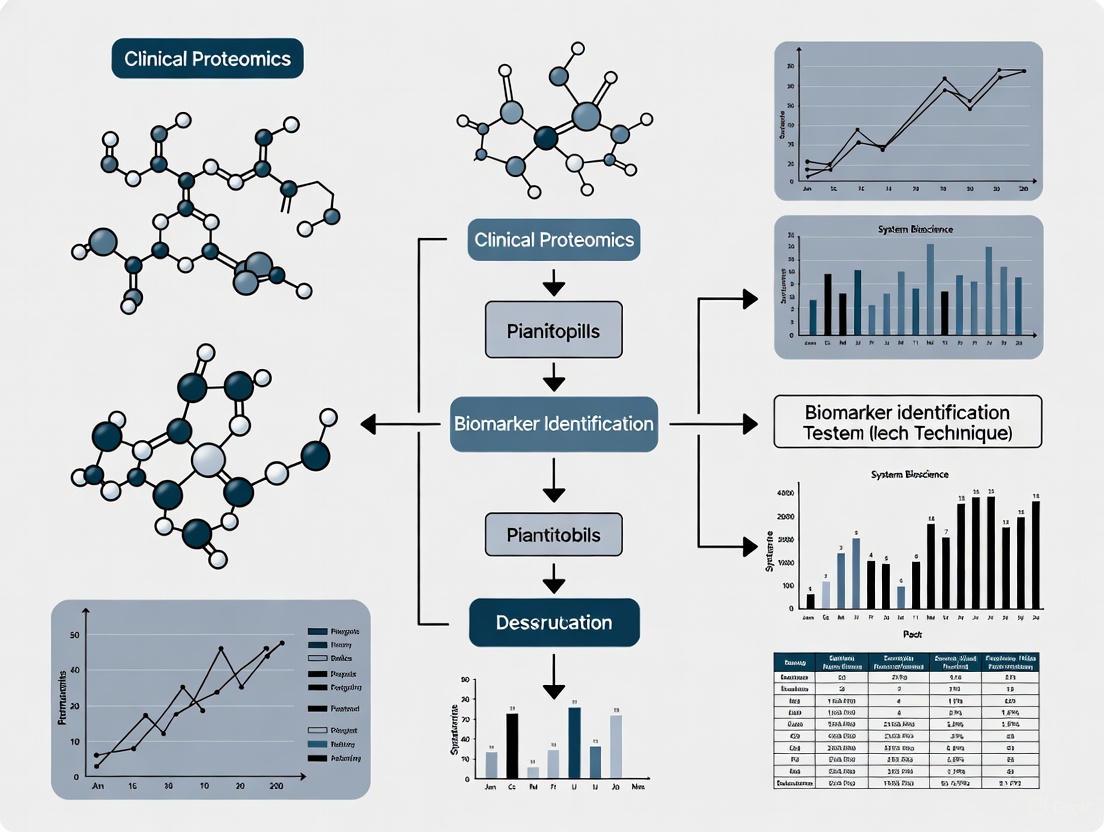
This article provides a comprehensive overview of the current landscape of clinical proteomics for biomarker identification, tailored for researchers and drug development professionals.
Clinical Proteomics for Biomarker Discovery: Techniques, Workflows, and Future Directions in Precision Medicine
Abstract
This article provides a comprehensive overview of the current landscape of clinical proteomics for biomarker identification, tailored for researchers and drug development professionals. It explores the foundational principles of proteomics and its critical role in bridging genomic information with biological function. The piece details advanced methodological workflows, from sample preparation to data acquisition using mass spectrometry and protein microarrays. It further addresses key challenges in the field, including experimental design and statistical power, and outlines rigorous biomarker validation and verification processes. By synthesizing insights from foundational concepts to clinical application, this review serves as a strategic guide for navigating the complexities of biomarker discovery and translation into clinically useful tools.
The Proteomics Landscape: From Genome to Clinical Biomarker
In the pursuit of precision medicine, biomarkers have become indispensable tools for early disease detection, accurate prognosis, and monitoring treatment efficacy. Among the various molecular tiers, the proteome—the entire set of proteins expressed by a genome—represents a uniquely valuable source of biomarkers. Proteins are the primary functional actors in biological systems, directly regulating metabolic pathways, cellular signaling, and structural integrity. Their dynamic expression, post-translational modifications, and secretion into readily accessible biofluids make them ideal sentinels of health and disease states. This application note details the experimental protocols and analytical frameworks for identifying and validating protein biomarkers, contextualized within clinical proteomics research for drug development.
Quantitative Foundations: The Case for Protein Biomarkers
The following table summarizes the key advantages that position proteins as superior biomarkers compared to other molecular classes.
Table 1: Key Advantages of Proteins as Clinical Biomarkers
| Characteristic | Significance for Biomarker Utility |
|---|---|
| Proximal to Phenotype | Proteins are the main effectors of cellular function; their expression levels, locations, and modifications directly reflect the current physiological or pathological state [1]. |
| Dynamic Nature | Protein expression and activity can change rapidly in response to environmental cues, disease progression, or therapeutic intervention, providing a real-time snapshot of biological status [1]. |
| Druggable Targets | Most therapeutic agents, including small molecules and biologics, are designed to target proteins, making their quantification directly relevant to drug development and efficacy monitoring [2]. |
| Accessible in Biofluids | Proteins and protein fragments are readily detectable in minimally or non-invasive liquid biopsies (e.g., plasma, serum, urine, CSF), enabling serial monitoring [3] [1]. |
| Post-Translational Modifications (PTMs) | PTMs (e.g., phosphorylation, glycosylation) offer a rich layer of functional regulation that can serve as sensitive biomarkers for disease-specific pathways [4]. |
Experimental Protocols for Biomarker Discovery and Verification
A robust proteomic pipeline is essential for translating a candidate protein into a validated biomarker. The workflow is typically segmented into discovery and targeted verification phases.
Discovery Phase Proteomics
Objective: To identify a broad panel of candidate biomarker proteins that are differentially expressed between comparative groups (e.g., disease vs. control).
Detailed Methodology:
Sample Preparation: Rigorous standard operating procedures are critical.
- Source: Begin with clinically relevant biofluids (plasma, serum, CSF) or tissues (including FFPE blocks) [1].
- Depletion: For plasma/serum, use immunoaffinity columns to remove high-abundance proteins (e.g., albumin, IgG) to compress the dynamic range and reveal lower-abundance potential biomarkers [3].
- Digestion: Digest proteins into peptides using a sequence-specific enzyme, most commonly trypsin [4] [1].
- Clean-up: Desalt peptides using C18 solid-phase extraction cartridges.
Data Acquisition via LC-MS/MS:
- Separation: Peptides are separated by reversed-phase liquid chromatography (LC) based on hydrophobicity [1].
- Ionization: Eluting peptides are ionized via electrospray ionization (ESI).
- Mass Analysis: Two primary data acquisition modes are used:
- Data-Dependent Acquisition (DDA): The mass spectrometer automatically selects the most abundant precursor ions for fragmentation. While comprehensive, it can suffer from stochastic sampling and missing low-abundance ions [1].
- Data-Independent Acquisition (DIA): Also known as SWATH-MS, this method fragments all ions within sequential, predefined mass windows. It generates a complete digital proteome map, enabling retrospective data mining without re-running samples [1].
Data Analysis:
- Identification: MS/MS spectra are searched against protein sequence databases using software tools (e.g., MaxQuant, Spectronaut) to identify peptides and infer proteins [4].
- Quantification: Label-free or isotope-labeling methods are used to quantify relative protein abundance changes across sample groups.
Targeted Verification Phase Proteomics
Objective: To precisely and reliably quantify a shortlist of candidate biomarkers in a larger cohort of samples.
Detailed Methodology: This phase typically employs Multiple Reaction Monitoring (MRM) or its parallel version, Parallel Reaction Monitoring (PRM), on a triple-quadrupole or high-resolution mass spectrometer [3] [1].
Assay Development:
- For each candidate protein, select 3-5 unique "proteotypic" peptides that are specific and efficiently ionized.
- For each peptide, select multiple specific fragment ions (transitions).
- Synthesize stable isotope-labeled (SIL) versions of these peptides to serve as internal standards for precise quantification.
Sample Analysis:
- The MS is programmed to only monitor the predefined precursor ion → fragment ion transitions for the target peptides.
- Q1 selects the specific precursor ion (peptide) mass.
- Q2 (collision cell) fragments the selected ion.
- Q3 filters for the specific fragment ion masses.
- The intensity of these transition signals over the chromatographic elution time is integrated and compared to the internal standard to determine the absolute or relative concentration of the peptide, and thus the protein, in the sample [3] [1].
The following diagram illustrates the logical workflow and decision points in the biomarker development pipeline.
The Scientist's Toolkit: Research Reagent Solutions
Successful execution of a proteomics workflow relies on a suite of essential reagents and materials. The following table catalogs key solutions for biomarker discovery and validation studies.
Table 2: Essential Research Reagents for Clinical Proteomics
| Reagent / Material | Function in Workflow | Specific Examples / Notes |
|---|---|---|
| Trypsin (Sequencing Grade) | Enzyme for specific proteolytic digestion of proteins into peptides for MS analysis. | Ensures complete and reproducible cleavage at lysine and arginine residues. |
| Stable Isotope-Labeled (SIL) Peptides | Internal standards for absolute quantification in targeted proteomics (MRM). | Spiked into samples to correct for sample prep losses and ionization variability [3]. |
| Immunoaffinity Depletion Columns | Remove top 1-20 abundant proteins from serum/plasma to enhance detection of lower-abundance biomarkers. | Columns target proteins like albumin, IgG, transferrin [3]. |
| Liquid Chromatography Columns | Separate peptides based on hydrophobicity prior to MS injection. | Reversed-phase C18 columns, typically with nano-flow configurations for sensitivity. |
| Quality Control (QC) Samples | Monitor instrument performance and reproducibility across batches. | A pooled sample from all or a representative set of study samples. |
| Validated Antibodies | Used for immuno-enrichment of low-abundance target proteins or peptides prior to MS analysis. | Critical for quantifying proteins at pg/mL levels in blood [1]. |
A Framework for Clinical Translation: The CUSP Protocol
Transitioning a candidate biomarker from a research finding to a clinically useful tool requires careful evaluation beyond statistical significance. The Clinically Useful Selection of Proteins (CUSP) protocol provides a rational framework for this process [5].
This protocol combines statistical and non-statistical criteria to score and rank candidate proteins:
- Statistical Component: Proteins are initially ranked based on their ability to differentiate participant groups using logistic regression models.
- Non-Statistical Component: Proteins are then evaluated against five practical criteria, weighted by importance:
- Commercial Assay Availability (40 points): Is there an existing, commercially available clinical-grade assay (e.g., ELISA) for this protein? This is the single most important factor for clinical translation.
- Established Biological Role (25 points): Is the protein's function and link to the disease pathology already known? This de-risks validation.
- Stability in Relevant Biofluid (15 points): Is the protein known to be stable in the biofluid of interest (e.g., plasma)?
- Secreted Protein (10 points): Is the protein naturally secreted, making it more likely to be a robust biomarker in biofluids?
- Known Druggable Target (10 points): Does the protein have known ligands or drugs that target it, increasing its translational value?
The total CUSP score (statistical + non-statistical rankings) provides a transparent metric to select the most promising candidates for costly and time-consuming validation studies [5].
Proteins stand as ideal biomarkers by providing a dynamic, functional, and directly targetable readout of human health and disease. The structured proteomic workflows outlined here—from unbiased discovery using DIA/MS to rigorous verification via targeted MRM—provide a powerful roadmap for biomarker development. The integration of strategic frameworks like the CUSP protocol further ensures that discovered biomarkers have a viable path to clinical application, ultimately accelerating drug development and enabling more personalized patient care.
The development of robust biomarkers is a critical pathway in advancing precision medicine, yet the journey from discovery to clinical application remains fraught with challenges. Current estimates indicate that approximately 95% of biomarker candidates fail to progress from discovery to clinical use, creating a significant "validation valley of death" that frustrates researchers and delays patient benefits [6]. This high attrition rate persists despite advances in 'omics technologies that generate hundreds to thousands of candidate biomarkers [6]. The biomarker pipeline systematically transforms raw biological data into clinically validated indicators through three fundamental phases: discovery, verification, and validation. Within clinical proteomics—the large-scale study of proteins for clinical applications—this pipeline demands exceptional rigor in analytical methods and statistical assessment [7] [8]. The stakes are immense, with the global biomarker market projected to reach $104 billion by 2030, yet traditional validation approaches require 5-10 years and cost millions per candidate [6]. This application note details current protocols and best practices for navigating this complex pipeline, with special emphasis on proteomic approaches for autoimmune diseases and other complex conditions where biomarker development faces particular challenges [8].
The biomarker development pipeline constitutes a rigorous, multi-stage process designed to identify, verify, and validate measurable biological indicators that can predict, diagnose, or monitor disease. Successful navigation requires understanding both the technical requirements and the strategic framework necessary to overcome the high failure rates observed in biomarker development.
The Three-Legged Stool of Biomarker Assessment
Biomarker validity is not a single concept but rather three interconnected challenges that must all be successfully addressed, with weakness in any single area jeopardizing the entire program [6]:
Analytical Validity: The ability to accurately and reliably measure the biomarker across different laboratories, equipment, and technicians. This requires demonstrating measurement accuracy, precision across varying conditions, appropriate sensitivity and specificity, and consistent performance over time [6].
Clinical Validity: The ability of the biomarker to accurately predict or correlate with the clinical outcome or status of interest. This requires demonstrating meaningful associations with clinical outcomes, showing predictive capability for future events, and proving diagnostic accuracy across diverse patient populations [6].
Clinical Utility: The demonstration that using the biomarker actually improves patient outcomes and clinical decision-making. This requires evidence that clinical decisions change when doctors have biomarker information, and that these changes lead to better results [6].
Distinguishing Validation from Qualification
A critical distinction that can save development programs years of work is understanding that validation and qualification represent different processes with different endpoints [6]:
Validation: The scientific process of generating evidence, publishing papers, and building scientific consensus around a biomarker. This typically takes 3-7 years and results in peer-reviewed publications that convince the research community [6].
Qualification: The regulatory process where agencies like the FDA formally recognize a biomarker for specific uses in drug development. This is a 1-3 year regulatory process that results in official qualification letters [6].
The payoff for regulatory qualification is substantial, with qualified biomarkers reducing clinical trial costs by approximately 60% through better patient selection [6].
Table 1: Biomarker Pipeline Phase Overview
| Pipeline Phase | Primary Objective | Typical Duration | Key Outputs | Success Rate |
|---|---|---|---|---|
| Discovery | Identify candidate biomarkers | 6-12 months | List of candidate biomarkers with statistical associations | 100% (starting point) |
| Verification | Confirm analytical performance | 12-24 months | Optimized assay protocols with precision data | ~40% (60% fail inter-lab validation) |
| Validation | Establish clinical utility | 24-48 months | Evidence of improved patient outcomes | ~5% (95% overall failure rate) |
| Regulatory Qualification | Achieve regulatory endorsement | 12-36 months | FDA/EMA qualification for specific context | Limited to top performers |
Phase 1: Discovery
The discovery phase represents the initial identification of potential biomarker candidates through unbiased screening approaches. In clinical proteomics, this phase leverages high-throughput technologies to profile proteins across disease and control populations.
Experimental Protocols for Proteomic Discovery
Sample Collection and Preparation Protocol
Principle: Consistent pre-analytical sample handling is critical for reliable proteomic profiling [7].
Reagents and Materials:
- EDTA or heparin blood collection tubes
- Protease inhibitor cocktails
- Protein extraction buffers (RIPA, urea/thiourea)
- Bicinchoninic acid (BCA) or Bradford protein assay kits
- Centrifugal filters (3-100 kDa MWCO)
Procedure:
- Collect blood samples following standardized venipuncture protocols with appropriate anticoagulants
- Process samples within 2 hours of collection to prevent protein degradation
- Separate plasma/serum by centrifugation at 2,000-3,000 × g for 15 minutes
- Aliquot samples and store at -80°C in low-protein-binding tubes
- Document complete sample metadata including processing times and storage conditions
- For tissue samples, use laser capture microdissection to isolate specific cell populations
- Extract proteins using appropriate buffers supplemented with protease and phosphatase inhibitors
- Quantify protein concentration using colorimetric assays with bovine serum albumin standards
- Remove high-abundance proteins if necessary using immunoaffinity depletion columns
Mass Spectrometry-Based Protein Profiling Protocol
Principle: Liquid chromatography-tandem mass spectrometry (LC-MS/MS) enables comprehensive protein identification and quantification [8].
Reagents and Materials:
- Trypsin (sequencing grade modified)
- C18 solid-phase extraction cartridges
- Formic acid, acetonitrile (LC-MS grade)
- Water (LC-MS grade)
- iTRAQ or TMT labeling reagents (for multiplexed quantification)
Procedure:
- Digest proteins with trypsin at 1:50 enzyme-to-substrate ratio overnight at 37°C
- Desalt peptides using C18 solid-phase extraction
- For label-free quantification, analyze individual samples using 120-minute LC gradients
- For multiplexed quantification, label peptides with isobaric tags (iTRAQ/TMT) following manufacturer protocols
- Pool labeled samples and fractionate using high-pH reverse-phase chromatography
- Analyze fractions by LC-MS/MS using data-dependent acquisition
- Use Orbitrap mass analyzers for high mass accuracy (<5 ppm) measurements
- Perform database searching against human protein databases (SwissProt) using search engines such as MaxQuant or Proteome Discoverer
- Apply false discovery rate (FDR) threshold of <1% at protein and peptide levels
Biomarker Discovery Workflow
The following diagram illustrates the complete proteomic biomarker discovery workflow:
Phase 2: Verification
The verification phase assesses the analytical performance of candidate biomarkers in larger sample sets, transitioning from discovery platforms to robust, quantitative assays.
Experimental Protocols for Biomarker Verification
Multiplex Immunoassay Verification Protocol
Principle: Electrochemiluminescence-based multiplex assays (e.g., Meso Scale Discovery) enable verification of multiple candidates simultaneously with improved sensitivity over traditional ELISA [9].
Reagents and Materials:
- Meso Scale Discovery (MSD) multi-spot plates
- MSD read buffer
- Biotinylated detection antibodies
- Ruthenium-labeled streptavidin
- MSD plate washer
- MSD MESO QuickPlex SQ 120 imager
Procedure:
- Coat MSD plates with capture antibodies overnight at 4°C with shaking
- Block plates with MSD blocker A solution for 1 hour at room temperature
- Add samples and standards in duplicate and incubate for 2 hours with shaking
- Wash plates 3 times with PBS-Tween using an automated plate washer
- Add biotinylated detection antibodies and incubate for 2 hours
- Wash plates as in step 4
- Add ruthenium-labeled streptavidin and incubate for 30 minutes
- Wash plates and add MSD read buffer
- Measure electrochemiluminescence signal using MSD imager
- Generate standard curves using 4-parameter logistic regression
- Assess precision with coefficient of variation <15% across replicates
LC-MS/MS-Based Verification Protocol
Principle: Targeted mass spectrometry (multiple reaction monitoring) provides highly specific verification without requirement for specific antibodies [9].
Reagents and Materials:
- Synthetic stable isotope-labeled peptide standards
- C18 reverse-phase columns (1.0 mm × 150 mm)
- Triple quadrupole mass spectrometer
- Nanoflow or capillary flow LC system
Procedure:
- Spike samples with stable isotope-labeled internal standard peptides
- Digest proteins as described in discovery protocol (section 3.1.2)
- Desalt peptides using C18 solid-phase extraction
- Separate peptides using 60-minute nanoLC gradients at 300 nL/min flow rate
- Monitor specific precursor-product ion transitions for target peptides
- Use scheduled MRM to monitor each transition at optimal retention time
- Integrate peak areas for native and heavy isotope-labeled peptides
- Calculate ratio of native to heavy peptide for quantification
- Assess linearity across 3 orders of magnitude with R² > 0.99
- Determine lower limits of quantification with CV <20%
Analytical Validation Requirements
Table 2: Analytical Performance Criteria for Biomarker Verification
| Performance Characteristic | Acceptance Criterion | Experimental Approach | Regulatory Reference |
|---|---|---|---|
| Precision | Coefficient of variation <15% | Repeated measurements of QC samples | CLSI EP05-A3 [6] |
| Accuracy | Recovery rates 80-120% | Spike-recovery experiments with known standards | CLSI EP05-A3 [6] |
| Linearity | R² > 0.95 across measuring range | Dilution series of pooled patient samples | CLSI EP05-A3 [6] |
| Sensitivity (LLOQ) | CV <20% at lower limit | Serial dilution of lowest measurable concentration | FDA Guidance (2007) [6] |
| Specificity | No interference from related analytes | Spike samples with structurally similar compounds | FDA Guidance (2007) [6] |
| Stability | <15% change after storage | Multiple freeze-thaw cycles, benchtop stability | CLSI EP05-A3 [6] |
Biomarker Verification Workflow
The following diagram illustrates the biomarker verification process:
Phase 3: Validation
The validation phase represents the most resource-intensive stage, requiring large-scale clinical studies to demonstrate that biomarker measurement improves patient outcomes.
Clinical Validation Protocol for Predictive Biomarkers
Principle: Prospective-validation studies establish whether a biomarker can reliably predict treatment response or disease progression in relevant clinical populations [6] [10].
Study Design Considerations:
- Use stratified designs to account for biomarker misclassification [6]
- Implement blinding to treatment and biomarker status during outcome assessment
- Pre-specify statistical analysis plan including sample size justification
- Define clinical endpoints appropriate for intended use (diagnostic, prognostic, predictive)
Procedures:
- Sample Size Calculation: Power analysis based on expected effect size, typically requiring hundreds to thousands of patients [6]
- Patient Recruitment: Enroll representative population with predefined inclusion/exclusion criteria
- Sample Collection: Standardized collection across multiple clinical sites
- Biomarker Testing: Centralized testing with blinded personnel
- Clinical Follow-up: Assess predefined endpoints at scheduled intervals
- Statistical Analysis:
Advanced Validation Technologies
While ELISA has traditionally been the gold standard for biomarker validation, advanced technologies now offer superior performance:
Table 3: Comparison of Biomarker Validation Technologies
| Technology | Sensitivity | Multiplexing Capacity | Cost per Sample | Key Advantages |
|---|---|---|---|---|
| Traditional ELISA | Moderate | Single-plex | ~$15-20 per analyte | Established workflow, widely available |
| Meso Scale Discovery (MSD) | 10-100x greater than ELISA | 10-100 plex | ~$19 for 4-plex panel | Broad dynamic range, low sample volume |
| LC-MS/MS | High | 10-100+ peptides | Variable based on plex | Absolute quantification, no antibodies needed |
| Multiplex Immunoassays | Moderate to high | 5-50 plex | $25-50 per multi-plex panel | Comprehensive profiling, pathway analysis |
Clinical Validation and Implementation Workflow
The following diagram illustrates the clinical validation and implementation pathway:
The Scientist's Toolkit: Essential Research Reagents and Platforms
Table 4: Essential Research Reagents and Platforms for Biomarker Development
| Tool Category | Specific Products/Platforms | Primary Function | Key Considerations |
|---|---|---|---|
| Sample Preparation | Protease inhibitor cocktails, RIPA buffer, BCA assay kits | Protein stabilization and quantification | Maintain sample integrity, ensure accurate quantification |
| Discovery Platforms | Orbitrap mass spectrometers, SWATH/DIA acquisition, iTRAQ/TMT labeling | Unbiased protein identification and quantification | Coverage, reproducibility, quantification accuracy |
| Verification Assays | Meso Scale Discovery U-PLEX, LC-MRM/MS, Luminex xMAP | Targeted candidate verification | Sensitivity, multiplexing capacity, dynamic range |
| Validation Technologies | Validated ELISA kits, LC-MS/MS assays, clinical grade IHC | Clinical grade biomarker measurement | Regulatory compliance, reproducibility across sites |
| Data Analysis Tools | MaxQuant, Skyline, R/Bioconductor, Python scikit-learn | Statistical analysis and biomarker modeling | False discovery control, model performance assessment |
| Biospecimen Resources | Biobanking systems, LN2 storage, sample tracking software | Sample management and quality control | Sample provenance, quality metrics, ethical compliance |
The biomarker pipeline remains a challenging but essential pathway for advancing precision medicine. The integration of AI and machine learning approaches is beginning to transform this landscape, with recent studies showing that machine learning improves validation success rates by 60% [6]. These approaches can analyze over 50 million scientific papers to identify hidden connections between diseases and biomarkers, predicting which candidates are most likely to succeed in validation [6].
Modern proteomic approaches are particularly promising for complex conditions like autoimmune diseases, where they offer the potential to identify unique biomarkers for more precise diagnosis, classification, and treatment decisions [8]. The emergence of standardized assessment tools like the Biomarker Toolkit—which provides an evidence-based checklist of 129 attributes associated with successful biomarker implementation—further supports more systematic development approaches [10].
As the field advances, researchers must maintain focus on the fundamental principles of analytical validity, clinical validity, and clinical utility while embracing new technologies that offer enhanced sensitivity, multiplexing capability, and efficiency. By applying the detailed protocols and frameworks presented in this application note, researchers can navigate the complex biomarker development pipeline more effectively, increasing the likelihood that promising discoveries will ultimately benefit patients through improved diagnosis, monitoring, and treatment selection.
In the field of clinical proteomics and precision medicine, biomarkers are objectively measured characteristics that provide critical insights into biological processes, pathogenic states, or pharmacological responses to therapeutic interventions [11]. The ideal clinical biomarker serves as a cornerstone for disease detection, diagnosis, prognosis, and monitoring treatment efficacy, ultimately enabling personalized treatment strategies [12]. As modern medicine increasingly shifts toward precision-based approaches, the demand for refined biomarkers has intensified, particularly with advancements in proteomic technologies such as mass spectrometry and protein microarrays that enhance diagnostic precision [13].
The defining characteristics of an ideal biomarker include high sensitivity and specificity, which ensure accurate disease detection and classification, alongside non-invasiveness, which facilitates repeated sampling and real-time monitoring [14]. These attributes are especially vital in oncology, where early detection of recurrence significantly impacts patient outcomes [14]. This application note delineates the essential properties of clinical biomarkers, structured protocols for their validation, and advanced methodological workflows, with a specific focus on proteomic applications for researchers and drug development professionals.
Core Characteristics of an Ideal Biomarker
The utility of a clinical biomarker is governed by a set of interdependent characteristics that determine its performance and applicability in real-world settings. These properties ensure that the biomarker reliably informs clinical decision-making from diagnosis through treatment monitoring.
- High Analytical Sensitivity and Specificity: A biomarker must demonstrate high sensitivity—the ability to correctly identify individuals with the disease (true positive rate)—and high specificity—the ability to correctly identify those without the disease (true negative rate) [11]. These metrics are foundational to a biomarker's analytical validity, ensuring the test itself is accurate and reproducible [12].
- Non-Invasiveness: Biomarkers detectable in easily accessible biofluids (e.g., blood, urine) via liquid biopsies offer a profound advantage. They enable repeated sampling for dynamic disease monitoring, patient compliance, and early detection of conditions like breast cancer recurrence, often before clinical symptoms or radiological evidence appear [14]. Platforms analyzing circulating tumor DNA (ctDNA), circulating tumor cells (CTCs), and exosomes are at the forefront of this non-invasive revolution [14] [15].
- Clinical Validity and Utility: Beyond technical performance, a biomarker must prove clinically valid—effectively identifying or predicting a specific disease or condition in the target patient population [12]. Its clinical utility is demonstrated by providing information that improves patient outcomes, guides treatment selection, and is cost-effective to implement in healthcare systems [12].
- Robustness and Standardization: An ideal biomarker must generate consistent results across different laboratories, operators, and over time. This requires standardized protocols for sample collection, processing, and analysis to minimize pre-analytical and analytical biases, which are common pitfalls in biomarker development [16].
Table 1: Key Quantitative Metrics for Biomarker Evaluation
| Metric | Definition | Interpretation in a Clinical Context |
|---|---|---|
| Sensitivity | Proportion of actual positive cases that are correctly identified. | A high sensitivity is crucial for ruling out disease (high negative predictive value) and is required for screening biomarkers. |
| Specificity | Proportion of actual negative cases that are correctly identified. | A high specificity minimizes false positives, reducing unnecessary follow-up tests and patient anxiety. |
| Positive Predictive Value (PPV) | Proportion of positive test results that are true positives. | Highly dependent on disease prevalence; indicates the probability that a positive test result is correct. |
| Negative Predictive Value (NPV) | Proportion of negative test results that are true negatives. | Also depends on disease prevalence; indicates the probability that a negative test result is correct. |
| Area Under the Curve (AUC) | Measures the overall ability of a biomarker to discriminate between cases and controls. | An AUC of 1.0 represents perfect discrimination, while 0.5 represents no discriminative ability (like a coin toss). |
Essential Validation Criteria
The journey from biomarker discovery to clinical application is long and arduous, requiring rigorous validation to ensure real-world reliability [16]. This process is structured around three pillars of validation.
- Analytical Validity refers to the performance of the assay itself—its ability to accurately and reliably measure the biomarker. This involves rigorous assessment of the test's sensitivity, specificity, precision, and accuracy under defined conditions [12]. For a test to be clinically viable, its analytical measurements must be reproducible, with low coefficients of variation (e.g., <20-30%) [16].
- Clinical Validity establishes that the biomarker is indeed associated with the clinical endpoint of interest (e.g., disease presence, prognosis, or response to therapy). It confirms that the biomarker measurements correlate meaningfully with the patient's clinical status [12]. This is typically evaluated using the same metrics described in Table 1, within a well-defined clinical cohort.
- Clinical Utility is the ultimate test, demonstrating that using the biomarker in practice leads to improved patient outcomes, better decision-making, or more efficient use of resources compared to standard care [12]. A biomarker may be analytically and clinically valid but fail if it does not change clinical management in a beneficial and cost-effective way.
Table 2: The Three Pillars of Biomarker Validation
| Validation Type | Core Question | Key Parameters Assessed |
|---|---|---|
| Analytical Validity | Does the test work reliably in the lab? | Sensitivity, Specificity, Precision, Accuracy, Reproducibility, Coefficient of Variation (CV) [12] [16]. |
| Clinical Validity | Does the test result correlate with the patient's condition? | Clinical Sensitivity, Clinical Specificity, Positive/Negative Predictive Value, Odds Ratios, Hazard Ratios [11] [12]. |
| Clinical Utility | Does using the test improve patient care? | Impact on treatment decisions, patient outcomes (survival, quality of life), cost-effectiveness, and feasibility of implementation [12]. |
Experimental Protocols for Biomarker Assessment
Protocol: Validation of a Protein Biomarker via Mass Spectrometry
This protocol outlines a targeted proteomic workflow for verifying a candidate protein biomarker in serum samples.
1. Sample Preparation
- Materials: Pre-analytical blood collection tubes, protease inhibitor cocktails, ultracentrifuge, protein quantification assay.
- Procedure:
- Collect blood samples in serum separator tubes and allow to clot. Centrifuge at 2,000 x g for 10 minutes to isolate serum.
- Aliquot serum and store immediately at -80°C to preserve protein integrity.
- Deplete high-abundance proteins using an immunoaffinity column.
- Digest the protein sample into peptides using a standardized trypsinization protocol.
- Desalt and concentrate peptides using C18 solid-phase extraction tips.
2. Liquid Chromatography-Tandem Mass Spectrometry (LC-MS/MS) Analysis
- Materials: Nano-flow LC system, hybrid quadrupole-orbitrap mass spectrometer, C18 reversed-phase analytical column.
- Procedure:
- Separate peptides using a nano-LC system with a linear gradient of acetonitrile.
- Analyze eluting peptides using data-dependent acquisition (DDA) or scheduled parallel reaction monitoring (PRM) for higher sensitivity and reproducibility.
- Use heavy isotope-labeled synthetic peptides as internal standards for absolute quantification.
3. Data Processing and Statistical Analysis
- Materials: Proteomics software suite, statistical computing environment.
- Procedure:
- Identify and quantify peptides by searching MS/MS spectra against a curated protein sequence database.
- Normalize protein abundances across runs using internal standards.
- Perform statistical analysis (e.g., t-tests, ROC analysis) to assess the differential expression of the candidate biomarker between case and control groups.
Protocol: Evaluating a Multi-Biomarker Panel for Prognosis
This protocol describes the process for developing and validating a panel of biomarkers to improve prognostic accuracy.
1. Panel Construction and Assay Development
- Materials: Multiplex immunoassay platform, clinical data from a well-annotated patient cohort.
- Procedure:
- Select candidate biomarkers based on prior discovery-phase experiments.
- Develop a multiplex assay to measure all candidates simultaneously from a single sample.
- Use continuous biomarker values to retain maximal information; avoid early dichotomization [11].
2. Model Building and Validation
- Materials: Statistical software capable of machine learning algorithms.
- Procedure:
- Using a training cohort, employ variable selection methods to identify the most informative biomarkers for the panel.
- Build a prognostic model using logistic regression or a machine learning classifier.
- Validate the model's performance on a separate, independent validation cohort.
- Assess the panel's added value by comparing the AUC of the multi-marker model to that of any single biomarker or standard clinical factor.
Visualization of Workflows and Relationships
Diagram 1: Biomarker development pipeline.
Diagram 2: Multi-omics data integration.
The Scientist's Toolkit: Research Reagent Solutions
Table 3: Essential Reagents and Platforms for Clinical Proteomics
| Research Tool | Function in Biomarker Workflow |
|---|---|
| Mass Spectrometer | High-sensitivity instrument for identifying and quantifying proteins and peptides in complex biological samples [13]. |
| Protein Microarrays | Platform for high-throughput screening of protein expression and interactions, facilitating biomarker discovery [13]. |
| Next-Generation Sequencing | Enables comprehensive genomic and transcriptomic profiling, used for discovering mutation-based biomarkers and analyzing ctDNA [14]. |
| Liquid Biopsy Kits | Reagents for the isolation and analysis of circulating biomarkers like ctDNA, CTCs, and exosomes from blood samples [14] [15]. |
| Immunoassay Kits | Antibody-based kits for validating and measuring specific protein biomarkers; the gold standard for clinical assays [16]. |
| Bioinformatics Software | Computational tools for analyzing large-scale omics data, performing statistical analysis, and building predictive models [13]. |
The success of clinical proteomics in biomarker discovery is fundamentally linked to the selection and proper handling of biological samples. Blood, tissue, urine, and proximal fluids each offer unique windows into physiological and pathological processes, with varying protein compositions, dynamic ranges, and clinical accessibility. Blood plasma and serum remain the most frequently used sources due to their rich protein content and minimal invasiveness, providing a systemic overview of an individual's health status. Tissue samples offer direct insight into disease mechanisms at the site of pathology but require invasive collection procedures. Urine provides a non-invasive alternative with relatively stable protein composition, while proximal fluids contain proteins shed or secreted from specific tissue microenvironments, potentially enriching for disease-relevant biomarkers. Understanding the technical considerations, advantages, and limitations of each sample type is crucial for designing robust proteomic studies that yield clinically actionable biomarkers.
Table 1: Comparative characteristics of major sample sources in clinical proteomics
| Sample Source | Key Advantages | Technical Challenges | Approximate Protein Complexity | Primary Clinical Applications |
|---|---|---|---|---|
| Blood (Plasma/Serum) | Minimally invasive; Rich protein content; Systemic health reflection [17] | Extreme dynamic range (>10 orders of magnitude); High-abundance protein masking [17] [18] | ~10,000 core proteins [19] | Cancer biomarker discovery [20]; Autoimmune disease profiling [8]; Therapeutic monitoring |
| Tissue Biopsy | Direct analysis of disease site; Pathological context preserved [21] | Invasive procedure; Sample heterogeneity; Limited material [21] | >10,000 proteins (tissue-dependent) | Cancer subtyping [21]; Molecular pathology; Drug target identification |
| Urine | Completely non-invasive; Large volumes obtainable; Stable protein composition [19] [22] | Low protein concentration; Variable composition (diet, time of day) [19] | ~2,000 proteins [19] | Renal diseases [19]; Urological cancers [20]; Systemic disease detection |
| Proximal Fluids | Enriched with tissue-specific proteins; Lower dynamic range than plasma [23] | Limited availability; Access requires specialized procedures [23] | Varies by fluid type | Organ-specific biomarker discovery; Local microenvironment assessment [23] |
Table 2: Quantitative performance of proteomic technologies across sample types
| Technology Platform | Typical Proteome Coverage | Quantitative Precision (CV) | Sample Throughput | Best Suited Sample Types |
|---|---|---|---|---|
| DIA-MS (e.g., SWATH) | ~2,000 proteins from tissue [21]; ~1,000+ from plasma [18] | 3.3-9.8% (protein level) [18] | Medium-High | Plasma, Tissue, Urine |
| DDA-MS | Fewer identifications than DIA in complex samples [18] | Higher variability than DIA [18] | Medium | All sample types |
| Aptamer-based (SomaScan) | Up to 11,000 proteins [17] | <5% (platform-dependent) | High | Plasma, Serum |
| Proximity Extension Assay (Olink) | ~3,000 proteins [17] | <10% (platform-dependent) | High | Plasma, Serum, Urine |
| Antibody Arrays | Up to hundreds of proteins | Varies by target | High | All sample types |
Blood (Plasma/Serum) Proteomics
Technical Considerations and Protocols
Blood-derived samples present significant analytical challenges due to the extreme dynamic range of protein concentrations, which spans over 10 orders of magnitude [17]. The 22 most abundant plasma proteins constitute approximately 99% of the total protein mass, necessitating specialized strategies to detect lower-abundance protein biomarkers. Recent advancements in depletion methods, acquisition techniques, and instrumentation have substantially improved the depth and quantitative accuracy of plasma proteome analysis.
High-Abundance Protein Depletion Protocol:
- Sample Preparation: Collect venous blood in EDTA, heparin, or citrate tubes. Centrifuge at 2,000-3,000 × g for 10-15 minutes to separate plasma from cellular components. Aliquot and store at -80°C until analysis.
- Immunoaffinity Depletion: Use commercial columns (e.g., MARS-14, Seer Proteograph) with immobilized antibodies against high-abundance proteins. Dilute plasma 1:5 with binding buffer and load onto column according to manufacturer's instructions [17].
- Alternative Depletion Methods: For nanoparticle-based enrichment (e.g., Seer Proteograph), mix 200μL plasma with magnetic nanoparticles. Incubate with rotation for 30 minutes at room temperature. Capture nanoparticles magnetically and discard supernatant [17].
- Protein Digestion: Add 8M urea/100mM ammonium bicarbonate to depleted samples. Reduce with 5mM tris(2-carboxyethyl)phosphine (60°C, 30 minutes), alkylate with 10mM iodoacetamide (room temperature, 30 minutes in dark). Dilute to 1.6M urea, digest with trypsin/Lys-C (1:50 enzyme:protein) overnight at 37°C [17] [18].
- Peptide Clean-up: Desalt peptides using C18 solid-phase extraction columns. Elute with 50-80% acetonitrile/0.1% formic acid. Dry in vacuum concentrator and reconstitute in 0.1% formic acid for MS analysis.
Liquid Chromatography-Mass Spectrometry Analysis: For DIA (SWATH-MS) on TripleTOF or Orbitrap platforms: Inject 1-2μg peptides onto nanoflow LC system (C18 column, 75μm × 250mm). Separate with 90-180 minute gradient from 2-30% acetonitrile/0.1% formic acid. For DIA acquisition, set variable windows covering 400-1000 m/z range. Use 25ms accumulation time for MS1 (350-1500 m/z) and 20ms for MS2 (100-1500 m/z) [21] [18].
Plasma Proteomics Workflow
Microsampling Approaches
Blood microsampling (<100μL) using fingerstick or microblade devices offers advantages for pediatric populations, frequent monitoring, and remote sampling. Dried blood spots (DBS) and novel microsampling devices enable room temperature storage and transport, reducing cold-chain logistics [24]. A 2024 scoping review confirmed that microsamples are amenable to high-throughput proteomics, though quantification normalization remains challenging due to hematocrit effects and variable sample volumes [24].
Tissue Proteomics
Technical Considerations and Protocols
Tissue biopsies provide direct access to disease sites but present challenges including limited material, cellular heterogeneity, and efficient protein extraction. The PCT-SWATH method enables reproducible proteomic analysis from biopsy-level tissues (1-3mg), converting small tissue samples into permanent digital proteome maps [21].
PCT-SWATH Tissue Processing Protocol:
- Tissue Lysis and Protein Extraction: Place 1-3mg wet tissue in pressure-resistant MicroTubes. Add 100μL extraction buffer (8M urea, 100mM ammonium bicarbonate, protease inhibitors). Subject to pressure cycling: 50 seconds at 45,000 p.s.i. followed by 10 seconds at ambient pressure for 60 cycles (60 minutes total) [21].
- Protein Reduction and Alkylation: Add tris(2-carboxyethyl)phosphine to 5mM and iodoacetamide to 10mM directly to lysate. Incubate at room temperature in the dark for 30 minutes with pressure cycling (20,000 p.s.i., 50 seconds on/10 seconds off) [21].
- Protein Digestion: Add Lys-C (1:50 enzyme:protein) in 6M urea. Pressure cycle at 33°C for 45 cycles (50 seconds at 20,000 p.s.i./10 seconds ambient). Dilute to 1.6M urea with ammonium bicarbonate. Add trypsin (1:50 enzyme:protein) and pressure cycle for 90 cycles [21].
- Peptide Recovery: Acidify with 1% formic acid. Centrifuge at 14,000 × g for 10 minutes. Transfer supernatant to clean tubes. Desalt using C18 stage tips. The entire process from tissue to MS-ready peptides takes 6-8 hours [21].
- SWATH-MS Acquisition: Load 1-2μg peptides onto LC-MS system. Use 120-minute gradient. For SWATH-MS, acquire MS1 scan (350-1500 m/z, 250ms accumulation), followed by 64 sequential MS2 scans (100-1500 m/z, 20ms each) of variable precursor isolation windows [21].
Tissue Proteomics Workflow
Urine Proteomics
Technical Considerations and Protocols
Urine has become an attractive biofluid for clinical proteomics due to non-invasive collection, relatively stable composition, and relevance to both urogenital and systemic diseases. Normal urine contains approximately 2,000 proteins, with composition influenced by factors including time of day, exercise, and diet [19]. Morning urine collection is preferred due to higher protein content.
Urinary Protein Preparation Protocol:
- Sample Collection and Preparation: Collect mid-stream morning urine (50-100mL). Centrifuge at 2,000 × g for 10 minutes to remove cells and debris. Aliquot supernatant and store at -80°C. Avoid multiple freeze-thaw cycles [19].
- Protein Concentration: Choose one method:
- Acetone Precipitation: Mix urine with 4 volumes cold acetone. Incubate at -20°C overnight. Centrifuge at 14,000 × g for 15 minutes. Discard supernatant, air-dry pellet.
- Ultracentrifugation: Centrifuge at 100,000 × g for 60 minutes at 4°C. Collect supernatant.
- Lyophilization: Freeze urine at -80°C, then lyophilize to dryness. Reconstitute in 1/10 original volume with PBS [19].
- Protein Depletion and Enrichment: For abundant protein depletion, use multiple affinity removal system (MARS) columns specific for urine proteins. For low-abundance protein enrichment, employ strong cation exchange chromatography or combinatorial peptide ligand libraries [19].
- Protein Digestion and Clean-up: Dissolve proteins in 8M urea/100mM ammonium bicarbonate. Reduce, alkylate, and digest following similar protocol to plasma proteomics. Desalt peptides using C18 columns [19].
Proximal Fluids Proteomics
Technical Considerations and Protocols
Proximal fluids, derived from the extracellular milieu of specific tissues, contain proteins shed or secreted from tissue microenvironments. These fluids potentially enrich for disease-relevant biomarkers that may be diluted in systemic circulation. Examples include cerebrospinal fluid, synovial fluid, ascites, and pleural effusion [23]. The protein composition of proximal fluids typically has a less extreme dynamic range than plasma, facilitating detection of tissue-derived proteins.
Proximal Fluid Processing Protocol:
- Sample Collection: Collect fluid using clinical procedures specific to the fluid type (e.g., lumbar puncture for CSF, arthrocentesis for synovial fluid). Centrifuge at 2,000 × g for 10 minutes to remove cells and debris.
- Protein Concentration: Concentrate using centrifugal filtration devices (3-10kDa molecular weight cutoff) or precipitation methods. The choice depends on initial protein concentration and sample volume.
- Protein Digestion: Follow standard reduction, alkylation, and digestion protocols as described for plasma, adjusting buffer volumes according to sample size.
- LC-MS Analysis: Utilize DIA or DDA methods optimized for the specific complexity of the proximal fluid. CSF typically requires less extensive fractionation than plasma due to lower complexity.
The Scientist's Toolkit
Table 3: Essential research reagents and platforms for clinical proteomics
| Reagent/Platform | Function | Application Notes |
|---|---|---|
| Pressure Cycling Technology (PCT) | Integrated tissue lysis, protein extraction, and digestion [21] | Essential for small tissue biopsies; improves yield and reproducibility |
| Magnetic Nanoparticles (Seer Proteograph) | Dynamic range compression in plasma [17] | Enables detection of >3,000 plasma proteins; requires high initial investment |
| Immunoaffinity Depletion Columns (MARS-14) | Removal of high-abundance plasma proteins [17] | Standard approach for plasma proteome depth improvement |
| SWATH-MS | Data-independent acquisition for comprehensive proteome mapping [21] | Creates permanent digital proteome maps; enables retrospective analysis |
| Olink PEA | High-sensitivity multiplexed protein detection [17] [20] | Ideal for cytokine and low-abundance protein quantification |
| SomaScan | Aptamer-based proteomic platform [17] [20] | Highest multiplex capacity (>11,000 proteins); useful for biomarker discovery |
| ENRICHplus Beads (PreOmics) | Magnetic bead-based plasma protein enrichment [17] | Identifies >5,500 protein groups from 50μL plasma |
| Strong Cation Exchange (SCX) Chromatography | Fractionation and enrichment of basic peptides [19] | Particularly useful for phosphoproteome enrichment |
The selection of appropriate sample sources and optimized processing protocols is fundamental to successful clinical proteomics. Blood plasma and serum remain central to biomarker discovery despite analytical challenges posed by their extreme dynamic range. Tissue biopsies provide invaluable disease site information, with emerging technologies like PCT-SWATH enabling comprehensive analysis of minimal samples. Urine offers a completely non-invasive alternative with particular utility for renal and urological conditions, while proximal fluids enrich for tissue-specific biomarkers. Microsampling approaches are gaining traction for applications requiring frequent monitoring or remote collection. As proteomic technologies continue to advance with improved sensitivity, reproducibility, and multiplexing capabilities, the integration of multiple sample types will provide complementary insights, accelerating the translation of proteomic discoveries to clinical applications across diverse disease areas including cancer, autoimmune disorders, and renal diseases.
Advanced Proteomic Workflows: From Sample to Data
Within clinical proteomics, the success of biomarker identification and validation hinges almost entirely on the initial quality of the sample. Inconsistent or suboptimal sample preparation introduces variability that can obscure true biological signals and compromise the reliability of downstream mass spectrometry analyses. This document provides detailed application notes and protocols for the preparation of three fundamental sample types in biomedical research: plasma, serum, and formalin-fixed paraffin-embedded (FFPE) tissues. With vast archives of FFPE tissues representing a largely untapped resource for retrospective biomarker discovery, and blood plasma/serum remaining the most accessible biofluids for longitudinal studies, standardizing their preparation is a critical step toward advancing precision medicine.
Blood Plasma and Serum Preparation
Fundamental Definitions and Collection Materials
The preparation of plasma and serum begins with the collection of whole blood, but the subsequent processing determines the final analyte composition.
- Serum is the liquid fraction of whole blood collected after allowing the blood to clot spontaneously. This process removes fibrinogen and other clotting factors, yielding a sample that is often less complex than plasma. [25]
- Plasma is produced when whole blood is collected in tubes containing an anticoagulant. The blood does not clot, and centrifugation removes the cellular components. Plasma thus retains the full complement of circulating proteins, including clotting factors. [25]
The choice of collection tube is critical and depends on the intended downstream analysis. The table below outlines the common tube types and their applications. [25]
Table 1: Blood Collection Tubes for Serum and Plasma Preparation
| Tube Color | Additive | Designated Sample Type | Notes on Use |
|---|---|---|---|
| Red | None | Serum | Allows blood to clot. |
| Red with black | Clot-activating gel | Serum | Gel forms a barrier between serum and clot during centrifugation. |
| Lavender | EDTA | Plasma | Chelates calcium to prevent clotting; common for proteomics. |
| Green | Heparin | Plasma | Can be contaminated with endotoxin, which may stimulate cytokine release. [25] |
| Blue | Citrate | Plasma | Binds calcium; often used in coagulation studies. |
| Grey/Yellow | Potassium Oxalate/Sodium Fluoride | Plasma | Fluoride inhibits glycolytic enzymes, often used for glucose assays. |
Step-by-Step Experimental Protocols
Serum Preparation Protocol
Materials: Whole blood collected in red-top or red/black-top serum tubes. [25]
- Collection: Collect whole blood into a serum tube.
- Clotting: Allow the blood to clot by leaving the tube undisturbed at room temperature for 15–30 minutes.
- Centrifugation: Centrifuge the tube at 1,000–2,000 x g for 10 minutes in a refrigerated centrifuge (2–8°C). The resulting supernatant is serum.
- Transfer: Using a clean Pasteur pipette, immediately transfer the clarified serum into a clean polypropylene tube. Maintain samples at 2–8°C during handling.
- Aliquoting and Storage: If the serum is not analyzed immediately, aliquot it into 0.5 mL portions to avoid repeated freeze-thaw cycles. Store and transport samples at –20°C or lower. [25]
Plasma Preparation Protocol
Materials: Whole blood collected in anticoagulant-treated tubes (e.g., lavender-top EDTA tubes). [25]
- Collection: Collect whole blood into a pre-treated tube (e.g., EDTA, citrate, or heparin) and invert gently to mix with the anticoagulant.
- Centrifugation: Centrifuge the tube at 1,000–2,000 x g for 10 minutes in a refrigerated centrifuge. For platelet-poor plasma, centrifuge at 2,000 x g for 15 minutes.
- Transfer: Carefully extract the supernatant (plasma) using a Pasteur pipette, taking care not to disturb the cell pellet. Maintain samples at 2–8°C.
- Aliquoting and Storage: Aliquot plasma into 0.5 mL portions and store at –20°C or lower. Avoid freeze-thaw cycles. [25]
Critical Note for Both Plasma and Serum: Samples that are hemolyzed (red blood cell rupture), icteric (high bilirubin), or lipemic (high lipids) can invalidate certain tests and should be noted. [25]
The following workflow diagram summarizes the parallel paths for preparing serum and plasma from whole blood:
FFPE Tissue Preparation for Proteomics
Unlocking the Archive: The Value of FFPE Tissues
FFPE tissue archives represent the most extensive repository of preserved human biological specimens worldwide, encompassing billions of samples with decades of linked clinical data. [26] Their value for proteomics is immense, enabling retrospective biomarker validation across diverse patient populations and rare diseases. Recent advances have demonstrated that robust, high-resolution quantitative proteomics is possible from FFPE cardiac tissue, quantifying approximately 4,000-5,000 proteins per sample with minimal variation introduced by the fixation process itself (median variance ~1.1%). [27] This establishes FFPE tissue as a viable and powerful resource for clinical proteomics.
Critical Steps in FFPE Tissue Proteomics Workflow
The key challenge in FFPE proteomics is reversing the formalin-induced protein crosslinks that preserve the tissue, while efficiently removing paraffin to allow for effective protein extraction and digestion.
- Deparaffinization: This initial step involves removing the paraffin embedding matrix. Modern, scalable protocols are often xylene-free, using heat-based methods to melt and remove paraffin in a higher-throughput, safer manner. [28]
- Decrosslinking and Protein Extraction: A critical optimization step, this process uses specialized buffers and heat to break the methylene bridges formed by formalin fixation, thereby solubilizing proteins for extraction. The efficiency of this step directly impacts proteome depth, with optimized workflows successfully retrieving even proteins from specialized compartments like the plasma membrane. [27]
- Protein Digestion and Cleanup: The extracted proteins are digested into peptides (typically with trypsin) and desalted before mass spectrometry analysis. For comprehensive coverage, fractionation at high pH can be performed to reduce sample complexity. [27]
The following diagram illustrates the core workflow for preparing FFPE tissues for proteomic analysis:
Mass Spectrometry Acquisition Strategies for FFPE Proteomics
The choice of mass spectrometry acquisition method is determined by the goals of the study, balancing depth of coverage, quantitative accuracy, and throughput.
Table 2: Comparison of Mass Spectrometry Acquisition Methods for FFPE Proteomics
| Acquisition Method | Typical Proteins Quantified | Key Strengths | Ideal Use Case |
|---|---|---|---|
| TMT Multiplexing with DDA [27] | ~5,900 proteins (with fractionation) | High proteome depth; allows multiplexing of several samples. | In-depth discovery studies with a limited number of samples. |
| Label-Free DIA (diaPASEF) [27] | ~4,000 proteins (single-shot) | Minimal missing values; excellent reproducibility; highly scalable for large cohorts. | Large-scale retrospective studies and clinical cohort profiling. |
The Scientist's Toolkit: Essential Research Reagents and Materials
Successful sample preparation relies on the use of specific, high-quality reagents and materials. The following table details essential items for the protocols described in this document.
Table 3: Essential Research Reagent Solutions for Sample Preparation
| Item | Function/Application | Key Considerations |
|---|---|---|
| EDTA Blood Collection Tubes (Lavender Top) [25] | Collects plasma by chelating calcium to prevent coagulation. | Preferred for many proteomic applications due to minimal interference. |
| Serum Tubes (Red Top) [25] | Collects serum by allowing blood to clot. | The clot-activating gel in red/black-top tubes can aid separation. |
| Pasteur Pipettes [25] | Transfer of supernatant (serum/plasma) after centrifugation. | Critical for avoiding disturbance of the cell pellet during transfer. |
| Optimized FFPE Lysis Buffer [27] | Decrosslinks formalin-induced bonds and extracts proteins from FFPE scrolls. | Composition is key for efficient protein retrieval, especially membrane proteins. |
| Tandem Mass Tags (TMT) [27] | Multiplexes peptide samples for relative quantification in MS. | Increases throughput and reduces instrument time for discovery studies. |
| High-pH Reversed-Phase Chromatography Kit [27] | Fractionates complex peptide mixtures to reduce sample complexity. | Significantly increases proteome coverage and depth in discovery modes. |
| Data-Independent Acquisition (DIA) Kits | Enables comprehensive, reproducible quantification in MS. | Ideal for large cohort studies; creates permanent digital proteome maps. [26] |
Standardized and meticulously executed sample preparation is the non-negotiable foundation of robust clinical proteomics. The protocols detailed here for plasma, serum, and FFPE tissues provide a roadmap to generate high-quality data from these invaluable sample types. By leveraging the vast archives of FFPE tissues with modern, optimized workflows, researchers can now unlock decades of clinical data for proteomics-driven disease characterization and patient stratification. As the field moves forward, the integration of artificial intelligence and multi-omics approaches with these solid foundational practices will further accelerate the discovery of novel biomarkers and the advancement of precision medicine. [27] [29]
In clinical proteomics, the identification of robust biomarkers for diseases such as acute myocardial infarction, lung adenocarcinoma, and various autoimmune conditions depends critically on the effective separation and analysis of proteins from complex biological samples [30] [31] [8]. The dynamic nature of the proteome, with its vast concentration range and numerous post-translational modifications (PTMs), presents a significant analytical challenge [32]. Two-dimensional gel electrophoresis (2D-GE) and liquid chromatography (LC), often coupled with mass spectrometry (MS), are two foundational techniques employed for this purpose. This article details the application, protocols, and key considerations of these techniques within a clinical proteomics workflow for biomarker discovery.
Technique 1: Two-Dimensional Gel Electrophoresis (2D-GE)
Principles and Clinical Applications
Two-dimensional gel electrophoresis separates complex protein mixtures based on two independent physicochemical properties: isoelectric point (pI) in the first dimension and molecular weight (MW) in the second dimension [33]. This orthogonality allows for the resolution of thousands of proteins, including different proteoforms resulting from PTMs like phosphorylation and glycosylation, which can cause observable shifts in protein migration [34] [33]. In clinical proteomics, 2D-GE is particularly valuable for visually detecting alterations in protein expression levels and PTM patterns between healthy and diseased states, making it applicable in cancer research, studies of cell differentiation, and the discovery of disease biomarkers [34] [33]. Its primary strength lies in its ability to separate and visualize complete, denatured proteins, providing a proxy to the real biological objects of interest [34].
Detailed Experimental Protocol for 2D-GE
Sample Preparation:
- Protein Extraction: Solubilize proteins from tissues (e.g., brain or tumor biopsies) or biofluids (e.g., serum) using a lysis buffer containing 8 M urea, 2 M thiourea, 4% CHAPS, and 30 mM Tris-HCl to denature proteins and maintain solubility [34] [35].
- Reduction and Alkylation: Reduce disulfide bonds with 1 mM DTT at 37°C for 1 hour. Subsequently, alkylate free thiol groups with 5 mM iodoacetamide in the dark for 1 hour to prevent reformation.
- Clean-up: Precipitate proteins using cold acetone or a commercial kit to remove contaminants like salts, nucleic acids, and lipids that can interfere with isoelectric focusing (IEF) [35]. Re-dissolve the cleaned protein pellet in a rehydration buffer compatible with IEF.
First Dimension - Isoelectric Focusing (IEF):
- Rehydration: Apply the protein sample (typically 50-100 µg for analytical gels, up to 1 mg for preparative gels) to immobilized pH gradient (IPG) strips (e.g., pH 3-11 nonlinear) via active or passive rehydration for 12-16 hours [33] [35].
- Focusing: Perform IEF using a programmed voltage gradient on an IEF device. A typical protocol for an 11 cm strip might include a step-and-hold regimen: 500 V for 1 hour, 1000 V for 1 hour, and 8000 V until 35,000 V-hr is reached, all at 20°C [35].
Second Dimension - SDS-PAGE:
- Strip Equilibration: After IEF, equilibrate the IPG strips in two steps. First, incubate in equilibration buffer (6 M Urea, 75 mM Tris-HCl pH 8.8, 30% glycerol, 2% SDS) containing 1% DTT for 15 minutes to reduce proteins. Second, incubate in the same buffer containing 2.5% iodoacetamide for 15 minutes to alkylate them.
- Gel Casting/Loading: Use pre-cast or hand-cast polyacrylamide gels (e.g., 8-16% gradient gels) for the second dimension. Place the equilibrated IPG strip onto the top of the SDS-PAGE gel.
- Electrophoresis: Run the gel in an electrophoresis chamber filled with running buffer (25 mM Tris, 192 mM glycine, 0.1% SDS). Apply a constant voltage (e.g., 100 V) until the dye front migrates to the bottom of the gel [36].
Protein Visualization and Analysis:
- Staining: Visualize separated proteins using sensitive stains like silver nitrate, Coomassie Brilliant Blue, or fluorescent dyes (e.g., SYPRO Ruby) [34] [36].
- Image Acquisition and Analysis: Scan the gel using a digital imaging system. Use specialized software to detect protein spots, match spots across different gels, and quantify differential expression [36].
- Spot Excision and Identification: Excise protein spots of interest robotically or manually. Digest the proteins within the gel plugs with trypsin, extract the resulting peptides, and identify them by mass spectrometry [33].
2D-GE Workflow Visualization
Diagram 1: The sequential workflow for two-dimensional gel electrophoresis (2D-GE), from sample preparation to protein identification.
Technique 2: Liquid Chromatography (LC) in Proteomics
Principles and Clinical Applications
Liquid chromatography, particularly when coupled with tandem mass spectrometry (LC-MS/MS), is the cornerstone of modern bottom-up proteomics [32]. In this approach, complex protein mixtures are digested into peptides, which are then separated by LC based on properties like hydrophobicity (in reverse-phase LC) or charge (in ion-exchange LC) before being introduced into the mass spectrometer [32]. Multidimensional LC (MDLC) platforms, such as the combination of strong cation exchange (SCX) and reverse-phase liquid chromatography (RPLC), significantly increase peak capacity and resolution, enabling the deep profiling of complex proteomes like human plasma or tissue lysates [32] [37]. LC-MS/MS is highly suited for high-throughput biomarker verification in clinical proteomics due to its superior throughput, sensitivity, and ability to be fully automated [31] [38]. It is the method of choice for targeted, absolute quantification of specific protein biomarkers, as demonstrated for cardiac troponin I (cTnI), and for large-scale, untargeted discovery studies [30] [31].
Detailed Experimental Protocol for MDLC-MS/MS
Sample Preparation for Bottom-Up Proteomics:
- Protein Digestion: Denature and reduce proteins from serum or tissue lysates. Alkylate cysteine residues. Digest the protein mixture into peptides using trypsin (typically at a 1:50 enzyme-to-protein ratio) overnight at 37°C [30].
- Peptide Clean-up: Desalt and concentrate the peptide mixture using C18 solid-phase extraction (SPE) cartridges. Elute peptides in a solvent compatible with the first LC dimension, then dry down and reconstitute in the appropriate loading buffer.
First Dimension - Fractionation (Off-line or On-line):
- Off-line SCX Fractionation: Load the peptide mixture onto a strong cation exchange column. Elute peptides using a linear salt gradient (e.g., 0-500 mM KCl or NaCl) over 60-90 minutes. Collect fractions at regular time intervals (e.g., 1-2 minutes/fraction) [37].
- Desalting of Fractions: Desalt each SCX fraction individually using C18 StageTips or a 96-well SPE plate to remove salts before the second dimension.
Second Dimension - Reverse-Phase LC-MS/MS:
- LC Separation: Reconstitute each fraction in a low-organic solvent (e.g., 2% acetonitrile, 0.1% formic acid). Inject onto a C18 reverse-phase nanoLC or capillary LC column. Separate peptides using a gradient from 2% to 35% acetonitrile over 30-120 minutes, depending on the desired throughput and depth of analysis [37] [38].
- MS Analysis: The eluting peptides are ionized by electrospray ionization and introduced into a tandem mass spectrometer. Operate the MS in data-dependent acquisition (DDA) or data-independent acquisition (DIA/SWATH) mode. In DDA, the instrument continuously acquires MS1 survey scans and selects the most intense precursor ions for fragmentation and MS2 analysis [38].
Data Analysis:
- Protein Identification and Quantification: Search the resulting MS/MS spectra against a protein sequence database using algorithms like SEQUEST, Mascot, or MaxQuant. For quantitative studies, use label-free or isobaric label-based (e.g., TMT, iTRAQ) quantification methods integrated into the software [34] [32].
LC-MS/MS Workflow Visualization
Diagram 2: The workflow for multidimensional liquid chromatography coupled with tandem mass spectrometry (MDLC-MS/MS) in a bottom-up proteomics approach.
Comparative Analysis of 2D-GE and LC
The choice between 2D-GE and LC-MS hinges on the specific goals of the clinical proteomics study. Table 1 summarizes the key characteristics of both techniques to guide researchers in selecting the most appropriate method.
Table 1: Comparative analysis of 2D-GE and LC-MS for clinical proteomics applications.
| Feature | 2D-Gel Electrophoresis (2D-GE) | Liquid Chromatography-Mass Spectrometry (LC-MS) |
|---|---|---|
| Analytical Principle | Separation of intact proteins by charge (pI) and molecular weight (SDS-PAGE). | Separation of digested peptides by hydrophobicity/charge (LC) followed by mass-to-charge ratio (MS). |
| Throughput | Lower throughput; process is labor-intensive and difficult to automate fully [32]. | High throughput; fully automatable, especially in online MDLC setups [38]. |
| Dynamic Range | Limited (~3-4 orders of magnitude); abundant proteins can obscure low-abundance ones [32]. | Superior (~4-6 orders of magnitude); enhanced by fractionation and advanced MS [32]. |
| Sensitivity | Low µg range for detection with standard stains [36]. | High (amol-zmol range); capable of detecting low-abundance biomarkers [31] [38]. |
| Ability to Resolve PTMs/Proteoforms | Excellent. Directly visualizes protein shifts due to PTMs (e.g., phosphorylation, glycosylation) [34] [33]. | Indirect. Inferred from peptide mass shifts or specific MS fragmentation; requires specialized enrichment for comprehensive analysis. |
| Protein Hydrophobicity Handling | Poor for very hydrophobic proteins (e.g., membrane proteins) [32]. | Good, especially with optimized solvents and chromatography [32]. |
| Quantification | Relative quantification based on spot staining intensity (e.g., DIGE) [34]. | Highly accurate relative and absolute quantification using label-free or isotope-labeling methods [30] [38]. |
| Ideal Clinical Application | Discovery of proteoforms and PTM-based biomarkers; analysis of protein isoforms [34] [35]. | High-throughput biomarker discovery and verification; targeted, absolute quantification of specific biomarkers [30] [31] [8]. |
The Scientist's Toolkit: Essential Research Reagents and Materials
Successful implementation of 2D-GE and LC-MS protocols relies on a suite of essential reagents and instruments. Table 2 lists key solutions and their functions in the clinical proteomics workflow.
Table 2: Key research reagent solutions and materials for protein separation techniques.
| Reagent / Material | Function in Protocol |
|---|---|
| Immobilized pH Gradient (IPG) Strips | Used in the first dimension of 2D-GE to separate proteins based on their isoelectric point across a defined pH range [33]. |
| Urea, Thiourea, CHAPS Detergent | Key components of lysis and rehydration buffers for 2D-GE; denature proteins and maintain solubility during IEF [35]. |
| Dithiothreitol (DTT) & Iodoacetamide | Reducing and alkylating agents, respectively. DTT breaks disulfide bonds; iodoacetamide alkylates cysteine thiols to prevent reformation [30] [35]. |
| Trypsin (Protease) | Enzyme used in bottom-up proteomics to digest proteins into peptides for LC-MS/MS analysis [30] [32]. |
| Stable Isotope-Labeled (SIL) Peptides/Proteins | Internal standards added to samples for precise absolute quantification in targeted LC-MS/MS assays (e.g., for cardiac troponin I) [30]. |
| C18 Reverse-Phase LC Columns | The most common stationary phase for peptide separation in the second dimension of LC-MS, separating peptides based on hydrophobicity [32] [38]. |
| Strong Cation Exchange (SCX) Resin | Stationary phase for the first dimension in MDLC; separates peptides based on their net positive charge [32] [37]. |
| Mass Spectrometer (e.g., Q-TOF, Orbitrap) | The detection system for LC-MS; identifies and quantifies peptides based on their mass-to-charge ratio and fragmentation patterns [31] [38]. |
Both 2D-GE and LC-MS are powerful, yet complementary, techniques in the clinical proteomics pipeline. 2D-GE remains invaluable for the direct visualization and analysis of intact proteoforms and PTMs, while LC-MS offers superior sensitivity, dynamic range, and throughput for large-scale biomarker discovery and validation. The choice between them should be guided by the specific clinical question, the sample type, and the resources available. As proteomics continues to advance towards precision medicine, the integration of data from these and other emerging platforms will be crucial for developing robust diagnostic assays and understanding disease mechanisms at the molecular level.
In the field of clinical proteomics, the identification of protein biomarkers for diseases such as multisystem inflammatory syndrome in children (MIS-C) or idiopathic pulmonary fibrosis (IPF) relies heavily on advanced mass spectrometry (MS) techniques [39] [40]. Two soft ionization methods—Matrix-Assisted Laser Desorption/Ionization (MALDI) and Electrospray Ionization (ESI)—have become cornerstone technologies for profiling complex biological samples, enabling the precise characterization of proteins, peptides, and other biomolecules [41]. These techniques allow for the ionization of fragile, high molecular weight molecules with minimal fragmentation, making them particularly suitable for clinical proteomics applications where sample integrity is paramount [41] [42]. The continual refinement of these ionization sources, coupled with increasingly sophisticated mass analyzers and machine learning algorithms for data analysis, has significantly advanced the precision and scope of biomarker discovery, paving the way for improved diagnostic and prognostic tools in medical practice [41] [43] [39].
Technology Fundamentals: MALDI and ESI
Principle of Matrix-Assisted Laser Desorption/Ionization (MALDI)
MALDI is a soft ionization technique that uses a laser energy-absorbing matrix to facilitate the desorption and ionization of analyte molecules from a solid sample preparation [42]. The process involves three critical steps: first, the sample is mixed with a suitable matrix material (e.g., trans-2-[3-(4-tert-butylphenyl)-2-methyl-2-propenylidene]malononitrile) and applied to a metal plate, forming crystals upon drying; second, a pulsed laser beam (typically at 337 nm, 349 nm, or 355 nm) impinges on the sample, causing desorption of the sample and matrix material; and finally, the analyte molecules are ionized via protonation or deprotonation in the hot plume of ablated gases [42]. A key characteristic of MALDI is that it typically produces ions with a net single charge, which simplifies mass spectrum interpretation and enables straightforward determination of molecular mass for most compounds [41] [42]. This technique has found extensive application in the analysis of biomolecules including proteins, peptides, DNA, polysaccharides, and synthetic polymers [42].
Principle of Electrospray Ionization (ESI)
Electrospray Ionization (ESI) is a soft ionization technique based on electrospray technology that operates with liquid samples [41]. In ESI, a solution containing the analyte is introduced through a needle to which a high voltage is applied, creating a fine aerosol of charged droplets [41]. As these charged droplets undergo evaporation in a high-pressure electric field, Coulombic repulsion forces overcome droplet surface tension, leading to the formation of gas-phase ions [41]. A distinctive feature of ESI is its ability to yield multiply charged ions, particularly beneficial for the detection and analysis of high molecular weight substances such as proteins and protein complexes [41]. This multiple charging phenomenon expands the effective mass range detectable by mass analyzers, making ESI particularly suitable for coupling with liquid chromatography (LC) systems for complex mixture analysis [41].
Comparative Analysis of MALDI and ESI Technologies
The selection between MALDI and ESI for clinical proteomics applications requires careful consideration of their respective technical characteristics, advantages, and limitations, as summarized in Table 1.
Table 1: Comprehensive Comparison of MALDI and ESI Technologies for Clinical Proteomics
| Parameter | MALDI | ESI |
|---|---|---|
| Charge State | Primarily single-charged ions [41] | Multiply charged ions [41] |
| Sample Format | Solid preparation with matrix [41] | Liquid solution [41] |
| Analysis Speed | Rapid analysis [41] | Relatively slower [41] |
| Throughput Capacity | High throughput capability [41] | Lower throughput [41] |
| MS/MS Capability | Generally weaker [41] | Strong tandem MS performance [41] |
| Sensitivity | High sensitivity for trace samples [41] | High sensitivity for trace samples [41] |
| Reproducibility | Can exhibit poor reproducibility [41] | Generally good reproducibility [41] |
| Salt/Buffer Tolerance | Poor tolerance for high salt/buffer samples [41] | Poor tolerance for high salt/buffer samples; requires preprocessing [41] |
| Instrument Cost | Relatively high [41] | High due to complex design [41] |
| Quantitative Performance | Comparable performance in MS/MS-based quantitation [44] | Good quantitative performance with stable isotope labels [44] |
Application Notes in Clinical Proteomics
Biomarker Discovery for Inflammatory Syndromes
MALDI and ESI mass spectrometry techniques have demonstrated significant utility in the discovery and validation of protein biomarkers for inflammatory conditions. In a 2025 study investigating multisystem inflammatory syndrome in children (MIS-C), researchers employed data-independent acquisition mass spectrometry (DIA-MS) with an Orbitrap Eclipse Tribrid mass spectrometer to identify plasma protein signatures that distinguish MIS-C from other similar-presenting syndromes [39]. The experimental workflow incorporated support vector machine (SVM) algorithms to identify a three-protein model (ORM1, AZGP1, SERPINA3) that achieved 90.0% specificity, 88.2% sensitivity, and 93.5% area under the ROC curve (AUC) in distinguishing MIS-C from controls in the training set [39]. Performance was maintained in the validation dataset (90.0% specificity, 84.2% sensitivity, 87.4% AUC), demonstrating the robustness of this MS-based approach [39]. When comparing MIS-C with similarly presenting syndromes such as pneumonia and Kawasaki disease, a distinct three-protein signature (VWF, FCGBP, and SERPINA3) accurately distinguished MIS-C from the other conditions (97.5% specificity, 89.5% sensitivity, 95.6% AUC) [39].
Proteomic Profiling of Idiopathic Pulmonary Fibrosis
Liquid chromatography coupled to mass spectrometry (LC-MS) has been applied to quantify the peripheral blood proteome in patients with idiopathic pulmonary fibrosis (IPF) to identify proteins associated with disease severity and progression [40]. In a 2025 study analyzing plasma samples from 299 IPF patients and 99 controls without known lung disease, researchers used an Evosep One liquid chromatography system coupled to an Orbitrap Exploris mass spectrometer to detect 761 protein groups, of which 168 showed significantly different abundance in IPF versus control cohorts [40]. Among the top differentially expressed proteins were surfactant protein B (SFTPB), secretoglobin family 3A member 1, intercellular adhesion molecule 1, thrombospondin 1, and platelet factor 4 [40]. Multivariable models selected four proteins (SERPINA7, SFTPB, alpha 2 HS glycoprotein, kininogen 1) and three clinical factors that best discriminated the risk of respiratory death or lung transplant in IPF patients, with a C-index of 0.78 in the training set and 0.72 in the test set [40].
Quantitative Performance Comparison
A comparative study evaluating the quantitative performance of ESI-quadrupole TOF and MALDI-TOF/TOF mass spectrometers for stable-isotope-labeled quantitation found that both platforms delivered comparable results for iTRAQ-based peptide quantitation [44]. When relative abundances of peptides within a sample were increased from 1:1 to 10:1, the mean ratios calculated on both instruments differed by only 0.7-6.7% between platforms [44]. Notably, in the 10:1 experiment, up to 64.7% of iTRAQ ratios from LC-ESI MS/MS spectra failed S/N thresholds and were excluded from quantitation, while only 0.1% of the equivalent LC-MALDI iTRAQ ratios were rejected [44]. The study also highlighted that offline LC-MALDI allows re-analysis of archived HPLC-separated samples, providing an advantage for longitudinal studies [44].
Experimental Protocols
Plasma Proteomics Workflow for Biomarker Discovery
The following workflow diagram illustrates the integrated mass spectrometry and machine learning approach for biomarker discovery in clinical proteomics:
MS Biomarker Discovery Workflow
Detailed Plasma Sample Preparation Protocol
The following protocol outlines the standard procedure for plasma proteomic analysis, as applied in recent clinical studies [39] [40]:
Plasma Collection and Quality Control: Collect blood samples in appropriate anticoagulant tubes (e.g., EDTA). Process samples within 2 hours of collection by centrifugation at 2,000 × g for 10 minutes at 4°C. Aliquot plasma and store at -80°C until analysis. Implement quality control measures to ensure sample integrity [40].
Protein Extraction and Digestion: Dilute 10-20 µg of plasma in 50 mM HEPES buffer containing 50 mM EDTA and 2% SDS. Reduce proteins with 5 mM dithiothreitol (DTT) for 30 minutes at 60°C. Alkylate with 20 mM iodoacetamide for 1 hour at room temperature in the dark [39] [40]. For mass spectrometry analysis, process samples with an automated liquid handling platform to minimize variability. Digest proteins using trypsin (sequencing grade) in 100 mM ammonium bicarbonate with 2 mM CaCl2 at 37°C overnight [39].
Peptide Cleanup: Desalt peptides using solid-phase extraction (e.g., C18 cartridges) or SP3 bead-based cleanup [39]. Acidify peptides with formic acid to pH < 3. Concentrate samples using vacuum centrifugation and reconstitute in appropriate LC-MS loading solution (e.g., 0.1% formic acid) [39] [40].
Liquid Chromatography-Mass Spectrometry Analysis
Liquid Chromatography Separation: Load peptides onto a fused silica trap column (e.g., Acclaim PepMap 100, 75 µm × 2 cm) and wash with 0.1% trifluoroacetic acid. Perform peptide separation using an analytical column (e.g., Nanoease MZ peptide BEH C18, 130 Å, 1.7 µm, 75 µm × 250 mm) with a segmented linear gradient from 4% to 90% mobile phase B (0.16% formic acid, 80% acetonitrile) over approximately 120 minutes at a flow rate of 300 nL/min [39].
Mass Spectrometry Data Acquisition: For data-independent acquisition (DIA-MS), set MS scan range to 400-1200 m/z with resolution of 12,000. Use 8 m/z windows to sequentially isolate and fragment ions in the C-trap with relative collision energy of 30. Record MS/MS data with resolution of 30,000 [39]. For data-dependent acquisition (DDA), select top N precursors for fragmentation based on intensity thresholds.
Data Processing and Protein Identification: Process raw data using computational proteomics platforms such as DIA-NN or MaxQuant. Generate spectral libraries from experimental data for improved peptide identification. Perform protein inference using UniProt reference proteome databases. Filter results for posterior error probability < 1% and protein group Q value < 1% [39] [40]. Quantify protein abundance using label-free quantification methods such as MaxLFQ [39].
The Scientist's Toolkit
Research Reagent Solutions for Clinical Proteomics
Table 2: Essential Research Reagents and Materials for Clinical Proteomics
| Reagent/Material | Function/Application | Examples/Specifications |
|---|---|---|
| Trypsin (Sequencing Grade) | Protein digestion enzyme; cleaves C-terminal to lysine and arginine residues [39] | Trypsin, sequencing grade (Thermo Fisher Scientific) [39] |
| HEPES Buffer | Buffer system for maintaining pH during protein extraction and digestion [39] | 50 mM HEPES in extraction buffer [39] |
| Dithiothreitol (DTT) | Reducing agent for breaking protein disulfide bonds [39] | 5 mM DTT for reduction at 60°C for 30 minutes [39] |
| Iodoacetamide | Alkylating agent for cysteine residues to prevent reformation of disulfide bonds [39] | 20 mM iodoacetamide for alkylation in the dark for 1 hour [39] |
| Trifluoroacetic Acid (TFA) | Ion-pairing agent for liquid chromatography; acidification of peptide samples [45] | 0.1% TFA for peptide acidification [39] |
| Formic Acid | Mobile phase additive for LC-MS; promotes protonation in positive ion mode [39] | 0.1-0.2% formic acid in mobile phases [39] |
| C18 Solid-Phase Extraction Cartridges | Desalting and concentration of peptide samples prior to LC-MS analysis [39] | Various manufacturers; used for sample cleanup [39] |
| MALDI Matrix Materials | Energy-absorbing compounds for MALDI sample preparation [42] | trans-2-[3-(4-tert-Butylphenyl)-2-methyl-2-propenylidene]malononitrile [42] |
Instrumentation and Analytical Platforms
The following diagram illustrates the key instrumentation components and their relationships in a typical clinical proteomics workflow:
Proteomics Instrumentation Pipeline
MALDI and ESI mass spectrometry techniques have established themselves as indispensable tools in clinical proteomics, enabling the precise identification and quantification of protein biomarkers for various diseases. The complementary strengths of these ionization technologies—with MALDI offering rapid analysis of solid samples and single-charge simplification, and ESI providing robust liquid chromatography integration and multiple charging for complex mixtures—create a powerful analytical framework for biomarker discovery and validation [41]. As demonstrated in recent clinical studies on conditions ranging from MIS-C to IPF, the integration of these mass spectrometry platforms with advanced computational approaches, including machine learning algorithms, has significantly enhanced our ability to identify diagnostic and prognostic protein signatures with clinical utility [39] [40]. The continued refinement of these technologies, coupled with standardized protocols and rigorous validation frameworks, promises to further advance the field of clinical proteomics and accelerate the translation of biomarker discoveries into improved patient care.
Discovery proteomics represents a powerful suite of technologies for unbiased protein profiling of complex biological systems, playing an increasingly pivotal role in clinical biomarker identification. In the context of autoimmune diseases, cancer, and metabolic disorders, proteomic technologies offer unparalleled insights into disease mechanisms by capturing dynamic molecular events that genomics and transcriptomics cannot detect, including protein degradation, post-translational modifications, and protein-protein interactions [46] [8]. The global proteomics market, valued at $39.71 billion in 2026, reflects the massive investment in these technologies for pharmaceutical development and clinical diagnostics [47].
Two primary mass spectrometry acquisition strategies dominate discovery proteomics: Data-Dependent Acquisition (DDA) and Data-Independent Acquisition (DIA, also known as SWATH-MS). These approaches differ fundamentally in how they select and fragment peptide ions for identification and quantification, leading to distinct performance characteristics that researchers must understand when designing biomarker discovery pipelines. DDA, the established traditional method, employs targeted selection of the most abundant ions, while DIA utilizes a comprehensive fragmentation approach that systematically covers all ions within defined mass windows [48] [49]. The choice between these methodologies significantly impacts proteome coverage, quantification accuracy, and reproducibility—all critical factors for successful biomarker validation and clinical translation.
Fundamental Principles: DDA vs. DIA
Data-Dependent Acquisition (DDA)
Data-Dependent Acquisition operates through a sequential selection process where the mass spectrometer first performs a full MS1 scan to detect all intact peptide ions (precursors) within a specific mass-to-charge (m/z) range. The instrument then automatically selects the most intense precursor ions from this survey scan for subsequent fragmentation and MS2 analysis [49]. This iterative process repeats throughout the chromatographic elution period, preferentially targeting the most abundant peptides at each time point. While this targeted approach provides high-quality fragmentation spectra for prominent ions, its stochastic selection algorithm introduces limitations for comprehensive proteome coverage, particularly for lower-abundance species that may be consistently overlooked in favor of more intense signals [48] [49].
Data-Independent Acquisition (DIA/SWATH)
Data-Independent Acquisition employs a fundamentally different strategy by systematically fragmenting all precursor ions within consecutive, predefined m/z windows across the entire mass range of interest [48] [49]. Instead of selectively targeting specific ions based on intensity, DIA divides the mass range into multiple isolation windows (typically 20-40) and fragments all precursors within each window simultaneously throughout the LC separation. This comprehensive fragmentation approach generates highly complex MS2 spectra containing fragment ions from multiple co-eluting precursors. Deconvolution of these multiplexed spectra requires specialized computational tools and either experimental or in-silico spectral libraries, but eliminates the stochastic sampling bias inherent to DDA, ensuring consistent data acquisition across all samples in a study [48] [49] [50].
The following diagram illustrates the fundamental operational differences between DDA and DIA approaches:
Performance Comparison and Quantitative Analysis
Comprehensive Performance Metrics
Extensive benchmarking studies have systematically compared the performance characteristics of DDA and DIA across multiple parameters critical for biomarker discovery. The following table summarizes key quantitative metrics from comparative analyses:
Table 1: Performance comparison between DDA and DIA in discovery proteomics
| Performance Metric | DDA | DIA | Experimental Context |
|---|---|---|---|
| Protein Identifications | 396 proteins | 701 proteins | Tear fluid analysis [48] |
| Peptide Identifications | 1,447 peptides | 2,444 peptides | Tear fluid analysis [48] |
| Data Completeness | 42% (proteins), 48% (peptides) | 78.7% (proteins), 78.5% (peptides) | Eight replicate analysis [48] |
| Quantitative Reproducibility | Median CV: 17.3% (proteins), 22.3% (peptides) | Median CV: 9.8% (proteins), 10.6% (peptides) | Technical variation across replicates [48] |
| Quantification Accuracy | Lower consistency in dilution series | Superior consistency in dilution series | Serial dilution experiment [48] |
| Single-Cell Proteomics Performance | Lower sensitivity for low-input samples | Higher sensitivity; 3,000+ proteins quantified | Single-cell level analysis [50] |
Relative Advantages and Limitations
Each acquisition method presents a distinct profile of strengths and limitations that determine their suitability for specific research scenarios:
Table 2: Advantages and limitations of DDA and DIA approaches
| Aspect | DDA | DIA |
|---|---|---|
| Key Advantages | High sensitivity for abundant peptides [49]; Established, widely-optimized protocols [49]; Simpler data interpretation | Comprehensive proteome coverage [48]; Superior reproducibility [48] [49]; Reduced missing data [48]; Better quantification accuracy [48] |
| Primary Limitations | Bias toward high-abundance proteins [48]; Stochastic sampling reduces reproducibility [48]; Lower proteome coverage [48] | Complex data requires advanced bioinformatics [49] [50]; Computational resource-intensive; Spectral library dependency |
| Ideal Application Scope | Targeted verification studies; Post-translational modification analysis [49]; Lower-complexity samples | Large-scale biomarker discovery; Clinical cohort studies [48]; Complex sample types; Longitudinal studies |
Experimental Design and Method Selection Framework
Strategic Method Selection
Choosing between DDA and DIA requires careful consideration of research objectives, sample characteristics, and analytical resources. The following decision framework provides guidance for method selection:
Sample Preparation Protocols
Standard Protein Extraction and Digestion Protocol
The following protocol applies to both DDA and DIA workflows for most clinical sample types, including tissues, biofluids, and cell cultures:
Protein Extraction and Denaturation
- Add appropriate lysis buffer (e.g., 8M urea, 2M thiourea in ammonium bicarbonate)
- Sonicate samples on ice (3 cycles of 10 seconds pulses, 20 seconds rest)
- Centrifuge at 14,000 × g for 15 minutes at 4°C
- Collect supernatant and quantify protein concentration using BCA or similar assay
Protein Reduction and Alkylation
- Add dithiothreitol (DTT) to 5mM final concentration
- Incubate at 56°C for 30 minutes with shaking (600 rpm)
- Cool to room temperature, add iodoacetamide to 15mM final concentration
- Incubate in darkness at room temperature for 30 minutes
Protein Digestion
- Dilute urea concentration to <1.5M using 50mM ammonium bicarbonate
- Add trypsin (sequencing grade) at 1:50 enzyme-to-protein ratio
- Incubate overnight at 37°C with shaking (400 rpm)
- Acidify with trifluoroacetic acid (TFA) to pH <3 to stop digestion
Peptide Desalting
- Activate C18 solid-phase extraction cartridges with methanol and equilibrate with 0.1% TFA
- Load acidified peptide digest and wash with 0.1% TFA
- Elute peptides with 50% acetonitrile/0.1% TFA
- Lyophilize peptides and reconstitute in 0.1% formic acid for LC-MS analysis
Specialized Preparation for Low-Input Samples
For single-cell proteomics or limited clinical samples (e.g., biopsy specimens):
Micro-Scale Sample Preparation
- Utilize single-cell proteomics sample preparation systems (e.g., nanoPOTS, SCoPE-MS)
- Implement carrier proteome approach (50-100x background proteins) to enhance recovery
- Reduce processing volumes to <10μL to minimize surface adsorption losses
Cleanup and Injection
- Use StageTip-based desalting with C18 or SDB-RPS material
- Optimize loading conditions for minimal sample loss
- Include retention time standards (iRT peptides) for chromatographic alignment
Instrumental Configuration and Data Acquisition Parameters
Liquid Chromatography Separation
Optimal LC conditions are critical for both DDA and DIA applications:
Table 3: Liquid chromatography parameters for proteomic analysis
| Parameter | Standard Analysis | High-Fensitivity Analysis | High-Throughput Screening |
|---|---|---|---|
| Column Dimensions | 75μm × 25cm, 1.6μm beads | 75μm × 50cm, 1.6μm beads | 75μm × 15cm, 1.9μm beads |
| Gradient Duration | 60-120 minutes | 120-240 minutes | 15-30 minutes |
| Flow Rate | 300 nL/min | 200 nL/min | 500 nL/min |
| Mobile Phase A | 0.1% Formic acid in water | 0.1% Formic acid in water | 0.1% Formic acid in water |
| Mobile Phase B | 0.1% Formic acid in acetonitrile | 0.1% Formic acid in acetonitrile | 0.1% Formic acid in acetonitrile |
| Gradient Profile | 5-30% B in 60-120min | 5-30% B in 120-240min | 5-35% B in 15-30min |
| Column Temperature | 50°C | 50°C | 50°C |
Mass Spectrometry Acquisition Parameters
DDA Acquisition Method
MS1 Survey Scan Parameters
- Resolution: 120,000 at m/z 200
- Scan range: 350-1500 m/z
- AGC target: 3e6
- Maximum injection time: 100 ms
MS2 Acquisition Parameters
- Resolution: 15,000 at m/z 200
- Isolation window: 1.6 m/z
- AGC target: 1e5
- Maximum injection time: 50 ms
- TopN: 15-20 most intense precursors
- Dynamic exclusion: 30 seconds
DIA/SWATH Acquisition Method
MS1 Survey Scan Parameters
- Resolution: 120,000 at m/z 200
- Scan range: 350-1500 m/z
- AGC target: 3e6
- Maximum injection time: 100 ms
DIA Window Schemes
- Number of windows: 30-60 variable windows
- Window placement: Optimized based on sample complexity
- Window overlap: 1 m/z
- Resolution: 30,000 at m/z 200
- AGC target: 3e6
- Maximum injection time: Auto
Ion Mobility-Enabled DIA (diaPASEF)
- Mobility-based isolation improves specificity
- Reduced interference from co-eluting peptides
- Particularly beneficial for single-cell proteomics [50]
Data Analysis Workflows and Computational Tools
DIA Data Analysis Software Ecosystem
The computational analysis of DIA data requires specialized software tools, each with distinct strengths and optimal application scenarios:
Table 4: Comparison of major DIA data analysis software platforms
| Software Tool | Analysis Approach | Strengths | Optimal Use Cases |
|---|---|---|---|
| DIA-NN | Library-free and predicted spectral libraries [51] [50] | High-speed processing; Excellent cross-batch stability; Ion mobility-aware [51] | Large cohort studies; High-throughput screening; timsTOF data [51] |
| Spectronaut | DirectDIA and library-based analysis [51] [50] | Mature GUI with comprehensive reporting; Standardized QC outputs; Audit-friendly [51] | Regulated environments; Core facilities; Standardized workflows [51] |
| FragPipe (MSFragger-DIA) | Open, composable pipelines [51] | Maximum flexibility; Transparent methodology; Ideal for method development [51] | Customized workflows; Research methodology development; Computational proteomics [51] |
| PEAKS Studio | Library-free and library-based strategies [50] | Sensitive detection; Streamlined workflow; Good performance in single-cell proteomics [50] | Low-input samples; Single-cell proteomics; Labs seeking balance of sensitivity and usability [50] |
Spectral Library Strategies
The analysis of DIA data requires spectral libraries to interpret complex multiplexed spectra. Three primary strategies exist:
Project-Specific Library (DDA-based)
- Generated from parallel DDA analysis of representative samples
- Provides maximum depth and sensitivity
- Requires additional instrument time and sample amount
Predicted/In-Silico Library
- Generated from protein sequence databases using machine learning
- Fast implementation with reasonable accuracy
- Balanced approach for most applications
Library-Free/directDIA
- Extracts spectral information directly from DIA data
- Quickest startup with no additional experiments needed
- May have reduced sensitivity compared to experimental libraries
Quality Control and Validation Metrics
Robust quality control is essential for reliable biomarker discovery. Implement these QC metrics:
Identification Quality
- Maintain 1% FDR at both peptide and protein levels [51]
- Monitor target-decoy discrimination and q-value distributions
Quantitative Reproducibility
- Track CV distributions of quality control pool samples
- Target median protein CV <20% (pass), <15% (preferred) [51]
Data Completeness
- Assess missing values across sample batches
- Implement appropriate missing value imputation strategies
- Document missingness thresholds and imputation methods
The Scientist's Toolkit: Essential Research Reagents and Materials
Table 5: Essential reagents and materials for DDA and DIA proteomics
| Category | Item | Specification/Recommendation | Critical Function |
|---|---|---|---|
| Sample Preparation | Lysis Buffer | 8M Urea, 2M Thiourea in 50mM ammonium bicarbonate | Efficient protein extraction and denaturation |
| Reduction Reagent | Dithiothreitol (DTT), 100mM stock | Breaks disulfide bonds for protein unfolding | |
| Alkylation Reagent | Iodoacetamide, 300mM stock | Cysteine modification to prevent reformation | |
| Protease | Trypsin, sequencing grade modified | Specific protein digestion at lysine/arginine | |
| Chromatography | LC Column | C18, 75μm ID, 25cm length, 1.6μm beads | High-resolution peptide separation |
| Mobile Phase A | 0.1% Formic acid in water | Aqueous solvent for peptide loading | |
| Mobile Phase B | 0.1% Formic acid in acetonitrile | Organic solvent for peptide elution | |
| Retention Time Standards | iRT Kit (Biognosys) | Chromatographic alignment standardization | |
| Mass Spectrometry | Calibration Solution | ESI-L Low Concentration Tuning Mix (Agilent) | Mass accuracy calibration |
| Quality Control | HeLa Cell Digest (commercial standard) | System performance monitoring | |
| Data Analysis | Spectral Libraries | Sample-specific, public, or predicted | Peptide identification from DIA data |
| Analysis Software | DIA-NN, Spectronaut, or FragPipe | Data processing and quantitative analysis | |
| Database Search | UniProt Human Reference Proteome | Protein identification foundation |
Applications in Clinical Biomarker Discovery
Success Stories in Disease Research
Proteomic approaches have demonstrated significant utility across multiple disease areas:
Autoimmune Diseases
Metabolic Disorders
Oncology
Emerging Trends and Future Directions
The field of discovery proteomics continues to evolve with several promising developments:
Integration of Artificial Intelligence
Multi-Omics Integration
Single-Cell Proteomics
Spatial Proteomics
Discovery proteomics using DDA and DIA approaches provides powerful capabilities for clinical biomarker research, each with distinct strengths that suit different experimental requirements. DIA has emerged as the preferred method for large-scale biomarker discovery due to its superior reproducibility, comprehensive coverage, and quantitative accuracy, particularly in complex clinical samples and longitudinal studies. DDA remains valuable for targeted applications, post-translational modification analysis, and scenarios with limited bioinformatics resources.
The successful implementation of proteomic biomarker discovery requires careful consideration of the entire workflow—from experimental design and sample preparation to data acquisition and computational analysis. As technologies continue to advance, particularly in the domains of single-cell proteomics, spatial analysis, and artificial intelligence-driven data interpretation, proteomics is poised to deliver increasingly impactful biomarkers for precision medicine applications across a broad spectrum of human diseases.
In the field of clinical proteomics, the identification and validation of protein biomarkers is crucial for advancing precision medicine, enabling early disease diagnosis, prognosis assessment, and treatment monitoring. Among the various technological platforms available, affinity-based techniques represent a powerful targeted proteomics approach. Antibody microarrays and reverse-phase protein arrays (RPPA) have emerged as particularly valuable high-throughput technologies that leverage antibody-antigen interactions to quantify proteins and their post-translational modifications across large sample sets. These platforms fill a critical niche between discovery-oriented mass spectrometry and traditional low-throughput immunoassays, offering unique advantages for profiling signaling networks and validating candidate biomarkers in clinically relevant samples [52] [53].
The fundamental distinction between these platforms lies in their design. In forward-phase antibody microarrays, capture antibodies are immobilized on a solid surface to probe complex protein mixtures, allowing simultaneous measurement of multiple analytes from a single sample. In contrast, reverse-phase protein arrays immobilize individual protein lysates from numerous samples on a substratum, which are then probed with a single highly validated antibody per slide, enabling parallel quantification of a specific protein or modification across hundreds to thousands of samples under identical experimental conditions [54] [53]. This technical reversal provides RPPA with exceptional reproducibility and standardization capabilities, making it particularly suitable for clinical trials and signaling network analysis.
Reverse-Phase Protein Array (RPPA) Technology
RPPA technology has evolved from miniaturized immunoassays and gene microarray technology, providing either low-throughput or high-throughput methodology for quantifying proteins and their post-translationally modified forms in both cellular and non-cellular samples [53]. The RPPA workflow begins with sample preparation using SDS lysis and heat-mediated denaturation, similar to western blot protocols. These lysates are then plated into 384- or 1536-well microtiter plates. A microarrayer equipped with solid pins capable of handling the high viscosity of concentrated samples then prints the lysates onto nitrocellulose-coated glass slides, creating microscopic "dots" of immobilized protein [54]. Samples are typically run in technical replicates with standard curves included for quantification. The slides are subsequently blocked and probed with a highly specific primary antibody. Immunodetection is performed using HRP-conjugated secondary antibodies, often with additional signal amplification steps due to the low protein amount in each dot. Signal detection is achieved through brightfield (DAB), luminescent, or fluorescent methods, with automated quantification software generating the final quantitative data [52] [54].
A key advantage of RPPA is its minimal sample requirement, requiring only 5μg of extracted protein per sample – substantially less than western blotting (30-50μg) – making it ideal for precious clinical specimens including needle biopsies and microdissected tissues [54]. The platform's high sensitivity, capable of detecting low-abundance regulatory proteins, stems from powerful signal amplification systems that can detect proteins at attogram levels [53]. Additionally, the reverse-phase format ensures all samples are analyzed under identical conditions, providing exceptional signal uniformity across thousands of samples [54].
Comparative Analysis of Proteomic Techniques
Table 1: Comparison of key proteomic technologies for biomarker research
| Technique | Advantages | Disadvantages | Sample Throughput | Protein Throughput | Best Application |
|---|---|---|---|---|---|
| RPPA | Low sample requirement (5μg); High sensitivity; PTM detection; Quantitative; Signal uniformity across 1000s of samples [54] | Special equipment required; High-specificity antibody required for each slide [54] | High (up to 1000s of samples) | Low to moderate (hundreds of targets) | Targeted signaling pathway analysis; Clinical biomarker validation [52] [53] |
| Antibody Microarray | Multiplexing capability; Moderate sample requirement; Direct profiling of multiple targets | Limited by antibody quality; Lower multiplexing than mass spectrometry | Moderate to high | Moderate (tens to hundreds of targets) | Serum biomarker screening; Diagnostic panel development [55] |
| Mass Spectrometry | Unbiased discovery; Thousands of proteins detected; Protein isoform identification [1] | Complex sample preparation; Low throughput; Cannot directly detect PTMs without enrichment; High cost [54] [1] | Low to moderate | High (1000s of proteins) | Discovery proteomics; Biomarker identification [1] |
| Western Blot | Protein separation confirms target identity; Widely accessible | Labor intensive; Low throughput; High sample requirement (30-50μg) [54] | Low | Very low (single to few targets) | Target verification; Small-scale studies |
| ELISA | Quantitative; Sensitive; Reproducible | Limited to pre-determined antibody pairs; High sample requirement; Lower throughput [54] | Moderate | Very low (single target) | Targeted quantitation of specific analytes |
RPPA Experimental Protocol and Workflow
Sample Preparation and Protein Extraction
Proper sample preparation is critical for successful RPPA analysis. For cell culture samples, cells are typically lysed directly in culture dishes or from pellets. After removing media and washing with cold PBS, lysis buffer is added (200μl per ~5×10⁶ cells) with intermittent vortexing at 4°C for 30 minutes [52]. For tissue samples, snap-frozen tissues (10-15mg) are homogenized in precooled tubes with stainless steel beads in ~250μl RPPA lysis buffer using a tissue homogenizer for 2 minutes at 23Hz in a cold room [52]. The lysates are then centrifuged at 20,000×g for 15 minutes at 4°C, and the supernatant containing soluble proteins is transferred to a new tube. This centrifugation step is repeated 2-3 times for cell culture samples and 3-5 times for tissue samples to remove insoluble material [52]. Protein concentration is quantified by bicinchoninic assay, with an optimal target concentration between 1.1 and 3.0mg/ml. Lysates are diluted to a final protein concentration of 0.5mg/ml in 1X SDS sample buffer containing 2.5% β-mercaptoethanol, heated to 100°C for 8 minutes, and centrifuged at 20,000×g for 2 minutes to remove any additional particulate matter [52]. Two aliquots of 50μl lysate per sample are stored at -80°C for RPPA printing.
For formalin-fixed paraffin-embedded (FFPE) tissues, specialized protocols have been developed using SDS-based denaturation and a heating step for crosslinking reversal to enable efficient protein extraction [56]. The compatibility of RPPA with FFPE samples significantly enhances its clinical utility, as FFPE represents the gold standard for tissue preservation in pathology departments worldwide [56] [1].
Diagram 1: RPPA workflow from sample preparation to data analysis
Antibody Validation and Quality Control
A critical component of RPPA is rigorous antibody validation, as the technology depends entirely on antibody specificity. Antibodies must be tested and validated to detect the correct protein without cross-reactivity, as the protein lysate is not separated by molecular size before antibody probing [54]. Validation criteria include immunoblot assays demonstrating a single protein band (or specific multiple bands for protein isoforms) of correct molecular size with known positive and negative controls, coupled with equivalent performance under RPPA assay conditions [52]. For phospho-specific antibodies, additional validation steps are recommended. A novel approach utilizing alkaline phosphatase (AP) treatment has been developed for rapid phospho-antibody characterization [56]. This method employs a lysis buffer compatible with AP enzymatic activity, enabling global phospho-group removal from protein residues to serve as negative controls directly on-chip during RPPA printing.
The AP-based validation method demonstrated impressive predictive value. When 106 phospho-antibodies were screened using RPPA, the AP-treatment induced log-fold change (logFC) value served as an independent predictor of antibody quality. Receiver operating characteristic (ROC) curve analysis for an antibody-score cut-off value of 8 and a logFC cut-off value of -0.792 resulted in an area under the curve of 0.825, indicating excellent ability to predict phosphorylation-specific antibody suitability (Chi-square test p < 0.001) [56]. Independent western blot verification of 42 antibodies with logFC ≤ -0.792 showed that 36 (85%) produced meaningful single bands at expected sizes, confirming the method's suitability for high-throughput phospho-antibody screening [56].
Table 2: Antibody validation scoring system for RPPA applications
| Validation Factor | Description | Scoring Method | Weight |
|---|---|---|---|
| Spot Quality Score | Percentage of total sum of RFI excluding "poor" spots defined by analysis software | Categorized into three classes (scored 1, 2, 3) with higher having better performance | Equal weight |
| Signal-to-Noise Ratio | Average fold difference between RNFI of individual spots and background | Categorized into three classes (scored 1, 2, 3) with higher having better performance | Equal weight |
| Dilution Linearity Score | Averaged linearity generated by 8-point dilution across all samples | Categorized into three classes (scored 1, 2, 3) with higher having better performance | Equal weight |
| Fold Reduction Score | Average fold reduction in response to alkaline phosphatase across all samples | Categorized into three classes (scored 1, 2, 3) with higher having better performance | Equal weight |
| Positive Reference Score | Binary score for visual determination of positive reference quality | Boolean value (0 or 1) determining antibody usability | Binary multiplier |
| Spot Graininess/Donut Effect | Binary score for visual determination of homogenous staining | Boolean value (0 or 1) determining antibody usability | Binary multiplier |
Array Processing and Data Analysis
The printed arrays are processed using automated staining systems to ensure reproducibility. Each array slide is probed with a single primary antibody, followed by corresponding secondary antibody detection [53]. Signal amplification is achieved through methods such as tyramide-based amplification or fluorescent detection, which is independent of the immobilized protein, permitting coupling of detection strategies with highly sensitive amplification chemistries [53]. For data analysis, specialized software tools have been developed to support the RPPA workflow, including array design and layout, image analysis, data normalization, quality control, and statistical analysis [52]. These computational tools typically include an RPPA Setup Tool for protein array design and layout, an RPPA ImGrid Tool for image analysis, and Python scripts for data normalization, QC, and basic statistical analysis [52].
Normalization strategies are critical for accurate quantification and may include total protein normalization, background subtraction, and reference standard calibration. The inclusion of internal controls and standard curves on each slide enables relative or absolute quantification of target proteins across sample sets. Quality control measures typically assess intra-assay and inter-assay precision, with coefficient of variation (CV) values below 15% generally considered acceptable for robust biomarker assays [57].
Research Reagent Solutions and Materials
Table 3: Essential research reagents and materials for RPPA experiments
| Reagent/Material | Function | Specifications | Examples/Alternatives |
|---|---|---|---|
| Nitrocellulose-coated Slides | Solid support matrix for protein immobilization | High protein-binding capacity; Compatible with automated arrayers | Nitrocellulose-coated glass slides |
| Lysis Buffer | Protein extraction and solubilization | SDS-based; Compatible with downstream applications; May include protease/phosphatase inhibitors | T-PER Tissue Protein Extraction Reagent; Custom formulations with alkaline phosphatase compatibility [56] [52] |
| Primary Antibodies | Target protein detection | High specificity; Validated for RPPA application | Commercial antibodies from validated sources [54] |
| Secondary Antibodies | Signal generation | HRP-conjugated or fluorescently-labeled; Species-specific | HRP-anti-rabbit; HRP-anti-mouse |
| Signal Detection Reagents | Visualizing protein-antibody interactions | Chemiluminescent, fluorescent, or colorimetric substrates | ECL, DAB, fluorescent tyramides |
| Blocking Buffer | Reducing non-specific binding | Protein-based (BSA, non-fat dry milk) or commercial blocking solutions | SuperBlock, StartingBlock |
| Reference Standards | Quantification and normalization | Recombinant proteins or control cell lysates with known concentration | Serial dilutions of recombinant protein |
| Automated Arrayer | Sample printing onto slides | Solid pin system capable of handling viscous samples; High precision | Robotic arrayers with humidity and temperature control |
Applications in Clinical Proteomics and Biomarker Discovery
Signaling Pathway Analysis in Cancer Research
RPPA has proven particularly valuable for mapping protein signaling networks in cancer research, where it enables the quantification of phosphoprotein levels in small amounts of human biopsy material [53]. This capability provides a new class of analytes that can inform treatment decisions, especially for molecular therapies targeting specific proteins or protein networks. The technology has been extensively applied to characterize the functional state of kinase-driven signaling networks that underlie tumor growth, survival, proliferation, migration, and apoptosis [53]. For example, in non-small cell lung cancer (NSCLC), RPPA profiling of 150 proteins revealed elevated expression of PAK2 in squamous carcinoma compared to adenocarcinoma, suggesting its potential role during tumorigenesis [56]. Similarly, studies comparing HER2 expression between RPPA and immunohistochemistry demonstrated nearly 100% concordance in breast cancer samples, validating RPPA as a quantitative protein measurement platform [56].
The ability of RPPA to generate post-translational molecular data facilitates deciphering underlying cellular biology that is unattainable by genomic and transcriptomic analyses alone. RPPA data typically includes: (a) protein signal pathway network analysis, (b) upstream/downstream linkage analysis, (c) protein signaling across classes of samples/treatments, (d) predictive treatment efficacy and patient stratification, and (e) post-translational proteomic data [53]. This comprehensive signaling information is increasingly incorporated into clinical trials for profiling and comparing the functional state of protein signaling pathways, either temporally within tumors, between patients, or within the same patients before and after treatment.
Serum Biomarker Discovery and Validation
While RPPA has been widely applied to tissue and cell lysate analysis, its adaptation to serum samples has presented technical challenges due to the high dynamic range of protein concentrations and matrix effects. However, recent methodological advances have optimized RPPA for serum biomarker discovery. Key improvements include simplification of experimental procedures, optimization of support matrices, signal reporting methods, background controls, antibody validation, and establishment of more accurate quantification methods [57].
In a notable application, researchers established an optimized RPPA system for quantitative screening of serum protein biomarkers in hepatocellular carcinoma (HCC). They measured expression levels of 10 candidate proteins in serum samples from 132 HCC patients and 78 healthy volunteers [57]. The study found six proteins with significantly increased expression in HCC patients, with individual protein accuracy rates ranging from 0.617 (B2M) to 0.908 (AFP) as diagnostic biomarkers. When combined as a specific HCC signature, these six proteins achieved a diagnostic accuracy of 0.923 using linear discriminant analysis, logistic regression, random forest, and support vector machine predictive models [57]. This demonstrates the power of RPPA for developing multi-protein biomarker panels for disease diagnosis.
Diagram 2: Antibody validation workflow and clinical applications in RPPA
Integration with Other Omics Technologies in Clinical Trials
RPPA is increasingly integrated with genomic and transcriptomic profiling in clinical trials to provide a comprehensive molecular portrait of diseases. This multi-omics approach is particularly valuable in oncology, where RPPA-derived protein signaling data complements mutational and gene expression information to guide personalized therapy. Numerous ongoing clinical trials incorporate RPPA analysis, including the I-SPY 2 trial for breast cancer, the Side-Out trial for metastatic breast cancer, and various trials for lymphoma, head and neck cancer, colorectal cancer, and glioblastoma [53].
The integration of artificial intelligence with proteomic data from RPPA and other platforms represents a cutting-edge application in biomarker discovery. For instance, a recent study on Behçet's disease employed a proteomics platform combining data-independent acquisition mass spectrometry (DIA-MS) with customizable antibody microarray technology, integrated with machine learning methods [55]. The researchers trained an XGBoost machine learning model that demonstrated favorable performance in disease diagnosis and stratification, with area under the curve (AUC) values of 0.984 in the training set and 0.967 in the validation set [55]. This approach highlights how affinity-based proteomic techniques can be combined with computational methods to develop clinically applicable diagnostic tools.
Antibody microarrays and reverse-phase protein arrays represent powerful affinity-based technologies that occupy a critical niche in clinical proteomics. Their ability to quantitatively profile proteins and post-translational modifications across large sample sets with high sensitivity and minimal sample requirements makes them ideally suited for biomarker discovery and validation. As these technologies continue to evolve through improvements in antibody validation, signal detection, and computational analysis, their integration with other omics platforms and artificial intelligence approaches will further enhance their utility in precision medicine. The standardized protocols and application notes outlined in this document provide researchers with a framework for implementing these powerful technologies in their biomarker development pipelines, ultimately contributing to improved disease diagnosis, prognosis, and treatment selection.
In the field of clinical proteomics, the reliable and accurate quantification of specific proteins is fundamental for biomarker discovery and validation. Targeted proteomics approaches, particularly Multiple Reaction Monitoring (MRM) and Parallel Reaction Monitoring (PRM), have emerged as powerful mass spectrometry techniques that enable highly specific and sensitive detection of predefined target proteins within complex biological samples [58] [59]. Unlike discovery-based proteomics methods that aim to comprehensively profile entire proteomes, MRM and PRM focus on precise quantification of selected proteins of interest, making them particularly valuable for verifying and validating biomarker candidates in clinical research [60] [61].
These targeted techniques represent a significant advancement over traditional antibody-based detection methods, offering superior specificity, quantitative accuracy, and the ability to multiplex dozens of proteins in a single analysis without requiring specific antibodies for each target [58]. The application of MRM and PRM has become increasingly important in translational research, where they are used to quantify clinically relevant proteins across various sample types, including blood plasma, tissue biopsies, and other biological fluids [59]. This technical note details the fundamental principles, methodological workflows, and practical applications of MRM and PRM in clinical proteomics, providing researchers with a comprehensive resource for implementing these powerful techniques in biomarker studies.
Fundamental Principles of MRM and PRM
Core Technological Concepts
MRM and PRM are targeted mass spectrometry techniques that operate on the principle of selectively monitoring specific peptide sequences that act as surrogates for proteins of interest. The fundamental process begins with proteolytic digestion of proteins into peptides, typically using trypsin, followed by liquid chromatography separation and mass spectrometric analysis [62] [58]. In both techniques, the mass spectrometer is pre-configured to detect specific precursor ions corresponding to target peptides, which are then fragmented, and the resulting product ions are monitored for quantification [63].
The key distinction between MRM and PRM lies in their instrumentation and detection methodologies. MRM is typically performed on triple quadrupole mass spectrometers, where the first quadrupole (Q1) filters the targeted precursor ion, the second quadrupole (Q2) fragments the ion through collision-induced dissociation, and the third quadrupole (Q3) selectively monitors predefined fragment ions [62] [63]. This sequential filtering process provides exceptional specificity and sensitivity for target detection. In contrast, PRM is implemented on high-resolution mass spectrometers such as Orbitrap or time-of-flight (TOF) instruments, where the first quadrupole isolates the precursor ion, which is then fragmented, and all resulting product ions are detected in parallel with high mass accuracy [62] [58] [63]. This parallel detection of all fragments provides greater flexibility in data analysis and enables retrospective interrogation of the data without being limited to predefined transitions.
Comparative Analysis of MRM and PRM
Table 1: Comparison of MRM and PRM Method Characteristics
| Characteristic | MRM (Multiple Reaction Monitoring) | PRM (Parallel Reaction Monitoring) |
|---|---|---|
| Instrumentation | Triple quadrupole (QqQ) mass spectrometer | Quadrupole-Orbitrap or QqTOF systems |
| Detection Method | Sequential monitoring of predefined fragment ions | Parallel detection of all fragment ions |
| Specificity | High (two stages of mass filtering) | Very high (high-resolution fragment detection) |
| Sensitivity | Excellent for predefined transitions | Comparable to MRM, potentially superior for low-abundance targets |
| Quantitative Accuracy | High with proper calibration | High with high mass accuracy |
| Multiplexing Capacity | Limited by dwell time and transitions | Limited by cycle time and inclusion list size |
| Data Analysis | Targeted analysis of predefined transitions | Can extract both predefined and new transitions post-acquisition |
| Typical Applications | High-throughput clinical validation, absolute quantification | Targeted verification, post-translational modification studies |
The selection between MRM and PRM depends on several factors, including available instrumentation, the number of targets, required throughput, and analytical goals. MRM offers robust performance on more accessible triple quadrupole instrumentation and is well-established for high-throughput applications requiring absolute quantification [63]. PRM leverages the high mass accuracy and resolution of advanced mass spectrometers, providing enhanced specificity and the advantage of recording complete fragment ion spectra, which can be re-analyzed as needed [62] [58]. For clinical biomarker applications, both techniques provide the sensitivity, reproducibility, and quantitative accuracy necessary for reliable protein quantification in complex matrices such as blood plasma or tissue extracts [58] [61].
Experimental Workflows and Protocols
Sample Preparation for Targeted Proteomics
Proper sample preparation is critical for successful MRM and PRM analyses, particularly when working with clinical specimens. The following protocol outlines a standardized approach for processing blood plasma samples, which are commonly used in biomarker studies:
Plasma Sample Collection and Processing:
- Collect blood in EDTA or heparin-containing tubes and centrifuge at 3,000 rpm for 10 minutes at 4°C to separate plasma from cellular components [60].
- Aliquot plasma and store at -80°C until analysis. Avoid repeated freeze-thaw cycles.
- High-Abundance Protein Depletion: Use immunoaffinity columns or magnetic bead-based methods (e.g., SP3, Proteograph, or ENRICHplus) to remove highly abundant proteins such as albumin and immunoglobulins, which constitute approximately 99% of plasma protein content [61]. This step significantly improves detection of lower-abundance proteins.
Protein Digestion:
- Denature and reduce proteins using 8M urea or 5% SDS with 10mM dithiothreitol (DTT) at 56°C for 30-60 minutes.
- Alkylate with 25mM iodoacetamide at room temperature for 30 minutes in the dark.
- Digest with trypsin (typically 1:20-1:50 enzyme-to-protein ratio) at 37°C for 12-16 hours.
- Stop digestion with acidification (0.1-1% formic acid or TFA) and desalt peptides using C18 solid-phase extraction [60] [61].
Internal Standard Addition:
- Add stable isotope-labeled (SIL) synthetic peptide standards (AQUA peptides) for absolute quantification or label-free standards for relative quantification [58] [64].
- For optimal quantification, internal standards should be added as early as possible in the sample preparation process to account for variability in digestion and recovery.
Liquid Chromatography and Mass Spectrometry
Liquid Chromatography Separation:
- Use reverse-phase C18 columns (e.g., 75μm inner diameter, 25-50cm length) with 1.7-3μm particle size for peptide separation.
- Employ gradient elution with mobile phase A (0.1% formic acid in water) and mobile phase B (0.1% formic acid in acetonitrile).
- Typical gradients range from 3-5% B to 30-35% B over 30-90 minutes, depending on sample complexity [64].
- Column temperature should be maintained at 40-60°C to improve chromatographic reproducibility.
Mass Spectrometry Acquisition: Table 2: Typical Instrument Parameters for MRM and PRM Assays
| Parameter | MRM on Triple Quadrupole | PRM on Orbitrap |
|---|---|---|
| Resolution | Unit resolution (0.7 Da) | 15,000-35,000 (at 200 m/z) |
| Collision Energy | Optimized for each peptide | Stepped or fixed energy |
| Dwell Time | 10-100 ms per transition | Maximum injection time 50-200 ms |
| Cycle Time | 1-3 seconds | 1-3 seconds |
| Q1 Resolution | 0.2-0.7 Da | 0.4-1.0 Da |
| Q3 Resolution | 0.7-1.0 Da | N/A |
| Detection | Selected fragment ions | All fragments in parallel |
| Scheduling Window | 2-5 minutes | 2-5 minutes |
For MRM assays, typically 3-5 transitions per peptide are monitored, with the most intense fragments selected for quantification and additional fragments for confirmation [63]. For PRM, the full fragment ion spectrum is acquired, allowing extraction of any fragment ions during data processing [62] [58].
Data Analysis and Interpretation
Data processing for targeted proteomics involves several key steps:
Peak Detection and Integration:
- Use specialized software (Skyline, DeepMRM) to extract ion chromatograms for each transition and integrate peak areas [65].
- Apply Savitzky-Golay smoothing or similar algorithms to improve signal-to-noise ratio.
- Confirm peptide identity by matching retention time to standards and verifying transition intensity ratios.
Quality Assessment:
- Monitor retention time stability (typically <0.5 minute deviation).
- Assess peak shape and width consistency.
- Verify fragment ion ratios against library spectra (within 20-30% variation).
Quantification:
- For relative quantification, normalize peak areas to internal standards or total ion current.
- For absolute quantification, use calibration curves generated from stable isotope-labeled standards [58].
- Apply appropriate statistical methods to determine significant changes in protein abundance.
The development of artificial intelligence-assisted tools like DeepMRM has significantly improved the accuracy and efficiency of data interpretation in targeted proteomics, outperforming traditional methods in quantification accuracy and reducing manual intervention [65].
Advanced Applications in Clinical Proteomics
Biomarker Verification and Validation
Targeted proteomics has become an indispensable tool in the biomarker development pipeline, particularly for the verification and validation phases where specific candidate biomarkers must be reliably quantified across large sample cohorts [60]. The typical biomarker development workflow progresses from discovery phases using untargeted proteomics to identify potential candidates, to verification and validation using targeted approaches like MRM and PRM to confirm differential expression in larger patient populations [60] [61].
In clinical applications, PRM has demonstrated superior sensitivity compared to traditional immunoblotting methods, with detection limits in the low-attomole range for purified proteins and approximately one order of magnitude higher when detecting targets in complex biological matrices [58]. This sensitivity enables quantification of low-abundance proteins that may serve as important clinical biomarkers but are difficult to detect with antibody-based methods. Furthermore, the incorporation of synthetic heavy isotope-labeled (AQUA) peptides as internal calibrants allows for both relative and absolute quantitation of target peptides with high accuracy [58] [64].
Hybrid Approaches and Innovative Methodologies
Recent advancements in targeted proteomics have led to the development of hybrid approaches that combine the strengths of multiple acquisition methods. Hybrid-PRM/DIA technology represents one such innovation, enabling comprehensive digitization of clinical samples through simultaneous targeted analysis and discovery-driven profiling [64]. This intelligent data acquisition strategy combines the sensitivity of targeted PRM for predefined analytes of clinical interest with the unbiased coverage of data-independent acquisition (DIA) for comprehensive proteome mapping.
In hybrid-PRM/DIA, heavy-labeled reference peptides trigger multiplexed parallel reaction monitoring (MSxPRM) scans when detected, while concurrently acquiring DIA data for global proteome analysis [64]. This approach has been successfully applied to clinical samples such as melanoma biopsies, allowing sensitive monitoring of specific biomarker candidates while maintaining the ability to discover novel biomarkers from the same measurement. Studies have demonstrated that up to 179 MSxPRM scans can be incorporated without compromising overall DIA performance, making this a powerful approach for maximizing information gain from precious clinical samples [64].
The Scientist's Toolkit: Essential Research Reagents
Table 3: Key Research Reagent Solutions for Targeted Proteomics
| Reagent/Material | Function | Application Notes |
|---|---|---|
| Stable Isotope-Labeled Standards (AQUA peptides) | Absolute quantification internal standards | Spiked into samples before digestion; identical chemical properties with mass shift |
| Trypsin (Sequencing Grade) | Proteolytic digestion of proteins to peptides | Gold standard enzyme; cleaves C-terminal to Lys and Arg |
| SP3 Magnetic Beads | Protein enrichment and cleanup | Efficient capture of proteins from dilute solutions; compatible with detergents |
| C18 Solid-Phase Extraction Plates | Peptide desalting and concentration | Remove salts, buffers, and contaminants before LC-MS analysis |
| Liquid Chromatography Columns | Peptide separation | Reverse-phase C18 columns (75μm ID, 25-50cm length) |
| Immunoaffinity Depletion Columns | Removal of high-abundance proteins | Critical for plasma proteomics; removes top 7-14 abundant proteins |
| Retention Time Calibration Standards | Chromatographic alignment | Synthetic peptides for normalized retention time alignment across runs |
MRM and PRM have established themselves as cornerstone techniques in clinical proteomics, providing the specificity, sensitivity, and quantitative rigor required for robust biomarker verification and validation. As mass spectrometry technology continues to advance, these targeted approaches are evolving to offer even greater sensitivity and throughput while becoming more accessible to researchers. The integration of artificial intelligence for data interpretation and the development of hybrid acquisition methods that combine targeted and discovery approaches represent exciting frontiers that will further expand the utility of MRM and PRM in clinical research.
For researchers implementing these techniques, careful attention to sample preparation, method optimization, and quality control is essential for generating reliable, reproducible data. The workflows and protocols outlined in this technical note provide a foundation for developing robust targeted proteomics assays that can effectively translate biomarker discoveries into clinically applicable tools. As the field progresses, MRM and PRM are poised to play an increasingly important role in precision medicine, enabling quantitative protein analysis that bridges the gap between basic research and clinical application.
Navigating Challenges: Optimizing Experimental Design and Data Integrity
In the field of clinical proteomics, the reliability of biomarker identification hinges on robust experimental design that properly distinguishes between and incorporates both biological and technical replication. Biological replication involves analyzing samples from different biological subjects or sources, capturing the natural variation that occurs within a population. In contrast, technical replication involves repeated measurements of the same biological sample, helping to account for variability introduced by laboratory procedures, instrumentation, and analytical workflows [66].
The fundamental distinction between these replication types addresses different sources of experimental variance. Biological replicates capture inter-individual variation, which is essential for ensuring that findings are generalizable beyond a single subject. Technical replicates control for measurement error and platform-specific variability, which is particularly crucial in proteomics where sample processing and instrumental analysis introduce substantial analytical noise [66] [67]. The complex nature of proteomic data, with its challenges of missing values, wide dynamic range, and peptide-to-protein inference, makes appropriate replication not merely beneficial but essential for statistically valid conclusions [67].
Practical Implementation in Proteomic Workflows
Strategic Replication Across Discovery Platforms
Different proteomic platforms present unique considerations for implementing replication strategies. Mass spectrometry-based workflows must account for variability in peptide ionization efficiency, instrument sensitivity, and chromatographic separation [67]. Affinity-based platforms like SomaScan and Olink, while offering high throughput, require replication to assess binding specificity and reproducibility across numerous assays [68] [61].
Recent comprehensive comparisons of proteomic platforms reveal critical insights for replication design. A 2025 study evaluating eight proteomics technologies demonstrated that platform-specific technical variability differs significantly, with median technical coefficients of variation (CVs) ranging from 2.8% to 9.7% across platforms [68]. This underscores how platform choice directly impacts replication requirements, as technologies with higher inherent variability necessitate more extensive technical replication to achieve precise measurements.
Table 1: Technical Performance Metrics Across Proteomic Platforms (2025 Data)
| Platform | Median Technical CV | Proteins Detected | Primary Application |
|---|---|---|---|
| SomaScan 11K | 5.3% | 9,645 | Broad discovery |
| Olink Explore | 2.8-4.3% | 2,925-5,416 | Targeted biomarker studies |
| MS-Nanoparticle | 9.7% | 5,943 | Deep plasma profiling |
| MS-HAP Depletion | 8.1% | 3,575 | Standard plasma discovery |
Sample Size Considerations for Biomarker Studies
Determining appropriate replication levels requires balancing practical constraints with statistical power needs. Landmark proteomic studies in Alzheimer's disease research have established effective frameworks for replication design. A 2025 investigation utilizing machine learning to identify a 12-protein biomarker panel for Alzheimer's employed a robust multi-cohort design, training models on 297 cerebrospinal fluid samples and validating across ten independent cohorts from different countries [69]. This approach demonstrates the importance of both intra-study replication and external validation across diverse populations.
For biological replication, sample sizes must be sufficient to detect expected effect sizes while accounting for population heterogeneity. The Alzheimer's study achieved high accuracy across cohorts by incorporating biological replicates that captured ethnic, geographic, and methodological diversity [69]. For technical replication, the optimal number of repeats depends on the analytical platform's precision, with higher-variability platforms requiring more replicates to achieve reliable quantification.
Experimental Protocols for Effective Replication
Protocol 1: Establishing Technical Variance Baselines
Purpose: To characterize platform-specific technical variability and determine optimal replication levels for new proteomic platforms or established platforms with substantial protocol modifications.
Materials:
- Pooled quality control sample derived from the biological matrix of interest
- Appropriate sample aliquoting supplies
- Target proteomics platform and all necessary reagents
Procedure:
- Prepare a homogeneous pooled sample representing the biological matrix under study (e.g., plasma, CSF, tissue lysate).
- Aliquot into individual technical replicates (n=10-15 recommended for robust variance estimation).
- Process replicates through the entire analytical workflow in randomized order to avoid batch effects.
- Acquire raw data and perform platform-appropriate normalization.
- Calculate coefficient of variation (CV) for each quantified protein:
- Compute mean and standard deviation of normalized values
- CV = (Standard Deviation / Mean) × 100%
- Generate a distribution of CV values across all detected proteins.
- Determine the median CV as an overall indicator of platform technical variability.
Interpretation: Platforms with median CV < 10% generally require fewer technical replicates than those with higher variability. Proteins with exceptionally high CVs (>25%) may indicate analytical challenges or instability that requires protocol optimization [68].
Protocol 2: Differentiating Biological vs. Technical Variance Components
Purpose: To quantify the relative contributions of biological and technical variance in a proteomic study, enabling optimal resource allocation for maximal statistical power.
Materials:
- Biological samples from multiple subjects (n≥5)
- All materials for sample processing and analysis
Procedure:
- Collect biological samples from multiple independent subjects (biological replicates).
- For each biological sample, prepare multiple aliquots (technical replicates, n≥3).
- Process all samples in randomized order to avoid confounding technical and biological effects.
- Perform protein quantification using the chosen proteomics platform.
- Conduct variance component analysis:
- Use linear mixed models to partition total variance into biological and technical components
- Fit model: Protein Abundance ~ Fixed Effects + (1|Biological Replicate) + (1|Technical Replicate)
- Calculate intraclass correlation coefficient (ICC):
- ICC = Biological Variance / (Biological Variance + Technical Variance)
Interpretation: High ICC values (>0.7) indicate that biological variance dominates, justifying greater investment in additional biological replicates rather than technical replicates. Low ICC values (<0.3) suggest technical noise substantially obscures biological signals, necessitating increased technical replication or protocol improvement [66].
Data Analysis and Statistical Considerations
Linear Modeling for Complex Experimental Designs
Modern proteomic experiments often involve complex designs that extend beyond simple group comparisons. Linear models provide a flexible framework for analyzing such data while properly accounting for both biological and technical replication [66]. These models mathematically decompose observed expression values into components attributable to each experimental factor (e.g., treatment, biological replicate, technical replicate) while incorporating appropriate error terms.
The empirical Bayes moderated t-test enhances traditional statistical approaches by "borrowing strength" across all measured proteins, improving error estimates for individual proteins, particularly those with missing values or few replicates [66]. This method shrinks protein-specific variances toward a common value, preventing proteins with artificially low variance (due to limited replicates) from appearing spuriously significant.
Table 2: Statistical Methods for Analyzing Replicated Proteomics Data
| Method | Application | Advantages | Limitations |
|---|---|---|---|
| Student's t-test | Simple two-group comparisons | Simple implementation | Does not handle complex designs or missing data well |
| Linear Models | Complex experimental designs | Accommodates multiple factors, handles non-independence | Requires careful model specification |
| Empirical Bayes Moderated t-test | Small sample sizes | Improves variance estimation, handles missing data | Assumes distribution of variances across proteins |
| False Discovery Rate (FDR) | Multiple testing correction | Less stringent than family-wise error rate | Requires p-value distribution assumptions |
Normalization and Quality Control
Proper normalization is essential for valid comparison across replicates. MA plots (ratio versus average intensity plots) effectively visualize technical biases that require correction [66]. The lowess normalization method applies intensity-dependent adjustment using a sliding window across the intensity range, effectively removing non-linear biases that differentially affect proteins of varying abundance levels [66].
Quality control metrics should be monitored throughout data acquisition and processing. For technical replicates, high correlation (typically R² > 0.9 for MS data, R² > 0.95 for affinity data) indicates good reproducibility. Significant deviations warrant investigation into potential technical artifacts or sample processing errors.
The Scientist's Toolkit: Essential Research Reagents and Platforms
Table 3: Research Reagent Solutions for Proteomics Replication Studies
| Category | Specific Products/Platforms | Function in Replication Studies |
|---|---|---|
| Mass Spectrometry Platforms | TripleTOF, Orbitrap, TimsTOF Pro | Instrument comparison; evaluation of technical variance across systems [70] |
| Affinity-Based Platforms | SomaScan, Olink, NULISA | High-throughput replication; assessment of antibody/aptamer specificity [68] [61] |
| Data Analysis Tools | DIA-NN, Spectronaut, Skyline | Processing of DIA data; evaluation of identification consistency across tools [70] |
| Sample Preparation Kits | Seer Proteograph, PreOmics ENRICHplus, SP3 magnetic beads | Standardization of sample processing; reduction of technical variability in pre-analytical phases [61] |
| Statistical Environments | R/Bioconductor, Limma package | Variance component analysis; linear modeling of complex designs [66] |
Robust experimental design in clinical proteomics requires thoughtful integration of both biological and technical replication strategies tailored to specific research questions and platform characteristics. Biological replication ensures findings generalize beyond individual subjects, while technical replication controls for measurement error and platform-specific variability. The most impactful proteomic studies strategically balance these replication types while implementing appropriate statistical methods that properly account for complex experimental designs and multiple testing challenges. As proteomic technologies continue evolving toward higher sensitivity and throughput, the fundamental principles of replication remain essential for generating clinically actionable biomarker discoveries with translational potential.
Diagram: Replication Strategy Implementation Workflow
In clinical proteomics, the journey from sample collection to biomarker identification is fraught with potential sources of variability that can compromise data integrity. Pre-analytical variability—introduced during sample collection, processing, and storage—represents a significant challenge for reproducible biomarker discovery and validation [71]. These variables can alter protein abundances and modifications, potentially generating false biomarkers or obscuring genuine biological signals [72] [73]. For instance, delays in blood processing can cause significant changes in the plasma proteome, notably increasing levels of intracellular proteins due to continued cellular metabolism and eventual lysis [73]. Standardizing pre-analytical procedures is therefore not merely an operational detail but a fundamental requirement for generating clinically relevant and reliable proteomic data.
Standardized Protocols for Sample Collection and Handling
Blood Collection and Processing Protocols
Robust biomarker studies require meticulously standardized protocols. Adherence to established standard operating procedures (SOPs) is critical for minimizing technical variability. Key steps include:
- Anticoagulant Selection: Blood collection for plasma generation typically uses K₂EDTA or lithium heparin tubes [72] [73]. Tubes should be inverted gently 8-10 times immediately after collection to ensure proper mixing with the anticoagulant [73].
- Pre-processing Conditions: Blood should be processed within a strict time window. While delays under 6 hours have minimal effects on most plasma proteins, extended holds (particularly at higher temperatures) cause significant ex vivo protein degradation and release of cellular proteins [72] [73]. The EDRN SOP recommends processing within 4 hours of collection [72].
- Centrifugation Parameters: A single centrifugation step (e.g., 1200-1500×g for 10-20 minutes at room temperature) is often sufficient to obtain clean plasma [72] [73]. Some protocols, like the CPTAC SOP, recommend a second, higher-speed centrifugation (e.g., 2000×g) to obtain platelet-poor plasma, though studies show this second step may have minimal impact on the final proteome profile [72].
- Aliquoting and Storage: Plasma should be aliquoted into cryovials to avoid repeated freeze-thaw cycles and immediately frozen at -80°C [72] [73].
Sample Handling and Storage Considerations
- Freeze-Thaw Cycles: Up to three freeze-thaw cycles have been shown to have a negligible impact on the immunodepleted plasma proteome, whether the cycles occur in short succession or over years of frozen storage [72].
- Long-Term Storage: Plasma proteins remain stable for decades when stored consistently at -80°C, making plasma an excellent resource for retrospective studies [73].
Table 1: Effects of Pre-analytical Variables on the Plasma Proteome
| Pre-analytical Variable | Impact Level | Key Observations | Recommended Protocol |
|---|---|---|---|
| Time Delay to Processing | High | Significant changes after 96 h; increased intracellular proteins [73] | Process within 4-6 h of collection [72] |
| Centrifugation Conditions | Low to Moderate | Single vs. double spin shows minimal differences; brake setting has minor effect [73] | Single spin: 1200-1500×g, 10-20 min, RT [72] [73] |
| Number of Freeze-Thaw Cycles | Low | ≤3 cycles show negligible effects, even over 14-17 years [72] | Aliquot to avoid >3 freeze-thaw cycles [72] |
| Storage Temperature | Moderate | -80°C ensures long-term stability; transient holding on wet ice is acceptable [72] [73] | Snap freeze in liquid N₂; store at -80°C [72] [73] |
| Anticoagulant Type | Moderate | K₂EDTA and LiHeparin common; choice should be consistent within a study [73] | Choose based on downstream application; maintain consistency [73] |
Quantitative Data on Pre-analytical Variability
Understanding the magnitude of effect caused by different pre-analytical variables enables risk assessment and protocol prioritization. Research demonstrates that time delay until first centrifugation has the most profound impact on the plasma proteome [73]. One study identified 41 and 83 proteins showing significant changes after a 96-hour delay at room temperature and 37°C, respectively [73]. In contrast, centrifugation conditions (e.g., 1000×g vs. 2000×g, brake application) showed minimal effects [73]. The number of freeze-thaw cycles (up to three) has a negligible impact on the immunodepleted plasma proteome, even when cycles occur over a period of 14-17 years of frozen storage [72].
Table 2: Analyte Stability Under Different Pre-analytical Conditions
| Analyte Category | Unstable Conditions | Observed Change | Stable Conditions |
|---|---|---|---|
| Lipids & Lipid Mediators | Extended room temperature hold [74] | Ex vivo distortion of concentrations [74] | Immediate freezing; analyte-specific handling [74] |
| Intracellular Proteins | Delayed processing (>24 h) [73] | Significant increase in plasma levels [73] | Processing within 6 h [72] [73] |
| Complement Proteins (e.g., C3) | Variable handling conditions [72] | Altered abundance at protein and peptide levels [72] | Standardized processing protocols [72] |
| Low Molecular Weight Peptides | Post-processing delays [72] | Changes in MALDI-TOF profiles over 48 h [72] | Immediate analysis or freezing [72] |
| Metabolites (Urine) | Preservative type (e.g., borate) [75] | 125 of 1,048 metabolites altered [75] | Consistent handling; no preservative/snap freezing [75] |
Experimental Protocols for Assessing Pre-analytical Variability
Protocol: Evaluating Processing Time Delays
Objective: To systematically quantify the impact of pre-processing holding time and temperature on the plasma proteome.
Materials: K₂EDTA blood collection tubes, sterile 15 mL conical tubes, cryovials, horizontal rotor centrifuge, -80°C freezer, liquid nitrogen.
Procedure:
- Blood Collection: Draw blood from consented healthy volunteers or patients into K₂EDTA tubes [72] [73].
- Variable Application: For each donor, hold blood tubes under different conditions before the first centrifugation:
- Control: Process within 30 minutes at room temperature.
- Condition A: Hold for 6 hours at room temperature.
- Condition B: Hold for 96 hours at room temperature.
- Condition C: Hold for 96 hours at 37°C [72].
- Plasma Preparation: Centrifuge tubes using a standardized protocol (e.g., 1500×g for 15 min at 4°C). Carefully transfer plasma to a new tube without disturbing the buffy coat.
- Aliquoting and Storage: Aliquot plasma into cryovials, snap-freeze in liquid nitrogen, and transfer to a -80°C freezer for long-term storage [72] [73].
- Downstream Analysis: Analyze samples using LC-MS/MS-based shotgun proteomics or targeted methods (e.g., SRM) to quantify protein changes [3] [72].
Protocol: Testing Freeze-Thaw Cycle Effects
Objective: To determine the impact of multiple freeze-thaw cycles on plasma protein integrity.
Materials: Pre-aliquoted plasma samples, 37°C water bath, ice, refrigerator, liquid nitrogen, -80°C freezer.
Procedure:
- Baseline Samples: Retain one set of aliquots as a baseline (0 freeze-thaw cycles).
- Controlled Thawing: Subject additional aliquots to defined thawing conditions:
- Thaw on ice (50 minutes)
- Thaw at room temperature (10 minutes)
- Thaw in a refrigerator (16 hours) [75].
- Refreezing: After the designated thaw time, snap-freeze samples again in liquid nitrogen.
- Cycle Repetition: Repeat steps 2-3 to achieve 1, 2, 3, or 4 total freeze-thaw cycles.
- Analysis: Compare protein concentrations, degradation patterns, and specific peptide levels (e.g., via LC-MS/MS) across the different cycle groups [72] [75].
Workflow Visualization and Data Analysis
Pre-analytical Variable Assessment Workflow
The following diagram illustrates the logical workflow for designing an experiment to assess key pre-analytical variables, as described in the experimental protocols section.
Data Analysis and Quality Assurance
Robust data analysis is paramount for interpreting the effects of pre-analytical variability. Key steps include:
- Data Cleaning and Quality Control: Check for missing data, remove duplicate observations, and identify anomalies or outliers that may indicate sample handling issues [76] [77].
- Descriptive Statistics: Calculate measures of central tendency (mean, median) and dispersion (variance, standard deviation) for protein abundances across different handling groups [76] [77].
- Inferential Statistics: Employ hypothesis testing (e.g., t-tests, ANOVA) to determine if observed protein changes are statistically significant between handling conditions [76] [77]. Adjust for multiple comparisons to control the false discovery rate.
- Multivariate Analysis: Use machine learning algorithms (e.g., random forest, sPLS, XGBoost) to identify complex patterns and combinations of proteins most affected by pre-analytical variables [78].
The Scientist's Toolkit: Essential Research Reagents and Materials
Table 3: Essential Research Reagents and Materials for Pre-analytical Standardization
| Item | Function/Application | Example Specifications |
|---|---|---|
| K₂EDTA Blood Collection Tubes | Anticoagulant for plasma separation; prevents coagulation by chelating calcium. | 10 mL draw volume; spray-coated silica [72] [73] |
| Lithium Heparin Tubes | Anticoagulant for plasma separation; activates antithrombin III. | 10 mL draw volume [73] |
| Cryogenic Vials | Long-term storage of plasma aliquots at ultra-low temperatures. | Sterile, 2 mL capacity, O-ring seal [72] [73] |
| Immunodepletion Column | Removes high-abundance proteins to enhance detection of low-abundance biomarkers. | MARS-Hu14 (Agilent) [72] [73] |
| Protease Inhibitor Cocktails | Added to samples to minimize ex vivo protein degradation (though not always feasible clinically). | Broad-spectrum, EDTA-free formulations [72] |
| BCA Assay Kit | Colorimetric assay for determining total protein concentration in plasma samples. | Compatible with surfactants and reducing agents [72] |
| Trypsin/Lys-C Mix | Proteolytic enzyme for digesting proteins into peptides for LC-MS/MS analysis. | Sequencing grade, 25:1 protein:enzyme ratio [73] |
| Solid-Phase Extraction Plates | Desalting and clean-up of peptide mixtures prior to LC-MS/MS. | Oasis HLB plate, 5 mg sorbent, 30 µm [73] |
Standardizing pre-analytical procedures is a critical, non-negotiable foundation for successful clinical proteomics and biomarker discovery. The evidence clearly shows that variables like processing delay time can profoundly impact results, while others, like moderate freeze-thaw cycles, may be less concerning. By implementing the detailed protocols, standardized workflows, and quality control measures outlined in this document, researchers can significantly reduce technical noise, enhance data reproducibility, and increase the likelihood of identifying biologically and clinically valid biomarkers.
The plasma proteome presents a formidable analytical challenge, with protein concentrations spanning an estimated 10 orders of magnitude. This immense dynamic range means that potential disease biomarkers often exist at ultra-low abundances, masked by highly abundant proteins like albumin and immunoglobulins that constitute over 99% of the total protein content [79] [80]. Overcoming this barrier is critical for advancing biomarker discovery and clinical applications in areas ranging from neurodegenerative diseases to autoimmune disorders and cancer [81] [8].
This application note details practical strategies and protocols for detecting low-abundance biomarkers, focusing on both technological innovations and methodological refinements. We present a structured comparison of current platforms, detailed experimental workflows for sensitivity enhancement, and essential reagent solutions to guide researchers in selecting and implementing the most appropriate approaches for their specific biomarker discovery objectives.
Platform Comparisons: Technical Approaches for Extended Dynamic Range
Table 1: Comparison of Proteomic Platforms for Low-Abundance Biomarker Detection
| Platform Technology | Key Mechanism | Proteome Coverage (Unique Proteins) | Key Advantages | Sensitivity/LOD | Sample Volume |
|---|---|---|---|---|---|
| SomaScan 11K | Aptamer-based affinity binding | 9,645 proteins [68] | Highest proteome coverage; low CV (5.3% median) [68] | Femtomolar-level [81] | Low volume [79] |
| Olink Explore | Proximity Extension Assay (PEA) | 5,416 proteins (Explore HT) [68] | Dual antibody recognition enhances specificity [79] [68] | Femtomolar-level [79] | Small volumes [79] |
| NULISA | Dual antibody capture with signal amplification | 325 proteins (combined panels) [68] | Exceptional sensitivity for CNS and inflammation targets [79] [68] | Attomolar-level detection [79] | Standard volumes |
| Simoa | Digital ELISA in femtoliter wells | Target-specific [81] [82] | Single-molecule detection; validated for neurological biomarkers [81] [82] | Single-digit femtogram/mL [82] | 50 µL for multiplex [82] |
| MS-Nanoparticle | Nanoparticle protein enrichment + DIA MS | 5,943 proteins [68] | Reduces dynamic range via protein corona [79] [68] | Moderate but broad detection [68] | Standard volumes |
| MS-HAP Depletion | High-abundance protein depletion + DIA MS | 3,575 proteins [68] | Direct removal of top abundant proteins [79] | Improved for mid-low abundance [68] | Moderate volumes |
| MS-IS Targeted | Internal standards + PRM | 551 proteins [68] | Absolute quantification; high reliability [68] | Variable by target | Standard volumes |
Platform Selection Considerations
Each technology offers distinct trade-offs between coverage, sensitivity, specificity, and throughput. Affinity-based platforms like SomaScan and Olink provide extensive coverage with high sensitivity, making them suitable for discovery-phase studies where comprehensive profiling is essential [68]. The Simoa platform excels in quantifying specific, ultra-low abundance biomarkers, particularly valuable for validating candidate biomarkers in large cohorts [81] [82]. Mass spectrometry-based approaches offer unique advantages in specificity and ability to detect isoforms and post-translational modifications, with nanoparticle-based enrichment strategies significantly improving depth of coverage [79] [68].
Experimental Protocols for Enhanced Sensitivity
Protocol: Surface-Engineered Microfluidic Digital Immunoassay
This protocol details a method for enhancing plasma biomarker detection using engineered surfaces and algorithmic calibration to overcome dynamic range limitations, specifically optimized for Alzheimer's disease biomarkers Aβ1-42 and pTau181 [81].
Workflow Overview:
Step-by-Step Procedure:
Bead Surface Engineering (Day 1)
- Prepare 2.7μm engineered beads functionalized with carboxylate-modified surfaces
- Incubate beads with capture antibodies (2μg/mL in PBS) for 2 hours at 25°C with gentle shaking
- Wash three times with PBS + 0.1% Tween-20 to remove unbound antibodies
- Block with 1% BSA in PBS for 1 hour to minimize nonspecific binding
- Resuspend in storage buffer at 4°C until use
Sample Preparation (Day 1)
- Collect plasma samples using EDTA anticoagulant tubes
- Centrifuge at 15,000 × g for 10 minutes at 4°C to remove particulates
- Aliquot and store at -80°C if not used immediately
- Thaw samples on ice and dilute 1:4 with sample dilution buffer immediately before assay
Electrostatic Bead-Microwell Pairing (Day 2)
- Load surface-modified beads into the microfluidic cartridge
- Apply controlled electric field (50-100 V/cm) to facilitate bead-microwell pairing
- Verify capture efficiency (>90%) using bright-field microscopy
- Wash with assay buffer to remove unpaired beads
Immunoassay Incubation (Day 2)
- Introduce 50μL of diluted plasma sample to the microfluidic cartridge
- Incubate for 90 minutes at 25°C with gentle agitation
- Wash with PBS + 0.05% Tween-20 (5 times, 100μL each)
- Add detection antibody (1μg/mL in assay buffer) and incubate for 60 minutes
- Wash again (5 times) to remove unbound detection antibody
Signal Detection and Algorithmic Calibration (Day 2)
- Add fluorescently labeled secondary reporter (where applicable)
- Image the microfluidic array using high-sensitivity fluorescence detection
- Apply algorithmic calibration model to extend dynamic range
- Generate quantitative results normalized to internal standards
Critical Steps for Success:
- Maintain consistent electric field parameters during bead loading
- Validate bead surface modification through measurement of zeta potential
- Include quality control samples with known biomarker concentrations
- Implement algorithmic calibration using 6-parameter logistic regression
Protocol: Nanoparticle-Based Plasma Protein Enrichment for Mass Spectrometry
This protocol describes the P2 Plasma Enrichment System that uses protein corona formation on surface-modified magnetic nanoparticles to reduce dynamic range and enhance detection of low-abundance proteins [80].
Workflow Visualization:
Step-by-Step Procedure:
Nanoparticle Preparation (Day 1)
- Resuspend surface-modified magnetic nanoparticles (200μg) by vortexing
- Wash twice with nanoparticle wash buffer (PBS + 0.01% Tween-20)
- Resuspend in 100μL of incubation buffer
Plasma Protein Enrichment (Day 1)
- Dilute 10μL of plasma sample with 90μL of incubation buffer
- Add diluted plasma to washed nanoparticles
- Incubate with end-over-end mixing for 30 minutes at 25°C
- Separate using magnetic rack for 5 minutes
- Carefully remove and save supernatant for analysis if desired
Washing and Protein Elution (Day 1)
- Wash nanoparticles three times with 200μL wash buffer
- Elute bound proteins with 50μL elution buffer (50mM ammonium bicarbonate, 1% SDC)
- Collect eluate and transfer to clean LoBind tube
Protein Digestion (Day 1-2)
- Reduce proteins with 5mM TCEP for 30 minutes at 37°C
- Alkylate with 10mM iodoacetamide for 30 minutes at 25°C in the dark
- Add trypsin (1:20 enzyme-to-protein ratio) and digest overnight at 37°C
- Acidify with 1% TFA to stop digestion and precipitate SDC
- Centrifuge at 15,000 × g for 10 minutes and transfer supernatant to MS vial
LC-MS/MS Analysis (Day 2)
- Separate peptides using nanoflow LC with 25cm C18 column
- Apply 90-minute gradient from 2% to 30% acetonitrile in 0.1% formic acid
- Acquire data using data-independent acquisition (DIA) mode
- Use spectral libraries for data extraction and quantification
Quality Control Measures:
- Include reference plasma samples for normalization between runs
- Monitor enrichment efficiency using spiked-in standard proteins
- Assess reproducibility through technical replicates
- Validate protein identifications using false discovery rate threshold of 1%
Research Reagent Solutions: Essential Materials for Biomarker Detection
Table 2: Key Research Reagents for Enhanced Biomarker Detection
| Reagent/Material | Function | Example Applications | Key Characteristics |
|---|---|---|---|
| Surface-Modified Beads | Solid support for immunoassays; reduce nonspecific binding [81] | Microfluidic digital assays; biomarker quantification [81] | Carboxylate-modified; 2.7μm diameter; engineered surfaces [81] |
| SOMAmers (Modified Aptamers) | Protein capture reagents; high-affinity binding [79] [68] | SomaScan platform; broad proteome coverage [79] [68] | Slow off-rate; modified nucleotides; specificity in complex matrices [79] |
| Proximity Extension Assay Probes | Dual antibody recognition with DNA-based signal amplification [79] [68] | Olink platform; specific protein detection [79] [68] | Paired antibodies with DNA tags; requires proximity for signal generation [79] |
| Magnetic Nanoparticles | Protein enrichment through corona formation [79] [80] | P2 Plasma Enrichment; dynamic range compression [80] | Surface-modified; magnetic core; diverse protein binding [79] |
| High-Affinity Antibody Pairs | Target capture and detection in immunoassays [82] | Simoa assays; ultra-sensitive detection [82] | Validated pairs; minimal cross-reactivity; high affinity [82] |
| Stable Isotope-Labeled Standards | Internal standards for absolute quantification [68] | Targeted MS; biomarker verification [68] | Heavy amino acids; precisely quantified; retention time matching [68] |
Data Analysis and Algorithmic Optimization
Advanced computational approaches are essential for maximizing the analytical performance of biomarker detection platforms. Algorithmic calibration models can significantly extend the dynamic range of immunoassays by correcting for nonlinearities in the concentration-response relationship [81]. For mass spectrometry data, feature selection methods and machine learning algorithms help identify the most informative biomarkers from high-dimensional datasets [83].
Key Data Processing Strategies:
Algorithmic Calibration for Immunoassays
- Implement 5-parameter logistic regression for standard curves
- Apply sample-specific correction factors based on internal standards
- Use signal amplification algorithms for low-abundance targets
Mass Spectrometry Data Processing
- Apply peak picking and alignment algorithms across samples
- Use hybrid search strategies for DIA data analysis
- Implement normalization procedures to correct technical variability
Feature Selection for Biomarker Panels
- Apply minimum redundancy maximum relevance (mRMR) to identify informative biomarker combinations
- Use random forest or support vector machines for classification
- Validate selected features using independent test sets
These computational approaches, when combined with the experimental methods described above, provide a comprehensive framework for overcoming dynamic range limitations in low-abundance biomarker detection.
The strategies outlined in this application note demonstrate that overcoming dynamic range limitations requires both technological innovation and careful methodological execution. By selecting appropriate platforms, implementing robust enrichment and detection protocols, and applying advanced computational methods, researchers can significantly enhance their capability to detect low-abundance biomarkers. These approaches are essential for advancing clinical proteomics and translating biomarker discoveries into clinically useful applications.
In the field of clinical proteomics, the pursuit of robust, reproducible biomarkers is paramount. A critical, yet often overlooked, factor in this pursuit is the influence of circadian and diurnal rhythms on molecular phenotypes. Time-of-day variation in the molecular profile of biofluids and tissues presents a significant challenge to reproducible biomarker identification [84]. This application note explores how this rhythmic variation impacts statistical power in proteomics studies and provides detailed protocols for mitigating these effects to enhance the reliability of biomarker discovery.
The Problem: Rhythmicity-Induced Statistical Errors
Circadian rhythms are endogenous ~24-hour oscillations governed by a transcriptional-translational feedback loop of core clock genes (e.g., CLOCK, BMAL1, PER, CRY) [85] [86]. These rhythms regulate approximately 26% of the human plasma proteome, creating inherent temporal variability that introduces systematic noise into omics datasets [87].
Impact on Statistical Power and Error Rates
The increased variance from unaccounted rhythmicity directly reduces statistical power, which is the probability that a test correctly rejects a false null hypothesis [84] [86]. This reduction in power leads to two critical problems:
- Increased Type II Errors (False Negatives): Truly differential biomarkers may be missed because rhythmic variation increases overall variance, making it harder to detect genuine effects without increasing sample size [84].
- Risk of Type I Errors (False Positives): Confounding can occur if cases and controls are sampled at systematically different times, creating spurious associations that reflect sampling time rather than biological truth [84].
Table 1: Quantifying Diurnal Regulation in Human Plasma Proteome
| Parameter | Finding | Implication for Biomarker Studies |
|---|---|---|
| Proportion of rhythmic proteins | 138 of 523 (~26%) | Over 1/4 of potential biomarkers show time-dependent variation |
| Key rhythmic pathways | Hemostasis, immune signaling, integrin processes, glucose metabolism | Critical disease pathways affected by temporal variation |
| Clinically utilized rhythmic biomarkers | Albumin, amylase, cystatin C (36 total identified) | Common diagnostic tests potentially influenced by time-of-day |
| Primary tissue sources of rhythmic proteins | Liver, platelets | Facilitates targeted interpretation of rhythmic biomarkers |
Quantitative Evidence: Case Studies in Proteomics
Human Plasma Proteome Rhythmicity
A recent high-throughput mass spectrometry study analyzed 208 plasma samples from 24 healthy individuals under controlled conditions, with sampling every three hours over 24 hours [87]. The study identified:
- 138 diurnally oscillating proteins out of 523 quantified proteins
- Peak-trough differences ranging from 10% to over 50% for various proteins
- Tissue enrichment of rhythmic proteins primarily from liver and platelets
- 36 clinically utilized biomarkers with significant diurnal variation
Statistical Power Implications
Research demonstrates that rhythmicity can dramatically affect sample size requirements. Controlling for time-of-day variation can be more cost-effective than simply increasing participant numbers [84]. The CircaPower statistical framework enables formal power calculations for circadian studies, accounting for sample size, effect size, and sampling design [86].
Table 2: Experimental Designs for Circadian Proteomics Studies
| Design Type | Description | Best Application Context | Power Considerations |
|---|---|---|---|
| Evenly-spaced active design | Samples collected at regular intervals (e.g., every 4-6 hours) across one or multiple cycles [86] | Animal studies or human studies where sample collection time can be controlled | Optimal power when period is known; requires 12+ time points across 2 cycles for robust detection [86] |
| Passive design | No control over collection times; analysis must account for irregular temporal distribution [86] | Human tissue studies with difficult-to-obtain samples (e.g., post-mortem brain) | Reduced statistical power; requires specialized analytical approaches |
| Controlled time-of-day sampling | All samples collected within a narrow time window to minimize rhythmic variation [84] | Large-scale clinical studies where intensive sampling is impractical | Minimizes variance but may miss true rhythmic biomarkers |
Statistical Framework and Power Calculations
Cosinor Model for Rhythm Detection
The cosinor model is a fundamental statistical approach for detecting rhythmic patterns in omics data [86] [88]. The model assumes the expression level ( y ) at time ( t ) follows:
[ yi = A \cos(ωti - φ) + M + ε_i ]
Where:
- ( A ) = amplitude (half the peak-trough difference)
- ( ω ) = angular frequency (( 2π/24 ) for circadian rhythms)
- ( φ ) = acrophase (peak time)
- ( M ) = MESOR (Midline Estimating Statistic of Rhythm)
- ( ε_i ) = error term [86]
CircaPower: Power Calculation Framework
The CircaPower method provides an analytical solution for power calculation in circadian studies [86]. Key factors affecting power include:
- Sample size (n): More samples increase power but at higher cost
- Intrinsic effect size: Larger amplitude rhythms require fewer samples
- Sampling design: Evenly-spaced designs provide phase-invariant optimal power [86]
Power Calculation Workflow: A systematic approach to designing statistically robust circadian studies.
Experimental Protocols
Protocol: Controlled Proteomics Study with Temporal Sampling
Objective: To identify biomarkers while controlling for circadian variation Duration: 24-30 hours of continuous monitoring Key Controls: Dim light melatonin onset (DLMO) assessment, standardized lighting, posture, and meal timing [84]
Materials and Reagents:
- Serum clot activator tubes (e.g., Greiner Bio-one) [87]
- RapiGest SF Surfactant (Waters Corporation) [84]
- Sequencing-grade trypsin (e.g., Promega Gold Mass Spectrometry grade) [84]
- MassPREP Digestion Standard Mix (Waters Corporation) [84]
- Evotips for sample preparation (Evosep Biosystem) [87]
Procedure:
- Participant Preparation:
- 10-day pre-laboratory routine with fixed sleep-wake cycles
- Screening for chronotype (Horne-Östberg questionnaire), sleep quality (PSQI), and daytime sleepiness (Epworth Scale) [84]
- Exclusion of recent shift workers, transmeridian travelers, and medication users
Sample Collection:
Sample Preparation for Mass Spectrometry:
- Denature 50 µL serum with 0.1% RapiGest in 50 mM ammonium bicarbonate (45 min at 80°C)
- Reduce with 100 mM DTT (30 min at 60°C)
- Alkylate with 200 mM iodoacetamide (30 min at room temperature)
- Digest with trypsin (1:50 w/w) overnight at 37°C
- Acidify with 0.5% TFA to hydrolyze RapiGest
- Desalt using Evotips per manufacturer's instructions [87]
LC-MS/MS Analysis:
Protocol: Minimizing Rhythmic Variation in Large-Scale Studies
Objective: To reduce variance from circadian rhythms when intensive sampling is impractical
Procedure:
- Strict Sampling Time Control:
- Collect all samples within a 2-hour window (e.g., 8:00-10:00 AM)
- Record and report exact sampling time for all participants
- Match case and control sampling times precisely
Metadata Documentation:
- Record sleep-wake history for previous 3 days
- Document chronotype using reduced Horne-Östberg questionnaire
- Note lighting conditions prior to sampling
Statistical Correction:
- Include sampling time as covariate in statistical models
- Apply cosinor regression to adjust for residual rhythmicity
- Validate findings in independent cohort with different sampling schedule
The Scientist's Toolkit: Research Reagent Solutions
Table 3: Essential Research Reagents for Circadian Proteomics Studies
| Reagent/Kit | Manufacturer | Function in Protocol | Key Consideration |
|---|---|---|---|
| Serum Clot Activator Tubes | Greiner Bio-one | Standardized blood collection for plasma proteomics | Minimizes pre-analytical variation between timepoints [87] |
| RapiGest SF Surfactant | Waters Corporation | Acid-labile surfactant for protein denaturation | Improves protein solubilization and tryptic digestion efficiency [84] |
| MassPREP Digestion Standard Mix | Waters Corporation | Internal standard for protein quantification | Normalizes technical variation across long MS run times [84] |
| Trypsin, Mass Spectrometry Grade | Promega | Proteolytic digestion for bottom-up proteomics | Ensures complete, specific cleavage with minimal autolysis [84] |
| Evotips | Evosep Biosystem | Sample loading and desalting for LC-MS/MS | Compatible with high-throughput EVOSEP ONE systems [87] |
Visualization of Experimental Workflow
Circadian Proteomics Pipeline: An integrated workflow from participant preparation to biomarker validation that accounts for temporal variation.
Integrating chronobiological considerations into clinical proteomics studies is essential for enhancing statistical power and biomarker reproducibility. Key recommendations include:
- Report sampling time as essential metadata in all studies
- Control for time-of-day through standardized sampling windows
- Consider chronobiological factors in statistical power calculations
- Validate potential biomarkers across multiple time points
- Utilize specialized statistical tools like CircaPower for study design [86]
These practices mitigate against both false and missed discoveries, ultimately advancing the reliability of clinical proteomics for biomarker discovery and validation.
Clinical proteomics has emerged as a powerful frontier in modern medicine, enabling the discovery of protein biomarkers for precise disease diagnosis, prognosis, and therapeutic monitoring. However, the transition from proteomic discovery to clinically validated assays faces significant statistical challenges, particularly concerning overfitting and inadequate candidate filtering. High-dimensional proteomic datasets typically contain vastly more features than samples, creating a perfect environment for statistical overfitting where models perform well on training data but fail to generalize to new datasets. This application note examines these critical pitfalls and provides structured protocols to enhance the reliability and clinical translatability of proteomic biomarker discoveries.
Tables of Quantitative Data Analysis
Table 1: Comparison of Proteomic Data Analysis Schemes for Small Sample Sizes
| Scheme | Classifier | Dimensionality Reduction | Key Advantages | Key Limitations |
|---|---|---|---|---|
| Scheme 1 | Penalized logistic regression | None | Direct feature selection, simplicity | May miss complex interactions |
| Scheme 2 | Random Forest | None | Handles non-linear relationships | Risk of overfitting with many features |
| Scheme 3 | K-means + Penalized regression | Unsupervised clustering (K-means) | Red feature space prior to classification | Cluster stability issues with small n |
| Scheme 4 | Gaussian Mixture + Penalized regression | Unsupervised clustering (GMM) | Models data distribution | Sensitivity to initialization |
| Scheme 5 | Correlation filter + Penalized regression | Correlation-based | Removes redundant features | May discard complementarity features |
| Scheme 6 | SVM | None | Effective in high-dimensional spaces | Black box interpretation |
| Scheme 7 | Naïve Bayes | None | Computational efficiency | Strong feature independence assumption |
| Scheme 8 | K-means + Correlation + Penalized regression | Unsupervised + Correlation | Two-stage reduction | Complex parameter tuning |
| Scheme 9 | GMM + Correlation + Penalized regression | Unsupervised + Correlation | Comprehensive filtering | Highest complexity [89] |
Table 2: Performance Metrics of Machine Learning Models in Biomarker Discovery
| Model | AUC Range | Best Use Cases | Feature Selection Capability | Computational Demand |
|---|---|---|---|---|
| Logistic Regression | 0.89-0.93 [90] | Clinical-metabolite integration [90] | Embedded (L1/L2 regularization) | Low |
| Random Forest | 0.80-0.91 [90] | Large-artery atherosclerosis prediction [90] | Embedded (feature importance) | Medium |
| Support Vector Machine | 0.82-0.89 | Non-linear relationships | Requires external selection | Medium-High |
| XGBoost | 0.85-0.90 | Large, complex datasets [90] | Embedded (gain-based) | Medium |
| Decision Tree | 0.75-0.85 | Interpretable models | Embedded (split-based) | Low |
Experimental Protocols
Protocol 1: Ensemble Feature Selection with MFeaST for Candidate Filtering
Purpose: To identify robust biomarker candidates from high-dimensional proteomic data while minimizing overfitting through ensemble feature selection.
Materials:
- Proteomic data matrix (samples × proteins)
- MFeaST software (MATLAB-based) [91]
- Computing environment with MATLAB runtime
- Cross-validation framework (k-fold, leave-one-out)
Procedure:
- Data Preparation:
- Format proteomic data as a feature matrix with samples in rows and protein abundances in columns
- Perform appropriate normalization and transformation (log2, z-score)
- Partition data into training (80%) and hold-out validation (20%) sets [90]
Ensemble Feature Selection:
- Configure MFeaST with multiple univariable and multivariable algorithms:
- Filter methods: Mutual information score, ROC criteria, Wilcoxon criteria, ReliefF analysis
- Wrapper methods: Support vector machine, k-nearest neighbors, decision tree, quadratic discriminant analysis
- Embedded methods: Treebagger predictor importance, decision tree with bagging, decision tree with gentle adaptive boosting [91]
- Set cross-validation parameters (5-fold recommended)
- Run ensemble selection with optimization and five iterations for sequential algorithms
- Configure MFeaST with multiple univariable and multivariable algorithms:
Feature Ranking and Selection:
- Review ranking results where each feature receives an ensemble score between 0-1
- Focus on top-ranking 10% of features showing best clustering results
- Validate selected features on hold-out dataset using performance metrics (AUC, accuracy)
Biological Validation:
- Perform pathway enrichment analysis on selected candidates
- Validate protein interactions through protein-protein interaction networks [92]
Protocol 2: Multi-Stage Analytic Scheme for Small Sample Sizes
Purpose: To address the challenge of extremely small sample sizes (n < 30) in clinical proteomics studies through multi-stage analysis.
Materials:
- SOMAScan assay platform (Somalogic Inc.) or equivalent [89]
- Multivariate statistical software (R, Python with scikit-learn)
- High-performance computing resources for simulation
Procedure:
- Data Simulation (for method validation):
- Generate 200 simulated datasets based on observed proteomic data using multivariate truncated normal distribution [89]
- Maintain original data characteristics: min, max, mean, standard deviation, covariance
- Standardize each protein to mean zero and unit standard deviation
Multi-Stage Analysis:
- Option A: Apply unsupervised learning (K-means clustering with k=3) followed by supervised classification
- Option B: Implement correlation-based dimensionality reduction followed by penalized regression
- Option C: Combine unsupervised and correlation-based filtering before final classification [89]
Stability Assessment:
- Compare selected proteins across multiple simulated datasets
- Calculate consistency metrics for feature selection stability
- Assess biological pathway consistency despite protein-level heterogeneity
Validation Framework:
- Employ nested cross-validation to avoid optimistically biased performance estimates
- Compare 1-stage vs. multi-stage schemes using discrimination accuracy and feature stability
- Utilize external validation cohorts when available
Diagrams
Multi-Stage Biomarker Selection Workflow
Statistical Pitfalls and Corresponding Solutions
The Scientist's Toolkit
Table 3: Research Reagent Solutions for Clinical Proteomics
| Reagent/Technology | Function | Key Applications | Considerations |
|---|---|---|---|
| SOMAScan Assay (Somalogic) | Aptamer-based proteomic profiling using single-stranded DNA molecules that bind specific targets [89] | Discovery phase proteomics (1300-11000 proteins) [89] | Overcomes ELISA limitations for large-scale studies; correlates well with ELISA results [89] |
| Mass Spectrometry (LC-MS/MS) | Identifies and quantifies proteins through peptide fragmentation and comparison to theoretical spectra [92] [93] | Untargeted peptide analysis, post-translational modifications [92] | Requires careful sample preparation to avoid polymer contamination; sensitive to ionization suppression [94] |
| Protein Pathway Array (PPA) | Antibody-based array detecting multiple antigens simultaneously in gel-based format [92] | Cancer signaling pathway analysis, targeted proteomics [92] | High-throughput but limited to known antigens with available antibodies |
| Multiplex Bead-Based Assays (Luminex) | Fluorescent bead-based simultaneous detection of multiple antigens [92] | Validation studies, clinical biomarker panels [92] | More suitable for validation than discovery; limited multiplexing capacity |
| Isobaric Tags (iTRAQ, TMT) | Covalent labeling of peptides for relative and absolute quantitation [92] | Quantitative proteomics across multiple samples [92] | High accuracy but susceptible to isotopic contamination and background noise |
| ID Converter Tools | Maps gene/protein identifiers across databases (Ensembl to UniProt) [95] | Integrating multi-omics data, functional annotation [95] | Essential for cross-database integration; results vary by version |
Discussion
The integration of ensemble feature selection methods with multi-stage analytical frameworks provides a robust approach to overcome the critical challenges of overfitting and feature instability in clinical proteomics. The MFeaST tool exemplifies this approach by combining multiple univariable and multivariable selection algorithms, thereby reducing reliance on any single method and producing more stable biomarker candidates [91]. Similarly, multi-stage schemes that incorporate unsupervised filtering prior to supervised classification help mitigate the p ≫ n problem common in proteomic studies [89].
The consistent finding that biological pathways often show greater stability than individual protein selections suggests that functional interpretation should complement statistical filtering in biomarker discovery [89]. Furthermore, the integration of clinical variables with proteomic features enhances model stability against dataset shifts, as demonstrated in large-artery atherosclerosis prediction [90].
For clinical translation, prospective validation remains essential. The promising performance of machine learning models in discriminating disease states based on proteomic patterns must be confirmed in independent cohorts with predefined endpoints [96] [90]. Additionally, attention to pre-analytical variables—including sample preparation, contamination control, and batch effects—is crucial for generating reproducible results [94].
As proteomic technologies continue to evolve toward higher multiplexing capabilities and single-cell resolution, the statistical frameworks described here will become increasingly important for extracting clinically meaningful signals from complex data. The integration of artificial intelligence with proteomics represents a particularly promising direction, with deep learning approaches now beginning to predict experimental peptide measurements from amino acid sequences alone [93].
From Candidate to Clinic: Validation, Verification, and Assay Comparison
In clinical proteomics, the journey from a potential biomarker to a clinically accepted tool is a rigorous, multi-stage process. This pathway is broadly conceptualized as a pipeline consisting of biomarker discovery, verification, and validation, culminating in regulatory approval and clinical implementation [97]. While these terms are sometimes used interchangeably, they represent distinct phases with different objectives, sample size requirements, and methodological approaches. Understanding the precise definitions and requirements for each stage is crucial for researchers and drug development professionals aiming to translate proteomic findings into clinical applications.
The biomarker pipeline is characterized by an inverse relationship between the number of proteins quantified and the number of samples analyzed at each stage. Discovery phases typically quantify thousands of proteins in a small number of samples, while validation phases focus on quantifying a small number of proteins across hundreds to thousands of samples [97]. This article provides a detailed examination of the verification and validation stages, including their experimental protocols, key differentiators, and the pathway to establishing clinical utility for protein biomarkers.
Defining Verification and Validation
Core Concepts and Distinctions
Biomarker verification is the preliminary assessment of a candidate biomarker's potential utility, conducted after discovery but before full-scale validation studies. It aims to determine which candidate biomarkers from discovery (often numbering in the hundreds) show the most promise for further clinical development [98]. In contrast, biomarker validation is a comprehensive process that confirms a biomarker's ability to accurately and reliably measure a biological state across extensive sample sets and defined clinical contexts [98].
The key operational difference lies in their scope and stringency: verification assesses a smaller set of candidate biomarkers (typically 10-50) in moderate sample sizes (10-50 patients), while validation rigorously tests a final, small panel of biomarkers (often 1-10) in large, independent cohorts (100-1000s of patients) [97] [98].
The Strategic Transition
The transition from verification to validation represents a critical funnel point in biomarker development. Verification acts as a quality filter, reducing the number of candidates to those with the highest likelihood of clinical utility, thereby conserving resources for the more expensive validation studies [97]. This phased approach is necessary because proteomics-based discovery typically identifies numerous potential biomarkers, but most fail to prove sufficiently accurate, specific, or reproducible for clinical use [97].
Table 1: Comparative Framework for Biomarker Verification vs. Validation
| Parameter | Biomarker Verification | Biomarker Validation |
|---|---|---|
| Primary Objective | Preliminary assessment of candidate biomarker potential | Confirm accurate measurement of biological state |
| Position in Pipeline | Between discovery and validation | Final preclinical stage before clinical implementation |
| Sample Size | 10-50 patient samples [97] | 100-1000s of patient samples [97] |
| Number of Biomarkers | 10-50 candidates [97] | 1-10 final biomarkers [97] |
| Typical MS Methods | Targeted approaches (MRM, PRM) [97] [99] | Highly optimized, reproducible assays |
| Statistical Focus | Fold-change significance, initial performance metrics [99] | Clinical sensitivity, specificity, AUC, likelihood ratios [98] |
Biomarker Verification: Methods and Protocols
Targeted Proteomics Approaches
Verification primarily utilizes targeted mass spectrometry approaches, notably Multiple Reaction Monitoring (MRM) and Parallel Reaction Monitoring (PRM), which provide the specificity, sensitivity, and reproducibility needed to quantify low-abundance candidate biomarkers in complex biological matrices like plasma or serum [97] [98].
MRM, also known as Selected Reaction Monitoring (SRM), monitors specific peptide fragments (proteotypic peptides) that act as surrogates for the parent protein [97]. This technique uses triple quadrupole mass spectrometers, where the first quadrupole filters for a specific precursor ion, the second fragments it, and the third filters for specific fragment ions. PRM represents an advanced targeted method that simultaneously monitors all fragment ions of a target peptide using high-resolution, accurate-mass mass spectrometers, providing improved selectivity and confidence in identification [98] [99].
The advantages of these targeted approaches for verification include:
- High specificity and sensitivity for quantifying low-abundance proteins [98]
- Ability to multiplex multiple biomarkers in a single assay [98]
- Reduced sample complexity compared to discovery approaches [98]
- Improved reproducibility and quantification accuracy [98]
Experimental Protocol: Plasma Protein Biomarker Verification
The following detailed protocol outlines a verification study for plasma protein biomarkers, based on established methodologies with exemplar data from a study identifying biomarkers for ectopic pregnancy [99]:
Sample Preparation Protocol
- Plasma Collection and Processing: Collect blood via venipuncture into K₂EDTA plasma tubes. Centrifuge at 1,500 × g for 10 minutes at room temperature. Aliquot plasma (500 µL), snap-freeze using liquid nitrogen, and store at -80°C [99].
- High-Abundance Protein Depletion: Thaw samples and centrifuge at 12,000 × g for 10 minutes at 4°C. Dilute 50-100 µL plasma five-fold with equilibration buffer, filter through 0.22 µm microcentrifuge filter, and inject onto tandem IGY-14/Supermix immunodepletion columns. Collect flow-through fractions, pool, and concentrate using 10K MWCO centrifugal filter units [99].
- Protein Separation and Digestion: Resuspend depleted samples in SDS sample buffer and load onto pre-cast NUPAGE gels. Separate using MES running buffer until tracking dye migrates 1.6 cm. Stain with Colloidal Blue, excise entire gel lane, and divide into 6 fractions based on band staining. Digest each fraction overnight using 20 ng/µL modified trypsin [99].
- Stable Isotope-Labeled (SIL) Peptide Standards Preparation: Prepare heavy SIL peptide stock solutions (SpikeTides-TQL, SpikeTides-L, Maxi SpikeTides-QL, or AQUA peptides). For SpikeTides-TQL peptides, cleave from quantification tag using trypsin digestion. Pool individual SIL peptides at predetermined concentrations based on pre-determined MS signal intensity [99].
LC-PRM/MS Analysis
- Chromatographic Separation: Reconstitute digested peptides in 0.1% formic acid. Separate using nanoflow liquid chromatography system with C18 column (75 µm × 15 cm, 2 µm particles) with gradient from 3-30% acetonitrile in 0.1% formic acid over 60 minutes [99].
- Mass Spectrometric Detection: Analyze using high-resolution mass spectrometer (e.g., Q-Exactive HF) operating in PRM mode. Use the following settings:
- Resolution: 60,000 at m/z 200
- AGC target: 3e6
- Maximum injection time: 120 ms
- Isolation window: 1.4 m/z
- Normalized collision energy: 27-33% [99]
- Data Analysis: Process raw data using Skyline or similar software. Integrate peak areas for light (endogenous) and heavy (SIL standard) peptide forms. Calculate light-to-heavy ratios for absolute quantification [99].
Figure 1: Biomarker Verification Workflow using Targeted Proteomics
Biomarker Validation: Methods and Protocols
Comprehensive Validation Approaches
Biomarker validation represents the final preclinical stage where promising verified biomarkers undergo rigorous testing in large, independent patient cohorts. This stage focuses on establishing clinical performance characteristics including sensitivity, specificity, positive and negative predictive values, and likelihood ratios [98]. Validation requires highly robust, reproducible assays that can be standardized across multiple sites.
While targeted MS approaches like PRM can be used in validation, there is typically a transition toward immunoassay-based platforms (e.g., ELISA, multiplex immunoassays) for higher throughput in large sample sets [97]. However, MS-based approaches maintain advantages for multiplexing and quantifying specific protein isoforms without requiring specific antibodies [99].
Statistical Framework for Validation
Comprehensive biomarker validation requires rigorous statistical analysis to establish clinical utility:
Sensitivity and Specificity: Calculate using formulas:
- Sensitivity = True Positives / (True Positives + False Negables)
- Specificity = True Negatives / (True Negatives + False Positives) [98]
Receiver Operating Characteristic (ROC) Analysis: Plot true positive rate against false positive rate and calculate Area Under Curve (AUC) to quantify overall discriminatory power [98].
Predictive Values:
- Positive Predictive Value (PPV) = Probability of true positive given positive test result
- Negative Predictive Value (NPV) = Probability of true negative given negative test result [98]
Likelihood Ratios:
- Positive Likelihood Ratio = Sensitivity / (1 - Specificity)
- Negative Likelihood Ratio = (1 - Sensitivity) / Specificity [98]
Figure 2: Statistical Framework for Biomarker Validation
Case Study: Multi-Biomarker Panel Validation
A 2023 study on ectopic pregnancy biomarkers exemplifies the validation process [99]. After discovery identified 1391 plasma proteins and verification narrowed to 14 candidates, researchers validated a multi-biomarker panel in an independent cohort of 74 women. Using logistic regression and Lasso feature selection, they identified a four-protein model (NOTUM, PAEP, PAPPA, ADAM12) that achieved an AUC of 0.987 and 96% accuracy in distinguishing ectopic from non-ectopic pregnancies [99]. This demonstrates the power of validated biomarker panels over single biomarkers.
Technological Platforms for Verification and Validation
Platform Comparison and Selection
The choice of technological platform is critical for both verification and validation. Recent comprehensive comparisons of eight proteomic platforms reveal distinct performance characteristics [68]:
Table 2: Platform Comparison for Biomarker Verification and Validation
| Platform | Technology Type | Typical Proteome Coverage | Best Suited For | Throughput | Key Advantages |
|---|---|---|---|---|---|
| PRM/SRM MS | Targeted MS | 10-500 proteins [99] | Verification, small-scale validation | Medium | High specificity, absolute quantification, isoform discrimination [98] [99] |
| SomaScan | Aptamer-based affinity | 7,000-11,000 proteins [68] | Discovery, large-scale verification | High | Broadest coverage, high precision (CV ~5.3%) [68] |
| Olink | Proximity extension assay | 3,000-5,000 proteins [68] | Verification, large-scale validation | High | High specificity, good sensitivity [68] |
| NULISA | Immunoassay | ~400 proteins [68] | Focused validation panels | High | Exceptional sensitivity, low limit of detection [68] |
The Scientist's Toolkit: Essential Research Reagent Solutions
Table 3: Essential Research Reagents for Biomarker Verification and Validation
| Reagent / Material | Function | Application Examples |
|---|---|---|
| IGY-14/Supermix Depletion Columns | Remove high-abundance plasma proteins to enhance detection of lower abundance biomarkers | Plasma proteome analysis prior to MS [99] |
| Stable Isotope-Labeled (SIL) Peptides | Internal standards for absolute quantification by mass spectrometry | AQUA, SpikeTides peptides for PRM/MS quantification [99] |
| Trypsin (Modified) | Proteolytic enzyme for protein digestion in bottom-up proteomics | Protein digestion after SDS-PAGE separation [99] |
| SomaScan Assay | Aptamer-based affinity proteomics for large-scale protein profiling | Verification of large biomarker panels (7K-11K targets) [68] |
| Olink Explore Platform | Proximity extension assay for targeted protein quantification | High-throughput verification and validation studies [68] |
| NULISA Panels | High-sensitivity immunoassay for low-abundance proteins | Validation of inflammatory and CNS disease biomarkers [68] |
The pathway from biomarker verification to validation represents a critical journey from potential to proven clinical utility. Verification serves as the essential gatekeeper, filtering promising candidates through targeted, specific assays in moderate sample sizes. Validation then establishes robust clinical performance through rigorous testing in large, independent cohorts. This structured approach ensures that only biomarkers with genuine diagnostic, prognostic, or predictive value progress toward regulatory approval and clinical implementation.
The evolving proteomics landscape, with increasingly sophisticated MS-based and affinity-based platforms, continues to enhance our ability to navigate this pathway efficiently. By understanding the distinct requirements, methodologies, and technological options for each stage, researchers can optimize their strategies for translating proteomic discoveries into clinically impactful tools that advance personalized medicine and improve patient outcomes.
Targeted mass spectrometry (MS) assays, primarily Parallel Reaction Monitoring (PRM) and Multiple Reaction Monitoring (MRM), represent state-of-the-art methodologies for precise protein quantification in complex biological samples. These approaches provide the specificity, sensitivity, and multiplexing capabilities essential for verifying and validating candidate biomarkers in clinical proteomics pipelines. While immunoassays have traditionally dominated protein quantification, they often lack the multiplexing capacity and specificity required for analyzing hundreds of candidates simultaneously. MRM, also referred to as Selected Reaction Monitoring (SRM), is a triple quadrupole-based technique that monitors predefined precursor-to-fragment ion transitions, offering robust quantification for predefined targets. PRM, typically performed on Orbitrap platforms, offers high-resolution and high-accuracy full MS2 spectra for all fragments of a targeted precursor, providing superior specificity and the ability to perform post-acquisition data validation [100] [101].
The transition of protein biomarker discoveries from exploratory research to clinical application remains a significant challenge, often hindered by the bottleneck between discovering numerous candidates and their costly clinical validation [100]. Targeted MS-based proteomic approaches like PRM and MRM fill this critical gap by enabling highly sensitive, specific, and multiplexable assays that can verify large numbers of candidates with performance characteristics suitable for prioritization. These techniques are particularly valuable in biomarker research, where they facilitate the rank-ordering of candidate biomarkers based on their performance in cohort studies, allowing validation efforts to focus on the most promising targets [102] [100]. Recent innovations, such as internal standard triggered-PRM (IS-PRM), have further expanded the multiplexing capacity and quantitative performance of these methods, enabling the quantification of thousands of peptides in single assays [100].
Experimental Design and Workflow
Core Principles of PRM and MRM
The fundamental principle underlying both PRM and MRM involves the selective monitoring of specific peptide ions representative of target proteins. In MRM, the mass spectrometer is programmed to selectively transmit a specific precursor ion (first quadrupole, Q1) which is then fragmented (second quadrupole, Q2), and a specific product ion is selectively monitored (third quadrupole, Q3). This creates a highly specific ion transition (precursor m/z → product m/z) that is monitored over the chromatographic elution. The specificity arises from this two-stage of mass selection [101].
PRM utilizes high-resolution and accurate-mass (HR/AM) analyzers, such as Orbitrap instruments. In PRM, a targeted precursor ion is isolated and fragmented, and all product ions are recorded in a full, high-resolution MS2 scan. This provides a complete product ion spectrum for each targeted peptide, allowing for retrospective data analysis and improved confidence in peptide identification and quantification through the examination of the full fragment ion spectrum [102]. The high resolution effectively eliminates interfering signals from co-eluting peptides with similar m/z, a common challenge in MRM assays performed on triple quadrupole instruments.
Comprehensive Workflow for Targeted MS Validation
The successful implementation of PRM or MRM assays requires a meticulous, multi-step workflow encompassing sample preparation, method development, data acquisition, and quantitative analysis. The following diagram illustrates the complete pipeline from clinical sample to biomarker verification.
Diagram 1: Complete workflow for targeted MS-based biomarker verification, from sample preparation to data analysis.
Key Research Reagent Solutions
The following table details essential materials and reagents required for implementing robust PRM and MRM assays.
Table 1: Essential Research Reagents for Targeted MS Assays
| Item | Function & Application |
|---|---|
| Stable Isotope-Labeled Standards (SIS) | Synthetic peptides with heavy isotopes (e.g., 13C, 15N) used as internal standards for precise quantification; they correct for sample processing variability and ionization efficiency differences [100]. |
| Immunodepletion Columns | Solid-phase extraction columns with antibodies to remove high- to medium-abundance plasma proteins (e.g., albumin, immunoglobulins), significantly increasing depth of analysis for low-abundance biomarkers [100]. |
| Trypsin/Lys-C | Proteolytic enzymes for specific digestion of proteins into peptides suitable for LC-MS/MS analysis; trypsin cleaves C-terminal to arginine and lysine [100]. |
| RapiGest/TFA | Surfactant/acid system for protein denaturation and digestion; RapiGest is MS-compatible and hydrolyzes in acidic conditions for easy removal [100]. |
| Basic Reverse-Phase (bRP) Resins | Chromatographic media for high-pH fractionation of complex peptide mixtures prior to LC-MS/MS, reducing sample complexity and increasing proteome coverage [100]. |
| NanoLC Columns | Fused silica capillaries packed with C18 material for high-separation efficiency chromatographic separation of peptides immediately prior to MS injection [100]. |
Advanced Application: Internal Standard Triggered-PRM
A significant innovation in targeted proteomics is Internal Standard Triggered-PRM (IS-PRM), which overcomes traditional limitations in multiplexing capacity. Unlike conventional PRM that relies on scheduled retention time windows, IS-PRM uses spiked stable isotope-labeled standards as real-time triggers for data acquisition. Upon detection of the SIS peptide, the instrument automatically triggers a PRM scan for the corresponding endogenous (light) peptide, enabling highly specific quantification without predefined time constraints. This approach has been demonstrated to quantify over 5,000 peptides in a single method, representing 1,314 candidate breast cancer biomarker proteins, with a median precision of 7.7% coefficient of variation (% CV) and linearity (R²) greater than 0.999 over four orders of magnitude [100].
The implementation of ultra high-throughput PRM, as demonstrated in a 2025 inflammatory bowel disease (IBD) cohort study, further pushes the boundaries of clinical application. This study developed a multiplex PRM assay to quantify 57 plasma proteins at throughputs of up to 300 samples per day, analyzing nearly 1,000 patient plasma samples in total. The method demonstrated high quantifiability in terms of linearity, sensitivity, and reproducibility, enabling consistent data acquisition across large clinical cohorts [102]. The following diagram illustrates the specific mechanism of the IS-PRM method.
Diagram 2: Internal Standard Triggered-PRM (IS-PRM) workflow using stable isotope-labeled standards to initiate targeted acquisition.
Performance Metrics and Analytical Validation
Robust analytical validation is crucial for implementing PRM and MRM assays in clinical proteomics. The following performance characteristics should be rigorously evaluated to ensure data reliability.
Table 2: Key Analytical Performance Metrics for Targeted MS Assays
| Performance Metric | Typical Performance Data | Industry Standard Benchmark |
|---|---|---|
| Precision (Reproducibility) | Median % CV of 7.7% reported for IS-PRM assay quantifying 5,176 peptides [100]. | CV < 20% generally acceptable for biomarker verification; < 15% ideal. |
| Linearity | Median R² > 0.999 over 4 orders of magnitude demonstrated in IS-PRM characterization [100]. | R² > 0.99 across minimum 2-3 orders of magnitude. |
| Sensitivity (LLOQ) | Median Lower Limit of Quantification (LLOQ) < 1 fmol for IS-PRM assay [100]. | Sufficient to detect target analytes in biological matrix. |
| Throughput | Up to 300 samples/day reported in multiplexed PRM health surveillance panel [102]; 180 samples/day used for cohort of 493 IBD patients and 509 controls [102]. | Dependent on LC gradient and instrument method. |
| Multiplexing Capacity | IS-PRM demonstrated quantification of 5,176 peptides (1,314 proteins) in single assay [100]. | Conventional PRM/MRM typically 100-200 peptides. |
Detailed Experimental Protocol
This section provides a step-by-step protocol for a plasma-based PRM/MRM assay for biomarker verification, based on established methodologies [100].
Sample Preparation
- Plasma Immunodepletion: Use immunoaffinity columns (e.g., IgY14/Supermix) coupled to an HPLC system to remove the top 14-20 abundant plasma proteins. Collect the flow-through fraction containing the low-abundance proteome.
- Protein Denaturation and Reduction: Denature depleted plasma samples with 0.5% RapiGest in 50 mM ammonium bicarbonate. Reduce disulfide bonds with 5 mM dithiothreitol (DTT) at 60°C for 30 minutes.
- Alkylation: Alkylate cysteine residues with 15 mM iodoacetamide at room temperature for 30 minutes in the dark.
- Protein Digestion: Digest proteins with sequencing-grade trypsin (1:20-1:50 enzyme-to-protein ratio) at 37°C for 12-16 hours. Stop digestion and hydrolyze RapiGest by adding trifluoroacetic acid (TFA) to a final concentration of 0.5%.
- Desalting: Desalt digested peptides using C18 solid-phase extraction cartridges or plates. Elute peptides with 50-70% acetonitrile containing 0.1% formic acid, and lyophilize to dryness.
Peptide Fractionation (Optional for High Multiplexing)
- Basic Reverse-Phase (bRP) Chromatography: Reconstitute desalted peptides in 10 mM ammonium bicarbonate pH 10 and fractionate using a C18 column with a gradient of increasing acetonitrile (5-35%) in basic pH (pH 10) mobile phase.
- Fraction Concatenation: Collect 96 fractions and concatenate them into a smaller number (e.g., 6-24) by combining non-adjacent fractions. This reduces the number of LC-MS/MS analyses while maintaining separation efficiency.
Spiking of Internal Standards
- Stable Isotope-Labeled Standards (SIS): Add a mixture of synthesized, heavy isotope-labeled peptide analogs to each sample or fraction prior to LC-MS/MS analysis. The SIS peptides are identical to their endogenous counterparts in chemical behavior but distinguishable by mass.
LC-MS/MS Analysis
- Liquid Chromatography: Separate peptides using a nanoflow LC system with a C18 analytical column (e.g., 75 µm ID × 25 cm length) and a linear gradient of 2-30% acetonitrile in 0.1% formic acid over 60-120 minutes.
- Mass Spectrometry Acquisition:
- For PRM: Configure the Orbitrap mass spectrometer for a full MS scan (e.g., 120,000 resolution) followed by targeted MS2 scans for each predefined precursor. Use HCD for fragmentation and acquire MS2 spectra at a resolution of 30,000-60,000.
- For MRM: On a triple quadrupole instrument, program the mass spectrometer to monitor specific precursor-product ion transitions for each target peptide, with optimized collision energies and defined retention time windows.
Data Processing and Analysis
- Peak Integration: Process raw data using software such as Skyline. Integrate chromatographic peaks for both endogenous and heavy isotope-labeled peptides.
- Quantification: Calculate the peak area ratio (PAR) of the endogenous light peptide to the corresponding heavy internal standard peptide. Normalize ratios across samples.
- Quality Control: Apply filters to exclude peptides with poor peak shape or inconsistent retention time with the SIS peptide. Use the SIS peptide to trigger data acquisition in IS-PRM methods [100].
PRM and MRM mass spectrometry assays provide powerful, multiplexable platforms for the verification and validation of protein biomarkers in clinical proteomics. The detailed protocols and performance metrics outlined in this document provide a framework for implementing these targeted approaches. Recent technological advances, particularly the development of IS-PRM and ultra high-throughput methods, are dramatically increasing the scale, precision, and efficiency of biomarker verification. These innovations enable the quantification of thousands of candidate biomarkers in large clinical cohorts, effectively bridging the critical gap between discovery proteomics and costly clinical validation [102] [100]. As these methodologies continue to evolve and gain support from regulatory agencies, they are poised to become indispensable components of modern biopharmaceutical quality control and clinical diagnostic development [103].
Within the framework of clinical proteomics, the identification and validation of protein biomarkers are pivotal for advancing diagnostic, prognostic, and therapeutic strategies. Antibody-based proteomic techniques constitute the cornerstone of biomarker validation, providing essential specificity and sensitivity for detecting target proteins in complex biological mixtures [104] [8]. Among these techniques, Enzyme-Linked Immunosorbent Assay (ELISA), Western Blot, and Immunohistochemistry (IHC) are three foundational methodologies. Each technique offers unique advantages and faces specific limitations, making them suited for different phases of the biomarker development pipeline, from initial discovery and quantification to spatial localization within tissues [105] [9]. This article delineates the principles, protocols, and applications of these three key techniques, providing a structured comparison and contextualizing their roles in the rigorous process of clinical biomarker validation.
Principles and Comparative Analysis
ELISA is a microplate-based technique designed primarily for the sensitive quantification of soluble proteins, antigens, or antibodies. It is renowned for its high throughput, excellent sensitivity, and ability to deliver precise quantitative data [106] [107]. Western Blot, conversely, separates proteins by molecular weight via gel electrophoresis before detection. This process provides qualitative and semi-quantitative information and confirms the target protein's molecular weight, which is crucial for verifying identity and detecting specific post-translational modifications [106] [107]. IHC differs from both as it is performed on tissue sections, enabling the visualization of protein expression and distribution within the context of preserved tissue morphology and cellular architecture [105] [108].
The table below summarizes the key characteristics of these three techniques to facilitate method selection.
Table 1: Comparative Analysis of ELISA, Western Blot, and Immunohistochemistry
| Feature | ELISA | Western Blot | Immunohistochemistry (IHC) |
|---|---|---|---|
| Primary Principle | Antigen-antibody binding in microplate wells [106] | Protein separation by size, then membrane detection [107] | Antigen-antibody binding on tissue sections [108] |
| Key Output | Quantitative concentration [107] | Semi-quantitative abundance & molecular weight [106] | Qualitative localization & expression pattern [105] |
| Throughput | High [107] | Low to moderate | Low to moderate |
| Sensitivity | High (pg/mL range) [107] | Moderate (ng/mL range) [107] | Variable, depends on amplification |
| Tissue Context | No (uses lysates/samples) [106] | No (uses lysates/samples) [107] | Yes (preserves tissue architecture) [105] |
| Molecular Weight Information | No | Yes [106] | No |
| Detection of Protein Modifications | No | Yes (e.g., phosphorylation) [107] | Possible (requires specific antibodies) |
| Time to Result | 4-6 hours [107] | 1-2 days [107] | 1-2 days |
| Typical Application | Screening, quantification, high-throughput analysis [107] | Validation, confirmation of identity, size, and modifications [106] [107] | Spatial localization, diagnostic pathology [108] |
A study on p185neu quantitation in breast cancer specimens exemplifies how these methods can be integrated. The research found a highly significant correlation between quantitative data from Western Blot and ELISA. When compared with IHC, the concordance rates were high (78.9% for ELISA and 83.1% for Western Blot), especially when biochemical methods identified high-expressing cases [105]. This underscores the utility of using these techniques in a complementary manner.
The following workflow diagram illustrates a typical integrated approach for biomarker validation in clinical proteomics, showcasing how these techniques can be sequentially employed.
Experimental Protocols
Enzyme-Linked Immunosorbent Assay (ELISA)
The Sandwich ELISA protocol is one of the most common and sensitive formats for quantifying specific proteins [106].
Detailed Protocol:
- Coating: Dilute a capture antibody specific to the target protein in a carbonate/bicarbonate buffer (pH 9.6). Add 100 µL per well to a 96-well microplate and incubate overnight at 4°C [106].
- Washing and Blocking: Empty the wells and wash three times with a wash buffer (e.g., PBS containing 0.05% Tween-20). Add 200-300 µL of a blocking buffer (e.g., 1-5% BSA or non-fat dry milk in PBS) to each well and incubate for 1-2 hours at room temperature to prevent non-specific binding. Wash the plate three times after blocking [106] [107].
- Sample and Standard Incubation: Prepare a dilution series of the protein standard of known concentration. Dilute unknown samples in an appropriate buffer. Add 100 µL of standards or samples to the designated wells. Cover the plate and incubate for 1-2 hours at room temperature. Wash the plate three to five times [106].
- Detection Antibody Incubation: Add 100 µL of a biotinylated or enzyme-conjugated detection antibody specific to the target protein to each well. Incubate for 1-2 hours at room temperature. Wash the plate three to five times [106].
- Signal Development: If using a biotinylated antibody, add 100 µL of Streptavidin-Horseradish Peroxidase (HRP) and incubate for 30 minutes. Wash the plate. Add 100 µL of a colorimetric HRP substrate (e.g., TMB). Incubate in the dark for 5-30 minutes until color develops [106] [107].
- Stop and Read: Stop the enzymatic reaction by adding 50 µL of a stop solution (e.g., 1M sulfuric acid for TMB). Immediately read the absorbance of each well at the appropriate wavelength (e.g., 450 nm) using a microplate reader [107].
- Data Analysis: Generate a standard curve by plotting the mean absorbance versus the concentration of the standard. Use the curve's equation to interpolate the concentration of unknown samples [107].
Western Blot
Western Blot is essential for confirming the identity and integrity of a protein biomarker.
Detailed Protocol:
Protein Separation via SDS-PAGE:
- Sample Preparation: Lyse tissues or cells in an appropriate RIPA buffer supplemented with protease and phosphatase inhibitors. Quantify protein concentration using an assay like Bradford or BCA.
- Gel Loading: Mix equal amounts of protein (20-40 µg) with Laemmli sample buffer containing SDS and β-mercaptoethanol. Denature the samples by heating at 95°C for 5 minutes.
- Electrophoresis: Load samples and a pre-stained protein molecular weight ladder onto a polyacrylamide gel. Run the gel in an electrophoresis chamber with running buffer at a constant voltage (e.g., 80-120V) until the dye front reaches the bottom of the gel [107].
Protein Transfer to Membrane:
- Membrane Preparation: Activate a PVDF membrane in 100% methanol for 1 minute.
- Transfer Stack Assembly: Assemble the "transfer sandwich" in the following order: cathode, sponge, filter paper, gel, membrane, filter paper, sponge, anode. Ensure no air bubbles are trapped.
- Electroblotting: Transfer proteins from the gel to the membrane using a wet or semi-dry transfer system. A common condition for wet transfer is 100V for 1 hour or 30V overnight at 4°C [107].
Blocking and Antibody Incubation:
- Blocking: Incubate the membrane in a blocking buffer (e.g., 5% non-fat dry milk in TBST) for 1 hour at room temperature with gentle agitation.
- Primary Antibody: Dilute the primary antibody in blocking buffer or a commercial antibody diluent. Incubate the membrane with the antibody solution for 1 hour at room temperature or overnight at 4°C. Wash the membrane three times for 5-10 minutes each with TBST.
- Secondary Antibody: Incubate the membrane with an HRP-conjugated secondary antibody for 1 hour at room temperature. Perform three more washes with TBST [107].
Signal Detection and Visualization:
- Detection: Incubate the membrane with a chemiluminescent HRP substrate according to the manufacturer's instructions.
- Imaging: Capture the signal using a digital imager (e.g., CCD camera) capable of detecting chemiluminescence. Ensure multiple exposure times are captured to avoid signal saturation [107].
Immunohistochemistry (IHC)
IHC provides critical spatial context for biomarker expression.
Detailed Protocol:
- Tissue Preparation and Sectioning: Fix tissue samples in 10% neutral buffered formalin for 24-48 hours. Process and embed them in paraffin. Section the paraffin-embedded block at a thickness of 4-5 µm and mount the sections on charged glass slides. Dry the slides thoroughly [108].
- Deparaffinization and Antigen Retrieval: Deparaffinize slides in xylene and rehydrate through a graded series of ethanol to water. Perform antigen retrieval by heating the slides in a citrate-based or EDTA-based buffer (pH 6.0 or 9.0) using a pressure cooker, microwave, or steam heater. Allow the slides to cool to room temperature [108].
- Blocking and Antibody Staining:
- Blocking: Rinse slides in PBS. Block endogenous peroxidase activity by incubating with 3% hydrogen peroxide for 10 minutes. Rinse and then apply a protein block (e.g., serum or BSA) for 10-30 minutes to reduce non-specific background.
- Primary Antibody: Apply the optimally diluted primary antibody to the tissue section. Incubate in a humidified chamber for 30-60 minutes at room temperature or overnight at 4°C. Rinse the slides with a wash buffer.
- Secondary Antibody: Apply a labeled secondary antibody or an enzyme-labeled polymer (e.g., HRP-polymer) for 30 minutes. Rinse the slides thoroughly [108].
- Detection and Counterstaining:
- Detection: Apply a chromogen substrate, such as 3,3'-Diaminobenzidine (DAB), which produces a brown precipitate, for 5-10 minutes. Monitor development under a microscope.
- Counterstaining: Counterstain the nuclei with Hematoxylin for 20-60 seconds. Rinse the slides in tap water [108].
- Dehydration, Mounting, and Analysis: Dehydrate the slides through a graded series of alcohol, clear in xylene, and mount with a permanent mounting medium. Analyze the stained slides under a light microscope. Staining is assessed by a pathologist for intensity, subcellular localization (nuclear, cytoplasmic, membranous), and the percentage of positive cells [105] [108].
The Scientist's Toolkit: Key Research Reagent Solutions
The success of antibody-based validation hinges on the quality and specificity of reagents. The following table lists essential materials and their functions.
Table 2: Essential Reagents for Antibody-Based Validation Techniques
| Reagent / Solution | Function | Application in ELISA, WB, or IHC |
|---|---|---|
| Primary Antibody | Binds specifically to the target protein antigen. | ELISA, WB, IHC |
| Secondary Antibody (Conjugated) | Binds to the primary antibody; conjugated enzymes (HRP) allow detection. | ELISA, WB, IHC |
| Blocking Buffer (BSA, Non-fat Milk) | Coats unused binding sites to minimize non-specific antibody binding. | ELISA, WB, IHC |
| Colorimetric Substrate (e.g., TMB, DAB) | Enzyme substrate that produces a colored precipitate upon reaction. | ELISA (TMB), IHC (DAB) |
| Chemiluminescent Substrate | HRP substrate that emits light upon reaction, captured by film/imager. | WB |
| PVDF/Nitrocellulose Membrane | Membrane for immobilizing proteins after gel electrophoresis. | WB |
| SDS-PAGE Gel | Gel matrix for separating proteins based on molecular weight. | WB |
| Antigen Retrieval Buffer | Unmasks epitopes obscured by formalin fixation. | IHC |
| Schirmer Strips | Non-invasive paper strips for collecting tear fluid. | Specialized Sample Collection [109] |
| MSD U-PLEX Assay Plates | Multiplex electrochemiluminescence platform for simultaneous analyte detection. | Advanced Immunoassay [9] |
ELISA, Western Blot, and IHC are indispensable, complementary tools in the clinical proteomics arsenal for biomarker validation. The choice of technique is dictated by the specific research question, whether it is the high-throughput quantification of ELISA, the confirmatory identity and modification checks of Western Blot, or the critical in-situ localization provided by IHC. As the field advances towards precision medicine, integrating these classical methods with emerging technologies like multiplexed immunoassays [9] and artificial intelligence for IHC analysis [108] will further enhance the robustness, efficiency, and clinical translation of protein biomarkers.
In clinical proteomics, the accurate quantification of proteins is fundamental to biomarker discovery, drug development, and diagnostic applications. The selection of an analytical platform is a critical decision that directly impacts the reliability, throughput, and biological relevance of the data generated. For decades, immunoassays have been the cornerstone of protein quantification in clinical laboratories due to their well-established workflows and high throughput [110]. In recent years, mass spectrometry (MS)-based approaches, particularly liquid chromatography-tandem mass spectrometry (LC-MS/MS), have emerged as powerful alternative and complementary technologies [111].
This application note provides a structured comparison of these two principal platforms, framing their respective strengths and limitations within the context of clinical proteomics and biomarker research. We present experimental protocols, technical considerations, and data to guide researchers and drug development professionals in selecting the most appropriate technology for their specific protein quantification needs.
Fundamental Principles
Immunoassays, such as the enzyme-linked immunosorbent assay (ELISA), function on the principle of specific antigen-antibody recognition. In a typical sandwich ELISA, a capture antibody is immobilized on a solid surface and binds the target protein from the sample. A detection antibody then forms a complex with the captured protein, and an enzymatic reaction yields a measurable signal proportional to the protein concentration [110]. Newer immunoassay technologies like Meso Scale Discovery (MSD) and Luminex offer enhanced capabilities, including improved sensitivity and multiplexing [110].
Mass Spectrometry-based methods, particularly LC-MS/MS, separate proteins or their digested peptides via liquid chromatography before ionization and mass analysis. In a common bottom-up workflow, proteins are enzymatically digested into peptides, which are then separated by LC and analyzed by MS. The identification and quantification are based on the mass-to-charge ratio of these peptides and their fragment ions [110] [111]. This platform is highly specific and can distinguish between different protein isoforms and post-translational modifications.
Side-by-Side Platform Comparison
The following tables summarize the core characteristics, advantages, and limitations of each platform.
Table 1: Key Characteristics of Immunoassay and Mass Spectrometry Platforms
| Parameter | Immunoassays (e.g., ELISA, MSD, Luminex) | Mass Spectrometry (LC-MS/MS) |
|---|---|---|
| Principle | Antibody-antigen binding with colorimetric, fluorescent, or chemiluminescent detection [110] | Physical separation (LC) followed by mass analysis (MS) of proteins/peptides [110] [111] |
| Throughput | High | Moderate (increasing with automation) |
| Multiplexing Capability | Limited to moderate (newer platforms support multiplexing) [110] | High (can monitor hundreds of proteins in a single run) [110] |
| Dynamic Range | ~2-3 orders of magnitude (ELISA); up to 5 orders (MSD, Luminex) [110] | Wide, up to 5 orders of magnitude [110] |
| Sample Volume | Typically low | Can be low, but depends on workflow |
Table 2: Comparative Analysis of Advantages and Limitations
| Aspect | Immunoassays | Mass Spectrometry |
|---|---|---|
| Primary Advantages | • Established, simple workflows• Cost-effective for single analytes• High throughput suitable for large cohorts• Low-cost instrumentation [110] [111] | • High specificity and unambiguous analyte identification• Ability to multiplex many analyses simultaneously• Detects proteoforms, isoforms, and PTMs• Not susceptible to antibody cross-reactivity [110] [111] |
| Primary Limitations | • Susceptible to cross-reactivity and antibody interference (e.g., heterophilic antibodies) [111]• Requires specific, high-quality antibodies for each target• Difficult to distinguish between highly homologous proteins or proteoforms [110] | • Higher instrumentation cost and operational expertise• Lower absolute sensitivity for some targets compared to advanced immunoassays [112]• More complex sample preparation [111] |
| Best Suited For | • High-throughput, single-analyte quantification• Settings with established, validated kits• Point-of-care or routine clinical diagnostics | • Verification and validation of biomarker panels• Projects requiring high specificity and multiplexing• Analysis of protein isoforms and post-translational modifications |
Experimental Protocols
Protocol: Sandwich ELISA for Protein Quantitation
Principle: This protocol uses two antibodies targeting different epitopes on the target protein for highly specific capture and detection [110].
Workflow Diagram: Sandwich ELISA Protocol
Materials:
- Research Reagent Solutions:
- Capture and Detection Antibodies: Highly specific to the target protein.
- Protein Standard: Purified and characterized target protein for calibration curve.
- Blocking Buffer: (e.g., BSA or non-fat dry milk in PBS) to reduce non-specific binding.
- Enzyme Substrate: Chromogenic or chemiluminescent substrate for signal generation.
Procedure:
- Coating: Dilute the capture antibody in a suitable coating buffer. Add to a microplate and incubate overnight at 4°C.
- Blocking: Aspirate the coating solution and wash the plate 2-3 times with wash buffer. Add blocking buffer to each well and incubate for 1-2 hours at room temperature.
- Sample Incubation: Wash the plate. Add known concentrations of protein standard (for the calibration curve) and prepared sample extracts to designated wells. Incubate for 2 hours at room temperature.
- Detection Antibody Incubation: Wash the plate to remove unbound protein. Add the detection antibody and incubate for 1-2 hours.
- Enzyme Conjugate: Wash the plate. Add an enzyme-conjugated secondary antibody and incubate for 1 hour.
- Signal Development: Wash the plate thoroughly. Add the enzyme substrate solution and incubate in the dark for a defined period.
- Quantification: Measure the resulting signal. Generate a standard curve from the standards and interpolate the protein concentration in the samples [110].
Protocol: Bottom-Up LC-MS/MS for Targeted Protein Quantification (e.g., for a Biomarker Panel)
Principle: Proteins are digested into peptides, which are separated by liquid chromatography and analyzed by tandem mass spectrometry. Quantification is achieved by comparing the signal of proteotypic peptides to added stable isotope-labeled internal standards [97] [111].
Workflow Diagram: Bottom-Up LC-MS/MS Protocol
Materials:
- Research Reagent Solutions:
- Stable Isotope-Labeled Standard (SIS) Peptides: Internal standards for absolute quantification.
- Digestion Enzyme: Sequencing-grade trypsin.
- Denaturing/Reducing Agents: Urea, dithiothreitol (DTT).
- Alkylating Agent: Iodoacetamide.
Procedure:
- Sample Preparation: Denature and reduce the protein sample. Alkylate cysteine residues to prevent disulfide bond reformation.
- Digestion: Add a digestion enzyme (e.g., trypsin) and incubate to cleave proteins into peptides. Simultaneously, add known quantities of stable isotope-labeled standard (SIS) peptides corresponding to the target proteins' proteotypic peptides.
- Peptide Clean-up: Desalt the peptide mixture using solid-phase extraction to remove salts and other interfering substances.
- LC Separation: Inject the cleaned-up peptides onto a reverse-phase LC column. Separate peptides based on hydrophobicity using a gradient of organic solvent.
- MS Analysis: Ionize the eluting peptides (e.g., via electrospray ionization) and analyze them using a tandem mass spectrometer operating in Multiple Reaction Monitoring (MRM) mode. Monitor specific precursor-to-fragment ion transitions for each target peptide and its SIS counterpart.
- Data Processing: Integrate the chromatographic peaks for the target and standard peptides. Calculate the ratio of the target peptide peak area to the SIS peptide peak area. Use a calibration curve to determine the absolute concentration of the target protein in the original sample [97] [111].
The Scientist's Toolkit: Essential Research Reagents
Successful implementation of either platform relies on critical reagents. The following table details these essential materials.
Table 3: Key Research Reagent Solutions for Protein Quantitation
| Reagent / Material | Function | Application in Immunoassays | Application in Mass Spectrometry |
|---|---|---|---|
| Specific Antibodies | Binds target protein with high affinity and specificity. | Core reagent for both capture and detection. Critical for specificity [110]. | Used in immunoaffinity enrichment workflows (e.g., SISCAPA) to capture target peptides prior to MS analysis [112]. |
| Protein Standard | Serves as a calibrator for quantitative analysis. | Purified protein for generating the standard curve. Must be identical to the native protein [110]. | Less frequently used; quantification is typically based on peptide-level standards. |
| Stable Isotope-Labeled Standards (SIS) | Internal standard for precise quantification. | Not typically used. | Added to the sample at digestion; corrects for variability in sample processing and MS ionization [97]. |
| Enzymes | Catalyzes signal generation or aids in sample prep. | Conjugated to detection antibody for signal amplification (e.g., HRP). | Used for proteolytic digestion of proteins into peptides for bottom-up analysis (e.g., trypsin) [111]. |
The choice between mass spectrometry and immunoassays is not a matter of identifying a universally superior technology, but rather of selecting the right tool for the specific research question and context.
- Immunoassays remain the preferred choice for high-throughput, cost-effective analysis of single or a few analytes in settings where robust kits exist and extreme specificity to distinguish isoforms is not the primary concern.
- Mass spectrometry excels in applications demanding high specificity, the ability to multiplex dozens of analytes in a single run, and the detection of specific proteoforms and post-translational modifications.
The future of clinical proteomics lies in leveraging the complementary strengths of both platforms. Immunoassays can serve as efficient tools for initial screening and validation across large cohorts, while mass spectrometry acts as a confirmatory tool for complex analyses and as a reference method for standardizing immunoassay measurements. As MS technology continues to evolve in sensitivity, throughput, and accessibility, its role in biomarker discovery and clinical diagnostics is poised to expand significantly.
Proteogenomics, the integrative analysis of proteomic and genomic data, has emerged as a powerful methodology for discovering novel biomarkers with enhanced specificity and clinical utility. This approach addresses fundamental limitations of single-omics investigations by leveraging complementary information from multiple molecular layers. By correlating genomic alterations with their functional protein-level consequences, proteogenomics enables the identification of refined biomarker signatures with improved diagnostic, prognostic, and predictive capabilities. This Application Note provides a comprehensive framework for implementing proteogenomic workflows, detailing experimental methodologies, computational strategies, and practical considerations for biomarker discovery in clinical research settings. The protocols outlined herein are specifically contextualized within the broader thesis of clinical proteomics biomarker identification, emphasizing translational applications for researchers and drug development professionals seeking to validate molecular signatures across integrated omics dimensions.
Proteogenomics represents a paradigm shift in biomarker discovery, moving beyond traditional single-analyte approaches to embrace the complexity of biological systems through multi-omics integration. This methodology systematically combines high-throughput mass spectrometry (MS)-based proteomics with next-generation sequencing (NGS)-based genomics to uncover novel protein biomarkers that might otherwise remain undetected using conventional databases [113]. The fundamental premise of proteogenomics lies in its ability to provide direct evidence for the translation of genomic variants, alternative splicing events, and novel open reading frames into functional proteins, thereby closing the annotation gap between genomic potential and proteomic reality [114].
The translational significance of proteogenomics is particularly evident in oncology, where it has enabled novel applications in personalized medicine by revealing tumor-specific protein variants, pharmacoproteomic signatures for drug response prediction, and mechanistic insights into therapy resistance [114]. Similarly, in tissue repair and regeneration research, integrated omics approaches have identified critical biomarkers such as transforming growth factor-beta (TGF-β), vascular endothelial growth factor (VEGF), and various matrix metalloproteinases (MMPs) that play pivotal roles in healing processes [115]. These applications demonstrate how proteogenomics provides a systematic framework for obtaining a comprehensive understanding of disease mechanisms and therapeutic interventions.
Table 1: Proteogenomics Applications in Biomarker Discovery
| Application Domain | Key Biomarker Classes | Clinical Utility |
|---|---|---|
| Oncology | Somatic variant proteins, Splice variant proteins, Cancer/testis antigens | Diagnosis, Prognostic stratification, Therapy selection |
| Tissue Repair & Regeneration | Growth factors (VEGF, TGF-β), Cytokines (IL-6), Matrix metalloproteinases (MMPs) | Healing progression monitoring, Treatment efficacy assessment |
| Inflammatory Diseases | Cytokine signatures, Acute-phase proteins, Post-translationally modified proteins | Disease activity monitoring, Treatment response prediction |
Experimental Design and Workflow
Foundational Principles
Robust experimental design is paramount for successful proteogenomic biomarker discovery. Studies must incorporate adequate statistical power, appropriate sample blinding, randomization procedures, and rigorous quality control measures across both genomic and proteomic workflows [71]. Cohort selection should strategically balance discovery and validation sets, with careful consideration of confounding clinical variables that might introduce bias or reduce generalizability. For case-control studies investigating biomarker signatures, proper matching of cases and controls is essential to minimize selection bias and ensure that identified signatures genuinely reflect the condition of interest rather than underlying population differences [71].
Sample preparation represents a critical determinant of data quality in integrated omics studies. For proteomic analysis, proper collection, pretreatment, and processing of diverse sample types—including blood, tissue, tissue interstitial fluid, saliva, and urine—require specific protocols tailored to each sample's unique characteristics [116]. Tissue samples often necessitate laser capture microdissection (LCM) to isolate specific cell populations and reduce cellular heterogeneity, thereby enhancing signal-to-noise ratio for biomarker detection [116]. For genomic analyses, DNA and RNA extraction methods must preserve integrity while minimizing contaminants that could interfere with downstream sequencing applications.
Integrated Proteogenomic Workflow
The proteogenomic workflow encompasses parallel processing of genomic and proteomic data streams, followed by integrative analysis to generate refined biomarker signatures. The following diagram illustrates the comprehensive workflow:
Workflow Title: Comprehensive Proteogenomic Biomarker Discovery
This integrated workflow generates sample-specific protein databases from genomic and transcriptomic data, which are subsequently used to search mass spectrometry data for identifying novel biomarkers that would remain undetected using conventional reference databases [113]. The critical integration point occurs during the database search phase, where experimental spectra are matched against theoretically derived peptides from the custom database, enabling discovery of novel peptide sequences, alternative splicing variants, sequence polymorphisms, and mutations translated into functional proteins [113].
Core Methodologies and Protocols
Genomics Data Generation and Processing
Next-generation sequencing forms the genomic foundation of proteogenomic analyses. DNA sequencing should employ platforms capable of producing high-coverage data, with particular attention to capturing coding regions and regulatory elements potentially relevant to protein expression. RNA sequencing provides critical transcriptomic evidence for gene expression levels, alternative splicing events, and fusion transcripts that may yield novel protein sequences [113]. For prokaryotic organisms or those with incomplete genome annotations, six-frame translation of the genomic sequence generates comprehensive theoretical proteomes for subsequent database searches [113].
Custom protein database construction represents a pivotal step in proteogenomic analysis. Genome assembly from NGS data should utilize established algorithms (e.g., SOAPdenovo, Velvet, SPAdes) optimized for the specific organism and sequencing strategy [113]. For eukaryotic organisms, transcriptome assembly and splice graph construction enable prediction of splicing variants that may yield tissue-specific or condition-specific protein isoforms. The resulting custom databases should incorporate both reference protein sequences and novel predicted translations to facilitate discovery of previously unannotated proteins while maintaining identification sensitivity for known proteins.
Proteomics Experimental Protocols
Mass spectrometry-based proteomics provides the experimental evidence for protein identification and quantification in proteogenomic workflows. The following protocols detail critical steps for proteomic analysis:
Protocol 1: Protein Extraction and Digestion
- Sample Lysis: Homogenize tissue or cell samples in appropriate lysis buffer (e.g., RIPA buffer with protease and phosphatase inhibitors) [116].
- Protein Extraction: Solubilize proteins by agitation (1-2 hours at 4°C) followed by centrifugation (14,000 × g for 15 minutes) to remove insoluble material [116].
- Protein Quantification: Determine protein concentration using colorimetric assays (e.g., BCA assay) with bovine serum albumin standards [71].
- Protein Reduction and Alkylation: Add dithiothreitol (final concentration 5mM) and incubate (30 minutes, 56°C) to reduce disulfide bonds, then add iodoacetamide (final concentration 15mM) and incubate (30 minutes, room temperature in darkness) to alkylate cysteine residues [116].
- Proteolytic Digestion: Add trypsin (enzyme-to-substrate ratio 1:50) and incubate (4-16 hours, 37°C) for protein digestion [71].
- Peptide Desalting: Purify peptides using C18 solid-phase extraction cartridges, followed by lyophilization and reconstitution in appropriate MS loading buffer [71].
Protocol 2: Liquid Chromatography-Mass Spectrometry Analysis
- Chromatographic Separation: Load peptides onto a reverse-phase C18 column (75μm ID, 25cm length) and separate with a linear gradient (2-35% acetonitrile in 0.1% formic acid over 120 minutes) at 300 nL/min flow rate [71].
- Mass Spectrometry Acquisition: Operate mass spectrometer in data-dependent acquisition (DDA) mode with the following parameters:
- Full MS scan range: 300-1600 m/z
- Resolution: 60,000 for MS1, 15,000 for MS2
- Top 20 most intense ions selected for fragmentation
- Dynamic exclusion: 30 seconds [71]
- Data-Independent Acquisition (DIA) Alternative: For quantitative studies, employ DIA methods with 4-8 m/z isolation windows across the MS1 range to ensure comprehensive peptide detection [71].
Protocol 3: Protein Separation Techniques for Targeted Analysis For complementary protein separation prior to MS analysis:
- One-Dimensional Electrophoresis (1-DE): Separate proteins by molecular weight using SDS-PAGE with appropriate percentage gels based on target protein size range [116].
- Two-Dimensional Electrophoresis (2-DE): Separate proteins first by isoelectric point using immobilized pH gradient (IPG) strips, followed by molecular weight separation using SDS-PAGE [116].
- Two-Dimensional Difference Gel Electrophoresis (2D-DIGE): Label protein samples with different fluorescent cyanine dyes (Cy2, Cy3, Cy5) prior to 2-DE separation to enable multiplexed analysis within the same gel [116].
Table 2: Mass Spectrometry Techniques for Proteogenomic Biomarker Discovery
| Technique | Principle | Applications in Biomarker Discovery | Advantages | Limitations |
|---|---|---|---|---|
| Data-Dependent Acquisition (DDA) | Top N most intense precursors selected for fragmentation | Discovery proteomics, Novel peptide identification | Comprehensive protein identification, High sensitivity | Missing value issues in quantification |
| Data-Independent Acquisition (DIA) | Sequential fragmentation of all ions in predefined m/z windows | Quantitative biomarker verification, Large cohort analysis | Excellent quantification reproducibility, Reduced missing data | Complex data deconvolution, Limited proteome depth |
| Targeted Proteomics (SRM/PRM) | Monitoring predefined precursor/product ion pairs | High-throughput biomarker validation, Clinical assay development | Excellent sensitivity and specificity, High precision | Requires prior knowledge of target peptides |
Proteogenomic Data Integration and Analysis
The computational integration of genomic and proteomic data represents the analytical core of proteogenomics. Database search algorithms compare experimental MS/MS spectra against theoretical spectra derived from the custom protein database, employing scoring systems to evaluate spectral matches [113]. Key steps in this process include:
- Spectral Searching: Utilize search engines (e.g., MaxQuant, MS-GF+, Comet) to match experimental spectra against the custom database with appropriate search parameters (e.g., precursor mass tolerance 10-20 ppm, fragment mass tolerance 0.02-0.05 Da, fixed carbamidomethylation of cysteine, variable oxidation of methionine) [113].
- False Discovery Rate Estimation: Apply target-decoy strategy by searching against reverse or randomized databases to estimate and control false discovery rates, typically set at ≤1% at peptide-spectrum match level [71].
- Peptide Mapping: Map identified peptides to genomic coordinates to classify discoveries as intergenic (mapping between annotated genes), intragenic (within annotated genes but unannotated), or representing sequence variations/splicing events [113].
- Statistical Analysis and Visualization: Implement appropriate statistical frameworks to evaluate biomarker significance, considering multiple testing corrections and employing multivariate analyses where appropriate [116].
The following diagram illustrates the data integration and analysis workflow:
Workflow Title: Proteogenomic Data Integration and Analysis
The Scientist's Toolkit: Essential Research Reagents and Materials
Successful implementation of proteogenomic biomarker discovery requires carefully selected reagents and computational resources. The following table details essential components of the proteogenomics toolkit:
Table 3: Essential Research Reagents and Computational Resources for Proteogenomics
| Category | Specific Items/Platforms | Function in Proteogenomic Workflow |
|---|---|---|
| Sample Preparation | RIPA lysis buffer, Protease/phosphatase inhibitors, Trypsin/Lys-C, Dithiothreitol (DTT), Iodoacetamide (IAA), C18 solid-phase extraction cartridges | Protein extraction, reduction, alkylation, digestion, and peptide cleanup |
| Separation Technologies | Immobilized pH gradient (IPG) strips, SDS-PAGE gels, UPLC systems with C18 columns, Laser capture microdissection (LCM) systems | Protein and peptide separation, fractionation, and targeted cell population isolation |
| Mass Spectrometry | Q-Exactive series, Orbitrap Fusion Lumos, timsTOF platforms, Nanoflow LC systems, Electrospray ionization sources | High-sensitivity peptide identification and quantification |
| Sequencing Technologies | Illumina NovaSeq, PacBio Sequel, Oxford Nanopore platforms, DNA/RNA extraction kits, Library preparation reagents | Genomic and transcriptomic data generation |
| Computational Resources | High-performance computing clusters, Multicore CPUs (≥32 cores), Large RAM capacity (≥128GB), GPUs for machine learning, High-capacity storage arrays | Data processing, database searching, and integrative analysis |
| Software & Databases | MaxQuant, ProteomeDiscoverer, MS-GF+, Comet, OpenMS, Custom genome annotation pipelines, Six-frame translation tools | Spectral searching, peptide identification, false discovery rate estimation, genomic mapping |
Advanced Applications and Analytical Frameworks
Biomarker Validation and Clinical Translation
The transition from biomarker discovery to clinical application requires rigorous validation frameworks. Candidate biomarkers identified through proteogenomic analysis must undergo verification in independent sample sets using targeted mass spectrometry approaches such as selected reaction monitoring (SRM) or parallel reaction monitoring (PRM) [71]. These methods provide high specificity and sensitivity for quantifying candidate biomarkers across larger cohorts, establishing clinical utility, and assessing diagnostic or prognostic performance.
Clinical assay development necessitates further refinement, including standardization of pre-analytical variables, establishment of reference ranges, and demonstration of analytical robustness across multiple sites [71]. For regulatory qualification, biomarkers must demonstrate clinical validity through well-designed studies that establish their association with relevant clinical endpoints, and clinical utility by showing how they improve patient management or outcomes [71]. The integration of multi-omics data further strengthens biomarker qualification by providing mechanistic evidence linking genomic alterations to functional protein consequences.
Multi-Omics Integration Strategies
Proteogenomics serves as a foundation for broader multi-omics integration, incorporating additional molecular dimensions such as metabolomics, epigenomics, and metagenomics to create comprehensive biomarker signatures [114] [115]. Advanced computational methods, particularly machine learning and deep learning approaches, enable horizontal integration across these diverse data types to identify complex patterns associated with disease states, treatment responses, and clinical outcomes [114].
Cutting-edge technologies such as single-cell multi-omics and spatial multi-omics further expand the resolution of biomarker discovery, enabling characterization of tumor heterogeneity, cellular subtypes, and microenvironment interactions that may yield more precise diagnostic and therapeutic biomarkers [114]. These approaches facilitate the development of biomarker panels that operate at single-molecule, multi-molecule, and cross-omics levels, providing multiple dimensions of evidence for clinical decision-making in personalized medicine contexts [114].
Challenges and Future Directions
Despite its considerable promise, proteogenomic biomarker discovery faces several significant challenges. Technical limitations include data heterogeneity, analytical variability, and difficulties in reproducing findings across diverse patient populations [114]. Computational challenges are particularly pronounced, with existing proteogenomic tools often requiring excessive processing times—sometimes exceeding half a month for small-scale datasets—when searching millions of spectra against large genomic databases [113].
Scalability issues represent a critical bottleneck in proteogenomic analysis, necessitating the development of high-performance computing solutions, optimized algorithms, and distributed-memory architectures to manage the enormous volume and velocity of data generated by integrated omics technologies [113]. Future methodological advances will likely focus on cloud-native solutions, machine learning-enhanced search algorithms, and streamlined workflows that reduce computational burdens while maintaining analytical sensitivity and specificity.
The evolving landscape of proteogenomics points toward increased clinical integration, with applications expanding beyond biomarker discovery to include therapeutic monitoring, drug mechanism of action studies, and companion diagnostic development [114] [115]. As standardization improves and analytical frameworks mature, proteogenomics is poised to become an indispensable approach in translational research and precision medicine, ultimately fulfilling its potential to refine biomarker signatures for enhanced clinical utility.
Clinical proteomics has emerged as a powerful discipline for translating protein-level analyses into clinically actionable insights. By comprehensively characterizing the proteome, researchers can uncover novel biomarkers, identify therapeutic targets, and elucidate molecular mechanisms underlying disease pathogenesis. This application note details successful implementations of clinical proteomics across various disease areas, highlighting the methodologies, findings, and lessons learned that are shaping the future of molecular medicine and biomarker discovery.
Application Note: Stratification of Mild Cognitive Impairment in Alzheimer's Disease
Background and Objective
The progression from Mild Cognitive Impairment (MCI) to Alzheimer's Disease (AD) is unpredictable, presenting a significant challenge for clinical management and trial enrollment. The objective was to identify a plasma protein signature that could predict MCI conversion to AD within 12 months, enabling better patient stratification [117].
Experimental Protocol
Sample Preparation: Plasma samples were obtained from MCI patients who subsequently converted to AD (MCI-Converts) and non-converters (MCI-Stable). High-abundance proteins were depleted using immunoaffinity columns to enhance detection of lower-abundance proteins [118].
Proteomic Analysis: Samples were processed using the TMTcalibrator workflow for enhanced fluid proteomics. Digested peptides were labeled with Tandem Mass Tag (TMT) isobaric labels and fractionated using high-pH reverse-phase chromatography [117].
Mass Spectrometry: Liquid chromatography coupled to tandem mass spectrometry (LC-MS/MS) was performed on an Orbitrap platform, employing data-dependent acquisition (DDA) mode. The analysis utilized the TMT-MS2 Broadest Coverage Workflow for comprehensive protein quantification [117].
Data Analysis: Bioinformatic analysis identified differentially abundant proteins between MCI-Converts and MCI-Stable groups. Machine learning algorithms were applied to develop a predictive model based on the protein panel [119].
Key Findings and Data
The study identified a panel of 10 plasma proteins whose abundance changes could predict early conversion to AD [117]. The predictive model showed significant potential for clinical trial enrollment stratification.
Table 1: Proteomic Prediction of MCI Conversion to Alzheimer's Disease
| Experimental Component | Specification | Outcome |
|---|---|---|
| Sample Type | Plasma | Minimally invasive liquid biopsy |
| Patients | MCI converters vs. non-converters | 12-month conversion prediction |
| Proteomic Technology | TMTcalibrator, LC-MS/MS | Quantitative analysis of 10 predictive proteins |
| Key Advantage | Stratification biomarker | Identifies patients for early intervention trials |
Lesson Learned
A relatively small panel of plasma proteins can provide clinically relevant predictive value for disease progression, highlighting that extensive protein coverage is not always necessary for clinically useful assays. The successful use of plasma rather than cerebrospinal fluid demonstrates the feasibility of developing minimally invasive biomarkers for central nervous system disorders [117].
Application Note: Personalized Medicine in Pancreatic Ductal Adenocarcinoma
Background and Objective
Pancreatic Ductal Adenocarcinoma (PDAC) exhibits significant heterogeneity, contributing to variable treatment responses. This study aimed to profile signaling pathways driving individual PDAC tumors to identify patient-specific therapeutic targets and optimize drug selection [117].
Experimental Protocol
Sample Processing: Tumor tissues from 32 PDAC patients were analyzed. Proteins were extracted and digested, followed by desalting and peptide quantification [7].
Proteomic Profiling: The SysQuant global phosphoproteomics platform was employed to characterize signaling pathway activities. Enrichment for phosphopeptides was performed using TiO₂ or IMAC methods to capture phosphorylation events [117].
LC-MS/MS Analysis: Data-independent acquisition (DIA) mass spectrometry was implemented using a timsTOF Pro instrument, providing comprehensive coverage of the proteome and phosphoproteome [119].
Data Integration: Proteomic data was integrated with computational pathology and clinical outcomes using the "Molecular Twin" precision medicine platform. Machine learning models identified proteomic patterns associated with survival outcomes [120].
Key Findings and Data
Analysis revealed that pathways controlling cell-stroma interactions were consistently dysregulated across all patients. However, significant heterogeneity was observed in the activity of key drug targets, underscoring the need for personalized treatment approaches [117]. Plasma proteomics emerged as a strong indicator of disease survival in the integrated analysis [120].
Table 2: Proteomic Profiling of Pancreatic Ductal Adenocarcinoma
| Analysis Aspect | Common Findings | Heterogeneous Findings |
|---|---|---|
| Pathway Activity | Cell-stroma interaction pathways consistently affected | Key kinase drug targets showed variable activity |
| Therapeutic Implication | Consistent mechanisms across cohort | Required personalized treatment strategies |
| Multiomic Integration | Plasma proteomics predicted survival | Molecular Twin platform enabled patient matching |
Lesson Learned
Proteomic heterogeneity in PDAC necessitates personalized treatment strategies rather than one-size-fits-all approaches. Integration of proteomic data with other omics layers ("Molecular Twin") provides a powerful framework for matching patients to optimal therapies based on their individual molecular profiles [120] [117].
Application Note: Predicting Therapeutic Response in Inflammatory Bowel Disease
Background and Objective
Patients with Inflammatory Bowel Disease (IBD) frequently require surgery and subsequent anti-TNF therapy, but many become unresponsive to treatment. This study aimed to identify proteomic biomarkers predictive of therapeutic unresponsiveness and understand differential drug response at the single-cell level [120].
Experimental Protocol
Patient Cohort: IBD patients undergoing surgery and starting anti-TNF therapy were enrolled, with longitudinal sample collection.
Proteomic Analysis: Serum samples were analyzed using high-sensitivity MS-based proteomics. Abundant protein depletion was performed using multiple affinity removal columns [121].
Single-Cell Proteomics: Mass cytometry (CyTOF) was implemented to characterize protein expression in individual immune cells, allowing identification of distinct cellular subpopulations with differential treatment responses [120].
Data Interpretation: The Clinical Knowledge Graph (CKG) was utilized to integrate proteomic data with existing biological knowledge, facilitating biomarker interpretation and hypothesis generation [119].
Key Findings and Data
Researchers identified potential biomarkers that could predict unresponsiveness to anti-TNF therapy weeks before clinical manifestation. Single-cell analysis revealed that heterogeneous cellular subpopulations respond differently to drugs, potentially explaining variable treatment outcomes [120]. The connection between chronic intestinal inflammation and increased cancer risk highlighted the importance of developing non-invasive biomarkers for monitoring IBD progression [121].
Lesson Learned
Therapeutic response depends not only on drug-target interactions but also on the presence and proportion of specific cellular subpopulations that may respond differentially. Single-cell proteomics provides critical insights into this heterogeneity, explaining why some patients fail to respond to otherwise effective therapies [120].
The Scientist's Toolkit: Essential Research Reagents and Platforms
Table 3: Essential Research Reagents and Platforms for Clinical Proteomics
| Reagent/Platform | Function | Application Example |
|---|---|---|
| TMT Isobaric Tags | Multiplexed peptide labeling for relative quantification | Simultaneous analysis of 8-16 samples [117] |
| Immunoaffinity Depletion Columns | Remove high-abundance proteins | Enhance detection of low-abundance biomarkers in serum/plasma [118] |
| Phosphopeptide Enrichment Materials (TiO₂, IMAC) | Selective enrichment of phosphorylated peptides | Signaling pathway analysis in PDAC [117] |
| Clinical Knowledge Graph (CKG) | Integrates proteomic data with biomedical knowledge | Automated data interpretation and hypothesis generation [119] |
| SensiDerm TMTSRM 8plex Assay | Targeted validation of protein markers | Validation of top biomarker candidates [117] |
Experimental Workflow and Signaling Pathways
Standardized Clinical Proteomics Workflow
Biomarker Discovery to Clinical Application Pathway
These case studies demonstrate the transformative potential of clinical proteomics across diverse medical specialties. Common success factors include appropriate sample preparation to address dynamic range limitations, robust quantitative mass spectrometry methods, integration with multiomic data, and the use of advanced computational tools like the Clinical Knowledge Graph for biological interpretation. The progression from discovery proteomics to targeted assays for clinical validation emerges as a critical pathway for translating proteomic findings into clinically useful tools. As technologies advance and adoption increases, clinical proteomics is poised to fundamentally enhance disease diagnosis, stratification, and personalized treatment selection.
Conclusion
Clinical proteomics is fundamentally transforming biomarker discovery and precision medicine, driven by sophisticated mass spectrometry and array-based technologies. The successful translation of a protein biomarker from discovery to clinical application hinges on a meticulously structured pipeline encompassing rigorous experimental design, optimized sample handling, advanced statistical analysis, and thorough validation. Future progress depends on overcoming persistent challenges such as the vast dynamic range of the proteome and the integration of proteomic data with other omics disciplines. As technologies continue to evolve towards greater sensitivity, throughput, and standardization, proteomics is poised to deliver a new generation of robust, multiplexed biomarker panels that will enhance early disease diagnosis, prognostication, and personalized therapeutic strategies, ultimately bridging the critical gap between laboratory research and patient care.
References
- 1. Mass spectrometry-based proteomics as an emerging tool in ... [https://clinicalproteomicsjournal.biomedcentral.com/articles/10.1186/s12014-023-09424-x]
- 2. The Global Neurodegeneration Proteomics Consortium [https://www.nature.com/articles/s41591-025-03834-0]
- 3. Targeted proteomics for biomarker discovery and validation of ... [https://pmc.ncbi.nlm.nih.gov/articles/PMC4450195/]
- 4. A Practical Guide to Interpreting Proteomics Data Visualization [https://aiinbioinformatics.com/a-practical-guide-to-interpreting-proteomics-data-visualization/]
- 5. An approach to identify clinically useful proteins for validation [https://www.sciencedirect.com/science/article/abs/pii/S1874391924000423]
- 6. Biomarker Validation Guide 2025: Discovery to FDA Approval [https://www.motif.bio/blog/biomarker-discovery-validation-guide-2025]
- 7. Clinical Proteomics: Methods and Protocols [https://link.springer.com/book/10.1007/978-1-4939-1872-0]
- 8. Proteomic approaches for biomarker discovery and clinical ... [https://www.sciencedirect.com/science/article/pii/S0009898125004127]
- 9. Beyond ELISA: the future of biomarker validation [https://www.drugtargetreview.com/article/154316/beyond-elisa-the-future-of-biomarker-validation/]
- 10. The Biomarker Toolkit — an evidence-based guideline to ... [https://pmc.ncbi.nlm.nih.gov/articles/PMC10552368/]
- 11. Biomarker Discovery and Validation: Statistical Considerations [https://pmc.ncbi.nlm.nih.gov/articles/PMC8012218/]
- 12. Unveiling the Essential Criteria for Validating Clinical ... [https://oxfordglobal.com/precision-medicine/resources/validating-clinical-biomarkers]
- 13. Advances and applications of clinical proteomics in ... [https://pubmed.ncbi.nlm.nih.gov/40963397/]
- 14. Advancements in non-invasive biomarkers for detection and ... [https://pmc.ncbi.nlm.nih.gov/articles/PMC12368403/]
- 15. Cancer Biomarkers: Reflection on Recent Progress, ... [https://www.mdpi.com/2072-6694/17/18/2981]
- 16. Biomarker Validation - an overview [https://www.sciencedirect.com/topics/biochemistry-genetics-and-molecular-biology/biomarker-validation]
- 17. Blood proteomics for quantitative biomarkers of cellular ... [https://pmc.ncbi.nlm.nih.gov/articles/PMC12481993/]
- 18. Multicenter evaluation of label-free quantification in human ... [https://www.nature.com/articles/s41467-025-64501-z]
- 19. Human Urine Proteomics: Analytical Techniques and Clinical ... [https://pmc.ncbi.nlm.nih.gov/articles/PMC4677025/]
- 20. Proteomics technologies for cancer liquid biopsies [https://molecular-cancer.biomedcentral.com/articles/10.1186/s12943-022-01526-8]
- 21. Rapid mass spectrometric conversion of tissue biopsy ... [https://pmc.ncbi.nlm.nih.gov/articles/PMC4390165/]
- 22. Urine in Clinical Proteomics [https://www.sciencedirect.com/science/article/pii/S153594762031272X]
- 23. Advances in proximal fluid proteomics for disease ... [https://pubmed.ncbi.nlm.nih.gov/21028795/]
- 24. From blood drops to biomarkers: a scoping review of ... [https://clinicalproteomicsjournal.biomedcentral.com/articles/10.1186/s12014-025-09540-w]
- 25. Blood Plasma and Serum Preparation [https://www.thermofisher.com/us/en/home/references/protocols/cell-and-tissue-analysis/elisa-protocol/elisa-sample-preparation-protocols/blood-plasma-serum-preparation.html]
- 26. Mass spectrometry-based proteomics of FFPE tissues [https://pmc.ncbi.nlm.nih.gov/articles/PMC12661799/]
- 27. Quantitative proteomics of formalin-fixed, paraffin ... [https://www.nature.com/articles/s44161-025-00721-2]
- 28. Sample Preparation from FFPE Tissue Sections for GEM-X ... [https://www.10xgenomics.com/support/flex-gene-expression/documentation/steps/sample-prep/sample-preparation-from-ffpe-tissue-sections-for-gem-x-flex-gene-expression]
- 29. Challenges and Future Trends in Biomarker Analysis for ... [https://blog.crownbio.com/challenges-and-future-trends-in-biomarker-analysis-for-clinical-research-whats-ahead-in-2025]
- 30. Development of an ID-LC–MS/MS method using targeted ... [https://clinicalproteomicsjournal.biomedcentral.com/articles/10.1186/s12014-023-09430-z]
- 31. Prospective proteomics for discovering biomarkers in lung ... [https://pmc.ncbi.nlm.nih.gov/articles/PMC12554480/]
- 32. Multi-dimensional Liquid Chromatography in Proteomics - PMC [https://pmc.ncbi.nlm.nih.gov/articles/PMC2852180/]
- 33. Two-Dimensional Gel Electrophoresis: Overview & ... [https://www.excedr.com/resources/two-dimensional-gel-electrophoresis]
- 34. What Room for Two-Dimensional Gel-Based Proteomics in a ... [https://pmc.ncbi.nlm.nih.gov/articles/PMC7563651/]
- 35. Multidimensional Techniques in Protein Separations for ... [https://www.ncbi.nlm.nih.gov/books/NBK56015/]
- 36. Gel Electrophoresis Steps [https://azurebiosystems.com/blog/gel-electrophoresis-steps/]
- 37. On-line and Off-line 2-D LC–ESI MS-MS Methods in ... [https://www.spectroscopyonline.com/view/line-and-line-2-d-lc-esi-ms-ms-methods-proteomic-analysis]
- 38. High-Throughput Chromatography for Clinical Proteomics ... [https://www.intechopen.com/chapters/1188723]
- 39. Mass spectrometry combined with machine learning ... [https://www.nature.com/articles/s41598-025-20684-5]
- 40. Mass spectrometry-based peripheral blood proteomics for ... [https://respiratory-research.biomedcentral.com/articles/10.1186/s12931-025-03377-5]
- 41. Molecular Weight Characterization - Comparison of MALDI ... [https://www.creative-proteomics.com/pronalyse/resource-molecular-weight-characterization-comparison-of-maldi-and-esi.html]
- 42. Matrix Assisted Laser Desorption/Ionization (MALDI) [https://www.newport.com/n/maldi]
- 43. A 2025 perspective on the role of machine learning for ... [https://pubmed.ncbi.nlm.nih.gov/40772544/]
- 44. A comparison of MS/MS-based, stable-isotope-labeled ... [https://pubmed.ncbi.nlm.nih.gov/19504495/]
- 45. Mass Spectrometry – Protocols - Chemistry [https://chemistry.gsu.edu/mass-spectrometry-protocols/]
- 46. 2025 Proteomics Breakthroughs [https://www.genengnews.com/topics/drug-discovery/2025-proteomics-breakthroughs/]
- 47. Best Proteomics LIMS in 2026: The Ultimate Guide | Trends [https://www.scispot.com/blog/best-proteomics-lims-in-2025-the-ultimate-guide]
- 48. a comparative study of DIA and DDA mass spectrometry [https://www.sciencedirect.com/science/article/pii/S2667145X25000240]
- 49. DIA Proteomics vs DDA Proteomics: A Comprehensive ... [https://www.metwarebio.com/dia-vs-dda-proteomics/]
- 50. Benchmarking informatics workflows for data-independent ... [https://www.nature.com/articles/s41467-025-65174-4]
- 51. DIA-NN, Spectronaut, FragPipe [https://www.creative-proteomics.com/ngpro/resource-dia-proteomics-software-comparison-diann-spectronaut-fragpipe.html]
- 52. Reverse-Phase Protein Array: Technology, Application ... [https://pmc.ncbi.nlm.nih.gov/articles/PMC7861052/]
- 53. Reverse Phase Protein Arrays: Mapping the path towards ... [https://pmc.ncbi.nlm.nih.gov/articles/PMC4732707/]
- 54. Reverse Phase Protein Array – a high throughput ... [https://www.ptglab.com/news/blog/reverse-phase-protein-array-a-high-throughput-proteomic-tool/?srsltid=AfmBOopeHhUYS2FjL9KsiW-161MbiiS3lqULDD1Kut8mOA1rEDmnPLZD]
- 55. Artificial Intelligence-Driven Proteomics Identifies Plasma ... [https://pubmed.ncbi.nlm.nih.gov/40549882/]
- 56. A reverse phase protein array based phospho-antibody ... [https://www.nature.com/articles/s41598-022-26715-9]
- 57. Quantitative screening of serum protein biomarkers by ... [https://pmc.ncbi.nlm.nih.gov/articles/PMC6135697/]
- 58. Parallel reaction monitoring targeted mass spectrometry as ... [https://www.frontiersin.org/journals/analytical-science/articles/10.3389/frans.2024.1397810/full]
- 59. On-Target with Targeted Quantitative Proteomics [https://momentum.bio/content/on-target-with-targeted-quantitative-proteomics/]
- 60. Proteomics Biomarker Discovery: A Quantitative Workflow ... [https://www.metwarebio.com/proteomics-biomarker-discovery-workflow/]
- 61. Blood proteomics for quantitative biomarkers of cellular ... [https://biomarkerres.biomedcentral.com/articles/10.1186/s40364-025-00837-4]
- 62. Principles of Parallel Reaction Monitoring (PRM) [https://www.creative-proteomics.com/resource/parallel-reaction-monitoring-prm-principles-techniques-applications.htm]
- 63. An Introduction to Advanced Targeted Acquisition Methods [https://pmc.ncbi.nlm.nih.gov/articles/PMC8600983/]
- 64. Simultaneous targeted and discovery-driven clinical ... [https://clinicalproteomicsjournal.biomedcentral.com/articles/10.1186/s12014-024-09478-5]
- 65. Targeted proteomics data interpretation with DeepMRM [https://www.sciencedirect.com/science/article/pii/S2667237523001509]
- 66. Normalization and Statistical Analysis of Quantitative ... [https://pmc.ncbi.nlm.nih.gov/articles/PMC2758752/]
- 67. Statistical Methods for Quantitative MS-based Proteomics [https://statomics.github.io/PDA21/pda_quantification_preprocessing.html]
- 68. Current landscape of plasma proteomics from technical ... [https://www.nature.com/articles/s42004-025-01665-1]
- 69. Machine-learning based strategy identifies a robust protein ... [https://pmc.ncbi.nlm.nih.gov/articles/PMC12232211/]
- 70. Research A Comparative Analysis of Data Analysis Tools ... [https://www.sciencedirect.com/science/article/pii/S1535947623001342]
- 71. Tutorial: best practices and considerations for mass ... [https://www.nature.com/articles/s41596-021-00566-6]
- 72. Evaluating the effects of preanalytical variables on ... [https://pmc.ncbi.nlm.nih.gov/articles/PMC4492164/]
- 73. Variable blood processing procedures contribute to plasma ... [https://clinicalproteomicsjournal.biomedcentral.com/articles/10.1186/s12014-021-09311-3]
- 74. Pre-analytical sample handling standardization for reliable ... [https://www.sciencedirect.com/science/article/pii/S2667145X23000093]
- 75. Effects of Preanalytical Sample Collection and Handling on ... [https://pmc.ncbi.nlm.nih.gov/articles/PMC10896411/]
- 76. Quantitative Data Quality Assurance, Analysis and Presentation [https://pmc.ncbi.nlm.nih.gov/articles/PMC12056448/]
- 77. Quantitative Data Analysis. A Complete Guide [2025] [https://www.6sigma.us/six-sigma-in-focus/quantitative-data-analysis/]
- 78. Biomarker Identification: Characteristics, Methods and Tools [https://bigomics.ch/blog/how-to-find-biomarkers-biomarker-analysis-methods-and-practical-examples/]
- 79. Current landscape of plasma proteomics from technical ... [https://pmc.ncbi.nlm.nih.gov/articles/PMC12462477/]
- 80. Advancing Biomarker Discovery: Characterization of the P2 ... [https://biognosys.com/resources/advancing-biomarker-discovery-characterization-of-the-p2-technology-for-plasma-samples/]
- 81. A Surface-Engineered Microfluidic Platform with ... [https://pubmed.ncbi.nlm.nih.gov/41284478/]
- 82. Unlocking Ultra-Sensitive Cytokine Detection: Insights from ... [https://www.quanterix.com/blog-unlocking-ultra-sensitive-cytokine-detection-insights-from-the-frontage-amp-quanterix-webinar/]
- 83. 基于质谱的蛋白质生物标志物发现中的特征选择与机器学习 ... [https://cjb.ijournals.cn/html/cjbcn/2019/9/gc19091619.htm]
- 84. Challenges and opportunities for statistical power ... [https://www.nature.com/articles/s44323-024-00020-2]
- 85. Circadian clock genes and insomnia: molecular mechanisms ... [https://pmc.ncbi.nlm.nih.gov/articles/PMC12548078/]
- 86. Experimental design and power calculation in omics circadian ... [https://pmc.ncbi.nlm.nih.gov/articles/PMC10425922/]
- 87. Diurnal rhythm of the human plasma proteome [https://clinicalproteomicsjournal.biomedcentral.com/articles/10.1186/s12014-025-09551-7]
- 88. Optimization of experimental designs for biological rhythm ... [https://journals.plos.org/ploscompbiol/article?id=10.1371/journal.pcbi.1013662]
- 89. Addressing statistical challenges in the analysis of proteomics ... [https://bmcgenomics.biomedcentral.com/articles/10.1186/s12864-024-11018-2]
- 90. Machine learning approaches for biomarker discovery to ... [https://www.nature.com/articles/s41598-023-42338-0]
- 91. A Computational Approach to Identification of Candidate ... [https://pmc.ncbi.nlm.nih.gov/articles/PMC9407361/]
- 92. Advances in the Clinical Application of High-throughput ... [https://pmc.ncbi.nlm.nih.gov/articles/PMC11326426/]
- 93. Artificial intelligence for proteomics and biomarker discovery [https://www.sciencedirect.com/science/article/pii/S2405471221002507]
- 94. Pitfalls in Proteomics: Avoiding Problems That Can Occur ... [https://www.chromatographyonline.com/view/pitfalls-in-proteomics-avoiding-problems-that-can-occur-before-data-acquisition-begins]
- 95. Biomarker candidate identification [https://training.galaxyproject.org/training-material/topics/proteomics/tutorials/biomarker_selection/tutorial.html]
- 96. Clinical Validation of a Machine Learning-Based ... [https://pmc.ncbi.nlm.nih.gov/articles/PMC11857289/]
- 97. Mass spectrometry based biomarker discovery, verification , and... [https://pmc.ncbi.nlm.nih.gov/articles/PMC5528535/]
- 98. and Validation of candidate verification | biomarkers ... Proteomics [https://fiveable.me/proteomics/unit-11/validation-verification-candidate-biomarkers/study-guide/9iSVIU2RQGCVPqbh]
- 99. and Identification of plasma protein verification that... biomarkers [https://link.springer.com/article/10.1186/s12014-023-09425-w]
- 100. Internal Standard Triggered-Parallel Reaction Monitoring ... [https://pmc.ncbi.nlm.nih.gov/articles/PMC9280723/]
- 101. SRM / MRM / PRM Absolute Quantification [https://www.completeomics.com/srm-mrm-prm-absolute-quantification/]
- 102. Development and Clinical Evaluation of a Multiplexed ... [https://pubmed.ncbi.nlm.nih.gov/40977243/]
- 103. Advanced mass spectrometry techniques for monitoring ... [https://www.sciencedirect.com/science/article/pii/S0167779925003117]
- 104. Proteomics approach and techniques in identification of ... [https://www.sciencedirect.com/science/article/pii/S1319562X20300218]
- 105. Comparison between western blotting ... [https://pubmed.ncbi.nlm.nih.gov/7903522/]
- 106. ELISA vs Western Blot: When to Use Each Immunoassay ... [https://www.thermofisher.com/blog/life-in-the-lab/western-blot-or-elisa/]
- 107. ELISA vs. Western Blot: Choosing the Best Immunoassay ... [https://www.metwarebio.com/elisa-vs-western-blot-comparison/]
- 108. Development and clinical validation of deep learning ... [https://pmc.ncbi.nlm.nih.gov/articles/PMC12211442/]
- 109. Identification and validation of a tear fluid-derived protein ... [https://pmc.ncbi.nlm.nih.gov/articles/PMC12403336/]
- 110. Immunoassays and Mass Spectrometry for Determination ... [https://pmc.ncbi.nlm.nih.gov/articles/PMC11046482/]
- 111. Liquid chromatography-tandem mass spectrometry in ... [https://www.sciencedirect.com/science/article/abs/pii/S0009898124020989]
- 112. Catch and measure–mass spectrometry‐based ... [https://www.sciencedirect.com/science/article/abs/pii/S1570963913003440]
- 113. Methods for Proteogenomics Data Analysis, Challenges ... [https://pmc.ncbi.nlm.nih.gov/articles/PMC7853650/]
- 114. Multi-omics strategies for biomarker discovery and ... [https://pubmed.ncbi.nlm.nih.gov/41269529/]
- 115. The role of multi-omics in biomarker discovery, diagnosis ... [https://www.sciencedirect.com/science/article/pii/S2214031X25001196]
- 116. Proteomics approach and techniques in identification of ... [https://pmc.ncbi.nlm.nih.gov/articles/PMC7042613/]
- 117. Case Studies [https://www.proteomics.com/resources/case-studies]
- 118. for liver disease: a promising approach for... Clinical proteomics [https://proteomesci.biomedcentral.com/articles/10.1186/1477-5956-8-70]
- 119. A knowledge graph to interpret clinical proteomics data [https://www.nature.com/articles/s41587-021-01145-6?error=cookies_not_supported&code=bfa5a578-efa4-4cf9-b97f-43d48b51ecfb]
- 120. Clinical Proteomics: Insights From Prof. Jennifer Van Eyk [https://www.technologynetworks.com/proteomics/articles/clinical-proteomics-progress-and-future-prospects-with-professor-jennifer-van-eyk-394190]
- 121. Proteomics Approaches for Discovering Novel Protein ... [https://pmc.ncbi.nlm.nih.gov/articles/PMC12466975/]