Analytical Validation and Biomarker Qualification: A Comprehensive Guide for Drug Development
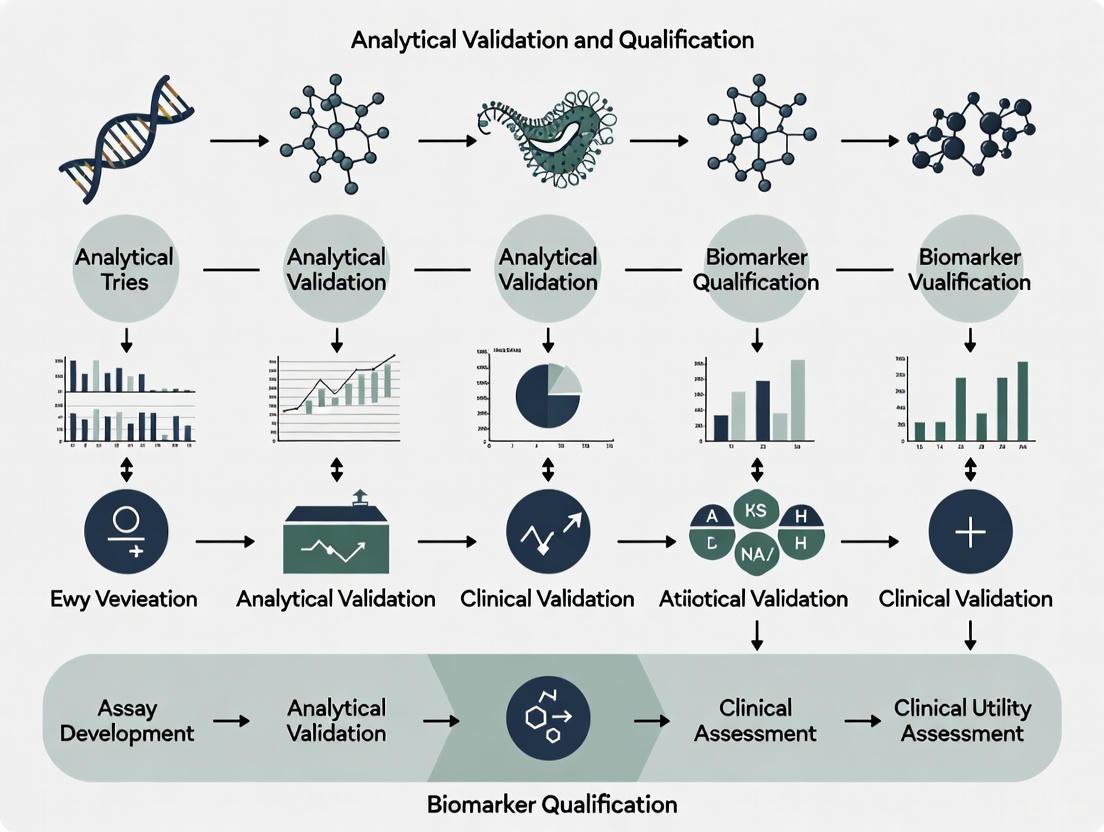
This article provides a comprehensive guide to the analytical validation and regulatory qualification of biomarkers for researchers, scientists, and drug development professionals.
Analytical Validation and Biomarker Qualification: A Comprehensive Guide for Drug Development
Abstract
This article provides a comprehensive guide to the analytical validation and regulatory qualification of biomarkers for researchers, scientists, and drug development professionals. It covers foundational definitions, the stepwise qualification process as defined by the FDA, best practices for assay validation, and strategies for navigating common challenges. By integrating methodological frameworks with practical troubleshooting advice, this resource aims to equip teams with the knowledge to efficiently develop robust, qualified biomarkers that can accelerate drug development and enhance regulatory decision-making.
Biomarker Fundamentals: Definitions, Importance, and the Regulatory Pathway
The Biomarkers, EndpointS, and other Tools (BEST) resource, established by a joint FDA-NIH working group, provides standardized definitions and a common framework for biomarker applications in medical product development [1] [2]. According to BEST, a biomarker is formally defined as "a defined characteristic that is measured as an indicator of normal biological processes, pathogenic processes, or biological responses to an exposure or intervention, including therapeutic interventions" [1]. This comprehensive definition encompasses molecular, histologic, radiographic, or physiologic characteristics that can be objectively measured and evaluated [3].
The development of the BEST resource addressed significant confusion and inconsistency in biomarker terminology that had been impeding progress in drug development and regulatory science [2]. By establishing a standardized lexicon, BEST enables more precise communication among researchers, regulators, and drug developers, facilitating more efficient development of diagnostic and therapeutic technologies [2]. The resource categorizes biomarkers into specific types based on their application, with each category serving distinct purposes in drug development and clinical practice [1] [4].
Biomarker Categories in the BEST Glossary
The BEST resource classifies biomarkers into seven primary categories based on their specific applications in drug development and clinical practice. Each category serves a distinct purpose, from disease identification to predicting treatment outcomes. The table below summarizes these categories with their definitions and representative examples.
Table 1: BEST Biomarker Categories and Applications
| Category | Definition | Example |
|---|---|---|
| Susceptibility/Risk | Identifies potential for developing a disease/condition [4] | BRCA1/2 mutations for breast/ovarian cancer risk [4] |
| Diagnostic | Detects or confirms presence of a disease/condition [1] [4] | Hemoglobin A1c for diabetes diagnosis [4] |
| Monitoring | Serially assesses disease/condition status or exposure/response effects [1] [4] | HCV RNA viral load for Hepatitis C treatment monitoring [4] |
| Prognostic | Identifies likelihood of a clinical event, disease recurrence, or progression [4] | Total kidney volume for predicting autosomal dominant polycystic kidney disease progression [4] |
| Predictive | Identifies individuals more likely to experience a favorable/unfavorable effect from a specific medical product [4] | EGFR mutation status for predicting response to tyrosine kinase inhibitors in NSCLC [4] |
| Pharmacodynamic/Response | Shows a biological response has occurred in an individual who has received a medical product [4] | HIV RNA viral load as a surrogate endpoint in HIV drug trials [4] |
| Safety | Indicates potential for, presence of, or extent of toxicity related to a medical product [1] [4] | Serum creatinine for detecting drug-induced kidney injury [4] |
A single biomarker can often function in multiple categories depending on its specific application. For instance, Hemoglobin A1c serves as both a diagnostic biomarker for identifying diabetes and a monitoring biomarker for tracking long-term glycemic control in diagnosed individuals [4]. This multifunctionality highlights the importance of precisely defining a biomarker's context of use rather than considering its classification in isolation.
Table 2: Methodological Approaches for Different Biomarker Categories
| Biomarker Category | Primary Validation Focus | Common Methodologies |
|---|---|---|
| Susceptibility/Risk | Epidemiological evidence, biological plausibility, causality [4] | Genomic sequencing, family history analysis [5] |
| Diagnostic | Sensitivity, specificity, accurate disease identification [4] | ELISA, molecular diagnostics, imaging [5] [6] |
| Monitoring | Ability to reflect disease status changes over time [4] | Serial laboratory testing, repeated imaging [2] |
| Prognostic | Consistent correlation with disease outcomes [4] | Multivariate models, long-term clinical tracking [4] |
| Predictive | Sensitivity, specificity, mechanistic link to treatment [4] | Companion diagnostics, targeted sequencing [4] [5] |
| Pharmacodynamic/Response | Direct relationship between drug action and biomarker changes [4] | LC-MS/MS, multiplex immunoassays [6] |
| Safety | Consistent indication of adverse effects across populations [4] | Clinical chemistry panels, histopathology [5] |
Context of Use: The Critical Framework for Biomarker Application
The Context of Use (COU) is defined as "a concise description of the biomarker's specified use in drug development" [7]. This structured statement precisely defines how and when a biomarker should be deployed within medical product development and regulatory review [1] [7]. The COU consists of two essential components: the BEST biomarker category and the biomarker's specific intended use in drug development [7].
A well-constructed COU statement typically follows this structure: "[BEST biomarker category] to [drug development use]" [7]. For example, a complete COU might be "Predictive biomarker to enrich for enrollment of a sub group of asthma patients who are more likely to respond to a novel therapeutic in Phase 2/3 clinical trials" [7]. This precise framing eliminates ambiguity about the biomarker's purpose and sets clear boundaries for its appropriate application.
The drug development use component of a COU may include additional descriptive elements such as the specific patient population, disease stage, model system, stage of drug development, or mechanism of action of the therapeutic intervention [7]. This specificity ensures that the biomarker is applied consistently and appropriately across different development programs. Establishing a clear COU is particularly important for biomarkers used in regulatory decision-making, as it forms the basis for evaluating the adequacy of validation evidence [4].
Table 3: Examples of Context of Use Statements in Drug Development
| BEST Category | Drug Development Use | Complete COU Statement |
|---|---|---|
| Predictive | Enrich enrollment of patients likely to respond in Phase 2/3 trials [7] | Predictive biomarker to enrich for enrollment of a sub group of asthma patients who are more likely to respond to a novel therapeutic in Phase 2/3 clinical trials [7] |
| Prognostic | Enrich likelihood of events during clinical trial timeframe [7] | Prognostic biomarker to enrich the likelihood of hospitalizations during the timeframe of a clinical trial in phase 3 asthma clinical trials [7] |
| Safety | Detect acute drug-induced organ injury in preclinical models [7] | Safety biomarker for the detection of acute drug-induced renal tubule alterations in male rats [7] |
| Diagnostic | Identify patients with specific molecular subtype for targeted therapy | Diagnostic biomarker to identify non-small cell lung cancer patients with ALK mutations for targeted therapy in Phase 3 trials |
The Biomarker Validation Process: From Analytical to Clinical
Biomarker validation follows a rigorous, multi-stage process to ensure reliability and relevance for the specified COU. This process encompasses three distinct but interconnected components: analytical validation, clinical validation, and qualification [2].
Analytical Validation
Analytical validation establishes that the performance characteristics of a test, tool, or instrument are acceptable in terms of its sensitivity, specificity, accuracy, precision, and other relevant performance characteristics using a specified technical protocol [1]. This process validates the technical performance of the measurement assay but does not establish the biomarker's usefulness for its intended purpose [1]. Key parameters evaluated during analytical validation include:
- Accuracy: The closeness of agreement between a measured value and the true value [8]
- Precision: The closeness of agreement between a series of measurements obtained from multiple sampling of the same homogeneous sample [8]
- Sensitivity: The lowest amount of an analyte that can be accurately measured [8]
- Specificity: The ability to unequivocally assess the analyte in the presence of other components [8]
- Range: The interval between the upper and lower concentrations of analyte for which the method has suitable precision, accuracy, and linearity [8]
Advanced technologies such as liquid chromatography tandem mass spectrometry (LC-MS/MS) and Meso Scale Discovery (MSD) platforms are increasingly supplementing or replacing traditional ELISA methods due to their superior precision, sensitivity, and efficiency [6]. For example, MSD provides up to 100 times greater sensitivity than traditional ELISA and enables multiplexing of multiple biomarkers simultaneously, significantly reducing costs per data point [6].
Clinical Validation
Clinical validation demonstrates that the biomarker acceptably identifies, measures, or predicts the concept of interest relevant to the COU [1] [4]. This process establishes that the biomarker accurately identifies or predicts the clinical outcome or biological process it is intended to measure [4]. Clinical validation includes:
- Assessing clinical sensitivity and specificity
- Determining positive and negative predictive values
- Evaluating the biomarker's performance in the intended use population
- Establishing reference ranges or clinical cutpoints
The level of evidence required for clinical validation varies significantly depending on the COU. A biomarker used for patient stratification in early-phase trials requires different evidence than one used as a surrogate endpoint for regulatory approval [4].
Biomarker Qualification
Biomarker qualification is the formal regulatory process through which a biomarker receives regulatory endorsement for a specific COU [3]. The FDA's Biomarker Qualification Program (BQP) provides a structured, collaborative framework for this process, involving three distinct stages [3] [9]:
- Stage 1: Letter of Intent (LOI) - Initial submission describing the biomarker proposal, drug development need, and proposed COU
- Stage 2: Qualification Plan (QP) - Detailed proposal describing the development plan to generate necessary evidence
- Stage 3: Full Qualification Package (FQP) - Comprehensive compilation of supporting evidence for FDA's qualification decision
Recent analyses of the BQP reveal that as of July 2025, only eight biomarkers had been fully qualified through the program, with seven of these qualified before the 21st Century Cures Act was enacted in 2016 [9]. The program has accepted 61 projects, with safety biomarkers (30%), diagnostic biomarkers (21%), and pharmacodynamic/response biomarkers (20%) being the most common categories [9]. The qualification process involves substantial timelines, with median qualification plan development taking 32 months and reviews frequently exceeding FDA target timeframes [9].
Figure 1: Biomarker Qualification Pathway. This diagram illustrates the sequential process from defining Context of Use through validation stages to regulatory qualification.
Biomarker Qualification and Regulatory Pathways
Regulatory Acceptance Pathways
Several pathways exist for achieving regulatory acceptance of biomarkers, each with distinct advantages and considerations [4]:
- Early Engagement: Through mechanisms like Critical Path Innovation Meetings (CPIM), drug developers can discuss biomarker validation plans and receive non-binding advice from regulatory agencies [3]
- IND Process: Biomarkers can be developed and validated within specific drug development programs via the Investigational New Drug application process, with regulatory review occurring during product approval [4]
- Biomarker Qualification Program (BQP): This standalone pathway provides broader acceptance of biomarkers across multiple drug development programs once qualified, though it requires more extensive evidence generation [4] [3]
The choice between these pathways involves strategic considerations. The IND pathway may be more efficient for biomarkers with established evidence used within a specific drug program, while the BQP offers value for biomarkers with applicability across multiple development programs, despite longer timelines and greater evidence requirements [4].
Fit-for-Purpose Validation Principle
A fundamental principle in biomarker validation is the fit-for-purpose approach, which recognizes that the level and type of validation needed should be appropriate for the specific COU [1] [4]. This principle acknowledges that validation requirements differ substantially between biomarker categories and applications [4]. For example:
- A safety biomarker used for monitoring organ toxicity in preclinical studies requires different validation than a predictive biomarker used for patient selection in registrational trials
- A pharmacodynamic biomarker used for dose selection may require less extensive validation than a surrogate endpoint used for accelerated approval
- An exploratory biomarker used for internal decision-making requires less rigorous validation than one used for regulatory decision-making
The fit-for-purpose approach ensures efficient resource allocation while maintaining scientific rigor appropriate to the biomarker's application and associated decision consequences [4].
Experimental Approaches and Research Reagent Solutions
Methodological Comparisons for Biomarker Analysis
Selecting appropriate analytical methods is crucial for generating reliable biomarker data. The table below compares commonly used technologies for biomarker analysis, highlighting their respective advantages and limitations.
Table 4: Comparison of Biomarker Analytical Platforms
| Technology | Sensitivity | Multiplexing Capacity | Throughput | Key Applications | Limitations |
|---|---|---|---|---|---|
| ELISA | Moderate (ng-pg/mL) [6] | Low (single-plex) [6] | Moderate | Validated single-analyte tests [6] | Narrow dynamic range, antibody-dependent [6] |
| Meso Scale Discovery (MSD) | High (100x ELISA) [6] | Medium (up to 10-plex) [6] | High | Cytokine profiling, signaling pathways [6] | Platform-specific reagents, specialized instrumentation [6] |
| LC-MS/MS | High (fg-pg/mL) [6] | High (100s-1000s) [6] | Low to medium | Metabolomics, proteomics, drug monitoring [6] | Complex sample preparation, technical expertise [6] |
| Genomic Sequencing | Variable | High (whole genome) | Variable | Mutational analysis, expression profiling [5] | Data interpretation challenges, bioinformatics requirements [5] |
Essential Research Reagent Solutions
Successful biomarker development and validation require carefully selected reagents and materials. The following table outlines key research reagent solutions and their functions in biomarker workflows.
Table 5: Essential Research Reagents for Biomarker Development
| Reagent Category | Specific Examples | Function in Biomarker Workflows |
|---|---|---|
| Capture & Detection Antibodies | Monoclonal, polyclonal, recombinant antibodies [6] | Specific binding to target analytes in immunoassays [6] |
| Calibrators & Quality Controls | Recombinant proteins, synthetic peptides, reference materials [8] | Establish standard curves, monitor assay performance [8] |
| Assay Diluents & Matrices | Buffer systems, matrix-matched diluents [8] | Minimize matrix effects, maintain analyte stability [8] |
| Signal Detection Reagents | Chemiluminescent, electrochemical, fluorescent substrates [6] | Generate measurable signals proportional to analyte concentration [6] |
| Sample Collection & Storage | Collection tubes, preservatives, protease inhibitors | Maintain sample integrity from collection to analysis |
| Multiplex Assay Kits | U-PLEX, cytokine panels, pathway arrays [6] | Simultaneous measurement of multiple analytes in limited samples [6] |
Figure 2: Logical Flow from Biomarker Category to Regulatory Application. This workflow depicts the logical progression from identifying drug development needs through biomarker application and regulatory decisions.
The standardized definitions provided by the BEST resource and the precise framework of Context of Use have fundamentally transformed biomarker development and application in medical product development. This systematic approach enables clearer communication between researchers and regulators, more efficient drug development, and ultimately, better targeted therapies for patients. The rigorous validation and qualification processes ensure that biomarkers can be relied upon for specific interpretations and applications within drug development and regulatory review.
As biomarker science continues to evolve with emerging technologies such as complex composite biomarkers, digital biomarkers from sensors and mobile technologies, and advanced analytical platforms, the foundational principles established by BEST and the COU framework provide the necessary structure for validating and implementing these novel tools [2] [6]. The ongoing development of biomarker qualification pathways and fit-for-purpose validation approaches will continue to support the translation of innovative biomarkers from discovery to regulatory acceptance and clinical application, ultimately enhancing the efficiency and success of drug development programs.
In the rigorous landscape of drug development, biomarkers have emerged as indispensable tools for diagnosing diseases, identifying therapeutic targets, monitoring patients, and stratifying patient populations [4] [10]. Their weight as decision-drivers in the development process has grown substantially, making the evidence supporting their use critical [10]. However, the terminology surrounding biomarker assessment often creates confusion, particularly between the processes of analytical validation and clinical qualification. These are two distinct but interconnected pillars in the biomarker lifecycle.
Analytical validation and clinical qualification represent sequential yet fundamentally different phases of evaluation. Analytical validation asks, "Does the assay measure the biomarker accurately and reliably?" whereas clinical qualification asks, "Does the biomarker measurement meaningfully predict or reflect the biological or clinical outcome of interest?" [11] [12]. Clarity on this distinction is not merely semantic; it is fundamental to efficient drug development and regulatory success. This guide provides a structured comparison of these two critical processes, equipping researchers and drug development professionals with the knowledge to navigate this complex terrain.
Conceptual Frameworks and Definitions
What is Analytical Validation?
Analytical validation is the process of establishing that the performance characteristics of an assay are suitable for its intended purpose [11] [10]. It focuses on the technical performance of the method used to measure the biomarker, confirming that the assay produces reliable, accurate, and reproducible results across a defined range [13] [12]. The goal is to demonstrate that the tool itself works correctly, independent of its biological or clinical interpretation.
What is Clinical Qualification?
Clinical qualification, often referred to in regulatory contexts as biomarker qualification, is the evidentiary process of linking a biomarker with biological processes and clinical endpoints [11]. It provides evidence that the biomarker accurately and reliably identifies a clinically or biologically defined disorder or state, and that it is capable of discriminating between groups with different clinical or biological characteristics [12]. The U.S. Food and Drug Administration (FDA) defines biomarker qualification as the conclusion that "within the stated context of use, the results of assessment with a drug development tool can be relied upon to have a specific interpretation and application in drug development and regulatory review" [14].
The Interrelationship in the Biomarker Development Workflow
The following diagram illustrates the sequential yet interconnected relationship between analytical validation, clinical validation, and clinical qualification in the overall biomarker development workflow.
Comparative Analysis: Core Dimensions
The distinction between analytical validation and clinical qualification extends across multiple dimensions, from their fundamental questions to their regulatory implications. The table below provides a structured, point-by-point comparison.
| Dimension | Analytical Validation | Clinical Qualification |
|---|---|---|
| Core Question | Does the assay measure the biomarker accurately and reliably? [12] | Does the biomarker predict or reflect a meaningful biological/clinical outcome? [11] |
| Primary Focus | Assay performance and technical characteristics [13] [12] | Clinical/biological significance of the biomarker result [11] |
| Key Parameters | Accuracy, precision, sensitivity, specificity, reproducibility, stability, reportable range [13] [10] [12] | Sensitivity, specificity, positive/negative predictive value, clinical utility, association with outcomes [4] [12] |
| Context Dependence | Dependent on the assay's intended measurement range and sample type [10] | Dependent on the specific Context of Use (COU) in drug development [14] [4] |
| Regulatory Goal | Ensure consistent and reliable biomarker measurement [13] | Qualify the biomarker for a specific COU across multiple drug development programs [14] |
| Stage in Pipeline | Earlier stage; prerequisite for clinical qualification [12] | Later stage; requires analytically validated assay [11] |
Experimental Protocols and Methodologies
Protocol for Core Analytical Validation Experiments
A robust analytical validation protocol must assess key performance parameters to ensure the assay is fit-for-purpose. The following table outlines the core experiments, their methodologies, and typical acceptance criteria.
| Parameter | Experimental Methodology | Key Acceptance Criteria |
|---|---|---|
| Accuracy | Measure agreement between measured value and true value (or reference standard) [12]. | Bias within pre-specified limits (e.g., ±20% of nominal value) [10]. |
| Precision | Perform repeated measurements of Quality Control (QC) samples within and between runs [13] [12]. | %CV for repeatability (within-run) and intermediate precision (between-run) below a threshold (e.g., 20-25%) [10]. |
| Sensitivity | Determine the Lowest Limit of Quantification (LLOQ) as the lowest concentration measured with acceptable accuracy and precision [13]. | LLOQ samples meet accuracy and precision criteria. |
| Specificity/Selectivity | Assess interference from matrix components (e.g., hemolyzed or lipemic samples) or similar analytes [10]. | Measured concentration of analyte in the presence of interferents is within ±20% of baseline. |
| Stability | Evaluate analyte stability under various conditions (freeze-thaw, benchtop, long-term storage) [10] [12]. | Stability samples maintain concentration within ±20% of baseline fresh sample. |
| Assay Measurement Range (AMR) | Establish the range from LLOQ to Upper Limit of Quantification (ULOQ) where assay is linear, precise, and accurate [10]. | Linearity with R² > 0.95, and QCs across range meet accuracy/precision criteria. |
Protocol for Core Clinical Qualification Experiments
Clinical qualification experiments aim to establish the relationship between the biomarker and the clinical endpoint of interest. The methodology is highly dependent on the Context of Use (COU).
| Experiment Objective | Methodology & Study Design | Data Analysis & Endpoints |
|---|---|---|
| Establish Clinical Sensitivity & Specificity | Case-control or cross-sectional study comparing biomarker measurements in subjects with and without the condition/disease [12]. | ROC curve analysis to determine AUC, optimal cut-off, sensitivity, and specificity [12]. |
| Prove Prognostic Value | Longitudinal cohort study measuring biomarker at baseline and following subjects for clinical outcomes over time. | Hazard Ratios (HR) or Relative Risk (RR) from Cox proportional hazards or regression models, correlating biomarker level with outcome. |
| Demonstrate Predictive Value | Randomized controlled trial (RCT) analyzing biomarker's interaction with treatment effect (e.g., biomarker-positive vs. biomarker-negative subgroups) [4]. | Test for interaction between treatment arm and biomarker status on the primary clinical endpoint (e.g., p-value for interaction). |
| Validate as a Surrogate Endpoint | Meta-analysis of multiple RCTs to establish if the biomarker effect reliably predicts the overall clinical treatment effect [4]. | Correlation analysis between the treatment effect on the biomarker and the treatment effect on the final clinical endpoint. |
The Central Role of Context of Use (COU) and Fit-for-Purpose Validation
The rigor required for both analytical and clinical studies is governed by the Context of Use (COU)—a concise description of the biomarker's specified use in drug development [4] [10]. The COU defines the fit-for-purpose validation approach, meaning the level of evidence must be sufficient to support the specific decision the biomarker will inform [4] [15].
For example, an exploratory biomarker used for internal decision-making in early research may only require a minimally validated assay and limited clinical data [15]. In contrast, a biomarker intended as a surrogate endpoint to support regulatory approval requires the highest level of evidence: a fully analytically validated assay and extensive clinical qualification, often through meta-analysis of multiple clinical trials [4]. This principle ensures that resources are allocated efficiently while meeting the necessary regulatory standards for the intended application.
Regulatory Pathways and Considerations
The regulatory acceptance of biomarkers acknowledges the distinct roles of analytical validation and clinical qualification. There are two primary pathways for achieving this acceptance, each with different implications.
The Drug approval pathway
Biomarkers are reviewed within a specific drug's marketing application (e.g., NDA, BLA). The biomarker's analytical validation and clinical qualification are evaluated for that specific drug development program and patient population [14].
The Biomarker Qualification Program (BQP)
This is a collaborative, evidence-based process where the FDA's Center for Drug Evaluation and Research (CDER) qualifies a biomarker for a specific COU independent of a single drug approval [14]. Once qualified, the biomarker can be used in multiple drug development programs without the need for CDER to reconfirm its suitability for that qualified COU [14]. This pathway is intended for biomarkers with broad applicability.
A recent analysis of the BQP revealed that as of 2025, only eight biomarkers have been fully qualified through the program, with safety biomarkers being the most common type achieving qualification [9]. The process is rigorous and time-consuming, with median development times for a Qualification Plan exceeding 2.5 years [9]. This underscores the significant investment required for the formal clinical qualification of a biomarker for widespread use.
The Scientist's Toolkit: Essential Research Reagent Solutions
The successful validation and qualification of a biomarker rely on a foundation of critical reagents and materials. The following table details key components of the research toolkit.
| Tool/Reagent | Critical Function | Considerations for Use |
|---|---|---|
| Reference Standard | Serves as the benchmark for quantifying the biomarker and assessing assay accuracy [10]. | Purity, stability, and commutability (behaving like the endogenous biomarker in the sample matrix) are paramount. |
| Quality Control (QC) Samples | Used to monitor assay precision, accuracy, and stability over time during validation and routine use [10]. | Should be matrix-matched and span the assay's dynamic range (low, mid, high). |
| Characterized Sample Panels | Essential for clinical validation to establish reference intervals and for assessing clinical sensitivity/specificity [10] [12]. | Must be well-annotated and representative of the intended use population (e.g., healthy vs. diseased). |
| Specific Binding Reagents | For immunoassays: antibodies (capture/detection). For LC-MS: internal standard (SIS). | Specificity and affinity for the target biomarker are critical. Cross-reactivity must be assessed during analytical validation [10]. |
| Matrix-Blank Samples | Used to demonstrate assay specificity and confirm the absence of significant matrix interference [10]. | The ideal matrix is the same as the study sample (e.g., human plasma, serum, CSF) but without the analyte. |
The journey from a promising biomarker discovery to a regulatory-qualified tool is complex and demands a clear understanding of the critical distinction between analytical validation and clinical qualification. Analytical validation ensures you have a reliable ruler—a precise and accurate method for measurement. Clinical qualification confirms that the measurements taken with that ruler have a meaningful and interpretable relationship with clinical or biological outcomes.
For researchers and drug development professionals, adhering to this distinction is not an academic exercise but a practical necessity. A flawless assay is useless if the biomarker lacks clinical relevance, and a clinically relevant biomarker cannot be reliably employed without a rigorously validated assay. By adopting a fit-for-purpose mindset that is driven by the Context of Use, teams can design efficient yet robust development strategies. This approach ensures that biomarkers fulfill their potential as powerful tools to accelerate the development of safe and effective therapies.
The FDA's Biomarker Qualification Program (BQP) provides a formal framework for qualifying biomarkers for specific uses in drug development, enabling their broader application across multiple drug development programs without needing re-evaluation in each new context [16]. Established to address the significant resource challenges often associated with biomarker development, the BQP operates on the principle that qualified biomarkers serve as publicly available tools that can accelerate therapeutic development and regulatory decision-making [17] [18]. The program was formally structured under Section 507 of the 21st Century Cures Act of 2016, which institutionalized a transparent, three-stage submission pathway for biomarker qualification [17] [19].
Qualification is distinct from biomarker acceptance within a specific drug application. When a biomarker is qualified through the BQP, it means that within a specifically defined Context of Use (COU), the biomarker has been demonstrated to reliably support a specified manner of interpretation and can be used in any drug development program for that qualified purpose [16]. This process is particularly valuable for addressing drug development challenges that extend beyond a single sponsor's program, creating efficiencies through collaborative evidence generation and regulatory review [17]. The qualification does not apply to a specific test or assay but to the biomarker itself, meaning any analytically validated method can be used to measure the qualified biomarker in IND, NDA, or BLA submissions [16].
The Three-Stage Qualification Roadmap
The biomarker qualification process follows a structured, sequential pathway consisting of three formal stages that increase in evidentiary requirements. This progressive approach allows for early feedback and course correction while building the comprehensive evidence base needed for qualification.
Figure 1: The FDA's Three-Stage Biomarker Qualification Pathway
Stage 1: Letter of Intent (LOI)
The qualification process begins with the submission of a Letter of Intent (LOI), which serves as an initial proposal outlining the biomarker's potential value and feasibility [3] [20]. The LOI provides FDA with essential information to conduct a preliminary assessment, including the drug development need the biomarker is intended to address, detailed biomarker information, the proposed Context of Use, and information on how the biomarker will be measured [3]. FDA reviews the LOI to assess whether the biomarker addresses an unmet drug development need and whether the proposal is scientifically feasible based on current understanding [3]. If the FDA accepts the LOI, the requestor receives permission to proceed to the next stage and submit a Qualification Plan [3] [21]. The agency aims to complete its review of LOIs within three months, though real-world median review times have historically exceeded this target [18].
Stage 2: Qualification Plan (QP)
The Qualification Plan (QP) represents a detailed, comprehensive proposal describing the complete biomarker development strategy [3] [20]. This stage requires requestors to provide a thorough summary of existing information supporting the proposed Context of Use, identify significant knowledge gaps, and propose specific studies or analyses to address these gaps [3]. The QP must include detailed information about analytical methods and performance characteristics of the biomarker measurement [3]. A successfully accepted QP essentially constitutes FDA agreement with the overall development approach and provides the requestor with specific instructions for preparing the Full Qualification Package [3] [21]. The FDA's target timeline for QP review is six months, though this timeframe has also proven challenging to maintain consistently [18].
Stage 3: Full Qualification Package (FQP)
The Full Qualification Package (FQP) constitutes the complete evidentiary submission for biomarker qualification [3]. This comprehensive compilation contains all accumulated information supporting qualification of the biomarker for the specified Context of Use, organized by topic area and representing the culmination of the development activities outlined in the Qualification Plan [20]. The FQP serves as the basis for FDA's final qualification decision, with the agency reviewing the complete evidence base to determine whether the biomarker can be relied upon to have a specific interpretation and application within the stated Context of Use [3] [16]. The FDA aims to complete its review of FQPs within ten months [18]. Upon successful qualification, the biomarker becomes publicly available for use in any drug development program for the qualified Context of Use [16].
Table 1: Key Components of Each Qualification Stage
| Stage | Primary Purpose | Key Submission Components | FDA Review Focus | Target Timeline |
|---|---|---|---|---|
| Letter of Intent (LOI) | Initial proposal and feasibility assessment | Drug development need, Biomarker information, Proposed Context of Use, Measurement approach [3] | Value in addressing unmet need, Scientific feasibility [3] | 3 months [18] |
| Qualification Plan (QP) | Detailed development strategy | Evidence summary, Knowledge gaps, Studies to address gaps, Analytical validation plan [3] | Soundness of development approach, Adequacy of proposed evidence [3] | 6 months [18] |
| Full Qualification Package (FQP) | Comprehensive evidence submission | All accumulated data supporting qualification, Organized by topic area [3] [20] | Sufficiency of evidence for qualified use [3] | 10 months [18] |
Program Performance and Quantitative Metrics
As of June 2025, the Biomarker Qualification Program has qualified only 8 biomarkers since its inception, with most qualifications occurring prior to the enactment of the 21st Century Cures Act in December 2016 [22] [18]. The most recent qualification occurred in 2018, indicating a significant slowdown in the program's output in recent years [18]. Currently, 59 biomarker projects are in various stages of development within the program, with 49 at the LOI stage and 10 at the QP stage [22]. These metrics suggest that while interest in biomarker qualification remains substantial, the transition from initial interest to full qualification presents significant challenges.
Analysis of program performance reveals persistent timing challenges throughout the qualification pathway. FDA review timelines for LOIs and QPs have regularly exceeded the agency's targets, with median review times more than double the respective three- and six-month goals [18]. Sponsor-side development also contributes to timeline extensions, with qualification plan development taking a median of over two-and-a-half years among programs with analyzable data [18]. The development complexity is particularly pronounced for biomarkers intended as surrogate endpoints, which have a median development time of nearly four years – 16 months longer than for other biomarker types [18]. Despite these challenges, the program has demonstrated particular effectiveness for safety biomarkers, which constitute approximately one-third of accepted programs and half of the successfully qualified biomarkers [18].
Table 2: Biomarker Qualification Program Metrics (as of June 2025) [22]
| Program Metric | Biomarker Qualification Program | All DDT Programs Combined |
|---|---|---|
| Total Projects in Development | 59 | 141 |
| LOIs Accepted | 49 | 121 |
| QPs Accepted | 10 | 20 |
| Newly Qualified (past 12 months) | 0 | 1 |
| Total Qualified to Date | 8 | 17 |
Analytical and Evidentiary Standards
The biomarker qualification process requires rigorous analytical and clinical validation tailored to the specific Context of Use. The evaluation framework encompasses three critical components: analytical validation, qualification (evidentiary assessment), and utilization analysis [23]. This structured approach brings consistency and transparency to what was previously a non-uniform evaluation process [23].
Analytical Validation Requirements
Analytical validation involves comprehensive assessment of the assay's measurement performance characteristics, determining the range of conditions under which the assay produces reproducible and accurate data [23]. This process includes establishing accuracy, precision, analytical sensitivity, analytical specificity, reportable range, and reference range appropriate for the measurement method and analyte of interest [4]. The level of analytical validation required follows a "fit-for-purpose" principle, meaning the extent of validation should match the degree of certainty needed for the proposed use [4]. For example, a biomarker used for early drug discovery decisions may require less extensive validation than one used as a primary endpoint in a pivotal trial [4].
Evidentiary Qualification Framework
The qualification component focuses on assessing available evidence on associations between the biomarker and disease states, including data showing effects of interventions on both the biomarker and clinical outcomes [23]. The evidence requirements vary significantly by biomarker category, with each type demanding tailored validation approaches focusing on specific evidence characteristics [4]. Susceptibility/risk biomarkers require epidemiological evidence and biological plausibility, while diagnostic biomarkers prioritize sensitivity and specificity across diverse populations [4]. Predictive biomarkers need robust clinical data showing consistent correlation with treatment response, often requiring demonstration of a mechanistic link [4].
Figure 2: Three-Component Framework for Biomarker Evaluation [23]
Context of Use and Utilization Analysis
The final component, utilization analysis, involves contextual assessment based on the specific proposed use and applicability of available evidence to this use [23]. This includes determining whether the validation and qualification conducted provide sufficient support for the proposed Context of Use [23]. The utilization analysis also encompasses benefit/risk assessment, considering the consequences of false positive or false negative results, availability of alternative tools, and impact on the target patient population [4]. This contextual analysis is critical as the same biomarker may have substantially different evidence requirements depending on whether it is used for early dose selection versus as a surrogate endpoint supporting regulatory approval [4].
Alternative Regulatory Pathways and Strategic Considerations
While the BQP offers a pathway for broad biomarker qualification, it is not the only mechanism for gaining regulatory acceptance of biomarkers in drug development. Understanding the alternative pathways enables strategic selection of the most efficient approach based on specific development objectives.
Drug-Specific Biomarker Acceptance
Biomarkers do not require formal qualification through the BQP to be used in drug development [16]. Through the traditional IND/NDA/BLA process, biomarkers can be reviewed and accepted within the context of a specific drug application [16] [4]. This pathway is often more efficient for biomarkers with established use in a particular therapeutic area or when the biomarker is being developed primarily for a specific drug program [4]. Importantly, biomarkers that have not been formally qualified by the BQP may still be acceptable for use in drug development and can support labeling claims through the standard drug approval process [16].
Early Engagement Mechanisms
FDA provides several mechanisms for early engagement on biomarker development outside the formal qualification process. The Critical Path Innovation Meeting (CPIM) offers a non-regulatory forum for discussing proposed biomarkers and receiving non-binding advice from FDA on their potential value in drug development [3]. For developers who identify promising but not yet fully validated biomarkers, FDA may issue a Letter of Support (LOS) briefly describing the agency's thoughts on the biomarker's potential value and encouraging further evaluation [3]. These alternative engagement strategies provide valuable feedback without committing to the more resource-intensive formal qualification pathway.
Table 3: Comparison of Biomarker Regulatory Pathways
| Pathway Characteristic | BQP Qualification | Drug-Specific Acceptance | Early Engagement (CPIM/LOS) |
|---|---|---|---|
| Regulatory Scope | Qualified for use across multiple drug development programs [16] | Accepted within a specific drug application [16] | Non-binding, preliminary feedback [3] |
| Evidence Requirements | Comprehensive evidence for broad applicability [3] | Sufficient for specific drug context [4] | Variable based on development stage [3] |
| Resource Investment | High (often requiring consortia) [17] [3] | Moderate (focused on specific drug) [4] | Low (exploratory discussions) [3] |
| Timeline | Multi-year process [18] | Aligned with drug development timeline [4] | Short-term engagement [3] |
| Strategic Value | Creates public tool for broader community [17] | Efficient for sponsor-specific needs [4] | Early de-risking of biomarker strategy [3] |
Essential Research Reagents and Methodologies
Successful biomarker qualification requires carefully selected research reagents and methodological approaches that ensure reliability and reproducibility across the development process.
Table 4: Essential Research Reagent Solutions for Biomarker Qualification
| Research Reagent Category | Specific Examples | Function in Qualification Process |
|---|---|---|
| Analytical Standards & Controls | Reference materials, Calibrators, Quality control samples [4] | Establish assay accuracy, precision, and reproducibility for analytical validation [4] |
| Assay Platforms & Kits | Immunoassays, PCR assays, Sequencing kits, Mass spectrometry platforms [16] [4] | Provide validated methods for biomarker measurement with established performance characteristics [16] |
| Biological Sample Collections | Biobanked specimens, Prospective cohort samples, Disease-specific panels [4] | Enable clinical validation across diverse populations and disease states [4] |
| Data Analysis Tools | Statistical software, Bioinformatics pipelines, Algorithm development platforms [4] | Support evidence generation through rigorous data analysis and pattern recognition [4] |
| Documentation Systems | Electronic lab notebooks, Data management platforms, Quality management systems [20] | Maintain comprehensive records required for regulatory submissions and audit trails [20] |
The FDA's three-stage Biomarker Qualification Program represents a structurally sound pathway for establishing biomarkers as qualified drug development tools with clearly defined Contexts of Use. The structured process of Letter of Intent, Qualification Plan, and Full Qualification Package provides a systematic framework for building the comprehensive evidence base required for regulatory qualification [3] [20]. However, program metrics indicate significant challenges in both timeline efficiency and throughput, with only eight biomarkers qualified to date and review timelines regularly exceeding FDA targets [22] [18].
The future utility of the BQP will likely depend on addressing current limitations through increased resources, potentially linked to user fee programs, and enhanced interaction opportunities between FDA and biomarker developers [18]. Despite these challenges, the program maintains distinct value for biomarkers addressing cross-cutting drug development needs that benefit multiple therapeutic programs, particularly in the safety biomarker domain where it has demonstrated relative success [18]. For targeted development needs, alternative pathways including drug-specific acceptance and early engagement mechanisms provide potentially more efficient routes to regulatory acceptance [16] [4]. Strategic selection among these pathways, based on specific development objectives and available resources, remains essential for optimizing biomarker integration into drug development programs.
In the realm of modern drug development, biomarkers are indispensable tools that provide objective indicators of biological processes, pathogenic processes, or pharmacological responses to therapeutic interventions [11]. The U.S. Food and Drug Administration (FDA) emphasizes that appropriately validated biomarkers are critical for benefiting both drug development and regulatory assessments, playing pivotal roles in patient population selection, dose selection, and safety and efficacy evaluations [4]. The context of use (COU)—a concise description of a biomarker's specified application in drug development—is fundamental to determining the necessary validation strategy [4]. Biomarker development involves identifying a drug development need, establishing the COU, analytically validating assays, clinically validating the biomarker for the COU, and determining if the biomarker provides advantages over existing methods [4].
The BEST (Biomarkers, EndpointS, and other Tools) Resource, an online glossary created by an FDA-NIH joint working group, provides standardized definitions and categories for biomarkers [4]. This classification system is integral to the framework of biomarker qualification, which requires a fit-for-purpose approach where the level of evidence needed depends on the specific COU [4]. As biomarkers become increasingly integrated into drug development and clinical trials, quality assurance—particularly rigorous analytical method validation—becomes essential for establishing standardized guidelines for biomarker measurements [11]. This guide explores the major biomarker categories, their distinct applications in research and therapy, and the experimental protocols essential for their validation.
Biomarker Categories: Definitions, Applications, and Examples
Biomarkers are categorized based on their specific applications in medical research and clinical practice. The FDA's BEST Resource defines several key types, including susceptibility/risk, diagnostic, monitoring, prognostic, predictive, pharmacodynamic/response, and safety biomarkers [4]. Understanding these categories is crucial for their proper application in drug development and personalized medicine. The table below provides a detailed comparison of these major biomarker categories, their definitions, primary uses, and specific examples.
Table 1: Classification and Comparison of Major Biomarker Categories
| Biomarker Category | Definition and Primary Use | Typical Applications in Drug Development | Real-World Examples |
|---|---|---|---|
| Susceptibility/Risk | Identifies individuals with an increased likelihood of developing a disease [4]. | Patient screening for preventive trials or identifying at-risk populations [4]. | BRCA1 and BRCA2 genetic mutations for assessing increased risk of breast and ovarian cancer [4]. |
| Diagnostic | Used to detect or confirm the presence of a disease or specific disease subtype [4]. | Patient stratification and accurate enrollment in clinical trials based on disease status [4]. | Hemoglobin A1c for diagnosing diabetes and pre-diabetes in adults [4]. |
| Prognostic | Defines the likely course of a disease, independent of treatment [4]. | Identifying patients with higher-risk disease to enhance clinical trial efficiency [4]. | Total kidney volume for assessing the likely progression of autosomal dominant polycystic kidney disease [4]. |
| Predictive | Predicts the likelihood of response to a specific therapeutic intervention [4]. | Selecting patients for targeted therapies; identifying intrinsic or acquired therapy resistance [24]. | EGFR mutation status for predicting response to EGFR tyrosine kinase inhibitors in non-small cell lung cancer (NSCLC) [4]. |
| Pharmacodynamic/ Response | Indicates a biological response to a therapeutic intervention, often used for dose selection [4]. | Demonstrating biological activity, aiding in dose selection and schedule optimization [4] [11]. | HIV RNA viral load used as a surrogate for clinical benefit in HIV drug trials [4]. |
| Safety | Monitors for potential adverse events or drug-induced toxicity during treatment [4]. | Detecting organ injury earlier than traditional clinical signs, potentially before irreversible damage occurs [4]. | Serum creatinine for monitoring renal function and potential nephrotoxicity during drug treatment [4]. |
| Monitoring | Tracks the status of a disease or measures exposure to a drug over time [4]. | Monitoring disease progression or repeated assessment of response to antiviral therapy [4]. | HCV RNA viral load for monitoring response to antiviral therapy in patients with chronic Hepatitis C [4]. |
It is important to note that a single biomarker can fall into multiple categories depending on its use. For instance, Hemoglobin A1c is used both to diagnose diabetes (diagnostic biomarker) and to monitor long-term glycemic control (monitoring biomarker) in individuals with the condition [4].
Analytical Validation and Regulatory Qualification of Biomarkers
The Fit-for-Purpose Validation Framework
The validation of biomarkers is a complex process where the required level of evidence is determined by the biomarker's category and its specific Context of Use (COU) [4]. This principle, known as fit-for-purpose validation, ensures that the validation approach is tailored to the specific role a biomarker will play in drug development or clinical decision-making [4] [11]. The process involves two critical components: analytical validation and clinical validation.
- Analytical Validation: This assesses the performance characteristics of the biomarker measurement assay itself. It involves establishing metrics such as accuracy, precision, analytical sensitivity, analytical specificity, reportable range, and reference range to ensure the assay reliably measures the biomarker [4].
- Clinical Validation: This demonstrates that the biomarker accurately identifies or predicts the clinical outcome of interest. This may involve assessing sensitivity, specificity, and positive and negative predictive values in the intended patient population [4].
The FDA also considers the potential benefits and risks of using a biomarker, including the consequences of false positive or false negative results and the availability of alternative tools [4].
The Regulatory Qualification Pathway
For regulatory acceptance, the FDA provides several pathways, with the Biomarker Qualification Program (BQP) being a key structured framework [4] [25]. The mission of the BQP is to work with external stakeholders to develop biomarkers as drug development tools, with the goal of qualifying biomarkers for specific contexts of use that address specified drug development needs [25]. The qualification process promotes consistency across the industry, reduces duplication of efforts, and helps streamline the development of safe and effective therapies [4].
The pathway from biomarker discovery to regulatory acceptance involves multiple stages of development and validation, as illustrated below.
Diagram: Biomarker Development and Regulatory Pathways
The BQP involves a structured, multi-stage submission and review process [26]. Drug developers can also engage with the FDA early in the development process via the pre-Investigational New Drug (IND) process or Critical Path Innovation Meetings (CPIM) to discuss biomarker validation plans [4]. The ideal pathway depends on factors such as whether the biomarker is for a specific drug program or for broader use across multiple programs [4].
Experimental Protocols for Biomarker Validation
Multi-Omics Workflow for Biomarker Discovery
Modern biomarker discovery heavily relies on multi-omics strategies, which integrate large-scale, high-throughput analyses of different molecular layers, including genomics, transcriptomics, proteomics, metabolomics, and epigenomics [27]. This integrated approach provides a comprehensive understanding of cellular dynamics and facilitates the identification of robust biomarker signatures.
The following diagram outlines a generalized workflow for a multi-omics based biomarker discovery and validation study.
Diagram: Multi-Omics Biomarker Discovery Workflow
Detailed Protocol:
- Sample Collection and Cohort Definition: Collect biological samples (e.g., tissue, blood) from well-characterized patient cohorts. The cohort should be designed to address the specific Context of Use (COU), for instance, comparing responders vs. non-responders to a therapy for a predictive biomarker [27].
- Multi-Omic Data Generation:
- Genomics: Use Whole Exome Sequencing (WES) or Whole Genome Sequencing (WGS) to identify genetic variations like single nucleotide polymorphisms (SNPs) and copy number variations (CNVs) [27].
- Transcriptomics: Apply RNA sequencing (RNA-seq) to profile gene expression levels of mRNA and non-coding RNAs [27].
- Proteomics: Utilize mass spectrometry-based methods like Liquid Chromatography-Mass Spectrometry (LC-MS) or Reverse-Phase Protein Arrays (RPPA) to quantify protein abundance and post-translational modifications [27].
- Epigenomics: Employ techniques such as Whole Genome Bisulfite Sequencing (WGBS) or ChIP-seq to analyze DNA methylation and histone modifications [27].
- Metabolomics: Use LC-MS or Gas Chromatography-Mass Spectrometry (GC-MS) to measure the levels of cellular metabolites [27].
- Data Processing and Quality Control: Process raw data through specialized pipelines for each omics layer. This includes read alignment for sequencing data, peak detection for mass spectrometry, and rigorous quality control to remove technical artifacts and batch effects [27].
- Data Integration and Biomarker Identification:
- Horizontal Integration: Combines data of the same type from different sources or cohorts to increase statistical power [27].
- Vertical Integration: Combines different types of omics data from the same subjects to build a comprehensive molecular network. Computational tools and machine learning models (e.g., the MarkerPredict framework using Random Forest and XGBoost) are used to identify biomarker panels with high diagnostic, prognostic, or predictive value [27] [24].
- Analytical Validation: Develop a robust, fit-for-purpose assay (e.g., an immunoassay or a targeted mass spectrometry assay) for the candidate biomarkers. Establish assay performance characteristics including accuracy, precision, sensitivity, specificity, and dynamic range according to regulatory guidelines [4] [11].
- Clinical Validation and Qualification: Test the validated assay in independent, larger clinical cohorts to establish the biomarker's clinical utility for its intended COU. This step generates the evidence needed for regulatory submission and qualification [4] [11].
Research Reagent Solutions and Essential Materials
The following table details key reagents, technologies, and platforms essential for executing the experimental protocols in modern biomarker research.
Table 2: Research Reagent Solutions for Biomarker Discovery and Validation
| Tool Category | Specific Technology/Reagent | Primary Function in Biomarker Workflow |
|---|---|---|
| Multi-Omics Profiling | Next-Generation Sequencing (NGS) Panels | Targeted sequencing for genomic (e.g., EGFR, BRCA) and transcriptomic biomarker discovery and validation [27]. |
| Multi-Omics Profiling | Mass Spectrometry (LC-MS, GC-MS) | High-throughput identification and quantification of proteins and metabolites in complex biological samples [27]. |
| Satial Biology | Multiplex Immunohistochemistry (IHC)/Immunofluorescence (IF) | Simultaneous detection of multiple protein biomarkers in situ, preserving spatial context within the tumor microenvironment [28]. |
| Spatial Biology | Spatial Transcriptomics | Genome-wide expression analysis with direct retention of spatial location information, revealing tissue architecture [27] [28]. |
| Advanced Model Systems | Organoids | 3D cell cultures that recapitulate human tissue architecture and function, used for functional biomarker screening and validation [28]. |
| Advanced Model Systems | Humanized Mouse Models | Mouse models with functional human immune systems, essential for validating predictive biomarkers for immunotherapies [28]. |
| Computational & Data Analysis | AI/ML Platforms (e.g., MarkerPredict) | Machine learning tools that integrate network topology and protein features to identify and rank potential predictive biomarkers [24]. |
| Computational & Data Analysis | Electronic Lab Notebook (ELN) & LIMS | Centralized systems for managing experimental data, protocols, and inventory, ensuring data integrity, traceability, and regulatory compliance [29] [30]. |
The systematic categorization of biomarkers into susceptibility, diagnostic, prognostic, predictive, and other types provides a critical framework for their application in precision medicine and rational drug development [4] [11]. The successful translation of a biomarker from discovery to clinical use is contingent upon a rigorous, fit-for-purpose validation strategy that encompasses both analytical and clinical components, all tailored to its specific Context of Use [4]. Emerging technologies like multi-omics integration, spatial biology, and artificial intelligence are significantly advancing the resolution and predictive power of biomarker discovery [27] [28]. Furthermore, structured regulatory pathways, such as the FDA's Biomarker Qualification Program, are essential for establishing biomarker reliability and encouraging their broader adoption across drug development programs, ultimately accelerating the delivery of targeted and effective therapies to patients [4] [25].
The Method Validation Blueprint: From Assay Development to Regulatory Submission
Core Principles of Fit-for-Purpose Assay Validation
Fit-for-purpose assay validation is a strategic framework in bioanalysis that tailors the rigor and extent of method validation to the specific intended use of the data generated [31]. This approach recognizes that different stages of drug development and different decision-making contexts require varying levels of analytical assurance [32]. The core principle is that the validation process should provide "confirmation by examination and the provision of objective evidence that the particular requirements for a specific intended use are fulfilled" [32] [33].
This paradigm is particularly essential for biomarker assays, which present unique challenges compared to traditional pharmacokinetic assays, including frequent absence of fully characterized reference standards and the need to measure endogenous analytes across diverse biological matrices [34]. The fit-for-purpose approach fosters flexibility while maintaining scientific rigor, allowing researchers to efficiently generate reliable data without undertaking unnecessarily extensive validation procedures during early discovery phases [35] [36].
Table 1: Key Differences Between Fit-for-Purpose and Fully Validated Assays
| Characteristic | Fit-for-Purpose Assay | Fully Validated Assay |
|---|---|---|
| Purpose | Early-stage research, feasibility testing, exploratory studies [35] | Regulatory-compliant clinical data for submissions [35] |
| Validation Level | Partial, optimized for specific study needs [35] | Fully validated per FDA/EMA/ICH guidelines [35] |
| Flexibility | High – can be adjusted as needed [35] | Low – must follow strict SOPs [35] |
| Regulatory Requirements | Not required for early research [35] | Required for clinical trials and approvals [35] |
| Application Examples | Biomarker analysis, PK screening, proof-of-concept research [35] | GLP studies, clinical bioanalysis, IND/CTA submissions [35] |
The Context of Use Framework
Defining Context of Use
The cornerstone of fit-for-purpose validation is establishing a clear Context of Use (COU) – a concise description of the biomarker's specified application in drug development [4] [36]. The COU encompasses both the biomarker category and its proposed function within the development pipeline [34]. This definition drives all subsequent validation decisions, as "no context [means] no validated assay" [36].
The COU determines the specific purpose in "fit-for-purpose," guiding selection of assay platform, format, and key development drivers [36]. For example, a biomarker used for internal decision-making on mechanism of action requires less extensive validation than one supporting pivotal safety determinations or efficacy claims in registrational trials [4].
Biomarker Categories and Applications
Biomarkers serve diverse functions throughout drug development, with each category demanding distinct validation considerations [4]:
- Diagnostic biomarkers identify disease or patient subsets, prioritizing sensitivity/specificity across populations
- Monitoring biomarkers track disease status changes over time, requiring validation of longitudinal performance
- Predictive biomarkers forecast treatment response, emphasizing specificity and mechanistic links
- Pharmacodynamic/response biomarkers indicate biological responses to therapeutic intervention, needing evidence of direct relationship to drug action
- Safety biomarkers detect potential adverse effects, requiring demonstration of consistent performance across populations [4]
Staged Implementation Approach
The Validation Lifecycle
Fit-for-purpose validation proceeds through discrete, iterative stages that enable continuous refinement as a biomarker progresses toward qualification [32] [33]. This lifecycle approach ensures appropriate resource allocation while maintaining scientific rigor throughout development.
Stage 1: Definition of Purpose and Assay Selection – The most critical phase involves establishing the COU and selecting appropriate candidate assays based on technological feasibility and analytical requirements [32] [36]. This stage requires cross-functional collaboration to align on the specific decisions the biomarker will support and the acceptable uncertainty around those decisions.
Stage 2: Method Validation Planning – Researchers assemble necessary reagents and components, write the method validation plan, and finalize assay classification [32]. This includes determining whether the assay will be definitive quantitative, relative quantitative, quasi-quantitative, or qualitative [32] [33].
Stage 3: Experimental Performance Verification – This phase involves laboratory studies to characterize assay performance against predefined acceptance criteria [32]. The critical evaluation of fitness-for-purpose occurs here, culminating in standardized operating procedures for the validated method.
Stage 4: In-Study Validation – Further assessment occurs within the clinical context, identifying patient sampling issues, stability concerns under real-world conditions, and assay robustness across the study population [32] [33].
Stage 5: Routine Use and Continuous Monitoring – Once deployed, quality control monitoring, proficiency testing, and batch-to-batch quality assurance provide ongoing performance verification [32]. The driver is continual improvement, with iterations potentially returning to earlier stages as needed [32].
Application Across Development Phases
The stringency of fit-for-purpose validation escalates appropriately throughout drug development [35] [32]. Early discovery employs more flexible approaches to enable rapid candidate screening, while later stages demand increasing rigor to support regulatory decision-making.
Table 2: Validation Requirements by Development Phase
| Development Phase | Typical Applications | Recommended Validation Approach | Key Parameters |
|---|---|---|---|
| Early Discovery | Target validation, lead optimization, preliminary mechanism of action [35] | Flexible fit-for-purpose with minimal validation | Precision, sensitivity, specificity [35] [36] |
| Preclinical Development | Pharmacodynamic studies, biomarker candidate qualification, toxicology support [35] | Intermediate fit-for-purpose with core parameters | Accuracy, precision, selectivity, stability, dilutional linearity [32] |
| Early Clinical | Proof-of-concept, patient stratification, dose selection [35] [4] | More rigorous fit-for-purpose approaching full validation | All quantitative parameters with tighter acceptance criteria (e.g., 25% for precision/accuracy) [32] |
| Late Clinical & Regulatory Submissions | Pivotal trial endpoints, companion diagnostics, surrogate endpoints [4] | Full validation per regulatory standards | Complete validation per ICH/FDA guidelines with strict acceptance criteria (e.g., 15% for precision/accuracy) [35] [34] |
Experimental Design and Protocols
Method Comparison Experiments
The comparison of methods experiment is fundamental for assessing systematic error when transitioning between platforms or establishing new methods [37]. Proper experimental design is crucial for generating meaningful data.
Sample Requirements: A minimum of 40 different patient specimens should be tested by both methods, carefully selected to cover the entire working range and represent the spectrum of diseases expected in routine application [37]. Specimen quality and concentration distribution are more important than sheer numbers, though 100-200 specimens may be needed to adequately assess specificity differences between methods [37].
Experimental Execution: Specimens should be analyzed within two hours by both test and comparative methods to ensure stability, unless specific analytes require shorter intervals [37]. The study should span multiple days (minimum of 5 recommended) to minimize systematic errors from single-run artifacts, with 2-5 patient specimens analyzed daily [37]. Duplicate measurements are advantageous for identifying sample mix-ups, transposition errors, and confirming discrepant results [37].
Data Analysis Approaches: Visual data inspection through difference plots (test minus comparative result versus comparative result) or comparison plots (test versus comparative) should be performed during data collection to identify discrepant results while specimens remain available [37]. For data spanning a wide analytical range, linear regression statistics are preferred, allowing estimation of systematic error at medical decision concentrations and providing information about constant or proportional error nature [37].
Validation Parameters by Assay Category
The American Association of Pharmaceutical Scientists (AAPS) has identified five general classes of biomarker assays, each requiring distinct validation approaches [32] [33]. Understanding these categories is essential for appropriate parameter selection.
Definitive Quantitative Assays utilize fully characterized calibrators representative of the endogenous biomarker [32]. Examples include mass spectrometric methods with stable isotope-labeled internal standards [32]. These assays require the most comprehensive validation, assessing accuracy, precision, sensitivity, specificity, dilution linearity, and stability [32].
Relative Quantitative Assays employ response-concentration calibration with reference standards that are not fully representative of the biomarker [32]. Ligand binding assays for endogenous proteins typically fall into this category [32] [33]. Parallelism assessment becomes critical to demonstrate similarity between endogenous analytes and calibrators [34].
Quasi-Quantitative Assays lack calibration standards but produce continuous response data expressed in terms of sample characteristics [32]. These require precision, sensitivity, and specificity assessments but not accuracy or trueness [32].
Qualitative Assays provide categorical data, either ordinal (discrete scoring scales) or nominal (yes/no determinations) [32]. These primarily require demonstration of sensitivity and specificity appropriate to their classification purpose [32].
Table 3: Recommended Validation Parameters by Assay Category
| Performance Characteristic | Definitive Quantitative | Relative Quantitative | Quasi-Quantitative | Qualitative |
|---|---|---|---|---|
| Accuracy | + | |||
| Trueness (Bias) | + | + | ||
| Precision | + | + | + | |
| Reproducibility | + | |||
| Sensitivity | + (LLOQ) | + (LLOQ) | + | + |
| Specificity | + | + | + | + |
| Dilution Linearity | + | + | ||
| Parallelism | + | |||
| Assay Range | + (LLOQ-ULOQ) | + (LLOQ-ULOQ) | + |
Adapted from Cummings et al. [32]
Precision and Accuracy Assessment
Precision and accuracy form the foundation of assay performance characterization, with methodologies tailored to the validation stage and COU [38].
Precision Measurements: Precision is evaluated at three levels: repeatability (intra-assay precision), intermediate precision (within-laboratory variations), and reproducibility (between-laboratory consistency) [38]. For biomarker assays, precision is typically documented through replicate analyses (minimum of nine determinations across three concentration levels), reported as percentage coefficient of variation (%CV) [38]. While small molecule bioanalysis often uses 15% CV acceptance criteria (20% at LLOQ), biomarker validation may allow 25-30% CV during early development, tightening as the assay advances toward regulatory submission [32].
Accuracy Assessment: Accuracy represents the closeness of agreement between measured and accepted reference values [38]. For definitive quantitative assays, accuracy is established across the method range using spiked samples, with data from minimum nine determinations across three concentration levels [38]. For relative quantitative biomarker assays without authentic reference standards, "relative accuracy" may be demonstrated through parallelism experiments comparing diluted patient samples to the calibration curve [34].
Sensitivity and Specificity Determination
Sensitivity Parameters: Assay sensitivity is defined through the limit of detection (LOD) and limit of quantitation (LOQ) [38]. The LOD represents the lowest concentration distinguishable from zero with 95% confidence, typically calculated as mean blank + 3.29 × standard deviation [39]. The LOQ is the lowest concentration meeting predefined precision and accuracy criteria, often defined as the concentration where %CV <20% [39]. These limits are typically established using signal-to-noise ratios (3:1 for LOD, 10:1 for LOQ) or based on the standard deviation of response and slope of the calibration curve [38].
Specificity and Selectivity: Specificity represents the ability to measure the analyte accurately despite potential interferents [38]. For chromatographic assays, specificity is demonstrated through resolution, plate count, and tailing factor measurements, complemented by peak purity assessment using photodiode array or mass spectrometry detection [38]. For biomarker assays, parallelism assessment demonstrates that endogenous analyte in patient samples behaves similarly to the calibration standard upon dilution [34].
Essential Research Reagent Solutions
Successful fit-for-purpose validation requires appropriate reagents and materials tailored to biomarker-specific challenges. Unlike pharmacokinetic assays that use the drug substance as reference standard, biomarker assays frequently lack fully characterized reference materials [34].
Table 4: Key Research Reagent Solutions for Biomarker Assay Validation
| Reagent/Material | Function | Special Considerations |
|---|---|---|
| Reference Standard | Calibration and accuracy assessment | For biomarkers, often recombinant proteins that may differ from endogenous analyte in structure, folding, or post-translational modifications [34] |
| Quality Control Materials | Monitoring assay performance | Endogenous QCs preferred over recombinant materials for stability testing and performance monitoring [36] |
| Matrix | Diluent for standards and sample background | Analyte-free matrix often unavailable for biomarkers; alternatives may include surrogate matrices or background subtraction [32] |
| Binding Reagents | Detection and capture (for LBAs) | Specificity and selectivity critical; may require extensive screening and characterization [36] |
| Stability Samples | Establishing pre-analytical conditions | Should represent endogenous analyte in appropriate matrix [32] |
Regulatory and Practical Considerations
Regulatory Framework
The regulatory landscape for biomarker assay validation continues to evolve, with the FDA issuing specific guidance on Bioanalytical Method Validation for Biomarkers (BMVB) in 2025 [34]. This guidance formally recognizes that biomarker assays require different validation approaches than pharmacokinetic assays and endorses the fit-for-purpose principle [34].
Regulatory acceptance pathways include early engagement through Critical Path Innovation Meetings (CPIM) or pre-IND consultations, the IND application process for biomarker use within specific drug development programs, and the Biomarker Qualification Program (BQP) for broader acceptance across multiple development programs [4]. The BQP provides a structured framework with three stages: Letter of Intent, Qualification Plan, and Full Qualification Package [4].
Practical Implementation Guidance
Successful implementation of fit-for-purpose validation requires careful consideration of several practical aspects:
Pre-analytical Variables: Controllable factors (matrix selection, specimen collection, processing, transport) and uncontrollable factors (patient characteristics, comorbidities) must be identified and addressed [36]. Standardized procedures are essential, particularly for multisite trials where pre-analytical variations can significantly impact results [36].
Biological Variability: Unlike pharmacokinetic assays measuring administered compounds, biomarker levels exhibit inherent biological variation that must be considered when setting precision requirements and interpreting data [36]. The acceptable level of analytical imprecision depends on the magnitude of biological variability and the COU [36].
Continuous Quality Monitoring: Implementing quality control procedures, including regular analysis of endogenous quality control samples, enables ongoing performance verification and detection of assay drift [39]. Quality control monitoring is particularly important for biomarkers used in long-term studies.
Fit-for-purpose assay validation represents a pragmatic, scientifically grounded approach to biomarker method development that appropriately matches validation rigor with application criticality. By focusing on the Context of Use and employing staged implementation, researchers can efficiently generate reliable data while maintaining flexibility during early development phases. As biomarkers continue to play expanding roles in drug development, the fit-for-purpose paradigm provides the necessary framework to balance scientific rigor with practical efficiency, ultimately accelerating therapeutic development while maintaining data quality standards fit for their decision-making purpose.
In the rigorous world of drug development, biomarkers are indispensable tools for decision-making, from early discovery to clinical trials and regulatory approval. The value of any biomarker is contingent upon the robustness of the analytical method used to measure it. Establishing well-defined analytical performance characteristics—primarily sensitivity, specificity, and reproducibility—is not merely a technical exercise but a foundational step in the broader analytical validation and biomarker qualification process. This guide compares the performance criteria for biomarkers at different stages of development, providing researchers with a structured framework for method validation.
The Role of Analytical Validation in Biomarker Qualification
Distinguishing Analytical Validation from Clinical Qualification
A critical conceptual framework in biomarker development is the distinction between analytical validation and clinical qualification [11].
- Analytical Validation is the process of assessing an assay's performance characteristics and the optimal conditions that ensure the reproducibility and accuracy of the results it generates [11]. It answers the question: "Does the assay measure the biomarker correctly and consistently?"
- Clinical Qualification, on the other hand, is the evidentiary process of linking a biomarker with biological processes and clinical endpoints [11]. It answers the question: "Does the biomarker measurement meaningfully predict or reflect a clinical outcome?"
The level of evidence required for analytical validation is guided by a fit-for-purpose approach [4], meaning the extent of validation should be commensurate with the biomarker's intended application and the stage of drug development [40].
The Fit-for-Purpose and Phase-Appropriate Assay Development
The principle of "fit-for-purpose" validation acknowledges that an assay used for early, internal decision-making does not require the same level of rigor as one used to support a regulatory marketing application [4] [41]. This is operationalized through phase-appropriate assay development, which outlines three progressive stages of validation [41]:
- Stage 1 - Fit-for-Purpose: Supports preclinical and Phase 1 clinical trials. The assay must be accurate and reproducible enough for early safety and pharmacokinetic assessments.
- Stage 2 - Qualified Assay: Supports Phase 2 clinical trials and process development. The assay undergoes intermediate precision, accuracy, specificity, and linearity testing aligned with ICH guidelines.
- Stage 3 - Validated Assay: Supports Phase 3 clinical trials and commercialization. The assay is fully validated under GMP/GLP standards with comprehensive documentation to meet FDA/EMA/ICH requirements [41].
The following diagram illustrates the progressive relationship between the biomarker's context of use and the required level of analytical validation:
Comparative Analysis of Performance Criteria Across Development Phases
The core performance characteristics of sensitivity, specificity, and reproducibility are evaluated with increasing stringency as a biomarker advances through the drug development pipeline. The table below summarizes the typical acceptance criteria at different assay stages.
Table 1: Performance Characteristics for Different Assay Stages
| Performance Characteristic | Stage 1: Fit-for-Purpose (Preclinical - Phase 1) | Stage 2: Qualified Assay (Phase 2) | Stage 3: Validated Assay (Phase 3 - Commercial) |
|---|---|---|---|
| Analytical Sensitivity | Sufficient to detect biomarker in relevant matrices | Precisely defined lower limit of detection (LLOD) | Formally established LLOD and lower limit of quantification (LLOQ) |
| Precision (Reproducibility) | Replicate %CV < 20-30% | Intermediate precision (inter-assay) %CV < 30%; intra-assay %CV < 20% | Rigorously demonstrated across analysts, days, and equipment with minimal %CV |
| Specificity | Demonstration that the assay signal is derived from the target biomarker | Specificized assessment of interference from matrix or excipients; negative controls show no activity | Full demonstration of specificity, including testing with structurally similar molecules |
| Accuracy | EC50 values for reference and test samples agree within 20% | Evaluated via spike/recovery or comparison to a reference standard; recovery within 20% | Comprehensive assessment of accuracy through validation protocols |
| Key Regulatory Guidance | Supports IND submission | ICH Q2(R2) guidelines | Full GMP/GLP validation; ICH Q2(R2) |
Data derived from industry laboratory validation standards [41].
Table 2: Experimental Protocols for Key Performance Tests
| Test | Protocol Overview | Key Measured Outputs |
|---|---|---|
| Sensitivity (LLOD/LLOQ) | Serial dilutions of the biomarker in a relevant matrix (e.g., plasma, serum) are analyzed. The LLOD is the lowest concentration distinguishable from blank. The LLOQ is the lowest concentration that can be quantified with acceptable precision and accuracy. | - LLOD: Typically a signal-to-noise ratio > 3:1 or 2:1- LLOQ: Concentration where %CV < 20% and accuracy is 80-120% |
| Specificity/Interference | The biomarker is spiked into the matrix and measured in the presence of potential interferents (e.g., metabolites, concomitant drugs, matrix components). Negative controls (blank matrix) are run to confirm absence of signal. | - % Recovery of the known biomarker concentration- Demonstration that negative controls show no activity |
| Precision (Reproducibility) | The assay is run multiple times using the same sample (for repeatability) and across different conditions (for intermediate precision). Conditions include different analysts, different days, and different equipment. | - % Coefficient of Variation (%CV) for replicate measurements (intra-assay)- %CV for measurements across variable conditions (inter-assay) |
Essential Research Reagent Solutions for Biomarker Assay Development
The reliability of any biomarker assay is fundamentally dependent on the quality and consistency of the reagents used. The following toolkit details essential materials and their critical functions in establishing robust analytical methods.
Table 3: Research Reagent Solutions for Biomarker Assays
| Reagent / Material | Function in Assay Development & Validation |
|---|---|
| Reference Standard (RS) | A highly characterized sample of the biomarker used as the primary calibrator; essential for defining the assay's calibration curve, determining sensitivity, and assessing accuracy [41]. |
| Master Cell Bank | A uniform, well-characterized source of cells used in cell-based assays (e.g., potency bioassays); ensures long-term consistency, controls for passage number effects, and is critical for reproducibility [41]. |
| Validated Assay Kits | Commercially available kits with pre-optimized protocols and performance claims can accelerate fit-for-purpose method setup, though they may require in-house re-validation for specific contexts of use [41]. |
| Positive & Negative Control Samples | Samples with known positive and negative status for the biomarker; used in every run to verify the assay is functioning correctly and to monitor specificity and interference [41]. |
| Characterized Biological Matrices | Well-defined samples of the biological material in which the biomarker is measured (e.g., serum, plasma, tissue homogenates). Critical for assessing matrix effects, optimizing sample preparation, and validating recovery [40] [41]. |
Navigating the Pathway from Validation to Qualification
The journey from a analytically valid research assay to a regulatorily qualified biomarker is collaborative. Researchers are encouraged to engage with regulatory agencies early via pathways like the Biomarker Qualification Program (BQP) or Critical Path Innovation Meetings (CPIM) [4] [3]. The BQP involves a structured, multi-stage submission process (Letter of Intent, Qualification Plan, Full Qualification Package) to achieve qualification for a specific Context of Use [3]. Success in this pathway demands a solid foundation of analytical validation data that unequivocally demonstrates the assay's sensitivity, specificity, and reproducibility for its intended purpose.
The Drug Development Tool (DDT) Qualification Program at the U.S. Food and Drug Administration (FDA) provides a formal pathway for qualifying tools like biomarkers, clinical outcome assessments (COAs), and animal models for use in drug development. This process, established under the 21st Century Cures Act, involves three distinct submission stages: the Letter of Intent (LOI), the Qualification Plan (QP), and the Full Qualification Package (FQP) [42]. This guide objectively compares the requirements, timelines, and outcomes of each stage to help researchers and scientists navigate this critical regulatory pathway.
The primary goal of the DDT Qualification Program is to provide a framework for the development and regulatory acceptance of tools that can be used across multiple drug development programs. Once a DDT is qualified for a specific Context of Use (COU), any sponsor can use it for that COU without needing to re-justify it to the FDA [42] [4]. As of June 2025, the program is actively managing 141 projects, with 17 tools fully qualified to date [22].
Table: DDT Qualification Program Metrics (as of June 30, 2025)
| DDT Qualification Program | Total Projects in Development | LOIs Accepted | QPs Accepted | Newly Qualified DDTs (Past 12 Months) | Total Qualified DDTs to Date |
|---|---|---|---|---|---|
| All DDT Programs | 141 | 121 | 20 | 1 | 17 |
| Biomarker Qualification Program | 59 | 49 | 10 | 0 | 8 |
| Clinical Outcome Assessment (COA) Qualification Program | 67 | 58 | 9 | 1 | 8 |
| Animal Model Qualification Program | 5 | 5 | 0 | 0 | 1 |
| ISTAND Program | 10 | 9 | 1 | 0 | 0 |
Source: FDA Summary Metrics of DDT Qualification Projects [22]
Independent analysis of the COA Qualification Program reveals practical performance data. A 2025 study found that among 86 COAs listed, only 7 (8.1%) had achieved qualification, with one being denied. The study also highlighted that review times for the LOI, QP, and FQP stages vary widely, with 46.7% of submissions having a review time exceeding the FDA's published targets. On average, the entire qualification process for a COA takes approximately 6 years from start to finish [26].
Comparative Analysis of Submission Stages
The DDT qualification process is a multi-step, collaborative effort between the tool developer and the FDA. The following workflow diagrams the key stages of the qualification process, from initial submission to regulatory decision.
Diagram 1. FDA DDT Qualification Process Workflow. This chart illustrates the sequential stages of the qualification process, from initial submission to final FDA decision. Source: FDA DDT Qualification Process [42].
Stage 1: Letter of Intent (LOI)
The LOI is the initial formal step to request entry into the DDT Qualification Program.
- Purpose and Requirements: The LOI introduces the DDT and its proposed Context of Use (COU) to the FDA. It should include a summary of the available data supporting the tool and an explanation of how it addresses a specific drug development need [42]. The COU is a critical component, defined as a "concise description of the biomarker's specified use in drug development" [4].
- Experimental Data and Evidence Level: At this stage, data is often preliminary. It may include a summary of analytical validation studies, such as assessments of the biomarker assay's accuracy, precision, and analytical sensitivity, or initial clinical data showing a correlation between the tool and a clinical outcome [4].
- FDA Review Metrics and Outcomes: The FDA's target for the substantive review of an LOI is 3 months [26]. The outcome is a binary decision: the LOI is either accepted into the qualification program, allowing the developer to proceed to the next stage, or it is not accepted. As of mid-2025, 121 LOIs were active in the overall DDT program [22].
Stage 2: Qualification Plan (QP)
Following LOI acceptance, the developer submits a detailed QP, which serves as a roadmap for qualification.
- Purpose and Requirements: The QP is a comprehensive document that outlines the proposed development plan for the DDT. It details the specific studies to be conducted, the data to be collected, and the analyses to be performed to support qualification for the specified COU [42]. For a biomarker, this would explicitly describe the fit-for-purpose validation strategy, linking the level of evidence needed directly to the proposed COU [4].
- Experimental Data and Evidence Level: The QP itself is a proposal, so it does not contain new experimental results. However, it must provide detailed methodologies for all key experiments that will be conducted. For a biomarker, this includes protocols for:
- Analytical Validation: Detailed methods for fully characterizing the assay's performance, including precision, accuracy, reportable range, and reference range [4].
- Clinical Validation: Plans for studies to demonstrate that the biomarker accurately identifies or predicts the clinical outcome of interest in the intended population [4].
- FDA Review Metrics and Outcomes: The FDA's target for the substantive review of a QP is 6 months [26]. A successful review results in an accepted QP, indicating FDA agreement with the proposed development strategy. The developer then executes the plan. Twenty projects were actively at the QP stage as of June 2025 [22].
Stage 3: Full Qualification Package (FQP)
The FQP is the final submission, containing all data and analyses generated from executing the Qualification Plan.
- Purpose and Requirements: The FQP provides the complete evidence to support the qualification of the DDT for its specified COU. It includes comprehensive reports of all completed studies, full data analyses, and a final summary explaining how the collected evidence supports the qualification decision [42].
- Experimental Data and Evidence Level: This stage requires the most robust evidence. The FQP must present complete experimental protocols and results from all studies outlined in the QP.
- For Biomarkers: This includes the final analytical and clinical validation reports. The data must convincingly show clinically meaningful improvement or a reliable surrogate, with sufficient statistical power to exclude phenomena like regression to the mean [4] [43]. The evidence should justify the benefit/risk assessment of using the biomarker, considering the consequences of false positives or false negatives [4].
- FDA Review Metrics and Outcomes: The FDA's target for the substantive review of an FQP is 10 months [26]. The final decision is whether to qualify the DDT. If qualified, the FDA publishes an Executive Summary and the DDT is listed on its website, making it available for use by any drug developer for the qualified COU [42]. Only 17 DDTs had reached this milestone across all programs by mid-2025 [22].
The Scientist's Toolkit: Essential Research Reagent Solutions
The experimental work required for DDT qualification, particularly for biomarkers, relies on a foundation of high-quality research materials and tools. The following table details key reagents and their functions in the validation process.
Table: Key Research Reagent Solutions for Biomarker Qualification
| Research Reagent / Material | Primary Function in Qualification |
|---|---|
| Validated Reference Standards | Serve as a benchmark for assay calibration and to establish the reportable range, ensuring measurement accuracy and consistency across experiments [4]. |
| Well-Characterized Biobank Samples | Provide critical sample sets with known clinical outcomes for analytical and clinical validation studies, enabling assessment of sensitivity, specificity, and predictive values [4]. |
| Specific Antibodies or Capture Reagents | Essential for immunoassay-based biomarker tests; their specificity and affinity directly impact the analytical specificity and sensitivity of the assay [4]. |
| Control Samples (Positive/Negative) | Used in every run to monitor assay performance, precision, and reproducibility, forming the basis for ongoing quality control during validation studies [4]. |
| PCR Primers/Probes or NGS Panels | For molecular biomarkers, these reagents must be analytically validated to ensure they accurately detect the intended genetic variants or expression levels [4]. |
Detailed Experimental Protocols for Biomarker Validation
The qualification of a biomarker hinges on generating robust experimental data through fit-for-purpose validation. The protocols below outline the core methodologies.
Protocol 1: Analytical Validation of a Biomarker Assay
Objective: To fully characterize the performance characteristics of the assay used to measure the biomarker.
Precision Testing:
- Methodology: Run multiple replicates (e.g., n=20) of control samples at low, medium, and high concentrations across multiple days, by multiple operators, and using different instrument lots if applicable.
- Data Analysis: Calculate the within-run, between-run, and total coefficient of variation (%CV) to establish precision.
Accuracy/Recovery Assessment:
- Methodology: Spike a known quantity of the biomarker analyte into a biologically relevant matrix (e.g., plasma, serum) and measure the recovered amount using the assay.
- Data Analysis: Calculate the percentage recovery. The mean recovery should be within predefined acceptance criteria (e.g., 85-115%).
Analytical Sensitivity (Limit of Detection - LOD):
- Methodology: Measure a series of blank samples (matrix without the analyte) and low-concentration samples. The LOD is typically established as the mean signal of the blank plus 2 or 3 standard deviations.
Reportable Range:
- Methodology: Test a wide range of analyte concentrations to determine the upper and lower limits of quantification (ULOQ, LLOQ), where precision and accuracy criteria are consistently met [4].
Protocol 2: Clinical Validation for a Predictive Biomarker
Objective: To demonstrate that the biomarker accurately identifies patients who are likely to respond to a specific therapeutic intervention.
Retrospective Cohort Study:
- Methodology: Using archived samples from a previous clinical trial, measure the biomarker in all subjects. Blinded to the clinical outcomes, stratify patients into biomarker-positive and biomarker-negative groups.
- Data Analysis: Compare the treatment response (e.g., progression-free survival) between the biomarker-positive group receiving the drug, the biomarker-negative group receiving the drug, and a control group. A statistically significant interaction (e.g., p < 0.05) demonstrates the biomarker's predictive value. The analysis should establish clinical validity by showing consistent correlation with treatment outcomes [4].
Analysis of Specificity and Sensitivity:
- Methodology: Using the data from the cohort study, construct a 2x2 contingency table comparing biomarker status (positive/negative) with clinical response (responder/non-responder).
- Data Analysis: Calculate the biomarker's sensitivity (true positive rate), specificity (true negative rate), and positive/negative predictive values [4].
Navigating the FDA's DDT qualification stages requires a strategic, evidence-driven approach. The process is sequential and cumulative, with each stage—from the conceptual LOI to the data-rich FQP—building a comprehensive evidentiary package for regulatory acceptance. While the pathway is demanding, with timelines often extending over several years, a successful qualification provides a powerful, publicly available tool that can streamline drug development across the industry. Success depends on early and continuous engagement with the FDA, a deep understanding of the Context of Use, and the execution of rigorous, fit-for-purpose experimental validation.
In the complex and high-stakes field of drug development, collaborative models have emerged as powerful mechanisms for addressing scientific challenges that exceed the capacity of any single organization. Among these, consortia and public-private partnerships (PPPs) represent structured approaches to sharing knowledge, resources, and risks. While these terms are sometimes used interchangeably, they represent distinct frameworks with different operational paradigms. Consortia typically involve multiple private sector organizations, often competitors, collaborating with academic institutions on pre-competitive research, frequently focused on developing drug development tools like biomarkers. Public-private partnerships formally contract a private entity to deliver a public asset or service, capitalizing on private sector resources and technical expertise while ensuring public sector oversight [44]. Within the specific context of analytical validation and biomarker qualification, these models provide essential pathways for establishing regulatory-grade biomarkers that can accelerate drug development across multiple organizations and therapeutic areas.
The fundamental distinction between these models lies in their primary objectives and operational structures. Consortia primarily aim to pool resources and expertise to solve common pre-competitive challenges, such as biomarker qualification, with outcomes made publicly available to benefit the entire field. In contrast, PPPs typically focus on delivering specific public infrastructure or services through long-term contractual agreements that transfer certain risks to private partners [44] [45]. For biomarker qualification, the consortia model has proven particularly valuable, as exemplified by the Critical Path Institute's various consortia (e.g., Predictive Safety Testing Consortium, Critical Path for Alzheimer's Disease) that bring together pharmaceutical companies, academics, and regulators to qualify biomarkers for regulatory use [46].
Model Structures and Operational Frameworks
Public-Private Partnerships (PPPs)
PPPs operate under long-term contractual agreements where private partners assume significant project risks. In infrastructure, this typically involves design, build, finance, operate, and maintain (DBFOM) models, but the conceptual framework applies similarly to drug development tool creation [45]. The risk-sharing mechanism is a cornerstone of PPPs, transferring risks such as delays and performance inefficiencies to the private partner, which incentivizes efficiency and innovation [44]. PPPs provide public sector access to private capital and technical expertise, particularly advantageous during budgetary constraints, allowing critical development to proceed without immediate public funding [44].
Alternative payment models for PPPs include toll concessions (private partner compensated through user fees), shadow toll concessions (payment based on usage metrics), and availability payments (payment based on facility availability at specified performance levels) [45]. The long-term nature of PPP contracts encourages sustainable planning and lifecycle management of assets, though this can also lock governments into agreements that may become less favorable over time due to changing conditions [44].
Consortia for Biomarker Qualification
Consortia for biomarker qualification typically follow structured frameworks such as the FDA's Biomarker Qualification Program (BQP), established under the 21st Century Cures Act [3] [9]. This program provides a formal regulatory process with three distinct stages: Letter of Intent (LOI), Qualification Plan (QP), and Full Qualification Package (FQP) [3]. The qualification process is collaborative, where the Biomarker Qualification Program works with requestors to guide biomarker development, often involving multiple interested parties in working groups or consortia [3]. This shared-resource approach reduces burden on individual collaborators and encourages participation from organizations with limited resources.
The BQP has accepted 61 projects as of 2025, with safety biomarkers (30%), diagnostic biomarkers (21%), and pharmacodynamic/response biomarkers (20%) being the most common categories [9]. Molecular biomarkers (46%) and radiologic/imaging biomarkers (39%) represent the most frequently explored assessment methods [9]. Despite this activity, only eight biomarkers have been fully qualified through the program, seven of which were qualified before the 21st Century Cures Act was enacted in 2016 [9]. This highlights the significant challenges in achieving full qualification, particularly for novel surrogate endpoints.
Table 1: Biomarker Qualification Program Project Characteristics (as of July 2025)
| Project Characteristic | Category | Number of Projects | Percentage |
|---|---|---|---|
| Biomarker Category | Safety | 18/61 | 30% |
| Diagnostic | 13/61 | 21% | |
| PD Response | 12/61 | 20% | |
| Prognostic | 12/61 | 20% | |
| Biomarker Type | Molecular | 28/61 | 46% |
| Radiologic/Imaging | 24/61 | 39% | |
| Other | 9/61 | 15% | |
| Project Stage | LOI Stage | 30/61 | 49% |
| QP Stage | 23/61 | 38% | |
| Qualified | 8/61 | 13% |
Quantitative Performance Comparison
Effectiveness Metrics and Outcomes
A comparative analysis of collaborative models reveals distinct performance patterns across key metrics. The Biomarker Qualification Program demonstrates a specific qualification trajectory, with only 13% (8/61) of accepted projects achieving full qualification status [9]. The program shows particular strength in qualifying safety biomarkers, which account for 50% (4/8) of successfully qualified biomarkers [9]. This suggests consortia are highly effective for addressing drug safety challenges but face greater hurdles in qualifying efficacy biomarkers.
Timeline analysis reveals substantial development periods for biomarker qualification. The median time for developing and submitting a qualification plan is 32 months (2.7 years), with timelines varying significantly by biomarker category [9]. Pharmacodynamic response biomarkers and biomarkers assessing drug response/effect of exposure require even longer development periods (median 38 months), while qualification plans for surrogate endpoints demand the longest development time at 47 months (3.9 years) [9]. Regulatory review times frequently exceed target timeframes, with LOI reviews taking a median of 6 months (double the 3-month target) and QP reviews taking a median of 14 months (7 months longer than guidance-specified timeframes) [9].
Table 2: Comparative Performance Metrics for Collaborative Models
| Performance Metric | Consortia (BQP) | Traditional PPPs |
|---|---|---|
| Success Rate | 13% qualification rate (8/61 projects) | Varies by sector; complex negotiations |
| Timeline | Median 32 months for QP development | Long-term (decades); complex negotiations cause delays |
| Risk Distribution | Shared pre-competitive research | Private partner assumes construction, operational risks |
| Primary Strengths | Effective for safety biomarkers; shared resources | Risk transfer; access to private capital; innovation |
| Primary Challenges | Lengthy development; limited surrogate endpoint success | Public interest concerns; long-term commitment |
Risk Profiles and Dispute Patterns
Analysis of dispute causation reveals fundamentally different risk profiles between collaborative models. According to HKA's CRUX dataset analyzing nearly 1,700 global construction projects, PPPs experience distinct challenges compared to traditional public or private projects [44]. The top causes of claims or disputes in PPPs include incomplete design (39.2% of PPP projects), change in scope (33.8%), and late issuance of design information (28.4%) [44]. This contrasts with public projects, where change in scope (39.9%), incorrect design (26.5%), and incomplete design (25.9%) are the leading issues [44].
The concentration of design-related issues in PPPs reflects their structural complexity, where involvement of various partners complicates an already complex design process [44]. The long-term horizons of these projects also contribute to designs that may be incomplete or perceived as incomplete due to information that changes over time [44]. These risk patterns provide valuable insights for structuring collaborative biomarker development agreements, particularly regarding scope definition and design completeness.
Table 3: Top Causes of Claims/Disputes by Project Type
| Project Type | Primary Cause | Incidence | Secondary Cause | Incidence | Tertiary Cause | Incidence |
|---|---|---|---|---|---|---|
| PPP Projects | Incomplete Design | 39.2% | Change in Scope | 33.8% | Late Design Information | 28.4% |
| Public Projects | Change in Scope | 39.9% | Incorrect Design | 26.5% | Incomplete Design | 25.9% |
| Private Projects | Change in Scope | 33.5% | Incorrect Design | 22.7% | Late Design Information | 22.2% |
Experimental Protocols and Methodologies
Biomarker Qualification Statistical Strategy
The qualification of biomarkers through consortia follows rigorous methodological frameworks with defined statistical strategies. The process comprises six key steps: (1) considering drug development needs and initial context of use (COU); (2) collating existing evidence linking biomarker to clinical outcomes; (3) identifying additional data needs; (4) determining analytical strategies; (5) quantifying risks and benefits; and (6) finalizing the COU statement [46]. This methodology emphasizes fit-for-purpose validation, where the level of evidence needed depends on the specific context of use and application purpose [4].
The statistical approach must align with the biomarker category, as different types require distinct validation approaches. Susceptibility/risk biomarkers require epidemiological evidence and biological plausibility, while diagnostic biomarkers prioritize sensitivity and specificity across diverse populations [4]. Prognostic biomarkers need robust clinical data showing consistent correlation with disease outcomes, and predictive biomarkers require mechanistic links to treatment response [4]. Pharmacodynamic/response biomarkers must demonstrate direct relationships between drug action and biomarker changes, while safety biomarkers need consistent indication of adverse effects across populations and drug classes [4].
Biomarker Qualification Process
Analytical Validation Requirements
Central to biomarker qualification is analytical validation, which assesses the performance characteristics of the biomarker measurement tool [4]. This includes evaluation of accuracy, precision, analytical sensitivity, analytical specificity, reportable range, and reference range [4]. The qualification process requires that measurement methods supporting the final qualification be analytically validated, including assessment of reliability, though qualification itself does not limit measurement to a specific assay provided new methods demonstrate similar performance characteristics [46].
For consortia developing biomarkers, the Context of Use (COU) statement drives data requirements, specifying elements including: the biomarker's role in drug development; targeted patient population; participant characteristics affecting biomarker-outcome relationships; drug development context; outcome specification; biomarker quantification method; decisions based on the biomarker; and thresholds for decision-making [46]. This comprehensive framework ensures qualified biomarkers meet rigorous standards for regulatory use across multiple drug development programs.
Research Reagent Solutions and Essential Materials
Table 4: Essential Research Reagents and Materials for Biomarker Qualification
| Reagent/Material | Function | Application Examples |
|---|---|---|
| Molecular Assay Kits | Detect and quantify molecular biomarkers in biological matrices | PCR, immunoassays, sequencing for safety biomarkers |
| Imaging Contrast Agents | Enhance visualization for radiologic/imaging biomarkers | MRI contrast for total kidney volume measurement |
| Reference Standards | Calibrate assays and ensure measurement accuracy | Certified reference materials for analytical validation |
| Specimen Collection Systems | Standardize biological sample acquisition | Urine collection kits for kidney safety biomarkers |
| Automated Analysis Platforms | Process complex biomarker data with consistency | Image analysis software for volumetric measurements |
| Quality Control Materials | Monitor assay performance over time | Control sera, pooled samples for inter-laboratory consistency |
The comparative analysis of consortia and public-private partnerships reveals distinct advantages and limitations for analytical validation biomarker qualification. Consortia, particularly through structured programs like the FDA's Biomarker Qualification Program, provide essential pathways for developing regulatory-grade biomarkers but face challenges with lengthy timelines and limited success in qualifying novel surrogate endpoints. The public-private partnership model offers mechanisms for risk transfer and access to private sector innovation but involves complex negotiations and long-term commitments that may not align with all biomarker development needs.
For researchers and drug development professionals, selection between these models should be guided by specific project requirements. Consortia are particularly valuable for pre-competitive research areas like safety biomarker qualification, where shared resources and expertise benefit multiple stakeholders. PPPs may be more suitable for developing specific diagnostic tools or infrastructure with clear public health applications. Both models require careful attention to design completeness and scope definition to mitigate the primary risks identified in dispute patterns. As biomarker science evolves, these collaborative frameworks will continue to play essential roles in translating novel biomarkers into regulatory-grade tools that accelerate drug development and improve patient care.
Overcoming Hurdles: Common Pitfalls and Optimization Strategies in Biomarker Validation
The reliability of data generated in biomarker research is foundational to drug development and regulatory decision-making. Analytical validation ensures that the measurement methods for biomarkers are accurate, precise, and reproducible. However, this process is fraught with challenges, primarily stemming from matrix effects, a lack of universal assay standardization, and the profound influence of pre-analytical variables. These factors can significantly alter the measured concentration of an analyte, leading to inaccurate conclusions about a drug's safety or efficacy [47] [48]. The regulatory landscape for biomarker validation is evolving, with recent guidance emphasizing a fit-for-purpose approach where the extent of validation is tailored to the biomarker's specific context of use (COU) in drug development [4] [8]. This guide objectively compares current methodologies and solutions for addressing these pervasive challenges, providing a structured overview of experimental protocols and performance data to support robust bioanalytical method development.
Understanding and Mitigating Matrix Effects
Matrix effects represent one of the most critical issues in bioanalysis, particularly when using liquid chromatography with tandem mass spectrometry (LC-MS/MS). They are defined as the alteration of an analyte's ionization efficiency caused by co-eluting compounds from the sample matrix, leading to either ion suppression or enhancement [47] [49]. This phenomenon directly impacts assay sensitivity, accuracy, and precision.
Experimental Protocols for Assessing Matrix Effects
A comprehensive assessment of matrix effects should be integrated into method validation. The following protocols, adapted from regulatory guidelines and best practices, provide a systematic approach [47] [50].
Post-Extraction Spiking Method: This standard method involves comparing the analyte's signal response in a neat mobile phase to its response in a blank matrix sample that was spiked with the analyte after extraction.
- Procedure: Prepare three sets of samples for a minimum of 6 different matrix lots [47]:
- Set 1 (Neat Solution): Analyte and internal standard (IS) spiked into neat mobile phase.
- Set 2 (Post-Extraction Spiked): Analyte and IS spiked into a blank matrix extract after the extraction procedure.
- Set 3 (Pre-Extraction Spiked): Analyte and IS spiked into the blank matrix before the extraction procedure.
- Calculation:
- Matrix Effect (ME):
(Mean Peak Area of Set 2 / Mean Peak Area of Set 1) × 100% - Extraction Recovery (RE):
(Mean Peak Area of Set 3 / Mean Peak Area of Set 2) × 100% - Process Efficiency (PE):
(Mean Peak Area of Set 3 / Mean Peak Area of Set 1) × 100%or(ME% × RE%) / 100[47]
- Matrix Effect (ME):
- IS-Normalized Assessment: To evaluate how well the internal standard compensates for variability, the matrix factor (MF) is calculated as the ratio of the analyte peak area in the presence of matrix ions to the peak area in the absence of matrix. The IS-normalized MF is then calculated as
MF (Analyte) / MF (IS)[47].
- Procedure: Prepare three sets of samples for a minimum of 6 different matrix lots [47]:
Post-Column Infusion Method: This qualitative technique involves infusing a constant flow of analyte into the LC eluent while injecting a blank matrix extract. A deviation in the baseline signal indicates regions of ionization suppression or enhancement in the chromatogram, helping to identify where analytes should not elute [49].
Comparison of Strategies for Managing Matrix Effects
The table below summarizes the performance of common strategies used to detect and manage matrix effects in quantitative LC-MS analysis.
Table 1: Performance Comparison of Matrix Effect Management Strategies
| Strategy | Key Principle | Advantages | Limitations | Reported Efficacy/Performance Data |
|---|---|---|---|---|
| Stable Isotope-Labeled IS (SIL-IS) | Uses a deuterated or C13-labeled version of the analyte as internal standard [49]. | - Gold standard; co-elutes with analyte, perfectly matching its chemistry.- Effectively corrects for both ionization suppression/enhancement and recovery losses [49]. | - Expensive and not always commercially available.- Requires confirmation that the SIL-IS itself is not subject to different matrix effects [49]. | Considered the most effective correction method. Matuszewski et al. demonstrated it can bring accuracy to within 85-115% even with significant matrix effects [47] [49]. |
| Improved Sample Cleanup | Employs more selective extraction techniques (e.g., SPE vs. protein precipitation) to remove interfering compounds [49]. | - Reduces the source of matrix effects.- Can improve overall assay robustness and column lifetime. | - May not remove all interfering compounds, especially those similar to the analyte.- Increases method development time and cost [49]. | Varies widely by analyte and matrix. Can reduce matrix effect from >50% to <15% for specific analytes, but not universally applicable [49]. |
| Chromatographic Optimization | Modifies LC conditions (column chemistry, gradient, mobile phase) to shift analyte retention away from regions of ionization interference [49]. | - Addresses the problem by separating the analyte from interferents.- No additional cost per sample. | - Time-consuming optimization.- May not be feasible for complex matrices with many interferents.- Mobile phase additives can themselves cause suppression [49]. | Highly effective when a "clean" retention window can be found. Post-column infusion is a key tool for guiding this optimization [49]. |
| Standard Addition Method | Analyte is quantified by adding known amounts of standard to aliquots of the sample [49]. | - Does not require a blank matrix, ideal for endogenous analytes.- Directly accounts for the sample's specific matrix. | - Extremely labor-intensive and low-throughput.- Requires a large sample volume.- Not practical for routine analysis of many samples [49]. | Accurate for compensating matrix effects but cited as impractical for routine LC-MS analysis due to lengthy procedures [49]. |
| Sample Dilution | Diluting the sample post-extraction to reduce the concentration of interfering compounds [49]. | - Simple and inexpensive.- Can be highly effective if assay sensitivity permits. | - Only feasible for very sensitive assays.- Can dilute the analyte below the limit of quantification (LOQ). | Can reduce matrix effects linearly with dilution factor. A 10-fold dilution may reduce a 50% effect to 5%, but requires a 10x lower LOQ [49]. |
A critical and often overlooked aspect of matrix effects is their potential to alter fundamental LC behavior. Research has shown that matrix components can significantly change the retention time and shape of LC peaks, and in some cases, cause a single compound to yield two distinct LC peaks, breaking the conventional rule of one peak per compound [51]. This underscores the necessity of a comprehensive matrix effect assessment beyond simple peak area comparisons.
Workflow for Systematic Matrix Effect Evaluation
The following diagram illustrates a integrated workflow for evaluating matrix effects, recovery, and process efficiency within a single experiment, as proposed in recent systematic assessments [47].
The Quest for Assay Standardization and Harmonization
A significant challenge in biomarker qualification is the lack of universal standardization across analytical methods. Unlike pharmacokinetic assays, which follow harmonized guidelines like ICH M10, biomarker assays often require a fit-for-purpose validation approach, where the level of validation is dictated by the specific Context of Use (COU) [4] [8].
The Regulatory Framework: Biomarker Qualification Program
The FDA's Biomarker Qualification Program (BQP) provides a pathway for qualifying biomarkers for specific COUs across multiple drug development programs. However, an analysis of the program's first eight years reveals key insights into the challenges of standardization and qualification [9].
Table 2: Analysis of FDA Biomarker Qualification Program (2007-2025)
| Characteristic | Findings from BQP Analysis | Implication for Standardization |
|---|---|---|
| Most Common Biomarker Categories | Safety (30%), Diagnostic (21%), PD Response (20%) [9]. | Efforts are focused on areas with high clinical impact, particularly safety. |
| Qualification Success Rate | Only 8 biomarkers fully qualified, 7 of which were under the legacy pre-2016 process [9]. | The bar for broad qualification is very high, demonstrating the complexity of standardization. |
| Projects Progressing Past Initial Stage | ~50% of accepted projects remain at the initial Letter of Intent stage [9]. | Many biomarker concepts struggle with the evidence and development plan required for progression. |
| Timeline for Qualification Plan (QP) Development | Median of 32 months (2.7 years); 47 months for surrogate endpoints [9]. | Developing the data and evidence for standardization is a multi-year, resource-intensive endeavor. |
| Regulatory Guidance Evolution | 2025 guidance references ICH M10 as a starting point but acknowledges different considerations for endogenous biomarkers [8]. | Harmonization is increasing, but the unique challenges of biomarkers are formally recognized. |
The European Bioanalysis Forum (EBF) emphasizes that biomarker assays benefit fundamentally from Context of Use (CoU) principles rather than a rigid, one-size-fits-all standard operating procedure (SOP) approach [8]. This means that for a biomarker used in early drug discovery, a "fit-for-purpose" validation demonstrating precision and dynamic range may be sufficient. In contrast, a biomarker intended as a surrogate endpoint for a regulatory decision requires a full validation approaching the rigor of ICH M10, including a comprehensive assessment of matrix effects, recovery, and cross-validation [4] [8].
Controlling Pre-Analytical Variables
The pre-analytical phase—encompassing sample collection, processing, and storage—is a major source of variability that can irreversibly compromise data quality. The dynamic nature of the metabolome makes it especially vulnerable to mishandling [48].
Impact of Pre-Analytical Factors and Recommended Protocols
Inconsistencies in pre-analytical handling can introduce non-biological variation that masks or mimics true physiological signals. The following table summarizes critical factors and evidence-based recommendations for blood-based metabolomics, a common matrix for biomarker research [48].
Table 3: Key Pre-Analytical Variables in Blood Metabolomics: Impacts and Recommended Protocols
| Pre-Analytical Factor | Impact on Metabolite Stability & Profile | Recommended Standardized Protocol |
|---|---|---|
| Choice of Matrix: Serum vs. Plasma | Measurable differences exist: - Serum: Generally shows higher concentrations for many metabolites (e.g., lysophosphatidylcholines, amino acids, lactate) due to platelet release and enzymatic activity during clotting [48].- Plasma: Offers greater reproducibility for some analytes and avoids clot-related variability [48]. | - Choose one matrix and consistently use it throughout a study.- Document the specific tube type (e.g., EDTA plasma, Li-heparin plasma, serum with clot activator).- For discovery studies, plasma is often preferred due to a more standardized processing protocol. |
| Time & Temperature Before Centrifugation | - Serum: Clotting time >60 minutes increases artefacts of cell lysis [48].- Plasma: Delays in processing at room temperature allow ongoing cellular metabolism, altering levels of glucose (decreases), lactate (increases), and amino acids [48]. | - Serum: Allow 30-60 minutes for clotting at room temperature [48].- Plasma: Centrifuge within 30 minutes of draw. If delay is unavoidable, keep samples at 4°C to slow metabolism [48]. |
| Centrifugation Conditions | Incomplete separation of cells leads to continued metabolite consumption/production and potential hemolysis. | - Use standardized speed, time, and temperature (e.g., 2000 × g for 10-15 min at 4°C) [48].- Ensure consistent handling post-centrifugation for aliquoting. |
| Freeze-Thaw Cycles | Repeated freezing and thawing can degrade labile metabolites and cause analyte loss. | - Aliquot samples to avoid repeated thawing of the original specimen.- Limit freeze-thaw cycles to a maximum of 2-3 cycles and document the history of each aliquot.- Flash-freeze in liquid nitrogen before long-term storage at -80°C. |
| Long-Term Storage | Degradation can occur even at -80°C over extended periods. | - Store samples at -80°C in monitored, non-frost-free freezers.- Use stable, low-protein-binding cryotubes.- Maintain detailed sample inventory and minimize storage time before analysis. |
Workflow for Standardized Blood Sample Processing
Implementing Standard Operating Procedures (SOPs) is imperative to minimize pre-analytical variation. The following workflow outlines a standardized protocol for preparing plasma and serum samples for metabolomics studies [48].
The Scientist's Toolkit: Essential Research Reagent Solutions
Selecting the appropriate reagents and materials is critical for successful bioanalysis. The table below details key solutions used in the development and validation of robust biomarker assays, as referenced in the experimental studies.
Table 4: Essential Research Reagent Solutions for Biomarker Assay Development
| Reagent / Material | Function & Role in Analysis | Example from Literature |
|---|---|---|
| Stable Isotope-Labeled Internal Standards (SIL-IS) | Corrects for variability in sample preparation, matrix effects, and instrument response; considered the gold standard for quantitative LC-MS/MS [49]. | N-Docosanoyl-D4-glucosylsphingosine (GluCer C22:0-d4) was used as an IS for quantifying glucosylceramide isoforms in cerebrospinal fluid to compensate for matrix effects and ensure precision [47]. |
| LC-MS Grade Solvents & Additives | High-purity solvents (water, methanol, acetonitrile) and additives (formic acid, ammonium formate) minimize chemical noise, reduce background interference, and prevent ion source contamination [47] [49]. | LC-MS grade methanol, acetonitrile, and formic acid were used in the LC-ESI-MS/MS method for glucosylceramides to ensure optimal chromatographic performance and ionization efficiency [47]. |
| Specialized Chromatography Columns | HPLC columns with specific chemistries (e.g., reversed-phase, HILIC) are selected to achieve optimal separation of analytes from matrix interferents, a key strategy for mitigating matrix effects [49] [51]. | A Synergi 4µ Fusion-RP 80A column was used for bile acid analysis to manage matrix-induced retention time shifts [51]. A Cogent Diamond-Hydride column was used for creatinine assay in urine [49]. |
| Blank (Stripped) Matrix Lots | Essential for preparing calibration standards and quality controls during method validation; used to assess selectivity and matrix effects across different biological sources [47]. | Six different lots of cerebrospinal fluid were used to systematically evaluate the variability of matrix effects for the glucosylceramide assay, as per regulatory guidance [47]. |
| Authentic Analytical Standards | Highly pure reference materials of the target analyte(s) are required for accurate quantification, method calibration, and determining recovery and process efficiency [47] [51]. | Seventeen authentic bile acid standards were used to characterize matrix effects on LC retention time and peak shape [51]. N-Hexadecanoyl-glucosylceramide standards were used for CSF analysis [47]. |
Navigating the challenges of matrix effects, assay standardization, and pre-analytical variability requires a systematic and scientifically rigorous approach. The experimental data and comparisons presented in this guide demonstrate that there is no single solution; instead, a combination of strategies is most effective. Proactively assessing matrix effects using integrated protocols, adopting a fit-for-purpose mindset for assay validation aligned with the biomarker's Context of Use, and implementing strictly controlled, standardized pre-analytical procedures are the three pillars of reliable biomarker bioanalysis. As the regulatory landscape evolves, engagement with qualification pathways like the BQP and early dialogue with regulators remain crucial for translating robust biomarker methods into tools that can accelerate drug development.
Statistical Considerations for Robust Biomarker Discovery and Validation
In the era of precision medicine, biomarkers have become indispensable tools for disease detection, diagnosis, prognosis, prediction of treatment response, and disease monitoring [52]. These biological indicators, defined as "objectively measurable indicators of biological processes" by the U.S. Institute of Medicine, provide crucial insights that inform clinical decision-making throughout the drug development continuum [53]. However, the pathway from biomarker discovery to regulatory acceptance is fraught with challenges, evidenced by the startling statistic that approximately 95% of biomarker candidates fail to progress to clinical use [54]. This high attrition rate underscores the fundamental importance of robust statistical considerations and rigorous validation methodologies in biomarker development.
The validation of biomarkers represents a multidimensional challenge that extends beyond mere technical performance. Successful biomarker validation requires demonstrating three distinct types of validity: analytical validity (can we measure it accurately?), clinical validity (does it predict the clinical outcome?), and clinical utility (does using it improve patient outcomes?) [54]. Each dimension demands specific statistical approaches and evidence thresholds tailored to the biomarker's intended context of use (COU), which the FDA defines as "a concise description of the biomarker's specified use in drug development" [4] [34]. The statistical framework applied must therefore be fit-for-purpose, aligning methodological rigor with the specific decision-making context in which the biomarker will be deployed, whether for early research decisions or critical regulatory endpoints [4].
This article examines the statistical considerations and experimental protocols essential for robust biomarker discovery and validation, providing researchers and drug development professionals with a comprehensive framework for navigating the complex journey from bench to bedside.
The Biomarker Development Pipeline: A Statistical Perspective
The biomarker development pipeline encompasses multiple stages, each with distinct statistical requirements and validation milestones. Understanding this pathway is essential for allocating resources appropriately and anticipating potential failure points where statistical oversight commonly occurs.
Figure 1: The Biomarker Development Pipeline and Major Attrition Points
The journey begins with Discovery, where potential biomarker candidates are identified through various omics technologies or literature mining. This phase typically requires 50-200 samples minimum to establish meaningful statistical associations [54]. Promising candidates then advance to Analytical Validation, where assay performance is rigorously characterized. At this stage, approximately 60% of biomarkers fail inter-laboratory validation despite promising discovery results [54]. Those that succeed proceed to Clinical Validation, where correlation with clinical outcomes must be demonstrated in hundreds to thousands of patient samples [54]. The final stages involve Regulatory Qualification and eventual Clinical Adoption, where only approximately 5% of original candidates ultimately succeed [54].
Biomarker Categories and Context of Use
The FDA's BEST (Biomarkers, EndpointS, and other Tools) resource categorizes biomarkers into specific types based on their intended application in drug development [4]. Each category has distinct statistical validation requirements and performance thresholds tailored to its context of use.
Table 1: FDA Biomarker Categories and Validation Requirements
| Biomarker Category | Intended Use | Key Statistical Requirements | Exemplary Biomarkers |
|---|---|---|---|
| Diagnostic | Identifying disease status | High sensitivity and specificity (typically ≥80%, indication-dependent) [54] | Hemoglobin A1c for diabetes mellitus [4] |
| Monitoring | Tracking disease status or treatment response | Demonstration of dynamic range and response kinetics | HCV RNA viral load for Hepatitis C infection [4] |
| Prognostic | Predicting disease outcome or progression | Robust correlation with clinical outcomes across populations | Total kidney volume for autosomal dominant polycystic kidney disease [4] |
| Predictive | Identifying likely treatment responders | Treatment-specific validation; sensitivity to predict differential response | EGFR mutation status in nonsmall cell lung cancer [4] |
| Safety | Detecting potential adverse effects | Early detection capability with high negative predictive value | Serum creatinine for acute kidney injury [4] |
| Pharmacodynamic/Response | Demonstrating biological response to intervention | Evidence of direct relationship between drug action and biomarker changes | HIV RNA (viral load) in HIV treatment [4] |
| Susceptibility/Risk | Identifying disease risk | Epidemiological evidence with biological plausibility | BRCA1/2 mutations for breast/ovarian cancer [4] |
The statistical framework for each biomarker category must be aligned with its context of use. For instance, predictive biomarkers require evidence of treatment interaction effects, while safety biomarkers prioritize high negative predictive value to avoid missing potential adverse events [4].
Statistical Frameworks for Biomarker Validation
Analytical Validation: Foundational Statistical Requirements
Analytical validation establishes that an assay consistently measures the biomarker accurately and reliably. The 2025 FDA Bioanalytical Method Validation for Biomarkers (BMVB) guidance emphasizes a fit-for-purpose approach that recognizes fundamental differences between biomarker assays and traditional pharmacokinetic assays [34]. Unlike drug concentration measurements, biomarker assays frequently lack fully characterized reference standards identical to the endogenous analyte, necessitating alternative validation strategies [34].
Table 2: Statistical Performance Benchmarks for Biomarker Assay Validation
| Performance Characteristic | Statistical Benchmark | Experimental Protocol | Regulatory Reference |
|---|---|---|---|
| Accuracy (Relative) | Recovery rates 80-120% | Spike-and-recovery experiments using best available reference material | [54] |
| Precision | Coefficient of variation <15% | Repeated measurements of quality control samples across multiple runs | [54] |
| Sensitivity (LLOQ) | Signal-to-noise ratio ≥5:1 | Serial dilution of analyte to determine lowest quantifiable level | [6] |
| Specificity/Selectivity | <20% interference from matrix components | Testing against potentially cross-reacting substances | [34] |
| Parallelism | Demonstration of similar behavior between endogenous and reference | Dilutional linearity of patient samples compared to calibrators | [34] |
| Stability | Consistent results under specified conditions | Multiple freeze-thaw cycles; short/long-term storage testing | [34] |
A critical distinction in biomarker assay validation is the emphasis on parallelism assessment, which demonstrates similar behavior between endogenous biomarkers in patient samples and the reference standards used for calibration [34] [52]. This requirement addresses the fundamental challenge that calibrators and quality controls may differ from the endogenous analyte in critical characteristics such as molecular structure, folding, truncation, glycosylation patterns, and other post-translational modifications [34].
Clinical Validation: Establishing Clinical Correlations
Clinical validation demonstrates that a biomarker accurately identifies or predicts the clinical outcome of interest. This process requires rigorous study design and appropriate statistical methods to establish meaningful correlations between biomarker measurements and clinical endpoints.
Figure 2: Statistical Framework for Clinical Validation of Biomarkers
For diagnostic biomarkers, receiver operating characteristic (ROC) analysis is fundamental for establishing classification performance. The area under the ROC curve (AUC) provides a comprehensive measure of discriminative ability, with AUC ≥0.80 typically required for clinical utility [54]. Sensitivity, specificity, positive predictive value, and negative predictive value should all be reported with corresponding confidence intervals to communicate estimation precision [53].
Recent methodological advances address complex validation scenarios, such as the two-stage stratified designs with survival outcomes that adjust for misclassification in predictive biomarkers developed by Chen et al. (2024) [54]. These approaches are particularly valuable in oncology applications where biomarker misclassification can substantially impact trial conclusions and treatment decisions.
The Fit-for-Purpose Validation Framework
The fit-for-purpose approach to biomarker validation recognizes that the level of evidence needed depends on the intended context of use and the consequences of incorrect biomarker-based decisions [4] [34]. This framework acknowledges that validation requirements differ substantially based on whether a biomarker will be used for early research decisions versus critical regulatory endpoints.
For biomarkers supporting internal decision-making in early research, a streamlined validation approach focusing on precision and relative accuracy may be sufficient. In contrast, biomarkers intended as surrogate endpoints or for patient selection in registrational trials require extensive validation, including demonstration of a direct relationship to clinical outcomes and biological plausibility [4]. The same biomarker may require progressively more extensive validation when used for dose selection versus as a reasonably likely surrogate endpoint supporting accelerated approval versus as a validated surrogate endpoint for traditional approval [4].
Comparative Analysis of Biomarker Validation Technologies
Methodological Platforms for Biomarker Validation
The evolution of biomarker validation technologies has expanded methodological options beyond traditional approaches like ELISA (enzyme-linked immunosorbent assay). Advanced platforms now offer enhanced sensitivity, multiplexing capability, and improved performance characteristics that address limitations of conventional methods.
Table 3: Comparative Analysis of Biomarker Validation Technologies
| Technology Platform | Sensitivity | Dynamic Range | Multiplexing Capacity | Cost per Sample (4-plex) | Key Applications |
|---|---|---|---|---|---|
| Traditional ELISA | Moderate | Narrow (~2 log) | Single-plex | ~$61.53 [6] | Well-established single biomarkers |
| Meso Scale Discovery (MSD) | High (up to 100x ELISA) [6] | Broad (~3-4 log) | Medium-plex (up to 10-plex) | ~$19.20 [6] | Cytokine panels, signaling biomarkers |
| LC-MS/MS | High | Broad (~3-5 log) | High-plex (100s-1000s) [6] | Variable based on scale | Proteomics, metabolomics, post-translational modifications |
| Multiplex Immunoassays | Moderate to High | Broad | High-plex (10s-100s) | Cost-efficient for multi-analyte panels | Pathway analysis, biomarker signatures |
The technology selection should be guided by the biomarker's biological characteristics, required sensitivity, and the need for single-plex versus multiplex measurement. For low-abundance biomarkers or those requiring extensive multiplexing, MSD and LC-MS/MS platforms offer significant advantages despite potentially higher initial implementation costs [6].
Advanced Methodologies: Addressing Traditional Limitations
Advanced validation technologies address several critical limitations of traditional methods. MSD's electrochemiluminescence detection provides substantially enhanced sensitivity—up to 100 times greater than traditional ELISA—enabling detection of lower abundance proteins and expanding the dynamic range [6]. The U-PLEX multiplexed immunoassay platform allows researchers to design custom biomarker panels and measure multiple analytes simultaneously within a single sample, conserving precious biological specimens while generating comprehensive data profiles [6].
Liquid chromatography tandem mass spectrometry (LC-MS/MS) offers complementary advantages, particularly for applications requiring exceptional specificity or the ability to analyze hundreds to thousands of proteins in a single run [6]. The technology's freedom from matrix effects further enhances reliability and confidence in results, making it increasingly favored for complex validation challenges [6].
Regulatory Considerations and Qualification Pathways
FDA Biomarker Qualification Program
The FDA's Biomarker Qualification Program (BQP) provides a structured framework for regulatory acceptance of biomarkers for specific contexts of use across multiple drug development programs [4]. This program involves three sequential stages: submission of a Letter of Intent, development of a detailed Qualification Plan, and submission of a Full Qualification Package with complete supporting evidence [4].
The qualification pathway offers significant advantages once completed, as a qualified biomarker can be used by any drug developer in their drug development program without requiring FDA re-review of its suitability, provided it is used within the specified context of use [4]. This promotes consistency across the industry, reduces duplication of efforts, and helps streamline the development of safe and effective therapies.
Alternative Regulatory Pathways
For biomarkers intended to support specific drug development programs rather than broad qualification, alternative regulatory pathways exist. Drug developers can engage with the FDA early in the development process to discuss biomarker validation plans through mechanisms such as Critical Path Innovation Meetings (CPIM) or the pre-Investigational New Drug (pre-IND) process [4]. The IND application process itself provides a framework for pursuing clinical validation and regulatory acceptance of biomarkers within the context of specific drug development programs.
A Type C surrogate endpoint meeting represents a formal FDA consultation within the IND process where drug developers seek regulatory guidance on using surrogate endpoints to support efficacy claims in marketing applications [4]. This pathway may be more efficient for well-established biomarkers with existing data supporting their use within a specific drug development context.
Essential Research Reagents and Materials
Successful biomarker validation requires appropriate biological materials and specialized reagents throughout the development pipeline. The selection of these materials significantly impacts assay performance, reproducibility, and eventual regulatory acceptance.
Table 4: Essential Research Reagent Solutions for Biomarker Validation
| Reagent/Material | Function | Technical Considerations | Quality Requirements |
|---|---|---|---|
| Reference Standards | Calibration and accuracy assessment | May be recombinant or synthetic; parallelism to endogenous analyte must be demonstrated [34] | Well-characterized; documentation of source and characterization |
| Quality Control Materials | Monitoring assay performance over time | Should mimic patient samples as closely as possible | Stable, well-characterized, available in sufficient quantities |
| Binding Reagents (Antibodies, Aptamers) | Specific recognition and capture | Critical for specificity; cross-reactivity must be characterized | Demonstration of specificity for target epitope |
| Matrix Materials | Diluent and background assessment | Should match patient sample matrix (serum, plasma, etc.) | Documented source and processing; minimal lot-to-lot variation |
| Assay Platforms | Quantitative measurement | Selection based on sensitivity, dynamic range, and multiplexing needs | Appropriate technical performance documentation |
The critical importance of reagent quality is highlighted by regulatory reviews indicating that 77% of biomarker challenges were linked to assay validity issues, frequently involving problems with specificity, sensitivity, detection thresholds, and reproducibility [6]. These findings underscore the need for methodological precision and rigorous adherence to validation standards throughout the reagent selection and qualification process.
Emerging Trends and Future Directions
The biomarker validation landscape continues to evolve with technological advancements and methodological innovations. Several emerging trends are reshaping statistical approaches and validation paradigms:
AI-Powered Biomarker Discovery: Machine learning algorithms are increasingly employed to analyze genomics, proteomics, metabolomics, and clinical data simultaneously, identifying complex patterns invisible to traditional analysis [54]. These approaches can process over 50 million scientific papers to identify hidden connections between diseases and biomarkers, potentially reducing discovery timelines from 5+ years to 12-18 months [54]. Recent studies indicate machine learning approaches improve validation success rates by 60% compared to traditional methods [54].
Multi-Omics Integration: The integration of multiple omics technologies—genomics, transcriptomics, proteomics, and metabolomics—provides a comprehensive view of disease mechanisms and biomarker interactions [53] [55]. This systems biology approach improves biomarker reliability by capturing a broader range of biological signals and enhancing clinical applicability.
Digital Biomarkers and Continuous Monitoring: Wearable devices and biosensors enable continuous physiological monitoring, creating new categories of digital biomarkers that track health metrics in real-time [53] [55]. These technologies introduce novel statistical challenges related to longitudinal data analysis, pattern recognition, and defining clinically meaningful changes from continuous data streams.
Regulatory Science Evolution: The FDA's 2025 Bioanalytical Method Validation for Biomarkers guidance formalizes the distinction between biomarker and pharmacokinetic assay validation, acknowledging their fundamental differences and supporting fit-for-purpose approaches [34]. Concurrently, international harmonization efforts aim to reduce duplication across regulatory agencies, potentially streamlining global biomarker development.
These advancements collectively address the historical challenges in biomarker development, where traditional approaches faced a 95% failure rate between discovery and clinical use [54]. By integrating robust statistical frameworks with evolving technological capabilities, researchers can enhance the efficiency and success of biomarker validation, ultimately accelerating the development of precision medicine approaches that improve patient outcomes.
Biomarker validation is a critical gateway in the journey from discovery to clinical application. A validated biomarker must demonstrate not only analytical robustness but also clear clinical utility, providing an objective measure of normal biological processes, pathogenic processes, or responses to therapeutic interventions [56] [57]. Despite the identification of approximately 150,000 disease-associated molecular markers in scientific literature, very few achieve validated status with proven and robust clinical utility [56]. This comparison guide examines key case studies of both successful and failed biomarker validation efforts, extracting critical lessons for researchers, scientists, and drug development professionals engaged in the analytical validation and qualification process.
The Biomarker Validation Pipeline: A Structured Journey
The path from biomarker discovery to clinical implementation follows a rigorous, multi-stage process designed to ensure both analytical and clinical validity. The following diagram illustrates this structured journey and the key questions addressed at each phase.
The validation pipeline begins with discovery, where potential biomarkers are identified through comprehensive interrogation of diverse research samples [58]. This is followed by qualification, which confirms the differential abundance of candidate biomarkers in relevant sample types [58]. The analytical validation phase rigorously tests performance metrics to ensure the assay is reliable, reproducible, and demonstrates adequate sensitivity and specificity [57] [59]. Finally, clinical validation establishes the biomarker's ability to improve patient outcomes, leading to successful clinical implementation [60] [57].
Success Stories: Biomarkers That Transformed Clinical Practice
Case Study 1: EGFR Mutations in Non-Small Cell Lung Cancer (NSCLC)
The validation of EGFR mutation status as a predictive biomarker for response to EGFR tyrosine kinase inhibitors (gefitinib, erlotinib) represents a paradigm for successful biomarker development.
Experimental Protocol & Key Evidence: The IPASS clinical trial enrolled patients with advanced pulmonary adenocarcinoma who were nonsmokers or former light smokers and randomly assigned them to receive gefitinib or carboplatin plus paclitaxel (CP) [61]. EGFR mutation status was determined retrospectively. The critical validation evidence came from a statistically significant interaction test between treatment and EGFR mutation status (P<0.001) [61]. The study demonstrated that patients with EGFR mutated tumors had significantly longer progression-free survival (PFS) with gefitinib versus CP (HR, 0.48; 95% CI, 0.36 to 0.64), while patients with EGFR wildtype tumors had significantly shorter PFS with gefitinib (HR, 2.85; 95% CI, 2.05 to 3.98) [61].
Case Study 2: UGT1A1 and Irinotecan Dosing
The validation of UGT1A1 polymorphisms for predicting irinotecan toxicity in colorectal cancer patients demonstrates how pharmacogenomic biomarkers can personalize dosing to improve safety.
Validation Pathway: UGT1A1 enzyme activity, influenced by genetic polymorphisms (particularly UGT1A128), affects the metabolism of irinotecan's active metabolite SN-38 [56]. Patients with reduced UGT1A1 activity (homozygous for UGT1A128) have decreased glucuronidation capacity, leading to SN-38 accumulation and increased risk of severe neutropenia and diarrhea [56]. Analytical validation established reliable genotyping methods, while clinical validation demonstrated that dose reductions in patients with UGT1A1*28 polymorphism significantly reduced hematologic toxicity without compromising efficacy [56].
Failure Analysis: When Biomarker Validation Falls Short
Case Study 1: Prostate-Specific Antigen (PSA) for Prostate Cancer Screening
Despite widespread adoption, PSA testing exemplifies a biomarker that failed rigorous validation for population screening, with poor predictive discrimination and significant overdiagnosis rates (17%-50%) [60].
Root Causes of Validation Failure: PSA validation failed due to inadequate clinical specificity for aggressive prostate cancer, leading to unnecessary interventions for indolent tumors [60]. The biomarker demonstrated poor clinical utility in improving mortality outcomes while causing significant harm through overdiagnosis and overtreatment [60]. Additionally, the lack of standardized thresholds for clinical action and failure to establish a clear risk-benefit profile for screened populations contributed to its validation shortcomings [60].
Case Study 2: Theranos Blood Testing Technology
The Theranos scandal represents a catastrophic failure in biomarker analytical validation, stemming from fraudulent practices and fundamental disregard for validation standards.
Validation Failures: Theranos technology failed最基本的 analytical validation requirements, including accuracy, reproducibility, and sensitivity across multiple biomarker tests [60]. The company circumvented established regulatory pathways and failed to provide transparent evidence of analytical performance [60]. This case highlights the critical importance of methodological transparency, independent verification, and adherence to regulatory standards in biomarker validation.
Comparative Analysis: Success Factors vs. Failure Patterns
Table 1: Key Differentiators Between Successful and Failed Biomarker Validation Efforts
| Validation Aspect | Success Patterns | Failure Patterns |
|---|---|---|
| Analytical Validation | Rigorous assessment of accuracy, precision, sensitivity, specificity, and reproducibility [57] [59] | Premature promotion before comprehensive performance evaluation; inadequate reproducibility [60] |
| Clinical Utility | Clear improvement in patient outcomes; better diagnostic, prognostic, or predictive capability [61] | Poor predictive discrimination; failure to demonstrate clinical benefit; overdiagnosis [60] |
| Statistical Evidence | Strong, reproducible association in multiple cohorts; appropriate sample size and power [61] [62] | P-hacking; overfitting; failure to control for multiple comparisons [60] [62] |
| Technical Implementation | Adaptable to routine clinical practice with timely turnaround [61] | Complex workflows; high cost; inconsistent results across platforms [60] |
| Risk-Benefit Profile | Favorable balance with clear clinical advantage [56] [61] | Unacceptable harm from false results or unnecessary procedures [60] |
Experimental Protocols for Biomarker Validation
Protocol 1: Analytical Validation for Protein Biomarkers
Objective: Establish accuracy, precision, sensitivity, specificity, and reproducibility of a protein biomarker assay.
Methodology:
- Reference Standards: Use certified reference materials with known concentrations for calibration [63] [59]
- Precision Testing: Perform repeated measurements (≥20) across multiple days, operators, and instruments [63]
- Linearity & Range: Serial dilutions across expected physiological and pathological ranges [63]
- Specificity: Evaluate cross-reactivity with related analytes and interfering substances [63]
- Stability: Assess analyte stability under various storage conditions and freeze-thaw cycles [59]
Protocol 2: Clinical Validation for Predictive Biomarkers
Objective: Demonstrate the biomarker's ability to predict response to a specific therapeutic intervention.
Methodology:
- Study Design: Prospective-retrospective analysis using samples from randomized controlled trials [61]
- Statistical Analysis: Test for treatment-biomarker interaction rather than main effects alone [61]
- Endpoint Definition: Clinically relevant endpoints (e.g., PFS, overall survival) [61]
- Blinding: Keep laboratory personnel blinded to clinical outcomes during biomarker testing [61]
- Validation Cohort: Confirm findings in an independent patient cohort [61]
Common Pitfalls in Biomarker Validation and Mitigation Strategies
The biomarker validation pathway contains numerous potential failure points. The following diagram maps these critical challenges and recommended mitigation approaches.
Statistical Considerations for Robust Validation
Multiple Comparison Corrections: When evaluating multiple biomarkers, control false discovery rates using methods such as Benjamini-Hochberg procedure [61]. In high-dimensional data (genomics, proteomics), implement variable selection techniques like LASSO or elastic net to minimize overfitting [61] [62].
Classification Performance Metrics: Move beyond simple sensitivity and specificity to include positive/negative predictive values, likelihood ratios, and receiver operating characteristic (ROC) curve analysis with area under the curve (AUC) calculations [61] [62]. Report confidence intervals for all performance metrics [62].
The Scientist's Toolkit: Essential Research Reagent Solutions
Table 2: Key Research Reagents and Platforms for Biomarker Validation
| Reagent/Platform | Function | Application Examples |
|---|---|---|
| Patient-Derived Xenografts (PDX) | Better recapitulate human tumor biology compared to traditional cell lines [64] | Validation of HER2, BRAF, and KRAS biomarkers; drug response studies [64] |
| Liquid Chromatography-Mass Spectrometry (LC-MS/MS) | Quantitative measurement of small molecules (metabolites, lipids) with high specificity [59] | Targeted metabolomics; therapeutic drug monitoring; metabolic pathway analysis [59] |
| Next-Generation Sequencing (NGS) | Comprehensive genomic profiling for mutation detection, copy number variation, rearrangements [61] | EGFR, ALK, ROS1, BRAF mutation analysis in cancer; biomarker panel development [61] |
| Solid Phase Extraction (SPE) | Sample preparation technique to reduce matrix complexity and concentrate analytes [58] | Removal of high-abundance proteins; enrichment of low-abundance biomarkers from biological fluids [58] |
| Immunoaffinity Enrichment | Selective capture of target analytes using antibody-based reagents [58] | Phosphopeptide enrichment; glycoprotein isolation; extracellular vesicle purification [58] |
The case studies presented reveal clear patterns distinguishing successful from failed biomarker validation efforts. Successful validation requires rigorous analytical validation, unambiguous clinical utility, robust statistical evidence, and favorable risk-benefit profiles. The validation of EGFR mutations in NSCLC and UGT1A1 for irinotecan dosing demonstrate how biomarkers that address these elements can transform clinical practice. In contrast, the failures of PSA screening and Theranos technology highlight the consequences of overlooking fundamental validation principles.
For researchers and drug development professionals, adhering to structured validation pathways, employing appropriate statistical methods, utilizing relevant model systems, and maintaining methodological transparency are essential components of successful biomarker qualification. As biomarker science evolves with advancing technologies like AI and multi-omics integration, these foundational validation principles remain paramount for translating promising biomarkers from discovery to clinical practice.
In the rigorous pathway of biomarker qualification, early and strategic engagement with the U.S. Food and Drug Administration (FDA) is a critical component for de-risking and accelerating drug development programs. The biomarker qualification process is a formal regulatory procedure to ensure that a biomarker can be reliably relied upon to have a specific interpretation and application in medical product development and regulatory review, within a stated Context of Use (COU) [3]. Within this framework, the FDA provides two key preliminary feedback mechanisms that, while distinct in scope and application, offer invaluable non-binding advice to sponsors: the Critical Path Innovation Meeting (CPIM) and the Letter of Support (LOS).
These mechanisms are designed to foster collaborative development and address uncertainties early in the process, before a sponsor commits to the more resource-intensive formal qualification pathway. This guide objectively compares the functional utility, procedural aspects, and strategic application of CPIM meetings and LOS, providing researchers and drug development professionals with a clear framework for selecting and utilizing the appropriate tool within the broader context of analytical validation and biomarker qualification.
Comparative Analysis of CPIM and LOS
The following table provides a structured, quantitative comparison of the CPIM and LOS mechanisms, summarizing their core characteristics to facilitate an objective evaluation.
Table 1: Objective Comparison of CPIM and LOS Mechanisms
| Feature | Critical Path Innovation Meeting (CPIM) | Letter of Support (LOS) |
|---|---|---|
| Primary Purpose | Discuss and receive non-binding advice on a proposed biomarker and its COU [3] | Acknowledge a biomarker's potential value and encourage further development [3] |
| Nature of Interaction | Interactive, synchronous meeting (virtual or in-person) | One-way, written communication from FDA |
| Key Input/Output | Discussion of development plan, COU, and regulatory science; Non-binding advice [3] | Brief description of FDA's thoughts on potential value; Statement of encouragement [3] |
| Stage of Development | Typically used early in biomarker development | Can be utilized when preliminary data is promising but insufficient for qualification |
| Regulatory Weight | Non-binding, informal advice | Non-binding, public statement of interest |
| Ideal Application | Strategic planning for novel biomarkers or novel COUs for existing biomarkers | For promising exploratory biomarkers, to incentivize continued investment and data generation |
Detailed Methodologies and Protocols
Engaging with the FDA through a CPIM or receiving an LOS requires careful preparation and a clear understanding of the specific protocols involved. The following sections detail the operational workflows for both mechanisms.
Protocol for Requesting a Critical Path Innovation Meeting (CPIM)
The CPIM is a non-regulatory meeting designed for collaborative discussion on innovative biomarker concepts. The application and execution process can be visualized as a linear workflow.
Diagram 1: CPIM Request Workflow
The specific steps involved are:
- Request Submission: A sponsor submits a meeting request package to the FDA's Biomarker Qualification Program (BQP). This package should outline the drug development need, the proposed biomarker, its intended Context of Use (COU), and the specific questions or areas for which advice is sought [3].
- FDA Review and Acceptance: The FDA reviews the submission to assess the biomarker's potential value in addressing an unmet drug development need and the overall feasibility of the proposal based on current science [3]. If accepted, a meeting is scheduled.
- Meeting Conduct: During the CPIM, the sponsor and FDA staff engage in detailed discussions about the biomarker's development strategy, the proposed COU, and the regulatory science considerations. The focus is on collaborative problem-solving and strategic guidance.
- Integration of Feedback: Following the meeting, the sponsor receives non-binding advice, which should be integrated into the biomarker's development and validation plan to strengthen the eventual submission for formal qualification [3].
Protocol for Obtaining a Letter of Support (LOS)
An LOS is a written communication issued by the FDA that serves as a public endorsement of a biomarker's potential. The pathway to obtaining an LOS is typically triggered during other regulatory interactions.
Diagram 2: LOS Issuance Pathway
The typical scenario for an LOS involves:
- Data Presentation in Other Interactions: A sponsor presents preliminary, yet promising, biomarker data during a separate regulatory interaction, such as an Investigational New Drug (IND) application or a pre-submission meeting [3].
- FDA Evaluation: The FDA review team evaluates the data and, if it recognizes the biomarker's potential to address a significant drug development challenge—even if the evidence is not yet mature enough for qualification—it may decide to issue an LOS.
- Issuance and Public Posting: The LOS is issued to the sponsor and describes the FDA's perspective on the biomarker's potential value, explicitly encouraging further evaluation [3]. These letters are made publicly available, signaling the agency's interest to the broader development community.
Integration with the Formal Biomarker Qualification Process
Understanding how CPIM and LOS fit into the larger biomarker qualification landscape is crucial for strategic planning. The formal qualification process, mandated by the 21st Century Cures Act, is a three-stage submission process [3]. The following diagram illustrates the complete pathway, highlighting where CPIM and LOS provide early, informal feedback.
Diagram 3: Feedback in Qualification Pathway
It is vital to distinguish between the qualification of a biomarker and the analytical validation of the method used to measure it. The FDA explicitly states that "a biomarker is qualified, and not the biomarker measurement method" [3]. While the CPIM and LOS focus on the biomarker's clinical utility and COU, any eventual qualification is contingent upon the existence of a reliable measurement method. However, qualification does not approve any specific test; any analytically validated assay can be used to measure a qualified biomarker in a drug application, provided it demonstrates performance characteristics similar to those used in the qualification process [16].
The Scientist's Toolkit: Essential Reagents and Materials
The experimental validation of biomarkers relies on a foundation of high-quality research reagents and tools. The following table details key materials essential for generating robust data packages for regulatory submissions, including those for CPIM discussions or LOS requests.
Table 2: Key Research Reagent Solutions for Biomarker Validation
| Research Reagent / Material | Critical Function in Biomarker Development |
|---|---|
| Validated Reference Standards | Calibrate analytical instruments and assays to ensure measurement accuracy, precision, and reproducibility across different laboratories and platforms [11]. |
| Specific Antibodies (Monoclonal/Polyclonal) | Enable the detection, quantification, and spatial localization of protein biomarkers in various sample matrices (e.g., serum, tissue) via techniques like ELISA and immunohistochemistry. |
| Assay Kits (e.g., ELISA, PCR) | Provide standardized, optimized protocols and reagents for consistent measurement of specific biomarkers, helping to reduce inter-laboratory variability. |
| Cell Lines with Defined Biomarker Expression | Serve as model systems for developing and optimizing biomarker assays and for establishing the relationship between biomarker modulation and biological effect [11]. |
| Genomic Controls (e.g., Synthesized DNA/RNA) | Act as positive and negative controls for genomic biomarker assays, ensuring the correct detection of specific mutations, amplifications, or expression levels [11]. |
| Well-Characterized Biobank Samples | Provide high-quality, clinically annotated human samples essential for qualifying the clinical relevance of a biomarker and verifying assay performance in a real-world matrix. |
The strategic utilization of FDA feedback mechanisms like the Critical Path Innovation Meeting and the Letter of Support provides a powerful, risk-mitigating approach for integrating biomarkers into drug development. The CPIM offers a forum for proactive, strategic dialogue on a biomarker's development path, while the LOS serves as a public signal of the agency's encouragement for promising but preliminary biomarkers. Neither replaces the formal Biomarker Qualification Program's rigorous, multi-stage process [3] nor the necessity for thorough analytical method validation [11]. However, when used judiciously, these tools can enhance development efficiency, align sponsor and regulatory expectations early, and ultimately contribute to the successful qualification of biomarkers that advance public health by encouraging innovation in drug development.
Evidentiary Standards and Comparative Frameworks for Biomarker Qualification
Biomarkers are defined, measurable indicators of biological processes, pathogenic processes, or responses to an intervention. They are vital tools in modern drug development, enabling more efficient clinical trials and personalized therapeutic approaches. The development and acceptance of any biomarker follow a spectrum of evidentiary rigor, progressing from initial exploratory research to full regulatory qualification. This progression requires increasingly stringent analytical validation, clinical validation, and regulatory scrutiny, with the stringency tailored to the biomarker's specific Context of Use (COU). This guide objectively compares the performance and regulatory acceptance of biomarkers across this evidentiary spectrum, providing a framework for researchers and drug development professionals to navigate the complex process of biomarker qualification.
The Biomarker Evidentiary Spectrum: A Comparative Framework
The level of evidence required for a biomarker depends on its intended application, a principle known as "fit-for-purpose" validation [34] [4]. The following table compares the key characteristics of biomarkers at different stages of this spectrum.
Table 1: Comparative Analysis Across the Biomarker Evidentiary Spectrum
| Characteristic | Exploratory Biomarker | Prognostic Biomarker | Predictive Biomarker | Known Valid/Surrogate Endpoint Biomarker |
|---|---|---|---|---|
| Primary Definition & Role | Identified in early research; suggests a potential correlation with a clinical outcome. | Identifies the natural history of a disease; defines likelihood of a clinical event. | Identifies patients more likely to respond to a specific therapy; informs treatment selection. | Considered a validated substitute for a clinical endpoint; supports regulatory approval [4]. |
| Level of Evidence | Preliminary; may be from limited in vitro or animal studies. | Robust clinical data showing consistent correlation with disease outcomes [4]. | Evidence of a mechanistic link to treatment response; requires clinical trial data [4]. | Extensive and consistent evidence from multiple clinical studies confirming prediction of clinical benefit [4]. |
| Typical Context of Use (COU) | Internal decision-making; generating mechanistic insights [34]. | Patient stratification in clinical trials; enriching trial population for higher-risk patients. | Selecting patients for a specific therapy within a drug development program. | Supporting efficacy claims in a marketing application (e.g., Accelerated or Traditional Approval). |
| Analytical Validation Rigor | Fit-for-purpose; basic assay performance assessment. | Fit-for-purpose; validated performance in the intended population [4]. | High rigor; prioritizes sensitivity, specificity, and reproducibility [4]. | Highest rigor; follows regulatory guidance (e.g., FDA BMVB, ICH M10 as a starting point) [34]. |
| Regulatory Scrutiny & Pathway | Not submitted to regulators. | Often reviewed within an Investigational New Drug (IND) application [4]. | Often reviewed within an IND application; can be pursued via Biomarker Qualification Program (BQP) [4]. | Qualified via the BQP or established as an endpoint through a successful New Drug Application (NDA)/BLA [4] [9]. |
| Example | Novel protein level in cell culture associated with a pathway. | Total kidney volume for predicting progression of autosomal dominant polycystic kidney disease [4]. | EGFR mutation status for predicting response to EGFR inhibitors in non-small cell lung cancer [4]. | HIV RNA (viral load) as a surrogate for clinical benefit in HIV drug trials [4]. |
Experimental Protocols for Biomarker Validation
The journey of a biomarker across the evidentiary spectrum is supported by increasingly complex and rigorous experimental protocols. The following workflows and methodologies are critical for establishing the validity of a biomarker for its intended COU.
Biomarker Qualification and Validation Pathway
The following diagram illustrates the high-level pathway for biomarker development and regulatory acceptance, highlighting key stages from discovery to qualified use.
Diagram 1: Biomarker Qualification Pathway
Detailed Methodologies for Key Validation Stages
Analytical Validation: A Fit-for-Purpose Approach
Analytical validation ensures the biomarker assay itself is reliable and reproducible. For biomarkers, this process differs significantly from that for pharmacokinetic (PK) assays, primarily because reference materials identical to the endogenous analyte often do not exist [34].
- Objective: To characterize the performance of the assay method in measuring the biomarker.
- Key Parameters & Protocols:
- Precision and Accuracy: For biomarkers, absolute accuracy may not be achievable if a perfect reference standard is unavailable. Instead, relative accuracy is assessed. Precision (repeatability and intermediate precision) is evaluated by repeatedly analyzing quality control (QC) samples containing the biomarker [34].
- Parallelism Assessment: A critical and unique assessment for biomarker assays, particularly those using ligand-binding assays. It involves serially diluting a sample with high levels of the endogenous biomarker and demonstrating that the dilution-response curve is parallel to the calibration curve. This proves that the endogenous analyte and the calibrator behave similarly in the assay, supporting the validity of the calibrator for quantifying the endogenous biomarker [34].
- Specificity and Selectivity: The protocol tests the assay's ability to measure the biomarker accurately in the presence of other components in the sample matrix (e.g., serum, plasma). This involves spiking the biomarker into different lots of the biological matrix and ensuring recovery is consistent and within acceptable limits.
- Stability: Experiments are conducted to evaluate the stability of the biomarker under various conditions (e.g., freeze-thaw cycles, long-term frozen storage, benchtop temperature) to define appropriate sample handling and storage procedures.
Clinical Validation: Establishing Clinical Correlations
Clinical validation demonstrates that the biomarker accurately identifies or predicts the clinical outcome of interest.
- Objective: To establish a relationship between the biomarker measurement and the clinical endpoint or patient status.
- Key Protocols:
- Retrospective Analysis: Initial clinical validation often uses archived samples from previously conducted clinical trials. The biomarker is measured in these samples, and the results are correlated with the known clinical outcomes (e.g., overall survival, disease progression). This is a common strategy for prognostic and predictive biomarkers.
- Prospective-Blinded Studies: In a prospectively designed study, samples are collected and the biomarker is measured while the clinical outcomes are still unknown. This prevents bias and provides stronger evidence for the biomarker's clinical validity.
- Statistical Analysis: The protocol involves rigorous statistical evaluation. For a diagnostic biomarker, sensitivity and specificity are calculated. For a predictive biomarker, a statistical test for interaction between the biomarker status and treatment effect is crucial to confirm its predictive value.
Regulatory Qualification via the Biomarker Qualification Program (BQP)
The BQP provides a structured pathway for qualifying a biomarker for a specific COU across multiple drug development programs [4] [9]. The following diagram details this multi-stage process.
Diagram 2: Biomarker Qualification Program (BQP) Process
- Experimental & Data Generation Workflow: The core of the BQP process is generating the evidence required for the Qualification Plan (QP) and Full Qualification Package (FQP). This workflow integrates analytical and clinical validation studies into a cohesive regulatory strategy.
Table 2: Performance Data for the Biomarker Qualification Program (as of July 2025) [9]
| Performance Metric | Result |
|---|---|
| Total Projects Accepted | 61 |
| Biomarkers Qualified | 8 |
| Most Recent Qualification | 2018 |
| Most Common Biomarker Type in BQP | Safety (30%), Diagnostic (21%), PD/Response (20%) |
| Projects with Surrogate Endpoints | 5 |
| Median LOI Review Time | 6 months (target is 3 months) |
| Median QP Review Time | 14 months (target is 6 months) |
| Median QP Development Time | 32 months (2.7 years) |
| Median QP Development for Surrogate Endpoints | 47 months (3.9 years) |
The Scientist's Toolkit: Research Reagent Solutions
Successful biomarker development and validation rely on a suite of critical reagents and tools. The following table details these essential components.
Table 3: Essential Research Reagents and Materials for Biomarker Assays
| Tool/Reagent | Function & Importance in Biomarker Research |
|---|---|
| Reference Standards & Calibrators | Used to create a calibration curve for quantifying the biomarker. A key challenge is that recombinant or synthetic calibrators may not be identical to the endogenous analyte, impacting accuracy assessments [34]. |
| Quality Control (QC) Samples | Samples with known concentrations of the biomarker (or a representative molecule) used to monitor the assay's precision and stability over time. For biomarkers, endogenous QCs are highly valuable [34]. |
| Capture and Detection Antibodies | The core components of ligand-binding assays (e.g., ELISA). Their specificity and affinity are paramount for accurately measuring the biomarker of interest. |
| Biological Matrices | The native samples (e.g., plasma, serum, tissue homogenates) in which the biomarker is measured. Assessing assay performance in the relevant matrix is critical for establishing selectivity. |
| Cell Lines or Animal Models | Used during the exploratory phase to discover biomarkers and understand their biological role and relationship to disease mechanisms or drug effects. |
| Digital Biomarker Platforms | Wearables, smartphones, and connected devices that generate continuous, objective physiological and behavioral data. These are increasingly used as sources for digital biomarkers [65]. |
The journey of a biomarker from an exploratory finding to a known valid tool is a rigorous, evidence-driven process. The "evidentiary spectrum" framework demonstrates that the required depth of analytical and clinical validation is intrinsically tied to the biomarker's Context of Use. While the FDA's 2025 BMVB guidance and the Biomarker Qualification Program provide structured pathways, the process remains challenging, especially for complex surrogate endpoints. Success requires a strategic, fit-for-purpose approach that prioritizes robust science, early and continuous engagement with regulatory agencies, and a clear understanding that the level of evidence must match the gravity of the decision the biomarker is intended to support. As technologies evolve, particularly with the rise of digital biomarkers, the principles of this evidentiary spectrum will continue to guide the reliable integration of new tools into drug development.
In the landscape of clinical trial design, surrogate endpoints serve as substitute measures for direct clinical outcomes, providing a practical alternative when measuring true clinical benefits is impractical, lengthy, or costly [66]. These biomarkers are intended to predict clinical benefit based on epidemiologic, therapeutic, pathophysiologic, or other scientific evidence [66]. The fundamental distinction lies between clinical endpoints that directly measure how patients feel, function, or survive, and surrogate endpoints that do not measure clinical benefit directly but are expected to predict that benefit [66] [67].
The Fleming & DeMets criteria establish a rigorous framework for evaluating whether a biomarker qualifies as a valid surrogate endpoint, addressing a critical need in drug development and regulatory decision-making. This evaluation is particularly vital because reliance on improperly validated surrogate endpoints can lead to misleading conclusions about treatment efficacy, potentially approving therapies that lack meaningful patient benefit [67]. The criteria emphasize that for a surrogate to be valid, it must explain a substantial proportion of the treatment effect on the clinical outcome of interest—a standard that few biomarkers fully meet [68].
The Fleming & DeMets Framework: Core Principles and Criteria
Foundational Concepts and Definitions
The Fleming & DeMets framework establishes clear terminology to standardize discussions around surrogate endpoints. A surrogate endpoint is defined as "a clinical trial endpoint used as a substitute for a direct measure of how a patient feels, functions, or survives" [66]. This distinguishes it from clinical outcomes that directly measure patient experience and from biomarkers which are more broadly defined as "characteristics that are objectively measured and evaluated as indicators of normal biological processes, pathogenic processes, or pharmacologic responses to an intervention" [69].
The framework emphasizes that the relationship between a surrogate and a clinical outcome must be biologically plausible and supported by robust empirical evidence [67]. This requires demonstrating that effects on the surrogate endpoint reliably predict effects on the clinical outcome across multiple interventions and patient populations. Critically, the framework cautions that most biomarkers fall short of this standard, noting that "correlation at the patient level addresses a question about patients by selecting patients who may experience the outcome" but does not establish that "interventions improve outcomes" [68].
Quantitative Validation Standards
A central tenet of the Fleming & DeMets criteria is the requirement for quantitative evidence establishing the predictive relationship between surrogate and clinical outcomes. The framework specifies that "to reflect direct patient outcome measures, indirect outcome measures should explain at least 70-80% of the treatment effects of interventions on direct patient outcomes, such as survival" [68]. This high threshold ensures that decisions based on surrogate endpoints will reliably correspond to meaningful patient benefits.
The criteria further emphasize that validation requires evidence from multiple clinical trials showing consistent relationships between treatment effects on the surrogate and clinical outcomes across different therapeutic mechanisms [67]. This guards against the pitfall of "correlation at the patient level" which merely "selects patients who may experience the outcome" without establishing that interventions actually improve outcomes [68].
Table 1: Key Criteria for Surrogate Endpoint Validation
| Criterion | Description | Evidence Required |
|---|---|---|
| Biological Plausibility | Clear mechanistic pathway linking surrogate to clinical outcome | Understanding of disease pathophysiology and intervention mechanism |
| Statistical Strength | Surrogate explains substantial variance in clinical outcome | Trial-level correlation explaining 70-80% of treatment effect [68] |
| Consistency Across Studies | Relationship holds across multiple interventions and populations | Evidence from multiple clinical trials and contexts of use |
| Intervention Independence | Surrogate predicts clinical benefit regardless of therapeutic mechanism | Consistent relationship across drug classes with different mechanisms |
Methodological Approaches for Validation
Analytical Validation and Qualification Processes
The evaluation of surrogate endpoints follows a structured process encompassing analytical validation, qualification, and utilization analysis [69]. Analical validation involves "analyses of available evidence on the analytical performance of an assay," ensuring that the biomarker can be measured accurately, reliably, and reproducibly across different laboratories and settings [69]. This establishes that the biomarker test itself performs to acceptable technical standards.
The qualification phase comprises "assessment of available evidence on associations between the biomarker and disease states, including data showing effects of interventions on both the biomarker and clinical outcomes" [69]. This stage evaluates the scientific evidence supporting the relationship between the surrogate and clinical endpoints. Finally, utilization analysis involves "contextual analysis based on the specific use proposed and the applicability of available evidence to this use," determining whether validation and qualification provide sufficient support for the proposed context [69].
Statistical Methods and Experimental Designs
Validating surrogate endpoints requires specialized statistical approaches that address both patient-level and trial-level relationships. The Fleming & DeMets framework emphasizes the importance of trial-level correlations rather than merely patient-level associations [68]. This distinction is critical because a biomarker might correlate with clinical outcomes at the patient level without capturing treatment effects.
Methodologically, this involves meta-analytic approaches that pool data from multiple randomized clinical trials to quantify the relationship between treatment effects on the surrogate and treatment effects on the clinical outcome [68] [67]. These analyses must demonstrate that changes in the surrogate endpoint induced by various interventions reliably predict changes in the clinical outcome across different therapeutic mechanisms and patient populations.
Comparative Analysis of Validated Surrogate Endpoints
Established versus Novel Surrogate Endpoints
The regulatory landscape recognizes different levels of surrogate endpoint validation, ranging from candidate surrogate endpoints still under evaluation to validated surrogate endpoints supported by strong mechanistic rationale and clinical data [66]. The FDA maintains a Surrogate Endpoint Table that includes endpoints used as primary efficacy endpoints for drug approval and endpoints anticipated to be appropriate for future use [66].
Validated surrogate endpoints represent the highest standard, having undergone extensive testing and demonstrating reliable prediction of clinical benefit across multiple contexts. These include endpoints like blood pressure reduction for cardiovascular outcomes and LDL-cholesterol reduction for cardiovascular risk, which are supported by large clinical trials showing that interventions affecting these surrogates consistently produce the expected clinical benefits [67]. In contrast, reasonably likely surrogate endpoints have strong mechanistic or epidemiologic rationale but insufficient clinical data for full validation and may support accelerated approval with requirements for post-marketing confirmation [66].
Table 2: Comparison of Validated Surrogate Endpoints Across Therapeutic Areas
| Therapeutic Area | Validated Surrogate Endpoint | Clinical Outcome Predicted | Level of Evidence |
|---|---|---|---|
| Cardiovascular Disease | Reduction in LDL cholesterol | Reduction in cardiovascular events and mortality | Extensive clinical trial evidence across multiple drug classes [67] |
| Hypertension | Reduction in systolic blood pressure | Reduction in stroke and cardiovascular events | Large clinical trials demonstrating risk reduction with blood pressure lowering [66] |
| Oncology | Tumor shrinkage (objective response) | Improved survival | Context-dependent; requires demonstration of association with survival benefit [67] |
| Infectious Diseases | Viral load reduction (HIV) | Progression to AIDS and mortality | Requires demonstration that treatment effects on viral load predict survival benefit [68] |
Performance Metrics and Validation Standards
The strength of validation varies considerably across accepted surrogate endpoints, with the most robust examples supported by evidence from multiple randomized controlled trials and meta-analyses quantifying the relationship between surrogate and clinical outcomes. For instance, the relationship between LDL-cholesterol reduction and cardiovascular risk reduction has been demonstrated across statins, ezetimibe, and PCSK9 inhibitors, providing strong evidence for this surrogate [67].
The Fleming & DeMets criteria emphasize that proper validation requires showing that treatment effects on the surrogate endpoint explain a substantial proportion (70-80%) of the treatment effect on the clinical outcome [68]. Few surrogates meet this stringent standard completely, which is why many accepted surrogate endpoints are considered context-dependent—valid for specific therapeutic classes or clinical contexts but not necessarily generalizable across all interventions for a disease.
Essential Research Reagents and Methodological Tools
Analytical Validation Toolkit
The evaluation of surrogate endpoints requires specialized reagents and methodologies to ensure accurate and reproducible measurement. Reference standards and calibrators are essential for establishing assay accuracy and precision across different laboratories and over time [69]. These materials allow for standardization of measurements and facilitate comparison of results across studies, a critical requirement for establishing consistent relationships between surrogate and clinical endpoints.
Validated assay systems with demonstrated analytical performance characteristics (sensitivity, specificity, precision, reproducibility) form the foundation of surrogate endpoint evaluation [69]. For novel biomarkers, this often requires development of specialized detection reagents such as monoclonal antibodies for immunoassays, PCR primers and probes for molecular assays, or imaging contrast agents for radiographic biomarkers. The analytical validation process must establish that these measurement tools perform consistently across the range of values relevant to clinical decision-making.
Table 3: Essential Research Reagents for Surrogate Endpoint Evaluation
| Reagent Category | Specific Examples | Function in Validation Process |
|---|---|---|
| Reference Standards | Certified reference materials, calibrators | Establish measurement traceability and accuracy across laboratories |
| Quality Control Materials | Pooled patient samples, control reagents | Monitor assay performance over time and across sites |
| Detection Reagents | Monoclonal antibodies, molecular probes, imaging agents | Enable specific and sensitive measurement of the biomarker |
| Data Collection Tools | Electronic case report forms, patient-reported outcome instruments | Standardize data collection across clinical trial sites |
Robust statistical analysis requires specialized software for meta-analytic techniques that pool data from multiple trials to quantify relationships between treatment effects on surrogates and clinical outcomes [68] [67]. These analyses typically employ mixed-effects models and weighted regression approaches that account for both within-trial and between-trial variability.
For the implementation of group sequential designs often used in trials with surrogate endpoints, specialized statistical programming is required to implement alpha-spending functions (e.g., Lan-DeMets approach) and calculate appropriate stopping boundaries [70] [71]. These methodologies help maintain trial integrity and control type I error when interim analyses are conducted based on surrogate endpoint data.
Regulatory and Practical Implementation Considerations
Regulatory Pathways and Evidence Requirements
Regulatory agencies apply rigorous standards for surrogate endpoint acceptance, with different evidence requirements based on the regulatory pathway. For traditional approval, validated surrogate endpoints must be supported by "strong evidence that an effect on the surrogate endpoint predicts a specific clinical benefit" [66]. This typically requires evidence from multiple clinical trials establishing that interventions affecting the surrogate consistently produce the expected clinical benefit.
The accelerated approval pathway allows use of surrogate endpoints that are "reasonably likely to predict clinical benefit" based on strong mechanistic rationale and preliminary clinical evidence, with requirements for post-marketing studies to verify the anticipated clinical benefit [66]. This pathway acknowledges that for serious conditions with unmet medical needs, complete validation of a surrogate may follow rather than precede drug approval.
Context of Use and Limitations
A fundamental principle in surrogate endpoint evaluation is that validation is context-specific [69]. A biomarker may qualify as a valid surrogate for one class of therapeutics but not for another, if the relationship between surrogate and clinical outcome differs by mechanism of action. The Fleming & DeMets framework emphasizes this limitation, noting that few surrogates are "universally valid" across all therapeutic approaches for a condition [68].
The utilization analysis component of biomarker evaluation specifically addresses whether available validation evidence supports the proposed context of use [69]. This requires careful consideration of the disease population, therapeutic mechanism, and clinical setting in which the surrogate will be employed, recognizing that extrapolation beyond established evidence carries significant risks.
The Fleming & DeMets criteria provide a rigorous methodological framework for evaluating surrogate endpoints that emphasizes biological plausibility, statistical strength, and consistency across studies. While surrogate endpoints offer significant advantages in accelerating drug development, their proper validation requires demonstration that treatment effects on the surrogate explain a substantial proportion (70-80%) of the treatment effect on the clinical outcome [68].
The evaluation process encompasses analytical validation, qualification, and utilization analysis, with evidence requirements tailored to the specific regulatory pathway and context of use [69]. As drug development increasingly incorporates novel biomarkers, adherence to these rigorous standards remains essential for ensuring that surrogate endpoints reliably predict meaningful clinical benefits for patients.
Comparative Analysis of Validation Frameworks Across Regulatory Agencies
The development and regulatory acceptance of biomarkers are critical for accelerating drug development and enhancing patient care. Biomarkers, defined as measurable characteristics of biological processes, provide a vital window into the body's inner workings, serving purposes ranging from diagnosis and risk assessment to monitoring treatment response and safety [18]. The validation of these biomarkers ensures they are reliable tools for regulatory decision-making and clinical application. Currently, regulatory agencies worldwide offer distinct pathways for biomarker validation, each with specific requirements, processes, and outcomes. This comparative analysis examines the frameworks employed by major regulatory agencies, focusing on the U.S. Food and Drug Administration's (FDA) Biomarker Qualification Program (BQP) as a primary model, and situates these processes within the broader context of analytical validation for biomarker qualification research.
For researchers, scientists, and drug development professionals, understanding these frameworks is not merely an academic exercise but a practical necessity. The choice of validation pathway can significantly impact development timelines, resource allocation, and ultimately, the success of biomarker integration into drug development pipelines. This analysis provides a structured comparison of these frameworks, supported by quantitative data, experimental protocols, and visual tools, to equip professionals with the knowledge needed to navigate this complex landscape.
Regulatory Framework Structures and Processes
The FDA Biomarker Qualification Program (BQP)
The FDA's Biomarker Qualification Program (BQP), formally established under the 21st Century Cures Act of 2016, provides a structured framework for the development and regulatory acceptance of biomarkers for a specific Context of Use (COU) in drug development [25] [18]. The program's mission is to work with external stakeholders to develop biomarkers as drug development tools, with the goal of qualifying biomarkers that address specified drug development needs [25]. The BQP operates through a collaborative, three-stage process: (1) Submission and review of a Letter of Intent (LOI), (2) Development and review of a Qualification Plan (QP), and (3) Submission and review of a Full Qualification Package (FQP) [18] [4]. Upon successful completion, a qualified biomarker can be used by any drug developer in their development program for the specified COU without requiring further FDA review of its suitability [4].
However, recent analyses indicate the BQP faces significant challenges in execution. As of July 2025, only eight biomarkers had been fully qualified through the program, seven of which were qualified before the 21st Century Cures Act was enacted in 2016, with the most recent qualification occurring in 2018 [18] [9]. Furthermore, the program's review timelines frequently exceed FDA targets. Median review times for LOIs and Qualification Plans are more than double the agency's respective 3-month and 6-month goals [18] [9]. The development of Qualification Plans by sponsors is also a prolonged process, taking a median of over two-and-a-half years, with plans for surrogate endpoints taking nearly four years [18]. These trends suggest the program may not be well-suited for advancing novel response biomarkers, particularly surrogate endpoints, which hold significant promise for speeding drug reviews [18] [9].
Alternative and Complementary Pathways
While the BQP offers a pathway for broad biomarker acceptance, regulatory acceptance can also be achieved through other mechanisms. The most common pathway is within the context of a specific drug development program, where biomarker validation occurs during clinical development and is reviewed as part of a New Drug Application (NDA) or Biologics License Application (BLA) [9]. This pathway is often more efficient for biomarkers tied to a specific product.
Engagement with the FDA through the Investigational New Drug (IND) application process allows drug developers to pursue clinical validation and regulatory acceptance of biomarkers within the context of their specific development program [4]. This pathway includes formal consultation mechanisms, such as Type C surrogate endpoint meetings, where developers seek regulatory guidance on using surrogate endpoints to support efficacy claims in marketing applications [4]. Early engagement via paths such as Critical Path Innovation Meetings (CPIM) or the pre-IND process is also encouraged to discuss biomarker validation plans before significant resources are invested [4].
The choice between these pathways depends on several factors, including the intended scope of the biomarker's use (specific drug program vs. broad application), the stage of development, and the available supporting evidence [4]. For well-established biomarkers with data supporting their use within a specific drug program, the IND pathway is often more efficient. In contrast, the BQP, while more resource-intensive and lengthy, offers the advantage of broader acceptance across multiple drug development programs once qualified [4].
Figure 1: Biomarker Regulatory Pathway Decision Flow. This diagram illustrates the key decision points and stages for the two primary pathways for biomarker regulatory acceptance: the formal Biomarker Qualification Program (BQP) and the drug-led pathway through IND/NDA/BLA processes.
Quantitative Analysis of Regulatory Performance
Submission Metrics and Success Rates
An analysis of eight years of data from the FDA's BQP reveals critical metrics about the program's utilization and outcomes. As of July 2025, 61 projects were accepted into the BQP, representing a diverse range of biomarker types and intended uses [9]. The distribution of these projects across biomarker categories and their progression status provides insight into the program's operational focus and effectiveness.
Table 1: Biomarker Qualification Program (BQP) Submission Metrics and Status (as of July 2025)
| Biomarker Category | Number of Accepted Projects | Percentage of Total | Remaining at LOI Stage | Qualified Biomarkers |
|---|---|---|---|---|
| Safety | 18 | 30% | ~50% | 4 |
| Diagnostic | 13 | 21% | ~50% | 1 |
| PD/Response | 12 | 20% | ~50% | 2 |
| Prognostic | 12 | 20% | ~50% | 1 |
| Surrogate Endpoint | 5 | 8% | ~50% | 0 |
| Total | 61 | 100% | 30 (49%) | 8 |
Data compiled from Friends of Cancer Research and subsequent analysis of the FDA DDT Qualification Project Database [18] [9].
The data reveals that safety biomarkers constitute the largest category of accepted projects (30%) and account for half of the successfully qualified biomarkers [9]. This suggests the BQP has been comparatively more effective at encouraging the development of safety biomarkers [18]. In contrast, despite significant stakeholder interest, the program has seen very limited use for biomarkers intended as surrogate endpoints, with only five accepted projects and none achieving qualification [9]. Approximately half of all accepted projects (49%) have not progressed beyond the initial LOI stage, indicating potential challenges in advancing through the subsequent phases of the qualification process [9].
Timeline Analysis and Development Durations
The biomarker qualification process involves substantial time investments from both sponsors and regulatory agencies. An analysis of actual program timelines reveals significant deviations from target review periods and extended development durations, particularly for certain biomarker categories.
Table 2: Comparative Analysis of BQP Timeline Performance (in Months)
| Process Stage | FDA Target Timeline | Median Actual Time (All Projects) | Median Actual Time (Post-2020 Guidance) | Median for Surrogate Endpoints |
|---|---|---|---|---|
| LOI Review | 3 | 6.0 | 13.4 | Not Specified |
| QP Development | Not Applicable | 32.0 | Not Specified | 47.0 |
| QP Review | 6 | 14.0 | 11.9 | Not Specified |
Data sourced from analysis of BQP projects with available submission and determination dates [18] [9].
The timeline analysis reveals systematic delays in the qualification process. LOI reviews take a median of 6 months—twice as long as the 3-month target—and have actually lengthened to a median of 13.4 months for projects submitted since the November 2020 final guidance [9]. QP reviews take a median of 14 months, more than double the 6-month target [9]. Most notably, the development of Qualification Plans by sponsors is a lengthy process, taking a median of 32 months (2.7 years), with plans for surrogate endpoints taking significantly longer at 47 months (3.9 years) [18] [9]. These extended timelines reflect the extensive evidence requirements for biomarker validation, particularly for complex use cases such as surrogate endpoints.
Methodological Approaches to Biomarker Validation
Fit-for-Purpose Validation Framework
The validation of biomarkers follows a "fit-for-purpose" principle, where the level and type of evidence required depend on the biomarker's category and its intended Context of Use (COU) [4]. The FDA recognizes several biomarker categories, each with distinct validation requirements focusing on different evidence characteristics [4]. This tailored approach ensures rigorous assessment of each biomarker according to its specific role in drug development or clinical decision-making.
Table 3: Biomarker Categories and Key Validation Requirements
| Biomarker Category | Primary Use | Key Validation Focus | Example |
|---|---|---|---|
| Susceptibility/Risk | Identify individuals with increased disease risk | Epidemiological evidence, biological plausibility, causality | BRCA1/2 mutations for cancer risk [4] |
| Diagnostic | Identify or confirm a disease | Sensitivity, specificity, accurate disease identification across populations | Hemoglobin A1c for diabetes [4] |
| Prognostic | Define likelihood of disease outcomes | Correlation with clinical outcomes across populations | Total kidney volume for polycystic kidney disease [4] |
| Monitoring | Track disease status over time | Ability to reflect disease status changes | HCV RNA viral load for Hepatitis C [4] |
| Predictive | Identify patients likely to respond to treatment | Sensitivity, specificity, mechanistic link to treatment response | EGFR mutation status for NSCLC [4] |
| Pharmacodynamic/Response | Show biological response to treatment | Biological plausibility, relationship to drug action | HIV RNA viral load for HIV treatment [4] |
| Safety | Monitor potential adverse effects | Consistent indication of adverse effects across populations | Serum creatinine for kidney injury [4] |
The same biomarker may require different levels of validation depending on its intended use. For example, a biomarker may require less extensive validation for use as a pharmacodynamic biomarker to aid dose selection, but more extensive mechanistic and epidemiological data to be used as a reasonably likely surrogate endpoint for accelerated approval, and additional clinical validation to serve as a validated surrogate endpoint for traditional approval [4].
Analytical and Clinical Validation Requirements
The biomarker validation process consists of two critical, sequential components: analytical validation and clinical validation. Analytical validation involves assessing the performance characteristics of the biomarker measurement tool itself [4] [54]. This includes demonstrating accuracy, precision, analytical sensitivity, analytical specificity, reportable range, and reference range [4]. The statistical requirements are stringent, typically requiring a coefficient of variation under 15% for repeat measurements, recovery rates between 80-120%, and correlation coefficients above 0.95 when comparing to reference standards [54].
Clinical validation, in contrast, demonstrates that the biomarker accurately identifies or predicts the clinical outcome of interest [4] [54]. This involves assessing sensitivity and specificity, determining positive and negative predictive values, and evaluating the biomarker's performance in the intended population [4]. For a biomarker to be clinically useful, it must not only measure accurately and predict correctly but also demonstrate that its use actually improves patient outcomes by changing clinical decisions [54].
The challenge of biomarker validation is reflected in the high failure rate. Approximately 95% of biomarker candidates fail between discovery and clinical use, with inter-laboratory validation failing for 60% of biomarkers that appeared promising in discovery [54]. Common failure points include assays that work in one lab but not others, and biomarkers that are biologically meaningful but cannot be measured accurately and reproducibly across different clinical settings [54].
Figure 2: Biomarker Validation Workflow. This diagram outlines the sequential phases of biomarker validation, from initial analytical validation through clinical validation and final assessment of clinical utility.
Essential Research Reagents and Materials
The successful validation of biomarkers relies on a comprehensive toolkit of research reagents and materials. These resources enable researchers to progress from initial discovery through analytical and clinical validation. The following table details key solutions essential for biomarker validation workflows.
Table 4: Essential Research Reagent Solutions for Biomarker Validation
| Reagent/Material Category | Specific Examples | Primary Function in Validation |
|---|---|---|
| Reference Standards | Certified reference materials, purified analytes, synthetic biomarkers | Establish assay accuracy and precision through comparison to known quantities; essential for analytical validation [54]. |
| Quality Control Materials | Commercial quality control sera, pooled patient samples, contrived samples | Monitor assay performance over time and across different lots; verify precision and reproducibility [54]. |
| Assay Kits/Components | ELISA kits, PCR master mixes, sequencing reagents, antibody panels | Provide standardized components for biomarker measurement; ensure consistency across experiments and sites [54]. |
| Sample Collection Supplies | Specific blood collection tubes, stabilizers, preservatives, nucleic acid protection buffers | Maintain biomarker integrity from collection through analysis; critical for reproducible results in multi-center studies [54]. |
| Cell Lines and Tissue Samples | Characterized cell banks, formalin-fixed paraffin-embedded tissues, biobank samples | Serve as positive controls and model systems for assay development; used to establish clinical relevance [54]. |
| Data Analysis Tools | Statistical software packages, AI-powered discovery platforms, machine learning algorithms | Process complex datasets, identify biomarker signatures, and perform statistical validation; essential for clinical validation [54]. |
The selection and proper implementation of these research reagents are critical for generating robust, reproducible data that meets regulatory standards. The use of certified reference materials and standardized assay components helps ensure that biomarker measurements are accurate and comparable across different laboratories and clinical sites—a fundamental requirement for regulatory acceptance [54]. Furthermore, the integration of AI-powered discovery platforms and advanced data analysis tools has dramatically improved the efficiency of biomarker validation, reducing traditional discovery timelines from 5+ years to 12-18 months in some cases [54].
This comparative analysis of validation frameworks across regulatory agencies reveals a complex landscape for biomarker qualification. The FDA's Biomarker Qualification Program provides a structured pathway for broad regulatory acceptance but faces challenges in execution, including prolonged timelines and limited output, particularly for surrogate endpoint biomarkers. The alternative pathway through drug development programs offers a more targeted approach for biomarker acceptance but lacks the broad applicability of the BQP.
The "fit-for-purpose" validation paradigm appropriately recognizes that different biomarker categories and contexts of use require distinct evidence packages. However, the high failure rate of biomarker candidates—95% between discovery and clinical use—underscores the need for more efficient and predictive validation approaches [54]. Emerging technologies, particularly AI and machine learning, show promise in addressing these challenges by improving validation success rates and accelerating discovery timelines [54].
For researchers and drug development professionals, strategic selection of validation pathways is crucial. Biomarkers intended for specific drug programs may be best served by the IND pathway, while those with broad applicability across multiple development programs may justify the investment in the BQP despite its extended timelines. Early engagement with regulatory agencies, rigorous attention to analytical validation, and thoughtful consideration of clinical utility are essential elements for successful biomarker qualification regardless of the chosen pathway.
As regulatory science evolves, increased resources dedicated to qualification programs, potentially through user fees, and the development of more efficient evidence generation frameworks could enhance the throughput and impact of these critical regulatory pathways. Such advancements would better position the field to deliver on the promise of biomarkers to accelerate drug development and improve patient care.
The integration of biomarkers into drug development and clinical practice has become essential for advancing precision medicine. Defined as a "defined characteristic that is measured as an indicator of normal biological processes, pathogenic processes, or responses to an exposure or intervention" [3], biomarkers provide critical tools for understanding disease mechanisms, predicting treatment response, and monitoring therapeutic outcomes. The process of establishing a biomarker's reliability for specific applications, known as biomarker qualification, involves a formal regulatory process to ensure the biomarker can be trusted to have a specific interpretation and application within a stated context of use (COU) [3].
The journey from biomarker discovery to clinical validation faces significant challenges, with only approximately 0.1% of potentially clinically relevant cancer biomarkers described in literature progressing to routine clinical use [6]. This high attrition rate underscores the complexity of building the evidentiary bridge between biomarker performance and meaningful clinical endpoints. The qualification process requires rigorous analytical validation, clinical validation, and regulatory review to establish whether a biomarker can serve as a reliable surrogate endpoint – a biomarker intended to substitute for a clinically meaningful endpoint [72].
Regulatory Framework and Qualification Pathways
FDA Biomarker Qualification Process
The U.S. Food and Drug Administration (FDA) has established a structured, collaborative pathway for biomarker qualification through its Biomarker Qualification Program. This process involves three distinct stages designed to systematically evaluate and validate biomarker utility [3]:
Stage 1: Letter of Intent (LOI) – Submitters provide initial information about the biomarker proposal, including the drug development need it addresses, biomarker information, context of use, and measurement methodology. The FDA assesses potential value and feasibility before permitting advancement.
Stage 2: Qualification Plan (QP) – A detailed proposal outlining the biomarker development plan, including existing supporting evidence, identified knowledge gaps, and approaches to address these gaps. The QP must include comprehensive information about analytical methods and performance characteristics.
Stage 3: Full Qualification Package (FQP) – A comprehensive compilation of supporting evidence that informs the FDA's final qualification decision. Upon successful qualification, the biomarker may be used in any CDER drug development program to support regulatory approval within the qualified COU [3].
Biomarker Classification Categories
Regulatory agencies classify biomarkers based on their evidentiary maturity and scientific acceptance, which informs their appropriate application in drug development:
Exploratory Biomarkers: Lay the groundwork for probable or known valid biomarkers and help address uncertainty about disease targets or variability in drug response [11].
Probable Valid Biomarkers: Measured in an analytical test system with well-established performance characteristics with an established scientific framework elucidating the physiologic, toxicologic, pharmacologic, or clinical significance, but lacking independent replication or widespread acceptance [11].
Known Valid Biomarkers: Measured in an analytical test system with well-established performance characteristics with widespread agreement in the scientific community about their clinical or preclinical significance [11].
Table 1: FDA Biomarker Qualification Stages and Requirements
| Stage | Submission Component | Key Requirements | FDA Decision |
|---|---|---|---|
| Stage 1 | Letter of Intent (LOI) | Drug development need, biomarker information, context of use, measurement method | Accept/Not Accept |
| Stage 2 | Qualification Plan (QP) | Detailed development plan, existing evidence, knowledge gaps, analytical method performance | Accept/Not Accept |
| Stage 3 | Full Qualification Package (FQP) | Comprehensive supporting evidence organized by topic area | Final Qualification Decision |
Analytical Validation: Foundation of Biomarker Reliability
Distinguishing Analytical Validation from Clinical Qualification
A critical distinction in biomarker development lies between analytical validation and clinical qualification. Analytical validation is "the process of assessing the assay, its performance characteristics, and the optimal conditions that will generate the reproducibility and accuracy of the assay," while clinical qualification is "the evidentiary process of linking a biomarker with biological processes and clinical endpoints" [11]. Both processes are intertwined, with analytical validation providing the foundation upon which clinical qualification is built.
Key Analytical Performance Parameters
Analytical validation encompasses multiple performance characteristics that must be established for a biomarker assay:
Sensitivity: The ability of a biomarker (or change in biomarker) to be measured with adequate precision and sufficient magnitude of change to reflect meaningful clinical changes [72].
Specificity: The ability of a biomarker to distinguish responders from non-responders based on changes in clinical endpoints [72].
Reproducibility: The consistency of results across different operators, instruments, and laboratories over time.
Accuracy: The closeness of agreement between measured value and true value.
The extent of analytical validation required follows a "fit-for-purpose" approach, where the level of validation is tailored to the intended clinical use of the biomarker [6]. This approach recognizes that the validation requirements for an exploratory biomarker used in early research differ significantly from those for a biomarker intended as a surrogate endpoint in registrational trials.
Clinical Validation and Study Design Considerations
The PRoBE Study Design Framework
The Prospective-Specimen-Collection, Retrospective-Blinded-Evaluation (PRoBE) design represents a robust methodological framework for pivotal evaluation of biomarker classification accuracy. This approach involves "prospective collection of specimens before outcome ascertainment from a study cohort that is relevant to the clinical application" [73]. The PRoBE design addresses common biases that pervade biomarker research and can be applied to studies of biomarkers intended for diagnosis, screening, or prognosis.
The PRoBE design comprises four key components [73]:
- Clinical Context: Defining the target population, clinical setting, inclusion/exclusion criteria, and outcome ascertainment procedures
- Performance Criteria: Establishing target values for true-positive rates (TPR) and false-positive rates (FPR)
- Biomarker Test: Specifying the biomarker measurement technology and protocol
- Study Size: Determining sample size based on minimally acceptable and anticipated performance criteria
Diagram 1: PRoBE Study Design Flow. This illustrates the prospective specimen collection followed by retrospective blinded evaluation.
Performance Criteria and Statistical Considerations
Establishing clear performance criteria is essential for measuring biomarker success or failure. The PRoBE design requires investigators to define [73]:
- True-Positive Rate (TPR): The proportion of case patients with positive biomarker results
- False-Positive Rate (FPR): The proportion of control subjects with positive biomarker results
- Minimally Acceptable Performance: The lowest values for TPR and FPR that would still have clinical utility
- Target Performance Levels: The anticipated performance levels with rationale, preferably supported by pilot data
Statistical challenges in biomarker validation include addressing multiple testing, avoiding overfitting, ensuring adequate power, and managing the problem of p-hacking – repeatedly reanalyzing data until achieving desired results [74]. Alternative ranking methods beyond traditional p-value approaches are emerging to improve reproducibility in biomarker selection [74].
Comparative Analysis of Biomarker Validation Technologies
Evolution Beyond Traditional ELISA
While enzyme-linked immunosorbent assay (ELISA) has long been the gold standard for biomarker validation, advanced technologies now offer enhanced capabilities. ELISA provides exceptional specificity and sensitivity but has limitations including narrow dynamic range, dependency on antibody quality, and challenges with certain sample matrices like urine [6].
Table 2: Comparison of Biomarker Analytical Technologies
| Technology | Sensitivity | Dynamic Range | Multiplexing Capability | Key Applications | Cost per Sample (4 biomarkers) |
|---|---|---|---|---|---|
| ELISA | High | Narrow | Low (single-plex) | Targeted protein quantification, clinical diagnostics | $61.53 |
| Meso Scale Discovery (MSD) | Up to 100x greater than ELISA | Broad | High (multiplex panels) | Cytokine profiling, signaling pathway analysis, pharmacokinetics | $19.20 |
| LC-MS/MS | Superior for low-abundance species | Broad | Very high (hundreds to thousands) | Metabolomics, proteomics, biomarker discovery | Varies by panel size |
Advanced Technology Platforms
Meso Scale Discovery (MSD): Utilizes electrochemiluminescence (ECL) detection providing up to 100 times greater sensitivity than traditional ELISA, enabling detection of lower abundance proteins and broader dynamic range. MSD's U-PLEX platform allows researchers to design custom biomarker panels and measure multiple analytes simultaneously within a single sample [6].
Liquid Chromatography Tandem Mass Spectrometry (LC-MS/MS): Surpasses ELISA in sensitivity and multiplexing capability, allowing analysis of hundreds to thousands of proteins in a single run. This technology is particularly valuable for comprehensive biomarker discovery and verification [6].
Data Normalization Approaches: Advanced computational methods including Probabilistic Quotient Normalization (PQN), Median Ratio Normalization (MRN), and Variance Stabilizing Normalization (VSN) help minimize cohort discrepancies and biological variance. VSN has demonstrated superior performance with 86% sensitivity and 77% specificity in metabolomics applications [75].
Experimental Protocols for Biomarker Validation
PRoBE Study Implementation Protocol
Implementing a PRoBE study requires meticulous attention to methodological details:
Cohort Definition and Enrollment
- Define target population reflecting intended clinical use
- Establish inclusion/exclusion criteria that provide adequately heterogeneous population
- Enroll participants across multiple institutions to enhance generalizability
- Collect and store biologic specimens prospectively before outcome ascertainment
Outcome Ascertainment
- Define outcome of interest with precise measurement procedures
- Implement rigorous protocols for outcome evaluation, which may involve follow-up, invasive procedures, or costly tests
- Ensure all subjects in the target population fit into precisely defined case or control categories
Specimen Selection and Analysis
- After outcome data become available, randomly select case patients and control subjects
- Retrieve specimens from storage for blinded analysis
- Assay biomarkers in a fashion blinded to case-control status
- Implement quality control procedures throughout analytical process
Analytical Validation Protocol
A comprehensive analytical validation protocol should address:
Precision and Reproducibility Assessment
- Intra-assay precision: Multiple replicates within same run
- Inter-assay precision: Across different days, operators, instruments
- Reproducibility: Between different laboratories
Accuracy and Recovery Evaluation
- Spike-and-recovery experiments using known biomarker quantities
- Comparison with reference methods when available
- Linearity of dilution for quantitative assays
Stability Studies
- Bench-top stability under various conditions
- Freeze-thaw stability
- Long-term storage stability
Research Reagent Solutions for Biomarker Validation
Table 3: Essential Research Reagents and Platforms
| Reagent/Platform | Function | Key Features | Representative Applications |
|---|---|---|---|
| U-PLEX Multiplex Assay Platform (MSD) | Simultaneous measurement of multiple biomarkers | Customizable panels, broad dynamic range, low sample volume | Cytokine profiling, therapeutic response monitoring |
| LC-MS/MS Systems | High-sensitivity quantification of biomolecules | Superior sensitivity, wide dynamic range, high multiplexing capacity | Metabolomics, proteomics, biomarker discovery |
| Variance Stabilizing Normalization (VSN) | Data normalization to reduce technical variance | Glog transformation parameters reduce signal intensity variation | Metabolomics, cross-study investigations, large-scale analyses |
| Quality Control Materials | Monitoring assay performance | Stable, well-characterized reference materials | Longitudinal quality assurance, inter-laboratory standardization |
| Validated Antibody Panels | Specific biomarker detection | Well-characterized specificity and sensitivity | Immunoassays, histological validation, protein quantification |
The path from biomarker discovery to clinical qualification requires building a robust evidentiary bridge through systematic analytical validation, clinical qualification, and regulatory review. The FDA Biomarker Qualification Program provides a structured framework for this process, emphasizing collaboration between researchers and regulators [3]. The PRoBE study design offers a methodological foundation for unbiased evaluation of biomarker classification accuracy [73], while advanced technologies like MSD and LC-MS/MS provide the precision and sensitivity needed for modern biomarker development [6].
Successful biomarker qualification demands a fit-for-purpose approach where the level of validation matches the intended clinical application [72] [6]. This requires careful consideration of analytical performance characteristics, clinical context, and statistical rigor throughout the development process. As precision medicine advances, the importance of robust biomarker qualification processes will only increase, enabling more targeted therapies and improved patient outcomes.
Diagram 2: Biomarker Qualification Pathway. This illustrates the complete pathway from discovery to clinical endpoint linkage.
Conclusion
The successful qualification of a biomarker is a rigorous, iterative process that seamlessly integrates robust analytical validation with a growing body of clinical evidence. A clearly defined Context of Use is paramount, guiding the fit-for-purpose assay development and the structured regulatory submission process. As the field advances, future directions will be shaped by collaborative consortia, the standardization of novel biomarker technologies, and the development of multi-component biomarkers. Mastering this process is essential for transforming promising biomarkers into reliable tools that de-risk drug development, enable precision medicine, and ultimately deliver effective therapies to patients faster.
References
- 1. Glossary - BEST (Biomarkers, EndpointS, and other Tools ... [https://www.ncbi.nlm.nih.gov/books/NBK338448/]
- 2. Biomarker definitions and their applications - PMC [https://pmc.ncbi.nlm.nih.gov/articles/PMC5813875/]
- 3. About Biomarkers and Qualification [https://www.fda.gov/drugs/biomarker-qualification-program/about-biomarkers-and-qualification]
- 4. Use of Biomarkers in Drug Development for Regulatory ... [https://pmc.ncbi.nlm.nih.gov/articles/PMC12489174/]
- 5. Definition of biomarkers and efficacy end-points [https://learning.eupati.eu/mod/book/tool/print/index.php?id=388]
- 6. Beyond ELISA: the future of biomarker validation [https://www.drugtargetreview.com/article/154316/beyond-elisa-the-future-of-biomarker-validation/]
- 7. Context of Use [https://www.fda.gov/drugs/biomarker-qualification-program/context-use]
- 8. The 2025 FDA Biomarker Guidance: Understanding ... [https://www.linkedin.com/pulse/2025-fda-biomarker-guidance-understanding-lxoke]
- 9. Timelines and Takeaways from the Biomarker Qualification ... [https://link.springer.com/article/10.1007/s43441-025-00889-6]
- 10. C-Path Points to Consider Document Clarifies Biomarker ... [https://www.bioagilytix.com/blog/c-path-points-to-consider-document-clarifies-bioanalytical-assay-validation-in-support-of-clinical-biomarker-qualification/]
- 11. Validation of Analytical Methods for Biomarkers Employed ... [https://pmc.ncbi.nlm.nih.gov/articles/PMC2744124/]
- 12. Biomarkers: how to consolidate them in clinical practice [https://www.reumatologiaclinica.org/en-biomarkers-how-consolidate-them-in-avance-S2173574324000947]
- 13. Analytical Methodology: Validation, Verification, or ... [https://vicihealthsciences.com/analytical-methodology-validation-verification-qualification/]
- 14. What Does Biomarker Qualification Do (And Not Do)? ... [https://www.fda.gov/drugs/biomarker-qualification-program/what-does-biomarker-qualification-do-and-not-do-transcript]
- 15. Exploratory biomarker testing: to qualify or validate the ... [https://www.bioanalysis-zone.com/exploratory-biomarker-testing-qualify-validate-assay_bioagilytix/]
- 16. Qualifying a Biomarker through the Biomarker Qualification ... [https://www.fda.gov/drugs/biomarker-qualification-program/qualifying-biomarker-through-biomarker-qualification-program]
- 17. Drug Development Tool (DDT) Qualification Programs [https://www.fda.gov/drugs/development-approval-process-drugs/drug-development-tool-ddt-qualification-programs]
- 18. AgencyIQ – Sluggish biomarker program offers FDA ... [https://friendsofcancerresearch.org/news/agencyiq-sluggish-biomarker-program-offers-fda-opportunity-for-reform/]
- 19. Drug Development Tool Qualification Process [https://www.fda.gov/drugs/drug-development-tool-ddt-qualification-programs/drug-development-tool-qualification-process-transparency-provisions]
- 20. Resources for Biomarker Requestors [https://www.fda.gov/drugs/biomarker-qualification-program/resources-biomarker-requestors]
- 21. ISTAND Program Submission Process [https://www.fda.gov/drugs/innovative-science-and-technology-approaches-new-drugs-istand-program/innovative-science-and-technology-approaches-new-drugs-istand-program-submission-process]
- 22. Summary Metrics of Drug Development Tool Qualification ... [https://www.fda.gov/drugs/drug-development-tool-ddt-qualification-programs/summary-metrics-drug-development-tool-qualification-projects-submitted-fda]
- 23. Chapter: Appendix B: Summary from the Committee's ... [https://www.nationalacademies.org/read/13038/chapter/15]
- 24. MarkerPredict: predicting clinically relevant ... [https://www.nature.com/articles/s41540-025-00603-0]
- 25. Biomarker Qualification Program [https://www.fda.gov/drugs/drug-development-tool-ddt-qualification-programs/biomarker-qualification-program]
- 26. Has FDA's Drug Development Tools Qualification Program ... [https://pmc.ncbi.nlm.nih.gov/articles/PMC12181102/]
- 27. Multi-omics strategies for biomarker discovery and application ... [https://pmc.ncbi.nlm.nih.gov/articles/PMC12638490/]
- 28. Emerging Technologies in Biomarker Discovery You ... [https://blog.crownbio.com/emerging-technologies-in-biomarker-discovery-you-should-know-about]
- 29. LIMS & ELN for Bioanalysis in One Comprehensive Platform [https://www.labware.com/industries/bioanalysis]
- 30. Benefits of an ELN in BioPharma [https://www.csolsinc.com/resources/benefits-of-an-eln-in-biopharma]
- 31. Biomarkers: Navigating Fit-For-Purpose [https://www.criver.com/eureka/biomarkers-navigating-fit-for-purpose]
- 32. Fit-for-purpose biomarker method validation for application ... [https://pmc.ncbi.nlm.nih.gov/articles/PMC2990602/]
- 33. Fit-for-purpose biomarker method validation for application ... [https://www.nature.com/articles/6605910]
- 34. Why is Biomarker Assay Validation Different from that of ... [https://link.springer.com/article/10.1208/s12248-025-01135-5]
- 35. Fit-for-Purpose Assays vs. Validated Assays [https://www.socalbiosci.com/fit-for-purpose-assays-vs-validated-assays-whats-the-difference/]
- 36. Best practices for the development and fit-for-purpose ... [https://aapsopen.springeropen.com/articles/10.1186/s41120-021-00050-1]
- 37. The Comparison of Methods Experiment [https://www.westgard.com/lessons/basic-method-validation/lesson23.html]
- 38. Analytical Method Validation: Back to Basics, Part II [https://www.chromatographyonline.com/view/analytical-method-validation-back-basics-part-ii]
- 39. Analytical Validation and Quality Control ... [https://pmc.ncbi.nlm.nih.gov/articles/PMC10264544/]
- 40. Biomarker Analysis in Preclinical Drug Development [https://labtesting.wuxiapptec.com/2023/07/25/biomarker-analysis-preclinical-drug-development/]
- 41. Selecting Bioanalytical Assays for FDA Approved Clinical ... [https://www.marinbio.com/company/selecting-bioanalytical-assays-fda-clinical-trials-commercialization/]
- 42. Drug Development Tool (DDT) qualification process [https://www.fda.gov/drugs/drug-development-tool-ddt-qualification-programs/drug-development-tool-ddt-qualification-process]
- 43. FDA Leadership Outlines “Plausible Mechanism” Pathway ... [https://foleyhoag.com/news-and-insights/publications/alerts-and-updates/2025/november/fda-leadership-outlines-plausible-mechanism-pathway-for-bespoke-therapies/]
- 44. Comparing public-private partnerships in construction - HKA [https://www.hka.com/article/comparing-public-private-partnerships-in-construction-a-damages-perspective/]
- 45. FHWA - Center for Innovative Finance Support - Fact Sheets [https://www.fhwa.dot.gov/ipd/fact_sheets/p3.aspx]
- 46. Perspectives on statistical strategies for the regulatory ... [https://pmc.ncbi.nlm.nih.gov/articles/PMC8293027/]
- 47. Systematic Assessment of Matrix Effect, Recovery, and ... [https://pmc.ncbi.nlm.nih.gov/articles/PMC12613129/]
- 48. An Overview of Pre-Analytical Factors Impacting ... [https://www.mdpi.com/2218-1989/14/9/474]
- 49. Strategies for the Detection and Elimination of Matrix ... [https://www.chromatographyonline.com/view/strategies-detection-and-elimination-matrix-effects-quantitative-lc-ms-analysis]
- 50. Determining Matrix Effects in Complex Food Samples [https://www.waters.com/blog/understanding-sample-complexity-determining-matrix-effects-in-complex-food-samples/?srsltid=AfmBOoogBALFubIAaUFWZ_cRBiT05pNHBwvIIOgXD2sEf1qnJVIhPJTU]
- 51. Matrix effects break the LC behavior rule for analytes in LC ... [https://pmc.ncbi.nlm.nih.gov/articles/PMC4935370/]
- 52. Biomarker Discovery and Validation: Statistical ... [https://www.sciencedirect.com/science/article/pii/S1556086421016634]
- 53. Applications and challenges of biomarker-based predictive ... [https://pmc.ncbi.nlm.nih.gov/articles/PMC12399543/]
- 54. Biomarker Validation Guide 2025: Discovery to FDA Approval [https://www.motif.bio/blog/biomarker-discovery-validation-guide-2025]
- 55. Preclinical vs. Clinical Biomarkers: Understanding Their ... [https://blog.crownbio.com/preclinical-vs-clinical-biomarkers-understanding-their-distinct-roles-in-drug-development]
- 56. Genetic tests and genomic biomarkers : regulation, qualification and... [https://pmc.ncbi.nlm.nih.gov/articles/PMC2781197/]
- 57. as drug development tools: discovery, Biomarkers ... validation [https://www.nature.com/articles/s41584-018-0005-9?error=cookies_not_supported]
- 58. From Discovery to Clinic: Navigating the Stages of Biomarker ... [https://www.labx.com/resources/from-discovery-to-clinic-navigating-the-stages-of-biomarker-identification-and-validation/109]
- 59. Challenges in the Metabolomics-Based Biomarker ... [https://pmc.ncbi.nlm.nih.gov/articles/PMC11051909/]
- 60. Why Do Biomarkers Fail? [https://sonraianalytics.com/why-do-biomarkers-fail/]
- 61. Biomarker Discovery and Validation: Statistical Considerations [https://pmc.ncbi.nlm.nih.gov/articles/PMC8012218/]
- 62. Biomarkers in Clinical Practice: Challenges & Opportunities [https://esmed.org/biomarkers-in-clinical-practice-challenges-opportunities/]
- 63. Assay Development, Biomarker , and Qualification Validation [https://link.springer.com/chapter/10.1007/978-3-030-31503-0_6]
- 64. Bridging the Gap: Translating Preclinical Biomarkers to ... [https://blog.crownbio.com/bridging-the-gap-translating-preclinical-biomarkers-to-clinical-success]
- 65. Unlocking the Power of Digital Biomarkers in Clinical Trials [https://acrpnet.org/2025/08/19/unlocking-the-power-of-digital-biomarkers-in-clinical-trials]
- 66. Surrogate Endpoint Resources for Drug and Biologic ... [https://www.fda.gov/drugs/development-resources/surrogate-endpoint-resources-drug-and-biologic-development]
- 67. Biomarkers as Surrogate Endpoints in Drug Development [https://www.sciencedirect.com/science/article/abs/pii/S0149291825002693]
- 68. Developing, Analyzing, and Interpreting Outcome ... [https://pmc.ncbi.nlm.nih.gov/articles/PMC12341871/]
- 69. Perspectives on Biomarker and Surrogate Endpoint Evaluation [https://www.ncbi.nlm.nih.gov/books/NBK209561/]
- 70. Randomization in clinical trials with small sample sizes ... [https://pmc.ncbi.nlm.nih.gov/articles/PMC12165385/]
- 71. Clinical trials with interim analyses: standardizing terminology ... [https://trialsjournal.biomedcentral.com/articles/10.1186/s13063-025-08942-3]
- 72. A Pathway and Approach to Biomarker Validation ... [https://pmc.ncbi.nlm.nih.gov/articles/PMC3261486/]
- 73. Pivotal Evaluation of the Accuracy of a Biomarker Used for ... [https://pmc.ncbi.nlm.nih.gov/articles/PMC2567415/]
- 74. Are the statistical tests the best way to deal with ... [https://link.springer.com/article/10.1007/s10115-022-01677-6]
- 75. A Comparative Analysis of Data Normalization Approaches ... [https://www.mdpi.com/2079-3197/12/7/137]