Integrative Multi-Omics Approaches in Autism Spectrum Disorder: From Molecular Mechanisms to Precision Medicine
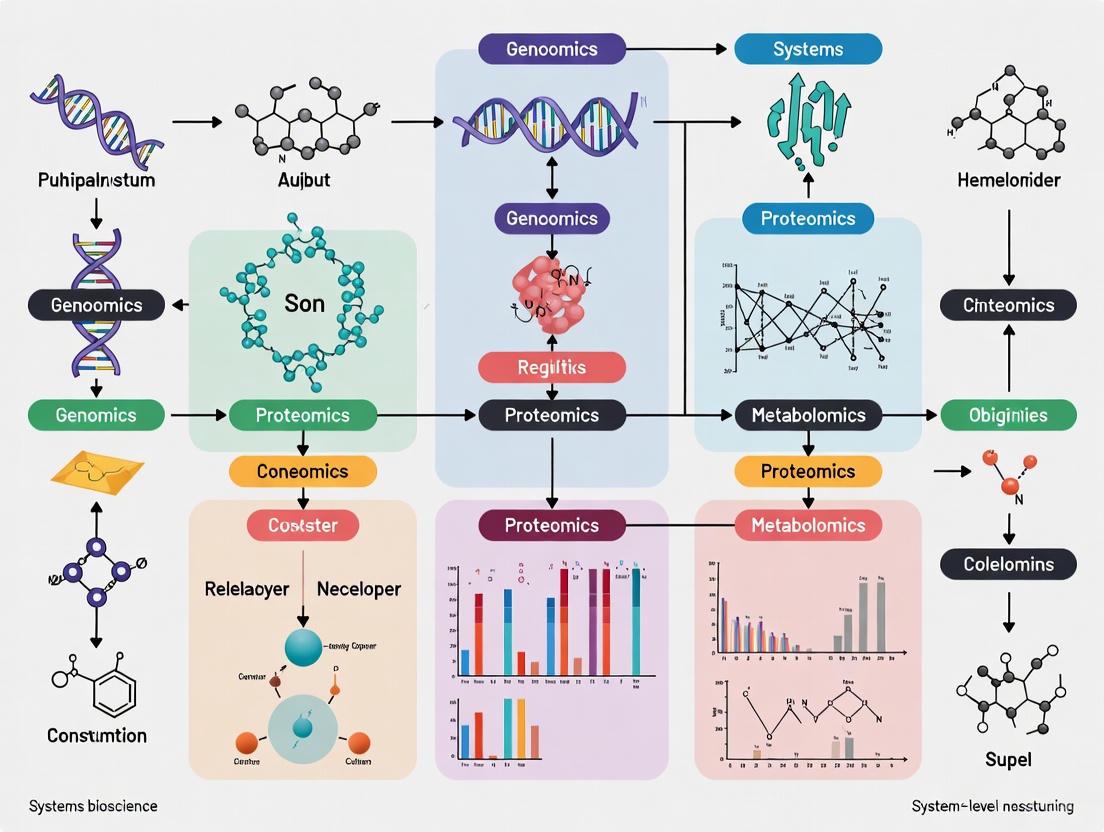
This comprehensive review explores how multi-omics technologies are revolutionizing our understanding of Autism Spectrum Disorder (ASD) by integrating genomic, transcriptomic, proteomic, metabolomic, and microbiome data.
Integrative Multi-Omics Approaches in Autism Spectrum Disorder: From Molecular Mechanisms to Precision Medicine
Abstract
This comprehensive review explores how multi-omics technologies are revolutionizing our understanding of Autism Spectrum Disorder (ASD) by integrating genomic, transcriptomic, proteomic, metabolomic, and microbiome data. We examine foundational discoveries in ASD molecular architecture, advanced methodological frameworks for data integration, statistical solutions for analytical challenges, and validation approaches across model systems and human cohorts. For researchers and drug development professionals, this synthesis highlights how multi-omics integration enables molecular subtyping, reveals convergent biological pathways, and identifies novel therapeutic targets, ultimately advancing precision medicine approaches for this heterogeneous neurodevelopmental disorder.
Unraveling ASD Complexity: Key Molecular Discoveries Through Multi-Omics Integration
Autism Spectrum Disorder (ASD) represents a complex neurodevelopmental condition characterized by substantial genetic heterogeneity. Once conceptualized primarily through protein-coding mutations, the genetic architecture of ASD now encompasses a broad spectrum of variation spanning coding regions, regulatory elements, and epigenetic modifications framed within a multi-omics context [1] [2]. The integration of genomic, epigenomic, transcriptomic, and microbiome datasets has revealed that ASD pathophysiology operates through cross-tissue regulatory mechanisms and interacting biological systems, particularly along the gut-microbiota-immune-brain axis [1]. This technical overview examines the evolving understanding of ASD genetic architecture, from early findings of coding variants to the emerging role of non-coding regulatory elements and their interplay within multi-omics frameworks.
Historically, genetic research focused on protein-coding regions, identifying numerous rare and de novo mutations with large effect sizes [3]. However, gene sequences constitute merely 2% of the human genome [4] [2]. Recent investigations have established that inherited variations in non-coding sections of DNA, particularly cis-regulatory elements (CREs), contribute significantly to ASD risk [4] [2]. These regulatory elements control gene expression without altering protein sequences and exhibit distinct inheritance patterns, being transmitted predominantly from fathers rather than mothers [4] [2].
Advances in computational frameworks and large-scale data integration have further revealed that ASD comprises biologically distinct subtypes with discrete genetic profiles and developmental trajectories [5] [6] [7]. These findings underscore that ASD does not represent a single entity with unitary genetic etiology, but rather a spectrum of conditions with diverse underlying biological mechanisms that can be systematically classified and understood through integrated multi-omics approaches.
Coding Variants in ASD: Spectrum and Impact
Variant Classes and Functional Consequences
Protein-coding variants in ASD risk genes span several functional categories with differing effect sizes and inheritance patterns. De novo mutations—genetic changes appearing for the first time in affected individuals—contribute to approximately one-third of ASD cases [2]. These typically exhibit large effect sizes and occur predominantly in genes involved in neuronal communication, synaptic function, and chromatin remodeling [3]. Current genetic testing identifies pathogenic coding variants in approximately 20% of ASD cases, with no single mutation accounting for more than 1% of cases [1] [6].
Table 1: Major Classes of Coding Variants in ASD
| Variant Class | Population Frequency | Biological Impact | Associated Genes |
|---|---|---|---|
| De Novo LoF Variants | 5.1% of ASD cases [4] | Protein truncation or complete loss of function | CHD8, SCN2A, ADNP [3] |
| Inherited Coding SVs | 1.21% of ASD cases [4] | Altered gene dosage through deletions/duplications | DLG3, KAT6A, MECP2 [3] |
| Inherited Pathogenic Variants | 1.9% of ASD cases [4] | Disrupted protein function through missense changes | BCORL1, CDKL5, SETD1B [3] |
| X-Linked Variants | Variable, male-biased | Hemizygous disruption in males | AR, SLC6A8 [3] |
Gene Functional Convergence and Expression Patterns
Despite genetic heterogeneity, ASD risk genes converge on specific biological pathways and developmental processes. Nervous system development and neurogenesis represent primary domains enriched for ASD-associated coding variants [3]. Signal transduction pathways, particularly those regulating synaptic function and neuronal connectivity, also show significant enrichment [3].
Spatial and temporal expression patterns further refine our understanding of ASD pathogenesis. Genes harboring damaging variants show selective enrichment in specific brain regions, particularly the thalamus [3]. The developmental timing of gene expression also varies across ASD subtypes, with some genetic influences predominantly affecting prenatal brain development while others impact postnatal neural circuit refinement [6]. In the Social and Behavioral Challenges ASD subtype, impacted genes are primarily active after birth, aligning with the later diagnosis and absence of developmental delays in this group [6]. Conversely, genes associated with the Mixed ASD with Developmental Delay subtype show predominantly prenatal activity [6].
Non-Coding Regulatory Elements in ASD
Cis-Regulatory Elements and Their Characteristics
Cis-regulatory elements (CREs) encompass promoter regions, enhancers, silencers, and insulators that collectively regulate gene expression without altering protein sequence. Structural variants in non-coding regions containing CREs (CRE-SVs) contribute to approximately 0.77% of ASD cases [4]. These regulatory variants exert their effects by disrupting the binding sites for transcription factors, thereby modulating the expression of target genes, sometimes over considerable genomic distances.
CRE-SVs differ from coding variants in ASD in two fundamental aspects: their inheritance patterns and their mechanisms of action. Unlike de novo coding mutations, CRE-SVs associated with ASD are typically inherited rather than spontaneously arising [2]. Furthermore, they exhibit a paternal origin effect, being transmitted predominantly from fathers to affected offspring [4] [2]. This contrasts with the maternal origin effect observed for some protein-coding variants and suggests distinct selective pressures on regulatory versus coding regions [2].
Table 2: Regulatory Element Classes in ASD Pathogenesis
| Element Type | Genomic Features | Functional Role | ASD Examples |
|---|---|---|---|
| Enhancers | Distal to promoters (>2kb from TSS), H3K27ac marked | Enhance transcription of target genes | Midbrain GABAergic neuron enhancers [8] |
| Promoters | Proximal to TSS, H3K4me3 marked | Initiate transcription | ESRRB in Purkinje cells [8] |
| Insulators | CTCF binding sites, often methylated | Establish chromatin boundaries | CTCF/cohesin loop domains [9] |
| Silencers | Repressive marks (H3K9me3) | Repress gene expression | B compartment regions [9] |
3D Chromatin Architecture in Neurodevelopment
The three-dimensional organization of chromatin in the nucleus provides a critical framework for gene regulation, with particular relevance for neurodevelopment. Chromatin is organized into compartments (A: active, B: inactive), topologically associated domains (TADs), and CTCF/cohesin-mediated loops that bring distant regulatory elements into proximity with their target genes [9].
During human first-trimester neurodevelopment, the number of accessible chromatin regions increases both with age and along neuronal differentiation trajectories [8]. This dynamic accessibility reflects the unfolding regulatory landscape that guides brain patterning and cellular differentiation. The functional architecture of the genome is exceptionally fluid during this period, with transcription factor binding and regulatory element activity being both cell-type-specific and transient [8].
Disruptions to this elaborate chromatin tapestry represent a key mechanism in ASD pathogenesis. Genetic lesions affecting chromatin remodelers, histone modifiers, or architectural proteins can create ripple effects across the entire epigenome [9]. For example, defects in the high-risk ASD gene CHD8, which encodes a chromatin remodeling factor, can induce abnormal microglial activation in the brain while simultaneously disrupting intestinal immune homeostasis—illustrating how chromatin-level disturbances can mediate cross-system pathology in ASD [1].
Integrated Multi-Omics Approaches and Methodologies
Experimental Workflows for Multi-Omics Integration
Advanced methodologies enabling the integration of multiple data modalities have been instrumental in elucidating the complex genetic architecture of ASD. The following diagram illustrates a representative multi-omics workflow for identifying cross-tissue regulatory mechanisms in ASD:
The Scientist's Toolkit: Essential Research Reagents and Platforms
Table 3: Key Experimental Platforms for ASD Multi-Omics Research
| Platform/Reagent | Specific Application | Technical Function | Representative Use |
|---|---|---|---|
| 10x Genomics Single-Cell Multiome | Parallel scATAC-seq + scRNA-seq | Links chromatin accessibility to gene expression | First-trimester neurodevelopment atlas [8] |
| Illumina Whole Genome Sequencing | Genome-wide variant discovery | Identifies coding and non-coding variants | SPARK cohort analysis [5] [6] |
| Hi-C/Micro-C | 3D chromatin architecture | Maps long-range chromatin interactions | Compartment and loop identification [9] |
| METAL | GWAS meta-analysis | Fixed-effects model integration | Combining multiple ASD datasets [1] |
| LD Score Regression | Genetic correlation estimation | Quantifies trait genetic overlap | ASD-FSS genetic correlations [10] |
| Growth Mixture Modeling | Developmental trajectory analysis | Identifies latent longitudinal classes | SDQ trajectory and age at diagnosis [7] |
| Cicero | Enhancer-gene linkage | Predicts cis-regulatory interactions | Candidate CRE identification [8] |
Methodological Protocols for Key Analyses
GWAS Meta-Analysis Protocol: Large-scale genetic association studies employ meta-analysis to boost statistical power. The standard protocol involves: (1) Dataset harmonization using CrossMap (v0.6.5) for genomic coordinate conversion between assemblies and PLINK (v1.9) for allele alignment; (2) Fixed-effects meta-analysis in METAL with SCHEME STDERR and STDERR SE weighting strategies; (3) Heterogeneity assessment using Cochran's Q and I² indices, with random-effects models applied when significant heterogeneity is detected (Q test P < 0.1, I² > 50%); (4) Novel locus identification by excluding SNPs within 500kb of known associated regions [1].
Single-Cell Chromatin Accessibility (scATAC-seq) Protocol: Mapping the regulatory landscape during neurodevelopment involves: (1) Nuclei isolation from fresh-frozen brain tissue specimens (6-13 post-conception weeks); (2) Tagmentation using Tn5 transposase to fragment accessible DNA; (3) Barcoding and sequencing on 10x Genomics platform; (4) Quality control by removing low-quality nuclei based on fragment count, transcription start site enrichment, and nucleosome signal; (5) Stratified peak calling using temporary 20kb genomic bins; (6) Dimensionality reduction with latent semantic indexing and Harmony batch correction; (7) Cluster identification via Louvain clustering, resulting in 135 distinct cell clusters from first-trimester human brain [8].
Mendelian Randomization for Causal Inference: Assessing causal relationships between ASD and comorbid conditions involves: (1) Instrument variable selection - genetic variants strongly associated with exposure; (2) Causal effect estimation using inverse-variance weighted, MR-Egger, or weighted median methods; (3) Sensitivity analyses to detect pleiotropy and heterogeneity; (4) Reverse MR to test bidirectional effects. This approach has revealed shared genetic architecture between ASD and functional somatic syndromes like IBS, multisite pain, and fatigue, though definitive causal relationships remain elusive [10].
Subtype Classification and Developmental Trajectories
Data-Driven ASD Subtypes with Distinct Genetic Profiles
Recent advances in machine learning and computational biology have enabled the identification of biologically meaningful ASD subtypes through integrated analysis of phenotypic and genotypic data. Using general finite mixture modeling on data from over 5,000 participants in the SPARK cohort, researchers have defined four clinically and biologically distinct ASD subgroups [5] [6]:
The following diagram illustrates the relationship between ASD subtypes, their genetic correlates, and developmental trajectories:
Developmental Timing and Genetic Influences Across the Lifespan
The developmental trajectories of ASD are intimately connected to genetic influences that vary across the lifespan. Research has demonstrated that the polygenic architecture of ASD can be decomposed into two modestly correlated genetic factors (r_g = 0.38) associated with different developmental profiles and diagnostic timing [7]:
- Early-Diagnosis Genetic Factor: Associated with lower social and communication abilities in early childhood, showing only moderate genetic correlations with ADHD and mental health conditions.
- Late-Diagnosis Genetic Factor: Associated with increased socioemotional and behavioral difficulties in adolescence, demonstrating moderate to high positive genetic correlations with ADHD and mental health conditions [7].
These distinct genetic factors align with different developmental trajectories observed in longitudinal birth cohorts. The early childhood emergent latent trajectory is characterized by difficulties in early childhood that remain stable or modestly attenuate in adolescence. In contrast, the late childhood emergent latent trajectory shows fewer difficulties in early childhood that increase in late childhood and adolescence [7]. These trajectories are strongly associated with age at diagnosis, with the early childhood emergent trajectory predicting earlier diagnosis across multiple independent cohorts [7].
Cross-Tissue Regulatory Networks and Systems-Level Integration
The Gut-Microbiota-Immune-Brain Axis
Multi-omics approaches have revealed that ASD genetic risk factors operate through cross-tissue regulatory networks that integrate signals across biological systems. SNPs such as rs2735307 and rs989134 exhibit multi-dimensional associations, participating in gut microbiota regulation while simultaneously involving immune pathways such as T cell receptor signaling and neutrophil extracellular trap formation [1]. These loci appear to cis-regulate neurodevelopmental genes like HMGN1 and H3C9P, while also influencing epigenetic methylation modifications to regulate expression of genes such as BRWD1 and ABT1 [1].
This integrative model explains how genetic variation can coordinate dynamic balance between brain development, immune responses, and gut microbiome interactions. For instance, neuroactive metabolites produced by gut microbiota (e.g., 5-aminovaleric acid and taurine) can regulate alternative splicing of neuronal genes in the brain, leading to abnormalities in ASD risk genes like FMR1, Nrxn2, and Ank2, ultimately affecting neuronal development and synaptic plasticity [1].
Genetic Correlations with Functional Somatic Syndromes
The multi-system nature of ASD genetics is further evidenced by significant genetic correlations with functional somatic syndromes (FSS). LD score regression analyses reveal positive genetic correlations between ASD and irritable bowel syndrome (rg = 0.27), multisite pain (rg = 0.13), and fatigue (r_g = 0.33) [10]. These shared genetic architectures may partly explain the frequent co-occurrence of ASD with these somatic conditions, suggesting overlapping biological pathways that extend beyond the central nervous system.
Multi-trait analysis of GWAS (MTAG) leveraging these genetic correlations has identified novel genome-wide significant loci for ASD, including variants mapped to NEDD4L, MFHAS1, and RP11-10A14.4 [10]. Polygenic risk scores derived from these integrated analyses show stronger associations with ASD and FSS phenotypes than those derived from standard GWAS, demonstrating the enhanced discovery power of cross-trait genetic approaches [10].
The genetic architecture of ASD encompasses a complex interplay of coding variants, regulatory elements, and epigenetic factors that operate within a multi-omics framework. The field has evolved from a focus on protein-coding mutations to embrace the substantial contribution of non-coding regulatory variation, particularly in cis-regulatory elements with distinctive inheritance patterns. Advanced integrative approaches have revealed biologically distinct ASD subtypes with discrete genetic profiles and developmental trajectories, explaining part of the condition's profound heterogeneity.
Future research directions will likely focus on several key areas: (1) Enhanced functional validation of non-coding variants using CRISPR-based screening approaches; (2) Expanded diverse ancestral representation in genetic studies to improve generalizability and discovery; (3) Longitudinal multi-omics profiling to capture dynamic developmental changes; (4) Advanced modeling of cross-tissue communication networks; and (5) Translation of genetic findings into personalized intervention strategies based on an individual's specific genetic subtype and developmental trajectory.
The integration of multi-omics data represents a paradigm shift in ASD research, moving from a fragmented view of genetic risk factors toward a systems-level understanding of interacting molecular networks. This comprehensive framework not only advances our fundamental knowledge of ASD pathogenesis but also paves the way for precision medicine approaches that account for the unique genetic architecture and developmental profile of each individual.
The microbiota-gut-brain axis (MGBA) represents a critical bidirectional communication network integrating neural, immune, endocrine, and metabolic pathways between the gastrointestinal tract and the central nervous system. Within autism spectrum disorder (ASD), a complex neurodevelopmental condition, research increasingly implicates gut microbiota dysbiosis and altered microbial metabolomic profiles as key modulators of neurodevelopment and behavior. This whitepaper synthesizes current multi-omics evidence, detailing characteristic microbial and metabolomic signatures in ASD, their pathophysiological consequences on host neurobiology, and the emerging therapeutic strategies targeting the MGBA. The integration of genomics, metabolomics, and proteomics is providing unprecedented insights into the cross-tissue regulatory mechanisms underlying ASD heterogeneity, offering a roadmap for precision medicine and novel intervention development.
Autism Spectrum Disorder (ASD) is a multifactorial neurodevelopmental condition characterized by deficits in social communication and interaction, alongside restricted and repetitive behaviors and interests. Its etiology involves a complex interplay of genetic susceptibility, environmental influences, and biological factors [11] [12]. The global prevalence of ASD has been steadily increasing, establishing it as a significant public health priority [13] [14]. Multi-omics approaches—integrating data from genomics, metabolomics, proteomics, and microbiomics—are essential for unraveling the complex, systemic nature of ASD [1] [15]. These methodologies move beyond single-layer analysis to construct a holistic picture of the interacting molecular networks that contribute to the disease's marked heterogeneity. This whitepaper examines how multi-omics studies are elucidating the role of the MGBA, providing a mechanistic link between gut microbial ecology, host metabolism, and brain function in ASD.
Microbial Signatures: Dysbiosis in the ASD Gut
Individuals with ASD frequently exhibit significant alterations in their gut microbiota composition, a state known as dysbiosis. Metagenomic studies consistently report distinct microbial profiles compared to neurotypical individuals, though population heterogeneity can lead to variations in specific findings [11] [13] [16].
Characteristic Taxonomic Alterations
The gut microbiota in ASD is often characterized by a reduction in beneficial bacteria and an enrichment of potentially pathogenic taxa. Key changes reported across multiple studies are summarized in Table 1.
Table 1: Characteristic Gut Microbiota Alterations in Autism Spectrum Disorder
| Taxonomic Level | Direction of Change | Specific Taxa | Potential Functional Implication |
|---|---|---|---|
| Phylum | Decreased | Firmicutes [13] | Reduced SCFA production |
| Phylum Ratio | Decreased | Bacteroidetes/Firmicutes ratio [13] | Altered metabolic capacity |
| Genus | Decreased | Bifidobacterium [11] [14], Prevotella [14] | Impaired gut barrier fortification, reduced folate/B12 synthesis [13] |
| Genus | Increased | Clostridium [11] [13], Desulfovibrio [11] [13], Sutterella [13] | Increased intestinal permeability, inflammation, hydrogen sulfide production [13] |
Functional Consequences of Dysbiosis
This dysbiosis is not merely a compositional shift but has direct functional consequences. The reduction in SCFA-producing bacteria (e.g., Lachnospiraceae, Ruminococcaceae) compromises energy supply for colonocytes and weakens the intestinal barrier [13]. Conversely, an increase in bacteria like Desulfovibrio, which produces hydrogen sulfide, can exacerbate intestinal inflammation and is associated with more pronounced stereotyped behaviors [13]. Furthermore, the observed reduction in Bifidobacterium has been linked to lower serum levels of folate and vitamin B12, highlighting the microbiota's role in vitamin metabolism essential for neurological function [13].
Metabolomic Signatures: Key Microbial Metabolites in ASD
The functional output of the gut microbiota is reflected in the metabolome. Metabolomic profiling of individuals with ASD has identified distinct alterations in several classes of neuroactive and immunomodulatory microbial metabolites.
Table 2: Altered Microbial Metabolites in ASD and Their Proposed Neurophysiological Roles
| Metabolite Class | Direction of Change in ASD | Proposed Mechanism in ASD Pathophysiology | Key Supporting Evidence |
|---|---|---|---|
| Short-Chain Fatty Acids (SCFAs) | Mixed / Altered [11] | Influence microglial maturation, synaptic plasticity, and neuroimmune responses; may disrupt the blood-brain barrier (BBB) [11] [13] | Animal models show SCFAs can induce ASD-like behaviors; human studies show altered profiles [11] |
| Tryptophan Metabolites (Kynurenate) | Significantly Lower [17] | Loss of neuroprotective signaling; associated with altered insular and cingulate cortex activity, linked to ASD symptom severity and sensory sensitivities [17] | Human fMRI-metabolomics study found correlations with brain activity and behavior [17] |
| Other Tryptophan Derivatives (e.g., Indolelactate, Indolepropionate) | Lower (sensitivity analysis) [17] | Associated with increased activity in brain regions for interoceptive and disgust processing; may influence ASD severity via brain mediation [17] | Mediation analysis showed brain activity mediates metabolite-behavior relationships [17] |
Integrated Multi-Omics and Pathophysiological Mechanisms
The integration of omics data reveals how microbial and metabolomic signatures converge to drive core pathophysiological mechanisms in ASD through the MGBA.
Communication Pathways of the MGBA
The MGBA facilitates gut-brain communication through several interconnected modules [11] [12]:
- Neural Pathway: The vagus nerve serves as a direct, rapid conduit for afferent signals from the gut to the brain. Evidence from animal models indicates that the behavioral benefits of microbiota-targeted therapies are abolished after vagotomy [13].
- Immune Pathway: Dysbiosis and increased intestinal permeability ("leaky gut") allow bacterial components like lipopolysaccharide (LPS) to translocate, triggering systemic inflammation. This can compromise the blood-brain barrier, leading to microglial activation and neuroinflammation, a well-documented feature in ASD [11] [12] [14].
- Neuroendocrine Pathway: The hypothalamic-pituitary-adrenal (HPA) axis is influenced by microbial metabolites. Dysregulation of this stress axis is common in ASD and can further alter gut permeability and microbiota composition, creating a vicious cycle [11] [13].
- Metabolic Pathway: Microbial metabolites like SCFAs, tryptophan derivatives, and bile acids act as signaling molecules that can enter circulation, cross the BBB, and directly influence brain function, gene expression, and synaptic plasticity [11] [17].
The following diagram illustrates the core signaling pathways and their interconnections within the MGBA in the context of ASD.
Figure 1. MGBA signaling pathways in ASD pathophysiology.
Cross-Tissue Genetic Regulation
Multi-omics studies are uncovering how genetic risk factors in ASD exert cross-tissue effects, coordinating the dynamic balance between brain neural development, peripheral immune responses, and gut microbiota interactions. A 2025 multi-omics meta-analysis identified specific single-nucleotide polymorphisms (e.g., rs2735307, rs989134) that participate in gut microbiota regulation while simultaneously cis-regulating neurodevelopmental genes (HMGN1, H3C9P) and influencing immune pathways such as T cell receptor signaling [1]. This provides genetic evidence for a "gut microbiota-immune-brain axis," where genetic variants act as core drivers of a systemic pathological network in ASD.
Detailed Experimental Protocols for MGBA-ASD Research
To investigate the MGBA in ASD, researchers employ a combination of clinical assessment, multi-omics profiling, and mechanistic studies. Below is a detailed workflow for an integrated human study linking gut metabolites to brain function.
Integrated Human fMRI and Fecal Metabolomics Protocol
This protocol is adapted from a 2025 study that identified associations between tryptophan metabolites, brain activity, and ASD symptomatology [17].
Objective: To determine associations between fecal levels of specific tryptophan-related gut metabolites, task-based brain activity, and behavioral scores in children with ASD.
Participant Cohort: - Groups: ASD children (n=43) and neurotypical (NT) controls (n=41), aged 8-17 years. - Key Considerations: Groups should be matched for age and sex. Comprehensive characterization includes ADOS scores for ASD severity, IQ testing, and assessments for GI symptoms, sensory sensitivities, and disgust propensity. Diet should be recorded and controlled for in analyses [17].
Procedure:
- Biospecimen Collection and Metabolomic Profiling:
- Collect fecal samples from participants and immediately freeze at -80°C.
- Perform targeted metabolomic profiling (e.g., using LC-MS) focused on the tryptophan/serotonin pathway, quantifying metabolites such as kynurenate (KA), indolelactate, tryptophan betaine, and indolepropionate.
- Functional Magnetic Resonance Imaging (fMRI):
- Acquire task-based fMRI data using paradigms that probe socio-emotional and sensory processing. Examples include: - Facial Expression Processing: Viewing and identifying emotions from faces. - Disgust Processing: Viewing images of disgusting foods or facial expressions of disgust. - Somatosensory Processing: Experiencing social and non-social touch.
- Preprocess fMRI data (realignment, normalization, smoothing).
- Define Regions of Interest (ROIs) based on prior ASD literature, focusing on regions like the insular subregions (anterior, mid, posterior), mid-cingulate cortex (MCC), pregenual anterior cingulate, and primary somatosensory cortex (S1).
- Statistical Integration and Mediation Analysis:
- Use general linear models (GLMs) to assess between-group (ASD vs. NT) differences in metabolite levels, controlling for covariates like age, sex, and BMI.
- Within the ASD group, use GLMs to test for correlations between metabolite abundance and evoked brain activity in the pre-defined ROIs during each task.
- Perform mediation analysis to test the hypothesis that brain activity in specific ROIs (e.g., mid-insula) statistically mediates the relationship between metabolite levels (e.g., indolelactate) and ASD behavioral scores (e.g., disgust sensitivity) [17].
The workflow for this multi-modal experiment is summarized in the following diagram.
Figure 2. Integrated fMRI-metabolomics workflow.
Animal Model Proteomics and Phosphoproteomics Protocol
This protocol outlines a multi-omics approach to investigate molecular mechanisms in ASD mouse models, focusing on global proteomic and phosphoproteomic profiling of brain tissue [18].
Objective: To identify shared differentially expressed proteins and phosphorylation sites in the cortex of validated ASD mouse models (Shank3Δ4–22 and Cntnap2-/-) to uncover convergent molecular pathways.
Animals: - Models: Shank3Δ4–22 and Cntnap2-/- mice and their wild-type littermate controls. - Housing: Standard conditions, with all procedures approved by the institutional animal care and use committee.
Procedure:
- Tissue Collection and Protein Extraction:
- Sacrifice mice and dissect cortical brain regions. Snap-freeze tissue in liquid nitrogen.
- Homogenize tissue in lysis buffer containing protease and phosphatase inhibitors.
- Extract total protein and determine concentration.
- Global Proteomics and Phosphoproteomics:
- Protein Digestion: Digest proteins with trypsin.
- Phosphopeptide Enrichment: For phosphoproteomics, enrich phosphopeptides from the digested peptide mixture using TiO2 or IMAC beads.
- LC-MS/MS Analysis: Analyze both global peptides and enriched phosphopeptides via liquid chromatography coupled to tandem mass spectrometry (LC-MS/MS).
- Data Processing: Identify and quantify proteins and phosphopeptides using bioinformatic software (e.g., MaxQuant). For phosphoproteomics, localize phosphorylation sites to specific serine, threonine, or tyrosine residues.
- Bioinformatic and Statistical Analysis:
- Perform differential expression analysis to identify proteins and phosphosites that are significantly altered in each mouse model compared to its control.
- Conduct pathway enrichment analysis (e.g., KEGG, GO) on the differentially expressed proteins and phosphorylated proteins to identify affected biological processes (e.g., autophagy, mTOR signaling) [18].
- Focus on shared molecular changes between the two different ASD models to highlight core pathophysiological mechanisms.
The following table details essential reagents, tools, and databases critical for conducting multi-omics research on the MGBA in ASD.
Table 3: Research Reagent Solutions for MGBA and Multi-Omics ASD Studies
| Reagent / Resource | Function and Application | Example Use Case |
|---|---|---|
| ASD Animal Models(e.g., Shank3Δ4–22, Cntnap2-/-) | Genetically engineered models to study specific ASD-risk gene pathways and perform mechanistic experiments, including proteomics and intervention studies [18]. | Investigating convergent autophagy-related protein phosphorylation in the cortex [18]. |
| LC-MS/MS Systems | High-sensitivity analytical platform for untargeted and targeted metabolomic and proteomic profiling from biological samples (feces, blood, brain tissue) [17] [18]. | Quantifying fecal tryptophan metabolites [17] or cortical phosphopeptides [18]. |
| fMRI Scanners & Task Paradigms | Non-invasive in vivo imaging to link metabolic findings with functional brain activity in regions like the insula and cingulate cortex [17]. | Associating kynurenate levels with altered brain activity during disgust processing [17]. |
| Bioinformatic Databases & Tools(e.g., SFARI Gene database, BERTopic, HunFlair) | For genetic data integration, literature mining, and named entity recognition from scientific texts to identify trends and biomarkers [15]. | Mining PubMed for multi-omics trends in ASD; extracting gene and disease entities from abstracts [15]. |
| Mendelian Randomization (MR) & SMR | Statistical genetic methods to infer causality between exposure (e.g., gut microbiota) and outcome (e.g., ASD risk) using GWAS data [12] [1]. | Testing for causal effects of gut microbial abundance on ASD and identifying pleiotropic genetic loci [1]. |
Emerging Microbiome-Targeted Therapeutic Interventions
Targeting the MGBA presents a promising avenue for adjunctive therapies in ASD. Current interventions aim to restore eubiosis, correct metabolomic imbalances, and alleviate both GI and behavioral symptoms.
Table 4: Microbiome-Targeted Interventions in ASD
| Intervention | Proposed Mechanism | Reported Outcomes |
|---|---|---|
| Probiotics & Prebiotics | Restore beneficial bacteria (e.g., Bifidobacterium, Lactobacillus), fortify gut barrier, reduce inflammation [11] [16]. | Modest improvements in GI symptoms (constipation, diarrhea) and secondary behavioral benefits [11] [14]. |
| Fecal Microbiota Transplantation (FMT) | Comprehensively reshape the gut microbial community by introducing a diverse, healthy donor microbiota [11]. | Open-label trials report long-term improvements in both GI dysfunction and core ASD symptoms [11] [16]. |
| Dietary Modulation(e.g., high-fiber, gluten-free/casein-free) | Alter substrate availability for gut microbes, thereby modulating microbial composition and metabolite production [11] [13]. | May improve GI and behavioral outcomes, though evidence is variable and influenced by dietary selectivity common in ASD [11] [13]. |
| Antibiotics (e.g., Vancomycin) | Target specific bacterial overgrowth, such as Clostridia [11]. | Can lead to temporary alleviation of ASD symptoms, but effects are often not sustained post-treatment [11]. |
Multi-omics research has firmly established that gut-brain axis dysregulation, characterized by distinct microbial and metabolomic signatures, is a core component of ASD pathophysiology. The integration of genomic, metabolomic, and proteomic data is illuminating the complex, cross-tissue networks that connect genetic risk, gut dysbiosis, immune activation, and altered brain development and function. Future research must prioritize large-scale, longitudinal studies that can establish causality and account for the profound heterogeneity of ASD. Furthermore, the development of standardized protocols for multi-omics integration and the application of advanced computational models will be crucial for translating these findings into clinically actionable insights. Targeting the MGBA through precision microbiome interventions holds significant promise for developing novel, adjunctive therapies to improve the quality of life for individuals with ASD.
Abstract Recent multi-omics studies have fundamentally advanced our understanding of autism spectrum disorder (ASD) by revealing specific immune dysregulation pathways. This whitepaper synthesizes cutting-edge research demonstrating that dysregulated TNF-related signaling pathways in peripheral immune cells are a key feature of ASD pathophysiology. Through integrative transcriptomic, proteomic, and single-cell RNA-seq analyses, studies have identified distinct immune signatures, including upregulated TNF superfamily members and altered T cell subsets, offering novel insights for biomarker discovery and targeted immunomodulatory therapies.
Multi-Omics Evidence of Immune Dysregulation in ASD
The application of multi-omics approaches has provided unprecedented resolution of the peripheral immune landscape in ASD, moving beyond simple cytokine profiling to reveal complex, cell-type-specific dysregulation.
Table 1: Key Immune Alterations in ASD Identified via Multi-Omics Studies
| Omics Layer | Key Finding | Biological Material | Significance |
|---|---|---|---|
| Transcriptomics | Differential expression of 50 immune-related genes; JAK3, CUL2, CARD11 correlated with symptom severity [19]. | PBMCs | Identifies potential genetic regulators of immune dysfunction linked to clinical outcomes. |
| Proteomics | Upregulated plasma levels of TNFSF10 (TRAIL), TNFSF11 (RANKL), and TNFSF12 (TWEAK) [19]. | Plasma | Confirms activation of TNF-related pathways at the protein level, suggesting accessible biomarkers. |
| Single-Cell RNA-Seq | B cells, CD4+ T cells, and NK cells identified as primary sources of upregulated TNFSF signaling [19]. | PBMCs | Pinpoints specific cellular contributors to immune dysregulation. |
| Metaproteomics & Metabolomics | Altered gut microbiota; identified microbial metaproteins and host proteins (e.g., KLK1, TTR) linked to neuroinflammation [20]. | Stool microbiota & host proteome | Connects gut-immune-brain axis to neurodevelopmental deficits in ASD. |
| Neuroimaging | Elevated TSPO protein in frontal and temporal skull, correlated with peripheral C-reactive protein [21]. | In vivo PET-MRI | Provides in vivo evidence of neuroimmune involvement, linking peripheral and central immunity. |
Detailed Experimental Protocols for Key Findings
Multi-Omic Profiling of Peripheral Blood
This integrated protocol, derived from a cohort of young Arab children with ASD, details how to identify dysregulated immune pathways from blood samples [19].
2.1.1. Sample Collection and Processing
- Blood Draw: Collect blood into EDTA-containing anti-coagulant tubes.
- PBMC Isolation: Within 2 hours of draw, layer blood over Histopaque-1077 and centrifuge at 400 × g for 30 minutes (acceleration 3, zero brake). Collect PBMCs from the middle fraction and plasma from the upper layer.
- Cell Wash & Storage: Wash PBMCs twice with 1x PBS, centrifuge at 400 × g for 10 minutes, and cryopreserve at -150°C. Aliquot plasma after a 1800 × g centrifugation for 15 minutes and store at -80°C.
2.1.2. Transcriptomic Profiling (NanoString nCounter)
- RNA Isolation: Use the Invitrogen Purelink RNA kit to extract RNA from PBMCs. Verify RNA quality via NanoDrop (260/280 ratio ~1.7-2.0).
- Hybridization: Use the nCounter Human Immune Exhaustion panel (785 genes). For each reaction, use 100 ng of RNA and hybridize for 16 hours.
- Data Acquisition & Analysis: Run samples on the nCounter PrepStation (high-sensitivity mode) and Digital Analyzer. Perform QC, normalization, and differential expression analysis (absolute fold change >1.25, FDR-adjusted p < 0.05) on the Rosalind platform.
2.1.3. Proteomic Analysis (Plasma)
- While the specific proteomic platform is not detailed in the results, the study's findings of disrupted TNF signaling and upregulated TNFSF members (TRAIL, RANKL, TWEAK) in plasma would typically be validated using technologies like multiplex immunoassays (Luminex) or mass spectrometry-based proteomics.
2.1.4. Single-Cell RNA Sequencing (scRNA-seq)
- Cell Preparation: Generate single-cell suspensions from PBMCs.
- Library Construction: Use the 10x Genomics Chromium Single-cell 3' Reagent v3 kit for barcoding and library preparation according to manufacturer specifications.
- Sequencing & Bioinformatic Analysis: Sequence libraries on an Illumina HiSeq system. Process raw data with Cell Ranger for alignment. Subsequent analysis in R (Seurat package v5.0.1) includes: quality control (filtering doublets, low-UMI cells, high mitochondrial gene percentage), normalization, PCA, clustering (
FindNeighborsandFindClusters), and cell type annotation using canonical markers.
Low-Dose IL-2 (LdIL-2) Immunotherapy in BTBR Mice
This protocol outlines a novel immunotherapeutic approach targeting T cell imbalances, demonstrating a causal link between immune modulation and ASD-like behavior improvement [22].
2.2.1. Animal Model and Treatment
- Subjects: Use male BTBR T+Itpr3tf/J (BTBR) mice, aged 6-8 weeks, as an ASD model. Use C57BL/6 mice as controls.
- LdIL-2 Administration: Reconstitute recombinant human IL-2 in sterile normal saline. Administer via subcutaneous injection at a dose of 30,000 IU per course. Treat for four courses (7 days per course) with a one-day interval between courses. Control groups receive saline.
- Treg Depletion (For Mechanistic Study): To deplete Treg cells, intraperitoneally inject 200 μg of anti-mouse CD25 antibody (PC61) one day before and on days 14 and 28 after starting LdIL-2 treatment.
2.2.2. Behavioral Assessments
- Three-Chamber Social Test: Assess sociability and preference for social novelty. Calculate a Social Approach Preference Index and a Social Novelty Preference Index.
- Self-Grooming Test: Record cumulative grooming time over 10 minutes after a 10-minute habituation as a measure of repetitive behavior.
- Marble-Burying Test: Place a mouse in a cage with 20 marbles for 10 minutes; count marbles buried (>2/3 covered) as another measure of repetitive/digging behavior.
- Open Field Test: Record total distance moved and time spent in the center area over 10 minutes to assess general locomotion and anxiety-like behavior.
2.2.3. Immune Phenotyping
- Flow Cytometry: Analyze peripheral blood for T helper (Th) cell and regulatory T (Treg) cell populations to determine Th/Treg ratios. In the central nervous system, analyze microglia for M1/M2 polarization states.
Signaling Pathways and Experimental Workflow
The following diagrams visualize the core signaling pathways implicated in ASD and the integrated workflow of multi-omics analysis.
The Scientist's Toolkit: Research Reagent Solutions
Table 2: Essential Reagents and Resources for Investigating Immune Pathways in ASD
| Reagent / Resource | Function / Application | Example Catalog Number / Source |
|---|---|---|
| nCounter Human Immune Exhaustion Panel | Targeted transcriptomic profiling of 785 immune-related genes from PBMC RNA. | #XT-H-EXHAUST-12 (NanoString) [19] |
| Histopaque-1077 | Density gradient medium for the isolation of peripheral blood mononuclear cells (PBMCs). | #10771 (Sigma-Aldrich) [19] |
| Chromium Single Cell 3' Reagent Kits | Library preparation for single-cell RNA sequencing to resolve cellular heterogeneity. | (10x Genomics) [19] |
| Recombinant Human IL-2 | For investigating the therapeutic effects of low-dose IL-2 on Treg cell populations in vivo. | (Various, e.g., Shandong Quangang Pharm.) [22] |
| Anti-Mouse CD25 Antibody (PC61) | Depletion of CD25+ Treg cells for mechanistic validation studies in mouse models. | (BioLegend) [22] |
| BTBR T+Itpr3tf/J Mice | A commonly used murine model exhibiting core ASD-like behaviors and immune dysregulation. | The Jackson Laboratory [22] |
| Seurat R Package | A comprehensive open-source software platform for single-cell genomics data analysis and visualization. | [19] |
| CellChat R Package | Tool for inference and analysis of cell-cell communication networks from scRNA-seq data. | [23] |
The convergence of evidence from multiple omics layers solidifies the role of TNF-related signaling pathways as a core component of peripheral immune dysregulation in ASD. The identification of specific cell subsets (NK, T cells) and molecules (TRAIL, RANKL, TWEAK) provides a new level of precision for understanding ASD pathophysiology. Future research must focus on longitudinal studies to determine if these immune signatures are stable over time and to clarify their causal relationship with core ASD symptoms. The promising results from LdIL-2 therapy in preclinical models [22] highlight the potential of immunomodulation and pave the way for targeted clinical interventions aimed at restoring immune homeostasis in ASD.
Autism spectrum disorder (ASD) represents a complex group of neurodevelopmental conditions characterized by deficits in social communication and restrictive, repetitive behaviors. The intricate molecular pathogenesis of ASD has remained poorly understood due to etiological heterogeneity and the predominance of idiopathic cases. Recent advances in multi-omics technologies have enabled unprecedented investigation of the proteomic and phosphoproteomic landscapes underlying ASD pathophysiology. This whitepaper synthesizes current research revealing how coordinated dysregulation of synaptic machinery and autophagy pathways contributes to ASD pathogenesis. Evidence from global proteomic, phosphoproteomic, and synaptomic analyses across multiple model systems and human postmortem brains consistently identifies disruption in postsynaptic density proteins, glutamate receptor signaling, and autophagic flux. Particularly compelling are findings that altered phosphorylation patterns in autophagy-related proteins impair degradative pathways, while synaptic proteomic signatures reveal attenuated maturation of postsynaptic complexes. Integration of these datasets within a multi-omics framework provides novel insights into convergent molecular pathways and identifies potential therapeutic targets for modulating the synaptopathy and impaired proteostasis characteristic of ASD.
Autism spectrum disorder affects approximately 1 in 36 children, imposing substantial personal, family, and societal challenges [18]. The genetic architecture of ASD is extraordinarily complex, with common inherited variants and rare de novo mutations working together to confer genetic risk [24]. Despite significant advances in identifying genetic risk factors, the vast majority of ASD cases remain idiopathic without definitive etiological diagnosis [25]. This heterogeneity has complicated efforts to unravel the underlying pathobiology, necessitating approaches that can identify convergent molecular pathways across diverse ASD forms.
Multi-omics approaches integrating genomics, transcriptomics, proteomics, and phosphoproteomics have emerged as powerful strategies for understanding complex neurodevelopmental disorders [26] [27]. Proteomic analyses are particularly valuable as they reflect the functional effectors of cellular processes and are "closer" to phenotypic expression than genomic or transcriptomic analyses [25]. The integration of phosphoproteomic data further enhances understanding of post-translational regulation mechanisms that rapidly modulate protein function in response to signaling events.
This whitepaper examines how integrated proteomic and phosphoproteomic analyses have illuminated the interconnected roles of synaptic and autophagy mechanisms in ASD pathophysiology. We focus specifically on findings from global proteomic surveys of brain regions, synaptosomal preparations, phosphoproteomic investigations of signaling networks, and the emerging evidence implicating impaired autophagic flux in ASD pathogenesis.
Synaptic Proteomic Alterations in ASD
Postsynaptic Density Proteomic Signatures
Analyses of the synaptic proteome have revealed consistent alterations in postsynaptic density (PSD) proteins across multiple ASD models and human brain tissues. A quantitative proteomic study of synaptosomes from dorsolateral prefrontal cortex (Brodmann area 9) demonstrated significant downregulation of PSD-related proteins in children with idiopathic ASD compared to age-matched controls [28]. The affected proteins included key glutamatergic receptors (AMPA and NMDA receptors), scaffolding proteins (SHANK1-3, HOMER1, DLG4/PSD-95), and signaling molecules (CaMK2α) essential for synaptic maturation and function (Table 1).
Table 1: Synaptic Proteomic Alterations in ASD Brain Tissues
| Protein Category | Specific Proteins Altered | Direction of Change | Biological Context |
|---|---|---|---|
| Glutamate Receptors | AMPA receptors, NMDA receptors, GRM3 | Downregulated | Impaired excitatory synaptic transmission |
| Scaffolding Proteins | SHANK1-3, DLG4, HOMER1 | Downregulated | Disrupted PSD organization & signaling |
| Cell Adhesion | NRXN1, NLGN2 | Downregulated | Impaired trans-synaptic signaling |
| Cytoskeletal | Drebrin1, ARHGAP32, Dock9 | Downregulated | Altered spine morphology & dynamics |
| Presynaptic | SYP, VAMP2, BSN | Upregulated | Compensatory presynaptic changes |
Notably, these PSD-related alterations were more pronounced in children with ASD than in adults, suggesting a developmental component to synaptic abnormalities in ASD [28]. Network analyses of these proteomic changes highlighted abnormalities in glutamate receptor signaling and Rho GTPase pathways, both critical for synaptic plasticity and cytoskeletal reorganization in developing neurons.
Regional Proteomic Patterns in ASD Brain
Comparative proteomic profiling of different brain regions has revealed both shared and region-specific alterations in ASD. Analysis of Brodmann area 19 (occipital cortex) and posterior inferior cerebellum demonstrated distinctive protein expression profiles between ASD and controls for both regions [25]. While the two brain regions maintained their proteomic differentiation in ASD, pathway analyses revealed shared dysregulation of glutamate receptor signaling and glutathione-mediated detoxification in both regions.
Regional specificity was also evident, with BA19 showing particular enrichment in Sertoli cell signaling pathways (involved in neurodevelopmental processes), while cerebellum exhibited disruptions in fatty acid oxidation and branched-chain amino acid metabolism [25]. Protein interaction network analyses identified DLG4 (PSD-95) as a major hub protein in BA19, while MAPT (tau) served as a central hub in cerebellar networks, indicating region-specific vulnerabilities in ASD pathophysiology.
Multi-Model Comparative Synaptic Proteomics
A comparative analysis of hippocampal synaptic proteomes across five distinct ASD mouse models—Fmr1 knockout ( Fragile X syndrome), Cntnap2 knockout (cortical dysplasia focal epilepsy syndrome), Pten haploinsufficiency (PTEN hamartoma tumor syndrome), Anks1b haploinsufficiency (ANKS1B syndrome), and BTBR+ (idiopathic autism)—revealed several common altered molecular pathways at the synapse [24]. These included consistent changes in oxidative phosphorylation and Rho family small GTPase signaling, suggesting convergent pathogenic mechanisms despite diverse genetic origins.
Similarity analyses revealed that the models could be clustered according to their synaptic proteomic profiles, potentially forming the basis for molecular subtypes that explain genetic heterogeneity in ASD despite common clinical presentations [24]. This approach demonstrates how proteomic convergence across models can identify central pathways for therapeutic targeting.
Autophagy Dysregulation in ASD
Autophagy-Related Protein Expression and Phosphorylation
A multi-omics investigation using Shank3Δ4-22 and Cntnap2-/- mouse models revealed significant dysregulation of autophagy pathways in ASD [18] [29]. Global proteomic analyses identified differential expression of proteins impacting postsynaptic components and synaptic function, including key pathways such as mTOR signaling, a critical regulator of autophagy. Phosphoproteomic approaches further revealed unique phosphorylation sites in several autophagy-related proteins, including ULK2, RB1CC1, ATG16L1, and ATG9, suggesting that altered phosphorylation patterns contribute to impaired autophagic flux in ASD.
Table 2: Autophagy-Related Molecular Changes in ASD Models
| Molecule | Change in ASD | Functional Role in Autophagy | Experimental Model |
|---|---|---|---|
| LC3-II | Elevated | Autophagosome membrane marker | SH-SY5Y SHANK3 KO [18] |
| p62/SQSTM1 | Elevated | Autophagy substrate receptor | SH-SY5Y SHANK3 KO [18] |
| LAMP1 | Reduced | Lysosomal membrane protein | SH-SY5Y SHANK3 KO [18] |
| ULK2 | Altered phosphorylation | Autophagy initiation kinase | Cortical proteomics [18] |
| ATG16L1 | Altered phosphorylation | Autophagosome elongation | Cortical proteomics [18] |
| nitric oxide | Elevated | Impairs autophagosome-lysosome fusion | Shank3Δ4-22, Cntnap2-/- [18] |
Functional validation in SH-SY5Y cells with SHANK3 deletion showed elevated levels of LC3-II and p62, indicating autophagosome accumulation alongside reduced LAMP1, suggesting impaired autophagosome-lysosome fusion rather than defective autophagy initiation [18]. This pattern points specifically to disrupted autophagic flux in ASD models, where the autophagy process initiates but cannot reach completion.
Nitric Oxide Signaling and Autophagy Disruption
The multi-omics study highlighted the involvement of reactive nitrogen species and nitric oxide (NO) in autophagy disruption [18]. Importantly, inhibition of neuronal NO synthase (nNOS) by 7-nitroindazole (7-NI) normalized autophagy marker levels in both SH-SY5Y cells and primary cultured neurons. This finding connected previously observed elevated NO levels in ASD mouse models with the impaired autophagy mechanisms, suggesting a potential signaling pathway through which synaptic dysfunction might impair cellular homeostasis.
The therapeutic relevance of these findings was strengthened by previous observations that nNOS inhibition improved synaptic and behavioral phenotypes in Shank3Δ4-22 and Cntnap2-/- mouse models [18], suggesting a mechanistic link between NO signaling, autophagy disruption, and behavioral manifestations of ASD.
mTOR Signaling and Autophagy Regulation
Beyond the direct evidence from multi-omics studies, considerable research has implicated mTOR signaling in autophagy dysregulation in ASD [30]. The mTOR pathway serves as a critical regulator of autophagy initiation, with hyperactive mTOR signaling suppressing autophagic activity. In several ASD models, including Pten and Tsc2 mutants, constitutive mTOR activation associates with autophagy deficiency, suggesting this pathway may represent a convergent node integrating various ASD-related genetic insults.
The relationship between mTOR and autophagy appears particularly relevant for synaptic development and function, as mTOR regulates protein synthesis at synapses and autophagy helps maintain synaptic protein homeostasis by degrading damaged organelles and proteins [30]. Dysregulation of this balance could contribute to the synaptic abnormalities observed in ASD.
Experimental Methodologies
Proteomic and Phosphoproteomic Workflows
Current proteomic investigations of ASD typically employ sophisticated mass spectrometry-based approaches. For global proteomic profiling, label-free HPLC-tandem mass spectrometry has been successfully used to characterize proteomes of brain regions from idiopathic ASD cases and matched controls [25]. This approach enables unbiased relative quantification of thousands of proteins across multiple samples.
More recently, isobaric tandem mass tagging (TMT) with HPLC-tandem mass spectrometry has been applied to compare synaptic proteomes across multiple ASD models [24]. This method allows multiplexed analysis of up to 16 samples simultaneously, improving quantification accuracy and throughput. For synaptosomal studies, subcellular fractionation techniques are employed to isolate synaptic fractions before proteomic analysis [28].
Phosphoproteomic analyses build upon these approaches by incorporating phosphopeptide enrichment steps, typically using titanium dioxide or immobilized metal affinity chromatography, prior to LC-MS/MS analysis [18]. This enables identification and quantification of phosphorylation sites across the proteome, revealing signaling network alterations in ASD.
Model Systems and Validation
ASD research employs diverse model systems, each with distinct advantages. Genetic mouse models including Shank3Δ4-22, Cntnap2-/-, Fmr1 knockout, and Pten haploinsufficiency recapitulate various aspects of ASD pathophysiology and allow proteomic investigation of specific genetic alterations [18] [24]. Human postmortem brain studies provide direct evidence of proteomic changes in ASD but face challenges regarding sample availability, postmortem intervals, and comorbid conditions [25] [28].
Cellular models, such as SH-SY5Y neuroblastoma cells with SHANK3 deletion, enable mechanistic studies and pharmacological interventions [18]. Primary neuronal cultures further facilitate investigation of cell-autonomous mechanisms in a relevant cellular context.
Functional validation of proteomic findings typically includes western blotting for specific proteins of interest, immunohistochemical localization, and behavioral assessment in model systems following pharmacological or genetic interventions targeting identified pathways [18].
Research Reagent Solutions
Table 3: Essential Research Reagents for Synaptic and Autophagy Studies in ASD
| Reagent Category | Specific Examples | Research Application | Experimental Context |
|---|---|---|---|
| Antibodies | LC-3A/B, p62, LAMP1, β-actin | Autophagy flux assessment | Western blot, IHC [18] |
| Mouse Models | Shank3Δ4-22, Cntnap2-/-, Fmr1 KO, Pten+/- | Pathway analysis & therapeutic testing | Multimodel comparisons [18] [24] |
| Proteomic Reagents | TMTpro 16plex Label Reagent, Triton X-100 | Protein quantification & fractionation | Synaptosomal preparation [28] |
| Signaling Inhibitors | 7-Nitroindazole (7-NI), rapamycin | Pathway modulation | nNOS & mTOR inhibition [18] [30] |
| Cell Lines | SH-SY5Y SHANK3 KO | Mechanistic studies | Autophagy flux assays [18] |
Integrated Pathway Analysis
Integrated Pathway in ASD Pathophysiology
The integrated pathway diagram illustrates how diverse ASD genetic risk factors converge on synaptic dysfunction and mTOR signaling dysregulation, which collectively contribute to autophagy disruption through elevated nitric oxide and direct signaling impacts. These alterations in cellular homeostasis pathways, particularly reflected in phosphoproteomic changes to autophagy machinery, ultimately contribute to behavioral phenotypes characteristic of ASD.
Proteomic and phosphoproteomic investigations have substantially advanced our understanding of synaptic and autophagy mechanisms in ASD pathophysiology. The consistent observation of postsynaptic density protein alterations across multiple models and human brain tissues supports the concept of ASD as a synaptopathy characterized by impaired maturation of excitatory synapses. Simultaneously, multi-omics approaches have revealed extensive dysregulation of autophagy pathways, particularly through altered phosphorylation of autophagy-related proteins that disrupt autophagic flux.
The integration of these findings within a multi-omics framework highlights the interconnectedness of synaptic and autophagy mechanisms, with synaptic activity modulating autophagy through NO signaling and mTOR pathways, while autophagy in turn regulates synaptic protein homeostasis. These advances not only provide insights into ASD pathogenesis but also identify potential therapeutic targets, including nNOS inhibition and mTOR modulation, that may address core biological processes in ASD beyond symptomatic treatment.
Future research directions should include longitudinal proteomic studies to track developmental changes, cell-type-specific proteomic analyses to resolve cellular heterogeneity, and integration of proteomic findings with genomic and transcriptomic datasets to establish complete molecular pathways from genetic risk to functional impairment. Such approaches promise to further elucidate the complex interplay between synaptic and autophagy mechanisms in ASD, ultimately facilitating targeted therapeutic development for this heterogeneous disorder.
Autism spectrum disorder (ASD) represents a paradigm for complex, heterogeneous neurodevelopmental conditions affecting millions worldwide. This heterogeneity manifests through vast differences in symptom presentation, developmental trajectories, co-occurring conditions, and treatment responses, creating significant challenges for diagnosis, mechanistic understanding, and therapeutic development [31] [6]. The inherent limitations of purely behavior-based diagnostic schemas have driven the emergence of molecular subtyping as an essential precision medicine approach. By integrating multi-omics technologies—genomics, transcriptomics, proteomics, epigenomics—with deep phenotypic data, researchers can deconvolve this heterogeneity into biologically distinct subtypes [31]. This transition from phenomenological to biological classification represents a transformative shift in neurodevelopmental disorder research, enabling the mapping of diverse clinical presentations to distinct genetic architectures, molecular pathways, and cellular mechanisms. The resulting subtypes provide a powerful framework for elucidating disease etiology, identifying biomarkers, and ultimately guiding targeted therapeutic interventions [32] [6].
Core Methodological Frameworks for Molecular Subtyping
Molecular subtyping employs sophisticated computational and statistical frameworks to identify coherent subgroups within seemingly heterogeneous populations. The fundamental challenge lies in the "large p, small n" scenario, where the number of molecular features vastly exceeds the number of samples, increasing the risk of overfitting and spurious associations [31]. Several core methodologies have been developed to address this challenge.
Data Preprocessing and Normalization
Robust preprocessing is critical for distinguishing biological signal from technical noise. Platform-specific normalization methods are essential: RNA-seq data often utilizes DESeq2's median-of-ratios or edgeR's TMM methods, while proteomics data typically relies on quantile normalization or variance-stabilizing transformations [31]. Batch effect correction methods such as ComBat, Surrogate Variable Analysis (SVA), and mutual nearest neighbors (MNN) are crucial for mitigating technical artifacts introduced by different sample handling, reagents, or instrumentation [31]. Failure to appropriately address these technical covariates can confound downstream subtype identification.
Subtyping Algorithms and Integration Techniques
Table 1: Core Computational Methods for Molecular Subtyping
| Method Category | Specific Algorithms | Key Principles | Applications in ASD Research |
|---|---|---|---|
| Similarity-Based Integration | Similarity Network Fusion (SNF) | Constructs patient similarity networks from multiple data modalities and fuses them to identify clusters | Used to integrate clinical and transcriptomic data, identifying clusters of toddlers with distinct ASD severity [32] |
| Matrix Factorization | Multi-Omics Factor Analysis (MOFA) | Discovers latent factors that capture shared and specific sources of variability across multiple omics layers | Identifies convergent molecular signatures across transcriptomic, proteomic, and metabolomic data [31] |
| Centroid-Based Classification | PAM50 (with subgroup-specific centering) | Classifies samples based on correlation to predefined subtype centroids; requires careful normalization | Originally for breast cancer; demonstrates importance of cohort-aware normalization for accurate subtyping [33] |
| Unsupervised Clustering | Consensus Clustering | Determines stable clusters through resampling and aggregation; validates cluster robustness | Applied to proteomics data for identifying molecular prognosis subtypes of IgAN; generalizable to ASD [34] |
Dimensionality Reduction and Visualization
Effective visualization is essential for interpreting complex molecular subtypes. Tools such as t-SNE and UMAP provide dimensionality reduction for visualizing high-dimensional data in two or three dimensions. For network-based visualization, platforms like Cytoscape enable the mapping of molecular interaction networks and biological pathways, while Gephi offers powerful graph visualization capabilities [35]. These tools facilitate the exploration of relationships between identified subtypes and their underlying molecular features.
Molecular Subtyping in Autism Spectrum Disorder: Key Findings
Recent large-scale studies have demonstrated the power of molecular subtyping to dissect heterogeneity in ASD, revealing biologically distinct subgroups with different clinical presentations and genetic architectures.
Clinico-Biological Subtypes of ASD
A landmark study analyzing data from over 5,000 children in the SPARK cohort identified four clinically and biologically distinct subtypes of autism using a "person-centered" approach that considered over 230 traits [6]. These subtypes exhibit distinct developmental trajectories, co-occurring conditions, and genetic profiles.
Table 2: Clinico-Biological ASD Subtypes Identified Through Integrated Analysis
| Subtype | Prevalence | Clinical Characteristics | Genetic Features | Developmental Trajectory |
|---|---|---|---|---|
| Social and Behavioral Challenges | ~37% | Core autism traits with co-occurring ADHD, anxiety, depression | Damaging de novo mutations in genes active later in childhood | Typical milestone achievement; later diagnosis |
| Mixed ASD with Developmental Delay | ~19% | Developmental delays (walking, talking) without significant psychiatric comorbidities | Elevated rare inherited genetic variants | Delayed early milestone achievement |
| Moderate Challenges | ~34% | Milder core autism symptoms, few co-occurring conditions | — | Typical milestone achievement |
| Broadly Affected | ~10% | Severe, wide-ranging challenges including developmental delays and multiple psychiatric conditions | Highest burden of damaging de novo mutations | Delayed milestones with significant ongoing impairments |
Biological Pathways Underlying ASD Subtypes
Transcriptomic analyses have revealed distinct dysregulated pathways across ASD subtypes. A study of 363 toddlers identified seven subtype-specific dysregulated gene pathways in profound autism controlling embryonic proliferation, differentiation, neurogenesis, and DNA repair [32]. Additionally, seventeen ASD subtype-common dysregulated pathways showed a severity gradient, with the greatest dysregulation in profound autism and least in mild forms [32]. Key pathways include:
- PI3K-AKT signaling: Regulates cell growth, proliferation, and survival
- RAS-ERK signaling: Controls multiple prenatal neurodevelopmental processes
- Wnt signaling: Influences cell fate determination and patterning
- Mitochondrial and immune pathways: Emerging as convergent mechanisms across subtypes [31] [32]
Figure 1: Logical flow from genetic variation through molecular pathways to ASD clinical subtypes. Pathway dysregulation mediates the relationship between genetic risk and phenotypic presentation.
Experimental Protocols for Molecular Subtyping
Implementing robust molecular subtyping requires meticulous experimental design and execution. The following protocols outline key methodologies for successful subtype identification and validation.
Protocol for Multi-Omics Subtype Identification
This protocol adapts established workflows for identifying molecular subtypes using multi-omics data [31] [34].
Step 1: Cohort Selection and Sample Preparation
- Recruit well-characterized cohort with deep phenotyping (clinical, developmental, behavioral measures)
- Collect appropriate biospecimens (blood, brain tissue, iPSC-derived neurons) based on research question
- For transcriptomics: extract high-quality RNA (RIN > 8), prepare sequencing libraries
- For proteomics: perform protein extraction, digestion, and labeling if using multiplexed approaches
Step 2: Data Generation and Quality Control
- RNA-seq: Sequence with minimum 30M reads per sample, assess quality metrics (Q scores, GC content)
- Proteomics: Use LC-MS/MS with appropriate replication, monitor retention time stability
- QC Steps: Identify outliers via PCA, assess sample integrity metrics, verify expected relationships (e.g., sex chromosomes)
Step 3: Data Preprocessing and Normalization
- Perform platform-specific normalization: DESeq2 for RNA-seq, variance-stabilizing normalization for proteomics
- Apply batch correction using ComBat or SVA when multiple batches are present
- Address known confounders (age, sex, ancestry) through regression or inclusion in models
Step 4: Feature Selection and Dimensionality Reduction
- Filter lowly expressed genes/proteins (e.g., >10 counts in >10% samples for RNA-seq)
- Select highly variable features using mean-variance relationships
- Apply UMAP or t-SNE for visualization and initial cluster assessment
Step 5: Subtype Identification
- Employ consensus clustering to determine stable clusters
- Use SNF to integrate multiple data types (clinical and molecular)
- Validate clusters using internal metrics (silhouette width, within-cluster sum of squares)
Step 6: Subtype Characterization and Validation
- Identify differentially expressed features between subtypes (DESeq2, limma)
- Perform pathway enrichment analysis (GSEA, GSVA) on subtype-specific markers
- Validate subtypes in independent cohort using classifier transfer approaches
Protocol for Bioinformatics Analysis of Subtypes
This protocol details the computational analysis of molecular subtypes once identified [34] [15].
Step 1: Differential Expression Analysis
- Use DESeq2 for RNA-seq data or limma for microarray/proteomics data
- Apply multiple testing correction (Benjamini-Hochberg FDR < 0.05)
- Contrast each subtype against others and against controls
Step 2: Pathway and Network Analysis
- Perform Gene Set Enrichment Analysis (GSEA) on ranked gene lists
- Calculate Hallmark pathway activities from MSigDB using GSVA
- Construct protein-protein interaction networks using STRING database
- Visualize networks in Cytoscape, identify network communities
Step 3: Functional Interpretation
- Annotate subtypes with enriched Gene Ontology terms, biological processes
- Identify master transcriptional regulators using TRRUST or DoRothEA
- Integrate with publicly available datasets (GTEx, BrainSpan) for context
Step 4: Validation with External Modalities
- Correlate molecular subtypes with neuroimaging findings (fMRI, DTI)
- Assess correspondence with in vitro models (cortical organoid phenotypes)
- Validate with cognitive testing, eye-tracking, or other behavioral measures
Figure 2: Experimental workflow for molecular subtyping, from sample preparation through subtype validation.
Successful implementation of molecular subtyping requires carefully selected reagents, computational tools, and analytical resources. The following table details essential components of the molecular subtyping toolkit.
Table 3: Research Reagent Solutions for Molecular Subtyping Studies
| Category | Specific Tool/Reagent | Function/Application | Considerations for ASD Research |
|---|---|---|---|
| RNA-seq Library Prep | Illumina TruSeq Stranded mRNA | Transcriptome profiling from tissue or blood | Assess RNA quality (RIN) especially for postmortem brain samples |
| Proteomics Platforms | TMT/Isobaric Labeling (Thermo) | Multiplexed protein quantification | Normalize for batch effects across multiple MS runs |
| Single-Cell RNA-seq | 10x Genomics Chromium | Cell-type-specific expression profiling | Essential for deconvolving brain heterogeneity; requires fresh/frozen tissue |
| Bioinformatics Pipelines | BERTopic, BERTopic Library | Topic modeling for literature mining | Identify trends in ASD literature; classify articles into thematic clusters [15] |
| Network Visualization | Cytoscape, Gephi | Visualization of molecular interaction networks | Map subtype-specific protein-protein interactions; customize visual styles [35] |
| Gene Set Analysis | MSigDB Hallmark Gene Sets | Pathway activity quantification | Calculate pathway scores for subtypes; identify dysregulated biological processes [32] |
| Cohort Management | R/Bioconductor, Python | Statistical analysis and visualization | Manage confounders (age, sex, batch effects); implement SNF, MOFA [31] |
Molecular subtyping represents a paradigm shift in how we conceptualize and investigate complex heterogeneous disorders like autism spectrum disorder. By moving beyond behavior-based classifications to biologically defined subgroups, researchers can begin to unravel the distinct etiological pathways that converge on similar phenotypic presentations. The integration of multi-omics technologies with sophisticated computational methods has enabled the identification of subtypes with distinct genetic architectures, developmental trajectories, and clinical outcomes [6].
The future of molecular subtyping in ASD research lies in several promising directions: the incorporation of temporal dynamics through longitudinal multi-omics analyses; the resolution of cellular heterogeneity through single-cell and spatially resolved omics technologies; and the application of advanced machine learning methods for pattern recognition in high-dimensional data [31]. Furthermore, the translation of these research findings into clinical practice requires developing accessible diagnostic classifiers and identifying subtype-specific therapeutic targets.
As these approaches mature, molecular subtyping will increasingly inform precision medicine approaches for ASD, enabling earlier identification, more accurate prognosis, and targeted interventions tailored to an individual's specific biological subtype. This transition from generic diagnoses to biologically informed classifications marks a fundamental advancement in our approach to neurodevelopmental disorders, offering new hope for understanding and treating these complex conditions.
Advanced Multi-Omics Integration Frameworks: Methods and Workflows
Autism Spectrum Disorder (ASD) represents a complex neurodevelopmental condition characterized by highly heterogeneous abnormalities in functional brain connectivity affecting social behavior. The research landscape has witnessed significant progress in understanding the molecular and genetic basis of ASD in the last decade, particularly through multi-omics approaches that integrate data from genomics, transcriptomics, proteomics, and epigenomics [15]. This interdisciplinary focus has generated a vast and rapidly expanding body of scientific literature that presents both unprecedented opportunities and formidable challenges for researchers. PubMed alone contains approximately 5,000 scientific publications on ASD in just the last year, creating substantial bottlenecks in knowledge synthesis through traditional manual curation methods [15]. The heterogeneity of ASD manifestations and the interdisciplinary nature of contemporary research further complicate comprehensive literature analysis, necessitating advanced computational approaches to extract meaningful insights from this data deluge.
Within this context, literature mining pipelines have emerged as transformative tools that leverage artificial intelligence to accelerate the journey from raw data to actionable knowledge. These systems address critical limitations in traditional literature review by automating the classification of scientific publications into thematic clusters, extracting key biological entities, and enabling interactive exploration of research findings [15] [36]. For researchers focused on multi-omics studies in ASD, these pipelines offer particularly valuable capabilities for identifying molecular interplay underlying the autistic brain, discovering potential biomarkers, and understanding complex gene-environment interactions that contribute to disease etiology [37]. This technical guide examines the architecture, implementation, and applications of AI-driven literature mining pipelines specifically within the context of multi-omics ASD research, providing researchers with practical methodologies for enhancing their investigative workflows.
Pipeline Architecture: Components and Computational Framework
Literature mining pipelines for ASD research incorporate a sophisticated multi-stage architecture that transforms unstructured text into structured knowledge. The foundational framework typically consists of four interconnected modules: data acquisition, natural language processing, knowledge extraction, and application interfaces [15]. Each component addresses specific challenges in processing biomedical literature while maintaining computational efficiency and scientific accuracy.
Data Acquisition and Preprocessing: The initial stage involves gathering relevant scientific literature from databases such as PubMed using specialized search queries. For comprehensive ASD multi-omics analysis, effective queries might include "(Autism Spectrum Disorder AND Homo sapiens) AND (('2013/01/01'[Date - Completion]: '3000'[Date - Completion]))" which yielded 28,304 abstracts over a 10-year period in one implementation [15]. The retrieved abstracts undergo preprocessing including lemmatization and filtration of pronouns, determiners, and conjunctions using tools like WordNetLemmatizer implemented in NLTK (3.8.1) to standardize the text for subsequent analysis [15].
Topic Modeling and Dimensionality Reduction: The core analytical component employs advanced topic modeling techniques to classify documents into thematic clusters based on semantic similarity. BERTopic (v0.15.0) has demonstrated particular effectiveness for this application, utilizing BERT embeddings and class-based Term Frequency-Inverse Document Frequency (c-TF-IDF) to create meaningful topic distributions [15]. This approach surpasses traditional methods like LDA and NMF in flexibility and performance, with guided models incorporating seed topics relevant to ASD multi-omics research (e.g., synaptic genes, immune response, gut-brain axis) achieving coherence scores of cv: 0.669 and umass: -3.82 [15]. Dimensionality reduction techniques such as UMAP (Uniform Manifold Approximation and Projection) work in concert with clustering algorithms like HDBSCAN to visualize and organize the resulting topic structures.
Named Entity Recognition and Relationship Extraction: The pipeline incorporates specialized models for identifying and classifying biomedical entities within the text. The HunFlair model, implemented within the Flair NLP framework (v0.13.0), recognizes five critical biomedical entity types with high accuracy: cell lines, chemicals, diseases, genes, and species [15]. Extracted gene names and symbols are subsequently validated and normalized against reference databases such as org.Hs.eg.db (v3.16.0) to ensure consistency and accuracy for downstream analysis [15]. This process enables the construction of structured knowledge bases that capture relationships between molecular entities identified across multiple studies.
Application Interface Layer: The final component provides accessible interfaces for researchers to interact with the processed knowledge. These increasingly incorporate generative AI capabilities through models like GPT-3.5-turbo and Google's Gemini to enable conversational Q&A systems and automated summarization features [15]. The implementation of Retrieval-Augmented Generation (RAG) architectures ensures that responses are grounded in the actual literature while leveraging the linguistic capabilities of large language models.
The following diagram illustrates the workflow and structure of a comprehensive literature mining pipeline:
Implementation Protocols: Methodologies for Multi-omics Literature Analysis
Data Collection and Corpus Construction
Query Optimization Strategy: Effective query design for ASD multi-omics research should incorporate both general ASD terms and specific omics technologies. Initial testing revealed that direct queries for "Autism Spectrum Disorder AND multi-omics" yielded fewer than 100 articles, insufficient for comprehensive analysis [15]. The more expansive approach using "Autism Spectrum Disorder AND Homo sapiens" retrieved 28,304 abstracts published over a 10-year period (as of November 2023), providing sufficient data density for robust topic modeling [15]. For researchers focusing on specific multi-omics aspects, incorporating additional terms such as "gut microbiota," "epigenetics," "proteomics," or "transcriptomics" can help refine the corpus while maintaining critical mass for analysis.
Guided Topic Modeling Implementation
Topic modeling forms the analytical core of the literature mining pipeline, with guided approaches demonstrating superior performance for specialized domains like ASD multi-omics research. The implementation utilizes BERTopic with a combination of UMAP for dimensionality reduction and HDBSCAN for clustering, configured with specific parameters to optimize topic coherence [15]. Guided topic modeling incorporates domain knowledge through seed topics relevant to ASD pathophysiology, including synaptic genes, immune mechanisms, gastrointestinal interactions, and behavioral phenotypes, which steer the algorithm toward clinically and biologically meaningful clusters.
Model Training and Validation: The training process involves multiple iterations with different parameter combinations to identify the optimal configuration based on coherence metrics. Empirical evaluation demonstrates that guided models with approximately 125 topics and HDBSCAN "minsamples" set to 40 achieve superior performance (cv: 0.669 and u_mass: -3.82) compared to unsupervised approaches [15]. Following model training, topic quality assessment incorporates both quantitative metrics and human evaluation to ensure biological relevance and interpretability. This validation step is particularly important for ensuring that the resulting topics align with established ASD research domains while potentially revealing novel interdisciplinary connections.
Table 1: Performance Metrics for Guided Topic Modeling Configurations
| Model Type | Number of Topics | c_v Coherence | u_mass Coherence | Key Parameters |
|---|---|---|---|---|
| Unsupervised | Library-derived | 0.61 | -4.77 | Default values |
| Guided | 100 | 0.658 | -4.15 | min_samples=25 |
| Guided | 125 | 0.669 | -3.82 | min_samples=40 |
| Guided | 150 | 0.651 | -4.03 | min_samples=50 |
Biological Entity Extraction and Normalization
Named Entity Recognition (NER) enables the structured extraction of biological concepts from unstructured text, facilitating the construction of knowledge bases and molecular interaction networks. The implementation employs the HunFlair model within the Flair NLP framework, which provides pre-trained models specifically optimized for biomedical text mining [15]. This model recognizes five key entity types: cell lines, chemicals, diseases, genes, and species, with performance optimized for biomedical literature through training on comprehensive corpora like BioNLP datasets.
Entity Normalization and Harmonization: Following initial extraction, entity normalization ensures consistent representation across studies, addressing challenges such as gene synonym resolution and chemical nomenclature variations. For gene entities, this process involves mapping extracted names to standardized symbols using reference databases such as org.Hs.eg.db, with manual curation to resolve ambiguous cases [15]. The normalized entities can then be integrated with existing knowledge bases such as SFARI Gene 2.0, which systematically catalogs genetic evidence related to ASD, enabling cross-referencing between mined literature and established gene-disease associations [38].
Performance Validation: Quantitative Assessment of Mining Efficacy
Rigorous evaluation of literature mining pipelines encompasses both computational metrics and domain-specific relevance measures. For topic modeling components, standard coherence metrics (Cv and Cumass) provide quantitative assessment of cluster quality, with higher Cv values and Cumass values closer to zero indicating superior performance [15]. In practical applications, the guided topic modeling approach achieved a Cv coherence of 0.669, significantly outperforming unsupervised models (Cv: 0.61) for ASD literature analysis [15].
For entity recognition tasks, standard information retrieval metrics including precision, recall, and F1-score evaluate extraction accuracy against manually annotated gold standard corpora. The HunFlair model demonstrates state-of-the-art performance on biomedical NER tasks, though domain-specific fine-tuning may further enhance results for ASD-specific terminology [15]. Practical validation involves assessing the utility of extracted entities for constructing biologically meaningful networks, with successful applications including the identification of cross-tissue regulatory mechanisms through gut microbiota-immunity-brain axis analysis [37].
Table 2: Entity Extraction and Analysis in ASD Multi-omics Studies
| Entity Type | Extraction Method | Application Example | Reference Database |
|---|---|---|---|
| Genetic Variants | HunFlair + manual curation | SHANK2, CNTNAP2 mutation analysis | SFARI Gene, org.Hs.eg.db |
| Proteins | Dictionary-based + ML | Autophagy proteins (ULK2, RB1CC1) | UniProt, Human Proteome Map |
| Metabolic Pathways | NLP + manual annotation | mTOR signaling, synaptic function | KEGG, Reactome |
| Gut Microbiota | Taxonomic recognition | Cross-tissue regulatory mechanisms | GMRepo, gutMDisorder |
Downstream application validation assesses the practical utility of the mining pipeline for research tasks. For Q&A systems, accuracy is evaluated through comparison with expert responses to domain-specific queries, while summarization quality may be assessed through human evaluation of coherence, conciseness, and factual accuracy [15]. These evaluations ensure that the pipeline delivers tangible benefits for researchers navigating the complex ASD multi-omics literature.
Research Applications: Knowledge Discovery in ASD Multi-omics
Trend Analysis and Research Landscape Mapping
Literature mining pipelines enable macroscopic analysis of research trends and emerging topics within ASD multi-omics. By analyzing topic distributions over time, researchers can identify growing areas such as neuroepitranscriptomics—the study of RNA modifications like m6A and m3C that influence neuronal growth and adaptability [36]. Temporal topic analysis also reveals declining areas, enabling strategic resource allocation toward promising research directions. The interactive visualization capabilities further allow researchers to explore connections between traditionally separate domains, such as identifying shared molecular pathways between gastrointestinal and neurological manifestations of ASD.
Molecular Mechanism Elucidation
A primary application of literature mining in ASD research involves integrating fragmented findings across studies to reconstruct comprehensive molecular networks. For example, mining pipelines have helped consolidate evidence around autophagy-related proteins in ASD, revealing differential expression and phosphorylation of proteins such as ULK2, RB1CC1, ATG16L1, and ATG9 in Shank3Δ4–22 and Cntnap2−/− mouse models [18]. Through automated extraction of protein-protein interactions, signaling pathways, and gene-disease associations, these systems help formulate testable hypotheses about disease mechanisms that span multiple biological scales from molecular to systems levels.
Knowledge Base Construction and Interactive Exploration
Structured knowledge bases built from mined literature serve as foundational resources for the research community, centralizing dispersed findings into queryable repositories. These systems can capture diverse evidence types including genetic associations (e.g., SHANK2 variants), molecular signatures, and clinical correlates extracted across the literature [36]. The integration of generative AI capabilities further enhances accessibility through natural language interfaces that allow researchers to pose complex queries without technical expertise in database query languages, accelerating the translation of published knowledge into novel research insights.
Successful implementation of literature mining pipelines for ASD multi-omics research requires both computational tools and domain knowledge resources. The following table catalogues essential components for establishing an effective mining workflow:
Table 3: Research Reagent Solutions for ASD Literature Mining
| Resource Category | Specific Tools | Application Function | Access Method |
|---|---|---|---|
| Literature Databases | PubMed, Semantic Scholar | Source of peer-reviewed publications for mining | API access, manual download |
| NLP Frameworks | BERTopic, Flair NLP, NLTK | Text processing, topic modeling, entity recognition | Python libraries |
| Omics Knowledgebases | SFARI Gene 2.0, org.Hs.eg.db | Gene validation, variant annotation | Web interface, R/Bioconductor |
| Bio-entity Recognition | HunFlair model | Extraction of genes, chemicals, diseases | Pre-trained model |
| Pathway Databases | KEGG, Reactome | Biological context for extracted entities | API, manual download |
| AI Models | GPT-3.5-turbo, Gemini | Q&A, summarization, conversation | Cloud API endpoints |
AI-driven literature mining pipelines represent a paradigm shift in how researchers interact with the exponentially growing body of scientific publications on ASD multi-omics. By transforming unstructured text into structured knowledge, these systems accelerate hypothesis generation, facilitate interdisciplinary connections, and help overcome cognitive limitations in processing vast information spaces. The integration of topic modeling, entity recognition, and generative AI creates synergistic capabilities that exceed the sum of individual components, offering researchers powerful tools for navigating complexity in autism research.
As these technologies continue evolving, several frontiers promise enhanced utility for the ASD research community. Multimodal approaches integrating literature mining with experimental data from omics assays could enable direct validation of extracted knowledge against laboratory findings. Advances in explainable AI will increase trust in automated systems by providing transparent rationale for topic assignments and entity relationships. Furthermore, federated learning approaches may facilitate collaboration across institutions while preserving data privacy and security. Through continued refinement and adoption, literature mining pipelines will increasingly serve as indispensable collaborators in the scientific process, accelerating progress toward understanding autism spectrum disorder and developing effective interventions.
The integration of multi-omics data represents a cornerstone of modern systems biology, providing unprecedented opportunities to unravel complex biological systems. Correlation-based methods serve as powerful computational frameworks for identifying statistically robust relationships between different molecular layers, particularly between genes and metabolites. These approaches are especially valuable in studying complex neurodevelopmental disorders such as autism spectrum disorder (ASD), where the interplay between genetic predisposition, metabolic dysregulation, and neurological phenotypes remains incompletely understood [36] [37]. Technological advances have steadily increased the availability of various omics data types, from genomics to metabolomics, creating both opportunities and challenges for integrative systems biology [39].
Correlation-based network integration moves beyond simple one-to-one relationships by capturing the intricate web of interactions within and between molecular layers. In ASD research, where heterogeneity is a defining characteristic, these methods help identify coherent biological modules and pathways that might otherwise remain obscured when analyzing individual omics data in isolation [36] [40]. The fundamental premise is that molecules functioning within shared biological processes often exhibit coordinated patterns of variation across samples, enabling the data-driven reconstruction of functional networks without heavy reliance on prior knowledge [39]. This review provides a comprehensive technical guide to correlation-based integration methods, with specific application to ASD multi-omics research.
Theoretical Foundations of Correlation Metrics in Network Analysis
The construction of robust gene-metabolite networks relies on appropriate correlation metrics, each with distinct mathematical properties and applications. The selection of correlation measures significantly influences network topology and biological interpretation.
Comparison of Correlation Metrics
Table 1: Properties of Correlation Metrics Used in Gene-Metabolite Network Analysis
| Metric | Dependency Type | Distribution Assumptions | Robustness to Outliers | Implementation Considerations |
|---|---|---|---|---|
| Pearson's Correlation | Linear | Assumes bivariate normality | Low | Fast computation; sensitive to non-normality |
| Spearman's Rank Correlation | Monotonic | Distribution-free | Moderate | Loss of information due to ranking |
| Distance Correlation | Linear and non-linear | Distribution-free | High | Computationally intensive; captures complex relationships |
| Maximal Information Coefficient (MIC) | All types | Distribution-free | Moderate | Prone to false positives; computationally demanding |
| Partial Correlation | Linear conditional relationship | Assumes multivariate normality | Low | Controls for confounding effects; useful for causal inference |
Pearson's correlation coefficient (PCC) measures the strength of linear relationships between two variables and remains the most widely used metric in gene co-expression network analysis [41]. However, PCC has significant limitations: it assumes normally distributed data, is sensitive to outliers, and cannot capture non-linear dependencies [41]. Spearman's rank correlation serves as a robust alternative by measuring monotonic relationships through rank transformation, though this process discards potentially valuable information from continuous data [41].
Distance correlation represents a more advanced approach that integrates both linear and non-linear dependencies while remaining distribution-free [41]. Crucially, distance correlation is zero only if the random vectors are statistically independent, making it superior for detecting complex biological relationships [41]. The maximal information coefficient (MIC) attempts to capture all possible relationships between variables but may generate false positives and lacks strong mathematical foundations [41].
Partial correlation extends these concepts by measuring the association between two variables while controlling for the effects of one or more additional variables. This approach is particularly valuable in the CoNI (Correlation guided Network Integration) framework, where it helps identify transcripts that significantly influence metabolite-metabolite correlations [39].
The CoNI Framework: Methodology and Protocol
The Correlation Guided Network Integration (CoNI) method represents a sophisticated approach for integrating multi-omics data into a hypergraph structure that identifies key regulatory elements within metabolic networks [39].
Theoretical Basis and Workflow
CoNI employs a unique strategy that combines Pearson correlation with partial correlation to infer transcriptional impact on metabolite pair correlations [39]. The method uses correlations and partial correlations to combine two types of omics data (linker data and vertex data), generating a graph where linker data form the edges and vertex data form the nodes [39]. The general concept identifies potential confounding variables (transcripts) by estimating the effect of a controlling variable t (transcript) on the correlation of two random dependent variables m1 and m2 (metabolites) [39].
The CoNI algorithm proceeds through several methodical stages. First, Pearson correlation coefficients (ρm1m2) are calculated for each pair of metabolites. Subsequently, each gene's linear effect is estimated by comparing the partial correlation coefficient (ρm1m2∗t) with ρm1m2 [39]. For K transcripts and M metabolites, this generates one M×M correlation matrix and K M×M matrices containing partial correlation coefficients. Next, an adapted Steiger test is applied to estimate the significant effect of a transcript on metabolite pair correlation (p < 0.05), thereby generating K adjacency matrices [39]. These adjacency matrices combine to form an integrated graph where nodes represent metabolite pairs and edges represent controlling genes. A single gene can map to multiple edges, and edges may consist of multiple genes [39]. Finally, this gene-metabolite pair network assembly identifies local controlling genes (LCGs)—genes locally enriched in densely-connected subgraphs [39].
Experimental Protocol for CoNI Analysis
Table 2: Experimental Protocol for CoNI-based Gene-Metabolite Network Construction
| Step | Procedure | Parameters | Output |
|---|---|---|---|
| 1. Data Preparation | Normalize transcriptomics and metabolomics datasets | Log transformation, batch effect correction | Normalized expression matrices |
| 2. Correlation Calculation | Compute pairwise Pearson correlations between all metabolites | p-value threshold, multiple testing correction | M×M correlation matrix |
| 3. Partial Correlation | Calculate partial correlations for metabolite pairs controlling for each transcript | Significance level α=0.05 | K M×M partial correlation matrices |
| 4. Steiger Test | Compare correlation vs. partial correlation for each transcript-metabolite pair combination | Adapted Steiger test, p<0.05 | K adjacency matrices |
| 5. Network Integration | Combine adjacency matrices into hypergraph structure | Edge weight thresholds | Integrated gene-metabolite network |
| 6. Module Detection | Identify densely connected subnetworks and local controlling genes | Community detection algorithms | Candidate regulatory genes and metabolic modules |
Application to Complex Disease Research
In a practical application, CoNI was used to analyze murine livers under standard Chow or high-fat diet conditions, identifying eleven genes with potential regulatory effects on hepatic metabolism [39]. Five candidates, including the hepatokine INHBE, were validated in human liver biopsies to correlate with diabetes-related traits such as overweight, hepatic fat content, and insulin resistance (HOMA-IR) [39]. This demonstrates the method's utility for identifying biologically relevant regulatory mechanisms in complex metabolic systems.
Weighted Gene Co-expression Network Analysis (WGCNA)
WGCNA represents a widely adopted framework for constructing gene co-expression networks and identifying modules of highly correlated genes associated with specific traits or phenotypes.
Core Principles and Implementation
WGCNA constructs co-expression networks by calculating correlation matrices between all gene pairs across samples, transforming the correlation matrix into an adjacency matrix using a power function, and converting the adjacency matrix to a topological overlap matrix (TOM) to measure network interconnectedness [42] [41]. Modules are identified as branches of the hierarchical clustering dendrogram of the TOM-based dissimilarity matrix [42].
The key parameter in WGCNA is the soft-thresholding power (β), selected based on the scale-free topology criterion to maximize network connectivity while preserving biological relevance [42]. Gene significance (GS) measures the association between gene expression and external traits, while module membership (MM) quantifies how closely a gene belongs to a particular module [42]. Integrating these metrics helps identify hub genes—highly connected genes within modules that often have substantial biological importance.
Advanced WGCNA Variants
Recent methodological advancements have led to DC-WGCNA (Distance Correlation-based WGCNA), which replaces Pearson correlation with distance correlation in the network construction process [41]. This enhancement improves the detection of non-linear relationships and increases module stability, though it requires greater computational resources [41]. The table below compares these WGCNA approaches.
Table 3: Comparison of WGCNA Methodologies
| Feature | Traditional WGCNA | DC-WGCNA |
|---|---|---|
| Correlation Metric | Pearson or Spearman correlation | Distance correlation |
| Relationship Detection | Linear or monotonic | Linear and non-linear |
| Distribution Assumptions | Assumes normality (Pearson) | Distribution-free |
| Robustness to Outliers | Moderate | High |
| Computational Demand | Lower | Higher |
| Module Stability | Good | Improved |
| Biological Relevance | Well-established | Enhanced for complex relationships |
Integrative Multi-Omics Analysis in Autism Spectrum Disorder
ASD presents particular challenges and opportunities for correlation-based multi-omics approaches due to its complex etiology involving genetic, metabolic, immune, and neurological factors [36] [37] [40].
Multi-Omics Insights into ASD Pathophysiology
Recent studies have revealed the power of integrative approaches for unraveling ASD complexity. A multi-omics investigation of ASD risk loci identified cross-tissue regulatory mechanisms operating through the gut microbiota-immunity-brain axis [37]. This research identified specific SNPs (rs2735307 and rs989134) that exert cross-tissue regulatory effects by participating in gut microbiota regulation, involving immune pathways such as T cell receptor signaling and neutrophil extracellular trap formation [37]. These loci also cis-regulate neurodevelopmental genes (HMGN1 and H3C9P) or synergistically influence epigenetic methylation modifications to regulate BRWD1 and ABT1 expression [37].
Another integrative study analyzing gut microbiota in children with ASD revealed significantly altered microbial diversity, community shuffling, and distinct macromolecular profiles [40]. Metaproteomics identified bacterial proteins such as xylose isomerase and NADH peroxidase, while metabolomics profiling identified neurotransmitters (glutamate, DOPAC), lipids, and amino acids capable of crossing the blood-brain barrier [40]. Host proteome analysis revealed altered proteins including kallikrein (KLK1) and transthyretin (TTR), involved in neuroinflammation and immune regulation [40].
Network Medicine Approaches to ASD
The emerging paradigm of network medicine has dramatically changed how we define and analyze human diseases, including ASD [43]. Rather than viewing diseases as independent entities, network medicine recognizes the interplay of multiple molecular processes in expressing pathophenotypes [43]. SWItch Miner (SWIM) represents one such methodology that identifies "switch genes" within co-expression networks that regulate disease state transitions [43]. When mapped to the human protein-protein interaction network (interactome), these switch genes form localized connected subnetworks that overlap between similar diseases and reside in different neighborhoods for pathologically distinct phenotypes [43].
Successful implementation of correlation-based integration methods requires both wet-lab reagents for data generation and computational tools for analysis.
Table 4: Essential Research Reagents and Computational Tools for Multi-Omics Integration
| Category | Item | Specification/Function | Application Example |
|---|---|---|---|
| Transcriptomics | Affymetrix Microarrays | Genome-wide expression profiling | Murine liver transcriptomics under Chow/HFD [39] |
| Metabolomics | AbsoluteIDQ p180 Kit | Targeted metabolomics for ~180 metabolites | Hepatic metabolic profiling [39] |
| Microbiome | 16S rRNA V3-V4 Sequencing | Microbial diversity assessment | ASD gut microbiota analysis [40] |
| Proteomics | Untargeted Metaproteomics | Bacterial protein identification | Bacterial metaproteins in ASD [40] |
| Network Construction | WGCNA R Package | Weighted correlation network analysis | Co-expression module detection [42] [41] |
| Network Visualization | Cytoscape | Biological network visualization and analysis | PPI network construction [42] |
| Statistical Testing | Adapted Steiger Test | Comparing correlation vs. partial correlation | CoNI framework [39] |
| Pathway Analysis | clusterProfiler R Package | Functional enrichment of gene sets | GO and KEGG pathway analysis [42] |
Correlation-based integration of gene-metabolite networks and co-expression analysis provides powerful frameworks for elucidating complex biological systems, particularly in heterogeneous disorders like ASD. The CoNI method offers a sophisticated approach for identifying key regulatory relationships between transcriptional and metabolic layers, while WGCNA and its variants enable the discovery of functionally coordinated gene modules. As multi-omics technologies continue to advance, these correlation-based approaches will play an increasingly vital role in uncovering the intricate molecular networks underlying ASD pathogenesis and identifying novel therapeutic targets. Future methodological developments will likely focus on improved handling of non-linear relationships, integration of temporal dynamics, and more efficient computational algorithms to handle the growing scale and complexity of multi-omics data.
Autism Spectrum Disorder (ASD) represents a highly heterogeneous neurodevelopmental condition characterized by persistent deficits in social communication and interaction, alongside restricted and repetitive behaviors, interests, or activities [12]. The etiology of ASD is multifactorial, where genetic susceptibility interacts with diverse environmental and biological influences, including immune-inflammatory pathways and oxidative stress [12]. High-throughput omics technologies—including transcriptomics, proteomics, metabolomics, and epigenomics—offer unprecedented opportunities to link genetic variation to molecular and cellular mechanisms underlying ASD [31]. However, the high dimensionality, sparsity, batch effects, and complex covariance structures of omics data present significant statistical challenges that require specialized machine learning approaches for robust analysis and integration [31].
Multi-omics integration methods have emerged as powerful computational frameworks for combining information across different molecular layers to provide a more comprehensive understanding of complex biological systems. In ASD research, these approaches are particularly valuable for identifying convergent molecular signatures—such as synaptic, mitochondrial, and immune dysregulation—across multiple omics layers in both human cohorts and experimental models [31]. By leveraging these sophisticated computational approaches, researchers can map disease-associated variants to functional consequences, regulatory networks, and cellular phenotypes, ultimately advancing mechanistic understanding and precision medicine in ASD [31].
Core Machine Learning Methods for Multi-Omics Integration
DIABLO: Data Integration Analysis for Biomarker discovery using Latent cOmponents
DIABLO (Data Integration Analysis for Biomarker discovery using Latent cOmponents) is a multivariate method designed for the integrative analysis of multiple omics datasets collected on the same samples. This supervised approach aims to identify highly correlated features across different data types that also discriminate between pre-defined sample groups, making it particularly valuable for biomarker discovery in ASD research.
The fundamental principle behind DIABLO is the identification of canonical components that maximize the covariance between selected features from different omics datasets while simultaneously achieving maximum discrimination between classes. DIABLO extends Projection to Latent Structures Discriminant Analysis (PLS-DA) to the multi-block data setting, enabling the integration of more than two data types. The method employs a penalization approach to select a subset of discriminative and highly correlated features across multiple omics datasets, effectively handling the "large p, small n" scenario common in omics studies [31].
Experimental Protocol for DIABLO Analysis:
- Data Preprocessing: Normalize each omics dataset separately using platform-specific methods (e.g., DESeq2 for RNA-seq, quantile normalization for proteomics) and perform quality control to remove technical artifacts [31].
- Data Integration: Specify the omics blocks to integrate (e.g., transcriptomics, proteomics, metabolomics) and the outcome variable (e.g., ASD vs. control).
- Parameter Tuning: Use cross-validation to determine the number of components and the penalty parameters that control feature selection sparsity for each data type.
- Model Training: Apply DIABLO to identify correlated features across omics datasets that discriminate between experimental groups.
- Validation: Assess model performance using cross-validation and permutation tests, then validate identified biomarkers in independent cohorts.
In ASD research, DIABLO has been successfully applied to identify integrated molecular signatures. For instance, a cross-species multi-omics study investigating organophosphate flame retardants (OPFRs) and their potential relevance to ASD used DIABLO to integrate transcriptomic and lipidomic data, revealing perturbations in phosphatidylcholines and triglycerides linked to synaptic and immune-related genes [44].
MOFA+: Multi-Omics Factor Analysis
MOFA+ (Multi-Omics Factor Analysis) is a versatile unsupervised Bayesian framework for integrating multiple omics modalities by disentangling the heterogeneity in complex biological systems into a small number of latent factors. Each factor captures coordinated variation across multiple omics layers, with corresponding feature loadings that quantify the importance of each variable for a given factor.
MOFA+ employs a statistical framework based on Group Factor Analysis, which extends standard Factor Analysis to multiple data modalities. The model assumes that the observed data can be decomposed into latent factors that are shared across multiple omics layers, plus noise. Specifically, for each omics view m, the data matrix Ym is modeled as: Ym = ZmWmT + εm, where Zm represents the latent factors, Wm contains the view-specific weights, and εm represents residual noise. The key advantage of MOFA+ is its ability to handle different data types (continuous, count, binary) through appropriate likelihood functions and to naturally accommodate missing values [45].
Experimental Protocol for MOFA+ Analysis:
- Data Preparation: Format each omics dataset as a matrix with matched samples, then specify the data likelihood for each omics type (e.g., Gaussian for continuous, Bernoulli for binary).
- Model Training: Initialize the model and set the maximum number of factors, allowing the model to automatically determine the relevant number through an evidence lower bound procedure.
- Factor Interpretation: Analyze factor values in relation to sample metadata (e.g., diagnosis, age, sex) to interpret the biological meaning of each factor.
- Downstream Analysis: Examine loadings to identify features driving each factor and perform enrichment analyses to understand biological pathways.
- Visualization: Create plots of factors vs. sample metadata, heatmaps of top-loaded features, and inter-factor correlation plots.
MOFA+ has been applied in various multi-omics studies, providing a comprehensive statistical framework for integrative analysis of complex datasets [45]. In neurodevelopmental disorders, MOFA+ can reveal latent factors representing convergent biological processes across genomic, transcriptomic, and proteomic layers, helping to identify master regulators of ASD pathophysiology.
Similarity Network Fusion
Similarity Network Fusion (SNF) is an approach that constructs integrated patient similarity networks by combining multiple omics data types. Rather than directly integrating feature measurements, SNF first constructs separate similarity networks for each data type and then fuses them into a single network that captures shared information across all omics layers.
The SNF algorithm operates through an iterative process of message passing between similarity networks. First, for each omics data type, a patient similarity network is constructed using an appropriate distance metric (e.g., Euclidean distance) followed by similarity kernel transformation. Next, these networks are iteratively updated by fusing information from other data types through a non-linear message passing process. Specifically, at each iteration, the similarity network for each data type is updated by replacing it with the average of its own network and the networks from other data types, weighted by the similarity between patients. This process promotes consistency across data types while preserving complementary information [46].
Experimental Protocol for SNF Analysis:
- Network Construction: For each omics data type, compute patient similarity networks using appropriate distance metrics and affinity kernels.
- Network Fusion: Apply the SNF algorithm to iteratively fuse the networks through message passing until convergence.
- Clustering: Use spectral clustering on the fused network to identify patient subgroups that share multi-omics profiles.
- Validation: Assess cluster quality using silhouette scores and validate subgroups through survival analysis or association with clinical variables.
- Biological Interpretation: Perform differential analysis between clusters to identify distinctive molecular patterns and pathways.
A recent advancement, miss-SNF, addresses the challenge of completely missing data sources for a subset of patients, a common scenario in clinical practice. This approach can recover missing patient similarities and has demonstrated state-of-the-art results in identifying patient subgroups enriched in clinically relevant variables [45]. In ASD research, SNF has been used to reveal shared neurobiological dimensions across traditional diagnostic categories, identifying data-driven groups that capture gradients of neural and cognitive severity [46].
Comparative Analysis of Multi-Omics Integration Methods
Table 1: Comparative Characteristics of DIABLO, MOFA+, and Similarity Network Fusion
| Characteristic | DIABLO | MOFA+ | Similarity Network Fusion |
|---|---|---|---|
| Integration Approach | Supervised, based on generalized Canonical Correlation Analysis | Unsupervised, based on Factor Analysis | Network-based fusion of patient similarities |
| Primary Objective | Identify correlated features across omics types that discriminate sample groups | Discover latent factors representing shared and specific sources of variation | Identify patient subgroups based on integrated multi-omics profiles |
| Data Types Supported | Multiple omics datasets with same samples | Multiple omics datasets with potential missing values | Multiple omics datasets, can handle completely missing sources with miss-SNF |
| Key Outputs | Component loadings, selected features, discrimination performance | Factors, weights, variance explained | Fused patient network, patient clusters |
| Strengths in ASD Research | Direct biomarker discovery for diagnosis or stratification | Uncover hidden biological processes without prior hypotheses | Identify patient subtypes transcending clinical diagnoses |
| Limitations | Requires pre-defined groups, may miss novel subtypes | Interpretation of factors can be challenging | Computational intensity with large sample sizes |
Table 2: Applications in ASD Research for Multi-Omics Integration Methods
| Method | Exemplary ASD Application | Key Findings | Data Types Integrated |
|---|---|---|---|
| DIABLO | OPFR exposure and ASD-relevant pathways [44] | Revealed perturbations in phosphatidylcholines and triglycerides linked to synaptic and immune genes | Transcriptomics, Lipidomics |
| MOFA+ | General multi-omics integration framework [45] | Provides comprehensive statistical framework for integrative analysis of complex ASD datasets | Multiple omics modalities |
| Similarity Network Fusion | Transdiagnostic neurocognitive clustering [46] | Identified data-driven groups spanning gradient of cognitive and neural severity beyond traditional diagnoses | Neuroimaging, Cognitive scores |
Essential Research Toolkit for Multi-Omics Experiments
Table 3: Research Reagent Solutions for Multi-Omics Studies in ASD
| Reagent/Resource | Function in Multi-Omics Research | Exemplification |
|---|---|---|
| NanoString nCounter Panels | Targeted transcriptomic profiling of specific gene sets | Used for immune-related gene expression in PBMCs of children with ASD [19] |
| 16S rRNA Sequencing | Microbial community analysis and diversity assessment | Applied to analyze gut microbiota alterations in ASD cohorts [20] |
| Mass Spectrometry Platforms | Untargeted proteomic and metabolomic profiling | Identified bacterial metaproteins and metabolites in ASD gut microbiome studies [20] |
| Single-cell RNA-seq | Cell-type resolution transcriptomics | Revealed immune cell contributions to dysregulated signaling in ASD [19] |
| ROSALind Platform | Normalization and analysis of nCounter data | Used for quality control and differential expression analysis in ASD immune studies [19] |
| BaseSpace Correlation Engine | Validation of gene signatures across independent studies | Enabled pathway enrichment analysis and validation of ASD gene signatures [19] |
Visualization of Multi-Omics Integration Workflows
Multi-Omics Integration Method Workflows
ASD Research Applications of Multi-Omics Methods
The integration of multi-omics data through sophisticated machine learning approaches like DIABLO, MOFA+, and Similarity Network Fusion represents a paradigm shift in ASD research. These methods provide powerful frameworks for addressing the profound heterogeneity of ASD by identifying molecular subtypes, convergent pathways, and biomarker signatures that cut across traditional diagnostic boundaries. The application of these approaches has already revealed important insights into ASD pathophysiology, including immune dysregulation, synaptic dysfunction, and gut-brain axis alterations [19] [12] [20].
Future developments in multi-omics integration will likely focus on handling increasing data complexity, including single-cell and spatially resolved omics, longitudinal measurements, and the integration of electronic health records. Methods that can handle completely missing data sources, such as miss-SNF, will be particularly valuable for leveraging real-world clinical data [45]. Additionally, the combination of multi-omics integration with functional validation in model systems will be essential for translating computational findings into mechanistic insights and therapeutic strategies for ASD. As these technologies and methods continue to evolve, they hold tremendous promise for advancing precision medicine approaches in autism spectrum disorder.
Single-cell multi-omics technologies have revolutionized our ability to dissect the complex cellular heterogeneity of neural tissues, providing unprecedented resolution for studying neurodevelopmental disorders such as autism spectrum disorder (ASD). These advanced methodologies enable the simultaneous profiling of multiple molecular layers—including transcriptomics, epigenomics, and proteomics—within individual cells, allowing researchers to deconvolute cell-type-specific effects that are obscured in bulk tissue analyses [47]. The integration of these multimodal datasets reveals intricate regulatory networks and pathogenic mechanisms operating in distinct neuronal and glial cell populations, offering new insights into ASD pathophysiology and potential therapeutic avenues.
The application of these technologies in ASD research has already yielded significant discoveries, particularly regarding the role of non-neuronal cells and specific neuronal subtypes in disease pathogenesis. For instance, single-cell transcriptomic analyses have identified molecular subtypes of ASD impacted by de novo loss-of-function variants regulating glial cells, demonstrating that the disorder's genetic architecture extends beyond neuronal pathways to include astrocyte and oligodendrocyte dysfunction [48]. Furthermore, multi-omics approaches have uncovered the central role of specific signaling pathways, such as insulin-like growth factor (IGF) signaling, in ASD pathogenesis, with IGF1R emerging as a key regulator in parvalbumin interneurons [49]. These findings underscore the transformative potential of single-cell multi-omics for elucidating the cell-type-specific mechanisms underlying complex neurodevelopmental disorders.
Core Single-Cell Multi-Omics Technologies and Analytical Frameworks
Technological Platforms for Multimodal Profiling
The single-cell multi-omics landscape encompasses diverse technological platforms that enable simultaneous measurement of different molecular modalities from the same cell or matched cell populations. Microfluidic-based systems, particularly droplet-based technologies like those from 10x Genomics, have become widely adopted for their high throughput and ability to profile tens of thousands of cells in a single experiment [47]. These platforms have been extended beyond transcriptomics to include chromatin accessibility (scATAC-seq), DNA methylation profiling, and protein expression measurement through oligonucleotide-tagged antibodies (CITE-seq) [50] [47].
Recent methodological innovations have further expanded these capabilities. GoT-Splice integrates genotyping of transcriptomes with long-read single-cell transcriptome profiling and proteogenomics, enabling concurrent assessment of gene expression, surface proteins, somatic mutations, and RNA splicing within individual cells [50]. This approach is particularly valuable for linking genetic variants to their functional consequences in specific cell types, as demonstrated in studies of splicing factor mutations in hematopoietic disorders. Similarly, spatial transcriptomics technologies now provide geographical context to single-cell data, preserving the architectural organization of neural tissues while capturing molecular information [51] [47].
Computational Integration Methods
The distinct feature spaces of different omics modalities present significant computational challenges for data integration. Several sophisticated algorithms have been developed to address this problem:
GLUE (Graph-Linked Unified Embedding) uses a knowledge-based guidance graph that explicitly models regulatory interactions across omics layers to bridge different feature spaces. For example, when integrating scRNA-seq and scATAC-seq data, GLUE connects accessible chromatin regions to their putative target genes, using adversarial multimodal alignment to create a unified representation while preserving biological variation [52]. Systematic benchmarking has demonstrated that GLUE achieves superior performance in aligning corresponding cell states across modalities while maintaining high levels of biological conservation.
sCIN (single-cell Contrastive INtegration) employs contrastive learning to align different omics modalities into a shared latent space. The framework uses modality-specific encoders and minimizes the distance between cells of the same type across modalities while maximizing separation between different cell types. This approach has shown robust performance across both paired and unpaired multi-omics datasets [53].
scMKL (single-cell Multiple Kernel Learning) integrates transcriptomic and epigenomic data using a biologically informed approach that incorporates prior knowledge such as pathway information and transcription factor binding sites. Unlike deep learning methods with opaque latent representations, scMKL provides interpretable model weights that directly identify regulatory programs and pathways driving cell state distinctions [54].
Table 1: Computational Methods for Single-Cell Multi-Omics Integration
| Method | Core Approach | Modalities Supported | Key Features |
|---|---|---|---|
| GLUE | Graph-linked variational autoencoders with adversarial alignment | scRNA-seq, scATAC-seq, DNA methylation | Explicit modeling of regulatory interactions; scalable to millions of cells |
| sCIN | Contrastive learning with modality-specific encoders | scRNA-seq, scATAC-seq, proteomics | Effective for both paired and unpaired data; preserves cell type heterogeneity |
| scMKL | Multiple kernel learning with biological priors | scRNA-seq, scATAC-seq | inherently interpretable; identifies regulatory pathways |
| TACIT | Threshold-based cell type assignment | Spatial transcriptomics, proteomics | Unsupervised; utilizes predefined cell type signatures |
| Single-cell analyst | Web-based automated platform | 6+ omics types including scRNA-seq, scATAC-seq, spatial | No coding required; user-friendly interface |
Experimental Design and Methodological Workflows
Integrated Protocol for Neural Tissue Multi-Omics
A comprehensive single-cell multi-omics study of neural tissues requires careful experimental design and execution across multiple stages:
Tissue Processing and Single-Cell Isolation: Fresh or frozen neural tissue samples are dissociated into single-cell suspensions using enzymatic and mechanical methods optimized to preserve cell viability while minimizing stress responses. For post-mortem human brain tissues, single-nucleus approaches are often preferred due to better preservation quality. Quality control measures include assessment of cell viability, integrity, and concentration using automated cell counters or flow cytometry [47] [55].
Multi-Omics Library Preparation: For true single-cell multi-omics measurements, commercially available kits such as the 10x Genomics Multiome ATAC + Gene Expression platform can simultaneously profile chromatin accessibility and transcriptome from the same cells. Alternatively, researchers can employ sequential protocols that measure different modalities from split aliquots of the same cell suspension. For studies incorporating protein measurements, CITE-seq utilizes antibody-derived tags (ADTs) with barcoded oligonucleotides that are captured alongside cDNA during library preparation [50] [47].
Sequencing and Data Generation: Libraries are typically sequenced on Illumina platforms with read depths optimized for each modality—generally 20,000-50,000 reads per cell for scRNA-seq and higher coverage for scATAC-seq to capture sparse chromatin accessibility signals. For studies focusing on splicing isoforms or specific mutations, long-read sequencing technologies (Oxford Nanopore or PacBio) can be integrated to capture full-length transcripts [50].
Computational Analysis Pipeline
The analytical workflow for single-cell multi-omics data involves several standardized steps:
Quality Control and Preprocessing: Each modality undergoes separate quality control procedures. For scRNA-seq, this includes filtering cells based on unique molecular identifier (UMI) counts, detected genes, and mitochondrial read percentage. For scATAC-seq, parameters include transcription start site (TSS) enrichment score and fragment count. Doublet detection algorithms are crucial for identifying and removing multiplets [55].
Modality-Specific Processing: scRNA-seq data is typically normalized using methods like SCTransform or log-normalization, followed by feature selection of highly variable genes. scATAC-seq data requires peak calling, either using a unified set of peaks across all cells or cell-type-specific peaks, followed by term frequency-inverse document frequency (TF-IDF) normalization [52] [55].
Multi-Omics Integration: Using methods like GLUE or sCIN described above, the different modalities are integrated into a unified representation. This step enables joint clustering and cell type identification that leverages information from all available omics layers [52] [53].
Downstream Analysis: The integrated data supports various biological analyses, including identification of differentially expressed genes and accessible chromatin regions, trajectory inference for developmental processes, gene regulatory network reconstruction, and cell-cell communication inference [55].
Diagram 1: Single-Cell Multi-Omics Workflow for Neural Tissues. This end-to-end pipeline encompasses both wet lab procedures and computational analysis steps for comprehensive cell-type-specific profiling.
Key Findings in Autism Spectrum Disorder
Glial Cell Involvement in ASD Pathogenesis
Single-cell multi-omics approaches have fundamentally expanded our understanding of ASD pathophysiology by revealing the significant contribution of non-neuronal cell types. A comprehensive single-cell transcriptome study analyzing over one million cells from three distinct human brain regions (anterior cingulate cortex, middle temporal gyrus, and primary visual cortex) identified molecular subtypes of ASD impacted by de novo loss-of-function variants that regulate glial cells [48]. The findings demonstrated that ASD-linked loss-of-function variants are enriched not only in neuronal subtypes but also in specific non-neuronal glial cell types, including astrocytes (p < 6.40 × 10⁻¹¹) and oligodendrocytes (p < 1.31 × 10⁻⁹) [48].
Notably, these glial cell populations showed significant enrichment for evolutionarily constrained genes and brain-critical exons that are highly expressed during prenatal brain development, suggesting that ASD-related disruptions in glial function may occur during early developmental windows. This temporal specificity was evidenced by the preferential enrichment of ASD loss-of-function variant genes in prenatal brain regions, including the visual cortex and dorsolateral prefrontal cortex [48]. Specific ASD-risk genes such as KANK1 and PLXNB1 were identified as having restricted transcriptional regulation in these non-neuronal cell types, highlighting potential mechanistic pathways through which glial cells contribute to ASD pathogenesis.
IGF Signaling Pathway Dysregulation
Multi-omics approaches have identified the insulin-like growth factor (IGF) signaling pathway as a central node in ASD pathophysiology. Whole-exome sequencing of ASD cohorts revealed significant enrichment of rare variants in key IGF signaling components, particularly the IGF1 receptor (IGF1R) [49]. Single-cell RNA sequencing of cortical tissues from children with ASD demonstrated elevated expression of IGF receptors in parvalbumin (PV) interneurons, suggesting a substantial impact on the development of this critical neuronal population that regulates cortical network activity [49].
The study further revealed that IGF1R appears to mediate the effects of IGF2R on PV interneurons, providing a potential mechanism for the convergence of different genetic risk factors on a common pathway. Transcriptomic analysis of brain organoids derived from ASD patients reinforced the significant association between IGF1R and ASD, while protein-protein interaction and gene regulatory network analyses identified ASD susceptibility genes that both interact with and regulate IGF1R expression [49]. These findings position IGF1R as a central hub within the IGF signaling pathway, representing a potential convergent pathogenic mechanism and therapeutic target for ASD.
Table 2: Key Cell-Type-Specific Findings in ASD from Single-Cell Multi-Omics Studies
| Cell Type | Molecular Disruption | Functional Consequences | Supporting Evidence |
|---|---|---|---|
| Astrocytes | Enrichment of de novo LOF variants (p < 6.40 × 10⁻¹¹) | Disrupted neuronal support and synaptic regulation | [48] |
| Oligodendrocytes | Enrichment of de novo LOF variants (p < 1.31 × 10⁻⁹) | Impaired myelination and neural conduction | [48] |
| Parvalbumin Interneurons | Elevated IGF1R expression; IGF signaling disruption | Altered cortical network activity and E/I balance | [49] |
| Prenatal Cortical Cells | Enrichment of constrained genes with brain-critical exons | Early developmental disruption of circuit formation | [48] |
The Scientist's Toolkit: Essential Research Reagents and Platforms
Computational Tools and Platforms
The analysis of single-cell multi-omics data requires specialized computational tools that can handle the complexity and scale of these datasets. Single-cell analyst has emerged as a comprehensive web-based platform that supports six single-cell omics types (scRNA-seq, scATAC-seq, scImmune profiling, scCNV, CyTOF, and flow cytometry) along with spatial transcriptomics [55]. This platform provides an accessible solution for researchers without extensive computational expertise, offering automated workflows for quality control, data processing, and phenotypic analysis with interactive visualization capabilities.
For more customized analyses, command-line tools like GLUE offer flexible integration frameworks that explicitly model regulatory interactions across omics layers [52]. The method uses a knowledge-based guidance graph where vertices represent features from different omics layers and edges represent regulatory interactions, enabling biologically informed integration. sCIN provides an alternative approach based on contrastive learning, effectively aligning cells across modalities while preserving biological heterogeneity [53].
Experimental Reagents and Kits
Wet-lab experimentation in single-cell multi-omics relies on several key reagent systems. Commercial platforms such as the 10x Genomics Multiome ATAC + Gene Expression kit enable simultaneous profiling of chromatin accessibility and gene expression from the same single cell [47]. For studies incorporating protein measurements, CITE-seq antibodies (TotalSeq from BioLegend) provide oligonucleotide-barcoded reagents that are captured alongside cDNA during library preparation [50] [47].
Nucleic acid extraction and purification kits optimized for low-input samples are critical for generating high-quality libraries from rare cell populations. For spatial multi-omics, technologies like the Akoya Phenocycler-Fusion system (formerly CODEX) enable highly multiplexed protein imaging, while 10x Genomics Visium platforms facilitate spatial transcriptomics [51] [47]. These spatial technologies preserve architectural context while capturing molecular information, providing crucial data for understanding cellular neighborhoods and tissue organization in neural tissues.
Table 3: Essential Research Reagents and Platforms for Single-Cell Multi-Omics
| Category | Specific Tools/Reagents | Primary Function | Application in Neural Tissues |
|---|---|---|---|
| Commercial Platforms | 10x Genomics Multiome ATAC + Gene Expression | Simultaneous scATAC-seq and scRNA-seq | Parallel profiling of epigenomic and transcriptomic states |
| Antibody Reagents | CITE-seq antibodies (TotalSeq) | Protein surface marker quantification | Immune cell profiling and cell type identification |
| Spatial Technologies | Akoya Phenocycler-Fusion, 10x Visium | Spatial mapping of proteins or transcripts | Preservation of neural architecture and cell neighborhoods |
| Computational Tools | Single-cell analyst, GLUE, sCIN | Data integration and analysis | Accessible multi-omics analysis without coding expertise |
Signaling Pathways in ASD Revealed by Multi-Omics
Single-cell multi-omics studies have identified several key signaling pathways that are disrupted in ASD, with the IGF pathway emerging as particularly significant. As discussed in Section 4.2, the IGF1R receptor serves as a central hub in this pathway, integrating signals from multiple ASD risk genes [49]. The pathway involves two primary ligands (IGF1 and IGF2) that primarily signal through IGF1R, activating downstream PI3K/AKT and MAPK cascades that regulate critical cellular processes including proliferation, differentiation, survival, and metabolism [49].
The PI3K/AKT pathway component involves phosphoinositide 3-kinase (PI3K) and protein kinase B (AKT), which promote cell growth and survival while regulating protein synthesis and metabolism via mTOR signaling. The MAPK pathway involves the Ras-RAF-MEK-ERK cascade that influences gene expression, cell proliferation, and differentiation [49]. IGF2 also interacts with IGF2R, leading to ligand internalization and degradation that modulates extracellular IGF2 levels. Multi-omics analyses have revealed that this intricate signaling network is particularly disrupted in parvalbumin interneurons in ASD, contributing to altered excitatory-inhibitory balance in cortical circuits.
Diagram 2: IGF Signaling Pathway in ASD Pathogenesis. Multi-omics studies reveal IGF1R as a central hub where multiple ASD genetic risk factors converge, particularly impacting parvalbumin interneurons.
Single-cell multi-omics technologies have fundamentally transformed our approach to studying neural tissues and neurodevelopmental disorders such as ASD. By deconvoluting cell-type-specific effects across multiple molecular layers, these methods have revealed the complex cellular landscape of ASD, implicating diverse cell types including astrocytes, oligodendrocytes, and specific neuronal populations like parvalbumin interneurons. The identification of the IGF signaling pathway as a central node in ASD pathogenesis, particularly through its disruption in specific cell types, highlights how these approaches can uncover convergent mechanisms underlying genetically heterogeneous disorders.
Future directions in the field will likely focus on increasing spatial resolution through advanced multiplexed imaging technologies, enhancing throughput to enable larger cohort studies, and developing more sophisticated computational methods for integrating the multiple dimensions of multi-omics data. Additionally, the application of single-cell multi-omics to human stem cell-derived models such as brain organoids will provide opportunities for experimental manipulation and therapeutic screening. As these technologies continue to evolve and become more accessible through platforms like Single-cell analyst, they will undoubtedly yield further insights into ASD pathophysiology and identify novel therapeutic targets for this complex neurodevelopmental condition.
Autism Spectrum Disorder (ASD) represents a complex neurodevelopmental condition characterized by substantial genetic and phenotypic heterogeneity. With an estimated heritability ranging from 64% to 91% and demonstrated involvement of both rare and common genetic variants, research has increasingly revealed that ASD pathophysiology extends beyond the brain to encompass intricate cross-system interactions involving immunity and gut microbiota [1] [56]. Traditional genome-wide association studies (GWAS) have identified thousands of genetic variants associated with complex traits like ASD, but most reside in non-coding regions, making biological interpretation challenging [57] [58]. Consequently, single-omics approaches have proven insufficient for unraveling the complex mechanisms underlying ASD.
Cross-omics validation frameworks—integrating transcriptome-wide association studies (TWAS), proteome-wide association studies (PWAS), and Mendelian randomization (MR)—have emerged as powerful approaches for bridging the gap between genetic association and biological mechanism. These methods enable researchers to prioritize candidate genes, infer causal relationships, and elucidate functional pathways by leveraging natural genetic variation as instrumental variables [57] [58]. Within ASD research, this integrated approach has revealed convergent molecular signatures across omics layers, including synaptic dysfunction, mitochondrial impairment, and immune dysregulation [31]. This technical guide provides a comprehensive framework for implementing and integrating TWAS, PWAS, and MR methodologies within multi-omics studies of ASD, with detailed protocols, analytical considerations, and practical applications for research and drug development.
Conceptual Foundations of Cross-Omics Methods
Transcriptome-Wide Association Studies (TWAS)
TWAS integrates GWAS summary statistics with expression quantitative trait loci (eQTL) data to identify genes whose genetically regulated expression is associated with a trait of interest [57]. This approach tests whether genetic variants that influence gene expression also associate with disease risk, suggesting potential mediation through transcriptomic mechanisms. The core principle of TWAS involves imputing gene expression from GWAS data using pre-computed expression prediction models trained on reference datasets like GTEx, CommonMind, or BrainEAC [57] [59]. TWAS methods effectively function as two-sample Mendelian randomization analyses where genetic variants serve as instruments for gene expression [57].
For ASD research, TWAS has demonstrated particular value in identifying neurodevelopmental genes whose dysregulation contributes to disease pathogenesis. For instance, a recent TWAS analysis identified 218 genes significantly associated with ASD, with 65 of these validated through additional genetic association methods [59]. Another study applying TWAS to ASD revealed significant associations involving genes like SOX7, a transcription factor pivotal for cell fate determination, highlighting how transcriptomic integration can prioritize functionally relevant candidates from GWAS loci [56].
Proteome-Wide Association Studies (PWAS)
PWAS extends the TWAS framework to the proteomic level by integrating GWAS data with protein quantitative trait loci (pQTL) data to identify proteins whose genetically regulated abundance associates with disease risk [59]. This approach is particularly valuable in ASD research given the frequent discordance between mRNA and protein levels due to post-transcriptional regulation, translational efficiency, and protein turnover [31].
PWAS employs statistical methods similar to TWAS but uses protein abundance prediction models built from pQTL reference panels. A recent PWAS analysis of ASD identified several proteins whose cis-regulated brain and blood levels were associated with ASD, including GSTZ1, MPI, and SLC30A9 [59]. The latter demonstrated particularly strong evidence through subsequent co-localization and MR analyses, suggesting SLC30A9's involvement in neuronal inhibition and endothelial cell maturation relevant to ASD pathophysiology [59].
Mendelian Randomization (MR) Framework
MR is a causal inference method that uses genetic variants as instrumental variables to estimate the causal effect of an exposure (e.g., gene expression, protein abundance, gut microbiota) on an outcome (e.g., ASD risk) [57] [58]. The core MR assumptions require that: (1) genetic instruments strongly associate with the exposure; (2) instruments are independent of confounders; and (3) instruments affect the outcome only through the exposure [58].
Summary-data-based MR (SMR) has become particularly valuable for cross-omics integration, enabling causal inference using only summary statistics from GWAS and molecular QTL studies [1] [60]. Multivariable MR extensions like Transcriptome-Wide MR (TWMR) further enhance causal inference by simultaneously modeling multiple gene expressions as exposures, better accounting for pleiotropy when eQTLs are shared among neighboring genes [58]. In ASD research, MR has revealed putative causal effects of gut microbiota composition on disease risk and uncovered immune-mediated pathways connecting genetic variants to neurodevelopmental outcomes [1].
Integrated Analytical Workflow for Cross-Omics Validation
The following diagram illustrates the comprehensive workflow for integrating TWAS, PWAS, and MR in ASD research:
Data Acquisition and Preprocessing
The initial phase involves gathering and harmonizing diverse omics datasets. For ASD research, essential data sources include large-scale GWAS summary statistics (e.g., from iPSYCH-PGC consortium with 18,381 ASD cases and 27,969 controls) [59], transcriptomic reference data from brain tissues (e.g., GTEx, CommonMind, BrainEAC) [57], proteomic data from relevant tissues [59], and methylation QTL data [1]. Additional datasets might include microbiome GWAS for investigating gut-brain axis mechanisms [1] [40].
Critical preprocessing steps include:
- Genomic coordinate harmonization: Ensure consistent genome build (e.g., convert hg19 to hg38) using tools like CrossMap [1].
- LD reference preparation: Calculate linkage disequilibrium (LD) matrices from appropriate reference panels (1000 Genomes, UK10K) [58].
- Quality control and normalization: Apply platform-specific normalization (e.g., DESeq2 for RNA-seq, quantile normalization for proteomics) and address batch effects using methods like ComBat or SVA [31].
- Allelic alignment: Ensure consistent effect allele coding across all datasets using tools like PLINK [1].
Proper preprocessing is particularly crucial in ASD studies where phenotypic heterogeneity, comorbidities, and technical artifacts can introduce substantial noise [31].
Method-Specific Analytical Protocols
TWAS Implementation
TWAS analysis typically follows these steps:
- Expression prediction model training: Build gene expression prediction models using eQTL reference data with methods like elastic net (PrediXcan), BSLMM (FUSION), or DPR [57].
- Gene-trait association testing: Impute genetic component of gene expression into GWAS data and test associations using FUSION or SMR software [59].
- Significance evaluation: Apply multiple testing correction (FDR < 0.05) and heterogeneity testing (HEIDI in SMR) to distinguish causal associations from pleiotropy [57] [60].
For ASD-specific applications, prioritize brain-relevant eQTL references (e.g., cortical regions, specific neuronal subtypes) and consider developmental stage-matched data when available.
PWAS Implementation
PWAS follows a similar workflow to TWAS but with key distinctions:
- Protein abundance prediction: Train prediction models using pQTL reference data from relevant tissues (plasma, brain) [59].
- Protein-trait association testing: Implement using PWAS-specific tools or adapted TWAS software with protein prediction weights [59].
- Validation: Confirm associations using orthogonal methods like colocalization (COLOC) and sensitivity analyses [59].
ASD applications should prioritize brain-derived proteomic references when available, acknowledging that blood-based proxies may miss brain-specific protein abundance relationships.
MR Analysis for Causal Inference
MR implementation for cross-omics integration involves:
- Instrument selection: Identify strong (p < 5×10⁻⁸) and independent (r² < 0.01) genetic instruments for the exposure [58].
- Effect size harmonization: Ensure consistent effect allele coding and strand orientation between exposure and outcome datasets [58].
- Causal effect estimation: Apply appropriate MR methods (IVW, MR-Egger, weighted median) based on pleiotropy assumptions [58].
- Sensitivity analyses: Conduct heterogeneity tests, MR-PRESSO, and leave-one-out analyses to validate assumptions [58].
For ASD, bidirectional MR can elucidate directionality in gut-brain axis interactions, while multivariable MR can disentangle effects of correlated omics features [1].
Validation and Integration Framework
Robust cross-omics validation requires:
- Co-localization analysis: Apply Bayesian methods (COLOC) to assess whether omics QTLs and GWAS signals share causal variants (posterior probability > 0.8) [59].
- Cross-method consistency: Evaluate concordance between TWAS, PWAS, and MR results for prioritized genes.
- Biological plausibility: Interpret findings in context of known ASD pathways (synaptic function, immune regulation, chromatin remodeling) [31] [59].
- Replication: Validate findings in independent cohorts when available.
Table 1: Key Software Tools for Cross-Omics Integration
| Tool | Primary Function | Key Features | ASD Application Example |
|---|---|---|---|
| SMR | Summary-data-based MR | Integrates GWAS and eQTL/mQTL data; HEIDI test for pleiotropy | Identified cross-tissue regulation of HMGN1 and BRWD1 in ASD [1] |
| FUSION | TWAS/PWAS implementation | Pre-computed weights for multiple tissues; joint/conditional analysis | Identified 218 ASD-associated genes in amygdala analysis [59] |
| COLOC | Bayesian co-localization | Quantifies probability of shared causal variants | Provided strong evidence for SLC30A9 association with ASD [59] |
| TWMR | Multivariable MR | Models multiple gene expressions simultaneously; reduces pleiotropy bias | Enhanced power for detecting ASD genes with shared regulation [58] |
| MAGMA | Gene-set analysis | Gene-based and gene-set association testing | Identified 1,782 ASD-associated genes and 10 enriched pathways [59] |
Case Studies in ASD Research
Cross-Tissue Regulation Through Gut-Brain Axis
A recent multi-omics study exemplifies integrated cross-omics approaches in ASD, revealing how genetic risk loci exert cross-tissue regulatory effects through the gut microbiota-immune-brain axis [1]. The analysis identified specific SNPs (rs2735307, rs989134) that participate in gut microbiota regulation while simultaneously cis-regulating neurodevelopmental genes (HMGN1, H3C9P) and influencing epigenetic methylation modifications to regulate BRWD1 and ABT1 expression [1]. This cross-scale evidence chain was established through:
- SMR analysis of brain cis-eQTL and mQTL data revealing neurodevelopmental gene regulation
- Bidirectional MR of 473 gut microbiota taxa establishing causal relationships with ASD
- Immune pathway enrichment showing involvement in T cell receptor signaling and neutrophil extracellular trap formation [1]
This work demonstrates how cross-omics integration can bridge genetic associations with multi-system pathophysiology in ASD.
SOX7 Identification Through Multi-Omics Prioritization
Another study illustrated gene prioritization through cross-omics validation, identifying SOX7 as an ASD-associated gene [56]. The multi-stage approach included:
- Gene-based association testing of GWAS summary statistics identifying SOX7 (p = 2.22×10⁻⁷)
- Replication in independent ASD datasets (p = 0.00087)
- Differential expression analysis using RNA-seq data confirming SOX7 upregulation in ASD cases (p = 0.036) [56]
SOX7 encodes a transcription factor critical for cell fate determination, suggesting a mechanism by which its dysregulation might contribute to neurodevelopmental abnormalities in ASD.
SLC30A9 Characterization Through PWAS and MR
A comprehensive integrative analysis identified SLC30A9 as a novel protein-coding gene in ASD through:
- PWAS analysis revealing association between cis-regulated brain and blood protein levels and ASD
- Co-localization providing strong evidence for shared causal variants (H4 ≥ 0.75)
- MR analysis supporting causal relationship using SNPs as instruments [59]
Follow-up single-cell RNA sequencing analysis revealed SLC30A9's role in neuronal inhibition and endothelial cell maturation, with higher expression correlating with terminal differentiation states in ASD hippocampal cells [59].
Table 2: Key Analytical Considerations for Cross-Omics ASD Studies
| Consideration | Challenge | Recommended Approach |
|---|---|---|
| Tissue Specificity | Brain-relevant molecular QTLs may differ from accessible tissues | Prioritize brain tissue QTLs; use computational deconvolution for mixed tissues |
| Developmental Timing | Molecular processes are developmentally dynamic | Incorporate developmental stage-matched data when available; consider fetal vs. adult QTLs |
| Cell Type Heterogeneity | Bulk tissues mask cell-type-specific signals | Leverage single-cell QTL resources; implement cell-type enrichment analyses |
| Pleiotropy | Genetic variants influence multiple molecular traits | Apply multivariable MR (TWMR); conduct sensitivity analyses for horizontal pleiotropy |
| Ancestry Effects | Molecular QTLs may vary across populations | Use ancestry-matched reference panels; assess transferability of prediction models |
Successful cross-omics integration requires carefully selected analytical tools and reference datasets. The following table summarizes essential resources for implementing TWAS, PWAS, and MR in ASD research.
Table 3: Essential Research Reagents and Resources for Cross-Omics ASD Studies
| Resource Category | Specific Examples | Function in Analysis | Key Features for ASD Research |
|---|---|---|---|
| GWAS Summary Data | iPSYCH-PGC (18,381 cases, 27,969 controls) [59]; ASD 2017 (6,197 cases, 7,377 controls) [56] | Primary genetic association data for trait-level associations | Large sample sizes; European ancestry; comprehensive phenotyping |
| eQTL Reference Panels | GTEx (brain regions) [57]; CommonMind (dorsolateral prefrontal cortex) [57]; BrainEAC (10 brain regions) [57] | Training expression prediction models for TWAS | Brain-specific tissues; multiple cortical and subcortical regions |
| pQTL Reference Data | Plasma proteome (1,475 proteins) [59]; Dorsolateral prefrontal cortex proteome [59] | Training protein abundance prediction models for PWAS | Brain-relevant protein quantification; large sample sizes |
| Microbiome GWAS | Gut microbiota abundance (473 taxonomic groups) [1] | Investigating gut-brain axis mechanisms in ASD | Comprehensive taxonomic coverage; host genetics interaction data |
| Analytical Software | SMR [1]; FUSION [59]; COLOC [59]; TWMR [58] | Implementing statistical methods for cross-omics integration | Summary-data compatibility; sensitivity analyses; pleiotropy correction |
| Cell-Type-Specific References | CSEA-DB [59]; Single-cell RNA-seq datasets (e.g., GSE165398) [59] | Deconvolving cell-type-specific signals in bulk data | Neuronal and glial subtype resolution; developmental trajectories |
Future Directions and Concluding Remarks
The integration of TWAS, PWAS, and MR represents a paradigm shift in ASD research, moving from variant discovery to functional mechanism characterization. As the field advances, several emerging approaches will further enhance cross-omics validation:
Single-cell and spatially resolved omics will enable cell-type-specific and spatial context resolution of molecular QTLs, critical for understanding ASD pathophysiology in complex brain tissues [31]. Longitudinal multi-omics approaches will capture developmental dynamics of ASD risk genes across critical neurodevelopmental windows [31]. Machine learning-driven integration methods will enhance our ability to detect complex, non-linear relationships across omics layers [31]. Expanded diverse populations in reference datasets will improve generalizability and discovery of ancestry-specific effects in ASD [31].
For researchers and drug development professionals, cross-omics validation frameworks offer a powerful approach for prioritizing therapeutic targets with strong mechanistic support. By integrating evidence across genomic, transcriptomic, proteomic, and exposure domains, these methods increase confidence in candidate genes and pathways while illuminating biological mechanisms underlying ASD heterogeneity. The protocols and case studies presented here provide a foundation for implementing these advanced analytical approaches in both discovery and translational research contexts.
As multi-omics technologies continue to evolve and reference datasets expand, cross-omics validation will play an increasingly central role in translating genetic discoveries into mechanistic insights and ultimately, targeted interventions for Autism Spectrum Disorder.
Navigating Analytical Challenges: Statistical Solutions for Multi-Omics Data
Autism spectrum disorder (ASD) represents a group of complex neurodevelopment disorders characterized by highly heterogeneous abnormalities in functional brain connectivity affecting social behavior and communication [15]. The genetic architecture of ASD is highly heterogeneous, encompassing rare, high-penetrance variants as well as the cumulative effects of common alleles contributing to polygenic risk [31]. High-throughput omics technologies—including transcriptomics, proteomics, metabolomics, and epigenomics—generate data with thousands of features measured in relatively small sample cohorts, creating a significant statistical challenge known as the "large p, small n" problem, where the number of features (p) greatly exceeds the number of observations (n) [31].
This imbalance complicates traditional statistical inference because standard methods assume that the number of observations exceeds the number of variables, a condition violated in typical omics datasets [31]. In multi-omics studies of ASD, this high dimensionality, sparsity, batch effects, and complex covariance structures present significant statistical challenges, requiring robust normalization, batch correction, imputation, dimensionality reduction, and multivariate modeling approaches [31]. The "curse of dimensionality" describes the deterioration in performance of classical data mining algorithms as dimensionality increases, leading to high computational costs, reduced effectiveness, and data sparsity [61]. This phenomenon introduces complexities due to data fragmentation and scarcity, making the detection and analysis of underlying patterns more difficult [61].
Table 1: Key Statistical Challenges in "Large p, Small n" Omics Data for ASD Research
| Challenge Category | Specific Manifestations | Impact on ASD Research |
|---|---|---|
| Data Sparsity | Non-trivial values on only small attribute subsets; distance concentration | Complicates detection of true biological signals amid noise [61] |
| Overfitting Risk | Models may fit noise rather than meaningful patterns | Spurious associations and irreproducible findings in ASD biomarkers [31] |
| Batch Effects | Technical variation from reagents, instrumentation, operators | Obscures true biological signals in multi-site ASD cohorts [31] |
| Multiple Testing | Exponential increase in hypothesis tests with high feature count | Increased false discovery rates in ASD genomic studies [31] |
| Cohort Heterogeneity | Differences in sex, age, ancestry, disease severity, comorbidities | Introduces variance not disease-related in ASD molecular measurements [31] |
Foundational Principles and Analytical Frameworks
High-dimensional data analysis refers to the interpretation of data sets where the number of features is comparable to or greater than the number of observations, utilizing techniques such as matrix and tensor decomposition to manage complex and correlated data [61]. The concept of intrinsic dimensionality suggests that the true underlying structure of high-dimensional data may be much lower than the ambient dimension, and the manifold hypothesis posits that such data often lie on a lower-dimensional manifold, which can be represented by latent features [61].
In ASD research, specialized statistical frameworks that explicitly model noise, dependence structures, and sparsity are necessary to ensure robust inference and reproducibility [31]. Proper normalization and variance modeling are critical to distinguish biological signal from technical noise in genome-scale data [31]. For instance, DESeq2's median-of-ratios approach addresses library size variability in RNA-seq, whereas proteomics datasets often rely on quantile normalization, internal reference standards, or vendor-specific algorithms to mitigate technical artifacts [31].
The volume of the space increases disproportionately fast in high dimensions, causing combinatorial explosion and requiring an enormous amount of training data to ensure sufficient samples for each combination of values [61]. As dimensionality increases, the separation between the nearest neighbor and the farthest neighbor of a given point tends to become increasingly indistinct, reducing the effectiveness of distance-based outlier detection techniques [61]. Many attributes may be irrelevant or correlated, providing redundant information and leading to biases in analysis [61].
Analytical Framework for High-Dimensional ASD Data
Methodological Approaches for Dimensionality Management
Dimensionality Reduction Techniques
Dimensionality reduction is a central strategy in high-dimensional data analysis, aiming to reduce storage space, computation time, and multicollinearity, while improving visualization and model performance [61]. Linear dimensionality reduction methods, such as Principal Component Analysis (PCA), project data onto a new orthogonal coordinate system, capturing the maximum variance in the first few dimensions through eigenanalysis of the correlation matrix [61]. PCA and Linear Discriminant Analysis (LDA) are classified as global linear subspace methods [61].
Nonlinear dimensionality reduction techniques address the limitations of linear methods when data structures are complex or nonlinear [61]. Algorithms such as t-distributed Stochastic Neighbor Embedding (t-SNE), Isometric Mapping (Isomap), Locally Linear Embedding (LLE), Laplacian Eigenmaps, and autoencoders are designed to preserve local or global geometric relationships and uncover manifold structures within high-dimensional data [61]. Manifold learning assumes that essential data lie on embedded nonlinear structures called manifolds, which can be mapped to lower-dimensional spaces for analysis and visualization [61].
Feature Selection Methods
Feature selection is distinct from dimensionality reduction, focusing on identifying a subset of relevant features to improve model accuracy, reduce complexity, and enhance interpretability [61]. This approach is crucial in high-dimensional ASD research, as irrelevant features can reduce model accuracy and increase complexity and training time [61].
Table 2: Dimensionality Reduction and Feature Selection Techniques for ASD Multi-Omics
| Method Category | Specific Techniques | Applications in ASD Research |
|---|---|---|
| Linear Dimensionality Reduction | PCA, LDA, Sparse Coding | Global pattern identification in ASD gene expression [61] |
| Nonlinear Manifold Learning | t-SNE, Isomap, LLE, Laplacian Eigenmaps | Visualizing complex structures in single-cell ASD data [61] |
| Feature Selection (Filter) | Univariate statistics, correlation analysis | Initial filtering of ASD genomic variants [61] |
| Feature Selection (Wrapper) | Classifier-based subset evaluation | Identifying predictive ASD biomarker panels [31] |
| Feature Selection (Embedded) | Lasso, Elastic Net, Knockoff methods | Sparse model development for ASD classification [61] |
Filter methods use univariate statistics for efficient selection, wrapper methods evaluate classifier quality for each feature subset, and embedded methods combine the advantages of both by incorporating feature interactions at low computational cost [61]. Recent advances include knockoff methods, which generate synthetic features to control the false discovery rate in high-dimensional settings, improving interpretability and reproducibility in deep learning models [61]. Domain knowledge can be incorporated into the feature engineering process to strengthen understanding of real-world scenarios and guide feature selection and creation [61].
Regularization and Sparse Modeling
Regularization techniques such as the least absolute shrinkage and selection operator (Lasso) and Ridge regression are widely used to address overfitting and variable selection in high-dimensional regression [61]. Lasso regression applies an L1 penalty to shrink coefficients toward zero, resulting in sparse models, while Ridge regression uses an L2 penalty to shrink coefficients without setting them strictly to zero [61]. Elastic Net combines L1 and L2 penalties to balance performance and interpretability, encouraging structured sparsity among related variables [61].
In multi-omics ASD studies, penalized regression, sparse canonical correlation analysis, and partial least squares enable robust analysis of high-dimensional datasets [31]. These approaches have revealed convergent molecular signatures—synaptic, mitochondrial, and immune dysregulation—across transcriptomic, proteomic, and metabolomic layers in human cohorts and experimental models [31].
Experimental Protocols for Multi-Omics ASD Studies
Integrative Multi-Omics Analysis of Gut Microbiota in ASD
A recent innovative study employed a multi-omics approach to examine the gut microbiota of 30 children with severe ASD and 30 healthy controls to uncover mechanisms linking gut microbiota to ASD pathophysiology [40]. The experimental workflow incorporated multiple omics technologies to comprehensively profile microbial and host factors.
ASD Gut Microbiota Multi-Omics Workflow
The methodology revealed that children with ASD exhibited significant alterations in gut microbiota, including lower diversity and richness compared to controls, with Tyzzerella uniquely associated with the ASD group [40]. Microbial network analysis revealed rewiring and reduced stability in ASD, while major metaproteins identified were produced by Bifidobacterium and Klebsiella (e.g., xylose isomerase and NADH peroxidase) [40]. Metabolomics profiling identified neurotransmitters (e.g., glutamate, DOPAC), lipids, and amino acids capable of crossing the blood-brain barrier, potentially contributing to neurodevelopmental and immune dysregulation [40].
Table 3: Research Reagent Solutions for Multi-Omics ASD Studies
| Reagent/Resource | Specific Application | Function in Experimental Protocol |
|---|---|---|
| 16S rRNA V3-V4 Primers | Microbial diversity assessment | Amplify variable regions for bacterial identification [40] |
| Mass Spectrometry Grade Solvents | Metaproteomics and metabolomics | Sample preparation and separation with minimal interference [40] |
| Bioinformatic Pipelines | Metaproteomics identification | Novel computational pipelines for bacterial protein identification [40] |
| HunFlair NER Model | Literature mining and entity recognition | Recognize biological entities (genes, proteins, diseases) in text [15] |
| BERTopic Library | Topic modeling of scientific literature | Clustering abstracts into thematic clusters for trend analysis [15] |
| Reference Standards | Proteomics normalization | Mitigate technical artifacts in mass spectrometry data [31] |
Literature Mining for ASD Multi-Omics Trend Analysis
Another innovative approach demonstrates how machine learning and artificial intelligence can advance data mining from unstructured text data in ASD research [15]. Using topic modeling and generative AI techniques, researchers developed a pipeline that can classify scientific literature into thematic clusters, enabling knowledgebase creation, conversational virtual assistant, and summarization applications [15].
The protocol involved collecting 28,304 abstracts published in the last 10 years from PubMed using the search query "(Autism Spectrum Disorder AND Homo sapiens) AND (('2013/01/01'[Date - Completion]: '3000'[Date - Completion]))" [15]. Topic modeling using BERT embeddings and class-based Term Frequency-Inverse Document Frequency (c-TF-IDF) was performed as implemented in BERTopic library, with abstract text subjected to lemmatization and filtration of pronouns, determiners, and conjunctions using WordNetLemmatizer implemented in NLTK [15].
The biological entities within each abstract text were predicted using HunFlair model implemented in Flair NLP framework, which recognizes five important biomedical entity types with high accuracy: Cell Lines, Chemicals, Diseases, Genes, and Species [15]. The researchers used GPT3.5-turbo model from Azure OpenAI to create Retrieval-Augmented Generation (RAG)-based conversational chat assistant to perform Q&A on the articles, and Google's Gemini model from Google Cloud's VertexAI to generate summarized content for selected topics [15].
Advanced Computational and AI-Driven Approaches
Machine Learning Frameworks for High-Dimensional ASD Data
High-dimensional data analysis presents significant challenges for machine learning algorithms, including increased model complexity, risk of overfitting, and computational inefficiency [61]. Support vector machines (SVM) are employed for classification and regression analysis, with linear SVMs using a hyperplane to classify data [61]. Convolutional neural networks (CNNs) require large training datasets and substantial computational resources, making transfer learning a practical alternative for high-dimensional image data [61].
The curse of dimensionality, characterized by data sparsity, distance concentration, and exponential growth of subspaces, introduces significant challenges for clustering in high-dimensional spaces, as conventional clustering methods often fail in such scenarios [61]. Subspace clustering and dimensionality reduction methods, such as PCA and spectral clustering, are essential for identifying meaningful clusters by focusing on relevant subsets of attributes or constructing lower-dimensional spaces [61].
Integrative frameworks combining deep learning and statistical models have been developed for high-dimensional biological data analysis, utilizing multi-stage and end-to-end approaches [61]. Multi-stage frameworks optimize statistical and deep learning algorithms separately, passing results between methods, while end-to-end frameworks jointly optimize parameters using a combined loss function [61]. These integrative approaches can be applied in various tasks such as variable selection, survival outcome prediction, cell clustering, and classification [61].
AI-Enabled Multi-Omics Data Integration
In drug discovery and ASD research, AI is beginning to solve data fragmentation problems by integrating multi-omic and clinical data to accelerate discovery and improve trial design [62]. Machine learning models are being trained to align, standardize, and connect complex datasets with minimal manual effort, with several companies developing tools for use within precision medicine R&D [62].
Athos Therapeutics has developed a no-code multi-omics platform that supports genomic, transcriptomic, proteomic, microbiomic, and metabolomic workflows in a single interface, enabling researchers to move from raw data to analysis without programming expertise [62]. Similarly, Owkin applies federated AI models trained across hospital networks in Europe and the US, integrating patient data such as gene expression, pathology images, and spatial transcriptomics to discover biomarkers and match patients to therapies [62].
Beyond integration, AI is improving how researchers predict treatment response and optimize trial populations in ASD-related drug discovery [62]. Linking multi-omic and clinical data allows researchers to identify responder subgroups and design more precise molecules earlier in development, addressing the challenge of biological heterogeneity in early studies that often fail [62]. Recursion Pharmaceuticals combines high-throughput cellular phenomics with generative chemistry to map molecular structure against cellular and phenotypic response, reportedly shortening the time from discovery to clinical candidates from about 54 to 32 months [62].
High-dimensional data analysis remains a major challenge for data mining and machine learning engineers and researchers, and eliminating redundant and irrelevant data is a simple yet effective solution [61]. In multi-omics ASD research, ongoing challenges include balancing efficiency and effectiveness in subspace methods, nonlinear feature extraction, and handling ultra-high dimensional data, as standard methods of multivariate statistics often fail in high-dimensional data analysis [61].
Emerging trends include the integration of statistical clustering methods with deep learning algorithms to overcome the limitations of statistical methods and analyze high-dimensional data, as seen in frameworks like sc-CGconv and scGMM-VGAE for cell clustering in single-cell RNA sequencing data [61]. Deep learning is recognized as a powerful method to analyze high-dimensional data in terms of prediction accuracy and efficiency, though it is often limited in explainability and interpretability [61]. Integrative frameworks combining statistical and deep learning models can be implemented in multi-stage or end-to-end manners, with multi-stage frameworks offering time efficiency and the ability to use different programming languages, while end-to-end frameworks require significant theoretical and computational development [61].
For ASD research specifically, emerging strategies including single-cell and spatially resolved omics, machine learning-driven integration, and longitudinal multi-modal analyses highlight the potential to translate complex molecular patterns into mechanistic insights, biomarkers, and therapeutic targets [31]. Integrative multi-omics analyses, grounded in rigorous statistical methodology, are poised to advance mechanistic understanding and precision medicine in NDDs [31]. As these technologies evolve, the field will continue to develop more sophisticated approaches for managing the "large p, small n" challenge, ultimately leading to better understanding and treatment of autism spectrum disorder.
Autism Spectrum Disorder (ASD) is a complex neurodevelopmental condition with a heterogeneous genetic and molecular architecture [59]. Contemporary research leverages high-throughput multi-omics technologies—genomics, transcriptomics, proteomics, and epigenomics—to unravel its pathogenesis [31]. However, integrating data from different studies, platforms, or time points introduces non-biological technical variation known as batch effects. These systematic differences, arising from variations in experimental conditions, protocols, reagents, or sequencing instruments, can obscure genuine biological signals, leading to spurious findings and reduced reproducibility [63] [31]. In the context of ASD, where effect sizes may be subtle and cohorts are often aggregated from multiple sites to achieve sufficient statistical power, robust batch effect correction is not merely a preprocessing step but a fundamental necessity for valid scientific inference and biomarker discovery [64] [59]. This guide provides an in-depth technical examination of three cornerstone strategies for batch effect management: ComBat, Surrogate Variable Analysis (SVA), and the Harmony algorithm, framing their application within ASD multi-omics research.
Core Methodologies: Principles and Applications
ComBat (Combating Batch Effects)
ComBat is an empirical Bayes framework that adjusts for batch effects by standardizing the mean and variance of features across batches [31] [65]. It assumes batch effects are additive for the mean and multiplicative for the variance.
Technical Principle: For a given gene or feature ( g ) in batch ( b ), the observed data ( Y{gij} ) for sample ( j ) is modeled as: [ Y{gij} = \alphag + X\betag + \gamma{bg} + \delta{bg} \epsilon{gij} ] where ( \alphag ) is the overall expression, ( X\betag ) accounts for biological conditions of interest, ( \gamma{bg} ) and ( \delta{bg} ) are the additive and multiplicative batch effects for batch ( b ) and feature ( g ), and ( \epsilon{gij} ) is the error term. ComBat uses an empirical Bayes approach to estimate and shrink these batch effect parameters (( \gamma{bg} ), ( \delta{bg} )) towards the overall mean, stabilizing estimates for small batches.
Application in ASD Research: ComBat has been successfully applied to harmonize structural MRI data across 33 sites in the ENIGMA consortium, significantly increasing statistical power to detect case-control differences in schizophrenia, a methodology directly applicable to similar multi-site neuroimaging studies in ASD [64]. It is equally effective in genomic and transcriptomic data integration. For instance, in radiogenomic studies of lung cancer, ComBat effectively reduced scanner-related batch effects in FDG-PET texture features, improving the detection of associations with genetic mutations like TP53 [65]. In multi-omics studies, such as those integrating whole-genome sequencing with brain transcriptomic and proteomic data (common in ASD research), ComBat can be applied to each molecular data layer separately to enable robust integrated quantitative trait locus (xQTL) analyses [66].
Surrogate Variable Analysis (SVA)
SVA addresses batch effects and other unmeasured confounders by estimating "surrogate variables" (SVs) that capture the structured variation orthogonal to the primary variables of interest [31].
Technical Principle: SVA does not require explicit batch labels. It operates by:
- Identifying a set of "control features" (e.g., genes) not associated with the primary phenotype but influenced by the unwanted variation.
- Performing a singular value decomposition (SVD) on the residual matrix from a model that regresses out the primary variables.
- Estimating surrogate variables that represent the latent unwanted variation, which are then included as covariates in downstream differential expression or association models.
Application in ASD Research: SVA is particularly valuable in complex disease studies like ASD, where numerous unmeasured technical and biological confounders (e.g., sample handling, cell type heterogeneity, unknown environmental covariates) can co-vary with the condition. It preserves biological heterogeneity while removing technical noise [31]. This method is exemplified in integrative bioinformatics studies, such as those identifying diagnostic signatures for systemic lupus erythematosus (SLE), where the sva R package was used to correct batch effects across multiple Gene Expression Omnibus (GEO) datasets before identifying glycosylation-related biomarkers [67]. For ASD, applying SVA to transcriptomic data from post-mortem brain tissues or blood can help isolate disease-specific signals from pervasive technical artifacts and latent confounders.
Harmony
Harmony is an integration algorithm designed explicitly for single-cell genomics but applicable to other data types. It projects data into a shared embedding and iteratively corrects cells (or samples) by removing batch-specific centroids [63] [31].
Technical Principle: Harmony works on a reduced-dimensional representation (e.g., from PCA). Its algorithm iterates between two steps:
- Clustering: Cells are clustered based on their embeddings, with diversity encouraged across batches.
- Correction: For each cluster, a cluster-specific linear factor is computed to remove batch-specific effects. All cells are then corrected towards a global centroid.
This process is repeated until convergence, resulting in embeddings where cells are grouped by cell type or biological state rather than batch origin.
Application in ASD Research: While originally for single-cell RNA-seq (scRNA-seq), Harmony's principle is highly relevant for integrating bulk omics data from multiple ASD cohorts. A comparative study of batch correction methods for scRNA data highlighted the use of PCA followed by Harmony as a prominent methodology [63]. In ASD research, scRNA-seq is increasingly used to profile neuronal and glial diversity. Harmony can effectively integrate scRNA-seq datasets from different labs or platforms, enabling the identification of conserved or aberrant cell-type-specific expression programs in ASD versus controls, as seen in studies analyzing hippocampal cells from ASD mouse models [59].
The choice of method depends on the data structure, availability of batch labels, and the study's goal.
Table 1: Comparison of Batch Effect Correction Strategies
| Feature | ComBat | Surrogate Variable Analysis (SVA) | Harmony |
|---|---|---|---|
| Core Approach | Empirical Bayes standardization of mean/variance | Estimation of latent confounding variables via factor analysis | Iterative centroid-based correction in reduced-dimensional space |
| Requires Batch Labels | Yes | No | Yes |
| Level of Correction | Feature-level data (e.g., gene expression matrix) | Model covariates (surrogate variables) | Low-dimensional embeddings (e.g., PCA space) |
| Primary Use Case | Known, discrete technical batches (site, platform, processing date) | Unknown or complex sources of unwanted variation | Integrating datasets where biological clusters (e.g., cell types) span batches |
| Key Advantage | Powerful for strong, known batch effects; stabilizes small batches. | Handles unmeasured confounders; does not need batch annotation. | Preserves fine-grained biological structure while removing batch effects. |
| Potential Limitation | May over-correct if batch is correlated with biology. | Risk of removing biological signal if confounder is related to phenotype. | Operates on embeddings, not raw data; requires a dimensionality reduction step. |
| ASD Research Example | Harmonizing cortical thickness MRI data from multiple imaging sites [64]. | Correcting latent noise in blood transcriptomic datasets aggregated from public repositories for biomarker discovery. | Integrating scRNA-seq data from different studies of prefrontal cortex or organoid models [63] [59]. |
Experimental Protocol for Applying ComBat in a Multi-Omics ASD Study
- Data Preparation: Organize your quantified omics data (e.g., gene counts from RNA-seq, protein intensity from MS) into matrices (features × samples). Ensure sample metadata includes a definitive
batchcolumn (e.g., sequencing run, cohort site) and relevant biological covariates (e.g., diagnosis, sex, age). - Quality Control (QC): Perform platform-specific QC. For RNA-seq, filter lowly expressed genes. Assess global patterns with PCA; color samples by
batchanddiagnosisto visualize batch effects. - Model Specification: Using the
ComBatfunction in thesvaR package (orneuroCombatfor neuroimaging), specify thebatchparameter. Include biological covariates of interest (e.g.,diagnosis,age) in themodargument to ensure these signals are preserved. The function can be run in parametric or non-parametric mode. - Harmonization: Execute ComBat. The function returns a corrected data matrix where the mean and variance of each feature have been adjusted across batches.
- Validation: Re-run PCA on the corrected data. Successful correction is indicated by the mixing of samples from different batches within biological groups (e.g., ASD and control clusters become apparent, while batch-specific clusters dissipate). Quantify using metrics like the k-Nearest Neighbor Batch Effect Test (kBET) rejection rate or silhouette score, which should improve post-correction [65].
- Downstream Analysis: Proceed with differential expression, xQTL mapping [66], or machine learning analyses on the harmonized data.
Visualization of Workflows and Integration in ASD Research
Workflow for Batch Effect Correction in ASD Multi-Omics Studies
ASD Multi-Omics Data Integration and Analysis Pipeline
The Scientist's Toolkit: Essential Research Reagent Solutions
Table 2: Key Tools and Resources for Batch-Corrected ASD Multi-Omics Research
| Category | Tool/Resource | Function in Batch Correction & ASD Research | Example/Reference |
|---|---|---|---|
| Statistical Software/Packages | sva R Package |
Contains ComBat and functions for num.sv estimation for SVA. Core tool for direct batch adjustment. |
Used in radiogenomic [65] and transcriptomic studies [67]. |
limma R Package |
Provides removeBatchEffect() function, a linear model-based approach. Useful for microarray and RNA-seq data. |
Compared with ComBat for FDG-PET feature harmonization [65]. | |
Harmony (R/Python) |
Implements the Harmony integration algorithm for single-cell and bulk data embeddings. | Applied after PCA in scRNA-seq batch correction comparisons [63]. | |
| Quality Control & Validation Metrics | kBET (k-Nearest Neighbor Batch Effect Test) | Quantifies batch mixing by testing if local neighborhoods match the global batch distribution. Lower rate indicates better correction. | Used to evaluate batch effect in radiomics features [65]. |
| Silhouette Score (Batch) | Measures how similar a sample is to its own batch versus other batches. Score closer to 0 indicates good mixing. | Applied to assess correction of PET/CT texture features [65]. | |
| Principal Component Analysis (PCA) | Primary visualization tool to inspect batch clustering before and after correction. | Standard diagnostic step in all batch correction protocols [63] [67]. | |
| Data Resources & Repositories | Gene Expression Omnibus (GEO) / AMP-AD Knowledge Portal | Public repositories hosting multi-omics datasets. Batch correction is essential when aggregating data from these sources for meta-analysis. | Used to source SLE [67] and Alzheimer's disease multi-omics data [66], analogous to ASD studies. |
| iPSYCH-PGC / GTEx | Large-scale genetic and transcriptomic databases. Provide reference data but require careful harmonization when combined with in-house data. | Source for ASD GWAS and expression reference data [59]. | |
| Downstream Analysis Suites | Seurat / SingleR | Single-cell analysis toolkits that include integration functions (e.g., IntegrateData in Seurat, akin to Harmony) and cell type annotation. |
Used for analyzing scRNA-seq data from ASD mouse models [59]. |
| FUSION / COLOC / MAGMA | Software for transcriptome/proteome-wide association studies (TWAS/PWAS) and co-localization. Require batch-corrected input data for valid results. | Employed in integrative multi-omics analysis of ASD to identify risk genes like SLC30A9 [59]. |
In the pursuit of elucidating the molecular foundations of Autism Spectrum Disorder, multi-omics integration is indispensable. However, the analytical path is fraught with technical variation that can masquerade as biology. ComBat, SVA, and Harmony represent three powerful but philosophically distinct arsenals to combat this issue. ComBat excels when clear batch labels exist, SVA uncovers and adjusts for hidden confounders, and Harmony specializes in aligning data in a biologically meaningful latent space. The choice is context-dependent, guided by the data structure and experimental design. Implementing these strategies with rigorous validation, as part of a standardized workflow, transforms multi-site, multi-platform ASD data from a fragmented collection into a coherent, powerful resource. This enables the reliable identification of convergent molecular pathways, robust biomarker signatures, and novel therapeutic targets—ultimately driving the field towards precision medicine in neurodevelopmental disorders [31] [59].
The integration of multi-omics data—genomics, transcriptomics, proteomics, and metabolomics—provides an unprecedented opportunity to unravel the complex molecular architecture of Autism Spectrum Disorder (ASD). These high-throughput technologies can reveal convergent molecular signatures across biological layers, including synaptic, mitochondrial, and immune dysregulation pathways [31]. However, the high dimensionality, sparsity, batch effects, and complex covariance structures of omics data present significant statistical challenges that must be addressed through robust normalization techniques [31]. Normalization serves as a critical preprocessing step to minimize unwanted technical variation while preserving biological signal, ultimately ensuring that downstream analyses yield biologically meaningful insights rather than technical artifacts.
In ASD research, where molecular perturbations are often subtle and distributed across interconnected pathways, proper normalization is particularly crucial. The "large p, small n" scenario (where the number of features greatly exceeds the number of samples) increases the risk of overfitting, spurious associations, and irreproducible findings if not properly managed [31]. Furthermore, cohort heterogeneity in ASD studies—including differences in sex, age, ancestry, disease severity, comorbidities, and medication status—can introduce variance that is not disease-related, complicating the distinction between technical artifacts and true biological signals [31]. This technical guide provides a comprehensive overview of platform-specific normalization approaches for different omics layers, framed within the context of ASD research, to enable robust and reproducible multi-omics integration.
Statistical Foundations and Challenges in Omics Data Normalization
High-throughput omics platforms generate what is known as "wide data," characterized by thousands of features measured in relatively small sample cohorts. This fundamental characteristic introduces several statistical challenges that normalization must address. The imbalance between features and samples violates the assumptions of traditional statistical inference, requiring specialized frameworks that explicitly model noise, dependence structures, and sparsity [31]. Without proper normalization, technical artifacts such as library size variability in RNA-seq or labeling and ionization differences in mass spectrometry-based proteomics can confound biological interpretation, leading to false conclusions about ASD-associated molecular signatures.
Batch effects constitute another major challenge in multi-omics studies of ASD. Differences in sample handling, reagents, instrumentation, or operators can introduce systematic noise that obscures true biological signals [31]. These effects are particularly problematic when combining data across brain regions, developmental stages, or experimental models (e.g., cerebral organoids, iPSC-derived neurons), as biologically meaningful variance can be mistaken for technical noise. The complexity of ASD also arises from phenotypic heterogeneity and overlapping comorbidities, which further complicates cohort selection, study design, and the generalizability of findings [31]. Effective normalization strategies must therefore be capable of distinguishing technical artifacts from the subtle molecular differences that underlie ASD pathophysiology.
Table 1: Key Statistical Challenges in Omics Data Normalization for ASD Research
| Challenge | Impact on ASD Research | Potential Consequences of Poor Normalization |
|---|---|---|
| High Dimensionality ("large p, small n") | Increases risk of overfitting in typically limited ASD cohorts | Spurious associations, irreproducible findings |
| Batch Effects | Systematic technical noise across sequencing/mass spectrometry runs | False molecular signatures, obscured true biological signals |
| Library Size Variation | Technical variability in RNA-seq data from postmortem brain tissue | Misinterpretation of differentially expressed genes in ASD |
| Ionization Efficiency | Variation in mass spectrometry-based proteomics/metabolomics | Inaccurate quantification of proteins/metabolites relevant to ASD |
| Cohort Heterogeneity | Differences in sex, age, ancestry, comorbidities in ASD | Inability to distinguish disease-relevant from confounding signals |
Platform-Specific Normalization Techniques
Transcriptomics Normalization
Transcriptomic profiling, including RNA sequencing (RNA-seq), captures gene expression dysregulation, alternative splicing, and allele-specific expression in ASD [31]. Normalization of transcriptomics data must address technical variability introduced during library preparation, sequencing depth, and other experimental factors. The median-of-ratios method implemented in DESeq2 is specifically designed for RNA-seq data and addresses library size variability by estimating size factors that represent the median ratio of counts relative to a geometric mean across samples [31]. This approach is particularly effective for ASD studies where sample sizes may be limited and effect sizes modest.
Alternative methods for transcriptomics normalization include the trimmed mean of M values (TMM) from edgeR and quantile normalization [31]. The TMM method trims the extreme log fold-changes and library sizes before calculating normalization factors, making it robust to differentially expressed genes that might be present in ASD case-control comparisons. For studies involving substantial unwanted variation, the RUVSeq (Remove Unwanted Variation) method leverages control genes or samples to improve normalization accuracy, which is particularly valuable when analyzing postmortem brain tissue with variable postmortem intervals or other technical confounders common in ASD research [31].
Proteomics Normalization
Proteomics quantifies protein abundance, post-translational modifications, and protein-protein interactions, providing functional insights that are not always inferable from RNA-level data, especially relevant for understanding synaptic function in ASD [31]. The correlation between mRNA and protein levels in human brain tissue is often modest, reflecting complex post-transcriptional regulation, protein turnover, and tissue-specific translational control [31]. Normalization of proteomics data must address technical artifacts specific to mass spectrometry, including variation in sample loading, ionization efficiency, and detector response.
Proteomics normalization often relies on quantile scaling, internal reference standards, or variance-stabilizing normalization [31]. Quantile normalization assumes the overall distribution of protein intensities should be similar across samples and forces these distributions to be identical. Internal reference standards, such as labeled spike-in proteins or standard reference materials, provide a constant benchmark against which all other measurements can be calibrated. Variance-stabilizing normalization transforms the data to maintain a consistent mean-variance relationship across the dynamic range of measurement, which is particularly important for detecting subtle protein abundance changes in ASD pathophysiology. A study by Valikangas and colleagues evaluated eleven different normalization methods on proteomic datasets and identified variance stabilization normalization as the best performing method for proteomic data [68].
Metabolomics Normalization
Metabolomics provides a direct readout of cellular activity and physiological status, offering insights into metabolic pathways potentially dysregulated in ASD. Normalization of metabolomics data must account for technical variation in sample preparation, instrument drift, and ionization efficiency in mass spectrometry-based platforms. Common approaches include probabilistic quotient normalization (PQN), which calculates the most probable dilution factor by comparing the quotient of test samples to a reference spectrum, typically a quality control pool or median sample [68]. This method is particularly effective for urine or serum metabolomics studies in ASD, where concentration differences can obscure true metabolic signatures.
For mass spectrometry-based metabolomics data, a simple and straightforward workflow facilitates the identification of optimal normalization strategies using evaluation metrics that employ supervised and unsupervised machine learning [68]. This iterative workflow can accommodate any number of normalization approaches and identifies the best performing method by comparing principal components analysis (PCA) and supervised classification results before and after normalization. The integration of both PCA and supervised classification provides complementary advantages: PCA, as an unsupervised technique, helps identify broad patterns within a dataset, while supervised classification emphasizes the data's ability to distinguish between specific categories or groups, such as ASD cases versus controls [68].
Integrative Multi-Omics Normalization
The integration of multiple molecular layers—genomic, transcriptomic, proteomic, metabolomic, and epigenomic—provides the opportunity to bridge genetic variation with cellular phenotypes and disease-relevant pathways in ASD [31]. However, this integration amplifies normalization challenges due to heterogeneous data types, differing levels of missingness, and varying technical artifacts across platforms. Methods such as DIABLO (Data Integration Analysis for Biomarker discovery using Latent cOmponents), similarity network fusion, and MOFA (Multi-Omics Factor Analysis) provide frameworks for integrating multiple omics layers after proper platform-specific normalization [31].
These integrative approaches can reveal convergent molecular signatures across omics layers that might be missed in single-platform analyses. For example, a multi-omics study of ASD that integrated genomics, transcriptomics, and proteomics identified SNPs such as rs2735307 and rs989134 with significant multi-dimensional associations [1]. These loci exert cross-tissue regulatory effects by participating in gut microbiota regulation, involving immune pathways such as T cell receptor signal activation and neutrophil extracellular trap formation, and cis-regulating neurodevelopmental genes (HMGN1 and H3C9P) [1]. Such findings highlight the importance of proper normalization in enabling the detection of biologically meaningful signals across molecular layers.
Table 2: Platform-Specific Normalization Methods for Multi-Omics ASD Studies
| Omics Platform | Primary Normalization Methods | Key Statistical Considerations | ASD-Specific Applications |
|---|---|---|---|
| Transcriptomics (RNA-seq) | Median-of-ratios (DESeq2), TMM (edgeR), RUVSeq | Library size variation, GC content, gene length | Identifying differentially expressed genes in postmortem brain tissue |
| Proteomics (Mass Spectrometry) | Quantile normalization, variance stabilization, reference standards | Ionization efficiency, sample loading, batch effects | Quantifying synaptic protein abundance and post-translational modifications |
| Metabolomics (Mass Spectrometry) | Probabilistic quotient normalization, quantile normalization, linear scaling | Instrument drift, ionization suppression, batch effects | Detecting metabolic signatures in blood or cerebrospinal fluid |
| Epigenomics (Methylation arrays) | Background correction, subset quantile normalization, functional normalization | Probe design, background fluorescence, cell type heterogeneity | Identifying differential methylation patterns in ASD brain or blood |
Experimental Protocols for Normalization Evaluation
Workflow for Assessing Normalization Performance
A systematic workflow for evaluating normalization effectiveness employs both unsupervised and supervised machine learning approaches to identify the optimal strategy for a given dataset [68]. This workflow is particularly valuable for ASD studies where effect sizes may be small and technical artifacts can easily obscure true biological signals. The protocol begins with raw data acquisition, followed by the application of multiple candidate normalization methods. Each normalized dataset is then evaluated using two complementary metrics: principal component analysis (PCA) for visual assessment of pattern separation, and supervised classification accuracy for quantitative assessment of group discrimination [68].
The specific steps in this evaluation workflow include: (1) processing raw MS data into a matrix of samples and features; (2) applying multiple normalization strategies (e.g., quantile normalization, linear scaling, probabilistic quotient normalization); (3) generating PCA plots for each normalized dataset to visually assess clustering patterns and batch effect correction; (4) training supervised classification models (e.g., support vector machines, random forests) using cross-validation and calculating area under the receiver operating characteristic curve (AUC) values; and (5) comparing performance across all normalization strategies to identify the optimal approach [68]. This workflow has been successfully applied to both ESI-MS datasets of lipids from latent fingerprints and cancer spheroid datasets of metabolites ionized by MALDI-MSI [68].
Quality Control Considerations for ASD Studies
Quality control (QC) steps are essential prerequisites to effective normalization in ASD multi-omics studies. These include assessment of sample integrity, detection of technical outliers, and evaluation of dataset-wide metrics such as mapping rates, duplication levels, or signal-to-noise ratios [31]. In neurodevelopmental disorder studies, where phenotypic and molecular variability is already high, failure to identify and exclude low-quality data can exacerbate false discoveries or obscure true biological signals [31]. Specific QC measures must be tailored to each omics platform and may include metrics such as RNA integrity numbers (RIN) for transcriptomics, protein extraction efficiency for proteomics, and sample purity for metabolomics.
The adjustment for latent or known confounders, such as age, sex, brain region, postmortem interval, or technical covariates, is particularly critical in ASD studies where case-control imbalances or developmental stage effects are common [31]. Methods such as surrogate variable analysis (SVA) and ComBat are widely applied to mitigate batch effects while preserving biological heterogeneity, though overcorrection can inadvertently remove relevant signals [31]. Emerging approaches such as harmonization via mutual nearest neighbors (MNN) and deep learning-based batch correction algorithms are gaining traction for their ability to handle complex batch structures, especially in single-cell omics studies of ASD [31].
Implementation and Visualization of Normalized Data
Data Visualization Post-Normalization
Effective visualization of normalized data is essential for interpreting results and communicating findings in ASD multi-omics research. Principal component analysis (PCA) plots serve as a primary tool for assessing the impact of normalization on data structure, allowing researchers to visually confirm whether batch effects have been mitigated while biological signals of interest have been preserved [68]. For ASD studies, where sample groups may be defined by diagnostic category, developmental stage, or brain region, PCA plots can reveal whether normalization has enhanced the separation of biologically meaningful groups.
Beyond PCA, additional visualization techniques include heatmaps of normalized expression or abundance values, which can reveal patterns across both samples and features, and violin plots that show the distribution of values before and after normalization. These visualizations are particularly important for assessing whether normalization has successfully addressed specific technical artifacts without introducing new biases. For integrated multi-omics data, similarity network fusion can visualize the convergence of signals across different molecular layers, potentially revealing novel ASD subtypes or biomarkers [31].
Integration with Downstream Statistical Analysis
Normalized data must be compatible with downstream statistical analyses commonly employed in ASD research, including differential expression analysis, pathway enrichment, and network-based approaches. The choice of normalization method can significantly impact the results of these analyses, particularly for methods that assume specific data distributions or variance structures. For example, differential expression analysis using DESeq2 or edgeR relies on proper normalization to accurately estimate dispersion and test for significant changes between ASD and control groups [31].
For multi-omics integration, methods such as DIABLO, similarity network fusion, and MOFA provide frameworks for analyzing normalized data from multiple platforms simultaneously [31]. These approaches can identify coordinated changes across molecular layers that might be missed in single-platform analyses, potentially revealing novel insights into ASD pathophysiology. For instance, MOFA uses a factor analysis model to disentangle the different sources of variation across omics layers, allowing researchers to identify factors that represent technical artifacts versus biologically meaningful signals [31].
The Scientist's Toolkit: Research Reagent Solutions
Table 3: Essential Research Reagents and Tools for Multi-Omics Normalization
| Reagent/Tool | Function | Application in ASD Research |
|---|---|---|
| DESeq2 | Implements median-of-ratios normalization for RNA-seq data | Differential expression analysis in postmortem brain tissue |
| edgeR | Provides TMM normalization for RNA-seq data | Identifying transcriptomic signatures in iPSC-derived neurons from ASD patients |
| MetaboAnalyst | Offers multiple normalization algorithms for metabolomics data | Processing metabolic profiles from blood or urine samples |
| NOREVA | Evaluates performance of different normalization strategies | Identifying optimal normalization for proteomic datasets in ASD |
| Internal Reference Standards (labeled proteins/peptides) | Enables calibration of mass spectrometry measurements | Accurate quantification of protein abundance in synaptic preparations |
| RUVSeq | Removes unwanted variation using control genes/samples | Correcting for batch effects in large-scale transcriptomic studies of ASD |
| ComBat | Empirical Bayes method for batch effect correction | Harmonizing data across multiple sequencing batches or sites |
| MOFA+ | Integrates multiple omics layers after normalization | Identifying convergent molecular pathways across genomics, transcriptomics, and proteomics |
Normalization techniques represent a critical foundation for robust multi-omics analysis in ASD research. Platform-specific approaches address the unique technical challenges of each omics layer, while integrative methods enable the synthesis of information across molecular platforms. As multi-omics technologies continue to evolve, with emerging approaches including single-cell and spatially resolved omics, the importance of rigorous normalization will only increase. By applying appropriate normalization strategies and evaluation methodologies, researchers can enhance the reliability and interpretability of their findings, ultimately advancing our understanding of ASD pathophysiology and contributing to the development of novel diagnostic and therapeutic approaches. The integration of multi-omics data, grounded in rigorous statistical methodology including robust normalization, is poised to advance mechanistic understanding and precision medicine in ASD and other neurodevelopmental disorders [31].
Autism Spectrum Disorder (ASD) is characterized by profound phenotypic and etiological heterogeneity, presenting a major obstacle to identifying robust biological signatures and developing effective therapeutics [69] [70]. This heterogeneity manifests across multiple dimensions: clinical presentation, developmental trajectory, genetic architecture, and neurobiology. In the context of multi-omics studies—which integrate genomics, transcriptomics, proteomics, and other data layers—failing to account for sources of cohort heterogeneity can obscure meaningful signals, reduce statistical power, and lead to non-replicable findings [71] [72]. This technical guide outlines a framework for systematically addressing four key dimensions of heterogeneity—sex, age, ancestry, and comorbidities—in the design, analysis, and interpretation of ASD multi-omics research.
Deconstructing the Dimensions of Heterogeneity
Sex and Gender
Biological sex and gender significantly influence ASD presentation, prevalence, and underlying biology. Males are diagnosed more frequently than females (approximately 4:1 ratio), but this disparity may reflect diagnostic bias, distinct phenotypic manifestations, and/or protective biological factors in females [73] [71]. Females with ASD often present with different behavioral profiles and may require greater symptom severity to receive a diagnosis. From a multi-omics perspective, sex differences extend to genetic liability, hormone-responsive gene expression, and immune system involvement [74].
Age and Developmental Stage
ASD is a neurodevelopmental condition with trajectories that vary significantly across the lifespan. Age at diagnosis itself is a heritable trait linked to distinct polygenic architectures and developmental pathways [7]. Earlier-diagnosed autism (often associated with developmental delays) and later-diagnosed autism (often associated with emerging psychiatric comorbidities) represent potentially different etiological subtypes [7]. In multi-omics studies, age confounds molecular measures such as gene expression, epigenetic methylation, and metabolomic profiles, all of which change dynamically throughout development.
Genetic Ancestry and Population Stratification
Genetic ancestry influences allele frequencies, linkage disequilibrium patterns, and the environmental context of gene expression. Most large-scale ASD genetics studies have been conducted in populations of European ancestry, limiting the generalizability of findings [69]. Population stratification can create spurious associations in genetic studies if not properly controlled. Furthermore, ancestry may interact with social determinants of health that affect diagnosis, comorbidities, and access to care, indirectly influencing cohort composition.
Co-occurring Conditions (Comorbidities)
Comorbidity is the rule rather than the exception in ASD. Over 74% of individuals with ASD have at least one co-occurring medical or psychiatric condition [73]. Common comorbidities include intellectual disability, ADHD, anxiety disorders, epilepsy, sleep disorders, and gastrointestinal conditions [70] [73]. These conditions are not mere accompaniments; they often share genetic and biological underpinnings with core ASD symptoms [69] [74]. Ignoring comorbidities can conflate distinct biological subtypes, as demonstrated by recent studies identifying subtypes defined by their comorbidity profiles [69] [6].
Table 1: Clinically Defined Autism Subtypes and Their Heterogeneity Dimensions
| Subtype (from [69] [6]) | Core Phenotype | Typical Age at Diagnosis | Notable Sex Ratio (if reported) | Characteristic Comorbidities | Associated Genetic Profile |
|---|---|---|---|---|---|
| Social/Behavioral Challenges | High core autism symptom severity, no developmental delay | Later childhood | -- | ADHD, anxiety, depression, OCD [69] | Enriched for de novo mutations in genes active in later childhood [6] |
| Mixed ASD with Developmental Delay (DD) | Mixed social/behavioral scores, strong developmental delay | Early childhood | -- | Language delay, intellectual disability, motor disorders [69] | Enriched for rare inherited variants [6] |
| Moderate Challenges | Lower scores across all core symptom categories | Variable, often later | -- | Minimal psychiatric comorbidities [6] | -- |
| Broadly Affected | High severity across all core and co-occurring domains | Early childhood | -- | Intellectual disability, ADHD, anxiety, mood disorders [69] | Highest burden of damaging de novo mutations [69] |
Table 2: Association of Polygenic Scores with Heterogeneity Factors [7]
| Polygenic Factor | Association with Age at Diagnosis | Genetic Correlation with Comorbidities | Implicated Developmental Period |
|---|---|---|---|
| Factor 1 (Earlier Diagnosis) | Associated with earlier diagnosis | Moderate correlation with ADHD & mental health conditions | Early childhood |
| Factor 2 (Later Diagnosis) | Associated with later diagnosis | High positive correlation with ADHD & mental health conditions | Adolescence |
Experimental Protocols for Stratified Cohort Design and Analysis
Protocol for Phenotypic Decomposition and Subtyping
Objective: To identify data-driven, clinically meaningful subtypes within a heterogeneous ASD cohort that account for co-occurring conditions. Method (Generative Finite Mixture Model - GFMM): Based on [69].
- Cohort & Data: Utilize a large cohort with deep phenotypic data (e.g., SPARK, n=5,392). Compile 200+ item-level features from standardized instruments (SCQ, RBS-R, CBCL) and developmental history.
- Model Training: Apply a GFMM capable of handling mixed data types (continuous, binary, categorical). Train models specifying 2 to 10 latent classes.
- Model Selection: Determine optimal class number (e.g., 4) using Bayesian Information Criterion (BIC), validation log-likelihood, and clinical interpretability.
- Class Characterization: Assign phenotypic features to pre-defined categories (e.g., social communication, repetitive behavior, anxiety, developmental delay). Statistically compare feature enrichment across classes (FDR correction, Cohen's d).
- Validation: Validate classes against external medical history data not used in modeling (e.g., diagnoses of ADHD, anxiety). Replicate the subtype structure in an independent, deeply phenotyped cohort (e.g., Simons Simplex Collection).
Protocol for Assessing Age-at-Diagnosis Heterogeneity
Objective: To determine if developmental trajectories and genetic architectures differ by age at ASD diagnosis. Method (Longitudinal Growth Mixture Modeling & Genetic Factor Analysis): Based on [7].
- Cohorts: Use longitudinal birth cohorts with repeated behavioral measures (e.g., Strengths and Difficulties Questionnaire - SDQ) and recorded age of diagnosis.
- Trajectory Analysis: Apply growth mixture models to longitudinal SDQ scores to identify latent developmental trajectories (e.g., "early childhood emergent" vs. "late childhood emergent").
- Association Testing: Test the association between trajectory class and age-at-diagnosis group using chi-square tests.
- Genetic Analysis: Calculate polygenic scores (PGS) for ASD. Use genomic structural equation modeling to test for multiple genetically correlated factors within the ASD PGS. Test the association of each factor with age-at-diagnosis and comorbidity profiles.
Protocol for Comorbidity-Aware Genetic Analysis
Objective: To dissect the shared and specific genetic etiology of ASD and its comorbidities. Method (Comorbidity Stratification in Large Biobanks): Based on [73] [74].
- Cohort: Use a large, genetically characterized ASD cohort with detailed medical history (e.g., SPARK, n>40,000).
- Phenotype Definition: Define comorbidity status for conditions of interest (e.g., ADHD, anxiety, intellectual disability, epilepsy) based on parent-report of professional diagnosis.
- Association Testing: For a given set of genetic variants (common via GWAS or rare via sequencing), perform logistic regression with ASD diagnosis as the outcome.
- Model 1: Basic model adjusting for ancestry (PCs), sex, age.
- Model 2: Extended model additionally adjusting for the presence of key comorbidities.
- Comparison: Compare effect sizes and significance of variants between models to identify variants whose association with ASD is independent of or mediated by specific comorbidities.
- Genetic Correlation: Estimate genetic correlations ((r_g)) between ASD and each comorbidity using LD Score regression to quantify shared genetic liability.
Visualization of Analytical Workflows
Diagram 1: Cohort Stratification Workflow for Multi-Omics Studies
Diagram 2: Biological Pathways and Moderators in ASD Heterogeneity
Table 3: Key Resources for Accounting for Heterogeneity in ASD Research
| Resource/Solution | Function & Relevance | Example/Reference |
|---|---|---|
| Large, Deeply Phenotyped Cohorts | Provides the sample size and data density necessary to decompose heterogeneity. Essential for person-centered subtyping. | SPARK (Simons Foundation) [69] [73], Simons Simplex Collection (SSC) [69], Autism Brain Imaging Data Exchange (ABIDE) [75]. |
| Standardized Behavioral Instruments | Enables quantitative, comparable phenotypic measurement across sites and studies. Raw item-level data is crucial for mixture modeling. | Autism Diagnostic Observation Schedule (ADOS), Social Communication Questionnaire (SCQ), Repetitive Behavior Scale-Revised (RBS-R), Child Behavior Checklist (CBCL) [69]. |
| Generative Mixture Modeling Software | Implements person-centered, data-driven subtyping algorithms that can handle mixed data types (continuous, categorical). | Implementations of Finite Mixture Models (FMM) or Latent Class Analysis (LCA) in R (mclust, poLCA), Mplus, or custom pipelines as in [69]. |
| Growth Mixture Modeling (GMM) Tools | Analyzes longitudinal data to identify subgroups following distinct developmental trajectories. | lcmm package in R, Mplus software, used for modeling SDQ trajectories in [7]. |
| Polygenic Score (PGS) Calculation Pipelines | Generates individual-level genetic liability scores from GWAS summary statistics, allowing genetic stratification. | PRSice2, PLINK, LDpred2. Used to dissect ASD PGS into age-related factors [7]. |
| Genetic Ancestry Inference Tools | Controls for population stratification, a critical confounder in genetic association studies. | Principal Component Analysis (PCA) via PLINK, EIGENSOFT (smartpca), ADMIXTURE. |
| Structured Comorbidity Phenotyping | Systematic capture of co-occurring conditions via medical history questionnaires, not just primary diagnosis. | SPARK medical history modules capturing ADHD, anxiety, epilepsy, GI disorders, etc. [73]. |
| Cell-Type & Developmental Stage Specific Omics References | Allows interpretation of genetic hits in the context of when and where relevant genes are expressed. | BrainSpan Atlas of the Developing Human Brain, PsychENCODE, Human Cell Atlas. Critical for linking de novo mutations to developmental timing [69] [6]. |
In microbiome studies, data generated from high-throughput sequencing technologies are inherently compositional. This means that the data convey relative abundance information rather than absolute abundances of microorganisms. Each sample consists of vectors of non-negative values (e.g., sequence counts) that sum to a constant total (library size), creating a closed structure [76]. This simple feature has profound implications for statistical analysis, as traditional methods naively applied can produce spurious correlations and flawed inferences [76]. The recognition of this compositional nature traces back to Pearson, who noted over a century ago that spurious correlations would arise when proportions are compared haphazardly [76].
Within the context of autism spectrum disorder (ASD) research, proper compositional data analysis becomes particularly critical. Multi-omic integration studies investigating ASD must account for compositionality when examining gut microbiome alterations through 16S rRNA sequencing, shotgun metagenomics, and metabolomics [77] [78]. Without appropriate statistical treatment, reported associations between microbial taxa and ASD may reflect analytical artifacts rather than biological truths, potentially misleading therapeutic development efforts.
Fundamental Challenges in Compositional Data Analysis
The Core Problem: Closure and Spurious Correlation
The fundamental challenge of compositional data stems from the closure problem, where components necessarily compete to make up the constant sum constraint [76]. When the absolute abundance of one taxon increases, it forces the relative proportions of all other taxa to decrease, even if their absolute abundances remain unchanged. This creates dependencies among all variables in the dataset, violating the assumption of sample independence that underlies many statistical tests.
Consider a hypothetical microbial community with four species whose absolute abundances change from (7, 2, 6, 10) to (2, 2, 6, 10) million cells per unit volume after an experimental intervention. Only the first species is truly differential in absolute abundance. However, the compositions (relative abundances) change from (28%, 8%, 24%, 40%) to (10%, 10%, 30%, 50%), making multiple taxa appear to have changed [79]. This example illustrates how compositional effects can create the illusion of changes in non-differential taxa.
Additional Analytical Challenges in Microbiome Studies
Microbiome data present additional complexities that interact with compositionality:
- High dimensionality: The number of taxa (p) is typically much greater than the number of samples (n), creating the "curse of dimensionality" [76]
- Zero inflation: Typically, >70% of values in a microbiome dataset are zeros, which can represent either physical absence (structural zeros) or undersampling (sampling zeros) [79]
- Variable sequencing depth: Different numbers of sequences per sample must be corrected for, while the total absolute microbial load remains unknown [76]
These characteristics collectively make differential abundance analysis (DAA) particularly challenging, as no single statistical method perfectly addresses all issues simultaneously [79].
Methodological Approaches and Solutions
Log-Ratio Transformations: The Mathematical Foundation
The pioneering work of Aitchison established that compositional data are best analyzed after log-ratio transformations, which effectively address the closure problem [76]. These transformations map compositional data from the simplex to real space, enabling application of standard statistical methods.
The centered log-ratio (CLR) transformation uses the geometric mean of all components as the reference/denominator. For a composition vector (\mathbf{x} = (x1, x2, ..., x_D)), the CLR transformation is defined as:
(clr(\mathbf{x}) = \left[\ln\frac{x1}{g(\mathbf{x})}, \ln\frac{x2}{g(\mathbf{x})}, ..., \ln\frac{x_D}{g(\mathbf{x})}\right])
where (g(\mathbf{x}) = \sqrt[D]{x1 x2 \cdots x_D}) is the geometric mean of (\mathbf{x}) [76]. This approach is implemented in tools like ALDEx2 [80] [79].
The additive log-ratio (ALR) transformation uses a single component as the reference:
(alr(\mathbf{x}) = \left[\ln\frac{x1}{xD}, \ln\frac{x2}{xD}, ..., \ln\frac{x{D-1}}{xD}\right])
ANCOM implements this approach, which requires selecting an appropriate reference taxon that is present with low variance across samples [80].
Differential Abundance Analysis Methods
Numerous statistical methods have been developed specifically for DAA in microbiome studies, each with different approaches to handling compositionality and other data characteristics. The table below summarizes key methods and their characteristics:
Table 1: Differential Abundance Analysis Methods for Microbiome Data
| Method | Underlying Model | Compositionality Approach | Zero Handling | Key References |
|---|---|---|---|---|
| ALDEx2 | Dirichlet-multinomial | CLR transformation | Bayesian imputation | [80] [79] |
| ANCOM-BC | Linear model | Log-ratio with bias correction | Pseudo-count addition | [79] [81] |
| DESeq2 | Negative binomial | Robust normalization | Count-based modeling | [80] [81] |
| edgeR | Negative binomial | TMM normalization | Count-based modeling | [80] [79] |
| MetagenomeSeq | Zero-inflated Gaussian | CSS normalization | Mixture model | [80] [79] |
| ZicoSeq | Permutation-based | Reference-based ratio | Prevalence filtering | [79] |
A comprehensive evaluation of these methods revealed that no single approach is simultaneously robust, powerful, and flexible across all dataset characteristics [79]. Methods explicitly addressing compositional effects (ANCOM-BC, ALDEx2, MetagenomeSeq) generally show improved false-positive control, but may suffer from low statistical power in certain settings [79].
Practical Implementation and Workflow
A recommended analytical workflow for compositional microbiome data analysis involves multiple stages:
Figure 1: Compositional Data Analysis Workflow for Microbiome Studies
Key Preprocessing Considerations
Prevalence filtering involves removing taxa that are present in fewer than a minimum percentage of samples (e.g., 10%). This reduces the multiple testing burden and removes potentially spurious signals [80]. However, filtering must be independent of the test statistic to avoid introducing biases [80].
Normalization strategies include:
- Total sum scaling (TSS): Converts counts to proportions by dividing by library size
- Rarefying: Subsampling to equal sequencing depth across samples
- Robust normalization: Methods like cumulative sum scaling (CSS) in metagenomeSeq or trimmed mean of M-values (TMM) in edgeR that are less sensitive to compositional effects [79]
Zero handling approaches include:
- Pseudo-count addition: Adding a small value (e.g., 1) to all counts before transformation
- Bayesian imputation: Inferring underlying proportions assuming Dirichlet priors (ALDEx2)
- Mixture models: Explicitly modeling structural versus sampling zeros
Application in Autism Spectrum Disorder Research
Multi-Omic Integration with Compositional Awareness
In ASD research, multi-omic approaches integrating 16S rRNA amplicon sequencing, shotgun metagenomics, metatranscriptomics, and metabolomics have revealed important relationships between gut microbiome alterations and neurodevelopmental outcomes [77] [78]. However, each of these data types presents compositional challenges that must be addressed for valid biological inference.
A 2025 multi-omics study of ASD applied compositional data principles in analyzing gut microbiota from 30 children with severe ASD and 30 healthy controls [77]. The researchers observed significant alterations in gut microbiota, including reduced microbial diversity and characteristic community shuffling in the ASD group [77]. Specific taxa like Tyzzerella were uniquely associated with ASD, while metaproteomics identified proteins from Bifidobacterium and Klebsiella (e.g., xylose isomerase and NADH peroxidase) as potentially important [77].
Advanced Analytical Approaches for ASD Microbiome Studies
Topic modeling using Latent Dirichlet Allocation (LDA) has emerged as a powerful approach for integrating heterogeneous multi-omic data in ASD research [78]. This method, adapted from natural language processing, treats samples as documents and omic features as words, identifying latent "topics" that represent microbial processes observable across multiple profiling techniques [78].
In an ASD study applying LDA to multi-omic data from 81 children, researchers identified cross-omic topics representative of generalizable microbial processes, which they labeled as: healthy/general function, age-associated function, transcriptional regulation, and opportunistic pathogenesis [78]. This approach enabled clustering of samples by topic distribution, revealing distinct ASD-associated metabolic profiles in different clusters [78].
Experimental Protocols for ASD Microbiome Studies
For researchers investigating microbiome-ASD relationships, the following experimental protocol incorporates compositional data principles:
Table 2: Experimental Protocol for ASD Microbiome Studies with Compositional Data Analysis
| Stage | Protocol Details | Compositional Considerations |
|---|---|---|
| Sample Collection | Stool samples collected on ice packs, immediately transferred to -20°C within 24 hours, aliquoted, and stored at -80°C [77] | Consistent handling prevents technical biases that compound compositional effects |
| DNA Extraction | PureLink Microbiome DNA Purification Kit following International Human Microbiome Standards SOP 03V1 [77] | Standardized protocol minimizes batch effects |
| Sequencing | 16S rRNA V3-V4 region amplification, Illumina MiSeqDx platform [77] | Control for PCR amplification biases that affect composition |
| Metaproteomics | Shotgun LC-MS/MS with filtration-based protein purification, SDS-PAGE, in-gel tryptic digestion [77] | Protein extraction efficiency affects apparent composition |
| Metabolomics | Untargeted LC-MS/MS with pre-chilled ACN:MeOH extraction [77] | Extraction efficiency impacts metabolite profiles |
| Data Analysis | Apply multiple DAA methods (ALDEx2, ANCOM-BC, DESeq2) with consensus approach [80] [81] | Consensus approach mitigates method-specific biases |
The Scientist's Toolkit: Essential Research Reagents and Materials
Table 3: Essential Research Reagents for Compositional Microbiome Studies in ASD Research
| Reagent/Material | Function/Application | Example Specific Product |
|---|---|---|
| DNA Extraction Kit | Microbial DNA purification from stool samples | PureLink Microbiome DNA Purification Kit [77] |
| Protease Inhibitor Cocktail | Prevents proteolysis during metaproteomic analysis | cOmplete, Mini, EDTA-free Protease Inhibitor Cocktail [77] |
| Protein Reduction Agent | Reduces disulfide bonds for metaproteomics | Tris(2-carboxyethyl)phosphine (TCEP) [77] |
| Metabolite Extraction Solvent | Polar and non-polar metabolite extraction | Pre-chilled ACN:MeOH (3:1) [77] |
| Standards for Quantification | Validation and absolute quantification in metabolomics | Amino acid standards (L-Threonine, L-Tryptophan, L-Tyrosine) [77] |
| Quality Control Materials | Monitoring technical variation across batches | Pre-batch mass calibration solution for LC-MS/MS [77] |
Compositional data analysis represents an essential framework for valid statistical inference in microbiome studies, particularly in complex neurodevelopmental conditions like ASD. The fundamental constraint that microbiome data provide relative rather than absolute abundance information necessitates specialized analytical approaches centered on log-ratio transformations and compositionally-aware differential abundance methods.
For ASD research, where multi-omic integration offers promise for elucidating gut-brain axis mechanisms, compositional data principles must be applied across 16S rRNA amplicon sequencing, metagenomic, metatranscriptomic, and metabolomic datasets. Future methodological developments should focus on improving absolute abundance estimation, enhancing multi-omic integration techniques, and developing longitudinal compositional models that can track microbial dynamics relative to ASD symptom trajectories.
As the field advances, adherence to compositional data analysis principles will be crucial for generating reproducible, biologically meaningful findings that can inform therapeutic development for autism spectrum disorder.
Translational Validation: From Model Systems to Clinical Applications
Autism Spectrum Disorder (ASD) is a complex neurodevelopmental condition characterized by challenges in social communication, restricted interests, and repetitive behaviors. The quest to understand its underlying mechanisms has increasingly relied on cross-species approaches, utilizing genetically engineered mouse models to bridge the gap between human genetics and neurobiological pathways. Among the most significant ASD-related genes are SHANK3 and CNTNAP2, which encode crucial synaptic scaffolding proteins. This whitepaper synthesizes current research on mouse models of these genes, emphasizing how multi-omics technologies are revealing convergent pathophysiological mechanisms and validating these models for therapeutic development.
The high heritability of ASD (estimated between 64-91%) underscores the importance of genetic models [82]. Mutations in SHANK3 account for approximately 1-2% of ASD cases, while CNTNAP2 variants are associated with a syndromic form of autism and other neurodevelopmental disorders [18] [83]. Mouse models targeting these genes recapitulate core behavioral and neurological phenotypes, providing systems with strong construct and face validity for investigating ASD pathology.
Behavioral Phenotyping of SHANK3 and CNTNAP2 Models
Comprehensive behavioral characterization reveals that both SHANK3 and CNTNAP2 mutant mice display robust phenotypes relevant to ASD core symptoms and associated comorbidities. The tables below summarize key behavioral findings across these models.
Table 1: Core Behavioral Phenotypes in SHANK3 Mutant Mouse Models
| Behavioral Domain | Test | Key Findings in Mutants | Model & Citation |
|---|---|---|---|
| Social Interaction | Three-Chamber Test, Tube Test | Reduced social preference; impaired social dominance | R1117X Shank3 [83] |
| Repetitive Behavior | Open Field, Marble Burying | Increased self-grooming; increased marble burying | R1117X Shank3 [83] |
| Anxiety | Elevated Plus Maze | Severe anxiety in novel environments | R1117X Shank3 [83] |
| Learning & Memory | Barnes Maze, Avoidance Tests | Significant impairments in spatial memory | R1117X Shank3 [83] |
| Auditory Sensitivity | Auditory Preference Test | Strong preference for silent areas of arena | Shank3-InsG3680 [84] |
| Motor Function | Rotarod | Impaired motor coordination and balance | R1117X Shank3 [83] |
Table 2: Core Behavioral Phenotypes in CNTNAP2 Mutant Mouse Models
| Behavioral Domain | Test | Key Findings in Mutants | Citation |
|---|---|---|---|
| Social & Emotion Recognition | Emotional State Preference (ESP) | Impaired discrimination of emotional states | [85] |
| Social Preference | Three-Chamber Test | Lower preference for a conspecific vs. object | [86] |
| Repetitive Behavior | Not Specified | Repetitive and restricted behaviors | [87] |
| Communication | Ultrasonic Vocalization | Deficits in vocal communication | [87] |
| Comorbidities | Open Field, Seizure Monitoring | Hyperactivity and seizures | [87] |
A critical strength of these models is their replication of sensory alterations, a core feature of ASD. For instance, Shank3-InsG3680 mutants show a marked preference for silent areas in a custom auditory choice test, indicating auditory hypersensitivity that parallels the hyperacusis seen in 18-40% of autistic individuals [84]. Furthermore, Cntnap2-deficient mice exhibit specific deficits in emotion recognition, a complex social-cognitive function. They fail to distinguish between emotionally aroused and neutral conspecifics, a impairment linked to hyper-synchronous prefrontal cortex activity [85].
Molecular Mechanisms Revealed by Multi-Omics Integration
Moving beyond behavior, multi-omics approaches—integrating proteomics, phosphoproteomics, metabolomics, and transcriptomics—have identified convergent molecular pathways downstream of SHANK3 and CNTNAP2 disruption.
Synaptic and Autophagy Pathways
A pivotal multi-omics study on Shank3Δ4–22 and Cntnap2⁻/⁻ mouse models revealed autophagy as a centrally shared affected pathway [18] [29]. Global proteomics identified changes impacting postsynaptic components and mTOR signaling, while phosphoproteomics uncovered unique phosphorylation sites in autophagy-related proteins (ULK2, RB1CC1, ATG16L1, ATG9). This suggests altered phosphorylation contributes to impaired autophagic flux.
Further validation in SHANK3-deleted SH-SY5Y cells showed elevated LC3-II and p62 levels, indicating autophagosome accumulation, alongside reduced LAMP1, suggesting impaired autophagosome-lysosome fusion [18]. This autophagy disruption was mechanistically linked to a dramatic increase in nitric oxide (NO) levels. Crucially, inhibition of neuronal NO synthase (nNOS) with 7-NI normalized autophagy markers and, in a key translational finding, improved synaptic and behavioral phenotypes in both mouse models [18].
Mitochondrial and Metabolic Dysfunction
Integrative multi-omics analysis of the Cntnap2 KO mouse medial prefrontal cortex (mPFC) identified significant alterations in metabolic processes [86]. Proteometabolomic analysis identified 844 differentially expressed proteins (378 upregulated, 466 downregulated) in the mPFC. When these mouse molecular features were combined with multi-omics data from the postmortem PFC of ASD patients, it revealed CNTNAP2-dependent networks involving mitochondrial dysfunction, axonal impairment, and synaptic activity [86]. A reanalysis of single-cell RNA sequencing data from human forebrain organoids derived from patients with CNTNAP2-associated ASD indicated that these dysfunctional processes were primarily linked to excitatory neurons [86].
Table 3: Key Multi-Omics Findings from SHANK3 and CNTNAP2 Mouse Models
| Molecular Domain | SHANK3 Model Findings | CNTNAP2 Model Findings | Convergent Pathway |
|---|---|---|---|
| Synaptic Proteome | Altered postsynaptic components; Downregulated NMDA receptors [83] | Disrupted synaptic protein networks [86] | Glutamatergic Synaptic Dysfunction |
| Autophagy Flux | Impaired (Accumulated LC3-II/p62, reduced LAMP1) [18] | Impaired (Shared molecular signature) [18] | mTOR / Autophagy Dysregulation |
| Metabolic State | Not Specified | Altered mitochondrial proteins & metabolites [86] | Mitochondrial Dysfunction |
| Key Mediator | Elevated Nitric Oxide (NO) [18] | Information Missing | Nitrosative Stress |
| Affected Cell Type | Information Missing | Excitatory Neurons (from organoid data) [86] | Cortical Excitatory Circuits |
Detailed Experimental Protocols for Core Assessments
Auditory Behavioral Preference Test
Objective: To assess auditory hypersensitivity in mice, a common sensory abnormality in ASD.
- Apparatus: A custom-made open field arena (44 x 44 x 30 cm) with bedding. A free-field electrostatic speaker (ES1, TDT) is placed 60 cm above the center. A camera is mounted above for tracking [84].
- Stimuli: The arena is divided into four virtual quadrants. One quadrant is associated with silence. The other three are programmed to deliver specific tones when the animal enters, either in the human-audible (8, 12, 16 kHz) or ultrasound range (20, 24, 28 kHz) at intensities of 50-80 dB SPL [84].
- Procedure:
- Acclimate mice to the test room for 1 hour.
- Place the mouse in the center of the arena.
- The first 5 minutes serve as a habituation period with no sounds.
- For the subsequent 30 minutes, the speaker delivers tones contingent on the animal's position in the virtual quadrants.
- The location of the silent quadrant is randomized between animal pairs to control for place preference [84].
- Analysis: The time spent in the silent quadrant versus the sound-associated quadrants is compared between genotypes.
Shank3mutants show a significant preference for the silent quadrant [84].
Emotional State Preference (ESP) Test
Objective: To evaluate the mouse's ability to discriminate the emotional state of a conspecific, a sophisticated form of social cognition.
- Apparatus: A rectangular arena with two triangular chambers placed in opposite corners, allowing restricted interaction via a metal mesh [85].
- Stimulus Animals:
- ESPs (Stress version): One stimulus mouse is stressed (e.g., by restraint), while another is naive.
- ESPi (Isolation version): One stimulus mouse is socially isolated for 7 days, while another is group-housed [85].
- Procedure:
- The subject mouse is placed in the arena and simultaneously exposed to the two stimulus animals for a set period.
- Sessions are video-recorded, and investigation time (sniffing directed at the mesh) is manually scored.
- Analysis: A relative discrimination index (RDI) is calculated. Control (C57BL/6J) mice typically spend more time investigating the aroused (stressed or isolated) stimulus, whereas
Cntnap2-KO mice show no preference [85].
Multi-Omics Workflow for Cortical Tissue
Objective: To identify differentially expressed proteins, phosphoproteins, and metabolites from the brains of mutant and control mice.
- Tissue Collection: Dissect the brain region of interest (e.g., medial prefrontal cortex) and snap-freeze in liquid nitrogen [86].
- Protein Extraction and Digestion: Homogenize tissue, extract total protein, and digest with trypsin. For TMT-based proteomics, label peptides with tandem mass tag (TMT) reagents [86].
- LC-MS/MS Analysis: Fractionate peptides by liquid chromatography (LC) and analyze with a high-resolution Orbitrap mass spectrometer (MS) in data-dependent acquisition (DDA) mode [86].
- Metabolomic Analysis: Extract metabolites and analyze using a combination of LC-MS/MS for amino acids/biogenic amines and flow injection analysis-MS (FIA-MS/MS) for lipids and acylcarnitines [86].
- Bioinformatics: For proteomics, process raw files for peptide identification and quantification. Use statistical tests (t-test, median-ratio test) to identify differentially expressed peptides/proteins. For metabolomics, combine p-values using Stouffer's method [86].
Signaling Pathways and Logical Workflows
The molecular data from these models points to an integrated pathway where synaptic gene mutations lead to nitrosative stress, which in turn disrupts autophagy, a process critical for neuronal homeostasis.
The Scientist's Toolkit: Key Research Reagents
Table 4: Essential Research Reagents for SHANK3 and CNTNAP2 Investigations
| Reagent / Resource | Function / Application | Example Source / Identifier |
|---|---|---|
| Shank3*G3680 Mice | Model of human ASD SHANK3 mutation; exhibits repetitive behaviors, social deficits. | Jackson Laboratory, Stock #: 028778 [84] |
| Cntnap2⁻/⁻ Mice | Complete knockout model for CNTNAP2; displays social impairment, hyperactivity, seizures. | Jackson Laboratory, Stock #: 017482 [87] [86] |
| Shank3*R1117X KI Mice | Knock-in model of schizophrenia-associated nonsense mutation; studied for hippocampal function. | Shanghai Model Organisms Ctr., NMX-KI-192008 [83] |
| Anti-LC3A/B Antibody | Marker for autophagosomes (detects LC3-II form); used in Western blot, immunofluorescence. | Cell Signaling Technology, #4108 [18] |
| Anti-p62 Antibody | Marker for autophagy flux (accumulates when autophagy is impaired). | Abcam, ab109012 [18] |
| Anti-LAMP1 Antibody | Lysosomal marker; reduction suggests impaired autophagosome-lysosome fusion. | Cell Signaling Technology, #3243 [18] |
| 7-Nitroindazole (7-NI) | Selective neuronal Nitric Oxide Synthase (nNOS) inhibitor; rescues autophagy/behavior in models. | Sigma Aldrich [18] |
| Bonsai Software | Real-time tracking of animal behavior and closed-loop stimulus presentation. | https://bonsai-rx.org/ [84] |
| ANY-maze Software | Video tracking system for automated behavioral analysis (e.g., open field, elevated plus maze). | Stoelting Co. [83] |
Cross-species investigations of SHANK3 and CNTNAP2 mouse models have firmly established their value in ASD research. These models consistently recapitulate core behavioral phenotypes—from social deficits and repetitive behaviors to auditory hypersensitivity—providing platforms with strong face validity. More importantly, the integration of multi-omics data has illuminated convergent molecular pathologies, most notably impaired autophagy driven by nitrosative stress, and mitrial dysfunction. The validation of these mechanisms across distinct genetic models suggests they may represent common, targetable pathways in ASD pathology.
The finding that nNOS inhibition can normalize autophagy markers and rescue synaptic and behavioral phenotypes in both Shank3 and Cntnap2 models is a particularly promising translational insight [18]. It highlights how cross-species validation can funnel diverse genetic etiologies toward unified therapeutic strategies. Future research, leveraging increasingly refined models and multi-omics integration, will continue to decipher the complex networks underlying ASD, ultimately guiding the development of mechanism-based treatments for these neurodevelopmental disorders.
Reproducibility constitutes a fundamental challenge in modern biomedical research, particularly in studies of complex heterogeneous disorders such as autism spectrum disorder (ASD). Single-cohort investigations frequently fail to generalize to broader, more diverse populations due to unaccounted-for biological, clinical, and technical heterogeneity [88] [89]. Multi-cohort frameworks provide a powerful alternative, integrating data from multiple independent studies to identify robust signals that transcend cohort-specific characteristics.
Bayesian differential ranking has emerged as a sophisticated statistical approach that addresses critical limitations of traditional frequentist methods in multi-cohort analyses. This technical guide examines the core principles, methodological implementation, and practical application of Bayesian differential ranking, with specific emphasis on its transformative potential for multi-omics research in ASD. We demonstrate how this approach enables researchers to identify reproducible molecular and microbial signatures across diverse populations while formally accounting for multiple sources of heterogeneity and uncertainty.
The Fundamental Need for Multi-Cohort Approaches in ASD Research
Autism spectrum disorder exemplifies the challenges of studying complex neurodevelopmental conditions characterized by substantial heterogeneity in etiology, clinical presentation, and developmental trajectories [90]. This heterogeneity manifests across multiple levels:
- Genetic heterogeneity: ASD involves hundreds of risk genes with varying penetrance [59]
- Molecular heterogeneity: Multi-omics studies reveal diverse alterations in proteomic, transcriptomic, and metabolomic profiles [18] [59]
- Clinical heterogeneity: Variable cognitive, behavioral, and communication impairments define the ASD spectrum [90]
- Comorbid heterogeneity: Frequent gastrointestinal symptoms suggest potential gut-brain axis involvement [90]
Traditional single-cohort studies with limited sample sizes struggle to account for this multidimensional heterogeneity, resulting in limited reproducibility across populations. Frequentist meta-analysis methods partially address these challenges but introduce new limitations, including requirements for large numbers of datasets (typically 4-5), sensitivity to outliers, and reliance on multiple-hypothesis corrected p-values that are often underestimated [88] [89].
Table 1: Comparison of Analytical Frameworks for Multi-Cohort Studies
| Framework Characteristic | Single-Cohort Studies | Frequentist Meta-Analysis | Bayesian Differential Ranking |
|---|---|---|---|
| Generalizability | Limited to specific population | Moderate, with sufficient studies | High, explicitly models heterogeneity |
| Data Requirements | 1 dataset | 4-5 datasets with hundreds of samples | Fewer datasets, more efficient with limited data |
| Outlier Robustness | Low | Low | High, resistant to outlier confounding |
| Heterogeneity Estimation | Limited | Underestimates between-study heterogeneity | Provides conservative, informative estimates |
| Uncertainty Quantification | Confidence intervals | Confidence intervals | Full posterior distributions |
| ASD Application Examples | Single-site omics studies | Multi-cohort gene expression | Gut-brain axis multi-omics [90] |
Bayesian Differential Ranking: Core Principles and Methodological Advantages
Bayesian differential ranking represents a paradigm shift in multi-cohort analysis by replacing traditional hypothesis testing with a probabilistic framework that directly quantifies uncertainty and incorporates prior knowledge. The fundamental operation of this method involves calculating posterior distributions of differential effects (e.g., log fold changes) across multiple cohorts, then ranking features based on these probabilistic estimates.
Theoretical Foundations and Comparative Advantages
The Bayesian approach to differential ranking provides several critical advantages over frequentist methods in the context of multi-cohort ASD research:
Robustness to outliers: Bayesian estimation demonstrates superior resistance to outlier confounding compared to traditional hypothesis testing [88] [89]. In practical terms, when a small subset of samples exhibits extreme values, Bayesian methods correctly estimate near-zero effect sizes, whereas frequentist approaches may report statistically significant but non-generalizable effects [89].
Enhanced heterogeneity estimation: Bayesian meta-analysis consistently provides more conservative and informative estimates of between-study heterogeneity (τ²) compared to frequentist approaches [89]. While frequentist methods often assign near-zero heterogeneity to many features (26% of genes in one asthma study), Bayesian approaches appropriately recognize uncertainty in heterogeneity estimates [89].
Reduced false positives and negatives: By employing probability-based thresholds rather than rigid p-value cutoffs, Bayesian differential ranking reduces both false positive and false negative identifications [89]. Empirical comparisons have demonstrated that 30.2% of significant findings were unique to Bayesian approaches, while 21% were unique to frequentist methods, with Bayesian-exclusive findings showing greater biological plausibility upon manual inspection [89].
Efficiency with limited data: Bayesian methods can generate robust, generalizable biomarkers with fewer datasets than required for frequentist meta-analysis, particularly valuable for ASD subtyping where available cohorts may be limited [88].
Methodological Implementation in Multi-Omic Contexts
The implementation of Bayesian differential ranking requires careful consideration of model specification, prior selection, and computational efficiency. The general workflow can be conceptualized as a multi-stage process:
Table 2: Key Components of Bayesian Differential Ranking Implementation
| Implementation Component | Specification Considerations | ASD Research Applications |
|---|---|---|
| Data Likelihood | Negative binomial for count data [90], Gaussian for continuous measures | Microbial abundance [90], protein expression [59], metabolite levels |
| Prior Distributions | Spike-and-slab for feature selection [91], weakly informative for shrinkage | Identification of discriminative microbial taxa [90] |
| Hierarchical Structure | Partial pooling across cohorts, study-specific random effects | Integrating ASD cohorts with different demographic compositions [90] |
| Convergence Assessment | Multiple chains, Gelman-Rubin statistics, effective sample size | Ensuring reproducible ASD subtype identification [92] |
| Decision Thresholds | Posterior probability cutoffs, Bayes factors | Determining significant ASD-associated molecular features [90] |
Experimental Protocols and Analytical Workflows
Bayesian Differential Ranking Protocol for Microbiome Studies
The following protocol outlines the specific steps for implementing Bayesian differential ranking in multi-cohort microbiome studies of ASD, based on the methodology successfully applied by [90]:
Cohort Selection and Quality Control:
- Identify independent ASD case-control cohorts with microbiome data (16S rRNA or shotgun metagenomics)
- Apply stringent quality control filters: remove samples with low sequencing depth (<10,000 reads for 16S), exclude taxa present in <10% of samples
- For cross-study comparability, map all sequence variants to a unified taxonomic database (e.g., Greengenes2 [90])
Within-Study Case-Control Matching:
- For each cohort individually, implement age- and sex-matching between ASD cases and controls
- Use propensity score matching or exact matching to ensure balanced distributions of age and sex within each cohort
- This critical step minimizes confounding from developmental and sex-specific effects on the microbiome [90]
Model Specification and Implementation:
- Model sequencing counts using a negative binomial distribution to account for overdispersion
- Specify a hierarchical Bayesian model with study-specific random effects
- Implement spike-and-slab priors on microbial differentials to enable automatic feature selection
- Use Hamiltonian Monte Carlo sampling (e.g., Stan, PyMC3) for posterior inference
Cross-Study Differential Ranking:
- Calculate posterior distributions of log fold changes for each taxon within each study
- Aggregate across studies using Bayesian meta-analysis principles
- Rank taxa by their posterior probabilities of association with ASD status
- Validate ranking stability through posterior predictive checks and sensitivity analyses
The following diagram illustrates the core computational workflow:
Integration with Multi-Omic Data Types
Bayesian differential ranking extends naturally to multi-omics integration, enabling researchers to identify coordinated signals across molecular layers:
Proteomic Data Integration:
- Apply Bayesian differential ranking to mass spectrometry-based protein quantification data
- Incorporate prior probabilities based on known ASD risk genes from genetic studies [59]
- Implement co-localization analysis (e.g., COLOC method) to identify proteins with shared genetic regulation and ASD association [59]
Transcriptomic Data Integration:
- Model gene expression data using Gaussian likelihoods after appropriate transformation
- Integrate with protein-level findings through transcriptome-wide association study (TWAS) frameworks [59]
- Leverage cell-type-specific expression references (e.g., CSEA-DB) to contextualize neuronal specificity [59]
Cross-Omic Validation:
- Use Mendelian Randomization approaches to assess causal relationships between molecular features [59]
- Implement multi-table Bayesian factor analysis to identify latent factors spanning omic domains
- Validate prioritized candidates in independent cohorts or through experimental follow-up
Applications in Autism Spectrum Disorder Research
Gut-Brain Axis Investigation
The Bayesian differential ranking approach has demonstrated particular utility in elucidating the role of the gut-brain axis in ASD. [90] applied this method to 10 cross-sectional microbiome datasets alongside 15 complementary omic datasets (including metabolomics, cytokine profiles, and dietary patterns). Their analysis revealed:
- A functional architecture along the gut-brain axis that correlates with ASD phenotypic heterogeneity
- ASD-associated amino acid, carbohydrate, and lipid profiles predominantly encoded by microbial species in the genera Prevotella, Bifidobacterium, Desulfovibrio, and Bacteroides
- Coordination between microbial abundance shifts, restrictive dietary patterns, and pro-inflammatory cytokine profiles
- Strong associations between temporal changes in microbiome composition and ASD phenotypes
Notably, the functional architecture identified in age- and sex-matched cohorts was not present in sibling-matched cohorts, highlighting the importance of appropriate study design and confounder control [90].
Molecular Subtyping and Stratification
Bayesian clustering methods applied to multi-cohort data have enabled refined subtyping of ASD based on molecular signatures. The longitudinal Bayesian clustering framework developed by [92] for Alzheimer's disease provides a template for similar applications in ASD:
- Identification of distinct molecular trajectories from disease onset
- Differentiation between disease stages and genuine subtypes
- Modeling of heterogeneous progression patterns across individuals
- Incorporation of multi-omic data to define biologically coherent subgroups
These approaches move beyond cross-sectional analyses that may conflate disease stages with distinct subtypes, instead modeling heterogeneity within a longitudinal framework that accounts for disease progression.
Successful implementation of Bayesian differential ranking requires both laboratory reagents for data generation and computational tools for analysis. The following table summarizes key resources referenced in the studies reviewed:
Table 3: Essential Research Resources for Bayesian Differential Ranking Studies
| Resource Category | Specific Resource | Application in Bayesian Differential Ranking |
|---|---|---|
| Data Generation | 16S rRNA sequencing | Microbial community profiling in ASD gut-brain axis studies [90] |
| Data Generation | Shotgun metagenomics | Functional potential assessment of ASD-associated microbiota [90] |
| Data Generation | Mass spectrometry proteomics | Identification of differentially expressed proteins in ASD [59] |
| Data Generation | Phosphoproteomics | Analysis of post-translational modifications in ASD models [18] |
| Computational Tools | Bayesian differential ranking algorithm | Core method for identifying ASD-associated features across cohorts [90] |
| Computational Tools | FUSION TWAS/PWAS pipeline | Integrative analysis of transcriptomic and proteomic data in ASD [59] |
| Computational Tools | COLOC co-localization method | Assessing shared genetic regulation across molecular traits [59] |
| Computational Tools | MAGMA gene set analysis | Gene-level association testing in ASD genomics [59] |
| Reference Data | GTEx V8 database | Tissue-specific expression reference for functional interpretation [59] |
| Reference Data | CSEA-DB cell type atlas | Cell-type-specific expression patterns for neuronal contexts [59] |
| Reference Data | Greengenes2 database | Taxonomic standardization for cross-study microbiome comparisons [90] |
Signaling Pathways and Molecular Networks in ASD
Bayesian differential ranking applied to multi-omics data has revealed several key pathways and networks implicated in ASD pathogenesis. The following diagram illustrates the primary molecular interactions identified through these approaches:
Key pathway insights derived from Bayesian multi-omics analyses include:
Autophagy dysregulation: Phosphoproteomic analyses of ASD mouse models (Shank3Δ4–22 and Cntnap2−/−) identified unique phosphorylation sites in autophagy-related proteins (ULK2, RB1CC1, ATG16L1, ATG9), suggesting impaired autophagic flux in ASD [18]
Synaptic pathway alterations: Integrated genomic-proteomic analyses revealed involvement of synaptic proteins and pathways, including SLC30A9-mediated effects on neuronal inhibition and endothelial cell maturation [59]
Neuroimmune activation: Coordination between specific microbial taxa (Prevotella, Bifidobacterium) and pro-inflammatory cytokine profiles suggests microbiome-mediated immune activation in susceptible individuals [90]
Nitric oxide signaling: Elevated neuronal nitric oxide synthase (nNOS) activity and reactive nitrogen species contribute to autophagy disruption and synaptic dysfunction in ASD models [18]
Bayesian differential ranking represents a powerful methodological framework for addressing the critical challenge of reproducibility in multi-cohort ASD research. By explicitly modeling heterogeneity, incorporating prior knowledge, and providing probabilistic quantification of uncertainty, this approach enables identification of robust, generalizable signals across diverse populations and omic data types.
The applications in ASD research—from gut-brain axis investigations to molecular subtyping—demonstrate how Bayesian methods can elucidate complex biological relationships that remain obscured in conventional analyses. As ASD research continues to generate multi-omic datasets across increasingly diverse cohorts, Bayesian differential ranking will play an essential role in integrating these data to advance our understanding of ASD heterogeneity and develop targeted intervention strategies.
Future methodological developments will likely focus on scaling to larger dataset collections, enhancing computational efficiency, and deepening integration across omic layers. Through continued refinement and application, Bayesian approaches will remain at the forefront of reproducible, robust ASD research.
The convergence of multi-omics technologies has revolutionized the identification and validation of therapeutic targets for complex neurodevelopmental disorders such as Autism Spectrum Disorder (ASD). This technical guide provides an in-depth analysis of two pivotal target classes emerging from integrative analyses: the solute carrier transporter SLC30A9 and key autophagy-related proteins. We synthesize evidence from genomic, transcriptomic, proteomic, and metabolomic studies to delineate their mechanistic roles in ASD pathophysiology [93] [94]. The guide presents structured quantitative data, detailed experimental protocols for target prioritization, and visual schematics of involved pathways. This resource is designed to equip researchers and drug development professionals with a systematic framework for evaluating these promising targets within the context of multi-omics-driven ASD research.
Autism Spectrum Disorder is a heterogeneous condition with a complex etiology involving strong genetic components and environmental interactions. Traditional single-omics approaches have provided valuable but fragmented insights. The integration of genomics, transcriptomics, proteomics, and metabolomics—multi-omics—enables a systems-level understanding of the molecular networks dysregulated in ASD [36]. This approach is crucial for moving from associative genetic signals to causal mechanisms and actionable therapeutic targets. Recent large-scale studies have successfully employed integrative multi-omics to identify novel protein associations, such as SLC30A9, and to elucidate the role of cellular homeostasis processes like autophagy in ASD pathogenesis [93] [94]. This guide focuses on the methodological and analytical pipeline for prioritizing these specific targets, framing them within the broader landscape of ASD molecular research.
Target 1: The Solute Carrier Transporter SLC30A9
Genetic and Functional Evidence
SLC30A9 is a zinc transporter that has been robustly implicated in ASD through multiple orthogonal omics layers. An integrative multi-omics study identified SLC30A9 as a high-confidence candidate gene where genetic variation influences both protein abundance and disease risk [93].
Table 1: Multi-Omics Association Evidence for SLC30A9 in ASD
| Analysis Method | Data Source / Population | Key Finding | Statistical Significance / Metric | Citation |
|---|---|---|---|---|
| Proteome-Wide Association Study (PWAS) | Brain & Blood protein QTLs | Cis-regulated brain/blood protein levels of SLC30A9 associated with ASD risk. | Significant association confirmed. | [93] |
| Transcriptome-Wide Association Study (TWAS) | GTEx V8 (Amygdala) | Gene expression of SLC30A9 associated with ASD. | P < 0.05 among 218 significant genes. | [93] |
| Colocalization (COLOC) | GWAS & pQTL data | Shared causal variant for SLC30A9 protein levels and ASD risk. | H4 (Posterior Probability) ≥ 0.75 (Strong evidence). | [93] |
| Mendelian Randomization (MR) | GWAS summary statistics | Genetic liability for altered SLC30A9 levels has a causal effect on ASD risk. | Significant causal estimate. | [93] |
| Cell-Type Specificity | CSEA-DB | SLC30A9 abundance is higher in the brain, primarily involved in neuronal inhibition. | Enrichment in neuronal subtypes. | [93] |
| Protein-Protein Interaction | GeneMANIA | SLC30A9 interacts with proteins involved in zinc ion homeostasis and response to metal ions. | Functional network enrichment. | [93] |
| Phenome-Wide Scan | FinnGen R5 | Genetic variants in SLC30A9 strongly associated with depression. | PheWAS significance. | [93] |
Proposed Mechanistic Role in ASD
SLC30A9 is integral to zinc ion homeostasis. Zinc is a critical cofactor for numerous enzymes and plays a vital role in synaptic transmission, neurogenesis, and immune function. Dysregulation of zinc transport could disrupt metalloprotein function, leading to impaired neuronal signaling and connectivity, which are hallmarks of ASD [93]. Furthermore, single-cell RNA sequencing from ASD mouse models reveals that high expression of SLC30A9 in hippocampal endothelial cells correlates with terminal differentiation states and altered intercellular communication, particularly via the APP pathway [93]. This suggests SLC30A9 may influence blood-brain barrier function and neurovascular unit integrity in ASD.
Experimental Protocol for SLC30A9 Target Validation
Protocol: Integrative Multi-Omics Analysis for Target Prioritization (Adapted from Liu et al. [93])
Genomic Association (MAGMA):
- Input: GWAS summary statistics for ASD (e.g., from iPSYCH-PGC: 18,381 cases, 27,969 controls).
- Method: Use MAGMA software to perform gene-based association analysis. Map SNPs to genes (e.g., 35 kb upstream, 10 kb downstream). Calculate gene P-values using a multiple regression model that accounts for linkage disequilibrium (LD) from a reference panel (e.g., 1000 Genomes Project).
- Output: A list of genes significantly associated with ASD (e.g., 1,782 genes at P < 0.05).
Transcriptomic Association (TWAS):
- Input: ASD GWAS summary statistics and pre-computed gene expression prediction models (weights) from relevant tissues (e.g., amygdala, dorsolateral prefrontal cortex from GTEx V8).
- Method: Use the FUSION pipeline. For each gene, impute its genetically regulated expression component using the SNP weights. Test the association between the imputed expression and ASD status using a Z-test. Perform 2000 permutations to assess significance.
- Output: List of genes whose predicted expression is associated with ASD (e.g., 218 genes at P < 0.05).
Proteomic Association (PWAS):
- Input: ASD GWAS summary statistics and protein quantitative trait loci (pQTL) data from relevant tissues (e.g., brain proteomes from ROS/MAP cohorts, blood plasma pQTLs).
- Method: Use the FUSION PWAS pipeline (analogous to TWAS). Use predictive models (e.g., top1, blup, lasso, enet, bslmm) to impute protein abundance from SNPs. Test the association between imputed protein levels and ASD.
- Output: List of proteins whose genetically predicted abundance is associated with ASD (e.g., SLC30A9, GSTZ1, MPI).
Colocalization Analysis:
- Input: GWAS summary statistics for ASD and QTL summary statistics (eQTL or pQTL) for the candidate gene (SLC30A9).
- Method: Use the COLOC R package. Analyze all SNPs within a 1 Mb region around the gene's lead variant. Test five competing hypotheses (H0-H4) with default priors (p1=1e-4, p2=1e-4, p12=1e-5).
- Output: Posterior probability for H4 (PP.H4), indicating a shared causal variant between the molecular QTL and the ASD GWAS signal. PP.H4 ≥ 0.75 is considered strong evidence [93].
Causal Inference (Mendelian Randomization):
- Input: Genetic instruments for the exposure (e.g., cis-pQTLs for SLC30A9 protein levels) and outcome (ASD GWAS summary statistics).
- Method: Perform Two-Sample MR. For a single instrument, use the Wald ratio. For multiple independent instruments, use Inverse-Variance Weighted (IVW) meta-analysis. Sensitivity analyses (MR-Egger, weighted median) should be conducted to assess pleiotropy.
- Output: Causal estimate (β, Odds Ratio) and P-value for the effect of the protein/exposure on ASD risk.
Target 2: Autophagy and Mitophagy-Related Proteins
Evidence Linking Autophagic Dysfunction to ASD
Mitochondrial dysfunction is a prevalent metabolic abnormality observed in a significant subset (≈30-80%) of individuals with ASD [94]. Mitophagy, the selective autophagic clearance of damaged mitochondria, is a critical quality control process. Impairment in this pathway leads to the accumulation of dysfunctional mitochondria, excessive reactive oxygen species (ROS), and disrupted calcium homeostasis, ultimately contributing to neuronal damage and neuroinflammation—key features in ASD pathophysiology [94].
Table 2: Evidence for Autophagy/Mitophagy Dysregulation in ASD
| Evidence Type | Key Observation in ASD | Implicated Proteins/Pathways | Citation |
|---|---|---|---|
| Postmortem Brain Studies | Altered mitochondrial dynamics: Increased fission proteins (FIS1, DRP1); Decreased fusion proteins (MFN1/2, OPA1). | Proteins regulating mitochondrial fusion/fission. | [94] |
| Genetic & Pathway Analysis | ASD risk genes are associated with mitochondrial function and autophagy. | PINK1/Parkin pathway, ULK1 complex proteins. | [94] |
| Therapeutic Response | Nutritional supplements that support mitochondrial function (CoQ10, NAC, B-vitamins, ketogenic diet) show behavioral benefits. | Indirect modulators of mitophagy and oxidative stress. | [94] |
| Multi-Omics Analysis (Cancer context - analogous pathways) | Autophagy status associated with PI3K-AKT, MAPK, and mTOR signaling pathways. | Core autophagy machinery (ULK1/2, ATG5, ATG7, LC3). | [95] |
| Systematic Review | Defective mitophagy results in accumulation of damaged organelles, linking it to neurodegenerative and neurodevelopmental phenotypes. | Mitophagy receptors (OPTN, NDP52), LC3. | [94] |
Core Autophagy-Related Protein Candidates
While specific autophagy genes are not highlighted as direct GWAS hits for ASD in the provided results, the pathway is strongly implicated. Core machinery proteins become prime candidates for therapeutic modulation based on their central role and established links to neurodevelopment:
- Initiation: ULK1, ULK2, ATG13, FIP200 (RB1CC1)
- Nucleation: BECN1, VPS34 (PIK3C3), ATG14
- Elongation & Conjugation: ATG3, ATG5, ATG7, ATG12, ATG16L1
- Cargo Recognition & Fusion: p62/SQSTM1, LC3 (MAP1LC3A/B), LAMP1, LAMP2
Experimental Protocol for Profiling Autophagy Status
Protocol: Estimating Autophagy Status from Transcriptomic Data (Adapted from Zhang et al. [95])
Curate an Autophagy Gene Signature:
- Source Genes: Collect autophagy-related genes from established databases (e.g., MSigDB, HADB, HAMDB, ncRDeathDB, THANATOS, Autophagy Database).
- Refinement: Identify the overlapping core gene set present across multiple independent databases (e.g., 37 genes overlapping in 4 databases as in [95]).
- Validation: Verify that the gene signature can accurately distinguish between autophagy-high and autophagy-low states in independent validation datasets (e.g., from GEO: GSE107600, GSE117189) using differential expression analysis.
Calculate Autophagy Score:
- Input: Normalized gene expression matrix (e.g., RNA-seq counts, microarray data) from your samples of interest (e.g., postmortem brain tissue, patient-derived cells).
- Method: Apply Single-Sample Gene Set Enrichment Analysis (ssGSEA). This algorithm calculates a sample-specific enrichment score by ranking genes within that sample and evaluating the distribution of the predefined autophagy gene set within the ranked list.
- Output: A continuous "autophagy score" for each sample in the dataset.
Stratify Samples and Perform Differential Analysis:
- Stratification: Classify samples into groups (e.g., High, Intermediate, Low) based on the tertiles or a predefined cutoff of the autophagy score distribution.
- Downstream Multi-Omics Comparison: Use the stratified groups to compare other molecular layers (e.g., proteomics, metabolomics) between High and Low autophagy groups. Employ statistical tests (e.g., t-test, Wilcoxon) with appropriate multiple testing correction (FDR). Pathway enrichment analysis (e.g., on KEGG, Reactome) can reveal associated biological processes [95].
Visualization of Pathways and Workflows
Diagram 1: Multi-Omics Prioritization Workflow for ASD Targets
Diagram 2: SLC30A9 & Autophagy Crosstalk in ASD Pathophysiology
The Scientist's Toolkit: Key Research Reagent Solutions
Table 3: Essential Tools & Reagents for Multi-Omics Target Prioritization in ASD
| Tool/Reagent Category | Specific Name/Example | Primary Function in Analysis | Key Source / Reference |
|---|---|---|---|
| GWAS Summary Statistics | iPSYCH-PGC ASD Summary Stats (18,381 cases / 27,969 controls) | Provide genetic association data for primary disease phenotype. | Grove et al. 2019; [96] [93] |
| Expression/Phenotype QTL References | GTEx V8 (Transcriptome), ROS/MAP (Brain Proteome), Plasma pQTL (e.g., ARIC study) | Provide genetic predictors of gene/protein expression for TWAS/PWAS. | [93] [97] |
| Software for Integrative Analysis | FUSION (for TWAS/PWAS), COLOC, TwoSampleMR (R package), MAGMA | Perform core statistical analyses for association, colocalization, and causal inference. | [93] [97] |
| Autophagy Gene Signature | Curated 37-core autophagy gene set (from MSigDB, HADB, etc.) | Enables calculation of autophagy activity score from transcriptomic data. | Zhang et al. 2022; [95] |
| Single-Cell Analysis Suite | Seurat (R package), CellChat, Monocle2 | Process and analyze scRNA-seq data for cell-type specificity and trajectories. | Liu et al. 2024; [93] |
| Pathway & Enrichment Databases | MSigDB, KEGG, Reactome, Metascape | Facilitate functional interpretation of candidate gene lists. | [95] [93] [97] |
| Validation Cohort Data | GEMMA project WGS data, Independent ASD scRNA-seq datasets (e.g., GSE165398) | Allow independent replication and validation of primary findings. | [96] [93] |
The integration of multi-omics technologies is revolutionizing autism spectrum disorder (ASD) research by enabling comprehensive analysis of its complex biological underpinnings. This whitepaper examines the critical challenge and opportunity of establishing concordance between biomarkers derived from peripheral sources, such as blood, and those identified in brain tissue. We synthesize current evidence across genomic, transcriptomic, epigenomic, and neuroimaging domains, highlighting methodological frameworks for validation and providing technical protocols for cross-tissue verification. The establishment of robust blood-brain biomarker correlations will accelerate early diagnosis, patient stratification, and targeted therapeutic development for ASD, ultimately advancing the field toward precision medicine approaches.
Autism spectrum disorder (ASD) is a multifactorial neurodevelopmental condition characterized by impairments in social communication and restrictive, repetitive behavioral patterns, with a current prevalence of approximately 1-2% in the general population [98]. The clinical heterogeneity of ASD, compounded by frequent comorbidities such as epilepsy, sleep disturbances, and gastrointestinal abnormalities, presents significant challenges for diagnosis and treatment development [99]. Current diagnosis relies exclusively on behavioral observations, typically occurring around age 3 or later, missing the critical early window for intervention when brain plasticity is highest [100] [98].
The identification of reliable biological markers represents an urgent priority in ASD research. While numerous candidate biomarkers have emerged across genetic, molecular, and neuroimaging domains, a significant challenge remains in translating findings between brain tissue and accessible peripheral sources [101]. Blood-based biomarkers offer practical advantages for clinical application, including minimal invasiveness, cost-effectiveness, and potential for longitudinal monitoring. However, the validity of peripheral markers hinges on demonstrating their ability to reflect central nervous system pathology accurately [99].
Multi-omics approaches provide unprecedented opportunities to bridge this divide by simultaneously interrogating multiple layers of biological organization. This technical guide examines current advances and methodologies for establishing biomarker concordance between blood and brain tissue in ASD research, with particular emphasis on applications for researchers, scientists, and drug development professionals working toward precision medicine solutions.
Multi-OMICS Landscape in ASD Biomarker Discovery
Genomics and Transcriptomics
Genetic studies have established that ASD has a substantial heritable component, with twin studies showing concordance rates of 60-92% in monozygotic twins compared to 0-10% in dizygotic twins [98]. Over 1200 genes have been implicated in ASD risk through various genomic studies, with the Simons Foundation Autism Research Initiative (SFARI) database categorizing 207 syndromic genes associated with ASD [100]. These include high-confidence genes such as SHANK3, MECP2, PTEN, and SYNGAP1, which play crucial roles in synaptic function, chromatin remodeling, and cell growth regulation [100].
Transcriptomic analyses have revealed significant differences in gene expression patterns between ASD and neurotypical brains. A meta-analysis of microarray data identified 525 significantly differentially expressed genes (DEGs) in ASD brains, with the temporal and frontal lobes showing the most pronounced alterations (96 and 23 DEGs, respectively) [102]. Enrichment analysis indicated that these DEGs are predominantly involved in transmembrane transportation, ATP production, and cellular respiration pathways, suggesting fundamental disruptions in neuronal energetics and signaling [102].
Table 1: Key Genomic Biomarkers in ASD
| Gene | Associated Syndrome | ASD Prevalence | Primary Function |
|---|---|---|---|
| SHANK3 | Phelan-McDermid Syndrome | ~60% | Synaptic signaling/organization |
| MECP2 | Rett Syndrome | ~50% | Transcriptional regulation |
| PTEN | PTEN Hamartoma Tumor Syndrome | 25-30% | Cell growth regulation |
| SYNGAP1 | SYNGAP1-Related Intellectual Disability | 50-70% | Synaptic functioning |
| ADNP | Helsmoortel-Van der Aa Syndrome | >90% | Chromatin remodeling |
Epigenomics: Non-Coding RNAs and DNA Methylation
The emerging field of neuroepitranscriptomics has highlighted the importance of RNA modifications and non-coding RNAs in neurodevelopment and ASD pathophysiology [36]. Long non-coding RNAs (lncRNAs), which exceed 200 nucleotides in length, have gained attention as potential biomarkers due to their high specificity, stability, and relative abundance in accessible tissues like blood [99].
Several blood-derived lncRNAs show promise as ASD biomarkers. DISC2, PRKAR2A-AS1, LINC03091, and LRRC2-AS1 have demonstrated differential expression in the peripheral blood of children with ASD compared to controls [99]. Notably, LOC101928237 and LRRC2-AS1 show strong discriminatory power with area under the curve (AUC) values of 0.90 and 0.929, respectively, in distinguishing ASD from control children [99].
MicroRNAs (miRNAs) also represent promising biomarker candidates. Studies have identified several dysregulated miRNAs in ASD, including miR-19b-3p, miR-130a-3p, miR-181b-5p, miR-320a, and miR-572 in serum, and miR-140-3p in both serum and saliva [98]. These miRNAs regulate gene expression at the post-transcriptional level and may reflect central nervous system alterations when detected in peripheral fluids.
Neuroimaging and Neurophysiology
Advanced neuroimaging techniques have identified structural and functional brain alterations associated with ASD. Magnetic resonance imaging (MRI) studies have revealed increased total brain volume in individuals with ASD, with particularly substantial changes in the parietal-temporal regions and cerebellar hemispheres [102]. Functional connectivity analyses have demonstrated potential diagnostic value, with one study reporting 97% accuracy (82% sensitivity, 100% specificity) in identifying ASD [101].
The brain age gap (BAG), derived from neuroimaging data using machine learning algorithms, has emerged as a transdiagnostic biomarker of accelerated brain aging [103]. Recent research shows that each one-year increase in BAG raises Alzheimer's risk by 16.5% and mild cognitive impairment risk by 4.0%, highlighting its potential predictive value [103]. While initially developed for aging research, this approach shows promise for understanding neurodevelopmental trajectories in ASD.
Other neurophysiological techniques, including electroencephalography (EEG) and magnetoencephalography (MEG), have detected functional differences in infants under 2 years of age, offering potential for presymptomatic identification before behavioral manifestations emerge [100].
Table 2: Performance Metrics of Promising ASD Biomarkers
| Biomarker Type | Specific Marker | Accuracy/Sensitivity/Specificity | Strength of Evidence |
|---|---|---|---|
| Neuroimaging | Functional connectivity | 97% (82% Sen, 100% Spec) | Grade C [101] |
| Neuroimaging | Cortical surface area | 94% (88% Sen, 95% Spec) | Grade C [101] |
| Metabolic | Methylation-redox | 97% (98% Sen, 96% Spec) | Grade B [101] |
| Metabolic | Acyl-carnitine, amino acids | 69% (73% Sen, 63% Spec) | Grade C [101] |
| Transcriptomic | LOC101928237 (lncRNA) | AUC: 0.90 | Preliminary [99] |
| Transcriptomic | LRRC2-AS1 (lncRNA) | AUC: 0.929 | Preliminary [99] |
Methodological Framework for Establishing Biomarker Concordance
Cross-Tissue Validation Approaches
Establishing reliable concordance between blood-based and brain tissue biomarkers requires rigorous methodological approaches. Multi-omics integration provides a powerful framework for cross-tissue validation, combining genomics, transcriptomics, proteomics, and metabolomics to define ASD's molecular landscape [36].
RNA sequencing represents a core methodology for transcriptomic comparison. The study of SHANK2 variants in ASD exemplifies this approach, where researchers combined genetic variant identification with RNA sequencing to reveal impaired synaptic functions and irregular gene expressions focused on synaptic pathways and protein binding in ASD [36]. Such integrated approaches can identify conserved molecular pathways across tissues.
Meta-analysis of multiple datasets enhances the reliability of concordance findings. One such approach analyzed microarray data from the NCBI GEO database, creating two meta-datasets (Total brain meta-data and Lobe-specific meta-data) to identify differentially expressed genes [102]. This methodology identified 525 significant DEGs in ASD patients' brains, with temporal and frontal lobes showing the most alterations [102].
Advanced computational methods further support concordance validation. Literature mining systems using artificial intelligence can categorize insights from extensive datasets, emphasizing the fusion of genomics, transcriptomics, and proteomics to define molecular landscapes across tissues [36]. Granger Causality Analysis has been employed to investigate disrupted neural connections, identifying reduced connectivity in children with ASD and linking these deficits to social preference difficulties [36].
Experimental Protocol: Cross-Tissue Biomarker Validation
Objective: To validate candidate ASD biomarkers identified in brain tissue using accessible peripheral blood samples.
Materials:
- Post-mortem brain tissue samples from ASD donors and matched controls
- Whole blood, serum, or plasma from living ASD participants and controls
- RNA/DNA extraction kits (e.g., Qiagen, Illumina)
- Microarray or RNA-seq platforms (e.g., Affymetrix, Illumina)
- PCR equipment and reagents for validation
Procedure:
- Sample Preparation: Extract RNA/DNA from paired brain and blood samples using standardized protocols. Assess quality and integrity (RIN >7 for RNA).
- Genome-wide Profiling: Conduct transcriptomic analysis using microarray or RNA-seq on both tissue types. For microarray, use platforms such as Affymetrix Human Genome U219 Array.
- Data Preprocessing: Normalize data using Robust Multi-array Average (RMA) algorithm. Apply batch effect correction using Combat or SVA package in R.
- Differential Expression Analysis: Identify significantly dysregulated genes/transcripts using LIMMA package with false discovery rate (FDR) correction (FDR <0.05, |logFC| >0.5).
- Concordance Assessment: Calculate correlation coefficients (Pearson/Spearman) between brain and blood expression levels of candidate biomarkers. Apply significance thresholds (p < 0.05).
- Pathway Analysis: Conduct functional enrichment of concordant biomarkers using Gene Ontology (GO) and Kyoto Encyclopedia of Genes and Genomes (KEGG) databases.
- Validation: Confirm findings in independent cohort using RT-qPCR with TaqMan assays for top candidate biomarkers.
Analysis: The LIMMA package in R 4.2.1 is recommended for differential expression analysis. For meta-analysis, utilize the SVA package for batch effect removal. Cross-tissue concordance requires correlation coefficients >0.4 with statistical significance (p < 0.05) for candidate biomarkers to be considered validated [102] [99].
Diagram 1: Experimental workflow for cross-tissue biomarker validation in ASD research, illustrating the parallel processing of brain and blood samples toward validated biomarker identification.
Analytical Approaches for Multi-OMICS Data Integration
Artificial Intelligence and Machine Learning
Artificial intelligence approaches are revolutionizing biomarker concordance research by enabling integration of complex, high-dimensional data. Machine learning algorithms can identify patterns across omics layers that may not be apparent through traditional statistical methods. Deep learning frameworks, including convolutional neural networks (CNNs), long short-term memory (LSTM) networks, and graph neural networks (GNNs), can analyze spatial, temporal, and relational patterns across multi-modal data [104].
In Alzheimer's disease research, which offers methodological parallels for ASD, a multimodal machine-learning framework combining neuroimaging, cerebrospinal fluid, genetic, and longitudinal cognitive data achieved an AUC-ROC of 0.94 for early diagnosis [104]. This approach identified hippocampal volume and plasma p-tau as the most informative biomarkers, demonstrating how machine learning can prioritize biomarkers with the strongest predictive power across tissues [104].
Federated learning and domain adaptation with generative adversarial networks (GANs) enable integration of data from multiple centers while preserving patient privacy [104]. This approach is particularly valuable for ASD research, where large, diverse datasets are needed to account for the condition's heterogeneity but data sharing is often limited by privacy concerns.
Concordance Assessment Statistical Framework
Robust statistical methods are essential for establishing meaningful blood-brain biomarker correlations. The following analytical pipeline provides a comprehensive approach:
Correlation Analysis: Calculate pairwise correlation coefficients (Pearson/Spearman) between expression levels of candidate biomarkers in matched brain and blood samples. Apply Fisher's z-transformation for significance testing.
Multivariate Modeling: Use partial least squares regression or canonical correlation analysis to identify latent variables that explain covariance between peripheral and central molecular profiles.
Network-Based Integration: Construct co-expression networks separately for brain and blood datasets using weighted gene correlation network analysis (WGCNA). Identify preserved modules across tissues with significant enrichment for ASD-related pathways.
Meta-Analysis Framework: For combining multiple datasets, use random-effects models to account for heterogeneity. Assess consistency of effect sizes across studies using I² statistics.
Machine Learning Validation: Train classifiers on brain-derived biomarkers and test predictive performance using blood-based markers in independent cohorts. Evaluate using area under the receiver operating characteristic curve (AUC-ROC).
This statistical framework enables rigorous quantification of blood-brain concordance while accounting for the technical and biological variability inherent in cross-tissue biomarker studies.
Diagram 2: Multi-OMICS data integration and analysis workflow for ASD biomarker discovery, illustrating the convergence of diverse data types through computational approaches toward clinical application.
The Scientist's Toolkit: Research Reagent Solutions
Table 3: Essential Research Reagents for ASD Biomarker Concordance Studies
| Reagent/Category | Specific Examples | Function/Application | Technical Notes |
|---|---|---|---|
| Nucleic Acid Extraction | Qiagen RNeasy, PAXgene Blood RNA | RNA preservation & extraction from blood/brain | Maintain RNA integrity (RIN >7); prevent degradation |
| Transcriptomics | Affymetrix Microarrays, Illumina RNA-seq | Genome-wide expression profiling | RNA-seq offers broader dynamic range; microarrays more cost-effective for large n |
| Epigenetic Analysis | Methylation arrays, MeDIP-seq kits | DNA methylation profiling | Blood-brain concordance higher for stable epigenetic marks |
| lncRNA Analysis | RT-qPCR assays, RNA-seq libraries | Quantification of long non-coding RNAs | Specific primer design critical due to low abundance |
| Data Analysis | LIMMA, SVA (R packages) | Differential expression, batch correction | Essential for multi-dataset meta-analysis |
| Pathway Analysis | GeneOntology, KEGG, Reactome | Functional enrichment of biomarker sets | Identify conserved pathways across tissues |
| Biobanking | Brain tissue repositories, blood sample banks | Source of validation cohorts | Consider post-mortem interval for brain samples |
Challenges and Future Directions
Despite promising advances, several challenges remain in establishing robust blood-brain biomarker concordance for ASD. The heterogeneity of ASD manifests not only clinically but also molecularly, with different biological subtypes likely exhibiting distinct biomarker profiles [98]. This variability complicates the identification of universal biomarkers with consistent cross-tissue correlations.
Most current biomarker findings remain preliminary, requiring validation in larger, more diverse cohorts [100] [99]. Future studies should prioritize longitudinal designs tracking biomarker trajectories from presymptomatic stages through diagnosis and across developmental periods. Such approaches would help determine whether blood-based markers can accurately reflect the dynamic neurodevelopmental processes underlying ASD.
Technical considerations also present challenges. For brain tissue studies, post-mortem intervals and agonal effects can impact molecular integrity, potentially confounding results [102]. In blood-based studies, cellular heterogeneity (varying proportions of different blood cell types) can influence transcriptomic and epigenomic measurements, necessitating careful experimental design and analytical adjustments.
The emerging field of multi-omics data integration offers promising solutions to these challenges. By combining information across genomic, transcriptomic, epigenomic, and proteomic levels, researchers can identify robust biomarker signatures that remain consistent across tissues and technical platforms [36] [98]. Artificial intelligence approaches will play an increasingly important role in this integration, helping to decode the complex biological networks underlying ASD and identify key nodes that can be reliably measured in peripheral tissues.
Future research should also explore the potential for biomarker-guided intervention strategies. As genotype-guided therapeutic approaches emerge in animal models, such as dietary zinc supplementation for reversing ASD-associated behaviors resulting from synaptic deficits, the translation of these findings to human populations will require reliable biomarkers for patient stratification and treatment response monitoring [100]. The ultimate goal is a precision medicine approach for ASD, where multi-omics biomarkers guide individualized interventions based on each person's unique biological profile.
The establishment of robust concordance between blood-based and brain tissue biomarkers represents a critical frontier in ASD research. Multi-omics approaches provide powerful tools for bridging this divide, enabling comprehensive molecular profiling across tissues and biological layers. Current evidence highlights promising candidate biomarkers, particularly in the genomic, transcriptomic, and epigenomic domains, while advanced neuroimaging techniques offer complementary perspectives on brain structure and function.
Methodological rigor remains essential, with careful attention to experimental design, statistical analysis, and validation in independent cohorts. The research reagents and analytical frameworks outlined in this whitepaper provide a foundation for rigorous biomarker concordance studies. As the field advances, the integration of multi-omics data through artificial intelligence and machine learning will increasingly enable the identification of robust, clinically applicable biomarker panels.
For researchers, scientists, and drug development professionals, the pursuit of blood-brain biomarker concordance offers a pathway to transformative advances in ASD diagnosis, stratification, and treatment. By leveraging these approaches, the field can move toward precision medicine paradigms that deliver individualized interventions based on each person's unique biological characteristics, ultimately improving outcomes for individuals with ASD and their families.
Autism Spectrum Disorder (ASD) is a highly heterogeneous neurodevelopmental condition affecting approximately 1 in 36 children in the United States, characterized by core symptoms of social communication deficits and restricted, repetitive behaviors [105] [18]. The extreme genetic and phenotypic heterogeneity of ASD has long presented a fundamental challenge for developing targeted therapies and precise diagnostic tools. While ASD is over 90% heritable, its genetic architecture involves hundreds of genes, with each accounting for only a small fraction of cases, making the disorder resemble "a collection of individual rare diseases" [106] [18]. Current clinical management primarily relies on behavioral interventions such as Applied Behavior Analysis (ABA), speech-language therapy, and occupational therapy, with pharmacologic options like risperidone and aripiprazole targeting only associated symptoms rather than core features [107].
The emerging integration of multi-omics approaches—genomics, transcriptomics, proteomics, and metabolomics—is now catalyzing a paradigm shift from symptom-based management to biology-driven precision medicine. This whitepaper examines the transformative potential of these technologies for defining biologically distinct ASD subtypes, identifying actionable therapeutic targets, and developing mechanistically-informed diagnostic tools for researchers and drug development professionals.
Current Genetic Landscape and Diagnostic Yield
Established Genetic Testing Modalities
Professional medical organizations, including the American College of Medical Genetics and Genomics (ACMG), recommend genetic testing for all individuals with ASD, with chromosomal microarray (CMA) as a first-tier test [105]. The diagnostic yield of genetic testing varies significantly based on phenotype complexity:
- Chromosomal Microarray (CMA): Detects copy number variants (CNVs); identifies pathogenic findings in 10-15% of individuals with ASD [105].
- Exome Sequencing (ES): Identifies single nucleotide variants (SNVs) in protein-coding regions; reveals clinically significant variants in approximately 8-40% of cases, with higher yields in syndromic presentations [108] [105].
- Whole Genome Sequencing (GS): Most comprehensive approach, capturing both coding and non-coding variants; emerging evidence suggests increased diagnostic yield over ES, though clinical adoption remains limited [105].
The diagnostic yield increases substantially when ASD presents with accompanying features such as intellectual disability, epilepsy, dysmorphic features, or congenital anomalies [105].
Multi-omics in ASD Subtyping: From Heterogeneity to Biological Classes
Recent landmark research has leveraged large-scale genomic datasets coupled with deep phenotypic data to deconstruct ASD heterogeneity. A July 2025 study in Nature Genetics analyzed data from 5,392 autistic individuals in the SPARK cohort—the largest autism research study—using a "person-centered" computational approach that considered 239 autism-related traits simultaneously [106] [5] [6].
This research identified four clinically and biologically distinct ASD subtypes, each with characteristic genetic profiles:
Table 1: Four Biologically Distinct Autism Subtypes Identified Through Integrated Multi-omics
| Subtype | Prevalence | Core Clinical Features | Genetic Correlates | Developmental Trajectory |
|---|---|---|---|---|
| Social/Behavioral Challenges | ~37% | Core autism features, ADHD, anxiety, depression, mood dysregulation | Highest polygenic risk scores for ADHD/depression; mutations in genes active postnatally | No developmental delays; later diagnosis |
| Moderate Challenges | ~34% | Milder core autism features; fewer co-occurring conditions | Not specifically detailed | No developmental delays |
| Mixed ASD with Developmental Delay (DD) | ~19% | Developmental delays, core social challenges, repetitive behaviors | Highest burden of rare inherited variants; mutations in genes active prenatally | Early developmental delays; earlier diagnosis |
| Broadly Affected | ~10% | Widespread challenges: DD, intellectual disability, co-occurring psychiatric conditions | Highest burden of damaging de novo mutations (e.g., Fragile X associated) | Significant developmental delays; earliest diagnosis |
This subtyping framework demonstrates that what was previously considered a single disorder actually represents "multiple different puzzles mixed together," each with distinct biological narratives and developmental trajectories [106] [6]. The finding that different subtypes show minimal overlap in affected biological pathways underscores the necessity of stratified approaches in both research and clinical development.
Multi-omics Approaches and Experimental Methodologies
Integrated Genomics and Phenomics Workflow
Cutting-edge multi-omics research employs sophisticated computational pipelines to integrate diverse data modalities. The following diagram illustrates the workflow used to identify ASD subtypes, from data collection through biological validation:
Methodologies for Gut-Brain Axis Investigation
The gut-brain axis represents another promising area for multi-omics investigation. A 2025 multi-omics study analyzed gut microbiota in 30 children with severe ASD and 30 healthy controls using an integrated approach [77]:
- 16S rRNA Sequencing: Assessed microbial diversity and community structure through V3 and V4 hypervariable region amplification on Illumina MiSeqDx platform.
- Metaproteomics: Implemented shotgun LC-MS/MS analysis (TripleTOF 5600+ system) following protein extraction and in-gel tryptic digestion.
- Metabolomics: Employed untargeted SWATH-based LC-MS/MS to identify neurotransmitters (e.g., glutamate, DOPAC), lipids, and amino acids.
- Host Proteome Analysis: Quantified altered human proteins including kallikrein (KLK1) and transthyretin (TTR) involved in neuroinflammation.
This study identified significantly reduced microbial diversity in ASD children, characteristic community shuffling, and specific bacterial metaproteins (e.g., xylose isomerase, NADH peroxidase) that may influence brain function through the blood-brain barrier [77].
Research Reagent Solutions for Multi-omics Investigation
Table 2: Essential Research Reagents for Multi-omics ASD Investigation
| Category | Specific Reagents | Application/Function |
|---|---|---|
| Genomic Analysis | PureLink Microbiome DNA Purification Kit, Illumina MiSeqDx Platform, SNP Microarrays | DNA extraction, 16S rRNA sequencing, genome-wide genotyping [77] [109] |
| Proteomic & Metabolomic Analysis | TripleTOF 5600+ LC-MS/MS System, CADD/MPC Prediction Algorithms, cOmplete Protease Inhibitor Cocktail | Protein/metabolite identification/quantification, variant deleteriousness prediction, sample preservation [77] [109] [18] |
| Cell & Animal Models | SH-SY5Y cells (SHANK3 KO), Shank3Δ4–22 mice, Cntnap2−/− mice, Primary Neuronal Cultures | Modeling ASD-associated mutations, pathway validation, drug screening [18] |
| Pathway-Specific Reagents | 7-Nitroindazole (7-NI), LC3A/B, p62, LAMP1 Antibodies | Neuronal NOS inhibition, autophagy flux monitoring [18] |
Emerging Therapeutic Modalities and Precision Approaches
Pathway-Targeted Interventions
Multi-omics analyses have revealed specific dysregulated pathways amenable to therapeutic targeting:
- Autophagy Modulation: Phosphoproteomics of Shank3Δ4–22 and Cntnap2−/− mouse models identified unique phosphorylation sites in autophagy-related proteins (ULK2, RB1CC1, ATG16L1, ATG9). SH-SY5Y cells with SHANK3 deletion showed elevated LC3-II and p62 with reduced LAMP1, indicating impaired autophagosome-lysosome fusion. Inhibition of neuronal nitric oxide synthase (nNOS) by 7-NI normalized autophagy markers, suggesting a therapeutic strategy [18].
- Epigenetic Therapeutics: Emerging evidence implicates epigenetic dysregulation in ASD. Maternal interventions targeting gut microbiome (e.g., probiotics to increase Bacteriodetes) may induce beneficial epigenetic changes via metabolites like isoallolithocholic acid, which enhances anti-inflammatory Treg cell differentiation [107].
- Gene-Regulating Therapies: Advanced modalities including antisense oligonucleotides (ASOs), gene therapy, and gene editing show promise for monogenic ASD forms. The FDA's recent guidances on "Human Gene Therapy for Neurodegenerative Diseases" and "Human Gene Therapy Products Incorporating Human Genome Editing" provide frameworks for neurodevelopmental disorder applications [110].
The drug development pipeline for ASD is increasingly incorporating genetically-defined targets, as illustrated by the following pathway from genetic discovery to clinical application:
Implementation Challenges and Future Directions
Despite promising advances, significant challenges remain in translating multi-omics findings into clinical applications:
- Ancestral Diversity Gaps: Current datasets predominantly include individuals of European ancestry. Studies of ancestrally diverse cohorts have identified autism-associated gene variants in East African populations not observed elsewhere, highlighting the risk of limited generalizability [106].
- Complexity of Gut-Brain Signaling: While gut microbiome alterations are documented in ASD, the specific mechanisms by which bacterial metabolites influence neurodevelopment require further elucidation [77] [107].
- Therapeutic Delivery Challenges: Blood-brain barrier penetration remains a significant obstacle for CNS-targeted therapies, particularly for biologics like gene therapies and ASOs [105].
- Longitudinal Data Needs: Understanding how ASD subtypes evolve across the lifespan is crucial for developing age-appropriate interventions.
Future research priorities should include expanding diverse cohort studies, developing non-invasive biomarkers for early detection, advancing CNS delivery technologies, and validating subtype-specific interventions in stratified clinical trials. The integration of whole genome sequencing with comprehensive phenotyping and longitudinal monitoring will be essential for realizing the promise of precision medicine for ASD.
Multi-omics approaches are fundamentally transforming ASD research and clinical development by moving beyond heterogeneous diagnostic categories to biologically-defined subtypes. The identification of distinct ASD classes with unique genetic profiles, developmental trajectories, and pathway alterations provides a critical framework for developing targeted therapeutics and precision diagnostic tools. For drug development professionals and researchers, these advances enable a shift from generic interventions to mechanism-based treatments tailored to an individual's specific ASD subtype. While translational challenges remain, the ongoing integration of genomics, proteomics, metabolomics, and gut microbiome analysis promises to accelerate the development of truly personalized approaches for autism spectrum disorder.
Conclusion
Multi-omics integration represents a paradigm shift in ASD research, moving beyond single-layer analyses to provide comprehensive insights into the disorder's complex etiology. The convergence of findings across omics layers—including synaptic dysfunction, immune dysregulation, gut-brain axis alterations, and autophagy impairment—reveals previously unrecognized biological networks underlying ASD heterogeneity. Methodological advances in data integration, coupled with robust statistical frameworks for addressing analytical challenges, are enabling more reproducible and biologically meaningful discoveries. Validation across model systems and human cohorts strengthens the translational potential of these findings, pointing toward novel therapeutic targets like SLC30A9, TNF-related signaling pathways, and autophagy regulators. Future directions should focus on longitudinal multi-omics profiling, increased ancestral diversity in cohorts, development of clinical decision support systems incorporating multi-omics data, and therapeutic development informed by convergent molecular pathways. For researchers and drug development professionals, these advances herald a new era of precision medicine in ASD, where molecular subtyping will guide targeted interventions and personalized treatment strategies.
References
- 1. Multi-omics reveals cross-tissue regulatory mechanisms of ... [https://pmc.ncbi.nlm.nih.gov/articles/PMC12572420/]
- 2. Variants in non-coding DNA contribute to inherited autism ... [https://www.jcvi.org/media-center/variants-non-coding-dna-contribute-inherited-autism-risk]
- 3. The genetic landscape of autism spectrum disorder in an ... [https://www.nature.com/articles/s41525-024-00444-6]
- 4. Inherited Variations in Noncoding Sections of DNA Associated ... [https://www.nimh.nih.gov/news/science-updates/2018/inherited-variations-in-noncoding-sections-of-dna-associated-with-autism]
- 5. New Study Reveals Subclasses of Autism by Linking Traits ... [https://www.simonsfoundation.org/2025/07/09/new-study-reveals-subclasses-of-autism-by-linking-traits-to-genetics/]
- 6. Major autism study uncovers biologically distinct subtypes, ... [https://www.princeton.edu/news/2025/07/09/major-autism-study-uncovers-biologically-distinct-subtypes-paving-way-precision]
- 7. Polygenic and developmental profiles of autism differ by ... [https://www.nature.com/articles/s41586-025-09542-6]
- 8. Chromatin accessibility during human first-trimester ... [https://www.nature.com/articles/s41586-024-07234-1]
- 9. The chromatin tapestry as a framework for neurodevelopment [https://pmc.ncbi.nlm.nih.gov/articles/PMC11529992/]
- 10. Shared genetic architecture and causality between autism ... [https://pmc.ncbi.nlm.nih.gov/articles/PMC11585586/]
- 11. Microbiota Gut–Brain Axis and Autism Spectrum Disorder [https://pmc.ncbi.nlm.nih.gov/articles/PMC12472681/]
- 12. The Microbiota–Gut–Brain Axis in Autism - PubMed Central [https://pmc.ncbi.nlm.nih.gov/articles/PMC12655048/]
- 13. Gut microbiota and autism spectrum disorder: advances in ... [https://www.frontiersin.org/journals/neuroscience/articles/10.3389/fnins.2025.1587818/full]
- 14. Gut Microbiota and Autism: Unlocking Connections [https://www.mdpi.com/2072-6643/17/23/3706]
- 15. Deriving comprehensive literature trends on multi-omics ... [https://www.frontiersin.org/journals/neuroscience/articles/10.3389/fnins.2024.1400412/full]
- 16. The Gut–Brain Axis in Autism: Inflammatory Mechanisms ... [https://link.springer.com/article/10.1007/s12035-025-05321-6]
- 17. Relationships between brain activity, tryptophan-related ... [https://www.nature.com/articles/s41467-025-58459-1]
- 18. Multi-omics study reveals differential expression and ... [https://www.nature.com/articles/s41598-025-95860-8]
- 19. A multi-omics approach reveals dysregulated TNF-related ... [https://www.nature.com/articles/s41435-025-00349-z]
- 20. Integrative multi-omics analysis of autism spectrum ... [https://pubmed.ncbi.nlm.nih.gov/39870302/]
- 21. Regional skull translocator protein elevation in autistic ... [https://www.sciencedirect.com/science/article/pii/S088915912500042X]
- 22. LdIL-2 treatment in ASD: a novel immunotherapeutic ... [https://www.nature.com/articles/s41398-025-03609-8]
- 23. Monocyte-driven IFN and TNF programs orchestrate ... [https://www.frontiersin.org/journals/immunology/articles/10.3389/fimmu.2025.1652999/full]
- 24. Comparing synaptic proteomes across five mouse models ... [https://pmc.ncbi.nlm.nih.gov/articles/PMC10225639/]
- 25. Proteomic Investigations of Autism Brain Identify Known ... [https://www.nature.com/articles/s41598-019-49533-y]
- 26. Multiomics Approaches for Understanding Autism ... [https://www.frontiersin.org/research-topics/55197/multiomics-approaches-for-understanding-autism-spectrum-disorder/magazine]
- 27. Editorial: Multiomics approaches for understanding autism ... [https://pmc.ncbi.nlm.nih.gov/articles/PMC11850311/]
- 28. Quantitative proteomics of dorsolateral prefrontal cortex ... [https://pmc.ncbi.nlm.nih.gov/articles/PMC11484494/]
- 29. Multi-omics study reveals differential expression and ... [https://pubmed.ncbi.nlm.nih.gov/40158064/]
- 30. Animal models of autism: a perspective from autophagy ... [https://www.oaepublish.com/articles/jtgg.2020.25]
- 31. Statistical Methods for Multi-Omics Analysis in ... [https://pmc.ncbi.nlm.nih.gov/articles/PMC12562612/]
- 32. Subtype-Specific Molecular Insights into Autism Spectrum ... [https://pmc.ncbi.nlm.nih.gov/articles/PMC11469458/]
- 33. Molecular subtyping for clinically defined breast cancer ... [https://pmc.ncbi.nlm.nih.gov/articles/PMC4365540/]
- 34. Protocol for identifying and comparing molecular prognosis ... [https://www.sciencedirect.com/science/article/pii/S2666166724003034]
- 35. 16 network visualization tools that you should know! [https://medium.com/@vespinozag/16-network-visualization-tools-that-you-should-know-2c26957b707e]
- 36. Editorial: Multiomics approaches for understanding autism ... [https://www.frontiersin.org/journals/neuroscience/articles/10.3389/fnins.2025.1542260/full]
- 37. Multi-omics reveals cross-tissue regulatory mechanisms of ... [https://pubmed.ncbi.nlm.nih.gov/41160232/]
- 38. Deriving comprehensive literature trends on multi-omics ... [https://www.semanticscholar.org/paper/Deriving-comprehensive-literature-trends-on-studies-Mongad-Subramanian/43c50d46bf9bd99e6eacc1e94069c7e29fbb82de]
- 39. Correlation guided Network Integration (CoNI) reveals ... [https://pmc.ncbi.nlm.nih.gov/articles/PMC8361260/]
- 40. Integrative multi-omics analysis of autism spectrum ... [https://www.sciencedirect.com/science/article/pii/S2090123225000554]
- 41. Distance correlation application to gene co-expression ... [https://bmcbioinformatics.biomedcentral.com/articles/10.1186/s12859-022-04609-x]
- 42. Co-expression Network Analysis Reveals Novel Genes ... [https://www.frontiersin.org/journals/aging-neuroscience/articles/10.3389/fnagi.2020.605961/full]
- 43. Gene co-expression in the interactome [https://www.nature.com/articles/s41540-020-00168-0]
- 44. Organophosphate Flame Retardants Disrupt Autism ... [https://www.sciencedirect.com/science/article/pii/S0013935125019863]
- 45. miss-SNF: a multimodal patient similarity network ... [https://pubmed.ncbi.nlm.nih.gov/40184204/]
- 46. Harnessing Similarity Network Fusion to Reveal Common ... [https://www.medrxiv.org/content/10.1101/2025.04.02.25325137v1.full-text]
- 47. Current and Future Perspectives of Single-Cell Multi-omics ... [https://pmc.ncbi.nlm.nih.gov/articles/PMC11974510/]
- 48. - Single transcriptome identifies molecular subtype of cell ... autism [https://humgenomics.biomedcentral.com/articles/10.1186/s40246-021-00368-7]
- 49. Frontiers | Unveiling the role of IGF1R in autism ... spectrum disorder [https://www.frontiersin.org/journals/genetics/articles/10.3389/fgene.2024.1483574/full]
- 50. - Single - cell defines the multi - omics impact of... cell type specific [https://pmc.ncbi.nlm.nih.gov/articles/PMC10528176/]
- 51. Deconvolution of cell types and states in spatial multiomics ... [https://www.nature.com/articles/s41467-025-58874-4]
- 52. Multi-omics single-cell data integration and regulatory ... [https://www.nature.com/articles/s41587-022-01284-4]
- 53. sCIN: a contrastive learning framework for single-cell multi- ... [https://pmc.ncbi.nlm.nih.gov/articles/PMC12378934/]
- 54. Interpretable and integrative analysis of single-cell ... [https://www.nature.com/articles/s42003-025-08533-7]
- 55. Comprehensive analysis of multi‐omics single‐cell data ... [https://pmc.ncbi.nlm.nih.gov/articles/PMC12130572/]
- 56. SOX7: Autism associated gene identified by analysis of multi ... [https://journals.plos.org/plosone/article?id=10.1371/journal.pone.0320096]
- 57. Transcriptome-wide association studies: a view from ... [https://pmc.ncbi.nlm.nih.gov/articles/PMC9009829/]
- 58. Mendelian randomization integrating GWAS and eQTL ... [https://www.nature.com/articles/s41467-019-10936-0]
- 59. Integrative multi-omics analysis identifies novel protein-coding ... [https://translational-medicine.biomedcentral.com/articles/10.1186/s12967-024-05642-5]
- 60. Mendelian Randomization and Transcriptome-Wide ... [https://www.mdpi.com/2073-4425/14/5/1027]
- 61. High-Dimensional Data Analysis - an overview | ScienceDirect Topics [https://www.sciencedirect.com/topics/computer-science/high-dimensional-data-analysis]
- 62. How AI is unlocking the value of multi-omic data in drug ... [https://sanogenetics.com/resources/blog/from-fragmentation-to-fusion-how-ai-is-unlocking-the-value-of-multi-omic-data-in-drug-discovery?hs_amp=true]
- 63. A Comparative Study of Batch Effect Correction Methods ... [https://thesis.unipd.it/handle/20.500.12608/94138]
- 64. Increased power by harmonizing structural MRI site ... [https://www.sciencedirect.com/science/article/pii/S1053811920304420]
- 65. Comparative analysis of batch correction methods for FDG ... [https://www.nature.com/articles/s41598-023-45296-9]
- 66. Integrating whole-genome sequencing with multi-omic data ... [https://pmc.ncbi.nlm.nih.gov/articles/PMC9245608/]
- 67. Identification and experimental validation of glycosylation ... [https://www.nature.com/articles/s41598-025-24401-0]
- 68. Workflow for Evaluating Normalization Tools for Omics ... [https://pmc.ncbi.nlm.nih.gov/articles/PMC10919320/]
- 69. Decomposition of phenotypic heterogeneity in autism ... [https://www.nature.com/articles/s41588-025-02224-z]
- 70. An Overview of Autism Spectrum Disorder, Heterogeneity and ... [https://pmc.ncbi.nlm.nih.gov/articles/PMC5360849/]
- 71. Heterogeneity within Autism Spectrum Disorders [https://www.frontiersin.org/journals/human-neuroscience/articles/10.3389/fnhum.2013.00733/full]
- 72. Editorial: Autism spectrum disorder within ... [https://www.frontiersin.org/journals/neuroscience/articles/10.3389/fnins.2022.958650/full]
- 73. Comorbidities in autism spectrum disorder and their ... [https://www.nature.com/articles/s41398-023-02374-w]
- 74. Autism Spectrum Disorder as a Multifactorial Disorder [https://www.mdpi.com/1422-0067/26/13/6483]
- 75. Common and unique multimodal covarying patterns in ... [https://pmc.ncbi.nlm.nih.gov/articles/PMC7673101/]
- 76. Compositional data analysis of the microbiome [https://www.sciencedirect.com/science/article/abs/pii/S1047279716300722]
- 77. Integrative multi-omics analysis of autism spectrum disorder ... [https://pmc.ncbi.nlm.nih.gov/articles/PMC12627878/]
- 78. Topic modeling for multi-omic integration in the human gut ... [https://www.nature.com/articles/s41598-023-38228-0]
- 79. A comprehensive evaluation of microbial differential ... [https://microbiomejournal.biomedcentral.com/articles/10.1186/s40168-022-01320-0]
- 80. Microbiome differential abundance methods produce ... [https://www.nature.com/articles/s41467-022-28034-z]
- 81. Chapter 9 Differential abundance analysis [https://microbiome.github.io/course_2021_radboud/differential-abundance-analysis.html]
- 82. Cross-species models of attention-deficit/hyperactivity ... [https://pmc.ncbi.nlm.nih.gov/articles/PMC7654943/]
- 83. Comprehensive behavioral characterization and impaired ... [https://www.nature.com/articles/s41398-025-03505-1]
- 84. The Shank3-InsG3680(+/+) mouse model of autism spectrum ... [https://pmc.ncbi.nlm.nih.gov/articles/PMC10483143/]
- 85. Impaired emotion recognition in Cntnap2-deficient mice is ... [https://www.nature.com/articles/s41380-024-02754-8]
- 86. Cntnap2-dependent molecular networks in autism ... [https://www.nature.com/articles/s41380-022-01822-1]
- 87. Neuroanatomical Alterations in the CNTNAP2 Mouse Model of ... [https://pmc.ncbi.nlm.nih.gov/articles/PMC10296611/]
- 88. Increasing reproducibility, robustness, and generalizability of ... [https://journals.plos.org/ploscompbiol/article?id=10.1371/journal.pcbi.1010260]
- 89. Increasing reproducibility, robustness, and generalizability of ... [https://pmc.ncbi.nlm.nih.gov/articles/PMC9269905/]
- 90. Multi-level analysis of the gut–brain axis shows autism ... [https://www.nature.com/articles/s41593-023-01361-0]
- 91. Bayesian Rank-Clustering - PMC [https://pmc.ncbi.nlm.nih.gov/articles/PMC12483714/]
- 92. Multi-cohort and longitudinal Bayesian clustering study of ... [https://www.nature.com/articles/s41467-022-32202-6]
- 93. Integrative multi-omics analysis identifies novel protein ... [https://pmc.ncbi.nlm.nih.gov/articles/PMC11443877/]
- 94. The Intersection of Mitophagy and Autism Spectrum Disorder [https://www.mdpi.com/1422-0067/26/5/2217]
- 95. Multi-omics characterization of autophagy-related molecular ... [https://pmc.ncbi.nlm.nih.gov/articles/PMC9606020/]
- 96. Exploring autism spectrum disorder and co-occurring trait ... [https://pmc.ncbi.nlm.nih.gov/articles/PMC11658126/]
- 97. Prioritization of therapeutic targets for cancers using ... [https://humgenomics.biomedcentral.com/articles/10.1186/s40246-024-00571-2]
- 98. Paving the Way toward Personalized Medicine [https://www.mdpi.com/2075-4426/11/1/41]
- 99. Human Blood-Derived lncRNAs in Autism Spectrum Disorder [https://www.mdpi.com/2218-273X/15/7/937]
- 100. Presymptomatic Biological, Structural, and Functional ... [https://pmc.ncbi.nlm.nih.gov/articles/PMC12089747/]
- 101. Emerging biomarkers in autism spectrum disorder [https://pmc.ncbi.nlm.nih.gov/articles/PMC6989979/]
- 102. Potential brain biomarkers in patients with Autism spectrum ... [https://www.sciencedirect.com/science/article/abs/pii/S1750946724001429]
- 103. Brain age gap as a predictive biomarker that links ... [https://www.nature.com/articles/s43856-025-01100-5]
- 104. Predicting Alzheimer's Disease onset: A machine learning ... [https://www.sciencedirect.com/science/article/pii/S2666990025000345]
- 105. Precision diagnostic and therapeutic interventions in rare ... [https://www.nature.com/articles/s41390-025-04611-y]
- 106. New Autism Subtypes Identified Based on Genes, ... [https://www.brainfacts.org/diseases-and-disorders/childhood-disorders/2025/new-autism-subtypes-identified-based-on-genes-individual-traits-111125]
- 107. Emerging Epigenetic Therapeutics and Diagnostics for ... [https://www.mdpi.com/1467-3045/47/7/491]
- 108. Using whole exome sequencing to identify inherited ... [https://pmc.ncbi.nlm.nih.gov/articles/PMC3694430/]
- 109. Exome sequencing of 457 autism families recruited online ... [https://www.nature.com/articles/s41525-019-0093-8]
- 110. Cellular & Gene Therapy Guidances [https://www.fda.gov/vaccines-blood-biologics/biologics-guidances/cellular-gene-therapy-guidances]