Decoding Cellular Complexity: A 2025 Guide to Single-Cell RNA-seq GRN Inference Methods
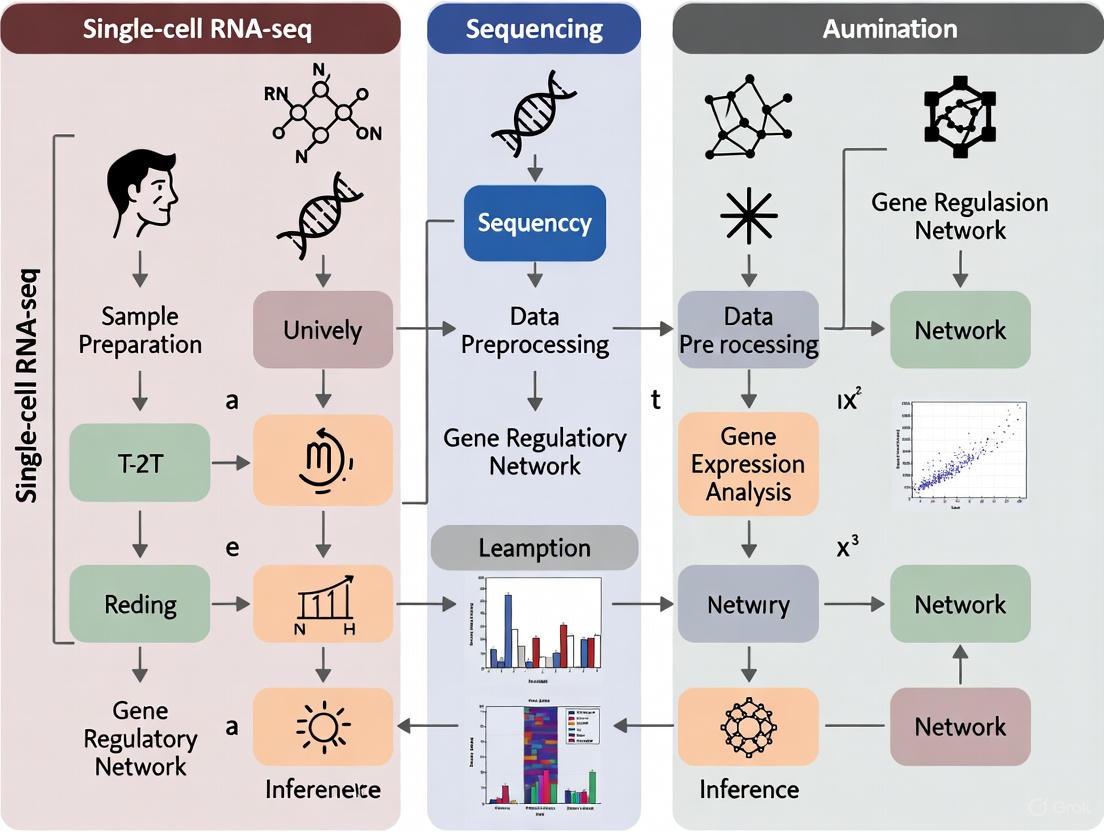
This comprehensive review explores the evolving landscape of gene regulatory network (GRN) inference from single-cell RNA-sequencing data, addressing both foundational concepts and cutting-edge computational methodologies.
Decoding Cellular Complexity: A 2025 Guide to Single-Cell RNA-seq GRN Inference Methods
Abstract
This comprehensive review explores the evolving landscape of gene regulatory network (GRN) inference from single-cell RNA-sequencing data, addressing both foundational concepts and cutting-edge computational methodologies. We examine the unique challenges posed by single-cell data, including zero-inflation, cellular heterogeneity, and technical noise, while providing practical guidance for method selection, implementation, and validation. The article covers diverse computational approaches—from correlation-based methods to advanced deep learning frameworks—and their applications in understanding cellular dynamics, disease mechanisms, and drug discovery. Special emphasis is placed on benchmarking strategies, performance optimization, and emerging trends such as multi-omic integration and lifelong learning, offering researchers and drug development professionals an essential resource for navigating this rapidly advancing field.
Understanding GRN Inference: From Bulk to Single-Cell Revolution
Defining Gene Regulatory Networks and Their Biological Significance
Gene Regulatory Networks (GRNs) are complex networks of interactions among genes, proteins, and other molecules that control cellular processes through precise regulation of gene expression [1]. At the heart of these networks are transcription factors: specialized proteins that interact with specific DNA regions to activate or repress target genes [1]. GRNs are not merely collections of individual genes; they establish feedback loops and intricate connections where genes mutually inhibit or activate one another, enabling cells to detect internal signals, respond to external stimuli, differentiate into various cell types, and execute specific functions [1]. Understanding GRNs is therefore fundamental to uncovering how organisms grow, function, and become diseased, providing crucial insights for identifying therapeutic targets.
The emergence of single-cell RNA sequencing (scRNA-seq) technologies has revolutionized GRN research by allowing researchers to analyze transcriptomic profiles of individual cells, providing a more detailed and accurate view of cellular diversity than traditional bulk methods [2]. However, scRNA-seq data presents unique challenges for GRN inference, including cellular heterogeneity, inter-cell variation in sequencing depth, and significant data sparsity due to "dropout" events where transcripts are erroneously not captured [2]. Despite these challenges, advancing GRN inference methods is essential for leveraging the full potential of single-cell technologies in drug discovery and development, where they contribute to target identification, credentialing, and patient stratification [3].
Key Properties and Biological Significance of GRNs
Structural Properties of GRNs
Biological GRNs exhibit several defining structural properties that differentiate them from random networks and inform their functional capabilities. Research has established that GRNs are sparse, meaning each gene is directly regulated by only a small number of transcription factors, significantly fewer than the total regulators in the network [4]. Experimental evidence from genome-scale perturbation studies indicates that only approximately 41% of perturbations targeting a primary transcript significantly affect the expression of any other gene [4].
GRNs also feature directed edges and feedback loops, where regulatory relationships have specific directionality (gene A regulating gene B is distinct from the reverse) while simultaneously containing pervasive feedback mechanisms [4]. Approximately 3.1% of ordered gene pairs show at least one-directional perturbation effects, with a substantial portion exhibiting bidirectional relationships [4]. Additionally, GRNs demonstrate hierarchical organization and modularity, with scale-free topologies characterized by power-law distributions of node in- and out-degrees, group-like structure, and enrichment for specific structural motifs like the feed-forward loop [4]. These networks also exhibit the "small-world" property where most nodes connect via short paths, facilitating efficient information transmission [4].
Biological and Clinical Significance
GRNs provide contextual models of gene interactions in vivo that are crucial for understanding development, disease pathology, and key regulatory points amenable to therapeutic intervention [2]. By mapping the causal relationships between genes, GRNs help researchers decipher the molecular mechanisms underlying complex diseases and cellular differentiation processes.
In pharmaceutical applications, GRN inference from single-cell data has enabled identification of molecular pathways that predict survival, therapy response, likelihood of resistance, and candidacy for alternative interventions [3]. The ability to model these networks has become increasingly valuable for understanding drug mechanisms of action, selecting relevant preclinical disease models, and identifying biomarkers for patient stratification [3]. For complex diseases like idiopathic pulmonary fibrosis (IPF), cancer, and COVID-19, GRN analysis has provided insights into disease progression and therapeutic opportunities [5].
Table 1: Key Properties of Biological Gene Regulatory Networks
| Property | Description | Biological Significance |
|---|---|---|
| Sparsity | Each gene is directly regulated by a small number of transcription factors | Enables specific regulation without cross-talk; only ~41% of gene perturbations significantly affect other genes [4] |
| Directed Edges with Feedback | Regulatory relationships have directionality but include feedback loops | Allows precise control while maintaining stability and responsiveness; ~2.4% of regulating pairs show bidirectional effects [4] |
| Hierarchical Organization | Network structure follows a hierarchy with master regulators | Creates coordinated response programs and efficient information flow [4] |
| Modularity | Network contains densely connected subgroups | Supports specialized cellular functions and coordinated expression of gene programs [4] |
| Scale-Free Topology | Degree distribution follows approximate power-law | Provides robustness to random attacks while sensitive to targeted hub disruptions [4] |
Computational Methods for GRN Inference
Methodological Approaches
Computational methods for GRN inference from single-cell data have evolved significantly, encompassing diverse mathematical frameworks and learning paradigms. These methods can be broadly categorized into several classes based on their underlying approaches:
Traditional and Machine Learning Methods: Established methods include GENIE3 and GRNBoost2, which are tree-based approaches initially developed for bulk data but found to perform well on single-cell data [2]. LEAP estimates pseudotime to infer gene co-expression across lagged windows, while SCODE and SINGE apply similar pseudotime concepts combined with ordinary differential equations and Granger causality ensembles [2]. PIDC uses partial information decomposition to incorporate mutual information among gene sets, explicitly modeling cellular heterogeneity [2].
Neural Network-Based Approaches: DeepSEM parameterizes the adjacency matrix using a variational autoencoder (VAE) architecture optimized on reconstruction error and has demonstrated superior performance in benchmark evaluations [2]. The recently proposed DAZZLE model implements a stabilized, robust version of the autoencoder-based structure equation model incorporating Dropout Augmentation (DA) to improve resilience to zero inflation in single-cell data [2]. This approach regularizes the model by augmenting data with synthetic dropout events rather than imputing missing values, enhancing robustness against dropout noise [2].
Integrative Methods: SCENIC identifies co-expression modules using GENIE3/GRNBoost2 followed by identification of key transcription factors regulating these modules [2]. scMTNI studies GRNs across cell clusters using multi-task learning, while GRNUlar infers undirected GRNs by incorporating transcription factor information [2]. NetREX-CF performs optimization based on prior GRN networks using collaborative filtering to address prior data incompleteness [2].
Advanced Generative Models: UNAGI represents a comprehensive framework that combines VAE-GAN architecture with graph convolution networks to manage sparse, noisy single-cell data [5]. It employs disease-informed cell embeddings that prioritize crucial gene markers and incorporates iterative refinement between embedding learning and temporal cellular dynamics [5].
Table 2: Comparison of Computational Methods for GRN Inference
| Method | Category | Key Features | Applicable Data Types |
|---|---|---|---|
| GENIE3/GRNBoost2 | Tree-based | Ensemble of regression trees; high performance on single-cell data | scRNA-seq, bulk RNA-seq [2] |
| DeepSEM | Neural Network | VAE architecture; parameterized adjacency matrix; reconstruction error optimization | scRNA-seq [2] |
| DAZZLE | Neural Network | Dropout Augmentation; stabilized SEM; noise classifier; reduced parameters | Zero-inflated scRNA-seq [2] |
| SCENIC | Integrative | Co-expression modules + TF identification; regulon discovery | scRNA-seq with prior TF information [2] |
| UNAGI | Generative Model | VAE-GAN + GCN; disease-informed embeddings; temporal dynamics | Time-series scRNA-seq [5] |
| Perturb-seq | Perturbation-based | CRISPR screening + scRNA-seq; causal inference | scRNA-seq with genetic perturbations [3] |
Experimental Data Types for GRN Inference
Different experimental designs yield data with distinct advantages for GRN inference, with perturbation-based approaches particularly powerful for establishing causal relationships:
Table 3: Data Types for GRN Inference and Their Applications
| Data Type | Key Characteristics | Utility for GRN Inference | Examples |
|---|---|---|---|
| Time-series Expression Data | Gene expression measurements across multiple time points | Enables studying dynamic changes; inference of temporal relationships [1] | Development, differentiation processes [1] |
| Perturbation Experiments | Gene expression after targeted perturbations (knockout, knockdown) | Provides causal information; strongest evidence for regulatory relationships [4] [1] | CRISPR-based perturbations [4] |
| Single-cell RNA-seq | Gene expression at individual cell level | Reveals cell-type-specific regulation; captures cellular heterogeneity [3] [1] | Cell type identification, rare population discovery [3] |
| Multi-omics Datasets | Integrated data from multiple molecular layers | Comprehensive regulatory picture; combines different evidence types [1] | snRNA-seq, epigenomics, proteomics [5] |
Experimental Protocols for GRN Analysis
Protocol 1: GRN Inference Using the DAZZLE Framework
Principle: DAZZLE (Dropout Augmentation for Zero-inflated Learning Enhancement) improves GRN inference resilience to zero-inflation in single-cell data by augmenting data with synthetic dropout events rather than imputing missing values, using a stabilized autoencoder-based structural equation model [2].
Materials:
- Hardware: Computer with H100 GPU or equivalent
- Software: Python with PyTorch/TensorFlow, DAZZLE implementation
- Input Data: Single-cell gene expression matrix (cells × genes)
Procedure:
Data Preprocessing
- Transform raw count data using log(x+1) transformation to reduce variance and avoid logarithm of zero
- Format data into expression matrix with rows representing cells and columns representing genes
Model Configuration
- Initialize structural equation model with parameterized adjacency matrix
- Configure autoencoder architecture with simplified structure compared to DeepSEM
- Set training parameters: learning rate, batch size, augmentation rate
- Implement closed-form Normal distribution prior to reduce model size and computation time
Dropout Augmentation
- At each training iteration, sample a proportion of expression values
- Set sampled values to zero to simulate additional dropout noise
- Train noise classifier concurrently to predict probability that each zero represents augmented dropout
Model Training
- Implement delayed introduction of sparse loss term by customizable number of epochs
- Train model to reconstruct input while learning adjacency matrix weights as byproduct
- Use single optimizer for all parameters (unlike alternating optimizers in DeepSEM)
- Continue training until convergence with early stopping based on reconstruction loss
Network Extraction
- Extract trained adjacency matrix weights as inferred GRN
- Apply sparsity thresholding to remove weak connections
- Validate network stability across multiple runs with different random seeds
Technical Notes: DAZZLE reduces model parameters by 21.7% and computation time by 50.8% compared to DeepSEM while improving robustness [2]. The dropout augmentation rate should be tuned based on the observed zero-inflation rate in the dataset.
Protocol 2: GRN Inference with Perturbation Data Using Perturb-seq
Principle: Perturb-seq combines pooled CRISPR screening with single-cell RNA sequencing to decode the effects of individual genetic perturbations on gene expression, enabling causal inference of regulatory relationships [3] [4].
Materials:
- Cell line of interest (e.g., K562 erythroid progenitor cells)
- CRISPR library targeting genes of interest
- Single-cell RNA sequencing platform (10X Genomics Chromium or similar)
- Computational tools: MIMOSCA, scMAGeCK, MUSIC, Mixscape [3]
Procedure:
Experimental Design
- Design sgRNAs targeting candidate regulator genes
- Include non-targeting control sgRNAs for baseline measurement
- Determine coverage (number of cells per perturbation) based on desired statistical power
Library Generation and Sequencing
- Transduce cells with lentiviral CRISPR library at low MOI to ensure single integrations
- Culture cells for sufficient time to manifest perturbation effects (typically 5-7 days)
- Prepare single-cell suspensions and load onto appropriate scRNA-seq platform
- Sequence libraries following manufacturer protocols
Data Preprocessing
- Align sequencing reads using Cell Ranger, STARsolo, Alevin, or Kallisto-BUStools
- Generate cell-by-gene count matrix with unique molecular identifiers (UMIs)
- Perform quality control: filter low-quality cells, remove doublets, eliminate ambient RNA
- Assign perturbation identities to cells based on CRISPR sgRNA detection
Differential Expression Analysis
- For each perturbation, identify cells containing the corresponding sgRNA
- Compare expression profiles against control cells using appropriate statistical tests
- Correct for multiple testing using FDR or Bonferroni methods
- Filter significant gene expression changes (typically FDR < 0.05)
Network Construction
- Create directed edges from perturbed genes to significantly differentially expressed genes
- Integrate with co-expression data to distinguish direct from indirect regulation
- Apply network pruning to remove inconsistent or weak edges
- Validate network predictions using orthogonal experimental approaches
Technical Notes: In large-scale Perturb-seq studies, typical parameters include targeting 5,530 gene transcripts across 1,989,578 cells with 11,258 CRISPR-based perturbations of 9,866 unique genes [4]. Only approximately 41% of perturbations targeting primary transcripts show significant effects on other genes [4].
Visualization of GRN Inference Workflows
DAZZLE Workflow Diagram
DAZZLE Workflow for GRN Inference
GRN Inference from Perturbation Data
GRN Inference from Perturbation Data
Essential Research Reagents and Computational Tools
Table 4: Essential Research Reagent Solutions for GRN Studies
| Reagent/Tool | Category | Function | Example Applications |
|---|---|---|---|
| 10X Genomics Chromium | Sequencing Platform | Single-cell partitioning and barcoding | High-throughput scRNA-seq library preparation [3] |
| CRISPR Library | Perturbation Tool | Targeted gene knockout for causal inference | Perturb-seq studies; functional validation [4] |
| SoupX | Computational Tool | Ambient RNA correction in droplet-based data | Quality control for scRNA-seq data [6] |
| Scrublet | Computational Tool | Doublet detection in single-cell data | Quality control; elimination of multiplets [6] |
| Seurat | Computational Toolkit | Single-cell data analysis and visualization | QC, normalization, clustering, visualization [6] |
| Cell Ranger | Computational Pipeline | Processing 10X Genomics scRNA-seq data | Read alignment, cell counting, matrix generation [3] |
| STARsolo/Alevin | Computational Tools | Academic alternatives for scRNA-seq processing | Read alignment and quantification [3] |
| GENIE3/GRNBoost2 | Inference Algorithm | Tree-based GRN inference | Baseline network inference [2] |
| DeepSEM/DAZZLE | Inference Algorithm | Neural network-based GRN inference | Robust inference from zero-inflated data [2] |
| UNAGI | Inference Framework | Generative model for temporal dynamics | Disease progression modeling; drug screening [5] |
Gene Regulatory Networks represent powerful models for understanding the complex interactions governing gene expression and cellular function. The biological significance of GRNs extends from fundamental developmental processes to disease mechanisms and therapeutic interventions. Single-cell RNA sequencing technologies have dramatically enhanced our ability to infer these networks at unprecedented resolution, while computational methods like DAZZLE and UNAGI address the unique challenges presented by single-cell data, particularly zero-inflation and cellular heterogeneity. As GRN inference methodologies continue to evolve, they offer increasingly sophisticated approaches for mapping regulatory architecture, with profound implications for drug discovery, disease modeling, and personalized medicine. The integration of perturbation data with advanced computational frameworks promises to further enhance the accuracy and biological relevance of inferred networks, advancing both basic science and clinical applications.
Single-cell RNA sequencing (scRNA-seq) has fundamentally transformed transcriptomic studies by enabling the profiling of gene expression at the level of individual cells, rather than providing population averages from bulk tissue analysis [7]. This revolution has unveiled unprecedented insights into cellular heterogeneity, a fundamental property of complex biological systems including developing tissues, brains, and tumors [8]. The technology has revealed that even morphologically identical cells can exhibit significant differences in their gene expression programs, leading to the discovery of novel and rare cell types and states that were previously obscured [7].
A particularly powerful application of scRNA-seq lies in the inference of Gene Regulatory Networks (GRNs) – the complex webs of interactions where transcription factors (TFs) regulate their target genes, ultimately controlling cellular identity and fate [9] [10]. Understanding these networks is crucial for elucidating the regulatory architecture underlying critical biological processes such as development, differentiation, and disease pathogenesis [9]. However, reconstructing GRNs from single-cell data presents a set of unique and formidable challenges that must be overcome to fully realize the potential of this revolutionary technology.
Opportunities in Single-Cell GRN Inference
The application of scRNA-seq to GRN inference opens up several groundbreaking opportunities across biomedical research.
Deciphering Cell-Type-Specific Regulation: scRNA-seq enables the reconstruction of GRNs that are specific to individual cell types within a complex tissue [9]. This is essential for understanding the distinct regulatory logic that defines cellular identity and function. For example, in cancer biology, GRN analysis has helped determine the cellular origins of various tumor types and identify subpopulations of malignant cells with clinically significant features, such as those associated with poor prognosis or metastatic potential [8].
Capturing Dynamic Regulatory Transitions: Unlike bulk sequencing, scRNA-seq can capture cells at different stages of continuous processes like development or immune response. This allows researchers to infer dynamic GRN rewiring – how regulatory relationships change over time or between conditions – revealing temporally dynamic regulatory programs and condition-specific network states [9].
Enabling Therapeutic Discovery: GRN inference provides a powerful framework for prioritizing novel drug targets. By comparing GRNs between normal and diseased tissues, researchers can identify key transcription factors and regulatory interactions that are disrupted in disease [11]. Druggability analysis of proteins encoded by high-confidence target genes has revealed that a significant majority (e.g., 75% in one ovarian cancer study) represent potential therapeutic targets [11].
Table 1: Key Opportunities in Single-Cell GRN Inference
| Opportunity | Description | Research Impact |
|---|---|---|
| Cell-Type-Specific GRNs | Reconstructing regulatory networks for individual cell types within heterogeneous tissues. | Elucidates the regulatory architecture defining cellular identity and function. |
| Dynamic Network Rewiring | Tracking how regulatory relationships change across time, during development, or in response to stimuli. | Reveals transient regulatory states and mechanistic drivers of cellular transitions. |
| Therapeutic Target Discovery | Identifying dysregulated transcription factors and interactions in disease networks for drug targeting. | Prioritizes novel, high-value targets for oncology, rare diseases, and other conditions. |
| Analysis of Rare Cell Populations | Inferring regulation in rare cell types (e.g., stem cells, rare immune cells) previously masked in bulk data. | Uncovers regulatory mechanisms governing rare but biologically critical cell states. |
Unique Challenges in GRN Inference from scRNA-seq Data
Despite its promise, inferring GRNs from scRNA-seq data remains challenging. Benchmarking studies have shown that methods relying purely on gene expression data often cannot consistently outperform a random predictor, highlighting fundamental limitations [10].
Data Sparsity and Technical Noise: scRNA-seq data are characterized by high dimensionality and sparsity, meaning that many genes have zero counts in many cells [9] [7]. This "dropout" effect, along with other technical artifacts like ambient RNA contamination, can obscure true biological signals and complicate the detection of regulatory relationships [8].
The Intrinsic Complexity of Gene Regulation: A core challenge is that a target gene's mature mRNA level is an imperfect reporter of upstream regulatory activity. Several factors contribute to this disconnect, as dissected through kinetic modeling [10]:
- Different Time Scales: The synthesis of pre-mRNA (a more direct product of transcription) occurs on a much faster time scale (minutes) than the accumulation of mature mRNA (hours). When transcription factor activity changes rapidly, the mature mRNA level often fails to accurately capture these dynamics due to its longer half-life.
- Stochasticity: The inherent noise in biochemical reactions (transcription, splicing) further decouples regulator activity from target mRNA levels. These factors place a theoretical upper limit on the accuracy of GRN inference, which depends on gene-specific kinetic parameters [10].
Limitations of Inference Methods: Many computational methods assume that the mRNA level of a transcription factor is a reliable proxy for its regulatory activity. This overlooks crucial post-translational modifications and the fact that TF activity is often controlled by mechanisms not directly observable with scRNA-seq [10]. Furthermore, distinguishing direct regulatory interactions from indirect correlations within a complex network is a non-trivial task.
Table 2: Key Challenges in Single-Cell GRN Inference
| Challenge | Underlying Cause | Consequence for GRN Inference |
|---|---|---|
| Data Sparsity & Technical Noise | High number of zero counts ("dropouts"), ambient RNA, cell doublets. | Obscures true co-expression relationships, leading to spurious or missed edges in the network. |
| Decoupling of mRNA from Regulatory Activity | Mature mRNA's slow degradation kinetics and biochemical stochasticity create a lag and noise in reporting TF activity. | Fundamental limit on inference accuracy; TF mRNA levels can be a poor proxy for their regulatory function. |
| Computational Method Limitations | Difficulty in capturing non-linear relationships, distinguishing direct from indirect regulation, and modeling unobserved TF activity. | Even advanced algorithms struggle to achieve high accuracy consistently across diverse datasets and biological contexts. |
| Network Size and Topology | Genome-scale networks are vast and often have scale-free or other complex topologies. | Methods perform differently depending on network size and structure, making a single universal solution elusive. |
The following diagram illustrates the core challenge of inferring regulation from mRNA levels and a proposed solution using pre-mRNA data:
Figure 1: The GRN Inference Challenge. Transcription factor activity directly drives pre-mRNA synthesis, which is then processed into mature mRNA. The slow kinetics of mature mRNA accumulation make it a lagging and noisy indicator of upstream regulation. Using pre-mRNA levels for inference can improve accuracy by more directly capturing regulatory dynamics [10].
Best Practices and Experimental Protocols
Addressing the challenges in single-cell GRN inference requires a meticulous approach, from experimental design to computational analysis.
Experimental Design and scRNA-seq Workflow
A successful GRN inference study begins with a carefully planned experiment. Key considerations include [8]:
- Species and Sample Origin: Specify whether samples are from human, mouse, or other models, and whether they originate from primary tissues (e.g., tumor biopsies), peripheral blood mononuclear cells (PBMCs), or patient-derived organoids.
- Study Design: Employ case-control or cohort designs with appropriate sample sizes and control for covariates. For large cohorts, nested case-control studies or sample multiplexing are often applied.
- Cell Isolation and Library Preparation: Choose a protocol suited to your biological question. Droplet-based methods (e.g., 10x Genomics) offer high throughput for discovering cellular subpopulations, while full-length protocols (e.g., Smart-Seq2) provide greater sensitivity for detecting low-abundance genes and isoforms [7].
The general workflow for a scRNA-seq experiment is summarized below:
Figure 2: Standard scRNA-seq Experimental Workflow. The process begins with tissue dissociation and single-cell isolation, followed by library preparation and sequencing. Computational steps include raw data processing, rigorous quality control, and downstream analysis for biological insight [8] [7].
Computational Analysis and GRN Inference Protocol
Raw Data Processing and Quality Control (QC) Process raw sequencing reads using standardized pipelines (e.g., Cell Ranger for 10x Genomics, CeleScope for Singleron) to generate a cell-by-gene UMI count matrix [8]. Cell QC is critical and relies on three key metrics per cell barcode:
- Total UMI Count (Count Depth): Low counts may indicate damaged cells or empty droplets.
- Number of Detected Genes: Low gene counts suggest damaged cells; unusually high counts may indicate doublets (two cells captured as one).
- Fraction of Mitochondrial Counts: A high percentage is indicative of dying or stressed cells. Thresholds for these metrics are experiment-dependent, but tools like Seurat and Scater can facilitate this process [8].
Advanced GRN Inference with Pre-mRNA Data As kinetic modeling suggests, using pre-mRNA (estimated from intronic reads) can improve inference accuracy over using mature mRNA (exonic reads) alone [10]. The following protocol outlines this approach:
Table 3: Protocol for Improved GRN Inference Using Pre-mRNA Data
| Step | Action | Explanation & Tips |
|---|---|---|
| 1. Data Extraction | Extract intronic reads (for pre-mRNA) and exonic reads (for mature mRNA) from aligned BAM files during raw data processing. | Most alignment tools (e.g., Cell Ranger, kallisto bustools) can be configured to count intronic reads. |
| 2. Quality Control | Perform separate QC on the pre-mRNA and mRNA count matrices. Apply the same cell filters to both matrices to ensure consistency. | Be aware that pre-mRNA counts are typically lower and noisier. Filter cells with extreme low counts. |
| 3. Normalization | Normalize the pre-mRNA and mRNA counts separately using a standard method (e.g., SCTransform in Seurat). | Normalization accounts for differences in sequencing depth and count distribution between the two modalities. |
| 4. GRN Inference | Apply a GRN inference algorithm (e.g., RegGAIN, GENIE3, SCENIC) using the pre-mRNA count matrix as the input for target genes. | Using pre-mRNA for targets more directly captures transcriptional output. TF input can still be based on mRNA, or integrated from other data. |
| 5. Validation | Validate key predicted interactions using external epigenetic data (e.g., ChIP-seq, ATAC-seq) to confirm TF binding at promoter/enhancer regions. | This provides orthogonal evidence for the physical existence of a predicted regulatory interaction. |
Leveraging Advanced Computational Methods Newer methods are addressing inherent inference challenges. For instance, RegGAIN employs a self-supervised contrastive learning framework to maximize the consistency of gene embeddings across perturbed graph views [9]. It uses separate encoders to learn dual-role representations for each gene (as both a potential regulator and a target), which helps characterize regulatory directionality and capture distinct patterns [9]. Supervised methods like SIRENE can also be highly accurate by leveraging known regulatory interactions as a training set [11].
Table 4: Key Research Reagent Solutions for scRNA-seq GRN Studies
| Category / Item | Function / Description |
|---|---|
| Commercial Platforms | |
| 10x Genomics Chromium | A widely adopted droplet-based system for high-throughput single-cell partitioning and barcoding. |
| Singleron GEXSCOPE | Another commercial platform offering scRNA-seq solutions and proprietary reagents. |
| Reagent Kits | |
| Library Preparation Kit | (e.g., 10x GemCode Single-Cell 3‘ Gel Bead and Library Kit) Contains enzymes, barcoded beads, and buffers for reverse transcription, amplification, and library construction. |
| Partitioning Reagents | Oil, surfactants, and recovery agents used in microfluidic devices to create stable droplets for single-cell encapsulation. |
| Critical Enzymes | |
| Reverse Transcriptase | Synthesizes cDNA from single-cell mRNA templates. Critical for efficiency and full-length coverage. |
| DNA Polymerase | Used for PCR amplification of cDNA prior to library construction. High-fidelity enzymes are preferred. |
| Specialized Reagents | |
| Unique Molecular Identifiers (UMIs) | Short random nucleotide barcodes incorporated during reverse transcription to tag individual mRNA molecules, enabling accurate quantification and correction for amplification bias. |
| Cell Barcodes | Sequences that uniquely label all mRNAs from a single cell, allowing pooling of many cells in one sequencing library. |
| Analysis Software | |
| Cell Ranger / CeleScope | Standardized pipelines for processing raw sequencing data from 10x Genomics or Singleron platforms, respectively, into count matrices. |
| Seurat / Scanpy | Comprehensive R/Python-based toolkits for downstream analysis, including QC, clustering, and differential expression. |
The single-cell revolution has provided us with the extraordinary ability to observe the transcriptional states of individual cells, offering a powerful lens through which to infer the gene regulatory networks that control cellular life. While significant challenges related to data quality and biological complexity remain, the field is rapidly advancing. The development of more sophisticated computational methods like RegGAIN [9], the strategic use of pre-mRNA information to better capture regulatory dynamics [10], and the establishment of best practices for experimental design and analysis [8] are collectively pushing the boundaries of what is possible. As these tools and protocols mature, the robust inference of GRNs from scRNA-seq data will undoubtedly become a cornerstone for unlocking the mechanisms of development and disease, ultimately accelerating the discovery of novel therapeutic targets.
Single-cell RNA sequencing (scRNA-seq) has revolutionized biological research by enabling the examination of transcriptomic profiles at the level of individual cells. This technological advancement provides unprecedented resolution for investigating cellular heterogeneity in complex biological systems. However, the data generated from scRNA-seq experiments present unique computational challenges that must be understood and addressed to draw accurate biological conclusions. Three critical characteristics define the landscape of scRNA-seq data: zero-inflation (the excessive number of zero counts), sparsity (the high-dimensional, low-information-density structure), and heterogeneity (the natural biological variation between cells). These characteristics profoundly impact downstream analyses, including gene regulatory network (GRN) inference, which aims to model contextual interactions between genes in vivo. Understanding these data properties is essential for selecting appropriate analytical methods and accurately interpreting their results in the context of drug discovery and personalized medicine [7] [2].
Defining the Core Characteristics
Zero-Inflation and Sparsity
Zero-inflation refers to the phenomenon where scRNA-seq data contain an excessive number of zero expression counts compared to what would be expected under standard count distributions. In the nine datasets examined by Zhu and Slonim (2025), 57% to 92% of observed counts were zeros [2]. These zeros arise from two primary sources: biological and non-biological factors [12].
- Biological Zeros: Represent the true absence of a gene's transcripts in a cell. This occurs either because the gene is not expressed in that cell type or due to stochastic transcriptional bursting, where genes switch between active and inactive states [12].
- Non-Biological Zeros: Arise from technical limitations and include:
- Technical Zeros: Caused by imperfect mRNA capture efficiency during reverse transcription, where transcripts exist in the cell but are not converted to cDNA [12].
- Sampling Zeros: Result from inefficient cDNA amplification or limited sequencing depth, where transcripts are present but not detected due to random sampling processes [12].
The terms "dropout" and "zero-inflation" are often used relatedly. Dropout specifically describes the situation when transcripts, often those with low or moderate expression, are erroneously not captured by the sequencing technology. Zero-inflation is the broader statistical characteristic of the dataset resulting from a combination of all zero-generating processes [12]. The high proportion of zeros leads to data sparsity, meaning the gene expression matrix is high-dimensional but contains relatively few non-zero values, creating significant challenges for statistical analysis [7].
Cellular Heterogeneity
Cellular heterogeneity refers to the natural variation in gene expression patterns between individual cells, even within putatively homogeneous cell populations. This diversity arises from differences in cell type, state, developmental stage, and stochastic molecular processes. scRNA-seq enables researchers to dissect this heterogeneity, uncovering novel cell types, mapping developmental pathways, and investigating tumor diversity [7]. Unlike bulk RNA-seq, which provides averaged expression profiles across cell populations, scRNA-seq captures the unique transcriptomic identity of each cell, revealing the complexity of biological systems [7]. However, this valuable characteristic also introduces analytical challenges for GRN inference, as models must account for the diverse expression patterns across cells rather than analyzing a unified population profile [2].
Table 1: Sources and Impacts of Zeros in scRNA-seq Data
| Zero Type | Source | Description | Proportion in Data |
|---|---|---|---|
| Biological Zero | Biological Process | True absence of transcripts due to gene being unexpressed or transcriptional bursting. | Varies by protocol and cell type |
| Technical Zero | Experimental Limitation | mRNA transcripts exist but are not captured or reverse transcribed to cDNA. | Significant in low-efficiency protocols |
| Sampling Zero | Experimental Limitation | Transcripts are present but not detected due to inefficient amplification or limited sequencing depth. | Can exceed 90% of all zeros in some datasets |
The quantitative properties of scRNA-seq data directly influence the selection of analytical methods and the interpretation of results. The following table summarizes key metrics related to data sparsity and heterogeneity across different experimental scales.
Table 2: Example scRNA-seq Dataset Scales and Properties
| Dataset | Cell Number | Gene Number | Cell Types | Sequencing Platform |
|---|---|---|---|---|
| Muraro | 2,122 | 19,049 | 9 | CEL-seq2 [13] |
| Romanov | 2,881 | 21,143 | 7 | ILLumina HiSeq [13] |
| Klein | 2,717 | 24,175 | 5 | ILLumina HiSeq [13] |
| Qx_Bladder | 2,500 | 23,341 | 4 | 10X Genomics [13] |
| QxLimbMuscle | 3,909 | 23,341 | 6 | 10X Genomics [13] |
| Qx_Spleen | 9,552 | 23,341 | 5 | 10X Genomics [13] |
| QS-seq2_Diaphragm | 870 | 23,341 | 5 | Smart-seq2 [13] |
| QS-seq2LimbMuscle | 1,090 | 23,341 | 6 | Smart-seq2 [13] |
| QS-seq2_Lung | 1,676 | 23,341 | 11 | Smart-seq2 [13] |
Experimental Protocols for scRNA-seq
Sample Preparation and Cell Isolation
The initial stage of scRNA-seq involves extracting viable individual cells from the tissue of interest. The choice of protocol significantly influences data quality and the extent of technical artifacts.
- Fluorescence-Activated Cell Sorting (FACS): Uses lasers and fluorescence detection to sort individual cells based on specific surface markers. It offers high precision but can be stressful for cells [7].
- Droplet-Based Microfluidics: Encapsulates individual cells in nanoliter-sized droplets for lysis and barcoding (e.g., Drop-seq, inDrop, 10X Chromium). Enables high-throughput processing of thousands of cells simultaneously at a low cost per cell [7].
- Microfluidic Devices: Uses integrated fluidic circuits for precise cell handling (e.g., Fluidigm C1). Provides controlled reaction chambers but with lower throughput [7].
- Combinatorial Indexing: Methods like sci-RNA-seq and SPLiT-Seq use combinatorial barcoding to label cells without physical separation. This allows for ultra-high throughput processing of up to millions of cells and is suitable for frozen or fragile samples [7].
Following isolation, cells are lysed to release RNA. Poly[T]-primers are frequently used to selectively capture polyadenylated mRNA while minimizing ribosomal RNA contamination [7].
Library Preparation and Sequencing
After cell isolation and lysis, the workflow proceeds through reverse transcription, cDNA amplification, and library preparation. Protocols differ in transcript coverage and amplification methods, which affect zero-inflation and sparsity.
- Full-Length Protocols: Methods like Smart-Seq2 and MATQ-Seq generate sequencing data that covers the entire transcript length. This excels in isoform usage analysis, allelic expression detection, and identifying RNA editing [7].
- 3' or 5' End-Counting Protocols: Methods like Drop-Seq, inDrop, and Seq-Well capture only the 3' or 5' ends of transcripts. These droplet-based techniques typically offer higher throughput and lower cost per cell, making them particularly useful for detecting cell subpopulations in complex tissues [7].
- Amplification Methods: A key differentiator is the amplification technique. Polymerase Chain Reaction (PCR) is widely used but can introduce biases due to its non-linear nature. In vitro transcription (IVT) provides linear amplification but requires more input cDNA [7].
Table 3: Overview of Key scRNA-seq Protocols
| Protocol | Isolation Strategy | Transcript Coverage | UMI | Amplification Method | Unique Features |
|---|---|---|---|---|---|
| Smart-Seq2 | FACS | Full-length | No | PCR | Enhanced sensitivity for low-abundance transcripts [7] |
| Drop-Seq | Droplet-based | 3'-end | Yes | PCR | High-throughput, low cost per cell [7] |
| inDrop | Droplet-based | 3'-end | Yes | IVT | Uses hydrogel beads; cost-effective [7] |
| CEL-Seq2 | FACS | 3'-only | Yes | IVT | Linear amplification reduces bias [7] |
| Seq-well | Droplet-based | 3'-only | Yes | PCR | Portable, low-cost, simple equipment [7] |
| SPLiT-Seq | Not required | 3'-only | Yes | PCR | Combinatorial indexing; highly scalable and low cost [7] |
The following diagram illustrates the core experimental workflow and the points at which key characteristics like zero-inflation are introduced:
Computational Methods for Addressing Data Challenges
Strategies for Handling Zero-Inflation and Sparsity
The prevalence of zeros in scRNA-seq data biases the estimation of gene expression correlations and hinders the capture of gene expression dynamics. Several computational approaches have been developed to address this challenge [12].
- Direct Statistical Modeling: Uses zero-inflated models that explicitly account for the excess zeros in the data generation process. These models treat zeros as arising from a mixture of biological and technical processes [12].
- Data Imputation: Attempts to identify and replace missing values (dropouts) with estimated expression values. Many methods rely on restrictive assumptions or require additional information like GRNs or bulk data [2] [12].
- Data Binarization: Converts expression counts to binary values (expressed vs. not expressed), effectively embracing zeros as useful biological information rather than treating them as missing data [12].
- Model Regularization: A newer perspective focuses on making models robust to zero-inflation rather than correcting the data itself. Dropout Augmentation (DA), for example, augments training data with synthetic dropout events to improve model resilience [2].
Advanced Computational Frameworks
Recent advancements have produced sophisticated frameworks specifically designed to manage sparsity and heterogeneity:
- DAZZLE (Dropout Augmentation for Zero-inflated Learning Enhancement): A stabilized autoencoder-based model for GRN inference that uses Dropout Augmentation. It incorporates a noise classifier and simplified model structure to improve stability and robustness against dropout noise, showing superior performance in benchmark experiments [2].
- ZIGACL (Zero-Inflated Graph Attention Collaborative Learning): Combines a Zero-Inflated Negative Binomial (ZINB) model with a Graph Attention Network (GAT). It leverages mutual information from neighboring cells to enhance dimensionality reduction and uses a co-supervised deep graph clustering model to improve the stability of cell representations and clustering accuracy [13].
The following diagram illustrates the structure of the DAZZLE framework, which incorporates Dropout Augmentation for robust GRN inference:
The Scientist's Toolkit: Essential Reagents and Materials
Successful scRNA-seq experiments require careful selection of reagents and materials. The following table details key solutions used in the field.
Table 4: Research Reagent Solutions for scRNA-seq Workflows
| Reagent/Material | Function | Protocol Examples |
|---|---|---|
| Hydrogel Beads | Serve as carriers for barcoded primers in droplet-based systems, enabling massively parallel analysis of single cells. | inDrop [7] |
| Unique Molecular Identifiers (UMIs) | Short random nucleotide sequences that label individual mRNA molecules before amplification, allowing for accurate quantification and correction of PCR biases. | Drop-seq, 10X Genomics, CEL-Seq2 [7] |
| Poly[T]-Primers | Oligonucleotide primers that selectively bind to the polyadenylated tail of mRNA, enabling specific capture of mRNA while minimizing ribosomal RNA (rRNA) contamination. | Universal in most protocols [7] |
| Barcoded Beads | Microbeads pre-loaded with DNA barcodes that uniquely tag each cell's transcripts during the droplet encapsulation process, allowing for sample multiplexing. | Drop-seq, inDrop, 10X Chromium [7] |
| Cell Lysis Buffer | A chemical solution that disrupts the cell membrane to release intracellular RNA while maintaining RNA integrity for downstream processing. | Universal in all protocols [7] |
| Reverse Transcriptase | Enzyme that synthesizes complementary DNA (cDNA) from the released mRNA template, a critical first step in library construction. | Universal in all protocols [7] |
Gene Regulatory Networks (GRNs) are collections of molecular regulators that interact with each other and determine gene activation and silencing in specific cellular contexts [14]. A comprehensive understanding of gene regulation is fundamental to explain cellular functions, responses to environments, and how noncoding genetic variants cause disease [14]. For decades, GRN inference relied on bulk transcriptomic data, which averaged signals across thousands to millions of cells, obscuring cellular heterogeneity and limiting resolution [15].
The advent of single-cell RNA sequencing (scRNA-seq) has revolutionized this field by enabling researchers to analyze transcriptomic profiles of individual cells, providing a more detailed and accurate view of cellular diversity [3] [15]. This technological shift has created unprecedented opportunities for understanding cellular responses, identifying rare cell populations, and tracing lineage relationships [15]. However, this paradigm shift also introduces significant computational challenges, including data sparsity, noise, and the intrinsic complexity of gene regulation [16]. This application note explores how modern computational methods are overcoming these challenges to enable accurate GRN inference from single-cell data, with profound implications for biomedical research and therapeutic development.
Computational Challenges in Single-Cell GRN Inference
Inferring GRNs from single-cell transcriptomic data presents unique challenges that distinguish it from traditional bulk approaches. The table below summarizes the primary computational challenges and their implications for GRN inference.
Table 1: Key Computational Challenges in Single-Cell GRN Inference
| Challenge | Description | Impact on GRN Inference |
|---|---|---|
| Data Sparsity & Dropout | Prevalence of false zeros where transcripts are not captured; 57-92% of observed counts are zeros in typical datasets [17] | Reduces statistical power for correlation detection; may obscure true regulatory relationships |
| Cellular Heterogeneity | Presence of multiple cell states/types within samples [18] | Networks inferred from mixed populations may not represent any true biological state |
| Technical Noise | Cell-to-cell variation in sequencing depth and efficiency [18] | Can create spurious correlations or mask true relationships |
| Complex Trajectories | Non-linear differentiation paths and multiple cell fates [18] [19] | Requires dynamic rather than static network models |
| High Dimensionality | Thousands of genes measured across thousands of cells [15] | Computational scalability issues; curse of dimensionality |
These challenges necessitate specialized computational approaches that go beyond methods developed for bulk RNA-seq data. The high sparsity, in particular, has driven innovation in both data imputation and model regularization techniques [17].
Modern Computational Frameworks for GRN Inference
Recent years have seen rapid development of sophisticated algorithms designed specifically for GRN inference from single-cell data. The BEELINE evaluation framework, which systematically assesses state-of-the-art algorithms, has identified several prominent methodological categories [18]. The table below summarizes representative methods and their core approaches.
Table 2: Categories of GRN Inference Methods for Single-Cell Data
| Method Category | Representative Methods | Core Approach | Strengths |
|---|---|---|---|
| Deep Learning-Based | RegGAIN [16], DeepSEM [17], DAZZLE [17] | Self-supervised contrastive learning; autoencoder-based structure equation models | Handles complexity; robust to noise; captures non-linear relationships |
| Lifelong Learning | LINGER [14] | Incorporates atlas-scale external bulk data as prior knowledge | Dramatically improves accuracy (4-7x relative increase) |
| Multi-Task Learning | scMTNI [19], MRTLE [19] | Jointly infers GRNs for multiple cell types on a lineage | Captures network dynamics across development |
| Expression Correlation | PIDC [18], GENIE3 [18] [17] | Information theory or tree-based correlation measures | No requirement for pseudotime; fast computation |
| Pseudotime-Dependent | SINCERITIES [18], SINGE [18], SCODE [17], LEAP [17] | Uses inferred cellular ordering along trajectories | Models temporal dynamics of regulation |
Advanced Methodologies in Detail
Dual-Role Graph Contrastive Learning (RegGAIN): RegGAIN employs self-supervised contrastive learning to maximize consistency of gene embeddings across perturbed graph views. It leverages separate encoders to learn dual-role representations for each gene, characterizing both regulator- and target-driven patterns simultaneously [16]. This approach has demonstrated accurate and robust GRN reconstruction while enabling discovery of condition-specific and temporally dynamic regulatory programs [16].
Dropout Augmentation for Zero-Inflated Learning (DAZZLE): Addressing the critical challenge of data sparsity, DAZZLE introduces a counter-intuitive but effective regularization approach—adding synthetic dropout events during training to improve model robustness against zero-inflation [17]. This method uses a stabilized autoencoder-based structure equation model with a simplified architecture and improved sparsity control. Benchmark experiments demonstrate its improved performance and stability compared to existing approaches [17].
Lifelong Neural Networks (LINGER): LINGER represents a breakthrough in accuracy by incorporating atlas-scale external bulk data across diverse cellular contexts as prior knowledge through lifelong learning [14]. The method uses a neural network model to fit target gene expression from transcription factor expression and regulatory element accessibility, with a second layer forming regulatory modules guided by TF-RE motif matching. When trained on single-cell data, it applies elastic weight consolidation loss, using bulk data parameters as a prior to prevent overfitting and ensure stable learning [14].
Multi-Task Network Inference (scMTNI): scMTNI integrates scRNA-seq and scATAC-seq data to infer cell type-specific GRNs across developmental lineages [19]. Using a multi-task learning framework with a probabilistic lineage tree prior, it models GRN changes from progenitor to differentiated states as series of edge-level probabilistic transitions. Comprehensive benchmarking shows multi-task learning approaches significantly outperform single-task methods, particularly for recovering network structure [19].
Figure 1: Integrated Computational Framework for Single-Cell GRN Inference
Experimental Protocols and Implementation
Standard scRNA-seq Data Processing Workflow
Proper data preprocessing is essential for accurate GRN inference. The following protocol outlines key steps in scRNA-seq data processing based on established methodologies [20]:
Library Generation and Sequencing:
- Tissue dissociation with mechanical or enzymatic stress, with care to minimize RNA release
- Cell separation into reaction chambers using microfluidic platforms (e.g., 10X Chromium) or plate-based technologies
- RNA capture with barcoded unique molecular identifiers (UMIs) to distinguish cell transcripts
- cDNA library creation through reverse transcription and amplification
- Sequencing on NGS platforms with appropriate multiplexing
Sequence Data Pre-processing:
- Alignment using specialized tools (Cell Ranger, STARsolo, Alevin, or Kallisto-BUStools)
- Cell-by-gene matrix generation with filtering for empty droplets and ambient RNA
- Normalization to account for discrepancies in RNA capture between cells
- Identification of highly variable genes for downstream analysis
Sequence Data Post-processing:
- Unsupervised clustering to group cells with similar expression profiles
- Dimensionality reduction (UMAP or t-SNE) for visualization
- Cell-type annotation using marker genes
- Data integration and batch effect correction
- Trajectory inference for developmental processes
Quality Control Parameters:
- Include only cells containing between 200-5000 genes
- Exclude cells with >20% mitochondrial RNA
- Log-normalize data across cells
- Identify 1500 most highly variable genes using Seurat's standard workflow
- Cluster data using principal components with resolution parameter 0.3 [20]
Benchmarking Framework and Evaluation Metrics
The BEELINE framework provides a standardized approach for evaluating GRN inference algorithms [18]. Implementation involves:
Ground Truth Datasets:
- Synthetic networks with predictable trajectories (Linear, Cycle, Bifurcating, Trifurcating)
- Literature-curated Boolean models of biological processes
- Diverse transcriptional regulatory networks from experimental data
Performance Metrics:
- Area Under Precision Recall Curve (AUPRC) and AUPRC ratio compared to random predictor
- Area Under Receiver Operating Characteristic (AUROC)
- Early precision values for top-ranked predictions
- Jaccard index for stability assessment across multiple runs
- F-score of top k edges, where k is the number of edges in the true network
Simulation Approach:
- Use BoolODE to simulate single-cell expression data from synthetic and Boolean networks
- Avoid pitfalls of previously used simulation methods (e.g., GeneNetWeaver)
- Generate multiple datasets with varying cell numbers (100-5000 cells) and dropout rates
- Apply pseudotime inference algorithms (e.g., Slingshot) to mimic real analysis pipelines
Figure 2: Single-Cell RNA Sequencing Data Processing Pipeline
Table 3: Essential Research Reagents and Computational Tools for Single-Cell GRN Inference
| Category | Item/Platform | Function/Application |
|---|---|---|
| Wet-Lab Platforms | 10X Genomics Chromium | Droplet-based single-cell encapsulation and barcoding |
| Fluidigm C1 | Automated microfluidic system for single-cell capture | |
| SMARTer Chemistry (Clontech) | mRNA capture, reverse transcription, and cDNA amplification | |
| Nextera Kits (Illumina) | Preparation of barcoded cDNA libraries | |
| Computational Tools | Seurat | Standard scRNA-seq data processing and analysis [20] |
| BEELINE | Comprehensive evaluation framework for GRN inference algorithms [18] | |
| Palo | Spatially-aware color palette optimization for single-cell visualization [21] | |
| Cell Ranger | Processing 10X Genomics data with STAR alignment [3] | |
| GRN Inference Software | LINGER | Lifelong learning approach integrating external bulk data [14] |
| scMTNI | Multi-task learning for lineage-specific GRNs [19] | |
| DAZZLE | Dropout augmentation for robust inference [17] | |
| RegGAIN | Dual-role graph contrastive learning [16] | |
| Benchmarking Resources | BoolODE | Simulation of single-cell expression data from GRNs [18] |
| ENCODE Data | External bulk data for prior knowledge incorporation [14] | |
| ChIP-seq Datasets | Ground truth validation of TF-target interactions [14] | |
| eQTL Data (GTEx/eQTLGen) | Validation of cis-regulatory predictions [14] |
Performance Benchmarking and Comparative Analysis
Rigorous benchmarking has revealed significant differences in performance across GRN inference methods. The BEELINE evaluation provides comprehensive insights into algorithm accuracy and stability [18].
Table 4: Performance Comparison of GRN Inference Methods on Benchmark Datasets
| Method | AUPRC Ratio (Synthetic Networks) | AUPRC Ratio (Boolean Models) | Early Precision | Stability (Jaccard Index) |
|---|---|---|---|---|
| SINCERITIES | Highest for 4/6 networks [18] | >1 for mCAD model [18] | Moderate | 0.28-0.35 [18] |
| SINGE | Highest for Cycle network [18] | >1 for mCAD model [18] | Moderate | 0.28-0.35 [18] |
| PIDC | Highest for Trifurcating network [18] | >2.5 for VSC model [18] | High | 0.62 [18] |
| PPCOR | Moderate across networks [18] | Tied highest for GSD model [18] | High | 0.62 [18] |
| GRNBoost2 | Moderate across networks [18] | >2.5 for VSC model [18] | High | Not reported |
| GENIE3 | Moderate across networks [18] | >2.5 for VSC model [18] | High | Stable across cell numbers [18] |
| LINGER | Not tested in BEELINE | 4-7x relative increase over existing methods [14] | Very High | Not reported |
| scMTNI | Superior to single-task methods [19] | Superior to single-task methods [19] | High | Not reported |
Key findings from benchmarking studies indicate that method performance varies significantly across network types. While some methods excel on simpler linear networks, others maintain performance on more complex bifurcating or trifurcating structures [18]. Techniques that do not require pseudotime-ordered cells generally show better accuracy and stability [18]. Multi-task learning approaches consistently outperform single-task methods, particularly for recovering network structure across cell types on a lineage [19].
Biological Applications and Therapeutic Implications
The application of advanced GRN inference methods to real biological systems has yielded significant insights with direct therapeutic relevance:
Cellular Reprogramming and Differentiation: scMTNI has been applied to scRNA-seq and scATAC-seq time course datasets for cellular reprogramming in mouse and human hematopoietic differentiation, revealing key regulators and network components specific to different lineage paths [19]. This enables identification of critical factors influencing reprogramming efficiency and cell fate specification.
Disease Mechanism Elucidation: LINGER enables enhanced interpretation of disease-associated variants and genes through complex regulatory landscapes of genome-wide association studies [14]. Following GRN inference from reference single-cell multiome data, LINGER can estimate transcription factor activity solely from bulk or single-cell gene expression data, identifying driver regulators from case-control studies [14].
Drug Discovery and Development: ScRNA-seq methods are being applied throughout the drug discovery pipeline, from target identification to clinical decision-making [3]. Applications include improved disease understanding through cell subtyping, highly multiplexed functional genomics screens for target credentialing, selection of relevant preclinical disease models, and insights into drug mechanisms of action [3]. In clinical development, scRNA-seq can inform decision-making via improved biomarker identification for patient stratification and more precise monitoring of drug response [3].
Microglial Dynamics Across Lifespan: Application of DAZZLE to a longitudinal mouse microglia dataset containing over 15,000 genes demonstrated its ability to handle real-world single-cell data with minimal gene filtration, providing insights into expression dynamics across the mouse lifespan [17].
Future Perspectives and Concluding Remarks
The field of single-cell GRN inference is rapidly evolving, with several promising directions emerging. Integration of multi-omic data at single-cell resolution represents a major frontier, with methods like scMTNI already demonstrating the value of combining scRNA-seq and scATAC-seq data [19]. The incorporation of external knowledge through lifelong learning approaches like LINGER shows particular promise for dramatically improving inference accuracy [14].
As the volume of single-cell data continues to grow, methods that can efficiently leverage atlas-scale resources while maintaining cell-type specificity will become increasingly important. The development of more robust benchmarking frameworks and standardized evaluation metrics will be crucial for fair comparison of new methods and for guiding users in selecting appropriate approaches for their specific biological questions.
The paradigm shift from bulk to single-cell approaches in regulatory inference has fundamentally transformed our ability to understand cellular heterogeneity and dynamic regulatory processes. With continued methodological advances and growing availability of single-cell multi-omic data, we are moving closer to comprehensive, context-specific GRN models that will dramatically enhance both basic biological understanding and therapeutic development across a wide range of diseases.
Within the framework of research on Gene Regulatory Network (GRN) inference from single-cell RNA-sequencing (scRNA-seq) data, data preprocessing is not merely a preliminary step but a foundational determinant of success. The prevalence of "dropout" events—erroneous zero counts where transcripts are not captured—presents a major challenge for downstream analyses like GRN inference, as it produces zero-inflated count data [2]. scRNA-seq technology has revolutionized the study of cellular heterogeneity by enabling transcriptomic profiling at an unprecedented resolution [22] [23]. However, the data generated is characteristically noisy, high-dimensional, and sparse, necessitating specialized computational tools for its interpretation [7]. This document outlines established and emerging best practices for the essential preprocessing stages of scRNA-seq analysis: quality control, normalization, and feature selection. These steps are critical for transforming raw count data into a reliable resource capable of supporting accurate GRN inference and yielding meaningful biological insights.
Quality Control (QC)
Objectives and Rationale
The primary goal of quality control is to distinguish viable cell barcodes from those corresponding to dead cells, broken membranes, or multiple cells captured together (doublets/multiplets), ensuring that downstream analysis is based on high-quality data [23]. Raw data from sequencing pipelines are summarized into count matrices (for protocols using Unique Molecular Identifiers, UMIs) or read matrices, where dimensions represent cellular barcodes and transcripts [23]. It is crucial to note that not every barcode corresponds to a viable cell; some may represent empty droplets or wells, or technical artifacts [23].
Key QC Metrics and Thresholding
Cell QC is commonly performed by examining three key covariates for each barcode [23]:
- Count Depth: The total number of counts (or reads) per barcode.
- Gene Detection: The number of unique genes detected per barcode.
- Mitochondrial Fraction: The fraction of counts originating from mitochondrial genes.
The distributions of these metrics are used to identify and filter out outliers. Barcodes with low count depth, few detected genes, and a high fraction of mitochondrial counts often indicate dying cells or those with broken membranes, where cytoplasmic mRNA has leaked out [23]. Conversely, barcodes with an unexpectedly high count depth and number of genes may represent doublets or multiplets [23]. Table 1 summarizes the interpretation of these QC metrics and typical filtering strategies.
Table 1: Key Quality Control Metrics and Filtering Strategies
| QC Metric | Description | Low Value Indicates | High Value Indicates | Filtering Action |
|---|---|---|---|---|
| Count Depth | Total molecules counted per barcode | Low-yield cell, broken cell, empty droplet | Potential doublet/multiplet | Filter low and high outliers |
| Genes Detected | Number of genes detected per barcode | Low-yield or quiescent cell | Potential doublet/multiplet | Filter low and high outliers |
| Mitochondrial Fraction | Fraction of counts from mitochondrial genes | - | Cell stress, broken membrane | Filter high outliers |
A critical best practice is to consider these QC covariates jointly rather than in isolation, as thresholds can be context-dependent [23]. For instance, cells involved in respiratory processes may naturally have a higher mitochondrial fraction, and quiescent cell populations may have lower counts. Filtering decisions should be as permissive as possible to avoid unintentionally removing biologically relevant cell populations [23]. Figure 1 illustrates the standard QC workflow, from raw data to a filtered count matrix.
Normalization and Data Transformation
The Need for Normalization
Normalization adjusts counts for technical variability, most notably differences in sampling efficiency and cell size, which manifest as varying total UMI counts per cell (sequencing depth) [24]. Without normalization, these technical differences could be misinterpreted as biological variation.
Size Factor Estimation
A common approach involves calculating a cell-specific size factor (e.g., the total UMI count per cell divided by the mean UMI count across all cells) and dividing the counts by this factor [24]. This step aims to make counts comparable across cells. It is important to note that some software packages use a fixed value for scaling (e.g., 10,000 in Seurat, producing "Counts Per Million" or CPM), which implicitly sets a pseudo-count and can affect the mean-variance relationship if not chosen carefully [24].
Variance-Stabilizing Transformations
Following size factor adjustment, a variance-stabilizing transformation is often applied to mitigate the heteroskedastic nature of count data—where highly expressed genes have higher variance [24]. Standard statistical methods perform best with uniform variance. Several transformation approaches have been developed, each with different theoretical foundations:
- Delta Method-Based Transformations: These include the shifted logarithm (e.g.,
log(y/s + y0)) and the acosh transformation, which are derived from the assumed mean-variance relationship of the gamma-Poisson (negative binomial) distribution [24]. - Pearson Residuals (
sctransform): This approach, popularized by Hafemeister and Satija, fits a gamma-Poisson generalized linear model (GLM) to the data and uses the Pearson residuals for downstream analysis. It simultaneously normalizes data and stabilizes variance without an explicit log transformation [24]. - Latent Expression Inference: Methods like Sanity and Dino infer a latent expression state by estimating the parameters of a postulated generative model, aiming to recover the true, unobserved gene expression levels from the noisy counts [24].
- Count-Based Factor Analysis: Models like GLM-PCA and NewWave directly produce a low-dimensional latent representation of the cells based on the gamma-Poisson sampling distribution, bypassing the need for a explicit transformation step [24].
A landmark benchmarking study found that while methods like Pearson residuals have appealing theoretical properties, a simple shifted logarithm transformation followed by principal-component analysis (PCA) often performs as well as or better than more sophisticated alternatives in many downstream tasks [24]. Table 2 compares the performance of common transformation methods based on key criteria.
Table 2: Comparison of scRNA-seq Data Transformation Methods
| Method Category | Example Methods | Handles Heteroskedasticity | Mitigates Size Factor Influence | Relative Computational Speed |
|---|---|---|---|---|
| Shifted Logarithm | log(y/s + 1) |
Moderate | Poor | High |
| Delta Method (acosh) | acosh(2αy + 1) |
Good | Poor | High |
| Pearson Residuals | sctransform |
Very Good | Very Good | Medium |
| Latent Expression | Sanity, Dino | Good | Good | Low |
| Factor Analysis | GLM-PCA, NewWave | Excellent (implicit) | Excellent (implicit) | Medium |
Feature Selection
Purpose of Feature Selection
Feature selection reduces the dimensionality of the data by identifying a subset of genes that contain meaningful biological signal. This step is crucial for improving computational efficiency and reducing noise in downstream analyses like clustering and differential expression [22].
Highly Variable Genes (HVGs)
The most common strategy for feature selection in scRNA-seq analysis is to identify Highly Variable Genes (HVGs). The underlying assumption is that genes with higher variability than expected by technical noise alone are likely to be informative of biological heterogeneity [25]. A recent large-scale benchmark study reinforced that HVG selection is highly effective for producing high-quality data integrations, a common prerequisite for building large-scale reference atlases or integrating new query datasets [25].
Advanced Considerations in Feature Selection
The benchmark by Luecken et al. (2025) provides further guidance that is critical for analysts, particularly those working with complex atlas-level data or performing integration and query mapping [25]:
- Number of Features: The number of selected features significantly impacts performance. While 2,000-3,000 HVGs is a common starting point, the optimal number can vary.
- Batch-Aware Selection: Using batch-aware feature selection methods can improve integration quality by preventing the selection of genes whose variability is driven primarily by technical batch effects.
- Lineage-Specific Features: For complex datasets with multiple cell lineages, selecting features specific to particular lineages can be beneficial for certain biological questions.
- Interaction with Integration Models: The choice of feature selection method can interact with the specific integration algorithm used.
The performance of feature selection should be evaluated based on a range of metrics beyond batch correction, including the conservation of biological variation, the quality of mapping new query samples to a reference, the accuracy of label transfer, and the ability to detect unseen cell populations [25].
The Scientist's Toolkit: Research Reagent Solutions
Table 3: Essential Materials and Tools for scRNA-seq Preprocessing
| Item/Reagent | Function/Application | Example Tools/Protocols |
|---|---|---|
| Cellular Barcodes | Labels mRNA from each cell, enabling multiplexing | 10x Chromium, inDrops, Seq-Well [23] [7] |
| Unique Molecular Identifiers (UMIs) | Distinguishes original mRNA molecules from PCR duplicates, reducing amplification bias | Drop-Seq, CEL-Seq2, 10x Chromium [23] [26] |
| Preprocessing Workflows | End-to-end processing of raw FASTQ files to count matrices | Cell Ranger, kallisto bustools, salmon alevin, scPipe [26] |
| Integrated Analysis Platforms | Provides toolboxes for comprehensive downstream analysis | Seurat (R), Scanpy (Python) [22] [23] |
| Full-Length Protocol | Enables isoform usage analysis, allelic expression detection | Smart-Seq2 [7] |
| Droplet-Based Protocol | High-throughput, lower cost per cell, ideal for cellular heterogeneity | 10x Chromium, Drop-Seq, inDrops [7] |
A Unified Preprocessing Protocol for GRN Inference
The following integrated protocol describes the standard preprocessing workflow, highlighting points of special consideration for Gene Regulatory Network inference.
Step-by-Step Methodology
Quality Control and Filtering
- Input: Raw cell-by-gene count matrix.
- Procedure:
- Calculate QC metrics: total counts per cell, number of genes per cell, and fraction of mitochondrial counts per cell.
- Visualize the distributions of these metrics using violin plots or histograms.
- Joint Thresholding: Set filters to remove cells that are clear outliers. For example, filter cells with a mitochondrial count fraction > 10-20% and those in the extreme lower (potential empty droplets/lysed cells) and upper (potential doublets) tails of the count and gene distributions [23].
- Remove genes that are detected in only a very small number of cells (e.g., less than 10).
- GRN Inference Consideration: Overly stringent filtering can remove biologically relevant, but technically noisy, subpopulations. A balanced approach is crucial.
Normalization and Transformation
- Input: High-quality filtered count matrix from Step 1.
- Procedure:
- Calculate size factors for each cell (e.g., using the total count method).
- Apply a variance-stabilizing transformation. A practical and effective starting point is the shifted logarithm:
log2( (counts / size_factor) + 1 )[24]. - Alternatively, for integration-heavy workflows, consider using Pearson residuals (e.g., via
sctransform), which have demonstrated strong performance in correcting for technical confounders [24].
- GRN Inference Consideration: Be aware that imputation methods used to address dropout can create false dependencies between genes, which is particularly detrimental for GRN inference. Newer methods like Dropout Augmentation (DA) offer an alternative by regularizing models to be robust to zeros rather than replacing them, showing promise for improving GRN inference methods like DAZZLE [2].
Feature Selection
- Input: Normalized and transformed data from Step 2.
- Procedure:
- Identify Highly Variable Genes (HVGs). Common methods include the
FindVariableFeaturesfunction in Seurat or thepp.highly_variable_genesfunction in Scanpy. - Select the top 2,000-3,000 HVGs for downstream analysis. This number can be optimized based on the dataset's complexity [25].
- For data integration tasks, employ batch-aware feature selection to prevent selecting genes driven by batch effects [25].
- Identify Highly Variable Genes (HVGs). Common methods include the
- GRN Inference Consideration: Since GRN inference is computationally intensive, feature selection is essential. Focusing on HVGs is standard, but one may also consider including known Transcription Factors (TFs) and candidate target genes a priori, even if their variability is modest.
Expected Outcomes and Validation
Upon successful completion of this protocol, the analyst will have a high-quality, normalized, and dimensionally-reduced dataset ready for downstream analyses such as clustering, differential expression, and trajectory inference. For GRN inference, the preprocessed data should preserve true biological zeros and variance structures while minimizing technical noise. Data quality can be validated by examining the separation of known cell types in a low-dimensional projection (e.g., UMAP) after clustering and ensuring that major principal components are not dominated by technical covariates like batch or sequencing depth.
Computational Approaches for GRN Inference: From Traditional to AI-Driven Methods
In the field of single-cell RNA sequencing (scRNA-seq) analysis, the inference of Gene Regulatory Networks (GRNs) is pivotal for understanding the complex mechanisms that control cellular identity, function, and fate. GRNs model the interactions between transcription factors (TFs) and their target genes, providing a systems-level view of transcriptional regulation. The high cellular resolution provided by scRNA-seq technology allows researchers to move beyond the averaged signals of bulk sequencing and explore cell-type and cell-state-specific regulatory dynamics [27] [28]. However, the unique characteristics of single-cell data, including high dimensionality, technical noise, and prevalent "dropout" events (where transcripts are not detected), present significant challenges for accurate network inference [2].
Among the various computational approaches developed to address these challenges, correlation and regression-based methods form a foundational pillar. These methods leverage statistical relationships between gene expression patterns to infer potential regulatory connections. This application note explores the core principles, key implementations, and inherent limitations of these approaches within the context of modern scRNA-seq GRN inference research, providing protocols and resources for scientists and drug development professionals.
Theoretical Foundations of Correlation and Regression in GRN Inference
Correlation and regression-based methods for GRN inference are grounded in the principle that a regulatory relationship between a transcription factor and its target gene can be detected through statistical associations in their expression profiles across a population of cells.
- Correlation-Based Measures: These methods typically start by calculating pairwise correlation coefficients (e.g., Pearson or Spearman correlation) between all genes or between TFs and potential targets. A high absolute correlation value suggests a potential regulatory relationship. However, simple correlation cannot distinguish between direct and indirect regulation, often leading to high false-positive rates [28].
- Regression Models: To address the limitations of simple correlation, regression models are employed. These models treat the expression of each target gene as the response variable and the expression of all potential regulating TFs as predictor variables. The inferred regression coefficients indicate the strength and direction of the putative regulatory links. Sparse regression techniques, such as LASSO or L0 regularization, are particularly valuable as they promote simplicity in the model, resulting in networks that are more biologically interpretable and less prone to overfitting [28].
A significant advancement in this area is the integration of pseudo-temporal ordering. Methods like inferCSN use pseudo-time information, inferred from scRNA-seq data, to order cells along a continuum of biological processes such as differentiation. The ordered cells are then divided into windows, and a separate GRN is constructed for each window using regression models. This approach accounts for the dynamic nature of regulatory relationships, which can change with cell state, thereby moving beyond the static network inferred from a heterogeneous cell population [28].
Key Methodologies and Experimental Protocols
This section details specific regression-based methods and provides generalized protocols for their implementation in GRN inference studies.
The DAZZLE Method and Protocol
DAZZLE (Dropout Augmentation for Zero-inflated Learning Enhancement) is an autoencoder-based Structural Equation Modeling (SEM) method that incorporates a novel strategy to mitigate the impact of dropout noise [2].
Core Principle: Instead of imputing missing data, DAZZLE uses Dropout Augmentation (DA), a regularization technique that makes the model more robust to zero-inflation. During training, it artificially introduces additional dropout-like events by setting a small proportion of non-zero expression values to zero. This exposes the model to multiple variations of the data, preventing it from overfitting to the specific dropout pattern in the original dataset [2].
Experimental Workflow Protocol:
- Input Data Preprocessing: Begin with a cell-by-gene count matrix. Transform raw counts using ( \log(x+1) ) to reduce variance and avoid taking the logarithm of zero [2].
- Dropout Augmentation: In each training iteration, randomly select a small proportion of the expression values and set them to zero to simulate additional dropout noise.
- Model Training: Train an autoencoder-based SEM where the model learns to reconstruct the input data. A key component is the parameterized adjacency matrix (A), which represents the regulatory relationships between genes. The model is trained to minimize reconstruction error while applying sparsity constraints on A.
- Network Extraction: After training, the weights of the adjacency matrix A are retrieved as the inferred GRN.
The following diagram illustrates the DAZZLE workflow and its core concept of Dropout Augmentation:
The inferCSN Method and Protocol
inferCSN is a method designed to infer cell-type and cell-state-specific GRNs by combining pseudo-temporal ordering with regularized regression [28].
Experimental Workflow Protocol:
- Data Preprocessing and Pseudo-time Inference: Process the scRNA-seq data for a specific cell type and use a tool (e.g., Monocle, PAGA) to infer pseudo-temporal ordering of the cells. This orders cells based on their progression through a biological process.
- Cell Window Segmentation: Due to uneven cell density in pseudo-time, divide the ordered cells into multiple overlapping windows. This ensures that regulatory relationships are not biased towards regions with high cell density.
- Regularized Regression per Window: For each window, construct a GRN using a sparse regression model with L0 and L2 regularization. L0 regularization controls the number of predictors (TFs) for each gene, enforcing sparsity, while L2 regularization handles multicollinearity among TFs.
- Network Calibration: Use a reference network (from prior knowledge or databases) to calibrate and refine the inferred state-specific networks, potentially reducing false positives.
The inferCSN workflow is visually summarized in the following diagram:
Quantitative Comparison of Methodologies
The performance of GRN inference methods can be evaluated using benchmarks on simulated and real datasets. Key metrics include Area Under the Receiver Operating Characteristic Curve (AUROC) and Area Under the Precision-Recall Curve (AUPRC).
Table 1: Performance Comparison of GRN Inference Methods on Simulated Datasets (Average AUROC)
| Method | Bifurcating (BF) | Cycle (CY) | Linear (LI) | Long Linear (LL) | Core Methodology |
|---|---|---|---|---|---|
| inferCSN | 0.83 | 0.81 | 0.84 | 0.85 | Sparse Regression + Pseudo-time |
| GENIE3 | 0.65 | 0.63 | 0.66 | 0.68 | Tree-Based (Random Forest) |
| SINCERITIES | 0.72 | 0.70 | 0.74 | 0.75 | Ridge Regression + Granger Causality |
| LEAP | 0.59 | 0.58 | 0.61 | 0.62 | Pearson Correlation + Lagged Time |
| PPCOR | 0.55 | 0.54 | 0.56 | 0.57 | Partial Correlation |
Source: Adapted from [28]
Table 2: Analysis of scRNA-seq Technical Noise and Its Impact on GRN Inference
| Factor | Impact on GRN Inference | How Regression/Correlation Methods Cope |
|---|---|---|
| Dropout (Zero-Inflation) | Obscures true co-expression patterns; 57-92% of observed counts can be zeros [2]. Increases false negatives. | DAZZLE: Uses Dropout Augmentation [2]. Others: Data imputation or model regularization. |
| Low mRNA Capture | Reduces sensitivity, especially for lowly expressed TFs and genes. Limits power to detect correlations. | High-throughput methods with UMI (e.g., 10x Genomics 5' v1/v3) improve sensitivity [29]. |
| Cellular Heterogeneity | Spurious correlations can arise from mixing distinct cell types, leading to false positives. | inferCSN: Analyses one cell type/state at a time using pseudo-time [28]. Pre-clustering is essential. |
Successfully implementing GRN inference protocols requires a combination of computational tools, software, and data resources.
Table 3: Key Research Reagent Solutions for scRNA-seq GRN Inference
| Item Name / Resource | Function / Role in Workflow | Example / Note |
|---|---|---|
| High-Sensitivity scRNA-seq Kit | Profiles transcriptomes of individual cells with high mRNA detection sensitivity. | 10x Genomics 5' v1/v3 kits show higher mRNA detection sensitivity and fewer dropouts [29]. |
| UMI Barcoding | Tags mRNA molecules to correct for amplification bias and accurately quantify transcript counts. | Essential for reliable count data. Incorporated in most high-throughput protocols [23] [29]. |
| CellenONE X1 System | Image-based single-cell isolation; ensures high-quality, documented single-cell input. | Improves cell capture rate and allows for morphology-based selection when combined with ICELL8 [30]. |
| ICELL8 cx System | Automated processing of thousands of single cells for cDNA synthesis and library prep. | Flexible chemistry (e.g., full-length SMART-seq); handles a wide range of cell sizes [30]. |
| Reference Network Database | Provides prior knowledge of TF-target interactions for network calibration/validation. | Used by methods like inferCSN [28] and SCENIC [2] to prune false positives. |
| Computational Framework | Software environment for implementing analysis pipelines. | R (Seurat, Scater) and Python (Scanpy) are prominent. DeepSEM/DAZZLE uses PyTorch/TensorFlow [23] [2]. |
Limitations of Correlation and Regression-Based Approaches
Despite their foundational role and advancements, correlation and regression-based methods possess inherent limitations that researchers must consider:
- Inability to Distinguish Direct from Indirect Effects: A fundamental weakness is their difficulty in establishing causality. A strong correlation or regression coefficient between Gene A and Gene B could mean A regulates B, B regulates A, both are co-regulated by a hidden third factor C, or the relationship is part of a longer indirect pathway. While partial correlation and some regression frameworks attempt to address this, the problem persists, especially with dense networks [28].
- Dependence on Expression Variation: These methods can only infer regulatory relationships for genes that exhibit sufficient variability in expression across the profiled cell population. Constitutively expressed genes, or genes whose regulators are not active in the sampled context, will be missed.
- Sensitivity to Data Quality and Preprocessing: The accuracy of the inferred networks is highly sensitive to data quality, normalization strategies, and the handling of technical confounders like batch effects. The high dropout rate in scRNA-seq data remains a major challenge, as it can break apparent correlations between genes [2] [29].
- Computational Demand: As the number of genes (
p) increases, the number of potential interactions grows quadratically. Running regression for thousands of genes against thousands of potential TFs is computationally intensive, requiring efficient algorithms and significant resources for large-scale studies [28].
Correlation and regression-based methods provide a powerful and accessible starting point for inferring Gene Regulatory Networks from single-cell RNA-sequencing data. Foundational techniques have evolved significantly to address the unique noise characteristics of scRNA-seq, with modern implementations like DAZZLE introducing innovative regularization against dropout noise and inferCSN leveraging pseudo-temporal ordering to capture dynamic, cell-state-specific regulation.
However, the limitations of these approaches, particularly their struggle with establishing direct causal links, underscore the fact that they are a crucial piece of a larger puzzle. The future of accurate GRN inference lies in integrative methods that combine the strengths of correlation/regression with complementary approaches. These include:
- Multi-omics integration: Incorporating data from scATAC-seq to assess chromatin accessibility [28].
- Prior knowledge: Leveraging curated databases of TF-binding motifs and known interactions to constrain and guide network inference [2] [28].
- Perturbation data: Utilizing CRISPR-based screens to observe direct transcriptional consequences of TF knockout or knockdown, providing causal evidence.
For researchers and drug developers, this means that while correlation and regression methods are indispensable for generating initial hypotheses about regulatory interactions, robust biological discovery requires a multi-faceted computational strategy.
Boolean Models and Differential Equation Approaches for Dynamic Networks
Inference of Gene Regulatory Networks (GRNs) from single-cell RNA sequencing (scRNA-seq) data is a cornerstone of modern systems biology, essential for unraveling the mechanisms governing cellular differentiation, disease progression, and therapeutic interventions [31] [32] [14]. Among the diverse computational approaches developed for this task, Boolean networks and differential equation-based models represent two powerful, yet philosophically distinct, paradigms for modeling dynamic regulatory processes.
Boolean networks abstract complex biological systems into tractable, logical models by representing gene activity as binary states (ON/OFF) and their interactions as logical rules (e.g., AND, OR, NOT). This formalism provides robust, explainable, and predictive models of cellular dynamics, particularly suited for large-scale systems where detailed kinetic parameters are unavailable [31] [33]. In parallel, differential equation-based approaches, including ordinary differential equations (ODEs) and stochastic variants, offer a continuous framework to model the precise kinetics of gene expression, capturing more nuanced dynamics at the cost of increased parametric and computational complexity [32].
This application note details the core methodologies, protocols, and reagent solutions for implementing these approaches within a research pipeline aimed at inferring dynamic GRNs from scRNA-seq data. It is framed within a broader thesis on single-cell GRN inference, providing the practical tools needed by researchers and drug development professionals to apply these models effectively.
Key Methodological Approaches and Comparative Analysis
The following table summarizes the principal characteristics of contemporary methods employing Boolean and differential equation approaches for dynamic GRN inference.
Table 1: Comparison of Boolean Network and Differential Equation Approaches for GRN Inference
| Method Name | Core Approach | Model Type | Input Data Type | Key Innovation | Inferred Network Type |
|---|---|---|---|---|---|
| BoNesis [31] | Logic Programming & Combinatorial Optimization | Boolean Network | scRNA-seq (e.g., from trajectory reconstruction) | Automatic ensemble generation from qualitative specs; Scalable to thousands of nodes. | Static, directed, logical rules |
| LogicSR [33] | Multi-objective Symbolic Regression & Monte Carlo Tree Search | Boolean Network | scRNA-seq (time-series or pseudotime) | Integrates prior knowledge to discover combinatorial Boolean rules. | Static, directed, logical rules |
| Augusta [34] | Mutual Information & Prior Knowledge Integration | Boolean Network | Bulk or scRNA-seq | Refines initial GRN with TF binding motifs and database knowledge. | Static, directed, logical rules |
| f-DyGRN [32] | f-Divergence & Granger Causality | Dynamic/Differential Equation | Time-series scRNA-seq | Infers time-varying networks using f-divergence and a moving window. | Dynamic, directed, continuous |
| SCODE [32] | Ordinary Differential Equations | Differential Equation | scRNA-seq (pseudotime) | Uses ODEs to compute gene correlations from pseudotime. | Static, directed, continuous |
| SCOUP [32] | Stochastic Differential Equations | Differential Equation | scRNA-seq (pseudotime) | Employs stochastic differential equations to model expression. | Static, directed, continuous |
Workflow Diagram for GRN Inference
The following diagram illustrates a generalized computational workflow for inferring dynamic GRNs from single-cell data, integrating common steps from both Boolean and differential equation approaches.
Diagram Title: Generalized Computational Workflow for Dynamic GRN Inference.
Detailed Experimental Protocols
Protocol 1: Data-Driven Inference of Boolean Network Ensembles with BoNesis
This protocol describes the process of inferring ensembles of Boolean networks from transcriptomic data using the BoNesis software, as applied in the modeling of hematopoiesis [31].
I. Input Data Preparation
- Single-cell RNA-seq Data: Obtain a gene expression matrix (cells x genes). For the hematopoiesis case study, data from Nestorowa et al. was used [31].
- Prior Knowledge Network: Compile an admissible network structure, such as TF regulations from the DoRothEA database [31].
- Cell State Annotations: Annotate cell types (e.g., HSCs, LMPPs, MEPs) based on marker genes.
II. Trajectory Reconstruction & State Definition
- Perform Trajectory Inference: Use a tool like STREAM [31] on the scRNA-seq data to reconstruct the differentiation trajectory.
- Define Key States: Identify critical states along the trajectory (e.g., root, bifurcation points, terminal leaves). In the hematopoiesis study, six states (S0–S5) were defined.
- Cluster Cells: Aggregate cells into clusters corresponding to these key states.
III. Data Binarization
- Binarize Gene Expression: Convert continuous gene expression values into binary states (0/1) for each gene in each cluster. Use a method like PROFILE [31] on individual cells.
- Aggregate Cluster Activity: For each cluster, determine the final binary state of a gene by majority vote across its cells (options: 0, 1, or ND for not determined).
IV. Specify Dynamical Properties Formalize the expected behavior of the Boolean model based on the trajectory:
- Steady States: Specify that the Boolean states matching the terminal leaves (e.g., S2, S4, S5) must be steady states of the model.
- Differentiation Trajectories: Specify that there must exist trajectories connecting the root state (S1) to intermediate states (S0, S3) and finally to the leaf states, mirroring the biological differentiation path.
V. Execute BoNesis Inference
- Input Specification: Provide BoNesis with the admissible network structure and the qualitative dynamical properties derived in the previous step.
- Compute Ensembles: Run BoNesis to automatically identify the sparsest Boolean networks that are compatible with all input constraints. The software uses logic programming and combinatorial optimization to solve this [31].
- Sample Models: Sample multiple networks from the solution space to create an ensemble of candidate models.
VI. Analysis and Prediction
- Identify Key Genes: Analyze the ensemble to identify genes that are consistently present and critical for the dynamics.
- Cluster Models: Perform clustering on the sampled Boolean networks to identify distinct subfamilies of models, which may differ in the logical rules of a few key genes [31].
- Predict Reprogramming Targets: Use the ensemble to predict combinations of gene perturbations that can robustly trigger cell fate reprogramming.
Protocol 2: Inferring Time-Varying GRNs with f-DyGRN
This protocol outlines the steps for applying the f-DyGRN method to reconstruct dynamic, time-varying GRNs from time-series scRNA-seq data [32].
I. Input Data Preparation
- Time-series scRNA-seq Data: Obtain a collection of gene expression matrices
X ∈ R^(s_tl × m), wheres_tlis the number of cells at time pointt_l, andmis the number of genes. - Data Preprocessing: Apply standard scRNA-seq preprocessing steps (normalization, scaling, and high-variable gene selection).
II. Temporal Variation Estimation using f-Divergence
- Select f-Divergence Measure: Choose a specific f-divergence (e.g., KL-divergence, Hellinger distance) to quantify the dissimilarity in gene expression distributions between consecutive time points across individual cells.
- Compute Temporal Changes: Use the selected f-divergence to estimate the magnitude of gene expression variation for each gene over time.
III. Integrate Granger Causality and Regularization
- Apply First-Order Granger Causality Model: Use this model to infer directed regulatory influences, where the expression of a regulator gene at a previous time point predicts the expression of a target gene.
- Introduce Regularization: Incorporate sparsity-inducing regularization techniques (e.g., LASSO, MCP, SCAD) on the Granger causality coefficients to prevent overfitting and obtain a sparse network.
- Include Partial Correlation: Integrate partial correlation analysis to account for indirect effects and help distinguish direct regulatory interactions.
IV. Implement Moving Window for Dynamic Inference
- Define Time Windows: Apply a moving window strategy across the time series. For each window, apply the f-DyGRN framework (Steps II & III) to infer a static network snapshot.
- Reconstruct Dynamic Network: Aggregate the series of static network snapshots to reconstruct the comprehensive, time-varying GRN, capturing the evolution of regulatory interactions throughout the process (e.g., differentiation).
V. Model Validation
- Benchmarking: Validate the inferred dynamic networks against simulated data with known ground truth.
- Application to Real Data: Apply the method to real-world datasets, such as time-series scRNA-seq data from THP-1 human myeloid monocytic leukemia cells, and compare its performance with existing static and dynamic inference methods [32].
The following table lists key software tools, databases, and computational resources essential for implementing the protocols described in this note.
Table 2: Key Research Reagent Solutions for GRN Inference
| Resource Name | Type | Primary Function in GRN Inference | Relevant Protocol |
|---|---|---|---|
| BoNesis [31] | Software | Infers ensembles of Boolean networks from structural and dynamical specifications. | Protocol 1 (Boolean) |
| STREAM [31] | Software | Reconstructs trajectory and lineage trees from scRNA-seq data. | Protocol 1 (Boolean) |
| DoRothEA Database [31] | Database | Provides a curated resource of TF-Target regulatory interactions for prior knowledge. | Protocol 1 (Boolean) |
| f-DyGRN [32] | Software/Algorithm | Infers time-varying GRNs from time-series scRNA-seq using f-divergence. | Protocol 2 (Differential Equation) |
| LINGER [14] | Software | Infers GRNs from single-cell multiome data using lifelong learning from external bulk data. | General Reference |
| DAZZLE [2] [17] | Software | A robust GRN inference tool using dropout augmentation to handle scRNA-seq data noise. | General Reference |
| ENCODE Project Data [14] | Database (External Bulk Data) | Provides a comprehensive resource of external bulk data for pre-training models like LINGER. | General Reference |
| ChIP-seq Data (e.g., from Cistrome) [14] | Experimental Data | Serves as ground truth for validating trans-regulatory (TF-TG) predictions. | Model Validation |
Logical Relationships in Boolean Network Inference
The diagram below illustrates the core logical process of inferring a Boolean network from binarized single-cell data and prior knowledge.
Diagram Title: Logic of Boolean Model Inference from Data and Knowledge.
Gene Regulatory Networks (GRNs) represent the complex web of interactions where transcription factors (TFs) regulate target genes, ultimately controlling cellular identity and function [35]. The emergence of single-cell RNA sequencing (scRNA-seq) has revolutionized our ability to study these networks at unprecedented resolution, revealing cellular heterogeneity previously masked in bulk sequencing data [2]. However, inferring accurate GRNs from scRNA-seq data presents significant challenges, including technical noise, high dimensionality, and the prevalence of "dropout" events where transcripts fail to be detected [2].
Among the various computational approaches developed to address these challenges, tree-based ensemble methods have emerged as particularly powerful tools. This article focuses on three foundational methods in this domain: GENIE3 (GEne Network Inference with Ensemble of trees), its optimized successor GRNBoost2, and SCENIC (Single-Cell rEgulatory Network Inference and Clustering), which integrates tree-based methods with regulatory sequence analysis [35] [36]. These methods have consistently demonstrated superior performance in benchmark challenges like DREAM4 and DREAM5 [37] [38], establishing them as essential tools for modern transcriptional regulation analysis.
The following table summarizes the core attributes, inputs, outputs, and key advantages of each method.
Table 1: Overview of Tree-Based Ensemble Methods for GRN Inference
| Feature | GENIE3 | GRNBoost2 | SCENIC |
|---|---|---|---|
| Core Principle | Random Forest/Extra Trees regression | Gradient Boosting Machine regression | GENIE3/GRNBoost2 + motif analysis (RcisTarget) + cellular activity (AUCell) |
| Primary Input | Gene expression matrix (bulk or single-cell) | Gene expression matrix (bulk or single-cell) | scRNA-seq gene expression matrix |
| Inference Output | Weighted adjacency matrix of regulatory links | Weighted adjacency matrix of regulatory links | Cell-specific regulon activity (binary matrix) |
| Key Advantage | Won DREAM4 & DREAM5 challenges; high accuracy | Faster, more memory-efficient than GENIE3; suited for large datasets | Identifies cell-type specific regulons; robust to dropout |
| Theoretical Basis | Supervised learning; feature importance | Supervised learning; gradient boosting | Integration of co-expression and cis-regulatory information |
GENIE3
GENIE3 formulates GRN inference as a supervised learning problem. For each target gene in a dataset of P genes, it treats the expression levels of all other P-1 genes as potential candidate regulators [37] [38]. It then trains a tree-based ensemble model, such as Random Forest or Extra Trees, to predict the target gene's expression based on the candidates. The importance score of each candidate regulator, derived from its total reduction in variance across all trees, is interpreted as the strength of the putative regulatory link [37]. The final network is a weighted adjacency matrix compiled from the results of all P subproblems.
GRNBoost2
GRNBoost2 operates on the same core principle as GENIE3 but employs a Gradient Boosting Machine (GBM) as its regression algorithm [36]. Unlike bagging algorithms like Random Forest, which build trees independently, gradient boosting builds trees sequentially, with each new tree correcting the errors of the combined previous ensemble [38]. This approach, combined with early-stopping regularization, makes GRNBoost2 significantly faster and more memory-efficient than GENIE3, particularly on large-scale datasets with tens of thousands of cells [36].
SCENIC
SCENIC is a comprehensive workflow that extends beyond co-expression-based inference by integrating genomic sequence information [35]. It consists of three main stages:
- Co-expression Module Inference: Uses GENIE3 or GRNBoost2 to identify potential TF-target gene relationships based on co-expression.
- Regulon Refinement (RcisTarget): Analyzes the co-expression modules using cis-regulatory motif analysis to retain only direct-binding targets that contain the motif of the correct upstream TF. This step prunes indirect targets and significantly reduces false positives.
- Cellular Activity Scoring (AUCell): Scores the activity of each refined "regulon" (TF + its direct targets) in each individual cell, resulting in a binary matrix that indicates whether a regulon is active in a given cell [35]. This matrix is used for downstream analysis like cell clustering and identification of key regulators.
Experimental Protocols and Applications
Benchmarking Performance on Reference Datasets
The performance of GRN inference methods is typically validated using gold-standard benchmark datasets from initiatives like DREAM, which provide known ground-truth networks for evaluation.
Table 2: Typical Benchmark Performance Metrics
| Method | DREAM4 AUC | DREAM5 AUC | Key Benchmarking Findings |
|---|---|---|---|
| GENIE3 | Best performer | Best performer | Outperformed correlation-based, mutual information-based, and other regression-based methods [37]. |
| GRNBoost2 | Comparable to GENIE3 | Comparable to GENIE3 | Achieves similar accuracy to GENIE3 but with significantly reduced computational time and memory usage [36]. |
| SCENIC | N/A | N/A | Provides biological context; validation in mouse brain data showed high clustering accuracy (overall sensitivity 0.88, specificity 0.99) and identified known cell-type-specific TFs [35]. |
Protocol: Benchmarking GRN Inference Methods
- Data Acquisition: Download benchmark datasets (e.g., from DREAM4 or DREAM5 challenges) which include expression data and a reference network of validated TF-target interactions.
- Network Inference: Run each method (GENIE3, GRNBoost2, SCENIC, and others for comparison) on the expression data using default or optimized parameters.
- Performance Evaluation:
- Generate a ranked list of all predicted regulator-target gene pairs from the output of each method.
- Compare the rankings against the gold-standard network using metrics like the Area Under the Receiver Operating Characteristic Curve (AUC) and the Area Under the Precision-Recall Curve (AUPR).
- For SCENIC, the regulon activity matrix can be used for cell clustering, and the resulting clusters can be compared to known cell types using metrics like Adjusted Rand Index (ARI).
Application to Single-Cell RNA-Sequencing Data
The following protocol details a standard analysis pipeline for inferring and analyzing GRNs from scRNA-seq data using these tools.
Protocol: GRN Inference from scRNA-seq Data using SCENIC Workflow
Input Data Preparation:
- Format: Prepare a normalized gene expression matrix (cells x genes). Data should be pre-processed (quality control, normalization).
- Species-specific Motif Databases: Download the required motif databases for RcisTarget (e.g., for human, mouse, or fly).
Run the SCENIC Workflow:
- Step 1 - GRNBoost2 (Inference): Run GRNBoost2 on the expression matrix to generate a list of potential regulatory links. Input: Expression matrix. Output: Weighted adjacency list (e.g.,
TF | Target | Weight). - Step 2 - RcisTarget (Pruning): Use the co-expression modules from Step 1 as input for RcisTarget.
- RcisTarget performs motif enrichment analysis on the regions around the transcription start sites of the genes in each module.
- It retains only those modules with significant enrichment for the motif of the correct TF and prunes genes within the module that lack the motif.
- Output: A list of refined "regulons" – high-confidence direct target genes for each TF.
- Step 3 - AUCell (Scoring): Calculate the activity of each regulon in each individual cell.
- AUCell ranks the expression of all genes in a cell and calculates the Area Under the Curve (AUC) for the recovery curve of the regulon's gene set.
- It then determines if the AUC is significantly higher than a random set of genes, resulting in a binary activity score.
- Output: A binary regulon-by-cell activity matrix.
- Step 1 - GRNBoost2 (Inference): Run GRNBoost2 on the expression matrix to generate a list of potential regulatory links. Input: Expression matrix. Output: Weighted adjacency list (e.g.,
Downstream Analysis:
- Cell Clustering: Use the binary activity matrix from AUCell for dimensionality reduction (e.g., t-SNE, UMAP) and clustering. This identifies cell states based on shared regulatory programs, which is often more biologically meaningful and robust than clustering on expression alone [35].
- Identification of Master Regulators: Identify TFs whose regulons are specifically active in particular cell clusters, pointing to their role as key drivers of cell identity.
- Cross-Species Comparison: The regulon activity matrix can be used to compare homologous cell types across species, as the regulatory program is more conserved than raw gene expression [35].
SCENIC Workflow for scRNA-seq
The Scientist's Toolkit: Research Reagent Solutions
The following table lists essential computational tools and resources required for implementing the described GRN inference methods.
Table 3: Essential Research Reagents and Resources for GRN Inference
| Resource Name | Type | Function/Purpose | Relevant Method(s) |
|---|---|---|---|
| GENIE3 (R/Python) | Software Package | Infers GRNs using Random Forest/Extra Trees regression. | GENIE3 |
| GRNBoost2 (Python) | Software Package | A faster, gradient-boosting-based implementation for large-scale GRN inference. | GRNBoost2, SCENIC |
| pycisTarget (Python) | Software Package | Performs motif enrichment analysis on gene sets using a large curated motif collection. | SCENIC+ |
| AUCell (R) | Software Package | Scores the activity of gene sets (e.g., regulons) in individual cells. | SCENIC |
| CisTarget Databases | Reference Database | Species-specific collections of regulatory motifs and genomic rankings for motif enrichment analysis. | SCENIC |
| DREAM Challenge Datasets | Benchmark Data | Gold-standard networks and expression data for validating and benchmarking inference algorithms. | All |
Comparative Analysis and Emerging Directions
While tree-based ensemble methods are powerful, the field of GRN inference is rapidly evolving. Newer methods are addressing limitations such as the confounding effects of "dropout" in scRNA-seq data and the integration of multi-omic data.
Addressing Technical Noise: DAZZLE is a recent method that introduces a counter-intuitive but effective strategy called Dropout Augmentation (DA) to improve model robustness. Instead of imputing missing data, DA regularizes the model by artificially adding more dropout-like noise during training, which prevents overfitting to the technical zeros in the data [2].
Integration of Multi-omic Data: SCENIC+ extends the original SCENIC framework to jointly analyze scRNA-seq and single-cell ATAC-seq (scATAC-seq) data. This allows for the direct prediction of genomic enhancers, the TFs that bind them, and the genes they regulate, providing a more complete picture of the enhancer-driven GRN (eGRN) [36]. Similarly, LINGER uses a lifelong learning approach, pre-training on large-scale external bulk data (e.g., from ENCODE) and then fine-tuning on single-cell multiome data, which has been shown to significantly improve inference accuracy [14].
Alternative Machine Learning Approaches: Other ensemble strategies beyond tree-based methods continue to be developed. AGRN uses an ensemble of Random Forest, Extra Trees, and Support Vector Regressors, calculating final interaction scores using SHAP (SHapley Additive exPlanations) values, which outperformed traditional importance scores in benchmarks [37].
GRN Inference Method Evolution
Tree-based ensemble methods, particularly GENIE3, GRNBoost2, and the SCENIC workflow, have established themselves as cornerstone approaches for inferring gene regulatory networks from transcriptomic data. Their strong performance in independent benchmarks and widespread adoption attest to their utility and robustness. The core strength of GENIE3 and GRNBoost2 lies in their powerful ability to capture non-linear relationships from gene expression data alone. SCENIC's key innovation is the integration of this co-expression signal with genomic motif information, resulting in more biologically specific regulons and enabling the identification of cell states based on shared regulatory programs. As the field progresses, these foundational principles are being enhanced by new strategies to handle data sparsity and to integrate complementary data types, promising ever more accurate and comprehensive models of gene regulation.
Single-cell RNA sequencing (scRNA-seq) has revolutionized biological research by allowing the investigation of transcriptional profiles at the individual cell level, providing unprecedented insights into cellular heterogeneity, development, and disease mechanisms [39]. A fundamental challenge in systems biology is the reconstruction of gene regulatory networks (GRNs) from this data, which represent the complex blueprint of regulatory interactions between transcription factors (TFs) and their target genes [40] [41]. GRN inference from scRNA-seq data poses significant computational challenges due to the high dimensionality, sparsity, technical noise, and dropout events characteristic of this data type [42] [2].
Deep learning architectures have emerged as powerful tools to address these challenges, capable of capturing the non-linearities and complex dependencies inherent in gene regulatory processes [39] [43]. Among these, autoencoders, graph neural networks (GNNs), and transformer networks have demonstrated particular promise, each offering unique advantages for different aspects of GRN inference. This article provides a comprehensive overview of these architectures, their applications in scRNA-seq analysis, and detailed protocols for their implementation.
Deep Learning Architectures for GRN Inference
Quantitative Comparison of Architectures
Table 1: Performance comparison of deep learning architectures for GRN inference
| Architecture | Representative Tools | Key Strengths | Limitations | Best-Suited Applications |
|---|---|---|---|---|
| Autoencoders | scAEspy, scVI, DCA, scDHA | Captures non-linear gene interactions; effective for denoising and dimensionality reduction [39] [44] | May overfit to dropout noise; limited interpretability in standard forms [2] | Data imputation, dimensionality reduction, batch effect correction [39] [42] |
| Graph Neural Networks | scGNN, scGAEGAT, DeepRIG | Models global regulatory structure; incorporates cell-cell relationships [42] [43] [45] | Over-smoothing and over-squashing with deep architectures [41] | Cell clustering, gene imputation, learning global network topology [42] [43] [45] |
| Transformer Networks | STGRNS, AttentionGRN, GT-GRN | Captures global dependencies; superior interpretability; handles long-range interactions [40] [41] [46] | Computationally intensive; requires large datasets for optimal performance [40] | TF-gene network prediction, interpretable GRN inference, integration of multiple data sources [40] [41] |
Autoencoder Architectures
Autoencoders are neural networks designed to learn efficient representations of data through an encoder-decoder structure that reconstructs inputs from a compressed latent space [39]. In scRNA-seq analysis, they have been particularly valuable for addressing data sparsity and dimensionality challenges.
Variational Autoencoders (VAEs) introduce probabilistic elements to the encoding process, enabling the learning of smooth latent representations. The scVI (single-cell Variational Inference) framework provides a scalable probabilistic representation that accounts for the count distribution and overdispersion of scRNA-seq data [39] [44]. Similarly, scVAE (single-cell VAE) directly models raw counts and can incorporate a Gaussian-mixture model to learn biologically plausible cell groupings [39].
Specialized Autoencoder Architectures have been developed to address specific challenges in scRNA-seq data. The Deep Count Autoencoder (DCA) uses a negative binomial noise model to account for count distribution, overdispersion, and sparsity [39] [42]. scDHA (single-cell Decomposition using Hierarchical Autoencoder) employs a non-negative kernel autoencoder followed by a stacked Bayesian network to remove insignificant genes and project data into an informative low-dimensional space [47]. DAZZLE introduces Dropout Augmentation (DA), a regularization technique that improves model robustness against zero-inflation by augmenting data with synthetic dropout events [2].
Graph Neural Network Architectures
GNNs operate on graph-structured data, making them naturally suited for modeling GRNs where genes represent nodes and regulatory relationships represent edges [42] [43] [45]. These architectures excel at capturing global regulatory structures that pairwise methods often miss.
Graph Autoencoders (GAEs) combine encoder-decoder frameworks with graph convolutional layers to learn meaningful node embeddings. DeepRIG reconstructs GRNs by building a prior regulatory graph from gene co-expression patterns and using a GAE to embed global regulatory information into gene latent representations [43]. The encoder learns low-dimensional embeddings while the decoder reconstructs the graph structure, enabling the prediction of missing edges (regulatory relationships).
Multi-modal Graph Frameworks integrate multiple autoencoders to capture different aspects of scRNA-seq data. scGNN incorporates three iterative autoencoders: a feature autoencoder for gene expression regulation, a graph autoencoder for cell-cell relationships, and cluster autoencoders for cell-type-specific information [45]. Similarly, scGAEGAT integrates graph autoencoders with graph attention networks (GATs), allowing the model to allocate different weights to neighboring cells during information aggregation [42].
Transformer Architectures
Transformer networks, originally developed for natural language processing, have recently been adapted for GRN inference, leveraging self-attention mechanisms to capture global dependencies in gene expression data [40] [41] [46].
Gene Expression Motif Transformers represent a novel approach to handling scRNA-seq data. STGRNS converts gene pairs into contiguous sub-vectors called Gene Expression Motifs (GEMs), which serve as input to transformer encoders [40]. This approach preserves synchronous expression patterns across spans or phases, improving the identification of regulatory relationships, particularly for time-series data.
Graph Transformer Frameworks integrate transformer architectures with graph-based representations. AttentionGRN employs a dual-stream feature extraction module that captures both gene expression features and directed network structure information [41]. It incorporates directed structure encoding to learn local and asymmetric semantic information inherent in GRNs, addressing limitations of traditional GNNs such as over-smoothing. GT-GRN further advances this approach by integrating multiple sources of information, including autoencoder-based gene embeddings, BERT-encoded network structures, and positional encodings [46].
Experimental Protocols
Protocol 1: GRN Inference Using Autoencoders
Application: Dimensionality reduction and denoising of scRNA-seq data for GRN inference using scAEspy.
Materials and Reagents:
- scRNA-seq count matrix
- High-performance computing environment with GPU acceleration
- Python 3.7+ with TensorFlow 2.0+ and scAEspy package
Procedure:
- Data Preprocessing:
Model Configuration:
- Choose appropriate autoencoder architecture (standard, variational, or denoising).
- Set latent dimension (typically 10-100 units) based on dataset complexity.
- Configure loss function (negative binomial for count data, mean squared error for normalized data).
Model Training:
- Split data into training (80%) and validation (20%) sets.
- Train autoencoder for 100-500 epochs with early stopping.
- Monitor reconstruction loss and regularization terms.
Latent Space Extraction:
- Extract latent representations using the encoder network.
- Perform clustering (e.g., k-means, Louvain) on latent space to identify cell states.
GRN Inference:
- Calculate gene-gene correlations in the latent space.
- Apply thresholding to identify significant regulatory relationships.
- Validate against known TF-target databases (e.g., TRRUST, RegNetwork).
Troubleshooting:
- If model fails to converge, check data normalization and consider adjusting learning rate.
- If latent space shows poor separation, try different latent dimensions or architecture variations.
- For overfitting, increase dropout rates or add L1/L2 regularization.
Protocol 2: GRN Inference Using Graph Neural Networks
Application: Cell-type-specific GRN inference using scGNN.
Materials and Reagents:
- scRNA-seq count matrix with cell-type annotations (if available)
- Python 3.6+ with PyTorch Geometric and scGNN package
- Prior biological networks (e.g., protein-protein interactions) for integration
Procedure:
- Graph Construction:
- Compute cell-cell similarity using Pearson correlation or cosine similarity.
- Construct k-nearest neighbor (KNN) graph (typically k=15-30) [45].
- Prune noisy edges using adaptive neighborhood selection.
Model Configuration:
- Initialize graph neural network with 2-4 graph convolutional layers.
- Set hidden dimensions to 128-512 units based on dataset size.
- Configure multi-modal loss function combining reconstruction and graph-based regularization.
Model Training:
- Train using mini-batches with neighborhood sampling for scalability.
- Employ Adam optimizer with learning rate of 0.001-0.01.
- Monitor both gene expression reconstruction and graph structure preservation.
Gene Imputation and Clustering:
- Generate imputed expression values using the trained decoder.
- Perform cell clustering on graph embeddings using Louvain or Leiden algorithm.
- Identify marker genes for each cluster using differential expression.
GRN Extraction:
- Calculate regulatory scores between TFs and potential targets using attention weights or decoder connections.
- Filter edges using permutation-based significance testing.
- Construct cell-type-specific GRNs by analyzing clusters separately.
Troubleshooting:
- If memory limitations occur with large graphs, implement subgraph sampling.
- If model suffers from over-smoothing, reduce the number of GNN layers or add skip connections.
- For poor cluster separation, adjust graph construction parameters or try alternative similarity metrics.
Protocol 3: GRN Inference Using Transformers
Application: Interpretable GRN inference from time-series scRNA-seq data using STGRNS.
Materials and Reagents:
- Time-series or pseudotime-ordered scRNA-seq data
- Known TF-target relationships for supervised learning (if available)
- Python 3.7+ with PyTorch and STGRNS package
Procedure:
- Input Preparation:
- Preprocess data following Protocol 1, steps 1-2.
- If using time-series data, ensure proper cell ordering using pseudotime inference tools.
- For each gene pair, generate Gene Expression Motifs (GEMs) by dividing expression vectors into contiguous sub-vectors [40].
Model Configuration:
- Initialize transformer encoder with 4-8 attention heads and 2-4 layers.
- Set embedding dimension to 64-128 units.
- Configure positional encoding to capture temporal dependencies.
Model Training:
- For supervised learning, use known TF-target pairs as positive examples and random pairs as negative examples.
- Employ binary cross-entropy loss with class weighting for imbalanced data.
- Train for 50-200 epochs with learning rate warming up followed by cosine decay.
Attention Analysis:
- Extract attention weights from the trained transformer.
- Identify important regulatory relationships based on attention scores.
- Visualize attention patterns to interpret model decisions.
GRN Reconstruction:
- Generate predictions for all possible TF-gene pairs.
- Apply false discovery rate (FDR) correction to multiple testing.
- Integrate with prior knowledge databases to validate novel predictions.
Troubleshooting:
- If training is unstable, use gradient clipping and learning rate warming.
- If attention patterns are uniform, increase temperature in softmax or use sparsity constraints.
- For limited labeled data, implement semi-supervised learning with pseudolabeling.
The Scientist's Toolkit
Table 2: Essential computational tools for GRN inference using deep learning
| Tool Name | Architecture | Primary Application | Key Features | Implementation Language |
|---|---|---|---|---|
| scAEspy [39] | Autoencoder | Dimensionality reduction, data integration | Unifying tool with multiple AE variants, user-friendly | Python/TensorFlow |
| scVI [44] | Variational Autoencoder | Probabilistic representation, batch correction | Scalable, accounts for count distribution | Python/PyTorch |
| scDHA [47] | Hierarchical Autoencoder | Cell segregation, visualization | Non-negative kernel AE, stacked Bayesian network | R/Python |
| scGNN [45] | Graph Neural Network | Gene imputation, cell clustering | Multi-modal autoencoders, LTMG regularization | Python/PyTorch |
| scGAEGAT [42] | Graph Autoencoder + Attention | Gene imputation, cell clustering | Graph attention mechanisms, multiple autoencoder types | Python/PyTorch |
| DeepRIG [43] | Graph Autoencoder | GRN inference, global structure learning | Prior regulatory graph from co-expression | Python/TensorFlow |
| STGRNS [40] | Transformer | GRN inference, interpretable predictions | Gene Expression Motifs, handles time-series data | Python/PyTorch |
| AttentionGRN [41] | Graph Transformer | Cell-type-specific GRN inference | Directed structure encoding, functional modules | Python/PyTorch |
| DAZZLE [2] | VAE with Dropout Augmentation | Robust GRN inference, handles zero-inflation | Dropout Augmentation regularization, stability | Python/PyTorch |
| GT-GRN [46] | Graph Transformer | Multi-network integration GRN inference | BERT-based gene embeddings, positional encoding | Python/PyTorch |
Integrated Workflow for Comprehensive GRN Analysis
This integrated workflow leverages the complementary strengths of different architectures: autoencoders for robust data representation, GNNs for capturing global network topology, and transformers for interpretable relationship prediction. Implementation requires careful consideration of dataset characteristics and biological questions, with the provided protocols offering practical guidance for application.
The advent of single-cell technologies has revolutionized our ability to study cellular heterogeneity. Single-cell RNA sequencing (scRNA-seq) reveals gene expression profiles, while single-cell ATAC-seq (scATAC-seq) maps chromatin accessibility. Integrating these modalities is crucial for constructing accurate gene regulatory networks (GRNs), which are collections of molecular regulators that interact to determine gene activation and silencing in specific cellular contexts [14]. Such integration allows researchers to infer the complex regulatory logic underpinning cell identity and fate decisions, moving beyond simple correlation to causal regulatory relationships [48] [14]. This application note provides a detailed framework for multi-omic data integration, focusing on practical protocols for GRN inference, complete with benchmarking data, visualization strategies, and essential reagent solutions.
Key Computational Methods for GRN Inference
Recent computational advances have produced several methods for inferring GRNs from single-cell multi-omics data. These methods integrate scRNA-seq and scATAC-seq data to predict interactions between transcription factors (TFs), regulatory elements (REs), and target genes (TGs).
Table 1: Comparison of Key GRN Inference Methods
| Method Name | Underlying Approach | Key Features | Reported Performance |
|---|---|---|---|
| LINGER [14] | Lifelong learning neural network | Incorporates atlas-scale external bulk data; uses motif matching as manifold regularization. | 4- to 7-fold relative increase in accuracy over existing methods. |
| cRegulon [48] | Combinatorial regulation modeling | Identifies modules of co-regulating TFs (TF pairs), their REs, and TGs. | Outperforms existing approaches in identifying TF combinatorial modules. |
| SCENIC+ [14] | Integrative analysis | Combines scRNA-seq and scATAC-seq data to infer trans-regulation. | Accuracy marginally exceeding random predictions. |
| UnpairReg [14] | Integration of unpaired data | Links TFs to REs by motif matching and REs to TGs using covariation or physical distance. | Not specified in context. |
Performance Benchmarking of Integration and Imputation Methods
The accuracy of GRN inference and downstream analysis is highly dependent on the quality of data integration and the handling of scATAC-seq sparsity. Benchmarking studies are essential for selecting the right tool.
Table 2: Benchmarking of scATAC-seq Imputation and Clustering Methods
| Method | Task | Performance | Computational Efficiency |
|---|---|---|---|
| scOpen [49] | scATAC-seq imputation | Best performance in recovering true open chromatin regions and clustering accuracy. | Low memory footprint; above-average time performance. |
| SCALE [49] | scATAC-seq imputation | Runner-up in precision-recall for open chromatin recovery. | Fast execution, but requires GPU and has scalability issues. |
| MAGIC [49] | scATAC-seq imputation | Runner-up in clustering accuracy and precision-recall. | Fastest execution time. |
| Binarization + TF-IDF/LSI [50] | Vertical data integration & clustering | Clustering results comparable to or better than standard complex integration methods. | Reduces computing resources compared to standard methods. |
| scPairing [51] | Data integration & generation | Generates realistic multiomics data from unimodal datasets; captures biological structures. | Enables multiomics analysis where true paired data is scarce. |
Detailed Experimental Protocols
Protocol 1: GRN Inference using the LINGER Framework
The LINGER protocol uses lifelong learning to leverage external bulk data for significantly enhanced GRN inference from single-cell multiome data [14].
Input Data Requirements:
- Cell Ranger-outputted count matrices for gene expression and chromatin accessibility.
- Cell type annotations derived from the same multiome data.
- Atlas-scale external bulk data (e.g., from ENCODE) covering diverse cellular contexts.
- A list of TF motifs (e.g., from JASPAR).
Procedure:
- Data Preprocessing: Filter cells based on quality control metrics (mitochondrial content, number of features). Filter features (genes and peaks) based on detection. Create a binary scATAC-seq count matrix.
- Model Pre-training (BulkNN): Train a three-layer neural network on the external bulk data. The model takes TF expression and RE accessibility as input to predict target gene (TG) expression.
- Model Refinement (scNN): Refine the pre-trained model on the single-cell multiome data using Elastic Weight Consolidation (EWC) loss. This retains knowledge from the bulk data while adapting to the single-cell context.
- Regulatory Strength Inference: Calculate Shapley values from the trained model to infer the contribution of each TF and RE to TG expression, defining trans-regulation (TF-TG) and cis-regulation (RE-TG) strengths.
- TF-RE Binding Inference: Compute the correlation of TF and RE parameters learned in the model's second layer to infer TF-RE binding strength.
- GRN Construction: Integrate the trans-, cis-, and TF-RE interactions to build a cell population-level GRN. Use cell type-specific profiles to construct cell type-specific GRNs.
Validation:
- Validate trans-regulatory edges against ChIP-seq data for relevant TFs using Area Under the Curve (AUC) and Area Under the Precision-Recall curve (AUPR).
- Validate cis-regulatory edges against independent eQTL data from resources like GTEx or eQTLGen.
Protocol 2: Vertical Integration via Binarization and TF-IDF/LSI
This protocol offers a streamlined approach for direct, vertical integration of paired scRNA-seq and scATAC-seq data without converting ATAC-seq data into gene activity scores, preserving information from distal regulatory elements [50].
Input Data Requirements:
- A paired scRNA-seq and scATAC-seq dataset (e.g., from 10X Multiome).
- Cell type annotations (can be derived as part of the protocol).
Procedure:
- Data Binarization:
- scRNA-seq: Binarize the raw count matrix. Convert any non-zero expression value to 1, and 0 remains 0.
- scATAC-seq: Use the raw binarized count matrix (values 0 or 1).
- Feature Selection:
- For scRNA-seq, select top highly variable genes (HVGs) from the binarized data.
- For scATAC-seq, select top peaks using analytical Pearson residuals.
- Data Concatenation: Horizontally concatenate the binarized scRNA-seq (HVGs) and scATAC-seq (top peaks) matrices for the same cells to create a combined multi-omic matrix.
- TF-IDF Transformation: Apply the Term Frequency-Inverse Document Frequency (TF-IDF) transformation to the combined matrix. This normalizes the data and weights the importance of each feature (gene/peak) to each cell.
- Dimensionality Reduction: Perform Singular Value Decomposition (SVD) on the TF-IDF-transformed matrix. This step is also known as Latent Semantic Indexing (LSI).
- Clustering and Visualization: Use the reduced dimensions for downstream analysis, such as Leiden clustering and UMAP visualization.
Downstream Analysis:
- The combined clusters can be used to study how RNA and ATAC features jointly define cell types/states.
- The contribution of each modality to cluster separation can be investigated by varying the ratio of RNA to ATAC features used for clustering.
Table 3: Key Research Reagent Solutions for Multi-Omic Integration
| Item Name | Function / Application | Examples / Sources |
|---|---|---|
| Single-cell Multiome Kit | Simultaneous profiling of gene expression and chromatin accessibility from the same single cell. | 10X Genomics Multiome ATAC + Gene Expression |
| Reference Databases | Provide prior knowledge on molecular interactions for network building and validation. | STRING, InnateDB, JASPAR, TRRUST, miRTarBase, KEGG [52] |
| Bulk Data Repositories | Source of external data for training and enhancing GRN inference models. | ENCODE [14], GEO [53] |
| Validation Datasets | Independent experimental data for validating inferred regulatory interactions. | ChIP-seq data [14], eQTL data (GTEx, eQTLGen [14]) |
| Imputation Software | Reduces sparsity in scATAC-seq data, improving downstream clustering and analysis. | scOpen [49], SCALE [49] |
| Network Visualization Platforms | Web-based tools for creating, visualizing, and analyzing multi-omics networks. | OmicsNet 2.0 [52], Cytoscape [52] |
Gene Regulatory Networks (GRNs) represent the complex web of molecular interactions where transcription factors (TFs) regulate target genes, ultimately controlling cellular identity and function [54]. The emergence of single-cell RNA sequencing (scRNA-seq) has revolutionized our ability to study these networks at unprecedented resolution, revealing regulatory heterogeneity previously masked in bulk population studies [15] [55]. Inferring GRNs from scRNA-seq data poses significant computational challenges due to the high-dimensional, sparse, and noisy nature of the data, alongside the intrinsic difficulty of establishing causal regulatory relationships from observational snapshot data [56].
This application note provides a comprehensive practical framework for implementing GRN inference workflows, focusing on established and emerging computational tools. We detail specific protocols for popular platforms, benchmark performance considerations, and provide visualization strategies for interpreting resulting networks, enabling researchers to integrate GRN analysis into their single-cell studies.
The GRN Inference Pipeline
A typical GRN inference workflow from scRNA-seq data involves sequential steps from experimental design to biological interpretation. The initial phase requires careful experimental planning and sample preparation to ensure high-quality input data. Following data generation, quality control and preprocessing are critical to remove technical artifacts [55] [57]. The core inference step applies computational algorithms to predict regulatory relationships, which are then validated and interpreted in a biological context. The diagram below illustrates this generalized workflow.
From Bulk to Single-Cell GRN Inference
Traditional GRN inference methods were developed for bulk transcriptomics data, which averages expression across thousands of cells. While tools like GENIE3 and WGCNA paved the way for network inference from gene expression data alone, they cannot resolve cell-to-cell heterogeneity [54] [14]. Single-cell technologies overcome this limitation by capturing transcriptomes of individual cells, enabling the identification of rare cell populations and context-specific regulatory programs [15] [55]. The integration of multi-omics data at single-cell resolution, particularly through paired scRNA-seq and scATAC-seq (single-cell Assay for Transposase-Accessible Chromatin using sequencing), provides more robust information about TF binding site accessibility, significantly enhancing GRN inference accuracy [54] [14].
Computational Tools and Methodologies
Tool Classification and Selection Criteria
The computational landscape for GRN inference is diverse, with methods differing in their underlying statistical frameworks, data requirements, and output types. Selection of an appropriate tool depends on multiple factors, including the available data types (e.g., transcriptomics only versus multi-omics), whether data is paired or unpaired, the desired model interpretability, and computational resources [54].
Table 1: Classification of GRN Inference Methods
| Tool | Possible Inputs | Multimodal Data | Modeling Type | Interaction Type | Statistical Framework |
|---|---|---|---|---|---|
| SCENIC+ | Groups, contrasts, trajectories | Paired or integrated | Linear | Signed, weighted | Frequentist |
| LINGER | Groups, trajectories | Paired | Non-linear | Weighted | Frequentist/Bayesian |
| CellOracle | Groups, trajectories | Unpaired | Linear | Signed, weighted | Frequentist/Bayesian |
| Pando | Groups | Paired or integrated | Linear/Non-linear | Signed, weighted | Frequentist/Bayesian |
| FigR | Groups | Paired or integrated | Linear | Signed, weighted | Frequentist |
| ANANSE | Groups, contrasts | Unpaired | Linear | Weighted | Frequentist |
| Inferelator | Groups | Unpaired | Linear/Non-linear | Weighted | Frequentist/Bayesian |
SCENIC Workflow Protocol
SCENIC (Single-Cell rEgulatory Network Inference and Clustering) is one of the most established workflows for inferring GRNs from scRNA-seq data [54]. The protocol below outlines a standard implementation using the R version.
Step 1: Data Loading and Initialization
Begin by loading the required libraries and input data, typically in the form of a count matrix where rows represent genes and columns represent cells.
Step 2: Co-expression Network Analysis
Filter genes and infer potential regulatory relationships using a co-expression network.
Step 3: Regulon Construction and Cell Scoring
Identify regulons (TF and its target genes) and score their activity in individual cells.
Step 4: Result Exploration
Explore the output to identify key regulators and their target genes.
The following diagram illustrates the complete SCENIC workflow, showing the transition from single-cell data to regulatory networks.
LINGER Protocol for Multi-omics Data
LINGER represents a recent advancement in GRN inference by leveraging atlas-scale external bulk data to enhance predictions from single-cell multiome data [14]. The method employs lifelong learning, where knowledge from bulk datasets is transferred to improve single-cell analysis.
Implementation Framework
LINGER utilizes a three-step process:
- Pre-training on external bulk data: The model is initially trained on diverse bulk datasets (e.g., from ENCODE) to learn general regulatory patterns.
- Refinement on single-cell data: Elastic Weight Consolidation (EWC) loss is applied to fine-tune the model on single-cell multiome data while preserving knowledge from bulk data.
- Regulatory strength estimation: Shapley values from the trained neural network quantify the contribution of each TF and regulatory element to target gene expression.
Advantages and Applications
LINGER demonstrates a fourfold to sevenfold relative increase in accuracy compared to existing methods when validated against ChIP-seq ground truth data [14]. A key advantage is its ability to estimate TF activity solely from gene expression data after initial network inference, enabling applications to extensive expression datasets from case-control studies.
Quality Control and Preprocessing Standards
Robust QC is essential for reliable GRN inference. The following QC metrics should be applied to filter low-quality cells:
Table 2: Quality Control Metrics for scRNA-seq Data
| Metric | Recommended Threshold | Interpretation | Potential Issues |
|---|---|---|---|
| Genes per cell | 200-6000 (tissue-dependent) | Too low: empty droplets; Too high: multiplets | Exclusion of rare cell types or inclusion of doublets |
| UMI counts per cell | ≥ 200-500 | Low complexity libraries | Poor cDNA amplification or capture efficiency |
| Mitochondrial gene percentage | ≤ 10-20% (tissue-dependent) | High percentage indicates apoptotic cells | Loss of metabolically active cell populations |
| Ribosomal gene percentage | Variable | Extreme values may indicate stress | Exclusion of specialized cell states |
Visualization tools like violin plots, UMAPs, and feature plots are essential for QC assessment [58]. For example, UMAP plots reveal global cluster patterns and potential outliers, while violin plots display the distribution of QC metrics across cell populations.
Experimental Design and Reagent Solutions
Platform Selection and Experimental Considerations
Selecting appropriate single-cell platforms depends on research goals, budget, and required throughput. The table below compares common platforms used for GRN inference studies.
Table 3: Single-Cell Platform Comparison for GRN Studies
| Platform | Cells per Run | Transcript Capture Efficiency | Cost per Cell | Multi-omics Capability | Best Suited For |
|---|---|---|---|---|---|
| 10x Genomics Chromium | 1,000-10,000+ | ~14% | ~$0.10 | Yes (Gene Expression, ATAC, Immune Profiling) | Large-scale studies, population screening |
| Drop-Seq | ~7,000 | ~10.7% | ~$0.06 | Limited | High-throughput, cost-sensitive projects |
| Fluidigm C1 | 96-800 | ~6,606 genes/cell | ~$1.70 | Limited | Small-scale studies, full-length transcript needs |
| SCI-Seq | 500,000+ | 10%-15% | $0.05-$0.14 | Yes (combinatorial indexing) | Very large-scale studies, rare cell populations |
Essential Research Reagents and Materials
Successful GRN inference experiments require careful selection of reagents and materials throughout the workflow.
Table 4: Essential Research Reagent Solutions
| Reagent Category | Specific Examples | Function | Considerations |
|---|---|---|---|
| Cell Viability Kits | LIVE/DEAD staining, Propidium Iodide exclusion | Identify live cells for sequencing | Dead cells increase ambient RNA background |
| Nuclei Isolation Kits | Dounce homogenizers, Sucrose gradients, Commercial kits (10x Multiome) | Enable sequencing from frozen tissues or difficult-to-dissociate tissues | Preservation of nuclear RNA and chromatin accessibility |
| Reverse Transcription Master Mix | SMARTer chemistry, Maxima H-minus, Template Switching Oligos | cDNA synthesis from single-cell lysates | Efficiency impacts gene detection sensitivity |
| Library Prep Kits | Nextera XT, Illumina DNA Prep | Prepare sequencing libraries from amplified cDNA | Compatibility with single-cell unique molecular identifiers (UMIs) |
| Bead-based Cleanup Kits | SPRIselect, AMPure XP | Size selection and purification of cDNA and libraries | Impact on recovery of short transcripts |
| Barcoded Beads | 10x Barcoded Gel Beads, Drop-seq Beads | Cell barcoding and mRNA capture | Barcode diversity and capture efficiency |
Data Analysis and Visualization Strategies
Visualization of GRN Components
Effective visualization is critical for interpreting GRN inference results. The following approaches facilitate biological insight:
- UMAP/t-SNE plots with regulon activity: Overlay TF regulon activity scores onto dimensionality reduction plots to identify cell-type specific regulators [59] [58].
- Heatmaps of regulon targets: Display expression patterns of genes within specific regulons across cell clusters.
- Violin plots of key regulator expression: Compare expression distribution of potential driver TFs across conditions or cell types [58].
- Network graphs: Visualize direct regulatory interactions using force-directed layouts, highlighting hub TFs and network modules.
Differential Network Activity Analysis
Beyond identifying regulons, comparing network activity between conditions represents a powerful application of GRN inference. The following protocol enables systematic identification of differentially active regulators:
- Calculate regulon activity scores for each cell using AUCell or similar methods
- Aggregate scores by cell type and condition
- Perform statistical testing (e.g., Wilcoxon rank-sum test) to identify regulons with significant activity differences
- Correct for multiple testing using Benjamini-Hochberg or similar methods
- Visualize results using volcano plots or heatmaps to highlight key regulatory differences
Validation and Benchmarking Approaches
Performance Assessment Metrics
Rigorous validation is essential for establishing confidence in inferred GRNs. The following metrics should be employed when benchmarking GRN inference methods:
- Area Under the Receiver Operating Characteristic Curve (AUC): Measures overall prediction accuracy against known TF-target interactions from validation datasets like ChIP-seq [14].
- Area Under the Precision-Recall Curve (AUPR): Particularly informative for imbalanced datasets where positive interactions are rare.
- Recovery of known cell-type specific regulators: Assess biological relevance by checking if inferred regulators match established literature.
- Stability across subsamples: Evaluate robustness by measuring consistency of predictions across different data subsets.
Integration with Functional Genomics Data
Enhance GRN validation by incorporating orthogonal functional genomics data:
- Chromatin accessibility (ATAC-seq/ChIP-seq): Validate whether inferred TF-target relationships correspond to accessible chromatin regions or direct TF binding [54] [14].
- Expression quantitative trait loci (eQTLs): Check if inferred cis-regulatory interactions colocalize with known eQTLs [14].
- Genetic perturbation effects: Compare inferred networks with gene expression changes following CRISPR-based TF knockout.
- Evolutionary conservation: Assess whether high-confidence regulatory interactions show sequence conservation across species.
This application note has detailed practical workflows for GRN inference from single-cell data, focusing on established tools like SCENIC and emerging methods like LINGER that leverage multi-omics integration and external data. As the field advances, key developments include improved integration of multi-omics data, incorporation of spatial transcriptomics information, and methods for predicting network perturbations in disease contexts. By following the protocols and considerations outlined here, researchers can effectively implement GRN inference to uncover the regulatory logic governing cellular identity and function in development, homeostasis, and disease.
Overcoming Computational Challenges and Optimizing Inference Performance
Single-cell RNA sequencing (scRNA-seq) has revolutionized biological research by enabling the examination of gene expression at unprecedented resolution, revealing cellular heterogeneity, and providing insights into developmental biology and disease mechanisms. However, a significant challenge in analyzing scRNA-seq data is its inherent data sparsity, characterized by an overabundance of zero counts, often exceeding 57-92% of observed values in many datasets [2]. This zero-inflation arises from both biological factors (genes transiently expressed at low levels) and technical artifacts, primarily "dropout" events where transcripts present in the cell are not detected during sequencing [2] [60].
Within the specific context of gene regulatory network (GRN) inference—the process of mapping regulatory interactions between transcription factors and their target genes—this data sparsity poses a substantial analytical hurdle. Accurate GRN inference relies on detecting robust gene-gene associations, which can be obscured by excessive zeros [60] [61]. To address this, two primary computational strategies have emerged: data imputation and the more recent dropout augmentation (DA). This Application Note details the principles, protocols, and practical applications of these strategies, providing a structured resource for researchers developing and applying GRN inference methods.
The following table summarizes the core characteristics, advantages, and limitations of imputation and dropout augmentation for GRN inference.
Table 1: Comparison of Strategies for Addressing Data Sparsity in scRNA-seq GRN Inference
| Feature | Imputation | Dropout Augmentation (DA) |
|---|---|---|
| Core Principle | Replaces missing values (zeros) with estimated expression values [2]. | Augments training data with additional synthetic dropout noise to improve model robustness [2] [17]. |
| Underlying Assumption | Zeros are largely technical artifacts that can be corrected based on patterns in the data [62]. | Models can be regularized to become resilient to dropout noise, treating it as a feature of the data [2]. |
| Impact on Data | Alters the original data matrix by filling in zeros. | Preserves the original expression values; adds zeros during model training. |
| Primary Goal | Recover a "truer," less sparse expression matrix for downstream analysis. | Create models that are inherently stable and less prone to overfitting dropout noise. |
| Notable Methods/Tools | DCA [63], scVI [63], scGFT [64] | DAZZLE [2] [17] |
| Key Advantages | Can improve signal-to-noise ratio and facilitate the detection of weak correlations. | Avoids potential biases introduced by imputation; can increase model stability and performance [2]. |
| Key Limitations | Risk of introducing false signals or distorting biological variance; performance depends on assumptions [62]. | Conceptually counter-intuitive; may require specialized model architectures [2]. |
Dropout Augmentation: Theory and Protocol
Conceptual Foundation
Dropout Augmentation (DA) is a model regularization technique that offers a paradigm shift from the problem-solving approach of imputation. Instead of attempting to remove or correct for dropout events, DA explicitly incorporates them into the model training process to enhance robustness. The seemingly counter-intuitive act of adding more zeros during training forces the model to learn representations that are not overly reliant on any single set of observed values, thereby reducing overfitting to the specific dropout pattern in the original dataset [2]. The theoretical basis for DA is rooted in classical machine learning, where adding input noise is known to be equivalent to Tikhonov regularization [2] [17].
Detailed Protocol: Implementing DA in GRN Inference with DAZZLE
The following workflow diagram outlines the key stages of the DAZZLE method, which leverages Dropout Augmentation for GRN inference.
Diagram 1: DAZZLE GRN Inference Workflow. The core process involves transforming input data, applying dropout augmentation during training, and using a VAE-based model to infer the network.
Protocol: DA-based GRN Inference using the DAZZLE Framework
1. Input Data Preparation
- Input: Raw scRNA-seq UMI count matrix (X), with rows as cells and columns as genes.
- Transformation: Apply a log-plus-one transformation,
log(X + 1), to reduce variance and avoid undefined operations [2]. This transformed matrix serves as the input for the model.
2. Model Architecture Setup (DAZZLE) DAZZLE employs a Variational Autoencoder (VAE) structured as a Structural Equation Model (SEM).
- Parameterization: The gene-gene interaction network is represented by a parameterized adjacency matrix (A), which is learned during training.
- Encoder: Maps the input gene expression data to a latent representation.
- Decoder: Reconstructs the input data using the latent representation and the adjacency matrix A.
- Key Modification: Unlike its predecessor DeepSEM, DAZZLE uses a closed-form Normal distribution as a prior, reducing model complexity and computational time by approximately 50% [2].
3. Dropout Augmentation Execution This step is performed during each training iteration.
- Procedure: For every training batch, randomly select a small proportion (e.g., 5-10%) of the non-zero expression values and set them to zero. This simulates additional, synthetic dropout events.
- Objective: Expose the model to numerous slightly different versions of the data, preventing it from overfitting to the original, fixed pattern of zeros.
4. Integrated Noise Classification
- Component: A noise classifier is trained concurrently with the autoencoder.
- Function: It learns to predict the likelihood that any given zero in the data is a technical dropout.
- Benefit: This guides the model to assign less importance to values likely to be noise during reconstruction, further refining the learning process [2].
5. Model Training and Network Inference
- Training Goal: Minimize the reconstruction error of the input data under the constraints of the model architecture.
- Sparsity Control: Introduce a sparsity loss term for the adjacency matrix A after an initial warm-up phase to stabilize training.
- Output: Upon convergence, the weights of the trained adjacency matrix A are extracted, representing the inferred GRN [2] [17].
Imputation Strategies: Theory and Protocol
Conceptual Foundation
Imputation methods aim to distinguish biological zeros (a gene not expressed in a cell) from technical zeros (a gene expressed but not detected) and replace the latter with estimated expression values. The core assumption is that the missing data is not random; expression patterns across similar genes or cells can be used to predict the most likely value for a dropout [62] [60]. While imputation can recover signal and improve downstream analyses like clustering, its impact on GRN inference is nuanced and must be carefully evaluated [62].
Benchmarking Imputation for GRN Inference
Given the variety of imputation methods available, benchmarking their performance for a specific task like GRN inference is critical.
Table 2: Key Reagent Solutions for In Silico Benchmarking of GRN Methods
| Reagent / Resource | Type | Function in Evaluation | Example / Note |
|---|---|---|---|
| Synthetic Data Generator | Software Tool | Produces scRNA-seq data with a known ground truth GRN for objective accuracy assessment. | Biomodelling.jl [62], Splatter [62] |
| Ground Truth Network | In silico Network | The known reference network against which inferred networks are compared. | Simulated using scale-free or real network topologies [62]. |
| Imputation Method | Software Algorithm | The method being evaluated for its effect on GRN inference. | DCA [63], scVI [63], scGFT [64] |
| GRN Inference Algorithm | Software Algorithm | The method used to infer the network from (imputed) data. | GENIE3, GRNBoost2, PIDC [2] [61] |
| Performance Metrics | Quantitative Metrics | Measures to evaluate the accuracy of the inferred network vs. ground truth. | AUPRC (Area Under Precision-Recall Curve), ARI (Adjusted Rand Index) [63] [62] |
Protocol: Benchmarking the Impact of Imputation on GRN Inference
1. Generate Synthetic scRNA-seq Data
- Tool Selection: Use a synthetic data generator like Biomodelling.jl that can simulate stochastic gene expression in growing and dividing cells from a known GRN topology, incorporating realistic technical noise like dropout [62].
- Output: This produces a synthetic gene expression count matrix and the definitive, ground truth adjacency matrix of the GRN.
2. Apply Imputation Methods
- Processing: Apply one or more imputation algorithms (e.g., DCA, scVI, scGFT) to the synthetic count matrix.
- Output: Generate corresponding imputed expression matrices.
3. Infer GRNs from Raw and Imputed Data
- Network Inference: Run selected GRN inference methods (e.g., GENIE3, PIDC) on both the raw synthetic data and each of the imputed datasets.
4. Quantitative Performance Evaluation
- Comparison: Compare each inferred network against the known ground truth network.
- Metrics: Calculate metrics like AUPRC, which is often more informative than AUROC for GRN inference due to the highly skewed nature of the problem (few true edges among many possible ones) [62].
- Analysis: Determine which combination of imputation and GRN inference methods yields networks closest to the ground truth.
Both dropout augmentation and data imputation offer distinct paths for addressing the pervasive challenge of data sparsity in scRNA-seq-based GRN inference. The choice between them is context-dependent. Imputation seeks to correct the data as a preprocessing step but requires careful validation to avoid introducing artifacts. In contrast, dropout augmentation, as exemplified by DAZZLE, addresses the problem through model-level regularization, potentially offering greater robustness and stability without altering the original data [2].
For researchers, the optimal strategy may not be a binary choice. Future directions likely point towards hybrid approaches that leverage the strengths of both, and the continued development of methods that can more intelligently model the unique statistical properties of single-cell data. Rigorous benchmarking using synthetic data with known ground truths remains an essential practice for evaluating and selecting the most appropriate strategy for a given biological research question or drug development application.
Single-cell RNA sequencing (scRNA-seq) has revolutionized transcriptomic profiling by enabling gene expression measurement at individual cell resolution, facilitating the study of cellular heterogeneity and the identification of rare cell populations [65]. However, the resulting data is characterized by extreme high-dimensionality, where each cell is represented by thousands of gene expression measurements, creating substantial computational and analytical challenges [66]. This high-dimensional space is inherently sparse due to frequent zero counts known as "dropout events," where transcripts that are truly expressed in specific cells fail to be detected during sequencing [2] [66]. Managing this complexity is particularly crucial for gene regulatory network (GRN) inference, which aims to reconstruct contextual models of gene-gene interactions from expression data [17].
The process of dimensionality reduction encompasses two complementary approaches: feature selection, which identifies and retains the most informative genes, and feature extraction, which creates new composite features that capture the essential biological information from the original dimensions [66]. These techniques transform scRNA-seq data into more manageable low-dimensional representations while preserving critical biological variation, thereby enabling downstream analyses including clustering, visualization, and GRN inference [65] [66]. This protocol details the experimental and computational strategies necessary to effectively navigate the high-dimensional landscape of scRNA-seq data within the specific context of GRN inference research.
Theoretical Foundations and Key Concepts
The Nature of High-Dimensional Data in scRNA-seq
In scRNA-seq analysis, each cell constitutes a data point in a high-dimensional space where the number of dimensions corresponds to the number of genes assayed [66]. This representation creates a computational geometry where distances between cells become less meaningful without appropriate dimensionality reduction, a phenomenon known as the "curse of dimensionality" [66]. The data additionally suffers from significant zero-inflation, with 57-92% of observed counts being zeros across typical datasets [2] [17]. These zeros represent a combination of biological absence of expression and technical dropout events, where low-abundance transcripts fail to be detected despite being present in the cell [2].
The high-dimensionality of scRNA-seq data necessitates robust processing methods to extract biologically meaningful signals. Dimensionality reduction techniques address this challenge by transforming gene count data into lower-dimensional spaces that retain essential biological information while reducing noise and computational demands [66]. For GRN inference specifically, effective dimensionality reduction is critical as it influences the model's ability to distinguish true regulatory relationships from stochastic noise and technical artifacts [2] [17].
Feature Selection versus Feature Extraction
Feature selection and feature extraction represent two philosophically distinct approaches to managing high-dimensionality. Feature selection identifies a subset of informative genes from the original feature space, preserving biological interpretability since the selected features correspond to actual genes with known biological functions [67]. This approach includes methods that select highly variable genes (HVGs) based on their expression patterns across cells [25] [67].
In contrast, feature extraction creates new composite features through mathematical transformations of the original gene expression matrix [65] [66]. These latent features represent linear or nonlinear combinations of original genes and may capture broader biological programs but lack direct correspondence to individual genes. Principal Component Analysis (PCA) represents a linear feature extraction approach, while methods like UMAP and Diffusion Maps perform nonlinear feature extraction [65] [66]. The choice between these approaches depends on the analytical goals, with feature selection often preferred when gene-level interpretation is important, and feature extraction providing advantages when capturing complex, coordinated expression patterns.
Feature Selection Methods and Protocols
Highly Variable Gene Selection Methods
The selection of highly variable genes (HVGs) represents the most widely adopted feature selection strategy in scRNA-seq analysis. This approach identifies genes with cell-to-cell variation that exceeds technical noise expectations, presuming that this excess variation reflects biologically meaningful heterogeneity [25] [67]. Benchmark studies have demonstrated that HVG selection generally produces higher-quality integrations and mappings compared to using all genes or randomly selected gene sets [25]. The most common implementation calculates a z-score for each gene's Fano factor (variance/mean) relative to other genes with similar expression levels, then ranks genes by these normalized dispersion scores [67].
Alternative approaches include statistically principled methods like BigSur, which employs an analytical model for unnormalized scRNA-seq data to quantify biologically meaningful variation and estimate the probability that observed variation occurs by chance [67]. This method provides a theoretical framework for both feature selection and GRN inference from gene-gene correlations, often achieving accurate cell type identification with surprisingly few well-chosen features [67]. The performance of any feature selection method depends strongly on the biological context, with subtle cell-type differences requiring more sophisticated selection strategies compared to well-separated cell populations [67].
Experimental Protocol: Benchmarking Feature Selection Methods
Objective
Systematically evaluate feature selection methods for scRNA-seq data integration and query mapping using metrics beyond batch correction, including label transfer quality and detection of unseen cell populations.
Materials and Reagents
- Computational Environment: High-performance computing cluster with sufficient memory (≥64GB RAM recommended)
- Software Packages: Scanpy (v1.9.0 or later), Seurat (v5.0.0 or later), scVI (v1.0.0 or later)
- Datasets: Minimum of three benchmark scRNA-seq datasets with known cell type annotations (e.g., PBMC3k, Pancreas, BAT)
- Baseline Methods: All features, 2000 highly variable features (batch-aware scanpy-Cell Ranger method), 500 randomly selected features, 200 stably expressed features (scSEGIndex method)
Procedure
Data Preprocessing:
- Apply quality control filtering to remove low-quality cells and genes
- Perform total-count normalization and logarithmic transformation
- For each dataset, apply multiple feature selection methods to generate different gene sets
Data Integration:
- Integrate each dataset using scVI with the selected features from each method
- Apply integration to combine samples and remove technical batch effects while conserving biological variation
Performance Evaluation:
- Calculate metrics across five categories: batch effect removal, biological variation conservation, query-to-reference mapping quality, label transfer accuracy, and detection of unseen populations
- Scale metric scores using baseline method ranges to enable cross-dataset comparison
- Aggregate scores within metric categories to generate overall performance assessments
Interpretation:
- Compare method performance across different biological contexts and dataset complexities
- Identify optimal feature selection strategies for specific analytical goals
- Determine the effect of selected feature number on downstream analysis quality
Table 1: Key Metrics for Evaluating Feature Selection Methods
| Metric Category | Specific Metrics | Interpretation |
|---|---|---|
| Integration (Batch) | Batch PCR, CMS, iLISI | Measures effectiveness of technical batch effect removal |
| Integration (Bio) | bNMI, cLISI, ldfDiff, Graph connectivity | Quantifies preservation of biological variation |
| Mapping | Cell distance, Label distance, mLISI, qLISI | Assesses quality of query to reference mapping |
| Classification | F1 (Macro), F1 (Micro), F1 (Rarity) | Evaluates accuracy of cell type label transfer |
| Unseen Populations | Milo, Unseen cell distance, Unseen label distance | Measures ability to detect previously uncharacterized cell states |
Research Reagent Solutions
Table 2: Essential Computational Tools for Feature Selection
| Tool/Resource | Function | Application Context |
|---|---|---|
| Scanpy | Python-based toolkit with highly variable gene selection | General scRNA-seq analysis including HVG identification |
| Seurat | R package with feature selection utilities | HVG selection and downstream analysis integration |
| scSEGIndex | Stable gene selection method | Negative control for feature selection benchmarks |
| BigSur | Statistically principled feature selection | Analytical framework for identifying biologically meaningful variation |
| scVI | Deep generative model for integration | Evaluating feature selection impact on data integration |
Dimensionality Reduction Techniques and Protocols
Comparison of Dimensionality Reduction Methods
Dimensionality reduction methods transform high-dimensional scRNA-seq data into lower-dimensional embeddings that preserve essential biological structures. These methods can be categorized as linear or nonlinear approaches. Principal Component Analysis (PCA) represents the most widely used linear technique, projecting data into a lower-dimensional subspace defined by the eigenvectors of the covariance matrix [65] [66]. PCA is computationally efficient and often serves as an initial processing step for more complex nonlinear methods [65].
Nonlinear manifold learning techniques have gained prominence for their ability to capture complex biological relationships. t-Distributed Stochastic Neighbor Embedding (t-SNE) minimizes the Kullback-Leibler divergence between probability distributions in high and low dimensions, emphasizing local structure preservation [65]. Uniform Manifold Approximation and Projection (UMAP) employs Riemannian geometry and fuzzy simplicial sets to construct a graphical representation of the data manifold, preserving both local and some global structure [65]. Diffusion Maps perform spectral decomposition on a cell similarity graph, making them particularly suited for revealing smooth temporal dynamics in developmental processes [65]. Benchmark studies demonstrate that UMAP and t-SNE generally excel at cluster separation, while Diffusion Maps better capture continuous developmental transitions [65].
Experimental Protocol: Evaluating Dimensionality Reduction for Trajectory Analysis
Objective
Assess dimensionality reduction methods on their ability to preserve both discrete clustering structure and continuous developmental trajectories in scRNA-seq data.
Materials and Reagents
- Software Packages: scanpy, umap-learn, scikit-learn, scFates (for pseudotime)
- Datasets: Minimum of two datasets with known developmental trajectories (e.g., Pancreas, BAT)
- Evaluation Metrics: Silhouette score, trajectory correlation, TAES (Trajectory-Aware Embedding Score)
Procedure
Data Preprocessing:
- Select top 2000 highly variable genes using the scanpy pipeline
- Apply total-count normalization and logarithmic transformation
- Compute PCA as a baseline and input for nonlinear methods
Dimensionality Reduction Application:
- Apply PCA, t-SNE, UMAP, and Diffusion Maps to each dataset
- Use recommended parameters for each method (e.g., n_neighbors=15 for UMAP, perplexity=30 for t-SNE)
- Generate 2D embeddings for visualization and qualitative assessment
Quantitative Evaluation:
- Calculate average Silhouette Scores using Leiden clustering results and cell-type annotations
- Infer pseudotime values using Diffusion Pseudotime (DPT) or alternative algorithms (Slingshot, Monocle3)
- Compute trajectory correlation as the average absolute Spearman correlation between embedding dimensions and pseudotime
- Calculate TAES as the average of Silhouette Score and Trajectory Correlation: TAES = (Silhouette Score + Trajectory Correlation)/2
Interpretation:
- Compare method performance across different biological contexts
- Identify optimal dimensionality reduction techniques for specific analytical goals
- Assess the robustness of findings to different pseudotime inference algorithms
Table 3: Performance Comparison of Dimensionality Reduction Methods
| Method | Silhouette Score | Trajectory Correlation | TAES | Computational Efficiency | Strengths |
|---|---|---|---|---|---|
| PCA | Moderate | Low | Moderate | High | Fast, linear, interpretable |
| t-SNE | High | Moderate-High | High | Moderate | Excellent cluster separation |
| UMAP | High | High | High | Moderate | Preserves local and global structure |
| Diffusion Maps | Moderate-High | High | High | Low | Excellent for trajectory inference |
Advanced Approach: Dropout Augmentation for GRN Inference
The DAZZLE model addresses zero-inflation in scRNA-seq data through Dropout Augmentation (DA), a regularization technique that improves model robustness against dropout noise by intentionally adding synthetic dropout events during training [2] [17]. This counter-intuitive approach effectively regularizes models by exposing them to multiple versions of the same data with different dropout patterns, reducing overfitting to specific technical artifacts [17]. DAZZLE employs a variational autoencoder framework with a parameterized adjacency matrix that is optimized during training to reconstruct the input expression data, with the trained adjacency matrix weights representing the inferred GRN [17].
The DAZZLE framework includes several innovations beyond standard autoencoder approaches: (1) a noise classifier that predicts the probability that each zero represents an augmented dropout value, (2) delayed introduction of sparsity constraints to improve stability, (3) a closed-form Normal distribution prior that reduces model complexity, and (4) a unified optimizer for all model parameters [17]. Benchmark experiments demonstrate that DAZZLE achieves improved performance and stability compared to existing GRN inference methods like DeepSEM, while reducing parameter counts by 21.7% and computation time by 50.8% [17].
Integrated Workflow and Visualization
The relationship between feature selection, dimensionality reduction, and downstream GRN inference constitutes an integrated analytical workflow for scRNA-seq data. The following diagram illustrates this pipeline and the key decision points at each stage:
Diagram 1: Analytical Pipeline for scRNA-seq Data. This workflow illustrates the sequential relationship between data preprocessing, feature selection, dimensionality reduction, and downstream analyses including GRN inference.
Effective management of high-dimensionality through appropriate feature selection and dimensionality reduction is fundamental to extracting biological insights from scRNA-seq data, particularly for complex downstream tasks like GRN inference. The protocols outlined herein provide a structured framework for evaluating and implementing these critical preprocessing steps. Benchmark studies consistently demonstrate that method performance is context-dependent, with optimal strategies varying based on dataset complexity and analytical goals [25] [67] [65]. For routine cell type identification, even randomly selected gene sets may suffice when cell populations are well-separated, but more challenging tasks like identifying rare cell states or inferring developmental trajectories require sophisticated, statistically principled approaches [67] [65].
Emerging techniques like Dropout Augmentation offer promising directions for enhancing model robustness to technical artifacts, particularly for GRN inference where zero-inflation poses significant challenges [2] [17]. By systematically applying the benchmarking protocols and evaluation metrics described in this document, researchers can select optimal strategies for their specific biological questions, ultimately leading to more accurate and interpretable models of gene regulation at single-cell resolution.
Inference of gene regulatory networks (GRNs) from single-cell RNA-sequencing (scRNA-seq) data represents a cornerstone of modern computational biology, enabling researchers to decipher the complex regulatory interactions that govern cellular identity, function, and disease. However, the high-dimensional nature of scRNA-seq data, characterized by its inherent sparsity, noise, and cellular heterogeneity, renders GRN inference methods highly susceptible to overfitting. Overfitting occurs when a model learns not only the underlying biological signal but also the stochastic noise and technical artifacts present in the dataset, ultimately compromising its generalizability and biological validity. This application note examines state-of-the-art regularization techniques and model validation frameworks specifically designed to combat overfitting in GRN inference, providing researchers and drug development professionals with practical protocols for implementing robust and reliable network analysis.
The Overfitting Challenge in Single-Cell GRN Inference
The challenge of overfitting in GRN inference is intrinsically linked to the data characteristics of scRNA-seq technologies. A predominant issue is zero-inflation, where 57% to 92% of observed expression counts are zeros [2] [17]. These zeros often represent "dropout" events, where transcripts present in a cell are not detected by the sequencing technology, creating a significant discrepancy between measured and true biological expression. When GRN inference models are trained on such sparse data without adequate safeguards, they frequently overfit to this dropout noise, learning patterns that do not reflect genuine regulatory biology [2].
Furthermore, the high dimensionality of scRNA-seq data, where the number of genes (features) often far exceeds the number of cells (observations), creates a classical scenario prone to overfitting. Models with sufficient complexity can memorize noise rather than learn generalizable regulatory principles. This problem is exacerbated when methods incorporate prior knowledge from existing databases without proper calibration, potentially reinforcing biases or false positives present in the prior information [68]. Consequently, implementing rigorous regularization techniques and robust validation frameworks is not merely beneficial but essential for deriving biologically meaningful GRNs that can reliably inform drug discovery and therapeutic development.
Regularization Techniques for Robust GRN Inference
Regularization techniques modify the learning process or model architecture to prevent overfitting, encouraging simpler models that generalize better to unseen data. The following advanced regularization strategies have been successfully implemented in contemporary GRN inference methods.
Table 1: Summary of Regularization Techniques in GRN Inference Methods
| Technique | Mechanism | Key Methods | Primary Advantage |
|---|---|---|---|
| Dropout Augmentation (DA) | Augments training data with synthetic dropout events to improve model resilience to zero-inflation [2] [17]. | DAZZLE | Counteracts overfitting to technical zeros, enhancing stability. |
| Graph Contrastive Learning | Introduces a regularization loss to prevent over-smoothing of gene features in graph neural networks [69]. | GRLGRN | Improves feature discrimination in graph-based models. |
| Elastic Weight Consolidation (EWC) | Penalizes deviation from parameters learned on large external datasets, retaining prior knowledge [14]. | LINGER | Mitigates overfitting to limited single-cell data points. |
| Variational Inference & Principled Hyperparameter Search | Uses Bayesian approaches to infer posterior distributions over parameters and automates model selection [70]. | PMF-GRN | Provides well-calibrated uncertainty estimates and avoids heuristic model selection. |
| Sparsity Constraints (L0/L1) | Enforces a sparse solution in the inferred network, reducing redundant connections [2] [28]. | inferCSN, DAZZLE | Promotes biologically plausible, sparse network architectures. |
Data-Level Regularization: Dropout Augmentation
Dropout Augmentation (DA) is a novel perspective that addresses zero-inflation not through data imputation but through model regularization. Counter-intuitively, DA regularizes the model by augmenting the input data with additional, artificially generated zeros during training, effectively simulating varied dropout scenarios [2] [17].
Mechanism of Action: By exposing the model to multiple versions of the same data with different, randomly placed zeros across training iterations, the model is forced to become less sensitive to any specific instance of missing data. It learns to rely on robust regulatory patterns that persist despite technical noise, rather than overfitting to the particular dropout pattern of the original dataset. The DAZZLE model, which implements DA, demonstrated improved performance and increased stability compared to its predecessor, DeepSEM, which was found to degrade in quality as training continued due to overfitting [2] [17].
Model-Level Regularization: Architectural Constraints
Lifelong Learning and External Knowledge Integration
The LINGER framework tackles overfitting stemming from limited independent data points in single-cell multiome experiments by employing a lifelong learning strategy. LINGER is first pre-trained on atlas-scale external bulk data from diverse cellular contexts, which provides a robust initial set of parameters. When fine-tuning on single-cell data, LINGER applies Elastic Weight Consolidation (EWC) as a regularization loss [14].
Mechanism of Action: EWC calculates the Fisher information matrix from the bulk data pre-training, identifying parameters most critical for retaining the previously learned knowledge. During subsequent training on single-cell data, the model is penalized for making significant changes to these important parameters. This ensures that the model incorporates the new single-cell data without catastrophically forgetting the general regulatory principles learned from the large external corpus, resulting in a model that generalizes better [14].
Variational Inference and Uncertainty Quantification
PMF-GRN employs a probabilistic framework that inherently regularizes the model through variational inference. Instead of learning a single fixed value for each parameter (e.g., regulatory edge strength), the model learns a distribution over possible values [70].
Mechanism of Action: The model regularizes itself by striving to make the approximate posterior distributions of its latent variables (TF activities, regulatory interactions) close to a chosen prior distribution, typically a simple Gaussian. This process prevents the model from becoming overconfident in complex, data-specific patterns. A key output of PMF-GRN is a measure of uncertainty for each predicted TF-target gene interaction, allowing researchers to prioritize high-confidence predictions for downstream experimental validation, thus directly combating the risks of overfitting [70].
Graph-Based Regularization for Topological Priors
Methods like GRLGRN and HyperG-VAE leverage graph structures to incorporate prior knowledge of GRNs. GRLGRN uses a graph transformer network to extract implicit links from a prior GRN and then employs graph contrastive learning as a regularization term in its loss function [69]. This technique prevents "over-smoothing," where gene embeddings become indistinguishable, thereby preserving unique regulatory features and improving inference accuracy [69].
Experimental Protocols for Regularization Implementation
This section provides detailed methodologies for implementing and validating the key regularization techniques discussed.
Protocol: Implementing Dropout Augmentation with DAZZLE
Application: Regularizing GRN inference models for scRNA-seq data against zero-inflation noise.
Reagents & Software: A computing environment with Python, the DAZZLE source code, and a preprocessed scRNA-seq count matrix.
Procedure:
- Data Preprocessing: Transform the raw count matrix ( X ) using ( \log(X + 1) ) to reduce variance and avoid taking the logarithm of zero.
- Model Initialization: Initialize the DAZZLE model, which is based on a structural equation model (SEM) framework with a parameterized adjacency matrix within a variational autoencoder (VAE) architecture.
- Dropout Augmentation Loop: For each training iteration: a. Sample a mini-batch of cells from the preprocessed gene expression matrix. b. Randomly select a small proportion (e.g., 1-5%) of the non-zero expression values in the mini-batch and set them to zero to simulate augmented dropout events. c. Feed the augmented mini-batch into the model for forward and backward propagation.
- Auxiliary Noise Classifier: Simultaneously train a noise classifier within the model to predict which zeros in the input are likely to be augmented or biological. This helps the decoder learn to assign less weight to dropout-related noise during reconstruction.
- Staggered Sparsity Loss: Introduce a sparsity-inducing loss term for the adjacency matrix only after a customizable number of training epochs to improve initial stability.
- Network Inference: After training is complete, extract the weights of the trained adjacency matrix ( A ) as the final inferred GRN.
Validation: Benchmark the inferred network against a ground-truth network using the BEELINE framework to assess improvements in precision and recall compared to non-regularized models like DeepSEM [2] [17].
Protocol: Regularization via Lifelong Learning with LINGER
Application: Leveraging large-scale external bulk data to prevent overfitting in single-cell multiome GRN inference.
Reagents & Software: Single-cell multiome data (scRNA-seq + scATAC-seq), large-scale external bulk transcriptomic and epigenomic dataset (e.g., from ENCODE), LINGER software.
Procedure:
- Bulk Data Pre-training: a. Construct a neural network model where the input is TF expression and RE accessibility, and the output is target gene expression. b. Train this model (BulkNN) on the large external bulk dataset to learn a generalizable mapping between regulators and target genes.
- Single-Cell Fine-tuning with EWC:
a. Initialize the single-cell model (scNN) with the pre-trained weights from BulkNN.
b. For each training step on the single-cell multiome data, compute the standard regression loss (e.g., mean squared error).
c. Compute the EWC Regularization Loss: This loss penalizes the squared difference between the current model parameters and the pre-trained parameters, weighted by the Fisher information matrix ( F ) (which signifies parameter importance).
- Total Loss = ( L{single-cell} + \frac{\lambda}{2} \sumi Fi (\thetai - \theta^{}_{i})^2 )
- Where ( \theta^{} ) are the pre-trained parameters and ( \lambda ) is a hyperparameter controlling the strength of the EWC penalty. d. Update the model parameters by minimizing this combined loss.
- GRN Extraction: After fine-tuning, use Shapley value analysis on the trained model to infer the regulatory strength of TF–TG and RE–TG interactions, constructing the final GRN.
Validation: Validate the trans-regulatory predictions against independent ChIP-seq datasets and cis-regulatory predictions against eQTL data from sources like GTEx and eQTLGen, reporting the Area Under the Curve (AUC) and Area Under the Precision-Recall Curve (AUPR) ratio [14].
Model Validation Frameworks and Metrics
Robust validation is critical for ensuring that a GRN inference method has not overfit and that its predictions are biologically meaningful. Moving beyond synthetic data is essential for a realistic performance assessment.
The CausalBench Benchmark Suite
CausalBench is a benchmark suite designed to evaluate network inference methods on real-world, large-scale single-cell perturbation data, providing a more realistic alternative to evaluations on purely synthetic data [71].
Key Features:
- Datasets: Includes curated data from genetic perturbation experiments (e.g., CRISPRi) in cell lines like RPE1 and K562, containing over 200,000 interventional datapoints.
- Biologically-Motivated Metrics: Uses metrics that do not rely on a known ground-truth graph. Instead, it employs:
- Distribution-based Interventional Measures: Such as the mean Wasserstein distance, which assesses whether predicted interactions correspond to strong causal effects observed in the perturbation data.
- False Omission Rate (FOR): Measures the rate at which true causal interactions are omitted by the model's predictions.
- Application: Researchers can run their inferred GRNs through CausalBench to obtain these metrics, allowing for a comparative assessment of how well the model captures real biological causality versus overfitting to correlational noise [71].
Performance Metrics and Biological Validation
Table 2: GRN Validation Metrics and Their Interpretation
| Metric Category | Specific Metric | Interpretation in Context of Overfitting |
|---|---|---|
| Topological Accuracy | Area Under the Precision-Recall Curve (AUPRC) | A high AUPRC on held-out test data or independent gold standards (e.g., ChIP-seq) indicates robust generalizability, not just memorization [69] [14] [70]. |
| Topological Accuracy | Area Under the ROC Curve (AUROC) | Measures the ability to distinguish true regulatory edges from negatives; consistent performance across datasets suggests lower overfitting. |
| Stability & Robustness | Performance variation across random seeds or data subsampling | Low variance indicates a stable model that is less sensitive to noise in the training data, a sign of good regularization [2]. |
| Functional Validation | Enrichment of inferred networks for known biological pathways (e.g., GSEA) | Predictions that are enriched for coherent biological functions are less likely to be artifacts of overfitting [28] [72]. |
| Causal Validation | CausalBench metrics (Mean Wasserstein, FOR) | Directly tests the model's performance on real interventional data, the ultimate test for causal claims beyond correlation [71]. |
The Scientist's Toolkit: Research Reagent Solutions
Table 3: Essential Resources for Regularized GRN Inference
| Resource Name | Type | Function & Application |
|---|---|---|
| BEELINE Benchmark | Software / Data | Provides standardized scRNA-seq datasets and gold-standard networks for controlled method development and initial benchmarking [69]. |
| CausalBench Suite | Software / Data | Enables realistic evaluation of GRN methods on large-scale single-cell perturbation data using biologically-motivated causal metrics [71]. |
| ENCODE Bulk Data | Data | A large-scale repository of bulk transcriptomic and epigenomic data from diverse cellular contexts, used for pre-training models like LINGER to provide a robust prior [14]. |
| STRIVE (or similar) | Software | A variational inference engine (e.g., Pyro, TensorFlow Probability) is required for implementing probabilistic models like PMF-GRN for uncertainty quantification [70]. |
| GTEx / eQTLGen | Data | Source of independent cis-regulatory validation data (eQTLs) used to assess the biological validity of inferred RE–TG interactions [14]. |
| ChIP-Atlas / Cistrome | Data | Curated databases of TF-binding sites from ChIP-seq experiments, used as ground truth for validating trans-regulatory predictions [14]. |
The journey from single-cell data to biologically insightful gene regulatory networks is fraught with the risk of overfitting. Addressing this challenge requires a multi-faceted strategy that combines innovative regularization techniques—such as Dropout Augmentation, lifelong learning with EWC, and variational inference—with rigorous validation against real-world perturbation data and independent biological gold standards. By adopting the protocols and frameworks outlined in this application note, researchers and drug developers can significantly enhance the reliability and actionable value of their inferred GRNs, thereby accelerating the discovery of regulatory mechanisms and therapeutic targets.
Inferring Gene Regulatory Networks (GRNs) from single-cell RNA sequencing (scRNA-seq) data presents a significant computational challenge due to the high dimensionality, noise, and sparsity inherent in the data. A powerful strategy to enhance the accuracy and biological relevance of inferred networks is the incorporation of prior knowledge, which uses existing biological information to guide and constrain computational models. This approach moves beyond methods that rely solely on gene expression data, allowing researchers to integrate established biological facts about transcription factors (TFs), regulatory pathways, and protein-protein interactions. By embedding this knowledge directly into the inference process, models can distinguish between spurious correlations and causally plausible interactions, leading to more reliable and interpretable GRNs that better reflect underlying biology. This application note details the methodologies and protocols for effectively integrating prior knowledge, specifically through network propagation techniques and biological constraints, providing a structured framework for researchers and drug development professionals engaged in single-cell genomics.
Theoretical Foundations and Key Concepts
The Role of Biological Constraints
Biological constraints refer to the use of established, context-specific biological facts to restrict the vast space of possible gene-gene interactions to those that are mechanistically plausible. This process significantly reduces the problem's search space and improves inference accuracy. Key types of biological constraints include:
- Transcription Factor (TF) Binding Data: Integrating data from chromatin immunoprecipitation sequencing (ChIP-seq) provides direct evidence of physical binding between TFs and DNA, strongly indicating potential regulatory relationships. It is critical to distinguish between non-specific ChIP-seq data, which may contain substantial background noise, and cell-type-specific ChIP-seq data, which offers higher-quality, contextually relevant binding information specific to the cell type under study [73].
- Protein-Protein Interaction Networks: Resources like the STRING database catalog known and predicted protein-protein interactions, which can include complexes where TFs co-regulate target genes. However, these networks often represent general, non-cell-type-specific interactions and should be used as a broad scaffold rather than a definitive map for a specific cellular context [73].
- Perturbation Data: Data from CRISPR-based knockout or knockdown experiments provide causal evidence for regulatory relationships. Observing the downstream expression effects of perturbing a specific gene helps pinpoint its targets and is considered a gold-standard source of prior knowledge for establishing causality [71].
Network Propagation and Information Diffusion
Network propagation is a technique used to diffuse information across a network, allowing prior knowledge to inform inferences about unknown parts of the GRN. The core principle involves treating the known biological prior—such as a set of confidently known TF-target interactions—as a "seed." This information is then iteratively spread through the network's structure, influencing the prediction of novel interactions for genes that are topologically close to the seed genes. This method is particularly effective for mitigating the impact of noisy data and for making predictions about genes with limited direct information. By applying network propagation, models can prioritize gene interactions that form coherent, interconnected modules, which often correspond to functional biological pathways [73].
Experimental Protocols and Workflows
Protocol 1: Integrating Prior Networks with PANDA
The PANDA (Passing Attributes between Networks for Data Assimilation) algorithm is a foundational method for integrating multiple prior data sources. The following protocol outlines its application.
Objective: To construct a robust, context-specific GRN by integrating an initial prior network (e.g., from a protein-protein interaction database) with gene co-expression data derived from scRNA-seq. Inputs:
- A prior regulatory network (e.g., from STRING).
- scRNA-seq gene expression matrix (cells x genes).
Procedure:
- Data Preprocessing:
- Quality Control (QC): Filter the single-cell expression matrix to remove low-quality cells and genes. Standard QC metrics include removing genes expressed in fewer than 10% of cells and cells with an abnormally high percentage of mitochondrial reads [73] [57].
- Normalization: Normalize the filtered count data using a method like log-normalization (e.g.,
log(x+1)) to reduce variance and make expression values more comparable [2] [17]. - Co-expression Calculation: Compute a gene co-expression network from the normalized expression matrix using a correlation measure (e.g., Pearson or Spearman correlation).
Message Passing Execution:
- PANDA refines the prior network through an iterative message-passing process that seeks a consensus among three information layers:
- The prior regulatory network.
- The calculated co-expression network.
- The protein-protein interaction network (optional).
- In each iteration, the algorithm updates the edge weights in the regulatory network based on information from the co-expression and protein interaction networks. This process continues until the network converges to a stable state.
- PANDA refines the prior network through an iterative message-passing process that seeks a consensus among three information layers:
Output:
- The final output is a refined, directed GRN where edge weights represent the confidence of a regulatory relationship, informed by both the initial prior and the observed expression data [2].
The following diagram illustrates the iterative message-passing workflow of the PANDA algorithm.
Protocol 2: Constraining Inference with Perturbation Data using CausalBench
The CausalBench framework provides a standardized approach for benchmarking GRN inference methods on large-scale single-cell perturbation data, which serves as a powerful form of prior knowledge.
Objective: To leverage single-cell CRISPR screening data to evaluate and infer causal gene-gene interactions. Inputs:
- scRNA-seq data from control (observational) conditions.
- scRNA-seq data from perturbed (interventional) conditions, where specific genes have been knocked down.
Procedure:
- Data Curation:
- Access publicly available large-scale perturbation datasets, such as those involving the RPE1 or K562 cell lines, which contain over 200,000 interventional data points from CRISPRi experiments [71].
- Preprocess the data uniformly, including normalization and log-transformation of gene expression counts.
Model Inference with Interventional Priors:
- Apply network inference methods that are explicitly designed to utilize interventional data. These methods, such as those highlighted by the CausalBench challenge (e.g., Mean Difference, Guanlab), use the perturbation information to distinguish between correlation and causation [71].
- The key is to compare the gene expression distribution in control cells versus the distribution in cells where a specific gene has been perturbed. A significant change in the distribution of a downstream gene suggests a direct causal link.
Evaluation with CausalBench Metrics:
- Mean Wasserstein Distance: This metric assesses whether the predicted interactions correspond to strong causal effects by measuring the distance between the expression distributions of target genes under control and perturbation conditions.
- False Omission Rate (FOR): This measures the rate at which true causal interactions are missed by the model. A lower FOR indicates higher recall.
- Evaluate the trade-off between these metrics to select the best-performing model for your dataset [71].
Protocol 3: Graph Anomaly Detection with AnomalGRN
The AnomalGRN model reframes GRN inference as a graph anomaly detection task, using the imbalance between real (positive) and non-existent (negative) regulatory links as a form of structural prior.
Objective: To infer a GRN by treating true regulatory links as "anomalies" within a large, noisy network of potential interactions. Inputs: Processed scRNA-seq expression matrix.
Procedure:
- Network Reconstruction:
- Create new nodes, where each node represents a potential gene-gene pair.
- Construct a graph where edges represent similarities or potential influences between these gene-pair nodes.
Anomaly Detection Execution:
- The model is designed to identify "anomalous" nodes, which correspond to gene pairs with true positive regulatory links. This directly addresses the severe class imbalance problem in GRN inference.
- During training, a cosine similarity measure is used to differentiate between homogeneous and heterogeneous links, improving the model's ability to discern subtle regulatory patterns.
- A graph sparsification strategy is applied to prune away weak or "fake" links, effectively denoising the network and enhancing the signal from true interactions [73].
Output and Validation:
- The output is a ranked list of gene-gene interactions, with the top "anomalous" links representing the most likely regulatory relationships.
- Performance should be validated using metrics like the Area Under the Precision-Recall Curve (AUPR), which is particularly informative for imbalanced datasets [73].
Performance Benchmarking and Data Synthesis
Integrating prior knowledge consistently demonstrates performance improvements across multiple benchmarks. The table below synthesizes quantitative results from recent evaluations, providing a comparison of key methods.
Table 1: Benchmarking Performance of GRN Inference Methods Incorporating Prior Knowledge
| Method / Model | Type of Prior Knowledge Used | Key Performance Metric | Reported Result | Benchmark / Dataset |
|---|---|---|---|---|
| PANDA [2] | Prior regulatory networks, Protein-protein interactions | Message passing convergence | Improved stability over expression-only methods | BEELINE benchmark datasets |
| CausalBench Top Methods (e.g., Mean Difference) [71] | Single-cell perturbation data (CRISPRi) | Mean Wasserstein Distance, FOR | Superior trade-off on statistical evaluation | RPE1 & K562 cell lines |
| AnomalGRN [73] | Graph topology, Class imbalance | AUC (Area Under the ROC Curve) | ~10-14% higher than suboptimal model (GNNLink) | BEELINE (multiple cell types) |
| AnomalGRN [73] | Graph topology, Class imbalance | AUPR (Area Under the PR Curve) | ~57% higher than suboptimal model (GNNLink) | BEELINE (multiple cell types) |
| SCENIC [2] [71] | Co-expression modules & TF motifs | Precision & Recall | High precision, lower recall on biological evaluation | CausalBench (K562) |
The integration of prior knowledge not only improves quantitative metrics but also enhances the biological interpretability of the resulting networks. For instance, methods like PANDA demonstrate increased stability, while AnomalGRN shows a remarkable improvement in identifying true positive links (as reflected by its high AUPR score), which is critical for downstream experimental validation in drug discovery [73] [71].
Successful implementation of these protocols requires access to specific data resources and computational tools. The following table details key reagents and their applications.
Table 2: Essential Research Reagents and Resources for GRN Inference
| Resource Name | Type | Primary Function in GRN Inference | Key Characteristic / Note |
|---|---|---|---|
| CausalBench [71] | Benchmark Suite | Provides realistic evaluation of inference methods using large-scale perturbation data. | Includes biologically-motivated metrics (Wasserstein distance, FOR). |
| STRING Database [73] | Prior Knowledge Database | Source of protein-protein interaction data for constructing initial prior networks. | Represents general, non-cell-type-specific interactions. |
| Cell-type-specific ChIP-seq Data [73] | Prior Knowledge Data | Provides high-quality, context-specific TF binding information for constraints. | More accurate and relevant than non-specific ChIP-seq data. |
| BEELINE Benchmark [73] | Software & Datasets | Standardized framework for evaluating GRN inference algorithms on scRNA-seq data. | Provides processed data and ground-truth networks for validation. |
| 10X Genomics Chromium [74] [57] | Single-cell Platform | Generates high-throughput scRNA-seq data for input into inference pipelines. | Droplet-based microfluidics; widely used for cell suspension profiling. |
Integrated Workflow and Visual Synthesis
Combining the protocols outlined above creates a powerful, multi-stage workflow for robust GRN inference. The following diagram synthesizes these steps into a single, cohesive pipeline, from data acquisition to biological validation.
The strategic incorporation of prior knowledge through network propagation and biological constraints represents a paradigm shift in GRN inference from single-cell data. By moving beyond expression data alone, methods like PANDA, AnomalGRN, and those benchmarked in CausalBench achieve significantly improved accuracy, stability, and biological plausibility. The protocols detailed herein provide a clear roadmap for researchers to implement these advanced techniques, leveraging publicly available resources and benchmarking suites. As the field progresses, the integration of diverse data modalities—including multi-omics and increasingly large-scale perturbation datasets—will further empower the reconstruction of comprehensive, context-specific GRNs, ultimately accelerating the identification of novel therapeutic targets and advancing personalized medicine.
Scalability Solutions for Large-Scale Single-Cell Datasets
The advent of single-cell RNA sequencing (scRNA-seq) has revolutionized the study of cellular heterogeneity, enabling researchers to investigate gene expression profiles at an unprecedented resolution. However, the immense scale and complexity of the data generated present substantial computational challenges. This is particularly true for the inference of Gene Regulatory Networks (GRNs), which is essential for understanding the mechanisms controlling cell fate and identity. This application note details current, scalable solutions for analyzing large-scale single-cell datasets, with a specific focus on methods designed to overcome computational bottlenecks in GRN inference, providing researchers with practical protocols and resources.
Scalable Computational & Analytical Methods
A primary challenge in large-scale single-cell analysis is the computational burden of processing millions of cells. The following solutions leverage innovative algorithms and hardware to achieve scalability.
GPU-Accelerated Unsupervised Machine Learning
CSI-GEP (Consensus and Scalable Inference of Gene Expression Programs) addresses the analysis bottleneck for vast single-cell gene expression databases by harnessing the parallel processing power of Graphics Processing Units (GPUs) [75].
- Core Innovation: The method uses an unsupervised machine learning algorithm that automatically learns how to group cells based on their different active biological processes or cell type identities, removing arbitrary parameter selections that can introduce bias [75].
- Scalability Solution: The integration with GPU hardware provides the necessary processing power to handle the enormous computational load in a scalable manner, bringing accurate analysis back into a tractable timeframe for growing datasets [75].
- Application: CSI-GEP is broadly applicable to studying any disease through single-cell RNA analysis and has been shown to identify cell types and biological processes missed by other methods [75].
Protocol: Running CSI-GEP Analysis
- Input Data Preparation: Prepare a large-scale single-cell RNA sequencing dataset in a compatible format (e.g., count matrix).
- Environment Setup: Install CSI-GEP from the GitHub repository (
https://github.com/geeleherlab/CSI-GEP) and ensure access to a computational environment with a compatible GPU. - Parameter Initialization: The unsupervised algorithm will automatically determine robust parameters for the analysis. Users can optionally set hardware-specific parameters.
- Execution: Run the core algorithm to infer gene expression programs. The GPU acceleration will handle the computationally intensive steps.
- Output Analysis: The output includes cell groupings and identified biological processes, which can be used for downstream biological interpretation and GRN inference.
Matrix-Free Spectral Embedding for Dimensionality Reduction
SnapATAC2 introduces a nonlinear dimensionality reduction algorithm that is essential for analyzing diverse single-cell omics data, including scRNA-seq and scATAC-seq, with exceptional efficiency [76].
- Core Innovation: It employs a matrix-free spectral embedding algorithm that uses the Lanczos algorithm to derive eigenvectors without constructing a full cell-similarity matrix, a process that typically demands quadratic memory increase with the number of cells [76].
- Scalability Solution: This strategy results in linear time and space complexity relative to the number of cells. For example, SnapATAC2 required only 13.4 minutes and 21 GB of memory to process a dataset of 200,000 cells, significantly outperforming other methods [76].
- Application: SnapATAC2 is a versatile tool for the comprehensive analysis of various single-cell omics data types, providing a foundation for downstream clustering and GRN inference.
Metacell-Based Data Reduction for GRN Inference
NetID tackles the challenge of data sparsity in scRNA-seq, which hampers accurate GRN inference, by leveraging the concept of homogeneous metacells [77].
- Core Innovation: NetID infers metacells—disjoint, homogenous groups of cells—by computing k-nearest neighbor graphs of seed cells sampled using
geosketchand then pruning outliers based on a local background model of gene expression variability. This maximizes homogeneity and avoids spurious correlations [77]. - Scalability Solution: By aggregating gene counts from partner cells within each metacell, NetID creates a smoothed, less sparse profile. This dramatically reduces the sample size for GRN inference while preserving biological covariation, enabling analysis of very large datasets [77].
- Application: NetID integrates with GENIE3 for GRN inference and can incorporate cell fate probability to predict lineage-specific GRNs, recovering known network motifs in processes like bone marrow hematopoiesis [77].
Table 1: Benchmarking of Scalable Computational Methods
| Method | Core Approach | Scalability Advantage | Reported Performance |
|---|---|---|---|
| CSI-GEP [75] | GPU-accelerated, unsupervised machine learning | Efficient, scalable analysis via parallel processing | Identifies cell types and processes missed by other methods |
| SnapATAC2 [76] | Matrix-free spectral embedding | Linear time/memory usage with cell count; ~13 min for 200k cells | Outperforms LSI, LDA, and neural network methods in speed/memory |
| NetID [77] | Homogeneous metacell generation | Reduces data sparsity and sample size for GRN inference | Superior performance compared to imputation-based methods |
Advanced GRN Inference Methods Leveraging External Data
Overcoming the limitation of learning from a limited number of independent data points in a single experiment is a key frontier. LINGER (Lifelong neural network for gene regulation) represents a paradigm shift in GRN inference from single-cell multiome data [14].
- Core Innovation: LINGER uses a lifelong learning framework to incorporate atlas-scale external bulk data (e.g., from ENCODE) across diverse cellular contexts. It pre-trains a model on this external data and then refines it on the target single-cell data using elastic weight consolidation to retain prior knowledge [14].
- Scalability Solution: This approach mitigates the challenge of learning complex regulatory mechanisms from limited single-cell data points by leveraging the abundance of existing public data [14].
- Performance: LINGER achieves a fourfold to sevenfold relative increase in accuracy over existing methods, as validated by ChIP-seq ground truth data and eQTL studies [14].
Protocol: Implementing LINGER for GRN Inference
- Data Input: Collect single-cell multiome data (gene expression and chromatin accessibility count matrices) and cell type annotations.
- External Data Curation: Compile relevant external bulk datasets, such as those from the ENCODE project, to serve as the pre-training knowledge base [14].
- Model Pre-training: Pre-train the neural network model (BulkNN) to predict target gene expression from TF expression and RE accessibility using the external bulk data.
- Model Refinement: Refine the pre-trained model on the single-cell multiome data using EWC regularization, which penalizes deviations from the important parameters learned from the bulk data.
- GRN Extraction: Use Shapley values from the interpretable AI model to infer the regulatory strength of TF–TG (trans) and RE–TG (cis) interactions. TF–RE binding strength is derived from correlation analysis within the model [14].
- Network Construction: Construct cell population, cell type-specific, and cell-level GRNs based on the inferred regulatory strengths and cell-type profiles.
Experimental & Computational Toolkit
Successfully executing a large-scale single-cell study requires careful planning from sample preparation through data analysis.
Research Reagent Solutions
Selecting an appropriate cell capture platform is critical and depends on the project's scale and specific requirements.
Table 2: Commercial Single-Cell Capture Platforms
| Commercial Solution | Capture Platform | Throughput (Cells/Run) | Key Features |
|---|---|---|---|
| 10× Genomics Chromium [74] | Microfluidic oil partitioning | 500 – 20,000 | High capture efficiency (70-95%); supports cells and nuclei |
| BD Rhapsody [74] | Microwell partitioning | 100 – 20,000 | Flexible sample multiplexing |
| Parse Evercode [74] | Multiwell-plate | 1,000 – 1M+ | Very high throughput; low cost per cell |
| Fluent/PIPseq (Illumina) [74] | Vortex-based oil partitioning | 1,000 – 1M+ | No specialized hardware required |
Workflow Visualization for Scalable GRN Analysis
The following diagram illustrates a consolidated workflow integrating the scalable solutions discussed in this note for inferring Gene Regulatory Networks from large-scale single-cell data.
The scalability crisis in single-cell data analysis is being met with innovative computational strategies. As summarized in this note, solutions like GPU-acceleration (CSI-GEP), efficient algorithms (SnapATAC2), data reduction techniques (NetID), and lifelong learning frameworks (LINGER) provide researchers with a powerful toolkit to unlock biological insights from millions of cells. The continued development and application of such scalable methods are paramount for advancing our understanding of gene regulation in health and disease.
Parameter Tuning and Model Selection Best Practices
Gene Regulatory Network (GRN) inference from single-cell RNA-sequencing (scRNA-seq) data represents a fundamental challenge in computational biology, with profound implications for understanding cellular differentiation, disease mechanisms, and therapeutic development [70] [43]. The process involves reconstructing causal regulatory relationships between transcription factors (TFs) and their target genes from complex, high-dimensional data characterized by significant technical noise and biological variability [23] [2]. Parameter tuning and model selection critically influence the accuracy, robustness, and biological interpretability of inferred networks, as inappropriate parameter choices can lead to either overly dense networks capturing spurious correlations or excessively sparse networks missing genuine regulatory interactions [70] [17].
The inherent challenges of scRNA-seq data—including zero-inflation from dropout events, cellular heterogeneity, and inter-cell variation in sequencing depth—necessitate sophisticated computational approaches that must be carefully calibrated to the specific biological context and data characteristics [2] [17]. Model selection extends beyond mere performance optimization to encompass considerations of scalability, uncertainty quantification, and integration of prior biological knowledge [70] [14]. This protocol outlines a systematic framework for parameter tuning and model selection grounded in empirical benchmarking and statistical principles, enabling researchers to navigate the complex landscape of GRN inference methods while avoiding common pitfalls.
Theoretical Foundations of Parameter Tuning
Hyperparameter Types and Their Biological Interpretations
GRN inference methods contain hyperparameters that control model complexity, sparsity, and convergence behavior. These parameters can be categorized into: (1) structural hyperparameters that define model architecture, (2) regularization hyperparameters that prevent overfitting, and (3) optimization hyperparameters that control learning dynamics [70] [2] [17]. For instance, probabilistic matrix factorization approaches like PMF-GRN utilize variational inference where the dimensions of latent factors representing transcription factor activity represent structural hyperparameters, while prior distributions on regulatory interactions constitute regularization parameters [70]. Similarly, deep learning architectures such as DAZZLE employ sparsity constraints on the adjacency matrix and dropout rates as regularization mechanisms [2] [17].
The biological interpretation of hyperparameters is context-dependent. Sparsity parameters reflect the prior expectation of network connectivity, which varies by cell type and biological system [43]. Learning rates in optimization algorithms must balance exploration of the parameter space with convergence stability, particularly important when integrating multi-omic data sources with different noise characteristics [14]. Methods incorporating prior knowledge such as TF-binding motifs require calibration of the relative weight between data-driven and knowledge-based components, with excessive reliance on prior information potentially introducing bias when applied to novel cellular contexts [78] [14].
Mathematical Principles of Regularization
Regularization techniques form the mathematical foundation for controlling model complexity in GRN inference. L1 (lasso) and L2 (ridge) regularization impose penalties on parameter magnitudes, with L1 promoting sparsity by driving insignificant regulatory interactions to zero [2]. Composite regularizers like elastic net combine L1 and L2 penalties to balance sparsity with stability. Bayesian methods employ prior distributions as implicit regularizers, with the strength of regularization determined by prior concentrations [70]. For example, PMF-GRN places priors over interaction matrices, with variational inference optimizing the evidence lower bound (ELBO) to approximate posterior distributions [70].
Deep learning architectures introduce additional regularization strategies. DAZZLE implements Dropout Augmentation (DA), which adds synthetic dropout events during training to improve model resilience to zero-inflation characteristic of scRNA-seq data [2] [17]. This approach regularizes the model by exposing it to multiple versions of the same data with different dropout patterns, reducing overfitting to specific technical artifacts. Architectural choices like bottleneck layers in autoencoders naturally constrain model capacity, while batch normalization stabilizes training and provides implicit regularization [2] [17].
Systematic Framework for Parameter Optimization
Hyperparameter Search Strategies
Methodical hyperparameter tuning requires balancing computational efficiency with thorough exploration of the parameter space. The following table compares predominant search strategies:
Table 1: Hyperparameter Search Strategies for GRN Inference
| Method | Mechanism | Advantages | Limitations | Best-Suited Methods |
|---|---|---|---|---|
| Grid Search | Exhaustive search over predefined parameter grid | Guaranteed to find best combination in grid | Computationally intractable for high-dimensional spaces | Traditional methods with few hyperparameters (GENIE3, GRNBoost2) |
| Random Search | Random sampling from parameter distributions | More efficient than grid search for high dimensions | No guarantee of optimality; may miss important regions | Deep learning models (DeepSEM, DAZZLE) |
| Bayesian Optimization | Sequential model-based optimization using acquisition functions | Sample-efficient; models performance surface | Complex implementation; computational overhead | Resource-intensive methods (PMF-GRN, LINGER) |
| Population-Based Methods | Evolutionary algorithms with selection and mutation | Parallelizable; handles non-differentiable spaces | High computational cost; many hyperparameters | Complex architectures with interacting parameters |
For most GRN inference tasks, Bayesian optimization provides the optimal balance between efficiency and effectiveness, particularly when leveraging multi-fidelity approximations like early stopping [70] [17]. Population-based training has shown promise for deep learning architectures where hyperparameters interact complexly, such as in variational autoencoders with sparsity constraints [2].
Multi-Objective Validation Metrics
Model selection requires evaluating performance across multiple criteria that capture different aspects of GRN quality. No single metric comprehensively captures network accuracy, necessitating a multi-objective approach:
Table 2: Validation Metrics for GRN Model Selection
| Metric Category | Specific Metrics | Interpretation | Strengths | Weaknesses |
|---|---|---|---|---|
| Topological Accuracy | Area Under Precision-Recall Curve (AUPR), Area Under ROC Curve (AUC) | Recovery of known regulatory interactions | Standardized comparison; robust to class imbalance | Dependent on completeness of gold standard |
| Network Quality | Edge confidence calibration, Uncertainty quantification | Reliability of predicted interactions | Provides confidence intervals (PMF-GRN) [70] | Method-specific implementations |
| Stability | Jaccard similarity between bootstrap replicates | Consistency under resampling | Measures robustness to sampling variation | Does not measure accuracy directly |
| Biological Coherence | Enrichment of functional gene sets, Pathway activation | Biological relevance of regulons | Captures functional aspects | Qualitative assessment |
The BEELINE benchmark framework provides standardized evaluation protocols using synthetic networks with known ground truth (e.g., Linear, Bifurcating, Trifurcating trajectories) and curated networks from biological systems (e.g., hematopoietic stem cell differentiation) [43]. For methods providing uncertainty estimates like PMF-GRN, model selection should prioritize well-calibrated probabilities where higher confidence predictions correspond to greater accuracy [70].
Experimental Protocols for Parameter Tuning
Protocol 1: Systematic Hyperparameter Search for Deep Learning Models
This protocol describes a comprehensive approach for tuning deep learning-based GRN inference methods such as DAZZLE and DeepSEM.
Materials and Software Requirements
- Processed scRNA-seq count matrix (cells × genes)
- High-performance computing environment with GPU acceleration
- Python/R implementations of target GRN inference methods
- Benchmarking framework (e.g., BEELINE) for validation
Procedure
- Preprocessing and Data Preparation
- Normalize raw counts using library size normalization and log-transform (log(x+1))
- Filter genes based on expression variability (highly variable gene selection)
- Split data into training (70%), validation (15%), and test (15%) sets maintaining cell type proportions
Define Hyperparameter Search Space
- Learning rate: Logarithmic range (1e-5 to 1e-2)
- Hidden layer dimensions: Multiple architectures (e.g., [512, 256], [256, 128], [128, 64])
- Sparsity regularization: L1 penalty weights (0.001 to 0.1)
- Dropout rate: For methods using DA, test (0.1 to 0.5) [17]
- Early stopping patience: (10 to 50 epochs)
Execute Bayesian Optimization
- Initialize with 10 random configurations
- Run 50 iterations of sequential optimization using expected improvement
- For each configuration, train on training set and evaluate on validation set
- Monitor multiple objectives: reconstruction loss, edge sparsity, and validation AUPR
Model Selection and Final Evaluation
- Select top 3 configurations based on Pareto optimality across objectives
- Retrain selected models on combined training and validation sets
- Evaluate final performance on held-out test set
- Assess stability through bootstrap resampling (100 iterations)
Troubleshooting
- For unstable training, reduce learning rate or increase batch size
- If models converge to overly dense networks, increase sparsity regularization
- For overfitting, increase dropout rates or strengthen early stopping criteria
Protocol 2: Probabilistic Model Selection Using Variational Inference
This protocol outlines model selection for Bayesian methods such as PMF-GRN that use variational inference [70].
Materials and Software Requirements
- scRNA-seq count matrix with quality control metrics
- Prior knowledge bases (e.g., TF-motif databases, protein-protein interactions)
- Computing environment supporting automatic differentiation
Procedure
- Prior Specification and Model Initialization
- Define prior distributions over latent variables (TF activities, regulatory interactions)
- Set hyperparameters for prior concentrations based on domain knowledge
- Initialize variational distributions with empirical Bayes estimates
Evidence Lower Bound (ELBO) Optimization
- Monitor ELBO convergence across training iterations
- Assess convergence using running window of ELBO improvements (<1e-4 change)
- For each model configuration, run multiple random initializations
Model Comparison Using Approximation Techniques
- Compute Pareto-smoothed importance sampling (PSIS) leave-one-out cross-validation
- Compare models using widely applicable information criterion (WAIC)
- For nested models, perform Bayesian bootstrap comparison
Uncertainty Quantification and Model Averaging
- Extract posterior distributions over regulatory edge strengths
- For model ambiguity, perform Bayesian model averaging using posterior weights
- Validate uncertainty calibration using sharpness and dispersion metrics
Validation and Quality Control
- Assess posterior predictive checks on held-out genes
- Verify that posterior uncertainties decrease with increasing data
- Confirm that credible interval coverage matches nominal levels (e.g., 95% intervals contain true value 95% of the time)
Visualization of GRN Inference Workflows
Comprehensive GRN Inference and Tuning Workflow
Parameter Tuning Lifecycle Diagram
Research Reagent Solutions for GRN Inference
Table 3: Essential Computational Tools and Resources for GRN Inference
| Resource Category | Specific Tools/Databases | Application in GRN Inference | Key Features |
|---|---|---|---|
| TF-Regulon Databases | TTRUST, DoRothEA, KnockTF, RegulonDB | Prior knowledge incorporation | Curated TF-target interactions from literature [78] |
| Benchmarking Platforms | BEELINE, DREAM Challenges | Method evaluation and comparison | Standardized evaluation frameworks with synthetic and curated networks [43] |
| GRN Inference Software | SCENIC, PMF-GRN, DAZZLE, LINGER, DeepRIG | Network inference from scRNA-seq | Varied methodological approaches (matrix factorization, deep learning, ensemble) [70] [78] [2] |
| Visualization Tools | Cytoscape, SCENIC+ | Network exploration and interpretation | Interactive network visualization and regulon analysis [78] |
| Multi-omic Integration | LINGER, PECA | Leveraging external data sources | Integration of chromatin accessibility, motif information, and bulk data [14] |
Advanced Topics and Future Directions
Lifelong Learning and Transfer Tuning
Advanced model selection strategies are emerging that leverage knowledge transfer across related biological contexts. The LINGER framework demonstrates how lifelong learning incorporates large-scale external bulk data as a regularizer when inferring GRNs from single-cell multiome data [14]. This approach uses elastic weight consolidation (EWC) loss to prevent catastrophic forgetting of prior knowledge while adapting to new single-cell data, with the Fisher information matrix determining parameter importance for knowledge retention. Transfer tuning applies similar principles by fine-tuning hyperparameters optimized on well-characterized biological systems to novel contexts with limited data, substantially reducing the search space and computational requirements.
Automated Machine Learning for GRN Inference
AutoML approaches are being adapted to GRN inference to democratize access to state-of-the-art methods while ensuring robust parameter selection [70] [17]. These systems automatically explore the combined algorithm selection and hyperparameter optimization (CASH) problem through meta-learning, where performance data from previous benchmarking studies inform initial configurations for new datasets. Emerging frameworks incorporate biological constraints directly into the search process, such as enforcing scale-free topology or modular structure commonly observed in biological networks, thereby constraining the search space to biologically plausible solutions.
Effective parameter tuning and model selection require method-specific strategies informed by both computational and biological considerations. For deep learning approaches like DAZZLE, focus on stabilization techniques such as delayed introduction of sparsity constraints and dropout augmentation to manage the high dimensionality and noise characteristics of single-cell data [2] [17]. For probabilistic methods like PMF-GRN, prioritize uncertainty quantification and model evidence comparison through variational inference [70]. For multi-omic integration approaches like LINGER, carefully balance the relative weighting of different data modalities through cross-validation against orthogonal validation sources [14].
Implementation should follow an iterative refinement process, beginning with established baseline configurations from benchmarking studies, then adapting to dataset-specific characteristics such as cell number, gene coverage, and technical noise profile. Always validate selected models using orthogonal biological evidence beyond the computational metrics used during tuning, such as enrichment for known pathways or consistency with perturbation experiments. Document the complete tuning trajectory including failed experiments to build institutional knowledge and enable meta-analysis across future studies. Through systematic application of these parameter tuning and model selection best practices, researchers can maximize the biological insights gained from GRN inference while maintaining methodological rigor and reproducibility.
Benchmarking GRN Methods: Validation Strategies and Performance Assessment
Gene Regulatory Network (GRN) inference from single-cell RNA-sequencing (scRNA-seq) data represents a cornerstone of modern computational biology, enabling researchers to model the complex interactions that govern cellular identity and function. The fundamental challenge in this field lies not merely in developing inference algorithms but in establishing reliable ground truth networks for validation. Without accurate benchmarks, evaluating algorithmic performance becomes subjective and unreliable. This application note examines the current methodologies for experimental validation and the creation of gold standard networks, framed within the broader context of advancing single-cell GRN inference research for therapeutic discovery and development.
The term "ground truth" in GRN inference refers to reference networks where regulatory interactions have been empirically verified through experimental evidence. These networks serve as critical benchmarks for objectively assessing the accuracy and performance of computational inference methods. The central challenge is that creating comprehensive ground truth networks is experimentally laborious and costly, while computationally derived networks often lack sufficient experimental validation. This document provides researchers with a structured framework for navigating these challenges through standardized protocols and validation methodologies.
Experimental Validation Methodologies
Chromatin Immunoprecipitation Sequencing (ChIP-seq)
Protocol Objective: To experimentally identify physical binding sites of transcription factors (TFs) to genomic regulatory elements, providing direct evidence for TF-target gene interactions.
Detailed Protocol:
- Cell Fixation: Cross-link proteins to DNA in living cells using 1% formaldehyde for 10 minutes at room temperature. Quench cross-linking with 125mM glycine.
- Cell Lysis and Chromatin Shearing: Lyse cells using SDS lysis buffer. Shear chromatin to 200-1000 bp fragments using optimized sonication conditions (e.g., Bioruptor Pico, 30s ON/30s OFF, 15 cycles).
- Immunoprecipitation: Incubate sheared chromatin with 2-5μg of target transcription factor-specific antibody overnight at 4°C with rotation. Use species-matched IgG as negative control.
- Washing and Elution: Wash beads sequentially with Low Salt Immune Complex Wash Buffer, High Salt Immune Complex Wash Buffer, LiCl Immune Complex Wash Buffer, and TE Buffer. Elute complexes in freshly prepared elution buffer (1% SDS, 0.1M NaHCO3).
- Reverse Cross-linking and Purification: Reverse cross-links by adding 5M NaCl and incubating at 65°C for 4 hours. Digest RNA with RNase A and proteins with Proteinase K. Purify DNA using phenol-chloroform extraction and ethanol precipitation.
- Library Preparation and Sequencing: Prepare sequencing libraries using Illumina-compatible kits following manufacturer's protocols. Sequence on appropriate Illumina platform (minimum 20 million reads per sample).
Validation Metrics: Compare ChIP-seq peaks to known motif locations using tools like HOMER or MEME-ChIP. Calculate enrichment over input controls. Peaks within ±5kb of transcription start sites are considered potential regulatory interactions.
Causal Network Inference from Perturbation Data
Protocol Objective: To establish causal, rather than correlative, regulatory relationships through systematic genetic perturbation experiments.
Detailed Protocol:
- Perturbation Design: Design CRISPR guide RNAs (gRNAs) targeting candidate transcription factors. Include non-targeting gRNAs as negative controls and essential gene-targeting gRNAs as positive controls for perturbation efficiency.
- Cell Transduction: Transduce target cells (e.g., K562, RPE1) with lentiviral CRISPR vectors at MOI=0.3-0.5 to ensure single copy integration. Include puromycin selection (1-2μg/mL) for 72 hours post-transduction.
- Single-Cell RNA Sequencing: Harvest cells 96-120 hours post-transduction. Prepare single-cell suspensions with >90% viability. Process through 10x Genomics Chromium Single Cell 3' Gene Expression platform following manufacturer's protocol.
- Quality Control: Sequence to minimum depth of 50,000 reads per cell. Filter cells with >10% mitochondrial reads, <500 genes detected, or >20% unique molecular identifiers (UMIs) from top expressed gene.
- Differential Expression Analysis: Perform differential expression between perturbed and control cells using MAST or Wilcoxon rank sum test, adjusting for batch effects and cellular detection rate.
Validation Framework: The CausalBench suite provides statistical evaluation metrics including mean Wasserstein distance (measures strength of predicted causal effects) and false omission rate (FOR, measures rate of missing true causal interactions) [71]. These metrics enable quantitative assessment of causal network predictions against perturbation outcomes.
Expression Quantitative Trait Loci (eQTL) Mapping
Protocol Objective: To identify genetic variants that influence gene expression levels, providing evidence for cis-regulatory relationships.
Detailed Protocol:
- Sample Collection: Obtain matched genotype and transcriptome data from appropriate tissue sources (e.g., whole blood from GTEx project, minimum n=100 samples).
- Genotype Processing: Perform quality control: call rate >95%, Hardy-Weinberg equilibrium p>1×10⁻⁶, minor allele frequency >0.01.
- Expression Processing: Normalize gene expression counts using TPM or similar normalized metrics. Remove batch effects using ComBat or similar methods.
- Statistical Association: Test for association between genetic variants and gene expression levels using linear regression, adjusting for relevant covariates (genetic principal components, sex, age). Apply false discovery rate (FDR) correction (typically FDR<0.05).
Validation Application: Use eQTL results from GTEx or eQTLGen consortia as ground truth for cis-regulatory interactions. Validate RE-TG pairs inferred by GRN methods against significant eQTL pairs, stratifying by distance between RE and TG [14].
Experimentally Derived Gold Standards
Table 1: Publicly Available Gold Standard Network Resources
| Resource Name | Network Type | Experimental Basis | Cell/Tissue Context | Access Method |
|---|---|---|---|---|
| ENCODE ChIP-seq | TF-TG | ChIP-seq for 125+ TFs | Multiple cell lines | ENCODE portal |
| GTEx eQTLs | RE-TG | cis-eQTL mapping | 54 tissue types | GTEx portal |
| eQTLGen | RE-TG | cis-eQTL mapping | Whole blood | eQTLGen website |
| CausalBench | TF-TG | CRISPR perturbations | K562, RPE1 | GitHub repository |
| BEELINE | Mixed | Literature curation | hESC, myeloid | GitHub repository |
Synthetic Data Generation
Protocol Objective: To generate in silico gene expression data with known underlying network topology for controlled benchmarking.
Detailed Protocol Using Biomodelling.jl:
- Network Generation: Create scale-free network topologies using Barabási-Albert model with 100-500 genes. Alternatively, extract sub-networks from known biological networks.
- Parameterization: Assign kinetic parameters (transcription rates, degradation rates, binding affinities) based on biologically plausible ranges derived from literature.
- Stochastic Simulation: Simulate stochastic gene expression using chemical Langevin equations in growing and dividing cells. Model transcription, translation, and molecular partitioning during cell division.
- Experimental Artifacts: Introduce technical noise, capture efficiency variations, and dropout events characteristic of scRNA-seq protocols.
- Validation: Ensure synthetic data recapitulates key properties of real scRNA-seq data: zero-inflation, mean-variance relationship, and correlation structure.
Implementation: The Biomodelling.jl framework provides a Julia-based implementation of this protocol, generating realistic scRNA-seq data from a known GRN topology for benchmarking inference methods [62].
Benchmarking Frameworks and Performance Metrics
Established Benchmarking Suites
Table 2: GRN Inference Benchmarking Frameworks
| Benchmark Suite | Focus Area | Key Metrics | Ground Truth Basis | Notable Findings |
|---|---|---|---|---|
| CausalBench [71] | Perturbation-based inference | Mean Wasserstein distance, FOR | CRISPRi perturbations in K562/RPE1 | Interventional methods don't consistently outperform observational methods |
| BEELINE | General GRN inference | AUPR, AUC | Literature curation | Performance varies by network size and complexity |
| LINGER Validation [14] | Multi-omic inference | AUC, AUPR ratio | ChIP-seq, eQTL data | 4-7x relative improvement over existing methods |
| DAZZLE Evaluation [2] | Dropout resilience | AUPR, AUC | Synthetic networks with known topology | Improved stability and robustness to zero-inflation |
Performance Metrics and Interpretation
Area Under the Precision-Recall Curve (AUPR): More informative than AUC for imbalanced datasets where true edges are rare compared to all possible edges. AUPR ratio (relative to random) >1 indicates better than random performance.
Area Under the ROC Curve (AUC): Measures overall ability to distinguish true regulatory interactions from non-interactions across all classification thresholds. Values range from 0.5 (random) to 1.0 (perfect).
Early Precision Recovery (EPR): Measures precision in top-ranked predictions, particularly relevant for biological validation where experimental validation is costly and typically limited to high-confidence predictions.
Statistical Evaluation Metrics: In perturbation-based benchmarks like CausalBench, the mean Wasserstein distance measures the strength of causal effects captured by predicted interactions, while the false omission rate (FOR) quantifies the rate at which true causal interactions are missed by the model [71].
Integrated Validation Workflow
Figure 1: Comprehensive workflow for GRN validation integrating experimental and computational approaches.
The Scientist's Toolkit: Research Reagent Solutions
Table 3: Essential Reagents and Resources for GRN Validation
| Resource Category | Specific Examples | Function/Application | Key Considerations |
|---|---|---|---|
| CRISPR Perturbation | lentCRISPRv2, lentiGuide-Puro | Gene knockdown for causal validation | Optimize MOI to ensure single copy integration |
| ChIP-grade Antibodies | Anti-CTCF, Anti-POLR2A | Transcription factor immunoprecipitation | Validate specificity using knockout controls |
| Single-cell Platforms | 10x Genomics Chromium | Parallel perturbation transcriptomics | Target 20,000+ cells per experiment |
| Validation Datasets | ENCODE, GTEx, eQTLGen | Gold standard network creation | Match cellular context to inference data |
| Benchmarking Software | CausalBench, BEELINE | Algorithm performance assessment | Use multiple metrics for comprehensive evaluation |
| Synthetic Data Tools | Biomodelling.jl | Controlled benchmark generation | Calibrate parameters to match experimental data |
Ground truth establishment remains the critical path item in advancing GRN inference methodologies. While current experimental and computational approaches provide valuable validation frameworks, significant challenges persist in scaling gold standard networks to genome-wide coverage across diverse cellular contexts. The integration of multiple evidence streams—from ChIP-seq binding data to causal perturbation effects—offers the most promising path forward for creating comprehensive benchmarks. For computational biologists and drug discovery researchers, adopting the standardized protocols and metrics outlined in this application note will enable more rigorous evaluation of GRN inference methods, ultimately accelerating the identification of therapeutic targets and disease mechanisms. Future methodology development should prioritize scalability, accuracy assessment against experimental ground truth, and robustness to the technical artifacts characteristic of single-cell data.
The inference of Gene Regulatory Networks (GRNs) from single-cell RNA sequencing (scRNA-seq) data represents a cornerstone of modern computational biology, aiming to decode the complex causal interactions that govern cellular identity and function [2]. The maturation of this field hinges not only on the development of novel algorithms but also on the establishment of rigorous, standardized benchmarks that allow for the objective evaluation of these methods under realistic conditions. Historically, method development relied on synthetic data, which often fails to capture the intricate noise and biological variability of real-world systems [71]. The advent of curated benchmarking platforms like BEELINE and, more recently, CausalBench, marks a transformative shift towards principled evaluation using real-world data. These platforms provide the community with a common test bed, biologically meaningful metrics, and standardized protocols that are critical for tracking genuine progress, especially for an audience of researchers, scientists, and drug development professionals seeking to identify robust methods for generating hypotheses on disease-relevant molecular targets [71]. This application note details the protocols, metrics, and community standards embodied by these leading benchmarking platforms, providing a guide for their application in rigorous GRN inference research.
The evolution of GRN benchmarking is characterized by a move towards larger, real-world datasets and more sophisticated, causal-effect-oriented evaluation metrics. The table below provides a comparative summary of the two prominent platforms.
Table 1: Comparison of GRN Benchmarking Platforms
| Feature | BEELINE | CausalBench |
|---|---|---|
| Primary Data Type | Observational scRNA-seq data (e.g., from differentiation processes) [2] | Large-scale perturbational scRNA-seq (CRISPRi) data [71] |
| Core Evaluation Philosophy | Performance against reference networks (e.g., from ChIP-seq) or synthetic gold standards [2] | Performance using biology-driven and distribution-based interventional metrics without a known ground-truth graph [71] |
| Key Metrics | ROC-AUC, Precision, Precision-at-k [79] [2] | Mean Wasserstein Distance, False Omission Rate (FOR), Biological Precision/Recall [71] |
| Dataset Scale | Standard-sized datasets (e.g., 1,410 genes for hESC) [2] | Very large-scale; over 200,000 interventional datapoints across two cell lines (RPE1, K562) [71] |
| Defining Innovation | Establishing a standardized framework for comparing existing GRN methods on common datasets. | Introducing a real-world, large-scale benchmark suite for causal network inference under interventions. |
CausalBench distinguishes itself by directly addressing the challenge of evaluating methods in the absence of a completely known ground-truth graph. It leverages large-scale perturbation data from two cell lines, RPE1 and K562, which contain thousands of measurements of single-cell gene expression under both control and CRISPRi-mediated gene knockdown conditions [71]. To evaluate method performance, CausalBench introduces a dual-strategy approach: a biology-driven approximation of ground truth and a quantitative statistical evaluation based on interventional data [71]. The statistical metrics, the mean Wasserstein distance and the false omission rate (FOR), are inherently causal as they leverage comparisons between control and treated cells, the gold standard for estimating causal effects [71].
Experimental Protocols and Workflows
Benchmarking Protocol on CausalBench
Implementing a benchmarking study using CausalBench involves a structured pipeline to ensure fair and reproducible comparison of network inference methods. The workflow is designed to systematically assess a method's ability to leverage interventional information for causal graph inference.
Figure 1: A high-level workflow for conducting a benchmarking study using the CausalBench suite.
Protocol Steps:
Data Acquisition and Curation:
- Access the two primary benchmark datasets (RPE1 and K562 cell lines) provided by CausalBench, which are derived from a large-scale CRISPRi perturbation study [71]. These datasets encompass over 200,000 interventional data points.
- The data is pre-curated and consists of a gene expression matrix for both control (observational) and perturbed (interventional) cells.
Method Implementation and Training:
- Implement the network inference method to be evaluated. CausalBench itself integrates numerous baseline methods, including observational methods (PC, GES, NOTEARS, GRNBoost2) and interventional methods (GIES, DCDI, and challenge winners like Mean Difference and GuanLab) [71].
- Train the model on the full dataset. It is recommended to perform multiple runs (e.g., five times) with different random seeds to account for variability [71].
Model Output and Evaluation:
- The output of the method is a predicted graph of gene-gene interactions.
- This graph is evaluated using CausalBench's dual evaluation framework:
- Biology-Driven Evaluation: This uses an approximated biological ground truth to calculate metrics like precision and recall, resulting in an F1 score [71].
- Statistical Evaluation: This uses the interventional data to compute the Mean Wasserstein Distance (measuring the strength of predicted causal effects) and the False Omission Rate - FOR (measuring the rate of omitting true interactions) [71]. These two metrics represent a trade-off similar to precision and recall.
Protocol for Addressing scRNA-seq Noise with DAZZLE
A significant challenge in GRN inference from any scRNA-seq data, including that in benchmarks, is the prevalence of "dropout" events (false zeros). The DAZZLE method, which has been evaluated on benchmarks like BEELINE, provides a protocol to improve model robustness against this noise.
Protocol Steps:
- Data Preprocessing: Transform the raw count data using a log((x)+1) transformation to reduce variance and avoid taking the logarithm of zero [2].
- Model Architecture Setup: Implement a Structural Equation Model (SEM) framework within a variational autoencoder (VAE), where the adjacency matrix A is parameterized and used in the model [2].
- Dropout Augmentation (DA): During training, at each iteration, augment the input data by sampling a small proportion of expression values and setting them to zero. This simulates additional dropout noise, forcing the model to become robust to such events [2].
- Joint Training with Noise Classifier: Train the autoencoder jointly with a noise classifier that predicts the likelihood of a zero being a true dropout. This helps the model learn to place less weight on these potentially erroneous values during reconstruction [2].
- Adjacency Matrix Extraction: After training, the weights of the learned adjacency matrix A are retrieved as the inferred GRN [2]. The DA regularization leads to a more stable and robust network inference compared to non-augmented baselines like DeepSEM [2].
Performance Metrics and Community Standards
Quantitative Performance Metrics
Benchmarking platforms employ a suite of metrics to evaluate different aspects of GRN inference performance. The table below summarizes the key quantitative metrics used in recent benchmarks.
Table 2: Key Quantitative Metrics for GRN Benchmarking
| Metric | Definition | Interpretation | Benchmark Context |
|---|---|---|---|
| Mean Wasserstein Distance | Measures the distance between the distributions of gene expression under control and intervention for predicted edges [71] | Higher values indicate that the predicted interactions correspond to stronger distributional shifts, suggesting stronger causal effects. | CausalBench (Statistical Evaluation) |
| False Omission Rate (FOR) | The ratio of true interactions that were incorrectly omitted by the model to the total number of omitted edges [71] | Lower FOR values are better, indicating that the model misses fewer true causal interactions. | CausalBench (Statistical Evaluation) |
| Biological F1 Score | The harmonic mean of precision and recall calculated against a biologically approximated ground truth [71] | A balanced measure of the accuracy of the predicted network against a biological prior. | CausalBench (Biological Evaluation) |
| ROC-AUC | Area Under the Receiver Operating Characteristic Curve | Measures the ability to rank true edges higher than non-edges across all thresholds. A value of 1.0 is perfect. | BEELINE [2] |
| Precision / Precision-at-k | The fraction of correct edges among the top k predicted edges [79] | Measures the reliability of the top predictions, which is crucial for prioritizing candidates for experimental validation. | Common to both |
Community Standards and Best Practices
The establishment of community standards through platforms like BEELINE and CausalBench has led to the emergence of several best practices for rigorous GRN inference research:
- Utilization of Real-World Perturbation Data: There is a growing consensus that benchmarks must move beyond synthetic data. The use of large-scale, real-world interventional data, as in CausalBench, is now a gold standard for evaluating causal inference methods [71].
- Dual Evaluation Strategy: Relying on a single metric or evaluation type is insufficient. A comprehensive benchmark should include both a comparison to biologically derived standards and a statistical evaluation based on the principles of causal inference [71].
- Focus on Practical Performance: Evaluation should consider performance in the context of practical use. This includes assessing the precision of top-ranked predictions where experimental validation would focus [79], and evaluating the trade-off between metrics like precision and recall (or Mean Wasserstein and FOR) [71].
- Robustness to Technical Artifacts: Methods should be designed and evaluated for their robustness to ubiquitous scRNA-seq data challenges, such as dropout noise. Techniques like Dropout Augmentation in DAZZLE demonstrate how addressing this issue can lead to more stable and reliable performance [2].
- Scalability: A key finding from CausalBench is that poor scalability of existing methods can severely limit their performance on large, real-world datasets. Community benchmarks now emphasize the ability of methods to handle networks with thousands of genes [71].
Successfully executing GRN inference and benchmarking requires a suite of computational tools and data resources. The following table details key reagents for the computational scientist.
Table 3: Key Research Reagents and Computational Resources
| Item / Resource | Function / Description | Example Platforms / implementations |
|---|---|---|
| CausalBench Suite | Provides the datasets, evaluation metrics, and baseline implementations for benchmarking on perturbation data. | https://github.com/causalbench/causalbench [71] |
| BEELINE Framework | Provides a framework and datasets for benchmarking GRN methods on observational scRNA-seq data. | https://github.com/Murali-group/Beeline [2] |
| DAZZLE Model | An autoencoder-based GRN inference method stabilized using Dropout Augmentation to combat zero-inflation. | https://github.com/TuftsBCB/dazzle [2] |
| GRNBoost2 / GENIE3 | Tree-based ensemble methods for GRN inference, often used as strong baselines or as part of larger pipelines. | Included in SCENIC pipeline [2] |
| NOTEARS & DCDI | Continuous optimization-based methods for causal structure learning from observational and interventional data. | Implemented as baselines in CausalBench [71] |
| scRNA-seq Analysis Pipelines | General-purpose toolkits for pre-processing scRNA-seq data (quality control, normalization, clustering). | Seurat (R), Scanpy (Python) [74] |
The development and adoption of community-standard benchmarking platforms like BEELINE and CausalBench represent a critical maturation in the field of GRN inference. These platforms provide researchers and drug developers with the necessary tools to move beyond proof-of-concept on synthetic data and to instead validate methods in realistic, challenging environments. CausalBench, with its foundation in large-scale interventional data and causal metrics, is particularly transformative, enabling the community to tackle the fundamental challenge of causal discovery in complex biological systems. The protocols and standards detailed in this application note provide a roadmap for the rigorous evaluation of GRN inference methods, which is a prerequisite for generating reliable biological insights and robust hypotheses for therapeutic intervention. As the field progresses, these benchmarks will continue to evolve, spurring the development of more scalable, accurate, and causally-aware computational methods.
The inference of Gene Regulatory Networks (GRNs) from single-cell RNA sequencing (scRNA-seq) data presents significant computational challenges, primarily due to data sparsity, high dimensionality, and technical artifacts like dropout events. Accurately evaluating algorithm performance is paramount for method development and biological discovery. Receiver Operating Characteristic (ROC) curves and Area Under the ROC Curve (AUC) provide a comprehensive view of a classifier's performance across all possible classification thresholds by plotting the True Positive Rate (TPR) against the False Positive Rate (FPR). The AUC represents the probability that a model will rank a randomly chosen positive instance higher than a randomly chosen negative one, serving as a robust, threshold-independent performance measure [80]. For tasks with class imbalance, such as GRN inference where true regulatory links are vastly outnumbered by non-links, Precision-Recall (PR) curves and the Area Under the PR Curve (AUPR) offer a more informative assessment by focusing on the performance within the positive class [14]. Specificity, or the True Negative Rate, remains crucial for evaluating a model's ability to correctly identify the absence of regulatory relationships, which is essential for avoiding false leads in downstream experimental validation. This application note details the practical application of these metrics in benchmarking GRN inference methods, providing standardized protocols and analytical frameworks for the research community.
Quantitative Comparison of Performance Metrics in GRN Studies
Table 1: Performance Metrics of GRN Inference Methods on Benchmark Data
| Method | Data Type Used | Key Metric | Reported Performance | Benchmark (Ground Truth) |
|---|---|---|---|---|
| LINGER [14] | Single-cell multiome (RNA+ATAC) + External bulk data | AUC (Trans-regulation) | Significant improvement (4-7x relative increase) | ChIP-seq data (20 datasets in blood cells) |
| AUPR Ratio (Trans-regulation) | Significantly higher than baselines | ChIP-seq data (20 datasets in blood cells) | ||
| AUC (Cis-regulation) | Higher than scNN across distance groups | eQTL data (GTEx, eQTLGen in whole blood) | ||
| AUPR Ratio (Cis-regulation) | Higher than scNN across distance groups | eQTL data (GTEx, eQTLGen in whole blood) | ||
| DAZZLE [2] | scRNA-seq (with Dropout Augmentation) | AUC | Improved performance & robustness vs. baselines | BEELINE benchmarks |
| sc-SPORT [81] | Single-cell RNA structure | AUC-ROC (18S rRNA) | 0.72 (Bulk), 0.74 (Pseudobulk), 0.6-0.71 (Single cells) | Known 18S rRNA secondary structure |
The choice of evaluation metric directly impacts the assessment of a GRN method's utility. LINGER's evaluation demonstrates the importance of using multiple metrics and ground truth sources. Its fourfold to sevenfold increase in accuracy over existing methods was quantified using both AUC and the AUPR ratio on transcription factor-target gene links validated by independent ChIP-seq datasets [14]. The consistent superiority across different distance groups for cis-regulatory links further underscores its robustness [14]. In contrast, for methods like sc-SPORT, which probes a different aspect of biology (RNA secondary structure), the AUC-ROC validates the method's technical accuracy against known structural data, with an AUC-ROC of 0.74 for pseudobulk data confirming its reliability [81].
Experimental Protocols for Metric Validation
Protocol 1: Validating Trans-Regulatory Inferences
Objective: To quantify the accuracy of inferred transcription factor (TF) to target gene (TG) interactions (trans-regulation). Input: A ranked list of potential TF-TG pairs from a GRN inference method. Ground Truth Data: Collect TF binding sites from independent Chromatin Immunoprecipitation followed by sequencing (ChIP-seq) experiments. A standardized set of 20 datasets in blood cells was used in the LINGER study [14]. Procedure:
- For a specific TF, define the set of genes with a ChIP-seq peak within a defined window around their transcription start site (TSS) as the positive set.
- Use the inferred regulatory strength (e.g., from Shapley values in LINGER, adjacency matrix weights in DAZZLE) for all potential targets of that TF from the GRN method as the prediction scores [2] [14].
- Calculate the True Positive Rate (TPR/Sensitivity) and False Positive Rate (FPR/1-Specificity) at multiple prediction score thresholds.
- Plot the ROC curve and calculate the AUC.
- Calculate Precision and Recall at the same thresholds, plot the PR curve, and calculate the AUPR.
- Repeat for all TFs with available ChIP-seq ground truth.
Protocol 2: Validating Cis-Regulatory Inferences
Objective: To quantify the accuracy of inferred regulatory element (RE) to target gene (TG) interactions (cis-regulation). Input: A ranked list of potential RE-TG pairs from a GRN inference method. Ground Truth Data: Use expression Quantitative Trait Loci (eQTL) data from consortia like GTEx or eQTLGen as positive sets [14]. Procedure:
- Group RE-TG pairs based on the genomic distance between the RE and the TG's TSS (e.g., <10kb, 10-100kb, >100kb).
- For each distance group, define the positive set as RE-TG pairs linked by a significant eQTL in the ground truth data.
- Use the inferred cis-regulatory strength from the GRN method as the prediction score.
- Compute the AUC and AUPR ratio for each distance group, as performed in the LINGER benchmark [14].
Workflow Diagram: GRN Validation Framework
Table 2: Key Research Reagent Solutions for GRN Inference & Validation
| Category | Item / Resource | Function / Description | Example Use Case |
|---|---|---|---|
| Computational Methods | DAZZLE [2] | GRN inference from scRNA-seq using Dropout Augmentation for robustness to zero-inflation. | Benchmarking against new methods on standard datasets (e.g., BEELINE). |
| LINGER [14] | GRN inference from single-cell multiome data using lifelong learning from external bulk data. | Inferring context-specific networks in complex tissues like PBMCs. | |
| scImpute [82] | A statistical method for imputing dropout events in scRNA-seq data. | Preprocessing data to mitigate sparsity before GRN inference. | |
| CTMM [83] | A linear mixed model to quantify cell type-specific interindividual variation. | Analyzing population-scale scRNA-seq to partition expression variation. | |
| Benchmarking Resources | BEELINE Benchmark [2] | A standardized framework and dataset for evaluating GRN inference algorithms. | Comparative performance assessment of new GRN methods. |
| ChIP-seq Data [14] | Experimental data mapping transcription factor binding sites. | Serves as ground truth for validating trans-regulatory predictions. | |
| eQTL Data (GTEx, eQTLGen) [14] | Databases linking genetic variants to gene expression changes. | Serves as ground truth for validating cis-regulatory predictions. | |
| Data Sources | ENCODE Project [14] | A comprehensive repository of functional genomics data from diverse cell types. | Source of external bulk data for pre-training models (e.g., in LINGER). |
| Human Protein Atlas (HPA) [84] | A resource containing scRNA-seq data for 81 human cell types. | Used for defining cell type-specific gene signatures and functions. | |
| BIOGRID [85] | A database of protein and genetic interactions. | Source of known physical PPIs for network validation. |
Interpreting Metric Curves and Advanced Analysis
The shape of performance curves contains valuable information beyond the summary statistic of the area under the curve. The widespread presence of significant straight-line segments in ROC curves from genomic studies indicates the existence of Functional Equivalence Classes (FECs) [85]. These are subsets of annotated and unannotated genes that jointly drive prediction performance, suggesting that gene function is often organized into large, modular units. Analyzing these linear segments can help evaluate the generalizability of gene sets and define the extent of a gene function, which may span up to 40% of the genome in some cases [85].
Furthermore, the choice between ROC and PR curves should be guided by the class balance of the problem. For GRN inference, where the number of true edges is very small compared to the number of possible non-edges (a highly imbalanced problem), the AUPR is often a more informative metric than AUC [14]. A model can achieve a high AUC by correctly ranking a few true positives above a vast number of negatives, but its precision may still be very low. The PR curve directly visualizes this trade-off, making it critical for evaluating practical utility in downstream experimental design.
Diagram: Metric Interpretation and Threshold Selection
Comparative Analysis of State-of-the-Art Methods Across Multiple Datasets
The inference of Gene Regulatory Networks (GRNs) from single-cell RNA sequencing (scRNA-seq) data represents a fundamental challenge and opportunity in computational biology. Accurate GRN models are crucial for understanding complex cellular mechanisms, elucidating disease pathology, and identifying novel therapeutic targets [71] [2]. The advent of high-throughput single-cell technologies has enabled the generation of large-scale perturbation datasets, providing unprecedented opportunities to discover causal gene-gene interactions rather than mere correlations [71]. However, this field is characterized by significant methodological diversity, with approaches ranging from traditional statistical methods to sophisticated deep learning architectures, each with distinct strengths and limitations. This creates an pressing need for comprehensive comparative analyses to guide researchers and practitioners in selecting appropriate methods for specific biological contexts and application scenarios.
The complexity of GRN inference is compounded by several intrinsic challenges of single-cell data, including high dimensionality, technical noise, batch effects, and the prevalence of "dropout" events where transcript counts are erroneously recorded as zero [2] [86]. Furthermore, the absence of definitive ground-truth networks for real-world biological systems makes rigorous benchmarking particularly challenging [71]. This application note provides a systematic comparative analysis of state-of-the-art GRN inference methods, focusing on their performance across multiple benchmark datasets, experimental protocols, and practical implementation considerations relevant to researchers, scientists, and drug development professionals.
Comparative Performance Analysis of GRN Inference Methods
GRN inference methods can be broadly categorized into several conceptual frameworks: constraint-based and score-based causal discovery methods, deep learning approaches, tree-based models, and hybrid methods that integrate prior biological knowledge. Constraint-based methods like PC (Peter-Clark) utilize conditional independence tests to infer causal structures, while score-based methods including GES (Greedy Equivalence Search) and GIES (Greedy Interventional Equivalence Search) optimize a score metric over the space of possible graphs [71]. Deep learning approaches often employ autoencoder architectures, such as those used in DeepSEM and DAZZLE, which parameterize the adjacency matrix and optimize reconstruction loss while enforcing acyclicity constraints [2] [17]. Tree-based methods like GENIE3 and GRNBoost2 use ensemble learning techniques to predict gene expression based on other genes, with the importance scores defining regulatory relationships [87]. Knowledge-enhanced methods such as KEGNI integrate external biological databases using graph autoencoders to improve inference accuracy [87].
Quantitative Benchmarking Results
Recent large-scale benchmarking efforts, particularly the CausalBench suite, have revolutionized performance evaluation by utilizing real-world, large-scale single-cell perturbation data with over 200,000 interventional datapoints across multiple cell lines (RPE1 and K562) [71]. Unlike traditional benchmarks with simulated data, CausalBench employs biologically-motivated metrics and distribution-based interventional measures, providing more realistic evaluation of network inference methods. Performance is typically assessed through multiple complementary metrics: mean Wasserstein distance (measuring correspondence to strong causal effects), false omission rate - FOR (rate of omitting true interactions), and early precision ratio - EPR (fraction of true positives among top-k predictions) [71] [87].
Table 1: Performance Comparison of GRN Inference Methods on CausalBench Metrics
| Method | Category | Mean Wasserstein (RPE1) | FOR (RPE1) | Mean Wasserstein (K562) | FOR (K562) | Key Characteristics |
|---|---|---|---|---|---|---|
| Mean Difference (Top 1k) | Interventional | High | Low | High | Low | Simple baseline, strong statistical performance |
| Guanlab | Interventional | High | Low | High | Low | Optimized for biological evaluation |
| GRNBoost | Observational (Tree-based) | Medium | High | Medium | Medium | High recall but lower precision |
| GRNBoost2 | Observational (Tree-based) | Medium | Medium | Medium | Medium | Balanced performance |
| NOTEARS variants | Observational (DNN) | Low-Medium | Medium-High | Low-Medium | Medium-High | Differentiable constraint-based |
| PC | Observational (Constraint) | Low | High | Low | High | Conditional independence tests |
| GES/GIES | Score-based | Low | High | Low | High | Greedy equivalence search |
| DCDI variants | Interventional (DNN) | Low-Medium | Medium-High | Low-Medium | Medium-High | Differentiable causal discovery |
| DAZZLE | Interventional (DNN) | Medium-High | Low-Medium | Medium-High | Low-Medium | Dropout augmentation, improved stability |
| KEGNI | Knowledge-enhanced | High | Low | High | Low | Graph autoencoder with prior knowledge |
Table 2: Early Precision Ratio (EPR) Performance Across BEELINE Benchmarks
| Method | EPR (ChIP-seq Ground Truth) | EPR (STRING Ground Truth) | EPR (LOF/GOF Ground Truth) | Consistency Across Benchmarks |
|---|---|---|---|---|
| KEGNI | 0.712 | 0.685 | 0.698 | Outperforms random in all benchmarks |
| MAE (KEGNI without knowledge) | 0.654 | 0.632 | 0.641 | Outperforms random in all benchmarks |
| GENIE3 | 0.521 | 0.498 | 0.512 | Fails in some benchmarks |
| PIDC | 0.483 | 0.452 | 0.467 | Fails in some benchmarks |
| GRNBoost2 | 0.532 | 0.511 | 0.523 | Fails in some benchmarks |
| SCENIC | 0.621 | 0.598 | 0.607 | Outperforms random in most benchmarks |
| Random Predictor | 0.342 | 0.335 | 0.338 | Baseline for comparison |
Analysis of benchmark results reveals several critical insights. First, contrary to theoretical expectations, methods specifically designed to utilize interventional data do not consistently outperform those using only observational data [71]. For example, GIES does not demonstrate superior performance compared to its observational counterpart GES. Second, scalability emerges as a major limiting factor for many methods, with simpler approaches sometimes outperforming more complex algorithms. Third, the integration of prior biological knowledge, as implemented in KEGNI, consistently enhances performance across multiple benchmarks, achieving the highest EPR scores in 12 out of 21 benchmarks [87].
Detailed Experimental Protocols
CausalBench Evaluation Protocol
The CausalBench protocol provides a standardized framework for evaluating GRN inference methods on real-world single-cell perturbation data [71].
Input Data Preparation:
- Utilize single-cell CRISPRi perturbation datasets (RPE1 and K562 cell lines) containing over 200,000 interventional datapoints
- Process raw count data using standard scRNA-seq preprocessing: quality control, normalization, and log-transformation [log(x+1)]
- Split data into training and evaluation sets, maintaining balance across perturbation conditions
- For evaluation, create pseudo-bulk profiles by averaging expression within perturbation conditions
Model Training Configuration:
- Implement each method according to author specifications with five different random seeds
- For observational methods (PC, GES, NOTEARS, GRNBoost2), use only control (non-perturbed) data
- For interventional methods (GIES, DCDI variants, challenge methods), utilize both control and perturbed data
- Set hyperparameters according to original publications or through cross-validation
Evaluation Metrics Calculation:
- Compute mean Wasserstein distance between predicted and empirical distributions of interventional effects
- Calculate false omission rate (FOR) to quantify missed causal interactions
- Generate precision-recall curves and compute F1 scores for biological evaluation
- For methods producing ranked edges, calculate early precision ratio (EPR) at ground truth network size
Implementation Considerations:
- Execute all methods on consistent hardware infrastructure
- Utilize the open-source CausalBench suite (Apache 2.0 license) available at https://github.com/causalbench/causalbench
- Run each method five times with different random seeds to account for stochasticity
DAZZLE Implementation Protocol
DAZZLE introduces dropout augmentation to enhance robustness against zero-inflation in single-cell data [2] [17].
Data Preprocessing:
- Transform raw counts using log(x+1) transformation to reduce variance and avoid log(0)
- Construct gene expression matrix with rows as cells and columns as genes
- Optionally filter genes based on variability or expression prevalence
Dropout Augmentation Procedure:
- During each training iteration, randomly select a proportion of expression values (typically 5-15%)
- Set selected values to zero to simulate additional dropout events
- For the noise classifier component, use known locations of augmented dropout as training labels
- Adjust augmentation rate based on dataset sparsity characteristics
Model Architecture Configuration:
- Implement structural equation model framework with parameterized adjacency matrix
- Employ encoder-decoder architecture with adjacency matrix applied in both components
- Initialize adjacency matrix with random values or prior knowledge if available
- Set hidden layer dimensions based on dataset size and complexity
Training Procedure:
- Delay introduction of sparsity regularization term by customizable number of epochs (typically 50-100)
- Use closed-form Normal distribution as prior instead of separate latent variable estimation
- Employ single optimizer for all parameters rather than alternating optimization scheme
- Monitor reconstruction loss and early stopping based on validation performance
Adjacency Matrix Extraction:
- After training completion, extract learned adjacency matrix as the inferred GRN
- Apply thresholding to obtain sparse network if needed
- Optional: Perform post-processing to eliminate cycles while maintaining causal relationships
KEGNI Implementation Protocol
KEGNI integrates scRNA-seq data with prior biological knowledge using graph autoencoders [87].
Base Graph Construction:
- Compute Euclidean distances between genes based on expression profiles
- Apply k-nearest neighbors (k-NN) algorithm to construct initial graph structure
- Use cell type annotations to inform graph construction when available
Knowledge Graph Preparation:
- Extract gene-gene interactions from KEGG PATHWAY database
- Refine knowledge graph using cell type-specific markers from CellMarker 2.0 database
- Remove interactions with minimal overlap with ground truth networks to prevent data leakage
- Align knowledge graph nodes with genes present in expression data
Masked Graph Autoencoder Training:
- Randomly mask subset of node features (gene expression values)
- Train autoencoder to reconstruct masked features using graph structure
- Employ multi-layer graph neural network for encoding and decoding
- Use mean squared error reconstruction loss
Knowledge Graph Embedding:
- Apply contrastive learning with negative sampling for knowledge graph embedding
- Shared embedding space for genes present in both expression data and knowledge graph
- Optimize using multi-task learning objective combining MAE and KGE losses
Joint Optimization:
- Balance reconstruction loss and knowledge graph embedding loss using weighting parameter
- Employ early stopping based on validation performance
- Extract final GRN from learned adjacency matrix or decoder weights
Visualization and Workflow Diagrams
The Scientist's Toolkit: Research Reagent Solutions
Table 3: Essential Research Reagents and Computational Tools for GRN Inference
| Resource | Type | Function/Application | Key Features |
|---|---|---|---|
| CausalBench Suite | Benchmarking Framework | Standardized evaluation of GRN methods on real perturbation data | Biologically-motivated metrics, 200,000+ interventional datapoints, multiple cell lines |
| BEELINE Framework | Benchmarking Platform | Performance assessment on synthetic and real networks | Ground-truth networks, standardized protocols, multiple evaluation metrics |
| CRISPRi/a Perturb-seq | Experimental Technology | Generation of single-cell perturbation data | High-throughput, targeted gene perturbations, single-cell resolution |
| KEGG PATHWAY | Knowledge Database | Source of prior biological knowledge for knowledge-enhanced methods | Curated pathways, gene interactions, multiple organisms |
| CellMarker 2.0 | Cell Type Database | Cell type-specific marker genes for context-specific analysis | Comprehensive markers, multiple tissues, cell type annotations |
| TRRUST/RegNetwork | Regulatory Network Databases | Prior regulatory relationships for network initialization | Experimentally validated interactions, transcription factor targets |
| SCENIC Pipeline | Analysis Suite | GRN inference with co-expression and regulon analysis | GENIE3/GRNBoost2 integration, RcisTarget pruning, AUCell activity |
| DAZZLE Implementation | Software Tool | GRN inference with dropout augmentation | Improved stability, robustness to zero-inflation, reduced parameters |
This comparative analysis reveals that while significant progress has been made in GRN inference methodologies, important challenges remain. The performance gap between theoretical expectations and practical results, particularly for methods designed to leverage interventional data, highlights the complexity of biological systems and the limitations of current computational approaches. The superior performance of knowledge-enhanced methods like KEGNI demonstrates the value of integrating prior biological knowledge, while approaches addressing specific technical challenges like zero-inflation (DAZZLE) show improved robustness.
Future methodological development should focus on several key areas: improving scalability to handle increasingly large single-cell datasets, developing better strategies for utilizing interventional information, enhancing model interpretability for biological insight, and creating more realistic benchmarking frameworks. Additionally, the integration of multi-omics data and the development of context-specific networks tailored to particular biological questions represent promising directions. As single-cell technologies continue to evolve and perturbation screens become more sophisticated, GRN inference methods will play an increasingly crucial role in translating single-cell data into biological understanding and therapeutic applications.
Within the broader research on single-cell RNA sequencing (scRNA-seq) and Gene Regulatory Network (GRN) inference methods, biological validation through functional enrichment and pathway analysis serves as a critical bridge connecting computational predictions with biological meaning. The inference of GRNs from scRNA-seq data presents unique challenges, primarily due to technical artifacts like "dropout" events where transcripts are erroneously not captured, leading to zero-inflated data [2] [17]. Following GRN inference using methods such as DAZZLE (Dropout Augmentation for Zero-inflated Learning Enhancement)—a stabilized autoencoder-based model that employs dropout augmentation to improve robustness against dropout noise—the resulting networks contain numerous gene interactions requiring biological contextualization [2] [17]. Functional enrichment and pathway analysis directly address this need by mapping inferred regulatory relationships and differentially expressed genes onto known biological pathways, molecular functions, and cellular components, thereby testing the biological plausibility of computational findings and generating novel hypotheses about underlying mechanisms [88] [89]. This application note details standardized protocols for performing these essential validation steps, with particular emphasis on their application within neurological diseases and cancer research where scRNA-seq has revealed critical pathway alterations [88] [89].
Key Analysis Types and Quantitative Foundations
Functional enrichment analysis encompasses several complementary approaches, each providing distinct insights into the biological significance of gene sets derived from scRNA-seq experiments. The following table summarizes the primary analysis types, their applications, and key quantitative observations from recent large-scale studies.
Table 1: Types of Functional Enrichment Analyses and Their Applications
| Analysis Type | Primary Database | Typical Application | Key Findings from Recent Studies |
|---|---|---|---|
| Gene Ontology (GO) | Gene Ontology Consortium | Understanding biological processes, molecular functions, and cellular components [88]. | In GCTB, GO analysis revealed processes linked to tumorigenesis [88]. |
| KEGG Pathway | KEGG PATHWAY | Identifying significantly enriched metabolic and signaling pathways [88]. | Pathways in Parkinson's disease, Prion diseases, and COVID-19 identified in GCTB [88]. |
| Protein-Protein Interaction (PPI) | STRING Database | Identifying hub genes and functional modules within interaction networks [88]. | Hub genes identified via CytoHubba plugin in Cytoscape using MCC algorithm [88]. |
| Cell-Cell Communication | CellChatDB | Mapping ligand-receptor interactions and signaling between cell types [88]. | SPP1 signaling pathway essential for CAF-macrophage crosstalk in GCTB [88]. |
Recent meta-analyses of neurodegenerative diseases highlight the critical importance of reproducible findings in functional enrichment results. SumRank, a non-parametric meta-analysis method, identified highly reproducible differentially expressed genes (DEGs) across multiple single-nucleus RNA-seq studies of Alzheimer's disease (AD), Parkinson's disease (PD), and Huntington's disease (HD) [89]. The analysis revealed that chaperone-mediated protein processing was significantly upregulated in PD glia, while lipid transport pathways were enriched in both AD and PD microglia [89]. Conversely, downregulated DEGs were significantly enriched in glutamatergic processes in AD astrocytes and excitatory neurons, and in synaptic functioning in HD FOXP2 neurons [89]. These findings underscore how pathway analysis of robust, cross-validated gene sets can reveal conserved biological mechanisms across neurological conditions.
Experimental Protocol for Functional Enrichment Analysis
Input Data Preparation and Quality Control
The initial requirement is a set of genes identified as differentially expressed between conditions or as key regulators within an inferred GRN. For scRNA-seq data, generate pseudobulk expression values (aggregate sums or means) for each gene within defined cell types for each individual to account for the lack of independence between cells from the same donor [89]. Perform differential expression analysis using established tools like DESeq2 on these pseudobulked values [89].
Quality control (QC) for the single-cell data itself is paramount. Filter cells based on three key QC covariates using thresholds appropriate for your dataset:
- Number of counts per barcode (count depth): Filter out barcodes with unexpectedly high counts (potential doublets) or low counts (low-quality cells) [23].
- Number of genes per barcode: Remove barcodes with anomalously high or low numbers of detected genes [23].
- Fraction of mitochondrial counts: Exclude barcodes with a high percentage of mitochondrial reads (indicative of dying cells or broken membranes) [23]. Always consider these covariates jointly to avoid unintentionally filtering viable cell populations [23].
Step-by-Step Enrichment Analysis Workflow
- Gene List Submission: Submit the list of candidate genes (e.g., DEGs or GRN hub genes) to enrichment analysis tools. For pathway analysis (KEGG), first convert gene symbols to Entrez IDs using packages like
org.Hs.eg.dbin R, removing duplicates and genes without corresponding IDs [88]. - Enrichment Calculation: Use the
enrichKEGGfunction from theclusterProfilerR package for KEGG pathway enrichment analysis, specifying the organism (e.g., "hsa" for human) and a significance threshold (typically p-value < 0.05) [88]. - PPI Network Construction: Submit DEGs to the STRING database to construct a PPI network, using an interaction confidence score threshold (e.g., 0.7) to ensure reliable connections [88].
- Hub Gene Identification: Utilize the CytoHubba plugin in Cytoscape software with the Maximal Clique Centrality (MCC) algorithm to identify and rank hub genes within the PPI network [88].
- Visualization: Generate bar plots or dot plots using the
enrichplotpackage to visualize the top enriched pathways, colored by p-value or adjusted p-value [88].
The following diagram illustrates the logical workflow from raw data to biological interpretation:
Protocol for Cell-Cell Communication Analysis
Cell-cell communication analysis is a specialized form of pathway analysis that predicts intercellular signaling dynamics from scRNA-seq data.
- Object Creation: Create a CellChat object from a pre-processed Seurat object containing cell type annotations [88].
- Database Selection: Use the species-appropriate database (e.g.,
CellChatDB.human) to define the set of secreted signaling pathways to be interrogated [88]. - Communication Probability Calculation: Identify overexpressed genes and ligand-receptor pairs, then calculate communication probabilities between different cell types using the
computeCommunProbfunction [88]. - Visualization: Visualize the inferred interaction networks and signaling pathways using circle plots, chord diagrams, or heatmaps to discern communication patterns [88].
Visualization and Data Integration
Effective visualization is crucial for interpreting enrichment results. For single-cell and spatial genomic data, tools like the Palo R package optimize color palette assignments to clusters in a spatially aware manner, ensuring neighboring clusters are assigned visually distinct colors to improve the identification of cluster boundaries [21]. Palo calculates a spatial overlap score (Jaccard index) between cluster pairs and then assigns colors to maximize the color dissimilarity for clusters with high spatial overlap [21].
When analyzing ligand-receptor interactions, a structured table is indispensable. The following table outlines key research reagents and resources critical for performing the analyses described in this protocol.
Table 2: Research Reagent Solutions for Functional Enrichment and Pathway Analysis
| Reagent/Resource | Function/Purpose | Example Tools/Databases |
|---|---|---|
| Functional Annotation Databases | Provide curated gene-set libraries for enrichment testing. | Gene Ontology (GO), KEGG PATHWAY [88]. |
| Protein-Protein Interaction Data | Enables construction of PPI networks from gene lists. | STRING Database [88]. |
| Ligand-Receptor Pair Libraries | Defines potential interactions for cell-cell communication analysis. | CellChatDB.human [88]. |
| Visualization & Analysis Software | Platform for network visualization and advanced analysis. | Cytoscape (with CytoHubba plugin) [88]. |
| Single-Cell Analysis Platforms | Integrated environments for primary scRNA-seq data analysis. | Seurat, Scanpy [23] [90]. |
| Color Palette Optimization Tools | Improves cluster distinguishability in visualization. | Palo R Package [21]. |
The integration of functional enrichment results with other data modalities significantly strengthens biological validation. SumRank DEGs from neurodegenerative disease meta-analyses showed significant enrichment in genes associated with differentially accessible snATAC-seq peaks from a previous AD study, as well as with human genetic associations, providing multi-omic validation of the transcriptional findings [89].
Functional enrichment and pathway analysis transform abstract gene lists from GRN inference and differential expression analyses into testable biological hypotheses about system-level functions. The standardized protocols detailed herein—encompassing everything from rigorous input data preparation to advanced cell-cell communication mapping—provide a structured framework for validating the biological relevance of computational findings. As scRNA-seq studies continue to scale, with meta-analyses now encompassing hundreds of individuals for conditions like Alzheimer's disease and COVID-19, the application of robust and reproducible enrichment methodologies becomes increasingly critical [89]. By systematically implementing these analyses, researchers can effectively bridge the gap between statistical associations in gene networks and their functional consequences in health and disease, ultimately accelerating the translation of genomic discoveries into mechanistic insights and therapeutic opportunities.
Single-cell RNA sequencing (scRNA-seq) has revolutionized biology by enabling the quantification of gene expression at the individual cell level, revealing cellular heterogeneity and complex biological processes previously obscured in bulk analyses [91]. A particularly powerful application lies in inferring gene regulatory networks (GRNs)—collections of molecular regulators that interact to control gene activation and silencing in specific cellular contexts [14]. GRNs are fundamental for understanding how cells perform diverse functions, respond to environments, and how dysregulation leads to disease [14]. The inference of GRNs from single-cell multiome data, which pairs gene expression with chromatin accessibility measurements, represents a cutting-edge approach for unraveling the complex regulatory landscape governing developmental biology and disease pathogenesis [14] [92].
Table 1: Key Advancements in GRN Inference from Single-Cell Data
| Method Name | Key Innovation | Reported Performance Gain | Primary Application Context |
|---|---|---|---|
| LINGER [14] | Lifelong learning incorporating atlas-scale external bulk data and motif knowledge | 4x to 7x relative increase in accuracy over existing methods | Disease-associated variant interpretation, driver regulator identification |
| MINI-EX [93] | Integrates single-cell expression data with transcription factor (TF) motif information | State-of-the-art performance; stable with low cell numbers and robust to missing data | Plant root, leaf, and ear development (Arabidopsis, rice, maize) |
| PMF-GRN [70] | Probabilistic matrix factorization with variational inference for uncertainty estimation | Outperforms Inferelator, SCENIC, and Cell Oracle; provides well-calibrated uncertainty | Yeast, human PBMCs, and synthetic benchmarks |
Case Study 1: Decoding Immune Regulation in Human PBMCs with LINGER
Experimental Protocol and Workflow
The LINGER framework was applied to a public multiome dataset of peripheral blood mononuclear cells (PBMCs) from 10x Genomics [14]. The protocol involves a sophisticated computational workflow:
- Input Data Preparation: Process the count matrices of single-cell gene expression and chromatin accessibility alongside cell type annotations.
- Lifelong Learning Pre-training: Pre-train a neural network model on large-scale external bulk data from the ENCODE project, which encompasses hundreds of samples across diverse cellular contexts.
- Model Refinement with Single-Cell Data: Refine the pre-trained model on the target single-cell multiome data using elastic weight consolidation (EWC) loss. This technique uses the bulk data parameters as a prior, preventing catastrophic forgetting and ensuring stable adaptation to the new data.
- Regulatory Interaction Quantification: After training, infer the regulatory strength of transcription factor-target gene (TF-TG) and regulatory element-target gene (RE-TG) interactions using Shapley values, which estimate the contribution of each feature for each gene.
- Network Construction: Construct the final cell population GRN, cell type-specific GRNs, and cell-level GRNs containing TF-TG (trans-regulation), RE-TG (cis-regulation), and TF-RE (binding) interactions [14].
Figure 1: The LINGER computational workflow for GRN inference, illustrating the lifelong learning process from bulk data pre-training to final network construction.
Key Findings and Biological Insights
LINGER demonstrated a significant leap in performance, achieving a fourfold to sevenfold relative increase in accuracy over existing methods like SCENIC and GENIE3 [14]. This enhanced GRN inference enabled several key insights:
- Validation of Regulatory Interactions: The inferred trans-regulatory interactions showed significantly higher accuracy when validated against ground truth data from 20 ChIP-seq datasets in blood cells. Similarly, cis-regulatory inferences were more consistent with expression quantitative trait loci (eQTL) data from GTEx and eQTLGen consortia [14].
- Revealing Complex Disease Associations: The method revealed a complex regulatory landscape underlying genome-wide association studies (GWAS), allowing for enhanced interpretation of disease-associated variants and genes [14].
- Identification of Driver Regulators: A major application is the ability to estimate transcription factor activity solely from bulk or single-cell gene expression data after the initial GRN is built. This leverages abundant gene expression datasets from case-control studies to identify driver regulators of disease states [14].
Table 2: Research Reagent Solutions for scGRN Inference
| Reagent / Resource | Function / Application | Example Source / Database |
|---|---|---|
| 10x Genomics Multiome Kit | Simultaneous profiling of gene expression and chromatin accessibility from the same single cell | 10x Genomics |
| ENCODE Project Data | Atlas-scale external bulk data for pre-training and knowledge transfer | Encyclopedia of DNA Elements (ENCODE) |
| TF Motif Databases | Prior knowledge of transcription factor binding sites for manifold regularization | JASPAR, CIS-BP |
| ChIP-seq Ground Truth | Validation of inferred TF-target gene interactions (trans-regulation) | Cistrome Database, GEO |
| eQTL Datasets (GTEx/eQTLGen) | Validation of inferred RE-target gene interactions (cis-regulation) | GTEx Portal, eQTLGen |
Case Study 2: Uncovering Plant Developmental Pathways with MINI-EX
Experimental Protocol and Workflow
The MINI-EX protocol was specifically developed to infer cell-type-specific GRNs in plants, addressing a critical gap in functional genomics for plant biology [93]. The methodology integrates different data types through a structured process:
- Single-Cell Transcriptomic Profiling: Generate scRNA-seq data from the plant tissue of interest (e.g., root, leaf, ear).
- Expression-Based Network Inference: Use the single-cell expression data to define initial, expression-based gene networks.
- Motif Information Integration: Filter the inferred regulons by integrating transcription factor motif information. This step refines the network by emphasizing connections where a TF has a binding motif in the promoter of its putative target gene.
- Cell-Type-Specific Regulon Assignment: Assign the refined regulons to specific cell types by leveraging cell-specific expression patterns.
- Regulator Prioritization: Prioritize candidate master regulators within each cell type using network centrality measures, functional annotations, and expression specificity scores [93].
Figure 2: The MINI-EX workflow for inferring cell-type-specific GRNs in plants, highlighting the integration of expression data and motif information.
Key Findings and Biological Insights
MINI-EX has proven to be a robust and stable tool for plant biology, demonstrating strong performance even with input datasets containing a low number of cells and showing resilience to missing data [93]. Its application has yielded significant biological discoveries:
- Identification of Key Developmental Regulators: The method successfully identified key transcription factors controlling root development in model plants like Arabidopsis and rice, as well as leaf development in Arabidopsis and ear development in maize. This has enhanced the understanding of cell-type-specific regulation in plant organogenesis [93].
- Unraveling Signaling Cascades: The embedded prioritization strategy of MINI-EX offers an efficient means to unravel signaling cascades in specific cell types that control biological processes of interest, such as response to environmental signals or developmental programming [93].
Emerging Methods and Future Directions in scGRN Inference
The field of GRN inference from single-cell data is rapidly evolving. Newer methods like PMF-GRN utilize probabilistic matrix factorization and variational inference to not only infer GRNs but also provide well-calibrated uncertainty estimates for each predicted regulatory interaction, a critical feature for prioritizing experimental validation [70]. A major trend is the move towards more effectively integrating prior knowledge, such as from multi-omics data and curated databases, to constrain the inference problem and enhance reliability [92]. Furthermore, the integration of machine learning and AI into the analysis of single-cell data is poised to overcome current challenges related to data heterogeneity and model interpretability, accelerating the translation of GRN insights into precision medicine applications [94] [95] [96].
Conclusion
The field of single-cell GRN inference has matured significantly, with modern methods demonstrating substantial improvements in accuracy, robustness, and biological relevance. Key advancements include sophisticated deep learning architectures that effectively handle single-cell data peculiarities, innovative multi-omic integration approaches, and comprehensive benchmarking frameworks that enable reliable method evaluation. The emergence of techniques like dropout augmentation and lifelong learning represents a paradigm shift toward more resilient and data-efficient models. Looking ahead, future developments will likely focus on enhancing scalability for massive single-cell datasets, improving interpretability for clinical translation, and developing unified frameworks that seamlessly integrate diverse data modalities. These advancements promise to unlock deeper insights into cellular decision-making processes, accelerate drug discovery pipelines, and enable personalized therapeutic interventions based on patient-specific regulatory networks. As single-cell technologies continue to evolve, GRN inference methods will play an increasingly crucial role in deciphering the complex regulatory logic underlying health and disease.
References
- 1. A review of methods for gene regulatory networks ... [https://link.springer.com/article/10.1007/s10462-025-11257-z]
- 2. Improved gene regulatory network inference from single cell ... [https://pmc.ncbi.nlm.nih.gov/articles/PMC12574904/]
- 3. Applications of single-cell RNA sequencing in drug discovery ... [https://pmc.ncbi.nlm.nih.gov/articles/PMC10141847/]
- 4. Gene regulatory network structure informs the distribution of ... [https://journals.plos.org/ploscompbiol/article?id=10.1371/journal.pcbi.1013387]
- 5. A deep generative model for deciphering cellular dynamics ... [https://www.nature.com/articles/s41551-025-01423-7]
- 6. 8 Single cell RNA-seq analysis using Seurat [https://www.singlecellcourse.org/single-cell-rna-seq-analysis-using-seurat.html]
- 7. Navigating single-cell RNA-sequencing: protocols, tools ... [https://pmc.ncbi.nlm.nih.gov/articles/PMC12085826/]
- 8. Data analysis guidelines for single-cell RNA-seq in ... [https://mmrjournal.biomedcentral.com/articles/10.1186/s40779-022-00434-8]
- 9. Inferring Gene Regulatory Networks From Single-Cell RNA ... [https://pubmed.ncbi.nlm.nih.gov/41317402/?utm_source=FeedFetcher&utm_medium=rss&utm_campaign=None&utm_content=1-SjSZJSoHBGsnEXcLDjZZ8F-vz5YagNLIUYugSQFZXvZle9Rx&fc=None&ff=20251130040811&v=2.18.0.post22+67771e2]
- 10. Dissecting and improving gene regulatory network ... [https://pmc.ncbi.nlm.nih.gov/articles/PMC10620053/]
- 11. Gene regulatory network inference: evaluation and application ... [https://genomemedicine.biomedcentral.com/articles/10.1186/gm340]
- 12. the zero-inflation controversy about scRNA-seq data [https://genomebiology.biomedcentral.com/articles/10.1186/s13059-022-02601-5]
- 13. Addressing scalability and managing sparsity and dropout ... [https://pmc.ncbi.nlm.nih.gov/articles/PMC11705091/]
- 14. Inferring gene regulatory networks from single-cell ... [https://www.nature.com/articles/s41587-024-02182-7]
- 15. A practical guide to single-cell RNA-sequencing for ... [https://genomemedicine.biomedcentral.com/articles/10.1186/s13073-017-0467-4]
- 16. Inferring Gene Regulatory Networks From Single-Cell RNA ... [https://pubmed.ncbi.nlm.nih.gov/41317402/?utm_source=FeedFetcher&utm_medium=rss&utm_campaign=None&utm_content=1-SjSZJSoHBGsnEXcLDjZZ8F-vz5YagNLIUYugSQFZXvZle9Rx&fc=None&ff=20251130003751&v=2.18.0.post22+67771e2]
- 17. Improved gene regulatory network inference from single cell ... [https://journals.plos.org/ploscompbiol/article?id=10.1371/journal.pcbi.1013603]
- 18. Benchmarking algorithms for gene regulatory network ... [https://pmc.ncbi.nlm.nih.gov/articles/PMC7098173/]
- 19. Inference of cell type-specific gene regulatory networks on ... [https://www.nature.com/articles/s41467-023-38637-9]
- 20. Single-cell RNA-sequencing data processing [https://www.protocols.io/view/single-cell-rna-sequencing-data-processing-d45n8y5e.html]
- 21. spatially aware color palette optimization for single-cell and ... [https://pmc.ncbi.nlm.nih.gov/articles/PMC9272793/]
- 22. Current best practices in single-cell RNA-seq analysis [https://pubmed.ncbi.nlm.nih.gov/31217225/]
- 23. Current best practices in single‐cell RNA‐seq analysis [https://pmc.ncbi.nlm.nih.gov/articles/PMC6582955/]
- 24. Comparison of transformations for single-cell RNA-seq data [https://www.nature.com/articles/s41592-023-01814-1]
- 25. Feature selection methods affect the performance of ... [https://www.nature.com/articles/s41592-025-02624-3]
- 26. Benchmarking UMI-based single-cell RNA-seq preprocessing ... [https://genomebiology.biomedcentral.com/articles/10.1186/s13059-021-02552-3]
- 27. Integrative analysis of bulk and single-cell RNA-seq reveals ... [https://pmc.ncbi.nlm.nih.gov/articles/PMC10979206/]
- 28. A cell type and state specific gene regulation network ... [https://www.nature.com/articles/s41540-025-00564-4]
- 29. Systematic comparison of high-throughput single-cell RNA ... [https://bmcgenomics.biomedcentral.com/articles/10.1186/s12864-020-07358-4]
- 30. A novel single-cell RNA-sequencing approach and its ... [https://www.nature.com/articles/s41598-022-07874-1]
- 31. Data-driven inference of Boolean networks from ... [https://www.nature.com/articles/s41540-025-00569-z]
- 32. Reconstructing Dynamic Gene Regulatory Networks Using ... [https://www.mdpi.com/1467-3045/47/6/408]
- 33. LogicSR: prior-guided symbolic regression for gene regulatory ... [https://pmc.ncbi.nlm.nih.gov/articles/PMC12636526/]
- 34. Augusta: From RNA‐Seq to gene regulatory networks and ... [https://www.sciencedirect.com/science/article/pii/S2001037024000138]
- 35. SCENIC: Single-cell regulatory network inference and clustering [https://pmc.ncbi.nlm.nih.gov/articles/PMC5937676/]
- 36. SCENIC+: single-cell multiomic inference of enhancers ... [https://www.nature.com/articles/s41592-023-01938-4]
- 37. AGRN: accurate gene regulatory network inference using ... [https://pmc.ncbi.nlm.nih.gov/articles/PMC10082608/]
- 38. BTNET : boosted tree based gene regulatory network ... [https://bmcsystbiol.biomedcentral.com/articles/10.1186/s12918-018-0547-0]
- 39. Analysis of single-cell RNA sequencing data based on autoencoders | BMC Bioinformatics | Full Text [https://bmcbioinformatics.biomedcentral.com/articles/10.1186/s12859-021-04150-3]
- 40. STGRNS: an interpretable transformer -based method for inferring ... [https://pmc.ncbi.nlm.nih.gov/articles/PMC10085635/]
- 41. AttentionGRN: a functional and directed graph transformer ... [https://pmc.ncbi.nlm.nih.gov/articles/PMC11926986/]
- 42. Single-cell RNA-seq data analysis using graph autoencoders and graph attention networks - PMC [https://pmc.ncbi.nlm.nih.gov/articles/PMC9780469/]
- 43. Inferring gene regulatory network from single-cell ... [https://pmc.ncbi.nlm.nih.gov/articles/PMC10519590/]
- 44. Interpretable factor models of single-cell RNA-seq via variational autoencoders - PMC [https://pmc.ncbi.nlm.nih.gov/articles/PMC7267837/]
- 45. scGNN is a novel graph neural network framework for ... [https://www.nature.com/articles/s41467-021-22197-x]
- 46. A novel Graph Transformer Framework for Gene ... [https://arxiv.org/html/2504.16961v1]
- 47. Fast and precise single-cell data analysis using a hierarchical autoencoder | Nature Communications [https://www.nature.com/articles/s41467-021-21312-2]
- 48. Modeling combinatorial regulation from single-cell multi-omics ... [https://genomebiology.biomedcentral.com/articles/10.1186/s13059-025-03680-w]
- 49. Chromatin-accessibility estimation from single-cell ATAC- ... [https://www.nature.com/articles/s41467-021-26530-2]
- 50. Facilitate integrated analysis of single cell multiomic data ... [https://www.nature.com/articles/s41467-025-60899-8]
- 51. Single-cell multiomics data integration and generation with ... [https://www.sciencedirect.com/science/article/pii/S2667237525002474]
- 52. OmicsNet 2.0: a web-based platform for multi-omics ... [https://pmc.ncbi.nlm.nih.gov/articles/PMC9252810/]
- 53. Multi-omic integration of single-cell data uncovers methylation ... [https://epigeneticsandchromatin.biomedcentral.com/articles/10.1186/s13072-025-00619-0]
- 54. How-to: Infer Gene Regulatory Networks from Omics Data [https://frontlinegenomics.com/how-to-infer-grns/]
- 55. An Introduction to the Analysis of Single-Cell RNA ... [https://pmc.ncbi.nlm.nih.gov/articles/PMC6072887/]
- 56. Inferring gene regulatory networks from single-cell RNA-seq ... [https://pmc.ncbi.nlm.nih.gov/articles/PMC8441581/]
- 57. Best Practices for Analysis of 10x Genomics Single Cell ... [https://www.10xgenomics.com/analysis-guides/best-practices-analysis-10x-single-cell-rnaseq-data]
- 58. The Beginner's Guide to Single-Cell RNA-seq Data Analysis [https://www.pythiabio.com/post/the-beginners-guide-to-single-cell-rna-seq-data-analysis-essential-plot-types]
- 59. scRNA Visualization - GDC Docs - National Cancer Institute [https://docs.gdc.cancer.gov/Data_Portal/Users_Guide/scRNA/]
- 60. harnessing the power of single-cell multi-omic data [https://www.nature.com/articles/s41540-023-00312-6]
- 61. A comprehensive survey of regulatory network inference ... methods [https://pmc.ncbi.nlm.nih.gov/articles/PMC8138892/]
- 62. Benchmarking imputation methods for network inference ... [https://bmcbioinformatics.biomedcentral.com/articles/10.1186/s12859-022-04778-9]
- 63. An augmentation-free graph contrastive clustering method ... [https://www.sciencedirect.com/science/article/abs/pii/S0925231225023707]
- 64. scGFT – single-cell RNA-seq data augmentation using ... [https://www.rna-seqblog.com/scgft-single-cell-rna-seq-data-augmentation-using-generative-fourier-transformer/]
- 65. A comparative study of manifold learning methods for ... [https://www.nature.com/articles/s41598-025-14301-8]
- 66. Single‑cell RNA sequencing data dimensionality reduction ... [https://www.spandidos-publications.com/10.3892/wasj.2025.315]
- 67. Statistically principled feature selection for single cell ... [https://bmcbioinformatics.biomedcentral.com/articles/10.1186/s12859-025-06240-y]
- 68. Leveraging prior knowledge to infer gene regulatory networks from... [https://pubmed.ncbi.nlm.nih.gov/39939367/]
- 69. GRLGRN: graph representation-based learning to infer gene... [https://bmcbioinformatics.biomedcentral.com/articles/10.1186/s12859-025-06116-1]
- 70. PMF-GRN: a variational inference approach to single-cell ... [https://genomebiology.biomedcentral.com/articles/10.1186/s13059-024-03226-6]
- 71. A large-scale benchmark for network inference from single- ... [https://www.nature.com/articles/s42003-025-07764-y]
- 72. Inferring gene regulatory networks by hypergraph ... [https://www.sciencedirect.com/science/article/pii/S2667237525000621]
- 73. AnomalGRN: deciphering single-cell gene regulation network ... [https://bmcbiol.biomedcentral.com/articles/10.1186/s12915-025-02177-z]
- 74. Establishing single cell RNA transcriptomics: a brief guide [https://pmc.ncbi.nlm.nih.gov/articles/PMC12403637/]
- 75. St. Jude scientists create scalable solution for analyzing ... [https://www.stjude.org/media-resources/news-releases/2025-medicine-science-news/scientists-create-scalable-solution-for-analyzing-single-cell-data.html]
- 76. A fast, scalable and versatile tool for analysis of single-cell ... [https://www.nature.com/articles/s41592-023-02139-9]
- 77. Scalable identification of lineage-specific gene regulatory ... [https://genomebiology.biomedcentral.com/articles/10.1186/s13059-024-03418-0]
- 78. 20. Gene regulatory networks [https://www.sc-best-practices.org/mechanisms/gene_regulatory_networks.html]
- 79. Exact Statistical Tests for Gene Regulatory Network ... [https://openreview.net/forum?id=QlgmrUE8Ix]
- 80. Classification: ROC and AUC | Machine Learning [https://developers.google.com/machine-learning/crash-course/classification/roc-and-auc]
- 81. RNA structure profiling at single-cell resolution reveals new ... [https://www.nature.com/articles/s41592-023-02128-y]
- 82. An accurate and robust imputation method scImpute for ... [https://www.nature.com/articles/s41467-018-03405-7]
- 83. A robust model for cell type-specific interindividual ... [https://www.nature.com/articles/s41467-024-49242-9]
- 84. Leveraging cell type-specificity for gene set analysis of single ... [https://pubmed.ncbi.nlm.nih.gov/39386631/]
- 85. Defining the extent of gene function using ROC curvature [https://pmc.ncbi.nlm.nih.gov/articles/PMC9750128/]
- 86. Structure-preserving visualization for single-cell RNA-Seq ... [https://www.nature.com/articles/s42003-023-04662-z]
- 87. KEGNI: knowledge graph enhanced framework for gene ... [https://genomebiology.biomedcentral.com/articles/10.1186/s13059-025-03780-7]
- 88. Single-cell RNA sequencing reveals key signaling pathways ... [https://pmc.ncbi.nlm.nih.gov/articles/PMC12009258/]
- 89. Improving reproducibility of differentially expressed genes ... [https://www.nature.com/articles/s41467-025-62579-z]
- 90. A practical guide for single-cell transcriptome data analysis ... [https://www.sciencedirect.com/science/article/pii/S0168010225000653]
- 91. Single‐cell RNA sequencing technologies and applications [https://pmc.ncbi.nlm.nih.gov/articles/PMC8964935/]
- 92. Leveraging prior knowledge to infer gene regulatory networks ... [https://pmc.ncbi.nlm.nih.gov/articles/PMC11876610/]
- 93. MINI-EX: Integrative inference of single-cell gene ... [https://www.sciencedirect.com/science/article/pii/S1674205222003689]
- 94. Clinical application of single‐cell RNA sequencing in disease ... [https://pmc.ncbi.nlm.nih.gov/articles/PMC12576031/]
- 95. Applications of single-cell RNA sequencing in drug ... [https://www.nature.com/articles/s41573-023-00688-4]
- 96. Global trends in machine learning applications for single-cell ... [https://hereditasjournal.biomedcentral.com/articles/10.1186/s41065-025-00528-y]