Beyond Linear Relationships: A Practical Guide to Analyzing Nonlinear Gene Expression Correlations
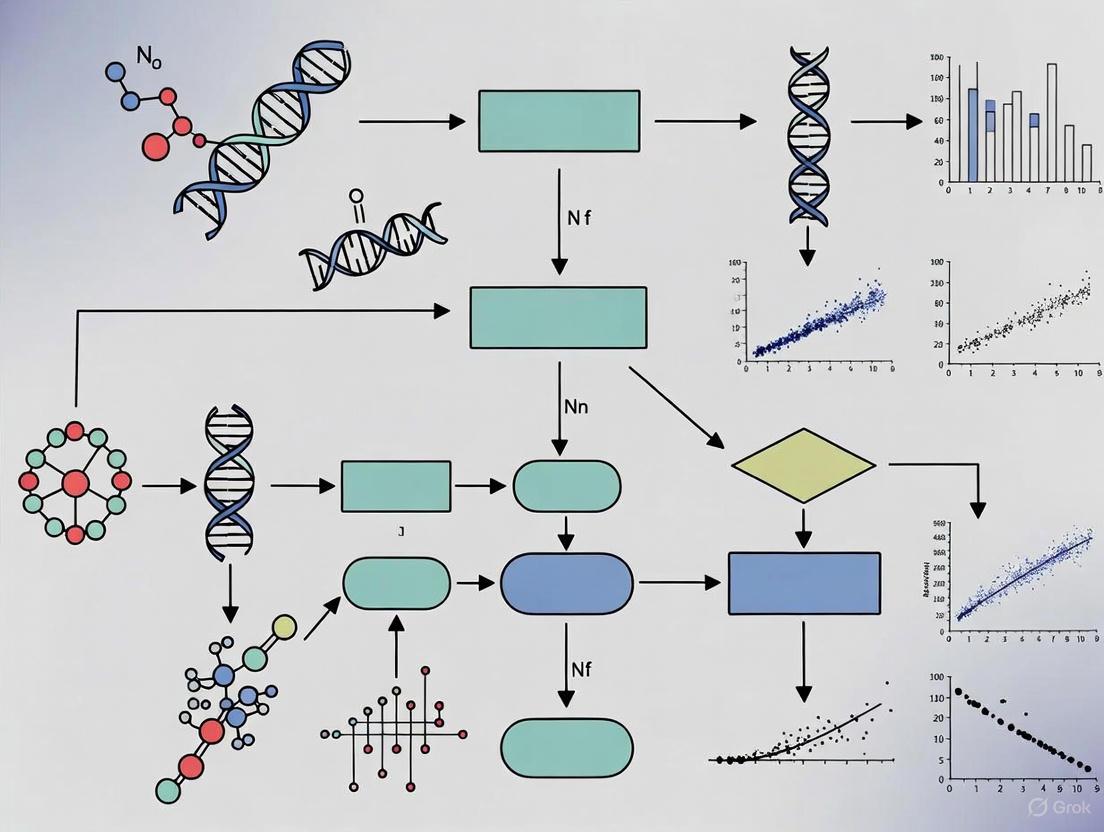
This article provides a comprehensive resource for researchers and drug development professionals navigating the complexities of nonlinear gene expression data.
Beyond Linear Relationships: A Practical Guide to Analyzing Nonlinear Gene Expression Correlations
Abstract
This article provides a comprehensive resource for researchers and drug development professionals navigating the complexities of nonlinear gene expression data. We cover the foundational principles explaining why nonlinearity is pervasive in biological systems, from circadian rhythms to cell cycle regulation. The guide details cutting-edge methodological approaches, including Kernelized Correlation, the Maximal Information Coefficient, and Gaussian Process models, for detecting and quantifying these relationships. It further addresses critical troubleshooting aspects, such as correcting for technical biases and managing noise, and offers a framework for the rigorous validation and comparative analysis of different methods. By synthesizing these concepts, we empower scientists to move beyond traditional linear models, unlocking deeper biological insights from their transcriptomic data for applications in biomarker discovery and therapeutic development.
Why Linearity Fails: Uncovering the Pervasive Nature of Nonlinearity in Gene Expression
Frequently Asked Questions (FAQs) and Troubleshooting Guide
FAQ 1: Why do I observe different cell cycle arrest outcomes in my HeLa cell cultures when using etoposide?
Answer: The response to etoposide is highly dependent on concentration. In HeLa cells, etoposide concentrations greater than 0.1 μM typically induce a sustained arrest at the G2/M checkpoint. You will observe an accumulation of cells with a DNA content greater than 2C (yellowish green nuclei if using Fucci2). If you see cells bypassing arrest or entering other cycles like endoreplication, it may indicate sub-optimal drug concentration, issues with cell line health, or the presence of resistant cell subpopulations. Always confirm drug activity and use a fresh stock solution [1] [2].
Troubleshooting Guide:
- Problem: Inconsistent G2/M arrest.
- Solution 1: Perform a dose-response curve (e.g., 0.1 μM, 1 μM, 10 μM) to establish the optimal concentration for your specific experimental conditions.
- Solution 2: Verify the DNA content of arrested cells via FACS analysis with Hoechst 33342 or DAPI staining to confirm the accumulation of non-diploid (>2C) cells [1].
FAQ 2: My Th17 cell differentiation assays show high variability between experiments conducted at different times of the day. What could be the cause?
Answer: Th17 cell differentiation is directly regulated by the circadian clock. The lineage specification of these cells varies diurnally. The core mechanism involves the circadian clock protein REV-ERBα, which regulates the transcription factor NFIL3. NFIL3, in turn, suppresses Th17 development by binding and repressing the Rorγt promoter. Experiments conducted without controlling for the light-cycle may yield inconsistent results due to this intrinsic biological rhythm [3].
Troubleshooting Guide:
- Problem: High variability in Th17 cell frequencies.
- Solution 1: Synchronize your animal facility's light-dark cycles and conduct experiments at a consistent, recorded time of day.
- Solution 2: Analyze key regulatory proteins (e.g., NFIL3, RORγt) via Western blot to confirm the circadian influence on your molecular pathway of interest [3].
FAQ 3: How can I better predict gene expression levels from sequence data in my single-cell research?
- Answer: For predicting cell-type-specific gene expression from DNA sequences, leverage modern computational frameworks like UNICORN. This multi-task learning framework uses embeddings from biological sequences and external knowledge from pre-trained foundation models. It has demonstrated superior performance for gene expression prediction at the cellular and cell-type level compared to earlier models like Enformer or seq2cells. Ensure your training data is aggregated into pseudo-bulk format from single-cell data to mitigate noise, as recommended by recent methodologies [4].
Data derived from population and time-lapse imaging analyses of HeLa and NMuMG cells expressing Fucci2 [1] [2].
| Cell Line | Drug Concentration | Primary Outcome | Key Observational Feature (Fucci2) | DNA Content (FACS) |
|---|---|---|---|---|
| HeLa | > 0.1 μM | Sustained G2/M arrest | Nuclei exhibit bright yellowish green fluorescence | >2C (non-diploid) |
| NMuMG | 1 μM | Transient G2 arrest → Nuclear mis-segregation | Accumulation of cells with fragmented, red nuclei | Mixed (fragmented) |
| NMuMG | 10 μM | Transition to endoreplication cycle | Large, clear red nuclei | 4C (tetraploid) |
Protocol 1: Monitoring Dynamic Cell Cycle Modulation with Fucci2
Application: Real-time visualization of drug effects on the cell cycle.
Key Reagents:
- Cell Lines: HeLa or NMuMG cells stably expressing Fucci2 (mCherry-hCdt1(30/120) and mVenus-hGem(1/110)) [1] [2].
- Drug: Etoposide, dissolved in DMSO.
- Imaging Equipment: Computer-assisted fluorescence microscopy system (e.g., Olympus LCV100) or a fully automated image acquisition platform (e.g., Olympus CELAVIEW RS100).
Methodology:
- Cell Culture: Plate Fucci2-expressing cells on glass-bottom dishes and allow them to adhere.
- Drug Treatment: Treat cells with the desired concentration of etoposide (e.g., 1 μM, 10 μM). Include a DMSO vehicle control.
- Time-Lapse Imaging: Place dishes on the microscope system maintained at 37°C with 5% CO₂. Perform time-lapse imaging every 20-30 minutes over an extended period (e.g., 24-48 hours).
- Data Analysis: Track individual cells to monitor fluorescence color changes. A transition from yellowish green to red without cell division indicates endoreplication. Nuclear envelope breakdown followed by fragmentation indicates mis-segregation [1] [2].
Protocol 2: Investigating Circadian Regulation of Th17 Differentiation
Application: Assessing the diurnal variation in T helper cell lineage specification.
Key Reagents:
- Mice: Rev-erbα⁻⁻ mice and wild-type controls [3].
- Cell Isolation: CD4+ T cells from murine spleen or lymph nodes.
- Differentiation Media: Cytokines for in vitro Th17 polarization (e.g., TGF-β, IL-6).
- Analysis Tools: Flow cytometry antibodies for IL-17A and RORγt.
Methodology:
- In Vivo Context: House mice under a strict 12-hour light/12-hour dark cycle. Sacrifice and isolate cells at specific zeitgeber times (e.g., ZT0 for lights on, ZT12 for lights off) [3].
- Cell Differentiation: Isolate naive CD4+ T cells and activate them under Th17-polarizing conditions in vitro.
- Analysis: After several days, analyze cells via flow cytometry for IL-17A production and RORγt expression. Intracellular staining for NFIL3 can further confirm the circadian mechanism.
- Model Verification: Compare Th17 differentiation efficiency between Rev-erbα⁻⁻ mice and wild-type controls to establish the role of the circadian clock [3].
Research Reagent Solutions
Table 2: Essential Reagents for Cell Cycle and Differentiation Studies
A toolkit of key materials referenced in the featured research.
| Reagent / Tool | Function / Application | Example / Note |
|---|---|---|
| Fucci2 Probe | Genetically encoded fluorescent indicator for real-time, live-cell visualization of cell cycle progression (G1: red, S/G2/M: green) [1] [2]. | mCherry-hCdt1(30/120) and mVenus-hGem(1/110). |
| Etoposide | DNA topoisomerase II inhibitor; used to induce DNA damage and study G2/M checkpoint arrest and subsequent cell fate decisions [1] [2]. | Working concentration >0.1 μM; perform dose-response. |
| NFIL3 Antibody | Transcription factor that suppresses Th17 cell development; key for investigating circadian regulation of immune cell differentiation [3]. | Used in Western blot or ChIP to study repression of Rorγt. |
| REV-ERBα Agonist/Antagonist | Pharmacological tools to manipulate the circadian clock pathway, allowing direct testing of its role in Th17 differentiation [3]. | Useful for probing the REV-ERBα → NFIL3 → RORγt axis. |
| UNICORN Framework | Computational framework for predicting cell-type-specific gene expression and multi-omic phenotypes from biological sequences [4]. | Integrates sequence embeddings from foundation models for enhanced prediction. |
Signaling Pathway and Workflow Visualizations
Circadian Regulation of Th17 Differentiation
UNICORN Gene Expression Prediction Workflow
Cell Fate Decisions After Etoposide Treatment
Technical Support Center
Context: This support center is framed within a broader thesis on advancing gene expression correlation research beyond linear assumptions. It addresses common analytical pitfalls and provides methodologies for detecting complex, nonlinear relationships.
Troubleshooting Guides & FAQs
Q1: My gene co-expression network analysis (e.g., WGCNA) seems to miss important functional modules. Could my correlation metric be the problem?
A: Yes, this is a common issue. Traditional WGCNA primarily relies on linear correlation coefficients (like Pearson's r or Spearman's ρ) to construct gene networks [5]. However, biological relationships, such as those in signaling pathways or feedback loops, are often nonlinear. Relying solely on linear metrics can fail to capture these essential relationships, leading to incomplete or misleading modules [6]. For example, a study on Alzheimer's disease found that using Hellinger correlation within WGCNA uncovered novel links between inflammation and mitochondrial function that were missed by linear methods [5].
- Solution: Integrate a "not-only-linear" correlation coefficient into your WGCNA pipeline. Options include:
- Hellinger Correlation: Effective for capturing nonlinear dependence in gene expression data [5].
- Clustermatch Correlation Coefficient (CCC): A computationally efficient, clustering-based coefficient designed for genome-scale data that detects both linear and nonlinear patterns [7].
- Maximum Local Correlation (M): A nonparametric method that quantifies nonlinear association by reporting local correlation patterns, suitable for noisy biological data [6].
Q2: I am building a predictive model from transcriptomic data (e.g., for disease diagnosis), but my model validation using correlation metrics seems overly optimistic. How can I get a more reliable assessment?
A: This is a critical limitation highlighted in connectome-based predictive modeling, which is analogous to gene-expression-based predictive modeling. The Pearson correlation coefficient between predicted and observed values is widely used but has key flaws: it inadequately reflects model errors (especially systematic bias), lacks comparability across studies, and is highly sensitive to outliers [8]. A high correlation can mask significant prediction inaccuracies.
- Solution: Adopt a multi-metric validation framework. Do not rely on correlation alone.
- Incorporate Difference Metrics: Always report Mean Absolute Error (MAE) and Root Mean Square Error (RMSE). These metrics directly quantify prediction error magnitude and are more informative about model accuracy [8].
- Implement Baseline Comparisons: Compare your complex model's performance (e.g., a LASSO or SVM model) against a simple baseline, such as predicting the mean value of the target or using a simple linear regression. This evaluates the added value of your model [8].
- Perform External Validation: Validate your model on a completely independent dataset to test its generalizability [8].
Q3: How can I systematically identify genes involved in nonlinear relationships for further experimental validation?
A: Feature selection based solely on linear correlation with a phenotype may overlook key nonlinear drivers.
- Solution: Employ a multi-stage analytical protocol that integrates nonlinear detection.
- Differential Expression & Network Analysis: Start with standard differential expression analysis (using
limmawith criteria like \|log2FC\|>1.5 and adj. p < 0.05) to find candidate genes [9] [10]. In parallel, perform WGCNA using a nonlinear correlation metric (see Q1) to identify co-expression modules associated with your phenotype [9] [5]. - Intersection and Prioritization: Intersect genes from the differential expression list with those in significant WGCNA modules to narrow down candidates [9].
- Nonlinear Relationship Screening: Apply a nonlinear correlation measure (like CCC [7] or Maximum Local Correlation [6]) between the shortlisted genes and the phenotype of interest across all samples. Rank genes by the strength of this nonlinear association.
- Predictive Modeling for Final Selection: Use machine learning models like LASSO regression or Support Vector Machine (SVM) with cross-validation on the prioritized gene set to finalize a robust, parsimonious signature [9] [10] [11].
- Differential Expression & Network Analysis: Start with standard differential expression analysis (using
Supporting Data & Protocols
Table 1: Usage of Model Evaluation Metrics in Predictive Modeling Studies (2022-2024) Data adapted from a review of connectome-based predictive modeling studies, relevant to biomarker prediction studies [8].
| Evaluation Metric Category | Frequency (%) | Purpose & Implication |
|---|---|---|
| Spearman/Kendall Correlation | 30.09% | Captures monotonic but not general nonlinear relationships. |
| Difference Metrics (MAE, RMSE) | 38.94% | Crucial. Directly quantifies prediction error. |
| External Validation | 30.09% | Best practice. Tests model generalizability on independent data. |
Table 2: Key Nonlinear Correlation Coefficients for Gene Expression Analysis
| Coefficient | Key Principle | Advantage | Reference |
|---|---|---|---|
| Clustermatch (CCC) | Uses clustering of binned data to detect associations. | Computationally efficient for genome-scale data; detects linear and nonlinear patterns. | [7] |
| Maximum Local Correlation (M) | Nonparametric; based on local neighbor density vs. a null distribution. | Distribution-free; detects transient/local correlations; robust to noise. | [6] |
| Hellinger Correlation | Derived from Hellinger distance between probability distributions. | Sensitive to various dependency structures; useful in WGCNA. | [5] |
Detailed Protocol: Implementing Maximum Local Correlation Analysis
Objective: To detect and quantify nonlinear correlations between gene expression profiles or between a gene and a clinical phenotype.
- Data Preprocessing: Transform the expression data for each variable (gene) to a uniform marginal distribution. This is typically done by rank transformation followed by normalization to the [0,1] interval [6].
- Calculate Neighbor Density: For the pair of variables (x, y), compute the Euclidean distances between all sample points. Generate the correlation integral Î(r), which is the cumulative distribution of these distances. The neighbor density D̂(r) is the derivative (estimated discrete change) of Î(r) [6].
- Generate Null Distribution: Create a permuted null distribution (D̂₀(r)) by randomly shuffling one variable relative to the other many times (e.g., B=1000 permutations) and recalculating D̂(r) for each permutation [6].
- Compute Local Correlation: The local correlation ℓ(r) at a distance scale r is defined as ℓ(r) = D̂(r) - D̂₀(r). Statistical significance at each r can be assessed via permutation p-values [6].
- Compute Maximal Correlation: The overall nonlinear association is summarized by the Maximum Local Correlation M, defined as M = maxᵣ \|ℓ(r)\|. The significance of M is assessed by comparing the observed M to the distribution of M values from the permutations [6].
Visualizing Analytical Workflows
Diagram 1: Linear vs Nonlinear-Aware Gene Analysis Workflow (89 chars)
Diagram 2: Nonlinear Gene Signature Discovery Protocol (88 chars)
The Scientist's Toolkit: Essential Research Reagents & Solutions
Table 3: Key Reagents & Materials for Gene Expression Correlation Research
| Item | Function in Research | Example/Note |
|---|---|---|
| Public Repository Access (GEO) | Source of high-throughput gene expression datasets (microarray, RNA-seq) for analysis and validation. | Gene Expression Omnibus (GEO) is a primary public archive [9] [12] [10]. |
| Batch Effect Removal Tool | Corrects for non-biological technical variation when integrating multiple datasets, crucial for robust analysis. | R package sva (Surrogate Variable Analysis) is commonly used [9] [10]. |
| Differential Expression Analysis Software | Statistically identifies genes with significant expression changes between conditions. | R package limma is a standard for microarray/RNA-seq data [9] [10]. |
| WGCNA Package | Constructs gene co-expression networks to identify modules of highly correlated genes. | R package WGCNA is the standard implementation [9] [5]. |
| Nonlinear Correlation Software/Library | Enables calculation of advanced correlation metrics beyond Pearson/Spearman. | NNC library (Matlab) [6], or custom R/Python scripts for CCC [7] or Hellinger corr. [5]. |
| Machine Learning Package (glmnet, e1071) | For building and validating predictive models with feature selection. | R glmnet for LASSO [9] [11]; e1071 for SVM [8]. |
| High-Quality RNA & cDNA Synthesis Kits | Foundational wet-lab step. Poor RNA quality or inefficient cDNA synthesis leads to low yield and noisy data, confounding correlation analysis. | Use of optimized purification and reverse transcription kits is critical [13]. |
| Validated qPCR Assays & Automation | For experimental validation of identified gene signatures. Automated liquid handlers improve precision and reduce Ct value variation [13]. | TaqMan Gene Expression Assays; automated dispensers like I.DOT [14] [13]. |
| Multiple Internal Control Genes | Essential for reliable normalization in qPCR validation, correcting for sample-to-sample variation. | Selected based on stability across samples; geometric mean of multiple controls is recommended [14]. |
Frequently Asked Questions (FAQs)
FAQ 1: What are the visual hallmarks of oscillatory and complementary gene expression patterns in my data?
Oscillatory and complementary patterns are key nonlinear relationships in time-course gene expression data. You can identify them through the following characteristics:
| Pattern Type | Visual Hallmark | Description | Common Biological Process |
|---|---|---|---|
| Oscillatory | Looping structures in PCA/UMAP space [15] | Cells organize into a circular pattern when projected into dimensionality reduction spaces like PCA, corresponding to a cyclic program of gene expression [15]. | Larval development cycles, circadian rhythms, cell cycle regulation [15]. |
| Complementary | Mirror-image or out-of-phase expression [16] | As the expression of one gene increases, the expression of its partner decreases in a nonlinear, often inverse, relationship [16]. | Yeast cell cycle regulation (e.g., RAD51-HST3 pair) [16]. |
FAQ 2: My data shows clear nonlinear patterns, but standard Pearson correlation fails to detect them. What analytical tools should I use?
Pearson's correlation (r) only measures linear relationships. For nonlinear data, you should use metrics designed for this purpose [16].
| Method | Description | Best For | Performance Insight |
|---|---|---|---|
| Kernelized Correlation (Kc) | Transforms data via a kernel to a high-dimensional space before calculating correlation [16]. | Detecting complex, nonlinear correlations (both positive and negative) in time-course data [16]. | Outperforms Pearson's r and distance correlation (dCor) in detecting known nonlinear gene pairs, especially with moderate noise [16]. |
| Distance Correlation (dCor) | Measures dependence based on distance covariance [16]. | Detecting nonlinear associations. | Cannot return negative values, limiting its ability to characterize complementary patterns [16]. |
| Advanced Perceptual Contrast Algorithm (APCA) | An alternative method for calculating contrast that better aligns with human perception [17]. | Evaluating visual contrast in data visualization. | Likely to be part of the future WCAG3 guidelines [17]. |
FAQ 3: How can I effectively visualize these patterns to make them clear and accessible for publication?
Effective visualization ensures your findings are understood by all readers, including those with color vision deficiencies.
| Strategy | Implementation | Benefit |
|---|---|---|
| Use High-Contrast Colors | Ensure a minimum contrast ratio of 4.5:1 for normal text and 3:1 for large text against the background [17]. | Crucial for legibility, aiding users with low vision or in suboptimal lighting conditions [17]. |
| Incorporate Shapes & Patterns | Use distinct node shapes (e.g., circle, triangle, square) or fill patterns (e.g., dots, stripes, crosshatch) to encode categories [18]. | Allows differentiation between data series without relying on color alone, essential for colorblind accessibility [18]. |
| Leverage Lightness | Build color gradients using significant variations in lightness, not just hue. The gradient should be interpretable in grayscale [19]. | Makes gradients decipherable for colorblind users and creates a more intuitive representation of value magnitude [19]. |
Troubleshooting Guides
Problem: Failure to Detect Biologically Relevant Oscillatory Gene Expression
- Symptoms:
- Known oscillatory genes do not form a looping structure in your PCA/UMAP projection.
- RNA velocity analysis does not show a coherent directional flow indicative of a cycle.
- Possible Causes & Solutions:
| Cause | Solution | Experimental Protocol |
|---|---|---|
| Insufficient Sampling Resolution | Increase the density of time points across the biological cycle. | 1. Design: Plan experiments to capture at least 8-12 time points per anticipated cycle (e.g., per larval stage or circadian period).2. Sampling: Collect samples at regular, closely-spaced intervals.3. ScRNA-Seq: Follow a protocol similar to [15]: * Use fluorescent reporters (e.g., grl-18pro::GFP) to enrich for specific cell types via FACS. * Sequence a sufficient number of cells (e.g., 24,000+ cells over multiple replicates) to ensure coverage.4. Computational Analysis: Calculate a weighted circular average of peak phases for each cell using known oscillatory genes as a reference to assign a phase angle [15]. |
| High Noise Obscuring Signal | Apply a nonlinear correlation measure like Kernelized Correlation (Kc) which is more robust to moderate noise. | 1. Data Processing: Normalize your time-course gene expression data (e.g., RNA-seq read counts).2. Kc Calculation: Use the published R code for Kernelized Correlation. * Transform the paired gene expression data using a kernel (e.g., Radial Basis Function). * Compute the Pearson's correlation of the transformed data in the high-dimensional space [16].3. Validation: Compare Kc results against positive and negative control gene pairs with known relationships. |
Problem: Inability to Statistically Validate Complementary Gene Pairs
- Symptoms:
- Two genes visually appear to have a mirror-image expression pattern, but standard correlation tests are non-significant.
- PARE score indicates a negative relationship, but Pearson's r is not significant [16].
- Possible Causes & Solutions:
| Cause | Solution | Experimental Protocol |
|---|---|---|
| Purely Nonlinear Relationship | Replace Pearson's r with a method designed for nonlinear correlation. | 1. Data Extraction: Compile time-course expression profiles for the gene pair of interest.2. Analysis with Kc: * Input the data into the Kc algorithm with an appropriate kernel. * A significant negative Kc value confirms a complementary relationship. The value ranges between -105 and 105 [16].3. Benchmarking: Validate your findings by checking if the pair is known to be involved in a related biological process (e.g., cell cycle). |
| Inadequate Model for Phase Shift | Model the expression curves directly to account for potential time lags. | 1. Curve Fitting: Fit the expression of each gene to a sinusoidal wave or a Gaussian process to model their dynamics across time [20].2. Phase Calculation: Derive the phase angle at which each gene peaks.3. Phase Difference: Calculate the difference in phase angles. A difference approaching 180° (π radians) is characteristic of a complementary pair. |
Research Reagent Solutions
Essential materials and computational tools for investigating nonlinear gene expression patterns.
| Item | Function in Research |
|---|---|
Fluorescent Reporter Strains (e.g., grl-18pro::GFP for glia) |
Enables enrichment of specific, often rare, cell types via Fluorescence Activated Cell Sorting (FACS) for scRNA-seq, crucial for identifying cell-type-specific oscillations [15]. |
| Kernelized Correlation (Kc) R Code | The primary computational tool for quantifying pairwise nonlinear (oscillatory and complementary) correlations in time-course gene expression data [16]. |
| Distinct Node Shapes & Patterns | A library of visual markers (circles, triangles, squares, stripes, dots) used in charts and graphs to ensure data is distinguishable for all users, including those with color vision deficiencies [18]. |
| Accessible Color Palettes (e.g., Okabe-Ito, Viridis) | Pre-defined color sets that are perceptually uniform and decipherable by individuals with various forms of color blindness, ensuring the clarity and accessibility of data visualizations [21]. |
| RNA Velocity Algorithms | A computational method that uses the ratio of unspliced to spliced mRNA to infer the future state of individual cells, providing independent validation of a cyclic transcriptional program [15]. |
Experimental Workflow & Pathway Diagrams
ScRNA-seq Workflow for Oscillatory Analysis
Nonlinear Correlation Detection Pathway
Complementary Gene Relationship
A Toolkit for Discovery: Key Methods to Detect and Measure Nonlinear Correlations
Kernelized Correlation (Kc) is an advanced computational procedure designed to measure nonlinear relationships between variables, with significant applications in gene expression analysis. Traditional correlation coefficients like Pearson's r can only identify linear relationships, leaving potentially important nonlinear associations undetected in biological data. Kc addresses this limitation by first transforming nonlinear data via a kernel function (usually nonlinear) to a high-dimensional space, then applying a classical correlation coefficient to the transformed data. This approach effectively captures complex nonlinear patterns prevalent in time-course gene expression studies and other biomedical data types [16].
In the context of gene expression research, Kc has demonstrated particular value for identifying genes involved in specific biological processes. For instance, when applied to early human T helper 17 (Th17) cell differentiation, Kc successfully detected nonlinear correlations of four genes with IL17A (a known marker gene), while distance correlation detected only two pairs, and DESeq failed in all these pairs. Similarly, Kc outperformed both Pearson's correlation and distance correlation in estimating nonlinear correlations of negatively correlated gene pairs in yeast cell cycle regulation [16].
Frequently Asked Questions (FAQs)
What types of biological relationships can Kc detect that linear correlations cannot? Kc can identify various nonlinear relationships including periodic expressions, complementary patterns (where one gene's expression increases as another decreases in complex patterns), and other non-linear dependencies. These are common in gene regulatory networks where linear methods often fail to detect significant biological interactions [16].
How does Kc handle negative correlations? Unlike some nonlinear correlation measures like distance correlation (dCor) that range only between 0 and 1, Kc can quantify both positive and negative correlations through negative values. This is particularly important for detecting complementary expression patterns like those between RAD51 and HST3 in yeast cell cycle regulation [16].
What are the computational requirements for implementing Kc? Kc implementation requires consideration of kernel selection, regularization parameters, and efficient computation strategies. The R code for computing Kc is publicly available online and can handle the calculation of [n(n-1)]/2 pairwise correlations in a dataset containing n variables (e.g., 20,000 genes in a microarray) [16].
Which kernel functions are most effective for gene expression data? The Radial Basis Function (RBF) kernel has shown strong performance with gene expression data, particularly when noise levels are moderate. In simulated cases with moderate noise, Kc with RBF kernel outperformed both Pearson's r and distance correlation [16].
Troubleshooting Common Experimental Issues
Problem: Inconsistent correlation values across different runs Solution: This inconsistency may stem from improper kernel parameter selection. For the RBF kernel, ensure the bandwidth parameter (σ) is optimized for your specific data characteristics. Conduct sensitivity analyses across a range of parameter values to establish stable results [16] [22].
Problem: High computational demands with large gene sets Solution: Utilize the circulant matrix properties and Fourier domain operations inherent in Kc methodology. These computational shortcuts allow efficient processing of large datasets by transforming operations to the frequency domain where they can be computed more rapidly [22].
Problem: Difficulty interpreting biological significance of results Solution: Implement rigorous false discovery rate controls specifically designed for kernel methods. For comprehensive gene-gene interaction testing, apply Efron's empirical null method to estimate local false discovery rates, which accounts for multiple testing and test statistic correlation [23].
Problem: Poor performance with low-noise data Solution: When data noise is minimal, traditional linear methods may occasionally outperform Kc. In such cases, consider running both linear and nonlinear correlation analyses simultaneously, as Kc performs equivalently to Pearson's r and dCor in low-noise conditions while significantly outperforming them in moderate-noise scenarios [16].
Experimental Protocols
Protocol 1: Measuring Nonlinear Gene Correlations in Time-Course Data
Purpose: To detect and quantify nonlinear correlations between gene pairs across time-course expression data [16].
Materials:
- Normalized gene expression data (RNA-seq or microarray)
- Computational environment with Kc implementation
- R statistical software with necessary packages
Procedure:
- Data Preparation: Format expression data as matrices with genes as variables and time points as observations.
- Kernel Selection: Choose an appropriate kernel (typically RBF Gaussian kernel) and set parameters.
- Transformation: Map original gene expression data to high-dimensional feature space using the kernel function.
- Correlation Calculation: Compute correlation coefficients in the transformed space using standard correlation measures.
- Significance Testing: Apply statistical tests to identify significant correlations.
- Biological Validation: Compare results with known pathway information or conduct experimental validation.
Expected Results: Identification of significantly correlated gene pairs exhibiting nonlinear relationships across time, potentially revealing novel regulatory relationships.
Protocol 2: Identifying Genes Associated with Cell Differentiation
Purpose: To discover novel genes involved in specific cell differentiation processes through nonlinear correlation with known marker genes [16].
Materials:
- Time-course RNA-seq data during differentiation process
- Known marker genes (e.g., IL17A for Th17 cell differentiation)
- Kc algorithm implementation
Procedure:
- Target Selection: Identify established marker genes for the differentiation process of interest.
- Correlation Screening: Compute Kc values between the marker gene and all other genes across the time series.
- Ranking: Sort genes by absolute Kc values to identify top candidates.
- Threshold Application: Establish significance thresholds based on false discovery rates.
- Pathway Analysis: Conduct enrichment analysis on identified genes to validate biological relevance.
Expected Results: Discovery of potential novel genes involved in the differentiation process based on their nonlinear correlation patterns with established markers.
Comparative Analysis of Correlation Methods
Table 1: Performance comparison of correlation methods on different data types
| Method | Nonlinear Detection | Negative Values | Noise Robustness | Best Use Cases |
|---|---|---|---|---|
| Pearson's r | No | Yes | Low | Linear relationships |
| Spearman's rank | Limited | Yes | Medium | Monotonic relationships |
| Distance correlation | Yes | No | Medium | General dependence |
| Kendall's tau | Limited | Yes | Low | Rank-based analysis |
| Kernelized Correlation | Yes | Yes | High | Complex nonlinear patterns |
Table 2: Kc performance in specific biological applications
| Application | Kc Detections | Comparison Method Results | Biological Validation |
|---|---|---|---|
| Th17 cell differentiation | 4 genes with IL17A | dCor: 2 genes; DESeq: 0 genes | Verified known biology |
| Yeast cell cycle | RAD51-HST3 correlation | Pearson's r: -0.50 (p=0.203) | Supported by PARE score |
| Simulated data (moderate noise) | Outperformed alternatives | Better than Pearson's r and dCor | Controlled conditions |
Research Reagent Solutions
Table 3: Essential materials and computational tools for Kc experiments
| Research Reagent | Function | Application Context |
|---|---|---|
| RBF Gaussian kernel | Nonlinearly transforms data to high-dimensional space | Default kernel for most Kc applications |
| Regularization parameter (λ) | Prevents overfitting in ridge regression | Typically set to 1e-4 in KCF implementations |
| Circulant matrix | Enables efficient dense sampling | Foundation for fast Fourier domain computations |
| Fourier transform | Accelerates computational operations | Critical for real-time performance |
| Cosine window function | Mitigates boundary artifacts | Applied to input patches in tracking applications |
Visual Workflows and Signaling Pathways
Kc Analysis Workflow: From raw data to nonlinear correlation measurement
Gene Discovery via Kc: Identifying Th17-associated genes through nonlinear correlation with IL17A
Frequently Asked Questions (FAQs)
Q1: What is the core advantage of using MIC over traditional linear methods like Pearson correlation in gene expression analysis? MIC's primary advantage is its generality; it can capture a wide range of linear and non-linear associations (e.g., cubic, exponential, sinusoidal) without assuming a specific functional form or data distribution. This is crucial for gene expression data, where underlying relationships are often complex and non-linear. In contrast, Pearson correlation can only detect linear dependencies [24].
Q2: My analysis with MIC still prioritizes linearly expressed genes. How can I specifically highlight genes with non-linear expression patterns? This is a known limitation of MIC, as the genes with the strongest support are often linearly expressed [25]. To overcome this, use the Normalized Differential Correlation (NDC) measure. NDC is specifically designed to elevate the ranking of non-linearly expressed genes by normalizing the difference between the nonlinear score (MIC) and the linear score (R²) [25] [26].
Q3: Why is my MIC computation so slow, and how can I speed it up? The standard MIC algorithm is computationally expensive because it searches for optimal binning across many possible grids for each variable pair [27] [28]. To improve speed:
- Use optimized implementations like RapidMic, which uses parallel computing [28].
- Employ the ChiMIC algorithm, an improved method that provides a more efficient calculation of MIC [25] [26].
Q4: What does a high NDC score signify in a practical sense? A high NDC score indicates a strong nonlinear association between a gene's expression and the phenotype, coupled with a weak linear correlation [25] [26]. This means the gene's expression pattern (e.g., high and low levels in both control and disease groups) is uniquely useful for classification, a pattern that linear methods would typically overlook.
Q5: Are there methods to go beyond pairwise analysis and understand multi-gene interactions? Yes, Partial Information Decomposition (PID) is a refined information-theoretic approach that decomposes the information multiple source genes provide about a target into unique, redundant, and synergistic contributions. This helps uncover higher-order behaviors where information about a phenotype is only available through the combination of specific genes [29] [30].
Troubleshooting Guides
Problem 1: Inability to Detect Biologically Relevant Non-Linear Genes
- Symptoms: Your analysis fails to identify genes with clear, non-linear patterns (e.g., a U-shaped or inverted U-shaped relationship with the phenotype) that are biologically plausible.
- Causes: Over-reliance on linear methods (t-test, edgeR, DESeq2) or using MIC alone, which may rank linearly expressed genes higher.
- Solutions:
- Implement the NDC Method: Integrate the NDC measure into your pipeline to re-rank genes. A higher NDC score specifically flags genes with strong nonlinear associations [25].
- Visual Inspection: For top-ranked genes by NDC, create scatter plots of gene expression versus the phenotype to visually confirm the non-linear relationship.
Problem 2: Long Computation Times for MIC on Large Datasets
- Symptoms: The calculation of MIC for all gene-pairs takes an impractically long time or runs out of memory.
- Causes: The heuristic search over many possible grids is inherently computationally intensive [28].
- Solutions:
- Use Parallel Computing Tools: Employ software like RapidMic, which is designed for the rapid, parallel computation of MIC, significantly reducing processing time [28].
- Leverage Optimized Algorithms: Use the ChiMIC algorithm, which provides a more robust calculation and may be more efficient than the original ApproxMaxMI algorithm [25] [26].
Problem 3: Low Statistical Power or Unreliable MIC Estimates
- Symptoms: MIC detects spurious correlations in random data or fails to detect known relationships, especially with small sample sizes.
- Causes: Finite-sample effects can inflate MIC scores, and the statistic may have reduced power in some settings compared to other methods [27] [25].
- Solutions:
- Calculate a Significance Threshold: Establish a confidence limit (e.g., ThreMIC) by shuffering your phenotype labels and recalculating MIC many times (e.g., 1,000). Use the 95th percentile of these shuffled scores as a threshold to filter out potentially insignificant associations [25] [26].
- Consider Sample Size: Be aware of the method's limitations in low-sample-size settings and interpret results with caution.
Experimental Protocols & Data Presentation
Protocol: Identifying Non-linearly Expressed Genes with NDC
This protocol outlines how to apply the NDC measure to RNA-seq data to find genes with non-linear correlations to a binary phenotype (e.g., diseased vs. healthy) [25] [26].
- Data Preparation: Format your gene expression matrix (genes as rows, samples as columns) and a corresponding phenotype label vector.
- Calculate MIC: For each gene, compute the MIC value between its expression and the phenotype labels. The use of the ChiMIC algorithm is recommended [25].
- Calculate Linear Statistics: For each gene, compute the coefficient of determination (R²) and the absolute value of the correlation coefficient |R| with the phenotype.
- Establish ThreMIC:
- Randomly shuffle the phenotype labels.
- Calculate the MIC between the shuffled labels and each gene's expression.
- Repeat this process 1,000 times.
- For each gene, the ThreMIC value is the 95th percentile of its 1,000 shuffled MIC values.
- Compute NDC Score: Apply the formula for each gene:
NDC = [MIC(x,y) - ThreMIC] - R²(x,y) / |R(x,y)|[26] - Rank and Select Genes: Rank all genes in descending order of their NDC score. The top-ranked genes have a strong nonlinear association but a weak linear correlation.
The following workflow diagram summarizes this protocol:
Quantitative Data Comparison
The table below summarizes a comparison of different methods on real-world cancer RNA-seq datasets (e.g., LUSC), demonstrating NDC's unique value [25].
Table 1: Comparison of Gene Selection Methods on a Cancer Dataset (e.g., LUSC)
| Method | Primary Association Type Detected | Overlap with Top 100 Genes from t-test | Ability to Rank Non-linear Genes Highly |
|---|---|---|---|
| t-test | Linear | Full (Benchmark) | No |
| edgeR | Linear | Very High | No |
| DESeq2 | Linear | Very High | No |
| MIC | Linear & Non-linear | High | Limited |
| NDC | Non-linear | No Overlap | Yes |
Table 2: Example Rankings of a Top NDC Gene (PSAT1 in BRCA)
| Gene | NDC Rank | t-test Rank | DESeq2 Rank | edgeR Rank | MIC Rank |
|---|---|---|---|---|---|
| PSAT1 | 1 | 8,583 | 4,642 | 4,292 | 947 |
The Scientist's Toolkit: Essential Research Reagents & Materials
Table 3: Key Computational Tools and Resources
| Item Name | Function / Explanation | Reference/Source |
|---|---|---|
| ChiMIC Algorithm | An improved algorithm for calculating MIC, designed to be more robust than the original ApproxMaxMI method. | [25] [26] |
| RapidMic Tool | A cross-platform tool for rapid computation of MIC using parallel computing, essential for large-scale datasets. | [28] |
| Gaussian Copula Mutual Information (GCMI) | A method for reliable estimation of mutual information, addressing challenges with histogram-based estimators. | [29] |
| Partial Information Decomposition (PID) | A framework for decomposing information shared by multiple source genes about a target into unique, redundant, and synergistic components. | [29] [30] |
| TCGA RNA-seq Datasets | Publicly available cancer gene expression datasets (e.g., from UCSC Xena platform) used for method validation. | [25] |
Conceptual Diagram of NDC Calculation
The following diagram illustrates the core concept of how the NDC score is derived from other statistical measures to isolate non-linearity.
This technical support center is framed within a broader thesis investigating the handling of nonlinear correlations in gene expression research. Gaussian Processes (GPs) provide a powerful, non-parametric Bayesian framework for modeling these complex, dynamic interactions, particularly in single-cell genomics and genetic association studies [31] [32]. This resource is designed to assist researchers, scientists, and drug development professionals in implementing and troubleshooting GP-based models in their experimental workflows.
Frequently Asked Questions (FAQs) & Troubleshooting Guides
FAQ 1: What are the primary advantages of using Gaussian Processes over traditional linear models for gene expression analysis?
- Answer: Traditional linear models assume conditional independence between observations and fixed, linear effect sizes, which often fails to capture the nonlinear dynamics inherent in biological systems like cellular state transitions or dose-response relationships [32]. GPs overcome this by defining a probability distribution over possible nonlinear functions. They inherently provide uncertainty estimates for predictions, which is crucial for interpreting noisy biological data, and can model complex covariance structures through kernel functions [33]. For instance, in perturbation screens, GPs can separate basal expression from sparse perturbation effects while quantifying uncertainty [31].
FAQ 2: My single-cell perturbation data is extremely sparse and high-dimensional. Can GP models handle this?
- Answer: Yes, this is a key application. Methods like GPerturb are specifically designed for the high dimensionality and sparsity of single-cell CRISPR screening data (e.g., Perturb-seq) [31]. They employ sparse, additive structures where a perturbation effect is only "switched on" for genes it meaningfully affects, which regularizes the model and improves interpretability. To handle computational complexity with large cell numbers, sparse GP approximations using inducing points can be implemented, reducing cost from ({{{{{{{\mathcal{O}}}}}}}}({N}^{3})) to ({{{{{{{\mathcal{O}}}}}}}}(N{M}^{2})) where M ≪ N [32].
Troubleshooting Guide: Poor Prediction Performance or Model Instability.
- Symptom: Low correlation between predicted and observed gene expression values post-perturbation, or inconsistent directionality of effects (e.g., predicted up-regulation vs. observed down-regulation).
- Potential Causes & Solutions:
- Inappropriate Data Preprocessing: GP model performance is sensitive to input data type. Confirm you are using the correct variant of the model for your data format.
- Solution: For raw UMI count data, use a model with a Zero-Inflated Poisson (ZIP) likelihood (e.g., GPerturb-ZIP). For log-normalized or otherwise continuous data, use a Gaussian likelihood model (e.g., GPerturb-Gaussian) [31].
- Kernel Mis-specification: The kernel function defines the smoothness and structure of the functions the GP can learn.
- Solution: For modeling continuous cellular states (e.g., pseudotime, dose), use the Automatic Relevance Determination Squared Exponential (ARD-SE) kernel, which can learn relevant length scales for different input dimensions [32]. Experiment with different kernels (e.g., Matérn, linear combination) based on your assumptions about the data.
- Unaccounted for Confounding Variation: In genetic association mapping, correlations between samples (e.g., from the same donor) can inflate false positive rates if not modeled [32].
- Solution: Include a correction term in your GP model that accounts for between-donor variation using a kinship matrix or donor design matrix, as shown in Eq. (1) of the genetic association model [32].
- Inappropriate Data Preprocessing: GP model performance is sensitive to input data type. Confirm you are using the correct variant of the model for your data format.
FAQ 3: How can I model dynamic genetic effects, such as eQTLs that change across a continuous cellular state?
- Answer: A GP regression framework is ideal for this. You can extend the linear model (y = α + βg + ε) by modeling the genetic effect (β) itself as a function of a continuous covariate (x) (e.g., time, drug concentration) using a GP: (β \sim {{{{{{{\mathcal{N}}}}}}}}(0, δg K)), where (K) is the kernel matrix over (x) [32]. This allows the effect size to vary nonlinearly along (x). Hypothesis testing involves assessing whether (δg > 0).
FAQ 4: Can GPs be used for inferring gene regulatory networks (GRNs) beyond simple correlation?
- Answer: Absolutely. Assuming a multivariate normal distribution for gene expression limits GRN inference to linear correlations. GPs relax this constraint by using kernels to model complex, nonlinear relationships between genes. A GP emulator can be used to learn the joint distribution of gene expressions, after which a precision matrix (inverse covariance) estimated via methods like graphical LASSO can reveal the conditional dependencies that define the network structure [34].
Experimental Protocols
Application: Analyzing single-cell CRISPR screening data (e.g., Perturb-seq) to quantify the effect of genetic perturbations on gene expression. Detailed Methodology:
- Data Preparation: Format your data into a cells (N) x genes (G) expression matrix. Prepare two annotation vectors: (i) a perturbation label for each cell, (ii) cell-specific covariates (e.g., cell type, batch, sequencing depth).
- Model Specification: For each gene (g), specify a generative model. For continuous data (GPerturb-Gaussian): (y{i,g} \sim \mathcal{N}(μ{i,g}, σ^2)) (μ{i,g} = f{basal,g}(ci) + z{g,p} * f{pert,g}(pi)) where for cell (i), (ci) are cell covariates, (pi) is the perturbation label, (f{basal,g}) and (f{pert,g}) are independent Gaussian Processes, and (z_{g,p}) is a binary spike-and-slab variable determining if perturbation (p) affects gene (g).
- Model Inference: Use variational inference or Markov Chain Monte Carlo (MCMC) methods to approximate the posterior distributions of all model parameters, including the GP functions and the binary switches (z_{g,p}).
- Output Interpretation: The mean of (f{pert,g}(p)) estimates the perturbation effect size. The posterior probability of (z{g,p}=1) indicates the confidence that a perturbation effect exists. Sparse effects are induced through the prior on (z).
Application: Identifying expression quantitative trait loci (eQTLs) whose effect size varies along a continuous gradient (e.g., time, cellular state). Detailed Methodology:
- Model Definition: Implement the following hierarchical GP model:
(y = α + β \odot g + γ + ε)
where:
- (α \sim {{{{{{{\mathcal{N}}}}}}}}(0, K)), models the baseline expression trend over continuous covariate (X).
- (β \sim {{{{{{{\mathcal{N}}}}}}}}(0, δg K)), models the dynamic genetic effect over (X). (K = k(X, X)) is the kernel matrix (e.g., ARD-SE).
- (γ \sim {{{{{{{\mathcal{N}}}}}}}}(0, δd K \odot R)), accounts for correlated sample structure using kinship matrix (R).
- (ε \sim {{{{{{{\mathcal{N}}}}}}}}(0, σ^2 I)).
- Kinship Matrix Calculation: If using unrelated donors, approximate (R = ZZ^⊤), where (Z) is a donor design matrix. For related samples, estimate (R) from genome-wide genotype data.
- Statistical Testing: Test the null hypothesis (δ_g = 0) (no dynamic genetic effect) using likelihood-ratio or score tests.
- Sparse GP Implementation (for large N): Use an inducing point approximation to reduce computational cost. Represent the GP using (M) inducing points (u), with (p(f|u)) being Gaussian, and optimize a variational lower bound (Titsias bound) [32].
| Method | Input Data Type | Pearson Correlation (r) vs. Observed Expression | Key Assumption/Limitation |
|---|---|---|---|
| GPerturb-ZIP | Raw Counts | 0.972 | Uses Zero-Inflated Poisson likelihood. |
| SAMS-VAE | Raw Counts | 0.944 | Cannot incorporate cell-level covariates (e.g., cell type). |
| GPerturb-Gaussian | Continuous | 0.981 | Uses Gaussian likelihood. |
| CPA-mlp | Continuous | 0.984 | Requires categorical cell information. |
| GEARS | Continuous | 0.977 | Only handles discrete perturbations; uses external gene graph. |
Analysis of whether different models agree on the sign (up/down-regulation) of gene-perturbation effects.
| Comparison Pair | Input Data Type | Directionality Agreement Note |
|---|---|---|
| GPerturb-Gaussian vs. CPA vs. GEARS | Continuous | Notable discrepancies observed, especially for exosome-related perturbation effects. |
| GPerturb-ZIP vs. SAMS-VAE | Raw Counts | Showed greater consistency, suggesting data pre-processing choice significantly impacts inferred effects. |
Visualizations
Diagram 1: GPerturb Model Workflow for Single-Cell Perturbation Analysis
Diagram 2: Hierarchical GP Model for Dynamic Genetic Association Mapping
The Scientist's Toolkit: Essential Research Reagent Solutions
| Item | Function in GP Modeling of Gene Expression | Example/Note |
|---|---|---|
| Single-Cell CRISPR Screening Data | The primary experimental input. Provides high-resolution, perturbed gene expression profiles. | Data from technologies like Perturb-seq or CROP-seq [31]. |
| Cell Covariate Annotations | Used to model basal expression (f_basal). Critical for controlling for biological and technical variation. | Cell type labels, batch information, sequencing depth, cell cycle score. |
| Kernel Function | The core mathematical object defining covariance and smoothness in the GP prior. Choice dictates model flexibility. | ARD-SE Kernel for continuous states [32], Linear kernel for additive effects. |
| (Sparse) Variational Inference Engine | Computational tool for approximate Bayesian inference. Essential for scaling to large datasets. | Implementations using inducing points to handle >10,000 cells [32]. |
| Precision Matrix Estimation Tool | For GRN inference post-GP emulation. Identifies conditional dependencies between genes. | Graphical LASSO (GLASSO) applied to the GP-learned covariance structure [34]. |
| Uncertainty Quantification Metrics | Outputs of the Bayesian model that inform confidence in predictions. Key for biological interpretation. | Posterior standard deviation of f_pert, probability of binary effect switch (z) [31]. |
Within the field of genomics, particularly in the analysis of gene expression data, researchers are often confronted with the challenge of visualizing high-dimensional data to uncover biological insights. Traditional linear methods like Principal Component Analysis (PCA) have been widely used, but their limitations in capturing complex, nonlinear relationships have become increasingly apparent. This technical guide explores the advantages of Isomap, a nonlinear dimensionality reduction technique, over PCA for visualizing data where the underlying structure forms a nonlinear manifold, such as in gene expression correlations.
FAQs: Isomap vs. PCA for Nonlinear Data
1. Why should I consider Isomap over PCA for my gene expression data?
PCA is a linear technique that identifies axes of maximum variance in the data but often fails to capture complex, nonlinear relationships. Gene expression data frequently represents nonlinear interactions between genes and environmental factors [35]. Isomap addresses this by preserving the geodesic distances (the shortest path along the manifold's surface) between data points, rather than straight-line Euclidean distances. This allows it to "unfold" curved surfaces like the famous "Swiss Roll" dataset and reveal the true, lower-dimensional structure of the data [36]. Studies have shown that Isomap can produce better visualization and reveal clearer cluster structures of cancer tissue samples than PCA [35].
2. What are the typical computational requirements for Isomap and when might it be unsuitable?
Isomap's main computational burden arises from two steps: constructing the k-nearest neighbor graph and computing the shortest-path (geodesic) distances between all pairs of points in that graph. For very large datasets (e.g., containing hundreds of thousands of cells), this process can become slow and memory-intensive [36]. Furthermore, Isomap can be sensitive to its parameters, particularly the number of neighbors (n_neighbors) used to build the graph. If this parameter is not chosen properly, it can lead to erroneous connections (called "short-circuit errors") or an inaccurate representation of the manifold [36] [37]. It may also struggle with manifolds that have complex topological structures, such as holes [36].
3. How do I know if the low-dimensional embedding from Isomap is trustworthy?
Evaluating the quality of an embedding is crucial. Quantitative metrics can be used to assess performance [38] [39]:
- Local Structure Preservation: Measure how well the k-nearest neighbors of each point in the original high-dimensional space are preserved in the low-dimensional embedding. Isomap typically outperforms PCA on this metric [38].
- Global Structure Preservation: Evaluate the correlation between pairwise distances in the high-dimensional space and the low-dimensional embedding. PCA, which emphasizes large pairwise distances, may have a lower reconstruction error by this metric [38].
- Cluster Quality: Use metrics like the Silhouette Score to validate whether the embedding leads to well-separated clusters that correspond to known biological labels (e.g., cell types) [39].
4. My data has multiple experimental conditions. How can I integrate them for visualization?
For complex multi-condition experiments (e.g., treated vs. control samples), simple embedding of all data together may not be sufficient. Advanced methods like Latent Embedding Multivariate Regression (LEMUR) have been developed to integrate data from different conditions into a common latent space. This approach explicitly accounts for known covariates while estimating a shared low-dimensional manifold, allowing for counterfactual predictions and cluster-free differential expression analysis [40].
Troubleshooting Guides
Issue 1: Poor Cluster Separation in Low-Dimensional Visualization
Problem: After applying Isomap to your gene expression data, the resulting 2D/3D plot shows poor separation between known biological groups (e.g., healthy vs. diseased samples).
Solutions:
- Adjust the
n_neighborsparameter: This is the most critical hyperparameter. A value too low will make the embedding sensitive to noise, while a value too high may blur the fine-grained local structure. Test a range of values (e.g., from 5 to 50) and evaluate the results with the metrics mentioned above [36] [37]. - Preprocess your data appropriately: Ensure your gene expression data is properly normalized and log-transformed before applying Isomap. High variance in a few genes can dominate the distance calculation. Consider feature selection to remove non-informative genes [39].
- Try an alternative nonlinear method: If Isomap continues to perform poorly, the manifold assumption might not hold, or its sensitivity to parameters is a bottleneck. Consider other nonlinear methods like UMAP, which is often faster and can better preserve both local and global structure [41] [42] [43].
Issue 2: Long Computation Times with Large Datasets
Problem: Running Isomap on your single-cell RNA-seq dataset (with 100,000+ cells) is prohibitively slow.
Solutions:
- Subsample your data: For an initial exploratory analysis, run Isomap on a randomly selected subset of your cells (e.g., 10,000 points). This can help you quickly tune parameters and get a sense of the data structure [38].
- Leverage specialized tools for large data: The field of single-cell analysis is rapidly evolving. For very large datasets, consider using tools that are specifically designed for scalability, such as UMAP or PaCMAP [43].
- Check your implementation: Use efficient libraries like
scikit-learnwhich implement optimized algorithms for graph construction and shortest-path calculations [36] [42].
Experimental Protocols
Protocol: Comparative Visualization of Gene Expression Data using PCA and Isomap
Objective: To compare the performance of PCA and Isomap in visualizing the cluster structure of a gene expression dataset (e.g., a cancer tissue sample dataset).
Materials:
- Dataset: A normalized gene expression matrix (e.g., from TCGA), often with shape
n_samples x n_genes. - Software/Libraries: Python with
scikit-learn,matplotlib,numpy, andpandas.
Methodology:
- Data Preprocessing:
- Load the gene expression matrix and any associated sample metadata (e.g., cancer subtype labels).
- Apply standard preprocessing: normalize for sequencing depth and log-transform (e.g., log1p) to stabilize variance.
- (Optional) Perform feature selection to retain highly variable genes.
Dimensionality Reduction:
- PCA: Use
sklearn.decomposition.PCAwithn_components=2to fit and transform the data. - Isomap: Use
sklearn.manifold.Isomapwithn_components=2and a chosenn_neighbors(start with 10-30) to fit and transform the same data.
- PCA: Use
Visualization & Evaluation:
- Plot the 2D embeddings from both methods, coloring the points by their known labels from the metadata.
- Qualitatively assess the cluster separation and continuity.
- Quantitatively compare the embeddings using metrics like Silhouette Score and neighbor preservation (e.g., using
sklearn.metrics.silhouette_score).
The workflow for this comparative analysis is summarized in the following diagram:
Key Differences in Algorithmic Approach
The fundamental difference between PCA and Isomap lies in how they measure distances between data points, which is visualized in the logic below:
The following table summarizes findings from studies that quantitatively compared Isomap and PCA on biological data.
| Dataset / Context | Evaluation Metric | PCA Performance | Isomap Performance | Key Finding |
|---|---|---|---|---|
| Microarray Data (10k points) [38] | Reconstruction Error (Global) | 9.3 | 616.1 | PCA better preserves large pairwise distances. |
| Microarray Data (10k points) [38] | k-NN Preservation (Local, k=5) | 0.0124 | 0.0190 | Isomap better preserves local neighborhood structure. |
| Cancer Tissue Samples [35] | Clustering Quality & Visualization | Moderate | Superior | Isomap provided clearer visualization and revealed more distinct cluster structures. |
| General Microarray Data [37] | Classification & Cluster Validation | Good (with many dimensions/genes) | Better in low dimensions | Isomap and LLE favorable for 2D/3D visualization with few differentially expressed genes. |
The Scientist's Toolkit: Research Reagent Solutions
| Item / Resource | Function / Purpose |
|---|---|
scikit-learn (Python) |
Provides robust, easy-to-use implementations of both PCA (decomposition.PCA) and Isomap (manifold.Isomap), facilitating direct comparison [36]. |
| Normalized Gene Expression Matrix | The fundamental input data. Requires preprocessing (log transformation, normalization) to ensure technical artifacts do not dominate the dimensional reduction. |
| Cell Type / Condition Labels | Metadata (e.g., from pathologist annotation) crucial for the qualitative and quantitative evaluation of the embedding quality [39]. |
| Jupyter Notebook / RStudio | An interactive computational environment ideal for exploratory data analysis, iterative parameter tuning, and visualization. |
Visualization Libraries (matplotlib, seaborn) |
Essential for creating static 2D and 3D scatter plots of the embeddings to visually assess cluster separation and data structure. |
Navigating Pitfalls: Strategies to Overcome Noise, Bias, and Confounding Factors
Technical Support Center & FAQs
Q1: What is the mean-correlation relationship bias in gene co-expression analysis, and why is it problematic?
A1: In RNA-seq data (both bulk and single-cell), a technical bias exists where the estimated correlation between pairs of genes depends on their observed expression levels. This creates a mean-correlation relationship, making highly expressed genes more likely to appear highly correlated [44]. This is problematic because it obscures biologically relevant correlations, especially among lowly expressed genes like transcription factors, potentially causing them to be missed in network analyses [44]. The relationship is not observed in protein-protein interaction data, confirming it's a technical artifact rather than true biology [44].
Q2: How can I detect if my dataset suffers from this bias?
A2: A straightforward diagnostic is to visualize the relationship between gene mean expression (e.g., median log2(RPKM)) and a summary of its correlation profile (e.g., the mean absolute correlation with all other genes). A positive trend indicates the presence of the bias. The bias is commonly observed across diverse tissues and technologies [44].
Q3: What is Spatial Quantile Normalization (SpQN), and how does it correct this bias?
A3: SpQN is a method developed to normalize local distributions within a gene-gene correlation matrix [44]. It addresses the binning challenge by:
- Sorting genes by their average expression level across samples.
- Grouping genes into a series of disjoint bins (e.g., 10 bins) from low to high expression.
- Applying a quantile normalization procedure across these bins for the correlation values associated with each gene, thereby removing the dependency of the correlation distribution on expression level [44]. After applying SpQN, the mean-correlation relationship is eliminated, allowing for unbiased network reconstruction [44].
Q4: What are the key steps in implementing SpQN for my co-expression analysis?
A4: Follow this experimental protocol:
- Data Preprocessing: Start with your normalized expression matrix (e.g., log2(RPKM+0.5)). Filter out genes with very low median expression (e.g., median log2(RPKM) ≤ 0) [44].
- Confounder Removal: Regress out major sources of unwanted variation, such as batch effects, using principal component analysis (PCA). Scale the expression matrix so each gene has mean 0 and variance 1 across samples, then regress out the top
kPCs (e.g., 4 or a number determined bysva::num.sv()) to obtain a residual matrix [44]. - Correlation Matrix Calculation: Compute the Pearson correlation matrix from the residual expression matrix.
- Apply SpQN: Implement the SpQN algorithm on the correlation matrix as described in Q3. The genes must be sorted by their mean expression from the original preprocessed matrix (Step 1).
- Downstream Analysis: Use the normalized correlation matrix for network inference (e.g., using graphical lasso or WGCNA).
Q5: Are there alternative methods to handle nonlinear correlations in gene expression data?
A5: Yes. For cases where the biological relationship itself is nonlinear (not just a technical mean-correlation bias), other correlation measures can be employed. Kernelized Correlation (Kc) is a notable method that first transforms data via a kernel (e.g., Radial Basis Function) to a high-dimensional space before calculating classical correlation, effectively capturing nonlinear patterns [45]. Distance correlation (dCor) is another measure of dependence that can detect nonlinear associations, though it does not indicate the direction (positive/negative) of the relationship [45].
Q6: What common pitfalls should I avoid when applying normalization for co-expression?
A6:
- Ignoring Confounders: Always remove major technical and biological confounders (e.g., batch, cell cycle, top PCs) before calculating correlations. SpQN corrects the mean-bias in the correlation matrix but is not a substitute for this initial data cleaning [44].
- Incorrect Gene Ordering for SpQN: SpQN requires genes to be ordered by their mean expression. Using a different order (e.g., after PCA removal) will break the method's logic.
- Misinterpreting Nonlinearity: Distinguish between technical bias (addressed by SpQN) and true biological nonlinear correlation (which may require methods like Kc). Investigate top gene pairs visually.
Summary of Key Datasets and Performance
| Dataset Type | Example Source | Key Use in SpQN Development | Evidence of Bias |
|---|---|---|---|
| Bulk RNA-seq | GTEx (9 tissues) [44] | Primary benchmark for quantifying mean-correlation relationship and testing SpQN efficacy. | Strong positive relationship observed between gene mean expression and correlation strength. |
| Single-cell RNA-seq | Mouse midblast cells [44] | Demonstrated the bias persists in single-cell data. | Relationship confirmed, making SpQN relevant for scRNA-seq co-expression. |
| Reference Data (PPI) | HuRI database [44] | Served as a biological negative control (no mean-expression relationship). | Used to argue the bias is technical, not biological. |
Detailed Experimental Protocol for SpQN Application
This protocol is based on the methodology described in the SpQN publication [44].
1. Data Acquisition and Preprocessing:
- Bulk Data: Download read counts from a source like GTEx. Filter for protein-coding and long non-coding genes. Normalize to log2(RPKM) using the formula:
log2( (number of reads + 0.5) / (library size * gene length * 10^9) ). Filter genes with median log2(RPKM) > 0 [44]. - Single-cell Data: Use an RPKM or CPM normalized count matrix. Transform with
log2(RPKM + 0.5)orlog2(CPM + 1). Apply similar median expression filtering.
2. Removal of Unwanted Variation:
- Scale the expression matrix (genes as rows, samples as columns) so that each gene has a mean of 0 and standard deviation of 1.
- Perform PCA on the scaled matrix. Determine the number of significant principal components (
k) to remove using a statistical method (e.g.,num.svfrom thesvaR package) [44]. - Regress out the top
kPCs. The resulting residual matrix is used for all correlation calculations.
3. Construction and Normalization of Correlation Matrix:
- Calculate the Pearson correlation matrix (
C) from the residual matrix. - Compute the mean expression vector (
M) for all genes from the original filtered, log-normalized matrix (Step 1). - Implement SpQN Algorithm:
- Sort the gene order (rows/columns of
C) based onM, from lowest to highest mean expression. - Partition the sorted genes into
Bcontiguous bins (e.g., B=10). - For each gene
i, its correlation vector (rowiofC) contains correlations with all other genes. The values in this vector are split according to the bin membership of the target genes. - For each bin
b, collect the corresponding correlation sub-vectors from all genes. Perform quantile normalization across these sub-vectors. This replaces the correlation values in each gene's sub-vector for binbwith the normalized values. - Reassemble the fully normalized correlation vector for each gene from the normalized sub-vectors. This results in the SpQN-normalized correlation matrix.
- Sort the gene order (rows/columns of
4. Downstream Network Analysis:
- Use the SpQN-normalized matrix for network inference tools like graphical lasso (e.g., using the
QUICR package) [44] or WGCNA [44].
Visualization of Workflows and Relationships
Workflow for Applying SpQN to Co-expression Analysis
Core Logic of Spatial Quantile Normalization (SpQN)
The Scientist's Toolkit: Essential Research Reagents & Resources
| Item / Resource | Function / Purpose in Analysis |
|---|---|
| GTEx Bulk RNA-seq Data | A foundational resource for benchmarking co-expression methods in human tissues, used to initially characterize the mean-correlation bias [44]. |
| Single-cell RNA-seq Dataset (e.g., Mouse midblast) | Used to validate the presence and correction of the mean-correlation bias in single-cell resolution data [44]. |
| Protein-Protein Interaction (PPI) Data (e.g., HuRI database) | Serves as a biological "ground truth" control. The absence of a mean-expression relationship in PPI networks helps confirm the technical nature of the observed bias in correlation networks [44]. |
R Packages: WGCNA, sva, QUIC |
WGCNA for network construction and PCA-based confounder removal [44]; sva for determining the number of confounding factors [44]; QUIC for implementing the graphical lasso for network inference [44]. |
| Spatial Quantile Normalization (SpQN) Algorithm | The core computational tool to remove the expression-level-dependent bias from gene-gene correlation matrices, enabling fairer network analysis [44]. |
| Kernelized Correlation (Kc) Measure | An alternative tool for quantifying true biological nonlinear correlations between gene pairs, useful when investigating specific nonlinear dynamic relationships [45]. |
Technical Support Center
Troubleshooting Guides and FAQs
Handling Technical Noise in Data
Q: My gene expression data has high technical noise. What are the primary engineering and computational solutions to mitigate this?
Technical noise from laboratory equipment, HVAC systems, and other mechanical sources can significantly corrupt sensitive gene expression measurements. The table below summarizes established and emerging noise control technologies.
Table 1: Solutions for Mitigating Technical Noise
| Technology | Principle | Best For | Noise Reduction Efficacy | Key Consideration |
|---|---|---|---|---|
| Active Noise Control (ANC) [46] | Uses microphones and speakers to generate "anti-noise" sound waves that cancel out low-frequency noise. | Low-frequency hum from incubators, freezers, and HVAC systems. | Highly effective for predictable, low-frequency sounds. | Performance can be environment-dependent. |
| Acoustic Metamaterials [46] [47] | Engineered structures with patterned elements that block specific sound frequencies while allowing air flow. | Noise from ventilation fans and air handling units in equipment rooms. | Can block 94% of incoming sound in specific frequency bands [46]. | Often customized for target frequencies. |
| Nanotechnology Insulation [46] | Uses nanofibers to create materials with a high sound-absorbing surface area. | General lab ambient noise; can be integrated into equipment panels and enclosures. | Can double the noise efficiency of standard acoustic insulation [46]. | Higher cost than traditional insulation. |
| Periodic Noise Barriers [47] | Arrays of scatterers (e.g., nested structures) that create bandgaps where sound waves cannot propagate. | Traffic or industrial noise affecting lab environments. | A peak noise reduction of 16 dB has been demonstrated without sound-absorbing materials [47]. | Can be optimized with porous materials or micro-perforated panels. |
Experimental Protocol: Validating a Low-Noise Laboratory Environment
- Baseline Measurement: Use a calibrated sound level meter to map acoustic levels across the lab, particularly near sensitive equipment like PCR machines and sequencers [48].
- Identify Sources: Correlate noise spikes with specific equipment operational states (e.g., compressor cycles, fan speeds).
- Select and Implement Controls: Based on frequency analysis, deploy solutions from Table 1. For low-frequency hum, consider ANC panels; for broadband noise, consider nanostructured acoustic insulation.
- Post-Implementation Validation: Re-measure sound levels to confirm noise reduction and ensure no new vibrational or acoustic artifacts have been introduced.
Addressing Low Sample Sizes
Q: I am working with a rare cell type and have a very small sample size. What statistical and experimental strategies can I use to maintain power?
Small sample sizes are a common challenge in specialized research areas. The goal is to maximize information extraction from every data point.
Table 2: Strategies for Research with Low Sample Sizes
| Strategy | Methodology | Potential Sample Size Reduction | Application Note |
|---|---|---|---|
| Stratification [49] | Dividing the sample into homogeneous subgroups (strata) before analysis to reduce variability. | 0 - 20% | Requires prior knowledge of key covariates. |
| Enrichment [49] | Selecting a patient/subject population that is more homogeneous or more likely to show a response. | 0 - 20% | Improves power but may reduce generalizability of findings. |
| Pairwise Comparisons [49] | Using each subject as their own control (e.g., analyzing change from baseline). | 0 - 30% | Reduces variability from inter-subject differences. |
| Sustained Response [49] | Requiring that a response be confirmed over multiple observations or time points. | 0 - 25% | Filters out transient, noisy responses. |
| Adaptive Sample Size Re-Estimation [50] | A pre-planned interim analysis calculates conditional power, and the sample size can be increased if results are in a "promising zone." | Variable | Requires complex trial design but protects against underpowering when the initial treatment effect estimate is uncertain. |
Experimental Protocol: Designing a Study with Anticipated Low N
- Pre-Experimental Optimization:
- Enrichment: Define inclusion criteria to select subjects most likely to exhibit a clear biological signal (e.g., specific disease subtype, high baseline severity) [49].
- Stratification: Identify key covariates (e.g., age, sex, genetic background) and plan to stratify randomization and/or include them in the final model.
- Assay Selection:
- Statistical Analysis Plan:
- Pre-specify the use of correlation coefficients capable of capturing nonlinear relationships, such as the Clustermatch Correlation Coefficient (CCC), to maximize the chance of detecting complex gene-gene interactions [7].
- Plan for covariate adjustment in the final model to account for residual imbalances and reduce unexplained variance [49].
The Scientist's Toolkit: Research Reagent Solutions
Table 3: Essential Reagents and Tools for Nonlinear Gene Expression Research
| Item | Function in Research |
|---|---|
| ARCHS4 Database [51] | A repository of standardized RNA-Seq data from thousands of studies, used for validating co-expression findings or as a background dataset. |
| Correlation AnalyzeR Tool [51] | A web-based platform for exploring tissue- and disease-specific gene co-expression correlations to predict gene function and relationships. |
| Clustermatch Correlation Coefficient (CCC) [7] | A "not-only-linear" correlation coefficient that uses clustering to efficiently detect both linear and nonlinear associations in genome-scale data. |
| scGPT / scFoundation Models [52] | Deep-learning foundation models trained on single-cell transcriptomics data that can be fine-tuned to predict the effects of genetic perturbations. |
Workflow and Relationship Visualizations
Experimental Workflow for Robust Correlation Analysis
Relationship Between Noise, Sample Size, and Statistical Power
Correcting for Batch Effects and Unwanted Variation in High-Throughput Data
Frequently Asked Questions (FAQs)
Q1: What is a batch effect and why is it a critical issue in high-throughput genomics? A batch effect is a form of technical, non-biological variation that is introduced when samples are processed in different groups (batches), such as on different days, by different personnel, using different reagent lots, or on different sequencing instruments [53] [54]. These effects are a major source of bias and can severely compromise high-throughput data by obscuring true biological signals, leading to both false positives and false negatives in downstream analyses. If not corrected, batch effects can completely compromise biological results and reduce the reproducibility of studies [53].
Q2: How can I determine if my dataset has significant batch effects? You can identify the presence of batch effects through visual exploration and quantitative metrics. A common first step is to perform a Principal Component Analysis (PCA) and color the data points by batch. If the samples cluster strongly by their batch rather than by their biological group (e.g., disease state), it indicates a substantial batch effect [55]. For single-cell data, metrics like graph integration local inverse Simpson's index (iLISI) can be used to quantitatively evaluate batch mixing [56].
Q3: What is the fundamental difference between the ComBat and surrogate variable analysis (SVA) approaches? The key difference lies in what they adjust for:
- ComBat is designed to remove the effects of known batch variables. You must specify the batch covariate (e.g., processing date) for the algorithm to correct [53].
- SVA is used to identify and adjust for unknown or unmodeled sources of unwanted variation, known as "surrogate variables" [53]. This is particularly useful when you suspect there are confounding technical or biological variables that you have not measured.
Q4: My data is RNA-seq count data. Which version of ComBat should I use? For RNA-seq count data, which typically follows a negative binomial distribution, you should use ComBat-Seq or its recent refinement, ComBat-ref [57]. These methods are specifically designed for the statistical characteristics of raw count data, unlike the original ComBat, which assumes a normal distribution and is better suited for normalized microarray data or log-transformed RNA-seq data [58] [57].
Q5: Can batch effect correction methods be applied to single-cell RNA-seq (scRNA-seq) data? Yes, but scRNA-seq data presents unique challenges, including sparsity and more complex batch effects. General-purpose methods like ComBat can be used, but dedicated integration tools are often more effective. These include Harmony, Mutual Nearest Neighbors (MNN), and the integration method in Seurat, which are specifically designed for the scale and complexity of single-cell data [54]. For datasets with very strong batch effects (e.g., across different species or technologies), advanced methods like sysVI, a conditional variational autoencoder (cVAE)-based method, have been developed [56].
Troubleshooting Common Problems
Problem: Loss of Biological Signal After Batch Correction
- Symptoms: After running a batch correction tool, biologically distinct groups (e.g., different cell types) are now overlapping in the PCA plot, or your differential expression analysis yields very few significant genes.
- Potential Causes and Solutions:
- Over-correction: The batch correction method was too aggressive. Some methods, like SVA or those that use strong Kullback–Leibler (KL) divergence regularization, can inadvertently remove biological variation if it is correlated with the batch [53] [56].
- Solution 1: For SVA, ensure your "full model" correctly specifies your variable of interest to protect it during correction [53].
- Solution 2: Try a different correction method. For instance, if using a cVAE-based model, consider one that combines a VampPrior with cycle-consistency constraints (like sysVI), which has been shown to improve batch correction while better preserving biological information [56].
- Solution 3: For known batches, use a direct adjustment method like ComBat instead of SVA, especially if your biological groups are known to be heterogeneous [53].
Problem: Integration Fails for Complex Batch Structures
- Symptoms: Datasets from vastly different systems (e.g., human tissue vs. organoids, single-cell vs. single-nuclei RNA-seq) remain separate even after standard correction.
- Potential Causes and Solutions:
- Substantial Batch Effects: Standard linear methods may be insufficient for non-linear batch effects that are common when integrating across different biological systems or technologies [56].
- Solution 1: Employ a more powerful, non-linear integration method. sysVI is specifically designed for such challenging integrations [56].
- Solution 2: For single-cell data, ensure you are using a tool benchmarked for this purpose, such as Harmony or Seurat Integration [54] [56].
Problem: Inconsistent Results Between R and Python Environments
- Symptoms: The output of a batch correction algorithm differs between its R and Python implementations, leading to different downstream results.
- Potential Causes and Solutions:
- Implementation Differences: Slight variations in optimization routines or default parameters between programming languages can cause minor discrepancies, though the overall correction should be consistent [55] [58].
- Solution: Use a package that ensures cross-language consistency. InMoose is a Python environment specifically designed as a drop-in replacement for popular R tools (like limma, edgeR, DESeq2, and ComBat), aiming to provide identical results for bulk transcriptomic data analysis [55]. The pyComBat tool has been validated to produce near-identical results to the original R
svapackage, with differences having a negligible impact on downstream differential expression analysis [58].
Key Methodologies and Experimental Protocols
Standardized Workflow for Batch Effect Correction
The following diagram outlines a general decision workflow for approaching batch effect correction in a transcriptomics study.
Protocol: Correcting Known Batch Effects with ComBat
This protocol details the steps for using the ComBat algorithm to remove the effects of known batch variables, using the sva package in R or the InMoose/pyComBat package in Python as a reference [53] [55] [58].
1. Data Formatting:
- Format your gene expression data as a matrix with features (genes) in rows and samples in columns [53].
- In R, the data is typically a
matrixobject. In Python, use apandas DataFrameor anumpy array[55].
2. Model Specification (for R sva only):
- This step is primarily for the R
svaimplementation. Define your model matrices using themodel.matrixfunction. - Full model (
mod): Includes the variable of interest (e.g., disease status) and any other known biological covariates. - Null model (
mod0): Includes all known covariates except the variable of interest. This model helps ComBat protect the variable of interest during correction [53].
3. Running ComBat:
- The function is applied to the data matrix with the batch variable specified as a separate argument.
- In R (
svapackage): - In Python (
InMoosepackage):
4. Post-Correction Analysis:
- The output of ComBat is a corrected data matrix on which standard downstream analyses (e.g., differential expression with
limmaorDESeq2) can be performed [53].
Protocol: Using Surrogate Variable Analysis (SVA) for Unknown Biases
This protocol is for when sources of unwanted variation are unknown or unmodeled [53].
1. Data and Model Setup:
- Format your data matrix as described for ComBat.
- Create the full model (
mod) and null model (mod0) matrices usingmodel.matrixin R.
2. Surrogate Variable Estimation:
- Run the
svafunction to estimate the surrogate variables (SVs). - The output (
sv_obj$sv) contains the estimated surrogate variables.
3. Incorporating SVs in Differential Expression:
- Include the surrogate variables as covariates in your linear model for differential expression analysis. For example, with the
limmapackage: - Alternatively, the
f.pvaluefunction in thesvapackage can be used to calculate F-test P-values adjusted for the surrogate variables [53].
Comparative Analysis of Batch Effect Correction Tools
The table below summarizes key computational tools, their primary use cases, and considerations for selection.
| Tool/Method | Primary Application | Key Features | Considerations |
|---|---|---|---|
| ComBat [53] [58] | Microarray, normalized RNA-seq | Empirical Bayes framework, adjusts for known batches, fast. | Assumes mean and variance of batch effects follow a distribution. Less suited for raw counts. |
| ComBat-Seq [57] [58] | RNA-seq count data | Uses negative binomial model, outputs adjusted counts, preserves integer nature of data. | A direct refinement, ComBat-ref, selects a low-dispersion reference batch for improved performance [57]. |
| SVA [53] | Microarray, RNA-seq | Estimates and adjusts for unknown sources of variation (surrogate variables). | Risk of removing biological signal if it correlates with unwanted variation. |
| Harmony [54] | Single-cell genomics | Iterative clustering and integration, effective for complex datasets. | Designed for single-cell data; may not be necessary for simpler bulk data. |
| Seurat Integration [54] | Single-cell genomics | Identifies "anchors" between datasets to guide integration. | A widely used standard in scRNA-seq analysis. |
| sysVI [56] | Single-cell with substantial batch effects | cVAE-based with VampPrior & cycle-consistency, handles strong non-linear effects. | More computationally complex; ideal for challenging integrations (e.g., cross-species). |
| pyComBat [55] [58] | Microarray, RNA-seq | Python implementation of ComBat/ComBat-Seq. Faster computation, results consistent with R. | Good choice for Python-based workflows requiring interoperability with R-based results. |
| Item | Function in Batch Effect Management |
|---|---|
| Quality Control Standards (QCS) [59] | A tissue-mimicking material (e.g., propranolol in gelatin) spotted alongside samples to monitor technical variation across the entire experimental workflow and evaluate correction efficiency. |
| sva R Package [53] | The original suite containing ComBat, ComBat-Seq, and sva functions for comprehensive correction of known and unknown batch effects. |
| InMoose Python Package [55] | Provides Python ports of state-of-the-art R tools (pyComBat, pyComBat_seq, and implementations of limma, edgeR models) ensuring consistency and reproducibility between languages. |
| Harmony & Seurat [54] | Dedicated packages for the integration of single-cell genomics data, addressing the unique challenges of sparsity and scale. |
| Total Ion Current (TIC) Normalization [59] | A common normalization method in mass spectrometry data that brings all samples to the same total signal scale, helping to mitigate batch-related intensity differences. |
Technical Support Center: FAQ & Troubleshooting for Nonlinear Gene Expression Correlation Research
Q1: In our analysis of dynamic gene co-expression along a pseudotime trajectory, our complex deep learning model achieves high accuracy but is a "black box." How can we understand why it identifies specific gene pairs as co-expressed? A1: This is a common challenge where model interpretability is sacrificed for performance. For high-stakes biological discovery, consider these steps:
- Implement Explainable AI (XAI) Techniques: Use post-hoc explainability methods like feature attribution (e.g., SHAP values) on your deep learning model to highlight which sequence features or expression patterns most influenced the prediction [60]. This can provide biological insights, such as identifying key regulatory motifs.
- Adopt Inherently Interpretable Models for Validation: Use the high-accuracy model for discovery, then validate top candidate gene interactions using an inherently interpretable framework. For modeling non-linear co-expression along trajectories, methods like TIME-CoExpress are specifically designed. This copula-based framework models dynamic, non-linear correlations and covariate-dependent zero-inflation rates in single-cell RNA-seq data, providing transparent parameters (like smoothing functions) that describe how co-expression changes over pseudotime [61] [62].
- Evaluate the Trade-off: Use a quantitative interpretability score, such as the Composite Interpretability (CI) score, to systematically compare your black-box model with more interpretable alternatives (e.g., generalized additive models, decision trees) on your specific task. This score incorporates simplicity, transparency, explainability, and model complexity [63]. You may find that for your specific dataset, an interpretable model offers sufficient accuracy with greater insight.
Q2: We are building a predictor for cell-type-specific gene expression from sequence. How do we choose between a simpler linear model, a interpretable non-linear model, and a deep neural network? A2: Model selection should be guided by data characteristics, biological question, and the need for explainability.
- Assess Data Quantity & Quality: Machine learning, especially deep learning, requires abundant, high-quality data to generalize well and avoid overfitting [64]. For novel cell types with limited samples, a simpler model is preferable.
- Define the Priority: Is the goal maximum predictive accuracy for screening, or mechanistic insight? For candidate generation, a high-performance model like UNICORN (which uses foundation model embeddings for prediction) may be optimal [4]. For understanding regulatory logic, an interpretable model is essential.
- Systematic Comparison Protocol: Follow this experimental workflow:
- Preprocessing: Rigorously clean and normalize your expression data (e.g., using tools like ExpressionSuite Software for qPCR data or standard scRNA-seq pipelines) [65].
- Benchmarking: Train multiple model classes on the same data split.
- Evaluation: Measure accuracy (e.g., MSE, Pearson correlation for expression [4]) and interpretability (using a defined score like CI [63]).
- Decision: Select the model that best meets your predefined balance of accuracy and interpretability needs. Refer to Table 1 for a summary of model characteristics.
Table 1: Model Selection Guide for Sequence-to-Expression Prediction
| Model Type | Typical Architecture | Interpretability | Best For | Key Considerations |
|---|---|---|---|---|
| Linear/Logistic Regression | Generalized Linear Model | High – Direct feature coefficients. | Preliminary analysis, hypothesis testing where relationships are assumed linear. | Prone to underfit complex, non-linear biology [64]. |
| Interpretable Non-linear (e.g., GAM, TIME-CoExpress) | Additive models, Copula frameworks | High-Medium – Smooth functions show non-linear effects. | Modeling dynamic, non-linear trajectories (e.g., pseudotime) where understanding the shape of change is crucial [62]. | More flexible than linear models but may not scale to extremely high-dimensional feature spaces as efficiently as DL. |
| Tree-Based Models (e.g., Random Forest, XGBoost) | Ensemble of decision trees | Medium – Feature importance available; single tree can be traced. | Datasets with tabular features, handling mixed data types. | Can model non-linearities; ensemble methods are less interpretable than a single tree. |
| Deep Neural Networks (e.g., UNICORN, CNNs) | Multiple hidden layers, embeddings. | Low (Black-Box) – Require post-hoc XAI for explanations. | Large-scale, high-dimensional data (e.g., sequence embeddings, images); maximizing prediction accuracy [64] [4]. | Risk of overfitting on small datasets; explanations are not inherent [66]. |
Q3: Our analysis of differentially co-expressed gene pairs between wild-type and mutant groups is computationally slow and statistically underpowered. What framework can improve this? A3: Traditional methods analyzing groups separately are inefficient. You need a multi-group analysis framework within a unified model. The TIME-CoExpress method is designed for this exact purpose. It allows simultaneous modeling and direct comparison of co-expression patterns and zero-inflation rates across multiple groups (e.g., wild-type vs. Nxn⁻/⁻) along a shared pseudotime trajectory [62]. This integrated approach increases statistical power and computational efficiency compared to analyzing each group independently and then trying to compare results.
Q4: We have a list of candidate gene interactions from our model. What are the best practices for biological validation and network visualization? A4:
- Biological Validation: Cross-reference your candidates with existing knowledge bases. Use platforms like GENEVESTIGATOR to explore global gene expression across thousands of curated studies for supporting evidence [67]. Prioritize genes involved in relevant pathways or diseases.
- Network Visualization & Analysis: Use network biology software like Cytoscape [68]. Protocol:
- Import your gene list and interaction scores (e.g., correlation coefficients).
- Integrate functional annotation data (e.g., GO terms, KEGG pathways).
- Use layout algorithms to visualize the network.
- Use Cytoscape Apps (e.g., NetworkAnalyzer) to calculate network statistics, identify hub genes, or perform module detection.
- Establish visual mappings (e.g., color by expression fold-change, edge thickness by correlation strength) to create publication-quality figures.
Q5: How can we quantify the often-discussed "trade-off" between interpretability and accuracy to inform our choice?
A5: You can adopt a quantitative scoring framework. A study on model interpretability proposed a Composite Interpretability (CI) Score that combines expert assessments of simplicity, transparency, and explainability with a normalized measure of model complexity (number of parameters) [63]. The formula is:
Interpretability Score = Σ (Average Model Ranking per Criterion / Max Possible Ranking * Criterion Weight) + (Model Parameters / Max Parameters in Benchmark * Weight).
By calculating this score and plotting it against model accuracy (e.g., F1 score, MSE) for several candidate models on your validation set, you can visualize the trade-off curve and make an informed, data-driven selection. See Table 2 for example metrics.
Table 2: Example Interpretability & Performance Metrics for Model Comparison
| Model | Accuracy (F1 Score) | Interpretability (CI Score) | Simplicity (1-5) | # Parameters |
|---|---|---|---|---|
| Logistic Regression | 0.75 | 0.22 | 1.55 | 3 |
| Decision Tree | 0.82 | 0.35 | 2.30 | 15 |
| Support Vector Machine | 0.85 | 0.45 | 3.10 | 20,131 |
| Neural Network | 0.88 | 0.57 | 4.00 | 67,845 |
| Fine-tuned BERT | 0.92 | 1.00 | 4.60 | 183.7M |
Table adapted from methodology assessing interpretability-accuracy trade-offs [63]. Lower CI Score and Simplicity score indicate higher interpretability.
Experimental Protocol: Implementing a Model Selection Benchmark for Co-expression Analysis Objective: To systematically evaluate and select the optimal model for identifying non-linear gene co-expression patterns along a pseudotime trajectory. Materials: Processed scRNA-seq count matrix, pre-computed cell pseudotime values, high-performance computing environment. Software/Tools: R/Python, TIME-CoExpress R package [62], Scikit-learn [64], TensorFlow/PyTorch [64], Cytoscape [68]. Method:
- Data Preparation: Filter genes, normalize scRNA-seq data. Input data requires a gene expression matrix, pseudotime values for each cell, and optional group labels (e.g., genotype).
- Candidate Gene Pair Selection: Based on prior knowledge or preliminary analysis, select 50-100 candidate gene pairs for focused benchmarking.
- Model Training & Configuration:
- Baseline 1 (Linear): Fit a linear correlation model (e.g., rolling Pearson correlation) per group.
- Baseline 2 (Non-linear, Non-model): Run scHOT to test for changing interactions along pseudotime [62].
- Test Model 1 (Interpretable Non-linear): Fit the TIME-CoExpress model. Configure smoothing functions for the correlation parameter and zero-inflation rates across pseudotime.
- Test Model 2 (Black-Box): Train a Graph Convolutional Network (GCN) or a neural network with attention mechanisms on the cell-gene graph to predict expression and derive interaction scores [64] [66].
- Evaluation:
- Accuracy/Performance: Use held-out cells or a synthetic test dataset with known correlation dynamics. Measure the error in predicting the dynamic correlation or the statistical power to detect known interacting pairs.
- Interpretability: For TIME-CoExpress, assess the biological plausibility of the fitted smoothing curves. For the black-box model, apply XAI (e.g., GNNExplainer) and have domain experts rate the plausibility of explanations. Calculate a CI Score [63] for each model.
- Analysis & Selection: Synthesize results into a table similar to Table 1 & 2. Choose the model offering the best compromise for your project's next steps.
The Scientist's Toolkit: Essential Research Reagent Solutions
| Item | Function in Nonlinear Gene Expression Research |
|---|---|
| Deeply Curated Expression Compendium (e.g., GENEVESTIGATOR) | Provides a global, high-quality reference for validating candidate genes or signatures across thousands of biological conditions, adding confidence to discoveries from novel models [67]. |
| Single-cell RNA-sequencing (scRNA-seq) Data | The fundamental high-resolution, high-dimensional data source for constructing cellular temporal trajectories and analyzing dynamic gene interactions [61] [62]. |
| Pseudotime Inference Software (e.g., Slingshot, Monocle) | Transforms static scRNA-seq snapshots into a dynamic continuum, enabling the study of gene expression and co-expression as a function of cellular progression rather than discrete clusters [62]. |
| Specialized Statistical Software (e.g., TIME-CoExpress R package) | Implements interpretable, flexible models specifically designed for the challenges of scRNA-seq data (zero-inflation, over-dispersion) and the goal of modeling non-linear, covariate-dependent correlations [62]. |
| Explainable AI (XAI) Libraries (e.g., SHAP, LIME) | Provides post-hoc interpretation tools for complex machine learning models, helping to bridge the gap between black-box predictions and biological understanding by attributing importance to input features [60]. |
| Network Visualization & Analysis Platform (e.g., Cytoscape) | An essential environment for visualizing complex gene interaction networks, integrating multi-omic annotations, and performing topological analysis to identify key regulators and modules [68]. |
| Machine Learning Frameworks (e.g., TensorFlow, PyTorch, Scikit-learn) | Provides the algorithmic toolbox for building, training, and evaluating everything from simple linear regressions to complex deep neural networks for predictive tasks [64]. |
Model Selection Decision Logic for Co-expression Analysis
Non-linear Gene Co-expression Analysis Workflow
Benchmarking Performance: How to Validate and Choose the Right Method
Frequently Asked Questions (FAQs)
Q1: What are the key differences between Kc, dCor, and MIC in detecting nonlinear relationships? The core difference lies in their methodology and the types of nonlinear associations they best capture.
- Kernelized Correlation (Kc) first transforms the original data into a high-dimensional space using a kernel function (like RBF or polynomial) and then applies a classical correlation coefficient (e.g., Pearson's) to the transformed data. This allows it to detect a wide range of nonlinearities and, crucially, to distinguish between positive and negative correlations [16] [45].
- Distance Correlation (dCor) measures dependence by calculating moments from pairwise Euclidean distances between sample points. It is zero if and only if the variables are independent, meaning it can detect any type of dependence, be it linear or nonlinear. However, its value ranges between 0 and 1, so it cannot indicate the direction (positive or negative) of a relationship [69] [70].
- Maximal Information Coefficient (MIC) is based on mutual information and seeks to capture a wide range of associations, both functional and non-functional, by exploring different binning schemes for the data [71].
Q2: My dataset has a lot of noise. Which measure is most robust? Benchmarking studies indicate that the performance of these measures is sensitive to the noise level in the data.
- With moderate noise, Kc with an RBF kernel (Kc-RBF) has been shown to outperform both Pearson's correlation and dCor in several simulated nonlinear scenarios [16] [45].
- Under conditions of low noise, Pearson's r and dCor may perform slightly better or equivalently to Kc-RBF [16].
- A broader benchmark study that included MIC concluded that while no single method is universally superior, dCor and Hoeffding's D are among the most powerful tests for many different dependence types. MIC was benchmarked but not highlighted as a top performer in that particular study [71].
Q3: I am analyzing time-course gene expression data for Th17 cell differentiation. Which measure successfully identified genes nonlinearly correlated with IL17A? In a specific application studying early human Th17 cell differentiation:
- Kc successfully detected nonlinear correlations of four genes with the marker gene IL17A [16] [45].
- dCor identified nonlinear correlations for two gene pairs with IL17A [16] [45].
- Standard differential expression analysis with DESeq failed to identify these particular relationships [16]. This demonstrates the value of specialized nonlinear correlation measures for exploratory analysis in temporal biological data.
Q4: Can these measures correctly identify negative nonlinear correlations, like the complementary patterns seen in some yeast cell cycle genes? Yes, but their ability varies.
- Kc is explicitly designed to quantify negative correlations with a negative value. For example, it successfully characterized the negative nonlinear correlation between the RAD51 and HST3 genes in yeast, which show a complementary expression pattern [16] [45].
- dCor values are non-negative, so they cannot convey the direction of a relationship [69] [16].
- The capability of MIC in this context is less clear from the provided benchmarks.
Troubleshooting Guides
Problem: Inconsistent or weak correlation detected in gene expression time series.
- Potential Cause 1: High Noise Level. Your data may have a high degree of noise, which can mask the underlying nonlinear signal.
- Solution: Consider using Kc-RBF, which has demonstrated robust performance in moderately noisy, nonlinear simulations. You can also explore smoothing techniques for your time-series data before analysis [16].
- Potential Cause 2: The measure is not suited for the dependency type.
- Solution: Broaden your analysis. Do not rely on a single measure. Run a benchmark with Kc, dCor, and other measures on your data to see which one best captures the known or hypothesized relationships. Research indicates that circular dependencies, for instance, are best recognized by certain nearest-neighbor-based tests [71].
Problem: A measure returns a significant correlation, but the visual plot shows no clear relationship.
- Potential Cause: The measure is detecting a complex, non-functional dependency. Some measures, like MIC, are designed to detect very general associations that may not be easily visible as a simple curve on a 2D scatter plot.
- Solution: Always visualize your data. A statistical measure should complement, not replace, visual inspection. Use scatter plots, time-series plots, and other visualization tools to understand the nature of the correlation identified by the statistic [71].
The table below summarizes the quantitative performance of different correlation measures as reported in the literature.
| Measure | Key Principle | Detects Linear | Detects Nonlinear | Indicates Direction (+/-) | Performance on Noisy Data | Performance on Yeast Cell Cycle Data |
|---|---|---|---|---|---|---|
| Pearson's r | Linear relationship | Yes | No | Yes | Poor for nonlinear | Failed on RAD51-HST3 pair (p=0.203) [16] |
| Distance Correlation (dCor) | Distance covariance | Yes | Yes | No | Good (better in low noise) [16] | Not specified for negative correlation |
| Kernelized Corr. (Kc) | Kernel transformation + correlation | Yes | Yes | Yes | Good (better in moderate noise) [16] | Outperformed Pearson's & dCor for negative correlation [16] |
| MIC | Mutual information & binning | Yes | Yes | Information-theoretic | Benchmarked, but not top performer [71] | Not specified |
Experimental Protocol: Benchmarking Correlation Measures on Gene Expression Data
Objective: To evaluate and compare the performance of Kc, dCor, and MIC in identifying known nonlinear gene-gene relationships from a time-course RNA-seq dataset.
Materials:
- Software: R or Python with necessary packages (
dcorfor distance correlation, custom code for Kc [16]). - Dataset: Publicly available time-course RNA-seq data from early human Th17 cell differentiation (e.g., from [8]) or yeast cell cycle studies (e.g., from [9]) [16] [45].
Methodology:
- Data Preprocessing: Normalize the read counts from the RNA-seq data. Log-transformation is often applied to stabilize variance.
- Select Gene Pairs: Choose known marker genes (e.g., IL17A for Th17, HST3 for yeast) and a set of candidate genes hypothesized to be correlated.
- Compute Correlations: For each gene pair (e.g., IL17A with each candidate gene), calculate the correlation value using:
- Kc (with RBF and polynomial kernels)
- dCor
- MIC
- (For baseline comparison) Pearson's r
- Statistical Testing: Perform permutation tests (e.g., 1000 shuffles) for Kc and dCor to assess the significance of the computed correlations. Use recommended thresholds for MIC.
- Validation: Compare the top-ranked genes from each method against known biology (e.g., previously verified genes from qRT-PCR or functional studies [72]).
| Item | Function in Analysis |
|---|---|
| R/Python Environment | Core platform for statistical computing and implementing correlation algorithms. |
dcor Python/R package |
Computes distance correlation (dCor) and distance covariance efficiently [70]. |
| Kc R Code | Custom script to compute Kernelized Correlation, available from the authors of [16]. |
| scikit-bio library | A bioinformatics library in Python that provides various algorithms for data analysis [73]. |
| Normalized RNA-seq Count Data | The primary input data, typically obtained after processing raw sequencing reads to control for technical variability. |
Workflow and Relationship Diagrams
The following diagram illustrates the logical workflow for designing a benchmarking experiment to compare these correlation measures.
Diagram 1: Benchmarking workflow for comparing correlation measures.
The diagram below summarizes the core operational principles of the Kc, dCor, and MIC measures, highlighting their key differences.
Diagram 2: Core principles of Kc, dCor, and MIC algorithms.
Core Concepts FAQ
Q1: Why is it insufficient to stop at identifying correlated genes or proteins? Identifying a correlation is only the first step. Biological validation is crucial to move from observing a statistical association to understanding its biological meaning. Correlation does not imply causation; a detected relationship could be indirect or influenced by a hidden, unmeasured factor. Linking your correlation findings to established pathways and protein interactions provides a known biological context, helping to explain why the genes or proteins might be co-regulated or interacting, and suggests potential functional consequences for further experimental testing [74].
Q2: My gene expression data shows nonlinear correlations. How can I analyze these? Traditional methods like Pearson's correlation primarily capture linear relationships. For nonlinear correlations, you should employ specialized methods:
- Kernelized Correlation (Kc): This method uses a kernel function to transform nonlinear data into a high-dimensional space where linear correlation measures (like Pearson's) can be applied. It is particularly effective for capturing complex, nonlinear relationships in time-course gene expression data [16].
- Distance Correlation (dCor): This method can detect both linear and nonlinear associations, though it is important to note that its value ranges from 0 to 1 and does not indicate the direction (positive/negative) of the relationship [16].
- Two-Stage Kernel Canonical Correlation Analysis (TSKCCA): This advanced method is useful for discovering multiple, nonlinear interactions between two high-dimensional datasets (e.g., genomics and transcriptomics). It incorporates feature selection to improve reliability and interpretability [75].
Q3: What are the main types of resources for linking my gene list to biological pathways? Resources can be categorized based on the depth of functional and topological information they provide [74]:
- Functional Enrichment Tools (F+T-): Tools like DAVID and GoMiner focus on identifying over-represented biological functions (e.g., Gene Ontology terms) in your gene list but do not model the interactions between components.
- Network Analysis Tools (F-T+): Tools like Cytoscape and Network Ontology Analysis (NOA) allow you to visualize and analyze your gene list within the context of protein-protein interaction (PPI) networks, emphasizing the connectivity and relationships between genes.
- Integrated Pathway Tools (F+T+): Tools like PathwayExpress combine rich functional information from curated pathways with the rich topological features of signaling and regulatory networks, providing the most biologically realistic context for interpretation [74].
Troubleshooting Common Experimental Issues
Q4: I have generated a list of differentially expressed genes (DEGs) from an RNA-Seq experiment on archival tissue. How do I validate the biological relevance of my findings? When working with challenging samples like FFPE tissues, it is critical to use methods robust to RNA degradation and to validate your findings through multiple avenues. A suggested workflow is:
- Method Selection: Use technologies specifically designed for degraded RNA, such as 3' RNA-Seq (e.g., QuantSeq) or targeted RNA hybridization (e.g., nCounter). Studies show these methods yield strong overall count correlations (Pearson means 0.66-0.87) even from FFPE samples [76].
- Biological Contextualization: Input your DEG list into pathway analysis tools. Perform functional enrichment analysis using databases like Gene Ontology (GO) and KEGG to identify activated biological pathways [77] [74].
- Network Construction: Construct a Protein-Protein Interaction (PPI) network using a database like STRING and visualize it with Cytoscape. This helps identify hub genes that may be critically important [77].
- Experimental Validation: Select key hub genes or pathways for further validation using alternative methods such as quantitative real-time PCR (qRT-PCR) or Western blot on independent samples [77].
Q5: My pathway analysis results seem too general or include many false positives. How can I refine them? This is a common challenge with high-throughput data. You can refine your analysis by:
- Increasing Specificity: Move beyond basic functional category analysis (F-T-) to integrated pathway and network analysis (F+T+). Tools that incorporate both prior knowledge of pathway relationships and network topology are better at reducing false discoveries [74].
- Leveraging Tissue and Disease Context: Use tools like Correlation AnalyzeR that provide tissue- and disease-specific co-expression networks. A correlation observed universally is less informative than one specific to your biological context of interest (e.g., bone cancer vs. normal bone) [78].
- Multi-step Screening: Combine statistical screening with bioinformatics filtering. For example, first identify differentially expressed microRNAs (miRNAs), then predict their target mRNAs, and finally build a miRNA-mRNA regulatory network to pinpoint the most likely functional interactions, as demonstrated in CKD research [77].
Q6: How can I use proteomic data to validate findings from gene expression correlations? Proteomics data provides a direct link to effector molecules and can powerfully validate transcriptomic findings.
- Integrated Maps: Studies that integrate genomic, proteomic, and deep phenomic data can create maps of biological influences on the plasma proteome. For instance, you can investigate if the gene expression correlation you observed is also reflected at the protein level, and what genetic (e.g., pQTLs) or non-genetic factors (e.g., kidney function, BMI) influence it [79].
- Causal Inference: Use proteins as causal intermediaries. If a gene is correlated with a disease, check if its protein product is also associated and use methods like Mendelian randomization to test if the protein may have a causal role in the disease pathway [79].
- Technology Cross-Check: Validate findings across different proteomic technologies (e.g., aptamer-based vs. Olink's proximity extension assay) to ensure they are not technical artifacts [79].
Step-by-Step Validation Protocol
Protocol 1: From miRNA List to Validated Pathway Mechanism This protocol outlines a method to identify the functional role of differentially expressed miRNAs, combining bioinformatics with experimental validation, as used in a study on Chronic Kidney Disease (CKD) [77].
- Goal: To elucidate the role of specific miRNAs in a disease process.
- Input: miRNA expression data from patient samples (e.g., from GEO database, dataset GSE80247).
| Step | Procedure | Key Tools / Databases | Outcome |
|---|---|---|---|
| 1. Bioinformatics Analysis | |||
| 1.1 | Identify differentially expressed miRNAs. | R package "limma" | List of up/down-regulated miRNAs (e.g., 10 up, 11 down). |
| 1.2 | Predict target genes of the miRNAs. | TargetScan, miRDB, miRTarBase | List of high-confidence target genes. |
| 1.3 | Construct a Protein-Protein Interaction (PPI) network. | STRING, Cytoscape | A visual PPI network; identify hub genes. |
| 1.4 | Build a miRNA-mRNA regulatory network. | Cytoscape | An integrated network visualizing miRNA-gene interactions. |
| 1.5 | Perform pathway enrichment analysis. | DAVID (for GO & KEGG) | List of significantly enriched pathways (e.g., PI3K/Akt). |
| 2. In Vitro Experimental Validation | |||
| 2.1 | Select a hub miRNA for validation (e.g., miR-223-3p). | - | A candidate miRNA for functional study. |
| 2.2 | Transfer miRNA into relevant cell lines (e.g., HK2 cells). | Quantitative real-time PCR (qRT-PCR) | Confirmation of miRNA overexpression. |
| 2.3 | Assess phenotypic effects (e.g., fibrosis markers). | Western Blot, Immunofluorescence | Measure protein levels (e.g., α-SMA, Col1-a1). |
| 2.4 | Verify direct targeting of a key gene. | Double Luciferase Reporter Assay | Confirm direct binding (e.g., miR-223-3p to CHUK). |
The workflow for this protocol is summarized in the following diagram:
Visualization & Tool Integration
Pathway and Network Analysis Tool Landscape The table below categorizes common tools based on the richness of functional and topological information they incorporate, guiding your selection [74].
| Category | Functional Information | Topological Information | Example Tools | Best For |
|---|---|---|---|---|
| F-T- | Basic | Basic | GO Category Analysis, linear programming feature selection | Simple problems requiring basic functional annotation. |
| F-T+ | Basic | Rich | Cytoscape, NOA (Network Ontology Analysis) | Analyzing cascade regulation and signaling relationships. |
| F+T- | Rich | Basic | GSEA, GoMiner, DAVID | Complex functional identification, biomarker discovery. |
| F+T+ | Rich | Rich | PathwayExpress | Complex disease biomarker discovery with systems-level insights. |
Workflow for Context-Specific Co-Expression Analysis For researchers starting with a gene of interest, the following diagram illustrates a workflow using a tool like Correlation AnalyzeR to generate biologically relevant hypotheses [78].
The Scientist's Toolkit: Research Reagent Solutions
| Item | Function / Application in Validation |
|---|---|
| nCounter Analysis System | A digital technology for targeted gene expression analysis without amplification. Uses color-coded barcodes for direct RNA hybridization and quantification. Ideal for validating DEGs from FFPE tissues with high sensitivity [76]. |
| Olink's Proximity Extension Assay (PEA) | A high-specificity proteomics platform used to validate findings at the protein level. Useful for cross-platform verification of aptamer-based proteomic discoveries [79]. |
| Cytoscape Software | An open-source platform for visualizing complex molecular interaction networks and integrating these with gene expression profiles. Essential for PPI network construction and analysis [77] [74]. |
| STRING Database | A database of known and predicted protein-protein interactions, including direct (physical) and indirect (functional) associations. Used to build the initial PPI network for a set of target genes [80] [77]. |
| ARCHS4 Database | A resource containing thousands of publicly available RNA-Seq samples. Tools like Correlation AnalyzeR use this data to provide tissue- and disease-specific co-expression correlations for functional prediction [78]. |
| DAVID Bioinformatics Resources | A comprehensive tool set for functional enrichment analysis, including GO term and KEGG pathway mapping, to understand the biological meaning behind a gene list [77] [74]. |
Gene expression is a dynamic process where relationships between genes are often complex and not adequately captured by traditional linear statistical models. Nonlinear correlations are prevalent in many types of biomedical data, particularly in time-course studies of gene expression during critical biological processes like immune cell differentiation and cell cycle regulation [16] [45]. For researchers studying T helper 17 (Th17) cell differentiation or yeast cell cycle regulation, relying solely on linear correlation coefficients such as Pearson's r can mean missing crucial gene interactions that follow nonlinear patterns.
This case study explores how kernelized correlation (Kc), a specialized nonlinear correlation measure, enables researchers to uncover novel genes involved in Th17 cell differentiation and yeast cell cycle regulation that were undetectable using conventional linear methods or even some existing nonlinear approaches. By implementing these advanced analytical techniques, scientists and drug development professionals can gain deeper insights into complex regulatory networks, potentially identifying new therapeutic targets for autoimmune diseases and cancer.
Understanding Nonlinear Correlations in Gene Expression Data
Why Traditional Methods Fail
Classical correlation coefficients like Pearson's r and Spearman's rank correlation measure only linear relationships between variables, making them insufficient for detecting more complex, nonlinear associations commonly found in gene expression data [45]. In time-course experiments studying Th17 cell differentiation, researchers observed that several types of pairwise gene expression show distinct nonlinear correlations across time [16] [81]. Similarly, time-course expression of genes involved in yeast and human cell cycles also exhibit significant nonlinear patterns [45].
Key Nonlinear Methods for Gene Expression Analysis
Table: Comparison of Nonlinear Correlation Measures for Gene Expression Data
| Method | Key Principle | Advantages | Limitations | Performance in Gene Studies |
|---|---|---|---|---|
| Kernelized Correlation (Kc) | Transforms data via kernel to high-dimensional space, then applies Pearson's correlation [16] | Detects both positive and negative nonlinear correlations; simple implementation [45] | Performance varies with noise levels and kernel selection [16] | Detected 4 genes with nonlinear correlation to IL17A in Th17 differentiation [45] |
| Distance Correlation (dCor) | Measures dependence based on distance covariance [45] | Detects nonlinear associations; easily implemented in arbitrary dimensions [45] | Ranges between 0 and 1 (cannot detect negative correlations) [45] | Detected nonlinear correlations of two gene pairs with IL17A in Th17 differentiation [45] |
| Clustermatch Correlation (CCC) | Utilizes clustering to detect both linear and nonlinear associations [7] | Efficient for genome-scale data; reveals biologically meaningful patterns [7] | Relatively new method with less established track record | Identified robust linear and nonlinear patterns in GTEx data, including sex-specific differences [7] |
Experimental Protocols: Implementing Kernelized Correlation (Kc)
Kc Methodology and Workflow
The kernelized correlation procedure involves transforming nonlinear data on the plane via a kernel function (usually nonlinear) to a high-dimensional Hilbert space, then applying a classical correlation coefficient to the transformed data [16] [45]. The following diagram illustrates the Kc workflow for gene expression analysis:
Step-by-Step Kc Protocol
Data Preparation: Collect time-course gene expression data from microarray or RNA-seq experiments. For Th17 cell studies, ensure data includes expression values for known marker genes like IL17A across multiple time points [45].
Kernel Selection: Choose an appropriate kernel function based on your data characteristics. The Radial Basis Function (RBF) kernel has shown good performance with moderate noise levels, while polynomial kernels may be preferable for specific pattern recognition [16].
Data Transformation: Apply the kernel function to transform the original gene expression data into a high-dimensional feature space. This nonlinear mapping effectively "linearizes" complex relationships [16] [45].
Correlation Computation: Calculate Pearson's correlation coefficient on the transformed data to obtain the Kc value, which represents the nonlinear correlation strength between gene pairs [45].
Statistical Validation: Assess significance of detected correlations through appropriate multiple testing corrections, such as the Benjamini-Hochberg procedure for false discovery rate control [82].
Case Study 1: Uncovering Novel Th17 Cell Differentiation Genes
Research Context and Challenges
Th17 cells play a critical role in autoimmune diseases and inflammation in humans [45]. During early Th17 cell differentiation, researchers need to identify genes that show correlated expression patterns with known marker genes like IL17A, which is commonly used to assess Th17 polarization efficiency [45] [81]. Traditional differential expression analysis methods like DESeq failed to detect several important nonlinear correlations in Th17 differentiation studies [45].
Kc Implementation and Results
When applied to time-course RNA-seq data from early human Th17 cell differentiation, Kc successfully detected nonlinear correlations of four genes with IL17A, while distance correlation (dCor) identified only two gene pairs, and DESeq failed to detect any of these nonlinear relationships [45]. The following table summarizes the performance of different methods in this application:
Table: Method Performance in Identifying Th17 Genes Nonlinear Correlated with IL17A
| Analytical Method | Number of Gene Pairs Detected | Key Advantages in Th17 Research | Implementation Considerations |
|---|---|---|---|
| Kernelized Correlation (Kc) | 4 genes with IL17A [45] | Identifies novel Th17-associated genes through nonlinear time-course correlations [45] | Requires time-course data with appropriate temporal resolution |
| Distance Correlation (dCor) | 2 genes with IL17A [45] | Detects nonlinear associations without specifying functional form [45] | Cannot detect direction (positive/negative) of correlation [45] |
| DESeq | 0 genes with IL17A [45] | Standard for differential expression analysis; widely adopted | Limited to detecting mean expression differences, not temporal correlations [45] |
The genes identified by Kc as having nonlinear correlations with IL17A represent potential novel participants in Th17 cell differentiation that would have been missed by conventional analysis methods, opening new avenues for understanding autoimmune disease mechanisms and developing targeted therapies.
Case Study 2: Analyzing Yeast Cell Cycle Regulation
Research Context and Challenges
Proper regulation of the cell cycle is crucial to the growth and development of all organisms, and understanding this regulation is central to the study of many diseases, particularly cancer [45]. In yeast cell cycle studies, researchers have observed complementary expression patterns between gene pairs like RAD51 and HST3, where one gene's expression increases as the other decreases in a nonlinear fashion across the cell cycle [45].
Kc Implementation and Comparative Performance
When applied to yeast cell cycle gene expression data, Kc demonstrated superior performance in quantifying the negative nonlinear correlation between RAD51 and HST3 compared to traditional methods [45]. While Pearson's r for this gene pair was -0.50 and not statistically significant (P = 0.203), Kc successfully captured the biologically meaningful negative correlation that aligns with the PARE score of -18.6, which is based on the area enclosed by the two expression curves [45].
The following diagram illustrates the complementary expression patterns of RAD51 and HST3 during the yeast cell cycle that form the basis for their nonlinear correlation:
Troubleshooting Guide: FAQs for Nonlinear Correlation Analysis
Data Quality and Preprocessing Issues
Q: My nonlinear analysis is producing inconsistent results. What could be causing this? A: Inconsistent results often stem from data quality issues. Ensure your time-course data has sufficient temporal resolution and biological replicates. For RNA-seq data, proper normalization is crucial—consider TPM (Transcripts Per Million) for accounting for gene length and sequencing depth, or DESeq2's median of ratios method for robustness to outliers and composition biases [82]. Also verify that raw data undergoes appropriate quality control, including adapter trimming and read alignment for RNA-seq data [82].
Q: How does data noise affect choice of nonlinear correlation method? A: Noise levels significantly impact method performance. Research shows that with moderate noise, Kc with RBF kernel outperforms both Pearson's r and distance correlation. However, with low noise levels, Pearson's r and dCor may perform slightly better in some cases [16]. Always assess your data's noise characteristics through exploratory analysis before selecting your primary method.
Method Selection and Implementation
Q: When should I choose Kc over other nonlinear methods like distance correlation or CCC? A: Kc is particularly advantageous when you need to detect both positive and negative nonlinear correlations, as it preserves directionality unlike dCor [45]. The clustermatch correlation coefficient (CCC) is valuable for genome-scale data where computational efficiency is crucial [7]. For studies focused on temporal patterns in small to medium-sized gene sets, Kc typically provides the best balance of sensitivity and interpretability.
Q: What are the key considerations for kernel selection in Kc analysis? A: Kernel selection should be guided by your expected expression patterns. The RBF kernel generally performs well with moderate noise and can capture various nonlinear relationships [16]. Polynomial kernels may be more appropriate when you have prior knowledge about the potential mathematical form of relationships. We recommend testing multiple kernels and comparing results stability.
Validation and Interpretation
Q: How can I validate nonlinear correlations identified through Kc analysis? A: Employ both computational and experimental validation. Computationally, use resampling methods like bootstrapping to assess stability of correlations. Experimentally, select key genes for qPCR validation following established protocols: design gene-specific primers, perform reverse transcription to generate cDNA, run qPCR reactions in technical triplicates, and analyze data using the ΔΔCt method with appropriate reference genes for normalization [82].
Q: What statistical thresholds should I use for identifying significant nonlinear correlations? A: Apply strict multiple testing corrections due to the large number of hypotheses tested in genomic studies. The Benjamini-Hochberg procedure for controlling false discovery rate (FDR) is generally preferred over more conservative methods like Bonferroni correction [82]. Typically, genes with adjusted p-value < 0.05 or 0.1 are considered significantly correlated, but the specific threshold should reflect your study's goals and sample size.
Research Reagent Solutions for Nonlinear Expression Studies
Table: Essential Research Reagents and Resources for Nonlinear Gene Expression Analysis
| Reagent/Resource | Function/Application | Specifications/Considerations | Example Use Cases |
|---|---|---|---|
| RNA-seq Platforms | Genome-wide expression profiling for temporal studies [82] | Higher dynamic range than microarrays; detects novel transcripts; requires specialized statistical methods [82] | Time-course experiments for Th17 differentiation or cell cycle studies |
| L1000 Platform | Cost-effective, high-throughput gene expression profiling [83] | Directly measures 978 landmark transcripts; infers rest via regression; enables large-scale cataloging [83] | Large-scale screening studies prior to focused nonlinear analysis |
| qPCR Reagents | Validation of differentially expressed genes [82] | Requires optimized primers, reference genes, and standardized protocols; high sensitivity and specificity [82] | Experimental validation of genes identified through Kc analysis |
| Kc R Package | Implementation of kernelized correlation algorithm [16] | Available online with documentation; compatible with standard expression data formats [16] | Primary analysis of nonlinear correlations in time-course data |
| Gene Set Databases (GO, KEGG, MSigDB) | Functional interpretation of results [82] | Provides biological context for correlated gene sets; essential for enrichment analysis [82] | Determining biological processes involving nonlinearly correlated genes |
Nonlinear correlation methods like kernelized correlation represent powerful tools for uncovering complex relationships in gene expression data that remain invisible to conventional linear approaches. By implementing these techniques in studies of Th17 cell differentiation and cell cycle regulation, researchers can identify novel genes and interactions crucial to understanding disease mechanisms and developing targeted therapies. The troubleshooting guidelines and experimental protocols provided in this technical support resource will enable scientists to effectively integrate these advanced analytical approaches into their research workflows, accelerating discovery in functional genomics and systems biology.
As the field continues to evolve, emerging methods like graph neural networks (GNNs) that transform RNA expression data into graph structures show promise for further enhancing our ability to capture nonlinear correlations between genes, potentially offering even more accurate and efficient prediction of gene expression profiles in the future [83].
Comparative Analysis of Linear vs. Nonlinear Models for Predictive Accuracy
Frequently Asked Questions
Q1: When should I choose a nonlinear model over a linear model for gene expression analysis? Nonlinear models are preferable when you suspect complex, curved relationships between genes and outcomes, or when interactions between multiple genes influence expression patterns. For instance, in energy expenditure prediction, artificial neural networks (ANNs) significantly outperformed linear models for wrist-worn accelerometers, capturing complex relationships that linear models missed [84]. Similarly, in residential energy consumption analysis, decision tree models uncovered hidden determinants that linear models failed to detect [85].
Q2: My linear model performs poorly on validation data despite good training performance. What might be wrong? This typically indicates overfitting, where your model captures noise instead of underlying biological relationships. The learning curves for your training and validation sets are likely diverging [86]. Consider simplifying your model through regularization (L1/L2), reducing feature dimensionality, or using cross-validation to tune hyperparameters. Linear regression is particularly susceptible to overfitting with high-dimensional data, common in genomics [87].
Q3: Why does my nonlinear model fail to converge during training? Nonlinear models often use iterative optimization methods that may not guarantee convergence, unlike linear regression with ordinary least squares [88]. This can occur with poorly chosen initial parameters, insufficient data, or highly complex architectures. For gene expression data with many features, try simplifying your model architecture, standardizing your input data, or using dimensionality reduction techniques before applying nonlinear models.
Q4: How can I properly compare linear and nonlinear model performance for my gene expression dataset? Use multiple evaluation metrics beyond just R-squared (invalid for nonlinear models) [89], including RMSE, correlation coefficients, and bias [84]. Implement k-fold cross-validation (e.g., 10-fold) with statistical testing like paired t-tests to account for sampling variability [86] [90]. For comprehensive comparison, consider both development-based parameters (model accuracy) and production-based parameters (computational requirements, interpretability) [86].
Troubleshooting Guides
Issue: Poor Generalization Performance
Symptoms:
- Large discrepancy between training and validation/test performance metrics
- Model fails to make accurate predictions on new biological samples
Solution Steps:
- Check learning curves to diagnose overfitting/underfitting [86]
- For linear models: Apply regularization (Ridge/Lasso) or feature selection to reduce complexity [87]
- For nonlinear models: Simplify architecture, increase regularization, or gather more training data
- Consider hybrid approaches: Linear models often outperform with limited data or fewer features, while nonlinear models excel with larger datasets and complex relationships [90]
Verification: After implementing fixes, performance gap between training and validation sets should decrease significantly while maintaining acceptable accuracy.
Issue: Model Interpretation Challenges
Symptoms:
- Difficulty explaining biological significance of model parameters
- Stakeholders skeptical of "black box" predictions
Solution Steps:
- For linear models: Use coefficient analysis to identify feature importance [91]
- For nonlinear models:
- Use permutation importance or SHAP values for interpretation
- Start with simpler models (e.g., decision trees) before progressing to complex neural networks
- Provide transparent validation methods to build trust [92]
Verification: You should be able to articulate which genes or gene interactions most influence predictions and their directional effects.
Model Performance Comparison
Table 1: Performance Comparison Across Domains
| Domain | Best Performing Model | Key Metrics | Context |
|---|---|---|---|
| Energy Expenditure Prediction | ANN for wrist accelerometers [84] | Correlation: r=0.82-0.84, RMSE: 1.26-1.32 METs | Linear models inadequate for complex relationships |
| Residential Energy Consumption | Decision Tree [85] | Discovered hidden determinants missed by linear models | Nonlinear relationships present |
| Subject Classification | LDA (fewer features), SVM (more features) [90] | Varying generalization errors | Depends on feature set size and sample size |
Table 2: Model Characteristics Comparison
| Characteristic | Linear Regression | Nonlinear Regression |
|---|---|---|
| Relationship Type | Linear [88] [89] | Nonlinear [88] [89] |
| Computational Demand | Less intensive [88] | More intensive [88] |
| Interpretability | High [88] | Variable, often complex [88] |
| Convergence | Guaranteed with OLS [88] | Not guaranteed [88] |
| Flexibility | Limited to linear relationships [88] | Can model wide range of relationships [88] |
| Sensitivity to Outliers | High [87] [88] | Variable [88] |
Experimental Protocols
Protocol 1: Systematic Model Comparison Framework
Purpose: Objectively compare linear and nonlinear models for gene expression correlation analysis while minimizing bias.
Materials:
- Normalized gene expression dataset
- Computing environment with statistical software (R/Python)
- Cross-validation framework
Procedure:
- Data Partitioning: Split data into training (70%), validation (15%), and test (15%) sets using stratified sampling to maintain class distributions [91]
- Model Training:
- Train multiple linear models (simple, multiple, polynomial regression)
- Train nonlinear models (decision trees, SVM, neural networks) appropriate for your dataset size
- Hyperparameter Tuning: Use grid search with cross-validation to optimize parameters for each model type [90]
- Evaluation: Calculate multiple performance metrics (RMSE, MAE, R² for linear models) on test set
- Statistical Testing: Perform paired t-tests or ANOVA to determine significance of performance differences [86] [90]
Notes: For high-dimensional genomic data, ensure adequate sample size to feature ratio. When p > n, linear models with regularization often outperform complex nonlinear models [90].
Protocol 2: Handling Nonlinear Gene Expression Correlations
Purpose: Identify and model nonlinear relationships in gene expression data.
Materials:
- Gene expression matrix with sufficient biological replicates
- Computational tools for nonlinear analysis (Python scikit-learn, R caret)
Procedure:
- Linearity Assessment:
- Plot residual graphs from linear models [91]
- Check for U-shaped patterns indicating nonlinearity
- Feature Transformation: Apply polynomial, log, or Box-Cox transformations to capture curvature [89] [91]
- Nonlinear Model Selection:
- Start with interpretable nonlinear models (decision trees, GAMs)
- Progress to complex models (SVMs, neural networks) if needed
- Interaction Detection: Use models that automatically detect gene-gene interactions
- Validation: Validate discovered nonlinear relationships with biological replicates or experimental validation
Notes: The decision tree model has proven particularly effective for identifying hidden determinants with intricate relationships in complex systems [85].
Decision Workflow
Research Reagent Solutions
Table 3: Essential Computational Tools for Model Comparison
| Tool Name | Type | Primary Function | Application Context |
|---|---|---|---|
| Scikit-learn (Python) | Library | Linear/Nonlinear Modeling | General purpose ML, including SVMs and ensemble methods |
| R caret Package | Library | Classification and Regression Training | Unified interface for multiple models with preprocessing |
| IBM SPSS Statistics | Software | Statistical Analysis | User-friendly interface for linear and nonlinear modeling |
| Neptune.ai | Platform | Experiment Tracking | Comparing multiple model versions and hyperparameters |
| RandomForest (R) | Library | Ensemble Learning | Handling nonlinear relationships with interpretability |
Conclusion
The analysis of nonlinear gene expression correlations is no longer a niche pursuit but a fundamental requirement for accurate biological interpretation. As this guide has detailed, moving beyond linear models enables the discovery of critical gene relationships involved in processes like immune cell differentiation, cancer progression, and neuropsychiatric disorders. Methods such as Kernelized Correlation, Gaussian Processes, and MIC provide a powerful, complementary toolkit for this task. The future of the field lies in the continued development of robust methods that correct for technical biases, the integration of nonlinear relationships into causal inference models for drug discovery, and the application of these techniques to single-cell and spatially-resolved transcriptomics. Embracing this nonlinear paradigm is essential for unraveling the true complexity of transcriptional networks and translating genomic findings into clinical breakthroughs.
References
- 1. Drug-induced cell cycle modulation leading to cell-cycle arrest ... [https://pmc.ncbi.nlm.nih.gov/articles/PMC3277280/]
- 2. Drug-induced cell cycle modulation leading to cell-cycle arrest ... [https://bmcmolcellbiol.biomedcentral.com/articles/10.1186/1471-2121-12-2]
- 3. TH17 cell differentiation is regulated by the circadian clock [https://pubmed.ncbi.nlm.nih.gov/24202171/]
- 4. UNICORN: Towards universal cellular expression ... [https://www.nature.com/articles/s41467-025-64506-8]
- 5. Gene expression data analysis using Hellinger correlation ... [https://www.sciencedirect.com/science/article/pii/S2001037022002987]
- 6. A nonparametric approach to detect nonlinear correlation in ... [https://pmc.ncbi.nlm.nih.gov/articles/PMC2945392/]
- 7. An efficient, not-only-linear correlation coefficient based on ... [https://www.sciencedirect.com/science/article/pii/S2405471224002357]
- 8. Limitations of Correlation Coefficients in Research on ... [https://pmc.ncbi.nlm.nih.gov/articles/PMC12242859/]
- 9. An analysis of gene expression profiles through machine ... [https://www.frontiersin.org/journals/genetics/articles/10.3389/fgene.2025.1620749/full]
- 10. Machine learning analysis of gene expression profiles ... [https://www.nature.com/articles/s41598-024-83555-5]
- 11. ieGENES: A machine learning method for selecting ... [https://www.sciencedirect.com/science/article/pii/S1532046425000322]
- 12. Frequently Asked Questions - GEO - NCBI - NIH [https://www.ncbi.nlm.nih.gov/geo/info/faq.html]
- 13. qPCR Troubleshooting: How to Ensure Successful ... [https://dispendix.com/blog/qpcr-troubleshooting]
- 14. Gene Expression Support—Troubleshooting [https://www.thermofisher.com/us/en/home/technical-resources/technical-reference-library/real-time-digital-PCR-applications-support-center/gene-expression-support/gene-expression-support-troubleshooting.html]
- 15. Systematic identification of oscillatory gene expression in ... [https://pmc.ncbi.nlm.nih.gov/articles/PMC12424816/]
- 16. A nonlinear correlation measure with applications to gene ... [https://pmc.ncbi.nlm.nih.gov/articles/PMC9212159/]
- 17. harmonies Colour [https://data.europa.eu/apps/data-visualisation-guide/colour-contrast]
- 18. Visually Accessible Data Visualization - Plaid Design [https://medium.com/plaid-design/visually-accessible-data-visualization-ff884121479b]
- 19. What to consider when choosing colors for data ... visualization [https://academy.datawrapper.de/article/140-what-to-consider-when-choosing-colors-for-data-visualization]
- 20. HTML Color Codes [https://htmlcolorcodes.com/]
- 21. 10 Tips for Accessible Data Visualization [https://daily.dev/blog/10-tips-for-accessible-data-visualization]
- 22. Tracking with Correlation Filters (KCF) [https://cw.fel.cvut.cz/b182/courses/mpv/labs/4_tracking/4b_tracking_kcf]
- 23. Kernel canonical correlation analysis for assessing gene ... [https://www.nature.com/articles/ejhg201369]
- 24. On Maximal Information Coefficient: A Modern Approach ... [https://medium.com/@rhondenewint93/on-maximal-information-coefficient-a-modern-approach-for-finding-associations-in-large-data-sets-ba8c36ebb96b]
- 25. A Novel Method to Efficiently Highlight Nonlinearly Expressed ... [https://pmc.ncbi.nlm.nih.gov/articles/PMC7006292/]
- 26. Methods [https://bio-protocol.org/exchange/minidetail?id=5842776&type=30]
- 27. Maximal information coefficient [https://en.wikipedia.org/wiki/Maximal_information_coefficient]
- 28. RapidMic: Rapid Computation of the Maximal Information ... [https://pmc.ncbi.nlm.nih.gov/articles/PMC3921152/]
- 29. Unveiling complex patterns: An information-theoretic ... [https://pmc.ncbi.nlm.nih.gov/articles/PMC12614557/]
- 30. An information-theoretic approach to high-order behaviors in ... [https://journals.plos.org/plosone/article?id=10.1371/journal.pone.0336379]
- 31. GPerturb: Gaussian process modelling of single-cell ... [https://www.nature.com/articles/s41467-025-61165-7]
- 32. Genetic association mapping leveraging Gaussian processes [https://www.nature.com/articles/s10038-024-01259-0]
- 33. Gaussian Processes, not quite for dummies [https://thegradient.pub/gaussian-process-not-quite-for-dummies/]
- 34. Learning gene regulatory networks using gaussian ... [https://pubmed.ncbi.nlm.nih.gov/33930997/]
- 35. Nonlinear dimensionality reduction of gene expression ... [https://www.sciencedirect.com/science/article/abs/pii/S0010482510000958]
- 36. Isomap - A Non-linear Dimensionality Reduction Technique [https://www.geeksforgeeks.org/machine-learning/isomap-a-non-linear-dimensionality-reduction-technique/]
- 37. Comparative study of unsupervised dimension reduction techniques for... [https://pmc.ncbi.nlm.nih.gov/articles/PMC2998530/]
- 38. How to compare Isomap . vs ? · Issue #20... PCA [https://github.com/maxentile/advanced-ml-project/issues/20]
- 39. Dimensionality reduction for visualizing spatially resolved ... [https://pmc.ncbi.nlm.nih.gov/articles/PMC11831803/]
- 40. Analysis of multi-condition single-cell data with latent ... [https://www.nature.com/articles/s41588-024-01996-0]
- 41. Visualizing Data with Dimensionality Reduction Techniques [https://docs.voxel51.com/tutorials/dimension_reduction.html]
- 42. How to Visualize Your Data with Dimension Reduction ... [https://medium.com/voxel51/how-to-visualize-your-data-with-dimension-reduction-techniques-ae04454caf5a]
- 43. Nonlinear dimensionality reduction based visualization of ... [https://jast-journal.springeropen.com/articles/10.1186/s40543-023-00414-0]
- 44. Addressing the mean-correlation relationship in co- ... [https://pmc.ncbi.nlm.nih.gov/articles/PMC9009771/]
- 45. A nonlinear correlation measure with applications to gene ... [https://journals.plos.org/plosone/article?id=10.1371/journal.pone.0270270]
- 46. Current & Emerging Technological Advances in Noise ... [https://industrialhygienepub.com/hearing/current-emerging-technological-advances-in-noise-control/]
- 47. Research on the design and noise reduction performance ... [https://www.sciencedirect.com/science/article/abs/pii/S0959652624031573]
- 48. Engineering Solutions for Noise Reduction [https://research-archive.org/index.php/rars/preprint/view/2639]
- 49. 15 Ways to Reduce Sample In Clinical Trials Size [https://www.statsols.com/articles/15-ways-to-reduce-sample-size-in-clinical-trials]
- 50. A Practical Look at Sample Re-Estimation of the... - Alimentiv Size [https://alimentiv.com/a-practical-look-at-sample-size-re-estimation-of-the-promising-zone-design/]
- 51. Correlation AnalyzeR: functional predictions from gene co ... [https://bmcbioinformatics.biomedcentral.com/articles/10.1186/s12859-021-04130-7]
- 52. Deep-learning-based gene perturbation effect prediction ... [https://www.nature.com/articles/s41592-025-02772-6]
- 53. The sva package for removing batch and other effects ... unwanted [https://pmc.ncbi.nlm.nih.gov/articles/PMC3307112/]
- 54. Batch Effect Correction [https://www.10xgenomics.com/analysis-guides/introduction-batch-effect-correction]
- 55. Bridging the gap between R and Python in bulk ... [https://www.nature.com/articles/s41598-025-03376-y]
- 56. Integrating single-cell RNA-seq datasets with substantial ... [https://bmcgenomics.biomedcentral.com/articles/10.1186/s12864-025-12126-3]
- 57. Highly effective batch effect correction method for RNA-seq ... [https://www.sciencedirect.com/science/article/pii/S200103702400432X]
- 58. pyComBat, a Python tool for batch effects correction in high ... [https://bmcbioinformatics.biomedcentral.com/articles/10.1186/s12859-023-05578-5]
- 59. Quality Control Standards for Batch Effect Evaluation and ... [https://pmc.ncbi.nlm.nih.gov/articles/PMC12120824/]
- 60. Explainable AI's Role in Revolutionizing Drug Discovery [https://www.grgonline.com/post/cracking-the-code-explainable-ai-s-role-in-revolutionizing-drug-discovery]
- 61. temporal trajectory modeling of dynamic gene co-expression ... [https://pubmed.ncbi.nlm.nih.gov/40731381/]
- 62. Time-coexpress: temporal trajectory modeling of dynamic ... [https://bmcbioinformatics.biomedcentral.com/articles/10.1186/s12859-025-06218-w]
- 63. Demystifying the Accuracy-Interpretability Trade-Off [https://arxiv.org/html/2503.07914v1]
- 64. Applications of machine learning in drug discovery and ... [https://pmc.ncbi.nlm.nih.gov/articles/PMC6552674/]
- 65. ExpressionSuite Software Download [https://www.thermofisher.com/us/en/home/technical-resources/software-downloads/expressionsuite-software.html]
- 66. Interpretability and accuracy of machine learning ... [https://www.sciencedirect.com/science/article/pii/S1746809425006640]
- 67. GENEVESTIGATOR - Visualizing the world's expression data [https://genevestigator.com/]
- 68. Cytoscape: An Open Source Platform for Complex Network ... [https://cytoscape.org/]
- 69. Distance correlation [https://en.wikipedia.org/wiki/Distance_correlation]
- 70. Introducing Distance Correlation, a Superior ... [https://towardsdatascience.com/introducing-distance-correlation-a-superior-correlation-metric-d569dc8900c7/]
- 71. A Novel Test for Independence Derived from an Exact ... [https://journals.plos.org/plosone/article?id=10.1371/journal.pone.0107955]
- 72. Community Diversity (skbio.diversity) [https://scikit.bio/docs/latest/diversity.html]
- 73. scikit-bio: Bioinformatics in Python — scikit-bio [https://scikit.bio/index.html]
- 74. Pathway and Network Analysis in Proteomics - PMC [https://pmc.ncbi.nlm.nih.gov/articles/PMC4253643/]
- 75. Sparse kernel canonical correlation for discovery of... analysis [https://bmcbioinformatics.biomedcentral.com/articles/10.1186/s12859-017-1543-x]
- 76. Strong correlation of gene counts and differentially ... [https://www.frontiersin.org/journals/veterinary-science/articles/10.3389/fvets.2025.1601306/full]
- 77. Bioinformatics analysis and experimental validation of ... [https://pmc.ncbi.nlm.nih.gov/articles/PMC11967072/]
- 78. functional predictions from gene co-expression correlations [https://pmc.ncbi.nlm.nih.gov/articles/PMC8056587/]
- 79. Mapping biological influences on the human plasma ... [https://www.nature.com/articles/s42255-024-01133-5]
- 80. STRING: functional protein association networks [https://string-db.org/]
- 81. A nonlinear correlation measure with applications to gene ... [https://pubmed.ncbi.nlm.nih.gov/35727808/]
- 82. 7.3 Differential gene expression analysis - Bioinformatics [https://fiveable.me/bioinformatics/unit-7/differential-gene-expression-analysis/study-guide/grZ6LKCghZxrNIpP]
- 83. Gene expression inference based on graph neural ... [https://pmc.ncbi.nlm.nih.gov/articles/PMC12161499/]
- 84. Comparison of linear and non-linear models for predicting ... [https://pubmed.ncbi.nlm.nih.gov/28107205/]
- 85. Comparison of linear and nonlinear statistical models for ... [https://www.sciencedirect.com/science/article/abs/pii/S0378778820303558]
- 86. How to Compare Machine Learning Models and Algorithms [https://neptune.ai/blog/how-to-compare-machine-learning-models-and-algorithms]
- 87. ML - Advantages and Disadvantages of Linear Regression [https://www.geeksforgeeks.org/machine-learning/ml-advantages-and-disadvantages-of-linear-regression/]
- 88. The Difference between Linear Regression and Nonlinear ... [https://www.geeksforgeeks.org/machine-learning/the-difference-between-linear-regression-and-nonlinear-regression-models/]
- 89. The Difference between Linear and Nonlinear Regression ... [https://statisticsbyjim.com/regression/difference-between-linear-nonlinear-regression-models/]
- 90. A comparison of machine learning methods for classification ... [https://pmc.ncbi.nlm.nih.gov/articles/PMC5081132/]
- 91. Advantages and Disadvantages of Linear Regression, its ... [https://manish-ks.medium.com/advantages-and-disadvantages-of-linear-regression-its-assumptions-evaluation-and-implementation-61437fc551ad]
- 92. Challenges and benefits of implementing nonlinear ... [https://www.linkedin.com/pulse/challenges-benefits-implementing-nonlinear-modelling-process-bulsari]